8 Books That Deliver Behind-The-Scenes Drama

I don’t know about y’all, but I love rewatching a performance after I learn that something catastrophic has gone down behind the scenes. Whether it’s the iconic 1997 Fleetwood Mac performance of “Silver Springs” in which you can watch Stevie Nicks put a curse on Lindsey Buckingham in real time, or a film like What Happened to Baby Jane, which featured an on-set rivalry between Bette Davis and Joan Crawford so legendary that Ryan Murphy had to make entire tv series about it.

When I began researching my debut novel Do Tell, I already had a longstanding love for the films of classic Hollywood. As I learned more about the backstories of the actors, directors, and studio executives of the era, I found myself revisiting the classics and pinpointing the intersection between performance and personal life. There’s something very satisfying about watching The Long, Hot Summer and knowing that Paul Newman and Joanne Woodward are about to destroy their respective marriages in the name of one of the greatest love stories in Hollywood history. 

Do Tell follows Edie O’Dare, a gossip columnist who thrives in the gray area between personal and public when it comes to the stars of Golden Age Hollywood. Edie’s livelihood is dependent on her ability to piece together what’s happening off-set—which stars are sneaking off together, who’s feuding, or why that last-minute swap of leading starlets had to happen. I love novels that explore the disparity between what the public is meant to see and what really went down. If you’re like me and you live for the drama, here’s a list of my favorites that show us the mess off-camera, behind the curtain, and backstage. 

Playhouse: City of Girls by Elizabeth Gilbert

Elizabeth Gilbert’s story of a rundown New York City playhouse during World War II is a delectable treasure. Vivian Morris has just been kicked out of Vassar, so she heads to the city to live with her eccentric aunt who works in showbiz. Not the Broadway kind of showbiz though—the Lily Playhouse is running on castoff showgirls, recycled costumes, last minute scripts, pennies, and prayers. At the playhouse, Vivian discovers a found family with her aunt Peg and her live-in “secretary” Olive, along with the eccentric cast of characters that inhabit their world. I love how unapologetic Gilbert is with Vivian’s exploits and mistakes, because, of course, she makes the sorts of mistakes any nineteen-year-old would make if given the opportunity to run amok in the bars and clubs of New York with a legion of beautiful actors and actresses. City of Girls is a perfect novel: transportive, entertaining, and empathetic.

Reality TV Show: The Charm Offensive by Alison Cochrun

Have you ever watched a reality dating show and wondered to yourself: Why aren’t more of these contestants queer? I have the book for you! Alison Cochrun’s The Charm Offensive follows Charlie, a high-profile tech developer hoping to do some PR rehabilitation by appearing on a dating show. There are dozens of women who are meant to be competing for Charlie’s affection, but, oops, he seems to have a lot more chemistry with the show’s producer, Dev. While Dev works to create a romantic storyline for Charlie on-screen, he also has to do a lot of one-on-one coaching off camera to get Charlie up to leading-man status. What follows is a tender-hearted story about navigating through love, sexuality, mental health issues—all in the spotlight of the public eye. It’s the perfect romance for anyone who’s ever binged a dating show and thought: maybe the best on-screen chemistry isn’t always hetero. 

The Opera: The Queen of the Night by Alexander Chee

Lilliet Berne is the star of the 19th-century Parisian opera scene in Alexander Chee’s incredible Queen of the Night. Lilliet’s origins are vague and riddled with secrets that could cost her the spot on the stage that she’s worked so hard for. When she’s offered an original role in an upcoming opera, Lilliet identifies some alarming parallels to her hidden past in the character she’s meant to play. Chee’s expansive novel follows Lilliet through her many reinventions, both past and present, through war and political upheaval, through royal courts and patrons with ill-intent. Queen of the Night is my favorite kind of historical fiction—not oversaturated with research and facts, but always conscious of how the events and politics of the era shape its characters’ lives. It’s a seductive and enchanting novel that I return to time and time again to see what historical fiction can look like in the hands of a writer like the great Alexander Chee.

Film Set: Plain Bad Heroines by Emily M. Danforth

This absolute trip of a novel—it’s got gothic horror, it’s got romance, it’s got historical fiction, it’s got metacommentary, it’s surreal and strange and I adore it! In 1902, at the Brookhants School for Girls, a group of young ladies become obsessed with a salacious Sapphic memoir, and they become urban legends when two of the girls are found dead with a copy. A century later, a film crew is set up at Brookhants to adapt a breakout hit novel based on the events in 1902, with an up-and-coming queer it girl playing opposite a former child star. As the two narratives unfurl alongside each other, past and present intermingle, facts become stranger than fiction, and everyone questions both their reality and their sexuality. Plain Bad Heroines clocks in at over 600 pages, but trust me when I say you’ll want to read Emily M. Danforth’s intoxicating novel in a few gulps.

Ballet Company: They’re Going to Love You by Meg Howrey 

Give me a story about ballet drama and I’m always in—Meg Howrey’s They’re Going to Love You is one of the all-time greats. Set between the 1980s ballet scene and today, it follows Carlisle Martin, a trained dancer turned choreographer, and her father Robert, an artistic director for a dance company. When Carlisle receives a life-changing call from her father’s partner, she has to reckon with a rift in their family that she caused with one impulsive decision many years ago. I love the vulnerability of this novel, emphasized by how beautifully Howrey (a former dancer herself) writes about the physicality of ballet. They’re Going to Love You is about the dance world, but it’s also about being an artist in the modern world, the sacrifices we make and the people we hurt. 

Music Industry: The Final Revival of Opal & Nev by Dawnie Walton

Leave it to the musicians to make a big ol’ mess of their lives—while actors and reality stars can clean things up in post, there’s always something very raw about the drama of rock stars. Dawnie Walton captures it perfectly in her debut The Final Revival of Opal & Nev, which follows a music journalist collecting the oral history of the unconventional 1970s duo of Opal Jewel, a Black woman with a voice so powerful it rivals the likes of Tina Turner, and Nev Charles, a white British singer-songwriter. After a race riot is incited by Confederate flag waving rock fans at one of their shows, Opal & Nev are broken up—Nev continues with a great career and Opal eventually fades into the background. Walton’s incredible novel chronicles the harsh realities of racism and misogyny in the music industry, while also offering up a page-turner filled with a chorus of captivating voices and secrets.

Film Industry: The View Was Exhausting by Mikaella Clements and Onjuli Datta

Look, fake-dating is my favorite romance trope and The View Was Exhausting is one of my favorite examples of it. In Mikaella Clements and Onjuli Datta’s debut co-authored novel, Win Tagore is an A-list film star who has a notorious on-again-off-again relationship with international playboy Leo Milanowski. What the public doesn’t know is that Win and Leo’s heavily publicized flings are all carefully orchestrated by Win: they just happen to be perfectly timed for when Win needs an image boost. Rather than lambasting Win for the superficial nature of her relationship with Leo, Clements and Datta dig into the world that necessitates creating these scenarios for the public—as a British-Indian actress, Win is subject to heavier scrutiny than her white counterparts. I loved seeing Win and Leo’s story unravel in this sumptuous novel of fame and riches.

Hollywood: Mercury Pictures Presents by Anthony Marra

I couldn’t do this list without a Golden Age Hollywood novel and Anthony Marra’s Mercury Pictures Presents is one of the greatest. The eponymous studio at the heart of Marra’s novel isn’t like the MGMs and Paramounts of the era—Mercury Pictures specializes in B-list films and is primarily run by a crew of immigrants and refugees from war-torn Europe. Among them is Maria Lagana, an Italian transplant whose father is still being held under arrest by the Fascist regime in their home country. Maria finds herself at the helm of Mercury Pictures as an associate producer, dealing with ego-driven men in power, attacks from the Production Code Administration, racist typecasting, and threat of bankruptcy. What I love about this novel is how deftly Marra moves between high and low brow art, revealing the underlying currents that shape B-list productions and the machine of propaganda in America. It’s always a pleasure to read Marra, and a delight to see him working in this era.
Exclusive Cover Reveal of Jennifer Croft’s “The Extinction of Irena Rey”

Electric Literature is pleased to reveal the cover for Jennifer Croft’s The Extinction of Irena Rey, which will be published by Bloomsbury Publishing on March 5th 2024. Preorder the book here.


From the Booker International Prize-winning translator and Guggenheim fiction fellow, a propulsive, beguiling debut about eight translators and their search for a world-renowned author who goes missing in a Polish forest.

Eight translators arrive at a house in a primeval Polish forest on the border of Belarus. It belongs to the world-renowned author Irena Rey, and they are there to translate her magnum opus, Gray Eminence. But within days of their arrival, Irena disappears without a trace.

The translators, who hail from eight different countries but share the same reverence for their beloved author, begin to investigate where she may have gone while proceeding with work on her masterpiece. They explore this ancient wooded refuge with its intoxicating slime molds and lichens and study her exotic belongings and layered texts for clues. But doing so reveals secrets—and deceptions—of Irena Rey’s that they are utterly unprepared for. Forced to face their differences as they grow increasingly paranoid in this fever dream of isolation and obsession, soon the translators are tangled up in a web of rivalries and desire, threatening not only their work but the fate of their beloved author herself.

This hilarious, thought-provoking debut by award-winning translator and author Jennifer Croft is a brilliant examination of art, celebrity, the natural world, and the power of language. It is an unforgettable, unputdownable adventure with a small but global cast of characters shaken by the shocks of love, destruction, and creation in one of Europe’s last great wildernesses.


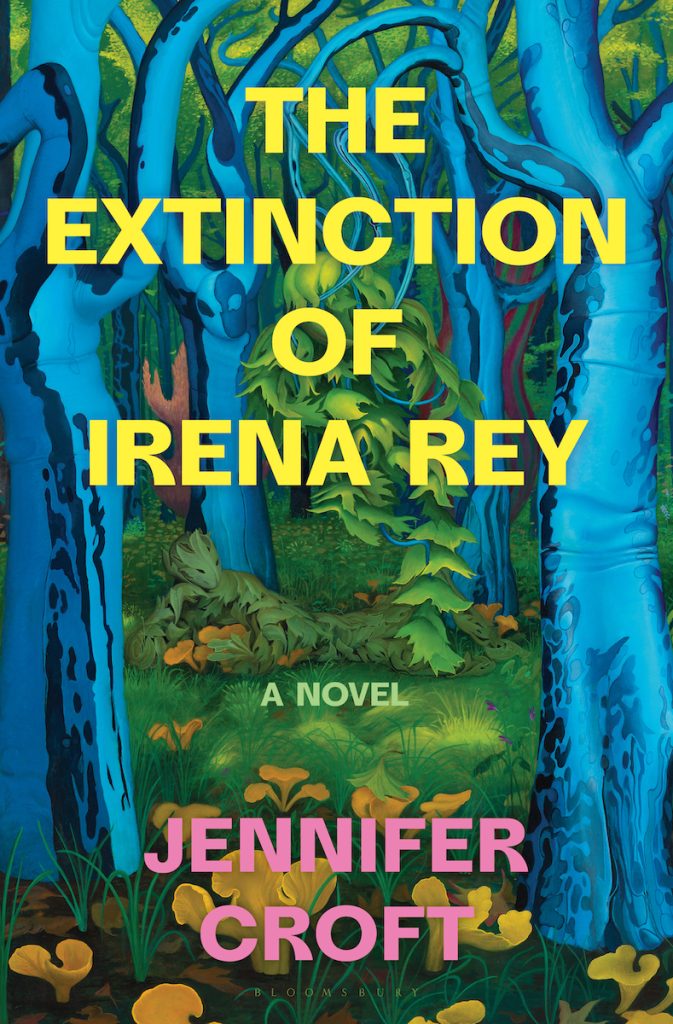
Here is the cover, designed by Patti Ratchford, artwork by Inka Essenhigh.


Cover designer Patti Ratchford: “While I read The Extinction of Irena Rey, I immediately thought of a show I had seen a few years back by the artist Inka Essenhigh. It featured these fantastical portrayals of nature that I thought would be perfect for the surreal, lush setting of the book. But when I looked through her work, nothing quite fit. So, I moved on and developed other covers, but still I couldn’t get anything that fully captured the humor, mystery, and energy of the story. Just after abandoning another attempt, I heard that Inka was just closing a new show and, unbelievably, there it was: the cover. A fantastical primordial forest where the trees somehow look like people gathered around a leaf figure cradling mushrooms sprouting from the ground. What can I say, the art is as wonderous as the story.”

Author Jennifer Croft: “This is my absolute dream cover—Inka’s gorgeous painting is a perfect match for the dreamy forest atmosphere of The Extinction of Irena Rey! I love the twilight-blue trees that seem to be dancing, and I love the slightly scary way all of their branches tangle/intertwine. There are so many fungi in this novel, and I’m thrilled to see them featured in the foreground here, in addition to the lush, gorgeous greenery and those occasional, much-craved splotches of sunlight. I’m so grateful to the artist for trusting us with her exceptionally powerful and evocative piece!”

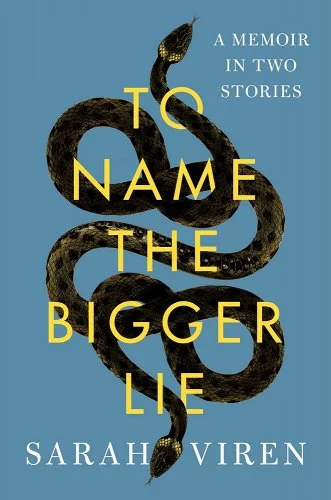
A False Accusation of Sexual Misconduct Led Sarah Viren on an Exploration of Truth

In 2019 Sarah Viren’s wife, Marta, was subject to a Title IX investigation for sexual misconduct. The allegations, which appeared via Reddit posts and emails, were that Marta had offered students wine during office hours, requested sexual favors, and threw wild parties. Viren knew the allegations were untrue—she’d never thrown a wild party with her wife, and the names of the accusers failed to line up with actual registered students at their university— and yet she couldn’t stop herself from occasionally doubting her reality.

At the time, Viren was on the academic job market, and she would later discover that it was an acquaintance, Jay, a finalist for a job that Viren had been offered, who had spread the lies to derail Viren’s career.

These events, it turns out, unfolded in Viren’s life as she was working on a book about conspiracy and truth through the lens of her high school philosophy teacher. Dr. Whiles was a man who was both inspiring and harmful, who taught students to think critically and develop their own set of values, but who also pushed religion and holocaust denialism. 

Sarah Viren’s book To Name the Bigger Lie weaves the stories of Jay and Dr. Whiles together, using them to discuss themes of trust, doubt, and deception and to ask the question: how do we know what is real? 

I spoke to Viren on Zoom to ask her about punishment, reckoning, and hoping for redemption. 


Jennifer Berney: I came to your work through your viral essay in the New York Times Magazine and, like a lot of people, I found it fascinating because of the complicated ways it intersects with #MeToo. I’m curious about what you dealt with in terms of going public with your story, knowing that it might be used to undermine #MeToo or Title IX, to push the idea that false allegations are common. 

Sarah Viren: One way of understanding what Jay did was that he weaponized Title IX and he used stereotypes about gay people to prop up the lies that he was telling. There are people who want to dismantle Title IX entirely as it relates to sexual assault and misconduct. And so I tried to make clear within the story that I think Title IX has value. But then, once the story came out, I knew I couldn’t control how it was used beyond just not giving interviews. Somebody wrote to Marta for Fox News, asking her for an interview. In the end, Marta ended up giving one interview to a Spanish newspaper, but we really talked to the interviewer beforehand. And then, after that we just had to let it go. I had to weigh: what are the costs and benefits of telling the story? It felt like the potential harm was that it would be weaponized—which it was—but I felt like the benefits were that it could create a more nuanced discussion of some of these issues.

JB: Does your decision to tell the story align with a philosophy of telling the truth simply because it’s the truth?  

I had to weigh: what are the costs and benefits of telling the story.

SV: It feels simplistic to say let the truth out and everything will be okay. But when this article came out, I heard from so many people with stories, and a lot of them were women and people of color—people who are already struggling to have their truths recognized in the larger public sphere. They told of cases in which they had been similarly manipulated, and they didn’t have the clear proof that we did. And I thought that is the value of telling these stories, if it helps others make sense of their experiences or feel less alone. 

JB: You write about how you initially wanted Jay’s identity to be revealed for accountability. But then other people found him and outed him, and it’s no longer what you want. But the book continues to long for him to take responsibility and redeem himself on some level. Can you speak to that longing? 

SV: Yes, I’ve been thinking about that for a long time, probably even before that happened. One book that was really influential was Lacey Johnson’s The Reckonings. She visited Texas Tech, where I was doing my Ph.D. and people asked her in the audience “What do you want to happen to this man that did this awful thing to you?” and she thinks through that in The Reckonings. I’ve been interested in how we reckon with harm out outside of a simplistic view of punishment. I don’t think that punishment always allows people to reckon with what happened.

What I kept wanting from Jay was a confession. And so I was thinking a lot about confessions. Culturally we’ve gotten used to this idea that a confession brings us closer to the truth, and to a reckoning with. I thought if Jay would just say, “Hey, I did this. I’m sorry.” I really felt like I could forgive him.

JB: Do you think what we might really want through the confession is to feel like the person who harmed us has the potential to change?

SV: Yeah, it’s funny. I have this friend who I talked to a lot during that time period, and she would always say, “I want him to be punished and I want him to hurt.” I think a lot of people feel like if somebody harms you and is punished, it’s balancing something that was imbalanced. But no, I don’t feel that way. If I could know that Jay felt bad and was actually working to not do something like that in the future, that’s what would feel better. 

I shouldn’t read comments online, but one person commented on the article something like: “Yeah, it’s fine for you not to name him. But how are you going to feel when he does this to somebody else?” And that does feel bad. That will feel awful. But I don’t know where he is now. I don’t know what name he’s using. I don’t have any ability to stop him.

JB: It seems like we have a cultural narrative about having a responsibility to others once we’ve been harmed by someone. 

I’ve been interested in how we reckon with harm out outside of a simplistic view of punishment.

SV: I think that’s a complication of the way we imagine these roles. I was always uncomfortable with the idea of victimhood, because there’s a sort of passiveness to that. But the other extreme can also be this idea that you’re an accomplice if you don’t do enough. Marta was really helpful in thinking through it. Marta would say a lot of times,“If anybody’s responsible it’s these universities that allow this to happen.” Jay was eventually removed from his job in academia, but allowed to quit, so there’s been no public accounting for his actions, and that has to do with institutions not wanting to be sued. And so, there need to be ways that we hold people accountable in situations like this, but it doesn’t make sense to require whoever is victimized to do that. That doesn’t mean that you don’t feel bad. After he was identified on Twitter and elsewhere, a couple of people came forward, men who said they’d been harassed by him. And one of them said, “I feel really bad that I didn’t say anything because maybe this wouldn’t have happened to Sarah.” I think that’s another example of somebody being victimized, and then feeling like it’s their fault because they didn’t stop that person from continuing to victimize other people.

JB: How does this story about Jay connect to the story about Dr. Whiles, your high school philosophy teacher?  

I had already started writing this story about my teacher in high school who taught us conspiracy theories but who none of us had really ever confronted. And in that process I kept thinking about how if only we had talked to each other earlier, or if only an adult had intervened and said like this shouldn’t be happening, we might have been able to at least understand it. My friend, who I call Gayle in the book, a Jewish immigrant from Latvia, got close to Dr. Whiles and ended up really confused, and, I think, a little depressed by him pushing her towards holocaust denialism. I often think: Wow, If she and I had just been able to talk, it might have helped her push back against some of the gaslighting that was going on in his classroom. And so I’d been thinking about that.

I felt like these two stories really spoke to each other, but I could not articulate how. When I sold the book on proposal, I couldn’t structurally tell how it was going to work. But rather than braid these two stories together, I wanted to show the interruption of the Jay story, and the way that often those interruptions in life will help us understand something. I think that so often something unexpected happens that we feel like is unrelated to whatever it is that we’re dealing with, and it ends up being the thing that brings clarity. 

And so what happened with the Jay story was that there were moments in which I was doubtful of myself in a way that was very similar to how I felt doubtful of myself when I was younger, and there were moments where I felt like: why is nobody freaking out? And so that’s what I tried to write into. But then figuring out how to structure it was hard beyond the fact of  starting a story, and then having the Jay story interrupt it. I did want to do something structurally different, and I thought about Plato’s Allegory of the Cave, where the cave has four parts and so that four-part structure felt essential to the story itself in the end. For the last part of the book, I started doing these imagined dialogues. 

JB: In that last section you include real present-day email exchanges with Dr. Whiles, and I found myself feeling really nervous for you as a narrator in the book, navigating those email exchanges.

You know, I had the book mostly written, and I really thought, Oh, I’ll reach out to Dr. Whiles. I really didn’t want him to agree to the conversation because I didn’t want to deal emotionally. 

JB: I was so surprised at that section because I wasn’t expecting him to become a real, present-day person. 

SV: Yeah, I wasn’t either. I was thinking, I’ll just imagine him, and it will be okay. And he did initially say no and I could have left it at that. There was a journalist part of me that was like, no, you just don’t do that. You have to keep pushing. And I did. I think the people we write about, even when they harm us, they still deserve the respect of being fully-formed. Because nobody is a monster, right? And so I was really thankful that he responded, and I could see his pride and his vulnerabilities, and I was able to read some of his moves for what they seem like now—blustering, you know. I don’t think that I realized when I was a kid that he was sort of enamored with his own greatness. I just thought he was great, and so I think, seeing that weakness helped me to see him as more human. And when he finally cut off the interaction, I felt the same rejection and feeling of being shut down that I used to feel in high school.

JB: By the end of that section it feels a little unresolvable to me, the way Dr. Whiles was both a pivotal figure in your development and someone who did you great harm. Does that seem right?

SV: Yeah, I think that’s right. And I think it’s made that much more real by the fact that we get to see him in his own present day terms. It’s so much easier to think that those that harm us are just bad people, or to write them that way, but also in your life to create a narrative in which they exist that way, because it’s just easier to deal with them.

There are awful people in the world, but in these two cases—well, Jay is a complicated person I feel sorry about. I’m not sure that he himself helped me. But Dr. Whiles did. And so the idea is to acknowledge the complexity of it, and sit with it and exist with it, and then also to sit with the fact that he didn’t change. You talked before about me wanting to feel like Jay had changed. I think with Dr. Whiles, I was hoping for something similar.

When he became real, I was able to reckon with who he was, what happened, and the complexity of him in my life. But it also didn’t feel like he acknowledged or could acknowledge having harmed anybody else, or that he had necessarily grown.

I will say there was one person, a friend I had in high school. He was very religious. He wrote in my yearbook, something about how I was going to hell because I was bisexual. He’s now a pastor, and I interviewed him in the book. When I told him what I remembered he recognized that it was real, and he felt bad that he hadn’t recognized it at the time. He said, “You know, I’m sorry. I think I just didn’t have stakes in the kind of harm that Dr. Whiles was causing.” But the fact that he could acknowledge that—I mean it’s not the same as having the perpetrators grow, but it did feel like okay, there are people that are growing. We’re developing and changing. They’re just not necessarily the people we want.

We Need Stories About The Golden Age of Sapphic Love

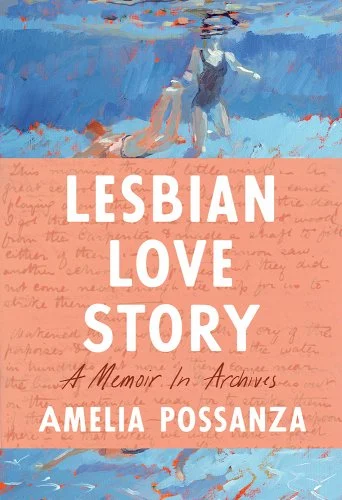
Nearly forty years before the Stonewall uprising—often incorrectly pegged as the moment in history when queer people first began experiencing pride in our identities—Ruth Fuller Field, writing under the pseudonym Mary Casal, published her autobiography, The Stone Wall, where she details a life largely defined by her ferocious pursuit of women. 

Even then, Field wasn’t ashamed, nor was she interested in hiding her desire. It felt like the most natural thing in the world to her and when she met Juno, a woman with “the most beautiful hands” in 1892 on her first day in New York City, she began a “rapturous period of wooing”. A bouquet of violets, a trip to the theatre, a kiss—Juno became the great love of her life. It’s striking to read that not only was Juno introduced to Field’s family, but that, considering the time period, it went so well. “Juno and Mother loved each other from the very first. To her death, my mother was always happy in our love and friendship for each other,” Field writes in The Stone Wall. (Any speculation on the connection between the name of Field’s autobiography and the name of The Stonewall Inn has been so far disproven.)

Their 200-year-old lesbian love story is one of the many documented in historian Amelia Possanza’s new book, Lesbian Love Story.

It’s a sexy, illuminating tour through sapphic history. I spoke with Possanza, who is also the Associate Director of Publicity at Flatiron Books, about the history of lesbian resistance she uncovered, how queerness has been criminalized throughout history, and the lesbian stereotypes that have persisted: “We had a lot of pre-1950s U-Haul situations.” 


Jeffrey Masters: There’s a moment you write about where you say you decided to become a “collector of lesbians”. Can you talk about that moment and what you meant by that?

Amelia Possanza: I feel like that is sort of at the heart of what I was setting out to do. I grew up without a lot of lesbian role models in pop culture and history. My mom is a librarian and my dad is a classics professor, so I was surrounded by books. The fact that there wouldn’t be a lesbian in a single one was wild to me.

The moment you’re talking about was when a friend on a queer swim team I had joined—you know, a place to go find lesbians or at least be seen as one—did not recognize me as such. And part of me had to forgive him because I’m like, If I’m not seeing them out in the world, where would he see them?

In the spirit of my librarian mom and the literal card catalog in my house growing, I want to make the little card catalog of lesbians for myself and invite other people to come add to it. I’m not going to find them all. So, I took the lack of representation that I saw growing up along with my love of reading and collecting things and put them together.

JM: For the earlier stories you write about where they didn’t use or self-identify as lesbians, how did you grapple with that?

I was interested in who took the risk to live an authentic life, and to be queer.

AP: I think what really intrigued me was to sort of take people on their own terms and use the words that they used. For some of them, like Mary Casal, who didn’t call herself a lesbian, I discovered that she had been asked to write this autobiography by sex researchers and they called her a lesbian. Some people think that the word may have been removed from her autobiography because we don’t have the original edition. It was edited by these two men who asked her to write it. While she didn’t use the word lesbian, she was very much in that milieu. It was attached to her. 

I wanted to be really careful. I didn’t want to write a book about people who were suspected to be lesbians. I was interested in who took the risk to live an authentic life, and to be queer. Mary, she doesn’t use the word, but what I love about her and why she ended up in the book, is because her whole book is about her passionate love for another woman and feeling like she was out of place. She was like, “I don’t want to marry a man. What’s wrong with me?”

JM: I found Mary Casal so compelling because she was living in the late 1800s, early 1900s, and she wasn’t hiding or suppressing her desire for women. We’re often told that this embrace of one’s queerness only began after Stonewall.

AP: Yeah. For a long time people in my community were like, Oh, we’re living at the best time to be queer. And I think now, we’re all really starting to question that. This is maybe where the queer people I’m writing about are separate from the stories of queer men. They were sort of given the grace and were able to have really close, intimate friendships with men. They could live together. And around this time, when Mary was alive, women could get an education and have their own jobs and make their own money. They didn’t need to get married to have a husband’s income. And it was this little pocket of time before queerness really became pathologized, when they could live almost openly. Mary even told her mom what was up and her mom was just like, whatever. Go for it.

JM: Criminalization is a recurring theme. The law was being wielded against queer people in almost all of the stories, which feels, unfortunately, prescient today.

AP:
Hugh Ryan was such a huge inspiration for me in his book. His second book, The Women’s House of Detention, is so much about how in the early days, prison was a place to put a woman who wasn’t a woman “in the right way”.

JM: He writes that a woman could be locked up for wearing pants, smoking, or simply staying out late.

AP: Also, the definition of prostitute used to be like, “Oh, you’re alone on a corner”. That could be considered solicitation or prostitution. And it’s sort of like, if they truly are a prostitute, there’s got to be customers right? But they’re not going after the men.

I should also give a little asterisk that so much of this depends on who you are. If you’re a Black woman, how you’re presenting in the world…many of these rules were built for middle-class white women.

JM: Going into a project like this, you had certain expectations. What surprised you the most in the research?

I want the sex scenes. I want the romance.

AP: I was struck by how much resistance these lesbians put up. I think I was like, “Oh, I’m going to find romance.” People had their sweethearts and there was definitely a lot of that, but every single one of these people found a way to carve out a space for resistance and refuge. One of the lesbians, Rusty Brown, was being sent to Bellevue for shock treatment and had the intelligence to ask someone what shock treatment was, then steal someone’s uniform, and run out of there in the nurse’s uniform. The resilience and rebellion that was eye-opening and it was not what I went in expecting since I was like, “What’s romantic love about?” I think the definition of lesbian, as it’s grown and shrunk over the years, is about so much more than that.

JM: So much of the queer and lesbian experience has changed in recent years, but what hasn’t changed? What are those overarching commonalities that still exist?

AP: One unexpected, surprising thing, which is maybe telling since I unconsciously picked people who are a little bit like me in their presentation, but everyone was either made fun of or self-identified as sort of hairy or not beautiful. I loved the repetition of that. They were hairy or unsightly or just bad at performing gender. Rusty Brown was literally arrested in a dress for being a female impersonator and went to jail and she was like, No, no, I’m actually a woman. I’m just really bad at walking in heels. And no one believed her.

And the other commonality that surprised me, which is such a huge lesbian trope, is a lot of these people found a partner and they were like, Great. Move in with me. We had a lot of pre-1950s U-Haul situations. 

JM: Can you talk about the format? It’s not a traditional history in that you fill in gaps and create scenes for the characters based on your research. Was that something you found in the writing process or was that always the plan?

AP: It was something that I found in the writing process. I want the sex scenes. I want the romance. And if you’re reading something that was edited by two men who self-identified as sexologists and wanted to publish something that they didn’t want to be branded as an obscenity, it’s not there. Who knows if Mary Casal wrote some really explicit moments that were taken out? But I want to have those. And I also think a lot of times in academia, there’s a questioning of like, Oh, no, they’re just friends.

I wanted it to be the kind of juicy emotional history that, unfortunately, I don’t think we’re going to get. And part of me too felt a little bit of that anger that we don’t have this because there are all these rigorous rules about history. I wanted to give myself permission to defy them because these rigorous rules haven’t been helping marginalized groups.

What I also found in the writing process was that they are all actually overlapping, right? Mabel Hampton’s chapter is the second one and it’s a lot about the 20s and the Harlem Renaissance. But she lived through World War II, so there’s this opportunity for her to come up again. I think that also created some moments for imagination. It was interesting to think about where their circles or timelines overlapped. They’re not seven separate, totally isolated stories. One is flowing into the next.

JM: There is also the inclusion of Amy Hoffman (Hospital Time) and Mike Riegle. It’s an intimate, yet platonic relationship in a book about love stories. Why was that important for you to include?

AP: I feel very tender about the two of them. I started out being like, Hmm, what’s my love life going to be like? How am I going to solve the mystery of my love life by asking other people about theirs? I think eventually it became about the ways that all of these forbearers of mine are living outside the usual script. Friendship then became a really clear way that that happened. Going back to the law, so many state-sanctioned resources are tied to marriage and weren’t an option. 

I’m very intimidated by Michel Foucault. Toward the end of his life, he gave this beautiful interview with a French magazine called, “Friendship as a Way of Life.” This young man was interviewing him and was like, “What does it mean for you to be gay?” And he says this beautiful thing about how the point of being gay is not like, Oh, I need to analyze my own sexuality and come to the truth of it. It’s about asking, what are the relationships I can have in the world? How could they be different? I’m gay and I just loved that. I was so moved by that.

We Need to Tell a Different Kind of Love Story

After four years of writing and rewriting a story close to my vulnerable heart—about traveling home to attend my estranged mother’s wedding—the essay finally appeared in the Huffington Post. My best friend Ellen read it seconds after it went live. She texted me her favorite lines, sending my words back to me with affirmations. She also sent a screenshot of the line, “I cried on the floor of the airport bathroom.” You called me from the bathroom floor, she texted.

On that floor, I stared at a text from my mother telling me I was no longer welcome at her wedding. I crouched under the fluorescent bathroom lights with my head between my knees and called my best friend. I can’t recall what Ellen said. I remember it was exactly what I needed to hear.

In that essay, I wrote about my husband, who had been by my side for the entire trip (except when he waited with our baggage while I panic-called Ellen in the bathroom). I wrote about my mother, whose love I desired most, even as Ellen reminded me my mom did love me, if in the limited ways her strict religious community allowed her to express it. Ellen supported me throughout the entire experience, but I never mentioned her in the essay, not even in passing. It didn’t even occur to me to include Ellen into the story. After she read the essay and saw herself in the narrative, I realized I wrote her out of my family drama, though she’s as close to me as family. All of my publications are about sex and love, relationships and family. I’ve written about all forms of nontraditional romantic relationships, about chosen family and expansive love in polyamory. Yet, I’ve never written about friendship. Until now.

When I realized that I had written Ellen out of my personal essay, I returned to the memoirs that inspire me. How had others written about their friends? I was searching for a literary legacy of writing friendship. Over and again, I noted that friends are often mentioned only in passing. They appear as ever-present sources of support, yet are seldom developed into plot lines or characters. Rebecca Solnit frequently mentions friends in Recollections of My Nonexistence, her memoir on finding her voice and becoming a writer. Few of them are named, all are written about with love and gratitude for their place in Solnit’s story. In Abandon Me, Melissa Febos writes several times about her friend Amit, but usually in just one or two sentences at a time. Yet Amit appears frequently: supporting Febos, being stood up by Febos, writing with Febos at a dining room table on a Saturday morning. Carmen Maria Machado’s memoir, too, about being in an abusive relationship, includes passing mention of a friend who helped her first realize she was being abused—a critical relationship in the story of her recovery. This friend is a mirror who allows Machado to see herself. But we, as readers, never see the friend herself.

A network of friends can muddle a storyline—but I also see it as a sign of a rich life.

I wondered if earlier drafts of these memoirs had included more, if these friends were once complete characters. In my imagination, I saw an editor cutting a friend out in order to simplify the narrative. I have, at least once, cut a friend to get an essay under the word limit. I’ve been in workshops in which someone found the additional “friend character” confusing. I myself have advised students to write a composite character instead of including a crowd of friends. It’s true: these kinds of revisions can streamline a narrative. A network of friends can muddle a storyline—but I also see it as a sign of a rich life.

The erasure of friends has roots much deeper than the editing and review process. The problem is that friends don’t fit neatly into the Hero’s Journey. In 1986, Ursula K. Le Guin implored writers to see past the familiar ease of the Hero’s Journey, shaped like an arrow, centered on conflict, and, importantly, featuring men’s stories. Hunter stories in which violence and domination drive the plot. Le Guin argued that it left out women’s experiences, the gatherers whose days may not be filled with conflict but are busied with care and small pleasures. And yet, the Hero’s Journey is still the dominant narrative form. An earlier version of my essay about my mother’s wedding received a kind rejection; the editor explained that the essay was important, but that the story was “too quiet.” The earlier version was a subtle story of unspoken love between mother and daughter, driven apart by a religious cult.

I revised the essay into a classic Hero’s Journey: I made myself the protagonist, on a journey back home and back into a cult. It was a quest: I would save my mom, or at least salvage our relationship. My husband was at my side, a supporting character, but the story was mine and my mother’s love was the treasure. There was no room in the Hero’s Journey to acknowledge that I was falling apart the entire time. There was no room to show how Ellen helped piece me back together.

As I drafted this essay, I texted Ellen: Why haven’t we written about each other? Seconds later she replied: What would be the conflict? It’s true. Our friendship lacks the competition that we both found so riveting in Elena Ferrante’s Neapolitan Novels. We disagree at times, but it’s usually petty. I’m sure I’ve disappointed her, given that I have no clue how to support her journey as a mother. In fact, I was afraid that motherhood would draw her further from me and closer to her mom friends. That hasn’t happened, but I know it’ll be a few years before I can hope to resume our regular happy hours. And I know I’ve hurt Ellen when I’ve gotten on my soapbox a time or two, when honestly saying less would have done just fine.

Ellen once told me that she’d started to write a fictional version of our friendship. As I’m writing this essay, she’s revising her novel. Last month, she texted:  I just tried to write from your POV and it was the first time this new book felt . . . easy and alive. To which I responded: I hope it inspired you to write something slutty.

In All About Love, bell hooks reflects on the dearth of stories about love outside of traditional families. She identifies the “privatized patriarchal nuclear family” as the single model in which love stories are told. The nuclear family eclipses all other forms of love, and stories of men’s desire overshadow everything further. For bell hooks—and me—the love among friends is the foundation on which we learn the art of loving. In friendships, women find “our first glimpse of redemptive love and caring community. Learning to love in friendships empowers us in ways that enable us to bring this love to other bonds.” Friendships are how we learn that love is a verb—but the stories of it take shape outside of grand narratives. They lack heroes and conquests.

Friendships are how we learn that love is a verb.

Instead, stories of friendship celebrate the quotidian rituals and small graces. Each friendship has its own rituals. For Ellen and I, watching The Great British Bake Off every Tuesday at 7:30, just after she puts her daughter down for the night, has become its own ten-week holiday season. Ellen’s refusal to let me help with dinner is a commandment. We share the same dream of what a Liz Warren presidency would have been. Ellen texts how are you? each day when I’m depressed. We can both text how’s the writing going? without provoking distress.

If I were to tell the story of the love between me and Ellen, where would I begin? I could start on the 24X bus connecting downtown Santa Barbara to the University of California Santa Barbara, where we both teach writing. Ellen held a different hardcover book from the library each week. We sat toward the front of the bus, two thirty-something white ladies in business professional clothes and sensible shoes, reading novels on our commute. At first, we discussed books, then teaching, then our opinions on all of the overrated male authors. Twice a week, the same routine. Slowly, over bus rides to work, then walks around the lagoon on campus, and then happy hours at the cafe closest to the bus depot, I stopped being intimidated by Ellen the brilliant writer and became enamored with the woman who was my friend. It’s boring content for a love story, but it’s the routine on which our friendship blossomed.

And next? When did our relationship build in intensity? One day does stand out above the rest: In 2019, Ellen and I had a standing Thursday night happy hour at the Endless Summer Bar and Grill on Santa Barbara’s harbor. We chose that spot for the half-price bottles of wine, pink sunset views, free stale popcorn, and bartenders in Hawaiian shirts who always gave happy hour discounts even when we arrived too late for happy hour. We vented about the petty inconveniences all teachers complain about: students who email questions that are easily answered by the syllabus and colleagues who only use reply-all. We talked about the sunset and its hues. We likely complained about yet another New Yorker article that was generating discourse. On this specific night, Ellen shared that she’d realized she was addicted to Excedrin, which she described as the most boring kind of addiction. I had recently realized that my mom was going to get married. Over a few glasses of discount wine, we tossed around the questions: What could knock out Ellen’s migraines if all the medicines caused more problems? Did I even want to go to my mom’s wedding?

“If you go, you could write it. I’d read that essay,” Ellen told me. “I’m not saying you should do it for the content, but you could.” Ellen listened to my story about my mom, and she wanted to read my memoir. She was the first person to tell me that she cared about my story. I hope I said similar things about her writing life, hearting each tweet and listening carefully for every thread of an idea that she talked out over drinks or long walks.

I biked home with a buzz and began writing that night. I kept writing. Ellen told me that my story mattered. Then, in the following months, she taught me how to write it. I wrote about my mom. Ellen read drafts. She listened as I sorted out memories I hadn’t dwelled on in decades. With her help, I learned I could actually rewrite myself: not a rejected daughter but a cult survivor. I spent four years writing and rewriting the story of my mother’s wedding. In the meantime, I published other personal essays, but my identity as a writer started with that essay about my mom’s wedding. I wrote it for Ellen and I’m a writer because of Ellen.

—But wait: am I doing it again? Am I writing the Hero’s Journey, just with Ellen playing protagonist? She is, after all, armed with a pen and encouraging words. Every time I publish a new essay, I tell her: “You told me my story mattered and taught me how to write it.”

“I love you,” Ellen says, “but you’re giving me too much credit. You were always a writer.”

She’s right. I already had a PhD and a long publication history of scholarly articles about women and their desires, and how they cared for one another, even if I never wrote about my own life. In making Ellen the hero who empowered me to write, I’m making the same mistake. In order to fit my story into the classic form, I’m erasing something—this time, part of my own history and agency. And, of course, I’ve also erased other friends who told me to keep writing.

At the end of the day, friendship isn’t a transaction. We don’t tally up who helped whom the most. I’m not Ellen’s friend because she told me my story mattered one day at a bar. I’m her friend because we narrate our lives to each other first.

Friendship need not be a grand narrative. When I looked for friends within my favorite memoirs, I was also looking for heroes, for a literary legacy of friendship, for the people whose smaller roles nonetheless created significant pivots in the narrative. Friendship doesn’t need a man on a loudspeaker or a soapbox. Le Guin offers an alternative to the hero’s narrative: the carrier bag. She writes, “The natural, proper, fitting shape of the novel might be that of a sack, a bag. A novel is a medicine bundle, holding things in a particular, powerful relation to one another and to us.” The story of friendship can’t be told in a straight line. It can’t be told in one voice. Conflict isn’t its most important feature. The monotonous but enduring care is what holds it together. Friendships are the stories of how we hold ourselves together.

The story of friendship can’t be told in a straight line. It can’t be told in one voice.

This past summer, Ellen and I reached a relationship milestone: we went on our first vacation together. We were both invited to be writers in residence at a writing workshop on a Greek island. For two weeks, I woke up and had breakfast with Ellen. Rich Greek yogurt, homemade feta, ripe strawberries, local coffee, and fresh bread: the meals themselves were worth writing about. Ellen and I sat at our table shaded by thick blackberry vines while her toddler Louisa licked butter off of bread in her highchair. Ellen drank English Breakfast tea with milk. I drank hot coffee (even though it was 85 degrees in the shade by 8 AM). We agreed that the apricots were the best we’d ever tasted, and that the peaches were better in California. We lingered for over an hour, until we were both over-caffeinated, and then settled in to write.

Each breakfast was a practice of loving. It was boring content. There’s no place for heroics at the breakfast table. Each day was the same as the one before. Each morning was like the last. Some days we got eggs, other days there was sausage. Once or twice, I could dish out some gossip from the night before, after Ellen had gone to bed. We lingered as if eating breakfast was the reason we’d traveled seven thousand miles to a Mediterranean island. Our breakfasts became the quotidian ritual of our friendship.    

What makes friendship beautiful—its subtlety and its bonds of love that don’t ask for visible commitments or grand gestures—is what makes friendship difficult to write about. Friendship asks us to tell quieter stories. It requires us to listen to the ebb and flow of everyday love. As we listen to those stories, we also learn to listen for the myriad of ways that love shows up in our lives. Our friends’ love isn’t shouted from the rooftops—but it may be declared with a casserole. It can be expressed with daily texts, and also with infrequent three-hour long-distance phone calls. Our friends teach us how to speak our love in as many different ways as we have different friends. Each story may be quiet, subtle. But together, each friend’s voice echoes through our lives, building a chorus of love that demands to be heard.

The Monster Inside You Looks a Lot Like Me

The Recognitions

A man stormed into the lobby, straight to the front desk. Mohan was used to the disgruntled; they would come in with authority and demand that they speak to someone. Of course, they ignored that in talking to him, they were, in fact, speaking to someone.

“I’m sorry, sir. I’m not sure, and I don’t really have any control over that. I can have someone contact you, though. What did you say your name was?”

The man slammed his palm on the desk, and Mohan offered a robotic nod.

“If you don’t mind waiting, I can go back and check if someone can see you without an appointment.” Mohan stood. It was well after midday, and he had yet to have lunch. A headache began to coil somewhere between his eyes and the back of his skull.

“No. You look at me.”

His voice was grating. As Mohan looked up to the man’s face, he thought of a lawn mower ripping grass.

“I’m not waiting for anything. You better believe that every last one of you will be hearing from my lawyers.” The man turned and, on his way out, swept the contents off a coffee table and toppled the large rubber tree Mohan was tasked with watering. 

“Hey!” Mohan shouted. But the door swung shut. Magazines and mints littered the carpet in the man’s wake. Mohan’s headache worsened.

Mohan’s boss told him he could leave early after tidying up the mess.

When he finally stepped outside, he felt like he might vomit. The air felt muggy and tropical, heavy with the smell of rotting fruit. Yet reports said it was a typical, chilly November afternoon.

He drove with the windows down, but humidity seemed to collect in the car. At a traffic light, his heart began to thump along with the rapid beat of the radio. A truck revved in the next lane. Mohan glanced at the driver—a man with large, obstructing sunglasses. Red turned to green, and the truck sped ahead. Mohan stared at the license plate as it shrunk in size. Someone honked from behind, and Mohan raised a palm in apology before stepping on the gas. He swallowed a ball of mucus. Was a fever next? He felt his forehead: damp. His shirt clung to the hairs on his stomach. 

At home, Mohan collapsed on the sofa. Nikita, his girlfriend, had also just arrived. They lived together there—the same house he grew up in.

“You finished early?” Nikita joined him on the couch, head to toe. 

“I think I’m getting sick,” he said.

“I haven’t been feeling great either. I don’t think we slept enough this past weekend.”

“Should we go pick up some things?” he asked.

They parked outside a supermarket, with a written list in hand: cough syrup, expectorant, vitamin C.

Inside the store, Nikita inspected the backs of over-the-counter products, appraising generic against brand name. Mohan watched her absentmindedly toy with a particularly distinct curl; he studied this with the awe and affection that her habits inspired. But then, the thought devolved. He remembered the shower drain, how it had sluggishly gulped water that morning.

“I’ll be right back,” he said.

He tried to decipher the difference between various drain snakes—metal, liquid, plastic. A figure approached.

“Man, I have to buy one almost every month. Three daughters will do that to you.”

Mohan let out a sympathetic chuckle and turned. It was the man from that morning. He thought back to the office. Before Mohan had been allowed to leave, his boss had disclosed some details, the heinous amount the man had lost in an ill-advised sale. Mohan recalled his name.

“Simon, right? This is, uh, a coincidence.”

“Pardon?” 

Mohan recognized his grating tone.

“If this is about earlier, I am sorry,” he said.

They stared at one another, then Simon grabbed a snake and left.

Mohan didn’t buy anything. He waited in the car and saw Simon pushing his cart toward a parked sedan. Minutes later, Nikita opened the passenger-side door.

“There you are. Did you not see any of my texts?”

“I had to get out of there.”

She frowned and placed the bags at her feet. “Well, if you were wondering, I bought liquid and pills.” 

Normally, the drive back required little to none of his attention. It was just six minutes, a blink-and-you-miss-it sort of trek that allowed him to escape thoughts or conversation and then find himself home.

“Mohan!” Nikita shouted. He had just run a stop sign. The driver of a minivan thrust a middle finger at them. There they were, stalled in the center of a four-way intersection. Mohan looked closer. It was Simon, now shaking his head in disgust as he drove off.

“What the hell? What is he doing?”

“Him? You almost got us killed!”

The car was warm, and Mohan rolled the window down.

Nikita shook her head. “It’s too cold.” When he didn’t respond, she turned up the air and touched his arm. “Oh Jesus, you’re really sweating. Should I drive?” She wiped her hand on the upholstery and offered him a pill.

Mohan swallowed it dry and ignored the lurch in his esophagus that threatened to turn to a retch.

They rode in silence.

He parked the car in front of their home and removed the keys from the ignition. Across the way, Simon exited the neighbors’ two-story and skipped to the mailbox. Mohan jumped out of the car and started to scream at him.

Simon froze.

Nikita ran around to Mohan and covered his mouth. “I apologize! He’s not feeling well!”

“What’s going on, y’all?” Simon asked.

“I’m not playing, you need to—” Just as Mohan stepped to cross the street, Nikita grabbed him by the arm and led him inside.

“You need to chill the fuck out!”

“He’s stalking us!” Mohan pulled out his phone and struggled to enter his passcode.

Nikita grabbed it from his hands. “Just breathe. I’m going to get the things from the car and then smooth things out.” She reached for the doorknob.

Mohan rushed to block her path. “Don’t go back out there! I think he’s dangerous.”

“Who is dangerous?”

“Simon—that guy.”

“You mean Mr. Phillips?” She nudged him aside. “Just go lie down for a bit.”

Mohan kicked off his shoes and went to a window. He pulled up a single blind and peered through. As Nikita emptied the car, Simon approached. Mohan tensed, but Nikita just smiled and shrugged as they exchanged words. Simon patted her on the shoulder.

Mohan ran to the next room where they kept a neglected landline. A voice answered.

“A man from work is harassing us.” He took the receiver and went back to the window.

“Sir, are you at your workplace right now? Do you know who this man is?” Her voice was calm.

“No. We don’t even work together. He’s outside my house right now, bothering my girlfriend.” He gave their address.

“Okay, sir, we’ll send—”

“They’re talking right now.” He saw Nikita laugh, and then they parted. “He’s walking away,” Mohan said. He leaned as far as he could against the glass until Simon disappeared from view.

“I’m sorry. Could you repeat that?”

Mohan beat the phone twice into his palm; the battery was old and weak. “I can’t see him anymore. But he keeps leaving and coming back. Earlier at the store—”

The woman said something, but static flooded his ears. He heard Nikita enter and head towards the kitchen.

The voice was audible again, scratchier than before. “Someone is on the way.”

The phone slipped from Mohan’s grasp, and he left it on the floor. The house was suddenly too warm and his body amphibian with sweat. He hurried to the kitchen.

Nikita stood with her back toward him, placing oranges in a bowl. A lineup of remedies stood on the island, the fridge door hung open. 

“I really think you should take something else. DayQuil, maybe? You’re not doing well. Luckily, Mr. Phililips was nice about it.”

“What did he say?” Phlegm had pooled in his mouth, his voice was hoarse.

“That you need to rest.” Nikita spun and snapped her fingers to some diddy stuck in her head. Simon had mastered this, the precision with which she bounced on the ball of one foot as she kicked the other—a quirk Mohan loved. He stood before Mohan in Nikita’s jeans and red sweater. With a smile, he placed a hand on Mohan’s chest; the familiar touch now sent a jitter across his skin. Simon popped a Ricola into his mouth, put away a bottle of juice, and shut the refrigerator. “I’ll be right back,” he said. And he left the room.

Mohan’s insides heaved. He turned to the appliance’s gray steel and, seeing the reflection that stood in its cold face, opened his mouth to catch his breath. And out escaped a scream, one that echoed through the kitchen until its sound grew strange and unfamiliar with grit.

7 Books About Grotesque Bodies

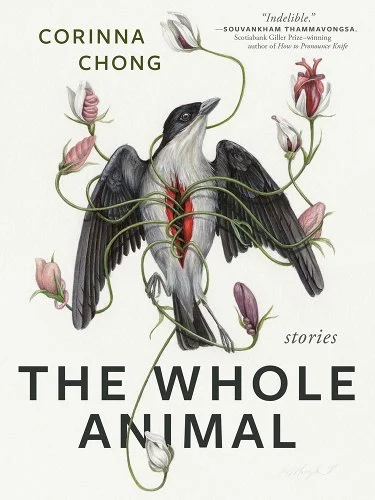
When I was growing up in western Canada in the late ‘80s and ‘90s, my sister and I were the only people we knew who were biracial—not quite white, not quite Chinese, but somewhere in the empty space between. I felt like I didn’t belong anywhere. Internalizing both the quiet racism and gender norms I was steeped in, I wanted to be white, blue-eyed, and delicately feminine, but when I looked in the mirror at my dark hair and skin, my broadened face and flat nose, I often felt wrong, even monstrous, like my body on the outside was aberrant to my self on the inside.

Bodies and body parts that seem disconnected, threatening, and grotesque is a running theme across my debut short story collection, The Whole Animal. In one of the stories, “Porcelain Legs,” the pre-teen protagonist, Queenie, fixates on a long, wiry, black hair sprouting out of her mother’s eyelid. Even though she can’t stop looking at it, Queenie is repulsed by the hair—a blatant emblem of not only Chineseness, but also anti-femininity, both of which Queenie subconsciously rejects. 

I’m fascinated by BIPOC writers who explore grotesque depictions of bodies as representations of the elusive experience of finding identity for those whose marginalized race, gender, class, and/or sexuality intersect, to profound and sometimes dangerous degrees. Here are some outstanding works of poetry and fiction I’ve recently discovered that navigate this theme in poignant and illuminating ways. 

Tell Me Pleasant Things About Immortality by Lindsay Wong

A 376-year-old woman, who gained immortality after ingesting the supposedly lethal deathlily, reflects on her colorful past while her body, which the Chinese government has declared a “national treasure,” finally begins to (literally) fall apart. A group of women deemed the ugliest girls in China are called upon to serve their country by allowing leeches to extract their most fervent memories of suffering from their tongues, to be fed as an indulgence to the gluttonous elites. A twelve-year-old girl struggles to learn how to swim, not only to live up to her half-mermaid, half-frog mother, but also to justify her right to survive. Wong’s collection of short stories is full of vivid, haunting, “body horror” imagery, but also glimmers with dark humour. At the heart of each story is an incisive commentary on the power that familial and cultural history and mythology hold over the way immigrants perceive themselves in relation to their world.

Dr. Edith Vane and the Hares of Crawley Hall by Suzette Mayr

Despite her best efforts to find happiness, Edith Vane just can’t seem to get comfortable in her own skin. She’s out of shape and chronically insecure, both with her new barista-turned-girlfriend, Bev, and in her job as a professor at the University of Inivea, where she tries desperately to earn the respect of her cutthroat colleagues and indifferent students as “a brown woman with prematurely drooping body and face parts.” Even Crawley Hall, the building on campus that houses the English department, seems to be rejecting her, trapping her in its shifting, labyrinthine halls, sprouting suicidal gargoyles, and threatening to be swallowed up by a giant sinkhole in the earth. As Crawley Hall slowly infects the people inside, turning them into zombie-like harbingers of Edith’s inevitable fate, the lines between reality and fantasy, clarity and madness, begin to blur. This novel is a brilliant satire of the monstrous, all-consuming nature of academia, particularly for women of color. 

This Wound is a World by Billy-Ray Belcourt

Fragmented bodies figure prominently in this striking collection of poems, as Belcourt navigates the enduring legacy of colonialism, including the violence, both historical and contemporary, suffered by indigenous people. Woven into this struggle are the poet’s visceral reflections on the queer body as raw, spectral, and often abject as it yearns for a sense of belonging and acceptance in the face of restrictive gender norms and toxic masculinity. While the writing is lucid and lyrical, every poem in this collection is a blow to the heart. In “The Back Alley of the World,” Belcourt writes, “make my mouth into a jar / spit inside me / throw me into the air / leave me there / pretend that this is love.” This collection (unsurprisingly) earned Belcourt the prestigious Griffin Poetry Prize, making him the youngest winner in the history of the award. 

Her Body and Other Parties by Carmen Maria Machado

Horror, sci-fi, and fantasy collide in this extraordinary collection of short stories that defy expectation at every turn. Bodies in these stories are sites of violence, erotic pleasure, and often both at once. In “The Husband Stitch,” women’s bodies are portrayed as grotesque and monstrous, at odds with their role as objects of hedonism and childbearing for men. “Inventory” begins as a catalogue of sexual encounters relayed in unsettlingly carnal detail, and gradually morphs into a tragic lament for human intimacy amid a deadly pandemic. As a collection, this book is a Frankenstein-like challenge to the strictures of genre and a bold re-visioning of gender, love, and sexuality in the 21st century. 

Ossuaries by Dionne Brand

we grinned our aluminum teeth

we exhaled our venomous breaths

we tried to be calm in the invisible architecture 

we incubated, like cluster bombs

whole lives waiting […]

This unyieldingly powerful long poem is structured in fifteen numbered “ossuaries,” which together unearth a network of spaces, both physical and metaphorical, to examine how the skeletal histories of black people on colonial lands continue to haunt us in the present. Yasmine, the central character of the poem’s narrative, represents the black diaspora and women of colour simultaneously, as she struggles to come to terms with the injustices and acts of violence, both personal and political, that undergird her tenuous place in the world. Bodies in these poems are dangerous and menacing, a reflection of the ever-present threat of violence that marks the black community’s everyday experience. As Yasmine reflects in “ossuary III,” “I was caged in bone spur endlessly / eye sockets ambushed me, / I slept with harassment and provocations, / though I wanted to grow lilacs, who wouldn’t?”

Stone Fruit by Lee Lai

In Lai’s debut graphic novel, Ray, a cisgendered Asian woman, and Bron, a transgendered white woman, are a queer couple whose close relationship with Ray’s young niece, Nessie, is an anchor for each character’s sense of identity. When Ray, Bron, and Nessie are together, a magical transformation takes place: they shed their human forms, becoming reptilian-looking monsters with sharp, bared teeth and oozing limbs. While they appear wild and terrifying at first, it quickly becomes clear that this monstrous form is liberating for the characters; only when they’re together in their imaginative world, away from the judgments and expectations of society, can they inhabit their true selves. But when Bron decides to reconnect with the ultra-Christian family she was estranged from when she transitioned, all three characters are forced to figure out how love and happiness can still be found without each other. The atmospheric illustrations that make this novel so memorable elucidate the stifling reality of living within the confines of a body that cannot contain the multitudes of the self. 

Bunny by Mona Awad

Samantha, a student in her last year of an MFA in creative writing at a prestigious New England university, has grown accustomed to being an outsider. She’s freakishly tall, socially awkward, and lives in a dingy, one-room apartment on the sketchy fringes of the pristine neighbourhoods around the university campus. She writes dark, angry stories that mystify her professors and are snubbed by “The Bunnies,” a glittery clique of young women in her workshop class. And now she’s fallen into a creative slump that’s causing her to question everything she thinks she knows about herself. The Bunnies, in stark contrast, seem to be thriving; they are supremely confident, ultra-privileged, quintessential mean girls. Obsessed with their looks, they fawn over each other in a cloying, artificial way, and exclude anyone who’s not like them from their tight inner circle. Named for their penchant for calling each other “Bunny,” they seem to move through the narrative as a single, manufactured entity, a monstrous amalgam: “Four heads full of white, orthodontically enhanced teeth. Hair so shiny it will blind you to look at it directly, like an eclipse.” But when the Bunnies suddenly invite Samantha to join their “Smut Salon,” Samantha cannot resist her buried desire to become one of them. What ensues is a twisted descent into “creativity,” where bodies become “hybrid” objects to be manipulated, exploited, and even destroyed.

Searching for Intimacy in the Gig Economy

Kathleen Cheng is having a hell of a Saturn Return. The late-20s protagonist of Jenny Xie’s debut novel Holding Pattern has just been dumped by the man she thought she’d spend her life with. Unmoored and questioning, she drops out of her cognitive psychology graduate program on the East Coast and moves back in with her mother in California’s East Bay. 

Her mother, however, is not the mother Kathleen remembers. Marissa is no longer the heartbroken single parent, stranded by her husband’s infidelity and left to struggle with finances, depression, alcoholism, and making her way in an unfamiliar country, where comfort is always out of reach. The new Marissa is engaged to an ABC Silicon Valley tech entrepreneur and wholly embracing the contemporary brand of West Coast wellness: hiking, jogging, green juice, and the perfect Pinterest-board wedding. 

No longer her mother’s caretaker but still her maid-of-honor, Kathleen navigates these unbreachable distances and unbearable closeness while trying to square the past with the present. Back in her rapidly changing hometown of Oakland, Kathleen reunites with old friends and explores different forms of intimacy: from a “techno circus” at a co-op in Berkeley to parasocial relationships with pet influencers on Instagram. She takes a gig with a start-up specializing in professional cuddling, which expands her understanding of intimacy in precarious and illuminating ways. 

Holding Pattern introduces readers to a spectrum of contemporary characters (including a memorable tech bro opining the lack of UX design in the wilderness), but handles its satire with open-mindedness and a light touch. 

“I wanted to write characters who were obviously flawed, but I wanted everyone to be on everyone’s side,” Xie says.

I spoke with Xie by phone about mother wounds, ethical intimacy, and accepting ephemerality. During our chat, Xie recalled her own late twenties, embroiled in a period of transition and upheaval, when she learned the term Saturn Return. “I was relieved to hear that it wasn’t just me,” she laughs. “It was cosmic!”


Katie Moulton: Can you talk about where this story began for you, and how it found its way to this final form?

Jenny Xie: Oh, such a long time ago. It felt like I could only see a couple of feet ahead of me for a long time. I wrote stories with the prototypes of Kathleen and Marissa, and I knew that the mother-daughter dynamic was at the core, so I tried to crack that relationship open. 

I wanted these two characters to be each other’s whole world in a way. What happens when you love each other so intensely, but you’re in such close proximity and with such intensity, that every point of friction is amplified. And then it ossifies into a pattern, right? Who else are you in a relationship with longer than your mom? She’s the only person you’ve known your whole life. And you can fall into these canonical roles of mother and daughter and a pattern of speaking and listening that aren’t really speaking and listening. 

On top of that, I wanted to give Kathleen and Marissa the weird experience of being totally cleaved into by immigration. Marissa made this choice to leave her entire country and bring up this girl, but that means she doesn’t have any of the same cultural touchpoints or the same values. You’re not even going to have the same music! There’s very little overlap, and then it’s exacerbated by an actual language barrier. So, the two of them are weaving in and out between English and Mandarin, trying to cobble together a common language. On the literal level of language itself, but also in terms of, what does it mean to be a person?

KM: The novel weaves stories from the family’s shared past with Kathleen’s return home, but the central narrative action focuses on the run-up to her mother’s wedding. How did you think about structure in this story?

JX: The wedding aspect was a way to structure how they confront each other. With a wedding, there are these certain beats—like, this many months, you should get the dresses—so it had a natural narrative frame. I could use those beats to think about how they come together and do these weird rituals, but in an upside-down way. Usually, it’s the mother helping the daughter get married, and in this iteration it’s the opposite. Which is fraught for Kathleen because she has always felt like a caretaker for her mom.

KM: There’s interesting tension created between the wedding as this big symbolic ritual and the mechanisms of event being rooted in contemporary, ephemeral culture. We’re dealing with life and death, but the steps—trying on a bridesmaid dress, assembling centerpieces, booking hotels—are consumerist and pretty banal.

JX: I’ve never planned a wedding, but the preparations are fascinating. Marissa is playing into this Silicon Valley-American-Pinterest wedding, which is sort of laughable because it’s so far from what she grew up with—and what Kathleen grew up with. The bachelorette party in Vegas also sprung out of that absurdity, with Marissa like, “I want to do this white person thing.” I think in this new version of her life, she feels like she is finally getting a foothold. She wants to make the wedding happen in a very consumerist sense to say, “I’ve made it. I’m going to achieve the thing that society and media tells me I’m supposed to have. I’m going to recreate the picture that has been told to me of the American Dream, and that will be my symbol of ‘making it.’” Whereas Kathleen grew up with a totally different mindset and is very skeptical of it. 

KM: What research did you have to do to find your way through Kathleen’s story? I am specifically curious about the psychology around haptic technology and of course, the gig she takes with a professional cuddling start-up. 

JX: The idea for the cuddling start-up sparked when I was looking for a summer job during my MFA [at Johns Hopkins University]. Someone had posted looking for professional cuddlers to work at a new physical clinic. I didn’t apply, but the concept stuck with me. 

Kathleen is studying cognitive psychology and working with haptics, so is already thinking about and researching touch. But it’s in this very removed, clinical-trial way. When she drops out and is looking for her next move, she decides to engage with touch in a much more intimate way. 

This led me to read a lot of scientific papers on the physiological benefits of touch. Dr. Tiffany Field runs the Touch Research Institute at the University of Miami, and she has been the leader in coining this idea of touch hunger and skin hunger, particularly in American culture. Her studies prove that touch is crucial to infant development, lowers your blood pressure, lowers your heart rate, lowers your cortisol levels, boost immunity. It’s helpful in staving off degenerative diseases. It’s just so good for you. 

Touch is the first sense to develop in the womb, and skin is the largest organ. In different studies, they found that you kind of can’t touch too quickly, and you can’t touch too softly. Our bodies are built for tenderness, and we really need it. Yet there are all these social taboos about touch, only exacerbated by the pandemic, and we’ve been experiencing this epidemic of loneliness.

KM: What first-hand research did you conduct? 

Our bodies built for tenderness.

JX: I started professionally cuddling myself about a year and a half ago with an online service. I learned a lot about setting very clear boundaries. Of course, sex and intimacy are so related, and there are all these power politics around who is paying for what service. My cuddling clients have always been sparse because, honestly, 99% of people who reach out can’t get through the screening process. But I have learned that when you screen people correctly and set the right boundaries, you can have this intensely intimate encounter with a stranger you met five seconds ago. You can have full body contact, and it can be incredibly intimate—but platonic. It’s very sweet to discover that. 

I don’t know if Midas Touch [Xie’s fictional cuddling start-up] is the answer, but I wish there were a service for people to get there safely and ethically. 

KM: In imagining this business, which sells the service of ethical touch, how did your thinking develop around care industries and the commodification of intimacy?

JX: Thinking about healthcare—is it ever ethical to commodify it? The way our system is set up, in every place of care, as elsewhere, you see the disparity between people who need care and people who actually get it. I see the need for touch falling into that same trap. 

I think about therapy and how expensive each session is, and there are startups offering telehealth and options to make it more accessible. But these are Band-Aids to the actual problem. 

KM: In the novel’s tracking of Kathleen’s attempts to communicate with Marissa, there is this sort of blazing distance between them that seems to be a symptom of an overwhelming closeness. Can you talk a bit more about how you view this relationship of care and the impulse to fix or correct each other?

JX: I do feel that the closer you get to someone, you see better how far they are from you. The more you know about someone, the more you realize there’s so much more. Which is normal. And no one ever knows themselves anyway.

There is so much “fixing” coded into the role of motherhood—to nurture, to guide, to teach, to mold. But daughters have a tendency to do that in turn for their mothers. In a way, you’re always thinking back to your mother. You’re always reacting to your mother because that’s your origin. You necessarily, inherently define yourself with or against that. 

For Kathleen, she has a lot of resentment about being forced to be a kind of caretaker when she was young. [She longs for] acknowledgement for what she did and validation. She feels resentful of Brian [her mother’s fiancé] and Marissa for changing. Like, snap your fingers and she’s “healed”? But how did I not lift her out of her depression? Why didn’t I matter enough to make her want to be better? By the end she realizes that it wasn’t her responsibility, and it wasn’t within her power. Sometimes it’s just timing.

KM: For a story about an intense one-on-one relationship, Holding Patterns features some masterful scenes conducted within large crowds: a co-op rave, a pet influencer convention, the labyrinth of Vegas casinos. How do these crowd scenes and settings function in a novel focused on intimacy? 

JX: In smaller scenes between fewer characters—Kathleen with her mother, or her best friend, or her cuddling client—I go more slowly, focused on smaller gestures. 

The closer you get to someone, the more you realize how far they are.

[In a crowd scene] I’m thinking about how you can only point your attention in so many different directions at once. There are all these stimulants shooting at the character like arrows, so I wonder, What would hit her? In the rave scene, I was trying to capture this really joyful, almost monolithic aspect of being in a crowd. There’s that moment where you are so many bodies, but you kind of become one body and you trust everyone around you. I mean, this is like the best version of everybody. There are crowds that are not like this, but when you feel it, you become one animal.

KM: When reading Holding Pattern, I recalled Tony Tulathimutte’s novel Private Citizens, which also examined young people making their way in San Francisco—the other side of the Bay—during a very particular era. In your novel, an evolving, multi-faceted Oakland is, not necessarily a character, but the tumultuous current that all of these characters ride on. How did you approach capturing aspects of the place and culture, and what role do you think it plays in the book?

JX: Absolutely, I was writing about the East Bay the way that I had first seen it, when I moved to Berkeley around 2008 through 2012, 2013. In the novel, Kathleen goes back to where she grew up and is starting to see her neighborhood change. This book is situated on the cusp of the period when the Bay started going off the deep end [in terms of the prevalence of big tech, housing crises, etc.]

When I was living in Oakland, we were scared of all these DIY places shutting down. After the Ghost Ship fire, it really highlighted how people—artists and DIY folks—have been shoved into these tiny, unsafe corners. People have to make it work. I wanted to show the co-op where Kathleen’s best friend lives because even though it’s far from ideal, it is this community of people asking, How do we survive this together?

KM: All these changes and pressures—social, political, technological—are affecting the characters in different ways. Putting them together, drawing them apart, influencing their choices. Yet the external dynamics of the world don’t define the novel’s emotional hinge. How did you think about writing a world steeped in contemporary references that stays timeless?

JX: I’m not shying away from ephemerality. The first draft of this book didn’t include Instagram Stories because they didn’t exist yet. At a certain point, I realized I couldn’t keep up with the technology. A lot of people would shy away from including a brand name or pinning the story to a recognizable time and place, but that just feels disingenuous to me. I don’t need to make up Instagram, because writing about it gets outdated immediately anyway. It’s how I think about tattoos: I don’t really care if I don’t like them later. Because I liked it at the time. You just learn to accept the impulse. 

7 Books About Women Across the World Searching for Agency

The patriarchy is always on the offensive: yesterday’s reproductive rights can be reduced today and might even be gone completely tomorrow, forcing us to return to the same old struggles, too busy surviving to even think of bigger demands. We are now more worried about the prospect of A Handmaid’s Tale-style life than we are looking forward to a brighter future.

Narrow definitions of womanhood function the same way: they rob women of options, of their humanity. They compress their priorities, causing women to lose sight of what they actually want, of their agency. Tender and nurturing? Yes. Cold-blooded murderers and serial killers? Absolutely not. If they do kill, they better have a good reason. It is dehumanization disguised as virtue.

My debut novel, The History of a Difficult Child, has a number of bad-mannered women inspired by members of my family. I come from a line of women with a history of beating up their abusive husbands, snatching a policeman’s gun, walking about town in the evenings carrying spears. While I do not wish to ever be in a position of having to beat up someone, if it comes down to a future of forced procreation in America, I, a lesbian, wish to be the one who births the Anti-Christ. 

The books on this list recount the stories of women who breach those narrow boundaries of womanhood through the commission of violence or the embrace of rudeness and disorder and dirt or a descent into darkness, returning with seismic realizations that could turn the tamest woman into a killing machine.

Egypt: Woman at Point Zero by Nawal El Saadawi

Firdaus feels no remorse for murdering her pimp. In the prison cell where she awaits execution, she recounts her tribulations, beginning with a childhood of abuse and neglect to an adulthood of violence and betrayals. The ceaseless assault on her body and spirit compresses her sense of identity to such an extent that, at some point, she can’t tell if she prefers oranges to tangerines. She is still relentless about seeking a better life: she runs away, stands her ground, and fiercely pursues love and the hope it carries. At every turn, she is stifled by the men who serve as proud foot soldiers of the patriarchy. In the end, she and those around her realize she is different—not because she murders a man, as there are other women who have done so—but because of her earth-shattering realizations about how women should relate to men. “That is why they are afraid and in a hurry to execute me. They do not fear my knife.”

Italy: The Dry Heart by Natalia Ginzburg

“I shot him between the eyes,” the narrator tells us of her husband, Alberto, before going to the cafe to recollect herself. This is a story of a man and a woman whose lives are poisoned by patriarchal expectations. Before marriage, they are friends who spend a lot of time enjoying each other’s company, going to the theater, laughing. She tells him she is in love with him, not because she really loves him but because she likes the idea of him and of a marriage. He tells her he doesn’t love her—he loves a woman who is married to someone else—but marries her still because he wants the same things. Despite his initial honesty, he lies to her about the trips he takes to see his mistress, feeling no obligation to be decent, for he is no longer his wife’s friend but a mere prop in a marriage play. How do they escape such a state of dehumanization?

Antigua: A Small Place by Jamaica Kincaid

In this explosive book, a hypothetical tourist visiting Antigua is yanked out of his fantasies by a tour guide he didn’t ask for—Jamaica Kincaid. There’s nothing innocent about his visit, he learns, and that everything has been polluted by colonial violence, capitalism, and corruption. The beautiful ocean he has imagined swimming in for so long is full of things one shouldn’t swim with. There are even questions about the neutrality of the taxicab that drives him to his hotel. The notion of the friendly native who greets tourists with an everlasting smile is shattered. As a Black woman, Kincaid is supposed to be extra polite and grateful to this white man who has come from “North America (or worse, Europe)” for taking interest in her island. And yet, she makes him into an “ugly” and “empty” villain, and regales us with a delicious ideation of terrorism: “Do you ever wonder why some people blow things up? I can imagine that if my life had taken a certain turn, there would be the Barclays Bank, and there I would be, both of us in ashes.”

Zimbabwe: The Book of Memory by Petina Gappah

A Cambridge-educated albino woman, Memory, finds herself convicted of the murder of her adoptive father. As she appeals to overturn her death sentence, she recollects the events of her childhood in letters to a journalist. She is othered as a child, bullied by children, avoided by adults who fear she carries evil forces. Later, her attempts to find love are shattered by betrayals. In prison, she begins using writing to decompress events and make sense of them, recover lost memories, and expand her understanding of herself and those around her. She turns her cell into a room of her own. And when new discoveries shatter the foundations of her beliefs about her life, writing and the solidarity she finds among other women prisoners and employees keep her grounded.

Italy: The Days of Abandonment by Elena Ferrante

Olga grows up with a severe fear of becoming one of those women who “broke like knickknacks in the hands of their straying men.” As a child, she watches “a large, energetic” neighbor disintegrate after being left by her husband. From her mother, she learns that this problem of women being devastated by abandonment is widespread. So, she prioritizes her husband’s career over hers. She avoids “raised voices, movements that were too brusque” and learns “to speak little and in a thoughtful manner.” When her husband leaves her anyway, she tells herself not to be like that poverella of her childhood. The darkness doesn’t seek her permission as it drags her down and, in her descent, she becomes crass and paranoid, the kind of woman who terrifies her own children and alienates her friends. Like that poverella. At her lowest moment, she defecates in the vegetation at the neighborhood park. This is a story of a woman who walks through fire to learn the meaning of solidarity and, in doing so, finds her voice. 

Zimbabwe: Nervous Conditions by Tsitsi Dangarembga

Our young narrator, Tambu, begins her story with a confession: “I was not sorry when my brother died.” She lives in a village with her family, helping out on the farm, herding the cows, fetching water, and cooking. The family sends her and her older brother, Nhamo, to school, but Nhamo gets the better deal: he goes to the mission school where his foreign-educated uncle is the principal and lives in a comfortable house with running water. Tambu’s education is not guaranteed as there’s not always enough money to pay the fees for the local school, and her father tells her to focus on learning the skills she needs to be a good wife. Nhamo is increasingly detached from his family in the countryside. When he visits during school breaks, he contributes little and abuses his little sister.

Despite witnessing her brother’s inability to be transformed by education, Tambu latches onto the hope that there is a better life to be gained through education. Look at her uncle’s educated wife. When Tambu leaves the village to attend the mission school and later to a better one, she realizes that even as one moves across class borders, women’s status remains one of alienation, and that race further complicates and increases that alienation. She excels in the classroom but her liberation comes from the piercing clarity she gains about family and her own place in the world.

Nigeria: My Sister, the Serial Killer by Oyinkan Braithwaite

Korede spends her day keeping order at the hospital where she’s a supervisor nurse. By night, she’s cleaning after a younger sister with a penchant for stabbing her boyfriends to death. The knife Ayoola uses to cut her boyfriends was inherited from a father whose only moments of tenderness were spent on the cleaning of that tool, which he guarded so fiercely that he once threw Ayoola at the wall for smearing it with chocolate. Korede doesn’t know what to do with her sister, who claims that she only kills in self-defense. But where are the wounds, the bruises? Still, Ayoola calls her big sister after every kill and Korede arrives with the material and expertise required to clean the crime scene of “all trace of life” and dispose of the body. What to do then? Should she go to the police? Should she at least cut her sister out of her life? This is a story about the meaning and limits of sisterhood and solidarity in a patriarchal world.

Unraveling the Origins of Middle America’s Misunderstood Men

Jack Driscoll writes about working-class men in flyover states. Men who feel left behind and misunderstood, men with calloused hands, men who take reckless risks that often hurt themselves more than others. He writes about people in isolated rural areas who go ice fishing, deadbeat dads, and combat veterans who love their mothers. He writes about ferocious weather, boys with bravado, and men who are haunted by their complicity. The kind of people who accuse politicians and the media of looking down on them. 

Driscoll writes about people we need to understand better, whether you call them rednecks or “real Americans.” And he manages to make their gritty, slangy first-person accounts sing with a lyricism that feels miraculously authentic, a diction that lends them a quiet dignity.

Driscoll has won many Pushcart Prizes, so it seems fitting that his Twenty Stories would be published by Pushcart Press. He may not be a household name, but many consider him one of the best short story writers alive. His new book includes twenty stories and spans several decades. Our need to enter into the minds and hearts of the kind of people he writes about is more urgent now than ever.

Reading these stories is a perfect antidote to our news feeds. He shows so much compassion for his characters, no matter what side of the divide they’re on. 

Full disclosure: I studied with Driscoll in the low-residency MFA program at Pacific University, and my daughter graduated from the famous creative writing program at Interlochen Academy, which Driscoll founded. 

His fiction brings up so many timely issues, including toxic masculinity, the mounting epidemic of “deaths of despair” among men without college degrees, and the way climate change is affecting the lives of people living way up north. 

But first I wanted to talk about kindness.


Sharon Harrigan: Some writers run their writing workshops like a “bloodbath.” (I won’t name names.) There’s this idea that you have to weed out people who are too weak. 

Jack Driscoll: I think it’s Tony Hoagland who referred to workshop as “the spectacle of maggots condescending to a corpse,” which I thought was just hilarious. But, really, he’s talking about the wrecking ball approach of many workshops. And for me, the positive propels and the negative retards.

SH: You mean comments given with kindness instead of cruelty make people better writers?

JD: Yes. And I say that because I learned so much more by my attention being directed to what I was doing well, instead of lingering in the morass of so much negativity. 

SH: Does the world need more kindness?

JD: Absolutely. I don’t know where it’s gone. But it seems to me that meanness does not heal and kindness does.

SH: And we sure need some healing. Some pundits say that maybe if we as a society hadn’t been so dismissive of this demographic, they wouldn’t have responded with so much outrage, and we wouldn’t be so divided as a country. You treat your working class characters with kindness and compassion. What is it that draws you to write about these kind of characters?

JD: Let me answer the question in a larger context first, just about writing characters per se. I quote people all the time. It’s a ritual of mine to wave back and give an acknowledgement of what I learned from reading them. One of them is Raymond Carver, and he says that the fiction that counts is about people. And it seems to me the recognition of an attempt to enter any character’s reality is in fact the fiction writer’s business. It’s what we do, and to do it convincingly is to understand what they’re thinking and feeling and why. In other words, to enter as deeply as possible into the character’s mind and heart, which is what I try to do.

SH: How do you know so much about these kinds of people? 

JD: Well, first of all, I wouldn’t be writing about them if I didn’t. If you’re going to write honestly and compassionately and convincingly about people, you better know them well.

We’ve just been talking about me as the founding father of the creative writing major at Interlochen Center for the Arts. Pretty nice. But, when I was hired in 1975, I was working as a grunt on a construction crew—my MFA tucked away, which I never once mentioned. But had I, my coworkers likely would’ve nicknamed me school marm or some such thing. Though, I assure you, in good humor, we drank beers after work, we played pool, we dropped coins in a jukebox, we laughed a lot. Good guys, sometimes rough around the edges, and I love that about them too. 

Other blue-collar jobs of mine included bailing rags in a mill in Holyoke, Massachusetts, and which to a large degree defined, in my growing up, this place I lived as a working class town. Stints as a busboy and dishwasher earlier on. I cut and split firewood after that. One summer I drove a Ding Dong ice cream truck.

SH: So you come by your knowledge honestly.

JD: I do. 

And when I moved to Michigan, I was not going to learn my way, to the waterways and the woods, from anybody in the academy. My guide was going to have to be somebody local, born and raised there. So I hung around with them a lot and got to know them well. 

SH: And your father owned a bar.

JD: Yeah. Well, it’s just astounding. He worked 364 days a year, 16 hours a day, believing he could leverage for his five children, and he did, a better place in the world by providing each of us a college education, something he knew next to nothing about other than mine being the first generation that was expected to go to college. And from him, I learned—though I didn’t know him very well, because he was always working—I did learn from him a certain gracefulness and maybe more importantly, a labor-intensive, hardcore work ethic that has served me well. 

SH: You write a lot about something close to my heart: absent fathers. You don’t dismiss them or look down on them. There’s the one in “Gracie and Devere,” for instance. He’s divorced and the mother has put a restraining order on him, he hasn’t paid child support, and yet he redeems himself by rescuing his twin girls. He’s a deadbeat dad, but that’s not his whole story.

It’s possible that a writer goes through an entire career writing under the momentum of one or two obsessions.

JD: We have to take people on their own terms. The way to divine fully formed characters the reader can care about is to love these characters out of all proportion, not for the trouble they let loose on the world, not for the doofuses they sometimes turn out to be, but because of those failings. And it does, I think, at least in the story “Gracie and Devere,” help to define this father who has been labeled almost entirely in negative ways.

It’s possible that a writer goes through an entire career writing under the momentum of one or two obsessions. That’s just a theory, but certainly it holds true for me. I came to understand this by reading reviews of my own work.

SH: Another theme is boys and men who need to prove their toughness. For instance, in the story “Wanting Only To Be Heard,” a boy claims that if Houdini can do something, they should try to do it. There’s also a nude calendar in an ice fishing shanty that plays a big role in the boys’ imaginations, as if they’re showing off for this naked lady. This peer pressure to “man up” causes a lot of self-harm. 

I just saw the movie Women Talking by Sarah Polley, and one of the takeaways is that a world in which boys and men are expected to inflict violence is a world that’s bad for those boys and men, not just for the girls and women. Your stories also seem to address that kind of toxic masculinity.

JD: These are young kids, and I write a lot about adolescents. What the young narrator in “Wanting Only to Be Heard” experiences is an awareness of human loneliness and his being complicit in it and emptier for it. And this is the toll you want to exact on the reader, equal at least to what I felt during its composition and what this young narrator is feeling in its aftermath. And a large part of the reason these boys do this is because of the world they grow up in. It’s not a place they’ve chosen to be. It’s the only world they know, and they’re conditioned by it.

SH: The world we live in constricts and defines us. Which is why place and landscape are so important in your stories.

JD: Oftentimes, these are hard living, hardworking, underprivileged, deprived characters. Garth Greenwell says, “Consciousness has to be embedded in a particular place, a particular time. And one sign of the success of a piece of writing is the extent to which I feel immersed in a physical environment.” My response to that quote would be: Right, both feet on the ground, because place isn’t merely a backdrop against which the action occurs. It’s everything. Ortega Y Gasset says, “Tell me the place in which you live, and I will tell you who you are.”

It’s not a place they’ve chosen to be.

I’ve always maintained that there’s nothing more fatiguing in this life than boredom. And boredom is what these kids have in the dead of winter in Northern Michigan, socked in by snow and cold that never ceases and isolates the towns for six months. To break the cycle, the boredom, well, these kids get ideas, as they do in “Wanting Only to Be Heard,” as you just pointed out, and in “Gracie and Devere,” the twin girls wait for their mother to go to work, and then they take off and they get themselves in trouble. Boredom is what provides for the dramatic action. One of our standing jokes about Michigan’s upper peninsula is it’s where summer is known locally as three months of lousy sledding.

In other words, try and locate my stories elsewhere and see what happens. Well, we already know. They no longer exist.

SH: But what I love is that, even though they are so specific to their place, and maybe the boredom there is an extreme example, there are so many other places where young people are bored for other reasons and drop out of school and get into trouble.

Right here in Charlottesville where I live, someone was quoted in my local paper today saying, “These young men are picking up guns because they have nothing else to do with their time.”

JD: Exactly. And the other thing about place is that these boys are too young to leave. So they’re acting out in ways they do to make them feel important, feel larger, feel even legendary. There’s that explicit tension that’s created by what the place provides and what it can’t possibly give. There’s a whole body of literature that speaks precisely to this tension to stay or leap the fence and light out elsewhere. We see it in the characters of James Baldwin, for example, or the ending words of John Updike’s classic Rabbit, Run, the first of the trilogy. And I probably have this a little bit wrong, but it’s something like, “Ah, run, run.”

So all of these things are at work simultaneously. My theory is that the more local it becomes, the better you can orient your reader to this particular place in time, the more universal it becomes.

SH: As writers, we’re now supposed to do our own promotion, so we have to be online. But you’re not on social media at all. I wish I had the courage to pull out. I really admire that.

JD: Well, I think you’re in a real minority on this one. But you are right I have no interest in or aptitude for technology, and it’s a difficult place to find oneself. It hasn’t been easy.

But, here’s what I remember, and it’s stuck with me: years and years ago, I remember reading about a Microsoft researcher who coined the phrase, “Continuous partial attention.” And if this doesn’t stand anathema to the level of intense focus and concentration that defines this writing life we serve, then nothing does. As people have said to me, mostly the younger generation, but not entirely, whenever they see me confounded by my inability to do anything on the computer, “Welcome to the new world.” But it never felt welcoming to me, and it still doesn’t. And mostly, it just feels like distraction, the media circus of self-promotion and how our attention is redirected to so much that matters not at all, or at least not to me.

And so, no, I stand with Miloš who says about writing, “When we go into ourselves, it’s a secret quiet thing that we do.” And technology seems to come head first into a collision with me on that front. And in other words, my feeling has always been, if you’re going to be secret and quiet and fully concentrated in this way, and unambitious for the spotlight, for the wine and cheese, but rather for the work itself, then the rest, I’m pretty sure, will take care of itself.