Searching for “The One” in the Age of Social Media and Reality TV

In the summer of 2018, my friends and I established a ritual. On Monday nights at 8 pm, we gathered in my sweaty living room in Brooklyn, drank cheap wine, and watched Becca Kufrin as she embarked upon her journey to find love in front of millions. We were joining the ranks of a long-storied tradition: Bachelor Mondays. I was newly out of a particularly terrible breakup — a breakup that had sent me careening into my bed, watching 14 seasons of Grey’s Anatomy in four months. The dramas of The Bachelorette were a welcome distraction to fold myself into, my friends’ laughter a balm, and at least, (I told myself) I wasn’t broken up with on national television. 

After one of these wine-fueled nights, a friend nominated me for The Bachelor. He wrote up my sob story, submitted photos pulled from my Instagram, and we laughed as we imagined the ludicrous possibility that I would ever go on reality TV. But amidst my vehement denial that I would “never, ever” say yes if producers approached me, the question remained in my mind: would they approach me? And what would I say if they did?

This is the question that Emily, the protagonist of Julia Argy’s debut novel The One, finds herself answering. Recently fired from her uninspiring job as an administrative assistant at a biotech startup, she is recruited off the street to join a reality dating show called The One, a fictionalized version of The Bachelor. She is 24, has never had a serious boyfriend, and, in her own words, “had no reason to say no.” Four days later she is on the plane to LA, her phone taken from her, and her bag packed with shiny evening gowns, ready to woo a midwestern man named Dylan with “strong family values.”

At 24, I was like Emily. I had no attachments: no budding relationship or full-time job I couldn’t bear to leave (unless you count helping teenagers on the Upper East Side get into the Ivy of their choice). It could be fun. It could be something to do. It could prove that I, Grace Kennedy, yet another aimless 20-something, was a person worthy of admiration and love, or at the very least, someone worth turning on your television for. 

Like many millennials, I grew up on scripted reality romance: I watched Lauren forgo a trip to Paris for a boy on The Hills before I had my first kiss and discussed the breakups and makeups on The Jersey Shore with my classmates as we walked from AP History to lunch. As I got older, I graduated to The Bachelor and the UK’s Love Island, arguing with friends over who we thought would “win,” our lips stuck in a smirk while our eyes welled with tears.

The Bachelor producers never approached me, and I’ve since aged out of my chance to compete on a dating show (28 is nearing geriatric on reality TV), but their cultural dominance still holds. The Bachelor has been on the air for over 20 years, launched numerous questionable spin-offs, and premiered local versions in 37 countries. Its success has inspired countless entries into the dating show category, each based on slightly different versions of the same premise: throw a bunch of strangers together, tell them to fall in love, and make good TV. 

Most of these shows are aggressively heteronormative, patriarchal, and white, and it wouldn’t be much of a leap to call The Bachelor a Christian dating show. We watch these shows (close to 3.5 million people watched the most recent Bachelor finale), and while we know they’re scripted, manipulative, and utterly absurd, we can’t seem to turn them off. Why?

I had no attachments: no budding relationship or full-time job I couldn’t bear to leave.

My sister-in-law says it is at least half our fetishization of youth. The 2022 season of UK’s Love Island had a 19-year-old contestant searching for true love – something very few people of that age end up realistically finding –  and audiences barely batted an eye. Another friend says it is “escapism at its finest.” Netflix has an entire watch list devoted to “Escapist Reality TV,” which includes Love Island, Indian Matchmaking, and a bafflingly titled show ‘Dated & Related’. During the early days of the pandemic, a friend and I communicated exclusively about the most recent Bachelor episodes, sending videos back and forth with long-winded opinions and theories. A few months later after reuniting in person, she confessed she had been fighting with her partner the whole time, while I had been single, living at my parent’s house, and falling into a depression. The dramas of The Bachelor, so far removed from our own, had been easier to talk about. 

In a recent and much-discussed New Yorker profile of philosopher Agness Callard, the author, Rachel Aviv, references Phyllis Rose’s study of Victorian marriages. Gossip is often looked down upon, Rose remarks, “but gossip may be the beginning of moral inquiry, the low end of the platonic ladder which leads to self-understanding. We are desperate for information about how other people live because we want to know how to live ourselves, yet we are taught to see this desire as an illegitimate form of prying.”

Reality TV as a medium has, in many ways, provided us with a legitimized form of gossip, a way to peek into the lives of others without the shame traditionally associated with prying. This gossip can feed into our proclivity for finger-pointing, separating the good from the bad, but I think it stems from something more innocent — a question: how are we to live our lives? Are they bad? Am I good? And though we may blush to earnestly ask it, does true love exist?

I might complain about being cat-called on the street but there is a part of me that relishes in the affirmation.

But maybe why we watch is less important than the fact that we do. They got us; we’re hooked. There can be no denying that our fixation on semi-scripted reality romance and the glossy figures it produces has affected our romantic relationships and the identities we form within them. We choose photos for our dating apps as if we are applying to be on TV ourselves, and it is embarrassing to admit how many times I’ve combed through my Instagram page, considering how I would appear in the eyes of an outsider. Our lives are carefully curated, an online performance that bleeds into the mundanity of our day-to-day. Our homes are no longer spaces to live in, but spaces to be captured; our lives are not ours to inhabit, but the Internet’s to consume. The leap from the identities we curate on Instagram to the performances we watch on reality TV is not as large as we like to think. In a Vulture write-up of a recent Bachelor episode, the author wrote, “The older I get, the more I understand why The Bachelor is an appealing choice. The chance to date an emotionally available man and get free housing?”  I understand the sentiment: is meeting someone on reality TV any less random and improbable than meeting someone on Tinder? 

Couples therapist Esther Perel has described modern dating as “romantic consumerism.” We flick through dating apps like we’re shopping online for a new pair of shoes, looking for partners who will fulfill our list of requirements — too tall, too short, too bright, too bland. Reality TV is romantic consumerism in its most obvious form. One of Argy’s characters explains, “This is all a psychological experiment with a desired economic outcome: trap thirty people together as they fight for a limited quantity of something, something everyone wants, true love, and the results will be scintillating enough to attract millions of viewers to sell advertising.”

None of the contestants in The One (except for Emily), came on the show naively. They know the odds — more reality TV-created couples have broken up than stayed together — and yet, they wager, “Our odds are better here.” And even if they don’t walk away with love, if they stay on the show long enough, they might walk away with a few-hundred thousand Instagram followers and a slew of lucrative brand deals. Finding love (and marriage) on reality TV is as much of an economic exchange as it was for women in the Victorian era. Jane Austen’s Charlotte in Pride and Prejudice justifies her less-than-ideal choice to marry Mr. Collins by saying, “I’m 27 years old. I have no money and no prospects. I’m already a burden to my parents. And I’m frightened.” The average age of contestants on The Bachelor is 26. One of Argy’s characters puts it bluntly, “I need money — and to fall in love and have a husband, but also I need money.” 

The followers and brand deals only come, however, to the contestants who prove themselves worthy — who win the hearts of the nation if not of the man. The producers of The One see a “winner” in Emily, the perfect blank canvas upon which viewers can project their hopes of story-book romance and happily-ever-afters. Emily is a “good girl” from a “good family,” so she does what she is told. She flirts, she smiles, and she becomes a woman worth marrying, worth watching, and worth following. Her performance is not unrecognizable; the cameras of TV only heighten a performance inherent to the experience of being a woman. In my 3rd grade journal, I wrote, “Sometimes boys are nice to me. Especially a boy named Adam. Other boys are nice to me but I just have to laugh at their jokes.”  When Emily first steps out of the limo to meet Dylan, she thinks, “I can be desirable if I try hard enough.” She just has to laugh at his jokes. 

Girls learn from a young age how to perform womanhood and the ways in which they are already doing it wrong. I used to sit on the toilet, squeezing my belly rolls, willing them to disappear overnight. To be an object of male desire is a form of power. And even if that power is ultimately meaningless, the dream of the prince plucking you from your tower is not so easy to untangle. To betray our aspiration to become a “desirable woman” is to let go of not only the power it brings but also the identity we form around it. I might complain about being cat-called on the street but there is a part of me that relishes in the affirmation: “I still exist. Men still want me.” I know it is a weak thread from which to hang my identity and my worth, but the rush of being seen, of being noticed, even if it is as an object, remains an enticing pull. 

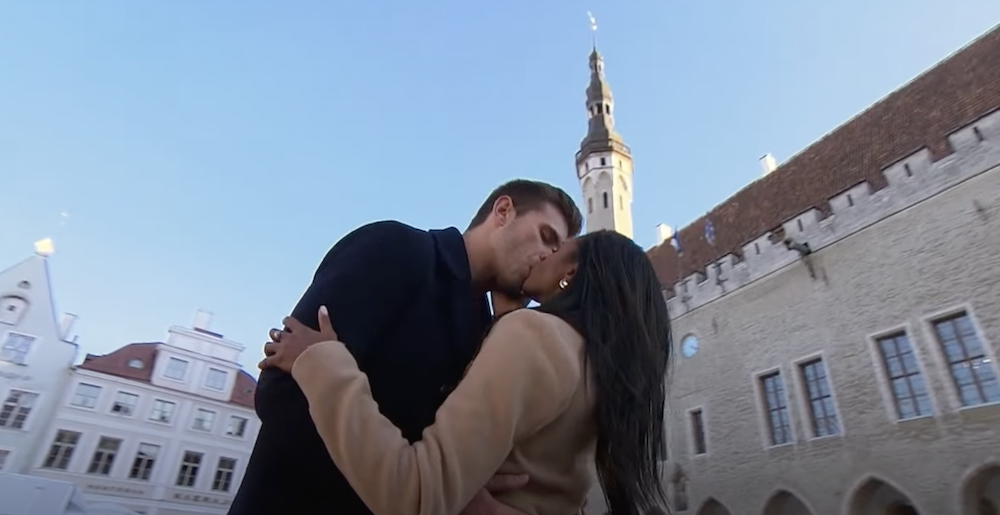
When Emily kisses Dylan for the first time, she is not thinking about how soft his lips are but rather the “fleeting sense of power” that comes with being chosen: “All I can imagine is the faces of the women watching me thrust my tongue down Dylan’s throat. It was like the rush of a selfie, posted in the seductive whirlwind of golden hour lighting.” When they’re done kissing, she goes to the bathroom. Under the harsh fluorescent lights, the flush of her performance stripped, she is left with the unsettling truth. She kissed a boy she is supposed to like, love, and marry, and yet she felt nothing: “I swish water through my teeth, regretting that I parted my lips for him.”

I wanted no eyebrows raised or rainbow flags suddenly appearing on the lawn.

The first date I went on after my particularly terrible breakup was with a boy with whom I quickly realized I had no chemistry. Still, I played my part well: laughing, smiling, and accepting the free drinks pushed across the table. He walked me to the subway and pulled me in for what I’m sure he thought was a romantic kiss under the sprinkling of rain. The next day, when he asked to see me again, I politely declined, and he couldn’t understand: “I thought we got along so well?” And we did, or he got along well with the version of myself I presented to him: the one whose eyes did not roll when he told me he wrote his thesis on Infinite Jest. It was selfish, I know, to place my need for affirmation and attention over another person’s earnest attempt at connection. But maybe I’m giving him too much credit and myself a hard time — men have been known to equate a woman’s smile with a woman’s desire.  

What happens when we step out of the spotlight of male attention? It is a relief, I think, but also a loss. Attention is a buoy even if it comes with a cost. In The One, Emily decides to let go, to pursue a version of herself that is more authentic, or at least trying to be. I don’t think I’m spoiling the book by saying she falls for a fellow contestant; as early as page 50 she mentions having to “look away from the crease where the tops of [Sam’s] thighs meet her hips.” Still, she hesitates: she does not want to be “The One” who comes out of the proverbial closet. 

I started dating a woman last fall, and when I told my mom, I asked her to treat my new relationship as if I was dating anyone else. As if I was dating anyone else, meaning what I had done my entire adult life: date a man. I wanted no eyebrows raised or rainbow flags suddenly appearing on the lawn; I just wanted to date the woman I loved. I post pictures of us on my Instagram and friends respond with, “Soft launch??” Hard launch??” Identity is hard to grapple with when it has to be declared online. Still, I can admit it is not just Instagram holding me back: I am scared to shake how others have always defined me, to confront the shock in their voice when I refer to my partner as “she.”When the narratives we’re sold are packaged into 12-episode seasons with heroes, villains, and happy endings, it is easy to think that we too need to present a digestible story and a palatable performance. So how do we define ourselves in the age of Instagram and Reality TV? Maybe we don’t. Maybe we date who we love and plant a garden in our backyard, and when the finale of Love is Blind comes out, we sit on the couch, watch with our limbs intertwined, and laugh and smile and cringe and gasp. Maybe it’s as simple as that.

Aaron Hamburger’s Grandmother Dressed in Drag to Find Refuge

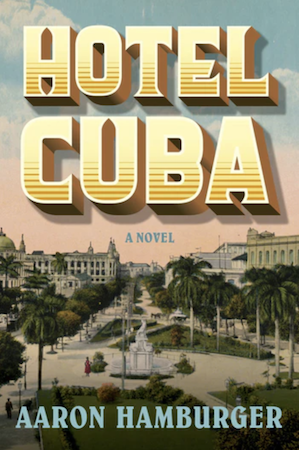
Aaron Hamburger’s stunning new novel Hotel Cuba imbues the immigrant story with love, sadness, and compassion, breathing new life into the classic genre.

This richly detailed book, set in 1922, is the achingly beautiful story of Pearl, a sober young woman fleeing the chaos of the Russian Revolution with her lovestruck and romantic younger sister. The two women are desperate to get to America, but when discriminatory immigration laws get in their way, they head instead to Havana, Cuba.

All this takes place during the time of Prohibition, when the island is flooded with American tourists eager to drink and indulge in various hedonistic pleasures. The culture shock Pearl experiences during her journey forces her to confront her past and make profound choices that affect her future. 

Pearl and her story stayed with me long after I reached the book’s final pages, and so I was eager to speak with the author, Aaron Hamburger who won the Rome Prize in Literature for his first book, The View from Stalin’s Head.


Morgan Talty: Where or how did this book start for you? I’ve heard you talk about drawing from your grandmother’s life story, and I’d love if you could talk about the role your family’s history played in writing this book.  

Aaron Hamburger: In my family, we’ve always known that my grandmother, an immigrant from a Jewish shtetl in Russia, spent a year in Cuba before coming to the U.S. and that she was arrested for trying to get into the country illegally via Key West. However, I didn’t appreciate the full dimensions of her story until after the election of 2016 when immigration dominated the news cycle. That’s when it really dawned on hitherto lunkheaded me that my grandmother was an undocumented immigrant. 

Also in early 2017, I came across an incredibly evocative picture of my grandmother from Key West, at the time of her arrest, in which she was wearing full male drag. This image was so different from the Yiddish-accented grandmother I knew as an old woman. 

I was so taken with the picture that I kept showing it to people. When I joined a group of writers advocating for liberal causes on Capitol Hill, I also showed the image to Senator Debbie Stabenow as I advocated for the rights of immigrants. The Senator’s response floored me. She said, “You’re a writer, you have to write your grandmother’s story.” 

I had never written historical fiction before, and my first thought was there was no way I could. And then I thought, well, maybe someday I could, but I’ve got other things to do. And then I thought, well, maybe I’ll just try a chapter for fun and see what happens. And then I wrote another chapter. And another. Ultimately I was too fascinated by the story and I simply couldn’t stop.  

MT: Hotel Cuba really does read like a renewed type of immigrant storytelling, and I wonder if you could speak a bit to the tradition of immigrant stories and what you think this book brings to the table? Or, in other words, how might this book surprise us about immigrant narratives? 

AH: I knew my grandmother, or “Ma” as we called her, as a frail older woman with limited English, whose fondest wish was that someday I might marry a nice Jewish girl. (Sorry about that, Ma, though I did marry a handsome Jewish doctor!) When I saw this picture of my grandmother in a man’s shirt, tie, and pants, I was reminded that she was once young, curious and open to new ideas and experiences just as I had been at that age. I also identified with her as a creative person. In her case, she made clothes; in mine, I make stories.

Another tricky idea out there is that people from earlier times are victims of history, unable to think and feel in complex ways as we do in our so-called enlightened age.

As I started researching this time period, I was impressed by the stories and details I found, how contemporary and modern they sounded. I think there’s this stereotype out there that immigrants from the past are all like the actors in Fiddler on the Roof, simple folk singing about tradition with kerchiefs tied around their heads, but this doesn’t accord with what I found in the historical record. Another tricky idea out there is that people from earlier times are victims of history, unable to think and feel in complex ways as we do in our so-called enlightened age. Oh yeah? Then how do you explain the fact that there were out gay people in Havana in the late 1800s, for example? 

I wanted to portray my main character, Pearl, as someone with impulses and feelings we might recognize today, even if her idioms (and therefore her consciousness as it’s affected by language) might be different. For example, I portray Pearl as bisexual in terms of sexual orientation, though she doesn’t use language to label those feelings in the way we might today.

MT: There is so much love in this novel, so much tenderness, yet it is never cloying, and there is also no sense of manipulation—this story is heartfelt in what I would consider all the right moral and ethical ways. It never preys on the reader’s notions of immigrant narratives to achieve a sense of feeling. And so I’m curious: how did you achieve this? Was it a conscious decision or just the way you write? 

AH: I approached this story as a writer of literary fiction, struggling to figure out in any given scene what my character might think or sense—not I. What is the best word or sentence structure or paragraph organization to capture Old Town Havana during the rainy season as Pearl might see it, or a how a young woman from a sheltered Russian shtetl might feel trying on pants rather than a dress for the first time? What’s the most accurate word in this particular sentence? Maybe that’s key to the way I write, an insistence of finding the most precise words for what I’m trying to evoke. When the language is false, you can be sure the content or ideas underlying it are false too. 

It also helped that I had recordings of my grandparents telling their stories, which I listened to over and over, not necessarily for details of their lives but rather to capture their sensibilities and their idioms. It struck me how insistent they were about very specific details that a casual observer might overlook. For example, my grandfather talked about how when he saw my grandmother for the first time she was wearing a beautiful coat with a fur collar. “I think I fell in love with that coat!” he said. Or later, when my grandmother tried to teach her sister how to cook, her sister confused potatoes and horseradish root. Talking about this fifty years later, my grandfather was still extremely indignant about this. Or when my grandmother described meeting my grandfather and feeling pity for him. “The way he dressed was challushus”—a Yiddish word that means what it sounds like, worse than horrible.

MT: Since you did a lot of research for this book, I’m wondering if you can share with me some details or information you found that didn’t make it into the book? 

AH: First, I would have loved to have written more of my grandfather’s story, which was just as dramatic as my grandmother’s. As a young man, he was constantly being sought after by various armies, which would have meant certain death for him as a Jew, given the antisemitism of the time. He had innumerable narrow escapes. Then he managed to reach Warsaw with his younger siblings but couldn’t get a visa, waiting along with the desperate crowds outside the American consulate. However, he heard from someone that he should go to a certain office where there would be a blonde woman at a desk. He was to leave some money on the desk, say nothing, ask no questions. He did. After that, he got the visa. 

The fear-based rhetoric around this issue was the same then as it is now. It’s only the places that the immigrants are coming from that have changed.

The most heartbreaking thing I had to exclude from the book is the fate of the characters after the close of the events in the novel. This was included in earlier versions of the book, but ultimately made the story too long and unwieldly. The earlier ending was based on real life: All the Jews in my grandparents’ shtetl (including my grandparents’ immediate families) were killed by the Nazis in World War II. My grandparents heard nothing for a long time, and then the news crossed the ocean. I remember someone saying the phone rang and my grandmother answered it, then let out a loud wail. 

Finally, I visited the National Archives to read the correspondence of government agencies at the time, and I was struck by the casual flinging about of vile racist terminology, embedded in flowery formal sentences. I’ll never forget a letter from a dentist in Florida complaining that the government wasn’t doing enough to arrest undocumented immigrants, and he was writing in order to protect the purity of the genetic blood pool of Americans from being contaminated because of immigration. I also held a delicate piece of paper with the most beautiful Chinese writing on it. Then I read the accompanying translation. It was someone reporting to the government about another Chinese person who was in the U.S. without papers.

MT: What were the most challenging aspects of writing this book? 

AH: Working on this book was a complete pleasure. I loved the characters, I loved the research, I loved traveling to Cuba and Key West and reading every book I could get my hands on, interviewing scholars and family members. But one challenge was that I had limited information about my grandmother’s true story, and there were gaps that I had to accept I would never be able to fill. (Like why was she dressed in male drag?) I relied on the research and use my best judgment to adopt the most plausible theory I could as to what could have happened. Also, because the book is a novel, I changed the literal truth to make a better and more coherent and convincing story. That’s my responsibility to the reader as a fiction writer.

MT: I feel that so many books situate characters in liminal spaces—placing them neither here nor there, neither where they’re coming from nor where they want to be. One could say these characters are “liminal,” but I’d be hesitant to say such a thing because the book is so deeply detailed and specific. Can you talk a bit about the idea of liminality in immigrant narratives and how Hotel Cuba averts it? 

AH: I hear your hesitation about the word “liminal” which seems like a big thing in literature right now. When I was in college, I learned about another hot literary term called “carnivalesque.” Apologies to those who are more conversant in theory than I am as a fiction writer rather than literary critic, but I interpret that term to mean what in Yiddish would be called “a mishmash,” a freewheeling mix of unexpected juxtapositions and combinations. Rather than toeing a line, as perhaps in liminality, the carnivalesque involves blurring the lines, coloring outside the lines, and messing up the lines. I like that kind of creative chaos. I taught English to immigrants in New York for many years, and I saw this dynamic at play, this imaginative mixing of cultures. That’s actually a big part of how English as a language has evolved, through the liberties taken with it by people who don’t feel bound by written and unwritten rules of the language because it wasn’t the one they grew up with. 

So whenever opportunities arose in my story to mix and match bits of different cultures, highbrow culture and pop culture, male culture and female culture, I grabbed them. For example, I read about Jewish immigrants in Cuba supporting themselves was by selling Christian religious icons. Androgyny was “in” in the fashion of the period. Also, one of the ways that women without papers got into the U.S. was by cross-dressing as sailors. All these kinds of details were interesting and welcome to me as I wrote.

MT: What do you hope readers take away from the novel?

AH: I’m going to be a total hypocrite here. As a writing teacher, I frequently warn my students not to structure their stories in order to express some kind of message. Kind of like the famous Jack Warner (of Warner Brothers Studios) used to say, “If you want to send a message, call Western Union!” How ironic, given that Warner Brothers, in the Golden Age of Hollywood, was known as a studio for producing socially conscious movies. I want Hotel Cuba to be a beautiful story, a moving story, an exciting story, but also a story that reminds us of the profound everyday courage exhibited by immigrants. So can we maybe as a society stop scapegoating them?

There but for the grace of God go I. If my grandfather had not broken the law by bribing someone in Warsaw and if my grandmother had not broken the law by making the journey she made as an undocumented immigrant, Hotel Cuba and the rest of my books would not exist. In fact, I wouldn’t be alive because my mother would have been rounded up with her fellow townspeople in Russia and shot by the Nazis—as the adult men were—or locked in a building and burned alive—as the women, children, and elderly were. 

When people leave their homes, it’s for a reason. I understand the desire to create and debate fair rules and systems, but what I don’t understand is the harshness, hard-heartedness, and callous fearmongering that prevents us from having a rational discussion about immigration just as it did in the 1920s. Do the research. The fear-based rhetoric around this issue was the same then as it is now. It’s only the places that the immigrants are coming from that have changed. 

7 Poetry Collections That Capture the Beauty and Brutality of the South

A lot of folks say that they don’t like poetry.

Which is fair.

It’s easy for poetry to lose touch with society. Many poems—or authors—are stagnant, stiff in formalistic structure and removed from modern language. Even worse are those pieces that are so strange and esoteric that they almost seem masturbatory.

But that’s not what I have prepared for you.

Beyond the jerrymandered districts and extreme conservatism that has a chokehold on political decision making, the American South is a diverse and dynamic place. While what definitively makes a work “Southern” could easily fill a college course (ending without resolution), there are a few elements that are key. Powerful use of imagery and symbolism. Natural settings. Blurred lines between real and supernatural, or present and past. A focus on place, history, and community. Racial tensions, poverty, and injustice.

The collections below have all this and more. The poems crammed between these covers are emblematic of what I always hope to accomplish with my poetry. They are raw. Unflinchingly honest. Alive. The kind of poems that stick deep in your gut like a wound that you can’t help but pick at. To me, that’s really what it means for a poem to be Southern. 

The Hurting Kind by Ada Limón

The current U.S. Poet Laureate’s most recent collection revels in the poetry inherent in the natural world and searches for those things that connect our lonely souls. Limón’s work seeks out the small mysteries of life, not to provide answers, but to encourage us to wonder at the weight of being. In doing so, her poems, gentle and warm, stand as a reminder to keep our hearts tender.

“I killed a thing because

I was told to, the year I met my twin and buried

him without weeping so I could be called brave”

—Ada Limón, excerpt from “The First Fish”

The Tradition by Jericho Brown

This Pulitzer Prize-winning collection examines the normalization of evil and terror in our day-to-day lives. Brown’s poems are urgent and direct, a call to arms before the gardens of our bodies die on the vine. His writing is visceral, at once emotional and sexual and violent and vulnerable. There is a righteous anger present just below the surface in many of his poems, stitching together environments and the bodies that inhabit them in a way that lays open the wounds of society, as though sunlight might provide some disinfectant.

“I promise that if you hear

Of me dead anywhere near

A cop, then that cop killed me. He took

Me from us and left my body, which is,

No matter what we’ve been taught,

Greater than the settlement a city can

Pay a mother to stop crying, and more

Beautiful than the brand new shiny bullet

Fished from the folds of my brain”

—Jericho Brown, excerpt from “Bullet Points”

How Much We Must Have Looked Like Stars to Stars by Alysia Nicole Harris

Harris’s collection is lush and honest, reveling in the wild glory of our bodies. The poems distill the ancient and the new, the religious and the erotic, life and death into a single point, weaving disparate scenes together to process trauma and come out the other side with a more profound understanding of the experience. Through it all, Harris toys with time as though it were little more than a pool of mercury, shifting through past and present to find those small moments that stick for a lifetime and, in so doing, bears her heart for us to devour.

“My body was a carcass. Ella and everybody up there wailing.
I’m thinking of a black-eyed angel, the dope boy in the attic

innocent as Anne, as a wolf under the moon. Stars hit high notes.
A full six octaves of guns. Wasn’t it sound?

I hid my virginity under my shirt. A stain of beets on our laundry
when we started hunting with revolvers, kneading the dead through soil.”

—Alysia Nicole Harris, excerpt from “Crow’s Sugar”

Love Song to the Demon-Possessed Pigs of Gadara by William Fargason

Fargason’s debut collection dives deep into the well of loss, memory, sickness, and generational trauma. The poems give voice to the deep grief in our bones, confronting belligerent fathers and toxic masculinity. Fargason pulls back the veil that many white families have used to conceal from themselves the sins of their forefathers and their own complicity in ongoing injustice. The poems rage through darkness and fear, but come light with the hope of reconciling our flawed nature with something larger than ourselves, with sudden shifts and a quiet poignancy disarming the reader as we come to see, memory by memory, life as something worth living to the fullest, pain and all.

“I am rebuilding
the engine of my head     but no longer
from the same parts     to keep the Pelham

out of my brain     and my brain out of
my mouth     when my Alabama is an instrument
I can’t forget     how to play     I know I can

only hear the music if I listen     when
I listen     I must listen to overlay the song
I was taught     with the song I must pass on

each note plucked on barbed wire     is full of rust     
the banjo must be restrung    and new
notes written     behind no gates    no violence”

—William Fargason, excerpt from “My Alabama”

Gossypiin by Ra Malika Imhotep

Imhotep’s debut collection is inspired by the plant medicine used by enslaved Black women to induce labor, cure reproductive ailments, and end unwanted pregnancies. Imhotep’s poems are lyrical, sung through a mouth which holds the South like an overripe peach, squeezing joy through gnashing teeth. The poems are a voyeuristic remixed antebellum collection of stories and wisdom, both written and gossiped, supported by archival references that satisfy intellectual curiosity. Reading the book feels like an act of voyeurism as we glimpse Imhotep’s personal history as they leap, surefooted, between emotion and history, between verse and body.

“How everything I know
about sound and poem
come from up out
red clay and get stuck
underneath my tongue.

How we wash the headstones
white with our mouths full
of laughter.

And ain’t that how we mourn?”

—Ra/Malika Imhotep, excerpt from “Home is a mouth full of spit for your tender heart”

The World is Round by Nikky Finney

Reading this collection is like looking through a cracked kaleidoscope. The book flows like a river through familial scenes to discarded memories to bright Southern evenings in which the twinkle of stars comes warm and friendly. While the collection lacks some of the fury in Finney’s other works, it does keep some of the fire as Finney calls for compassion and community with language that feels like silk when read aloud, accelerating through sharp, well-crafted verses.

“The woman with cheerleading legs
has been left for dead. She hot paces a roof,
four days, three nights, her leaping fingers,
helium arms rise & fall, pulling at the week-
old baby in the bassinet, pointing to the eighty-
two-year-old grandmother, fanning & raspy
in the New Orleans Saints folding chair.”

—Nikky Finney, excerpt from “Left”

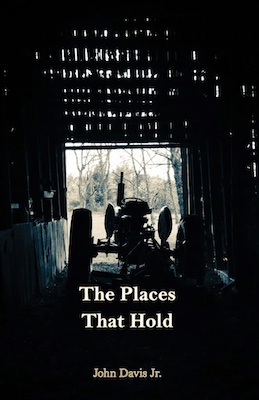
The Places That Hold by John Davis Jr.

Davis’s poems are direct and clear, defying sentimentality by using concise narration and carefully controlled images to paint scenes of rural and old Florida. His poems are well informed by his heritage—he grew up an 8th-generation Floridian on a citrus farm—and his writing reflects a beauty and pragmatism that comes from a deep knowledge and appreciation of the cycles of nature, mixed with a careful study of the atrocities of Florida’s history, most notably the infamous Dozier School for Boys.

“They laughed the day they broke my humerus
and splinted it with wire coat hangers wrapped
in black tape so my skin couldn’t breathe,
so I’d understand honest pain.”

—John Davis Jr, excerpt from “Crooked Bones”

Reddit, Tell Me Where I Went Wrong

AITA for Repairing My Neighbor’s House?

My neighbor (32F) is not speaking to me (44M) because I made some repairs to her home while she was out of town. These were mostly exterior and relatively minor (clearing debris, replacing deck boards, adding a utility sink, installing a rain cap), but I did climb onto her roof. She says I was out of line by not asking permission and that she no longer trusts my judgment.

We live two streets away from each other in a small neighborhood of old houses. We have been friends for a year and hooking up for about three months. I would like more, but she is a relatively new widow and single parent to a four-year-old boy and doesn’t have the capacity right now. She is seriously my ideal woman, though, and I am willing to wait. I am not the most attractive guy and never thought I’d interest a person of her caliber. We’ve gone out a few times when her mom was watching her son or if there was a “Parents’ Night Out” at his daycare, but mostly it’s a couple hours together after her son goes to sleep. She’s invited me along with a larger group to go hiking a couple times, and we get each other’s mail and water each other’s plants if the other person is out of town.  

I bought a house in this neighborhood after my divorce because it was close to my job and to my ex-wife’s house (we share custody of two teenagers), but a lot of people move here because it is one of the few affordable city neighborhoods in a good school district. Then they realize that because the houses are all extremely old repairing them is a hassle. You think about yanking down the wallpaper somebody painted over only to discover lead paint or try to replace a door and realize you’ll have to get one custom made. I’m an engineer and can get into this kind of stuff, but a lot of people don’t. My neighbor told me on more than one occasion that her house stressed her out. She could handle the yard work and minor repairs and outsource the truly big projects, but then there were all of these things in between. Installing a utility sink felt impossible when you had a full-time job and a young child and no spouse, but were you really going to pay someone to do that? “You don’t have to pay me,” I’d tell her. “Get the sink, and I’ll put it in,” but she wouldn’t let me. I figured it was about her son and his father, about not wanting him to see anyone step into that kind of role, and so I dropped it.

The night before she went out of town, we were on her porch drinking beers and watching for the fox that lives in the overgrown lot across the street. Her son had gone to bed about thirty minutes before and was still sleeping lightly. We couldn’t go upstairs yet and so we got to talk. Work, TV shows, a book she almost loved whose ending felt contrived, my daughter’s failing grade in chemistry that brought me and my ex-wife to a moment of real collaboration. We had a fan going to ward off the mosquitos, and the sunset was just beginning to brighten the edges of the summer sky. When the dog walkers passed, we’d wave, and this gave me a good feeling, all of these people seeing me with her. It felt like being claimed.

“This is nice,” I said.

“What?”

“Being with you. I’m glad we don’t sneak around.”

She made a face. “Why would we do that?”

Her voice had a slight edge to it, and I knew I had to tread lightly. I couldn’t imply she was risking her reputation or trusting a person she barely knew to behave well if whatever it was we had ended.

“That first night you slept with me I was so happy,” I said. “I told myself, she has a kid and we’re neighbors. She isn’t going to hook up with me unless she thinks it could really be something.”

She took a long drink of her beer and seemed to consider her response. I was hoping she would say I was right, but she just shrugged. “We’re both adults. You never struck me as a lunatic.”

“Thank you.”

She laughed. “Sure.”

She tapped her phone and the light came on. “We can go in soon. Unless you want another beer.”

I shook my head. “I’m trying to say that I like you. I—”

She put a finger to her lips and shook her head. “Let’s not do this right now. Please?”

Then she led me upstairs, took off all our clothes, and pressed her warm body against my chest. The next morning, she and her son flew to Florida for a vacation at her parents’ timeshare.

I had a key because I was picking up her mail and watering her tomato plants, feeding her cat and sticking around long enough for him to get some attention. This, she had asked me to do. When a bad storm came through, shutting off the power in half the neighborhood, she asked if I would make sure her sump pump was working. I said, no problem. She has carpet in her basement and seemed real worried. I said, worst case scenario, I’d just install a battery-operated backup. This was over text, but she seemed so happy I almost hoped there would be an issue so I could fix it, but everything was fine. I bounced the toy mouse and let the cat whack it around for a while, and then I made a list of every old or broken thing in her house.

I was at her house every day for several days. I added a utility sink, replaced her dining room light, ripped out and replaced the flooring in her bathroom. I spent most of that Saturday in her backyard, cutting thorn bushes and removing rotten deck boards, and so I am not sure why her neighbors didn’t recognize me. I had waited until dusk to fix her chimney cap because it was hot during the day and I didn’t want to burn myself on her shingles and, apparently, the sight of a middle-aged man with a ladder climbing on top of an empty house at night was suspicious enough that someone called the police.

Three squad cars sped down the street with their lights flashing, and cops ran down the sidewalk with their guns drawn. From the roof, I sensed their urgency and fear and looked around for the criminal they seemed ready to shoot. “Raise your hands,” one of them shouted at least three times, but until he said, “You, on the roof,” I didn’t realize he meant me. They shone a spotlight on my body and instructed me to leave my drill on the roof and slowly climb down the ladder. On the ground, I explained the situation, but it was clear they still found me suspicious. If I belonged here, the neighbors should recognize me; if my neighbor wanted me on her roof, I should be able to call her and let her vouch for me.

“It was supposed to be a surprise,” I said. “I’m not her boyfriend yet, but I’d like to be.”

A bald cop with thick dark eyebrows shook his head. “We’re going to need you to leave. We’re going to stay here until we watch you go.”

His voice said I should be ashamed of myself, and I was starting to wonder if he was right—if I had totally misread the situation with my neighbor, if I was waiting for a time that was never going to come.

“Can I get my stuff?”

Alone with me, behind the house, a young cop with an overgrown crewcut told me he’d been where I was and he got it. He, too, had once been so into this girl that he’d missed the obvious signs that she didn’t really like him. But also I shouldn’t worry. There were a million lonely women out there, ready to meet a guy like me.

“Do you know Tinder?” he said. “Bumble? Hinge?”

His familiarity unnerved me. He looked about twenty. I jiggled the ladder to make sure it was steady and climbed back on the roof to retrieve my drill. From this height, I could see all of the yards between her house and mine, the raised beds of squash and tomatoes, lumber and cardboard shoved under porches, a kiddie pool propped up against a fence to dry, and something about this view made me feel close to my neighbor. I didn’t feel like an asshole yet or even a fool. I thought, “I’m in love with this woman, and she is still grieving. Fixing her house is the least I can do.”

Delia Cai on the Future of Asian American Art

In Delia Cai’s debut novel, family drama meets romcom meets small town politics. Central Places begins in New York and follows Audrey Zhou’s return to rural Illinois so her parents can meet her white fiancé, Ben, over the holidays. The Zhou family is one of the only non-white families in Hickory Grove, and Audrey’s return forces her to reflect on the awkwardness of her upbringing. She reconnects with old friends and an unresolved crush, Kyle, who she left behind. After speaking to Kyle as an adult, she begins to see her high school experience in a new light. Her relationship with her parents, especially her mother, comes to a head as Audrey, Ben, and Audrey’s parents are forced to spend the holiday week together and old feelings bubble to the surface again.

After reading Central Places, I couldn’t stop thinking about how Asian parents and children talk to each other, and the ways we can hurt each other in casual conversation. A relationship that is built on sacrifice and debt can, in many ways, be both unifying and straining, and can lead to a whole minefield of expectations and obligations.

I spoke to Delia Cai, a culture writer for Vanity Fair, about growing up “in the middle of nowhere”, the dynamics between immigrant parents and their American children, and where Asian American art will be in the next ten years. 


Olivia Cheng: When did you first start writing this book and what served as the inspiration for the story?

Delia Cai: It’s pretty close to my experiences growing up in Central Illinois and then moving to New York and reconsidering my upbringing with a degree of distance. I’ve been living in New York for seven years now and there was this funny period of time where every time I would go home for the holidays, it felt more and more like entering another dimension. In my twenties, going back to Dunlap, Illinois felt increasingly strange and foreign.

OC: Among many things, your novel is a love story to this rural town in Illinois, and the racial experience of growing up there. The book bursts with emotion about a Walmart supercenter and the local bar, Sullivan’s, even as the rural area often rejects or teases the Zhou family. How did you think about and achieve this balance between having longing and the politics of the post-Trump era?

DC: Growing up, I never really felt like living in Central Illinois or going to places like Sullivan’s or the Super Walmart was romantic. I felt like I lived in a soulless middle-of-nowhere suburban-rural area and there was nothing to love about that. I couldn’t wait to move to the center of the world where things mattered and life felt like living on a television show.

But my experiences going home and revisiting these places that were so central to my upbringing and realizing how much of my life and memories, the experiences of growing up, were tied to these places, I felt a fondness for the random hours I spent at Walmart with my friends or all the hours I spent at the one bar in town that everyone goes to over Thanksgiving break, because nobody had anything else to do! 

I wanted to document and create a love letter toward places that you might never see on a TV show.

Tracking how my feelings changed, I wanted to honor these places. Because now that I live in New York, you do feel like you’re on a movie set, but all these places are already claimed in a way. You can’t watch TV without seeing Washington Square Park a million times with millions of people. I wanted to document and create a love letter toward places that you might never see on a TV show or on HBO or in a movie. I just had this suspicion that most people have a really strong attachment and ties to places like these that could be described as forgettable but were also so formative.

OC: Who was the audience you had in mind when you were writing this book?

DC: This sounds cheesy, but you know how everyone says, “Oh, write the book for your younger self,” but I think that’s who it was for. Also I was picturing my friends. I’m not really close with friends from my Illinois life, except for maybe one or two people. All the close people in my life came in college or after. So it felt like my life before eighteen was this box that I haven’t shown a lot of people. Like I’ve never really opened it and shown it, even to my best friends and the people closest to me. I never really knew how to totally explain it. Or my friends weren’t from small towns like that or families like that.

The novel is also an explanation for who I am to people in my life who I care about. An explanation to that hilariously loaded, stereotypical question of “Where are you from?” I wanted my friends to read it and think “Oh, this explains a lot about you.”

OC: What were your inspirations in writing this book?

DC: Reading Jenny Zhang’s Sour Hearts was a story of specificity. Here’s a cohort of young girls who grew up in a not wealthy community in Flushing. I was so blown away, because in some ways, I thought about parts of the story I related to being Chinese American and then parts that felt totally foreign. I remember thinking that the specificity of her stories were inspiring. Those stories were visceral and painful, and it seared images and scenes in my mind.

I was also reading Meg Wolitzer’s novella, The Wife. I looked at that story for structure, because it was about how a woman and her husband go on this trip and shit falls apart on the trip. It also started on a plane and I remember thinking that I should write my book that way! Those were two pivotal works.

OC: I loved Audrey’s self-interrogation and honesty about how she has contributed in her own ways to the detriment of her relationships, which is somewhat of a subversive ending given endings like Everything Everywhere All At Once, where the burden is often on the parent. Did you always know this was the dynamic when you wrote this book?

DC: I’m really glad that comes across, because that was really important to me. Writing this dovetailed with my own growth and understanding of my parents in my twenties. For a long time when you’re a young adult, you can only see and relate to things from your point of view. But there is also a layer of when you’re the child of immigrants where you’re forced from a young age to have this perspective of your parents as people who sacrificed everything for you. You’re told, “we sacrificed everything for you,” “we did this for you.” You carry that perspective and you think about how you don’t want to carry it, because it’s so much! That dynamic was something I struggled with—am I allowed to feel ungrateful, am I allowed to feel resentful knowing that every point of discomfort I’ve had doesn’t even count compared to what my parents have been through? You always have that burden.

Am I allowed to feel ungrateful or resentful knowing that every discomfort I’ve had doesn’t even compare to what my parents have been through?

But the transformation came from understanding my parents as people, especially when I got to the age they were when they came to America. Then I was like, “Oh.” I just turned 30, but my mom had me when she was 29 and when I turned 29, a lot of things made sense. If I imagined having a baby in a country where I barely spoke the language… We had this chat about how during my first few years in New York in my early twenties, I was flailing—I didn’t like my job. She would ask, “do you want to go back to school,” “do you want to get an MBA,” “do you want to go to grad school?” I remember being so angry when she would say things like that, because that wasn’t what I meant. The way I interpreted that was, “See I told you that you weren’t able to do that. Now you need to go back to Plan A.”

It took me a long time to realize that my mom was saying those things because she thought she had failed me. She thought she had set me up for success and when I was flailing, she was saying there were so many things to do, that I had so many options. She was speaking from a place of fear where she was wondering what she did to have me be out in New York and feel so alone. It was this galaxy brain moment where I really thought she was judging me, but she was just freaking out in her way. We finally had a conversation about it a few years ago, and it was the best conversation we ever had. She admitted she was scared for me and wanted me to feel like I had options. I told her I thought she was judging me for doing something wrong.

Breaking past this childlike “me” point of view and breaking past this other barrier of gratefulness to parents and superseding that on a personal level, I saw that my parents had these fears. They came to America, because they wanted to move to America. A huge part of it was inhabiting the age they were when they started making these decisions. I can understand where their mind was, because that childhood narrative is neat, but doesn’t capture the complexity of why my parents picked up and moved their lives, how hard that must have been, and all the reasons they did it.

OC: There has been some discourse in the past five years about Asian American women dating white men. Can you walk me through your thinking of making Ben white and the absence of Asian men in the book?

DC: Because I grew up in this area where there was a very small Chinese community, I didn’t know Asian-white relationships were so fraught until I moved to New York and experienced the Internet in that way. It wasn’t just my family in rural Illinois, but I felt detached from it enough and there wasn’t Reddit or anything. It just never came up, because there were not enough of us in school! As high schoolers, we were not interrogating why the guys we had crushes on were white guys. I’m so fascinated about growing up now where you can have that vocabulary and framework where you can think critically and understand the white gaze. But I just had no idea, so I was writing a dynamic I knew about and that I experienced based on relationships I had. 

I think in some ways, I’m writing what I know, and I would also never want to generalize Asian American women who have dated white men, but when I looked at those relationships critically and from the benefit of being informed, I realized that when you spend your whole upbringing in a white place, you start equating whiteness with desirability and superiority. I started to understand where the appeal came from. Assimilating is how you emotionally survive. It can feel like that’s your primary drive. I don’t mean to be dramatic, but you’re thinking, “I’m just here to blend in.”

I gave all those anxieties and fears to Audrey, so it made so much sense to me to make Ben white, because she’s grown up that way. She’s someone who even into her adulthood, and I think there is a degree of internalized racism, and she’s someone who’s thinking, “I’m trying to fit in, I’m trying to survive,” and the idea of American Dream in her eyes is creating and being part of a family that is the opposite of what she had and a family that is safe. A family that is successful and can blend in and feel secure. And a white family is the secure unit pictured in our society. So that made sense for her.

I’m not trying to make a statement of Asian female-white male relationships, but I think about it a lot personally of course.

OC: A lot of modern Asian American literature revolves around really elite, high-functioning women and their immigrant family drama like Everything I Never Told You by Celeste Ng and Chemistry by Weike Wang. How do you think this novel contributes to this modern canon? And how do you think it rebels against it?

DC: I think it’s really funny that there’s this archetype of an Asian American woman who has her stuff together and over the course of a novel can fall apart in different ways. And it’s interesting because it speaks to the type of person who writes a book. One way to look at it is that the Asian American authors who “make it” have probably benefited from a certain kind of personality and drive, where they are thinking “I can write a novel and I can sell it.” There are a lot of forces and biases that may select for that.

When you come from an immigrant or POC background, you’re not walking around like a white guy named Tyler at an MFA program saying “The world needs my voice.” You’re coming from the mentality and background of “until I feel like I’ve earned my place, I’m not contributing my voice.” I don’t want to put words into anyone else’s mouth, but that’s how I felt so it’s funny to me that there’s this clear set of second-gen Asian American woman who have all the privileges and benefits of being in a secure place to succeed professionally and write about our experiences and have the time and energy and wherewithal to reflect on our families. My mother did not have the time and energy and wherewithal to do that.

I’ve written about this in other places, but I see that Asian American art is so much about the origin story. It’s really art created by kids of immigrants who are in a place in life where they are in a place to be making art, to be creative professionals. Of course we’re seeing this story where we’re talking about, “Here’s what it’s like to grow up in an immigrant household,” “Here’s how uptight and successful and professional I am now,” but it’s a big unpacking of this trauma.

Asian American as a term has only been around for a few decades. It’s easy to say it’s the same old story of second-gen origins, but Asian American pop culture and art can be looked at in terms of generations. We’re still at the very beginning. Now that this millennial generation really has the tools and we’re capitalizing on this moment in culture where pop culture says they are receptive to new voices and new stories, this is like some form of a draft of the Asian American story. All of the people in power who can tell stories of this scale come from a similar background to be able to do that. I can’t wait for the next generation who will tell stories about being a third or fourth generation, where the immigrant narrative is no longer part of their story.

OC: Where do you feel like Asian American art will be in the next ten years and where do you want it to be?

DC: What excites me the most is now that we have blockbusters like Shang-chi and Everything Everywhere All At Once, these tentpoles of pop culture, these big pieces of art in the imagination, we can move into stories of incredible specificity. It’s interesting because so much of the criticism around these big moments is that Shang-chi doesn’t do it for everyone. Shang-chi does not represent everyone in the Asian American diaspora, for sure. But I think that these sort of big commercial stories are great, because next we move into stories of incredible specificity.

For example, Minari is an incredibly specific story about Asian America. It’s like this family living in Arkansas and they want to farm. That is based on Lee Isaac Chung’s childhood and I love that we have that. I cannot wait for the thousands of experiences and stories, even under the rural Korean American experiences in the ‘90s, all the tiny, little different degrees of that we can explore.

Asian America’s strength and also where we have the most conflict is that it’s such an umbrella term that ultimately means nothing. We’re all bunched in together, but our grandparents hated each other. It’s wild to think that we’re all in one unit. But on the flip side, we’ve barely begun to go into the infinite swath of stories that are available and I’m really excited for that. I hope Central Places can cover a tiny pixel of all of the possible Asian American stories to be told—Chinese American growing up in Central Illinois, in the Midwest-type of experience during the emo pop-punk days. That’s one experience that I would like to commit to in the capital P project of Asian American storytelling. I can’t wait to experience all the billions of other pixels in that picture.

Predicting the 2023 Pulitzer Prize for Fiction

The Pulitzer Prize isn’t the only major literary award, but it is the one that seems to get the most attention. 

The Old Man and the Sea. To Kill a Mockingbird. The Optimist’s Daughter. The Color Purple. Lonesome Dove. Beloved. The Amazing Adventures of Kavalier & Clay. Gilead. The Road. The Goldfinch. The Underground Railroad. Whether we love them or we hate them, they are books that will always be a part of America’s rich literary history because they are past winners of the prestigious Pulitzer Prize for Fiction. 

Predicting the winner for the upcoming Prize, which will be announced on May 8th, is tough. You see, with the Pulitzer, there can be big surprises. For example, I think few people would’ve guessed recent wins by Paul Harding’s Tinkers or Andrew Sean Greer’s Less. Small press books and humorous novels aren’t necessarily the common choice for the Pulitzer Prize. Similarly, short story collections and debuts are rare winners, so the announcement of Jhumpa Lahiri’s Interpreter of Maladies was a double shock as the winner in 2000. The most difficult year in recent memory to offer a correct guess, though, was 2012. No book won. Honestly, who would’ve written “none” in a prediction contest?

No matter how difficult it might be to figure out the year’s winner ahead of time, it’s still fun. It’s a way to reflect back on the literary year that was—and to uncover those works of fiction that might’ve been missed when they were released. 

In shaping my predictions, previous awards, critical acclaim, general buzz, and a little bit of plain intuition are the top factors that I focus on. I also try to keep my personal feelings about my favorite books of the year away from my predictions, which is why you don’t see Sequoia Nagamatsu’s How High We Go in the Dark, Holly Goddard Jones’ Antipodes, or Silas House’s Lark Ascending included below. 

Finally, before I get to what I believe are this year’s top contenders, I have to mention the following titles because they’ve been such critically beloved books this year: Sindya Bhanoo’s Seeking Fortune Elsewhere, Hernan Diaz’s Trust, David Santos Donaldson’s Greenland, Jonathan Escoffery’s If I Survive You, Percival Everett’s Dr. No, Tess Gunty’s The Rabbit Hutch, James Hannaham’s Didn’t Nobody Give a Shit What Happened to Carlotta, Jamil Jan Kochai’s The Haunting of Hajji Hotak and Other Stories, Sarah Thankam Mathews’ All This Could Be Different, and Dani Shapiro’s Signal Fires. Based on other awards and attention, these works are certainly in contention for the Pulitzer, but there are 10 other titles that I’m watching a little closer as we reach the big announcement.

So, let’s get to it. In order, here are the books most likely to win the 2023 Pulitzer Prize for Fiction:

10: Gods of Want by K-Ming Chang

I know that I’ve established that short story collections aren’t necessarily likely winners of the Pulitzer Prize for Fiction. In fact, only two have won since 2000—Lahiri’s Interpreter of Maladies and Strout’s Olive Kitteridge. But another collection has to win at some point, and 2023 seems like it could be the year. Why not go with Chang’s magical and wonderfully weird Gods of Want? I mean, seriously, it’s hard to root against a book that features ice cream, ghosts, and a plastic shark. Chang’s previous book, Bestiary, was a huge success, and Gods of Want has received some pretty sweet critical acclaim. It was on “best” lists at The New York Times and at NPR, and it was also a finalist for a Lambda Award.

9: Nobody Gets Out Alive by Leigh Newman

Another story collection that’s done well with critics is Nobody Gets Out Alive. Set in Alaska, Newman’s book turns to a group of affecting stories that focus on women and home. This one’s already been longlisted for the National Book Award and The Story Prize. It’s also appeared on many, many “best of” lists. I wouldn’t be surprised to hear its name come Pulitzer day.

8: Either/Or by Elif Batuman

Batuman’s The Idiot was a Pulitzer Prize for Fiction finalist in 2018, so this sequel, which continues to follow Selin Karadag’s collegiate journey at Harvard, is definitely on the radar when considering possible contenders. Appearing as one of The New York Times’ Notable Books of 2022 is another reason to watch for Either/Or.

7: Tomorrow, and Tomorrow, and Tomorrow by Gabrielle Zevin

Tomorrow, and Tomorrow, and Tomorrow has received numerous accolades. For example, Entertainment Weekly and Time both listed it as being among the best books of the year. It also doesn’t hurt that video games seem to really be having a moment–I’m thinking of the huge success of The Last of Us and The Super Mario Bros. Movie. While Zevin’s latest isn’t necessarily about video games, they do play a huge part in a book that navigates love, friendship, and failure.

6: The Furrows by Namwali Serpell

Books about memory and grief are kind of my thing, and it seems like many critics feel this same way—at least when looking at Serpell’s The Furrows. Serpell’s latest is one of the most acclaimed books of the year. It was a finalist for the National Book Critics Circle Award. Kirkus Reviews and Publishers Weekly (and several other publications) picked it as one of the best books of the year. It seems like an obvious contender.

5: Night of the Living Rez by Morgan Talty

I can’t talk book awards without mentioning Talty’s debut collection, which explores Native American life. This book has been seemingly everywhere. Among other recognitions, Night of the Living Rez won the PEN/Robert W. Bingham Prize and the John Leonard Prize (from the National Book Critics Circle), and it was also a finalist for the Andrew Carnegie Medal for Fiction. I’m convinced that this book will be taught for many years to come, and a Pulitzer Prize would kind of help seal the deal.

4: The Town of Babylon by Alejandro Varela

Varela’s novel is about so many things, but community is one of the book’s central focuses. And what an exploration of community The Town of Babylon provides. The Town of Babylon feels like a book of our time, and it would be a worthy winner. It was a finalist for the National Book Award, and it’s been on more “best” lists than I can count. Watch for it—and read it, if you haven’t. 

3: Demon Copperhead by Barbara Kingsolver

Kingsolver is one of our most celebrated writers, and she’s never won a Pulitzer. This in itself doesn’t make Demon Copperhead a frontrunner. What makes Demon Copperhead a frontrunner is how good it is—and how timely it is. I haven’t actually met a reader who doesn’t love this book. Seriously, too. In a way, this kind of love reminds me of Anthony Doerr’s recent winner, All the Light We Cannot See. With Demon Copperhead, Kingsolver takes us deep into Appalachia in this coming-of-age novel that looks at poverty and addiction, and it’s an unforgettable story. Critics and readers alike would likely celebrate a win for Barbara Kingsolver’s Demon Copperhead.

2: The Book of Goose by Yiyun Li

The Tournament of Books is basically the greatest invention of the 21st century for book lovers. For anyone not familiar with it, this March Madness-style event pits books against one another, with a judge deciding the victor in each round. The Book of Goose was this year’s winner, and it wasn’t really that close. On a critical level, too, this expansive story about friendship and loss and love has done very well. It won the PEN/Faulkner Award. It was longlisted for the Andrew Carnegie Medal. It made the “best” list at places such as TIME, Los Angeles Review of Books, San Francisco Chronicle, and LitHub. Yiyun Li is an incredibly respected writer. The Book of Goose would be my top choice if it weren’t for…

1: Bliss Montage by Ling Ma

I know. I know. It’s a short story collection. So few of them have won over the years. But it’s time! Plus, this book is spectacularly good. I read it a few weeks back (I missed it somehow when it was released), and I can’t stop thinking about it. It captures who we are perfectly—reflecting that American life theme that the Pulitzer likes to honor. In Bliss Montage, Ma looks at issues of loneliness, home, motherhood, and love. Ma has already won two major awards for Bliss Montage: the National Book Critics Circle Award and The Story Prize. A third one could very well be on the way.

That’s it. I think it’s between Kingsolver, Li, and Ma, with one fantastic story collection claiming victory. I mean, another story collection has to win at some point, right? 

No matter what book takes the Prize, I think literature is also a winner on Pulitzer day. The world will be talking about—and celebrating—the written word. That’s a pretty great thing.

7 Novels That Celebrate Pop Music

I used to have a lot of misconceptions about what made for compelling literature. Of course, a novel peppered with references to critically acclaimed texts and high-brow films and classical music—or just things generally held in high regard—are commonplace. But as someone who enjoyed pop music, not as guilty pleasures but as something worthy of artistic merit, of analysis, I used to wonder if certain works would hold the same critical weight if, say, the Spice Girls were referenced in a totally unironic way. 

Pop music has shaped my life to such a significant degree that I often preface stories about my childhood with: “I swear I’m not joking,” before proceeding to tell someone that I measure the timeline of my life in Mariah Carey albums—2005 isn’t simply 2005,  it’s the year she released her tenth studio album The Emancipation of Mimi and literally changed my life—to bewildered faces of course. Before I think about my own life in, let’s say, 2007, I think about Britney Spears’ tribulations and the release of her album Blackout

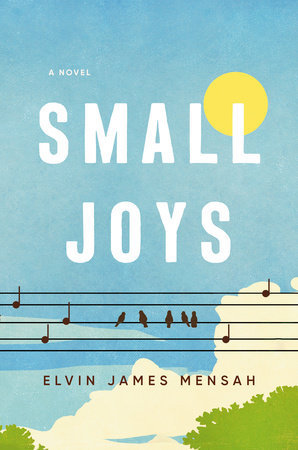
Pop is notoriously nebulous in definition. But the definition I’m going with here is music is a hybrid of pop and R&B. My debut novel, Small Joys, set in 2005, is filled with references to ‘90s and early 2000s pop songs. In earlier drafts, it was void of any such references; I felt a little embarrassed centering a protagonists interests on something that so often eluded respect. For whatever reason, I felt as if my novel and its characters wouldn’t be taken seriously, if it leant too much into this obsession of mine, that it lacked a certain intellectuality. So, to see pop music taken seriously in fiction, to have it celebrated and not mocked, always sets my heart alight.

These seven novels unashamedly celebrate the joys of contemporary pop music. Quite a few of them also inspired me in my own writing, and creating a world scored with music that felt authentically me.   

Brown Girls by Daphne Palasi Andreades

Set in Queens, this novel is a striking story told in a chorus of voices, following a group of young women of colour as they navigate life. Brown Girls is an ode to so many things—to girlhood, to Black and Brownness, to joy—and threading all of this is a love for pop and R&B music: Spice Girls, Destiny’s Child, Aaliyah, and yes, Mariah Carey. We have characters who routinely sing “Heartbreaker” at the top of their lungs. It beautifully captures the nostalgia that many millennials feel when reflecting on the era of pop, where every hit seemed to be produced by Timbaland or Darkchild. It’s truly joyous. 

Rainbow Milk by Paul Mendez

I read this novel in the early stages of writing Small Joys. At the time, I was still struggling to find my voice and was desperate to see what kind of fiction other Black male writers were producing. Rainbow Milk came along at just the right time. The novel is a bold meditation on religion, class and sexuality, following a young Black gay man, Jesse, as he makes a new life for himself in London. I was utterly entranced by how deeply contemporary pop and R&B music was infused into the story—from cocaine being done off Mary J. Blige’s My Life album, to a Sugababes single being bought in the hopes that it might be number one on the charts. 

Open Water by Caleb Azumah Nelson 

Open Water is a gentle and complex debut, mapping the relationship between two young Black British artists, navigating love and race in Britain. Whilst no one would consider Frank Ocean or Kendrick Lamar guilty pleasures—or even pop by any stretch—it’s always a delight seeing contemporary musicians referenced and have it be a source of joy for the protagonist. 

Daisy Jones and the Six by Taylor Jenkins Reid

Daisy Jones and the Six is a novel charting the stratospheric rise and fall of a 70’s band and their tumultuous relationships with each other. In another life, I was a music-blogger. Things like anticipating the publication of music charts in the UK and US was always a highlight of my week, as well as knowing how much an album had sold in a particular week. So when I read this and saw things like chart positions and albums sales and this band’s drive to be commercially successful truly satisfied the music industry/chart geek in me. 

Mayflies by Andrew O’Hagan

Mayflies is one of those clutch and hold to your heart novels for me. It’s a coming-of-age story about a group of guys from Ayrshire, Scotland growing up in the ‘80s. Here, we focus on the friendship between James and Tully, which is built on the foundations of films and music. I love a novel with a sensitive male friendship at its centre, and the way the characters joyously go back and forth on their opinions on certain films and artists, reminded me a lot of my own relationships. 

The Unraveling of Cassidy Holmes by Elissa R. Sloan

This novel speaks, quite deeply, to the pop music nerd in me. Like the tv show Girls5Eva that came after it, it captures 2000s pop culture so perfectly. Here, we’re following the rise and subsequent implosion of a fictional girl group, Gloss, who are directly inspired by the Spice Girls. As someone who used to make up their own popstars and pop-groups, this was boatloads of fun to read.

High Fidelity by Nick Hornby

Perhaps this book shouldn’t be on this list because from the Beatles to Neil Young to Pink Floyd, our protagonist, heartbroken record store owner Rob, references music that is often widely critically acclaimed (aside from a stray mention of Madonna’s “Holiday” I suppose). But how could I not include a novel with music so rooted to its heart, and probably holds some sort of record for how many song references one single book has.

Our Favorite Local Indie Bookstores

Bookstores are safe havens for readers. They offer quiet places to flip through novels, chances to meet your favorite authors, and opportunities to form community with people who might just love the same niche subject as you. I often find myself stopping by my favorite indie shop to splurge on new nonfiction or buy another set of notebooks. From readings to book clubs, and everything in between, independent bookstores are the heart of the literary world, and we are sharing our favorites.

Rough Draft Bar & Books in Kingston, New York

“Rough Draft is located in Kingston’s uptown neighborhood on the oldest intersection in America; the buildings on all four corners were built before the revolutionary war. Behind its stone facade, you’ll find one of the busiest businesses in town. Good luck finding a place to sit and work, but you can always find the latest releases, and a coffee (it’s open from 8am-8pm everyday, which is rare and special in these parts). In the summertime, their outdoor picnic tables are a great place to grab a happy hour beer and talk books.”—Halimah Marcus, executive director

Photo via Black Spring Books Instagram

Black Spring Books in Brooklyn, New York

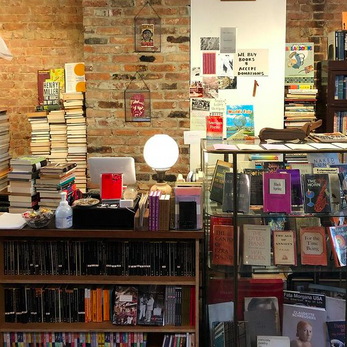
“Everything about a visit to Black Spring Books feels like a discovery. It’s innocuous, fenced-in, and easy to miss on a quiet side street in Williamsburg. But once you find it, and step over the threshold and inside, it feels oddly familiar. Every reader has dreamt of this bookstore that doubles as a literary social club—piled floor to ceiling with vintage hardcovers and modern first editions—the sort of small, quiet oasis where you can curl up with a book you’ve never heard of, and be transported into a different era, while the bookstore’s cat slinks into your lap. Black Spring, named for Henry Miller’s short story collection, feels like it might very well be haunted by the ghost of Henry Miller, who grew up in the house next door. Black Spring Books was founded in 2021 by Russian-American poet Simona Blat. Stop by for a glass of wine, good conversation, and an even better book.”—Denne Michele Norris, editor-in-chief

Photo via Addison’s Instagram

Addison’s in Knoxville, Tennessee

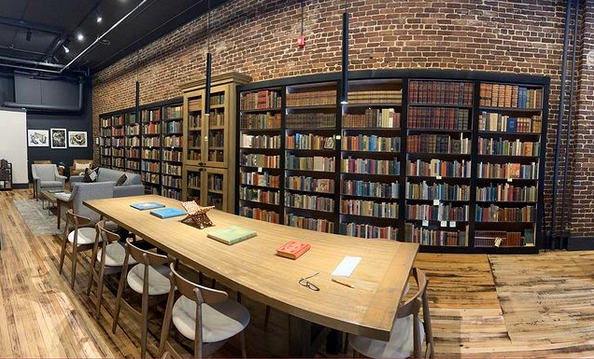
“Going to Addison’s, in Knoxville’s Old City, feels like stepping inside the parlor of a wealthy and magnanimous old merchant. On the first floor, sunlight pours in through huge windows and glows off the old wooden floors. A chess set awaits players in a bright corner nook. The brick walls hold endless shelves of rare, gorgeous, and sometimes strange antiquarian books that make for charming gifts. In the center of the room, the long library table is a sweet spot to hang out and work. There’s also a delicious tea bar in the back. Downstairs, you’ll find more books, comfy chairs, and tables. A visit to Addison’s reminds me that books are more than just information-holders; they’re also beautiful, and often curious, physical objects.”—Kelly Luce, The Commuter editor

Photo via Yu & Me Books

Yu & Me Books in New York, New York

“Yu & Me Books is a jewel box of a bookstore/bar/cafe located in New York City’s Chinatown, specializing in literature by writers of color and immigrants. In addition to readings and a monthly book club, they host community events like open mic nights, clothing swaps, and potting classes. More than just a bookstore, Yu & Me is a community space for marginalized writers and readers in a working-class immigrant neighborhood that’s rapidly gentrifying.”—Jo Lou, books editor

Photo via Headhouse Books Instagram

Headhouse Books in Philadelphia, Pennsylvania

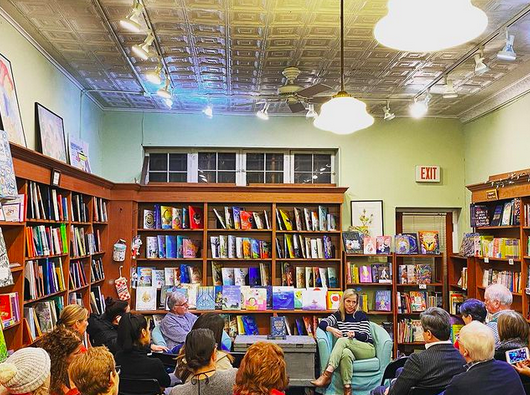
“A cozy and comfortable space tucked into Philly’s old Headhouse Square. The area is packed with bars and restaurants and hosts one of the largest farmers’ markets in the city, but you can catch a breath and a great new release at this store. Big Five Blockbusters sit next to eclectic indie books underneath a beautiful tin roof.”—Alyssa Songsiridej, managing editor

Photo via Bird & Beckett Facebook

Bird & Beckett in San Francisco, California

“Bird & Beckett is easy to miss—it’s not in a hip neighborhood and it’s competing with historical San Francisco heavyweights like City Lights Bookstore. But it’s worth venturing into Glen Park to check out this underappreciated gem (and it’s literally one block from a BART station). The quarters are cozy, the books are new and used, and, if you stop by on a Friday or Saturday evening, they dim the store lights ‘so you can focus on the work of the best jazz talent the Bay Area has to offer.'”—Wynter Miller, associate editor

Brookline Booksmith in Brookline, Massachusetts

“Though I’ve lived in Boston for less than a year, I’ve been coming to Brookline Booksmith since I was a kid. I grew up in a suburban area where I had to travel roughly 30 minutes to my nearest bookstore, which was (what else but) a Barnes & Noble, and Brookline Booksmith was one of the first indies I’d ever encountered in my life. It was my first favorite bookstore, and was delighted to find myself living so close to it in my adult life. It’s adorable and well-curated, with tables full of a pretty amazing selection of new bargain books and a whole basement-level of used books too. Like all of the best bookstores, it’s the kind of space you can easily lose track of time in, collecting more and more books in your arms as you go.”—Katie Robinson, social media editor

Photo via Village Well

Village Well in Culver City, California

“On the corner of a bustling intersection in downtown Culver City, Village Well offers an escape and a tiny portal into a universe where lattes and literature take precedence. The bookstore-café is community-based and impact-driven—highlighting different political movements each season (currently: reproductive rights) along with an overall motto to feed both your mind and body. While students with laptops crowd around the community table or discuss the latest article in the LA Times, if you wander in at the right time, you may just stumble upon local author readings, activism educational panels, open mic nights, or an evening of board games.”—Kyla Walker, editorial intern

Photo via Yellow Dog Bookshop Instagram

Yellow Dog Bookshop in Columbia, Missouri

“Tucked along 9th street in downtown Columbia, Yellow Dog Bookshop is a cozy Mom n’ Pop bookstore that trades, sells, and buys used books. The selection is never exactly the same, so you can always expect to find something new and delightful. For the youngins, there is also a cozy kid’s nook in the back, complete with beautiful artwork along the walls. Take your selections to read at Peace Park, Alley A, or any of the nearby cafes. A true landmark among Columbia MO bookworms.”—Lisa Zhuang, editorial intern

Photo via Next Chapter Booksellers Instagram

Next Chapter Booksellers in Saint Paul, Minnesota

“Part of the draw towards moving to St Paul was the opportunity to venture to independent bookstores like Next Chapter Booksellers on Snelling Avenue. Located directly across from Macalester College, Next Chapter offers a unique amalgamation of manga, bestsellers, non-fiction, and sci-fi/fantasy, as well as plenty of stationary to scribble story ideas onto. It’s a small yet spacious place that hosts author events, book signings, poetry readings, and its manga and sci-fi/fantasy clubs. Last summer, I had the crazy idea to get married there (after hours!), and I’m still grateful to the gracious staff who helped my wife and I with the ceremony. In my post-wedding life, I often weave through stressed-out students and the multitude of people walking their dogs to dip into Next Chapter Booksellers to scour the shelves for books I’ve been meaning to read.”—Kristina Busch, editorial intern

Photo via Kew & Willow Books Instagram

Kew & Willow Books in Queens, New York and Word Up Bookstore & Community Bookshop in New York, New York

“The commonality between Kew & Willow and Word Up is the community-centered way both spaces operate. Kew & Willow is tucked into Lefferts Boulevard among many mom-and-pop longstanding spaces. Kew & Willow is few blocks from the local LIRR stop, and funny enough an area where the first Spider-man was filmed. As soon as you enter there’s a homey & cozy vibe that steers you through a clear pathway to tables with offerings from local writers to commemorative month/thematic recommendations, and some sweet tote bags towards the kids section where you can hear the happy squeals of kiddos picking their next favorite read. Word Up Bookstore has continually established itself as not just a bookstore but a community space (heck, it’s in the name), helping residents in the neighborhood gain access to literature and more awareness of what’s going on in the Washington Heights area, aiding patrons during the pandemic and in voting registration. The family atmosphere of Word Up gives off a Cheers vibe, where everyone knows your name. Staffed by volunteers and avid readers, the abundance of book offerings reveals not just the abundance of work by BIPOC, but also books that instill a love of learning more about how we can be better to one another and re-educate ourselves to rebuild a nation.” —Jennifer Baker, former contributing editor

Photo via The Lit. Bar Instagram

The Lit. Bar in Bronx, New York

“The Lit Bar was born of a severe lack of independent bookstores in the Bronx borough, and once the last Barnes & Noble at the Bay Plaza Mall closed in 2016, it became the proud one and only brick and mortar in the Bronx. It was opened back in 2019 by Bronx native Noëlle Santos, and has since then survived the pandemic and become a local gem! It features a cozy wine bar, and hosts space for community literary events, and prioritizes offering a diverse set of stories that appeal to a wide audience. It’s the perfect spot to chat with other book people while sipping a glass of wine or to take advantage of comfy seating to get started on a fresh new book.”—Nzinga Temu, former intern

Photo via Playground Annex

Playground Annex in Brooklyn, New York

“Playground Annex in Bedford-Stuyvesant, Brooklyn prioritizes books by BIPOC and LGBTQ+ voices. They have a small but mighty curation, where you can find a new novel about queer love, a collection by one of your favorite poets, translated titles you haven’t heard of before, and everything in between! I’ve walked out of Playground with a sci-fi novel and a manga, and I always get merch when there’s a new drop since they make super cool and cozy apparel and often work with local, community-focused artists. In addition, they have a free library with a rotating collection. Also check out Playground Coffee Shop, which runs the Annex, to sit with your new book and a coffee!

*Note: I am a little biased, as Playground often hosts my reading series featuring writers of color called lactose intolerant—I would say that it’s the perfect space to have a reading!” -Ruth Minah Buchwald, former intern

Photo via Harvard Book Store Instagram

Harvard Book Store in Cambridge, Massachusetts

“When I first moved to the Cambridge area for graduate school, my favorite thing to do was go to Harvard Book Store and tuck myself into the back row at a reading—any reading, no matter if I knew the author or not. Their event series is still the best in town, but Harvard Book Store is my favorite for more than that, including a curbside pickup program that got me through the early days of COVID-19, a delightful used book section in the basement, and the most helpful booksellers I’ve ever met. It’s a Harvard Square landmark for a reason!”—Bekah Waalkes, former intern

Photo via The Bookshop Instagram

The Bookshop in Nashville, Tennessee

“Located in East Nashville, The Bookshop is a colorful and cozy 500-square-foot bookstore packed with books and connected to a local coffee shop. A true symbiotic relationship! The space is incredibly well curated with a wide selection of literary fiction, poetry, nonfiction, and bookish gifts. Every month, The Bookshop has a Blind Date With A Book and Lit Clique pick, which is often a title from an indie press. After years of being an out-of-state customer and visiting whenever I was in town, I permanently moved to Nashville in the summer of 2022 and started working at The Bookshop as a bookseller. It’s been such a treat to get an inside look at my favorite bookstore and contribute to staff picks, book clubs, and helping customers of all ages find the perfect read. If you are ever in Nashville, come say hi!”—Laura Schmitt, former intern

Unabridged Bookstore in Chicago, Illinois

“Unabridged has been around since November 1980, and has long held a reputation as Chicago’s go-to bookstore for LGBTQIA+ literature. It was a fixture of my childhood, too—I grew up around the corner, and spent most weekends curled up in one corner or another of the store. As I grew, the incredible staff recommendations helped guide my taste and introduced me to some of my favorite works of literature.”—Sophie Stein, former intern

Photo via Old Firehouse Books Instagram

Old Firehouse Books in Fort Collins, Colorado

“Located in the heart of Old Town, Old Firehouse Books is housed inside of, well, an old Fort Collins firehouse (the very same, allegedly, that inspired the design of the firehouse exterior featured in Disneyland’s Main Street, USA). A community staple since 2009, this charming bookstore features regular author events, book clubs, community gatherings, and a truly stellar book trade program. A reliable meeting spot for an absurdly high number of first dates for Colorado State University students, Old Firehouse Books also happens to be the largest independent bookstore in Northern Colorado.”—Chris Vanjonack, former intern

Photo via The Bookplate Facebook

The Bookplate in Chestertown, Maryland

“Nestled along the colonial-era brick streets of my Chesapeake Bay hometown is The Bookplate, an indie used book store offering up “fine books, fine art, and a cat.” It’s a charming social hub in a small, arts-loving community. Owner Tom Martin curates a robust selection of used books, including rare and signed volumes, and there are rooms full of fiction, children’s books, world history, poetry, and much more. Iconic store cat Keke enjoys crouching behind stacks of books as she prepares to hunt her toy mice, or napping on the sales log until the booksellers have to push her off to record a sale. The store hosts regular author readings and an annual poetry festival, and features a stunning collection of Portuguese pottery that is also worth checking out.”—Preety Sidhu, former marketing manager

I Am a Man, but I Am Not

It had been four years since the air had hit me like this, heavy and warm. Coming out of the airport felt like stepping back in time, everything concrete, tinged with green. I was in Malaysia, a place that feels like home, although I’ve never lived there. I’d been deprived of my childhood tropics since early 2019. Now that I was back, escaped from Europe’s wintry entrails, I dedicated myself to plowing through every sensory culinary experience that I could: like an obsessive, covetous demon, I raked up guava pieces sprinkled with sour plum powder, fried king oyster mushrooms, brinjal stewed in thick red sauce. 

But the durian—no condiments, no utensils, no plate even—trumped all these. I could smell it before I saw it, like a death or a thunderstorm on the horizon, a smell that leaves superstitions and pinched noses in its wake. Visually, the durian is spiky, large, hard, and green on the outside; creamy, sweet, buttery on the inside: back home they call it the king of fruit, partly because of its high price and addictive nature. During durian season, you can buy the fruit in white polystyrene boxes with the hard shell removed. You must eat it with your hands, tearing into the doughy yellow mounds that cover a hard seed. The flesh is a dense, heavenly concentration of pungent, fibrous honey. This is a very heaty fruit (energizing or stimulating, in traditional Chinese medicine), so you must never have it with alcohol. The flavor is sweet, solid, and electric, and lingers long after eating, like something warm on your breath—according to old lore, no soap brand can wash the smell off your hands, only water poured from the husk of the fruit itself.

The flavor is sweet, solid, and electric, and lingers long after eating, like something warm on your breath…

The durian is difficult to describe to those who have never encountered it, because the experience of durian—from its myths and quirks, to its many varieties and swinging prices—goes beyond the vocabulary of orthodox Western palates and newspapers. Traditional English-language food writing—a genre that rewards taxonomy, elevation, and reinvention—thrives on finding the perfect combination of words to capture the experience of a new flavor. 

But sometimes, no word can depict an experience that is so totally foreign to the readers’ mind. Sometimes the word falls short of the thing entirely. My parents, for example, named me after a type of classic French plum. But the fruit I crave, the one I most deeply want to emulate, is the durian. 


Before going home last December for the first time in years, I had spent my last few winters dreaming of durians. I moved from the US to France in the summer of 2020. It was the middle of the beginning of the pandemic, the second movement of worldwide protests against anti-blackness and police brutality, and the end of my five-year student visa. In short, I couldn’t return home, and my legal residence was now in France, a country I had visited but never lived in.

Bureaucracy hits like that sometimes, with no respect for narrative.

My first year in France, I didn’t go out much, due to a combination of remote work, Covid-19 restrictions, and a plain, lonely lack of places to go and people to see. I spent a lot of time filling out forms and calling various administrative departments, trying to lay the foundation for the rest of my life in a new nation-state—healthcare, taxes, housing.

To comfort myself as I lumbered through bureaucratic sludge, toward another winter away from home, I turned my thoughts to the food I missed. I stuck a postcard of tropical fruits to the wall. I wrote a durian manifesto. I found shriveled versions of herbs and leaves from back home and tried to approximate dishes whose flavors I only vaguely remembered. I saw my face in the mirror, and used an old trick to change its appearance, softening my gaze so that my reflection seemed blurry. In that fuzzy indistinction, I could imagine whatever I wanted. I could imagine that the weather was different, with sunshine outside my window instead of cold grey wind. I could imagine that I was home, and that I was myself.

I saw my face in the mirror, and used an old trick to change its appearance…

When I did leave the apartment, I walked anonymously, trying to locate the pace in my step that would allow me as invisible an existence as possible. I wandered into stores and mangled conversations in French, despite the fact that nobody who hears me speak thinks I grew up anywhere other than this France. But French wasn’t—isn’t—a language that fit me. My syntax is wobbly and simple. My vocabulary dates back to the francophone middle school I attended in Singapore in the 2000s, or to the Parisian seventies that my mother grew up in. Most of the time I manage fine. After four syllables—try intersectionnalité—my tongue stumbles. And beyond struggling with the words themselves, I struggle to identify the codes to go with them. Five years in a French middle school hadn’t taught me where to place my hands when ordering something from behind a counter, or whether I should sign off all my text messages with a first and last name, or whether it was too much to smile at a cashier from behind my mask. Now, somehow, every movement made me uncomfortable. It wasn’t just the language, it was everything about the world it operated, the way it made me shrink everything, from my words to my body. At some point, I knew I would have to make an adjustment.

I don’t remember when in my life I decided that, for practical reasons, it would not make sense to start questioning my own gender identity, because in the French language there is—according to most of its speakers and institutions—only “il” and “elle.” France is the country on my passport, and in some paperwork that I fill in. French is a language that I speak, sometimes with one half of my family and, for a time, in school. I don’t remember when I intuited that France would be the country I would have to live in once I had run through all the visas I’ve collected. Once I did, though, a question sometimes sifted front of mind when giving my pronouns in well-meaning settings on my US college campus: is this right, though? The response I gave myself each time: It doesn’t matter; it can’t matter. 

Sharing pronouns became the norm while I was in college, but those parts of speech alone never seemed like the whole problem to me.  

After all, in college, like everywhere else, I was always having to find shorthands to explain who I was and where I was from, some more or less satisfactory, and none of them entirely true on their own. 

In introductory linguistics classes, I learned about symbols and referents. The symbol is the word, the phrase or language we use, and the referent is the thing itself in the real world. When we say “I am ___,” we are associating ourselves—the referent—to a name, so that others may know how to call out to us. 

…for practical reasons, it would not make sense to start questioning my own gender identity…

I enjoyed those classes, the assignments to pick apart sentences and categorize each word by its function and type. I enjoyed rearranging words to see what meaning could come out. In English, I could be as complicated and long-winded as I wanted. But I lost that precision when I moved to France and found myself submerged in a flurry of administrative Madames that left me shockingly aware of something wrong in the way that I kept having to present myself through paperwork and in official phone calls. The bureaucratic demands were tiresome and endless. I had to draw on every last form and ID number attached to my existence and send it over and over to different email addresses. I was sick of form-filling, of follow-up calls, of being asked to send my visa, which I didn’t have since I was a French passport-holder: my technical existence seemed inscribed at a weird intersection of citizen and foreigner, unable to be processed by most humans in charge of untangling public administrative requests. 

Administration is one of those tools, neutral in name and deadly in practice, that the capitalist state has historically wielded against minorities to exclude them from political and economic life. Immigrants, gay people, and—especially today—trans people are often trapped by the paperwork limbo operated by a state with vested interests in keeping certain people in extreme precariousness. Pointing to recent anti-trans legislation in the US, trans scholar Jules Gill-Peterson has argued that the state is trying to become cisgender: “The state has, at all levels from federal to local, attempted in different ways to exclude trans people not so much from citizenship as public life,” she writes. “If trans youth and adults lose access to public education, healthcare, restrooms, and legal recognition of their gender, there is essentially no way for them to participate in public life. They are not so much legally disenfranchised as in losing the right to vote or hold citizenship as they are expelled from the public sphere, exempt from care and support, as well as vulnerable to policing and violence.” 

I was sick of form-filling, of follow-up calls, of being asked to send my visa…

Technically, when I moved to France, I wasn’t even an immigrant, I wasn’t even transitioning, and still the administrative work necessary to keep existing took a toll. There was a certain irony, I thought, in how I had been using logistics and practicality as an excuse to push back any thoughts about transition. I had worried that transitioning would make it more difficult for people to talk to me in this country, when the reality was that my very existence already seemed to be a glitch in the system, and that nobody was talking to me anyways. I would have to make myself known to the state, whether I wanted to or not.

In parallel, I could no longer deny or minimize the gap between my name and my self, the symbol and the referent. It was in my body, my words, everywhere. In this new country where so few people knew my name, I knew I would eventually have to respond to something, even if, back then, I would have rather refused any name at all.


Edouard Glissant of Martinique—philosopher and literary critic—once articulated that we should challenge the Western demand of “understanding” people, often framed in academic or journalistic contexts, and posed as a prerequisite for solidarity and compassion. While transparency and the search for knowledge are often presented as democratic, humanitarian projects, some of our differences are simply not knowable or definable to others. This shouldn’t mean we need to claim visibility as a political platform—our humanity shouldn’t need to be seen and understood in order to be respected. In Poetics of Relation, he named this “the right to opacity” and imagined a sharp ripost to his detractors: “As for my identity, I’ll take care of that myseIf.” 

In this new country where so few people knew my name, I knew I would eventually have to respond to something…

The first time I read this, I imagined saying it myself to all the people, from bureaucrats and curious passers-by, who for whatever reason requested a play-by-play of my entire life trajectory in order to process me. It made me calm. I thought about my father, who loves durians. He’ll scoff disbelievingly at anyone who doesn’t, a bit of provocation. “What? What do you mean you don’t like durian?” It’s that performative sort of response to someone who doesn’t love something indisputably amazing. In his tone, I read a challenge: How can you claim to understand, when you’ve never known the first thing?

The durian’s reputation comes mostly from its smell. Everyone has a different way of describing it; to some, it’s like gasoline, to others like a rotting carcass. To me, the smell is of home. It’s a warm day with cups of room temperature tap water and hands curled slightly, resting over a plate, fingers golden from oil and good food. 

Durian has long been a delicacy and prized fruit in the region, because it is significantly more expensive than other fruit. In his essay collection Durians Are Not The Only Fruit, Wong Yoon Wah, who grew up in rural Malaysia, explains that families often prized durian trees for this reason, as they could be an important source of income. Today, an entire transnational industry has evolved around the fruit. Demand has grown particularly in China, which imported US$4 billion worth of fruit from Southeast Asian countries last year (four times the volume in 2017), leading to competition and intranational squabbles over “durian diplomacy.” Certain variants are more expensive and sought after than others. No longer limited to polystyrene boxes sold by the road, durian can now be found in products from soap to chocolates. Thus, the durian has evolved into a veritable touristic weapon of choice in the region. At the same time, its undeniable pungency and tenacious grip in different local folklores is part of what makes it so unpalatable to a Western audience.

What does it mean today to be the king of fruit? The durian’s smell is too powerful for it to be co-opted like the jackfruit; too beloved to be eradicated or sanitized away like so much of nature has been in Singapore; every few years it causes the foreign correspondent industrial complex to show its ass when a Hong Kong-based Daniel attempts to describe it, compares the smell to death itself, and ends up getting roundly shamed on the internet. The durian has an extensive bibliography: oral, written, spiritual, extending far beyond the archives of the New York Times’ travel section. Its power comes from its polarity: either mesmerizing or repugnant to its beholders, the durian is incompatible with moderation and half-measures. It remains illegible outside its context.

When I finally managed to get myself into the national medical coverage system, I began the process of finding a doctor who would be able to prescribe hormones. This activated a whole other process of box-ticking, which required me to go from white-coat to white-coat explaining why I wanted to do this. At first, when they asked me what I wanted to get out of the treatment, I found myself spouting phrases that felt true but came out as nonsensically earnest as middle-school poetry: “I want to grow a shell,” I said. “I want to feel more solid.” 

…its undeniable pungency and tenacious grip in different local folklores is part of what makes it so unpalatable…

Eventually I learned to recite the words and phrases that would unlock access to the treatment I wanted: “more masculine,” “less pronounced hips,” “facial hair.” Some of this was true, but I didn’t know how to explain—especially in French—that I wasn’t particularly able, or keen, to envision a certain version of my body that I was trying to achieve, but that there was definitely something I wanted to move toward. I wasn’t used to thinking about my own body so much, certainly as a mechanism of self-defense. I also don’t think my earnestness in this department would have helped me get the prized prescription. 

At the same time, I kept thinking back to the durian—to how, no matter how much press and recipe development and glory and hate it receives, there is something about the fruit that people outside the region just don’t seem to understand. Durians became a defensive symbol for me then, an internal compass that I conjured to help keep my voice steady in medical appointments when I asked for what I wanted.

Durian takes us beyond the apples and oranges—the cisgenderism, the whiteness—toward the horizon of weirdness and extremity, to an unconditional solidarity with those whose existence is distant or different from our own. People from my home know: You don’t have to enjoy the taste of durian, or even understand why anyone else does. But it exists, and you certainly have to respect it.

In defending opacity, Glissant criticizes the Western demand for total transparency. He rejects that we should be explainable, and that this explainability should be linked to an essential, authentic, truth. I have been on hormone replacement therapy for over a year and when people ask me why, the answer I give often leaves them dissatisfied or confused, just like when they ask me where I am from.

I wasn’t used to thinking about my own body so much…

So often, the quest for authenticity turns into a hunt for purity, a hunt for immobility, for some truth about a culture that has somehow remained fixed in the chaos of history. Based on this metric, I feel like my identity is instantly fraudulent in almost any context, given how many of them I have moved through in my life. I am French, but I am not. I am home, but I am not. I am a man, but I am not. Sometimes this minutiae feels unfair: everything in this world is complicated if you ask questions. So many symbols we take as regional fixtures have complex origins. Why should their legitimacy need to be free from the movements of history and its humans?

Take rubber, for example, one of the primary exports from British-era Malaya in the early 20th century. Today, rubber plantations remain a local symbol in social and economic history. They are an iconic part of the landscape in Malaysia, lining highways and encasing past stories of migrants, coming mostly as low-paid laborers from colonial India to tap the smooth, grey-brown barks.

I am French, but I am not. I am home, but I am not. I am a man, but I am not.

But those trees aren’t native to the area: In 1876, a British plant collector smuggled rubber seeds out of Brazil (which had, until then, enjoyed a prosperous monopoly on rubber production) and sent them to Britain’s Kew Gardens. 1,900 germinated seeds were sent to the Peradeniya Gardens on Ceylon, which then sent twenty-two specimens to Singapore, where the first rubber plantation was developed in the Botanic Gardens. By 1920, Malaya (which then included Singapore) was producing half the world’s rubber. Wong Yoon Wah, the author of Durians Are Not The Only Fruit, grew up on a rubber plantation in Perak, Malaysia, which is also where he first encountered durians. In Wong’s essays, the sprawling diversity of plants, their legends and their origins all commingle, making for a collection that departs from clean, traditional botany and offers, instead, a portrait of life in rural mid-century Malaysia that brims with contradictions and unsolved mysteries.

I want to be truthful, which sometimes involves being complicated. But sometimes, I don’t want to explain. I don’t want my footnote to be longer than my main text. Sometimes, the explanations I could give only seem to hinder the truth more than anything.


Eventually, I started taking hormones. As I made the appointments and filled out the forms, I began to find the right cadence in my speech to ask questions, confirm dates, correct mistakes. The “honorific” box on the paper, the Madame I ticked, grew smaller as my world grew larger; I left my apartment more often. I met people, spoke to them, exchanged numbers. Ironically, once I was comfortably entered into the state’s system, I no longer felt so trapped by it.

Many trans people I know don’t trust the state. But depending on it, in many instances, is not really a matter of choice in our current capitalist system: you can’t choose to divorce yourself from the institutions that directly or indirectly provide you with the funds and care necessary to live.

…once I was comfortably entered into the state’s system, I no longer felt so trapped by it.

Gill-Peterson, who argues that the state is trying to become cisgender, posits that this is a recent narrative choice made to legitimize the states’ domination of social life. She compares this to the transformations that, in the 1940s–60s, made the US straight: “Rather than the state merely encountering gay and lesbians and then folding them into its political life (the liberal, progress narrative forwarded in mainstream LGBT activism), the state proclaimed itself straight in order to found its practices of administration and political domination on the exclusion and dispossession of homosexuality as uncivil.”

It’s not just the US. It’s not just France. I know I can’t be too sloppy with my metaphor and my angst against the West: Durians are banned in most public transit in Singapore. As I wrote this, politicians in Singapore were arguing about the constitutional definition of marriage. They, leaders of a state dependent on an extreme neoliberal free market, have been speaking for years now about the import of “cancel culture” and “Western values,” because apparently queerness is intrinsically related to those things. 

In response to these attacks, one reaction is to cling on to historical truth, to show that state-sanctioned homophobia is in fact a colonial export: 377A, the code outlawing gay sex in Singapore and many other countries formerly under British rule, was instated under colonial rule. Gender remains a colonial construct, and many pre-colonial cultures, including the Indigenous Bugis people in Southeast Asia, have a recorded history of a wide diversity of genders. 

But while these histories are precious, they remain understudied, and their contexts quite culturally specific in a region that is replete with differences and exchanges over time. More importantly, they should not mean that our present, breathing lives mean anything more or less. If we didn’t have an explanation, we would still be here. If we didn’t have a past, we would still be here. Shouldn’t that count for something?

If we didn’t have a past, we would still be here. Shouldn’t that count for something?

I know I may have to go back to some institutions and ask, again, for new corrections to be issued. For now, I’m able and content to live my life outside of forms. My body is changing like a new season. Maybe it is this, or maybe it is this burgeoning idea of the durian, like a charm or newfound spirituality, that has made it easier to know how to walk. You’re not a freak, I tell myself now in public spaces, listening to Prince and moving my hips and shoulders both. You’re just holding a durian. Logically, it is incumbent on the durian to be disliked, if what Westerners dislike is good food. That’s just what it is. A durian doesn’t come timidly through the door. A durian doesn’t feel shame. A durian is just a durian. Why get so mad about a fruit?

“The apple does not fall far from the tree,” is a saying in countries where many trees are limited by the feeble power of their temperate context to produce anything more interesting than apples. I prefer to think instead of rubber seeds, which can lie dormant for years after they have fallen, until one day in the future, they explode, with a sharp, riotous noise.


This essay, by M Jesuthasan, is the sixth in Electric Literature’s new series, Both/And, centering the voices of transgender and gender nonconforming writers of color. These essays publish every Thursday all the way through June for Pride Month. To learn more about the series and to read previous installments, click here.

—Denne Michele Norris

How Do We Reckon With the Art of Problematic Artists?

Claire Dederer’s Monsters: A Fan’s Dilemma offers no easy answers when considering the art of wrongdoers. Across thirteen chapters, Dederer unpacks the complex legacies of a variety of artists—Woody Allen, Roman Polanski, J.K. Rowling, Picasso, Michael Jackson, and many more—with unfailing wit and nuance. Threaded throughout this exploration of genius, creation, and monstrosity is her own history as a consumer, student, critic, mother, and writer in her own right. As Dederer openly wrestles with questions of fandom and morality, Monsters serves as an undeniable reminder that our biographies are inextricable from our experience of the art we love.

Monsters provides a roadmap for readers who are interested in thinking through the subtleties of Dederer’s questions and willing to sit with the resulting discomfort. “The way you consume art doesn’t make you a bad person, or a good one,” she writes. “You’ll have to find some other way to accomplish that.” As Dederer’s own biography shapes her considerations of capitalism, criticism, and time itself, Monsters offers a deeply personal testament of one fan’s multifaceted relationship to the art of imperfect people.

I spoke with Dederer over Zoom about her experience of going viral, fame’s relationship to art, and the thorny intersections of capitalism and love.


Abigail Oswald: How did the viral response to your Paris Review essay “What Do We Do with the Art of Monstrous Men?” feed into the way you crafted Monsters

Claire Dederer: Every writer knows that having a viral piece is both a dream and a nightmare. Here’s the deal with that piece, I wrote this book called Love and Trouble about predation of young women—girls, really—in the 1970s, and a theme of the book was sort of “What is it like to be an adult who had that experience, and how did it affect my sexuality?” And in that book I really engaged with Roman Polanski. He’s used in the book as a kind of straw man, and also as kind of a person I’m in dialogue with. So by the time I’d finished that book, I really knew everything there was to know about Roman Polanski’s rape of the young girl, and yet I was still watching the films. So I started writing Monsters, I’m gonna say in 2016. And just really sitting with this question of what is happening when I consume this work. What do I feel like? What’s my experience of it? How does my idea of him alter me as an audience member? 

So that essay was never conceived as an essay. It was always conceived as the first chapter of the book. I had really approached the subject with curiosity, without an axe to grind, without something I was trying to prove, but with this very exploratory mindset, and I think that’s why the essay did well. I think it was because it was nuanced, and the nuance didn’t come from me being some genius, the nuance came simply from the fact that it was something I’ve been working on for years. But it looked like it was in response to the moment, and so for me that was a really interesting experience—almost more as a citizen than as an artist myself—because it was really heartening, actually, to have something in the current information economy that was super nuanced and had a really strong positive response, right. I don’t mean to be Pollyanna-ish or like, bright side of miserable topic, but that made me feel both excited about my work, but also excited that there was a potential for a more complex dialogue. And so that was my initial response. 

Then I had this experience of the ways in which there were feminists who had a problem with the essay. There was a response that was like, don’t totalize these kinds of offenses. And I was like, well, clearly I didn’t make that point clearly enough. So that was great, I could take that on board and think about it for the final book, which, as you’ve seen, I feel like I’ve wrestled with it. And there was just this constant barrage of Woody Allen defenders and men’s rights people and accounts being set up to attack me. Which speaks to my larger point, which is there’s something about our subjective emotional collapse with this work that is undeniable and profound, which I saw in all these accounts being set up to attack me. 

So, as I proceeded working on the book, [I was guided by] the knowledge that nuance and a really deep exploration was going to be my watchword. It took me five years to write the book.

AO: Part of the modern rise in this conversation about the artist’s biography can be attributed to changes in media consumption and the sheer contemporary accessibility of said biography. How would you say the more widespread accessibility of biography has affected our sense of responsibility as consumers? 

CD: One of the central ideas of the book is the idea that we don’t strive for biography, it happens to us. That biography is like an ongoing natural disaster—just befalls us, right? And that we don’t really get to choose that. So in terms of how I personally approach knowing things about the people whose art I consume, I feel like choice is not part of it. It just happens. The plight of the audience member, as I see it in this book and as I explore it in this book, is this person to whom the knowledge has already happened. So then, what do you do with it? 

What effect do I think that has on our experience of art? I think that the answer to that is, first of all, taking a step back and saying it does have an effect on our experience of art. The initial question that sort of comes up over and over—or used to, I think it’s slightly more nuanced now—is “Can you separate the art from the artist?” And that’s one of the first principal questions this book asks. And because I believe that biography befalls us, and because I believe we can’t pull out our response to the biography, I think the decision to separate is a flawed decision. It’s a failure before it begins. I think my first response is that we respond with that biography on our minds, whether we want to or not. And then the question for the audience is what do you do with that knowledge? Do you acknowledge it and consume the work anyway? Do you not watch the work because it’s too painful? Do you not watch the work because you’re making an ethical stand? And I think there’s as many answers to that question as there are viewers, readers, listeners… 

AO: You write at length about the difficulties women encounter in their efforts to make art, even touching on your own personal feelings: “When I do the writing that needs to be done, I sometimes feel like a terrible mother.” Monsters is primarily about men, but you do discuss a few women—Anne Sexton, for example, whose daughter detailed their fraught relationship in her memoir, Searching for Mercy Street. Can you talk more about how you considered women’s relationship to monsterhood while working on this book? 

The idea of what is unforgivable in a woman isn’t a sin of commission—it isn’t an action—but it’s a sin of omission.

CD: So one of the early things I do in the book is start to interrogate this word “monsters.”…I sort of move through this idea of the monster and then explore the idea of “the stain,” which is this inevitable coloration of our experience of the work—which to me is more interesting, because I like how it suggests the inevitability, and I also like that it sort of has less name-calling to it. It’s just, this thing has happened. And so I was thinking about what the stain is for women. And when I explored it and really thought about it, it had to do with abandoning children. 

So I explored this idea of abandoning children through the lens of several female artists, and what became so fascinating to me about it was the fact that the notion is a continuum, right. I write in the book about how I went away on a fellowship and I was thinking about like, well, how long do I stay at this fellowship before I’m abandoning my teenage child, right? I was gone for five weeks, which was a very long time for me. And so that experience of being away and living that distance really brought home to me this idea that there’s no set answer, right? And then that notion of abandonment gets refracted in several different ways, you know? It’s like, Sylvia Plath killing herself and locking the door against her children is a kind of abandonment as a mother. Would her story feel the same if she was not a mother? Or Doris Lessing leaving two of her children behind in Africa, or Joni Mitchell giving a child up for adoption. These are all life choices that don’t bear necessarily, don’t deserve the word monstrosity, but they color our view. And it just seemed like the idea of what is unforgivable in a woman isn’t a sin of commission—it isn’t an action—but it’s a sin of omission, where you fail to nurture. And as somebody who is a mother and feels like I’m never quite—my kids are grown, and it’s like, am I doing enough? I feel that to this day…

AO: In your writing on Hemingway, you explore the idea that he might have felt trapped, even tormented by his performance of masculinity. There’s this idea that some artists who reach a certain level of celebrity begin to feel hemmed in by their public persona, or otherwise responsible for maintaining a certain audience perception. Were some of the artists you discuss acting out in an attempt to fight that public image, while others’ bad behavior was an attempt to reinforce it?

CD: I think it’s less of a monstrous question than a problem of great fame and great success. Anytime you have such a successful image… What do you do with it? I think a really creative genius, a really great artist, will figure out a way to continue to make their work. But they’ll have to either decide not to engage with the persona, or bring the persona into play, right? And I think that’s part of, you know, Woody Allen at his greatest is engaging with his own persona, right? I mean, I think that in Stardust Memories he does that hilariously. I think that sense of play about it is really interesting. And I think someone like Hemingway, obviously he was trying to play with it in The Garden of Eden—I mean, maybe not even consciously—but he’s undermining some idea about his own masculinity. But maybe if you’re that masculine of a man in a culture that venerates masculinity so powerfully—maybe it’s a dead-end street, you know? Maybe it’s harder to get out. Whereas Woody Allen, you know, his persona was one that was other, right? He’s the weakling, the kid—there’s so much about that that was other as he was coming up. And then I think there’s also brilliant artists who just do everything in their power to not engage with their persona and stay out of it.