Kelly Link Makes Fairy Tales Even Weirder Than You Remember

Like magic, narrative rearranges the world through words, and Kelly Link is one of modern fiction’s boldest alchemists. Her stories (which have now been collected into five books, and garnered Link a MacArthur “Genius Grant,” among other honors) make the familiar so strange it’s almost familiar again, spinning straw into ghosts and ghosts into disgruntled exes. What happens, then, when the bard of the workaday weird sets her sights on fairy tales, a genre already firmly grounded in the impossible, a literature in which animals talk and potions swiftly transform? A trip within a trip within a trip, to be sure—but one whose longings, joys, and betrayals remain stingingly human.
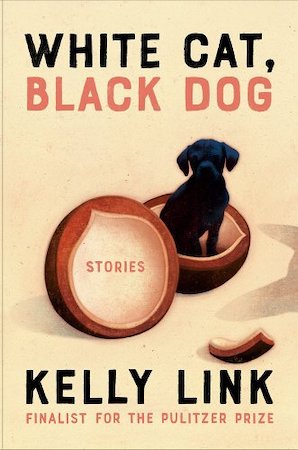
A book cover with a black dog inside of a shell.

The fairy tales that form the basis for each story in Link’s new collection, White Cat, Black Dog, draw upon a wide range of traditions, from Grimm classics to Scottish ballads to Norwegian folklore. Fairy tales are well-loved source materials for modern reimaginings, but the stories of White Cat stray wonderfully far from their sources; they’re not so much straight updates as they are fever dreams by the original characters that we’ve been permitted to step inside. Hansel and Gretel become android siblings marooned on a distant planet; hell’s royals brunch and bitch in modern-day Manhattan; Snow-White arrives at a house sitting gig where the instructions are scant but the magic mushrooms abundant. Into an ancient tradition of one-dimensional heroes and unbearably happy endings, White Cat instills the contradictions of real personality and relationships both fragile and tender. Slowly, these stories suggest that human desire is the dankest magic of all, every bit as likely to betray us as it is to save us. 

Over email, Link and I discussed what keeps fairy tales forever in our cultural imagination, how growing up religious shaped her own “personal superstitions” around life and writing, and the two-sided coin of humor and horror.


Chelsea Davis: Rules—often arbitrary, always ominous—shape many fairy tales, and most of the stories in White Cat. Don’t let anyone enter the front door; don’t visit your lover unless it’s snowing; and (my favorite) don’t hunker down for the night in a home that doesn’t have a corpse inside. How do explicit rules activate or shape a story?

Kelly Link: I love thinking about rules! I’m deeply interested in the relationship that we have with them as members of a family, or a social group, or a culture. They mark out the territory in which we (or our characters) live our lives. When thinking about imaginary people, a useful approach is to consider what rules they live by, which rules they break, and the consequences or freedoms that occur as a result.

When I was a kid, I was fascinated and horrified by all sorts of rules: Don’t wear white after Labor Day! Wear pantyhose with skirts. Never wear navy and black together. Don’t take candy from a stranger. 

I was a preacher’s kid, and aside from all the familiar stuff about virginity, and not taking the Lord’s name in vain, there were weirder, more interesting rules about not eating shellfish, or wearing certain fibers together, or not suffering a witch to live. (Though the two rules about loving your neighbor as yourself, and doing unto others as you would have them do unto you still seem like good practice.)

When thinking about imaginary people, a useful approach is to consider what rules they live by, which rules they break, and the consequences or freedoms that occur as a result.

Personal superstitions are interesting to me, too, and how they function as rules—for example, I have a rule that as much as I love Patrick O’Brian’s Aubrey and Maturin novels, I can never read another one. When my daughter was born at 24 weeks, I read the first three books in the series in the NICU while sitting beside her isolette. But each time I started one, she would have a life-threatening crisis, and so I finally put the series down forever. Even now, when she is perfectly healthy, I have a horror of picking up the fourth book, just in case I summon up some bad luck again.

Horror and fairy tales are two of my favorite forms of narrative, and those are both genres where rules loom large. Don’t smell wolfsbane. Be kind to animals. Don’t invite strangers over the threshold. Don’t step on a crack. Don’t be greedy, don’t say thank you to fairies, but do listen to birds, but don’t blow on a whistle that you find on the beach, but always be polite to old ladies. I love rules that feel nonsensical and fraught with weight at the same time. I love when rules are inverted. The introduction of a rule tells the reader that story is going to follow, and hopefully the consequences will in some way be surprising or fresh.

CD: Fairy tales have been the wellspring of countless modernizations, adaptations, riffs. You yourself wrote an introduction to a reissue of one of the best-known iterations of this—Angela Carter’s The Bloody Chamber. In your mind, what qualities of fairy tales make them so inviting for artists and writers to reimagine?

KL: The original fairy tales have a brisk, conversational tone, as if they’re being told to you directly even though they’re words on the page. Maybe that makes them lodge in the brain more firmly? We often hear or read them first in childhood, and often more than once, or in more than one shape or version. Right from the start, they feel like shapeshifters.

There’s also the lack of psychological realism—once you begin to apply psychology to the characters, or allow those characters the narrative space to have deeper, more complicated reactions to pretty traumatic events (death, abandonment, parental cruelty), fairy tales become different kinds of beasts. Or else you can keep the characters relatively flat, and change the setting instead, or make the language more estranging or more personal. The patterns of fairy tales, too, are so recognizable that introducing even the smallest piece of those patterns—“once upon a time,” for example —means the language of the story that follows becomes charged. Readers will pay closer attention to the appearance of animals (talking or not), or colors, or, say, repetitions of three.

White Cat, Black Dog is dedicated to Ellen Datlow and Terri Windling, who edited a series of anthologies of retold fairy tales—I learned a great deal by seeing how the same fairy tale could become something completely new in the hands of different writers, all with their own, particular points of view and sensibilities.

CD: You’ve said in other interviews that your past collections have come together in an organic way—from disparate stories you’ve already written, rather than from your sitting down and setting out to Write A Collection. Did this collection come about equally incidentally, or was there an idea of a Project from the beginning? It has such a clear thematic focus.

KL: The earliest story in this collection is “The Lady and the Fox,” which draws on Tam Lin, a ballad, rather than a fairy tale, but the next two were “The Game of Smash and Recovery” and “The White Cat’s Divorce,” which was specifically written to accompany a museum exhibition of fairy tale art. So as I was working on that story I was thinking a lot about fairy tales. I’d also read Daniel Lavery’s collection The Merry Spinster, and had been thinking about how much I loved the tone created by those stories in concert.

Humor and horror are both doors into story for me—and inside a story, they’re paths to understanding or rearranging situations.

I often set up a rule or two when I’m starting a new story, and it seemed like a good project to make a rule for a group of stories this time, which would be to use fairy tale approaches, or motifs, or language each time, even if indirectly. “The Game of Smash and Recovery” is the only story where I didn’t begin with this rule, but it moved into conversation with “Hansel and Gretel” in obvious ways once I added the subtitle. It’s been useful for me to think, during revision, about the stories or genre patterns a particular story is in conversation with, as I go forward. This time I started when I had an idea for a story, before I had any words on the page.

CD: The exact nature of the “influence” between original and new fairy tale seems to vary wildly and wonderfully throughout White Cat. Some of your stories borrow a character relation (the orphaned siblings of “Hansel and Gretel” become two mechanical beings marooned on a strange planet in “Game of Smash and Recovery”), for instance, while others compress the original fairy tale into an interpolated story (a bit of airplane smalltalk in “The Girl Who Did Not Know Fear”). Could you choose a story from White Cat and talk about how it arose, and how its finished form is in conversation (or argument) with the original?

KL: “Skinder’s Veil” came out of a story that I couldn’t quite figure out how to write in an interesting enough way. This was going to be a version of “The Juniper Tree” in which a girl made repeated visits to a swimming pool where her mother had drowned, and in which the pool gave her mostly unhelpful advice. There’s a very small fragment of this still in “Skinder’s Veil,” but mostly that particular fairy tale got eaten up by “Snow-White and Rose-Red,” which of course was swallowed up by the story of a graduate student with an unusual house sitting job. Because “Snow-White and Rose-Red” was the kernel at the heart of the larger story, I knew there would be animal visitors, and two sisters. Because I often have a hard time sitting down to write, I wanted to write a kind of story where that was the main problem, and where the protagonist got some very unexpected and slightly disturbing aid with the work he needed to do. I suppose there’s a bit of “Rapunzel” in there as well.

CD: Something I really relish about your fiction is the way it manages to knock me off balance with its humor. Often, you’ll immerse the reader in pitch-dark subject matter (grief, death, violence)… and still manage to make her chuckle. A kind of meta-commentary on this emerges in “The White Road,” which is among this collection’s grimmest stories: it has the feel of a medieval plague tale, except the plague is not a disease, but shape-shifting monsters that emerge at night to murder and maim. Yet the story also contains wry asides and farcical events; even the narrator says he can’t decide whether his brushes with paranormal body horror count as comedy or tragedy. How do you think about the relationship between violence and humor in art? Do you find yourself consciously injecting humor into your stories?

KL: Humor and horror are both doors into story for me—and inside a story, they’re paths to understanding or rearranging situations in which otherwise I (and perhaps the reader) might be overwhelmed in the most uninteresting ways. I reach for humor consciously because I have to reach for most things consciously when I write. And now I’m wondering if that might be an interesting rule to set for myself—to set aside even small bits of comedy. Argh.

CD: Cats appear in all of your short fiction collections, and in nearly every story (and the title) of White Cat. What keeps you coming back to cats?

KL: Perhaps it’s simply this—I love cats but can’t have one because I’m mildly allergic and my husband is even more so. But I do have a black dog now, who is sleeping on the couch next to me as I write this. She has terrible dreams, and every once in a while I have to stop typing to tell her everything’s okay.

CD: You run a small press, publish a zine, and have edited anthologies like The Year’s Best Fantasy and Horror from St. Martin’s Press. In what ways have the acts of editing, curating, and anthologizing others’ work shaped your own writing process over the years?

KL: Mostly I’m just very grateful for how much good short fiction there is out there in the world, whether we get to publish it or not. I like editing, I like conversations with writers about the experience of reading their work, I love leading workshops and listening to writers talk about what they took away from someone else’s story, things that I didn’t even notice. What I take away from workshop is other people’s approach to reading and making meaning, so that I can attempt to apply those approaches to my own fiction. I spend a great deal of time considering what shapes or meanings very different readers might make out of what I’m writing, and sometimes I’m attempting to anticipate or guide those meanings. Mostly what I want to do is make as much space as possible for those varied shapes and meanings that seem interesting to me.

Oh, and reading slush has taught me that a poorly written story that takes risks and does some large and unexpected things is more interesting than a well-written story that doesn’t do anything surprising.

CD: Are there any patterns in what catches your attention, as an editor and a reader? In other words: what lights a spark for you, in another author’s story?

I want a sense that something important is happening, whether it’s language, or an event, or a need to connect and communicate.

KL: It’s very difficult to get across what I mean by this, but anything at the start of a story which persuades me that there is some authority or conviction here. That this is a story which the writer feels strongly about telling, and where the situation feels urgent or at least necessary to put down in words. I want a sense that something important is happening, whether it’s language, or an event, or a need to connect and communicate. I don’t need a big move or a wild first sentence, but I do want a feeling that there is something at stake. My friend Holly Black says a story or a novel makes a promise on the first page about what will matter in the story. This might be a character, or a need, or a genre, or an approach toward language and rhythm. I want a sense of what is being promised, and to trust that the writer is going to take me somewhere interesting.

CD: Last I heard, your first novel, Book of Love, was slated for release in 2024. Is that still the case? And how has the experience of writing a novel differed from that of writing short stories?

KL: Well, the novel is a beast—a much bigger book than I’d hoped to write. It’s now lumbering toward copy edits, and I’ve sent it out to various friends and readers. The most surprising thing to me was that it’s not possible to hold all of a novel, past a certain word count, (say 60,000 words) in your head. I’m used to being able to move back and forward in a story, revising backward as I write forward. With the novel, I could keep hold of the ending, which I knew, and of the beginning, but I kept forgetting bits and pieces of the middle, even as I was writing it. And when I was finished, I felt a bit flattened by the experience of rereading it. 

I’m used to the particular pleasure of a collection, which is that there are many different stories written in different keys, so to speak. There can be a great variation in tone, in sensibility, in speed of movement, and in the general matter or question of what’s at stake. There’s liveliness and movement to a collection, whereas a novel is one mostly coherent thing. I spent so much time writing it that it felt strange to have it be all one object, if that makes sense. Perhaps I thought I would be a different kind of writer while I was writing a novel? And so it felt disheartening to finish it and still be myself, so to speak. But now I’m thinking about writing another novel, and maybe that one will do the business of translating me into something new and surprising.

In the Midst of Fertility Challenges, Video Games Offer Me a Sense of Control

I’m in the fourth exam room with one of my last patients of the day, late afternoon light streaming in through the windows behind him. We’re about to go over the results of his scans after several months of therapy for metastatic kidney cancer, and as I turn from the computer screen, squinting against the glare, I clear my throat once again. This is a routine I know well. But as I begin to tell him what we’ve found, I find my train of thought interrupted by the insistent strings of the battle theme from the recently released console role playing game Persona 5 Royal. Outwardly, everything proceeds as normal—the right words still come, and I tell him that the pills seem to be working, that we need to continue them every day. Yet my discordant mental soundtrack continues as a strange counterpoint, testing my waning powers of concentration. 

Later that day, while I’m writing progress notes in my upstairs office, my focus breaks again, the pixels of the computer screen reforming themselves from lines of bland text into the animations that accompany the special combination attacks in the game. Every hour brings more evidence that the boundaries between worlds are not as solid as they once appeared.

It began with my wife’s desire to have a child, which became our desire, which came up against years of failed fertility procedures.

I know I’ve been spending too much time in the alternate reality Tokyo of Persona 5mashing buttons to control my party traveling the in-game Metaverse, plotting my teenage characters’ social lives to gain new abilities. There’s real-world work to be done, after all. Taxes to be finished, messages from my cancer patients to be answered, and, of course, the paperwork for the interminable surrogacy process, which is itself the terrible culmination of the nearly five years of infertility my wife and I continue to  stumble through. Yet, increasingly entranced by the all-consuming world of the game, its reality now bleeding into mine, I have neither the wish nor the will to turn away. 

Persona 5 Royal gives the player control of a group of Japanese teenagers navigating high-school life, fusing this drama with that of their eventual quest to find the cause of a mysterious, high-profile series of psychotic breakdowns across the country. A role-playing game, it invites the player to very literally take on the roles of these characters as the peaks and valleys of their everyday lives are further intensified with the white-knuckle responsibility of saving their world. There’s a similarity between how the “real lives” of the characters in Persona become irrevocably entwined with their alter egos’ quest to save “the world”, and how my day-to-day life is slowly melding with the game. Daily disappointments feel smoothed out by Persona’s narcotic narrative. I fight a growing urge to wrap it totally around myself like a thick woolen blanket, keep warm, keep the darkness out. I want to live in that feeling. 

Some days later, my wife and I are at our long wooden dining table, a laptop open between us. We’re on a video call with a psychologist who will determine our mental fitness to proceed with surrogacy. I think about how we got here, how it began with my wife’s desire to have a child, which became our desire to have a child, which came up against years of failed fertility procedures, false hopes, thousands of dollars paid, and a single, cursed miscarriage. Desire unextinguished, each disappointment is a redirection, not an end. Swept up in this current, lack of control can feel like a failure of will – maybe we just hadn’t wanted it badly enough—and with that thought, desire shrinks into desperation, a hope that a single success could wash away the whole sorry mess. We smile, move through the boilerplate conversation, the theme music again playing in my head, now the constant accompaniment to the ebb and flow of the world around me. “Tell me about your relationship,” the kindly psychologist says. The tune reaches a climax, and I think I know what to say. 

The illusion of control is especially seductive, distinguishing video games from the escape of a good book or television series.

I turn Persona back on that night, tapping buttons to use my items, make connections with characters in the game, move the plot forward. I’ve loved games like these for years. While in elementary school, I was allowed to rent one for my Super Nintendo once every three months. I don’t know how my parents came up with that number, but for all its arbitrariness, the rule remained ironclad. Weeks of research went into each decision—poring over copies of Nintendo Power and Electronic Gaming Monthly, talking to my friends at school about what they were playing. The night before each trip to Video Giant off East Frank Phillips in the middle of Bartlesville, Oklahoma, I couldn’t sleep with excitement, wondering if my first choice would be there on the shelves. When we finally pulled up to the store in our Toyota the next morning, I raced to the far wall, where the game rentals were displayed on long, parallel shelves that, in my childhood, seemed to stretch on forever. 

Each rectangular box was a portal to another world. When I was in elementary school, my favorites were side-scrolling platformers like Super Mario World, but I became drawn to role-playing games the older I got—the wacky alternative reality of Earthbound, the freewheeling time-travel of Chrono Trigger, the steampunk fantasy of FFIII. The finely drawn details of their imaginary worlds were what most captivated me. Though they seemed endless, they also seemed understandable, knowable in a way that what passed for the real world often was not. When my mom went to Wal-Mart on the weekend to get groceries, I begged to go along so I could go to the electronics department and read the guidebooks to whatever RPG I was playing at the time. I liked to know how much damage Mallow’s attacks caused in Super Mario RPG, how many hit points the pizza in Earthbound replenished. I liked to look at the details of all the inventory in the stores I’d find a little further on in Lufia IIwhat the shields and armor looked like, what they did. When I came home, I’d draw up my own detailed catalogs with pencils and paper, listing the attributes of all the battle gear I dreamed up. 

Persona 5 Royal takes the average gamer over one hundred hours to complete. That’s time right after work, stolen hours later in the night. I recently talked to a good friend of mine, a busy neurologist, a father of three kids, who told me how the similarly all-consuming Elden Ring was ruining his life, its allure driving him to stay up far past midnight for weeks in a row. I dallied with pen and paper RPGs, but the console experience is what I’ve always loved most. Those hours on my own long after everyone else has gone to sleep, just me and the game, night after night, week after week, drawing deeper into a narrative that seems under my control.  

The only guarantee is that it’ll go on until you have a child or until your emotional endurance or your savings run out.

The illusion of control is especially seductive, distinguishing video games from the escape of a good book or television series. Control over not only my character’s actions, but over their long term strengthening, their accrual of new powers and abilities. The Japanese RPGs I loved best followed a particular arc – you’d start off as a spiky haired young kid in some corner of a weirdly named empire, and you’d soon get sucked into a conflict regarding the renewal of a long forgotten magical power or something. As you passed through dungeons, towns, and the open land between, you’d be assaulted with random enemies. They’d start off slightly stronger than you, but as you battled them and gained experience, you’d soon become slightly stronger than them. Then you’d go on to the area’s boss, who maybe you’d beat the first time through. If you didn’t, you could retreat and battle some more underlings until you’d become strong enough to beat the boss and go on. It was a game mechanic derisively called “grinding”, a cheap way to side-step difficulty. Yet I still loved that if I put in enough time, any in-game challenge was surmountable. The story inevitably moved forward. 

A few weeks after our interview, we receive an approval from the psychologist over email. There is no celebration. Wearily anticipating the next steps, I boot up Persona, taking Yusuke, Ryuji, and Ann with me into the tortured psyche of an evil fast food magnate. As I battle sentient robots with deftly timed special attacks, I think about what’s next, all the medical testing and legal discussions. What awaits afterwards looms even larger. There is no guarantee, after all, that even with an apparently healthy embryo, a surrogate lined up, and the papers signed that what comes next will progress the way in which we dream. There is no guarantee. I move my left thumb and the characters on the screen move along with it; I tap my right index finger and they loot a treasure chest. 

But what does this control mean, really, in a totally determined world, one planned out by programmers at a game company? Skill matters some, the hours I put in, but in the end the outcomes are finite—either a “good” ending or a “bad” one. Perhaps what I really want isn’t control after all, but some assurance that the arc will all make sense, that I’ll fight longer and longer and get stronger and stronger and then there’ll be an end, for good or for bad, and then it’ll all be over. 

That’s the thing about infertility: there are no assurances of a compelling narrative, no promises of a dramatic ending. The only guarantee is that it’ll go on until you have a child or until your emotional endurance or your savings run out. Some of our good friends entered the world of infertility alongside us for a while and succeeded with their first or second round of IVF. The experience for them will be a footnote to a story they’ll one day tell their wide-eyed children. What story will we one day tell? And to whom? Someday at brunch—we tried for a long time and then we didn’t anymore. 

I’ve lived through so many narratives that were true for a while and now are not—I’m an Indian kid living in Oklahoma; I’m an assassin in Elder Scrolls IV: Oblivion; I’m a medical student; I’m a survivor of nuclear annihilation in Fallout III. All have passed from present to past tense, the stories about what I could once say about myself as real or unreal as anything on my Xbox. Now, I advance through the labyrinths of Persona 5, destroying the perverted desires of the corrupt authority figures that populate the game world, still hoping that the story of our infertility can reach its own narrative climax, whatever that is. Drifting through time, moving from story to story, hoping that ours is interesting, or at least makes sense before receding irrevocably into the past.    Plot has become the enemy of presence. The way I make sense of my past shifts constantly, my thoughts consumed with events that can’t be changed. The desires for what I wish I had now and in the future have become ways to be dissatisfied with all that the present gives me. If happiness exists, it can only be here, it can only be now. But I don’t know how to do anything but keep looking ahead: towards the next boss fight, towards a future I hope will finally bring my wife and I what we think we need. Just for tonight, I want to stay in the world of Persona 5 Royal, pushing aside questions of deeper meaning—if only for the length of the next turn-based battle, one step closer to leveling up. 

Losing My Octopus Best Friend is the Final Straw

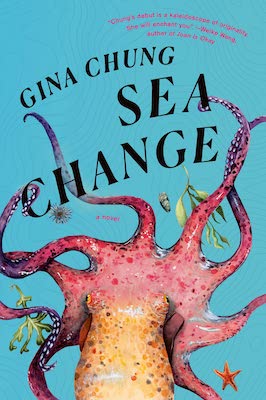
In Gina Chung’s stunning debut novel, Sea Change, the familiar and unfamiliar mix harmoniously. A 30-year-old woman, Ro, finds herself adrift, struggling with a tense relationship with her mother, the disappearance of her father, a breakup with an ex who has left for Mars, and an unhealthy attachment to a cocktail called a “sharktini.” To cope with it all, Ro becomes attached to a very large color-changing octopus at the aquarium she works at. When the octopus, Dolores, may be taken away, all the crumbling pieces in Ro’s life come to a head. 

Full disclosure: Gina is one of my closest friends. I was one of the first readers of the earliest drafts of Sea Change and remember losing myself so thoroughly in the novel that I did not notice it was raining on me through my open window. Gina and I spend most days texting each other funny, mundane things, while at the same time trying, together, to figure out this new life as emerging authors. We talked about Sea Change via email and text—discussing pandemic novel-writing and the many millennial anxieties that Gina renders so well in her novel—fraught parental relationships, frustrating breakups, uneven female friendships, and the idea that nothing is forever. This interview is a distilling of the expansive conversations we have had about this novel since Gina started writing it during the earliest, and toughest parts of the pandemic.


Vanessa Chan: What does the title, Sea Change mean?

Gina Chung: I sort of landed on the title on a whim, but over time, I realized that it did encapsulate one of the major themes in my novel. My protagonist Ro has gone through a lot of changes and upheavals, including the loss of her father and a major breakup. But change is inevitable, right? And one of the ways that we cope with change is to expand and grow alongside whatever is happening to us, sometimes without even realizing it. Transformation is evolution, ultimately, and I wanted to explore, with this novel, how change can be a source of both pain and growth. 

VC: In this novel, the main character, Ro feels a persistent suspicion that everyone leaves her – her ex, her father, even her mother, and her best friend. She panics when Dolores, an octopus she has developed an attachment to at the aquarium she works at, might be sent away to a wealthy buyer. What draws you to this theme of abandonment? 

Transformation is evolution, ultimately, and I wanted to explore how change can be a source of both pain and growth. 

GC: As the oldest child in an immigrant family that experienced periods of emotional upheaval and precarity when I was growing up, I was always both very fearful of abandonment and very desirous of my independence. When I got a little older, I remember being so excited to grow up, to become an adult who didn’t have to rely solely on my family for support or survival. So, it’s a theme that comes up a lot in my fiction, this idea of leaving or being left. My emotional problems aside, I really enjoy, as a writer, thinking about how my characters’ desires for both closeness and freedom (desires which we all have, in differing degrees) might conflict with one another at times. From a craft perspective, it helped me understand all of Ro’s unspoken fears, the anxieties she can only voice to herself. I think Ro equates attachment with abandonment, and it’s only through learning how to trust others and herself that she can unlearn that association. 

VC: Ro’s touchy relationship with her Umma and her obsession with her absent Apa are some of the most emotionally resonant parts of the novel, as is Ro’s constant suspicion that she is disappointing them. As the novel progresses, we see Ro wondering if in fact, her parents were simply disappointed in each other. Can you talk to us about this realization, and about parents and children?

GC: I think Ro has internalized her parents’ disappointments and believes that she must be the root cause of them. But I wanted her, over the course of the novel, to come to understand that her parents are their own people, who had their own hopes and dreams before they ever met and had children, and that their marital problems had nothing to do with her. It’s only in understanding and accepting this that she’s able to heal herself too. 

For many immigrant families, there’s so much pressure to succeed and find security, and when you’re preoccupied with trying to find a foothold in this country, it’s difficult to find time and energy to tackle the other stuff. My parents are immigrants from Korea, and as someone who also grew up in a household where we didn’t talk about our feelings and where there were a lot of expectations—both implicit and explicit—to live up to, I think it’s so important for us to understand how to break cycles of silence, to learn to live in a different way, while at the same time extending compassion and love for our parents, as much as we can, and to our younger selves. 

VC: Yoonhee, Ro’s best friend who she worries is drifting away, is a source of a lot of warmth and humor throughout the novel. She’s a mirror to Ro’s perceived inadequacies, but Ro also knows Yoonhee’s deepest, saddest insecurities. Why are female friendships important, in life and in fiction writing?

For many immigrant families, there’s so much pressure to succeed and find security.

GC: Female friendships are everything! I love fiction that tackles friendship in a serious, layered way, and that treats it with the same consideration that romantic relationships get everywhere else. You and I talk about this all the time, but I feel so lucky to have so many beautiful friendships with other women, where we can be vulnerable and safe and goofy, where we can talk about everything from the big emotional stuff to the small ridiculousnesses of the everyday. In terms of fiction writing, female friendship is such rich territory, especially when it comes to navigating coming-of-age. Friends are important at any age, but when you’re a young person who hasn’t really come into their own yet, your friends are literally everything to you, and, as you said, they can serve as a mirror for all your perceived inadequacies, but also your strengths. In writing Ro and Yoonhee’s friendship, I wanted to show how these two very different women can still appreciate and admire each other even when they clash, and how much they need each other. 

VC: The novel takes place in a sort of parallel future—where climate change means that there is an expedition to Mars to build a human colony, where octopuses are unusually large. But this is not a dystopian novel preoccupied with alternate realities. Sea Change is focused on the familiar—millennial grief, parent-child relationships, breakups, female friendship, annoying colleagues. How did you come to this choice—to set the novel in a slightly different place, but center familiar themes?

GC: I’m always thinking about how my characters would behave in a given scenario, and I think it’s especially fascinating when you can place your characters in a situation that is ever so slightly “off” or altered from our own reality. In writing Sea Change, I knew that I wanted Dolores the giant Pacific octopus to be larger than life, and even more fantastical. I also thought having Ro and her ex Tae’s breakup center around the fact that he is leaving the planet to join a mission to colonize Mars would further raise the emotional stakes around their parting. It made me curious about what kind of person would be interested in joining such an endeavor, and what would happen to the people they had left behind. 

VC: There’s a lot of humor in Sea Change which balances out the more serious elements of the book, for example when Ro thinks about how her best friend “talks like an Instagram caption.” And of course, you’ve written the Pushcart Prize-winning story “Mantis” in which a praying mantis hilariously contemplates finding love. What brings you to humor?

GC: Being able to find the humor in a situation, no matter how challenging it might be, is super important to me. It also helps to add emotional contrast to a story, when you have what’s otherwise a sad or difficult situation, but you add something surprising to it, in the form of a joke or a funny image. It’s like when you’re making a dish and you add contrasting but complementary flavors that enhance one another. I also think humor is an important tool for winning over a reader. It’s not that I need everything that I read to be funny, but when a book makes me laugh, I’m immediately way more invested. 

VC: New Jersey suburban and mall culture is one of the most prominent settings of Sea Change. What’s your relationship with NJ? Is it an ongoing preoccupation?

GC: I was born in Queens, but when I was about three, my parents moved us to the New Jersey suburbs. I never really thought about my relationship to New Jersey while growing up, and it wasn’t until I went away for college that I learned to appreciate the particular nuances of the Korean American New Jersey community that I grew up in. My family lived in a very small, very white town, but when we ran errands or went out to get Korean food on the weekends, we had access to all these Korean restaurants, grocery stores, and businesses in the towns outside of ours. Because we were also an extremely churchgoing family, we were very connected to all the other Korean American churchgoing families in the North Jersey region. It was a very insular world, in some ways. But during the other days of the week when I was at school, I was surrounded mostly by white people, many of whom were completely unfamiliar with Korea and its history at the time. That kind of cultural whiplash was something I was always navigating as a kid. I guess you could say that New Jersey, or my particular experiences of the larger Korean/Korean American New Jersey extended universe, are an enduring preoccupation in my work. 

VC: Sea Change is a novel without a villain. You have skillfully made us love and recognize all the characters. Was this intentional? Why?

I’m very interested in the question of how we can stay in relationships with one another when we’ve hurt each other or let each other down.

GC: I don’t think I was consciously thinking about this while writing the novel, but I did want all of my characters, even the minor ones, to feel fully considered and textured. I wanted to depict a world in which everyday people are ultimately trying their best, even when they hurt one another or themselves. I love villains and villain-y in fiction, but I think I’m most interested in writing about people who, even when they do morally questionable things, are doing them for understandable reasons. I’m very interested in the question of how we can stay in relationships with one another when we’ve hurt each other or let each other down. Sometimes it’s possible; sometimes it’s not. That space in between is such a fertile and fraught place. I wanted to stay there as much as possible while writing this novel, and to write about a character who is trying to repair those places within herself.   

VC: I see Sea Change as being in conversation with other novels with millennial women trying, flailing, and needing to figure things out (think Goodbye Vitamin by Rachel Khong, Luster by Raven Leilani, Pizza Girl by Jean Kyoung Frazier). The gift of those novels, and of yours, is, like real people, the characters do not solve easily. What drew you to this character archetype? Do you imagine your book narrators at parties together?

GC: I love this question and the idea of Ro hanging out with the protagonists of those novels, all of which I love and consider to be emotional touchstones for Sea Change. I sort of have a love-hate relationship with the “sad girl” archetype itself, since it’s often used to flatten or dismiss these kinds of coming-of-age stories in which the protagonists are often young, female or femme-identified, and figuring themselves out and making bad decisions along the way (so much of Western literature is devoted to “sad boy / sad man” stories, only they don’t get called that!). But I also really appreciate and gravitate to these kinds of stories because, honestly, life is sad and hard a lot of the time, and it’s important to acknowledge the hardships of being femme and female in this world (not to mention being a person of color and/or queer). At the same time, I think all of those books that you mentioned, and hopefully my own, are also funny and full of life, and the characters, as you say “do not solve easily”—the emotional ambivalence and the searching quality that their stories have is actually what leads them to an understanding of what they need and want. 

VC: Who did you write this book for?

GC: I wrote this book for anybody who’s ever felt like Ro—lost, confused, unseen, and unconvinced that anything will ever happen to change that. I also wrote it for my younger self, the childhood version of me who often felt so alone and invisible and was also deeply angry and sad about it at times. I feel so joyful to be writing at a time when so many more Asian American and BIPOC voices are being championed, and the fact that Sea Change gets to exist in this world and in conversation with so many wonderful books, including the ones you mentioned above, feels like more than I could have ever dreamed of. 

The Mating Call That Occupies My Memory

Author’s Note: These pieces are written in the style called “skaz”—a term coined by early-Soviet Formalists to describe an oral bard’s voice on the page. Somewhere between prose poetry, theatrical performance, and rambling essays—dense and personal, holding eye contact with the reader. It was particularly popular in Ukraine, where skaz’s greatest practitioner, Nikolay Gogol, grew up and where I, too, lived for the first fifteen years of my life.

More Comment Than Question

“This is more of a comment than a question . . . ” You know how people in the crowd always say that at talks and readings? There’s a certain sweet shamelessness about it. And a sense of dread, of hopeless inevitability, that’s released in the room and whose fingers immediately start straining the face of the presenter.

Well, what you’re about to read here is also more of a comment than a question.

Who is the comment for—I mean, whose talk am I responding to? That’s hard to pin down. Maybe Aesthetics? Or maybe my parents—as a source of discourse? Beauty, or immigrant expectations?

I must have been five or six at the time. We went on our annual summer vacation—this time, to Sochi, a town on the Black Sea, which was further out from my native Ukraine, and closer to Georgia, hot and dreamy the way old resorts are, conceived, in principle, to plunge you into a hallucination of sun reflected off the water. I remember almost nothing about the trip except for that hallucinatory feeling of irrational well-being, luxurious and fragrant and unfamiliar: and cedars, and new kinds of flowers, and enormous furry peaches.

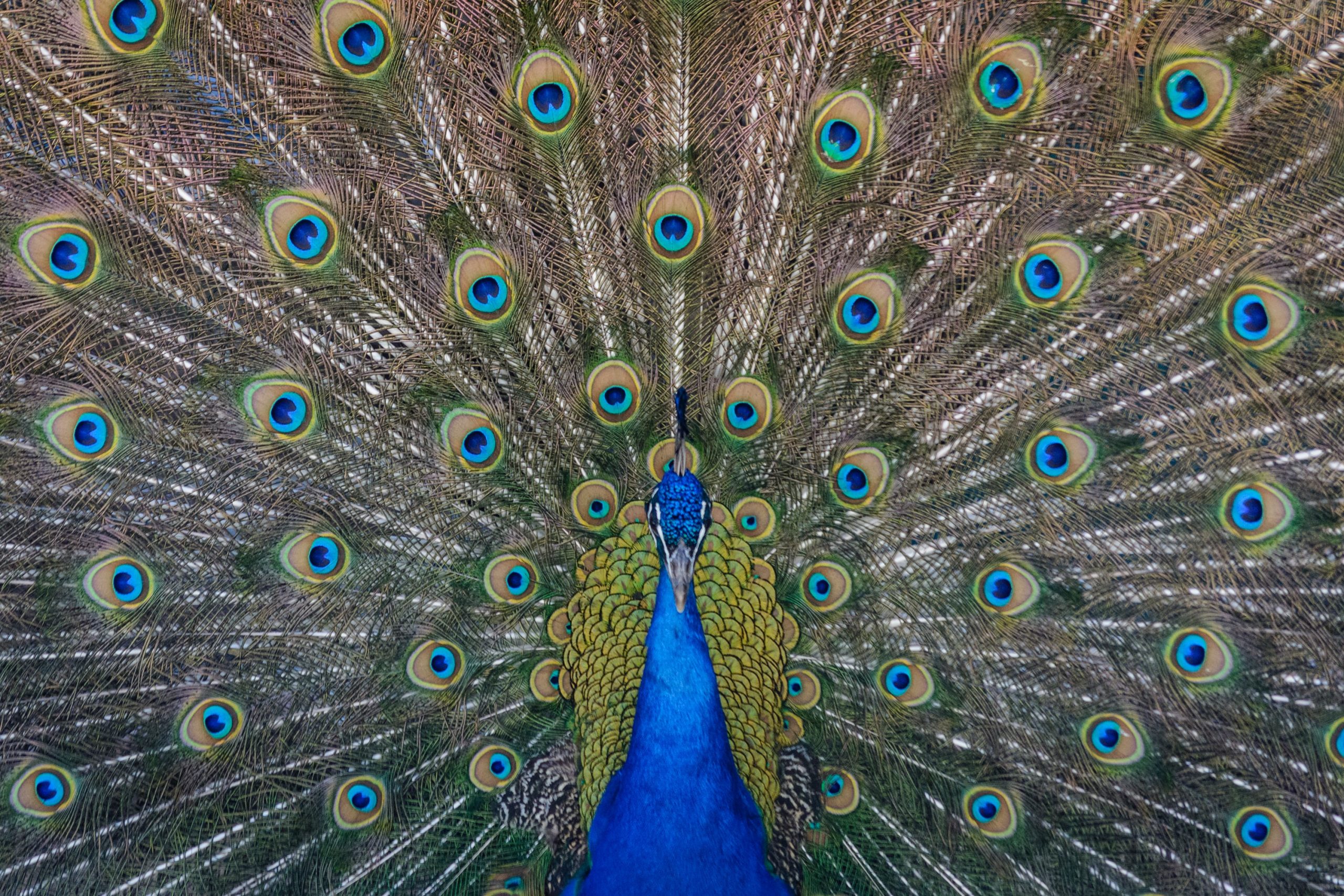
And then there’s this one memory, the only one real anchor. The first morning there, I tottered out into the courtyard where we were staying, and spotted a peacock. It was my first peacock: I’d never even seen one on a photograph or in a movie. All I knew was the word, pavlin—a word that rung with inaccessible dignity, untouchable distance—but somehow, seeing it, I immediately knew what was in front of me. I was stunned, exhilarated.

And then, as I gaped at it, the peacock opened its mouth, and produced the most vile sound I’ve ever heard in my life. It was peering towards the trees, shouting towards some invisible presence within the branches. It couldn’t possibly have been a mating call. Could not possible be. Certainly not one that would warrant any kind of a response. Maybe it was a defeatist, self-sabotaging mating gasp—there’s a lot of poetry like that.

As far as birdsongs go, it was definitely more of a comment than a question.

The other day we sat around the table. It was my birthday, one of those easily divisible ones. The subject of the conversation was our shared forgetting—the big swaths of life that we have no access to, whole selves that are gone and can only be vaguely smelled from the pages of books we were reading at the time, or pictures we half-smiled from. Immigration, and other forms of decorated trauma hung thick in the air.

When I drink, a lot and quickly, in a brief short-lived rise, I sometimes see across time. That was the case at this birthday gathering. We sat together at the table, and I saw chipped bits, cracks of our forgotten lives pirouetting from our eyes, and, as we refilled our glasses, we drank them, drank each other’s rescued contraband memories.

It was there and then that my Sochi peacock wondered into the scene, and I remembered him for the first time in many decades. A memory coming through a distance like that comes wrapped in a few tears, that’s just a given. But why did I remember Sochi peacock on my birthday? Was it a present the subconscious shoved my way? Did the peacock shout louder than other inhabitants of my loosening and disappearing world? Or is it just the sort of a thing that friends do for each other when they sit together and tell stories, and I forgot that this was still possible? Was I hearing my parents’ laugher—at my helplessness and dismay as I attempted to comprehend the disparity between that tail and that voice? That voice and this tale?

I came to America as a teenage student and stayed, stayed, stayed, through endless visa iterations and law tightenings, through all those moments when it felt as if my status here was a frail validation of my existence, graciously extended for another year, or about to be pulled out from under me at any moment. It is hard to hold one’s history when it stems from such an alien world—the one you dread being thrust back into in your worst nightmare of bureaucratic outcomes. You want to erase its pathways inside of you so you would never have to risk going back. All of us, at that birthday table, were kind of like that too, worn by these overlaying, unwelcomed allegiances—and as we drank and talked, it was as if these allegiances became people, and we were these people’s jeans. 

No question about it.

God, Dog, Daughter

You’ve all heard it at some point: “language isn’t enough.” Or even: “a poem that’s reaching the edge of the unspeakable”—you may even have said it yourself, or even worse, to yourself, quietly, like? And if you are Paul Celan that’s one thing, but if you merely sitting and reading, or getting up to congratulate someone, or wish them well when they’re sick, or if you’re sick in love and you want to congratulate the object of your affection, language should be adequate for covering the ground you’re standing on. Even if you’re standing on a shred of the abstract. Don’t tell me the “true meaning” of this or that is too precious to be captured in words, as if language just flails and stops short in front of the vast abyss of silence somewhere at the bottom of which, on the unshrinkable god-couch, a brilliant pre-lingual understanding of your experience resides.

Never mind all that: What I was getting up to tell you about is the two times I did enter Silence. In neither of the two situations was it the matter of language’s insufficiency or inadequacy. And even the great void, which many of my poet friends talk about—I saw no void to speak of. It was precisely the opposite.

The first time it happened, I was seven years old. I was biking fast, tearing down a steep hill after my friend. There were these parks all over Ukraine that weren’t exactly parks, for they were neither cultivated nor marked. They were just these “nothing-there” patches of the world left alone by people who lived near them. And we were wild street kids, hanging out in these so-called parks, or maybe my friend was a wild street kid and I imagined we were alike. As I was saying, I was on my bike, and I was going fast, and as I made a sharp turn at the bottom of the hill, the bike tumbled, and I fell, and my left butt cheek landed right on a big, sharp rock. I laid there, butt on the rock, and could not speak for a whole minute, and even after that, the only word I had access to was “sobaka,” which means a “dog” in Ukrainian and Russian both. I said just that one word, over and again, and with deep feeling and conviction—everything was packed into it. There was something utterly blissful about that dogged near-silence I entered—even though the pain was sharp, it was strangely thrilling to lie unable to speak anything other than that one single word. It wasn’t that I transcended language or was bigger than it. No way.

See, I didn’t speak a word of English at the time and so didn’t even know about the—you know, the whole god/dog thing?

Reader, when I landed on the rock, I was propelled into another dimension, ushered in and out of its gateways by this sobaka.

Eventually, the language returned, and sobaka waddled off. But I saw it one more time, I swear, out of the corner of my eye, wagging its liminal tail just a few short years ago, in a very different part of the world, in a tiny Californian apartment on a university campus, where my daughter came up to me, put her hand flat on top of her head, and then moved the hand toward me.

“Papa,” she said, “See, Papa, I am as tall as your vagina already!”
It wasn’t so much my stunned silence but her language, her rocking, precious words that let the dogs of transcendence out.

11 Books About Women on the Brink

Have you ever harbored a desire so fierce that you were consumed by it? Maybe to fall in love, or shut down a toxic mine, or reconnect with a lost family member, or move to another country? And during the day you plot out how to achieve this goal, and during the night you dream about how you will be fulfilled? Of course, life rarely works out as scheduled. In fiction, the best-laid plans more often end in messy escapades and misadventures. Desires are quicksand: the more someone pines for something, the more they’re likely to get stuck deeper in a scandalous tarpit of their own devising. In Mary Shelley’s Frankenstein, for example, the young doctor achieves the objective of bringing his creation to life, but at a great and unforeseen cost. 
Women especially, who have been for so long boxed into domestic roles and blocked out from more ambitious goals, might risk the roof over their heads to shatter the glass ceiling. Such fearless women are willing to blow up their lives for the idea of a better future. Strong women make history, sure; but strong women also catch fire. 

Then again, maybe there is a part of us that wants to create a monster. After all, aren’t we predisposed to making something in our own image?

In my second novel The Formation of Calcium, Mary Ellen Washie finds herself on the precipice: her old life has been swept into the dustbin, and she can either make a clean break, or take herself out with the trash. But “survival was the most important thing, escape, no matter how painful it might be.” She abandons her family, quits her menial part-time jobs, and hightails it to Florida, where she risks everything to become a new woman, no matter if achieving her goals will require all the fight and cunning she’s got. 

In the following reading list, you will find women who struggle just as hard to give themselves what they really want—and are damned to the consequences. 

Drive Your Plow over the Bones of the Dead by Olga Tokarczuk, translated by Antonia Lloyd-Jones

In this dark novel, our narrator Janina is suddenly alone after her “Little Girls,” a loyal pair of mutts, disappear. She is trapped by the stark winter, the isolated location of her home, and old age, but that does not stop her from plotting to create a better world, one where animals have a voice, and their rights are more important than the law. She is driven by a “state of clarity, divine Wrath, terrible and unstoppable,” and she channels this anger into action. Janina is an engrossing narrator whose obsessions with astrology, poetry, and the mounting murder count in her small hamlet make this novel a worthwhile read.  

Tampa by Alissa Nutting

Sometimes what a woman wants is not accepted by society, and sometimes what she wants is plain illegal—as is the case for junior high school teacher Celeste Price, who takes the job so that, while chaperoning a school dance, she can waltz with a boy or two, her “pelvic bone ironing across the erect heat inside their rented tuxedo pants.” Celeste knows that what she craves could land her in jail, but her desire is greater than any consequence she could imagine. And, using her good looks, her husband’s money, and her influence as a teacher, she goes to incredible lengths to fulfill her fantasies.

The Vegetarian by Han Kang, translated by Deborah Smith

Yeong-hye is a completely ordinary woman—that is, until she decides to become a vegetarian in a culture where every meal is meat. This decision is influenced by her violent dreams, where the “roof of [her] mouth, slick with crimson blood,” saturates her with a “vivid, strange, horribly uncanny feeling.” Soon the world inside her head becomes all-consuming, so much so that she feels she does not need to eat anything at all: perhaps she can turn into a plant and teach herself to photosynthesize. As Yeong-hye’s family tries to exert control over her body, she burrows deeper into her mind, where a startling transformation has taken root. 

Mermaids in Paradise by Lydia Millet

Deb, our astute and sarcastic narrator, is honeymooning with Chip when a fellow vacationer who happens to be a biologist informs them that she spotted mermaids near their Caribbean resort. Deb feels certain that the biologist is insane, or perhaps on LSD, until she sees the mermaids herself while diving. Chaos ensues: the resort’s “parent company” swoops in to figure out the logistics of commercializing mermaid tours, and Deb finds herself wrapped up in a fracas to save the enthralling creatures from “a mermaid zoo.” She is ready to risk anything, and she has one excellent reason not to hold back.
Woman on the Edge of Time by Marge Piercy

Connie is able to communicate with the year 2137, and so her present declares her crazy. This feminist classic explores a utopian future in which individualism is prized: people cannot be committed to an institution against their will, labor is equally proportioned, no one is homeless or marginalized or discriminated against—all the issues that plague Connie’s 1970s New York life have vanished. Through time travel, Connie experiences the sort of future she wants to be a part of, but she soon learns that she is an integral step in creating that future—and she decides to rebel against her present situation, to battle against her repressors, because she realizes that she is at war, and that the fate of the human race depends on her winning.
N.P. by Banana Yoshimoto, translated by Ann Sherif
North Point is the title of a sad, old song, and Kazami finds herself caught up in its mood, despite the fact that the summer days are clear and blue. She lost her voice during an illness, and without that communicative instrument, she experiences synesthesia; she begins to view language “as a tool that encompasses both a single moment and eternity.” But when her boyfriend commits suicide after attempting to translate the final short story of a famous Japanese writer who composed it just before his own death, she leaves her comfort zone to figure out what went wrong. As the end of summer looms and she surrounds herself with people obsessed by suicide, she realizes that she needs to fight for happiness, for love, and for her life.

I Am Not Ashamed by Barbara Payton

In this jaw-dropping memoir, former Hollywood starlet Barbara Payton spills her guts, lets all the cats out of the bag, and cackles while the felines snack on the entrails. At the time of the telling, Payton is 35, fuels herself with cheap wine, and pays for her vermin-infested apartment via “favors” to men; but her focus is on the past, when she was a coveted movie star “sitting on top of the world and going higher.” Her calculated manipulation of those around her result in the highest highs and the lowest lows of a life lived to the extreme. Barbara sets lofty goals for herself—“I filed for divorce and decided to become a movie star. Just like that”—and she achieves them.

Blood and Guts in High School by Kathy Acker

This experimental work—part novel, play, poetry, drawings, and dream maps—is a trippy dive into Janey’s quest for power and sex. Janey lives with her father/boyfriend in Mexico until he decides to leave her for a woman named Sally, which plunges Janey into a surreal journey to realize her self-worth. She meets Jean Genet and President Carter, as well as figures such as Death and Mr. Blowjob. Janey is the sort of wild child who does whatever, whenever; she follows her whims and interests, and her rich inner life, displayed in exquisite detail on the page, makes this an engrossing piece full of abrupt turns.

Cenote City by Monique Quintana

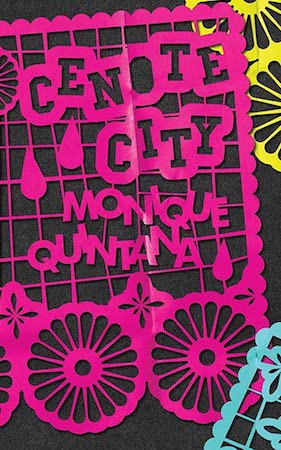
Lune works in Storylandia, “a place where mothers and fathers bring their children to learn about fantastical things right before they tell them to stop believing in fantastical things.” Her mother Marcrina, once a midwife, now cries enormous tears that fill a deep, mysterious cenote. When The Generales, who control Cenote City, decide to make Marcrina and her cenote a tourist attraction, Lune knows that she will need to risk everything in order to steal her mother away. But as the worlds of the living and los muertos become more and more intertwined, Lune realizes that her mother might not need to be saved after all.

Oreo by Fran Ross

Christine “Oreo” Clark is completely her own person, and though she is just a kid, “because of her constant bullshit, she was often disguised as an adult.” Her family knows that she will go far after young Oreo strangles a lion coat with her jump rope—she thought the coat was alive and wasn’t afraid one bit. Oreo is strong and witty and blessed as any Greek hero, and when she leaves home at sixteen after her Black mother provides her with the clues to search for her Jewish father, the adventures she encounters are legendary. This book goes to extremes of humor, language, and culture, and in the end, nothing is black or white. 

The Whore by Márcia Barbieri, translated by Adrian Minckley 

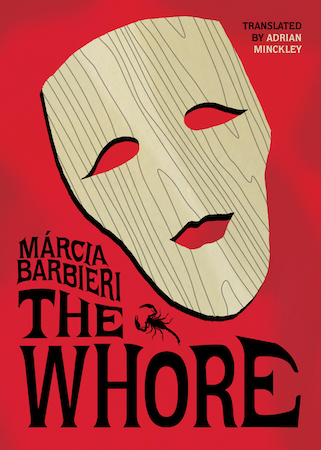
Anúncia, the town whore, recounts her life of conquests and defiance in this monologue that follows lines of thought as whimsically as an Exquisite Corpse is drawn—and there are plenty of body parts, living and dead and in-between, that make their appearance throughout this orgiastic tale. In the post-apocalyptic setting, “the population dropped almost to zero,” but Anúncia survives, and though the earth has become infertile, she seeks out abortion after abortion as she believes “a child is a loogie you forgot you swallowed that ends up sliding out your pussy hole.” But when she becomes impregnated with a fetus that won’t come out and consequently falls in love with Flamenca, her abortionist, her life takes an unexpected path.

March Madness: Book-to-TV Adaptations Edition

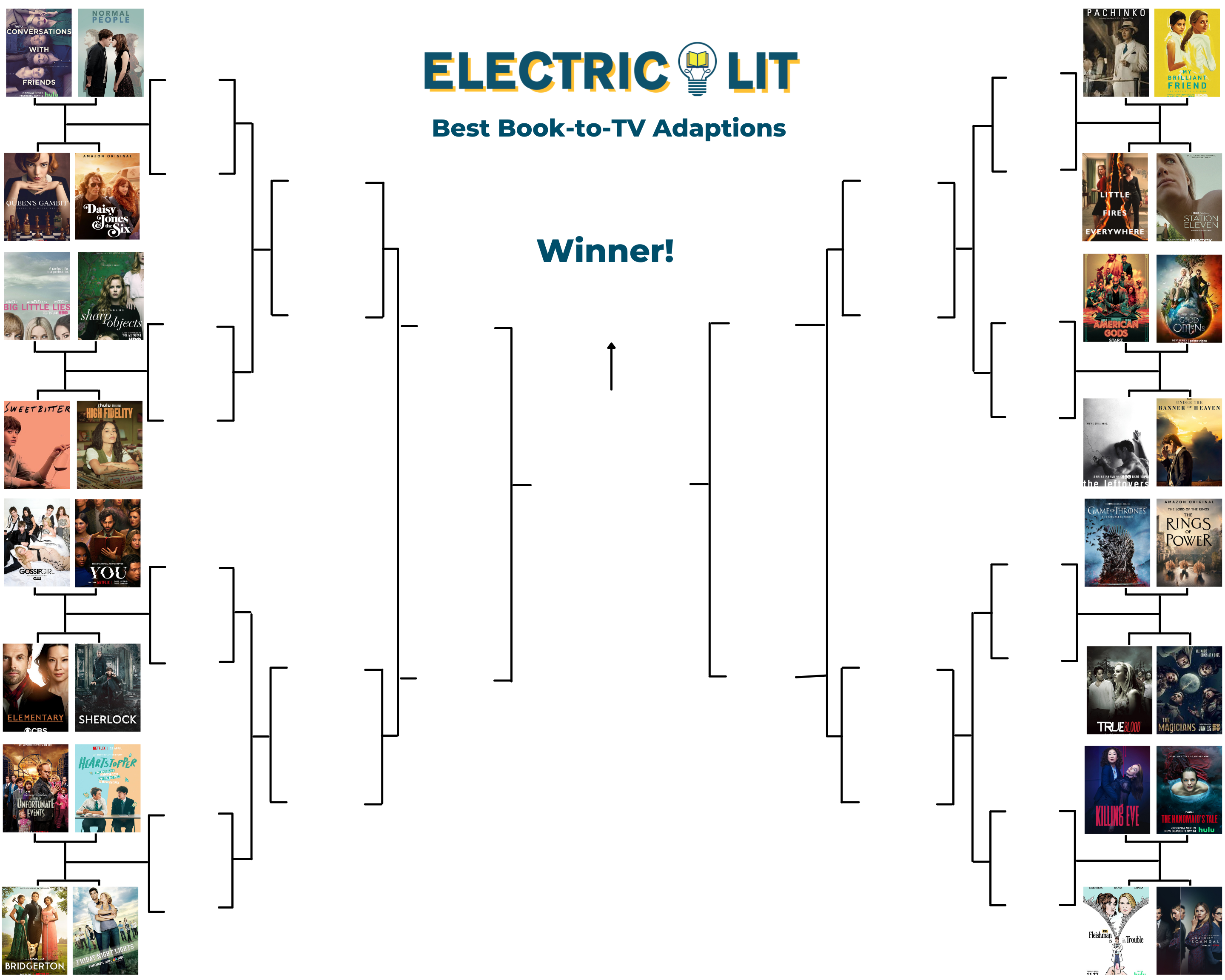
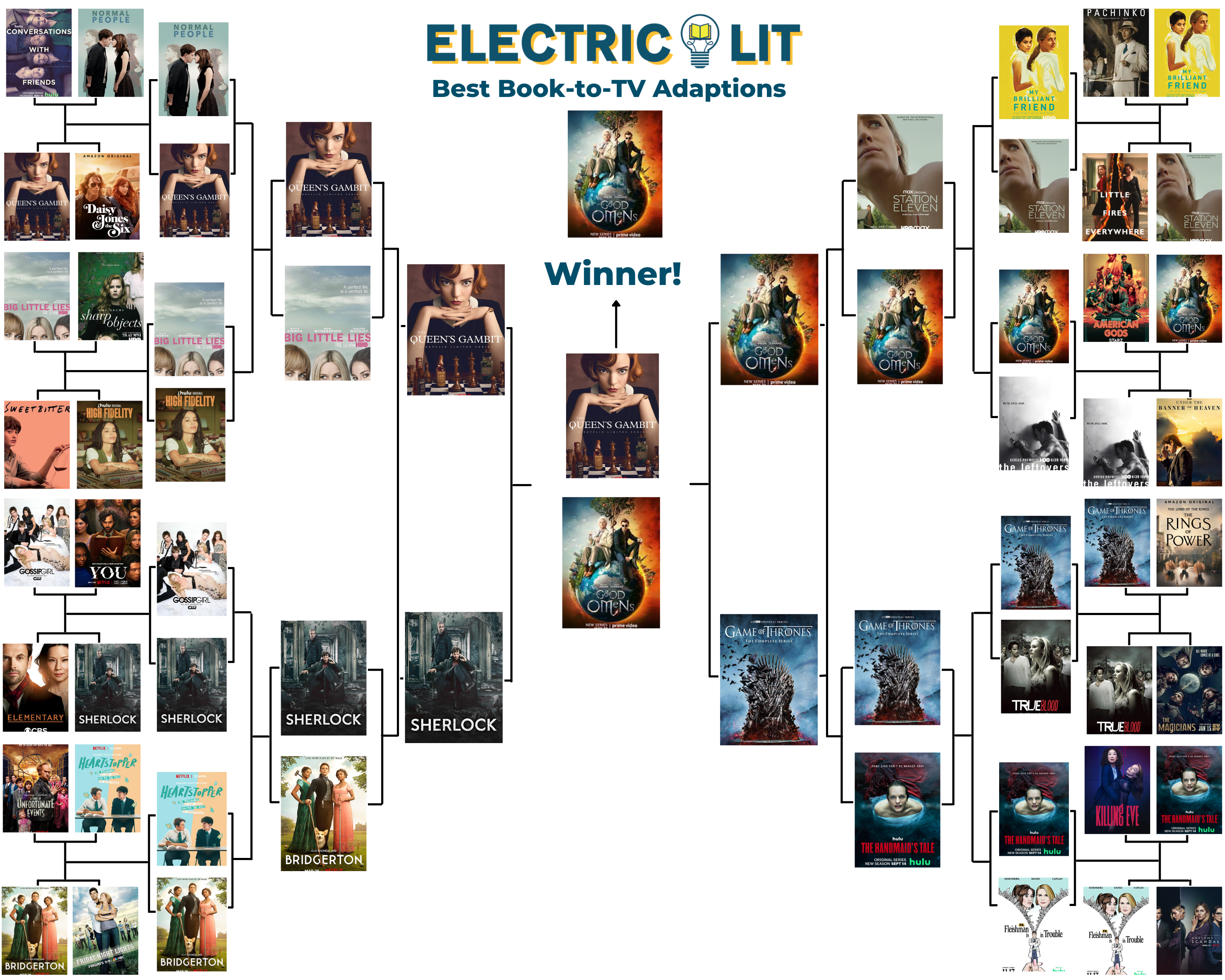
It’s March Madness, and you know what that means (or, if you’re like most of us, maybe you kind of don’t. Basketball? Competing colleges? Probably a lot of drinking?): it’s time to fill out all sorts of brackets entirely unrelated to actual March Madness. We may not always be up on all the sports news, but we do love a good competition, so this year we thought we’d join in the fun. In that spirit, over the next week on our Twitter and Instagram channels, we’ll be asking you to vote for your favorite book-to-TV adaptations and help us find the one literary TV show to rule them all.

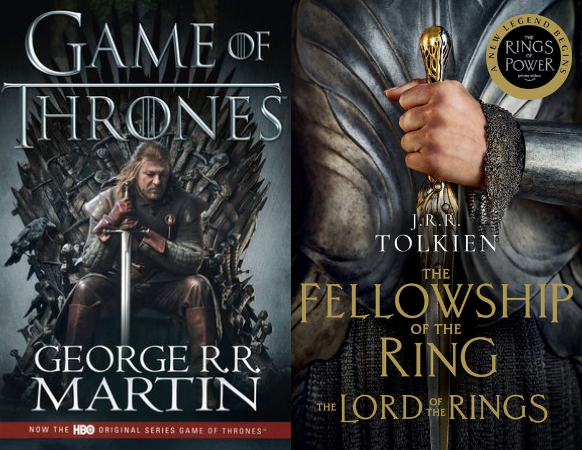
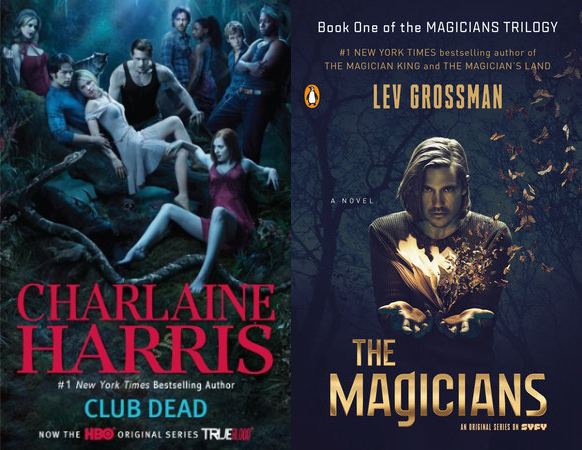
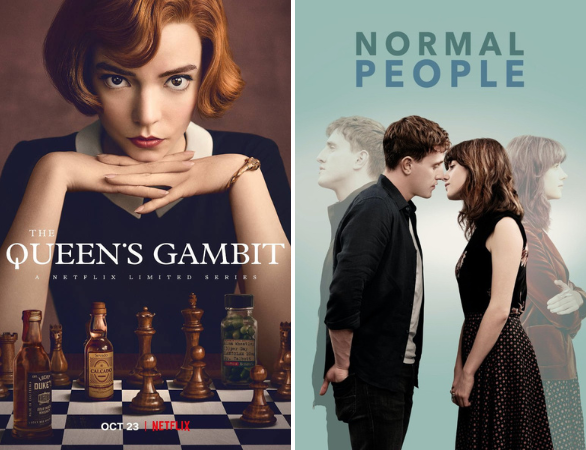
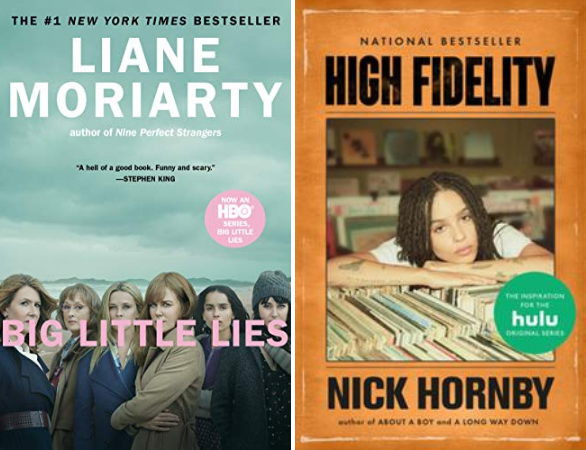
Book adaptations are all the rage lately, and there are more coming out all the time. Who did it best? Will it be Game of Thrones, or did the show’s ending ruin its chances (the part not based on the books themselves, may we add—factor that in or not, at your discretion)? Will one of the newer additions to the club (a Rooney, perhaps?) rise to the top? What about a beloved show that people have probably forgotten was based on a book at all, like Friday Night Lights (see, we included some sports content after all! We’re well-rounded!)? 

Click to enlarge

Fill out the bracket and make your predictions, then head to our Twitter and Instagram on Monday, 3/27 to start voting. May the best IP win!

Round 1

Conversations with Friends vs. Normal People

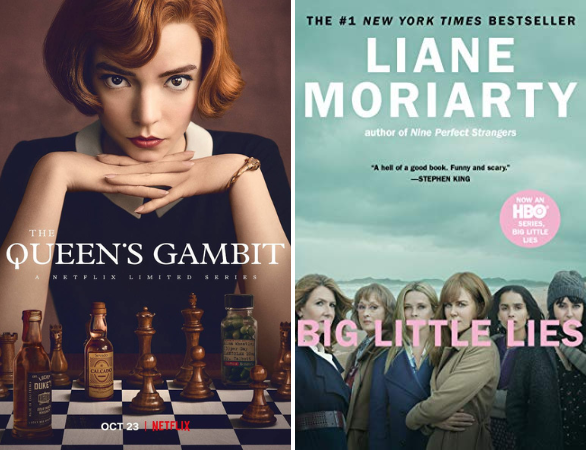
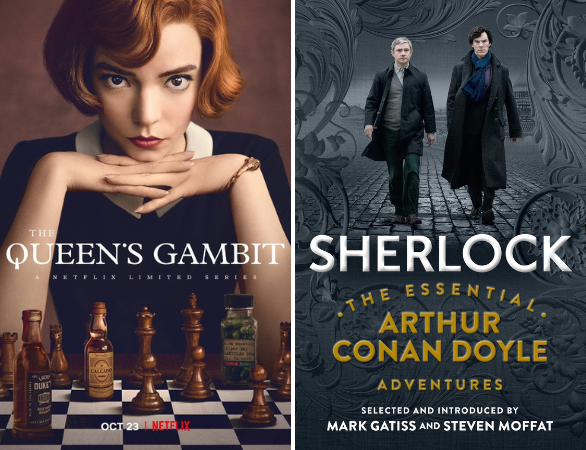
The Queen’s Gambit vs. Daisy Jones and the Six

Sharp Objects vs. Big Little Lies

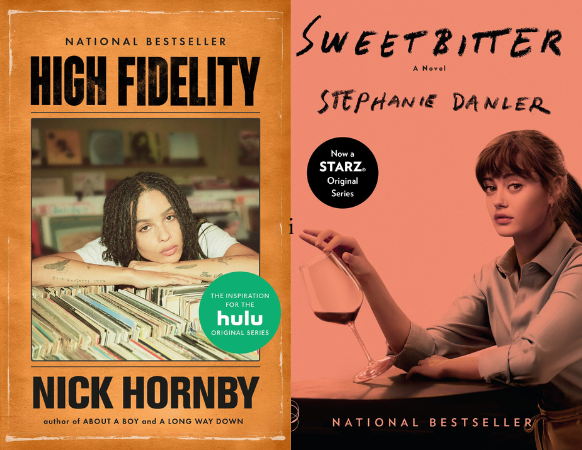
High Fidelity vs. Sweetbitter

You vs. Gossip Girl

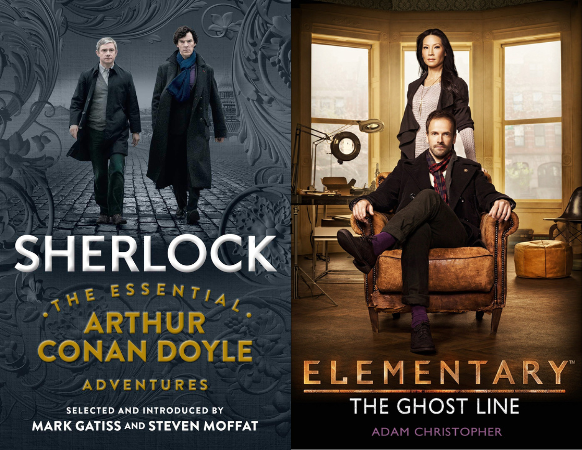
Sherlock vs. Elementary

A Series of Unfortunate Events vs. Heartstopper

Friday Night Lights vs. Bridgerton

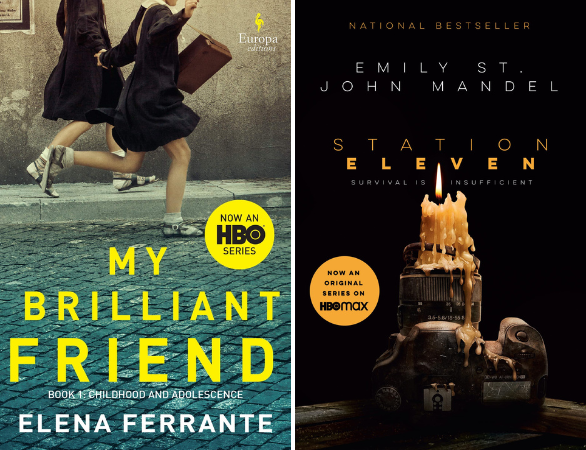
My Brilliant Friend vs. Pachinko

Little Fires Everywhere vs. Station Eleven

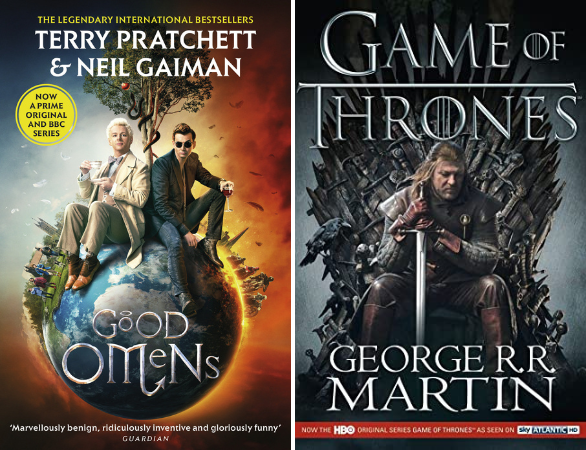
Good Omens vs. American Gods

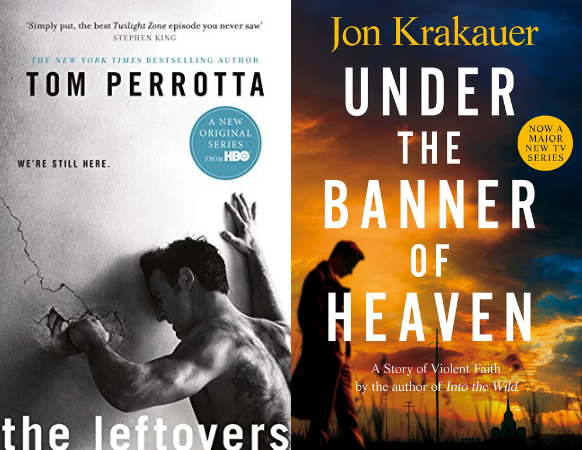
The Leftovers vs. Under the Banner of Heaven

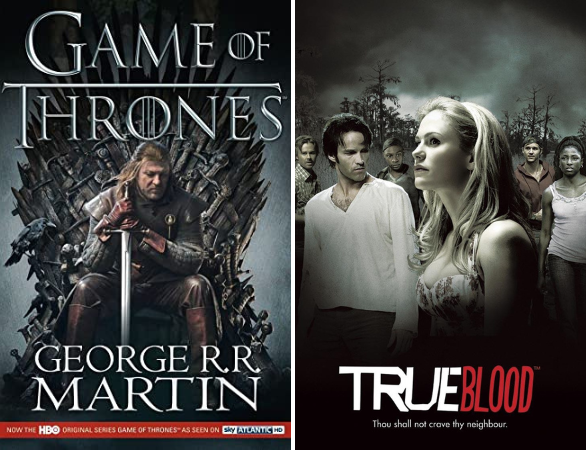
Game of Thrones vs. Lord of the Rings: Rings of Power

True Blood vs. The Magicians

The Handmaid’s Tale vs. Killing Eve

Fleishman Is in Trouble vs. Anatomy of a Scandal

Round 2

The Queen’s Gambit vs. Normal People

Big Little Lies vs. High Fidelity

Gossip Girl vs. Sherlock

Heartstopper vs. Bridgerton

My Brilliant Friend vs. Station Eleven

Good Omens vs. The Leftovers

Game of Thrones vs. True Blood

The Handmaid’s Tale vs. Fleishman is in Trouble

Round 3

The Queen’s Gambit vs. Big Little Lies

Bridgerton vs. Sherlock

Good Omens vs. Station Eleven

Game of Thrones vs. The Handmaid’s Tale

Semifinals

The Queen’s Gambit vs. Sherlock

Good Omens vs. Game of Thrones

Finals

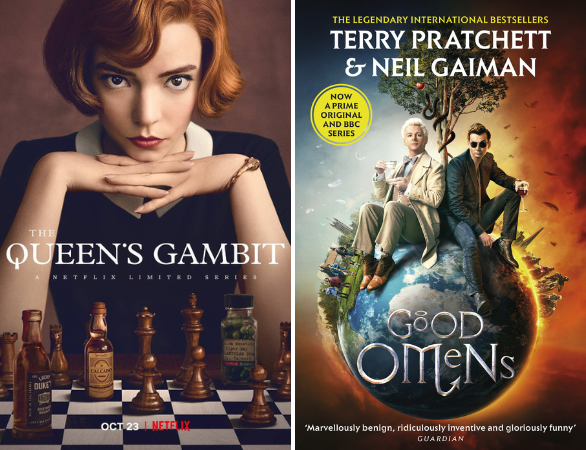
The Queen’s Gambit vs Good Omens

Winner

Good Omens


Here’s how the bracket played out:

The Famous Artist Wellness Plan™

Artists have long been notorious for their wellness of body and mind. Indisputable experts in life performance, these bastions of creativity are an infallible resource for healthy habits to live by. To optimize your holistic potential, consider The Famous Artist Wellness Plan (FAWP)™. 

Or…don’t.

  • Wake and quickly smoke opium (Proust). 
  • Swallow uppers to counteract the downers (Monroe). 
  • Do not bathe. Ever (Michaelangelo).
  • Comb hair 100 times (Dickens).
  • Go for a 30 minute ramble in the desert collecting rattlesnake rattles (O’Keefe).
  • Feed your monkeys, hens, parrots, sparrows, fawn, and eagle (Kahlo).
  • Take three shots of vodka and just enough psilocybin (Thompson). 
  • Drink three espressos and watch The Young and the Restless (Rauschenberg).
  • Pound 49 more cups of coffee (Balzac).
  • Create a meticulous record of the previous day’s events. Mail to the IRS (Warhol). 
  • Drink glycerin with a honey chaser to “wash out the pipes” (Armstrong).
  • Eat first breakfast of the day and practice pirouettes (Pavlova).
  • Attend Mass. Have your portrait taken with your pet peahens (O’Connor).
  • Ingest Dexedrine. Experiment with Thorazine, Meprobamate, and Phenobarbital. Chain smoke all day. (Jackson).
  • Swallow downers to counteract the uppers (Monroe).
  • Take anteater for a walk before lecturing in a swimsuit (Dali).
  • Do headstand for ten to fifteen minutes (Stravinsky).
  • Untie knots with your toes (Houdini).
  • Smoke cigar (Twain).
  • Eat brunch then practice the pas de deux (Pavlova).
  • Bet the ponies (Bukowski).
  • Put an unlit cigarette and a flaming match into your mouth. Pull out a burning cigarette (Dean).
  • Smoke cigar (Twain).
  • Eat lunch then dance the pas de trois (Pavlova).
  • Study mimes (Bowie). 
  • Eat pre-dinner then perform the grand pas (Pavlova).
  • Host a seance (af Klint). 
  • House a bottle of gin, seven Martinis and two glasses of wine (Highsmith).
  • Smoke cigar (Twain).
  • Eat supper then solo the dying swan (Pavlova). 
  • Shake off the narcs and go dancing (Holiday).
  • Go to bed with Jane Eyre and a bottle of whiskey (Rhys).
  • Sleep the rest of the day, get blotto and work all night (Pollock). 
  • Drink wine until dawn and write poetry. Revel in the fruits of your healthy lifestyle (Bukowski).

Follow The FAWP™ and we guarantee your creative life will never be the same. Side effects may vary, and include (but are not limited to) addiction, bloating, headaches, rattlesnake bites, divorce, lung cancer, pulled hamstrings, poverty and delusions of grandeur.

Here’s to your health.

7 Newsletters That Will Help Get Your Book Published

For writers at every stage, the publishing industry can feel inaccessible. There are so many steps between drafting a book and seeing it out in the world. Especially for debut hopefuls, it’s more than a little intimidating: how do we know what we don’t know? Meanwhile, those who’ve already published may have different unknowns related to their brand, potential advances, or editor relationships from one book to the next. Luckily, the resurgence of the email newsletter over the past couple of years has led agents, publishers, and writers with publishing experience to lift the veil on much of the process.

The seven newsletters below offer the best insights and advice from abstract aspects of publishing to the smallest details, including market analysis, writing query emails and proposals, navigating contracts, marketing your work—and don’t forget much-needed emotional support and a laugh or two.

Agents & Books by Kate McKean

A writer and vice president at the Howard Morhaim Literary Agency with bylines in Catapult, Electric Literature, and Racked, Kate McKean created Agents & Books to answer the most common questions she gets about writing, literary agents, and publishing. How to find and research agents, writing query letters and book proposals, contracts, publicity, and how to quit your job and write full time are all areas McKean dives into. There is free content, but for $5/month or $50/year, paid subscribers receive an additional weekly newsletter with Q&As they can submit questions to, along with insider content. Best of all, it’s easy to find the information you need on the newsletter’s home page, which is organized by topic. 

Attention Economy by Leigh Stein 

Every Sunday, Leigh Stein sends out a completely free and extremely personable newsletter about how the internet is changing the way books are written and published. The author of five books, most recently the poetry collection What To Miss When, Stein gets writers to think beyond what they’re working on and instead about how they’re working on it. The newsletter demystifies the industry and process of getting published as it covers topics like the importance of having a strong concept to get a book deal, thinking of your writing career as a small business, platform building and marketing your own work, the shifting nature of the personal essay market due to social media, and trends in book title writing. She also includes writing exercises when relevant, gets into craft, and provides personal examples to make sure her points resonate. 

The Hot Sheet by Jane Friedman 

Hailed as “The Economist of publishing but a lot easier to read,” Jane Friedman’s The Hot Sheet is for anyone who wants to keep up with the business realities of the publishing industry. The former publisher of Writer’s Digest and author of three books including The Business of Being a Writer, Friedman shares her sharp interpretation of launches and mergers, changes likely to affect author earnings, market analysis, and more in a variety of forms: top headlines of the latest news in publishing, in-depth articles with bottom-line takeaways, a summary of industry trends, new opportunities and ventures, and links to stories of interest in the writing and publishing community. There are no free subscription options here. For $59/year, subscribers receive an email every two weeks with relevant information that just might lead them to find their next publishing opportunity.

Before and After the Book Deal by Courtney Maum

Writer and book coach Courtney Maum is dedicated to giving her peers the tools they need to feel empowered when working to publish a book. Her newsletter—a continuation of Before and After The Book Deal, one of her five books—offers insight into all aspects of the publishing industry, as well as craft and publishing tips, for debut authors and veterans alike. With a direct but light-hearted delivery (ex: “Don’t write every day. Yep. You heard me”), Maum tackles details like blurb writing etiquette and query email subject lines alongside bigger picture items such as how to get out of your own way and deciding to self-publish. There are occasional free posts, but in addition to weekly, sometimes twice weekly emails, paid subscribers ($6/month or $60/year) can post, comment, and submit their promotional materials to Maum’s “Friday Office Hours” for a shared critique. 

How to Glow in the Dark by Anna Sproul-Latimer 

How to Glow in the Dark offers practical, candid, and entertaining advice to writers at every stage of their journey—“aspiring, #amwriting, querying, submitting, under contract, post-publication, popping champagne, popping Xanax, screaming into a pillow.” Most emails are written by Anna Sproul-Latimer with occasional contributions from her colleagues at Neon Literary, where she’s founding partner and president. This newsletter feels like a friend who helps you see all sides of a situation. Sproul-Latimer covers everything from the nitty gritty of profit and loss sheets to how writers can approach editors who don’t respond with timely edits to why neurodivergent writers shouldn’t ritualize their creativity but rather “make tedium a daily practice and your dreams an emergency.” Periodically, there are public posts for non-subscribers, but for $5.99/month or $49.99/year, subscribers receive weekly emails with publishing tips, as well as access to the newsletter archive.

Publishing is Hard by DongWon Song 

Publishing is Hard is its own work of art in newsletter form. Its creator, DongWon Song, an agent at Howard Morhaim Literary Agency, began this (approximately) monthly venture to “share what it’s like, emotionally, to sit on my side of the table, and to try to shine a light on some of the business’s more confusing corners.” Song’s newsletter is emotional indeed—raw, authentic, humorous, and hopeful. At times, it’s philosophical, such as when Song describes their existence at the intersection of art and capitalism, and encourages us to write despite uncertainty. Other times, it’s practical, making a case for why writers should think about their brand long before commercial success, or breaking down the opening paragraph of Shirley Jackson’s The Haunting of Hill House. Song’s newsletter is free, but for $5/month or $50/year, subscribers receive bonus content like monthly Q&A streams with guests.

Notes from a Small Press by Anne Trubek

In Notes from a Small Press, Anne Trubek—founder and publisher of Belt Publishing and author of three books including So You Want to Publish a Book?—shares her take on an array of publishing industry-related topics. Each week she tackles something new, from defining what makes a small press small to summarizing the “most disastrous decision in corporate publishing history” to covering common misconceptions about publishing. The newsletter is free, but only paid subscribers ($5/month or $30/year) can see posts from the archives.

Ask Me Whether or Not I’m Trans

This essay, by Addie Tsai, is the first in Electric Literature’s new limited essay series, Both/And, which centers the voices of trans and gender nonconforming writers of color. For the next fifteen weeks, on Thursday, EL will publish an installment of Both/And, with the series running through spring and into Pride Month. At a time when my community (the trans community) is a political target for the far-right, I am incredibly proud to have the opportunity to elevate the voices of those most marginalized—and most often silenced—in our community so that we can tell our own stories. Both/And is the first series of its kind, and you’re in for a treat: stories of invisibility and hypervisibility, sexy stories, dreams and love and grief. But what ties them together is the fearlessness and honesty with which they are told. And the volume—because when it comes to our lives, it’s time our voices be the loudest in the conversation.

—Denne Michele Norris, Editor-in-Chief


If you asked me whether or not I’m trans, I wouldn’t know how to answer. On certain days, I wake up, and feel, with absolute certainty, that I’m a trans-masculine person who also defies gender. I will say it aloud to myself, while rocking back and forth on the porch swing in front of my house. But then, I will feel a little twinkling whisper in my chest, that says, but wait, what am I, really? and I will stow that certainty away, until the next time.

Let’s start with my earliest understanding of gender. 

My earliest understanding of gender was not the gender I was assigned at birth. It was not male. It was, as the joke goes, an indefinable third thing, a thing most don’t consider because the nature of my birth is only interesting to those who weren’t born similarly as a trope, a gag, a joke, a nightmare, a fantasy.

My earliest understanding of gender was twin.

I’ve said before, elsewhere, on multiple occasions, that my first queer relationship wasn’t romantic, but it was one which will always signify more strongly than any other relationship, that started before consciousness, before speech. Because when you are twinned, the very way you move through the world is always already impacted by being born as two. This next point is even more important: it doesn’t matter whether the viewer, you, perceive me as born twinned or not. It is the physical fact and condition of my birth that irrevocably impacts that navigation. And even though, thanks to therapy, I have finally achieved a healthy sense of individuation, and even though I do not share anything resembling the fantasy image of enmeshment that so many actual twins experience, I am always us and me, all at once. (The us being primary is the point, the shadow trailing behind me).

It is the physical fact and condition of my birth that irrevocably impacts that navigation.

But it’s not only the physical fact of our twinhood that results in this deeply held identity. It is also the particular way that twins, especially in America, especially those assigned female at birth, are socialized to be seen and consumed as an amorphous two-bodied thing. We are fetishized. We are sexualized. We are mocked. We are watched. We are appropriated. We are feared. We are enfolded into fantasies. We are made object, which is slightly different but also not dissimilar from being objectified.

From the time that I was eight years old, it was clear that both my gender and sexual identity were perceived as twinned. In seventh grade biology, our classmate asked us if we had the same number of hairs “down there.” As teens, our father dressed us in identical dresses—dresses he kept in his closet and trotted out for us when it was time to be put on display like paper dolls. He would sit us on the sofa to be fetishized by his friends, whose language we did not speak. Mandarin swam in the waters around us as men stroked our arms and caressed our cheeks. As women cooed at us they requested, in English, that we sing songs whose words we could only parrot out of our mouths like the imitations of each other we were. 

I suppose, in one way, something productive happened out of that gender assignment. The socialization of gender as twin was far more ideologically impactful than that of my assigned gender. And I always understood that the clothes we wore were a costume, and the gender ascribed to that costume clearly a performance. You could call it drag, but it was not very fun.


But, let’s go back. Because, of course, as we all are, I was also gendered from birth. 


The socialization of gender as twin was far more ideologically impactful than that of my assigned gender.

I came of age in a small suburb south of Houston in the late 1990s. Before YouTube and TikTok, Twitter and Facebook. Before AOL chat rooms. If people who lived in bodies outside of cishet gender norms did not exist in your proximity, and they did not dress their bodies in ways that announced their defiance of those norms, they did not exist. And if you were raised in an abusively strict and restrictive home by a single immigrant father, like I was, then your frame of reference was relegated to high school, the roller rink, your father’s friends’ children, and the television. And if the people you found on television, even the inaccessible celebrities, included Ellen Degeneres and characters depicted in The Birdcage, then you would also deduce that people like you—Asian, biracial, queer, and non-binary—either did not exist, or it was too dangerous to even try.

I wouldn’t fully come to terms with all of me, by which I mean my queerness, my non-binary-ness, my masc-of-center-ness, until exactly ten years ago. I learned of myself in stages. And, like many of us queer, genderfluid, weirdos (especially of color), especially those born between the cultural time periods of Gen X and Millennial, I would encourage my brain to travel back to the early days, before I knew anything, lingering on the moments that would reveal to me that I was always here. 

I would remember that day in 7th grade dance P.E. class, during which we watched a film on the television/VCR on the AV cart that was wheeled into our classroom that introduced me to Mikhail Baryshnikov for the first time—a dream in white tights and ballet slippers, who pushed off the ground into a double tour and floated in the air for what seemed both finite and an eternity, a prince and a lion all rolled into one. I wanted to be what he embodied—both strength and grace, barrel turns that felt masculine but softened with delicate edges like my favorite blue twirling dress I received for my birthday one year that I loved spinning in just to see its silky bottom puff out like a bell and undulate like water ripples. 

I would remember that sleepy Saturday as a teenager when I sat with my (white) elusive sparkling mother in a bedroom somewhere while she cleaned out her closet. I never got enough of her, because she almost never stopped long enough to spend time with us. While my brother and twin used the reprieve away from my father to join their friends, I sat in a dimly lit room with my mother and played with her silk scarves. She taught me how to tie them into neckties around my neck. Although she was confident that I was just playing with knots and silk, I felt a twinkling in my body that was something different, and something I would never truly reveal to her.

I would remember, also, the time I fell in love with my father’s briefcase, and foolishly believed I could play with it without his watchful eye discovering it. In the end, I became so infatuated with the sparkling gold coils of the locks that I jammed the combination. I knew he would discover it, quickly, and I knew that I would meet a punishment I couldn’t escape. I hid in the bathroom, making my body small enough to fit between the toilet and the under-the-sink cabinets, but I wouldn’t make my body small enough that day to free myself of his piercing voice, or his sharp hand colliding against my fragile skin. Would I have come to understand myself sooner if my father hadn’t corrected my gender euphoria? What would my story have become?

I wouldn’t make my body small enough that day to free myself of his piercing voice, or his sharp hand.

But what I remember most was a television character I interpreted as both doubled and living outside of the binary, someone who was both boy and girl, and somehow they were not only accepted and safe, but they were an Asian weirdo, just like me.

What I remember most is Ranma ½.

Written and illustrated by Rumiko Takahashi, Ranma ½ was initially serialized from 1987 to 1996. It centers on Ranma Saotome, a teenage boy trained in martial arts who, as a result of an accident in a cursed river during a training journey with his father, is “cursed” to become a girl when splashed with cold water. 

What I remember most about Ranma was that they were not, as I had already experienced of being a twin, a trope or a gag, an object of mockery. We saw, in the body of one character, both boy and girl, and although Ranma’s friends and family would laugh as Ranma embodied their feminine form, hair wet and bust heaving against their tight shirt (anime, amiright?), a comically deflated expression on their dripping face, it was not the fact of their gender that was the gag. 

It remains, even now, one of the closest parallels I can chart for a representation of both my style and my gender—the dualities of the masculine and feminine, in both dress and body, from the masculine martial arts gi with the long ponytail to the occasional female dress. 

I didn’t always know what Ranma had done for me as a child with no community or understanding of queerness within my own limited environment. It became a part of me and I moved on, towards continuing to attempt to match what I was supposed to be. I wore heels and form-fitting dresses, garnering attention that made me feel squeamish, but I didn’t know why. I was supposed to feel honored that boys whistled, catcalled, told me that I’d be prettier if I smiled. I was supposed to like it when men salivated over my thick hourglass figure and curvy bottom. I was supposed to thank my lucky stars that I had a bottom most girls dreamt of. At the same time, I didn’t know how to explain to other trans, queer, and non-binary folks that I secretly loved my curves, as long as they didn’t have to mean what they meant for cis women. That it didn’t make me cis. As long as I got to choose who threw my body what attention. I smiled awkwardly while a burning sensation filled my chest when older women called my hips the ideal body type for child-rearing, or when gay men admired my perky nipples. Where was the water to turn me back to whatever it was I was supposed to be? Where was the cursed lake for me to throw myself into and pretend it was an accident so I could be the boy/girl I’d dreamed of?

I didn’t know how to explain to other trans, queer, and non-binary folks that I secretly loved my curves.

We no longer live in a world where we’re relegated to the queer selves that are “obvious,” or the one or two pieces of media that show us who aren’t cis white gays who we could really be. We have the recent manga Boys Run the Riot, centering trans boys who start their own clothing brand. We have Fire Island, written by and starring Joel Kim Booster, centering Asian queer men. We have Conrad Ricamora. We have Leo Sheng. We have Bilal Baig. We have Hayley Kiyoko. In terms of queer Asian popular cultural representation, we still have a long way to go, but it’s a far cry from the 90s desert I navigated as a young person. Ranma 1/2, however, remains a magical text for me, in how it represents a character I connect to not only as a nonbinary and bigender Asian, but as one of the only characters in popular media I can think of that expresses the duality I navigate as both twin and individual, masculine and feminine. Ranma was the first to show me it would be okay not to pick one gender, but to embrace being all the genders, and just as Asian as me.

It would take almost two decades after my Ranma phase to understand and embody the lessons it taught me. Two decades to find my queer self, my non-binary selves, but most importantly, all the queer Black, Asian, and other POC loves that would cradle me as I slowly began to develop an outward aesthetic to match my twinned interior. My necktie with my ruffles. My skirt adorned with children’s drawings in primary colors, my Reading Rainbow t-shirt. My patterned bowtie and neon eyeliner. My denim jacket bedazzled with a hundred pins. My white renaissance ruff with my lace mesh confetti blouse with matching frilly cuffs. 

What’s More American Than Erasure?

A century ago, Robert Lopez’s grandfather Sixto left Puerto Rico for Brooklyn. Puerto Rico would have been a U.S. territory for decades at that point. “In theory, Sixto wasn’t an immigrant,” Lopez writes in his new book Dispatches From Puerto Nowhere: An American Story of Assimilation and Erasure, “but of course he was.” 

Dispatches from Puerto Nowhere is a collection of short essays illustrating the ramifications of assimilation and the way amnesia, at any scale, is difficult to see until it’s not, at which point you see it everywhere. “What’s missing isn’t just part of the story,” Lopez tells us. “It is the story.” 

Lopez’s nonfiction debut is simple in form but chock-full of complexity: his fragmented family history is sprinkled with loss and longing and parades and boxing bouts and tennis matches and myths and misquotes and vaporous memories. Lopez feels his lack of family lore is something fundamental he is missing, not unlike proper tennis footwork, though he manages to compete without it. “Maybe I’d have a better forehand if I spoke Spanish,” he quips.

In telling his family’s story, Lopez is, in some sense, telling this nation’s story. The history of the United States is brimming with erasure—both actively (a founding dependent upon displacement and genocide) and passively (in terms of what’s left out in the stories we tell). “That I was born Puerto Rican was happenstance, but that I have no connection to what it means is no accident,” Lopez concludes. Put another way: What’s more American than forgetting? 

Lopez and I connected to discuss assimilation, language, sports, and American culture.


Alyssa Oursler: In Dispatches from Puerto Nowhere, you chronicle your family’s “successful” migration and assimilation to the United States while reflecting on all that was lost in the process. Why is “successful assimilation” an oxymoron—and why did now feel like the time to write a book about that fact?

Robert Lopez: Assimilating into an adopted culture is the proper and respectful thing to do unless the assimilation includes some sort of repudiation or denial of one’s native culture and identity. One should try to assimilate if one decides to live in another country. Why choose that place unless you’re interested and invested in the language and culture of your new home? This should apply to everyone in every direction. But one needn’t deny the heritage left behind. 

The book was started during the last administration and their draconian immigration policies. And then seeing the response to Hurricane Maria …. Well, if not then …   

AO: I feel similarly that a part of my identity was lost in the language and culture that was not passed down to me—my grandfather was a war refugee from Ukraine and while my mother grew up speaking Ukrainian, she has since lost the language almost completely. But in a white supremacist country, assimilation with white skin is undoubtedly different. In the book, you’re grappling with being forced to assimilate in a country in which you are still not fully accepted. What do you think people overlook or misunderstand regarding the relationship between race and assimilation? 

RL: I’m not sure I’ve ever felt or said that I’m not fully accepted in this country. Maybe I didn’t pay close attention and missed instances of that lack of acceptance, but I’m not complaining about how I’ve been treated. Latinos whose skin-tones are a little darker and speak English with an accent or not at all, they’re the people who have had a hard time here in the United States.   

Every newcomer is or was an “other” at some point and all “others” have been ostracized in this country. No Irish need apply and so forth. Whether the “other” is based on religion or skin color/ethnicity or sex/gender/orientation or what have you, Americans don’t take too kindly to the “other.” Of course, the “other” has a hard time all over the world, so it’s not only an American phenomenon. So, we may call this country “white supremacist,” but so is every other “white” country in the world, to one degree or another. And the same is true for every country that isn’t white and who reigns supreme in those places. “Racial purity” has been going on for centuries all over the world and some of the most egregious examples of this can be found in Japan, Korea, China, for instance. The same goes in Africa and the Middle East. All one has to do is Google ethnic cleansing and you’ll have quite a lot to read.    

AO: You discuss police violence in the book. While your friend who was killed by police was white, I’m curious to hear your thoughts on the relationship between racialized police violence and assimilation/erasure.

RL: Of course, racialized police violence is heinous and a problem that needs to be addressed. But when we focus too much on race, we’re missing the overarching (fixable) issue in play here, which is the militarization of police throughout the country. The cops who beat Tyre Nichols to death in Memphis were all Black, too. Was there a racial component in this case? Perhaps. Perhaps, though, too many cops and the culture of “policing” in this country is the problem and we need to get rid of them and replace them with a new breed of police who are trained to actually protect and serve communities rather than brutalize and kill people. Calls to “end racism,” while well intentioned and a worthwhile goal, are futile. It’s like saying “end stupidity.” There’s no way to accomplish it.

Every newcomer is or was an ‘other’ at some point and all ‘others’ have been ostracized in this country.

We thought we made tremendous, groundbreaking, trailblazing strides when we elected President Obama. But look how far we’ve regressed in the wake of his presidency. How low we have sunk. It’s more than disheartening and the future is bleak. Nothing is likely to change in this regard, but in theory we should be able to get rid of brutal cops and replace them with the sort of people who aren’t looking for opportunities to beat, choke, or shoot people. 

I don’t know if any of this has to do with assimilation or erasure.  

AO: You offer several pointed, albeit brief, descriptions of the whitewashed suburban spaces you were raised in. How do you think the physical reality (or, in your words, “architectural atrocities”) of the suburbs encourages and/or depends on erasure? 

RL: The strip mall is all about convenience and so much of our American life is about convenience. Aesthetic beauty or beauty of any kind doesn’t play a part in our day-to-day lives. All of these spaces and these attitudes promote and propagate a homogenous culture wherein we all become the same regardless of our disparate backgrounds. We’re all consumers. So, even if the strip mall has a Mexican restaurant next to a Middle Eastern restaurant next to a barbeque joint, it all feels the same. One would think there would be an acceptance or celebration of the individual cultures inside these places, but that hasn’t been my experience. The erasure is everywhere in the suburbs of New York City, in particular.

AO: Why did the term nuclear family confuse you as a child? 

RL: I thought it had to do with nuclear war. 

AO: I can see that. I threw myself into basketball as a kid, I think in part because it helped me fit in with my own nuclear family and because it helped me make friends—though neither of those were conscious calculations. What first drew you to the sport of tennis? 

…when we focus too much on race, we’re missing the overarching (fixable) issue in play here, which is the militarization of police throughout the country.

RL: I always appreciated the game. You get to run around in short bursts and hit the hell out of a ball. You get to play offense and defense. There’s so much strategy when it comes to tennis. Pinning someone in the backhand corner with inside out forehands to induce the short ball you can then put away for a winner in the open court. Drawing someone into the net with a drop shot or slice so you can pass them. And beyond all of the strategy there is something meditative about sport – see the ball, hit the ball. Every part of it is addictive. 

AO: I tend to think of sports as something that is used to define identity, whether as a player or a fan. But your relationship to tennis suggests the opposite: it’s a place where identity (or lack thereof) seemingly falls away as a result of the game at-hand. What do you think the popularity of sports tells us about American culture?

RL: There’s truth in both suggestions. The tennis crew I have, this community, we’re certainly defined through our love of the game and all of us have different stories on how we found the game. Most of my friends grew up with it, but there are a few of us who came to it later in life. All of us have different ethnic/racial backgrounds and the diversity is glorious. But always we’re bound together through the game. When I’m on the court playing doubles with a Nigerian as my partner, and across the net is an Italian and a Brit, and on the court next to us there are representatives from China and Argentina and India and Arizona, it feels like it should be a model for how the world can work. 

Sports, like everything else, can bring out the best and worst of us as people. Examples of these poles can be seen daily. 

AO: Do you feel that your insider-outsider status is part of what made you become a writer?

RL: I’ve never given this any thought, but it’s probably true. In fact, it probably is most definitely true. 

AO: The book is made up of short essays with short paragraphs yet covers tremendous ground. Can you speak to the relationship between the cadence of the book and its subject?

Calls to ‘end racism,’ while well intentioned and a worthwhile goal, are futile. It’s like saying ‘end stupidity.’

RL: Like so many of us in this modern world, I see and experience everything in fragments. Originally, this book started as a series of braided essays, but then it morphed into a book length piece with fragments and diversions in any number of directions, but always tying into what the book is going after. I like your use of the word cadence because that’s always of paramount concern when assembling a book. Modulation makes the medicine go down, so to speak. Looking within and without, looking backwards and forwards, and all kinds of alternate side-angles, was critical in putting this book together.  

AO: When/why did you decide this book needed to be nonfiction as opposed to exploring similar themes through a novel? 
RL: I’ve never tried to do anything with a piece of fiction, have never sat down and decided on any kind of subject matter or theme, which is a term I never use. I never think in these terms when it comes to the work. All of it has happened through language alone, never an idea. So, there was never a choice. This book started as nonfiction and, of course, stayed that way. It would never occur to me to try it as a novel. I wouldn’t know where to begin.