Queer Villains Are Vital to Understanding Queer History

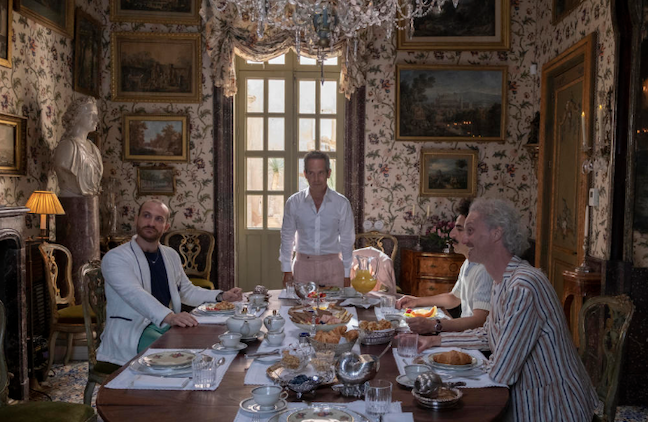
Whether or not you’ve watched season 2 of The White Lotus, Mike White’s anthology series, you’ve witnessed Jennifer Coolidge’s frenzied intonations onboard a yacht: “These gays, they’re trying to murder me!”

Coolidge plays Tanya, a wealthy woman who finds herself at the center of a conspiracy to murder her for her money. The executors of this plot are a group of profligate European gay men, who she’s deduced plan to off her before they reach shore. She pleads with the captain, who speaks little-to-no English:

“Do you know these gays? … these gays, they take me off to Palermo, and then they set me up with this guy who’s in the mafia, and he’s coming here, I, I think to try to throw me off the boat. They’re going to do Greg’s dirty work for him because he’s gonna pay them with my money so they can decorate their houses or some shit.

The captain only understands the word “gay”. He smiles, and replies “tutti gay!” They’re all gay. Crestfallen, Tanya turns away and mutters “oh my god” with absolute resignation. She knows she’s about to be sacrificed at the altar of luxury decor. The gays, who drew Tanya into their circle with warmth and flattery, now embody a smiling, unsparing menace.


The evil gays of The White Lotus are fictitious and cartoonishly sinister, but they also evoke queer villains of the past. In the 2022 popular history book Bad Gays: A Homosexual History, Huw Lemmey and Ben Miller probe the lives of notorious queers to establish a counter-narrative of gay history. Rather than an unflaggingly virtuous and eventually victorious struggle for “rights,” Miller and Lemmey argue that queer history is tainted by the classist, racist, and colonialist ideals of the larger societies that birthed contemporary conceptions of queer identity. 
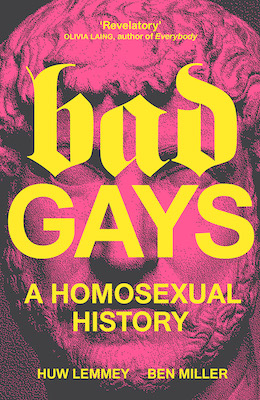
Miller and Lemmey subscribe to the idea, influenced by Michel Foucault and numerous queer theorists and historians, that sexuality is shaped by the time and place someone lives in, rather than being an innate, unchangeable identity. They identify the birthplace of the tie between sexuality and identity as Europe in the mid-to-late 19th century. Industrialization was well underway, which led to cities populated by throngs of wage laborers who were newly able to pursue their sexual interests. Simultaneously, colonial powers propagated the idea that colonized subjects were “backwards” for reasons including sodomy, which helped form the idea that homosexuality was an immoral characteristic rather than simply a behavior, and ultimately led to increased criminalization. 

As these two opposing social and political forces intertwined to create a burgeoning awareness of same-sex sexuality, many tried to definitively classify same-sex attraction and behavior, including doctors and sociologists working at a clinical remove and queer people who sought to understand themselves better. The theory of homosexuality as a fixed trait gained traction, and thus homosexuality was “medicalized”: rather than an aberrant behavior, homosexuality was innate and unchangeable, and should be understood as a mental condition. 

Miller and Lemmey argue against the medicalization of homosexuality: The idea that gay people are burdened with a condition that can’t be helped ignores that many gay people have chosen to live sexually and socially fulfilling lives. Yet the theory has stuck over time, and Lemmey and Miller argue that it led to the valorizing of gay historical heroes, a strategy that gained traction in the gay rights movement: By classifying people as diverse as Alexander the Great, Sappho, Alan Turing, and Langston Hughes as gay, activists could stake a claim on the eternal existence of queer identity, and argue that queer people have enriched human history.  

Not every historical figure we can call ‘gay’ left a positive legacy behind.

This point of view smooths over the wrinkles in gay history: sexuality has not been understood as a stable identity category, and not every historical figure we can call “gay” left a positive legacy behind. Miller and Lemmey argue that examining the “bad gays” of history is just as important to understanding queer history, not to mention contemporary queer life and queer futures, as is uplifting the “good gays” that came before us. 

A person who’s paid attention to recent representations of queer life in art and entertainment may have noticed an uptick in morally complex or ill-intentioned queer characters. Two key examples are The White Lotus and Terence Davies’s historical drama Benediction, both 2022 releases which feature groups of self-absorbed gay men who would be apt subjects of Bad Gays. The gay men seen in these narratives are exorbitantly privileged, socially exclusionary, inwardly miserable, and outwardly malicious; they live parasitic lives, extracting value from their hosts before moving onto new victims. 

Benediction is a biopic of British poet Siegfried Sassoon, who chronicled the brutality of World War I. Rather than simply telling the story of Sassoon’s life, Davies (who also wrote the film) uses Sassoon as a vessel through which to explore the accumulated injuries that can macerate a man’s soul. Throughout his life, memories of the war linger heavily over Sassoon’s mind (played as a young man by Jack Lowden, and as an old man by Peter Capaldi), but he’s also damaged by a circle of gay men he falls in with. All are based on actual people: the most prominent characters are star of stage and screen Ivor Novello (Jeremy Irvine), socialite Stephan Tennant (Calam Lynch), and theatre actor-director Glen Byam Shaw (Tom Blyth). 

This was also a circle that likely would have known several of Bad Gays’ subjects. 

For instance, Lord Alfred “Bosie” Douglas was Tennant’s uncle, and Siegfried and Ivor discuss him familiarly—”Bosie was always vindictive,” notes Ivor. Vindictive he was. Bosie engaged in an increasingly reckless love affair with Oscar Wilde that led to Bosie’s father accusing Wilde of sodomy. Egged on by Bosie, who wanted to hurt his father, Wilde sued. He lost the suit, and was subsequently tried for, and convicted of, gross indecency, with a sentence of hard labor that decimated his mental and physical health. Wilde died three years after his imprisonment, and Bosie—who, though typically attributed to Wilde, coined the phrase “the love that dare not speak its name”—went on to publish a virulently anti-Semitic magazine and serve time in jail for libeling Winston Churchill.

The secretive sexual and romantic bonds these men share, in Benediction, create the conditions for bitterness and betrayal.

Lemmey and Miller use the torrid affair and divergent paths of Wilde and Douglas as their opening anecdote: both because they serve as ideal “good gay”/”bad gay” archetypes, and because Wilde’s trial was perhaps the key event that solidified homosexual identity as a concept in the public imagination. That Bosie was a casually familiar figure to the characters in Benediction speaks to how crucial their milieu is to gay history: These men grew up in the shadows of the first steps toward codifying gayness as an identity, and Davies shows this era stage of gay life as turbulent and suffocating. The secretive sexual and romantic bonds these men share, in Benediction, create the conditions for bitterness and betrayal. The four central characters pair off and separate frequently and acrimoniously, and their lives are never fully transparent to one another. Ivor Novello is the most callow and manipulative of all, ditching Glen for Siegfried on first sight, and only revealing to Siegfried that he has a secret “life partner” after a drawn-out, hostile affair. Throughout Benediction, Davies subverts the commonly held idea that honestly expressing one’s queer desires is inherently liberatory: Art and moments of emotional intimacy occasionally allow Siegfried to transcend the traumas of his life, but the time he spends among other gay men depletes him nearly as much as trench warfare. 

Season 2 of The White Lotus is set 100 years later and has a much looser relationship with reality, but many of its gay characters are cut from the same cloth. The gays that frequent the White Lotus luxury hotel—in Taormina, where Oscar Wilde lived after his imprisonment and a former gay tourist destination—are a cosmopolitan, indulgent bunch commanded by posh Quentin (Tom Hollander). Writer-director Mike White initially frames them as benevolent: they offer warm compliments and camaraderie toward attention-starved guest Tanya, who’s been left bereft after her husband leaves their vacation early. Because we see them through Tanya’s eyes, we’re led to share her opinion of them: “if you’re looking for a friend, gay guys are really the best.”

Maybe not. 

Quentin invites Tanya to his extravagant villa, and it becomes apparent during her stay that his intentions may not be friendly. Only when Tanya’s stuck on a yacht with Quentin and crew does she put the pieces together: her husband Greg has enlisted Quentin to kill her. The terms of their prenup mean that Greg will inherit all of Tanya’s money; he’ll split it with Quentin, who needs it to maintain possession of the villa without opening it to the public.

Quentin’s backstory is mysterious, but key hints are revealed in a late-night conversation he has with Tanya, where he tells the story of his first and only love. As a Kerouac-pilled young man, he followed a “cowboy” to Wyoming for love and to spite his father (shades of Bosie). The cowboy was straight, which only nurtured Quentin’s obsession, and Quentin would still “do anything for” him after 30 years. (The cowboy, of course, is Greg.) The point of the story is for Quentin to opine that he wouldn’t die for love, but that he would die for beauty—which he pointedly asks Tanya if she would do, in effect sizing up her subconscious willingness to die for Quentin’s villa. 

Buried in his story is a past filled with shame and isolation because of his sexuality; his father didn’t approve, and he concentrated all of his desire on an unavailable man. Quentin, then, is a suppressed character, and this suppression is sublimated by his devotion to aesthetics. In an earlier episode, he commented that his life has been “one long distraction,” and the implication is that the excesses and luxuries of his life distract him from his lack of emotional fulfillment. White takes this psychological makeup to its logical extension: Quentin shows himself to be completely willing to exploit and sacrifice human life for private property. 

Quentin is an outgrowth of unsatisfied homosexuality, shallow devotion to beauty, and capitalistic greed—all working in concert. This is a character profile that fits many a Bad Gay profiled by Lemmey and Miller like a glove, but the one that may be the closest analogue is Philip Johnson, the celebrity architect. Johnson, who grew up in a wealthy family, began his architectural career in earnest when he curated a popular exhibition on modernist architecture for the Museum of Modern Art. As curator, he prioritized aesthetics and de-emphasized the prominent role of social housing in this architectural movement. His career became one of prestige and extravagance, working for clients as rich and odious as Donald Trump and perpetually enacting the most significant philosophies of his life: class superiority and fascism  (Johnson was an avowed Nazi sympathizer from the 1930s until the early 1940s, and never fully disentangled himself from his fascist beliefs). By enacting an entirely aesthetic relationship to his profession, Johnson helped lurch architecture to the right through an abdication of social responsibility and the prioritization of wealth. 

In the midst of his architectural career, Johnson was also enmeshed in an upper-crust gay social scene. In his home—the Glass House, his most famous building—Johnson regularly hosted the gay cultural elite of the era, including Andy Warhol, Merce Cunningham, Robert Rauschenberg, and his own partner David Whitney. Miller and Lemmey describe the wealthy gay social lives of these men as being both restricted and uninhibited, bound by their sexuality but liberated by their money and cultural cachet. They “lived in closets of power in which their homosexuality could be an open secret, trapped in their privilege like bugs in amber.” 

Miller and Lemmey describe the wealthy gay social lives of these men as being both restricted and uninhibited.

Quentin, who is cash-poor but lives a life with an exclusive in-group characterized by excess and outward signifiers of wealth, is portrayed as holding values similar to Johnson. When he notes that he’s “willing to die for beauty,” he means a specific sort of beauty: gilded, rarefied, and European. His full-throttle devotion to aesthetics and his hedonistic social life create a fetish for ownership: the villa must be in his sole possession, anyone who visits must be invited, and the masses should not be granted access. While White does not imbue Quentin with a particular political identity, his embrace of merciless exploitation to serve his luxury lifestyle can be read as a microcosm of the exploitative capitalism that Lemmey and Miller see in Johnson.

What the self-involved and malicious gays of The White Lotus and Benediction point to is a key part of Lemmey and Miller’s argument: that gay activism throughout history has often prioritized the most privileged of queers. What Lemmey and Miller view as an insufficient and exclusionary conception of queerness has primarily stemmed from cisgender, white, middle class-to-wealthy gay men in affluent societies who danced on the knife edge of social and cultural acceptance. While queer sexuality imperiled many—particularly those who lived under criminalization, which disproportionately affected working-class people and colonized subjects—many also developed the ability to keep their stigmatized sexualities in a delicate balance with the otherwise-privileged lives they could lead. The politics that developed from this relationship with homosexuality have historically leaned toward exclusionary assimilation, and lives of gay men ensconced in privilege—such as are depicted in Benediction and The White Lotus—ultimately come at the expense of collective liberation. The cruelty, competitiveness, and exploitation evinced by the characters in each results from the narrowness of their positions: even 100 years apart, assimilation requires rigid self-interest to overtake care for others.

The counter-narrative presented in Bad Gays is as vital to understanding queer history as is elevating queer heroism. Nuanced analysis of how bad actors and exclusionary politics shaped modern concepts of gay identity helps us understand historical and contemporary queerness from all angles. Narrative art like Benediction and The White Lotus does the same, presenting thoughtful depictions of villainous or cruel gay people that can complicate a viewer’s understanding, creating more complete and complex portraits of gay life over the course of history. 

“Too Many Dolores & Not Enough Dollars”

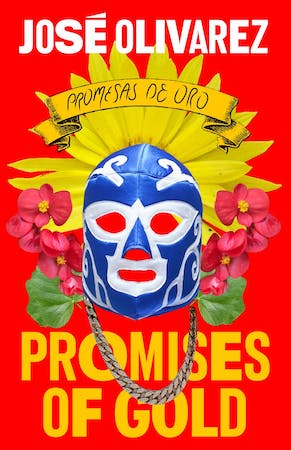
Family and place make us. Whether the relationship to where, and who, we come from is complicated or not, all poets must reckon with these two fundamental things that shape who we are, our worldviews, and how we learn to love. For Chicanx poet José Olivarez, Chicago and his Mexican family are his bedrocks and he delivers his second full-length collection, Promises of Gold/Promesas de Oro—with a Spanish translation by David Ruano—as a brilliant and moving homage to both:

“there’s two ways to be a Mexican writer, you can translate

from Spanish, or you can translate to Spanish.

or you can refuse to translate altogether.

there’s only one wound in the Mexican writer’s imagination

& it’s the wound of la chancla. it’s the wound of birria

being sold out of the taco truck. it’s the wound

of too many dolores & not enough dollars…”

Following ably in the giant footprints of Chicago poets past, who have produced some of the most important poets in our country’s history from Gwendolyn Brooks to Ana Castillo, Olivarez has been integral to this latest crop of Chicago poets. Side by side with heavy hitters like Nate Marshall and Eve Ewing and backed by leftist press Haymarket Books, which publishes the BreakBeat Poets series that has helped launch a number of young BIPOC poets’ careers, Olivarez’s debut collection Citizen Illegal came out to wide critical acclaim in 2018 and was then followed by a co-editor spot for The BreakBeat Poets Vol. 4: LatiNext in 2020. Needless to say, Olivarez has been on a lot of people’s radar, including mine, for a few years and he has successfully delivered one of the most anticipated poetry collections of 2023. 

I had the chance to catch up with Olivarez via email about Promises of Gold, writing a book of “failed love poems,” and which up-and-coming poets he thinks we should keep locked in our sights.


Angela María Spring: I’m always interested in the growth and process of a first collection to a second because in many ways it’s such a pivotal marker of a poet’s long-term career. How would you describe the experience of writing Promises of Gold versus Citizen Illegal, emotionally and technically?

José Olivarez: When I wrote Citizen Illegal, I was obsessed with questions of belonging. The book’s opening poem ends with the question: is the boy more Mexican or American? By the time I was done writing the book, I no longer felt compelled by whether I belonged here or there. I discovered that in-betweeness was where I felt most comfortable. De aquí y de allá. 

I had to write Citizen Illegal in order to write Promises of Gold. In Promises of Gold, I’m still thinking about belonging, but rather than questioning my place, I’m thinking about what it means to maintain and be in community with people you are committed to loving. What does love mean when we live in a country where violence is central to everything? 

Technically, there’s no comparison. I was only beginning to understand how to use line breaks in Citizen Illegal. Some of the breaks in those poems make me blush at how random they are. Promises of Gold is a confident book of poetry. I know what I am doing and I made every decision with purpose. 

AMS: Promises of Gold is laid out in a newer style of a the Spanish translation of your poems as it’s own book next to the original poems in English, rather than poem by poem translations throughout the book. I first saw this format with Raquel Salas Rivera’s new collection, antes que isla es volcan / before island is volcano. What does it mean to you to have your work presented in this way, as its own separate book, as well as what the process of having your writing translated to the language of your family especially as so often those of us who are first and second generation end up only knowing pieces of our parents’ language or can only speak but not necessarily read or write in that language. 

JO: Raquel’s collection inspired my decision to format Promises of Gold this way! Raquel is an incredible poet, and I always look to his writing for inspiration. I decided to go with this format because I wanted the reader to have a singular experience in either language. In other words, if you are reading the poems in Spanish, you will not be interrupted by pages written in English. 

I discovered that in-betweeness was where I felt most comfortable. De aquí y de allá. 

I can’t explain what it means to have my poems translated into my first language—the language of my parents and grandparents. My mom read the book and said it made her cry. I’ve never been able to share any of my work with my parents before, so this something else. Maybe in time I’ll be able to express how meaningful this is to me, but for now, I just want to thank David Ruano González— whose translations sing. 

AMS: In your author’s note, you describe Promises of Gold as an attempt to write a book of platonic love poems, but it didn’t end up being what you originally envisioned because “if [you] wrote that book, [you’d] be ignoring all the contradictions & messiness of the world we live in, all the ways in which love is complicated by the forces larger than our hearts.” For me, the poems that comprise this book are all love poems, you can feel the fierce beat of your heart in each, even when it’s anger at injustice like in “It’s Only Day Whatever of the Quarantine & I’m Already Daydreaming About Robbing Rich People”. Your love for your family, friends, your gente, your hometown, and the world, pulsates from each page like a living, breathing being. So it intrigues me that you found this book to be almost like a failed book of love poems and would like to hear more about whether you still hold that view or if it’s shifted into something else now that it’s out in the world in so many hands.

JO: That’s such a kind and generous reading. Thank you. I hope other readers will agree with you. Promises of Gold is a failed book of poems in the sense that the poems fail to materially change the world in the ways I want. For example, I can’t actually punch Jeff Bezos in the face— even though I would really like to. The point of the poems is to rehearse the impossible and in doing so maybe make a little more love possible. 

AMS: Sometimes Latinx poets can find themselves trapped into the stereotype that every diaspora in the U.S. is the same and, while we all have similar larger themes throughout our cultures, we are wildly different “Americans” based on where we grew up within the U.S. and where our family came from originally. One of the things in your book that is very powerful is how you seamlessly weave that uniqueness of Chicago in your Cal City and Ojalá poems, among others, with specific slang and references really root the reader there with the poet, on that specific sidewalk waiting for a bus or in a school or a factory where the community works. These are important details, vital language, revolutionary in a way; can you talk a bit more about how place has shaped your work over the years?

What does love mean when we live in a country where violence is central to everything?

JO: They are poems in of themselves. Where a book is located is important to me because it gives color and texture to the poems. It gives context to the narrative and lyrical element. One of the amusing things to me is that there are poems that people from certain neighborhoods in Chicago won’t understand because they are disconnected from  the particular part of Chicago (and Cal City) I’m writing from and towards. I like that it’s not just the Spanish bits that will obfuscate some of the poems. We can speak the same language and still talk past each other. How that happens reveals something about the reader and about myself. 

AMS: The emotional range that your poems embody in Promises of Gold is nothing short of astonishing. For example, the fierce, sad tenderness in “Fathers” or wry deprecation in “Between Us & Liberation”. And how you can affect the reader so deeply with so few words. I felt an arrows pierce my whole being when I read the tercet poem “Eviction Notice” and nearly fell off my seat laughing when I read another tercet poem, “Authenticity”. I’d love to hear more about how you play with emotional resonance in your poems, especially humor because I sense that humor is very important to your culture and work.

JO: Some people are from emotionally healthy families—I am from a hilarious family. 

I try to write poems that evoke the full range of human emotion. Why would I deny myself humor in making poems. Like a visual artist, I make use of all the tools at my disposal.

AMS: I loved the text message poems in your book and am always interested in the different contemporary forms poets are playing with; are there any forms you’ve been particularly drawn to work within lately?

JO: The text message poems were written by my brother Pedro and sent to me via text. He did not know he was writing poems, but he was. 

Lately, I’ve been obsessed with the sonnet. It’s a perfect form for where I’m at right now. 14 lines is all I have mental capacity for since my brain more quickly turns to mush these days. 

I also love Action Poems in the style of Yoko Ono. Practical and mystical. I teach the form to students all the time. 

AMS: What authors/books were you reading while writing Promises of Gold that you found influencing your writing or process? Did any of them surprise you to find their way into your book?

JO: I am always reading Natalie Diaz’s When My Brother Was An Aztec & Ada Limón’s Bright Dead Things. I’m sure those two books show up in everything I write. I carry those books everywhere and recommend them to everyone. Diane Seuss’s Frank: Sonnets is also hella important to me. Diane’s writing is so musical and sharp. I’m always drawn to it. 

AMS: Same question as above but this time music/musicians. Or does your book have a soundtrack?

JO: My book has a soundtrack! You can find it here. 

I will also say that the book has 11 sections because Common’s album Be has 11 tracks. There is some correlation between those songs and the material of the sections in Promises of Gold. This was Nate Marshall’s idea and for that I give him thanks.  

AMS: Who should we definitely be reading right now that we might not be?

JO: Janel Pineda and Vic Chávez. If I were a publisher interested in poetry, I would be emailing them regularly to ask them for a manuscript. I think Raych Jackson’s next book is going to be phenomenal. Her first book, Even The Saints Audition, is excellent and she’s getting better. Everyone should read her poems. I love Darius Simpson’s poems and will read anything he writes. Carina Del Valle Schorske writes the most beautiful sentences.

8 Novels Featuring Endearingly Messy Queer Characters

It’s not entirely right to say that literature is starved for complex, chaotic, endearing LGTBQIA+ characters. Starved in the mainstream, sure. We are just now emerging into a post-Love, Simon popular universe in which young queer people of today do just a little bit more than come out to their Oscar-Award-Winning-Actor-Portrayed parent and embark on an endearing journey of self-discovery that also includes dancing to a choice pride anthem of the ‘80s. 

We are lucky to have novels that portray the chaotic queer identity unhindered by palatable stereotype. These kinds of stories are not new; chaotic queerness has existed in print since the time of Wilde and before (perhaps even Homer? We can’t rule it out.) What’s new are said novels about chaotic queerness being picked up for review by major publications, included in book club picks and optioned for film and television, taught in classes, topping bestseller lists and greatly influencing the new generation of writers looking to tackle the same issues.

I’m speaking, of course, as one of these new writers. When I reflect on the process of writing my novel, Flux, the singular word that comes to mind is “stress.” I was writing from the point of view of a character that a) did not know who or what he was in any sense of the notion and b) did not have any particular insight into figuring it out. There is also time travel, and ‘80s television serials, and Silicon-Valley-esque fraud on the billion-dollar scale. But that’s another story. At the core of the book is something more dear to my heart: a gay boy without a clue, making one mistake after another.

I held these book about messy and endearing queer characters close to me at a very pivotal point in my life: while writing my own book, and becoming myself.

Mostly Dead Things by Kristen Arnett

In Kristen Arnett’s debut novel, Jessa-Lynn negotiates her family’s varying levels of grief after her father’s suicide while taking the reins over the family taxidermy business. Between razor-sharp imagery of the surgical processing of dead animals is an absolutely riveting portrayal of a young woman’s confused grief, complicated by Jessa-Lynn’s long-languishing love for her brother’s wife, Brynn. Passionate and messy, Mostly Dead Things is thrillingly alive.

Detransition, Baby by Torrey Peters

The reason for Detransition, Baby’s massive success thus far might be its wit, or its originality, but for me, it’s its heartfelt honesty. Reese, a trans woman, reels from the sudden “detransition” of her once-trans, once-partner Amy, now known as Ames, who is having doubts of his own about his life-altering decision. With dry humor, Torrey Peters navigates an immensely complicated terrain of conflicting identity with seeming ease. 

100 Boyfriends by Brontez Purnell

Brontez Purnell’s raucous, brutal, and hilarious novel follows a large cast of characters, all queer men, each one as delightfully complicated as the last as they are introduced in quick succession against a world that seems programmed against them. While it is Purnell’s humor that could draw anybody in with its deadpan authenticity, it is this novel’s unshakeable self-assuredness that brings its multi-prong identity into laser focus.

Love in the Big City by Sang Young Park, translated by Anton Hur

Sang Young Park’s breakaway bestseller is joyous, heartfelt, and so effortlessly real in its ability to jump cultures, making the unfamiliar familiar, underpinning the ultimate transmutability of human experience. Young, a gay student, encounters various pitfalls in his quest for self-expression: the departure of his best friend and roommate Jaehee, and the illness of his mother. Funny, honest, and profound, Love in the Big City is a treasure.

A Single Man by Christopher Isherwood

This 1964 novel (somewhat glamorized on film by Tom Ford in his directorial debut of 2009) is deceptively simple, brooding, and powerful. By far the oldest novel on this list, Christopher Isherwood’s take on existentialism is through the eyes of George, a gay teacher recovering from the death of his partner. Inhabiting a suddenly colorless world, devoid of hope, Isherwood draws a pitch-perfect portrait of grief.

The Thirty Names of Night by Zeyn Joukhadar

What I most admire about Zeyn Joukhadar’s writing is his ability to ground the fantastical. The Thirty Names of Night contains some of the most beautiful images I can remember ever reading in a book, unreal yet impeccably concrete. A Syrian American trans boy discards his birth name and, in looking for a new one, encounters the work of artist Laila Z. The book follows his journey to make peace with the tragic loss of his mother, an ornithologist who died searching for a rare bird. 

Solo Dance by Li Kotomi, translated by Arthur Reiji Morris

Solo Dance, translated from the Japanese, is a short and tense novel of becoming from the point of view of Cho Norie, a young woman attempting to keep her identity a secret against the oppressive backdrop of corporate Tokyo. The novel covers an intense period of trauma, yet the most astounding thing about it is the uncanny hope that prevails throughout. 

Paul Takes the Form of a Mortal Girl by Andrea Lawlor

There are certainly reasons for the words “Tight,” “Deep,” and “Hot” on the front cover of Andrea Lawlor’s novel about a shapeshifter, Paul, with the ability to transform his body and gender at will. There is of course the whipsmart metaphor for a nonbinary person’s natural fluidity within modern society’s norms. But there is also an endearing innocence to Paul that is, and remains, hard to forget. 

The Most Anticipated Irish Novels of 2023

Ireland. We’re having a moment. In the Banshees of Inisherin, Martin McDonagh translated our elliptical “chat” into silences and irrationalities that allowed the whole world to understand the melancholy in Hiberno-english symploce. With the blue-eyed boy Paul Mescal as an avatar of young Irish men, global audiences have come to see unflattering GAA shorts and emotional suppression as attractive. Mescal’s breakthrough was of course in the Rooney Toons (a title which, as far as I’m aware, was coined by EL’s Editor-at-large, Brandon Taylor), and who knows, maybe that show was the start of the most recent wave of Irish prominence in pop culture. But when it comes to literature, Ireland has always been a powerhouse. We’re masters of a language that isn’t our own.

I recently learned that one of the few words, if not the only one, that has crossed over from Gaelic to English is “smithereens.” Probably, I say “smithereens” and you hear the ante-phrase “blown to,” so let’s be clear: there is no correlation between this word’s crossover to English and the IRA’s use of explosives in Britain—the term is dated to 1810. Anyway, smithereens comes from smidiríní or smidirín, the diminutive of smiodar, meaning “fragment.” I like that it connotes shrapnel, breakage, the catapult and shower of sundry pieces. Irish writers have a history of exploding form and genre. Our books share a very small country of origin but Irish literature is a vast, myriad category. So with this list of novels from Ireland this year, I’m not going to do the thing where I point to elements that make them distinctly Irish. Let these works fly as they are and land as they may.—Lucie Shelly

Editor’s note: The following books were selected by former Electric Literature editor Lucie Shelly with descriptions written by Jo Lou, Chris Vanjonack, Denne Michele Norris, and Lucie Shelly.

Nothing Special by Nicole Flattery

A first novel but far from a literary debut—Flattery proved herself a young master with her story collection, Show Them a Good Time. Nothing Special follows two teenage women, typists working in Andy Warhol’s factory, as they explore questions of identity and ambition. With a healthy dash of dark humor, the novel showcases Flattery’s unflinching observations of human complexity.

Close to Home by Michael Magee

It’s 2013 and Sean was supposed to be the one in the family who “made it” by going to university in Liverpool, but now he’s back in Belfast with an English degree, but no job prospects. The novel follows his reflections—the struggles of his working-class upbringing and the lingering shadows that The Troubles casted on his family—in the aftermath of a drunken assault on a stranger that ends in a community service sentence. Close to Home is a lyrical examination of masculinity, class, and poverty. The prose of Magee, the editor of Belfast literary journal Tangerine, sings with the tenderness of a writer beyond his years. 

Kala by Colin Walsh

Galway native Colin Walsh decamped to Belgium several years ago and perhaps the ability to happily reside in two countries helped him to occupy a dual-modality while writing Kala. The novel is a “literary thriller,” forms of storytelling which are historically considered to be in opposition. Kala hits its mark: it’s a beautiful and taut work of prose.

In the summer of 2003, Helen, Joe, Mush, and Kala are teenagers in the small beach town of Kinlough. Their bond ruptures and their lives change overnight after the unexplained disappearance of Kala. Fast forward to 15 years later, more young girls have vanished and bones are discovered in the woods, the former friends are unwillingly reunited in Kinlough as they try to uncover who killed their friend and why.

How to Build a Boat by Elaine Feeney

Elaine Feeney’s writing, including her debut novel, As You Were, lights up with that brilliant combination of hilarity and tenderness. Her sophomore novel, How to Build a Boat, follows one boy on quest to find a connection with his late mother Noelle. Jamie attempts to build a “perpetual motion machine” changes his school and his community.

Perpetual Comedown by Declan Toohey

For Sally Rooney readers missing the moody environs of Trinity College, Declan Toohey might sate the craving with his debut, Perpetual Comedown, which follows literature doctoral student Darren Walton as he tries to untangle an elaborate conspiracy and loses his mind in the process. This acid trip of a novel defies genre in its exploration of neurodiversity, mental illness, and the absurdity of academia.

Dirty Laundry by Disha Bose

Bose’s debut novel dives fearlessly into some deceptively murky territories: suburbia and motherhood. There’s Ciara, the perfect mother, her best friend Mishti, dissatisfied by an arranged marriage, and Lauren Doyle, the hippie. When Ciara is found murdered in her home, the remaining friends are answerable to a crime much greater than the average neighborhood scandal. 

Hotel 21 by Senta Rich

“I have a first-day rule,” says Noelle early on in the book. “Any sign of trouble, even a whiff of a problem, and I walk.” It’s a system that she has had plenty of experience with, having relocated to twenty different hotels where she works as a cleaner addicted to pocketing little “souvenirs” as she cleans, mundane tokens of the lives led by hotel guests. At her 21st hotel, however, Noelle finds herself truly connecting with the joyful, heartbroken, complicated other women who work there, making her question her dedication to leaving at the first sign of turbulence.

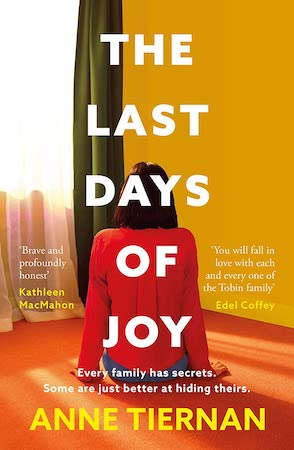
The Last Days of Joy by Anne Tiernan

Anne Tiernan’s latest novel, The Last Days of Joy, introduces the Tobin family, a clan of four which includes Joy and her three children: Connor (the public-facing CEO of a high profile company), Frances (a bored housewife on the precipice of blowing up her entire life), and Sinead (an acclaimed, best-selling author struggling to crank out her latest book). Upon learning that their mother only has a few days to live, Joy’s children rush to her hospital bedside, where they reckon with surprising truths about their mother, their siblings, and themselves.

Though the Bodies Fall by Noel O’Regan

This haunting debut by Noel O’ Regan follows Micheál, a man living alone in his childhood home in Ireland. While the cliffside the bungalow overlooks is beautiful, it has, for generations, been considered a “suicide black spot”, and we come to learn that Micheál’s mother considered “saving” these lost souls to be her primary duty. With his sisters urging him to sell the family land as soon as possible, he finds himself torn between trying to save the past or salvage the future.

Lazy City by Rachel Connolly

Part love letter to modern Belfast, and part reckoning with the protagonist’s complicated grief, Rachel Connolly’s debut novel, Lazy City, follows Erin as she abruptly leaves grad school and returns home following the accidental death of her friend. Suddenly back in a familiar city where everyone she knows feels like an acquaintance, Erin divides her attention between an American looking for adventure and an equal-parts comforting and perplexing local, learning a little more about herself in the process.

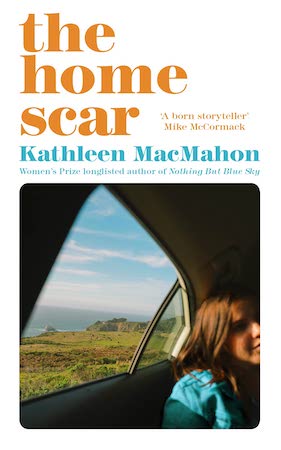
The Home Scar by Kathleen McMahon

The Home Scar, McMahon’s fourth novel, follows half-siblings Cassie and Christo. Living half a world apart, their lives are filled with work and painful memories they intend to forget. When tragedy draws them to revisit the last glorious summer before their mother died, unearthing the consequences of a less happy summer, Cassie and Christo must confront their past head-on, and finally make peace with the mother who neglected them.

The Woman on the Bridge by Sheila O’Flanagan

Inspired by the true story of O’Flanagan’s grandmother, The Woman on the Bridge is about a young woman’s commitment to the fight for Ireland’s freedom. Braiding love, loss, and the sheer drama of war, O’Flanagan’s novel is redemptive in the way it peers into women’s lives, turns them right side up, and refuses to be forgotten.

Soldier Sailor by Claire Kilroy

Soldier Sailor, Kilroy’s first novel in a decade, brings to light the tumultuous early days of motherhood. An old friend reappears just as a marriage strains, offering a peek at what might have been, and perhaps, at what still can be. Kilroy’s writing is visceral, filled with intimate feeling, and the strength to take your breath away.

The Happy Couple by Naoise Dolan

The Happy Couple charts the lives of Luke and Celine, to be married in a year’s time, and their small but tight-knit wedding party. There’s quietly ambitious Archie (the best man), Phoebe, (Celine’s sister, bridesmaid, and stealth detective), and Vivian, (a guest who observes her friends with stark emotional distance). A ferociously funny and clever ensemble novel, Dolan joyfully reimagines the modern marriage plot and makes it her own. 

My Hot Friend by Sophie White

Making friends in your 30s is a feat almost as impossible as it is painfully awkward. For Lexi, the downside of making a living from a podcast that hinges on the chemistry between her and her co-host Amanda is becoming more and more obvious as their relationship starts to deteriorate. Claire’s hunt for a shiny new bestie started after her group chat with school friends became suspiciously silent. New mother Joanne can no longer keep up with her hard-partying friends and their booze-soaked social gatherings. The three women came together to form an unlikely bond as they figure out which friendships are seasonal and which ones are for life. A wickedly funny paean to female friendships of all forms.

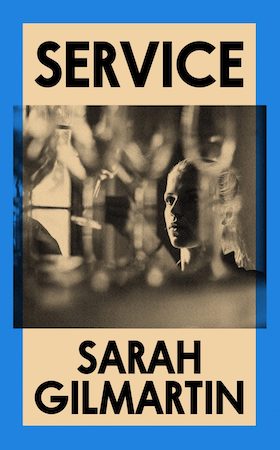
Service by Sarah Gilmartin

Service is told from the perspective of three characters: the waitress, the chef and the chef’s wife. Daniel Costello, an acclaimed chef of a fine-dining restaurant, has been publicly accused of sexual misconduct with his face and name brandished over the news. When Hannah hears that the restaurant has been shut down, she remembers her own uncomfortable summer as a waitress there, where mentorship turns out to have strings attached. Jules has been married to Daniel for more than two decades and with the glare of the media on them, she wonders what being a good wife and a good mom means. Their stories braid together into a messy and contradictory exploration of power dynamics, complicity, and toxic masculinity set in mid-aughts Dublin. 

The Bee Sting by Paul Murray

The Bee Sting follows the implosion of the Barnes family over several decades as their family business faces bankruptcy and they fall down the economic ladder. Imelda, the matriarch, is desperately trying to shore up funds by selling her jewelry online while her husband, Dickie, chooses to bury his head in the sand, literally, by building a doomsday fortress in the wilderness. Their children, the binge-drinking high-schooler Cass and the runaway preteen PJ, aren’t faring any better. An ambitious novel about an unhappy family floundering to keep it together as their world collapses.          

Ordinary Human Failings by Megan Nolan

Megan Dolan received critical acclaim for Acts of Desperation, her debut about a woman in an all-consuming, but one-sided, toxic love affair. She returns with a novel in a completely different vein, about a news-hungry tabloid reporter who digs into the disappearance of a three-year-old girl on a London council estate in the ‘90s. A young woman from a working-class Irish family is quickly implicated in the death and as the investigation unfolds, we see how the failings and past traumas of each member of the family has led to who and where they are today. 

The Rachel Incident by Caroline O’Donoghue

University students Rachel and James are inseparable—coworkers, roommates, and best friends. Rachel’s crush on her married professor, Dr. Fred Byrne, leads them both down a life-changing path of seduction, secrets, and lies. Set in the span of a year in Cork during the ‘80s financial crisis, The Rachel Incident is a beautifully written novel about the anxiety of entering adulthood during an uncertain time and finding your identity through your friendships. 

Booktails From the Potions Library, With Mixologist Lindsay Merbaum

In a not-too-distant future, the world is plagued by extreme weather, mosquito-borne fevers, and corresponding economic decline. Civilization seems on the verge of collapse. And if the world is ending, why not do what you want?

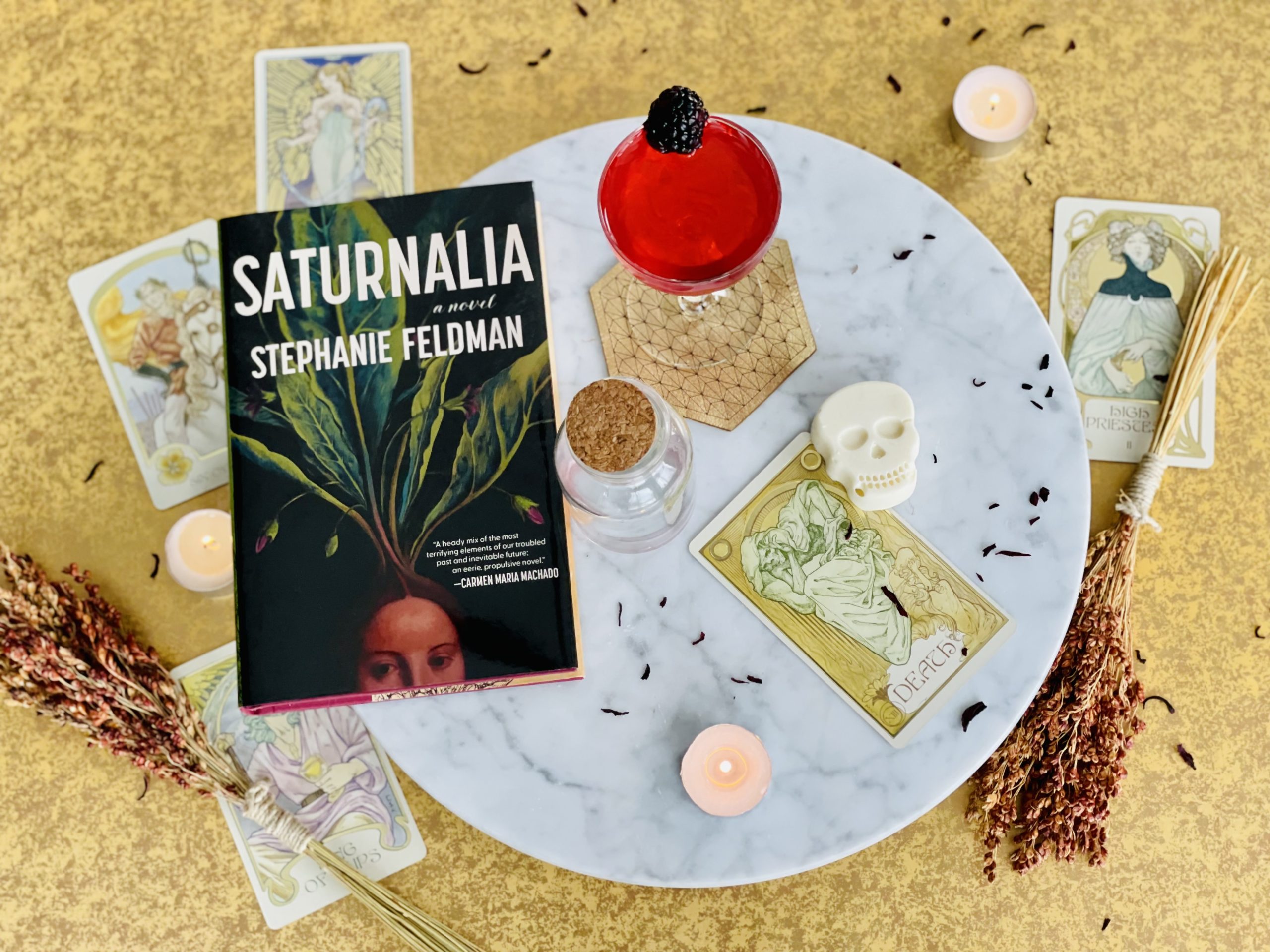
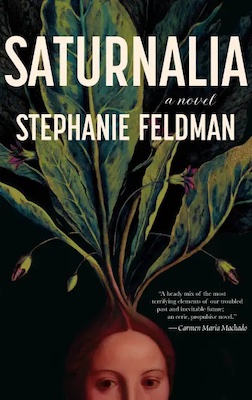
In Stephanie Feldman’s novel Saturnalia, this is the vibe in Philly on the eve of Saturnalia, a winter solstice carnival honoring Saturn, the ancient Titan, father of Zeus, who ate his own children to keep them from usurping his power. Anyone who’s anyone belongs to the Saturn Club, or another of its ilk, like Pan’s or Baldur’s clubs, where the rich and powerful party on Saturnalia in tuxes and masks, doling out coveted jobs and viable futures to friends and fellow members. If you’re not in the inner circle, then you’re out in the wilderness. And Nina and her college friends very much want to be in the inner circle. Though they all began as pledges together at Saturn three years ago, tonight Nina’s ex-friends are dressed in gold and running the show, while she’s scrounging for rent. When Max—her last, tenuous connection to the club—hires her to infiltrate the party and retrieve something precious, Nina’s errand quickly turns into a race against time. And death. Before the solstice is over, everyone and everything that matters to her will be called into question. Will she find herself alone? Is there anyone she can trust in this morally bankrupt world? 

Saturnalia is a fast-paced tale that’ll have you turning pages as fast as any good mystery. Plus there’s magic. 
This booktail’s recipe offers two paths: in honor of the trick-or-treat-ish Saturnalia chant of “give us whiskey, give us gin, open the door and let us in,” this booktail can be made with either whiskey or gin. The potions priestess prefers whiskey—rye specifically. Those with a sweeter palate may prefer gin. If desired, you can cut the sweetness by topping it off with champagne. Either liquor is combined with blackberry syrup for the strangely purple Draught of Oblivion served at Saturn. Both are likewise accompanied by vermouth, a fortified wine, for ceremonial and recreational wine-drinking, including the weak mulled wine served at Max’s Blue Christmas hangover party. Finally, chicory pecan bitters are a reminder of those rich little moments of joy, like sweetened chicory and spiked cider from street carts, and burned chicory coffee spiked with cheap rum, and shared with a good friend. 
The booktail and novel are presented as offerings atop a moon-like marble platter that’s set against a gold backdrop. An empty potion bottle, such as might contain the Divine Quintessence, rests beside an intoxicatingly bright elixir, the glass garnished with a plump blackberry. The draught and three candles form a sacred triangle. Representing the harvest, bunches of dried red flowers frame the offerings, set alongside stylized gold tarot cards for Nina’s own deck. One card alone appears next to the drink and book—the Death card, topped with a white chocolate skull for the token chocolate Saturns handed out during the festival. The scene is dotted with tiny dried red flowers that resemble flecks of blood. 

Saturnalia

Ingredients

Gin instructions

Prepare the syrup. Once cool, add it to a mixing glass filled halfway with ice, along with the gin, dry vermouth, and bitters. Stir until well-chilled. Strain and serve over fresh ice, if desired. Or top off with champagne. Garnish with a blackberry. 

Whiskey instructions

Prepare the syrup. Once cool, add it to a mixing glass filled halfway with ice, along with the whiskey of your choice (rye is recommended), sweet vermouth, and bitters. Stir until well-chilled. Strain and serve over fresh ice, if desired. Garnish with a blackberry. 

Blackberry Syrup ingredients

  • 1 c water
  • 1 c sugar
  • 6 oz container blackberries

Blackberry Syrup instructions

Mix all ingredients in a medium pot and bring to a boil, then simmer for 10 minutes, stirring occasionally. Once cool, strain and discard solids. Store in a glass bottle or jar and keep refrigerated.  

The Craft in Writing Characters with Messy Psychology

In the fall of 1973, just as the country finished watching the Watergate hearings, my mother enrolled in classes to become a psychologist. Watergate wasn’t why she decided to go to graduate school—my mother has always been interested in anxiety—but the national atmosphere it created certainly helped. At that time, we were living in Washington, DC, and she couldn’t run to the deli for a jar of pickles without getting caught in conversations about cover-ups and wiretapping and CIA conspiracies. 

As part of her studies, my mother sometimes used my younger sisters and me as practice subjects. She gave us batteries of IQ tests and asked us to interpret inkblots. We answered questions on the Myers Briggs Type Indicator to determine our personality types and whether we were introverts or extroverts. For our participation, we were rewarded with peanut M&Ms and, most meaningfully, her attention, which was hard to come by in a household with three children, three dogs, and my unhappy father, who was even more demanding than the rest of us.

That winter, a slim copy of the second edition of the Diagnostic and Statistical Manual of Mental Disorders (DSM) appeared on my mother’s desk in the little room by the front door she now used as a study. Leafing through it one afternoon, I found a list of ten personality disorders, which were “characterized by deeply ingrained maladaptive patterns of behavior,” and “often recognizable by the time of adolescence.” By then I was thirteen and moody: easily enraged by my sisters, easily mortified at school, tormented by guilt over small offenses and blunders, yet convinced I was destined for greatness (especially when alone in my room). I veered daily between bouts of despair and exultation that would exhaust me now but at the time seemed energizing. I also adored my mother and wanted her to myself. Consulting the DSM, I diagnosed myself with all ten personality disorders the way I once misted myself with her entire collection of perfumes.

Over the next several weeks, I presented my findings to my mother while washing dishes after dinner, one of the few dependable ways to catch her alone. “Possibly you have a tendency to be passive-aggressive,” she might allow, handing me a pot to dry. “We all have dysfunctional tendencies.” I would then offer evidence for why I really was obsessive-compulsive/paranoid/anti-social. If you wanted to edge out your barking, squabbling, brooding competition, the surest way to engage my mother was to be worried about something, especially something complicated. Yet unlike my problems at school or with my sisters, personality disorders failed to capture her attention. The more I insisted on my deeply ingrained maladaptive behaviors, the more blandly my mother reacted. These dishwashing sessions generally ended with a recommendation that I get outside more or invite a friend over, and the dogs, by the way, could use a walk.

It was a deflating response at the time, but I’ve come to believe my mother’s apparent disinterest did signal concern, quite a bit of it. Had she suggested dysfunction by subjecting her children to so much psychological testing? Created it by going to graduate school instead of staying home? (My father’s view.) I’m sure she also wanted to discourage me from embracing any of the conditions I was flirting with. A word is not just a word when it’s a diagnosis.

Whatever the case, confronted with a kitchen sink of disorders claimed by an adolescent reeking of Love’s Baby Soft with a spritz of Styx, my mother was clearly aware that explanations of human behavior are never trustworthy. Especially explanations of one’s own behavior, which are so often shaped as much by convenience, self-importance, and disingenuousness as by an effort to be understood. When it comes to people, my mother must have known, explanations hide as much as they reveal.

My mother went on to become an excellent psychologist, so this recognition ultimately served her well. It’s a recognition that serves novelists well, too. Characters always have problems at the beginning of a story, for example, but rarely do they have a firm understanding of those problems, or themselves, for the simple reason that misconceptions, ambiguities, and, above all, secrets, create drama. “What did the president know, and when did he know it?” Senator Howard Baker’s famous question during the Watergate hearings captured the power of uncertainty. If a character doesn’t know something or is hiding something, readers want that something discovered and explained. We want the facts. We need them in order to feel that the story has been told.

If a character doesn’t know something or is hiding something, readers want that something discovered and explained.

But has it? Have the effects of those misunderstandings and ambiguities—those secrets—been resolved? Or have new doubts moved in? Perhaps it’s our current hurricane of misinformation (which make the lies and dirty tricks of the Watergate scandal look like drizzle), but when it comes to thinking about human behavior these days, I find myself less interested in “the facts” than in how people become so convinced they know them.

While visiting my mother a few months ago, I found my father’s love letters, written to her during their courtship while he was getting divorced from his first wife. He believed he would love my mother forever—something he repeats passionately in those letters—and yet after twenty years of marriage, he divorced her, too. Was it because her attention was even harder to hold once she began seeing patients? Because he resented her success? Because he’d lost his own mother as a child and felt he was losing another? (The view of his third wife, a Jungian analyst.) What did he come to “know,” exactly, that altered how he felt—and when did he know it?

At the time, I was too young to ask my father questions like these, but even if I’d asked him later, I wonder how reliable his answers would have been. It’s hard to get to the truth about yourself, whether you’re a public figure, a teenager, or an elderly man with three failed marriages and many regrets. And if it’s that difficult to comprehend yourself, how on earth can you expect to fathom anyone else? This is not to critique psychotherapy, but rather to say that any analysis of human behavior is bound to leave so much out.

“The personal life of every individual is based on secrecy,” Chekhov writes in “The Lady with the Dog,” adding, “and perhaps it is partly for that reason that civilized man is so nervously anxious that personal privacy be respected.” By secrecy, I think Chekhov is referring not to whatever sins we might be hiding, but to the contradictions and incongruities that can’t be explained about us, that we can’t explain, even to ourselves. A secret inner life is our greatest privilege, but also often our greatest fear. (The current edition of the DSM lists almost three hundred mental disorders and runs over a thousand pages.)

Where you can go inside other people’s heads is, of course, the project of the novel, wherein secrets exist to be uncovered. As the critic Janet Malcom notes in Reading Chekhov, “If privacy is life’s most precious possession, it is fiction’s least considered one,” and goes on to refer, somewhat ruefully, to “the glaring exposure to which the souls of fictional characters are held up.” In other words, characters in a novel transform between the first and the last chapters, sometimes with enormous complexity, but everything there is to be known about them is on the page. If you miss something, you can reread a few chapters to figure out what happened. Characters may behave in puzzling ways, may be paranoid, anti-social, obsessed with their mothers or their political enemies, or pathological liars who couldn’t accept a fact if you gave it to them in a pickle jar—but eventually you find out why. More or less. As E. M. Forster puts it, “people in a novel can be understood completely, if the novelist wishes.”

And yet, explaining their behavior is not what makes characters relatable.

And yet, explaining their behavior is not what makes characters relatable. In fact, it’s when characters don’t understand themselves very well that readers worry most about them, identify with their difficulties and confusion, and keep reading—which is vital, because characters, unlike people, don’t exist when no one is paying attention to them. What makes the affair between Gurov and Anna in “The Lady with the Dog” so surprising and convincing, for instance, is that they can’t figure out why they have fallen in love with each other, or what to do about it. They truly don’t know their own minds and, as the story suggests by its famously irresolute ending, probably never will. Chekhov, of course, was a master at revealing how emotions we believe should be definite, like love and grief, are full of inconsistencies. He also understood that readers are more deeply intrigued by hesitating characters (see Hamlet) than by decisive ones (see Ivanhoe).

On the other hand, there are those characters who think they understand themselves perfectly and must discover, usually with reluctance, that they don’t—a problem I recently gave to one of my own characters, who is, incidentally, a therapist. In such stories, the reader is usually better informed than the characters, who believe their problems are simply resolvable obstacles and must be forced to see the real trouble they’re in. Frequently this trouble is of their own making, a result of misguided notions and projections. Jane Austen’s Emma thinks she’s shrewd about human nature, yet her assumptions about other people, and her motivations for interfering in their romantic lives, are completely wrong-headed. The reader’s own clear-sightedness becomes part of the drama: we see how Emma is misjudging herself and everyone else, so why can’t she? Anxiously, we hope she wises up before she ruins several futures, including her own. Once again, our engagement with the story is intensified by the character’s lack of self-knowledge, which reminds us, ideally, of our own blind spots. The longer characters can remain somewhat opaque to themselves, or at least have a few questions they keep asking, the more absorbing their predicaments, and the more their worlds feel like ours. 

In any case, fictional problems must reach a last page. The story has to end. The reader closes the book, and maybe, that same evening, picks up another and gets caught up in a new set of anxieties.

This past summer and fall, I spent hours following the January 6th Select Committee Hearings, which reminded me of watching the Watergate hearings with my parents, fifty years ago, down to the question of what the president knew and when he knew it. My mother’s current view of national politics is that it’s “one big mess,” which was also her opinion during the Watergate era. My mother is now in her late 80s; she still sometimes says she’s bewildered by what happened in her marriage to my father, who is no longer alive.  But she doesn’t like dwelling on past unhappiness any more than she likes talking about politics or her health. Anxiety, however, continues to interest her. During a recent phone call, I asked what she was reading. A novel, she told me. “Can’t remember the title,” she said cheerfully, “but the people in it certainly have a lot of problems.”

It’s a strange desire, in this world of trouble, to go seeking other people’s problems, and yet what a relief, for both readers and novelists, to feel that every so often a problem can be completely understood.

A Turkish Woman’s Dreams of Being a Writer in Berlin Faces An Expiration Date 

In her debut novel, The Applicant, Nazlı Koca takes the reader on Leyla’s identity crisis whirlwind  in Berlin, Germany. Recently failed from her masters thesis and at risk of losing her student visa, Leyla resorts to working as a cleaner at a youth hostel as she awaits an answer from her university appeal.

Leyla takes to keeping a diary as she attempts to make sense of the series of events that led her to this state. A once privileged upper-middle-class student in Istanbul, she is haunted by the reality of her family’s debt-ridden existence after the death of her alcoholic, abusive father and crash of the Turkish economy. What is the better option: fighting to stay as a non-citizen in Berlin to live the life of an artist or retreating home to clean up her father’s mess? 

To take her mind off of her family, she spends her days pocketing items left behind from hostel guests—half consumed liquor bottles, coins and snacks—clubbing in Berlin’s infamous nightlife with fellow immigrant artists, watching Turkish soap operas and attempting to work on her fiction writing. She even surprises herself by finding solace in a traditional leaning relationship with a right-wing Swedish Volvo salesman. 

With a biting sense of honesty, Leyla comments on the world around her, dissecting Western hypocrisies and double standards. Why are Europeans considered “ex-pats” while Turks are “immigrants”? Who has the privilege of living as an artist? 

As she slowly begins to reckon with her tangled past in Turkey and uncertain present as a writer in Berlin, we are left with glimmers of hope that Leyla has the resolve to figure it out. 


Amy Omar: Could you speak a bit on your journey as a writer? 

Nazlı Koca: I always wanted to be a writer, but I didn’t actually write anything until I was in my 20s.

I grew up in a city called Mersin on the Mediterranean coast and moved to Istanbul for college. I stayed in Istanbul for two years after graduation, working at advertising agencies as a copywriter. I tried working as an editorial assistant at a publishing house as well, but it was a horrible experience. I was so disappointed —I thought that publishing would be my way into writing and having a literary life. When I moved to Berlin I went back into copywriting but then also worked in social media policing and cleaning like Leyla. And I found unexpected writing communities at these jobs, cheap bars, zine stores. 

Then I moved to the US for a fellowship at Notre Dame, where I did my MFA. I lived in New York for a little bit too, working at a bookstore and writing The Applicant in a series of sublets across Brooklyn.

Now I’m in a PhD program in Denver. It’s been a long journey.

AO: As someone currently in academia, how does that impact Leyla’s perspective? Can you elaborate on that? 

NK: There’s nothing I could add to Leyla’s take on academia as someone who stayed in it. All universities run on the white-collar ethos of “We’re doing it all for the love of books.” No. This is not love. This is capitalism at its best, and you’re just a part of the system. A system that’s based on exploitation, manipulation, and hoarding power. And you’re holding on to dated rules and requirements for admission and success because you want to thrive in it. 

AO: So much of adulthood is learning the reality behind these institutions that, as children, we are taught to view as noble professions. But then, you get to the industry, and you’re like, wait, these are not noble at all.

NK: Yes! And I’m scared because I don’t want to turn into one of those novelists who fictionalize the emptiness of their safe academic jobs in a world where children are forced to marry 70 year olds or work in mines. But I do feel tempted to write about the not-noble-at-all position that I’m in. There’s something so ugly about the privilege of it—the respect that you get just being in academia. When I was working as a bookseller, I got less respect, both from my bosses and the customers, even though it paid more, and I already had a terminal degree in my field.

AO: Leyla believes that by moving away from Turkey, not speaking Turkish and “not thinking in Turkish, [her] past would not dictate her future”. She holds onto the hope that she can scrub her cultural trauma and start fresh. Is that a possible pursuit? 

NK: I don’t think it is. It hasn’t been possible for me at least. Up until a couple years ago, I still thought it was possible, if I found the right place. It was a kind of dark secret that I wouldn’t want to admit. But after reaching my 10th destination, my cultural trauma is inseparable from my lifelong attempt to escape it. I think there’s some value in the attempt though—as a viable coping mechanism.

When I left Turkey I was able to breathe for the first time. I told myself “I’m my own agent.” But then, I quickly realized, no, there’s no such thing as a free agent. In those first years away from Turkey, there was still an intense reckoning to realize that, in addition to having a cultural inferiority complex imposed upon me by the Western gaze, I also come from a problematic country, which made it almost easier to surrender to the worst perceptions of my cultural identity.

But if you’re anything like me, no matter how many poetry readings you conceal your name and home country at, sooner or later you end up in a place where you ask yourself, “Wait, should I forget about it? Or should I advocate for it?” Because you feel like you need to fight for it and make art on behalf of your people. But then, who exactly are your people? I’m still not sure.

AO: Could you speak to your experiences working as a cleaner? How did your cleaning experiences vary depending on the  city? 

You feel like you need to fight for [your home country] and make art on behalf of your people. But then, who exactly are your people? I’m still not sure.

NK: Actually, I was only a cleaner in Berlin. I was a dishwasher when I moved to South Bend because even though I had a fellowship, I still needed a little more money to get by. I worked at a huge dining hall that served Notre Dame’s infamously white and wealthy student body. And behind the dirty tray windows waited three dozen dishwashers, almost all people of color, including the student workers, because this was the best paying student job and international students are only allowed to work on campus. It was very different from working in a hostel in Berlin. Europeans are usually careful with their money and the environment. They don’t waste much. At Notre Dame, students would rarely finish or even empty the food on their trays. 

Even before I started working in the kitchen, during orientation week, I was shocked by how many plastic bottles were handed out. I think I have a draft of a short story somewhere that I wrote on my first week in the U.S., set in a dystopian religious society that wastes for worship.

AO: Leyla’s experience living in Berlin is atypical from the stereotypical image of Berlin as an artist haven. It seems like most of the foreign characters in the novel are disillusioned with the false promise of artistic freedom. Why is that? Are only certain people allowed to take part in artistic pursuits? 

NK: Immigrants are often erased from narratives of artistic pursuit in the city even though they’re the backbone of every major city that artists feed on. Berlin’s background is a mosaic of Turkish store signs, kebab cutters, bus drivers—how do you even erase it? 

Or the movie Paterson by Jim Jarmusch, which I loved. But later on, I heard that Paterson has the largest Turkish community in the Tri-State area. They have Turkish grocery stores and everything. But there is no hint of that in the film! 

AO: The thing about Paterson, it’s also just a normal suburb. So if you go to Paterson, you’re driving around and it just looks like a normal American city. There’s nothing special about it, but it is very, very Turkish. It’s very funny. 

NK: Yeah, so I guess I can’t expect everyone to make Turkish culture their background whenever there’s a large population of Turks. But also it’s funny that we don’t get to have any representation.

For me, it was important to reckon with my role in Berlin—as a gentrifier but also someone who shares an ethnicity with these people who are being gentrified and understands their language. I was like a spy, but I didn’t know who I was spying on and who I was spying for.

AO: In some ways, Leyla perpetuates her own self sabotage by getting sucked into the Berlin nightlife. Why do you think it is so easy for Leyla to lose control? And how much of this spiral is connected to her avoiding her family trauma? 

Immigrants are often erased from narratives of artistic pursuit in the city even though they’re the backbone of every major city that artists feed on.

NK: I often think Leyla has more control of her life and story than I do. She doesn’t have to answer to anyone because no one is listening to her. It’s easy to say that she’s avoiding her family trauma in a downward spiral—like she tells herself—but what if descending into the deepest corners of her subconsciousness on her own terms, at her own pace is the only way to confront it all? 

The family is the first social unit we know, and it’s based on control. Even in the least traumatic scenario, parents decide what their little human eats, says, and wears for years and years. Maybe it’s not so unwise to spiral until we’re far—and close—enough to the starting point, to all that we’ve learned under other people’s control.

AO: As someone who grew up in a privileged household in Turkey, what do you think is Leyla’s main takeaway after working as a cleaner? How does this “rock bottom” status contribute to her character arch? 

NK: I’m pretty sure Leyla knows that working as a cleaner is not rock bottom. But it’s a socially acceptable, honorable way for a woman to earn money with her body in a world where she’s often not allowed to exist outside of its oppression. Leyla’s mother was privileged in that she didn’t have to clean other people’s rooms for money, but isn’t Leyla more privileged as a single woman who doesn’t have to cook and clean for a violent man and can’t even write or speak about her life? Where does sex work fall within this triangle of financially, socially, and physically exploitative roles most women get cast in without a choice? Cleaning lets Leyla put these questions into words for the first time.

AO: This line stuck out to me: “I had been avoiding my own country’s art, as if I could separate myself from the pain, guilt, rage we’re all doomed to carry no matter where we go, rage we are not even allowed to scream about, make films about, write about, sing about.”  We have seen incredible political films come out of other countries, like Iran, why do you think this isn’t the case of Turkey? 

NK: We were at the center of an empire for hundreds of years. One that had mastered the art of oppression in mysterious ways, and coded it in our DNA. And oppression turns into self-censorship the moment a child asks a question their parents are too scared to answer. 

Our best political poets, writers, filmmakers have paid for their art with their lives. Each new government condemns the exiling of a political artist by their predecessors, then finds new ways to silence the artists of their time. Most contemporary artists stop making political art after they escape Turkey, if they can. And who can judge them after watching them get charged with speech crimes, antagonized in the media, and receive hundreds of death threats on social media?  

We all got scared and withdrew after a few people died at Gezi Park protests, but look at what’s happening in Iran. In Turkey, we still hold on to the illusion of being a free country and having more freedoms in comparison to other Middle Eastern countries, and that makes us not take risks. Whereas in places like Iran, people are revolting because they have nothing left to lose. But what is it that Turks have to lose? Our little bubbles made of debt and denial? 


Author’s Note: Thank you for letting me return to this conversation in the aftermath of the Turkey-Syria earthquake. To these three questions I asked myself, I think, even though I seem to have unconsciously but strategically planted them just outside of I, me, mine. 

But then, who exactly are your people? 

But what is it that Turks still have to lose? 

Our little bubbles made of debt and denial? 

My people are all the Turks who have been asked by their anxious mothers last week to delete the most political post they’ve shared on social media in years which simply said, “I can’t express my emotions in a way that won’t get me arrested.” They’re the Armenians who sent hundreds of tons of aid to Turkey. The Kurds, Turks, Arabs who have been left to die under the rubble because the government blocked access to Twitter where people shared their locations because officials didn’t want the world to see how angry the rest of us were that our little bubbles made of debt and denial had collapsed in on us. 

The Easter Visit From Relationship Hell

An excerpt from Burst by Mary Otis

Walter McKinley put Viva in mind of one of those Renaissance men, the young swain type, depicted in paintings leaning against a tree, eating an apple, or plucking a lute. Slouching against the doorway to her living room, he wore a pressed white shirt, pressed black pants, and expensive black leather flip-flops. He looked like he’d just taken a shower, and the tips of his curls were still wet. Viva stared at him.

“Can I come in?”

“Of course.” Viva suddenly felt awkward. Walter was the first man she’d dated in Los Angeles after dating no one in Glenalbyn, where she’d recuperated from her knee surgery at her mother’s home. During college she’d never had time for a real relationship. She had to focus on dance. There were a few dates with a mirthless abstract painter—a wannabe Kandinsky with a coke problem—and a brief fling with a visiting dance teacher, but Viva felt she lagged behind most women her age when it came to relationships. Dating Walter was, in part, an effort to remedy the problem. That, and something she didn’t like to admit—Walter came from wealth, and unlike Viva, he’d lived in one place his entire life. She was drawn to the idea of his upbringing, the predictability and ease of it, perhaps as much as to Walter himself. He sometimes reminded her of her college roommate, Anastasia, who also had grown up with privilege, the easy expectancy of good things on the horizon, and an unquestioning belief that one parlays one success into the next.

Walter walked into her living room, halting midway. He put his hands on his hips and peered at the Elsinore Hotel through her window.

Built in the 1930s, the Elsinore was a tall, narrow hotel covered in dark gray stucco. A squat turret arose from the right corner, its paint flaking off, revealing another, paler shade that in certain lights caused the stucco to resemble mottled elephant skin. When Viva’s apartment manager showed her the building the first time, he told her a famous artist had overdosed at the Elsinore. A famous rock star, too. Not to mention the writer. It was that kind of hotel. Two medieval-style lamps hung from chains outside the entrance, which was built to look like a drawbridge. Viva loved the building’s baronial appearance, its just-this-side-of grim demeanor, which contrasted sharply with the candy-colored more popular hotels that flanked it on either side.

“That place gives me the creeps,” said Walter.

“I think it has character,” said Viva.

“Oh, that it does,” said Walter.

Viva’s phone rang, and looking at her caller ID, she saw Charlotte’s number, one that in its skinny arrangement of ones and sevens, numbers with no real meat on them, seemed to describe her mother’s physicality and loneliness.

She could picture her mother at her kitchen table in Glenalbyn, her wolf dog, Eddie, at her feet. The town was once a thriving tourist attraction, but now psychics sold spray tan products, and part-time contractors wrote diet books on the side. Tucked into the side of a mountain, it was rumored to have the strongest energetic field on the West Coast, and decades earlier, in an attempt to keep out visitors, residents chucked the town-limits signs. Charlotte liked living in a place that required grit and ingenuity, what with the frequent wildfires, the endless shower of leaves and needles falling on everyone and everything, jumbo pine cones dropping from the sky like dead birds, and the fact that people had to hold down at least two jobs just to get by. Not everyone had the stamina for the place, and her mother was proud of the fact that she did. She got by on odd jobs—sample server at the local grocery store, part-time cashier at the gem and crystal emporium, and, most recently, a brief stint as a makeup artist at the local mortuary. Sometimes she drove to Palm Springs to participate in focus groups where she gave her opinions on video games she’d never heard of or beauty creams she would never buy. It was an easy hundred, and sometimes the companies provided lunch. 

“Hello?”

“I need to talk to you about something,” said Charlotte.

“Can it wait?” Viva rubbed her neck and waited for Charlotte’s response. She’d slept poorly the night before and her entire upper back was stiff. 

 “No,” said Charlotte. “It can’t.”

“I’ve only got a minute but go ahead.”

“Are you with Scooter?” Charlotte knew his name. She’d met him briefly and declared him a milquetoast.

“Yes, and I can’t talk for long.”

Walter checked his watch and frowned.

“Mother?” said Viva. “Mother?” The phone had dropped out. Or Charlotte hung up. Viva called her back twice but got a busy signal.

It was Easter, and they were going to Walter’s family home in Orange County. Viva slung her purse over her shoulder and picked up the hostess gift for Walter’s mother, a bowl she’d recently bought at a farmers market. She’d heard about Walter’s previous girlfriend, Phillipa—how she and Walter’s mother had gotten along so well it took Walter an extra year to break up with her. Viva had spent too much time shopping for the hostess gift, a present that in her imagination would never compare with the one Phillipa would have selected.    

“And away we go!” said Walter, clapping his hands. His enthusiasm, the effects of which were legion at Findley Academy, suddenly seemed outsized to Viva within the confines of her apartment. A passionate recycler and popular civics teacher at the school, Walter possessed an easy confidence that spread to everyone in his vicinity like a most delightful flu. The fact that there were no male students at the school logarithmically increased his allure.

A passionate recycler and popular civics teacher at the school, Walter possessed an easy confidence that spread to everyone in his vicinity like a most delightful flu.

Viva had met him the day she was hired at Findley Academy to teach modern dance to young women whose curious, ridiculous, wanton energy flew out of them at all the wrong angles. It seemed to her she was hired to help them tamp it down, batten the hatches, close their mental loopholes, and do whatever it is people do when they try to get young women to focus.

She’d been working at the school for almost two months. When Charlotte kicked her out, Viva told her mother she’d return to New York. But in the end, she couldn’t do it—New York now only represented the end of her performing career. So here she was in Los Angeles, only an hour and a half from Charlotte but far enough away to start over. Maybe Charlotte had done her a favor, forcing her to move on with her life. Viva told herself that at least her job was related to dance. But it was hard. Some of the dancers were only six or seven years younger, and the ambition of the best ones reminded her of herself not so long ago. Here she was in the prime of her dancing years, teaching a bunch of privileged kids who spent more on their dance bags than she’d ever spent on a year of dance clothes. Even if they were terrible dancers.

As they cut through the courtyard of her building, which featured Moorish arches, terra-cotta tiles, and a grand but non-working fountain, Viva saw her neighbor Lukania Moravec, who lived in one of the coveted rent-controlled apartments, standing before his open window. Smoking a cigarette, he stared at her in a strangely intimate way, as if he knew something deeply personal about her.

Luka had the physical bearing of a fairy-tale woodchopper—slow moving, impassive, his shoulders straining against his suit jacket, which he never appeared to remove except perhaps when he went to sleep. When he wasn’t working as a driver, he parked his limo in front of the apartment building, and even though it took up two spaces, most tenants didn’t seem to mind, since it gave the impression that a celebrity was being picked up or dropped off. 

The day Viva moved into the building, she’d struggled through the courtyard with an antique mirror. Luka, who appeared to be coming home from a shift, helped her carry the mirror into her apartment where he set it on the floor in the corner of her living room. When she passed before it, she could see only her feet and calves. No knees. Viva preferred it that way. She meant to hang the mirror; she meant to hang it any day.

Luka continued to look at Viva and lifted his chin a fraction of an inch in greeting.

“Friend of yours?” asked Walter.

“Him?” said Viva. “No.” But as they walked away, she turned to look at him and saw Luka still gazing at her. 


As they neared their destination, Walter became increasingly agitated. His right eyebrow, which he often lifted in bemusement as he strolled the halls of Findley Academy, reached toward his left in mutual consternation. He began to whistle a tuneless, blatantly reactionless, anti-whistle of sorts that mysteriously bloomed in his mouth when he was in the throes of stage one distress. Was it possible that he was anxious about visiting his family? Viva worried that it might have something to do with her, but before she could ask, Walter pulled into the driveway of his childhood home. Bird-of-paradise flowers, nestless and eggless, savage in their pointy-headedness, clustered around a large bay window through which Viva could see Walter’s family peering out. 

“Shall we?” said Walter. He was sweating a little above his lip.

Viva stepped out of his car into bright sunlight and immediately realized the long flowered dress she wore must be see-through in this light. She’d meant to wear a slip.  Awkwardly, she tried to walk with her palms covering her thighs as they strode up the front walk between two rows of Easter lilies captured in gold pots, their medicinal fragrance potent and cloying.

Alexa, Walter’s sister, threw open the front door. Wearing chunky gold earrings that tugged at her earlobes and a matching cuff bracelet, she firmly clutched Viva’s wrist like a holiday gladiator. She introduced her husband, Mr. Jack, and waved them in.

Behind her, Viva didn’t notice Walter slip out of his flip-flops, and as she stepped into the house and onto lush wall-to-wall cream-colored carpeting, she saw before her cream-colored walls, a cream-colored baby grand, and a cream-colored sofa that resembled an enormous sunken meringue.    

“No shoes! Please!” said Alexa.

“Oh, of course,” said Viva. She quickly untied her espadrilles and couldn’t help but feel that not only was she leaving her shoes in the foyer but something essential to her ability to navigate the afternoon. A familiar queasiness overtook her as she recalled, as a child, trying to divine senseless family customs and rituals—the first order of business when she and her mother lived on the road and crashed at the homes of friends and acquaintances. Sheila Titus kept a cabinet full of expensive guest towels no one could use, especially not guests. Then there was the three-sheet-maximum toilet paper rule, the silent Sundays, no phone after five. As a child, Viva prided herself on being quick to please and blend into the situation at hand, but now her knee-jerk accommodation response felt like a personal betrayal. But not enough to keep her shoes on. She carefully set her espadrilles next to Walter’s flip-flops.

Evie, Walter’s mother, swooped into the room, clementine crepe swirling around her hips. She hugged Viva warmly, then grasped her shoulders, and said, “Just look at you!” Though she smiled, Viva thought she could see Evie remorsefully superimpose the legendary Phillipa’s face upon her own.


Walter palmed a pale yellow Easter egg into Viva’s skirt pocket, where it poked out like a weak, misshapen sun. They were hidden behind the chimney of his parents’ house where no one could see them, though they could hear everyone racing around the backyard, particularly Alexa, who yelped over every egg she discovered.

It was clear to Viva that the Easter eggs had been hidden in the same places since Walter and his sister were children, and when Walter’s mother shouted, “Begin the hunt!” Viva panicked. Across the yard, she’d watched Walter easily retrieve eggs from a coiled garden hose, an empty terra-cotta pot, a hole in a stump. 

Seated in a lawn chair, Walter’s father, Thomas, made a motion with his hand that seemed to indicate there would be plenty of eggs to find if only Viva would venture farther into the yard. At least he was trying to be helpful. When Viva first met Walter, he described his close relationship with his father, and, having never met her own, she felt a familiar inner drop, a sinking feeling of inadequacy. In a rush of envy, she told him her own father had been a lawyer who died of a stroke. 

The clammy spring heat and wafting wrist corsage that Walter gave Viva earlier that day, a lather of pastel ribbons embroiling two gardenias, was contributing to her disorientation. That and the fact she’d already drunk two mimosas. It was past noon, and they’d yet to be offered any food.

Walter was whistling again. He rubbed a lavender egg against his shirt as if to polish it, then he turned Viva’s palm upward and placed it in her hand. “Two is more realistic.”

Evie called everyone to lunch. They stepped out from behind the chimney, and as they turned the corner of the house and crossed the lawn, Viva held the lavender egg aloft in her left hand, the pale yellow in her right. But really the jig was up, everyone witnessed her not find a single one. Miserably, Viva thought of something Charlotte often said—We’re not joiners and we never will be.

A buffet table cloaked in a white linen tablecloth appeared to strain beneath the multitude of food placed upon it. There was a ham, a chicken, salmon, a plate of cold cuts, a platter of cheeses, two bowls of pasta, two kinds of bread, deviled eggs, green salad, bean salad, and one that involved seafood. A silver tower, displaying olives and nutmeats. A tray of miniature quiches. In the center of the table, a jumble of paper bunnies and ducks stared pop-eyed at this great abundance. Place cards stuck in tiny china eggs ringed the table. Viva was so hungry she almost swooned.

Walter’s sister and brother-in-law joined them and took their designated seats. Evie stood at the head of the table, hands gripping a folding chair. 

“Walt,” Evie said, indicating that he should sit next to her. When she pronounced his name, it sounded like walled, and it seemed to Viva that the exuberant Walter she knew from school was rapidly vanishing.

As she sat before a place card marked Vera, she remembered she’d left her hostess gift in Walter’s car. He left to fetch it, and as Walter walked away, she noticed two round spots of sweat appear on the back of his shirt like beseeching eyes. 

As Walter walked away, she noticed two round spots of sweat appear on the back of his shirt like beseeching eyes. 

Thomas, who sat not at the other head of the table but to the side of his wife, sliced a single piece of ham and chewed it contentedly. Viva flashed on a childhood memory—her mother flying down a grocery store aisle at 3:00 a.m. Only Charlotte could nick a ham like it was a pack of gum. Viva smiled at Thomas, and he looked at her carefully. Walter had told her his father was a heart surgeon, and he possessed a certain precision in his movements, a stillness that made it easy for Viva to imagine him before an operating table. His eyes were an odd flat blue, the shade of lake water when a cloud passes over it.

“So, you’re a dancer,” Thomas said.

Was a dancer. I teach dance now.”

Viva poured herself another mimosa and drank half of it. She was so famished she was fairly shaking. She took a helping of salad and a slice of chicken, and as she reached across the table for the miniature quiche tower, Alexa pushed it toward her with both hands like a big pile of poker chips.

“Dance for us,” said Thomas. He put down his fork and knife.

Was he kidding? Did he want her to prove she knew what she was doing? Viva felt a kind of bemused antagonism ping around the table. She scanned the yard for Walter but there was no sign of him. The crick in her neck, which had only worsened since this morning, suddenly leaped to her left shoulder blade. The family stared at her, and she felt the ghost of Phillipa hover. What would Phillipa, the best girlfriend in the world, do? Perspiration streaked down the inside of Viva’s arm.

“I’d like to see a dance,” said Alexa.

“Right now?” said Viva.

“Yes,” said Mr. Jack. He smiled ruefully and devoured an entire deviled egg in a single bite.

Viva took a gulp of her mimosa. “All right,” she said, willing her neck and shoulder to relax. Viva rose and stepped to the side of the table. A sharp pain swiftly pinballed from her ankle to her knee, a pain that had begun not long after her surgery. But Viva would get through this moment. 

Alexa began to hum an odd, insistent melody. Was this meant to be her musical accompaniment? Viva scanned the yard for something she could use to spot. She saw what appeared to be a pink ball in the crook of a sycamore tree. She squinted. Not a ball, an egg. An egg that not even those in the know had discovered. This fact gave her a small burst of fortitude, and squinting, she lifted her right arm in a wide scooping motion.

“What are you doing?” said Walter, tapping on her shoulder. Tapping. Just as she’d seen him once do with a student who threw a Twinkie wrapper on the ground. It wasn’t until this moment that she realized how much she hated that tapping.

Clutching Viva’s hostess gift to his chest, Walter looked miserable and confused. He reeked of weed. He leaned into Viva and whispered, “Are you drunk?”

“They asked for a dance!” she said and looked to Walter’s family for confirmation. No reaction.

Awkwardly, Viva and Walter sat down, and he poured her a large glass of water. 

“For you, Evie,” Viva said, handing her the present.

Evie passed the package to Thomas who withdrew a pocketknife from his jacket and sliced it open in one swift move. Viva thought of him cutting open a chest with equal ease and enthusiasm and unabashedly staring at a person’s most private heart.

Evie picked up the bowl and inspected it. Viva noticed a rough patch on the side of the pottery just as she was sure Evie saw it, too.

“It’s high-fired with a raku glaze,” said Viva. 

“At the grocery store,” said Evie, “they were giving away similar bowls with the purchase of ham.” She laughed. “Of course, this isn’t the same bowl.”

At her side, Walter carefully folded, unfolded, and refolded his linen napkin.

“Excuse me,” said Viva and she fled to the house.

Viva opened the back door, grabbed another mimosa off the kitchen counter, and walked straight into the living room, forgoing the oversized cream-colored sofa covered in adamant family butt prints. She perched on a narrow piano bench and reached for the phone on the end table.

Charlotte picked up without saying hello and before Viva even heard it ring. This happened often, though neither of them ever mentioned it.

“Mom, what did you want to tell me this morning?” 

“Listen, Viva, they shot my Eddie.”

“Who? Who shot Eddie?”

“The police. He attacked the Gillettes’ terrier.” 

“For heaven’s sake, why did they have to shoot him?”

 “For his nature, I suppose.”

Charlotte sighed, and all Viva could think of was how ridiculously proud Charlotte was of the fact that Eddie could catch flies in his mouth.

“It’s a dark day, Viva, a dark day.” 

Viva stood and looked out the living room window past the cluster of bright orange bird-of-paradise that in the late-afternoon sun appeared to ignite. Beyond them, she could see Walter and his family. Something had happened since she’d left the table, a kind of energetic reconfiguration, and she couldn’t help but feel that it had to do with her departure. Alexa put a napkin on her head, and they howled.   

“Are you still there, Mother?” Viva heard Charlotte smoking.

 “Listen, there’s another problem.”

“What?”

“I’d rather talk about it in person.”

“Can you give me a hint?”

“No,” Charlotte said. “Have fun with Scooter and the bourgeoisie. Happy Easter, and don’t forget I’m the one who hatched you.”

“Wait—” said Viva. But Charlotte had hung up.

Through the window Viva watched Walter and his family head out for a walk. Were they not even going to wait for her? Viva considered how much it would cost to take a taxi from Orange County to Glenalbyn. A lot.     

How Reading “The Secret Garden” With My Daughter Reframed What it Means to Live Forever

For the past two months, I’ve spent most mornings locked in a small room with a group of strangers. From the outside, our chamber looks like a submarine; inside, it’s more like an airplane, with several seats facing the same direction, a curved ceiling, and porthole windows. Once settled, we begin our “descent,” the sealed chamber gradually pressurizing to the equivalent of 33 feet below the ocean’s surface as we don plastic hoods and breathe prescription-strength, 100% oxygen for sixty minutes. We typically represent a range of races and genders, are anywhere from eight to eighty years old, and suffer from a wide array of conditions, from PTSD to cancer to in my case, long COVID—but we are all chasing the same elusive goal: healing.

You might be surprised, as I was, to learn that oxygen—the third-most abundant element in the universe, without which no life on Earth can survive—requires a prescription; the U.S. FDA considers it a drug. It’s also amusing to realize that this chemical compound on which we so profoundly depend is also so easy to take for granted. We don’t think about breathing, after all, we just do it—unless we can’t; then it becomes something of an obsession. 

The truth was that there was no solution—not yet, anyway.

Hyperbaric oxygen therapy, or HBOT, was first used in the U.S. in the 1940’s to treat decompression sickness in deep-sea divers, and later for carbon monoxide poisoning—but the first documented hyperbaric chamber, a sealed room that employed bellows and pipes in an attempt to treat respiratory ailments, dates back to the 17th century, a hundred years before oxygen was even discovered. In his 1873 novel Around the Moon, Jules Verne imagined “fancy parties where the room was saturated” with it—foreshadowing the 1990s trend of recreational oxygen bars, which first popped up in polluted cities. HBOT is now known to help a number of conditions ranging from emphysema to gangrene, and professional athletes and celebrity elites tout its healing properties. Michael Jackson notoriously paid $100,000 for his own chamber in 1994, which he hoped would help him “live forever.” 

A few recent clinical trials suggest HBOT holds promise for those with lingering COVID symptoms like fatigue and brain fog, which have plagued me since my initial infection with the virus back in the summer of 2020. It was in such a fog that I listened recently to the nurse practitioner at a free-standing private clinic explain how high concentrations of oxygen, administered under pressure, would help my body to heal itself through accelerated stem cell generation—or something like that. I couldn’t really follow her, and by that point, I didn’t care. The prescription stimulants which had for a time seemed to bring me back to life had abruptly stopped working. An essay I’d written about my condition some months before had appeared on Apple News, after which I received a deluge of advice from concerned readers, urging me to soak my feet in herbs, to accept Christ as my Savior, to contact this specialist in Houston or that one in the U.K. Well-meaning though they all were, my attempt to absorb their proposed solutions and to respond to each individually ended up giving me a panic attack. The truth was that there was no solution—not yet, anyway. But then I heard of a friend-of-a-friend who’d been essentially cured of her Long COVID symptoms by a mysterious technique involving submersion. 

I live in Durham, North Carolina, where Duke Hospital houses one of the largest hyperbaric facilities in the country, but while health insurance covers the therapy for certain conditions, Long COVID isn’t one of them. The cost at the private clinic seemed exorbitant and the long-term results were still unproven, but to quote a post I’d seen on a Reddit thread for long-haulers, I’d reached the desperate, “throw money at the problem” stage of chronic illness.  I booked an introductory consultation ($350) and charged a package of ten initial dives ($150 each) to my credit card. 

At the time I began the treatment, I happened to be reading Frances Hodgson Burnett’s The Secret Garden to my six-year-old daughter at bedtime. I’d forgotten much of the plot in the decades since last reading it as a child, but I was struck early on by the book’s repeated references to the healing properties of air—specifically that of the moors around Misselthwaite in Yorkshire, where orphaned Mary is sent to live with her uncle at the story’s outset. She arrives as a child unaccustomed to playing outdoors, but the strong winds “filled her lungs with something which was good for her whole thin body…whipped some color into her cheeks and brightened her dull eyes.” Again and again, in the book’s early pages, the “fresh, strong, pure air from the moor” is said to stir Mary’s blood and her mind, until soon she’s “beginning to care and want to do new things.” She works diligently in the long-dormant locked garden she discovers, clearing the earth around pale green shoots until they look “as if they could breathe.”

In addition to being smitten by these descriptions, I felt an immediate, perhaps silly kinship with Colin, the sickly “cripple” whom Mary finds hidden in part of the house she was initially forbidden to explore (as is the case with so many children’s classics, The Secret Garden gets dark). For one-third of my own child’s young life, thanks to COVID, I’ve been like Colin in that I’m often confined to bed, and reading to her has been one of the few activities we’ve been able to consistently enjoy together. Similarly, Colin and Mary first get acquainted over the sharing of his books, in addition to the stories she tells him. 

“Do you want to live?” Mary asks at one point, to which Colin replies, “No…but I don’t want to die. When I feel ill, I lie here and think about it until I cry and cry.” Reading this, I couldn’t help hearing echoes of conversations my daughter and I’d had in the early days of my illness, when I’d have no choice but to spend whole days in my darkened room. She’d snuggle close to me under the blankets and whisper, “When will the COVID tiredness be over?” I’m still not back to my old self—perhaps none of us are or will be, after the strain of the past few years (“If a whole people could be saturated [with oxygen],” Jules Verne extols in After the Moon, “From an exhausted nation, they might make a great and strong one”). But my long-haul symptoms have improved slowly with time—or I’ve learned to better manage them, at least—so it’s exhilarating to experience Colin’s recovery with her, and to see how the fierce optimism of a few determined children changes the course of his family’s once-bleak trajectory forever.

I worry sometimes that it’s all make-believe, that like other attempted remedies from blood thinners to diet supplements, it’s not going to help me.

Entering the hyperbaric chamber, I try to be optimistic—but I’m skeptical, too. I worry sometimes that it’s all make-believe, that like other attempted remedies from blood thinners to diet supplements, it’s not going to help me. The thing I hope will heal me is invisible, after all. It has no smell or flavor. (What is it? Colin asks of the unseen force he believes is found in everything, causing the sun to rise and the flowers to grow. It can’t be nothing! I don’t know its name, so I call it Magic.) Sometimes, during my so-called dives, I wonder if the tubes connected to my plastic hood are working, if I’m getting enough. Sometimes I worry about the possible dangers—oxygen makes fires burn hotter and can be explosive, and for this reason we must leave phones and electronics outside the sealed chamber, adding to the overall sense of immersion in another realm. Mary thinks of her secret garden as a place apart, too, “almost like being shut out of the world in some fairy place.” Sometimes, watching the tiny, lung-like plastic pouches inflating around me, I think of the people who died in the pandemic’s early days, hooked up to ventilators, and those who perished at the hands of police, saying I can’t breathe.

I don’t think I’m going to die soon, but the pandemic has indeed brought a heightened awareness of mortality to all of us. Another reason I’ve enjoyed reading The Secret Garden with my daughter: despite some instances of outdated concepts which present opportunities for either thoughtful discussion or on-the-fly editing, depending on a parent’s level of tiredness at bedtime—“[Indians] are not people—they’re servants who must salaam to you!” Mary shrieks at one point, prompting the former—Hodgson Burnett’s take on spirituality feels strikingly fresh, even powerful, for a book published in 1911. Mrs. Sowerby, mother to Martha and Dickon (and ten other kids) and surrogate to Mary and Colin, urges the young protagonists to “Never thee stop believin’ in th’ Big Good Thing, an’ knowin’ th’ world’s full of it.” It doesn’t matter, she says, whether they call this Big Good Thing God, Magic, or something else—they know that it exists, and that it’s a powerful force. That’s enough. One particularly gorgeous passage describes the rare and transcendent moments, often found in communion with nature, in which “one is certain that one will live forever and ever.” There is no hint of a traditional afterlife in the book, but rather an overarching view of something closer to infinity—the taste of the eternal evident in the sunrise, for example, “which has been happening every morning for thousands and thousands and thousands of years.”

I’ll focus on what I can control. This includes the ability to spend time with my kids, exploring with them the worlds opened to us through literature.

Perhaps more than anything else, The Secret Garden emphasizes the interconnectedness of all of life, something I’ve never felt more aware of than in this perilous, plague-weary period, as we teeter on the verge of irrevocable damage to our planet. In the waiting area outside the hyperbaric chamber, a projection on the wall creates the illusion of light reflected on water; inside, the techs alert us when we’ve reached “bottom,” the point at which maximum pressure’s been achieved and the oxygen has peak effect. These small embellishments add to the feeling of being on a journey together, exploring some new frontier. I joke to my kids that while I’m wearing my hood, breathing through tubes, “I feel like an astronaut in the ocean”—quoting from a song they love. They know that our planet is mostly covered in water, and that climate change is a cause for concern; they don’t know yet how dire the situation really is—that the warming of Earth’s oceans makes them less hospitable to plankton and bacteria, which in turn produce half of our oxygen, and help to stabilize our atmosphere. That the steady collapse of this ocean food chain will contribute to the release of additional emissions, which will contribute to additional warming…

We don’t think about breathing, we just do it—unless we can’t; then it becomes something of an obsession.

When Mary recalls that, in fairy tales, people in secret gardens sometimes sleep for a hundred years, she declares doing so “rather stupid… She had no intention of going to sleep, and in fact was becoming wider awake every day.” I hope to feel that way soon, myself—to be more alert and awake with each passing day, more present for my family and my friends and this fragile, fascinating world we inhabit, touched by the same mysterious force that enables Colin to at last stand on his own feet and cry out in triumph, “I’m well, I’m well!” In the meantime, confronted by the necessity of hope even as the fear and grief of the pandemic linger for many of us, I’ll focus on what I can control. This includes the ability to spend time with my kids, exploring with them the worlds opened to us through literature, especially as opportunities for travel are still somewhat limited for us; the joy of spotting “daffydowndillys,” as Dickon and the gardener Ben Weatherstaff (and now my daughter) call them, poking up through the soil in the front yard, evidence of time’s passage and spring’s inevitable return; the simple and steady act of breathing, in and out.