Unlike the narratives created in both literature and film, selling one’s soul usually isn’t a literal Faustian bargain. Despite our devilish fantasies, it’s not Al Pacino leaning across a desk, asking us to sign away our innermost being for fame and fortune, scantily clad sylphs gyrating in the background, urging us towards our own temptation. While Faustian bargains certainly exist in the everyday world, they are generally much more subtle in nature.
I have always been fascinated with the darker side of things., I consumed Anne Rice’s entire oeuvre at fifteen, then wandered the streets under the full moon, desperately hoping a vampire might appear in a dark alley to bestow “the dark gift,” as Rice puts it, with one sharp kiss. Throughout my life, I’ve routinely been called “intense,” “driven,” or “obsessive.” Many people might take offense to these descriptors, but the Scorpio rising in me positively swoons. Any person, place or activity that could be described as “too intense” or “too much” has always had a visceral pull. If I were asked to sell my soul to Lucifer himself, I’d probably scramble for a pen—just to see what might happen next. Like TikTok famous confidence guru Serena Kerrigan, I have always been a big proponent of doing things, “for the plot.” Of course, this has gotten me into my fair share of trouble of over the years—until I learned to assign the more dangerous arcs to my characters instead of enacting them in my own life.
My new novel, The Rise and Fall of Ava Arcana, explores the heights and pitfalls of fame through the story of two women, both destined for pop stardom. The irrepressible Lexi Mayhem, who will stop at nothing to reach the top, and Ava Petrova, whose loyalty to Lexi—and her own talent—may cost her not only her soul, but her very life itself. Here are 7 books about losing your way on the climb to the top, where the pursuit of fame and power beyond your wildest dreams may be the ultimate devil’s bargain.
Welcome to the not-so-distant future, where human faces can be sculpted like putty by the right pair of gifted hands. A modern-day Frankenstein that interrogates our cultural obsession with beauty and youth, D’Amato depicts the glamorous and seedy world of Manhattan in the ’90s from the POV of Jamie Angelo, a marginally successful painter whose side hustle is performing amateur plastic surgery on the elite in his downtown loft. But when Jamie decides to “create” a celebrity, using his girlfriend Jaishree (whom he renames Minaz) as his muse, and becoming a surgical Svengali in the process, he descends down a rabbit hole of depravity and soullessness, turning Jaishree into not only a cultural icon, but a literal monster.
I have always been fascinated by celebrity, but even more so by imposters. Growing up, I devoured all of Highsmith’s Ripley books like candy. Egan’s Look at Me is, in my opinion, an overlooked masterpiece, light-years ahead of its time in prefiguring our current obsession with influencer culture. Egan’s novel is the story of two Charlottes: Charlotte Swenson, a model, who after a horrific car wreck, is left with eighty titanium screws in her face, and her namesake, the daughter of her best friend from high school, a precocious suburban teen coming of age in small town Illinois. Although the surgery model Charlotte endures after the crash succeeds in restoring her former beauty, she is now weirdly unrecognizable, a veritable stranger in the glamorous world she once occupied so seamlessly. Eventually, she becomes involved with an Internet start-up seeking to monetize the lives of both “Ordinary” and “Extraordinary” people, and her alter-ego becomes a viral sensation for viewers to obsess over, watching and cataloging her every move. The novel explores how and why identities shift throughout the course of a life, and how one’s teenage years are a catalyst for the person we will one day become. But most of all, it serves as a warning of the very real dangers of constructing an identity for the sole purpose of mass consumption.
Full disclosure: I am team Lestat. Yes, I empathize with a callous monster. But who could blame me when he’s so charming, so depraved, so . . . terrible. Rice’s lush prose, like winding a long, velvet scarf around an exposed throat, invites the reader into a dimly lit world of decadence and decay. A snapshot of the glittering, demonic 1980s, campy as hell and the sexiest of all the Lestat novels, Rice explores what happens after the devil’s bargain has been made. Throughout the narrative, Lestat embarks on a kind of vision quest, interrogating his identity and origins (well, as much as any rock star vampire with a god complex the size of a Buick can), and through his music, catapults himself to world-wide fame. But ultimately, even from a self-proclaimed monster, sex, drugs, and rock n’ roll is no real panacea for the emptiness that lies within.
Wilde’s masterwork must’ve weighed heavily on her mind when Anne Rice created the character of Lestat, a manipulative charmer with the emotional depth of a puddle. No doubt that if Gray had managed to escape Victorian London and time traveled to the 21st century, he likely would’ve become a model or influencer—or perhaps even a rock star like Lestat. Sadly, he remains confined to the lavishly furnished, stuffy drawing rooms of salons, falling in love with one pretty face after another and bleeding them dry. Gray, a social vampire, is only ever loyal to his own beauty. But his rapidly aging portrait in a hidden room keeps the score, turning more repulsive with every misdeed, though Dorian’s visage stays as youthful and unblemished as ever. And in the portrait’s odious face, Gray must confront his own lack of morality, the horror of his truest and most hideous self.
Everyone likes to complain that their job is hell, but for Peyote Trip, it’s a literal fact. Peyote works in the deals department on the fifth floor of Hell, where the coffee machine has been broken for a century. It’s a decent gig, but Peyote has set his sights higher, and getting the last member of the wealthy Harrison family to sell his soul just might be Peyote’s ticket to upward mobility, his one shot to climb the corporate ladder right to the very top. Lux’s darkly comic novel gleefully skewers corporate America, asking how much of your soul you’d be willing to sell for a leg up.
An aging spinster, wanting to escape her tyrannical family, runs away to the forest to become a witch. Published in 1926, Warner’s novel is a precursor to the work of later surrealist writers such as Angela Carter and Jeanette Winterson, and subversive and feminist as anything penned by Virginia Woolf.
Lolly takes a room in a hamlet called Great Mop, which she realizes later is inhabited entirely by witches, and adopts a feral black kitten as her familiar. But freedom comes at a price, especially for women, and so when Lolly’s nephew, Titus, tracks her down, imploring her to return home, it is only the devil himself who can grant Lolly the freedom she desires most. At the novel’s close she has a vision of the women “all over England, all over Europe . . . as common as blackberries, and as unregarded,” to which he has offered the lure of adventure, “the dangerous black night to stretch your wings in.”
Long before Night Film was even a glimmer in the eye of Marisha Pessl, there was Flicker, a 600-page love letter to the golden age of Hollywood and the secret history of the movies. Roszak’s epic novel depicts Jonathan Gates, a grad student in Los Angeles who becomes obsessed with the work of Max Castle, a legendary director of the silent screen who went on to make some of the creepiest horror flicks imaginable before disappearing from the public eye at the very height of his notoriety. Gates’ quest to find out what happened to Castle—and his lost film archive—takes him on a wild ride through the underbelly of Hollywood and into the heart of darkness itself. An homage to and exploration of midnight movies, X-rated skin flicks, and underground cinema, Flicker serves as a cautionary tale, a reminder that immersing yourself in the someone else’s story—at the expense of your own—might lead you down the darkest of paths, one from which there is no return.
I’m cat-sitting tomorrow for a friend, the one with the apartment right over R Bar. They’re out of town to visit their Californian partner, a children’s toy engineer with pastel blue hair.
R Bar is the first place I think of when I hear about Club Q. R Bar and the cat I need to go feed.
The R Bar and Lounge is a small venue in Fort Collins, Colorado. Situated in the corner of a university town, yet mostly ignored by students, the events hosted by the town’s LGBT+ bar are largely patronized by folks in their mid twenties and over.
When I took a gal there last month for a comedy show, the crowd of thirty did a pretty good job of filling up the space. I did my part in closing the distance between her shoulders and mine, and the laughter did the rest.
The acts were bawdy, explicit, exuberant. Tall tales of threesomes gone sideways and blowjobs gone backwards had the audience cackling, rollicking in our seats. The headliner was bombastic, bisexual chaos incarnate.
I hoped fervently in that moment for the chance to give her everything she needs.
After the show, the two of us went up to the bar to close out our tab. The bartender complimented my date’s necklace. She beamed and fawned, though I knew that she had spent the show annoyed by the way her braids kept catching on the clasp of the statement piece she wore. She told me on the walk back to her car that she wears the jewelry anyways, that after quarantine she needed all the positive attention she could get. I hoped fervently in that moment for the chance to give her everything she needs.
We made sure to thank the headliner on the way out, complimenting his set. He was endearingly bashful, peddling his poetry books to the patrons, doling out only the softest of “thank you’s” to the appreciative audience members.
I learn about Club Q in my kitchen, from my roommate and one of his partners. They are brewing coffee, and I am brewing tea. Or I am brewing them coffee, and they are brewing me tea. It never seems to matter. It’s been cold for weeks now, and we are always heating up water and passing around mugs.
I keep switching to decaf to push the jitters away. I don’t know how I keep switching to decaf.
My kitchen is about two hours from Club Q, or one hour, or an hour and a half, depending on if I, my roommate, or one of his partners is driving. We all have vastly different relationships with the speed limit.
My phone buzzes, again and again and again. I hear about Club Q in my bedroom, in my living room, in my office, back in the kitchen. My community wakes up, brews coffee and tea and decaf, and reaches out.
The gal I took to the comedy show texts me minutes after the coffee’s gone stale. Hi. Just checking in. There is rarely time to complete mourning one event before another.
I sit with that thought and it fills me with unease. The mourning for the pandemic still roils in my gut, an unfinished plague still ripping through hospitals, still bringing a crumbling nation to its knees for a third winter. The grief I carry for my own losses hangs unfinished in my chest, a draft I’ll get around to writing an ending for eventually.
But she’s absolutely right. The magnitude of the endless cycle of loss faced by my community as we suffer mass violence time and time again, the threat of it ceaselessly pressed to our throats, must be neutered in time for work on Monday.
I watched from afar as my loved ones from back home had to prioritize the safety of the teenagers we once fostered and mentored together.
In September, my friends back in Illinois made a splash across national right wing news outlets for hosting a Youth Drag Show. The event had to be canceled as threats of violence poured in from across the country. I watched from afar as my loved ones from back home had to prioritize the safety of the teenagers we once fostered and mentored together. That was six weeks ago.
That was six fucking weeks ago.
I get more texts about Club Q.
We heard the news.
I hope you’re okay.
Sending love from back home.
Do you need anything?
Others just say I love you.
I turn off the notifications from The Transgender Center of the Rockies altogether, the avalanche of grief I can’t handle on top of my own. I delete a handful of messaging apps off my phone for good measure, then seek out a handful of trusted voices.
Rumors swirl, the grapevine shakes, we try to pass down information, try to understand what’s going on, what just happened to our community down the street before the national news seizes hold of what’s happened.
It was a drag show.
It was a Transgender Day of Remembrance Event.
It was a murder at a funeral.
In the days to follow, the news will learn that the culprit was a Mormon man. I look, bleakly, at the plastic tackle boxes where I’ve stored my valuables since middle school. Nestled between suede necklaces from summer camps and cheap charms from dollar store bracelets lay Joseph Smith Jr. themed jewelry from my late grandmother.
I carefully lift out my Young Womanhood Medallion, an award painstakingly earned over hundreds of hours of work in the Mormon church. I consider, for the thousandth time, throwing it away. Or perhaps burning it, like I did my carefully annotated Book of Mormon. Like I did my photographs of my parents.
I hooked up with a fellow ex-Mormon last month. They kept trying to talk about Mormonism in bed. Every time they did, I threatened to walk out and leave them cold. We didn’t sleep together again, but I did bring them home to meet my roommates, to smoke joints on our porch to the chagrin of our neighbors with the yappy dog.
I hooked up with a fellow ex-Mormon last month. They kept trying to talk about Mormonism in bed.
Their glasses hung crooked on their face the last time they came over, and we offered to take them to the eye doctor. They shrugged and said they’d think about it. Sure enough a few days later I got a text that their glasses had fallen apart.
I know it’s the holidays, so no rush, they said. I’ll be fine for a while.
Don’t be stupid, you teach reading to babies. You need glasses. I said. I got a sympathetic migraine just thinking about trying to introduce literacy to a six year old, let alone doing it while squinting. Let’s do it Monday. I’d just feed the cat after we got back.
But I had forgotten about the snowstorm from last week, and the date I had to reschedule for the day I had off, Monday. And like hell was I going to reschedule with the stunning ginger entomologist again, and risk them thinking me flaky. So circles my mind on Transgender Day of Remembrance; tragedy, eye doctor, tragedy, feed the cat, tragedy, date night, tragedy.
I wind up mourning backwards. The names and faces of the deceased won’t start to circulate social media for another few days, so my mind latches onto a known quantity, the number of victims that passed—five. Five fewer of us.
My mind obligingly fills in the rest, neatly. A pair of crooked glasses, a cat in an empty apartment, coffee gone stale on the counter. All the days those people should’ve had, all the nights they deserved to live. I look ahead at my calendar. My high school friend is flying in for Thanksgiving, and we’re having people over for hot pot. I try to wrap my head around that table standing empty.
I used to live in Illinois, both in the suburbs of Chicago and in a handful of the rural cities in the central region of the state.
As an out trans person in rural Illinois, I got a decent handle on what hate looks like. It was hurled at me from lifted trucks, spat at me from coworkers chapped lips. It found me on a walk around my neighborhood, once with a small mob forming to chase me home, a group of grown men screaming “mangirl” after a single young adult.
It was hurled at me from lifted trucks, spat at me from coworkers chapped lips.
It was explicit, loud, and visible.
I moved to Colorado, in large part, to be safer. For the most part, it’s worked. I’ve even been able to dye my hair bright yellow since moving here, something I would’ve never dreamed of trying back home.
Sure, the hatred of Colorado is much quieter. Until, of course, an explosion like the one at Club Q.
That ex-Mormon friend and I wind up getting boba tea and spam musubi a couple days after the shooting. A massive flatscreen TV dominates the cafe, blaring tragedy directly into our wide eyes.
“Musket fire,” they mutter. I sigh, and know exactly what they mean.
Just about 14 months ago, a prominent Mormon leader released a statement, held in as high regard as scripture to believers, infamously known ever since as the ‘muskets talk’. Apostle Jeffrey R. Holland told devotees at Mormon college Brigham Young University to, literally, take up muskets against LGBTQ+ people. While there have been other, subtler condemnations of what Mormons so lovingly designate ‘the lifestyle’, this call to violence was direct and clear. Ever since the muskets talk, any gay person who knows Mormons has been holding their breath and bracing themself.
Barely a year later, a Mormon enacts a mass shooting at a gay club.
“Musket fire,” I spit. It wasn’t the first piece of indoctrination the cult of our youth hurled at impressionable people. But any good ex-Mormon knows the leading cause of death of teenagers in Utah. Any good ex-Mormon knows the rates of PTSD in LGBTQ+ Mormon survivors. And any ex-Mormon worth their salt knows that for every time something’s said out loud, there’s a thousand times it’s been whispered.
Hate lives in the glares of the public. I catch it on walks, in stores, at the library and the pharmacy and the post office. I’ve developed a litmus test, my own passive aggressive coping mechanism. I beam my widest smile at a suspected ‘phobe. If they scowl back, I’ve got confirmation that their day has been ruined by my continued existence in this Starbucks. My Denver high score is eight scowls over lunch, but I’ve got friends who can rack up over a dozen in an hour.
It’s gratifying to exist with trans people at your side and share that moment of knowing that you are unwanted, rather than shouldering it alone. Still, there lurks that unshakeable feeling that congregation creates danger, that togetherness is a folly.
It’s gratifying to exist with trans people at your side and share that moment of knowing that you are unwanted.
Even in a university town like Fort Collins, groups of four or more of us have tugged hats over dyed hair, pulled coats on over blouses, pulled mittens on over painted nails before quick walks down the block after one too many adverse incidents threatened safety.
The persecution quietly pursues us into our workplaces. This summer I worked at a daycare for school aged children. My boss called me in to relay a parent complaint about me. One of the children had gone home and reported that one of their teachers was “not a boy or a girl.”
Children ask me constantly what I am. In public, in line at the grocery store, on park benches, when I substitute teach, and most certainly when I worked at daycare. As a nonbinary person, I’ve perfected my delivery of the same simple answer. “I’m not a boy or a girl, I’m just a Kaia.”
My boss told me never to say that again and that I was not allowed to reference my gender at work. A flurry of emails, sobbing into my roommates’ shoulders, and discussions with human resources later and we may possibly, eventually, see a revision to a policy someday. Still, I kept telling the kids the same answer, and my boss just spent the rest of the summer avoiding eye contact with me.
This fall, I received a near identical phone call from a high school administrator. He had received a parent complaint that I had introduced myself to a class of high schoolers with… the administrator struggled here.
“You use they/them pronouns?”
I confirmed that I did.
He continued haltingly. “The parent wasn’t…clear what the.. issue…was…” When it became clear that I was not going to confess to any overt acts of indoctrination, the conversation was apparently over.
An educator friend of mine in a nearby town also got called in to several meetings with their boss this fall about pronouns in the classroom, including an attempt to forbid them entirely. Many local administrators, emboldened by legislature in other states, have been pushing for trans students, employees, and educators to, as the catchy saying goes, “Don’t Say Gay.”
That quiet dismissal is not harmless, and not just because it contributes to an eventual explosion.
We get it constantly, the push and pull of staring and looking away in disgust. The awkwardly invasive questions glaringly paired with the silence on using our actual pronouns and correct terms.
That quiet dismissal is not harmless, and not just because it contributes to an eventual explosion. It’s dangerous in the present as well.
Colorado, you need to look at transgender people. Not just visit us when you’re comfortable for the occasional outings to our safe spaces, not just marvel at us when we choose to perform for your entertainment. It’s not enough for you to gawk at your televisions. You need to look around you, and listen, and start asking questions. Question yourself, question one another, and then, finally, question what you actually know about us.
You already know a transgender person. I constantly correct well-meaning coworkers, peers, and allies when they effusively thank me for being the first trans person they’ve ever met.
“No, that’s nowhere near the truth. I’m just the first one who came out to you. And, there’s even a chance that there were others before me who tried to tell you as well. I could just be the first one you noticed.” Even I, with a rotating wardrobe of They/Them t-shirts, nametags, and witty reminders still manage to slip under the radars of those who desperately want to avoid perceiving me.
Transgender people have two holidays. One, mentioned earlier, is Transgender Day of Remembrance, occurring annually on November 20th since 1999. Transgender Day of Remembrance was spurred by an overwhelming community response to the homicide of black transgender woman Rita Hester in early December 1998.
Ever since, the transgender community and our allies have used late November as a time to honor those lost to the extreme violence and health issues that plague the trans community.
The other transgender holiday, created in 2009 by trans woman Rachel Crandall-Crocker, is Transgender Day of Visibility, celebrated annually on March 31st.
I include the dates as vital context; Transgender Day of Visibility was created a decade later as a response to Transgender Day of Remembrance. A spring celebration to contrast an autumnal memorial. Together they form twin pleas, twin prayers. See Us and Remember Us.
Transgender Day of Remembrance exists because violence against us is normalized and violence against us is normalized because we are not. We are hidden, we are othered, we are eradicated and erased.
We are invisible.
When we are seen, we are in danger. We know this long before we step foot onto the dance floor at Q, long before we push past protesters at Planned Parenthoods.
So notice us before we’re on national news. Look at us before we’re in body bags. As the trans adage goes, give us flowers while we’re here. Do you even know what a trans person is?
When we are seen, we are in danger. We know this long before we step foot onto the dance floor.
Look, Colorado, at the heroine of Club Q, storming a gunman down with her heels, ensuring that he would not leave unscathed, that he would not go forward unchallenged.
I’ve sat at countless tables, in countless meetings, drowning in countless terrified group chats hand wringing over the possibility of a night like the one that happened at Club Q. Back when I lived in Illinois, preparations for the community Pride festival had me shoulder to shoulder with my trans brothers, sisters, and siblings preparing our contingency plans for gun violence at the headlining drag show.
In rural Illinois, violent threats constituted a nigh reliable component of our lives as LGBTQ+ community organizers. We weighed threats against realities, possibilities against certainties, darkly joked about stoning kevlar. Some of the weekend’s performers were sandwiched between us, exhausted by their own preparations for the events, the phone calls to the city, the weight of these conversations happening again and again clear on their shoulders and in their eyes.
Look, Colorado, at the caretaker coddling your babies at the daycares. Their glasses are askew. Their haircut is short and uneven, like their favorite attachment on their clippers finally snapped off halfway through the trim. They always dress in layers, the dragging side of the loose overshirts often serving as makeshift kerchiefs for your children’s messes.
I know trans teachers and trans caretakers, trans nannies and trans tutors.
We are wiping the dribble off your babies’ chins, and cleaning gravel from skinned knees. We are teaching them stage presence and decimals, we are teaching them sign language and Shakespeare.
Look, Colorado, at the healthcare worker, buckled beneath the weight of a pandemic. Her partners wait at home for her, hoping the roads are clear by the time of her commute, hoping that her mask staves off the worst from the air.
Do you see us as the nurses at your bedside, the scientists in your labs, the lifeblood of your hospitals?
Transgender technicians process your blood tests, carefully settle out the sediment into neat little lines. Transgender researchers design safety protocols, keep the hospitals running years deep into a plague. Transgender scientists run your COVID tests, hour after thankless hour. I was one of them. Now I sneak leftover fortune cookies into my roommate’s lunchbox on her way to her shift at the lab, hoping that it bolsters my quiet wishes that she ‘stay safe’.
Transgender scientists run your COVID tests, hour after thankless hour. I was one of them.
Look, Colorado, at the grad student, at the barista, at the engineer. Look at the blue hair, at the statement necklace, at the cat food. Look at the ginger entomologist and I giggling over the heart shaped rice at the Thai restaurant, splitting the meal and splitting the check and splitting our precious time with each other.
Look, Colorado, at my loved ones gathered over hot pot for Thanksgiving. We exchange pronouns as easily as we trade pork belly and bok choy. One of us, squinting, still waiting for their new glasses to come in, asks to go by a new name for the night. It slides into our vocabulary as easily as the enoki mushrooms my roommate dumps into the pot for us to share.
Our transgender lives include rallies and parades and vigils. We go to protests and courtrooms and clinics. In the past year, between the eight of us we’ve protested the overturning of Roe v Wade, faced down transphobic bosses, come out at workplaces, marched in Pride parades, demanded fair treatment for ourselves over and over again. In the weeks to come we’ll mingle with our community as we process the tragedy of Club Q, candles cupped in fingers gone numb from the cold.
And the rest of the time, our transgender lives find us breaking bread, going to work, and finding time in between to be human.
Colorado, you need to get used to transgender people, now. Not as a concept, not as a political belief. We are not something to grieve in the theoretical space. You need to know of the existence of transgender people as solidly as you know the earth. You need to understand our existence as fact.
Transgender people are not a thought experiment, not a gotcha, not a talking point. We are not a demographic for cisgender people to show off their inclusivity, not a vocabulary term to include in a list.
We are a simple fact of existence. Allyship is not theoretical tolerance for the concept of transgenderism.
What are you doing to engage with us? To feature us? To hear us? In the most well-meaning of spaces, to the most well-meaning of people, I am constantly having to explain who and what I am.
If you fly a progress pride flag, if you have a trans flag on your lapel or on a sticker on your office window, then can you define ‘transgender’? Can you define ‘nonbinary’? Do you understand the unique challenges that people with those identities face in your field?
Do you understand why the tragedy at Club Q happened? Do you understand what it will take to prevent the next one?
Come to our events. I know you’re probably scared to do so, but understand what we’ve been doing for decades, what civil rights activists for all groups have had to do for centuries now. We are gathering at vigils, at protests, knowing the risks, knowing the danger. Stand in solidarity with us.
We are gathering at vigils, at protests, knowing the risks, knowing the danger.
Do your kids know their pronouns? Do you know yours? Do you introduce yourself with your pronouns?
Introduce your kids to trans media. Check out books and other materials from the library on trans people, and ask the librarians to help you find ones you may not have heard of. Purchase what you can, give them away as gifts. Spread the good word.
If you want to call yourself an ally, then start acting like it. If you’re appalled by this tragedy, then start acting like it. You’ve thought. You’ve prayed. We need action.
The Colorado LGBTQ+ community spent Transgender Day of Remembrance 2022 mourning even more than the expected losses of the past year. These losses are untenable.
Transgender mourning and transgender joy are two sides of the same coin. As a community, we suffer the depths of mourning for our lost transgender siblings when we recognize the joy they have been robbed of. So many of us already start living life as our true selves at a later age, taking on our true names and identities long after our cisgendered counterparts. Then violence continually cuts our lives even shorter.
We deserve so much more than to be censored, to be truncated, to be invisible.
We deserve the full abolition of all legal precedent for discrimination against us. The law takes so many ugly shapes, especially against transgender people of color. From reproductive rights to prison abolition, almost all activist issues massively impact transgender lives. Laws that seek to kneecap our community outright are only the beginning of our oppression at the hands of the state. Allyship is directly confronting and challenging local, state, and federal legislation that threatens trans lives and championing the unambiguous guaranteeing of full civil rights for all.
We deserve to move unimpeded through life, with fully guaranteed healthcare for all ages, including trans youth receiving the medical intervention that they desire.
We deserve to exist safely in our communities, unthreatened by the hate and fear of those who seek to destroy our peace.
We deserve to be seen as fully realized human beings, with lives worth fighting for.
Colorado, what you do not see are the children who sidle up to me and whisper secret names.
Colorado, what you do not see are the children who sidle up to me and whisper secret names. They bequeath these treasures to me, a stranger, ask me about binders and hormones and how I got to be so tall. A young man, barely coming to my hip, tells me that he’s going to get a suit someday. A high schooler, dangly and lean, twists their hair nervously as they admit that they’ve never met a grown-up who uses pronouns like their own. A kindergartner, brash and bright, declares that she knew I was a boy-girl, that she could tell I was a boy-girl from my voice and my necktie, and that she’ll be a boy-girl tomorrow, probably, if her mom says that it’s okay.
Sounds good, I tell her. See you tomorrow.
The new glasses will be here soon. The cat’s owner has returned to town. R Bar is holding their vigils and fundraisers. The hot pot has been washed and put away for next year. We brewed more coffee. Relit candles. Woke up again.
I have given you, allies, your task. You have witnessed here a version of us, one of our stories, one single example out of millions. Make the choice to keep watching. Make the choice to not look away.
To my siblings, I offer this promise, prayer, and pledge: someday, we will not be defined by our invisibility and our grieving. We will be seen, and we will be known for our joy.
Like many children, I grew up scared of ghosts. I imagined their bodies hovering above my bed while I slept or looked away, their faces translucent and menacing.
But the more I grew up, the more I realised this made no sense. Ghosts are the soul of the deceased: why would I be their foe? And even more so, surely those who cared enough to visit me would be loving spirits.
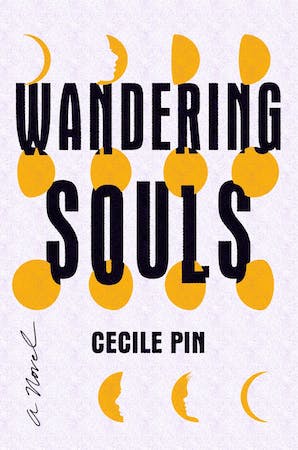
My novel Wandering Souls follows three siblings, Anh Minh and Thanh, who leave Vietnam after the war and settle in Margaret Thatcher’s United Kingdom, at a time of political and societal upheaval.
Central to the novel is the Vietnamese belief that deceased people not given a proper burial in their homeland are unable to find peace and are instead left to wander for eternity as ghosts. One of the narrators in Wandering Souls is Dao, the little brother of Anh, Minh and Thanh, who perished at sea alongside his parents and three other siblings. He looks on from a place in-between the living and the dead, homesick for a place to belong.
Below are some other novels that include ghosts as narrators, showing the wide-ranging ways in which they are represented and perceived:
Divided into five chapters, Hotel World is centered around the death of Sara, a 19-year-old chambermaid who meets her end during a freak accident at the Global Hotel. Each chapter is narrated by a different woman, somehow linked to the event and each representing a different stage of grief. These include Sara’s sister Clare, the hotel’s depressed receptionist Lise and, of course, Sara herself, who delivers a stream-of-consciousness monologue as she transitions from living to dead. Smith manages to add light-heartedness to an otherwise tragic tale, and the result is a fast-paced, lyrical read.
Like Hotel World, Human Acts is also told through a series of interconnected chapters and voices. The novel deals with the aftermath of a violent student uprising in South Korea in the 1980s. Its second chapter is narrated by Jeong-Dae, a young boy killed during the protests. His soul is still attached to his decaying body, piled up amongst other corpses in a military truck. Both frightening and gut-wrenching, the narration is effective at showing us the cruel horrors which emanated from the uprising.
Winner of the 2017 Booker Prize, Lincoln in the Bardo is a novel unlike any I’d read before. Unfolding over the course of a single night, it deals with the death of William “Willie” Wallace Lincoln, Abraham Lincoln’s beloved eleven-year-old son. As his father visits his grave, Willie finds himself in the Bardo—a transitional space in-between life and death. We hear from a symphony of ghostly voices, other souls trapped in the Bardo, as various forces vie for the young boy’s soul while his grief-stricken father refuses to let go.
Originally written in Farsi, The Enlightenment of the Greengage Tree is set in Iran right after the Islamic Revolution of 1979. It is narrated by the ghost of Bahar, a thirteen-year-old girl who was burned to death in a cellar. Through her eyes, we follow her family as they are forced to flee Tehran and move to the ancient forests of Mazandaran in northern Iran. We witness the grief-stricken family as they try to make new lives for themselves while caught in the tumultuous, violent midst of post-Revolution Iran. Inspired by Persian folklore, this is a powerful, lyrical work of magical realism.
Set in post-civil war America, Beloved tells the story of Sethe, a woman unable to let go of her traumatic days at Sweet Home, the farm where she was enslaved. She is also haunted by the death of her firstborn, nameless child, whose tombstone is etched by a single word: “Beloved”. One day, she comes home from a Carnival alongside her daughter Sethe and Paul D, a fellow enslaved man at Sweet Home. Waiting for them on their porch is a young woman, who calls herself Beloved. Beloved narrates chapter 22 in a fragmented, haunting stream-of-consciousness monologue which delves into her past. A bewitching and frightening figure, she is a mysterious character. She is hinted to be the ghost of Sethe’s firstborn child—and a representative of all of the victims of slavery.
Sing, Unburied, Sing is the National Book Award-winning, intimate portrait of three generations of a family living in rural Mississippi, with some of its members gifted the ability to communicate with ghosts. The story is told through three narrators: thirteen-year-old Jojo, his absent and troubled mother Leonie, and Richie, an imprisoned man who died in horrific circumstances. As he struggles to accept his death, we follow him as he seeks answers that might bring him peace—and enable him to transition to the afterlife.
Winner of the 2022 Booker Prize, The Seven Moons of Almeida is set in Colombo during the Sri Lankan civil war. The narrator Maali Almeida is a war photographer, gambler, and closeted gay man, who is brutally murdered. In the afterlife, he is given seven days (or “seven moons”) to travel between the afterlife and the real world to try and retrieve a series of photos that will expose the brutalities of the Civil War. Gut-wrenching but also filled with humor, this novel shrewdly explores Sri Lanka’s troubled past.
If you’ve turned on a TV lately, you’ve likely heard more than enough ‘opinions’ from certain conservative news outlets about the trans community. In the face of hate, misinformation, and violence, standing up for one’s identity may begin to feel like fighting an endless war rather than an act of power. At Electric Literature, we’re celebrating trans writers with some of our favorite essays, reading lists, and stories from the archives.
In this excerpt from Nevada by Imogen Binnie, recommended by Jackson Howard, fed up Maria reflects on the right way to fake an orgasm as she is being choked by her girlfriend Steph. With cynical, sardonic humor, Binnie depicts the mundane realities of being trans.
Trans women in real life are different from trans women on television. For one thing, when you take away the mystification, misconceptions and mystery, they’re at least as boring as everybody else.
Despite an increase of trans characters in stories by cis authors, trans characterization is rarely discussed by cis critics. Eli Cugini interrogates what exactly cis authors gain from writing trans characters and uses contemporary examples to show how trans characters should and should not be written.
But talking about a complex and fraught phenomenon like transness means being honest about the roots of the discussion: what do trans characters do for cis people? What messages, anxieties, and ways of seeing are being encoded in trans rep today? And where does that need to change?
In late ‘90s Houston, before the era of YouTube, TikTok, and Twitter, Addie Tsai was convinced people like them–Asian, biracial, queer, and non-binary–did not exist. The only place they saw themself was the anime Ranma, in which the titular character existed as both boy and girl in one body.
We no longer live in a world where we’re relegated to the queer selves that are ‘obvious,’ or the one or two pieces of media that show us who aren’t cis white gays who we could really be.
As her wife’s pregnancy progresses, Elanor Broker feels alone in her impending trans motherhood. Broker finds guidance and solidarity in Torrey Peters’ Detransition, Baby and Maggie Nelson’s The Argonauts.
We humans rely on stories to make sense of overwhelming change, not just as practical maps for planning and preparation, but to expand our horizons, to envision new possibility.
In the instance of gender apocalypse, where do trans people fall? Katherine Packert Burke analyzes Afterland and The Men to discuss the disappearance of trans people in apocalypse narratives by cis writers.
References to these trans women, or to the trans men who survive, are fleeting and uncomplicated. But these are books about gender. They’re trying to reckon with something toxic in the structure of society. Why wouldn’t trans people be a part of that? What fears are they reckoning with that don’t include trans people?
As Christ came to understand her own gender identity, she gravitated toward femme makeover films as a substitute for explicitly trans narratives. Through Miss Congeniality and Detransition, Baby, Christ comes to understand womanhood as a gift given and shared among women.
Boys who become men and girls who become women are rewarded with increasing returns the more any person commits to their assigned bit.
In an era that’s tearing down toxic masculinity, boys can do all the things we traditionally prescribed as feminine–so what makes a woman a woman, and how do we choose our identity? Years into her transition, Elanor Broker is still pondering this question, the answer of which she unexpectedly finds through Star Trek.
It’s a nervous tic, every time you try to explain this thing you suspect, this thing you think must be there — you try to relate some trait, some habit, some tendency, some aspect that feels gendered in a meaningful way, but out comes that inevitable ‘oh, but of course boys can totally do that, too.’
Electric Literature presents a list of fantasy novels written by trans and non-binary authors that celebrate and include gender queer characters, as opposed to the works of certain other transphobic billionaires.
Thank goodness the biggest-selling fantasy author of all time hasn’t thrown her lot in with a pack of weirdly genital-obsessed identity police! That would, after all, be an extremely weird choice…
Joss Lake, author of “Future Feeling,” recommends new trans books that expand the once narrow narrative of what it means to be trans.
This is the problem with clutching a single portrayal of trans life. We—writers, trans folks, everyone—model ourselves on each other. We need nourishment: a vast range of narratives, styles, and lives.
Trans characters have become more prevalent in cis literature–so why aren’t cis reviewers talking about them? Eli Cugini analyzes how avoidant cis responses to trans characters have harmed trans depictions.
Avoidance is disappointing, as is an uncritical, magnanimous ‘oh, how lovely’ attitude towards the mere existence of trans representation. Transness has the curious capacity to turn off cis reviewers’ critical capacities.
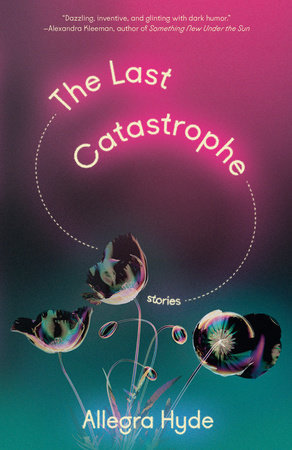
To say that The Last Catastrophe is a dystopic take on humanity’s final hour is to miss the humor in these pages, as well as the tenderness in Allegra Hyde’s gaze. She is looking upon all of us—even those with the greatest culpability—as if she is sad to lose us and for us to lose ourselves. This places her squarely in the lineage of writers like George Saunders, as does the collection’s strip malls, experimental surgeries to consign youth, data points that “extrapolate likely outcomes,” zombie humans, humans with “eyes blank as chicken broth,” bee extinctions, white lies, immigrant detention centers, DNA market, and the discomfortingly familiar algorithm that knows what you want before you even ask, then drops it at your door by drone (“Praise be, we paid”).
In these short stories, “America unfurls in every direction,” and we stand helpless before capitalism’s gaping maw. Hyde approaches her subjects with a naturalist view, reflecting back our foolish instinct to flex our power against nature, how it will kill us or conscript us to an unrecognizable existence. In these pages, we follow a caravan of motorhomes that are over a millennium swallowed into the earth’s core, embark on a doomed mission to save the last remaining moose, join a woman at a center for digital disorders (wondering, all the while, what ours might be), and remain alert to the predatory animals that are lurking.
The people in these stories are lonely, mystified by their own existence—especially by love—and seeking purpose in a collapsing world. There is the woman whose skin turns the color of the Gatorade she drinks after her husband leaves her, the woman who takes in foster husbands, the woman who needs “a little extra attention as she face[s] her own impending obsolescence,” and the émigré searching for his beloved in every surgically supplanted face. The last catastrophe might be our feral state, now that we’ve become unhinged at our own doing. Yet, despite herself, Hyde is not without hope. The writer reminds us that the human spirit has transcended our base self to invent language and pencils, and this same imagination has brought us twenty thousand leagues beneath the sea. Perhaps it is not too late for us to solve the problem of us.
Annie Liontas: These stories look to potential distortions rather than the concrete past, and make us feel as if we’re reading about ourselves in the not-so-distant future. If you’re right and the clock is ticking down, what do you want to say to humanity?
Allegra Hyde: I want to grab everyone by the proverbial shoulders and shake them and say, “Look around at what’s happening. We’re heading towards great danger and towards really difficult times. However, we do still have the opportunity to change course, to radically rethink what we value, and to have a better future.”
AL: You’re saying there’s still hope.
AH: I think so. I think even if we do face great challenges—and we’re facing those challenges already—there’s still the opportunity to find joy, to find meaning, to find connection. And I think that’s something to really hold on to. I’ve been walking around Oberlin, Ohio recently, and we’re having a really weird winter—it’s been like 60 degrees in February. That’s disturbing and that’s objectively bad for the environment and for us as a species, and yet there are flowers coming up. It’s kind of beautiful and charming, and it’s wonderful to walk around in the warm weather with loved ones. And so I try to balance my sense of anger and despair with holding on to what we have.
AL: Satire can be conflated with anger or scathing reproach, but I find it’s usually entangled with grief. Are you writing from a place of mourning? Are there other satirists who work similarly, and whom you admire?
AH: I am writing from a place of grief, both personal and as part of a collective. I think a story like “Frights,” for instance—which is told from the perspective of ghosts and is thinking about extinction and the end of species and ways of living—comes from a part of me that is grieving for the loss of those things. And yet that story is not necessarily all melancholic. It’s processing extinction in a playful, sometimes humorous way. And that reflects my own way of managing grief generally. I think other stories in the collection are also translating or transforming grief in order to cope. I draw from Barthelme in many ways, how he uses absurdity and how he creates emotion by taking unexpected turns and working with humor as a means to access pain and tragedy. This is not an example of a satirist, but I’d also say I draw from someone like Maggie Nelson and a book like Bluets, which is so loaded with grief, but we’re not always looking at it directly. We’re looking at it sideways and diagonally and refracting grief through objects and through ideas.
AL: There is so much humor in these pages, despite the existential grappling. In one of my favorite stories, “Loving Homes for Lost and Broken Men,” we’re told that “husbands without loving homes could end up on the streets, eating junk food, openly farting, harassing young women, impersonating dead celebrities.” Do you think of humor as a survival tool? Is it true in your own life?
AH: Telling jokes and transforming pain and frustration and anger into humor is absolutely a coping mechanism that I’ve used. “Loving Homes for Lost & Broken Men” is a story that’s very much expressing my frustrations with the heteropatriarchy. I think rather than writing a long screed, being able to write a story that invokes humor and that invites people in who would otherwise avoid such subject matter is a way to communicate what I’m feeling. I hope it’s more fun and creates more connections and openness, while also offering catharsis.
AL: What does first-person plural open up for you in a work that is about collective anxiety?
AH: That was a perspective that just kept coming back for me. I didn’t set out to write multiple stories in first person plural, but I found that point of view to be the most effective way to explore certain ideas. Whether I was writing about algorithmic dependence or reckless consumption, speaking as a collective and presenting this hive mind helped me get to the heart of what I wanted to say. The stories in this collection take on many different forms. Some are a couple of pages long, one could be called a novella. But the collection is held together by this larger exploration of what it means to live through the Anthropocene and how we might better understand our reality through metaphor, absurdity, and speculative premises. We are, on one hand, individuals living our specific individual lives, but we’re also very much all caught up in the fabric of society, we’re all part of this cultural consciousness. We’re all complicit in all kinds of collective decisions and actions that create catastrophe. Capturing that in first-person plural felt like another way to speak to that aspect of being human.
AL: I love how you take on the individual and the collective in “The Eaters,” which is about vegan zombies and survivors. One of the characters in that story, a historian and professor, talks about how it is a privilege to see the very last of anything, whether a species or a race. What is the relationship between the end and beauty? The end and the grotesque, the end and nostalgia?
We’re all complicit in all kinds of collective decisions and actions that create catastrophe.
AH: Offering up the perspective that it is, in fact, a privilege to witness the end times might open up avenues for people to actually witness it at all. Because I think many of us, myself included—all the time—want to, and do, bury our heads in the sand. I have environmental news sites that I look at, but sometimes they’re just too horrible to read and I instead go on The Cut and read about makeup. I think reminding ourselves that it’s both a privilege and a responsibility to pay attention, to be informed, to hold onto what is happening in our minds and our bodies is important. It is a unique position that people in the future will, if they exist, recognize clearly.
AL: Though in these stories, we see the raw awareness of youth, and how they’re eager to participate. You write a young person who grows a mysterious horn, a young space traveler, and a teenager who is brave enough to do what the adults in the compound won’t do. We can’t help but admire how they meet the world.
AH: I aspire to be an adult who listens and pays attention and honors the perspectives of young people because my sense is that as many people get older, they really shut themselves off from hearing younger generations. But the truth of the youth has been proven over and over again. In this collection, I really wanted to honor the unique positionality of younger people. They often have to face situations and realities that they in no way created, and I wanted to show how they might cope with such situations in the near future. I’m continually impressed and inspired by youth out in the world today and the youth activism that’s taking place around the environmental movement, with responsible gun use, and elsewhere. Working as a professor, I’m constantly interacting with Gen Z-ers, and I try to continually learn from them and appreciate the position that they’re in.
AL: Marmalade is wonderful! I also love Karoline, who appears in one of the collection’s most innovative stories, “Colonel Merryweather’s Intergalactic Finishing School for Young Ladies of Grace & Good Nature.” In preparation for the space promenade, Karoline is taught the power of white lies as “a bridge between possibility and reality,” and is conscripted to tell them. The complication of what she has inherited and her position in the world is not unlike our own, and you push the reader to think about their own culpability and capitulation.
By lying to ourselves and each other about the overall functionality of our current power structures, we’re setting ourselves up to repeat the same mistakes.
AH: That story stems from my frustration with billionaires investing a gazillion resources into going to space and the idea that the answer to all our problems on earth is by leaving earth and settling a new planet in the galaxy. Besides being impossible, this “solution” perpetuates a classicist, colonial framework. My hope is that this story, which is set in the future, shows how the same oppressive frameworks that have created the crises we’re living through will continue unless we change them. By lying to ourselves and each other about the overall functionality of our current power structures, we’re setting ourselves up to repeat the same mistakes. We won’t solve our problems that way, even if we eventually have cool spaceships.
AL: If the apocalypse arrives tomorrow, does Allegra Hyde survive?
AH: It depends on the kind of apocalypse. I can be pretty crafty and resourceful, but at the same time I do wear contacts. That might be my downfall. If I was trying to gain admittance into a survivalist compound and I needed to demonstrate what I can do—all I can do is teach short fiction. I probably need to brush up on my skills. I used to be good at setting up tents pretty fast.
AL: In a world of constant catastrophe, what is the last catastrophe?
AH: Your own death. Or is it nuclear apocalypse. Or is it when the internet finally goes down. It could be many things. I named the collection the Last Catastrophe because I hoped it would resonate in a glass half empty/half full way. It could be the last catastrophe in the sense that doom is near, or it could be the last catastrophe before we change course.
The night my boyfriend switched from when to if while he talked about our future, I said I’d eat nothing but boiled carrots and egg whites until I dropped twelve pounds. One for each month we’d been together, though I hadn’t planned that. I just picked a number. Twelve would make me small enough to please him. At that size, he could throw me around in bed, and when he finished, I’d be small enough that he could toss me over to a chair where he could ignore me until he needed me again. Now, at one hundred and thirty-five pounds, I was unavoidable.
I liked a lot about him, so don’t ask. I liked that he was a hobbyist metalworker. I liked his apartment with a view of a building that looked like but was not the Statue of Liberty. I liked that he liked some dogs but not all of them. When he ignored a dog, it broke my heart. I’d never empathized with a dog before. I liked how he showed me emotions I didn’t know I had. Sure, he probably served some metonymic function, too, alright? The way someone quiet and distant becomes who you imagine them to be, and in their silence, you become everything you fear about yourself, so you try to bridge the gap, attain a sense of self which you hope to be, but suspect is not, consonant with that person’s love. I was always grinning wide and saying, “Is there something in my teeth?” He’d never tell me. He’d say, Stop pretending I’m a mirror.
“If you only eat boiled carrots, what restaurants can we go to?” my boyfriend asked.
“And egg whites. Boiled carrots and egg whites. There are a million places with that.”
“Michael, I’m not going to watch you eat that.”
He was lying. A major problem I had with the men I dated was that I knew what they wanted better than they did. I know this sounds presumptuous, but explain this: the smaller I got, the more they fucked me. The cheaper my meal, the more they brought me out to eat. The quieter I stayed, the more they laughed and called me clever, even though they were the ones who’d made the joke.
If they admitted what they wanted, it would be considered abuse, and these were nice guys, so I just had to guess. I asked if he had a peeler. He went to the drawer and handed me one. I hadn’t even bought the carrots yet.
By the time the sun woke me up, my boyfriend had left for work. Everything in the room was white. I looked in the mirror. I was a stain on the sheets. He always woke up before me to jack off. The cum-filled tissues he left on the bed were already brittle. When I woke up feeling sexy, I’d jack off too, usually into the same tissue, to save trees. When there were no tissues left on the bed, I assumed he was planning to cheat on me during the day and was saving his cum for that.
I always woke up feeling sexy. His body drove me crazy, especially when it was gone.
After I came, always thinking of him, I felt sad and imagined a bunch of little scenes between me and my boyfriend. First, I imagined I’d said something that impressed him in a conversation, something about Flaubert, whom I’d never read but often pretended to know about in my daydreams. But my boyfriend only liked mystery novels and books that made new arguments for capitalism, so then I imagined I said something about Flaubert at the wrong time, like at a work event where everyone else was talking about pie charts or the world of politics, and where saying literary things looked pretentious in a desperate, grasping way. Then I imagined having a threesome with him and one of his friends, maybe Tony who was an amateur MMA fighter. In the fantasy, everything I did in the threesome got no response, but when Tony sucked his cock, my boyfriend came and said, “When you suck my cock, I’m afraid I’ll come forever.”
The problem was, I did not know what he wanted me to be. I tried so hard to be quiet when he wanted that, and sexually affectionate when he wanted that, and to affirm his ideas when he seemed to want that, but no matter how hard I tried to infer the partner he desired, my own traits kept seeping through. When they did, he did not like them. I’d say, “I read a new poem today,” and he’d groan. I’d have a horrible nightmare, and he’d wake up and say, “Maybe you’d be more comfortable out on the chair.”
I had this idea that if I became the willowy, weird anorexic boyfriend, he could know me as a trope, wear me on his arm, roll his eyes, and with my strangeness juxtaposed to his leading-man propriety, feel reassured of his own centrality in his life and our relationship. This seemed easier than any alternative.
For breakfast that morning, I gulped a little pool of coconut oil. I’d read it ran right through you, leaving nothing but pure energy and bright skin. I wanted to get better at letting loose what my body tried to hold. I ate a piece of bread for lunch, so I ran along the waterfront until I dropped to my knees and dizzily puked in the trash. People in Williamsburg threw away such nice things. Whole outfits! Nice suits and dresses damp with untouched delivery food. I opened a takeout container and salad dressing spilled out onto me. In this neighborhood salads were expensive. I could not afford this neighborhood, but my boyfriend could.
If my boyfriend did not marry me, or at least decide to stay with me, I would have to move to a bad neighborhood. What would I lose? Fake lady liberty, the leather furniture, the nicest bathroom I’d ever puked in. Most of all, the friends I’d made.
They were all bums. They’d all stayed in Williamsburg past when this was a place where bums lived. I liked them because I always stayed past the end of things too. I did nice things for them. I’d walk to the bodega and buy them canned drinks called Lime-A-Ritas. When they fell asleep in the sun I’d drag them to the shade under the BQE. I didn’t know their names, but I knew the feel of their underdeveloped forearms that I gripped like wishbones. I got real generous with my boyfriend’s card once and bought one of my friends a six-dollar ice cream cone. Then he told me he was lactose intolerant. I licked it and let it fall on the sidewalk.
After I puked in the trash, I noticed this same guy was lying there. He asked, “Was that bread? Bread would’ve gone good with the yogurt your roommate gave me.” Lactose intolerant my ass. I never knew when to believe my friends.
“Roommate?” I asked. “What do you mean.”
“That guy I see you up there on that balcony with.”
He pointed to our apartment. It hurt my eyes to look at the sun flaring where we lived.
“My boyfriend, you homophobe. That’s my boyfriend.”
“No homophobe,” he said. “Love fags. I am one. I was at Stonewall.”
He spooned a little yogurt.
Yeah right, I thought.
“He’s out of your league,” my friend said. “He’s a nice guy. Chiseled jaw. Like a Ken doll. Good musculature. Gives me yogurt and dollar bills. You don’t give me shit. You. You’re a menace. You’re a devil.”
He started cackling and hissing, a devil impression. I looked up at the balcony, the balcony where my boyfriend and I used to stand to look out at the world. He’d point at buildings along the waterfront and say, “I’ll buy property there and there and there.”
It was a major turn on for me, knowing he could have whatever he wanted. I’d imagine how he’d call contractors to come knock down walls, how he’d point and say “knock down that one” while I stood behind him nodding in agreement, feeling warm light come through the big windows. On the balcony, when he talked and I imagined and he put his arm around me, I’d blur my vision and let my body go limp and numb.
Under his winter coat he probably had a perfect body, a body that was barely there at all.
“Don’t talk to my boyfriend,” I said to my friend as I glared down at him. Under his winter coat he probably had a perfect body, a body that was barely there at all.
When I got home, my boyfriend was watching MMA fighting and jacking off so hard I knew he was about to come. When he noticed me, he groaned and stood, still holding himself. He said, “Where were you all night?” and went to bed. He was definitely going to leave me soon, and I had to do something to stop him.
I had another place I went, too. I taught ESL to recent immigrants in the basement of a church six stops east on the L train. I’d found the job online and signed up to prove a point to my boyfriend, something about my selflessness, but he didn’t care about my selflessness and neither did the students. Most of them had wandered in off the street looking for mass or confession or a bathroom and kept coming back because they had nothing better to do. A famous writer also volunteered there. Once I heard him ask a young black man which gangs he was in. I didn’t realize this guy was famous, and after I heard him say the gang thing, I was rude to him at the copier. We only had one book, so we had to make copies. I said, “Wait your turn,” like I was talking to a kid or a dog. Then I took a long time copying a list of “Ch” words: chubby, choke, chains.
My students were Claude and Jessica. Claude knew about fifteen words in English. Jessica knew English as well as I did. I taught them the same thing. Jessica was a single mom and a sales associate at DSW. When I went to buy shoes, I’d see her at the register and she’d say, “Hi shoe lover,” without an accent or any acknowledgment of who I was. She was white and said she came from Florida. I don’t think she knew where she was. Once, during a break, I heard her on the phone telling someone she was at college. Had I said something that made her think this was college? There were space heaters. All the chairs were folding chairs. There was only one book.
To teach them, I had them repeat whatever dumb sentences I thought of.
I said, “Let’s torch the church and go to brunch.”
They repeated, “Let’s torch the church and go to brunch.”
I said, “At every chance my boyfriend chokes the chicken.”
They repeated, “At every chance my boyfriend chokes the chicken.”
Claude only knew the sound and shape of words, not the words themselves, and Jessica just smiled. I think she thrived in situations where she knew exactly what to say, no matter what it was, and relished the absence of uncertainty. I related to this pleasure.
Sometimes I went on tangents. “This is not just about making the words legible, this is about making you legible.” I’d stand up at this part. “Legible to a system that does not want to see you as human, legible to the white heteropatriarchal State that quite frankly will never see you as human as hard as you try.”
When Jessica looked smug about being white, I’d add, “Even you, Jessica. You are a tool of empire.”
The speeches did not inspire. They clung to their insane dreams. Claude wanted to be an engineer. Jessica wanted to be a neonatal nurse. They asked me what I wanted to be. “Be!” I shouted. “You will spend your whole lives trying to be something and then the world will change what it wants from you.”
I lost four pounds in a week. The sentences I said made less sense to me but seemed to make the same amount of sense to my boyfriend: none. I looked at the yolks I cracked into the drain and said to my boyfriend, “Look, it’s the sun. An abortion of sun. Look at the albumen, the albumen’s the ghost of the sun. The ghost of the wasted days of youth!”
I cackled at that, the way my bum friends laughed when they saw rich kids struck by cars, but my boyfriend had already carried his laptop and its blood splatter sounds back to the couch.
I didn’t ask if he thought I looked better, and he didn’t try to fuck me more.
One morning, I brought my egg and carrots to the church basement in a Styrofoam container. Claude and Jessica kept pointing at it. Jessica called it “the sad breakfast.”
“My boyfriend makes me eat it,” I said. “My boyfriend is trying to fit me into clothes too small for my body.”
I’d assumed they were both homophobes, Jessica because she was so American, Claude because he was so not American. I felt bad about my surprise when Jessica said, “That’s not how a man should treat you. You’re the best teacher I’ve ever had.”
As if talent made someone deserving of love.
I was even more surprised when Claude said, “My boyfriend treats me right.”
“Who’s your boyfriend?” I asked with a kind of tone that implied, “Prove it.”
That’s when the experimental poet came in. An experimental poet volunteered at the church, too. He used to speak so quietly that you’d think you could ignore him, but he was so beautiful that you couldn’t help but strain to hear. Whenever I used to walk past the table where he sat to teach, I’d hear his students shouting, “What do you mean?” and “Speak up, please!” Recently, the director stopped giving him students because he was such a bad teacher, so he’d appointed himself as a sort of supervisor.
Power gave the experimental poet a renewed vitality. As supervisor, he would come around and listen to our lessons. He’d wait for us to make a mistake and correct our grammar even though in one of his poems he used the words “willow tree” as a verb.
“I didn’t know you were gay!” the experimental poet said to me. “You always just seemed depressed.”
I said I was both.
“Well then aren’t we just a bunch of homos?” the experimental poet said. “And you can be our fag hag.” He pointed at Jessica.
I hated the experimental poet because he was smarter than me and imbued his work with a quiet mystery, yet he could also fluently enact the tropes of gay male femininity, which made him outgoing, likeable, and unthreatening, even in his misogyny, to large audiences of morons. He had ten thousand followers on Twitter because he made jokes about anal bleaching and astrology, but I didn’t think anyone read his poems.
“I don’t have a boyfriend,” the experimental poet said, and I knew this did not mean “I’m lonely” or “I’m signaling availability.” He meant, “I fuck a lot of men.”
But maybe I could be one of them. He could probably tell fucking me would be good material for a sad poem. There was already one published poem about how sad sex with me could make a person. It had been nominated for, but did not win, a Pushcart Prize.
See, I had already begun to realize my diet was misguided. The more I saw my boyfriend jack off to MMA fighting, the more I realized he probably liked combative, muscular men. But this seemed unattainable. I could barely lift my pots of salty carrot water. If I tried to lift a weight I figured my arm would snap.
A few days earlier, I had asked some of my bum friends what they knew about boxing. I assumed most of them had at least done stints as boxers, but I was wrong.
“I only know about dog fighting,” the guy who lived in the trash said. “Do you want to know rule number one of dog fighting?”
“Yes,” I said. “That’s why I’m talking to you.”
“Punch him in the balls,” he said.
At home, I would playfully jab at my boyfriend. I’d say, “Think fast.” But I couldn’t squeeze my hand into a fist. I kind of pushed my half open hands into him. I felt like I was tickling him with a prosthesis that wasn’t mine.
“Would you quit that. What are you even doing?”
“Sorry.”
Maybe he resented that I could not hurt him and wanted to be with someone who could. I had gone about this all wrong. I had forgotten all gay men were masochists. Since I couldn’t hurt him physically, I could try to do it emotionally.
So, looking at Claude and the experimental poet, I had the idea. A double date. “Let’s all get drinks,” I said to Claude and the experimental poet. I felt light-headed as I said it. I’d never made a suggestion before.
“Bring your boyfriend,” I said to Claude. “And Jessica, I know you’ll probably have to watch your daughter or work at DSW that night, too bad.”
We agreed on next Thursday. I didn’t tell them I would invite my boyfriend. I wanted him to walk into the bar and see us already there. We would be having a visibly incredible amount of fun. He would not have a single word to say to Claude or the experimental poet. He would hate them both for their French accents. My boyfriend knew nothing of culture. In fact, he probably hated culture. He would not even realize that the experimental poet’s accent was fake. I doubted the experimental poet knew a word of French. My boyfriend would feel so uncomfortable. He’d see I was all he had, and he would see how easily I could have someone else.
We decided to meet in the West Village, where the experimental poet lived, even though Claude lived deep in Brooklyn. The experimental poet survived off of Amazon gift cards that older men sent him in exchange for short videos of sex acts, and Claude was poor, so we decided to meet at a cheap gay dive bar, the kind that had significance during the era of gay rights. Now though, it was too crowded and too sad, and though it was also too dark, the dim lights hung above each table revealed every blemish that had ever been on your face.
I got there first, ordered a martini and sat at the end of a semi-circular booth in the back. I was a little nervous. I wanted to look extremely hot. I’d worn a big sweater with a very tight shirt underneath for when we lost our inhibitions. All my tight shirts were not tight anymore. I bought a new one at H&M on the way. It was made for very hefty twelve-year-olds, and it fit me like a crop top.
I had one hour until my boyfriend would come. By then I wanted to be in my crop top and sitting in the experimental poet’s lap. I wanted to whisper poetry in his ear and to see how hard my warm, good breath and intellect made his cock. I was wearing baby blue briefs I’d had since I was in college seven years before. They were faded. The elastic was torn. They were the nicest underwear I had. I’d worn them for the experimental poet, or for my boyfriend, whichever wanted me that night.
I’d finished half of my martini and I was looking at myself in my phone camera when the experimental poet came in with Claude and Claude’s boyfriend. Had they come together? Had they gotten drinks somewhere else beforehand? Everyone was hiding something from me, cruel intentions and other attachments. As the experimental poet walked into the circle of light around our table, I saw that he had perfect skin. He probably drank more coconut oil than I did.
Everyone was hiding something from me, cruel intentions and other attachments.
“Oh my God,” the experimental poet said, more to the empty booth than to me. “Claude’s hilarious boyfriend is throwing serious shade on the government of Africa.”
“Wow,” I said. I knew the experimental poet was being ignorant, but I didn’t know anything about Africa either. I only read online descriptions of the nutrition in boiled carrots. My most recent internet searches were “how healthy are carrots” and “the newest sex moves.”
They crowded into the booth. The experimental poet took the seat beside me but did not gesture for me to climb atop his lap. Instead, he turned his body to Claude and his boyfriend. I yelled over his shoulder to make small talk. I asked Claude what he had for dinner. He thought for a while then said, “chicken and cheese.”
I didn’t know if this was true, or if these were the only words I’d given him to describe dinner, so I didn’t respond.
While the experimental poet kept asking Claude’s boyfriend questions, I just listened. The boyfriend had come to Brooklyn as a boy because of war. Now he was a bartender on the weekend and during the week he worked for Red Bull, leading focus groups. The experimental poet said there was definitely a poem to be written about that. He told us about his first poetry collection, My Diaspora, which was about leaving his childhood home to attend Sarah Lawrence.
“If the answer isn’t poetry,” the experimental poet said, “you just are not asking the right question.”
I was starting to realize that the experimental poet considered this night to be more anthropological than sexual. He would probably mine Claude and his boyfriend for material to break into writing lyric essays that used the immigrant experience as a metaphor, and I would not get laid, and my boyfriend would still leave me. I went to the bar and asked for another martini. I asked for an olive, but they put a lime in it. I stood there sucking it, then I left the rind over my teeth, like a sheath of mold, and smiled at the bartender. He said, “Are you okay?” On the way back to the table, I tripped over a backpack. I said, “Watch it!”
When I got back to the table, my boyfriend was there. He’d taken my seat beside the experimental poet. He was in a conversation.
“I tried to find you,” he said. “I described you to these guys. They said you were together.”
How had he described me? How could he describe me if he hadn’t asked me a question in a week, if he didn’t even know I’d lost ten pounds? Had he even noticed the love my weight loss conveyed? He didn’t say anything about how he’d expected us to be alone. He didn’t try to pull me aside to the bathroom to say how much he’d been looking forward to an intimate date, where he could give me his full attention. I pulled up a chair and watched the four of them from across the table. My boyfriend turned back to the experimental poet and Claude and Claude’s boyfriend, and he said something in French. When had he learned French? It sounded beautiful. Everyone laughed, and then they each said something in French. I didn’t know French, and I couldn’t think of any English words either. When I tried to remember facts or stories or the types of questions people asked each other, I could only remember things no one wanted to know: the calories in an egg, the vitamin A in a baby carrot boiled in water with salt.
“I’m sorry we’re speaking French,” my boyfriend said.
“We?” I said. “We?”
Where did he get off being a we with my friends? I sipped my martini very fast to communicate something, but my boyfriend didn’t ever know what anything meant.
My boyfriend said, “I thought it would make Claude feel included. He seemed left out.”
In French, Claude was a real chatterbox, a life of the party. My boyfriend had brought him right out of his shell. I’d forgotten my boyfriend was charming, or that he could be. It made it all the more offensive that to me he was despotic and stifling. He held in all of his energy and humor and curiosity, so he could save it up and use it to charm other men in front of me.
I bet he’d saved up his semen and orgasms too. I tried to remember if there had been tissues on the bed this morning.
I tried to imagine what he was saying in French. The only French words I knew were ménage a trois and jouissance, so I was on the lookout for those. Other than that, I had to guess. I imagined he was complimenting Claude’s bravery and intellect, traits I was too stupid to even perceive in Claude, though surely they were obvious to someone as observant as my boyfriend. When he wanted to, like when he talked to Claude, he could see all the good in a person. In me he saw nothing at all.
I imagined what he was saying to the experimental poet. I imagined the experimental poet was blowing his mind with innovative ideas about language. I imagined my boyfriend now finally appreciated literature, even though I wrote poetry too sometimes and had shown him some. To me, he said, “I just don’t get poetry.”
Then why did he love the experimental poet’s poems, the ones I figured the experimental poet was translating into French for my boyfriend on the spot? The language of these poems was more abstruse, evasive, and yet, I could tell, as my boyfriend listened to the experimental poet recite his work from memory, he worked hard to understand it, and he came to new knowledge about life, knowledge he could never get from me. There was a new martini in front of me. I must have stood and gotten it. It was full of olives. Six of them. Floating there, an orgy of untouched prostates preserved in some scientific fluid.
That’s when Tony walked in. He was in a sweaty tank top. He was holding a gym bag.
“What’s Tony doing here?”
“Tony!” my boyfriend shouted. “Tony’s MMA gym is right down the street. He studied abroad in Paris, so I texted him to come on over. He’s been wanting to practice his French.”
Had they been practicing French together? Had they been whispering nasally French sex words to each other in gym locker rooms?
Tony slid into the booth beside my boyfriend. There was plenty of space in the booth for Tony. For Tony my boyfriend would defy the laws of physics.
“Tony, man,” my boyfriend said. “Your body is looking incredibly fit.”
He reached over and touched his bare bicep. My boyfriend hadn’t touched me in weeks.
“Bonjour, Michael” Tony said to me.
I did not respond. My boyfriend whispered something in Tony’s ear.
“Oh! I’m sorry. I mean hello Michael.”
“You,” I thought to my boyfriend. “You are an oppressive regime. You have skinned me alive, and you do not even know what I mean!”
But of course, he could not infer what I thought. Of course, he didn’t know how he made me feel. The words he and Tony said were getting quicker and quieter. They were huddling close together. I poured my drink and my olives into my mouth and chewed.
I could feel my chair rising from the floor. My body couldn’t keep it put. Then I was on the ground. Under the table I saw it, Tony’s bandaged hand on my boyfriend’s knee.
“Cheater,” I hissed from the ground. “Cheater!”
But Claude didn’t repeat after me.
“Bathroom,” I said, standing, backing away, watching all their bodies shrink and shrink until I knew I would look small to them too, until maybe they couldn’t see me at all, until I was outside and running. At a corner I watched the glowing red don’t walk hand. It was slapping me. Slap, slap, slap, but I didn’t feel it. That’s the last thing I remember.
I woke up on the sidewalk but not the sidewalk outside the bar. It was dark. My pants were gone and so were my wallet and phone and keys, which had been in my pocket. I was in my crop top. There were tiny rocks in my belly button. My baby blue briefs were dirty from the ground. I didn’t think I’d seen this street before. Had I taken off my own pants? Had someone else? Had my boyfriend come after me? Had Tony? Had I gotten in a fight with Tony? Had he knocked me out? I had no bruises. Had I been drugged and raped? My cock felt fine, not chaffed at all, and my ass didn’t hurt. I checked my legs and stomach and underwear for wet or dried cum. What happened to me and how long ago?
I must’ve gotten too drunk. I had a horrible sense of shame, which I only felt after speaking my mind, which I only did when I was drunk. I couldn’t remember what I’d said. Who had been with me? My boyfriend?
A group of blond girls came up to me. They were wearing native American patterns sewn into crop tops. “Where are your pants?” they screamed. “This is the street! You need to wear pants in the street!”
“You’re bad ladies,” I screamed. “Bad ladies! Witches! You say you know the colors of the wind, but you don’t even listen to the wind!”
Then I hissed at them.
Then I was peeing my name onto the wall, or trying to, but I kept forgetting which letters my penis had to make, and anyway, I was too close to the wall. There was a lot inside me, but it came out slow. It made a dark descending stream. That’s when two guys in blue suits came up to me. “Someone had a good night,” one of them said.
“The experimental poet?” I asked. “What did he say about me? Was I good?”
I hoped I did the right moves and that he liked my body type.
“Once,” I said to the blue men. “My boyfriend said, ‘All your moves are from a list online.’ He read the same one, but he read it a long time ago. He had more practice with the moves. Plus he had new ones, too.”
The suit men didn’t understand. They pointed to their clothes, which were police clothes.
“Kid we’ve gotta arrest you or bring you to the hospital. You’re a menace.”
Yes, that’s it. That’s what I had been, but I said, “No, you’re a menace!”
They asked if I lived somewhere. I said, “No, but my boyfriend does.” I didn’t know if he was still my boyfriend. They asked where. I couldn’t remember where my boyfriend lived. I asked, “What if I know the neighborhood, but can’t remember the address?” I’d held onto it for so long. Was it gone? What about our bed? The chair where I’d hide? What about the MMA sounds? I missed my pots of tepid water I’d heat and reheat. What about my friends?
I said to them, “You don’t understand. You have to take me there. I still have carrots in Tupperware there.” I guess they didn’t hear me. “Please don’t let Tony eat my carrots. Don’t let him lose the weight I should lose.” I looked at my skin. I was glowing red. “This little light of mine,” I sang. “I’m gonna let it shine, shine, shine,” I sang. “I’m a lampshade from hell,” I said to the nice nurse when the ambulance came. “Jessica?” I said. “Jessica, my dear, I’m sorry I’m not who you thought I was.”
When they lifted me into the ambulance, I’d never felt so light. If only my boyfriend could see me. See me see me see me see me. I said it until the words merged together, and without space in between, neither meant anything at all.
Electric Literature is thrilled to reveal the cover for Vanessa Chan’s highly anticipated debut novel, The Storm We Made, which will be published by Marysue Rucci Books in January, 2024.
Malaya, 1945. A family in harrowing danger: a missing teenage son, a youngest daughter locked away in a basement as the only means of preventing her from service as a comfort woman. An angry eldest daughter who can’t avoid drunken Japanese soldiers while working at the tea house, and a violent Japanese occupation that looms ever closer.
It may already be too late for Cecily Alcantara’s family. She blames herself for a decade spent engaged in espionage, dreaming of an “Asia for Asians”, lured by the charming General Fujiwara’s promise of a life that would transcend British Colonialism. Her efforts to usher in a new regime, the even more merciless Japanese occupation, have finally caught up to her. As the war reaches its apex, Cecily’s family hangs in the balance, and she will stop at nothing to save them.
The Storm We Made moves through a decade of pain, triumph, and wartime atrocities. You won’t soon forget the way these characters render the complicated relationship between the colonized and their oppressors, and the question of right and wrong when survival is on the line.
Here is the cover, designed by Vi-An Nguyen.
“Vanessa’s novel is incredibly evocative and rich with detail, so there were many possibilities for this cover–from elements of the plot like a rain-soaked wheelbarrow, to intriguing visual symbols like a rooster or the moon,” says Vi-An Nguyen, the book jacket designer. “And of course the unforgettable characters and vibrant setting. We experimented with all of these ideas and more, but ultimately this gorgeous painting I found from the Malaysian artist Fadilah Karim was perfect. There’s a strong sense of character and movement and the surreal brushstrokes convey the emotional turmoil and scope of the story so well. There’s also a timeless quality to a painting, which makes sense for a novel rooted in history but also so relevant today. I’m so grateful to art director Jaya Miceli for bringing me onto the project.”
TAKSU Galleries, which houses the painting, jumped at the chance to be part of the project, says Judy Yuen, director. “Our gallery was thrilled when we got the request for Fadilah Karim’s artwork image Motion II to be a book cover written by Vanessa Chan. It strengthens the connection between Malaysian art and literature. It just made sense for us to be part of this. A first and significant achievement for TAKSU Galleries. It’s a perfect match when the artwork can complement the theme of the story. We’re proud to be part of this exciting launch and that we can promote Malaysian arts, culture, and history by featuring authentic and local artists.”
Chan feels an immediate, almost-fated connection to this cover, noting how much it personifies the novel’s title. “As soon as I saw this cover as an option, I knew. I felt startled, awakened, and remember blinking in wonder. The boldness, the person in motion – denoting, to my mind, a person who IS a storm, a reflection of the four main characters in the book who are all flashpoints to their communities, friends, and country. In fact, if you look closely, a fiery horizon is reflected in her face. I also love the directness of the font and how unquestioning it is. When I learned that the art was a piece by Malaysian artist Fadilah Karim, it felt meant to be – a Malaysian author, writing about Malaysia, with art by a Malaysian artist. Our team has fondly given the person on the cover a superhero name – Miss Blur, our perfect storm. I am beyond grateful to Fadilah Karim, TAKSU gallery, and Vi-An Nguyen, who found this personification of everything my novel represents. No questions, no edits – this was THE one.”
The Storm We Made will be published by Marysue Rucci books on January 2nd, 2024, and is available for preorder here.
Like magic, narrative rearranges the world through words, and Kelly Link is one of modern fiction’s boldest alchemists. Her stories (which have now been collected into five books, and garnered Link a MacArthur “Genius Grant,” among other honors) make the familiar so strange it’s almost familiar again, spinning straw into ghosts and ghosts into disgruntled exes. What happens, then, when the bard of the workaday weird sets her sights on fairy tales, a genre already firmly grounded in the impossible, a literature in which animals talk and potions swiftly transform? A trip within a trip within a trip, to be sure—but one whose longings, joys, and betrayals remain stingingly human.
The fairy tales that form the basis for each story in Link’s new collection, White Cat, Black Dog, draw upon a wide range of traditions, from Grimm classics to Scottish ballads to Norwegian folklore. Fairy tales are well-loved source materials for modern reimaginings, but the stories of White Cat stray wonderfully far from their sources; they’re not so much straight updates as they are fever dreams by the original characters that we’ve been permitted to step inside. Hansel and Gretel become android siblings marooned on a distant planet; hell’s royals brunch and bitch in modern-day Manhattan; Snow-White arrives at a house sitting gig where the instructions are scant but the magic mushrooms abundant. Into an ancient tradition of one-dimensional heroes and unbearably happy endings, White Cat instills the contradictions of real personality and relationships both fragile and tender. Slowly, these stories suggest that human desire is the dankest magic of all, every bit as likely to betray us as it is to save us.
Over email, Link and I discussed what keeps fairy tales forever in our cultural imagination, how growing up religious shaped her own “personal superstitions” around life and writing, and the two-sided coin of humor and horror.
Chelsea Davis: Rules—often arbitrary, always ominous—shape many fairy tales, and most of the stories in White Cat. Don’t let anyone enter the front door; don’t visit your lover unless it’s snowing; and (my favorite) don’t hunker down for the night in a home that doesn’t have a corpse inside. How do explicit rules activate or shape a story?
Kelly Link: I love thinking about rules! I’m deeply interested in the relationship that we have with them as members of a family, or a social group, or a culture. They mark out the territory in which we (or our characters) live our lives. When thinking about imaginary people, a useful approach is to consider what rules they live by, which rules they break, and the consequences or freedoms that occur as a result.
When I was a kid, I was fascinated and horrified by all sorts of rules: Don’t wear white after Labor Day! Wear pantyhose with skirts. Never wear navy and black together. Don’t take candy from a stranger.
I was a preacher’s kid, and aside from all the familiar stuff about virginity, and not taking the Lord’s name in vain, there were weirder, more interesting rules about not eating shellfish, or wearing certain fibers together, or not suffering a witch to live. (Though the two rules about loving your neighbor as yourself, and doing unto others as you would have them do unto you still seem like good practice.)
When thinking about imaginary people, a useful approach is to consider what rules they live by, which rules they break, and the consequences or freedoms that occur as a result.
Personal superstitions are interesting to me, too, and how they function as rules—for example, I have a rule that as much as I love Patrick O’Brian’s Aubrey and Maturin novels, I can never read another one. When my daughter was born at 24 weeks, I read the first three books in the series in the NICU while sitting beside her isolette. But each time I started one, she would have a life-threatening crisis, and so I finally put the series down forever. Even now, when she is perfectly healthy, I have a horror of picking up the fourth book, just in case I summon up some bad luck again.
Horror and fairy tales are two of my favorite forms of narrative, and those are both genres where rules loom large. Don’t smell wolfsbane. Be kind to animals. Don’t invite strangers over the threshold. Don’t step on a crack. Don’t be greedy, don’t say thank you to fairies, but do listen to birds, but don’t blow on a whistle that you find on the beach, but always be polite to old ladies. I love rules that feel nonsensical and fraught with weight at the same time. I love when rules are inverted. The introduction of a rule tells the reader that story is going to follow, and hopefully the consequences will in some way be surprising or fresh.
CD: Fairy tales have been the wellspring of countless modernizations, adaptations, riffs. You yourself wrote an introduction to a reissue of one of the best-known iterations of this—Angela Carter’s The Bloody Chamber. In your mind, what qualities of fairy tales make them so inviting for artists and writers to reimagine?
KL: The original fairy tales have a brisk, conversational tone, as if they’re being told to you directly even though they’re words on the page. Maybe that makes them lodge in the brain more firmly? We often hear or read them first in childhood, and often more than once, or in more than one shape or version. Right from the start, they feel like shapeshifters.
There’s also the lack of psychological realism—once you begin to apply psychology to the characters, or allow those characters the narrative space to have deeper, more complicated reactions to pretty traumatic events (death, abandonment, parental cruelty), fairy tales become different kinds of beasts. Or else you can keep the characters relatively flat, and change the setting instead, or make the language more estranging or more personal. The patterns of fairy tales, too, are so recognizable that introducing even the smallest piece of those patterns—“once upon a time,” for example —means the language of the story that follows becomes charged. Readers will pay closer attention to the appearance of animals (talking or not), or colors, or, say, repetitions of three.
White Cat, Black Dog is dedicated to Ellen Datlow and Terri Windling, who edited a series of anthologies of retold fairy tales—I learned a great deal by seeing how the same fairy tale could become something completely new in the hands of different writers, all with their own, particular points of view and sensibilities.
CD: You’ve said in other interviews that your past collections have come together in an organic way—from disparate stories you’ve already written, rather than from your sitting down and setting out to Write A Collection. Did this collection come about equally incidentally, or was there an idea of a Project from the beginning? It has such a clear thematic focus.
KL: The earliest story in this collection is “The Lady and the Fox,” which draws on Tam Lin, a ballad, rather than a fairy tale, but the next two were “The Game of Smash and Recovery” and “The White Cat’s Divorce,” which was specifically written to accompany a museum exhibition of fairy tale art. So as I was working on that story I was thinking a lot about fairy tales. I’d also read Daniel Lavery’s collection The Merry Spinster, and had been thinking about how much I loved the tone created by those stories in concert.
Humor and horror are both doors into story for me—and inside a story, they’re paths to understanding or rearranging situations.
I often set up a rule or two when I’m starting a new story, and it seemed like a good project to make a rule for a group of stories this time, which would be to use fairy tale approaches, or motifs, or language each time, even if indirectly. “The Game of Smash and Recovery” is the only story where I didn’t begin with this rule, but it moved into conversation with “Hansel and Gretel” in obvious ways once I added the subtitle. It’s been useful for me to think, during revision, about the stories or genre patterns a particular story is in conversation with, as I go forward. This time I started when I had an idea for a story, before I had any words on the page.
CD: The exact nature of the “influence” between original and new fairy tale seems to vary wildly and wonderfully throughout White Cat. Some of your stories borrow a character relation (the orphaned siblings of “Hansel and Gretel” become two mechanical beings marooned on a strange planet in “Game of Smash and Recovery”), for instance, while others compress the original fairy tale into an interpolated story (a bit of airplane smalltalk in “The Girl Who Did Not Know Fear”). Could you choose a story from White Cat and talk about how it arose, and how its finished form is in conversation (or argument) with the original?
KL: “Skinder’s Veil” came out of a story that I couldn’t quite figure out how to write in an interesting enough way. This was going to be a version of “The Juniper Tree” in which a girl made repeated visits to a swimming pool where her mother had drowned, and in which the pool gave her mostly unhelpful advice. There’s a very small fragment of this still in “Skinder’s Veil,” but mostly that particular fairy tale got eaten up by “Snow-White and Rose-Red,” which of course was swallowed up by the story of a graduate student with an unusual house sitting job. Because “Snow-White and Rose-Red” was the kernel at the heart of the larger story, I knew there would be animal visitors, and two sisters. Because I often have a hard time sitting down to write, I wanted to write a kind of story where that was the main problem, and where the protagonist got some very unexpected and slightly disturbing aid with the work he needed to do. I suppose there’s a bit of “Rapunzel” in there as well.
CD: Something I really relish about your fiction is the way it manages to knock me off balance with its humor. Often, you’ll immerse the reader in pitch-dark subject matter (grief, death, violence)… and still manage to make her chuckle. A kind of meta-commentary on this emerges in “The White Road,” which is among this collection’s grimmest stories: it has the feel of a medieval plague tale, except the plague is not a disease, but shape-shifting monsters that emerge at night to murder and maim. Yet the story also contains wry asides and farcical events; even the narrator says he can’t decide whether his brushes with paranormal body horror count as comedy or tragedy. How do you think about the relationship between violence and humor in art? Do you find yourself consciously injecting humor into your stories?
KL: Humor and horror are both doors into story for me—and inside a story, they’re paths to understanding or rearranging situations in which otherwise I (and perhaps the reader) might be overwhelmed in the most uninteresting ways. I reach for humor consciously because I have to reach for most things consciously when I write. And now I’m wondering if that might be an interesting rule to set for myself—to set aside even small bits of comedy. Argh.
CD: Cats appear in all of your short fiction collections, and in nearly every story (and the title) of White Cat. What keeps you coming back to cats?
KL: Perhaps it’s simply this—I love cats but can’t have one because I’m mildly allergic and my husband is even more so. But I do have a black dog now, who is sleeping on the couch next to me as I write this. She has terrible dreams, and every once in a while I have to stop typing to tell her everything’s okay.
CD: You run a small press, publish a zine, and have edited anthologies like The Year’s Best Fantasy and Horror from St. Martin’s Press. In what ways have the acts of editing, curating, and anthologizing others’ work shaped your own writing process over the years?
KL: Mostly I’m just very grateful for how much good short fiction there is out there in the world, whether we get to publish it or not. I like editing, I like conversations with writers about the experience of reading their work, I love leading workshops and listening to writers talk about what they took away from someone else’s story, things that I didn’t even notice. What I take away from workshop is other people’s approach to reading and making meaning, so that I can attempt to apply those approaches to my own fiction. I spend a great deal of time considering what shapes or meanings very different readers might make out of what I’m writing, and sometimes I’m attempting to anticipate or guide those meanings. Mostly what I want to do is make as much space as possible for those varied shapes and meanings that seem interesting to me.
Oh, and reading slush has taught me that a poorly written story that takes risks and does some large and unexpected things is more interesting than a well-written story that doesn’t do anything surprising.
CD: Are there any patterns in what catches your attention, as an editor and a reader? In other words: what lights a spark for you, in another author’s story?
I want a sense that something important is happening, whether it’s language, or an event, or a need to connect and communicate.
KL: It’s very difficult to get across what I mean by this, but anything at the start of a story which persuades me that there is some authority or conviction here. That this is a story which the writer feels strongly about telling, and where the situation feels urgent or at least necessary to put down in words. I want a sense that something important is happening, whether it’s language, or an event, or a need to connect and communicate. I don’t need a big move or a wild first sentence, but I do want a feeling that there is something at stake. My friend Holly Black says a story or a novel makes a promise on the first page about what will matter in the story. This might be a character, or a need, or a genre, or an approach toward language and rhythm. I want a sense of what is being promised, and to trust that the writer is going to take me somewhere interesting.
CD: Last I heard, your first novel, Book of Love, was slated for release in 2024. Is that still the case? And how has the experience of writing a novel differed from that of writing short stories?
KL: Well, the novel is a beast—a much bigger book than I’d hoped to write. It’s now lumbering toward copy edits, and I’ve sent it out to various friends and readers. The most surprising thing to me was that it’s not possible to hold all of a novel, past a certain word count, (say 60,000 words) in your head. I’m used to being able to move back and forward in a story, revising backward as I write forward. With the novel, I could keep hold of the ending, which I knew, and of the beginning, but I kept forgetting bits and pieces of the middle, even as I was writing it. And when I was finished, I felt a bit flattened by the experience of rereading it.
I’m used to the particular pleasure of a collection, which is that there are many different stories written in different keys, so to speak. There can be a great variation in tone, in sensibility, in speed of movement, and in the general matter or question of what’s at stake. There’s liveliness and movement to a collection, whereas a novel is one mostly coherent thing. I spent so much time writing it that it felt strange to have it be all one object, if that makes sense. Perhaps I thought I would be a different kind of writer while I was writing a novel? And so it felt disheartening to finish it and still be myself, so to speak. But now I’m thinking about writing another novel, and maybe that one will do the business of translating me into something new and surprising.
I’m in the fourth exam room with one of my last patients of the day, late afternoon light streaming in through the windows behind him. We’re about to go over the results of his scans after several months of therapy for metastatic kidney cancer, and as I turn from the computer screen, squinting against the glare, I clear my throat once again. This is a routine I know well. But as I begin to tell him what we’ve found, I find my train of thought interrupted by the insistent strings of the battle theme from the recently released console role playing game Persona 5 Royal. Outwardly, everything proceeds as normal—the right words still come, and I tell him that the pills seem to be working, that we need to continue them every day. Yet my discordant mental soundtrack continues as a strange counterpoint, testing my waning powers of concentration.
Later that day, while I’m writing progress notes in my upstairs office, my focus breaks again, the pixels of the computer screen reforming themselves from lines of bland text into the animations that accompany the special combination attacks in the game. Every hour brings more evidence that the boundaries between worlds are not as solid as they once appeared.
It began with my wife’s desire to have a child, which became our desire, which came up against years of failed fertility procedures.
I know I’ve been spending too much time in the alternate reality Tokyo of Persona 5—mashing buttons to control my party traveling the in-game Metaverse, plotting my teenage characters’ social lives to gain new abilities. There’s real-world work to be done, after all. Taxes to be finished, messages from my cancer patients to be answered, and, of course, the paperwork for the interminable surrogacy process, which is itself the terrible culmination of the nearly five years of infertility my wife and I continue to stumble through. Yet, increasingly entranced by the all-consuming world of the game, its reality now bleeding into mine, I have neither the wish nor the will to turn away.
Persona 5 Royal gives the player control of a group of Japanese teenagers navigating high-school life, fusing this drama with that of their eventual quest to find the cause of a mysterious, high-profile series of psychotic breakdowns across the country. A role-playing game, it invites the player to very literally take on the roles of these characters as the peaks and valleys of their everyday lives are further intensified with the white-knuckle responsibility of saving their world. There’s a similarity between how the “real lives” of the characters in Persona become irrevocably entwined with their alter egos’ quest to save “the world”, and how my day-to-day life is slowly melding with the game. Daily disappointments feel smoothed out by Persona’s narcotic narrative. I fight a growing urge to wrap it totally around myself like a thick woolen blanket, keep warm, keep the darkness out. I want to live in that feeling.
Some days later, my wife and I are at our long wooden dining table, a laptop open between us. We’re on a video call with a psychologist who will determine our mental fitness to proceed with surrogacy. I think about how we got here, how it began with my wife’s desire to have a child, which became our desire to have a child, which came up against years of failed fertility procedures, false hopes, thousands of dollars paid, and a single, cursed miscarriage. Desire unextinguished, each disappointment is a redirection, not an end. Swept up in this current, lack of control can feel like a failure of will – maybe we just hadn’t wanted it badly enough—and with that thought, desire shrinks into desperation, a hope that a single success could wash away the whole sorry mess. We smile, move through the boilerplate conversation, the theme music again playing in my head, now the constant accompaniment to the ebb and flow of the world around me. “Tell me about your relationship,” the kindly psychologist says. The tune reaches a climax, and I think I know what to say.
The illusion of control is especially seductive, distinguishing video games from the escape of a good book or television series.
I turn Persona back on that night, tapping buttons to use my items, make connections with characters in the game, move the plot forward. I’ve loved games like these for years. While in elementary school, I was allowed to rent one for my Super Nintendo once every three months. I don’t know how my parents came up with that number, but for all its arbitrariness, the rule remained ironclad. Weeks of research went into each decision—poring over copies of Nintendo Power and Electronic Gaming Monthly, talking to my friends at school about what they were playing. The night before each trip to Video Giant off East Frank Phillips in the middle of Bartlesville, Oklahoma, I couldn’t sleep with excitement, wondering if my first choice would be there on the shelves. When we finally pulled up to the store in our Toyota the next morning, I raced to the far wall, where the game rentals were displayed on long, parallel shelves that, in my childhood, seemed to stretch on forever.
Each rectangular box was a portal to another world. When I was in elementary school, my favorites were side-scrolling platformers like Super Mario World, but I became drawn to role-playing games the older I got—the wacky alternative reality of Earthbound, the freewheeling time-travel of Chrono Trigger, the steampunk fantasy of FFIII. The finely drawn details of their imaginary worlds were what most captivated me. Though they seemed endless, they also seemed understandable, knowable in a way that what passed for the real world often was not. When my mom went to Wal-Mart on the weekend to get groceries, I begged to go along so I could go to the electronics department and read the guidebooks to whatever RPG I was playing at the time. I liked to know how much damage Mallow’s attacks caused in Super Mario RPG, how many hit points the pizza in Earthbound replenished. I liked to look at the details of all the inventory in the stores I’d find a little further on in Lufia II—what the shields and armor looked like, what they did. When I came home, I’d draw up my own detailed catalogs with pencils and paper, listing the attributes of all the battle gear I dreamed up.
Persona 5 Royal takes the average gamer over one hundred hours to complete. That’s time right after work, stolen hours later in the night. I recently talked to a good friend of mine, a busy neurologist, a father of three kids, who told me how the similarly all-consuming Elden Ring was ruining his life, its allure driving him to stay up far past midnight for weeks in a row. I dallied with pen and paper RPGs, but the console experience is what I’ve always loved most. Those hours on my own long after everyone else has gone to sleep, just me and the game, night after night, week after week, drawing deeper into a narrative that seems under my control.
The only guarantee is that it’ll go on until you have a child or until your emotional endurance or your savings run out.
The illusion of control is especially seductive, distinguishing video games from the escape of a good book or television series. Control over not only my character’s actions, but over their long term strengthening, their accrual of new powers and abilities. The Japanese RPGs I loved best followed a particular arc – you’d start off as a spiky haired young kid in some corner of a weirdly named empire, and you’d soon get sucked into a conflict regarding the renewal of a long forgotten magical power or something. As you passed through dungeons, towns, and the open land between, you’d be assaulted with random enemies. They’d start off slightly stronger than you, but as you battled them and gained experience, you’d soon become slightly stronger than them. Then you’d go on to the area’s boss, who maybe you’d beat the first time through. If you didn’t, you could retreat and battle some more underlings until you’d become strong enough to beat the boss and go on. It was a game mechanic derisively called “grinding”, a cheap way to side-step difficulty. Yet I still loved that if I put in enough time, any in-game challenge was surmountable. The story inevitably moved forward.
A few weeks after our interview, we receive an approval from the psychologist over email. There is no celebration. Wearily anticipating the next steps, I boot up Persona, taking Yusuke, Ryuji, and Ann with me into the tortured psyche of an evil fast food magnate. As I battle sentient robots with deftly timed special attacks, I think about what’s next, all the medical testing and legal discussions. What awaits afterwards looms even larger. There is no guarantee, after all, that even with an apparently healthy embryo, a surrogate lined up, and the papers signed that what comes next will progress the way in which we dream. There is no guarantee. I move my left thumb and the characters on the screen move along with it; I tap my right index finger and they loot a treasure chest.
But what does this control mean, really, in a totally determined world, one planned out by programmers at a game company? Skill matters some, the hours I put in, but in the end the outcomes are finite—either a “good” ending or a “bad” one. Perhaps what I really want isn’t control after all, but some assurance that the arc will all make sense, that I’ll fight longer and longer and get stronger and stronger and then there’ll be an end, for good or for bad, and then it’ll all be over.
That’s the thing about infertility: there are no assurances of a compelling narrative, no promises of a dramatic ending. The only guarantee is that it’ll go on until you have a child or until your emotional endurance or your savings run out.Some of our good friends entered the world of infertility alongside us for a while and succeeded with their first or second round of IVF. The experience for them will be a footnote to a story they’ll one day tell their wide-eyed children. What story will we one day tell? And to whom? Someday at brunch—we tried for a long time and then we didn’t anymore.
I’ve lived through so many narratives that were true for a while and now are not—I’m an Indian kid living in Oklahoma; I’m an assassin in Elder Scrolls IV: Oblivion; I’m a medical student; I’m a survivor of nuclear annihilation in Fallout III. All have passed from present to past tense, the stories about what I could once say about myself as real or unreal as anything on my Xbox. Now, I advance through the labyrinths of Persona 5, destroying the perverted desires of the corrupt authority figures that populate the game world, still hoping that the story of our infertility can reach its own narrative climax, whatever that is. Drifting through time, moving from story to story, hoping that ours is interesting, or at least makes sense before receding irrevocably into the past. Plot has become the enemy of presence. The way I make sense of my past shifts constantly, my thoughts consumed with events that can’t be changed. The desires for what I wish I had now and in the future have become ways to be dissatisfied with all that the present gives me. If happiness exists, it can only be here, it can only be now. But I don’t know how to do anything but keep looking ahead: towards the next boss fight, towards a future I hope will finally bring my wife and I what we think we need. Just for tonight, I want to stay in the world of Persona 5 Royal, pushing aside questions of deeper meaning—if only for the length of the next turn-based battle, one step closer to leveling up.
In Gina Chung’s stunning debut novel, Sea Change, the familiar and unfamiliar mix harmoniously. A 30-year-old woman, Ro, finds herself adrift, struggling with a tense relationship with her mother, the disappearance of her father, a breakup with an ex who has left for Mars, and an unhealthy attachment to a cocktail called a “sharktini.” To cope with it all, Ro becomes attached to a very large color-changing octopus at the aquarium she works at. When the octopus, Dolores, may be taken away, all the crumbling pieces in Ro’s life come to a head.
Full disclosure: Gina is one of my closest friends. I was one of the first readers of the earliest drafts of Sea Change and remember losing myself so thoroughly in the novel that I did not notice it was raining on me through my open window. Gina and I spend most days texting each other funny, mundane things, while at the same time trying, together, to figure out this new life as emerging authors. We talked about Sea Change via email and text—discussing pandemic novel-writing and the many millennial anxieties that Gina renders so well in her novel—fraught parental relationships, frustrating breakups, uneven female friendships, and the idea that nothing is forever. This interview is a distilling of the expansive conversations we have had about this novel since Gina started writing it during the earliest, and toughest parts of the pandemic.
Vanessa Chan: What does the title, Sea Change mean?
Gina Chung: I sort of landed on the title on a whim, but over time, I realized that it did encapsulate one of the major themes in my novel. My protagonist Ro has gone through a lot of changes and upheavals, including the loss of her father and a major breakup. But change is inevitable, right? And one of the ways that we cope with change is to expand and grow alongside whatever is happening to us, sometimes without even realizing it. Transformation is evolution, ultimately, and I wanted to explore, with this novel, how change can be a source of both pain and growth.
VC: In this novel, the main character, Ro feels a persistent suspicion that everyone leaves her – her ex, her father, even her mother, and her best friend. She panics when Dolores, an octopus she has developed an attachment to at the aquarium she works at, might be sent away to a wealthy buyer. What draws you to this theme of abandonment?
Transformation is evolution, ultimately, and I wanted to explore how change can be a source of both pain and growth.
GC: As the oldest child in an immigrant family that experienced periods of emotional upheaval and precarity when I was growing up, I was always both very fearful of abandonment and very desirous of my independence. When I got a little older, I remember being so excited to grow up, to become an adult who didn’t have to rely solely on my family for support or survival. So, it’s a theme that comes up a lot in my fiction, this idea of leaving or being left. My emotional problems aside, I really enjoy, as a writer, thinking about how my characters’ desires for both closeness and freedom (desires which we all have, in differing degrees) might conflict with one another at times. From a craft perspective, it helped me understand all of Ro’s unspoken fears, the anxieties she can only voice to herself. I think Ro equates attachment with abandonment, and it’s only through learning how to trust others and herself that she can unlearn that association.
VC: Ro’s touchy relationship with her Umma and her obsession with her absent Apa are some of the most emotionally resonant parts of the novel, as is Ro’s constant suspicion that she is disappointing them. As the novel progresses, we see Ro wondering if in fact, her parents were simply disappointed in each other. Can you talk to us about this realization, and about parents and children?
GC: I think Ro has internalized her parents’ disappointments and believes that she must be the root cause of them. But I wanted her, over the course of the novel, to come to understand that her parents are their own people, who had their own hopes and dreams before they ever met and had children, and that their marital problems had nothing to do with her. It’s only in understanding and accepting this that she’s able to heal herself too.
For many immigrant families, there’s so much pressure to succeed and find security, and when you’re preoccupied with trying to find a foothold in this country, it’s difficult to find time and energy to tackle the other stuff. My parents are immigrants from Korea, and as someone who also grew up in a household where we didn’t talk about our feelings and where there were a lot of expectations—both implicit and explicit—to live up to, I think it’s so important for us to understand how to break cycles of silence, to learn to live in a different way, while at the same time extending compassion and love for our parents, as much as we can, and to our younger selves.
VC: Yoonhee, Ro’s best friend who she worries is drifting away, is a source of a lot of warmth and humor throughout the novel. She’s a mirror to Ro’s perceived inadequacies, but Ro also knows Yoonhee’s deepest, saddest insecurities. Why are female friendships important, in life and in fiction writing?
For many immigrant families, there’s so much pressure to succeed and find security.
GC: Female friendships are everything! I love fiction that tackles friendship in a serious, layered way, and that treats it with the same consideration that romantic relationships get everywhere else. You and I talk about this all the time, but I feel so lucky to have so many beautiful friendships with other women, where we can be vulnerable and safe and goofy, where we can talk about everything from the big emotional stuff to the small ridiculousnesses of the everyday. In terms of fiction writing, female friendship is such rich territory, especially when it comes to navigating coming-of-age. Friends are important at any age, but when you’re a young person who hasn’t really come into their own yet, your friends are literally everything to you, and, as you said, they can serve as a mirror for all your perceived inadequacies, but also your strengths. In writing Ro and Yoonhee’s friendship, I wanted to show how these two very different women can still appreciate and admire each other even when they clash, and how much they need each other.
VC: The novel takes place in a sort of parallel future—where climate change means that there is an expedition to Mars to build a human colony, where octopuses are unusually large. But this is not a dystopian novel preoccupied with alternate realities. Sea Change is focused on the familiar—millennial grief, parent-child relationships, breakups, female friendship, annoying colleagues. How did you come to this choice—to set the novel in a slightly different place, but center familiar themes?
GC: I’m always thinking about how my characters would behave in a given scenario, and I think it’s especially fascinating when you can place your characters in a situation that is ever so slightly “off” or altered from our own reality. In writing Sea Change, I knew that I wanted Dolores the giant Pacific octopus to be larger than life, and even more fantastical. I also thought having Ro and her ex Tae’s breakup center around the fact that he is leaving the planet to join a mission to colonize Mars would further raise the emotional stakes around their parting. It made me curious about what kind of person would be interested in joining such an endeavor, and what would happen to the people they had left behind.
VC: There’s a lot of humor in Sea Change which balances out the more serious elements of the book, for example when Ro thinks about how her best friend “talks like an Instagram caption.” And of course, you’ve written the Pushcart Prize-winning story “Mantis” in which a praying mantis hilariously contemplates finding love. What brings you to humor?
GC: Being able to find the humor in a situation, no matter how challenging it might be, is super important to me. It also helps to add emotional contrast to a story, when you have what’s otherwise a sad or difficult situation, but you add something surprising to it, in the form of a joke or a funny image. It’s like when you’re making a dish and you add contrasting but complementary flavors that enhance one another. I also think humor is an important tool for winning over a reader. It’s not that I need everything that I read to be funny, but when a book makes me laugh, I’m immediately way more invested.
VC: New Jersey suburban and mall culture is one of the most prominent settings of Sea Change. What’s your relationship with NJ? Is it an ongoing preoccupation?
GC: I was born in Queens, but when I was about three, my parents moved us to the New Jersey suburbs. I never really thought about my relationship to New Jersey while growing up, and it wasn’t until I went away for college that I learned to appreciate the particular nuances of the Korean American New Jersey community that I grew up in. My family lived in a very small, very white town, but when we ran errands or went out to get Korean food on the weekends, we had access to all these Korean restaurants, grocery stores, and businesses in the towns outside of ours. Because we were also an extremely churchgoing family, we were very connected to all the other Korean American churchgoing families in the North Jersey region. It was a very insular world, in some ways. But during the other days of the week when I was at school, I was surrounded mostly by white people, many of whom were completely unfamiliar with Korea and its history at the time. That kind of cultural whiplash was something I was always navigating as a kid. I guess you could say that New Jersey, or my particular experiences of the larger Korean/Korean American New Jersey extended universe, are an enduring preoccupation in my work.
VC: Sea Change is a novel without a villain. You have skillfully made us love and recognize all the characters. Was this intentional? Why?
I’m very interested in the question of how we can stay in relationships with one another when we’ve hurt each other or let each other down.
GC: I don’t think I was consciously thinking about this while writing the novel, but I did want all of my characters, even the minor ones, to feel fully considered and textured. I wanted to depict a world in which everyday people are ultimately trying their best, even when they hurt one another or themselves. I love villains and villain-y in fiction, but I think I’m most interested in writing about people who, even when they do morally questionable things, are doing them for understandable reasons. I’m very interested in the question of how we can stay in relationships with one another when we’ve hurt each other or let each other down. Sometimes it’s possible; sometimes it’s not. That space in between is such a fertile and fraught place. I wanted to stay there as much as possible while writing this novel, and to write about a character who is trying to repair those places within herself.
VC: I see Sea Change as being in conversation with other novels with millennial women trying, flailing, and needing to figure things out (think Goodbye Vitamin by Rachel Khong, Luster by Raven Leilani, Pizza Girl by Jean Kyoung Frazier). The gift of those novels, and of yours, is, like real people, the characters do not solve easily. What drew you to this character archetype? Do you imagine your book narrators at parties together?
GC: I love this question and the idea of Ro hanging out with the protagonists of those novels, all of which I love and consider to be emotional touchstones for Sea Change. I sort of have a love-hate relationship with the “sad girl” archetype itself, since it’s often used to flatten or dismiss these kinds of coming-of-age stories in which the protagonists are often young, female or femme-identified, and figuring themselves out and making bad decisions along the way (so much of Western literature is devoted to “sad boy / sad man” stories, only they don’t get called that!). But I also really appreciate and gravitate to these kinds of stories because, honestly, life is sad and hard a lot of the time, and it’s important to acknowledge the hardships of being femme and female in this world (not to mention being a person of color and/or queer). At the same time, I think all of those books that you mentioned, and hopefully my own, are also funny and full of life, and the characters, as you say “do not solve easily”—the emotional ambivalence and the searching quality that their stories have is actually what leads them to an understanding of what they need and want.
VC: Who did you write this book for?
GC: I wrote this book for anybody who’s ever felt like Ro—lost, confused, unseen, and unconvinced that anything will ever happen to change that. I also wrote it for my younger self, the childhood version of me who often felt so alone and invisible and was also deeply angry and sad about it at times. I feel so joyful to be writing at a time when so many more Asian American and BIPOC voices are being championed, and the fact that Sea Change gets to exist in this world and in conversation with so many wonderful books, including the ones you mentioned above, feels like more than I could have ever dreamed of.
DON’T MISS OUT
Sign up for our newsletter to get submission announcements and stay on top of our best work.
YOUR INBOX IS LIT
Enjoy strange, diverting work from The Commuter on Mondays, absorbing fiction from Recommended Reading on Wednesdays, and a roundup of our best work of the week on Fridays. Personalize your subscription preferences here.