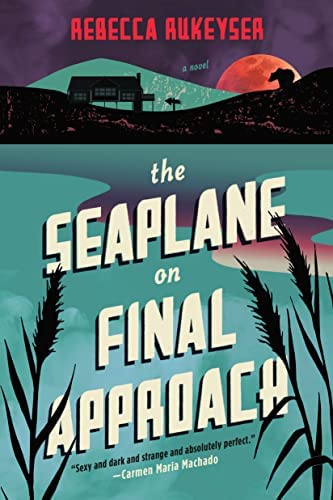
Sometimes a book comes along that’s so bracing and fresh, I feel like the writer has pushed me into a swimming pool. Rebecca Rukeyser’s debut, The Seaplane on Final Approach, is one such novel, and because the prose style is so keen, I fear it won’t be served well by my summary—but here goes anyway: Seventeen-year-old Mira has taken a summer job as the baker for the Lavender Island Wilderness Lodge, a remote homestead occupying a small island in the Kodiak archipelago. The island is populated by the original homesteaders and lodge proprietors, Stu and Maureen, as well as two other teen workers, Polly and Erin, and a cranky chef who is as guarded as Mira is frank. Over the course of the summer, Mira bakes, dutifully works, and does her part to entertain the lodge’s guests. During her free time, she imagines elaborate romantic and sexual encounters with the object of her previous summer’s affection, her step-cousin, Ed. Meanwhile, the lodge hums along during its high season, with the employees and proprietors welcoming tourists, leading fishing and sightseeing expeditions, and gathering guests around a campfire to drink cold beer and eat scorching s’mores.
All’s well until Mira—along with Maureen and Polly—notice Stu’s increasing attention to Erin. As Mira privately works out her own theories about sex, love, and the nature of sleaze, she stands helplessly by as a witness to Stu’s predation. What follows is perhaps inevitable (though it’s important to note that Rukeyser doesn’t romanticize the difficult mundanity of uncoupling, nor does she excuse Stu’s predatory behavior). What’s more surprising than the novel’s narrative turns is Rukeyser’s writing itself, which is biting and deeply entertaining, the rare kind of prose that makes a person wish the book were longer.
Nate Brown: My first question is about Mira’s voice. The novel is written in the first person, and Mira is wild and frank and very funny. She’s an odd duck, but she’s observant and wise about people. Where did her sharp and forthright voice come from?
Rebecca Rukeyser: I’ve always had a soft spot for a couple of kinds of protagonists: characters so galvanized with their own authority they make completely deluded pronouncements, and weirdos who watch events unfold from the sidelines. Mira’s a bit of column A, a bit of column B. She’s a voyeur who spends the book drawing dubious conclusions about life. I think her voice evolved from the way she delivers her conclusions. Most of the sort of large theories she makes about life are just completely skewed—there are only four real states: Alaska, California, Hawaii, and Florida; virile men prefer eating candy to meat—but she delivers them as statements of pure fact. I found a lot of narrative momentum followed from this. Mira doesn’t have time for second-guessing her views on the world; it’s damn the torpedoes, full steam ahead.
She does have time for watching people and being a little bit of a creep, though.
In the same way I wanted to push Mira’s authority into the realm of the erratic, I wanted to push her observational powers into something stickier. She overshoots “harnessing the female gaze” and lands in sweaty-palmed, Dirk Bogarde-levels of I-like-to-watch territory. This also powered the voice.
NB: Early in the novel, Mira reveals that she fantasizes about her step-cousin Ed, a fisherman living in nearby Kodiak. Attendant to her fantasies about Ed is an abiding interest in the nature of sleaze, and throughout the book, we see Mira make lists of sleazy things and come to determinations about sleaze’s relationship to love and sex and danger. Did you come to any determinations about the nature of sleaze while writing the book?
RR: My grasp on the definition of sleaze is nothing compared to Mira’s chokehold! But I think I’ve learned a lot about A) what other people consider sleazy and B) how they feel strongly that their definition of sleaze is correct. I’m fascinated by that, by the insistence with which people comment that X is sleazier than Y; X isn’t so much “sleazy” as it is “tasteless,” etc. And I love that people’s certainty exists parallel to the exceedingly mutable dictionary definition of sleaze—“marked by low character or quality” and “squalid or dilapidated.” These are both statements of opinion. You couldn’t hang a legal case on them.
I’m no different, of course. I believe my understanding of sleaze is the best one. Here’s a facet that I’m happy to go on the record with: sleaziness doesn’t thrive within an environment of pure permissiveness or anarchy. It needs to be pushing against a constraint. There needs to be a disapproving entity, some buttoned-up schoolmarm tut-tutting at sleazy behavior.
An example: I live in Berlin, a city famed for wild, no-holds-barred hedonism. For this very reason, Berlin is not sleazy. If you want a German-speaking city that’s positively leaking sleaze, however, go to Vienna.
NB: Okay, I feel like I have to push this a little bit! What’s so sleazy about Vienna?
RR: Oh, yikes, you called me on this. Vienna’s full of these details of slightly rotten grandeur: fancy suits that are getting shiny with age at the elbows and knees, worn-down velvet seats, nicotine-stained lace curtains. This is indelibly sleazy in the way rhinestones are sleazy: the nature of the thing is retained—the lace flowers are still intact and the stone is shiny—but whatever element that once marked it as grand or pure is missing. It makes you confront your understanding of purity in an uncomfortable way.
There’s also a social code of constant, elaborate niceties, but it’s always being pushed to the breaking point by unstated, pressurized emotions. There seems to be a lot of obsequiousness that’s masking disdain or rage—what seems to me, as an American, to be the Viennese equivalent of Southern women saying, “bless your heart” and having it be just the most cutting thing. Subsumed roaring emotions are sleazy and destabilize your ideas of kindness in the same way that worn velvet destabilizes your idea of fanciness.
I’m no Vienna expert. But! I have talked about Vienna being the sleaziest city to a bunch of Germans and Austrians and they’ve generally all said, “Oh yeah, absolutely true.”
NB: Because Mira is so frank with the reader, the narration comes across as utterly reliable. Of course, Mira is recounting the events of the summer from a great remove—many years have passed and the characters who lived and worked at the lodge that summer have gone on with their lives. It makes me wonder whether you see Mira as fundamentally reliable or whether, like so many of us, time has softened the harsher edges of her memories.
RR: Mira’s reliable in that she’s honest; she freely recounts what the world looks like from within her own brain. I think time has eroded her memories, but time has also done something I think is more insidious—it has encased her memories in amber.
Sleaziness… needs to be pushing against a constraint: a disapproving entity, some buttoned-up schoolmarm tut-tutting at sleazy behavior.
It’s these preserved memories that she’s most preoccupied by, examining them so repeatedly that she’s become preserved as well. She’s spent so much time trying to make sense of what went wrong for her at seventeen and eighteen that there’s a part of her that’s petrified at seventeen and eighteen. I think it’s a mild sort of tragedy, the kind that happens to all of us. Important moments become origin stories. Origin stories become mythology. Our understanding locks.
Defining moments are championed as foundational; a solid base from which our personalities and characters are built up. But I’m interested in the way defining moments can be defined in the way of a cartoonist going over a pencil sketch with lines of black ink—making it indelible. Charlie Brown forever encased within the perfect circle of his own head. Us contained within the lines of our own narratives.
NB: Of course, many writers have taken on the problem of being boxed in by the stories we tell ourselves (or that are told about us). You could call this a matter of reputation or identity or of stereotyping, and I’m curious to know: what stories define you, as a person, a writer, a woman, an American living in Berlin?
RR: My knee-jerk response is to overturn the table and scream, “No stories define me because no stories could contain all that I am!” But obviously, not only is that not true, but that impulse is one of the exact things that defines me.
The story that I’ve been telling a lot, over and over, is how I ended up in Berlin. I tell it to Germans and I tell it to Americans and I’ve worn it down to a perfect cocktail party anecdote: rent in New York was too high/felt at home in Berlin/fell in love with a German. It’s been reworked to contain the right amount of sincerity and the right amount of self-effacement and I’ve cut the parts of the story that are about grasping and loneliness and ambition, an urge to run away from my problems and my starry-eyed ideas about Berlin being a perfect place.
NB: In the book, Mira seems to think Alaska is a kind of perfect place, though it becomes clear that the lodge’s relative isolation has effectively facilitated Stu’s predatory behavior toward Erin. Why did Mira let things play out as she did? Presumably, she could’ve gone to Maureen, but she didn’t. She could’ve talked to Chef or Polly more explicitly about Stu’s creepy behavior, but she didn’t do that, either. What was she up to?
RR: A year before the primary events in the novel, Mira spent time in Alaska with her aunt and fell head over heels in lust with her step-cousin Ed. Without going into too much spoiler-y detail, Mira’s aunt noticed Mira’s dreamy, horny demeanor and got suspicious—but not of Mira having designs on Ed. Rather, the aunt suspected Mira of having captured the erotic attention of her husband, Ed’s father. This led to misery all around.
A young woman’s observations, her story are—way too often—dismissed as adorable and flimsy.
When Mira arrives at Lavender Island, she finds herself observing a funhouse mirror of the suspected events of the previous summer. It’s the same narrative: remote island, teenage girl, predatory older man. It feels too similar. This is compounded by the artifice and repetition of her work: the lodge repeats everything almost verbatim—the same stories, the same outings, the same food—but, for the guests’ benefit, they pretend it’s spontaneous and authentic every time. So Mira, hyper-confident about making proclamations about sleaze and the way the world works, is reluctant to believe her eyes.
NB: And there are real consequences of that disbelief, right? I don’t think things would’ve worked out differently, necessarily, had Mira taken some action to expose Stu’s behavior, but I do think Mira might feel differently about that summer—and herself—in the present tense had she taken some action. Is that a fair reading of Mira’s character?
RR: Totally fair. The regret that she feels—and the reason she’s stuck going over the events of these summers, more than a decade later—is not “if I knew then what I knew now,” but rather “I knew then what I know now, but then I didn’t trust my authority.”
She could have talked to her aunt. She could have taken action about Stu. She could have done any number of things but was hobbled by a learned understanding that, as a young woman, her perceptions were lightweight or ephemeral. A young man’s observations, his story, is considered urgent, vital. A young woman’s observations, her story are—way too often—dismissed as adorable and flimsy.
The caretaker calls from the cemetery to tell me Joaquin’s skull and most of his larger and longer bones are missing, but the thieves left some smaller pieces in his grave and I should come by later this morning to collect them.
He says he was the one who made the discovery at dawn.
“The police have already come and gone. They say there is nothing they can do. None of the guards saw anything and nobody knows where to begin a search for stolen bones.”
I drop the mop I’ve been pushing around the cracked floor tiles of the apartment, the peeling blue walls slashed and embered with sunlight.
“I thought my brother would be safe there,” I say. “The only way into the Colón is through the gates or over the twelve-foot wall.”
“No one is safe from this world’s horrors, mi señora.”
“But Joaquin’s grave is only a few meters from the chapel and the main guard post. How could this happen? There is supposed to be dignity in death.”
“You are right, but we should not be so surprised, mi señora. There is always a risk on this island when it comes to bones. Your brother was, after all, a holy man.”
I finish washing the floor before leaving for the cemetery. I can’t bring my brother home to a place of filth. I feel La Virgen Desatanudos watch me from the altar my mother made for her on a corner table long ago, the porcelain statue set behind a glass bowl perpetually filled with sugar water and coins, never flowers, because my mother believed flowers inside the house invite death.
I dust the Virgin off and rearrange the photos at her feet of our family’s deceased. Pray to her, and the Virgin will undo all of life’s knots, my mother would say, but it always seemed to me that miniature woman cloaked in red and blue only brought us new ones.
Tourists who’ve come to see the great tombs of Havana’s city of the dead watch me pull what is left of Joaquin from the hard soil, pushing away worms. I choke on air pregnant with dust and particles. I cover my mouth with my hand as I sift through my brother’s sarcophagus.
The caretaker, a small man of about eighty whom they call Chino, says the thieves must have come hours before first light, when cemetery guards take naps instead of patrolling. He found the stone slab shattered into three pieces and pushed off my brother’s tomb. Left behind are small bones that could be mistaken for rocks, smooth and jagged. I place them in the basket I normally use for the market along with a shred of white cloth I find in the soil from the shirt we dressed Joaquin in for his burial.
I wanted to have my brother cremated, but our mother said it went against the code of living and dying. A man as good as Joaquin should never have to face flames, she said, especially when we had a good family plot, six generations old, still carrying our last name when the revolution had erased it from everything else that once belonged to our clan. Our mother’s grave, a gray concrete sheet set between her son and her husband, is still new, yet to be stained by the coming summer rain.
A young cemetery guard comes by to offer condolences.
“I am very sorry. You must feel as if your brother has died twice.”
I recognize him by the thick beaded bracelet he wears for Changó. On one of my weekly visits to lay flowers at my brother’s and parents’ headstones, I passed a family mausoleum, its iron door propped open by a shovel. Inside, this same young guard lay stretched on a tomb as if it were a bed, taking a nap.
I remember it was on one of the slim arteries of the road to the cemetery chapel. I’d gone there looking for the statue of Amelia La Milagrosa, to touch her hand and the baby in her arms, circle her tomb backward, and ask for blessings in love.
Farther down the road I saw other open mausoleums made into storage sheds, where another two young guards sat on buckets around a raised flattened grave, using it as a table on which to have their lunch.
The year my brother was ordained, the priest at the parish at Regla was murdered for his poor box by the married couple that worked as the church’s custodians.
His replacement priest died of a heart attack shortly after his arrival.
A few months later, a Spanish priest who ministered to prisoners and the insane was burned alive in his car and left on the side of a road near Bauta.
They don’t send you to a labor camp for being religious anymore, but people still say it’s bad luck to be a priest in Cuba.
Joaquin had a career as a government lawyer until he joined the first seminary that opened since before the revolution. He was ordained at forty-five, a man of the cloth for one year until his death.
Our mother said he was poisoned. Joaquin, a child who was never sick, who resisted every virus and plague that hit the tropics, even as I lay ill for months with dysentery or infections in the bedroom we shared. He died of what the doctor called an amoeba, probably from eating dirty beans or rotten pork. His face whitened, his skin thickened, sweating so much that the sheets slid off his bed.
His voice faded, his eyes blackened, and in his last days, he could not see or speak. We whispered to him. We sang to him.
Our mother told him our father was waiting for him in heaven. He died young too, from a brain tumor that stole his memory and movement before finally taking him, though our mother said it was a gift because he wasn’t aware that he was dying.
Once home, I hold my brother’s bones in my lap and call his former parish, where he served until his death, to see if they will offer him a place of rest, but they don’t want him. The new priest says if the Paleros who took his remains find out they’re in the business of burying holy men on their grounds, the church will become a target of bone theft too.
I call a dozen more churches, some far beyond city limits. Most claim their land is already overcrowded with the dead, their plots already stacked with two or three coffins.
“I just need a corner for my brother’s bones. There’s not much of him left.”
“You have our sympathy, compañera, but there is a waitlist for every centimeter of our soil.”
“He was a good man. He did not deserve this fate. Please help us.”
Only two or three churches say they will consider my request and let me know.
The revolution created shortages of every kind: food, medicine, housing for the living and the dead, food, and, especially, a shortage of faith. But our mother said faith is a wave that recedes and returns, as sure as the tide forever threatening to swallow our island.
I place Joaquin’s basket of fragments on the altar beside La Virgen Desatanudos so she’ll look after his bones and undo the knot of finding a place to bury my brother’s remains. It’s what my mother would want. She would say there is no place for bones but in the earth.
I open a bottle of rum and pour a glass for my brother and one for the Virgin. I pour another for myself, sit on a chair across from the altar, and drink my rum all at once. It warms me, creates a buzz in my ear that echoes through the apartment, mingles with the talk and traffic rising of Calle Neptuno and the clattering labyrinth of Centro Habana.
I pour another glass. Then another.
When the phone rings a few hours later, I expect it to be a nun or a priest with news. I have not moved from the chair. If my mother were here she would be making promises, striking deals with the saints to get what she wants, perhaps offering three hours a day for the rest of her life on her knees before the altar, or volunteering me, her only daughter, to be a nun, to replace her lost son as a servant of God, the way she encouraged me to do since I gave up working because all jobs pay the same around here—essentially nothing. But I make no such promises.
“Elena.”
A male voice, as familiar to me as my brother’s.
“Yes, it’s me.”
“I know it’s you.”
He laughs soft, nervous. This is how I am certain it is Marco.
“I’m in Havana. I hoped you would see me.”
My voice has fallen far into me, blocked by the eleven years since we last spoke.
I listen for sounds behind his voice, but there is only silence. From my end, he can surely hear the noises from the street below my windows, the upstairs neighbors banging away on the barbacoa they’re constructing to make more room for their family.
“Elena. Are you there?”
“Yes.”
“It’s not my intention to disrupt your life or to cause you any problems. So many years have passed. But I want to see you, Elena. Just to talk to you. I won’t take much of your time. Will you meet me this afternoon after you finish work?”
I don’t tell him I haven’t had a job in years.
“Yes. I’ll see you.”
“Come to the Triton at five o’clock. I’ll wait for you on one of the stone benches by the water. Promise me you’ll come, Elena.”
“I promise,” I say, and pour myself another glass of rum.
The first time my brother had to preside over a funeral was at the cemetery in La Lisa. A family was burying their father in a community grave along the wall separating the cemetery from a tin and clapboard slum because there was no money for something better. Joaquin told me there were no flowers in this cemetery, no caretakers to pull the weeds and clear the garbage, and no guards protecting the graves where feuds and rivalries between families were regularly settled by vandalizing each other’s plots, revenge found in the splitting of headstones. Some grave slabs were broken, others painted with symbols, and others covered in blood or chicken bones.
The rumor was that most of La Lisa’s graves were already empty.
It was nothing like the Colón cemetery, Joaquin said. So beautiful, with its immense marble statues, soaring winged angels, mausoleums the size of houses; a concrete Garden of Eden where we’d be fortunate to be buried even though we believed our deaths a long way off.
Then he told me how Cristóbal Colón himself has never been laid fully to rest. His bones went from Spain to Santo Domingo, then here to Havana, and back to Spain, an unending international battle to claim his remains.
Nobody knows for sure where his bones are now.
In death, the great discoverer was left without country.
Joaquin and I laughed about this.
It wasn’t uncommon to hear of a grave being robbed. Sometimes entire burial plots were stolen; resold after it was determined they’d had no visitors for a decade or two. And when the descendants of the deceased returned to the patria from wherever they’d taken their exile, they’d find their names scratched from the headstones, new names and new corpses in their ancestors’ place.
But the most precious bones of all to procure were those of a man of God, especially that of a bishop or a cardinal, but since those were rare and few, the bones of any priest would do.
We also heard stories, because there were so many, of graves being ransacked by Paleros, not for whatever treasures coffins may hold but for bones; human feet to make their spells run after and catch their victims, a skull with which to give the spells wisdom and intelligence, hands so that a spell may reach and take hold with the force of a fist. The most coveted bones belonged to esteemed, wealthy, or high-ranking citizens. But the most precious bones of all to procure were those of a man of God, especially that of a bishop or a cardinal, but since those were rare and few, the bones of any priest would do.
I teased Joaquin that now that he was a priest his bones would be worth more than that of the average cadaver. Paleros and grave thieves would fight over his skeleton just like countries fought over the bones of Cristóbal Colón.
But he insisted he would be safe in the cemetery.
“No Palero with any sense would bother with bones of a late-ordained priest whose own sister falls asleep during his sermons,” Joaquin told me. “I may have been called to serve the Lord, Elenita, but I am no holy man.”
There are three hours between Marco and me. I am still filthy from my brother’s excavation. I shower, carve the dirt out from under my nails, and examine myself in the mirror to see how I have changed. Marco will compare me to the Elena he knew at thirty-three, the Elena he left. The Elena who did more with her days than sit around playing cards with herself, shuffling between the neighbors’ apartments where we talk only about those who left the island, wondering what their lives are like now. I wear the same dresses I did then, my hair in the same cropped side-part style. I wear the same jewelry; pieces inherited from my mother, left to her by her mother, among the few things our family held on to rather than sell, even during our hungriest years. But my eyes have surely dropped; my skin has certainly thinned. My body has softened, and my curves have flattened. I want to be beautiful today but even after two showers, I feel I still smell of death.
I see us there on the beach by the Tropicoco hotel, Marco’s last day in Cuba though he had not yet told me so. He’d left me for another woman two years earlier but still saw me, still told me in his heart I was the only one, and when I asked why he’d chosen another he said these were things I’d never understand because I am a woman.
And I said, “Because I am a woman, there are things I understand that you never will until it is too late. You will regret having left me. You will wonder all your life if you chose wrong. You will be haunted and unable to feel peace in your heart. The moments in which you hate your life with her will grow and multiply, and you will doubt any child she gives you because it was not born from me, from you, from us.”
We were hot on a blanket he’d brought for us, cradled by the soft sand. He watched me speak. He nodded. He said he believed me. But it didn’t change anything. He’d already decided.
The next day I wondered why he hadn’t called as he normally did. My mother said he’d finally had the integrity to stand by one woman and leave me alone. My brother comforted me as I cried. He later came to me with the news a neighbor passed on: Marco had left the island with her. They’d gone to Ecuador, where she had family, where they planned to start a new life even if it meant never coming back.
The botero ruta is congested. I have to wait for a spot in a taxi, and it takes three car changes to get me to the Triton. I see Marco, his body turned to the ocean, waves smashing over rocks and rolling onto the concrete walkway lined with benches. He turns as if I’ve called his name, though I haven’t. He walks toward me, still tall but wider and thicker than when he left. I feel I’ve shrunken when we are before each other. He leans to kiss my cheek as if we are distant cousins. I avoid his eyes. I don’t want him to see I am crumbling.
We sit on a bench. He’s brought a small bottle of rum with him and offers me some, which I take, though I am already swaying.
Marco notices. “Elena, are you drunk?”
I shake my head, then nod. “A little bit.”
I tell him the Paleros stole my brother’s bones from the cemetery last night and I had to collect the bits they left behind this morning.
“Dios santo,” he whispers. “I didn’t know your brother died. How is your mother handling it?”
“She died too. Two months after him. Pneumonia.”
“Elena. I don’t know what to say.”
He can say he is sorry to hear it. Or he can say what we know to be true: long before he abandoned me for her and for Ecuador, Marco told me he wanted to leave this island and asked if we could find a way to do it together.
I said I could never leave my brother and my mother. I didn’t believe in the fracturing of families in the name of immigration; I didn’t believe the myth that a better life awaited elsewhere. I believed we were born to our island no matter its fate and our duty was to make the best of it, offering it our lives, even if it means we are the ones who are sacrificed.
In the years since, I would look back on that conversation and blame it for our undoing, blame myself for my rigidity, then blame my brother and mother, for leaving me here alone.
Instead Marco tells me this is his first trip back since he left eleven years ago. He is a citizen of Ecuador now. He lives in Guayaquil where he manages a Cuban restaurant. He has traveled to Panama, Colombia, Argentina, Peru, and Chile.
“I wish you would get to travel somewhere someday, Elena. You’ll see any place is better than here.”
But then, as swiftly as a cloud covers the sun, his face changes from bravado to melancholy.
“I do miss this coast though. Where I live I see the Pacific, but it’s not the same. I miss our currents. I miss the beaches. I miss our place by the Tropicoco.”
He slips his hand under mine so that our palms press together.
“Will you go with me somewhere?”
“Where?”
“Someplace beautiful. Someplace you’ve never been.”
He has a car he’s rented. A modern French model with air conditioning and an electronic radio. I push the buttons while he drives down the Malecón, but all the stations play the same boring music.
“You can’t imagine how it is outside of this island,” he says. “More radio stations and television stations than a person could watch or listen to in a lifetime. You can never get bored of anything.”
He parks the car by the Parque Central and leads me to one of the hotels on its periphery, behind huge Yutong tour buses, through a lobby crowded with foreigners.
We go into an elevator and when we come out we are on the roof of the building, Havana spread out below us, broken buildings and plastered-on azoteas, mosaics of flesh tones and muted blues, an Atlantic breeze curling around us, dividing us from the noise below.
There is a swimming pool and a restaurant up here, and many foreign men having drinks with what look to me to be young Cuban women.
Marco leans against the wall, and I stand beside him.
“You look beautiful in this light. Just as I remember you.”
He touches my face, the same way he did the night we met. It
was at a party, when I used to go to parties. He found me in a corner
and asked me why I looked so serious. “I bet I can make you smile,” he said, touching my face, then lightly kissing my cheek, and before I could think to ask why he’d done that, he’d gone for my lips.
He touches my face and kisses my cheek, then my lips.
I think this cannot be. I am not here. I am still in my home, before the Virgin’s altar, staring at my brother’s bones, small and white as seashells.
“Elena, how is it that I feel no time has passed between us? I feel the same today as I did the night I met you and every day until the last time we saw each other.”
I don’t have words, only hope this is the moment I have begged for: Marco’s return to me.
“Tell me,” he says. “Do you feel the same way?”
I say yes, because a morning spent digging in my brother’s grave, beside my parents’ tombs, must mean this could be my last evening on earth.
When Joaquin lay dying, a young woman often came to see him. She sat at his side and looked at him tenderly while he could still see, and when he lost his sight, she would cry silently into his bedsheets.
“Who is she?” I asked my mother and then the ladies of the parish office, but nobody would give an answer. It was the church janitor who told me the woman, twice divorced and childless, came to my brother for almost daily counsel.
My brother’s last sermon before falling sick was about how God rewards the just. We must not give into temptation. We are sinners and by sinning we will fall.
The woman came to the burial, and before she left, I stopped her and asked her to remind me, because my memory was hazy, how it was she came to know Joaquin.
“I was in love with your brother.”
I suspected this much but was still surprised she didn’t lie to me.
“Was he in love with you?”
“I don’t know.”
I never told my mother. She wanted to believe Joaquin pious, not a new priest struggling with the worldly delights he vowed to leave behind. Joaquin is a man of divine grace, Elena, she would say. He is not weak, like you.
Marco has a room in this hotel. This is why he brought me here. He admits he has been in Havana a week and stayed with his parents. He told them he was leaving last night and even had them take him to the airport for a teary farewell. Instead he went to the ticket counter and changed his departure for two days later. When he was sure his family was gone, he left the terminal, took a taxi back to the city, checked into the hotel and waited until morning to call me.
“Why did you wait until morning?” I ask.
“I wanted to be sure.”
“And are you?”
“Yes.”
We are in his hotel room, with a small balcony overlooking the park, a room only foreign money can buy.
I sit on the small sofa near the window, and Marco, on the edge of the bed facing me.
“Come sit by me, Elena.”
I shake my head.
“You’re afraid of me.”
“A bit.”
He sips more rum and passes me the bottle.
“Have you ever been in a hotel room this nice?”
“Yes,” I say, which is true. I met a man once, not long after Marco left, a Spaniard I forced myself to sleep with on the first night as an antidote to the loss.
In those days it was easier to meet men. I was a teller at the Casa de Cambio on Obispo and just on the walk from home to work and back, I’d meet a man or two on the street. But around forty, it was as if the lipstick I put on each morning made me invisible.
I thought I would find a man to marry after Marco. Most of the women I know marry two or three times, at least once for love, and maybe again, for convenience, companionship, or opportunity. I didn’t expect my future would open wide into nothing.
Since I won’t go to him, Marco comes to me, sits on the small sofa, which is not very comfortable, sliding his hands around me. He kisses me, and I let him. We are both drunk, but it doesn’t matter.
Eleven years that felt like sleep, I think, closing my eyes, just as he tells me he has waited for this night for so long and lived it already many times in his dreams.
In bed, he is more forceful than I remember, perhaps because he is heavier now, dense and crushing as he pushes into me, yet we are familiar to each other as if we never parted, as if he were mine all along.
We lie together afterward, the bed warm as if we are still on the sand by the Tropicoco, under the summer sun, as young as when we met, still limber, still intoxicated by the uncharted future.
He speaks into my shoulder.
“Everything is as you said it would be.”
“What do you mean?”
“You said I would never be able to stop thinking of you. You said I would always wonder if I made the right choice in leaving you. You said I would love no one as I loved you. You were right about everything.
Marco’s wife has always known about me. He was careless. He left letters I’d written him around the room they shared in her parents’ house. These were letters in which I’d pleaded for him to be with only me, saying I didn’t understand why he’d decided we were an impossibility, when we agreed our connection was both primal and otherworldly. Among the papers were letters he’d drafted to me, describing nights we’d stolen away up to an azotea, or to an empty beach on the city outskirts, anywhere we could go to be alone; letters in which he told me he could not leave me no matter how hard he willed it, that even if the world saw him with her, he would always be with me.
She would not abandon him but she forbade him from seeing me. For a few months, he obeyed, and left me to wander through Centro Havana, my face the color of the peeling concrete walls, my eyes as sullen and dark as the holes through our neglected streets.
Until he came back to me.
Giving me up was the hardest thing he’d had to do in all his life, he said. So hard that he would never be able to do it again.
Until he left our island.
We are deep into the night, resisting sleep in order to keep every moment of our shared darkness alive.
“Marco. How is it that she let you come back to Cuba alone?”
It’s been eleven years, but she must have known the risk.
“She didn’t let me. She came with me.”
When they were already at the airport, about to pass the security point to wait for their flight, he begged his wife for one more night in Havana. He needed more time with his family. She had to get back to her job, so he knew she couldn’t stay too.
My brother used to say Marco was the worst kind of liar, because he manages to be dishonest even when he’s telling the truth.
“I even cried,” he says. “They were real tears. I told her to give me one more day and I would be on a plane to Ecuador tomorrow. I said, ‘I followed you to another country. Let me have one more day in mine.’ She finally agreed to leave alone.”
My brother used to say Marco was the worst kind of liar, because he manages to be dishonest even when he’s telling the truth.
In the morning, Marco and I eat breakfast together in the hotel restaurant. There is food spread along a long counter, more than I have ever seen in one place. Hot food, cold food; piles of bread, bowls of fruits, platters of cooked eggs, and every kind of cold meat.
Marco laughs at me as I take it in.
“It’s called a buffet, Elena. You can fill your plate and come back for more as many times as you want.”
We sit at a table for two by the window. At other small tables I see more foreign men with girls, faces wiped clean of last night’s makeup.
“Look at us,” Marco says. “When I left the island, it was still against the law for Cubans to stay in hotels.”
I chew buttery bread that melts on my tongue, more delicious than anything I have ever tasted.
“Things are changing,” Marco says, though to me nothing has changed.
When I leave this hotel I will be hungry again, but there will be no boundless buffet waiting for me. There will be only the food of the ration card, what is left in the markets, what I’m able to purchase with whatever little money I have.
“You can even buy and sell property now,” he says, as if I am the only Cuban at this table. “Of course few have the money for that but it’s still a big change that you now have the right.”
I bite into a piece of cooked dough with a burst of chocolate inside that slides onto my tongue, so creamy and rich I almost tremble.
“We’re thinking of buying an apartment here for ourselves to use for vacations. We can rent it to tourists when we’re not using it. It will be an investment.”
I don’t remember ever eating with such pleasure, such novelty.
He watches me. When I finish my bacon, my plate clear, and put down my fork, Marco asks if I’ve been listening.
“Of course.”
“So what do you think?”
“You watch Cuba like a movie on one of your TV channels. From far away, you see changes. If you’d stayed here, you would see life is the same as it has always been.”
“I’m trying to tell you I’ll be coming back here more often.”
“For vacations. I heard you.”
He shakes his head. “You don’t understand, Elena. It’s all for you. I have been waiting for this day. Eleven years won’t pass again. We’re not young anymore. We don’t have as much time ahead of us as we’d like to think.”
“You don’t have to tell me that.”
He insists on driving me home on his way to the airport even after I tell him I can walk. Every time we pause at a red light, he leans over to kiss me. When we arrive on Neptuno, I ask him to come upstairs for a minute. It’s been so long since he’s walked within my walls. We used to avoid my home because my mother and brother were there. He leaves the car by the curb and asks the children sitting in the doorway of a building across the road to look after it. He is no longer accustomed to the routine of climbing so many flights of stairs. His face is red by the time we reach my door.
The apartment is cast in greenish morning light, the rings of Joaquin’s and the Virgin’s rum glasses reflecting halos on the walls.
I lead Marco to the table holding the Virgin, and show him the basket containing my brother’s bones.
“May he rest in peace,” Marco says, making the sign of the cross.
“That’s a stupid thing to say when obviously he didn’t.”
“I’m sorry. I don’t know what else to say in a case like this.”
“You know, my brother never liked you. He said you have no character. He said you are incapable of being happy because you are so greedy. You want it all, but what you have right in front of you is never good enough.”
Marco is surprised but nods.
“Your brother was a smart man.”
“You had to leave your country in order to leave me.”
“I know.”
“The only reason you’ve managed to stay married is because there is a sea between us.”
“I know.”
“Aren’t you even going to argue with me? Tell me I’m wrong.”
He shakes his head. “No, Elena. Everything you say is true.”
I sit on the chair and face Joaquin and the Virgin.
I can feel my brother’s simultaneous disapproval and mercy.
The telephone rings, and I hear a woman’s voice.
“This is Graciela,” she says. “You may not remember me. I came to see your brother when he was ill. I heard what happened to him at the cemetery.”
She confesses she’s stopped going to Mass since my brother died. She’s had a crisis of faith. She doesn’t know what she believes anymore. But a woman from her apartment building works in the rectory of a church in El Romerillo, a half-abandoned and very poor parish.
“The priest says Joaquin’s bones are welcome to rest there, and they promise to look after them.”
One knot undone.
“Joaquin,” I whisper to his bones when I hang up the phone, “I’m going to drink your rum for you and then I’m going to take you to your new home.”
I take his rum into my mouth, but I don’t touch the Virgin’s.
“Tell me one last bit of truth,” Marco said to me before he left me in my doorway.
“What truth?”
“Tell me you haven’t loved anyone since you loved me.”
“If I told you that, it wouldn’t be true.”
“Then tell me you loved me best. Despite what we are. Despite what I’ve done to you.”
“I have loved you best. Despite what we are. Despite what you’ve done to me.” I separated myself from him, stepping backward into the apartment. “But Ecuador is your country now.”
He moved forward, pulling me into another embrace.
“This will always be my country. My island will always be you.”
We kiss and kiss, and I feel as if we are being buried alive together.
An old priest welcomes me into the church in El Romerillo. He is small and pale and bald, with pink spots of cancer and burned moles on his forehead and neck and hands.
Graciela is here too, slimmer than I remember her, in a long lavender dress, as if she’s here to attend a wedding.
The priest takes us to a small garden behind the church. We walk along the brick ledge where he has already made a hole and set within it a wooden box, its lid removed.
I take the bones from the basket and the scraps of cloth that remain in my hands, remembering the dirt I struggled to wash off my fingers, and regret that I didn’t let the stains wear on me a little longer.
I cover the box with the lid, and the priest recites some prayers for my brother.
Graciela weeps. I can’t help but reach for her hand.
After we cover the box with soil and the priest sprinkles it with holy water, giving the final blessing, he motions to the naked earth around us and tells us this garden looks empty but its full of the shards of bone from tombs robbed all over Havana, rescued and given refuge here.
He tells us he was ordained as a young man, before the revolution, and has seen this island through its many incarnations. He has had opportunities to leave. He has family abroad who invited him to live with them. He has traveled to Europe and all over the Americas. He has had many chances to defect, but he always returned to his country.
“Padre, why did you choose to stay?” I ask.
The priest looks to Graciela and to me, then to the ground where we’ve just buried Joaquin.
“Because I could not bear the thought of dying somewhere else.”
When I return home, I find my apartment darkened by nightfall. I think of Marco, in a place so far away I cannot even imagine it, yet somehow, still here with me, so close I can taste him, as if our night never ended and I’ve not been sentenced once again to waiting.
I think of my brother’s bones, tiny pieces in the priest’s bare garden, the rest of him likely already set in a pot, buried in a forest waiting to be put to work by his new masters.
I think of the bits of him left in this home; clothes, books, photographs, letters to our mother and me. I think of my mother, grateful that she did not live to handle her son’s bones the way I have, to feel the minerals of his existence within her fingertips.
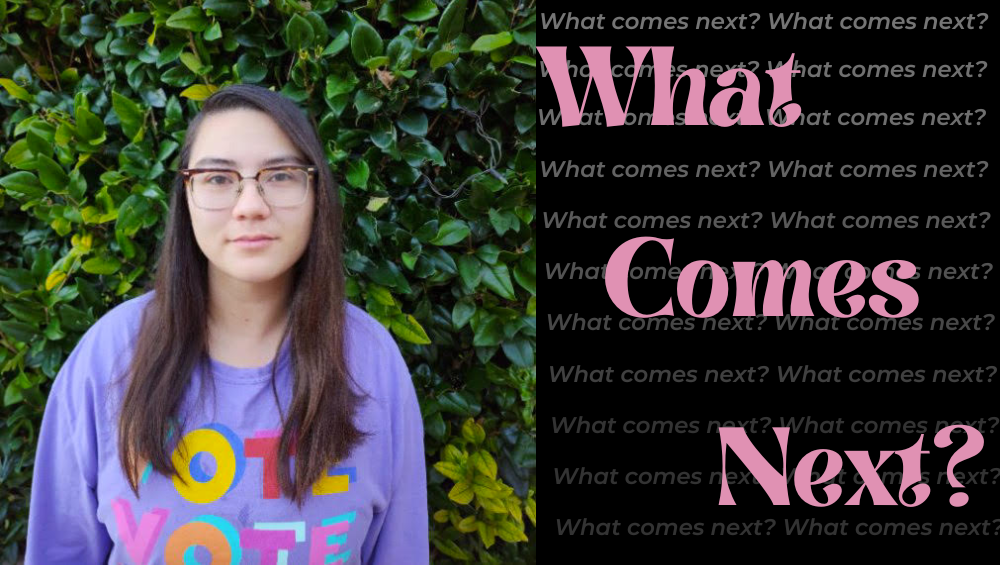
Jean Kyoung Frazier’s debut novel, Pizza Girl, appeared in June 2020, at a time when authors were still learning how best to reach readers in the midst of a pandemic. Despite those difficulties, the novel quickly became a critical success and a fan favorite, and a feature film based on the book is currently being produced.
Over the past two years, Frazier has built for herself the kind of career that many authors aspire to, moving from novels to screenwriting. She was a writer on A24 and Netflix’s upcoming series Beef and the new Bob Odenkirk show for AMC. Currently, she’s working on an Adult Swim animated series for Mike Judge and Greg Daniels. Before screenwriting, Frazier tended to keep her in-progress work to herself during the drafting process, but joining writing rooms has helped her bring a great sense of openness and levity to the page. She’s been working on embracing humor, on drafting fiction in a manner that feels akin to a writing room–asking herself the questions she might ask of a colleague in a writers’ room. Frazier is early into her second novel, but her intentions appear clear: a book that moves beyond the themes in Pizza Girl, that embraces lightness in humor rather than shying away in the service of producing serious art, a book that, Frazier admits, she cannot help but write.
Over Zoom, we talked about writing against past expectations, the thrill of literary equilibrium, the seriousness of humor in fiction, and the sickos who have read every single one of their Goodreads reviews (Frazier and I count ourselves among this elite class of writers).
Isle McElroy: Can you talk a little bit about what got you into writing? How’d you get there?
Books were the only things my mom would buy me no questions asked.
Jean Kyoung Frazier: Like a lot of people I started off just as a casual reader. Books were the only things my mom would buy me no questions asked.Although after a bit of begging and some subterfuge, I did manage to convince her to buy me Grand Theft Auto III for my 10th birthday. But yeah, I’ve just had books around my whole life. One of my earliest memories is sobbing in a corner as I read The Giving Tree.
I didn’t really get into fiction writing until college. The way I was raised, writing felt like a frivolous pursuit, so a big part of my journey as a writer has really just been learning to take both writing and my creativity seriously.
IM: When did you start to really take it seriously?
JKF: I think I took it seriously once I had no choice but to, once all my attempts at being a Serious Person failed. I went to college wanting to impress my mom and make lots of money, so I majored in Business. People who I meet now seem to get a kick out of the idea of me as a Business major.
IM: I’m imagining you with a little briefcase.
JKF: I did not have a little briefcase, but a lot of my classmates did! I looked so wildly out of place in all my classes. Picture me at 8 AM in PJ pants and a sweatshirt with coffee stains on my collar and Hot Cheeto dust on my sleeves as I sat down next to people in full suits who smelled amazing. This is all to say that the major was not a good fit for me and I quickly became miserable trying to make it fit.
I dropped out for a semester and during that time, genuinely considered not returning to college. During that time though, I also thought about how narrow my ideas of Success were, how up to that point, I’d just mindlessly taken already trod paths in order to spare myself pain, in order to escape loneliness and alienation. So, I didn’t drop out. I went back to college to define things on my own terms, to say fuck it to “seriousness.” As corny as it sounds, I soon found comfort in creative writing workshops.
IM: Were you writing fiction at that point or essays?
JKF: I was writing fiction. It should be noted I tried journalism in high school, and was terrible at it. My Senior year I only wrote one article. It was a 100 word review of that animated bird movie Rio, which I still have not seen to this day.
IM: What were you working on in those first fiction classes? Did it connect to the ideas you’re still obsessed with today?
For all my talk, there was a part of me that was ashamed with who I was.
JKF: In a way, yes. I’ve talked about this a little bit before. In early college, I was in the closet and completely comfortable with that. I’ve always been a private person and I just figured why does anyone need to know who I’m hooking up with? What does that have to do with my personhood? But through workshop, I was forced to see through the stories I was writing (i.e. mainly male POV) that for all my talk, there was a part of me that was ashamed with who I was. It sounds goofy, but I do think that becoming an English major helped me come out and in hindsight, it’s not shocking that coming out and being a more emotionally open person improved my fiction. After that, towards the end of my time in college, I started writing more with the intent I have today–exploring and dissecting the shit that keeps me up at night.
IM: In talking about Pizza Girl, you’ve discussed the role of withholding and how a lot of the characters are moving through what they cannot say to each other. Is that something that you’re still refining in your new work?
JKF: In theory, yes. But it’s kind of hard to say since right now, at the beginning of working on my second novel, I feel like I’m re-learning how to write. I feel none of the confidence of having a book out, but all of the baggage. The whole process of writing Pizza Girl is kind of a blur. But ultimately, that’s okay since I don’t want to write Pizza Girl again. And that requires asking different questions, I guess. Maybe that’s why I feel so newborn and fragile.
IM: I absolutely get that. I wanted my second book to be so different and when I look at the two of them, I’m like, Oh, they’re cousins. They’re not that different. But you’re still relatively early in your career, and I wonder what it looks like to write something new or try to separate yourself from earlier versions of yourself when you’re still building your voice?
JKF: I’ve been asking myself, What did I accomplish with Pizza Girl? And more importantly, what didn’t I accomplish with it and how can I remedy that with the next book?
I’m always trying to identify trends and then ask myself why that trend exists. If I had to categorize my debut, I would say it fits in with the trend of the sad young, millennial literary woman, and while I’m delighted that enough books of this kind have been published in the past several years to make this a meaty and growing genre of literature, instinctually, I always want to move away from clear, hard lines. What does that look like in practice? Still figuring it out.
I want to see if it’s possible to write a novel rife with dramatic tension through the voice of a mostly happy, well adjusted person.
Part of that for me has been leaning into the funny a bit more, embracing lightness. There’s so many miserable, friendless narrators in fiction, which makes total sense, but I don’t know, I want to see if it’s possible to write a novel rife with dramatic tension through the voice of a mostly happy, well adjusted person.
IM: You’ve talked about your surprise that people find Pizza Girl funny. And maybe what that shows is that whether or not you want to, your book is going to be funny.
JKF: Unfortunately, true. I have accepted that I’m a drama writer trapped in a comedy writer’s body. Or maybe it’s the other way around. Whatever.
IM: You say that your first book was in the genre of sad young millennial literary woman, and that is partially decided by you but largely decided by readers and publishing. How do you continue to write beyond a genre that you seem to both willfully and unwillingly find yourself in?
JKF: Do I feel that expectation on me? Yes, I do, but I find that expectation exciting instead of limiting. If people expect one clear thing from me, great, then I already have an easy way I can surprise them in the next thing by simply doing the opposite of that.
I think in the past couple years I’ve just had to get over my personal aversion to being Funny. I don’t know if I’ve ever talked to you about this, but I was named Class Clown my Senior year in high school, and even then, I was so depressed with how delighted that award made me. My esteem was so low when I was younger and my humor was intricately tied to those bad feelings–“If I can’t make people laugh, why would they want to have me around?” So, I think for a while, it was key for me to pivot away from Funny as a way to extricate my self-worth from it.
Writing Pizza Girl, I deluded myself into thinking I wasn’t going to make the book funny at all. I was serious about writing it and the serious themes within. But ultimately, I can’t help but find things funny, especially in the most serious of circumstances. One could call it a coping mechanism or the act of wrapping a Kraft single around your medication. If that’s your worldview, it’s hard to not have that infect your writing. I’ve come to terms with that for the most part and I’m just trying to enjoy myself more with this one.
IM: Maybe one of the bigger questions is why do we think that something funny is also not serious? What is the ostensible clash? And how has that been imposed on you? Is that the bigger problem–that people assume if you’re writing something funny it can’t be taken seriously?
JKF: I don’t know why that’s true and I guess right now, I’m trying not to think so deeply about that question. A more interesting question for me is why do I want so badly to be taken seriously.
IM: It could be that in literature and art there is frequently a belief that if something hurts that means it’s good. There’s an assumption that time, pain, intensity are markers of quality. That’s really not true. However, it is true that it’s difficult to write something funny on the page.
You also do screenwriting, so how does your relationship to humor appear there? There are more funny shows than there are funny books. Is it just that timing is a bit easier to pull off? How does your sense of humor shape the writing that you do outside of fiction?
JKF: Maybe jumping into screenwriting has made me more comfortable embracing humor in my fiction. The past two writing rooms I’ve been in have been comedy rooms. So it’s a lot of joke pitching and trying to create absurd scenarios.
I believe that deep down I could make basically anything funny.
But really, the most useful lesson I’ve gotten from a writer’s room came from one of my bosses on a Drama. He would sometimes dismiss a pitch outright because they were inherently too comedic. And to me, I always wanted to push against this and I realized it’s because I believe that deep down I could make basically anything funny. I have to believe that I could write a scene about stubbing your toe that you would make you laugh and I also have to believe that I could write that same scene and rip your fucking heart out. That mindset has been really helpful for my writing.
IM: I want to talk a little bit more about what got you into screenwriting. I know you sold the rights to Pizza Girl. Was that your access point to screenwriting?
JKF: Not exactly. In early 2019, I had just sold my book and I was moving back to L.A. for a little bit to help my mom out with her business and my agent was like, “What are you planning on doing when you get to L.A. other than helping your mom with her business?” And I told him that I was thinking of picking up a bartending job. And he was like, “You could do that, but have you ever thought about writing for TV?”
From there, I wrote a sample pilot and eventually got staffed and after having a few jobs under my belt, people were more open to the idea of letting me adapt Pizza Girl myself.
IM: Is it that there’s more air in screenwriting and that you’re talking about it with other people? Because fiction is so isolating, too. We sit in our little rooms at our desks, of course our characters are sad, they’re not seeing anybody.
JKF: That’s what makes fiction difficult, but it’s also what’s lovely about it. I’ve really enjoyed being in writers rooms, getting to bounce ideas off of other people and feeding off others’ energy, but I do miss sitting alone at my little desk.
I try not to romanticize too much, but I do genuinely think that the summer I wrote Pizza Girl was one of the best times of my life and I do believe I still would feel that way now even if the book had never been published. I had no idea how it would all turn out, but I was working on something I wholly believe in. There was just something so gorgeous and full about that summer, about bartending nights, still waking up early, seeing friends, but mostly just writing my book until I had to go back to work again. I felt net neutral. Do you know what I’m saying? Have you ever had that feeling? That you’re not taking any more than you need and you’re giving exactly what you should be giving.
IM: The closest I felt to that was before grad school when I was working a waiter job and wasn’t working as late as you but would still wake up pretty early, like 6 or 7 to write for a little bit, and then I would have a lunch shift or a dinner shift and read between them. There was a kind of equilibrium during that time. At that time in your life, did the book feel like it was totally yours? Did you talk about it while bartending or did it feel like you were living two lives?
JKF: Totally mine with absolutely no talking about it while bartending. It was definitely leading two lives, but in the most pleasurable way. I was just out of grad school so after two years of talking, talking, talking about fiction, there was something nice about being in a space where it didn’t matter who I was, only that I could do the tasks that were demanded of me.
IM: What are your superstitions around protecting your work? I haven’t been in a writing room, but I imagine it requires a different relationship to your ideas. Like you have an idea and it has to come out. I know you’re working on the second book, do you feel like it needs to be hidden?
I feel that protective impulse with my second book, yes. I don’t share my work with anyone until I’m done.
JKF: Maybe that’s why screenwriting has been such a joy for me. I feel that protective impulse with my second book, yes. I don’t share my work with anyone until I’m done. It’s just that I’m so sensitive about my work that I feel like one bad comment would send me in a spiral and I can’t deal with that while I’m in the early stages of creating.
With TV writing I don’t feel that way because it’s really collaborative and staffing on a show is not about you, but about helping another artist achieve their vision. It’s almost like problem-solving, coming up with solutions to make that vision as sharp as possible. There’s pleasure in that, feeling almost nameless, that it’s only about the Idea. In a good room, you’re not idea counting and you feel like you’re a part of a hive mind.
IM: I don’t know if I’m remembering this correctly, but one time we bonded over reading every single one of our Goodreads reviews. I’m curious about what led you to do that? You don’t like to share your work in process, but post-process you’re very willing to look for some feedback. Again, I’m the same way, so there’s no judgment here. We’re in this together. We both know what Linda from Cincinnati thinks of our books.
JKF: Yes, I truly care deeply about what Linda thinks.
IM: Sometimes you read Linda’s review and you’re like, She’s right!
JKF: Linda’s got some points! Maybe it comes from years of playing competitive sports, but I crave feedback Good or bad, I need to hear it. Because alone in my head, I will just make it worse.
IM: How does it shape your process moving forward? That is the scary thing, why people don’t read reviews, because it might make them nervous for the next book. But for me, there have been Goodreads reviews where I think, Yes, Linda, that’s something that I’ve been thinking about and something I wish that book would have done that I didn’t know how to do yet.
JKF: It’s similar to what I found useful about workshops in grad school, that it tests your ability to decide what you think is valuable and don’t think is valuable. There are reviews that make a good point and others I read and while I respect where they’re coming from, I just don’t agree. Being able to decide that in a near non-emotional way, I find very useful. It forces me to reevaluate my creative vision. But I’m not a saint–there are reviews that have made my blood boil. And that’s fine, that’s natural. I try to just focus on how cool it is that my book prompts discussion of any kind and also remember that the fun of consuming art is being able to talk about it. I simply chose to do so over a beer or in the privacy of a group chat, but to each their own.
It’s important that I’m constantly asking what I’m committed to artistically while also considering how an audience might react.
Totally respect writers that don’t do it, but at least for me, it’s important that I’m constantly asking what I’m committed to artistically while also considering how an audience might react. Because vision aside, I think my writing would suffer if I lost sight of people and their feelings.
IM: That’s really important to recognize–a comment that might be right for this person could easily miss the mark on my vision for this book. But it’s something that you could incorporate if your vision should change. How have you been able to maintain that vision moving forward? Do you feel like you’ve been able to protect it for this new book?
JKF: I think I needed a break to be able to protect it, to remind myself why I want to protect it to begin with. Any time you start profiting off your creative work, you’re gonna go through a dark night of the soul moment. The idea that you can be read by anyone anywhere is beautiful, but it’s also deeply strange and exposing and then, throw money into that mix? Yeah, it fucked me up a bit.
At the end of the day though, Could I bear to not do another book? The answer for me, at least right now, is No, I couldn’t bear that. No, I could not bear Pizza Girl being the only thing that I wrote. Maybe it’s because I associate writing with personal evolution and I’d like to have a lot more personal evolution before I die.
IM: Those are the two questions that are always at play: Could I bear to write this or could I bear to not write this? Because it’s not fun to write it. No matter how great it was to work on the book while bartending, it’s still difficult to be up until 5 and wake up after only a few hours of sleep to write. That’s a lot of work.
You mentioned personal evolution–do you feel like your evolution as a person is tied to your evolution as a writer? Not in an autofiction way, but more broadly?
JKF: I’m definitely much more mentally healthy now than when I was writing Pizza Girl. In a good way, I don’t feel a rush to get the second book out. I want to be ready and I want to know exactly what I want to say. I think if you would’ve asked me, when I was eighteen, what I would do to be successful, I would’ve said, Anything. And it’s been nice to get older and find that that’s actually not true. I don’t want to win in certain ways. I want to win the way I want to win.
I think a lot about how I am more than a writer, even if I feel this compulsion to be really dedicated to my work. But I’m a daughter, a sister, a friend, a partner, and I’m trying to balance all those things at once in a way that I never have before. And it feels good. So maybe that’s where the lack of rush has come from, too, and if that’s the case, I’m cool with that.
On January 22, 2023, a new moon anoints the Lunar New Year, the Year of the Water Rabbit. If you aren’t familiar, the Rabbit is one of twelve animals used in Chinese astrology to chart the universe’s energy, our place within it, and the unique opportunities and challenges we should expect. For writers, the Water Rabbit is particularly significant. No other animal is so synonymous with sensitivity, creativity, and art. After all, the iconic Rabbit of Chinese myth is itself a kind of artist—working upon the moon at a pestle, grinding out the elixir of immortality, hoping to distill life.
Associated with spring, the Rabbit embodies sensitivity and productivity. Tender new ideas and projects begin to poke up, fragile, but potent. In a Rabbit year the world rings loud in our ears, filling us with inspiration, and yet leaving us vulnerable to criticism and sudden shocks. Child of the moon, the Rabbit is also associated with those who listen too hard, see, and feel too much. Lastly, the fertile Rabbit has always represented growth. It paves the way for the Dragon’s year, when everything roars into decisive fruition.
Here is a look into the kind of fortune the Rabbit might portend for writers born in different animal years.
This year ideas will flow. A water “native,” the Rat is in their element.
Water is about letting go. Not all the obstacles in your craft must be overcome by muscling through them—sometimes the path of least resistance is simply that, simply the most natural route to meeting your goals. If you feel blocked, try approaching from new angles, styles, or points of view. Try skipping past problem sections entirely and see if the work can stand without.
Moving on is also a useful concept in your professional relationships. Maybe there are new readers, new publishers, or new agents you want to consider. Maybe you are falling out of love with a favorite author, and looking for fresh inspiration. When old favorites are let go, space can open for something new.
This year brings a rare opportunity to break out of old ruts. Step away from old work, and find the space to see it with new eyes. Print it, record it, or let someone else read it—whatever it takes to enjoy it for a moment as a reader rather than an author.
Continuing to surprise yourself is an important part of continuing to grow.
Now may also be a time to consider new genres, themes, or ideas you’ve been dabbling with but haven’t had the energy to try. Surprisingly small changes can make your work feel fresh and exciting. Continuing to surprise yourself is an important part of continuing to grow.
It is easy to think of writing as solitary, but to write is to communicate, and to publish is to become a part of a complicated ecosystem. Look for new friends who can expand your literary horizons—take an interest in what lies beyond, and you may find there can be more to the writing world than just your desk.
The beginning of the Water Rabbit’s year also marks the end of the Water Tiger’s. Just as March comes in like a lion and goes out like a lamb, so the Tiger passes the torch to the Rabbit. As the energy moves from aggressive Yang to gentle Yin, you may find things in your life progressing at a more serene, less breakneck pace.
An animal’s own year is considered a precarious time, as your Age Star comes back into position. It is a time of transition, as you move from one phase to the next, and with all transitions comes uncertainty. Maybe you are trying to launch a new project, or move a long-term project into a new phase. Move with caution, as big things are just on the horizon. Now is the time for measured progress, calculated small risks, and the support of friends.
The Rabbit is its own General Star, meaning this is also a year for courage and leadership. Sharing your work, organizing people you trust around you, and taking the opportunity to make yourself heard are important ways to get noticed and advance.
After a fast-moving and dramatic Tiger Year, the year of the Rabbit may feel slow by comparison. If you’ve been relentlessly throwing yourself into your work just to see where it takes you, now may be a good time to shift gears. Revisit old work or craft an outline for the future. Take a step back, and take stock of where you’ve been and where you still want things to go.
Take stock of where you’ve been and where you still want things to go.
The Dragon and Rabbit are thought to clash, as the Dragon’s preference for forward motion collides with the Rabbit’s defensive spirit. You may feel at odds with the world around you this year, but distance can also bring new perspective. How do things feel at odds? Can you put that feeling into words? Letting the sentiments that linger in us flow can both provide inspiration and avert torpor.
This is a time for recovery after last year’s turbulence. If your last year dealt with writers’ block, false starts, imposter syndrome, rejections, or crises of faith, this year promises to be more peaceful. Gather your strength and move with precision. You don’t need to achieve everything at once—work smarter, not harder. Pick one or two important goals or projects to focus your full attention on. The Snake benefits from leaving the Year of the Tiger behind—the Rabbit will provide you with the stillness you need to work.
As the Snake has a hidden Fire element, the Water part of the year may have some power over you. Be wary of listless and existential feelings. Follow whatever strange passions and preoccupations excite you.
The time may come when you feel backed into a corner, and no decision you make feels right. Perhaps a scene or project refuses to resolve itself. A theme resists comfortable interpretation. Sometimes perfection becomes the enemy of progress.
This doesn’t mean troubled projects must be abandoned, but try to admit when you’re getting tunnel vision. Set a big project down for a day or two, and spend a little energy on something new. Writing is strange. Sometimes work we spend years on defies us, while the work of a week just happens to strike gold.
As the Goat and Rabbit begin the Eastern Triad, the Wood element has a strong influence on you this year. You may find your usual routines and work patterns breaking up. If your writing has begun to feel a little too mechanical, too much like a rote task, this year is a chance for a breath of fresh air. Is there anything from your writing career you feel nostalgia for? What has changed since then? Is there any way that feeling can be recaptured? Wood is about fresh slates and rejuvenation.
The Eastern Triad is also associated with domesticity. Consider the ways your physical space can make writing more comfortable. Are there too many distractions? Is the space one that makes you feel focused and safe? Cultivating the space around us can be a useful route to cultivating the space within.
With the turbulent Tiger year behind us, this year’s theme is about making yourself at home. Listen to your surroundings. Take stock of available resources. What libraries, shops, walks, or other spaces do you prefer? What places do you trust for groceries and takeout? What friends can you always rely on for wisdom or support? The connection between our writing and our support systems is subtle and crucial. It is when we feel comfortable and safe that we produce our best work. After the opposition of the Tiger and auspices of the Traveling Star, you may feel unmoored from your surroundings, but taking an interest in the outside world will help you build roots and feel more secure.
It is when we feel comfortable and safe that we produce our best work.
This is likely to be a year of emotional turbulence. The Rabbit and Rooster stand on opposite ends of the Chinese Zodiac wheel in stark opposition. The Rooster is solar, while the Rabbit is lunar. In a Rabbit year, the Rooster’s interests in perfectionism, control, and social maintenance are all likely to be challenged. Your emotional landscape may take hold of your writing in a way you do not expect.
None of this is inherently bad. Opposition years are a challenge by nature, but also hold the most to gain, should the two sides be reconciled. If your preference for carefully cultivated craft can make room for sensitivity and vulnerability, you open space in your work for rawness and intimacy. Take a chance on being messy. Work that scares you is work that helps you grow.
Passion is the theme of the year. When the Dog and Rabbit combine, they generate an abundance of the Fire element that neither had alone. Fire is associated with enthusiasm, action, and energy. Try to ride this wave in your work. Write things that amuse you. Write about things that are meaningful to you. Write in a way you enjoy. See if you can get out from the need to meet deadlines or appease some hypothetical vision for yourself and just pursue whatever weird obsessions inspired you to write in the first place.
The year’s high passions may also be distracting as they extend to your personal life, relationships, and other fields.Today’s romance may be tomorrow’s inspiration, but make sure you also maintain space for yourself and your work.
From one productive year to another—the Pig leaves its partnership with the Tiger, and enters a new one with the Rabbit. Water and Wood energy are both in abundance, so the Pig should expect a constant flow of new ideas. Focus on trying to get work done. If you stay busy, ideas are likely to keep coming, but if you slow down, things may stagnate. What routine will make you feel satisfied with the day when you go to bed at night? Don’t set the bar impossibly high—start with something easy. Practicing repetition and habit is more important than trying to satisfy your pride.
As your General Star rises with the Rabbit, it is also an important time for bravery. Make big edits, undertake daring projects, submit your work when you normally might not dare.
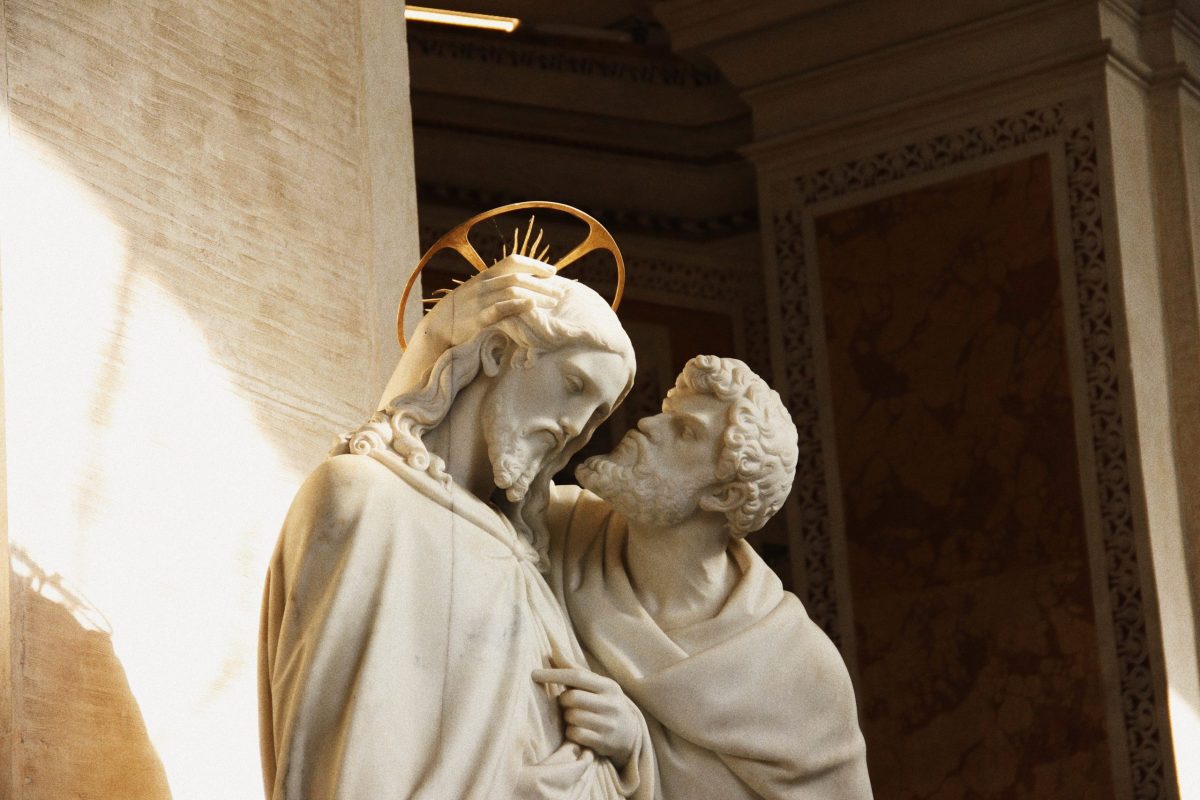
Literature is a place where we can grapple with the unsavory habits of humanity and think through the causes and effects of how and why people act the way they do. I am interested in—and haunted by—the capacity of people to betray the ones they love. My book, Judas Goat, looks at betrayal from a variety of angles, on an intimate scale, inspired by lived and imagined experiences growing up in the Deep South, where certain Biblical figures and ideas, threats of gendered violence, and complicated family dynamics abound. The eponymous Judas goat is an animal trained to lead sheep to slaughter, while its own life is spared, and there is a degree to which the characters who speak throughout Judas Goat are like Judas goats themselves, seducing the reader forward through a series of harrowing rooms.
There are the more obvious forms of betrayal—the extramarital affair, the divulgence of another person’s secret—and then there are others: the cowardice that keeps a boy from intervening while his friend is attacked, a country that governs counter to its creed, the betrayal of children by parental figures through neglect. The frightening fact is that wherever there exists a promise, explicit or implied, there is the potential for a betrayal.
Like Judas Goat, many of the titles gathered below contend with the ugly facts of betrayal as a way to investigate, ultimately, what it means to be human, and what it means to love.
Penned by Elena Ferrante in Italian and translated into English by Ann Goldstein, this four-part fiction series recounts a complicated friendship between two women, Elena and Lila, in 1950s Naples. Spanning early childhood to late adulthood, the Neapolitan quartet teases out the power dynamics and competitions that suffuse and surround the core friendship. Betrayals, large and small, abound and beget others in this exquisite, absorbing super-novel.
In the frame story of this Booker Prize–winning novel, an African American man named Bonbon is standing trial for his attempt to restore slavery and segregation to the fictional town of Dickens, California, and the rest of the novel recounts how he got in this bizarre situation. Thought-provoking, darkly comic, and compulsively readable, the betrayals in this book are many and multilayered: the betrayal of a son by his father in the name of sociological experimentation and the betrayal of Black people by the United States, historically and today, just to name two.
The most overt betrayal at the heart of this novel regards a partner’s affair, but this book is also about the ways we betray parts of ourselves in order to honor others. The main character in Dept of Speculation is a new mother and former science magazine fact-checker in Brooklyn, and the prose style—short, leaping vignettes—allows the story to accumulate in an impressionistic way, even as it unfurls in linear time. At times startlingly funny, often achingly poignant, this novel enacts the psychologically complex interiority of the betrayed.
In this novel, the protagonist, Amir, feels so much guilt over betraying his childhood friend Hassan that he returns to Kabul during the rise of the Taliban to try and save Hassan’s orphaned son. I haven’t read this book in many years, but the pivotal, plot-instigating betrayal, which happens early on in the novel, has stuck with me in searing detail. A dramatic, heart-wrenching, and multigenerational story of betrayal and atonement.
This novel depicts the childhood and early adolescence of Ruth Anne Boatwright, a fatherless girl in rural South Carolina, in the wake of her mother’s marriage to a volatile, increasingly abusive man. Allison’s prose brings to intense (at times terrifying and painful) life the difficulties of being a child at the mercy of adults and the ways people fail each other. Because the book grapples in a very real way with childhood sexual abuse and includes some racial slurs, readers should proceed, if they choose to do so, with care.
This poetry collection, written in the wake of a husband’s affair and subsequent divorce, won the Pulitzer Prize in 2013. While these poems do not flinch away from the deep grief the speaker feels over her ex’s betrayal, what radiates from this book, more than anything, is her love. By elegizing her thirty-year marriage, the speaker creates a stunning ode to it, and it’s this tender, vividly evoked devotion that just might make you ugly cry as you read.
The Secret History is what made “dark academia” a thing. Eerie and intelligent, this New England campus novel centers around a small group of socially isolated classics students and reflects on how and why they came to commit the ultimate betrayal: murder. Obsessed with intersections of beauty and terror, The Secret History functions in some ways like a murder mystery, only in reverse.
It all started
when I was born.

Worse yet, it started
on the taxpayer dime

In the bathwater, in the atmosphere, even

in the baby
if a baby

can get tall enough for college.
It’s true, I am autism

But only when you ask
nicely.

My autism is gentle, yet growing
carnivorous.

Like Medusa, my autism
is something you maybe

shouldn’t see,

but if you do, you should
write a book about.

Someone told me

if a flower opens
wide enough

it just becomes a backwards
flower.

Sanded teeth become new teeth,
renarrated to points.

With enough training, I’m sure

I can make a point
myself, I can

settle on a sex
for this my waspish swarm.

Be whatever gentle in

tends itself to mean,
though I’ve been nouns

that would kill you
instantly.

I am autism, if you’re

willing. Autism,
if you’re down —

Gentle, I’m a horny orchid
impervious

to pest control.

This autism’s so long
it’s forgotten

how to stop.
When I taste blood
my mouth don’t see it
as a bad thing.

See, every night I affront the mirror
w/ sordid tales of glorified
flossing.

So ask me: Does all my narrow
make this teeth look fat?

/

I don’t know

about you, but I was born in the wrong
episteime. My contrite gums
are cherry, jaw fusty.

&thus my slutty canines make lust
to the sound of tribbing
paradigms.

&thus I have cavities in my
cavities and also many
unofficial holes.
When I first saw Ghost World on cable TV in the Philippines during my senior year of high school, I immediately recognized Thora Birch with her thick-framed glasses and jet-black bob. I remembered her character in American Beauty, and, here again, as Enid, she continued to exude the attitude of someone who had better things to do than simply be another teenager in another bland suburban town. On the curved surface of our boxy TV set, she surveyed the world with tired, impatient eyes, and I found myself watching her with an attentiveness I couldn’t quite explain. I had been spending another empty Saturday morning at home, channel surfing, before chancing on this girl, my age, fresh out of high school, who ambled down the streets of a town she knew like the back of her hand—accompanied by her friend, Rebecca—without knowing where she was headed or what she was looking for. Hadn’t I taken walks like theirs with my friend Denise, who’d invite me to cut class with her just so we could wander down the streets of Baguio, a town we both swore we detested for its smallness, even as we found ourselves succumbing to its silent lure?
In the solitude of my parents’ living room, my desire to leave the mountain city of my youth sharpened with every salty comeback Enid had for the people she was forced to put up with—her father, his girlfriend, nearly everyone else in her life. I had never encountered a character as blunt and abrasive as Enid, not in the teen movies I saw on cable TV, and certainly not in the moralizing Filipino teen movies I tended to avoid. There was a bravery to her bluntness that I myself could only summon when I was with Denise. It was Denise, more than anyone else, who brought out the sarcasm I wanted to unleash on our teachers and classmates; between us, she was the one with the sharper tongue, cutting through my inhibitions to expose a hidden, liberating meanness.
With Denise, I could stand under the hot midmorning sun, waiting for a teacher to finish another long-winded speech peppered with the usual statements about respecting our parents or trusting God, and snicker beneath the jackets we spread above our heads for shade. Whenever we had the chance, we mocked the girls in our class who wore too much makeup and tried just a little too hard to catch the attention of the boys (to whom we ourselves were invisible). I spent much of my high school life a loner, my debilitating shyness and odd literary tastes metastasizing into a silent contagion that my classmates feared catching. But when I reached my junior year, I met a quiet girl in my computer class who allowed me to sit beside her, surprising me with her offbeat quips as we tried, and repeatedly failed, to figure out a set of commands together. Denise laughed and joked at her failures, while I chuckled over my inability to be of any help. Soon, we were exchanging self-deprecating, cutting jokes as we made our way down our school’s cavernous, mid-century hallway, our delight sealing our friendship.
After that first viewing, I watched replay after replay of Ghost World on Cinemax or HBO, chuckling at Enid’s jokes that, while shocking in their cruelty, embodied the kind of revenge I wanted to take on my classmates. What would a pretty, popular girl in my class think if she overheard me cracking an STD joke as she flirted with a guy I once had the most painful crush on? It was the type of joke I wouldn’t ever dream of saying out loud, but when Enid spat it out, I felt strangely validated. I could see myself in Rebecca, too, covering my mouth in laughter while giving Enid’s arm a playful, concurring slap. And I could see Denise in Enid, muttering about how the stupidest people in our school were also the sluttiest as we walked down its dark corridors. The more I sat through the reruns, the more I found myself pulled into Enid’s orbit, unsure whether I was identifying with her, or whether it was Denise I was seeing.
It was easy for me to fall for Ghost World’s odd charm, but one particular scene completely pulled me in: In her bedroom, Enid finally decides to put on a record purchased at a yard sale from an eccentric man she’s been stalking. As the blues song “Devil Take My Woman” eases into the room like a heavy perfume, her expression softens. For once, she allows herself to become vulnerable, surrendering to the music’s mysterious undertow instead of fighting against it. It’s one of the few scenes in the movie where she falls in love with something instead of dismissing it with a mean remark, reminding me of Denise’s vulnerability whenever she talked to me about classical music. We could be mean, even to complete strangers, but art brought out the best in us: it pried us open, allowing us to shed our protective shells.
Much like Enid and Rebecca, our graduation from high school spelled the unspoken and perhaps inevitable end of my friendship with Denise. Years after our parting, I’d often wonder what she would think about the niche interests I fell into in the absence of her company. The Denise I knew in high school would have googled Buster Keaton as soon as I mentioned him, and then come over to my parents’ house to watch One Week or The General with me, listening as I praised the wittiness and grace of his physical jokes before joining me in laughter as a train smashed into a prefabricated house he had spent an entire week building. Or else we would have listened to classical records together, our knowledge of Dvorak, Debussy, and Miles Davis deepening into adulthood as we began to make enough money to buy better recordings.
But for me to imagine our friendship continuing into the present, my mind needed to latch onto the Denise I once knew—in my mind, we remained characters in a movie, an Enid and Rebecca whose stories were encased in the amber of adolescence.
In our final year of high school, Denise and I began cutting class, sometimes heading to our school library where we found books that excited us more than our lessons. Sometimes we’d take long, aimless walks around Baguio, where old tree-lined houses from the American colonial era were gradually being replaced by boxy, artless hotels and shopping malls. Like Enid and Rebecca tramping down the streets of their city in their Doc Martens without any particular destination in mind, Denise and I plodded down our sidewalks in our regulation white blouses and pleated maroon skirts, taking notice of the beautiful clapboard houses set far back from the street and the thick curtains of bougainvilleas cascading toward the sidewalk. I tagged along with Denise on these strange and desultory walks, afraid that the timber-framed homes and pocket gardens of our hometown would be gone by the time I returned from Manila, where I planned to go to college. Our youth was slipping away from us, and so was the city of our childhood, tree-covered hills and abandoned homes leveled to make way for another hotel or gas station as soon as we so much as looked away. Denise was bitter about the changes we saw; I could only listen with sadness to her rants about the utter disrespect people had for our city’s beauty. She was more attached to our hometown than I was, holding onto the memories it once possessed, while I chose to silently mourn its gradual and seemingly inescapable passing.
Looking back, it’s hard for me to say who was Enid in our friendship, and who was Rebecca. I was always drawn to Enid’s rebelliousness when confronted with the uncomfortable realities of adulthood (such as holding down a job that forces one to rein in one’s creative impulses), but a part of me was also thrown off by Enid’s self-centeredness and her tendency to put her own feelings, or else her own confusions, above everyone else. A part of me identified with Rebecca when she began to lose patience with Enid’s hedging over getting an apartment together, or finding a job that would allow her to pay for her share of the rent. My impatience with Enid, in fact, began to resemble my impatience with Denise, whose criticism of people began to sound harsh and unreasonable, especially as I started feeling the very urges that she mocked in the popular girls she called “flirts” and “sluts.” I understood why she viewed their unabashed pursuit of male attention with contempt, but did the mere desire for attention or physical contact from a boy signify that one lacked substance or intellectual depth? (I had recently discovered Anais Nin’s Little Birds in my parents’ library, though I was too afraid to confide in Denise about being simultaneously turned on and captivated by the book’s language, sensing that she’d dismiss the epiphany I experienced as I read its detailed descriptions of sex as a regression of sorts, as a sign that I lacked “self-control.”)
Did the mere desire for attention or physical contact from a boy signify that one lacked substance or intellectual depth?
Like Enid, Denise had a tendency to speak as though the frailties she saw in others weren’t also hers to grapple with. Nonetheless, it was Enid whom I found myself rooting for whenever I watched Ghost World. At the end of the movie, Enid boards a bus out of town, and I saw in her decision a readiness to confront adulthood on her own terms, which I hoped to experience by leaving my hometown to become a writer. Unlike Rebecca, whose acceptance of the realities of adulthood also causes her to unconsciously lose her deeper appreciation for the off-kilter and strange, Enid remains devoted to her weirdness, that part of herself that refuses to succumb to external pressures. There’s a nobility in her stubbornness—and though she spends much of the movie unable to decide how she wants to honor her rebellious spirit, I found her decision to start fresh somewhere new to be her most decisive move. Perhaps it was just wish fulfillment, but I interpreted Ghost World’s closing scenes—in which Enid, in a bright red dress, matching red shoes, and carrying a small suitcase, marches to the bus stop with a determined air—as freeing. In the grainy light of the nearby street lamps, I saw illuminated the dark and uncertain path Enid had chosen for herself.
Like Rebecca, Denise was the one who chose to remain in town, and I often wonder if the life she chose made her happy or fulfilled, even though our paths abruptly diverged after I left, and it isn’t for me to say what could have made her happy. Shortly before our high school graduation, I was surprised to learn that she was enrolling in a local nursing school, like most of my classmates. We were all made to believe that a better life meant moving overseas, and that the only way out of our country, where opportunities were few, was a nursing degree. When I asked her why she was going to nursing school, all she’d say was that she wanted to be a nurse, regardless of the fact that she’d be attending classes with the very people whose tastes she mocked in my company, people who lacked imagination and wouldn’t know how to appreciate, much less celebrate, her uniqueness, or so I believed.
I was one of the few people in our graduating class who chose to pursue a humanities degree, and older people who weren’t my parents or relatives questioned my choice whenever I encountered them at neighborhood parties or wakes. Why not study nursing like my son or daughter, they all asked, citing the job openings for nurses in America and the salaries that Filipino nurses could make abroad. I would talk about graduate school overseas as an alternative route to the life they proposed, not really knowing if it was what I wanted for myself, and they would simply grimace at the idea of a young person selfishly pursuing passion, instead of thinking about all the money I could make for my family.
A part of me can still picture Denise rolling her eyes at these adults and tugging at my hand, saying something insulting about a man’s body odor or the garishness of a woman’s clothes once they were out of earshot. But then again, that is the Denise I knew from high school, not the person she may have become after we parted ways. I have no way of knowing if she would’ve summoned up her wicked sense of humor in the presence of these uncomprehending adults, when she too admitted to me later that she was going to nursing school because it was what her mother wanted.
There are times when I feel that I haven’t gotten too far away from the people Denise and I poked fun at or complained about when we were younger.
The last time I heard about Denise, she was living in a small coastal town not too far from Baguio with her minister husband, whom she married shortly after graduating from college. Shortly after my father’s abrupt passing a few years ago, I returned to the town I had once been dying to leave as a teenager, only to find myself marooned in my childhood home during a pandemic that continues to wear on. There are times when I feel that I haven’t gotten too far away from the people Denise and I poked fun at or complained about when we were younger. In the land of my birth, I am asked if I am married or have children, as though the things I have already achieved, like publications or degrees, are secondary to these milestones of femininity I have not yet reached.
In the comic book rendering of Enid’s story, serialized before the movie, Enid eventually returns home. In the movie, however, there’s a finality to her departure, the darkness of the sky as her bus dips over the horizon signaling an ending to this chapter in her life, which I think signifies a bursting forth from her previous life’s limitations. Like Enid, I once felt that the only way for my world to expand was to leave the one place I considered home. But now that I have returned to the town I fled, I’ve begun asking myself if I ever allowed the small-mindedness of my surroundings to determine the size and shape of my world. In Denise’s company, at least, my world grew bigger, becoming colorful and fanged before I finally gathered the courage to step beyond the limits of our shared home. Would she agree with me from wherever she is? I’d like to ask her, invite her to my house and serve her tea while listening to Debussy.
Awkward Family Photo #1,“Lobster Bisque”: Where did they even get the costumes? These are professional lobster suits. And the baby as a pearl in an oyster shell adds a nice touch, even if it is backlit from the sunset. Making a mental note to find out where they sourced these outfits.
Awkward Family Photo #2,“On the Rocks”: Excellent strategy to continue with the photo shoot even though the little brother is uncooperatively throwing a tantrum. Captures real family life.
Awkward Family Photo #3, “Laser Clown”: This formally staged portrait of a family with only one clown in full makeup is more frightening than my own work. I like how it can be interpreted literally or metaphorically. The green curly wig is a nice touch.
Awkward Family Photo #4, “Bad Bunny”: I wonder if the Easter Bunny holding this toddler is a burn victim, given the gauze-like strips of the bunny mask. If so, that’s a brilliant idea.
Awkward Family Photo #5, “Oh Deer”: Nice contrast to have the family photographed in situ with their family pet, a deer, in repose on the couch. It’s always great to see how real families live. I haven’t seen this kind of genius since Frida Kahlo.
Awkward Family Photo #6, “The Litter”: 27 dogs is too many. Never use more when one will do. The hulking mastiff in the bottom right with drool on its jowls is sufficient.
Awkward Family Photo #7, “Creep Show”: This photograph is excellently titled. Bonus points for using cheap plastic Mickey Mouse masks on children in a delightfully spooky way.
Awkward Family Photo #8, “Rat Tales”: Given this subject’s ability to balance a rat on the side of her face, I wonder if she has formal circus training.
Awkward Family Photo #9, “Ho Ho No”: Interesting idea to stage co-workers with Santa. Showcases a mixture of emotions and states of sobriety. I hadn’t realized how ripe the subject of interoffice relationships is.
Awkward Family Photo #10, “Twins”: Twinning with a doll, incredible. Wish I’d thought of that.
In our monthly series Can Writing Be Taught? we partner with Catapult to ask their course instructors all our burning questions about the process of teaching writing. This time, we’re talking to Christine Ma-Kellams, who’s teaching an online eight-week fiction workshop. From improving narrative structure and pacing to navigating the world of literary agents and publishers, this course will inspire you to finally make an outline for that novel idea you’ve been chewing on, and give you the tools to send it out into the world once it’s ready.
What’s the best thing you’ve ever gotten out of a writing class or workshop as a student?
I’ve actually never taken an official creative writing class or workshop, but I do remember once hearing Toni Morrison at a talk saying something to the effect of, “don’t write ‘what you know,’ because you don’t know shit.” Then and now, I thought this was the best advice I’ve ever heard. It simultaneously frees us from our (limited) experiences and perspectives, and gives us a cold, hard dose of humility, because so often we think we know, but really we have no idea.
What’s the worst thing you’ve ever gotten out of a writing class or workshop as a student?
This might be controversial, and I can’t pinpoint the origin of this idea, but I’ve heard the oft-cited advice to “write every day.” Maybe it’s just me, but I don’t follow that because I think it’d be bad for my writing. Sometimes the best thing I can do for my own writing is to take a break from it and read something else. Oftentimes I need a break from my story and characters to give them breathing room and to give myself perspective, so that when I come back to it, I can assess them with fresh eyes and ask myself with a tinge more objectivity, is this any good?
Oftentimes I need a break from my story and characters to give them breathing room and to give myself perspective…
What is the lesson or piece of writing advice you return to most as an instructor?
Causality. George Saunders talks about this in A Swim in a Pond in the Rain, but I’m always asking my students if their stories demonstrate clear cause and effect: why is this character like that? What made them do this? And ultimately, is this believable or plausible? Regardless of genre, all stories should still follow certain immutable laws of the universe, and the most urgent one of all is that things almost never come out of nowhere. There is always some cause, and if we can’t see or understand it, it sucks all the meaning out of storytelling.
Does everyone “have a novel in them”?
It depends on what you mean. If the question is, can everyone write a novel if they wanted to?, then my guess would be: no. Replace “write a novel” with any other formidable calling—”become a pro athlete,” “paint a museum-worthy piece of art,” “formulate an elegant mathematical summary of the universe,”—and I think it’s obvious that there are innate abilities we are all born with and for whatever reason—divine, natural or otherwise—we are not all born with the same ones. But if the question is: does everyone have a story worthy of making its way into a novel in one way or another?, then my answer would be: yes, sure. On this [matter], my day job (as a social psychologist) and my night gig (as a writer) share the conviction that people, by far and away, remain the most interesting things in the world.
Would you ever encourage a student to give up writing? Under what circumstances?
No, because I don’t think that’d ever be my place. People do and sometimes should give up things all the time, but I can’t imagine a world where I’d be the one telling them to do it. I think that’s something they’d have to decide for themselves.
What’s more valuable in a workshop, praise or criticism?
Here, I admit I’m a bit of a hypocrite: for me personally, I find criticism more valuable. But as the giver of feedback, I lean more toward praise. [I think this comes down to] where the recipient/writer stands in their own identity as a writer. I’m at the point where I know I’m a good writer and I’m aware of my strengths, so praise is wonderful for my self-esteem but doesn’t necessarily improve my craft or change how I see myself. When I’m the one giving feedback though, I’m less sure of where the other person stands, so I lead with encouragement first and any criticism is usually paired with very concrete ideas on how to address it.
Should students write with publication in mind? Why or why not?
Yes, but only in the sense that they should consider what reward they’re giving to the reader. You’re demanding someone’s time at the very least and frequently—depending on the mode of publication—their money, so you should always consider what you’re giving back. A thrilling ride of a story meant to entertain? A deep sense of feeling understood? Escape? Mystery and intrigue? All of the above?
In one or two sentences, what’s your opinion of these writing maxims?
Kill your darlings: Kill seems like a strong word. I prefer what Kurt Vonnegut said (I’m paraphrasing here): let horrible things happen to your characters so that we can see what they’re made of.
Show don’t tell: I find this is only an issue that comes up when the pacing is off—as in, this advice only comes to mind when the pacing is slow. When the pacing is just right (i.e., fast enough), I never think, ‘show, don’t tell.’
Write what you know: See what Toni Morrison said in the first question above.
Character is plot: I think this works better in literary fiction than in other genres. But even in the most literary of novels, this only goes so far—I always appreciate it when something actually happens, when I feel like we’ve gone somewhere and survived to tell the tale.
I always appreciate it when something actually happens…
What’s the best hobby for writers?
Reading, of course. Somewhere between graduating college and getting my Ph.D. (not in writing, but in a social science), I wrote a novel that has never seen the light of day because it was terrible. Only after writing it did I realize [it was terrible] because I had spent all my time reading randomized controlled trials and other assigned readings for class, but had not read a novel for fun for years. Then one day, during story-time at the library with my toddler, I picked up a short story collection based on the title alone. I read it, and it felt like falling in love. Just about everything I now know about writing I learned from reading.
What’s the best workshop snack?
Full disclosure: I did not know people brought snacks to workshops. Having never been to one, this was (pleasantly surprising) news to me! But given the frightful amount of mental energy writing and giving/receiving feedback demands, I’d say anything carb-centric and comforting, like bread (and not the healthy kind either—I’m thinking conchas, cornbread muffins, or Asian milk bread).
“I never thought I’d be one of those people,” she said.
T Kira Madden and I were sitting in the private room of a fancy strip-mall restaurant in Albany, New York, and I was eating a very expensive salad. Earlier that afternoon, we had given a reading at a local bookstore with T Kira’s then-fiancé (now wife) H. The reading was part of the book tour promoting T Kira’s memoir Long Live the Tribe of Fatherless Girls. It had been a kindness on T Kira’s part, inviting me to read alongside her and H. The other writers who would be joining her later on the tour were far more advanced in their careers than I was at that time. But it was not an altogether surprising kindness. T Kira has always been one of the most generous literary stewards I know.
After the reading, T Kira invited me to join their families for dinner. Another kindness. I sat between T Kira and H., and we caught up in the way of friends who don’t see one another often enough. Eventually the conversation turned to the subject that had occasioned our reunion. As far as I could tell, Long Live the Tribe of Fatherless Girls was already a success. It had been reviewed widely and well, and had dominated my social media feed since its release. But when I asked T Kira how she was feeling about the book’s debut, she hesitated.
“I never thought I’d be one of those people,” she said.
“Which people?” I asked.
T Kira paused.
“I never thought I’d be one of those people tracking their book sales,” she said. “I never thought I’d be comparing my sales and reviews to other people’s. I never thought I’d be—”
She didn’t finish the sentence, but I knew where it was headed.
“Jealous,” I said.
T Kira looked down. Her long hair hung over her soup bowl.
I chuckled.
“Oh, do I have a story for you,” I said.
Querying agents is a very specific flavor of hell, and it was comforting to feel like I wasn’t alone in the process.
I first met C Pam Zhang at a writers’ conference in Vermont in 2017, six months before my reading with T Kira. I had edited a story of Pam’s for a literary journal earlier that year, and I was excited when I learned we’d both be attending the conference that summer. We even conspired to enroll in the same fiction workshop. Pam is a brilliant writer, and her sly and observant sense of humor immediately endeared me to her. What’s more, we were at similar places in our careers then, both querying agents for manuscripts, Pam for her novel How Much of These Hills is Gold, me for a collection of short stories. Querying agents is a very specific flavor of hell, and it was comforting to feel like I wasn’t alone in the process, to know that Pam and I were in the same boat. Then, a month after the conference, Pam signed with an agent and sold her novel, while the prospects of representation for my own manuscript had all but evaporated. A month later, we applied for the same fellowship. Pam got it; I did not. A month after that, a pedigreed literary journal rejected one of my stories and shortly thereafter accepted a story of Pam’s. As her friend and as an editor who had supported her work, I was happy for Pam—I genuinely was—but tangled up in that feeling was something else, something that complicated it. It felt as though Pam had made it to dry land, and now there I was, alone in our boat, trying my best to row one-oared.
What is this awful feeling? I wondered.
Oh fuck, I realized. I’m jealous.
When I told T Kira this story, she nodded.
“But here’s the thing. It wasn’t jealousy,” I told her. “It was something very different.”
In Bird by Bird: Some Instructions on Writing and Life, Anne Lamott writes, “Jealousy is one of the occupational hazards of being a writer, and the most degrading.” The first time I read that sentence, my immediate reaction was relief. Oh, thank God, I thought. I’m not alone in this experience. Professional jealousy does often feel like an occupational hazard for writers, but it has been my experience that as a community we don’t really talk about it. Sure, we may voice it jokingly—“I’m so jealous!”—or indirectly, by making some passive-aggressive remark about another writer’s success, but honest and vulnerable conversations about the experience of professional jealousy generally seem to be lacking. Among writers, the subject feels almost taboo. At least, that has been my experience.
I do want to say that what we popularly refer to as “professional jealousy” might more accurately be termed “professional envy” by clinicians and emotions researchers. The distinction being that jealousy arises from the fear of losing something we have to another person, whereas envy stems from the desire for something another person has that we lack. I believe strongly in the importance of emotional literacy and granularity—the ability to accurately name and distinguish between emotions—but culturally we use the term “professional jealousy,” not “professional envy,” and in my conversation with T Kira jealousy was the word we used, so for the purposes of this essay, I’ll let it stand.
There is a degrading quality to professional jealousy because it often edges dangerously close to resentment.
Anne Lamott is not wrong. For me, there is a degrading quality to professional jealousy because it often edges dangerously close to resentment, a kind of begrudging another person their successes. This is especially discomfiting when the person in question is one’s colleague and friend. As I began to interrogate my relationship with professional jealousy, and specifically this situation with Pam, my thinking on the subject evolved. I realized that what I had framed to myself as jealousy was actually, as I told T Kira, something else entirely. Because I didn’t begrudge Pam her success; that was why that framing felt off. But an unfortunate byproduct of our reluctance to talk about professional jealousy openly and honestly, to instead relegate it to this weird cone of silence, is that it can lead to a kind of mistaken identity. Once I began to investigate exactly what I was feeling, I could see quite clearly that it was not jealousy.
It was disappointment.
I’ve been sober and in twelve-step recovery for more than fourteen years. I often joke that in the early years of my sobriety I very much wanted to be the valedictorian of recovery. I also spent a number of years teaching mindfulness practice, so trust me when I say I know myself well enough to understand that I still have a lot of ego invested in being perceived as good. And when I say good, I mean spiritual. I also know that disappointment remains one of the most difficult emotions for me to reckon with, both personally and professionally.
I hate disappointment.
Disappointment feels simultaneously self-indulgent and lacking in gratitude for any measure of success I’ve already achieved. And when I feel disappointed, I find myself telling the story that the real issue is an overestimation of myself or the value of my work. Disappointment forces me to recognize that I really wanted something for myself, that I thought my work might be worthy of recognition, and within that framework (a framework my mind has designed for itself) desire begins to feel threatening, because to want something is to risk disappointment. And this is where my egoic mind becomes quite cunning.
My ego tells me there’s a clear solution to jealousy: cure it with gratitude and humility.
Because I hate feeling disappointed, because desire feels dangerous, my mind tells me that what I am feeling is not disappointment. It tells me I’m jealous. And the reason for this is actually quite simple, though the logic, I’ll admit, is a bit acrobatic, as so often is the case where the ego is concerned. The story I tell myself is that spiritual people do not get jealous. Spiritual people do not begrudge other people their success. The benefit of this mode of thinking is that my ego tells me there’s a clear solution to jealousy: cure it with gratitude and humility. (See: good, spiritual human being.) I then try to out-spiritualize my jealousy as I would any other character defect, and the whole process becomes a distraction from what I’m actually feeling. By engaging with it from a place of self-improvement, I get to avoid what would otherwise be an uncomfortable or painful experience, an experience I view as a threat to my well-being. I get to spiritually bypass disappointment.
When I explain this relationship between professional jealousy and disappointment, this is usually the juncture at which I am met with some resistance from those who would defend professional jealousy as an asset. They bring up the concept of literary nemeses and the benefits of competition. My response to these rejoinders is usually the same. First, I tell them that personally I choose to leave professional jealousy to those better equipped to handle it. If it’s not problematic for them, then they don’t have a problem. But I also question the designation. If another writer’s work or success—regardless of whether I care for that writer and their work or not—spurs me to devote myself more intensely to my own writing, or to strive toward excellence, then a more accurate designation for that experience might be motivation, or ambition, or—perhaps reluctantly—inspiration. Again, this is where emotional literacy and granularity are important.
For me the pitfalls of professional jealousy are too numerous. The most obvious is that it makes another human being the target of my disappointment. I tell myself that if I had what they had, I would not feel how I feel, and it doesn’t take long for that story to harden into something like resentment. I begin to blame the other personfor what I’m feeling, often unconsciously. And while that might offer some temporary relief for my ego, if I’ve learned anything in my years of recovery, it’s that when I resent another person, I am the one who suffers. Which brings me back to professional jealousy as a tactic of avoidance.
When I live in the belief that if I had what another person has, I wouldn’t feel the way I feel, I am living in a fantasy, and when I live in a fantasy there is no one here—in reality—to tend to my feelings. Which, of course, is the whole point: to avoid feeling disappointed. Only now I’ve dragged another person into the pit with me, whether or not they know it. And, let’s be honest, nine times out of ten, they do not. So the only person suffering is me.
The simple answer is that disappointment doesn’t feelgood.
But why this insistence on avoiding disappointment? What is it about that experience that prompts my mind to tell me jealousy would be the preferable option? The simple answer is that disappointment doesn’t feelgood. The more complicated answer is that the only way through it isto feel it.
That night at the restaurant I told T Kira that four months after I’d met Pam my boyfriend had gone missing. We had met in recovery two years prior and had been dating for a little over a year. It was three days before Christmas, and he was supposed to fly into my hometown from the Southwest to spend the holiday with my family. Instead he went missing. By then I’d been sober for nine years and had been around long enough to know that when people in recovery go missing it usually means one of two things: that they’ve relapsed and are out using, or that they’re dead. After I received the news of his disappearance, I called my friend Molly, who’s one of my oldest and dearest friends in recovery, and told her what happened.
“I don’t know what to do,” I said.
“Why don’t you come over here,” she suggested.
We stood on the front porch of her house while I smoked a cigarette, the snow falling around us.
“How are you doing?” she asked.
“Well,” I said, and I gestured to my chest, where I’ve learned I carry most of my emotions, “I recognize that there’s some rage here. But I also feel totally fine, and I’m trying to figure out if this is radical acceptance or dissociation.”
Molly looked at me. “Oh,” she said, “I think you are a highly dissociated person.”
This was neither the response I had hoped for nor expected to hear.
“Really?” I said. “I feel like I usually have such a clear understanding of my emotional landscape.”
“Yes,” she said. “But understanding is not feeling, Benjamin. Emotions are a physiological experience. We experience them in the body.”
It was a helpful and important reminder.
It’s discouraging to see the thing we want, to be so close to it we can almost touch it, and then to be told it isn’t for us.
In the weeks that followed, I began to wonder what role my resistance to feeling my feelings was playing in my situation with Pam. I realized that for someone like me—someone who is inclined to live from the neck up, to filter my emotions throughthe lens of my thinking—disappointment is a particularly difficult experience precisely because it requires me to get out of my head and into my body. Anyone who has ever witnessed a child throwing a tantrum in the grocery aisle understands that disappointment is a physically uncomfortable experience. It’s discouraging to see the thing we want, to be so close to it we can almost touch it, and then to be told it isn’t for us, not yet, maybe never. It resonates in the body.
But I think most parents will tell you that if you stay with that child and don’t try to cajole them out of their feelings, eventually the tantrum will pass—though this approach is often inconvenient and usually takes longer than we would like.
This all begs the obvious question: How? How do we feel disappointment without avoiding it or offloading it onto someone else? Without giving in to the story about how we’ve once again overestimated ourselves or the value of our work? Without perceiving disappointment—and, by extension, desire—as a threat to our well-being? To loosely quote Pema Chödrön, we have to stop stepping over ourselves like we’re not even there. In my experience, this has required three things.
First, I have to accurately identify my disappointment. Disappointment isn’t self-indulgence or a lack of gratitude; it isn’t a failure of character or a threat to my well-being. It is the natural byproductof wanting something that has not come to fruition. To desire is to make ourselves vulnerable; to come up empty-handed hurts.
Then I need to support the body that houses that disappointment.
Despite having taught body-based mindfulness practice to hundreds of people and having done my fair share of somatic trauma work, it is still surprisingly easy for me to forget that when I am struggling emotionally I need to take care of my body in the same ways I might if I was sick or injured. That’s why Molly’s reminder about emotions being a physiological experience was so helpful. The basic tenets of self-care apply as much to my emotional experience as they do to my physical experience.
The areas I turn my attention to are rest, nutrition, and movement. I ask myself: Am I sleeping enough, regularly enough? Am I eating enough, regularly enough? Is the food I’m feeding myself nourishing my body? Am I allowing my disappointment to find its expression physically? Sometimes this looks like that child-in-the-grocery-store’s tantrum: a lot of stomping and shouting and crying (though personally I prefer to do these alone in my car). Sometimes it involves a walk or a workout or a solo dance party in my kitchen. Other times it means sitting in child’s pose for fifteen minutes or a couple of rounds of 4-7-8 breathing. Whatever I need to do to stay in my body, I do it, so that I can feel my feelings.
I have to share my disappointment with another person. I tell someone about it, without apology, justification, or explanation.
Lastly, I have to share my disappointment with another person. I tell someone about it, without apology, justification, or explanation, which helps me circumnavigate my tendency to shame myself for what I’m feeling or misidentify it as jealousy and offload it onto somebody else. This has required me to turn a discerning eye to my community and find the person who will be able to hold space for my disappointment without trying to absolve me of it (“Don’t be sad! You’re a great writer!”) or subtly shame me into feeling different (“But you just got that big grant! Focus on that!”). Feelings do not want to be fixed; they want to be felt.
In the months following our conversation, T Kira and I began texting our disappointments to each other:
A hard NO from Yaddo. Man, this disappointment REALLY stings.
Every day at the airport I rush to the bookstore or newsstand and search for my book (a lifelong dream) and…DISAPPOINTMENT!
Sharing my disappointment doesn’t solve it—primarily because disappointment doesn’t need to be solved—but it does help me feel less alone in the feeling, and I have found great comfort in that.
I no longer believe that professional jealousy is an occupational hazard for writers, but I do believe disappointment is one—at least in that disappointment is a hazard of the human occupation, of being a human having a human experience. I certainly don’t do this practice perfectly, but these days I am willing to befriend my disappointment. To stop stepping over it like it’s not even there.
DON’T MISS OUT
Sign up for our newsletter to get submission announcements and stay on top of our best work.
YOUR INBOX IS LIT
Enjoy absorbing fiction from Recommended Reading on Mondays, strange, diverting work from The Commuter on Wednesdays, and a roundup of our best work of the week on Fridays. Personalize your subscription preferences here.