In the process of publishing my book, I learned that there exists an entire category labeled “Spiritual Fiction.” Fascinated, I investigated which books fall into this category, and I winced. Mostly, I found books of two extremes.
Extreme number 1: Books in which religious life is idealized well past the point of sentimentality (as in, sexless Mennonite-girl romances or novels involving doddering ministers and their charming array of folksy congregants). Extreme number 2: Books in which religious life is portrayed with a mind only to its horrors—young women, for example, escaping the polygamous great uncles to which they have been betrothed since birth.
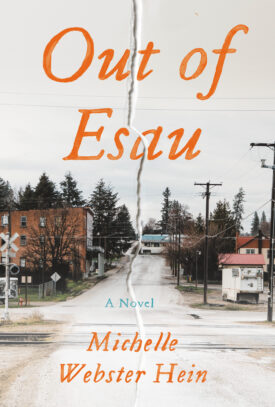
My novel Out of Esau, about a married woman who falls into a relationship with the pastor of her small town, adheres to neither of these extremes, nor do the books below, which each approach religion with a curiosity for the questions it asks, along with its endless complexities.
Gifty, a PhD candidate at Stanford, studies the neuroscience of addiction and depression, seeking explanations for her brother’s heroin abuse and her mother’s crippling sadness. Despite the progress of her scientific findings, she finds herself drawn more and more toward the ineffable faith of her past—what it had given her then and what she can still receive from it. The follow-up to Gyasi’s celebrated Homegoing, Transcendent Kingdom accomplishes exactly that: transcendence.
Dayson’s debut novel paints, among other sympathetic pictures, the portrait of Essie, a woman who has taken shelter again in the fundamentalist faith of her childhood. This through-line is one of many woven throughout As a River, where Dayson demonstrates the same great compassion for all of her characters, bringing them each fully to life, the major and minor alike, with threads of faith, race, and family running throughout.
Silliman’s provocative study is a page-turner, pulling the reader along story after story. His deep dive into each novel, along with the history and theology that brought each book to its time, helped me to better understand the faith in which I was raised, and to view it with an informed compassion rather than my usual bafflement.
The most fascinating character in the book is Howard Belsey, a Rembrandt historian who doesn’t much care for Rembrandt. Belsey is so anti-Christian that he has become rather a fundamentalist about it—banning Christmas from his house, for example, and cursing the church woman who visits his ailing father, whom Howard himself has not visited for years. Belsey’s arch-nemesis, the deeply religious and conservative pundit Monty Kipps, commits parallel moral failings to those of Belsey, and in the end, Smith leaves the reader marooned between Kipps’ apparently unhelpful God and the god Belsey has made of himself, urging us to squint toward the mysteries that lie beyond our own tiny ideas.
Throughout this book, the narrator’s point of view captures the quintessential ambivalence of a teenager wrestling with the truth as he’s been taught it vs. that same truth when held up against the world. Religion is most often portrayed as what it often becomes: a justification for violence and fear-mongering, and Baldwin’s tone remains critical throughout. Still, Baldwin’s Christianity is also a necessary and almost unavoidable default for so many of his characters. He brings the reader to understand its particular grasp and pull, which can become almost impossible to escape.
In this book’s first chapter, Sophfronia writes, “I’ve always felt my job is to offer a way of looking at things. To model a way of living just by being.” The author’s “job” is the gift of this book. Scott’s perspective, super-charged from her deep dive into Thomas Merton’s journals, is like reveling for hours in the counsel of a much wiser friend. She takes writings that might initially read as disconnected from our present reality (a monk’s views on ambition and materialism, for example) and makes them immediately relevant, even urgent. Sophfronia’s modern take on ancient wisdom makes this book an inspiring and instant spiritual classic.
One of Strout’s earlier novels (written before the Pulitzer-prize-winning Olive Kitteridge), Abide with Me explores the age-old question, “If there is a God, why is there suffering?” Strout approaches this question from a particularly challenging point of view—that of Tyler Caskey, a minister in the 1950s whose wife has died and left him with two young daughters to raise. Caskey navigates his suffering alongside his faith, somehow handling both in a way that suggests it can indeed be done, even in the face of great adversity.
God Spare the Girls is a propulsive read that explores the lives of two sisters who discover a disturbing secret regarding their father, the prominent pastor of an evangelical megachurch. What gripped me the mostwas how the book bisected the faith at its center, separating its harmful, hypocritical, and patriarchal underpinnings from the truth—and even the empowerment—that the daughters discover within it.
Prince Shakur’s debut memoir When They Tell You to Be Good starts with an argument between him and his mother which recalls the image of his father’s murder, a man he never got to know. In unflinchingly honest detail Shakur traces his own journey of self actualization as a queer, Black Jamaican man growing up in an environment entrenched in homophobia and the wound caused by the untimely loss of his father.
Shakur, a writer, activist, and organizer attempts to trace his own coming-of-age as a gay Black man in the United States and abroad. Through well-rendered accounts Shakur unpacks the effects of the homophobic reactions to his coming out from family, the sense of alienation and libration he’s felt while traveling abroad, the gritty details of his father’s murder, and coming into his own as an activist through work he’s done in Standing Rock, Fergusson, Ohio, and more. Shakur’s memoir extends beyond his own personal histories to document his family’s, Black theorists and revolutionaries, and even imagined encounters with a father he will never know, creating a deeply layered creative nonfiction work.
I spoke with Prince Shakur over Zoom about When They Tell You to Be Good. We discussed the importance of memoir, how the effects of his father’s murder spread to other aspects of his life, the role of writers in bearing witness, and more.
Phillip Russell: Your memoir is one that stretches, for the most part, the entirety of your life up until this point. Maybe a place for us to start would be asking—in relation to this book taking the form of a memoir—why now, when you’re still so young? And how did this form help you say what you needed to say in ways that maybe a collection of essays wouldn’t?
Prince Shakur: When I started getting the idea for the book, it was 2016. And in the span of that year, I had left Seattle, I went to France, I met my ex, I went to my first riot, I went to Montana for a second summer to work. I came back to Ohio, I got a job in Athens, I quit my job, I went to Standing Rock, I got arrested for weed, then I went to the Philippines. I look at that year as very transformative. There were a lot of different moments of reckoning and being confused and kind of running towards the next thing. It kind of gave me an increased sense of mortality. And it made me think about my father, and it made me think about what would happen if I were to be gone.
And so it started to feel really important to figure out a way to talk about this thing that had mattered to me so much and suddenly felt like it was hanging over my head even more. I knew moving forward that while I was still in my early 20s, I didn’t want certain things hanging over me my whole life, I’d rather confront them.
For me, I think a memoir as a form allows you to dictate themes on a different level. I think it gave me a deeper respect for what I could see as a kind of totality of my life thus far. And gave me a chance to queer some of the forms in it in a way that is interesting and necessary for people of different identities with different kinds of trauma or different notions of memory.
PR: That’s really interesting, and it makes sense—that’s so much to experience in a year or two. A big part this book is the absence of your father who was murdered when you were still an infant. You do a tremendous job showing how that loss has affected so many other aspects of your life, from your connection to your Jamaican roots, to your sexuality, to how you’ve come to formulate your own sense of masculinity.There’s so many layers in thinking about how that wound has rippled out into other aspects of your life. I’m curious if maybe you can just talk about that experience of working through these things in this book?
PS: I knew my grappling with that loss would dictate the form of the book. In a certain way, I wanted this to be a dual memoir. I wanted to write about my life, and then also have large sections be about my Father’s life. And when I learned about my Uncle Cedric (my father’s brother), I thought maybe this was even a triple memoir. I didn’t really pursue that idea very boldly because for me, I knew I just had to write towards the things that mattered on the theme level: How do you miss something that you never really had? How do you contend with coming from these violences, while also trying to live a more liberated life? And how do you love someone that might not love you in the way that you need if they were alive?
How do you love someone that might not love you in the way that you need if they were alive?
And so I think all of those things are really difficult questions. And it’s kind of internal and external. And so, for me, I knew for the younger sections, I definitely had to think about what parts of me existed then, and how those parts of me kind of fed into my ideas about grief and mortality, I knew I had to unpack with my relationship with my mother, how she has colored my idea of gender and my ideas about violence, my ideas, and my guilt around masculinity, and how that shows up in my life as a queer person.
I wanted to pay attention to the parts of my life where it was most intense. So when I’m in Yellowstone, and I get caught underage drinking and I’m upset that my white friends laugh it off. For me it was this deeply embarrassing thing about carcerality and being Black or when I’m in Standing Rock, and I get arrested for weed. Honoring that grief is also honoring when I felt it most sharply, and trying to bring that into focus, and respecting it and also finding the unexpected ways that it showed up, and how the grief also pushed me towards really difficult and powerful things. I think there’s another side to it is that queerness can be challenging, but also liberating.
PR: Another thought that stuck with me through my reading of the book was how often writers in any family ultimately must take up the role of bearing witness. For Black writers especially, there is an added pressure of not only documenting histories that can easily be disappeared, redacted, and erased, but also uncovering histories that have been lost and doing the imaginative work that writers like Saidiya Hartman and Christina Sharpe talk about in their writing of seeing beyond the borders of the archive. This book, in some parts, is so much about that work. Could you talk about that experience?
PS: I believe only including my history would be self indulgent and would be ignoring all of these influences that have impacted my life because if I’m writing a book about how the loss of my father has shaped me, and how I fought to come into myself, then writing about my father’s loss is also writing about how my family has contended with it.
And then writing about how I’ve come into myself is also about these social forces and these forces of gender that have impacted me and how I live and what I fear and how I fear mortality. So to me, the journey of self isn’t just about me, it’s about what people compel you to believe and how you come out of those beliefs. And so writing about my mother felt necessary, in a lot of ways, because I wanted to be measured in some of the trauma that I experienced in my relationship with her. But I also wanted to honor the resilience of what a lot of Black women, Jamaican women go through, and how through all of that loss, they tend to be the people left with the children.
And that’s why I kind of want to also get to the other side, which is writing about masculinity. Through writing this book, I really wanted to look at the way that combining those two histories, how that would affect a narrative. And how would it affect the narrative if the product of that is like a queer, Black versus Black boy.
It felt important to me to be honest about my father and my uncles lives where they maybe sold drugs and went to prison because I feel like there is stigma around talking about that when men are lost in violent ways.
I reached a place where I had to just ask myself, what is the central question that I’m asking of this side of my family’s masculinity. And that question is, if this could happen to them, could it happen to me? I think being true to that allowed me to sidestep some of the easy ways that men romanticize each other because of the patriarchy, and instead go into this other place where I’m contending with the language around masculinity, and beginning to develop my own language around it.
PR: Another key anxiety of yours in this book revolves around the fear of repeating cycles like toxic masculinity, or having to come out to people again and again in your life, or even trying to open yourself up to your mother and other family members. And it makes sense, so much of our society forces queer folks to continually put themselves in vulnerable situations over and over again. Continually pushing yourself to do that work, in my eyes, is a revolutionary act. By the end, however, it feels like you may have finally broken some of these cycles.
PS: Thank you for articulating that in that way, I look at the book and I see the ways that I acted out of desperation, but also out of extremely curious necessity to kind of see what could happen or how far things could go, and to understand my triggers. Sometimes when things went too far, that’s when my trigger is kind of activated, or I go into defense mode or I know I have to flee; and I think it’s a very necessary skill for marginalized people, for queer people.
That’s where the most interesting bits of life are, those anarchic parts of life. I think it’s important to confront that on a personal and political level and define a little bit of humor in it. It’s all about developing a language around Black, queer, and Jamaican experiences so that hopefully my work can help disrupt some of these oppressive systems.The fear of repetition can almost immobilize us to the point that we don’t even try and I think trying and learning is really the only tactic that we have to liberate ourselves on a personal and political level.
PR: Near the end of the book we actually see you imagining an encounter happening with your father, it’s such a striking element to the work, like bringing life to this ghost who is haunting the rest of the book. Why was this important for you to include?
PS: Thank you for that question, you’re the first person that really asked me about it and it’s maybe my favorite part of the book. It’s definitely the part where I felt I’d crossed a threshold as a writer.
I knew I needed to write it for myself. A part that I’m contending with inside and outside of the work is do I embody or believe the parts of my father other people have told me or do I embody and believe in a version of him that is more real and honest to me? And what that question means for someone who has never known their father.
Because of some of my father’s mistakes and the ways that he was violent, I felt on an almost righteous level that it made sense that people didn’t want to talk about him. But I also felt robbed of something that felt really beautiful and necessary.
On a deeper level—of immigration and that a lot of these men in my family were undocumented—there’s also the added political element of being Black, of being Jamaican American, and understanding that so many parts of our record on a historical level aren’t there because we’ve had to be subversive to survive.
So, I think contending with those things left some gaps in a more traditional family history and those gaps created these bigger wounds. I wanted to write this imagined scene and contend with that and to give myself a gift really, because what I wrote, that is something that no one ever can really tell me. And I really believe I had to find it in myself.
I really wanted it on the page to feel like a liberation, but not one based in illusions or idealism. because it felt like I was breaking the fourth wall and thinking about intimacy and men and how men relate to each other which was very important to me.
PR: A moment that sticks with me comes in the form of this quote where you’re talking about your father’s murder, you say:
“At the center of my gravity is this moment. It is the earliest part of my life that involved death without any kind of heroism. It was the first wound that ripped me open and never quite healed. My father’s murder, like some seed at a young age convinced me of the James Baldwin quote, ‘not everything that is faced can be changed, but nothing can be changed until it is faced.”
In your memoir you literally, figuratively, and emotionally face the murder of your father and the circumstances that surrounded it through talking with your mother and other family members, visiting Jamaica and talking to people who knew him, and more. This book, in many ways, is a testament to that work. Now that you’ve faced it, I wonder how you feel that you’ve changed?
PS: I wanted to write about what it is like to wonder about something your whole life, and then to get to a moment where you realize, this is the moment where I contend with this or I’m going to be afraid of it for the rest of my life. And as a Black person, as a queer person, I’ve had to confront that on both of those levels. But almost on a primordial level my father’s murder was one of the first curiosities in my life, it compelled me to care about mystery and to devote myself to reading and writing. Confronting that on an interpersonal level gave me a lot of courage and confidence in myself and the willingness to move past fear which is so important in life. So I’m really proud of what that represents and what that means.
PR: By the end of the memoir it feels to me that through all of these experiences you describe and your own searching that you’ve moved beyond trying to embody the writers you aspired to like James Baldwin and have found your own form of self actualization as a queer Black man. For other queer Black men out there, can you speak to what working on this book has opened up for you personally?
PS: I didn’t want to make a book that presented me as a totally realized or powerful being. I felt like it was important for me to look at my moments of weakness in order to portray my moments of strength accurately. I think my advice for other people from different or similar identities and backgrounds trying to contend with these things, I would say to not be afraid of your power in situations where you feel powerless, and if you do, that’s why it’s important to have people that love and remind you of your power and who you are.
I feel that I write to that in different parts of the book. Honor your community and the ways that they lift you up when you need it. Don’t be afraid to say the things that are really hard, that maybe are steeped in stigma and feel shameful. Those parts of you that are probably the most real and can actually illuminate things for you in a way that you couldn’t reach otherwise. Really honor that power.
The insurance company sent over a fat nurse. There was no polite way to put it—she was fat. No matter what would happen, no matter what I said, no matter that she was only there to make sure my mother remembered to flush the toilet and didn’t set herself on fire, Marlene was fat.
And I was fatter.
I admit, I had let myself go. Not that I went to the gym much before Evelyn’s illness, but now I spent every night making her dinner, and later, while she was glued to CNN in the den, I was consulting Dr. Google, trying to Sherlock my way through the litany of human ailments and puzzle out Evelyn’s unspecific mental deterioration. If a genie could have granted me three wishes, up until my mother began to lose her mind, my first wish would have been the ability to eat whatever I wanted without anyone knowing and without getting fat. Now, I would be happy with an answer, a specific culprit to blame for her acute dementia. Okay, Wish Number Two would still involve me breaking into KFC under the cover of darkness and eating the Original Recipe-coated skin off dozens of chickens.
Evelyn’s living and breathing doctor had tentatively diagnosed her with acute dementia but was at a loss for a root cause of why her mind was now filled with word salad. That was the official term—word salad—like the contents of a library secretary’s lunch. Most doctors golfed; Evelyn’s was a hunter. During our first meeting, I stared at pictures of him holding limp ducks, lolling stag heads, straddling a bear pornographically. There hadn’t been a stroke, and Evelyn was too young for Alzheimer’s, so he sighed and said that we were now shooting at her condition with scattershot. He handed me a pamphlet about aging and senility, even though Evelyn was only in her early fifties. They give you a pamphlet when your mother loses her mind. The pamphlet does not tell you where to find it.
Today, there were six very expensive prescription bottles in my purse, six bottles that were so expensive that I had had to put them on my credit card. Four were for Evelyn—two mood enhancers, a sleeping remedy, and a neuro-stimulant that had been very successful in staving off the kind of unspecified dementia my mother was experiencing.
Thanks to Marlene and her acrylic pants with the pilled fabric from where her thighs rubbed against themselves, the other prescriptions were for me. One was a new weight loss drug that stopped calories from being absorbed by the body. The fat itself would be skimmed off my food chemically, sucked into some kind of bowel sponge, and shat back into the toilet. The other was a special vitamin to replace the fat-soluble vitamins that were also blocked. The hunter/doctor had fixed my weight in his sights on the chart, circled it, and trailed over his letters twice, engraving the paper with his blue BIC pen.
After the doctor’s office, I had gone to McDonald’s and gotten a Combo Meal #1: Big Mac, french fries, and a Diet Coke. Yes, the irony was clear, but the diet drug didn’t do anything about the sugar part of the calorie equation, so Diet Coke it was. I drove to a park and ate in the car, half-expecting a rap on the window from a concerned passerby. It was the greatest trick ever concocted! Fattening food, no consequences! The audacity. The inevitable conclusion to lunch was an orange slick that solidified as it clung to the cold porcelain of the toilet in the office and stubbornly remained after flushing, a type of fecal stigmata, or perhaps a halo of virtuous poop. I ate that? Fascinating. The products of my daily consumption sorted tidily into That Which Is Good and That Which Is Not. You almost had to admire the efficiency, like some kind of mechanical process. I never understood Freud’s theory of evolving from the lascivious oral latency stage into the anal period, but now I got it—the very act of expelling one’s shit was extraordinary. A strange hit of sadness washed over me as I flushed, wondering which exact pound it was that I was flushing? One of the Freshman Fifteen? The pint of Ben and Jerry’s that was the death of my favorite pair of jeans when I was twenty-four? Or maybe something more recent, like the bag of Funyuns I inhaled while packing up my apartment two months ago? Goodbye little bit of Fat Grace! We barely knew ye.
“Men don’t listen to ugly women,” Evelyn had liked to say, which is why Gloria Steinem made such a stir in the press. She’d point out Gloria’s nipples visible through her white T-shirt, and she was positive that Gloria’s pretty Playboy Bunny eyes had more than just a little to do with the feminist movement. The irony of this criticism was not lost on anyone in our household, for me or any of Evelyn’s rotating live-in boyfriends who aligned with and furthered any variety of liberal pursuits. Larry the yogi, Clive the British curator, Sam the alderman and eventual failed mayoral candidate, I had lost track of them all. Evelyn thought of her bed like a trapdoor spider, capturing the interest and monetary resources of her romantic partners, although not as simple as quid pro quo. The men always just wanted to do things for her, it wasn’t her fault, she’d sniff. Evelyn’s own lovely figure was always for a cause, any cause, whichever cause it was that week. She had shed her flower child past like a pair of soiled underwear, taking to the picket sign and bullhorn like they were extensions of her own pale Southern belle arm. Men still held doors open for her. “It can’t be helped,” she’d say, “and it’s just common courtesy anyway.”
I, on the other hand, had begun to swell shortly after leaving the efficient, sparse quarters of Evelyn’s womb. I grew out of my “Wanted Baby” T-shirts quickly and was wearing a “Wanted Child” T-shirt much faster than my playmates, other children with names like Sunny and Giacamo. My birth certificate says I am “Jehovah’s Holy Grace,” born shortly after Evelyn spent her summer in Israel, shouting “Menstruation is natural and clean” to the Orthodox men walking to the synagogue. Evelyn started calling me Grace by the time I was three. What a relief—only racehorses have a possessive noun for a first name.
Someone once called me “reasonably attractive,” which I understood was shorthand for “You’re not absolutely ugly, but I don’t want to sleep with you at this juncture.” I knew I wasn’t going to be walking the runway as a model or collecting dollars in my G-string, dancing on a bar. I got knowledge jobs in spite of my fat ass. And that never really mattered to me. Work came first. Single and vibrantly exciting opportunities! These are the things single women tell themselves. All of those things Evelyn espoused from behind her clipboard, her shiny Vidal Sassoon bob and noisy wooden platform heels drawing attention as she picketed for unions, for childcare, for the freedom for women to have and do and be all things. And her love life was part of her alluring package. It never hurt her causes if she happened to date a few corporate lawyers or oil execs in the name of progress. “You’re smart, Grace,” she’d say back then. “You are destined for greatness.”
However, that was before I was fatter than Marlene.
Walking into Evelyn’s house, I nodded to Marlene and lined the six new pill bottles on the counter with the rest. It was like a natural history museum display, primitive bugs that moved too slow and got trapped in tree resin. Marlene grabbed her purse and headed out the door.
What did Marlene’s house look like? How would she react if I just showed up one day, dug through her snack cupboard, and then collapsed onto her sofa, letting my car drip oil on her driveway?
“Mooooauh!” Evelyn interrupted my fantasy with a quick burst of wordless surprise.
Has she hurt herself? Burned? No, more likely a paper cut or another ghost of a dead relative. Evelyn was standing in front of the television screen, her hand pressed against her flat stomach.
“The baby! I felt it kick! Oh great. I must be further along than they think.” Her hand was trembling over the elastic waistband of her khakis.
“Evelyn, you’re not having a baby.”
“I’m having a baby. Ask the doctor.” I thought for a moment about calling her doctor and posing this question, just to see what kind of metaphor he’d use for her uterus. Good money on the one about the dog that won’t hunt.
Ah! Evelyn had been looking at a parenting magazine at the doctor’s office. She had been interested in the faces of babies recently, although I wasn’t sure where that was coming from. Evelyn didn’t like babies. She had always insisted I call her Evelyn, stating simply that the mewling throngs of other women’s children screeching “Mommy” gave her a headache. Starting at age six, however, I had rebelled and started calling her “Mother,” stressing the second syllable until it became its own word. Even now, in my brain, I sometimes think of Evelyn as Muth Err first and have to remind myself to call her Evelyn.
I placed my hand on her tight stomach, wondering if it was a tumor or something. Maybe it was a bowel blockage? A hernia? Goodness knows, Evelyn might have hurt herself the other day when she decided to start moving around the furniture in her bedroom. I had secretly hoped that she would decide she hated that pillow-topped Sealy and would want to trade me for the futon I’d been sleeping on in the study. The futon was a remnant from another live-in, Larry, who had smelled of essential oils. In fact, at night, I could still smell the sandalwood, and the thought of sleeping in Larry’s chakras made me itch all over. He had tried to teach me yoga, put me in downward dog and then told me to actualize my sphincter. Then demonstrated. Larry was kicked to the curb, minus one futon and several greasy foam mats that reminded me of giant, used flip-flops.
“Hmm.” Under my hand, Evelyn’s stomach made a definite gurgle. What to do? Call the doctor back? Then I heard the telltale muffled rumble of an intestinal shift. I turned her by the shoulders and pointed her at the bathroom. “You’re about to give birth any minute.”
“Gracie, I don’t care for your tone.”
Her slippers padded across the hardwood. This was the hallmark of all quiet finales: the scuffing of rubber soles across hallways and the smell of Vicks VapoRub. When she returned, I went in to flush the toilet for her while she settled into her favored spot on the sofa, seemingly back to normal, blanching when the president’s face popped on the screen.
“Fucking fucks.”
Evelyn never swore before the dementia. She felt it showed intellectual weakness. Now on the new medication, she punctuated our evenings with shits and fucks and piss, hard Anglo-Saxon consonants that I admit were strangely satisfying. I suspected this newfound swearing was due to Marlene’s taste in daytime television shows, so I only allowed thirty minutes of CNN in the evening. Evelyn enjoyed nothing more than her vehemence for government. “Look at those pissants!” she’d cry. “They aren’t so much now, those fucks.” She would lean toward the glowing screen like a baseball pitcher about to throw a strike. Her expression was exactly the same as when she stood behind podiums and encouraged women to take back the night. It was fascinating. She didn’t like it when I watched her, so I often hid behind a floor lamp, nibbling a piece of pillowy, soft white bread spread with peanut butter until she’d notice me and shoo me like she was flapping away a bee.
A month later, there was no change in Evelyn, but I knew that my own pills were working when Marlene checked me out one morning. “You look nice today. New hair?” She surveyed the topography of my chest; my cleavage was peeking out of my neckline. Things were getting baggier. My breasts were deflating, leaving storage space in the cups of my bra. It seemed such a wasted opportunity, like perhaps I could start carrying my wallet in one cup, my phone in the other. I could store nuts in there for winter. I needed to buy smaller pants. They were rolled at my waistband and held there with two safety pins that left impressions on my stomach when I undressed each night.
“No, I think I’m tired. Evelyn was screaming last night. She keeps seeing cats.”
“Cats?”
“Yeah, cats. I guess. Unless that’s a word for something else. I haven’t figured it out yet. I’ve thought of making a guidebook: ‘The Care and Feeding of Disappearing Minds.’” This was a mistake. I should have known better than to expect Marlene to laugh when there wasn’t a laugh track.
“Like one of those foreign language books? The kind that tells you how to say ‘Do you know how to get to the Eiffel Tower? Excuse me, waiter, are there nuts in this coffee?’” She smiled, her cheeks pushing up and almost covering her eyes.
I could almost like Marlene. Almost.
“Yeah, except instead of that, if they say ‘Fuck the man too wise, please, Gracie?’ you can go to the index and find out that they’re saying ‘Can you please give me some more salad?’”
“At least she is getting your name right and not calling you bitch or something.” Marlene smiled with her lips pressed together. “Girl, you do not know what I’ve seen. Some kids, when their parents get the Alzheimer, are better off putting them in a home where people can watch them all the time, you know?”
“She doesn’t have Alzheimer’s. I told you this already. She’s too young. The neurologist thinks it might be . . . a bacteria or fungus or something. They’re doing tests and trying drugs.”
Marlene squinched her lips together harder and said nothing. I turned to the refrigerator to find things for lunch that wouldn’t make my stomach gurgle as it sorted the Good from the Not Good. My shirt slipped off my shoulder and I caught it and hiked it back up.
“Did you know that Iris Murdoch had Alzheimer’s? And also E. B. White?” I asked, trying to defuse the situation.
“I don’t even know who those people are.”
I sighed. Marlene was still Marlene.
“Charles Bronson.”
Marlene looked at me with wide eyes. “He’s dead?”
“I don’t know,” I sniffed. “Maybe he’s dead.”
“Where did you learn that he has Alzheimer’s?”
“In a pamphlet.”
“He must be dead, since they don’t know if you have it until the autopsy.”
I threw a block of cheese and a microwave sandwich into my purse and walked out the door. “Maybe he’s just seeing cats.”
After work, I popped into a used clothing store. There was no reason to make a serious clothing investment on a temporary body, and summer was coming: I never wore shorts because of the travesty of my thigh cellulite, but Evelyn’s study didn’t have air-conditioning. I automatically went to my usual size on the rack and then remembered that I could slide east, counting down. I plucked a pair of linen trousers off the rack and held them to my waist. They looked like they’d fit and were only five dollars. Trying them on, however, they were as formfitting as grocery sacks. I giggled to myself. Whoops, I need a smaller size! I wanted to shout across the racks to every person in the store, the hipsters scouring the racks for ironic T-shirts, the retirees looking to stretch their fixed dollar. I wanted to call Marlene and tell her, just to feel the hate seethe through the phone.
I was a size I hadn’t been since high school. When did this happen? Time was shifting backward. I needed to clear my head. I wandered over to the books. There’s something very beautiful about the stuff no one wants anymore. You can hear the voices of the former owners floating in the air above the racks and racks of ’80s prom dresses and ’50s housedresses. When push comes to shove, the only thing that would be left of us in three hundred years would be our stuff. And not the stuff that you want to be remembered for, like your class ring or your school photographs. No. It would be anonymous stuff, like the Barbie Dream Date Game or the dresser where you hid your porn collection under your handkerchiefs and dress socks. The material dandruff keeps going, with or without us, it’s the stuff that has permanence, even after it’s been sent away on the Goodwill truck.
The material dandruff keeps going, with or without us, it’s the stuff that has permanence, even after it’s been sent away on the Goodwill truck.
Evelyn’s dementia pamphlet described how a moment from the past might seem like it just happened a few minutes ago. The human brain has a great vault in which it stores every single moment, every utterance of your entire life. What would a physical storeroom of every possession look like? Everything ever purchased, ever received under the Christmas tree or as a prize for pinning the tail on the donkey. There would be tables containing legions of goldfish, each swimming merrily in perpetual circles in their own little bowls. There might be an entire mile of clothes, hanging from smallest to tallest sizes, next to shelves upon shelves of every book I ever owned, including my baby book and The Poky Little Puppy and that tattered copy of Are You There God? It’s Me, Margaret that I checked out of the library and then left accidentally on the bus and had to pay for out of my allowance. I was romanticizing things. Those goldfish would all be belly up and stinking.
My head started to feel swimmy. If it wasn’t something greasy and delicious, I didn’t want to waste a blue pill on it, so I chose not to eat, instead focusing on the sensation of my lurking collarbone. I spun on my heels and walked toward the door. A basket full of white gloves waved goodbye.
While Evelyn watched television, I fixed her evening tea. “Are you? Fuck that world,” she replied, as though someone had asked her a question. Sometimes Evelyn got stuck on a word, using it for everything until it started to mean nothing and everything. This week, it was “world.” Everything was the world. The world was everything. It made sense from that vantage point, but the previous week, it had been “wax,” which had the bonus quality of being both a noun and a verb. I waxed her breakfast of wax and then had the wax to give her wax when she really wanted the world. World? Whirled. Whorled. Were Eld. Was she working her way through the dictionary? It was like the language of flowers, a song heard in a different lifetime. I tried to imagine her brain processes, the synapses getting stopped, road construction ahead, bridge out. There were plaques, apparently, clogging up the highways. I learned that in the pamphlet.
“Carla?”
“No, Evelyn. Aunt Carla is in Florida.”
“Don’t be ridiculous. I know that world.”
“Do you want some tea?”
“Pinked?”
“Tea. Peppermint or chamomile. We’re out of the blackberry. I think Marlene drank it.”
“I just—”
I waited. Her face screwed up as she physically struggled through the fiber insulation in her brain, as though trying to remember a dream ten minutes after waking. I had a brief mental image of hitting her like a stuck jukebox, knocking free that aphasia, clearing out the Wernicke’s area. There were moments when she was completely clear and then other moments when there was nothing, just nonsense.
“What, Evelyn?”
“I just . . . don’t know where I’m going. I don’t know where I just was and I don’t know where I’m going right now.” She pointed to her head, making the motion I remembered from childhood that meant she had a migraine and that I had to turn off all music, take the phone off the hook, muffling the sound of a busy tone with a pillow.
“The—the world is hurting. My world.”
Well, what can you say to that?
“Grace. Move. Come up for air, Grace. Time to go to school, babycakes.” A voice traveled from inside a cave, Evelyn’s voice. She sounded like she was in a closet. Where was the light? My head hurt. My world.
I opened my eyes and then realized that I was on the floor of Evelyn’s kitchen. Evelyn was leaning over me, with a glass of water and a handful of her own pills. When I moved my head, she shoved the pills into my mouth and then rubbed my throat, the way you would to get a dog to swallow heartworm medication. She looked at the glass of water then at me. I leaned over and spat the pills onto the floor, mentally calculating that I had just spit out $4.75 after insurance.
“You fainted. You haven’t been eating enough. Look at your eyes. Sunken battleships. Carla, you should know better than to starve yourself.”
“I’m not Carla.” I groaned, trying to shake the swarm of bees from my head. I felt like I was going to throw up but knew already that there was nothing to throw up.
Evelyn rose, and for a minute, I flashed back twenty years to her standing at a podium, demanding equal pay for equal work, sun shining off her carefully mussed coif.
“Well, who the hell said you were?” She snorted and stepped like a pointe dancer through my sprawled legs, then glided toward the beckoning blue screen in the living room.
“Your mother found a mouse.” Marlene was giving her nightly progress report on Evelyn’s behavior.
“A mouse? In this house?”
Marlene eyed up the dirty corners of the kitchen, as though the likelihood of vermin inside was a very distinct possibility that she hadn’t considered.
“No, outside. In front of the back door. She started crying. She was very upset. It was a real pain in the ass trying to get her into the house. She said it was her fault.” Marlene always seemed to imply that Evelyn’s fits were somehow in my control, as though perhaps I was putting Evelyn up to her hijinks, telling her to do strange things just to extract the most value out of Marlene. Put your panties on the outside of your clothes, I might have whispered to Evelyn at night. Insist on wearing a parka when it’s 95 degrees.
“Are you saying that my mother killed the mouse?”
Marlene answered with her trademarked chuffling sound that was my favorite of Marlene’s nonverbal repertoire of grunts, snorts, and wheezes. I’d tried replicating the chuffle with my own cheeks, and it was much more difficult than it sounded. Chuffle! chuffle! There was a complicated sucking and blowing maneuver at work, but even then, I couldn’t get the vibrato right. Perhaps my jowls were no longer meaty enough.
“It just died there, I guess.”
Mice didn’t just die out in the open like that. It must have been a cat, or perhaps a very tiny member of La Cosa Nostra leaving us a warning of some kind. I thought about saying so but then remembered it was Marlene.
She pulled on her coat and grabbed her plastic purse. “Did you pick up Ev’s new meds?”
Ev!
“I did. Two at night, two in the morning, but only if she needs them because the pharmacist said that it will make her really sleepy, but it should cut down on the–the–uh, auditory hallucination type things. Which, you know, you might want to hit her with a dose before the kids start trick-or-treating tomorrow. That could go badly, otherwise.”
“All righty!” She waved her hands to cut me off, as if I were wasting her time, and then headed down the backstairs and out the door.
I watched her through the window, veering away from and then toward her decrepit, dinged minivan. Ah, so the mouse was still there. Of course she didn’t pick up the mouse. Of course not.
I went to the bathroom, headed to the study to change into my smallest pair of comfy pants, moved the safety pin in on the waistband with some satisfaction, and then headed to the kitchen to start dinner: a Swanson for Evelyn and a big bowl of salted watermelon for me. Evelyn was sitting in her usual place, her hands folded in her lap like a prim little girl. I headed into the kitchen to make dinner, but something about her expression made me turn back. Her hands weren’t folded—they were holding something.
“What have you got there? Can I see?”
She thought about it for a second, looking at me warily. Then she showed me just the tail between her fingers.
“I’m going to need that.” I leaned toward the garbage can, but Evelyn pulled away and then shoved the dead mouse between her legs and clamped her knees together.
“No! She’s mine now. Fuck that world!”
I could feel the retch building inside my throat. My head felt light again, with the darkness closing around the corners of my eyesight, but I willed myself to stay in the present. I went into the kitchen, grabbed a small plastic container, and threw some paper towels into it. Evelyn had done the same thing for me when my hamster died when I was seven.
“What if she has her very own little bed? She can have a nap?”
Evelyn thought about it for a minute, then extracted the little corpse from between her legs and dropped it into the plastic container. It was surprisingly hefty for such a little thing, actually, like a small furry hand weight. Should we have a funeral? Did I need to download “Taps” from the internet to make it official? Or could I just put the tiny coffin on our front steps as a Halloween decoration?
Evelyn looked up at me, her eyes already filled with tears. Her hand reached toward me, and I moved to hold it, thinking of how she had held my hand during Chewy’s funeral, how warm it had been on that sunny day, and how she placed a tiny wild violet between his paws before we gave his body back to the ground. I steeled myself to say something about how the lady mouse had had a good life and how we are honored to help her go back to the earth, but Evelyn’s eyes flicked to the television and her outstretched hand found the television remote instead.
In the middle of December, Marlene called at 10:00 a.m.
“Is everything okay?”
“Everything’s fine. She’s watching Toddlers & Tiaras right now.”
I rolled my eyes. Marlene started allowing Evelyn to watch the most atrocious crap, as though she no longer cared about my instructions or, perhaps, acted in spite of them. Things had changed between us. Now, when we saw each other in the morning, her eyes lingered over my emerging clavicle. Sometimes I rubbed my fingers against the prominent bone while talking to her, just to see her stare. She acted as though she had lost something or as though I had taken something from her. It made me want to laugh like a Disney villain. I desperately wanted her to call me a skinny bitch.
“I just wanted to remind you today’s the day we start family care.”
“Family care? I don’t know what that means.”
“It means that my hours have been reduced. I’m only coming for two hours a week. Today was my two hours for this week, so I’ll see you next Monday.” Marlene’s voice was clipped and serious, the unfriendly way you speak when you fire someone or have to tell them that you backed your car over their dog.
“What? Are you serious?” My voice carried over the cubicle wall, filling the office. Keyboards stopped clacking as everyone eavesdropped. I knew they were doing it, because it was exactly what I did when coworkers were having arguments on the telephone.
Keyboards stopped clacking as everyone eavesdropped. I knew they were doing it, because it was exactly what I did when coworkers were having arguments on the telephone.
“According to the paperwork that our office received, which you were also supposed to receive, Evelyn has been diagnosed with a long-term unspecific brain disorder. Her short-term illness plan only covers ninety days of in-home care. You’ve already gotten more than that just because it took so long to get the official diagnosis.”
“That’s not an actual diagnosis. That’s a ‘we don’t have any fucking idea’ diagnosis.”
“Well, you should call the insurance company. They’re the ones that pulled the money.”
“Marlene. You can’t leave. Let’s be serious. Do you really think that Evelyn can take care of herself?”
“The idea is that our service gets the family up to speed, and then the family steps in.”
“There is no one else. I’m an only child.”
“Then, in those instances, there’s always private care. Hospice, that kind of thing. You should call the insurance company.” Marlene desperately wanted to get off the phone.
“I can’t afford private care, and Evelyn isn’t dying, Marlene! She can’t go into hospice.”
“You should call the insurance company. Sorry, they sent you the notice two weeks ago, it says here.” Marlene’s voice was a security door, bolted from the inside.
“I didn’t see any notice. Marlene, please, don’t. Don’t go. We need you.”
“Call the insurance company. Maybe they have another suggestion.”
She hung up. Desperation lurched inside my empty stomach. Who could I get to babysit Evelyn? After five minutes of Googling church groups and in-home care nurses, which cost more than my actual take-home pay, I decided that if Marlene and Evelyn’s doctor thought that Evelyn was fine by herself, I would trust in the system. Mostly because I didn’t have a choice—meetings stacked upon meetings made that decision for me.
When I got to Evelyn’s that evening, the entire house was dark. Walking through the kitchen, I noticed a bit of dirt on the floor, then footprints in the dirt. In the living room, there was a tremendous stain in the middle of Evelyn’s cream carpet. From the smell, it could only be one unmentionable horror. The stain spread out, Evelyn’s neat small footprints radiating out from it, as though she had paced in concentric circles through her own sorrowful poop explosion. My throat closed tightly, and I felt something rumble inside my chest as I realized that if the carpet looked like this, Evelyn would be worse.
The shower was still running, curtain open and towels everywhere. I stepped over damp, reeking towels. At least she’d known that she needed a shower.
I paused near Evelyn’s bedroom door and listened to her erratic breathing sounds. She murmured something in her sleep. Dreaming again. It was easier to let her sleep and hope that she wasn’t actually sleeping in her own shit. I wondered if her dreams were visual salads too. If there was a God, he made her capable, gave her an executive job or maybe made her the president and she was wearing a stunning Chanel suit and showing women how to change the world. Or change their heads. Whichever.
I wandered into the study and flopped onto the miserable futon. It reminded me of a toadstool. I was Alice in Wonderland and the Queen of Hearts was asleep in the next room. I wondered what size Evelyn had been in the 1960s? Maybe a six or an eight. The standards were different then. Women had hips. Evelyn’s closet had boxes of vintage fashion, original Halstons, things she wore to Studio 54 in the early ’80s. As a child, I had even loved her boring daywear—tailored cigarette skirts and adorable little cashmere sweaters. Soon. Soon. It was becoming a mantra. I concocted outfits from memory and slowly drifted off.
“Grace!”
I bolted off the futon, clattered through the hallway and into her room. She was sitting upright. She blinked at me twice. From the way the light glinted off her head, I could see that she must not have rinsed all the shampoo out of her hair.
“Are you okay?”
“The cats.” She moaned and then started to cry.
“Oh, Evelyn,” I sat next to her and put my arm around her back and was rewarded with a good crack across the face.
“I DON’T KNOW YOU! YOU DON’T TOUCH ME!”
I felt my lip to see if it was bleeding. “Muth Err, I’m Grace. Your daughter. Grace.”
“You are not. Grace! Grace!” She yelled toward the open door and then wept harder. “Gracie! My little fat Gracie! She’s at school. I know what. She comes home. I know that she does. Any minute.”
“Evelyn, it’s me. I’m Grace. Me. Grace is right here.”
“You are a foul, lying bitch. You are not Grace. You are a harsh and brittle little shrew. My Grace! Where has my Grace gone? I have lost her. We are lost. The world.”
She sank down onto my thigh, her fingers gripping my forearm so tightly I knew that it would bruise, and yet she wouldn’t let go. Her sobs turned to hiccups and then the soft breaths of sleep. We sat that way, together in the dim room, picking through a mental warehouse and watching the world gradually disappear.
Carla Lonzi’s germinal feminist text, Sputiamo su Hegel (Let’s Spit on Hegel) is the secret beating heart of HBO’s latest season of My Brilliant Friend–based on Those Who Leave and Those Who Stay, the third book in Elena Ferrante’s Neapolitan quartet. Published in 1970 by the Italian feminist collective, Rivolta Femminile, Lonzi’s Sputiamo su Hegel is a foundational work of the Italian feminist movement. Elena Greco, our narrator, voraciously devours Lonzi’s polemic. “Every sentence struck me, every word, and above all the bold freedom of thought…How is it possible, I wondered, that a woman knows how to think like that. I worked so hard on books, but I endured them, I never actually used them, I never turned them against themselves. This is thinking. This is thinking against.” Elena, acknowledging her limitations, knows this is the kind of thinking only Lila knows how to do. Using the model of her l’amica geniale, Elena, too, learns to think against, becoming a feminist intellectual in her own right. In My Brilliant Friend season 3, both brilliant friends creatively, decisively think (and act) against profoundly violent patriarchal forces. Their struggles, placed within the context of 1970s Italian feminism, mirror our own struggles to think and act against a coordinated patriarchal agenda hellbent on denying women and gender diverse people our reproductive rights and agency.
Women are worldbuilders, survivors, seers. We must each build our own worlds of life-giving, radically transformative reproductive justice. Why not build Ferrante style?
With the striking down of Roe vs. Wade, millions of American women and people with uteruses were deprived of their sexual and reproductive rights.
When HBO announced the date the third season of My Brilliant Friend would air, I immediately reached for my heavily underlined, dog-eared copy of the book, hoping to cram in a re-read before the new season. Instead, I found myself compulsively returning to one passage in particular, gripped by an unsettling, obsessive longing to see it played out on the silver screen. I realized later that this sharp, familiar pang of longing came from a place I know all too well—a place of deprivation. A place, a time, a vibe, we all unfortunately know too well–2022, aka the Great Deprivation. With the striking down of Roe v. Wade, millions of American women and people with uteruses were deprived of their sexual and reproductive rights; their right to privacy; their right to determine for themselves the course of their own destinies; and of their right to full, equal, meaningful participation in public and civic life. Instead, women and GNC folks have quite literally been reduced to the most laughably Aristotelian of designations–merely a bunch of wandering wombs.
No wonder I found comfort in returning to the Ferrante passage. For a fleeting, glorious moment, it gives us a glimpse of the radically compassionate, liberatory reproductive healthcare we all dream of and deserve. Here’s what goes down: After two humiliating medical appointments, in which Lila is ignored and infantilized by male doctors, the third doctor she encounters, a woman, fully acknowledges her humanity, treats her with kindness, and takes her concerns seriously (what a concept!). Lila asks for birth control pills (at this time, illegal in Italy). To her surprise, the doctor is eager to help, full of explanations and advice. Lila, no stranger to deprivation, expects to be treated poorly. Which makes the doctor’s extraordinary kindness more remarkable. She gives a prescription for the Pill, refuses payment, and explains how she believes strongly in providing accessible contraception to women. She then embraces Lila and Lenù, as if they were old friends. Leaving the appointment, Lila remarks, “Finally a good person.” Lenù observes: “She was cheerful then—I hadn’t seen her like that for a long time.” (*Be still my beating heart*)
As I looked at the women in the photographs, and they looked back at me, I almost seemed to hear their booming laughter, their protest chants.
As I waited for the new season of My Brilliant Friend, I found myself becoming more curious. Who was this doctor? What was her deal? Why would she write a prescription, free of charge, for illegal contraception? What could she possibly gain from this? The historian in me did what I was trained to do–research, find primary sources, read everything. I did exactly that. Eventually, I came across an Instagram account (a historian uses all tools at her disposal!), Iconografie femministe (@iconografiefemministe), a visual project documenting the Italian feminist movement of the 1970s using extant archival photographs. I became transfixed, spellbound by these archival images. As I looked at the women in the photographs, and they looked back at me, I almost seemed to hear their booming laughter, their protest chants, the intense collective hum of their joyful defiant spirits. I sensed this was far more than a curious historian and her archives– it was a deeply personal project, like piecing together fragments of a long-ago forgotten memory. These photographs were not only historical documents, they were living documents. As I peered into the women’s faces, into their dark eyes, I was struck by their raw, vulnerable, radiant humanity. An eerily familiar sensation came over me. For an instant, I saw my own eyes peering back at me, an irreverent wisp of a smile unfolding on my newly sepia-toned face. Perhaps it was a trick of the light, pure fancy, but it felt like gazing into an old mirror, the glass a silvery, milky film, my reflection brimming with the residue of the past.
(Caption: Sono una Strega Perché Decido Io/ I am a Witch Because I Decide)
The latest season of My Brilliant Friend is set amidst the tumultuous backdrop of 1960s-1970s Italy, a powder-keg of revolutionary ideas, massive worker-student protests, and the rise of the Italian feminist movement. The birth control pill began circulating illegally in 1963, but was not legal until 1971. Feminist historian, Dr. Maud Anne Bracke, credits this success to leftist women’s groups keen awareness of the connection between contraception, sexual and reproductive rights, and bodily self-determination. The disparate leftist women’s groups eventually became Italian feminist activists, leading the charge to further expand women’s sexual and reproductive rights. “Quickly turning their attention to abortion, they pointed at the limits of campaigns aimed only at the legalization of contraception. Instead, they articulated a much broader, innovative agenda for political and cultural change, centred on women’s full self-determination,” Bracke writes. The basic tenets of their liberatory agenda were summed up in three powerful words: “Io sono mia” (I am mine). My Brilliant Friend season 3 successfully captures the urgency, revolutionary fervor, and the defining visual vocabulary of Italian feminism. In episode five, “Terror”, we see Elena with her young daughters, Dede and Elsa, in the crush of a crowded feminist march. Women are chanting feminist slogans, holding up signs with the phrases, Il corpo e mio (My body is mine) and D’ora in poi decidiamo noi (From now on we decide). A protester shouts into a megaphone, a deafening cacophony of voices intone, “Io sono mia! Io sono mia!”
Having attended many feminist marches, these scenes felt real, embodied, familiar–in an uncanny valley kind of way. Perhaps because I was watching around the same time we learned of the Supreme Court leak, portending the imminent, wholesale disappearance of legal abortion in the US. A historian goes back to her archives, back to doom scrolling. In the couple days after the story first broke, I couldn’t bring myself to read or engage with any of the articles, longform essays, detailed tweet threads, or endless Instagram explainer slides–it was all too much. Two days after the leak, my usual doom-scrolling was interrupted, when I saw a post that nearly took my breath away. Tears welled up, where there had been nothing but numbness for days. The account @iconografiefemministe posted a photo with the caption, Oggi come ieri, decidiamo noi (Today like yesterday, we decide).
I lived the despair, rage, defiance of the present through the prism of the past.
The photo posted was a 1976 pro-choice demonstration. Abortion activists marching, carrying signs, and a huge banner emblazoned in bold lettering, Decidiamo Noi: Aborto Libero, Anticoncezionali Gratuiti (We Decide: Free Abortion, Free Contraceptives). I stared at this post, entranced. I couldn’t stop thinking about what it meant to be seeing this post now of all times–now, in our supposedly modern, progressive world, where we no longer have to fight for basic human rights–or so we thought. Oggi come ieri. That feeling of eerie recognition descending upon me all over again–I lived the despair, rage, defiance of the present through the prism of the past. Separate timelines, always understood as running parallel, suddenly began intersecting, converging, bleeding into each other.
We have more in common with the protagonists and Italian feminists of Ferrante’s world than we realize. Our world today is still predicated upon the belief that white, cis-gender, heterosexual, male bodies are inherently worth more. All other bodies being worth-less, disposable, other–apparently justifying the domination, exploitation, and marginalization of undesirable, unruly bodies. Women’s bodies, especially those already marginalized by class, race, gender-identity, or disability, are considered the most unruly of all and therefore pose(d) the greatest threat to the capitalistic, imperialist, patriarchal death march of the post-war Italy of Ferrante’s novels and IRL, the year of our lord 2022.
Ferrante unflinchingly depicts the brutality and banality of gender-based violence and violence against women and girls. The same violence that perpetuates to this day, when reports of violence against women, sexual violence, and femicides have reached record highs. The same violence, emboldened by the repeal of Roe v. Wade, that seeks to further curtail and deny women’s sexual and reproductive rights. Past and present converging, bleeding into one. At the beginning of Those Who Leave and Those Who Stay, Elena witnesses the gruesome spectacle of the dead body of her childhood friend, Gigliola Spagnulo: “How many who had been girls with us were no longer alive, had disappeared from the face of the earth because of illness, because their nervous systems had been unable to endure the sandpaper of torments, because their blood had been spilled.” Disappeared, unable to endure, sandpaper of torments, blood spilled. Ferrante devastatingly articulates how over the course of a lifetime, exposure to constant violence—whether physical or psychological, profound neglect, or daily humiliation—contributes to the slow death of the spirit, the slow annihilation of the soul. The body, too, loses its form, its shape, its distinct alive-ness.
Women’s bodies are no longer theirs. The patriarchy has quite literally consumed them, eaten them alive.
In book two/season two The Story of a New Name, Elena first notices the bodies of the women of the neighborhood taking on an entirely new, sinister shape: “They appeared to have lost those feminine qualities that were so important to us girls…They had been consumed by the bodies of husbands, fathers, brothers, whom they ultimately came to resemble.” She wonders to herself if their transformation is caused by beatings, by pregnancy, or both (her linking the two showcases how astute she really is). Women’s bodies are no longer theirs. The patriarchy has quite literally consumed them, eaten them alive, leaving no trace of the girl-children, the women-goddesses they once were. To be a woman in My Brilliant Friend is to have your once one wild and precious life greedily consumed, meticulously devoured, and unceremoniously discarded.
We see this most in the cautionary tales of Gigliola and Lila. In Episode 3 “The Treatment,” Gigliola shows off her lavish new home to Elena, then abruptly changes course: “Do you think I exist? Look at me, in your view do I exist?” She pounds her chest with her hands, but it appeared to Elena “that the hand went right through her, that her body, because of Michele, wasn’t there. He had taken everything of her, immediately, when she was almost a child. He had consumed her, crumpled her, and now that she was twenty-five he was used to her, he didn’t even look at her anymore.” Once shiny and new, Gigliola long ago lost her luster, neglected, and condemned to live each day depreciating in value. In the case of Lila, she warns Elena in Episode 8, “Those Who Leave, Those Who Stay,” not to throw away her entire life for the most vile, loathsome fuckboi in all of literature, Nino Sarratore: “You know what will happen to you? He’ll use you, he’ll suck your blood, he’ll take away your will to live and abandon you.” Disappeared, unable to endure, sandpaper of torments, blood spilled.
While this may all seem hopelessly bleak, My Brilliant Friend is “a parable of survival, not victimhood,” writes Ferrante scholar, Tiziana de Rogatis. Elena and Lila survive in the face of unimaginable trauma and pain, using their resourcefulness and creativity to keep them alive. Survival itself becomes a creative act of resistance; a feminist act of reclamation and collaboration. In book two/season two The Story of A New Name, Lila’s survival is contingent on her ability to creatively think and act against. Against both her husband, Stefano Caracci, and Michele Solara, over their desire to display her wedding portrait in the new shoe store. She explains to Elena, “They used me–to them I’m not a person but a thing. Let’s give him Lina, let’s stick her on a wall, since she’s a zero, an absolute zero.” Lila knows deep in her bones that soon, she’ll no longer exist as an autonomous subject. Soon, her husband will settle inside her body: a perverse addition, predicated on her own subtraction. Soon, she’ll be an object permanently on display for the male gaze. But with Elena’s help, she transforms her portrait, reclaims her image, and resists patriarchal dispossession of her body, of her person. Io sono mia.
Feminist worldbuilding becomes the ultimate act of creative resistance to patriarchal oppression.
Lila creates to survive, she sees what others are incapable of seeing. “I felt that she was seeing something that wasn’t there, and that she was struggling to make us see it, too,” Elena observes as she helps Lila with the portrait. “We spent the last days of September shut up in the shop, the two of us…They were magnificent hours of play, of invention, of freedom, such as we hadn’t experienced together perhaps since childhood.” Elena describes an intellectual and creative harmony–the joy of creating, simpatica, inside their own little world. “I still think that much of the pleasure of those days was derived from…the capacity we had to lift ourselves above ourselves, to isolate ourselves in the pure and simple fulfillment…We suspended time, we isolated space, there remained only the play of glue, scissors, paper, paint: the play of shared creation.” What Elena describes is an act of collaborative feminist worldbuilding. The brilliant friends inhabit the joyful, playful world of shared creation, and by doing so, they reclaim themselves–in all their messy, imperfect humanity. Feminist worldbuilding becomes the ultimate act of creative resistance to patriarchal oppression.
Just as with the portrait, our protagonists collaborate to secure their reproductive rights and agency. But we know it’s not so easy. Episode 3, “The Treatment” portrays with searing accuracy the patronizing, dismissive attitude most women, especially BIPOC, queer, trans, fat, chronically-ill and disabled women, expect from male doctors. As Lila and Elena sit in the doctor’s office, bored to tears by his long-winded, pompous speeches, Lila impatiently cuts in, and as if by following a secret thread in her mind, asks the doctor to prescribe her birth control pills. For the first time, since writing her off as an illiterate proletariat, the doctor addresses her, delivering this startingly contemporary gem of a line: “A pregnancy would help you, there’s no better medicine for a woman.” Her eyes narrowing into barely discernable slits, Lila witheringly replies, “I know women destroyed by pregnancy. Better the pills.” Lila the seer, she who knows how to think against.
Ferrante is known for her unsparingly brutal descriptions of everything we’re supposed to want as women–sex, marriage, pregnancy, motherhood. Ferrante speaks through Lila, who masterfully articulates the ugly, secret thoughts of women. Lila outlines for Elena exactly how she’ll be undone, alienated from herself in the wake of her pregnancy: “But, happy or not, you’ll see, the body suffers, it doesn’t like losing its shape, there’s too much pain. This life of another, she said, clings to you in the womb first and then, when it finally comes out, it takes you prisoner, keeps you on a leash, you’re no longer your own master.” (She may as well be chanting Io sono mia at a feminist rally). Lila is the driving force behind wanting the pills. It is she who unashamedly, unabashedly demands them, advocating for herself and for Elena.
While the male doctor refuses to prescribe her the Pill, he writes the number of a woman doctor who could help them obtain illegal contraception. In the most exquisite scene of the whole episode, the brilliant friends walk side by side along the sea, both visibly lighter, carefree. We see them at a payphone arranging an appointment with the next doctor, the sea glittering behind them. For just a moment, they slip back into their childhood selves, enveloped in the protective aura of their singular friendship. Lila and Lenù against the world. Fortified by their solidarity, our protagonists resolve to advocate for their own reproductive agency, united together against the patriarchal propensity to reduce women to a series of holes for men to fill, bodies to be greedily consumed, abused, discarded. Io sono mia.
These feminist health clinics were sites of community, consciousness-raising, education, and political mobilization.
Still in the same episode, “The Treatment,” Lila and Elena meet the woman doctor. (Let me just say, the scene I longed to see adapted for My Brilliant Friend Season 3, did not disappoint!) The doctor insists, conspiratorially, “We’ll pretend it’s for something else,” explaining that the pill is approved only to regulate the cycle, and is prescribed only to married women. “Now I’ll ask you a few questions about your health and I’ll slip prescriptions into your purses,” she declares with an artful, sly gleam in her eyes. This gorgeous scene rendered all the more meaningful after my research deep-dive into the Italian feminist movement. Of course, the woman doctor is a worldbuilder herself. She represents an alternative world–one in which fact and fiction collide. She likely worked for the Comitato Romano per l’Aborto e la Contraccezione (CRAC) in the 1970s. CRAC’s network of feminist health centers for women, by women, were spaces where they could freely access contraceptives and obtain safe, clandestine abortions before legalization in 1978. These feminist health clinics were sites of community, consciousness-raising, education, and political mobilization–places where women could come together to think and act against the systems of oppression. The CRAC clinic network is feminist worldbuilding par excellence, symbolizing the once and future life-changing reproductive healthcare women can (and must) build together.
Abortion was legalized in 1978, but Italian women face significant, oftentimes insurmountable, barriers to access. The right of medical personnel to conscientious objection being the most harmful. As of 2020, nearly 70% of gynecologists declared themselves conscientious objectors—meaning that in entire swaths of the country, the right to abortion simply does not exist or rests precariously on the over-worked shoulders of a single (non-objecting) doctor. Widespread far-right, conservative, anti-choice sentiment exists throughout the country, newly emboldened by the end of Roe v. Wade in the US, to further erode and restrict reproductive rights. Oggi come ieri.
But Italian feminist worldbuilding, surviving, and seeing persists. Present-day abortion rights activists continue the life-changing work of their feminist foremothers, ensuring Italian women and GNC folks can access safe abortion care, reliable information, and support resources.Vita di Donna (Woman’s Life), for example, opened a hotline for those searching for an abortion and accurate information pertaining to their reproductive health and rights.Obiezione Respinta (Objection Rejected) created a virtual map of hospitals, clinics, and pharmacies staffed by anti-abortion conscientious objectors, alongside those abortion-seekers had good experiences with. The social-media, awareness-raising campaign, IVG, Ho abortito e sto benissimo! (I had an abortion and I’m fine!) collects and publishes thousands of abortion stories to challenge the negative stigma surrounding abortion and to change the narrative of how we tell abortion stories. Pro-choice RICA–Rete Italiana Contraccezione Aborto (Italian Contraception and Abortion Network), is a vast network of abortion rights activists, NGOs, and non-objecting medical personnel. RICA provides reproductive healthcare resources and information, lobbies all levels of government to uphold the right to abortion, and collects information on pro-choice journalists, lawyers, doctors, activists, and academics.
In her essay ‘The Cage of Authorship’ literary critic, Merve Emre, describes what it was like to interview Ferrante (via email of course) and Saverio Costanzo, the director of My Brilliant Friend. Emre asks Ferrante what she hopes her young readers and those just encountering her work, on the page or on screen, can take from her oeuvre. Ferrante’s answer is everything you can imagine it being: “I’d like the youngest readers to take from them the necessity of being properly prepared: not in order to be co-opted into male hierarchies but in order to construct a world different from the one we know, and to govern it.” She ends with, “The only way not to let what we’ve gained be taken away from us is to be smart and capable, to learn to design the world better than men have so far done.”
Each of us are smart and capable, ready and willing to design, create, and govern entire worlds rooted in principles of reproductive justice and dignity.
Each of us are smart and capable, ready and willing to design, create, and govern entire worlds rooted in principles of reproductive justice and dignity. Worlds, according to Lonzi, “where we recognize within ourselves the capacity for effecting a complete transformation of life.”
I’ll end with one more world we can hopefully recognize within ourselves.
One day after that awful day in June, you know the one I mean, I checked Instagram, anxious to see which archival photo @iconografiefemministe would post, if any at all. I wondered again what it all meant, my honoring a long tradition, seeking from the past an answer to the unknowable present. And then I saw it. D’Ora in Poi Decidiamo Noi (From Now on We Decide). Oggi come ieri, decidiamo noi (Today like yesterday, we decide).
Moved by the joyful, frenetic, hopeful, defiant energy of this photo, I catch myself repeating the most powerful of incantations, “Io sono mia”/ “I am mine.”
I first laid eyes on the Foo Fighters in England back in 1997 as they walked out onto the main stage of a newly formed rock festival. Dave was beardless, Taylor had short hair, and they played their set while it was still light out—somewhere between Prodigy and Placebo—because not many people knew about them yet. Not many people knew about the V Festival yet either, so there was space in front of the stage for a twenty-six year old female-presenting English person who was vaguely interested in what the drummer from Nirvana was up to now.
I’ll admit I can’t remember much about the set beyond the feeling that Dave and Taylor seemed to be in competition over who could make the loudest noise, but I do remember being pumped enough afterwards to go out and buy both of their albums, at a time when vinyl was expensive and money was tight. It was the beginning of an obsession with their music that would last for the next twenty five years; or to be more exact, twenty four years and ten months.
I didn’t care about the trivia, and I didn’t collect tickets like trophies. I loved them only for their music.
I don’t know what makes a true die-hard fan. Some people say it’s knowledge, a familiarity with the minutiae of every intimate detail about the band; some say it’s dedication, a disciple-like commitment to attending every show of every tour; some say it’s longevity, proof that you were the first kid at the first gig at the smallest, sleaziest venue way back when. But that wasn’t how I loved the Foos. I didn’t care about the trivia, and I didn’t collect tickets like trophies. I loved them only for their music.
My love for the Foos was pure because I understood its fiction and preserved it that way. When my daughter gave me Dave Grohl’s memoir for Christmas I didn’t read it; I knew he was a real human being, with thoughts and feelings and relationships and a family, but I didn’t want to know the intimate details of his life. I’d never wanted to meet him, or get his autograph, or shake his hand, because the joy he gave me came from his music and nothing else. I also knew that to him I was just another purchased album, a mark-up on a piece of merchandise, a sold ticket, but that suited me fine. I was invisible, lost in a sea of heads in the audience, and within the safety of the crowd the music set me free.
Maybe the reason I fell so hard and fast for the Foos was because the relationship I saw on stage between Dave and Taylor was something I wanted, but couldn’t have. Even though I drank whisky and rode a motorbike and listened to rock music, everyone still thought I was a girl, so my friendships with men always ended with them wanting to have sex with me. But I didn’t want sex, I wanted what Dave and Taylor had; the mischievous, flirtatious, familial bond that they shared on stage. What they had together was stronger, richer and deeper than the beer-and-sex boorishness of Lad Culture that was prevailing in England at the time, and because I didn’t know how to create that kind of energy with a man myself, I wanted to experience it vicariously, to let it sink into my skin via osmosis along with the heat of the music and the smell of male sweat and the spittle that flew from Dave’s mouth.
He was hot, and dirty, and sweaty, and sexy—just how we liked him—and Taylor was his partner in crime.
And I felt it at every concert, which is why I kept going. As the band grew in stature, the venues grew in size, and eventually I became that fan who’d queue for hours so I could get into the stadium first and walk—okay, run, I have no shame—to the front of the stage. I wanted to be close because although Dave could fill stadiums with his godlike energy, it was the small gestures he reserved for those of us in the pit that killed me. He had us eating out of the palm of his hand. He’d stand at the front of the stage, covered in sweat, his hair all over his face, and yell out to the back of the auditorium, “How are you all doing back there?” and the roar of the crowd would rise up behind us. Then he’d look up at the nosebleeds, “And what about you up there?” and the roar would descend from above. Then he’d look down at us in the mosh pit and chuckle. “I know how you’re all doing,” he’d say with a smirk, and a few hundred fully-grown heterosexual men would suddenly find themselves entertaining fantasies of BDSM submission. He was hot, and dirty, and sweaty, and sexy—just how we liked him—and Taylor was his partner in crime, grinning his encouragement from behind his drum set. The two of them were a class act, and I couldn’t get enough.
Part of the joy of being at a Foo Fighters concert was how the band seemed to embrace us as equals, and we never felt it more than when Dave led us in the chorus of “My Hero,” the song that glorifies the ordinary, the one that brings tears to grown men’s eyes.Whether we were rock gods or garbage collectors—or trans dads living in the suburbs—the whole stadium would come together, our collective voices raising the roof off the rafters as we roared in full throated unison:
There goes my hero, watch him as he goes…
I still get goosebumps when I think about it. I guess that’s what being a die-hard fan feels like for me.
My kids are well aware of my obsession with the Foos; they know my ring-tone is a Foos song, they’ve sat patiently in the back of the car while I parked in a lay-by because the pre-sale for tickets coincided with the drive to school. I was having breakfast in a coffee shop in New York with one of my daughters when I heard the news. She was scrolling through her phone, because she’s a teenager, when suddenly she asked, “Hey, is Taylor Hawkins the Foo Fighters drummer?”
“Yes,” I replied. “Why?”
She looked up at me, her expression rapidly changing. “Oh,” she said. We were supposed to be having a fun day out together, and I could see in her face that whatever it was she was about to tell me would probably put the lid on that. She was right.
We were collectively grieving not just the loss of Taylor, but of the Foos as we’d known them.
It’s strange to feel the loss of someone you’ve never met so strongly. It seems inappropriate somehow, but the emotions don’t disappear just because you think they’re unjustified. Selfishly my first thought wasn’t about the band, or Taylor’s family, it was about my tickets for their next concert. The tour would be canceled, and unlike the gigs that had been postponed due the pandemic, it might not be rescheduled. The sense of belonging I felt in that crowd—the confidence that every couple of years I’d get to be part of it again—all that was now gone. How could the Foos be the Foos without Taylor? How could twenty five years of chemistry be replaced? It couldn’t, and as I walked around New York that morning with my daughter, I knew that across the world thousands of other fans were feeling the same way. We were collectively grieving not just the loss of Taylor, but of the Foos as we’d known them.
I ignored everything the press said about Taylor’s death, because it fell outside the auspices of my music-only boundaries. I knew who Taylor was to me, and that was all that mattered. Instead I waited for news from the band, and a couple of months later it arrived via social media. There was little information, just the dates of two tribute concerts; one in London and one in LA. I can’t go, was my first thought. They’ll play “My Hero” and I won’t be able to stand it. But then I realized that everyone else in the audience would be feeling the same way, which was why I needed to be there. It would be okay. We’d grieve together. Grown men would cry. It wouldn’t be the first time it had happened at a Foo Fighters concert.
So I started looking into the logistics; the LA concert was too close to my son’s birthday, but the London gig was feasible. Tickets went on sale at 9:00 am on June 17th, twenty four years and ten months to the day after I’d attended their first concert. Sure, England was a long way from where I now lived on the East Coast of America, but it was also the country where I’d first seen them, so it seemed fitting. I was all set with my credit card—website open, refresh button ready—when the lineup was announced. I read it while I waited for 9:00 am to arrive: John Paul Jones, Chrissie Hynde, Roger Taylor… my god, all my heroes were turning up. But then, at the bottom, a name I hadn’t expected: Dave Chappelle.
I froze. What was Dave Chappelle doing in a Foo Fighters lineup? I didn’t belong in an audience with Dave Chappelle; I knew this for certain because I’d felt compelled to watch The Closer after it led to the Netflix employee walkout. I’d gleaned from Trans Twitter that his jokes were offensive, but this alone didn’t seem to warrant the amount of attention he was getting; trans people are tougher than that, they usually only got this riled up when someone hit a nerve. Were people afraid he’d have some sway? Was he—god forbid—genuinely funny? There’d been only one way to find out, and that was to watch the show.
I needn’t have worried about him being funny—for the most part his humor was crude and obvious, transphobia in its most tedious form—but when he started portraying himself as a misunderstood ally, I understood why people had taken such offense. He claimed to have had a friendship with a trans woman, a fellow comedian, but this wasn’t friendship as I knew it; to earn his favor she’d first had to subject herself to his ridicule, to allow herself to become the butt of his jokes. He spoke of her with affection, and yet had treated her with contempt; she’d idolized him, and in return he’d humiliated her, continuing to use her for laughs even after she took her own life. Was this what he—and the world—demanded of us? That we should laugh along at our own humiliation or die trying? And if we could only prove ourselves worthy of affection by debasing ourselves, then what were our lives worth anyway?
9:00 am came and went and I didn’t hit ‘purchase tickets’. I couldn’t go to this concert. If Chappelle were on stage I’d feel the opposite of how I usually felt at a Foo Fighters concert: I wouldn’t feel loved and welcomed, I’d feel angry and excluded.
Surfacing out of my catatonic state I did a Google search. What had I missed by focussing only on the band’s music, and not on their lives? I discovered that the Foos had met Chappelle on the set of SNL, that he’d joined them onstage in Madison Square Garden the following June, a concert I hadn’t attended because someone in my family was immunocompromised and I couldn’t take the risk. Suddenly I felt like an idiot. My rigid insistence that I keep my devotion limited to the music and the music alone now seemed naive and stupid. If I hadn’t been so blinkered I’d have known about this friendship sooner; perhaps Dave had even written about it in his memoir.
I wondered if there would ever be an end to the losses I’d have to accept in return for my transition.
I wondered if there would ever be an end to the losses I’d have to accept in return for my transition. I’d known before I started transitioning that I’d lose some of my friends—although time, patience and open conversation had helped most of them to make the adjustment—but I hadn’t anticipated how much it would go on hurting every time I lost someone who lived beyond my reach. I couldn’t have an open conversation with an artist who didn’t know I existed, and it was only when I was forced to separate the artist from the art that I understood how hard it was to do.
The day of the London concert arrived. I saw the video the Foo Fighters posted online of the fans walking—no, running, they have no shame—to the front of the stage at Wembley Stadium, and then I logged off social media and busied myself doing something else. I didn’t want to think about it. I wanted to pretend it wasn’t happening. But the next morning a friend who hadn’t been privy to my inner turmoil texted me a link: Foo Fighters perform “My Hero” with Shane Hawkins.
Fuck, fuck, fuck, I thought.Shane Hawkins was Taylor’s son, and he was playing drums on the legendary song. Of course he was. I clicked on the link and watched him play, feeling my throat close up with emotion. Then I opened Instagram and looked at the photos the Foos had posted of the night before. The last shot in the series tipped me over the edge: it was a picture of the audience taken from above, a vast sea of lights in the dark. I should have been there, I should have been part of this, I should have experienced this feeling with them, among them, not sitting here alone at my desk, watching it on bloody YouTube. I swallowed my tears. It was too late to change my mind—I’d missed it, it had happened without me—and I had no idea who to blame.
Had I been too sensitive? Had I been excluded or had I excluded myself?
Had I been too sensitive? Had I been excluded or had I excluded myself? This was precisely why I’d never wanted to know anything about Dave Grohl in the first place; I didn’t want anything to interfere with my ability to enjoy his music. But I wouldn’t have been able to just brush Chappelle’s presence aside; he would have made me feel singled out—another sanctimonious trans activist who couldn’t take a joke—when all I’d ever wanted was to be part of the crowd. I hadn’t boycotted the concert because I was trying to make a point; I’d missed it because being there would have made me feel like shit, and the only reason I wanted to feel like shit at a Foo Fighters concert was because Taylor Hawkins was dead.
It’s too soon to know what the future holds, either for the Foo Fighters as a band, or for me as a fan. When people ask whether I’ve ever been a victim of transphobia I’m not sure how to answer; I’ve never been physically threatened, but sometimes the energy generated when someone attacks the trans community hits me after a delay, when I’m least expecting it. It reminds me that I’m different, and at times that can feel heavy. I’m still trying to tell myself that Grohl didn’t necessarily endorse Chappelle’s views. Maybe it was all irrelevant to him. Perhaps it had never occurred to him that he might have fans who were transgender, or if it had, he might not understand what Chappelle would represent to those people. Maybe he genuinely didn’t know how it would feel for us, seeing the man who made money out of mocking us up onstage with our beloved band. Maybe he’d never considered that including Chappelle meant othering a handful of his followers.
But the Foo Fighters are just men. They’ve never put themselves on a pedestal—never claimed to be perfect—so maybe I should cut them some slack. And if the hero of their song meant so much to us fans because he was human and fallible like we are, then maybe it shouldn’t hurt so much to admit that Dave Grohl might be human and fallible too.
In the second part of my book, Daughters of the New Year, one of the main characters, Xuan, goes to an athletic club with her mother. The Cercle Sportif was a real athletic club in Saigon, opened in 1902 for French colonials and Vietnamese social elite. There were tennis courts, a football field, sailboats, and fencing. Politicians, dignitaries, and industrialists could play billiards, dance, and read. But, the Cercle Sportif was really the place to be because of its swimming pool, where patrons could drink cocktails and sunbathe, and where the annual Spring Ball, Saigon’s most anticipated party, took place.
I was enthralled by this piece of history. I scoured resources for more information, wanting to know what it was like to be in this place at its height. I would never know the energy in the space, the feeling of glamour and the illusion of safety in the middle of a civil war. Being a young woman in this social fishbowl must have been thrilling and dangerous, I thought, as I imagined what this environment might be like for my character Xuan and her mother Tien.
And then, while I was immersed in this research, it occurred to me finally that my mother actually did know. She was from an extremely wealthy Saigon family. She had been there, in the fishbowl. When I asked her if she had ever been to the Cercle Sportif, she said “Of course.” When I pressed her for more, she said, “Your aunt liked to go there more than me.” And when I asked her if she’d been to the annual spring ball, she said, “What ball? I went to hundreds of them.” She never gave me what I asked for, which was the visceral feeling of being in the moment. And maybe she didn’t because she couldn’t. Maybe revisiting any of it is too painful. This conversation is so indicative of the ways different generations fail to speak to one another, the expanses of silence that weather the burden of traumatic memory. I failed to remember my mother, initially erasing her from the history, while my mother didn’t want to remember, at all, what womanhood during wartime was like. And yet, I can only hope that those parties, those memories, may also hold some small measure of joy.
This push and pull, remembering and obscuring, erasing and re-writing, happens in so many intergenerational narratives about women. Here are some books I think are important depictions of that complex relationship.
Two women disappear: in 2011, a young Vietnamese American woman living as an expat in Saigon, and in 1986, a teenage daughter from a wealthy family, while wandering an abandoned rubber plantation. The narrative moves backwards and forwards in time, following the vanishing of these two women. There are so many narrative threads in this book that coalesce to create one magnificent tapestry—a fortune teller who runs the Saigon Spirit Eradication Company, a French Vietnamese boy lost in the woods, three childhood friends from the Highlands, a dog, a rat, so many snakes, and more than enough ghosts. This novel interrogates the long reverberating consequences of French colonialism in Vietnam, thinking acutely about the control of women’s bodies, racial identity, and erasure.
In Amy Tan’s most famous work, The Joy Luck Club, four women, immigrants from China now living in San Francisco, struggle to raise their four daughters, first-generation women caught between traditional Chinese womanhood and individualist American values. This was the first book I read in which I saw a version of my own experience represented. These four mothers have held a regular game of mah jong for years, where they created community, preserved the shreds of their culture, and tried to soothe the ache of displacement. But, when Suyuan Woo passes away, her daughter June Mei Woo takes her place at the mah jong table, and is forced to confront all of her regrets brought forth by grief. The narrative moves through the perspective of each of these eight women, and has a reflective quality, each character looking back on their past lives and the growing pains of childhood, adolescence, and adulthood, the miscommunications and hurt that festers in many well-intentioned decisions.
Going backwards in time and moving intergenerationally, we’re introduced to the four Garcia sisters, Carla, Sandra, Yolanda, and Sofia. The sisters moved to New York City from the Dominican Republic, after fleeing the dictatorship of Rafael Trujillo, and face the difficulty of cultural assimilation as well as the rigid expectations and disappointment of their parents. The book is divided into three parts: their adult lives in America, their initial struggles as refugees and new immigrants, and their privileged beginnings as upper-class Dominican girls. The narrative’s movement into the past shows us how origins might be obscured by time and memory, but we’re reminded that part of storytelling is the act of uncovering what might have been erased.
Kington’s Memoirs of a Girlhood Among Ghosts is both a classic and a subversive revelation. While it is nonfiction, there has been much discussion since its publication in 1975 about how closely it adheres to “truth,” and how a work can or cannot be categorized. With the “talk-stories” that Kingston tells, each chapter reads like a different Chinese folktale. From the No Name Woman aunt of Kingston’s for whom she imagines various different fates, to the Woman Warrior raised in the mountains by two peasants, we learn both about a culture Kingston increasingly feels far away from and about an American identity she tries to reconcile. The conflict comes, in part, from a relationship with her mother, Brave Orchid, who shares fantastical tales and half-truths while also withholding the more shameful parts of their history.
Jeanette struggles with addiction in Miami in 2018. From there, we trawl through the Cuban lineage of Jeanette’s family, meeting her mother Carmen, cousin Maydelis, grandmother Dolores, and great great grandmother Maria Isabel. Their fates intertwine with El Salvadoran migrants, Ana and Gloria, who are sent to a detention center in Texas. From 19th-century Cuban cigar factories to the manicured Floridian suburb, the choices of each woman ripples into the lives of the next generation. Contrasted starkly against the predictability of masculine violence—spousal abuse, paternal cruelty, and the brutality of war—each woman, in her own way, carries and protects her own story.
The Mountains Sing follows two timelines: one from the perspective of Trấn Diệu Lan, who flees North Vietnam during the Communist land reform in 1954, and another from the perspective of her granddaughter, Hương, during the Vietnam War of the 1970s. By alternating chapters in each timeline, we can see how history cycles again and again, forcing each generation to carry their own traumas reproduced by wars rooted in conflicts long past. The resilience of women, as they continue to protect family and community despite French colonization, Japanese occupation, and Communist political machinations, and displacement, endures in this narrative.
A novel spanning three generation of Taiwanese women, Bestiary reimagines myths and fables from the homeland of Daughter, Mother, and Grandmother. Deeply intertwined with the story of Hu Gu Po, a tiger spirit inside of a woman who ate the toes of children, Daughter grows a tiger’s tail and, with it, powers and desires. Daughter begins a relationship with Ben, another girl at her school; she flies kites with her volatile father while also outgrowing him; and she retrieves mysterious letters from Grandmother out of gaping holes in the yard. In addition to tigers, expect snakes, birds, and a menagerie of beasts. The complex relationship between parents and children, queer desire, and the physical fact of the human body are explored in some of the most poetic, vibrant, and dense prose I’ve read.
When Oanh leaves her marriage, she is cursed by a witch: Duong women will give birth to only daughters and will never find love. Years later, Oanh’s estranged and bickering daughters, Mai, Minh, and Khuyen, will reunite after a prophecy is made—their family will have a marriage, a funeral, and finally, the birth of a son. Set in the neighborhood of Little Saigon in Orange County, The Fortunes of Jaded Women is as much about love and marriage as it is about the cultural chasms we must bridge between generations. There is no shortage of dysfunctional, zany, chaotic women in this book full of Vietnamese joy.
Lydia Millet has a well-earned reputation as a climate novelist, which means the weather is in her books. Not just the weather; there are floods and hurricanes, she includes the names of birds and trees and cactuses, she observes tidal patterns and migrations. She includes these things because this is the world we live in, whether you pay attention to it or not. In her previous novel, A Children’s Bible, which earned her a National Book Award nomination, a 100-year storm knocks out power and access to a coastal town where old college friends are vacationing with their families. The vibes are hilarious and apocalyptic. In her first short story collection, Love in Infant Monkeys, which was a finalist for the 2010 Pulitzer Prize, animals are the protagonists of poignant satire. The natural world is in everything she writes, and her range is enormous.
Dinosaurs paints with more muted colors—a desert at dusk. A wealthy, adult orphan named Gil walks from Manhattan to his new home in Phoenix, Arizona, which he purchased sight unseen. He arrives as the book begins, sparing the reader miles of glass-strewn highways and bone-rattling semi trucks. The inheritance he received from his parents means he doesn’t have to work. He donates generously and volunteers at a women’s shelter. He watches the birds in his yard, learns about the desert flora. He watches his neighbors, and learns about them too. But not in a creepy way—Gil is an unassumingly great guy. He is humble and reflective; he is generous, not just with his money but also with his attention. He listens. He does what is needed.
Dinosaurs is a book about doing good in your own backyard, literally and figuratively. It is about being a good neighbor, about making small differences where you can. We need a writer with Lydia Millet’s prowess to elevate these seemingly small questions, and to embolden the rest of us, because really, wanting to make a difference, and wanting to connect, are actually some of the most vulnerable desires to which a person can admit.
Halimah Marcus: Gil has a profile that could invite contempt, particularly in the context of contemporary identity politics, internet discourse, and debate about cancel culture. He’s white, he’s straight, and he’s extremely wealthy. But there are also these countervailing factors: he’s an orphan; he volunteers at a women’s shelter. He gives large sums of money away. What did you want to explore with a character like this?
Lydia Millet: If readers are interested in seeing white privileged males vilified, they can always look to my previous 12 books. So, it’s not as though I don’t have a track record of critiquing those particular demographics. But, honestly, I didn’t really approach this in those terms. I was just writing a character I wanted to write, even though that’s a boring answer. I was writing from voice and sentence and character, like I always do. And that’s where I ended up.
I was aware that the book, which is a sort of modest and domestic story, had what could be construed as an unfortunate demographic. But honestly, I was just writing about this particular man, whom I saw not really in terms of his identity characteristics, but in terms of his pathos and his solitude, which can befall anyone. I had no political agenda, of course, with this novel. I mean, that’s not true. It’s not an “of course.” I had no political agenda regarding the construction of this protagonist in terms of his identity features. I was more interested in the ideas and his internal conversation about social responsibility, which has to do with his demographic. He is acutely aware of his privilege and has a tormented relationship with it.
I wanted to look through the prism of this person, that I made up, who was benign, really, in all these different ways. I wanted to look at a problem I think most people have, whether privileged or not privileged, male or not male, white or not white, which is just how terribly difficult it is these days to be confronted with the vast world of information, and the perceived paralysis of personal and individual agency. And I chose this lonely person, this lonely character, to do it with.
HM: Gil tries to do good, and he’s sometimes successful. Other time’s he’s stymied; he’s calling these places to volunteer, and people won’t call him back. He eventually volunteers for the women’s shelter, and that is successful for a time. But then they end their “friendly man” program and no longer allow men to volunteer at the shelter. But putting gender aside, and thinking more broadly, is there a connection between this kind of good hearted ineffectualness and liberalism?
LM: I like your question very much. It’s very witty. Yes, is the short answer, but it depends what you mean by liberalism. I don’t know whether it’s more correlated to liberalism or progressivism or whatever you’d call the activist left. I do think that what the ineffectual attempt to be part of society refers to is just the larger problem of simply not knowing what to do. What to do in the world, what to do in the face of this imminent chaos that that sort of seems to multiply day by day. It’s more about the existential problems that many people now are grappling with, where they have a universe of data and not many roads to dissent or resistance that are perceptible. The way that we often are asked to explore dissent or resistance is literally through clicking buttons on our computers or by sending emails. It’s the armchair activist paradigm, where we are told that this is dissent or resistance.
HM: The place where Gil does have actually a real impact is in his own very narrowly defined community within his neighborhood, particularly with a neighbor kid who is having a bad time at home, and Gil tries to intervene. The ways in which he’s effectual in his small circles is very touching. It’s a counterbalance, but what does that really mean in the grand scheme of things?
LM: Our tragedy is a tragedy of scale, or of cognitive capacity, maybe having to do with things like the Dunbar number. We live in these communities of millions and billions and we really don’t have the cognitive machinery or equipment to achieve a relationship with somebody, or to support all the people that we are now comprised of. We are still most effective and most real and most devoted when we have faces to look at—even the faces of animals. Individuals on a personal level in small transactions and relationships; that is where we operate most authentically. Gil is no different. That is what we can do organically, in our homes and in our neighborhoods. That’s where it feels real. We obviously need to vote for politicians who do the right things on a macro level and have long term plans, rather than short term profiteering plans. That’s the most crucial thing we can do. But maybe the next scale where we’re really effective is among our houses, and maybe the in-between is the really difficult terrain to navigate, between the far distant and the close up—the middle distance.
HM: Gil inherits all this money, and when he’s still pretty young, he decides he wants to give it all away. His financial adviser tells him he’ll be able to give away much more over time if he invests it, and explains that this wasn’t wealth hoarding, but “philanthropic wealth management.” He’s so excited to give up all his money, and he talks about how it makes him feel free, the prospect of it. If you’re rich and give away all your money, that’s the pure thing, but he’s not allowed to make this big grand charitable gesture. Also, his manager’s correct. That kind of money appreciates so much over time. So then, Gil’s left with this moral question: is having wealth evil to begin with or can people manage it well? Would you have wanted him to be able to have given away all his money? Is that the thing that would have freed him?
The way that we often are asked to explore dissent or resistance is literally through clicking buttons on our computers or by sending emails. It’s the armchair activist paradigm.
LM: Yes, it probably would have liberated him. I’ve known some wealthy people and they are rendered sort of passive by inherited wealth. I think it’s psychologically healthier for people to just be upper middle class than to be filthy rich, someone who is secure and doesn’t have to worry constantly about money, but also has to forge a living and have agency on their own, have some sort of dominion over themselves. That person generally that has better ego strength than super rich folks. I think worrying that all your relationships are just determined by money, for those super wealthy folks—it’s not nothing. It’s nontrivial to think that maybe your relationships have nothing to do with you as an individual, or have little to do with you as an individual. Gil obviously was deeply harmed by that in his sort of central failed relationship. Seen through certain lenses, it’s clearly more rational to retain wealth and dispense it, given the system that we have. So it’s not possible to ever say he made the wrong choice. He might have actually made the right choice for the beneficiaries of his largesse, but the wrong choice for himself, as a young guy in his twenties with ideals.
HM: Before the book begins, Gill walks from New York City to Phoenix, Arizona. I’m so curious why you had that take place before the book starts.
LM: It was kind of vaguely based on my boyfriend’s walk that he did. The rest of the book is not based on him, but before he moved to the desert to live with me, he actually walked the whole Appalachian Trail. It also sort of inspired a few passages in A Children’s Bible, with the trail angels. And it inspired Gil’s walk across the country. But I thought it would be quite boring to embed it in greater detail unless it became a book about the journey. And so it just became a journey referred to in the book. The thing that is really noteworthy about those long walks is their tedium and the internal meditation, if you choose to meditate. I had never undertaken such a walk and I do not wish to undertake such a walk, but I was able to fairly closely observe [my boyfriend] Aaron’s walk, and I was interested in thinking how such a walk would be different if it wasn’t on the trail.
Walking is its own sort of deliberate act and it has its own deliberate rhythm and reality. The way we travel now is so divorced from reality. The reality of human physicality. When we go in cars or planes or whatever, it’s so divorced from our real selves and the history and evolution of our bodies. All of these things are interesting and worthy of scrutiny in their own ways. You live really distinctly plunged into time, when you walk. That relationship to time is important and does important things that I don’t fully understand for the way we feel and think.
HM: At the center of this book is Gil’s relationship with his neighbors: Ardis, her husband, Ted, and their kids, Clem and Tom. He becomes involved in their family unit in a way that seems very organic. I found it quite touching, but it also struck me as unusual. Even the idea that a single middle-aged man might provide child care for someone outside of his family, or that you would ask your neighbor to pick your kid up from karate when there wasn’t an emergency, was kind of novel to me. I think that’s a great example of the possibilities of community. What about these characters allows them to slot into these routines? Do they represent something idealistic or something that you observe in your own communities?
LM: I do not observe it in my personal community here outside Tucson, Arizona. But that may have more to do with me and my isolation and forms of introversion than with my neighbors. Because when my mother lived on the same street, she knew everyone. And on the street where she lives now, which is a 10-minute drive away, she still knows everyone. She goes to their houses and they come to hers and they just know each other. They socialize and do things for each other. Neighbors of hers I never even met got groceries for her during the early lockdown for months. There are people who respond to neighborhoods that way. I’m not one of them myself. But it is ideal. I wanted to have this really strong character artist enveloped Gil, like instantly, in this permission to be familiar. I was interested in how that can happen, that you become enveloped by people in this natural way.
The older I get, the more leery I get about happiness and the idea of happiness, the more it worries me as a sort of cultural institution.
I’ve had times in my life—mostly when I was younger, in college and after college—where I was instantly subsumed into a community, and I don’t know whether I grew out of being open to that kind of subsumption. I don’t know if I would be capable of it again in; under duress I would think probably so.
You sort of make certain choices about how public or private to be with your time, and you make different choices at different times in your life. I probably became more selfish with my time since I had children, because you have to sequester yourself once you have children to be able to do the amount of work that you could do without sequestering yourself before you had children. It’s a choice.
I wanted to have this magic of this family happen to him. And it’s clearly idealized in that way, as you say, but I also do think it happens—just not to me. The characters in this book, they mesh in this extraordinary way, these next-door neighbors. That’s just the great stroke of good luck you have when you meet a friend.
HM: The trajectory of this story is Gil finding community, finding contentment, finding purpose, finding relationships. And the final scene, when he’s reflecting on all of that, I felt good for him. I felt he’s going to be okay. Is that the trajectory of the narrative, towards finding happiness?
LM: The older I get, the more leery I get about happiness and the idea of happiness, the more it worries me as a sort of cultural institution. I think it’s just a move toward company. It’s just having company, having beloved company as you go forward in your life, someone that you can see and who can see you, who can witness your existence even though it’s fleeting, and whose existence you can witness also.
When I left my career in publishing four years ago to take a job that allowed me to focus more on my writing, I found myself in a very precarious and emotionally fraught moment in life. I hadn’t written a word in nearly two years, I was feeling beaten down by the industry and capitalism and my finances (or lack thereof), and I was incredibly unsure of whether or not I was out of my mind for leaving the career I was just beginning to build for an even less lucrative and more precarious writing life that would maybe never pan out. As luck would have it, it was around this time that Alexander Chee published his book of essays, How to Write an Autobiographical Novel, which turned out to be exactly the book I needed. Chee’s words helped me through the free fall I was in, having taken a leap of faith in myself and feeling as yet unsure whether or not I would land with my feet on the ground.
This is all to say that I was impressionable and in need of guidance, and I found that guidance in Chee’s writing. So when I read his essay “The Querent,” I became obsessed with the idea of doing tarot myself. A friend who knew my interest decided to buy me a deck, and I started reading for myself, trying to make sense of this moment in my life. For the record, Chee very much advises against this very thing in his essay, but having found my unwitting mentor, I was overconfident in my ability to do it “right,” feeling I had learned all I needed to know from reading about Chee’s mistakes (I’m not sure whether I succeeded in this at the time, but I will say that Chee’s words did remain a guiding principle as I practiced, and that my relationship with tarot ultimately grew into a very healthy one).
I taught myself tarot relatively quickly and with a lot of enjoyment, and inspired by a brief section of the essay that mentioned a friend of Chee’s, Rachel Pollack, who utilized tarot as writing inspiration, I began to pull cards for writing prompts. I was working on a novel at the time, and occasionally, when I was stuck, I would pull spreads for my characters to help me gain a deeper understanding of them, allowing the cards to help me see blind spots I may have been missing. I find these spreads a helpful and fun way to engage more intimately with my writing practice and my characters. They help me get out of my head a little, and see my work from a birds-eye view.
Below, I’ve pulled four spreads that you can use as prompts in your own practice. These prompts are meant to be the building blocks for your story—they may give you an idea of a protagonist or spell out a central conflict. You’re welcome to use them exactly as pulled or, if you happen to read tarot yourself (or decide that you’d like to start!), you can use these spreads and pull your own cards to fill in the prompt yourself. You can also bounce off these to create your own spreads-as-prompts—tarot inspiration doesn’t have to be rigid! If you’re working on a novel, you may want to use more in-depth spreads, like the classic Celtic cross, to help you get to know characters whose personalities and motives are less clear than your protagonist. I recommend playing around and seeing what works for you. In the meantime, here are a few prompts to get you started.
Prompt 1: Character
1: Who They Are Right Now; 2: How They Outwardly Present to Others; 3: How They Feel Inside
This spread is meant to give us a sense of a main character for a story. It tells us a bit about who this character is, what they want, and where they’re headed. Looking at this spread, the first thing I notice is that we’re looking at a character who is dealing with an internal, emotional struggle—likely a struggle with their mental health. Currently, they’re coming to the end of a difficult period. Things have been rough for a while, but they’re starting to feel their way out of it. They’re planning to spend some time with their closest friends (maybe a little friend vacation?) to help them get over the hump, which is something they’re looking forward to as a light at the end of the tunnel. However, they’re not quite over their struggle yet. While on the outside, they’re presenting as purely happy to spend time with their friends and acting as though they’re already over their pain, inside, they’re still deeply struggling with feelings of depression and doubt. Whatever happened that put them in this negative mental space is still greatly impacting them, even if they’re pretending it’s not.
Prompt 2: Conflict
1: What your character wants; 2: What’s getting in the way; 3 – 5: Contributing factors that exacerbate the issue
This spread is meant to tell you a bit about the central conflict of the story—what your protagonist wants, and what is getting in their way. For this prompt, your character is seeking change. They’re hoping that fate is going to step in and change their fortune for the better, and may even be feeling like they are karmically deserving of it. Or—though I certainly wouldn’t read it this way if I were reading for a person, it’s a fun way to interpret the prompt based on the other cards I’m seeing—they may be praying on the downfall of someone who wronged them, hoping that karma will step in and do its thing. This is a character who has overcome great difficulties and is just beginning to flourish. Things are finally starting to go their way, but that success is also getting in the way of the change they genuinely want. They’re experiencing the positivity of having overcome a bad situation, but they still aren’t exactly where they want to be. It may be their success is also linked to the success of the person they are hoping will be karmically punished—the character’s own success is standing in the way of their enemy getting their just desserts. This conflict is leaving them feeling trapped. They want to make a move that will push along the change they’re hoping for (perhaps they’re plotting ways to hasten their enemy’s downfall), but the circumstances, and their own internal struggle surrounding it, are making it impossible to do so. It also doesn’t help things that this character is extremely sensitive and conflict-avoidant in nature. They spend so much time daydreaming with their head in the clouds, feeling deeply hopeful (usually a good thing, but in this case, to their detriment) that fate is on their side and will take care of things, that they aren’t taking initiative or agency over their own life. Will they be able to get out of their own head enough to make the change they’re hoping for? And if they do, will that change even be for the better?
Prompt 3: Relationship
1: How character A sees character B; 2: How character B sees character A; 3: Character A’s feelings; 4: Character B’s feelings; 5: What connects them
For this prompt, we’re looking at a story that is centered on two characters and examining their conflict and connection with one another. This could be any sort of relationship—romantic, platonic, familial, coworkers, enemies, etc. In this reading, I’m seeing two characters who are causing each other no small amount of pain. Our first character (we’ll call them A) and our second character (who we’ll call B), are connected by having started a journey together. Maybe they were both newbies in their career at the same time, or they were best friends at a turning point in their lives (like freshman year of college or right after graduation), or maybe they were each other’s first loves. Either way, they began something together that made them feel linked—they were both just starting off, fresh-faced and clueless, and are bonded by having gone through and grown out of that phase of life together. A sees B as someone who is quite successful, with a good job and financial stability, but believes it’s come at a cost. B, in A’s mind, is materialistic, someone who is so focused on money and status that their success has come at the cost of genuine happiness or perhaps even meaningful relationships. A is having a hard time trusting B—they see B as someone who has hurt them before and will likely hurt them again. In spite of this, B is a person A keeps returning to over and over, even though A knows that whenever they bring B back into their lives, A winds up getting hurt. B, on the other hand, sees A as someone who is emotionally stuck, by A’s own doing. B believes that A isn’t honest with themselves and that A refuses to see the patterns that are keeping them stuck. B really worries about A and feels a sense of loss whenever they think about A. B likely even sees A as someone who stands in the way of B’s professional and financial success, and worries about losing their professional standing if they get too involved with A. B feels they can’t continue having a relationship with A, even though it hurts B greatly to think about letting go.
Prompt 4: Story Arc
1: Beginning—3 of Wands; 2: Middle—2 of Pentacles; 3: End—7 of Pentacles
This spread is the simplest of the bunch—just a classic story arc! We’re looking at themes for the beginning, middle, and end of your story. For this pull, at the beginning of the story, your character is about to take agency over something they’ve been working toward. This seems to be a creative project that also, ultimately, becomes their professional life as well. They’re in a good place and have had a lot of help from others to get where they are, but they’re ready to begin striking out on their own and taking things to the next level. They’re aware it will be difficult, but they’re up for the challenge. By the middle, they’re experiencing success, but are feeling a bit overwhelmed by the workload. They’re struggling to find balance between their professional goals and personal life. By the end of this story, they’re feeling a bit lost. Though they’ve experienced professional success, it isn’t exactly what they thought success would look like. They’re feeling as though things didn’t quite turn out the way they’d anticipated, or that they aren’t where they expected themselves to be.
Translated Korean literature in the English-speaking world has seen a remarkable growth in the past couple of years, the rise of which has been propelled by the Smoking Tigers, a small but mighty cohort of nine literary translators working from Korean to English. Collectively, they have translated a diverse range of books: a mind-boggling sci-fi story collection, a critically-acclaimed, queer, coming-of-age novel, an ever so timely memoir about mental health, and a tender YA novel lauded by BTS’s RM himself. While they are not the first or the only translators bringing Korean stories to an English-reading audience, the Smoking Tigers have been critical in recent years in championing contemporary and emerging Korean voices that provide a peek into Korean life and push our understanding of literature beyond Western conventions.
The translators featured in this article are three Smoking Tigers members who have seen tremendous success internationally. Anton Hur was longlisted not once but twice for the 2022 International Booker Prize for his translations of Bora Chung’s Cursed Bunnyand Sang Young Park’s Love in the Big City. Sandy Joosun Lee’s translation of Won-pyung Sohn’s Almond made best-of lists at publications like Entertainment Weekly and Salon. On top of receiving stellar reviews for her translation of Choi Eunyoung’s Shoko’s Smile, Sung Ryu also had three books of translations published within a single year in 2021.
To commemorate Korea’s Hangul Day a.k.a. Korean Alphabet Day on October 9, I video called with Hur, Lee, and Ryu to discuss their careers as literary translators, the art of translating the Korean language, and the current landscape of Korean literature.
Anton Hur: I’m one of the few full-time Korean to English literary translators in the world. I’m not diaspora myself and I have full Korean citizenship, but I had to interpret for my parents who were not living in Korea. We moved a lot so half of my schooling was overseas, hence a perfect bilingual education. When you’re bilingual in Korea, you get all these opportunities to make a little pocket money through translating and interpreting. After college, I started to build up my client list and take the profession seriously. After ten years of freelance translating and interpreting, I eventually got the chance to audition to become Kyung-sook Shin’s new translator and I got the part. I proposed The Court Dancer to her agent and that became my first book. For a while, I also had a job in tech and was translating two books on the weekends. But I left the company when I won a PEN grant to work on a third book and realized I couldn’t translate three books on the weekends. I’ve been thinking in terms of runway for six years now in terms of when I might have to go find another job. My current runway extends to next June.
Brandon J. Choi: I recently finished your translation of Baek Sehee’s I Want to Die But I Want to Eat Tteokbokki. Since you have translated across multiple genres and forms, was translating this memoir different in any way?
AH: I don’t think so. People always ask me how I choose the books I work on. The most important thing is the language. They have to be good writers. Translating good writing is easy. I have never talked to Baek Sehee but while I’m sure it was a very harrowing book to write, it was a very smooth book to translate because she is an excellent writer. Her honesty just vibrates off the page. I thought that as long as I could convey her feelings and insights as accurately as possible, then people would get the book.
BJC: I didn’t realize you had never met her. Do translators often work closely with their authors?
AH: For me, the norm is to not really know my authors. I get such a visceral feeling when I read their books. I understand what they’re saying and I don’t need the author to explain anything to me. A part of me doesn’t want to bother the author because if I were being asked questions about my work after I finished it, I would think, why is this not clear to you? For example, Kyung-sook Shin is a god of Korean literature. She doesn’t need to explain herself. Everything is clear to me because I’ve been reading her for forever. There are writers I am close to like Bora. We talk all the time but we never talk about work. We’re usually exchanging memes on our email thread. I did drag Bora out to a lot of press events though. We called it the Bora World Tour.
BJC: I want to go back to what you said about good writing. What does good writing mean to you?
AH: There’s a big oral element for me. I have to hear it. Kyung-sook Shin, for example, in Korean, does not use fancy words or complicated sentence structures. In Violets, there is a moment where the third person omniscient becomes the first person omniscient and it’s really noticeable because I hadn’t seen that in any of her other literature. Her prose in Korean has a rhythm to it that rocks you into your deep emotions. It’s very difficult to decode but it’s very clear that she is writing to me in absolute silence. I think it’s something ineffable and primordial like that.
BJC: You’re also a writer yourself. Has that changed your perception of “good writing”?
AH: I translated Lee Seong-bok’s Indeterminate Inflorescence, a collection of aphorisms broken down from his lectures, and that book was life changing for me. He talks about how you think you’re writing with your brain but you’re not. Your hands or your pen are doing the writing so you have to let your pen write and not think about it. Each word has another word coming out after and you can sense the shape of that word. You have to write down the sounds no matter how absurd they are. Eventually, the words keep coming out and you have a book. I tried it out and it worked. I wrote a book and it’s now being shopped around by my agent.
BJC: That’s incredibly poetic. I love that.
There’s a lot of racism in the industry because they expect an English translator to be white and preferably a man.
AH: For me, writing is really about the sensitivity to yourself. If you are sensitive, you can hear the words that are trying to come out of your subconscious. I always knew my subconscious was how I translated because I can’t explain how I came to translate one sentence into another. It surfaces from the depths. The machine is down there and it’s like a black box that I can’t figure out.
BJC: Since your 2022 Booker nominations for Bora Chung’s Cursed Bunny and Sang Young Park’s Love in the Big City, have you noticed any changes in the Korean literary scene?
AH: I think there’s more respect for genre literature after Cursed Bunny. Sang Young Park has always been award winning so I’m not sure how much the nomination affected him. But I will tell anyone reading this that he loves getting messages from around the world from readers, especially queer readers, who are moved by Love in the Big City.
BJC: What has changed for you?
AH: So why I agree to interviews, especially in Korea, is because I’m so tired of going to rights holders and them not giving me the rights to a book. There’s a lot of racism in the industry because they expect an English translator to be white and preferably a man. If you look at some of my bios, I always mention that I was born in Sweden first. I’m trying to play on people’s racism. I guess it’s bad because it perpetuates it to some degree but you have to understand, especially in the beginning of my career, it was very difficult to have people take me seriously. This has gotten a bit better now that I can say that I’m a Booker nominee.
BJC: That’s infuriating. I actually appreciate reading Korean books translated by Korean artists.
AH: I’m very grateful for Korean American readers because they’ve been hugely instrumental and supportive. Korean American writers like Alexander Chee and R.O. Kwon are so selfless. So many Asian Americans have come to bat for Korean literature in translation.
Basically, we’re a website and a bunch of friends who occasionally workshop together. People think we’re like the Avengers of Korean translation but it’s not as huge of a deal as they make it.
BJC: Along those lines of community, can you tell me about the Smoking Tigers?
AH: The Smoking Tigers became a thing at the British Centre for Literary Translation in 2017. The Starling Bureau, which is another translator collective, came and gave a talk. We thought we were also like a team so why not make it formal? Because I’m a web developer, I put together the site. Basically, we’re a website and a bunch of friends who occasionally workshop together. People think we’re like the Avengers of Korean translation but it’s not as huge of a deal as they make it. I don’t want people to think of it as a gated community because it really isn’t.
BJC: If someone is just starting out reading translated Korean literature, what would you recommend?
AH: The Girl Who Wrote Loneliness by Kyung-sook Shin, translated by Ha-yun Jung. That book is the most important work of postwar literature in Korea. It also tells you how to write. It’s a very important book on every level.
BJC: Who is a translator you admire and would like to shout out?
AH: So many. I’ll say Mui Poopoksakul, who is a Thai translator. There was no full length Thai translation published in the U.K. or the U.S. until she came along and basically became Thai literature in translation. My husband, who is Thai American, and I are huge fans and are very grateful to her. I admire her because she operates like a literary translator in the year of 2022. It’s not just translating. We have to be responsible for the discourse that surrounds that translation. She does all of that without something like the Smoking Tigers to have her back.
BJC: The American versions of I Want to Die but I Want to Eat Tteokbokki and Cursed Bunny come out in November and December respectively. Did I miss anything?
AH: Kyung-sook Shin’s I Went to See My Father comes out next April. Djuna’s Counterweight is coming out in July. Lee Seong-bok’s Indeterminate Inflorescence is coming out in September.
Sandy Joosun Lee: Being a translator is actually my only job. I started my career as an in-house corporate translator and interpreter. It was for a startup animation studio called Studio Mir in Korea that produced some of the hit animated series in the States. I got to translate a lot of fun, exciting animation scripts and interpret for artists and directors. I still work at that studio and this year will mark my 10th anniversary. I find it extremely lucky to work in an environment that gives me a sense of mutual growth. The company took a chance on me and I guess I took a chance on the company.
Brandon J. Choi: How did you end up working on Almond?
SJL: A few years into my job, I started having this thirst to hone my skills as a translator and writer. The studio was much smaller back then so I had no translating mentors to look up to or colleagues to share this thirst with. I started taking translation courses at LTI Korea. I was in a workshop course where I had to choose works that I would translate. Almond happened to be my very first work that I chose and it started as an assignment at LTI. I got a lot of painfully helpful feedback from the professor, Sora Kim-Russell, who is also an esteemed literary translator, and my colleagues in the course.
BJC: What drew you to the book?
SJL: I picked up this book and it was love at first sight. It was the story that drew me in first. Looking back, I realize I was drawn to the character because he reminded me of my brother, who has autism. The connection was obvious to everyone who knows me, but interestingly, it hadn’t dawned on me until recently. I realized that translating Almond was a personal and therapeutic process for me and allowed me to tap into my brother’s world. It gave me such comfort as someone who has a family member with a neurological condition.
BJC: Can you talk about how closely you worked with the author?
SJL: The author pretty much let me translate the whole thing until the last draft. We didn’t meet up and only communicated virtually. She was very thorough and gave feedback line by line and even suggested better translations. Her feedback was very helpful in honing the tone of Almond but, for the most part, she left me to finish the translated version.
BJC: The tone and prose is so distinct. While reading it, I was trying to translate some lines myself to the original Korean. In the translator’s note, you discussed your experience translating Yunjae and Gon, the two central characters. Can you elaborate on that? What was it like inhabiting the voices of such young characters?
I realized that translating Almond was a personal and therapeutic process for me and allowed me to tap into my [autistic] brother’s world.
SJL: I have a thing for YA novels. I just gravitate towards them. I think I have a young, nervous tone that I find to be compatible with those books. The tone and prose of Almond was definitely what drew me to it. I found compatibility partially due to my experience with my brother’s condition. I experienced for myself that what is left unsaid can be powerful so it was natural for me to pick up the tone of the Yunjae.
BJC: Both characters change so much throughout the novel. I think that type of development is also the beauty of the YA novel. Were there specific parts of the characters that you found frustrating?
SJL: Gon was a hard one. I don’t cuss that much and I’m not a very emotional person myself so it was very difficult for me. I actually got a lot of feedback from a friend who is an expert in swear words, which was helpful. He helped me find the right cuss words for each and every moment of Gon. I was also very mindful of Yunjae’s outbursts that I didn’t want to drop. It’s something I got a lot of feedback on while communicating with the author.
BJC: Since you translate for your day job too, are there particular aspects of the Korean language that you find unique and especially expressive? Or any specific difficulties you have had while translating Korean?
SJL: This is a hard question. If I had to choose one thing that I find unique about the Korean language as opposed to the English language is that I can drop the subject of a sentence and it still works grammatically. The pronouns can be omitted and therefore the sentence can be gender free. I find this particularly fascinating and very timely. I remember when I translated Almond and some of the sentences had no specific gender pronouns associated with the subjects. I was unknowingly stereotyping certain types of professions to be either feminine or masculine and used incorrect pronouns. When the author came back to me after reading my draft and corrected the pronouns, I was embarrassed of my stupidity and unprofessionalism. I guess that’s the beauty and frustration for me.
I want to borrow what Morgan Giles, the translator of Tokyo Ueno Station, said in an interview once. She said that nothing is untranslatable. It’s just that we haven’t been imaginative enough. So if there is any frustration I run into, I tell myself to be more imaginative to pull it all together.
BJC: What are you working on now?
I was annoyingly stereotyping certain types of professions to be either feminine or masculine and used incorrect pronouns.
SJL: I just finished translating the manuscript for a YA novel called Dallergut Dream Department Store by Lee Mi-ye. It’s a fantasy story about a magical store where you can buy all kinds of dreams while you sleep. It’s such a fun and heartwarming story for both kids and adults. I’m hoping that will be my next publication. I also started going back to write my own story but it’s still in progress. I have a very unique family and background that I want to delve deep into. Of course, my brother will be involved and hopefully I can finish it before I turn 70.
BJC: Can you tell me about your experiences as a member of the Smoking Tigers?
SJL: I cannot talk about Almond without talking about the Smoking Tigers. We are a collective of active, successful Korean to English translators. They are valuable readers who helped me shape the tone of Almond and some of them have become my closest friends. I am proud to say that they are the source of inspiration and pride. I couldn’t be happier to grow with them and to celebrate their achievements as my own.
BJC: If someone is just starting out reading translated Korean literature, what would you recommend?
SJL: I would obviously say to start with Almond. Not because BTS read it but because it’s an easy read to start with. It will also leave you with some poignant reflection on complex ideas like emotion or lack thereof as well as trauma and life.
BJC: Lastly, who is a translator you admire and would like to shout out?
SJL: I will start with my first literary translation teacher, Sora Kim-Russell. Her work Our Happy Time by Gong Ji-young was the first ever Korean translated book that inspired me to get into this industry and got me to where I am. And of course, Anton Hur, who was double listed for the Booker this year, as well as Sung Ryu, who encouraged me to push forward and made Almond possible.
Sung Ryu: I translate mostly from Korean to English but also from English to Korean. My first literary translation class was in 2013 at LTI Korea and I loved it enough to quit my full-time job to study translation in earnest. I studied translation for a total of seven years but it was only in 2021 that my first book translation came out. But it’s funny how life catches you off guard because, after years of waiting, I had three books come out in the same year. But then in another twist, shortly after I started translating the first book, I fell ill to the point that I consider it a personal miracle that I finished all three translations on time. So since I handed in Shoko’s Smile in March 2020, I’ve been hibernating and healing but am regaining the desire to translate again.
Brandon J. Choi: I’m ready for three more books. Shoko’s Smile was one of my favorite reads last year. What was it like translating a story collection with numerous characters and styles?
SR: Interestingly enough, translating Shoko’s Smile felt like translating a novel because the characters share a similar voice. All of the narrators are women and they meet and ultimately lose someone very special in their lives, so their sense of grief is what knits the stories together.
BJC: Was there a particular story you were drawn to most or found challenging?
SR: The moment I start translating a story, it becomes my favorite story. I had a bit of difficulty translating “Michaela.” There are three women characters and they’ve been indirectly affected by the Sewol ferry disaster. Only one of the characters is named and the rest are unnamed. Even for Michaela, she is only directly referenced by her pronouns. In rendering that into English, I had to somehow make it clear which of the women “she” was referring to. Korean doesn’t have this problem because it doesn’t require personal pronouns. In the end, the ubiquity of “she” in my translation worked out well because it highlighted the anonymity and universality of these characters and the fact that Sewol could’ve happened to any of us.
BJC: You also translated Kim Bo-Young’s I’m Waiting for You with Sophie Bowman. What were the differences and challenges in translating sci-fi?
SR: When translating sci-fi, having the story worldview down pat is as critical as nailing the voice. In the set of stories that I translated in that quartet, the universe was mind boggling. I had to ask Bo-Young many rounds of questions and even included diagrams to make sure I understood what the world looked like. It made sense for me to spend as much time as I could to understand and reassemble the world that Bo-Young had researched extensively to build.
BJC: How was co-translating the book with another translator?
When translating sci-fi, having the story worldview down pat is as critical as nailing the voice.
SR: There are many models of co-translation. We translated two stories each independently then swapped manuscripts to edit each other. We were very familiar with each other’s source texts so we didn’t just edit for readability, but also compared and discussed our readings. Readings are bound to differ so when we couldn’t figure something out, we went back to Bo-Young. But by the time I got edits on my translation from the publisher, I had gotten too sick to review them myself so Sophie stepped in. By the time Sophie got edits on her translation from the publisher, she also had a lot going on in her life so I negotiated the edits on her behalf. Although we translated independently, I would say we were intimately dependent on each other. I’m convinced that if either one of us had translated the entire book alone, it would not have turned out as beautifully as it did. The key to a successful co-translation is balance—balance of workload, balance of skill, and above all, mutual trust. I feel really lucky to have worked with Sophie.
BJC: You also translate from English to Korean. How does this process differ for you?
SR: Korean to English is easier for me but as I grow more comfortable writing in Korean, my English to Korean is catching up. I have found that Korean has really flexible syntax. You can drop things like the subject, object, plural markers, or personal pronouns and the sentence would still be able to stand on its own. So when I read Korean, there’s a lot of reading between the lines. Rendering that into English means I often have to decide which of those blanks to fill in. When working into Korean, I have to think about what excesses to trim away from the English syntax to create some breathing room. It would sound so awkward if I carried over every single piece of information from the English into Korean.
BJC: Out of curiosity, how do you handle translating idioms?
SR: It depends. My immediate urge would be to try to at least carry over this idiom because it contains a worldview of the source text and the source culture. But if it gets in the way of the voice of characters or the emotions of a scene, then I wouldn’t try to literally translate the idiom.
BJC: I love your webtoons on Korean Literature Now. I found them so tender and I wanted to ask: what have been your favorite and most joyous moments as a translator?
SR: I love this question because when translators get together, we tend to complain a lot about how demoralizing this job and industry are. But there have been moments of joy in every step of the way. Even right from the start: that adrenaline rush when a book commands me to translate it. The inspiration after a particularly thought-provoking workshop. My peak fangirl bliss when I get to meet my author for the first time. The sublime catharsis when I find the perfect pitch and flow of my translation. The relief of finally finding a home for my work and being able to tell my author that after years of making them wait. I remember ugly crying when Honford Star told me that they wanted to publish Tower by Bae Myung-hoon. It was my first sale, which came seven years after I started dabbling in literary translation. It’s a moment that I don’t think I’ll ever forget.
BJC: What’s coming up for you next?
The key to a successful co-translation is balance—balance of workload, balance of skill, and above all, mutual trust.
SR: I’m working on rebuilding my body from scratch so that I can translate more sustainably. I do have a translation that’s just been sort of gathering dust that I haven’t actively pitched yet. It’s a translation of the Jeju myth of Jacheongbi. She’s a girl who outwits and outlasts all her patriarchal abusers. She goes on to win the hand of her lover and a seat among the most celebrated goddesses on Jeju Island. For me, it’s a fascinating tale of female aggression and desire. That whole island is a treasure trove of myths.
BJC: Thank you for being honest about your health. One big thing that I’ve learned from my mentor this year is how to be gentle with and kind to myself as a writer.
SR: Thank you. I debated how much I should share about my hiatus and health. In the end, I couldn’t omit that part of my career journey. It might reach some other translators who might also be struggling. I want to let them know that there is someone out here who is biding her time and trying to see this as a long run. I love translation too much to quit it but I need to figure out how to make it a healthier practice.
BJC: If someone is just starting out reading translated Korean literature, what would you recommend?
SR: Almond by Sohn Won-pyung. Sandy Joosun Lee’s powerful translation is one of the most highly rated and widely read Korean literature in English translation. I will also recommend Soje’s translation of Lee Hyemi’s Unexpected Vanilla and Emily Yae Won’s translation of Hwang Jungeun’s I’ll Go On. They’re both astonishing translations.
BJC: Who is a translator you admire and would like to shout out?
SR: I’ll shout out two translator communities that I am grateful for. chogwa is a zine that publishes multiple translations of the same Korean poem. It was started by Soje and brings people together to the pleasures of translating poetry. The other one is the BIPOC Literary Translators Caucus. It is a thriving community that has empowered me by simply existing.
DON’T MISS OUT
Sign up for our newsletter to get submission announcements and stay on top of our best work.
YOUR INBOX IS LIT
Enjoy strange, diverting work from The Commuter on Mondays, absorbing fiction from Recommended Reading on Wednesdays, and a roundup of our best work of the week on Fridays. Personalize your subscription preferences here.