April 26 is Independent Bookstore Day, and to celebrate, Electric Lit is once again sharing a round-up of some of our favorite independent bookstores, including a few that are new to the literary landscape. In a time when it seems as if the very earth is moving beneath our feet, we remember that books and bookstores help to ground us.
This year, we’re highlighting indie bookstores that focus on intersectional LGBTQ+ literature. Save a queer, read a book!
Giovanni’s Room has the bragging rights to being the oldest LGBTQ+ bookstore in the US. A Philly favorite selling both new and used books, it’s part of the queer family that is Philadelphia AIDS Thrift, a gem whose mission is “to sell lovely, useful, interesting, amusing, and sometimes mysterious stuff.” A federally recognized 501(c)(3), they’ve distributed over $5 million to local organizations committed to the fight against HIV/AIDS. Don’t miss Philly Queer Book Club, hosted monthly by the charming and stylish self-proclaimed Book Club Kid, Danny Maloney! You’ll read classics like Sula, Zami, and Paul Takes the Form of a Mortal Girl, as well as hot new titles.
This queer, radical activist co-op has been a feminist collective and social movement since 2008, and they need your help! Like many small businesses in Asheville, the worker-owned, non-hierarchal, self-managed business was hit hard by Hurricane Helene. Sales are down, costs are up, capitalism is the worst. The bookstore, which provides critical community space and serves as a hub of mutual aid, has been enlisting community support to bridge their gap in revenue and expenses. Even so, they’re continuing to facilitate civic programming like “Your Book Club Has Been Designated a Terrorist Threat,” which disseminates essential knowledge about the landmark Dallas-Fort Worth case after activists were convicted of “material support for terrorism.” Join this beloved indie, become a Firestorm Sustainer today!
Owned by three best friends (who we all want to be our best friends), Pocket Books is an independent, queer, feminist indie committed to “the idea that bookstores are places for communities to share knowledge, wisdom, resources, and connections.” If you’re looking for a hot new title (Horror? Sexy? Sexy Horror?), their book recs are fantastic! They curate an “intentional and eclectic” stock of books, including titles by local writers and small presses; their monthly subscription, Pocket Picks, features early career writers and prioritizes women, queer writers, and writers of color. Pocket Books is so popular and beloved, they recently doubled in size and love, opening their second location in Lancaster, PA. They ship nationwide and offer 15% on all pre-orders!
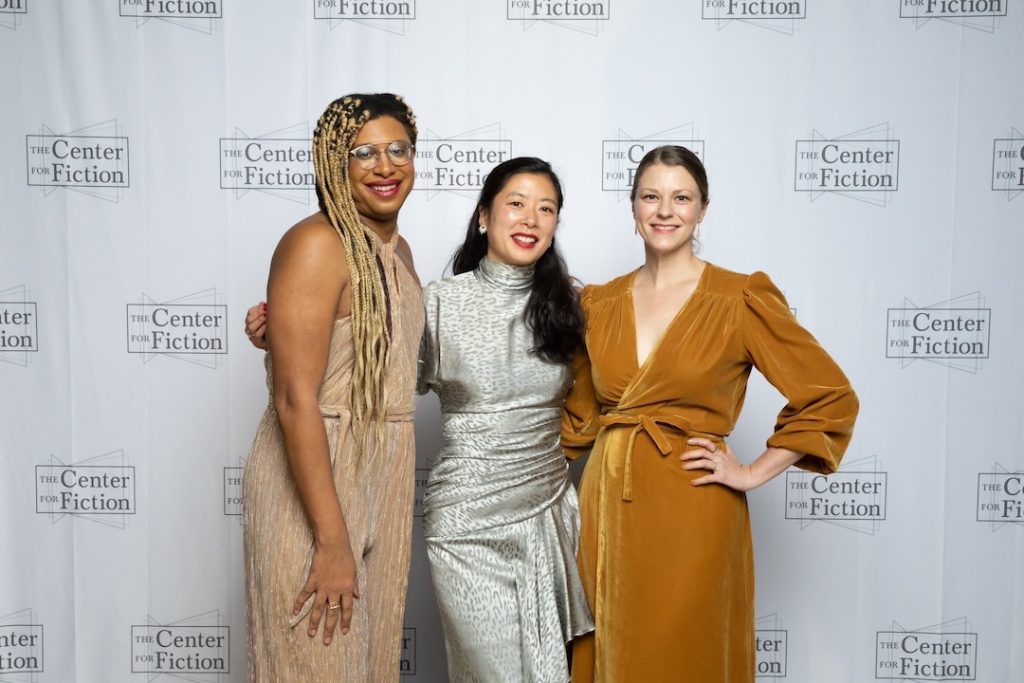
Founded by Hannah Oliver Depp, a Black and Queer bookseller, and now co-owned by Christine Bollow, a Queer, disabled, and biracial Filipina bookseller, Loyalty highlights diverse voices to reflect Washington, DC’s intersectional community. Their motto is, “We Like Books, We Like You, Welcome.” There are many book clubs to choose from: Meet Cute, which reads across sub-genres within Romancelandia; In the Margins, which focuses on marginalized authors; the Big Ass Book Club for ambitious books; and Agatha Christie & Sherry, which pairs Christie with sherry and tea. Loyalty Bookstores is located in Petworth, DC, in the Pop Up at Walter Reed.
Asbury Book Cooperative is a community-run 501(c)(3) nonprofit bookstore, supported and run by members and volunteers who are always delighted to offer their take on a great book. Selling both new and used books (including a pretty solid poetry section for a store of its size), and located downtown in gay Asbury Park, ABC is an excellent stop on your way to the 5th Avenue Beach. Not only are there readings, workshops, and book clubs—such as an excellent Racial & Social Justice Reading Group—but Friday nights at ABC are usually a great time to catch live music!
Located in walkable downtown Haddonfield, not far from a beloved water ice shop, Inkwood Books serves as a community hub, holding story times, book clubs, and walk-ins. They carry more than 18,000 books, including a dedicated children’s section and independent authors and presses. A lively, charming, and welcoming indie, it’s beloved by locals for being a South Jersey “gem.” Pride Book Club runs monthly on Tuesdays!
A fan favorite and a highlight at 2024 AWP-Kansas City, Rainy Day Books is one of the oldest independent bookstores in the region. It began in the 1970s as a used bookstore with a unique paperback exchange, enabling customers to trade books for credit. Now, Rainy Day Books is deeply involved in the local community, hosts hundreds of author events each year, and promotes literacy as a cultural hub for readers of Kansas City. They partnered with Lead to Read KC to host the “Story by Story: KC Book Fair,” celebrated queer AWP at Missie B’s, and recently hosted a “Potions & Devotions Tour.”
Under the Umbrella is a proud safe space for queer folks of all ages to congregate: queer authors, queer stories, queer perspectives. “No other bookstore in the area specifically caters to the queer community,” writes owner Katlyn Mahoney. The indie, which includes a café, also features small presses and self-published writers. Under the Umbrella, prioritizes, “the stories of Black queers—especially Black transgender women—Indigenous queers, and other queers of color, disabled queers, fat queers, two-spirit people, intersex people, asexual and aromatic people, incarcerated queer people, queer sex workers, and other identities within the queer community that experience further marginalization, even within the queer community.” They offer HRT support meetings, skill building workshops, pop-up markets for local artisans, and Queer Speed Date events. For their contributions, they received the ACLU Torch of Freedom Award in 2024 and the 2026 University of Utah Pinnacle of Pride Award.
Women & Children First celebrates over 45 years of inclusive feminist bookselling in Chicago. They carry 20,000 books that center marginalized voices, facilitating programming and in-kind donations to offer safe, inclusive spaces for the Windy City. They have ongoing partnerships with Chicago Books to Women in Prison, Liberation Library, and Chicago Abortion Fund. Favorite community events include Weekly Morning Storytime, Banned Books Book Club, and a regular array of visiting author events. They’ve even hosted Hot Potato Hearts, a speed dating event that pairs people randomly (some would say “adventurously”) regardless of gender or sexual orientation. Find your personalized reading list for talking to teens, abolishing ICE, or freeing Palestine.
This historic institution is one of the oldest feminist bookstores in the United States. BookWoman was founded in 1975 and is celebrating 50 years of continued community outreach. Originally launched as a women’s collective (The Common Woman Bookstore), it focuses on feminist and LGBTQ+ literature with an emphasis on intersectionality. There are regularly scheduled readings, open mics, poetry evenings, and speakers. BookWoman creates a community space for learning, discussion, and activism. In 2026, this indie is often described as a safe haven and sanctuary bookstore in a red state.
The Nonbinarian hot pink book bike can often be spotted throughout Brookly, distributing free books to readers in “book deserts” throughout the city. Part of the post-2020 explosion of queer indie bookstores in NYC, The Nonbinarian centers trans, enby, and queer voices with a focus on visibility and community-building. Established in 2022 as a mobile mutual-aid initiative, it has evolved into a queer social hub and community space in Crown Heights. The Nonbinarian is a trans, disabled, Asian-owned collective that is volunteer powered, exclusively queer, and carries new, used, and free books, as well as gifts, and resources. Upcoming events include: Quiet Queers (Silent!) Reading Hour, a T4T Clothing Swap, and bike pop-ups at the Brooklyn Public Library.
This community-rooted, queer bookstore is a recent addition to the indie landscape. Thanks to community support, the pop-up recently moved into a physical storefront in Portland’s North Williams area and has been creating space for queer gathering. The indie features books with intersectional social justice themes and curates for a diverse readership, including queer and trans people, Latinx communities, and neurodivergent readers. Always Here Bookstore identifies as a living queer community, and they host community gatherings, queer book swaps, and member social hours.
Another newer addition, All She Wrote Books is an inclusive queer feminist bookstore that centers socially conscious nonfiction and fiction. Its mission as “an intersectional, inclusive feminist and queer bookstore” is to “support, celebrate, and amplify underrepresented voices through a thoughtfully curated selection of books spanning across all genres.” All She Wrote Books hosts queer-friendly book clubs and community gatherings, facilitates trans and nonbinary voices programming, and offers “Friends of Ruby” memberships for local readers. Upcoming events include a Bookworm Comedy Show, Gentle Yoga for Booklovers, and Queer Literary Speed Dating. After starting as a three-shelf Ikea cart, they’re now at their new brick-and-mortar location in Somerville!
I first encountered Emma Copley Eisenberg’s work through this wonderful essay from EL contributor Elizabeth Endicott. In it, Endicott chronicles her experience delving into Eisenberg’s Housemates as a plus-size reader; she moves from apprehension to relief to recognition, highlighting Eisenberg’s ability to render fatness without the shadow of authorial judgment. Deeply imagined and embodied, Eisenberg’s work captures a nuanced reality; she doesn’t shy away from the systemic biases and discrimination that her protagonist Leah faces, but at its core, Housemates is also a love story; she reminds us that joy and connection are universal, fundamentally human experiences, and that they’re made possible by the very complex bodies we occupy.
Eisenberg’s newest story collection, Fat Swim, carries forth this ethos across 10 luminous, visceral stories. Within its pages, the body acts as a setting where desire, hunger, and loss can transform.
I was honored to get to speak with Eisenberg about pushing through writer’s block, bad film adaptations, and the joys of trampolining from one sentence to the next.
— Lennie Roeber-Tsiongas Editorial Intern
1. Describe your publication week in a six-word story.
Emma Copley Eisenberg: Getting lost on I-95 on my way to Philly bookstores.
ECE: Both, I have to say. It’s very bisexual of me. I need to be alone for the generative parts and the focus, but one can’t really write alone. You need people to walk the path with you.
4. How do you start from scratch?
ECE: I have been getting up early to write, which doesn’t come naturally to me. But there’s something about that dawn hour, where night brain and daytime brain are both online at the same time, that helps me. It makes sense because dawn and dusk are when people pray, too. Also playing, reading, swimming, and not being too precious about anything is important in the scratch phrase. And sometimes writing longhand with a fun pen.
5. Three presses you’ll read anything from:
ECE: Graywolf. Dutton if they’re edited by Pilar Garcia Brown. McSweeney’s.
6. If you were a novel what novel would you be?
ECE: It feels aspirational, but I’d be The Heart Is a Lonely Hunterby Carson McCullers because it has so many different points of view and weird risks and it’s sad but also funny.
7. Describe your ideal writing day.
ECE: Similar to Ursula Le Guin’s ideal writing day. Wake up early for dawn brain, coffee, breakfast (lots of it), more writing, a walk, lunch, a movie or doing something out in the world, reading, then dinner, then bed early with the cats.
8. What’s a piece of writing advice you never want to hear again?
ECE: I never want to hear that something “doesn’t have a plot” or to “give it more plot” because I don’t think people really know what that means. A lot of books that feel really propulsive have a plot, they just aren’t incident-based. I had a student at Temple say “I think what people mean when they say something doesn’t have a plot is that they don’t care about it.” Or they don’t care about the character. And I think that’s true. If you care about the character or what’s going on then the incident becomes sort of extraneous.
9. What’s a piece of writing advice you think everyone needs to hear?
ECE: Writing gets done sentence by sentence.
10. Realism or surrealism?
ECE: Impossible bind. I’m more comfortable in realism. That’s the tradition I was raised reading. But realism is also surreal and weird and strange. Kelly Link and Hilary Leichter are writers who show us that all the time. There’s one story in Fat Swim that has non-realist elements and it was hard but we did our best.
11. Favorite and least favorite film adaptation of a book:
ECE: Well speaking of, I hate the Tuck Everlasting adaptation with Rory Gilmore. Makes it so boring when it’s really an open, soulful book. The Sophie’s Choice movie is also really bad. For best adaptation . . . maybe The Devil Wears Prada? I’ve never read the book and I don’t want to, but I will watch The Devil Wear Prada when I’m sick 4,000 times.
12. Edit as you go or shitty first draft?
ECE: Shitty first draft. I don’t understand the edit as you go people. That would break me.
13. Best advice for pushing through writer’s block?
ECE: This is stolen from Alexander Chee so credit him. He says there’s no such thing as writer’s block, there’s only unmade decisions and shame, which I think is basically true. When you’re blocked you’re avoiding making a decision about the draft, or you’re feeling shame that you haven’t written. Easier said than done.
14. What’s your relationship to being edited?
ECE: Into it. Very into it. Good editors are such a gift, and they help you see what you’re doing more clearly. The editor for my first book also changed the structure of the book in a way that helped me understand what I was trying to do. I wish that editors had more time and space to edit in today’s landscape. Huge appreciation to editors, they’re doing the Lord’s work.
15. Write every day or write when inspired?
ECE: Everyone’s life is different, and I think either can work. I sometimes do the latter, but I would say I’m most productive when I’m doing the former. Conditioning your brain to be creative is like a muscle, it does strengthen and start to come online more consistently if you can be consistent with it. Maybe a better way to say that is write around the same time and around the same place as much as you can.
16. What other art forms and literary genres inspire you?
ECE: Collage, ceramics, and film. Films have helped me figure out the shape of what I want to write more than once. For Housemates, the quest was to make it as good as Thelma and Louise.
17. The writer who made you want to write:
ECE: Carson McCullers and Raymond Carver when I was in high school. And James Baldwin.
18. How do you know when you’ve reached the end?
ECE: I think there’s an intuitive body sense where I’m just like, this is the furthest I can take this thing. There’s this concept in sociology called saturation where you ask the same question of different people and you start to get the same answer over and over again. That’s how I feel when I’m asking my characters a question. My first book was nonfiction, and I was asking real people questions, and you start to hear what you’ve already guessed or imagined over and over.
19. Describe your writing space.
ECE: I’m very lucky to have my own little room now. All my books in one place. I do have my little woo-woo objects (tarot cards, James Baldwin candle, some little rocks). And I also have a really big fat pink chair now.
20. How do you keep your favorite writers close to you?
ECE: I have a tattoo of Grace Paley’s face on my arm. I’ll leave it at that.
21. What’s the last indie bookstore you went to?
ECE:There’s a little used bookstore that just opened in my neighborhood in Philly called Little Yenta Books. And then in Baltimore, I went to Greedy Reads when I was there for AWP.
22. What does evolving as a writer mean to you?
ECE: It’s seeing what I want to do more clearly and then knowing if I’m doing it or not.
23. Outside of literature, what are you obsessed with?
ECE: I got really into the Winter Olympics figure skating. Alysa Liu and also the evil French ice dancing team. I used to be pretty obsessed with making my own ice cream. I’m pretty into knitting and making babushka triangle scarves for my friends now. And seltzer, my favorite brand is Polar.
A Mother and Daughter Are An Edge by Sarah Giragosian
“A mother and daughter are an edge. Edges are ecotones, transitional zones, places of danger or opportunity.” – Terry Tempest Williams, When Women Were Birds
When my mother died, I was handed some pamphlets about grief, its permutations and stages. What to expect. What falls within the range of normal, although what I could have used was a field guide. Suddenly everything around me, the animals and plants, people and objects, changed utterly. I had changed. The birds had changed. A hummingbird was no longer just a hummingbird. A hummingbird could be a decoy for my mother. The mother deer that feeds from my garden could be a proxy for her. My brain craved my mother, needed to see her or at least see the world as she once did. Its vibrations, bundles of energy and meanings that once lit her up did the same to me. I took an interest in the things that once riveted her, and I needed to inhabit her perceptual world, her Umwelt. When I missed her most, I imagined her sitting next to me, inhabiting the same space, looking out at the same view.
Grief cracked me open, rewired my brain, transformed me. Now, I’m filled with questions.
My mother died of esophageal cancer. I have all sorts of questions about what caused it. Her systemic scleroderma is a likely contender (an autoimmune disease that tightens the skin and organs), but there are other dark-horse candidates: the toxin chromium-6 that is found in her town’s drinking water, her apartment’s proximity to a nuclear power plant, and the industrial park abutting her old house that was once a Superfund site. How clean can a former Superfund site really be? A federal review tells me: “. . . the EPA is satisfied that the site poses no threat to human health and the environment if the property is reused for commercial/industrial use.” But I don’t trust the EPA anymore, which allows fracking companies to steer clear of regulation. Most of the time I don’t really know what I’m drinking when I fill my glass from the tap.
To townies and tourists, my mother resided in a coveted place, a coastal town in Massachusetts. But I’ve pored over the cancer cluster maps, and there’s a high incidence of cancer right where she lived. She lived and died in a polluted ecotone, a place by the sea that in the summer is flooded by tourists.
There are territories of body and place that leave me with more questions than answers.
In her monumental work of conservation Silent Spring, Rachel Carson writes, “There is an ecology of the world within our bodies. In this unseen world minute causes produce mighty effects . . . To discover the agent of disease and death depends on a patient piecing together of many seemingly distinct and unrelated facts.” Carson would later die of breast cancer, but before that she was constructing a biochemical map between the complex ecosystem of her body and her region. In my own way, I’m doing the same, charting my mother’s inner and outer ecologies. There are territories of body and place that leave me with more questions than answers. Climate change and the polycrisis of our times upend ecological interactions, threaten biological health, increase mortality, undermine hard-won resilience.
Ecotones are sites of transition. A forest clearing is an ecotone, as is the littoral zone of a lake, the saturated swale of the marshland. The word’s etymology comes from the Greek roots “oikos” (home) and “tonus” (tension). It is a meeting zone, a space of interchange and energy. Think of it as akin to a contact zone, a bordering habitat rather than a line, a place where ecosystems converge. For Rob Nixon, ecotones “may . . . open up new configurations of possibility (and for some species, introduce new threats) as the transitional areas create so-called edge effects.”
Ecologists have found high species diversity in ecotones where rich habitats sustain different kinds of life. Birds frequent the edges of land and water, while the edge between seas and rivers have many fish species. Some animals are restricted to the edges of ecotones while others travel between habitats. Many migrate across ecotones. Some creatures thrive in them. Others may meet their end. Climate change has introduced new threats. Drought, for example, may exceed a plant’s ability to withstand a water shortage. A shortage of rainfall can limit flower and fruit production, which in turn can have system-wide impacts on wildlife and people. This is only the tip of the proverbial iceberg.
The ecotones my mother and I shared were the placenta, the umbilical cord, our cells and DNA. Then, later: the ecotone of her milk, which included vitamins and minerals, but also the pollutants and pesticides and heavy metals in my mother’s system, in many mothers’ systems in first world countries these days. Those tender hydraulics between mother and child are marked with uncertainty. An ecotone is a “place of danger and opportunity.” A site of slippage and risk. In that fraught zone, my mother and I were knitted together from the get-go. Ours was a geometry of leaning in, of giving and receiving. Another word for this might be love.
Grief, too, is an ecotone: I’m half in, half out of this world. A sense of unreality pads alongside me. Weather passes through me, unseen, unfelt. The seasons too. My mind wanders off somewhere again. A serious question: Where did I go? Send out a search party; take me home.
Branching out of my heart are all sorts of versions of me: the one who wants to float off on a barge down the river, destined for who-knows-where. The one who daredevils too rapidly on the highway. The one who wants to call up my mother on the telephone and tell her about the lifetime of things I have experienced since her death. I did hardly anything in the months after my mother’s death. But emotionally speaking, I was trying to make a go of it on a dark planet with no vegetation or water, with no soul save me.
I’m seeking out the ecotone of the page, where there is potential interchange, perhaps even a sort of dialogue that I might enter with my mother. I’m testing out the contours of a spiritual field where we might transfer energy between us. Energy, they say, can’t be destroyed, just transformed from one form to another. I imagine her voice, what would she say. I know my mother would tell me that, whether I’m wounded or not, I have more life to live. To get on with the business of being. I know this, yet I want to see her again, disheveled but radiant with life, her jeans garden-soiled, her hair flung back from her face. Her friends gravitated to her warmth, her irreverence and integrity. Once, her laugh and smile were all I needed to recalibrate myself, to remember the small wonders around me I missed: butterfly bush, coneflower, the bright orange shock of a newt in the soil. Look, Sarah, look! I miss that voice, loud and buoyant, ripe with awe. My mother was most alive at the ocean, in a forest or garden. Before the chemo, my mother was vibrant; after, it was like she curled in on herself.
Grief feeds off my body from the inside out. It feasts on my doubts: Did I do everything in my power to help my mother during the eight months her health declined? What if there was more I could have done?
Cue her voice, cue her wonder. I can hear her in my memories, but I’m fearful of what my mind is capable of undoing. I would give a garden’s worth of bird songs to hear her voice again. I want it to be more than an echo in my mind. I suspect that all my future writing will be made in pursuit of her voice. It is inside of me now; I have to excavate it.
In his book Game Management, the ecologist Aldo Leopold identified what he termed the “law of interspersion,” noting that animals flourish in ecotones where they can simultaneously benefit from ecosystems. In an ecotone, they can flourish as they take advantage of the vegetation and abundance of prey. But abundant life also offers new opportunities for predators. This space of energy and entanglement, opportunity and danger, is what’s called an edge effect.
I can hear her in my memories, but I’m fearful of what my mind is capable of undoing.
Writing has become an ecotone between my life and her death, a place where I tap the sources of memory and creativity to bring her back. There’s energy in this contact zone. Perhaps we are both trying to communicate with each other. Call this magical thinking (Didion is right: We become magical thinkers when we lose a loved one), but my mother—in whatever form she is now—would want me to feel her steadying presence. Sometimes I feel her presence in the thoughtful stare of a doe or the hummingbird that hovers by the living room window, peeking in, or any of the other creatures (red-tailed hawks, cardinals, chickadees, dragonflies, and monarch butterflies) that I associate with her. Spirit animals, those she sought to draw to her garden.
My mother’s signs of good fortune have become mine.
The summer my mother died was the summer of hummingbirds. Ruby-throated hummingbirds at the feeder. Ruby-throated hummingbirds whizzing inches past my face. To the Aztecs, hummingbirds were warriors. To Mayans, the sun in disguise. To Emily Dickinson, “A Route of Evanescence.” Perfectly agile and unworldly creatures, which enchanted my mother and filled her with delight. Sometimes I imagine there must be a gap between her world and mine, and she’s scooting them through to send me a reprieve from my sadness. True: It’s hard to sustain sadness when you’ve glimpsed a hummingbird. You have to surrender to their spell.
Hummingbirds are drawn toward ecotones, the edges between meadow and forest where they can feed, breed, and nest. Telegraphing their iridescence, they swoop and turn on a knife point, drinking from our false indigo and columbine, our sugar water in its red bottle. But summer is fading, and I know they will soon return south for the winter. To sustain my cheer, my partner refills their sugar water each time the bottle runs out. In her love of animals and love for me, she is not so different from my mother.
But can hummingbirds be a substitute for her? Can writing? Can I forage in the margins between life and death until I find a version of myself I can live with? I don’t know. On some days, it’s enough to see a bright flash at the bird feeder. On other days, I rage at the thought anything other than her, proxy or not, could possibly be enough to sustain me.
I miss the little things: the way she treated strawberries as a delicacy, placed sachets of lavender under her pillow and mine, left treats out for the birds, mailed me greeting cards with photographs of wildlife “just for the hell of it.” She loved the sound of ocean surf and could spend a whole day reading on the beach. She could pass the hours watching old Hitchcock movies with me or exploring a new bookstore. She made the best mushroom soup. The most decadent brownies drizzled with chocolate fudge. I miss calling her on Sundays to tell her about my week.
All our walks from that point had an air of desperation.
My mother was a caretaker at heart and managed a home for developmentally disabled adults. She was fiercely protective of them, but she had a tough side too. She quickly grew frustrated with self-pity or extreme emotion: When I discovered that her cancer was at stage 4 and she was given a year or less to live (she would ultimately have eight months), I cried and cried. Although in my thirties, I wanted her to treat me with kid-gloves, to reassure me. “Knock it off,” she said when she saw my tears. Then she dragged me for a walk along the beach. All our walks from that point had an air of desperation. I think she was trying to teach me how to walk off my grief, how to pay attention to something else, anything other than the pain.
After she died, I kept finding myself in strange places: at an unfamiliar part of the city, on a street bench too stunned to stand up, or crossing the street against moving traffic. I don’t know how I ended up at any of those places; my feet had their own mind.
Not the deathbed body, not the graveyard scene, not the paper-thin proxy of icons or the mirage of blessings, but the close-up of her big laugh; that’s all I want.
I crave her momisms, wrapped in material tough as rawhide, but softhearted in intent.
Before she died, I wasn’t aware of what I see now. I see in photographs that she had eyes only for me, forgetting all about the camera lens. How did I never notice this? Every snapshot is another iteration of her breaking into a grin, her eyes crinkling as she peered down at me, while I rolled my eyes. This was part of our act. We were mother and daughter, not terribly far apart in age. She was a single mother. I was her only child. Of course, we loved each other. Of course, we grated upon each other’s last nerve.
She could be slapdash or refined, hysterically funny or annoying. She was playful, which I realize now is a smart way to disarm people, to open them up or—in my case—to provoke a reaction.
“Mom, do you want to run out to the store with me?”
“Only if I can tease you.”
“Stop it, Mom.”
“Stop it, Mom,” she would parrot back. Inane, but on and on it would go.
Once her habits grated, like her loud voice or the way she forgot to wash the kitchen counter clean. Now I just want her back.
I would greet her as a zombie, Edwidge Danticat once said of her desire to see her mother after she died. I get it: I would take my mom back no matter what unholy arts resuscitated her.
I connect ecological trauma with my mother’s death. I pore over Massachusetts cancer data; the graphs tell me that 2017-2021 (the last years that data was collected) in my mother’s region had a higher incidence for esophageal cancer than in previous years. Is it normal for the bereft to search for answers like this? I don’t know. Grief, like my OCD, is a frightful loop. I can’t fully pull myself away from the questions that I can’t answer. They summon me back, even as I write this essay.
I don’t know for sure if the unseen toxicities of the land and water gave my mom cancer or not, but if so, it adds another layer of horror to her death. My mother who stewarded the land, who kept soil and shovels in her car trunk for the next garden she promised to re-design or just spruce up, usually for her work or her sister or a friend. My mother, who never forgot to leave seeds out for the birds.
I don’t feel like I can face the collective traumas of the current moment, ecological and political, without her. I check my body for tumors. I check the news for the latest atrocity. I watch the skies for smog and wildfire.
Sure, in a way the Earth is my mother, but in a much more real sense, my mother is my mother.
I hear silence and wonder why the birds are not singing.
You begin to cherish the moments your stomach unclenches, your muscles slacken, and your throat tastes, no longer, of acid.
If you mapped the home that my mother created for the two of us, it would be full of books and jagged edges where the past could lie in wait around the corner or the summons of the present appeared in the form of a sun-bright day and a couple of walking sticks at the door. We lived in a tiny summer cottage, cold and uninsulated in the winter, on a dirt road not far from the bay. We looked for clams in the summer, frequented ice cream shops, the ocean, and the library all through the year.
Inside and out, the plants were toothed and full of berries, some sweet, others bright and bitter. All sorts of creatures drifted in through the front door. My mother taught me the names of the flowers in our yard: lady’s slipper, Queen Anne’s lace, dandelions. She showed me which I could pluck, and which I could only look at, like the lady’s slipper, a delicate orchid, which is endangered or threatened in some regions.
She taught me about the secrets of the soil: how to look under logs for rich earth glinting with worms and slugs, when to plant sunflower seeds, how to watch for deer in the morning as they nuzzled their snouts into dew-licked grasses. We took headcounts of the purple beach pea in the dunes and in the spring we left sugar water out for the hummingbirds.
“Look, Sarah, look.” I miss her voice, edged with wonder, exhorting my attention. Maybe a small gesture, but significant for me who is often too much in her head. When you carry unease inside of your body much of the time, you begin to cherish the moments your stomach unclenches, your muscles slacken, and your throat tastes, no longer, of acid. In the forest or garden or bay with her, I was present. I listened to her injunctions to pay attention, to be alive to the world beyond my own worries.
And I miss my mother’s body of knowledge, my favorite body of knowledge, who recognized the calls of most songbirds in the Northeast and taught me to be present to the creatures, plants and little animals around me.
“Go get dirty” she’d urge me, and as a child, I would play in earnest with my friends in the woods, unafraid, unlike some of the other kids, to come home with ripped jeans, skinned knees, or dandelions and violets tangled in my hair.
My mother furnished our home with bedtime stories and works of art and old jokes, the same ones like touchstones across the span of years. Sometimes we dined on chocolate pudding while winds from the north tried to knock down our door. Roughhewn but welcoming, our home flushed with pink light almost every morning. Cicadas and orange-bright newts roamed its edges. Once upon a time, no mercury or toxins or disease could get past the front door. Once, a mother and daughter counted themselves lucky.
Patrick Cottrell’s second novel Afternoon Hours of a Hermitbegins with a mysterious envelope delivered in the mail; inside is a childhood photograph of the narrator’s deceased brother, sent just as the fifth anniversary of his suicide approaches. It is the kind of inciting incident that carries all the scaffolding of a detective story—a mystery to be solved, a past event reopened under the promise of yielding not just new information but some deeper understanding. However, this is not your typical detective novel: Cottrell resists the genre’s usual pleasures of discovery and resolution; questions are left unanswered, and the truth is partial or ambiguous, if it’s uncovered at all.
The novel follows writer Dan Moran as he returns to his childhood home in the Midwest in search of answers about the circumstances of his brother’s life and suicide. His family is surprised to see him, even as they prepare a memorial for his brother—one that Dan was not invited to attend. Unfazed, or perhaps simply accustomed to his ostracism as a trans Asian adoptee, Dan forges ahead with his investigation. From the outset, it is clear that Dan is spectacularly ill-suited to the task—he misreads clues, follows dead ends, and cannot seem to stay on track. It is important to note that Dan doesn’t simply consider himself a detective, but rather a “metaphysical investigator,” a designation that shifts the terms of the inquiry from facts to interpretation. More than that, the term signals Cottrell’s larger project, which lies not necessarily in arriving at answers but in the act of reading deeply. In both Afternoon Hours of a Hermit and Cottrell’s first novel, Sorry to Disrupt the Peace, there’s a strong extra-literary dimension: Sorry to Disrupt the Peace is filled with direct quotations from well-known authors, and Afternoon Hours of a Hermit similarly weaves in references to writers like Thomas Bernhard and W.G. Sebald.
Moreover, Cottrell’s characters are marked with bibliophilic tendencies. At one point Dan thinks, “My constant curiosity got in the way of my suicide,” a line that reads as his own but is in fact a direct quotation from Bernhard’s The Loser. Dan doesn’t simply think about his life; he thinks through literature. It is no surprise that a reader like Dan would be drawn to detective work—they are engaged in similar pursuits, trying to locate truth, to distinguish between what one thinks and what one knows. In this way, Dan Moran’s investigation stages a kind of deep reading of his brother, yes, but also of himself, probing the gap between reality and how one is perceived. This foregrounds a central tension of the novel form—and of reading itself: the desire to enter another consciousness, and the impossibility of ever fully doing so. If Afternoon Hours of a Hermit reveals anything, it is that truly knowing another person is the greatest mystery of all.
Patrick and I spent a few weeks exchanging emails about detective stories, metafictional doubling, lessons drawn from Thomas Bernhard, and more.
Evander James Reyes: This novel leans into the detective/noir genre, but Dan Moran is—there’s no other way to say this—a terrible detective! What draws you to the detective story and how are you interested in playing with/against expectations?
Patrick Cottrell: The word that comes to mind for me is atmosphere. Rain, fog, cars. I grew up in Milwaukee and I don’t remember many sunny days. I wanted to conjure the mystery/noir atmosphere which means driving around at night, spying on people, questioning them, showing up at places you’re not supposed to, but I didn’t want to be beholden to managing all the plot conventions. The noir genre seems to be about justice so there’s some added propulsion on a narrative level, but that’s also where the humor comes in. Sometimes the most justice-inclined people are also the most delusional and the least self-aware. Dan Moran believes he is attempting to restore justice by writing his psychological thriller, but in reality, what is he doing?
Frustration and humor go hand in hand.
For me the ending was the most important part of the book and I really struggled with it for a long time. I had to do a major rewrite that involved deleting multiple chapters. When I landed on this ending, I felt a huge sense of relief because I believe it works. I don’t think it answers things in a tidy, traditional mystery sense, but I deeply believe in it on an emotional and gut level.
EJR: Did you have any detective stories in mind while you were drafting this book?
PC: I’m indebted to the blurbs in Olga Tokarczuk’s Drive Your Plow Over the Bones of the Dead. I hadn’t read it at the time, but I read the blurbs and something about them made me want to write the book they were describing: private, existential, a fairy tale, philosophical. I tried to imagine what that book could be. The blurbs were actually inspiring which is weird to say. Drive Your Plow is an off-kilter mystery.
Another detective influence is Bennett Sim’s story “The Postcard.” I love how he refuses to explain the circumstances of what his narrator is doing, the set-up is fairly vague and mysterious in a purposeful, ominous way. Of course, Kobo Abe was a master at refusing to explain things. It can be frustrating for the reader, but there’s something productive about the frustration. Marie NDiaye’s My Heart Hemmed Inis not a traditional detective story, but the protagonist is trying to find out why she and her husband have been (seemingly overnight) shunned by their community. It’s a psychological horror novel. The protagonist sets off on an investigation of sorts through her city while her husband is bed-ridden with a festering wound. NDiaye’s imagination is boundless.
EJR: Dan Moran’s decisions often feel frustrating, even self-sabotaging, but they also seem to drive the novel forward. What do you think about frustration as an engine in the book?
PC: Frustration is always part of the mechanics of plot: someone wants something and they face obstacles or they get in their own way and this pushes the story forward. I’m never thinking about plot when I’m writing though. I am mostly thinking about humor, or whatever’s funny to me on the page (I honestly don’t know what’s funny to other people). Frustration and humor go hand in hand. If you’re not a particularly plot-driven writer, you have to find other ways and means to move the book forward. Claire-Louise Bennett is good at that. I always want to stay in her world even though she’s never beholden to plot. She conjures a particular mood or atmosphere via her sometimes-outlandish, embroidered sentences. Caren Beilin does this, too. Sometimes if I’m stuck, I go back to Amina Cain’s description of narrative: “[ . . . ] when objects and characters, and also landscapes, appear together, that is how narrative happens for me.” Amina Cain’s work is always a guiding light.
I see that my book is made up of other books and writers and it seems silly to ignore that fact or avoid it.
EJR: The title Afternoon Hours of a Hermit exists both as the book we’re reading and as a book the narrator abandoned writing—what drew you to this doubling?
PC: I think it was a self-serious conceit that’s supposed to be absurd and funny. The narrator seems to take writing seriously but at the same time erases and abandons what he’s doing, as you’ve rightly pointed out. I enjoy the game within the game, the little corners where you can play around to see what you can get away with. I love doubles, twins, doppelgängers, mirrors, etc. because I feel as if, when I was adopted, I myself was doubled in some way—when I was adopted, it’s almost as if there were two directions my life could have gone and it went one particular way, but then there’s the shadow of other possibilities. And transitioning, there’s another doubling, but not.
EJR: Another doubling: In Afternoon Hours, Dan Moran is the author of your first novel, Sorry to Disrupt the Peace. I find this ontological weirdness really intriguing! It creates a strange loop of interpretation—when I went back to Sorry to Disrupt the Peace, I could only read it through the Dan Moran of Afternoon Hours. The same text exists in two contexts at once. What kind of textual game are you playing with that move?!
PC: I love that! I think that’s really cool and funny. Yeah, it’s a weird meta-fictional game. I wanted to try to establish that the world of this book, Afternoon Hours, is not unfolding in the same world as the first book. When I first started writing this book, I had the idea that the narrator would transition in between books. I had never heard of anyone doing that or exploring that. But, I wanted to do that in an indirect way. So, is the Afternoon Hours narrator the same character in the first book, pre-transition, or a fictional invention of Dan Moran? Again, it’s a hall of mirrors. I like that the books can exist on two different planes of reality.
Someone asked if this is a sequel or if I simply rewrote my first book with a trans narrator. Absolutely not. But I understand why a person would ask that or think that, I really do: suicide, siblings, Korean adoptees, returning home, detectives, etc. Honestly, I think a lot of what I was thinking about with Dan Moran (as the author of Sorry to Disrupt the Peace) goes back to the fact that my former name will always be tethered to my first book. I wanted to reclaim it with a new name, in a sense.
I also want to put in a good word for McSweeney’s here. Perhaps some of the larger publishers can pulp backstock, reprint copies with a new name, and take the financial loss, but McSweeney’s is a small non-profit organization and they did the right thing and reprinted my book with my name on it. I’ve always felt deeply grateful for them, especially Amanda Uhle and Rita Bullwinkel, both amazing authors. They get it.
ER: What draws you to characters whose relationship to literature is so immersive?
PC: A novel can be a vehicle or container of influence, conversation, and perception. The novel as a form is so capacious. I mostly write to be in conversation with other writers, their traditions, techniques and so on. I spend more time reading than writing. Even though I love writing, I don’t do it every day, but I read every day (for work and for my own purposes). When I was in high school, I didn’t have many friends but I spent a lot of time reading and going to bookstores. Friday nights, two friends and I would go to Barnes and Noble or Half Price Books and browse and sit on the floor and read. So to answer your question, I guess I see that my book is made up of other books and writers and it seems silly to ignore that fact or avoid it. I feel hopeful that this acknowledgement adds depth to the narrative and some minor excitement. When I read Bolaño, I’m always excited to read the writers he mentions. I suppose these mentions of other writers also situate my book in the real world, half-in, half-out.
Writing doesn’t get easier; I think it gets harder because you expect it to get easier the more you do it, but it actually doesn’t.
ER: What is your relationship to Thomas Bernhard? I notice certain stylistic echoes—repetition, the constant returning to earlier thoughts and images, which take on different valences as the novel unfolds. At the same time, this novel doesn’t read to me as a strictly “Bernhardian” rant—how do you see your work in relation to his, and where do you feel it diverges?
PC: I’ve read some of the writers who mimic his voice on a syntactical level and I really enjoy those books. But . . . that’s not really what I’m trying to do at all. I think what Bernhard offers me (as a writer) is permission to sidestep descriptions of physical movement and descriptions of people’s physical appearances, which I’ve always had trouble with. A character can spend pages upon pages physically static but Bernhard creates a mood and atmosphere that’s addictive, so as a reader I don’t care if the character is moving through the world or not. My greatest affinity with him is a way of viewing the world. You understand that at their most basic, people can be incredibly grotesque, selfish, small-minded, and cruel. And the world continues to become more absurd by the day. And yet, there’s compassion in his books, they’re not heartless. To be Bernhardian, you have to have an eye (and ear) for absurdity. He is truly a very comic writer. His sense of humor holds up, it’s not dated at all. About divergence, that’s an interesting question. I might be more aligned with the detective/noir genre although The Lime Workscould be considered a crime novel, I guess. I could talk about him a lot. Once you know his tricks and techniques, you can spot his influence everywhere.
EJR: It’s been about eight years since Sorry to Disrupt the Peace—how did writing Afternoon Hours feel different this time around?
PC: It took a lot longer. I’m older and slow. I felt blocked for a while because I needed things in my personal life to settle down. During that time, I would write little stories here and there and interview other writers. Writing doesn’t get easier; I think it gets harder because you expect it to get easier the more you do it, but it actually doesn’t, at least not for me. The only time I feel writing is relatively easy is when I’m working on a really short story, and that’s because my short stories are so short, they’re probably closer to prose poems.
This will sound weird but I felt at peace with taking a long time between books. I didn’t want to write a book just for the sake of writing it and trying to get it published. Not everything has to be published, not everything needs to turn into “a book.”
All of this is to say, I’m not a very strategic writer, I’m almost pure intuition. With my first book, I felt very anxious while writing. What felt different this time was a sense of enchantment. I wanted to be submerged in something weird and uncanny, and I felt that while writing this. I didn’t feel as anxious. Once I knew what I wanted to write about and the particular angle I wanted to explore, writing the book became challenging in a pleasurable way.
I was there in the cheap seats when the man with Boston on his back tackled the giant bug. A shaded skyline that enfolded
his shoulders, revealed when he frenzied his shirt over his head after Nathan Horton scored in the second—the Ontarian
dispatching the puck so absolutely the net was compelled to take it in. As if to make something belong, you hack hard as you can.
From the terrace level I cheered too—not for the goal but to make myself known. Displaced New Englanders never stop needing
to tell you where they’re from. The bug was from Tampa—a woman named Kelly in a 10-foot foam exoskeleton who silly-stringed a man
when his team was down and away from home. So fervent for a city he needled it under his skin. As security walked him out, he spiked
a finger in her face—not Kelly’s but the bug’s, with the unwatching eyes—and snarled as the crowd cheered his ejection. Hockey
gets violent. Players brawl. The refs allow it, the us-and-them-ing, and we take it for camaraderie: the refs, and the fans, and even me,
indifferent to the game but not the need. Even Kelly, though it cost her the job. Now she lives in Chicago, custom-crafting mascot costumes
designed to ride light on one's frame, and all machine washable. Horton eventually got traded to Toronto, never leaving
the injured list, but I hope Canada consoled him. The Bruins took their loss and headed north, same as we would later that year,
in a U-Haul heavy with everything. The tattooed man lives forever in a video online. In my memory, I’m right across the aisle, close enough
to hear him scream Stanley Cup into the bug’s meshed mouth. But I’ve watched the clip a dozen times and I’m nowhere to be found.
Self-Portrait with Vermont Forge’s Heirloom Weeder
that I bought online one night, unable to sleep and again intent on wresting order from the mess. On uprooting clover—even the four-leaf. I don’t believe
in luck, maybe because I’ve mostly had it. I do believe in knuckling down. Yesterday, I potted the sprouted pit of a stone fruit I pulled from the compost.
I’ll overwinter it in the basement where I can fret about its chances every time I run on the treadmill. Exercise is supposed to be good for sleep.
And lavender, though I cut mine back too hard and it’s not pulling through. I wish the garden gave me more time to make good. Five months if I’m lucky—
not that luck exists. Episcopalians have prayers for the Natural Order, praising the God who fills all living things with plenteousness
and I consider my plenty and if I’d make a good Episcopalian and what else might be available at Vermont Forge, what other instruments they make
that could help me. Because in order to endure, clover can’t be anything but persistent— like the faithful, reciting the words of St. Francis,
who is said to have left his garden wild at the edges and who begged of his God: Make me an instrument of peace.
Small towns and cities mean different things to different people. To a big-city dweller visiting for the weekend, it can be a place to lose—or find—oneself; a place to rejuvenate and invigorate. For someone who hails from a small town, it can mean getting in touch with one’s roots. To those who inhabit these spaces permanently, they signify something still more different. A small town might mean warmth and safety, but it can just as easily be a stifling presence to escape.
Whatever their effect, there’s no doubt that these in-between spaces make perfect breeding ground for stories. The term “mofussil,” used for places outside the major metropolitan cities in India, expresses the intricacies of these locations perfectly. These mofussil spaces can be small towns where everyone knows everyone’s business, where anonymity is impossible and the bonds of community are still strong. On the other hand, it can also refer to the tier-2and tier-3 cities—once smaller, they now sprawl in all directions, rapidly re-inventing themselves. None of these spaces are silent backgrounds. They are active presences that shape the lives and histories of their people, particularly in a country like India. Perhaps this is why stories set away from the major Indian cities are becoming popular with global audiences. The latest example of this subtle shift is the success of the film Homebound, which was on the shortlist for Best International Feature Film at the 2026 Oscars.
The following seven novels are set in these twilight places spread across the length and breadth of the country. Whether it’s the Himalayas looming in the background or the sea on the edge of the town, a place in the terai or a dusty town hard to find on the map—these places make for stories worth telling, sometimes acting as catalysts, sometimes as accomplices.
Upamanyu Chatterjee’s English, August is the story of Agastya Sen, who has been posted to Madna after joining the elite civil service. This hot, dusty town is far removed from Kolkata and Delhi, where Agastya has spent most of his life, and the contrast between his life so far and the life he is expected to lead in this outpost lies at the center of this darkly humorous novel. Chatterjee brings the quintessential small town of the ’80s to life through descriptions of slow-moving bureaucracy and the portrait of a place where cattle camp in the corridors of government offices and the walls of buildings are splotched “maroon with paan spittle.” As Agastya’s existential crisis intensifies, Madna refuses to stay in the background, gradually becoming the catalyst to his struggles and driving the novel towards its conclusion.
Kiran Desai’s novel moves between New York and Kalimpong, a small town in the Eastern Himalayan region, weaving the stories of multiple characters. There’s a retired, Cambridge-educated judge clinging to colonial ways; his granddaughter, Sai; and their cook’s son, Biju, an undocumented immigrant struggling in New York. The action unfolds during a tumultuous period in the region’s history as the Nepali-speaking majority demands its own state, turning the quiet, misty town into a “ghost town.” With the mighty Kanchenjunga looming over its treacherous terrain, a sharp class divide and political tensions on the rise, Kalimpong becomes an active presence shaping the trajectory of its characters’ lives.
Set in an unnamed small town where the sea is a living, breathing presence, The Small-Town Sea is narrated by an unnamed 13-year-old boy. The boy has moved to this “small, depressing town” from a “big, overcrowded city” to fulfil the wish of his dying father. This mofussil town thus becomes the space where he must draw the map of his many griefs, including the life he has left behind. Written in sparse prose in the form of a letter addressed to a literary agent who had rejected his father’s manuscripts, The Small-Town Sea captures the claustrophobic feeling of growing up surrounded by the anxieties of childhood.
Hasan’s Lunatic in My Head is set in ’90s Shillong and tells the story of three characters who live most of their lives in their heads. Eight-year-old Sophie Das, aspiring civil servant Aman Moondy, and college lecturer Firdaus Ansari are all “dkhars”—outsiders—whose identities become closely intertwined with their feelings for their city. Shillong, with its hilly terrain and rain-soaked streets where “pine trees dripped slow tears,” charms while also making the characters long to leave it all behind. That push-and-pull is at the heart of this novel in which nothing grand happens, nevertheless offering insight into a space that is irrevocably tangled with the lives of the people who inhabit it.
The Courtesan, Her Lover and I is set in Rampur and narrates the story of Rukmini, who returns to her hometown with her husband after a few years in Dubai. Unhappy with her teaching, she almost unwillingly begins researching the cultural history of Rampur, which leads her to the nineteenth century courtesan Munni Bai Hijab, a poet herself and muse of the famous Urdu poet Dagh Dehlvi. As we move in time, Rampur stays in the background as a powerful force. It’s a city in flux, a city where “the circle of life is transcribed within the mohallas,” but which is also turning into a “smart city” even as its men—however well-meaning—tend to define the trajectory of a woman’s ambition. This in-betweenness shapes the life of Rukmini, weaving Rampur closely into the stories of both women.
Alipura by Gyan Chaturvedi, translated by Salim Yusufji
Gyan Chaturvedi’s Alipura is set in the Hindi heartland of the late 1960s. The novel takes readers to a typical village to meet the Dube family, who are low on money but high on dreams and struggling to fulfill their ambitions, however small. Chaturvedi uses humor and satire to bring out the bleak realities of life in a small village riddled with casteism, corruption, outdated beliefs, and a deeply patriarchal mindset. Alipura is a place where women are supposed to stay away from cosmetics because they tend to bring “dishonour to the family” while masculinity and muscle-power go hand-in-hand. A site of colorful characters with bleak futures, Alipura defines as well as confines its characters. It is a place where dreamers thrive but dreams refuse to come true.
Set in Ranikhet, a small town in the foothills of Northern Himalayas, The Folded Earth is the story of Maya, a young widow. She has come in search of sanctuary, and The Folded Earth shows a small town becoming a safe haven. At the same time, it reveals the fragility of such peace and tranquillity when faced with powerful local forces that thrive on conflict. Roy gives local color in descriptions of this charming town as well as through characters like the aristocratic Diwan Sahib and the young Charu—people who can only be found in India’s mofussils. Never in a hurry to reach its destination, The Folded Earth moves at a languid pace, capturing the feeling of strolling along winding, hilly roads of the town it describes.
The phrase “teenage girl” tends to conjure up images of hormonal bodies and see-sawing emotions—not focused and powerful brains. And yet, some of the most famous girls in literature gain exceptional mental gifts when they hit adolescence. Carrie White, for example, Stephen King’s telekinetic teenager, develops her cognitive power when she gets her period and experiences what King calls “mental puberty.” She takes revenge on her bullying classmates and burns down the whole prom using only her mind.
These formidable female brains aren’t a modern phenomenon. As a Shakespearean, I’ve studied how the teenage girls in his plays use their newly sharpened cognitive abilities to challenge the status quo and craft their own fates. Juliet Capulet is nearing “the change of fourteen years” when she imagines, orchestrates, and almost achieves her forever future with Romeo—against the tyrannical will of her father and Verona law. And while popular images of Ophelia cast her as a vulnerable, hysterical girl waiting for the perfect guy to save her, she actually spends most of Hamletobserving, remembering, and speaking out about the rotten Danish history that the corrupt court seems intent on forgetting.
My book, Monsters in the Archives, chronicles what I discovered when Stephen King granted me what Shakespeare couldn’t: unprecedented access to early drafts of his iconic works, with all of his handwritten margin notes and edits. In one of our conversations, I asked King about the changes I saw him making to an early, very inhuman version of Carrie. He told me why and how he rewrote her as “an All-American girl,” a bullied teenager that readers could root for on some level as she harnesses her mental powers to flip the script. What he (like Shakespeare) understood was that girls who use their brains aren’t pathological exceptions, but rather everyday agents of change that audiences and readers recognize.
The following seven stories feature girls who use their cognitive abilities to challenge social norms and imagine their own destinies. They don’t always succeed in the ways they hope—and, in one case, girl power threatens to destroy all of humanity, not just the prom—but they all turn their minds toward making better futures.
McCullers’ novel, set in a 1930s mill town, tracks multiple interconnected characters over the course of one year; but it’s Mick Kelly’s heart and mind that power the story’s lonely hunt for meaning. Mick begins as a 12-year-old tomboy with dreams of becoming an inventor and famous musician; by the end, she’s almost 14 and leaving school to work at Woolworth’s so that she can help her struggling family. McCullers poignantly captures the disjunction between a pubescent girl’s rapid physical growth and the simultaneous restrictions society puts on her future. But she also describes Mick moving her big ideas to the “inside room” of her mind—they aren’t gone, they’re just more private. And in the end, Mick’s still connected to that earlier expressive dreamer: “Maybe it would be true about the piano,” she thinks, as she saves a few dollars each week toward buying one, “and turn out O.K.”
“Why is the measure of love loss?” This question drives Winterson’s memoir about growing up with an abusive adoptive mother, searching for her past, and making her future. The elder Winterson locks Jeannette outside in the winter and forbids all books except for the Bible. When she discovers that 14-year-old Jeanette is sleeping with her girlfriend, she has a Pentecostal minister force her daughter through three brutal (and unsuccessful) days of conversion therapy. Eventually, Jeanette saves herself by escaping into fiction. She works her way through every work of literature, A-Z, in her local library; and, after Mrs. Winterson evicts her at 16, gets herself into Oxford where she becomes a fiction writer. Here, she writes about how stories give words to those who have been silenced: “We get our language back through the language of others.” Fiction “isn’t a hiding place. It’s a finding place.”
Trisha isn’t a teenager (she’s “nine going on ten”), but she quickly starts thinking like one when she gets lost on the Appalachian Trail for nine days: During that time, she goes from being “the invisible girl” trying to glue the broken parts of her divorced family together to a self-reliant survivor. King focuses on Trisha’s mental gymnastics as she staves off the “no-brain roar of terror” with wilderness lessons she’s learned in science class and Little House on the Prairie. The only supernatural horrors are the ones she hallucinates, but she’s able to mute them with the intentional powers of her imagination: She conjures her favorite Red Sox player, pitcher Tim Gordon, to walk alongside her and offer advice on how to establish dominance over the opposing player. She channels the “ice water in his veins,” and his stance and decisive throw as she battles one last predator.
Published in 1666, Cavendish’s Blazing World is one of the first examples of science fiction. It begins when a young lady, kidnapped by a lecherous merchant, washes up on the shore of a strange new world after the crew freezes to death. The Emperor grants her absolute power, which she uses to create new, female-friendly laws and customs. She also summons her animal-human hybrid subjects to debate their observations of the natural world with her. Cavendish, the first woman granted a visit to the exclusive Royal Society (a scientific academy), was later mocked by member Samuel Pepys: “I did not hear her say any thing that was worth hearing.” No wonder she turned to utopian fiction to find her inner girl boss. “I have made a world of my own,” she tells her readers, “for which no body, I hope, will blame me, since it is in everyone’s power to do the like.”
Ijames transports Shakespeare’s Hamlet to a southern backyard BBQ in his hilarious, Pulitzer Prize-winning play. He reimagines all of the young characters as queer and Black, including Opal/Ophelia (who loves girls and wants to run a shooting range), and Juicy/Hamlet. Opal speaks for them both when she says, “we on the verge of gaining our powers but there’s something that’s like holding us back.” She’s the one who imagines a different future for Juicy where he doesn’t have to become the hard, avenging killer his father’s ghost wants him to be, or feel badly about the “softness” that his stepfather relentlessly bullies him about: “What he thinks is your weakness gonna save you Juicy.” But Opal’s also looking out for herself. Rather than go mad or drown, she refuses to enable the tragic ending that Shakespeare first staged. In Fat Ham’s jubilant climax, she announces: “I ain’t dying for nobody.”
Ng imagines a not-too-distant American dystopia where children are taken from their parents to “protect” them from unpatriotic ideas—namely, challenges to the anti-Asian narrative the government has manufactured to justify its authoritarian takeover. The main character, Bird, hasn’t seen his Chinese-American mom for years: rather than risk her son being “re-placed,” she disappears. He’s almost forgotten her when he meets Sadie, a 13-year-old who’s been taken from her family and bounced between foster homes. She’s a fearless truth seeker, asking the teachers where all the missing books are and secretly researching the history of Bird’s mom. When she discovers that her parents have moved with no forwarding address, she runs away and gets herself to New York City, where she helps reunite Bird with his mother. By the end, she still hasn’t found her parents, but she won’t stop searching for them, or for “a way out of all this.”
What would happen if girls had all the power? Naomi Alderman brings this thought experiment to life by imagining an alternate history of the world: Across the globe, adolescent girls suddenly develop the ability to shoot deadly electricity through their fingertips and to awaken it in the “skeins” of adult women. Initially, the results are exhilarating: females from Riyadh to Moldova remake the world by toppling tyrants and killing sex-traffickers. The novel’s teenage protagonists also use the Power to fight their male oppressors: Allie kills her sexually abusive foster father, and Roxy executes the man who killed her mother. But then Allie, like matriarchs around the world, starts rewriting scripture and law to justify oppressing males. It isn’t until Roxy’s skein is cut out and stolen that she realizes the corruptive effects of power on the mind, and the toll it takes on humanity, regardless of who wields it.
In December 2024 (adjusted for the present rate of dystopic acceleration, several eons ago), T. M. Brown published an essay in The Atlantic whose title “You Might Be Worried About the Wrong Algorithms,” could double as a subtitle for William Lessard’s /face. Therein, Brown argues that our tendency to depersonalize the algorithms feeding us recommendations—that is, regard them as inherently abstract and abstracted from human influence—prevents us from resisting the actual people laboring to transform their personal preferences, prejudices, and profit motives into institutions. But how are we to tear the veil of corporatization and identify the individual actors who so carefully preserve their facelessness?
Via a lyrical and grotesque collage of patent drawings, PowerPoint templates, tables, corporate jargon that feels less appropriated than leaned into, flash fiction, and Barthesian semiotics, /face proposes that first we first need to look in the mirror, then stop conflating looking inward with knowledge of ourselves. For instance, given that every smart phone camera and photo app is now a weapon of surveillance, self-portraiture no longer means what it has long meant in the realms of art, history, and global culture.
Happily, /face’s hybridity doesn’t feel like the product of a project or a dissertated hypothesis. The more one reads, the more /face reveals itself to be a piece of speculative software neither wholly analog nor digital in origin. Like any work of literature, it requires input from readers to make meaning. That /face asks for so much input, and that it activates routines and protocols that feel very different from those employed by other hybrid forms is the most tangible innovation it risks.
Using our own personal modern-day memexes, William Lessard and I spoke via email, Zoom and DMs about day jobs, MAGA plastic surgery disasters, barn poems, predictive algorithms, Billie Holiday, and the architecture of /face.
Joe Milazzo: /face opens with a dedication that also serves as a gentle, maybe even affectionate, provocation: “To Judith and all the readers and poets that know what century this is.” How would you define this century, and how would you say some readers and writers are failing to recognize the times we’re inhabiting?
William Lessard: I think we’re living in a very retrograde time. I don’t think anybody wants the future. While we’ve embraced the efficiencies of technology for the past 30 years, we have resisted the deeper implications. You have people saying, “I don’t want any AI in anything I consume.” But the truth of the matter is that we’ve all been using AI for years; we just haven’t thought of it as such. Spell check, autocomplete, automatic login when you’re buying something online in the middle of the night (or when you’re half in the bag). This is all AI.
I don’t think anybody wants the future.
When it comes to poetry, as I’ve discussed in a series of essays I’ve written for Jacket2, I don’t see poets giving much thought to the materials they’re using. Even if they’re typing on a laptop, they might as well be composing with a quill by candlelight. And so much poetry gives no thought to experiences or occasions like: “I spent my entire day bouncing between, you know, X/Twitter updates and text messages and all this hypermediated hybrid content.” But, if you have any type of algorithmic intelligence responding to what you’re doing, you’re collaborating with technology. And even if you are the most analog, crunchy, academic poet and you’re writing poems about barns, you’re going to want to show it off. So what do you do? You take a screenshot of it, and you post it on Instagram or Facebook, and guess what? As soon as you do that, your barn poem or your erasure or your Matthew Arnold poem becomes part of the monster that you supposedly hate.
JM: I’d wager that most people who open to the first page of /face would say to themselves, “I am in the presence of an experimental text.” But do you believe the kind of 21st century poetry you’re describing is necessarily experimental? And is that experimentation necessarily self-reflexive?
WL: The impulse for the book comes out of my day job. For most of my career, I’ve worked as a technology publicist. Anybody who’s ever worked as a publicist, anybody who has been in media knows something about the sixth “w.” On top of who, what, where, when, why, why now. How and why do we continue writing poetry in the age of surveillance capitalism? Experimentation is one way to answer that question. But here’s how I think about experimentation: it just means that I’m going to do something even though I’m not sure it’s going to work out. I don’t see a lot of enthusiasm for experimentation in that sense because of all the precarity in the poetry world—in publishing, in getting acclaim, in landing a teaching job. Creativity seems to be sublimated to those careerist impulses rather than the kind of defiance you find in experimental work.
JM: I feel that defiance most in how visceral /face’s language is. On page 14 alone, we encounter knuckles, fists, chin, cheek, eyes, lips. All of which makes sense from a narrative perspective, as the book is a kind of gloss on the synecdochical violence (and violation) that is facial recognition technology. Can you talk about where the book’s language comes from?
With AI, language is being disrupted more than any other technology or medium.
WL: The language in the book is an attempt to capture the texture of contemporary life in a realistic way. And I think the reality that we’re dealing with here is that language isn’t expression in the poetic sense so much as it’s a mediated object. Language is something that inhabits us rather than we inhabit it. With AI, language is being disrupted more than any other technology or medium right now.
As Americans and people who grew up on democracy, we tend to view speech as sacred. But I don’t think speech is necessarily sacred. I think speech likes to be commodified, and that’s been true for a long time. Take search engine optimization (SEO). Certain words are worth more than other words. Certain words will appear at the top of this algorithm and others won’t. Now we have AI summaries and GEO, which is generative engine optimization which, in a lot of ways, feels like a further advancement or devolution if you will of that concept. Certain language is privileged over other language, and when you see that privilege you understand that language is outside of us. We borrow it for a little while, maybe we move it around a little bit. But how do we make the language matter? I think keeping the language concrete is essential to it mattering.
JM: In a strange way, you see this in the technical documentation that supplies much of the language that creates friction with /face’s visceral, embodied language. What was the poetic potential you saw in that technical documentation?
WL: I’ve been obsessed with documents and technology for a long time. Back in the Web 1.0 era, when you had all of these dot coms that were exaggerating their value, I would read S-1 filings on the SEC website. Because in those documents, companies were legally compelled to tell the truth. And, in so many words, that’s where you would find companies confessing that they had no business model and didn’t foresee making any kind of profit anytime soon. Similarly, later in my career, I was working with a company that was doing real-time animation software. The idea was you would hold your cell phone to your face and it would capture your expressions. So I started looking up all of the Google patents related to facial surveillance. And in those documents, just like in those S-1 filings, the companies would plainly state their intentions: that breaking facial expressions down to micro-expressions is a way of monetizing human subjectivity. The whole idea that we’re each just a series of preferences and behaviors looks really nice if you’re doing some sort of analytics presentation. But the reality is that we are still people. And there are people attached to all of this technology.
JM: /face is, in part, a sampling of the text and imagery from patent documents. How would you describe the different formal elements of /face, and how did they help you make a book out of the themes and concerns you wanted to address?
WL: The book is structured in three parts. There’s the first part, “techniques for creating facial animation using a face mesh,” which is the documentation. Then there’s this hybrid section, “do we have a plan B?(*),” that I wrote during the pandemic. Here, I took PowerPoint templates and improvised language around them. Then there’s a final section, “head template,” where I took a single PowerPoint slide that I worked variations on, changing the colors and tag lines. The idea is that you start with the theoretical, but you always end with the individual.
Lately, everybody’s been talking about looksmaxxing. To me, this situation exposes just how much the romantic self no longer exists.
JM: That’s also a journey from the face—which we believe gives us insight into what someone is feeling and thinking—to the mind, which we view as the seat of thinking and feeling.
WL: We start with the front of the head and end at the back. That’s the path of the book. But in terms of form, /face is also meant as a satire of how blind we are to our social vigilance. So many of us can’t live without taking pictures of ourselves. We take those selfies without thinking about how much damage that does to the environment. And it doesn’t matter how socially vigilant we are. All we care about is our personal brand.
JM: Yet, at the same time, what is a self these days? Is it, to build on the title of a recent essay by Oxana Timofeeva, “The Soul: A Vintage Concept”?
WL: The “Subject Comments” in the book speak to that. If you think of this book as reimagining a social media feed where there’s received language and ads and algorithmic language, the “Subject Comments” were intended to give it some personal heat and show the physical consequences of using technology.
JM: Right. The “mesh” in “facial mesh” isn’t diaphanous or easily escaped. And, even though it’s surgical, this mesh doesn’t heal. This is what the machine is using to analyze people so the people who operate it can predict behaviors and therefore guide those behaviors more efficiently.
WL: I was drawn to “mesh” because, of all the technology buzzwords, it seemed the most organic. You could create a virtual version of yourself or you could compile every one of your preferences into some sort of agentic AI or bot, but it would never really capture the perversity of who you are. At the same time, there’s this impulse of wanting to get beyond the limitations of subjectivity driving technology like this. We now have the monetization of the face down to micro-expressions. We can turn ourselves into revenue streams in ways never before possible. But that only exaggerates every insecurity that we have.
Lately, everybody’s been talking about looksmaxxing and Scott Galloway’s new nose and Jim Carrey’s new face. To me, this situation exposes just how much the romantic self no longer exists. You could make the argument that it hasn’t existed for at least 60 or 70 years. Meanwhile, people have always wanted to change into something other than human that somehow feels more like themselves.
JM: It seems to me that /face understands that. It’s poetic in that it’s smart enough to allow a reader to do what readers do: occupy an imaginative space where languages (theirs, the book’s) can meld into something I’d call an intelligence, even if it’s ephemeral. But the artificial intelligence /face defies can’t understand it. It can’t really read the personal stories in those “Subject Comments” and know how life experience shapes a face.
WL: Your face is something that you earn and the whole idea that you should erase it in order to make it more monetizable—or in the case of MAGA face, in order make it more appealing to some great leader—is a bad deal. It utterly destroys your face’s value. I was watching a video of Billie Holiday recently. It’s from near the end of her life, and she’s singing some really sad stuff. When she stops singing, you get to watch her listen to the other musicians: Ben Webster, Roy Eldridge, Lester Young. You see her smiling and bobbing her head. And you can’t help but think about her face, her ruined face, like the ruined face of Chet Baker. I think that’s the whole story right there. The human truth is far more complicated and beautiful and joyously inexplicable if you only accept it.
Yuchen sat in the back of the taxi as it turned onto Chang’an Avenue. Seventeen years ago, she had biked to high school on this ten-lane boulevard every day. So, so wide, she thought then. It had made her feel small.
She rolled down her window and let the breeze carry her hair into a frenzy. Tiananmen Square dark on the left, Tiananmen Tower lit up on the right. Chairman Mao’s Mona Lisa smile had looked benign to Yuchen as a child, the look of a gentle grandfather, but now the portrait seemed menacing, as if it could, any second, turn into a scowl. There were many situations in which Yuchen couldn’t be sure if or how she had changed, but in this moment, she was confident that neither Tiananmen Square nor Chairman Mao’s painted face had been altered; it was that she was no longer as Chinese as she used to be. But what did she mean by Chinese? It was a categorical adjective one would only use from the outside looking in: This was Chinese, that was not so Chinese. There was no such distinction from the inside. Perhaps that was what Yuchen meant: not less Chinese (how could she be less Chinese if she was, immutably, Chinese?), but outside Chinese.
Spring was Beijing’s shortest season and Yuchen favored it for its transience. The heat and humidity were timid in the air. Something smelled nostalgic. Was it possible that the air was scented with the past because she was headed to see old friends? After two IVF cycles, Yuchen no longer trusted her emotions, but analyzed them in therapy-speak and hormonal mumbo jumbo. She craned her neck out the window, getting a stronger whiff of the fragrance.
Guniang, don’t stick your head out, the taxi driver said into the rearview mirror.
No one had called her guniang in a long time. The gendered form of address was respectful but familiar, not infantilizing, not remotely flirtatious in this context, a state of relating that was missing in English, in which most of her present life unfolded.
She did as she was told. When she was growing up, Beijing taxi drivers were infamous for regarding themselves as all-knowing. Maybe he would know the air’s peculiar ingredients.
Do you smell that, shifu? Something floral?
The taxi driver loved yulan flowers. A Beijing native, he had spent his childhood in hutongs not far from Tiananmen, and when the hutongs were demolished, his family moved to the South Fourth Ring Road, where yulan trees did not grow. He knew that the ones on Chang’an Avenue blossomed first every spring, followed by those in the Summer Palace, then in the Sculpture Park on the west side, and Buddhist temples in the surrounding mountains. He, and most municipal taxi drivers, took pride in their hometown, the great capital of their great country.
See those white flowers by the redbrick walls? the taxi driver said. That’s yulan.
Yulan, of course. Yuchen closed her eyes to focus on the subtle aroma. It swirled in her nose, continued toward her brain—Yuchen did know this smell, this flower, but she couldn’t remember from when or where, her familiarity with it completely strange.
You’re not from Beijing, are you? the taxi driver said, interrupting her reverie.
Sure I am, Yuchen said, defending herself in an exaggerated Beijing accent, opening her eyes eagerly. I just haven’t been back in a few years.
Before she left China at eighteen, Yuchen had thought her Beijing accent equaled standard Mandarin, until she realized that her college friends from southern China couldn’t understand her excessively rhotic vowels and the way she liaised words together like she was speaking French. Over the years, she took care to tone it down, straightening her tongue and enunciating every character. Now Yuchen spoke both her mother tongue, Mandarin, and her second language, English, with no particular geographical association—so blandly she bored herself.
I couldn’t tell from your accent but I hear it now, the taxi driver said with a chuckle. Where do you live these days?
United States.
Where in the US? New York? Los Angeles?
Seattle.
I know Seattle! Sleepless in Seattle! And that Tang Wei movie—Beijing Meets Seattle. What do you do in Seattle?
I’m a photographer.
Like for weddings?
Yuchen debated the answer. She could lie and say yes, or she could throw a rock into the lake and see how it would ripple.
For art. I’m an artist.
You make art!
The taxi driver nodded, glancing into the rearview mirror with a newfound sense of intrigue. He thought his artist passenger looked old enough to be married, or even to be a mother. His own daughter was thirty-one; her son would turn two next month. He knew that artist types might lead unconventional lives, but he thought he could do a good deed for her parents.
You have kids?
No.
Married though?
Yuchen nodded. She averted her eyes from the reflection of the taxi driver’s scrutinizing look and feigned contemplation of whatever was outside the window. They turned off Chang’an Avenue. A brief silence that Yuchen wished would last.
You look my daughter’s age, the taxi driver continued. It’s better for women to have kids while young.
Yuchen offered no response, hoping if she neither agreed nor disagreed, their conversation would end here.
Your husband is us Chinese or a laowai?
He is American, but his parents emigrated from Hangzhou years ago.
So he speaks Chinese?
He can understand some.
That must be difficult for your parents. You are an only child, too, right?
Yuchen told him that she was born in 1987. The taxi driver said, with sincerity, that he would never let his only daughter marry a foreigner, lamenting again how inconvenient it must be for Yuchen’s parents. Yuchen tried a smile.
So which one do you like better: the US or China? the taxi driver asked.
It always came down to the same ultimatum. Yuchen used to attempt an honest answer, which varied depending on current affairs, context, or mood. But by now she had learned that there was only one correct answer.
Has to be our own country, she said. No doubt about it.
Yuchen followed a lanky boy through the KTV’s maze of hallways. He walked ungracefully, as if his limbs were trying to break free from his oddly formal uniform: a white dress shirt, a black waistcoat, and a maroon bow tie. He walked so fast, almost running, and Yuchen imagined that the boy hurried everywhere and still fell behind all the time. She wanted to tell him that he could slow down, she was not in a rush, but she stayed quiet and quickened her steps. Anything she said might make the boy feel worse, adding to the things he already thought he was doing wrong in life.
Before Yuchen realized that they had arrived at Room C10, the boy was already pushing the door open. First the music, a melancholy Faye Wong song, then the collective exclamation from her old friends, whose faces she hadn’t seen in so long that she couldn’t immediately remember their names. Some were standing up, one walking toward her. In an instant, memories of countless karaoke parties during their high school years coalesced into reality, washing over her like an ocean wave crashing onto the shore, unstoppable. She turned around to thank the boy, but he already had his back to her, whispering into his earpiece, hurrying away.
Yuchen—we were just talking about you! Xiaohan, a short woman with a fashionable bob, swung her arm around Yuchen, leading her into the room.
What were you saying behind my back? Yuchen teased.
Without a word, the crowd on the couch parted to make space for her in the center. She looked around the room—he was not here. Thanks to the atmospheric lighting, no one noticed that Yuchen’s eyes had just dimmed. In a way, she was relieved. As much as she wished to see him tonight—who wouldn’t be curious to find out how your first love had turned out?—she had also been nervous about the possibility, at the thought of how she might be reflected in his eyes.
We were saying that you were the class flower! All the boys had a crush on you, Xiaohan said.
Even at thirty-six, Xiaohan could register her body’s involuntary response when Yuchen was in the same room: Her insides twisted and twinged, a tangle of jealousy and admiration. She knew objectively that as an adult, Yuchen no longer stood out, not in any way that mattered: She wasn’t the richest or the most famous, her face was not the fairest or the smoothest, her edges were rounded, her husband was not particularly handsome in her pictures, and she remained the only woman in this room who was not yet a mother. Was Yuchen possibly infertile? She herself was a mother of two and she loved her kids most days. But look at the way everyone shifted places just so Yuchen could sit right in the middle, despite her arriving late—what Yuchen was to the people in this room was never going to change. The same was true for all of them. To be who they had been to each other, even for a few hours, was the essence of these high school reunions.
Someone asked Yuchen whether she wanted whiskey or beer.
I’m not drinking tonight, Yuchen answered. Just tea, please.
Are you preparing for pregnancy? Xiaohan asked.
Yuchen hesitated. She couldn’t manage any follow-up questions if she answered honestly, that yes, she had come home at her mother’s request to undergo a Chinese medicine fertility treatment; and yes, she had had two miscarriages, which made her feel like a failure, even though her husband had been kind and she knew her femininity wasn’t defined by motherhood; and yes, she was trying for pregnancy even though she was not sure if she wanted children at all.
No, Yuchen said. Alcohol gives me headaches. Getting old, you know.
Yuchen is an artist, Xiaohan, not a housewife like you! another classmate said.
In Xiaohan’s opinion, an artist was a glorified housewife anyway; art was not real work. Xiaohan wedged in next to Yuchen, keeping her mouth shut.
Housewife is the hardest job in the world, Yuchen said, giving Xiaohan’s shoulder a gentle squeeze. Xiaohan, thanks for inviting me. I haven’t seen you guys in forever.
Did you come for work this time? Xiaohan asked.
Both her Chinese and American friends often questioned the purpose of her trips to Beijing, as though the logic of an adult life could not accommodate such a sentimental luxury as simply going home.
I haven’t seen my family in a while, Yuchen answered. But maybe I’ll do some work, too, while I’m here.
The logic of an adult life could not accommodate such a sentimental luxury as simply going home.
An artist’s life is so free! Xiaohan exclaimed. When will you show your work in Beijing? Give us an opportunity to show up for you.
I’m working on a project about the idea of borders and border-crossing, not only geographical but in the most expansive sense, even including trespassing, but Chinese galleries are very cautious these days—I’m not sure if they would be interested.
Easier to blame the system for the lack of interest, Xiaohan thought. She’d seen Yuchen’s WeChat posts about her exhibitions abroad. From the name of the venue to her photos, everything seemed intentionally obscure, just like the way she was speaking now, what with the idea of borders and trespassing.
Well, just don’t forget your old classmates when you have a homecoming show, Xiaohan said.
Yuchen felt relieved when the intro to Xiaohan’s song started playing. She knew that Xiaohan’s interest did not lie in her work but in finding a fathomable way to measure its success. The truth was that she hadn’t been able to focus on creating anything in a while. The doubt and frustration from those cold and costly procedures spread surreptitiously inside her like a virus. When she could not contain those feelings any longer, they spilled out of her body, into the air she breathed, infecting everything she touched—her furniture, her camera, her husband.
Once the initial attention to her waned, Yuchen participated in the conversation as much as she could. The women talked about men, children, gossip, and anti-aging skin care, while the men talked about everything else. No one talked about politics. Yuchen used to be interested in how these friends, some of whom had never left China, thought about what she could only watch from across the ocean. She worried that her idea of home was becoming imaginary, skewed by Western media, drifting away from reality. On occasions like tonight, she used to try to find out what was actually going on in China, but she had stopped bothering since a few trips ago. The Chinese news was so censored that most people didn’t even know what she knew. Or if they did, they didn’t care—what was actually going on in China was exactly this: regular people drinking, singing, having a great time, without giving a shit about what the outside world fixated on. In her friends, she saw what her life could have been if she had never left: Though stress-filled and never satisfied, they lived in a comfortable, insulated cocoon where the idea of unadulterated happiness, though small and evanescent, was easily attainable—eating at a favorite restaurant, getting drunk with old friends, or singing that one special song at karaoke. The China she would have lived in and the China she watched from afar existed simultaneously. Only she was outside of both.
Yuchen’s karaoke go to finally came on, her favorite Karen Mok. A friend handed her the mic. She hadn’t heard or even thought of the song for years, but its lyrics poured out of her lips without her looking at the prompter. Instead, her eyes were drawn to the singer’s face in the music video. While Yuchen aged in front of the screen, Karen Mok stayed twenty-seven. It was as if years had gone by in a second, while time also stood still. In 1999, the year the song was released, Karen Mok hadn’t yet known that she would end up marrying her first love, whom she met at seventeen, the age when Yuchen, too, first loved a boy. Unbeknownst to the boy then, Yuchen had already decided to attend an American college, not understanding that she could never truly return again. After the murmuring verse came the melodic chorus, a ballad that everyone swayed their bodies to, joining in to sing, opening and closing their mouths in unison. Yuchen heard her own voice disappearing into the group. For a moment she was seventeen once more, the class flower who safely, effortlessly, belonged.
As she walked back from the bathroom, Yuchen saw the boy who guided her earlier in the hallway, marching around the corner and coming to a stop in front of Room C10. He put his hand on the doorknob and turned around, searching for his lost guest with an impatient frown. His bow tie was now loose and crooked, and Yuchen thought she would help him fix it if she could ever get a word in with him, but she forgot all about his bow tie when she realized who the boy was waiting for.
It was difficult to say if she saw Lichuan first or the other way around. She was already replaying this moment in her head, like Wong Kar-Wai in In the Mood for Love, repeating and varying the sequence of Maggie Cheung and Tony Leung, pacing to the rhythm of pensive beats and a crying violin, making their way toward each other in cramped alleys and narrow pathways. As Lichuan approached the boy, Yuchen watched herself walking toward Lichuan at the speed of sixty frames per second as if for an eternity. Lichuan’s hand replaced the boy’s and held the door to Room C10 closed. He said something to the boy and the boy turned away in haste, tightening his bow tie as he ran past Yuchen without noticing her.
But this wasn’t a movie, and Yuchen hadn’t rehearsed what to say in this scene. As much as she was curious to see Lichuan tonight, a part of her knew that perhaps it was better not to spoil their memory of each other. She wouldn’t mind if he remembered her always as the confident, careless, colorful seventeen-year-old, and not who she was today, a person she could barely describe. Before she could stop herself, her arms opened, reaching toward him for an embrace. Her head landed on his shoulder, lightly. He smelled faintly like the boy she had loved but also completely unrecognizable. There was a pause before Lichuan put his arms around her, hugging her meekly, like she was a fragile plant. She awkwardly patted him on the back and stepped away, standing just a centimeter closer than her usual friendly remove.
Guess that’s how people greet each other in the US? Lichuan spoke first, amused.
I wasn’t thinking, Yuchen said, laughing at herself. We hug every one, like people you meet for the first time. It’s pretty weird. Well, not we—Americans do. A lot of hugging.
I’m glad you didn’t end up in France—I’m not doing that double-kiss stuff.
They shared another laugh. Lichuan’s features looked individually familiar, but unfamiliar when put together. Yuchen wondered if he was thinking the same about her.
Should we go in? he suggested.
Yuchen didn’t want to.
How do you think everyone will react if we walk in together? she asked.
I only came tonight because Xiaohan said you were coming, Lichuan said.
You think she was trying to set us up?
You’re still married, no?
Yuchen waited a beat too long before answering.
I am. You? Seeing anyone?
Neither of them posted frequently on social media. Without having seen a wedding photo or marriage certificate, Yuchen assumed Lichuan was, at least, not yet legally bound.
Xiaohan did try to set me up with someone, he said. Nice of her.
How did it go?
I’m pretty sure the woman was allergic to me.
What happened to us? Every girl in this room probably had a crush on you in high school. Yuchen counted in her head. Three of them I know for a fact.
Everyone at that age just liked who everyone else did, Lichuan said. Noticing the change in Yuchen’s expression, he revised, You and I were different, I think.
Everyone at that age thought they were different, Yuchen said.
Lichuan was quiet for a moment. Yuchen couldn’t tell what he was thinking, but she liked the way he was looking at her, so she welcomed his gaze, wishing he could read her mind.
How about we ditch this reunion? Lichuan finally proposed.
As if answering a magic spell, the door to Room C10 opened from the inside. Xiaohan materialized within the frame, startling them both.
Here you are, Yuchen! Xiaohan cheered. I was going to look for you but I see that someone else found you first.
She held the door agape, inviting Yuchen and Lichuan to cross the threshold together. As they made their entrance, someone whistled, and Yuchen thought she saw the roots of Lichuan’s ears turning rosy.
The night ended at half past midnight, when half the group was inappropriately hammered, and the other half barely able to chaperone their friends to their respective partners, who would help their spouses into the apartment with complaints but care for them all the same. Ten years ago, these old friends would have continued on to a nightclub on Workers’ Stadium West Road. Even five years ago, they’d feast at a twenty-four-hour barbecue restaurant or clear their heads at a teahouse by discussing matters they could only speak of in the darkest hours of the night. Miserably sober, Yuchen took charge of typing everyone’s addresses into their car service apps. As she shoved slurring friends into back seats, she imagined them, like the ghosts in a Pac-Man game, dispersing in all directions within Beijing’s six thousand square miles.
After a series of long, soul-baring, yet restrained and occasionally maudlin goodbyes, Lichuan and Yuchen were finally left on their own, standing side by side in a warm pool of street light. Beyond meeting the adult Lichuan, Yuchen hadn’t imagined the night any further, how they might spend the slow and mercurial hours between the previous day and the next, a period that was usually expended in dreams and didn’t require any planning. Neither of them was the person the other had once known, nor could they neatly fit into each other’s current life. What she wanted from him she did not know. But having him close made Yuchen smile, which she rarely did these days. The night was permissive, much less unforgiving than the daylight that was, surely and shortly, to come.
Yuchen started walking, and Lichuan followed. The street leading to the Third Ring Road was empty apart from cars occasionally whooshing by, clouds passing over, and trees and buildings quietly standing. They walked without aim but each step felt deliberate. 轧马路 (pressing the road), Yuchen thought of the Chinese idiom that meant walking without a destination in mind, as if the walk’s sole purpose were to iron out the sidewalk’s unevenness, to undo, to press against time. Years ago, pressing the road had been their favorite activity as young lovers, which allowed them privacy at no cost. Now it felt almost unnatural not to hold hands. Yuchen tucked hers into the pockets of her trench coat.
You said that you came to see me tonight. Why? she asked.
I wanted to see who you’ve grown to be.
Here I am. What do you think?
All night I was wondering if you’d be the same person if you’d stayed like the rest of us.
I’ve wondered that, too. But do I really seem that different?
In video games, you have multiple choices at any given juncture. You pick one, follow it through, but you can always go back to the same point and try another path.
Do you always get to a different ending, though?
Not always.
When did you get into game design?
At my first job after college. What does your husband do?
He’s a curator. For a small art museum.
What is a curator?
As Yuchen explained, she kept using English words, mostly nouns, whose Chinese translations, which she added for Lichuan’s sake, sounded nothing like what she meant. The more she talked about the world that she and her husband orbited, the farther away it felt from where she stood in this moment. She had felt the same way when she tried to explain to her husband what her childhood was like: the pressure-cooker school system, the mandatory political education, the forbidden teenage dating scene. She diligently translated herself back and forth, but the truest things about her always fell through the cracks. Lichuan nodded along, apologizing for his ignorance about all this art stuff.
What kind of photos do you take? he asked.
Yuchen trusted that Lichuan, unlike Xiaohan, asked out of genuine curiosity, but it was a question she never knew how to answer and that thus always annoyed her. How does an artist articulate or summarize their art when it is the very creation that fills the void of the inarticulable, the unsummarizable? One’s art is always changing, too, evolving with time, its maker, and the world. She considered telling Lichuan every project she’d ever done since grad school and every one of her inspirations and aspirations for the future. If only they had all the time in the world.
In art school, I chose photography because I found the space between what is objectively perceivable and what is not so fascinating. How one sees and is seen, Yuchen said. I was working on a project about border-crossing and trespassing, but I haven’t been able to make anything since we started IVF.
I chose photography because I found the space between what is objectively perceivable and what is not so fascinating.
Isn’t there a lot of border-crossing and trespassing—so to speak—happening during the process of IVF?
Yuchen contemplated Lichuan’s question while he waited patiently, looking ahead at the freeway in the distance.
Right, we have borders within, Yuchen said, finally. And trespassing can happen there, too.
Trespassing can also be visible and invisible, Lichuan said. Like what you were saying.
You’ve always been a very good listener.
Your life must be good, Lichuan said, after a moment. Good enough for you two to want kids.
You don’t?
Did you see that video where a Shanghainese guy said, We are the last generation? It might sound extreme to say we shouldn’t have kids, but I could see his point.
My husband wants kids. I’m more ambivalent, but I think I’d be happy to have his kids. Our kids, Yuchen corrected herself. Is that un-feminist of me?
I think it means that you love him, Lichuan said. And that’s a good thing, no? Feminist or not.
In the American context, the theories and identity labels Yuchen constantly navigated tired and, in many cases, confused her. It was not that she doubted them; it was that she believed in them so firmly that she was unable to admit her own feelings, unable to stop performing for herself and others, unable to reconcile her own life with what she believed to be true. In front of Lichuan, she felt that she could strip off her costume and step out of that theater. To him, her feelings didn’t have to be right or wrong. They were just feelings.
With silence, she answered him in the affirmative. The quiet between them was delicate but comfortable—comforting. They carried it gingerly as they pressed another stretch of the street. At the end of the block sat the freeway bridge, which, as they approached, loomed larger and larger in an extraterrestrial way, and Yuchen felt so wonderfully small, that she was a small human with small problems.
When they reached the intersection, Yuchen followed Lichuan into a convenience store, where Lichuan remembered her favorite ice cream flavor and she picked out his favorite cigarettes. The soda they had both loved had been discontinued, and they spent five minutes comparing and discussing which drink in the fridge would have the most similar taste.
After they exited the convenience store, the cashier, who worked a much more demanding job during the day, roused himself from the sleepiness that shrouded the register. He watched Yuchen and Lichuan sit down on the curb outside, Lichuan smoking Jiaozi, Yuchen scooping rum-flavored Baxy, then swapping. He noticed a shy distance between them and deduced that they were only early in what would soon be an ardent and enduring romance, which had yet to come by in his own twenty-four years of loving and unloving. They shared things that made them happy, glanced at each other when the other wasn’t paying attention, and periodically laughed without being self-conscious of the unflattering shapes their faces contorted into. The young cashier wished to love and be loved as such. He kept observing Yuchen and Lichuan, standing in the loneliness of an empty store, until the next customer came through the automatic door, the chime dinging, startling him as though the light in the cinema had been switched on in the middle of a movie.
The next morning, Yuchen opened her eyes to blinding sunlight. She sat up and caught herself in the mirror on the opposite wall. She didn’t recognize the room or the side of her body. The reflection looked like a painting—yes, that Edward Hopper she first saw at the old Whitney, in which a lady in pink sits in bed, facing a luminous window. She had admired how the bright patches made the shadows appear darker by contrast, which was the case for what she was seeing in Lichuan’s mirror now, the curtains carelessly drawn, leaving an opening of unwavering light on her. She pointed her phone at the mirror and took a photo. Zooming in on the picture, she noticed Lichuan’s sleeping face in the corner of the mirror. Yuchen repositioned herself to crop him out, and took a few more shots.
His bedroom smelled like fabric softener and the dust in Beijing’s air. On the modest bedside couch, a closed-eyed Lichuan turned onto his side, his hands touching in front of his chest as if for a prayer. Yuchen tiptoed away from the bed and crouched down next to him. She pressed the shutter to take close-ups of his stubbled chin, his fingers curling toward his heart, his legs hugging a checkered blanket, and his feet, exposed and pressing into each other for warmth. She hovered her hand above his hair and traced its shape in the air, remembering last night, the embrace they lingered in, neither of them speaking, standing in the middle of this room, which had been dark but was now disquietingly bright, the night on the cusp of seeing a new day. In each other’s arms, a wordless exchange took place. Together they had pondered the many things they could have done, and concluded that they needed none of it to spoil what they already had. Yuchen couldn’t exactly recollect who let go of whom first, who made the bed, and how she ended up sleeping in Lichuan’s faded Abbey Road t-shirt.
She did remember that when she wasn’t able to fall asleep right away, she listened to the silence intently, searching for clues of Lichuan’s breaths growing slower and heavier, rising and falling like ocean waves. The Sound of Waves—the name of a Yukio Mishima novel came to her. Yuchen had read it at the age when she and Lichuan would have done anything to spend a night consumed by their desires. She remembered being baffled by the climactic scene in the book, in which the man and the woman, who were deeply in love, chose not to consummate their relationship despite having the opportunity. Lying in Lichuan’s bed without him, Yuchen felt that, nearly two decades later, she, too, could begin to swim toward that expanse beyond physical union, toward that uncharted territory, uncertain of what waited for her on the other shore.
Her phone rang and she hurried out to the hallway to answer.
Hey, baby, she said in English. It’s fine. I’m up already.
She paused to listen. When she turned around, Lichuan was standing by the bedroom door.
Yeah, my mom is taking me to the acupuncturist today, she said into the phone.
Yuchen looked at Lichuan and looked away, turning her back to him.
Which spicy sauce? she said. Oh, it’s in a ziplock bag, probably somewhere toward the back of the fridge.
She could hear glass jars knocking against each other and imagined her husband at their kitchen counter, attempting to solve the puzzle created by her absence.
I have to go get ready, she said. Okay, love you, too. Bye, Harry.
Yuchen turned around, demure despite not wanting to be. She faced Lichuan like an actor at an audition, awaiting the verdict from the director.
Your husband’s name is Harry, Lichuan said.
Yes. Have I never said his name before?
Love you—Lichuan echoed, and then switched back to Mandarin—is so much easier to say in English. We never say it like that in Chinese.
But there are many more ways to mean it without saying those exact words. Think ancient poetry.
When you talk in English, you sound so . . . He paused to look for words. So grown-up.
They stood opposite each other in the narrow space between the bedroom and the living room, a transitional corridor that was neither here nor there. The light from the bedroom backlit a halo around Lichuan. He was right, Yuchen thought. English was the language of her adulthood, just as the US was the country she had only known as a grown-up. She had left who she used to be where it belonged, in Beijing, in her mother tongue, with her first love, her high school friends. But which one of her was with Lichuan now? Whoever she would become, why couldn’t she carry that old self, whom Lichuan had generously returned to her, forward? In the days and nights that had yet to pass through her, in the words that were yet to be spoken, she was free—free to choose, free to fail, free to no longer be who she was supposed to be.
I saw these yulan flowers on Chang’an Avenue yesterday. Do you remember them from somewhere? she asked.
Yulan . . . there are a lot of them in Beijing.
Lichuan walked to the bedroom window and cracked it open. A gust of air caressed his hair. Yuchen followed him back into the sun. Lichuan faced her suddenly.
Yes, our high school’s little garden had yulan flowers, he said. We used to sit there after a day of classes.
Yuchen’s lost memory resurfaced. Lichuan didn’t know that before they were together, Yuchen had often sat in the garden alone. She had liked it the most in the winter, when she felt that the bare branches and dry soil waited faithfully for Earth to travel closer to the sun again. When she sat there, she felt that she was waiting with them. At that age, she had thought she had endless hours to wait, waste. Every day was endless, time was endless.
I really like the smell of them, Yuchen said. It softens me somehow.
I think you said the exact same thing when we were seventeen.
On the cab ride home, Chang’an Avenue looked different in the cloudless morning. Without the lights that contoured the architecture in the night, Tiananmen Square, formidably huge and meticulously surveilled, displayed the kind of human power that should have only belonged to nature. Landmarks were made to withstand time, an atemporal creation, the opposite of the living. Yuchen opened the window like she had the night before. When the wind grazed her face, she felt a pulsing at the center of her forehead, where Lichuan had kissed her before they said goodbye. As she rubbed the spot with her fingertips, she saw the yulan flowers again, blooming against the redbrick walls. She couldn’t smell them across the sprawling boulevard, only the unpleasant odor of car exhaust.
Shifu, can we stop for a second?
The taxi driver glanced at Yuchen in the rearview mirror, alarmed.
Are you kidding me? Guniang, this is Chang’an Avenue, he said dismissively in his Beijing accent. Can’t park here.
What about the side street? Just around the corner.
The taxi driver sighed, signaling for a right turn.
Just half a minute, I promise, Yuchen said.
Right after making the turn, the taxi driver stepped on the brake. As she bolted out of the car, Yuchen heard the driver scolding her, irritated, telling her to make it quick. She ran in the direction they came from, unmade the turn back onto Chang’an Avenue, and kept running until she reached the edge of the yulan trees.
She stepped under the branches as if before a threshold. The flowers shielded the sun overhead, the white petals trembling like the wings of idling butterflies. She had run here on an impulse, but now that she was so close to the flowers, she didn’t know what else she was to do. Yuchen took a long breath, inhaling a distant memory. For as long as yulan’s fragrance stayed within her, she was seventeen and thirty-six at the same time, her heart spacious enough for both Harry and Lichuan, and she, dissolving like water, in flux between being Chinese and outside Chinese. She exhaled. At the beginning of the next inhale, she started walking.
Halfway back to the taxi, Yuchen made an abrupt U-turn. Despite the taxi driver yelling behind her, she started running again. When she returned to the yulan trees, she first looked around and instantly identified a few plain clothes police officers. She waited until no one was watching. Then Yuchen rose onto the balls of her feet, extended her arms upward as if reaching for a hug, and broke the tip of a branch that split into two flowers. Holding it close to her in one hand and covering it with the other, she hurried back to the taxi.
In the car, she repeated a string of apologetic and grateful expressions.
No need, guniang, the taxi driver said. It’s not like I would leave without being paid first.
Yuchen smiled, appreciating the taxi driver’s candor. She looked at the stolen yulan flowers in her lap, raised them to her nose, sniffed, and put them back down, then looked at them some more, twisting the branch, brushing the petals. When she had done enough looking, she moved her eyes to the outside, her people, her city, beginning another day. Today she was one of them, participating in their cycle of living.
While Yuchen gazed outward, the yulan flowers remained looking at her. Among all the people they had greeted on Chang’an Avenue, Yuchen was the first to claim them, but they had chosen her as much as she them. They had recognized the longing in her eyes when she had bared herself in the shade they created. Knowing that leaving with Yuchen would cut short their already brief lives, and that they would meet their end far from where they were born, they accepted, nonetheless, Yuchen’s intimate invitation to a fleeting union. As they traveled down Chang’an Avenue for the first time, they became her, as she became them, the border between them disintegrating, and, slowly, disappearing.
Both Mahreen Sohail and Dur e Aziz Amna’s work reflects a turning point in Pakistani literature: a move toward portraying lives as they are, unburdened by Pakistan as an ontological subject. Together, they represent a new guard of writers probing ambition, morality, and selfhood with nuance and precision. Sohail’s debut novel, Small Scale Sinners, is a kaleidoscopic story collection that interrogates what it means to be good across moments of intimacy, betrayal, and quiet rupture. Amna’s latest novel, A Splintering, follows Tara, a woman navigating class, ambition, and desire as she moves from a rural village to the capital, pushing against the limits of the life she’s been given.
Amna describes Tara as someone who can “put on the face that she needs” depending on who she is with. Sohail immediately recognizes that elasticity—the same reaching, adapting instinct—in the women who populate her stories. The two writers found a shared preoccupation: how women reshape themselves within relationships, adapting, recalibrating, and becoming different versions of themselves depending on who they are with. It felt like a key to both of their books, and, in some ways, to the conversation itself.
When I pitched this interview, I imagined the three of us discussing their books through craft: voice, structure, the mechanics of building a character. But questions about narrative choices gave way to something more personal: how writing changes across time, across responsibility, across motherhood. This interview embodies the beauty of the dialogic format. I was honored to take on the role of guide, of prodder and gatherer, and to be a reason for these two writers to speak plainly about ambition, identity, and the selves that shift in the telling of stories.
Basmah Sakrani:If you think about the protagonists in your books—Tara in Dure’s, and any one of the women from Mahreen’s stories—what would they recognize in each other? What would feel familiar or unfamiliar?
Dur e Aziz Amna: I can go first. In full disclosure, I read Mahreen’s book a long time ago, so apologies if my memory is murky. But the one line that really stuck with me in “The Newlyweds” is that what really makes a woman is the flexible way in which she is able to change the nature of who she is, depending on her relationships. I am paraphrasing, but it struck me so much that I remember highlighting it.
I feel like that is also Tara, putting on the face she needs with every new person, being flexible in her idea of who she is, adapting based on who she is with.
Mahreen Sohail: Dure, I was looking through your book again this morning. Something that felt very familiar to me was that Tara is always reaching. And I think the women in my stories are also reaching, either for love or for something else.
Another thing I noticed was this disappointment with men, a slow, creeping disillusionment. I think that would feel familiar to many of the characters in my stories as well.
I fear that anytime you put in too much specificity, it detracts from the experience.
BS:Both of your books feature characters who commit transgressive acts. As you are writing your characters and they become more real to you, how do you both decide where that moral line lies? What are you thinking when you decide to push something further or ignore that line?
MS: I am not sure that when I was writing, I was thinking about moral lines. Maybe that comes later, in the editing process, and certainly now, as I’m talking about the book.
Overall, there is this idea of women just living their lives. When you are in the midst of living, you are not thinking, this is the line I am crossing. And if the characters are well-rounded enough, it feels believable that they cross those lines, even in the context of a culture or a society like ours.
I am thinking about the story with the child soldiers, which is ambiguous. The sisters in it commit this act of kidnapping a girl. But I am hoping that the sisters’ backstory and their grief over their mother are enough to show how those choices could come about. So, it is not necessarily about crossing the moral line as much as it is about what kind of situation would allow someone to cross it. And often that happens organically. The characters do take over.
DAA: It’s funny you say that it’s in talking about the book when you realize these things. With Tara, she’s telling the story in retrospect, right? We start off with her saying, hey, I’ve done something really bad, hear me out. But it’s the fact that she can see those moral lines more clearly because she’s looking back at them.
In the moment, as Mahreen said, she’s very much just living her life and making the choices that she needs to, to survive or thrive or get ahead or whatever we would like to call it.
BS:I want to talk about being Pakistani writers. Pakistan appears differently in both your books, and I think both of you make this decision of kind of not naming the thing. Dure, you made up the village where Tara comes from, and Mahreen, you don’t name Pakistan at all, but it’s very evident in the description. How consciously do you think about that when you are creating something?
DAA: Yeah, that’s such a great question. I feel like I either have nothing to say about this or way too much.
With American Fever, it was a book very cognizant of the fact that it’s about this girl who’s from Pakistan just by the nature of what she’s doing, which is this exchange program. She feels like she’s representing the place, and then she feels the oppressiveness of that expectation.
With A Splintering, I wanted to leave all of that behind, which is why a lot of things are not named. Even the city that ends up being named, Mazinagar, is fictional, mostly because there’s so much vitriol in Tara’s language about the place that I didn’t want any small town in Pakistan to receive that.
I would have really liked to just completely strip away the proper nouns of places and markers. I also didn’t want there to be any Urdu in the book and sometimes that puzzles people, but I think I’m still trying to figure it out.
I fear that anytime you put in too much specificity, it detracts from the experience because the book can become this anthropological text versus just the story of the people who the story is about. But I’m not convinced that’s the exact solution.
MS: Yeah, I feel you, Dure. I found when I named places, they became associated with all of my specific feelings and attachments to a place. So not naming gave me this way of writing a range of experiences, a range of women who can do whatever they want, whereas otherwise, I feel like if I had named Pakistan, specifically Islamabad, I would have pigeonholed these stories into my version of it.
I find that if I plan something, it takes the magic out of it.
In some ways, it also feels like a lack. Would I be able to write a story that is very specifically Pakistani and named as such, and would it be good? So I don’t know if it’s me putting a Band-Aid on something or if it’s a good narrative choice. This one is tough for me as well.
DAA: I love that. I think naming things can also be a bit of a block for the writer.
BS:I loved how you both approached the answer to this question because in your responses, there’s this element of protection of Pakistan. Dure, you’re protecting the place from other people projecting things because of how you describe it. And Mahreen, you’re also very protective of your own ability to write beyond the place and write bigger than just the place.
DAA: Post 9/11, there was a lot of literature, some of it very good, which dealt so consciously with Pakistan as this place that either had to be explained or defended. Pakistan with a very capital P. Perhaps I was working against that. Just a small-p pakistan where it’s just a place, the way any place is a place where people live their ordinary lives.
BS:I want to transition to a question about form. Dure, you’ve written two very distinct novels. And Mahreen, you’ve got this collection, and you’re playing around a lot with form inside it. Does the form come first? Do you find relief or comfort in the conventions of the form you’re writing in?
MS: For some of the stories, the form does come first, and it helps contain the story. It defines the nature of what the story can be. But for a lot of them, it was the voice, and I don’t always know what’s going to come first.
“The Sisters” was written as a very traditional short story with a beginning, middle, and end, but it felt a little bit boring to me, so I went in and picked the lines I liked and was like, what if I just had this?
DAA: With both the novels, the voice emerged first and then the form followed.
But I’ve also learned to leave a lot of the certainties of writing by the wayside. You are always surprised and changed by your understanding of who you are as a writer. With the first book, there was an emphasis on language, culture, and cultural assimilation. That completely went by the wayside with the second. And with this third book, it doesn’t feel as voice driven, it feels more like a book about ideas.
BS: So, with that, I’m curious to understand something about how you both create. And I’ll preface this by saying I hate the word process. It just feels so erudite. But in terms of your writing style, are you outliners and planners, or are you feelers? Or is it a mix of both?
DAA: I’m not a planner at all. I still try to make notes, but then those notes get lost and they’re always, for some reason, loose leaf. So, I never know where they are. They’re never in a diary assigned for that project.
At some point you realize that’s the kind of person you are, and you live with it. But at least with the first two books, I knew what would happen at the end. I always know how the book will end, but the way we’re going to get there is very much a discovery.
MS: Yeah, I am so not a planner as well. I also do not even know how the thing will end. I find that if I plan something, it takes the magic out of it.
BS:That is very reassuring and validating, I have to admit. I’ve tried, and I’m now at the point [of] realizing I’m not one of these people. I can’t maintain this thing in a spreadsheet.
What is something in your books or your stories, a small detail, that you’re like, oh my God, I’m so proud of this?
DAA: I wish I had something I could turn to, something to hold onto in my moments of low self-esteem. This will be my homework. I will go back and find something to be proud of.
MS: I will tell you, Dure, one of the things in A Splintering that I thought was amazing was our relationship with Hamad, the husband. It was so nuanced, so well done, both his characterization and Tara’s evolving feelings towards him. It’s hard to believe you are not a planner.
For me, it’s the title. My editor came up with the title for the book, and I do quite like it. So maybe this is a moment for low self-esteem, I couldn’t even come up with a title.
BS:But you had the phrase in your story, so it was there. Who came up with your title, Dure?
DAA: The book initially sold as Farewell, Province. I came up with it and was still somewhat attached to it, but every single person hated it. It was a resounding failure, and the title we ended up with was one of 10 I’d sent in an email. It’s so funny, because I had to reverse engineer the part where it’s mentioned in the book.
BS:What are you reading right now?
MS: Just last night, I think I finished it in a day, wasMy Name is Lucy Barton by Elizabeth Strout. I had preconceptions going in because the books are everywhere, but I loved it. I thought it was beautiful, calming, steadying. It was like reading someone’s diary.
DAA: I’m thinking of Elena Ferrante’s interviews where she says that all books she grew up reading as a child were by men. Thankfully, I never had that problem. I’ve actually placed a moratorium on myself after getting so saturated with thinking about women while writing A Splintering. So now I’ve vowed to read books by men. I’ve been toying with the idea of writing a novel with a fully male protagonist. So part of it is subconscious research, an anthropological interest in what are men exactly.
BS:How about you, Mahreen? What are you trying to do next?
Motherhood was really the first time where I truly felt a full abdication of the person I used to be.
MS: I am not writing much. I have a two-year-old, and I just do not know where the time goes. I do have another book I finished while I was pregnant that I’m hoping to send out. I have the ideas of a novel, but you never know where that goes.
BS:Are you both early morning writing people?
DAA: Sometimes people who don’t have kids ask me this question. I’m like, do you understand what it’s like to have this little thing that can entirely disrupt your day? This is what decides what my routine is for the day. Truly, my routine is at the mercy of the kids, but when things are working smoothly, I write in the mornings after breakfast and tap out by the afternoon.
The one thing I know is that it comes in spurts. There are times when I really, really want to write, and then I have to get all of that done, it becomes a distraction, a thing hanging over my head if I don’t do it.
MS: Before I had a baby, I could write at night. Now, after I get home from work and do bedtime, my brain is done.
Something strange also happened to me after having a kid: It’s become harder to write because the stakes for my characters don’t seem high enough. And in my life, they suddenly seem very high: I have this thing to keep alive.
DAA: So what exactly does that mean? Did you mean your work as a writer feels like it has to now compete with your role as a mother? Or are you saying that what your characters are going through seems minuscule compared to your role as a mother?
MS: It seems terrible to do things to my characters, to do terrible things to them in a world that my son is growing up in. You know what I mean? That’s what it feels like to me. And it’s a very strange feeling.
BS:Last question. Mahreen, I was going through your other interviews, and in your interview in The Offing, you said this:
The women in these stories, and in some way many of us in real life, are wrestling with the question of how to be the best version of ourselves in our relationships—as sisters, brothers, wives, husbands, aunts, mothers—while still maintaining our independence. How do you keep some of yourself for yourself, and what is lost in the process?
So, with the discussion we’ve had today about womanhood and motherhood and being writers and having relationships and jobs and dreams and ambitions, how do you both keep some of yourself? And what do you feel like you lose in the process?
DAA: There’s this line by David Brooks, about how growing up, becoming an adult, is just how well you give up your individual freedoms and take on responsibilities.
Motherhood was really the first time where I truly felt a full abdication of the person I used to be. It was irrevocable. More than marriage, more than anything else. Now, I can’t even think of myself as anything else. The person that you are, there has to be a new person who comes in and takes that form of you.
I will stop talking now because I think I’m trying to say something, but it’s not coming out the way I want it to.
BS:It’s making sense to me.
MS: You are both further along the journey than I am. I think I have struggled to come to terms with the fact that I am fully this new person because of the small being that is co-opting me completely.
I am always finding ways to see, how can I get this part of my mental space back? It was useful to hear you say you have to just fully embrace who you are now, because I have been seeing it almost as a failing that I haven’t been able to get that version of my brain back. It is good to hear that you can’t go back to who you used to be.
DON’T MISS OUT
Sign up for our newsletter to get submission announcements and stay on top of our best work.
YOUR INBOX IS LIT
Enjoy strange, diverting work from The Commuter on Mondays, absorbing fiction from Recommended Reading on Wednesdays, and a roundup of our best work of the week on Fridays. Personalize your subscription preferences here.