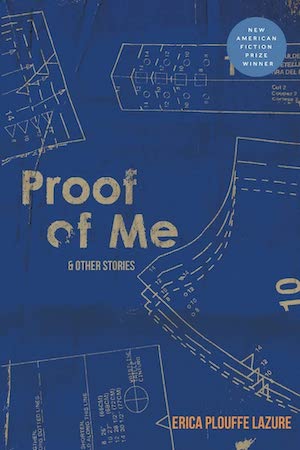
One of the central questions I had when shaping my story collection, Proof of Me, was how to invite into it a unified feel, how to place each story to be in conversation—geographically, thematically, linearly—with what follows. I also sought for each story to stand on its own, offering a microcosmic glimpse into the lives and experiences of my characters, feeling the fullness of their stubbornness, shortcomings, and unrequited bids for redemption. Thus, once each story found its narrative footing, the big-picture connective tissue that often drives novels—the sense of sequence and pacing, the curiosity factor of “what happens next” often surfaced in my own efforts to revise and craft this collection, especially as the themes of the different sections, and the story arcs of the Weaver sisters, Cassidy Penelope Turner, and Sissy Saunders (the infamous Shad Queen), emerged.
So it got me thinking about the relationship between short stories and novels, and the way writers draw from similar patterns and themes in both short and long forms. How does a sense of place, or a magical element, or social commentary, or a character’s motives emerge not only in a compact story, but also over the course of a lengthy novel? How do these elements both introduce and sustain themselves in short and long forms? What can writers learn from short stories to parachute into a specific voice and perspective, and yet find connection and continuity within an ever-advancing storyline found in the novel?
Perhaps these paired titles below might not only help a writer to begin to answer these questions, but also cross-pollinate our reading list and convince both short story writers and novelists alike that there’s a story (or novel) worth digging into.
Read “Flor” in Recommended Reading by Natalia Borges Polesso, translated by Julia Sanches
Offering a rich backdrop of the patterns and complexities in the neighborhoods where Smith’s Irie and Polesso’s narrator live, White Teeth and “Flor” call attention to how their young narrators’ curiosities tease out the biases embedded in their respective communities, whether in Willesden Green, London, or in a tiny, close-knit village near Campo Bom, Brazil. Remaining squarely in the narrative voices of their characters, each author embeds their storytelling with social commentary about sexuality and bigotry, and how children both learn from and challenge long-held assumptions made by people they love and trust. While Smith’s longer form enables her to explore these themes through an entire cast of characters, timeframes, and locations, Polesso’s succinct story encapsulates the various voices and flavors of this Brazilian community, from dancing daily to Xuxa, or conveying the complex dimensions of its residents, and making good use of its reliably faulty power transformer that signals, with pitch-perfect timing, the transformative power of innocence.
The energy and antagonism in Foote’s storytelling as she recounts a story of a gaggle of young cousins’ efforts to “kill” their grandmother feels reminiscent of a story Janie Crawford Starks herself might have heard (or told) sitting on the porch of her second husband’s general store. Foote, whose creative work melds family legend, regional history, and her own imagination, steps right into the mindset of her child narrators as they plot to chop off their grandmother’s “good” hair and recount with building frustration each of their foiled plots. Like Hurston, Foote’s style mixes weighted, gorgeous prose (“The silence is thick enough to step on”) with an ear that knows how to capture the bounce and phrase of the spoken word.
Read “The Bad Graft” in The New Yorker by Karen Russell
In both The Tiger’s Wife and “The Bad Graft,” a bit of magical intrigue entangles the protagonists of an otherwise ordinary road trip, taking each of them on journeys that metaphorically and literally encompass their whole being. In The Tiger’s Wife, Natalia’s search for her grandfather’s belongings in the Balkan countryside transforms her from a hard-nosed skeptic into a believer in the supernatural, whereas in “The Bad Graft,” Angela and her boyfriend’s vacation to Joshua Tree leaves them with an unexpected souvenir. An intriguing narrative “shift” into the consciousness of tigers and plants, respectively, incorporates a mythic and magical realism element amid these already rich landscapes and storylines.
Set in the deep South, and under the influence of an ever-present ghost of William Faulkner, both tales give voice to the stark challenges of siblings growing up in poverty, with an added element of overlapping personal and natural disaster, absent mothers, hapless caretakers, and the care and neglect of (sometimes wild) dogs. Both told from the perspectives of a perceptive child, Salvage the Bones and “Strays” offer up a strong sense of place and the musical twang of local voices, and transport the reader into a time and space where growing up fast is just a part of life, and required for survival.
Anyone who loves the solitude of the sea and shoreline, the stories of those who live there, and a bit of magic shot through for good measure, would fall in love with both The Plover and “The Shell Collector.” The narrators in both stories draw from the gifts of the sea—its shells, its brine, its inhabitants—to find in them both harm and healing. Beautifully rich storytelling offers the message that nature’s beauty is as potent as its poisons, and their Hemingway-esque narrators eventually learn that any effort to find escape from the past in the ocean’s salty waters will inevitably receive its comeuppance.
Read “The Other Man” in The Refugees by Viet Tanh Nguyen
Set in San Francisco, Nguyen’s story “The Other Man” could easily serve as yet another of Hamid’s nameless characters in Exit West, as he zeroes in on one of many voices and eras embodying the refugee experience. One might imagine that the magical “doors” that frame Hamid’s novel transport the reader into an apartment of Nguyen’s design, where (just like Nadia and Saeed of Exit West) the possibilities of reinvention, of economic stability, of finding love (or something like it) in this city are all within reach.
Read “Paraguay” in The New Yorker by Donald Barthelme
Steeped in the fabulist tradition and embracing the modular story form, both Calvino and Barthelme’s respective efforts craft a “guided tour” through an imagined landscape, borrowing from travelogues, geographical terrain, historical facts and documents, and the peculiarities of the human condition to convey a strong sense of what makes a place unique. Calvino’s novel especially invites a consideration of how folkways, values, and cultural norms of a specific place are part and parcel of its geography, and Barthelme, in a clear homage to Calvino, emulates this sentiment on a much smaller scale.
On the day that Jimmy arrived, I was convinced that I was going to die. I caught H1NI three days before my thirteenth birthday, and it was early enough in the Swine Flu epidemic that my small-town Ontario doctor hadn’t seen it before and wasn’t sure how to treat it. Stomach bug symptoms came first. Funfetti cake in and Funfetti cake back up and out. Then, my muscles atrophied, locking my arms and legs and jaw in place.
My memories from that time are merely fragments. Hot pink pillows soaked with sweat. Flat ginger ale. Nicolas Cage’s voice as the dad in Astroboy, playing from down the hall. A bedroom door on the bottom floor of a green and white Duplex. A fist-sized hole in its center.
I have no way of explaining the exact moment in which I split. There is simply a before: immobile and afraid. And an after: a new voice inside my head. Not my own. Someone else.
You’re okay.
I felt faint, like floating, like falling, and I could see myself, my body, separate from where I was, in front of me, like a video game, and I wasn’t afraid, and I wasn’t in pain.
I had been writing little stories and poems for years beforehand. I thought I knew how to create characters.
A week later, I was allowed back at school. I had missed a provincial literacy test while I was ill, so my eighth-grade teacher assigned me a short story project to write in its place.
I had been writing little stories and poems for years beforehand. I thought I knew how to create characters. Describe settings. Craft dramatic and angsty thirteen-year-old sentences. At the very least, I knew what it was like to consciously create something from nothing.
But when I sat at the desktop computer in my bedroom, equipped only with Open Office, Microsoft Paint, and minesweeper, I felt a tug on my brain—physically, like the light-headed sensation that follows whiplash.
And I heard the voice again. And instead of pushing it back, and creating new words, I listened.
Dissociative Identity Disorder is one of several dissociative disorders officially classified in the DSM-5. Formally known as Multiple Personality Disorder, DID’s diagnostic criteria are as follows:
A. Disruption of identity characterized by two or more distinct personality states, marked discontinuity in sense of self and sense of agency, accompanied by related alterations in affect, behavior, consciousness, memory, perception, cognition, and/or sensory-motor functioning.
B. Recurrent gaps in the recall of everyday events, important personal information, and/or traumatic events that are inconsistent with ordinary forgetting.
C. The symptoms cause clinically significant distress or impairment in social, occupational, or other important areas of functioning.
I didn’t know about dissociative identity disorder at thirteen, but I was old enough to know that something was wrong with me.
Dissociative Identity Disorder can only develop after overwhelming experiences, traumatic events, and/or abuse occurring in childhood in a person whose brain is more susceptible to dissociation: a mental process of disconnecting from one’s thoughts, feelings, memories or sense of identity.
Most psychologists agree that DID only develops when these overwhelming experiencesor traumatic events are consistent, paired with disorganized attachments to primary caregivers, and take place before the ages of 5-9 years of age. However, traumatic events after the age of nine can trigger the splitting off of additional alternate states of being, or alters. When someone with DID is traumatized, their brain essentially creates a new person to hold the memory of that trauma, to hide it from the person who is conscious in the body the most, or the host.
Unlike its portrayal in movies like Split, DID is typically a covert illness, created so that the host and the people around them are unaware of the traumatic events that certain alters experienced for them.
Because of this, DID is often diagnosed later in life. You’ve likely met someone with DID and had no idea.
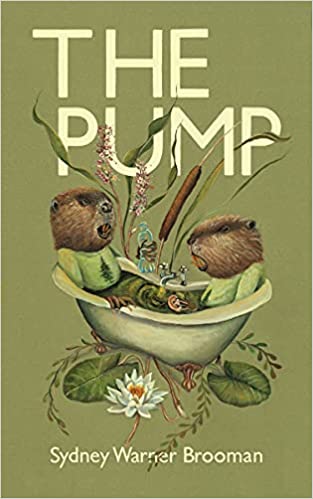
If you’ve met me, either as a friend, a co-worker, or the author of The Pump, then this is a certainty.
By 2021, I was an entirely different person—not just by growth, but by fusion. I had personality traits and memories that I didn’t have in 2017.
I was first diagnosed with a dissociative disorder in early 2019, and my first fiction book was published in Fall 2021. I mention these two facts together because, though being a writer and being a DID system are different aspects of who I am, I will never be able to separate them.
Long before I was an author, I was still a writer; long before I had a DID diagnosis, I still had to manage the symptoms of DID and its complex post-traumatic comorbidities.
When I first became aware of Jimmy, I didn’t know that I had dissociative identity disorder. All I knew was that he wasn’t a character I had consciously created.
Jimmy has a voice that is distinctly not my own. Internal—never from an external source. There were other voices before him. Stephen. Claire. Each distinctly their own. When I was younger, I thought that they might be guardian angels. I didn’t know about dissociative identity disorder at thirteen, but I was old enough to know that something was wrong with me.
I kept Jimmy to myself, but I wrote about him. Thousands and thousands of pages that I will never share. He spoke. I wrote. And we processed his existence together.
After I wrote about Jimmy, I wrote about the other voices as well. There was a difference between writing fiction and writing about the people in my head: fiction required creation—this was listening.
Imagine writing while handcuffed to someone—someone who you’ve been handcuffed to for most of your life, who knows you more intimately than anyone else. Imagine that, while you write, they tell you about themselves. You copy down what you hear. You try to understand things about them—things that are really about you. Memories. Preferences. Motivations. When I write fiction, I’m creating all these things from scratch. When I’m listening to an alter, trying to understand who they are, I’m not creating anything at all. Slowly, year by year, word by word, I learn how to communicate with who I’m writing about.
I can connect with a fictional character I’ve created on an empathetic level, but when I am done writing, I can disconnect from them as well. I can’t disconnect from my alters. I can’t change things about them to make them more interesting, or change their backstories, or cut them out of the narrative of my life altogether. Each alter exists for a specific purpose related to my life experiences, and all of them exist to keep me alive.
Communication within my system continues to take a tremendous amount of effort. I have some alters who I have no communication with. When they switch out, I have no awareness, and when I’m back, I don’t remember anything they’ve experienced. I only came to learn about these alters because one of them started leaving me notes. Sometimes just reminders of things like where I was or what I had been doing; sometimes long paragraphs about the trauma they had experienced.
When I was finally diagnosed, it became clear to me that communication between me and the rest of my system was necessary for living a functional life.
My short story collection The Pump was a way for me to process my childhood and adolescence growing up in Grimsby, Ontario: the isolation of being queer and living below the poverty line; the hypocrisy of municipal governments advertising our area as the Greenbelt while polluting the land; the strangeness of leaving the place I grew up in and returning a completely different person.
Writing the book was an incredibly cathartic experience, but in 2020 and 2021, my dissociative disorder made editing it one of the most difficult things I’ve ever done.
My personal healing trajectory includes something called fusion: when two or more alters fuse together and become a single alter through increased communication or healing. I wrote the first draft of The Pump in 2017, but by 2021, I was an entirely different person—not just by growth, but by fusion. I had personality traits and memories that I didn’t have in 2017. Editing my work included having to write new sentences, and in some cases, entirely new chapters, in the exact same style. This was close to impossible because I was—quite literally—a different person.
Editing The Pump was also difficult because it required me to read and reread descriptions of the town that I grew up in. This process was incredibly triggering for me, often inducing flashbacks, and worsening dissociative symptoms. For other alters that held different trauma than I did, rereading the book was impossible. I had to go slowly, carefully, and communicate well enough to ensure that certain alters were farther back in my mind.
Writing my newest book involved a lot of note writing: both notes for myself, from myself so that I didn’t forget my ideas, and notes from me to any alter who might switch out, to help them understand what I was doing.
Better communication between alters can sometimes increase something called co-consciousness: when two or more alters share consciousness—the front of the body—at the same time. Think of it like a race where two runners have one of their legs tied together, and they must learn how to walk as one person, rather than two separate people.
Through writing, I’ve managed to connect to my alters, facilitating empathy and understanding.
Two of my alters—Jimmy and Stephen—have learned throughout my life how to act exactly like me, how to communicate with me when they’re out and I’m not, and how to continue writing something that I started. But there are other alters in my system who have no ability to mask. They can’t act like me, let alone write like me. When those alters are more active, or ‘closer’ to the front of my mind, I can’t write at all.
I wrote this piece with Jimmy close by. Most of my DID involves something called passive influence, where an alter’s memories, emotions, or thoughts can influence whoever is fronting in the body. I can identify when certain emotional reactions or memories are not my own, but I will get hints of them in my awareness regardless, like drinking vitamin water that tastes faintly of fruit, almost as if the flavour is far away.
Jimmy remembered more of my thirteenth birthday than I did. I often had to pause my writing and battle intense dissociation. Eat. Rest. I cannot force my brain through work that could force it to split. We reorganized my desk in a state of wavering co-consciousness. I had a flashback. Fought my telltale signs of an appending switch: headache; nausea; dizziness; vertigo; blurred vision; confusion. Switched anyway. Sat in the driver’s seat of the car of my body while Jimmy took a bath. I consider this a good writing day. We did what we could.
Through writing, I’ve managed to connect to my alters, facilitating empathy and understanding. Privately, in the comfort of my own home, writing about my system has been a practice of healing.
Writing may not be your healing practice. You might find solace in singing, or cooking, or simply giving yourself the time and space in a safe place to listen to the parts of you that need to be heard—regardless of whether you have DID. Whatever your practice is, hold onto it. In her new book Body Work: The Radical Power Of Personal Narrative, Melissa Febos says “There is no pain in my life that has not been given value by the alchemy of creative attention.” You do not need to suffer for your art—to choose between your creativity and your healing. Search for the place where the two of them meet. I can’t promise you that you’ll find it. But the act of searching will change everything.
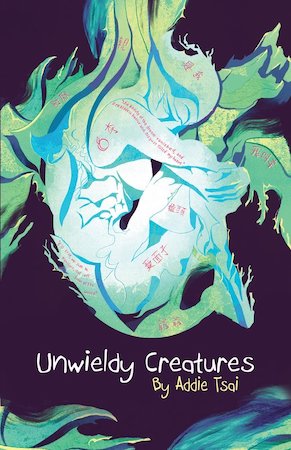
Addie Tsai’s novelUnwieldy Creaturesis a queer, contemporary retelling of Mary Shelley’s Frankensteinset in Indonesia and the American South. The novel explores the transgressive nature of existing as a queer body, an “unwieldy creature,” in a society whose obsession with bodily perfection and beauty serves as a tool for reinforcing heteronormative standards of behavior. Shelley’s Victor Frankenstein becomes Tsai’s Dr. Frank, a queer biracial woman whose dysfunctional experiences of parental affection at home lead her into becoming obsessed with creating the perfect creature birthed from the bodies of two same-sex partners: herself and her female lover named Hana. What starts out as a queer scientist’s striving to birth a creature that is perfect to behold—which Dr. Frank envisions as a means for her and Hana to gain acceptance in a world that rejects queer bodies like their own—results in tragedy. Hana gives birth to an ugly giant that Dr. Frank finds herself incapable of loving, upending Dr. Frank’s mission of creating a being out of her own unwieldy body that she can love as her own.
Critics often speak of Frankenstein as a cautionary tale about human ingenuity as it goes several steps too far in reshaping natural laws, but Tsai brings to our attention an aspect of Shelley’s Frankenstein that has become overlooked, and that is our ability as a human race to love and care for beings that fall outside society’s norms. Are beautiful and perfect bodies that conform to social norms of presentation and behavior the only bodies that we are capable of loving? I talked to Tsai, over email, about how the retelling of a classic tale can unearth such overlooked questions that are especially relevant today.
Monica Macansantos: In an essay you wrote for Columbia Journal, you talked about connecting to Frankenstein at multiple points in your life. How has your relationship with Frankenstein grown since your essay’s publication in 2018, which (if I’m not mistaken) was before you started writing Unwieldy Creatures?
Addie Tsai: In 2019, I began the process of IVF (in vitro fertilization) with my former partner. I never actually made it to the procedure itself—I would end up going through an incredibly fraught divorce not long after I believed the treatment would begin—but it was through learning more about that process in full that I began to think about the rise of access in reproductive technologies and how Frankenstein, I felt, would be the perfect classic text to explore some of the ethical concerns as our technology evolves faster and faster where reproduction is concerned.
In other words, I went from considering and relating to the point of view of the Creature as an abandoned child, as Othered, to thinking more about what a Victor Frankenstein would be like in this rise of reproductive technologies and ethical concerns around creation.
MM: Dr. Frank, like Mary Shelley’s Victor Frankenstein, is a complicated and oftentimes unsympathetic character. What makes Dr. Frank’s character flaws particularly interesting to me is how they arise from her own grievances as a queer biracial person who has struggled to find love and acceptance from an early age. Could you talk more about your experiences of writing a deeply flawed queer and biracial character, as well as the challenges that this may have brought?
AT: There is a subplot within the original Frankenstein that I’ve often felt had much potential but was rarely addressed, which I wanted to address here, but obviously with new complications under a racialized and gendered framework. To me, it is significant that Frankenstein sets out on a quest to create life not through living things, but through dead ones. Did he imagine that if he were able to accomplish this, then perhaps he could also bring his mother back from the dead? If we go backwards and look at Victor’s childhood with these aspects in mind, I wanted to address what else could cause the kind of narcissistic avoidance of responsibility and obsession with one’s own ambition. Instead of whiteness and masculinity being assumed, I wanted to use these ideologies to inform how Dr. Frank’s flaws could rise from the abuse and violence of toxic white masculinity. Certainly, because Dr. Frank is not a cishet white man, it was very important that she was cast as Dr. Frank very intentionally, from a defensive reaction rather than an offensive one, if that makes sense.
All of us “marginalized” writers are writing in a time in which more attention is being given to issues of race, gender, sexuality, disability, class, etc. This is great, but what it’s also done is cause a kind of hypervigilance around the kinds of characteristics that are “allowed” on marginalized characters. I think the goal is not to tokenize or put these characters on a pedestal, but to write through them in complicated, thorough ways. I knew that it was a risk writing through a Frankenstein figure who was not white, straight, or masculine, but I felt it an important and interesting experiment to work through. I think my Dr. Frank is a bit more sympathetic than Victor Frankenstein, but she still manages to chase her own ambition rather than considering those around her. If only she’d gone to therapy! Alas.
MM: Dr. Frank is half-Indonesian, and your novel often draws upon the culture and language of Sulawesi. What drew you to Indonesian culture, and could you talk about your experiences of researching and working it into your retelling of Frankenstein?
AT: Honestly, I’m not sure what drew me to rely on Indonesia and Indonesian culture. I had dated someone in my early twenties who was Indonesian Dutch (his father was Dutch and his mother was Indonesian and raised in Singapore) and so I had a tiny amount of knowledge from that time and experience, but not much. I knew I wanted to focus on an Asian character, but I wanted to expand my writing to try to write through an Asian country and culture that I hadn’t personally experienced. I wanted the land that Dr. Frank came from to feel a bit less familiar and written about than Taiwanese or Chinese culture. That was part of it.
I read an article at some point about the different gender categories of the Sulawesi, which is why I made a decision to bring those into the world of the novel. I don’t really plan or outline novels, and this was the first novel I’ve written that was truly fictional, with no parts of it based on my personal life or experience. I know this sounds silly, but it’s true: the novel led me where I needed to go. I started each day by reading the particular part of Frankenstein I planned to retell, and went from there. I think the most in-depth research I did was on the wedding scene. Of course, I also hired an Indonesian sensitivity reader to make sure my research hadn’t led me astray or that I wasn’t saying anything that would be considered offensive or inappropriate in one way or another.
MM: Much of your novel grapples with the power dynamics that come into play in romantic relationships, as well as in the parental relationships that come about when these fraught romantic relationships result in children. Dr. Frank’s parents have a difficult and unwieldy marriage due to a power imbalance resulting from differences in class, culture and race. The product of this unwieldy union, Zoelle or Dr. Frank, is also an unwieldy creature whom her white father finds difficult to love. Could it be that our own failures to love these “unwieldy creatures”, even when they’re of our own flesh and blood, stem from an imbalance of power in the way we relate to people? Does power hinder our ability to love?
Instead of whiteness and masculinity being assumed, I wanted to use these ideologies to inform how Dr. Frank’s flaws could rise from the abuse and violence of toxic white masculinity.
AT: I love this question. Absolutely. I think we tend to consider power in obvious places (and then, still not as much as I would like or would argue for): mostly in terms of physical power differentials, or power in terms of professional positions. But it’s my belief that power shows up a lot more often than we’re willing to admit. I’ve observed more often, for example, that there seems to be a refusal (I use that word deliberately) of parents to see their position as one of power. Or all of these other aspects that the book addresses that you mention: class, race, culture, and, I would add, age (at least where Zoelle’s parents are concerned). It’s my belief that it’s not just the imbalance of power that’s to blame, but also a refusal to confront that imbalance of power.
I think in terms of the idea of failing to love our “unwieldy creatures,” it has a lot to do with some aspect of the relationship that we, ourselves, do not want to confront. Something it activates within ourselves about our own selfishness, ego, power to abandon. If we never face what’s most monstrous in ourselves, then we can never truly be present for another person. In terms of your final question, oh, what a good one! I would say that the higher the power differential, the harder the love is to access.
MM: To circle back to my question on power, much of this novel deals with issues of power and consent. We see this when Ezra intrudes on Dr. Frank’s research, surreptitiously tainting an embryo that Dr. Frank then knowingly inserts into Hana’s uterus without informing Hana about its tainting. Could you tell us more about how these scenarios were birthed in your head in an era of #MeToo? Were these issues that you saw in the original Frankenstein that you sought to further explore in your retelling?
AT: This took much headwork to get to. I knew that, because Dr. Frank is queer and also because in a modernized version the idea of Dr. Frank and Ezra actually marrying would not work, that Dr. Frank would never be able to go through with marrying Ezra, which she was forced to agree to at her father’s deathbed, just like in the original Frankenstein. I knew that, because he was an abused and entitled figure, that Ezra would not accept this rejection. I also knew that we had to see Dr. Frank’s narcissism come to full fruition. For me, the clearest way that all of these aspects could be addressed was for Ezra to interfere with Dr. Frank’s life work. What we ultimately learn is that Dr. Frank, at a crucial moment, chooses her own ambition over a kind of integrity, and over the feelings of her partner.
I hadn’t even considered the implications of #MeToo, but I do think that there were different ways I wanted to address the idea of consent. Aside from the fact that I don’t think that, based on the circumstances of how she ended up with the family, Elizabeth was in a position to consent to her union with Victor, I don’t think Frankenstein explicitly addresses consent. However, I think part of what upsets the Creature so much is that not only could he not consent to being born (nor could any of us), he is just left to roam the Earth since his only creator refuses to take responsibility for his existence.
MM: Much of your novel takes place in Texas, a state that has been in the news for its restrictions on reproductive rights, and which isn’t particularly known for being friendly to queer people. You were born and raised in Texas, and you still live in the state. I’m curious about how it was like, as a queer author, to write a novel centering queer bodies and experiences in Texas, at a time when the rights of women and LGBTQ+ people in the state have come under increasing threat.
If we never face what’s most monstrous in ourselves, then we can never truly be present for another person.
AT: Oof, this is a big question. When I started writing this book, Trump was still president, and we were starting to see reproductive rights threatened in a major way in the south. I wrote this in the midst of an endless period of anti-trans bills being brought forward. So, of course, the climate in Texas was very much on my mind as I wrote this. Since that time, we’re seeing even more attacks against LGBTQIA+ children and adults in a multitude of ways. There is a vast community of LGBTQIA+ people throughout the south. We have always been here. It is important to me to create Southern queer characters in complicated and thoughtful ways, if only because it has been important to me to read the works of queer Southern writers who fight to represent us in fiction.
MM: Unlike the Creature in the original Frankenstein whose death is implied, Ash of Unwieldy Creatures is allowed to live, and that is in spite of dia’s (Ash’s pronoun) own crimes. Ash is a morally ambiguous character, just like Ash’s creator, Dr. Frank. What guided your decision to allow Ash to live?
AT: It was important to me that Ash lived. For all of the pain that is in this book, I wanted to end on a moment of joy for this creature, who only wanted to be acknowledged and loved. Ash is able to find a new way, because dia is finally able to connect to a community that is truly able to receive and cherish dia. I would not see Ash as morally ambiguous as Dr. Frank, but that dia required a familial and community connection to heal and transform.
Her fine white hair stood out around her head like a gauzy halo framing the sunburnt face. A lifetime of African sunshine had left so many creases in her skin that she looked as though her tiny body had been only partially inflated and even the back of her skinny neck was creased. I had looked for that when she limped out onto the veranda where I had been waiting while my father examined her in her bedroom. She smiled at me then and said, ‘She’s getting big, Doctor,’ while she bent over a large wicker chair and then sort of collapsed sideways into it. From deep within the wrinkled eyelids two pale green eyes peered out at me as she bent forward to light her cigarette to the flame my father held out for her. She inhaled deeply, throwing her head back and then puffing the smoke upwards.
‘Sit down, child. Sit down,’ and she waved her free hand towards me. My father was sitting in the wicker chair opposite hers and that left the swing seat for me. This was as big as a small sofa and full of soft cushions and suspended by two chains from a metal frame. I loved sitting there but felt an irresistible urge to swing on it which I thought I was probably not meant to do. I had tried it out while I had been waiting. I often accompanied my father when he was on call and had to visit his patients in their homes but I knew I had to be on my best behavior. This was not hard for me. I was by inclination an obedient child and I relished the approval I could earn in this way.
‘We’ll have some coffee. And you’d like a cool drink.’
I nodded. ‘Yes, please.’
Ma Lindsey’s ancestors had been born in Ireland. She was the seventh child of a seventh child and she was born in a caul, and that made her a soothsayer, my father had told me.
I had known about the creases in the back of her neck from my mother who had said to my father, ‘You know even the back of her neck is creased, Jim. And she smokes so much. She looks somehow, smoked, like a kipper.’ And then they had laughed together, which I was glad to see, and he said, ‘Like a kipper! Oh Nora, that is brilliant. She is, she is as smoked as a kipper!’
I had never eaten a kipper and was not sure what a kipper was except that it was a fish and people had them for breakfast back home in England. Of course, I had read about them. All my books were about people ‘back home’. England. Or Scotland or Ireland. The places we came from and to which we would return one day. However, Ma Lindsey’s great-grandparents had emigrated to Africa years and years ago and she would never leave. ‘She will die here,’ I had heard my father say.
So I looked with added interest at the old woman as her cigarette smoke curled around her like a snake and at her dried-up hands and face and sniffed to see if she smelt like a fish too. Her chickens scratched the dry earth around the veranda where we sat and I watched them through the wire netting. One looked up at me holding its head to the side and eyeing me as though it understood everything I was thinking. Did Ma Lindsey talk to them? My father had told me she was a wise woman and could understand animals, and the stars, and she could tell the future and read people’s palms. I was handed a glass of orange squash with a straw. My mother, I knew, would worry about the water. We only drank boiled water at home. My father, however, seemed to be untroubled so I sipped it warily. It was too strong. In fact, I began to wonder if it was diluted at all.
It was peaceful sitting there, swinging ever so slightly, sipping through the straw, watching my father and Ma Lindsey smoking and chatting about the weather. This was October, getting towards the end of the dry season, what my father called ‘the suicide month’ as tensions on the mine between the managers and the miners grew and even families began to fight and men drank too much and beat their wives and children. Only when the storms came would the air be cleared as the rain poured down turning the red earth into streams of swirling red mud and lightning cracked overhead and great thunderheads smashed together and the rain beat down on the corrugated iron roofs of our bungalows with a sound like horses’ hooves. A mangy old dog appeared and walked through the cluster of chickens who ignored it. I heard Ma Lindsey say my name.
‘Come here, child.’
I climbed down off the swing seat and put my drink down on a small table made out of an elephant’s foot. She took my left hand in hers and turned it over and peered down at the palm.
‘Aagh, look at this, Doctor. You’ve got a clever girl here.’ She stroked my palm with her other hand which felt like a soft warm paw and ran a nail down one of the lines on my palm. It was almost but not quite painful but I did not draw my hand away for I had learnt not to show when things hurt. She spoke with a thick Afrikaans accent, like the one that would characterize my voice when I and my parents would finally return home. Then these guttural tones and flattened, shortened vowels identified me as a foreigner and I am still sometimes told by very perceptive people that there is a recognizable echo of this in my voice. This pleases me for I like to know that the traces of our past are irreversibly woven into our current lives and are there for those who can, to see.
‘You’ll go far, my girl, you’ll travel. Travel a lot. A lot of car journeys, but you’ll be safe on the roads. I see two men, one fair, one dark. Both important. You’ll have a long life, and a good one. You’ll be successful. But you’ll die alone. Much loved, you’ll be much loved, plenty of people to love you, but you’ll die alone.’
The green eyes twinkled at me through the creases of her lids and her mouth widened in a grin so that I could see her few tobacco-brown teeth. ‘But that won’t trouble you much, will it? You’re a brave girl and we’re all alone in the end, aren’t we, Doctor?’
My father, who was a bit of a philosopher, nodded. ‘We’re all alone in the end.’
I like to know that the traces of our past are irreversibly woven into our current lives and are there for those who can, to see.
My father’s car was a bright green Hudson Rambler: one of those enormous American cars like a Cadillac in which I would learn to drive one day when I was sixteen. When that time came I often drove too fast on the long, empty roads between the townships for had Ma Lindsey not told me that I would be safe on the roads?
From her place it was about eight miles back to the township down the single strip of tarmac which represented the Great North Road. On either side were wide stretches of red earth and beyond these lay the African bush, the tangle of low trees and grasses and dambos and anthills and animals and snakes that I had been taught never to venture into alone.
As we travelled, I reflected that throughout my life I had been warned that being alone could be risky. I was only allowed to ride my pony in the bush with my father and I had to stay close to him and always be aware that at any moment our horses could be spooked by a snake.
‘Is Ma Lindsey very wise?’ I asked as we munched on one of the chocolate bars he always had stored in the glove compartment.
‘Yes, but she has some pretty wild ideas too.’ My father always talked to me as though I were an adult. I liked that. It made me feel clever and grown up but when I got home I told my mother that Ma Lindsey had said I would die alone.
‘Much loved but alone,’ was what she said.
As I knew would happen my mother was then cross with my father. ‘How could you let that crazy old woman tell the child things like that?’
‘Don’t worry,’ said my father soothingly, ‘She’ll forget all about it.’ But my father who was very clever and philosophical and took me out in the garden at night to look at the Southern Cross through his telescope and treated me as an adult understood me less well than my mother who said, ‘No she won’t, Jim. It is the kind of thing she will remember all her life.’
And she was right, as she usually was. I believed I had been ascribed a certain fate and I needed to understand what this meant. I had always known it was important to stay alive, if only for the sake of my parents, and being the diligent little philosopher I had been brought up to be, I began to ponder on the meaning of being alone. There was a rich seam to mine here, a fault line running through my character, for I am, by nature, solitary. What that effectively means in practice is that a joy shared is a joy halved and a trouble shared is a trouble doubled. And if I look back now through all the years of the long life that Ma Lindsey had accurately promised me I can see that I was always calibrating the relative merits of being alone or not. As a child I already knew that I needed, craved, bathed myself in solitude. Being alone was my best place. As I grew through my teens I began to understand it better. I narrowed it down to a fear of belonging. Belonging to me meant losing something, not gaining anything. Losing individuality, losing, dare I say, specialness. I was a secretive and isolated child and I feared being identified with any other child as some people might fear the plague. Did I sense some contagion in intimacy with others? Yes, I think so. I reflected long and hard on the implications of my tragic destiny.
And then, what was being alone? Being the other side of a room? The other side of a wall? The other side of a country? Of a continent? I read Larkin’s ‘Best Society’ and quoted the last lines to myself with a tremor of recognition.
When I was eighteen my father’s contract came to an end and we returned to England. Once there I found a curious reversal took place. Although I had spent all my conscious life longing to return to the romantic image of foggy, lamplit pavements which for me characterized London, once there I began to feel a kind of nostalgia for my part of Africa.
‘What’s it like?’ I was asked and I stumbled for words to describe it. I tried to imagine Ma Lindsey in Surrey and failed.
Then I went off to university. This was the first time I had left home and everyone told me I would feel lonely. However, I doubted that would be the case. I had, of course, by this stage trodden the well-worn intellectual paths around the question of aloneness versus loneliness. I was not concerned. I knew that fortune tellers did not really exist. I was looking forward to proving that I was still a clever girl and then there were the boyfriends, of whom there were suddenly quite a lot. I tried to work out whether sharing a drink or indeed a bed made one more or less alone and concluded that both situations were irrelevant. Aloneness was something one carried within oneself and there was no getting away from it. So, my reassessment of Ma Lindsey continued and I decided that she might have been crazy but she had seen something in my palm that was true.
From time to time I still wondered how to identify the two men she had promised would be part of my fate. As it happened, while I was at university, I met them both and I married the fair one soon after I graduated. My father and mother had by then responded to a call from the Red Cross for medical assessors in a war-torn country and I was suddenly in need of a home. My intellectual competence had not equipped me for managing my own affairs after all and a home was on offer and so I married the fair boy although I was fervently but secretly yearning body and soul for his best friend. Yes, he was the dark one. Fortunately, as in the best fairy tales, the fair one was also kind, honorable and trustworthy. We all know there is a common assumption that marriage brings companionship although we all also quote Chekhov along the lines of, ‘if you fear loneliness, never marry’. I was alone in my marriage and it suited me. Or I thought it did. We had two wonderful children and gave dinner parties and joined clubs and played tennis and had friends around to play Monopoly. We looked like a couple but I was never there. We lived alongside each other for eighteen years at which point we realized there were better ways to live and we split up, with honor and without too much acrimony. I collapsed back into a solitary way of life with gratitude. The former best friend, who had apparently not loved me when it mattered, came calling and we established a distant but passionate sexual conspiracy during which my bodily yearnings were fully satisfied although I believe my soul remained neglected.
During this time I also downsized, found a new home and put a lot of energy into my career which, surprisingly, flourished. I wrote historical novels. I was not proud of them but the proceeds paid the bills. A reviewer called the first one, ‘staid but pleasing’ and the fourth novel was described as ‘formulaic’. It stung but they were right. I had hit on a formula that worked. I would have preferred, of course, to have written a Mrs Dalloway for our times. But when I was alone with the screen in front of me my courage failed. And yes, I have asked myself since then whether this was the literary version of being afraid to go into the bush alone? Maybe it was. However, I did not explore that question any further and I proved very successful at being self-sufficient during those years. An onlooker would have said I was flourishing. Could I be described as being alone? Definitely. Was I worried? No. Ma Lindsey’s green eyes lurked at the back of my mind although I looked back at the credulous little girl I had been with a degree of fondness and disbelief. But everything was about to change again.
Aloneness was something one carried within oneself and there was no getting away from it.
I had bought a small house on the outskirts of the city in an area that possessed the convenience of a suburb and the charm of a village. My house stood on the top of a hill and there was a long row of similar houses all down the street to a little bridge across the river with a view of the water-meadows beyond. One day my eldest granddaughter asked if she could come and live with me as she had a place at a local sixth-form college. I have always believed that the signs of successful mothering are that the children can leave home but, my granddaughter wanting to move in with me, well, that was an unexpected gift. We were in the car one day, I was driving her back to the bus station after a visit, when she said, ‘Granny, can I come and live with you?’ And I, without hesitation, heard myself say, ‘Yes.’ It was so simple. Yes. No questions, just yes. From my heart. For two years she lived with me and I with her. There was all the usual teenage stuff. Driving to parties, collecting at midnight, meeting friends, hosting boyfriends, providing money. Worrying. Dropping her off at her insistence in what seemed to me undesirable neighborhoods, asking her if she did not want to take a coat on a cold November evening. Lying awake, listening for the front door. Trying not to intrude. Finding out what she liked to eat. Once I cooked her lamb’s liver. Never again. Once she made me a card for Mother’s Day. I still have it. She wrote inside, ‘Because you look after me like a mother’. I was in my late sixties by then and I look back on those times with such fondness. I believe we were a unit. I cried when she left but she never looked back. This is how it goes. The love I gave her she will hand on. It trickles down, not up. That is how it should be. And I was arrogant enough to think that I had this being alone stuff sorted. Until the strangest thing happened.
It was October again and that year it stole some of March’s thunder and came in like the proverbial lion. And, like a lion, it terrorized the village and everybody felt scared and overwhelmed and talked about little else. Its winds roared around us, whipping the still leafy strands of the willows along the river into a frenzy as though they were long fronds of seaweed beneath breaking waves; it tore some trees down and leapt upon the storm clouds crushing the rain out of them so that oceans of water fell onto the land, already wet from September’s incessant drizzle. The rivers filled up and some flooded their banks. Our river rose above the level of the bridge and although the arch in the center of the bridge remained just clear of the water level the road either side of it was impassable. The last cottage in the row now had several feet of water surging through it as the swollen river lapped at the foot of the lane. I had seen the woman who lived there when she was working in our local charity shop. I walked down while she was struggling with the help of some of her neighbors to replace the useless sandbags and asked if she would like to move in with me until her home was habitable again.
She was a skinny, nervous woman, with very dark brown eyes and a thin anxious face, rather bird-like in many ways, like the birds she looked for and fed every day. She fed them and I fed her. I take after my mother’s side of the family. Plump people, thick-necked and double-chinned, shrinking in height into a round ball with age; they were robust in many ways, but needed to be pampered. She was like a small bird, she brought out in me all those feelings that are nurtured within children when they carry around a doll or a teddy bear, for what else is that caretaking attitude but a determination to feel large and powerful as you lend your larger size and greater strength to care for these dependent creatures. It helps that the toys are immobile without us and can be discarded at a whim, unlike our later human dependents, although to my shame I had, in the course of my life, cherished my ability to discard people, lovers, friends, colleagues, when in my eyes they had outlived their usefulness or their desirability. Hence, perhaps, the inevitability of dying alone but Miriam brought out something different in me. By calming her I felt my own calmness. She began to feel like a part of me.
My house has two bedrooms and a bathroom upstairs and a little junk room. She moved in for an indeterminate time, a few weeks or months, I suggested, until her house could be dried out and refurbished. She spent a lot of time down there as the water receded and she got it professionally tanked and painted. She was a passionate gardener and she rescued many of her best plants and brought them up the hill to my garden.
‘You don’t mind, do you? I’ll take them back when everything is back to normal.’ Naturally, I didn’t mind.
We rapidly developed a new normal. We shared the bathroom. She was extremely orderly and I grew quite fond of the presence of the extra toothbrush and the tidily folded towel on the towel rail. She helped me discover an interest in birdwatching and we went on a nature weekend to the Highlands and we liked it so much we decided to plan another. It was unduly expensive to reserve and pay for two single rooms so eventually we decided, I forget when, to share a room when we traveled. By this time her house was in excellent condition and we decided it would be simpler to let it. Very soon it was providing us with a good income. As the months went by I found a new happiness in the knowledge of her proximity and in the confidence of her presence at night and it became clear to both of us that Miriam and her plants were here to stay. She was a good cook and after finishing the day’s writing I soon got into the habit of looking forward to sitting down with a glass of wine, or sometimes a gin and tonic, to talk over the day. Often we would go out into the garden and she might show me a sick plant, or a new one, and I would let her know how the latest chapter was progressing. Then, perhaps, in winter, a steak and kidney pie or a roast chicken and some vegetables from the garden. In the summer she made lovely salads. I would look at her and wonder what it was that had drawn me to her. She was no beauty. Her dark hair hung untidily across her thin face like a schoolgirl’s but I loved the seriousness of her expressions, the slight indentations between her eyebrows which never went away even when she was smiling. When we lay together at night I found such peace in holding her twitching, restless body in my arms. I smoothed her hair and murmured to her as she fell asleep. And so three years passed. How happy I was. How happy we were. Now and again, I asked myself if I was alone? Company I had long ago disqualified as a measure of aloneness for I had learned in the past that even sexual intimacy did not banish aloneness. And I was proud by now of my capacity to carry my essential aloneness everywhere. Of course I will die alone, I said to myself, after all I have lived alone all my life. And I felt again the soft warm touch of that wrinkled little hand and the sharp pain of Ma Lindsey’s nail as she drew it across my palm.
And then the weekend came when Miriam told me that she felt she had to go and visit her sister. They were not close, she had hardly seen her for many years, but her sister was very ill. She lived in Inverness. Miriam had heard from a nephew that she was close to death. She had asked to see Miriam. My first impulse was annoyance. What had we to do with them? What had she to do with us? However, reason quickly intervened and I said, with as good grace as possible, ‘Of course you must go, Miriam. I’ll be fine here for a few days.’
‘Are you sure?’ she asked. I looked at her. The two indentations deeper than ever. ‘I don’t really want to leave you.’
And as I looked at her I wanted to scream, ‘No! No! Please don’t go! Don’t leave me! I’ll die without you!’ But I had never ever, in my whole life, said there was anything I could not manage. I could survive anything, even if it hurt. I had never begged for anything in my life. I simply did not plead. Hesitantly, she looked away and said, softly, ‘You could come too, if you wanted.’
But that was the last thing I wanted. I could imagine an unfortunate scenario of family wailings and embarrassing intimacies.
‘You go,’ I said. ‘For God’s sake, I’ll be fine.’
As I watched her get into the taxi for the station I felt a terrible sense of doom again.
‘I’ll be back soon. If you need me sooner just ring.’
‘I will.’
She had gone for four days and three nights and I would be alone again except for the cat. I have not yet mentioned the cat who has a significant part to play in this last chapter of my life. When she had scrambled up the hill from the flooded house Miriam had brought an armful of cat with her. Susie was an enormous cat. Furry, fluffy, tufted all over, with large, pointed ears and a scornful demeanor. She had been rescued from the river by Miriam. Advertising brought no response. So she stayed. She showed no interest in the birds which Miriam took as a sign of her superior intelligence.
That first evening Miriam rang to say she had arrived safely. It was all pretty grim but her nephew was grateful to her for being there. She was not sure that her sister had recognized her but she was glad to have come. My heart raced. I longed for her to return. I was beginning to recognize that in truth I had never ever, in my whole life, been alone. To be alone you need to need someone who is absent. The need, the belonging was what did it. You had to admit that you depended on another. You needed to need that other like life itself. I am an old woman and evidently a rather foolish one since this was a new thing for me. As I went to bed that first night I thought, when Miriam comes back I must tell her this. And I must never, ever let her go away without me again. Was this why Ma Lindsey had twinkled at me that afternoon so long ago? Had she seen something I had no idea of at all? She had said I would be brave. Well I was trying to be brave but I had never known such unhappiness and I cried like the child I once was and buried my head in the pillow. The second night I managed better. When she called I told her everything was OK but that there was a terrible storm blowing up. There was a warning of ice. I put Susie’s supper out, as per instructions, but she was not there. Normally she would hang about in a rather dog-like way. I listened to the wind outside and checked the cat-flap. I had noticed earlier in the day that the lid of the rain barrel had been blown off. I put it back on again but maybe it had again been blown away and I was seized with a terrible and ridiculous fear that Susie had fallen in and then, suddenly, the cat-flap clicked and there she was. Wet and cross but alive and well.
I was beginning to recognize that in truth I had never ever, in my whole life, been alone. To be alone you need to need someone who is absent.
The storm continued all the next day. I couldn’t write. I sat at my desk and stared at the screen and there was a miasma of grief where there should have been images and ideas. The hours passed. I thought of ringing Miriam but she had no reception where she was and so it had to be the landline. I found her absence unbearable and did try ringing her once but there was just the infuriating BT answerphone and I didn’t leave a message. Once again, Susie was not there for her supper. I had checked the rain barrel during the day and had tried to secure the lid, which was definitely loose, but I knew it would not hold. I am not practical. I listened to the monstrous gusts of wind and once again became gripped by the conviction that Susie had fallen in. Furious with Susie and furious with myself for my absurd fantasies I stormed out of the house, leaving the kitchen door open so that the light shone down the narrow paved path that led around the corner of the house to the barrel. The wind screeched through the tangled branches of the trees above me and I had to struggle to keep upright. The onset of the night’s freeze was already apparent. Sure enough, when I got there the lid was gone but at that moment the wind blew the kitchen door shut and I could see very little. Pointlessly, I patted on the surface of the inky black water, my fingers freezing, squinting at it to make sure Susie was not there. And then suddenly she appeared from down the path and shot past me as a massive blast lifted the tops of the trees up and then bore down upon me and knocked me over. Falling, I grabbed at the rim of the barrel which fell on top of me, the weight of it pinning me to the ground as the ice-cold water flooded everywhere. My head hit the path hard. I lay there in the darkness, trying to breathe, water curling over and around me, frozen with shock and fear. The barrel was now lodged against the wall beside the path and the full weight of it was on me. I moved my head and a dreadful shaft of agony flew down my spine and into my pelvis. I began to cry. No-one would see me here. No-one would hear me and I was not even sure I had enough breath to call. I tried not to move to avoid that agonizing spear of pain. My mind drifted. I shall die, I thought. Could I last the night? No. I couldn’t. What would Miriam do when she rang and found no answer? Would she call a neighbor? Would anything be in time? My feet were numb and I realized that in falling I had trapped one arm behind my neck. It was suddenly agonizing and yet I couldn’t move it. I wondered if I was paralyzed. I felt my chest trying and failing to cough out some of the water that had covered my face. I wished that I had lost consciousness and then I wondered whether I had. I had no way of knowing how long I had been there. There was no light and my watch was on my trapped arm. All I can remember was the soaring wind, the icy water and the creeping terror.
And then, a shaft of light. I looked up at the frantic movement of the branches overhead, their leaves glistening in the sudden glow from the kitchen door. A voice, Miriam’s voice, shouting, calling, crying, and someone was rolling the barrel away, pulling at me, dragging me up the path. I may have blanked out for a bit for I next remember lying helplessly on our kitchen floor. Towels, warm towels, my dripping clothes tenderly removed, terrible pain. Blankets, duvets, pillows. I was sipping warm milk with, was it whisky? Miriam kneeling beside me, whimpering with fear and anxiety. Oh God. Oh God.
I have abandoned philosophy. And I have stopped trying to make sense of things. I didn’t die that night but I had fractured my pelvis and dislocated my shoulder. And I was suffering from hypothermia. They kept me in hospital for almost a week. I had probably been unconscious for over an hour when Miriam found me and dragged me inside and called an ambulance. She had come back early because, she said, she had heard signs of distress in my voice the previous night. For months I was horribly disabled. We had to install a stairlift and I consider I aged ten years overnight. Sitting at a keyboard was impossible but that did not matter for I now found I had nothing to write. Certainly none of the usual stuff.
I had recognized that, on my way to death on that garden path, frozen and in agony, I was alone in a way I had never known before. I wanted time to think about that.
I am sitting today in the shade watching Miriam as she bustles about the garden in the early summer sunshine and I marvel at her energy and skill. The birds are busy about the feeders. I love her more than she knows; maybe more than even I know yet. I am new at this game but thanks to her I have a second chance. I might still die alone one day and she might die first and I know that and she knows that, and maybe that is the way it goes, but today we have this. We have talked about Ma Lindsey and her predictions and, since I am still without my keyboard skills, I am writing this longhand as Miriam has asked me to. She thinks it is a story that should be told. And then, maybe after some others, I plan to try my own Mrs Dalloway. I probably lack the talent but maybe I will find I am brave enough to attempt it after all.
When my best friend and I first saw the apartment, we loved it. We thought it a little strange, a tad bruised, but overall it felt right – and it was a good price and we needed to move quickly. When you rent a basement apartment in New York City for the price, you don’t think that a global pandemic will force you to spend so much time inside of it. We expected to eat some meals there, sleep there, but mainly be at work or otherwise out. So, the issues that were apparent – it was a basement after all – didn’t seem like red flags. Maybe tiny yellow ones. And that price!
During lockdown, we noticed everything: the cockroaches living in the drains, the lack of natural light, the leaks in the exposed pipes throughout the apartment, and the dampness that turned into mold under my bed. Eventually, my roommate realized the apartment was illegal, which she told me by waking me up at 3am and showing me documents she had found online. The icing on the cake. We were both going through it – locked down in a basement without sunlight will make sense disappear.
The only thing I remember is that my mom called to tell me she had wrapped him in a blanket so that he could be comfortable.
During this time, I was teaching online and socializing online and dating online, which kept me somewhat busy. When I didn’t turn on the news and ignored the ambulance sirens and the 7pm clapping, I could pretend that everything was “fine.” But then my grandmother died. Later, my cousin, in that strange period when we were not out of the woods, but we were not longer in the house. Earlier in the year, my great aunt. Sometime during lockdown, my family dog died. I can’t remember at all when this happened; the only thing I remember is that my mom called to tell me she had wrapped him in a blanket so that he could be comfortable. This is how time moved in lockdown: slow, long days all morphed into one so that even time of death failed to stand out. None of them died from Covid; they all passed from other sicknesses that I forgot existed: old age, cancer, aneurysm, doggy old age. Suddenly, somewhat busy was not holding me together anymore. I wanted to escape.
In college, I had played the Kim Kardashian game (Kim Kardashian: Hollywood) and the Demi Lovato game (Demi Lovato: Path to Fame) for a few weeks each. The ads were all over social media. They had similar plots. You played your own version of the up-and-coming star and you rose to fame in either Kim or Demi’s orbit. I would play for a while and get really into it; then I would get busy or bored and move on.
I found these kinds of games again in Lock Down. In Digital Interactive Fiction apps, reality is flexible. It lives under your thumb, because of your thumb; you move the small, predictable world along. You have power. When I downloaded Choices, I did so because I wanted to feel immersed in something, but I suspect that part of it was that I couldn’t control what happened in a book or a show like I could in Episodes or Choices or Chapters. Just like in life at that moment, I was along for the ride.
Interactive Fiction Apps let the player influence the plot and their character through the decisions they make. It is part literature, part video game. These kinds of games emphasize that your choice affects the ending. Your choices can determine who likes you, who you end up with, if you die, or if you succeed. I don’t know if your character is pre-destined to win Love Island: The Romance Game, but you play a part in how you get there and who you get there with.
You want a slammin, expensive looking outfit that all the other characters will comment on? You need diamonds.
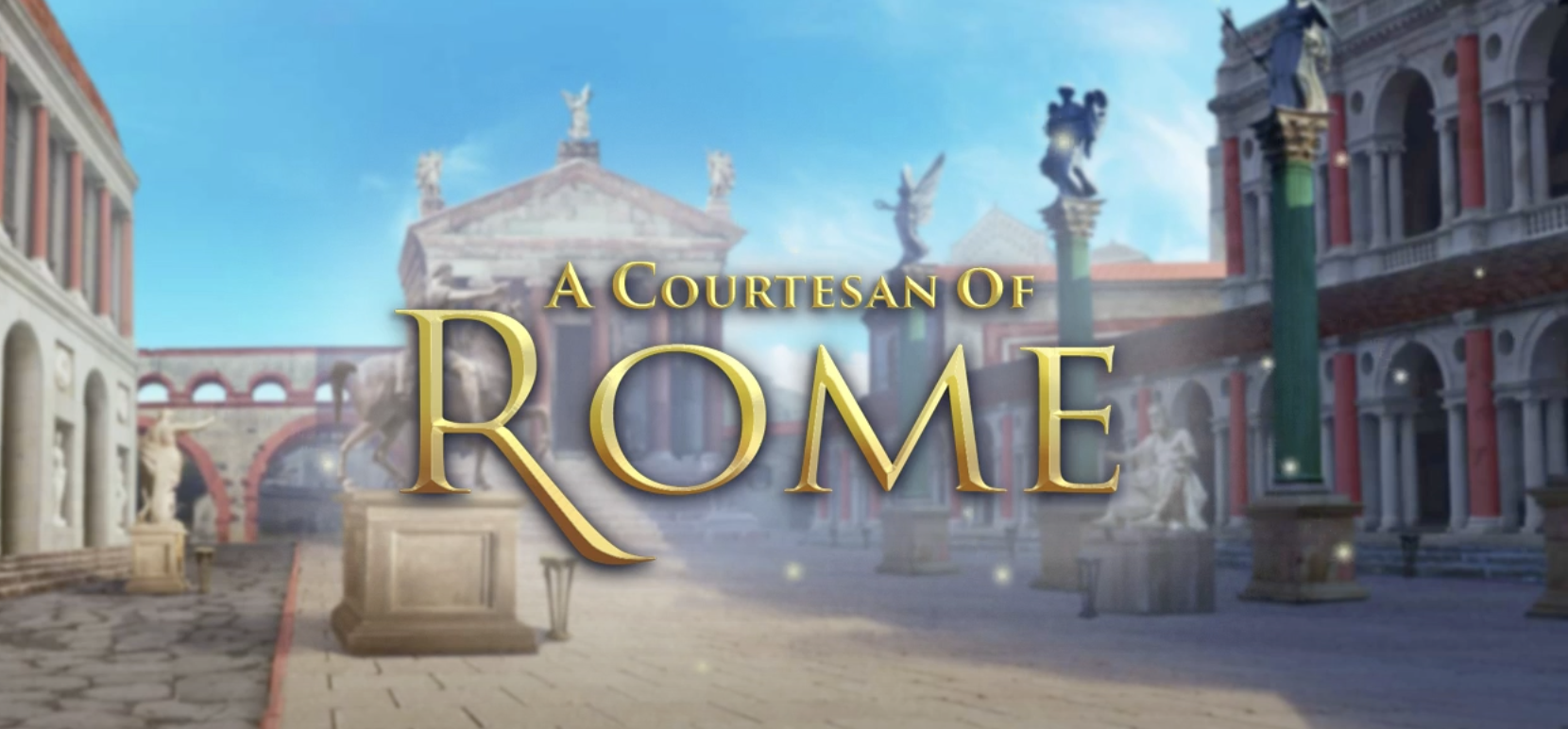
My first story was A Courtesan of Rome, in which you play a courtesan who gets mixed up in the fall of the Roman Empire. I chose it because it was so far away from my present day and I like history. I read through this first story with vigor and, yes, paid for the extra diamonds (the money in these worlds) so I could get better clothes and better story choices. You want to go on a date with the new bombshell? You need diamonds. You want a slammin, expensive looking outfit that all the other characters will comment on? You need diamonds. I became just as obsessed when I found Love Island: the Romance Game, which is influenced by the real reality TV show it is based on, with which I’m equally obsessed.
Even though these are technically games, getting all of Britain’s votes or toppling the Roman Empire is not the point. While it was important for my mental health that for some amount of time a day I was at a beachside villa and not in my bedroom, what kept me wanting to play was my curiosity at how the story might unfold. Or, more specifically, how I made the story unfold. I gravitated towards the games with plots, and clear endings. I liked playing, but I wanted a closed circle. The Kim and Demi games seemed never ending. I don’t even know if they have conclusions, because I’ve never played long enough to get there. Playing through these different stories in Lock Down was like reading a juicy novel or watching the real Love Island, except I could influence what happened inside the story. It was amazing, powerful.
Interactive Fiction is not new. Choose Your Own Adventure (CYOA) Fiction has been around since the late 70s/early 80s. I remember reading CYOAs as a class in grade school in the 2000s. During lunch, one of the lunch moms – the hot one – would read us R.L Stine books. He had his own series of CYOA books with his signature creepy twist. The lunch mom would read until she hit a decision point and then we would vote. In R.L. Stine books your character can die or get eaten by a clown or something horrible, but it was still fun. High stakes, but fun. We eventually stopped because some kids complained about being scared.
I was always more invested in my plots and my plans and the story of the story in my head.
Maybe this is where my love of choice came from, but I always thought this way. When other kids imagined themselves as Hermione or Harry Potter, I imagined myself—a character— into their world as an essential part of that world and also as a mysterious person who everyone really liked. I was always more invested in my plots and my plans and the story of the story in my head. Can you believe I became a writer?
With technology, Interactive Fiction has gone digital, which has opened a whole new visual world for readers to play with. Not only can I influence the plot, but I also make the character. For example, I always use the name Leo for Love Island. My favorite iteration of her has curly red shoulder length hair, green eyes, and ivory skin. I remember her entering the villa in a gold bathing suit and leaving everyone else breathless. In A Courtesan of Rome, they suggested a name, Arin, and I took it. I did the same with Arin’s look: long orange gown, brown curly hair half up-half down, and brown skin. I used to keep my own name, but it felt strange during lockdown. I didn’t want to play as myself. I already was myself. Designing your avatar is essential to immersing yourself in the game. There are a set number of aesthetic options and fun things like tattoos are extra diamonds, but, generally, you can be whoever you want. It’s your story. You can be yourself or the hot lunch mom or someone entirely from your imagination.
During the worst of the Covid Pandemic, in a sickly basement apartment in New York City, I stopped being able to imagine myself out of reality. It was everywhere and no plot for the world I imagined in my head would satiate me. Love stories on my phone, though? They did. They had a calming, focusing effect. I would zone in on Leo or Arin and just be them. When I was playing, I wasn’t myself. I made bad decisions – like murdering my boyfriend so that I could hook up with Marc Antony – because I could. I could just have fun. And fun that didn’t feel mindless. I was doing something: I was reading and choosing and playing and being entertained. I don’t know where my sanity would be without these story game apps. I don’t know what I would have done if I didn’t have a place to go.
In the virtual world, I had the power. I decided what things happened. I could go places, see people.
There were many things that pulled me toward these games, but one of them was definitely power. Who doesn’t want to control their own narrative? During lockdown, we were all so powerless. The only thing we could do was nothing, and there was no security in sitting tight. In the virtual world, I had the power. I decided what things happened. I could go places, see people. And no one died unless I wanted them to. If they did, I could just start over, find another route through the story where they survived. I no longer felt helpless.
When I asked my friends if any of them played apps like Choices or Episodes or Chapters, most of them politely said no. One asked “No. Do you?” in that way. And a couple admitted they did or had but knew how “bad” they are. And, listen, I know how bad they are too. I will admit that there are romance cliches, sometimes objectively bad writing, and some soft-core porn (which I never complain about to be honest), but this is just a part of the fun. The indulgence in cringe is alluring. It is the same reason I watch Netflix’s The Christmas Prince with my friends each holiday season: these “trashy” stories are terrible and so engrossing.
When I started to reflect on how these games made me feel less alone during Lock Down, I went searching for other people who felt the same about them. I found a whole community of people like me, who unabashedly love these games. Most of the platforms have their own reddit pages where people post their thoughts, jokes, and questions about different stories or books on each app. Small time story creators and narrative designers hired by the companies have significant followings on social media. Episode even shouts out their small- time creators on their Instagram page. (On Episode, anyone can design and publish a story.) So many people connect on social media to talk about their experiences. It’s like a book club.
In my search for validation, I also found research on Interactive Digital Fiction. For example, Dr. Leigh A. Hall studied how one interactive fiction app, Delight Games, made people with negative experiences of reading enjoy reading again (published in 2019 and 2020). Dr. Astrid Ensslin and her team at Writing New Bodiesare developing a Digital Fiction app to be used in body-image bibliotherapy.
The fanbase and the conversations I had with both Dr. Hall and Dr. Ensslin made me rethink my experiences playing Interactive Fiction apps. I keep thinking about how happy I feel playing Love Island. I also keep thinking further back to reading and writing fanfiction about a band I obsessively loved when I was teenager. In both, I found an escape from the world around me, which doesn’t ask any of us what we want and a community who not only felt excited about writing, but also felt that our subject was just as important as any other. I love literary fiction and I love a juicy romance game. I think they both have value; they’re just different modes that scratch a different itch. All stories can make us think and wonder and feel. And if the story puts a smile on your face or makes you feel in control when the world seems like it’s imploding, I think it’s okay to indulge and enjoy. Isn’t enjoying it the best part of reading anyway?
There’s a scene in Ethiopian-American writer Dinaw Mengestu’s novel All Our Names that I think back on a lot. A white social worker, Helen, living in the effectively still segregated 1970s American Midwest, has decided she is going to make a point (maybe to herself) by bringing her lover Isaac—an Ethiopian foreign exchange student—to a local diner. Isaac was not consulted, and upon arrival immediately recognizes the racism he will experience there. Yet when Helen realizes she made a mistake and suggests that they leave, he requests that they stay, that she sit through their meal (his served on a paper plate with plastic utensils, hers on china) and witness how he is treated.
This scene is about the privilege of ignorance, a luxury much of the population doesn’t have. They are quizzed; interrogated; denied visas; held back from travel even when visas are granted. In more extreme but still common cases, they are subjected to violence, incarceration and torture for trying to reach a place of safety. If only, like Helen, the rest of us could be forced to look at racism directly; compelled to witness the brutal effects of it without the freedom to turn away.
I sat in an airy restaurant with two former victims of Europe’s migration policy, as they explained what it feels like to starve.
In Swedish capital Stockholm, last summer, I sat in an airy restaurant with two former victims of Europe’s migration policy, as they explained what it feels like to starve. Teo, who asked that his name be changed, said his weight had risen to 67 kilograms, after dropping down to 42 kilograms when he was held in a Libyan migrant detention center nicknamed “Guantanamo.”
Fesseha, a polite man wearing a wooden cross tied around his neck with black string, now weighed 72 kilograms, up from 47. He showed me a photo of him taken then, his barely recognizable face attempting a smile that looked more like a skeletal grimace. At the time, his friends and fellow detainees had said he should be happy because he was going to be evacuated through the United Nations—a rare golden ticket to a safe country in the West. Shortly afterwards, Fesseha was told he would need to wait another year in detention, until he was fully recovered from tuberculosis. He wondered if he would die before the flight took off.
Both men—who come from Eritrea, a notorious African dictatorship—were held in Zintan detention center in Libya’s Nafusa Mountains, where detainees died from medical neglect and starvation an average of one every fortnight.
Most of them were originally caught on the Mediterranean Sea trying to reach Europe and locked up indefinitely, without charges or any legal recourse, in detention centers that Pope Francis, among others, has decried as “concentration camps.” Their stories are among hundreds I heard while reporting my book My Fourth Time, We Drowned.
Since 2017, when the EU began spending tens of millions of euros on training and equipping the Libyan coastguard to intercept boats, nearly 100,000 men, women and children have been caught. Many had previously escaped dictatorships in countries like Eritrea, or wars in Somalia, Ethiopia and Sudan—mostly former European colonies. This system of interception and incarceration is known by many, but goes largely unquestioned by the European public.
The welcome received by the Ukrainian refugees has stunned experts who have been working on migration policy over the last decade.
Similar human rights abuses have been playing out across the borders of the rich world: on the southern border of the US; in the seas around Australia. For a long time, it seemed like a more empathetic policy was not possible.
Then came the invasion of Ukraine. In the first ten days after it began, more than 1.5 million refugees crossed into Europe, according to the UN Refugee Agency—topping the 1.3 million that claimed asylum in the EU in the whole of 2015, the year of the so-called “migrant crisis”. That number is now almost at 6 million. Nothing will be easy for them—being a refugee is never easy—but at least the borders are open.
The welcome received by the Ukrainian refugees has stunned experts who have been working on migration policy over the last decade: how is it that one group of refugees are welcomed seemingly with open arms, while another are forced back to a militia-run, war-torn country where a UN-appointed fact-finding mission recently confirmed there is evidence that crimes against humanity and war crimes are being carried out against them?
In Homegoing, her book about the legacy of the West African slave trade, Ghanaian-American novelist Yaa Gyasi writes: “We believe the one who has power. He is the one who gets to write the story. So when you study history, you must ask yourself, Whose story am I missing? Whose voice was suppressed so that this voice could come forth? Once you have figured that out, you must find that story too. From there you get a clearer, yet still imperfect, picture.”
When it comes to the plight of Ukrainian refugees, there has been a notable difference in the way they are represented and spoken about in Europe and North America compared to refugees from other countries.
“These people are intelligent, they are educated people…. This is not the refugee wave we have been used to,” Bulgarian Prime Minister Kiril Petkov told journalists, early on.
“This isn’t a place, with all due respect, like Iraq or Afghanistan that has seen conflict raging for decades. This is a relatively civilized, relatively European – I have to choose those words carefully, too – city where you wouldn’t expect that, or hope that it’s going to happen,” said CBS News senior correspondent Charlie D’Agata, speaking from Kyiv.
“They seem so like us. That is what makes it so shocking,” columnist Daniel Hannan wrote in the UK’s Daily Telegraph.
The increase in brutality against Black and brown refugees is widely said to have been a response to the rise of Europe’s far-right.
There is a pertinent and ongoing debate in the publishing industry about who gets to tell what story, particularly when it comes to the exploited and marginalized. I was aware of this when writing my book, which details the abuse of African refugees at Europe’s southern borders. But I see this as being an account as much about white supremacy as it is about Black or brown refugees; it is a documentation of a system which has been compared to a modern day global apartheid, in which the rich (largely white) world carries with it freedom of movement, whereas the rest of the globe’s population are stuck where they are.
“I don’t understand how people can minimize the pain many of us feel when we see how different Ukrainian refugees are being treated from other refugees,” tweeted Vanessa Tsehaye, a London-based Eritrean and Horn of Africa campaigner with Amnesty International. “It’s painful to constantly be reminded that this treatment could’ve been possible for our loved ones if only they were white… Don’t forget that the EU only treats African and Asian refugees like shit because they get away with it, because there is no real public pressure on them to stop.”
The increase in brutality against Black and brown refugees is widely said to have been a response to the rise of Europe’s far-right: a kind of appeasement, if you will. I thought about this too while reading Martha Gellhorn’s eighty-two year old novel A Stricken Field, which is based on her visit to Prague in 1938, before the Second World War officially began.
The city was already full of refugees who had fled Germany, but remained in grave danger. Some were “new to the profession of exile” and therefore still hoping for assistance, but quickly realized that no one would help them find somewhere secure to go, and that authorities had few qualms about sending them back to their deaths.
A typical scene shows refugees huddled over a tattered geography book open on a map of the world, searching for a place they can find safety. “Has anyone ever heard of Nicaragua?” one asks. “Maybe we can live there. Maybe it is a democracy.”
“All the people ask [for]… is some ground to sleep on in a country that is safe. And they are not allowed,” another refugee, a survivor of detention, tells American journalist Mary Douglas. She wants Douglas to write articles which may sway public opinion in their favor. “After they had public opinion all properly shaped, what good did it do? It was immensely easy to make people hate but it was almost impossible to make them help,” Douglas thinks to herself, before replying “you better not count too much on the moral indignation of the world. It has not been something you can count on. And if you have it, there’s not much you can exchange it for.”
“It’s racism, no one cares about Africans,” came a recent comment from one of my Eritrean contacts, a school teacher, who nearly died from tuberculosis in a Libyan detention center. Like other survivors of Europe’s migration policy, he was struck by how Ukrainian refugees are spoken about publicly and how that contrasts with coverage of refugees from mostly non-white countries.
Literature has documented how quickly sentiment can turn even against those who once had sympathy. In Exit West, Mohsin Hamid imagines a world where doors suddenly open up between different countries, allowing people to escape war. “In their phones were antennas, and these antennas sniffed out an invisible world, as if by magic, a world that was all around them, and also nowhere, transporting them to places distant and near, and to places that had never been and would never be,” he writes. In the UK, there is a build-up of resentment among those Hamid calls the “natives”—the white, British people—against the new arrivals.
“I can understand it,” Nadia, the female protagonist says, showing an unexpected and possibly misplaced sympathy I’ve also witnessed during my interviews with refugees in Europe. “Imagine if you lived here. And millions of people from all over the world suddenly arrived.”
“Millions arrived in our country when there were wars nearby,” her boyfriend replied.
“That was different. Our country was poor. We didn’t feel we had as much to lose,” Nadia answers.
Whether the invasion of Ukraine will lead to kinder policies in the longer term remains to be seen.
In 2019, the European Union declared the “migrant crisis” over, ahead of parliamentary elections, but the reality was that refugees continue to be silenced and pushed out of sight into ever more horrific situations. Whether the invasion of Ukraine will lead to kinder policies in the longer term remains to be seen. Until now, the select people who make it to safety have to live with extreme trauma and the understanding that, to integrate into their new society, they must effectively forget what they have been through.
In Stockholm last summer, sitting in front of a meal of untouched injera flatbread, meat and vegetables, Fesseha looked around, calculating how many people would sleep inside the restaurant we were in if it was a Libyan detention center: around four hundred in three lines, he guessed. At one point, his eyes welled up; he said thinking about Libya made him “crazy.” I apologized and said we could talk about something else, but he countered that it was good for him, in a strange way. He had grown used to staying quiet about his past because European people had no understanding of it. “People like them, they see the glass only, they don’t look beyond,” he tried to explain to me, gesturing at a water glass on the wooden table between us.
“All my friends, they are in Libya still. It is not just my history, it is the history of refugees. I am lucky because I am…” Fesseha trailed off and gestured at the food in front of us. “Still now they are detained in the very dark jails of Libya. Even in Europe, it would not be easy to stay four years in one house. Being in Libya is like being in a morgue…you are ready to die.”
Taymour Soomro’s debut novel Other Names for Lovebegins with a son flinching at the sound of his father’s voice. Sixteen-year-old Fahad has been ordered to spend the summer with Rafik, his authoritarian father who manages their family farm in Sindh, Pakistan. It’s on the train ride there that Rafik offers up his animating belief: “Power is not something one pursues. Power pursues the man. And if it comes, then what?” It’s a question that haunts the rest of the novel, which begins with the summer that changes both Fahad’s and Rafik’s lives.
Other Names for Love comes out of Soomro’s own experiences on his family’s farm in Pakistan, but the world of the novelis one unto itself, one in which the land is haunted by histories of loss and full of surprising moments of beauty. A world of buffalo with wet hides “glistening like onyx,” and a moon that casts “a streak of silver like a spine.” As Fahad reckons with his feelings for Ali, the son of a local farm owner, and Rafik works to build political power in Sindh, their desires drive father and son further apart, and closer together, in unexpected ways. Soomro has written a queer Pakistani Gothic that is attuned to the shifting nature of desire, and the violent forms it can take. When, as an adult, Fahad thinks back on a student who wrote stories with “violence that shimmered beneath his prose,” I knew that Soomro was describing the particular and incredible essence of his own novel.
Soomro spoke with me from London over Zoom about the fallible nature of storytelling, writing against tropes of queer shame, and the language of violence.
Yasmin Adele Majeed: I was curious about your choice to tell the novel from both father’s and son’s perspective. What did one offer that the other didn’t, and vice versa?
Taymour Soomro: What happened was that I kept trying to write this story, and I kept getting stuck. One of the things that I was finding really difficult was the management of time. I would finish a chapter and then I would feel like, “Okay, this needs to pick up exactly where the last one stopped.” But once I started alternating perspectives, then the narrative started to move, because I didn’t feel so locked down by a particular timeline.
I also wanted to resist this very easy way of saying: queer shame, the fault of it lies with parents, who end up being a metaphor for tradition, and the culture you came from and the community you came from. Fahad’s point of view is much closer to mine in a way, or at least it began much closer to mine. Rafik’s point of view was unfamiliar to me, but it felt really, really important. It was really important to me that there shouldn’t be any villains in this story, and it shouldn’t be so simple that you could just say, “Oh, he felt so much shame about his sexuality because his parents made him feel ashamed of it.”
YAM: I have a friend who talks about their gripes a lot with queer narratives in which, especially for immigrant narratives, one must leave “home” in order to find one’s sexuality, or to express it. But that’s very much not the story here in the novel.
It was really important to me that there shouldn’t be any villains in this story, and it shouldn’t be so simple.
TS: Right. There’s this idea of the “backward barbaric place,” which you have to leave for London or New York. Or it’s the countryside, which you have to leave for the cosmopolitan, the urban space, which is much more liberal. I felt like those [ideas] were reductive and simple and not true to my own experience, or to what I’d seen.
YAM: That’s why I really love the scene where Fahad and Ali are in the car, and then they see Mousey [Rafik’s cousin] and his manager, and there’s this reflection of a relationship between men. But Ali says, “It’s like they’re friends … Like they’re boys.” There’s not quite the language there.
TS: The first thing I published was this short story in The New Yorker, which was also about a relationship between two men in Karachi. And I felt that people were reading it as if there was only one way for men to have desire for other men, which was a very – I mean, again, these words end up being a bit meaningless – but it felt like a very Western way to understand what queerness is, or what men who like men are. Actually there’s a different language, there are different words, there are different metaphors for understanding these relationships.
YAM: One of the questions that the book considers is the idea of the “wild” and the “savage,” and civilization. As the novel progresses, we see that those who subscribe to decorum are incredibly violent. I was curious about your thoughts on this binary in the novel, especially in the context of Pakistan and the class structure on the farm.
TS: We left Pakistan when I was four, but we would go back for summers and winters. When I was in my 20s, I moved back to Pakistan for a few years and I got involved with the farm and started managing it. It ended up being this really necessarily humbling experience [that] revealed all of these prejudices to me – of self loathing, of racism, classism, which I grappled with throughout that process.
That was something I wanted to show because I feel like it’s very true in Pakistan, but it’s also very true everywhere, right? I wanted to interrogate this idea about decorum and propriety. Whom does it serve? Sophistication is not showing your anger. It seems to me that [idea] really serves the status quo because it means that you need to keep your voice down and not fight.
YAM: Some of my favorite passages in this book are about food, and its relationship to power and need. Ali tells Fahad that if you feed people biryani, they’ll forget everything else. I was curious about your approach to these scenes.
TS: A very simple answer is that I’m obsessed with food. But also I feel there’s a way in which hunger or greed or interest in food—it’s a desire that reveals something. Despite what you think you want, there’s a way in which Fahad engages with these meals; he doesn’t want to be there but the food shows something else in his desire, this other way that he’s reaching toward the place. For me that hunger was analogous with other kinds of hunger. There’s a nostalgia in it, or celebration of the place.
YAM: Related to hunger, I loved your depiction of the fraught and blurry relationship between desire, especially sexual desire, and violence. What drew you to these themes?
TS: It’s really difficult to know how to engage with these questions of violence, because I’m currently editing an anthology for Random House, which is on the craft of writing, and race and culture. There’s that whole trope about the barbaric Muslim, the violent Muslim, and I was really wary of reproducing or perpetuating that. It seems like the one story that is told about Muslim men. At the same time, violence felt very relevant to me in relationships between men. They happen to be Pakistani men, but actually, it would have felt equally true to me about any man. Men don’t know how to express so much emotion, but anger and violence is the one thing that they do know how to express. We try to hold so much meaning in that violence.
YAM: Yes, it’s a core language of masculinity. I thought it was interesting that so much of the overtly political context of the book is in the background of the narrative. The negotiations over the ownership of the farm are reported back or heard through rumor. I was curious about that choice, and how the background reflected the foreground of the narrative.
TS: I think an idea that always interested me was, “Okay, take these super powerful men who are powerful in a national or global way. How does the way that they construct their identity on that scale inform them on a personal level?Who are they when they sit down at home at the dining table? And how do those selves have a dialogue between each other? Often in immigrant novels, or in novels by writers of color, there’s this expectation that we tell the story of our country, because we’re allowed to basically tell one story—the story of our country, the story of ourselves. And I wanted to resist that.
In novels by writers of color, there’s this expectation that we tell the story of our country, because we’re allowed to basically tell one story.
You get a sense of what Rafik is like in office, but you don’t see it. Those actions had these huge horrible effects and impacts, but I was interested in the micro effect of those behaviors and those attitudes, in the most intimate way. For these men, their masculinity is power. Who are they when it disappears or diminishes?
YM: Rafik is such an interesting character because he does hold so much love for Fahad. But it’s such a complicated love.
TS: This is something that felt so personal to me, that gender makes it very difficult for men to have any intimacy with other people because the ways we’re taught to be men make love impossible. There’s that tension for Rafiq, in particular. He has this desire for closeness, both with his cousin, Mousey, and with Fahad and his wife, and there are things that get in the way.
YAM: What came to you first when you set out working on this project? Was it the characters, the setting of the farm?
TS: Having spent all that time at the farm, I felt this urge to write something about that space because it ended up being a crucible for me. And now, as well, I think there was a desire to capture that moment in that time, because it felt very important to me, but it also felt like something that was disappearing from my life. In the novel, you get the sense of the farm eaten up and disappearing. I also felt that on a personal level.
I was interested to see how personal stories and histories can be mutable or as changeable. That was a seed for me.
YAM: One of the central tensions between Rafik and Mousey is that as an adult, Rafik suddenly recovers a memory from their childhood—but Mousey is like: this is a core wound that I have had my whole life.
TS: For both of them that story was so different. What was the truth of the story? And does it even matter? Can you even find out? Maybe what happened doesn’t matter as much as the effects a story has on ourselves and the people around us.
“Zombies didn’t discriminate. Everyone tasted equally good as far as zombies were concerned. And anyone could be a zombie. You didn’t have to be special, or good at sports, or good-looking. You didn’t have to smell good, or wear the right kind of clothes, or listen to the right kind of music. You just had to be slow.”
“Some Zombie Contingency Plans” by Kelly Link
The zombie story is an analogy fitted with a universal adaptor.
At the end of George Romero’s 1963 film, Night of the Living Dead, the apocalypse appears to have burnt itself out. A posse of good ol’ boys work their way through the countryside, picking off the remaining zombies with the brutal efficiency of a livestock cull. In the nearby farmhouse, Ben, the sole survivor of the night’s horrors and the film’s hero, risks a glance out the window as the cavalry approaches. He’s mistaken for one of the undead and shot through the head before he can say anything. His corpse is then thrown on the bonfire with the remains of the creatures who spent the previous night trying to eat him.
Romero has argued the film was never intended to directly comment on U.S. civil rights era tensions, but the casting of Duane Jones—an African American actor—as Ben, shifts the film’s weight from what could have been a simple but inventive monster movie into something far more resonant and shocking.
Subsequent zombie stories have explored ideas as diverse as consumerism, the military industrial complex, urban malaise, terminal illness and even putting a child up for adoption.
Defining “zombie” in terms of the George Romero’s ravenous undead Hollywood monster rather than the Haitian mythology the term was lifted from, there are countless lists of recommendations for zombie novels where the zombie apocalypse can stand in for anything and everything. Colson Whitehead’s Zone One, Max Brooks’ World War Z, Mira Grant’s Feednovels and so many more.
Given the monster’s origins on the screen, the genre is an inherently cinematic one too but not all zombie films are equal and sometimes the wrong metaphor can be read. To my mind, too many resort to crass survivalist fantasies where the zombie hordes represent a narratively useful subsection of society where it’s permissible for the heroes to kill with impunity.
When Kelly Link’s collection Magic For Beginners was reviewed by the New York Times, the reviewer questioned whether or not the zombies in “Some Zombie Contingency Plans” were metaphorical or not. This kicked up a brief, pocket-sized controversy in the genre world. Sometimes, it was argued, a zombie is an actual zombie and there should be no shame in that at all. All absolutely true, except of course that Kelly Link’s stories are all such marvelously slippery, wriggly things that describing any of them with absolutes feels mortifying and foolish. At a pinch, you might describe “Some Zombie Contingency Plans” as being about a doomsday prepper with a magic painting who gatecrashes a house party, but that barely scratches the surface. Link, after all, is the sort of dizzyingly accomplished writer who can have zombies both real and metaphorical and—as a lap of honor—keep both of them well off the page for the duration of the story.
My novella, And Then I Woke Up, is not really a zombie story, but it borrows the aesthetics of one and— don’t tell anyone—sometimes pretends to be.
Just in case anyone thinks that my not-zombies are a slight against genre stories with real, actual zombies in them, I’ve taken the liberty of collecting eight stories which largely aren’t zombie stories at all and I will now try and prove they are all zombie stories at heart and thus restore balance to the world.
To me, many zombie stories feel like the third act of something larger. I’ve always felt that their natural shape is lines converging to a remorseless point and this is why I think they work best in the shorter form. Zombies—traditionally at least—are slow moving and, when encountered in low numbers, easy enough to avoid even at a brisk walk, but zombie stories aren’t really about surviving, they’re about sinking to any level to avoid the inevitability of death. The zombies are not only a threat, they serve as a shuffling momento mori. The inevitability of death has been superseded by the inevitability of undeath. While you might do your best to keep them out, you will make a mistake, your defences will be flawed, and when they fail they will be there, waiting.
Cormac McCarthy has been accused of nihilism before, so in a sense, The Road feels like a natural progression of his work. Here, the world has already ended and what remains is the lingering long tail before the lights are extinguished for good. There are no zombies here, so there’s nothing else to blame. There are no monsters to exacerbate matters except those that were here already. At risk of belittling the novel with such a lumpenly crass observation, this doesn’t mean the rest of McCarthy’s slim, devastating novel doesn’t tick almost every other checkbox on the zombie apocalypse list. Blasted landscape? Feral gangs? Cannibalism? All here, along with desperate survivors trying their best to cling to the map. That there’s beauty here too—in the spare, unsentimental prose and the desperate love between the father and son—that feels like the last magical dance of the pilot light before it goes out.
“The Birds” by Daphne DuMaurier
Daphne Du Maurier’s bleak short story was first published in 1952. Farm worker Nat Hocken witnesses nature twist, turning local birdlife violent against humankind. Nat has the foresight to batten down the hatches before the storm arrives, but again, the story ends with little hope that he or his family will survive much longer.
Alfred Hitchcock’s film adaptation was released eleven years after the story’s publication. It begins by pretending to be a romantic comedy, but ends in a very similar place to the original. The survivors of the siege venture out during a lull and and to all intents and purposes make their escape. Famously, Hitchcock refused to include a title card marking “The End”, so how far they actually get is left to the viewer.
Five years later in 1968, George Romero’s Night of The Living Dead arrived. The proximity of the releases of those two films has always taken me a little by surprise as there remains something so fiercely modern about Romero’s film that it still bewilders me to think of it as a near contemporary with Hitchcock’s classic.
Moreover, Night of the Living Dead is—I would suggest—what you would get if you tried to remake The Birds but didn’t have the budget for any special effects. Both are stories in which something passive rises up against the living. In both, survivors hole up somewhere isolated and snatches of radio reports give the event a sense of scale. The phenomenon, they will learn, is going on everywhere, and then the broadcasts fall silent and then there is something at the door.
In some respects, Romero’s version is a more faithful adaptation of Du Maurier’s story than Hitchcock’s. There’s a similar sparse desperation to the narrative, a similar hopeless cruelty to its denouement. Du Maurier’s story isn’t a zombie story in itself, but I don’t think it’s too far fetched to suggest the bones of it have taken on an undead sort of life of their own.
Helen Marshall’s novel takes its cue from Aristophanes’ The Birds rather than DuMaurier’s. Moreover, there’s hope here—if not for us, Marshall argues, then for the generations who might follow.
In a world ravaged by climate change, a pandemic is taking the world’s young. Children are dying and to make things worse, they’re not quite staying dead.
Zombie stories are frequently pandemic stories, and I wonder if they’ve achieved a new sort of resonance following the Coronavirus outbreak which made the world grind to a halt over the past few years. All that news footage of cities in lockdown, endless empty streets that should be bustling with life, could easily be mistaken for footage from any contemporary zombie movie. Marshall’s pandemic is even more horrifying, the victims—all children—are afflicted by some kind of toxoplasmosis, which leads them to actively facilitate their own deaths. Drifting from the safety of the path, veering into traffic or towards the relentless rising floodwaters. When the bodies start twitching in the hospital morgues, it almost comes as something of a relief. Zombies! Of course! We’re much better equipped to deal with those than whatever else is happening here!
But The Migration isn’t really a horror story. These juddering, metamorphosing corpses aren’t zombies, and although Stephen King’s Pet Semataryis invoked on the back cover, these kids aren’t coming back with a nasty look in their eye and a scalpel hidden behind their back. Something much stranger and— surprisingly—more beautiful is happening and I defy anyone to read the final chapter without choking back a sob.
(Full disclosure, Helen and I married in 2019 and have a small sprog of our own now. One of these days he’s going to read this book and I suspect he’ll have many questions.)
Earthlingsby Sayaka Murata, translated by Ginny Tapley Takemori
Zombie stories are frequently stories of betrayal. Like many classic monsters, a zombie is powerful because they can wear the faces of those you love. Worse still, if you fall to a zombie, you too will become one and now those you love are at risk from you.
Earthlings isn’t about zombies at all. As a girl, Natsuki tells her cousin Yuu she is a magician, given powers and missions by her stuffed toy hedgehog. For his part, Yuu admits that he’s actually an alien, originally hailing from Planet Popinpobopia. All of this is delivered in the same matter-of-fact deadpan voice Murata employed in Convenience Store Woman, another short, sharper-than-you-expect novel involving a protagonist living just outside the periphery of society’s expectation.
Natsuki and Yuu (and later, Natsuki’s husband-of-convenience, Tomoya), come to believe the real world is nothing more than a Baby Factory. The conviction that their only purpose is to breed and consume is not entirely unreasonable given how Natsuki’s family are as cartoonishly awful as any villains from a Roald Dahl novel. In this manner, Murata paints polite society as the zombie hoard that you must escape or be assimilated into.
Natsuki’s narration is both naive and utterly confident and the effect is disorientating. The same feather-light tone she employs to outline her whimsical fantasies is used to detail her abuse at the hands of a predatory school teacher. As the ending veers sharply into gonzo delirium that would be more at home in a Lucio Fulci move, there’s a lingering sense that a parallel—more conventional story—is somewhere in the background, too heartbreaking to be fully told.
I have a theory about zombie stories, that some consider them to be a genre-sequel, or a genre-progression of the traditional ghost story. Like many sequels there’s a more-is-more approach. If a ghost story asks “What if a friend you knew to be dead was standing in your room,” a zombie story would ask “What if a friend you knew to be dead was standing in your room, and what if they’re hungry?”
“Resurrection Points” isn’t quite a zombie story—not in the traditional sense. It might be said to be a prequel to an unwritten zombie story, and in those terms, to me, it reads to me as a ghost story with real flesh on its bones. Daoud has inherited his family’s remarkable gift. With the correct training from his father, he can activate certain pressure points within the human body and in such a manner, he can relieve arthritis, make dead muscles move and perhaps—just perhaps—he might even raise the dead themselves. When he asks his father if there are more like him, his father nods and adds, “the Prophet Isa is said to have returned men to life.”
It’s a dangerous name to invoke. As the neighborhood descends into sectarian violence, the violent mob burning up the edges of the story is very much alive. It becomes very clear Daoud will be using his gift before the day is done, and it’s just as clear the ramifications will be alarming.
“Resurrection Points” is an elegantly weighted story told with the measured intelligence. Malik is both a rheumatologist and a poet of darker corners, he’s adept at making the page seem alive beneath your fingertips.
One aspect of zombie infection stories is the idea that those afflicted find themselves at the mercy of awful, unstoppable compulsions. Driven by hunger, fury, or a senseless destruction. The zombies scour those who have been left behind.
In Junji Ito’s Uzumaki, a Japanese seaside town becomes “haunted by spirals” and before long, the residents find themselves at the mercy of compulsions they cannot explain let alone avoid. Being Junji Ito, these compulsions go a bit further than simply “becoming violent and trying to eat people.” A man bodily breaks his bones into the shape of a spiral so he can fit himself into a barrel; schoolgirls tear themselves apart trying to obtain the perfect curl of hair; people turn into snails; others eat people who’ve turned into snails, bodies twist and overextend while faces loll into expressions of whirligig delirium.
The story is at its most zombie-ish in the final chapters, where the individual acts of strangeness tip over into the irreversibly cataclysmic. Again, we find ourselves converging to a single point before the darkness folds in. A small group of survivors bear witness to the town succumbing to its final madness, acting as one to reconfigure the streets into a single lunatic spiral made of connecting longhouses, which then flushes all inside away into a hellish vortex. The whole thing, appropriately enough, is as gloriously, dementedly twisted as you’d hope a Junji Ito story to be.
Aliya Whiteley’s novella begins in a world where, we are told by Nate, our narrator and aspiring fireside storyteller, “all the women have died.” Nate lives in a small community of men—many closed of mind—who are clinging to the past they understood and waiting for their time to die.
So, what happens when a strange sort of fungus starts growing on the women’s graves in the village cemetery? And what happens when the fungus gets up and follows the younger men home? What happens when the younger men start to fall for the fungus creatures who might actually be the women they’ve lost in a strange new form? What happens when the status shifts for everyone involved?
As with many of the stories listed here, simply itemizing the story’s weirder avenues does Whiteley’s writing a disservice. The Beauty can be read a story of the dead coming back to life, but like Marshall’s novel, it doesn’t stop there. It’s weird, surprisingly warm, occasionally horrible and genuinely beautiful.
Ballard’s characters aren’t zombies in a traditional sense, but if we’re being whimsical—and if you’ve got this far, then we probably are—they could be mistaken for them in précis. Consider that most are the victims of near-fatal car crashes—they have, if you will, survived death. Their experience has changed them fundamentally and now they see the world in a different light. The narrator spends time trying to engineer a similar accident for his wife so that she can experience the world as he does—essentially trying to spread the infection.
But of course, Crash isn’t about animated corpses dining on the living, it’s about an underground community of car crash survivors, exploring the limits of physical experience through transgressive sex and recreations of “classic” fatal car accidents.
The idea that Crash might be considered a zombie story might make more sense when viewed through the lens of David Cronenberg’s film adaptation. Cronenberg has a history of stories centering on closed or underground sub-cultures testing their own boundaries and his first theatrical release, Shivers (1975) is less ambiguously a zombie film. Slug-like parasites infect the residents of a Montreal apartment block, turning their hosts sex-mad and infectious with it—it’s no surprise that a working title of the film was Orgy of the Blood Parasites. It’s very much a zombie outbreak in structure. We have the exponential infection rate of a pandemic; the victims overwhelmed with new, out-of-character compulsions and a slow build towards that apocalyptic tipping point.
These threads certainly don’t map cleanly to the outline of Ballard’s novel, if they map at all (despite what the pearl-clutching sections of the British press might have said about either the book or the film, neither could be mistaken for apocalyptic), but it is fascinating seeing how Cronenberg’s concerns evolve from one film to the other. Ballard didn’t write a zombie story, but Cronenberg—perhaps already infected—might have passed on the virus by association.
Another day, another shit show involving J. K. Rowling; I’m starting to think there’s a schedule.
I’m not a Potterhead, so I have no skin in this game, but I’ve seen enough friends and loved ones in the last couple of months lament the loss, in their words, of nothing less than their entire childhoods—childhoods handheld by the characters in the Harry Potter universe, which (like so much of our most formative reading) taught them crucial things about difference, friendship, cooperation, loneliness, harm. I’m from the X-Men generation, myself—that classic American repository of allegories on oppression and difference, its entire narrative universe founded on the premise of marginalized people fighting for their right to exist without discrimination or exploitation; to be seen as equals, and to be loved in their wholeness.
Some part of me will always love that universe. But I also know that so much of what makes up our mainstream contemporary fantasy narratives, utopian or dystopian, have been written by white authors, from Rowling’s Harry Potter to Chris Claremont’s run of X-Men (still its most well-known incarnation) to Margaret Atwood’s The Handmaid’s Tale and its contemporary TV adaptation. They reach a global, cross-cultural audience even while their narrative universes overwhelmingly center white protagonists, both on the page and on the screen.
Yet all of those stories borrow freely from the histories of oppression and intergenerational trauma that have largely befallen communities of color: racial discrimination, enslavement, apartheid, mass incarceration, state disappearance of dissidents, forced pregnancy, sterilization, and state-sanctioned rape. For marginalized kids who have seen ourselves in these stories, it comes as no coincidence—those stories have literally been built off of the lives of people like us, our parents, our grandparents, our ancestors. We were constitutionally built to relate to those stories because those stories are, in every way, about us: in writing The Handmaid’s Tale Atwood has described being inspired by, among other things, the murder of dissidents in the Philippines under the regime of dictator Ferdinand Marcos and the Argentinian junta’s policy of child abduction; X-Men’s long-standing parallels to the civil rights movement have never been subtle, with fans commonly comparing Professor X to Martin Luther King Jr. and Magneto to Malcolm X. Marvel’s Stan Lee never outright admitted that the characters were intentionally based on civil rights leaders like King—nor did he deny it. It proved beneficial, both culturally and financially, to simply allow the conclusion to be drawn by a wide swath of readers and consumers. Certainly all the friends I grew up with saw themselves and their struggles in the X-Men, even as the stories themselves centered characters who rarely looked like us.
But that dynamic is endemic to white-authored fantasy: specific stories of oppression and marginalization that have been hollowed out of their historical context and replaced with white leading characters, in a kind of reverse Get Out. Apocalyptic narratives about people having to flee their homes because of climate disaster, or compete with each other over dwindling resources underneath a fascist state, or submit to a patriarchal regime that rules over their entire biopolitical reality—from The Day After Tomorrow to The Hunger Games to The Handmaid’s Tale—overwhelmingly center characters whose racial specifics have been conveniently left unspoken, neutral. This means, of course, that when they are adapted to screen, these characters are nearly always played by white stars, Hollywood’s way of saying the quiet part out loud: that neutral always means white.
This, despite the fact that, in our own apocalyptic present, it is patently not white people who will bear the brunt of our impending climate doom, and not white people toiling at the bottom levels of our capitalist fight club. This combination of deliberate narrative withholding and the racialized assumptions it permits—which are then confirmed by Hollywood casting—tells us that stories about oppression and marginalization only become universally worthy, relevant, and relatable when the faces on the book covers and movie posters are white; when the bodies being systematically (and sympathetically) oppressed are white.
Apocalyptic narratives overwhelmingly center characters whose racial specifics have been conveniently left unspoken, neutral.
When Rowling’s transphobia became more regularly discussed among the wider reading public (BIPOC readers have been pointing out the latent racism in the Potterverse since the books’ publication), I often saw readers and fans lament their disappointment in Rowling’s views, struggling to make those views line up with the allegories of difference and triumph that they had nevertheless found in those narrative worlds. I saw readers expend great intellectual and emotional effort to salvage what they had once treasured in her works, the characters and passages they’d been saved by—an effort I sympathize with, understand, and have gone through myself. I’ve personally never been particularly interested in separating the art from the artist, an impulse of exceedingly mild intellectual rigor, which has only ever really served the powerful and protected abusers. What I would point out, however, is that this very dynamic—taking stories of oppression and marginalization, stripping them of most of their racial and historical specificity (leaving just enough to add a frisson of exotic/erotic flavor), and recasting them with white bodies—is at the heart of most white fantasy, and thus is also the source of the incongruence that minority readers later struggle with, when those authors turn out to care little at all about the oppression they once so beautifully illustrated.
How can a writer who wrote so convincingly about being a misfit be so indifferent to the plight of misfits in front of her? How could Marvel, home of X-Men, that supposed bastion of civil rights metaphors, be at the crux of such right-wing, misogynist, racist, homophobic fervor as Comicsgate, the reactionary harassment campaigns waged by fandoms against perceived social justice warriors—feminists, antiracists, queer artists and readers—out to ruin their precious comics? How could those fans miss the irony of attacking minorities while at the same time defending classic allegories of oppression, devoted to narratives of resistance and community-building?
The truth is, these worlds may have only ever nominally been interested in oppression and difference—that shallow, cosplay-like understanding of oppression makes itself clear when authors like Rowling are taken to task for their actual opinions on marginalized people. I can no longer muster up disappointment when white authors whose works supposedly deal in equality and justice show themselves (and the reactionary readers who love them) to not be remotely interested in either equality or justice—not when both the origin story and the material effect of that work have been to lift from the historical struggle of racial, sexual, and economic minorities, and replace those bodies with white, cis, straight characters. Were these works ever truly concerned by justice to begin with? Or were they simply enamored with and appropriative of its language—its culture, its aesthetic, its narrative style? Oppression chic, equalitycore.
In contrast to the limited imaginary worlds like X-Men and the Potter universe, I can think of one contemporary example of narrative fantasy storytelling that goes beyond the gestures of oppression cosplay, and deals explicitly with the unbearably intimate relationship between heroism and historical trauma: HBO’s Watchmen, specifically its first and sixth episodes.
White American showrunner Damon Lindelof called his series a “remix” of DC’s Watchmen comics, created by white English author Alan Moore and artist Dave Gibbons. The show takes place over thirty years after the original comic series, in an alternate 20th-century universe in which vigilantes—former superheroes—have been made outlaws. A fake alien attack on New York City in 1985, orchestrated by former vigilante Ozymandias, has wiped three million people from the planet, bringing previously battling nations together against their alien common enemy; postwar Vietnam has become the 51st state, and the birthplace of our protagonist, played by Regina King.
Taking stories of oppression and marginalization, stripping them of most of their racial and historical specificity, and recasting them with white bodies—is at the heart of most white fantasy.
That’s a lot to take in. But what I’m most interested in is how the show uses the structure of fantasy, specifically the superhero myth, to excavate the unnamed and often faceless histories hidden beneath those masks, under those capes. HBO’s Watchmen relocates the action of the story to Tulsa, Oklahoma, in 2019 (mostly). A white supremacist group called the Seventh Kavalry has been waging a war against minorities and the police after a state policy has been put in place to administer reparations for racial injustice, stemming back to a specific—and historically accurate—event that Watchmen’s first episode orchestrates with titanic clarity and commitment: the Tulsa Race Massacre of 1921, in which mobs of white residents launched a mass attack on Black residents and Black-owned businesses in the Greenwood District of Tulsa, at the time the wealthiest Black community in America and sometimes called “Black Wall Street.”
HBO’s Watchmen imagines that most alternate of alternate universes: one where racial justice might be served—not permanently, not perfectly, but practically, and with intent. In this universe, descendants of those affected by the Tulsa massacre are entitled to reparations; a widely available DNA test determines the connection, and ancestry research is reimagined not just as a dubiously trackable data-collection opportunity for late capitalist self-actualizers, in the vein of 23andMe, but as an intimate, bodily inheritance that makes future justice possible. Here, a historical catastrophe like the Tulsa massacre is not just something we can know or unknow, something we can either be aware of or be simply, innocently ignorant of—history is a deposit in our bones, there in the blood and saliva.
Regina King plays Angela Abar, an orphaned police detective born to Black American soldiers in occupied Vietnam, now living in Tulsa, where her extended family is from. While ostensibly now making a living as a baker, Abar also moonlights as the vigilante Sister Night, tracking down Seventh Kavalry suspects when her daylight capacity as a cop falls short. When I first started watching the show and realized that the main characters were going to be police officers, my heart sank; so many American shows are obsessed with humanizing—and justifying—the presence of law enforcement and military command, from dramas like Watchmen to comedies like Brooklyn 99 and tentpole movies like The Avengers. Try to get away from the police state in American narrative life: you won’t get far. I didn’t want to watch another show about a good cop, not in a country where you can’t turn left or right without hearing about yet another instance of anti-Black police brutality. And until I watched Watchmen’s sixth episode, I was sure that it would be the kind of show I dreaded. I was, mostly, wrong.
Watchmen, it turns out, is entirely interested in humanizing a police officer, but not to sweep under the rug the systemic racial discrimination of our inherently broken police state: it uses the loftier metaphors of heroism and vigilantism to ask questions about how we come to shape the figure that justice takes in our imagination—who we come to imagine as our heroes, and how we come to shape ourselves in their mold. The sixth episode of Watchmen imagines that Angela has taken an extreme dose of a drug belonging to her grandfather, Will Reeves, whom she’s only just met—right after he’s seemingly murdered her close friend, the white police chief of Tulsa, Judd Crawford. The drug is called Nostalgia, a pill manufactured to contain a person’s memories, and which in the Watchmen universe has been outlawed due to its tendency to make its users psychotic. Angela takes her grandfather’s Nostalgia in order to understand why he may have murdered her friend and colleague; what follows is a journey through American history unlike any I’ve seen on television.
Earlier in the episode, we’d opened on the conspicuously white face of the hero we’ve come to identify as Hooded Justice, a character that exists in the original Watchmen comics; the only vigilante in the original series whose true identity is never discovered. Hooded Justice is, as his moniker implies, hooded, with a cut-off noose around his neck. In the opening scene of the episode, we see Hooded Justice vigorously and bloodily applying his namesake to some homophobic policemen in an interrogation scene. Later, we realize it’s all make-believe, a TV episode aimed at a rapt American viewing public. Here the show establishes a truth, which it will gradually begin to dismantle: this white man, the one with the blue-green eyes, is what Hooded Justice looks like—at least to most Americans.
When Angela travels deep down into her grandfather’s memories, she discovers another face entirely. The show imagines that Angela quasi-becomes her grandfather, with some scenes glitching in between their faces and bodies, so the border between them dissolves; she is literally living his memories, in his clothes, in both her body and his.
That inbetweenness brings Angela into an unbearably heightened intimacy with her grandfather, one in which she realizes how inescapably she is implicated in (and eventually, as she later learns, responsible for) events that make her life possible. In Watchmen, the violence of the vigilante isn’t left mysterious, singular, and merely “existential,” it; instead it is carefully, deliberately given all the dignity and despair of its history, fully lived. When Angela experiences firsthand the devastation of her grandfather’s life, King telegraphs that grief and rage in a way that feels at once worldweary and newborn, like someone weeping from two different people’s eyes. And isn’t that, in the end, what intergenerational trauma feels like?
I didn’t want to watch another show about a good cop, not in a country where you can’t turn left or right without hearing about yet another instance of anti-Black police brutality.
Slipping into these memories along with Angela, we meet a young boy, watching a silent movie in a Black-owned theater in Tulsa’s Greenwood District, while his mother plays the accompaniment musical track on the piano. The movie is the child’s favorite, containing one of the most formative scenes of his life: a scene in which white townspeople are saved from their corrupt white sheriff by a masked hero, a Wild West lawman who then removes his mask, to the excitement of the benevolent townspeople; the hero is a man named Bass Reeves, “the Black Marshal of Oklahoma,” who tells them their own sheriff is the villain that has been stealing their cattle. Then he intones his fateful lesson: “Trust in the law!”
Preoccupied by the early lessons taught by his favorite hero, Bass Reeves, Will becomes a New York City police officer in an almost entirely white police force. The only other Black police officer, an older man named Sam Battle, is also the only one who agrees to pin Will’s officer badge on him during his welcome ceremony. (Battle is yet another historically accurate character, a reference to Samuel Jesse Battle, the first Black NYPD officer.) Will says that he joined the police force because he looked up to Lieutenant Battle; Battle smiles a little wearily, then whispers to him, urgently: “Beware of the Cyclops.”
We’ll learn who and what the Cyclops is—or rather, Angela/Will will learn, up close, and in the flesh. It comes as no surprise that Will’s fellow police officers are actively and institutionally racist, undermining him at every turn and protecting white supremacists, like the one Will sees burning down a Jewish deli. Will’s attempt to get justice—to do the job he signed up for—culminates in one of the most singularly horrifying sequences on American television, in which Will’s police colleagues (the drivers of the car I described earlier) stalk, viciously beat, then proceed to lynch him. The show puts viewers behind Will’s eyes as he wakes up behind the hood his attackers have put over him, the noose around his neck dragging him up, up, and up—until, at the very last minute, they spare him, laughing, with a warning.
It is the only example in American television I can think of that brings viewers into such profound, inescapable intimacy with one of America’s foundational anti-Black terrors, the uniquely American practice of lynching. It shares space with the indispensable compilation The Black Book, edited by Toni Morrison, as one of the few cultural instances in which the American history of lynching is presented from a Black perspective (and not just through the eyes of white writers and their protagonists, as in Harper Lee’s school staple, To Kill a Mockingbird). Will, in his dazed, broken survival, wanders the streets and randomly comes across a couple being beaten by thugs. Still wearing the noose, he puts on the hood his attackers had forced on him—reclaiming this dehumanizing anonymity for his own protection—and jumps upon the thugs, beating them back and ultimately saving the couple, who quickly thank their anonymous savior before fleeing.
Watchmen uses the loftier metaphors of heroism and vigilantism to ask questions about how we come to shape the figure that justice takes in our imagination.
We are witnessing the birth of Hooded Justice: not a white man with blue-green eyes at all, but a young Black man, an inheritor of the Tulsa massacre, who wears the noose and hood thrust on him by his would-be lynchers. It is a phenomenally radical imagining of an existing comic book character, one that takes the heroic vigilante trope so globally beloved and uses it to ask questions about the intimate, gut- deep agonies of trauma, oppression, and justice. Will, like any number of scared, traumatized kids, watches a man who looks like him become a hero through a fantasy of law enforcement—“trust in the law”—so he, too, becomes a police officer. But his life shows him that the violence that led him to believe in that heroic fantasy is the same violence that will wake him from it. Here there are no grateful white townspeople; when you reveal the corrupt white sheriff, you get beaten and lynched. Will turns from his Bass Reeves fantasy to a grimmer identity; takes the horror that has been dealt to him, and turns it into a weapon.
And this is where the episode finally fulfills the promise that its pilot made by centering the show in Tulsa to begin with. The episode isn’t interested just in how Will becomes disillusioned with the police state and thus steps into his true, fulfilling self as the vigilante Hooded Justice—another narrative path I was dreading. No, the show is invested in something much deeper, much harder to parse: the persistence of intergenerational trauma and its effect on a person’s physical and emotional growth; the unforgiving war of attrition that the pursuit of justice can often feel like, especially for those restlessly seeking it alone, against an indifferent world. The show is interested in how the longing for justice, unfulfilled, can literally break us down: break our families apart, break our bodies apart. It asks impossible questions, like why do people—people of color in particular—sometimes paradoxically long for the heroic validation and redemptive power promised by law enforcement, when their own histories so clearly show that law enforcement has rarely been their friend? It’s something I wonder about my own Filipinx community, one that bears the traces of having once been the fought over Pacific property in America’s colonial real estate grab, a conflict that culminated in a policy of genocide that claimed, some say (the official American documents of the period are, of course, to be mistrusted), over a million native lives. And yet my extended family is punctuated with proud US Army and Navy soldiers stationed everywhere in the world; trusting in the law.
The show is interested in how the longing for justice, unfulfilled, can literally break us down: break our families apart, break our bodies apart.
We discover later that Hooded Justice is a closeted gay man; he has to meet his white lover, fellow vigilante Captain Metropolis, in secret. It’s not just a double life, but a triple life, a quadruple life. Captain Metropolis urges Hooded Justice to keep his identity hidden from their fellow vigilantes, who aren’t as “tolerant” (that buzzword of the white liberal racist) as he is; Hooded Justice regularly wears white makeup around the parts of his eyes visible through the hood’s gaps. Tangled knot after tangled knot weave in Hooded Justice’s psyche, there where the self meets mask, where the hunger for power and justice settles for the exhausting cycle of violence and vengeance, where the desire for true connection and sexual fulfillment settles for condescending companionship and racialized fetishizing. When Will finally stumbles upon the grand plan of the Cyclops (the obvious KKK stand-in, who are plotting to gain societal power through mind control, and whose presence in Watchmen is drawn from our own very present realities: a 2006 FBI intelligence assessment detailed organized white supremacist infiltration in state police forces, such as neo-Nazi gang the Lynwood Vikings, which thrived in the Los Angeles County Sheriff’s Department), Will asks for help from his lover and supposedly fellow masked heroes. But he soon realizes they’re not in this fight together; they’re not even in the same fight. Again, he is alone, against a group of white people not there to help him, in a hood, with a noose around his neck.
Mainstream heroic wisdom, especially in the settler colonial American psyche, still so enthralled with its hardy independence and its pioneering spirit, asks us to worship the figure of the vigilante hero as a singular aberration and miracle—a superhero, unique unto himself. The mainstream vigilante’s spectacular acts of violence or heroism are coded as nonpolitical eruptions in the nonpolitical everyday: vigilante heroes vote libertarian (if indeed they vote at all). This vision of the vigilante is, above all, special. But in Watchmen, the vigilante’s origin story has at its foundation our inescapably political and inextricably shared everyday: the pain, violence, and grief in Will’s story isn’t an aberration at all, but the pangs of a much greater— and much more joint—malady.
The show points to the lone vigilante in American culture and reveals that he has always been a lie: the work of justice was never meant to be solitary. We inherit that work from each other; we inherit it from people we don’t even know. Our history is in each other, like deposits in the bones, there in the blood and saliva. In this we are not special. Most poignant of all is the realization that Hooded Justice is—horrifically, historically—ordinary. He’s not just a vigilante, not just a superhero. He’s an American.
Sign up for our newsletter to get submission announcements and stay on top of our best work.
YOUR INBOX IS LIT
Enjoy strange, diverting work from The Commuter on Mondays, absorbing fiction from Recommended Reading on Wednesdays, and a roundup of our best work of the week on Fridays. Personalize your subscription preferences here.