7 Books That Epitomize Bookseller Noir

Noir has long been obsessed with books—books as objects, as evidence, as repositories of the past, and occasionally as glimpses into other worlds of possibility. It’s no wonder, then, that booksellers often turn up in fiction, and especially in mystery. There’s something intoxicating about the turn a story takes when the characters walk into a bookshop. It’s the atmosphere, maybe, and the promise of secrets and knowledge, possibly forbidden. Of course, there’s also that bookish smell we all know, not to mention the sensation of flipping through old, sometimes brittle pages and preparing ourselves to be transported. 
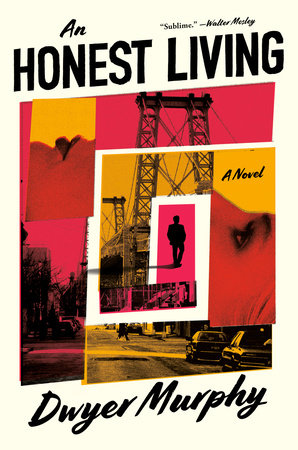
Over the years I’ve come to think of these stories as their own sub-genre: bookseller noir. When I wrote my first novel, An Honest Living, I wanted to capture some of that ambiguous magic for my own characters, so I let them wander in and out of a lot of bookstores, getting tangled up in everyday mysteries, buying, selling, stealing, and recovering a few volumes themselves. While writing, I kept coming back to my favorite titles. Some are bona fide mystery novels, others are either adjacent, or I’ve found another way to shoehorn them in. Together, for me, they make up the peculiar world of bookseller noir.

Heretics by Leonardo Padura, translated by Anna Kushner

Padura is one of the titans of Latin American noir and perhaps contemporary Cuba’s most celebrated author. His enduring creation is Mario Conde, the romantic, history-obsessed man of the people featured in one of Padura’s most ambitious works. In Heretics, Padura explores the Jewish diaspora turned away from Cuba, a looted Rembrandt painting, Miami exiles, and Conde himself, ever at work on his great novel and also hitting the pavement as a part-time book dealer. The story proceeds with the usual flights of imagination and historical interrogation, in which Conde unlocks the secrets of another community’s experience in the vast Cuban tableau. What shines through is Padura’s profound love for his culture and an eternal willingness to challenge it.

The Book of the Most Precious Substance by Sara Gran

Gran, whose Claire DeWitt series was without a doubt a high-water mark in bookseller noir, came back this year with a new protagonist, Lily Albrecht, another rare books expert who finds herself caught up in the fervor around an occult volume believed to hold the secrets to an ancient form of sex magic. Does that sound pretty wild? Good, that’s the point. Gran is one of the most surprising, effervescent novelists at work in the crime field today. Her prose is electric, her characters eccentric, and her plots unfold in strange and illuminating patterns, especially when they pertain to old books. Here the action bounces between New York, Paris, Munich, and New Orleans, cities that carry long and complicated literary legacies, plus some dark cultural secrets.

Out of the Dark by Patrick Modiano, translated by Jordan Stump

An unrelentingly enigmatic, lovely novel, Out of the Dark follows the same pattern as most of Modiano’s work: an older man looks back on some mysterious encounter from his youth and its strange reverberations across time. Here, the narrator is a young man living on the edges of Paris, making enough for food and lodging by selling old art volumes to the bouquinistes. He soon runs into Gérard Van Bever and Jacqueline, an intriguing couple who claim to be replenishing their funds with a complicated roulette scheme at casinos around France. Our narrator begins a relationship with Jacqueline; while he continues selling off books, she locks herself away in hotel rooms in a drug-induced haze. With Modiano, it’s always about questioning the past. Memories are distorted and reshaped as time passes, and his subject soon evolves into something ineffable, always just beyond reach. For those looking for an entry point into Modiano’s work, Out of the Dark is one of the best. 

Those Who Knew by Idra Novey

Novey’s powerful novel operates on so many levels. On the one, it’s a story about a woman wrestling with trauma and regret; on another, a country faced with much the same dilemma; but it’s also a story about language itself, the ways in which it channels and absorbs culture. It’s only fitting that in the kaleidoscope of perspectives and voices, Novey brings us one from a bookshop, that repository of the island nation’s post-US-dictated life. And of course, the book also has a wildly compelling plot, as a woman searches for the truth about a politician who preyed on her in the past and looks to be doing the same with other young women in the midst of his rise toward higher office. Nobody writes politically conscious literary thrillers quite like Novey.

The Club Dumas by Arturo Pérez-Reverte

Lucas Corso is a simple man. A cutthroat rare book dealer, yes, but primarily he would like to be left alone with his books, his spirits, and his re-creations of Napoleonic battles—except that he has a very particular set of skills, as they say, and also a fever for rare books. In Pérez-Reverte’s epic mystery, Corso is on the trail of certain volumes of the occult, reportedly co-authored by the devil. Corso is a professional skeptic, but soon finds himself encountering forces beyond his understanding. If all this sounds familiar, it may be that you’ve seen the 1999 film adaptation, but rest assured, you can put the Roman Polanski-Johnny Depp duo far from mind and enjoy this story on its own terms.

The Burglar Who Liked to Quote Kipling by Lawrence Block

Block is the quintessential New York City crime writer, still going strong on a decades-long run that spans series and genres. A few protagonists stand out from the pack, and first among them is Bernie Rhodenbarr, the careful thief who always seems to get tangled up with a dead body and who consistently funnels the profits of his burglaries into his Village bookshop. You can choose from just about any of the novels in the series and find the same exhilarating spirit, but I’d suggest starting with The Burglar Who Liked to Quote Kipling. In it, Bernie acquires the bookshop and starts teaching himself the trade, and also, naturally, gets drawn into a robbery requiring an odyssey across a city populated by fences, racketeers, art experts, bartenders, friends, and foes. The story includes an elaborate heist targeting a rare volume that nobody seems to think has much literary merit, another nice twist on the genre and a wry wink to those of discerning taste.

The Big Sleep by Raymond Chandler

How can you chronicle the history of bookseller noir without going to Chandler’s classic, the first Philip Marlowe novel? Marlowe is hired by one General Sternwood, whose younger daughter has been caught up with a disreputable bookstore run by a man named Abe Geiger, who Marlowe soon determines is running a pornography lending library and blackmail operation, and who, of course, winds ends up dead. It’s a wild, unruly, sometimes incoherent plot (which describes nearly all of Chandler’s work), and a completely revolutionary crime novel. Chandler’s style has been imitated but never quite equaled. Yes, there are a lot of similes, and the attitudes toward women and alcohol and the world may be outdated, but it’s the atmosphere that keeps readers coming back–that halting, dusky vision of Southern California where romance and cynicism mingle to produce something uncanny and unforgettable.

Announcing the Shortlist for the Inaugural Ursula K. Le Guin Prize for Fiction

Today, the Ursula K. Le Guin Trust announces the Shortlist for the first Ursula K. Le Guin Prize for Fiction. The prize honors a book-length work of imaginative fiction with $25,000. The nine shortlisted books will be considered by a panel of five jurors—adrienne maree brown, Becky Chambers, Molly Gloss, David Mitchell, and Luis Alberto Urrea. The winner will be announced later this year on October 21st, 2022, Ursula K. Le Guin’s birthday. 

In 2014, Ursula K. Le Guin received a lifetime commendation from the National Book Foundation. In her six-minute acceptance speech, she delivered an elegant critique of capitalism, a call for artistic action, and also a practical demand for the conditions every writer deserves. She criticized publishing houses—including her own—for padding their own pockets by overcharging libraries, for leeching power and profit from editors and writers. She pinched the capitalist thread holding the publishing and artistic worlds together and elegantly, graciously, pulled at the seam. Before receiving the cheers and standing ovation, she turned her speech away from the business of publishing and back to the work of writers. She urged them, as she did in her 23 novels, 12 short story collections, 11 poetry collections, 13 children’s books, 5 essay collections, and 4 works of translation, to remember what all of this was really about. Writing is a calling that delivers its own commendation. That “beautiful reward,” she said: “Its name is freedom.”

Downes-Le Guin acknowledged the challenge of designing a prize in honor of a writer who was outspokenly critical of them.

How does one find artistic freedom? Money, while not the source of artistic freedom, can perhaps help create the conditions for it. Since Le Guin’s death in January, 2018, her son and literary executor, Theo Downes-Le Guin has been thinking of ways to honor his mother’s work, and share her art and ideas with a new generation of readers and writers. In our conversation earlier this week, Downes-Le Guin acknowledged the challenge of designing a prize in honor of a writer who was outspokenly critical of them. And yet, a prize seemed a fitting legacy because, at the same time, Downes-Le Guin noted, “She certainly believed in giving money directly to writers, with no strings attached, for them to use however they wished to. To create the space and the opportunity to write.” 


Here is the Shortlist for the 2022 Ursula K. Le Guin Prize for Fiction, followed by a brief interview with Theo Downs-Le Guin. Erin Bartnett discussed the role of literary prizes in writers’ lives, the responsibilities of a literary trust, and how Ursula K. Le Guin’s artistic values shaped the making of this specific literary prize.


After the Dragons by Cynthia Zhang (Stelliform Press)

In a future Beijing afflicted by a climate-induced disease, two young men are drawn to each other, and to the city’s dragons. Cynthia Zhang’s debut looks at climate and equity through the lens of connection—to each other and to the creatures whose world we share. 

Appleseed by Matt Bell (Custom House)

In three braided stories, Matt Bell uses science fiction, myth, and fairytale in an exploration of how humanity moves both with and against the world. From two brothers seeding the land with apple trees to a distant future in which one lonely being crosses what’s left of North America after climate change, Appleseed is ambitious in its scope and compassionate in its telling.

Elder Race by Adrian Tchaikovsky (Tordotcom Publishing)

On a distant planet, an anthropologist in a tower has become part of local mythology—a sorcerer with seemingly incredible powers that might help a Fourth Daughter against a threatening demon. Adrian Tchaikovsky gives equal weight to the way two very different people see their world, showing that both stories—science and myth—are true, and both necessary for survival. 

The Employees: A Workplace Novel of the 22nd Century by Olga Ravn, translated by Martin Aitken (New Directions)

Olga Ravn’s novella is told in a series of reports made by the crew—human and otherwise—of an intergenerational, deep space ship. The Employees is set in a world where productivity has subsumed everything else. There is only work, and what people find in or despite of it: curiosity, attachment to strange objects, and an unsettled relationship with their humanoid colleagues. 

The House of Rust by Khadija Abdalla Bajaber (Graywolf Press)

Young Aisha sets out in the company of a talking cat and a boat made of bones to rescue her fisherman father. Khadija Abdalla Bajaber’s debut novel is grounded in a vivid sense of place and the way she continuously expands both Aisha’s world and her understanding of it—a world of leviathans, snake gods, and crows whose sharp eyes are on everyone. 

How High We Go in the Dark by Sequoia Nagamatsu (William Morrow)

In 2030, the Arctic plague rewrites the way people live. In How High We Go In the Dark, Sequoia Nagamatsu imagines what a world shaped by this plague might look like—funerary skyscrapers, a theme park for dying children, new uses for technology—and how humanity could still find love and human connection in it. 

The Past is Red by Catherynne M. Valente (Tordotcom Publishing)

Tetley Abednego lives on a garbage patch in the middle of the sea—one of the only livable places left in a flooded world. Catherynne M. Valente’s post-apocalyptic world looks like no one else’s, and despite the hard parts of Tetley’s existence, she’s resilient, wise, and full of hope that we can still make a broken world into a home.

A Snake Falls to Earth by Darcie Little Badger (Levine Querido)

A cottonmouth kid making his way in a world of spirits and monsters and a Lipan girl from our near future find their lives intersecting in Darcie Little Badger’s gracefully told young adult novel about home, stories, family, friendship, and the interconnectedness of worlds. 

Summer in the City of Roses by Michelle Ruiz Keil (Soho Teen)

In Michelle Ruiz Keil’s punk-rock fairytale, a girl goes looking for her runaway brother in 1990s Portland, Oregon. What both of them find in the vintage shops and secret corners of the city is something else: Transformation, understanding, and a world more varied and welcoming and strange than they knew.


EB: Imaginative fiction can include a swath of so many kinds of literature. I know it is intentionally a broad category, but why was it important to define the work under consideration as Imaginative Fiction? 

TDLG: Of all of the components of the program that we wrestled with, how to define eligible writing was by far the most difficult. Every foray we made into narrowing it and using terminology that might be more familiar and comfortable to people inevitably took us into genre categories that Ursula spent most of her life fighting against. She thoughtfully pointed out the limitations and the bias inherent in those terms, and how that terminology, even if it may start out as an academic or artistic categorization, becomes an ally of capitalist categorization, and therefore very much part of a set of restrictions on artistic freedom that she resisted. 

So, we were looking for terms that, if you combine them with a knowledge of Ursula’s art and oeuvre, might have meaning to people who were in the position of nominating or evaluating nominations. Which is to say, I think if you’d never read anything Ursula ever wrote, the term Imaginative Fiction might be vague at best and confusing at worst, but if you know a bit about fantasy, and science fiction in general, and if you know something about Ursula’s work, it starts to have some form. And I think the feedback loop for me was: what kind of work got nominated, and were a lot of those nominations wildly off the mark? And the answer to that was no. 

EB: This prize will be given to a writer “whose work reflects the concepts and ideas that were central to Ursula’s own work.” One of those ideas, which feels particularly vital and  central to Ursula K. Le Guin’s work, is hope. How did hope show up in the books being nominated?

Hope is very important. I would say that writers, to some degree, are struggling to find a path to it.

TDLG: You see patterns of what’s important to writers right now, of course in reviewing a large number of submissions, and hope is very important. I would say that writers, to some degree, are struggling to find a path to it. Because, it’s so easy to run in the opposite direction, and of course we are now a couple of decades into dystopian fiction’s huge influence in genre fiction and in YA. So there are commercial imperatives as well as social imperatives that can point people in the direction of dystopias or semi-dystopias. But on balance, I’m really gratified by how little of that we found. Again, that may be a certain amount of self-screening—people who know Ursula’s work, know that nominating a dystopia is probably not in the spirit of her writing. But I also think there is a larger desire to define paths forward that are, if not pragmatically feasible in the near future, nevertheless have that quality of making us think about other ways of being, other ways of living, that are different from the way of today, and may have more promise for our long-term viability as a species and for our place in the larger world. 

EB: How do you imagine and hope this prize will generate freedom for writers moving forward? 

TDLG: I don’t want to sound under-ambitious, but the older I get the more I feel that the effect I can have on anything is incredibly limited, and I’ve become more and more interested in effects that I can see and appreciate in the near term. So if the prize goes to worthy recipients—which is a foregone conclusion if we design the process well—and those recipients over a period of years are able to purchase themselves a bit of freedom, then I’m happy. And whether they write something terrific as a result of that freedom or not is really not a concern to me. I have been working in the arts, on and off, for many years now, and I have seen that the effects of a gift like that can be profound but also not immediate. If someone needs to pay off their car with that money, I think that’s great. It doesn’t tie immediately to any artistic “product” but I know that paying off a car or buying a car can be a profoundly helpful and freedom-inducing act depending on who you are and where you live, and that’s just one of many many examples of how $25,000 could be put to use. We tried to design a prize that, even if it wasn’t life-changing in the context of every individual’s circumstances, it is a significant enough amount to provide a positive disruption. 

EB: It feels so important and refreshing to acknowledge that financial stress and hardship impinges on a writer’s freedom. Because of course it does. 

TDLG: Yes. It would be very un-Ursula to rely on status to make the prize work. For example, I think the Prix-Goncourt is…10 euros? Obviously an enormously influential and important prize, but financially, it is less than an afterthought. That’s a different model. And I think it would have been very difficult to design this prize on that model. Not because her name and reputation wouldn’t uphold it, but because she would have wanted practical, tangible help for writers. And while aligning yourself with a high-status prize is a form of practical and tangible help, it’s a very specific form, and not one that seems in keeping with the way she moved through the world. 

EB: Something I’ve been struck by in our conversation is how much you’ve considered  what Ursula K. Le Guin would have wanted, and how to honor that. It makes me think about the role of a literary trust more broadly. What, in your experience, have been some of the challenges and rewards? 

She was very worried about the history of erasure of women’s writing.

TDLG: Well, I have been thinking through these questions for the past five years, and I don’t know where I am in the journey of figuring it out. One large part is trying to be imaginative myself about ways to keep her work out there, particularly, for young readers. I don’t have any real concern that Ursula’s work is not going to be read in 20 years. I think if I stopped doing everything I’m doing tomorrow her books would still be read. But she told me a couple years before she died that she was very worried about the history of erasure of women’s writing and that she felt that there was a good chance no one would be reading her books fifty years after she died, possibly less. Because of the mysterious but very efficacious ways in which women’s writing and fantasy and genre writing disappear from the canons. So I obviously heard that, and I really take that as my central mission. To do what I can to counteract those forces. I have complete confidence that her work, in an utterly fair, level playing field, will continue to be read for many generations on the basis of artistic merit. I don’t have to worry about that, fortunately. But I do have to worry about what intercedes between artistic merit and readers, the set of choices that’s put in front of them over time. 

Rachel Kincaid Believes in Writing Into Your Questions, Challenges, and Confusion

In our series Can Writing Be Taught?, we partner with Catapult to ask their course instructors all our burning questions about the process of teaching writing. This month we’re featuring Rachel Kincaid, a fiction writer, reporter, and cultural critic. Check out her 3-week online nonfiction seminar on exploratory writing. We talked to Kincaid about writing into your questions, why the concrete details are critical to the emotional heft, and the importance of busy work for a writers’ hands.


What’s the best thing you’ve ever gotten out of a writing class or workshop as a student?

I had an early writing teacher, Thisbe Nissen, who was informed by Frank Conroy’s pyramid of meaning-making in stories, the bottom base layer of which is “meaning, sense and clarity.” She was very focused in workshops on solving material problems in the text. I remember I had written a story about a mermaid who had been captured by a fisherman and kept captive in a tank in his basement. In workshop, I wanted to talk about the character and thematic stuff, and Thisbe made us focus on the tank: how big was it? What shape? Could the mermaid move around? How did the logistics work? As a 20-year-old, these felt like trivial details, but in the long term it was so helpful to be really incentivized to make sure the living world of the piece was fully airtight before you even came to the table to talk about the abstract stuff. I didn’t understand at the time, but the concrete details end up being inextricable from the “big” emotional moving parts of the work; they’re the atoms that make it up.

What’s the worst thing you’ve ever gotten out of a writing class or workshop as a student?

Without pointing fingers unnecessarily, I think the least helpful workshops for me were ones where you could see a pattern where the instructor’s suggestions clearly hewed to the instructor’s own set of interests or aesthetic preferences rather than responding to something the text or the writer are clearly trying to accomplish. Those end up being classes that are training in how to write for a certain audience, or in worst case scenarios, how to write like the instructor — which have their place if that’s what you sign up for, but is different than a workshop. To me, a workshop doesn’t answer the question “What do I, the instructor, think would make this piece better?” but “what is this writer trying to do with this piece, and how can we help them get there?”

What is the lesson or piece of writing advice you return to most as an instructor?

I often respond to questions, confusion, or challenges people experience as writers by suggesting they “write into it” or “write toward it” — I’m starting to wonder if that’s my tic in teaching situations, like the way my therapist will tell me to “notice that feeling” several times a session. Not sure whether the memory you wanted to write about actually happened to you or to your sister? Maybe that’s what the essay is about, write into it! Can’t figure out where to go in the piece after you describe your toxic college friendship? Write about why it’s hard to figure out what to say! Even if it doesn’t stay in the final piece, it will help you understand something by working it through on the page. The writing isn’t what you do after you have everything figured out; the writing is the figuring it out.

Does everyone “have a novel in them”?

Sure! I don’t know that everyone has, say, a novel that would get sold to a Big Five publisher, but I don’t think that matters that much. Writing and publication are different things that don’t necessarily have to be related.

Would you ever encourage a student to give up writing? Under what circumstances?

If it was making them miserable, of course, like anything else — if they felt like they were only still writing because they felt they had to, or they were ashamed to “give up,” or were only writing in order to be a certain kind of person. If you feel relieved at the thought of “giving up,” you should! It’s not curing cancer; there are so many worthy and valuable things to do with your life!

The writing isn’t what you do after you have everything figured out; the writing is the figuring it out.

What’s more valuable in a workshop, praise or criticism?

I’m realizing from this question that I don’t necessarily think of workshops as a place for praise or criticisms, more making observations. I was raised to see workshops as a place where you could get useful information about what readers were taking away from your work, and measure it against what you had been aiming for. I think now I hope that workshops can also be a place of collective problem-solving, where the combined insight and experience of the workshop can open up things about your own work that you couldn’t see on your own; I don’t think either praise or criticism has a monopoly on that. 

Should students write with publication in mind? Why or why not?

I think you edit with publication in mind, but don’t write that way – especially as now thinking about publication often means thinking about the internet, which is not a helpful element to have in your head with you as you write. To me, the most valuable kind of writing is the kind you’re able to do in the spirit of exploration or without locking yourself into a specific outcome, and writing for publication often precludes that.

In one or two sentences, what’s your opinion of these writing maxims?

  • Kill your darlings: Sometimes a part of the work is more for you than it is for the reader; that’s fine and part of the process, just be honest with yourself when it happens.
  • Show don’t tell: It’s not this absolute. Scene and summary/exposition both have their function; the goal is to make sure they’re working in concert.
  • Write what you know: A fair edict to keep in mind when it comes to presenting a perspective from a place of lived experience or identity; in terms of process, you do have to draw from what you know but it’s crucial to also write from curiosity, toward unresolved questions.
  • Character is plot: I hesitate to declare broadly that plot is anything in particular, but I do think that plot has a hard time succeeding without the characters really working. Historically, people have tended not to care much about what’s happening unless they care about who it’s happening to.

To me, the most valuable kind of writing is the kind you’re able to do in the spirit of exploration or without locking yourself into a specific outcome

What’s the best hobby for writers?

Something that uses the spatial & tactile parts of your brain, and ideally that occupies your hands so you can’t be on your phone: gardening, knitting, hairstyling, woodworking. Good writing thinking often happens when you’re doing something totally unrelated; nice to create those moments intentionally.

What’s the best workshop snack?

Dietary restrictions notwithstanding, I love a little cheese and crackers or charcuterie setup; I think a little bit of hands-on snack assembly helps get everyone in a constructive mindset.

White Capitalism is Destroying My Neighborhood

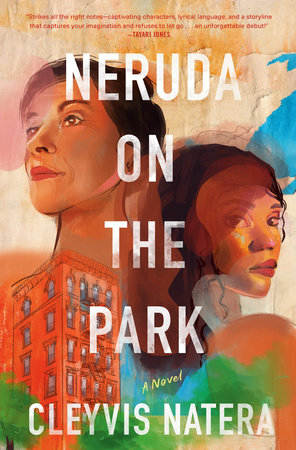
Gentrification takes center stage in Cleyvis Natera’s debut novel Neruda on the Park, which follows the different reactions the members of the Guerrero family have to the impending redevelopment of their predominantly Dominican New York City neighborhood.When a neighboring tenement is demolished to make way for a luxury complex of condominiums in their neighborhood, the mother, Eusebia, begins devising a dangerous plan to prevent the complex’s construction, oblivious that her daughter, Luz, a rising associate at a top Manhattan law firm, is falling for the handsome white developer.

In Neruda on the Park, author Cleyvis Natera creates an intricate portrait of a close-knit community in crisis, exploring how gentrification impacts communities and individuals, the nuances of ambition, as well as what it means to be a woman in an ever-changing world.

Natera immigrated to the United States from the Dominican Republic at the age of ten. She has won awards and fellowships from PEN America, the Bread Loaf Writers Conference, the Kenyon Review Summer Writers Workshop, and the Virginia Center for the Creative Arts, which is where we first met. 

Recently Natera and I discussed how she used Neruda on the Park to explore the violence inherent to gentrification, inter-community resentment, and what she learned from working on the same book for more than a decade.


Deirdre Sugiuchi: In the opening chapter, the main character, Luz, sees signs of impending development in her neighborhood and knows how it plays out—neon colored storefronts replaced with “yoga, juice bars, endless mimosa brunch places with lines out the front door.” Her apathetic response to the inevitability of gentrification is in marked contrast to her mother Eusebia, who goes to great lengths to protect their historically Dominican neighborhood. Can you discuss exploring gentrification and inequity in Neruda on the Park

Growing up in New York City in the late 1990s, it was terrifying to realize how quickly people are displaced by the forces of capitalism and whiteness.

Cleyvis Natera: In Neruda on the Park, we’re introduced to Nothar Park, a predominantly Dominican and immigrant community in northern New York City on the cusp of great change. The gentrification that has violently altered neighborhoods all around New York has somehow missed this community and when it arrives, we see, as you mentioned, how starkly differently my two main characters react. While Luz, a young upwardly mobile lawyer, sees it as inevitable, her mother Eusebia, sees an opportunity to stand up and fight. The roots of this interrogation began from my own lived experience.

Growing up in New York City in the late 1990s, primarily in Harlem and Washington Heights where my family still lives, it was terrifying to realize how quickly people are displaced by the forces of capitalism and whiteness. It was critically important to me to bring the fear and rage that I witnessed during the times of most change in my own neighborhood to my fictional story. Gentrification is a force of erasure and of displacement and those who are most affected are often those who already occupy the most vulnerable places in societies across the globe. I’m a big fan of books that have come out in recent years that touch on this topic. But time and time again the change was taken as a given—as an impossibility. I wanted to explore the possibility of resistance. What if there was a community that refused to give in?

DS: Luz grows up in a tightly knit community but as an adult feels alienated from community members, who she feels are suspicious of her for going to college and then law school. Can you discuss writing about resentment toward success in communities which historically have been marginalized? Have you felt similar hostility upon publication of this book?

CN: There is a great deal of tension that lies in the intersection of the pursuit of the American dream and the realities of what it costs to attain it. So often, within the context of our society and especially within marginalized communities, success is defined and measured by material possessions—the more, grander, bigger and more expensive our lives appear from the outside, the more worthy of admiration we are. Our very self worth is positioned relative to what we have to show for our hard work and it is our possessions that are often poised as the surest path to happiness and self-fulfillment. When we meet Luz, one of my main characters, she has fallen in line with this philosophy of life. But she has a nagging, persistent feeling it may be a lie. I also wanted to show how difficult it is to exist within a community where there are equal parts admiration and resentment for “making it” and use that as a vehicle for Luz’s character growth and transformation. 

I haven’t experienced any outright hostility upon the publication of my novel. Sure, some people I anticipated would come to the forefront to champion my book and help me celebrate it have not but the overwhelming reception to my novel’s splashy success has been met with love and support from those who matter most to me. I would just say, for the record, that after attempting to jump start a writing career for 15 years, I learned very early to keep my expectations low. It’s one of the best aspects of having made it so far behind many of my peers… Many have told me the support won’t necessarily come from people in our lives. Sadly, writers aren’t magicians so we can’t turn, even people who love us, into readers if they could care less about books. That’s why I am incredibly humbled when people I know as well as perfect strangers show up for me. The times we’re living through often make me want to run and hide and I don’t blame anyone for turning the world off for their own self-preservation. Do what you gotta do, people!

DS: Neruda on the Park explores the nuances of women’s ambition, particularly the pitfalls faced by high-achieving Black and Brown women. Can you elaborate? 

I wanted to explore the complications of ambition through the lens of womanhood, especially when that pursuit acts in service of the same systems that keep our communities marginalized.

CN: I find current and past feminist/womanist movements fascinating in how obvious it is that so much of what stands in the path of true solidarity and lasting advancement for women are the same factors—intersecting challenges—that get in the way of our society moving toward a fairer and more just place. In my novel, I wanted to explore the complications of ambition through the lens of womanhood and hopefully create space for dialogue around the costs to our own bodies at constantly hustling to achieve, to break ceilings, especially when that pursuit acts in service of the same systems that keep our communities marginalized. 

DS: In Neruda, you explore the way women’s bodies are perceived, by other women, by men, in different communities. Why is it important to write about this? 

CN: During the time it took me to write and publish this novel, the culture has shifted drastically around women’s bodywork and cosmetic surgery. Walk around most major cities— notably Los Angeles, Chicago, New York City, Miami— and you’d be hard pressed not to be knocked around by augmented female bodies every which way you turn. When Luz and her mother Eusebia are discussing where they each stand as far as Eusebia’s sister, Cuca, pursuit a full-body makeover (in order to still her husband’s the wandering eye), I also wanted to give room the complexity of the bind we find ourselves in as women. “We cannot win,” Luz says to her mother— voicing frustration that women are expected to conform to certain standards of beauty but then are criticized when they go to cosmetic surgery for not being “natural.” 

My main preoccupation with the persistent way in which women’s self-esteem is intentionally capsized in pursuit of a billion-dollar industry is how it metamorphoses. It grows more surreal year by year but never ceases to be centered on distraction. Who wins when we are constantly attempting to attain impossible beauty? What might happen if we ceased to be distracted by what our bodies should look like? 

DS: In Neruda, you explore the blinders of the 1% regarding sustainability. For instance, one of the central characters is a vegan due to ethical reasons but also has a private plane. Why is it necessary to explore such contradictions? 

CN: I’m often struck by how harm is done within and outside marginalized communities by people who genuinely believe their actions are in service of those same communities. In Neruda on the Park, I wanted the concept of villains or antagonists not be flattened—to provide plenty of room within a context that can be seen as humorous in its absurdity. I find it is sometimes easier to speak of difficult, weighty subjects when fiction eases the way by showing how truly incomprehensible we are as people. How often do we do the opposite of what we stand for because it is easier, or because we’ve never been forced to consider the ramifications due to our privileged place in society?

DS:  It took you 15 years to write Neruda on the Park. Can you discuss remaining committed to a project for that long?

CN: You know, it’s crazy to say this but because Neruda on the Park came at the heels of a failed book— my MFA thesis novel which I never sold—I told myself very early on that it was publication or bust. For better or worse, I wouldn’t move on to another book until I published it. I stuck to the stubborn belief that this was the book worth digging my heels in about. I also feared that if I abandoned yet another project, I would never learn the lessons inherent in taking a seed born in the imagination and turning it into a book others can hold in their hands, perhaps be moved in a meaningful way by it.

Since the book was published, I’ve been asking myself whether I might have been better off if I would have moved on to another project at some point and the truth is part of the reason it took so long is because I did—I stopped writing altogether during periods of my life for many reasons. Where I’ve landed now is that I’m grateful this story haunted me, forced me to become a better writer, helped me live a life that informed me as a human so I could rise to a level worthy of being its creator. There are several sentences in this book that survived so many revisions and edits, and when I find them, it ignites within me such tenderness for what this story and I have been through. It fills me with gratitude and, I can’t lie, a little sadness that we’ve now arrived at a point where the story will have a relationship in the world independent of me.  

There’s No Home but There Is a Family

“The Overcoat” by Gina Berriault

The overcoat was black and hung down to his ankles, the sleeves came down to his fingertips, and the weight of it was as much as two overcoats. It was given him by an old girlfriend who wasn’t his lover anymore but stayed around just to be his friend. She had chosen it out of a line of Goodwill coats because, since it had already lasted almost a century, it was the most durable and so the right one for his trip to Seattle, a city she imagined as always flooded by cataclysmic rains and cold as an execution dawn. His watch cap came down to his eyebrows. 

On the Trailways bus the coat overlapped onto the next seat, and only when all other seats were occupied did a passenger dare to lift it and sit down, women apologetically, men bristling at the coat’s invasion of their territory. The coat was formidable. Inside it he was frail. His friend had filled a paper bag with delicatessen items, hoping to spare him the spectacle of himself at depot counters, hands shaking, coffee spilling, a sight for passengers hungrier for objects of ridicule than for their hamburgers and French fries. So he sat alone in the bus while it cooled under the low ceilings of concrete depots and out in lots under the winter sky, around it piles of wet lumber, cars without tires, shacks, a chained dog, and the café’s neon sign trembling in the mist. 

On the last night, the bus plowed through roaring rain. Eli sat behind the driver. Panic might take hold of him any moment and he had to be near a door, even the door of this bus crawling along the ocean floor. No one sat beside him, and the voices of the passengers in the dark bus were like the faint chirps of birds about to be swept from their nest. In the glittering tumult of water beyond the swift arc of the windshield wiper, he was on his way to see his mother and his father, and panic over his sight of them and over their sight of him might wrench him out of his seat and lay him down in the aisle. He pressed his head against the cold glass and imagined escaping from the bus and from his parents, revived or destroyed out there in the icy deluge. 

For three days he lay in a hotel room, unable to face the two he had come so far to see and whom he hadn’t seen in sixteen years, the age he’d been when he’d seen them last. They were already old when he was a kid, at least in his eyes, and now they seemed beyond age. The room was cold and clammy, but he could have sworn a steam radiator was on, hissing and sputtering. Then he figured an old man was sitting in a corner, watching over him, sniffling and sadly whistling. Until he took the noise by surprise and caught it coming from his own mouth, an attempt from sleep to give an account of himself. 

Lying under the hotel’s army blanket and his overcoat, he wished he had waited until summer. But all waiting time was dangerous. The worst you could imagine always happened to you while you were waiting for better times. Winter was the best time for him, anyway. The overcoat was an impenetrable cover for his wasted body, for his arms lacerated by needles, scar on scar, like worms coming out, with the tattoos like road maps to show them the way. Even if it were summer he’d wear the overcoat. The sun would have to get even fiercer than in that story he’d read when he was a kid, about the sun and the wind betting each other which of them could take off the man’s coat, and the sun won. Then he’d take off his coat, he’d even take off his shirt, and his parents would see who’d been inside. They’d see Eli under the sun. 

With his face bundled up in a yellow plaid muffler he’d found on the floor of the bus, he went by ferry and by more buses way out to the edge of this watery state, avoiding his mother by first visiting his father. Clumping in his navy surplus shoes down to the fishing boats riding the glacial gray sea, he was thrown off course by panic, by the presence of his father in one of those boats, and he zigzagged around the little town like an immense black beetle, blown across the ocean from its own region. 

On the deck of his father’s boat he was instantly dizzied by the lift and fall and the jolting against the wharf, and he held to the rail of the steep steps down to the cabin, afraid he was going to be thrown onto his father, entangling them in another awful mishap. 

“Eli. Eli here,” he said. 

“Eli?” “That’s me,” he said. 

Granite, his father had turned to granite. The man sitting on the bunk was gray, face gray, skimpy hair gray, the red net of broken capillaries become black flecks, and he didn’t move. The years had chiseled him down to nowhere near the size he’d been. 

“Got arthritis,” his father said. The throat, could it catch arthritis, too? His voice was the high-pitched whisper of a woman struggling with a man, it was Eli’s mother’s voice, changed places. “Got it from the damn wet, took too many falls. Got it since you been gone.” 

The Indian woman beside him shook tobacco from a pouch, rolled the cigarette, licked it closed, and never looked up. “You got it before he went,” she said, and to Eli, “How long you been gone? A couple weeks?” 

“Sixteen years, more or less.” 

“Eli’s my son,” his father said. 

The Indian woman laughed. “I thought you were Louie. Got a boat next to ours. We been expecting him. Got to tell him his shortwave radio was stolen. Storm did some damage, too. You Harry’s son? He never told me. You a fisherman like your dad?” 

“Nope.” 

“He’s smart,” his father said. 

“Never got a kick out of seeing all those fishes flopping around in the net, fighting for their lives.” 

“Eli always saw stuff that wasn’t going on,” his father said. “That kid never saw what was real. Did you?” 

“Never did,” said Eli. 

“You want to sit?” his father asked. 

Eli sat on the bunk opposite them. 

“That’s a big overcoat you got there,” his father said. “You prosperous?” 

“I’m so prosperous I got a lot of parasites living off me.” 

“They relatives of yours?” she asked. 

“Anything living off you is a relative,” he said. 

“I’m never going to live off you and you’re never going to live off me,” his father said. 

“Right,” said Eli. 

“You visit your mom?” the woman asked. 

“Not yet. I don’t know where she is.” 

“Nobody,” said his father, “could ever figure that out. A rest home for the time being. She lived too fast and hard, got to rest for a while. What a woman. A redhead. They burn up themselves.” 

“What color’s your hair?” the woman asked. 

Eli took off his watch cap. 

“What happened to your hair? You’re kind of bald for a guy young as you.” 

“Fell out.” 

“That’s the way them punks wear their hair,” his father said. 

“I’ve been sick, that’s why,” he said. 

“Are you hungry?” she asked. 

“Can’t say.” 

“I got some beans left in the pan, would you like that?” 

“Thanks. Can’t say,” he said. 

The woman pushed herself up in stages, her weight giving her a hard time, like a penalty. She wore a mackinaw and men’s trousers and two pairs of thick socks, the holes in the top pair showing the socks underneath. Her breasts hung to her waist though she had no waist, but when she lifted her arms to light a hanging kerosene lamp he saw how gracefully she did it, her hands acting like a pretty girl’s. He could have fallen for her himself when he was sixteen. 

On the narrow table between the bunks she set down a battered pan and a large spoon. He scooped up a few beans, found them too much to deal with, and put the spoon back in the pan. 

“Guess I’m not hungry, thanks,” he said. “What I need is a place to sleep. Just for tonight. I used to sleep on this bunk when I was a kid.” 

“It’s nice you remember,” she said. “Go ahead and lie down. See if you still fit,” his father said. 

“I’ll wait ’til everybody’s in bed.”  

“The army ever get you?” his father asked. 

“Never got me, didn’t want me.” 

“That’s good they didn’t want you,” she said. 

“What’s wrong with the army?” his father said. “What the hell else did you do with your life?” 

“You talk like his life is over,” the woman said. “He’s young. He’s just a little older than my boy Nate.” “I wrecked it,” Eli said. “You detected the secret of my life.” 

“Well now you see you got sick,” his father said. “Could be you’re being punished for wrecking your life.” 

“Could be,” Eli said. 

“Go ahead and lie down,” his father said. “You look like you’re about to drop dead. What do the doctors say?” 

“Just what you said.” 

Eli lay down, wrapping his overcoat more closely around himself. 

“You want me to take your shoes off?” she asked. “I got some extra socks, they’ll keep your feet warm.” 

“No thanks, I’ll be fine,” he said, pulling his watch cap down over his ears and his eyes. 

“We sleep aft,” she said. “If you need anything, just call. My name’s Myrna.” 

Outside his cap things went dark. She must have snuffed out the lamp. He lay in his overcoat, drawing his legs up close against his hollow stomach. Then he imagined he was a boy again, home again in the house in Seattle, under covers in his own bed while his parents drank the night away, unprotected from them but protected by them from the dreadful world they said was out there. Then he thought about the strangers he’d met, out in that world. The ones who said Tell me about your parents, Eli, the ones who said they were there to help him. Smirky parole officers and smugfaced boy psychologists in leather jackets, jiving with him like a cellmate, and that female social worker in her short skirt, whose thighs he’d hope to open with the shining need for love in his eyes. In the morning of your life. That was the way she’d put it. It made him go weak in the head, he’d say anything she wanted him to say, and he’d blamed this old man on this rotting boat and he’d blamed his mother, wherever she was, for what had become of Eli. They had pried out his heart, those prying strangers, and the empty place left behind was where death got in. He knew this for a fact. 

At dawn he was wakened by his shivering body. Out on the pier, the cold salt wind stiffened him, almost blinding him, so that he wound up a few times at the pier’s edges. When you look back, he’d heard, you’re turned into salt, and that’s what was happening to him. If he fell into the sea he’d disappear faster than he was bound to already. 

For two days he wandered Seattle. Now that he was near to his mother he wanted to go on by. He had betrayed her, he had blamed her for Eli. Somebody was to blame and he didn’t know who. If his father was right, then Eli was to blame for what he’d done to himself, and proof was in the punishment. Once and for all, Eli was to blame. 

They told him at the desk that his mother was ambulatory and could be anywhere. The old women in the rows of narrow beds, and the women in their chairs between the beds, hadn’t much left of womanness in them, but their power over him was intact. He went along before their pale faces staring out at the last puzzling details of the world, himself a detail, a cowering man in a long black overcoat, who might be their long-lost father, come to visit. 

There she was, far down a corridor and out, and he followed her into a paved yard, walled in by brick and concrete. She put her hand to the wall to aid herself in open space, reached the bench and sat down, and her profile assured him he wasn’t mistaken. 

“Mother, it’s Eli,” he said, taking off his watch cap. 

She raised her eyes, and one eye was shrewdly narrowed and the other as purely open as a child’s, the blue almost as blue as ever. 

“Eli,” he said. “Can I sit down?” 

“Room enough for everybody.” He sat, and she paid him no attention. 

The day was cold, but she had come out wearing only a sagging sweater, a skirt, pink socks, and sluffy shoes. From a pocket of her sweater she took a scrap of comb and began to comb her hair. The comb went cautiously through the tangle of flame-red and gray curls. 

“Mother, I’m Eli,” he said. “Eli, your only child.” 

“You’re right about that,” she said. “Had one and that was it. Well, no. Had another but lost it in the womb. Fell down or was pushed. Things come and go. I figure they go more often than they come. Not much came my way but I lost more than I had. If you see what I mean.” 

“Mother, I wish I’d stayed around,” he said. “I wouldn’t let him hurt you anymore.” 

“Who hurt me?” 

“Dad did.” 

“Oh, him? Once in a blue moon I get a postcard. One time he visited but I was ashamed of him. He walks like an old dog with something wrong in his hind end.” 

“Mother, don’t be afraid to look at me.” 

“I don’t see as good as I used to,” she explained. “In the past I used to read the teeniest print. When I was a girl, believe me, I was the smartest in my class. The best looking, too. It wasn’t just my red hair, it was more. I was wild to begin. That and my hair drove everybody wild. It’s contagious.” 

“Look at me,” he begged. “Come across.” 

She drew the sweater over her breasts and kept her arms crossed there. “We had ourselves an earthquake today. Did you feel it? Bricks fell down. We thought the whole damn place was coming down.” 

“I wasn’t here.” 

“Were you scared?” 

“I wasn’t here.” 

“Go on. I bet you were scared.” 

“I died in it,” he said. If she wanted his company in her earthquake it was no trouble to oblige. It made no difference, afterwards, when or where you died, and it was easier to tell her he was already dead than tell her he was going to be soon, maybe even before he could get up from this bench. 

Slowly she turned her head to take a close look at him, this man who had sat down beside her to belittle her with his lie. “You never died,” she said. “You’re alive as me. I saw to it. Nothing got by me. Awful things happen to boys out there. I’d wake up in the middle of the night, sure somebody was out to harm you that exact second. I’d yell, ‘Run, Eli, run! I’ll take care of this fiend!’ And that’s how I rescued you, every time.” 

“You did. Every time,” he said. 

Off in a corner, facing the wall, he covered his head with the overcoat and in that dark tent wept, baffled by them, by the woman over there on the bench, combing her hair again, and by the old man on the rocking boat. They were baffled by what had gone on in their lives and by what was going on now and by whatever was to go on, and this was all they had to offer him, Eli, come back to them, baffled enough by his own life.

9 Books About the Beauty and Complexities of Chosen Families

Iconic drag queen RuPaul was the first person to introduce me to the concept of chosen family. I was 18 and in love with the captain of my college swim team. Having been raised Catholic in the conservative Midwest, I had almost no context for my new self-discovery. I didn’t know anything about Stonewall, or the ball scene depicted in the 1990 documentary Paris is Burning. I couldn’t tell you anything about the HIV epidemic or the Defense of Marriage Act or the legislation that would eventually lead to the Supreme Court’s ruling in Obergefell v. Hodges. I knew only one out gay person in real life. Maybe that’s why I latched so desperately onto Drag Race in the early stages of my dykehood, absorbing RuPaul’s advice and wisdom with such profound appreciation.   

“You know,” RuPaul said once, “We as gay people, we get to choose our family. We get to choose the people we’re around. You know what I’m saying?” 

After a difficult, lonely childhood and a disastrous coming out, I finally found my own chosen family in a wild, tightly-knit, and highly ranked roller derby team in St. Louis, Missouri, where I moved shortly after college for grad school with my now wife, hungry for community and belonging. My debut memoir, Brace For Impacta derby term we use to describe the way we prepare for hits on the track—follows my process of building a support system from the ground up, and finding a community that not only accepted my queerness and my quirks but celebrated them. For me, it was a lifesaving discovery. 

I love the way these nine books, by authors whose sexualities and gender identities span the gamut, portray the beauty and complexity of chosen family: 

Later: My Life at the Edge of the World by Paul Lisicky 

Lisicky’s sixth book is set in Provincetown in the early 1990s at the height of the AIDS crisis. He details his time at the Fellowship Program for Visual Artists and Writers, an essential circle of Lisicky’s community in Provincetown. “We catch ourselves behaving like members of an extended family,” Lisicky writes, “one by one jumping up on a makeshift go-go box, or cheering one another on in a line dance.” In a 2022 AWP panel that centered on chosen family, Lisicky reflected that Later describes the process of “finding the siblings I didn’t have.” Fellow panelist Minna Salami posed that perhaps the core notion of family is the desire for security—and Lisicky addresses this both implicitly and explicitly in the way he tackles themes of profound uncertainty in the queer community at this moment in history.    

Detransition, Baby by Torrey Peters 

Torrey Peters’ debut novel centers three characters: Reese, a trans woman, Ames (formally, Amy, who recently detransitioned), and Katrina, Ames’ boss, who is pregnant with their child. Peters, who came out as trans at 26, said she was inspired to create Ames’ character after an experience in 2016 in which she dressed in a suit to avoid probing questions from customs agents about her male passport. Not only does this story describe the process of intentionally finding family in the trans community, it also addresses how chosen family can do as much harm and good as blood relatives. 

Ordinary Girls by Jaquira Diaz 

In this debut memoir, Jaquira Diaz writes about growing up in Puerto Rico and the projects of Miami. She deals with abuse, mental illness, poverty, and violence; her writing crackles with life. In the chapter “Girls, Monsters,” Diaz structures the first sentence of every paragraph around a “we,” which, she explains, is, “Boogie and China and Flaca and Shorty and me.” What struck me in Ordinary Girls were these friendships—these deep, female bonds—that buoy the author into her coming-of-age and a discovery of her burgeoning sexuality. After a sexual assault, Diaz writes, “We went right back to drinking, smoking, fighting, dancing dancing dancing, running away. We wanted to be seen, finally, to exist in the lives we’d mapped out for ourselves.” Ordinary Girls helped me feel seen. 

Just Kids by Patti Smith 

I had just finished studying in New York City for a term when I was introduced to Just Kids by Patti Smith. My experience living in a townhouse in Chelsea with twenty other budding artists meant that I could relate to Smith’s longing to find a community at the Pratt Institute. We were both 19, just kids, when we found ourselves in New York.

Smith’s book primarily details her profound relationship with the photographer Robert Mapplethorpe, who died of AIDS in 1989. The two become an inseparable pair, and the artists and writers who surround Smith and Mapplethorpe at art openings and in the Chelsea Hotel become somewhat of a surrogate family. There’s a certain grittiness in Just Kids I hope will resonate with my readers, too. 

The Perks of Being a Wallflower by Stephen Chbosky 

When Charlie enters high school, he is dealing with the death of both his Aunt Helen and his only friend from middle school who died by suicide. It’s a precarious time in his life—one in which he desperately needs a new tribe. He finds it in two upperclassman, Patrick and Sam, and an English teacher named Bill Anderson who takes Charlie under his wing. Charlie’s biological family play only a small part in this novel, which I consider a keystone coming-of-age book for anyone who’s experienced the isolation and loneliness of reckoning with their own mind. 

Homie: Poems by Danez Smith 

It should be noted that Danez Smith’s Homie is dedicated, “for the homies who keep me… for you & your friends.” The bonds in the book sustain the speaker, and help steer them away from suicide. Smith says in a Rumpus interview that “I used to worry, and later bore, myself with questions about the white gaze on my work, and I would rather invite the eyes of those who I want to speak to instead of sweat those whose looking has always been assumed, privileged.” In the poem “say it with your whole black mouth,” Smith writes,

“i don’t like thinking about doing to white folks what white folks done to us

when i do

can’t say

i don’t dance

o my people

how long will we

reach for God

instead of something

sharper?”

Like Smith, I wrote Brace for Impact for my people—low-down, working-class, queer people—and I pray they’ll find it. 

Honor Girl by Maggie Thrash 

In this poignant graphic memoir, Maggie Thrash details a summer she spent at Camp Bellflower for Girls at age 15, and falling in love with an older camp counselor. I’ve always been slightly envious of my friends and students with fond camp experiences. The only “camp” I ever attended as a child was Vacation Bible School. There’s inherent tension in Thrash’s memoir in her discovery of her same-sex attraction and the fact that Camp Bellflower is a Southern, Christian camp. However, the way that Thrash manages to braid her story of self-discovery into the camp setting is completely fresh. It inspired me to trust my instincts; I wanted my readers to feel that same uniqueness in my work and the lens through which I was viewing my queerness: the roller derby track.

The Outsiders by SE Hinton 

I was assigned SE Hinton’s The Outsiders in 8th grade, and have read it twice as an adult. The novel is narrated by Ponyboy, a 14-year-old orphan who is a member of the greasers—a class term that represents those on the poor side of town. Ponyboy’s biological older brothers, Darry and Sodapop, are prominent characters in the book, but so are other members of the greasers: Dally and Johnny Cade and Two-Bit Matthews. The gang becomes Ponyboy’s chosen family as he grapples with the recent loss of his parents, violence, and the economic hardships that define greaser life. 

Running with Scissors by Augusten Burroughs 

Running with Scissors is one of those touchstone memoirs to which I keep returning over the years. Burroughs describes a childhood marked by an alcoholic father and a mentally unstable mother who arranges for him to be raised by her kooky psychiatrist, Dr. Finch. The unconventional circumstances in which Burroughs finds himself coming of age are exacerbated by all of Dr. Finch’s other biological and adopted children, and even some patients who live with them. There’s Natalie, with whom Burroughs has the closest connection—together they demolish the kitchen ceiling—and Neil Bookman, twenty years Burroughs’ senior, who sexually abuses Burroughs for several of his teenage years. Although the circumstances of this memoir are obviously specific to Burroughs’ experience, there’s a universality about Running with Scissors that I hope readers recognize in my memoir, too. 

Despite My Determination To Hold Onto My Dignity, I Cried

I tightened my fingers around the clipboard, blinking as the letters and numbers on the page moved further away. I had never believed stories of tunnel vision, but fuzzy shadows invaded my peripheral vision. As my shoulders curved inward—my natural reaction when spasms wracked my abdomen—the volume in the room spiked. 

“Andria!” My assistant grabbed my arm, pulling me upright, and I blinked, confused. “Are you okay?”

I winced as my intestinal organs spasmed.      

She frowned. “I’m calling your mom, and you’re going to the ER.” She guided me to a chair, pulling the clipboard from my hands.

“No,” I said. “They won’t help. It’ll be a repeat of last time.”

“You almost passed out. You’re going to the hospital.”

My coworkers didn’t know I’d already endured a similar experience—minus the loss of consciousness. They only saw what was happening at the moment. I couldn’t explain that after the urgency of a triage nurse escorting me to a bed, hooking me to an ECG for monitoring, and placing an IVC, I would meet a doctor. And then I’d hear those dreaded words spoken in a reassuring tone, “We’ll figure out what’s wrong.”

The words did nothing to ease what felt like iron claws tearing through my intestines.

A false promise of hope.

I’d already braved the ER for the indescribable pain shredding my internal organs four weeks prior, curled on a hospital bed, my arms cupped protectively around my abdomen. I hadn’t passed out, but I couldn’t find a comfortable position to sit or stand and lost sleep tossing and turning. I stared in disbelief at the cheerful ER doctor. He wore a bright smile as he declared a diagnosis of “bloating” and “nothing much to worry about.” The words did nothing to ease what felt like iron claws tearing through my intestines. He squeezed my shoulder, his gaze optimistic. “Schedule a recheck with your gastroenterologist and chat about changing your diet.”      

I wanted to protest, my insistence built upon years of intimate knowledge of my body and its pain signals. But I swallowed my words and thanked him, hobbling out of the ER. After battling migraines, fibromyalgia, IBS, and a host of reproductive organ problems, I understood the routine.

The medical community refuses to understand what they can’t see. Pain—invisible, insidious, and intractable—leaves no traces. It doesn’t surface on lab results. And when medicine fails to produce a test or yield a convenient, potentially misleading answer, doctors shrug their shoulders. With backlogs of patients waiting for attention, confusing cases get passed to someone else—assuming they aren’t dismissed outright.

Listening to this list of anticipated tests, I balanced between hope and despair.


When I saw the cover of Meghan O’Rourke’s The Invisible Kingdom: Reimagining Chronic Illness four years later, I sought the promise of a different world. The title alone implied understanding, suggesting hope for a new future. Was there a possibility outside of the misunderstanding, misdiagnosis, and misery my malfunctioning body had taught me to expect?

O’Rourke’s words in the introduction dangled a carrot of optimism I’d believed impossible. “…above all, I wanted recognition of the reality of my experience, a sense that others saw it, not least because human ingenuity might then be applied to the disease that had undone me, so that others might in the future suffer less than I did.”

Throughout the book, O’Rourke documents the years—years!—she spent searching for answers to nebulous and incredibly familiar symptoms: fatigue, brain fog, and electric pulses of pain throughout her body that arrived and departed without warning. Her narrative resembles that of countless chronic illness patients. She brings to light the “often marginalized, contested, or even unrecognized” within the population: people struggling with autoimmune diseases, centralized pain disorders, chronic fatigue syndromes, and long COVID—the newest arrival to the group. Often lost in the compartmentalized boxes of modern medicine, The Invisible Kingdom offers a window into chronic illness and illuminates the reality of medical gaslighting.

“Medical gaslighting” arose as a term from the 1938 play Gaslight by Patrick Hamilton. In the production, an abusive husband attempts to send his wife over the edge by making false accusations, denying previous remarks in their conversations, and manipulating the gaslights in the house. Doctors don’t participate in such underhanded machinations, but their habits of dismissing unspecific symptoms or assigning inappropriate diagnoses often drive patients mad—however unintentional their tendencies. Doctors diagnose as many as 1 in 7 patients incorrectly, and women and people of color make up the majority of the victims.

Often lost in the compartmentaliz-ed boxes of modern medicine, The Invisible Kingdom offers a window into chronic illness.

As O’Rourke details, Western medicine acknowledges three categories of illness: those with a single identifying cause, diagnoses accepted as genuine but exacerbated by stress (chronic illnesses), and those residing “in your head.” Only the first category has definitive testing, easy to assess and document. The other two leave physicians scrambling, usually at the expense of the patient. Vague symptoms and ambiguous test results make doctors sweat. And in the medical profession, a diagnosis of uncertainty is unacceptable—something O’Rourke is fair enough to discuss. Unfortunately, the need to fill in a blank on a record leads to the mistakes and dismissals that plague so many chronic pain patients.

The definition of gaslighting didn’t exist when the first ER doctor sent me away with my diagnosis of bloating. I never called my gastroenterologist—who had already decided my pain symptoms resulted from a lack of sleep—nor did I attempt to adjust the foods I ate. Like O’Rourke, I spent endless hours on online support groups, searching for recommendations and support. My free time devolved into staring at helpful posts on supplements (turmeric, calcium, fish oils) and anti-inflammatory recipes while I pressed my fist tighter and tighter into my abdomen to attempt to relieve the pain. Resigned to a diet of saltine crackers, baby carrots, and water, my calorie count dropped into the negligible range. The twisting and knotting dance inside my body never abated, interfering with my ability to focus, work, and even walk.

I spent endless hours on online support groups, searching for recommendations and support.

Staring into the familiar cartoon faces on the CT machine, I reviewed the list of every failed “remedy” as the rush of contrast spread heat through my veins. Closing my eyes, I silently willed the blue dye to collect somewhere, to cluster onto something in my abdomen.

“You’re a pro at this,” the imaging technician told me, helping me slide over to the gurney. “What’s this—your fourth scan this year?”

“I’ve lost track,” I mumbled.

“I need a disease detective,” O’Rourke writes. “I want a chip implanted in my wrist that could give a readout of the problems in my body.” Struggling after an initial diagnosis of autoimmune thyroiditis, the adjustment of her medications offered no end to her symptoms—a common issue for chronic pain patients. So she moved from traditional Western medicine to alternative practitioners. And then onto integrative medicine and even experimental therapy. I winced through her description of the impossibly high stacks of lab results, endless rounds of imaging, and rows upon rows of supplements and prescription bottles. Her frustration with coordinating care between countless specialists rings true for every chronic illness patient, desperately running from office to office. Every word echoed my desperate fight for diagnoses as doctors sent me chasing impossibilities, mystified by lab results a fraction above or below normal values.

Every word echoed my desperate fight for diagnoses as doctors sent me chasing impossibilities.

Unfortunately, O’Rourke also touches on the distinct reality of medical gaslighting in women patients. The common assumption is that when there is nothing physically wrong with the female sex, the problem lies with her brain. Anxiety and depression appear as diagnoses, despite symptoms consistent with heart disease, autoimmune disease, and even cancer. Meanwhile, these patients receive recommendations to lose weight, improve self-care, or seek professional counseling, delaying appropriate medical treatment.

It’s a theme continued in Haider Warraich’s The Song of Our Scars: The Untold Story of Pain. He presents the case of Lara Birk, a teenager who collapsed while playing soccer. Despite horrific pain, physicians recommended her parents refer her to a psychiatrist. It took days for someone to recognize the truth: a rare case of compartment syndrome. Delaying her diagnosis could have meant the loss of her leg. Young, female, and experiencing pain beyond limits anyone expected, she was initially labeled hysterical. Their constant denial preyed upon her emotions, leading her to doubt the agony, questioning if she might have conjured the insufferable pain. It’s an emotional and psychological dance many chronic illness patients engage in when doctors fail to find the source of their pain.

When the second ER doctor stepped into my room to report my test results, I recognized his expression. The friendly aura of optimistic hope was gone, replaced with stern authority. Towering over me, he crossed his arms. “Everything looks fine. I think this is nothing more than an anxiety attack.” He leaned closer, bending to meet my gaze where I lay doubled over on the bed, sweat beading on my forehead. “This is your second visit to the ER in a month. I want you to schedule an appointment with a psychiatrist and start counseling.”

I cried. Despite my determination to hold onto my dignity, I cried. And the messy sobs only reinforced the diagnosis in the doctor’s eyes.

The medical community refuses to understand what they can’t see. Pain—invisible, insidious, and intractable—leaves no traces.

The following day, unable to stand or draw a proper breath, I called my OB/GYN. The call felt desperate and misplaced. My OB/GYN had removed my uterus and fallopian tubes not six months prior in a partial hysterectomy. I appreciated his frank discussions over my options for handling the adenomyosis, internal and external fibroid tumors, and endometriosis plaguing my body. But I still harbored resentment over the indignity of losing my reproductive capability at thirty-nine years old. Balancing my need to speak with a doctor who listened with lingering emotional grief left me conflicted—a common quandary faced by chronic pain patients. But the office scheduled an immediate appointment, alarmed at my description of the pain’s intensity.

“Why did you wait so long?” the receptionist asked me.

Warraich, a physician and chronic pain patient himself, makes a poetic distinction between acute and chronic pain. “When pain arrives and refuses to leave, suffering is as inevitable as death itself.” He documents the evolution of pain’s influence on medicine, acknowledging the chronic pain patient and granting them visibility. The lack of quantifiable symptoms allows these patients to slide through cracks, continuing to suffer. You feel his regret in the details of Anne Marie Gaudon, a woman with signs of a urinary tract infection, minus bacteria in her urine samples. Rather than offering treatment to relieve her discomfort, multiple doctors continue to hunt for an “official” diagnosis. Eventually, a physician discovers she suffers from interstitial cystitis and bladder pain syndrome—conditions defined by chronic pain. Clearly suffering, she had to wait for someone to take her symptoms seriously before receiving treatment.

When my OB/GYN informed me the emergency ultrasound showed nothing, I feared a repeat recommendation for counseling. Instead, he took a seat that brought his face level with mine and clasped his hands together. “Something’s wrong; I see that much on your face. Let’s get you on the books for exploratory surgery. I can’t promise I’ll find anything, but at least we can say we tried.”

O’Rourke documents fifteen years of symptoms, tests, and treatments before landing on diagnoses of chronic Lyme disease, autoimmune thyroiditis, postural orthostatic tachycardia syndrome (POTS), and hypermobile Ehlers-Danlos syndrome. Fifteen years of doctors noticing abnormalities and dismissing them as insufficiently abnormal. Fifteen years of physicians recommending therapies that resulted in worsening symptoms or improvements that lasted no longer than a few months. This cyclical pattern is typical of the chronic illness patient, their body moving at the whim of the season, changing weather systems, or position of the stars. Her journey parallels that of many with vague symptoms—especially pain.

I woke from anesthesia groggy, disoriented, and braced for the worst. It took me ten long minutes to recognize my abdomen’s lack of pain in the lingering haze. After three months of the shredding sensation a constant part of my life, the sudden absence stunned me.

“Endometriosis,” my doctor said. I looked up. He wore a sad smile as he took the seat beside my bed. “A nasty pocket wrapped around and behind your intestines.”

I frowned, attempting to gather sedation-scattered thoughts. “You removed my uterus, though.”

He nodded. “You can have endometriosis without a uterus. I missed this patch during your last surgery. It was so entrenched I needed to dig it out.” He reached out and placed a hand on my arm. “I’m not surprised you were in so much pain.”

Endometriosis doesn’t appear on CT scans. It’s rarely detected via ultrasound or even MRI. The most accurate detection method is laparoscopy—a surgical procedure doctors are reluctant to recommend. This leaves 2-10% of women with chronic, cyclic pain that evades detection by conventional methods.

But for anyone with a history of the condition? It should appear on a differential list.

Warraich defines chronic pain for anyone with an invisible illness. “…chronic pain is most often akin to an emotion we feel in a part of our body, an overlearned traumatic memory that keeps ricocheting around in our brains, often long after the injury it rehearses has fully healed.” I walked from the outpatient center, spine straight. Yet the sensation of an invisible enemy in my abdomen lingered. Did more endometriosis lie in wait, biding its time to announce a fresh torment? More importantly, would I need to face new battles down the road if the agony returned? My psychological fear of medical rejection and misunderstanding ran deep, scarring my brain alongside the nerve impulses orchestrating the pain signals throughout my body.

O’Rourke and Wairrach make impassioned pleas for better coordination between chronic illness patients and their physicians. I take hope in their reminders that there’s no better expert on the state of my body—and mind—than myself. And I hear the promise in O’Rourke’s words: “This is what it is like. Please listen, so that one day you might be able to help.

A Time-Traveling Novel About an Orphan Battling Climate Change

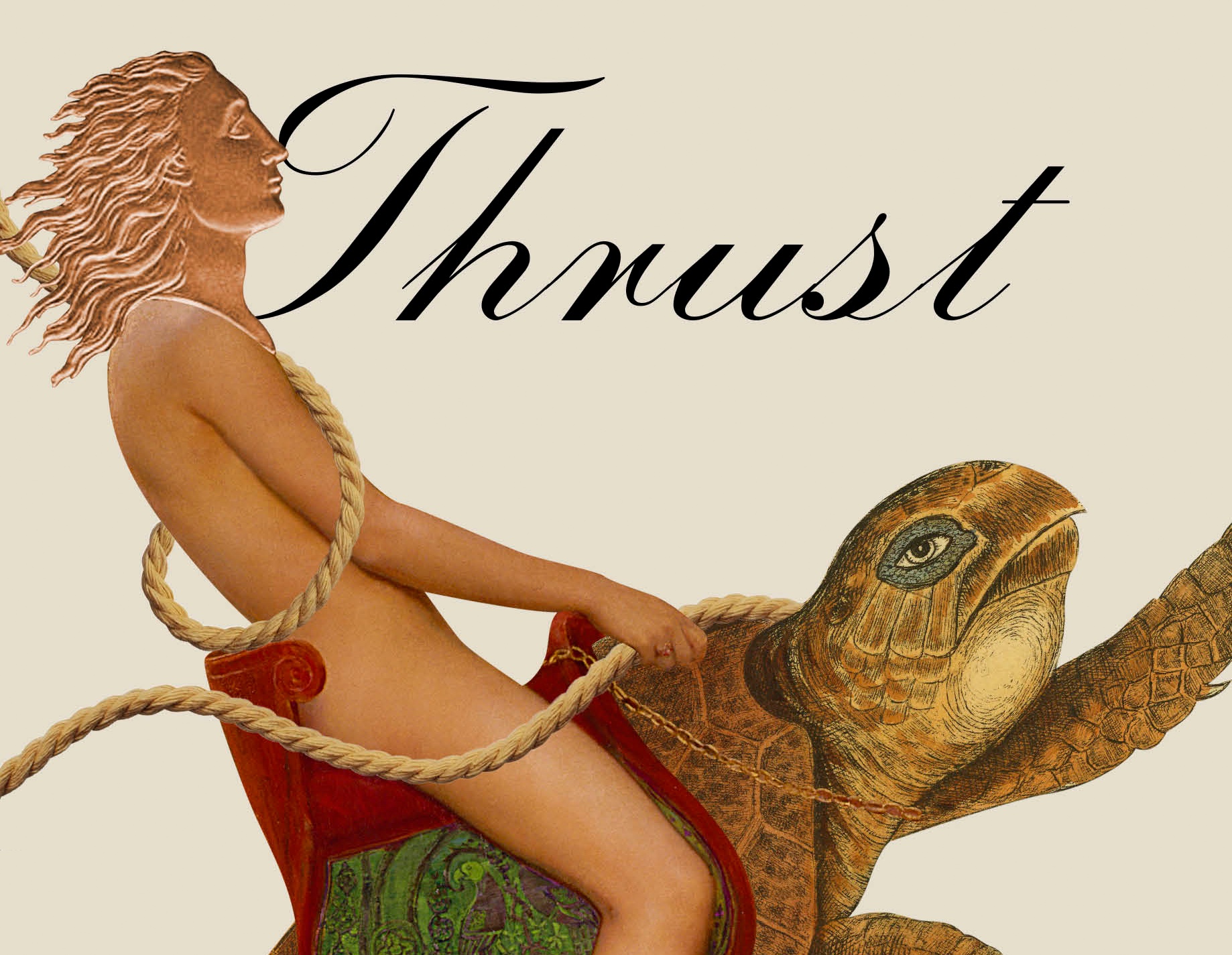
Laisvė, a character in Lidia Yuknavitch’s new novel Thrust, is in the water a lot. Water serves as a conduit for her to move between space and time, a power she uses to save other beings from manmade terrors like a ruined earth and an ever-encroaching police state. In the not-too-distant future in which parts of the novel are set, the surface of the earth is largely covered in water; even the Statue of Liberty is submerged. While the setting carries some connotation of bleakness, there is also a sense of hope. 

Thrust isn’t based so much on plot as it is a kaleidoscopic confluence of different storylines. From impassioned letters exchanged between Frédéric Auguste Bartholdi, the real-life French sculptor who designed the Statue of Liberty, and his invented lover, Aurora to segments written from the plural point of view of the Statue’s workers to characters haunted by devastating personal histories to raids conducted by a dystopian future government on citizens, the book chronicles violences big and small that have shaped the course of humanity. And, the novel offers hope in the idea that stories, ever-changing, have the power to carry Laisvė—and others—somewhere new. 

I spoke to Yuknavitch over Zoom about living as part of an ecosystem, expressing iterations of grief, and how novels can jostle us into new ways of being.


Jacqueline Alnes: The Statue of Liberty is arguably one of the major characters in this book, or at least one of the most noticeable threads. “Liberty,” as a word itself, suggests freedom in all senses: emotionally, physically, politically, economically, etc. but obviously not everyone in the book, nor in our current world, is free. I figured I’d give you the biggest question first, which is: What does liberty look like to you? 

Lidia Yuknavitch: That’s at the heart of Thrust in more than one way. Liberty is beautiful and vital as a possible story. Unfortunately, humanity has packed it with shit. We make those kinds of mistakes of interrupting liberty or binding liberty or making liberty exclusive to some at the expense of others. That’s what I mean by packing it with shit. It becomes about power. For me, the beautiful story is ever-possible and ever-changing, but what we’ve found ourselves doing for epic after epic is, from my point of view, a series of horrible violences and otherings. 

JA: Did jumping back and forth in time in the book, between past, present, and future, help you notice those threads related to liberty more clearly?

LY: Humans love linear time because it’s comforting. But if you push linear time to the side over there (and give it a graham cracker, so it’s okay) then I was fascinated by the idea that epics might be in dialogue with each other rather than that old tired out notion that history is the past or the cliche that we are doomed to repeat the past. Those are uninteresting stories to me. A more interesting story is: What if you could dislocate periods and move them around like words in stories and let them talk to each other? 

JA: I wanted to talk to you about the loosening of boundaries between animal and human life. Not to be too on the nose and be like “animals have a voice,” but they do in this book. For so long, it seems like written and spoken word have been privileged, at least by the colonizers of any place. But in this book, animals can talk back. I haven’t looked at an earthworm the same since reading this. When I garden I’ve been saying, “Hello! Greetings!” How did being in the world influence your writing of the animals in this novel? 

LY: I don’t perceive animals in an existence hierarchy as lower than humans anymore, if I ever did. I certainly don’t now. I live in a forest next to the ocean at this point in my life, so I see more animals than people on a daily basis. That has impacted me. 

But it tracks back to childhood. In childhood, we believe we can talk to animals. We believe they say something back. There was a lateral possibility in the story-space and the imagination was part of it. I’m not meaning to make it a traditional children’s book where there are talking animals who are magical beings. They’re not meant to be magical. They’re meant to be realism. It’s meant to be true that Bertrand starts being sassy one day. It’s meant to be real that the worms are like, “We’re busy here! What do you want?” I’m also not trying to romantically anthropomorphize them. That wasn’t the intent. Instead, I’m wondering, what if there was a lateral conversation without humans at the top of the hierarchy? There would be some “here’s what’s what” talk, not some overromanticized drama. 

JA: While reading Laisvė, she seems to want to know the world in different ways and loves in languages that were beautiful to me. She loves in knowing characteristics of other beings, she is very present in the world. Did you think about the decolonization of earth-human relationship while writing? 

In the U.S., women still aren’t understood as fully human, but I don’t mean woman in a biologically essential way.

 LY: Oh yeah. Laisvė is kind of an attempt to say there are other ways to be human—because there are other ways to be human. In my own childhood development, I had some elements of my being that we now understand as having been on the spectrum. I had pica, which means I ate things like pennies and dirt and rocks and paper. 

JA: I ate dirt too!

LY: I knew I recognized you. People have all different ways of seeing and receiving the world and the so-called health community thinks of that as a divergence from being “normal” or “healthy” or “full” but we don’t. I was very invested in making a character whose very different ways of experiencing the world are the possibility of changing the story. So when a person with synesthesia, for example, tells you what it’s like to be them—which Laisvė has going on too—her relationships, her life, her ways of being in the world are completely different than someone else’s would be. That we would leave something like that out of the story of who we are is yet another kind of violence. 

JA: There’s a real thread of climate crisis in the novel. Parts of the East Coast are underwater and the Statue of Liberty is as well. What was it like writing this reality, and how did reflecting on our current reality (and our own actions/inaction) shape your perception of climate change and how it will impact future generations?

LY: From my point of view, we are already there. I just turn the volume up. You can re-present the world and sure, it’s in fictional terms, but I’ve done heavy duty research on ocean rise and climate change. We’re already there. I was just lamenting to a friend about what’s going on with the Great Salt Lake, which anyone can Google and see uh-oh. The point where the dial went too far I believe already happened. It matters what we tell each other right now about who we are and what we are going to do. 

When I wrote into that realm, I was just trying to be precise about the present tense. I don’t think that a story like mine has any power to change the world, but I think novels can jostle us and I think it’s important we jostle each other in our understandings of each other and the world. I think they are part of the thing that can create change.

JA: At one point, Laisvė admires the shapes and colors of the turtle—its shell, the creature’s toenails. And she wonders: “Why had she been born a human girl?” Girlhood and what it means to come of age in turbulent times—as well as finding meaning through water—are themes in this novel and in Chronology of Water. I’ll ask a similar question as Laisvė: Why a girl as the protagonist? Why Laisvė in particular? 

LY: Just so you can hear what it’s like from my side of making the story, I think she’s a floating signifier more than a protagonist. She’s an energy pulse who moves between time, space, people, plants, and animals and jostles things or makes them vibrate.

As I conjured her, I thought about how human embryos do sort of look like animal embryos for a while there, before they get really human. And that fascinates the fuck out of me. I can see where humans could have had tails and when I look at shoulder blades I think that’s where our wings used to be. When I look at hands, there are certain creatures like dolphins and whales whose fins had the possibility of fingers for a while but they went flipper. And so those truths get inside my imagination and start blooming. For this girl who sees everything differently, she thinks we are all creatures. And it’s a way to take that hierarchy down of humans on top and imagine that if we all saw each other creature to creature, we would definitely treat each other differently.

And the girlhood thing is important to me as a space of meaning, not so much just girls, because a boy could be in there. I’m still trying to loosen the binary so those words aren’t as important at all: girl or boy or man or woman. In a world from my point of view, the day you come out of a chute, if you’re a girl, you’re entering the world fraught with energy coming at you that asks that you either serve society as a caretaker or wants you kind of erased or dead. It disallows full agency. In the U.S., women still aren’t understood as fully human, but I don’t mean woman in a biologically essential way. I mean the space of a woman. We have hard work forever in that category. 

 Every book I write I’m trying to shake the word “girl” and “woman” and maybe not get rid of those words, but I think we need better subject positions that give people their full autonomy and agency. These words that are locked in a binary don’t work any more and they are part of the problem. 

JA: I’d rather be a creature than a woman, I think. I want to talk to you about water, too. In this novel, water is a means of travel, a place teeming with life, a space of grief, a place that holds deep, deep memories and love. It’s also safe, despite the depth. What did you find in the water while writing this book?

Whether or not it’s in my lifetime—and it probably won’t be—I hope that our definitions of who we are and the stories we are telling each other change radically.

LY: Specific to Thrust, I’d say my daughter died the day she was born and her ashes are in the ocean. Laisvė has some of that in her: the ocean is life and death. Laisvė can be in and out of it. I think of what’s happened to my daughter’s ashes in all these years. I pick up a rock and think, is she in there? Is she in another ocean by this point? I think of the ocean as a metaphor for very close intimacy with the imagination or the subconscious. I am not the first person who’s said that, but it’s true for me. When I stand near the ocean, I feel part of something I’m supposed to be part of. I feel that way about the imagination, too. 

JA: That’s beautiful. Have you read Fathoms by Rebecca Giggs? 

LY: Oh yeah.

JA: I’m thinking of the way whales drop to the bottom of the ocean when they die and their bodies feed and make beautiful the deepest part of the water that we never see.

LY: I just wrote about that! They make whole ecosystems. That’s exactly why I was talking about my daughter. The sea is a life-death, life-death, life-death motion in your face. It’s spitting shit on shore that’s both alive and dead every day of our lives and carrying it and holding it and making it into something else. It’s this incredible space.

JA:We’ve talked so much about agency and the power of story. Where do you hope our collective story goes from here? 

LY: I definitely hope humans learn to see and love each other and everything around them differently than we have in… ever. Whether or not it’s in my lifetime—and it probably won’t be—I hope that our definitions of who we are and the stories we are telling each other change radically. I hope humans understand themselves as particulates of existence and not the owners of existence. What’s happening now in terms of the fluidity of gender and sexuality in generations younger than myself, I hope that takes over the world; it looks like the most beautiful way of being to me. 

I think our differences can be so divisive, but I hope they become more fluid as well and that a kind of shared story space challenges us to do what you just said, where you’re standing around in your own life and you think, I’ve never thought about the whale carcass at the bottom of the ocean. To be honest, I’m not doing well with the divisions right now. Rage, rage, rage. But I guess a faster way to say all of this is that I hope adaptation and evolution bring us to something better than we are. 

Let Me Tell You About All the Men I Beat Up

Hook

I was a boxer before he met me / blood soppy / after a match on the curb, before he carried me /  home / in a cardboard box, my knees on the ridge & wet feet dangling out. I was a boxer but he  lifted me, defeated, through the dark. 

He bandaged my knuckles, kissed them, but could not still the shaking & I would not tell him of  the teeth, the crunched nose, the shattered temples written into my skin a long time ago. A  different time. I had loved the moles on his cheeks, the crooks of his elbows / but only when I  towered over him / the first time. He was just some kid—we both were—crumpled, bent at  strange angles—with the air / twitch / scent of animals held cold / playing or fighting. 

Now the linen, so white & clean made me happy. So / instead, I told him how before I was a  boxer, I used to punch holes in the garage walls in case they buried me, like my little brother, in  a coffin box unopen to the sky, alive. The dirt in my mouth & eyes. Yes, yes / if I died, my mother  would dress me in a wine colored pressed velvet dress with white kid gloves & her yellow pearl  necklace / but she would not recognize me if I stumbled back swinging / dress torn, knees  battered, knuckles white / wild haired / Alive. The first time. My hands would never fit the  leather & words never fit my mouth. 

So I told him these things—how foxes caught in traps have been known to gnaw off their own  paws to escape, how I’ve dreamt of hopping boxcars & boxes, sealed up evergreen forests in  cardboard boxes / the smell at dusk of trees, the running, the dust in garage windows, the  streamed light—so the wild loneliness would not kill me / the heavy gesture. 

The whole time he says nothing / listens / his gaze sweet. He must know / has no reasons / no  wilted dandelions clamped too tight in his fist / and I have no reason—no, I can’t ask the things  he dreams of, if he knows my name, if he recognizes me from somewhere, if he even knows his  own name, or if this / this is his custom—to comb through slush & ticket stubs & empty soda cans / for all kinds of strangers / or me, just me. I don’t know. 

I want to tell him about my little brother. I want to tell him about the men I beat up. I want to  tell him about the men I loved. 

He must know / they were never gentle / like this, like him / tucking the covers around my jaw.  As if wary of bruises / the cold, snapped traps / staying close, unafraid. But I—no—know no  reason no life animal joy—only boxes—his wrists—the pulse—I am a boxer & I pounce. Pin  him to the ground. Run my tongue along the shell of his ear to hear the sound / escape from his  throat / of him / defeated, comforted.


Ornament Joy

Only the whale is meant to see the whale 
etched into the wood of the bow—for you— 

before the sharp harpoon plunges, thrown so, 
over the icy cold waves and sea ice 

into the whale, a beast of rib bones, blood, 
meat, and oil—for you—and it has no 

choice in the matter of this gift, 
or how its mouth will be sewn shut
 
to bloat to shore with the boats, 
or in the great division once 

on land, my Captain, in all this ornament 
joy, and I worry—for you—with the dogs’ 

jaws around smaller throats, and I etch  
its ancient mammoth heart into my own 

heart, eating myself from the lungs, still 
in this hunt—for you—if it is enough.

It’s Time To Reinvent the Trope of the Monster Husband

How does the story go? Human man walks into a strange home. Human man gets into trouble with the owner of said home, a monstrous creature with claws, fangs, and fur covering his entire body. Monster makes a deal, bartering the human man’s freedom in exchange for his beautiful human daughter. Human girl, though she is not happy about it, agrees. However after living with said monster,  human girl begins to “look” beyond said monster’s appearance and falls for his inner qualities. Human girl’s love for the monster transforms him into a respectable-looking human man. Human girl and monster-turned-man live happily ever after.

Written by French novelist Gabrielle-Suzanne Barbot de Villeneuve, La Belle et la Bête, or Beauty and the Beast tells the story of a beautiful maiden who becomes engaged to a monster as the result of her father’s debts. While the original French fairy tale may have been written in the 18th century, stories of the paranormal romance, often between a human woman and a supernatural male partner, happen to be tales as old as time.

Socio-political implications abound in every iteration of the monster-husband trope.

Around the world, tales of animal bridegrooms, or stories of human women betrothed or married to animal-esque figures, proliferate folklore. Examples of this include “The Snake Prince,” “East of the Sun and West of the Moon,” “Marya Morevna and Koschei the Deathless,” and more. Though monster husband stories have shifted, evolving as time has moved on, the trope has continually carried deeper messaging. Socio-political implications abound in every iteration of the monster-husband trope, especially those related to power and gender roles.

Many scholars theorize that women who were forced into arranged marriages to men they were not familiar with (for instance Gabrielle-Suzanne Barbot de Villeneuve’s La Belle et la Bête) often conceptualized their future husbands as ominous figures. In these circumstances, animal bridegroom stories may have offered a balm for these fearful brides-to-be, fictionalizing their very real fears and anxieties. As film critic and video essayist Lindsay Ellis commented, “Many an arranged marriage must have seemed like being tethered to a monster…and the telling of stories like ‘Beauty and the Beast’ may have furnished women with a socially acceptable channel for providing advice, comfort, and the consolation of imagination.”

As such, the monster husband trope in this era runs in tandem to more polarized customs of patriarchal control, in which female partners were sometimes considered hostages to the whelms of wealthy men. 

And like many classic fairy tales, stories of the monster husband were also taught to carry implicit instructions on gendered behavior and romantic protocol. 

As seen in early versions of Beauty and the Beast, Belle’s self-sacrifice, loveliness, and well-mannered grace (all highly treasured “feminine” qualities) were crucial in unlocking the Beast’s potential as a conventionally attractive and appropriate spouse. Her delicate femininity ultimately provided for emotional and financial security. 

You can almost hear the unspoken parable: behave as a woman should and the beast can be tamed into a proper man. It should be noted that this lesson continues to be a fixture within modern-day media.Women often expect, or are expected, to tame their more problematic male partner, while men are rarely asked to take responsibility for their emotions and behaviors. 

While many heroic narratives, such as Joseph Campbell Hero’s Journey Structure, are often reserved for men venturing outward into the world, classic female narratives often turn the critical gaze inward, towards the realm of intimate relationships. The implication is that even among the limited roles women occupy in society, their power lies in their ability to change their partners for the better, to heal them through the power of love. Belle demonstrates this when the Beast’s curse is removed after his evolution as a man, all of which results, first and foremost, from her affection. 

When women are perpetually assigned the caretaker roles in society, they are also simultaneously taught they are responsible for the way their male partner’s actions, as well as the way they are treated by their male partners based on their own behavior.

You can almost hear the unspoken parable: behave as a woman should and the beast can be tamed into a proper man.

And yet the fairy tale idea of redemptive love also becomes a potential trap for an emotionally frustrating, if not abusive, relationship. 

Take a modern example of the bad boy monster in television: Cole Turner from the original version of Charmed (1998- 2006). Though Edward and Cole’s monstrosity is not so obvious on the surface, their supernatural abilities—and potential for monstrous destruction, including their ability to literally destroy their partners—make them monstrous. Cole is the literal handsome devil who loves Phoebe (incidentally a witch and not a totally powerless human). She is perpetually tasked with trying to save him from succumbing to his fate: becoming The Source of All Evil, or ruler of the demon world. At first Phoebe believes it is possible to prevent Cole from descending into darkness through the power of her love. However, romantic love—as it does in real life—proves not to be enough. 

Their relationship in the show mimics many real-life domestic abuse dynamics, in which Cole attempts to keep Phoebe hostage as his dark queen through distancing her from her family, continually lying to her and manipulating her in hopes of making her stay with him. In a sense, this inverts the early monster husband example, in which the monstrosity in not his appearance—or even his demon heritage—but his own cruelty as a romantic partner.

Within the monster, there is the appeal of the liminal, of finding sadness and loneliness in those cast upon the margins.

However, not everything monstrous is evil or awful in nature.

Many are drawn to monsters for the way they embody or represent the outsider figure within society, the one who is feared yet still yearns for love.

Within the monster, there is the appeal of the liminal, of finding sadness and loneliness in those cast upon the margins. Whether due to their appearance or their abilities, some women, and those of other marginalized identities, have found empathy in their monstrous partners, allowing them to see and embrace their own particular humanity. 

In an interview with Guillermo del Toro, the director of The Shape of Water (a story about a human woman falling in love with someone whose appearance was inspired by The Creature From the Black Lagoon) he states, “I feel it as an immigrant that has been received by this country, but I still feel there is sort of the demonization of ‘the other’ very present. I needed to talk about the beauty of ‘the other.” It should be pointed out that The Shape of Water has its own issues with representing the “other” in its ableism as other disabled writers and activists have noted.)

The monster’s outside underbellies a sensual magnetism, a genuine tenderness for their partner.

Then there are those who, being themselves marginalized in other ways, whether relating to race, disability, or queerness, have mirrored their own experiences of “outsidership” in the monsters they’ve birthed. Many theorize that Howard Ashman, the legendary gay, Jewish Disney songwriter, attributed to “giving a beast his soul,” reflected the cruelty and prejudice experienced by AIDS patients in the treatment of the Beast. As the lyrics in the “The Mob Song” goes, “We don’t like what we don’t / Understand and in fact it scares us / And this monster is mysterious at least,” villagers sing as they march toward Beast’s castle. 

(On a related note, it might be telling how so many of Disney’s “villains,” long theorized to have elements of queer-coding, were actually designed by a gay animator, Andreas Deja.) 

There is also the dissonance in the contrast between appearance and reality. The monster’s outside underbellies a sensual magnetism, a genuine tenderness for their partner, in turn met by personal agency from their human lovers who confront the strange and unusual with empathy and kindness.

The monster presents a fantasy that embodies a type of masculinity separate from the patriarchal violence of flesh-and-blood men. “Though it may be masculine (in some cases), the monster is not human, and the problem of humanity eliding with the male is circumvented” (p. 9)

In other modern examples of the monster husband, the eventual transformation is physical, as it is in Beauty and the Beast. Rather their monstrous physicality  is accepted. No transformation is needed, as seen in The Shape of Water or the titular green ogre love interest of Shrek.

While many monster husbands are still marked by fur, feathers, scales, and the like, modern authors and filmmakers are playing with visual markers.

The monster husband today is less someone to be feared than someone to be known, to be seen and acknowledged as a multifaceted person with vulnerabilities, strengths, and the whole range of emotions, just like any other human being. And while the monster husband’s monstrosity in original mythology and storytelling was marked by an external beastliness, by today’s standards of creative social consciousness, the link between appearance and perceived morality has shifted in recognizing that those who look conventionally attractive, like Prince Charming or Gaston LeGume, (the antagonist of Disney’s Beauty and the Beast) may be more capable of actual villainy or evil than the stigmatized monster husbands themselves.

What’s more, the monster husband continues to shift, physically, in favor of greater diversity. While many monster husbands are still marked by fur, feathers, scales, and the like, modern authors and filmmakers are playing with visual markers, from the beautiful aquatic masculinity of Vladimir Chebotaryov and Gennadi Kazansky’s  1962 film, Amphibian Man (Russian: Человек-амфибия), to the glittery vampires of Stephanie Meyer’s Twilight

As the movement of feminine rage and agency continues within modern pop culture and politics, we’re seeing more appearances of the monster wife. Books like Squad by Maggie Tokuda-Hall and the Gumiho series by Kat Cho, show us female characters gaining supernatural strength, and adopting the ferocity that monster husbands have long demonstrated. 

Hopefully as more writers continue to explore this dynamic, there will be more stories to reinvent it, perhaps further queering it, as well as giving more opportunities for the feminine monster to shine.