The Best Literary Masturbation Scenes of All Time

Masturbation scenes run contrary to the standard rules of writing good fiction. There’s not a whole lot happening, plot-wise. The character involved is hardly moving, their thoughts are both incoherent and numbingly predictable. Nuance is abandoned, Gods rise from a variety of machines, clichés proliferate. What a shocker: the pool boy is sweaty and needs to take of his shirt.

But this is exactly what makes masturbation scenes so interesting: they’re evidence that desire exerts enough pressure to not only immobilize a character, but also take the narrative within their head and distort it, chop it, repeat. The pool boy, already shirtless, needs a glass of lemonade. No, now he’s clothed but oops! the lemonade spilled on his shirt!

At first glance, a masturbation scene is uncluttered: a monologue on a bare stage. A character negotiates with what they want, and how they want it. But there are always other desires caught up in the sexual and masturbation becomes an act of boredom, loneliness, depression, love, excitement, fury, sorrow, celebration, grief, insomnia—sometimes all at once. 

These scenes are ambivalent, offering evidence of our self-sufficiency and searing need for other people, our capacity for both empathy and objectification. Both the character masturbating and the reader reading are made aware—often uncomfortably—of both the locked box of their own minds and the fact that they’re participating in something universal. 

My interest in both ambivalence and desire-fueled narrative distortion is one reason I wrote a novel, The Seaplane on Final Approach, preoccupied with masturbatory fantasy. Obviously, I’m not the only one: here are ten novels with scenes that portray masturbation exceptionally well.

Lightning Rods by Helen DeWitt

“The problem with this fantasy was that it was hard to get the wall right.”

Joe is a sad-sack stuck in two repeating loops. One: he tries to sell vacuum cleaners, gets invited in for dessert, returns to his rented trailer in a sugar-bloated fugue state. Two: he masturbates imaging his ideal, deeply specific scenario.

The problem is Joe keeps getting bogged down in the details of his fantasy, constructing backstories, imagining complex setpieces. But his tendency to embellish marks him for success. Joe markets his fantasy—a kind of deluxe glory hole—as the ideal solution to workplace sexual harassment in this deeply strange, discomfiting, hilarious novel. 

Milk Fed by Melissa Broder

“Feed me, Mommy! So that I may live!”

Rachel, who struggles with disordered eating, has, on the advice of her therapist, started a 90-day “detox” from her cruel, fat-shaming mother. On day four of the detox she starts fantasizing about her boss Ana.

Rachel imagines lying bed with menstrual cramps, “Mommy Ana” soothing her by rubbing her tummy. Things progress, and Mommy Ana takes complete control. She assures Rachel that she’s innocent, and things build into a fully imagined (and very funny) scene of submission, care-giving, and filthiness.

Private Citizens by Tony Tulathimutte

“Better than having sex, you could make sex.”

Will’s girlfriend Vanya is away and he takes the opportunity to revisit his vast, lovingly collated porn collection. Will is no stranger to creatively straining the limits of porn consumption: he’s already learned to create jury-rigged 3D porn by watching two clips side-by-side with his eyes crossed. When he realizes he wants to see a representation of his and Vanya’s sex life onscreen, he turns to editing. 

In this manic, virtuosic scene, Will spends a week in a vortex of image stabilizing, compositing, carpal tunnel flares and increasingly strained orgasms. And then he’s left emptied of lust, with no friendly buffer between himself and reality.

1982, Janine by Alisdair Gray

“Most pornography fails by not being dramatic enough. There are too few characters.”

Jock McLeish, a mid-aged alcoholic businessman, is in a non-descript hotel room in a non-descript Scottish town. He’s constructed a sort of ongoing pornographic mega-novel in his head, filled with a huge cast of hotties, including Janine, who’s based on a childhood memory of Jane Russell. 

But the evening of self-love becomes a dark night of the soul, as Jock starts to realize that his fantasy babes are all, in one way or another, figures from his past. 1982, Janine unspools, from drawn-out masturbation scene to existential reckoning to regretful-yet-hopeful quietude. 

Sabbath’s Theater by Philip Roth

“He had only to drop to his knees to be as invisible from the road as any of those buried around him, and often he was on his knees already.”

This list could have contained Portnoy’s Complaint, because Portnoy’s Complaint. But in the attempt to showcase the range of masturbation scenes, I wanted to include something truly abject. And this nails it. 

Sabbath’s Theater is preoccupied with two abysses: lust and death. They’re portrayed as dual sources of murky oblivion and are treated with a lack of reverence so complete it somehow becomes reverent again—like when Mickey Sabbath, grief-stricken, ceaselessly repellent but with the same charisma as a black hole, masturbates on his dead mistress’ grave. 

The Color Purple by Alice Walker

“But when I hear them together all I can do is pull the quilt over my head…”

It’s a scene that starts full of charged optimism between two women who haven’t yet admitted that they want each other. Celie has never had an orgasm and always viewed sex with her husband as an ordeal to withstand. She reveals this to her more-than-just-friend Shug, who’s horrified and sits Celie down for a frank discussion about the clitoris.  

But then Celie gives Shug permission to sleep with her husband, and Shug takes her up on it. Later that night, Celie, listening to Shug and her husband having sex, masturbates and cries simultaneously, overwhelmed with a mixture of jealousy and yearning. 

English, August by Upamanyu Chatterjee

“From today, no masturbation. Test your will, you bastard.”

This is what Agastya Sen, nicknames “August” and “English,” writes in his diary after he gets to his swanky government post in rural Madna. But his will is broken almost immediately. Blame a combination of Madna’s infamous heat—the humidity is so powerful lizards peel off walls and land to the floor with a splat—Agastya’s daily habit of smoking heroic amount of weed, and the boredom of provincial bureaucratic life. 

English, August is filed under “coming-of-age” and “slacker” novel. And it’s both: it charts Agastya’s self-discovery, but also sees him spend a bunch of time lying around stoned and listening to music, naked except for a layer of sweat. 

Wetlands by Charlotte Roche

“I have to stop exploring the inside of my body. I need both hands now.”

When Roche talked about her ideal response to this novel, she imagined a reader alternating between arousal and complete revulsion. This was part of her project to make this book a realistic, honest book about the body, warts—or festering pustules—and all. And it succeeds. There are passages that make Ottessa Moshfegh seem like Barbara Pym. 

Wetlands’ protagonist, Helen, is in the hospital with an anal fissure but that doesn’t stop her from masturbating. A lot. And she details the minutiae (textures! movements! viscosity!) with both gleeful investigative curiosity and the dispassionate remove of an anatomist.  

Confessions of a Mask by Yukio Mishima, translated by Meredith Weatherby 

“I felt a secret, radiant something rise swift-footed to the attack from inside me.”

Kochan is flipping through art books and finds a reproduction of Guido Reni’s “St. Sebastian,” which stops him in his tracks. Reni’s Sebastian is naked except for a pale loincloth, his hands are tied above his head, and, even though he’s pierced through with arrows, he’s unbloodied and looks tranquil. And hot. 

It’s this image that spurs Kochan’s sexual awakening, and he has his first experience with what he refers to as his “bad habit.” This is scene is textbook Mishima, in that it’s weird, divisive as hell, the language is lush, and the erotic is blended with violence.

The Pervert by Michelle Perez, illustrated by Remy Boydell

“You’ve seen me do this a million times. I’m calming my nerves.”

So says the unnamed protagonist of Michelle Perez’ graphic novel, which follows a trans sex worker through the dreamscape of Seattle as she encounters a rotating cast—some despicable, some kind, almost all shattered by loneliness.

In one section, we see the end of a romance. The protagonist and her girlfriend, whose relationship has become sexless, take a weekend trip to Portland. The frustrated protagonist masturbates as a way of getting to sleep and her girlfriend gets upset. A bleak, familiar scene unfolds: a relationship’s final fight where both parties are too exhausted to be passionately angry, too exhausted to be gentle with one another. 

Sooner or Later, We’ll All Belong to the Kingdom of the Sick

Since the late 1990s, Meghan O’Rourke battled symptoms no one, including O’Rourke herself, could explain: dizziness, night sweats, fatigue, electric shock sensations, stabbing pain, hives. When on a trip to Vietnam in 2012 a rash—seven or eight raised bumps arranged in a circle—appeared on her inner arm, she thought, It looks like Braille. But what was it trying to tell her? 

O’Rourke is one of the millions of Americans living on the edge of medical knowledge—living with poorly understood and often misdiagnosed conditions, often involving dysregulation of the immune and/or nervous system. Eventually, she would be diagnosed with both chronic Lyme disease and an autoimmune condition, but for many years, she struggled to find a doctor who would take her symptoms seriously. 

O’Rourke’s new book, The Invisible Kingdom: Reimaging Chronic Illness, chronicles her quest to heal, a quest that was often confusing, lonely, and, as she trudged from practitioner to practitioner hoping this one would finally provide answers, time-consuming and expensive. With a poet’s lyricism and precision—O’Rourke’s books of poetry including Sun in Days and Halflife—O’Rourke captures the terror as well as the drudgery of chronic unwellness. At the same time, she trains a sharp journalistic eye on a problem of staggering proportions: what she calls a “silent epidemic” of chronic illness affecting millions of Americans. These illnesses include autoimmune disease, myalgic encephalomyelitis/chronic fatigue syndrome, chronic Lyme disease, fibromyalgia, dysautonomia, mast cell activation syndrome, and now, on a scale we are only beginning to comprehend, Long Covid. 

I spoke with O’Rourke about the loneliness of being chronically ill, the need for an integrative care model of medicine, what it meant to have Covid hit as she was writing a book about long-term illness, and the challenge of finding meaning in a life that’s been turned upside down. 


CC: In The Invisible Kingdom, you write that if every age has its “signature disease,” ours is the type of chronic illness that tends to go unrecognized in tests and is often viewed with skepticism by the medical establishment. This includes post-treatment Lyme disease syndrome, which you were eventually diagnosed with, autoimmune disorder, dysautonomia, and fibromyalgia. It occurred to me that you must have been in the middle of working on this book when the pandemic hit. What role does/did long COVID have in the “Invisible Kingdom” of the ill generally, and in your writing process more specifically?

MOR: The book was almost done when the pandemic began. In January 2020, I was already speaking with immunologists and virologists around the world about chronic illness, and because of those conversations, I was one of those people who quite early on was saying, “The pandemic is coming.” I was the Cassandra in my friend group. 

Beginning in early June 2020, I started to report on people who were saying they’d gotten sick in March and still weren’t better. I had to hit pause on The Invisible Kingdom and think, how am I going to rewrite this book? I didn’t want to just stick in a mention of the pandemic. I wanted to integrate it into the book, because Long Covid made the things I was trying to explain in The Invisible Kingdom all the more urgent. By that I mean our siloed health care system; medicine’s resistance to crediting the testimony of patients with so-called “vague” symptoms; and the kinds of overly tidy containers it likes to put disease into.

In fact, before the pandemic, I had been reporting on this emerging paradigm of disease that now is familiar to many of us: the notion that infectious pathogens and organisms don’t all behave the same way in our bodies, as the 19th-century advent of the germ theory had suggested. Germ theory postulated that viruses and bacteria behave very similarly in different people, giving us this model that either you recover or you die from an illness. But as it turns out, some pathogens can trigger long-term illness in a subset of people for reasons we don’t fully understand. Conditions like autoimmune disease, myalgic encephalomyelitis/chronic fatigue syndrome (ME/CFS), and post-treatment Lyme disease syndrome can be affected by, or are thought to be triggered by, an infection that doesn’t resolve for some reason—whether because the pathogen is still there, or because the immune system has been kicked into overdrive, or because damage has been done to the body that we don’t understand. 

One of the central questions in my book is, why is it so hard for people with these kinds of diseases to get a diagnosis? One of the answers I came to was that this paradigm of heterogeneous response to infection isn’t fully understood, and we haven’t availed ourselves of the tools to diagnose, treat, and help support these patients. What’s more, basic medical tests don’t always turn up problems in these patients. And modern medicine loves to measure; what it can’t measure, it doubts.

CC: One of the outcomes of Long Covid is that there’s increasing mainstream recognition that our “siloed” health care system can be very harmful. We need integrative care models.  

MOR: For people with chronic illnesses or chronic pain, there’s just no coordination of care. In the U.S., we have a crisis care model, which is designed to avert death, or identify when you’re close to death, and take extraordinary measures to try to fix you. It’s not a true “Let’s help you thrive” system. 

And it also doesn’t recognize that patients want basic validation even if there are no treatments available to them. I interviewed close to a hundred patients. Over and over people said to me, almost verbatim, something I also said to my husband: “I actually would feel happy if the doctor looked me in the eyes and said, ‘I don’t know what’s wrong with you, but I see that you’re suffering, and I’m so sorry. I wish I could help.’” 

I finally did have one doctor do that, and it was transformative. I suspect she still doesn’t know how much she helped me. Just her saying, “I believe you, I see this. This is really hard. I have no idea what’s wrong.” But doctors are uncomfortable to be in a position of not having answers. One researcher I spoke to said that doctors are trained not to say “I don’t know.”

CC: Mysterious, unexplained illness can undermine a patient’s sense of self, but at the same time, not having answers can be threatening to doctors’ sense of who they are. I was struck by the words of Atul Gawande, which you quote: “Nothing is more threatening to who you think you are than a patient with a problem you cannot solve.” This question of “who am I?”—do you see it as one that patients and doctors must reevaluate, sort of alongside each other? 

We think of illness as a state apart from normal life, as opposed to being a part of life.

MO’R: Absolutely. Doctors and patients together need a paradigm shift. As much as The Invisible Kingdom is critical of the medical system, it’s very much in support of individual doctors. Many doctors want to help more, but are trapped by bureaucracy, paperwork, and a kind of algorithm-based medicine—as opposed to having the opportunity to use clinical judgment. When you are looking at patients whose bodies are at the edge of medical knowledge, we need a more flexible kind of medicine. That means patient and doctor alike navigating uncertainty. I think med school is the place where we have to start equipping doctors. If I had another life, and I were to design medical education, looking at the scope of Long Covid we’re facing, I would say we have to add an entire unit to our education about uncertainty, about supporting patients when you don’t know the answer. 

CC: In The Invisible Kingdom you talk about how you’ve come to see the body, including the ill body, as a site of social encounter. Can you explain more?

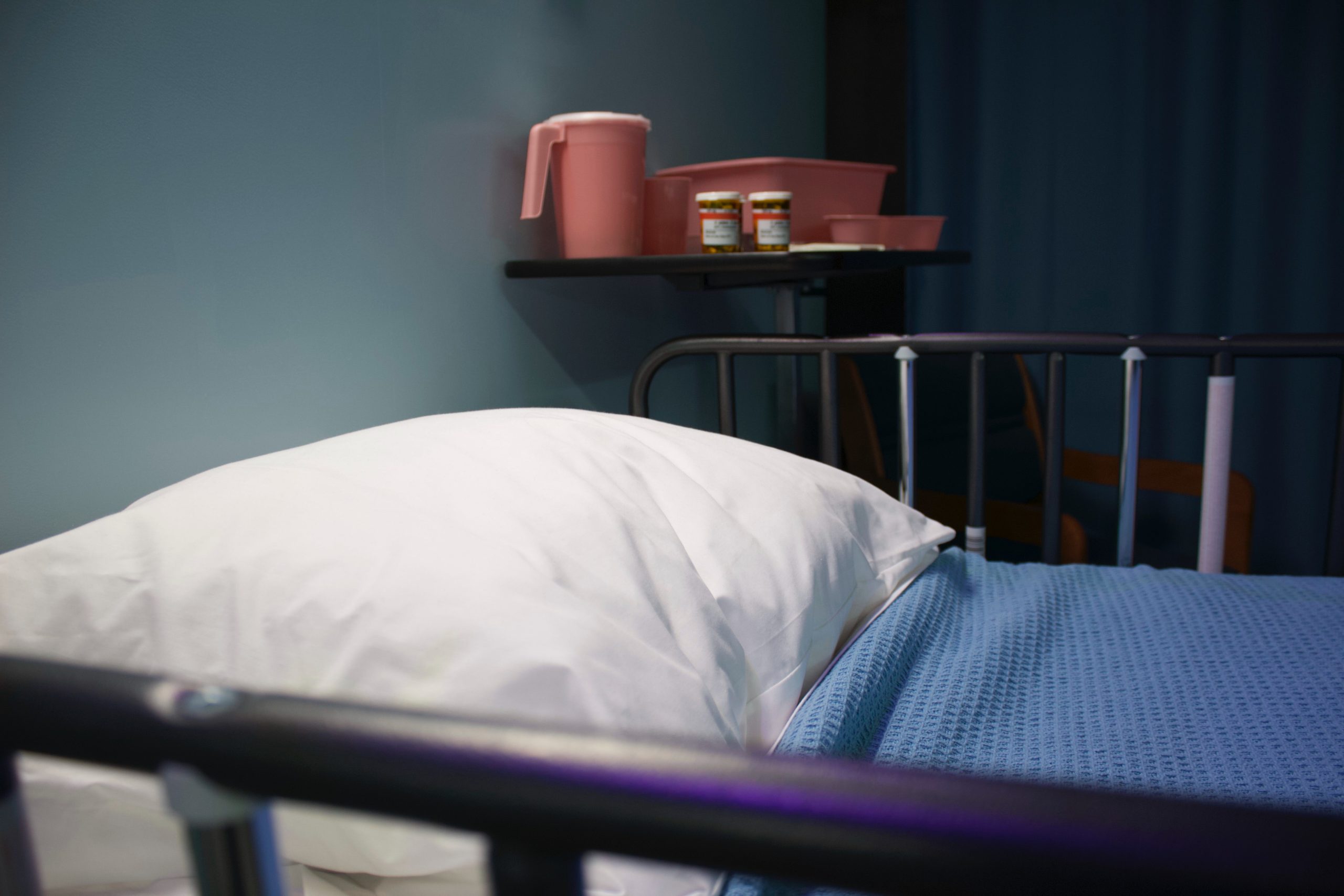
MOR: Certainly illness can be a lonely and isolating experience. It was profoundly lonely and isolating for me. But what I realized was that the deepest part of the loneliness was coming from our culture’s rejection of the idea that illness actually is a social experience. We’ve created a culture in which we purposely isolate sick people: when people go into the hospital they’re curtained off, they’re separated. They’re in a site of otherness. We think of illness as a state apart from normal life, as opposed to being a part of life. 

And that brought me to the poet John Donne, who during a bout with spotted fever was very ill and in quarantine. His daughter was engaged and he encouraged her to go ahead and get married, because he wanted her to be taken care of if he died. He was lying in bed listening to church bells ring. There were people dying all the time, but there were people marrying all the time, too, and bells rang for both. After listening for his daughter’s wedding bells, he wrote the very famous line, “No man is an island.” We’re all “part of the main,” as he put it: “Any man’s death diminishes me, because I am involved in mankind, and therefore never send to know for whom the bell tolls; it tolls for thee.” When you ask who’s sick, you’re not realizing it’s also you. We’re all going to have this experience one way or another, this encounter with mortality.

Even though I’m more functional most days now, that experience of intense suffering is like a set of scars that no one can see.

America has embraced a model of individualism, which we apply to illness, too, in part because we don’t like to think about mortality and sickness. If we say it’s an individual’s problem, it gives us the illusion that we have some control over it. It also frees us from the obligation to take care of one another. And yet a lot of chronic illnesses are at least partly shaped by how we live as a society: by the chemicals around us, the lack of a social safety net, the quality of health care we get, the quality of our food. We frame these as individual decisions, but we as a culture, as a society, are regulating and shaping and making things accessible or not accessible, making some people more vulnerable to illness. Many poorer communities of color—chemicals are dumped near them, for example, instead of near the wealthier white neighborhood. Proximity to these chemicals can trigger outbreaks of autoimmune disease, outbreaks of asthma. With Covid, black and brown people are dying at higher rates from the infection, and that has to do with preexisting social policy and things like the stressors of racism. 

CC: Toward the end of The Invisible Kingdom, you reference Arthur Frank’s The Wounded Storyteller. I admit I have mixed feelings about this classic text, which posits three forms of illness narrative: restitution (the body restored to its pre-sickness state), chaos (suffering without meaning), and quest (in which the sick person gains wisdom and understanding as a result of their condition). For Frank, the latter kind of narrative is the “best” one, but as Brian Teare argues in his essay for The Boston Review, the quest arguably has its flaws, too, since it suggests that “bodily suffering has a higher purpose, and that redemptive meaning not only can but should be fashioned out of pain.” Reading The Invisible Kingdom, I sense that you too seem to have mixed feeling about Frank’s quest narrative. 

MOR: In my reading of Frank, he’s trying to say the quest narrative is a stronger story, or a more desirable story, than the restitution narrative, which is what our culture really focuses on. The restitution narrative really is a redemption narrative. Frank is trying to say we need to think about a kind of story about illness that allows for change, but not necessarily recovery or redemption. But it is true there’s this slippage in there, a possible interpretation of the quest narrative where, with that change, you come out of it on the other side and find a positive meaning of some kind—an impulse I call the “wisdom narrative” in my own book. And I did want to be careful to point out that to whatever degree my story is a quest narrative, that was only insofar as I had gotten better from where I had been. In the white spaces of this book, in the margins of this book, in the section breaks and the spaces between chapters, lies all of that history of suffering without meaning. Even though I’m more functional most days now, that experience of intense suffering, and the almost complete invisibility and silence around that suffering—that experience is like a set of scars that no one can see. That is why I resist the quest narrative and, importantly, what I call the wisdom narrative.

A Definitive Power Ranking of the Sexiest Book Covers

Designing a book cover is challenging, even more so when the work contains a raunchy subject matter. How do you convey, in a single glance, that the book is sensual, even sexy, without falling for pornographic tropes? 

My debut novel, Little Rabbit, is about a sub/dom relationship between a 30-something queer writer and an older male choreographer. Working with kink made me slightly stressed about my potential cover (also, I was worried I was going to end up with a giant rabbit). I was lucky to have a wonderful team at my publisher, Bloomsbury, headed by Patti Ratchford, who genuinely wanted input from me about the face for my first book (or two faces, in the case of Little Rabbit). I immediately thought of the suspended Louise Bourgeois sculpture at MassMoCa called “The Couple.” The work features two chrome, humanoid figures locked eternally in a kiss, their arms and legs disappearing in a surreal and tangled knot. This sculpture—and all the work of Bourgeois—means so much to me that I placed the main characters below it during a pivotal scene. What better visual for the near-obsessive pull of early romance, the mess of entanglement. 

The brilliant artist Najeebah Al-Ghadban created the central image: two collaged faces pressed against each other, enmeshed but also somehow not quite matching, with dark wires wrapped around and through them. The cover is sensual, without exploiting the book’s sexuality, and deeply engaged with the books twin themes of desire and art. 

The following book covers depict lust in different ways. Certain themes appear—my book is not the only one with two faces—and certain themes have been left out (I have a personal dislike for food as visual euphemism. Sorry, eggplant emoji). I’m also, as you may note, not super interested in subtlety. I don’t think there’s any need to be abashed or coy when sex is your subject. There are ways to be both tasteful and bold. 

Here are the sexiest book covers according to ascending spiciness: 

11. The Pisces by Melissa Broder 

I like the shadowiness of the beloved fish silhouette, as well as the woman’s pulp-novel style. It does feel a little coy, though, about the fact that the book is about fish love. 

10. White Wedding by Kathleen J. Woods

The elegant bird-headed scissors act as the focal point for this densely-layered cover. The mingling of bedsheets and legs is both alluring and a little bit frightening.

9. Acts of Service by Lillian Fishman 

You look at this cover and you get it: This book’s going to have some nudes. Props to the bright pink font and the artful crop. 

8. Just By Looking At Him by Ryan O’Connell

I just think this is a lovely image—the reddishness of the swimmer’s eyes, the way the bluish shadows on the shoulders match the water. The way the two figures are looking at each other, the intimacy and distance (and extra props for more cheeky text placement). 

7. To Be a Man by Nicole Krauss

See—more mouths on a book. I love the longing that comes through these lips.

6. Terminal Boredom by Izumi Suzuki

Is it scary? Is it sexy? Or is it sexy-scary?

5. Gay Bar by Jeremy Atherton Lin

What a perfect image for this history of queer nightlife. The sweaty hair, the hand cupped around the back of the head, the moment a public encounter transitions to the intimate.

4. Future Sex by Emily Witt

This one is so risqué that I had to check to make sure it would be allowed. More props to artful title placement and the dynamic red blue colors that make the atmosphere sensual and otherworldly. My main qualm is that it does seem to imply that future sex is… electronic, which is not quite the thrust of Emily Witt’s essay collection.

3. Acts of Desperation by Megan Nolan, Polish edition

Getting deep into the foreign editions in this one. I also love the UK cover for Nolan’s beautiful and painful book about a young woman in a deeply toxic relationship, but the Polish one gets my vote. Here, the cherry outline works because of the clean, stylish design and the peaking allure of the butt cheeks. 

2. Tampa by Alissa Nutting

Do I even need to say anything? You can’t ignore a clothing euphemism this thirsty. 

1. Vladimir by Julia May Jones 

*Drum roll* Annndddd the sexiest book cover goes to Vladimir, the first book everyone said as soon as I mentioned this list. Look at the sly nod to the romance genre with the font and chest hair, the glint of gold chain and the hand resting suggestively next to the crotch. Right away, the cover signals the content while also deftly and cleverly hinting at surprises. 

My Ex Cheated, But I Outlived Him

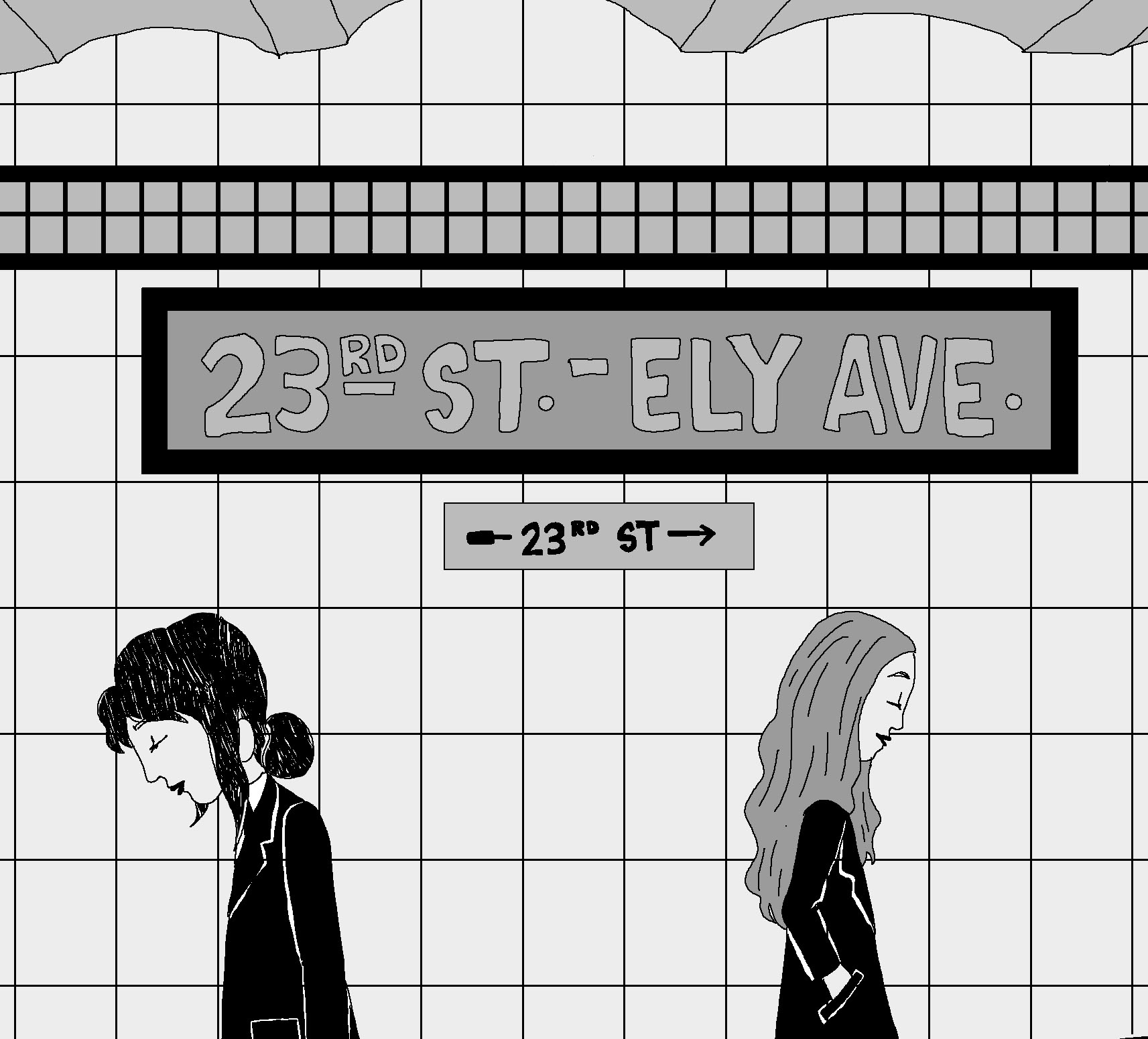
“Phillip is Dead” by Meng Jin

Poor man. I got the news as I was coming aboveground. “Phillip is dead,” the subject line said. In the body of the email were details of the memorial. 

I was shocked. Not so much because Phillip was dead but because I had not thought of him in years. “Phillip is dancing,” the email might have said, or “Phillip is wearing a yellow hat.” It would have been news as much to me. 

Well, these words were different. Phillip had been as good as dead to me, for no pernicious reason. Just—irrelevance. Now he’d been resurrected and killed, in one swift blow. 


I went home and poured a shot of scotch. I waited for my lover to come. I was in love, oh yes. Not the rapturous kind that turns and thins your sleep, but a satisfying, contented love. I woke in the mornings well-rested and warm, like a loaf of risen bread. I was still learning how to manage myself in this state. For much of my adult life, I had been sustained by a vision of doomed loneliness, a tragic fate I could run away from and toward, simultaneously. Movement was something, drive was something. But the engine I’d relied on—my lover was rendering it false. 

He walked in the door. I kissed him on the mouth. It was sour from the long day, and so was mine. 

“You’ve ruined me,” I said. 

He laughed; I said it all the time. “What did I do now?” 

“You’ve made me so happy, I don’t feel the need to prove anything.” 

“Is it such a bad thing?” he said. He tipped the drink down my throat. I swallowed. “Not bad, no, I don’t think.” 


Which is to say I was glad it was Phillip who was dead and not me. Oh, I felt a little sorry for him, sure. But mostly I felt like gloating. “How lucky I am, I’m still alive!” If Phillip were still alive, I thought, he wouldn’t begrudge me this feeling. He had believed in pursuing victory with ruthless glee. He had fancied himself a Nietzschean. All this came rushing back to me, all the dumb things he’d said and believed. Once, I’d almost forgotten, he had taken credit for me: 

“I made you,” he’d said. Winking, but I could see he wanted to be serious. He cocked his head as if to ask, “Don’t you think?” 

I’d humored him. “Sure,” I said. “Of course.” 


My main quarrel with Phillip had been regarding the nature of humanity. To put it simply, I’d believed in goodness, and he in the opposite. Not exactly in evil—even Phillip was not so simple—but that morality, and its various manifestations, was a scam. It had been revealed to Phillip during an acid trip that the true nature of things lay in their dying. In the trees and in the dirt, in the flesh on his own hands, Phillip saw cells losing form and decaying, maggots and worms nibbling at the edges of things and bursting from their cores. He could not unsee this vision. Even when he was stone-cold sober, it would ambush him. Once, when we’d fucked, he’d looked into my face as he was coming and saw my eyes pop out, dangling from their sockets, and the edges of my mouth rotting. Phillip always kept his eyes wide open while fucking. 

Phillip’s visions played in my head like a warning reel. For years, I feared altering my sight. I accepted the tab on my tongue only much later, when I was altered already, suffering from boredom and invincibility. I braced for death. But I saw forms shimmering beyond their boundaries, every rock and plant and breath of wind vibrating with life. Colors and shapes extended their hands to make themselves known to me. Hello, I am blue. Hello, I am a line. 

“Ew,” Phillip would have said. “Your feelings,” he had said often, with disdain, of my need for beauty. He had called it my great weakness. “Your moral failing,” he’d said, “as a person and as an artist.” 

We were trying to be artists. We were very young and foolish. All of us were, but Phillip and I were the worst. We lived in the same two-story house in the southwest quadrant of the city, with the rest of the young Americans. Phillip was rich, and I was too, though once I had been poor. Young, American, idealistic, we had come to the island to take classes at the national university, which in every department culminated in theoretical forms of utopianism, theories the nation believed it was realizing in practice. Really we were enacting a shared adventure of poverty, living as the locals lived, but with our reserves of cash and our promised escape. At the end of term, our special visas would expire, and a plane would shuttle us back to America. The certainty of our departure transformed what should have been tedious into experiences of meaning: the thick heat, the crumbling infrastructure, the food and power shortages. 

I had opted out of the special classes in English created for the Americans. Instead I populated my schedule with punishing courses in which I was the only foreigner. Because I’d been poor, and because I had not always been American, I’d believed I was there for different reasons than the rest. 

To my disappointment I was not the only American in Theory and Practice of Art. I walked into the classroom and saw Phillip slumped in the back row. I had avoided him in the house and I avoided him here, easily: boys like Phillip never noticed me. I took pride in disappearing. My skin had darkened under the island sun, and a childhood of foreignness had taught me how to become invisible, picking up ways of movement and speech unfamiliar to me. I wore the local mannerisms so successfully that one day, on a teaching rampage, the professor called on me. 

“What does Nietzsche say is the difference between music and other forms of art!” he bellowed. 

“That music is the direct expression of primordial truth, a rip in the fabric of appearances,” I answered. I spoke slowly and deliberately. “Other art forms are merely representations of things as they are.” 

The professor folded his arms and squinted at me. 

“You’re a foreign student,” he said. 

I nodded. Heads in the room craned to take a better look at me. 

“Where are you from?” 

“The United States.” 

“You look Chinese! Korean? Japanese!” 

“I was born in China.” 

He nodded with satisfaction: “Your accent is Chinese!” 

“No, it is gringo.” 

“Sounds Chinese to me!” he said. He turned to another student. “Arnaldo! Is China correct, is primordial truth what separates Nietzsche’s music from other forms of art? Explain how that applies to Tintoretto’s Ascension of Christ!” 

That day after class Phillip ran after me. 

“Hey, hey!” he shouted. Phillip was unabashedly American, yellow-haired and pinking in the sun, with a loping gait that was confident and neurotic at once. “You! Wait!” 

Finally he caught up to me. “So you get that class?” he asked. Without waiting for an answer, he fell into step beside me, speaking in loud English of his failures of comprehension at the university and generally, “in this fucking place.” He was reading the texts in English and that was hard enough. He had signed up for the class thinking it was an art class, thinking we’d actually get to practice art, that was what the course name said, right? Because, he said with aplomb, quite literally puffing out his chest, “I’m an artist!” 

I must have given something away then. He stopped talking and looked at me. “What, are you an artist too?” He paused, with apprehension or with hope. “It’s okay if you aren’t.” 

“Tell me about your art,” I said instead. 

“Tell me about your art,” he shot back. I sniffed and kept walking. Phillip said, “You think I didn’t notice you, and you’re all tense with it, aren’t you? I’m not stupid, I’ve seen you at dinner. I thought you were probably boring, I thought you were a little nerd. I was wrong, okay? I was wrong!” 

Phillip waited for me to speak. 

“Sometimes I take photographs,” I offered. 

“Hmm!” He looked me up and down. “Where’s your camera?” 

I shrugged with haughty secrecy. 

“I mostly paint,” Phillip said. “I’m a painter! I’ll show you my paintings when we get back to the house!” 

His paintings were of rot. Interested in expression, but not in beauty or technique, though they were recognizable as of a piece, the palette in blues and browns with splashes of dull green and a violent, pukey yellow. The most accomplished depicted a tree growing up and down, like a rotated Rorschach, with the branches decaying and the roots flowering, the ugliest flowers one had ever seen. “Are these meant to be ugly?” I said. “Or are you just bad?” 

He shrugged. “This is how I paint.” With total candor he spoke of his hallucinations: he was trying to re-create the landscape of his other consciousness. Was the concept facile or elegant, obvious or direct? Was I impressed or embarrassed for him? I didn’t know, perhaps because in spite of myself I found him handsome and sure, made in the colors and dimensions I was trained to recognize as handsome and sure: white, tall, and boyishly grinning, looking right through me. 

“Derivative,” I said of his paintings. “Worst of all, they repulse the eye. I look at these and see, ‘I am a tortured artist,’ and that’s it. Life has beauty too, you know, and joy.” 

“Joy?” Phillip made a face of exaggerated disgust. “There is only power. 

“Now show me your photographs,” he demanded. 

“No.” 

From then on we spent much of our time together. We disagreed about everything and Phillip liked this, liked arguing. Always I won. Because I was rigorous, relentless; I wouldn’t drop it until I won. I told myself that his arguments disgusted me, that they, like Phillip, were depraved and inhumane. I construed him as an intellectual charity case, a misguided white boy I might fix or, if he was truly as hopeless as he seemed, decommission—at least declaw. But the more I went at him, the stronger he got. He liked getting flayed. He got off on the precision of my insults. When he lost, he gave exhilarated concessions, eyes wild with contempt and satisfaction, as if he had finally gained entrance into a truth of himself he knew deep down but hadn’t until then had the evidence to prove. 


It was okay that Phillip was dead, I thought at the memorial. Not many would miss him. I looked into the faces of the mourners and saw that I was right. To be sure, there was plenty of shock, among the young people especially, who stood slack-jawed and gaping in the unexpected face of mortality. But peel back the veil of appropriate grief and what remained was mostly novelty. “Can you believe it?” “I can’t believe it!” “Phillip is dead!” “My god, he’s fucking dead!” Phillip could have gone to the moon. 

The memorial was held in a cathedral, cavernous and rippled with mottled light, the kind of place you never would have guessed could exist in New York City. The location surprised me for other reasons too. Phillip had been a rabid atheist, and everything about him indicated that this position had been inherited. He’d described his mother as a bohemian occupying a shawl-draped house in Greenwich Village, the kind of mother he spoke to openly about girlfriends and drugs and sex. In the foremost pew, I saw the woman who must have been her, with papery white hands pressed in prayer and shoulders sunk in a posture of resignation. “Well, it’s happened,” her shoulders seemed to say. 

Phillip had spoken of his mother often and with adulation. Of his father he’d said only that the man was a loser and he was dead. I’d pressed him for more. I’d liked that Phillip’s father was dead; it made him more interesting. With this mote of information, I fashioned Phillip into someone I could pity and possibly save. I wound myself into a ball of his repressed suffering. I had been a very sensitive person then, my skin a tight membrane stretched thinly over gallons of fluid feeling. With just a light prod I could shape this feeling into expression. Most of the time I was too much of a coward to shape it around myself. Phillip, to my surprise, welcomed my displaced empathy. “Oh really?” he said, tantalized. He listened with interest as I described my vision of him. A boy terrified of becoming his father, whose greatest fear was dying young and nobody like the man who’d made him, whose depth of fear and grief were buried so deep they manifested as dismissal. 

To my creation he’d added his mother: 

“He wants to replace his dad—he wants to become the man worthy of dear Mommy’s love! He fantasizes that he is what killed his dad.” 

“So overtly Freudian?” I had criticized. “Is his mother beautiful? Does he wish to sleep with her too?” 

He considered my question seriously. 

“Yeah, my mom’s hot. Sure, I’d sleep with her, why not.” 

Phillip, it’d seemed, was totally unafraid. He’d do anything for extremities of experience that might be used for his art. “My art,” he called it always, whereas I spoke of Art with a capital A, something I fancied belonged only to history, or to God, dead or not. Phillip would die young, I thought often; he would get himself killed. Often I worried he’d get me killed too. 

The praying woman in the front pew turned back and stared accusingly. I clapped my hand over a gasp. She had Phillip’s face almost exactly. It was drawn and hollow, fleshless, with eyes as round as coins. Were they looking at me? 


I never wanted to take a photograph of Phillip. For weeks after we met I took no photographs at all. Intentionally, I’d left my camera packed in the suitcase pushed underneath my bed. Since I’d decided to “become a photographer” a year or so before, I’d carried a camera on my person wherever I went, and the motion of reaching for it had grown so reflexive that I felt naked when it wasn’t there. This was the problem: I’d begun to use it as a shield. Whenever I found myself looking at something I didn’t understand, I whipped out my camera and placed the lens between it and me. 

The year before I met Phillip, I had taken a class with a famous professor. Standing before a photograph of my mother, flanked by students awaiting her judgment, she had spoken gently of my precision and technique, and of my natural formal eye. “Like the camera is an extension of her,” quipped the professor’s favorite, a broody Mark rumored to be the child of a respected sculptor. “No,” he amended, “like she’s a photographing machine.” These words burrowed into me. In the photograph, which was black-and-white, my mother stood drying a bowl at the kitchen sink. The shape of my mother occupied the exact center of the kitchen window, a bright white rectangle lit by the setting sun, but this focal image was set off-center, perfect and askew. I looked away from the photograph, at window, wall, shadow, ceiling, and realized I was no longer capable of looking at something without seeing its potential for capture—imposing around it a frame. Where was my eye? I had come to the photograph with the simple but sincere desire to preserve my sight of beautiful fleeting things. Endlessly beautiful things, things I wanted to see forever, but which I’d have to give up: my mother would put down the dish, breaking her symmetry, would turn with irritation to me. 

I kept camera packed away. I challenged myself to really see what I was looking at before trying to fix it in image. Oh, I was uncomfortable all the time. In a foreign land, buried in first love, I heard constantly the whisper of “you must preserve this,” which was really the cry of “you are afraid.” 

Finally Phillip was the one who unpacked the camera. “Well, well,” he said, “what do we have here?” With wicked delight he climbed on top of the dresser, holding it beyond my reach. It was a small digital machine that I liked for its sweet spot of size and power; I could carry it and remain unseen. Phillip scrolled through the images stored on the memory card, and I watched his eyes nervously, searching for the realization that I was a better artist than he, better now and more promising. 

“You’ve taken no photographs since we got here! Zero! Nil! Zip!” 

Reluctantly I began to explain my reasoning. As I spoke my reluctance melted into eagerness. I drank his reactions thirstily—was he quizzical, intrigued, impressed? 

“Well?” I said. “What do you think?” 

He said nothing. He turned the dial to capture and hopped off the dresser. Head tilted, face screwed up in concentration, he aimed my camera at me. I protested, hiding. I was naked, as was he. He was aiming the camera at my untamed pubes, my pimply breasts. He pushed me onto the bed, pinning me down with his knees, stuck his fingers into me, and shot. Oh, he got hard. He pried me apart. He pressed the lens against my opening and shot into me—I protesting, shouting about ruining the equipment, and the dismal lighting—and then he put himself into me, and as he fucked me he shot and said, “Art, my little prude! This is fucking art!” 

After I swore not to delete anything, he returned the camera to me. I clicked through the shots. Phillip’s breath was hot on my shoulder; idly his hand tickled my clit. The hard flash, the chaotic framing, the grotesque focus: it was pornography. Did Phillip see this? The latter shots were not just ugly but indecipherable, blurs of flesh obscured by the gloss of my slime. “I feel ill,” I said, truthfully, and he said, “It’s how I see you.” 

He propped himself up on his elbows and grinned at me. 

“I don’t know if it’s true but I really want to say it,” he said. “I love you. I love you!” 

For a moment, I let myself be stunned. 

“Okay,” I finally said. 

I made an ugly laugh: “I certainly don’t love you.” 

But I was lying, it turned out, lying to squash the sick excitement kicking into realization inside me. Like any good American girl, I had dreamed of this moment—the blond-haired, blue-eyed boy, the exchange of fluids and words—as the beginning of my real life. 


Phillip went on a trip to the eastern side of the island with the other Americans, as part of his Americans-in-a-foreign-land class. I’d laughed at him until the moment he stepped out the door. “Have fun on your field trip,” I said. “Don’t forget your permission slip!” I’d been looking forward to getting some space, to the emptiness of the house, and to walking the streets of the city alone. That is, without Phillip. Phillip prodding me constantly to interpret and to dispute, to make him see things the way I thought they ought to be seen. As Phillip piled into a van with the gaggle of fair Americans, I imagined the sun, the ocean, the high limestone walls of the university, smiling broadly and beckoning to me. 

But when the door closed and the van drove away, I was hollow. Hollow and agitated, I looked out the window at the oppressive sun and had a headache. For days I was like this, my misery made worse only by refusing to allow that Phillip was the cause of it. I filled my days with exciting things that excited me because I could imagine telling Phillip: I imagined his eyes gleaming with envy. Misery made me brave. That week, I marched up to the art professor after class and asked if there was such a thing here as “office hours.” He laughed and said, “What is an office?” but sure, the hours here were plenty. We met at the professors’ lounge and had coffee on the balcony. Coffees were very small and sweet in this country, and we sipped ours slowly. 

The professor talked theatrically, with exaggerated facial expressions and gestures, waving his hands even more than he did in class. Though I did not understand much of what he said, I believed him a brilliant man. I tried to converse with him; I felt it would be a wasted opportunity if I said nothing. “What do you think drives art?” I said. “Is it emotion and expression, or a desire to capture reality?” 

“Desire?” He seized on the word and spoke rapidly and incomprehensibly, for ten or fifteen minutes straight. Finally I picked out a few words I understood: “the hours” were leaving us today but we would meet again tomorrow to discuss “desire and reality.” 

The next day I arrived to find a man sitting beside him on the balcony, a student, perhaps, from another class. Thinking I had misunderstood, I turned to leave, but the professor shouted, “Hey, China!” and waved me over. 

“This is Picasso,” he said when I sat down. 

I nearly spat out my coffee. 

“I’m an artist,” the boy named Picasso said, smiling slantly, “a painter.” 

For the remaining days that Phillip was gone, I saw this Picasso. He took me to galleries around the city, galleries hidden in narrow alleys and dark living rooms, in abandoned mansions and underground bars. He introduced me to artists and musicians and writers, invited me to open-air concerts where we danced with his friends in the warm night breeze. I was moved by the art, by the music, by the company. Everything, I exclaimed over melting strawberry and chocolate ice creams, was top-notch. Picasso explained that despite the general poverty, there was superb funding of the arts—an artist received the same monthly subsidy as a doctor or a professor or a bus driver, and besides, everyone in this country was bored to death so had plenty of time to read and ruminate and appreciate life’s higher pleasures. It’s true, his friend Michele chimed in. Michele was the son of a diplomat, a rare person who had traveled and even lived outside of the country. “I was shocked by the poverty in Buenos Aires, shocked!” Michele said. “People sleeping on the streets!” He punched the air with his finger. “Our houses might be small and crumbling, but at least they’re all small and crumbling.” 

Picasso was a gentleman. Unlike other men in this country, he respected my physical boundaries, and seemed to understand that despite my easy assimilation, my American body still possessed a solid notion of privacy. When we greeted and parted he kissed me chastely on the cheek, with a light hand on my arm. He walked me home every night, though I had never felt unsafe walking alone. He did not come to the door but waited at the gate until I was inside. He was very handsome, with the finely balanced yet seductive features of mixed-race beauty, so handsome that I was often flattened with amazement when I looked at him. Every night we walked home together, I fantasized that Phillip had returned early and was waiting anxiously for me on the porch; I fantasized his burning look of jealousy when he saw Picasso and me. 


Phillip’s class returned in the morning. The house, humid and still, chattered and clunked suddenly with English and the careless energy of the Americans. I’d had visions of being occupied when this moment came, off on some wonderful adventure—at the very least I was determined to be aloof. But excitement bubbled up in me, helpless and pure. I threw open my door and went out shouting Phillip’s name guilelessly. Happy like a girl, I saw him, walking through the front gate, and was stopped in my tracks, my body responding instantly while my mind slowly perceived. He wore a ragged tank top and a crooked, guilty smile. Scattered over his neck and chest were red-brown marks—“Are you hurt?” my mouth asked dully even as recognition arrived—on his thin white skin, the crescents of mouths, of teeth, the unmistakable marks of love. 

Later, he would describe the encounter painstakingly, and I would listen painstakingly too, with a rigid, rigorous dispassion, as if swallowing a bitter medicine I was convinced would cleanse me of something worse. He watched me with detached curiosity, observing, documenting. Was it possible he was following my lead? He told of how he had ventured out alone with his poor language skills, missing me at first, wishing I were there to guide him, and wandered around aimlessly until he found himself drinking with “some local guys.” High-spirited, friendly, the local guys warmed him up, sharing their rum, and when they ran out Phillip purchased two bottles more and sat with them on the seawall, passing the drink around, pouring straight from the necks of the bottles into their throats. All this time the guys were asking him questions, throwing out simple words like “girls” and “love,” and when the bottles were nearly empty Phillip found that he could suddenly understand them, with magical clarity: “You want some love?” they were asking. “You want some good love?” 

“Come on, I couldn’t pass it up,” Phillip said. “I wasn’t going to come all this way just to hunker down with a Chinese girlfriend! Besides, you’re barely Chinese!” 

The local guys took him to two local girls, one big and one thin. He chose the big girl because he considered her more authentic. With clinical precision, he described what the girl did to him, how she’d bitten his neck, his arm, his chest, his ass, and took him into her, the things he tried to say and the things she said that he did not understand. In the end, he said, it was more or less the same. So much for “good love”; when it came to sex, women everywhere were the same. This he proclaimed as the revelatory result of years of dedicated research. 

Oh, I suffered. Never had my mind been so certain of one thing—that I should run from this vileness, run now before its rot infected me—while another part of me ached unremittingly for its opposite. Was it my heart? I hope not. I threw myself into the streets, thoughts and emotions roiling, roiling so turbulently not a single one could form fully before another rose to smother it with equal force and urgency. On the streets I received the expected male attention, which, baffling as it had been when I first arrived—baffling because, having never received male attention before, I knew myself to be ugly, sexless at best—now soothed me. “Marry me, Chinagirl!” men shouted from the opposite end of the street, or “The most beautiful China in the world!” Though I knew these praises were sung to everybody, that even timid men whispered compliments to a passing woman as if out of obligation, the words emboldened me. “Perhaps I am beautiful,” I thought, “I am wanted, I am desired, Phillip is damn lucky!” 

I went to Picasso. I continued as I had when Phillip was gone, drinking and partying with my own locals, praising myself for how differently I acted from Phillip; I was not just seeking novelty but making friends, friends who liked my company even when I was not buying their liquor, who liked to talk passionately with me about Art and Politics and Society. I imagined we would keep in touch. I imagined Picasso was falling in love with me. Did I want him? I don’t know. Even now I don’t know. In my fantasies, the clock stopped when he leaned in to kiss me; I replayed the moment again and again with different gestures and words, deliberating how I might respond—if I would push him away or take him eagerly, if I would blink back tears or laugh in celebration—luxuriating in that delicious moment in which I possessed the power to hurt Phillip, and would choose whether to use it or not. 

To my great impatience Picasso did not try to kiss me. He did pay me special attention, acting at turns like a guide and a guard, and wouldn’t let any other men near me. I thought I saw an inner struggle inside him, a deliberation about whether and how to make a move. What was stopping him? The knowledge that I would be leaving in a matter of months? The desire to differentiate himself from the aggressive masculinity of his peers? A heightened class consciousness? Impatient, emboldened by drink, I made the first move. “I want to see your paintings,” I said. 

Picasso paused—“Oh?” He made a show of false modesty before relenting. “Tomorrow,” he said affectionately. 


Tomorrow I left the house. I told no one where I was going. Through the heat I moved languorously but resolutely, to indicate to whoever might be watching that I was headed in the direction of significance and unbothered about it. I met Picasso on the university steps, and we walked east, toward the old town, Picasso answering my inquiries about his work courteously, with extra caution it seemed: shy. We stopped before a tall building with peeling jay-blue paint. Double doors opened into a dark lobby that smelled of urine and antiseptic. “The elevator, alas,” Picasso said, “it’s always broken.” I laughed in sympathy and followed him up the stairs to the eleventh floor. The stairwell echoed faintly with laughter and music, and smelled of onions frying. Students squeezed past us with casual pardons, some turning to take a second look at me. This was a dormitory, I learned, for students from the provinces, a piece of shit but at least it was free. He hadn’t invited me earlier, Picasso admitted, for shame of its shabbiness. 

“What? This isn’t so shabby,” I said. Picasso raised an eyebrow at me. 

I thought I saw in him then something I recognized. How foolish that I hadn’t seen it before, that I hadn’t even thought to ask. Of course: for all of Michele’s talk of economic equality, his vision was also a dream. I thought of Picasso’s deference to Michele, the son of the diplomat, light-skinned easygoing Michele who in a different climate could have passed for European, like so many of the students at the university. I thought of how Picasso almost always wore the same neatly pressed red polo, and his general hesitation and politeness, his considered caution, his careful observation. Suddenly the person before me was illuminated with a clarity of vision that touched me. “I’m fine! How wonderful! They’re beautiful!” I said too effusively when I finally stepped inside his room, drenched in sweat and breathless while he looked as he always did, like he had just bathed and coifed his hair. He shared the room with five others, who were all out but for a studious engineer who sat on his bed reading and was not surprised or interested to see me. Picasso’s painting studio was a corner between his bunk and the window, one mini salon wall of small canvases, a stool and an easel made from a clipboard and a broken chair. He had asked me to come at this hour because the light was best at this time of day. 

He painted—like his namesake. Cubist portraits—mostly of women, white women, by the look of the hair—but with bright, nearly scorching colors. Colors that matched the heat, I said, that evoked it, almost as a sense memory. Collections of lopped-off body parts—a boob here, an eye there—the portraits were none theless composed; there was an appreciation in the artist’s eye for the beauty of the female form. I told him this. 

“You’re too generous.” 

Then, cautiously: “Do you want me to paint you? 

“I could paint you, if you wanted,” he repeated. “A Picasso, just for you.” 

“Oh!” Surprised, I was quickly seduced: my very own Picasso! How romantic these words sounded in his mouth, romantic and arch. It occurred to me that I might repay him, in a way, for his friendship, that I might share some of my relative wealth with my friend, and without revealing my hand—even that I might dignify him by paying him for his art. “Yes, how special! I’ll commission a portrait from you.” 

Picasso smiled. He gestured for me to step onto a small balcony. There the light was “sublime” and we could have some privacy. He positioned me beside a halved soda can stuffed with cigarette butts, leaning against the railing. He moved with the practiced confidence of one who knew exactly what he was doing. I, on the other hand, had never sat for a portrait before and must have looked very stiff. I tried to stay still. “Don’t worry about it,” Picasso said. “Be natural, change your face, move your body, whatever you like. Painting is dynamic, not like photography, freezing a moment in time”—he winked at me—“but a medium to capture the subject moving through time, caught in its locomotion.” 

We talked, he painted, slowly the sun set, and the light was exquisite, as he’d promised, the pale pulsing blue of the hot sky, the yellow haze evaporating from the horizon, the blazing white where they met: charged. When he finished he set the painting aside and scooted next to me. 

“Let me see it,” I said. 

“Let it dry.” 

“I’ve never been looked at so intensely.” 

“Did you like it?” 

“I don’t know.” 

He took my face into his hand. “I’ve painted Americans before,” he said, “but you’re my first Chinese girl.” His mouth hung slightly open, his eyelids at half-mast. “You know, sometimes after I paint for a customer, they want more.” 

He kissed me. 

Time barreled ahead, not waiting as in my fantasy. My mind lingered as it had been trained. It stopped at the kiss and replayed it, slowed it, replayed the words, picking the sentence apart. Then the body called, and my mind raced after, frantic, barely registering sensation—sensation overwhelmed every faculty. The breeze: we were out in the open, somebody might see us, his engineer roommate or a person on the street; his sighs, loud: they might hear him; then skin, the setting sun scorching the face, the dirt beneath the thighs, cutting into the flesh, so even as he pushed himself inside, I did not realize it, perceiving only coarseness, the usual pain, thinking that I should check the expiration on the condom wrapper if I could find it. His terribly handsome face, wearing an expression so intense it looked like a mask of pleasure he had pulled on, bobbed above me. I squinted and tried to see it, voicing his name, Picasso, as if to remind myself who this was, that this face and body belonged not to an animated statue but to a person I knew—and what did I know of him? My mind slammed into the present and spotted us, understanding finally that we were fucking. 

“We are known to be good lovers,” he said softly, sucking a breast, and he was right, I came violently as I pushed him off of me. 

He walked me home as he always did. At the gate he produced the small square canvas on which he’d painted me. “Oh,” I said, blinking. “I’ll—the money’s inside.” I went and got my cash. “How much?” I said. I handed it over without counting. I forgave Phillip. I went back to him. I didn’t see Picasso again. 


My lover was a good man. He loved and celebrated easily, a quality that endeared him to me. “Such a good guy,” he would exclaim about anybody, and fervently when drunk: “Truly a good guy!” 

I wondered whether, if my lover had met Phillip, they would have gotten along. If Phillip would have been deemed, in boozy goodwill, “a good guy.” No, I decided triumphantly. My lover would have been puzzled by Phillip, puzzled because he had never cultivated an ability to pin down his dislike. “What a weirdo,” I might say to goad my lover, and he would laugh good-naturedly and agree: “Yes, he really was weird!” 

How this lover had changed me. Once, I had found honor in naked honesty: if there was a wound, I pressed it. I’d taken pride in dredging up buried pain; pain was how I recognized another. With previous lovers, I’d eaten up stories of other women hungrily, hurting myself with jealousy until it felt like love. I had tried it with this one too. He’d been married before me, after all. 

“Do you really want to know?” he’d asked. 

“Don’t you?” 

“Not really.” 

I saw he was telling the truth. I saw he had no desire to hurt me, or to be hurt. His instinct to look away: it was trust. Perhaps it was a little cowardly. But once I learned to follow this instinct, to rely on it, deploying it with even greater skill than he, I was happier. 

I decided not to tell my lover about Phillip, who was irrelevant to our happiness. Just as I’d never told Phillip about Picasso, I realized suddenly. I’d told no one about Picasso. I’d not looked at the portrait and could not say what had happened to it. I was remembering it and him now for the first time. 

Of Phillip: I’d opened my mouth to speak of the news of death, and closed it. Quite literally I swallowed my words. 

“What?” my lover said. “Tell me.” 

I kept my mouth shut. Transparently I changed the subject by pouring us drinks. I seduced my lover, kissing his neck and chin, pressing vodka onto his tongue. He swatted at me—“I see what you’re doing, tell me!” Finally I said, “It’s nothing, just—” 

My lover folded his arms. 

“Oh, just that I’m not a very good person!” 

“Oh?” he said, laughing. He was always laughing at me. 

“Yes. I’m too interested in my own survival.” 

He cocked an eyebrow: “Oh.” 

“And I have no good reason for wanting to survive—” 

He wanted to laugh harder but waited for me to finish. 

“—except that I like being alive.” 

Oh, he laughed. He tackled me, folding me at the waist. The conversation was over: now we could make love. We clinked our glasses. I let him fall over me. I closed my eyes and sank into it. I felt that I was good, very good. I loved being alive. 


I thought I should pay my condolences. After the service, I joined the line of people waiting to speak with the woman who wore Phillip’s aged face. “Who are you?” she said when I got to the front. “One of Phillip’s girlfriends?” She made a noise that sounded like a scoff, like Phillip’s scoff, like she was bored to death. 

She was wearing black, of course. On her black-shawled shoulders little flakes of dandruff sat sprinkled like confetti. 

I had the urge to say, “I mostly paint, I’m a painter!” 

Or, 

“Sorry for your loss,” as I was supposed to. 

Or, 

“Don’t you know who I am?” 

Well, I wasn’t that famous. But I had become an artist after all, unlike Phillip, who had only managed to die. My modest success, I suspected, was the reason I’d been invited. Behind Phillip’s mother, the woman who’d emailed me milled about in a group of aging hipsters, trying to catch my eye. Vaguely I knew of her as the owner of a new gallery that had opened in the gentrified blocks of Chinatown, a tiny concrete box on whose walls, as far as I knew, had not yet hung a Chinese American work. I had not known she knew Phillip. But in the eulogy she’d spoken with intimacy, describing his noncareer as if it were part of some underground scene. 

I heard myself: 

“I don’t feel sorry for you. 

“That’s right,” I was saying, to Phillip’s mother and anyone else, “my well of empathy has gone dry. I’m sure as hell not reaching in there for Phillip.” 


Did Phillip want to live? Did he love life, as I did? My imagination ended at the question. The image of Phillip’s death had been fixed in me long before it came true. Perhaps I still possessed it, somewhere, in a dark storage container where I’d thrown the camera upon returning to America those many years ago, the memory card rusting in its metal cage. 

Before we left the island, Phillip and I had taken a number of excursions together to “gather material.” Noticing that I still kept the camera stashed, thinking I was stuck, or perhaps that love had overtaken my ambition and artistry, Phillip claimed that he’d conceived of these excursions for me. On one of them, we’d wandered into an old cemetery at the outskirts of the city whose iron gates had once been locked by a chain that now lay in pieces in the grass. The grounds were overgrown. Dried weeds, sprouting from the cracks of grand crumbling tombstones, crunched beneath our feet. We walked into a circle of crypts guarded by faceless seraphs and saints, garish displays of wealth and piety, the false idols of the previous social order. 

Phillip was delighted. Death, after all, was his proclaimed subject. He skipped through the graves giddily, launching himself off slabs of limestone, climbing up half the side of a marble crypt before slipping and sliding down, cracking the stillness with his laughs. “Are you getting all this?” he shouted at me. 

“Yup, yup,” I replied reflexively as the camera hung limp at my hip, wondering: Was Phillip putting on a show for me? I walked with my head down, following the edge of my questioning. When I looked up I was standing in a field of holes. Gone were the monuments, the seraphs, the shade of untrimmed trees. These graves lay open and waiting. Some of their lids had been pried off and thrown to one side; some had been smashed in and lay in a heap at the bottom of the rectangular cavity. I peered into one, unthinking. Not until after my mouth let out a gasp did my eyes name what they were seeing: bone, skull, body. 

I felt hands on my back. They pushed. I fell hard. I turned and faced a blinding sun. A figure moved over it, casting me into shadow. He was holding my camera, must have stolen it off me. He straddled the grave and shot. 

“What if you let me kill you?” he said. “I could paint your corpse.” 

He hopped down. He put a hand around my throat. I don’t know if he continued to shoot. My ears were full of his voice, narrating. How he felt: super strong, he said, like I’m having a great fuck. How my skin felt under his: soft, like putty, he said, sticky with sweat. Pretty gross, he said with a laugh, describing my face: my eyes, bulging; my mouth, open, drooling. You don’t look pretty, he said, but I’m getting hard. Say what you’re thinking, he said. 

Then it was over. I was standing and Phillip was lying down. I was holding the camera; he had shoved it into my hands. “Now you do me,” he said. “Come on!” 

For the rest of our time together, I would point the lens randomly, shooting without looking, without attempting focus or form, to prevent this urging voice—“Come on!”—from resurfacing. I already knew that whatever I took from here would have to be unplaceable, that I had neither desire nor ability to preserve any fragment of my experience to represent a “culture” or “society” or “moment in time.” Perhaps I already knew that I would never look at these photographs, and would never voluntarily pick up a camera again. 

The sun sank before us as we left the cemetery, flooding me with calm and a strange easefulness. I breathed in the hot dusk air and observed my body. Miraculously, I was not bleeding. The bruises would appear later, deep pools of blue and gray emerging beneath my scraped flesh like an alien skin. A true skin, it had felt then, and I wore it proudly. 

Beside me, Phillip twirled a femur he’d taken from the grave. 

“What if you had killed me?” I looked at him with curiosity. “What if I had died?” 

“I guess I’d go to jail? That would suck.” 

He grinned. 

“Come on, I was fully consumed in the present, I was fully spontaneous, fully alive!” 

He was. Joyful, exuberant, like a clever child discovering and testing his abilities, he pulled me to him and kissed me. “Don’t you think one moment of pure freedom is worth more than some arbitrary ideas of good and evil?” he said. I blinked back at him, examining the lines on his brow, the three bumps of his nose, the sunken curve of his cheek. If I looked for it, in the dancing blue of his sight, I could find the outline of my own face. “Oh, I’d be so sad if you died,” he was saying. “I’d be heartbroken! Yeah, I’d miss you! But I’d come out of it a better artist, wouldn’t I, my art would be so profound! 

“Wouldn’t it be worth it,” he said in all seriousness, “to die for great art?” 

At that moment I must have seen, though my vision would not clear for many, many years, how harmless I appeared. Phillip had posed for me in the grave, exposing his soft neck, oh yes: he had invited me to kill him. Yet it would never occur to him, not really, that I actually could—that I might become the artist, and he the corpse. 

Queer Intimacy Is Necessary for Survival In a World That Wants To Kill Us

Gretchen Felker-Martin’s Manhunt is a revelation: a gory, prickly horror novel unflinching in its violence but deeply humane as well. The book depicts a world ravaged by a plague that turns all people with testosterone in their bodies into feral, matted-haired monsters. But in contrast to the growing canon of cis-normative gender-apocalypse fiction, Manhunt centers its story on trans women and their allies. The most present threat through the book isn’t the infected, but a roving gang of TERFs who have scapegoated trans women during the plague, hunting them from military strongholds and war caravans. 

Felker-Martin’s novel—which features estrogen synthesized from harvested testicles, J.K. Rowling dying in her castle, and queer sex as tender, fraught, and intimate as it is in real life— has already made a splash with readers and critics; it’s now in its sixth printing and has been widely lauded. Through this positive reception, many of the reviews around the book have focused on its handling of TERFs and the violence endemic in the book. However, as a trans woman myself, what I responded to the most—and what I’ve seen the least in coverage of so far—was the shared love between queer people Felker-Martin emphasizes, the shared, complicated love between trans women. 

I talked to Felker-Martin recently over Zoom about this love, community, queer lineages within Manhunt, and more, the early afternoon light dappling across the computer screen. Ultimately, our conversation kept circling around the importance of survival and care—within the world of the book, and even more, without. 


Zefyr Lisowski: First of all, your novel is so brilliant! One of the things I think it’s most effective at is juxtaposing these intimacies between intense horror and trauma and the intimacy required to navigate in horror’s wake—even as that intimacy may in turn traumatize, too.  As you were writing this book, how did you cultivate that intimacy within yourself? What comforts besides the book—if writing the book was a comfort—did you have? 

Gretchen Felker-Martin: Writing the book was a comfort in the same way that knocking a wall down with a sledgehammer is a comfort—you’re not necessarily going to feel physically good afterward, but you’ll have achieved something at least. It’s just internal in this case. 

Writing the book was a comfort in the same way that knocking a wall down with a sledgehammer is a comfort.

I think my friends and my community were my real comfort while I was writing this book. If I hadn’t had people around me, if I hadn’t had the kind of love that these characters are so hungry for, it would have been much, much harder to get through this. And then, of course, it was a huge challenge, especially in lockdown, to be so physically isolated. You know I started writing this in late 2019, really just 4 or 5 months before the pandemic hit, and it was surreal to go through that shift. 

I think that being in the emotional space of this novel and having that as the backdrop to my life definitely did crack me open a little wider. I started a few relationships while I was writing and editing it, and those have been very vulnerable open connections. I’m not sure they would have been to the same extent had I not been so immersed in that headspace.

When you’re working on something like this, you have your hands in your own guts, and like you said that is both revelatory and potentially healing, and also just by nature painful. You can’t be that intimate with something without it hurting you.

And the only things that can hurt you are things that are that intimate.

ZL: That intimacy really, really shows through.

GFM: Thank you so much. I’m really glad you enjoyed it. I’m a tremendous fan of your critical writing. I cannot tell you how many times I’ve recommended The Girl, The Well, The Ring to people. 

ZL: Thank you so much! That really means a lot. The book has such a rich sense of geography throughout, but especially in the second half, the locations became a lot more centralized: now they’re in the compound, now they’re in the ruins of Seabrook and Boston. That seemed filmic to me, in how it laid out space and then narrowed in. Because I know that you’re also a movie critic, did films impact your structuring of the book?

GFM: Well, like you said I’m a huge movie buff. I’ve certainly spent as much or more time watching movies than I have reading books, and to some extent I would say I’m more familiar with the structure of films and the techniques that directors typically use for things like building tension or establishing romantic connection than I am with the equivalent structures in literature.

So to an extent I think it’s inevitable that that’s the language I would use when it came time to write something that I wanted to have a little broad appeal. That’s the wrong word for Manhunt, but it’s definitely more accessible than the books I’ve published myself, which are medieval horror and extreme trans body horror. Much more niche. 

I wanted the first portion of the novel to really root the reader in the setting. I felt that was important to understanding it. Whether or not they had any experience personally with New England, I want to at least give a sense; then from there, you don’t have to retread that material. You can just sketch. In the same way that a film will spend a lot of time on exposition or establishing shots and then move on to simultaneously broader and more personally intimate material, that’s also how I work.

ZL: That is definitely visible! I grew up in the rural South, which is not New England. But I think rural areas that are decimated by poverty, especially in the US, are all the same—

GFM: It’s pretty universal. 

ZL: So I recognized a lot of rural North Carolina there as well, through the specificity of New England.

GFM: That’s so cool!

I wanted the first portion of the novel to really root the reader in the setting. I felt that was important to understanding it.

ZL: Going back to the relationship between intimacy and violence: there are ways in which that intimacy is weaponized more explicitly—I’m thinking about the tenderqueer house that kicks out its trans woman members shortly into the plague—but it also appears in smaller, more granular moments as well.

More specifically, I’m thinking about the relationship between Fran, a trans woman who grew up wealthy and passes, and Beth, who did not and doesn’t. Beth is torn up by both of these things and also hurt by Fran more generally, in ways that definitely resonated with my own experiences but also bucks at the idea of solidarity—even t4t solidarity—as something that can exist outside of existing hierarchies of privilege.

I think the book is better for going there, but what was the significance of writing into this tension for you? Negative affect in trans writing more generally is so discouraged. Did you experience pressure, either internally or externally, to shy away from it?

GFM: Yeah, I don’t give a shit about that pressure. Those people mean less than nothing to me. I think that if you’re going to talk about queerness with a sunny cast to it, where the fuck has your head been for the last 100 years? 

We live in a world that’s actively trying to genocide us. We live in a world where we’ve all been brought up to hate ourselves and each other. When you put a bunch of traumatized queer people together, they do not magically form a perfect family. They are fucked up! We fucking hurt each other and ourselves all the time, and I think that when you acknowledge that it becomes so much more beautiful and special that we still put in all of that backbreaking, miserable work to love each other. Because it’s not easy. 

That’s what’s important to me. If I wrote a book about a queer community or the concept of queer community, and I didn’t show how hard it is, and how deeply rooted in our own hearts as individuals those prejudices are, I would feel really ashamed of what I’d done. I would feel dishonest. Especially with the tension between Beth and Fran. Beth is so disaffected by her connection to Fran, who frequently treats her thoughtlessly, and who enjoys all of these privileges in the world, has all these abilities to move that Beth doesn’t. 

When you put a bunch of traumatized queer people together, they do not magically form a perfect family. They are fucked up!

That’s something that I feel acutely. I’m very tall, and very fat and have always been an extremely visible person, which has only increased by orders of magnitude as I’ve come out in various ways. I think that experience is what I’m interested in communicating in part. I want to create these voices that might speak to readers and say like, ‘Hey, this fucked up thing that you are going through? This is actually an experience that other people share. These thoughts that you have in your head, that you feel like you can’t communicate, because it would be bad or homophobic, or whatever? Other people are having these thoughts too, and if we share them, maybe we can do something about them.’

ZL: Getting to this place of not just catharsis for the sake of catharsis, but catharsis in terms of moving things forward with regard to how we love each other better.

GFM: Yes. I try to be generative in the way that I think about queer community—and queer community itself is is such a an elusive thing. You know so many people when they say it, they mean every queer person in the world, or every queer person online. And those are both nonsense. I’m not in community with the people who don’t live around me. My community is my friends and my lovers and my acquaintances, and my community includes people that I’m not wild about. It’s about actions, connections, daily patterns of existence. But community is not about being happy. Community is about taking care of each other.

ZL: Looking at your book, I see it in this lineage with things like Infect Your Friends and Loved Ones, which I know you quote in the book. I see it in conversation with Kai Cheng Thom’s work, especially her nonfiction like I Hope We Choose Love. Porpentine Charity Heartscape’s Hot Allostatic Load came to mind in your work’s discussions of inner-community violence.

What writers, or even people who aren’t writers, do you feel these ideas are in conversation or community with?

GFM: Well like you said, for sure, Torrey Peters is a friend of mine. She’s the last name thanked in the acknowledgments, and I’ve been enormously flattered every time someone brings Manhunt up in connection to Infect Your Friends and Loved Ones, which is obviously a huge influence, and also just one of my favorite novellas. Torrey is such a good writer. I really have deep admiration for her craft and for her ability to spin these worlds that are all about and for trans people. I think that’s a very special thing and it’s tough, too, when you’re a trans creative.

I think a lot of us feel very hinky about getting intimate with our existences, about communicating the granular in-world stuff about being trans, because it could be alienating to other readers, or make other trans people mad at us, or whatever. But Torrey is a big part of my immediate literary lineage. 

Porpentine is probably my favorite current novelist, and Psycho Nymph Exile is probably my favorite modern novel, and similarly, you know, it’s this book that’s very vested in the world of transness that is not interested in pandering to any other audience or in softening or explaining this world. 

I haven’t read Kai Cheng’s work, but I do like her very much. I think she’s just a tremendously principled and kind person.

In other terms, I would say that I see myself generally as a writer, and Manhunt in particular, as a descendant of paperback horror queens, like Melanie Tem. People who want to gross the reader out as lyrically as they can get away with, who wanna play around in this sandbox full of guts. 

And of course I grew up in New England. I’m a huge Stephen King Fan, and always will be, warts and all. Manhunt owes a lot to that kind of pulp.

ZL: Yes! As I mentioned to you, the experience of reading the book immediately transported me back to elementary school, sneaking Stephen King’s books out of the library with my child’s library card.

GFM: That’s what I want. Man, I remember when I was writing this book, I said, ‘God damn I hope this makes some kid just into a total freak.’ Like, some little weirdo who gets a hold of this book when they’re 11 and just goes completely off the deep end. Because you know that was us absolutely, and it’s such a special thing.

In other terms, I would say that I see myself generally as a writer, and Manhunt in particular, as a descendant of paperback horror queens.

ZL: I love seeing all the positive attention Manhunt’s been going through—it’s in its sixth printing now!— but also there are these two incredibly stupid pile-ons that happened: when the book was announced and certain people on Twitter called it transphobic, and then when the TERFS found out about the J.K. Rowling bit. Is there anything around those specific incidents that you wanna talk about?

GFM: I mean, you can’t plan for stupid. Some people go through life looking for a tweet to get mad at, and that is just not something you really have any control over. I think that it’s an interesting social phenomenon that predates the Internet, but has been just honed to an absolutely merciless edge by it, because now, of course, one person’s manufactured outrage can reach millions of others.

The first controversy was interesting. You know, Manhunt is set in this world where a virus has transformed anyone with enough testosterone in their body at the time of infection into a ravenous rabid monster, and you would think that cis men would be upset about this. But I don’t think that I’ve ever received a single bark of complaint from any cis dude reader. Invariably they go, ‘oh, man, that cover made me wince. Cool book.’

However, a lot of a certain type of trans masc seems to get really, really worked up and offended about this book—mostly from a single tweet, explaining the premise. Some people have apparently read the book and gotten mad—that’s fine. I didn’t set out to write something that wouldn’t be contentious, or that would please everyone. I don’t imagine I will ever do that, nor would I want to, but it does get tiring enduring all that from your own community—to use the broader sense of the word community here.

I think there’s a profound unwillingness among certain groups of trans people to give trans women the benefit of the doubt, and a desire to seize upon any opportunity to declare one of us persona non grata. Once that’s happened, there’s no winning. There’s nothing you can do except take it, block them, and move on. 

I didn’t set out to write something that wouldn’t be contentious, or that would please everyone.

I don’t know that I had much to say about the TERFS. I mean, that was inevitable, and to an extent I knew what was gonna happen with the book. That actually happened because Jesse Singal retweeted excerpts of the book to his fans, because he found me calling him a half-pint Goebbels and got really fucking bent out of shape about it. I’ll just repeat that here: Jesse Singal, you’re a piece of shit fascist.

I think that it’s deeply unfair that if you want to be a trans woman in a creative field, though, that this is really the floor for experiences. You have to be able to stand 10,000 of the dumbest worst people you’ve ever met screaming at you and calling you a pedophile, and telling you that you deserve to be executed via electric chair. You have to be ready for the global news to pick you up. Tabloids in Serbia and Croatia and Italy and France and fucking Mongolia picked up the story about J.K. Rowling dying in Manhunt. I don’t think any of them got any details right. but it certainly got people mad at me. 

It’s stressful, it’s annoying and I think it’s a real shame that any trans woman who isn’t a steel clad bitch who can grit her teeth through that gets shut out of the creative field by default. We have lost so many great creative minds and so many fantastic books and films and video games. But the fault falls squarely not just at TERFs’ feet, but at trans people’s feet. We are far too cannibalistic about our own artists. We need to line the fuck up and give people the benefit of the doubt.

ZL: One of the things that the book is so good about is writing into not just these complex intimacies of trans embodiment, but depicting other kinds of marginalized bodies as well. It’s a book that’s very diverse in terms of who is featured in it and who the main characters are, in a way that bucks against the typical white, straight, thin milieu characteristic in most apocalypse novels.

More specifically, Indi, as a fat character, is described in such loving, intimate detail, and I realized as I was reading her how rarely characters with bodies like hers appear described like she is in the books I’ve read. And she’s allowed to be sexual! (Although, of course, so much of the sex in the book is deeply complicated.) But at the same time, the book doesn’t shy away from the fatphobia she encounters or internalizes. Not sugarcoating that seems like an act of care, too. How did you balance these two impulses in writing Indi?

GFM: Writing novels is something I’ve been doing since I was 14. I’ve got an entire sheaf of books that no one will ever read, and through this process I have continually pushed myself into places of discomfort to write about types of people and types of bodies that I was uncomfortable with. In this case I wanted very badly to push past my resistance to writing a character with a body like mine.

Indi is really fat. There’s no escaping that facet of her identity in her existence, and to write about that honestly, I was both pushing myself and challenging myself to be more connected to that part of my existence which has always been very important to me, but which I have frequently hidden myself from, because it’s often too painful or too complicated to deal with in the moment.

I’ve been fat for my adult life, almost all of it, and most of my partners have been fat. Those are the bodies that I love.

And also, like you said, it’s an act of care, because applying practice to these bodies, and giving them that descriptive attention and depicting people with these bodies moving through the world, and experiencing what all of us experience—love and disappointment and quandaries and confusion—it’s humanizing not just in a general sense, but on a personal level. I would say that writing Indi helped me feel like more of a human being. I’ve been fat for my adult life, almost all of it, and most of my partners have been fat. Those are the bodies that I love, and the bodies that I try very hard to prioritize in my life. I wanted to reflect that in my creative practice, too,

ZL: I wanted to end by asking more about prioritizing love in your writing. I think it is really extraordinary how much care is clearly present—in the characters’ relationships to each other, but also in how the book is written, even as it’s also scary and fucking gross and intense. 

Throughout the whole book, death, disability, and debility are so present—but there’s also such an emphasis on the importance of loving as damaged queer people. Even at the end of the book, after this whole fraught relationship with Fran, Beth still cries over her as she’s dying and tells her that she loves her. The book ends with them together. Was that intimacy always a part of the book?

GFM: Yeah, right from the beginning. I don’t think there’s any book without that relationship. [The love in the relationship between Fran and Beth] is the core of everything that happens in the narrative, and that’s life too.

You know, my grandmother died a couple of months ago, and we had a tough relationship. She was a difficult woman. She had an unmanaged personality disorder, and she could be bitterly negative and kind of a black hole. But she was a great artist, and she loved me the best way that she could.

And when I was at her bedside as she was rapidly deteriorating, I didn’t think about, oh, that time she’d been shitty to me, or ignored something I’d accomplished. I thought about how I loved this woman, and she had loved me, and we had spent that time with each other and shared so much. 

Human beings are fucking monkeys that want to be with the other monkeys, and that entails a certain amount of suffering and difficulty, even from the people you’ll come to love. At some point in everyone’s life you’re gonna hold someone who has been a piece of shit to you, and you’re gonna say I love you and you’re gonna mean it, and carry that grief with you for the rest of your life.

Malevolent Vulvas Collapse the Veil Between Worlds in “Stranger Things”

In the climax of Stranger Things 3 a giant laser punctures the wall of an underground bunker, breaching the veil between ours and the Upside Down. An alternative dimension which lies parallel to our own, the Upside Down is governed by an evil hive-mind intelligence known as the Mind Flayer. The fissure between worlds looks remarkably like a vulva.

I see vulvas like Cole sees dead people in The Sixth Sense: in rock faces, in clusters of petals, in art, in TV and film. My own predilection for vulvas, the fact that I have one, my training as a doula or my participation and facilitation of vulva ‘acceptance’ workshops are all factors that make me extra sensitive to images resembling conical folds of flesh—both in nature and in media. I spend a considerable amount of my time thinking about, talking about and writing about vulvas. I’ve been to vulva workshops, given vulva workshops and even named my vulva. I have vulva pins, vulva tote bags, vulva stickers on my computer. But my celebration of vulvas is not shared by everyone.


It would appear the Duffer Brothers, creators of the 1980s nostalgia-fueled, horror romp Stranger Things, are equally obsessed with vulvas. From the flower-like heads of Season 1’s Demogorgons, to the Mind Flayer’s clitoral hood-like head in Season 2, vulvic images linked to corruption, destruction and the end of days abound throughout the Stranger Things franchise. Season 4 promises to go even further. The cover image shows our heroes facing the bottom of a shaft where another tentacular fissure, resembling a molten version of the mythical vagina dentata, threatens to tear our world apart.

As the malevolence of the vulva imagery increases in intensity, the veil between ours and the Upside Down becomes ever thinner, heralding an evil so powerful it could bring about the end of days. The Duffer Brothers are not unique in their fear of vulvas. From Facehugger in Aliens, to Brain Bug in Starship Troopers and The Eye of Sauron in Lord of the Rings, vulva and vagina-like monsters proliferate in body-horror, sci-fi and fantasy, suggesting that they’re not only repulsive and fearful, but dangerous as well.

In this post-truth world, the specter of gender ideology, denounced from the Vatican to the White House, replaced the 1980’s Satanic Panic.

Stranger Things opens in 1983, smack in the middle of Ronald Reagan’s first term. His administration, the dominant political force throughout the 80s, has been credited with the return to conservatism and ‘family values’ and a virulent backlash to the flourishing of amoral liberalism following decades of feminist and LGBTQ+ activism. This coincided with, and was facilitated by, the rise of the Christian right as a political force in US politics and associated moral panic over satanist practices, child abuse and threats to the nuclear family. While a Season 2 teaser features ‘An American Heroes’ speech delivered by Reagan himself, the show ignores Reagan’s backlash against sexual rights and freedoms and his administration’s aggressions around other issues. Stranger Things first streamed on Netflix in 2016, in the thick of Trump’s openly misogynistic, anti-trans and white supremacist election campaign. As president, Trump persisted with the virulent Republican agenda, consistently attacking sexual and reproductive rights. In this post-truth world, the specter of gender ideology, denounced from the Vatican to the White House, replaced the 1980’s Satanic Panic.

The show’s action centers on the struggle between the US and Russians to control and weaponize the monstrous power of the Upside Down. The real horror of Stranger Things is, however, the war on sexual rights and freedom, spanning the last 40 years. This menace lurks behind the scenes, like the Mind Flayer’s poisonous vines which have colonized the town of Hawkins in the Upside Down, suffocating life and all potential for autonomous action. At the heart of this conservatism is a fear of bodies, their reproductive potential and the dangers of unrestrained sexuality and gender expression.


As a child of the ’80s, I too can delight in the bad-hair, shoulder-padded, walkie-talkie, power-ballad nostalgia of Stranger Things. A time before the internet and mobile phones, when we could fool ourselves into believing kids were free to roam around their small towns basking in suburban bliss with minimal parental supervision. Lost in the world of the show, I can forget how, in 1983, divorce was still illegal in my home country of Ireland. Or how contraception was only available to couples with a marriage license and two thirds of the population would soon vote to impose a constitutional ban on abortion under all circumstances. 

Increasing contact with the outside world, particularly school, taught me that bodies were not an object for discussion, never mind celebration.

My young, militantly atheist parents worked hard to shield me from this reality while actively trying to break the culture of shame around bodies and sexuality. My brothers and I had access to picture books depicting ‘where babies come from’ and ‘what bodies are like’ from before we could read. No doubt both cis and hetero-normative in hindsight, these books had to be hidden from my grandparents whenever they visited. My favourite had a two page spread of vulva illustrations, explaining the different shapes and colours of vulvas. I remember standing naked in my bedroom, bending over and straining my neck to see between my legs in an attempt to cross reference my vulva with those in the book. I wanted to determine which kind I had. The results were inconclusive but it was enough to know there was as great a diversity of vulvas in the world as there were noses. 

Such body positivity did not last long outside of the bubble of my immediate family. Increasing contact with the outside world, particularly school, taught me that bodies were not an object for discussion, never mind celebration. To the outside world, bodies, especially our between me-down there, were shrouded in secrecy, shame and fear. 


Myths about the monstrous nature of vaginas and vulvas traverse millennia and human cultures. In Ireland, Sheela Na Gigs, a bald and wide-eyed creature displaying an oversized vulva can often be found carved into the stone above church doorways. Rather than a symbol of fertility, the Sheela’s vulvas were considered so terrifying they are thought to have been used to ward off evil spirits.  

The myth of the toothed vagina (vagina dentata) has appeared in tales from Central America and Europe to Africa and Asia-Pacific. This devouring or castrating vagina is thought to symbolise the dangers of  uncontrolled female sexuality and predation on masculinity and virility. The woman who bears a vagina dentata must be subdued by a male hero who removes the offending teeth.

But sometimes the vagina bites back. The 2007 cult horror-comedy Teeth, directed by Mitchell Lichtenstein, brought the vagina dentata into popular culture in a big way. Dawn, the protagonist, is a high school student and spokesperson for ‘The Promise’, a purity pledge organization in her hometown. When her fellow pledge-mate and would-be boyfriend Toby rapes her, Dawn’s body responds by severing his penis from his body. After experiencing a further succession of sexual aggressions, Dawn realizes her body has developed an adaptation: the growth of razor sharp teeth in her vagina. 

While unconcerned about the normality of my vulva’s appearance, I was preoccupied about whether or not my vulva smelled and tasted normal.

As Dawn tentatively explores her own anatomy and seeks out information from text books where diagrams of the vulva, though not the penis, have been covered by large gold stickers, I remembered my own teenage explorations. By 15, my childish openness had been replaced by a cautious curiosity, and guilt I could not ascribe to any single source. When text book cross sections failed to explain just how exactly I was made ‘down there’ I realised mirrors might help me get a better view. I kept a tiny compact by my bed, and explored myself in the half-dark when everyone else in the house was asleep. Though generations of feminists had been practicing self-exploration as a political act, growing up in small town suburban sprawl not unlike Dawn’s home town, I believed self-exploration was not something I should do, nor tell anyone about. 

By the time Teeth premiered in 2007, the Purity Pledge phenomenon was a mainstream rather than a fringe practice.   At 22 my precious body positivity and teenage curiosity had been whittled down to a generalized shame and revulsion at my own vulva. While unconcerned about the normality of my vulva’s appearance, I was preoccupied about whether or not my vulva smelled and tasted normal. I worried these things would actively keep partners from directing their kisses between my legs. Waitressing part-time at a local pizzeria during college, I overheard a joke shared between the delivery drivers – all cis men – about how the popular seafood pizza left their cars smelling like a cheap brothel. I remember almost nothing about this job except that joke. The misogyny of their banter haunted me for years. Apart from the clear prejudice against sex-workers, the joke told me my body was not only foul smelling, but also an object of public ridicule. 


Vulvas are fleshy, slippery, hairy, smelly, unruly things. They are often understood to have no real purpose other than marking the boundary between an outer world of smooth skin and an inner cavernous world of the vagina and uterus whose functions have long been the objects of fear, misunderstanding and control. The etymology of vulva derives from the Latin volva, literally meaning womb. Vulvas are often mistakenly called vaginas – coming from the Latin – literally meaning sheath or scabbard (for a sword-penis). From humanity’s earliest beginnings, the vulva has been rendered invisible, or of little significance outside of reproductive capacities, penetrative potential (ie the pleasure of men) or a signifier of evil, at least in the Western world. As late as the 1980s, with the US firmly in the grip of the Satanic panic, the vulvas of people suspected of occult activities were scrutinised in court proceedings which echoed medieval examinations to detect sin or witchcraft. 

The whole premise of Season 3 sees the Russian army attempting to use a phallic laser to reopen this same fissure. 

Evil manifests throughout Stranger Things as creatures bred from the toxic hive-mind of the Upside Down. The Mind Flayer’s offspring, the Demogorgons of Season 1 are equipped with bulbous heads that open like petals, revealing rows of deadly sharp teeth around a cavernous mouth, an echo of the toothed vagina. As the seasons progress the evil evolves. In Season 2 we see Eleven bursting through an oval-shaped bloody membrane—not unlike a hymen—to escape the horrors of the Upside Down and return to our own world. The Mind Flayer evolves into a giant spider like creature whose body resembles the internal structure of the clitoris and his head the clitoral hood. The Season 2 finale, in an episode called ‘The Gate’, tasks Eleven with sealing another vulva-like bloody and pulsating fissure between ours and the upside down world with the power of her mind. The whole premise of Season 3 sees the Russian army attempting to use a phallic laser to reopen this same fissure. 

Even when the fissures have been resealed the Upside Down continues its corrupted mimicry of our world. The threat of another rupture, either provoked by the Mind Flayer itself or the US or Russian Military, is constant. If the rupture is left open our world will be consumed and rebirthed in the image of the Mind Flayer’s poisonous and corrupting evil.


The original breach between worlds was not of the Mind Flayer’s design, but an accident caused by a pre-pubescent girl, the victim of government experiments. It is never clear if those pushing Eleven to use her telekinetic powers understand the destruction they might unleash. All that stands in the way are a motley crew of teenagers, led by Mike, obsessed with Dungeons and Dragons D&D.  

They exist in a childish fantasy world where their favorite pastime is spending their nights in a basement playing D&D. The fact that D&D became a target during the Satanic Panic as a game which encouraged witchcraft, demon worship and occult practices is mentioned throughout Season 4. Ironically, for Mike and his buddies, the D&D universe is all they have to name and understand the manifestations of evil emanating from the Upside Down. 

As Dawn explores how her body responds to both aggression and pleasure, she uses her powers to protect herself from the sexual aggressors that surround her.

Living in the shadow of evil, Eleven and her friends carry on with normal life, even when their attempts are thwarted by the adults in their lives. Captain Hopper’s principal occupation throughout Season 3 is his urgency in keeping Eleven and Mike apart and ensuring they do not have the opportunity to engage in any sexual activity. He stands as both guardian and captor of Eleven, protecting her from the threat of further experimentation by the government while also denying her agency over her body, desires and sexual expression. Portrayed as a blundering and caring, albeit overbearing father, there is no substantive interrogation of his need to control his adopted daughter’s sexuality. His insistence that Eleven remain chaste, rather than engaging in healthy teenage exploration, is not out of place in an administration which supported the first federal abstinence-only education program in 1981 through the Adolescent Family Life Act. This trend has only deepened in the intervening years with federal funding for abstinence-only education increased from US$5 million in 2011 to US$35 million annually in 2021.

As each season of Stranger Things unfolds, the protagonists evolve from children into adolescents. Their growing awareness and explorations of their incipient sexual desires is mirrored in the Mind Flayer’s developing intelligence, determination and expanding powers of procreation and domination. Season 4 feels self-consciously aware of at least some of its gendered shortcomings and the Duffer Brothers appear to have tried to remedy at least some of these. We discover that Robin is openly queer, and possibly neurodivergent, with feelings for her bandmate Vicky. This, however, never materializes beyond a crush and Steve is the only character she has come out to. The show’s stars Millie Bobby Brown (Eleven) and Noah Schnapp (Will) have hinted at the possibility that Will is not straight. In a letter to Eleven, Hopper admits his overprotection of Eleven’s sexuality may have been misguided. Nevertheless, in a show which follows Eleven’s transition from child to teenager, learning to navigate the world outside her former prison of Hawkin’s Lab, there is a rotund silence around the physical and hormonal upheavals of puberty. And if queer storylines remain off-screen it feels like the Duffer Brothers’ are only paying lip service to diversity.   

In contrast to the prohibitions imposed on Eleven, Dawn in Teeth choses chastity for herself. Even before she inadvertently begins castrating her sexual aggressors, she is aware of something different about her body. The promise to protect boys from the threat represented by her female sexuality, is in this case, grounded in real fear about the potentialities of her own body, rather than a parental imposition. Dawn eventually overcomes the terror caused by her monstrous vagina, and learns to harness this power, using it first for revenge and then turning the violence consciously against her aggressors. As Dawn explores how her body responds to both aggression and pleasure, she uses her powers to protect herself from the sexual aggressors that surround her including gynecologists, classmates and her step brother. In a similar twist, Zoe Benson from American Horror Story Coven, also learns to embrace the potential of her own mutation saying she ‘Might as well put this curse to some use.’ Dawn and Zoe are the antithesis to Hopper’s paternal impositions. The reality for most women is not about protecting the socially-constructed myth of virginity, but protecting their bodily integrity from the omni-present threat of male violence. In 2022 girls are regularly targeted, shamed and sent home from school for ‘immodest dress’ with justifications from teachers and school boards that their leggings, shorts or tank tops are distracting for their male peers. Dawn’s rebellion against this violence and the culture which would shame her is why Teeth became a cult feminist classic, perhaps as relevant today as it was in 2007.

Returning to the very beginning of Stranger Things, before we have had more than a glimpse of the horror manifesting below Hawkins, the Demogorgon’s second victim, Barb, disappears the same night her best friend Nancy loses her virginity to high school heartthrob, Steve. As we cut between Nancy’s desire, then pleasure, to horrific images of Barb being stalked by a Demogorgon in the Upside Down. Nancy is barely allowed one morning to bask in the post-coital glow before she realizes the consequences of insisting Barb accompany her to the party at Steve’s house. Nancy’s lust puts Barb in danger, the guilt of which will haunt her until Season 4. The implication is clear: teenage sex and death go hand-in-hand. In the Reagan era-Stranger Things universe, perhaps it is the world of unrestrained adolescent sexuality, particularly teenage girls who demonstrate agency over their own bodies and desires, that is the real threat.  Female sexuality has the power to turn the world upside down and cause the collapse of everything we have ever taken for granted.


The other side of fear is ignorance, and when it comes to the vulva, the depths of misunderstanding are staggering.  In A Whole Other Hole, a classic episode of Orange Is the New Black, Sophia—played by Laverne Cox—explains the anatomy of the vulva to a mystified crowd of cis women. The episode focuses on the difference between the ‘pee hole’ and the vagina, but Sofia also instructs her friends to go back to their bunks and get to know their own ‘cha chas.’ I have no doubt it provided as much education for the viewing public as it did for the fictional inmates. Ignorance about vulvas is certainly not confined to Litchfield prison. Within three minutes of Netflix’s Goop episode on pleasure, the legendary feminist and sexual educator, Betty Dodson, corrected Gwyneth Paltrow on her understanding of vaginas and vulvas: ‘The vagina is the birth canal, ONLY. You wanna talk about the vulva, which is the clitoris, the inner lips and all that good shit around it.’ 

Hymen reconstruction to recreate the illusion of virginity is another increasingly common elective surgery. 

The persistent myth that there is a one right type of vulva—pink, tidy and symmetrical—peddles the shame and disgust which too often determines how people feel about their own bodies. It has led to a plethora of harmful cosmetic interventions, from vaginal douches, to intimate bleaches, to labiaplasty. Hymen reconstruction to recreate the illusion of virginity is another increasingly common elective surgery. 

 Dodson made it her life’s work to celebrate the diversity and beauty of all vulvas. And she was instrumental in my own journey back to body positivity. Having discovered her masturbation manifesto ‘Sex for One’ in my late 20s, I happened to be passing through New York on my way home to Ireland and my extended stop-over coincided with one of Betty’s legendary Body-Sex workshops. It had long been my dream to meet the woman whose manual for self-love changed my life. The body-positivity she preached in her manifesto, and from her apartment, helped unlock not only my ability to feel, but also my inhibitions around deeper sexual desires. 

A new generation of art-tivists are continuing Betty Dodson’s legacy. Hilde Atalanta, a non-binary sexual health educator, advocate and artist, set up the Vulva Gallery both to celebrate vulva diversity, destigmatize conversations on the body and visibilize the very existence of the body. Their watercolor vulva portraits, regularly uploaded to Instagram, tell the story of individuals’ relationships to their vulvas and very often their journey to body acceptance. Other posts explain the anatomy of the vulva including the clitoris, labia and various glands, which are often left out of anatomical drawings in standard textbooks. 


In 2022 bodies are at the centre of a social, cultural and political tug of war. On one side are those who would seek to limit the nature of desire, the boundaries of gender, the possibilities for pleasure and the use of our organs. An alliance of Christian right and so-called ‘gender critical feminists’ would have us return to the biological essentialism of the male-female, penis-vulva gender binary LGBTQ+ have fought so long to transform. Currently 15 States have enacted, or are planning to enact, legislative restrictions on gender-affirmative care for trans teenagers.  On the other are those who challenge all binaries, and deeply understand the power of pleasure, self-expression, desire, gender and sexual dissidence, and autonomy, seeking to disrupt a rapacious capitalist system which depends on the cis-heteronormative family structure. Stranger Things 4 streamed within weeks of the Supreme Court threatening to overturn Roe vs. Wade, when state after state is seeking to criminalize trans rights, and all in the midst of an ongoing Russian aggression against the Ukraine. 

Each gate is distinctly vulva shaped and pulsating with the same blood-red tentacular membranes we have come to recognize throughout the series.

 In the finale of Stranger Things 4, Volume 1, our Hawkins heroes discover that for every murder carried out by the season’s villain, Vecna, a new gate has opened between ours and the Upside Down. Each gate is distinctly vulva shaped and pulsating with the same blood-red tentacular membranes we have come to recognize throughout the series. We discover, in flashback, that Eleven released the potential of her powers through the joyful and loving memory of her own birth as her infant self travels down a blood-red and pulsating canal to meet her adoring mother. But this same surge of power caused the first breach in the fabric between ours and the Upside Down. In killing a grown man who has abused his telekinetic powers, Eleven simultaneously gives birth to the demon Vecna and sends him into the Upside Down from where he will eventually prey on the citizen’s of Hawkins. 

This thin line between birth and death, the creation of life and the power to destroy, reveals an ambiguity at the heart of the Duffer Brothers’ universe. The vulva really is a veil between worlds. It represents an epicenter of pleasure marking the boundary between inner and outer worlds. It’s at the center of our capacity to create life. Nevertheless, the fear of uncontrolled female sexuality and actual body parts is so present in our cultural mythology it is woven through our cultural imaginings and symbolisms for ultimate evil. In such a world, the vulva, with its unrestrained capacity for pleasure is nothing short of monstrous. Such a monstrosity must be controlled and subdued if the cis-heteronormative, white supremacist, patriarchy is to be maintained.

On a South Pacific Island, Two Siblings Face a Difficult Choice as Racial Tensions Flare

In Nishant Batsha’s novel Mother Ocean Father Nation, a family’s life shatters as the horrors of a military coup befall a fictional South Pacific island. The country is rife with tension between the native population and the Indian community, who arrived on the island as part of colonization. The outsiders and their businesses become targets for nativists’ anger. 

In her dorm room in the country’s capital, Bhumi, a botany student, struggles with the news of attacks while managing campus life under lockdown. In Sugar City, where her family lives, her brother Jaipal deals with his violent father and provincial life by enjoying the escape of foreigners at the bar at which he tends. 

Each of their unstable personal bubbles soon burst. Bhumi’s friendship with the daughter of a government official gets her caught up in the political crossfire; the only route is out and off the island. She leaves for California. Back in Sugar City, Jaipal, having lost his bartending gig, takes advantage of a business opportunity and a romantic connection. His father’s health deteriorates, as does the country’s political situation. 

Batsha, who is a historian of Indian indenture, has spent time in countries such as Fiji and Trinidad, where the Indian populations have faced similar conflicts to one his debut novel portrays. We spoke about how his academic study morphed into his novel, handling character complexities, and his recommendations for further reading on the diaspora of “permanent foreigners.”


J.R. Ramakrishnan: You’ve committed your academic career to the subject of Indian indenture. I understand that you are not part of this specific Indian diaspora yourself so I am curious to hear what initially got you interested in the area? 

Nishant Batsha: ​​Right before I started graduate school, I discovered that I could write for publication. It sounds like a silly thing to say, but at the time, I didn’t realize that anyone wanted to read the things that I had been writing for myself for so long.

I arrived at my graduate program wondering if I actually wanted to be there, or if I wanted to try to cobble together some life around writing, and by the end of my first semester I wanted to drop out. Thanks to the advice of a few writers, including Siddhartha Deb and Mónica de la Torre, I decided to stay.

At the time I was working on a project that had to do with educational policy in mid-19 century north India, and I felt so alienated from that topic. I wanted to somehow understand what life was like inside the classroom, but there was no record of that—it was just state archives and high-level documents.

I decided to change my research topic to the Indian labor diaspora, because I was curious about the long history of migrations from the subcontinent—my parents had come to the United States in the 1970s, but I knew Indians had been moving around the globe through the networks established by British colonialism. And so I wrote a dissertation on Fiji and Trinidad.

One personal connection did come up: my parents are from the Indian state of Bihar, and most of the labor diaspora hailed from the same state. In fact, many laborers departed from the same district that my parents are from. That’s akin to finding out that they’re from the same county in the United States. It was only after conducting my research that I realized that there was this personal connection. The numbers of migrants from that district were so high, it would be impossible that some of my family or distant relatives did not migrate. It is only after immersing myself in the subject did I find the palimpsest.

JRR: How did this novel begin for you? Could you talk a little bit about the choice to make up a country and its location, rather than using a real one?

NB: I came to this iteration after spending some time in Fiji and writing an essay on one of the many coups that Fiji experienced since independence. I interviewed Indian members of the Methodist Church—a church that explicitly espoused anti-Indian views during the coup. That essay opened up a whole set of questions about migration, belonging, political instability, and the life one must live in the face of all these currents.

Now, the country is unnamed because it is a hybrid place that does not exist in the real world. By writing a dissertation on the Indian labor diaspora, I had built up this immense archive of place and circumstance. And when I sat down to write Mother Ocean Father Nation, I took elements from each place to create the island nation. So the country in this book is not Fiji, it is not Uganda, it is not Trinidad, it is not Guyana, it is not South Africa. It is all these places. And by being all these places, it also is none of these places, having become something entirely new.

JRR: Jaipal and Bhumi belong to a community of “permanent foreigners” whose ancestors were brought by the Empire to be put “in the middle of a clear hierarchy: White, Indian, Native.” 

The insular community was brought in by the colonial establishment and they’re perhaps more “Indian” than their contemporaries in the subcontinent. They face oppression (and then expulsion) but also have set racist attitudes as your characters express in slurs. They speak a lot about their hard work while also lamenting the laziness of the natives. 

How did you weigh up the complexities/ambiguities of your characters? With Jaipal, his queerness (and the lack of acceptance from his family and general society) further complicates things.

NB: To write views which I vehemently disagree with was a difficult task. That being said, the book is written in a third-person limited point of view. There is no omniscient raider that could come down from the heavens to shake each character and say, Don’t you realize! Don’t you recognize the traces of a power that led you to think and behave in these ways? But there is no such ontic voice, and to force the characters to inhabit the position of the critic would feel hackneyed. They live within an ideology, never without.

I knew Indians had been moving around the globe through the networks established by British colonialism.

The coup is a final event in a nation. It is the end of one narrative and the beginning of another. The practice of daily life that occurs prior to this final moment is fissured from layers upon layers of doubled thought.

It’s also worth saying that the hierarchy of “White, Indian, Native” is not some essential truth: it is simply the position that these characters think they inhabit, a truth that, on whatever unconscious level, they choose to believe. In the end, they are left to grapple with this fractured sense of personhood and place, all the paradoxes that lay therein.

Now, despite all this, I did not want to let my characters off the hook. There are characters and scenes that hew close to a deep critique of colonialism (and the post-colony)—the mess that was created, and ultimately left unfixed.

JRR: I appreciated the subtleties of Bhumi’s interactions with Indian Americans such as the woman for whom she nannies. She says that she “was not Indian. Not to this woman.” Meanwhile with Vikram, she marvels at his level of assimilation versus that of her community in the island, who are still very connected to Indian culture despite a separation of several generations. Would you meditate a little on these intra-diaspora differences?

The hierarchy of ‘White, Indian, Native’ is not some essential truth: it is simply the position that these characters think they inhabit.

NB: ​​There are the relations of production, and the relations of desire. With her employer, Bhumi leaves behind the life of the mind and is forced inside a relation of production where there are certain markers of difference, loci where class (and caste) can be reified. These markers of difference to the outsider may seem so minor as to be trivial. Inside the relation of production, these differences constitute a totality that define the entirety of a relationship, and form the basis of a fundamental antagonism.

The relations of desire operate slightly differently for Bhumi. Vikram becomes the object of a desire: through him, she feels the lack that is around her selfhood (a lack that arises out of her own dislocation). I don’t think she is consciously aware that her relationship with him is predicated upon this, but she is subject to the distance and disgust manifests because of it. These sorts of contradictions between, let’s say the marketplace and the interiority of desire, create the kind of spaces of difference you mention.

JRR: Gaiutra Bahadur’s Coolie Woman came to mind for me when Bhumi speaks of her grandmother who came to the island. What are some of the books (novels especially) you’d recommend for anyone wanting to read more about this diaspora of Indians (Trinidad, Fiji, Uganda, etc.)? 

NB: Of course there is, as you mentioned, Gaiutra Bahadur’s magnificent Coolie Woman. There’s Rajiv Mohabir’s poetry, as well as his memoir Antiman, and his translation I Even Regret Night: Holi Songs of Demerara. I love the writing of Stephen Narain, who recently had his short story “Temple in the Sea” published in Wasafiri. In fact, that whole issue was on the “Afterlives of Indenture”—a must read.

Mahmood Mamdani’s From Citizen to Refugee is a combination of first-hand experience and piercing academic insight, written right after his expulsion from Uganda. Janika Oza’s A History of Burning will be out in 2023 and looks to be a moving and powerful book. Vinod Busjeet recently published Silent Winds, Dry Seas, which is set in Mauritius over the course of a life. And of course, there’s Amitav Ghosh’s magisterial Sea of Poppies.

The late Brij Lal was such a treasure, for his work on the history of indenture in Fiji, and the personal essays in Mr. Tulsi’s Store. I happened to, by chance, run into him at the Free Speech Café on the UC Berkeley campus (he was in town for a wedding)—a fortuitous conversation in a queue. Sudesh Mishra’s poetry, especially the collections Tandava and Diaspora and the Difficult Act of Dying capture the intersection of lived life and immense history. There are so many. I could go on and on.

My God Has the Head of a Vulture

Ornithology

After Theodore Roethke
 
To find the owl I must follow the crow  
who says my ears and eyes better behave;  
it’s hard for me to learn what the crow knows
  
unable to refuse the blueish glow  
nor the shiny trinkets my wingtips save.  
To find an owl I must follow the crow  

who says, into an owl I cannot grow  
and takes me to the bend of my eye’s grave;  
it’s hard for me to learn what the crow knows.  

The voice of a crow isn’t caw but snow,  
an arc of ink across a feathered wave.  
To find an owl I must follow the crow  

pick of pine needles where I was below  
pinion of gloss and ash I glide engrave.  
It’s hard for me to learn what the crow knows. 
 
Lost call of the owl is clouded and slow  
wing of midnight and cold blessing me brave.  
I keep walk until sun wake and let go;  
it’s hard for me to learn what the crow knows.


Behind the Back of the Robin 

Even in the city  
the cicadas are heavy  
with song and I am  
too young to call  

a bird anything but red.  
What do I  
name this, when  
the sun enters 
 
my head. I’m afraid  
the flowers are blooming again.  

When my grandmother feeds  
my father I know  
to sit still. A girl  

at my school eats  
ants. She snaps  
off their heads and says  
they taste like candy

and it doesn’t scare me  
like my grandmother does.  
I can’t look at her
 
or the doll she sewed  
me, without arms.

When she leaves the kitchen  
my father lets me eat.
 
The sting of menudo sharp,  
listening for the sound of her  
to return, like a curse.

7 of the Most Memorable Bartenders in Literature

I have thought a lot, over my decade-plus of drinking and working in bars, about what makes any one establishment stand out over another. Why are there places we love and return to, and others we leave with indifference, ambivalence, even disappointment? On the one hand, if there was an easy answer, opening a bar wouldn’t be such a risky venture. There are so many factors at play—location is a big one, and design, and menu offerings—and there are so many different types of bars, so many success stories and failures. In some ways, defining a “good bar” is an impossible task. On the other hand, ask any barfly and they’ll give you the same answer. It always, in the end, comes down to the bartender.

And yet, there is a strange dearth of memorable bartenders in popular culture. Bars appear, generally, as settings divorced from the people that run them; with the occasional, notable exception (Cheers leaps to mind), bartenders are generally anonymous, interchangeable, forgotten. This is part of what I see as a more general lack of service industry stories, a lack that I felt as I worked on my debut novel, The Bartender’s Cure.

In The Bartender’s Cure, the bars are literally defined by their staff: the protagonist’s place of work is called Joe’s Apothecary, but every other establishment remains nameless—Gina’s bar, Casey’s bar, Timothy’s bar. I don’t think I even noticed myself naming them this way, not at first, but it felt right. The bartender defines your experience, as a guest: they shepherd you through your night, they feed and water you, they look out for your comfort, your safety, and your joy. If you’re very lucky, you get to know them a little bit too.

The novels below understand this, and have created compelling, magnetic bar personalities. At the top of the list are the bartenders we know best—protagonists, followed by love interests, followed by memorable minor characters. I would visit any one of them at work in a heartbeat.

Yerba Buena by Nina LaCour

Nina LaCour’s first novel for adults follows two young women, Emilie and Sara, as they find themselves, and find each other. To call it a love story would be accurate but not precise; it’s a gorgeous, many-layered novel, an exploration of family, trauma, creativity, queerness, and the idea of home. Sara, who runs away from home at sixteen and falls into the service industry, is one of my favorite fictional bartenders ever. As a character, we see her as both guarded and vulnerable, a survivor with a romantic’s heart; as a bartender, she’s confident, precise, and everyone who works with her adores her. She has a beautiful, almost spiritual connection to the work of drinks-making—“here was meaning,” she thinks, seventeen-years-old and trying Lillet for the first time. “A home, hers alone.”

The Night Shift by Natalka Burian

The protagonist of Natalka Burian’s upcoming novel is a sort of classic accidental bartender. After leaving her more traditional job working for a successful psychotherapist, Jean Smith takes a job at Red and Gold, a divey bar in early-aughts Manhattan where the nights consist of drunk hipsters and hundreds (maybe thousands) of vodka-sodas. Jean is a newbie, and we see her struggle behind the bar as all newbies do, but she’s hardworking and stubborn, which I respect. And at any rate, The Night Shift isn’t really about the bar—it’s about the nighttime world that bar work introduces Jean to, with its colorful characters and mysterious shortcuts: strange passageways through space and time that are much more sinister than they seem. Jean is a classic reluctant hero type, and Burian weaves together her painful past and troubled coming-of-age with a riveting, high-stakes mystery.

Giovanni’s Room by James Baldwin

The romance at the heart of James Baldwin’s classic, heartbreaking novel begins, as many do, in a bar. Giovanni is the new bartender, a young, conspicuously beautiful Italian man at a Parisian gay bar. He is coveted by the bar’s owner, Guillaume, and by all of the older men who come to the bar, but he is drawn immediately to David, our narrator. Giovanni is passionate to the point of volatility, charming when he wants to be, undeniably difficult but capable of a depth of love that seems to baffle and even disgust David. We don’t see him working all that much, but when we do he is clearly adept, quick, flirtatious, diligent. And everyone falls in love with him, which doesn’t hurt. “It appears that I am good for business,” he tells David; I believe him.

Halsey Street by Naima Coster

Naima Coster’s debut alternates between two storylines: one centered on Penelope, a young art school dropout newly returned to her childhood neighborhood of Bedford-Stuyvesant, and one on her mother, Mirella, who has left Penelope’s father, Ralph, to go back to her roots in the Dominican Republic. It’s a complex and layered novel, as much concerned with love and loss as with racism and gentrification; it’s also, almost quietly, a book about bars and bartenders. Penelope herself is a former bartender, but I fell in love with Jon, who works at Ralph’s longtime local watering hole. He’s curly-haired and brown-eyed, boyishly slender, perpetually amused, with what Penelope sees as “a sweet and hospitable way about him.” When Penelope tries to order a double gin and tonic the second time they meet, Jon laughs benignly and shakes her up a special bourbon cocktail instead—a bold move, but it pays off, and from then on she drinks whatever he feels like making her. There’s much more to him than that, but that would be enough—have you ever had a bartender who just makes you a perfect drink without your even having to order, every single time? I’m pretty sure that’s what being royalty must feel like. Sweet and hospitable, indeed.

Sweetbitter by Stephanie Danler

Stephanie Danler’s debut is all about the service industry, a coming-of-age of sorts about a girl named Tess who moves to New York and gets a job as a back-waiter at the best restaurant in the city. Tess falls, early and hard, for a beautiful bartender named Jake—and while we as readers know he’s trouble, it’s hard not to fall with her. But the real best bartender of Sweetbitter is Nicky, a middleaged man with Clark Kent glasses and a Long Island accent who has worked the bar at Tess’ unnamed restaurant for decades. Nicky has a reliability to him in sharp contrast to his younger coworkers; he’s married, a father of three. He can be harsh—he takes his job seriously, and has little patience for laziness or fuck-ups on the part of his coworkers. But he’s kind to Tess, the new girl, and there’s a scene I love in which he allows a regular to get monumentally, unwisely drunk, when she’s just found out her husband is leaving her for a much younger woman. He pours her entirely too much wine and then he gets her into her coat and into her cab. It’s irresponsible bartending, absolutely, but he understands that this is what she needs, in this safe space, surrounded by people who know her and will make sure she gets home okay. “If we can’t let her get drunk here tonight,” he says, “what good are we to anyone?”

2 A.M. At the Cat’s Pajamas by Marie-Helene Bertino

Marie-Helene Bertino’s debut novel unfolds over the course of one day in Philadelphia, as experienced by Sarina, a recently-divorced schoolteacher; her student Madeleine, a bratty but talented young girl struggling after the death of her mother; and Lorca, the owner of The Cat’s Pajamas. It’s funny and strange and frequently heartbreaking, an absolute joy, and it centers on The Cat’s Pajamas, a jazz club facing the threat of closure.

We meet a few different bartenders over the course of the day, but my favorite is Louisa Vicino, the former “snake girl” at a combination strip club and bowling alley, and until just before the opening of the novel, Lorca’s girlfriend and the bartender at his club. Louisa is funny and kind, maternal to Lorca’s son (who is in need of mothering), but stubborn too—she’s a woman who gets what she wants, and doesn’t let anyone walk all over her. Also, she used to dance with snakes at a strip club, so you know she’d have some wild stories to tell you while you drank.

Olga Dies Dreaming by Xochitl Gonzalez

Olga Dies Dreaming follows Olga, an accomplished wedding planner, and her politician brother Prieto, whose mostly comfortable lives are upended by the landfall of Hurricane Maria and the sudden reappearance of their radical mother. It’s a story about family and community, loss and ambition, and it manages to contain both a withering critique of the United States treatment of Puerto Rico and a beautiful love story—part of which takes place at a fantastic bar.

Sylvia’s Social Club is an unassuming, wood-paneled dive bar in a rare undeveloped pocket of Williamsburg. Olga goes there on a date with her new love interest, Matteo, and the two of them drink golden rum and play each other songs on the old jukebox. It’s a sweet scene, and in it we meet Sylvia herself, the beautiful and charming sixty-something Puerto Rican woman who gets Matteo the rum he likes and holds the line against the developers looking to buy her out. Sylvia doesn’t get a ton of space on the page, but she sparkles—which is sort of the whole bartender job.

Who’s Afraid of the Gender Apocalypse?

We hold onto things more tightly when we feel they are in danger. We cling to a relationship as it falls apart; we know we must leave home, so we keep finding reasons not to. You see the same in pop culture trends. Consider the true crime boom of the last several years: as people begin to question whether we really need police at all, some of those who stand to suffer from their absence fixate on tales in which the police are the righters of wrongs, the defenders of innocents.

In a similar vein is the trope of the gender apocalypse. Lots of media might fall under this heading, including P.D. James’ 1992 novel The Children of Men and its 2006 film adaptation, or Naomi Alderman’s 2016 novel The Power—all of which tie the end of the world to some shift in gendered power. In most recent gender apocalypse stories, though, one gender (defined in various ways) succumbs to a plague, or falls asleep, or simply vanishes, leaving the rest of the population to deal with the fallout. This trope is not new—it dates back to Joanna Russ’s The Female Man in 1970 where, in the world of Whileaway, a plague killed all men centuries ago. Brian K. Vaughn’s comic series Y: The Last Man, which began in 2002 and was recently adapted into a TV show, is another example that predates our current moment.

Our notions of gender are becoming more flexible, and so even well-meaning people are finding themselves holding more tightly to their beliefs.

It’s an established genre, but one that’s come to sudden and alarming prominence. In addition to the aforementioned Y: The Last Man adaptation in 2021, we have Stephen and Owen King’s Sleeping Beauties (2017), Lauren Beukes’ Afterland (2020), Christina Sweeney-Baird’s The End of Men (2021), Gretchen Felker-Martin’s Manhunt and Sandra Newman’s The Men (both 2022), all of which fit the basic definition above. If we broaden the definition to include Alderman’s The Power, or Torrey Peters’ Infect Your Friends and Loved Ones (2016; reissued 2022), we’ve gone from approximately one of these stories a decade to eight in the last six years.

It isn’t hard to see why. Our notions of gender are becoming more flexible, and so even well-meaning people are finding themselves holding more tightly to their beliefs. It’s been just over eight years since Time Magazine reported on the “trans tipping point,” the point at which trans people became represented enough in the media that cis people had a harder time ignoring their existence. Even outside the dubious barometer of representation, more and more people are identifying as trans and non-binary. It’s become common practice to share pronouns, to have all-gender bathrooms. Trans people are more visible than ever—which is a good thing, of course, but also threatens the status quo. Moreover, trans people can jeopardize a lot of the underlying assumptions, language, and power analysis that (again—well-meaning) people attempt.

All of the recent gender apocalypse media is, ostensibly, feminist. Most of it does not know what to do with trans people. In Beukes’ Afterland, trans women are killed by the same plague that kills almost all men; in Newman’s The Men, everyone with a Y chromosome disappears at 2:14 on an August morning. References to these trans women, or to the trans men who survive, are fleeting and uncomplicated. But these are books about gender. They’re trying to reckon with something toxic in the structure of society. Why wouldn’t trans people be a part of that? What fears are they reckoning with that don’t include trans people?


In Afterland, in the wake of the Human Culgoa Virus (HCV) which has killed almost all people with prostates, we follow Cole and her son Miles—one of the rare exceptions to the plague’s power—as they flee from a sort of lab-slash-prison that’s been experimenting on (and ostensibly protecting) Miles. The movement of men and boys—anyone with viable sperm—is heavily regulated in the post-HCV world, and other woman-made horrors exist outside of the governmental restrictions on travel. Cole’s rough-talking sister, Billie, pursues her and Miles across America, hoping to harvest her pubescent nephew’s sperm. Many of the horrors of this world are familiar to us: restricted travel, incarceration, climate change, religious extremism. Beukes takes pains to acknowledge that these are not predicated on the apocalypse itself. “In America, they steal kids from their parents,” reports the opening page. “This was true even before all this.” There are specific references to American Nazism, to police killings of Black children, the regulation of pregnant bodies. Beukes’ message is primarily that “women [are] capable of evil fuckery” the same as men are. These are not one-sided problems, Afterland argues. These power structures pervade America and persist, even without men running things. This is clearest in the character of Billie, who doesn’t care about exploiting her family to get rich quick. By book’s end, she is ready to kidnap her nephew and sell him to a woman who has lost her own son. She is ready to shoot her sister to get him. She is without sympathy, without love.

Of course, women are responsible for nearly all the good in the book as well. They are nurturing, and quick-witted, and capable of taking over previously male-dominated fields of work. Equality cuts both ways: men and women equally good and equally bad.

Women celebrate the disappearance of the men who assaulted them, abused them, even as they mourn the loss of friends, lovers, sons.

Newman’s The Men has a slightly more optimistic view of its gynocentric world. There is an inevitable amount of chaos when everyone with a Y chromosome vanishes (pilotless planes crash, patients of male surgeons are left on the operating table mid-surgery); the narrator, Jane, is undone by the disappearance of her husband and son. But the void left by this chaos is quickly filled by a quasi-communist political party called the Commensalist Party of America (ComPA), run by the narrator’s old friend (and soon-to-be lover) Evangelyne. Jane describes a scene without men as “very sweet and fantastical: a world of lambs with no wolves.” Women celebrate the disappearance of the men who assaulted them, abused them, even as they mourn the loss of friends, lovers, sons. Here, the pre-vanishing world is held up as clearly the worse. Eventually all the disappeared men and boys and trans women appear in a series of videos streaming online—mostly of them wandering through a desolate wasteland version of the world, occasionally with them being hounded by animalistic monsters or devolving, themselves, into killing children. It’s revealed in time that this wasteland is not just some distant hell—it is “a future world in which men had never disappeared.” Men are not merely categorically awful, Jane believes, but will lead to a literal hell on Earth. But here, in the world without them, the ComPA and Evangelyne gain prominence and power, and by the book’s end it is a sure thing that Evangelyne will be the next president of the U.S. The book’s final conflict is a choice Jane must make between these two worlds: the utopian world run by women, or the ordinary hell—which will become full-blown hell—that includes people who have Y chromosomes. Inexplicably (insofar as it is not explained) she chooses the latter.

Both books are also explicitly conscious of racial politics in America and steeped in fear of what white women are capable of. In Beukes, we have Billie’s vicious pursuit of (and desire to quasi-enslave) her mixed-race nephew. But even before the world has properly ended, when Cole and Miles are attempting to leave America, they are apprehended in the airport and Cole reminds herself: “They shoot Black kids in America.” We have the aforementioned concerns about limited movement across borders, and separating children from their parents, and we see all this continue past the point of apocalypse. In Newman, much—but not all of it—centers on Evangelyne, a Black queer woman who was incarcerated for killing cops. She does so to protect her family, a new religious movement of Black intellectuals who are suspected of “every form of Islamic extremism and voodoo witchcraft.” When she’s incarcerated, she begins a mail correspondence with a white ethnic studies professor who seems kind and encouraging, who helps Evangelyne publish prison letters. Once she’s out and making a name for herself, the professor turns on her, treating her with hostility, invalidating her sexuality, and claiming Evangelyne’s book, On Commensalism, as her own work. And, as is revealed late in the book, it is Evangelyne’s childhood friend Poppy, a white girl, who is both responsible for the police shooting that killed much of her family, and for the book’s mass disappearance. Other aggressions—micro and macro—against people of color abound throughout the book. And it makes sense, post-2016 election, post-2020 protests, that people would be grappling with their positionality in fiction in these ways—just as we’ve seen an influx of fiction that grapples with masculinity (and white masculinity) in recent years. And whether or not the books do a good job with that grappling isn’t really for me to say. I bring it up not to comment on how well it’s executed, but because it’s important to recognize the ways these books are consciously about identity, about the fear of the power that white cis women have. An awareness that makes their exclusion of trans women all the more notable.

It’s important to recognize the ways these books are consciously about identity, about the fear of the power that white cis women have.


What do we have so far? Books that are concerned with the horrors that white people, including white cis women, are capable of; books that simultaneously want to insist that women are capable of the good things that men can do, and capable of greater goods; books that fear loss of bodily autonomy. They are both also about how much their women characters miss their men. Cole desperately misses her husband, to the point that her narration is often punctuated by ghostly, imagined interjections from him. The Men has multiple passages about how much women miss their husbands, brothers, friends. In both cases, the argument ends up being, essentially, #notallmen. It isn’t worth the exclusion of the good ones even if it means getting rid of the bad.

And I think, especially in Newman’s case, this is what she believes she’s getting at by disappearing all trans women to the hellscape future along with all men. “Now this,” the narration reads after trans women appear on the haunting live stream. “Those trans girls gone like men. Just another way God fucked you.” It’s not fair, so says Newman, to lump trans women in with men. They should have gotten to stay on Earth, surely! There’s nothing wrong with trans women!

Beukes’ treatment of transness is meant similarly, probably. Notably, she edited small sections to make them less transphobic between the hardcover and paperback editions—laudable that she took criticism to heart, even if I don’t think it ultimately fixes the book’s problems. (I am going to quote from the more transphobic version, because I am more interested in what is done out of instinct than through measured consideration.) A section explaining the apocalyptic virus reads: “Unlike your racist Fox News-lovin’ grandparents, you’ll be pleased to know that HCV does not discriminate on race, class, religion, or sexuality. You just need to have that Y chromosome. Sorry trans sisters, peace out: It’s the equal-opportunity fuck-you we’ve been promised since the dawn of the first mitochondrial collision.” The almost cheeky apology: so sorry, would’ve kept you if we could, didn’t work out that way. Had to do a small genocide instead.

Both books make mention of trans characters, sure, but it ends up being the literary equivalent of Oreos tweeting ‘Trans people exist.’

Of course, in both cases, the disappearance or death of (nearly) everyone with a Y chromosome is a non-human phenomenon. It’s something as natural as a virus, or something as otherworldly as demons banishing evil from the world. It isn’t a neatly planned war crime, it’s just biology. Beukes and Newman could as easily have left trans women on this side of existence. It’s not hard to see that the inclusion of trans women could have furthered the examination of many of their concerns. How are trans women treated in a world where they are the only ones biologically capable of producing sperm? Have some or all of them been made sterile by HRT? White cis women are capable of awful things where trans women are concerned, too; as I write this, I see evidence of that on the news every day. So if these are the core concerns the books address, why not bend their self-imposed rules?

No surprises here: whatever their good intentions, Newman and Beukes both fail to see trans women as not, sort of, men. Both books make mention of trans characters, sure, but it ends up being the literary equivalent of Oreos tweeting “Trans people exist” without further comment. I think both books fundamentally misunderstand the relationship between trans women and power. Between trans women and themselves. In attempting to write a feminist future, they have conjured up a future that can avoid the complexities and nuances that trans women bring to our understanding of gender and power.

Consider, in both cases, the emphasis on the Y chromosome. The thing that determines whether you live or die is so essential to your bodily makeup that it is baked into DNA itself. It is something that cannot be transitioned away from, a link between trans women and men. And though it’s an essential commonality, it’s also meaningless. A trait that men and trans women share that has little to do with the experience of living in the world as either.

The two mentions of trans people quoted a few paragraphs above illustrate how each writer considers trans bodies. Consider Newman’s claim that being vanished from the planet is “just another way God fucked” them. It’s almost impossible to read this without assuming that the primary way these trans women have been “fucked by God” is by not being born cis women—a stance that, to my knowledge, only the absolute most blackpilled of trans women would buy into. Trans people of all varieties are not made unhappy by being trans; they are made unhappy by lack of access to the medical care that helps them live comfortably in the world, by the hostility with which cis people treat them, by attempts to legislate them out of existence. Newman’s framing in conjunction with her worldbuilding is revealing: there is a biological problem with trans women, a perennial longing to be something they can never be, which is to say, women. (Consider, in contrast, trans writer Julian K. Jarboe’s tweet about God and being trans: “God blessed me by making me transsexual for the same reason he made wheat but not bread and fruit but not wine: because he wants humanity to share in the act of creation.”) In ridding the world of everyone with a Y chromosome, in order to rid the world of evil, the narration occasionally shakes its head and says What a shame the trans women had to go as well. But it denies us the chance to see them as women, rather than as members of the horde of men tramping across the desolate landscape.

These writers attempt to undermine gender binaries but ultimately, by their trans-exclusion, only succeed in reinscribing them.

Similarly, consider Beukes’ claim that her virus is “the equal opportunity fuck-you we’ve been promised,” a stance that is put in direct opposition to “racist, Fox News-lovin’ grandparents.” Perhaps this is meant to suggest everyone being brought low together; cis white men wiped out in a genocide the way they might have wished on trans and Black and brown folks. But of course, there’s not actually anything equal about that, any more than, say, affirmative action-less college admissions would be. It is further punishing people who have been the most vulnerable, creating new harm on top of old. The only conceivable way in which this is an equalizing force is if these people are all, again, sort of men. You see this explicitly in a scene immediately after: in a camp for survivors of HCV, we meet “Joe,” who “introduces himself as Josie.” She is “a shy guy, or maybe a wary one, with…beautiful lips—girlish.” Josie is continuously misgendered by the narrative and her partner, treated as an object of pity in her turquoise dress and denim jacket. It’s narrative confirmation that the book–in its hardcover edition, at least–does not distinguish between trans women and men. Instead it coos, Aw look, he thinks he’s a woman!

It is these very beliefs and concerns about trans women that underpin Gretchen Felker-Martin’s Manhunt. Just as Afterland makes the political problems of the present the problems of its apocalypse, much of the conflict in Manhunt stems from the treatment of trans women as man-adjacent. In Manhunt, the plague that has decimated the population of men—turning them into slavering monsters—is triggered not by anything innate or chromosomal, but by testosterone levels. Trans women, like the main characters Fran and Beth, survive by extracting their exogenous hormones from the testicles of men that they, uh, hunt—but so, too, do cis women with hormonal disorders like PCOS. Members of the “New Womyn’s Commonwealth” emblazon themselves with an XX insignia to distinguish their cis womanhood from the trans women they hope to build a world without. “We will no longer let the men who wear our identities and steal our history for their own sexual gratification dictate how we live and what we’re allowed to believe!” rails one of the New Womyn’s members. “We will no longer let them prey on our daughters!” Trans women who pass well, like Fran, are treated better than trans women like Beth, who don’t—a weaponized hierarchy of femininity that’s used to drive them apart once they’re living in a billionaire’s bunker hideout. But no matter how they’re treated in the short term, there’s always the threat that the cis women who run this new world will turn on them. Or as Beth puts it, after a cis woman becomes uncomfortable around her when they hook up: “I’m a girl until a real one decides I’m not.” Trans women are allowed to exist in this world so long as they’re useful: they do manual labor, or sex work, and when they outlive their use, they’re killed. And they’re always treated as a timebomb, as though the testosterone their bodies produce will turn them into monsters at any moment. Of course, as in real life, this threat is mostly an excuse to other them. To treat them as infiltrators into the safe enclaves of cis women. They aren’t the only ones who rely on exogenous estrogen—they aren’t the only ones who could theoretically turn into the testosterone monsters—but it’s their lives that are constantly under threat. Not, in this case, by an inhuman plague, but by the dehumanizing efforts of the cis women around them.

And ultimately, that’s what The Men and Afterland boil down to. However you cut it, whatever Beukes and Newman are attempting to do in their books, the fact remains: these are books that purport to be about womanhood that have no interest or ability in including trans women in that category. They are more interested in defining trans women by what they have in common with men than what they have in common with women. To include trans women would undermine Newman and Beuekes’ claims about womanhood and white womanhood. Women can do anything (good or bad) that men can do is jeopardized by trans women if you cannot quite see them as real women. It is a simplifying move, then, to exclude trans women. These writers attempt to undermine gender binaries but ultimately, by their trans-exclusion, only succeed in reinscribing them.

I’d like to believe that Felker-Martin will put the nail in the gender apocalypse’s coffin. Her book lays bare all the fears that underpin other gender apocalypse media—fears that the writers insist they do not intend to hold (and I believe them that their intentions are good) which nevertheless encourage a view of the world that lumps trans women and men into a single category. I hope that, as we see legislation pass that aspires to prevent trans children from transitioning medically or socially, more writers will recognize the need for stories about gender that do more than simply acknowledge that trans people exist, and acknowledge better our lived realities. But I fear that, just as the wave of true crime has not abated since the protests of 2020, that we will see people holding more to the retrograde ideas they’ve absorbed. That, disseminated widely by well-meaning liberal writers who want to do the right thing but fail to, those ideas will only take firmer hold. I’m afraid of what the gender apocalypse represents—about our present moment, but even more adamantly about where we’re headed.