9 Novels That Don’t Fear the Reaper

Both of my parents died when I was in my early twenties. I was still immersed in their friend group at the time, as well as close with my extended family and two siblings, so I saw a range of reactions firsthand. It was as if the deaths happened differently for each of us. I found our experiences difficult to reconcile. Grief lay on the far edge of language, mirroring the different facets of intimacy that my parents cultivated with others. Twenty years later and I still respond to that alien quality of death.

Maybe for that reason I have an innate interest in novels that address the final stages of life, and a desire to understand what it must be like for those departing. When death is nearest, I see a taxonomy for life. I become aware of the complex intersections of power, body, external choice, and internal freedom that ultimately define the process of death, and shape the memories of those left behind. I find myself asking: Is death a talent? Can one die well? 

In my debut novel, The Healing Circle, a bad New Age mother abandons her dysfunctional family in California to pursue a miracle cure in Munich. Once she gets there, however, she wonders if she might have already died. Bedridden with a terminal diagnosis, an aloe plant called Madame Blavatsky as her primary companion, and a sense that despite all outward signs, she may in recover, she explores the memories of her life, thinking of those who have helped—and in some cases hindered—her healing.

Similarly, in the following books, characters reflect on lives lost. Main characters die or try not to die or are already dead; other characters inevitably consider the meaning of life, asking what it means to live well. Like my protagonist, Ursula, the protagonists in this list have no choice in the end but to face death head on.

If Cats Disappeared from the World by Genki Kawamura, translated by Eric Selland

Here we follow an unnamed postman with little time left alive on Earth following a terminal diagnosis. Like any good death novel, the book isn’t only about the protagonist’s impending death, but also the somewhat distant death of his mother, showing how grief and mortality are entwined with enduring effects. In a wonderfully surreal twist, the Devil shows up, offering to extend the protagonist’s life in exchange for the disappearance of objects, including the deceased mother’s cat, Cabbage.

Everyone in This Room Will Someday Be Dead by Emily Austin

In her debut novel, Austin leverages her protagonist Gilda’s acute fascination with death’s imminence through short, humorous fragments. While the form allows Austin to draw disparate meditations on death into the narrative, the book follows Gilda taking a job as a receptionist at a Catholic church by accident, concealing her own sexual identity and atheism, and carrying on the deceased former receptionist’s email correspondence. It’s not surprising that this series of decisions snarls into a mess Gilda must subsequently unravel as she grapples with her philosophy of fleeting insignificance.

My Name Is Red by Orhan Pamuk, translated by Erdağ Göknar

This postmodern detective story takes place in 16th-century Istanbul and follows a group of artists working on a secret illustrated book on orders from the Sultan. Each chapter is written from a different character’s perspective including a posthumous narrator, a dog, a coin, Satan, a tree, death, and the ghosts of two 200-year-old dervishes, through which Pamuk draws out myriad interesting themes to “solve” first one murder, then others. Comparisons between European and Islamic art, love, loyalty, and women’s rights all play a part in the evaluation of suspects.

Activities of Daily Living by Lisa Hsiao Chen

I am so excited about this book—another debut novel, this time by the author of Mouth, a poetry collection and recipient of the Rona Jaffe Foundation Writers’ Award in 2018. Activities of Daily Living explores the parallel efforts of Alice, who is Chinese American, to care for her slowly declining father—a white Vietnam veteran with dementia—and study the Taiwanese American performance artist Tehching Hsieh’s durational performance work. When Alice isn’t thinking about one man, she is thinking about the other, as though they each might reciprocally inform her understanding of the other, begging the question about private performances of care and the labor of well-being.

The Posthumous Memoirs of Brás Cubas by Joaquim Maria Machado De Assis, translated by Margaret Jull Costa and Robin Patterson

The narrator and protagonist of this book, Brás Cubas, has already died; he recounts his life while riding to the afterworld upon a hippopotamus’s back. Cubas is a Brazilian nobleman who never married or had kids. Entrenched in the ennui of class and privilege of the white upper class of Rio de Janeiro, he never loved anything passionately or succeeded at much of anything. Even if Cubas remains obtusely blind to his own condition, Machado de Assis cunningly lays it bare for readers. A mixed-race grandson of freed slaves, himself born in poverty, Machado offers a stunning portrait of a man whose reflections on life’s meaning is intrinsically bound to material social hierarchies and the subjugation of others. 

The Hole by Pye-young Pyun, translated by Sora Kim-Russel

Told from the perspective of Oghi, a professor who wakes from a car crash to find his wife dead and himself paralyzed, The Hole is a tight inner monologue of a man reviewing his life while under his mother-in-law’s care. The power dynamics of their relationship, combined with Oghi’s frustrated passivity, draws him inward, making him more aware of his deceased wife’s inner world, as he watches his mother-in-law dig up the garden beyond his window.

A Lesson Before Dying by Ernest J. Gaines

Jefferson, a young, uneducated Black man in a 1940s Cajun community, is the sole survivor of a liquor store shoot-out. Though innocent, he is convicted of the crime and given a death sentence. Meanwhile, Grant Wiggins, a university graduate, has just returned to teach at a local plantation school and wrestles with his decision, imagining he might be better off leaving the past behind and moving to another state. Upon the urging of his immediate family, Wiggins visits Jefferson and agrees to offer what lessons he can. The burgeoning friendship between these two men allows Gaines—himself born as a fifth-generation sharecropper in Louisiana—to explore questions around life, justice, the pursuit of knowledge, and the reverberations of racism.

The Death of Vivek Oji by Akwaeke Emezi

Emezi’s novel begins with the death of its protagonist, Vivek Oji, and is narrated by multiple voices—including a posthumous Oji. The book reflects upon Oji’s life through flashbacks that wrestle with and attempt to capture Oji’s impression. Oji’s mother tries to solve the mystery of Oji’s death, but instead of a perpetrator we find the violence of a society that refuses to recognize nonbinary personhood. While the book is set in Nigeria, its message is universal.

Ghosts by César Aira, translated by Chris Andrews

Ghosts is a slim book, every word in its rightful place. The novel follows a family living in a partially constructed (and so precariously unsafe) high-rise apartment building haunted by ghosts. The ghosts are a vulgar masturbatory gang, enduring primarily as a background nuisance. At first they seem of little consequence, and indeed would be entirely impotent, except for their ultimate effect on the adolescent daughter.  

If You Didn’t Wanna Get Evicted, You Shouldn’t Have Ruined My Life

“Tumble” by Sidik Fofana

Usually, they give you time. You might see a notice on someone’s door for the whole year. Now, several units were getting one on the same day. 

So less than a week into my time as a building liaison, Emeraldine hands me a printout of Banneker tenants who got notices in the past month—twentysome in all. She does it with this attitude like she’s waiting for me to object, but I just take the list and act like the new worker who’s happy to get work. 

We gonna start setting those folks up with the Citizens Legal Fund, she goes. 

I hold up the list doing my best to murmur the names. Michelle Sutton, Darius Kite, Verona Dallas. Then I get to one that cold knocks me out. I move it close to my face to make sure it’s not a mistake. Kya Rhodes. 


Ever since I quit school and came back Emeraldine’s been constantly on me. Everybody’s supposed to be like her, gung ho for change. She thinks I threw everything away. 

I didn’t even wanna work for the Committee of Concern. I wanted to work for a magazine, interviewing celebrities, but every magazine from Fifth to Eighth Avenues treated my résumé like it was invisible. If I hadn’t seen the clipping in the lobby, I would have had to cut my losses and been a Macy’s perfume girl. 

So now I’m fielding phone requests. I’m cleaning out the communal fridge. I never thought I’d be stuck working with three old ladies. One who thinks she’s Cleopatra and is always looking at me over her glasses. 

I was a division one gymnast and now I’m back living with my parents. I already feel like a disappointment. But this Kya thing seriously paralyzes me. 

Emeraldine and Corinthia said she was holding on by one tooth. That they saw her at the Dunkin’ Donuts begging the cashiers not to throw out the leftovers. That her mother died and left her with a hefty casket price. I should be empathizing but I was tuning out. I can only concentrate on how it’s been two years since I saw her, and the last time wasn’t good. 


That Sunday after I got the list, we throw a luau-themed cookout in the back of the building to calm tenants down about all the evictions. Our building got sold to new owners, so now all our places are basically being prepared to become deluxe apartments in the sky. All of a sudden, you look next door and a wreath you’ve seen all your life is gone. People haven’t been taking it well. Lots of loud last parties. Lots of slanted box springs in the hallway. Not too long ago someone lit a ball of yarn on fire in the laundry room. I don’t blame them. That kinda thing would hurt anyone’s psyche. 

Anyhow, I help cover the bazaar tables with plastic straw and set up the serving trays. Emeraldine and Corinthia wear hula skirts. Raspreet brings this really cool sculpted cane from her country and a ukulele. Children are rolling around all cute with their faces painted. Hot thuggish guys who would ruin my life are sitting on lawn chairs in socks and Nike sandals. Somebody brings their boom box. Everyone’s enjoying the food and the breeze. 

It feels like people are staring at me, and it’s not because I’m a grown woman and I’m tiny. I’m already used to everyone thinking I talk white. 

The whole time it feels like there’s a girl with over-Vaselined lips waiting to pounce on me. 


I actually call in sick the Monday after the luau cookout and stay upstairs. I grew up in this apartment with my mom, dad, brother Timmhotep, and Rerun, our female shih tzu. My parents were Black Panther sympathizers and gave me the name Quanneisha because they felt it was strong and powerful. I shortened it of course. My mom does janitorial work at the Sydenham clinic and my dad has a table on Adam Clayton where he sells incense and sometimes phone cards. 

Taking the day off is dicey because my parents weren’t thrilled about me dropping out in the first place and said I could only stay if I kept business hours. Ma’s not home because they needed an extra person at the hospital to mop the labs. With my brother still in Arizona, I can put the divider sheet up and have both sides of the room. I wait for my dad to leave, so it could just be me, Rerun, and her slobber. 

But that doesn’t work because right when my dad is heading out to set up his stand, he gives me one of his looks and goes, You been takin Rerun out? 

I have been, I say. I do it real early in the morning and real late at night. 

What about your friends from school? You see any of them yet? 

Not yet. 

For a second, he is about to dwell on it, but decides against it and undoes the door chain. 

Well, don’t stay in here all day, he goes. There’s a world out there just waitin on you. 


I try to say, Hey, Neish, you’re a tough girl. I was tough since the day I knew I wanted to be a gymnast when I saw Kerri Strug on TV. I thought it was so awesome how she lifted her hands to the sky like, hey everybody, come hug me. I was eight years old. That same afternoon, I backflipped off this broken slide and landed on my feet. I wish I could say that’s all she wrote, but you just don’t hop around in a playground in Harlem and ta-da. Nobody’s gonna go, Look at little Neisha, let’s nurture her. When I saw that flyer at the Central Park Zoo that said Come one, come all, tumble away, I literally had to snag it down before my teacher reported me missing. I remember the night I showed it to my mother who wasn’t against slapping the foolishness out of anyone. 

Oh no. Not gonna happen, sweetie. 

You don’t know what it’s about! 

I don’t know what it’s about, she said, but I know how much it costs. 

That would have been the end of that had she not seen the line my brother scribbled at the bottom which was: she get to do backflips with rich girls. My brother who you only heard when his Sega Genesis was overheating. 

My mother finally relented, and I wound up at a gym in Midtown with all these girls in polka-dot and neon leotards, and me in jean shorts. Straddling the uneven bar for dear life until I hear my shorts tear. I had to be tough. Everybody thinks you’ll automatically become that Black girl who’s the best. But you really have to watch out because otherwise, you might be that urban girl who tries to hang, gets over her head, and quits. 

I only ever invited Kya to a meet once when we both were around ten. We were only three months apart in age. She was in the courtyard one day in kindergarten and our mothers basically shoved us forward to shake hands. It was awkward because just seconds ago, her mother was cussing her out. Normally, my parents would call that a red flag, but we were the only two children out that day, and it would have been kinda rude not to say hi. From there, we ran into her and her mother coming from the 2 train. Every summer next to the jungle gym and sand the homeless people peed in, we’d parlay while my mother watched me from the lobby window. I’d do a somersault for Kya and she’d say, Whoo! Wow! And you not even afraid of falling! 

I spent most my time training and at a prep school one of the dads at Midtown Gymnastics helped me get into, in other words not around Black people. I was fascinated with Kya, how even in the fifth grade her voice sounded like it was filled with concrete. How Ashanti would come on out someone’s window, and she would start dancing lazily and effortless, like she was possessed by a rhythm she didn’t even want. 

I trained six days a week, six hours a day for eight years straight. I was constantly taping myself up and falling these ghastly falls. Some days I felt like I couldn’t even move. Some days, I felt like an absolute beginner. I hardly focused on school. I killed my body. I spent a good part of my life in tears. But I fought through it. I ate my soy and listened to my Ramones. That’s what I did all of high school and it paid off. 

I was in the student lounge at school the day a local magazine announced I was invited to Nationals. At Banneker, they hung a banner from the front wall of the bingo room. Somebody from the public access channel came by and interviewed me. Tenants kept asking me for photos and to backflip. 

Kya, on the other hand, was up to smoking Newports and wearing expensive blouses that still had the tags on them. Her crowd was seedy, but she always said that they were just her friends and she wasn’t like them. That week that the building put the banner up for me, she hung with a bunch of other teens in black bandannas out back by the dumpsters on beat-up lawn chairs drinking and slap boxing. They knew about me. They saw the banner. But they were fine in their little underworld. One evening, I saw them out there sitting on each other’s laps and I decided to take out the garbage. I had my headphones in and kept my head up like I couldn’t be bothered, but as I passed by them, I accidentally smeared my garbage bag on somebody’s Nikes. 

I’m sorry about that, I said. 

It was really quiet, but then as I continued, I heard someone repeat, I’m sorry about that, followed by Kya busting out in giggles. It was the giggles that struck me down. 

So I said fine. 

The very next day I wore a hoodie that the Nationals’ press office sent me. It was eighty-five degrees, but I wore it anyway. Anytime I was in the lobby and any of them was in earshot, I made it a point to use big words. If I was posing for a picture with somebody and one of them was behind me, I’d take my sweet time. 

Then Kya’s boyfriend kissed me. I swear I didn’t ask for that. He taps me on the arm in the elevator when I’m minding my business and goes, You that acrobat girl, and I go, You mean gymnastics, and he goes, Bet you be doing that stuff naked, and right in the middle of me telling him and his boy I wasn’t the one, he kisses me, which of course gets back to Kya’s ears as the other way around. 

Two weeks before Nationals, I go to take Rerun for a walk out of the back entrance at night. I bend down to fix her collar and when I get up I’m surrounded by a whole bunch of black bandannas. Kya is in the background. Her friend Princess gets in my face and goes, So you wanna mess with people’s mans? then knees me in the gut. 

They’re kicking and punching, but then they grab hold of my hoodie and start pulling it off. Once they did that, one of the girls takes it to this parked car and wraps it in the axle like it’s some rag and when it’s nice and dirty one of the boys throws it on the floor, takes out his penis, and pisses on it. I’m 100 percent sure they would have picked it back up and thrown it on me had a woman not walked by and yelled, What’s going on over there? 

The very next evening, I’m back at their little dumpster den and flanked beside me are two cops. There they are, I go, looking everybody in the eye. I look Kya in the eye the longest. It’s not until the handcuffs come out that she realizes what’s going on. 

I’m a teenager, she blurts out. Please! 

The last scream is so shrill, it vibrates my ribs. I was this close to telling the cops never mind. But I didn’t. Her eyes were violent and dead. It should have satisfied me, but it did nothing. I had a muscle contusion and fractured wrist. I tried to continue training for Nationals, but I couldn’t get through any of my routines. The day I withdrew my name, I sobbed all night. My teammates tried to cheer me up. You’ll get another chance, they said, but I was seventeen. As I powdered up for my Michigan meets that fall semester, I told myself, Neish, look where you made it all the way to. A free education. Those crowds would be blazing with spirit, but I could only concentrate on the empty seats and half-assed it. Right before our northwest showcase, I quit. I walked the campus the whole next year as an ex-gymnast. Then I quit school altogether. 


Work with the committee drags on for about a week until the town hall on the first Wednesday of the month. Usually, the town halls are about repairs or pests or mail getting put in the wrong slot, but the last time the evictions hogged the show. They had to start moving the meetings to the Y on 135th because people were on top of each other. 

You owe it to yourselves! Emeraldine starts her speech that night in the gym to, like, a hundred tenants in grays and blacks. Why are you suffering on an island? Why are you letting your landlord win? You wanna be sweet-talked? You wanna be slapped around with hikes? 

She gestures with her chin for me to usher the standing guests into seats, but I ignore her. 

I don’t get a joy of saying I told you so, she continues. I don’t get a joy out of seeing you kicked out. I don’t get a joy out of seeing you get washed away. Not when that same wave’s coming for me, too. But we’re working for you. See that young lady back there. Remember Neisha Miles? Well, she’s back and I’m gonna have her go door-to-door and set up anyone in danger of eviction with a free lawyer. You’ll be seeing her face a lot. All you have to do is trust us. 

Everybody turns to look back at me. All I hear is chairs, and I’m seething. 

After the whole thing is over and she’s patted everybody on the back for coming from work and has kissed all the babies, Emeraldine pokes my shoulders hard while I’m unplugging the sound system and goes, Are you ready for this mission? 

I’m thinking, To help the girl who cost me a shot at being a professional? The girl who would probably attack me? No. I almost ask to trade her with someone else, if it didn’t mean she’d probably get helped. 

I half nod. 

For the next two days, I print tenants’ rights leaflets. I reach out to the Amsterdam News. I organize the office and field phone requests. I write down the logistics for a flea market that isn’t supposed to happen until the end of the summer. I flyer the bulletin board. 

During idle moments, I look up schools in New York. I think about my future. I always thought I’d be an Olympian, but obviously that’s not possible anymore. I think maybe I could be something cool like the executive director of the Miss America pageants. In high school, I got B pluses. I wasn’t the queen of work ethic, but I wasn’t a goof. Anyhow, I find a list of CUNYs and have a mild interest in a couple of them, but with no scholarship I would have to pay out of my own pocket. 

I tell myself that I have no choice but to concentrate on this job until I get my act together. In the meantime, I pretend that the list is a mistake and Kya isn’t really here. 


I step outside one night to meet some friends for drinks and I see a girl in the courtyard. I recognize her in a jiffy and there goes the Kya-not-being-here fantasy. 

She has on this velour tracksuit that’s worn down and she’s in the company of these thuggish guys. She might have gained weight. I can’t tell. She’s still cute, but her clothes are too baggy. And right there by the tree in the dirt are her kids, drawing circles. She’s having this super loud conversation. 

She’s like, I told him, Get these shits out my face. All these shits is blurry! That nigga clumped his shits up like a blanket and was out! 

Immediately I’m taken back to the days of her hanging in those lawn chairs in the back by the dumpster. 

The guys start howlin. One of them goes, You should of been, like, I change my mind, give me ten of them shits! This really cracks her up, too, and sends her hopping across the pavement to a tree where the squirrels see her but continue gathering their nuts. Her kids are there and she playfully bops them and gives them a hug. 

I don’t know what to do. I pretend to forget something and 

turn on my heel back toward the building to leave out the back entrance. I think about the night she stomped me out. How afterward, she and her friends taped my buzzer down so it would ring all night. I remember how they passed me in the lobby the next day and this thin girl brushed her shoulders by me with a force from the jungle. 

Why is she so animated now? Isn’t her life in shambles? 

When it comes time to go to Kya’s apartment I decide that instead of knocking, I’ll slip a generic note under her door and hope things work themselves out. 


Days go by. 

Corinthia, Raspreet, and I are at the table by the hanging plants, tearing raffle tickets and piling them on a drum from last year’s summer gala. Corinthia loves talking about celebrities whose lives are a mess. 

They catch them in the cars with hookers, she goes. Catch them in the broom closet with the maid. Committing insurance fraud. It’s ridiculous. We’re the ones supposed to be frauding. Not them! That’s why I love me some Barack. And some Michelle. And some Serena. And some Venus. And some Flo-Jo. And some Dominique Dawes. And some— Neisha why’d you quit? 

I shrug my shoulders and prepare to hear that for the rest of my life. 

You must have been better than 99 percent of those girls. 

But not better than 99.9, I want to say. Instead, I shrug my shoulders again. 

Well, just know they not you. I don’t care how many Wheaties they eat. 

Yes, Raspreet says, dumping tickets in some empty Tupperware, I agree to that. 

By the way, when you were doing your routines and things, did the camera ever do a close-up and your butt was ashy? 

We all bust out laughing at the question and at my answer, which is yes. Emeraldine is by herself on the other side with the board games and the Magnavox. I guess us enjoying each other’s company and her being alone with a stack of boxes from Trader Joe’s gets to her. Like when she’s by herself sometimes humming these low melodies and it looks like the weight of the world is crawling out of her fro. 

All of a sudden, she comes to me and says, Neisha, can I speak to you in private? 

So I just wanted to give you an update on Kya, she begins, sitting next to me. Who happens to be the only one on your list with small children. I was informed the other day that her tenancy was terminated and the building has started her lawsuit. They gave the thirty days yesterday. Someone can still represent her, but that hasn’t happened because she hasn’t been connected to them yet. I understand she’s on your list? 

Yes, but I haven’t gotten around to her. 

And why is that? 

I’ve been busy. 

Oh, okay. I also wanted to let you know Dayanelliz Colon reached out to me the other day saying she finished her Hostos College credits and was wondering if I had anything. I told her what I’m telling you, which is I’m gonna give you a few weeks and we’ll see. 

The last sentence stings me and of course everybody in the room can hear it and is pretending there’s nothing in the air but air. Emeraldine gets up and the chair creaks. 

I wanna tuck my head down and leave and never come back. I sit there like a scolded child and push my chair away with slow hot embarrassment. All you can hear for the rest of the day is the ceiling fan and everybody else flipping pages. 


Well, what is it you wanna be then? my mother asks me later from the kitchen. 

I don’t know, I say. But I know this is not it. 

You were a hero at sixteen when you got us that free trip to Utah and you were a hero when you got that job downstairs. 

Tell that to the boys and girls at Mich who are gonna be lawyers. 

Since when were we into other people’s grass? 

You don’t understand, Ma. 

Understand what? 

That stuff matters with people. 

Does it matter with you? 

Don’t make me answer that. 

It’s useless even bringing it up. My parents grew up in a place where a bad storm could take everything you had in a fell swoop and so they were always fine with what they had. Growing up, we ate from a table some wealthy lady gave my dad when he was a mover. My parents’ idea of the ultimate fun is getting together in the living room and watching old videotapes of themselves in someone’s backyard dancing to “She’s a Bad Mama Jama.” 

I was proud of you from the third grade when you could read better than me, my dad says from the living room couch where he’s got his blanket and his Mary Tyler Moore rerun. And I was never a slouch at reading. 

Thank you, Robert, Ma says. 

She scrunches up her eyebrows real serious to me and goes, What is this really about? Are you gonna tell me or do I have to spend hours reading it on your face? 

She keeps staring into my eyes like an answer’s gonna magically pop up. It gets so awkward that I just relent. 

Emeraldine wants me to help Kya. 

And? 

I’m not gonna. 

And why is that? 

Because. 

Because why? 

This is all her fault. 

So you want her to drown? 

I don’t want her to drown. I just don’t want anything to do with her. 

She cuts off the faucet, and there go the hurt lines running up her face. 

Robert, turn that TV off a second. 

Listen, love, she goes to me and I swear the whole building is quiet. 

I’m with you. But let me ask you something. Is that what you’re gonna let consume your life? A grudge against someone who life done gave them theirs already? 

The darts are hitting my heart. I’m this close to just falling on her shoulder. Except I don’t budge. I shift in my chair and look past her. 

They tryna take her kids, Kya. Did you know that? She leaves the two of them by themselves while she goes to work. They’re saying ACS should be around here any day. Does that make you feel any way? 

Silence. 

Look, I didn’t say anything when you quit school. I didn’t say anything after I basically begged Emeraldine to take you. I let you pave your own way. But I’m telling you this. If you’re not gonna have something to do with that woman, then don’t have anything to do with me because that doesn’t sound like anything in my family tree. 

And that’s when I start spinning the rim of my coffee mug. 


I had two days to report back to Emeraldine. Per her orders, I had to visit every tenant on my list. I had to make sure they had their lease, rent statements, payment receipts, and the eviction notice ready. I was supposed to put them in contact with Jamaal Wesley, and he would follow up. 

Raspreet and I decide to meet in the lobby and do our names together. She comes downstairs carrying this big brown bag like she always does, full of lord knows what. She’s always pausing to greet somebody and most of the time it’s like awww, but when she stops this time because a woman’s grocery bag spills and ends up talkin about squash, I speak up. 

Raspreet, I go after holding the elevator door open the third time. Raspreet! 

Huh? 

Maybe we should split up and meet up afterward. 

I’ve been to almost every floor in Banneker, but I still get nervous because they always seem darker and dimmer than mine. Like the one where someone was playing a Harry Potter movie on full blast that spooked the mess out of me. 

The first door I knock on belongs to a man with a keloid under his chin. His face and the way he keeps talking as if it wasn’t there stays in my head until a woman comes to the next door I knock on mixing something nasty that looks like wet oats. Then there’s the dark-skinned couple from the floor below mine who both happen to be tall and magazine-spread gorgeous. On the third floor, there’s a woman in her fifties named Verona. 

What you say your name was again? she goes. 

I’m taken aback that everything’s so clean, not that I was expecting dirtiness. 

Neisha. 

Neisha, you talk funny. 

They’re all like, Thank you, thank you, thank you. Everybody I visit is like, Thank you, thank you. Even though some of them have their foreheads down. 

In the hallway, Kya’s name pulsates at me. For a second my teeth chatter and I say to myself, This is ridiculous. Just walk up the stairs. I start to stomp my way pretending to be a badass. But everything simmers to the surface again, the back lot, my predicament here, and I just can’t. 


I knocked on Kya’s door but nobody was there, I say when Emeraldine checks in the next day about the visits, and in this singsongy way she goes, Luckily, you got a week before Jamaal comes to town. 


The following Monday, two representatives from ACS double-park their car out front and take away Kya’s kids. I’m in the lobby and with a few others can see everything from the window. The little girl looks confused. Kya, surprisingly, is as calm as brushed hair until the engine starts. Then she bangs on the car window, goes, I hope you have a good rest of the day stealing people’s families, and watches them pull away. 

She spends the whole day outside. The next day, I see her across the street walking by this plastic bag floating in the air. Her kids aren’t there, and it’s like a fact she’s ignoring. I know she’ll get them back in a few days, but I know the eviction is next. I try to prepare myself to live with this, and stand my ground, but a thousand flies invade my heart. 


After a tumultuous three weeks, Ma’s fiftieth finally comes and she books the bingo room with streamers, tuna salad, and lopsided cake. She is wearing a purple Mabelina on her head with these floral clusters and ruffles and boy, is she strutting her stuff. 

I try to be lively, but there’s only so much revelry I can enjoy. I have a few days to finish my visits, but I’m nowhere close to doing the one that counts. I sit off to the side eating a slice of cake that I know I won’t finish. Ma brings some of her friends by and when she asks if I remember them, I smile, but it’s torture. 

Emeraldine had invited herself to the party. At some point, she goes over to the sternos and says, Nobody touched my baked ziti? Oh hell no! Then she heads out to the entrance by the security cam to look for people who might want a plate. I know exactly what she is doing. Moments later, five people come in all humble, looking like they would leave right away if anyone gave them a sideways look. One of the stragglers is Kya Rhodes, unaware of the theater she is walking into. 

By now I have seen her a few times since I have been back, but this is the first time we’re in the same room with my dreams unable to protect me. 

She’s so out of it, I don’t think she even knows whose party it is. Still, to avoid anything, I stay on the other side of the room until she makes her plate and leaves. 

It isn’t until Ma sashays herself upstairs and her bingo friends siphon off the last of the macaroni pie, after chairs are folded and balloons popped, tape scraped off and cloths flopped out, that my last bit of energy brings me to the elevator doors, which thank god just slide open for me. Before I can exhale, I notice a young woman in pajama pants and a New York Knicks jersey already on. It’s her. Her hair is pulled taut in a bun and she’s balancing a cigarette from the corner of her mouth. Nicks and bruises speckle her face. The door shuts. 

Our eyes meet. I brace myself for anything. For a confrontation or worse: the smirk that tells me that she knows my life. She stands there doing nothing, but then in an instant recognizes me. 

I don’t know what else to do so I nod. She nods back. It’s a sustained nod that shoots inside me. She knows all right. She knows all I ever aspired to be. I stay there flayed until she finally speaks up. 

Your mother was in the purple hat, right? 

Yes, I mumble. 

I almost didn’t recognize her. That was her party down there? 

Yes. 

She looked like she was enjoying herself. 

That’s all she says. 

The elevator ascends during this time and opens up to Kya’s floor. There she walks off as quietly as she appears. In the rush to make sense of everything, I realize I haven’t hit the button to my own floor. I go to touch the twenty-one, my head still spinning, only to discover the button already pressed for me. 

The Secret to Being Smart Is in the Za’atar

When I was to leave Beirut to study in Norwich, I distinctly remember the depth of concern in my mother’s words: Վստա՞հ 3 տոպրակ զաաթարը բաւարար է ամբողջ մէկ տարուայ համար? You sure 3 packs of za’atar are enough for a whole year? I also distinctly remember not knowing how to respond to the various nuances within that multifaceted question. It’s England, mom, I eventually said. It’s ripe with Arabs. Այո, այո. There’s bound to be za’atar somewhere. 

Little did I know that on the second day of moving in, the mobilization of the za’atar forces was to already begin—the mothers of my Palestinian and Jordanian housemates, too, had made sure their za’atar fixes were on board. 

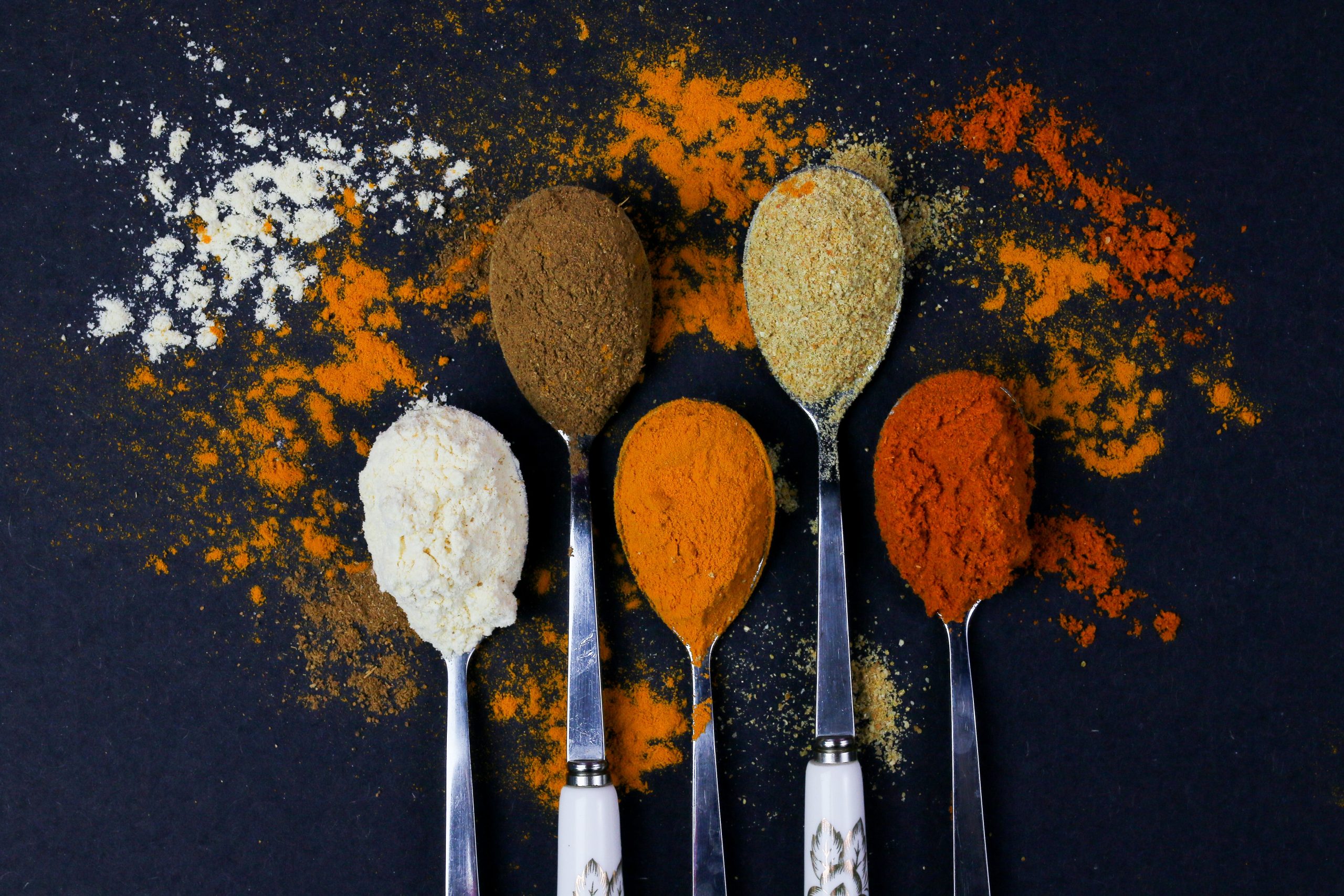
With various strains of the Levantine staple, we commenced what turned to be a social rite: olive oil drizzled into our different versions of the earthly blend of dried thyme, sesame, salt, cumin, and sumac, made into an ancestral paste which is then slathered onto wholemeal £3 toasts from Tesco. Our own version of a manakish za’atar tokenizing our unity in a foreign land. For a few seconds, we almost forgot we ever even left the Levant. The next day, I couldn’t help but render the whole thing into a poem. I titled it, plain and clear, “Levantine.”

The secret to being smart is in the za’atar, as all our mothers and teachers used to reiterate to our school-kid selves.

Such poetic inspiration however is not always around. In the heat of the semester, the cold and ghastly bodies of deadlines do especially tend to water down the gusto. When video calling mom, the cure to the agitation is constantly represcribed—you need to eat more za’atar. I need to eat more za’atar.

Of course, I need to eat more za’atar! How could I forget such a vital piece of intel? The secret to being smart is in the za’atar, as all our mothers and teachers used to reiterate to our school-kid selves. Za’atar for breakfast, za’atar in our lunch bags, the olive oil always finding a way to stain something of us during recess. Oral quiz today? Two sandwiches then. Big exam? Make that three. The brain buds have got to be activated in full. 

I remember this all as I am painstakingly and religiously munching on the concoction while trying to stimulate my head—there is a critical essay on poetics due soon. 

It takes one poem to put the whole picture into place (doesn’t it always?). This time, it is Arab-American poet Danielle Badra’s “The Eight Station,” in which she writes: “Grandmother mourned the loss of Lebanon and innocence the smell of thyme and sesame slow roasting in the oven.” I stop there. 

The technique to the refinement of the za’atar dough is intimate and surpasses the discourses around mere yeast and sugar.

Mourn. Loss. Thyme. The words splash against me like a cataract. In their distinct standings, there is an invisible connective thread. Is homesickness itself not an act of mourning? I begin digging other poems from the pens of the Levant diaspora.  I begin digging specifically for za’atar– the responsibility it is given, the role it plays. 

Levant. We say it with a schwa guided by its French origins—Lever, meaning “to rise,” refers to the point where the sun rises along the eastern Mediterranean shores that form the Levant. Contrary to its “elevating” connotation, the Levant, composed of the states of Lebanon, Syria, Iraq, Palestine, Jordan, and adjacent areas, has long been drained by conflict and war. With most of its countries subject to threatening intrusions and unrelenting instability, displacement and exile have culminated in Levantine diasporas all over, its members clutching onto every native vessel that substantiates their sidelined nostalgias: the black seed (حَبّةُ البَرَكَة), the pomegranate molasses (دِبْس الرّمّان), the myrrh (المِرّ), the wild thyme (الزَّعْتَر البَرِّيّ), the, the, the. 

I begin to trace the physicality and presentation of said nostalgias in the writings of Anglophone Levantine diaspora poets, particularly in their infatuation with this herb, this thyme, this زَعْتَر, for the ubiquitous memory and presence of it culminates into a metonym for clinging to identity, as well as homesickness, and for quite a sensible reason. 

Among all the dismal sightings and sensory reactions to post-war Beirut, the spatiotemporal and structural situation of the za’atar within the poem is quite symbolic.

With Origanum syriacum being its scientific name, za’atar is also known by a few others, such as Lebanese oregano and Bible hyssop. Native to the Middle East, the species’ common name of za’atar is also synonymous with the traditional Middle Eastern condiment of the same name, the ingredients combination of which I have mentioned above. In past decades, homemakers of the region would forage wild thyme from the fields to especially concoct the za’atar mix for the manakish, from the root Arabic verb “naqasha” meaning “to sculpt, carve out,” with the mix being caressed over flat dough whose base is first punched with indentations to stop the puffing process. 

The technique to the refinement of the za’atar dough is intimate and surpasses the discourses around mere yeast and sugar. In her poem “Eating the Earth,” Lena Khalaf Tuffaha, who is a poet, essayist, and translator with a Palestinian, Jordanian, and Syrian heritage,  takes its recipe and hand-stretches it into a poem: 

And in the kneading

hinge forward, let the weight

of what you carry on your shoulders,

the luster of your language, shade

of your story press into the dough. 

Writing in the second person, the message she weaves may be well resonant among readers of similar backgrounds, who, forced to exile and dislocate to seek security and stable futures, depend on traditional foodstuffs as messengers of home. The word that undercurrents her lines is “possessed”– for Khalaf Tuffaha’s narrative is indeed possessed with a yearning and ache that saturate her every choice of poetic device: 

And on the dough let the green leaves

fall, drenched

sumac stars flickering among them

shards of onion in their midst.

Scatter them as the wind would

or gather them in the center of this earth

and fold them into the tender embrace

of the dough, cool and soft beneath their bodies

Here, with the falling of the “green [za’atar] leaves” and the flickering of the “sumac stars,” Khalaf Tuffaha feeds a theme of freedom while pacing her painted image with slowness that contrasts the turbulent life circumstances of the Levantine countries, a backstory to the poem’s tide. The act of sprinkling dried herbs onto dough becomes an expression of care, with the “bodies” of the herbs folded into the “tender embrace of the dough.” Khalaf Tuffaha’s stylistic decision is not mere experimental but an organically purposeful depiction of cultural nostalgia as well as activism through the culinary vessel of the manakish za’atar. In the quoted lines, the speaker not only guides the reader into the preparation steps of the traditional food, but invites them to converse with the emblematic shadow of each factoring ingredient in the process, to knead their indigenous identity, along with all the struggles, into the very fibers of the dough. This herb has a bodily composition that shares the same earthen essence as the distant motherland, she says. Allow it to transport you.

In an interview with The Massachusetts Review, Khalaf Tuffaha was asked whether there is a city or place, real or imagined, that influences her writing, to which she responded:

Yes, absolutely. Places I belong to for having lived there or visited, especially places where my family is rooted. My father’s Jerusalem, the Amman of my childhood, the Damascus of my grandmother’s stories and cuisine and accent. In early childhood, we lived in Jeddah, Saudi Arabia, then a small and picturesque city on the Red Sea coast (…). Almost every weekend, my family would pack a thermos of tea with mint, pick up fresh baked  mana’eesh–za’atar bread–and head to the beach. My mind is a conch shell, the sound of the waves eternally crashing against that coastline, the fragrance of mint tea and za’atar always present.

And I, readers, I see this all in her poem. The same sentiment of Levantine longing has borne Palestinian-American Noor Hindi’s poem “ORIGINS AND SHATTERED CONCRETE,” published on Foundry. Hindi’s writings visit the lands of Palestine, Jordan, and the United States, having immigrated to the latter at a very young age. This particular poem is heavy on a nostalgia specific to the speaker’s life in Jordan while now an American citizen: 

despite being

a temporary visitor, with

fingers clutching suitcases,

toes steeped in American

soil, someone always reminds

you of that makeshift hospital

on Queen Rania Street

where you were born.

The speaker’s longing surfaces through the vessels of reminiscent imagery, with the za’atar overtaking the gustatory, acting as an almost-sacred symbol. Similar to Khalaf Tuffaha’s poem, Hindi’s, too, is written in the second person, with her own self being the only audience: “your name, noor ― as in light ― / spoken with a rolled r, spoken / like it should be.” This particular stylistic choice of distancing the “I” from the narrative and looking inwards instigates a sense of otherness, a division from the self, as though Hindi is observing herself through the eyes of another, quite possibly through the eyes of the people of the land she has immigrated to, where she still may very well be taken aback by the sense of otherness. Yet, this sense of otherness, as Hindi depicts, is only on “some days,” and her decision to incorporate the “some days” idea twice throughout the poem may be to establish a realization that she has already merged into the canvas of the American life, and it is only on “some days” that the yearning comes upon her. Still, it does: “some days you miss / the dusty, littered streets / of your home…/” and “some / days you want to drown / in your grandmother’s black / abaya.” She then flashbacks into a heavy memory, whilst physically yet in the Mediterranean lands: “love resides in arms / so you learned how to / walk that shattered concrete.”  By placing “arms” as a double entendre: on the surface, the plural of “arm” in relation to an embrace, on the deeper level, weaponry, Hindi provides the reasoning behind her learning to walk on shattered concrete in the first place: because there, quite simply, is where she found (finds?) love, albeit its violent structure. Similar to learning how to walk through the shatters, Hindi also “learned” to:

smoke smooth mint hookah,

dip pita bread into

zaat then zaatar, lay on rooftop

patios, haggle in crowded

bazaars, speak Arabic

Here, towards the end of the poem, Hindi reveals the culinary undercurrent that corporealizes her Arabian yearning in an almost ritualistic manner: the pita bread dipped into olive oil and then za’atar. In “American Beings,” another 14-part prose poem, published in The Adroit Journal a few years after the “ORIGINS AND SHATTERED CONCRETE” poem’s appearance, Hindi writes: “The breakfast table is my family’s connection to Palestine, to home, to Jordan. In this way, eating is sacred — and dipping pita bread into olive oil is an act of love.”  When connecting this statement to Hindi’s former idea of “love residing in arms,” we can understand that she has now, in the shelter of her American household, away from the “shattered concrete” of the Middle East, found a way to experience a fiber of that distant, overseas love: upon the altar of the breakfast table, through the gesture of dipping the pita bread into olive oil and za’atar, an act that carries Palestine and Jordan, and her Levantine roots, to her.

Hindi reveals the culinary undercurrent that corporealizes her Arabian yearning in an almost ritualistic manner.

This herb is so much more than taste and tradition. Now, I’ll be incorporating a different speaker-food substance frame into the long-standing tradition of consuming za’atar, one where the consumer is placed in a secondary positioning to the food, with the only relation being palatal, nonetheless significant, through a poem by Hedy Sabbagh Habra. 

Sabbagh Habra is a poet, artist, and essayist of Lebanese origin. She was born and raised in Egypt, but has lived in both the former and the latter before moving to Belgium and then settling in the United States. Her family left Lebanon at the onset of the civil war, as she stated in an interview with KNOT Magazine. In her prose poem, “After Twenty Five Years,” the speaker, who visits Beirut twenty-five years after instability forced them to leave, laments the loss of a Beirut they once knew. In the aforementioned interview, Sabbagh Habra noted that the poetry collection The Taste of the Earth, in which the poem appears, weaves together “personal memories” with the “larger history” of her countries of origin. To that effect, she “resorted to recollections revolving around the senses.” Fittingly, given the poet’s attribution of “memoire” to the collection, the poem is written in first person: “I came to Beirut to retrace my steps but its warmth enveloped me in its ample mantle through streets I didn’t recognize.” Throughout the poem, a bleak mood overrides the lines, with images like: “mandalun windows…disfigured by open wounds,” “a jogger…steeped in lost footsteps,” “the water seems darker,” and “the sea’s mist suffused with bitterness.” Among all the dismal sightings and sensory reactions to post-war Beirut, the spatiotemporal and structural situation of the za’atar within the poem is quite symbolic. Composed of three stanzas, the poem has 11 lines. At the central division of that number is line 5.5, which synchronically is the line that captures the warmth of the za’atar trope:  “Only the vendor of crisp sesame breads makes me feel at home; with a smile, he fills my kaak with fragrant zaatar.” Gastrocritically, through this central emplacement, the speaker not only translates a narrative message but also predicates the power of za’atar to as one at the heart of the evocation of feelings of home. By dismantling the word choice of the adverb “only” at the inception of this significant line, the reader is zoomed into the responsibility placed upon the za’atar, for amid all the sense of detachment that the returned expatriate experiences, it is only the za’atar kaak, and by association the vendor, that rekindle the speaker’s feeling of belonging. 

Food serves to mark what separates or unites a community, and how an individual perceives themselves in a certain locale.

Food serves to mark what separates or unites a community, and how an individual perceives themselves in a certain locale. For many of the displaced peoples of the Levant landscapes who have long taken off in all directions, the root connection is through a mere transported product of its fragment of earth, and their transoceanic poetry reveals the attempt at homeland mimesis through infusing metonyms into said product. 

It’s no surprise that literature has been recognized as a valuable repository for ethnography. Writers have long been tapping into the multi-layered meanings in foodstuffs that surface socio-cultural stories, and in the literature of the Levantine diaspora, I find a culinary ripeness seeping such Mediterranean memories I had forgotten to unfold from my suitcase. 

It is 8:16 AM UTC when I decide to end this attempt at essay. 10:16 in Beirut. I video call mom to wish her a lovely day. In the screen there is her and dad on the balcony, smiling and showing me the breakfast spread of fresh manakish za’atar, labneh, olives, and mint leaves. Yalla, mom says, we’re waiting for you to start eating. Կը սպասենք։ 

We’re waiting.

If The System Isn’t Fair, Build a New One

“…the plan had run out of control. But rather than reveal this, the technocrats had decided to pretend that everything was going according to plan, and what emerged inside was a fake version of society. The Soviet Union became a society where everybody knew what their leaders said wasn’t real because they could see with their own eyes that the economy was falling apart, but everybody had to play along and pretend that it was real because no one could imagine any alternative—one Soviet writer called it hypernormalisation.”

—Adam Curtis, HyperNormalisation

This was the first I ever heard of Alexi Yurchak. Like a lot of us, I spent a lot of time watching TV in early 2020. I didn’t know why at first, but I found myself gravitating to stories from or about the Soviet Union. I re-watched HBO’s Chernobyl miniseries and Tarkovsky’s Stalker, somehow comforted by their depictions of real and imagined collective disaster and eerie zones abandoned by civilization. I watched long documentaries about the last days of Soviet socialism. In my now home-bound weekends I began to revisit the films of cult British director Adam Curtis as much for their hypnotic found-footage visuals and ambient soundtracks as their ruminations on the slow collapse of the 20th century order.

HyperNormalisation was the title of Curtis’s rambling 2016 smash hit which tackled post-truth and institutional rot in rich democracies. The documentary was eerily prescient and it turned out that Curtis had lifted its title from a 2005 book of academic anthropology called Everything Was Forever Until It Was No More. The quote from the book’s author, who trained as a physicist in the USSR before becoming an anthropologist in the US, made me jolt up in my chair. A fake society. Years of playing along pretending like what you saw wasn’t real: Hypernormalisation. A writer born in the Soviet Union had, in precise and clear language, articulated something I had felt as less than an itch, something like a boil under the skin. A recurring vague thought had a name now.

So this is it. I had kept thinking that to myself, over and over, as the summer of 2020 got hotter. This is it. I sat in my improvised home office, littered with my landlord’s mother’s things. I kept the windows open more often as the days grew longer. The whirring air of  ambulance helicopters ferrying Covid patients to nearby hospitals was now drowned out by the throatier sounds of the military helicopters which had begun to patrol Washington DC’s skies. 

This is it. 

I didn’t know if the phrase was resignation or prediction, or if I had been using it to label big or small finalities. I thought about it a lot at the end of my work days. The telework screens I spent my day staring at in my track pants were especially incongruous with the heavy floral prints and antique furniture of a room which, when I had moved in a few months ago at the end of 2019, I had agreed to never use. The user interface I used was all in heavy beige and navy blue and in astoundingly low resolution. There were two things that were omnipresent; the flag and eagle of the official seal of the U.S. Department of State, which was a transparent background on almost every interface, and the loading pinwheel of our cobbled together telework software which spun without end literally any time I tried to do something. 

A fake society. Years of playing along pretending like what you saw wasn’t real: Hypernormalisation.

Since March 2020 I had spent my days in this room, listening to the ambulances and helicopters, waiting for .pdfs to load. I was assigned to the Afghanistan Special Immigrant Visa unit, a group within the State Department which pre-screened Afghan nationals who claimed that they’d worked for the U.S. government to determine if they qualified for recommendation to begin the screening process to apply for an immigration visa. For the various Afghans who had worked for the American occupation forces as truck drivers, girl’s school teachers, security guards, and interpreters, the visa was their ticket out of a country that would eventually fall to the Taliban. I waded through grainy .pdfs of employment records from various American defense contractors, many of whom no longer existed, waiting for them to slowly load as I spent my days verifying the stories laid out in the Afghans’ desperate letters. I was a bureaucrat with no office, no stamps. A diplomat in an adidas tracksuit.  I am not going to save anyone. We do not actually issue visas in this visa unit. We give qualified access to a byzantine and years-long application process to some of those that apply. I know, really everyone in the unit knows, that this isn’t going to work. I no longer believe in any of this.

This is it. 

I didn’t know what I meant but it recurred more and more through the summer. Not that this was the apocalypse or the end of the world or even a final anything, but that the mass death in hospitals, the uprising in the streets, the abandonment of people by their government was the breach and rupture that I guess I had somehow been expecting. This wasn’t clairvoyance and I’ve never been a sage, nor somebody who predicted the future. It didn’t mean that I wasn’t scared and angry. It just means that I wasn’t un-done, I wasn’t shocked by what was happening around me. The feeling was eerie. It was a feeling that had a name now. 

Because I am married to an anthropologist, Everything Was Forever Until It Was No More was an incredibly easy book to find—she already owned a copy. Alexi Yurchak, the “Soviet writer” mentioned by Adam Curtis, is a successful and well-regarded academic and while not canonical, his work is referenced when discussing the inner worlds of Soviet life. I did not pick up the book to read it like an academic, however. I wanted answers, truth. He had named an eerie unplaceable feeling, and I assumed there would be more prophetic nuggets inside. I’m sure I couldn’t have been the only person to start reading Yurchak’s work after watching HyperNormalisation.

It didn’t mean that I wasn’t scared and angry. It just means that I wasn’t un-done.

I didn’t find prophecy, or answers. While hypernormalisation is Yurchak’s animating academic concept he deploys the concept sparingly, no more than a dozen times throughout the book. His writing is measured and clear, but at times very dry. I cycled home from protests, from the church basements where I’d gingerly stay six feet away from a few masked anarchists as we’d all bag up and deliver the donated groceries that the government couldn’t or wouldn’t provide, and I’d read another chapter of Yurchak. The hope was always for an aha moment, another revelation like the cliff notes summary I heard in the documentary but that never came. I fancied myself a rebel, somehow apart from my colleagues in my disgust with the system I was maintaining. I didn’t find any epiphanies spurring me to action. Putting down the book never crossed my mind, though. I kept reading because while I never saw any other revelations, in every chapter, I saw myself. 

The All-Union Leninist Young Communist League, better known by its Russian-language abbreviation Komsomol, was the communist party’s youth organization for young people under age 28. From elementary school well into university and postgraduate and working life, its functionaries—normal people who were ambitious or well spoken or capable enough to be offered the position of ideological worker—were the presence of Soviet communism in the lives of everyday people. Yurchak spends most of the pages with these people or people like them. University professors, administrators, party functionaries and those who in the 1980’s composed the striving middle class of an ostensibly classless society. The reality they inhabited seems initially to be a different and rabidly ideological universe. Red banners and hammers and sickles and colossal statues of Lenin abound, constantly reminding the young officials of socialist internationalism and vigilance against bourgeois ideology as they strive to build the Marxist-Leninist thought in hopes of developing socialism within the USSR. This would be, of course, on the way to the achievement of full communism, to world revolution, to the abolition of class society and all forms of exploitation.

I had met people like them at every professional development happy hour I’d ever gone to in Washington, DC. I was one of them.

I had met people like them at every professional development happy hour I’d ever gone to in Washington, DC. I was one of them. Beneath the window dressing of a different system and different words I saw the same general wish to climb the ladder and the same excitement about Making Things Happen and Getting Involved. Andrei, a young Komsomol secretary at an engineering institute who appears several times in the book, could have been any of a half-dozen young guys I knew who owned one suit and moved to DC to make it in government after finishing a master’s degree. 

They do political and ideological work but they aren’t politicians or ideologues, at least not further than they need to be. Andrei even sees the flags and the slogans and Lenin statues as alienating because he considers himself to be fundamentally a normal guy doing good things—not a stuffed shirt yelling slogans. Yurchak calls this self-professed normalness and distance from ideology “being vnye”, which literally means “outside”—an idea more powerful and applicable to the lives of American bureaucrats today than hypernormalisation. Considering oneself normal and a bit outside the system, like Andrei does, is something that allows him to participate in the work of obviously creaking and failing Soviet institutions, while reserving the freedom to interpret them and his activities in them as he sees fit. 

Andrei is apologetic about his party work in the same way diplomats upholding especially embarrassing or odious U.S. policies abroad are, the way I was when my job was Muslim-banning Iranian grandmothers all day. Look, it’s not great, but I’m a good guy, I don’t actually believe in any of this stuff, and I think I can do good where I’m at. You repudiate what you find distasteful in the system without repudiating the system, and very importantly, without ceasing your outward support for it. You find a way to let yourself off the hook for being there. Andrei may have given up, but he still shows up.

The form of the system is upheld, no matter what, even as everybody involved gives up on the ideals.

When he has to write his first big speech for the 1982 annual Komsomol convention, Andrei realizes he doesn’t actually have any understanding of Marxist-Leninist conceptual rhetoric. In a panic, but desperate to do his job well, he asks his old friend Sasha—who has moved on from the youth organization—for help. “Listen, don’t break your neck over it” says Sasha “take my old speech in the committee files…you may simply copy most of it.” Andrei delivers Sasha’s old 1978 speech with a few modifications and everyone is satisfied that the process of all-Union Leninist Komsomol revolutionary political education is moving forward. The form of the system is upheld, no matter what, even as everybody involved gives up on the ideals.

So what does Andrei’s plagiarized speech have to do with me, with us? What does late-Soviet cynicism mean about America that summer, when hospital hallways were full of the dying and the President suggested that we drink fish tank cleaner? The country where city governments painted Black Lives Matter logos on public plazas only after protesters were violently cleared away, and the country that two years later seems dead set on pretending that none of this ever happened? 

It matters for us because what emerges from Yurchak’s book, from Andrei and dozens of other people he interviews, is that nobody living in the late USSR considered themselves to be a cynic. No subject of his ever expressed a feeling that their way of life was coming to an end. The double consciousness of being vnye, the resigned box-ticking of party formalities, the actual lived cynicism of never caring about the things you profess to believe and the denial inherent to a hypernormalized life; none if it was actually considered to be cynicism by the people doing it. When we live in a failing system we all act like cynics even if we aren’t. Andrei loved American rock and roll and phoned in his official duties, but he still thought himself a devoted communist even if that was only because the prospect of the Soviet Union’s socialist system disintegrating was unimaginable for him.

I don’t want to try to draw a direct one to one parallel between the United States and the USSR here; this isn’t a simple A=B about two large global superpowers who share uniformly geriatric and frequently senile leadership, declining standards of living, vast and cruel systems of mass incarceration, lost wars in Afghanistan, and essential workers sent into COVID wards or the roof of Chernobyl reactor no.4, respectively, with little more than some plastic sheeting and a round of applause for protection. The close comparison between our two systems and the uncannily familiar emotions from 1980’s Russia underscore a final and glaring difference.

Six years before I read Everything Was Forever Until It Was No More, when I reported for duty at the Foreign Service Institute to begin my diplomatic training, I was absolutely as idealistic as Andrei. Eerily so. I had passed the extremely selective exam to become a U.S. diplomat, but I told myself that I wasn’t bought in. I had read Hardt and Negri’s Empire in graduate school, I was suspicious of U.S. Foreign policy and was acutely aware that the country I was called to represent had deep and serious problems. I promised myself that I would find my little corner in the institution and as much as I could, I’d do things right. I’d be fair. I was vnye and I was an ideological worker ready to be trained. 

It is not a conceit to say that we have ideological workers in the United States. That is what diplomats are, trained professionals to communicate American values to the world, our own Komsomol cadres. My instructor for media training in 2014 was a former Embassy spokesperson. They made it crystal clear what we were about. “If you get an uncomfortable question about the US, about what just happened in Ferguson or a mass shooting, you pivot to process.” They punctuated the lesson with a turning hand motion. “You explain that we have a system to resolve differences and problems. We have courts, we have democracy, we have civil society, and no matter how bad the accusation is, you say that we are dealing with it openly.” 

Understood deeply, this is a more utopian statement than any of Andrei’s paeans to the future classless paradise of full Communism. Any challenge to our American system can be met by the circular statement that the system exists, and is working. The perfect society isn’t some time off in the future—it has essentially arrived, it is the process that we currently have in America. Sure, we may need to tweak it. The cops will just need to wear body cameras so their murders can be adequately reviewed by courts. Government officials should put pronouns in our signatures when we send emails authorizing the separation of families. It could be a little better, but we are getting there. Just like the Afghans whose files I read every day, whom I knew were doomed, the best we can hope for is not a just outcome, but to give them fair access to the process. 

Any challenge to our American system can be met by the circular statement that the system exists, and is working.

I’d make sure my part of the system was fair was the most idealistic thing I’d ever allowed myself to believe. The United States of America has never bothered to promise what the USSR did, for the perfection of human life and human beings and an end to the exploitation that has plagued humankind throughout history. We nevertheless insist that we live in a kind of utopia.

Alexi Yurchak’s interviewees were not so existentially bound as we are to the process. They maintained it, diligently, because they had other things to let go of, other big and noble ideals to lose faith in. The last chapter of  Everything Was Forever Until It Was No More is about ease and grace. It is about the lack of surprise anybody felt when the Soviet Union suddenly was no more. They were ready for the end but they didn’t know it.

Over the summer of 2020 I had something like that feeling as I saw things beginning to deeply fray around me. In the two years since, American society has clearly chosen a hypernormalised denial. More police, a pandemic that has only ended in name, no help for the struggling and no reckoning with any of what has transpired. Power still maintains that an alternative is impossible. We are asked to play along and just like Andrei, we are doing so, however unhappily. I don’t know if I can fully imagine any alternative to this system and the way we live now. I know that we, together, need to start. 

7 Books About Multiracial Experience by Biracial Asian Writers

When I was first starting out as a writer, I didn’t know other writers like me existed. All I knew was that in poetry, I had found a space to which I could bring my whole self. I was unsure at first; it took years of unlearning the urge to translate myself and undoing the impulse to explain my existence to confused strangers. I began to question: who am I writing for? Does it matter? What would my poems look like if I were just writing for my friends—or for my whole self? Poetry unfolded before me as a thrilling in-between space, a borderland, a dream dimension, a shifting place of possibility and play. 

I remember the excitement of discovering New Zealand Chinese poets for the first time, people like Alison Wong and Lynda Chanwai-Earle, who had been writing long before me. I had not been introduced to their work as I had been introduced to other poets, on reading lists and in exam questions. Instead, I came across them on the shelves of the creative writing department’s small one-room library. And with this discovery, I began to see myself for the first time as part of some kind of literary tradition—not the same literary tradition they taught us about at school; a less visible one, and less fixed. A lineage of my own. A literary tradition that not only looks to the past but also includes writers of the present and, crucially, makes space for writers of the future. 

It was not until years later that I found other mixed heritage writers and artists, both in Aotearoa New Zealand and elsewhere, mostly through social media. There is no one defining ‘mixed experience’; each of us experiences our racial identity in different and complex ways, in flux and in dialogue with the many other parts of ourselves. Reading these books by other mixed Asian writers nonetheless helped me understand and come to terms with feelings of un/belonging and dislocation. They give me the courage to keep writing into the in-between space.

Honorifics by Cynthia Miller

I had a feeling when I picked up Honorifics that I would feel a kinship with these poems, and I was right. Honorifics is playful, sensuous and full of blazing feeling, on leaving, returning, and the star-map of a family scattered by different migratory threads. These threads intersect on the page, where “lack of language is a longing”. After reading this line, I carried the words with me for days. Miller’s poems travel vast distances underwater and I could feel bits and pieces of myself being carried in the current along with them, as though the poet could see directly into the bright tunnels of my dreams. Sometimes a book makes you feel so seen that you have to pause, take a breath, put the book down and pick it back up again: “You have carried everyone you love, / and for so long, and over such distances.”

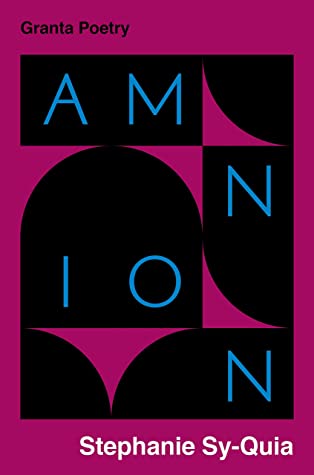
Amnion by Stephanie Sy-Quia

Part family history, part excavation, Amnion traces the coming-of-age of an artist in parallel with lost fragments of memory, genealogy and myth. “My English is unrooted. / I turn these soft sounds over in my mouth, my throat, my jaw […]” Sy-Quia writes, attentive to the way language dwells in the body; how it feels to inherit intersecting languages of empire. On attending a Catholic boarding school as a teenager, the poet writes: “My body became as incendiary as a vernacular.” Amnion itself is incendiary; it is a work of resistance, both linguistic and political. This book made me want to write again after a long period of not writing, which is the best feeling—when a text speaks to you so loudly that you have to say something back. 

Edinburgh by Alexander Chee

During lockdown, I remember going for a walk and listening to a podcast interview with the American writer Alexander Chee. On the subject of passing, he said: “every new social scenario has a moment within it where I figure out whether this person has understood who I am or not.” I had to stop under the trees and type his words onto my phone. I thought of them while reading Edinburgh, Chee’s first novel, published back in 2002, which I sought out in my search for novels with main characters who are mixed. In Edinburgh, Chee’s grip on language is extraordinary; I felt myself tumbling down the cliff of each sentence. There’s one moment when Fee, the narrator, says: “It is confusing for some people to look at me. Watching me takes longer than most.” It’s through Chee’s fiction and essays that I’ve found a way to begin to unpick this complex question of seeing and being seen. 

Turning by Jessica J. Lee 

Jessica J. Lee’s debut Turning, published in 2017, is a remarkable book: part memoir, part nature diary and travel journal. Lee chronicles a year of swimming every day for a year (yes, every day) in Berlin, a city she had just moved to at the time. It’s a book I always want to give to friends, because it is truly a gift. It has gifted me so much knowledge, not just about limnology – the study of inland waters – but in teaching me how to be alone in an unfamiliar place, and how to piece together your own meaning of the word “home.” In Turning, I found, for the first time, someone with a background similar to mine writing about her experience of moving through urban and rural landscapes, which was life-changing for me as a writer. 

Sikfan Glaschu by Sean Wai Keung 

Some of my favorite food poems live here in this collection of poetry by the Scottish poet and performer Sean Wai Keung. Sikfan Glaschu is an intimate psychogeography of a city, an unfolding landscape with rich characters and tenderly familiar locations: KFC, the local fish and chip shop, Chinese takeaways. Many poems weave multiple languages together—namely English, Cantonese and Gàidhlig (Scottish Gaelic)—painting a complex portrait of living between languages and between cities. One section of the book is titled “Dreams from Kitchens,” a phrase that captures so much of what I love about this poet’s body of work: kitchens as rich spaces of connection, dreaming and longing, much like the dream-space of a poem. Keung writes: “And just the knowledge that it was possible / to order congee for breakfast in certain places in the world really / did make you feel more at ease with being alive.”

Mixed-Race Superman by Will Harris 

This small book contained one of those ‘aha’ moments for me, when I was seeking out other writers who have reflected on the experience of moving through the world as a multiracial person. In Mixed-Race Superman, the poet Will Harris unpicks multiracial identity and masculinity through the lens of two celebrities with mixed heritage, Barack Obama and Keanu Reeves. Harris writes philosophically and engagingly on the subject of the self: “with too many heritages or too few, too white or not white enough, the mixed-race person grows up to see the self as something strange and shifting […] shaped around a lack.” In these lines I recognized a feeling I’d long been struggling to put into words. I often turn to Harris’s poetry, too, when I’m working out how to approach issues much bigger than me in my writing, such as colonization and migratory family histories. 

Crying in H Mart by Michelle Zauner

Crying in H Mart by Michelle Zauner, who is also one of my favorite musicians, is a heartbreaking read—but it’s also brimming with joy, music and mouth watering food memories, especially of Korean snacks and supermarkets. For so many of us, food is the bridge that connects us with our heritage early in childhood, the “unspoken language between us.” This is one of those rare memoirs that pulls you all the way in, making it hard to come up for air. Her prose is quick and hungry and all-consuming, packed with luscious detail. Especially unforgettable is Zauner’s writing on making kimchi, a monthly ritual I’ve also sought solace in recently: “my mother always used to tell me never to fall in love with someone who doesn’t like kimchi.”

Helen of Troy Battles Southern Hospitality

helen of troy makes peace with the kudzu

my father foxholed me in the lee of the porch, 
gloved and hungry, ready for battle, 
straining at the leash until he launched me 
into the yearly war. i sprang at them, 
the tendrils threatening the house, 
the little questing outriders opening
their mouths to eat. i yanked them. 
i hurt them. i beat them back, 
arms streaked with dirt, following their line 
to the great press of the mother-vine, 
the carpet of vegetation toppling our fences, 
creeping along in inches, in yards. 
the blanket of it. the smother. i tell you 
i was raised among all breeds of weapon—
hand trowels and knife-blade shovels, 
weedeaters, hedge trimmers, chemicals 
in ranks of deadliness, their attendant 
nozzles and hoses, and so when i tell you
i became myself a single sharp edge,
perhaps you’ll hold in your mind the crèche 
that honed me. an animal hunger. 
a green grasp with shadow beneath, 
a moving thing fed on new gulps of land. 
i walked out into the mass of it, boots 
to my knees against the coiled mines 
of copperheads, my mother behind me,
watching the sky for a white spread
of wings. i grew my whole life in a house 
death longed to touch with one soft finger, 
and when i looked out at the building wave, 
i thought, do it. the world around me 
hunkered under the wrong spread of life, 
and yet i saw that it was living, 
edges softened, blanks filled in—a sphere 
that begged my absence, that collected 
my childhood in its outstretched hands 
and pushed it under the skin of itself, 
hidden and repurposed, folded away, 
breathing gently under combs of wind. 


helen of troy feuds with the neighborhood

if you never owned a bone-sharp biography,
i don’t want to hear it. if you didn’t slide
from the house at night to roll 4-wheelers
out the shed, if you didn’t catch branches
on your cheeks and flip the beast 
in a mud rut, go down yelling, come up
laughing, if you didn’t roar the woods 
with star-love brothers, with blood-wait sister,
squinting through pine dirt, through cobweb,
through creatures with fur that explode 
into wings, through devils with fins 
that grow legs and run. through boys 
who become brutes and become boys again. 
through girls who die 
and stay that way. if you didn’t see a swan 
become a wolf. if you didn’t see a wolf 
clamp teeth around a swan. if you didn’t
go away and come back again,
helen judas, helen stranger, trojan helen,
helen of the outside. if you didn’t limp
your way home, dark house, door sealed tight, 
all the street with eyes sewn shut,
i don’t want to hear it. i want you silent. 
i want you listening to me. 

Messy and Honest Is My Memoir M.O.

In Knocking Myself Up: A Memoir of My (In)Fertility, Michelle Tea chronicles her path to pregnancy and motherhood as a 40-year-old, queer, uninsured woman. The tone is irreverent, the storytelling is hilarious, and the topic—choosing to exercise one’s reproductive freedoms—is extremely timely.

Tea’s journey is full of ups and downs, from a series of insemination parties that involve a drag queen’s sperm in a warm bowl, to buying black market fertility drugs online, to ultimately entering what she calls the “Fertility Industrial Complex,” undergoing multiple rounds of IVF. Along the way, Tea falls in love and gets married, consumes a jar of honey charmed by a witch with a fertility spell, and wages a constant battle against “how straight and white and middle class the whole baby world is.” She doesn’t shy away from breaking down the astronomical costs, particularly for those who rely on assisted reproductive technology, of having a baby in the US, either.

Tea is a multitalented writer, performer, activist, and (more recently) podcast host—on her Spotify show Your Magic, she’s done tarot readings for folks like Eileen Myles, Alexander Chee, and Phoebe Bridgers. She is also the co-creator of the legendary spoken word roadshow Sister Spit, the founder of the literary nonprofit RADAR Productions, and was a 2021 Guggenheim Fellow. 

We spoke over Zoom on a sunny Friday in July, about a month before her new memoir’s launch.


Shayne Terry: Let’s start with a heavy question. The project of this book—to document one way (of many) to have a baby and one way (of many) to create a family—will always be important, but it feels especially important right now, particularly with the overturning of Roe v. Wade. How are you feeling about the timing of the book’s publication? 

Michelle Tea: It’s really weird. I mean, we’re always having weirdness somewhere in this country around all of these things—queerness and queer families and reproductive freedom—but we are in such an intense place right now. It’s hard to figure out what’s being realistic and doing your due diligence, and what feels paranoid, but the Supreme Court’s decision on Dobbs jeopardizes the entire artificial reproductive technology world, which is how I had my child and how many people have children. If life begins at conception, then what are we doing with all these “lives” that are sitting in freezers all over the country? So that’s really disconcerting. 

And if they continue down this route, it would affect my entire life. I have a trans husband. This is a Court that doesn’t believe that trans people exist. They don’t believe that queer people should be married or that we even have the right to have sex in our own homes. Everything that the Court is doing right now affects me really directly. I still don’t know what the fuck to do about it, beyond voting and taking to the streets and doing the things that we all know how to do. I take a lot of comfort in knowing that there are people who have more access and power through their vocations—like that incredible Berkeley professor who testified in Congress [Khiara M. Bridges]—who are fighting really hard right now, and I just want to support them.

ST: And also, your story, this first-person account, might change people’s minds. It happens. 

MT: Oh my god, you are an optimist! It does happen, I do believe that, but I feel like people have their heels dug in more than ever right now. I mean, I sure know I do. I certainly didn’t write it to convince anybody of anything. I kind of gave up doing that when I was much younger. I spent a good amount of time back then trying to change the minds of everyone around me. It was very painful and stressful. So yeah, I didn’t write it for that. I wrote it to educate, entertain, delight, reflect people’s experiences back at them, give them hope or a guide. Some people will read this who have no interest in having a child ever. Maybe they’re not even queer, maybe they don’t have a uterus. It’s not just for people who want to have babies. It’s about being alive and having a body and taking a chance. 

I think it’s hard as an author or as an artist to have a political agenda. I mean, I’m a political person, and lots of creative people are, we really care about the world. But for me, I will insert my political agenda if it’s effortless and artful, and I really value those moments because they are rare. But that’s not necessarily the point of art making.

ST: Totally. Rather than trying to make an argument, the tone you chose for this book is more like your best friend telling you a wild story. It’s lighthearted and fun, even though you cover serious topics—homophobia, racism, miscarriage, colonialism, the state of the US healthcare system . . . 

MT: I really wanted to capture the optimism and the lightness with which I took on the whole project of trying to get pregnant. It was an act of optimism. To go into it any other way—I just wouldn’t have done it. There were a lot of strikes against me. I didn’t have a partner, so I didn’t have that support of a second person. I was doing okay financially right then, but historically I’d lived most of my life pretty broke. I had only recently been able to figure out how to make an income that felt really abundant to me, so part of me was also like, “You want to jeopardize that by having to feed another mouth, when you’re still not completely confident that you can keep feeding yourself?” I didn’t have health insurance. It was before Obamacare and I was getting my healthcare at free clinics in San Francisco, which is actually a great system in that you can get treated, but it’s a shitty system in that it’s hard. I didn’t realize how hard it was until I then got health insurance, and the compare-and-contrast blindsided me. 

I really wanted to capture the optimism and the lightness with which I took on the whole project of trying to get pregnant. It was an act of optimism.

But if I focused on all those things, I would have felt really defeated and given up, so I had to focus on taking this life-affirming gesture—affirming that life is, in the grand scheme of things, inherently more bright than it is sinister, more generative and abundant than it is scarce and punishing. 

I didn’t want the story to be a drag, because it didn’t feel like a drag. I had a lot of hope. And honestly, so did everyone around, and I didn’t necessarily expect that. I mean, I definitely had some queer friends who were like, why are you doing this? I’m 50, so my experience of my generation’s queer culture or subcultures or whatever, it’s a lot of artists and radical queers who are like, who fuckin’ wants babies?

But my mother was like, do it, which is wild because my mother is always worried about everything I do. And my sister, who I respect so much and who is so wise and an incredible mom, she was like, do it. My AA sponsor was like, do it. Everyone I knew who had a kid and who really knew me was like, do it. My doctor, once we progressed to the point that I was getting IVF, was like, Oh, we’ll get you pregnant. (You know, for a million dollars.) But we’ll do it. There was so much support that it was easy to keep that kind of lightheartedness.

ST: This is a pregnancy and birth story, but it’s also a love story; after you decided to have a baby on your own, you fell in love and got married, and the two of you ended up having the baby together. But—spoiler alert—you reveal in the afterword that the marriage ended six years later. What was it like to write about the magical years of falling in love, knowing how it ended? 

MT: It was super hard in all the ways! I wanted to really take you through it the way that I experienced it. When I fell in love, I fell in love, and I was in love, and so I wanted to be true to that. But also when you’re in love, you have a lot of ideas about a person that might turn out not to be true. I definitely thought it was really important, for the book, to give people the love story. I mean, going back to having an agenda, I think it’s important to see real queer love, and so I wanted to offer that. At the same time, it was really important for me to, at the end, reveal where I’m at now, and that was also really hard because I didn’t want to take that as an opportunity to just revenge-write about my ex. I wanted to be as honest as I could be about the fact that it wasn’t a sort of conscious uncoupling where we’re like best friends now. I wanted to allow for it to be very messy. 

ST: You could have just ended on the happy note of finally having this baby after so many years of trying, and the memoir would have simply documented a specific period in your history. Can you speak to your instinct to add the afterword and burst that happily-ever-after bubble? 

MT: This is not my first book, and it’s not my first memoir. I’m aware of the questions that come up and the assumptions that people make when they read a memoir and think they know you. You’re always sort of trapped in that moment of the memoir on some level. And so it was important for me to not make it seem like I was still with this person. For my own sake, for their sake, for the sake of our new partners. And going on a book tour, did I want to have to be like, “No, we’re divorced now” to an audience? 

My M.O. with writing memoir has always been to be as truthful as I possibly can.

This is my life. I’m aware that I’m spinning a tale about my life, but it’s still my life and how I primarily experienced it. But for other people, it’s a story and they get invested in the characters. My M.O. with writing memoir has always been to be as truthful as I possibly can. Not doing that, it would have felt like I was putting a lie out into the world.

ST: The cover of the book features this amazing photograph of you as a pregnant pinup girl—blonde wig, red panties, unmissable belly—who’s kicked off her heels and is reclining on a couch after gorging herself on cookies and donuts. It’s part of Sophie Spinelle’s Modern Conception project. What was it like to pose for those photographs? 

MT: It was a really long day. They were all shot over one day in Sophie’s studio in San Francisco, and I was very pregnant. It was a lot. But I was taking the long view. I was like, I’ll be very grateful that these pictures exist. My favorite, which is also the one that I suggested, was when I was sitting on the mountain of cheeseburgers in a stained tank top. That was really my experience of pregnancy. I was just hungry all the time. Food tasted delicious. I’m always sort of a messy eater and a bit of a slob in the best of circumstances but, you know, my body was just really different. Like, really, every single part of my body was affected by the inflammation, down to the joints in my fingers—I got carpal tunnel! You just swell. Not to mention just like all the meds and stuff that you’re on that can fuck with your system. So I loved that one the best, and I love the one where I’m like an earth goddess with my feet in the stirrups. I don’t love the Virgin Mary one, but I think it’s just that I’m vain, I don’t like how I look in it.

ST: That’s actually my favorite one. There’s something really powerful about co-opting that religious imagery, knowing the story behind your conception.

MT: Yeah, I forget that that’s maybe offensive!

ST: You founded Amethyst Editions, an imprint of The Feminist Press, to champion queer writers, and I know you read a ton in general. Whose writing are you really excited about right now? 

MT: I’m reading Fariha Róisín’s book Who Is Wellness For? Edgar Gomez’s High-Risk Homosexual is really great. I love everything that Mattilda Bernstein Sycamore writes. I’m always reading a bunch of books at once. This morning I was reading Ashley Ford’s book Somebody’s Daughter. I’m a huge fan of Raquel Gutierrez, who has a new book out called Brown Neon. And I just got White Magic by Elissa Washuta. 

Then, I was at a reading last night and I bought a book. It’s called My War by Matt Roar. It’s 90s San Francisco skater kid poetry dealing with boyhood and encroaching manhood and, like, what does it mean to be a kind of sensitive straight skater kid who’s deep in that culture. It’s good. And then I got a book called Post-Traumatic that I haven’t started yet but it looks awesome.

Lisa Hofmann-Kuroda On The Importance of Deep, Imaginative, Listening

In our series Can Writing Be Taught, we partner with Catapult to ask their course instructors all our burning questions about the process of teaching writing. This month we feature Lisa Hofmann-Kuroda, a writer and translator from Japanese. Check out her 4-week online literary translation workshop. We chatted with Hofmann-Kuroda about very long bike rides and quietly listening to the text, rather than projecting onto it.


What’s the best thing you’ve ever gotten out of a translation workshop as a student?

I don’t think the terms “teacher” and “student” are very applicable in the context of a workshop. We’re all just people sitting in a room, or a zoom room, and one of them makes some suggestions about things we could do, or read, or talk about. But that doesn’t mean everyone has to do that. We collectively decide what we’d like the space (and time) to be used for, and what makes sense to do given our collective abilities, inclinations, and resources. The best thing I’ve ever gotten out of a translation workshop is the feeling that it was possible for me to translate something, and that there were other people who believed that, too. It’s easy to believe that most things are impossible. I like to think of the workshop as a space where that belief can be suspended, at least for a little while.

What’s the worst thing you’ve ever gotten out of a translation workshop as a student?

The worst thing I’ve ever gotten out of a translation workshop was the feeling that what I was translating wasn’t interesting or worth reading closely. Maybe that’s another way of saying: distractedness, inattention, and arrogance.

What is the lesson or piece of translation advice you return to most as an instructor?

They left all these clues on the page to help you hear what they were hearing

Bela Shayevich once told me that not even the worst translation could ruin a truly brilliant text. Sometimes I think about that and it takes the pressure off. It also reminds me that translation is really a negative capability. It’s about not getting in the way of what’s already there. You have to become very quiet, and very ghostly. You have to really listen to the text and not project too much onto it. When reading a piece of music, for example, you know the composer heard something in their head at one point, then they wrote it down, and now you’re looking at this piece of paper, and you have to try and play what they heard, to bring it to life. They left all these clues on the page to help you hear what they were hearing, so your job is to listen deeply, and imaginatively.        

Can everyone translate?

No, because we live in a capitalist society where creativity and self-expression are available only to an elite minority, while the majority of people in the world have to work so hard and so much just to stay alive that they don’t have the time or resources to even think about something like literature, let alone literary translation–however talented they might be. I feel like it’s important not to lose sight of that. That said, it depends on how we define translation. More than half the world’s population speak more than one language (oftentimes not by choice), so I feel pretty confident in saying that people are translating all the time, for each other, for fun, for love, for work, because they are in life and death situations, and so on.      

Would you ever encourage a student to give up translating? Under what circumstances?

Currently, it’s impossible to make a living off of translation, which is part of why the majority of its practitioners are so devastatingly old and white, and why it’s seen as a retirement hobby rather than a vocation. There are lots of practical reasons to give up on translating as a job–precisely because it’s not seen as a job at all–but I hope that translators will use their collective power as workers to demand better pay and working conditions so that less people will have to give it up in the future. Speaking of which, if you’re interested in doing that, hit me up. 

If you want to make a living as a translator, you should absolutely translate with publications in mind.

What’s more valuable in a translation workshop, praise or criticism?

That seems like a false dichotomy. The most valuable feedback I’ve received in workshop has taken the form of questions that forced me to think about why I made a particular decision. That said, most translators (and writers) are probably pretty critical of themselves already, or just have a lot of negative self-talk in general, so I think praise can go a long way toward helping someone keep their craft alive. Which is not always an easy thing.

Should students write with publication in mind? Why or why not?

Lurking inside this question, I feel, is the eternal “is translation an art or a job” dichotomy, with the assumption that if you think of it as a job (i.e. translate with a publication in mind) then you somehow aren’t a ‘real’ artist or are some sort of vulgar commercialist. I think that’s ridiculous and if you want to make a living as a translator, you should absolutely translate with publications in mind. I don’t think tailoring your work to your audience diminishes your art. I think we do that all the time anyway. This idea that there is some terrain of pure, free, original expression untainted by the thought of money, or publishing, or editors, or capitalism, is just totally made up. We are always translating or writing with someone or something in mind, the self is an illusion, etc etc. On a more practical note: unless you just feel like it for some reason, don’t translate an entire novel before you find a publisher for it! That is called working on spec and it is uncompensated labor. You can love your art and still respect yourself as a worker and acknowledge that what you do takes time and skill and in that sense has actual value.

What’s the best hobby for translators?

I’m not sure, but I like to go for very long bike rides.

What’s the best workshop snack?

I’m partial to popcorn.

7 Books That Speak the Truth of War for Civilians

War operates like a disease. Only those who have personally experienced it know its toll. For them, they will suffer from the pain of it, and stay up all night praying to God to be healed from it.

Warmongers never talk about the costs of war, and so it falls to brave writers to reveal the emotional, economic, and physical tolls. I wrote my memoir, War and Me, to inform readers about ordinary Iraqi citizens and the horrors they faced during many years of war—the Iraqi-Iranian War which lasted for eight years; and then the Iraqi-Kuwait War (Gulf War), which ended with the imposition of an economic blockade in Iraq that lasted for thirteen. 

On my first day of middle school in Najaf, the government announced they would close schools for ten days, until “certain victory” in the war with Iran was announced. But the war did not end in ten days. It lasted eight years, and all my friends were killed in the war or went missing in it. As a young woman, I hated seeing my father and brother go off to fight, and when I needed to reach them, I broke all the rules by traveling alone to the war’s front lines. That was my reality.

In my book, and in the list of superb books below, readers learn the truth about war for innocent citizens: crushing poverty and starvation, constant danger and fear, job loss, severe lack of medical care, and the absence of security and freedom. In a world on fire, these writers find courage, compassion, and a voice.

In Order to Live by Yeonmi Park

In her memoir, Yeonmi Park delves into the darkest corners of life in North Korea, a country whose inhabitants live in abject poverty, starvation, deception, and misery. Park describes the constant indoctrination that prevents the population from rising up against the “Great Leader.” With dignity and bravery, she also divulges that she and her mother were sold into sexual slavery in China and endured horrific hardships before they found their way to freedom in South Korea. Now a human rights activist, Park works tirelessly to bring attention to the oppression of North Korea’s citizens. 

Testament of Youth by Vera Brittain

Vera Brittain’s memoir is an insightful and exquisitely written record of World War I told through the lens of a young, fiercely independent spirit. Brittain details falling in love with a soldier and becoming active in the war effort as a nurse for the wounded. The war cruelly robs Brittain of her lover, her brother, her dearest friends, and her academic work. But it also opens up new worlds, allowing her to travel alone to foreign fronts, first in Malta, and then in France to work in hospitals near the front. Brittain is a shrewd and intelligent observer of all aspects of war, and her story has lost none of its power to shock and enthrall readers since it was first published in 1933.

The Sorrow of War by Bao Ninh

Bao Ninh’s harrowing tale depicts the lasting impact of war on an individual’s conscience through the journey of Kien, a veteran of the Glorious 27th Youth Brigade of the Vietcong. Kien struggles with PTSD, substance abuse, and an indescribable longing, a hope for a better future that he knows will never come. Ninh beautifully illustrates the emotional aftermath of war, a subject that often goes underrepresented in war stories.  Though it was written in 1990, the novel is still fresh, presenting a unique, but surprisingly relatable, story of one soldier and how war changed both the world around him and the world within him. The Sorrow of War was banned in Vietnam upon its release for its negative representation of war and the government. It is that exact rawness, however, that makes it such a standout read.

The Broken Circle by Enjeela Ahmadi-Miller

The Broken Circle is a heart-stopping memoir that details the brutalities of war on Afghanistan’s citizenry. As a child, Enjeela has great pride and affection for Kabul, a prosperous and peaceful city. Everything changes after the Soviet invasion of 1980, when her family is thrust into chaos and fear. Enjeela, her siblings, and their father spend the next five years attempting a dangerous escape out of the country, where they hope to mount a desperate search for their mother, who left Afghanistan to seek medical attention prior to the civil war. Enjeela’s is a story that conveys war’s horrific effects on children.

Against the Loveless World by Susan Abulhawa

This powerful novel presents a refreshingly original portrait of a Palestinian woman who fights for a better life for her family as she travels throughout the Middle East as a refugee. Born in Kuwait in the 1970s to Palestinian refugees, Nahr, the protagonist, dreams of falling in love with the perfect man, raising children, and opening her own beauty salon. But the US invasion of Iraq changes everything. Instead, she becomes a refugee, like her parents before her. After trekking through her temporary home in Jordan, she lands in Palestine, where she finally makes a home, and falls in love. As her destiny unfolds under Israeli occupation, Nahr’s subversive humor and moral ambiguity make this book a special treasure.

The Face of War by Martha Gellhorn

One of the most prolific investigative journalists – and a former wife of Ernest Hemingway – Martha Gellhorn writes in a way that makes readers feel as though they are in the throes of war alongside her. In The Face of War, Gellhorn takes readers from the Spanish Civil War in 1937 through the wars in Central America during the mid-1980s. Some of her reporting and interviews are so damning and explosive, they were never published by  the contemporary news media. Gellhorn’s brisk, candid reporting reflects her deep empathy for people no matter their political ideology; it is a truly transformative anti-war book.  

Do Not Say We Have Nothing by Madeleine Thien

Madeleine Thien has crafted a novel that is at once deeply personal and broadly political, rooted in the details of life during Mao’s Cultural Revolution. Thien vividly describes two successive generations of a musically gifted Chinese family – those who lived through Mao’s Cultural Revolution and their children, who became the students protesting in Tiananmen Square. As readers become emotionally invested in Thien’s multidimensional characters, they learn how Chinese citizens were forced to reimagine their artistic selves during China’s political campaigns and how their fates were irrevocably changed by the Cultural Revolution.

I Rewrite My American Story in “Everything Everywhere All at Once”

Before my first Asian American Studies class, my last semester of college, I thought my brown ass was white. Nowadays, I credit ethnic studies—from CRT to Beyoncé—for making me a person of color. 

When I tell people this, they seem neither shocked by my delusion nor appalled by my POC betrayal. They seem, TBH, kind of bored, like my obsession with racial-identity development is old hat. And so I’ve come to think it’s a given: of course East Asians want to be white. The sky is blue, oppression is intersectional—what else is new?

But what if it’s not indifference? Let me slow it down this time like honey. I’ll run it back pure and unpack these very loaded American phrases: “wanting to be white” and “becoming a person of color.”


Before the US, my whole childhood set in Taiwan, I dreamt one night about an American-Born-Chinese pop star. Dressed in all white like a church girl, he was flying through the sky. I was him in the dream, though I saw him from afar. When I woke up and realized I was still myself—nose, still piggy, tummy, still flabby—I crash-landed, sinking into disappointment.

I was learning it at a young age: becoming cozy with whiteness meant destroying anyone who wasn’t.

Then I moved to the suburbs of Chicago. I became the Asian boy who always finished the sheet of multiplication problems first. The school placed me in gifted math right away. In fifth grade, the two people I bullied were Angel Davila and Shonda Okazaki. I made fun of Angel for having a “girl’s name.” I terrorized Shonda. While she didn’t “look Asian” to my ten-year-old self, her last name sounded Japanese. I don’t remember what I did, only that her mom, a Susan-Sarandon type in white-working-class drag, asked the teacher for a parent meeting. I was learning it at a young age: becoming cozy with whiteness meant destroying anyone who wasn’t.

In middle school, my English standardized-test scores caught up with my math. I got my dad—I guess he was around?—to advocate for my transfer to gifted English. It worked. We wrote our own books of poetry. Returning my first piece of writing, the teacher, a white woman squarely within J. Crew’s target demographic, told me not to get ahead of myself. It was my first time hearing this idiom. I couldn’t wrap my head around what it meant. Next year, at the high school, in “honors-gifted” English (🤷🏽‍♂️), I turned in an essay filled with long words from the thesaurus. The teacher, my Dumbledore, questioned all this diction, told me to stick to what I knew. Since then, I’ve written every sentence to prove my competence in the English language. 

The summer before college was my first time feeling literary fiction in my soul. I was reading Infinite Jest—a notoriously long novel about loneliness, familial estrangement, and the futility of finding worth in one’s achievements—written by the dangerously white-male David Foster Wallace. On the big, floral couch at home, the skirt all stained by dog piss, I set the book face down at the sight of myself on the page. What I didn’t see in that moment was how Wallace would never see me. What I wouldn’t see for the longest was the particularities of my queer Asian American life. 


When Jobu Tupaki, alien superstar, saw every variation on the course of her life, everything everywhere all at once, she took it to mean nothing mattered. Nihilism is why she made the everything bagel—a weapon of mass destruction, if we take the Alphas’ word for it. And why wouldn’t we? They are the heroes, after all.

🚩🚩🚩🚩🚩👀

Let’s take a minute to revisit Jobu’s origin story for the bewildering everything bagel.  

I started by putting all my hopes and dreams on it. Then I put all my report cards. Next came every breed of dog and wanted ads on Craigslist. Finally, the actual seasonings. With so much on it, the bagel collapsed, creating a black hole. 

People who don’t do well in school are unfit for American life, undeserving of any more lifelines.

The juxtaposition of aspirations and grades brings up well-worn American myths. In the neat plot of model minorities, 4.0s open doors to hitherto unavailable opportunities. SATs measure intelligence, if not inherent worth. People who don’t do well in school are unfit for American life, undeserving of any more lifelines. This illogic defies harder, more honest narratives about all of the country’s isms. 


My first semester of college, a month or so in at Brown, Wallace killed himself on my birthday. I took it as a sign I would be the next American genius. My second semester, I took Japanese History. I wanted to learn about myself but figured Chinese History had nothing to do with me. I didn’t think twice about a white man teaching an East Asian Studies class. I also took Intro to Ethnic Studies. I read Kimberlé Crenshaw as though intersectionality were an intellectual puzzle to solve, a concept irrelevant to my life. 

I took Advanced Fiction. Another Asian American was in the class. I neither identified as such at the time nor assumed kinship with any Asian, but I remember this woman just like I remember the majority of the workshop. It was a remarkably attractive bunch, hip in precisely the ways I associate with Brown: thrift-store cardigans and cute, Icelandic backpacks; New Yorker subscriptions and Criterion editions of Fellini flicks; the faces of Student Labor Alliance and the College Hill Independent, cool extracurriculars that made a difference. I felt in all moments like a guest. I wouldn’t take another creative-writing class for eight long years. 

A baseline of self-loathing. An open wound in the shape of myself, which I filled with longing for white men. A field of landmines for anyone who was other. This is what I mean when I say I thought I was white.


White supremacy sets up Asian Americans endlessly to act as beige pawns. In the case of Students for Fair Admissions v. Harvard College, which is bound for the Supreme Court, Edward Blum and the Asian Americans he’s organized accuse the Ivy League icon of institutional racism. The predictable ruling would “likely reduce the number of Black and Latino students . . . with more Asian American and white students gaining admission instead.” It’s wedgy shit like this that makes it hard to believe in “BIPOC solidarity”—hard to keep calling myself a “person of color.”

So, when Jobu says that everything’s a matter of chance, here’s the film’s implication. Making it in America has little to do with talent or hard work. Success is about the largely random factors of one’s positionality: race, ethnicity, sex, class. 

Jobuvision is chaos to the Alphaverse, epicenter of becoming anyone you put your mind to, that madness of meritocracy. Far from evil, Jobu’s a hero—an iconoclast against Asian American mythologies, ones that rest on anti-Blackness.


Before my first Asian American Studies class, my last semester of college, Asian meant out of place to me.

Before my first Asian American Studies class, my last semester of college, Asian meant out of place to me. It meant obedient and robotic, the opposite of artistic. It meant conformist and indistinguishable, the opposite of American. It meant boring and awkward, the opposite of personable. It meant the opposite of Black.

Never mind that back in high school, in jazz band, the students who set the bar for improv were Filipino and South Asian. That my group of friends senior year, all of us misfits, who wore thrift-store tracksuits on the last day of school, was majority Asian and Middle Eastern. That the friend who got me through college—who I’d known since elementary school and turned into my lifeline once we were a commuter rail apart in New England—was Indian. 

Never mind these facts. Believing in whiteness meant denying what was in my line of sight, most of all myself. It took seven semesters of thawing my frozen sense of self to find Asian Americans worth studying. 

My last semester of college was my first time in an American classroom where everyone was Asian. It was my first time making friends at Brown who accepted me exactly as I was. (It was my first time cuffing it with somebody who looked like me.) It was my first time learning that Asians have been on this land longer than the United States; that contrary to my anomalous presence in the Midwest, Asians live all over Latin America; that contrary to my family’s wealth and our post-’65 migration, Asians in the U.S. are also refugees and undocumented immigrants. 

It was my first time finding power and pride in the term “Asian American,” which originated in the radical movements of the ’60s. For the first time, Chinese, Japanese, and Filipinx students were crossing paths at San Francisco State College. Across the Bay, in Oakland, the Black Panther Party organized around self-determination. This model of Black liberation gave rise to the first “Asian Americans,” who demanded SFSC offer relevant curriculum and representative faculty. 

My last semester of college was my first time identifying as Asian American. I am thirty-one now. I was in the class a decade ago when I learned about Vincent Chin. Chin lived to be twenty-seven. I was months short of twenty-one. That’s when I learned about Trayvon Martin. Martin lived to be seventeen. 

I learned in the class that two white men killed an Asian American because the man was Asian.

I became Asian American in the shadow of a grim coincidence. I learned in the class that two white men killed an Asian American because the man was Asian. At the same time, the nation was grappling with the fact that a white man killed a Black boy because the child was Black. I recall no talk during class about Vincent Chin and Trayvon, no addressing the parallels of the two incommensurate acts. 


In the film’s most overtly political scene, Jobu steps out of an elevator in Elvis drag. Evelyn is handcuffed. Waymond is unconscious. Police are on the premises.

A cop tells Jobu that she can’t be there. Heated, King Tupaki taunts him. You keep saying “can’t,” but I don’t think you know what that word means. Serving Yvie Oddly, she reveals a second face on the back of her head. She snaps the neck of one cop and positions another to get shot. Then a cop shoots Jobu in the back. Evelyn watches her daughter bleed until Jobu pulls out a ketchup bottle, revealing the deadliest gag.  

It’s hard to make sense of an Asian American woman killing cops and staging her own homicide. Scrubbed clean of the historical record, popular imagination does not associate Asian Americans with racial violence. In the minds of many, attacks on Asians in America started with “kung flu” and Trump and peaked with the shootings in Atlanta. 

Why might a text that’s Asian American in form choose content so tethered to Black American experiences? 


The case of Vincent Chin made it plain that I wasn’t—would never be—white. What would I become instead? Whom? Would I claim a role of racial target, which in 2012 was taking shape in the image of Trayvon Martin? If I did, I’d be putting down my limited access to whiteness just to pick up a misguided claim to anti-Blackness. What kept me from swapping out one over-identification for another? 

I had never talked about this before—the nebulous place of Asian Americans in the U.S. racial hierarchy.

One day, in the Asian American Studies class, discussing the concept of honorary whiteness, I said I often felt other POC assuming I was basically white. I had never talked about this before—the nebulous place of Asian Americans in the U.S. racial hierarchy. The professor—a father figure, of course—asked a question, simple and difficult. How do you know that people perceive you that way? I heard doubt in his asking, but I had no answer, so I dropped into overthinking, a Virgo’s groove. How did I know? Was I making all of it up? Was I the only one judging me—the only one even thinking of me?

At the ceremony for the English department, I noticed that English majors were either Asian or white. At the college-wide graduation, donning a red and yellow stole made for everyone in our class, I was part of a community—finally—at the end of four otherwise alienating years. 

I was moving to Los Angeles that summer for grad school in social-justice education. I would start a career in “urban” public schools—that is, to work with youth of color—which is really to say, to teach low-income Black and Latinx kids. I was immeasurably, inter-dimensionally self-conscious about pursuing this role as a rich, East Asian man. While I surged with social-justice values, I was at a loss about what would make my care credible to the people I sought to serve. 

So, en route to LA, in the middle of a summer renaissance, I attended the National Queer Asian Pacific Islander Alliance conference. At an “intergenerational plenary” that filled a hotel ballroom, a queer, South Asian woman said something that would stick with me for years. Though I’m technically Asian American and proudly so, too, I identify as a person of color much more—politically, spiritually.

At the time, this self-articulation felt as intimate as a password—magical like a riddle solved. In the ballroom, jotting down every word as if divinely revealed, I thought, It’s cute to be Asian American, but the real work is in solidarity to those more oppressed than I, and the only appropriate role for this duty is as a queer person of color.


Jobu’s everything bagel is literally a black hole. Given the film’s wobbly preoccupation with phalluses and anal penetration, I’m inclined to read the bagel as—well—as a Black hole.

I acknowledge that this gloss might seem glib, literal and a little embarrassing, but, no shade, so is the film. I would also assert that a crucible of American culture is an obsession with Black bodies—controlling them, inhabiting them. So, if I may:

Entering the everything bagel—Black hole—symbolizes fucking a Black person.

Entering the everything bagel—Black hole—symbolizes fucking a Black person. Loving Black people is the last thing you’re supposed to do if vertical assimilation is one’s MO in this country. The opposite is how you make it: hide privilege, champion hard work, ignore injustice, marry white, make hapa babies, lock the Tesla driving through Black neighborhoods.

People strive for other endgames. When non-Black people come into racial consciousness, whether white or of color, we often immerse ourselves in the breadth of anti-Blackness. We act like Black death is the whole of Black life.

Jobu allegorizes first-gen kids like me who go to liberal-arts colleges, go in on ethnic-studies classes, go home all gung-ho about communism and queerness, and go off on relatives about their racist, sexist views. Jobu’s black hole of a bagel symbolizes an all-consuming understanding: the fictions of American life hinge on the premature death of Black Americans.


From the start of my teaching career to the summer of 2020, a passage of my life bookended by two chapters in the Movement for Black Lives, I believed in the predictive power of positionality. The premise was this: socialized as a cis man, East Asian and rich, I was doomed to hurt people, to reproduce patterns of harm. 

I wore this fate like a corset. Behaviors I tried to anticipate and hide: talking too much in my teacher-education classes, where the majority of my peers were women and only one or two were Black; mispronouncing the names of my Latinx students; mixing up the names of students with similar positionalities; locking my car doors “just in case” after passing a Black pedestrian; choosing bougie restaurants for dates without considering access and cost.

I made it a job to monitor all my thoughts and choices. Everything I did, I distrusted on account of my suburban origins, all that white supremacy I internalized growing up the only one. Everything I said, I said to myself first—a line from Tegan and Sara, a queer, white band that gave words to my anxiety in high school and whose music, along with that of so many white indie acts, I put aside to excise myself of whiteness. 

I listened exclusively to rap, believing that conscious Black music would correct my basically white consciousness.

I student-taught at Compton High School. I commuted there from Koreatown. Every day, I listened exclusively to rap, believing that conscious Black music would correct my basically white consciousness. One morning, at a railroad crossing, cutting it close to the start of first period, I broke into tears listening to The College Dropout. “I’ll Fly Away” and “Spaceship,” gospel teeing up slice-of-life rap with Afrofuturist motifs, were teaching me about the lives of my Black and brown students—their dignity and their despair, I was sure. I felt good about myself for crying. It meant that I really cared.

The one class I taught was small. The students were majority Latinx, minority Black. The guiding teacher, a Black woman who ran the kind of classroom in which students rarely spoke, chose for me to teach poetry. I designed my first-ever unit around good kid, m.A.A.d. city, the Kendrick Lamar album set in Compton. For the final essay, which the students wrote in class, I assigned a prompt about how accurately the text represented “life in the hood.” 

That weekend, the guiding teacher emailed me and my teacher-ed professor. On the day of the in-class essay, after I left, some students came to her during lunch and told her how uncomfortable they were with my prompt, how hurtful it was that I’d called their home “the hood.” 

The teacher ended my student-teaching assignment early. She afforded me the opportunity to apologize to the students in person. I would like to think I took it—that I went back in and acknowledged to the students that I had disrespected them and their communities—but honestly, I’m not sure. I remember the students’ faces, their names and even their voices, but all I remember about the end is my massive shame over my preventable, almost textbook mistake.

In her official evaluation, which would factor into my credentialing by the state, the guiding teacher wrote that some people are not meant to be teachers. I took “some people” to confirm my worst fears about myself. I took it to mean Asian American men. My positionality would always be a liability. No matter my hypervigilance, my conscious cultural consumption, I would always end up hurting the people I was building a life to love. 


If the cops had stopped me for breaking the law, anti-Blackness might have implicated my partner.

Five years later—after I failed enough at teaching to get better at it, after I entered the first romantic relationship of my life, after I left my job as a high-school teacher and moved in with my partner, after we took the plastic off the sofa—we had reservations one night at a restaurant down the street. Before heading out, I opened a can of hard cider. I drank it on our walk there. My partner’s Black. He brought up this evening months later, pointing out my carelessness in drinking outdoors. If the cops had stopped me for breaking the law, anti-Blackness might have implicated my partner. Had police escalated—

My partner didn’t go into all this. He knew I knew, I think. In fact, early in our courtship—before he presented me a key to his apartment while humming “Darth Vader’s Theme”—we talked about the benefits of dating people of color, all the energy we were saving instead of coddling and convincing white partners. We took for granted that our experiences and worldviews overlapped as Asian and Black men—that “people of color” functioned intimately as well as politically. That hope was why it hurt when he told me what I’d done the night we walked to dinner. 

I learned in my twenties to condemn myself for thinking like a white person. This script assumes that the crucial division in white supremacy is between whites and people of color. But as Frank B. Wilderson III argues in Afropessimism, anti-Blackness and Black cultures are what structure the world that we all share. White or not, anybody non-Black needs a reminder of the world we’re accountable for.


As news spread in 2020 of attacks on Asians in America, I was ever aware of my privileges. Moving through the world in a body more masc than not; living in LA—in Little Tokyo—almost never the only Asian; young and able-bodied and dressed in the fashion of Angelenos; I figured myself, if not safe, then at least less vulnerable than most.

Then a white man killed eight people, six of them Asian women. Since then, government at every level has invested and intervened to #StopAsianHate. In contrast, since the 2020 elections and uprisings, the buzz around police abolition has dissipated. While enough Asian Americans have refrained from “#AsianLivesMatter,” the state’s limited acknowledgement of anti-Blackness—inconsistent, largely symbolic—implies over and over that Black lives don’t matter in the United States of America.

What I can’t get over about this inequity is that Asian Americans gained state resources through the use of Black American discourse. After the Atlanta spa killings, admonishing traditional media for erasing before anglicizing the Asian women’s names, Asian Americans enjoined social media to “say their names” in the original languages. Indignant about public indifference and incredulity, Asian Americans urged people to “check on their Asian friends.” To balance out the grief, Asian Americans were even showcasing “Asian excellence” on social media.

Asian Americans use Black cultures to make sense, to be seen. We do so without crediting Black people. Our gains have been disproportionate to what’s afforded Black Americans. We’re not the only ones to do this. America has a problem.

To use what doesn’t belong to me and get more out of it than the creators—this is a specific mode of theft.

To use what doesn’t belong to me and get more out of it than the creators—this is a specific mode of theft. The behavior is settler colonial; it’s model minority and anti-Black. 

This is the defining challenge of my Asian American selfhood: crafting a way of being that’s as genuine as it is just. 


The Alphas represent the burgeoning movement of Asian American conservatives, anti-affirmative action, pro-criminalization. The Alphas try to radicalize Evelyn by stoking her class-based resentments (laundry, taxes, laundry, taxes) and endowing her with a purpose: save the whole-ass multiverse by making things how they used to be. 

As the MAGA agenda makes clear, you make your own civilization supreme by conjuring outsized enemies. Enter Jobu Tupaki. Sexual deviant. Remorseless murderer. Cop killer! No goals or moral code. An agent of chaos. 

If the Alphas stand in for Asian American conservatives, Jobu represents their cultural opposite: the Social Justice Warrior. A genderfucking queer. An iconoclast. A police abolitionist. No ties to the status quo. A revolutionary.

Reading the almighty Tupaki as a paradigmatic SJW—a BLM, FTP, QTPOC leftist—we can interpret Jobuvision as an awareness of systemic oppression, of the life-or-death stakes of people’s social location. When one becomes aware that race, class, and gender all condition the life you get to live, the world begins to unfold as a multiverse. 

The multiverse represents more than all the paths one’s life can take. The multiverse is metaphor for hierarchy, for how unfairness is the grounds for everyday living. 


Trained to name and shame my privileges, I can qualify and even loathe every nice thing about my life.

Aware I’m positioned to thrive while others struggle to survive, I’ve learned to minimize my struggles and discredit my successes. Yes, I got into a competitive Ph.D. program for creative writing without publications or an MFA, but I did undergrad at an Ivy, and the year I took to apply to writing programs, I did so unemployed as my parents paid all my bills. Yes, this is my third essay at Electric Literature, the biggest platform of my career so far, but I met my editor at a conference, which I paid full price to attend. Trained to name and shame my privileges, I can qualify and even loathe every nice thing about my life. When I follow this logic, it’s like I’m not a person at all. I’m a cheat code, a string of privileges and pure luck. 

Now get all up in your mind the iconic scene of Everything. Mother and daughter, rocks, overlook an expanse of nothing. The two are in a universe where conditions aren’t right for life. The only thing to do is watch. Jobu acts like it’s peaceful at first, an existence limited to observation. Then she tells the truth. The nothingness has felt like a trap. She’s been pursuing Evelyn not to kill her but to find another way, a subjecthood that would allow her more life. 

Plato who? Cave what? 2022 is the dawn of talking rocks. Good morning to this allegory and this allegory alone of my East Asian American life. 

Proximity to white-male privilege is my lot. Since the start in 2020 of the white-liberal frenzy to “expose” white supremacy, I’ve felt mighty uneasy. The culture and the market were aligned for the nation to go on a journey, something racial-justice-y. I’d started mine the decade before, feeling guilty and very much alone. I reached a bitter standstill. To live an ethical life, I had to accept I didn’t matter. The stories that called for championing would center me but rarely. The harms that warranted spotlighting would never be my own. 

In a culture that feeds on spectacles of suffering, I’ve got a whole lot of nothing. I refuse to lay claim to any oppression other than what governs us all. I’ve resigned myself in adulthood to a status of American insignificance. 


Everything is committed to redeeming Asian American men as indispensable political actors. It does so by staging our near-constant humiliation. 

The movie’s running bit is belittling Waymond without his knowing. Alpha Waymond derides the weakness of Waymond’s body. He mimics Waymond’s voice to blend into a hysterical crowd. Waymond Wang even ridicules himself. In one scene, confronting Gong Gong, Evelyn takes on Waymond’s voice, literally speaking as him. Waymond’s right there, but he doesn’t seem to recognize his voice, calling it weird. Evelyn changes voices again, chirping this time. The film subtitles the noises as actual dialogue. By the end of the scene, the joke is less the birdsong than the affect of an Asian immigrant man. 

The film’s atmospheric abuse of Asian men simulates our American condition.

It breaks my soul to enumerate Waymond’s many humiliations. This is precisely the point. The film’s atmospheric abuse of Asian men simulates our American condition. The movie implicates all audiences in our quotidian indignities. You might find yourself laughing at all the gags until Waymond turns out to be the linchpin of the family.

His importance comes to light in the epic kindness speech. The conservative Alphas are bent on eliminating the leftist Jobu. An Alpha recruit at first, Evelyn has become a SJW sympathizer. After Evelyn stabs Waymond for all the Alphas to see, he puts himself in the middle of their fight. He begs Evelyn, Please. Be kind, especially when we don’t know what’s going on. 

Everything Everywhere turns on this very plea. Because of Waymond, Evelyn chooses empathy over nihilism. Fighting with kindness, she defeats the goons. She wins over Gong Gong and reconciles with Joy. If the movie has an overt thesis, this is it. In a polarized, disintegrating world—an age of extremes and radicalization—reach across the aisle. Relate to the pain of the other.

For a movie about the multiverse, this is noticeably facile, perfunctory. The not-uncommon position turns a blind eye to power and politics. The naivete passes muster only because it’s delivered by a cishet, Chinese American man, a social location presumed to lack ideological allegiances. 

The movie tries to make Asian American men relevant by presenting us as pitiable and, on top of that, apolitical, a rare class of angels that soars above the times. For this rhetoric to work, the film tears out the people most likely to grasp identity politics at its roots: Asian queers like me.


Not long after “My Family’s Failures” published, in the thique of revising “My Drag Masculinity,” I watched the movie a fifth time. Back in the dark of the theater, no longer crying about family and abandonment, I had the bandwidth now to start processing the gay stuff emotionally as well as intellectually.

I’d thought through the implications of framing ass play as irrational. Queerness is a joke, a total humiliation.

From viewings one through four, I’d thought through the implications of framing ass play as irrational. Queerness is a joke, a total humiliation. While this wasn’t lost on me—the cruelty—I judged the audience, not the text, whenever people laughed at Asian American bottoms, at Hot-Dog Evelyn and Deirdre. 

The fifth time, though, I felt it: stepped on and struck out by butt plugs and dildos as gags; betrayed by the phallic undercutting of the women’s queer intimacy. Everything is so insistent on the absurdity of Asian American queerness that by the end of my fifth viewing, I stared down an obliterating question. Are queer Asian Americans real in Evelyn Wang’s universe? 

This movie that’s helped me heal—that’s helped me feel what had gone numb in thirty-one years—does it accept that I’m that girl? Does it know the particularities of my queer Asian American life?


I remember what it feels like to doubt that I am real. I’ve worked so long—with such tenderness—to recover from systematic self-denial. 

Tension is not a problem to solve. Tension—far from purity—is what it feels like to be alive. Tension—multiplicity—is a fulcrum to ride to freedom.

Now that I’ve felt what it’s like to be whole—loveable, desirable, and uncontainable by the inhuman Black-white binary—I refuse to be divided again. Masc, femme; Black, white; Asian, American—all of the above, always—I am everything. With my loves, we are everywhere, free to be all the contradictory things at once.