The Cost of Achieving the Indian Dream

Pankaj Mishra’s return to fiction, Run and Hide, depicts the emotional and social costs exacted by the relentless drive for self-advancement and material progress on the inner lives of individuals as well as nations.

The novel traces the intertwined trajectories of Arun, Aseem and Virendra—three students of the premier Indian Institutes of Technology (IIT), described in the novel as a gateway to the “richness of the world”—whose separate attempts to escape their humble origins mirror the aspirations of Indian society after superpower status in the neoliberal world order of the late 20th and 21st centuries. However, in their eventual failures to escape—and in the damage they inflict on themselves and those around them—Mishra’s characters attest to the degradations visited by the neoliberal order on those left behind, and its fragmentation under the pressures of caste, class, and religion.

Pankaj Mishra brings to the examination of individual lives the trenchant analysis and socio-political awareness with which he dissects the shortcomings of colonialism, capitalism, and neoliberalism in his brilliant nonfiction works, such as From the Ruins of Empire and Age of Anger. In his fiction, this critical analysis is permeated with tender attention to the inner lives of his characters, the details of the everyday degradations they attempt to leave behind, and their complex situations as both agents and victims of progress and its discontents.

I spoke with Pankaj Mishra over email about the human cost of the drive for self-empowerment, and the critical yet compassionate insights afforded by literature.


Pritika Pradhan: Run and Hide is your second novel in twenty years, after several nonfiction books. Could you tell us what inspired your return to fiction? Does fiction, with its close attention to individual lives, enable a different kind of freedom and focus than that of nonfiction? 

Pankaj Mishra: Yes, absolutely. I would say fiction enables greater freedom than nonfiction, since your imagination is no longer constrained by verifiable facts and nonfiction protocols. From the time I started out as a writer, I found myself meditating on the role of humiliation in personal and collective lives, and the recourse to pseudo-remedies of self-expansion and ethnic-racial chauvinism. This theme became more and more urgent as the years passed. Today we recognize it in a range of phenomena—from Putin’s assault on Ukraine to the global cultures of inequality and demagoguery.

However, I felt that I had not written or could not write about the way the promise of self-invention, the craving for success, wealth and fame, and the experience of failure and frustration, had decisively altered individual subjectivity. I had written about the role of ideology in public lives, and in politics and economy, but not about the way ideology reshapes private lives, gives fresh content to individual hopes and a new focus to human consciousness. I had written about the new individual freedoms—economic, social, sexual—suddenly available to billions of people, but not about the way the pursuit of those liberations caused fresh losses and traumas. The list of things I had not written about, and which could only be written about in fiction, kept growing and mocking me. At the same time, I was aware that only the form of the novel could unite the intellectual and imaginative modes of comprehension, and I had to go back to it at some point.   

PP: Meritocracy and self-advancement take a high moral and emotional toll, from the childhoods lost in pursuit of academic success, to the self-destructive quest for sexual gratification and financial success by Aseem and Virendra respectively. What do their failures reveal about the world they are attempting to navigate? 

Much of the disastrous political outcomes that we see today are a result of the promise of meritocracy being revealed as a fraud.

PM: I think that much of the disastrous political outcomes that we see today are a result of the promise of meritocracy being revealed as a fraud. It has become too apparent that those who are wealthy are constantly increasing their wealth and passing on their advantages to family and friends. With the “winners” so clearly taking all, social mobility has been revealed as an illusion. And people who believed in it and sacrificed much for a better future are naturally enraged today. No one wants to be or be seen as a loser. But I had already written about the “left-behinds” and their resentments in my non-fiction. In Run and Hide, I wanted to explore the hidden costs of self-remaking among people hailed as the “winners.” The kind of Indians who run the big tech companies in Silicon Valley and the big banks and hedge funds in London, New York, Berlin and Paris, and who are still deeply marked by their Indian pasts and the wider Indian background that still exists of extreme deprivation. 

PP: Arun traces three different paths of escape: Virendra as a billionaire Wall Street hedge fund manager, Aseem as a novelist and leading media personality, and Arun himself as a translator. How do their choices and goals connect and complement each other? 

PM: What is common to all three characters in my novel—hedge-funder, magazine editor, literary translator—is not only their background of deprivation, but also their new landscape of endless temptation, which emerged only after 1990, and in which all three men get lost in different ways.  I wanted to describe both the great external and internal changes of the last three decades of globalization and, as these characters swam into view, I felt I could achieve at least some of my goals. Virendra, of course, is a recognizable icon of a meritocratic society, though he is still unable to break free of his early experience of degradation. With Aseem, a novelist and host of literary festivals sponsored by oil companies and fashion houses, I wanted to explore how literature, or an idea of literature, came to be implicated in a global Americanized culture whose main self-organizing principles and goals—success, wealth and fame, or intensified communications—have long been explicitly in conflict with art, the life of the mind, and progressive politics. I am haunted by a recent photo in which the feminist writer Chimamanda Ngozi Adichie and Henry Kissinger are bantering at a festival organized by the Financial Times. This confluence of murderous power, mainstream journalism, literary celebrity, and progressive causes is truly unprecedented, and very representative of our age. In this pseudo-glamorous and hectic new setting of global literature, someone like Arun is seen as a kind of failure, a loser, though of course it was through quiet, sustained work of his kind that most writers in the past defined themselves. 

PP: In contrast to his batchmates, Arun chooses a path considered economically and culturally marginal, as a translator of Hindi fiction living in a Himalayan village. How does Arun’s work as a translator between languages connect to his role as a narrator and observer of different social contexts across time? 

With the ‘winners’ so clearly taking all, social mobility has been revealed as an illusion.

PM: I made Arun a translator rather than a writer for a very specific reason. The translator plays a crucial role in the transmission and reception of literature; this figure is uniquely placed to observe different social contexts while personally remaining invisibly tangential to them. And I think that if you are translating from an Asian language like Hindi, you become aware of the sheer otherness of the experiences—of the caste-shadowed, lower-middle-class, semi-urban lives—that the literature in those languages describes. You also recognize the unassimilable nature of the literature you are translating from, and its great distance from the literature produced in the rich countries of the West. You become aware of the deep intellectual inequality that exists between languages and literatures internationally—an inequality that metropolitan globalizers deepen while claiming, with their literary festivals and international prizes, to forge a “flat world” of “world literature.” 

PP: Arun’s life as a translator in a Himalayan village has some similarities with your own experience as a writer who lived in a similar environment for several years. How did your experiences shape your depiction of the lives of Arun and his classmates? 

PM: I have become more aware over the last two decades of how different my experience of the world—whether of a Himalayan village or of lower-middle-class austerities and hungers—is from most of my contemporaries in Anglo-American journalism and literature.

I think writers and journalists now tend to live in cities or large towns, or certainly far from villages. Living in a small place, you also come into contact with a wide variety of people from different classes and castes, as well as epochs—so many people in India still inhabit, mentally and emotionally, a pre-modern world. For a writer, such rich and diverse material constitutes a great privilege, and I would like to think that I have used it responsibly.  

PP: Gender is also a key marker of difference in your novel. The two main female characters—Arun’s mother, and Alia, the woman he loved—are diametrically opposed in their backgrounds and outlooks, and yet both are damaged by his self-withdrawal. What do their trajectories reveal about the changing spaces for women, and the exploitations and humiliations they continue to face? 

PM: In what remains a man’s world, the spaces for women can seem to expand, but this progress can be deceptive. This is certainly true of the two women in my novel. The first—Arun’s mother—is a clear victim of a brutally patriarchal system. The other woman, Alia, is untouched by older oppressions; she is elevated by class and wealth into the progressive global elite. Nevertheless, she remains beholden to men for her identity.

However, I wanted to explore through my male narrator, not so much as gender inequities, as a feeling that many men know and are unable to articulate. At the end of the novel, which is addressed to a woman he has wronged, Arun talks about the “shame” he feels, the “shame of being a man.” The novel is organized as the confession of a male character chastened by his moral failures, around this feeling that I, and many other men I know, often have—of living in and benefitting from a man’s world, of pursuing explicitly masculine goals of power, with often open disregard for other genders, not to mention species, while usually remaining well-positioned to escape the consequences of our actions. Over time, such male privileges begin to seem grotesque—hence the intense but inarticulate feeling of shame. 

PP: Run and Hide is rich in literary references, from Chekhov to V.S. Naipaul. Characters read—or misread—literature for guidance in their lives. How does literature, with its possibilities of “subtle perceptions and attentive prose” (to borrow Arun’s words) offer guidance in a rapidly changing and inequitable world? 

PM: I think modern literature usurped religion’s role in offering moral and spiritual guidance very early in the 19th century. And it is impossible to deny that great literature expands and sharpens our consciousness of ourselves, other people, and the world at large. This is indeed the great function of literature, if it has any function at all.

However, excess identification with writers or their characters can be harmful—and writers themselves have been alert to this. Flaubert makes the novel’s Madame Bovary reads a dominant influence on her poor choices. In his stories, Chekhov mocks the identification with Turgenev’s idealistic characters that many Russians of his time tended to have. Chekhov is critical, too, of the then flourishing cult of Tolstoy. In our own time, Naipaul, with his myth of the self-invented writer from nowhere, has offered a very seductive model to many readers and writers from the Global South. Of course, there are, in reality, several Naipauls: the productively tormented artist, the ideological journalist, and the puerile provocateur raging against Muslims, women writers and homosexuals.

In my own novel, a misreading of Naipaul’s fiction encourages Aseem into self-aggrandizement. This is because he is looking for clear answers rather than complexly posed questions in literature; he has become blind to the perpetual ambiguity in human affairs that Naipaul, or any great artist, always evokes.  

In Our Town, There Are No Strangers

Excerpt from Part I of Elsewhere by Alexis Schaitkin

We lived high above the rest of the world. Our town sat in the narrow aperture between mountains, the mountains forested, the forests impenetrable. A cool, damp place: ferns pushing up between rocks, moss on roofs, spiderwebs spanning the eaves, their strands beaded with water. Every day at dusk the clouds appeared, gathering out of nothing and thickening until they covered us with their beautiful, sinister white. They settled into everything, wrapped around chimneys and hovered over streets and slid among trees in the forest. Our braids grew damp and heavy with them. If we forgot to take our washing off the line in time, it became soaked all over again. We retreated to our houses, flung open our windows and invited the clouds in; when we breathed in they filled us, and when we breathed out they caught us: our dreams, our memories, our secrets.

We didn’t know who cleared the forest and established our town, or how long ago. We could only guess at our origins by their traces, which suggested that whoever built this place had come from far away. Our streets and park and river carried names in a language we did not speak. An earthen embankment stretched along the river to protect us from floods, but this was unnecessary here. It never rained enough for a flood; we received only gentle showers of predictable duration. Our houses and shops featured steeply pitched roofs built for snow, though it didn’t snow here. We had no seasons; our climate was always temperate and pleasant. What brought them to such an isolated location? Was there a time when people lived here as they lived elsewhere? Or was this place afflicted already, and did the affliction draw them here?

I find it difficult to determine when, as children, we came into an awareness of the ways our affliction set us apart. Even when we were too young to understand it, it showed up in our games and make believe. Young boys could often be seen at the edge of the forest, huddled around piles of sticks and leaves and paper, holding stolen matches to the tinder until it caught and watching it burn. Young girls concealed themselves, crouching among the foxgloves in dooryard gardens, burying themselves under heavy quilts in their parents’ beds, playing at being gone. Ana and I played ‘mothers’ constantly. We fed our dolls bits of moss and lichen and swaddled them in scraps of muslin. We crept to the edge of the skinfruit grove and stole fruits off the ground, rubbed the red pulp on our dolls’ cheeks for fevers and healed them with our special ‘tinctures,’ river water from the Graubach. Our mothers were a pairing and Ana and I had been inseparable since we were born. We lived right across from each other on Eschen, one of our town’s short backstreets. Our bedroom windows faced each other, and she was the first person I saw when I woke up and the last person I saw before I went to sleep. We would stand at our windows and press our hands to the panes, and I could swear I felt her hand against mine, like we had the power to collapse the distance between us. We used to tell people we were twins, one of those obvious lies small children tell; everyone in town knew us, knew our mothers, besides which we could not have looked less alike. Ana was the tallest girl in our year, everything about her solid: her legs strong and quick, braids thick as climbing ropes, big blunt eyes that stared at whatever they pleased. I was scrawny enough to wear her hand-me-downs, my braids so puny they curled outward like string beans, eyes cast up, down, away, never settling anywhere too long.

My doll was Walina and Ana’s was Kitty. Such dirty things. We wiped our noses in their matted hair. We filched dried skinfruit vines from our mothers’ piles and wove thorned cradles that scratched their limbs. We slipped our silver hairpins from our braids and used the sharp points to prick each other, then pressed the blood to our dolls’ cloth torsos to give them pox. Once, we licked what remained of the blood off one another’s skin, giggling nervously because we were doing something we shouldn’t. We were supposed to keep the points of our pins clean, held fast in our braids, until we were grown and ready to prick a man’s skin. Ana’s blood left a hot tang in my mouth I tasted for days.

Often, we abandoned our dolls in the grass overnight. When we fetched them in the morning they were soaked, heavy as real babies. They stayed damp for days. We pressed our faces to them and breathed in their thrilling stink, like the wet pelts of goats in the forest. Sometimes we lifted our shirts and pressed our nipples into their rosebud mouths, and I imagined sweet, blood-warm milk flowing from me into Walina. We cared for our dolls wretchedly, but we loved them. I wondered later whether we had sensed that our mothers would go, and if this was what compelled us to treat our dolls as we did; or whether, somehow, it was our mistreatment of them that summoned the affliction to our mothers.

When Ana and I were out and about in town, we tried to watch the mothers like the grown-ups watched them and like the mothers watched each other, but we didn’t really know what we were supposed to be looking for. We saw them alone and in their threes. At the Op Shop, we watched them try on dresses and slide gold hooks through the holes in their ears, studied them studying themselves in the mirrors. We pressed our noses to the windows of the dining room at the Alpina during afternoon tea, saw their hands bring the hotel’s blue china teacups to their mouths, their lips move with silent gossip and speculation between sips. We lurked at the edge of the skinfruit grove when they gathered the fruits in their baskets and pulled down the spent vines. Sometimes a mother split one of the black fruits open and ate it right there, sucking out the red membrane and cracking the white teardrop seeds with her teeth. The mothers said the fruit was like nothing else. I tried to imagine it, but I couldn’t; my mind doubled back on itself when it tried to think up a taste it had never tasted. We saw the mothers on their porches, snapping the thorns from the vines and weaving their baskets. We saw how they swayed with their babies in their arms, side to side like metronomes holding time for a song only they could hear. Sometimes a mother caught us staring. Ana would thrust out her tongue at her, and a feeling would come over me like the mother saw through me to everything I could not yet imagine I would do.

It was Ana who taught me to eat dirt on the mornings after a mother went. We did it when everyone gathered on the lawn. There was so much happening then, with the proceedings getting underway, so it was easy to slip off unnoticed. The rest of town was deserted on those mornings. We had it all to ourselves. We ate soil from pots of dancing lady on porch steps. We pulled grass from the playing fields at Feldpark and licked the dirt that clung to the white roots. In the forest, we coated our tongues with the dirt that hid beneath the slick black leaves on the ground. Ana never explained why we did this and I never asked. I was always content to go along with her schemes. When I ate the dirt, I imagined a forest growing inside me, every leaf on every tree the same as our forest. We were binding ourselves to this place, I understood that much. But I didn’t know whether Ana saw our little habit as preventative, or whether she hoped in swallowing the earth to make something dark take root inside her, to feed it and make it grow.


Aside from ‘mothers,’ the only game we played with any regularity was ‘stranger.’ We had never seen a stranger ourselves, so naturally we found them fertile ground for make-believe. The last person to stumble upon our town from elsewhere had come before we were born, and nobody ever talked about her. True, we had Mr. Phillips, but that wasn’t the same. He had been our town’s supplier our whole lives, bringing goods to us four times a year; he came from elsewhere, but he wasn’t a stranger.

We played in the forest, taking turns with who got to be the stranger and who got to be herself, coming upon them. We each had our own approach to playing the stranger. I imagined them wretched and cowed. I smudged dirt on my cheeks and pulled my hair out of the tight braids my mother must have woven. I moved erratically, darting this way and that, froze like a stunned deer at every snap of a twig underfoot, as if terrified by my own presence. When Ana came upon me I reached out to her and whispered, ‘Help me. Help me.’

Ana’s version was violent. She thrashed through the forest, eyes feral as the eyes of the goats. She bared her teeth at me and drew her hands into claws and made to scratch me, and I tried to make my mind forget that it was Ana, who I had never not known, and sometimes I got close, I saw only her wildness and the emptiness behind it, and I imagined that, having seen a stranger, I would never be the same.

It makes sense that we approached it so differently, because we had only the most elementary understanding of strangers. We knew only that the ones who had come to town in the past had all turned out to be disappointments, painful lessons in what life elsewhere made people into. Their lives were ruled by a simpler, thinner calculus. They sought only obvious pleasures and the avoidance of pain, and they would do anything to achieve these ends. They couldn’t help it. They didn’t have our affliction so they could not learn what it taught us, did not possess what it gave us.

But when a stranger did come, she was nothing like either Ana or I had imagined. This was at the end of upper year, when I was sixteen. By then, Ana and I had not been a pairing for a long time. She had severed our tie suddenly and brutally after our mothers went. From then on the memory of our friendship lived inside me like a potent dream, difficult to believe it had ever been real.


The stranger arrived in the afternoon, when I was working my shift at Rapid Ready Photo. It was my father’s store. He took the formal portraits for everyone in town: school, wedding, newborn. He spent most of his days in the darkroom in the back of the shop and I worked the register after school. Like the other shops, we were never busy; we lacked the population to be. I spent my shifts doodling in the margins of my notebooks instead of doing homework. I practiced violin. I took coins from the register and bought fruit candies from the crank vend at the front of the store, let them lodge in my back teeth and worked over the rough sugar with my tongue. I spun myself slowly around on my stool, trying to match the speed of my revolutions to that of the fan overhead and watched the shop swirl around me. This is what I was doing that day when a blur out the shop’s front window caught my eye. I slowed to a stop, looked out and there she was, way down Hauptstrasse, coming up the sidewalk. In our girlhood games, Ana and I had imagined strangers as extreme figures. But this woman appeared almost ordinary. Still, I could tell straightaway, when she was still quite far off, that she wasn’t one of us. It was the way she carried herself, a difference in bearing, subtle yet profound. She held herself very erect, yet this had the effect of making her appear not haughty but guarded, vulnerable, like a small bird puffing itself up. She wore a dark crepe dress with small white flowers and soft brown boots on her feet. On her head, a straw hat with a band of black ribbon. She hadn’t bothered to tie the ribbon under her chin; it flowed down her back against her hair. She carried a leather valise, which she let knock against her side as she made her way up the street, peering in the shopwindows. A camera hung from a strap around her neck, so I should not have been as surprised as I was when she reached our shop and stepped inside.

She approached the counter with her eyes downcast. When she reached it, she stood straight and still before me, though even in stillness a twitchy energy escaped her. I waited for her to speak, but for an uncomfortable amount of time she didn’t, she just kept her eyes on the floor. I wondered if shops worked differently elsewhere.

‘Can I help you?’ I asked gently.

She looked up. We stood there, so close together, and stared at each other. When I had imagined coming upon a stranger as a child, it was seeing them that mattered, and letting their strangeness operate upon me. Yet it turned out what mattered most in that first encounter wasn’t seeing her but being seen by her, a person who didn’t know me. Beneath her gaze I felt my self sweep cleanly away, like flotsam borne off on the Graubach. Briefly, ecstatically, I wasn’t me at all, but anyone and no one.

She looked at me with a sort of labored smile, like she was trying hard to show she wasn’t hostile, or maybe like she feared I might be hostile. It was my first lesson in the stranger, that her every action, down to her tiniest movements, would suggest two opposed interpretations.

‘A roll of film, please.’ She spoke in the softest voice, like her throat was too clenched to let any more sound escape.

‘So what brings you to our town?’ I asked with an encouraging warmth as I fetched the film from a hook on the wall. It seemed she hadn’t yet determined what kind of place this was, and I wanted to reassure her she had nothing to fear here. But my question seemed to have the opposite effect. A frightened look came over her, like her life had primed her to hear even a simple, friendly question as an intrusion, maybe even a dangerous one.

‘Holiday,’ she said unconvincingly. She had a habit, I was coming to notice, of stroking the black ribbon that hung down from her hat as if it were a creature she was trying to soothe. She must have been riding the train and seen our supply road winding into the mountains and decided to hop off between stations. I wondered what had happened to her elsewhere for her to end up here all alone and in such a state, although perhaps it was usual for a woman to be so skittish and agitated there.

As I rang up her film, she surveyed the shop.

‘If you need something you don’t see here, we can always put in a special order with Mr. Phillips,’ I said. ‘That is, if you’ll be staying awhile.’ I hoped she would tell me how long she planned to be with us, information I was desperate for personally and which would make me in-demand at school the next day. But it was like she hadn’t even heard that part of what I said.

‘Mr. Phillips?’ she asked.

‘Our supplier. He can get you anything. You just tell him what you need and when he comes back he’ll have it. You’d like Mr. Phillips. He’s a consummate professional.’ I cringed at myself, parroting something I’d heard adults say. It was true though. He performed his duties with diligence and discretion, bringing our supplies and taking the baskets our mothers wove back to the city, where he sold them without telling anyone where they came from. We trusted him not to speak of us elsewhere. He didn’t pry into our lives, nor did he burden us with his troubles. We knew it must be painful for him, the glimpses he got each supply of the beauty of this place and the force of our lives here, but he didn’t let this show. He had been our supplier since the previous supplier, another Mr. Phillips, stopped coming when my father was a boy. He was so buttoned up about his work that we didn’t even know whether the prior Mr. Phillips had retired or passed away, or whether our current Mr. Phillips was that Mr. Phillips’s son, or if the name was merely a coincidence, or if this Mr. Phillips had taken the name of the other. According to the adults in town, the prior Mr. Phillips had been a different sort, frantic and addled, always rushing, his papers in shambles, and he often got orders wrong, or tossed our baskets into the freight car in so slapdash a way that some were inevitably damaged and rendered unsalable. Though some of the oldest adults said he hadn’t always been that way, had in his prime been nearly as adept as our current Mr. Phillips, his suits pressed instead of rumpled, hair hard and glossy, not the gray tumbleweed it became. This was how life elsewhere worked upon people. They accumulated years rather purposelessly, so that as they aged they did not unearth their deepest, truest selves but, on the contrary, grew increasingly dispossessed of themselves.

The stranger laughed, amused by what I’d said about Mr. Phillips being a ‘consummate professional.’ I blushed.

‘Are you alone here?’ she asked.

‘My father’s in the darkroom.’

‘Just the two of you?’

I nodded, and blushed again. It was my first time ever talking to someone who didn’t know our situation, and it was embarrassing, even a bit painful, to have to confirm it. It was unusual for a father not to marry again after a mother went, and it was looked down upon. Ana’s father had remarried in less than a year, and he and his new wife had three more children. But the stranger didn’t know any of this, and to my relief she just smiled in response, at once piercing and vague.

When I told her how much it was for the film, she opened the valise, removed a change purse, and stacked the coins on the counter. I froze for a moment when she did that, but I quickly pulled myself together. I didn’t want to make her self-conscious. I used one hand to sweep the stack off the edge of the counter into my other hand and sorted the coins into the register.

‘Well, thank you,’ she said.

‘See you around. I’m Vera, by the way.’ I said it as casually as I could manage.

‘And I’m Ruth. See you around, Vera.’

For the rest of my shift I heard the echo of her strange voice saying my name, Vera, Vera, Vera, until it seemed a foreign, inscrutable thing.

In the coming days, when I told people about my first sighting of the stranger, it was the coins I returned to, how she stacked them on the counter like that. It was such a clear example of the tiny actions that betrayed so much about her and the place from which she had come. In our town, whenever money changed hands, we touched, fingertips brushing briefly as the coins passed from one hand to another. We didn’t only do this with money. We touched whenever we gave or took something, when we shared a sip of our tea with a friend, or picked up a baby’s fallen sock on the sidewalk and returned it to his mother. Even Ana, who was so often cruel to me, would never just set her coins on the counter when she made a purchase at Rapid; we let our fingers brush, a touch absent of personal rancor because it wasn’t personal, it was communal, hundreds of small touches threaded through our days like the unconscious way you touch your own body. The stranger had never had this and she didn’t even know she hadn’t.


That night as we ladled stew into bowls, brushed the tiny pearl teeth of children and sang them lullabies, we felt the stranger’s presence; it seemed we did these things for her, as if, while our town’s population had increased by a single person, we had also doubled, become both ourselves and the sight of ourselves, now that we had a stranger to see us.

Once our children were asleep, the lovemaking began, bodies pressed together under heavy damp quilts. Husbands and wives were together that night not like people who had never not known each other, but with the passion and hunger of strangers. A husband saw not his wife with the pink scar their son liked to stroke and call mama’s worm, felt not the fingertips callused by her instrument, smelled not the frying oil in her hair, talc on her thighs, but a mystery. The unknown of her rose above him, the precious things he knew of her reduced to almost nothing.


The atmosphere in town the next day was festive, everybody eagerly sharing news of the stranger. Sally made sure we all knew she’d been the first to see her. Sally ran the concession kiosk at the entrance to Feldpark, selling tea and shortbread and griddled sandwiches, and from that vantage point she had a clear view of the supply road’s final steep stretch. She claimed the stranger told her she had never seen a more beautiful place. While we were happy to hear this, we did not want to ascribe too much significance to Sally’s report. She was a shallow and unserious person, prone to embellishment, and she loved nothing so much as to be an authority on a subject of collective interest. We teenage girls often walked away giggling after we made our purchases from her. She was old enough that her hair was silver, and we couldn’t get over the fussy way she styled herself, in lacy blouses and ruffled skirts, or her hair, which she wore in ringlets like a birthday girl. The boys our age loved to get Sally going, to draw out her most ridiculous behavior, which was easy to do. Once, Di, Marie, and I were behind Nicolas in line, and we heard him tell Sally her shortbread was the best in town, even better than his mother’s. He leaned across the counter and whispered, ‘Let’s keep that our little secret, okay, Sally?’ Like clockwork, she fluttered her eyelashes and tucked an extra shortbread into his waxed paper packet, and as she passed it to him and their fingertips brushed, she whispered, ‘Our secret.’ In fairness, it wasn’t just us teenagers; Sally was one of the few childless women in town, and the mothers were always chattering about the way she badgered them with questions and pounced on the tiniest scraps of gossip about their lives, desperate to matter any way she could.

In the caf at lunch that day, everybody was talking about their first sightings. I told Di and Marie how the stranger had set her coins on the counter. Di, Marie, and I had been a threesome for years. I had secured myself to them shortly after Ana ended our pairing. We made for a somewhat unnatural threesome, frivolous Di and rigid Marie and quiet Vera, though like all threesomes we did everything together. Di told Marie and me she’d noticed the stranger wore no jewelry whatsoever in her hair. Marie recounted her sighting with particular relish. She had been practicing her cello by the parlor window when she looked up from her music and saw the stranger passing on the sidewalk. At first, she thought she was the woman from the framed illustration on the wall of the ice cream parlor. ‘Isn’t it funny, the tricks our minds play?’ Marie said. It turned out Marie was in good company. Many of us mistook the woman, at first, for someone whose image we had seen before, in a painting or on the packaging for some product or other.

Stories began to circulate among us uppers of the most memorable sightings. Jonathan had come quite close to her. He had gone out to skin and clean the rabbit his mother would cook for supper. He had slaughtered it the day before and was lifting it from the basin of salt water, now dark pink, on the front porch when she walked past. He said the skin on her arms was all gooseflesh; she must have been so accustomed to the sweltering lowland heat that her body didn’t know what to make of our refreshing climate.

Liese said that outside of her house on Gartenstrasse, the stranger had paused to smell the mother-of-the-evening that grew along the fence line. It was the end of the day, when the clouds were beginning to gather and the flowers released their sweet fragrance like an offering. The stranger closed her eyes and her face crinkled in ecstasy, as if she had never before breathed a scent so potent and lovely.


We were wary. Everything we knew of strangers suggested she was not to be trusted. But Ruth seemed harmless; a pathetic figure, not a dangerous one. Over the following days, we learned that she was a creature of habit. Every morning she came down from her room at the Alpina just before eight. We were so pleased that the Alpina had a real guest, one who had traveled to reach it, not just one of our newlywed couples staying in the honeymoon suite. In the dining room, she ate a breakfast of yogurt with stewed fruit. She took her tea with milk and four cubes of sugar, more than even our youngest children, like the only kind of pleasure she could understand was one as rudimentary as sweetness. Next, she walked in the mountains, vanishing from us for hours. She returned in early afternoon, her canvas shoes muddy, shoelaces snagged with burs. The boots she had worn the day she arrived had a small heel; in her canvas walking shoes we saw how slight she was. For the rest of the day she did what might be called poking around, strolling Hauptstrasse and popping into stores to look at this or that. She stroked the supple items in the leather goods shop, marveled at the pastries in the case at the bakery. She stood for a long time on the sidewalk outside the creamery and watched through the shop’s front window as our cheesemaker poured doe’s milk into basins, cut the curds and poured off the whey, pale and translucent as clouds. Her valise had been small and we quickly learned the few possessions she had brought with her. The brown boots and the canvas walking shoes, the dark crepe dress with the small white flowers, a chambray buttondown and trousers, a gray shawl knit of a flimsy, fragile yarn, the straw hat with black ribbons.

She almost always had her camera with her, hanging from the strap around her neck. This interested us. We really only took portraits, whereas she photographed the smallest things. When we saw her pause to snap a picture, a warm sensation spread through us, the almost erotic pleasure of seeing her seeing us. For all her timidity, the stranger Ruth had a certain power. Her attention drew ours to those details of our town so familiar we had long ago ceased to appreciate them. With nothing but her presence she altered our familiar spaces around her.

Walking along Gartenstrasse at dusk, when the clouds were just beginning to appear, she photographed the mother-of-the-evening she’d paused to smell when she first arrived. The flower grew relentlessly, crowding everything else out. We’d grown sick of seeing it wherever we looked, but now we looked again and saw how beautiful it was, even this, our most bothersome weed, how through the clouds its pale purple petals seemed to glow. In the grove, she photographed the night-dark fruit. She even took a picture of a picture, a sepia photograph that hung in a corridor off the lobby at the Alpina: girls all in a row in front of our stone school. This picture was so old we didn’t know who the girls were or whether they had been born here or had been among the people who first came to this place. They wore matching white blouses with black buttons, skirts to their ankles, braids with the silver pins fastened near the bottom instead of the nape. Their eyes were creepy the way eyes so often are in old photographs. At the end of the row, the smallest girl, much smaller than the others, scowled down at the ground. Her image was smudged, doubled: both her and a faint ghost that seemed to pull away from her. It pleased us that the stranger took notice of this photograph; she could feel our town’s power even if she could not understand it. We believed our affliction began with this smudged, doubled girl, that she became a wife who became a mother who became the first of us to go.

8 Books About Coming into Queer Selfhood

Even as a millennial growing up in the ‘90s and aughts, it was rare to read a book that featured a queer protagonist, let alone a whole Heartstopper cast. I searched hard, despite not knowing exactly what I was searching for. 

Most queer adults I know didn’t have an adolescence or coming of age that allowed them open desire or the ability to name themselves or their experiences. In my twenties and thirties, I sought answers about naming the unnameable in queer coming of age. Queer theorists and academics have described the concept of queer time, a non-linear way of coming to selfhood. Queer coming-of-age isn’t limited to adolescence. It is happening all the time. Sometimes it’s delayed by decades. Sometimes it happens more than once. The books on this list highlight queer coming of age that happens at all ages. Sometimes sexuality or gender is the focal point, but often it’s not. Some stories are focused on other parts of the protagonist or narrator’s life that took precedence. All of these books feel queer to me in others ways, in form, in expansiveness, in seeking answers that don’t fit into an easy or well worn narrative. They create something new. 

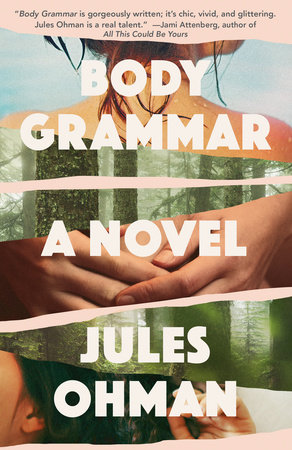
Body Grammar by Jules Ohman

My debut novel, Body Grammar, describes coming of age as both a person and an artist through the lens of Lou, a genderqueer model who walks runways for men’s and women’s fashion shows, but has avoided pursuing her own creative life past high school. She doesn’t have the language for her desire or her gender, but comes of the age the same way anyone does. Slowly, with stops and starts, and then all at once. 

There is something searching, something clear-eyed in reflecting on a queer adolescence and young adulthood. There is pain. There is a hell of a lot of longing. But there’s also beauty and a sense of having reached somewhere, at last. The books below highlight all kinds of coming of age. Into self. Into love. Into family. Into a future that would have been impossible once to imagine. 

Another Brooklyn by Jacqueline Woodson

Jacqueline Woodson’s first novel for adults in several years is a lyric meditation on adolescence, place, and friendship, and memories driven by feelings and girls connecting for a brief time. It follows four friends in 1970s Brooklyn, but some of the memories expand and contract over decades. The narrator, August, tells of everything she and her friends want to be and have, and what they do and don’t get. Like other books on this list, Woodson’s narrator looks back in time at this era of adolescence with a different lens than as she was living it and finds herself to be a different person. 

Paul Takes the Form of the Mortal Girl by Andrea Lawlor

I’d never read a novel that described the shifting of gender how I’d experienced it, all its various and kaleidoscopic possibilities, until I read this book, which takes place in the queer ’90s. The protagonist Paul changes genders and his body and places at will. This book is hot and beautiful and fully itself, just like “various” Paul, and all his routes through and into the world. There’s also a ton of sex in it, all of it fun. 

The Days of Afrekete by Asali Solomon

One of the funniest novels I’ve read recently, The Days of Afrekete asks the question of that double coming of age. When you first realize something transcendent about yourself through a relationship, and what happens when you bypass it for another life. The protagonist, Liselle, remembers her past love, Selena, while facing down the dissolution of her marriage and life. 

Funeral for Flaca by Emilly Prado

Emilly Prado’s gorgeous memoir-in-essays Funeral for Flaca is both funny and devastating in equal turn. Interlaced with songs that defined her childhood and adolescence, Prado’s essays examine grief, identity, and the nuance of familial love and relationships. She describes coming of age in the aughts (Napster, Hot Topic, The Notebook, and AIM screen names all make appearances) with both tenderness for the kid she was and profound insight into reckoning with past selves and trauma. 

Black Light by Kimberly King Parsons

If I could describe queer adolescence, it would be this line in Kimberly King Parsons’ debut story collection: “You can’t just wish something and really get it, can you?” Or maybe this one: “…neither of us is exactly sure how to harness what we have.”

This collection is a Texas fever dream of women and girls wanting and not always getting. The story “Glow Hunters” is one of the truest depictions of queer adolescent desire that I’ve ever read, as it follows the buzzing line between friendship and something more for two high school girls. The sentences are pristine and the feelings are plugged into an unstoppable current. In the title story, the narrator describes how “everything in the world that mattered to me was shoved between the last bell and the sound of my mother’s car in the garage.” This collection is that feeling, a million times over.

High School by Sara and Tegan Quin

Tegan and Sara’s music was the soundtrack of countless queer adolescences, and their memoir, told with electric and devastating closeness, is also an artistic coming of age. They discover their songwriting talent and voices, while coming out and having their first relationships with other girls in their hometown. The audiobook features original recordings of their teenaged songs, which is a treat and a time machine. 

Memorial by Bryan Washington

The relationship between two young men at the center of Bryan Washington’s novel has already dimmed by the opening pages. But both Mike and Benson come of age in different ways over the course of the novel, separately, then together. What begins as a breakup novel transfigures into a moving family story, focusing on the difficulty of coming into selfhood and articulating your own needs and love despite the complexity and pain of the past. 

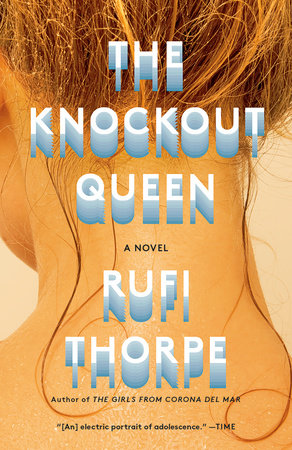
The Knockout Queen by Rufi Thorpe

The Knockout Queen by Rufi Thorpe

In The Knockout Queen, queer teen Michael tells the story of his friendship with Bunny Lampert, his next door neighbor and closest companion, at least for a time. The story and prose is propulsive and full of dark momentum. Michael doesn’t fit into their suburban community as a boy, and Bunny doesn’t fit in as a girl; both their bodies and home lives mark them as outsiders. When the novel flashes forward to their adulthoods, after a violent event severs the era of their friendship, they have both come of age in profoundly different and illuminating ways.  

Solo Dancing With an Invisible Partner in Rynok Square

In 2013, Ostap Slyvynsky, a writer and translator who lives in Lviv, was invited by a composer friend to collaborate on a performance for a music festival in Donetsk, shortly before the city was occupied by pro-Russian militants. “It was very vibrant,” Ostap recalled. “There was a huge arts community there, and they created an arts center from an old factory, incorporating cables, insulation materials, industrial waste.” 

 For the performance, which was to be called In Preparation, Ostap would prepare the kind of emergency kit that is now second nature for Ukrainians: a change of underwear, a few sweaters, a keepsake, toiletries, pills. The performance involved Ostap counting out pills as if for a prolonged absence, but also as a kind of meditative act—“just to concentrate, just to find balance,” Ostap told me. “One, two, three, four, five.”

 Ostap rehearsed for weeks, but the performance in Donetsk never happened. In 2014, after an uprising overthrew Ukraine’s pro-Russian President, Russian-backed separatists took over Donetsk. The vibrant arts center, made of recycled building materials, is today a notorious prison.


As the first air raid sirens pierced the morning silence in Lviv, Ostap was completely unprepared.

Earlier this year, Ostap’s composer friend contacted him again to see if he would like to resurrect their collaboration. Ostap was no longer interested. Too much time had passed. He could no longer relate to the mood of anxiety that had inspired it. “I said ‘No, I don’t feel it any more—it’s not actual for me’.” He cracks a wry, weary smile. “Who could predict?” he said. A few weeks later, as the first air raid sirens pierced the morning silence in Lviv, Ostap was completely unprepared. He had not, as advised on countless TV channels and in newspapers, packed an emergency kit. On February 24, he found himself jostling for an ATM machine to see if he could still access his savings. He was able to withdraw 2000 hryvnia, or about $68. “I was so happy to have money in my hands,” he said.


Ostap told me this story as we were sitting in Black Honey, a cramped, noisy coffee shop on Halytska Street near the center of Lviv. Outside a slow river of people drifted by in the pale winter sun. We were entering the second month of a war but, on the surface, it wasn’t immediately obvious. There were buskers in the street, balloon sellers, a woman with angel wings who let people take her photograph for tips. But you didn’t have to rub too hard at the surface to see what lay beneath. 

On TV, images of war are visceral by necessity. Collapsed buildings, bombed out tanks, an endless parade of hollow-eyed refugees peering through the windows of buses, of trains, of cars. The rescued cat, the forlorn dog. But when you are in a city like Lviv, the images that linger are quieter, less graphic. For me it was a mug in a public bathroom of a small art gallery on a quiet street in Lviv. The mug held random toothbrushes, a tube of toothpaste. A box of tampons sat nearby. 

A young Ukranian novelist, Vadym, had taken me to the gallery one afternoon. He was keen to see an exhibition of drawings depicting Russian violence. They were raw and furious and filled with splayed limbs and blood, and I didn’t much like them, but what struck me was the rooms in which the art was projected on a wall. As my eyes adjusted to the gloom I could pick out the outlines of abandoned sleeping bags, pillows with soft indentations. Someone slept there last night. A lot of someones. The toothbrushes, of course, were theirs. Later I would see the same makeshift dorms in other public spaces—a yoga studio, a waiting room at the station, a library. A parallel universe, as in a children’s story—on one side the art gallery; on the other, the scrambled lives of refugees unsure if they would ever get home; unsure if home even still existed. Private lives made public.

In a small adjoining courtyard, I sat at a small bistro table with a coffee and watched a young man and his friends fussing over a puppy. They talked in soft voices, smiling, at ease. Would they be sleeping in the gallery tonight?


What he could do, he discovered, was collect the stories of other people while he assisted refugees at Lviv train station.

For Ostap, an intense literature professor in a hoodie, the first few weeks of war interrupted what he considered his writing rhythm. Too much heightened tension, too much adrenaline. What he could do, he discovered, was collect the stories of other people while he assisted refugees at Lviv train station. He was a fan of Polish writer Czeslaw Milosz who had spent the Second World War in Warsaw and translated most of Shakespeare’s plays during the Nazi occupation. Milosz also wrote a series of fragmentary poems, conjuring scenes of his childhood—roosters on fences, fog like a river flood. At the train station, it was these ideas that floated into Ostap’s mind. “Each poem is a kind of definition of a very simple word, like street or house, or—for example—Europe, and how it looks from inside an occupied city,” said Ostap. “I thought it would be interesting to collect this kind of war vocabulary, but from the stories of other people.” 

My seventh or eighth coffee of the day had arrived—small, European coffees that I always finished too fast—and as I stirred in my sugar and tried to pace myself, Ostap read a few of his stories. For the letter “A,” a short anecdote about apples in which a woman, Anna recalled trying to sleep in a bathtub in Kyiv during a night of shelling. In the dark she began to imagine the shells as ripe apples falling from a tree, a memory drawn from her early life—a night in the Carpathian mountains, young and in love, in a bed not much more comfortable than that bathtub:

“Now, I was falling asleep to the explosions, and I heard those apples. I wanted so badly for it to be just those garden apples hitting the ground around us.”

On another day, volunteering at a shelter, Ostap watched a woman who had arrived alone, and had chosen not to share any stories. She was from Donetsk. What trauma had she gone through? “All of a sudden she took her phone,” said Ostap. “She called someone and said, ‘Hello, how are you, let’s count together,’ and she began to count.” 

Ostap counts above the high-pitched scream of the coffee machine, “One, two, three, four, five.” Then the woman from Donetsk interrupted whoever was at the end of the line. A child, perhaps? “Slower, slower, concentrate, don’t hurry.” She returns to the beginning. One, two, three, four, five.

Ostap thought of his show that never played in Donetsk, counting pills just for balance. One, two, three, four.


Through the window of Black Honey I could see the imposing statue of Danylo Romanovych, the 13th century warrior king of Galicia–Volhynia, and founder of Lviv (named for his son, Lev). It was Danylo who set the city, and the region, on a westward tilt—attracting immigrants from Poland and Germany, as well as Jews from Kyiv, that colors it to this day. A common refrain in Lviv is that its rich bohemian history has long made the city a target for Russian antagonism. 

A common refrain in Lviv is that its rich bohemian history has long made the city a target for Russian antagonism. 

“They always try to portray my city as a nationalist center,” the writer and poet Victoria Amelina told me one morning, over another cappuccino in a different coffee shop, this one tucked inside a bright, airy children’s bookstore. 

Of all the people I meet in Lviv, Victoria is the most indignant, the most scathing of Russia and Russians. She was born the year of the Chernobyl catastrophe, the year the Soviet Union began to disintegrate. “My parents were told that it was safe, and my mom recalls walking me in a stroller through radioactive clouds over Lviv.” Now she radiates quiet fury. While Putin talks about defending the Russian-speakers of Ukraine, Victoria remembers only that her parents made her speak Russian, out of fear. “They didn’t want their children to suffer as they had,” she said. “I’ve had to reclaim my Ukrainian language—it would be easier for me to write in Russian.” At home she has a library of Russian books, mostly classics. She will never read them again. “I can now read Dickens in English, why would I read him in Russian?” she says. How about Dostoevsky? Has reading Crime & Punishment become complicated? “No, it’s not complicated,” she said. “I just understand now that this mysterious Russian soul is not so mysterious: They want to suffer, they thrive on it, and they want us to suffer.”

Viktoria remembered watching the war in Chechnya on Russian TV, as a child in the 90s. “I thought that Chechnya was doing something wrong, not that Russia was killing Chechens,” she said. “So propaganda worked on me, too. I thought that Russians were saving Chechnya, like they are saving me now—thank you so much, but I don’t need to be saved.”This was how our conversation went for an hour. I thought of something Milan Kundera wrote in a 1984 essay for The New York Review of Books that the aspiration of Central Europe was to be a group of nations conceived according to one rule: the greatest variety within the smallest space. “How could Central Europe not be horrified facing a Russia founded on the opposite principle: the smallest variety within the greatest space?” Kundera wrote.


When war comes to a country, it is unequal in its attentions. During the time I’d been in Lviv, and despite daily air raid warnings, and a nightly curfew, and armed police, and monuments surrounded by sandbags or steel barriers, it was sometimes possible to believe you were in a normal city doing normal tourist things. One afternoon, I found myself buying bath salts for friends in a tiny shop near the ruins of the city’s great synagogue, destroyed during the Second World War. “Lviv Souvenir Soap Manufacture,” said a sign on the door. “No days off.” Another day, enjoying the sun, I browsed an outdoor book stall. Later I bought an ice cream.

But, of course, the city is no more normal than that jar of toothbrushes in the bathroom of an art gallery. “I’ve never seen the city more crowded,” Ostap remarked when we emerged one evening into the street. Those crowds are swollen by refugees, at least 200,000 of them. Many are renting, or have been absorbed into homes of families and friends. Many haven’t. You see them at donation centers, rummaging through random boxes of clothes, and you see them around the central station where a reception camp has sprung up to feed the hungry. And there are those moments, just for a second, when you wonder if the war is also coming for you. I was drinking coffee in another café, Kredens, when the lights went out and I found myself being ushered into a basement while the sirens launched into their familiar mewl. There I heard a loud American voice explaining to his companions, “I voted for Biden.” It turns out that even in a time of war, hearing a fellow traveler can still set your teeth on edge.


Like most of us, Ostap grew up thinking his home town was boring. Then he saw what had been before him all along. “One day I woke up and I understood how unexplored this city is, all these invisible ties between cultures,” he says. “It was an illumination.” He imagined Lviv as a series of layers, like an onion, with only the outermost layer visible to most people. But underneath lay the city’s ragged history, back and forth between empires, the vast movements of people, the overarching national narratives of Poles, Ukrainians, Jews, Germans, Soviets, princes, farmers. 


Nightmare. It’s the word people use again and again. As if language does not have any waking words to describe the texture of war. 

Nightmare. It’s the word people use again and again. As if language does not have any waking words to describe the texture of war. 

Kateryna Mikhalitsyna, a poet and author of children’s books, recalls celebrating her birthday on February 23. Just her husband, her dog, her three kids. “It seems to me now that it was so quiet, so nice, like a reward,” she says. “And then the next morning we wake up to the sirens, and ‘Mama, it’s war’.” Her children, alerted on their phones not to go to school that day, knew before their parents. Kateryna lets out a frustrated groan, clenching her fists as she does so. “It still seems like a nightmare,” she says.

The next day Kateryna began gathering things for refugees pouring west. She heard a story on the radio about people making hedgehogs, simple anti-tank devices composed of three intersecting girders, so she did the same. Driving from the border to Lviv, I’d been fascinated by them lining entrances to small towns and villages, so evocative of all the war movies I’d see, a throwback to the 20th century, like so much else about this war. 

Kateryna presented a watercolor she’d painted for me—a fox on a hillside, looking up to the sky. It was beautiful, vibrant with color. Although she has not been able to find her voice as a children’s writer since the invasion began, she says that poems come to her thick and fast. Shortly before the war, as the violence in Donbas escalated, she reached out to friend in the Ukrainian town of Niu-York, a city named by German Mennonites and the site of a literary festival Kateryna had attended. She wanted to know how they were managing. One of the festival volunteers wrote back, “Everything is usual, a little sun, a little rain.” For Kateryna it was the start of a poem. That was on 18 February, and she is still writing them, tapping stanzas into her phone as fast as they come to her. “They just keep banging into my head,” she said. One arrived shortly before I did, as she sat in the café, and I asked her to read it to me in Ukrainian. Near the end I recognized the same refrain repeated. Could she translate? “I am a target,” Kateryna replied. It is a poem about a shelling in a bread line. 


I wanted to know if Kateryna had Russian friends. Only one, she replied—an author that she had translated into Ukrainian. “But she has not been in Russia for many years, and lives in Costa Rica,” Kateryna added. “And she strongly supports Ukraine.” Those Russians in her Facebook feed, she added, were against the assault.

How did she feel about Russians? “Something between pity and disgust,” she said. “I don’t feel hate, that would destroy me. Disgust is the strongest feeling I ever had for another living person in life.” She told a now-familiar story. Her mother-in-law is originally from Russia, but when she speaks to her relatives there they refuse to believe her account of the war.

“Guys, you are bombing us.”

No, this is absolutely impossible.

“I am your sister and I have been in Ukraine for 40 years, and you are telling me what I see out of my own window?”

No, you have this nationalist running wild over there.

As we talk, Kateryna receives a call from her daughter, telling her that Russians are shelling Lviv. Neither of us had noticed the sirens. “It’s not so safe,” Kateryna says when she has ended her call. But we stay there, and finish our coffee. 

She recalls a woman and her ten-year-old son standing on the platform, visibly shaking.

Like Ostap, Kateryna also found herself at the train station in the weeks immediately following the start of war. She recalls a woman and her ten-year-old son standing on the platform, visibly shaking. “She just kept saying, over and over, ‘I don’t want to sleep in the station, I don’t want to sleep in the station,’” Kateryna recalled. The woman had fled from Kharkhiv, one of the cities that had been most heavily shelled. “She asked to hug me and I kept her in my arms for a few minutes,” said Kateryna. “She calmed down, and I helped her figure out how to get to friends who lived outside the city. And then I gave her my number in case she couldn’t get to where she was going.” 

Kateryna didn’t see the woman again, but a few days later an unknown number popped up on her phone. “I don’t like unknown numbers but since the war started we are all getting calls from unknown numbers,” she said. It was a stranger who told her that he’d heard how she had helped a friend of his. Would she help his family—he was going to put his wife and three children on the train. Could she be there to meet them. Such is the way it goes in war. Every now and then she gets a call from a family in Germany, in Poland, in Slovakia whose path had intersected with hers. “Hello, we are safe, thank you—you are our angel.” 

Kateryna smiles ever so slightly. “No, not an angel,” she says. “I’m a human being, and I am a mother and I can imagine what it’s like to be in a strange city with small children and a single piece of baggage.”

This recalled a moment from my journey to the Ukrainian border. We had stopped to pick up a generator at a small Polish school which happened to be for deaf children. It was lunchtime, and the director insisted we have something to eat in the dining room where, perched on small chairs for children, we tucked into large bowls of borscht, pasta with mushrooms and cabbage, a soft drink of indeterminate flavor. The director was a jolly figure, and before we left he pressed ceramic angels made by the students into our hands. “Angels for angels,” he said in all seriousness, a sweetly sentimental gesture that we couldn’t turn down. Those three angels traveled the rest of the way with us, wedged in the front of our van, a strange trio alongside the baby formula and pasta and tins of pet food that slid lethally on every pothole. Those potholes had become so familiar to Marcin that he’d given them names. “These are the Addams Family,” he said on one particularly treacherous stretch.


Here’s a popular Ukrainian schoolyard taunt that Marcin had told me as we drove across the border. “Your mother is so old she learned Russian at school.” 


On my last night in Lviv, I made my way through the drizzle, and the now familiar wail of the air raid siren. My destination was a small dance studio, one of a few that has not become a dormitory for refugees. As I pushed open the door, the strains of a tango broke the damp silence. Inside, a small group of women were practicing their moves with two men too old to be on the front lines. Legs hooked around legs, hands settled in the soft indentations of the back. A lady in gold lamé heels was being led by a handsome gent with a ring in his left ear, a fine mustache, and a moon-shaped face. 

My destination was a small dance studio, one of a few that has not become a dormitory for refugees.

It was in Warsaw, en route to Ukraine, when I heard about Lviv’s rich tango scene, from an austere looking young man, on the train from the airport. His name was Joshua Von t’Hoff, and he was there from the Netherlands, to attend a tango event. As I was heading to Lviv, he suggested that I connect with the tango “community” there, one of the most vigorous tango scenes in Europe, he said. So I did, spending an afternoon in the back of an Italian restaurant with a group of seven women and a lone man who gathered regularly to drink wine, swap news, and talk shop. Among so many people, conversation was difficult and choppy and often had to be translated, but listening to my recording of that afternoon what I enjoy is the cross-talk, the laughter, the clang of silverware. There was something irrepressible about the dancers and their stories of the Remolino, Lviv’s annual tango contest—Europe’s largest—that had turned their city into a magnet for tango pilgrims. Ten days of non-stop dancing. Although none of those in the restaurant had danced since before the war, there was optimism that might soon change. “We believe we will dance again by summer,” one woman declared to much vigorous nodding. There were eyewitness reports that the dance stage outside Café Diana in Rynok Square was being built again. 

How did tango come to Lviv? The question seemed to have as many answers as there were dancers in that restaurant. I was told its roots go back a hundred years, to Jewish musicians between the wars, tango kings like Artur Gold and Jerzy Petersburski. You can hear Petersburski’s The Last Sunday, or the “suicide tango,” in Krzysztof Kie´slowski’s movie, White.

Europe’s Jewish tango scene expired in the flames of the Holocaust (Petersburski had the foresight to flee to Brazil; Artur Gold, tragically, did not), but it echoed after the war, on Polish radio, where the old melodies remained popular, and accessible to those living in Lviv. But what brought tango roaring back to the city was independence and tourism, and a man called Viktor Danyluk, an Argentinian professional dancer drawn to Lviv in search of his family roots. He stayed just one month, but it was long enough. Tango was back. Danyluk’s name is now invoked as something of a legend.

People react with surprise when I tell them that I met with tango dancers in Lviv, but is it so unusual? The Warsaw ghetto had a symphony orchestra, five theaters, chamber groups, choirs and cafés. During the Blitz in London, trains continued to operate, teashops were open. Milkmen made their rounds, blithely scrambling over collapsed houses to deliver milk. There were dances. These, of course, are the stories of resilience we need during war, the Blitz spirit that has an echo in Ukraine today. As it happens, the dancers in the restaurant didn’t have to wait until summer. In May, I received a text message from a friend with a short film she’d recorded on her phone. It shows tango dancers, back in Rynok Square, some in long winter coats, some wrapped in the Ukrainian flag. Two children, perhaps ten or eleven years old, swirl around the square in full evening dress. A small orchestra plays alongside a slow, sad tango with six or seven couples moving gracefully across the granite square as the trumpets unfurl. Then the  camera settles on a woman at the edge of the square, dancing solo with an invisible partner–three steps forward, one back, then forward again, a gesture of such tender poignancy that it took my breath away. 

Mothering as a Radical Path Towards Social Change

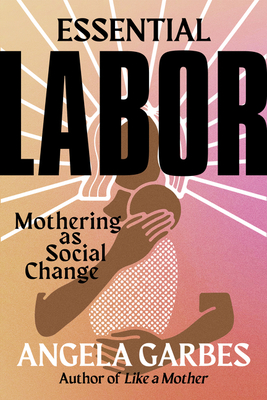
Angela Garbes hadn’t planned to write another book on motherhood. Her first book Like a Mother: A Feminist Journey Through the Science and Culture of Pregnancy, a reported investigation of pregnancy in exuberant and detailed prose, was published in 2018. But during the isolating dawn of the pandemic, Garbes began ruminating on the question: “What is the most valuable thing I could be doing with my time?” The answer was not writing another article or making a podcast but rather ensuring the wellbeing and security of her family and community: “It is an honor to care for them; they are parts and extensions of myself.” Thus began her journey that resulted (happily for readers) in Essential Labor: Mothering as Social Change

Her definition of mother is not constricted by those who birth children, nor by gender, but rather more expansively and beautifully focuses on the caring of children as the act of “mothering.” She writes that raising children “is a social responsibility, one that requires robust community support. The pandemic revealed that mothering is some of the only truly essential work humans do.” The paid (and unpaid) work of caregiving, mostly performed by Black and Brown women, however, is horrifically undervalued when it is paid for. This number from Oxfam is especially stunning: in the U.S. only, women would have earned (at minimum wage) $1.5 trillion dollars for the unpaid care work done in 2019. The figure for the entire world was $10.9 trillion dollars. 

Garbes reflects on the nature and current state of caregiving via her Filipino American family, and the caretaking work done by the Filipinx diaspora around the world, and her personal and communal experience of mothering. She urges for a view of mothering as a radical path towards social change, as well as for universal income for caregivers, in the lineage of the campaign of the National Welfare Rights Organization led by Johnnie Tillmon and other Black activists.

I spoke to Garbes about intimacies, how her mother (and her daughters in the future might see) reads her work, and the sustaining the hope behind her manifesto. 


JR Ramakrishnan: What was the biggest insight (or most stunning/shocking fact) you came upon in the research of this book? The one I was taken with was the salary of 300K you’d have for care-taking of your family. 

Angela Garbes: The statistic that will stay with me forever—the one that clarified my vision for this book and the need to include my own Filipino American family’s story—is this: Filipinx nurses are 4% of the nursing workforce in America but account for 34% of nursing deaths from Covid. It made the devaluation of care work done by women of color—the very lives of women of color—undeniable. 

JRR: You are probably quite accustomed to writing about intimacies after your first book. I was struck though by your speculation of your mother’s childbirth issues. Your husband discussing standing up/lying down type sex/penises with your daughter was so honest, hilarious, and personal. Does your mother read your work, and what do you think your girls will think of all this in the future? 

AG: My mother reads my work, though she doesn’t always like it or approve of it! But she is so generous in her support of me and belief that these are my stories to tell. Our relationship is complicated, but her love for me is unconditional and the greatest gift of my life. As for my daughters, I have no idea what they will think! I expect they might be upset with me at some point as they get older, but I trust that we will talk about it. I will listen to them and we’ll figure it out. 

JRR: I really related so intensely to the meditations on the body. Your Dance Church experiences cheered my heart. Also, the scene where your daughters remark on you getting fat was just breathtaking in so many ways. Was that difficult to write? Do you think they will be able to hold on to this sense of body positivity for their own bodies and those of others? 

AG: It was extremely difficult to write! (As was the knowledge, as it was happening, that I would be writing about it. Writers are such traitors to our families.) Writing about my body, committing those feelings to the page honestly, is one of my biggest challenges, but I believe it is worth it—both for me and for readers. 

I honestly don’t know if my daughters will be able to hold on to body positivity as they grow up. Diet culture and fatphobia are so powerful and insidious. If they can’t be positive all the time (and really who can be?), my hope is that they can feel something close to neutral about their bodies and that they will always know they are so much more than their bodies. 

JRR: I loved the scene where your daughter’s babysitter Penelope has a t-shirt with a slogan about the brainwashing of European beauty standards and how you proceed to explain it to your daughter. For me, this scene encapsulated so well how the work of mothering is done by so many and those who are maybe not mothers themselves and unrelated by blood to the cared-for, and how radical it can be (in this case, overturning beauty programming early). Your community sounds incredible. Can you talk about how you’ve nurtured yours? 

Filipinx nurses are 4% of the nursing workforce in America but account for 34% of nursing deaths from Covid. It made the devaluation of care work done by women of color undeniable.

AG: Yes, I could not survive without my community! I’ve nurtured mine slowly and deliberately, over the course of many years and thousands of meals, playdates, dance parties, work parties, phone and FaceTime calls, backyard hangs, postcards, tears, hugs, texts, vacations, awkward conversations, walks, misunderstandings, and help, asked for and given.  

JRR: You write about how you are thumbing your nose at your parents’ version of the American Dream and all its contents (including individualism). I loved this idea that you note about freedom coming from the Indo-European word friya meaning “beloved” and its links to more connection, and not less. Yet so much of the more contemporary construct is still incredibly powerful for many in and outside of the U.S. still (though perhaps waning). How do you think your book would read to someone outside the U.S., a would-be immigrant in/from the Philippines, for example? 

AG: Honestly, I don’t know! What I do know is that most immigrants, especially Filipinx, come for economic reasons and remit much of their income back home. So while they live an individual life, it is in service of their beloved families, always maintaining a connection. 

JRR: I felt truly your book is such a document of what the pandemic has truly wrought for many: a rethinking on how to be a human being. Are you hopeful for this (seemingly more) communal shift to continue as we move out of the pandemic? Both on the level of communities but also on a policy front (for e.g. Los Angeles Guaranteed Income pilot which called to mind the National Welfare Rights Organization campaign you reference). I am curious as to when you finished writing the book and if you are more (or less) hopeful now in 2022? 

AG: I finished writing the book in November of 2021, just before Congress allowed the Advance Child Tax Credit—monthly payments that, since July 2021, lifted nearly 4 million children out of poverty—expire. That is extremely disheartening, as is the Biden administration’s failure to deliver on its promises of paid leave and codifying Roe v. Wade. While things feel bleak, I am hopeful. And what gives me hope is that I can’t afford not to be hopeful. Mariame Kaba says that “Hope is a discipline.” I think about how oppressed people and colonized people still have thriving cultures against all odds, and that gives me hope. My ancestors did not give up and I won’t either.

I May Not Be Flaming But I Know Heat

Duplexes for whatever is the antonym of coming out

When I said full homo, I was 
            lying. I just meant I loved you. 

I lied, saying I just loved you. 
            There was no such thing as just love. 

There is no such thing as just love from me — 
            I’ve heard that every love out of a queer body is a queer love. 

I don’t know if every love out of my queer body is a queer love. 
            After all, how queerly should I love my mother who does not believe in bisexuals? 

I love my mom though she doesn’t believe in bisexuals. 
            Does your mother know now? Of your homosexuality.
 
If your mom knew of your homosexuality 
            we wouldn’t have been able to squeeze onto your daybed past midnight. 

I woke from your daybed, squeezed next to you, watching the aftermath of a sleepover in all 
            our friends across the floor. How I loved you all. How unqueerly I loved you girls. 

How I loved you. So unqueerly, and so much. 
            Then, what mattered most was sure of itself. Demanded it be loved with no shame. 

My mother’s love is so sure of itself. I do not shamelessly demand more of             
            what is already cast in its own infinity. She says I smell like the wind. 

Our friendship is cast in its own infinity, smelling of sand and salt and wind. Forever 
            Arizona kids turning fifteen, fossilized in that field trip to California. 

In my mind, you still turn fifteen, turn into summer. But we’ve left Arizona. Turned nineteen.
            My mom still blesses me every morning, asking for love in my life. 

My mother prays: Let my child be normal and be loved normally. 
            She doesn’t even consider wishing for my heterosexuality. 

I never considered wanting to be straight. 
            In queerness, I am more like you. 

In queerness, I am often lost. I am so unlike you. 
            And I am still a bad queer. Don’t ask me what I’m afraid of. 

I was a bad queer before I even knew I was one, when I was afraid of nothing.             
            So I said I love you, full homo. The multiple of zero is still zero. 

I don’t say that anymore. The quotients of infinity are still infinity. 
            I may not be a flaming homosexual but I know heat now. 

Our love may not have been homosexual, but I know it’s warm where you were. 
            I just wanted to say I love you. No homo.

8 Kentucky Writers You Should be Reading

In thinking about this reading list, I considered writing about “overlooked” Kentucky writers. I realized, quickly, that this would be redundant. Even someone like Wendell Berry, who is well known in Southern literary circles, is far from a household name. To make any list of Kentucky writers is to call attention to a kind of “underground” literature. There are those who know, of course, that Wendell Berry is one of the 20th century’s finest writers, but if you ask someone in New York about him, they’re liable to say, “Who?” Likewise for Bobbie Ann Mason. The writers from Kentucky who have managed to transcend the limits of the label—Hunter S. Thompson, Barbara Kingsolver, Robert Penn Warren—have tended to turn, in their work, toward America at large, thereby avoiding the connotation of “regionalism.”

Groundskeeping by Lee Cole

I thought a lot about this regionalism as I worked on my novel, Groundskeeping. At one point, the protagonist, Owen, is asked whether he’d like to be thought of as a Kentucky writer or an American writer. His answer is that Kentucky is America, that it’s microcosmic; its struggles and conflicts are America’s struggles and conflicts. Our country’s most antipodal figures, Abraham Lincoln and Jefferson Davis, were born in Kentucky, and the battles they fought then, both real and ideological, are still with us.

And so, my hope for this list is that readers will turn to the writers I’ve named, not just to learn about Kentucky, but to learn about America—to see our perennial strife reflected in art.

C.E. Morgan

C.E. Morgan is perhaps best known for her novel The Sport of Kings, an epic saga about family, historical trauma, and the beauty and danger of horse racing. But I first encountered her work eight years ago, when I read All the Living. It’s a spellbinding story about a young woman who goes to live with a man who’s inherited a remote tobacco farm in Kentucky. They must struggle not only against the elements, but to understand one another and their fierce, divergent desires. The language is archaic at times, its rhythms almost Biblical, but it never misses the mark, and brings to life the foothills of Appalachia with vivid clarity.

Frank X. Walker

We owe the term “Affrilachia” to Frank X. Walker, and his first poetry collection of the same name interrogates the meaning and the legacy of Black life in Appalachia. The themes of inheritance and history come up again and again in Walker’s poems, specifically the way we inherit narratives that turn out to be false. Two of his most powerful books, When Winter Come and Turn Me Loose: The Unghosting of Medgar Evers, are retellings of historical narratives that challenge our assumptions and elevate forgotten voices. It’s this motivation—to challenge, to disclose the story beneath the official story—that characterizes Walker’s career. His poems are so important because they treat Kentucky—and by extension, America—as a complex, layered place, a place that can’t be reduced to a simple, univocal story.

Bobbie Ann Mason

It’s always been a mystery to me why Bobbie Ann Mason’s name is not listed alongside Raymond Carver’s and Ann Beattie’s in discussions of the 1980s’ short story renaissance. Her collections Shiloh and Love Life are as good as anything the decade produced, and her novel, In Country, is in many ways the definitive story of America’s grief post-Vietnam. Thematically, she often wrote about the confrontation between rural America’s agrarian past and the rapidly metastasizing consumerism of the 1980s. As their culture and traditions disappear, Mason’s characters in small town western Kentucky must reexamine what they believe and how they define themselves. For a sampling of her work, including excerpts from her more recent novels, Patchwork, released in 2018 with an excellent introduction by George Saunders, is a good place to start.

bell hooks

Since her death last year, bell hooks’ work has enjoyed a much-deserved renewal of interest and appreciation. Like many of the writers in this list, the story of her career is a story of coming full circle. She left Kentucky as a teenager, pursued opportunities “out in the world,” and found herself longing to return later in life, to put down roots in the state where she was born. Her collection of essays, Belonging: a Culture of Place, traces this spiritual and artistic journey. All About Love: New Visions, reprinted in 2018, braids many of the wide-ranging interests and themes of her career into one beautiful, culminating text. It’s a book not just about love, but about division and power, and the possibilities for redemption.

Chris Offutt

I think of Chris Offutt as a story writer, first and foremost. Kentucky Straight and Out of the Woods were touchstones for me. The stories are rooted in the concept of home and what it means to belong. Many of his characters try to escape Kentucky, or dream of escape, but find themselves tethered, for better or worse, to the place where they were born. My Father the Pornographer, his memoir from 2017, is a funny, tender book about his father’s career as a writer of erotica. It has, like all of Offutt’s work, a deep generosity and a willingness to look past human foibles. But more than this, it’s a book about the irreducible mysteries of family life and the complicated meaning of home.

Silas House

In the past two decades, Silas House has written some of the finest contributions to Kentucky literature. His ear for dialogue, and for Kentucky’s unique patterns of speech, is unmatched, and his characters are always treated with tenderness and respect. There’s a lot of empathy in his work, but it’s never sentimental. In Southernmost, from 2018, he tells the story of a small town preacher who shelters two gay men in the wake of a flood and must face the judgment and ire of his congregation. It becomes a story about family, acceptance, and forgiveness—themes that run throughout House’s body of work. But it’s the notion of belonging, and what it means to belong to a place, that seems to preoccupy House more than anything. As far as themes go, I can think of none more central to the experience of living in Kentucky.

Crystal Wilkinson

Crystal Wilkinson was named Poet Laureate of Kentucky in 2021, and her collection Perfect Black came out the same year. It tells, in fragments, a heart wrenching coming-of-age story about Black girlhood. Her language is often elegiac, but precise, never lapsing into easy nostalgia, and she captures so well how growing up can be a magical, strange, and often frightening experience, especially for a Black girl in the South. One of the things I admire most about her writing is the attention paid to Kentucky’s natural landscapes – not as inert backdrops, but as real, living points of contact. Nature has the power to transform us in her work, to show us glimpses of the mystical embedded in the everyday.

Wendell Berry

No list of Kentucky writers could exclude Wendell Berry, who has written passionately—for more than half a century—about nature, agriculture, and the decline of rural communities in America. There are so many books by Berry I could recommend. The Unsettling of America is probably his most important work—a fierce indictment of industrial agriculture and the powerful interests that have pillaged our earth, destroying local cultures in the process. But a more complete, and perhaps accessible, compendium of his essays can be found in The World-Ending Fire, which came out in 2017. As the title suggests, Berry has become a kind of prophet among ecologists and advocates for sustainable farming, and his writing has apocalyptic undertones which were not always obvious to me until I read his essays collected in this career-spanning anthology. His message, repeated again and again, is that we’ve lost our way, that there’s a better life available to us beyond consumption and waste, beyond the plunder of nature. It’s a message that transcends the borders of his home state of Kentucky and addresses the world at large. One can only hope that we take it to heart.

It Took 2K Miles and Three Nora Ephron Movies for Me to Understand My Sexual Identity

Just like we don’t choose who we love, we don’t choose the iconic blockbuster hits of our youth that go on to build up and break down our conceptions of love, relationships, and sexuality. I grew up in rural Texas, in a town so small the high school marching band played when the Home Depot opened. I was surrounded by people who thought they were, pretended to be, or actually were straight. My social calendar was filled with Young Life invites and pep rallies for our dismal football team. I was mainly raised by my closeted gay dad in a homophobic family and I wouldn’t come out myself until I was twenty-three and 2,000 miles away. I look forward to watching the current queer youth grow up with JoJo Siwa and Janelle Monáe to model all the different prefixes to the word “sexual” but for me, queer representation was practically nonexistent. I took what I could get, and that was Meg Ryan.

When people ask me about my sexuality, I say things like: “the friendship to relationship pipeline is big with me” and “I wasn’t interested at all until I read their writing” or “heard her voice” or “saw his passion for esoteric intramural sports” or one of those other million things that draws you to a person regardless of gender expression or initial sexual attraction. Press me further and I’ll ditch the platitudes and throw out words like pansexuality and demisexuality. They line up with my experience well enough.

In my world, physical or sexual attraction almost always comes after the getting-to-know-you phase.

When I tell you I’m pansexual, what I mean is that I don’t care if you identify as a man or a woman or somewhere in-between or beyond—if I’m attracted to you, I’m attracted to you. When I tell you I’m demisexual, I mean that I am seldom physically attracted to someone at first sight. In my world, physical or sexual attraction almost always comes after the getting-to-know-you phase, sometimes years after. Romance wasn’t built in a day. Enter NORA EPHRON.

A name that “sounds like a nasal spray,” a 1978 profile of Ephron declared. These days, it seems that clued-in queers are not meant to like Nora Ephron movies. I’m still waiting for someone to pop out of a dumpster and tell me I’m a bad queer, maybe throw a box set of The L Word in my face. We’re scared of Nora Ephron. There are entire articles written about being too afraid to rewatch Sleepless in Seattle. And it’s a reasonable fear—’90s rom-coms rarely age well and her films, in particular, take place in an almost dystopian world of privilege (full of “New Yorker-reading New Yorkers” wrote The Guardian’s Luke Walpole). But if you’re looking to interrogate the archetypal gender roles and straight white heterosexual cis-gendered bonanza that is every Ephron movie, I’m sure there’s an early 2000s Wesleyan graduate thesis out there for you—this just isn’t it. I won’t deny or excuse the obvious limitations of these movies (read: the invention of the “high-maintenance” woman) but I will wholeheartedly co-opt them for my own queer purposes. 

The ‘fact’ of Sally’s attraction is dissociated from a drive for physical intimacy.

Let’s start with my favorite of the Ephron Triple Threat (Sleepless in Seattle, When Harry Met Sally and You’ve Got Mail): the timeless tale of friendship to romantic love, When Harry Met Sally. When Harry Met Sally came out in the summer of 1989 to lukewarm critical acclaim. The New York Times called it “amazingly hollow” and “the sitcom version of a Woody Allen film.” Those critics, however,  soon ate their hats as the film came to be regarded as a (if not the) foundational text in the romantic comedy genre. When Harry Met Sally is structured around what Vanity Fair contributor Sonia Saraiya dubs an “inverted” romance. The movie spans twelve years of animosity and friendship until it finally settles into the evergreen promise of the genre — true love. 

Physical attraction is addressed and dismissed throughout the film but the two leads have different styles when it comes to swatting away the subject. Harry is blunt from the beginning: 

HARRY: You’re a very attractive person.

SALLY: Thank you.

HARRY: Amanda never said how attractive you were.

SALLY: Well maybe she doesn’t think I’m attractive.

HARRY: I don’t think it’s a matter of opinion, empirically you are attractive.

But ultimately the “fact” of Sally’s attraction is dissociated from a drive for physical intimacy: “You know you may be the first attractive woman I have not wanted to sleep with in my entire life,” Harry remarks with his characteristic polish. Sally, however, dodges the question of physical attraction altogether. She disdains Harry from the start. “You think he’s cute?” she quips to her friend, who says she finds him attractive. This is the inverted romance, summed up nicely in the film’s epilogue: 

HARRY: The first time we met we hated each other.

SALLY: No, you didn’t hate me, I hated you. And the second time we met you didn’t

 even remember me.

HARRY: I did too, I remembered you. The third time we met, we became friends.

SALLY: We were friends for a long time.

HARRY: And then we weren’t.

SALLY: And then we fell in love.

Physical and/or sexual attraction after years of emotional connection. What does it say about straight romance fantasies that one of the most iconic heteronormative romantic comedies of all time is an “inverted” romance? If it looks like a duck, swims like a duck, and quacks like a duck, it’s probably a pansexual love story about the beauty of demisexual romance. 

Where When Harry Met Sally dabbles in the realm of physical attraction after emotional intimacy and love after emotional bond, Sleepless in Seattle dives straight in, altogether disregarding the myth of physical attraction as a precursor to intimacy and love. Meg Ryan is recast as Baltimore journalist Annie and Tom Hanks begins his Ephron career as the widowed father and architect Sam. 

Sleepless is a story of falling in love. Not with come-hither eyes or love at first sight or even the sting of electricity as two hands brush by each other (“Magic,” as Annie’s mother describes it). It is the story of falling for words, voices, and sighs. Jokes and type-written letters, adolescent interventions, and the unfathomable, embarrassing reality of realizing you might love someone you’ve never met — physically. The film is self-conscious of this “abnormal” method of falling which is primarily elucidated through Annie’s dialogue. To her brother, she confides frantically: “I’m having all these fantasies about a man I’ve never met, who lives in Seattle.” To which he responds, of course, “It rains nine months of the year in Seattle.” Eventually, Annie does get a glimpse of Sam but importantly never comments on his physical appearance. Famously, the first time they truly meet (on top of the Empire State Building, no less) is the final scene in the movie. The leads are onscreen together for about two minutes. But by that point, we know and they know it too — true love. 

There’s this amazing line early in Sleepless. The classic Cary Grant vehicle, An Affair to Remember, appears several times throughout the film and is the inspiration for the meeting at the Empire State Building. But before that, before the happy ending, Annie’s best friend (played by Rosie O’Donnell) turns to her pining friend and says, “You don’t want to be in love. You want to be in love in a movie.” She’s talking to me, too. But then I’m reminded of this tweet floating around gay twitter, something like rom-coms are like if straight people acted like lesbians. And I have to think Rosie would be inclined to agree with that one.

Ephron takes the earlier concepts of ‘inverted’ romance and loving someone you’ve never physically met and just absolutely goes to town.

Five years after Sleepless in Seattle, Meg Ryan and Tom Hanks are back with late 90s haircuts to prove it. They reunite as Kathleen and Joe in You’ve Got Mail where Ephron takes the earlier concepts of “inverted” romance and loving someone you’ve never physically met and just absolutely goes to town. It’s 1998 now, so instead of Meg Ryan’s plucky typewritten letter we get dial-up internet, usernames like “Shopgirl” and incoming emails set to the tune of AOL’s not terribly timeless proclamation (and the movie’s namesake): “You’ve got mail!”

If we see these movies as a series, one building off of the other as Ephron refines and calcifies her audience-pleasing depictions of modern romance, You’ve Got Mail is the finale. Here we have two people who fall in love entirely (at least initially) over written communication. Ephron goes to great lengths to emphasize the nature of their romantic connection as something that is cerebral. At the same time that Kathleen and Joe are falling in love over AOL, they are feuding in real life. Of course, the film allows plenty of time for this feud to resolve so that by the time the truth of their identities is revealed, the revelation is that of a desire come true rather than the rude dream-shattering shock it may have been otherwise. The point being that this love, despite the parallel foil plot, is built from something other than physical attraction. Conveniently, of course, they are both extremely attractive people. In the script, Kathleen is described as “pretty and fresh as a spring day” while Joe is “a great-looking guy, full of charm and irony.” What did you expect? Again, this is a late 90s blockbuster we’re talking about. 

It is almost impossible to feel out your attraction to someone based on a few photos and some cherry-picked one-liners.

There’s some analogy here to modern dating apps. But mainstream dating apps are sort of a wasteland for the casual demisexual. It’s like peddling around in the ocean searching with your toes for a sandbar that may or not be there. You end up just flopping around for a long time, searching for something solid. It is almost impossible to feel out your attraction to someone based on a few photos and some cherry-picked one-liners. So you text and text and text, waiting for something interesting to happen. Waiting for Meg Ryan in a sweater set to one day meet you at a cafe with a red rose and a copy of Pride & Prejudice because if that’s not gay, I just don’t know what is. 

My dad, his husband, and I have a group chat called “Bitches.” (It used to be “bitches” but my dad got bored one day and capitalized all of his group chats.) My dad’s husband sent a photo of his car radio playing the Cranberries’ hit “Dreams.” “Watch out, you’re in a montage in a 90s movie,” I responded. A few days later I realized I was remembering a very specific montage in a 90s movie. At the beginning of You’ve Got Mail, Meg Ryan and Tom Hanks bounce to work, walking within blocks of each other yet blissfully obvious of the other’s true identity while Meg Ryan’s voice-over narrates their latest exchange. “Dreams” plays: 

“And oh, my dreams
It’s never quite as it seems
‘Cause you’re a dream to me”

I have found that in a small town in Texas, you can say you like You’ve Got Mail. You can’t always say you like like Parker Posey.

Queer storylines may not have been top of mind for Nora Ephron in the 90s. She had other things to worry about like making sure the first half of Sleepless didn’t have the color red in it. But she relinquished these stories into the world where they landed squarely in my queer hands. I have found that in a small town in Texas, you can say you like You’ve Got Mail. You can’t always say you like like Parker Posey. These movies brought me narratives that fit my experience in a format that felt safe for my environment at the time. I didn’t have the words “pansexual” or “demisexual” but I did have these characters performing attraction and desire in ways that felt familiar to me. I know now that these ways of existing in the world – from “inverted romances” to the intangible nature of pansexual attraction – are intrinsic to my queer identity. “Never quite as it seems” indeed. 

So the next time you’re on a walk, I dare you: bring a pair of headphones and blast “Dreams” as you walk down the street. Stop and smell the deli flowers, chaotically replay lines of old love letters in your head, and imagine you’re Meg Ryan on her way to get her life smashed to pieces by the promise of true love. Feels pretty gay, right? 

7 Novels About Being a Queer Immigrant

Outsiders often perceive truths invisible to the majority. They tend to observe the scene more carefully. Like newborns, they must learn how to fit into a new world.  

For me, as with many immigrants, it is not always comfortable to be an outsider. After emigrating from The Bahamas—to the United States, India, Spain—the very idea of “home” has become elusive, forever divided: not there, not here. I relate to the Taiwanese film director, Ang Lee, who says “I’m a drifter and an outsider. There’s not one single environment I can totally belong to.” The Caribbean-English word for a person like me, is Nowherian—a person of no fixed abode. 

In addition to being Other (as all immigrants are), being queer places me even further on the outside. Unlike many Black immigrants to the United States and Europe, my reasons for emigrating were not economic, nor was I a refugee. Being gay and “out” in The Bahamas means facing strong social and religious stigmas, the potential loss of a job, family, social status, and most of all, loss of dignity. Yet, having arrived in the gay-friendlier countries, I still find myself an outsider. Being queer means that even among fellow immigrants, I don’t belong. I am Other to the other Others. As both queer and an immigrant, I am doubly removed from the dominant culture. And yet, being a queer outsider is an odd kind of privilege. Poised at an even greater critical distance, our vantage point allows for a bird’s-eye perspective; for visions of novel possibilities—and even for possible novels.

My debut novel, Greenland, is the story of Kip Starling, a young Black author writing a novel about the real-life love affair between E.M. Forster and Mohammed El Adl—in which Mohammed’s story collides with his own. Three of the main characters are queer immigrants struggling to find their own truths while navigating intimate relationships in their new homelands. Each crosses borders of class and race to understand the new territory—with all its burdens and possibilities. 

These seven novels collectively give a wide perspective from the queer immigrant’s vantage point. Each has confirmed my own experience, as well as enlightened and inspired me to value this particular and, paradoxically, privileged perspective.

Romance in Marseille by Claude McKay

In this groundbreaking novel, Claude McKay—an icon of the Harlem Renaissance, and a Jamaican queer immigrant—fulfilled my fantasies of Marseille as a seedy but beautiful French port city teeming with a vibrant mix of native Francophones and African immigrants (both North and Sub-Saharan).

In Romance in Marseille, we follow Lafala, a Black African immigrant who stows away on a ship from Marseille bound to the United States. On the ship he is discovered, confined, and then tortured to the point of needing one leg amputated upon arrival in New York. With the luck of getting connected to a white lawyer, Lafala wins a lawsuit against the ship company for his torture. Lafala returns to Marseille with the money he’s awarded. He finds America—with its institutional racism and rampant capitalism—uninhabitable for a Black man. Once back in Marseille, Lafala re-enters the world of local immigrants—an array of colorful characters who work in and around the port. Among them are a lesbian couple (an Arabic and an African woman), a gay male couple, and even the protagonist seems open to bisexuality. Romance in Marseille, written in 1933 but not published until 2019 (initially “unpublishable” due to its queer content), is one of the very earliest novels to represent overtly queer people, and queer people of color. McKay’s conversational tone—often poetic, too—manages to entertain and delight while also being a searing commentary on racism, classism, and homophobia.

Latin Moon in Manhattan by Jaime Manrique

In this rollicking picaresque novel, Manrique’s protagonist, Santiago Martinez, is a young Colombian poet, navigating his way through the turbulent—and often hilarious—trials of being both gay and a newly-arrived immigrant in New York City in the 1980s. From a rural Colombian upbringing (where bestiality is presented as common place for boys’ sexual initiations), to the social world of the drug-dealing rich Colombian families and their literary politics in Queens, to the life a of a lone gay writer living in Times Square (along with its sex workers and their pimps), we fall in love with Santiago and his take on the new worlds he encounters. In Latin Moon in Manhattan, Manrique brilliantly pulls off a novel that is, at once, literary, social critique, comic, tragic, and heartwarming. Quite a feat.

The Pagoda by Patricia Powell

This novel, set in turn-of-the-20th-century Jamaica, tells the most unusual queer immigrant story I’ve encountered. The protagonist, Lowe, is a Chinese immigrant to the island. Since women were prohibited from traveling alone, Lowe has disguised herself as a man to stow away on a Chinese ship bound for the Caribbean. In order to protect her identity, and for safety, she continues to live as a man in Jamaica. The ensuing action is an intriguing byzantine hall of mirrors. Lowe has children who never realize their father (Lowe) is actually their mother. She/he has lovers who are both male and female—but often present as different genders. And all along, Lowe faces being a triple outsider in the new homeland: Chinese among a Black majority, non-white in a British colonial power structure, and queer. Powell’s writing luxuriates with an unhurried musicality that reminds me of being in the tropics. This novel presents a multilayered look at what it means to be a permanent outsider, and how one survives, or even finds refuge, in such a state.  

Salvation Army by Abdellah Taïa, translated by Frank Stock

Abdellah Taïa is a personal hero of mine. In 2006, at 33, he became the first openly gay Arab writer—and the only openly gay Moroccan writer. If you have any appreciation of the courage it takes to come out amidst the virulent homophobia in Taïa’s homeland (and by the time you finish this brutally honest autobiographical novel, you will), you’ll understand why Taïa should be considered a hero. If that were not enough, Taïa is also a writer of exquisite skill. His prose is deceptively simple, even seeming naïve. But he is a powerhouse of a stylist.

In Salvation Army—a work often called “autofiction”—Taïa pulls no punches. He shares the truths of growing up gay in Morocco; his early sexual encounters with older men; his lusting after his older brother; his calculated encounters with European men; and finally, the betrayals from European lovers upon migrating to Switzerland and France. This coming out and coming-of-age novel is an essential milestone in queer history. Taïa’s talent also makes it a powerful, unforgettable literary experience.

A Life Apart by Neel Mukherjee

Neel Mukherjee may be one of the finest novelists of our day. With his second novel, The Lives of Others, critics compared him to Leo Tolstoy, because of the breadth and depth of his work.

A Life Apart, his first novel, tells the story of Ritwik Ghosh, a gay Bengali man who immigrates to England after the death of his mother. The theme of being orphaned from his family and his home run throughout the novel, both losses ladened with ambivalences. But this novel is not somber. The absurdity and comedy of life with its gritty (often disgusting) details are constantly at play. Mukherjee especially spares no details of Ritwik’s sex life—mostly “cottaging” in London’s public lavatories, or in the cars of anonymous men. But the novel is not pornographic either. The layers are increased by the novel-within-the-novel being written by Ritwik—a mirror to his own migration: the story of an older woman who has emigrated from England to live in India.

In London, Ritwik finds himself “at home” among other immigrants and outsiders. A Life Apart is as complex and layered as the reality of a queer immigrant. In other words, it provides the paradoxically privileged perspective—one capable of revealing some universal truths about the tragicomedy, and sometimes base sensuality, of being alive. 

Under the Udala Trees by Chinelo Okparanta

In Chinelo Okparanta’s debut novel, a coming-of-age lesbian story set during the Biafran war in Nigeria, the protagonist, Ijeoma, makes an unusual kind of migration. After her father is killed in the war, and her mother so traumatized she can no longer raise her daughter, Ijeoma is sent off to live with a family in the safety of Nnewi, a town to the south.

Ijeoma’s migration is not from one country to another, yet it is quite another reality into which she is thrust. When she meets a similarly war-displaced Hausa (Muslim) girl, (Ijeoma is Igbo and Christian), they begin a first romance that catapults them into a world of their own—a world they must keep secret since it is not only taboo but punishable by imprisonment or even death. Through the girls’ relationship and its evolution over many decades (being forced to part when discovered, reuniting, marrying men to stay safe), Okparanta gives us a detailed depiction of the myriad difficulties facing queer persons in Nigeria. It is a powerful illustration of what it is like to be an eternal outsider in your own home, forever an immigrant, never truly belonging.

On Earth We’re Briefly Gorgeous by Ocean Vuong

In this widely acclaimed masterpiece, Ocean Vuong has written an autobiographical novel that is as gorgeous and yet brutal as its title suggests. The paradoxes are plentiful: the story is written as a letter to a mother who cannot read; and the narrator is bound by a love to mother who is also his abuser. “You’re a mother, Ma. You’re also a monster. But so am I.”

Vuong’s narrator, Little Dog, is the son of a biracial Vietnamese woman and an American G.I., born after the Vietnam War. After years of trauma in war-torn Saigon, Little Dog’s mother emigrates to the United States with her son and mother. They all move to Hartford, Connecticut, where they live on the fringes of society in poverty.

This novel is slim but dense—both linguistically and with ideas. Two dominant themes are: the complex relationships to mother and motherland (especially when both have been brutalizing and yet sustaining); and the ramifications of being a “monster,” in society’s eyes, and the subsequent tragedy of internalizing that idea (in this novel, both for mother and son). And yet, in a first adolescent sexual relationship with a white American boy—Trevor who lives with his alcoholic father in a trailer—Little Dog experiences moments of surprising tenderness and finds beauty, even in himself. Trevor eventually abandons the relationship, not wanting to be a “fag.” But with this unique story from a queer immigrant, we are left with a deeply human question: Can the beauty and freedom often experienced in youth ever be sustained? This is a book to savor. 

Writing Private Illness Reminds Us That Silence Will Not Protect Us

It’s not just public catastrophe, like the HIV or COVID-19 pandemic, that drives us to write. A private catastrophe, one just in our own body, can do the same. In 1976, Susan Sontag sat dying or not dying, and she wrote. Sontag had cancer. She wrote about cancer in Illness as Metaphor. She wrote as she was herself ill. The big C. She wrote, “Today, in the popular imagination, cancer equals death.” She wrote, “As long as a disease is treated as an evil, invincible predator, not just a disease, most people with cancer will indeed be demoralized by learning what disease they have.”

Writing seems a reasonable reaction to the possibility of physical disintegration, to the threat of the annihilation of any version of herself not requiring a faith in the hereafter. Writing is forever. This is a human quality, one that becomes stronger as the end feels inevitable. Perhaps this is the writer’s reflexive response to trauma in the world around us or to trauma within our bodies. We don’t understand, and we are afraid, and we feel alone, and so we seek to explicate, if only to ourselves.

She did not write a journal. She did not write a diary. Publicly, she wrote an essay.

She never claimed her own cancer; she didn’t admit in this book that she was ill, facing her end. She could not write herself well. She could not write away her illness. She wrote away the place her illness gave her in society, a double illness in her mind. She could only cure the word cancer of its myths, which were as deadly as the disease itself. She wrote, “Fatal illness has always been viewed as a test of moral character.” She didn’t think she was being tested; she was just sick.

In 1979, Audre Lorde sat dying or not dying of cancer, and she wrote. She wrote for herself, private words. Her work announced itself as private in its very title, The Cancer Journals, when she shared those journals publicly. The stigma of disease, the pain of recovery, the fear, these forces can choke us into silence. She wrote, “I was going to die, if not sooner then later, whether or not I had ever spoken myself. My silences had not protected me. Your silence will not protect you.”

Lorde wrote against and into her pain, against and into her death, against and into her body. Lorde saw other women around her fighting the same disease, but longed for another Black body, a feminist body, a lesbian body, to pull her along. And so she bared her body, her illness, the possibility of her death, publicly. In 1979, breast cancer looked like it did to Sontag in 1976 and to my own grandmother in 1973. Lorde was Black, which made any illness look different, which made and still makes breast cancer more deadly, not because of the biology of race but because of racism.

Lorde saw other women around her fighting the same disease, but longed for another Black body, a feminist body, a lesbian body, to pull her along.

I know stories of my grandmother’s 1970s cancer from my mother watching her mother’s pain, from the matriarchal lineage of memory in my family. I know my grandmother’s almost death, even as her children were just beginning their adult lives. Major surgery, perhaps followed by chemo and/or radiation, or perhaps not.

Lorde was coerced into wearing a puff of lamb’s wool in her bra immediately following her surgery so that her missing breast wouldn’t be apparent to others. My grandmother had a silicone implant put in so that she would look like a “normal person” (her own words) in clothes. Lorde wrote, “I looked strange and uneven and peculiar to myself, but somehow, ever so much more myself, and therefore so much more acceptable, than I looked with that thing stuck inside my clothes. For even the most skilled prosthesis in the world could not undo that reality, or feel the way my breast had felt, and either I would love my body one-breasted now, or remain forever alien to myself.” When my grandmother’s implant burst inside her, the pain was worse than the surgery, worse than the cancer itself. Her daughters caught glimpses of her body rarely, in a mirror. I don’t know if her sons saw her body at all. I know this because her daughters, both, told me.

My fear of cancer, of the ultimate and forever annihilation, of the moment at which all feeling ceases, made me miss one fundamental truth of this particular disease. My research on cancer, how I turned it into a biological problem to be taken apart, to be solved, hid this from me. Or maybe I’m just such a man I couldn’t face the feelings staring me in my face. Cancer hurts. It just fucking hurts. Our bodies are not our own to control. After my grandmother died, I read Audre Lorde on her own cancer, her own almost death. She said what my grandma would not, what my grandma let pass in silence or only told to her daughters. Lorde sat dying or not dying from cancer and she wrote, “There were fixed pains, and moveable pains, deep pains and surface pains, strong pains and weak pains. There were stabs and throbs and burns, gripes and tickles and itches.” My grandmother told her daughters, “It is a pain of 10 out of 10 to lift my neck from the pillow. It is like having a 100 pound weight on me.” My grandmother asked me, “Why am I still alive?” 

This level of intimacy and vulnerability models a new way of being in relation not just to writing, but to one another.

Lorde’s private writing showed me things I didn’t know about my own family. This is the power of private writing, of publishing journals, even while we’re living: this level of intimacy and vulnerability models a new way of being in relation not just to writing, but to one another. Our relationship with the text can change how we want to treat, and be treated by, other people, including our family. Sontag explained her choice not to include private writing, or even the details of her own identity as a cancer patient, later in another essay, this time on the metaphors of HIV: “Twelve years ago, when I became a cancer patient, what particularly enraged me and distracted me from my own terror and despair at my doctors’ gloomy prognosis was seeing how much the very reputation of this illness added to the suffering of those who have it.”

“The metaphors and myths,” she writes, “I was convinced, kill.”

She didn’t talk about her own cancer in her book. “I didn’t think it would be useful,” she said, “to tell yet one more story in the first person of how someone learned that she or he had cancer, wept, struggled, was comforted, suffered, took courage… though mine was also that story. A narrative, it seemed to me, would be less useful than an idea.”

But Sontag’s ideas came from her body. For me, as a reader, feeling with Lorde, and seeing the ideas that came from that feeling, changed my mind and body. As a reader, the journal showed me more. Sontag claimed that telling her cancer story would be narrative, common, something we’ve already seen, a story we already know. But I see it differently. It’s not just narrative; it’s embodied feeling. And it’s worth it to feel and think at once.

In her book Funeral Diva, Pamela Sneed writes of attending funerals of Black gay poets lost to HIV in the early 1990s, almost too many to count. But it wasn’t just Black gay men dying of AIDS, it was women, too, like “Pat Parker / The pioneering Black lesbian poet who hailed from San Francisco / [who] like Audre Lorde had died prematurely from cancer.” Parker died in 1989. Audre Lorde died in 1992, at only 58, of breast cancer. Queer Black lives lost from HIV, queer Black lives lost from cancer. A body is a body is a body; White Supremacy produces Black death. How many lives and words were robbed from us not by cancer or by HIV but by homophobia, by racism?

Sontag and Lorde: I cannot read one of these two books without immediately reaching for the other. They are siblings in my mind, twins whose differences seem so stark because the under- lying circumstances are—by definition—so similar. Two women had cancer and wrote it down. One woman wrote an essay, never naming the fact of her cancer. The other wrote a journal, naming it over and over.

And yet, when it comes to signifying illness, I see the vast majority of white writers citing Sontag alone, not even knowing that she has a sibling-book telling an equally essential story.

Scholar José Estaban Muñoz considered Pedro Zamora’s decision to live his private (as queer, Cuban, and HIV positive) life publicly on early reality TV, writing, “subjects like himself never have access to full privacy.” Lorde, a self-described Black, feminist, lesbian, understood that publicly writing the full extent of her private illness was a radical breaking of the public/private binary, a binary that for her—as a queer Black person—had always been a lie. 

For Black people, the history of America is one without the possibility of a private life: what right does property have to privacy?

For queer people, as Muñoz writes, privacy is a recent and incomplete right. For Black people, the history of America is one without the possibility of a private life: what right does property have to privacy? Resistance to this dehumanization is a history of languages invented to remain whole as people and a white American public that either violently reacted to or appropriated these languages into the mainstream. 

Lorde is, in her book, speaking for herself and on her own terms, sharing her life and world in exactly the ways she wants. She might not have had me as a reader in her mind as she wrote, but I am so immensely grateful that she shared her private life with me in ways that Sontag didn’t seem able to.

Sontag’s book looks exclusively outward, at the world of literature, of ideas. “A narrative, it seemed to me, would be less useful than an idea.” Private writing requires, in my thinking, an ethic and aesthetic of looking inside, of laying the body or life of the writer bare, of looking closely at the self, and claiming that self on the page. If you write it down, it never needs to make its way into public writing; if you don’t write it down, it will never have the option to. The rest is a question of revision, of editing, of choosing what to share. The vastness of life requires editing. You can’t live along- side me; you—the reader—have your own life to live. So what moments from my life birthed ideas? If I want to share boredom with my reader, what bored moments of my life should I focus on and write through? What moments distilled a feeling that meant something to me, or that I learned from?

Our ideas come from somewhere. Lorde’s famous notion that our silences will not protect us, quoted so often and almost always without naming The Cancer Journals as its source? This idea comes from the experience of being a Black lesbian breast cancer patient.

My ideas come from reading Sontag, reading Lorde, and living, and I need to show all that if I want to tell something like the truth.