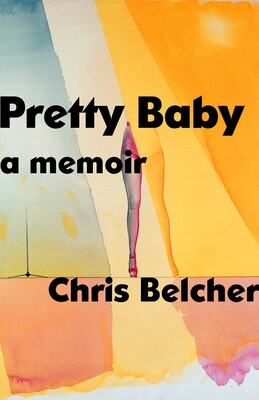
Chris Belcher’s searing memoirabout her work as a professional dominatrix isn’t exactly a comfortable read. Not because of the subject, but because Pretty Baby asks more of the reader than many memoirs. Like the best art does, this book invites introspection and interrogation of both our own lives and society at large.
Belcher grew up in small-town Appalachia before moving to Los Angeles to attend a PhD program. Her girlfriend at the time was a professional dominatrix and soon, to stay afloat, Belcher became one too. Despite a warning she shouldn’t brand herself as as lesbian dominatrix (men would think she’d only want to see women), she did (as the word lesbian never stops men from trying). As a pro-domme, she was paid to make men feel worthless, shameful, and weak—manufacturing experiences that echo abuse women encounter in their daily lives. But sex work isn’t without danger. Belcher found herself in various unsafe situations and had to contend with the ever-present risk of her doctorate program learning about her work as a domme—particularly when a jealous client wanted to expose her as an act of revenge.
Pretty Babydoesn’t simply recount Belcher’s journey into sex work, but in true academic fashion the book examines larger issues, like how our patriarchal, cisnormative, and transphobic society feeds the need for dungeons and dominatrixes. It asks us to consider our understanding of power, gender, sexuality, safety, and consent—and to question how context may alter or complicate these things. Pretty Baby is a must read for anyone interested in seeing the cultural conversation about gender and sexuality pushed further.
Rachel León: Your book was blurbed by Saeed Jones, who said you don’t simply hand the reader your story, but “demand that we interrogate ourselves in the process.” I love that, and it’s very true. I attribute that quality to how the work seems to blend art and academia. How did your work in academia influence your approach to writing this memoir?
Chris Belcher: I was drawn to academia because I thought that feminist and queer theory would help me understand sex and power, and what I found was that professional work in sex was what helped me understand the unjust power dynamics inherent to academia and academic labor. Academia’s respectability politics, in particular, are hostile to sex workers, and low-income students, low-wage workers, and anyone who doesn’t have the privilege to prioritize their intellectual lives over their material circumstances. And so, while sex work was a viable option for a broke grad student to pursue financial stability, I knew that I was supposed to be in school to write and think about sexuality, not to perform sexual labor. These are the issues that I hope the book demands we interrogate.
When I was still in school, I thought that I might write about sex work in a way that could validate it for the university. I could turn labor into art—or into feminist politics—when it was neither: it was labor. From that place of capitulation, I wasn’t yet ready to write the book. But once I finished and started the more precarious work of an adjunct professor, I felt that I had little to lose, and started writing work that would allow me to be both the object of study and the critic, the exhibitionist and the voyeur. Memoir allows for both, and in that way, it’s similar to the work I most admire in feminist and queer studies.
RL: Coming out is centered in this book, both coming out as a lesbian, but also as a sex worker.At one point you talk about closets and how we perceive them as safe. Could you talk aboutthe risks of staying closeted?
CB: I didn’t really “come out of the closet” as a lesbian when I was a teenager, but rather was “found out.” I didn’t feel closeted, as much as I felt I was experiencing my queerness privately as a source of joy and pleasure, and I simply wasn’t ready to share it. I don’t think that closets must be spaces of shame, though certainly they can be. But closets, and the secrets they keep, can be exploited. And so in the book, the second closet I found myself in—the sex work closet—did contain a secret that was marked in many ways by shame, even if it wasn’t my own, and that shame could be used against me. I realized at that point the real risk of staying closeted: that someone else could control my narrative. In its way, writing the memoir was a refusal of that control.
RL: Let’s talk about shame. I loved the line: “Shame moves us simultaneously in two directions: revulsion and empathy.” Later you write about how shame was discussed in academia “like it was something that happened naturally: always on accident, never on purpose.” The shame clients seek for catharsis is manufactured and transactional—do you think that affects the experience of shame?
CB: Much of what goes down in the dungeon is a manufactured and transactional version of affects and experiences that cannot always be safely or spontaneously produced in everyday life: fear, humiliation, pain, pleasure, anticipation and so on. I don’t think that precludes those who pay for the experience from catharsis, nor from transformation, but I also don’t think it’s a sure bet. Some of us encounter art that changes us, or read work that changes us. We might pay for that experience, but I don’t think that cheapens the transformation. And other times we are not moved, or changed. I was changed in many ways by the scenes I enacted with clients in the dungeon, and in other ways, I strived to be able to feel what they felt, and found myself unable. I continue to seek transformation through BDSM practice with lovers and in queer community.
RL: The prologue opens with a scene that clearly illustrates the danger of your work as a domme. And the first chapter begins when you’re ten. I’d love to hear about your decision for these openings.
While sex work was a viable option for a broke grad student to pursue financial stability, I knew that I was supposed to be in school to write and think about sexuality, not to perform sexual labor.
CB: If we fail to acknowledge the potential dangers inherent to sex work, we cannot fight for that which would make the work safer: primarily, destigmatization and decriminalization. I started the book with a prologue that highlighted the potential dangers I faced, choosing to do work that put me into situations where I was alone with strange men, but the book then opens into my youth and coming-of-age, where the threat of men and boys was also present. I wanted to show that the threat of patriarchal violence is with us no matter if we are doing sex work or just growing up as girls in America.
RL: There are different types of sex work, which you touch on, mentioning the hierarchy of sex workers. And there are varying levels of danger: in different roles, and with the identity of the sex worker. You note the higher risk of getting in legal trouble for sex workers of color, and how there can be an expectation for touch put on trans femme dommes. Was it important to you to highlight how privilege plays a role in just how dangerous it can be for some sex workers?
CB: I wanted it to be clear that my experiences in sex work were shaped in every way by my whiteness, by being cisgender, by having access to higher education and the class mobility that could confer. In 2021, I co-edited We Too: Essays on Sex Work and Survival, a book that brought together various sex working writers with diverse backgrounds, experiences in the industry/trades, and experiences of marginalization. Especially after working with these writers and reading their work, it was important to me to highlight my experiences working alongside POC and trans sex workers, because these experiences highlight the ways that my identity kept me safe in ways that more marginalized workers can’t count on.
RL: You had cis male and male-presenting clients who wore dresses in sessions. Sometimes they did because they saw femininity as degrading, but sometimes it was because the dungeon was a safe place to express their true gender identity. Do you think our society’s transphobia and cisnormativity feeds into the need for dungeons and dominatrixes?
Sex workers should be our teachers when it comes to questions of safety and consent.
CB: Stigma toward non-normative desires of all kinds fuels the need for professional BDSM. It’s not the only factor, but it is why my sex worker friends and I would refer to the money we could make touring “the repressive regions,” primarily the South, which was often more lucrative than sessioning in New York, Los Angeles, or San Francisco. Certainly, someone interested in rope bondage might want to be tied by a professional, even if they play at home with their partner. Or it might be easier for some to pay a professional for casual play that only requires payment and courtesy, not an ongoing emotional connection that a lifestyle partner might expect. But in general, I saw countless clients who kept their fantasies, whether about femininity or submission, from their partners and others in their lives. And specifically with AMAB [assigned male at birth] clients who told me that they knew themselves to be women, but did not “transition” and now use the dungeon as a safe space to embody their truth, transphobia does play a role in the need for dungeons and dommes.
RL: Prior to becoming a domme you favored a non-feminine presentation and write how masculinity gave you a way to say “fuck you” to men and how you saw power in subverting hetero-patriarchal expectations. But the work required you to adopt femininity, and after you started accepting money from men you realized money was more powerful than the “fuck you” of having armpit hair. I wondered if you could talk about the shift of power where you’re taking from men, rather than them taking from you.
CB: When I was younger, I believed I could remove myself from a patriarchal economy of desire, and that butchness was the way to do it: to literally make myself undesirable to men. But I moved through the world as a butch, and I was still sexually assaulted and harassed by men, I was still compelled by patriarchy to fear them. When I found my way toward femininity for pay, it was a performance that helped me take from men, and that was revelatory to me, as someone who men had simply taken for themselves. I think this might be surprising to folks who’ve held onto the notion that women who sell sex are selling themselves. Femininity didn’t feel like who I was, any more than butchness did. It was a tool that I used to do a job. And I came to enjoy it outside the dungeon, and to understand that it could be hard and strong, or soft and vulnerable, same as butchness.
RL: The book also explores how you came into your sexuality as an adolescent. You wanted to lose your virginity partially as a thirst for the power you saw sex could bring—so you were clearly aware of the connection between sex and power from a young age.
BDSM, when practiced responsibly, can be a liberatory experience for women, who have been socialized to say no when we mean yes, or to say yes when we don’t want to.
CB: I think that most girls get an education in sex and power way too soon. We are bombarded with purity myth messaging, where virginity is powerful because sex is something only boys want and you have the power to withhold it. And we are told that you can get a boy and keep him if you do have sex, then slut shamed if we take that bait. I was aware of this at a very young age, that there were two roads to take, but it wasn’t until I was older, in middle school and high school, that I started to understand that neither option would keep me safe. The girls who had sex were treated like sluts, and those who didn’t had their self-worth wrapped up in denying their own pleasures and desires.
RL: The book dives into the issue of consent and how the word “no” can be a disruption to femininity. I thought we could wrap up talking about consent and context.
CB: BDSM, when practiced responsibly, can be a liberatory experience for women and those who were AFAB [assigned female at birth] in particular, who have been socialized to say no when we mean yes, or to say yes when we don’t want to. In BDSM play, scenes are pre-negotiated, we have safe words to withdraw consent at any moment. There can be a real sense of safety, one I haven’t always experienced in other forms of sex and eroticism. And yet, for BDSM to be practiced responsibly, everyone has to feel comfortable accessing these tools of consent. In the book, I narrate various instances where my safety was compromised, and I tried to be honest about the fact that these tools must be learned, social scripts around femininity must be unlearned, and that process was difficult for me. It was also complicated by the fact that sex work is part of the service industry, money and sexual desire are very different motivators, and they have different relationships to the concept of consent. The difficulty of these concerns, and the fact that sex workers deal with them on a daily bases, is why sex workers should be our teachers when it comes to questions of safety and consent.
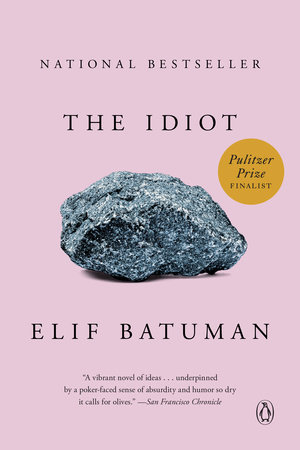
Before we begin, I must confess to my bias. I am not an objective reader, so in some ways I have already failed. A few months before I read Elif Batuman’s debut novel The Idiot, I had a conversation with a friend that unlocked a safe in my brain. After, there was nowhere I could look without seeing what we let out.
It was spring, two years ago, and I was in the middle of moving out of the apartment I shared with a guy from Craigslist to an apartment I would share with my wife once the border opened (finally!). Which is to say that I took this phone call sitting on my bare mattress on the floor of a bare room with my back up against a bare wall. We were talking about writing, integrity, protecting one’s own vision, and so on. Then at the end of the call, Lena said to me:
“I have some gossip for you—do you remember XXXXXX?”
When I heard a sequel to The Idiot was coming, I was initially dismayed. How does one succeed a perfect novel? Would a sequel aim to complete what had been left so perfectly incomplete?
The Idiot follows Selin Karadağ through her first year at Harvard and an intense and maybe-reciprocated infatuation with an older student named Ivan. In the end, nothing happens—they don’t have sex. Many reviewers were upset by this. Dwight Garner, reviewing the novel for The New York Times, called this The Idiot’s “only flaw.” Yet, to my mind, after Selin spends the whole year guessing at what Ivan feels—trying to make meaning out of the random and not-so-random signifiers that he volleys at her—receiving any kind of closure in such a relationship would feel pat, easy, and soulless, narratively speaking.
The Idiot is about being an idiot: eighteen-nineteen, so smart yet so stupid, knowing so little and wanting to know more, waiting for revelation, always on the precipice of some great realization of your own humiliation. Ivan is a new, shiny, grown-up thing that Selin can hold up to the light and turn this way and that, a great unknown, a nut for her incredible brain to crack. What could be more enticing? They roleplay lovers in Russian class, though he rarely acknowledges her when they cross paths on campus. He has a girlfriend about whom he is openly lukewarm. He sends Selin strange emails fraught with double and missed meanings—about clowns and poetry, “the seduced atom” and its “energies that seduce people.” “I summon you words, o my stars,” he writes. Like a lab rat suckling cocaine from its cage bottle, Selin is hooked. She tells him she loves him. (We, the readers, collectively go Nooooo.) He tells her they shouldn’t speak anymore, then continues to email her.
The effect is dizzying: “You were so ready to jump into a reality the two of you made up,” her friend Svetlana tells her. “But by now you’re so, so far from all the landmarks. You’re just drifting in space.”
The Idiot is about being an idiot: eighteen-nineteen, so smart yet so stupid, knowing so little and wanting to know more.
Ivan is a longing man—“an aesthete,” “poetic and lachrymose,” who (quoting Mark McGurl) “[seizes] the historical privilege of romantic indecision and [wields] it as a kind of soft power.” When they meet over the summer in Hungary, he introduces her to his family—a big deal for Selin, a sign that he will now perhaps “operate on the level of a real person.” Still, in the end, nothing happens. “Nothing” “happens.” Ivan takes her into his arms for a long embrace; the physicality of his presence, of his body against hers, is overwhelming. Then he lets go, and walks away. There are no answers. “I hadn’t learned anything at all,” Selin concludes.
The Idiot was a refreshing departure from our contemporary offerings of literature about young womanhood—not particularly disaffected, or defused by a tidy romantic closure. Would a sequel undo what it did so well, by, as it were, doing something, maybe even it?
Here’s what I remember about XXXXX: The hugeness of the feeling inside of me, hot and anxious and ecstatic all at once. Texting and emailing and messaging all day (goodnight <3 and good morning <3). Talking late into the night on the couch; buzzing with liquor and happiness; my brain rattling in my skull. Not knowing, not knowing. Talking about all the things you weren’t supposed to talk about. Dancing on drunken feet at the wedding after most of the other guests were gone.
And then, after the worst had happened: Thinking about XXXXX. Thinking about everything I’d done wrong. A quote shared on XXXXX‘s blog: “That time you confused a lesson for a soulmate.” An email (one of several) from a mutual friend: “i do think that if XXXXX knew how you felt about what happened XXXXX would try to make it better.” Losing my place in conversations. Losing my train of thought. My TA trying so hard as I nodded and mhm-ed as if I understood what she was saying; forcing back tears until they came out of my nose instead. (Did you know tears could do that? Me neither.) Failing and dropping classes. Posting on my blog: “I would like to know if there is an after. I would like to know how there can be.”
Lena, that same mutual friend, years later: “I have some gossip for you—do you remember XXXXX?”
InEither/Or, the sequel to The Idiot, Selin returns to Harvard for her second year of study, anxiously anticipating her next encounter with Ivan, whom she hasn’t heard from since Hungary. When she logs back into her school computer, she finds a three-month-old response to an angry email she sent him, reeling from his hot and cold behavior. “I am very shocked that you see me as such a monster,” he had written, wringing injured innocence from his professed bafflement like a wet towel.
Thus Batuman sets the stage for Either/Or: a novel about the aftermath, or, about what happens, after—in the absence of an explanation. Either/Or doubles down on the end of The Idiot by reinvesting in not knowing, in the inconceivable, the impossible, the unclosed. Not for any lack of trying on Selin’s part. She attempts to confront Ivan with the contradictions between his words and his actions, but he responds with a poem: “I’m just a mass of dishonesties,” “come dance with me again.” Ivan’s friend Peter tells her not to listen to Zita—Who? thinks Selin—because “Ivan does strange things sometimes, but he’s a good person,” and any “misunderstanding” can be settled if she would only talk to him. Ivan’s ex Zita is the worst disappointment of all. Is it misogynistic to say that, in these situations, women often are? By the time she and Selin connect, there’s been some change in the weather, and she assures Selin that Ivan “got into complicated situations sometimes, but it was because he had a big heart.”
So: people fail us. They respond in cliché and predictable and unhelpful ways. Thank god, then, for literature! Selin encounters by chance a secondhand copy of Kierkegaard’s Either/Or (the namesake of the novel), which promises to illuminate the difference between an aesthetic and an ethical life—but she finds a different kind of answer entirely in a novella contained within. “The Seducer’s Story” is about a man who entraps a young girl into a confounding relationship. His methods are covert, coded, such that he could
“[leave] off … without a word having been let fall of love, let alone a declaration, a promise. Yet it would have happened, and the unhappy girl … would constantly have to contend with the doubt that the whole thing might only have been imagination.”
Selin, who so often found herself at a rare loss for words to describe her dynamic with Ivan, is stunned. Her relationship with Ivan was so rare and singular—“like something new we had invented”—as to be illegible from the outside (and also from the inside.) Yet here is a text in which her own experiences look back at her. The qualities of an ideal target of seduction: someone who “[has] suffered,” who “[has] always been alone,” and who, as a result, is not drawn to “what usually beckons … to a young girl.” “Had my family background been useful to Ivan?” Selin asks herself, queasy with recognition. So begins a kind of archival work, building an account that has otherwise been denied to her.
In the first major review of Either/Or, Jennifer Wilson writes that “Selin’s encounters with various works of art […] teach her that her dalliance with Ivan, baffling and torturous though it had been, was good material.” “She is reassured,” apparently, that “her agonies will not be for naught.” Selin’s abstraction from her Turkish background is a political theme, but her kinship with these women who have been instrumentalized in the personhood of men, of male artists, is not. In the end, Wilson writes, “I decided that Batuman is warning us (and Selin, not that she’s listening) against just that sort of fervent need to identify with fictional characters, to see their demons and desires reflected in our own lives.” In other words, perhaps Selin is reading too far into it.
Here’s what I remember about XXXXX: The hugeness of the feeling inside of me, hot and anxious and ecstatic all at once.
I feel like maybe we read different books. (This review also describes the embrace in Hungary as “a brotherly hug.”) But then, like Selin, I am conscious of my own desperate tabulations. What “The Seducer’s Diary” and Nadja and Eugene Onegin are for Selin, The Idiot was for me. A wishy-washy “need to identify” (how frivolous, how womanly) cannot capture how these texts offer Selin a lifeline from the confusion of the previous year, when she was so lost, unable to “see the common denominator, to understand what counts as a thing,” or to explain it, any of it, to her mother.
The worst part is the endings. So many of these seduced girls go crazy, like the eponymous Nadja, who must be put neatly away in an asylum as the book resolves—so that the book can resolve. For the hero, the story ends; for everyone else, life trudges on unbearably. Is this not what happened in The Idiot? Selin will not be like these girls. She decides to be more like their authors, instead.
I had never known how to talk about XXXXX, so I didn’t. Instead, I built a ship from the memory of our relationship, and I keelhauled myself against it every night. I needed to be held accountable, if only by myself, because if I forgot that I was a bad person, what kind of person would I be?
As time passes, what was embarrassing and hurtful becomes funny and sad. Then, sometimes—as after that fateful phone call—embarrassing and hurtful once more. I want to have a sense of humor about it. But whom does this serve? The writer’s impulse is to delve with professional distance into the what and the why. (See also: The Idiot; Either/Or.) The therapist I began to see in the aftermath of that phone call asked me to give up on chasing after small details, to work with how it felt, how it impacted me, instead.
“I realize there’s no way to really, objectively know,” I told her. I had no intention of stopping. I am very good at therapy, or, actually, very bad.
My old blog became one source of truth. In the first year of after: oblique mentions, sadposting nightposting subposts.
My old blog became one source of truth. In the first year of after: oblique mentions, sadposting nightposting subposts. “feeling so run-down and awful and useless,” “feeling very anxious about giving myself to other people lately,” “constantly trying to find moments of meaning in life because i am an empty shell of a human being!!!!!!!!!!!” One night in January, just under a year after: “there is nothing good enough in my life to be worth this. there is no compelling reason to stay.” I have no memory of this night, or of the inciting incident that apparently set me off, according to follow-up post the next day:
(this is about what happened last year, if yr aware of the circumstances & would rather not read pls keep scrolling by <3)
last night was terrible, today is terrible, and in between I dreamed about XXXXX for the first time all year
and it was just. some glimpse of another world where reconciliation would be possible or even desirable—one where XXXXX didn’t think what happened wasn’t a big deal, one where i wasn’t such a fucking mess
and it was awkward and quiet and nice and i miss XXXXX so fucking much
and the worst of it is that even with how things went down, if the chance came now i probably would forgive XXXXX and take all the blame on myself, even though i’d never be able to trust XXXXX again, because i’ve never been so in love with another person in my life and i miss feeling that easy and warm around someone and i miss XXXXX, specifically and horribly
Jan 30, 2016 – LIKE REBLOG
So that was how it felt, then. That was how it impacted me.
It’s interesting—after starting therapy, I began to dream about XXXXX again. In one dream, I was touring a winery, and XXXXX was there. We smiled awkwardly at each other, and walked together through a glass-walled cellar. Not talking. It wasn’t like it was before; I was older, as I am now, and more settled in myself. This was odd for both of us. But better, too, because in this impossible dream, we were both the kind of people who could acknowledge fault, and grow.
I was reminded of this, in Either/Or, when Selin emails Ivan asking his forgiveness. He grants it. He does not ask for the same.
Early on in Either/Or, when sex still seems like something that happens to other people, Svetlana tells Selin that the appeal of it is “to have clear evidence of being so desired.” Like many things Svetlana says, Selin takes this as gospel. Sex with men isn’t about men; it’s about how being with men makes women feel.
Structurally, Either/Or is a series of interconnected studies on how men make women feel, from different angles, with different brush strokes. For Selin, despite the obliterating pain she experiences when putting even just a tampon inside of her, “the idea of being penetrated and dominated” is admittedly exciting. Men make you feel “slender and pliant,” “like the smallest and most delicate person.” Being with a man makes her feel like a woman in a new and meaningful way. When she finally does have sex, the euphoria of submission is almost worth (or is, perhaps, an extension of?) the agony of penetration. Yet, Batuman writes, once it is over, the feeling of accomplishment fades. “I felt sorry and anxious, like I was back on the clock again,” Selin confesses.
In the years since The Idiot’s release, especially during the Trump administration, Batuman has undergone a self-described “rude awakening” about, among other things, the pressures and mores that had shaped her youth. Either/Or is, in Batuman’s own words, “an attempt to dramatize some of the insights of [Shulamith] Firestone and Adrienne Rich,” second wave feminists whose theory she had recently encountered for the first time and been transformed by. The above passages have a whiff of essentialism about them—and yet, they feel true, do they not? On Batuman’s website, there is an excerpt from Firestone’s The Dialectics of Sex, which states that, for men, the defining question in relationships is, “how do I get someone to love me without her demanding an equal commitment in turn?”
A feminist reading of the duology has been conspicuously absent from the greater conversation, despite its anti-normative sensibility. Selin’s rejection of “[experiences] designed for you, to make you feel a certain way” is a major part of her self-concept, the thing that sets her apart from Svetlana and her boring boyfriend. Hence, the aesthetic life: sex without emotional attachments, adulthood without marriage, and womanhood without going crazy, if Selin can swing it.
But what is sex with men but an experience designed for you, to make you feel a certain way? As Selin discovers, finding men to have sex with is easy. For once you’re on the same team, working toward the same goal; before, “it was like there was something jamming the door.” Batuman recently profiled French filmmaker Céline Sciamma, whose lesbian masterwork Portrait of a Lady on Fire she names as another influence. In Portrait, Héloïse asks Marianne, “Do all lovers feel they’re inventing something?” Batuman observes that “plenty of lovers aren’t inventing anything. They’re replaying scenes from movies.”
When she finally does have sex, the euphoria of submission is almost worth (or is, perhaps, an extension of?) the agony of penetration.
In Either/Or, sex and straightness slowly become apparent (to the reader, if not to Selin) as a currency exchanged for entry into, and navigation through, a world structured by misogyny. At Harvard, sex is part of the graduation into adulthood and induction into a new language of relations. There is an implicit pressure, but it’s not so bad. Later, while adventuring alone in Turkey, travel guidance can be bartered for dinner; a ride turns into a request for sex. Indeed, though Selin acknowledges that sex is “important”, “universal,” and “canonical”—like Shakespeare—it is also “painful,” “pointless,” and “[unsatisfying].” Arguing with a man who is behaving insanely towards her also feels “important and universal.” As she is being pressured into sex that she does not want, she questions, maturely, whether she is the problem.
Is this what it means to be a woman? Is there no way out, no way to be a writer instead? On a plane at the end of the novel, she begins to read Henry James’ Portrait of a Lady, and is struck by Isabel’s description of “the secret:” an arrangement of “truth” and “mutual relations” and “horror” within the world that arranges it against her. Once again, this passage seems to Selin to reflect her situation with Ivan—yet also, in its invocation of an “architectural vastness,” to transcend it, addressing something bigger, worse, and more resolute.
My Ivan was not a cis straight man, and our situation was an intrinsically queer one. The heterosexuals do not have a monopoly on unequal dynamics and bad behavior.
Is this what it means to be a woman? Is there no way out, no way to be a writer instead?
In graduate school, I met a woman—funny, brilliant, also a writer—with whom I quickly became entranced. But when Lexy and I began to text all day, every day, a cold fist of fear gripped me tightly. Was I reading too much into it? I felt eighteen again. I felt like an idiot.
Overreading is a very queer methodology. Take, for instance, Sciamma’s Portrait of a Lady on Fire, which has no score, a sparse script, and, as a result, a richly textured silence that invites the audience deeply into its world. Mariane and Heloise uncover their desire in this silence, their gazes interested, investigative. Regardez-moi, Mariane tells Heloise: look at me. Throw aside the usual symbols and codes! Seek out the silence instead!
In Either/Or, Selin’s friend Lakshmi introduces her to écriture féminine, a French literary movement championed by the likes of Hélène Cixous, who aimed to invent a new feminist mode free of indoctrinated patriarchal thought. Batuman identifies a similar, anti-disciplinary freedom in Sciamma’s oeuvre: the freedom to “[do] what you want,” and, crucially, “to not do what you don’t want.”
And maybe you see where I’m going with this. I did warn you that I would not be an objective reader.
There is a secret buried in Either/Or, a larger story composed of pieces that can barely be made out—there and then gone, remembered and then forgotten as needed. Selin worries at this secret like a loose tooth. You have to be looking for it to see it, I think.
“Do you think it’s weird that we spend so much time together?” Svetlana asked me afterward. “It’s almost like we’re in a relationship.”
“Hm…” I said, stalling. Weren’t we in a relationship?
“This is how much time I would expect to spend with a boyfriend,” Svetlana clarified.
“Oh, right,” I said.
It has to be pointed out that Selin thinks more—more deeply, and more erotically—about the women in her life than she does the men. Even Ivan is more of a figment than a person. Shortly after the above exchange, Selin asks Svetlana, “Do you ever think it would be easier if we could go out with girls?” (“Svetlana,” Batuman tells us, “didn’t answer right away.”) There was a “physical response” to Ivan, of course, feelings which Selin had never felt around a girl. “On the other hand,” she thinks, “I usually hadn’t felt them in Ivan’s presence, either; it was more when he wasn’t there.”
She goes on:
“How much more fun and relaxing it would be to pet Svetlana’s shining golden hair, to tell her how pretty she was and to watch her get more pretty, as she always did when someone complimented her. Her body wanted to be complimented, and I knew just what to tell her, so why couldn’t I?”
Aloud, she says only, “It just feels like girls are at least something to think about.” Ultimately, she dismisses these thoughts as “childish and unrealistic.” That’s not what love is, she thinks. Love is “death” and “madness”—it’s what happens to women in novels, under the auspices of men.
It has to be pointed out that Selin thinks more—more deeply, and more erotically—about the women in her life than she does the men.
In “Compulsory Heterosexuality and Lesbian Existence,” Adrienne Rich describes lesbian possibility as “an engulfed continent which rises fragmented to view from time to time only to become submerged again.” I often find myself reading like some kind of unhinged lesbian sleuth. I text passages with no context to my friends, like, Do you see it? Do you see what I see?
But sometimes I don’t have to look too hard. In Either/Or, Selin recalls staying up all night talking with a friend, Jordan, on the last night of summer camp: “I had never felt so awake, and didn’t want to stop feeling that way.” For the next year, she and Jordan exchanged long letters made out of improvised materials—“brown bags, wrapping paper, continuous-feed printer paper.” Selin’s mother, we are told, had not liked Jordan, and upon seeing one of these letters asked if she was a lesbian.
Off-handedly, Selin mentions that her mother once asked whether she was a lesbian. Selin denied it; however, she reports with some perturbation that Jordan did eventually come out. “Was that something my mother had been right about?”
While some reviews of Either/Or have acknowledged Batuman’s interestinRich, a queer analysis, like a feminist one, seems somehow verboten. To speculate so extravagantly about the sexuality of an autofictional character, as I have done, is understandably discomforting. It’s true that Selin only thinks about queerness in passing, and spends the last third of the novel having sex with men. It is also true that, in her profile of Sciamma, Batuman shares that her partner of several years is a woman. In a podcast for Public Books, she says a little more: that her partner is a lesbian for whom the formative, heteronormative myths and ideas “just didn’t attach” in the usual way. “I keep asking myself, what was it about me?” Batuman says.
In advance of writing this essay, I called up a couple of friends from undergrad.
Mara, my roommate, had met XXXXX a couple of times. “It seemed like a very adult thing you had,” she told me in her usual way: fast, astute, a little analytical. She said being around us made her feel young. “The depth, the focus, the intensity. And XXXXX was the North Star of every conversation we had.”
To speculate so extravagantly about the sexuality of an autofictional character, as I have done, is understandably discomforting.
This I had not remembered. She told me that she’d been envious sometimes of the closeness of our relationship. “It didn’t seem to make you sad… to give endlessly,” she said at one point. “It seemed to make you really happy.”
I could hear noise, movement on the other side of the call—it sounded like she was in a café. I was sweating nervously as I acknowledged that it felt special. It made me feel special, at the time.
“Right,” she said, “ XXXXX had chosen you.”
Yes.
The next day, I called Jess, whose couch I had slept on for a few bad weeks after everything went down. She had never met XXXXX, but I remembered that, on one distinct occasion, at a Nando’s just off St. George St, I had told her about how I was so in love with this person who was so great and smart and ethical and would therefore never return my feelings. I wondered if she remembered this as well.
Besides youth and inexperience and a personal predilection for emotional black holes—was this another vulnerability?
“It was definitely more than once,” she said immediately.
Mortifying. I asked her to elaborate.
“There were so many aspects of a relationship—a romantic, sexual relationship I should say— but it was never officially called that,” she told me. “You had these thought spirals about it. You were always cycling back to “but XXXXX said this,” “ XXXXX did this,” and that came to define the relationship, instead of, you know, the fulsome experience of a real one.”
She asked what XXXXX‘s partner thought of it all. I said I didn’t know.
“XXXXX liked what XXXXX had in the relationship with you, until XXXXX didn’t,” Jess said. “It was like a box of fun that XXXXX could open up, but also put away. There was no extra effort or thought given to how this kind of relationship would be so confusing and devastating for you.”
Toward the end of our call, she told me, laughing, “I remember thinking, you know, “Maybe this is just how queer, poly relationships are?’”
“So did I!” I said, laughing too.
What was it about me? Besides youth and inexperience and a personal predilection for emotional black holes—was this another vulnerability? My desire to chart a new path, away from the social architecture that had always felt so alien and hostile; my misalignment with the usual practices and protocols, such that the landmarks and boundaries that might otherwise have answered my questions or clarified my position seemed ill fitting.
A month after we started dating—years before I ever heard of Elif Batuman—I gave Lexy a DIY collection of (bad) poetry I’d written for her. I called it THE FOOL. The cover was a picture of the tarot card, which I’ve always identified with: face turned to the sky joyously, one foot dangling off a ledge into open air.
The titular poem begins as follows:
i packed a bag
to find a door
in a house once built
of worry
stepped off a cliff
to find a door
at the dusted foot
of a darkened quarry
the dust stuck sullen at the hinges
but there are ruder ways through doors
than push or pull and
cruder things than dust have failed to stop me
I told her I liked her first, an act of courage that felt enormous, impossible—but New Year’s Eve, drunk, sitting on the washing machine in my friend’s basement apartment, anything was possible. I texted her: i like you and is that okay. Turns out: it was.
Landed in Russia after her flight with Henry James (“pretty sure … he was gay,”) Selin feels that at last she has made a choice under her own willpower. She went to Hungary for Ivan, and Turkey for Let’s Go!, but nobody had wanted her to go to Russia. “It was like when Isabel managed not to marry the guy with the cotton mills,” because “she had done what she preferred.”
“Was this the decisive moment of my life?” Selin wonders. Like The Idiot, Either/Or ends inconclusively, but here with a note of—I think—real possibility. Though she is still invested in a novelistic life, she is also surprised by a feeling of liberation, “of having finally stepped outside of the script.” “I was going to do the subtle, monstrous thing where you figured out what you were doing, and why,” Selin decides. I really hope she does.
Safia Elhillo’s much anticipated second poetry collection,Girls That Never Die, spins an incredible lyric around gender, body, desire, and control. The book yearns for a quest to be free, while living in a world where the body is policed by so many forces: womanhood, community gossip, changing countries, racism, islamophobia, language, self-censorship, secret love, fear, and living up to other people’s ideals and expectations. Elhillo’s poems push against what is, and move us towards what could be, what might be, and reach towards a freedom just beyond our grasp.
Elhillo’s work is undeniably and beautifully Muslim and femme—it puts us at the center of the table while protecting us with it’s softness. It’s the feeling I get from being in Muslim femme spaces; the safety to breathe, to relax, to talk loudly while eating pomegranate seeds, to be at home in our own gaze. The place where we get to say what ghosts our bones, what normally would be turned away from. And with this book, Elhillo shines her delicate light on what normally exists in the shadows—she calls it into the page even as she redacts it, as she shows us the space of our silences.
With this book we get to see a different side of Elhillo as well—at times sparse, at times filling the page with her words. The stories that we both can’t say and the ones that take up our whole being. A master in language, Elhillo conveys that through form as well as lyric, carving a new terrain, a sanctuary for the girls that never die.
Fatimah Asghar: First of all, both the title and the cover art for this book are gorgeous. Can you give us a bit of insight behind how you landed both, and the significance of both the title and the cover?
Safia Elhillo: Thank you! I’d been holding on to this title for years, before there was ever a book—I’d spent years mishearing this Ol’ Dirty Bastard lyric from his guest verse on Ghetto Supastar: “I’m hanging out, partying with girls. That never die[s]” as “I’m hanging out, partying with girls that never die.” I knew I wanted to make something called “girls that never die.”
These are poems written from sites of pain and discomfort.
At first it was just one loose poem, but after the poem was done, I was still gripped by this fascination with that phrase, and knew I was nowhere near done with it. And a lot of my new poems at the time were thinking about shame and violence and my body, so eventually I started to think about what it would mean to repopulate those stories about danger, about the violences imagined and enacted against my body and my communities, with the girls from that misheard lyric: girls that never die.
The threat of death, the fear of death, is so often used as a way to govern and to control, so if the girls never die, won’t die, maybe they are free from that governance, from that control. And what could that look like?
In regards to the cover, I’ve been obsessed with Hassan Hajjaj’s work since I went to go see his ‘Kesh Angels exhibit in New York in I think 2014 when I was a grad student, and the images and the iconography were immediately so striking and so meaningful to me. I’ve had the same image from that series as my desktop background since then, for 8 years now. And when I was making the mood board for cover ideas, the mood board was like 90% Hassan Hajjaj images. Even the frames are so thoughtful—they’re hand-built and embedded with things like Arabic-language soda cans, Maggi bouillon packaging, things like that, which makes me spend time thinking about the Arabic language packaging that I grew up with for American products like Coca-Cola. And part of what compels me is the way the packaging makes a script as curvy and cursive as Arabic, graphic and bold and aggressive, which is the feeling I wanted to get from this cover, and the feeling I wanted to elicit with these poems. So to end up with an actual Hassan Hajjaj piece as the cover, when at first I thought the most I would get was like, a Hassan Hajjaj-inspired cover, is a dream beyond a dream.
FA: This is your second poetry collection, after The January Children. What were some of the things that you were navigating writing this second book after writing The January Children—thematically, emotionally, craft-wise?
SAH: The January Children was a project book—it was all poems organized under a particular conceit and a particular set of themes, which I already kind of knew about in advance, and so every time I sat down to work on that book, I knew where I was going to some extent. And it was a very, I don’t know, like a very tidy book. Very neat. Girls That Never Die was unruly. It was messy. One of the reasons it took so long is because I set about trying to write it the way I’d written The January Children. So, I tried to make it, you know, neat and tidy and organized, and have a conceit. That didn’t work. I tried to make it a book-length poem. That didn’t work. But before there ever was this book, there were a couple years after I finished writing The January Children, where I basically was trying to reteach myself to write poetry.
And I think one of the major formal differences between The January Children and Girls That Never Die is that Girls That Never Die has quite a few poems in inherited forms, in traditional forms—there are some ghazals in there, there are some contrapuntals in there, and it’s because one of the ways that I found my way back into writing poetry after finishing The January Children was through setting myself these kinds of low-stakes exercises in form.
The threat of death, the fear of death, is so often used as a way to govern and to control…
The January Children felt in some ways like a book I’d been writing, in one way or another, my entire life. And it was my first book, so before that I didn’t know what it was like to finish a project that I’d been working on for that long and to no longer have it organizing my life. So I felt really unmoored after I finished that book. Without that guiding conceit and without already knowing, almost every time I sat down to write poetry, what I was going to be writing poetry about, I just felt really unmoored. And so one of my main fears at the time was, am I still a poet, or was that just the one book I had in me? Was that the one set of poems I had in me? And now I need to go find something else to do?
One of the ways I found my way back to poetry was by setting these formal exercises, where I didn’t really have a relationship to a lot of inherited forms before that, and so I would sit down to try and write a sonnet for the first time. And when it inevitably failed, it wasn’t devastating, because I wasn’t trying to prove anything to myself about, like, my worth and value and ability as a poet in general. I was like, well, you know why this sonnet is bad? Not because I’m like a terrible, unworthy, finished poet, but because I’ve never written a sonnet before. So obviously it’s bad. So form was really helpful in transitioning between these books.
One of the reasonsGirls That Never Die took so long to be finished, and why there are so many unusable drafts of the book, is because, again, I was used to writing a very particular kind of book. And The January Children is primarily a book about other people, in which I let myself be behind the lens. I was the eye, and that was maybe the most my body showed up in any of those poems, was through my looking, through my eye. But my body is not really in any of those poems. It’s not really under scrutiny in any way, or under observation in any way. It’s almost like my speaker in that book is basically a disembodied speaker, and at first I tried to write Girls That Never Diethat way because it also is an easier way to write. To just look and not be looked at. And I’m not used to having to think about my body very much. It’s very often an afterthought, after like, my brain, and maybe my eye. Usually, the only times I would register myself as having a body is when something was wrong, in the way that pain often calls attention to the body, and discomfort often calls attention to the body. And these are poems written from sites of pain and discomfort. That was my body calling attention to itself, and for so many drafts of this book, I refuse to look at it because, you know, in looking at it in those poems, I felt like I would be inviting other people to look at it. And it’s scary. It feels like being naked in front of an audience or something, and so I kind of had to learn how to write a different sort of poem for this book. And it’s a type of poem that scares me and is very different from the kind of poetry I’m used to writing. Not that the poetry before that was like, so low stakes or whatever, but at the end of the day, I could write a poem pointing elsewhere and be like hey look over there, and in this book there’s no over there. It’s all like, look over here, and that’s scary and it’s new.
FA: So much of this book deals with body, femme bodies in particular—the body in the everyday, the body in community, and the body historically. I so deeply love the circular motion of the work, how it feels like there will be a poem that touches on a theme and then the next poem goes even further into that. In that way it feels like it resists surface level understanding, it resists the first or most immediate story and goes into layers and layers of the body. How did you approach writing such a difficult and vulnerable subject, and to do it with such deep precision and layering?
SEH: A lot of that layering and repetition and leaving and returning to subject is kind of indicative of a lot of my early fear and trepidation around the subject matter, where in the earlier versions of the poems would just barely manage to inch my way toward the thing I was scared to say, or think about, or look at. And right when I got to it, I would freak out and like, dismount and end the poem. And then I would get a little braver. And then there would be a next poem that kind of revisits the thing at a deeper level or a closer way of looking or in a way that doesn’t allow me to just exit the thought the second the thought is articulated, and so a lot of that motion is just me like inching close then freaking out, running away, coming back, getting even closer this time, freaking out, running away–and that cycle continued and continued and continued. It felt important to keep poems from all the different stages of that process, because I wanted to be honest about the process and accountable to the process. These poems are really just sites of trial and error. And I don’t know what these poems would even be like, or if they would even exist, without that sense of caution and fear and like, standing too close to the fire. I wanted a motion that showed that part of the process.
FA:A thing I’ve always found hard is writing about violence or issues within a marginalized (and heavily surveilled) community, because of the idea of not wanting to bring negative attention to the community. At the same time, we’re writers who are not spokespeople for any said community—we create stories and language that are specific to the lived experiences of our characters and speakers. How do you navigate that, in this book and in your other work?
SEH: You and I talk about this a lot, but it feels like there is this tension between wanting to speak truthfully about the things that I have experienced, without also perpetuating harmful ideas that the outside world has about my communities. So it feels sometimes like we’re not allowed to articulate any sort of critique or lamentation or grief in any public way, because then the racists and the white supremacists and the Islamophobes, or whatever, will latch onto it and be like Aha! You see!I knew it! When actually that’s not what was being said at all. But there is this fear of having my particular mourning and lamentation be twisted and used against my community in some way, when all of this is for my community. I’m not talking to other people. And so it’s tricky, because I always want to write as if only the people I’m talking to are listening, and everyone else can eavesdrop (on what hopefully is a very interesting, if maybe not entirely spelled-out conversation) but I’m also afraid of the things I am talking about being taken out of context and used to harm my community.
I think you and I have talked about struggling with this because sometimes it’s like, well, maybe it’s easier to just not say anything at all, but really that’s not an option. You stay silent for so long, but it builds up and it builds up and you realize that your silence doesn’t protect you or your communities either, and I think I had to just let myself speak and not silence myself with the fear of my work being engaged with in bad faith. If I was using that hypothetical as a reason to not speak, then I’m letting the, whatever, racist-white-supremacist-Islamophobes win. And I can’t have that either. I think I had to just give myself permission to do my thing and hope that it is found by those who need to find it and that it is not found by those who don’t need to find it. Because I can’t make my work from a place of fear. Because then I’m not going to make my work. I’m just going to keep quiet.
Some of the mermaids wanted to kill him, but their orders said to bring him alive. It wasn’t supposed to matter that they didn’t know what he had done—
I kind of might like to know.
Some of us are curious.
It helps me murder better if I know, just speaking for myself.
I thought we were supposed to keep him alive?
—because they didn’t know what most of the men had done, except for that all men had committed crimes.
They carried harpoons, they carried spears, their hair rippled behind him as they swam, bare breasted, scales flashing under moonlight. They arrived at the edge of the land in the middle of the night, three hundred feet out from the shore, the beach dark—
So do we just wait or
Nobody made a plan for this part?
A siren song.
Somebody’s going to have to swim back for Abby. She’s the one who can sing.
—and so the mermaids waited and became tired. Their bloodlust diminished. Some of them slept, like otters and pups, wrapped up with their harpoons in kelp.
When the siren arrived it was daybreak—
If you do it now, you’re going to attract every dick in a ten mile radius, guys out for their morning jog, getting a coffee.
What do you know about coffee?
I tasted it once.
—and the men came, they came to the water’s edge and they came into the water. The mermaids touched them, kissed them, fondled their beautiful dry hair, killed them, only some of them.
One of the men held a paper cup, and the mermaids took it and drank from it in turn. The mermaids became caffeinated. Abby’s singing got focused. The men who had been left alive wandered off.
Eventually, the man they were there for came. They tied him up with kelp. They carried him across the ocean on their backs. It was not a pleasant ride for the man.
The mermaids put him on a raft and took turns bringing him fish and seaweed and fresh water, which they traveled distances to collect. Some of the mermaids kissed him. They weren’t supposed to kiss the men, but it was an open secret that they did.
After they kissed him, they asked him what he’d done—
I heard one of the guys kept a mermaid in his bathtub.
You always cut up those plastic rings from a six pack, right?
Some of these girls will drown you on the spot if they find out you drive a speedboat.
—but the man didn’t answer because he didn’t know. Most of the men didn’t and never would.
The truth was, the men always died. Exposure, dehydration, battered by the waves, burned by the sun and salt, their skin cracking open. It always took longer to construct the prison than the mermaids thought it would. The mermaids grew bored of kissing. They tired of traveling long distances for water.
But to this man one mermaid returned and kept returning. It was less about him, about saving him, than it was about finding out.
The mermaid touched him, kissed him, fondled his beautiful dry hair, allowed herself to be held. The man caressed the mermaid’s tail, scales smooth in one direction, sharp in the other.
And the man spoke to her. About the perfect angle of his children’s shoulder blades in the bath, his wife’s crying in another room, the times he’d been late and they’d all already gone to bed. You couldn’t help but hurt the people you loved, not all the time, was what he said.
The mermaid slept there in the water next to him. And she woke to see him—hear him—snoring, the dark shape of his shoulder against the vast and starry sky, his arm reaching out for her. It was then she began to understand.
Because in being kept, the man suffered. The man developed a nutrient deficiency. His gums bled. The mermaid watched him weaken—
We do what we have to.
—but would not return him, could not remove him, could only wait alongside him.
You do the only thing you can, the man said. You won’t always get it right. Most of the time, you’ll probably get it wrong, even though you’ll try.
Days passed without clouds. The mermaid watched as the man’s fingernails fell off and did not grow back, as his muscles thinned and skin hung from his body. Watched as the sun baked him and the rain soaked him. Watched as he watched the sky. Eventually, the man died, as men always do.
And when the mermaid returned to her home, to her sisters, they wanted to know what it had been like—
Did he try to do it to you?
Did he show you how to make coffee?
Did he cry?
and
Was he guilty?
—because none of them had ever waited until the end. None of them had ever considered what it would feel like if they did.
The mermaid answered—
I think we all are.
—and did not tell them how she had assumed that you loved or you harmed, did not tell them what she now knew.
Reunited, the mermaids rested, tended their scaled bodies, combed their beautiful hair, and sang each other songs. They waited. And when the time came, they would go—go and do the only thing they could.
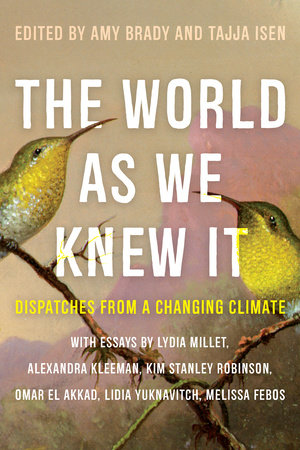
Most writing about the climate crisis focuses on large-scale events like extreme weather, wildfires, and flooded coastlines—and for good reason. Such events impact the lives and livelihoods of millions of people. But how might the crisis affect us in smaller, more intimate ways? How are we seeing it manifest at the level of a life, in our relationships, jobs, memories, and daydreams? How are we seeing it unfold in our own backyards, even if we don’t live in the immediate path of destruction?
These are the questions that motivated our book, The World As We Knew It: Dispatches from a Changing Climate, an anthology of first-person essays about the contributors’ experiences with climate change. As we write in the introduction, this focus on the individual level “isn’t the most intuitive way to think about climate change.” But we believe that writing that connects the personal to the planetary is “among the most powerful” kind there is.
As the anthology came together, we looked for inspiration in books that, like ours, explore the climate crisis in surprising ways, whether by tackling the subject from a unique angle, connecting climate to other related social issues (such as racism, xenophobia, etc.), or by shedding light on communities too often overlooked in the literature of climate change. Some of these books aren’t directly about climate at all—but explore the surprising, insidious roots of this planet-sized problem.
Our hope is that our book and the books on this list will inspire readers to see the climate crisis not as a single issue as it’s so often described, but as the wide-ranging, multifaceted phenomenon it truly is—and crucially, feel motivated to do something about it.
Leah Thomas coined the term “intersectional environmentalism” to describe an approach to environmentalism that centers the voices of marginalized communities. With this book, she leverages that definition to show in concrete ways how people of all kinds and backgrounds can work together for a more just and sustainable planet. The book drives home the point that the climate crisis isn’t just a crisis of nature; it’s a humanitarian crisis, too.
In The Great Derangement, Amitav Ghosh argues that humanity’s failure to act on climate change is rooted in a failure of imagination. Humans have been unable (or unwilling) to grasp the immense scale of climate change, he argues, because we can’t properly visualize it in our art and storytelling. With The Nutmeg’s Curse, he seeks a solution to that failure by helping readers to see the climate crisis as part of a most surprising narrative. Combining essay, philosophy, and first-person testimony, this book examines how the history of something as inconsequential as nutmeg is shaped by colonialism and exploitation—the very roots, he argues, of the most consequential problem we face today.
Much reporting on sea-level rise focuses on the physics of the problem, on mathematical equations that predict just how high the seas will rise in a lifetime. In Rising, Rush focuses instead on the intimate ways in which the pending floods will impact the people who live in their wake. Her reportage allows for her interviewees to speak for themselves with direct quotes and all the power and emotion we should expect from people who will soon be saying goodbye to the places and homes they love.
Some of the essays in this powerful, beautiful collection are about ecological destruction and the consequences of generational violence done to the land. But many are not. What they all have in common, however, is commentary on justice—what it means, how it manifests, and in what ways it’s related to retribution. Taken together, these essays speak to the need for compassion and patience in our fight for a more just society. These are lessons needed now more than ever as the climate crisis continues to lay bare the fact that its origins are rooted in injustice at every level of society.
Robin Wall Kimmerer is a trained botanist and a member of the Citizen Potawatomi Nation. In Braiding Sweetgrass, she puts both scientific training and Indigenous forms of knowledge into conversation—something the realm of science, in her experience, hasn’t always been open to. But, in Kimmerer’s hands, the combination offers a more capacious way of relating to and inhabiting the natural world. Throughout, Kimmerer models an attentive, reciprocal relationship to the land and its creatures, and calls upon her readers to do the same—to treat the natural world with mutual respect and care. The writing in these essays is playful, human, and will make you see the world differently.
Isabel Wilkerson’s Caste: The Origins of Our Discontents follows her influential study on the Great Migration, The Warmth of Other Suns. In Caste, Wilkerson explores the roots of global caste systems, including race, class, bloodlines, and stigma, to show how such systems continue to fundamentally shape and stratify American society. She argues that caste systems have led to more than social division–they’ve resulted in some of history’s most heinous examples of racism, disenfranchisement, and injustice. Through her view of history, readers can see how all contemporary crises—including the climate crisis—are connected by that which divides us, and that the only just and sustainable way forward is to find and celebrate that which we have in common.
Alicia Elliott’s debut essay collection explores the reality of contemporary Indigenous life in North America. Braiding memoir with criticism, research, and pop-culture analysis, Elliott’s essays investigate questions of intergenerational trauma, systemic oppression, and the legacy of colonialism. She also writes piercingly of the logic of colonial extractivism, a form of violence that has been used to both disenfranchise and displace Indigenous communities, and has been a driving force in accelerating the climate crisis.
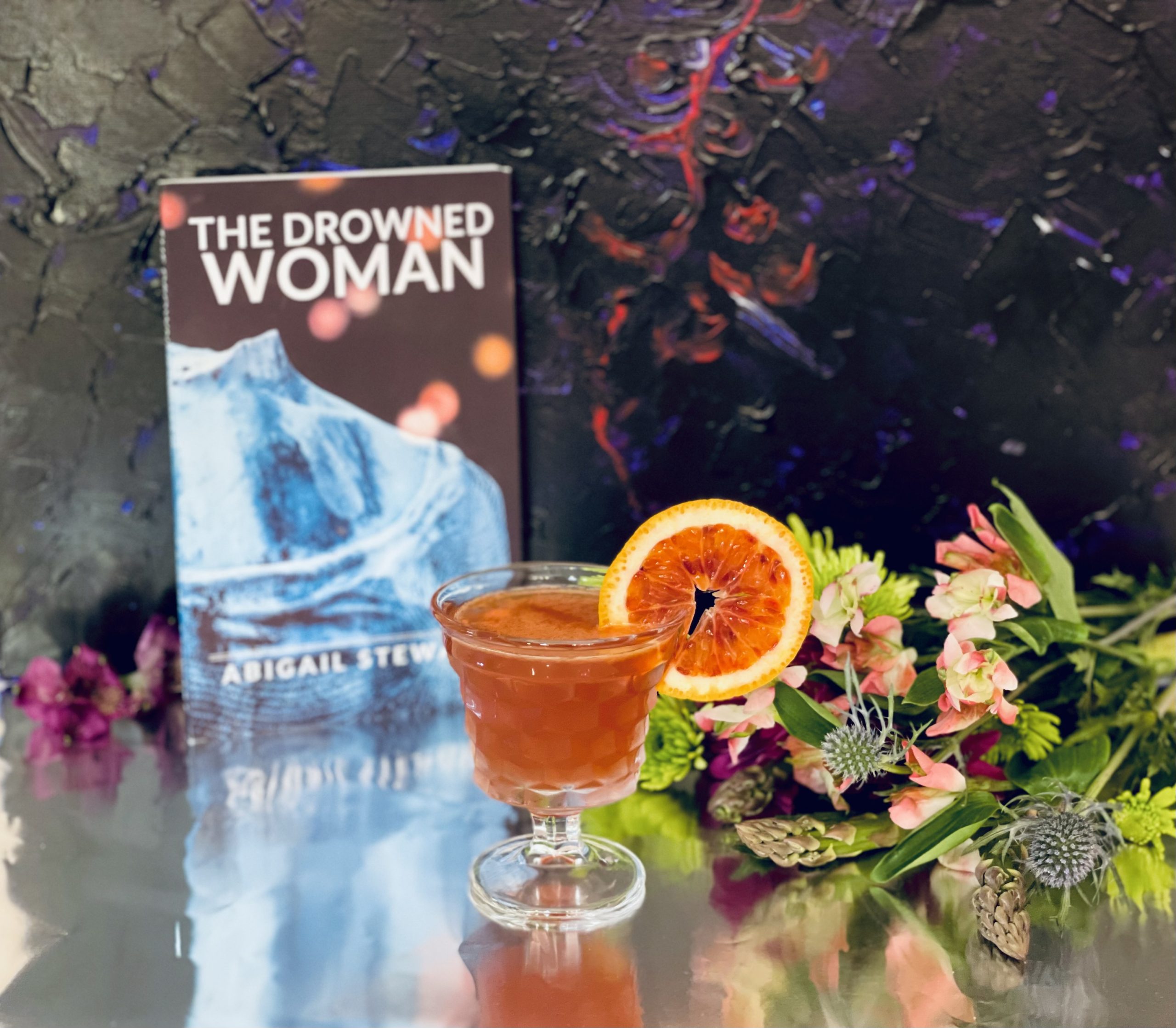
In Abigail Stewart’s novel, The Drowned Woman (published by Whiskey Tit, May 5, 2022) 23-year-old Jeanette has traveled west to start a new life, along with a graduate program in Art History. The narrative initially reveals little of Jeanette’s past, offering a portrait of her as she is now–creatively doling out her minimal dollars for drinks and snacks and smokes, enjoying time alone in her austere apartment–her every gesture and decision revealing, yet at the same time obscuring her identity by prompting more unanswered questions. Jeanette is not so much carefree as indifferent to certain expectations or norms. To her, happiness is “operatic music pumped through rented library headphones, thrifted dresses, a stolen robe, regular sex, enough money for a pack of cigarettes, the plants she’d grown from cuttings, Scotch, art books and writing about them…” When she forms a connection with Oliver, the TA for the Religion in Art class she’s taking, an unforeseen path reveals itself, one that will alter the course of Jeanette’s career trajectory, while shaping–or perhaps excavating–creative and complex aspects of her being. Ultimately, she leaves Oliver and others, including the reader, to ponder what they really know and understand about this talented woman’s narrative of art, identity, and desire.
A contemporary parallel to the feminist classic The Awakening, Abigail Stewart’s novel is a sharp, beautiful meditation on identity and motherhood, a book that’s as timely as it is engaging.
As it’s Jeanette’s favorite, Scotch serves as the base of this booktail, mixed with clove for Oliver’s rich scent and the spices in the chai offered by Jeanette’s sole friend, a convenience store owner named Vihaan. Agave adds a touch of sweetness, a nod to Frida Kahlo: in one of her essays, Jeanette writes, “Frida Kahlo’s Self Portrait, 1953 illustrates the places on her body that she felt were not her own, the places that were injured, painful, and necessitated ‘fixin’…” The surrealist painter’s favorite drink was in fact tequila, which also derives from the agave plant. Meanwhile, mandarin juice represents all the mandarins Oliver brings Jeanette, as if “worried she’ll get scurvy,” and blood orange juice adds a sour note, its color a symbol of the savage beauty and the bloody business of womanhood. Finally, aromatic bitters are a nod to Old Fashioneds (which must contain bitters) and bitter truths we sometimes struggle to face. The combined effect is mysteriously raspberry-like, with warm, yet also mild, citrusy notes. In other words, it’s a drink you won’t see coming.
This booktail is presented against a textured canvas layered with blue, purple, and black tones, a red, abstract, bolt-like flower dividing the center of the composition. The book stands on the painting’s left side, the shining base of the display reflecting waves of blue, like water. The petite, vintage-style cocktail glass–the kind you might find in a thrift store, if you’re lucky–stands in front of the book, framed by strands of asparagus and fresh purple, pink, green, and white flowers.
The Drowned Woman
Ingredients
2 oz Scotch
0.5 oz agave
0.5 oz fresh mandarin juice
0.5 oz fresh blood orange juice
3 whole cloves
A dash aromatic bitters
Garnish: a blood orange wheel
Instructions
First, prepare the juices. Then add all ingredients to a shaker, along with a large cube or chunk of ice. Agitate vigorously, then strain into a stemmed glass—mind the cloves!— and garnish with a blood orange wheel, if desired.
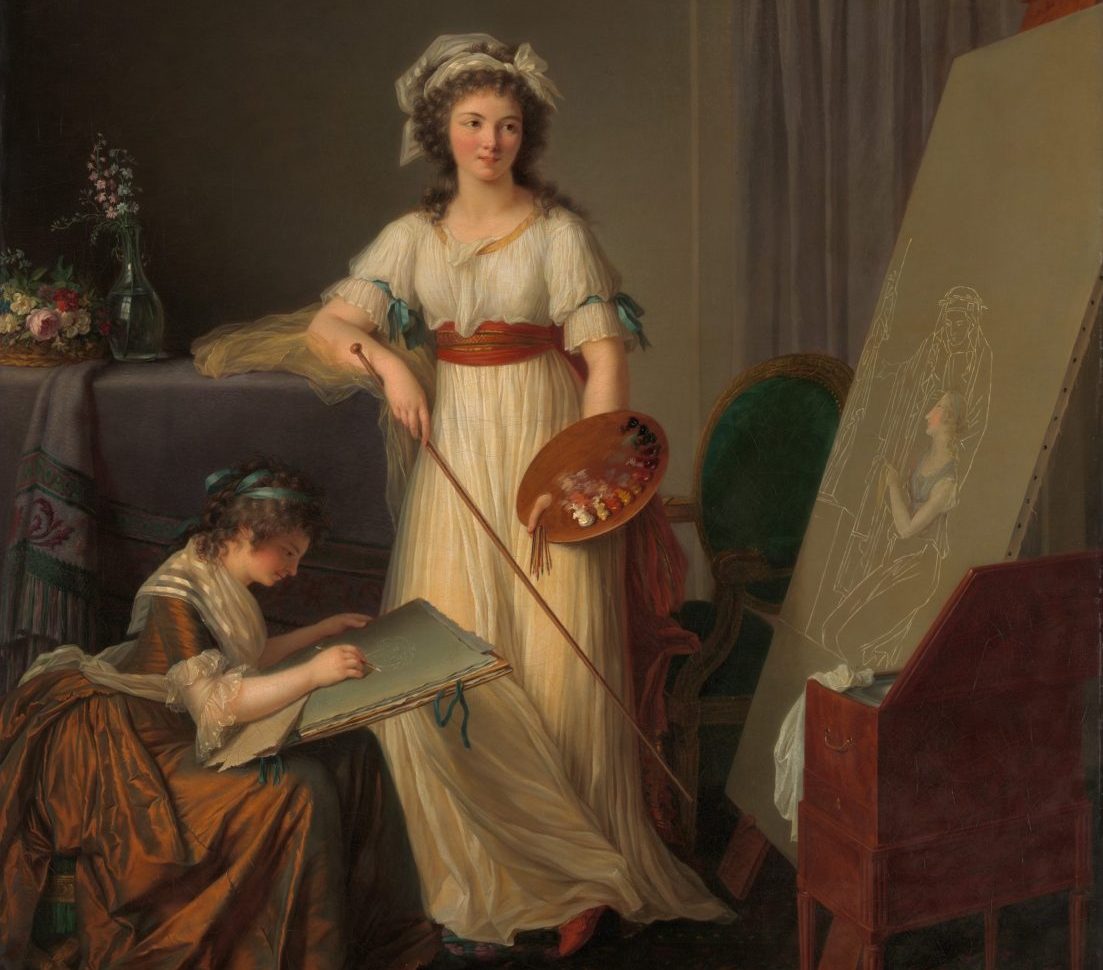
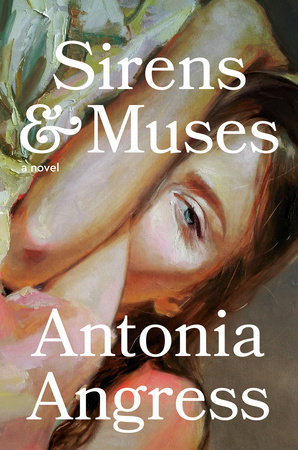
The Künstlerroman is having a moment—at least according to novelist Erin Somers, who earlier this year published an essay in Gawker examining the “resurgence of a [German] word for a specific kind of novel, a novel about an artist coming into maturity.” This was welcome news to me, as both a lover of the genre and a debut author publishing my own Künstlerroman: Sirens & Muses, about a group portrait of four artists who are drawn into a web of rivalry and desire, first at an elite art school and later in New York City.
I’m the daughter and the wife of visual artists, and I’ve long been fascinated by the creative processes of people whose work involves material: paint and canvas, wood and cloth, ink and charcoal. For years I’ve hovered on the outskirts of that world: after a childhood surrounded by my mother’s art, I went to college next door to the famed Rhode Island School of Design, whose students awed and intimidated me. As an undergraduate, I worked at my college’s art gallery and as a figure drawing model (the latter paid much better, though it admittedly involved being nude). And over the course of our decade-long relationship, I’ve had a front-row seat to my husband’s artistic and professional development, serving as his critique partner, sounding board, and occasional model.
When I set out to write Sirens & Muses, I wanted not only to capture the hothouse art school environment that I’d avidly observed from afar but also to dramatize artmaking and creativity—to take what is for most people a quiet, profoundly interior, often nonlinear undertaking and turn it into a story with extrinsic stakes and forward momentum. While working on my novel, I leaned on the Künstlerroman as a literary genre, studying many different interpretations of the portrait of the artist. These are some of my favorites. Though a Künstlerroman may portray any type of artist, I have focused here on books centering visual artists.
In this classic novel from 1972, a prodigiously gifted Hasidic boy pursues his obsession with painting at the cost of his relationship with his family and the cloistered, deeply religious world of his upbringing. This is a gorgeous and heartbreaking story that vividly illustrates the agonizing conflict between tradition and individualism—a conflict with which Potok, whose Orthodox Jewish parents discouraged his pursuit of fiction and painting, was intimately familiar.
Set in the New York art world in the 1970s, this novel follows a young woman known only as Reno who moves to the city in the hopes of becoming an artist. There, she falls into a relationship with Sandro Valera, an Italian motorcycle scion and sculptor in the mold of Donald Judd. A rich, capacious meal of a novel, The Flamethrowers traces a young artist’s sentimental, political, and creative education at the hands of her older lover and the denizens of a bygone art scene.
The heroine of this novel is Harriet Burden, a middle-aged artist whose brilliance has long been ignored by the art-world elite. Tired of being sidelined and diminished, Harriet enlists the help of three male artists to present her work as their own, a scheme that results in terrible consequences. Structured as a posthumous collection of interviews, diary entries, letters, newspaper reviews, and academic articles, The Blazing World is a cerebral, harrowing, and utterly engrossing portrait of an artist—and an indictment of the cruel gender bias that destroyed her.
In this debut novel set in 1990s gentrifying Brooklyn, struggling photographer Lu Rile is scraping by and in danger of eviction when she accidentally captures a masterpiece: an image of her neighbor’s child falling to his death outside her window. In the aftermath of this tragedy, Lu is drawn into a friendship with the boy’s grieving mother and faces an increasingly painful dilemma: the photograph could jumpstart her career, but at what cost? This is an addictive, spellbinding exploration of sacrifice and the moral cost of ambition.
An eminent historian, Painter is best known as the author of The History of White People. But after retiring from teaching at Princeton, the aptly named writer embarked on a second career as a painter, pursuing an MFA at the Rhode Island School of Design. This smart, funny, and candid memoir chronicles her journey from academia to art, proving that it’s never too late to follow your dreams. Old In Art School is at once a critique of racism, sexism, and ageism in the art world, an ode to the Black artists who influenced Painter’s work, and a moving portrait of an artist coming into her own.
Shortlisted for the Man Booker Prize, this genre- and gender-bending novel traces the linked narratives of Renaissance painter Francesco del Cossa and George, a modern-day 16-year-old girl mourning the sudden death of her mother, an art historian who was deeply influenced by Francesco. Smith is incredibly adept at capturing the vagaries of artmaking, its inherent spontaneity, its improvisational nature, and its resulting emotional highs and lows. Her descriptions of characters in the act of creation are poetic and playful: her prose quickens, then meanders, languorously, before stuttering to a stop, and parentheticals pop up with the insistence of a sudden idea that refuses to be ignored. How To Be Both is also unique in its structure: two different versions of the novel were published, one beginning with Francesco’s story, the other with George’s.
The breakout debut novel of 2020 may be a sexy, incandescent social satire about a young Black woman who falls into a white couple’s open marriage, but it’s also the story of her development as a painter. When the novel opens, Edie is a frustrated amateur who can’t even afford materials; by its close, she is slowly beginning to give voice and vision to the creative impulses roiling inside her. Leilani is herself a gifted visual artist, and Luster contains some of the most evocative descriptions of painting I’ve ever read.
Mel and Sharon meet during their first week at art school and quickly become inseparable, forging a friendship and creative partnership that culminates, years later, in a critically acclaimed animated film. But with success comes trouble, and soon their partnership is threatened by addiction, self-doubt, and long-buried resentments. In recent years there’s been an Elena Ferrante-fueled boom in novels about thorny female friendships, but The Animators adds another intriguing layer, exploring the dynamic between two women who are not only friends but also business partners and creative collaborators.
Speaking of thorny female friendships, here’s a debut novel featuring two very different women who form a toxic, obsessive relationship at an unnamed New England art school (Glaser, for the record, is a RISD grad, and I was delighted to recognize several Providence landmarks in her novel). Paulina & Fran is hilarious and scathing, skewering navel-gazing art students while poignantly capturing the strangeness and heartbreak of young adulthood—and the ways intense yet fleeting early friendships can follow us throughout our lives.
In this atmospheric thriller, an unnamed painter is on the cusp of a career-making show when a studio fire destroys her entire body of work. Desperate to recreate her paintings in just three months without her gallerist’s knowledge, she begs her way into Pine City, an exclusive artist’s colony in upstate New York best known as the site of legendary performance artist Carey Logan’s suicide. Assigned to her former studio, the painter discovers that not all is as it seems at Pine City and begins to wonder what really happened to Carey. Fake Like Me stands out for being a twisty page-turner and a haunting meditation on identity, authorship, and authenticity.
In this enigmatic novel set in post-World War II Japan, aging artist Masuji Ono reflects back on the course of his life, from his days as a painter of “the floating world”—a nocturnal realm of pleasure and entertainment—to his complicity in the imperial movement that led Japan to side with the Nazis (as a young man, Ono created propagandistic art for the far-right regime). Like Ishiguro’s The Remains of the Day, this novel is a masterclass in unreliable narration.
This novel follows Kevin Pace, a middle-aged abstract painter, through three interconnected storylines. In the present-day narrative, Kevin works on a new painting, one he won’t let anyone see—not even his wife and children. The two other storylines concern an affair Kevin had ten years prior with a young watercolorist in Paris and a trip to war-torn El Salvador that he took as a young man in the 1970s to search for his best friend’s brother, a drug dealer gone missing. So Much Blue is insightful, funny, and sad, and it is ultimately concerned with the sacrifices Kevin has made in the pursuit of an artistic life.
We are thrilled to announce that Electric Literature has won the prestigious Whiting Literary Magazine Prize! This highly competitive award recognizes excellence in digital and print magazines, and supports winners with an outright grant in the first year, followed by two years of a matching grant, and ongoing professional development.
The panel of anonymous judges said that Electric Literature is “an indispensable project with exceptional reach,” that “pushes the boundaries of what a literary magazine can be.”
Electric Literature pushes the boundaries of what a literary magazine can be.
Three experts in the field reviewed over 80 applications, selecting 15 finalists and five winners. Our fellow 2022 winners include American Chordata, Bennington Review, ZYZZYVA, and Apogee Journal. The judges praised the “polish, verve, and style of the writing” in the print categories, and the “accessibility and loyal literary community” (i.e. all of you!) fostered by the winners of the digital categories (that’s us!).
The judges went on to call Electric Literature “a sanctuary, a community, a map charting literature’s course.” This is exactly what we strive to be—inclusive and forward thinking, a place where our writers and readers feel at home. In our thirteenth year of publication, eighth with Halimah Marcus as executive director, and our first under the editorial leadership of Denne Michele Norris, we are deeply moved to have our work recognized in this way. Quite simply, we feel seen.
Electric Literature can be whatever its reader needs most: a sanctuary, a community, a map charting literature’s course.
Literary magazines are the lifeblood of our industry; we’re often the first to nurture and publish tomorrow’s literary phenoms. Doing so allows us to shape the future of books, art, and culture, and that’s a responsibility we take seriously. Literature comprises so much more than book sales—it’s many stories told in many formats, and it must include a plurality of voices. Electric Literature’s mission is to make literature more exciting, relevant, and inclusive. With the support of the Whiting Foundation, we can remain steadfast in that effort.
We are deeply grateful to the Whiting Foundation for the recognition of Electric Literature’s work, and also for their commitment to a vital literary ecosystem outside of corporate publishing. And as always, we are most thankful to you—our beloved EL community—without whom none of this would matter.
When CJ Hauser published “The Crane Wife” in The Paris Review, an essay about repressing her needs in a relationship, calling off a wedding, and going to study whooping cranes on the Gulf Coast, it quickly became a viral hit. Three years later, her 17-piece memoir in essays of the same name offers us more of that intimate, all-too-relatable magic.
Hauser writes like she’s whispering hard-earned secrets to a friend, picking apart how she has been held hostage to her own fantasies about love and happiness in warm and vulnerable scenes. This kind of storytelling reminds me of watching a play: eyes fixed on a character who takes shape and transforms and learns, often painfully, always earnestly. And what a gift it is, to have the curtains lift and let us all in.
These essays interrogate the stories Hauser was given about what a life should look like and travels to a place of her being able to make her own rules about what to believe in. It’s an expansive collection—not simply because it creates space for both Katharine Hepburn and robot trials, but because, much like in improv, it shows us how to say “yes, and.” It is a love story about our biological families and the joy of creating and depending upon a chosen family. It is a celebration of fiction and science, and the ways in which the two together can offer glorious opportunities in meaning making. It is an acknowledgement of how our past relationships haunt us and how those hauntings can be put to good use.
And, like all good theater, it is completely immersive until the lights go up, our eyes adjust, and we are left with only the ricocheting of these intelligent, unrelenting questions: What story expectations are we carrying around inside of us? What’s a good love story? More than that, what’s a good life story?
It was lovely to connect with Hauser, my former writing professor, over Zoom, where we chatted about how identity can relate to erasure in relationships, the artificial safety of binaries, and what it means to craft a life beyond traditional narrative structures.
Lauren Hutton: One of the many threads throughout this collection is relationships, romantic and familial, and I so appreciated how you were able to capture their stakes. I think it’s easy for love stories to be categorized as trivial, but these stories have real consequences and almost a physical danger a lot of the time—it’s donating blood to buy flowers, driving through the stop sign to get to your boyfriend’s house quicker, or taking up smoking for a boy. I was wondering if there’s a conscious link for you between relationships and this real sense of a possibility for harm?
CJ Hauser: Yes. Period. In order to really offer yourself vulnerably in love to any kind of relationship, romantic or otherwise, that’s risky. And if you’re not risking getting your heart squished at the very least, you’re probably not putting yourself out there to really become someone’s true friend or someone’s true partner or have a meaningful relationship with a parent, even. And I think that risk is part of love because taking your walls down and being vulnerable is part of love. Some of those other kinds of danger that you’re describing have less to do with the necessity of vulnerability in love. Those moments—the smoking, the stop signs, the physical violence at times—I think that’s more to do with the way I have let myself become in love and relationships, and the way I’ve given myself over too much to the process. A lot of the book is about the journey I’m on to figure out how to keep some parts of myself stronger and more intact and still find ways to be vulnerable. That balancing act is really tricky. I’m still bad at it.
LH: I am too. I think lots of people are. I did want to talk about erasure in relationships because that’s a violence that is grappled with in several essays. “The Crane Wife” went viral and I think that’s a testament to how many people related to that kind of impulse. And we see that more broadly: we see your great grandmother erased in the family lore and Florence Nightingale’s true legacy erased by a man’s comment. And I was wondering if this narrative (or its absence) is changing? It seems to transcend all time and media, but do you think that we’re still as unwilling to see and understand and hear women and their desires as ever?
CJH: First of all, what I want to say is that one of my favorite things that happened when “Crane Wife” came out was that it wasn’t just women who responded. It was people of many genders. And I think we’re moving into a place now where we’re understanding some of these issues in a less gendered way. Something that was important to me with this book was to make room for the experiences I was having to not be seen only as women’s experiences, though, of course, that history that you’re tracking there obviously has to do with gender. I don’t know if I have a good answer to this question; I’m so in the weeds of it personally that it’s hard to tell what is me and what is me being female? I think I’m getting a little better at it, but I have friends who are men who have this problem, I have friends who are trans who have this problem, and I have friends who are women who are very good at being their full selves in relationships.
LH: Yes, it’s such a personal narrative and a wrestling with yourself, but I think as a reader relating to those things, my instinct is to say, is this universal? Is this a broader phenomena or are these just individual impulses? And where do they come from?
CJH: You’re right and some of them do have to do with identity. This is a weird metaphor that I think about sometimes—I’m always stealing from science. But I remember in high school AP Bio they taught you about big ‘R’ genes and little ‘r’ genes. And when they combine there are dominant genes, and the little ones won’t get to be expressed. And sometimes in a relationship, some of us have just been taught for various identity reasons or just personal reasons to be like a little ‘r’ gene. And if someone in your relationship is a big ‘R’ gene, they’re always going to trump unless you show up with as much of yourself.
LH: Definitely. I’ve been saying I’m going to have to buy your book in bulk because there are so many people who I need to read it. I was talking to my friend about erasing oneself in relationships in the context of one of your essays and it turned into a therapy session between us, drinking cider and crying quietly in a tacky, British-themed pub. We were like, this is the Saturday night we wanted and needed. But these essays demand to be interrogated in community.
CJH: And in community, all you need really is the tiniest spark to set off a larger conversation. And sometimes we don’t have hard, weird conversations about the sorts of stuff I’m writing about because it feels embarrassing or it feels private. And I have this hope that if I’ve hung all my laundry out, people will be like, “Hey, what do you think of that?”
LH: I want to ask a question about structure because there are lots of arcs that move us through this collection. It was interesting because so much of this book is about structure on a kind of meta level—how do we live within the narrative structures we’ve been given or how do literal structures either entrap or empower people? And so I wanted to ask how you went about structuring this book?
Seeking out binaries and black and white answers can make us feel resolved and settled and safe in an artificial way.
CJH: You know my answer is going to be a murder board of index cards. And it was. As I started arranging the pieces I had and the pieces I knew I wanted to write toward, the arc of the book became for me, like, OK, so where did some of this initial knowledge come from around love and narratives of success? What kinds of stories was I handed? And then a process of showing how that got me into a lot of trouble. And then an attempt to overcorrect by being like, I’m not going to tell myself stories anymore, right? I’m not going to spin tales; I’m going to find science and I’m going to see the robots. I’m going to be Dana Scully. I’m going to get to the bottom of this. And that didn’t work, either.
The last part is about balancing what does it mean to accept fantasy and fiction and performance and love into your life, but also blow the narrative open to be like, what else can I build in a new way that balances those things and feels authentic to me and considers love beyond the romantic? I think of that last section as a section of openness. Open houses, open hearts, open, chosen family. All of that.
LH: It’s interesting thinking about that last section as an open place and also talking earlier about how some of these tendencies that you’re recognizing in yourself aren’t exclusive to women or their experiences. These essays are populated by chosen families, and coming-to-terms-with-your-sexuality induced breakdowns in giant lawn chairs, and women who want to raise kids by themselves. It’s a literally queer book, but it’s also a book that very intentionally queers heteronormative ideas of what a life should look like. Could you talk about the dynamic between the two?
CJH: The queer community has played a major role in making me feel empowered to make the choices I want to make, and build the chosen family I want to make. That’s, of course, a queer term. And so I’m deeply indebted to that community and that theory. But it was important to me at the end of the book to not be like, and “Now I don’t need my biological family because I have my chosen family.” I love my family of origin so much, and I hope that love comes across in the book. They’ve all read the book. They think I’m nuts. They think everyone’s going to think that we’re a bunch of nuthatches, but they’re excited about it. And so it’s that looking beyond binaries, right? Enough of that. It serves us so poorly. I don’t know why we insist on doing it, and I have tried to do it at certain times in my life because I think seeking out binaries and black and white answers can make us feel resolved and settled and safe in an artificial way. What feels more empowering is feeling malleable and open and flexible, but knowing what you value so that you can make decisions that serve you over and over again.
LH: There are three essays that revolve around what you coin a “mythical first love,” a defining high school relationship that continues to haunt you. There’s an essay where you live in your boyfriend’s house and feel like The Second Mrs. de Winter from Rebecca, where his ex-wife is kind of a specter in your life. And you have an essay where you claim your niece is Shirley Jackson reincarnated. Are all love stories a little bit horror stories as well? Is this a haunted book?
You don’t get rid of the past. If we got rid of it, we wouldn’t be able to use it in healthy, meaningful ways to understand our present.
CJH: I think this book is a haunted house, for sure. I mean, life is a haunted house. I love thinking about ghosts and ghost stories, but one of the things I say in the Rebecca essay, which is via my friend Emily Alford—who I love so much and her thinking about this—is that a ghost is just the past still kicking around. It’s like, I’m still in this space. And maybe this space is your mind or your life story. Maybe it’s a physical space. Maybe it’s the town you live in. But you don’t get rid of the past, most of us. If we got rid of it, we wouldn’t be able to use it in healthy, meaningful ways to understand our present moment. And so the book is a haunted house full of all of the stories that are constantly still kicking around for me. But I’m OK with that. I would have an exorcism for some of them if I thought they were traumatizing me, but the ones that I’m writing about either I’m OK with them still hanging around or by writing about them I have exorcized myself a little bit.
LH:I think that really comes across in my favorite essay, “Uncoupling.” I wanted to talk about a moment in it where you say “I will not bring these threads together for you for the sake of being narratively satisfying.” And that summed up to me a lot of the book’s work to untether the stories we’ve been told and the implications they have on our lives. I was wondering if you could talk about that moment and maybe in what ways viewing your life through a narrative lens is helpful because it gives you agency to frame your decisions and in what ways it’s limiting and ties you to preconceived expectations?
CJH: Yeah, that’s the whole heart of the question I went spelunking for in these pages and that line is so important to me. I believe in stories. I believe in stories because thinking of your life narratively, it’s how we make meaning out of things for ourselves, and it’s how we express what things mean to us to people we want to understand us. And obviously, that’s why I write. That’s why I teach writing. That’s why I teach literature. That’s my church. That’s what I believe.
It gets tricky when we see only a limited kind of narrative that’s being used to make meaning, especially when it surrounds happiness, especially when it’s our own love, especially when it surrounds family, especially when it surrounds identity. Because then if you don’t have a story shape that allows you to make meaning from the life that you are living—some people are probably evolved enough to just be fine with it but I’m not, and I think a lot of people are not—we’re like, OK, this is not the story shape that equals happiness. This is not the story shape that equals I have a family, and that feels terrible. So what I was really underlining in that essay and in those lines you just mentioned, was the sense that there is no rule that says you have to use the narrative tools in a certain order or shape to make meaning.
The part where I’m talking about the photo of my friend who has just gone to the fertility clinic. That’s the story. That’s a love story. That’s an identity story. That’s a fucking triumphant, beautiful success story. And it’s all that on its own. But I feel like our brains immediately go to what happens in nine, ten months? What happens five years from now? That does not matter and to invalidate that moment by putting those narrative expectations on it is a disservice. And so I want to try out this practice personally of figuring out other shapes and using them to make meaning to validate the things that I know are meaningful to me.
“Last Night in Ventana Beach” by Matthew Lansburgh
Two days after his mother’s funeral, forty-six hours after he put on the least baggy of his ill-fitting suits to say his final, convulsive goodbyes, Stewart stopped by the Vons closest to her condo to pick up a few groceries. He was standing in line behind a balding man with two six-packs of beer and a bag of Chipotle Ranch Cheetos when he spotted someone who looked oddly familiar: an elderly woman in a red tennis skirt with a visor and sunglasses and a hot pink warm-up jacket studying a display of discount cupcakes and donuts.
The woman reminded him of his mother, and he found this surprising, because even in Ventana Beach, a town crawling with retirees, Heike’s look was unique; until the end, she’d remained quite vain about her figure and often wore outfits that showed off her legs and her cleavage. She favored low-cut blouses and skirts that were too short, or, if she was in the vicinity of water, her orange bikini.
The man with the Cheetos paid for his items, and because Stewart was listening to a podcast about Kim Jong Un, he forgot about the woman in the hot pink jacket. It wasn’t until he was carrying his groceries toward the exit that he saw her again. “Stewart?” she called out. She was holding a tin of paprika and a large jar of Hellman’s and a box of week-old powdered donuts. “Is that you?” Which is when he put his bags down and removed his earbuds and looked at the person standing in front of him. “Since when do you go to Vons?” she asked, grinning. “I thought you hated Vons.”
He wasn’t sure what to say. It was true that, in general, he preferred Whole Foods, but that was beside the point. The point was the woman wearing the tennis skirt didn’t just look like his mother, it was his mother. Which was, of course, impossible since his mother was buried in a cemetery overlooking the Pacific Ocean. He’d seen the casket lowered into the earth. He’d been crying, bawling really, because, despite everything—despite the misunderstandings and recriminations—the woman in the casket had raised him, had taken care of him after his father had (as she sometimes put it) flown the coop.
“Mom?” he said, his scalp tingling,
“Don’t worry, I’m not here to make problems for you,” she replied. “It’s okay, go enjoy your carrot sticks and organic tofu. I’m busy myself. I’m making deviled eggs for the girls and ran out of mayo.” Her face had the same age spots and the little mole with the whisker on her chin. Her mottled gray hair was just as he’d remembered it. She was smiling at him, and it looked like she’d applied lipstick and rouge. The temperature inside the store felt cool and precisely modulated, and no one seemed to realize something inexplicable was taking place.
He was going to give the woman—his mother—a hug, but as he stepped forward to embrace her, she disappeared. He saw his bags of groceries on the linoleum floor, where he’d left them, and he heard the same enervating music Vons always played, and he wondered whether, perhaps, the stress of having to wrap up all of Heike’s affairs on his own had caused him to hallucinate briefly.
Stewart felt a flash of sadness and guilt, because the last time he’d seen his mother—alive—she’d accused him of being cruel. They’d been sitting in front of the plastic Christmas tree she and her third husband, Gerry, bought decades earlier, and the condo was full of the decorations she unveiled every December: the advent wreath, and the reindeer that glowed in the dark, and the trombone-playing Santa that gyrated when you pressed the button next to his glossy black boots. “You must take great delight in making me suffer,” his mother said in reference to the fact that he’d refused to try on the argyle sweater she bought him from Kmart and the fact that he insisted on staying in a motel whenever he came to visit. “How dare you tell me my home is too dirty for you. You have a lotta nerve coming here and criticizing me so much. You better watch it or I’ll give everything to that little Honduran.”
A few months later, when her condo, with its stained carpets and flourishing mildew, became infested with rats, Stewart felt a sense of vindication. She told him the news on the phone, admitting the rodents had been a problem for some time but had, only recently, become more fearless and brazen. “You wouldn’t believe how fresh they are. Last night I went into the bathroom, and there was a fat one on the counter eating my toothpaste. It just stared at me, not moving at all. Finally, I took the box of Kleenex to spank it away.”
Before he got the last seat on a 7:00 a.m. flight from JFK to LAX, he’d called three real estate agents to discuss listing his mother’s place. The second person he spoke to, Becky Kraybill, said she’d be happy to assist with the property, but she wanted to make sure he cleaned it first. She said she’d recently worked with a client in a similar situation who expected her to do the cleaning and staging, which unfortunately weren’t services she provided. Stewart hadn’t loved Becky’s tone, but he made an appointment for her to stop by on the seventh day of his trip; she promised him a no-strings appraisal.
Heike’s place was just a few miles from the ocean, in a community of cramped stucco homes that shared a warped ping-pong table and a pool surrounded by half a dozen rusting lounge chairs. Her condo overlooked a small lake ringed with similar homes, each with its own patch of grass on which flocks of ducks relieved themselves daily.
Stewart hired a woman with a gold tooth to help him scrub the kitchen and bathroom and remove the cobwebs from the ceilings and, during the first few days, he kept expecting to come across rat nests and piles of droppings, but he didn’t actually see any rodents until the third day—a rat the size of his largest dildo scurrying out from the closet in the bedroom when he and the woman were going through his mother’s shoes. The rat’s tail was thick and reptilian, and he let out a shriek, but the woman said that was nothing. “It was just a baby,” she explained.
She worked quickly and energetically, using a special powder on the carpets to mask the odor that permeated the house. She scrubbed the kitchen and bathroom—first with bleach and later with an organic cleaner that smelled like grapefruit. Together, they filled three dumpsters with detritus Heike had collected over the years: empty boxes from Sears and Robinsons and JCPenney, and broken clock radios, and old suitcases whose zippers no longer worked, and polyester dress shirts and slacks Gerry used to wear. They threw out four jars of half-eaten peanut butter, and strawberry jam covered in mold, and a bag full of Heike’s brushes and curlers and dried-out cosmetics.
When Becky arrived, she didn’t resemble her photo. Online, she wore lipstick and a coral blouse, but the woman who greeted Stewart when he opened the door was haggard and flushed. She had on baggy sweatpants and running shoes and her hair was pulled back with a scrunchie. “Becky Kraybill,” she said, extending her hand. He asked her to come in and offered her a glass of water.
“That’d be great. I just got out of my spin class and forgot my cooler. Sorry I didn’t have time to shower. My ex is in town clearing some of his boxes out of the garage and the last thing I needed today was to get dragged into some shouting match.” She surveyed the kitchen, then looked at Stewart—for, he assumed, a sign of understanding or support. He smiled and nodded, certain there was no way he would let this woman list his mother’s place.
As dysfunctional as his life was, at least he didn’t make some woman pregnant before figuring out which side of the bagel to butter.
“I’m sensing a German theme here,” she said in the living room, which had large posters of the Zugspitze and Neuschwanstein and an old man in lederhosen with a pint of beer and the word “Prost” in bubble letters. “Was your mother from Germany?”
Stewart hadn’t planned on getting into a conversation about Heike, but it turned out Becky’s ex-husband was from Düsseldorf. They’d met when she was doing a semester abroad in college, and he moved back to California with her and then, ten years and two daughters later, he woke up one morning and told her he was gay. “I’m like, fuck me—could you not have figured this out before we got married?” Becky was waving her arms for emphasis. They were now sitting outside at Heike’s little table overlooking the lake, because Stewart found stories like this interesting, and he’d invited Becky to sit down instead of rushing her out the door. He loved hearing about guys who got married, then came out later in life—stories like this made him feel marginally better. As dysfunctional as his life was, at least he didn’t make some woman pregnant before figuring out which side of the bagel to butter.
And Becky didn’t have a problem sharing the sordid details. “He was fucking bizarre,” she continued. “I’m okay with kinky, but the man was weird. I’m not saying that because he was gay. I don’t care if someone’s gay. But it got to the point where he couldn’t come unless I shoved a cucumber up his you-know-what. I am not exaggerating.” She paused and examined her fingernails.
“Seriously?” Stewart replied.
“Seriously. I mean I guess that was a sign, right?” She picked a bit of nail polish off her left thumbnail and told Stewart she didn’t care what Uwe did with his life, wished him eons of happiness and gay bliss, as long as his child support came on time. Stewart said he understood, which he did, because Heike had also been a single mother, and he remembered how much she struggled to make ends meet.
“Can I ask how old your mother was when she passed?” Becky said.
“Seventy-nine. She just had her birthday.”
“That’s terrible. I’m sorry. My mother died of pancreatic cancer four years ago. It was a shitshow. Let me tell you: you do not want pancreatic cancer.”
Stewart told Becky the hardest part was the fact that the last time he saw Heike, they’d had a big fight. “She always said I was a bad son, and I guess she was right.”
“Don’t be ridiculous,” Becky responded, and he started to tear up, right there in front of the lake and the geese and the Christmas tree his mother stored outside, the tiny white lights still wrapped around its wire branches. Becky hugged him and said she needed to get going, but first she wanted a quick tour of the Rec Center so she could see the amenities. They walked over to look at the ping-pong table and the pool, and the jacuzzi with the discolored tiles, and the little gym that smelled like Lemon Pledge, and afterwards she said, “I need to look at the comps, but, like I said, the place needs some TLC. I’d say you’re probably looking at three sixty? Maybe three seventy-five if you put in new carpets and give it a fresh coat of paint.”
The thought of inheriting this much money made Stewart light-headed. With even a fraction of this amount, he could pay off his credit cards and remaining student loans, which—even though he’d graduated from college twenty-three years earlier—still amounted to nearly thirteen thousand dollars. Unlike his mother, he’d never been financially prudent, and for many years he’d had to take on temp jobs to supplement his income as a freelance journalist. In addition, he tutored kids in Park Slope and the Upper East Side and TriBeCa about the difference between who and whom, and what a topic sentence was, and how to write an essay that wouldn’t require anyone’s parents to come in for a student-teacher conference.
Stewart had just managed to open the condo’s front door—which always required a good amount of fiddling with the key—when he saw someone standing in the narrow hallway near the washer and dryer. “Well, she seemed promising,” his mother said. “I liked her!”
“My God. You scared me,” Stewart nearly shouted. “What are you doing here?” He’d recently switched SSRIs, and he wondered if that had been a mistake.
“I’m sorry,” Heike replied. She was wearing the same tennis skirt and hot pink zip-up but no longer had on the visor and sunglasses. She held a banana peel in her hand and was chewing. “I didn’t mean to scare you. I just wanted to say hi and see what you thought of the lady. Pretty fat for a real estate agent, but I thought she was funny.”
“You’re freaking me out. Aren’t you supposed to be dead?”
“I know, I know. Don’t worry—I’m not here to bother you. I know how you are about wanting your privacy. It’s just a little boring up there. I got a pass to come down and pay you a visit. I can go back if you don’t want me here. It’s okay. You did your obligation. You threw me a nice funeral and put flowers on my grave. You shed your tears. I must say I was surprised, but it seemed genuine. I was touched.”
He stared at her, not sure whether he should embrace her or call 911. He wondered whether maybe she’d changed her mind about the will and was coming back to sign a last-minute codicil to give everything to the girl in Tegucigalpa with the cleft lip. She didn’t seem angry with him anymore, but she was often mercurial.
“Don’t look so disturbed,” she continued. “I’m not here to pester you. My pass expires tonight at 9:30. I asked for an extension, but these angels are very strict. You know how it is—everything up there is by the book.” She nodded towards the popcorn ceiling.
“I’m not disturbed, I’m just surprised,” Stewart managed. “It’s not—” he struggled to find the right word “—normal.”
“Normal, normal. What means normal? Nothing is ever normal. You think having me die of a stroke at the age of seventy-nine is normal? I was a very healthy woman. I played tennis every day. Look how good my figure is,” she said directing his attention to various parts of her body. “I told them my time hadn’t come yet, I said they should at least give me a few more months so I can go skiing again in Mammoth or visit my family in Germany one last time, but they wouldn’t budge.”
Stewart glanced at the banana peel. “Want me to take that?”
“I’m sorry, I hope you’re not mad at me for snitching one of your bananas. I know how careful you are with your food.”
“No, it’s fine. Jesus—eat the bananas. I don’t care. Do you want some turkey breast or an orange?”
“Are you sure you don’t mind?” she asked. “I don’t want to eat you dry.”
He told her she could have whatever she wanted, and soon enough they were in the kitchen and she was peeling one of the navel oranges with the little paring knife she used to use, then eating the fruit with her fingers. She hadn’t washed her hands, but he decided it didn’t really matter anymore. She wasn’t making him supper, and he didn’t think she was going to try to feed him any of the orange sections.
“Delicious,” she said, wiping her mouth with her sleeve. “So juicy. Everything up there tastes horribly bland. You wouldn’t believe it: you’d think in heaven the food would be good, but it’s like chewing wet cardboard. They gave us a tiny bowl of fruit salad this morning and it tasted like airplane food. Little slivers of unripened tangerines and artificial peaches in syrup. I almost sent it back, but you can’t do that as a newcomer. You have to be just so or you end up getting a reputation. I can already tell there are cliques—there’s a group of women who play canasta together and refuse to make eye contact with me.”
As she continued speaking, Stewart thought about getting his phone from the dining table to make a video of her. It was something he’d been meaning to do while she was still alive, but he’d never gotten around to it. He knew everyone would think he’d lost it if he told them his mother had come back from the dead to visit him. The only way they’d believe him was if he had proof, but he worried if he walked into the other room to get his phone, she might vanish again. On the other hand, something like this would generate an insane number of comments on Facebook.
“Did you hear me?” she said. “Are you listening?”
“Yes! Canasta. You said you were playing canasta.”
“Ach, that was five minutes ago! I was telling you how constipated I was not being able to exercise and how I finally asked one of the angels whether they have any tennis courts. I went to see what they had, and it was ridiculous—two old courts with the worst nets you’ve ever seen, and cracks everywhere. It was like East Germany. I told them I can’t just sit inside all day long, listening to the radio and watching these old fogies play Bingo.” She took one of the dishtowels from the drawer. “I hope you’re not giving away all this nice silverware. That’s Grandma Müller’s, you know. It’s very valuable.”
He started laughing.
“What’s so funny? Why are you laughing?”
“It’s just so weird that you’re here. I mean don’t you think it’s bizarre?”
“It’s not bizarre. I lived through the war, I saw people starving to death, I ate grass for supper. Is that not bizarre? Now, people spend all day looking at their phones and writing texts to each other. You think that’s normal?”
“I don’t know, this is different.”
“Stop analyzing everything so much. You have me here now. Be grateful. Now you can give me a proper goodbye!”
He wasn’t sure what she meant. Did she want him to hug her? Did she want him to give her a kiss? He’d always avoided kissing her on the lips, but maybe he should stop being so squeamish. Perhaps she wanted him to take her to the Sizzler for surf and turf, and strawberry cheesecake.
“I’m grateful,” he said. “I’m grateful. I’m glad you’re here. Let me get my phone so I can take a photo of you.”
“No, no photos. I look terrible. My hair is a mess. You want to waste our precious time together on photos? You have a closet full of albums of me.”
“You look great. I just wanted a photo on my phone to remember you in case you disappear again.”
“Okay, fine,” she replied, “let me at least go to the ladies’ room first and put on some rouge.” As she walked away, he noticed she hadn’t taken off her shoes. She was wearing the Tretorns she wore when she played tennis, despite the fact that she’d always forbidden people to wear shoes in the house.
He went back to the living room, where he’d begun filling trash bags with old placemats, along with the board games they played when he was growing up, and his mother’s tchotchkes—the carved wooden shepherd and the beer stein and the framed edelweiss she’d given him for his fifteenth birthday. He quickly rescued the edelweiss and the wood carving from the trash bag and put them back on the mantel.
He promised not to show the video to anyone, though of course he was lying. He was always whoring around for more likes online.
When Heike came out of the bathroom, he was sitting on the couch. “I hope it’s okay I went big,” she said. “I finally had to go. The toilet paper up there is like sandpaper.” This was the kind of comment he might have objected to when she was still alive, but now, here, he said he was glad she was feeling better. He patted the place on the couch next to him and said he wanted to make a video of her.
“A video! Why a video?”
“As a keepsake.”
“But you don’t have any children. Who are you going to show a video of your old mother to? I’m not even properly dressed.”
He promised not to show the video to anyone, though of course he was lying. He was always whoring around for more likes online. He told her he wanted her to yodel. He said he wanted to hear her tell him about the men she dated after his father divorced her, about Bob Kelly and Richard Chastain, and the artist from Encinitas who sold spray-painted thistles on the beach whenever it wasn’t raining.
Soon enough, she was recounting stories he’d heard a thousand times, telling him what it was like to grow up in Germany during the war, and how she came to the United States to work as a maid when she was just twenty-one, and about the men who tried to seduce her when she was still very innocent. Stewart held the phone up and made sure his mother’s face was centered on the screen, trying not to jiggle his hands. Her eyes, dark as scorched manzanita, seemed to glow in the waning light. He kept wanting to bring up their fight about the sweater, to apologize for not being more gracious and trying it on. He wanted to thank her for not disinheriting him, but he decided not to interrupt, because she was on a roll.
As Heike talked, he noticed he didn’t feel the crushing anxiety he experienced around her when she was still alive. Previously, when he visited her, he always felt on edge, like a crock-pot set on high that was ready to explode, like the smallest thing would set him off and he might—if he didn’t restrain himself—say or do something terrible. Sometimes he allowed himself to admit that he hated his mother, not just the expectations she placed on him, but her neediness and pushiness and stinginess. Admitting this filled him with guilt, of course, because how could a son hate his own mother? She’d never beaten him. Never abused him. Never abandoned him on the side of the road. The feelings he held in his heart were, he decided, wicked.
Now, sitting on the couch with her, he felt something different. He didn’t find his mother’s presence suffocating anymore. For whatever reason, she didn’t hold the same power over him. Was it simply that he no longer felt indebted to her? Was it that he knew she no longer inhabited his world, that her presence here, now, would be fleeting?
Heike had been talking for close to an hour when she finally paused and said, “Okay, that’s enough. Aren’t you getting cold? It’s like winter in here.” It was dark now, except for the light in the kitchen. They were still sitting on the couch and Stewart had to pee. He stopped the recording and told her he’d be back in a second. “I’ll get you a blanket,” he said, and headed into the bathroom. He sat on the toilet, because he’d reached the age where he found it easier to empty his bladder sitting down, and he felt the soles of his feet and the crown of his head course with light. A tingling sensation filled the roots of his teeth. He wondered whether she was going to ask him what he was planning to do with the money she’d left him, and whether she might try to extract some kind of promise from him.
On his way back to the living room, he turned on the lights, took the comforter off his mother’s bed, and jacked the thermostat up to seventy-four. When he returned to the living room, the couch was empty and his mother was gone.
“Mom?” he called. “I got you a blanket.”
He waited for a reply, but the only sound he heard was the furnace lighting up—it was a sound he associated with wintertime and with being in bed, because his mother had always avoided turning on the heater except in the early morning in January and February, when the temperature indoors dipped into the forties. This was a long time ago, when Heike was married to Gerry, and Stewart had fewer boundaries, back when he was in high school and college, and the future seemed expansive and open and hopeful.
When Stewart returned to his motel it was already 10:30, and there was a throng of skinny girls wearing volleyball outfits in the lobby. A few of them were kicking a hacky sack back and forth in front of the receptionist’s desk, and the clerk—an African man with a British accent and graying temples who was busy checking them in—looked overwhelmed. Stewart walked up the stairs and down the hall, but even after he was in his room, he heard the girls laughing and yelling obscenities.
Stewart checked his toiletry kit to make sure he had a pair of earplugs and lay on his bed. He scrolled through Facebook and Instagram and Grindr, then looked at the photos he took of his mother. Even after he adjusted the brightness and contrast, the photos were too dark to see. He found the video he’d recorded and pushed play, but he only saw blackness. It wasn’t the blackness of Heike’s dark living room, not the blackness of shadows and night, but a more uniform blackness, something persistent and absolute.
Still dressed, he got under the covers of the bed and closed his eyes. The image of Heike on her white couch came easily to him. Hours before, she told him that, when she was in the hospital, at death’s door, she’d been mad that he hadn’t visited her. But now that she was dead, she didn’t feel angry anymore. “What does it really matter? You’re still my son. You have your own life. When I was alive, I was scared. People are always so afraid of dying. It’s very natural—everyone struggles to hold on and the fear makes us petty.”
For the first time in years, in decades, she seemed reasonable to him. He wondered whether death had made her wiser, given her some kind of insight and perspective. He thought about things he should have said to her: that he was sorry for always getting on her case about washing her hands and for pulling away when she tried to give him a kiss.
“Mom?” he said in the room’s darkness. It felt strange to him to call her mom then. He told her he was sorry he didn’t spend more time with her. He said he was glad she visited him and hoped he’d see her again. When she was still alive, it would have bothered him if she’d knocked on his door without permission, but now, here, he decided it would be fine if she appeared again unannounced.
People are always so afraid of dying. It’s very natural—everyone struggles to hold on and the fear makes us petty.
The next morning, a call on his cell awakened him. “Stewart? It’s Becky. Becky Kraybill. I hope you don’t think I’m a basket case. After I got home last night, I realized I shouldn’t have told you all that stuff about Uwe. He’s a good guy.”
Stewart looked at his watch. It was already 9:15. He told Becky she didn’t need to apologize. The sciatica in his left leg was acting up, and he got out of bed, thinking he should stretch.
“I hope I didn’t wake you up,” she continued. “I was just out walking my dog and I kept feeling guilty about what I said.”
He said he was awake and told her not to worry. “Can I tell you something weird?” he asked, trying to touch his toes.
“Weirder than the cucumber stuff?”
“I think I saw my mom yesterday.” He told Becky about seeing his mom at Vons, and about Heike’s visit later in the day. He told her about their conversation on the couch and the video he recorded. As he was talking, he wondered whether Becky thought he was insane. He realized it might sound as if he were making everything up, like this was simply part of the grieving process, but he was quite certain Heike had been there, certain she’d come back to visit him.
“That’s heavy,” Becky said, launching into a story about her mother’s death. Becky’s problem wasn’t so much guilt as anger, she explained—anger at God for taking her mother away at such a young age. She told Stewart she’d looked at the comps for the condo and realized she could actually get three ninety, maybe three-ninety-five. Lying on the carpet of his motel room, Stewart pulled his knees to his chest—first the left, then the right, then both together simultaneously. For a moment, the tension in his lower back subsided.
After he got off the phone, he took a shower. He wondered whether he’d see his mother again, but Heike didn’t show up at the café where he bought his vegan three-berry muffin, or the gas station, or even back at her condo, where he continued going through her things. He kept imagining she could see him as he was buying more cardboard boxes and packing tape, and checking his email, and meticulously folding the clothes he was planning to donate. He was more careful now with the arrangement of his mother’s possessions, found himself taking his time with her Kmart shoes and her pleather jackets and the faux fur coat mailed to her for $69.99 from Wisconsin.
In the bathroom, he examined her nightgown, which hung from a hook on the door, and the brush—thick with hair—in the bottom drawer. He considered each item, allowed himself to peruse things that, had he come across them just a few months earlier, he would have avoided. It wasn’t that he was planning to take these items back to New York. It was simply that he was in less of a rush now, that the disposition of his mother’s possessions wasn’t as simple as he previously thought it would be.
That afternoon, he drove back to Vons, hoping his mother might visit him there, might chat with him while he was waiting in line to buy cashews and dried apricots. He walked up and down the aisles of the store slowly, taking his time. He scanned the people in the parking lot and, that night, at a vegetarian restaurant downtown, he looked up each time someone opened the door.
Over the next few days, as Stewart finished going through her dishes and her Christmas ornaments and remaining possessions, he pictured his mother watching him. He wondered whether she would approve of the decisions he was making. He packed up seven boxes of keepsakes to send back to New York, and he waited in line at the post office.
In the end, he extended his trip by three days. He checked out of the motel and spent the last two nights in Heike’s house, thinking that maybe if he slept there, his mother might stop by to see him again. He pictured her talking to him in the kitchen and the living room and the bedroom where he fell asleep, imagined her there in the morning when he woke up, telling him about the food in heaven or the women playing cards or some distinguished-looking gentleman who recently told her she was very sexy.
On his last night—after the carpets had been steam-cleaned and the kitchen cabinets had been scrubbed, along with the counters and tiles and grout, when the sheets on the beds had been washed with bleach and hot water, and the pillows and comforters had been replaced—Stewart lay in the bed he’d slept in growing up, in the room that Heike had always referred to as his room, despite the fact that it no longer contained anything of value to him. His hands were chapped from endless washing and sanitizing, and he felt a sense of accomplishment.
Moonlight was coming into the room through the sheer curtains, and he was just falling asleep when he heard something in the wall next to him that sounded like scratching. At first the sound frightened him, and he worried that perhaps a burglar had picked one of the locks. He held his breath and stayed still, unsure whether he should get up and turn on the light, or hide in the closet, or unplug the lamp on the desk and take hold of it in case he needed a weapon. The scratching continued, and he heard a kind of shuffling, and he realized that it wasn’t a burglar, but the rats. Before she’d died, his mother had complained to him about this noise sometimes keeping her up at night, and she said she banged on the walls to shut them up.
He got up from his bed and pounded his fist on the wall twice, then listened. The sound stopped and, when he turned to go back to bed, his mother was standing in front of him.
“You see, I wasn’t making it up! They’re invincible.”
“Mom!” he said, full of shock and relief.
“You did a good job,” she continued. “I’m impressed.” She was wearing an orange robe—the same robe she wore when she was alive—and her hair was in curlers. He looked at her, confused, and somewhat dazed, because the room was dark, and he wondered whether perhaps she was actually a ghost.
“With the cleaning!” she clarified. “You cleaned this place like the dickens. I’m grateful to you.”
“You don’t have to be grateful. I was just trying to get it ready to sell.”
“I see that. It looks good. You even bought nice new bedding,” she said, bending down to caress the new comforter with her hand. “It’s gorgeous. If I’d known this is what you wanted, I would have hired a cleaning lady myself. If I knew that’s what it would take to get you to come stay with me.”
“Well, I just thought it would be nice to sleep here one last time, since I’m flying home tomorrow. I thought it’d be nice to sleep in my old room.”
In the moonlight, it looked like she had tears in her eyes, and he also felt emotional then, because he knew that when she was alive he’d disappointed her, that he’d been unfair to her, that for decades he’d given in to his least generous impulses. “What’s wrong?” he asked.
“What’s wrong? I’m dead, that’s what’s wrong. My son refuses to stay with me while I’m alive and now that I’m gone, he sleeps in my house. How do you think that makes me feel?”
“I’m sorry,” he said, crying now also, and he reached out to hug her. He could still see her there, in front of him, but when he embraced her, he felt nothing at all. He walked out into the living room, wondering whether she might be at the dining table or on the couch, but the house was silent and empty. He saw nothing but the light from the streetlamps coming in through the windows, smelled only the scent of lavender and citrus and bleach. In the morning, he would get up and pack his things and drive down to LAX in his rental car. Who knew whether he’d ever see the condo again.
DON’T MISS OUT
Sign up for our newsletter to get submission announcements and stay on top of our best work.
YOUR INBOX IS LIT
Enjoy absorbing fiction from Recommended Reading on Mondays, strange, diverting work from The Commuter on Wednesdays, and a roundup of our best work of the week on Fridays. Personalize your subscription preferences here.