Editor’s Note: Your Reading Horoscope was created by McKayla Coyle, who is the usual author of this column. They will return for the next installment.
Spring has finally sprung, and you know what that means—it’s reading in the park season! But with so many great new releases to choose from, how do you decide which one to keep in your tote for spontaneous outdoor reading when the sun peeks out? That’s where I come in. Read on to find out the perfect book for your sign this season, and know that you can trust what I’m seeing in the stars because as a Cancer moon, I’ve got the emotional intuition for astrological predictions, as a Libra rising, I care enough about making you like me not to mess this up, and as a Capricorn sun, I have literally never been wrong about anything in my entire life (just ask me).
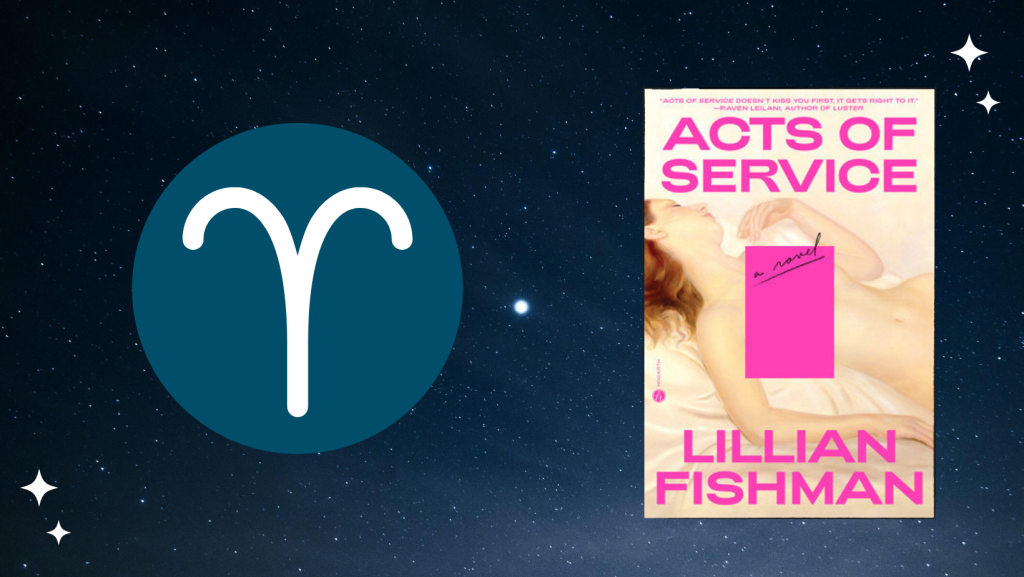
Playful, impulsive Aries is sure to see something of themselves in Acts of Service, which follows Eve, a young queer woman who, in a rash moment, posts her nudes online despite being in a monogamous relationship. This act leads her to entering a polyamorous affair that raises questions about sex and desire Eve struggles to answer for herself. This provocative, daring read is sure to hold even Aries’ fleeting attention.
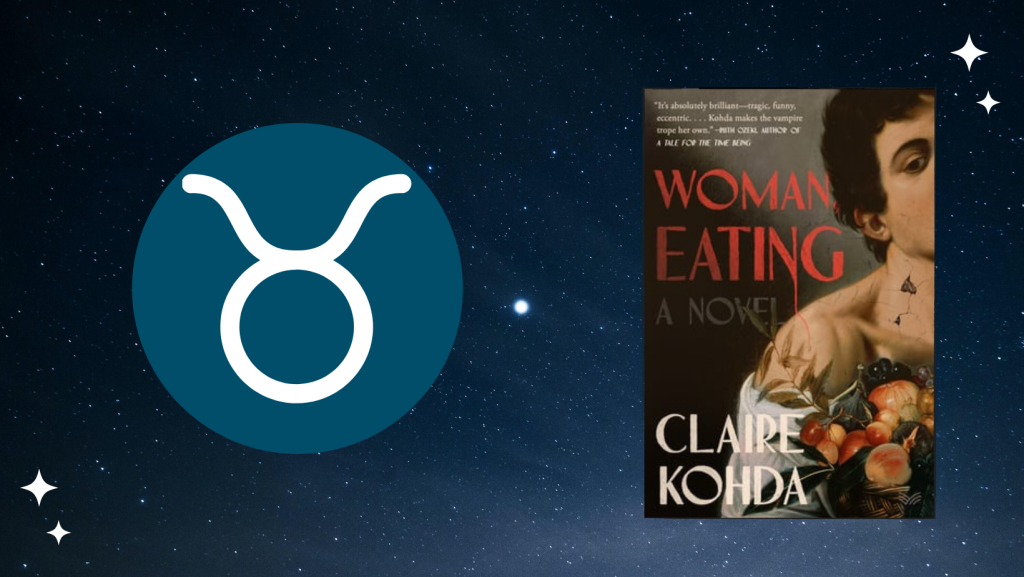
A vampire artist hungering for connection and the indulgence of delicious food is about as Taurus as it gets. A sharp exploration of colonialism, mixed-race identity, and misogyny make the book’s vampire metaphor even more striking. This modern tale of appetites and art is sure to delight any Taurus. Read our conversation with Claire Kohda about vampirism’s legacy of colonialism.
Because A Visit from the Goon Squad is one of the most Gemini books I have ever read in my life, TheCandyHouse—a “sibling novel” to Goon Squad—is a no-brainer pick for Geminis. This book checks off all the Gemini boxes. Delightfully juggling multiple perspectives so you’re inside all the drama and never get bored? Check. A clever exploration of the technological age? Check. Good writing that will keep you engaged and make time fly? Check. And because I know Geminis hate nothing more than having to choose, this sort-of-sequel to a Pulitzer Prize winning book by a beloved author is about as close to having it all as you can get.
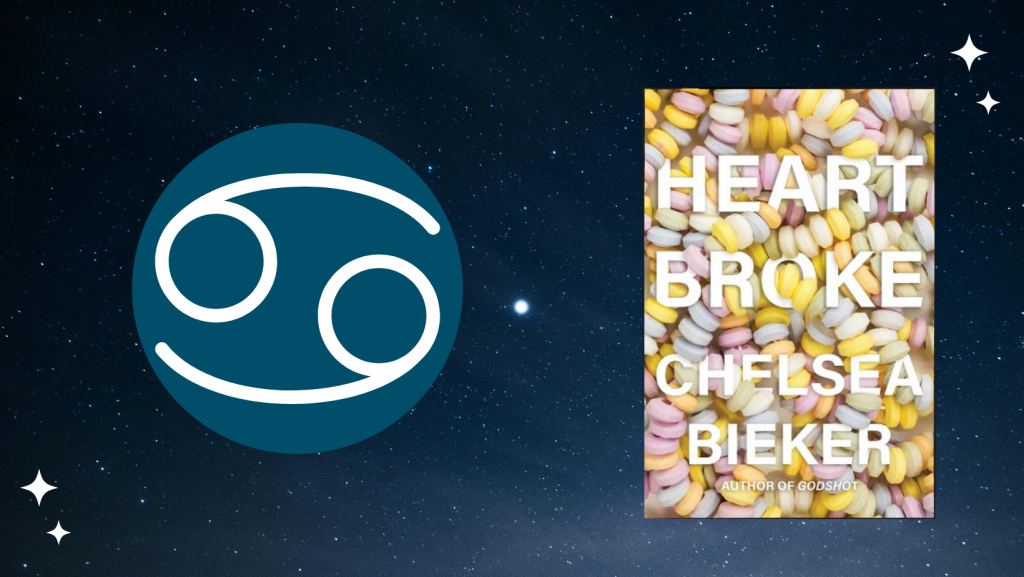
My dear, sweet Cancers, do I even need to explain why this book is for you? I’m pretty sure you’re already sold on the title alone, but in case you aren’t, let me add some color: longing, heartbreak, and idiosyncratic characters with names like “Spider Dick,” all set against a backdrop of California’s Central Valley. This book is all lyrical heartbreak, each story like pressing your thumb into a bruise you didn’t even know you had. Bieker perfectly captures the soft, painful core of what it means to be human: the desire for connection and a sense of self, the sharp sting of being let down by love, and the lies we tell ourselves when it hurts too much to see the truth. It’s the perfect read for when you want to feel a little less lonely in a sometimes lonely world, or just want to be in your feelings (Cancers, I’m looking right at ya). If you need any more convincing, let the book speak for itself: you can read “Fact of Body” in Recommended Reading, a story from the collection about a boy and his mother living out of a car while selling dream catchers along a toxic beach.
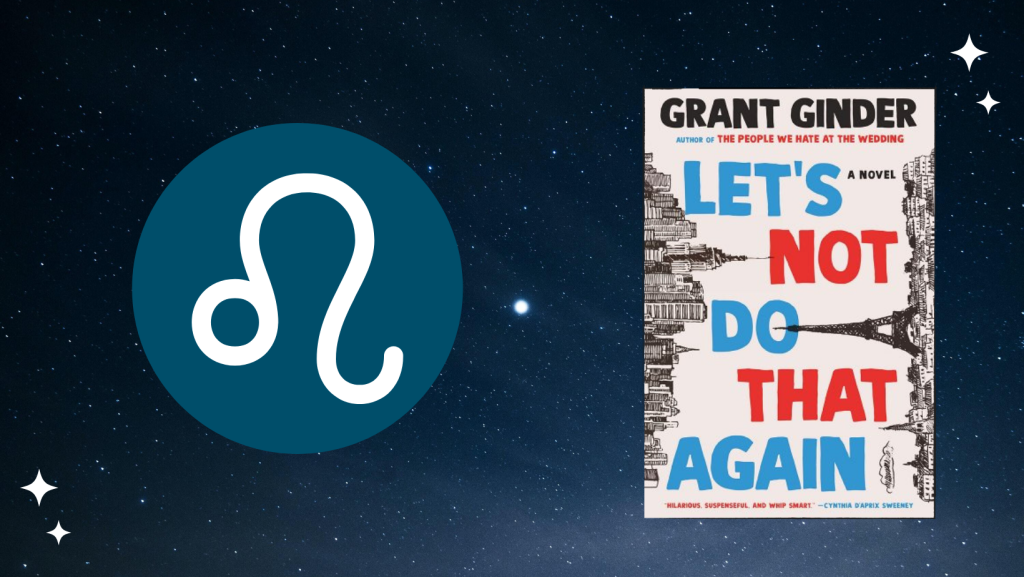
Between a mother determined to win a seat in the Senate, her son writing a musical about Joan Didion, and her daughter in the news for protesting with extremists in Paris, this is a family in which every major character is either trying to be or unintentionally becoming the center of attention—sound familiar, Leos? A hilarious and touching novel about family and politics, Let’s Not Do That Again is full of characters that Leos will see themselves in and come to love.
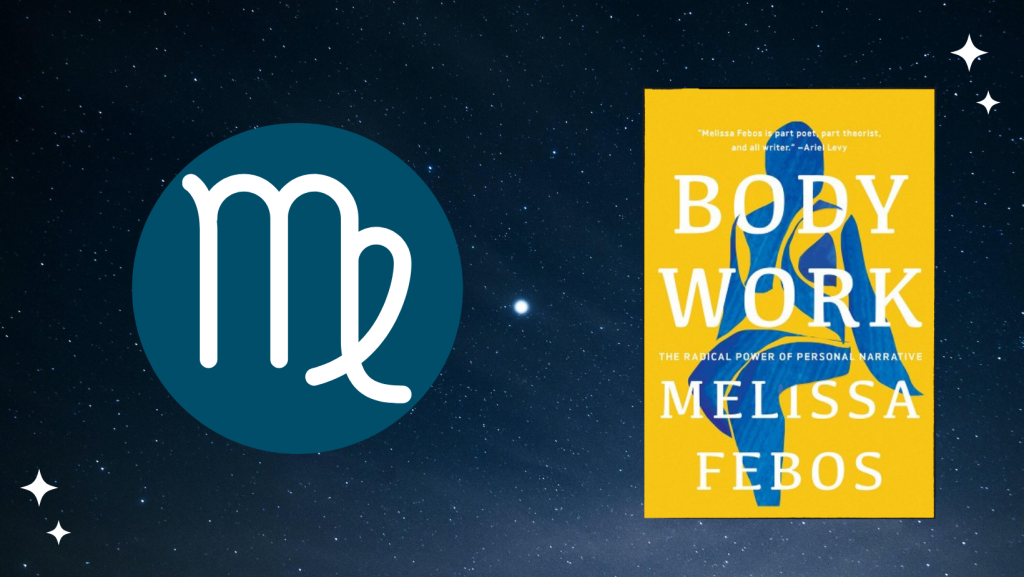
This may seem like an unconventional choice for Virgo, but hear me out! Hardworking Virgo can have a hard time making time for pleasure if it doesn’t feel productive, so this combination memoir/craft book—full of thoughtful, intimate musings on the writing life that doubles as craft advice—is the perfect way for Virgo to make time for pleasure reading under the guise of “working.” And because Virgos have the tendency to be their own harshest critic, I would argue this book is essential Virgo reading for writers and non-writers alike: Febos is a healing kind of writer, who shows her readers how to bring their craft to the next level and embrace their hardest truths. Febos’ ode to radical truth telling and self-acceptance offers Virgos the perfect assignment: to practice embracing their perfectionist selves while lending themselves more kindness and grace in the process. Read our conversation with Melissa Febos about how writing trauma is an act of subversion.
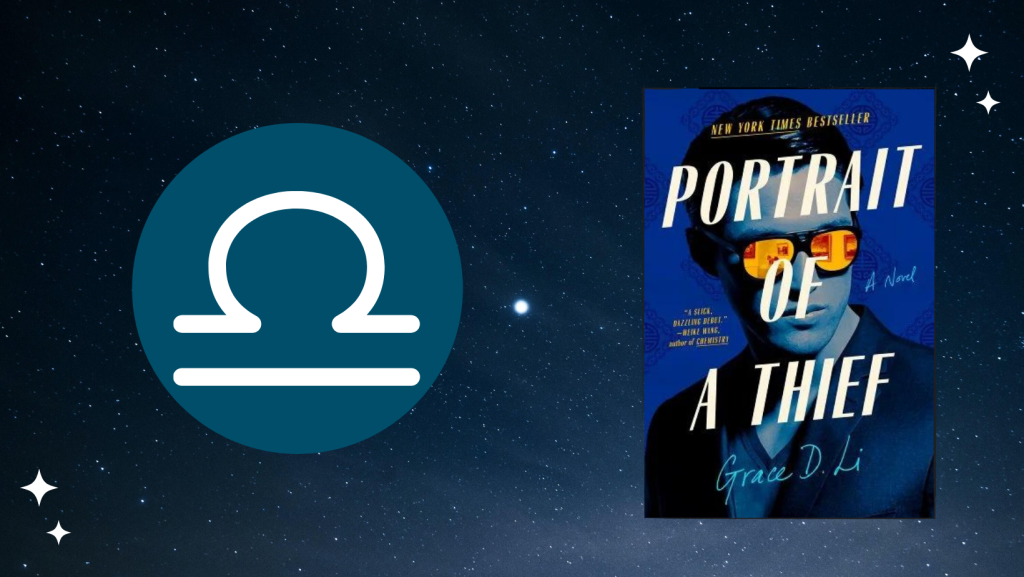
The Zodiac’s #1 aesthetes need to get their hands on Portrait of a Thief, an art heist novel based on a true story of Chinese art stolen back from Western museums. Not only is it a fun thrill-ride of a novel, it’s also a beautifully written, thoughtful exploration of Chinese American identity and the impacts of colonialism. Libras love nothing more than the combination of art, beauty, and intellect, and this book is sure to satisfy on all levels.
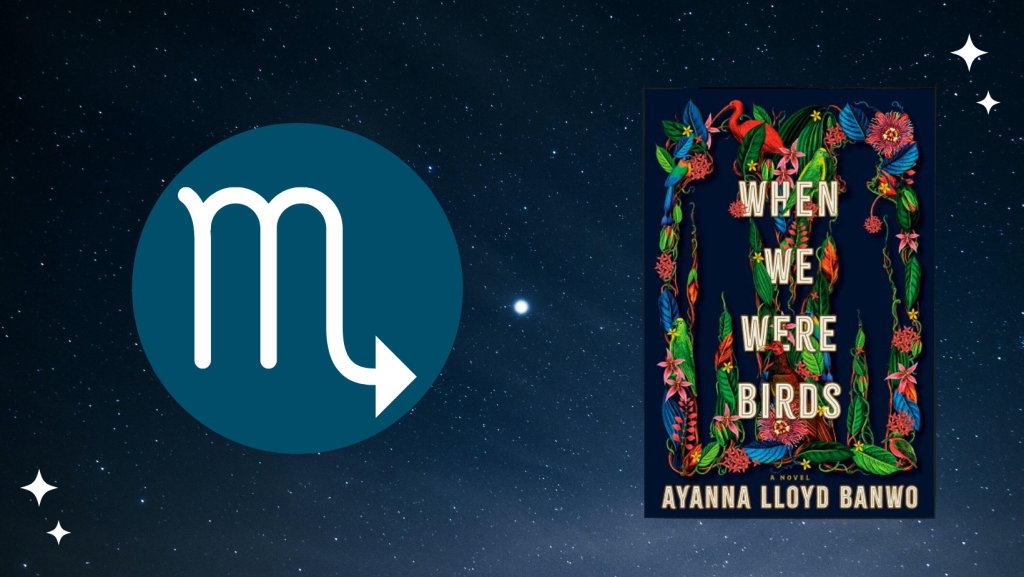
As passionate lovers of both love itself and all things supernatural, Scorpios are sure to be enamored with When We Were Birds, a love story set in Trinidad between a man forbidden from touching the dead, and the woman who protects and communes with them. Intense love, spirituality, a bridge between the living and the dead—this book couldn’t be more Scorpio. Read our conversation with Ayanna Lloyd Banwo discussing the book.
For the adventurous and intellectually curious Sagittarius, Scattered All Over the Earth is made for you. This novel has a lot of fun exploring the origins and meaning of language, travels across several countries, and is the most joyful novel taking place in a dystopian future I’ve ever come across. Sags will find themselves enamored with this novel’s playful expansiveness, and its ability to engage with heavier themes like climate change and identity without taking itself too seriously. It’s also the first of a trilogy, so if you love it as much as I know you will, there will be more where that came from!
Capricorns—my people, my loves, most neglected and mistreated of the Zodiac. Let me tell you something: I know the pain of being a Capricorn who seeks any sort of horoscope at all. We are so woefully misunderstood! I’m here to save you from a lifetime of bad horoscopes that treat us as like uptight sticks-in-the-mud, and I will not be recommending you something super self-serious or boring or work-related, because I know—like you all know—that we’re serious enough in our work life to allow ourselves some fun when it’s time to read. That said, my recommendation to you is Little Rabbit, which is as far from boring as it gets. An oft forgotten fact is about hard-working Capricorns is our love of blowing off steam with serious, down and dirty sex. Caps are literally the definition of business in the streets, freak in the sheets. A book about a queer, woman artist that takes both her artistic ambitions and sexual desires seriously is Capricorn through-and-through. So go crazy, my friends—this is my gift to you. For more recommendations of the sexy, literary sort, check out Alyssa Songsiridej’s list, and while you’re at it, indulge in this booktail (spoiler alert: it’s scotch-based which is, in itself, very Cap).
For my revolutionary, world-healing Aquarians (Aquariuses? Aquarii? Look, I’m here for my star-reading talents, not my astrological grammar skills), Eleutheria—a combination dystopian/utopian novel about a woman who grew up in an apocalypse-fearing bunker home and is now dead-set on joining a collective that vows to stop climate change—is a perfect fit. This novel has everything an Aquarius loves: railing against corruption and the authoritarian government, an exploration of colonialism, and even a whole subplot about freeganism. Read an excerpt of the first chapter over at Recommend Reading.
Time travel and moon colonies, but make it auto-fiction: Sea of Tranquility is Pisces all the way. As if the title alone weren’t on-brand enough (sea! tranquility!), I know Pisces is sure to love the tenderness inside of these pages, the emotional resonance with our current pandemic moment, and the vastly imaginative settings and disrupted timelines. If you’re already an Emily St. John Mandel lover, you know the deal. If not, then let this book be your introduction to an author I know any Pisces will get down with.
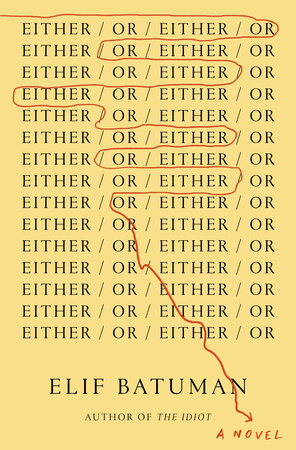
In Either/Or, Elif’s Batuman’s follow-up to The Idiot, Selin is now a sophomore in college, returning to Harvard after the summer she spent chasing her aloof crush, Ivan, to Hungary. Now Ivan has graduated and Selin is left searching for a connection to him, which, in his absence, she finds by analyzing their past interactions through the lens Freud, Breton, and Kierkegaard. The mental contortions Selin performs to apply misogynistic texts to her own heterosexual missed connections drives the novel, as does Selin’s pursuit of sexual experience and writerly insight.
Over the course of Either/Or, one actually witnesses a mind blooming, though not without misstep. Selin is funny, curious, and charming, though she is often oblivious to people’s feelings, including her own. She is ambitious yet directionless; impulsive and incautious, yet prone to overanalysis. The result is one of the most fully realized characters I have encountered in fiction, dazzling in her flaws and contractions.
All this got me thinking about the so-called “unlikable” character, a term so obtuse and tired, I loathe to evoke it here. I realized something obvious, reading Either/Or, which is that for me—and I suspect for many others—“unlikeable” actually means the opposite. Every friend I have ever loved has been unlikable in their way, stubborn, or narcissistic, or demuring, or defiant. Loving someone for their unlikeable traits is the basis of friendship, what makes it really stick. Likeable people are boring, anyway, and make for bad fiction.
Two volumes deep in Selin’s mind, not only do I like her, I feel like she and I are friends. “Selin’s going through a lot right now,” I told some actual real life friends when opting out of after-dinner drinks to go home and read. “She needs me.” Fortunately, we’re in it for the long haul. In an interview for The New Yorker, Batuman mentioned she’d like to write a novel about Selin in her 30s. I’ll be here for her then, too.
Halimah Marcus: Either/Or is a continuation of your first novel, The Idiot. Were there any expectations of a sequel that you wanted to either fulfill or subvert?
Elif Bautman: The decision to write a sequel was more about what was going on at the time and less about the decision to write a sequel. The Idiot came out right at the beginning of 2017; 2017 was #Metoo and 2018 was the Kavanaugh hearing. It was a time when people were thinking again about Anita Hill and Monica Lewinsky. And now Britney Spears. I think a lot of women were describing things that had happened to them in their past and using words that they hadn’t used before, like rape culture and patriarchy.
The literature that I was really into was super heteronormative. What role did that play for me?
I wanted to see what it was like in that space with the feelings I had, but without the vocabulary that I have now. Because when I look back, I see some of the decisions that I made or some of the things that I accepted, and I kind of wish I had been more critical, but I wasn’t. I wanted to unpack what that felt like.
HM: That’s really interesting. Your have a character that’s in this academic environment, and in theory should have access to the ideas of feminism and the attendant vocabulary.
EB: Exactly. While I was editing The Idiot, I met the woman with whom I hope to spend the rest of my life. I only dated men before that. It made me think so differently about so many parts of my identity, not just gender identity, but actually the extent to which I identified with literature, because the literature that I was really into was super heteronormative. What role did that play for me?
So I was doing a lot of reading, and the stuff I was reading was like, you know, Shulamith Firestone’s The Dialectic of Sex, where she talks about the discourse of romance and how it’s sustained by novels. And I was reading “Compulsory Heterosexuality” by Adrienne Rich, which made my head explode. “Compulsory Heterosexuality” is from 1980, and The Dialectic of Sex is from before I was born. I was like, how did I not know about these things? I had access to all of the best education anyone could have. I was curious, and yet, insofar as I knew that these things existed, they didn’t seem appealing to me. So another part of why I wanted to write this book was to show Selin being introduced in to feminist ideas. I want to help readers be able to question their own lives. What are the narratives that they might be accepting?
HM: Reading The Idiot, a lot of my excitement came from the romantic plotline between Selin and Ivan. Are they going to sleep together? What’s going to happen? And then reading Either/Or, that’s kind of taken off the table. Ivan is not physically present. He’s an absence. I almost had to retrain myself, because I picked up the book wanting a resolution to this romantic plotline. And then I realized, “Oh, no. That’s not what’s going to happen.” That was so exciting to me, because I think it’s realistic to how these kinds of infatuations—or desires, or unrequited loves, or whatever you want to call it—play out. They’re not consummated, or they remain one sided, and then that person redirects their energy. So I saw Either/Or as the story of coming out of the infatuation of The Idiot. I’m curious if you think infatuation is a fair way to characterize Selin’s feelings for Ivan.
EB: I really like how you just described it. I mean, this is something I see through after years of therapy, but the relationship with Ivan is—I don’t want to say indoctrination—but it’s really trying to inhabit a certain ideology that Selin is trying very hard to be a part of. She doesn’t quite get the point of penetrative sex, and as she does it more, she starts to understand it more. And she’s like, “Oh my God. I feel just like when I watched and understood a Shakespeare play.” It’s a feeling of self-congratulation, of finally getting the great universal thing.
The temptation is to think of yourself as having been really stupid, and yourself now as knowing a lot more. I’m just as stupid now, I just have better information.
A lot of the relationship with Ivan was about that. It’s all very exciting. But another part of what’s exciting is that she recognizes what’s happening to her as part of a plot from the kind of book that she most likes to read. I really like what you said about how it’s more realistic that that relationship wouldn’t be consummated, and how people redirect their energies. There’s a quote from André Breton about making one real person out of lots of people. When you write a novel about a first love, the tradition is to consolidate a bunch of people into one experience. In Either/Or, there’s a violin teacher, and there’s Ivan, there’s the first guy she has sex with, and then the first guy who she has a lot of sex with. They’re all different people. There’s a tendency in narrative to consolidate things. Whereas, it’s actually learning to perform a social function, over time with different people. I think that that’s a really interesting part of romantic life that we don’t really talk about, because we overvalue the connection with one individual person.
HM: There’s a point in the novel where Selin takes decisive action to have sex and things start happening. Or, in the language of the novel, the thing starts happening. Does this shift from analysis to action constitute a liberation from the compulsory heterosexuality you’re talking about?
EB: No, I don’t think so. Adrienne Rich describes it as a complex of forces that works in all of these different ways—some of them are overt and some of them are covert—to redirect women’s energies from themselves and each other and towards men. Even when Selin takes action, she’s very much taking action within the world of compulsory heterosexuality. It’s a decision that’s made in concert with and in reaction to her friendship with Svetlana. There’s even a conversation between them, where Selin’s like, wouldn’t we save a lot of time and angst if we just dated each other? And Svetlana is basically like, it doesn’t work that way; love isn’t a slumber party with your best friend. It’s like, love has to be penetration and domination. It has to be hard, and it’s childish to try to escape those things. That’s a kind of indoctrination that Svetlana and Selin do to each other and to themselves, and they do it from reading. There’s definitely a change in going from reading and thinking to actually doing things. I agree that there’s a kind of liberation in it, but I don’t think she gets outside of compulsory heterosexuality very much in this book.
HM: Svetlana at some point encourages Selin to see a therapist, and Selin says, “How was a therapist going to help me see things more clearly, when he didn’t know any of these people, and couldn’t know anything other than what was told to him, by me: a person who apparently didn’t see things clearly?”
It’s interesting to me that she is so invested in her power as a narrator of her own life that she can’t conceive that someone could see something that she didn’t intentionally reveal or try to convey. That someone can see around her. Do you see her as an unreliable narrator, or as complicating the traditional understanding of an unreliable narrator?
EB: I think the short answer to that is yes. When you get to be in your 40s, you start to think about the time in your life when you were in your teens and 20s, and you see all of these mistakes that you made. I think that’s the reason I called the first book The Idiot. The temptation is to think of yourself as having been really stupid, and yourself now as knowing a lot more. But that’s actually quite an uncharitable way of thinking about our younger selves. I’m just as stupid now, I just have better information. What I wanted to do was to go back into that state, and show why everything Selin is doing seems to her like a good idea, and seems like the only correct thing to do. But I really didn’t want to make it look like she was being stupid. I wanted to make it seem like she was drawing the correct conclusion that she had from the information that she had at the time.
An unreliable narrator, in a way, is less about the narrator than what you want the reader to do. If you’re writing an unreliable narrator, it means that you want the reader to draw a conclusion that the narrator didn’t draw. And in some basic sense, I do want the reader to not agree with everything that Selin concluded from that time. So in that sense, I think of her as unreliable.
HM: For example, in a memoir, you may have a subjective narrator, and the reader may see things that the author is not intentionally trying to present. But I think that a memoirist is going to be less aware of that possibility than a novelist, who can triangulate a relationship between the narrator, the reader, and the author. I’m wondering how you leverage that triangulation, or if you do so deliberately.
EB: One question I get asked is like, “Well, this is about a daughter of Turkish immigrants, and you’re a Turkish daughter of Turkish immigrants. So, why don’t you just write a memoir?” And I think that’s a great answer. I think of a memoir as memorializing your experience in some way. And with this book, it felt more like an imaginative exercise.
HM: As the title suggests, Selin is really into categorization. There’s Kirekegaard’s idea of ethical or the aesthetic; she talks about whether something is a form or if something is a content. Another key rubric she uses is whether something’s interesting or boring. That’s very important to her. How does this either/or, black and white ideology help her and and how does it hinder her? And more broadly, I’m curious about which parts of her personality you see as immature, if any.
EB: That’s a really good question. Today, I think that the idea of either an aesthetic versus an ethical life is deeply bankrupt. It’s something that only a really broken man would have thought of. As I was writing this book I was reading about the childhood experiences of people like Kierkegaard and Nietzsche, and they were all horribly abused. A lot of Western philosophy that we’ve inherited are the coping mechanisms of abused little boys. And we’re stuck with them now.
Simone de Beauvoir wrote “The Ethics of Ambiguity,” which says you can’t actually be free while other people are unfree. You can’t do whatever you want if you don’t have people to do it with. It’s like you have your day off and everyone else is at work. So you’re always trying to free yourself at the same time as freeing other people. It’s a project that’s ethical and aesthetic at the same time. You can’t make up one rule that always works for everything.
A lot of Western philosophy that we’ve inherited are the coping mechanisms of abused little boys. And we’re stuck with them now.
There’s no way of talking about it without sounding insufferable, but the thing that people call the hetero-patriarchy or whatever, that’s like the idea that, I can have this room and in this room, pure thought is happening and no bodily stuff is happening. There’s no garbage. Everything bad has been put somewhere else. There’s no one manufacturing anything. The manufacturing is taking place somewhere else. No cooking is happening. The cooking is being done somewhere else. And it’s just pure mind. That’s what sustains racism, sexism, classism, the pillaging of the environment—it’s this attempt to separate pure reason from everything else and denigrate the body. And that’s how misogyny happens, because men take the spirit for themselves and say, all women are the body. All this stuff strikes me as really toxic and poisonous.
Selin’s doing all the right things; she’s thinking. She’s really engaged. She’s having the right intellectual experience that a student should be having. I do think that these binaries that students get are ultimately kind of toxic, but that’s the elaborate thought structure that she has to play with. And she gets a lot from playing with it, from thinking about it, and she’s able to deconstruct it later.
I’ve been thinking about the Audre Lorde line about how you can’t use the master’s tools to take apart the master’s house. There might be ways in which that’s true. I’m sure there are. But I think there’s another sense in which, whatever tools you’ve got, those are the tools. Even if they’re bad, and even if they were used to create an edifice that ultimately you want to take down, they could still help you take it down.
HM: Ivan is very absent from this novel. Selin’s reading all these texts, like “The Seducer’s Diary,” and Freud, and she’s seeing The Usual Suspects, and she reads him into all these things. After reading “The Seducer’s Diary” she says, “The emails Ivan and I had exchanged, which had felt like something new we had invented, now seemed to have been following some kind of playbook.” And then in The Usual Suspects she relates to “the sense of discovering a total deception…the fact that deception itself was specially tailored for one other person.” All this leads her to ask her friend if Ivan is an evil person. So I’ll ask you, somewhat facetiously, is Ivan evil?
EB: No, he’s not. I actually feel strongly about that. Though it really seems to Selin that you could just be this diabolical person. The epigraph to The Idiot is this quote from Proust about how when we’re young, people seem like gods and monsters. Not to spoil, but there’s a point in the novel where Ivan writes her an email where he’s more honest than he has been, and he says something about how Selin always reminded him of his mother. And she gets this glimmer of, “What if I made Ivan feel the way that my mother made me feel sometimes?” Ivan is just as stuck in his own childhood stuff, his own disenfranchisement, his own need to prove his independence and his selfhood.
It is kind of the tragedy of straight dating dynamics; it’s a tragedy for both of them, but it’s worse for the girl. They’re looking for different things; the girl is really looking for commitment. This isn’t in the finished version, but in an earlier draft Selin reads that horrible book, Men Are From Mars, Women Are From Venus. The girls are looking for this kind of connection and love and the boys are looking for some kind of adventure and specifically to not get tied down. And for the girls, the ability to have a boy commit and be the boyfriend is what gives her an ability to save face in front of her friends and to not feel ashamed that she’s being used. And for the boy, the ability to not be tied down and to not have committed to something is what enables him to save face among his friends. It’s this huge starting obstacle that every straight couple eventually gets over in some way. But what a big stumbling block.
It’s a warm Sunday afternoon when I notice myself moving in. Through the window I watch me, in my favorite exercise gear, carrying bags and directing movers across the building’s central courtyard. My husband uses a trolley to shift boxes, his navy cap shielding his face from the sun. Our son, just old enough to help, wheels suitcases along the concrete path, while our daughter runs back and forth, carrying messages between us. In this way, my family moves into the apartment three doors down from ours, then goes about our daily life.
Over the next few weeks, my family moves into other units, occupying every apartment in the complex. As we do, I begin to spot differences between us – differences in age and style, in energy and manner. Together, we form a patchwork of former lives and possible futures; but we are all, unmistakably, us. We share features that never change: the mole on my neck; my husband’s unusually tall frame; our son’s lone dimple; our daughter’s dark, curly hair. We bring furniture and belongings, items I recognize, like the coffee table my father made in a woodworking class, or the Hockney print we had been given as a wedding gift. My husband agrees that this is odd, but refuses to talk about it, even as I sit on my balcony and drink wine as I observe myself doing the same.
In 12B we are the same age, but I have short hair, dyed bright red, I wear jumpsuits covered in vibrant patterns, and my husband has a large tattoo snaking its way up his left forearm. In 2C and 10D our children are teenagers, their features giving them away, in 9A they are the toddlers I once cared for, and in other units, I come to realize, we don’t have children at all. But my husband and I are always together. In 5C and 7D we are the oldest I can find, maybe by thirty years, our hair greyer and our movements slower. In 7D we seem content, and in 5C, bitter.
One afternoon, walking by the ground floor window of 3A, I glimpse my husband in the kitchen cooking an elaborate meal, something he used to do before work consumed his waking hours. On the balcony of 4C, I see myself tending to plants I cannot name, indulging a hobby I’ve never explored. Sometimes I hear my younger upstairs neighbor on the phone, having heated arguments with my mother about my decision to study photography, somehow living out moments I have already experienced. I sense myself lying on the bed in the room above, imagining the incredible life that is yet to come, readying myself to leap into the unknown. But I know how dangerous and disappointing this will be.
Us parents begin to speak, briefly, in the corridors, passing each other as we take our trash out, or on our way to our cars. We ask few questions, keeping conversations simple and gentle, like we’re afraid we might break something. There’s a fragility to our encounters, always inside the block: I never see myself outside the building.
I can’t tell if we’re all as obsessed with one another as I am, trying to gauge where our lives have taken the right or wrong turns, or where we might yet direct them. But I need to know which life is the one I really wanted, which is the one I now want, and whether these are the same.
I once bump into myself exiting 11A, where I wear muted linen in earthy tones and carry myself with a lightness I’d forgotten I ever had. It’s early in the evening, and the air is filled with the charge of a night that is still young.
“I love your outfit,” I say.
“Thanks,” I see myself reply. “We’re attending a gallery opening.”
My husband also emerges from the door of 11A, carrying a bottle of champagne and running his other hand through his hair, the way he used to when there was enough to bother.
“Is the opening for some kind of work?” I ask.
“Oh, we don’t really work, per se,” he replies. “I invested in a friend’s business and, what can I say – we got very lucky.”
I watch myself nod, smoothing out a crease in my loose linen shirt. “Now, we’re both really just focusing on our art.”
I hate myself more than anything.
My husband begins to work longer hours, and so do I. I wonder whether it’s ourselves we’re evading, or whether it’s each other. Even before we saw ourselves move in, we had been spending time apart.
He’d been drawn into an obsession with amassing items and career milestones, things I had never cared about and mistakenly believed he didn’t, either. Maybe he hadn’t, in the beginning, but he did now. I constantly disappointed him with my inability to feign enthusiasm for his latest household purchases, like stick vacuums or stereo systems, enabled by his dedication to his job.
At the same time, he would always find last-minute reasons not to join me as I left for a hike, reasons to stay at home with our children and leave me alone to experience nature. I would look at them on my way out the door, smiling at the small group of three on our plump gray couch, surrounded by modern art and even more modern technology, ready to fill their worlds without me.
Even now, when I ask him to join me on the balcony, my husband doesn’t like to watch our family. He prefers to pretend we don’t exist outside of our own home. For my husband, we are people to avoid.
Late into a night where the moon casts a soft glow over the courtyard, light catching on harsh concrete edges and shifting leaves, everyone has gone to bed. Standing alone at our window, I see myself leave my home and sneak to another unit. As I look on, the shadows against the blinds reveal the fumbling beginnings of an affair with my own husband.
Then, this older me, one who has seemed sad and dejected, sneaks from the door of 3A, the home of the husband who cooks. I watch myself cross the courtyard, taking the long route around to avoid the lights that cut sharp through the night. I try to guess what this husband sees in her, what he doesn’t see in his own home.
I think about whether my husband would cheat on me with myself, or whether, some day, I might grow tired of his habits and flaws and seek comfort and passion in the arms of another him. Maybe I would pursue the husband I see in 4C, older but calmer, gentler, more playful with our children. Or I might find solace with my husband in 11A, who knows without question that the world will be ours and still looks at me with desire. But maybe the woman I see in 4C is the one my own husband will find, with her gardening obsession and a singing voice honed through leisurely afternoons. He might prefer me in 12B, radiant and playful, with no need to shift attention away from my art. I wonder whether my husband has also somehow witnessed these moments between ourselves, and whether he’s had these thoughts about himself, or about me.
As I watch this unfold through lengthening nights, not just between me and another husband, but between several other mes and other husbands, I become jealous of myself: of the thrill of avoiding the suspicion of my husband while lusting after my husband, a husband I might prefer; of having the boldness, the confidence, to act so openly, to leave my children alone in my house and engage in such risky behavior when my children are also in the next room. I see myself, young and thrilled by the idea of being alive, seek out my husband with gray temples and tough skin, and I remember how I once wished my husband were more content, more competent, more steady and supportive. I ask myself which combination of us is the right one, at the right time; I ask myself whether such a combination exists.
I also witness the arguments, the days of coldness and avoidance. I see the confusion and despair, the faces wrecked by fresh recognition and understanding. My husband asks me to stop watching, stop listening, but he doesn’t want to know what I’m observing. I’m unable to bring myself to participate, but unable to look away from the excitement and despair of decisions I will never make. I need to understand what these decisions mean.
Then, in the chill of winter, pink edges of sun outlining the facades of nearby homes, I watch as a truck appears and my family moves out. More trucks arrive, are loaded, and drive away, until I, my husband and children are gone, all of us, and only my husband, my children and I remain.
In the morning, after a restless sleep, I walk out my front door and into the hallway. A long mirror lines the wall, and I catch sight of myself as I walk past. I stop and stare, wondering if I am the one I think I am.
The fluorescent bulbs lining the ceiling flicker, darkness thrust upon me and then withdrawn, as I watch myself appear and disappear.
There is a certain kind of horse girl who likes their horses imported, warm-blooded, and tacked by someone else. I am not that woman, and my horse people aren’t, either. When I decided to return to horseback riding as an adult on a freelance writer’s budget, I touched a pitchfork long before a saddle and horse manure became my trademark eau de parfum. Along my journey back to horses, I met the kind of women who could birth a foal and exercise three green polo prospects before they’d even caffeinated; women who take “no” as an annoyance, not an answer.
In my memoir, The Year of the Horses, these women are friends and mentors, but they are also idols: if I still had a school locker, I’d replace my posters of Kirk Cameron and Luke Perry with photos of the ladies who taught me how to polo wrap, rollback, gallop, and believe.
If you like your horse girls show-ring ready and unfamiliar with a scoop shovel, this list isn’t for you. From Texan barrel racers and rifle-toting horse trainers to a Kentucky princess with leftist leanings that could get her kicked off Daddy’s will, these titles celebrate a new breed of horse girls who are dirty, daring, and feminist as hell.
In the fictionalized follow-up to her mega bestseller, The Glass Castle, readers meet the rough and tumble horse-breaker Lily Casey Smith—a woman who survives disasters both natural and manmade, rages against misogyny, and fights prejudice to become one of the best horsewomen in western Texas.
This Pulitzer Prize finalist tracks two influential families fighting to dominate the Kentucky racehorse business. One is local royalty; the other, descendants of enslaved people. Trouble and violence await right out the gate.
When a wealthy white woman takes in a Dominican Fresh Air Fund child named Velvet from Brooklyn for the summer, she introduces her to horseback riding—a privilege that Velvet can’t pursue without deepening the already problematic relationship with her host.
An enslaved but gifted groom on the eve of the civil war, a gallery owner haunted by a 19th-century equestrian oil painting and two Smithsonian scientists—one of whom is studying the suppressed history of Black horsemen—all come together in this sweeping exploration of racial injustice by Pulitzer Prize-winning Geraldine Brooks.
Horse Crazy is a love letter to horses and a deeply researched tribute to her fellow equine fans. Nir contrasts her journey from loneliness into belonging on horseback with the careers of everyone from the famed horse whisperer Monty Roberts to the Randall Island-based urban cowboys George and Ann Blair who gave free riding lessons to hundreds of inner-city students previously excluded from the sport because of its high cost.
You’ll come for the names in this collection—T Kira Madden, Carmen Maria Machado, and Alex Marzano-Lesnevich, just to name a few—but you’ll stay for the kaleidoscopic angles on everything equestrian. Elitism, body shaming, plastic horse conventions, barrel racing as a Black Texan—the ups, the downs, the painful falls; all of it is here. (This anthology is edited by Electric Literature’s own executive director Halimah Marcus, and I have an essay in it as well—but don’t let that keep you from saddling up for this standout collection.)
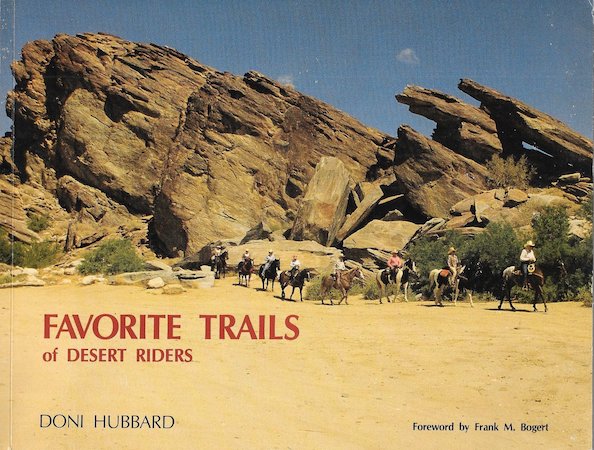
Favorite Trails of Desert Riders by Doni Hubbard
This 1991 publication is hard to find a copy of, but the payoff is worth it: photograph after photograph of early Palm Springs as an equestrian Valhalla when “The Desert Riders” roamed. Comprised of a surprisingly diverse group for the 1930s, Native people, Mexican immigrants, Hollywood starlets, and politicians rode together weekly to partake in club wagon breakfasts, dicey canyon crossings, and well-deserved shuteye under a massive sky of stars. A touching tribute to the much beloved, alternative form of transportation known as riding horseback.
In the hills of Appalachia, my mother volunteered at a crisis pregnancy center where she offered desperate women diapers, ultrasounds, and prayer. These centers were associated with our church, set up to offer assistance to women tempted to seek abortions. I was born into a fundamentalist Christian family in the socially conservative state of West Virginia. In elementary school, I held pro-life signs in picket lines. I performed in a gruesome short play entitled “The Sanctity of Life” where I gave voice to a fetus pleading with her mother to continue her pregnancy. At the age of twelve, I made a covenant to guard my virginity until marriage, and I was dutiful in this vow.
On the surface, I was a well-behaved Christian girl playing by the many rules my culture had set before me. Privately, though, there was no concept I understood more fully than that of my body, my choice. My restrictive environment had unwittingly given birth to a problem: an eating disorder. And no one understands the concept of bodily autonomy like a person who has struggled with restrictive eating.
I went on my first diet at the age of seven. After eating a spaghetti dinner, I evaluated my belly in the bathroom mirror and decided it looked similar to the midsection of the pregnant pianist at church. Even as a young girl, I had insight into the duplicitous ways pregnancy and motherhood were discussed in our community: supposedly celebrated, but in so many other tangible ways, punished. Eavesdropping on the conversations of my mothers’ friends, I learned that the women who sought assistance at the pregnancy center were pitied, at best, despised, at worst. And I knew that the help they received in the form of complimentary hygienics and counseling were not enough to substantially lighten the load of motherhood, an undertaking that our pastor frequently referred to as “the hardest job in the world.”
The women who sought assistance at the pregnancy center were pitied, at best, despised, at worst.
I kept my diet secret, lest it encounter scrutiny. I told my mother as she packed my lunch for school that I would like for her to begin sending me salads. “I want to start being more healthy,” I said. Healthy, a safe and innocent goal, one that if I were to hear expressed by a precocious little girl today would cause me great alarm. In the 90s, though, the pursuit of health had not yet been interrogated, and this aspiration was something all the adults in my life would have considered good.
Years passed. My dieting morphed into disorder–many of the textbook behaviors, all the cliché obsessions.
But here’s one component that characterized my disordered eating that was not in the Diagnostic and Statistical Manual of Mental Disorders (DSM): I was obsessed with reading about my own pathology. Perhaps even more than I was fixated on my body’s size, I was preoccupied with finding an answer to the question of why I was so centered on my body in the first place.
I’d learned that women were born to submit to men, that my ultimate purpose in this life was marriage followed by motherhood.
I read secretly–like I did most things that mattered to me, things that I did not want taken away. It felt, quite acutely, that the eating disorder was all that I could ever possess or accomplish that would ever truly be mine. In daily sermons, I learned that my desires were symptoms of my depravity. To want too much revealed a sinful heart, and so I tried to conceal my passions. As a girl in my religious context, I felt limited. I’d learned that women were born to submit to men, that my ultimate purpose in this life was marriage followed by motherhood. I felt able to narrow my desires in the present and my dreams for the future–that is, as long as I had my eating disorder to keep me company.
As a teenager, I quietly logged onto my parents’ desktop computer to find names of books about eating disorders. I deleted my search history immediately afterward, memorizing titles and authors for my trips to the downtown library. I felt shame checking out these books, like the librarian would realize what I was as she scanned each title.
I had a method for hiding. I found the one book I was actually interested in. Then, I gathered other books that I had no interest in at all. Inspirational romance novels. A popular YA book. A “how to” about gardening. I tucked the book about eating disorders in the middle of the pile, front cover down. I held my breath as the librarian scanned each title, hoping she wouldn’t linger, or worse, make a comment about my choices aloud.
Many people with eating disorders describe communing with books rather than people. In an episode of This American Life from 2021 entitled “Secrets,” Susan Burton interviews women whose eating disorders were the biggest thing in their lives they never spoke about.
“My main experience is that I read other peoples’ books about it,” one woman says. “I don’t talk to other people about it.”
Pain associated with the feminine experience is commonly dismissed or belittled.
Each interviewee describes profound loneliness in this secrecy. Nearly all confess to a fear that, if they were to share, others would think of them as shallow–an example of how pain associated with the feminine experience is commonly dismissed or belittled.
This retreat from the body into the mind is a logical one. The practice mirrors the disorder’s pathology: a fixation on keeping the mouth shut, an obsession with escaping the flesh, because, perhaps, you are in a place where it is not safe to be a body.
I read Lori Gottlieb’s childhood diary turned YA-novel that detailed the interiority of a young woman consumed by a diet-turned-wrong. I devoured Steven Levenkron’s depiction of the stereotypical anorexic (white, -cis, female, upper-class, and thin) cured by the (loosely autobiographical) white, male savior therapist in The Best Little Girl in the World. I checked out biographies of fasting girls, starving saints.
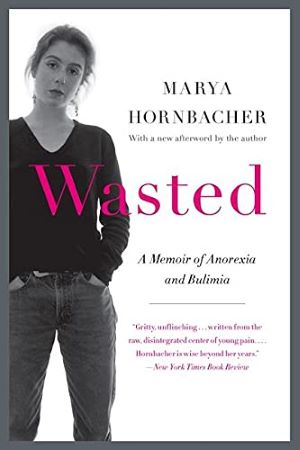
But it was Marya Hornbacher’s Wastedthat resonated with me most fully. The book’s soft white cover centered a black-and-white figure of a sad-looking girl in nineties denim. A neon green strip raced down the side of the paperback’s binding. Written at the age of twenty-three, Hornbacher’s memoir details a chaotic adolescence vacillating from bulimia to anorexia and back again. Shortlisted for the Pulitzer Prize, it was one of the key texts that characterized the 90s memoir boom.
Hornbacher was the epitome of the trainwreck girl. To a casual observer, I—with my quiet disposition and long denim skirts—was the opposite of her. Still, I was enthralled by her self-deprecating humor and manic prose. I was interested in the gruesome details of her disorder, how very ugly it was, and of course, I was drawn to the specific and shocking lists of numbers.
I was drawn to disappearance because it was precisely what I had been told I, as a woman, needed to do.
Most significantly, though, I was entranced by her unflinching takedown of the patriarchal institutions that seek to police and control women’s bodies. I had never considered that the desire to micromanage my body may have been due to living in an environment where female bodies were so closely patrolled. Hornbacher’s words sparked a revelation in me: perhaps I was drawn to disappearance because it was precisely what I had been told I, as a woman, needed to do.
After checking out Wasted from the library a half dozen times, I found a way to secretly order a copy of my own. The book arrived in a box with two other books–for school, I told my mother with put-on nonchalance as I rushed with the package to my bedroom. I kept Hornbacher’s memoir hidden under my bed, beneath a stack of Christian living books and my Bible. For most of my life, my media had undergone explicit scrutiny. My parents utilized a resource put out by the fundamentalist Christian organization Focus on the Family called Plugged In that provided comprehensive moral reviews of popular music, television, movies, and books. I knew that Hornbacher’s memoir would certainly be cited as contraband.
Throughout high school I read Wasted before bed each night. It was part of my nighttime ritual. After the journaling of calories and the completion of several hundred sit-ups, the chewing and spitting donuts, the leg lifts, the Bible reading–after all of this, I would retrieve Wasted from its hidden spot beneath my bed to indulge in just a few pages. This was my devotion.
“When I was nine, and indisputably a virgin,” Hornbacher recounts, “I stood in front of the mirror sticking my little belly out, wondering in panic if I might have gotten pregnant from playing doctor with a little boy when I was five, and if I was still pregnant, how would I explain it to my parents? What would they say?”
Hornbacher was not pregnant at the age of nine. She was, however, by the age of fourteen. Without any sort of formal sex education, Hornbacher learned about sex by simply doing it.
Hornbacher asks her friends, hypothetically, what would you do if you found out you were pregnant? Would you consider an abortion? “I casually fished for opinions,” she recounts, “a unanimous no, ringing with the righteous certainty of Catholic girls who’ve never had sex. Abortion is Wrong, we all agreed.”
One paragraph later, though, nature made the choice for Hornbacher. It happened during dinner one evening, as she played games with the food on her plate. A snap, small, like the snip of a thread. She excused herself to the bathroom where she found herself doubled over, pale, and shaking. Then, the sharp stabbing.
“Well. That was easy,” she says. “I remember standing up on the toilet when it was over, lifting my skirt up, and looking at the blood coating the inside of my thighs. And then I remember getting distracted. I turned to one side and scrutinized my butt. Fat ass, I thought. Pig.”
I realized that restricting a person will never actually make them do what you want them to do.
I read this scene over and over. I understood, deeply, the fear of pregnancy. And I identified intimately with her own distraction, the myopic obsession with one’s own flesh in the midst of (in this case, another) life falling apart.
And though I could not imagine myself in Hornbacher’s predicament–so terrified was I of sex, of men, of desire–I empathized with her fear. The fear of your body betraying you, of judgment, of growing large against your will.
I thought, this is what I would do, too. If I had a miscarriage today, I would look away from the blood, and think about the size of my butt, instead.
And then, a snap occurred in my own brain. In the same way no one could force me to stop the calorie counting, the meal skipping, or the relentless exercise, I realized that restricting a person will never actually make them do what you want them to do. Often, it results in the opposite. When you reduce someone’s agency, a person often acts against themselves. You can’t force somebody to carry a pregnancy against her will.
And that’s when the conversion happened: that’s when I became pro-choice.
We will all make the decisions we are bent to make, regardless of an outsider’s opinion about our situation.
I did not publicly identify with this label–not at first. Once, I broached it with my mother: I think I believe in a woman’s right to choose, I said one day. She tried to reason with me, Bible verses, biology–maybe she even attempted to meet me halfway, showing sympathy toward women who might want to make that choice, specifically if they were victims of harsh life circumstances. But there was no rationale that could overcome my lived experience, that deep knowing that there is no freedom without choice, that we will all make the decisions we are bent to make, regardless of an outsider’s opinion about our situation.
When I was a girl, our home number was associated with the pregnancy center where my mother volunteered. Occasionally, I answered the cordless in the kitchen to hear the voice of a fearful woman asking for assistance in crisis. Sometimes, I imagined the face of the woman on the other end of the line. I saw her as Other, as someone that I, in some sort of birthright, could never actually become. But if my adolescent eating disorder gave me a gift, it was this: it gave me the eyes to see my own frailty. It made me realize the impossibility of perfection, the necessity of grace, and the humanity in having a net waiting after we all inevitably fall.
The most elusive prize for poets of any kind, at any time or place, is endurance. It’s not something poets can specifically work toward or ever claim for themselves and, if achieved, it may not even be in their lifetimes. To capture that elusive quality of being a poet who endures is up to many factors, but ultimately falls upon the readers—that wider anonymous audience—and not from any conferred award or the luck of tapping into a specific historic cultural moment. It comes from the combined uniqueness and familiarity of the poems themselves and sometimes even from the bodies of work built from years of widely reading and writing.
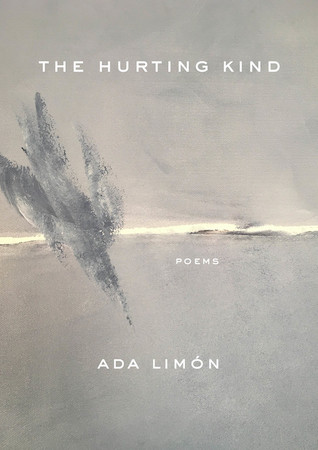
Therefore, using the term endure for a poem or poet is certainly not something to bestow lightly. It is, however, an accolade I feel no hesitancy in applying to Ada Limón. She is a poet of both studied and innate talent and with each poem, each carefully crafted collection, Limón has gifted us with an oceanic well of wisdom, intertwining our humanity with the natural world we live within. The Hurting Kind, her latest offering, is a powerful meditation on relationships with love, loss, family, friends, interlaced with an equal intimacy with the land, trees, plants, and animals. Anyone can see themselves in these poems but, more importantly, they can sense the lessons of our ancestors and the grief we must reckon with collectively, together, if our species will survive ourselves and continue to endure.
I had absolute pleasure of talking to Limón about her new book, fighting back against being forced into prescribed boxes, as well as learning about a forthcoming collection of essays on trees she’s currently working on.
Angela María Spring: The Hurting Kind, like much of your work, is a conversation; a conversation between poet and reader, between humanity and nature, conversation between the cyclical changing seasons both literally and metaphorically, a conversation about what we desire most and what we must learn to accept. What is the most important conversation you, the poet, want to have with us, the readers, in this particular book?
We are all part of a community, we’re all connected.
Ada Limón: We are all part of a community, we’re all connected. And sometimes we work so hard at trying to fit in somewhere to find our community, to figure out what it is that makes us connected. I think if this book is saying anything, it’s saying: you’re already connected. You already have all that you need. And it’s in everything that’s come before you and it’s in everything that’s going to come after. It’s the Earth and it’s the animals and it’s the plants and that is our community. I think so much of our lives are spent searching. I think if this book is saying anything, if it’s saying anything to me and saying anything to my readers, it’s that: we don’t need to look, it’s already there.
AS: I do love that the language of your poems is so conversational to really powerful effect, such as the line “In between my tasks, I find a dead fledgling,/maybe dove, maybe dunno to be honest” in “Not the Saddest Thing In the World,” because you stop and dwell in it. We don’t put things in our poetry without intention so you’re stopping the reader on purpose. But it also leads us to the ever-present question of “accessibility” that the poetry pundits cannot seem to shake. It’s a sort of trap, maybe even a gaslighting technique, to look down on narrative poetry, especially since so many Black and Brown poets have been narrative (with more BIPOC poets publishing, that has finally become obviously untrue).
How do you resist this gaslighting and politicizing of your own work and what advice can you give to younger poets who find themselves mired in this same muck of white, colonial perspectives forced upon them and their work?
AL: I think it’s really important right now. It’s important, always, but I do feel like one of the things that we have to be very wary of.
I was just having this discussion at Butler University in Indianapolis, which was that we really have to be careful about the commodification of pain and trauma within our work and what is required of us from outside of our community, and sometimes from within our community. I feel like we have to make sure that we’re giving ourselves permission to have the same type of freedom that any artist could have, an artist of any background. It’s really important to not just hang onto the joy, that’s important, and we need that for so many reasons, for survival, for resilience. But it’s also as a rebellion, you know, but I think that if by showing our whole self. What we’re doing is making an argument for our complete and beautiful humanity. When we fall into the trap of only talking about our trauma or only talking about our political situation because those are the poems that get attention or those are the poems that win prizes or those are poems that the white community really reacts favorably to, I think we have to be very concerned with not only whether or not we’re giving ourselves freedom as an artist to write whatever we want, but also whether or not we’re giving ourselves freedom as a human being to have all and hold and contain all of the spectrum of human emotion.
It’s a dangerous thing any time we fall into a trap of listening to what other people require of us—and again, that can be from inside or outside of our community—and I feel like every time I’ve been asked to fit into that mold, any mold, I find myself sort of all elbows, I want to push it and push against it. And that’s not to say that the work in exploring trauma and generational trauma is not really important. But I do think we need the other work also to balance us out; that work of joy, survival, that work of daily-ness. So there we’re saying, I exist in a day-to-day, momentary, casual being that moves through the world just like anyone else. I think that’s really essential to not just artists, but to anyone who’s trying to live in this world that wants us to only be our short biography, only our identity. What is our identity? I’m very curious as to why we always feel the need to limit our identity. I like my identity, my identity is a lot. It’s many, many, many things. It’s Latinx but it’s also Irish, it’s also a human being living on this planet during the Anthropocene at the height of a tipping point for our planet. All of these things are part of us, and I feel like any time we limit ourselves, we’re putting a cage on our soul and I think that if poetry wants to do anything, it’s to allow ourselves to be free.
AS: That’s the decolonial work. I’m always wanting to know how does everybody do it in their own way.
We have to be careful about the commodification of pain and trauma within our work and what is required of us from outside of our community, and sometimes from within our community.
AL: Part of that work is really for me. It’s like it’s saving me and I have to do it in order to feel like I’m honoring this world. And that is a big thing when we talk about what is required of us or expected of us or what kind of box people want us to fit in, I don’t think we realize how much we also have it in our head. I don’t think we realize how much we also have it in our head, that it’s not just like someone saying this or someone accepting a poem or not accepting a poem, but it’s deeply ingrained in our bodies, in our soul, in our hearts and our brains, and that’s the stuff you have to slough off. That’s the stuff that’s with you when you’re alone writing a poem. And that’s hard work.
AS: You wrote something in a social media post that I cannot get out of my head: that you were writing an essay about trees that went on and on you didn’t want it to end and I wondered if that was perhaps how trees communicate. I kind of laugh at myself because I think writers over 40 who live in a more nature-heavy environment and tend to write about the land, trees become more and more important. Do you think we need to begin to decipher the language of trees, if it’s even possible? Basically, tell me all your thoughts on trees because I honestly think each tree is a poem and we just need to listen and watch to see it unfold.
AL: I love that you think that; I think that, too. Sometimes I’ll look out and go, oh, I know I haven’t looked at and praised my hackberry in a while, I better go out there and give him some love. Or like when I was talking about that sense of community, my trees feel like my family, right? When I say mine, they’re not mine, I’m in their space, but I feel like it’s really important to not only like name, which I talk about naming, right, that importance of naming, but then there’s like the other part of it, which is, to not name, but just to feel. I really feel what it is to stand with a tree and I’ll tell you, I can be in my most chaotic, in my most suffering mind, and if I can be near a tree or sit near a tree or put my body near the bark of a tree, I am like, oh, right. I am so small and so unimportant. That kind of decentering of the I is so beautiful and really refreshing, in which we don’t have that very often, you know? We’re told we have a list of things to do, this is what you do. We’re also told, you’re unique and special and you have all these things and I’m always like, but not really! I’m not. We’re all in this. I’m not any better than this tree. In fact, I would argue that’s more important than me. Maybe it is an age thing, maybe it is a nature thing, but I do think it feels like what trees do for me is remind me first of all of that connection, that we’re connected, I feel connected to them and I hope they feel connected to me. But also there’s a there’s a lot of them in our life. They’ve been with us forever. If you start to think about like your first tree, it starts to unravel and you realize that, oh, this has been part of my community, and these are part of my teachers. This is part of where I have learned to say that this is part of why I’m an artist. It’s because of staring at trees and what the trees have offered back. It sounds maybe out there, but that’s truly what I believe.
AS: In your acknowledgments, you thank your stepfather for helping you think The Hurting Kind could really be a book, and I think about the collection structure in the poems, how they come together in a brilliant seamlessness, which considering what you said about you thinking of it as one long poem absolutely makes sense. I know that these past years have been full of so many personal challenges that we can barely even guess at, let alone glimpse. So I want to thank you for persevering to give us this beautiful collection and also like to know if there was some backstory of how the collection came to be.
AL: The poems were written over the last five years, so they’re not all written during the pandemic because The Carrying came out in 2018 and of course, it was probably at the press in 2017. So if you think about that, this has been at least four or five years’ worth of work. That said, one of the biggest hurdles that I had to overcome was I really wanted to put in so much that I had worked on and, here’s a thing, I’ve written way more than this in this book and they didn’t fit. A lot of them were projects like ekphrastic poetry I was asked to do for MoMA but it’s a poem for Frida Kahlo, one of my heroes, or a poem for Leonora Carrington, the Mexican surrealist. I wanted to write all these and include them but every time I looked at it, I [realized], this isn’t the collection for this.
Those poems will exist in a different collection but I had to really recognize that this work was doing that work of interconnectedness. It was a work about honoring the plants, animals and ancestors, and I felt like if I if I wasn’t true to that it would feel like, oh, now we’ve gotten to the fourth section where she’s put in things that she’s written, which is totally fine, and I love books that have disparate themes and are just a lot of poems, I love that, too. But I think this book, for me, felt like it really did need to be a long poem. It needed to be that sense of ongoingness, a little bit of the decentering of the self, the deep eye of watching. Then I also felt like the moment the seasons came to me and that it was seasons and not a narrative arc, I [knew], that’s it. That’s how this works, it’s not about “I have gone through this,” it’s that “this is happening,” and that was really important because it had to be also the sense of ongoingness that what is a cycle that continues without me being in it? It also what happens when you finish the book and return to the beginning because what comes after winter, but spring? So it’s like that sort of opening and then it was, oh, right, if this is about more than me, then let this cycle of the seasons become its engine. And once that happened then I knew the book was almost there.
The design department at the tech company I worked for was suffering from a morale problem. Management saw the writing on the wall; our big happy work family was on the verge of a smashup. One afternoon, we received an email from the director informing us that the company was excited to offer a new paid benefit: reimbursement for an online personality test. A set of simple questions would teach us how we could best thrive in adversity and give us empathy for each other’s unique challenges. The email included a link to a website and concluded with a grinning emoji.
We’d ushered our whole selves into work and discovered that those selves were lonely, sad, frustrated, and furious.
But the website offered two versions of the test, one for “business” use and one “personal,” and our boss hadn’t mentioned which was sanctioned. My colleagues and I spent a good 15 minutes of company work time debating between them, finally deciding that the personal test would offer the broadest insights—it was twice as long—and weren’t we the same people regardless of physical location? Wherever you go, there you are, we figured. But answering those questions and receiving our personalized diagnoses turned out to be more than a team-bonding exercise. It was an awakening. As we read our results out loud to each other, we realized that we had opened the portal between home and office, transgressing the boundaries that kept us focused and manageable. We’d ushered our whole selves into work and discovered that those selves were lonely, sad, frustrated, and furious. It was uncomfortable, but we couldn’t talk about anything else. Over the next year, all but one of us left the company, more than a few in rage or in tears. There are infinite reasons to leave a job, but I remember the collective turning point as the day my coworkers and I stepped out of our friendly work personas and into our full humanity. We could never go back to a productively compartmentalized day working for that company again.
If a personality test is a nudge that collapses the personal and professional, a polarizing national election is a powerful stirring, and two and a half years of a global pandemic is an ear-splitting, earth-shattering alarm. Two beautifully crafted pieces of narrative art from different moments of this tumultuous historical moment capture both the horror and the haunting of contemporary work culture: the 2022 hit Apple TV+ show Severance and the unsettlingly prescient (and unrelated) 2018 novel of the same name. Through the fictional lens of extreme speculative scenarios—that somehow become more plausible by the month—both narratives illustrate the tempting lure of productive white-collar distraction in a chaotic world, the price of the dehumanizing dissociation that it demands, and the recognition that finding deep meaning and purpose in our relationships with each other can free us from a life lived half-asleep.
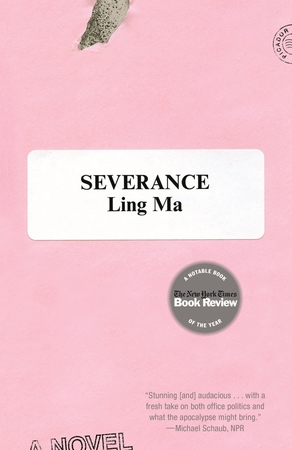
In Severance, a novel by Ling Ma published a year before COVID-19 emerged, Candace Chen is an employee at NYC-based publishing conglomerate Spectra. She goes through the motions of office life even after a deadly pandemic descends. Candace first discovered work to be a source of comfort when her mother became ill with Alzheimer’s (“It took my mind off things”), and after the death of her parents and one numbed-out summer in New York, she returns to office life to find meaning—or at least something to do every day. As the news of “Shen Fever” trickles into the world around Candace, she holds fast to her job as a way to make sense of her existence, becoming a kind of corporate automaton: the last worker in the office, if not the entire city. By day she performs her now-meaningless tasks, and by night she walks the streets taking photos of the new world for her photo blog, aptly titled “NY Ghost.” Everyone Candace encounters is either fleeing for safety or suspicious as to why she’s content to perform the dance of employment long after the music has stopped. But to Candace, the office is safe, the only place in her life that has been a reliable source of emotional regulation and accomplishment. Candace is a millennial and a first-generation immigrant through and through. For her, like so many born into this era of political and social turmoil, work is “its own consolation.”
Shen Fever turns the infected into the walking dead of capitalism: wordless creatures doomed to perform the same routines over and over.
Candace’s daily agenda, as she describes it over and over throughout the novel, is all-too-relatable to anyone who has faced down a sad desk salad: “I got up. I went to work in the morning. I went home in the evening. I repeated the routine.” When she decides to break things off with her overly idealistic boyfriend: “I emptied myself, lost myself in the work. I got up. I went to work in the morning. I went home in the evening. I repeated the routine.” When she finds out she’s unexpectedly pregnant from that same ex: “I didn’t know what to do, so I pushed it to the farthest corner of my mind. I went to sleep. Then I got up. I went to work in the morning. I went home in the evening. I repeated the routine.” If you haven’t already guessed, Severance is a zombie story.
Shen Fever turns the infected into the walking dead of capitalism: wordless creatures doomed to perform the same routines over and over. They apply face creams, set dinner tables, try on outfits, and drive cabs ceaselessly until their bodies waste away from starvation, their to-do list ambitions unrealized. But in Severance, author Ling Ma questions whether Candace is sick too, trapped in a lonely and dissociative trance that she mistakes for relief. The comparison is not lost on the character, either, but she can’t quite change her habits on her own. It’s Candace’s unborn child and the future that she starts to imagine for them both that gives Candace the determination to live a full life of her own choosing. As her pregnancy progresses, Candace feels the baby flutter inside of her, gives her a name, and imagines a fulfilling relationship outside of the transactional exchange of labor for survival. As Candace leaves the office for the last time, she notices a billboard she hadn’t before: “Life is knowing what you live for.” She has finally found a love worth staying awake to experience. In Severance, the comfort work offers is a numbing agent, and while the world is scarier without the drug of productive routine, it may also be more full of hope.
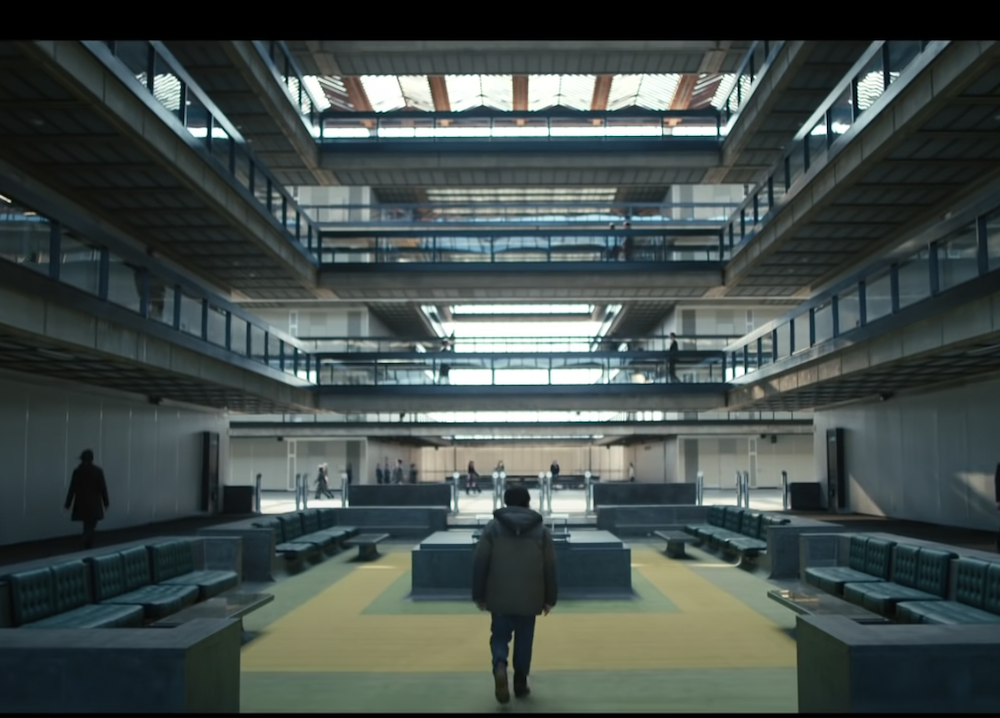
The 2022 TV series Severance is a zombie tale too, with a “body horror” twist. The show is named for the brain surgery required to work at a mysterious tech company called Lumon—like Severance’s Spectra, it’s a word that summons an ironic sense of bright possibility, “Arbeit Macht Frei” for the corporate prisoner. The severance procedure segregates employees’ memories by location, effectively splitting employees into entirely different people when they’re at home and at work. Watching the show, I was transported back to my former design department, my finger hovering over the Enneagram “buy” button. If my colleagues and I had been severed, there would’ve been no question as to which test to take: in the office, we would’ve been “innies,” with no relationship to our homebound “outies.” The company would have surely been more satisfied with the results of our tests, and I couldn’t help but imagine that we employees might have been grateful for the clarity.
The premise of Severance is not that a nefarious corporation turns people into zombies. It’s that we choose to undead ourselves as a treat. Along with a fat paycheck, dissociation is Lumon’s enticing sales pitch to potential employees: never experience the drudgery of labor or the sting of emotions during work hours again. The innies of Severance don’t know why their outies have chosen a segregated life, but as viewers we learn the motivation of one worker, Mark S, who became unable to perform his teaching job after his wife’s sudden death and finds a path back to productivity through Lumon. By pressing pause on his pain for eight hours a day, Mark can make a living again with the added benefit of a spa day for the brain. And honestly, it doesn’t sound so bad to sleepwalk through a job for a lucrative fee. Writer Emily Gould joked on Twitter that she’d “totally get severed if it was PT, like, 15 hours a week.”
The unavoidable truth is that someone still has to live through the work day; labor is never free.
But the unavoidable truth is that someone still has to live through the work day; labor is never free. In Severance, innies are the enslaved undead, wandering Lumon’s windowless purgatory, muttering the company’s mantras, and moving numbers around on a screen to earn woven finger traps and melon parties. One severed worker, Helly R—who turns out to be a dissociated shell of a Lumon executive—goes so far as to attempt suicide. But after learning of Helly’s pain, rather than allowing her to quit (a euthanasia of sorts), Helly’s outie records a cruel video message condemning her to continue existing in a body that doesn’t belong to her. “You are not a person,” the woman who looks exactly like Helly R tells her as an explanation.
The sheer panic of realizing you don’t have bodily autonomy resonates well beyond office walls in 2022. As state governments and the Supreme Court continue to make clear that women and trans people, in particular, are property of the state, their bodies to be legislated and controlled against the will of the individuals who inhabit them, it has become harder and harder for workers to ignore the terrifying world and do our little Zooms to make enough money to pay for the rising cost of rent, healthcare, and other essentials to human life. Yet it is more and more urgent to corporations that we close our eyes in the service of productivity, hitting quotas and yielding profits before the economy tips into recession. Companies and business leaders are pushing workers back into offices, writing op-eds about the value of the physical workplace and crafting new policies that chain employees to their desks. Other companies are trying out the carrot method: throwing parties, hosting concerts, and handing out high-end swag to those who can retrace the steps of their commute after years without one. But these tactics aren’t new. In Severance, Lumon’s genius is to contain the dread of the people, not stamp it out. In real life, some corporations have attempted to do something similar many times over.
Before the pandemic, I took far more than that one personality test at different jobs, memorized corporate values, crafted reusable fun facts for endless ice breakers, and escaped many rooms with my colleagues in order to reshape myself into an appropriate work character. It’s surprising how easy dissociation becomes when it’s aided by physical compartmentalization. I was encouraged to leave my mood at the door when I swiped in with my smiling badge. The tech companies I worked for decorated their offices with optimistic flourish, giving me far-reaching views of the city and wearable proof of belonging—pins, stickers, t-shirts, even shoes. But once the pandemic struck and we were confined to our homes, non-surgical severance became harder to pull off. All of a sudden, my work self and home self were shoved into the same space—the bedroom that served as office, gym, preschool, writing studio, and cafeteria—with no breathing room between parenting, meetings, and an eked out creative life. There was no corporate bus to act as a decompression chamber between worlds, no work uniform to armor myself with for professional battle; I only put on shoes to walk the dog. Moment to moment, I felt confused about my priorities. I was stunned to hear my own voice telling my daughter no, I couldn’t eat lunch with her because I had to discuss the optimal size of boxes on a screen. In meeting after meeting, I clicked “camera-off” to hide tears collecting in my eyes, threatening to ruin the curated tone. I stopped showing up for virtual team-building games, but fell sick with guilt when my absence was noted. On the hardest days, I even told coworkers that none of what we made mattered. The fact is, maybe it did matter and maybe it does, but not to me anymore.
In the show Severance, “reintegration” is possible but excruciating, sending employees into an existential tailspin. In my life, the collapsing of worlds felt like I was losing my mind, like my carefully assembled illusion of control was shattering over and over as I spreadsheeted my way through unprecedented times. I missed the peace of dissociation, but I was incapable of pulling myself apart to get the job done any longer. I physically couldn’t smile when I was angry, I couldn’t form the word yes when I meant no. My exhaustion and rage bled through the work day, staining everything; all I had left for my daughter was excuses. Because I was lucky enough to have the support system to do it, I quit my corporate job and reclaimed my ambitions for myself, my creative work, and my family. I needed to forge a different kind of relationship to work. Like Candace Chen escaping New York in Severance the novel, I didn’t know what was next but I knew I couldn’t go back.
The question of how much of ourselves we must give up to work is an essential one.
The tragedy and possibility of a zombie story is that there is no single villain. In the novel, Candace’s sometime-mentor sometime-captor Bob points out the rules of the undead narrative. “One zombie can easily be killed,” he tells her, “but a hundred zombies is another issue. Only amassed do they really pose a threat.” Bob is right. We may all be work zombies, lured and forced into semi-consciousness by the brutal financial realities of our age and economic system, but it is critical to remember that we are all in this together. As we’ve seen in the exhilarating recent unionization movements within industries like publishing and tech, the true power of labor is built by the collective. And I’m certainly not the only one calling it quits on my work persona. When record numbers of Americans are leaving their jobs and rethinking the sacrifices required to make a living in this country, the question of how much of ourselves we must give up to work is an essential one. Perhaps the greatest virtue of both Severances is that they externalize a too-often internal debate, capturing the poetry and violence in the struggle towards both inner and outer unity within a society that wants to split us apart. And both narratives suggest that dissociation is—at least in part—a trick of self-hypnosis that we can choose to shake ourselves out of. If we can vow to stay present together in the midst of true disaster, then maybe there is hope for the future. Like Ma’s novel, the first season of Severance ends with a cliffhanger. Mark S, Helly R, and the other innies hatch a plan to wake themselves up on the outside, inhabiting their outies’ forms long enough to fumble towards the truth. The show ends as they are each pushing against the foreignness of the real world to claim their right to self-determination. Will the innies survive reintegration to take down Lumon and the dead-eyed oligarchs controlling the rest of their world? Luckily, the show has been renewed for a second season so we may find out soon. But here in the real world right now, we can learn from the innies’ bravery and Candace’s determination. No matter how uncomfortable change may seem at first, we each have the power to shake ourselves out of old and mechanical patterns, connect with the people and ideas that deserve our time and effort, and finally make work work for us—not the other way around.
NaheedPhiroze Patel’s debut novel Mirror Made of Rain follows Noomi Wadia, an indignant young woman raised in a Parsi family in India, through a world that is keen to control women and safeguard long-established pecking orders. Since her childhood, Noomi has had a difficult relationship with her mother Asha, who battles severe alcohol dependence. However, coming of age in the affluent but parochial society of Kamalpur, Noomi risks falling into the same patterns of addiction and destructive behaviors she associates with her mother.
As Noomi hankers to overcome her suffocating circumstances, Patel’s novel traces the deep connections between our society’s cruel treatment of women and the catastrophic turns women take in their lives. Mirror Made of Raingrapples with the fundamental question: how to thrive in a society that is hostile to your survival?
While Noomi’s story bears witness to the long-term consequences of a trauma-inducing childhood, it also hints at the possibilities of healing and redemption. Patel excels at portraying damaging relationships with tenderness and humor. Since its publication in India, a few months prior to the US release, the novel has been shortlisted for the Atta Galatta Book Prize, She the People’s The Women Writer’s Prize, and longlisted for an AutHer Award in Fiction.
I spoke with Patel over Zoom about how addiction and trauma are examined in her novel and her portrait of an angry young woman set in contemporary India.
Torsa Ghosal: What struck me immediately reading your book was your approach to anger as a multilayered emotion with roots in a fraught mother-daughter relationship as well as various social contradictions. Both Noomi and Asha hold a lot of anger and resentment, but you deftly show that these women’s feelings are related to social problems. Can you talk to me about what prompted you to explore anger and angst as socially-grounded, gendered issues—gendered not only in the sense of how women embody and express anger, but also how their families pathologize their expressions?
Naheed Phiroze Patel: I think a lot about how men’s anger has always been mythologized—while the anger of women is pathologized—by contemporary society. In India, you have Amitabh Bachchan who rose to Bollywood superstardom playing the “angry young man” in many iconic movie roles. Then decades later, Shahrukh Khan became a household name playing a brand of angry, abusive “anti-hero.” When men get angry it is seen as righteous, their rebellion is framed heroically while women’s anger is—just to riff off your Public Seminar essay—dismissed as melodrama, as making a fuss. Angry women are seen as defying their societally imposed roles of being nurturing and making everyone feel comfortable. When women start making other people feel uncomfortable, they are punished for it. I wanted to start a conversation about how the discomfort angry women elicit is pathologized. It is really a system at work. In my novel, the two main women characters are highly antagonistic to each other, but they are also antagonized by the larger system of the family, of patriarchy, of the social setting in which they must survive.
TG: This certainly comes across. Society is discomfited by women’s anger, desire, and indeed a range of emotions, but it enables men’s violent self-expressions. We get to see several men transgress over the course of your novel and women deal with the repercussions. What was your impetus for depicting difficult relationships between women, particularly the fraught mother-daughter relation?
NP: Yeah, there are a lot of situations in which women become the enforcers of patriarchy, or are enablers of abusive, transgressive men, or are retroactively forgiving of their abuse.
In Asha and Noomi’s relationship, I think the big question that remains unanswered from Noomi’s point of view is, why doesn’t my mother love me? Like, this is a truth universally acknowledged: Mothers are kind. Mothers are self-sacrificing. Mothers give their children comfort and nourishment. So why is Noomi’s mother not able to?
When men get angry, it is seen as righteous, their rebellion is framed heroically while women’s anger is dismissed as melodrama, as making a fuss.
I don’t think she finds the answer to that. The impossibility of answering that question subverts assumptions about women being protective of each other no matter what. If Noomi cannot even rely on the sacrosanct mother-child relationship, what can she rely on? I think the answer is Jeh, her father, who is a better model of maternal love. He displays more of those nurturing characteristics. He is an ally, but even he is constrained by the expectations from his gender. Because he is a man, he is seen as weak or as a pushover, not only by the society, but by Noomi and Asha as well. I wanted to complicate the notion that women are automatic allies of each other. If my reader comes away with more questions than answers after reading about these relationships, I think that’s maybe a really good thing.
TG: You also offer a rather tender and intimate portrait of addiction. I am thinking of the moment when Noomi says “it wasn’t hard to see why Asha drank the way she did. Alcohol was a hug, like religion, music, art, it is the symptoms of living in this world as a woman.” Like anger, you treat addiction as connected with gendered experiences. How did you start perceiving this connection? In your opinion, to what extent are the gendered aspects of addiction recognized in our culture?
NP: There was a larger question to me always about how addiction is understood in popular culture as well as in real life. I remember feeling pretty disturbed with the pictures that came out when Amy Winehouse died. I think it was in 2011. I remember this one picture of her in a red bra with broken shoes, crying hysterically, walking around her London neighborhood, and how the media made fun of her. Coming from a system where addiction is either romanticized, when it is men struggling with alcoholism, or it is hidden and treated as a taboo, when it is women, I just wanted to humanize it, show all its harm, but also approach it with care and empathy. When someone is very sick with something like, say, diabetes or lupus, you don’t make fun of them, and you don’t consider them morally compromised. But we don’t seem to feel the need to do that to people with addiction.
I read Leslie Jamison’s The Recovering, where she talks about her own struggles with drinking and also how the addiction of male writers like Hemingway, Dylan Thomas, Raymond Carver is considered heroic. They are brilliant and restless. Their struggle with alcohol becomes a brick in the edifice of the disturbed male genius writer. However, women like Marguerite Duras, Jean Rhys, Elizabeth Bishop who have struggled out in the open with alcohol are treated as melodramatic wretches, as train wrecks with no heroic spin to their addiction. So, yeah, addiction complicates men, but it flattens women’s personalities, their art, their characters down to one thing, which is want, which is the addict.
TG: You are making me reflect on Ghazal poems from the Indian subcontinent. These poems are haunting and beautiful, but also romanticize the figure of the alcoholic male speaker.
NP: Yes. Let’s not forget the movie, Devadas. I watched it like a hundred years ago, but it’s basically Shahrukh Khan drinking himself to death for “love” that is highly toxic, but it is shown with so much beauty, so much poetry, so much romanticism.
TG: The movie is based on a Bengali novel by Sarat Chandra Chattopadhyay, and the novel is relatively more mindful of class and caste in its depiction of this man’s obsession, but, of course, Bollywood took it to a different direction.
NP: Yes.
TG: I think it’s fair to say your novel offers a troubling picture of motherhood. I am thinking of the experiences you draw attention to, like what happens to women’s bodies at different stages of their lives—including pregnancy—and women’s own inability to understand these changes because so much of this knowledge is kept secret. We don’t know until it is happening to us. And then, there’s the inability of people around to understand these changes. I was struck by the scene where Noomi is in the hospital, has just changed into the hospital gown and her husband thinks the procedure is over because she looks fine to him. He has no clue what’s going on. Was it your intention to generate more awareness about these troubling moments?
NP: You bring up a good point about how women’s bodies inhabit the occult. Even mothers don’t pass down the knowledge of what actually happens during childbirth. Or, as in Indian culture, women are fed this fairy tale of marriage as a grand prize. Elders tell you that once you’re married, your life can begin. Girls are primed like that from such an early age. I wanted to portray these situations without judgment, but also without making any of it pretty or palatable to readers. I do think my novel makes knowledge around these rituals less occult, although I don’t think that I went in with a particular goal. I approached the process as a nature documentary. I wanted to show everything that happens around these ceremonies and strip them of their romanticism. So, the book presents everything in a very straightforward way. I tried very hard not to put my hand on the scales. The narrative does not build up or break down any character. You are never told that this is bad, or this is good, or this is ridiculous. It’s all kind of just laid out for the reader.
TG: Veer, who Noomi chooses to marry, is intriguing in this respect. He will support her, but he is also casually dismissive of her. I found it to be a persuasive representation of the seemingly progressive cis-het masculinity. Here is a man who understands that the values of his family are misogynist, and he does not ostensibly share them. At the same time, when he is in that setting, he is eager to not disturb the system. Was it challenging to write a character like Veer and withhold judgment?
Women are fed this fairy tale of marriage as a grand prize. Elders tell you that once you’re married, your life can begin.
NP: Yeah, so even though Noomi tries to push back against what is fed to her by the society, she has absorbed the idea that once you are married, you no longer have to conform to your family’s rules—the idea of marriage as freedom. Meeting Veer, she believes he is her ticket to a different sort of life. He is a liberal guy. He is not misogynistic. But then all her plans are foiled when she meets his family, and they turn out to be incredibly patriarchal. I mean Noomi, too, comes from a patriarchal family, but in her case, the patriarchy is more subtle, more under the table.
To her disappointment, she finds that Veer, for all his liberal markers, is unwilling to confront his family. Even worse, he doesn’t want her to confront them either. I learned a lot about how the notion of women being malleable, easy-going or adjusting is really a way to dissolve their boundaries. Even though Veer doesn’t want to be that person, he helps his family erode Noomi’s boundaries, which is tragic, considering all the hopes she had for her marriage.
TG: The different ways in which misogyny operates in Noomi’s social world is especially apparent in the various party scenes, and there are many of those in this novel. These large gatherings where people are just saying whatever they want and testing one another’s boundaries are portrayed with humor. Through humor you bring out the complex power games played in social gatherings. Looked at one way, these are toxic events, where people hurt each other. Was humor a conscious craft choice from the outset, or was it the lens you were using to observe and document that resulted in the humor?
NP: I’ve always been influenced by writers who take really harmful or depressing situations and point out their sheer absurdity and make us laugh. I think much of Kafka is funny because of that. Gary Shteyngart is another writer who while depicting drastic or dire situations can still make you laugh. Daniil Kharms is also very funny in a really weird, surreal way. Also, P.G. Wodehouse and Victor LaValle. I read a lot of P.G. Wodehouse growing up. Sometimes just the pompous stuffiness of the English aristocracy is hilarious material. I am thinking of Indian writers too who bring out the absurdity of the Indian bureaucracy, or Indian family traditions. In The God of Small Things, Arundhati Roy writes about toxic and horrifying caste-based oppressions, and yet she makes you laugh. The customs are so ridiculous that you have to take a moment and laugh at them, even if it’s a bitter laughter.
Laughing can give you back your power—just being willing to laugh at or not take seriously these absurd oppressive social conventions gives you some agency. And, you know, my book is so voice driven. The voice had to be compelling, but it also had to have enough humor, enough levity for the reader to kind of go along with it.
“It Is What It Is” by Azareen Van der Vliet Oloomi
Khorshid, whose name in English translates to Sun, arrived from Canada on a dreary February morning. I had been warned that she wouldn’t answer to Sun because her family only ever spoke to her in Farsi, telling her softly, Khorshid bia and Khorshid nakon and Khorshid bia bebin chi vasat kharidam, her favorite of the three commands because it meant a treat had been purchased for her, a sliver of fish or a thread from which lush multi-colored feathers had been strung for her pleasure.Her fate, which had been mostly favorable, had taken a horrifying turn. She had lost her family, a set of parents and their twin children, on the eve of January 8th, 2020, in an explosion at dusk over the Tehran sky. The family was returning to Canada after a brief visit to their homeland to attend a wedding. The pilots had barely drawn the plane’s wheels into the wheel well when it was shot down by two surface-to-air missiles twenty-three seconds apart. As the plane dribbled down the night sky, it appeared to the confused gaze of bystanders to be the descending sun ablaze.
For days, I sat at the kitchen table in my apartment in Chicago scrutinizing the videos of the explosion. I traced the missiles’ upward trajectories as they carved their way toward the passenger plane and then watched the plane light up from the impact and tumble down the bruised sky. I scrolled through social media searching for posts about the explosion. That’s how I found Khorshid. I saw her photo on Twitter. The caption, written by her pet sitter, read: “Cat needs to be rehomed. Owners died. Victims of flight 752 that was shot down in Tehran.” I stared at Khorshid’s high cheek bones and exaggeratedly long whiskers, her green eyes through which she looked out at the world in shock and concluded that her owner’s deaths had been a kind of disappearance. No bodies had been recovered. They had turned to ash mid-air and taken their place next to all of the unburied dead. Next to my father who had never been found.
I wrote instantly to Khorshid’s pet sitter: “I will take her. I will love her with all of my soul.”
I was aware that my language was over the top. I didn’t care. The situation was uncertain, dire. I needed something to be definitive, even if that something was the tone of my voice. I didn’t bother to tell my roommate, Fereshteh. I could hear her furiously typing away at her dissertation on Mahmoud Darwish in the next room. She always typed with aggression, offensively pounding the keyboard. I once asked her why she typed that way.
“When I write I’m taking revenge on the world,” she said curtly and I never brought the subject up again.
I stared out the window at the passersby in their long wind-proof coats, their heads wrapped in wool, walking crookedly, making little jumps to avoid the puddles of black ice that always clog the arteries of Chicago in winter. Then I leaned into my reply, my plea which was also a pledge, and DM’ed the pet sitter again: “I will pay for her to be put on a plane this instant; she is my Khorshid, I can feel it in my bones.” If Fereshteh were to protest, I would tell her that adopting Khorshid was my version of taking revenge on the world. That, I decided, would settle it.
Then I put my coat on and walked to the lakefront. I stood there in the harsh wind and watched the water crash and rebound against the breakwater. I watched the foam and froth lift into the air, shattering into a million brilliant droplets before they dropped again into the black depths that reminded me of the Caspian—just as moody, just as much of a trickster, pulling swimmers into its entrails and yanking them around until they go limp. A sea disguised as a lake, hemmed in by land and in a rage because of it.
I paced around restlessly for hours, hunched up with homesickness and sobbing in my grief. Then I went home and called the pet sitter who had written me back with his name, Roger, and phone number. “Here with my ear to the phone,” wrote Roger. Then, “Other interest, call quickly.”
Roger’s voice was deep, guttural. He told me that on the morning of the accident, at the family’s cul-de-sac home on a quiet tree-lined street in Toronto, Khorshid had sat expectantly at the picture window. The grey domed sky beyond it had dumped snow onto the city all through the long dark winter. Roger was convinced that Khorshid sensed that her family was due to return any minute now because her eyes, fixed on the wide concrete path on either side of which shoveled snow had been piled high, betrayed an expression of longing.
At least that’s what he’d thought initially, he said, pausing gravely, before describing to me in greater detail the view from the window where Khorshid had conducted what had appeared at first to be a ritual act of devotion to her humans. He repeated several times, his tone progressively more confessional, that that’s what he’d thought was happening: that the cat was yearning for the familiar scents of her beloveds, that she was anticipating the hour of their approach. But then, as news of the explosion surfaced on all of his life’s screens—the multiple televisions affixed to the walls of the family’s home, the Twitter feed on his iPhone, and then again on the YouTube channel he’d opened his laptop to—he’d begun to feel that he too was engulfed in flames.
He paused again, and in the deafening silence of his retreat I thought of my father. My father, the poet Ali Shafabaksh, who had disappeared along with a bus load of other poets. They belonged to a literary group called The Truth Bearers. That’s all I know. It happened before I was born, when I was just a fetus. The poets’ remains were never found. They were likely dumped together in an unmarked grave in a remote province of Iran.
“Anyway,” Roger started up again, somewhat irritably. Uncertain about what to do to find relief from the intense heat, from the invisible flames that he felt were devouring him, he’d ran outside into the cold where he’d suddenly snapped back to attention. That’s when he saw that the cat’s eyes bore an expression of horror and disgust not unlike his own. An even stranger feeling had come over him then, Roger said; an inability to recognize the world, and for a moment, which had seemed to him to last an eternity, he felt unable to tell himself apart from the cat. He had seen in her distressed face his own. Khorshid’s pupils, he told me, were dilated, static. Her brow was locked in anger. Her mouth was turned down in grave lament, and as he looked at her, he had the strange sensation that his own mouth was sliding off his face.
To this the sitter added that in the days that followed he had not known how to speak of the disaster to poor Khorshid, who had begun to lick her sides raw in response to her family’s sudden collective death on the other side of the Atlantic. He’d failed, he said, at soothing her. “She must have sensed the end approaching,” he muttered breathlessly into the phone. His voice kept shifting registers, exposing his distress.
“It’s entirely possible,” I said, sensing an opening, then I closed my eyes and saw the concrete path Khorshid had studied through the windows. I don’t remember what the sitter said next. In my mind’s eye, the sidewalk, cracked from the cold and exposed to the elements, suddenly morphed. It became elongated, as though it were made of rubber, and took the shape of the lit runway at Imam Khomeini airport from which the family’s passenger plane had taken off—the same runway from which I’d fled decades earlier, once my mother had given up on waiting for my father to reappear—and my whole body shuddered.
“Are you still there?” the sitter said.
I confirmed that I was. I told him not to worry, that I would adopt Khorshid and give her the best Iranian life ever. I said this so emphatically that he was taken aback. I felt myself getting nervous, growing taut with the energy of madness that stretched me from limb to limb every time I thought of my disappeared father. What does one do with the unburied dead? I filled the silence when I should have kept quiet. I said, “Don’t worry, I promise the samovar will be going at all hours, releasing cardamom vapors, and that she will always have her share of white fish served on decorated ceramic plates.” I spoke as though I were relaying a message of comfort directly to her dead beloveds. I was convinced that any pleasure I provided her with would be conveyed to her deceased humans.
I didn’t explain any of this to the sitter. Sure, he was tender hearted. But still, I considered, this pet sitter, sensitive as he may be, was not my people. There was no one planting grenades at his feet or watching his thermal shadow on a screen or tracking his every move convinced that he was a purveyor of violence. His life, I’d thought, remembering again the black ribbon of the runway which had taken on a liquid aspect as the plane on which I’d fled Tehran took off into a sky stripped of stars, was not conditional. I refrained from providing explanatory notes. Neither did I care nor think about howthis transmission of pleasure from Khorshid to her family, who had been eviscerated mid-air, would take place. I just needed to believe that it would.
It took a few weeks to settle the adoption. In the interim, Fereshteh and I barely spoke a word. She’d taken the news about Khorshid in stride, perhaps because her attention was elsewhere. She was exhausted from her looming dissertation deadline and a severe advisor she was convinced had a mood disorder, a young aspiring poet on his first tenure gig who changed his hair style every semester and who had an uneven email habit that drove Fereshteh mad.
Occasionally, she would come into the kitchen, where I did most of my reading, to make herself some lunch and call home. She would leave her computer open on the counter behind her. The Skype screen displayed her mother, her maman, seated on a sofa beneath wide windows through which I could gleam the triumphant ring of mountains that crown Tehran, making it difficult for the pollution to escape. Each time I saw the Tehran sky on the screen, it appeared to be heavy with artillery, full of ashes and the soot of the dead. Her mother and I would wave at one another politely and shake our heads, as if to say I have run out of words. Fereshteh’s brother, Iraj, a famous wrestler, had been at Evin prison since the Green Movement protests of 2009. No one had heard from him in years. Her uncle, Ahmad, a defender of the Islamic Revolution, had disappeared in the Iran-Iraq war in the early 80’s. A second uncle, alive and locatable, lived in Beirut. There were framed photos of the two missing men—Fereshteh’s brother and first uncle—hanging on the wall behind the sofa where her maman sat. Occasionally, I’d steal a glimpse of their faces. They looked alike: round tanned faces, plump cheeks, a full head of black curls except that Iraj had a clean-shaven dimpled face and bright blue eyes and Ahmad had a wiry speckled beard and piercing black eyes sunken beneath a unibrow. Looking at their faces helped me to imagine my father’s. I’d never seen a picture of him. All ties to him had been destroyed to preserve my life.
In the days leading up to Khorshid’s arrival, Fereshteh and I barely spoke. She was always in a gloomy mood. If we did speak, it was to exchange verses from the latest Darwish book we were reading together and which we kept on the living room bar cart next to the bottles of Arak we had accumulated over the years. That week we were reading Memory of Forgetfulness. Every time we crossed paths in the living room, one of us would pick the book up and recite, “Are you well? I mean, are you alive?”The other, having memorized slivers from the book, would answer, “Don’t die completely,”or, maybe, “Don’t die at all.”
That was the extent of our exchange until Khorshid arrived, bald, her skin raw from all of that anxious licking. The day of her arrival I stood on my toes and squinted beneath the bright overhead lights that lined the low ceiling of the Chicago airport. I strained to look over the beanied heads of passengers and those who’d come to greet them, eager, expectant. My heart was racing. I was trying desperately to spot her crate, sweating despite the fact that the airport air was damp with a biting winter chill. I kept imagining her fearfully pressing her face against the bars of the crate. That face of hers which I’d first seen on my Twitter feed and that had stolen my heart, seized it instantly and with such brute force that later, once she’d settled into our apartment, I would come to forget that I’d ever lived without her weaving between my legs, licking my tired eyes, yawning in my face at dawn.
I kept thinking I’d spotted her amid the parting airport crowd and would squeeze Fereshteh’s hand and whisper “Khorshid!” with a sigh I suspected she found grating but which she nonetheless echoed in solidarity. After all, things had been taken away from our lives more often than they’d arrived. It was hard not to feel giddy.
When I finally saw her, I grew ecstatic. I thought my heart was going to explode. Fereshteh was smiling too, a broad smile that momentarily shattered her icy dissertation mood. On the way home, I said Khorshid’s name over and over again. We drove along the belt that hugged the curves of the lake, so blue that day, bright and full of an unexpected light. Khorshid occasionally emitted a reluctant reply which we took as an indication that she knew she was safe again, that somehow, by the grace of god, if Khorshid, unlike us, was one to believe in god, she’d made it through the worst of it.
Halfway home, Fereshteh’s mood shifted again. She turned serious, austere. I was convinced that the anticipation of sitting again at her desk was making her shut down. Wide shafts of light came through the car window and made her fingers, white from gripping the steering wheel, look translucent. In that oxidized light, she looked to me like a ghost. She turned to me and said, “Today, while I was finishing my second chapter on Darwish’s oeuvre, I had an awful feeling that the world is a book and that we are all characters trapped in separate chapters, on different levels of reality that don’t necessarily intersect, and that the whole thing, this book that is our lives, will be torn to bits soon and that we will all be floundering in a sea of sorrows.” I was alarmed. She was so seldom dramatic. Prosaic in conversation even less often. She was a woman of few words.
The whole thing, this book that is our lives, will be torn to bits soon and that we will all be floundering in a sea of sorrows
I said nothing. I stopped speaking to Khorshid. I looked at the lake. It was beautiful, glittering, immense. I wondered if Fereshteh was quoting Darwish, but I couldn’t recall having read those exact words. I had read almost all of Darwish. I had already finished my dissertation, a study of “revolutionary madman writers” who either lived solitary monkish lives in exile or who, like my father, had disappeared, but who, unlike my father, had left letters and sheaths of poetry behind. I looked over at Fereshteh. Her eyes were shining with remorse, as if she’d betrayed a secret she’d been entrusted with and had been unable to bite her tongue.
I tried to make sense of her words.
“Do you mean to say we need a new script?” I asked. “That this life as we’ve come to know it is about to expire?”
“Worse,” she said, fixing her gaze on the road, “like our lives are going to gradually disappear from us, rather than the other way around, and this vanishing of our lives will feel to us stranger than death, than dying, than the disappearance of our brothers, uncles, fathers, that we will be alive, able to see and hear the world, but we will lack all understanding of how to operate within it.”
“Just us?”
“No. Everyone.”
I didn’t say a word. I thought of what Roger had said, of that odd sensation he’d described to me; how the boundaries of his body had become diffuse and merged with Khorshid’s and pictured his mouth sliding off his face. I thought to myself, great ruptures have happened before. Empires have collapsed. Civilizations have gone extinct. I wished I could read my father’s poems. That some piece of paper, some scrap existed in the gossamer of the universe with his words. I wished my mother had memorized his poems and recited them to me, transcribed and published them under a pseudonym. But she hadn’t and besides, she’d passed away a decade ago.
I looked again at the lake. It appeared swollen to me, as though the water levels had been rising by nearly imperceptible degrees. Up above, the sun was lit. A thousand flames shot out of it. It looked like a wheel caught on fire; it was branding its burning tentacles onto the immense lake.
“I’m telling you,” Feresteh said, turning to look through the passenger side window at that sun, “something sinister is afoot. I can feel it.”
I opened the crate and put my hand on Khorshid’s arched back and felt her slim body twist to find a new shape. I felt her muscles relax. Her engine, that little roar, ancient, subterranean, came on. The sound of her purr kept my heart beating steady even though I could see shadowy figures rising from the glassy blue horizon, plumes of grey smoke being sucked into that rabid sun.
By late April, Khorshid’s fur had mostly grown back. She appeared to be in the spring of her life. In the afternoons, I would often find her pinned to the hardwood floor by a slant of auburn sunlight coming through the east facing windows. If I approached her she would roll on her back and her soft doughy stomach would spread on either side of her; she’d elongate her legs, expose her claws, and let her head bob from side to side in greeting. She was most active at dawn and dusk, during the twilight hours, those electric libidinal hours of uncertainty that impart awe on us feckless humans. I began to suspect that her activities during those charged hours of possibility—her crooked runs at top speed across the length of the apartment, her acrobatic jumps and backflips, the way she crouched in the shadow of an armchair with her nose pointed straight at the floor—were simply a mechanism for communing with her dearly departed, evidence that she was in league with the dead. It was not a leap to think so. Roger, who I hadn’t spoken to since the first time, believed that she had intuited the disaster, that her body had registered the loss before it became a known fact of her life, or to be more precise, that she had perceived the disaster at the exact moment of the explosion. When I shared my thesis with Fereshteh, she merely shook her head in disbelief.
“She’s an average cat,” she said. “Stop projecting on her.”
“But you saw the pandemic coming the day we drove her home from the airport,” I insisted. She said nothing. “Don’t you think it’s possible that Khorshid was intimating news of the cosmic violence we are engulfed in?” I cried in a supplicant tone.
“Coincidence,” she emitted tersely, “and besides, the only prophet here is Darwish.”
The next time she spoke to her maman on Skype, I brought it up again. Maman was slicing a watermelon in their kitchen. The neon-green soot of the Tehran sky was visible through the rectangular window over their sink. For a brief second, before her maman turned her head to look into the camera, I thought I saw Iraj and Ahmad’s faces swimming in that green sky, their curls and Ahmad’s beard bright orange flames of fire. Maman pointed the knife she was holding at us and said: “Life is short. There’s a pandemic raging. It’s summertime. You two should go out and buy yourselves some watermelon. I had to queue for over an hour to get this.” She was always trying to be instructive for Fereshteh’s sake, unaware that seeing her mother whip herself up into false decisiveness when her realm of control was ever diminishing only made Fereshteh feel more weighed down, as if lead had been poured into her veins.
“Seriously,” I objected, “think of all the reasons why cats were revered in ancient Mesopotamia!”
“Hearsay!” Fereshteh whispered under her breath. Maman simply replied that there’s nothing special about our Khorshid, or nothing especially specialshe said, and brought the knife back down into the rind of the watermelon.
“See?” Fereshteh said glaring at me with the white of her eyes. “Don’t confuse myth with life!”
I said nothing. We ended the call shortly after that and maman vanished from the screen with the same electric swoosh of her disappeared family member’s faces as they dragged their tales of fire along.
Days passed, monotonous, tense, foreclosed. All through June the atmospheric humidity in Chicago was unbearably high. Everyone walked around slick with sweat, moist masks obscuring their features, shoulders slumped as they ambled through air loaded with humidity and death. It was like the days of curfew in Tehran, the long nights of silent terror, of search lights and distant sirens when the march of war was interminable, taking everyone hostage. If only my father had lived to see those days. What would he have written? On the streets of Chicago, strangers neither greeted nor acknowledged one another. They marched past one another like zombies, as if they belonged to separate planets and had happened to coincide on earth by way of a terrible accident they had no recollection of, but which they foolishly believed would be reversed, restoring them to the lives they’d known so intimately before the pandemic. Our neighborhood was largely a ghost town except for a few bars and restaurants that had cautiously reopened; they had placed their tables and chairs six feet apart on the sidewalks between giant planters of green elephant leaves, hydrangeas, dense blazing stars. Such remarkable flowers.
By mid-summer, our lives had shrunk to the size of a coffin. Fereshteh and I became increasingly plagued by feelings of homesickness. We barely ever left the house. We felt we were in Tehran again. I would be going about my business—washing dishes, refilling the water in the samovar, reading at the kitchen table—when I’d suddenly hear the awful thud I’d heard when the wheels of the plane detached from the tarmac at Imam Khomeini airport. I’d hear the plane whistle into the thick of night and feel a yawning void in my guts, an abyss that sucked my heart into its bottomless depths. Then I’d turn around to realize it was the samovar signaling a boil. Every once in a while, Fereshteh would lift her head from the sofa where she’d be laying recumbent, reading, and ask, “Do you remember the sound of the creeks in Darvand?”
Yes, I’d say, and I’d hear the water gurgling over the ancient rocks and smell the tender green leaves of the trees. Her mood had softened. She hadn’t seen her advisor in months and his absence from her daily life combined with Khorshid’s presence had changed her in subtle ways only a close observer could identify.
“Did you play hopscotch on the roof?” she’d ask, and I’d see the numbers I’d drawn in chalk appear beneath my feet. I’d smell the bitter scent of hot asphalt. I’d see the courtyards of the neighboring houses with their pruned roses and shallow pools. I’d hear the salt seller as he worked his way down our network of crooked streets, pushing his wheelbarrow of salt around, yelling namaki, even as the war raged on.
After that, Fereshteh and I began to call each other across the apartment that way. Namakiii, we’d say emphatically. But no sooner we’d uttered the word, we’d retreat in anger at the seductive call of nostalgia, its vampiric hunger for snatching souls in the night, leaving bodies to burn from the sting of emptiness. In those bitter moments, I’d find Khorshid at my feet, waiting to receive me as if we were one spirit knocking on the gates of death. Pishi, I’d say, pishi…and we’d trail to my room and lay like suicidal lovers in bed.
I would say to her, “You are as beautiful as language,” and she would purr louder. “Just as mysterious.”
In the morning, I’d find her next to me purring, squinting her eyes ever so slowly, her front paws stretched out before her like a phoenix. She’d pretend she hadn’t been hunting down messages from the dead all through dawn. I’d lay there, and admire her shiny patches of fur which were orange and full of tiny white stripes that looked like commas, semi-colons, em dashes. I would say to her, “You are as beautiful as language,” and she would purr louder. “Just as mysterious,” I’d say and she’d rub her mouth on the crease of my thumb and index finger. She was striking in her simplicity during those lazy morning hours.
Once I got up, she’d move along with me: first to the kitchen where I’d drink my morning coffee—always Turkish, with a generous spoonful of sugar—and then to the dining room where I would sit on the turquoise blue velvet armchair I’d purchased at Goodwill and light a cigarette. I read the news while she languished the morning away sniffing at the window screens, her pupils as narrow as a sentence. Our day would progress calmly, statically, until dusk would arrive and her routine of cartwheels and message retrieval would begin again.
By July, Fereshteh and I decided we needed to bring the noise of Tehran back into our lives. That we should live as though we had never fled Tehran. This impulse, too, I attributed to Khorshid’s presence, as if she were demanding such a life from us, a life that refused to recognize its difference from that other life we would have lived had we never left, a cheap copy, a butchered mimicking job. She was drawing the past back into the apex of our lives, resuscitating memories we had given up for dead.
When the midsummer festival of Tirgan came around at the start of July, we celebrated. We put small bowls of water all over the house and encouraged Khorshid to slap the water with her paws; Fereshteh and I would say to her, look Khorshid jan, like this,and we’d dip our hands in the bowls and flick the water onto one another. Fereshteh played the Daf in the evenings, and as she dragged her slender fingers against the taut sheep skin drawn over the frame, it emitted a deep guttural sound that attracted Khorshid’s attention. The cat would sit at our feet the whole time, and I would read a few lines by Rumi or Khayyam to the rhythm of the Daf, and we’d close our eyes and sway side to side in ecstasy. In those moments, I felt my father was standing next to me. My father whose face I could not picture. My father who had been reduced to energy.
One morning while I was lying in a bath I’d drawn to cool off from the terrible heat, I heard a leak. Khorshid, who was perched on the edge of the tub grooming her tail and paws, stopped instantly and stood in a frozen rictus, attempting to perceive the origin of the noise. It sounded like water was running over the tub, across the floor, coming down the walls in a thin but steady sheet. I wondered if I had gone so deep into homesickness that reality had begun to part altogether in order to clear access to the great beyond. For a moment, I had the odd sensation that the floor was opening up beneath me, that the tub was going to go through it and eject me on the other side. I felt as though I were being birthed again. As though I were floating around in my mother’s uterus and a sudden unannounced pressure were being exerted on me, a force larger than life emerging to suck me through the narrow channels of her groin. For a moment, I thought I heard my father cooing, reciting cliche verses of doves and cherry trees, telling my mother that her face was more beautiful than the full moon to encourage her along. An inside joke, those lines. A wink, as though he was saying to her, the system wants only these tired words, so here they are…your hair is like a river, your mouth sweet as nectar, your breasts soft hills I yearn to climb. Then, again, I heard the water spreading across the floor. I closed my eyes and saw my father for the first time, a thin man, a defeated man with a gaunt face whose pride has been broken, whose spirit has been crushed, standing blindfolded in a soiled linen button down and brown slacks with his hands tied behind his back at the edge of a ravine. I heard the woosh of a bullet as it spliced the air and broke his skin, as it ripped through his flesh and buried itself in his heart which closed around it like a bloodied fist. I saw him stumble backward over the precipice and as his body tore through the air I heard him say down with the shah and the water spread shhh shhh shhhhh until he disappeared from view. It was all very odd. I’d never had a memory of my father before and it seemed impossible to be having one now. I opened my eyes to Khorshid letting out a loud and urgent meow and pointing a stiff paw at the fogged pane of the bathroom window beyond which I could see the white palette of the sky smeared with blood.
Fereshteh appeared at the door with the spent aspect of those returning from a long and brutal war. She was carrying her lap top, the screen open to a news channel. “Another plane!” she said. Khorshid kept rubbing her ears with her paws, first one, then the other. There was something disturbing about the intensity with which she kept flattening her ears. Shrill voices came through the speakers. I felt my vertigo kick into high gear. I climbed out of the tub, hastily wrapped a towel around me and stood next to Fereshteh, whose eyes were fixed to the screen, her face aglow with its pale blue light.
“Look,” she said, and shoved the laptop into my arms. At first, I didn’t know what I was looking at. I could see a cloudless sky recorded by an unstable camera. The patch of sky kept bouncing up and down. The screams grew progressively louder. An F15 fighter jet appeared. So did the wide white wings of the passenger plane. I saw the beaked mouth and elongated sting, the sharp, sturdy wings of the fighter jet as it approached the passenger plane with an intent to kill, or to say, Boo! You can’t see me but I have my eyes on you and I’m ready to draw your blood. Then, as quickly as it had appeared, it departed into the white horizon. The camera flipped to capture the passengers. A man looked numbly into the camera; a river of blood cleaved his face in two. His head was bleeding. He tried, unsuccessfully, to reach for one of the oxygen masks that were dangling from the overhead compartment, but he failed. His hand moved imprecisely through the air. His lips turned blue as the blood dribbled down his chin onto his shirt. The camera panned around to capture weeping children; their mouths looked like shriveled rolls of old bread. In the narrow, carpeted aisles, next to the restroom doors at the rear of the plane, two bodies lay motionless, their eyes closed. It was Fereshteh and I. I was convinced of it. It was as if we had multiplied: one version of us stood in our bathroom in Chicago, warm from the steam coming off the tub, and another version of us was lying supine on the dirty carpeted floor of that plane, flying over the al-Tanf garrison in Syria, leaving Tehran for Beirut on Mahan air. I stood there staring at the screen, trying to figure out what had come over me. Was time bending in recognition that we had been split in two? Were the individual lives of who we’d been in Tehran and who we’d become in the land of the free separated by a wall that acted like a looking glass through which we could view one another without touching? I looked over at Fereshteh. We sat on the floor, Khorshid at our feet, our only witness, and sobbed for so long we felt our ancestors shiver in the heavens above us and in the ground below us, deep inside this dark brown earth.
Weeks passed. It seemed to us, or perhaps we wished, that time would soon cease to exist, that the world which was a book would soon turn to dust, that the days would end their relentless march, that the seasons would stop their eternal change of clothes.
One morning, unable to take the monotony of our days any longer, I decided to leave the house, to go to the lakefront, take a swim even if I had to risk proximity to others. Khorshid climbed into her backpack. As the door shut slowly behind us, I heard again the squeal of that plane as it lifted into the starless Tehran sky and turned westward. I felt like a fugitive, an eternal refugee adrift on the streets of the world. I felt I was running out of time. Time for what, I did not know. I felt as though something momentous was on the precipice of revealing itself.
I walked through the tunnel that runs under Lake Shore Drive and across the lawn to the concrete steps overlooking the water. I noticed there was something sublime in the air, a euphoric energy. People had come to the lakefront in droves despite the restrictions of the pandemic. There were colorful towels spread on the lawns. There were beautiful earringed boys in bright pink and orange speedos tanning together, their limbs oiled and slippery as fish. Chicago’s buildings, handsome and glassy and blue, stood erect as soldiers surveilling the waters from a distance. The lake was green and even. An unblemished surface. Each time someone dove into the water with their legs drawn into their chest, plopping through the surface like a bomb, the lake sealed over them and instantly reestablished its calm indifference. I heard the beautiful boys cheering the divers. Then my cell phone rang. I picked up. It was Fereshteh. I could hear her screaming on the other end.
“Beirut exploded,” she said. “It exploded!”
“What do you mean?” I asked, in disbelief, feeling instinctively for the heat of Khorshid’s body against my back.
“That’s where my second uncle lives, remember?” she said, breathing in gulps, “the one who didn’t disappear in the war.”
I pictured a third photograph going up behind her maman’s sofa, a third martyr, all of them gone to inconclusive causes, disappeared or dead—a framed face all that’s left of them.
“When?” I kept asking. “When?” I repeated the question as though I had gone stupid.
She couldn’t answer.
She breathed heavily into the phone. I sat down and held the cell to my ear. I looked at the lake. I detected an odd movement on the horizon, the water cresting as if it were being rolled back the way I’d sometimes seen her maman roll her Persian carpet on the screen through which we observed her life. I got up with the phone still to my ear and walked closer to the edge of the water. The liquid horizon appeared to be trembling, as if somewhere at the edges the water was registering that distant perturbance in Beirut. I felt the void in my guts open its jaws. I walked even closer, more slowly, as if I were walking toward the water for the first and the last time. I heard Khorshid move around in the bag. I turned the backpack toward me and looked down at her through the clear bubble of her carrier. She looked more orange than ever. Brighter. Warmer. Shinier. I whispered Darwish’s words into Fereshteh’s ear. I said, “There’s no end, no beginning, no first, no last, no presence, no absence.” In the background I could hear Trump’s voice streaming through a boy’s iPhones, his rotten lips moving on their screens which glowed as he said, it is what it is, it is what it is, it is what it is. The beautiful boys had gotten up and begun to dance. They were joining their voices into a chorus, singing: It is what it is, it is what it is, it is what it is. They began to choreograph a dance. They kept putting their masks on and tearing them off, flexing their bronzed arms, moving their lips with the same disturbing suckling motion. They sang with mock astonishment, It is what it is. I looked away from them. We were trapped in different levels of reality. I kept staring at the horizon where the water had begun to move ever so slightly at the edges.
And then it happened. A deafening roar boomed through the air and blasted the lake open. I saw the water shoot out into the sky, shatter into a million shiny droplets, then sink back into the belly of that lake so eager for a hunt. The silver gleaming needle-shaped buildings in the distance reflected the rising waters. Khorshid began to emit a terrific orange light, and her shafts shot out of the holes carved into the bubble of her carrier. I heard Fereshteh’s voice come through the phone. She was finally speaking, reading Darwish back to me, whispering, “Intense bombardment of Beirut! Intense bombardment of Beirut!” She was chuckling nervously in my ear. Her mind was sliding through her hands. I could hear her losing her grip. The cratered surface of the lake made the void in my guts open its jaws even wider. A merciless light came on. A sickly crimson mushroom cloud billowed out from the lake and rose further and further into the sky, a fist of fire rising to land a punch on eternity’s ancient face. Beirut is on fire. It is what it is. Beirut is on fire. It is what it is. I heard the choir chanting those words as I staggered home. I called out, “Father! Mother!” I felt my confusion turn to an icy panic. I asked myself, Whose death shall I mourn? Khorshid and I looked at each other through the bubble of her carrier. I felt so much love. Love spread through my body the way the water had spilled over the tub, shhh shhh shhh, and in that quiet susurrus I heard the song of my ancestors. Whose death shall we mourn? I asked, and they answered, We are all here together.
From the opening sentences of Lan Samantha Chang’s novel, The Family Chao, we learn that Leo Chao, the patriarch, was not a good man. He was aggressive and domineering, and an unfettered capitalist. He carried many desires, and he satiated each of them, all while owning and operating a restaurant that capitalized on feeding the hunger, often excessive, of its patrons in a small Wisconsin town.
When Leo Chao’s body is discovered in a meat freezer, his sons are forced to cope with their father’s well-kept secrets, while trying to solve the mystery of his death. From there, the Chao men continue to defy expectations—both those that they encounter as Asian American men in a very white, American context, and those that readers might bring to the novel.
The Family Chao, long-awaited and highly-praised, is a novel that was written to be subversive. It hinges on hunger, appetite, and desire—all of which are qualities that are rarely attributed to Asian men, and rarely written about in immigrant literature. During her book tour, Lan Samantha Chang and I spoke over the phone, where we talked about the pressure faced by writers of color to write likable characters, the limited characterizations of Asian American men in contemporary literary fiction, and her work as Director of the Iowa Writers Workshop.
Denne Michele Norris: I’m obsessed with learning the origin stories of books that I love. How did The Family Chao come to exist? What were the initial ideas or questions that pulled you into this project?
Lan Samantha Chang: My discovery of the pleasures of writing in present tense got me going. Back in 2005, and as an instructor, I’d always told my students not to write in the present tense. “It doesn’t exist! It’s not an actual representation of any kind of time.” But then I started writing in it, and I realized that it’s very attuned to oral language. You know, if you’re going to tell a story about something that happened to you at the store, one often slips into this present tense. “So I’m going to the store and I see a guy.” Anyway, I wrote 100 pages about a dysfunctional family with this powerful patriarchal figure who was reminiscent of my own father, and I realized I didn’t know where the story was going. And then I got this job at Iowa. I moved, I had a child, life intervened. I wrote a different novel.
And then a few years later, I was in my office chatting with a student, a very smart guy, and he was showing me his thesis, telling me that he always writes with another novel in mind. His thesis was an homage to The Good Soldier by Ford Maddox Ford. And I was sitting there thinking that my present tense discovery would pair well—if I wrote a novel that was steeped in another literary work—with The Brothers Karamazov. The reason I thought this might be a successful pairing is that The Brothers Karamazov uses time in such an interesting way. Time unfolds very slowly, and with great detail, and you spend probably five or six hundred pages in maybe 3-4 days. And I thought, “I’d be interested in trying to create that feeling of surprise that happens as you read this particular novel, in my own novel.” Everything I write appears—at this point—to be an exploration of the human experience of time, which I’m now learning is non-linear, and non-human: for some reason we are stuck moving forward in it while time itself does not exist in that same linear way. In this book I was interested in trying to describe a surprise that sort of blooms out, in many directions, from the present moment.
Everything I write appears—at this point—to be an exploration of the human experience of time.
DMN: Time is probably my favorite craft conundrum. And you’re right about it, too: as humans, we move forward in time in a linear way, but time itself doesn’t operate in that same way. It’s non-linear, and storytelling can explode linear time, correcting that error. This sounds like a very fertile way to set up a novel that features many people, a big novel about a big family. I was aware of all of the comparisons to The Brothers Karamazov, but one of my original questions I wanted to ask was how intentional were those similarities?
LSC: I didn’t realize that my project could be in any way related to it for seven or eight years. I did write another book during that time, but mostly I was living my life—which was quite time consuming. Once I understood that I could connect my project as an homage to The Brothers Karamazov, I became very conscious of the choices I was making, the similarities and the incongruities. Attempting to write an homage to something great has major moments of fear, self-consciousness, doubt, and shame. I think The Brothers Karamazov is one of the greatest books ever written and so trying to write in their minds was an act of hubris. And yet I was so attached to the book that it had taken up permanent residence in my mind, and I felt in a way, that I was having a conversation with it. I wanted to know what would happen if the characters were characters I would’ve grown up with, or known—Chinese American second-generation kids.
DMN: That’s the perfect segue, actually, because we need to talk about Leo Chao. He’s such a complex character, and there are many ways in which he bucks the societal expectations we’ve placed around Asian American men. What were you trying to do, with him, as a character, by placing him at the center of this story, and what was it like writing a character who reminded you of your father in these ways?
LSC: Well, Leo Chao just walked into my mind in 2005. The scene in which he appeared to me is included in the novel. He comes up the stairs with footsteps that are the footsteps of a much larger man. He is, as one of the characters describes him, the consummate American Id—a narcissist who wants to screw everyone. And it’s interesting that I say he reminds me of my father because my father is nothing like this. My father was an erudite and complex, but imaginative and loving man who just happened to have a larger than life personality, a deep baritone, a serious tempter, and extraordinary verbal ability. He could make jokes in two languages and didn’t come to the United States until he was 30. He was a really witty, multi-talented person who just happened to have four daughters and feel the need to, to an extent, control our lives because he was concerned that something dangerous would happen to us here, in the United States, living in this tiny town in Wisconsin, where we were the only Chinese girls. He had a very complex, adventurous life before he came to this country, much of which was mysterious to us. He did not talk about it, so of course he looms large in my mind, and when I started writing this book, this character just appeared to me, and reminded me of my dad.
One of the problems of trying to write about my Dad is that he does not appear in immigrant literature.
But the fact is, one of the problems of trying to write about my Dad is that he does not appear in immigrant literature. You do not read the immigrant story about a man who was like my father or about a family that was as loud and verbal as my family. Phillip Roth was a big influence on this novel because Phillip Roth books are filled with loud immigrants, loud unhappy families—people living lives of noisy desperation. Leo Chao is grasping. He is inconsiderate. He is a philanderer. In some ways, it wasn’t difficult to write him because the most concentrated spurts of writing this novel happened during the Trump presidency. I felt a little worried people might think Leo was my father, but so far nobody has thought that because he’s such a huge character that it’s hard to believe people like him exist. I mostly just had a really good time with his character, to be honest.
DMN: Sometimes those blustery big characters are the most fun to write because they take up so much space and give us so much to work with, as writers. I think it’s interesting, though, that you were just saying that no one has misconstrued Leo Chao as your father because it’s hard to imagine a character like him existing, while simultaneously, you’re also saying that he was easy to write because you had a great example in the White House when you were writing the novel. A really interesting facet of this novel is that we don’t associate that kind of character, and that kind of behavior, with men who are not white, and men who are immigrants.
LSC: Exactly. Exactly! I was consciously aware when I was writing the book that I wanted to write about Asian American male characters that I have not seen in contemporary literature. I wanted the men in the book to have robust romantic lives, I wanted the father to be confident in his masculinity and power, and I wanted the characters to have inner lives and the freedom to do things that are outside the normal script.
DMN: Are people reading The Family Chao in this way? Are they understanding that intention?
LSC: No. I don’t think most readers are reading it in this way. Some of my Asian American male students have noticed it in there, and have been hugely supportive of the book. Some readers are concerned that the book has profanity in it, and they don’t understand why I’m writing characters that are unrelatable—which really means unlikable. They complain, “Leo is so unlikable.” Well, I’m sort of handicapped in that way because I love all the characters, even Leo. Anyway, I loved writing all of them and I also don’t believe a book has to have likable characters to be enjoyable and readable.
DMN: I’m reminded of the days when I was just starting out, that first year or so when my only training was the books that I was reading. And I was reading a lot of Jhumpa Lahiri, and Olive Kitteridge had just won the Pulitzer Prize. It felt like my entire reading world was filled with unlikeable characters, and that, to me, was the joy of writing, and of reading—that I could be so wildly in love with such flawed characters. The idea that you—Sam Chang!—are being told you need to write likable characters makes me think back to all times I read reviews and interviews of Olive Kitteridge when people would say how unlikable she was as a character, and then how delicious it was that she was so unlikable. And it makes me wonder about the pressure for writers of color to make our characters as likable as possible.
I have been told that as an Asian writer, I should write about sympathetic Asian characters, and that if I don’t do this, then I’m doing a disservice to Asian American people.
LSC: I have been told that as an Asian writer, I should write about sympathetic Asian characters, and that if I don’t do this, then I’m doing a disservice to Asian American people. And I do understand this. When I was a kid, whenever we went to a strange city, my Dad would always overtip the cab driver because he didn’t want these people to think that Asians are cheap. He felt like he was representing all Asians in his every action, especially when we stepped out of our own town, because everyone knew us there. So I sympathize with that feeling, but I believe it’s basically just buying into the model minority myth. The dominant culture has pitted Asians against other groups by claiming that we are better behaved. People feel the need to live up to that, even though it was imposed by another, outside gaze. I just want to make it clear that Asian American characters have the permission to behave as badly as they want.
DMN: I think that’s so important, especially in this time of really visible anti-Asian sentiment.
LSC: Yes, exactly. These people who are being stalked and killed and beaten and stabbed are not misbehaving. They are going about their lives walking down the street. So if people think that getting characters in literature to be likable and perfect and well-behaved and quiet is going to help anything, I think they’re wrong.
DMN: I feel like we’ve been having this exact same conversation in the Black community forever, around respectability politics. You can be as professional and appropriate and respectable as you want to be, but it’s not going to protect you from racism.
LSC: The Central Park birding situation is a perfect example.
DMN: Exactly! So then, it’s like why? Why should our art be manipulated to function in service of these stereotypes, this aspirational perfection that would fail to protect us?
LSC: I couldn’t agree with you more. Honestly, nobody has asked me these questions so I’m really grateful to you for giving me the opportunity to talk about it.
DMN: That’s a little bit shocking to me because it was basically all I could think about as I was reading The Family Chao. I didn’t do a ton of research because I didn’t want to be overly influenced by other discourse about the book, but I did read a few interviews and I thought, “They’re talking about desire and hunger, and those themes are important, but how is no one asking about Asian American masculinity and how this book completely destroys that trope?”
It’s meant to be subversive. I try to signal to readers that its not going to be a quiet immigrant book.
LSC: You’re exploding the way people read the book. I think it has something to do with my previous books or perhaps people just expected a quiet immigrant trauma novel. And so some people are upset that it isn’t that. Well, too bad! It’s meant to be subversive. I try to signal to readers that its not going to be a quiet immigrant book. There’s a scene very close to the beginning of the book when James masturbates in a bathroom. I give my editor credit because she didn’t think I should take it out, but some of my very early readers did think I should take it out. And I decided to leave it in because I wanted him to have strong sexual desires.
DMN: Desire is really present in this book. Appetite, both literal and metaphorical is really present in this book. Leo and James both have so many desires that they talk about openly, Dagou has a lot of hunger, and ambition, and in this book, it feels like, desire, appetite, yearning—that this need for more is the blood through which this story runs.
LSC: The strong desires and ambitions these characters have are what propelled them to this country and through this country. So every one of the characters has outsized desire in one way or another. Dagou wants to be the partner of Brenda and this great chef, and at times in the book he literally can’t stop eating. Leo wants to be a success in a different way. He also wants to spread his seed. He says, “that’s why we come to America: to colonize it, to spread our seed.” Ming wants more conventional success, American success. And James has a desire to be an ordinary person. By the end of the novel it’s clear to me that his life will be anything but ordinary. I think he’s going to leave the town, go out into the world, and be a Chao of the world. The problem of course is that these desires backfire in various ways, particularly for Ming and Dagou, but even James, to an extent. You could say the whole novel is about the consequences of the father, and the father’s strong desires. One of the things about being in a country that allows a fair amount of personal choice is that one can act upon their desires in a very open way. And it was pleasurable for me to give the characters a setting in which they could do that.
DMN: I want to ask you about your job at Iowa. You’ve really changed the program in huge ways. There’s so much diversity there, so many people of color and queer people, and I think the identity of American letters has really evolved in the last 10-15 years. And when you talk to so many of these important writers, if they’re graduates of Iowa, they always mention one name: Sam Chang. First, I want to thank you, because so many of my mentors got their start with you—and I didn’t go to Iowa, which tells me that the impact you’ve made is felt far and wide. But second, I’m wondering about your vision for the program when you started running it: did you know immediately that it needed to change, and were you hoping it would, over time, affect change within the larger American literary landscape?
LSC: As a student of the 90s, I remember attending a program that was almost all white and heavily male, but most significantly, I remember that the content of our work was encouraged along certain lines. For example, I remember that Frank Conroy didn’t think I should write about Asian American characters. And his motive was compassionate. He worried I would be pigeonholed as an Asian writer, and that that wouldn’t be good for my career. He was simply describing the realities of the day. Only certain kinds of writing were valued at the time, and he knew I would be in for a hard life if I chose the path I eventually chose, so I understand why he said that. As the director of the workshop, I thought it would be really wonderful to expand the aesthetic range of the work that was encouraged at the program. I wanted people to feel like they could apply to the program, and over time it’s led to a larger community of students of color. And the truth is that I was thinking of the larger literary landscape. I understood the significant role that the Iowa Writers Workshop holds in American letters, and I knew that if I could change the program, the entire landscape would become more open.
DON’T MISS OUT
Sign up for our newsletter to get submission announcements and stay on top of our best work.
YOUR INBOX IS LIT
Enjoy absorbing fiction from Recommended Reading on Mondays, strange, diverting work from The Commuter on Wednesdays, and a roundup of our best work of the week on Fridays. Personalize your subscription preferences here.