As a queer New Yorker who enjoys making bad choices for good stories, with queer friends who also regularly make and support bad choices for good stories, there is a fundamental joy that comes with reading the 2021 wildly popular novels Detransition, Baby by Torrey Peters and One Last Stop by Casey McQuiston. There we are, on the page, reproduced: messy choices and nontraditional chosen families; the hookups—oh the hookups!—and the strange New Yorker-ish weaving into someone’s life for a short time by way of their fascinating apartment. In these novels, the queer joy reads like a sunny Saturday at Jacob Riis Beach; like a 24-hour diner across from a techno club where queers dressed in leather harnesses order food; like walking into your local pub where they remember you and your order.
As a writer, I felt only happiness for the inclusion in Peters’ and McQuiston’s glorious stories. There it was, nothing scrubbed: the sex work, the shitty apartments, the Daddies, the subway makeouts, the indulgent prose—all of it so antithetical to what publishers claim the market wants. As a reader, I latched onto the characters who looked, talked, and thought like me: Jane, the hot Chinese American lesbian featured in One Last Stop who is covered in zodiac animal tattoos, enjoys talking to strangers, and rides the Q train; and Katrina, the biracial cis woman in Detransition, Baby who has a Chinese mother, is fed up with heterosexuality, and works in advertising. There’s some of me in both of them—a hot (indulge me, please) Chinese American queer tired of heteronormative institutions, with arms slathered in tattoos, unfortunately working in advertising, thriving happily and messily in New York City, living by the Q train, enjoying befriending strangers despite the New Yorker stereotype.
Though neither Katrina nor Jane are what Gen Z and literary lingo call the main characters of their novels, the plots entirely hinge upon them. They are essential. In Detransition, Baby, Katrina accidentally becomes pregnant with Ames’s baby, and together they work with Ames’s ex Reese to explore the possibilities of three-way co-parenthood. In One Last Stop, Jane is displaced from the 1970s into the current 2020s, where she is time-stuck on the Q train. She meets and falls in love with August, who, armed with a healthy side of pancakes and drag queen adventures, helps her break free into the present.
Without Katrina and Jane, there would be no Baby, no Q train romance, no novels—novels which rely on their bodies. Detransition, Baby is structured by the amount of time that has come before or after conception inside Katrina’s body, and Ames and Reese, the two protagonists, only reunite and reflect on their past after finding out about the pregnancy. In One Last Stop, August, the heroine, begins to blossom once she embarks on a journey to rescue Jane’s time-stuck body, a body whose strength is reliant on August uncovering more of Jane’s past. Despite Katrina and Jane’s importance to their respective storylines, we are never directly given their perspectives or personal histories. We only learn about them through the ears and eyes of Ames, Reese, and August—the white main characters. Yet Katrina and Jane’s bodies are tools for the plot and the other white characters’ growth.
Despite Katrina and Jane’s importance to their respective storylines, we are never directly given their perspectives or personal histories.
Despite the joy I felt reading these novels, I can’t help but reflect upon how Detransition, Baby and One Last Stop are two more popular stories in which Chinese American characters are reduced to plot tools, to objects of affection—the body, and the body only. I am acutely aware of this reduction in novels, in history lessons, in current day events. How could I not be, when so much of our history reveals our bodies’ disposability on the railroads, in the cotton fields, in the Gold Rush? When even our proud and much-loved literary journals are titled with names like The Margins, showing where our bodies and stories reside in the literary landscape? When our elderly are beaten up in the streets like their bodies are nothing but punching bags?
In fiction, the writer weaves certain characteristics and happenings into the plot to help the reader understand the character and their motivations. As the novels progress, we learn, through conversations and events, more about Katrina and Jane’s lives. Katrina is divorced; traumatized by the remains of her miscarriage she had to flush down the toilet; a girlboss-type advertising executive who, to Ames’s surprise, is rather freaky in bed and grew up in rural Vermont with hippie parents. Jane is—as described by the book’s sleeve—dazzling, charming, mysterious, impossible; a punk rock lesbian; a wanderer in every sense of the term until she becomes stuck in time; a leather jacket wearer; the kind of charismatic person diner sandwiches are named after.
While both women are lovely full-fleshed characters, their backstories are only seen through the white protagonists, making Katrina and Jane’s centrality to the storyline wrenchingly painful to read. Because when I reflect on the things that make me lose my grasp on my own body, from the debilitating eating disorder I suffered from 2015-2019 that left a gaping black hole in my memory; to the subsequent club drugs I did in an effort to dance away the calories on weekends; to the daily smothering of my cigarette cravings; to the strangers who grab my arms to examine my tattoos without permission—all of these attributes and happenings in my journey made and make my body feel like it’s not mine.
Throughout these experiences, I was technically the main character. This was—and is—my life! These were all my choices, yet I felt like the side character to my own main character experience, because I was never fully in control. I was beholden to whatever constructs and judgements seemed more important than what made me feel at home in myself.
I was beholden to whatever constructs and judgements seemed more important than what made me feel at home in myself.
I am mostly sober now by choice. I am enamored with my life’s queer messiness, and I dance to K-pop in my apartment and techno in clubs, not because I want to lose calories but because I truly do enjoy it. Perhaps most importantly, I spend my time doing what I want—my choices are conscious because I am now aware of what makes my body mine. There is such joy in agency, a freeing sensation that comes with reclaiming a body, discovering what Melissa Febos calls “the bounty of time“—time spent reading and writing and ruminating and making art, instead of “orienting to the desires of others, profoundly obscuring my own.” These bounties are free for us to explore on a personal level, but also help expand our notions of what we can do and have, from the kind of art we make to the chosen families that support us making it—aspects of queer life explored in Detransition, Baby and One Last Stop, and in recent greater cultural discourse.
I’m continuing to embrace my body agency, which makes reading Katrina and Jane’s lack of it all the worse. Both characters are aware of their lack: when discussing their shared parenthood, Katrina points out to Reese and Ames that she could simply become “some vessel … to grow his ex-girlfriend’s dreams inside.” And during a fight with August, Jane emphasizes that “she’s not just a fucking case to be solved,” though Jane’s memory and existence is directly dependent on August’s goodwill. Katrina and Jane’s recognition of their potential autonomy happens in conjunction with their failure to seize it. Their warring inner states remind me of my own past failures.
To be clear, I know neither of these novels intended to focus on Chinese American characters or Asian American angst (or joy!). Those would be entirely different books. And I wholly enjoyed both stories—Detransition, Baby is a wonderful, vulnerable novel about trans women, detransitioning, gender constructs, and the failure of traditional heteronormative structures. One Last Stop is a fun and sexy New Adult romance novel meant to make the reader squeal rather than reflect. I know fiction should not be judged by how much the reader can “resonate” with its characters, and I am not arguing that white writers should never write across difference. I also know that nearly everything and everyone mentioned must primarily serve the main characters in novels, especially novels based upon Western empire craft expectations for fiction.
Therefore, it is simply, truly, the sheer delight of reading these two novels which compels me to analyze Katrina and Jane through the lens of my own life. The relegation of these Chinese American characters’ bodies into tools, into objects, is precisely why I cannot let go of them. I have seen us become objects far too often. I want so much more for Katrina and Jane, for myself, for my community. I want us to free ourselves from the weight of narratives we have been cursed to live under. Our bodies deserve autonomy. Our bodies deserve our selves.
The relegation of these Chinese American characters’ bodies into tools, into objects, is precisely why I cannot let go of them.
Perhaps my wanting is why I adore Chinese American retellings of popular tropes, especially in the frontier genre. They represent a reclamation of agency, especially during a time in history when our bodies were used as tools to build railroads, pluck cotton, and mine for gold. We have been recently blessed with a wealth of what Lavinia Liang calls the “Eastern Western“—Asian American Westerns, or what Shing Yin Khor calls, the Asian yeehaw agenda, from C Pam Zhang’s How Much of These Hills is Gold, to Khor’s The Legend of Auntie Po, to the Cinemax/HBO’s Warrior television series—three works of art featuring queer Chinese American characters. But aren’t these kinds of retellings the greatest sort of corrupted freedom? To take on someone’s culture and wear it as a costume, draped over the body you own completely?
At the end of One Last Stop, Jane is no longer time-stuck, her body freed from the subway. She and August embark on a road trip to find Jane’s long-lost family. August is given everything she ever wanted: a beautiful girlfriend, a new chosen family, a renewed relationship with her mother. But Jane’s only support system is the girlfriend who released her, and though Jane is excited about the possibility of finding her family, it is likely her parents are dead and her siblings old—a depressing reality disguised as a happy ending. One Last Stop asks the reader to imagine what will happen to Jane and August on the road. How will their relationship blossom as they travel? Will Jane reunite with her family? Will she be able to adapt to the contemporary timeline she now finds herself in?
It is unfair to me that we got so many pages of August’s past and present, yet only as the novel ends are we given a storyline centering Jane that does not hinge upon August’s collaboration or Jane’s static body. The reader is left imagining the possibility of Jane’s freedom, of the Chinese American queer now free to move. But I no longer want to imagine a queer Chinese American character or self that is free. I want to read, write, and live as a queer Chinese American whose body is free, and whose novels are entirely their own.
I remember traveling in the north of Sri Lanka, two years after the civil war, in areas where some of the worst fighting had taken place, and seeing yellow caution tape cordoning of large tracts of land. Signs warned in several languages of land mines. Later, I sat, safely ensconced in a Colombo café, as the leader of an NGO showed me pictures of women, protected by nothing more than plastic visors, crouched over piles of dirt and sand with implements that looked surprisingly like the kinds of rakes and hoes you find at a local Home Depot. The work clearing the land of mines, she told me, would likely take two decades.
I started working on my latest collection, Dark Tourist, after that 2011 trip as a way of exploring aftermath. Once the fighting has stopped, the ceasefire arranged, the peace treaty signed we turn our attention to the next conflict, too often ignoring the repercussions of the trauma and the attempts to heal. I wanted to explore the ways that grief both marks us and also the ways we manage to survive, to persevere, and to reckon with and make stories of our memories.
I have over the course of writing about Sri Lanka, about my family’s immigration to North Carolina, and my own struggles with recognizing and learning to live and find joy in my queer identity, turned to other writers as models. The following books are extraordinary in their scope, their willingness to unflinchingly face brutality, and their attempts to reckon with the toll of war and conflict—particularly on women. Some of the books explore the impact of conflict on individuals who are trying to manage deep traumas. Others document the impact on generations one or two decades removed from the fighting. All the works are testament, to the need for fiction, creative nonfiction, and poetry to document and give voice long after the journalists and the NGOs decamp to other hot zones.
Anuk Arudpragasm’s novel A Passage North begins with an invocation to the present:
“The present, we assume is eternally before us, one of the few things in life from which we cannot be parted.”
The novel goes on to carefully unravel that opening assertion. The present of the protagonist, Krishnan, is impinged on by multiple losses: the death of his father in a bombing during the height of the civil war; the estrangement of a lover, an activist who refuses to return to Sri Lanka; the imminent death of his aging grandmother; and his duty to her former caretaker. As Krishnan undertakes the titular voyage, the novel transforms into a meditation on loss and grief and also a reckoning in the ways his sorrow often blinds all of us to the suffering around us.
In a reversal of the traditional immigrant story, Thi Bui, in her graphic memoir, sets out to understand why her parents, both refugees from Vietnam, have failed her and her siblings. Bui’s delicate ink wash drawings provide a careful and detailed reconstruction of her father and mother’s experiences during the Vietnam war and their losses: the separation from family members, exile from home, the death of a child. As the memoir progresses, it becomes clear that Bui’s intent is not merely to document but to reconstruct, to revision, and finally, with deep care and compassion, to make her parents’ story truly part of her own.
Lina Ferreira Cabeza-Vanegas genre-bending essay collection combines Colombian myth, the history of the country’s nearly five decades of civil war, and personal history. But the heart of the collection is Cabeza-Vanegas herself. Her fierceness and resourcefulness manifest itself not just in her will to survive and tell the stories of her family but in her determination to go beyond the newspaper clips and forefront and make visible a history that is too often ignored or reduced to clichés about drug trafficking and guerilla war.
A young schoolgirl slices away pieces of her body. A young woman steps through the doors of a house and is never seen again. A feral boy eats his neighbor’s cat alive in front of her. Each of the fabulist horror stories in Enriquez’s collection is deeply rooted in the aftermath of Argentina’s decades of dictatorship and the Dirty War. What makes the stories remarkable is the way that Enriquez shifts subtly between the fantastical and the real creating stories that unsettle not simply because of their graphic depictions of violence, but because it becomes hard to tell what is real and what is the result of trauma to psyches that have been warped by decades of exposure to war and to terror.
Korea
Grassby Keum Sek Gendry-Kim, translated by Janet Hong
In this graphic novel, Gendry-Kim recounts the story of Lee Ok-Sun, a former Korean “comfort woman.” Gendry-Kim stays close to her source material providing a recounting of Ok-Sun’s early childhood, to her parents’ choice to put her up for adoption in hopes that a new family could give her a better life, to her kidnapping at the age of 15 by the Japanese Army and her experience as a sex slave. Gendry-Kim’s clean, elegant black and white drawings renders Ok-Sun’s story without editorializing or sensationalism. The result is both a masterwork of literary journalism and a testament, a gifted artist ceding her extraordinary talent to give voice to someone who otherwise might not be seen or heard.
The ten stories in Okparanta’s Lambda award-winning collection split between Nigeria and America. Civil war and unrest mar and mark her protagonists’ lives forcing them to make choices and accept strictures out of fear of reprisal in a culture that accepts violence as part of life. The assault at the heart of “On Opeto Street” reveals the truth of a husband’s devotion to his dutiful wife. The protagonist of “America” lies in order to build a new life in America with her female lover only to come to regret her untruth. The child protagonist of “Fairness” inflicts a deep cruelty on a family servant out of a mistaken need to meet a standard of beauty. Throughout the collection, Okparanta’s portraits are deeply empathic and felt, recognizing the ultimate dignity of her characters in the face of inhumanity.
Israel
Minor Detail by Adania Shibli, translated by Elisabeth Jaquette
The first half of the novel, set in Israel after the 1948 Nakba, focuses on a brutal reconstruction of a now nearly forgotten war crime. The second half follows a young researcher trying to uncover the truth. Part war narrative, part detective story, this novel is ultimately a smart, brutal, and occasionally witty deconstruction of the illusion of boundaries: those drawn on a map and those that make us believe we are civilized and morally superior. Minor Details is a slim novel but profoundly ambitious. The final, surprise ending also hinges on a careless gesture, one that upends everything that comes before it.
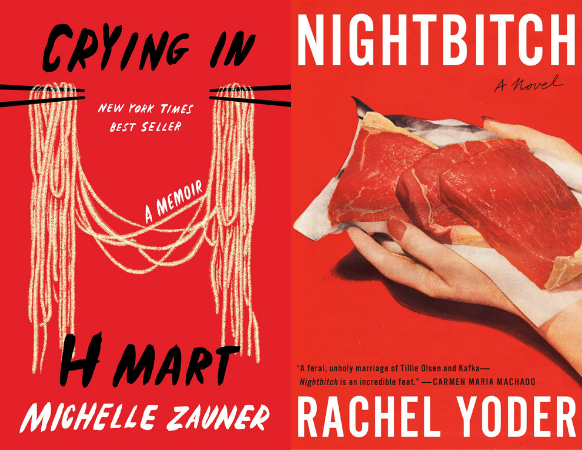
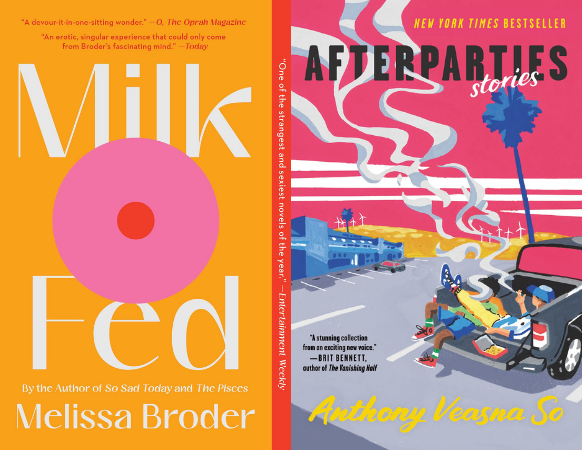
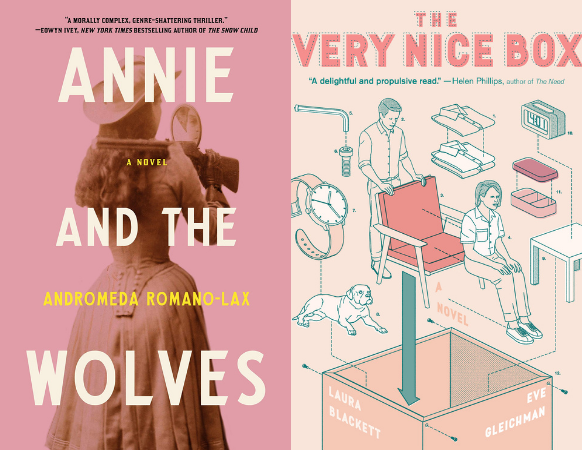
Back by popular demand, Electric Literature is hosting our second annual “Best Book Cover of the Year” tournament, where readers determine which cover designs impressed in 2021. Just as the Italian Renaissance was born of the bubonic plague, will covid’s enduring grasp on society inspire similarly enlightened art? Help us decide which of these books are the most innovative, accurate, and visually appealing and who the Da Vincis are among this talented cohort of cover designers, illustrators, artists, and photographers.
Click on the image to enlarge
The following list details all 32 book covers paired in 16 match-ups for the first round, and you can vote for each of your favorites on our Twitter and Instagram stories today. Voting continues throughout the week, with round two on Tuesday, quarterfinals Wednesday, semifinals Thursday, and the final face-off Friday. If you want to really lean into the competitive spirit, download the full bracket here and make your predictions for the entire tournament to see who among your literary friends has the best taste.
Left: Cover design by Rodrigo Corral Studio, illustration by Polly Nor Right: Cover design by Holly Ovenden.
Left: Cover design by Jakob Vala, photograph by Louisa Wells, modeled by Janine Tondu Right: Cover design by Rodrigo Corral Studio, photograph by Roozbeh Roozbehani
Left: Cover design by Stephanie Ross, illustration by Misha Gurnanee Gudibanda Right: Cover design by June Park, photographs by Jose A. Bernat Bacete and Robert Alexander
Left: Cover design by Vince Haig, artwork by Olga Beliaeva based on the photograph “Morning Tea” by Serge N. Kozintsev Right: Cover design by Olga Grlic, cover illustration by Colin Verdi
Whatever your particular situation, we’re willing to bet that this year has probably been a year of unique growth—and failure. Maybe you finally figured out how to unmute—only to realize your boss heard you say (unmuted) that he looks like Lucifer. Maybe you managed to keep your children alive and happy for an entire week—only to realize that the dinosaur-shaped nuggets your 5-year-old demands for every meal actually have no nutritional value. Maybe you’ve finally returned to your pre-pandemic morning routine—only to realize that the barista you’ve been crushing on for two years has replaced their flirty smile with a wedding ring.
On the other hand, maybe we’re wrong. Maybe 2021 has been nothing but rainbows and puppy dogs. Either way, there’s no way you’re on top of your laundry game.
Whatever your life looks like right now, allow us to recommend a handful of literary podcasts interesting enough to distract you from Zoom snafus, vitamin deficiencies, and mundane household chores. Some of them might even distract you from the heartbreak of knowing your favorite cafe is now only serving coffee.
Hosted by Jordan Kisner, author of Thin Places, this podcast is a thoughtful interview series focusing on transformative experiences, liminal spaces, and Deep Existential Things. In every episode, Kisner sits down with a writer and has a meaningful conversation about those “life-wasn’t-the-same-after-that moments.” For a fairly new podcast, Kisner’s guest list features an all-star ensemble: recent interviewees include Maggie Nelson, Susan Orlean, Jericho Brown, Rachel Kushner, and Hanif Abdurraqib.
If memoir is your genre—especially torrid, tell-all memoir—you’ll love Celebrity Memoir Book Club. (Alternatively, if you are the kind of reader who is just a smidge too sophisticated to be caught dead reading JLo’s memoir on the subway, this podcast is also for you.) Co-hosted by two New York comedians, Claire Parker and Ashley Hamilton, every episode is a no-holds-barred review of a celebrity memoir. You can jump in anywhere, but “Lena Dunham Is Not That Kind of Girl” will give you a good sense of the show’s aesthetic. Be warned: though the hosts try to adopt a journalistic approach, sometimes their petty, whore nature gets the best of them (their words, not ours).
The co-hosts of this podcast are all-stars. Marlon James, Man Booker Prize-winning author of A Brief History of Seven Killings, and Jake Morrissey, executive editor (and James’ editor) at Riverhead Books, team up to talk about dead authors. The duo’s episode on “gateway books”—the first books by authors that hooked them into reading more—is our recommended gateway episode.
Canadians Ariel Bissett and Raeleen Lemay became friends IR(online)L via BookTube, and the podcast feels something like an energetic hug from your very bookish friend. Every episode features an organic-feeling conversation between the hosts as they chat about what they’re reading, what they’ve bought to read next, and which books they recommend to listeners. Books Unbound is a great option for heterogeneous bookworms because Ariel and Raleen give airtime to literary fiction, classic literature, poetry, graphic novels, genre fiction, and YA.
NPR podcasts are reliably high quality (if you’re not already listening to Terry Gross, you should probably pause on this list and come back in five years when you get through the Fresh Air archives) and Book of the Day is tailored for flagging attention spans and tight schedules. Every episode features one (sometimes two) book recommendations in 15 minutes or less.
Host Publications is a small press with big dreams. They began as a publisher of international voices, but have since shifted focus to marginalized writers in the United States. Hosted by editors Claire Bowman and Annar Veröld, The Host Dispatch is the press’ latest endeavor and boasts discussions on literature, publishing, the writing life, and all things literary.
Tina and Renee are both book bloggers who met on Bookstagram and bonded over books and their Midwestern identities. Each week, the hosts, self-described “mood readers,” discuss the books they’re reading, the books they’re looking forward to reading, and books that fit within the episode’s “theme” (e.g., backlist reads, one-sit reads, popcorn thrillers, etc.).
Poetry Unbound from On Being Studios is hosted by acclaimed Irish poet and theologian Pádraig Ó Tuama. The series records two 15-minute episodes every week (on Mondays and Fridays), each of which offers a guided reading of a single poem. This podcast is perfect for anyone looking for an immersive, curated poetry experience.
Even if you’re not a writer, you’ll find plenty to love in this look-behind-the-publishing-scenes podcast. Hosted by Bianca Marais, Carly Watters and CeCe Lyra, episodes feature interviews with every type of professional associated with the book world, from authors and editors, agents and publicists, to creative writing instructors, booksellers, and even an intellectual property attorney.
Book Reccos is a new podcast, but its hosts are hardly new to the book world. Jess and Lauren are the Brits behind the @bookreccos Instagram account, and their podcast is in much the same vein. Targeted to listeners interested in discovering new books across genres without spoilers, episodes feature occasional interviews, in-depth reviews of one book, and smorgasbord episodes that explore books on a theme. If you’re looking for a fun way to kill 45 minutes, we recommend starting with the “Taste” episode, which covers both Stanley Tucci’s new foodoir and includes “side dish foodie book” recs—perfect listening for post-Thanksgiving eaters too full to ingest anything by mouth.
Bad on Paper is a podcast slash book club hosted by two 30-something friends, Grace Atwood and Becca Freeman, who dish out good life advice and conversation about “bad” books in weekly doses. The subject matter is eclectic here—episodes might cover anything from snack foods to small business tips—but at least one episode a month is a dedicated book club. A full listing of book club picks is available on the show website.
In 2021, the Keystone XL pipeline, which threatened Indigenous burial and archeological sites, was officially canceled. Canada celebrated its first National Day for Truth and Reconciliation to honor the lost children and survivors of residential schools on September 30. And the Yukon Tribe received the green light to reestablish California condors, a critically endangered species of cultural and ecological importance, in the Pacific Northwest for the first time in over a century. Indigenous activists fought hard for each of these wins.
It’s time to forget colonial and reductionist narratives about what year Columbus sailed west. Instead, let’s celebrate the abundance of works by talented Native writers being published in 2021: explore characters who go undercover in FBI investigations, delve into a parent’s difficult past, reclaim their land and reframe their history for the better. These 10 new books from Native authors are dissimilar from one another in many ways—they span from fiction to nonfiction, genre to literary pieces, and are set everywhere from Oklahoma to Michigan—but each narrative proves propulsive. Discover who the villains are, whether they are cast as simply as capitalist drug dealers or as complexly as systemic racism. Explore the works of highly decorated fiction writers and those making scorching debuts.
Seamlessly blending Cherokee folklore and generational trauma, Brandon Hobson’s second novel builds on the themes that earned him a National Book Award nomination in 2018. Told from multiple perspectives, the novel follows the Echota family as they prepare for their annual bonfire commemorating the loss of their middle child, killed by a white police officer 15 years before the story opens. When Maria Echota, the family matriarch, agrees to foster a 12-year-old Cherokee boy navigating his own trauma, the family’s emotional scars—visible and unseen—are given new light. The Removed is a haunting blurring of past and present, grief and hope, purgatory and Earth.
The death of Geller’s mother, following a period of homelessness and substance abuse, serves as the impetus for the author’s journey into the past. In the assured prose of a creative writing instructor, Geller’s memoir traces her mother’s departure from the Navajo reservation at 19 and catalogs her life thereafter in letters, photographs, diaries, and personal items. As Geller reconstructs her mother’s story, she is forced to confront her own. This memoir is a moving examination of Navajo identity, family relationships, and the power of history.
In a dystopian universe, only a precious few—the Indigenous people of North America—retain the ability to dream. In residential “schools” across a disaster-scarred landscape, the government imprisons Native people and harvests their bone marrow to treat non-dreamers. The novel, DiMaline’s second installment in her young adult series, picks up where The Marrow Thieves left off: 17-year-old Frenchie wakes up in a dark room while his found family of dreamers searches for him on the outside. Hunting by Stars is a page-turning adventure that pairs a diverse cast with high stakes.
Rosalie Iron Wing spends the first 12 years of her life in communion with the land. Her Native father raises her in the tradition of the Dakota people with a deep respect for her roots. But when he dies, Rosalie’s ties to her history are abruptly severed. After six years in a white foster care family, she marries a white farmer, becomes a mother, and makes a life on land stolen from her ancestors. The story opens 28 years later when a widowed Rosalie finally returns to her home to reclaim her past. Told in narratives layered with the voices of Rosalie and her female ancestors, Diane Wilson’s debut is a meditation on generational loss and a people’s profound connection to the land.
It’s 1926 and Two Feathers, a young Cherokee woman, is determined to succeed as a horse diver for the Glendale Park Zoo, an amusement park in segregated Nashville. But when a sinkhole opens up during a performance, Two Feathers’ injuries sideline her act and strange things begin happening at the Park. Blending historical fiction and magical realism, Margaret Verble’s eclectic cast of characters offer readers a lens on race and social class against the backdrop of a dangerous and outlandish landscape.
Savannah Johnston’s debut is a post-colonial collection of stories about the everyday lives of Indigenous people in Oklahoma. The characters in Rites are flawed and complex, many of them trapped in cycles of intergenerational harm; indeed, some of them actively perpetuate cycles of despair. Johnston’s stories give an unflinching look into the modern-day Indigenous experience.
In this YA thriller, 18-year-old Daunis Fontaine struggles to find belonging, whether it is with her paternal Anishinaabe side on the Ojibwe reservation, or her white maternal side in Sault Ste. Marie, Michigan. Daunis witnesses a murder and finds herself undercover in an FBI investigation regarding a hallucinogenic form of meth with an ever-increasing body count. In this debut, Boulley has crafted a robust lead who navigates familial struggles and sacrifices, fake romance and secrets, hockey and chemistry, and grief and racism with nuance and heart.
Kyle R. Mays, a Black Saginaw Chippewa writer and historian, explores anti-Blackness and settler colonialism alongside one another in order to reframe our understanding of American history. Mays’ work is novel in that it acknowledges the intersectional nature of Black and indigenous struggles for freedom, both historically and in the present moment.
As part of Beacon Press’s ReVisioning American History series, the book explores everything from The Declaration of Independence and sacred Native texts to the Civil Rights Movement and modern-day conversations about cultural appropriation. In tackling the origins of the riffs between Indigenous and Black communities and the shared harm that capitalism and colonialism have inflicted on both, the potential for Afro-Indigenous solidarity is presented as a powerful tool in combating white supremacy.
Jade escapes the parts of her life she doesn’t like to think about—like living with her abusive, alcoholic father or that fact that she doesn’t speak to her mom—by delving instead into the gore and drama of slasher films. Her encyclopedic knowledge of Halloween films becomes more than a lighthearted obsession though, when she becomes convinced that her hometown of Proofrock, Idaho is under the grasp of a very real serial killer. Graham Jones doesn’t shy away from graphic descriptions of bodies or characters battling with the darkest realms of human experience, spanning everything from gentrification to child abuse. But the creepiness and gore is not just decoration and instead serves the emotional heart of the story: a young, part-Indian girl trying to make sense of her trauma, to survive.
It’s just bookseller Tookie’s bad luck that when Flora—the most annoying customer at the independent Minneapolis bookstore where she works—dies in November 2019, she decides to stick around as a ghost. In a story that spans the following historic year, particularly for Minneapolitans, the death of this acquaintance and the murder of George Floyd work alongside one another on personal and political planes to interrogate the ways in which we are haunted, by histories of violence, our own pasts, and all that we cannot change.
With complicated relationships taking center stage (or perhaps bookstore aisle, in this case), we discover that “Indigenous wannabe” Flora considers Tookie her best friend and that Tookie, who is Ojibwe, ends up married to the tribal cop who arrested her before her ten-year stint in prison. In a book that is as funny as it is poignant, Pulitzer prize-winner Erdich grapples with this contemporary moment of grief, violence against Black and Indigenous bodies, and national unrest, without forgetting the weight of history and how it continues to shape the present day — a specter not always seen but intimately felt.
Her name was Felicity; she had called herself Fliss as a small child, and it had stuck. The children in her reception class at Holly Grove School called her Miss Fliss, affectionately. She had been a pretty child and was a pretty woman, with tightly curling golden hair and pale blue eyes. Her classroom was full of invention, knitted dinosaurs, an embroidered snake coiling round three walls. She loved the children—almost all of them—and they loved her. They gave her things—a hedgehog, newts, tadpoles in a jar, bunches of daffodils. She did not love them as though they were her own children: she loved them because they were not. She taught bush-haired boys to do cross-stitch, and shy girls to splash out with big paintbrushes and tubs of vivid reds and blues and yellows.
She wondered often if she was odd, though she did not know what she meant by “odd.” One thing that was odd, perhaps, was that she had reached the age of thirty without having loved, or felt close, to anyone in particular. She made friends carefully—people must have friends, she knew—and went to the cinema, or cooked suppers, and could hear them saying how nice she was. She knew she was nice, but she also knew she was pretending to be nice. She lived alone in a little red brick terraced house she had inherited from an aunt. She had two spare rooms, one of which she let out, from time to time, to new teachers who were looking for something more permanent, or to passing students. The house was not at all odd, except for the dolls.
She did not collect dolls. She had over a hundred, sitting in cosy groups on sofas, perching on shelves, stretched and sleeping on the chest of drawers in her bedroom. Rag dolls, china dolls, rubber dolls, celluloid dolls. Old dolls, new dolls, twin dolls (one pair conjoined). Black dolls, blond dolls, baby dolls, chubby little boys, ethereal fairy dolls. Dolls with painted surprised eyes, dolls with eyes that clicked open and closed, dolls with pretty china teeth, between pretty parted lips. Pouting dolls, grinning dolls. Even dolls with trembling tongues.
The nucleus of the group had been inherited from her mother and grandmother, both of whom had loved and cared for them. There were four: a tall ladylike doll in a magenta velvet cloak, a tiny china doll in a frilly dress with forget-me-not painted eyes, a realistic baby doll with a cream silk bonnet, closing eyes and articulated joints, and a stiff wooden doll, rigid and unsmiling in a black stuff gown.
Because she had those dolls—who sat in state in a basket chair— other dolls accumulated. People gave her their old dolls—“we know you’ll care for her.” Friends thinking of Christmas or birthday presents found unusual dolls in jumble sales or antique shops.
The ladylike doll was Miss Martha. The tiny china doll was Arabel. The baby doll was Polly. The rigid doll was Sarah Jane. She had an apron over her gown and might once have been a domestic servant doll.
Selected children, invited to tea and cake, asked if she played with the dolls. She did not, she replied, though she moved them round the house, giving them new seats and different company.
It would have been odd to have played with the dolls. She made them clothes, sometimes, or took one or two to school for the children to tell stories about.
She knew, but never said, that some of them were alive in some way, and some of them were only cloth and stuffing and moulded heads. You could even distinguish, two with identical heads under different wigs and bonnets, of whom one might be alive—Penelope with black pigtails—and one inert, though she had a name, Camilla, out of fairness.
There was a new teacher, that autumn, a late appointment because Miss Bury had had a leg amputated as a result of an infection caught on a boating holiday on an African river. The new teacher was Miss Coley. Carole Coley. The head teacher asked Fliss if she could put her up for a few weeks, and Fliss said she would gladly do so. They were introduced to each other at a teaparty for incoming teachers.
Carole Coley had strange eyes; this was the first thing Fliss noticed. They were large and rounded, dark and gleaming like black treacle. She had very black hair and very black eyelashes. She wore the hair, which was long, looped upwards in the nape of her neck, under a black hairslide. She wore lipstick and nail varnish in a rich plum colour. She had a trim but female body and wore a trouser suit, also plum. And glittering glass rings, quite large, on slender fingers. Fliss was intimidated, but also intrigued. She offered hospitality— the big attic bedroom, shared bath and kitchen. Carole Coley said she might prove to be an impossible guest. She had two things which always came with her:
“My own big bed with my support mattress. And Cross-Patch.”
Fliss considered. The bed would be a problem but one that could be solved. Who was Cross-Patch?
Cross-Patch turned out to be a young Border collie, with a rackety eye-patch in black on a white face. Fliss had no pets, though she occasionally housed the classroom mice and tortoises in the holidays. Carole Coley said in a take it or leave it voice, that Cross-Patch was very well trained.
“I’m sure she is” said Fliss, and so it was settled. She did not feel it necessary to warn Carole about the dolls. They were inanimate, if numerous.
Carole arrived with Cross-Patch, who was sleek and slinky. They stood with Fliss in the little sitting room whilst the removal men took Fliss’s spare bed into storage, and mounted with Carole’s much larger one. Carole was startled by the dolls. She went from cluster to cluster, picking them up, looking at their faces, putting them back precisely where they came from. Cross-Patch clung to her shapely calves and made a low throaty sound.
“I wouldn’t have put you down as a collector.”
“I’m not. They just seem to find their way here. I haven’t bought a single one. I get given them, and people see them, and give me more.”
“They’re a bit alarming. So much staring. So still.”
“I know. I’m used to them. Sometimes I move them round.”
Cross-Patch made a growly attempt to advance on the sofa. Carole raised a firm finger. “No, Cross-Patch. Sit. Stay. These are not your toys.”
Cross-Patch, it turned out, had her own stuffed toys—a bunny rabbit, a hedgehog—with which she played snarly, shaking games in the evenings. Fliss was impressed by Carole’s authority over the animal. She herself was afraid of it, and knew that it sensed her fear.
Carole was a good lodger. She was helpful and unobtrusive. Everything interested her—Fliss’s embroidery silks, her saved children’s books from when she was young, her mother’s receipts, a bizarre Clarice Cliffe tea-set with a conical sugar-shaker. She made Fliss feel that she was interesting—a feeling Fliss almost never had, and would have said she didn’t want to have. It was odd being looked at, appreciatively, for long moments. Carole asked her questions, but she could not think up any questions to ask in return. A few facts about Carole’s life did come to light. She had travelled and worked in India. She had been very ill and nearly died. She went to evening classes on classical Greece and asked Fliss to come too, but Fliss said no. When Carole went out, Fliss sat and watched the television, and Cross-Patch lay watchfully in a corner, guarding her toys. When Carole returned, the dog leaped up to embrace her as though she was going for her throat. She slept upstairs with her owner in the big bed. Their six feet went past Fliss’s bedroom door, pattering, dancing.
Carole said the dolls were beginning to fascinate her. So many different characters, so much love had gone into their making and clothing. “Almost loved to bits, some of them,” said Carole, her treacle eyes glittering. Fliss heard herself offer to lend a few of them, and was immediately horrified. What on earth would Carole want to borrow dolls for? The offer was odd. But Carole smiled widely and said she would love to have one or two to sit on the end of her big bed, or on the chest of drawers. Fliss was overcome with nervous anxiety, then, in case Cross-Patch might take against the selected dolls, or think they were toys. She looked sidelong at Cross-Patch, and Cross-Patch looked sidelong at her, and wrinkled her lip in a collie grin. Carole said
“You needn’t worry about her, my dear. She is completely well-trained. She hasn’t offered to touch any doll. Has she?”
“No,” said Fliss, still troubled by whether the dog would see matters differently in the bedroom.
When they went to bed they said good-night on the first floor landing and Carole went up to the next floor. She borrowed a big rag doll with long blond woollen plaits and a Swiss sort of apron. This doll was called Priddy, and was not, as far as Fliss knew, alive. She also borrowed—surprisingly—the rigid Sarah Jane, who certainly was alive. I love her disapproving expression, said Carole. She’s seen a thing or two, in her time. She had painted eyes, that didn’t close.
She did not collect dolls. She had over a hundred, sitting in cosy groups on sofas, perching on shelves, stretched and sleeping on the chest of drawers in her bedroom.
Other dolls took turns to go up the stairs. Fliss noticed, without formulating the idea, that they were always grown-up or big girl dolls, and they never had sleeping eyes.
Little noises came down the stairs. A cut-off laugh, an excited whisper, a creak of springs. Also a red light spread from the door over the sage-green staircarpet.
One night, when she couldn’t sleep, Fliss went down to the kitchen and made Horlicks for herself. She then took it into her head to go up the stairs to the spare room; she saw the pool of red light and knew Carole was not asleep. She meant to offer her Horlicks.
The door was half open. “Come in” called Carole, before Fliss could tap. She had put squares of crimson silk, weighted down with china beads, over the bedside lamps. She sat on the middle of her big bed, in a pleated sea-green nightdress, with sleeves and a high neck. Her long hair was down, and brushed into a fan, prickling with an electric life of its own. Cross-Patch was curled at the foot of the bed.
“Come and sit down,” said Carole. Fliss was wearing a baby blue nightie in a fine jersey fabric, under a fawn woolly dressing-gown.
“Take that off, make yourself comfortable.”
“I was—I was going to—I couldn’t sleep . . . .”
“Come here,” said Carole. “You’re all tense. I’ll massage your neck.”
They sat in the centre of the white quilt, made ruddy by light, and Carole pushed long fingers into all the sensitive bits of Fliss’s neck and shoulders, and released the nerves and muscles. Fliss began to cry.
“Shall I stop?”
“Oh no, don’t stop, don’t stop. I—
“This is terrible. Terrible. I love you.”
“And what’s terrible about that?” asked Carole, and put her arms around Fliss, and kissed her on the mouth.
Fliss was about to explain that she had never felt love and didn’t exactly like it, when they were distracted by fierce snarling from Cross-Patch.
“Now then, bitch,” said Carole. “Get out. If you’re going to be like that, get out.”
And Cross-Patch slid off the bed, and slunk out of the door. Carole kissed Fliss again, and pushed her gently down on the pillows and held her close. Fliss knew for the first time that terror that all lovers know, that the thing now begun must have an ending. Carole said “My dear, my darling.” No one had said that to her.
They sat side by side at breakfast, touching hands, from time to time. Cross-Patch uttered petulant low growls and then padded away, her nails rattling on the lino. Carole said they would tell each other everything, they would know each other. Fliss said with a light little laugh that there was nothing to know about her. But nevertheless she did more of the talking, described her childhood in a village, her estranged sister, her dead mother, the grandmother who had given them the dolls.
Cross-Patch burst back into the room. She was carrying something, worrying it, shaking it from side to side, making a chuckling noise, tossing it, as she would have tossed a rabbit to break its neck. It was the baby doll, Polly, in her frilled silk bonnet and trailing embroidered gown. Her feet in their knitted bootees protruded at angles. She rattled.
Carole rose up in splendid wrath. In a rich firm voice she ordered the dog to put the doll down, and Cross-Patch spat out the silky creature, slimed with saliva, and cowered whimpering on the ground, her ears flat to her head. Masterfully Carole took her by the collar and hit her face, from side to side, with the flat of her hands. “Bad dog,” she said, “bad dog,” and beat her. And beat her.
The rattling noise was Polly’s eyes, which had been shaken free of their weighted mechanism, and were rolling round inside her bisque skull. Where they had been were black holes. She had a rather severe little face, like some real babies. Eyeless it was ghastly.
“My darling, I am so sorry,” said Carole. “Can I have a look?”
Fliss did not want to relinquish the doll. But did. Carole shook her vigorously. The invisible eyes rolled.
“We could take her apart and try to fit them back.”
She began to pull at Polly’s neck.
“No, don’t, don’t. We can take her to the dolls’ hospital at the Ouse Bridge. There’s a man in there—Mr. Copple—who can mend almost anything.”
“Her pretty dress is torn. There’s a toothmark on her face.”
“You’ll be surprised what Mr. Copple can fix,” said Fliss, without complete certainty. Carole kissed her and said she was a generous creature.
Mr. Copple’s shop was old and narrow-fronted, and its back jutted out over the river. It had old window-panes, with leaded lights, and was a tiny cavern inside, lit with strings of fairy-lights, all different colours. From the ceiling, like sausages in a butcher’s shop, hung arms, legs, torsos, wigs, the cages of crinolines. On his glass counter were bowls of eyeballs, blue, black, brown, green, paperweight eyes, eyes without whites, all iris. And there were other bowls and boxes with all sorts of little wire joints and couplings, useful elastics and squeaking voice boxes.
Mr. Copple had, of course, large tortoiseshell glasses, wispy white hair and a bad, greyish skin. His fingers were yellow with tobacco.
“Ah,” he said, “Miss Weekes, always a pleasure. Who is it this time?”
Carole replied. “It was my very bad dog. She shook her. She has never done anything like this before.”
The two teachers had tied Polly up into a brown paper parcel. They did not want to see her vacant stare. Fliss handed it over. Mr. Copple cut the string.
“Ah,” he said again. “Excuse me.”
He produced a kind of prodding screwdriver, skilfully decapitated Polly, and shook her eyes out into his hand.
“She needs a new juncture, a new balance. Not very difficult.” “There’s a bite mark,” said Carole gloomily. “When you come back for her, you won’t know where it was.
And I’ll put a stitch or two into these pretty clothes and wash them out in soapsuds. She’s a Million Dollar Baby. A Bye-Lo baby. Designed by an American, made in Germany. In the 1920s.”
“Valuable?” asked Carole casually.
“Not so very. There were a large number of them. This one has the original clothes and real human hair. That puts her price up. She is meant to look like a real newborn baby.”
“You can see that,” said Carole.
He put the pieces of Polly into a silky blue bag and attached a label on a string. Miss Weekes’s Polly.
They collected her the next week and Mr. Copple had been as good as his word. Polly was Polly again, only fresher and smarter. She rolled her eyes at them again, and they laughed, and when they got her home, kissed her and each other.
One of the most interesting things about Polly was that her look was sometimes composed and babylike, but, in some lights, from some angles, could appear angry.
Fliss thought day and night about what she would do when Carole left. How it would happen. How she would bear it. Although, perhaps because, she was a novice in love, she knew that the fiercer the passion, the swifter and the harsher the ending. There was no way they two would settle into elderly domestic comfort. She became jealous and made desperate attempts not to show it. It was horrible when Carole went out for the evening. It was despicable to think of listening in to Carole’s private calls, though she thought Carole listened to her own, which were of no real interest. The school year went on, and Carole began to receive glossy brochures in the post, with pictures of golden sands and shining white temples. She sat looking at them in the evenings, across the hearth from Fliss, surrounded by dolls. Fliss wanted to say “Shall we go together?” and was given no breath of space to do so. Fliss had always spent her holidays in Bath, making excursions into the countryside. She made no arrangements. Great rifts and gaps of silence spread into the texture of their lives together. Then Carole said
“I am going away for a month or so. On Sunday. I’ll arrange for the rent to be paid while I’m away.”
“Where,” said Fliss. “Where are you going?”
“I’m not sure. I always do go away.”
Can I come? could not be said.
So Fliss said, “Will you come back?”
“Why shouldn’t I? Everyone needs a bit of space and time to herself, now and then. I’ve always found that. I shall miss the dolls.”
“Would you like to take one?” Fliss heard herself say. “I’ve never given one away, never. But you can take one—”
Carole kissed her and held her close.
“Then we shall both want to come back—to the charmed circle. Which doll are you letting me have?”
“Any of them,” cried Fliss, full of love and grief. “Take anyone at all. I want you to have the one you want.”
She did not expect, she thought later, that Carole would take one of the original four. Still less, that of those four, she would choose Polly, the baby, since her taste had always been for grown girls. But Carole chose Polly, and watched Fliss try to put a brave face on it, with an enigmatic smile. Then she packed and left, without saying where she was going.
Before she left, in secret, Fliss kissed Polly and told her “Come back. Bring her back.”
Cross-Patch went with them. The big empty bed remained, a hostage of a sort.
Fliss did not go to Bath. She sat at home, in what turned out to be a dismal summer, and watched the television. She watched the Antiques Roadshow, and its younger offshoot, Flog It!, in which people brought things they did not want to be valued by experts and auctioned in front of the cameras. Fliss and Carole had watched it together. They both admitted to a secret love for the presenter, the beautiful Paul Martin, whose energy never flagged. Nor, Fliss thought, did his kindness and courtesy, no matter what human oddities presented themselves. She loved him because he was reliable, which beautiful people, usually, were not.
And so it came about that Fliss, looking up idly at the screen from the tray of soup and salad on her knee, saw Polly staring out at her in close-up, sitting on the Flog It! valuing table. It must be a complete lookalike, Fliss thought. The bisque face, with its narrow eyes and tight mouth appeared to her to have a desperate or enraged expression. One of the most interesting things about Polly was that her look was sometimes composed and babylike, but, in some lights, from some angles, could appear angry.
The valuer, a woman in her forties, sweetly blond but sharp-eyed, picked up Polly and declared she was one of the most exciting finds she had met on Flog It! She was, said the purring lady, a real Bye-Lo Baby, and dressed in her original clothes. “May I look?” she asked sweetly, and upended Polly, throwing her silk robe over her head, exposing her woollen bootees, her sweet silk panties, the German stamps on her chubby back, to millions of viewers. Her fingernails were pointed, and painted scarlet. She pulled down the panties and ran her nails round Polly’s hip-joints. Bye-Lo Babies were rarer, and earlier, if they had jointed composition bodies than if they had cloth ones, with celluloid hands sewn on. She took off Polly’s frilled ivory silk bonnet, and exclaimed over her hair—“which, I must tell you, I am 90% sure is real human hair which adds to her value.” She pushed the hair over Polly’s suspended head and said “Ah, yes, as though we needed to see it.” The camera closed in on the nape of Polly’s neck. “Copr. By Grace S Putnam// MADE IN GERMANY.”
“Do you know the story of Grace S Putnam and the baby doll?” scarlet-nails asked the hopeful seller and there was Carole, in a smart Art Deco summer shirt in black and white, smiling politely and following the movements of the scarlet nails with her own smooth mulberry ones.
“No,” said Carole into Fliss’s sitting room, “I don’t know much about dolls.”
Her face was briefly screen-size. Her lipstick shone, her teeth glistened. Fliss’s knees began to knock, and she put down her tray on the floor.
Grace Story Putnam, the valuing lady said, had wanted to make a real baby doll, a doll that looked like a real baby, perhaps three days old. Not like a Disney puppet. So this formidable person had haunted maternity wards, sketching, painting, analysing. And never could she find the perfect face with all the requisite qualities.
She leaned forwards, her blond hair brushing Carole’s raven folds.
“I don’t know if I should tell you this.”
“Well, now you’ve started, I think you should,” said Carole, always Carole.
“It is rumoured that in the end she saw the perfect child being carried past, wrapped in a shawl. And she said, wait, this is the one. But that baby had just died. Nevertheless, the story goes, the determined Mrs. Putnam drew the little face, and this is what we have here.”
“Ghoulish,” said Carole, with gusto. The camera went back to Polly’s face, which looked distinctly malevolent. Fliss knew her expression must be unchanging, but it did not seem like that. Her stare was fixed. Fliss said “Oh, Polly—”
“And is this your own dolly?” asked the TV lady. “Inherited perhaps from your mother or grandmother. Won’t you find it very hard to part with her?”
“I didn’t inherit her. She’s nothing to do with me, personally. A friend gave her to me, a friend with a lot of dolls.”
“But maybe she didn’t know how valuable this little gift was? The Bye-Los were made in great numbers—even millions—but early ones like this, and with all their clothes, and real human hair, can be expected to fetch anywhere between £800 and well over £1,000— even well over, if two or more collectors are in the room. And of course she may have her photo in the catalogue or on the website . . .”
“That does surprise me,” said Carole, but not as though it really did.
“And do you think your friend will be happy for you to sell her doll?”
“I’m sure she would. She is very fond of me, and very generous-hearted.”
“And what will you do with the money if we sell Dolly, as I am sure we shall—”
“I have booked a holiday on a rather luxurious cruise in the Greek islands. I am interested in classical temples. This sort of money will really help.”
There is always a gap between the valuation of an item and the showing of its auction. Fliss stared unseeing at the valuation of a hideous green pottery dog, a group of World War I medals, an album of naughty seaside postcards. Then came Polly’s moment. The auctioneer held her aloft, his gentlemanly hand tight round her pudgy waist, her woolly feet protruding. Briefly, briefly, Fliss looked for the last time at Polly’s sweet face, now, she was quite sure, both baleful and miserable.
“Polly,” she said aloud. “Get her. Get her.”
She did not know what she wanted Polly to do. But she saw Polly as capable of doing something. And they were—as they had always been—on the same side, she and Polly.
She thought, as the bidding flew along, a numbered card flying up, a head nodding, a row of concentrated listeners with mobile phones, waiting, and then raising peremptory fingers, that she herself had betrayed Polly, but that she had done so out of love and goodwill. “Oh, Polly,” she said, “Get her,” as Carole might have said to Cross-Patch.
Carole was standing, composed and beautiful, next to Paul Martin, as the tens turned into hundreds and the hundreds to thousands. He liked sellers to show excitement or amazement, and Carole— Fliss understood her—showed just enough of both to keep the cameras happy, but was actually rigid inside, like a stone pillar of willpower and certainty. Polly went for £2,000, but it was not customary to show the sold object again, only the happy face of the seller, so, for Fliss, there was no moment of good-bye. And you were not told where sold objects were going.
All the other dolls were staring, as usual. She turned them over, or laid them to sleep, murmuring madly, get her, get her.
She did not suppose Carole would come back, and wondered if she should get rid of the bed. The headmistress at the school was slightly surprised when Fliss asked her if Carole was coming back—“do you know something I don’t?” Then she showed Fliss a postcard from Crete, and one from Lemnos. “I go off on my own with my beach towel and a book and lie on the silver sand by the wine-dark sea, and feel perfectly happy.” Fliss asked the headmistress if she knew where Cross-Patch was, and the headmistress said she had assumed Fliss was in charge of her, but if not, presumably, she must be in kennels.
A week later, the head told Fliss that Carole was in hospital. She had had a kind of accident. She had been unconscious for some time, but it was clear, from the state of her nervous system, and from filaments and threads found on her swimsuit and in her hair, that she had swum, or floated, into a swarm of minute stinging jellyfish— there are millions out there, this summer, people are warned, but she liked to go off on her own.
Fliss didn’t ask for more news, but got told anyway. Carole’s eyes were permanently damaged. She would probably never see again; at best, vestigially.
She would not, naturally, be coming back.
The headmistress looked at Fliss, to see how she took this. Fliss contrived an expression of conventional, distant shock, and said several times, how awful, how very awful.
The headmistress said “That dog of hers. Do you think anyone knows where it is? Do you think we should get it out of the kennels? Would you yourself like to have it, perhaps—you all became so close?”
“No,” said Fliss. “I’m afraid I never liked it really. I did my best as I hope I always shall. I’m sure someone can be found. It has a very uncertain temper.”
She went home and told the dolls what had happened. She thought of Polly’s closed, absent little face. The dolls made an inaudible rustling, like distant birds settling. They knew, Fliss thought, and then unthought that thought, which could be said to be odd.
The highest compliment I’ve ever received came to me on the University of Chicago campus. Late for a panel at a graduate conference, I was rushing around in a long floral dress and big wool coat, tote bag of books swinging at my side. My hair was frizzy and my makeup almost certainly smudged in the light autumn rain. In my hurry, I nearly ran into an undergrad, who turned around to fix me with a searching look. I assumed he would say something rude—tell me to watch where I was going—but instead he said, “You look just like Meg Ryan,” and walked away.
I don’t really look like Meg Ryan, aside from being blonde, but I love Meg Ryan. So all weekend long I thought about that compliment, which made my frazzled state feel sort of special. Meg Ryan is the original disheveled-chic romantic comedy heroine, the patron saint of the high maintenance white woman. And: she’s impeccably dressed. After all, who is a bigger icon of fall fashion than Meg Ryan as Sally Albright in When Harry Met Sally? Against the background of orange leaves in Central Park, it’s widely acknowledged that Meg-as-Sally is a blueprint for fall fashion: bowler hats and chunky sweaters, mom jeans and plaid blazers.
Would I ever spend my autumns in a big city, wandering around and having witty conversations with my friends?
And I love When Harry Met Sally—it was the first R-rated movie I ever watched. It’s a clear memory in my sheltered Midwestern childhood: at a middle school sleepover with my sister and our best friend, someone (no one can remember who) picked it off the DVD shelf and shockingly, no one stopped us from pushing play. Sally’s fake orgasm in Katz’s Deli was the dirtiest movie scene I knew, and like a women’s magazine in the checkout line, I was fascinated by the question of whether men and women could ever be friends. But more than that, the film painted a picture of a life I wanted. Would I ever spend my autumns in a big city, wandering around and having witty conversations with my friends? To me, When Harry Met Sally isn’t about fall at all—it’s not even about whether men and women can be platonic friends. When Harry Met Sally is really about what adults do over the weekend.
This question has haunted me for years: what do adults do all weekend? I grew up in a house where Saturdays were for chores and Sundays were for church. Weekends were a time for productivity, time to get ahead on all the housework and small projects that went neglected through the work week, time to sit through hours of my sibling’s soccer games. Then I went to college, where my weekends were for parties, for long late night talks with a guy from philosophy class, for piles of homework saved just for Sunday. Weekends were easy in my youth—other people told me what to do and I did it. The influence of my parents felt much like the influence of my college roommates and friend groups: they told me what we were up to over the weekend and we did it, together. Party with a theme, pregame, party with no theme, homework, go see a friend in her play, get up early and do homework in the library. Rinse and repeat.
I watched TV and read voraciously, often waiting until Monday and its predictable routine to roll around.
The predictability of my weekends meant that I had no real thoughts about them. Weekends happened to me—I exercised little agency in putting them together. But then I graduated college. I moved to Budapest, Hungary with one close friend, a city where I had almost no other friends. I missed the predictability of my friend group, the easy role I had, the plans other people made for me. In Budapest, I was a primary school English teacher—a job that I loved but didn’t require all of my free time like being a student had. I worked barely 30 hours a week, an amount that my fellow teachers considered quite busy. “You shouldn’t have to work over the weekend at all,” they’d tell me. “Go enjoy your free time!”
But I couldn’t enjoy my free time. What the hell was I supposed to do with it?! Weekends were amorphous and depressing. I felt that I should do things that would be productive—laundry, grocery shopping, or jogging—but I couldn’t bring myself to do them. I wanted to have weekends that appeared wildly fun and full of European adventure, but at the same time, I wanted weekends that felt restful. Should I make plans? Should I relax? The only times I ever left the apartment were times my roommate Kate came up with plans for us, bringing me to wine bars and art festivals. Left to my own devices, I barely left my bed. I watched TV and read voraciously, often waiting until Monday and its predictable routine to roll around. When I got to school on Monday morning, other teachers would ask me what I did all weekend. What kind of young person mischief did I get up to? Had I visited any new restaurants? Did I go to any clubs? “No,” I’d always say. “I really just stayed around here.”
Weekends might be the background for the film, but they’re also what makes the relationship possible.
It was colored by these questions—by my depressive and depressing weekends—that I rewatched When Harry Met Sally for the first time in years. On a particularly gray November Sunday night, Kate found it on Netflix and suggested that we watch it together; the perfect fall movie. And as we watched, I realized that When Harry Met Sally was as preoccupied with the wide, free, and lightly depressing expanse of weekends as I was.
After all, once they reconnect, Harry and Sally spend most of their friendship hanging out in broad daylight. These scenes are not work lunches, happy hours, or dinners in the middle of the week. They spend very few nights out together. When Harry and Sally are together, time stretches on in scenes full of a wide slant of sunlight, never the rush that comes with meeting up during the workday. No—their friendship is one that takes place over the weekend, one of strolling and chatting, never hurrying. And Harry and Sally do the kinds of activities that adults in a city do on the weekend. They do cultural activities, wandering through the Met. They go out to lunch, help their friends move, go shopping, run errands. They catch up.
Weekends might be the background for the film, but they’re also what makes the relationship possible. Sure, When Harry Met Sally wants us to think that a scene at the Met is important because it’s the first time Harry asks Sally out. But if we can look past the plot of the film, we’ll see a relationship that unfolds over weekends. With Harry and Sally, weekends are an opportunity for connection, for catching up. I realized, in my tiny apartment in Budapest, holed up and lonely without the crush of schoolwork, that When Harry Met Sally was just as concerned with how to fill free time as I was. What would be a worthwhile way to spend a Saturday and Sunday was always changing for both Harry and Sally: after all, in the Met, their midday moment is the highlight of Harry’s weekend. But for Sally, it’s merely a quick stop on the way to bigger things. She has a date that night—and Harry spent their whole afternoon together trying to ask her out. They both leave that afternoon feeling differently.
There’s no formula for a meaningful weekend. It’s just a feeling—sometimes you can catch it, and sometimes you can’t.
There’s no formula for a meaningful weekend. It’s just a feeling—sometimes you can catch it, and sometimes you can’t.
That year in Budapest, When Harry Met Sally gave me a framework for how to spend weekends, for getting out of my own head. What the film suggests is that it doesn’t matter what you do, really—it doesn’t even matter how good your fall fashion is. What can make your weekend meaningful is who you’re with. It’s not that Harry and Sally are models of how to spend a weekend, though their activities sometimes ring true with my plans. Rather, they let weekends happen—together. I find it oddly comforting that even movie characters look at the weekend and spend time coming up with plans that look awfully similar to mine.
But here’s my disclaimer: I still kind of hate weekends. As a graduate student and writing instructor, it’s so easy to let my weekends fill to the brim with grading papers, revising my own work, meeting with students, prepping my classes for the next week. It’s comforting to be busy, to cross items off a to-do list instead of making plans. After all, there’s less to feel when you’re crushed with work. There’s predictability in not letting yourself decide. But contrast is what makes our lives—and work—meaningful. When Harry Met Sally looks at weekends and their long hours that are still somehow too short and wonders, just like I do, how to take a break and whom to take it with.
Those were the words running through my head the first time I ever smoked weed. Wait, no … those were the words running through my head the first time I ever got stoned. The first time I ever smoked weed, I didn’t actually get stoned, which I understand is a common occurrence (or is it a common non-occurrence?). But the very next night, while sitting on a patio under a starless sky with a dozen or so friends at a café in Amsterdam, the glow of red lights somewhere nearby, I toked my second joint and almost immediately got stoned. And it was then that I realized that every person who had been imposed upon me as an authority figure during my adolescence had lied to me.
I thought back to the countless pastors who told the youth group at weeknight gatherings that marijuana would lead us down a path of sin and bacchanalian debauchery. Lie. (It wasn’t the weed that did that.)
I thought back to the overly-friendly police officer who visited my 5th-grade class every two weeks and dared us not to smoke pot because it was a “gateway” drug. Lie. (Well-intentioned as it may have been at the time.) He also told us that someone would try to give us weed for free to hook us for life. “The first one’s always free, that’s how they get ya,” he would say. Also a lie. (Nobody ever offered me free weed in middle school.)
I thought back to my somewhat confused high school Health teacher who, as I recall, at one point told us not to “inject” marijuana. (Well, actually, that one’s a truth—don’t do that.)
I thought back to all the times during college when I could have passed the dutchie with friends and enjoyed myself—cut loose a bit—but instead opted to abstain because I had believed all the lies. (I was a late bloomer. Oh well … all’s well that ends well, I suppose.)
What’s the point of this story, you ask? The point is that I needed a brief introduction to the shameless self-promotion of my forthcoming novel before giving you the clickbait you came here for. Now on with the self-promotion!
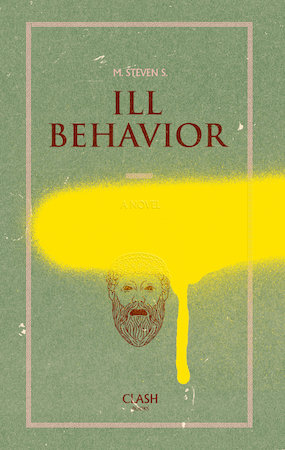
Twelve or so years after sitting outside that Amsterdam café, as I was writing what would become my debut novel, Ill Behavior, I reflected back on that very first body buzz and, with some inspiration from my 2nd-grade teacher (a story for another time), I memorialized the experience with the following passage:
“He brings the flame to the tip of the pipe and takes a hit to the dome, holding the smoke in his lungs before letting it out slow. Tiny THC soldiers deployed from the cerebellum march on Fort Limbs, conquering flesh and leaving the battlefield euphoric and numb. HQ radios for reinforcements and once more [he] deploys the troops who forge into battle with arrogant gusto, their eyes having seen the glory of the coming of the Lord and that place where the grapes of wrath are stored. Truth marches on. Glory fucking halleluiah.”
Who is the “he” in that passage, you ask? He is SOBR, a notorious Los Angeles graffiti writer who is wanted for a murder he did not commit, and so he sets out to clear his graffiti name of the murder with the help of his friend in the LAPD. You can follow him on his short odyssey now! Ill Behavior is being published by the extraordinary indie lit press CLASH Books, and is currently available for purchase on their website (ClashBooks.com), the Capitalist Rain Forest Website, and other places where books are sold.
And now, the main event! 7 lesser-known stoner novels with suggested pairings (legal states only, please).
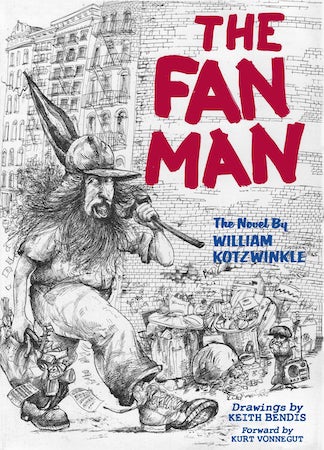
The Fan Man by William Kotzwinkle
This book was given to me by one of the folks in attendance at that Amsterdam café so many years ago, and it was my first foray into the lesser-known counterculture lit of the ‘60s and ‘70s. Nearly everyone reading this list has read Hunter S. Thompson or Thomas Pynchon, Richard Brautigan or Tom Robbins. But have you read Kotzwinkle? I hardly ever hear his name mentioned along with the others, and I never see The Fan Man on lists of this sort.
The story follows Horse Badorties, a befuddled garbage hoarder, on a farcical adventure as he moves from pad to pad and acquires junk on the streets of New York circa 1970. A picaresque in the vein of its famous forebears (e.g., Don Quixote and Candide), the story is not remotely politically correct, nor is it for the faint of heart (or the clean-freaks). But as an installment of Fool’s Literature, is there something we can learn about the mid-20th century from Kotzwinkle’s satire? Honestly, I don’t know—it’s been many years since I first read it, so I’ll have to revisit it again to answer that question. But the reason it’s a stoner novel, man, is due to the unique, sometimes jarring prose in the form of first-person stream-of-consciousness hippie-speak that resides in the mind of Mr. Badorties (who often refers to himself in the third person). It’s a style of writing that pushed the boundaries of literature for its time, and a style that stuck with me ever since I first turned its pages. And as I’ve just discovered that it was re-released in 2015 with an introduction by T.C. Boyle, l will indeed be revisiting this one again very soon. When I do, I’ll be pairing it with something of the indica or indica-dominant variety—Platinum OG or Girl Scout Cookies. And I think you should, too, man. Pack a bowl, take a rip, and enjoy the weird journey of The Fan Man, man.
This is certainly not a lesser-known novel, not at all. I mean, it won the Booker Prize (then called the Man Booker Prize) in 2016 for fuck’s sake. However, I like to think of it as a lesser-known stoner novel. Why? Well, for starters, in the prologue (Oh, you skip the prologue? Don’t. Don’t ever do that again.), we meet our protagonist who is standing trial in the United States Supreme Court. As he sits there, waiting for the pomp and circumstance to begin, he takes “the most glorious toke ever taken in the history of pot smoking,” right there on the floor of the U.S. Supreme Court, “getting high in the highest court of the land.”
But it’s not just that this book opens up with an epic indo-indulging scene that makes it a stoner novel. It’s the entire spirit of the book—irreverent, absurd, enlightening. It’s written with the tone and humor that makes for a good stoner comedy flick. It tackles social issues with supersonic satire. And the writing is something special. Nearly each passage has something to chew on, be it the message or the comedy, the word choices or the flow of the sentences. And about that flow… wow! The prose is often rhythmic and urgent—like reading a hip-hop verse, or listening to slam poetry, which makes sense given Beatty’s background (1990 Grand Poetry Slam Champion). And, apparently, this book is not for squares—a quick glance at the reviews on Capitalist Rain Forrest Website will show you that it doesn’t resonate with everyone. I certainly don’t think you have to be a stoner to enjoy The Sellout, but I think most stoners will dig it.
So, go buy this book, then get your hands on a sativa-dominant hybrid. Personally, I’d stuff my pipe with something like Pineapple Express or Jack Herer. Light up starting on the first page (of the prologue!) and let the high-speed writing take you on a memorable ride.
I list this book as a stoner novel, but not in the traditional sense. Some of the hallmarks of a stoner novel are certainly present here—a character living on the fringe of society, stream-of-consciousness life-questioning internal monologue, dark/absurdist humor, etc. But what pushes this book into non-traditional stoner novel territory is that the reader might actually need to be stoned to understand it. The plot, if one exists, is vague at best. Many scenes leave the sober mind wondering if a greater meaning, or some obvious symbolism, has been missed (or maybe I’m just dumb as shit). Each page makes you reflect on the author’s intent—in that, was there any intent at all? Maybe, maybe not … I have no clue. Perhaps when Beckett wrote Molloy it was simply an exercise in letting his subconscious flow out onto the page without inhibition—the only intent being that the end result was something avant-garde? Or perhaps meaning abounds within its pages and I was too repressed, too literal in my reading to understand it?
Reasonable minds may disagree on the book’s meaning (or lack of meaning), but two things are certain: 1. Molloy is a work of art, written at the hands of a master of his craft, and 2. as with all art, it can be thoroughly enjoyed (and possibly deciphered) while stoned. To tackle Molloy, which is a tough read, you’re gonna need to be focused and engaged, so we’re going full sativa for this one. Grab some Sour Diesel or Green Crack, load up your vape pen, and suck until you get thoroughly stoned… then maybe you’ll come to understand the stone-sucking sequence in the book (and if you do, please DM me).
Honestly, I’m not sure if this is such a well-known novel that I need to characterize it as a lesser-known stoner novel. It might be extremely popular (maybe even essential reading) on the other side of the pond and I’m just not aware of it. I mean, it did inspire a BBC series… with a soundtrack by David Bowie… so I have to think it has some presence among the Brits. But I think I can safely say it’s not a popular novel on the Yankee side of the pond… I’ve never seen it on any of these esteemed listicles… and I don’t recall having seen it referenced in any posts in the r/Books subreddit (longtime lurker here). I first picked up The Buddha of Suburbia just a few years ago when I randomly came across it on the shelves of my favorite used bookstore (an autographed copy, to boot!). And boy am I glad I did!
We meet the protagonist, Karim Amir, as a late-teens/early-20s youth growing up in the 1970s suburbs of London and, eventually, the city itself (with a stint in Yankee-town, USA). His Indian father has become something of a mystic guru to the seekers of their boring suburb, which ultimately leads to the breakup of their family and sets Karim on the path to discovering himself.
Throughout Karim’s journey, Kureishi navigates heavy themes—religion, racism, immigration, sexuality, class, identity—with wit and empathy. Reportedly inspired by his own life, Kureishi’s portrait of what it was like for a mixed-race teenager living in 1970s suburban London, written through the lens of the 1980s, unfortunately rings all too familiar in the 2020s (on both sides of the pond, I’m sure). But Kureishi deftly captures that feeling of late-teen/young adulthood angst, and the journey of self-discovery and reinvention, of both the 1970s and the 1980s (and somehow also the 1990s)… which I proclaim in as much as I can imagine being a teen in the 1970s… I wasn’t alive yet (but I’ve seen Almost Famous!)… and I also wasn’t a teen in the 1980s (but I’ve seen all the John Hughes movies!). Maybe it’s just that the teenage/young-adult mode captured by Kureishi was similar for us Westerners raised between the inventions of the television and the smartphone.
This book is hilarious, irreverent, insightful and deliciously subversive—the hallmarks of a great stoner novel. Oh, and very early on in the story, Karim has a grand revelation while using the loo after toking a joint. Ah, and our cast of characters partake of the legendary Thai sticks a few times throughout the story (more on those below). It’s just an added bonus that the title of the book contains a synonym for weed.
I highly recommend you read this book—highly. Pair this one with your favorite edible—dosage of your choosing, but low enough so you don’t get lost on the page. Maybe throw on that Bowie soundtrack in the background, and prepare yourself to be amused by this delightful book that I’m so happy to have stumbled upon.
Of all the books on this list, I think Steppenwolf most deserves the “stoner novel” moniker. The protagonist, Harry Haller (yes, you guessed it, a loner in the midst of an existential crisis who wanders around the city pondering life’s questions and his place in society), is contemplating suicide when he encounters a man on the street holding a sign advertising a night of “Anarchist Evening Entertainment” at a magic theater (groovy, baby!). The man gives Harry a treatise that inexplicably seems to be written about Harry’s very life. As the morose, uptight, disillusioned Harry seeks out more information on the magic theater, he meets Hermine, a woman who would ultimately save his life by getting him to loosen up a bit (a lot, actually). Hermine teaches Harry how to dance, introduces him to jazz and casual drug use, and gets him laid. More importantly, she convinces him that each of these conventions is a worthy endeavor in living a fulfilling life—that one must lighten up and not take things so seriously. In other words, “eat, drink and be merry” as someone famous once said (Dave Matthews?). When Harry finally makes it to The Magic Theater (not a spoiler), the ticket proclaims “For Madmen Only—Price of Admittance Your Mind” (hey MedMen, I think you’re missing out on some sort of marketing opportunity here) and that’s when the trippy stuff happens.
This novel was clearly written under the fluorescent light of a lava lamp, inspired by the counterculture movement of the 1960s, right?
Wrong.
Steppenwolf was written in the 1920s. It was the counterculture movement of the 1960s (and beyond) that was inspired by Steppenwolf, and there’s no denying its influence. The Magic Theater Company founded in Berkeley in 1967, and the Steppenwolf Theater Company founded in Chicago in 1974—look them up, you’ll recognize some of the alumni. A book by Osho (I assume you saw that documentary?) entitled “For Madmen Only: Price of Admission, Your Mind” published in 1979. Oh, and the band Steppenwolf formed in 1967—ever heard of ‘em?
Steppenwolf is one of my favorite novels. If you haven’t read it, I hope you’ll consider doing so. If you’ve already read it, I hope you’ll consider reading it again… stoned. Get psychedelic with it. Pull up that MedMen app (guys, I’m trying real hard for you here—call me for other promotional opportunities) and order an eighth of OG Kush, maybe some 707, or LSD by Barney’s Farm. Tip your delivery person well. Then grind up that sticky icky icky, roll it in a blunt and dip it in the kief that’s been sitting at the bottom of your grinder for god-knows-how-long (this is what you’ve been saving it for!). Or, you know, do some dabs… if that’s your thing (it’s not mine).
Much like Molloy, this novel doesn’t quite fit this list in the traditional sense. It would probably be better suited for a “Top 7 Lesser-Known Tweaker Novels” list, or a list of “What To Read While Sipping Purple Drank”, but I don’t think they let you write those lists (or maybe they do … Buzzfeed, hit me up). However, I’m including it here as a sort of challenge for the daring stoner.
A little bit about the novel: Hobo vampire junkies. That’s all you really need to know. Hobo vampire junkies, who look and smell like crusty gutter punks, roam the Pacific Northwest knocking over pharmacies to score behind-the-counter drugs. To compare it to a few films, think Drugstore Cowboy gives Twilight a Sucker Punch (the asylum scenes, not the fantasy scenes)… and Edward or whoever-the-fuck never shows up to protect you. As I remember it, The Orange Eats Creeps starts off with a fairly normal, linear plotline, but it soon breaks down into the non-linear madness of a drug-addled fever dream where the story has been highjacked and all that remains are the unreliable fragmented thoughts of our teenage narrator who’s lost her grip on reality as she tries to escape the clutches of a serial killer.
Now, you’re probably wondering “Why is this a stoner novel? It doesn’t sound funny. And it doesn’t sound enlightening.”
Well, you’re right… it’s not.
And it’s not.
But it is a trip. And it is a stunning work of literary art… just as Beckett accomplished with Molloy… and others will draw comparisons to William S. Burroughs. With The Orange Eats Creeps, Krilanovich created a surreal experience that’s unique to her voice and worthy of high praise.
Here’s how I think you should treat this book as a stoner novel: Go out and get that strain of weed you absolutely hate because of how paranoid it makes you. If it’s a BOGO at your local dispensary, then you’re in luck! More to enhance the experience! Pack that bong and rip it as you’ve never ripped before. Then do it again. And again. Smoke all that BOGO and get to reading. Let the language sink into you. Let the foreboding sense of doom crawl into your bloodstream. Get lost on the page. Give in to the paranoia and see what comes out on the flip side… if you dare.
OK, so this is a non-fiction book, not a novel. Sue me. If you’re reading this online, it’s literally free for you to read, and if you’re reading it in print (omg, I’m in print?!) then you’re probably sitting in the lobby of your doctor’s office and you didn’t pay for this magazine/journal anyway. [Editor’s note: Electric Literature ended our print run a decade ago, so you will not be perusing our stories at your local dentist’s chair.]
As responsible, conscientious stoners, I think it’s important for us to be aware of the history of the marijuana trade. The authors of Thai Stick have stitched together an incredible history of the Southern California/Southeast Asia pot trade of the ‘60s and ‘70s, which was largely carried out by globetrotting surfers and fearless watermen. For those who don’t know (I didn’t), a Thai stick was a popular form of weed packaging for shipment and distribution out of Thailand—buds were skewered on bamboo sticks and wrapped tightly with a stringy fiber from the plant (sort of like weed kebabs).
Primarily based on oral histories, this book is as fantastical as any fictional stoner novel. It’s an adventure on the high seas like you couldn’t imagine, and an eye-opening portrait of the SoCal drug culture, particularly that of my birthplace, Orange County, California (apparently the OC wasn’t always just religious teetotalers … who knew?). Fair warning: A harrowing and sobering story about an encounter with the Khmer Rouge, replete with eerie photo evidence, will haunt you. But don’t fear, good times abound within. As with any good gangster story, you’ll root for the guys doing the crimes and you’ll bemoan their failures and ultimate capture. And when I first read the introduction to Thai Stick (introductions are like prologues—read them!), I felt like Peter Maguire had been channeling The Good Doctor himself when he wrote it. That alone was worth the price of admission, but it also set the tone for a riveting and, I dare say, important read. We must know our history and pay homage to those hidden heroes who helped shape an entire generation—those surfers in search of endless summers who happened upon the untamed business of pot to finance their utopian dream.
And what should you pair this book with? Nothing. Read it stone-cold sober … out of respect for those who paved the way for you to get stoned today, many of them casualties in the futile, senseless, never-ending War on Drugs.
Just kidding. They wouldn’t want that.
Pick your favorite bud, or grab whatever flower you happen to have at the moment, and toke up! As for me, I’m going in search of that very first body buzz I experienced while sitting outside a café in Amsterdam. I think it was Great White Shark … I can’t be certain, but I’ll soon find out.
In 2020, the world welcomed The Order of the Pure Moon Reflected in Water, a rollicking wuxia novella that turns history (and the laws of gravity) on its head. Just a year later, we getBlack Water Sister, an intricate family drama disguised as a spooky, supernatural romp across Penang, Malaysia. And, soon after, an expanded reissue of Spirits Abroad, a 2014 blockbuster story collection featuring tales of uneasy coexistence between spirits, humans and everything in between, as well as the Hugo Award-winning novelette, If At First You Don’t Succeed, Try, Try Again.
Cho sets her stories in a variety of backdrops, blending small, domestic magics with a distinctly Southeast Asian flavor. Humming underneath her fantastical worlds is Cho’s deft skill with weaving complex human relationships and her characters’ pursuits to become more themselves. In “First Witch of Damansara,” the opening story in SpiritsAbroad, the main character with a “mind like a high-tech blender” comes to terms with her lesser inheritance in a magical family.
Frequently, characters in her books hover on the margins, falling short of what is expected of them: humans tumble into love with the uncanny, girls are isolated by cruel uncles and long-dead aunts, an immigrant is caught between her past and future, while a would-be dragon grapples with its failure to ascend.
Often, those who fail uncover a new way of being, while others succumb to the seductive lure of magic’s potential to repair, as in “The Fishbowl,” where a girl makes a bad bargain with a carnivorous fish. But magic in Cho’s fantasies is very rarely the solution—usually, it’s the problem—which is why so many of her characters struggle with the knowledge that fitting in has a personal cost.
Over video call, we discuss her books Black Water Sister and Spirits Abroad, the domestic mundanity of the magical worlds she’s built, why she doesn’t believe in ghosts (though they almost definitely believe in her), and choosing who you want to be.
Samantha Cheh: When I first read the first version of your Spirits Abroad collection years ago, the magical elements were what drew me in. Looking back at them now, I’m struck by how domestic these stories are.
Zen Cho: Partly why Spirits Abroad has got such a domestic focus is that I basically used to draw quite a lot from my own life and experience. I was writing this in my mid-20s, and I would say I had a very sheltered childhood, but part of it is also that I’ve just always been interested in domestic stories: small scale, set amongst a particular community with their own dynamics and tensions.
I’ve just always been interested in domestic stories: small scale, set amongst a particular community with their own dynamics and tensions.
Then there’s the fantasy elements of the genres I grew up reading. I was inspired quite a lot by these great British children’s fantasists like Edith Nesbit, Diana Wynne Jones. Their children’s books tended to have a domestic setting —it’s mundane fantasy that’s very rooted in the everyday world. That was the kind of fantasy I like reading, so it was the kind of fantasy I was writing
You know, with the stories of Spirits Abroad, I found my voice. I see it as almost a lifelong project to combine the books that I loved growing up—mostly British books, with some Americans and Canadians—and my own experiences growing up in Malaysia, and our local culture. In Spirits Abroad, you can almost pick them off: that’s my orang bunian story, that’s my orang minyak story, that’s my pontianak story. I was going through all these local myths and folklore, thinking what can I do with that? It’s interesting because I think Black Water Sister is really the first time that I’ve been able to kind of express very similar themes, but in a novel form.
SC: A lot of your work is actually very literary—I know we make a lot of bones about this term, but it’s pretty clear that most genre fiction relies on plot for a backbone. But something like Black Water Sister, if you just take out the fact that Jess is being possessed by her dead grandmother, what you would essentially get is a family drama.
ZC: One very depressing reading of Black Water Sister could be that she’s just imagining all of it. I think it’s actually written in such a way that you could just about take that interpretation. Although I do read literary fiction and often enjoy it, one reason why I’m not a literary fiction writer is that I quite like a happy ending. Literary fiction writers can say what they want, but it is a genre convention that those books don’t have happy endings. If it does have a happy ending, that’s unusual.
Commercial and genre fiction are different. Obviously, there are books with sad endings, but ultimately, commercial fiction is all about delivering a pleasurable experience, which is what I’m more interested in as a writer and a reader. It’s quite hard for me to say precisely what it is that fantasy gives me, but one way of thinking about it is that it unlocks my imagination. It gives me a sense of freedom to explore the ideas that I want to explore.
I think it’s that distance from reality that I’m often seeking, maybe because my idea of literature, my idea of books, was something that was completely removed from real life. For me, there was a really big gap between my real life and what I was reading in books, and my work tries to kind of reconcile and bring them together.
At the same time, I really like the sense that this is a world that’s completely separate from ours. Genre often helps create that distance, whether it’s fantasy, historical, or romance. Romance takes place in a different emotional world, even if its plot takes place in what’s purportedly our world. To some extent, this is true of all literature: it’s kind of all in its own created world, but that distance just kind of feels right to me in a way.
SC: In both Black Water Sister and The Order of the Pure Moon Reflected in Water, there is a sense of the characters being very in tune with the magical world, and living close with the supernatural to the point of mundanity. Is that quality connected to your love for the work of British fantasists like Jones and Nesbit?
ZC: I’ve never consciously drawn that link between those British fantasists and what I think inspires my more mundane books, but I think of Black Water Sister and Spirits Abroad as drawing on a Malaysian—or I guess to be specific, Chinese Malaysian—culture, where there’s very much a sense of the supernatural being just part of everyday life.
SC: Just out of curiosity, do you believe in ghosts and all that?
ZC: No, not really no. Maybe that’s why I find it quite interesting, quite charming. I’m very easily scared of horror films, not necessarily because I think it’s gonna happen, but there’s a space of doubt. I always say that my attitude to spirits is I don’t believe in them, but I’m just a bit worried they don’t care whether I believe in them or not. There’s just like that tiny, tiny doubt.
SC: Living in Southeast Asia, that doubt feels pretty inescapable, I’d say. This sense that there is always something kind of hovering just beyond your periphery.
ZC: I would say most of my family and friends from Malaysia believe in spirits. My best friend was really shocked to find out relatively recently that I don’t. How can you write that stuff if you don’t believe? I said I can only write that stuff cause I don’t believe, because if I believe I’d be too scared, right?
SC: Correct, cause then you’ll summon dunno what, right?
ZC: Right, right, correct!
SC: In Black Water Sister, you encounter the supernatural in the form of Datuk Kongs and possessive spirits, but you also depict things like trances, which are considered religious practices. When you witness them in real life, it can be quite shocking and it becomes easy to feel how close the supernatural feels to us. I think for Western readers, there’s a sense that these things are just fictional, but as someone who grew up here, these are things that are actually very familiar or I’ve encountered in my actual life.
ZC: With Black Water Sister, I actually watched YouTube videos of mediums going into trances for research, and I have to say that stuff is pretty spooky. When I told a lot of my Asian friends I was doing this, one of them was like eh, you’re not scared if you’re watching you’ll get possessed? I was like, well I wasn’t scared until now! [laughs] Obviously, on some level, I don’t really believe it’s going to happen, otherwise, I wouldn’t do it!
That said, writing stories that don’t include that magical element feels fake in a way. It’s like pretending there’s a world that doesn’t have these kinds of beliefs and occurrences in them. I do sometimes actually say in interviews that my work gets categorized as fantasy, but I’m very conscious that a lot of the time, I am writing about things that people actually believe in. Of course, I give it my own twist, but ultimately, if you’re writing about things that people believe in as though they are true, is that really fantasy? I don’t know.
I think it’s absolutely fine to write about like Chinese gods or whatever in this very mythological way, as a pure story, but at the same time, I always want it to kind of come off as something that is potentially real, even if you’re a skeptic. It’s partly a matter of respect, but it’s more a kind of realism. Being true to the emotional reality of living in Southeast Asia and living in that culture and having that kind of mindset.
SC: Your stories seem to look for a balance between the realistic and the fantastic, each varying by degrees. Do you see your stories as needing more realism with magic kind of thrown in, or are they more magical stories with big doses of realism?
ZC: I think the thing is that when I start writing something, there’s not a clear line for me between real and unreal. Obviously, in real life there is, but in fiction there isn’t, really. It feels very natural to me to kind of go from a mode of fantastical to less fantastical, or whatever. I don’t really understand writers who don’t do that, because it’s just how my brain works.
What interests me is the extent to which fantasy can literalize emotion. In that recent Harry Potter film, Fantastic Beasts, I remember a scene towards the end when the magicians go in to fix everything destroyed in New York. Narratively, that’s a complete cheat because magic should always make things more complicated, but what struck me about it was that it was such a great visual representation of the power of fantasy. This idea of repair made concrete.
I can see how it comes out in my work. There’s the wish fulfillment fantasy of having a direct connection with the past and the ability to communicate seamlessly with your forebears. It feels quite significant to me, for example, that in the “House of Aunts” (in Spirits Abroad), one of the aunts is actually Ah Lee’s great grandmother who she would never have known in her life, and Jess in Black Water Sister was estranged from Ah Mah until she starts talking to her in her head. My parents brought us up speaking English, which meant I couldn’t really communicate with my grandparents because they spoke dialect. In a way, it’s quite a personal fantasy that you can have this kind of connection with the older generation through magic.
SC: What was really interesting is that though a lot of your characters are slightly displaced from their worlds, they retain this very strong awareness of what their place in it should be. They’re characters in limbo, Jess especially, but also the protagonists in “Odette” and “The Fishbowl.” They are keenly aware of their place in the world, of where they’re supposed to exist, but they cannot quite seem to inhabit those kinds of spaces properly.
ZC: If you grew up in Malaysia, you can kind of have that experience even if you never leave the country. I grew up in an English-speaking family—that already makes you kind of unusual, because the majority of the Chinese Malaysian population primarily speaks dialect or Mandarin. If you’re English speaking, then you’re a minority in the media you consume. And then in Malaysia, you’re also like a minority but like a different kind of minority, right? At the same time, you can live in neighborhoods that are majority Chinese, you can go to schools that are majority Chinese, you can end up working in a workplace that is majority Chinese. Then you also have this awareness of a wider world— I’m thinking of Hong Kong, China, Taiwan—where you are a dominant group but not the dominant group, right?
In Malaysia, there’s such strong pressures and ideas around what it means to be Chinese.
Mentally, I’ve always had this sense of displacement or disjunction, and a kind of clarity about what I should be but just wasn’t. I spent a lot of my time living in fictional worlds as a child, that’s something that’s always been kind of part of my own self-conception.
But also, I guess, my background and life experiences all contributed to that because I moved around a lot as a kid. We lived in America for a couple of years then came back to Malaysia, but then my parents decided to send me to Chinese vernacular school because they thought it would be challenging for me. I didn’t speak any Mandarin okay! It was one of the worst experiences of my life. No shade on my classmates or whatever, but it’s just not a friendly experience.
SC: Oh, it’s horrible.
ZC: Yeah, the pedagogical approach is not nurturing, let’s put it that way.
SC:Recently, I found out that in one of the schools, they label the classes as literally hao (good), zhong (middle) and chor (bad), and I was just like, are you serious?
Zen Cho: Straight up! It makes sense to me. My first day in Chinese school, I was sitting there and the teacher who taught English asked me: Can you speak Mandarin? No. Oh, well can you speak Malay? No. She’s like, What are you doing here then? Then I was thinking, I’m eight years old. I don’t get to choose where I go!
It’s interesting because, in Malaysia, there’s such strong pressures and ideas around what it means to be Chinese. There’s a lot of language shaming—if you speak English, you’re not really Chinese, I got quite a lot of that from the adults in my life. There’s this kind of specific insecurity that comes from being Chinese in Malaysia, which pushed me to engage with the idea of who I should be? Who am I? Who am I not? The kinds of ways in which you fall short of that ideal of whatever it is you’re supposed to be, and being able to reconcile with it.
My attitude is I choose to be who I am, and this is just the way I am. So if I’m banana, I’m banana!… Like, whose idea of Chineseness am I living up to?
My attitude is I choose to be who I am, and this is just the way I am. So if I’m banana, I’m banana! I don’t have space in my life to get better at Mandarin right now. Like, whose idea of Chineseness am I living up to? Actually if you think about it, Mandarin was not the first language of any of my grandparents, they all would have spoken dialect as their first language. My maternal grandmother was Peranakan as well, so all her brothers went to English school. A lot of that experience has fed into my thinking about identity and having quite a strong sense of that.
SC: I think you definitely see it a lot with Jess in Black Water Sister, and to some extent, Byam in your novelette “If You First You Don’t Succeed.” These characters don’t quite live on the margins, but they’re constantly narrating to themselves: I am supposed to do this, and this is what is expected of me but because of whatever is wrong or off about me.
ZC: One thing that I’ve noticed as well in my work is that I have this sense that it’s fine to be that way. If you think of the imugi Byam in “If At First You Don’t Succeed,” it lives as something that it is not, and there is something wrong with that state because they should be a dragon. Byam doesn’t use a proper name or pronouns either because it doesn’t necessarily think of itself as a full kind of being. In a later sequel, when Byam has ascended, I use the pronoun “they” because now that they’re a dragon, they get to use a human pronoun. They obviously merited a human pronoun before, but that’s just kind of how they felt about themselves—that this was as good as it was gonna get and all they deserved.
I do write characters where ultimately you get to choose who you are. In True Queen, for example, Muna, the main character, accidentally gets split up from her other half, but she ends up choosing to stay who she is. Quite a lot of my characters have multiple names, and they get to kind of choose who they are that’s legitimate.
DON’T MISS OUT
Sign up for our newsletter to get submission announcements and stay on top of our best work.
YOUR INBOX IS LIT
Enjoy strange, diverting work from The Commuter on Mondays, absorbing fiction from Recommended Reading on Wednesdays, and a roundup of our best work of the week on Fridays. Personalize your subscription preferences here.