How “Candyman” Fails Black Women and Femmes

Candyman is based on many influences, the first being Clive Barker’s short story “The Forbidden,” featured in the fifth volume of his Books of Blood horror story collection. Set in Liverpool, England, Candyman is a superintendent for low-income housing. The protagonist, Helen Lyle, encounters him while conducting research on urban folklore. The second influence is the urban legend of the hook hand, and the third influence is another urban legend in which one says “Bloody Mary” five times into a mirror. But how can we forget the most infamous of influences, the real life death of Ruthie Mae McCoy, a mentally ill Black woman living alone in South Side Chicago in the ABLA Housing Project

Aged 52, McCoy called the cops to report an attempted home invasion that resulted in a damaged medicine cabinet. The police were dispatched under the less urgent “disturbance with a neighbor” report, as opposed to robbery, which might explain why no officers had arrived by 9:05 p.m. By then, two more calls had been placed in reference to McCoy’s apartment—this time reporting the sound of gunshots. Four police officers arrived around 9:10 p.m. They called McCoy; there was no answer. They borrowed a key from the project office, but it did not work. Neighbors said that McCoy always answered her door. Unable to access the apartment, the police left. Over the next two days, officials debated when and how to enter the apartment. McCoy was found when the lock was finally drilled off of her door. Ruthie Mae McCoy was a victim of institutional violence and police brutality—via neglect.

Ruthie Mae McCoy was a victim of institutional violence and police brutality—via neglect.

We have contemporary examples of Black women falling victim to police violence, many of whom run the full gamut of mental health. Deborah Danner was 66 when she was shot by the NYPD in 2018. Shukri Ali Said was 36 when she died of injuries from police contact in 2018 in Seattle. Charleena Lyles was 30 years old when she was shot in Seattle by police in 2017. Aura Rosser was 40 years old when she was shot by police in Ann Arbor, Michigan in 2014. Pamela Turner was 44 when she was shot in Texas by police in 2019. Muhlaysia Booker was murdered at age 23 in 2019. Devin-Norelle reported in them. Magazine in 2020 the deaths of six Black trans women in nine days. We, hopefully, know and remember the names Sandra Bland and Breonna Taylor.

In both the Candyman of 1992 and the Candyman of 2021, the narrative presence of Black women seems more a functional reality than a portrayal with deep investment, in spite of Ruthie Mae McCoy’s very real death, for instance, a fact upon which both films’ lineage depends. But what of the one dimensional rendering of Black women and femmes in these very same films? In the Candyman of 2021, Black women experience the violence of losing Black men, but intimate human bonds between these women are never given proper representation.

The forgettable relationship that America has with Black women is in Candyman itself, but there is a particular scene that truly made me shift uncomfortably in my seat as a viewer, one that made an acute imprint, long as a finger, on my heart. Anthony McCoy’s (Yahya Abdul-Mateen II) eyes gleam like an oiled razor edge as he realizes that the mysterious serial murders that have taken place in the upscale Chicago art gallery during an exhibition in which his art is included will bring exposure to that floundering artwork. An uncanny smile pops onto McCoy’s face as he utters, “Say his name.” I sat there, gob-smacked by the blatant erasure of Black women and femme experiences at the intersection of state and intimate partner violence. Jordan Peele and Nia Da Costa abducted a specific phrase meant to highlight and address the violences experienced by Black women and femmes, SAY HER NAME, and repurposed it, erasing a real political call that we continue to yell in the protracted wake of zero charges for the state-sanctioned murder of Breonna Taylor.

I sat there gob-smacked by the blatant erasure of Black women and femme experiences at the intersection of state and intimate partner violence.

The 1992 Candyman reintroduces the white woman character, Helen Lyle (Virginia Madsen), from Barker’s short story and refashions her as a PhD student in Chicago, working with her African American fellow PhD student and friend Bernadette Walsh (Kasi Lemmons), on research into urban legends. When Lyle hears from an African American custodial worker, Kitty Culver (Sarina C. Grant), about the urban legend of Candyman circulating in the Cabrini-Greene projects, she convinces Walsh—who consistently tries to persuade her not to visit “the ghetto”—to conduct research in the housing project. The project is rendered as a hot bed of delinquency and crime, rife with predatory Black men and besieged by, predatory, if not equally, Black women. Lyle meets and interviews Anne-Marie McCoy (Vanessa Williams) as she cares for her infant, Anthony (Lanesha Martin). As Lyle investigates the suspicious murder based on the Ruthie Mae McCoy story, she encounters the Candyman, brought to life by Tony Todd. 

Candyman’s origin story goes like this: Robitaille, an African American portraitist from the late 19th century, fell in love with a rich white businessman’s daughter whom he was commissioned to paint. Upon the business man learning that Robitaille had impregnated his daughter, he and a white mob chopped Robitaille’s dominant hand from his body, allowing bees to sting him to death on the land where the Cabrini-Greene projects will be built. In an ill-defined romantic and horror-driven connection, Robitaille aka Candyman dispatches everyone in Lyle’s world. Lyle is blamed for the murders and the disappearance of Anthony McCoy, who by the end of the film, she saves for his Black mother. She drags him out of a bonfire in which Candyman has entrapped the child.

In 2021, the film attempts to correct some of the more controversial aspects of the original movie. Anthony McCoy is now grown, working as a career visual artist while living with his curator partner Brianna Cartwright in new condos built over a portion of the former Cabrini-Greene projects. The film begins with McCoy and Cartwright enjoying their upwardly mobile lifestyle. In this continuance of the story, we do not see the project housing outside of the memories of William Burke (Colman Domingo), we do not see Black women as custodial workers who only appear to move the plot along and then disappear, undifferentiated, back into the ghetto. As McCoy learns of Candyman from Burke, he ventures into the dilapidated and abandoned projects hoping to take photographs that will inspire work for an upcoming group show at Cartwright’s gallery. The subsequent work is received poorly by a critic, the same critic that McCoy later confronts during a private meeting, the same meeting where he says “Say his name.”

Brianna Cartwright is written to be the opposite of McCoy’s mother. Their dichotomy portrays a scale of Black womanhood along respectability signaling. She is educated, well-spoken, upper middle class, white collar, straight, not a mother. She suffers from the specter of her father’s suicide. Aside from Brianna’s relationship with Black men, she does not have the backstory that McCoy is afforded. Her existence via Freudian heterosexism clips her ability to have a more pronounced stake in the film. 

Aside from Brianna’s relationship with Black men, she does not have the backstory that McCoy is afforded.

Anne-Marie McCoy, Anthony McCoy’s mother who appears in Candyman (1992), is reprised in a solitary scene between mother and son where an unspoken conflict manages to take center stage. From the beginning of the movie, McCoy has a strained relationship with his mother, represented only through missed phone calls. Her crime? Not having told him that he’s the baby rescued from Candyman. The other Black women necessary to the Candyman urban legend (Kasi Lemmons as Bernadette “Bernie” Walsh; Barbara Alston as Henrietta; Sarina C. Grant as Kitty Culver) only appear on the recording that McCoy finds in library archives belonging to Helen Lyle. 

Even the presence of Brianna’s brother, Troy Cartwright, falls flat. Cartwright and his partner Grady Smith (Kyle Kaminsky) provide comic levity, but do not seem attached to any community of their own. Troy’s most engaging scene is when he accompanies Brianna to gather her things after McCoy has gone off the rails with his impending possession. It’s a moment of sibling solidarity, and momentarily reveals a rich dynamic between them. It is this mirroring construct—the attempt to respond by only representing the opposite—that revives restricted depictions of Black women (and Black people in general): either trapped in the ghetto or successful capitalists; either failed mothers or mothers not at all; either in opposition to white heteropatriarchal standards, or fitting into those standards and being targets for brutality anyway.

The movie ends with Brianna Cartwright cowering in the abandoned projects, holding Anthony McCoy—whose possession by Candyman is almost complete. The cops arrive, storming their location, shooting immediately. The next scene shows McCoy’s body across the room and Brianna unscathed, a confusing narrative choice that further misrepresents Black women’s encounters with state institutions.

While we don’t know the specific aspects of how this new script was produced, or what sorts of edits were made, or what pressures Nia DaCosta, the film’s director, may have been under, we do know that the tendency to render the Black woman invisible is common for Jordan Peele. In Get Out, there is not one nuanced representation of a Black woman. Chris Washington’s (Daniel Kaluuya) mother is never physically embodied, save for his dreams where she is represented as a deer; she is also a drug addict, one of the only intimate details we learn about her. Washington’s mother never appears in the film to represent herself; she is an ill-defined specter that is mostly defined by her drug abuse. Georgina (Betty Gabriel) is locked in her psychologically possessed state, no agency, no motivation outside of fear; Chris Washington hits her with his car in an effort to escape. Detective LaToya (Erika Alexander) refuses to believe Chris and his friend Rod Williams (Lil Rel Howey), leaving them to their fates. In Us, Red/Adelaide (Lupita Nyong’o) shoulders the near entirety of the destruction of the world she occupies, while being characterized by the same respectability that defines Brianna Cartwright. Peele seems incapable of writing a genuine, humanized Black woman, and this flaw remains a cornerstone of his work. If the writers, producers, and director were looking to build an accurate vision of violence against Black men, it’s impossible to do so without a nuanced and complicated portrayal of state violence against Black women, femmes, and queer people. They deserve a more substantial tie-in than just romantic relationships. 

Peele seems incapable of writing a genuine, humanized Black woman, and this flaw remains a cornerstone of his work.

The logics of race and binary gender are not challenged or broken down, they are reinforced. The extremes of respectable or not, of man or woman, of white or Black, accomplished or not (by late capitalist standards) are held firmly in place. Black representation is restricted, most of all for the Black women/femme characters represented in the movie. By now the works of Audre Lorde, Pat Parker, Barbara Smith, Denise Ferreira da Silva, Saidiya Hartman, Hortense Spillers, Katherine McKittrick, Kara Keeling, Riley C. Snorton, Sylvia Wynter, and so many others have given us viable blueprints and words so that collectively, our society can understand and express Black women’s realities while also challenging their present and gathering the tools to build a new future.

In the end, I am left with what ifs: What if Anne-Marie McCoy was the protagonist? What if Brianna became Candyman? What if the niece of Bernadette Walsh had become an artist? What if the gay couple played by Nathan Stewart Jarrett and Kyle Kaminsky were not an ancillary diversity couple, entirely unnecessary to the plot? What if the Black women from the original Candyman were purposefully reprised and we began with Black women? Surely, beginning with us can also do the political and social work that the 2021 Candyman aspired to do. There is an audience out there—myself among them—of Black women collectively calling for help; Black women of all experiences just walking home, defending themselves from institutional and intimate violence; Black women of all experiences wanting to be themselves, wanting to be safe, wanting to be seen. Some would argue that the lack of attention to state and intimate violence and death in the lives of Black women and femmes is because of their low percentage compared to the deaths of Black men due to police brutality. But those same deaths are often preceded by serial violences and invisibilities that are perpetrated or exacerbated by state and intimate violence. This erodes stability for the people Black women and femmes often care for, and injects further vulnerability into communities that Black women and femmes hold up. In the case of 2021’s Candyman, the material risk of our lives—our narrow representation, our invisibility—becomes reinforced in our imaginations, along with everyone else’s. The shape of the film is made by the negative space manifested in dropped storylines that could have centered Black women, rather than erasing our struggles with state and intimate violence.

Around the World in 8 Novels

Literary translators are the often overlooked heroes of literature. As an Egyptian who is not as fluent in Arabic as I am in English, there are novels written about my homeland that I wouldn’t have been able to read and finish if they had not been translated into English, not least of which are the works of the great Naguib Mahfouz. 

Though I read translated novels frequently, as a result of globalization, there’s an increasing number of novels written in English about cultures from around the world, most of them penned by a bilingual local author. Such novels are different from literary translations, but they are a joy of their own. For one, the reader gets to witness the author doing a sort of translation themself: translating the local language, dialogue, culture into English despite the sometimes quite limited reach of the language. This is something I did with my own novel, Cairo Circles. The English is also oftentimes different from the English of native speakers, not in terms of quality, but diction, cadence, and even sentence structure, which is a thing to celebrate. As Chinua Achebe wrote in The African Writer and the English language: “Can [the African writer] ever learn to use English like a native speaker? I should say, I hope not. It is neither necessary nor desirable for him to do so.”

I seek out such novels and enjoy reading them just as I do with translated works, so here are eight novels from around the world written in English.

Iran

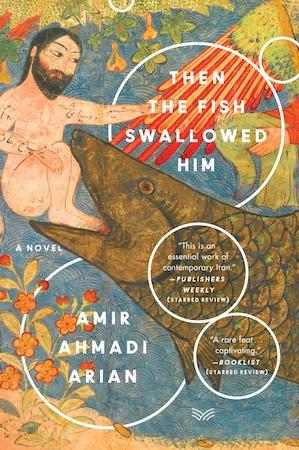
Then the Fish Swallowed Him by Amir Ahmadi Arian

Set in a present-day Iran prison, Arian’s first novel in English is a brilliant portrait of the way injustice, oppression, and dictatorship can be so brutal and merciless that it causes us to turn on ourselves.

South Korea

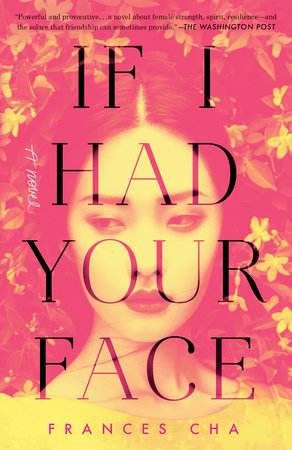
If I Had Your Face by Frances Cha

If I Had Your Face by Frances Cha

While Cha’s debut novel offers a grim and disturbing look into the inequality, consumerism, and impossible beauty standards that four women in modern South Korea are subject to, it has just as much to say about the importance of friendship and love in the face of such forces.

Lebanon

De Niro’s Game by Rawi Hage

Hage’s novel follows a young man’s experience of Lebanon’s civil war (1975-1990) with writing that is so intimate and honest—it leaves you regretting the war yourself, though you had nothing to do with it.

Ethiopia

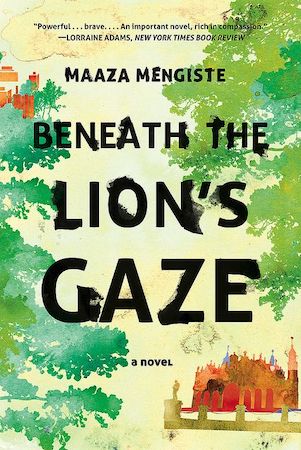
Beneath the Lion’s Gaze by Maaza Mengiste

Mengiste’s debut novel is a brilliant exploration of the way family, love, and friendship can be challenged, tested, and forever changed by political upheaval and instability.

The Dominican Republic

In the Time of the Butterflies by Julia Alvarez

Set during the waning years of the Trujillo dictatorship in the Dominican Republic, Alvarez’s novel follows the story of four revolutionary sisters whose courage comes at great expense, though you never get the sense that it wasn’t worth it.

India

The Color of Our Sky by Amita Trasi

This incredibly imaginative debut novel follows Mukta, the child of a prostitute in Mumbai, and Tara, a young woman who’s never known poverty. It forces the reader to reconsider the romanticized notions we have about destiny and points them to all the ways it can be used to justify injustice.

Cuba

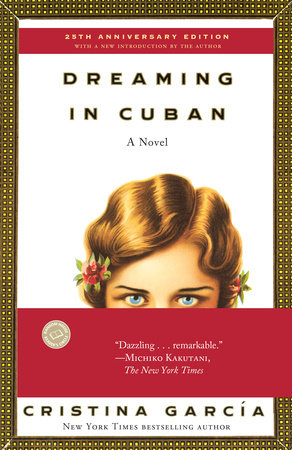
Dreaming in Cuban by Cristina García

Dreaming in Cuban by Cristina Garcia

This dreamy and magical novel follows several generations of a Cuban family divided by the Cuban revolution. Though it leaves the reader nostalgic and lamenting what might have been, it does well in capturing the nuance and beauty of 20th-century Cuba. 

Nigeria

The Secret Lives of Baba Segi’s Wives by Lola Shoneyin

Set in modern-day Nigeria, this debut presents the most delicious, entertaining, and deeply human portrait of polygamy in the developing world that I’ve ever come across—and I’ve consumed my fair share.

Proust Had His Madeleines and I My Doritos

Hotel Seattle

In college, Paul would buy a fiesta-sized bag of Doritos on Sunday after Mass and lie stomach down on his bed with his textbooks and notebooks propped up against his pillow and do all his work for the week ahead. He didn’t stand up for hours at a time. A cup of coffee and a bag of Doritos was all he needed. Our dorm beds made an L in the room. Every Sunday I could look at his body for as long as I wanted.

We were best friends because we were roommates. I never deluded myself that he would have chosen me otherwise. Socially we balanced each other out. He was the guy who came into the room and everyone was relieved. I made people deeply uneasy, myself most of all. If we hadn’t shared a room I would have been one of those guys on our hall that got a nod from him in the stairwell, maybe a bit of banter at the sink shaving, but no two a.m. arguments about transubstantiation or Bret Easton Ellis.

You grow up Catholic (Mass, CCD, youth camps) with six brothers, a megalomaniac father, and a mother who is on her knees in prayer whenever you try to find her, it’s hard to scrape through all the voodoo layers to recognize you’re gay. “Sexual urges,” Father Corcoran used to say through the permanent crust of his lips, “are the maggots at the feast.” We learned to zap our urges the minute we felt them. And homosexual urges got snuffed even quicker, before they made it to the brain. They left a mark, though. I knew I was off somehow. For a long time I thought it was just religion I needed to flush out. That the girl in my arms was just not the right girl. I tried another and another. So many willing girls. And none of them quite right.

But on Sundays in college, with hours to trail my eyes up and down the length of Paul, who was quite narrow, with small, compact muscles in his calves, and little fins for shoulder blades, the unearthing began. Proust had his madeleines and I my Doritos. Even now I can stick my nose into a bag of them and travel swiftly back to our corner room, the New England gloom and what felt at the time like a great tangle of feeling but was merely a boyish lust.

Without question, Paul was straight. He dated Marion Kelley freshman year, Ellie Sullivan, Bridgett Pappas, and Cheryl Lynch sophomore year, Lori Duff sophomore summer and straight up until the winter formal of senior year where he met Gail McNamara, the very worst of the whole hit parade, whom he married two springs after we graduated, in 1987.

“I’m sorry you’re not my best man. My mother made me choose Joe.” Joe was the meanest of his brothers. “Otherwise he wouldn’t have come home.” He was fastening a yellow rose to my lapel in the basement of the church.

“Always a bridesmaid, never a bride.” I was drunk from lunch. I was nervous. I had had sex—real sex— with a man for the first time a few weeks earlier. I knew I was gay. Finally. I could say it to myself without feeling nauseated. I also knew Paul was marrying the wrong person, knew every complaint he’d ever had about Gail. She treated him like an employee; she didn’t always smell good; she was moody, irrational, not always honest, and used sex as a bargaining chip. I waited for him to crack, to beg me to help him bolt. We still had fifteen minutes before the ceremony.

“Are you sure about this?” I said finally.

“Yes. I’ve pinned on six of these already.”

“No.”

“Am I sure I want to get married?”

“To Gail.”

He laughed. “I’m extremely sure.”

A car of bridesmaids had pulled up. Their ankles and hemlines were at eyelevel through the small windows.

He wasn’t even twenty-four. I said, “It’s like you’ve walked into an enormous shop and chosen the first little tchotchke on the table.”

He laughed. He had an amazing patience with people, even drunk people trying to derail his life at the last minute. “Gail is not a tchotchke. And she’s about to be my wife.” He was devastating in his gray suit. A black line went down the outside of the leg and I wanted to touch it, trace it. I wanted to lift the coattail and have one last glimpse of the bum I looked at so primly, so reluctantly, the longing strangled deep inside me, for four years of Sundays. But now was not the time to tell my best friend I was gay and wanted him. Now was the time to climb the basement stairs, to stand in a dark hallway, give him a dry, maidenly hug, and wish him Godspeed.


I told Paul last. First I told my mother (she said she’d tell my father herself, but I don’t think she ever did), and then I told my brothers, one by one, in an elaborate fashion involving a letter and a gift and a surreptitious meeting in the telephone closet beneath the stairs one Christmas that will be mocked forevermore. Pssssst, is all one brother has to say to another, pointing to an imaginary telephone closet (my parents are both dead now, the house sold) and everyone is practically peeing their pants. For Paul I had no letter or gift or telephone closet. We used to meet a few times a year when his work brought him to Boston, or mine brought me to New York, but I couldn’t do it in person. He called me up one night (he was usually the one to call, late at night, some awful music on in the background) and when he’d gone on too long about his kid’s strep throat, I blurted it out. “By the way I’m gay.”

He surprised me. He took it badly. He was silent, then grunted out a few measly sentences about being glad to have been told, and got off the phone. He never called back. I lost him, just like that.


I got out of New England. I went to Seattle with my boyfriend Steve. I had been about to break up with Steve, but then he told me about a possible transfer to the West Coast. He was my first real boyfriend, and he’d been so generous and tender, helping to peel back all my prickly layers of fear and self-loathing, but I felt like it was time to move on, see what else was on offer. Moving, resettling, making new friends, reconfiguring routes to coffee shops, bookstores, restaurants, clubs—all that can delay the end of a relationship indefinitely. We were still in that stage, our third year in Seattle, when Paul called.

Steve answered. We didn’t have Caller ID then, so phone calls were still a mystery. Steve started flapping his arm immediately, waving me up off the couch with huge sweeps while carrying on in a flat placid voice, saying “Yeah, I think he’s here somewhere. Unless he fell off the balcony into the neighbors’ weed.” Steve loved that we overlooked an illegal garden. He told it to everyone we met. “I hope you’re not a cop,” he added before covering the receiver with his palm and mouthing the words Paul Donovan over and over. Steve and I had been together eight years by then and though I’d tried to downplay my attraction to my college roommate, it was clear to me now that I’d hidden nothing.

During that whole short conversation, Steve was leaping from sofa to sofa, a mockery, a parody of my slamming heart.

Paul was coming to Seattle on business. He’d run into my brother Sean at a Red Sox game and he’d mentioned I was living out there. Did I want to have a drink next Tuesday night?

I went through the motions of checking the calendar and coming back to tell him I could get free.

He suggested 7:30 at his hotel.

“Great. I’ll put it right on the calendar,” I said, not knowing what was coming out of my mouth and Steve still hopping around me.

“You and your calendar,” Paul laughed, as if this were a thing he’d known about me for years. “You won’t remember?”


On Tuesday night I left Steve pouting in the apartment. He couldn’t understand why he couldn’t come along, or at least meet us for dessert.

“We’re having a drink, not dinner.”

“Then let me meet you for the last drink.”

“The last drink might be the first drink.”

“Then let me just go to the bar, pretend to run into you. I don’t have to be your boyfriend. I can be a coworker. I can be your masseuse.”

“Like I want him to think I have a masseuse. It’s bad enough I’m gay.”

Steve shut his eyes and shook his head. “All the years your therapist and I have put in to deprogramming you and it just doesn’t make a dent, does it?.”

“It’s bad enough to Paul that I’m gay. It ruined our friendship.”

He ruined the friendship.”

“Yes. Goodbye.” I kissed him on the lips, which he liked—we weren’t doing a whole lot of that lately. He held onto me and I let him, knowing that it increased the chances that he wouldn’t follow me.


Paul was at the bar, elbows on the counter, looking over the bartender’s head at a ballgame on the flat screen.

“This place is like a morgue.”

He turned to look at me. “Welcome to my world. Hotel bars and conference rooms.”

He was middle-aged. His hair had retreated toward his crown, his shoulders had fattened and curled in. We didn’t shake hands. I didn’t want to. I busied myself with my jacket, made an unnecessary fuss about where to put it, and came slowly back to the chair beside him. It was anger that was making my heart thrash. I was still angry at him. Whether it was because he had dropped me or because he was no longer a god on earth but a middle-aged salesman, I did not know.

“But I like places like this,” he said, shaking the ice in his glass. “Everyone drifting in from everywhere, from nowhere. Look at the woman in the corner. God, what is going to happen to her tonight?”

“A man in white polyester pants is going to walk in and spot her.”

“The entertainment.” He nodded to the corner, where there was a small stage with just a microphone on a stand.

“And he can just tell how good she’d be in duet.”

“‘I remember when,” he began, falsetto. “You couldn’t wait to love me.’”

“’Used to hate to leave me.’” I couldn’t help it.

“’Now after lovin’ me late at night.’” We laughed. He could still hit the high notes.All the nights we’d sat on our beds with a beer and let our minds wander together like this. It wasn’t like talking. It was effortless. Desultorating, I used to call it. Could he just slip back into that without an apology? Would I let him?

“Or,” I said, “you could just go over there and fuck her yourself.”

His eyebrows twitched down and quickly up. He wasn’t going to show me his surprise at my bitterness. “I could indeed.” He drained his drink. I felt him trying to think of something witty to add. At that moment, I felt like he couldn’t have a thought or an impulse I couldn’t anticipate.

“Do you travel for work?’ he asked.

“No. Never.” He didn’t know what I did. “Clearly you do.”

“Not as much as they want me to. It’s not worth the battles at home when I come back.

Gail is such a bean counter. A trip like this and I lose any possibility of an hour to myself for the next three weekends.”

I didn’t want to hear about Gail. I had given him the chance to defect. “So what do you do with an hour to yourself?”

“I don’t know. It’s all hypothetical. There is no free time. We’ve got three kids and a fixer-upper we never fixed up so I’m just managing the chaos dawn to dusk. Hardware store, pharmacy, soccer game. Repeat.”

The bartender finally noticed me and came over. We knew each other from a party but neither of us acknowledged it and it created a tension Paul picked up on.

“What was that about?”

“What?”

“That little,” he rubbed his fingers together, “frisson.”

“There was no frisson.”

“There was a frisson. I know a frisson when I feel one.”

“You might have felt a frisson. I was just ordering a Campari.”

“A Campari. Is that some sort of code?”

“Code for what?”

“You know, a way to tell the bartender you’re gay.”

I stood up.

“Sit down,” he said, in a bored stentorian voice he must use with his kids.

“You owe me an apology, not further insult.”

I saw his face flinch into an imitation and then flatten back out. I wondered if he did that to his kids, mimic them, the way my father had mimicked me. It was the first time I’d recognized the similarity between Paul and my father.

I should have left then.

But he said, “I do owe you an apology.” And I sat, to wait for it.


We moved to a booth for dinner. We didn’t switch to wine. He stayed with his single malts on the rocks and I moved to flavored martinis. Neither of us had been very committed drinkers in college so the steady rate of his drink orders surprised me, as did my own insistence on keeping up with him. I had the sense that we were hurrying somewhere, having to get in our last meal and our last drink before we went, though for the longest time, idiot that I was, I didn’t know where we were going.

We desulterated through the appetizers, horrible crab clusters covered in some sort of bark and fried to black. They inspired thoughts on food in New England—he lived in Cincinnati now—and between the two of us we recalled nearly every dish at the Boston College dining hall: the Welsh rarebit, the American chop suey, the pink sponge cake.

The waiter brought the entrees: osso bucco, grilled salmon. I was full, buzzed, tired. My initial nervousness had collapsed into a heavy fatigue, laced with fear. I couldn’t understand the fear, though I knew it had to do with the change in him. But I was used to changes. One of my brothers had recently lost over 200 pounds, two close friends had had sex changes, and my mother, after my father’s death, returned to college and became a large animal veterinarian. On her website she was listed as a stud service specialist. All Paul had done was become beefier and disillusioned—who hadn’t?

“After you called that time, and told me, you know, what you told me,” he said, and I didn’t correct him about who had called whom, which was hard for me because I like people to tell stories accurately, “I must have spent a year just sifting through every memory I had of us. Shit, we went camping. We shared that fold-out couch at my mom’s apartment, showers, bathrooms. You had girlfriends! That little Carla or Carlie who was so in love with you. And that other one, began with a B. And didn’t you have something going with Anna at my wedding? God, when I told Gail she was like, No shit Sherlock, but I tell you, I never saw it. You are one good performance artist.”

“I wasn’t acting. It took me a long time to put the pieces together.”

“Oh, come on. That’s bullshit. Everyone knows. You know it when you’re six years old. You know if you’re thinking I want to fuck her or I want to fuck him.”

“You thought about fucking when you were six years old?”

“Damn straight. Miss Carlyle. Tight brown skirt.”

“You knew what fucking was when you were six years old?”

“I knew Mrs. Caryle and my penis had something going on. I knew that.”

“Well, my penis didn’t have anything going on with anyone until I was twenty-three.”

“That is just not true. You had girlfriends.”

“They were friends I made out with.”

“You never slept with any of them?”

“No. And I never pretended to.”

“I just assumed.”

“I wasn’t like you.”

And now I figure out why I’m scared. I’m scared he’s going to ask me if I wanted to sleep with him back then. And I know I won’t lie. And I know that will truly be the end for us.

“And now you sleep only with men?”

“Yes. One man at a time.”

“You never had a ménage?”

Why do straight men love to ask this? “Not really.”

“Not really?”

“Well, Steve and I once invited this guy up. We really thought we were going to do it with him, but then he took off his pants and he had this really flabby bum. He was a pretty slender guy with this white jelly bum and Steve and I could not stop laughing and he got mad— understandably—and left.” Steve called it the big flabby fanny fiasco. We still could get laughing until our stomachs ached about it.

If Steve were here he could tell the story of that night so well no one would be able to breathe. But Paul didn’t think my version was funny. “Is it better, sex with men?”

I laughed. “It is for me.”

“I mean, sex is kind of athletic. I’m just wondering. I’ve kind of been thinking about this for a while. I mean. Women are always complaining about getting hurt, you know?”

“You mean emotionally?”

“No, physically. I mean sex hurts them.”

“Really?”

“I mean, just when you get really into it they tell you it hurts.”

“Really?” I didn’t think there was much about any kind of sex that I didn’t know about by now, but this news surprised me.

“I don’t think I’ve ever had sex with Gail without her saying ouch like fifty times. I just wonder if with men it’s different.”

“Maybe it is. Some people are rougher than others.”

“Are you rough?”

I realized he was leaning halfway across the table; his knuckles were touching my plate and his eyes, his watery drunk green eyes were all over me.

“Yes, kind of.” It was the martinis talking.

“I already know what your penis looks like.”

“And I yours.” I said, trying for lightness and missing. The penis he’d mentioned was suddenly rock hard.

“I want to.”

“Paul,” I said.

He stood up, signaled to the waiter to put it on his tab, and nearly pushed me to the elevator. When it came we got in alone, and as soon as the doors closed he was at me—mouth, stubble, osso bucco breath. I am kissing Paul, I am kissing Paul. His name rang through me like a cathedral bell. He pressed me hard against the brass handrail, his hands reaching for my fly and then the elevator dinged, and he was on the other side of the box and looking like he’d never seen me in his life. But no one was on the seventh floor when the doors opened. He put out his arm for me to step out first and then he shoved me against the elevator opening and when the doors tried to shut they bumped against my back over and over, pushing me into him. He was at me like an animal, biting my nipples through my shirt, shoving, thrusting, as if he’d gotten a hold of a piece of meat too enormous to know what to do with.

“Paul.” I took his face in my hands and held it in front of mine. “Slow down, baby. Let’s get to the room.”

He seemed unable to make eye contact, but fished in his pocket for the key and led me down the hallway.

I stood in the center of the navy blue room as he locked and bolted and chained the door. I could hear him breathing. “You know, I think we need to take a few steps back here.”

He didn’t seem to register that I had spoken. He took off his shirt with one paw reaching behind his back and yanking up while the other fumbled with belt and zipper. His penis shot straight out at me and he was still breathing noisily but smiling now, proud of his erection, looking at me for the first time since we’d left the restaurant, as if he expected praise for what it could do.

“Lie down,” he growled.

I sat on the bed. “I’d really like—”

“On your stomach.”

“Paul, I’m not doing this.”

Again his face flinched. Then he walked over and leaned down and kissed me, long and slow and gorgeous, just the way I knew he could, just the way he’d kissed all those girls I was so jealous of. But even as he was doing it, even as my own erection returned and my insides spun around, I knew he was placating me, giving me what I wanted but what he really had no interest in giving or receiving. And when he had weakened me enough, he flipped me over and yanked down my pants (they were Steve’s jeans and slightly too big for me) without undoing them.

How many times that night did I try to make contact, beg him to slow down, to stop? He would not stop. When it was over, my body rang in pain. Paul passed out instantly and I lay there waiting for the strength to get up, to return like this to Steve. It never came. I woke up to the sound of the shower. I was sore everywhere. My legs and stomach had dark red bruises. I found it hard to roll over. “You sound just like Gail,” he’d grumbled at one point when I complained about the pain. Is this how Gail felt in the morning? Is this what he did to her, or was it what he thought men did to each other, or was it simply what he did to me, to punish me?

The shower stopped. The faucet ran. The tap of a razor against the sink.

When he opened the door his face was drained of color.

“Morning,” I said sweetly, mockingly, the contented lover beneath the sheets.

He seemed not to be able to come in the room. “Do you have AIDS?”

“What?”

“I need you to tell me the truth. Are you HIV positive?”

“No.”

“How do you know?”

“I’ve been tested plenty of times.”

“Like when? When was the last time?”

“I don’t know. Three years ago.” It’d been more like five.

“Three years ago. Jesus Christ. Three years ago. I have a wife and kids. Fuck! I cannot fucking believe this.” He went to the closet, unzipped a garment bag, and pulled a black suit and a striped tie off the hanger.

“Steve and I are monogamous.”

He snorted. “Oh yeah. I can see that. Is he as monogamous as you?”

“Paul—this was obviously. This was the first. I’ve never—”

“I heard Steve on the phone yesterday. He seemed up for a fuck. Face it, guys, straight, queer, they fuck when they get the chance. And gay guys get a disease for doing it. And you know who’s going to pay for it? My wife and my kids. You better fucking get out of that bed and go get yourself tested and send me the fucking results. Here, I’ll get you a card and you can send it to my office. You hear me?” He was rummaging around in his briefcase which was on top of his suitcase. “What the fuck!” And he tipped the whole thing over, briefcase, suitcase, stand. They crashed against a little round table that held a small vase of tulips and when the table didn’t quite fall he pushed that over too. Slowly I moved toward my clothes.

“I thought you guys were supposed to wear condoms.”

“I wouldn’t say I had a whole lot of choice about that last night.”

“What is that supposed to mean?”

“It means that your train was going into the station and there was nothing I could do to stop it.”

Then his pale blue face knotted to one side. I’d never seen him cry. It never occurred to me Paul could cry. He stood there with a white towel wrapped around his thick waist, his hairless fat chest heaving, and his face all crumpled like a dirty napkin.

I continued to dress. Every movement hurt in some way. He wanted me to comfort him, to acknowledge his strange premature straight man’s middle age crisis. Maybe he even wanted to have sex again.

I unchained and unbolted the door, and left. The corridor was silent. The elevator ascended, opened, accepted my weight with only a slight sag. It dropped with a swift, gentle sigh to the lobby.

In a red leather chair by the revolving door, Steve was sleeping. I nudged his knee with my knee and his eyes opened and I watched them find the whole story in my face. He was older than me, and wise as God. He walked beside me, very slowly, as slowly as you can imagine walking, out onto the street, over to Pike, and all the way back home.

Here’s The Story Behind Alan Moore’s Epic Graphic Novel That Never Was

It was just a rumor, but a persistent one. Whispers in the halls of the DC Comics offices; buzz among fans as they gathered at annual conventions. That the legendary Alan Moore, writer and creator of From Hell and V for Vendetta, had written another masterpiece, something no one had ever seen. They’d heard it would be like Watchmen, only even better. More of Moore: his trademark noir style, novelistic storytelling, violence and grit, and playful intertextual games. Whatever it was, this mystery project would change comics forever—that is, if it actually existed.

For the better part of the late 80s, all comics fans knew was the name: Twilight of the Superheroes.

Then, in the early 90s, someone anonymously posted a file on the still-new internet: TwilightOfTheSuperheroes_djvu.txt.

It began like this:

Twilight of the Superheroes

The Interminable Ramble

An unpublished series proposal for DC Comics by Alan Moore

Was this real? Some clever forgery? The lengthy document went on to lay out a deliriously complicated story, seen by Moore as his follow-up to Watchmen. It would be a complicated crossover of DC’s biggest franchise titles: Batman, Superman, Wonder Woman, Green Lantern, and dozens and dozens more, in a dark and twisted saga, set in a ruined future. A saga that would end in total annihilation. In fact, the “interminable ramble” spelled out the deaths of nearly every single beloved DC character.

 But why? And how? And would it ever come to pass?

How long would everyone be left “Waiting for Twilight”?


According to one biographer, Alan Moore was the first British graphic novelist to “do prominent work” in America. By the mid-1980s, his gritty style had successfully reinvigorated some of DC Comics’ biggest franchises with one-off stories like Batman: The Killing Joke and What Ever Happened to the Man of Tomorrow?  His fans bragged they’d been following him since he’d started on Swamp Thing. Others claimed they’d known his stuff since even earlier, obscure comics in UK sci-fi magazines like 2000 AD and Warrior, and other underground zines before that.

According to one biographer, Alan Moore was the first British graphic novelist to “do prominent work” in America.

Moore was born in 1953 in the poor, working-class neighborhood known as The Boroughs in Northampton. He’d read voraciously as a boy, wolfing down literary classics and issues of The Fantastic Four side-by-side. He hated school and loved LSD, the latter soon leading to his expulsion from the former. He’d later claim that his headmaster called all the other schools to warn them against admitting Moore, who would be “a danger to the moral well-being” of the other students. (A charge that Moore conceded as being “possibly true.”)

While working a series of blue-collar jobs, Moore began writing his own comics under punny pseudonyms like “Curt Vile” and “Jill de Ray.” Eventually he got hired as a writer for comics in bigger British science fiction magazines, bringing his off-brand of dark humor to series like “D.R. and Quinch” which he’s described as being like “Dennis the Menace but giving him thermonuclear capacity.” He seemed to bring an irreverent, apocalyptic, punk aesthetic to everything he touched. Eventually Moore was hired to write for DC Comics in America.

He seemed to bring an irreverent, apocalyptic, punk aesthetic to everything he touched.

According to Paul Levitz, a DC writer in the 1970s and 80s who later became the company’s president and publisher, by the early 1980s the industry was facing huge changes, and as a result smart, edgy writers like Moore were in high demand.

In the introduction to a new anthology, DC through the ’80s: The End of Eras, Levitz writes, “Comics were dying […] the newsstands of America, which had been comics’ home for so long, were fading away […]  the kids who had been the primary audience for comics, were watching more television […] the country was becoming more suburban […] the mom-and-pop retailers who used to be hospitable to comics racks were being replaced by chain stores […] they were getting too expensive (50 cents an issue!). Maybe the stories just weren’t as good as they used to be.”

As comics left the main streets, they moved into specialty shops where they met a far smaller, but dedicated fanbase. The customers weren’t city kids anymore, but suburban young adults, who could get to the comic bookstore without needing a ride from mom or dad. They could spend more, and they liked tracking specific artists and writers they enjoyed.

This is the origin story for the classic 80s/90s “comic book fan”—young men aged 16-24 who’d grown up on lite versions of Superman and Batman but were now ready for something full-flavored. More sophisticated storylines, more graphic sexual and violent content, heroes with deeper flaws, villains whose evil deeds were rooted in more sympathetic motives. And before long the halls of DC Comics began to be flooded by writers who felt the same way, sending the old guard heading for the exits.

Alan Moore arrived at the tail end of what’s now known as the “Bronze Age of Comic Books.” (This period, from about 1970-1985, follows the prior “Silver Age” which spans back to 1956. The “Golden Age” then, covers everything else, back to the original 1938 Action Comics.)

What is now known as the “Modern Age” began with something totally new—a “maxiseries” called Crisis on Infinite Earths.

What is now known as the “Modern Age” began with something totally new—a “maxiseries” called Crisis on Infinite Earths. This was a massive storyline involving characters crossing over from what had previously been individual series—something that had not been done before then. In such an “event”, a unifying story plays out inside of many separate series. A plotline beginning in Batman: Detective Comics, might continue inside of Superman: The Man of Steel, or Justice League. This forced readers to stray outside of their favorite series, giving a Wonder Woman fan something new to discuss with a Swamp Thing reader, for instance. This kind of cross-pollination would prove vital in expanding comics readership, and it could also be used in another way: mass extinction.

DC Comics faced a sizable problem. Over the decades, the various characters in all the different DC Comics: Superman, Batman, Wonder Woman, etc., had existed in largely separate universes. There were team-up series, like Justice League, where a bunch of heroes joined forces to battle a bigger and badder foe—but those events would not really impact the plots going on back in the heroes’ individual series.

Comics tended to be largely episodic, with each issue focusing on a self-contained story that didn’t often stretch into longer plot arcs.

Crisis on Infinite Earths writer, Marv Wolfman, discussed recognizing the problem as far back as 1981. He’d received a letter from a Green Lantern fan about a recent issue where another character failed to recognize Green Lantern, even though the two of them had met and worked together in an issue three years earlier. Wolfman realized this was an issue endemic to every series at DC. No one had really cared before. Prior to the 1980s, with mostly younger comics fans, sporadically gobbling up whatever looked fun at their local newsstand, it didn’t matter if Green Lantern had occasional amnesia. The comics were never meant to be a continuing story.

But if they were going to satisfy the 16–24-year-olds, and compete with the pull of television’s syndicated cartoon series, comic books had to evolve—and get everyone (literally) on the same page. Instead of hundreds of titles with confusing alternate realities—effectively a multiverse—DC Comics needed to consolidate all their titles into one DC Comics Universe.

Crisis on Infinite Earths was the solution. A complex story involving a cosmic being named Monitor, battling its own anti-matter doppelganger Anti-Monitor, with each recruiting superheroes and supervillains into a war amongst all the different versions of Earth. You might have a Superman from Earth-One, for instance, battling a version of himself from Earth-4, or Earth-S, or Earth-X. The more complicated the story, the more it necessitated re-reading, and endless fan discussion.

The more complicated the story, the more it necessitated re-reading, and endless fan discussion.

And of course there was time-travel involved, and portals between antimatter universes and—well—the important thing for our purposes here is that: a) hundreds of characters were killed off, including all the extraneous versions of those characters; b) so that the surviving versions could co-exist in one single, unified storyline; and c) the whole thing was a massive bestseller that brought tons of new readers to comic books, just as DC had hoped.

Something similar was happening simultaneously over at Marvel Comics, with a cross-over event called Secret Wars that was also incredibly popular. And so, by 1986 there were, at last, two unified Comics universes: DC and Marvel.

Alan Moore’s role in all this came through his position writing for Swamp Thing. The comic had originally been slated for cancellation due to low sales, but Moore rescued the franchise by reinventing the hero. Swamp Thing had previously been a human named Alec Holland who could transform into a monster. Moore rewrote the storyline such that Swamp Thing was born a monster, and never human at all. The grotesque creature’s duty was not to protect humankind but to protect the environment from humankind. Moore had Swamp Thing fall in love with a human woman named Abby, who died, leaving Swamp Thing to descend into a Hell modeled on Dante’s Inferno to save her soul.

This is just one example of Moore’s early ingenuity, rethinking the basic archetypes of superheroes, the kinds of storylines they could carry, and the way that these stories could play off classic (non-graphic) literature.

And it went over well with the new breed of comic book guys, who enjoyed the irreverent challenge to the old stories—and the idea that something generally regarded as “low culture” like a comic book could hold itself up against something as “high” as Dante. It validated the form in new ways, bringing  “comics” into the realm of “real” literature.

In the America of Watchmen, superheroes helped the US win the Vietnam War, making South Vietnam the 51st state in the union.

And Moore was just getting started. In 1986, right on the heels of the success of Crisis on Infinite Earths, he developed Watchmen: an original comic miniseries of such depth and complexity that it would forever raise the bar on what comics could be expected to do. Instead of the usual superheroes with high morality, patriotism, and well… heroics—the characters in Watchmen are costumed vigilantes who satirize (even defile) the idea of traditional comic book superheroes. In the America of Watchmen, superheroes helped the US win the Vietnam War, making South Vietnam the 51st state in the union. Thanks to the heroes, Nixon’s misdeeds in the Watergate Scandal are never exposed, and by the 1980s he is still President (after abolishing the 22nd amendment) as the US approaches World War III with the USSR.

In Watchmen the ostensible heroes are all morally murky, if not just evil. There’s Rorschach, whose mask is an ink blot pattern, and believes all life is just randomness. Or The Comedian, a psychotically violent mashup of Captain America and G. Gordon Liddy (according to Moore). And there’s the Silk Spectre, who is actually the daughter of the original Silk Spectre, who The Comedian tried to rape. (It later turns out he’s actually Silk Spectre II’s father, from a previous, consensual encounter.) And don’t forget Doctor Manhattan, a giant blue naked guy with all the powers of God who chooses to hang out on Mars rather than interfere in the lives of Earth’s mortals. One of the heroes, Adrian Veidt/Ozymandias, walks around dressed like Alexander the Great [SPOILERS AHEAD] and ends up transporting a giant alien squid to destroy most of New York City in an attempt to get humanity to walk back from the edge of nuclear annihilation and work together to battle a new (manufactured) interdimensional threat.

Not only was Watchmen darker, more violent, and more morally-cynical than anything seen before, but it was highly-structured in a way that had not been seen before, with recurring visual motifs, and even a comic-book-within-a-comic-book called Tales of the Black Freighter that one character is reading. Borrowing techniques from the all-text novel, Watchmen again raised the bar for the “graphic novel” (a term that Moore allegedly dislikes, however—preferring to stick with “comic books”.)

Watchmen highly-rewards, if not demands, intensive re-reading, so that all its puzzles and subtleties and ambiguities can be sifted through. It’s so complicated and so rich and nuanced that it was later listed on TIME’s 100 Best Novels in the English language, the sole representative of graphic novels, sandwiched alphabetically between Under the Volcano by Malcolm Lowry and before White Noise by Don DeLillo. As it became a new highwater mark for graphic literature, it also became its first real placeholder in the world of “real” literature.


Which brings us at last, to Twilight of the Superheroes, and the leaked text file that set the internet ablaze in the early 1990s. (The original file can still be read in full in The Internet Archive, a library resource that now oversees the Wayback Machine, which is how I first encountered it, when I was looking for some background on the Deborah Eisenberg short story of the same name.)

The “interminable ramble” begins with Moore saying that after his recent conversations with Paul (Levitz) he has been thinking about “the perfect mass crossover” that could build on what had been done in Crisis on Infinite Earths in a commercial sense: push readers to try out new titles, launch some new series, and reinvigorate some of the older ones. This, he said, had to be done “in a manner that was not obviously crassly exploitative so as to insult the reader’s intelligence.” Moore saw potential for posters, role-playing games, toys, merchandise, all of it. He proposed that if the central story was solid enough it might translate to “other media” in ways that could satisfy a “diehard superhero junkie.” He confessed to still being “intoxicated” by the success of Watchmen and eager to do it all again.

Done properly, Moore argued, a crossover like this could continue unifying the DC titles and raise the superheroes in it to a mythic status. Done badly, he said, the assemblage of characters would become “banal” and lead to a cheapening all around, requiring “greater acts of debasement in order to attract reader attention, more deaths to appease the arena crowd element in the fan marketplace, eventually degenerating into a geek show.”

Done properly, Moore argued, a crossover like this could continue unifying the DC titles and raise the superheroes in it to a mythic status.

Moore then criticized the way things had been handled in Crisis on Infinite Earths. He did not like that, by the end of the saga, all of the extraneous Earths and the versions of characters in them, were just erased. “Readers of long-standing” he argued, were left feeling betrayed, that not only were the stories they’d been so invested in now finished, but they’d been left irrelevant. And his concern for the reader went deeper still:

I firmly believe that both this and the current seeming obsession with a strict formal continuity are some sort of broad response from an audience whose actual lives are spent living in a continuity far more uncertain and complex than anything ever envisaged by a comic book. I believe that one of the things that the comic fan is looking for in his multi-title crossover epics is some sense of a sanely ordered cosmos not offered to him or her by the news headlines or the arguments of their parents over breakfast.

What Moore proposed now, was a story that he believed could both provide that stability and satisfy the aforementioned creative and commercial requirements. It would also give the individual title writers plenty of leeway to pursue their own stories, instead of forcing them to “toe the line” in the service of a master plan. And it would reinforce the mythic status of the superheroes by connecting them to a theme of myth itself: Ragnarök, the Armageddon of Norse Mythology, a.k.a. “the twilight of the Gods.”

The tale would begin with agents from twenty or thirty years in the future coming back in time to warn the present-day heroes (led by a conman/magician from Swamp Thing named John Constantine) of an impending and terrible Twilight—a horrific “Gotterdammerung” of chaos and violence. The present-day heroes are warned, but Moore felt that some could choose not to concern themselves with the prophecy, thus providing an “out” to writers on series not interested in this adventure… these writers could just have their characters proceed as if all was still normal. Their stubborn inaction would then have an “implied relevance” on the stories of the characters busy trying to turn the tide on the awful future.

Moore reflected that, “one of the things that prevents superhero stories from ever attaining the status of true modern myths or legends is that they are open ended.” Because a superhero just lives on and on (assuming they’re commercially successful) they never have the poignancy granted by resolution. Superman and Batman could never be Sherlock Holmes or Robin Hood because their stories have no “capstone.” A legend must be mortal. This is why the Norse people, in their myths, imagined a Ragnarök—some future time at which all the Gods would fight one another and kill each other off. (And the same can be said of other religions with end-time prophecies: The Book of Daniel in Judaism, The Book of Revelations in Christianity, the Day of Judgment, al-Qiyāmah, in Islam, to mention just a few.)

He envisioned fans reading everything in obsessive detail, hunting for signs that the storylines were, or were not, heading towards Twilight.

By casting ahead to some bleak and bloody Twilight future, Moore argued, and showing the definitive ends of all these superheroes, the intervening time would take on even greater importance. To his mind, Twilight would inject a whole new importance into all the comics DC put out over the coming thirty years in real time. He envisioned fans reading everything in obsessive detail, hunting for signs that the storylines were, or were not, heading towards Twilight. The dream, Moore felt, would be creating an arc that left all readers in a perpetual state of waiting, with skeptics and believers all arguing over the coming end of days.

So what does that look like? In the Twilight future, superheroes lord over the Earth, not by choice but because “various social institutions started to crumble in the face of accelerating social change, leaving the superheroes in the often unwilling position of being a sort of new royalty.” Eight “houses” of superheroes now rule in a sort of global feudal system. Rather than envision the future as having been ruined by nuclear warfare, (already becoming cliched, Moore felt) humanity would find itself “faced with the equally inconceivable and terrifying notion that there might not be an apocalypse. That mankind might actually have a future, and might thus be faced with the terrifying prospect of having to deal with it rather than allowing himself the indulgence of getting rid of that responsibility with a convenient mushroom cloud…”

Instead, the horror of the future is that everything from “family structure to the economy is decentralizing” and everyone lives “in a constant and incomprehensible state of flux and chaos […] caught in one of those violent historical niches where one mode of society changes to another, such as the industrial revolution, for example.”

(It’s worth noting here that, thirty years in the future, as Moore proposed, from 1990, puts the Twilight at pretty much right now.)

There would be the House of Steel (run by Superman), the House of Thunder (Captain Marvel, then a DC property, and male—yes, I know, it’s confusing), the House of the Titans (with the “remnants of” the Teen Titans), The House of Mystery (it’s a mystery!), The House of Secrets (super-villains including Lex Luthor, The Joker, and Catwoman), The House of Justice (Aqualad and Wonder Girl—the former Wonder Woman now being Superwoman after marrying Superman), the House of Tomorrow (something to do with time travel), The House of Lanterns (various Green Lanterns).

Then you’ve got some scattered unaffiliated Heroes including John Constantine and maybe Batman. (“Nobody’s actually seen him for years. He’s rumored to be around, he’s rumored to be active, and rumored to be doing something, but nobody knows what or even really if. He might have died years ago.”)

Everyone else falls into the “Drunks, Hookers, and Panhandlers” category, which Moore describes as a host of aging superheroes who hang out in the “barrios” of Gotham and Metropolis, turning tricks and doing whatever they can to get by.

Bleak.

The plot itself is a hell of a tangle, which Moore promises will eventually get better when broken down, issue-by-issue.

The plot itself is a hell of a tangle, which Moore promises will eventually get better when broken down, issue-by-issue. He charts out how the superheroes embarked on a genocidal slaughter of all the supervillains, leaving everyone kind of uncomfortable afterwards. But there’s some palace intrigue: Superboy is set to wed Captain Marvel’s daughter (Mary Marvel) which would consolidate power between the houses of Steel and Thunder, which has alarmed everyone else—including some alien forces “conspiring out on the moon of Mars.” This all escalates into a surprise invasion that, I kid you not, revolves around Captain Marvel in his human form being into S&M and, thus sadly, being gagged during a crucial moment and unable to turn into Captain Marvel to save the day.

And so pretty much every single superhero dies, and most of humanity too, but then somehow this all ushers in the dawn of a new Utopian era where a smaller, highly-factioned America will be run by… Batman (he is alive!). Cool.

Anyway, I seem to have gone on far longer than I intended, so I better wrap this up. I’ll be looking forward with interest to hearing what any of you have to say about all this when you’ve had a chance to read it. If any sections are incomprehensible and need clarifying then please give me a call.

I’ve read the “interminable ramble” many times, and I’ll confess I can’t make a whole lot of sense out of it. There’s a whole huge thing I’m not even going into about a villain called Time Trapper who may have captured the universe and put everything into some kind of temporal pocket called “the flux.” A vast number of the central characters in the proposal are heroes from the 80s and 90s I don’t know enough about. But the biggest issue is that the whole plot doesn’t seem to actually live up to Moore’s high-minded philosophies about legends and apocalyptic capstones that Moore started out with.

I’m left, like many fans over the decades, thinking that actually Twilight of the Superheroes would have been incredible—somehow.

Reading the ramble, you can’t help but think it might have been a disaster—except, well, he’s Alan Moore. The greatest of the all-time greats. Remember, the plot of Watchmen, revolves around someone teleporting a giant alien squid into Manhattan and killing hundreds of thousands of people. And it doesn’t just work—it’s totally brilliant.

And so, I’m left, like many fans over the decades, thinking that actually Twilight of the Superheroes would have been incredible—somehow. Moore would have made it incredible—in a way that only he could.

Which is exactly why it has never been done and will never be done.


Unfortunately, the “interminable ramble” was composed right at the beginning of the end for Moore’s time with DC Comics. There was already some acrimony over merchandising profits from Watchmen, and this was swelling into a larger crisis for Moore over who really had creative control over his masterpiece.

At this time in the comics world, a writer like Moore, hired to work on some long-running title like Swamp Thing, would be paid for that work but have no creative rights or ownership over the end-results—this all remained with DC. When Moore, for instance, created the character of John Constantine in issue #37 of Swamp Thing, he would not then later profit off Constantine’s success, even going off to lead in his own series, Hellblazer. (Later made into the film starring Keanu Reeves).

With Watchmen, since Moore had created all the characters, both he and the artists (Dave Gibbons and John Higgins) had gotten a share of the profits, but the intellectual property itself and all subsidiary rights still belonged to DC Comics. Moore’s contract stipulated that the rights would revert to him after the comic stopped being printed. But because the project was such a hit, DC never stopped printing it.

Slowly, Moore realized that DC could retain permanent control over the intellectual property, that meant they could make sequels, use his characters elsewhere, authorize foreign editions, sell the film and television rights, even build a theme park ride if they wanted to—without any approval needed from Moore.

Which is exactly what happened.

Today, Watchmen has been made into a 2009 film by Zach Snyder, a popular HBO miniseries starring Regina King, which won 11 Emmy Awards, and a video game: Watchmen: The End is Nigh. Moore has completely refused to participate in these ventures. He has, in fact, routinely spoken out against anyone adapting his former works for the screen, and even insisted that his name be removed from the credits entirely—he is usually listed as just “The Original Writer.” Even when the Wachowskis produced an adaptation of V for Vendetta, Moore derided the film for avoiding terms like “anarchy” or “fascism” and removing much of the political context of the original.

In adapting graphic novel work to the screen, Moore’s argued, the original “possibilities” of the medium are lost. “If we only see comics in relation to movies, then the best that they will ever be is films that do not move. I found it, in the mid-80s, preferable to concentrate on those things that only comics could achieve. The way in which a tremendous amount of information could be included visually in every panel, the juxtapositions between what a character was saying and what the image that the reader was looking at would be. So in a sense … most of my work from the 80s onwards was designed to be unfilmable.”

In the 35 years since its publication, Watchmen has continued to sell reliably—in fact, in 2019 it was back on the NY Times Bestseller List again at the time of the HBO shows release. While Moore has earned reported millions in royalties, he also estimates he’s turned down millions more by refusing to sign off on the various adaptations.

And because he generated the idea for Twilight of the Superheroes while still writing for DC, and the storyline involves, of course, a host of DC’s other properties, it has been left in limbo. Moore and DC have at this point been in a feud spanning thirty years, it’s essentially unimaginable that they’d be able to come together and ever make the “interminable ramble” into a real graphic novel.

In the mid-90s, Mark Waid and Alex Ross collaborated on a series called Kingdom Come for DC that attempted to match the scope of Watchmen and explicitly follow the spark from Twilight of the Superheroes. It also begins in a dark future where superheroes have lost touch with their former ideals. (In one memorable scene, Superman just outright murders The Joker on his way to stand trial for a mass murder that took the life of Lois Lane.) There’s a similar giant war between a reassembled Justice League and some aliens and there are nuclear warheads and something called metahumans—but rather than end with all the heroes dying, we see Superman restored to his former ideals, and he and the other heroes decide to hang up their capes and live ordinary human lives. The series proved popular but fell far short of Moore’s vision for Twilight. For one thing, it was put out as part of DC’s Elseworlds line of comic books that were explicitly meant to exist outside of the unified canon—so it in no way was meant to reflect the actual future in store for these characters.

Thirty years later, Superman and Batman and all the rest are still alive and kicking. Many of the issues around creator rights that Moore experienced led other writers to leave DC and Marvel and found their own independent publishers like Image and Dark Horse with their own wildly-popular original titles like Spawn and Hellboy.

Thanks to the success of Hollywood’s obsession with the old comics stories, there is a whole new generation of ardent fans, and the stories are changing and diversifying in kind.

In some ways the comic book world has been again revitalized, with new fans coming out to the now-struggling comic bookstores thanks to the constant churning-out of new film and television adaptations. Likely to Moore’s horror, we now live in an era of not just maxi-series comics but maxi-series movies: where Justice League and Avengers fans can nerd-out over complex webs of visual media properties forming wild, intersecting narratives. And it isn’t just glossy blockbusters like The Avengers films making waves at the box office. Along with the aforementioned critical praise for Watchmen on HBO, the 2019 Todd Phillips film Joker, based on the Batman villain, was nominated for 11 Oscars, with Joaquin Phoenix winning Best Actor. Thanks to the success of Hollywood’s obsession with the old comics stories, there is a whole new generation of ardent fans, and the stories are changing and diversifying in kind. Today comics fans can spend their time with Miles Morales, a young Spiderman who is Black and Latinx, and a bisexual Superman. And versions of the Guy Fawkes mask that Moore created for V for Vendetta can be seen today on the faces of protesters worldwide.

Meanwhile, in the years since breaking with DC, Moore has worked on numerous titles, both at his own independent companies or at places like Image Comics and America’s Best Comics. He’s written more popular original series like League of Extraordinary Gentlemen, written a novel, Jerusalem, set in Northampton, where he still lives. He’s even made a movie of his own, if an intentionally low-budget one, called Jimmy’s End, also set in Northampton.

There is just one development that has come with Twilight of the Superheroes, a small one, but important. Until recently DC Comics had never verified the authenticity of the “interminable ramble” that went up on the internet decades ago. But this changed just this year, with the publication of a new anthology: DC through the ’80s: The End of Eras. In it, Paul Levitz has quietly reprinted the text file in full as a conclusion to the collection. “To top it off,” he writes, “we leave you with a previously unpublished treat: Alan Moore’s treatment, written between 1986 and 1987, for a never-realized post-Crisis event series to be called Twilight, whose plot sent a few too many members of the DC pantheon into the eternal night…”

I’m sure Moore is thrilled.

Queer and Jewish Identity Are the Heart of “Where the Wild Things Are”

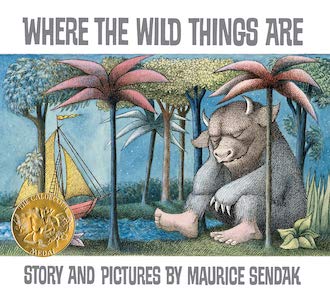
Maybe you’re familiar with this story: A young boy in a white wolf costume is sent to his room after he runs around the house, terrorizing his family, screaming at his mother, “I’LL EAT YOU UP!” After being sent to bed with no dinner, the boy finds himself in a strange new world, filled with vines and trees and terrible creatures he calls the “Wild Things.” He becomes the king, the wildest thing of them all. 

When Where the Wild Things Are was first published in 1963 by what was then Harper & Row Books, no one predicted how it would take the world of children’s literature by storm. Adults were puzzled as their children, once reluctant readers, dragged them to the library over and over again to read this story, one that was unlike any other at the time. Within the realm of children’s books, a space previously marked by the conservative, didactic messaging of Dick and Jane stories, Sendak was a breath of fresh air, having written a child protagonist who was as messy and loud and chaotic as he longed to be.

Maurice Sendak broke new literary and artistic ground by turning to the darker realities of childhood, illustrating a blend of anger, frustration, and other complicated emotions among the monsters he painted. Rather than patronizing his young readers, painting an illusion of childhood “innocence,” he respected them by acknowledging the terrifying reality of what it meant to be a child, someone who existed on the margins of life, who possessed both intense vulnerability and incredible insight, unfiltered by adult biases. Sendak, along with literary innovator and legendary editor Ursula Nordstrom, created a book that would become emblematic of the richness and depth of children’s picture books. He explored his own past, and mined and reflected upon his own experiences as a queer, Jewish child learning to grow up in the world. Sendak was, himself, the real deal “wild thing.”

Born and raised in Brooklyn, New York to Jewish Polish immigrant parents, Sendak occupied an “outsider” status in multiple senses of the word. Whether it was a physical “outsidership,” gazing upon the world outside from his bedroom window while sequestered from illness as a child in his home, or an internal one as the descendent of immigrant Holocaust victims and a gay adolescent in an extremely heteronormative world, Sendak could never quite blend into 20th century America’s idea of “normal.” 

Sendak was, himself, the real deal ‘wild thing.’

While it is debatable how early Sendak became aware of his own queerness, he understood how his “difference” was perceived by others, saying in an interview, “You know what they all thought of me: sissy Maurice Sendak.” In addition to his attraction to men, Sendak’s natural early queer sensibilities—including his love for art and storytelling, as well as his physical departure from the Western athletic masculine ideal defined by Superman (whose Jewish immigrant/refugee origins have often been erased or “goy-washed” by American media)—created a sense of unease and “otherness” that carried into his work.

It should be noted that when it comes to fantasy and speculative fiction, queer readers and writers have always gravitated toward this medium. For instance, in an interview with Geeks OUT, author and illustrator, Ethan M. Aldridge (Estranged series) states: 

There are so many themes and tropes in fantasy that resonate with the queer experience; outsiders finding their way through a strange world, transformations, hidden identities. People find impossible loves, change form and gender, escape from inescapable isolation into a world wider and more strange than they ever imagined. Fantasy is all about a life and a world outside of what we are told is possible, and I think that sense is something that speaks to a lot of queer people. We grew up with those feelings in us, so we gravitated to the stories that told us those feelings meant something true and important and beautiful. From changelings to voiceless mermaids to love-lorn princesses locked away in remote towers, queer people have been using fantasy as a way to express feelings of queerness for a long time.

While Max isn’t explicitly queer in the sense of sexuality or gender exploration, his “queerness” may refer to the older 19th century definition of queer as something “strange” or “peculiar.” As we see in Where the Wild Things Are, Max is considered a stranger to his own family. He is “cast out,” banished to his room for excessive and wild behavior. And like Dorothy Gale from The Wizard of Oz (another icon of children’s media that maintains a significant queer following), Max finds himself in a wonderland that simultaneously terrifies and welcomes. It is in the land of the Wild Things where Max finds the space to experiment, identify, and play. He learns how to be a new version of himself, braver and louder than he was ever allowed to be at “home,” while finding a new sense of self and chosen family—an also inherently queer theme— along the way.

It is in the land of the Wild Things where Max finds the space to experiment, identify, and play.

And speaking of family, like Sendak’s queerness, and his own familial roots, his Jewishness is something also inherently inescapable from his work. As an artist, Sendak frequently turned to his family for inspiration, even modeling the faces of his characters after the ancestors he found in family photo albums. This is seen in his illustrations for Zlateh the Goat and Other Stories, a collection of stories by the Jewish writer Isaac Bashevis Singer.

Yet the inspiration did not stop at transcribing from photos. Sendak also drew symbolically from his family, modeling his Wild Things after his Old World Yiddishist immigrant relatives. 

In the piece titled “Moby Dick, Creativity, and Other Wild Things,” Sendak describes a typical day with his family: 

They were a huge bunch who would roughly snatch you up at any moment. They’d jabber loudly in a foreign tongue—kiss, pinch, maul, and hug you breathless, all in the name of love. Their dread faces loomed—flushed, jagged teeth flaring, eyes inflamed, and great nose hairs cascading, all oddly smelly and breathy, all dangerous, all growling, all relatives.

In writings such as this, readers can see an obvious connection between the creatures in Max’s story and the “Wild Things” in Maurice’s life, otherwise known as his relatives. If you’ve ever had a relative come up to you and say something along the lines of, “you’re so cute, I could just eat you up!” then you’ve encountered a very Sendakian line of thought, a familial love that is both overwhelming and consuming (sometimes even literally). Yet in early 20th century America, when the model of the emotionally bland nuclear family was aggressively showcased, and conservative assimilation meant purging many “ethnic” modes of family behavior and flavor, Sendak’s family’s vibrant Jewish distinctiveness was likely considered “non-normative.” Perhaps his relatives’ own aggressive mannerisms and affections could even be mistaken for monstrosity.

Golan Y. Moskowitz, literary scholar and author of Wild Visionary: Maurice Sendak in Queer Jewish Context, had this to write about Sendak’s family: “In their inability to express love without eliciting terror, the Wild Things, whom Sendak called ‘foreigners, lost in America, without a language,’ are also like queer people experiencing love and attraction in ‘wrong’ ways, according to a prejudiced society.” In the context of xenophobia, antisemitism, and queerphobia, the different elements of Sendak’s life, the ones he himself regarded with both exasperation and deep love, were demonized, lending further weight to the sense of the “other” encountered in his stories. 

Within children’s literature, there’s often a legacy of depicting marginalized groups as monsters, symbolic liminality illustrating the emblematic “other.” A more obvious example of this can be seen within early fairy tales. In her piece “Can I Still Love the Antisemitic Fairy Tales That I Grew Up With?“, Jewish writer Aleksia Mira Silverman notes that many of the classic Grimm Brothers’ stories she grew up with and loved contain a hostile legacy, writing, “I struggle to reconcile how much I love Grimms’ fairy tales with their reliance on antisemitic tropes and the deadly impact they’ve had on Jewish communities throughout history.” Taking in the archetypical witch model within the illustrations of many children’s books and fairy tales, it’s easy to identify the antisemitic tropes taking center stage: the curved noses, the wild, frizzy hair, all of which are classically stereotyped features for Ashkenazic Jewish women. 

Consuming these narratives in story after story, it’s no wonder how any child lacking fair skin, reading how their other features, like hair and noses, are described as ugly and evil, might internalize feeling like a monster. Yet there are those like Sendak who have seen this wildness, this “monstrosity,” and turn towards it with compassion and empathy. Unlike most fairy tale stories, where those marked as “other” or different are considered the villains, in Sendak’s stories those marked as the “other” are capable of both loving and receiving love in return. As we see in Where the Wild Things Are, the Wild Things don’t hurt Max, but instead play with him, joining him in a “wild rumpus.” And toward the end of the book, when Max feels ready to return home, his mother, originally presented as the most antagonistic force in the story, is shown to contain multitudes. She leaves a warm meal waiting for her child. And what’s more Jewish than food as a symbol of our love? 

And what’s more Jewish than food as a symbol of our love?

In their book, Craft in the Real World: Rethinking Fiction Writing and Workshopping, writer Matthew Salesses writes: “To be a writer is to wield and to be wielded by culture. There is no story separate from that. To better understand one’s culture and audience is to better understand how to write.” Salesses believes the act of writing is never created in an apolitical or neutral vacuum. It is never fully separate from the elements that affect our own lives and stories. While this does not mean every writer’s story is based on their life story, i.e., sometimes a story about talking cars is just about a story about talking cars, it would be limiting to say there is never any influence at all. 

Growing up, one of the most useful lessons I learned came from a teacher who suggested that when reading, one should always turn to the back of the book and read the author’s page first. I was initially puzzled by this, wondering how knowing about the author in real life had anything to do with reading their work. Yet over the years, as I learned more about myself as a writer, I also started to learn to read between the lines. By doing so, I saw the richness of the stories I was reading, and the richness of where these stories came from. Sendak’s complicated and intersecting identities are intimately tied to his work as an artist. At the heart of Where the Wild Things Are lies Sendak’s heart: a boy like Max who was pulled between worlds, between his old Yiddishist Jewish immigrant heritage and the hostile, homophobic American landscape he was navigating. He embraced those who were considered “monsters” by the outside world, and in them he found his chosen family. He taught an entire generation that “wildness” need not be tamed by the artificial boundaries of society—that children like Max could simply be themselves, wild hearts and all.

A Love Letter to Tackiness and Bad Taste

I met Rax King outside of a bar on the first truly cold autumn night of the year, for which we both underdressed. We were wearing identical faux-fur lined denim jackets—albeit in different colors—and, weirder still, had both accidentally inflicted minor-but-nagging injuries to the thumbs on our left hands. From there we wound up on the topic of interior decor and affirmed that, although we do both have animal print duvets, they are at least different animal prints.

From there we landed on a new decision/dictum/lifestyle change that Rax recently committed to. 

“I’m only going to wear outfits where at least one thing is an animal print, and preferably more than one, and preferably two different animal prints from different animals.”

She continued, “And the night that I made that decision, I spent $200 on used animal print clothing on eBay. And then the next day, I woke up just like, ‘What did I do?’ And then I had like 10 emails, congratulations on your animal print purchase. And then I was kind of regretting it and then everything arrived and I was like, ‘No, this was right. This feels right.'”

Tacky by Rax King

To say Rax demonstrates commitment to the bit here would be to imply that anything Rax does is ever less than completely sincere. As we discuss in our interview below, and as Rax lays out in her remarkable debut essay collection Tacky, the bedrock of tackiness is utter un-selfconscious sincerity. That sincerity might garner ridicule—including, obviously, being labeled “tacky”—but it also leads to a sense of, this feels right. And, sometimes, it also leads to a cool leopard print bedspread.

Rax and I spoke about virtuous shoplifting, identifying the kernel of an essay, “Notes On Camp,” the first-person industrial complex, and of course, Guy Fieri.


Calvin Kasulke: So the subhead of your book is “Love Letters to the Worst Culture We Have to Offer.” But a lot of the culture you discuss is from your adolescence and coming of age. Why that section of culture?

Rax King: Primarily because it’s personally important to me. I grew up with Creed, I grew up shoplifting from Bath & Body Works, these were formative experiences for me.

As I got a little older, it became obvious that these things I liked so much were not cool at all. Other people, who seemed smarter and more worldly than me, who I really wanted to impress, they did not like any of the same stuff as me. And it was a moment of forced reeducation, like I needed to get on board if I wanted to make friends with the cool smart people—which I did, because I was 16 and shallow.

And after long enough time passed and I was no longer in high school, I felt comfortable revisiting all this stuff I used to like, and it turns out all of it is still awesome. So I was right, everyone else was wrong. You can quote me on that.

CK: What were your shoplifting techniques?

RK: I wasn’t super brave with it most of the time, like—nothing with a security tag. I liked anything I could slip into my purse. I really liked the sample makeups from Sephora and whatnot because it was not only easy to steal them but I also felt pretty virtuous about it, like “This is something nobody else is going to want. It’s got 500 people’s other mouths all over it already, I might as well.”

CK: One of the things that you’re really magnificent at is making small moments feel really resonant. I think the average person telling a similar anecdote would leave their audience feeling like, “That’s it? That’s all? That’s what you were driving at?” but you have a gift for making them land. Do you start with those moments and then build an essay around it, or do you start writing about a thing and stop when you hit one of those moments?

RK: No, the little stuff is usually where I do start actually. I feel like the reason we hear so many of those disappointing anecdotes that fizzle out into some tiny little nothing, is that those moments are important to people. Those moments are the ones that stick, I think. Big picture stuff fuzzes out over time, but I’m always going to remember the color of the tracksuit that my dad wore all the time—stuff like that. The stuff that colors in memories is what I think is most important for coloring in a story.

For the Jersey Shore essay about my father, the thing that I remembered first was him calling me every week when I went off to college to tell me, play by play, what had just happened on Jersey Shore that I had just missed. Which is such a boring thing to describe, but it was really meaningful to me and to him both—and I think that if you try to excavate why something is meaningful, you’ll be able to unlock some of that magic in those tiny little instances.

CK: Your essay about a date you had at the Cheesecake Factory achieves something that’s similarly difficult to convey, because you’re telling a story about an event that was ultimately disappointing and kind of boring. Which, by the way, what is your go-to order at the Cheesecake Factory?

RK: All right, settle in. Gotta get the avocado spring rolls to start—and a mojito, because not everybody has them and the ones at the Cheesecake Factory are huge.

Avocado spring rolls as the starter, the Louisiana chicken pasta as the main, and then at that point, you’re going to want to tap out early and get a box for leftovers. They give you two chicken breast patties and you want to save one, plus a bunch of pasta, because you don’t want to fuck up dessert. Then for dessert, peanut butter fudge ripple cheesecake, usually to go, and then I eat dinner all over again when I get home.

CK: That’s beautiful and perfect. Okay, so I want to try and put together a unified theory of tackiness, and I’ve got a couple of questions to hopefully help us get there. The first one is: Who gets to decide what’s tacky?

RK: So I thought about this a lot in terms of camp actually, because one of the things I read as research was “Notes On Camp.” The way camp is described in the essay is as something fairly ordinary, if over-the-top, that you, the viewer, have a private, extraordinary experience of. You decide that the thing is camp. 

And for me, something that is tacky is something that you would decide is campy, but you’re too embarrassed about it. It’s not quite out there enough to be campy or to be kitschy, it’s too ordinary for that. So you’re uncomfortable with liking it and rather than make a big deal over how much you like it, the way people did with The Room—you can’t really do that with Creed. Creed is not quite bad enough to be “so bad it’s good,” so you just bury it deep and then it comes out when you write a collection of personal essays.

CK: It’s the wrong kind of gauche or outré.

RK: Right. It’s something gauche that you don’t think you could get a bunch of people on board with. People get together to go see The Room in theaters, there’s a whole culture of it now. There is no such culture with going to see Creed live to watch Scott [Phillips] play that weird ass song he wrote about the [Miami] Marlins. He wrote a love song to the Marlins.

CK: Why are some people repelled by tackiness and why are some attracted to it?

As I got older, it became obvious that these things I liked were not cool. It was a moment of forced reeducation, like I needed to get on board if I wanted to make friends with the cool smart people.

RK: I think it comes back to being, again, embarrassed. It’s more a statement about yourself, to be repelled by other people’s taste, because if you’re not too self-conscious about it then you like your thing, they like theirs. That comic, “Let people enjoy things,” people are very annoying with it now but it had a point. People should be able to enjoy harmless things—they do their thing, you do yours, everybody’s theoretically happy. I think when it comes down to being repelled by other people’s taste, whether the taste is tacky or gauche or too highbrow, all you’re talking about is yourself.

That repulsion is just a function of something you don’t like about yourself, probably, something that you’ve tried to suppress. I’m honestly a little bit repelled by anything too highbrow—I really have to fight the instinct towards anti-intellectualism in myself. And frankly, it’s because smarty-pants types have been really shitty to me my whole life long, it’s got nothing to do with the stuff they like. It’s all my own insecurities and my problems and the reasons they were shitty to me is probably down to their insecurities and their problems and everybody’s just awful all the time. And I think that the thing to do is to just go your own way and mind your own beeswax.

CK: Is tackiness the providence of femininity?

RK: Maybe less femininity than the high femme as an article of being.

CK: Say more about that.

RK: I think it’s possible to partake of femininity in a fairly highbrow way. Little corduroy skirts and all that Madewell shit. That feels totally feminine, but I also feel like that person has no interest in shotgunning beers with me and listening to Puddle of Mudd—that’s not what I’m going to do with that person, it’s two separate femininities.

Looking back on the relationships that I’ve had with women, both platonic and not, I’m consistently attracted to super high femme types who take like an hour and a half to do their hair every single day, who also love dogshit stuff and aren’t the least bit self-conscious about it. I want to party with that person. That’s a fun person. It’s not the providence of femininity, it’s the providence of doesn’t-give-a-fuck high femmeness.

CK: Do you have any tacky icons personally, or just people who you think are icons of tackiness?

When it comes down to being repelled by other people’s taste, whether the taste is tacky or gauche or too highbrow, all you’re talking about is yourself.

RK: I don’t think you can do much better than Fred Durst. Like him or hate him, he made his vision come true for the entire world. Everybody knew “Nookie,” everybody knew “Break Stuff” for a time. That’s tacky power. 

He was just—I’m so sorry Fred Durst if you read Electric Literature for some reason, but you are kind of an ugly motherfucker. And he just showed up leaning into the ugly with that terrible facial hair and the baseball caps and the gym shorts, not giving a shit, essentially in fuckboy drag, and people were into it for a short time. He did that. He made that happen for folks. I think that’s a tacky icon for me.

DJ Pauly D from Jersey Shore I would say has a similar, not that self-aware vibe. I guess at this point he’s been making money off that persona for so long he’s got to be much more self-aware than when he first got started—but that hair, and the gold chains, the Ed Hardy, I was like, “Sign me up. This guy is leaning in.”

CK: For some of the people you’re listing also it feels sort of compulsive, it feels like it’s more than sincerity. It feels like they couldn’t stop if they wanted to.

RK: I think that’s important actually. Tackiness, even when it’s diametrically opposed to your own self interest, you can’t stop. Fred Durst cannot stop Durst-ing. He’s going to be that guy until the day he dies. He’s kind of trying to pretend he was always in on the joke now and nobody buys it because we’re all like, “We have affection for you now. Enough time has passed. But come on, you were that guy, you were the guy who didn’t understand why we were laughing.”

I think that at this point, enough people look at me as a person with a compulsion that I’m pretty safe in it now. Nobody thinks I’m doing a bit anymore. For years and years, all I’ve talked about is the disappointing dudes I’ve had sex with and weird conversations with neighbors and the very mundane but also out there shit that happens in the course of a day. And there was a stretch when everyone was like, “You’re making this up for retweets.” And then it just kept going and they were like, “Oh no, she’s a diseased person. Something’s not right.” And they’re right, something isn’t.

CK: Speaking of, you post a lot of autobiographical tweets that are fairly personal, and now you have a collection of personal essays. Did you grapple at all with having an extant semi-public persona, and then writing a book that was going to augment or contrast that persona in some way?

RK: I developed this paranoia that there would be a weirdo, and that weirdo was going to go through everything I’ve ever tweeted in my time on the internet and then cross-check it against my book and find one discrepancy, maybe. And somehow that weirdo and that discrepancy were going to ruin my life. And I don’t even think it exists and I don’t think anybody’s paying that much attention to me, but it’s sort of the process of turning the matter of your existence into content.

I’m consistently attracted to super high femme types who take like an hour and a half to do their hair every single day, who also love dogshit stuff and aren’t the least bit self-conscious about it. I want to party with that person.

The memory is a stupid thing and you’re going to get stuff wrong once in a while, you’re going to harp on stuff until people wonder why you don’t talk about anything else. It becomes a little more personal, I think, than when you’re writing fiction. So I feel very exposed a lot of the time and I have to take steps to make sure the things I write don’t feel extractive to me, because that’s the big gripe that everyone has with personal essays—it’s the lowest paid form of media writing but it takes the highest toll on the person writing it, theoretically.

I’ve never really found that to be the case, it doesn’t necessarily take a toll on me to write about myself, but to have it all come out in a cluster like this, a dozen personal essays—plus I’m tweeting all the time because I’m a diseased person—it’s just a lot of content about myself for people to pick at, should they want to do so. I just have to cross my fingers and hope that nobody’s paying attention to me that closely.

CK: Your James Beard-nominated essay about Guy Fieri ends the collection. Why did you choose that essay as the finale?

RK: I just think it’s one of the prettiest things I ever wrote. I’m very proud of it. I want to go out on a high note so that if somebody hates the rest of the book, they will hate it less. I hope.

CK: Why do you think that essay resonates with so many people?

RK: I wish I knew. Obviously a lot of people have been in abuse situations themselves. And obviously Guy Fieri has a lot of fans. So I guess I just captured the little crossover circle of the Venn diagram. But it’s not just that, because people are really devoted to it in a way that always surprises me. Every time I post it, it goes viral. And I don’t know, to toot my own horn a little, I do think it’s a good piece of writing, but people are much more into it than I expected when I published it. So I’m always just like, “Yeah, good for you, Rax.”

CK: Are there any essays that almost made the cut that you dropped or that you didn’t finish writing?

RK: Yeah, there was one about blowjobs—like very explicitly about blowjobs—that I wound up cutting and publishing on my Patreon instead. And I’m really glad I did because in the course of recording my audiobook, I realized that I have six essays explicitly about sex all in a little cluster, all in the middle. And it was just like me reading out loud to this very pleasant, very polite sound guy, and we were the only two people in the room, and I don’t think I could have gotten much more explicit without wanting to blow my brains out. So that one didn’t make the cut, and I’m glad.

CK: You saved yourself from having to get extremely, extremely explicit with the sound guy.

RK: In that essay, I referenced a now-defunct porn website called “milk my cock,” and I don’t think I could say the phrase “milk my cock” to a stranger. It’s too much. I have my limits.

CK: Is there anything you’re surprised people have been asking you about over the course of your interviews and events so far?

RK: I guess I was expecting to end up talking more about sex. It comes up so often in the collection, to the point that people on Goodreads are mad at me. They’re like, “This book has too much sex,” and I’m like, “You’re telling me? Buddy, that’s my life that we’re talking about. Absolutely, it has too much sex,” but it just hasn’t come up once. People mostly want to talk about Creed and my dad. And Guy Fieri.

My surprise isn’t just because there’s so much sex in the collection, because whatever, we’re all adults. But for me, sex is kind of the ultimate tacky thing. It’s largely unmentionable, you’re not supposed to have too much of it, you’re certainly not supposed to talk about it in mixed company. So in that way, it is much like Creed. 

For me the connection is inextricable between sex and the weird little relationships that I’ve had with various pop culture franchises. One informs the other, inextricably. And it just hasn’t come up and I’m like “Okay, that’s fine, let’s all be comfortable,” but it is surprising.

CK: Were any of those essays difficult to write?

RK: There’s an essay in the book about an affair that I had with a married dude. And that was recent enough that it was still somewhat raw when I was writing it. I was still so pissed off, so angry. But most of the time, sex isn’t really fraught for me. I’ve had enough of it and much of it just friendly like, you shake someone’s hand, you have sex with them, it’s normal. But anything where there’s unfinished feelings business? It felt like summoning a demon to write about it.

It’s pretty common advice to not write from an open wound, and I think that’s mostly good advice—maybe not “don’t write from the open wound” but certainly don’t publish from the open wound, because you’re going to be feeling things during that open wound that you’re not going to feel the same way in six months, and publication is forever.

In terms of how it feels to write from that open wound, it’s really not that different. Either way, I have to access the way I felt about something when it happens, I have to recall what I was thinking and what the other person was doing with their hands.

I think something that personal essayists tend to do is get really precious with the insights that they want you, the reader, to take away, and hammer them home in this self-serious way that I don’t think works most of the time. You want to get there in a more organic way. I don’t think you want the diary approach or the therapy approach, both of which are death for personal writing.

My Memory Is Gone, but at Least I Forgot You

Signs and Visions

What my head was like in 1991 was a rollercoaster. Thoughts went chunk, chunk, chunk, slow, then they shot down fast and flew around in a loop. At the end of each day I was dizzy. Reading became impossible for me, not just books but things like street signs, too. I knew something was wrong, but I didn’t know what. 

Back then I lived with my boyfriend in the second-story apartment of a sagging Victorian. It came furnished with stained library chairs and an iron patio set covered in a layer of greasy dust which we had no interest in cleaning off. I had a job in the back of that donut place on 4th Avenue. All day fruit flies divebombed the deep fryer. I guess that’s what Freud would call a Death Drive. My boyfriend was always telling me about things like the Death Drive and I was always forgetting them, so I was perpetually surprised by what he said. My surprise made him very happy. That was the only way we were a perfect couple, except for our sexual chemistry.

At night my boyfriend and I screwed copiously. He was sexually excited by the burn marks freckling my arms from deep fryer backsplash and my long hair, which he liked to wrap in a knot around his fist, pulling me to one side. But he did make me come, which I guess proves he was good at something. When the sex was over he read Marcuse and made remarks about the revolution, watery after-semen soaking the front of his boxer shorts. He always put his underwear back on afterward, claiming that it was more natural for people to wear clothes. “How?” I asked him, but I don’t remember his justification. He had taken a couple of sociology classes at the local college and had theories about nature and society. He spent a lot of “thinking time” in bed, staring at the planetary rings of a large water spot next to the light fixture. “There are twenty obvious solutions to the national debt, but no one listens to me,” he said. He also had some creative ideas about peace in the Middle East and collective living. He wanted to start a commune, but he was in the wrong decade and couldn’t build anything with his hands.

While my boyfriend was thinking, I smoked weed. When I smoked I could dismiss the surges in my brain as a side effect of being high. I’d pack and light a bowl in my lucky pipe, then stand on a chair in the bathroom and blow skunky smoke out the porthole window. From there I had a God’s eye view of the vacant lot behind our apartment. A spotlight shone on it day and night, but that didn’t deter people or raccoons from doing their business. They all rummaged the garbage; the people also used smokeable drugs, mostly meth. No one ever interfered with the happenings in the lot, and I guess that’s how we all liked it. In those days I wasn’t aware that things could be intervened in or changed. For example, the light from the vacant lot shone into our bedroom all night and made it hard to sleep, especially with my brain going all kinds of chunk-chunk and whooosh. But it never occurred to me or my boyfriend to buy curtains, or even tack up a sheet. Just like it never occurred to me that I could quit my donut job, or leave my boyfriend. There’s something miraculous to this kind of helplessness. It gives you a constant sense of doomed grace. Back then all I had to do to experience miracles was allow for the possibility that I would suffer uncontrollably. As I learned later, even when you think you’re in control you suffer. But then suffering doesn’t feel miraculous at all.

Soon my boyfriend realized there was something wrong with me. I began forgetting the names of animals and colors. I experienced a cool mist pouring from the cracks in the floorboards. When I looked down into the deep fryer, joyful faces shifted in the dark oil.

“What’s happening?” my boyfriend said once. “Why are you making that noise?”

“What noise?”

“You’re like a cat,” he said. “Yowling.”

I hadn’t known I’d been making a sound. I’d thought the screeching was inside my head.

“Don’t you want to screw?” I flapped my legs open so my boyfriend could see up my skirt.

“Don’t try to distract me,” he said, but then of course we had sex. Though he meant well, he had failings.

I was at work when the ambulance came to get me. The faces in the oil had been telling celestial jokes. Then I fell asleep. I woke up a long time later in the hospital with a male nurse standing over me and repeating my name. The nurse said I’d had an aneurysm, something with lesions. They’d carved my head like a pumpkin, pulled the top right off to go in after the clot. They took out all kinds of flotsam while they were in there: short term memory, gobs of my childhood. I lost the peripheral vision in the right side of both my eyes. They left behind some pointless things, like Sigmund Freud. 

After that I had to work just to do ordinary things other people never think about. I didn’t even remember how to tie my shoes. Every word I read or spoke was a knot I had to loosen.

A neighbor brought me flowers. My boyfriend visited and ate the pudding cup from my lunch. His car had broken down, so he was riding a bike. “Cars are slavery,” he told me. “Now I’m a free man.” He’d been reading Gramsci’s Prison Notebooks and they’d inspired him to keep a similar journal “where the prison is metaphorical.” I didn’t show him my own notebook, which contained pages of shaky transcriptions of mysterious words I’d once known. That was in the rehabilitation center. The nurse told me I was lucky to have this rare condition because the state paid for my treatment. “Most people get dumped out on the street,” she said. I saw an image of myself as a tumbleweed blowing around the pavement while my boyfriend lectured me on the plight of the worker.

Once the physical therapist was quizzing me about simple numbers while I tried to walk backward. I kept telling her I didn’t know any answers. “Reach,” she said, “You have to want it.” That’s also what I told my boyfriend, just before we broke up: “You have to want it.” “Want what?” he said. He was still wafting up toward the ceiling, powered by his thoughts. With all the brain power I had left I could barely crawl. He was predictably depressed by my shaved pumpkin head and hospital vibe. I was too tired to open my legs. So between us there was nothing left to like. “You have to want it.” What did I want? I picked my direction and ran. The direction I ran in was away from him. I want to say it was upward, but I’m not sure there’s such a thing. With parts of my brain missing it was hard to tell direction. Sometimes I forgot whether my eyes were open or closed. But maybe there’s not much difference anyway.

11 Books With Millennial Narrators Who Are Children of Immigrants 

The millennial voice in fiction has been oft-discussed now for some time. Some have argued the voice is best seen in the sparse prose of Sally Rooney. Some, that it’s in the more voice-driven work of Lauren Oyler, Halle Butler, and Ottessa Moshfegh. It’s a voice that can resemble anything from a resurrected Jean Rhys, Marguerite Duras, or Kathy Acker contending with the modern world—one that reveals a person (often in the age range of “millenial”) who may be morally dubious and cerebral, tender but barbed. She talks sex candidly, and can be called selfish and unhinged. She is my favorite. She’s also almost always white. 

I was in college when I first started writing fiction, and I was often told that my work had too many “different” themes going on. It’s true that my favorite books were two different sub-genres: the intergenerational, diaspora novel and the alienated, flawed, and cerebral female narrator. In the former, my cornerstones were Julie Otsuka, Sandra Cisneros, Jhumpa Lahiri, Ruth Ozeki, and Amy Tan. With voice-driven works, my shepherds were Mary Gaitskill, Aimee Bender, Amy Hempel, Sheila Heti, and Lydia Davis. I became extremely frustrated that there was no Venn diagram between these two circles, especially as my workshop classmates told me that my focus on identity and my narrator being Turkish and American “crowded” the other themes in my work, which were often these gently manic narrators contending with modern-day New York City, their families, and their sexual desire. Choose one, people would write to me. Especially if a story included a single mention of Islam. 

This was between the years of 2012 and 2015. Today, I’m delighted that an intersection has begun to emerge in this venn diagram, an intersection that pushes against the idea that a “millennial” and “relatable” novel has to feature a white, strictly-American or Western European narrator.

In this stellar list, the narrators are similarly dubbed a range of darkly funny, irresponsible, or obsessively analytical. These narrators, kids of immigrants or immigrants from a young age, resist the intergenerational diaspora narrative that is often expected of them, while also reading as different from the more popular, white millennial narrator. Parents are ever-present, race is explored with a razor-sharp eye, sex and dating is really, very compromising—especially if it’s with a white American—as is any behavior that jeopardizes your chances of both assimilation and success. Identity has no easy answer and is instead an ongoing question. There is always a deeply rooted tension regarding home and belonging, and narration can easily slip into another time and across the map to the character’s respective motherland. Most notably, there’s duty and guilt: the expectation that you have to do something worthwhile with the life that your parents gave so much up for.  

In my debut novel The Four Humors, I write towards this tension. My narrator, Sibel, is in Turkey for the summer to care for her grandmother, grieve her father’s unexpected death, and study for the MCAT. Her white American boyfriend tags along. The big problem is that Sibel has a chronic headache, and all she does is obsess over ancient medicine and watch soap operas with her grandmother. She’s an alienated, millennial narrator telling an intergenerational diaspora story—and it isn’t until she stumbles across a family secret that she’s able to shed her delusional skin. Does she find out how to live her life better? Hmm. Does anyone?  

All of these narrators are asking this same question: what the hell are we supposed to be doing? Where do we belong? How, as Sheila Heti wrote, should a person be? 

Severance by Ling Ma 

Candace Chen is a first-generation 20-something who is still working at her office in New York City when the Shen fever-induced global apocalypse is well underway. Severance is zombie apocalypse meets dystopian pandemic meets corporate millennial horror show, told through the candid voice of Candace. Whereas most dystopian narratives serve up an run-of-the-mill, “relatable” (white) hero, Ling Ma gives us the very unique Candace, whose complicated understandings of home and belonging underpin this richly layered, prophetic novel. 

Pizza Girl by Jean Kyoung Frazier 

Jane is 18 and pregnant in Los Angeles when she delivers pizza to Jenny, a woman who wanted pickles as a topping, a woman with whom Jane promptly becomes obsessed. Jane’s also living with her devoted mother and smothering boyfriend, Billy, while grieving her late father’s death—and yeah, she’s drinking while pregnant.

Pizza Girl is a propulsive and sublime ode to the unexplored taboos inherent in coming-of-age, seen through its explorations of motherhood, addiction, queerness, and grief. Hope is the pulsing heart in this idiosyncratic, spectacular debut, seen most heartrendingly in Frazier’s description of the Korean phrase “han”:

“Han was a sickness of the soul, an acceptance of having a life that would be filled with sorrow and resentment and knowing that deep down, despite this acceptance, despite cold and hard facts that proved life was long and full of undeserved miseries, ‘hope’ was still a word that carried warmth and meaning.” 

Call Me Zebra by Azareen Van der Vliet Oloomi 

An epic and terrifically funny love letter to literature, Call Me Zebra follows self-named Zebra, an Iranian refugee and émigré, who is on a quest to write a manifesto of every book she has ever read in order to make sense of her chaotic life. Zebra, who was in-utero when her parents fled Iran, traverses from Barcelona to New York City—all while questioning exile, identity, literary theory, history, and mortality in a wonderfully-increasing histrionic and obsessive tone: “I thought to myself, I am among the loneliest of this pitiful world; all the other Hosseinies are dead.” She’s also stumped by love—especially when she meets the charming Ludo and his clique of fellow exiles. Her best friend? A “mongrel” bird she steals from a professor’s apartment.  

Sour Heart by Jenny Zhang 

Obscene and heart-rending all in one, Sour Heart is a frank and kick-ass example of the kind of hell you can experience being a kid of immigrants. The collection of stories highlight the experience of first-generation Chinese American girls growing up in New York City in the 1990s; their dedicated parents, professionals and artists back in China, share tenement housing and one another’s dress shoes—even if four sizes too small. The devotion paid to coming of age is unparalleled—the supposedly gross, weird, and ugly, it is all turned beautiful in this collection. 

Problems by Jade Sharma 

Dryly funny, whip-smart, and heroine-addicted, Maya’s candor on the page about sex and addiction is groundbreaking. Just one page after Maya’s having sex (“He fucked me from behind. Felt like a baseball mitt, stretching.”), she’s describing her identity with bluntness and veiled conflictedness:

“I regularly told people my father was white. Not because of some deep-seated issue with being Indian, but because I didn’t know much about Indian culture, and I felt more American than anything else.” 

What We Lose by Zinzi Clemmons 

Thandi is in college when she loses her mother to cancer, inheriting an emotional and intellectual burden of how to carry on while experiencing profound loss. In powerful and lucid vignettes that incorporate visual art, photography, charts and graphs, What We Lose explores questions of grief, identity, race, and love with a poetic and analytical eye. Identity is an ongoing question in this novel, as Thandi, raised in Philadelphia to an American father and a South African mother, feels like “a strange in-betweener.” 

Chemistry by Weike Wang

The unnamed narrator of Chemistry is a Chinese American graduate student studying synthetic chemistry, but her research is not going well, she doesn’t know whether to accept her boyfriend’s marriage proposal, and she is really disappointing her parents. Balancing dry wit and delectable shards of information on anything from the composition of minerals to the belief among Chinese mothers that babies pick their own traits in the womb, Weike Wang’s intimate debut is a neurologically-charged and fiercely meditative story of how an emotionally and professionally unmoored young woman navigates a world where science no longer holds the answer.

Dreaming of You by Melissa Lozada-Oliva 

Raw and obsessive, Dreaming of You is a novel in verse that feels like a macabre sex education manual taught by your best friend. Melissa is a young Latinx poet who decides to bring popstar Selena Quintanilla back to life—all while experiencing panic attacks on the F train and receiving calls from her father about whether she’ll consider becoming a doctor now that NYU medical school has waived its tuition fees. This genre-defying novel is alive and spectacularly horny, with chapter titles like “I’m So Lonely I Grow A New Hymen” and “What If Selena Taught Me How to Fake Orgasms.” Family is as central to this narrative’s skeletal system as millennial angst and Internet culture: they fuse together and create a magical, death-defying body.

You Exist Too Much by Zaina Arafat 

You Exist Too Much opens in Bethlehem with our unnamed narrator, 12 years-old at the time, walking by a group of men drinking tea. She’s with her mother and uncle, and she’s wearing shorts when one of the men calls out, “haram!” Haram means forbidden in Arabic, and Zaina Arafat’s debut novel deftly probes the constraints and bounds that society imposes on a queer Palestinian American woman who has always been told—even and especially by her mother—that she desires too much, and too much of the wrong thing. 

Days of Distraction by Alexandra Chang 

Jing Jing, a recent college graduate with an infectious and understated sense of humor, works as a technology reporter in Silicon Valley, where she’s one of the few employees of color and is trying to get a raise. When she decides to move to Ithaca with her white boyfriend for his graduate school, she begins tracing the history of racism against Asians Americans in the United States through archival research and exploring the subtleties of her own interracial relationship and complicated family story. The result is a probing and exceptionally wise story of a young woman in search of what she wants.

The Idiot by Elif Batuman 

Yeah, okay! Technically Selin—The Idiot’s idiosyncratic, charming, and cerebral narrator—is not a millennial. But Batuman’s depiction of a Turkish American’s first year of college and foray into the world wide web in 1995 serves as a modern-day manual on how to navigate language—especially when you have an all-consuming crush on a senior with a girlfriend and you’re communicating via the digital landscape.

Selin’s quest is understanding language: she takes Russian, teaches ESL in Spanish, buys a new coat because it reminds her of Gogol’s, and ultimately follows her crush to Hungary for the summer. For me, Elif Batuman’s fiction was the first time I saw my own identity as a Turkish American person in literature, and The Idiot—a stupendous novel of ideas and observations that will make you laugh and nod in universal recognition—will always serve as my foundational text. 

7 of the Best Writing Residencies in Florida

I love writing in the wintertime, but what I love even more is when that winter is sunny and brisk, no snow or polar vortices, and I can take walks to rejuvenate and stay productive. Pray, tell, where can a writer be assured of such an experience? Why, Florida, of course—where locals call this time of year “snowbird season.” Temperatures won’t be warm enough for you to swim, but remember, beaches and pools would be too much of a distraction. You’re there to write, possibly in an outdoor café under a heat lamp, thus avoiding a nasty slip on ice outside of your apartment. 

But what’s urgent, in particular, about coming to Florida to write? (After all, if it’s merely the warm sun you seek, you might just as well book a hotel in Tulum). Consider how many titles by Florida-based writers have leapt to prominence in recent years, from the wild and strange realms of Jeff Vandermeer’s Area X trilogy, to Lauren Groff’s Florida, to the gritty, dream-like zones of the urban subtropic in Dantiel W. Moniz’s Milk Blood Heat and T. Kira Madden’s Long Live the Tribe of Fatherless Girls. Such authors join a long list of prize-winning literary forebears, including Marjorie Kinnan Rawlings, Zora Neale Hurston, and Harry Crews. 

Since colonial times, Florida has brimmed with opposition, not just politically but environmentally—only today the divide between its ecological wonders and the encroaching man-made sprawl grows evermore stark. Compelling stories arise out of opposition; perhaps this very conflict seeps into the writing of those who seek to capture that experience. Between January 2020 and April 2021, over half a million people have moved to Florida—and that’s just the data available from those who have changed driver’s licenses. At the same time, the head of the Everglades Foundation has stated that Floridians face “the last decade to restore the Everglades.” As the influx of new residents shows no sign of abating, water remains just one area where the tensions are poised to become more fraught. How might creative writers respond—what kind of confrontations and repercussions might you imagine, as humans and ecosystems collide? 

Here’s a list of Florida residencies to get you started, with opportunities for professional writers from emerging to mid-career:

Jack Kerouac Writers-in-Residence Project of Orlando, Inc.

This residency takes place in the bungalow where Jack Kerouac penned the Dharma Bums, and was living when his iconic novel On the Road was published to wide acclaim. Each year, four emerging writers are selected and each given a three-month-stay in the house, free of charge, and a $1000 grocery stipend. The bungalow is located in a charming neighborhood of Orlando called College Park, and in the wintertime, central Florida offers an abundance of arts and culture activities going on. Applications are accepted January 1, 2022 to March 20, 2022.

Atlantic Center for the Arts

Several times a year, the Atlantic Center for the Arts in New Smyrna Beach offers three-week Residency Programs in different disciplines under renowned Master Artists—including recently, US Poet Laureate, Joy Harjo. The Master Artist in each discipline decides the basic structure and requirements for the session and chooses the eight Associate Artists who are invited. Residencies are process-based, and participants may work on individual or group projects, including interdisciplinary collaborations, in a collegial environment. It’ll be too brisk to jump in the Atlantic—unless perhaps you’re Canadian—but beach strolls in crisp weather, free of crowds, are unparalleled (and sure to make Northern friends jealous). The Center itself is located on a 69-acre ecological preserve, near the incredible Canaveral National Seashore, arguably one of the most magnificent beaches in the country. Application deadlines vary.

LitSpace, St. Petersburg

This residency takes place on the heels of winter, but with climate change, who knows anymore? If you’re in the Midwest, you may want to plan on escaping that inevitable spring blizzard by applying for this two-week residency in St. Pete, near Tampa. The fellowship recipient will receive accommodations for two weeks at the Craftsman House on Central Avenue in St. Petersburg, lead a brief Master class or workshop, give one public reading, and write a blog post about their experience. St. Petersburg itself is a hip, artsy area with lots of cafes, galleries, and night spots, and funky, longtime Florida wonders to explore such as the Dalí Museum and Sunken Gardens. As with the Kerouac Project, LitSpace is keen to support writers early in their career. The residency is two weeks long, from March 28 to April 10, 2022, and the application deadline is February 1st.

Writer’s Room at the Betsy

What could be more fitting for a writer-turned-snowbird than a residency in South Beach? How about a hotel with a book collection in every room, a curated library, and a writer’s desk that once belonged to a three-time Pulitzer Prize finalist? The Writer’s Room at The Betsy Hotel serves as a working studio space for professional writers and artists to create work and share with the community. The residency was founded in honor of acclaimed poet and Pulitzer finalist, Hyam Plutzik, who was the father of The Betsy Hotel owner, Jonathan Plutzik. Writers stay in the room free of charge, usually Sunday through Wednesday (sometimes longer), in exchange for writing a guest blog post, presenting their work to the community, and donating a copy of a recent book to one of the hotel’s libraries. If the cold snaps stay away, you can relax and write on the beach.

Everglades National Park Artist in Residence in Everglades (AIRIE) Program

For what may be the wildest writing residency in Florida, the Artists in Residence in Everglades (AIRIE) program invites professional writers to live and write in the Everglades for up to one month in a furnished apartment near the Anhinga Trail, Royal Palm area, and Park Headquarters, a short drive from Homestead. Residents are responsible for their own food, must give a public presentation about their work, and donate a piece created during their stay to the park for their collection, and/or one-time rights for the publication of a literary work. Residents are chosen based on merit and how a candidate’s work can advance the mission of Everglades National Park and the National Park Service. Head’s up to prospective snowbirds—the applicant pool is competitive, and winter being the cooler, drier season is the most highly sought after. You may want to try for November, March, or April to immerse yourself in alligator-watching and python-spotting. Since Florida Governor Rick DeSantis recently stood on the edge of the Everglades with a snakeskin football, calling for people to hunt and kill as many of the invading pythons as possible in what’s now been dubbed the “Python Bowl,” you can rest assured you’ll have no shortage of material. Applications are accepted annually from April 1 to June 1.

Artist in Residence Program at The Deering Estate

Can you imagine yourself exploring and writing on 450 gorgeous acres overlooking Biscayne Bay? This lesser-known but competitive studio residency program is open to artists across disciplines, literary writers included, and poses a unique opportunity for those who’d like to experience an inspiring, extended immersion in the Miami-Dade area. The award includes a studio space on the historic 1920s estate of Charles Deering, which is listed on the National Register of Historic Places; the extensive natural preserve and two-house museum is one of South Florida’s major cultural sites. Studios are air-conditioned with private bathrooms, and residencies are awarded for a period of one month up to one year. The program states that “non-local, traveling, out-of-state, and international artists are welcome to apply,” however, applicants should note that the award is for day use of studio space only, and does not include local accommodations, transport, and funding. Applications are open annually in the fall.

The Hermitage Artist Retreat

Perhaps you know you’ve made it when you’re invited for a stay at The Hermitage, a historic beachfront homestead (i.e., idyllic beach cottage) on Manasota Key. Fun fact of its history: in the 1930s, the property operated as the Sea Island Sanctuary; a brochure boasted “the isolation of our location permits the practice of nudism 24 hours a day, if desired.” Today, the restored cottage is about tranquil retreat, and nothing getting between writer and pen. There is no application process, and selection of mid-career and established writers is by nomination only—this is one of those residencies you ought to put down on your wish list. As for the nudism, if one is so fortunate to be awarded a residency fellowship, perhaps that’s left up to you.

Inheriting the Legacy of Japanese Imperialism

Take a kaleidoscope, peer inside its lens and turn the dial: the jeweled-mosaic pattern within deforms and reforms anew. Asako Serizawa mirrored her debut short story collection Inheritors after this complex design. Out of chronological sequence, the thirteen short stories locate twelve related characters across 1868 (the Meiji Restoration) to 2035. A grandmother wanders the streets of California, marking her past by the kinds of tomato plants she’s grown, as her memory takes flight. Then, a young daughter witnesses the dissolution of her parents’ marriage when her father’s identity is completely overturned during their family trip to Japan. 

Inheritors by Asako Serizawa

Other stories experiment with form, mimicking official historical documents. A one-sided transcript about comfort women supplies only the subject’s answers; a police interrogation file stacks evidence against a boy for a Communist assassination plot; the last flight log of a young pilot records his last days, hours, minutes. 

At first, their connections are unclear, so each rereading offers a fresh revelation about a character glimpsed or refracted through the memory of another. The family tree of five generations included at the beginning is helpful to orient oneself and navigate the timelines, connections, and perspectives scattered across the globe.  

“Yet the fully enlightened earth radiates disaster triumphant,” wrote Theodor Adorno and Max Horkheimer in the aftermath of the Holocaust and Nazi fascism, a consequence of the Enlightenment’s seductive notions of human progress and superiority. This quote serves as the epigraph to Inheritors, which grapples with Japan’s fascism, among other things. 

Given the fraught relationship between Japan and the countries it occupied—Korea, Malaya, Manchukuo, and islands across the Pacific Rim (for context on Singapore and Malaysia, Tash Aw reviewed the collection for the New York Review of Books)—as well as the US and its global hegemony, Serizawa’s Inheritors is a welcome corrective and a deeply-considered, impressive debut. Serizawa complicates the cut-and-dry categories of victim and perpetrator by showing how one can so easily slip into being either. Oddly, for a book on horrific human violence, the collection gave me hope for the possibility of reparations, restitution, and light. With its myriad voices, Inheritors opens space for more stories effused with empathy, repelled by rather than bound to triumphant resolution.   


Esther Kim: I first heard of Inheritors from my partner, who came across your book at Lit Books, an indie bookshop in Petaling Jaya, Malaysia during the early pandemic days. He texted me a photo of the author’s note at the end, which immediately made me want to borrow it.

So I want to start with a question at the end, the bio that mentions you grew up in Singapore and Jakarta. Can you tell me about your childhood in the cities, and how they may have shaped your thinking on this subject of World War II?

It’s difficult to talk about the trauma of a perpetrator because you don’t want to end up excusing their actions. And yet, these are people who have done these things, and they live with this thing.

Asako Serizawa: Because of my father’s job, we left Japan when I was one. And I lived in Southeast Asia until the middle of high school. I think my parents assumed that we weren’t going to be there very long, and this was an opportunity for me to learn English. When kindergarten started, I essentially entered the British-based international school system and got this colonial type of education, so my knowledge and understanding of the history of the region was general and pretty vague until we returned to Japan. This was also the height of Japan’s economic dominance, so I never really got confronted with this history even though I spent my early years in Southeast Asia. 

The region is disfigured by American, European imperialism and colonialism, and more recently, Japanese imperialism and colonialism and certainly invasion and occupation during the Second World War. When I started to learn this history when we returned to Japan, it was shocking to realize that I had lived in this area for so long, and I had the privilege of not really knowing that much about it. 

That experience of finally learning about this history stayed with me and really got me thinking about institutional, systemic, or structural collusions that allow for this muting of certain stories.

In Japan, World War II is a ubiquitous topic. Growing up, we returned to Japan to visit my grandparents. The war was such a reference point, especially for that older generation, and so it was always a topic. It was always on TV—and it’s a fraught history—so it’s always on the news. Yet there’s this curious silence around it. My grandparents lived through the war, and my parents grew up during the American occupation, but they never talked about that history. They’ll mention things like, “Oh, you know, war is bad,” but they never really talked about their experiences. 

EK: You’ve mentioned in an excellent interview for Asian Books Blog that this collection took 12 years to write. In your author’s note, the line I really loved was where you say, “What I can say is my concern was less to capture a time, place, or event than to responsibly represent that time, place, or event.” And that word “responsibly” really stuck out to me because that suggests there’s also an irresponsible way to write this. What was it like to apprehend these stories?

AS: This book was written as a counter-narrative to several different kinds of official historical narratives: the sort of triumphalist American narrative on a successful democratizing mission; the Japanese ultra-nationalist narratives that tend to downplay or outright suppress atrocities to really create a streamlined, convenient history. All of these things have this way of presenting a history with a clear beginning, middle, and end that serves their particular political viewpoints. 

That experience of finally learning about [the history of Southeast Asia] got me thinking about institutional collusions that allow for this muting of certain stories.

So this is partly why I wrote my book as an interconnected collection, rather than a novel to resist that representation of history. Because in the end, this history isn’t necessarily linear, in the sense that there isn’t a clear beginning, middle, and end. 

A huge question for me was how to access the various stories and narratives within the history. Some stories didn’t emerge until much later, for example, or certain stories are the voices that are suppressed or repressed. The question then was how to access and represent these stories and how these are all interconnected. 

The other part I have an investment in centering—trying to get as much of—the complexity of the context into these stories because I think there’s a way in which this history—or any history—is streamlined, which means that there’s a lot of omissions. I have an investment to get those back in and also create a space for more stories because I think that there are many, many, many, many stories to be told about this time that have been omitted, suppressed, silenced, or repressed. When you have a collection, with discrete pieces like this, hopefully, it’s invitational for other people to add their stories around this history.

EK: I found I learned so much through Inheritors about certain darker aspects of Japanese Imperialism, such as the experiments on humans in Manchuria (“Train to Harbin”) and the Korean miners who tunneled through Japan (“Luna”). Were certain characters’ minds more difficult than others to enter or write? 

AS: I try to find characters that allow me to explore the complexity of the situation, and so, it’s funny, each character had their own challenges. Perpetrators are always tricky to write because I certainly didn’t want to end up inadvertently justifying or excusing war crimes, for example, but for me, it was imperative to lend that humanity to the character. 

Going through all of this material, you realize it’s really a privilege to think “We wouldn’t do these things. We wouldn’t commit these crimes” or “How can one do such horrible things to another human?” And we can sit here thinking, “Oh, we would never do this.” But that’s really not the case. I mean, there are definitely sociopaths. There’s no doubt, but I think that many people were just ordinary people who would have never imagined doing these things. And I think one thing that you hear over and over again is these people’s astonishment at themselves. 

There was a documentary featuring interviews with all these Japanese war criminals that came out a number of years ago. I think it was called “Japanese Devils.” It was really disturbing, not only because you’re hearing all of these horrible and really inhuman things that people were doing to each other, but the other part was just how blank these people were when they were talking. They look completely stricken. Done stuck in a particular place. It was one thing I didn’t expect to see, and I realized that there was a trauma there. These were traumatized people who had basically bifurcated themselves. 

It’s really difficult to talk about the trauma of a perpetrator, the war criminal, again because you don’t want to end up excusing or justifying their actions. And yet at the same time, these are people who have done these things, and they live with this thing. And what do they do with this, these stories, these experiences, these memories? There’s really no room for these people’s stories in the aftermath. Yet it’s crucial to understand them because it’s so easy for a society and for all of us to scapegoat these people and feel like, “Well, you know what, we’re done with these criminals,” and the society is safe. It’s easy to do that, but any of us could occupy that position, given the pressures.

EK: The collection excels at complicating the cut-and-dry categories of “the oppressed” and “the oppressor” (or perpetrator and victim). For me, the short story “Pavilion” illuminates this with the discovery of Seiji and Masaaki’s shared parents and their discussion of fate in Borges’s The Garden of Forking Paths. What were some of the questions you hoped to explore with this pair of characters? 

AS: It gets at one of the book’s gravitational cores for me: the issue of individual agency, alongside personal and collective responsibility, and the entangled intergenerational consequences of imperialism, colonialism, and war. The gnarly family tree that makes up the spine of the book is, in my mind, an expression of this history and its violent cleaving, together and apart, of people, families, nations, and their indelibly etched psychic spaces.

Is genuine healing possible? What would it look like, and what would it entail? And where do we start, not just collectively but individually—personally?

And “Pavillion,” which brings together two strangers, seemingly from opposite sides of the oppressed/oppressor divide, who, as you said, discover their shared parents, is, on one level, an exploration of their gridlocked connection, and the violence, as well as the unresolvable cruelty, inherent in their “blood” ties, their inseparable “familial” roots. On another level, “Pavillion” poses, and the characters attempt to answer, the unanswerable question that haunts not only this story but the book as a whole: is healing, genuine healing, possible? What would it look like, and what would it entail? And where do we start, not just collectively but individually—personally?

EK: Lastly, there’s a short story writer, South Korean writer Choi Eunyoung, who I wanted to recommend to you because she has a similar aesthetic and wrestles with similar questions. There’s one short story “Xin Chào Xin Chào” in her collection Shoko’s Smile in particular about South Korea and Vietnam from a child’s perspective I’m reminded of.

AS: Have you read Elaine Chiew’s The Heartsick Diaspora? She’s a Singaporean Malaysian British writer. It’s one of the short story collections I read during the pandemic that I really enjoyed. I hope that more stories emerge from this period, especially from Southeast Asia, and enter the US and the western part of the world.