An Amateur Apache Wrestles With America

An excerpt from Go Home, Ricky! by Gene Kwak

Listen to those blue collars. All slab bellies and seed-and-feed hats. Screaming my name in their gut-deep, cig-scorched voices. Heard a stat that the most prone to playing sad sax solos are ag hands. Farmers. Laborers. Ranchers. If I can bring them a little Wednesday-night joy to stave off any self-inflicted sad-sack shit, well then, watch me hop the ropes and fly. 

I’m pacing in the belly of Sokol Auditorium. Slapping the concrete-walled hallways that work underneath and around and eventually lead to the center-set ring. Sokol has a stage and a balcony, and close to fifteen hundred people can cram in, max. Outside the squared circle, lean one way or the other too hard and you’ll feel so many fingertips you might as well be the cutest goat at the petting zoo. The exterior of Sokol reads all church, with its brick facade and high, arching windows. A stone eagle also presents majestic above the entrance, with an actual cloth-and-dignity American flag waving overhead. Backstage is all business. A couple of rusty folding chairs. Banquet tables. A fruit plate. When we get the call, we emerge from behind a set of heavy purple drapes, a cheap programmable electric sign jerry-rigged to sway above us buzzing our names as the announcer calls us forward and the crowd roars. My name doesn’t fit within the word limit, so it always reads RICKY2HAT, confusing the newcomers, because I’m not even wearing a hat.  

Ricky Twohatchet is my name, although the government recognizes me as Richard Powell. I run half-Apache and half–Euro mutt: a mix of Irish, Scottish, and Polish. While fifty percent of the blood that courses through my veins is Native, I came out looking like I could model Scandinavian activewear. I’m naturally blond-haired, blue-eyed, with a smile so white it could run a Fortune 500 company. To help the sell, I dye my hair black twice a month at a boutique where the stylist can never shore up the sideburns, but she’s a good listener and spends extra time on the complimentary shampoo, so I tip well. I also hit the tanning booth weekly, but that’s more for muscle definition. Pops the lats. Lines the delts. 

Seven years of making the rounds has led to this moment. From backyard wrestling to bar brawling in Seattle on a bunch of scummy mattresses to middling start-up conferences to this: I’m one level away from being one level away from the big leagues. And tonight is supposed to be my big hurrah. Here, in the belly of Sokol, surrounded by loved ones and onlookers ready to bear witness. 

Only I’ve got to deal with 240 pounds of pissed-off Mexican before the ticker-tape parade. 

Picture a preteen boy, sugar-sick off mainlining Mountain Dew, who spends too many hours on a video game and has amped all his character’s stats to max to create this Uncanny Valley–looking cartoon version of a man shredded to the high heavens. That’s Bojorquez. All brawn. He looks like he had back-alley surgery in Venezuela to fill all major muscle groups with motor oil. I only wish they were filled with fake fluid and weren’t solid slabs forged by testosterone and effort.

I sidle up to the purple curtain, finger the folds. Wait for my cue. Under my breath, I say, “I am a tender man. I am a tender man. I am a tender man.” My own little prayer cribbed from a quote by Mr. T about toughness. But don’t peg me as a Bible thumper; prayer to me is only pleading words on air. Something we all have in common, whether you’re Christian, Muslim, wide-eyed child, or wizard. I am a tender man. I am a tender man. I am a tender man. 

Now, two ways generally exist to enter the ring. The slow go: the my-balls-are-so-big-I-have-to-walk-wide-legged-being-a-dude-so endowed. Under deposition, Terry Bollea, better known as Hulk Hogan, said Hulk Hogan’s dick is ten inches. Terry Bollea is not ten inches. Big difference. Flourishes include a finger point or a head turn toward different sections of the audience—always acknowledge the cheap seats. Or the full-out, Ultimate Warrior–perfected sprint so fast toward the ring that the announcer barely gets to finish your intro and there’s zero chance the audience could Shazam your theme song. Sure there are other variations, but in general, there’s fast and slow. Little in-between. 

Under my breath, I say, “I am a tender man. I am a tender man. I am a tender man.”

Now I’m back to full sprint. But I took a few years off. Switched tempo. Not out of any marketing gimmick; I was scared. 

When I first started, seven years ago, I’d run hard, but once I slipped on a rubber, nonslip mat, skidded across the slick concrete, and ate it into the stairs. The audience gasped and I let out a weird, little, high-pitched yelp. Back then, I went by a different name, a whole different persona, so nobody except a handful of basement-dwelling, hard-core wrestling brains knew it was me when it went semiviral. This was also back when YouTube barely had walking legs, so viral then was about fifteen thousand hits. Still, the fewer people that know I was the “KISS THE STAIRS ZOMG!!!” guy, the better. It hasn’t made it to Botcha mania, a YouTube series that highlights wrestling fuckups or “botches,” and for that I face Coral Gables and say a short prayer to the neon god, Macho Man, on a daily basis. 

But I’m not scared anymore. I jaw on fear like bubble gum.  

Once my music goes, I’m gone. No easy-does-it. Full-on adrenaline dump run. “Run to the Hills” by Iron Maiden has a tough-talk last half, and these fans are not the type to reflect on their great-great-great-grandfather Clovis’s role in slaying Natives during the New World migration west.  

Cue the Maiden. I go running.  

As I make my way ringside, one voice rises above all others. Frankie, my love, my dear, my heart, carrier of my kid. Frances Rae Dillashaw. Being from North Mississippi, she has a slight Southern lilt that is more pronounced when she’s drunk and also when she lucks into decent Keno payouts. It floats above the din. Above the flat, nasal tones of my fellow fly-over crowd. Like brown butter on plain toast. 

She is sporting denim overalls that I once accused her of wearing as a sarcastic knock at Midwesterners. Although she told me they were legit and that she was volunteering part-time at an urban farm, I’ve never even seen her cradle a rutabaga, so I’m skeptical. Still, she looks stunning in a white shirt and overalls.  

Frankie is at every show. She’s a support system, a lifeline. Even if she doesn’t do signs. 

“Where the hell do you put a sign when you’re in the bathroom? While you’re waiting in line for a hot dog?” she asked me once, mimed a whole routine where she wrestled with a poster board as big as a flatbed truck, and I never brought it up again.  

Frankie is playing neighbors with Mom, because she’s always next to Mom. They’re so close they even have a secret handshake that involves kissing thumbs and a quick whisper to the wrestling gods that I emerge unhurt.  

Arlene “Lena” Powell. One of those sports moms who show at their offspring’s every game and wear their child’s jersey along with some oversized sign or hat or other show of I’m-the-one-who-pushed-him-through-the-meat-curtains. The loudest to whoop and holler. She yells, “You’ve got this, Ricky! Kick their dicks in!” Usually in the vicinity of another parent covering her kid’s ears with her hands from whatever else might come out of this strange lady’s foul mouth; it’s embarrassing, but that’s Mom. You can’t earmuff that kind of energy.  

It’s only been Mom and me for the past twenty-five years. Mano a momo. Pops is a goner. Never showed. Never mailed a card. Never phoned. Over the years I got accustomed to the seat beside her being empty, or else it was occupied by one of her latest dates. Few of the dudes cared enough to show, and if they did, it wasn’t in good faith. None really tried. No attaboys. Life tells me I’m supposed to feel a pang of dad absence whenever I see that empty seat, but mostly I’m thinking, Damn, that could’ve been a good place to rest a sign. Maybe that’s a deflect, but I prefer that alternative, otherwise I’d have to take on all two and a half decades of complicated dad abandonment issues, and sans therapy and popping pills it’s easier to adopt the give-zero-fucks act.  

When I make it to the ring, I hop up on the apron, center myself. I exhale loudly through my mouth, inhale through my nose for four seconds, hold my breath for seven seconds, and then exhale for eight seconds. It’s a focusing technique Mom taught me. Next, I grip the top rope with both hands, and do a front flip into the ring to wild applause. A child could do it with the proper training, but it’s a move that always wows. As they cheer, they can’t hear me mutter to myself. I say my prayer and stomp down into the mat, because I need to feel grounded; I need to feel my weight in the balls of my feet. Something is off, though, because I don’t feel the brunt of my body in my legs; everything below my knees feels floaty, like I sat down crisscross-applesauce-style for a long stretch and stood up right before stumbling out here. 

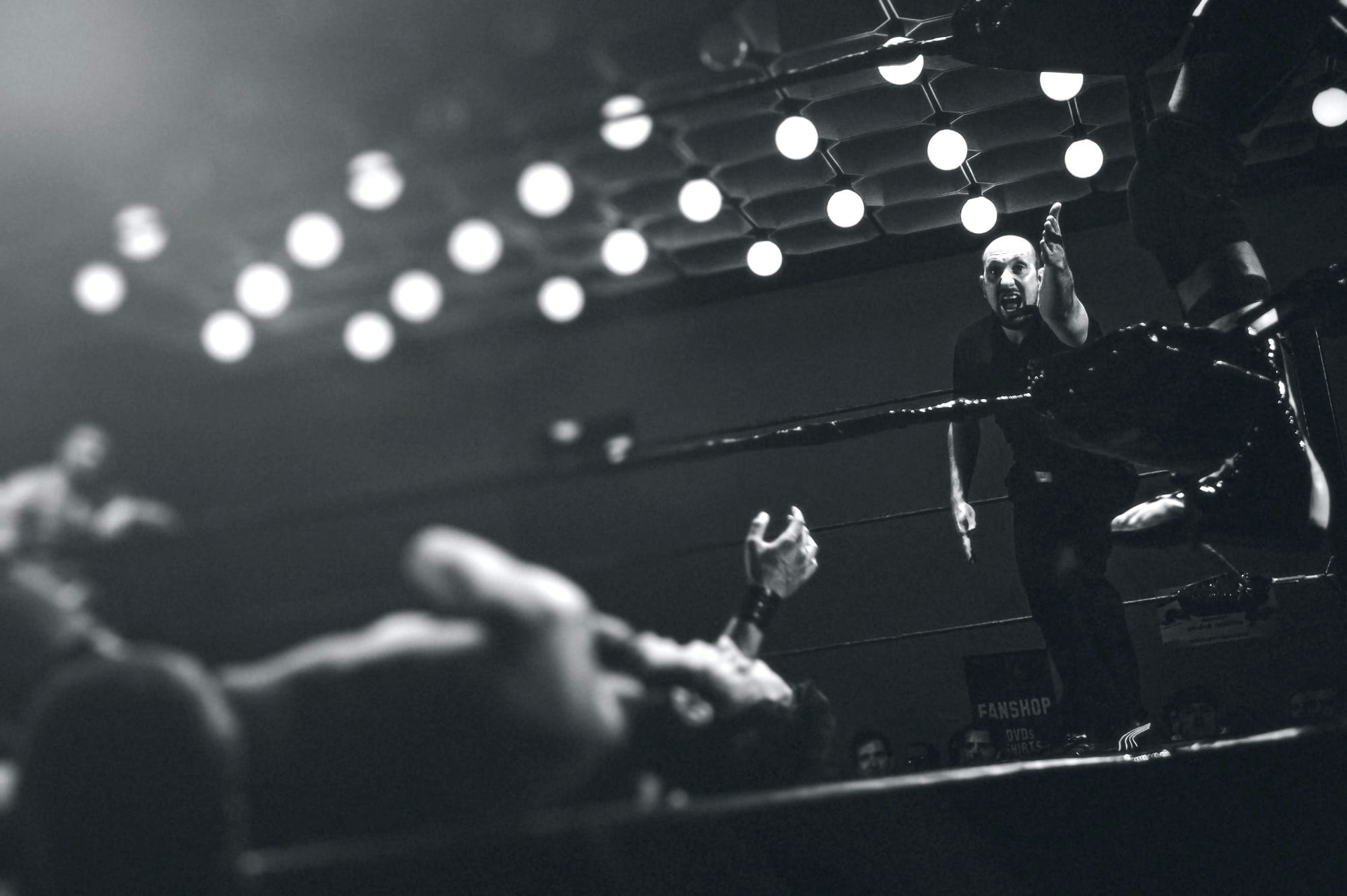
Bojorquez comes out to mariachi music. All up-tempo brass and strings. He’s dressed in his bad-guy getup: black tights, black boots, black pads, black bands. His hair slicked back into a wet ponytail. He used to wear brighter colors. More on the Roy G. Biv scale, in line with most Mexican wrestlers. Until his manager, Facundo, in an inspiration binge off peyote and old Mike Tyson YouTube videos, decided to redo Bojorquez’s whole demeanor. Gives him the air of someone who does downtime at funerals. Goth jock vibe. 

Before he even enters the ring, I snatch the mic from the announcer. Bojorquez’s music comes to a halt. It’s all preplanned, but he probably hates that the top brass okayed it. Bojorquez stops in his tracks fifteen feet from the edge of the ring. The audience noise simmers to a low roil. A few bold-faced drunkos scream obscenities at me. Tell me things they’d like to do with oblong fruit and my mother. It’s expected. Bojorquez is the people’s champ. He’s been the reigning and defending king. I’m the new dude—fresh meat. 

I’m hit with the spotlight; I clear my throat. “History lesson, folks. Apaches and Mexicans have had a long-standing hatred for each other. Before we knew the first names of every member of the extended Kardashians. Before 3D printers. Self-driving cars. That handsome mallard. Go way back. Sixteen hundreds to early nineteen hundreds. Three hundred years of warring. Bloodshed. Rivers and hills ran red. My people irked the Mexicans so much that Mexican governments even offered mucho pesos for an Apache scalp. Well, I’m here tonight to turn the tables,” I say. “After I win, I’m coming for that head.” I pull out a wig that looks like Bojorquez’s, only it’s a ratty renter that would never pass for his real sheen up close. It works for my purposes. I throw it on the ground. I stomp on it with my boot. The crowd loses it. 

Bojorquez has heard enough. He comes flying full keel into the ring, and I see that Mexican meathead shoot at me with his forearm, the size of the barrel of a Louisville Slugger, aimed at my neck. 

People always wonder how thick or thin between kayfabe and real life. Who really dislikes whom? Which marriages were even legal? Which friendships were for show? Like in any other sport, fans love it when there’s real dislike on the line. Tyson vs. Holyfield. Bulls vs. Pistons. Red Sox vs. Yankees. You can notch us up among the all-timers. Because Bojorquez fucking hates me. 

Probably has to do with the fact that when Bojorquez and I first met backstage, six months ago, we had a minor miscommunication. It happened around a fruit plate. Donnie Deutch, our racist ringleader, for all his deep-seated hate, believes in the roster maintaining high Vitamin C levels. Not to pardon Donnie’s dumb takes, but I never saw him actually treat anyone different. Hell, he keeps his roster stacked in absurd amounts of slightly bruised fruit. Figure he does back-alley delivery deals; probably pays high school kids to dumpster-dive for ditched Edible Arrangements. But he definitely gripes. He gripes every chance he gets to gripe, to anyone who is in the room. And they’re always antiquated in nature. Donnie is like your racist uncle’s racist uncle. 

On this particular day, I kept pronouncing Bojorquez’s name wrong. I’d throw a hard J, followed up with an even harder Q, and it came out “Bo-jork-quez.” Then he’d say it right. Then I’d repeat it wrong. And on and on. Partly because I failed high school Spanish, and so I never wrapped my head around the subtleties of their tongue. Also because fuck him. 

Truth is, I have no valid reason to dislike Bjork, except he and I have the same goals and it’s easier to psych myself up by inventing overblown motives. 

For those who might be wondering who’s the heel and who’s the face, the answer is we’re both heels. Takes two to dance. If you’re looking for a face, a do-gooder, someone as American as Superman swigging Coca-Cola with a bald eagle taloned on his arm, look no further than Johnny America. Big Boy Scout, Johnny Proper. He’s a sunglasses-wearing, American-flag-pants-festooned goober. He smells like saddle leather and sweat. Comes out to the ring waving the Stars and Stripes to a backing track of Springsteen. You can’t get more American than this motherfucker, except for the fact that he’s actually German. 

When I first made my way onto the Pro Magnum circuit, America was the first one who showed me the ropes. His real name was Johann Ammer, but I called him JA or America. America was actually a German immigrant who could only fake an American accent if he did a big Texas twang. He’d only been in the States for five years, but had such allegiances to the red, white, and blue way of life, he’d shout down anyone who didn’t stand correctly during the national Anthem: full-on facing the flag with right hand flat over your heart. Even if his version of the American Dream was an old-timer’s pipe dream, he believed so fervently, he decided to hop a plane at twenty-three with zip in the way of savings and fly to a city he randomly pointed to on a map. Wrestling was just a means to an end. He dreamed of zany neighbors rushing into his oversized apartment in a nineties sitcom America.

But I’m not scared anymore. I jaw on fear like bubble gum.

After matches, we’d grab Double Pony Burgers or Pork Tenderloins at Bronco’s. Drunk, we’d hit back nines at night or sneak into hotel swimming pools for quick dips. We were each other’s emergency contacts. We lifted, ate, and practiced together. 

He and I were tag-team champs and actually good buddies beyond kayfabe, but two weeks ago he was asked by higher-ups to take a new angle, and he was paired with Bojorquez. When we ran the tag-team division, we were known as the Trail of Terrors. When Bojorquez and America teamed up, they called themselves NATO: Naturally, Allies Take Over. 

When he told me that he was going to have to screw me and switch sides, I was rightly upset. Business is business, but if Donnie wanted America on Bojorquez’s side, he was saying something without saying something. It was a not-so-subtle dig to say, You’re not tops. This was after weeks of them whispering in my ear that I was the next man up. I’d been outselling Bojorquez and America and Roscoe Smoke ‘Em and everyone else on the roster in apparel and merch. My tomahawks were flying like tomahawks. Plastic headdresses were popular. Not sure if the white kids who copped them were fans or folks who wanted to wear them to sweaty music festivals. T-shirts with my face and bold logo were draped as seat coolers in old Corollas all over Omaha. I was resonating, as they say. Or said. 

Before the match, Bojorquez and I went over the ins and outs. Figured out what’s going to happen to who when. I told him to watch my neck. I’d been hit with a stinger two nights before and it was still a bit sore. Plan was I’d lose to Bojorquez after a fifteen-minute back-and-forth. Lots of action. Figuring out our spots. We’d set up a monthlong rivalry that’d lead to our big event, MagFest, which sounds like a convention for gun nuts. Right before we split to get things going, Johnny walked into the backstage area and told us that he’s going to illegally ring Bojorquez with the bell. This will disqualify me, setting me up for MagFest, send some sympathy toward Bojorquez, and allow America to come back to my stable. We all agreed. Had a handshake deal. 

But now, in the ring, I’m questioning everything. Not only the wrestling-related. I mean every turn, every door, every meal order that led me here, staring at this behemoth of a dude who is so yoked that it looks like his kneecaps have abs. Really only wrinkles, but the point stands. Did I mention how much hate he harbors for me? In truth, I’ll be fine in the broader, cosmic sense. But there’s no guarantee he doesn’t put a little mustard on his punches. No matter what, I have to sell them. This is my time to deliver. 

Only, our flow is all off. Sometimes you grip a hand, kiss a girl, high-five a stranger, and it all goes wrong. Like in another dimension, you have aced it, but this version of you is two beats late, an inch left. There’s a natural ebb but very little flow. Kicks, flips, ropewalks, flying splashes. Our two styles should mesh well. But it’s no classic. No Macho Man vs. Steamboat. Hitman vs. Heartbreak Kid. But we’re doing our part to appease the greasy patrons. Bojorquez really sells the chest slaps. Rings my ear for real with an elbow to the head. I reverse his hold, send him flying across the ring into the ropes. What we do was long ago repackaged as sports entertainment. It is now universally acknowledged that the end results are arranged. But it’s still murder on the body. Cactus Jack getting his ear ripped off. Droz getting paralyzed after being dropped on his head. Sid Vicious snapping his leg. Sometimes you get a weird sense that there’s a bullet with your name on it, a supernatural nod that you’re next. I feel that shiver deep in my bowels when I Irish Whip Bojorquez for the third time and see Johnny America crawl into the ring with the bell in tow. 

You know those old fogeys who watch the same whodunits and expect to find different culprits? They’d be the only audience surprised to find I’m fucked. There is no hitting Bojorquez. I’m the target. And although I don’t think Johnny means to make as much contact as he does, the bell rings me good. So much so, I jerk and hear something snap in my neck. When I go down, I actually black out for a few seconds. When I come to, I hear a scream from a stranger that’s so loud, the response is instant silence. People can tell this is no act. I broke something. Bojorquez stops. Johnny lets the bell drop. Facedown on the canvas, I try to move my neck, but I’m in so much pain that I’m sure I’m paralyzed. The ref calls it. Bojorquez’s mariachi music gets cued in to cover up the silence. The rest is Vaseline over my memory. The shock numbs me crazy, and I try to wiggle my pinkie toes, because I saw it in a movie once. Mom and Frankie are in the ring and asking what the hell is wrong with my ankles, because my feet keep doing weird flexes and points like a bad ballerina, and I say, “My pinkie toes! They won’t move,” and Frankie has the wherewithal to tell me that almost no one can wiggle their pinkie toes. Paramedics rush to my side, a stretcher in tow. They turn me over and snap a temporary brace on. I’m lifted by four men in blue polos and powder-blue latex gloves. As I’m wheeled out, I’m almost dropped, so they have to lift me and right me again. As I’m taken away, I see Johnny America out of the corner of my eye. He gives me this bullshit grimace and tries to touch my hand. I scream, “Fuck you, America! Fuck you!” as loud as I can. Adrenaline courses through my body. I’m spitting, I’m so amped. One of the paramedics puts his hand on my chest and tells me to calm down. I keep screaming until they wheel me into the ambulance. People have their phones out, documenting the whole ordeal.  
“Palmares” Is An Example of What Grows When Black Women Choose Silence

Alice Walker opens her epistolary novel The Color Purple with a silencing threat. “You better not never tell nobody but God. It’d kill your mammy,” fourteen-year-old Celie’s sexually abusive stepfather warns her. From her childhood through her adulthood, Celie writes letters to God, and later, to her sister Nettie. In them, she tells the truth about all she’s endured, and in the process, she saves her own life. Celie’s stepfather and her cruel husband, Mister, rob her of her childhood and any justice she might have gotten for the crimes they committed against her. But they could not take her voice, not completely.

Maya Angelou wrote about silencing her own voice, in her first memoir, I Know Why the Caged Bird Sings. At eight years old, she stopped speaking because she thought her words had killed a man, her mother’s boyfriend who had raped her. She spoke, testifying at the trial where the man was convicted and sentenced, but then released from jail. Four days later, he was found murdered, likely by Angelou’s uncles. For nearly five years after, she only spoke to her brother Bailey.

At eight years old, she stopped speaking because she thought her words had killed a man, her mother’s boyfriend who had raped her.

In “Peach Cobbler,” from my short story collection, The Secret Lives of Church Ladies, a girl understands without being told that she must keep silent about her mother’s decade-long affair with the pastor of their church  — even and especially after she is volunteered to tutor the pastor’s son, at his house, under the watchful eye of his mother, the pastor’s wife and First Lady.

In worlds real and imagined, what grows inside Black girls’ and Black women’s silences?

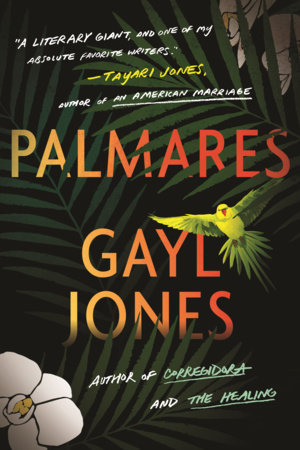
Palmares book cover

In a brilliant essay for The New York Times Magazine, Dr. Imani Perry, the Hughes-Rogers Professor of African American Studies at Princeton University, had questions for Gayl Jones, the writer who publicly went silent 23 years ago and whose latest novel, Palmares, was published last month. Perry, the author of Looking for Lorraine: The Radiant and Radical Life of Lorraine Hansberry and six other books, asked:

What does it feel like, 46 years after the first, to have a new novel coming out? Why did you step out of view? Did it make you a more honest writer? Did it serve your soul? I would not get answers. I would not be able to charm her into laughter. I know she is brilliant, obscure, irascible. I imagine her smile is still wry. But does she still wear her head wrapped in 2021? Is she still adept at putting a nosy questioner in her place?

I can’t know any of this because in 1998 she disappeared from public life. Since then she has refused all interviews and photographs.

Toni Morrison, Jones’ editor from 1975-1982, said of her debut, Corregidora, “No novel about any Black woman could ever be the same after this.” In the book, the lives of four generations of Black Brazilian-American women are overshadowed by the incestuous rapist enslaver whose surname they carry. The eldest of the four, Great Gram Corregidora, insists that they all must “bear witness” and “make generations,” or bear offspring, who will memorize and then recite the old enslaver’s atrocities at Armageddon.

The novel’s main character is the youngest Corregidora woman, Ursa—a blues singer. Some scholarship about the book highlights the blues as a conduit for Ursa’s empowerment and the “valorization of voice,” while other scholars emphasize the role of literary silence. Writing in the National Women’s Studies Association journal in 2001, Jennifer Cognard-Black “looks to the mute, missed, and stifled in Corregidora that form a rhetoric of silence.”

Silence figures prominently in Jones’ Palmares, too. The title refers to an actual place, a community of freeborn and escaped, formerly enslaved Africans in 17th-century colonial Brazil. In the book’s first chapter titled, “Mexia,” we meet a beautiful “half-Black and half-Indian” woman who never spoke to anyone, not even Father Tollinare, the Franciscan priest whose concubine Mexia is rumored to be. He calls Mexia, “Silent Spirit.” In this chapter, we also meet our spirited, literate narrator, an enslaved girl named Almeydita, who defends Mexia’s silence in the very first paragraph:

I had never heard her speak even to the Father. Perhaps if what people said was true, she spoke when they were alone together, at those intimate times, but what if not then? What if she did not speak even at those moments? What of it?

Here, Jones could be defending her own silence, responding to critics from the 1970s, who, as Perry observes, considered Jones to be difficult and alienating, simply because she was shy and soft-spoken. She dared to eschew the spotlight, even at the expense of promoting her work. Perry further notes that a graphic, sensationalized media account of Jones’ husband’s suicide in 1998 was the ultimate violation of her carefully guarded privacy. With that final straw, she withdrew from public life.

In Palmares, as in Corregidora, “silent,” “silence,” and “said nothing” are ubiquitous throughout the text. These silences are attributed to Almeydita (who, as an adult, is called Almeyda) and to other Black and Indigenous women characters. Questions, requests, and demands routinely go unanswered, confounding and sometimes angering the people around them.

They know better than to explain themselves, their powers and their origins, their beliefs and reasons, their magic.

These women’s silences should not be interpreted as a lack of understanding or awareness, but rather as an abundance of both, most especially the knowledge of what to keep close to the vest, and the implications for failing to do so. They know better than to explain themselves, their powers and their origins, their beliefs and reasons, their magic. These women are silent not because they don’t know anything. They are silent because they know better.

The day after her essay about Jones appeared in The New York Times Magazine, Imani Perry tweeted:

There are some folks who responded negatively when I said “you don’t tell all the secrets when you’re trying to get free.” Gayl Jones deepened my commitment to that formulation. Strategies in private are sometimes the most important. Don’t go telling all your business…

Right up there with the reminder that every shut eye ain’t sleep, “Don’t go telling all your business” is wisdom handed down from our grandmothers and grandfathers. At the same time, as Black women, we rightly encourage our daughters and each other to speak up and speak out. We heed Zora Neale Hurston’s words: “If you are silent about your pain, they’ll kill you and say you enjoyed it.”

We follow Audre Lorde’s example. She said, “If I didn’t define myself for myself, I would be crunched into other people’s fantasies for me and eaten alive.” Because the stakes of silence and self-determination are high. But it is also true that whether we are silent or silenced, all manner of metamorphoses can happen inside a Black woman’s closed mouth.

Tellingly, some of the most loquacious characters in Palmares are white women. In a long, fragmented, experimental passage within the larger story, the first-person narrator is a white Portuguese woman, Madame Froger. She is consumed by bitterness and jealousy after walking in on her husband having sex with an enslaved Black woman. Froger is so resentful her extended internal monologue returns to this Black woman over and over again — frequently in the middle of sentences that are about something else entirely. Froger refers to the enslaved woman as her husband’s “lover” and doesn’t acknowledge that the sex between them was nonconsensual. She tells her husband repeatedly to “Go to the devil” and prattles on and on about various perceived social and cultural slights for more than 30 pages in a stream of consciousness. She is further annoyed by the frivolousness of Mrs. Florence Pepperrell, a chatty white woman writer visiting Brazil from London. And if that isn’t the teapot with a tempest in it calling the fine china white, I don’t know what is. (I’m reminded here of Black poet, abolitionist, and suffragist Frances Ellen Watkins Harper’s 1866 speech at the National Women’s Rights Convention in which she said, “I tell you that if there is any class of people who need to be lifted out of their airy nothings and selfishness, it is the white women of America.”)

Fortunately, white women are not centered in Palmares. Rather, they are on the margins of a series of short, related tales embedded in a sprawling central story that follows Almeyda through childhood to Palmares and beyond. With the ever-present brutality of slavery as foundational, the worlds Jones creates feature dense landscapes and mystifying dreamscapes. These worlds exist between reality and madness, spirit and flesh, and are, to borrow one character’s phrase, “a fantasy of history and imagination.”

With the ever-present brutality of slavery as foundational, the worlds Jones creates feature dense landscapes and mystifying dreamscapes.

The best stories, like Palmares, always make me fall in love with their writers. They make me deeply curious about the minds that could conjure such beauty or horror or knowing. Decades ago, before I was comfortable calling myself a writer, I would track down email addresses and send messages to Black writers, praising their work (genuinely) and asking for professional advice. I cringe at this memory now, at how vague I was in my queries for guidance, and at the intrusion. I cringe, even as I do my best to be responsive and helpful now that I’m on the receiving end of such messages from emerging writers, even as the desire to write Gayl Jones a love letter burns strong.

Palmares, this epic novel Jones has given us, is plenty. It is overflowing, and it will have to be enough. I respect Jones’ silence, and I appreciate her for inspiring me to sit with my own.

As a teenager, I was a chatterbox, part of my performance of Black womanhood as I understood it: a confidence and an unshakeable self-love, neither of which I actually possessed; and strongly worded (if not well-informed) opinions on current events and social issues. My deep insecurities and even deeper sadness lived in quiet places, so I avoided silence. I even joked that I was prejudiced against shy people. The truth was, they made me uncomfortable. I resented them for making me fill a void with noise to drown out my fear of what they thought of me and the truth of how I felt about myself. Didn’t they know I had a part to play? I had already begun to believe the hype of the Strong Black Woman archetype, and it would be decades before I, wrung out to an emotional husk, let that shit go. But for a long time, too long, I faked the funk, I talked the part.

After a lifetime of being a talker who mostly kept silent about things I shouldn’t have, like my pain and grief, I’m overdue.

And now, after nearly 300 virtual and in-person book tour events and interviews since late summer 2020, in support of my short story collection, I’m overdue for some restorative quiet. After a lifetime of being a talker who mostly kept silent about things I shouldn’t have, like my pain and grief, I’m overdue. Big awards are celebrated out loud, but it was second nature for me to hold the pains of the last 18-plus months mostly in silence. But slowly, I coaxed myself to speak the truth, that I wasn’t okay when I wasn’t okay. This, I learned, is how healing begins.

Last month, on the day after my 50th birthday, I began what would be a 10-day hiatus from Twitter, Facebook, and Instagram. After more than a dozen active years on social media sharing both my personal and professional lives, the silence was glorious. In it, I grappled with my fears and loneliness, fueled in part by the pandemic. I slept better. I leaned into my friendships more. New story ideas blossomed.

But I’m no Gayl Jones. I don’t have the juice to release a book and not actively promote it. So now I’m back on Twitter and Instagram, but only for a few hours each Sunday to share my upcoming events, celebrate the successes of my friends, and give thanks. I say far less these days, and it feels right, and good and healthy.

Ann Petry’s life and words are instructive and aspirational here too. Petry’s 1946 debut novel, The Street, was the first by a Black American woman to sell more than a million copies. After becoming a literary star, Petry retreated from public life, in response to McCarthyism, in part, but also because she found celebrity to be a threat to her as an artist. “Continuous public exposure, though it may make you a ‘personality,’ can diminish you as a person,” she told an interviewer in 1996. “To be a willing accomplice to the invasion of your own privacy puts a low price on its worth. The creative processes are, or should be, essentially secret, and although naked flesh is now an open commodity, the naked spirit should have sanctuary.”

I hope silence is a sanctuary for Gayl Jones, and for all of us who need it to be. The stories I write are usually forged in silence. I go through many drafts before anyone else hears my characters speak or wanders around in the worlds they inhabit. I’m eager for my naked spirit to take hold, grab the reins, and lead us through.

Home Alone In The Eye Of The Storm

Hurricane Ida Journal 

Sunday, 11:36 AM

All gates in the levee system are closed. 

I wanted to leave on Friday. I’d been gathering supplies—gallons of drinking water, boxes of soup—things I could load my car with. I thought I would drive to Houston if it came down to it. Catch a flight to New York, to the only other city in this country I ever called home. 

I forgot about my body. I forgot it can’t drive anymore, not for the hours evacuation takes. It can’t bear the weight of a pet carrier with Güs inside while pushing through an airport packed with frightened people trying to leave a city before it drowns. I haven’t been able to navigate an airport without being in a wheelchair for about a year now. 

Last week, I fucked up and wheeled a trolley of luggage from one terminal to another in JFK. By the time I got to the check-in desk, my body was seizing visibly, forcing short bursts of sound past my gritted teeth as my torso caved and convulsed. The ticket agent expedited me through security and called a cart to get me to my gate. When I got downstairs, the information agent—an older white woman—told me the cart had left without me. I tried explaining that I could not walk to the gate unassisted without going into severe convulsions, but as I spoke, I began to stutter. My words slurred as the muscle spasms spread to my throat and face, and I choked back helpless tears. I’ve lost my ability to speak before, and it horrifies me each time it happens. On the other side of the counter, the woman panicked and started making phone calls. I listened as she told whoever she was speaking to that she had a passenger in distress, and then she suggested calling the police. 

I’ve lost my ability to speak before, and it horrifies me each time it happens.

I couldn’t panic. I couldn’t afford to panic. I’ve had breakdowns in airports in various countries before, been detained and threatened by soldiers, had airport personnel deliberately try to make me miss my flights so I would be stranded away from home. Sometimes it was because of my passports, sometimes it was because of how I dressed or sounded, or because tattoos cover my arms, or because my disability is invisible—there are so many permutations of punishable deviances in a space as heavily surveilled as an airport. I could not imagine what cops would do to me for being Black, for the way my speech was glitching, the way my body was folding, the way my mind was about to break. The information agent asked me if I wanted the police, an unhinged question, and I replied as sternly as I could that I did not. I asked her to call the gate to let them know I was delayed, and she told me no one would hold the plane, not for me. 

In the end, she gave me a chair and I sat in it and cried and cried. I cried when the wheelchair finally arrived, and all the way to the gate, not caring who stared. They always stare when you’re in a wheelchair anyway. My mask got damp from the steady tears, and I didn’t care. The world is violent—I will say it over and over again, in as many books as I like, as many times as I like. The pain in my neck and shoulder kept escalating. Even now, as I type, it is a stinging octopus latched onto my right clavicle, deep aching tentacles winding all the way down to my bones. I got home last Monday and cried when I stepped through my front door. I was housebound for days afterward, all for walking from one terminal to another. 

If I break in an airport, no one will protect me.  

The hurricane is coming and there were no flight itineraries that would work, not with my disability and an accompanying pet. Every direct flight was sold out. I searched for hours, gave up and cried, woke up on Saturday morning and searched for more hours, gave up and cried again. Some flights opened up and the seats were gone as soon as I tried to book them. There was a time when I could drive, before my body landed in this much pain. What a difference it makes, between being able to leave as the storm fixes its eye on your shores, and where I am now, writing this from a pile of duvets on my closet floor as the roof of my house creaks from the wind. 

What a difference having a family makes—when someone can drive you, when you feel safe enough to enter a car with them, knowing you might be trapped on the packed freeways for many more hours than you anticipated. I have nobody here to help me leave. I cannot go with strangers. I cannot imagine doing that trip with anyone I need to stitch a performative mask to my own face for—there are many things that can break me, and my body is not the only one. I would, quite literally, rather risk my life in this house.

I would, quite literally, rather risk my life in this house.

My preparations are incomplete, I know this. There’s only so much I can carry and secure before I have to sit down and rest because blunt agony is grinding into my muscles. The pain medication does a little, but not enough. I refuse to take opioids—I only use them right after a surgery, but certainly not when a hurricane is coming and I am alone. 

My sister Yagazie keeps me company over the phone, reminding me to close all my interior doors so the house is better supported if my doors and windows get breached. My sibling Ann double checks that I’ve charged all my electronics and listens to the twenty minute voice notes I send her as I process the choking feelings that encompass me. I tell her about the people who have shown up and the people I considered family who have disappeared as the hurricane spins her brutal arms towards me. I would never feed silence to someone I cared about while they were afraid in a swamp, in the path of a storm that could kill them, but people justify the wildest things these days. I’m not interested in listening to them. Ann and I talk about performative solidarity and the way my nervous system is shattered right now, how annoying embodiment is. We talk about our books, about filling shelves with her series, about rainmakers and gold. We talk about God. 

I close all my doors and curl up in the closet with Güs. I check the official Twitter accounts that the city is using to give updates. Life-threatening storm surges. Curfews are being put in place. A Black woman on Twitter named KD Minor (@ineedja_kadeeja) is coordinating direct cash assistance for families in Louisiana using the hashtag #ForeverCalcasieu. People will continue to need help long after the storm passes. 

I am so tired of aftermaths. 


Sunday, 1:40 PM

The power is out. 

It came in a few times, the lights flickering, before finally leaving. All the appliances have fallen silent, and now there is just the wind, nonstop and shrieking. The wifi is gone but I still have data on my phone. I should download more books from the New Orleans Library while I can. I don’t know how many days it’ll take for the power to be restored. This morning I ran the AC much colder than I usually have it, hoping the house will hold the cool air even after the storm has passed, while we wait for the power. We’ve been getting heat advisories all summer and I’m worried about when the storm passes, what the heat will do then. I should’ve bought a small fan while I was running errands on Friday. 

My neck is spasming. I swipe an extra strength CBD balm over my trapezius muscle to try and soothe it.

Something keeps beeping; I have no idea what.

I leave the closet to make lunch and my sister frets about me moving around the house. I’d only stocked the closet with snacks because it’s hard enough to plan what to eat on a good day. In a crisis, my mind goes entirely blank, as if I’ve never thought of a meal in my entire life. Luckily, a past version of me stocked my freezer with food, so I pull Singapore noodles out of the silent fridge to reheat on the gas stove. I use matches because there is no electricity to spark the fire alive. As the noodles steam warm under a lid, I make sandwiches with roselle jam and almond butter, cutting them into neat halves and packing them into Ziploc bags. 

The wind sounds terrifying this close to the outside walls and windows. It is an unholy howling, like a great spirit has its mouth wide open above and around us. A sharp crack lights the air outside in a brief and brilliant blue, power lines perhaps. I wonder if this is what an explosion looks like. I should’ve made food earlier but I am doing everything as quickly as my body permits, which is not very. I peel two plantains and laugh to myself because somehow, here I am making dodo in the middle of a Category 4 hurricane. As the slices fry in avocado oil, I wash the dishes in the sink while there’s still running water. Every second, I half expect the kitchen windows to blow in, spewing glass everywhere and letting that wildness into the house. Güs leaves the closet to find me. He crouches sleepily on the hardwood floor by the dining table, staring at me as I flinch from the sounds outside. It does not sound like a storm, or like wind, or any of these little words that fail to contain what is happening. It sounds like hell itself is roaring out of the sky. 

I should’ve made food earlier but I am doing everything as quickly as my body permits, which is not very.

The fear I feel is primal, disconnected, deadly stimuli striking a separate bargain with my nervous system. I gather all the food, sling Güs over my shoulder, and we retreat back to our little emergency nook.


Sunday, 4:52 PM

Something just crashed outside, something heavy. The house has been shaking all day, but now it feels like it could be from an impact. I’m worried it’s a window or the front door being breached, but I can’t decide if I should check. How much of this is beyond my control? How much can I mitigate as the day progresses slowly? It will be utterly dark in a few hours. 


Sunday, 7:22 PM

The main transmission tower that feeds New Orleans has collapsed into the Mississippi River. 

There was something I kept trying to remember about how the house is shaking, and now it comes to mind. It feels like an earthquake, like the force is bucking up from beneath the floor. I didn’t know a hurricane could feel like this. 

I can hear rain now, accompanying the endless wind. My sister told me to download some TV shows yesterday, so I’m watching a baking show on one of my phones, interrupted by update texts from the city and the power company. Due to catastrophic transmission damage, all of Orleans Parish is currently without power.

The sunshine is almost entirely leached from the sky. I can hear the silence ringing in my ears when I pause the show. There’s an icepack propped behind my shoulder blade, pain relief that will fade as everything in the house thaws, all my other ice packs turning into plastic bags of blue gel. I know I will forget all of this, how the individual moments feel, so I write as a tethering. I’m never really here. I’m floating a pace away from my body, making clinical observations about my nervous system. I am as invisible as my disability.

I know I will forget all of this, how the individual moments feel, so I write as a tethering.

I like being with the house. It was so lonely when I first put in an offer on it—I used to bike over just to hang out with it before we closed. Last week when I was returning after convulsing in multiple airports and planes, the house was a beacon, a homing light. Most of me had sloughed off with the tears and all that was left was a thread of survival—if you can get home, you will be safe. Just get home. I’m not joking when I say the outside world is uninhabitable for me, that what is normal for other people is shattering and violent for me, that it makes me want to die, moving amidst all these cruel humans. 

So I retreat to the godhouse, the land I’ve worked with, an entire reality unto itself. The only home I’ve ever had where I could call it safe and it wouldn’t be a lie, where there’s no clock, no departure date, where no one has screamed at me, or touched me in sick blasphemy. We are together in this storm, the godhouse and I, and there is some comfort in that. I am not exiled while it’s battered in my absence, not anxious while I wait to return and see how the hurricane hurt it. What happens to us, happens to both of us, now. 


Sunday, 9:53 PM

The heat is already climbing. 

Everything is dark, but I know this from another bungalow two decades and an ocean away, the warm nights, sweating by the light of a candle with a book to take me somewhere else. The compulsory  dark is familiar, an old friend visiting in a new house, but I am not fooled by nostalgia. I know that the dark turns sour, that staying here for too long will trigger my C-PTSD with old decades of enthusiasm, so I remind myself that this time, it is different. 

This time, there are marble floors that retain coolness and the water is still running, for now. I smash frozen spheres of orange juice into a teacup, cold mint leaves clinging to my spoon. The light from my emergency torch burns a cold halo into the ceiling. My shoulder is screaming at me and I hear it, but I am too tired to hunt down a silicone cup to make a suctioned ring on the muscle, or to start assembling my electrode pads and lead wires. A few people are texting to check in. Güs is asleep in his blankie, after an hour or two of trying to run through the house to play. 

I’m going to try and sleep, even though it seems dangerous to jump realities while the storm is collapsing buildings and peeling off roofs. I don’t know what this patch of world will look like when I wake up. I know it will be different. I know I am already different, in the way catastrophe can force clarity, stripping away your capacity for anything that is not vital and necessary. Wheat and chaff. My heart breaks in the thrashing and rebuilds itself, because what is stripped by the hand of God is stripped by the hand of God. There are quiet blessings in what remains, in the community that does show up, in the ways I show up for myself. I let the translucent shells of old things be whipped away on the wind—why hold them? My hands overflow with what God gives me. Take away whatever you wish. 

I know I am already different, in the way catastrophe can force clarity, stripping away your capacity for anything that is not vital and necessary.

Expect severe weather to continue throughout the night. Stay put & stay safe. 

I read through the text from the alert system and even though I know it’s automated, the next line makes me cry because I am scared and my family is not here so I couldn’t get out in time and I am alone in a dark closet with ghosts of my childhood waiting in the humid wings. I worked so hard to make a home and now a storm could rip it away from me, and worst of all, I am alone, I am alone like my oldest fear, I am alone like a nightmare, but even though the hurricane has not passed, someone still wrote this automated message and sent it out, a small light floating like a firefly between the crashing trees and collapsing buildings, finding its way through the baying dark.

Goodnight, NOLA, it says. We’ll get through this together.


Even though the news cycle has moved on, hundreds of people in Louisiana are still reeling from the impact of Hurricane Ida. In solidarity, please consider making a tax deductible donation to House Of Tulip New Orleans, who have been distributing mutual aid to community members in need. We are all we’ve got.

Who Will Bury Me if I Die in a Foreign Land

Kalani Pickhart’s novel I Will Die in a Foreign Land takes place in Kiev during the Revolution of Dignity in 2014, a time when Ukraine was at a crossroads—citizens were protesting the president’s close ties with Putin and failure to sign a referendum with the European Union. The protests were being violently put down, with military police shooting into the crowds of peaceful protestors, killing over 100 people.

The book is told in short fragmentary chapters, integrating historical documents and following the lives of the four main characters. Katya, a Boston-based doctor who emigrated from the Ukraine as a child, comes back to her homeland after suffering a tragic loss. She treats the others in the makeshift medical clinic in the St. Michael’s monastery.  One of her patients, Aleksandr, is a former KGB officer who plays piano during the protests. Another patient, Misha, is an engineer whose life was profoundly shaped by the atomic disaster in Chernobyl. And his friend, and former lover Slava, a blue-haired protestor who survived sexual trafficking and is being persecuted for being in a same-sex relationship.

The book is gripping, the stories of the characters wrap around each other like vines, and around the reader–choking and pulling them through. Pickhart uses the device of the Kobzari folk singers whose lyrics function like a Greek chorus, weaving together the pain of the individual characters and placing it in a broader cultural context. I was surprised to learn that the story did not come from Pickhart’s own family history because it felt so assured and well researched. 

I talked with Pickhart about the political situation in the Ukraine, the impossible desire for a home that doesn’t exist, the Kobzari folk singing tradition that inspired her, and the ethics of writing fiction about recent historical events.


Katya Apekina: For people reading who have only a vague sense of what was happening in the Ukraine at the time your book is set, could you give a basic overview/primer?

Kalani Pickhart: This is a complex political situation, but the elevator version is that essentially, the former president of Ukraine in 2013 promised to sign a referendum with the EU and didn’t end up doing so. There was talk of him signing a trade agreement with Russia, which caused non-violent protestors to show up in the street—most of them young, college-aged people, and later, all walks. Things were fine for a while, until the government unleashed the military police force on them, beating the protestors with iron batons. The police response escalated to gunfire as protestors became more determined to stay out in the city center, resulting in a significant number of deaths and injuries. Ultimately, the former president fled to Russia and a new election took place. In the interim, Russia took the opportunity of civil distrust and unrest to invade Crimea as well as eastern Ukraine, where there is an ongoing war. That’s where we are today.  

KA: What drew you to writing about Ukraine and about the protests that were happening in Euromaidan and the Revolution of Dignity? 

KP: I was moved by the documentary, Winter on Fire: Ukraine’s Fight for Democracy, which I happened to watch while I was in a novel workshop in the first year of my MFA. It was all synchronicity: I was reading Kundera at the time, and I was struck by the fighting spirit of the Ukrainian people against their government. There were just a number of echoes calling me toward this one direction and everything seemed to fall into place. I was also writing this novel during the 2016 US Presidential Election, which was a significant election for Ukrainians as well.

I was struck by the fighting spirit of the Ukrainian people against their government.

More specifically, in the documentary, it’s explained that the bells at St. Michael’s Golden-Domed Monastery all rang at once for the first time since the Mongols invaded Kyiv in 1240AD. It was a means of warning the people that the city was under attack. So you have this foreign threat the first time pillaging the city; then 800 years later, they are sounded against the police force meant to protect its people. That haunted me—I watched footage of the bells many times for this book. Seeing St. Michael’s in person was probably one of the most emotionally powerful moments in my life.

KA: What are the challenges of writing about a place and political conflict that most American readers probably know very little about? 

KP: The research I did for this book was intense. I didn’t feel right writing the book without feeling as if I were an expert—I am not Ukrainian or Russian, so I took examining multiple perspectives on the conflict very seriously.  

My editors, Eric and Eliza from Two Dollar Radio, helped me set up some context before the reader even gets into the book. Simple logistical things to act as a guide. There’s a timeline, a map. There’s also an “article” right before the initial narrative section that contextualizes the Euromaidan by describing the first deaths. Everything is provided in a bite-size, collage-like way in order not to overwhelm.

All of those things are important tools for the book, but as far as keeping a reader invested in the story was to have the initial narrative of the story through the perspective of an outsider. Keeping in mind that many Americans would also be unfamiliar with the conflict as well, it allows the reader to digest everything that’s happening as they might if they were there.

In this case, Aleksandr and Katya are the outsiders of the Revolution of Dignity, while Misha and Slava are the Ukrainian protestors. Katya’s perspective in particular was a conscious choice on my part: she’s a Ukrainian-American who grew up in New England. She’s familiar with stories about Ukraine from her adoptive parents, she understands and can speak Ukrainian and Russian, but she’s very much a Bostonian. When we meet Aleksandr, he has a slip of paper in his pocket with an address from Los Angeles, and these are all things an American reader can easily access and become intrigued by. Bit by bit, more context is provided, which helps readers who are unfamiliar with the environment and political landscape become more comfortable and settled in the story.

KA: When writing fiction around real historical events (particularly recent ones), what are the do’s & don’t’s you felt ethically when fictionalizing things?

KP: I think when writing about traumatic historical events, it’s important to be as true to the facts as possible. There is always some reaching you do when you’re writing fiction, but for the most part, in my mind, it’s possible your audience will be survivors, especially if the event happened in recent history.

When writing about traumatic historical events, it’s important to be as true to the facts as possible.

So much of the research I did on this project was reliant on news articles, journalism, and documentaries, so it felt integral to the work itself as things were falling into place. It seemed impossible to write the book without mentioning the real-life people who told its story. There are news articles about Oleg Sentsov, a Ukrainian filmmaker, as well as the stories of real-life journalists who were abused or disappeared during the protests. The names of the victims of the Revolution of Dignity and the Malaysian Flight MH17 are also in this book to remind the reader that there have been real lives lost throughout this conflict. For an American audience, it’s likely they are learning these names for the first time. It felt important to me to honor them, to share their names and stories, not only for Americans to learn about them, but for the families and survivors who have been affected in Ukraine and around the world. 

KA: The theme that I felt really connected to as an immigrant is the idea of home—there’s no place like home and you can never come home again—the way the character Katya from Boston comes back to her ancestral home, but is an outsider there, or the way that Misha’s mom and some others come back to the area near Chernobyl where they lived in before the disaster, because even if it’s radioactive, it was still their home. Is this something that resonated with you in particular? 

KP: It’s not at all the same thing as immigrating or being a refugee—my dad is a first-generation American, and he doesn’t often talk about his transition to American life from Austria. I can’t conceive of the psychological and emotional impact immigrating has on an individual, or a collective. 

The way I do relate to this, though, is during the 2008 financial crisis, we lost my childhood home. Well, it was our home for about 10 years—I grew up lower-middle class, so it was the first home my mom and stepdad actually owned. Before, it was a series of apartments, moving in with grandparents off and on, etc. I never had my own room. We slept a lot on couches and floors. I remember when we got the house, sleeping in my room for the first time. I was so excited to paint my own room: I painted it bright blue, and then years later I painted it bright orange. It was the first time a space felt like mine. When they lost the house, the family was split up: my mom, stepdad, and my much younger “half” brother and sister went up north where my stepdad had work; meanwhile my “full” sister and I went to live with our dad full-time for the first time in our lives. I was 22, the first in my family to graduate from college. Things were supposed to be taking off, but they were falling apart. I was always hearing from my mom that we were going to lose the house—we would miss bills, water would get turned off. It didn’t occur to me that it would really happen, that we would be evicted. That same year my grandmother died of Alzheimer’s and that comfort was gone, too. It was probably one of the most traumatic periods of my life, and for my siblings. On the flip side, I grew to have a much closer relationship with my dad, which I am extremely grateful for. Fathers and daughters are a huge part of this book, too. 

While I was writing this book, I was also living semi-nomadically. I went through a breakup with a boyfriend I was living with for four years, and I moved in with what I believed to be a close friend in my MFA program. The friendship revealed itself to be toxic within a few months, so I moved out quickly and back in with my ex, who remains one of my dearest friends. After I recovered a little financially through the holidays, I moved into an apartment on my own for the first time in my life, and it was a little taste of that childhood joy of having my own room again. I was so proud of it. 

I’m currently in-between places again due to the high cost of living in Arizona, so this question really resonates with me right now. The complexity of emotions around having lost a home are still very present, and every one of the people in the book is affected by “home” and what it means to them. I think I am still trying to figure out what that means and looks like for me, too.

KA: For me writing about people who have no autobiographical similarities to me was both scary because I worried that I was getting it wrong/not an expert, but also really freeing because it allowed me to write about personal things in a way that didn’t feel exposing,like I could transpose my emotional landscape onto totally different situations. Did you feel this way?

KP: I think there’s a lot of freedom and catharsis in being able to write through the perspective of someone completely different than you. It’s this liminal space where you’re able to protect the truth of your own circumstances and the open wounds you’re working on healing, while also being able to access the truth of someone else. It’s another layer of reality that exists despite the book being a work of fiction: my whole heart is in it.

KA: The book had Kobzari folk singers working as a sort of Greek chorus? Can you talk about what inspired you to do it that way? I loved it.

KP: I was doing so much research, especially while reading this invaluable book, The Gates of Europe: A History of Ukraine by Serhii Plokhy, that while I was writing there was this peculiar slippage into this omniscient voice that started telling folk stories and narrating portions of the Euromaidan. It seemed to me at first that it was Aleksandr, but there was just no way he would know certain things it wanted to tell, and it wasn’t his place as a Russian to tell them. Once I learned more about the kobzari, the bards in Ukraine, I felt these portions finally had a name.

Some of my favorite parts of the book, though, are when the kobzari slip into one of the main narratives to provide larger, historical context. They do function like a chorus: they can see what the POV sections cannot, almost like they are breaking a fourth wall, and they can comment.

KA: Can you talk about the title?

KP: At Maidan, the protestors sang several Ukrainian folk songs along with the national anthem. Some pop and rock artists, like Ruslana and Okean Elzy, also made appearances at the protests and lifted the spirits of the people by leading songs on stage. Music, like journalism, is critical when telling the story of the Euromaidan.

The title comes from an English translation of a lyric from a Ukrainian lament, “Plyve Kacha” or “The Duckling Swims.” It’s a conversation between a young soldier going to war and his mother, asking who will bury him if he dies in a foreign land. This is an important song for survivors of the Euromaidan, as it was sung and played at a mass funeral in Kyiv, where the caskets of the victims of the police shootings were carried through the streets. The song is beautifully overwhelming even if you don’t understand the lyrics, and it’s a song I listened to often while writing.

Beyond the historical significance, there are thematic ones as well: exile and home: all the primary POVs in the novel have been orphaned by one or more parent at least, and by the end of the book, none of them end up in the place where they were born. The only one who intends (or is able) to return to their homeland is Slava, though it’s unclear how long she will stay. Meanwhile, the kobzari stories, which are folkloric in nature, intentionally echo Taras Shevchenko (the most influential poet of Ukraine and considered the kobzar), whose poetry often celebrated kozaks who went off to fight battles in foreign lands.

As I was testing it out, it became a guiding light. It reminded me why I was writing the book, the historical importance, the lives lost at Maidan, and the fact that it was a song—it was far and away the only title for the book.

What She Heard in a Room Without Sound

Pink Noise

In 1951, experimental composer John Cage entered an anechoic chamber at Harvard University. The room was small, with walls covered in foam pyramids, and designed to be totally silent. But when John Cage went inside he heard two tones: one high, one low. Afterwards he asked his guide what the tones were and he was told that one was the sound of his blood, the other the sound of his nervous system. 

No one stays in an anechoic chamber for long. It’s said that if you do you lose your shit. Complete silence can induce nausea, claustrophobia: it’s a loud and unwelcome look inward, for many, an inability to tolerate what echoes inside one’s own body.

A few years before my daughter is born, my ears begin to ring and won’t stop: a playable note twinned with the high-end whine of an old TV. At first, I can only find relief with my cheek pressed against the refrigerator. Its low electrical ohm-ing fills all the spaces so my tones become two stones in a solid wall, which is its own form of silence.  

A doctor warns me that the volume could rise in pregnancy, something about hormones, but instead the sounds, and the fear, both lessen. I’m a vessel now, an adaptable structure, a ship that, through some ancient, mystical process, can build itself as it sails across the ocean. 

In the first year of my daughter’s life the sound roars back, waxing and waning with my changing moods, quieting for days and then demanding attention, like a bone broken in childhood acting up when it rains. 

It is during this time that the quietest room in New York City arrives on the top floor of the Guggenheim Museum. It’s not an actual anechoic chamber, but a “semi-anechoic chamber.” Training wheels for insanity, I tell my partner. We buy tickets. 

We remove our shoes before entering. No phones allowed. We shed our possessions. We agree not to speak. We pass through a room between two heavy doors as if prepping in airlock before a space walk. 

Like John Cage, we have a guide, a delicate-looking man with wire-rimmed glasses. 

He tells us Doug Wheeler created this room, named it PSAD Synthetic Desert III. Wheeler first had the idea for it in the ‘60s, so long ago he can’t remember what PSAD stands for. Also, as far as anyone knows, there was never a I or a II. Wheeler learned to fly from his pilot parents, grew up in the Arizona mountains.

I wonder, listening, how it might’ve altered me to live in wild spaces, instead of the world’s first suburbs, then the world’s most examined city. Doug Wheeler thought to himself, after landing his prop plane on a dry lakebed in the Mojave, waiting for the “tink-tinking” of its engine to die down: “I’m hearing distance. I’m seeing distance.” 

We advance, five in total, to our final destination, our synthetic desert, our semi-anechoic home for the next fifteen minutes. We sit on a white platform surrounded on three sides by a forest of white fiberglass pyramids, seen from above. Maybe it’s the feeling of standing on the edge of something, but the view seems vast in this smallish room, the gray-lit peaks both spiky and soft. I could see someone saying they looked like rows of shark’s teeth, if that person were afraid. But I’m not afraid.

The five of us have nothing to fear: we will not lose our minds in the fiberglass forest because we’re being protected by pink noise, pumped in by Wheeler. 

The pink noise here is desert wind, but pink noise is also the pattern of hearts beating, the hush of far-off traffic, a fan’s oscillation, interstellar gases light years away, hissing as they approach a black hole.

A sound like the color inside a shell, an ear-shaped hollow for hot secrets, the color of everyone’s first home inside a mother. Am I getting to vaginas? Who isn’t, ever? It’s the only way out for so many of us, though not my daughter. My daughter was airlifted, rescued. Her pink noise heartbeat was losing its color. She had inched too close to the black hole. 

The most notable thing about the quiet room is that everything in it that is not itself sounds very, very loud. My own ears: deafening, five-alarm fire. Every pants-swish or footstep a record scratch that halts the whole world’s turning, makes you whip your head around to discern its source. We walk slowly, make small movements. We peer over the edge of the platform at the landscape of triangles: look up, look around. 

At some point everyone sinks to sitting. At some point, we all lie down. At some point, the guide takes off his glasses and it’s the loudest sound I’ve ever heard, like a million people tearing apart the sealed flaps of a million cardboard boxes. He curls himself into a fetal position and rests on the floor with the rest of us. He closes his eyes and I can hear my heart breaking: we are all so safe and vulnerable here, so brittle outside in the loud world. When my stomach rumbles a few minutes later, everyone feels the earthquake. 

I wonder if they sometimes return to this room in their minds, like I do. I wonder if they were hungry, too. 

8 Books About Living in Los Angeles

I’ve probably said it more times than Randy Newman: I love L.A. And to prove it, I pay homage to my city in my three novels, Esperanza’s Box of Saints, González & Daughter Trucking Co., and my latest, L.A. Weather, where I tell the story of a Mexican American Angeleno family making sense of their complicated relationships, crises and ordeals as drought and fires close in on them throughout a momentous year in Southern California.

L.A. Weather

But I’m not the only writer infatuated with the incomprehensible and fascinating sprawl that is Los Angeles. As Scott Timberg and Dana Gioia explain in The Misread City, we’ve had “the gumshoes, the wisecracking Englishmen, the Boosters, the Beats, and the boozers, after the despairing heroines of Joan Didion and the cocked-up rich kids of Bret Easton Ellis,” all attempting to give us their own version of L.A., however disastrous, devastating, uplifting or irreverent, but always so L.A.

When looking at this city, no writer should use a telescope. A kaleidoscope is a far better instrument, with its multifaceted prisms projecting endless configurations. In this selection of books, I offer you a few of those sparkles in the understanding that we’re not even getting started. 

Beverly Hills

Play It As It Lays by Joan Didion

A literary icon of the L.A. counterculture movement, Joan Didion portrays a devastating vision of 1970s Los Angeles in the story of Maria Wyeth Lang, an actress living in Beverly Hills, who suffers an emotional breakdown at a psychiatric ward. When asked by her doctor, she tells of her distressing and lonely life as a Hollywood socialite. Neglected by her film director husband, Carter, she spends her days driving around the city, attending pointless parties, using drugs, and engaging in risky and self-destructive behavior. After her husband forces her to have an abortion (the result of an affair), she divorces him. And to illustrate the notion that the rich also cry, she fantasizes in the psychiatric ward about reuniting with her institutionalized mentally ill daughter. This is the story of the self-inflicted collapse of a life. 

Topanga Canyon

Golden Days by Carolyn See

Carolyn See starts this social satire when her lead character, Edith, returns to Los Angeles with her two daughters after a less than positive life in New York—both personally and professionally—and settles in Topanga Canyon surrounding herself by a tribe of locals. Soon, her life makes a turn for the better, developing relationships with eccentric characters (a madcap guru, a television evangelist, you get the idea) that eventually launch her into success and paradise, until the nuclear war darkens her blissful life. But, unlike other gloom and doom apocalyptic novels, Carolyn See portrays a renewed and hopeful human race emerging from the scorched rubble—never mind the absence of the infamous “nuclear winter” and other related devastation—as a testament of L.A.’s perpetual optimism. 

Malibu

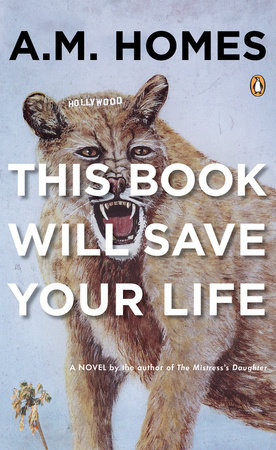
This Book Will Save Your Life by A. M. Homes

This Book Will Save Your Life by A.M. Homes

This is a novel of reinvention, of giving the world a chance and a place in your heart. Based in Los Angeles with its corresponding weather calamities and cultural idiosyncrasies, the story tells of how Richard Novak—a homebound securities trader—is launched out of his home office and personal treadmill into the outside world by happenstance. He discovers the wonders of being a community hero (composed of a cast of very L.A. characters like Anhil, a doughnut-shop owner) by solving crises (saves a horse from a huge sinkhole in front of his house). A.M. Homes is known for her extraordinary ability to write psychological and intense stories, social satire, and black comedy, and if you’re into this, you won’t be disappointed. 

Palmdale & Granada Hills

Your House Will Pay by Steph Cha

Your House Will Pay is Steph Cha’s powerful, haunting exploration of a decades-old crime and its far-reaching effects on two Los Angeles families—one Korean American, and one African American. This thriller follows Shawn Matthews, a black Angeleno who is still reeling from the murder of his sister by a Korean woman in the early 1990s, and Grace Park, who lives a quiet life with her immigrant parents until she discovers that her mother might be hiding a dark secret about her past. Inspired, in part, by true L.A. events, Your House Will Pay is a story of loss, injustice, trauma, and reckoning that captures the complicated history of two Los Angeles communities.

Mt. Hollywood in Griffith Park

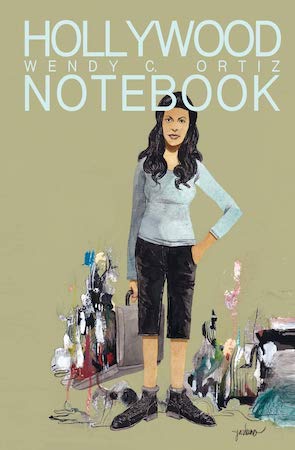
Hollywood Notebook by Wendy C. Ortiz

Born in Los Angeles and with a profound connection to this city’s psyche, Wendy Ortiz delivers a map of the city transformed into words: a fragmented memoir of hurt, love, loss, and reinvention. What does a young writer (one of thousands) living in this city and trying to make it worry about? Joblessness. Rent. Bills. Riding the metro. Alcohol. And yes, sex and publishing too, of course. 

Venice

Lithium for Medea by Kate Braverman

Lithium for Medea by Kate Braverman

Kate Braverman lived in Los Angeles for years and set many of her stories in this city, like Frantic Transmissions To And From Los Angeles or Palm Latitudes. In Lithium for Medea, Braverman tells the sad and dark story of Rose and her dysfunctional family, a love-hate relationship with her mother, her dying father, and drugs, lots of them. It is a disturbing, cruel and irreverently poetic story. I survived her writing workshop in the early ’90s. Kate taught me the weight of words and I thank her for that. My copies of her books are yellow from the excessive use of my highlighter. If you enjoy reading poetic prose, Kate Braverman is the master to go to.


Calabasas

If You Lived Here You'd Be Famous by Now

If You Lived Here You’d Be Famous By Now by Via Bleidner

If You Lived Here You’d Be Famous By Now is a debut novel by Via Bleidner, a young writer who reports her experiences living in the L.A./San Fernando Valley enclave of Calabasas and attending Calabasas High School. Calabasas—for those who might not be in the pop cultural know—is home to the Kardashians. Bleidner writes about the world she has inhabited as a reporter. She participates, but she also is able to maintain a certain writer’s detachment describing the shenanigans the natives engage in: lip surgery, social media, and dog celebrities. But there is humor in this slice of the L.A. experience. Bleidner not only describes, but also tries to understand and reflect. 

Malibu

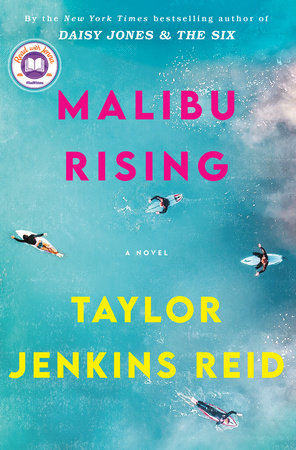
Malibu Rising by Taylor Jenkins Reid

Malibu Rising by Taylor Jenkins Reid

Malibu Rising is a novel that captures the glamour, the empty façades, and the excesses of a celebrity-oriented surfing family. Malibu is part of the L.A. scene: a mix of money, sport, beach culture, and make-believe in approximately equal parts. Jenkins Reid focuses on the events of a single day when four siblings, children of a famous crooner, are throwing the end of summer party that every partygoer wants to attend. Hundreds show up and the party catalyzes the individual and family tensions until excess turns into mayhem and disaster. The four siblings are surfers and one can gather that the waves and their consequences are a proxy for lives lived on the edge: on the edge of financial, existential and emotional disaster, when the beauty of catching the perfect wave can be followed by a tumble into the angry ocean. 

How Literary Gatekeepers Can Advocate For Black Trans Women

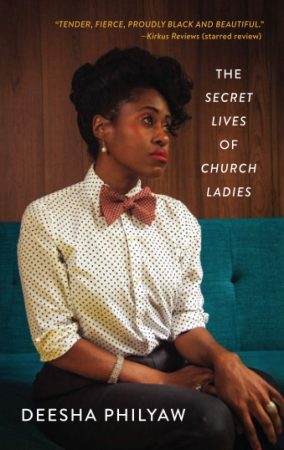
When the finalists for the 2021 Hurston/Wright Foundation Legacy Awards were announced, Deesha Philyaw was thrilled to learn that she’d been nominated in the Debut Fiction category. Her story collection, The Secret Lives of Church Ladies had been published to much acclaim in late 2020, netting her numerous awards and a place among the finalists for the 2020 National Book Award. Every award holds a unique meaning for Philyaw, but when she learned of her recognition by the Hurston/Wright Foundation, she felt a special wholeness. 

A woman in a white shirt and bow tie gazes out

“It felt so full circle,” she said. “I attended the Hurston/Wright Summer Writers Week in 2007. And it was transformational. I felt so much validation as a writer. I saw that as a turning point in my career.” Philyaw has never forgotten the impact of that week; it’s an experience that’s common to writers of color. In an industry that inundates us with whiteness, writers of color often thrive when we have the opportunity to learn from mentors who look like us, share our identities, and can avoid treating our literary point of view as something that needs to be explained or justified to a white readership. That type of literary marginalization isn’t limited to writers of color, though. 

Not long after Philyaw learned of her own nomination, Hurston/Wright released the names of the honorees of three special awards, all of which would be given to more seasoned writers for their overall body of work. This includes the North Star award, and its controversial honoree: Chimamanda Ngozi Adichie. 

For many years Adichie has been heralded as the face of contemporary Nigerian literature, a worthy successor to Chinua Achebe—though shrinking the contributions of Nigerian writers to merely these two does a disservice to the larger scope of African literature. In recent years, Adichie—much of whose fame is built on her staunch feminist values and progressive stances—has come under fire for a statement she made in a televised interview she did for Britain’s Channel 4 news: “When people talk about ‘Are trans women women?’ my feeling is that trans women are trans women.” What her critics (myself among them) bristle at is the unspoken implication that trans women are not, and can never be, simply women. 

Dear Senthuran by Akwaeke Emezi

As increasingly more visible feminists leaned into the ideology of Trans Exclusionary Radical Feminism (TERF), including JK Rowling, Adichie publicly stood with them and has since decried the advent of “cancel culture.” In a self-published essay titled “It Is Obscene: A True Reflection in Three Parts,” Adichie failed to confront her own history of transphobic rhetoric. Instead she shifted the focus to two former (unnamed) students of hers, believed to be the Nigerian writer and queer activist OluTimehin Adegbeye, and Akwaeke Emezi, who is non-binary and most recently the author of Dear Senthuran. Both writers have been critical of Adichie in recent years. In the essay, Adichie chastised them, claiming they publicly branded her as transphobic. Then she condemned cancel culture, writing, “I have spoken to young people who tell me they are terrified to tweet anything, that they read and reread their tweets because they fear they will be attacked by their own.” The essay was published earlier this year, during Pride month, and was so popular that for several hours, Adichie’s website crashed. 

When Philyaw, a cisgender woman, learned that Adichie was this years’ North Star honoree, she was disappointed in the choice. Her immediate reaction, however, was not to bemoan either Adichie or The Hurston/Wright Foundation. It was, instead, to consider the needs of Black trans women and writers. She quickly withdrew her name from contention for the Debut Fiction Award and, along with Kiese Laymon, donated $5,000 to Roots. Wounds. Words: a literary arts organization offering visionary programming for BIPOC writers at all intersections of identity with a particular emphasis on queer, trans, and gender-noncomforming writers. 

I spoke to Philyaw about the commitment to do no harm that comes with a public platform, the complicated conversation around trans identity in the Black community, and the cognitive dissonance I often feel as a Black woman of the trans experience in the publishing industry. 


Denne Michele Norris: Tell me about the moment when you learned who would be the honoree for the North Star Award. 

Deesha Philyaw: I gave a heavy Negro sigh. I was sad. It was hurtful, not to me directly, but to people in my life. There are people in my life, whom I love, who are trans—you included. There’s so much debate about trans people. And, you know, there are debates about Black people, too, and those debates degrade our humanity. I’ve always pushed back on that as a Black person, and so I read these debates about transness the same way. They’re painful to watch, and it’s hard to know what to do because pushing back feels like you’re part of the debate and making it more valid, but silence doesn’t feel right either. 

This is about how our communities show up, or don’t show up, for Black trans people.

I’m weary of engaging on social media because it never ends well. People get harmed, and it’s a total cluster. So with this situation, my next feeling, after sadness and hurt and disappointment, was to ask myself “What do I do? How do I not further harm?” That should be our first thought. Good intentions that cause inadvertent harm are still harmful. I almost felt like no matter what I did, it was inadequate because the nature of the problem is bigger than one person. This is about how our communities show up, or don’t show up, for Black trans people. In this case, I’m talking about the Black literary community. And so as a member of that community, I had to figure out how to take this moment and make it bigger than just the moment, just me, just that particular award and that recipient. I wanted to encourage other people to take this as an opportunity to think about what trans people need from us—cisgender folks who want to support the community. That’s what I hope people take away from this. What do trans women need from us? Are we doing enough? What can we do collectively, and individually? 

DMN: I don’t think we can escape the fact that certain aspects of this conversation are specific to the Black community. Transphobia is everywhere, but the conversation around transness within our community is, to some degree, uniquely ours because collectively, we know systematic marginalization, and we often look at other groups from that perspective, without recognizing intersectionality, or the validity of other marginalized identities. How have you moved beyond that?

DP: From a place of true ignorance; I grew up in the south and so much of what’s hurtful to the community is words. It’s all tied up in language. As a child, the language we had in the south for trans folks was dehumanizing. The irony is that so much of what I’ve learned has come from my own children. My kids have been really formative in helping me understand transness. Kids that they’ve been friends with since kindergarten are transitioning. I remember several years ago when we were chatting about one of my daughter’s friends who had transitioned in middle school. And I innocently—because, like white women, the rest of us want to claim innocence, too—asked about what I now know is their deadname. I wanted to remember it. When I tell you how my daughter lit me up! She said, “That is their deadname. You don’t need to remember it.” And I had to sit with that, and further educate myself. And I think when it comes to our community, sometimes there’s this idea of “I’m the adult here.” But I’m fortunate that my children, who I love more than anything, know more than I do. I’m happy about that because I don’t want them to be ignorant, I want them to be wiser. We see children using the pronouns that their friends ask them to use so effortlessly, and I think if we can’t do that, as adults, we should be ashamed of ourselves. And folks in our community make up so many excuses about misgendering people and using the right pronouns and the truth of it is that they don’t care enough to make the effort, or to admit when they are wrong about gender. People say it’s much ado about nothing, or they say we’re doing too much, or my favorite excuse is “the agenda.” But the fact is that many of us are not willing to do the work, to understand the harm that we’re doing, and to try and be better. 

DMN: Right! That’s exactly right! And you know, the first time Adichie emphatically stated that trans women are trans women, I was sort of willing to look past it because she seemed so progressive otherwise. I thought “she’s on her journey and she’ll get there in a year or two.” But what you’re saying has really calcified for me over the last few years as TERF rhetoric seems to have grown—and not just in regards to her, but in some ways about our larger industry. Many among us are more invested in protecting our image, our wealth, our success, the perception of us as leaders, than we are in striving not to do material harm and to make amends when we have harmed. And I regret this about the publishing industry because we pride ourselves on being thought leaders. We pride ourselves on being forward thinking, and working in an industry where new ideas flourish and we get to push the cultural conversation forward. This is how we talk about the publishing industry, how we position it in our society. And yet we haven’t moved far enough forward to cast debates about trans identity aside. I feel this enormous sense of cognitive dissonance because I’ve been heartily embraced as a Black woman of the trans experience who occupies an influential editorial position. And yet in the same professional sphere, so many of us are willing to look the other way when the most powerful in our industry, all of whom have zero lived experience as trans people, are allowed to speak with authority on who and what we are, and where we fit into gendered society. It is obscene. And for me, as a trans woman in publishing, it begs the question of what, really, is my place in this industry? Where is my glass ceiling? Because it has to exist, somewhere, if this is where we are as an industry.

If you remove the nonsense about cancel culture from the conversation, what are we left with? Power, gatekeeping, inequity, injustice.

DP: It’s another form of gatekeeping, but in this situation, the stakes are even higher. When I think about the virulence of the antagonism suffered by the two writers in that letter, it’s shocking. I watched how people, in the name of supporting Adichie, attacked those two writers. And this is about power, right? I can’t imagine having that kind of power, that kind of influence, and seeing people with far less power being attacked in my name, and looking the other way. But it becomes easy to not see people as people, and not see these power dynamics, and not see the potential for violence, especially when we decry cancel culture. Cancel culture has become the biggest smokescreen because it’s disingenuous. You wave that flag and suddenly the discourse changes. That’s part of why my statement on Twitter was so tight. I wanted to make sure we stayed focused on what this is really about which, again, is addressing the needs of trans women. If you remove the nonsense about cancel culture from the conversation, what are we left with? Power, gatekeeping, inequity, injustice. We’re left with these things, and these are hard things to grapple with. It’s so much easier to reduce the conversation to cancel culture. And my hope is that more people will start to interrogate themselves: What can I do? What more can I do? And Roots. Wounds. Words. is one organization we can support, but there are so many others. I came into this situation focused on what I can do, and I’ve come away from it realizing that I’m not doing enough. And so I’m constantly asking myself what else I need to do. 

DMN: Black trans women are often talked about as being the most vulnerable people in our society, systematically speaking. And in many ways, this is true. People kill us gleefully on a near daily basis. And the comfort that people feel with perpetuating violence against us is a direct result of rhetoric that devalues our lives. Every vulnerable, marginalized group deals with this, and yet when it comes to trans people, these attitudes are still treated as legitimate. Every time we are talked about by cisgender folks as an “issue,” rather than as human beings, we are stripped of our humanity. And that contributes to a dangerous climate for us. Something I think about often is when I was a scholar at Tin House in 2016, and Kiese was faculty that year. In his craft talk, he spoke about burning the house down and rebuilding it in an equitable way. It was about the publishing industry but it was also a metaphor for our entire society. And I feel as though what you two are doing is a part of this process. You both recognize your power and influence, and you’re turning that into action. It’s not difficult to read the letter Adichie wrote this summer, and then look at the violence in the Twitter mentions of the two writers that she tried to implicate. No one is talking about how that is also a result of her recognizing the power she has in this industry and willingly using it for harm.

DP: Exactly. So what did you use your power for? Toni Morrison said the whole point of having power is to empower someone else. So when we take a certain action, we have to consider who is empowered by it. So my hope is that the statement I put out empowers people to take a look at themselves, and really think through what actions they can take to support trans women of color. I hope more Black trans women will write, submit, and build literary careers. I hope individual trans women felt supported. Sometimes when I hear certain statements being made, statements that degrade people, I think to myself “you could’ve just said nothing.” But my hope is that just as you are reminded of how dangerous the world is for you when somebody makes a horrible statement, maybe seeing something supportive will help people feel, perhaps not safer, but less alone? None of it is adequate, and that’s why it has to be ongoing work. I’m hoping other people will pick it up and run with it. 

The story that Adichie is peddling—that trans women aren’t real women—isn’t new.

DMN: You’ve continually asked, even over the course of this conversation, what do Black trans women need? I think one of the biggest needs is simply volume. We should be the loudest voice in the room telling our stories, and naming and identifying ourselves as who we are. So what you’re helping with is growing opportunities for us to rewrite our own narrative. The story that Adichie is peddling—that trans women aren’t real women—isn’t new. But in elevating Black trans writers, you and Kiese are bringing our voices into the conversation. And it’s so rare that we have the opportunity to take our narrative into our own hands and shout it from the rooftops with real volume, real elevation. That’s a huge part of the work lies ahead. 

DP: I think the key is making sure that trans people are always in the room, and in any room that we occupy. For a while the conversation has been about making sure there are Black people in every room, but the buck doesn’t stop with us. We need to make sure Black trans people, in particular, have access to, and a place in, every possible room.

A Novel About Privilege and Class Set in Modern-Day Cairo

In Cairo Circles, Doma Mahmoud lures the reader on a voyeuristic tour of the Egyptian capital’s wildly differing class spheres. On the lowest circle is Zeina, the daughter of a housekeeper to an upper-class Egyptian family. Starting on a New Year’s Eve in the early 2000s, Mahmoud absorbs us with Zeina’s yearning soul and entitled voice. He follows up with Sheero, who comes from a mixed class background but is sufficiently middle class—through the efforts of his single mother—to be friends with Taymour, who is unambiguously upper crust though himself suffers from the neglect of his glamorous, drunk mother. 

Then there’s Amir, Sheero’s cousin who comes to America, ends up radicalized, and commits a tragic bombing that shadows Sheero’s existence in New York and in Cairo. Mahmoud doesn’t avert our gaze from the contradictions of family, religion, and secularity in his characters, and as it plays out in the country’s changing society. And ultimately, we have again Zeina, who is impossible to speak of without giving away the book’s plot—and its thrill—and who closes out the novel. I certainly raced to the end with a longing for Zeina, who delivers the final overlapping of the social circles.

I spoke to Doma Mahmoud, who lives in Cairo, about class nuances, Cairenes who might recognize themselves in the novel, and his favorite literary works about the city. 


J.R. Ramakrishnan: Where did this book start for you? How did you come to Zeina’s voice? Her voice is so incredibly compelling, as is her determination to be a singer. 

Doma Mahmoud: Growing up, I would sometimes be at a friend’s house and his full-time nanny would bring their child to work for the day. And I would watch this kid, that was my age, my height, my skin color, be endlessly curious about how they felt about the insane disparity of wealth and privilege at play, about the fact that part of their mother’s job was to pick up my spoiled friend’s candy wrappers from his bedroom floor. I carried this curiosity through my childhood and adolescence and decided to write this character to try and find answers, both from my own personal experience and imagination and from conversations I had over the years.

I would watch this kid be endlessly curious about the insane disparity of wealth and privilege, that part of their mother’s job was to pick up my spoiled friend’s candy wrappers.

Some people do not see their relative poverty as a burden, but others are deeply bothered and sometimes disturbed by it. At least half of the main characters in this book are like this. People who are restless to move up the ladder, or maintain their position on it, or just can’t stand the existence of such a ruthlessly segregative ladder in the first place.

The very first idea from which this entire book sprung was this: As a consequence of her mother’s job, working-class Zeina has to endure the sight of immense privilege and wealth every day, and for better or worse, she feels entitled to it. She is told by authorities on the matter that her singing could help her attain it, and so she becomes almost hysterical with desire. From the first day, I knew that the book would begin and end with Zeina.

JRR: “Fathers are the ruin of this country” is quite a line from Madame Alia! This seems to ring true in the case of Zeina, Amir, Mustafa, Omar, and perhaps Sheero too. I wonder if you could talk about this line in the context of your characters’ trajectories. 

DM: In the second half of the 20th century, free-market capitalism arrived in Egypt with a bang and consumed pretty much millions of men and a good share of the women. They worked so hard and built so much wealth and value, it’s impressive, but for a lot of them, even some of those that only managed to make ends meet, the first sacrifice made was time and closeness with their children.

At some point in my late adolescence, I thought of all the people I knew who struggled in their relationships with their fathers and was shocked to realize that it was a strong majority. And it adds up. When you stop to consider the long working hours, hyper-competitive work environments, and relentless forces of consumerism and classism that these men were subject to, it isn’t all that surprising that a lot of them became perpetually absent, or neglectful, or stressed, or angry, or exhausted, or violent, or all of the above. Maybe I’m being too forgiving, and they could’ve done a better job. Some did. The point is that it had serious effects on a lot of people from my generation. And it was impossible to tell the story of these six characters without exploring that aspect of their lives.

What’s ironic is that Madame Alia says that line but is doing a horrible job of being a parent herself. With the emergence of self-help and mental health awareness, we millennials are so good at describing all the ways our parents disappointed or negatively affected us; I hope that means we’re going to do a better job ourselves. I like to think we will, but my parents mock me when I tell them this, which scares me. “Sure,” they say. “Inshallah.” 

JRR: The violence is quite intense from Amir’s beatings (and everyone’s complicity), Amir’s own acts with Farida and then as a grown-up, to the more casual acts of aggression. Sheero reflects that beatings were “part of our culture,” but even he draws the line at what Amir experiences. Could you meditate a little on your thinking behind the seemingly circular nature of violence in the book? 

Religion and class have always been closely intertwined in Egypt and beyond.

DM: When I was growing up, it was pretty common for kids to be smacked by their parents when they misbehaved. Especially in the lower and middle classes. This might confuse some readers, but it is possible to be smacked as a child and not be emotionally disturbed because it feels controlled and safe. Sometimes, it can even be funny. But then here’s the problem: what can happen is that an adult will be smacking their child, and suddenly, it will go from controlled and non-threatening to malicious and scary. The parent will become possessed with anger or frustration or stress from work and will channel it into this physical violence they are inflicting on their kid. It’s a line that gets crossed abruptly and it’s difficult to define for anyone who hasn’t witnessed it. But what happens beyond it—that is the sort of true compulsive violence that can traumatize and get circular. Different personalities are affected differently. Some people are subject to violence as kids and go on to make sure they never lay a finger on anyone. In Amir’s case, the violence has seeped into his being and become a primary mode of interacting with others and reacting to the world.

JRR: I was intrigued by the ways in which class and religion intersect. In particular, Sheero being bothered that his mother has decided to wear a veil, and choosing to do so for the first time for the wedding of Tamara and Taymour. This line was striking: “But why? But is it necessary?” I am assuming none of the more upper class attendees would be veiled? Would you talk a little about how perhaps religion has entered into the middle and/or upper classes (in the ways, it perhaps would not have when these characters were younger at the start of the book in the early 2000s)?

DM: Religion and class have always been closely intertwined in Egypt and beyond. Most of the women at a middle-class wedding in Egypt today, or even as far back as the ’90s, would be veiled, whereas most at an upper-class wedding would not. That isn’t to say that one social class is more religious or devout than another, but the practice certainly looks different across different social classes. But as you mentioned, things have changed. There is a new class of self-made financially wealthy people who embrace the veil and wear it and who are in general a little more conservative. What will be interesting to see is how their practice of religion changes, if at all, over the next couple of generations, as their wealth multiplies and gets passed on.

JRR: How do you feel this book will be received in Egypt, perhaps by some of the Cairenes who might see themselves in your characters? 

DM: I think most of the people who recognize qualities of themselves or their friends/families in the characters will be happy to see their lives written about. At least that’s been the reaction thus far. Maybe some people will feel I did not paint an accurate picture, that I was too dramatic or negative, or even, on the other end of the spectrum, that I pulled too many punches. What I would say to that is that I couldn’t possibly paint an accurate or nuanced enough picture of an entire demographic or generation or class.

Ultimately, this is a book about six Cairenes born in the ’90s, two of whom move to the US for college and struggle to reconcile their Egyptian roots with American liberal culture, which is a specific experience. It’s also meant to be dramatic. I can only hope that readers enjoy the drama and feel touched by some of the scenes.

JRR: Your book offers a very evocative picture of Cairo (certainly the domestic intimacies of all the families involved). Would you share with us your favorite novels of Cairo? 

DM: Thank you! It almost goes without saying but Naguib Mahfouz’s Cairo Trilogy is the place to start. It’s 20th-century Cairo in a nutshell. Midaq Alley and The Thief and the Dogs are shorter but also great novels by Mahfouz for those who can’t delve into the trilogy. Essam Youssef’s A 1/4 Gram is a great novel centered around drug addiction in modern Cairo which has been translated to English. Nawal El Saadawi and Alaa El Aswany are literary giants whose work have also been translated. Woman at Point Zero and Yacoubian Building are the ones to check out first, respectively. Finally, everyone should look out for Noor Naga’s If an Egyptian Cannot Speak English, which will be published by Graywolf Press in April 2022.

7 Magical Realism Short Stories Haunted By Emotional Ghosts

I think a lot of us believe in ghosts. In fact, many of us are likely haunted by them. I’m talking about emotional ghosts, of course.  

My debut short story collection, Those Fantastic Lives: And Other Strange Stories, has a particular fascination with ghosts. In my stories, there are certainly the kind of transparent, traditional apparitions that float around, but there are also light-craving monsters and boy-aiding talking dolls that do their share of haunting. As physically present as these otherworldly spirits and beings might be, it’s the emotional ghosts surrounding them that serve as the true guides of my stories. My characters are people who need to escape the monsters in their pasts and, in some cases, their presents—people who need to transform so they can try again. For them, ghosts are everywhere. 

I began thinking about how emotional ghosts are oftentimes more frightening than physical ones and how it’s these kinds of internalized hauntings that shape the magical, weird stories I love so much. 

Here are seven stories that beautifully explore the deeply-felt emotional ghosts that plague so many of us: 

“The Alligator Theory” by Nathan Elias from The Reincarnations

A filmmaker loses his daughter in Elias’ “The Alligator Theory.” Cayman, the father, believes his daughter, Tina, isn’t really gone, however. Not for forever. He thinks she’s back but in the form of an alligator. Loss, acceptance, and reality work as a terribly cruel ghost in this devastating yet tender story.  

Book Cover

Rise” by Becky Hagenston from The Age of Discovery and Other Stories

Set in “the only artisan bakery in this north Mississippi town,” Hagenston’s “Rise” tells the story of a baker who begins having very bad luck. Things like a rabbit and a tooth start appearing in his bread. The objects are certainly troublesome, but the story is about what is causing them to appear—what exactly is haunting him and his shop. And why. 

Resurrection Hardware or, Lard & Promises” by Randall Kenan from If I Had Two Wings

This Kenan story from his final collection, If I Had Two Wings, is among his very best works of fiction. Here, we follow a character named Randall Kenan who returns to the author’s familiar setting of Tims Creek after purchasing a 200-year-old house, which he plans to renovate. However, there’s a problem. Ghosts begin appearing. As the story unfolds, we find our narrator is haunted by things bigger than ghosts. He must reckon with his home, his past, and his path going forward. 

Willful Creatures by Aimee Bender

The Leading Man” by Aimee Bender from Willful Creatures

In Aimee Bender’s “The Leading Man,” a young boy is born with keys as fingers. He can open all kinds of locks, including the one to his house. But, even if he does have key fingers, he can’t get access to the very thing he wants the most: the secrets of his father. It’s a haunting the boy struggles to shake. 

“The Handsomest Drowned Man in the World” by Gabriel Garcia Marquez from Leaf Storm and Other Stories

No magical realism list can be complete without an appearance from the father of the genre, Gabriel Garcia Marquez. Marquez’s “The Handsomest Drowned Man in the World” is full of emotional ghosts. When the body of a handsome, strong, tall man washes up on the shore of a small, isolated town, the community begins to wonder who the man could have been, giving him stories and a name. The man’s presence haunts them so much that they begin to transform their own lives and their community. 

On the Lonely Shore” by Silvia Moreno-Garcia from Uncanny 

Balthazar’s mother calls on Judith to care for her sick son at his seaside home in this magical, beautifully melancholic story from Silvia Moreno-Garcia. There are emotional hauntings aplenty here, and “On the Lonely Shore” explores how the feeling of impossible-to-escape loneliness is, perhaps, the most haunting ghost of all.

Winter 2014

Town of Birds” by Heather Monley from Kenyon Review

Set in a town where children begin transforming into birds, this affecting story from Heather Monley looks at what it’s like to not be like so many of the others around us—what it’s like to be an outsider and to want (and want and want) to fit in. The story is rich with vivid descriptions, but it’s the emotionally haunted young narrator that makes it soar.

Home Is a Trip You Can’t Ever Take Again

“These Golden Cities” by K David Wade

On the last night of my first spring break home from NYU, I dropped acid with my best friend, Dom. The week had largely been a bust: Grace wouldn’t get back with me; my mother was a ghost; and none of my niggas had changed. Still, the familiarity of walks to the gas station and old ladies calling my name and trees growing everywhere freely brought some comfort, some recollection of a home I’d once had, or would like to have had. The mixture of nostalgia and alienation made me feel—unrequited? And that feeling had been driving me crazy. I wanted to fuck all my exes and shake friends by the collar and get back on the bus a day early. Instead, I settled for LSD and a plan to watch the sun rise over the city, taking in the panorama—from projects to uptown—that pops up when you google Washington, Pennsylvania.


I’d done acid a couple times with the melting pot I fell into at college—a Russian, two Dominicans, a Pakistani, some Koreans—even a girl from Nigeria with an intense Boston accent. (Pretty different from Washington, where you were either Black, white, mixed, or ran a restaurant.) Dom had dropped acid before, too. He got super into psychedelics before abandoning his basketball scholarship at Slippery Rock and returning home. No one knew why he dropped out, but when he decided he was finished, that was it.

We headed to Dom’s house around sunset, after a long day of bullshitting, to pick up the tabs we paid his older brother Charles to get us from one of his white friends. I had white friends, too, but since college I stuck to the Black bodies in black hoodies I grew up with when I came home—I didn’t see enough of them on campus and when I did, they were usually serving me food. I tried Gentleman of Quality for a minute, NYU’s excuse for a Black frat, but those were the kind of dudes who taught themselves how to tie ties and discussed inclusivity. At college, I found myself quite lonesome.

Dom still lived on Houston Street, a potholed gray lick between the Advanced Auto parking lot and Catfish Creek, right where I’d left it. His mom was already at work, night shift at the mental hospital, and Eric—Dom’s younger brother and my other best friend—was out watching his kid because his baby mom had work. The house, which was eerily empty and dark, seemed to drink the dusk as we crept inside; even the family dogs, Rambo and Gunshot, did not rise to greet us. 

“You hungry?” Dom asked, leading me through the narrow hallway and into the kitchen. Tile tore like Velcro beneath his feet.

“I’m good,” I said. 

He poured a bowl of cereal, but only a small puddle remained at the base of the milk jug. Dom cursed, adding a bit of water from the faucet.

“Eric and Charles move back in, and don’t pay a goddamn cent in rent,” he said, mouth full of Reese’s Puffs. “But ole Dom been home ten minutes and there ain’t milk unless I buy it.” He shook his head. “Fucking fucks.”

He’d had his own apartment for a while, thanks to earning a decent wage down at the hardware store. Then the building that housed the shop got condemned and poof! Dom was back in his old room with Charles, who would never leave, while Eric slept across the hall in what could rightly be called a closet.

“Don’t bring that into the trip,” I said.

“I know,” Dom said. Then, “Don’t you start with me, too.”


We made our way upstairs, to Dom’s bedroom. Charles sat on a mattress on the floor, rolling a blunt and listening to Jadakiss’s “By Your Side.” It was my first time seeing Charles since being back. He looked skinny. He had gone to college, too, when I was still in elementary school. Dropped out halfway through and knew about all kinds of drugs.

“Here you go,” Charles said.

He handed us each a tiny square of white paper, thick as those perforated strips that seal mailed checks. We sat down on Dom’s bed and placed the tabs on our tongues straight away. They were flavorless. Mine dissolved into wet, soft bits I eventually swallowed.

We smoked with Charles to help the trip settle—it was like waiting for a game to load, pale ellipses flashing across a blank screen then disappearing, flashing again. Char could be stingy when the mood took him, or deeply generous. When I left Washington for New York the year before, he handed me a whole ounce of kill and said, “Good luck.” 

The room had white stucco walls so rough they could make you bleed, dingy beige carpet, and plastic bins full of clothes in place of a dresser. Some posters had been replaced, but Nas and Spiderman remained on either side of Aaliyah (Dom still joked about jerking off to her). A tall shelf housed all types of oddities: an ashtray shaped like a naked woman; a magic eight-ball that told dirty jokes; stacks of fantasy novels, including my copy of Goblet of Fire that I never got back and now had a torn corner; a few knives; a deck of playing cards; and an old Ironman action figure that had also once belonged to me, before I traded it to Dom for his Captain America.

These were the kinds of kids we used to be. As we grew older, however, we kept all that soft shit to ourselves.

Charles, Dom and I watched Year One on Dom’s tiny TV. In the movie, God chooses Jack Black, who plays a fur-clad caveman, to bear witness to the destruction of Sodom and Gomorrah—which to me made total sense. Artist as prophet, you know? Time stretched thin across film. Jazz, baby, but for keeps.

I was tripping.

Instinctively, I turned to Dom. He grinned.

“Yep,” he said.

The first time I dropped acid, our whole gang of degenerates entered this hive, a sort of corporate mentality marked by synaptic suggestibility that made each of us agreeable to the simplest ideas. You want to smoke a cigarette? Sure! Want to listen to music? You bet! The second time, by myself, I tried my hand at a graphic rendition of Prometheus Bound which, upon discovering the next afternoon, I deleted, emptying my trash to obliterate any evidence it had existed. As the trip set in this time, however, I felt coolly subdued, like the universe owed me a favor and might finally pay. My phone read 9:52pm, which meant I’d just be coming down in time to catch the sunrise sober, or mostly so. Perfect.

“Let’s go get something to drink,” I said.

I waved goodbye to Jack Black, laughing at myself on my way out the door.


One night first semester, after a long call with Grace, I climbed the Empire State Building with my new friend, Gupta. He was a film student I’d met at this warehouse party and he needed a body for his black-and-white. He wanted me to walk through some alleys he’d passed where smoke billowed up through the sewage grates. Said he had this image of me in a black jacket, obscured by a plume, stuck in his head since the moment he read the assignment.

“Sewer smoke?” I said. “That’s some 9/11 shit.”

“Nah, bruv.” He fancied himself the next James Dean, but Bengali. “It’s ventilation shit. For the metro.”

We were somewhere near 29th and 5th, the Times Square neons just out of sight. I must admit I felt cool. I had arrived in this city on an art scholarship for my paintings, had dabbled in writing, but being on the front side of a camera was one of those quiet dreams I carried around like all vain creatures. Whatever. Gupta got good shots. And the smoke wasn’t the kind that made you cough, so no cancer. When I came out on the other side of the cloud, I saw the Empire State Building, one big fuck you to whoever knocked down Babel. I didn’t know it changed colors every now and then. Tonight, it burned opium blue.

“Want to go up?” Gupta asked.

“They let you do that?”

He smiled.

“Till the bars close.”

The lobby occupied its own plane: an empty, golden heaven. Blocky murals lined the corridor and ceiling, all gleaming, burnished by unseen hands. One in particular, a radiant image of the Empire State building itself, reminded me of this film Metropolis—both for the art deco influence and the pure decadence of having an image of yourself inside yourself. I stared at the mural a long time, the saint’s circle of sunrays crowning the tower all pointing up, up.

Eventually, we floated to the 86th floor and made our way out to the open-air observatory, where we were barred from suicide by thin steel crossbeams, yet remained unprotected from the savaging wind. The city looked like the inside of an infinite computer at this angle, an unending circuit board, each light connected to the next in some distinct but unseen way. This was before Grace found out I had cheated, but I knew then what our end would be. The distance in her voice during our call that evening told us both that she knew, too. I took a picture of the skyline and sent it to her. 

“It’s mad,” Gupta said. The wind bullied his thick mop into a quaff. “You never really know a city till you see it like this.”

I spent the next several weeks trying to recreate the image with colors, only to discard a stipend’s worth of knockoff Basquiats at the end of term. 


Back home, night settled thick, a pale gray sky full of shadows. As Dom and I made our way to the Unimart, an erratic bat stumbled drunk overhead. A homeless man watched us from an upturned bucket of paint; he coddled a silver-furred rabbit whose sleek coat made its handler appear the perfect gentleman, if a mangy one. I stared hard. They refused to disappear.

I texted Grace. It was important that I watched the sunrise with her for some reason. Tonight, I decided, she’d either forgive or condemn me for good. All I hoped was that she’d look me in the eyes while she did it. I needed to see for myself what she meant.

“Anyway,” Dom said, as we entered the store. I hadn’t realized he’d been talking. “My teeth are glowing.” 

The linoleum did not ripple, and the lights did not swallow us whole. In fact, the store seemed extremely orderly, as if all the shelves had been recently stocked, all the coolers replenished. I did have a warm, cozy feeling in my chest, but my mental faculties were crisp.

“You figure out if y’all are coming?” I asked, settling on a pint of peach tea.

“Yeah,” Dom said. “Can’t.”

My first big art show was in April and I had invited Dom and Eric to New York on a whim. I knew money would be tight, what with Eric’s newborn and Dom saving up for a new place, but I figured one weekend would be good for all of us. We had slowly started to drift since I left for school, started to settle differently, like dust on opposite ends of the same windowsill. I figured them seeing some of the world that I saw might reconnect us. 

Dom grabbed a small bottle of chocolate milk. On the label, a cow chewed her cud before daybreak—like, literally chewed. Beyond her, the sun hung low in unerring, eternal dawn.

“Sorry,” Dom said, finally. “Next time.”


Walking back to Dom’s house, I got a text about a party. But before I could ask if he wanted to go, a dark green Chrysler caught us in its headlights. I didn’t recognize the vehicle. They inched forward, flashing their high beams, and my chest went hot with the fear that precedes a fight. If you’re regular high and some shit goes down, you snap back to reality quick, willing and able. I didn’t know the protocol for hallucinogens. Could I even make a fist? 

The car cut a sharp turn and pulled up beside us. My body froze, then erupted with praise.

“Bug?” I said, laughing.

Bug leaned out the window, a bleach white grin cut through the tar of his round face. On his head: a feathery auburn wig that you might find on a Supercuts’ manikin.

“Why you wearing a wig?” I asked.

“Warrants,” he said. “Want to ride?”

The city looked like the inside of an infinite computer at this angle, an unending circuit board, each light connected to the next in some distinct but unseen way.

Bug and I went way back, to when we all used to rap in his cousin’s bedroom and record diss tracks on pirated versions of Cool Edit Pro we got off LimeWire. He’d been in and out of placement all growing up. From what I could tell, he was just trying to live his best life until he got that first big boy sentence to land him upstate for too long to count. Yet for a kid who sold heroin while everyone else was still stuck on crack, he was incredibly lighthearted. The kind of crook who would compliment your shoes before he took them.

We went on a smoke ride through the swollen hills and woody backroads that connect all those small towns outside Pittsburgh. Dom and I sat in the back, this white girl named Lily up front. Her and Bug went off and on since grade school, and she ran in the same circles as Grace. Her hair smelled like hairspray. Someone had scratched the word gypsy across the back of her neck in black ink.

“You still be rapping?” Bug asked, passing the blunt over his shoulder to Dom.

“Sometimes,” I said.

“That’s what’s up. I bet them New York niggas think you sound country.”

“Nah, but like, when you say yes ma’am to a lady at the grocery store, she’ll ask if you served in the Army.”

“Nuh-uh,” Bug said, eyebrows arching.

“Yeah. And instead of saying, that’s what’s up, they say, word.

“What they call thirsty?” Bug asked.

“Thirsty? They just say thirsty,” I said.

Bug snorted, nodded his head all solemn.

“Word.”

We got quiet for a while, the syncopated rhyme scheme of “Juicy” carrying us till it didn’t. Out the window, the trees would cut away all of a sudden for a rolling farm or some ancient, antebellum house, then reappear for miles and miles. 

“You seen Grace?” I asked.

Lily’s eyes avoided me in the passenger side mirror.

“I don’t even know,” she said. Then she clutched the grab handle above her door and shouted: “Don’t!”

The car lurched to a sudden halt near the top of a hill and Bug jumped out, some sort of thick black pipe in his hand. He cut a brief, hulking figure in the headlights, a gorilla in drag, then disappeared down the hill. A second later came one big boom, then another.

“Every fucking time,” Dom said. 

Bug reemerged, wig askew. The pipe that he held was a sawn-off shotgun. He looked disappointed.

“Deer,” he said. He climbed back into the car, which groaned beneath his weight. “I been trying to get one.”

Bug dropped us off at the party. Eric would be here soon. Grace had yet to respond. 

The house sat half an acre back from the road, a Wolfsdale mansion my friend Matty’s dad had built with his bare hands over the course of a decade. Cars lined the driveway, which stretched like a dog’s black tongue from road to garage. “Black and Yellow” emptied the speakers and filled the sky, but no neighbors lived near enough to complain. A golden glow emanated from the garage windows, which somehow transported me to the Empire State Building. Radiance was the word. Aurora, Zora, Dawn.

I leave tomorrow, I texted Grace right then. I fucking leave.

I had been accepted to study abroad at NYU’s Florence campus and for some reason the trip felt final. I had no plans to ever come back—at least, not to Washington. I didn’t know if I would ever see Grace again.

Inside, we found a bunch of white kids playing beer pong and talking loudly in tight circles. A few worn couches sat against the wall, liquor bottles lined the workbench, and the stench of old oil stung the air. I began to sweat.

These were all the kids to whom I once sold weed, from schools with only a handful of Black bodies among them. Sometimes we got their girls—the quiet nasty ones—but more often than not we were accoutrements, accidents. A friend of a friend. I wouldn’t say they were racist—at least, most weren’t. They just didn’t know how to explain us. 

Matty shimmied his way through the tightly packed bodies and hugged me. He smelled like Pac Sun.

“You want a drink?” he said. “Come drink.”

I followed Matty into the kitchen. He pulled me a Yuengling from the fridge, knocked the top off on the edge of the butcherblock island. The windmill blades of the ceiling fan made me dizzy. It was midnight.

“I saw that little movie you made with the Indian dude,” Matty said. “That shit was dope.”

After the silent film, me, Gupta, and the Nigerian girl from Boston, Ifedi, teamed up for a forty-eight-hour short film competition in which you had two days to create art from a handful of nouns drawn out of a mason jar. We got tiger, shoestring, and baseball bat. I designed, Gupta directed, and Ifedi, who changed her voice like magic when the lights went on, was our leading lady. The whole affair had some real Wes Anderson vibes. We won second place.

“A paper tiger,” Matty said, smiling. “Who the fuck would keep that on a leash?”

After a while Matty disappeared, off to another conversation no one would remember. I wandered around the house in search of a bathroom.

 “Oh, shit,” I said, upon opening a door down the end of the hall. This girl Megan, whom I once loved but had never fucked, was bent over the sink snorting a line. 

“What are you doing here?” she asked. “I thought you were, like, in Hollywood.”

“New York,” I said. 

“Oh.” She stared at me for a moment, as if deciding. She shrugged. “Close the door.”

Getting your dick sucked on acid is unreal. I came colors. Afterwards, however, a different kind of energy took over. A sad, squishy one that made me miss Grace. I wanted nothing more than to get out of the room, out of the house, into fresh air. I’d had a bad moment during one of my trips at school, where I thought too hard about Ma’s boyfriend and he transformed into King Kong and started eating everybody I loved—joints cracking between his teeth, marrow dribbling down his chin—until Ifedi, who was babysitting us, took my cheeks in her hands and said, “Just imagine a big stuffed monkey. Nobody should be scared of a beanie baby.” But Ifedi was not here with her soft palms and precious gap and I was starting to panic.

I left Megan to clean herself up and stumbled outside through the wobbling back door, so I didn’t have to see anybody. A porchlight came on and gave life to a family of moths. I pitched the rest of my beer, which I should never have drank, over the wooden bannister. The trees were dancing, attempting to seduce me, but I knew if I obeyed them, I would surely die. The sky began to arc and streak like a star-trail photo.

I took one deep breath, then another. I would never get Grace back. I wasn’t sure I even wanted to. There was something unexplainable inside of me, something tremendous, yet I knew it wasn’t far from Bug chasing that deer. I looked down at my hands, found them empty.

My eyes fluttered open at the soft slap of headlights. Dom’s truck pulled into the driveway, where I leaned against someone’s car with half a burned-out cigarette in my mouth. Eric stepped out, smile white as bones in the darkness, and said, “Bro.”


In New York, I read Kafka and discussed communism with bisexuals who wore gloves with cutout fingers. I drank espresso for the first time, smoked hookah, and tried sushi. I also called Grace some nights when I got drunk.

Usually, she wouldn’t answer. I’d leave voicemails, sometimes two or three. When I checked my phone in the morning, I’d text her, apologizing profusely, then take a hit from the Gatorade bong I kept bedside to calm my nerves. She understood: I was lonely, in an unfamiliar place, and needed some semblance of home. She knew this intuitively, even before I did. Said she forgave me. The first time I tripped acid, however, things changed.

We had all dropped tabs and sloshed around Gupta’s dorm like a roiling sea of youth, eating pizza in closets, blaring Arcade Fire, and hiding ourselves from ourselves. As the night dwindled, I wandered, wound up on the Red Steps beneath the neons, a few rows down from a bum belting showtunes and a few rows up from two dudes making out. Friends texted but I ignored them, too absorbed in the flashes and peals all around me, the promise of connection to everyone at once. I thought, in my stupor, that I could tap into all that energy, become one with it and thereby extend myself to Grace in such a way as to make her feel warm, like in the beginning.

I sat there a long time before I called her, the billboard directly above me a giant Coke can spinning slowly, slowly. That night, she answered.

“Grace,” I had said. “I figured it out.”

“What?” she responded, voice thick with sleep.

“All this! These golden cities! They mean nothing!”

“Michael,” she said.

I imagine she propped herself up on an elbow, rubbing rheum from her eyes. I imagined the molecules of her, perfect circles expanding and contrasting with each heartbeat, sparse then dense, dense then sparse. 

“Michael. This needs to stop.”


Dom, Eric and I left the party a little after two. My trip was in full swing. One moment, I’d be totally chill, and the next, my thoughts unspooled themselves like a silk origami girih. (What does a city with no sun actually look like? Was the invention of gears an inevitable transmutation of the immaterial human mind expressed in physical metaphor? Who the fuck framed Roger Rabbit?) Eric was cool, though. He kept the trunk rattling and laughed at me and Dom’s alternating nonsense.

“White boy shit,” he said. “I told y’all: weed and liquor. Cocaine, if the bitch is lucky.”

We pulled into the McDonald’s drive thru on Jefferson, the only 24/7 game in town. Semis barreled down the overhead bridge across the way, whose pillars gleamed graffiti in the streetlights. We’d had our phase of that, too, but not like the skateboarders. Mostly we just tagged the empty lot we used to drink in behind the power plant.

“Welcome to McDonald’s,” a girl’s voice said over the static. “What can I get you?”

“A double Mc-Dick with two big Black balls,” Eric said, pronouncing that last word more like crying.

“The fuck?” the voice said. Then: “Eric?”

“Who else,” he said, laughing. 

I climbed atop a rock and faced the sky, unleashing my most doleful cry.

Giddily, we ordered more food than we could eat. Eric ensured the girl threw in a bagful of extra fries. He spent so long macking at the window that the car behind us beeped. We all flipped them the bird and cursed out the window, but we rarely got too rowdy when we were at fault.

“I’m a slide through when you get off,” Eric said.

The girl smiled, caramel cheeks tinting rose.

“Okay,” she said. “Now get out my line before these people make me cuss them out.”

We were just going to sit in the parking lot and destroy our food, but something about us three being all together and the silver moon and the sudden wild west wind so out of place in the spring made me billow, made a sail of me, and I just knew what we needed to do.

“Let’s go to the power plant,” I said. 

“Yeah,” Dom said. “Let’s do that.”


The power plant was sacred. Home to laughs, fights, fucks, and everything in between: we grew up there. Or rather, we did grown-up things there as boys that shaped the kinds of men we’d become. Four green electrical towers overshadowed the trees behind Dom and Eric’s old house, connected by sagging wires and spaceship antennae. Left of the towers stood a few small generators and turbines, growing from the gravel like stout metal potatoes. To the right, a perfectly cubical redbrick building with boarded windows and one door that I’d never seen anyone enter or exit. To us, it was holier than Kaaba.

We staggered through the narrow footpath between the trees and the barbed-wire fence to the small fallow lot behind the building, mud squishing beneath our boots and jaggers sticking to the hems of our pants. You could see Dom and Eric’s old house over your shoulder, until you rounded the bend. Then it was just the old sitting stones, left there like Stonehenge, and a low-hanging moon above the towers. 

I bought two spicy McChickens but ate only the fries, each granule of salt sliding itself across my tongue, down my throat. Eric sat smoking a cigarette, a Steel Reserve in his hand. Dom, having devoured his meal, lay flat on his back on the largest rock, staring up at the sky.

They looked alike, the Barnes brothers, with their father’s receding hairline and their mother’s strong chin. Only Eric was meatier and closer to my height, while Dom was tall and skinny. It was something to watch Dom play basketball, back in the day. Read the court like a book. Sure, Slippery Rock was Division II, but he had made it out this place despite un-great grades and a severe case of dysgraphia. Nobody understood why he left college after one year, especially when Charles had told him, in a rare moment of older brothering, that dropping out was his only regret. No one except me.

The summer before junior year. Ma and her latest man were at their worst and so were me and Eric, robbing whoever we found behind the Unimart and selling a pound or two of weed each week. Dom had returned from college different, eyes that carried a brightness through boyhood calcified at last. He often disappeared in the midst of a party, took solo trips to West Virginia or Pittsburgh chasing girls we’d never met. When he was around, he looked sad—in a day-drinker sort of way. I knew he’d broke up with his girlfriend, some white girl he met up there, but nigga smile.

Dom had always been less prone to violence than Eric, who popped off at the sound of a breath, but in the fights we got into that summer he went haywire, scraping dudes’ faces off concrete and ripping out teeth. One time, outside this house party gone wrong, he tried to run somebody over with his truck.

It was that night, long after everyone else went to bed or found lovers, that he told me. Why he had been breaking everything that could break without remorse: His girl got an abortion, and he had imagined being able to raise the child by himself.


I looked at Dom now, stretched out like a lemur in the shadow of the power plant, a silly little smile on his face, then up at the moon, which was always full, and got the sudden urge to howl. I climbed atop a rock and faced the sky, unleashing my most doleful cry. Silence followed, after the echo, so I tried it again. Dom joined me. Sat up as if out of a coffin and just yowled, yowled, yowled. I thought Eric would tell us both to shut the fuck up, that the cops might come, but he stood, too. His cry was the saddest of all.

When we were done, I was damn near stone sober. Out of breath. Throat raw. Dom pulled out the little journal that he kept to practice his writing and started scratching his awkward sigils. Eric sat next to me, clearly exhilarated, and lit another cigarette.

“You really gone to Italy?” he asked me.

“Yeah,” I said.

“If I was you, I wouldn’t never come back,” he said. “New York ain’t far enough. If I was you? I couldn’t get far enough away.”


5:00am. Eric had walked off to that McDonald’s girl’s house. Dom had gone through Char’s stuff while he slept and ingested another tab. I sat on their front porch, scrolling through old photos of me and Grace. 

She was a beautiful girl. Honey butter skin, eyes like brown sugar. In every picture we took, I held her. She leaned against me as if I was some sound, sturdy structure, her curls tightly bound or overflowing, her smile in turns childish and unsure. Of all the girls since—and during—no one fit into my arms quite like her. And I had felt then that to fit properly into my arms was the only way to know me.

“What you doing?” Dom asked.

He sat on the bench beside me, a box of cereal in his hands.

“Being sad,” I said.

“I don’t want to be sad,” Dom said.

“Me either.”

We sat there for a moment, staring out at the empty street. 

“Do you remember everything we used to do here?” Dom asked. “Like when you married that fat girl with a rubber band ring? Or the time the cops set them two German shepherds loose on Rome over a handful of dime-bags? Do you remember how long it took for the smell of burning rubber to go away after the tire factory burnt down? Ain’t that shit take ages?”

I stood, tucked my phone in my pocket. “I’m gone go see Grace.”

“Mike-Mike,” he said, and we were boys again, children. “You ain’t the only one who gets sad.”


I never had a trip hold me longer than eight hours, and it had been nine or so since we dropped. I felt residue—certain trees looked the way an old song sounds in the back of your head, and the stars didn’t twinkle, they whorled—but walking through my city by myself, wearing a black hoody, fingertips brushing old bollards and bushes and buildings, I felt a certain freedom wash over me. A pure breeze. A staying presence. 

That which we call home is simply that. It may change, as we all change, and may never even be named, yet it remains inescapably familiar. And in that recognition lies the hope that a piece of you is unchanged, too.

I arrived at Grace’s house unscathed. She lived, like almost everyone, in a cut between the road and some trees. I threw a pebble at her window, then another, until she answered. She appeared, long hair draped to one side, eyes more awake than asleep. I gathered every mote of softness I could find and said, “Want to watch the sunrise?”

Grace stared at me. A long time. Then she let out a breath I had not heard her hold.

“Wait there,” she said.

A couple minutes later she tiptoed down the rickety wooden steps of her second-floor apartment. She came around the corner in my old football hoody and sweatpants, hands stuffed in her pockets against the predawn chill.

“From the train tracks?” she asked.

“No,” I said, “but we can take them there.”


The soft wood of the ties bent beneath my feet, as old things do, and I eventually took to walking only on the gravel scattered between them. Grace walked along the rail, as she always did, with the ease of a gymnast. We were only a mile out from the hill that held the view. 

We didn’t speak. Not with words, anyway. We brushed arms once, accidentally, and when our elbows touched again, I understood Grace was soothing me. My heartbeat boomed in the space between us. There was nothing really to say. She’d finish senior year and head off to college, somewhere far enough away to cut her hair and become someone new. I’d spend the semester in Italy, weekends in random European hostels, and then head back to New York, where some friends and I had just signed a lease on a Williamsburg loft. The next time we saw each other, Grace and I, we might not even notice. Only a feeling inside an airport, a vague second glance on passing trains.

 Or maybe there’d be more. Grab a drink, try again. That would be okay, too.

We made it to the top of the hill overlooking the city. We sat down on the cold, wet grass. I couldn’t see everything from here, but what I did see—the handful of buildings that made up our skyline; my old bus stop by the bakery; a radio mast like a giant candy cane in the distance—was enough, once it caught the sunlight. A painter’s purple first, then nipple pink, then flagrant red. 

I tried to map the scene onto New York, fit this entire city between the dingy side streets in Brooklyn. And Florence? How would the cracked cobble I once ran from cops on compare to stones preserved for centuries? How would words like terracotta and chiesa sound in my profane mouth? 

“You know what a gypsy is?” I asked Grace.

“Like Esmerelda?”

“No,” I said.

She frowned.

“You know, tomorrow, daylight savings time ends,” she said.

“So?”

“So, tomorrow, time speeds up. If you would’ve come then instead of now, my dad would’ve been awake, and he might’ve shot you. Or I could’ve fallen asleep, when they take that hour.”

“Who?” I asked.

“Whoever takes anything,” she said. She nodded to a stream of birds painting a black mass against the burgeoning sun. “Them.”

Eventually, the birds disappeared in the distance. Grace glanced at her phone, said she should probably go.