“Do you think the problem of the contemporary novel is simply the problem of contemporary life?”
This is the question Eileen poses to Alice, in one of the email exchanges that pepper the pages of Sally Rooney’s new novel Beautiful World, Where Are You. Alice, a successful novelist struggling to pen her third title, has fled Dublin for a small coastal town in the west of Ireland following a nervous breakdown. Eileen, Alice’s friend from college and now an editor at a literary magazine, is six months out from the break-up of a long-term relationship, and navigating complicated family dynamics in the lead-up to her sister’s wedding. Alice and Eileen immediately appear to be on good terms, if a little aloof, but there is tension bubbling beneath the surface, particularly over when (or whether) they will see each other again in person. But despite this, the emails flow, and in particular, the question of the usefulness of novel is one to which both women frequently return, though neither emerges with a satisfactory answer. When climate change, an increased turn towards far-right politics, and now a pandemic, threaten the future of our entire world, can fiction sustain any meaning, particularly fiction revolving around love and relationships?
Alice self-deprecatingly occupies the anti-novel position, while Eileen defends it. Novels, Alice claims, work by “suppressing the truth of the world…If novelists wrote honestly about their own lives, no one would read novels.” Eileen believes that “breaking up or staying together” is the stuff of life, the only thing people on their deathbeds are interested in talking about. For Alice, the contempt for contemporary literature manifests a form of self-loathing: “my own work is the worst culprit in this regard. For this reason I don’t think I’ll ever write another novel again.”
This is only one of several debates that occupy these meandering, cerebral email conversations; other topics include the Bronze Age collapse, the artistic depiction of the Muse, and Audre Lorde’s theory of desire. But for all this erudite debate, Alice and Eileen are only human, and what they really want to discuss is the precarity of their own relationships. For Eileen, the preoccupation is Simon, the older, resolutely-Catholic parliamentary assistant whom she’s known since childhood, and with whom she’s had an on-off sexual relationship for almost a decade. Alice, meanwhile, is intrigued by Felix, the sometimes-cruel, sometimes-softie warehouse worker she met on Tinder.
Rooney has put Beautiful World, Where Are You in the paradoxical position of having to defend its own relevance and worth.
The email debates, then, prime the reader to view the story of Alice, Eileen, Felix, and Simon as a test-case for whether novels of love and relationships are sufficient, whether the distraction they offer is comforting or problematic, and whether the ideas contained within this novel can offer solutions to real life. Like Alice, Sally Rooney is an adherent of the “sex and friendship” novel, and as such, Rooney has put Beautiful World, Where Are You in the paradoxical position of having to defend its own relevance and worth.
Implicit in Rooney’s inquiry into the problem of the contemporary novel is whether she can—or should—continue to write the same kind of novel as her two previous, which earned Rooney the kind of fame Alice bristles against. Readers fell in love with Conversations with Friends and Normal People precisely because they found a glimmer of recognition on the page, whether the topic was teenage love, the emotional minutiae of sex, or the subtle interplays of class in relationships. “Relatability” is a crude marker of the success of a piece of art, but Rooney’s novels have clicked with so many readers for precisely these reasons.
What matters here is not who occupies which position, but rather, the way in which this interaction plays out on a social and interpersonal level.
The relationship between Sally Rooney’s novels and her personal politics is one over which much ink has been spilled. (Like Alice, I recognize my own complicity in adding to this ink-spilling, and like Alice, I’m probably not going to stop any time soon.) As a self-described Marxist, Rooney is keenly aware of the social power dynamics between people, and indeed, her novels are often constructed around socio-hierarchical thought experiments. Frances, the protagonist with Conversations with Friends, is constructed to have immense social privilege—she’s white, thin, extremely intelligent, and a top student—with few material advantages. Her fees are paid with assistance, she lives in an apartment owned by her uncle, and even her MacBook is a hand-me-down from a cousin. In Normal People, Marianne and Connell’s relationship is based around an imbalance of power. Connell’s mother may be Marianne’s cleaner, but he exercises greater social capital in school among their peers, and he uses this to ask her to keep their relationship secret. When they move to college, the tables are turned: Marianne’s wealth allows her to fit in more easily among the privileged of Trinity, while Connell finds himself more constrained by his class and background.
Rooney’s novels revolve around inherently political premises, and her characters, too, are political beings. Take this paradigmatic scene from Conversations with Friends, Rooney’s debut. Frances and her champagne socialist ex-girlfriend Bobbi are staying in France, with the older Melissa and her husband Nick (who Frances is sleeping with), and their friends Derek and Evelyn. In a boozy after-dinner conversations, they discuss the refugee crisis:
Derek interrupted Evelyn to say something about Western value systems and cultural relativism. Bobbi said that the universal right to Asylum was a constituent part of the “Western value system,” as if any such thing existed. She did the air quotes. The naive dream of multiculturalism, Derek said. Žižek is very good on this. Borders exist for a reason, you know. You don’t know how right you are, said Bobbi. But I bet we disagree about what the reason is.
What matters here is not who occupies which position, but rather, the way in which this interaction plays out on a social and interpersonal level. It’s emblematic of the way Rooney employs the socioeconomic context of her characters to flesh out a scene, deftly weaving in tensions over who sticks up for who, and generational mismatches. It’s also the kind of scene for which her novels have been criticized, for offering up complex global issues as set-dressing, in what is essentially a comedy of manners about (mostly) privileged people.
An important consideration when assessing the privilege or lack thereof of the characters in these novels, is the particular Irish context in which Rooney writes. She alluded to this in a 2017 interview with Michael Nolan of The Tangerine: “I think that when Americans are reading the book [Conversations with Friends] they think Frances is incredibly privileged.” This assumption feeds accusation, and not only from US readers and critics. Just last month, Jessie Tu in the Sydney Morning Herald asked, “Surely there are better literary heroes for our generation than Sally Rooney?,” claiming that “her works are less literature and more cultural product,” a “shameless reassertion of white individualism.” The common complaint that her protagonists all studied at Trinity College Dublin, a “private” college, is unfair; the Irish system certainly isn’t perfect, but fees (for which financial support is available) here are around €3,000 a year, a far-cry from the cost in other countries. Meanwhile, the scholarships won by Marianne and Connell in Normal People have been regarded by some as a deus ex machina which allows Connell to conveniently sidestep his financial problems. Trinity Schools are a quirk of the system, but they do exist, all perks as described. And Marianne and Connell are exactly the types to win them, just as Rooney herself did. In Beautiful World, Where Are You, the fact that Eileen spends most of her salary on rent is a depressing reality for city-dwellers the world over; but that city being Dublin (one of Europe’s most expensive cities) gives it an added sense of despondency. Notice how much time Eileen spends attending her friends’ leaving parties? This is now an unfortunate reality for many in the city.
Privilege of all kinds (class-based, social, financial) is deconstructed in Beautiful World, Where Are You; although, by virtue of its protagonists being older, the question sometimes feels more settled, while the stakes are higher. Alice worked in a coffee shop before securing the book deal that made her a millionaire, while Eileen graduated magna cum laude and sailed straight into a competitive job at a literary magazine, which she has been stuck in ever since. Alice makes frequent complaints about the demands of being a successful novelist, many of which are entirely sympathetic, though it’s difficult not to cringe when she addresses them to Eileen, whose salary has remained at €20k for ten years, three-quarters she spends sharing an apartment she doesn’t like with a couple she doesn’t care for. Eileen’s one pushback against this, prior to the denouement, feels weak-willed— “I’m not trying to make you feel that your horrible life is, in fact, a privilege, although by any reasonable definition it very literally is…”—but there are many indications Eileen is the more emotionally robust of the pair. When the novel opens, Alice is recovering from a breakdown that kept her in hospital for two months.
Beautiful World, Where Are You may be Rooney’s most overtly, or self-announcingly, political novel.
Neither of the men feature as fleshed-out characters to the same degree that the women do; but even between the four of them, there are complicated interpersonal dynamics, particularly where Felix is concerned. Whether he is the novel’s only working class character is a point of contention; Eileen identifies as working class, because she doesn’t own property and spends most of her paycheck on rent. “No one here is actually from a working-class background,” a man at a party tells her. “It’s not a fashion, you know. It’s an identity.” “Jesus,” Eileen replies. “I have a job, in other words. Real bourgeoisie behavior.” Later on, Felix expresses his surprise that he earns more than Eileen does: “How do you even live?” he asks her, a question which is never satisfactorily answered. Nevertheless, Felix’s manual job and his lack of interest in intellectualism makes him a fascinating oddity in a Rooney novel, albeit one whose story is underexplored. Alice scorns other writers who know nothing about “ordinary life” but write about it anyway; and yet there is something voyeuristic in the way that she latches onto the almost aggressively ordinary Felix. She can’t return to ordinary life by dint of her success, and we’re left wondering whether the second-best option is to achieve this partially through a relationship with Felix.
Beautiful World, Where Are You may be Rooney’s most overtly, or self-announcingly, political novel; it is, in its title alone, concerned with the world on a global scale. But the ideas expressed within Alice and Eileen’s emails—which is where we find most of the Themes of the novel, though not necessarily the Meat—are more significant for how the characters relate to them, rather than as independent pieces of writing, or as statements of political intent or positions in themselves. The ideas in the emails are also significant for how they reflect on the reader, and how the reader reflect on them. In Beautiful World, Where Are You, the emotional beats of the plot are conventionally wrapped up, but the reader is left to come to their own conclusions about the intellectual questions it poses. Is it sufficient for us to find fulfillment in a novel about pleasingly intelligent and relatively privileged characters? Is it moral? Are “sex and friendship” novels enough on their own terms?
Alice and Eileen discover their own conclusions to these questions. But their emails function equally as dialogues between the reader and the novel itself, such that you can’t shy away from confronting yourself, your own preferences and biases in literature, as you read it. Rooney doesn’t feed her reader easy answers: she asks us to question the importance of the novel, and the place of readers, from first principles. Whether or not you find the answers comforting, believable, or realistic, is a personal matter. For practicing novelists, the answers to these questions may be more challenging and troubling. But as readers, we can appreciate the artistry, be led along by it, caught up in solving the same problems as the characters, and perhaps their author, in (almost) real time.
On August 15th, the Taliban took control of Kabul and assumed the authority they’d claimed to hold from their exiled posts. Afghanistan had been free, almost completely, of their brutal regime for 20 years. We spent a week watching hordes of people rush to the Kabul airport in the hopes of escaping a bleak future, one that would have been a return to the past.
The past is now the future, time and politics being circuitous creatures. I typically describe Rahima, a protagonist from my first novel, The Pearl That Broke Its Shell, as a girl living in post-Taliban Afghanistan. I will have to find a new name for those years. My second novel, When the Moon Is Low, followed the journey of a widowed mother and her three children as they fled a Taliban-controlled homeland and sought refuge on foreign shores. It was called timely then. It is timely now.
I was recently asked if I would write a story about what the Afghan people are experiencing now, in this fresh torrent of hardship. I am in no rush to step into these puddles of pain. In so many ways, I’ve already written this story. I’ve been pulled away from writing anyway by the urgencies on the ground, by the possibility that if I can just deliver the right names to the right inbox, I might re-write someone’s fate.
Besides, I’m too angry now as I listen to suited men peddle narratives that will save their political careers and their campaign dollars, instead of Afghan lives. They are a unique breed of storytellers, spinning fiction out of talking points and diverting attention from unsettling truths. They talk about how much money was spent building Afghanistan without mentioning the bulk of it fattened the profit margins of American corporations. They do not discuss the strange geopolitical bedfellows or the fact that the Taliban have morphed from friend to foe and back again, like a cliched twist in a drama series. Drug traffickers and corrupt politicians have made their way to the CIA payroll. The United States has had a presence in Afghanistan well before 2001, a presence I touched on in my latest novel, Sparks Like Stars.
The fiction I write is inspired by truths and in Afghanistan, perhaps more so than anywhere else in the world, truth is stranger than fiction. In a previous reading list, I offered a few books that centered the voices of Afghan women writing across genres. Here are a few non-fiction books that will make you squirm, protest, and ache. These are growing pains, dear readers, and we must endure them if we intend to be good neighbors and true allies.
A Pulitzer Prize finalist, No Good Men Among the Living traces the rippling effects of America’s war on terror on three Afghan individuals: a Taliban fighter, a housewife with no good options, and a US-backed warlord. This inside-out narrative offers an absorbing, enlightening and startling perspective of the conflict that highlights the avoidable missteps that resulted in America’slongest war.
Historian Tamim Ansary chronicles Afghanistan’s tumultuous past and failed interventions from 1840 to today through an insider’s lens. His book takes an incisive look into the five “Great Powers” that tried, with varying levels of success, to invade Afghanistan over the past 200 years. Written in an accessible manner, without complicated jargon, Ansary starts with the old Afghanistan—a land of self-governing village republics and tribes—and then zooms out to delve into the turbulent 21st-century period of factions, tribes, and outside forces jostling for power.
This is a great starting point for readers curious about the country but don’t stop here. In addition to his non-fiction work, Ansary, a stellar and versatile writer, has also written a memoir and novels.
Published in 1973, Louis Dupree and his wife Nancy—both sociologists and renowned experts on Afghanistan—made immense contributions to the archiving of Afghanistan’s history. This book is a must-read for anyone seeking to understand the history, culture, and politics of both ancient and modern Afghanistan, pre-Soviet invasion. The book also dives into the disastrous and reverberating consequences of British imperialism in the region and false borders that geographically separated the Pushtun people in half. Nancy Hatch Dupree, director of the Afghan Center at Kabul University, lived in Kabul until her passing in 2017.
Omar’s coming-of-age memoir offers an intimate view into the story of a family fleeing a battered homeland, including unforgettable nights spent by the Buddhas of Bamiyan. His writing is soulful and fluid, a reflection of Afghanistan’s poetic culture. This isn’t an analysis of geopolitical dynamics, but it is a revelation about the devastating impact of geopolitics and foreign policies on the everyday lives of Afghan families.
Winner of the 2005 Pulitzer Prize, every page of this book is packed with distressing discoveries. Coll’s deep dive reveals the CIA’s fingerprints on the conflict in Afghanistan and the roots of Islamic militancy. Take a break and then move on to Directorate S: The CIA and America’s Wars in Afghanistan and Pakistan by Coll to follow the tangled web post-9/11.
Gall’s coverage of Afghanistan and Pakistan over the past decades comes together in this book. She reported from the frontlines during the Soviet withdrawal in Afghanistan and she was there to witness the US Forces defeat the Taliban. In her absorbing personal narrative of the war, interspersed with intimate accounts of the struggles of Afghan citizens, she pulls back the curtain on the elements that have subverted the efforts to achieve peace and progress in Afghanistan.
Award-winning investigative journalist Craig Whitlock of the Washington Post interviewed over 1000 individuals and, through court order, obtained internal government documents not intended for public viewing. The release date for the culmination of this research was August 31st, coinciding with the final day of the American military withdrawal from Kabul. As Americans, especially veterans of the war in Afghanistan, reflect on the end results of our interventions there, Whitlock’s revelations become all the more devastating. The euphemistic language used by three presidential administrations was meant to distract and deceive from a mission that had become less and less defined with every passing year.
Land of the High Flags: Afghanistan When the Going was Good by Rosanne Klass
In the 1950s, Rosanne Klass spent two years teaching English to young boys in rural Afghanistan. In this memoir, she records her observations and interactions with people and a culture she had little understanding of before she, rather reluctantly, stepped foot on Afghan soil. Originally published in 1964 and reissued in 2007 with a fresh author’s note, this textured memoir takes a reader back in time to meet Afghanistan during a time of peace. Though packed with information, it is not an academic work. It is a travel diary rich in detail and personal perspective. Klass herself wrote that the book was only meant “to tell how things were for one particular person at one particular time.”
My mother always told me that to be a girl one must be especially clever.
Before landing at JFK, I had three Bloody Marys and an extra piece of cake that fell apart in my mouth. A person should never take on a city with an empty stomach, and I am always hungry.
Leaving London didn’t bother me much because one should always be making moves. When asked, “What made you come to London?” I would say, “I didn’t want to go home.” That, to me, is always enough.
People think coming to New York is an answer, and that’s where they go wrong. It was Friday night and the sun had already set. At each subway stop, large groups of friends came on the train. Down the car, someone played a disco medley off a phone. I felt my own night stretch out before me.
By then, Gala had landed in Newark; it was only her second time on a plane, so I had asked Nicolas to pick her up from Penn Station. She did not trust her instincts to find Brooklyn. Nicolas is a prince for doing things for us when we have nothing but friendship to over him. He’s known Gala and me since we were young. It is so gentlemanly of him to take us under his wing. Nicolas answered his phone after a couple of rings and said, yes, he had eventually found Gala, and they’d been sitting on a stoop waiting for me to call.
Gala was thinner, newly blond, and coughed that same dry cough she’s had since high school. Seeing her, I was reminded of all the times we sat in bars we were not legally allowed to be in, saying things like, “Of course I believe in Destiny.” Nicolas was handsome like always, the kind of handsome everyone agrees on. He still swoops his dark hair back before speaking. He has the habit of creasing his forehead when he is listening to someone talk, which gives him a look of discernment. Nicolas and Gala gave me hugs and said things like, “Have you found yourself yet?” which is their idea of teasing. They said my accent was affected. Gala says I sound like I’m always running out of breath.
The station was a straight twelve blocks from our new house. The sidewalk on the way was littered with broken glass and plastic bags. It was dark already. Gala had brought a sizable suitcase. “We could probably live in it if we can’t pay rent,” she quipped. She thinks it’s funny to make jokes about doom. Nicolas said the neighborhood is fine, but for girls there are certain pockets to avoid. And I said, “Like all neighborhoods.” Nicolas is in advertising but has more sense than to believe in it. His work transferred him to New York, and he’s been here for six months. “It was about time,” he said. He had grown out of the city we came from and had seen all he wanted to see. Plus, he wanted to succeed as a bachelor, and there are simply more girls in New York.
A person should never take on a city with an empty stomach, and I am always hungry.
A couple of boys who looked around our age were smoking on the front steps when we arrived. The house was a pinkish, clay-colored brownstone with fat hearts engraved above the windows. Bikes were chained all along the railing, and two small lamps lit up the doorway. I was the first to go up the stairs with one of my bags, but none of the boys moved for me. I had to delicately maneuver around them saying, “Excuse me, sorry about that.” Gala, on the other hand, pushed right past, hitting their shins with the sides of her suitcase. “Can you get out of the way? We’re moving in.” One of them, who was wearing a Brooklyn Nets jersey, shrugged. “But what are you doing here?” You could tell they thought they’d earned a little clout by living in New York for one or two years. Some people acquire brutishness in the laziest way. I laughed and looked to Nicolas, who was at the bottom of the stairs. He raised his eyebrows. He never thinks it’s necessary to be curt. Gala did not like the Nets guy’s tone and said, “What the hell are you doing here? Do you even live here?”
Apparently our roommates forgot we were moving in that night and had decided to throw a party. Our downstairs neighbors too. A small Rubenesque girl stopped in the hallway and asked Nicolas if he was moving in. I piped up and said, “No, no, that’s us!” She looked a little disappointed and led us through the house for a tour. Her name is Alex. She gave us one cold “welcome” beer each and said, “Don’t get used to this. I don’t really like to share.” She gestured to the collection of items in the fridge marked with her name. She walked us through the party, as though the gathering itself were an impressive feat. I tried to keep an open mind about the crowd. Many of them looked like art-school graduates who had yet to nail down a personal style.
Maybe it was because we were weathered from travel or because of Nicolas’s charismatic good looks, but people eyed us whenever we entered a room. They stared as though it was obvious we were strangers. Gala said she didn’t mind, she didn’t want to be part of this milieu anyway. Music was blasting loudly in the dimly lit basement, where at most twelve people were dancing. Everyone else was either out back smoking or crowding the hallways. I overheard a boy with shaggy blond hair saying, “The Gowanus Canal is so underutilized. I think people exaggerate how polluted it is. Like, you can probably swim in there.”
Our apartment is on the top two floors of the house, while unit B is the ground floor and basement. As we made our way up and down the stairs, people’s eyes still lingered on us. The walls of our room are dark teal, and there is a fireplace that is just for decoration. It smells like old dust that was once settled but now rises through the air with the heat. We have an adjoining bathroom that connects to the hallway. You have to push the door with some force to shut it at all, and even then, it manages to spring open. Nicolas looked at the small double bed. “You guys gonna be okay sleeping next to each other?” Gala put her arm around my neck. “Just like old times. Like sisters!” She was referring to the six months I lived in her bedroom when we were sixteen. She would call me her “boarder” at school. I rolled my eyes and got out from under her grasp. Nicolas gave me a look I interpreted to mean “You can always stay with me.” I am ahead of Gala in Nicolas’s heart. Even chosen families have favorites.
Alex left us to unpack, running downstairs to the party, where the music had grown louder. “She’s kind of odd—not in a good way,” Nicolas said, smoothing down his hair. We looked out our window to the backyard, which was full of people. Pieces of conversation bubbled up so that we could hear, “I’m loving cassettes right now,” “Making fun of crystals is so easy,” “Don’t talk to me like I don’t know where Ridgewood stops and Glendale begins!” Alex said we should get to know our downstairs neighbors so they would give us access to what she called “a nice herb garden.” I doubt the people at the party noticed any kind of vegetation.
The girl we rented the room from is called Maggie, and her jewelery box contains only rocks and shells. She is a friend of a friend of a friend. Isn’t everybody? She has an apartment in Rockaway, where she is going to spend the summer surfing. We have never met, but every month I am supposed to leave an envelope with the rent money in the mailbox for her. Gala looked through the closet and let out a sigh. “There’s nothing in here we’d even want to borrow.” Maggie owns quite a lot of faux-bohemian dresses that are long, flowing, and highly flammable. Her shoes were covered in dust, especially in the crevices.
I was beginning to feel tired from the flight. Flying west across the Atlantic is always more difficult than flying east. I lay across the bed, over the thin blankets, and tried to relax. It’s funny how quickly a place can become yours. It never takes much, at least for me.
Gala started to unpack her things. “Don’t you want to take stuff out of your bags? Everything’s gonna get wrinkled.” I kept my eyes closed. “It’s not like we’re going anywhere. I have time.” Luckily it’s summer. I was able to fit at least sixty thin articles of summer clothing in my suitcase. I am an expert at packing, but also at coming and going. Gala and I secured a vendor stall at a street market on the weekends, so most of what I brought could be considered “stock.” Naturally I was worried I’d be inspected at customs because, I guess, I am in fact an importer.
The door to our room not being the most secure, people from the party kept coming in. It became clear I would not be able to rest. Nicolas was getting increasingly concerned about the way guys were coming into our room while we were getting ready for bed. They would burst in saying, “Oh, we thought this was a bathroom,” and loiter in the doorway as though waiting for an invitation. Before he left us for the night, Nicolas said that at this rate we should charge some kind of voyeur fee. Really, he thinks we should get a lock. Directing people to the bathroom next door, Gala rolled her eyes. “We’re so unlucky. Of course we move into a house where not one of the boys who come through is even cute. They look like they’ve never seen the sun.” They seem to find hardship fascinating—dirty hair but suspiciously straight teeth. Because they begrudgingly accept allowance from their parents, they think they’re not upper-middle-class. There are, of course, slummers in every generation.
There are, of course, slummers in every generation.
When I was initially organizing our renting situation, Maggie asked me whether I could pick up a certain type of British shampoo for our other roommate. “He will thank you endlessly.” I unpacked it and put it on the shelf in the bathroom. A boy my height and of a brown complexion similar to mine poked his head around the corner. “You must be the girl who brought my toiletries.” He introduced himself as Lucian (pronounced like Freud) and said he was once a French-literature major but now investigates for the private sector. He asked me about my background because, he said, we could pass for siblings. When I told him, he said, “We’re what they call exotic! That’s good. We can stick together, have each other’s backs and all that. I can trust you. You know,” he leaned into me and whispered, “the girls who live here are nice and all, but I just do not trust white girls. You never can—that’s a security measure.” I had to laugh because I knew Gala was listening from the adjacent bedroom. I opened the door. Lucian crossed his arms and said if she was with me, she was fine. I told him, “Anyway, Gala is former Yugoslavian, so she’s familiar with sufferring in ways that other white girls are not.”
May 20
You should always keep old friends happy because they know more about you than you’d like. On Saturday night Gala and I were enlisted to entertain some old acquaintances who were in town for a long weekend. They travelled here as a group of nine; I only know some of them—James, in particular, because Gala used to throw rocks at his bedroom window. They’ve rented a one bedroom. I’m not entirely familiar with New York realty, but that seems like insuffcient space for nine grown men. I guess that’s why they started putting stickers all over the city advertising their virtues. The stickers read:
SHORT-TERM BOYFRIENDS AVAILABLE. MAY 17–MAY 23, 2013. EXPERIENCED. HANDSOME. SEEKING LADIES FOR ROMANTIC RENDEZVOUS. MUST HOST EVENINGS. SERIOUS ENQUIRIES ONLY.
I’m not sure how successful these advertisements have been because the guys seem to be counting on our maternalism towards them. In some ways, they’re far worse off than we are, since we haven’t resorted to placing ads. But there is always a danger in counting on us, especially for feelings. After a couple of drinks, Gala has her own agenda.
The boys ushered us to the front of the line for a bar that was at capacity. This particular bar had their ideal clientele—girls raised on milk and television who, in the interest of having a weekend-long diversion, might take one of them in. I appealed to the bouncer to let Gala into the bar. He agreed but said there was no way the whole group could gain entry because the bar was “actually full.” Gala was inside for only about twenty minutes before the boys started to get impatient. James came up to me while I was chatting with the bouncer about New York’s noise codes and said, “Hey, Isa, how about we leave, huh?” I can’t tell you how much pressure is put on girls like me and Gala to give other people a good time.
I assured the boys that Gala would pull through, and soon enough a group of ten left. I don’t know what exactly Gala said to them, but I feel like it was something along the lines of, “There’s a much better party across the street. You should come with me,” or “You’re the most interesting person here; you deserve better than this dive.” Gala has a certain rough-and-tumble charm that can, in some situations, be advantageous. People will leave if they’re convinced they’re too good for something.
The later it got, the more Gala forgot about our initial plan. We were to pawn off the boys so we wouldn’t have to be responsible for them anymore. From what I gather, while I was innocently waiting in line for the washroom, Gala spotted two of “our boys” in the throes of flirting with some girls she described as “timid and barefaced.” She has never been kind to those she deems easy to talk to. Gala believes conversation should be brimming at argument. She says, “Anything less than difficult is a copout.” Fully subscribed to this mantra, she decided the boys’ flirting was an affront to our generosity as hosts, and she really worked herself into a frenzy. One of the boys, John-Henry, had been following me all night, buying me gin and tonics, feigning gratitude and admiration. I didn’t care because usually if I have a drink in my hand, I’m at peace. But Gala believes I choose to suffer in silence, and she says that’s why she’s always fighting for my pride. In this case, she thought I’d be hurt by John-Henry’s deception.
Apparently this was reason enough for her to whip a beer bottle at one of the Plain Janes. Can you imagine? It could’ve all been avoided if she had spoken to me about it first, but she finds details boring and irrelevant. It’s hard to blame her. Loyalty has manifested itself as violence throughout history, and, honestly, I think she thought it would make me laugh. Had I been a first-hand witness, I would have. John-Henry did not find it so funny and went straight for Gala, chasing her out of the bar. No one was hurt; Gala is not known for her accuracy. Being a good friend, I went outside to monitor the situation. I asked for a cigarette from a bystander while Gala hid behind a couple of bicycles. John-Henry approached her, brandishing the offending bottle, and Gala stood with her hands up. “It was a joke! It was a joke!”
Gala is the only person alive who can get two strangers to blindly defend her when she is so clearly the delinquent.
The bystander and I observed the scene quietly. He turned to me. “Aren’t you going to save her?” I laughed. “Believe me, she’s not waiting for me to jump in.” Just as predicted, two boys, who interpreted the scene as a kind of domestic dispute, interrupted it. “Leave her alone, man. She’s not interested.” I’ll bet Gala is the only person alive who can get two strangers to blindly defend her when she is so clearly the delinquent. The bystander laughed to himself as Gala sat perched on a ledge praising her “heroes” while each one tried to get her to accompany him to a different party. The bystander could not see how two girls with such opposing demeanors could be close friends. I told him diversity is good business and develops one’s sense of taste. He said, “Maybe that’s true, but listen, I’m gonna head out in a sec.” I asked him where he lived, and he pointed down the street. “Hold on.” I called for Gala. She loves making a scene but knows the only way to recover from one is to abruptly take leave. As we walked with the bystander, she pulled on the cuff of my shirt and whispered, “Who’s he?”
The apartment was dim, red, and felt like a saloon. Gala suggested we get a bull’s skull like the one that hung above the sofa. The bystander’s name was Benjamin Elvis. He wore his hair slicked back and had a variety of tattoos, including “REGRETS?” across the knuckles of both hands, which Gala and I found especially entertaining. Tattoos are funny because if you have enough of them, people get the impression you are tough. I guess they show you can endure pain. Benjamin Elvis shared the apartment with a Russian man named Vlad, who would not be back till “much, much later” as he was a man of late-night business. Benjamin Elvis put on some crooner music and filled three tumblers with whiskey, each with a single ice cube. I had to compliment him because I found this gesture elegant. I barely had a look at him when we were outside the bar, but now I found he was not unattractive. His eyes were a little close together, and he had a weak chin, but his overall effect was admirable.
Sitting on the couch was a chubby, grizzled dog named Pugsley. He was, in fact, a pug. The dog seemed overwhelmed by our company. He leapt off the sofa and, in his excitement, immediately made a mess on the floor. Benjamin Elvis was embarrassed and hurried to get wipes. Gala was largely sympathetic to Pugsley.
Benjamin Elvis had been working at a bar around the corner and was cut early. He had been hoping to take it easy tonight, but then we came along. I danced with Gala in the middle of the living room, while he counted his tips. We became a little overzealous, and when Gala tried to twirl and dip me, she let me fall to the floor. I can feel the bruise developing on my side. Gala took the wad of cash Benjamin Elvis had been counting and threw it over me, letting it fall like confetti. A real spectacle. She thought it was the funniest thing in the world. Pugsley enjoyed it as well. After the moment passed, Gala apologized profusely and picked up each bill from the floor. Despite some of her behavior, she hates mess, a real neat freak. She handed him the money and asked him if he could get us both jobs. “We were only joking about summer diets. We don’t really want to starve!” He asked whether either of us could make a whiskey sour or an old-fashioned. Gala said she could surely discern what was in them after having consumed so many. Benjamin Elvis was not convinced. I had to plead, “Wouldn’t you be so nice as to teach us?” He looked at me in a way that wasn’t exactly brotherly and said, “Maybe.”
It takes practice to have restraint, and we are not yet at an age to try it out.
Benjamin Elvis’s room had mirrored closet doors and a couple of guitars that looked like large violins, with the f carved into them. His bed was dressed in sheets that were a sunburnt-orange color, which I thought was an interesting aesthetic choice. A fan emitted a low buzzing sound that made the street seem quiet. Benjamin Elvis slept in the middle, with me and Gala on either side of the bed. We would’ve gone home, but putting a cap on an evening of adventure can be tough. It takes practice to have restraint, and we are not yet at an age to try it out. Once Gala hit the pillow, she fell straight to sleep. I hate the anxiety of a late-night journey home, especially when the trains come so irregularly. Though it was night, it was still a little too warm. I turned my head to see if Benjamin Elvis was awake.
I woke up to the sound of someone coming home. A man opened the door and was shocked to see me there. Clearing his throat he said, “Uh, hello?” I sat up, realizing I was no longer in Benjamin Elvis’s room. I extended my hand to the man. “I’m sorry. You must be Vlad. I’m Isa Epley.” He seemed uncomfortable at first, I think because he had a bit of a scare when he saw me. I got out of the bed and sat on a chair at the desk. I explained that I must have sleepwalked into his room. (It is only natural for me, as an only child, to seek a bed for myself.) It was becoming light out, and I asked whether he always came home at this time. He opened his window and lit a cigarette. He had sort of a sad, weathered face and distinctly Russian tattoos. He told me he didn’t mind coming home at daybreak. “It reminds me of home, in summer, when it gets light earlier and earlier.”
I clapped my hands together, which was a little loud for the hour. “Like night in Dostoevsky!” That’s a line I read from Frank O’Hara once. I got up to return to the other room (where Gala and Benjamin Elvis surely did not notice my absence), and as I stood in the doorway, Vlad said softly, “I won’t go to sleep for another couple of hours…If you wake up again, come join me for a drink.” I whispered, “Why, of course,” and gently closed the door behind me.
Benjamin Elvis woke up and went to work. He left me with little instruction besides, “The door will lock behind you.” Pugsley slept at Gala’s feet in direct line of the fan. I tried to wake Gala but she wouldn’t move. The room was unbearably hot from the midday sun, and I started getting restless. I tried to sit in the living room, but it had no windows and the air was stale. I returned to the bedroom and began to snoop.
Gala awoke while I was skimming a pile of notebooks I’d found under the bed. There was hardly anything good in them. Just dates and notes like, “Drove to Baltimore to see Dad. Forgot his fishing rod. Next time remember to bring it.” Perhaps Benjamin Elvis was a man of transparency. Gala laughed. “Maybe he’s got nothing to say.” I mean, if someone would think to snoop through my things, I could at least provide some amusement. And right at that moment I found the most ludicrous note of all. Gala grabbed the notebook out of my hand and shrieked, “Wash Pugsley + Brush him!” We both laughed so hard we began to cry. The heat was really getting to us.
We left the apartment, and the door locked behind us as promised. It was even hotter outside, especially for May. Gala shielded her eyes from the sun. “God, I’m so dehydrated.” I handed her a banana from my purse. She stared at me bemused. “Did you take this from their fruit bowl?” I shrugged, taking a bite of an apple. “You know, I’m worried about you. I think you’re anemic or maybe you have worms.” Gala called me a Real Piece of Work. I hope she meant artistically. We took two wrong turns but eventually made it to the subway.
May 25
Love is in some ways like fascination. And in my twenty-one years, I have had the pleasure of knowing many interesting people. So many, in fact, and of all types, that Gala says I definitely do not discriminate. She says it’s a shame I didn’t go into anthropology. I don’t think it’s ever too late to try, and I am always learning. The thing about fascination is once you realize there is nothing left to discover, it quickly wears thin. When I first got to England, at eighteen, I dated a man who was very “British” in character: cold, ignored me more than half the time, and a true dipsomaniac. His family was rich in London dry gin. It all began with one distillery at the height of the gin craze, and two hundred or so years later, the gin was still pouring seamlessly. He’d tell me he inherited his drinking habit—four generations’ worth— and if he gave it up, what would that mean for his family’s dynasty? He liked to run in a circle of handsome friends who also had legacies to maintain. I stayed friends with a few because of their casual regard for money. He stood out from them in a way I found particularly appealing. All I wanted was to put him back together. He was ten years my senior, with the most charming sneer. Only during late nights sat at bars or on the tail end of a bout of drinking would he reveal himself to me. How he admired me, how he had feelings for me that were at the very least “fond.”
In the mornings he shuttered himself back into being who he was to everyone else, unbothered and hard.
I would stay up late with him just for a glimpse of that warmth. Maybe he would reach for my knee in a moment when he forgot himself. These tepid exchanges, few and far between, always felt like victory. I was under the impression that I loved him, simply because I never knew what he was thinking. This mystery formed an almost palpable ache. I would lie around my room waiting for a sign that he in some way cherished me. In my defense, I had trouble distinguishing between brooding and insipid.
Seeing someone you used to love is like visiting a house you once lived in. Everything about them is familiar yet strange. The greater the distance between you, the more unbelievable they seem. Maybe I have always been involved in some kind of fieldwork.
Gala and I have been going out every single night, and now I can refer to it as research. We’re racking up expenses, especially considering the twenty dollars we need for a cab ride home each night. I was hoping our reserve would last us at least three weeks. I suppose we should be taking the subway, but sometimes when it’s late at night, a girl turns into a moving target. Often you can’t even trust a taxi to take you exactly where you want to go. These are the kinds of things you have to worry about when you’re out in the world. Hopefully with all this fieldwork we will learn something we can really use.
On Tuesday we attended a photography show and met plenty of people. Everyone kept asking us what we were doing in New York, what we were working on, and what our general story was. When Gala told them we were doing “absolutely nothing,” she was met with raised eyebrows. They would add, “Do you have internships at magazines?” No one seemed to understand what Gala was saying, and I thought perhaps she wasn’t enunciating to their liking. I know she sometimes warbles. So I repeated emphatically, “Nothing! Nothing at all!” After that, people were not so interested in telling us what they did. They would politely list their own accomplishments then cross the room to talk to someone they already knew was doing something of great importance. Before leaving, they’d come back to shake our hands and say we had “good auras” and were “very refreshing.” To that, Gala said, “These poor suckers.” I am quickly learning New York’s social currency.
We went to plenty of art-related things, but we never got to see much of the art. I surmised that perhaps five years ago, plenty of young, successful models from the middle of Nowhere migrated to New York, and now, having aged out of the tight bracket spanning the years between fourteen and twenty-two, they realize modelling is not the best outlet for their talents. Maybe they figure the easiest shift would be to contemporary art. And I can’t hate them for it. Saying things like “I really wanted to explore the themes within so-and-so” must be agonizing. My one complaint would be that gallery openings are mostly occupied by people who are five-eleven and up. It is not a surprise, with this kind of height differrential, that Gala and I have not seen the art.
There is comfort in getting ready to go out. I relish it. Gala will put on music that gives us a sense of excitement—not excitement directed at anything in particular, but about the unknown. What may or may not happen.
One must always leave ample time to get ready, so there is a slow, incremental rise in joy. These are our rituals. We dance around our room. I cut a lime into wedges and keep it on a small plate on the bedside table. They are for us to squeeze into the lip of a beer. We take stock of the clothes we have access to. Because Gala fancies herself a stylist, she gives educated suggestions. I’ll hold a netted floor-length dress with daisies embroidered into the fabric, and she’ll say, “You couldn’t climb a fence in that.”
There is only one rule when we get dressed: if it makes you feel good and there’s a pinch of fear that while in public someone may throw a comment your way or think it’s too much, wear it. You never know if someone else may be emboldened to do the same! If you’re going to put something on your body, why not make it look good? People think clothing is frivolous, but it can really instill courage, and that’s a good thing.
There is a dance club that we have stayed at till four in the morning almost every night. It’s called Enfin. The drinks are expensive, but on the first night, when we were outside, a man asked Gala for a cigarette in exchange for drinks. Gala said, “Why can’t you afford your own smokes if you can buy us a round?” Gala is sometimes indelicate. He said he was the club owner and hadn’t had time to go to a bodega. He introduced himself as Michael Morgan. I said, “Oh! Alliteration! Your parents must’ve been thoughtful when they named you.” He said he knew what I meant and in the end made good on his promise. Whenever he saw us empty handed, he would order a gin and tonic for me and a gin and soda for Gala. Gala always says, “If he doesn’t know your drink order, he doesn’t know you!”
The club is quite beautiful, filled with mirrors, crystal lamps, and a light fog from a smoke machine. The mirrors are placed so you can view what’s happening in every part of the club no matter where you stand. It’s a useful feature, especially if one is looking to be seen. The ceiling even has gilded crown moldings, which, I think, is a reference to the Beaux-Arts. It’s almost similar to the club in Georges Bizet’s house in Paris, but that place is actually historic and deserves its elitism; after all it’s where he wrote Carmen!
Enfin is our favorite place in New York so far because they are always playing the right song. It’s important to know whom the music is for, and it was the girls and gays who invented parties. That’s who keeps the best clubs open, along with the people who always have enough money to forget their misfortune.
I am more comfortable being a Fixture than a Possibility.
Gala trained professionally as a dancer from age four, so she believes she has the expertise to critique. She says my dancing looks like dancing on an empty stomach. (I prefer “insouciant.”) Her critique reminds me of this Catalan man I once had an encounter with. He was fluent in four languages and would say, “What about your heritage, Isa!” I’d told him I was both Pinay and Salvadoreña, and he thought my lack of languages was shameful. It was not my fault my father left before I could learn and my mother was too busy being young, divorced, and raising me. The Catalan man was rather handsome, but he chewed hash like bubble gum. This gave his mouth a yellow hue that seemed Victorian. He had taught me a dance for a commercial, and each time I made a misstep he clapped his hands near my head and shouted, “Do you have anything running through your veins! With blood! With blood! Precision!” I really should’ve developed an aversion. But no, Gala and I have been dancing at places like Enfin since we were fifteen years old, so we’re practically veterans. Michael Morgan says “it isn’t possible” for us to have been doing anything for very long. (I suppose he is referring to our age, and in that case, Gala and I must be seen as industrious.)
It is difficult to explain the euphoria I experience when I go dancing. It is kind of like breathlessness or hypnosis. You can be absolutely nothing if you want to be. That can be terrifying, especially if you’re always trying to be something or somebody. But for me, dancing is the time I feel most carefree. And it’s not that we dance to attract anyone to join us—rather the opposite. I am more comfortable being a Fixture than a Possibility, and Gala and I always need a certain amount of space on the dance floor for ourselves. We have tried to make it a habit to leave right before last call because it really is sobering to be at a place when the lights come on. The dream is over, and it’s time to go home, wherever that is.
Gala and I have spent most of today preparing for our first stall tomorrow. We are happy to have a night of rest before our first day of real work.
I am either blessed or cursed enough to consider Several People Are Typing author Calvin Kasulke a friend. As former coworkers at Electric Literature, I’ve spent a fair amount of time sitting in the same room as him, but communicating only via email, DMs, or, importantly, Slack. Therefore I can say with certainty that reading this novel feels exactly like being on Slack with Kasulke. Several People Are Typing is filled with dry humor, wit, and thoughtfulness, and every time I read it I take something different from it. Although the book talks about working from home, it feels like a reprieve and reworking of the types of conversations that have followed us through the pandemic. To put it simply: this book shreds.
Several People Are Typing is a novel told entirely through Slack transcripts—Slack being an office messaging system similar to Microsoft Teams, or a more professional version of IM. The book follows Gerald, an employee at a marketing consulting company who somehow becomes trapped inside Slack and must convince his coworkers to save him. Meanwhile, his coworkers all think he’s just working from home. There’s romance, mystery, howling, sunsets, and body-swapping with the morally grey AI, Slackbot.
Although Kasulke and I no longer occupy the same Slack channels, I was lucky enough to get to sit down and FaceTime with him about bodies and the internet and other vast and unknowable things.
McKayla Coyle: Okay so I was thinking a lot about performance, because, not to be Trans on Main, but I’m usually thinking about performance when I read.
Calvin Kasulke: Let’s go! It’s a trans book, let’s go.
MC: This is sort of a performance-lite question. We only ever meet the characters over Slack, but they still feel super fleshed out. But they’re kind of double performing, because they’re performing their personalities online via Slack, and they’re also in a workspace where, obviously, they’re also always performing. How much of the personalities that we see do you think is performance? And how did this affect how you approached writing the characters, knowing that there’s a remove?
CK: They’re all doing their little commedia dell’arte roles of the different coworkers. Slack is inherently public. Everyone is always in public and therefore they’re always performing on some level. I mean that in a value-neutral way—everybody’s a little bit different depending on who they’re around.
Again, there’s a little bit of a coworker commedia dell’arte. Everybody fulfills a role, whether they mean to or not, or they or they will be put in a role and then struggle against it. I think that’s present when Gerald starts becoming more productive (because what else does he have to do?), and everybody has to reconcile that Gerald, who they had pinned as the underperforming guy, is now overperforming. But also he’s doing this weird bit where he’s trapped in Slack, which they all think is fake, so now his coworkers don’t know how to slot him into their whole thing. We see people struggle with what they should do about it. There’s a couple of DMs where it’s like, “How do we perceive Gerald now?”
So everyone is performing, some more than others, some are leaning into it more than others, some are sort of stuck. It depends on where they are, if they’re leaning into or even conscious of that performance. So yes, performativity. Let’s get into the trans stuff.
MC: This book is largely about disembodiment, and a major question of the book, for me at least, was: Who are we if we aren’t our bodies? We live in a culture that already has a big mind-body disconnect, and then we have technology that makes that disconnect worse because you don’t really need a body to be online. When Slackbot steals Gerald’s body, everyone in the office is like, “Oh, Gerald he stole you, you’re gone,” and Gerald’s like “No I’m not, I’m still 100% Gerald. I just don’t have a body anymore.”
CK: I wrote this book as I was coming out—it is a post-coming out book, in as much as I was writing it when I was on hormones. So it’s not a coming out thing, but is a coming into my body thing. It’s being on testosterone—the first year, especially—and realizing that I’ve had a body this whole time. I’ve felt like a brain in a jar, but I’ve had a body, and I am now conscious of my body needs. My body feels a certain way when I eat a certain way or when I do or do not exert myself, and all of that affects my fucking brain because there is no mind-body disconnect.
These metaphors, or these clichés, become so trite that they enter our cultural metaphysics as the idea that our mind and our heart and our body are all distinct things, and not part of the same miserable system. If your body is unwell, your mind is unwell, and almost certainly vice versa. It is hard to be hale and hearty with your brain malfunctioning. Writing this book was realizing that and writing into that, and for the first time wanting to be alive and wanting to be in my body, and being in it in a different way.
In some ways, I missed feeling like a brain in a jar. When you ignore your body, or when you are inured against the needs of your body, what you can do with your brain is different. You can operate at a different level. So, there was a little bit of mourning in that, but there was also realizing like, “Ah, shit, this [my body and mind] is all the same,” and knowing it was going to be hard to reconcile, but that it was good. This book is certainly informed by a very particular time in my life where I was walking around like a baby deer being born.
MC: It’s so much harder to take care of your body than it is to not take care of your body. It’s worth it, but it’s hard as shit.
CK: Yeah, and it doesn’t always feel worth it. There’s not a lot of reward you get for feeling okay. The reward for feeling okay is not feeling bad, and that doesn’t always feel worth the effort. Particularly if you’re used to feeling bad, if that’s a baseline that you’re at. It’s hard. It’s a lot.
MC: There are a lot of things in this book where, the first time I read it, I thought that you were making one point, and then the second time I read it I was like, no, it’s the complete opposite [laughs]. One of those things was the relationship between people and technology. At first I thought the point was that humans need technology, technology is taking over, etc. And then the second time I thought it was about how humans created technology and therefore technology needs humans. Did you want to portray the relationship between humans and technology as symbiotic or parasitic?
Slack is inherently public. Everyone is always in public and therefore they’re always performing on some level.
CK: I don’t think I set out wanting to portray the relationship in any kind of way. I wasn’t like, “Here is my treatise on technology,” like this was Upton Sinclair’s The Jungle. I’m not surprised that you got two diametrically opposed meanings reading it two different times, both because of the replayability of this book, and because I have a lot of ambivalence about technology. It’s hard to come down really hard one way or the other. Technology has made a lot of things in my life possible. I’m obsessed with it, I’m obsessed with the weird ephemera, I’m obsessed with the ways people use it. I think it’s remarkable, the stuff that we see people do over and over and over again every time a new technology is presented.
Humans are geniuses at connection, and we’re gonna find ways to make technology facilitate our ability to connect with each other. We’re always going to want to celebrate, and to mourn, and to talk shit, and to track our money. Some of the oldest written documents we have are receipts from thousands of years ago, because this is the shit that we do. We draw dicks, and we keep track of who owes who what, and we’re going to do that no matter what mechanism we have.
I think the book reflects my enormous ambivalence on the absolutely horrifying shit you can see and do and inflict on people through the internet, and also the really beautiful moments of grace that the internet allows us to bear witness to and be part of.
MC: Since I actually have to be on social media regularly with a lot of people now, I’ve realized that easily a third of people don’t know what they’re doing on the computer [laughs]. I think that most people on Twitter just think that they’re alone in a room, and when they see a tweet it’s someone opening the door and being like, “Hey, this!” to them personally, and when they respond they’re like, “You’re in the room with me now and no one else is here.”
CK: Yeah, how people perceive of the space is really significant. It’s unsettling to see people not change to the social environment. On an individual level, it’s kind of funny to see a person who is treating Twitter in a way that you cannot conceive of a human being using Twitter. It’s why people follow Cher, right? Twitter has a shape to her that it does not seem to have to anyone else, except for maybe Dionne Warwick. But yeah, when your aunt replies to a tweet like she’s sending you an email, it’s unsettling.
On the one hand, it’s surprising to see people not get it. On the other hand, it’s kind of shocking how many people get it. And how many people can adapt, and how agile we are. If you went and posted like it was 2010 for a week, people would think you lost your goddamn mind. It’s remarkable how people adapt, and how we change the terms of how we speak to each other even on the same platforms.
MC: I have something related to this, which is that I think you create a physical landscape of the internet. The book doesn’t have a traditional setting since it’s written entirely in Slack messages, but I think the real setting of the book is this internet landscape. I’d never thought of the internet that way before, because you can see the internet, but you also can’t see it in its vast, grandiose true form. Like a biblical angel [laughs].
CK: Right yeah, it’s just 80 eyes and circles of flame and “Be not afraid.”
MC: Yeah, you would die if you looked upon it. But what was it like to reframe the internet as a physical space? What was it like to use it as the setting? Was that something you were consciously thinking about as you were writing?
CK: Oh that was pretty conscious. I come from a background of a lot of screenwriting and playwriting and writing for audio fiction. So I knew that anything physical, I had to introduce because it’s not there, it’s mostly just people talking. Anything that you write has outsize meaning when you insert something into a physical space that is blank. A lot of the playwrights I like are either super maximalist or super minimalist. They’re either gonna tell you every fucking chair that’s in a room and what it means and how old it is, or it’s Pinter, and it’s like, “There’s a table, there’s a man, there’s a banana, here is a play.” Then your whole world is this table and this man and this banana, and that’s it. And when the world is that small, tiny changes become massive. So I wanted to be very choosy with the physical things I introduced into the book. I wanted to make sure I hit some color and some light and some texture and some sound. There’s a lot of dust, there’s a lot of light, Gerald talks about oranges and blues and that kind of thing.
The book reflects my ambivalence on the horrifying shit you can see and inflict on people through the internet, and also the beautiful moments of grace to bear witness to and be part of.
I also wanted to reflect the internet that I was engaging with in the initial space when I started writing, in like 2013. When I came to drafting the full book in 2019 and was rereading some of the older stuff I was putting in, I was like, “Oh wow this internet still looks kind of the same.” Everything’s still blue. I wanted to reflect the internet that we see, that Gerald talks about, but I wanted to keep things limited.
God knows Brandon Taylor already put his foot in it with the “I read your little internet novels” piece that he wrote, where he talks about “Whose internet is an internet novel? What internet are you talking about?” That was a question that was too big for me, and why I wanted to limit this to Slack. I know that the internet that I engage with is not the internet, by any means, and I am not the guy that can take that on—again this is not Upton Sinclair’s The Jungle for The Internet Writ Large. I cannot speak to the internet, capital T, capital I, but I can talk about this particular Slack office, and I can introduce howling and dust and light.
MC: I think this book begs the question of digital versus physical worlds, and which one is real. I kind of have a problem with calling one world real, and the way that automatically makes the other one unreal, but do you think the book is making any kind of argument about what we should consider real? Or do you think it’s another thing that you feel kind of ambivalent about? Does the book even need one to be real?
CK: I think you flatten both of them when you ask which is real and which isn’t. It’s a question of, how do these things facilitate human connection? And how do they facilitate distance? I’m not gonna sit here and argue that the physical and digital worlds are exactly the same or that these distinctions don’t have meaning. I think all of these distinctions have meaning, and I think it’s all real. If we’re gonna be really specific about “Well Twitter’s not real life,” let’s be as specific about interpersonal interactions, let’s be real specific about everything’s context. Because I would rather lean into being very conscious of the context in which these discussions happen, and in which our interactions happen, than to obviate any distinction at all.
There’s variations in all of these ways of interacting, and they’re super meaningful. We can connect it to your earlier question, are these people performing? More and less, depending on where they are. People let their hair down a little bit more depending on who they’re DMing with, versus being in a public channel versus being in a DM with your boss. Those variations matter even in little distinctions in the same platform, let alone the vastness of the internet, let alone the vastness of planet fucking Earth. All of those contexts and those little nuances really, really matter. But they’re also all real.
I mean, they’re all real as much as everything is fake. Everything is just shit people say to each other and these are all rules that we make up. We keep on building these rules and going “Do these rules matter?” and I’m like, “I don’t know. We just made them. We get to pick.” No one’s coming down off a mountaintop to tell us, “Instagram DMs are the real shit, everything else is silly,” [laughs]. Or if we are told that, it’s because it’s a cool 17-year-old teen who says it, and a bunch of self-conscious 30-year-old culture writers write articles about how the 17-year-old teen was right. So maybe it’s Gen Z who have the golden tablets, and we’re all just fighting. But even then, somebody had to decide to listen to 17-year-olds. I don’t know why. And I will fight them.
The history of women hiking in nature is almost non-existent. Instead, Cheryl Strayed is widely believed to be the first woman to boldly walk day after day in remote, unpeopled landscapes. This is a terrible misconception.
Five years ago, exasperated by the male dominance of walking and nature writing, I began researching women walkers of the past for my latest book Windswept: Walking the Paths of Trailblazing Women. It seemed to me that while women had made great progress in public, urban life, the myth of Male Wilderness was harder to shift. The wilds endured as a place for well-heeled white men to prove their masculinity.
But women have always walked. And not merely to carry water and firewood. Like men, women hiked for pleasure, solitude, creativity, and catharsis. During the 19th-century, numerous women hiked solo over mountains and across plains, beside rivers and through forests. Many of them published accounts of their walks—gripping memoirs that have languished in archives or been entirely forgotten.
For several years I immersed myself in hiking travelogues written by women. Here are 8 lesser-known accounts of women walking in the wilderness:
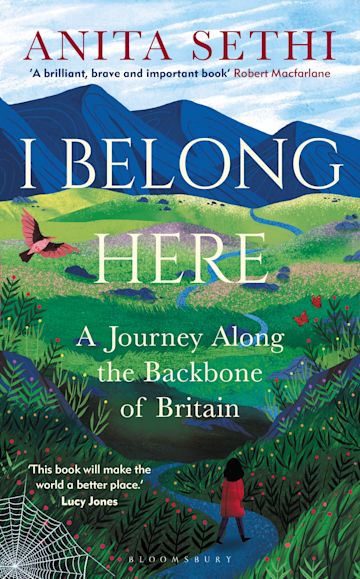
After a traumatic incident in which she was racially abused, Sethi sets out to walk one of England’s wildest, most remote trails: the Pennine Way. On this journey of reclamation, she reflects on issues of belonging and identity, eloquently linking the outer landscape to her inner emotional topography. In the wilderness, she experiences the kindness of strangers, the space to wonder, and the therapeutic properties of untamed nature.
Doubling Back: Ten Paths Trodden in Memory by Linda Cracknell
Cracknell follows ten trails previously walked by others, in France, Norway, the Alps, Kenya, Spain, England, and Scotland. Each walk is a pilgrimage of sorts, throwing up lost memories and buried emotions. But the most moving and dramatic is Cracknell’s account of following the strenuous Alpine route, with its “labyrinth of fog and crevasse,” climbed by her barely known father, 50 years earlier.
The first nonfiction book to excavate lost women walker-writers of the past and return them to the literary stage. Andrews spent over a decade researching women from as far back as the 18th-century in a scholarly bid to prove that women have always hiked in wild landscapes. From Elizabeth Carter to Dorothy Wordsworth to Cheryl Strayed, Andrews argues for a re-evaluation of the genre now known as literature of the leg.
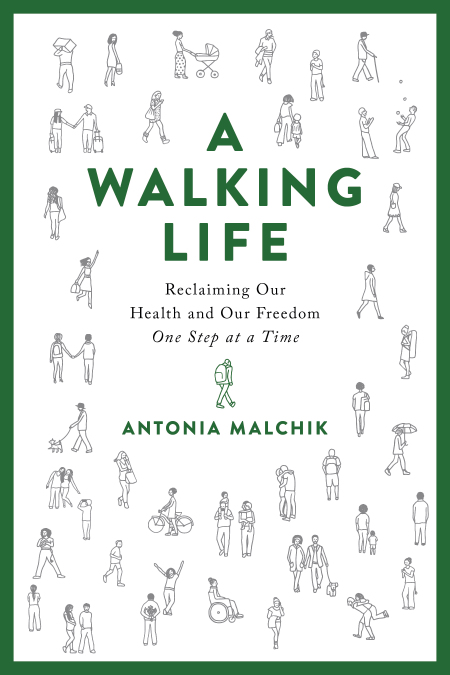
A Walking Life is a series of meanders through the many facets of walking. Malchik is one of the empathetic few to write about walking while attending to those who cannot walk. She makes a compelling case for better public transport, for greater access to wild landscapes, and for more power to the pedestrian, while lambasting the highways that have gobbled up vast tracts of American wilderness. For Malchik walking is a political act—and as someone who grew up car-less, I lapped up her impassioned prose.
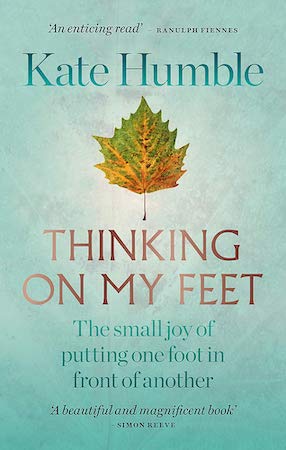
The TV presenter and writer, Kate Humble, embarks on a series of walks including an evocative night ramble in France and a solo backpacking week-long hike down the English River Wye with her dog. Humble walks both alone and with friends, often pondering the science of being in nature and noting its benefits on both herself and on others.
Part essay and part memoir, A Good Hike describes a remote walk in which the newly pregnant writer and professor Camille Dungy becomes injured and has to be carried home by her companions. Blending humor, pathos, and insight, Dungy worries about her weight and her sudden loss of control, while mulling her new vulnerability. As she slowly relinquishes all pretense of pride and independence, the walk becomes curiously affirmative.
The Living Mountain is quite possibly the most remarkable account of hill-walking ever written. The Scottish poet and novelist, Nan Shepherd, recounts a life spent walking in the Scottish highlands. Her prose is now considered some of the best “nature-writing” ever penned, as Shepherd shows us how to walk into the heart of a mountain using all of our senses. This slim volume was out of print for decades but is now lauded as a masterpiece.
Part travelogue and part memoir, Among Flowers recounts Kincaid’s three-week seed-collecting trek through the mountains of Nepal in the company of three botanists. I once spent twelve weeks walking through the Himalayas, and Kincaid’s vivid descriptions awakened long-buried memories of my own: the leeches, the pain, the fatigue, the spectacular panoramas, the yearning for home. Kincaid adds her remarkable knowledge of plants and gardening to create a walking memoir unlike any other.
“Whether you want to achieve your potential in a Fortune 500 company, found a small business, or break through the obstacles in an unsatisfying marriage, my guidelines for self-fulfillment can help you identify Signifiers of Flow.”
“The Apple Bush”, authored by a “healer, lifestyle expert, and spiritual counselor,” is the fictional new-age, wellness-adjacent guiding force in A Touch of Jen — Beth Morgan’s gripping debut about the interpretation of the world through an ever-evolving system of signs. Or, in less Saussurean terms, a novel about how Instagram leaks into our lives, changing and shaping how we inhabit our selves.
Following the story of Alicia and Remy—a couple obsessed with the online persona of Remy’s former co-worker—A Touch of Jen invites readers into a world of extreme self-consciousness and class envy, where the “sensation of being on display” is both coveted and dreaded. As the protagonists unexpectedly find themselves invited to a surfing trip in the Hamptons with Jen’s inner circle, they try hard to fit into a group of wealthy, beautiful people.
From here on out, Morgan’s narrative develops a darkly spiraling pace, simultaneously exposing and blurring the distinction between fantasy and reality. All the while, “The Apple Bush” guides the characters’ journeys through its seductively vague platitudes; for example: “details that might seem like trivial parts of your ordinary life are actually signs—Signifiers of Flow helping you to achieve that Consummate Result.”
But the result, or desire, is growing increasingly unclear. As Remy wonders: “What happens next? Do they just keep on talking about Jen forever, until she gets old? Then what?”
Then what, indeed. Morgan’s debut book is, in many ways, the grimmest possible answer to that question—an exploration of how contemporary culture has made self-actualizing structuralists of us all.
Richa Kaul Padte:There’s this constant tension in A Touch of Jen between “authenticity” and “fakeness”, where inhabiting the former and exposing the latter feels like a kind of ethical imperative. Except the more we live by these arbitrary categories, the less sure of ourselves we grow. For example: “[Remy] is so overwhelmed by the sensation of disclosing something true that he forgets what he is saying is a distortion of the truth.” This sentence itself feels like a painful truth that haunts every “vulnerable” Instagram post I’ve ever made. What’s up with that?
Beth Morgan: I think that in trying to communicate any kind of personal truth, it’s inevitable that we unconsciously create narrative. Narrative is something we often view as an inherent good—storytelling helps us live and all that—but there can be something distorting about how narrative allows and even encourages us to prioritize certain facts over others. Whenever we try to write something “true”—and I think this applies to the “vulnerable” Instagram post—we can’t help organizing, smoothing, and simplifying reality.
Whenever we try to write something ‘true’—and this applies to the ‘vulnerable’ Instagram post—we can’t help organizing, smoothing, and simplifying reality.
Personally, I’m someone who doesn’t perform vulnerability on social media—I’m both suspicious of and intimidated by the project of constructing a public persona that is somehow also authentic. (Instagram is more comfortable for me than Twitter because it involves less writing, though of course, it’s not narrative-free.)
As soon as I start trying to express myself as myself, it often feels fraudulent because I can feel myself creating narrative. That’s why fiction is so liberating—I don’t have to worry about expressing a personal truth that may or may not truly exist. If there’s anything that could be called personal truth in fiction, it might have something to do with the specific ways that people’s narratives about themselves break down.
RKP: So much of your book has to do with how the internet and social media teaches us to see. Remy says: “Maybe this will sound crazy. But I have this picture in my head. I think maybe, if I could make the picture real, or real enough, I’ll feel better.” This is Remy’s pursuit through the text, but even when he does arrive at “the picture,” he can’t get “inside it”.
The commonly held idea that we “live on the internet” makes sense—right up until the moment we realize that we actually…don’t. How can we learn to see ourselves outside the logic and grid of commercial social media? (Asking for a friend.)
BM: Social media—especially Instagram—definitely does allow us to place ourselves literally inside a picture. And I think the impulse to imagine ourselves in a picture has something in common with the impulse to place ourselves inside a narrative.
What feeds this impulse is not necessarily just social media. One of the main influences on A Touch of Jen was Tom McCarthy’s Remainder, in which the main character creates these elaborate reenactments that he places himself inside in order to feel like that he’s actually living life—that he’s inside the picture. Early on in the book the character watches Mean Streets and is struck by the way that Robert De Niro—even though he’s acting—seems much more authentic in his movements—less like he’s performing—than people do in “real life.”
There is something that feels much more consummated about actions as they occur in movies, which is why I came up with the phrase “consummate result” for the way the book’s fictional self-help text “The Apple Bush” talks about self-actualization. In a movie, everybody moves gracefully or fluidly, without self-consciousness. And if we’re doing things fluidly in real life we feel as if we’re in a movie. In an early scene when Remy is in the restaurant, he’s briefly conscious of how good he is at his job—how when he gets in the zone, there’s something balletic about the way he moves through space. This contrasts with how socially awkward he and Alicia are—especially around these people who are richer than they are and whose social codes and cultural referents they’re struggling to pick up on.
So I think aspiring to be “inside in the picture” is partly about fitting in or finding a place in the world that makes us feel actualized. Instagram interacts with that desire in a very intense way though I think the fraught nature of this desire is more a problem of competitive individualism and our current economic system than it is of commercial social media specifically, since being “inside the picture” most often means being the protagonist of our own individualistic narrative.
Remy does feel like he’s “in the picture” to some extent when he’s at work—he’s good enough at his job that he’s able to take some amount of pleasure in it. But his job is also low status and low paying. There’s this idea that someone of his background is a failure if he’s working in service. There’s this imperative to stand out and get ahead, not just for the sake of achieving status and respect, but also in order to attain a basic level of economic security. I don’t think that for Remy the problem is his inability to think outside the grid of social media, but the precarity, alienation, and pressure to get ahead that so many people feel today.
RKP: All the platitudes that run through your book—“Flow”, wellness, self-improvement—are annoyingly very compelling. I hate that stuff, but at the same time, when I read a sentence like “the power of something as simple as a positive mindset and openness to the world,” I feel myself getting sucked in. At one point, Alicia speculates whether Jen and her friend Carla “actually practice the self-improvement techniques, or if their interest is purely aesthetic. “ Is that where the power of internet “wellness” lies—an aesthetic appeal?
BM: I find those things compelling too! And despite the distinction Alicia is making, I don’t think that aesthetic appeal is necessarily a damning quality. I think aesthetics are always a component of belief systems. The Catholic Church wouldn’t exist without aesthetics! When I was a little kid at a Presbyterian church camp, I loved my youth retreat t-shirts that said “Fruit of the Spirit” in what seemed like “cool” lettering.
Someone who feels secure doesn’t need to base their sense of self-worth on their internet presentation because they’re getting it from other places.
We’re attracted to aesthetics because we think that they communicate some inherently valuable quality. As for Jen and Carla, I think they enjoy the aesthetics of “The Apple Bush” (the fictional cosmology I introduce in my book) but they also genuinely long for what it promises. If there’s anything I would criticize about “The Apple Bush,” it’s the highly individualistic philosophy—the fact that like most self-help books, it’s focused solely on personal happiness rather than on ethics or collective happiness.
And the way that I envisioned it, there’s actually some irony in Jen and Carla’s approach to the aesthetics of “The Apple Bush.” It’s not supposed to be a self-consciously cool book, but its uncoolness is part of its cachet. Probably what attracts Jen and Carla to a book like this is that it feels authentic and earnest rather than having aesthetics calibrated to reeling them specifically in.
RKP: Right on page 1, we’re introduced to a role-playing scenario that Alicia and Remy often enact, where “Alicia imagines herself morphing into Jen”—and from then on (and sometimes unpredictably), it’s Alicia-as-Jen that Remy interacts with. This seemed fairly absurd and amusing to me until later in the book when Remy observes Alicia “putting on the expression she wears around other women.” This immediately made me wonder what sort of expressions I put on around X or Y people (as T.S. Eliot writes, “prepare a face to meet the faces that you meet”), and whether role-playing is in fact integral to the way we inhabit identity. Is it?
BM: I would agree with that 100%. We’re only able to communicate with other people through exterior signs. There’s no way to convey the kernel of self in the real world because it gets strained through the cheesecloth of language and manner and all of that. And of course, the translating of the self into language or presentation is a creative act.
Maybe it’s even misleading to talk about a kernel of self because the self does change day-to-day. Obviously, there are different ways of translating your experiences and feelings into a public identity and we can be more or less fraudulent in that translation. But like any translation, it’s always going to be imperfect. There are always things that can’t be translated and things that can’t be understood about the self. But if performance in the world is a creative process, there’s something exciting and fun about that. I don’t think there’s anything wrong with performance per se.
RKP:I felt as though a lot of your novel was dragging me, personally, but also my (our?) generation in general. For example: “Cassie isn’t pretty, but aspires to perfect skin as if it’s the same thing.” And later, in a skincare shop: “The customers want to understand how they look to her. They apologize for their oiliness or redness and wait.”
Did you see yourself as an observer and researcher while working on the book, or was it like you were sort of trolling yourself too? (I assumed the latter until I saw Metafilter listed in your acknowledgments as a resource for “anyone who wishes to write what they don’t know.”)
BM: A lot of the lines that read as satirical were just meant to be straight representations of things that felt real to me. While I recognize these moments as funny, I tried not to write them in a spirit of contempt. Which is not to say that I haven’t snuck a few jabs in here and there! But in general, what interests me most about my characters is weakness or vulnerability. It can read as a drag, but I also think that another response available is compassion, or at least curiosity. That image that you cited for example, about the women offering their faces up for examination, I find pretty moving.
RKP:I want to ask you about texting, which is a key landscape in A Touch of Jen, but I also don’t want to give too much away. Suffice it to say that you really give us a sense of its nuances—how it is a language and logic unto itself, but also a shared world built over time between two people.
In her book Because Internet, linguist Gretchen McCulloch writes: “the shape of our language is influenced by the internet as a cultural context.” As more bits of this language—exclamation marks!!!, “lol”s, ellipses—give us what Remy terms “plausible deniability,” does this sea of irony make it harder to discern any form of truth?
BM: I tend to think that language was nuanced and coded in many of these ways even before the internet, though of course, the internet has produced new types of nuance and new contexts and referents.
Is there that much of a distinction between the shared world that people build together over text messages and the shared world that they build together through spoken language? Remy and Alicia’s texting relationship, which becomes important towards the end of the book and which is shaped by their shared experiences, isn’t particularly ironic or coded in a way that seems dishonest. It’s just very intimate in the way that the private language of any couple is intimate. Later in the book, I take advantage of the inherent ambiguity of written language in contrast to spoken language, but I’m not sure this says anything specific about text messages as opposed to emails or handwritten letters.
Remy’s texts with Jen do contain a lot of ambiguous subtext, but it’s an ambiguous relationship to begin with. There’s a level of coding and irony even when they’re interacting in person. Ultimately, I don’t think we’re at the point where all meaning has been drained from reality by the internet. I also don’t know how helpful the framework of irony is for understanding Internet speech because so much of it isn’t ironic. The Internet as a cultural context adds meaning to our language in ways that are as diverse as the impact of cultural context on any language system.
RKP: Remy describes Jen’s picture as “a clear example of a decoy post [: made] at midnight…to act like she doesn’t care about peak engagement times, but she knows that a picture with several tagged people will do well regardless. It’s an illusion of indifference.” Earlier in the book, “Remy tries to convince Alicia and himself that by not posting about their lives, they’re actually superior. ‘It shows we’re not self-absorbed.’”
Is that what we all want our carefully selected pictures to ultimately signify—that we don’t care about their value and performance as content? And that, by extension, other people care more than us?
BM: I think it goes back to effortlessness. Effortlessness means that we’ve made it, that we don’t have to struggle to be happy. So for example, someone with a ton of followers doesn’t need to worry about peak engagement times. Or someone who feels pretty secure in their life doesn’t feel the need to base their sense of self-worth on their internet presentation because they’re getting it from other places.
I think Remy’s snobbishness here is aspirational. And he’s trying to undermine Jen by implying that her performance of effortlessness is fake—though it’s the feeling that she really does do things effortlessly that makes Remy and Alicia so fascinated with her in the first place. There’s this constant question in the book of whether Jen is fake or not. That’s something that I very much leave as an open question for the reader—what’s important to me is less whether Jen herself is real or fake than what this question says about Remy and Alicia, and maybe the reader as well.
I think often, since I started working here, about the appetite for life. For three years I’ve been coming to play in the unit two or three days a month. Each time with someone different. Sometimes a member of the city’s symphony orchestra, in which I’m the first-chair violinist; sometimes a jazz musician, since I’m also involved in that scene. First we play in the family room for the patients who want to hear us, with or without their friends or families. Then we go play in the rooms, only if our presence is requested.
Nine or ten months ago I met a patient, Madame Signy, who I wanted to talk to you about. In her youth, she was a pianist and a music teacher. She never stopped practicing her instrument, and she was a music lover of admirable cultivation and retention. The first time I played for her, she recognized all the classical pieces. “Bach, sonata no. 1, second movement,” or “Tchaikovsky, concerto for violin in D major,” she would say as she hummed along with long passages.
I had a hard time admitting that Madame Signy was seriously ill. She was thin and frail, no question. But there was a striking joie de vivre in her eyes.
After the first time we met, Madame Signy’s husband told me privately that she waited eagerly for each one of our visits, and that she had expressed a desire to him: she wanted us to come play until the last moments of her life. She was imagining her death in the unit. She saw herself in her final agonies with us at her side, playing works by Schubert and Haydn.
This was the first time anyone had asked me such a thing. I didn’t know how to respond. I couldn’t accept on behalf of my companions. I could only accept personally. But accepting meant being called for an emergency, at any hour of any day, to come with violin in hand to the bedside of a dying woman.
To get off the hook, I told Monsieur Signy that I didn’t know whether the service would allow such a thing…Knowing Madame Gosselin as I knew her, I assumed the unit would agree to the request. But I bought myself some time.
Before giving my answer, I talked to Madame Gosselin, who gave her approval. Monsieur Signy continued to await each of my visits anxiously. But the illness was devouring his wife. At first, she talked to me passionately about her favorite quartets: Beethoven’s last ones (especially the thirteenth and fourteenth), Alban Berg’s opus 3, all of Darius Milhaud’s quartets, the very first by Samuel Barber (which is where his famous Adagio comes from) and Leoš Janáček’s Kreutzer Sonata, for instance. It was wonderful to talk about these pieces with her. However, bit by bit, her fervor seemed to dull.
Monsieur Signy made a superhuman effort to bring his wife a bit of lightness. And I, too, played with a bit more ardor than usual.
I nearly even overplayed, which had the unfortunate consequence of creating the opposite reaction in such a sensitive music lover.
I’ll never forget the case of Madame Signy. In the four weeks leading up to her death, she didn’t want to hear anything about me, or my violin, or music in general. She had lost all appetite for the greatest passion of her life. At first, Monsieur Signy and I thought she was feeling rage or disgust, that it was a feeling that would pass. But the most shocking thing was to see her go from that first reaction to complete indifference. One month earlier, she and her husband had made a list of the pieces I would play during her last moments. It didn’t include anything mournful. No requiems, quite the opposite: excerpts from Schubert’s trio no. 2 and Haydn’s last violin concerto.
During the four weeks that followed, I thought a lot about the pieces they had chosen, which I had to adapt to play as solos. I wanted to play flawlessly for her. But above all I wondered about the hidden meanings in her choices. Why, out of all the music in the world, had she opted for those two pieces?
Madame Signy died on a Sunday morning and nobody called me to play during her final throes. She had told her husband that, upon reflection, she wanted only silence at the moment of her passing. Silence and his presence, also silent if possible. When I learned this, I was hurt. I told myself that Monsieur Signy could have at least called me to play the agreed-upon program at his wife’s grave. But that was idiotic and petty. In the midst of his pain, Monsieur Signy hadn’t had time to think of me.
It’s funny, but last week I got an offer to play Schubert’s trio no. 2 in public. I accepted without hesitation. And I thought, naturally, about Madame Signy. If you want to come hear me, I’d be truly delighted. It’ll be in September, at the Rouen Opera. I’ll be playing in homage to Madame Signy. And you can come listen to the music in her honor.
About the Translator
Daniel Levin Becker, born in Chicago in 1984, is the author of Many Subtle Channels: In Praise of Potential Literatureand What’s Good: Notes on Rap and Language, and the translator of, among others, Georges Perec’s La Boutique Obscure. He has been a member of the OuLiPo since 2009.
Newspapers make excellent settings for novels, as I learned while writing my novel, Her Turn. In a milieu where everyone—even the birding columnist—thinks of himself/herself as an investigative reporter, the default mode is cynicism and rugged individualism. It follows that newsrooms are full of speedy, hyper-ambitious characters, but they are also home to milder characters, such as Liz, the heroine of Her Turn.
Liz edits a column of personal essays sent in by readers, which puts her far down in the newspaper’s pecking order. But when the woman who married Liz’s ex-husband submits an essay, it gives her a ringside seat to observe and even interfere with that marriage. Often in newspaper novels, it’s the person with a peripheral job or stuck in a journalistic backwater or hopelessly inept who becomes the center of the novel and the source of its comedy. That’s another thing about newspaper novels: they’re frequently very funny.
Branching out from Fleet Street—the legendary home of London’s newspapers—to provincial England, Trinidad, small-town Ontario, and Rome, here are novels set in newsrooms:
William Boot, the unworldly, untraveled writer of The Daily Beast’s nature column, gets plucked out of obscurity in a case of mistaken identity to cover a war in the fictional African Republic of Ishmaelia.Waugh’s merciless satire of Fleet Street and the skulduggery of its foreign correspondents has never been bettered.
My Turn to Make the Tea by Monica Dickens
Poppy’s job as a junior reporter on a provincial English weekly is not limited to covering church bazaars, weddings, and traffic accidents. She also fills the inkwells, fetches copy paper, and heeds the editor-in-chief when he says, “Bring us a mug, there’s a love.” But Dickens’ autobiographical novel is more than a genial period piece: she has inherited her great-grandfather Charles’s talent at creating characters around a recurring tic, and she peoples the newspaper and Poppy’s boarding house with memorable eccentrics.
Gloster Ridley has all the usual problems of the editor of a newspaper in a small Ontario city, including clinging freelancers who refuse to retire, powerful locals who expect special treatment, and reporters who think they are novelists. Then one day someone inserts a hoax into the paper—an announcement of an engagement between two people who barely know each other, with a history of enmity between their families. The mystery’s legal complications are dismaying, not to mention the romantic ones, and Davies deftly steers his small-town tempest to an ideal finale.
Mohun Biswas works for the Trinidad Sentinel for a third of his life, evolving as a journalist in tandem with the paper’s transformations. At first, Biswas fits in easily at an unambitious paper that aims to shock and frighten, writing stories about dead babies in brown paper packages and a series about the tallest, shortest, fattest, thinnest, and wickedest Trinidadians. When the Sentinel pivots to greater seriousness (their new motto: “Don’t be bright, just get it right”), so does Mr. Biswas. His vocabulary and the length of his sentences grow, and he becomes a feature writer and later, as the Sentinel’s colonial optimism wanes, the paper’s expert on social welfare. When he dies, he hopes the headline will be “Roving Reporter Passes On.” But fittingly, the Sentinel writes finis to a life of many disappointments and some joys with the bald “Journalist Dies Suddenly.”
Bob Bell and John Dyson could charitably be described as peripheral to their paper’s investigative heart: they edit the daily nature diary, spiritual meditation, and crossword puzzle. But like their more prestigious colleagues, they arrive late in the morning, phone their friends, fill out their frequently mendacious expense claims and then break for lunch at the nearby pub. Their consummate laziness, complaints of overwork, and resolutions to stop drinking at lunch are running jokes in this laugh-out-loud look at the waning days of Fleet Street and the rise of television.
It’s 1997 and newspapers are beginning to fight for their survival. The novel centers on two women at different ends of the journalistic food chain—Honor, an older, admired war correspondent, and Tamara, a young writer of fluff for an entertainment supplement called Psst. Tamara, who specializes in listicles (“The Best Soap Opera Shags”), has never heard of Franco, thinks zeitgeist is a German magazine and assumes Levi-Strauss is a new kind of jeans. Ambitious to climb an increasingly shaky ladder, she tries to write a feature about the flinty and contemptuous Honor. The gap between two generations and two attitudes to journalism could not be starker, or more darkly amusing.
Rachman’s brilliantly original portrait of an English-language newspaper in Rome (based on the International Herald Tribune) proceeds from its founding to its demise in a series of interlinked short stories. Each one centers on a different character, from the obituary writer to the publisher, and the resulting biography of a paper and its staff is funny, poignant, and thought-provoking.
Leave signs of struggle. Leave signs of triumph. And leave signs.
-Cheryl Clarke
I seek out gay bars in every city I visit. In Denver I find myself lighting one cigarette after another at a bright lounge with the writers Vi Khi Nao and Steven Dunn. Vi and I are in town for a reading, the last stop on my book tour. After the event, we pile into Steven’s car and drive towards the highway. The bar’s parking lot is flooded with muddy yellow light. The tarmac empty save a few SUVs with stickers that say “I’d rather be Climbing” and “Who Rescued Who?”
Inside we stand in line at a wide wooden bar flanking a deserted dance floor. Clots of men in khakis and fleece vests lean against mirrored walls and abandoned Plexiglas cages where dancers once writhed under the blue and white lights. I stare up at the motionless disco ball and try to picture the bar as it might’ve looked during its heyday: a fog machine pumping white clouds obscuring a smorgasbord of bodies, bottles, powders sniffed and swallowed on the floor. In this scene, I root through the night with my mouth, awash in blue lights. Every pore an orifice.
I don’t tell her that I’ve always wanted to live in a different world.
When the bartender hands me my gin, I snap out of my daydream. I remember I’m not at that bar tonight. I’m in this one, and there are cornhole boards in the corner. Flat screen TVs blast reruns. Outside by the picnic tables, an oiled tequila ambassador is handing out free shots. I down one as Vi tells me about her many nights at lesbian bars in Vegas in the mid-2000s. “Another time, another world,” she says. I don’t tell her that I’ve always wanted to live in a different world. “Escape,” she says. “The tourism industry in Vegas meant you never saw the same woman at the same bar twice.” A dyke scene without cliques!I lean in. Vi mouths the words, “cowboy boots,” “acrobat,” and “ropes.” I listen until the lights click on. Perhaps I’ve always preferred the story about The Bar to the thing itself.
Like many queer women in my generation, I encountered the lesbian bar first through books. I swallowed whole the boozy opening pages of Michelle Tea’s Valencia, set in the Lexington Club, the last remaining lesbian bar in San Francisco when it closed in 2015. I watched documentaries like Last Call at Maud’s with a distinct sense of saudade. The oral histories I devoured centered the pre-Stonewall era when bars were key gathering places for lesbians in an otherwise hostile society. For many lesbians, the emergence of bar culture in the 1920s and 30s marked a shift from domestic isolation to public social life. The bar’s primacy waned only in the 70s when new avenues for queer socialization opened up thanks to the successes of gay liberation and feminist movements. At this time, many women also established feminist publishing collectives, small presses, bookstores, and newsletters. These materials were often distributed directly through lesbian bars and increasingly offered an alternative to bars as the primary source of information about lesbian culture. By the late 1980s, the lesbian bar was a declining institution. I still mourn this loss.
Most of the bars I visit no longer exist. There are in fact no lesbian bars left in Los Angeles, a common phenomenon in U.S. cities. I tour abandoned parking lots, take pictures of locked doors. In Laguna Beach I eat tacos at Avila’s El Ranchito, the chain restaurant that occupies the building that formerly housed two different gay bars. As I tour these spaces, I begin to wonder why exactly I mourn their loss when I have no personal connection to them. More important, why do I struggle to imagine an authentic lesbian culture outside the bar? To find out, I sleuth the only way I know how: I open one book then another.
For weeks I hole up in bed and read pulp paperbacks from the 1950s. The pages yellow with age. They come unglued as I read. The books, like the stories themselves, were disposable by design. Their ephemerality encouraged experimentation. Enter the lesbian pulp novel.
While most lesbian pulps were initially marketed to a straight, male audience, their authors and readership were increasingly gay and women-identified. As sales increased through the 50s, a subgenre of pro-lesbian pulps emerged. In 1957 Ann Bannon’s Odd Girl Out was a best-seller, and it concerned two sorority sisters, Laura and Beth, who fall in love. Despite Laura’s desire for Beth, Laura doesn’t fully realize, or admit, she’s a lesbian until she walks into her first lesbian bar in the next serial I Am A Woman. In the pulp universe, the bar represents a threshold: Laura’s evolution into a barfly marks her transition from confused sorority girl to certified dyke.
The Bar in lesbian pulps is synonymous with transgression and risk. A place where police raids, voyeurism from heterosexual tourists, and drunken rows between lovers are all pressing threats. A place where desire itself is often experienced as both liberation and violation. Under the red lights, our heroine might discover any number of uncomfortable facts about herself, such as whether she desires women, another gin, or to go home alone after all. Any of these realizations can be unwelcome, disorienting, or freeing. One synonym of risk is possibility.
The pulp novel’s framing of lesbian dives as clandestine sites of risk contrasts sharply with modern depictions of the bar as a safe space. In nostalgia-tinged documentaries like Last Call at Maud’s and The Boy Mechanic, the lesbian bar of the 60s and 70s is a place set apart from homophobic society, free from judgement, abuse, and the lecherous gaze of men. “I felt the bar was the most open, honest, free place a woman could be,” Rikki Streicher, Maud’s owner, told filmmakers in 1989. Patrons likewise call the bar “a kind of home,” “support system,” and “a place to be together.” An emphasis on community also pervades more recent bar tributes. In a 2015 essay Lauren Morrell Tabak describes The Lexington as a “beacon of hope…THAT MYTHICAL PLACE of openness and acceptance, where you could find friends, lovers, community.”
I spend years trying to find these bars. I give up the search when I find a copy of Jane DeLynn’s Don Juan in the Village at a swap meet. As I wait in line to pay, I read the opening page: “I could never quite decide whether going to The Bar made me feel better or worse, and until I had made this decision there was no reason not to go.” I read on. Through fourteen interlocking tales of sexual conquests and failures, the unnamed narrator recounts the many nights she’s spent in lesbian bars over three decades. In Don Juan, the narrator’s love of The Bar is metaphysical. What matters is not what happens in The Bar, or who she meets there, but the stories she tells herself about her nights out.
We need places where we are not only welcomed but desired.
“Disillusionment had already begun to set in,” says the narrator as she approaches yet another gay disco on vacation. She finds the club through a guidebook. Guidebooks were then one of the only resources for the uninitiated to find lesbian-friendly spaces. Inside The Bar she is met with disinterested looks. When she asks a woman to dance, the woman laughs at her and her gold pants. Nonetheless, she persists. “I was dying to leave,” she says, “but I forced myself to go back to the bar and order a drink.”
For Don Juan’s narrator, The Bar is not a site of automatic community but deep ambivalence. Like the other barflies, the narrator assesses the women she meets based on their wit, physical fitness, class position, drug preferences, and other petty things. This impulse disgusts her. Her disgust alone does not stop her. DeLynn shows how toxic social hierarchies, rooted in racism, classism, ageism, and ableism, do not disappear in the lesbian bar of the 70s, 80s, or 90s. As Audre Lorde has pointed out – the society within The Bar “reflected the ripples and eddies of the larger society that spawned it.” In Zami Lorde complicates easy narratives of unity and exclusion within the lesbian bars of New York in the 1950s. While Village bars were the only places where Lorde saw black and white women making “any real attempt to communicate with each other,” those spaces were “only slightly less hostile than the outer world.” Lorde describes discriminatory door policies and her invisibility as a black woman in largely white barrooms, highlighting how places shape not only who and how we desire but also our conception of our own desirability. As Lord and DeLynn remind, we need places where we are not only welcomed but desired.
Desire is why we walk inside. Desire to be seen. Desire to lose ourselves in a drink, dark room, crush of bodies. Perhaps this is why the most thrilling part of The Bar is often the drive over. When the air is thick with possibility. I admit: many gay bars are disappointing. Whether deserted outposts in edge cities or slick cocktail lounges bathed in lasers. I still go. Of going out, Jeremy Atherton Lin says, “It’s not about holding out for a good night, but rather, a letting go – accepting the gay bar’s unconvincing promise of escape.”
I didn’t go out to be myself so much as to discover who else I might want to be.
While some prefer a dive where everyone knows their name, I like spots where I can be anyone. I didn’t go out to be myself so much as to discover who else I might want to be. This was especially the case when I started cruising dating apps in my early thirties. I had recently ended a ten year relationship. None of the bars or coffeehouses where I met dates were designated queer spaces. The port town where I lived, once a popular cruising spot for sailors, was now home to a handful of shotgun dives with names like Rebels. I met my girlfriend at the latter. I took many dates to this bar. The woman bartender wore knuckle rings that spelled out B-I-T-C-H. She never acknowledged me when I sat down on the stool, even when I saw her five nights in a row.
Much has been written about the rise of apps and the decline of gay bar culture. For some critics, apps represent a hostile tech takeover of the most sacred of human experiences. I’m sympathetic to this line. Yet, as Michael Warner has noted, the institutions of culture-building in the gay and lesbian movement have always been market-mediated from bars and resorts to magazines and bookstores. It’s possible to have genuine, life-altering experiences in hermetic corporate spaces, apps or discos: that’s the power of human experience. The body roots out connection wherever it can.
My date spots were places I had visited countless times since moving to L.A. a decade ago. All were transformed when my date walked in the door. The cracked tile floor of the Cha-Cha’s bathroom was no longer the place where I puked while roofied, it’s where my date pulled my hair until I said uhhhnnn. The Santa Monica Beach and Pier was no longer a grid of luxury condos and restaurants but a deserted stretch of sand where I put my fist inside my girlfriend while the Ferris wheel spun red and blue in the distance. I wondered if I would one day write about this time in my life as a “peak.” Would I forget about the date who asked if I had considered eliminating dairy from my diet to cure my cystic acne? Or the brand consultant who spent the first thirty minutes of dinner trying to discern if I rode the bus for ethical reasons or because I couldn’t afford a car? I doubt I’d cut a word. Nostalgia helps me dream, but candid reports from the field help me survive. In the cracks of our disillusionment, we discover what else is possible.
Will these nights one day become the starstuff of our personal and collective queer archives? Our future dreams?
The enduring need for designated POC and working class lesbian bars likeRedz in L.A. betrays past and present fractures within lesbian bar culture along race and class lines. Despite the fraught legacy of The Bar, nostalgic takes often stress unity. While the interviewees in Last Call at Maud’s acknowledge the presence of prejudices within bars and the larger gay community, their criticisms spotlight gay men. “We were building a movement,” one bartender says. “They were having a big, white frat party.” In Don Juan, published around the same time as these documentaries, DeLynn turns the critical gaze back on herself: white, upwardly mobile, urban lesbians. In this sense, the novel can be read as both a sober homage to The Bar and a nod to the challenges of building communities based solely on identity.
Although the narrator’s nights at The Bar are often disappointing, her dissatisfaction does not stop her from pursuing connection. “With the right attitude,” she says, “anybody could be perceived as the most desirable in the world.” Emphasis on attitude. After one tryst, she writes, “I had invented a story for myself about the awkwardness between her body and mine that I had used to convert this awkwardness into something exciting and powerful.” For the narrator, the most interesting part of a night out is the story she tells herself after the bar closes. Her stories not only rescript her experiences in real time, allowing her to feel desire in the face of persistent rejection, but also help her imagine what else she might want from The Bar and the women she meets inside.
Freed from the burden of preserving the legacy of a specific place or scene, literary accounts of The Bar like those in Don Juan and Zami offer unique anthropological portraits of dyke life. In the fictional dive, good times are shot through with bad ones, and we read on, not in search of another fun night, but to discover what might happen next.For me nostalgic portrayals of lesbian bars express not so much a longing for what’s been lost as a dissatisfaction with current offerings for public socialization. In the mythical safe spaces of the past, we find our contemporary desire for such spaces in the future. Yet, as our cities become increasingly unaffordable, and the gap between elites and non-elites widens, we’re left wondering how we’ll preserve space for the most vulnerable among us. “Identity is articulated through the places we occupy,” says Jeremy Atherton Lin. “Both are constantly changing.” Like lesbian identity itself, the meaning of The Bar is not fixed. If there is one constant, it might very well be The Bar’s psychic role as a site of possibility. “It felt like anything was possible in the bar,” says writer Kat Yoas of her five years bartending at the Lexington. In a recent Zoom chat, Yoas tells me she was offered the job after a performance with Sister Spit, the iconic feminist literary tour formed in 1994. Its current iteration is both a throwback to the transient pop-ups of the pre-Stonewall era and part of the ongoing trend towards queer performances and parties at otherwise non-queer spaces like Dynasty Handbag’s Weirdo Night. Will these nights one day become the starstuff of our personal and collective queer archives? Our future dreams? I hope so. I hope there’s also a surly raconteur on the edge of the crowd, their eyes open, drinking it all in.
Rémy Ngamije’s novel The Eternal Audience of One is a coming-of-age story about identity, family, race, and migration set mainly in post-apartheid Cape Town.
Séraphin Turihamwe doesn’t feel at home anywhere. His family fled the Rwandan genocide for Kenya, before settling down in Namibia. He’s hoping that his move to South Africa for university will let him find a new sense of self, and of course, lose his virginity.
Ngamije weaves Séraphin’s story with those of his classmates in Cape Town, his family in Windhoek, and his ever-changing array of love interests, creating a tapestry of voices who are all searching for a sense of belonging and meaning. Relying heavily on sarcasm and the emotionally cathartic experience of curating and sharing playlists, Séraphin tries and often fails to form connections—romantic or otherwise—in the places he lives, but is not sure he can call home. As Ngamije tells me about his characters, they might be more comfortable in the search for home than in any particular destination they find themselves in.
The Eternal Audience of Oneshares a patchwork of stories—ranging from Rwanda to Paris, from millennials to their parents—filling out the world of Séraphin, the nerdy, cool, playlist-making student in search of his place in society.
Frances Yackel: Can you tell me about the genesis of your book?
Rémy Ngamije: The start of the story—the hardest question first, huh? Fair enough.
It is hard to pick out one particular “Let there be light” moment. Rather, in my case, different but connected events helped to usher the narrative from dream to draft—so my genesis story is more like ambient lighting slowly growing brighter than an almighty thunderclap followed by, boom, creation.
I really wanted to write a story about immigrant life in Africa. Most of the books I read had African immigrants moving to the West.
When I was at university in Cape Town, I really wanted to write a story about immigrant life in Africa—specifically, Rwandans in diaspora. This was quite intimidating because most of the books I read had African immigrants moving to the West. Not being afforded that opportunity, I did not think my story was relevant. By 2009 the idea of Séraphin had come to me and taken root. I could hear his cocky voice and I understood his worldview. But that was all—a voice, no narrative.
Around 2011, I wanted to write a story about navigating the complex and confusing world that was student life in South Africa. It proved to be quite hard, though, to write about something I was personally living through; I did not have the necessary distance from the instances of life that were busy unfolding—it was all experience but no reflection.
Then, in 2013-ish, I really wanted to have a multilayered narrative about immigrant struggles, hustles, university life, love, and attraction—you know, all of these grand themes that look wonderful when you list or cite them. I did not have the skill to put them on paper so I just let them float around in my head, in my notes, journals, and voice notes.
Finally, in July 2016, I became frustrated enough with myself to write something. I collected all of my notes, my vague plots, and character sketches with the intention of choosing one to write about at length. Looking at everything, I realized all of them existed in the same universe—all I had to do was arrange the timeline. And that, really, is how it all came together.
But the source, that chaos before time, I really cannot remember the exact moment when I knew this was the story.
FY:As a Rwandan-born man, raised in Namibia, going to school in South Africa where he is frequently racially profiled, Séraphin left me deeply moved by his constant search for a sense of belonging and acceptance:
“Home, to him is a constant source of stress, a place of conformity, foreign family roots trying to burrow into arid Namibian soil which failed to nourish him.”
In fact, all the characters in the novel seem to be on the search for the same thing, as the novel takes us all around the world with auxiliary characters. Can you tell me more about this?
RN: Migration of any kind, really, is moving from one clearly defined source of home to search for another. That search, sometimes, becomes “a home” because everything else is never perfect, never enough to stop the search in the first place. There is this strange phenomenon when the search provides a sense of home because, at least, the search has a certain regularity and certainty attached to it (moving around, adjusting and acclimatizing, realizing that the current milieu is not enough, looking for better—it sound strange, but that search for better, for more is sometimes more constant than anything else) as long as the “new home” has not been found. Séraphin, I think, is the clearest example of the person “in search of”—but every other character is also trying to find their own places in the world, places in which they can be themselves, where they are permitted to live in the full dignity of their respective essences.
FY: What is the significance for you of writing a contemporary novel about young middle-class African millennials, trying to find themselves and their place in society?
RN: I think, as a storyteller, I needed a group of people who were not adequately explored in literature. I know, for example, that Western millennials are the focus of quite a few long-form essays and social commentary. They are, in accordance with the existing structures of representation and recognition, afforded generous spaces in art and literature.
I found African millennials to be a rich source of storytelling. They also allowed a freedom of exploration because they are not regular literary occurrences.
For me, as characters in a story, I found African millennials to be a rich source of storytelling because I could understand their motivations, aspirations, and frustrations—they provided me with some sense of certainty in that regard. But they also allowed me a freedom of exploration because they are not regular literary occurrences. As a strange alloy of old world and new school—with not enough of either characteristic to claim an authoritative place in their respective worlds—they were interesting people to write about. As a work of African literature, I am excited to have The Eternal Audience of One adding to the understanding of the breadth and depth of continental writing and, hopefully, being a compass guide for other contemporary works.
FY:I was fascinated by Séraphin’s interest in and talent for creating playlists. I love the way he sees them as a way of telling a story, or rather, of bringing the listener on a journey. Does music impact or influence the way you create stories?
RN: Songs have moments in them that I wish I could capture through writing—like the opening notes of Sadé’s “King of Sorrow” or the Buena Vista Social Club’s “Chan Chan”. The feeling of those sounds, the emotions they stir immediately upon hearing them, I really wish I could put that into words. I fail, but I try. When I write—even something as seemingly simple as an email—I do not listen to music because it is quite distracting. I need to focus on the work and words in front of me. But before writing something like a short story or a chapter, I spend quite a lot of time listening to music and trying to place myself in the right emotional state of mind to write the narrative I am working on. And once a piece of writing is done, I compile a playlist for it just to see if I captured the general mood of the work. If I can find a rudimentary soundtrack for a story, I am usually on to something.
FY:Do you make playlists yourself, and if so, does your philosophy on playlists mirror that of Séraphin’s?
RN: In many ways, yes. I make playlists for everything. Gym, cooking, cleaning and laundry days, braais (cookouts), games nights, pensive walks, sunny days when university nostalgia is high, cold days for dreaming—I have so many playlists.
Séraphin’s philosophy is that playlists must take you into a mood and take you out of it. I agree. He also believes that a playlist cannot just have “bangers” on it—those are facts, no cap. It is not curating, for example, if all one does is go for what is known or popular: there has to be a sense of exploration in a playlist and the chance for a listener to discover a new song, and there has to be nuance in it, in the sense that a playlist needs to be thought about. What is it trying to achieve? Who is it for? When is it for? That kind of thing. I used to have a rule that any one song could not appear on more than three playlists—just so that I could curate as many songs as possible—but I have bent that rule on occasion. Then, Séraphin also considers it a cardinal rule never to have more than two songs by the same artist on the same playlist. I respect that. Makes making a playlist more challenging. The only exception, really, is when compiling an entire playlist curating an artist’s work—the challenge lies in ordering the songs in an interesting listening order. Trust me on this: there is a way of arranging Britney Spears’ songs that will narrate the sad situation in which she finds herself with regard to her conservatorship, and there are so many ways of arranging Alanis Morissette’s catalogue to tell different stories. I consider playlist-making to be an artistic process. If you consider it as an act of curation, it really changes the way one thinks about music—and any art for that matter.
FY:How has your experience of moving to Namibia informed your career as a writer? Could you talk a little about founding Namibia’s first literary magazine Doek! Literary Magazine?
RN: If there is anything that living in Namibia has bequeathed me, it is a sense of humor. This country, sometimes, feels like a joke without a punchline. There are moments when I cannot help but break the fourth wall and look off to the side, at the camera, and Morse Code blink at the audience, “Save me.”
As a citizen, I hope for better; as a writer, I am thankful for the canvas.
For the longest time, being a writer in Namibia was quite discouraging, because writers from here never appeared in literary magazines or prize shortlists.
For the longest time, being a writer here was quite discouraging because writers from this part of the world never appeared in literary magazines, anthologies, or prize shortlists. Namibian writers, quite simply, do not share the same level of representation that Nigerians, South Africans, Zimbabweans, and Kenyans enjoy in the literary world. Doek! Literary Magazine was an answer to that problem: what and where are Namibian writers, poets, and visual artists, and how does one share their work with the world?
Since 2019 the magazine has been injecting local writing into the national and continental consciousness. It has been hard, exhausting, and rewarding work—now there is a national and international curiosity about the stories that come from this place, and the writers, poets, and visual artists who tell these stories.
FY:What is the literary scene in Namibia like? Has the literary scene in Namibia changed since you’ve moved there? Where do you see the future of the literary scene heading?
RN: The prevalent fact of artistic life in Namibia is that it is harsh, more so than in many other places because the arts—especially the literary arts—are not supported well enough for any one practitioner to make it their sole activity of enterprise. Of course, this is true anywhere—but in Namibia this fact is law.
But even for such a challenging and limited arts scene, very little stays still here. Deserts, for all of their stillness and bleakness, can be quite active sites of life. Thus, there are more participants in the literary scene now than there were when I was in high school, for example. The hard part lies in keeping various artistic circles stable and rewarding to the artists.
There are reasons for optimism, though. Doek, the arts organization that publishes Doek!, launched the Bank Windhoek Doek Literary Awards, the first such awards recognizing literary artists in Namibia. There are also creative writing workshops that seek to nurture promising Namibian writers and poets. In time, with more funding and institutional support, perhaps we can produce anthologies and host festivals. Perhaps these are dreams, but if The Eternal Audience of One can go from Windhoek to the world, then hope remains.
DON’T MISS OUT
Sign up for our newsletter to get submission announcements and stay on top of our best work.
YOUR INBOX IS LIT
Enjoy strange, diverting work from The Commuter on Mondays, absorbing fiction from Recommended Reading on Wednesdays, and a roundup of our best work of the week on Fridays. Personalize your subscription preferences here.