The 2020 Tokyo Games will be defined by many things—the anachronism of its title, the risk of superspreading, the welcome absence of Matt Lauer—but, hopefully, these Olympics will also be remembered for bringing mental health to the forefront of popular discourse.
Simone Biles’ “twisties.” Michael Phelps’ commercials for Talkspace. Noah Lyles’ transparency about antidepressants. All repeat the same refrain: Athletes—no matter how strong, fast, or high-flying—have feelings, too. But in their superhumanity, these competitors, pressured to perform for the entertainment of the masses, are relegated to an almost subhuman status.
Encompassing everything from the grueling quotidian to the triumphantly sublime, these seven short stories affirm athletes’ humanity, capturing them in all their flawed glory.
After a spine-fracturing fall during the 1980 Olympic Trials, Jesse Munns’ gymnastics career was over. But 15 years later, he’s coaching Angela Torres, a 16-year-old phenom with a legitimate chance to reach the heights he never did. Calvert’s characters vault—literally and literarily—off the page: Jesse and his fanatical love of the sport, Angela with her shrewd intellect and burgeoning outside interests. By contrasting their outlooks, Calvert illuminates the dangers of hanging one’s self-worth on athletic success.
This summer, Sunisa Lee not only made history as the first Asian woman to win the Olympic gymnastics all-around title, but she also helped lend visibility to her Hmong American community in Minnesota. In this flash fiction piece, the residents of a Native American reservation hope for a similar outcome: that their high school track star, Bobby Riley, can put them on the map. Unlike Lee’s American Dream success story, however, Bobby’s Olympic dreams are wrecked by racism and violence.
Welcome to the world of tennis’ minor leagues: no coaches, no big-name sponsors—just low-ranked players trudging from tournament to tournament, hoping to rack up enough ATP points to qualify for a Grand Slam.
Every year, for a mid-level tournament in La Jolla, California, a wealthy business tycoon hosts one of these aspiring pros, offering food and lodging in return for private lessons for his 18-year-old son, Toby. Acquainting himself with each athlete that circles through his home, Toby comes to understand the resilience required to last in the sport—and deems himself unready for the task.
Superking Son is “a regular Magic Johnson of badminton,” but lately, his attention has been elsewhere—removed from the court, where he’s supposed to be coaching the high school team, and funneled into keeping his Cambodian grocery store afloat. Enter new transfer student Justin: rich, Mustang-driving, and a bravura badminton player in his own right. Tension naturally arises, as members of the badminton team find their loyalties divided between Superking Son and Justin, culminating in a shuttlecock showdown between the two.
But So doesn’t give us an epic moment; instead, he foregrounds just how pitiful the scene is: a man-child trying to strong-arm a kid, seeking to recover his ego at all costs. Superking Son, previously buoyed by the apocryphal tales of his athletic prowess, has nothing left but the weight of trauma and adult responsibilities.
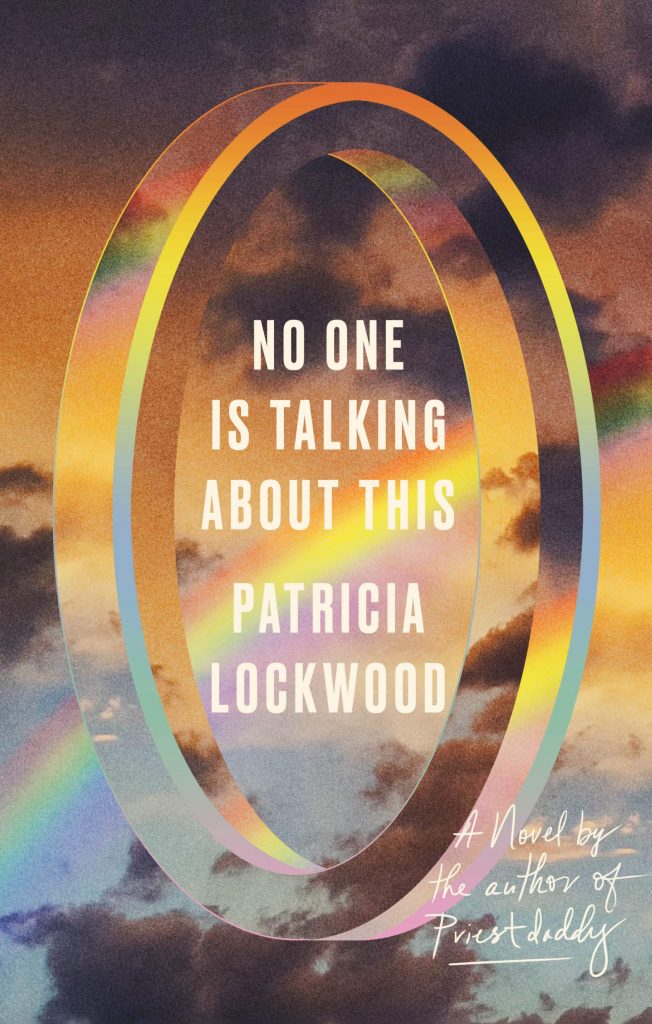
The narrator of “The Freak Winds Up Again” is not an athlete, but she’s a little bit obsessed with one: baseball pitcher Timmy Lincecum. Sitting at the bar of a Buffalo Wild Wings, she looks on in awe as Timmy throws a 148-pitch no-hitter; in pride as she points out that, as a fellow Filipino, he looks like he could be related to her. Later, she makes her boyfriend’s roommates watch the replay.
Grieving the loss of her brother to suicide, the narrator finds solace in Timmy’s accomplishments, as well as in Timmy’s baseball origin story—how he watched his older brother pitch in their backyard and wanted to be just like him. On and off the field, Timmy gives the narrator hope.
In the near future, most top athletes are “meshed”—fitted with neural implants that allow viewers to see what players see, to feel what players feel, to travel beyond the confines of mere vicarious experience. But when Oxford Diallo, a Senegalese basketball prodigy, refuses the mesh, the Nike agent assigned to recruit him resorts to dirty tactics. Through its speculative elements, Larson’s story dissects the boundaries of parasocial relationships, shining a light on our culture’s commodification of athletes’ bodies.
Olympic swimmers training during a pandemic… I know, I know, it’s difficult to see how this story is relevant to our current moment. In truth, though, “L. DeBard and Aliette” is far less concerned with the nitty-gritty of drills and races as it is with the intrigue of its title characters’ clandestine love affair. But while the swimming itself may take a backseat to personal dramas, Groff’s narrative offers another picture of elite athletes. Between the contests lost and medals won, athletes live and love and hurt like anyone else.
Electric Literature’s new editor-in-chief is Denne Michele Norris, who previously served as Fiction Editor at Apogee Journal and Senior Fiction Editor for The Rumpus. She co-hosts the popular podcast Food 4 Thot, which was recently named one of four “Dating Podcasts To Make You Feel Better About Your Life” by the New York Times. Norris is the first Black and openly transgender woman to serve as editor-in-chief of a major U.S. literary publication.
“It’s a dream come true to lead and represent a publication with such an impressive history,” said Norris. “Electric Lit has long been a platform for stories that are rarely told, and even more rarely amplified. I look forward to keeping Electric Lit at the forefront of the literary zeitgeist and publishing work of the highest caliber that critically and beautifully examines our ever-evolving cultural context.”
Norris is a proven champion of new and emerging voices. As Fiction Editor at Apogee Journal in 2017, Norris selected and edited “Eula,” the first published story in Deesha Philyaw’s acclaimed 2020 short story collection, The Secret Lives of Church Ladies. As Senior Fiction Editor at The Rumpus, multiple stories she edited were awarded the PEN Robert J. Dau Prize for Debut Short Stories. An accomplished writer, she has been awarded fellowships from MacDowell, VCCA, Tin House, and the Kimbilio Center for African American Fiction, and her own stories have appeared in McSweeney’s, and American Short Fiction.
“Denne is certain to electrify our mission to make literature exciting, relevant, and inclusive,” said executive director Halimah Marcus. “There are so many people already having important conversations outside the literary establishment—Electric Literature is a home for those people, and they will feel even more welcomed with Denne at the helm.”
“I’m thrilled to have Denne’s unique combination of editorial acumen and stylish wit as head of the Electric Lit team,” added board member Meredith Talusan. “That she also has intimate knowledge of many marginalized communities both within and outside literary circles makes her the perfect person to invigorate EL’s editorial priorities.”
Founded in 2009, Electric Lit is an independent publishing nonprofit with an annual readership of five million. Everything we publish is available for free online, including two weekly literary magazines and daily book coverage. Work published in Electric Lit has been recognized by Best American Short Stories, Essays, Poetry, and Comics, The Pushcart Prize, and the PEN/O’Henry Prize, among others. Authors published in Electric Lit range from the debut and emerging to the critically acclaimed, and EL has been an early champion of writers such as Marie Helene Bertino, Clare Sesnovitch, Kiik Araki-Kawaguchi, Helen Phillips, Riane Konc, Kawai Strong Washburn, and editor-at-large Brandon Taylor.
For much of my childhood, I had the same dream several times a week. It began with standing in front of a door in our dining room that in real life led outside but had long been painted shut. In the dream, though, it opened into a much grander house, a palace really, though also a maze, its rooms possessing no discernible order. It was long abandoned, everything dusted over from years of disuse, and though there were no people in the house, occasionally a kind of ghostly flicker, like a hologram, would stutter about for a few seconds in a way that was not so much frightening as uncanny.
The dream did not have much plot. Mostly I wandered, and though the layout varied night to night, the end point was always the same, a tall Vitruvian hall with a dais, on top of which was a wooden chair. Between me and the seat, however, were dozens of ghostly flickers and, unlike during the rest of the journey, here they clearly could see me—indeed, watched me intently. With trepidation, I would thread between them: it seemed a defining characteristic of the dream both that none ever moved toward me and that on any given night they were infinitely capable of doing so, with it being unclear what would happen if they did. Invariably, though, I would reach the other end of the room, mount the dais, and sit in the chair. Then I would wake up.
In some primitive way, the dream was preparing me for queerness—a life of navigating spaces that, while banal for most, are mazes for queer people, spaces where our desires are forever too grand and our fathers turn out, more often than not, to be minotaurs. But those dreams also instilled in me the quirk of feeling as though all stories of people lost in mazes are stories about me—and that, to some degree, the reverse is also true: that all people lost in labyrinths are queer.
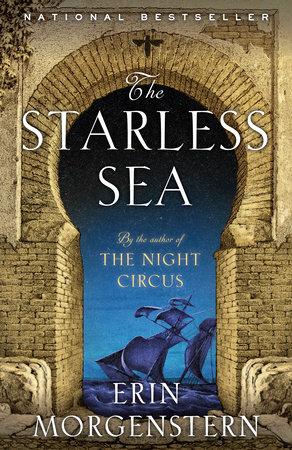
But then COVID happened, and the world felt like a literal labyrinth: we all went into our houses and could not find the doors out again. I found myself drawn with new obsessiveness to literary depictions of queer mazes, and in particular to three novels released during the pandemic that are each set in and around labyrinths. In Susanna Clarke’s Piranesi, a man lives in a maze of galleries filled floor to towering ceiling with allegorical statues and tries to satisfy the only other person in the universe. In Aaron A. Reed’s Subcutanean, two college friends become lost in their basement of ordinary but discomfitingly endless rooms. And in Erin Morgenstern’s The Starless Sea, the protagonist finds himself descending into an endless library, searching for his missing love.
With the exception of Reed’s novel, which was nominated for a 2021 Lambda Award in its strange-attractor genre category (science fiction, fantasy, and horror), none of these books has necessarily been talked about as a gay book. Morgenstern’s narrative is about two men Fate literally needs to fall in love with one another, but it was not marketed as a gay book and has not, so far as I can tell, been embraced as one either. And on its surface, Clarke’s novel is not gay at all. But when the three are read together, a new perspective snaps into place, in which each can be understood as a story in which a labyrinth serves as an extended metaphor for the perils of queer desire.
Queer is of course a messy, imperfect term, and I use it in both a capacious and a narrow sense: on the one hand, I am interested in how Clarke, Reed, and Morgenstern contest the tyranny of an erotics that is purely heterosexual and procreative. In their novels, the labyrinths generate erotic obsessions with objects, with architecture, with doppelgangers, with allegories and Platonic ideals—all of which is, broadly speaking, queer. In the more narrow sense of queer, these novels also all center the erotics of male homosexuality, in ways that speak—sometimes adoringly, sometimes skeptically—about the potential of love between men.
These stories are not conventionally queer, but then again, how else to talk about an erotics of desiring a book or a random point in space?
These novels are not without precedent. Indeed, there is a considerable shadow canon of queer-proximate literature about labyrinths, and all three novels owe rather obvious debt, in particular, to Jorge Luis Borges. And while Borges’s fiction is rarely read as queer, it should be. In Borges’s surreal landscapes, there is rarely more than a nascent sexuality, but the stories are full of what we might call desiring spaces. In “The Library of Babel” (of which Morgenstern’s novel could almost be called fanfic), people wander an infinite library in search of the book that will complete them. In “The Aleph,” one of the few Borges stories to even mention women, the true erotic fixation is a secret point in space. In the story, an acquaintance of the narrator finds, hidden in his otherwise unremarkable basement, a small mystical sphere of light through which it is possible to instantly view everything in the universe, jumbled up like “a splintered labyrinth.” These stories are not conventionally queer, but then again, how else to talk about an erotics of desiring a book or a random point in space?
Granted, I am also of a generation—the last, perhaps—in which gay literature was still spare enough that we were obliged to read queerness into whatever we could, the library its own maze of paths we would pursue as far as they would take us toward the center of our own experiences. In this essay, I continue to read in that defiantly queer way, jumbling literary criticism, memoir, and interior life—not only because I think we gain little by holding them apart, but also to advocate for the value of queer reading as a uniquely unruly, labyrinthine way of engaging with texts. If this way of reading now seems less like a necessary survival skill—we don’t have to imagine queer texts anymore because they’re relatively abundant—there’s still both value and pleasure to be derived from reading in a way that is freely associative, sly, and rangy. To understand queer labyrinths, I’m compelled to troll through my own maze of associations.
In Clarke’s Piranesi, the entirety of the universe, so far as the titular character knows, is an unmappably vast series of ornate rooms. This building (if we can call it that) is divided into three floors: a middle realm where Piranesi mainly lives, an upper realm swathed in clouds, and a lower level that is flooded. Other than these elemental differences, the levels are all the same, an endless grid of linked rooms, every room barnacled with niches in which statuary is tucked.
Piranesi’s name for the universe is “the House,” and he’s not being arch; austere and incommodious as it may appear, Piranesi thinks it is the best of all imaginable homes. This is partly because he believes the House provides for him (with an abundance of fish, sea vegetables, and eggs). But the House’s provision is also aesthetic and spiritual: Piranesi finds its endless, and endlessly varied, statues both beautiful and edifying, since he is convinced that each possesses a unique allegorical or didactic meaning onto which he maps his inner life.
Because so much of the novel is about Piranesi desiring the approval of the only other person who exists, Piranesi dramatizes one of the quintessential queer experiences.
Besides a score of human skeletons that Piranesi reverently cares for, the only other person in the universe is the Other, a vain, manipulative, obviously malevolent man whom Piranesi nonetheless adores. Though an avid diarist, Piranesi has significant memory problems, and so the precise nature and origin of his friendship with the Other are impossible for him to recall. Piranesi is aware, though, that the Other is both a scientist and impeded in that endeavor by his fear of becoming lost in the maze. To collect data about its reaches—including a distant room he believes is key to unlocking “a Great and Secret Knowledge”—he depends upon Piranesi. The Other has quite evident hatred for the House; he is interested in it only because of what he hopes he might gain from it.
Like Borges’s stories, Piranesi contains little we might easily call sexuality. But because so much of the novel is about Piranesi desiring the approval of the only other person who exists, Piranesi dramatizes one of the quintessential queer experiences. If, like me, you grew up queer in a small town and became convinced you were in love with the only other queer person you knew, then you have likely known what it feels like to be Piranesi: that is, lost in a labyrinth in which the only other inhabitant does not love you back, or is unworthy of your love, or, as turns out to be the case for Piranesi, only wishes to further ensnare you in the labyrinth. Equally quintessential is the experience of finding, as Piranesi does, that leaving the labyrinth is a life-or-death choice in which one’s preferences barely figure.
In addition to being a book that speaks to the experience of queer dissatisfaction, Piranesi is also a book about queer aesthetics, specifically those of the domestic realm. In his 2015 essay “What Was Gay?”, J. Bryan Lowder quotes Edmund White’s States of Desires: Travels in Gay America(1980) on the subject of gay domestic spaces: “The apartment treated as a stage set—dramatically lit, designed to be taken in all at once and from the entrance—remains a gay apartment, whether the décor is . . . cluttered comfort or austere emptiness.” Lowder continues by citing Neil Bartlett’s paean to Oscar Wilde,Who Was That Man?: “Our rooms are not decorated to announce our occupation or our family status; they are not really ‘domestic’ interiors. They need reflect nothing but the tastes of their owner, the pleasure he takes in his life, his ability to choose and arrange his possessions.”
Piranesi can be read as a moral allegory about queer experience, which is of our aesthetics only being valued when they can be put to some profit.
Putting White and Bartlett’s insights together, gay domestic spaces are those that have forgotten that they are meant to be houses, inverted in such a way that the aesthetic veneer meant to make a house pleasing instead becomes the house’s raison d’être, it’s functionality as a house rendered secondary (if that). One can live in a gay house, but only in the way that forest animals will eventually move into an abandoned building: by making the best of it, and always aware it wasn’t made for you.
It is in this way that we can call Piranesi’s House a gay House: that it only barely contains the necessity to sustain his life is both beside the point and the point. Piranesi’s is an aestheticized House, one he interacts with principally as a memory palace, perceiving its statues as an externalization of his thoughts, feelings, and desires. So far as Piranesi is concerned, the principal function and pleasure of the House is thus as a mirror of his taste. The Other does not share a love of Piranesi’s House, and has only instrumental interests in it, believing it may contain some great power he can exploit. The novel can therefore be read as a moral allegory about queer experience, which is of our aesthetics only being valued when they can be put to some profit.
Reed’s Subcutanean is a garden of forking paths, in addition to being about one. Reed trained as a digital game designer, and his novel was conceived for print on demand, with each copy slightly different based on parameters set by an algorithm, though he made a major concession to the exigencies of bookselling by producing a static version for stores (permutation 36619). That version even contains instructions for how the reader can download their own unique version. For my part, I read Subcutanean version 01893, which was serialized on the online comics platform tapas.io while Reed was fundraising to self-publish the finished text.
In the novel, best friends Orion and Niko are students at an unnamed liberal arts college somewhere in small town U.S.A. They are living together—just as friends!—in the sort of decrepit housing that inevitably springs up around such universities because college students (read: their parents) will pay top dollar for anything north of a hovel. Though perhaps originally Victorian, the house has now been swaddled in generic 1970s décor—deep-pile beige wall-to-wall carpeting, “wood” paneling, fake-bronze sconces escaped from a Dark Shadows set.
Gay Ryan is in love with straight Niko in the way you only can be when you are queer, twenty, living in a shitty college town, and your straight friend is the first person you’ve ever found hot who has also been nice to you. That is: utterly without hope, and so marrow-deep that you will spend the rest of your days trying to catch that high.
And then a dark miracle: the pair discovers a secret of such bizarre magnitude that sharing it fuses their lives. Beneath Ryan’s bed is a hidden staircase, and at the bottom of it is a labyrinth of bland, functionless, abandoned halls and rooms that would be boring were they not also impossible, a non-Euclidian maze of staggering magnitude. The pair dubs this labyrinth the Downstairs.
Many of the rooms in the Downstairs resemble bedrooms: a closet, sometimes a bedframe, a bare light hanging from the ceiling. In this, the Downstairs evokes the gay bathhouse, with its obscured corridors emptying into uncountable identical rooms, differentiated only by the fractal desires they transiently house. Decimated by the AIDS epidemic (though many continue to cling on, especially outside the U.S.), their function as places to cruise for gay sex has mostly been transferred to apps such as Grindr, another garden of forking paths in which every hall opens into a gesturally furnished bedroom, often of disquieting strangeness. This connection between the Downstairs and cruising haunts is driven home by the fact that the labyrinth is accessed via stairs under Ryan’s bed, where it is stashed like pornography. And it is certainly not accident that the boys’ name for it is also a suitably puerile euphemism for genitals—as in, “What’s he got downstairs?”—which synchs with their telluric, coltish sexualities. Like the Downstairs, whatever is there is still emerging, uncomfortably so.
Gay domestic spaces are those that have forgotten that they are meant to be houses.
At first, exploring the Downstairs seems like a lark. Sure, its spaces don’t really make sense, and there’s no way it could really all fit under the house—but it also seems harmless. And for Ryan, at least, it also possesses something like the appeal of a cheesy horror movie for a night out, as an excuse (metaphorically speaking) to bury your face in your date’s shoulder: if exploring the Downstairs is something Niko wants them to do together, Ryan is certainly not going to say no. Soon enough, though, the Downstairs takes on a sinister cast, when it becomes clear that there are other people down there and those people look, well, exactly like Ryan and Niko.
Though this unwelcome discovery makes the Downstairs much more threatening, it doesn’t make it any less interesting, and Ryan at least becomes obsessed with trying to understand its nature. From a local historian, he eventually learns that the house was built over a mystical spring, the capping of which somehow commenced the labyrinth’s branching realities. When, toward the novel’s climax, it turns out that the Ryan and Niko doppelgangers thrown up by the labyrinth number not in the single digits, as the boys’ have previously supposed/hoped, but in the millions, the labyrinth’s spring begins to resemble a perverse Fountain of Youth—not one that offers the ability to grow wise inside an ageless body, but rather one that continuously dispenses the same twenty-something naifs, a fathomless horde perpetually incapable of reciprocating love.
This seems to offer a critique of gay life as a kind of island of misfit toys—stunted boys who never achieve manhood—and recalls that another word for labyrinth is dungeon, a term Reed surely had in mind as a game designer: in video games, a dungeon (specifically a “roguelike” dungeon) is a special kind of randomly-generated level that doesn’t advance the plot but allows players to level up by fighting enemies, and which usually resets after each play. If the Downstairs is a dungeon in this sense—a kind of plotless diversion for trigger-happy boys—it is also a dungeon in the way that the word is used in gay and BDSM culture to denote a sexual playground, a place designed for the exploration of forbidden desires. For if Niko and Ryan’s Downstairs is another case of a gay house that has forgotten how to be a house—that has lost its mind—it is also a desiring catacomb.
Ryan is a hesitant would-be student of such desires, taking a clearly erotic—if inchoate—interest in the Downstairs’ doppelgangers (including those of himself). Most especially he hopes that the labyrinth will eventually disgorge a Niko who reciprocates his desires, and while he seems earnest about his love for hisparticular Niko, there’s reason to suspect he is capable of some surprising flexibility in this. That the first doppelganger Niko to articulate a sexual interest in Ryan is also a psychopath who confesses the intent to murder him while they fuck encapsulates the novel’s tense perspective on queer desiring spaces—Grindr, cruising haunts—with which the Downstairs is in some senses homologous.
The labyrinth’s spring begins to resemble a perverse Fountain of Youth—one that continuously dispenses the same twenty-something naifs.
Any broad critique of queer life is tempered though by the fact that the Downstairs only ever produces doppelgangers of Niko and Ryan: whatever is happening is only happening to them, forever. This is reinforced by the fact that no other character in the novel is capable of sustaining an interest in the Downstairs, despite Niko and Ryan’s efforts to introduce them to it. Moreover, it turns out that the novel’s Niko and Ryan prime are in fact not from our universe at all: they have crashed into our world when they exited the labyrinth the wrong way, and clearly do not belong here.
These details, which place Niko and Ryan inside a bubble of reality, offer insight into how queer love between lonely young men is prone to take two forms, often sequentially: one in which their joyful merging is so complete that it becomes its own culture; and another in which their entropy fractures them into an infinity of pained variations. In the labyrinth, all things are possible, until nothing is possible.
In a novel I am writing but don’t know how to finish, two queer men are exploring a labyrinth together. Unlike in most queer labyrinths, these men are not lost: one of them—more than a person but not quite a god—can navigate it quite well, having been exploring it for the better part of half a million years, though its existence preceded him and he has no better than a guess as to its origin. It is also impossible to become truly lost in this particular labyrinth: all you have to do is fall asleep and you will wake up back where you started.
Everyone who enters the labyrinth sees it slightly differently—as a network of torchlit caves, as a hotel, as a U-store-it—but these differences are only cosmetic. Always it is a system of tunnels or halls, arranged identically for all, along which are openings that, when stepped through, transport the explorer to somewhere on Earth. Their arrangement bears no obvious logic: portals proximate to one another routinely go to opposite ends of the globe; some go to quite important places but many more lead to the absolute middle of nowhere. The labyrinth appears to be infinite.
In the labyrinth all things are possible, until nothing is possible.
In other words, like the majority of systems for organizing information, it makes absolutely no sense—or the original sense has been long forgotten, the system repurposed through too many iterations. But a skilled user may nonetheless do quite remarkable things with it.
The more-than-man’s partner is a human who is learning, as some small number of human’s can, how to access the labyrinth and travel via it. The labyrinth can only be entered one way, by pushing one’s arm into thin air and opening space like a tent flap. As with so many aspects of queer life, to be capable of doing this, you must first have been shown the way by someone else. The trick to it is mainly knowing it can be done in the first place, fused with a kind of bullish determination. Some people just have the knack, most don’t.
Also like queerness, to navigate the labyrinth requires a small blood rite. This is because you can mark your passage, leaving notations on the walls, but only one implement will do: the distal phalange—that is, the final, smallest bone—of a pinkie finger. This bone must be offered freely by the person who first brought the visitor to the labyrinth, and it must be given inside of the labyrinth by slicing or ripping the finger open and pulling it out. It is a bloody thing, even for a near god.
As is so often the case, by necessity this rite takes place too early in their relationship and threatens to upend everything. Even if you know intellectually that it will heal back, watching someone rip off the top of their finger—for the sole reason that they wish you to prosper—asks for a gamble of flesh in return, no matter how much the person says otherwise.
The more-than-man and his partner come into view now, heads inclining toward one another in hushed conference as they round a corner, scratching notes into the wall with a bone still so fresh it is pink. They are not lost in the labyrinth, but I am.
In mythology, labyrinths often have a monster at their center, trapped there and trying to get out. In Morgenstern’s The Starless Sea, the monster has been exiled from the labyrinth and instead of brooding in its center now polices its perimeter, trying to keep everyone out. Although to call this antagonist a monster is too simplistic: she is, rather, someone willing to do terrible things to protect something she loves. That this something happens to be an infinite labyrinth of books representing all of human imagination—a suitably Borgesian objectum sexuality—fits with the general mood of Morgenstern’s story, in which all of the love interests are in some sense allegorical. The major driver of the plot is a vexed love affair between Time and Fate, a dilemma made only slightly less abstract for the fact that the novel literalizes these as people.
The same can be said for the love between the novel’s hero, Zachary, and his rakish beau, Dorian, a relationship which is rigged from the start. That election plays little role in Zachary and Dorian’s love is clear early in the novel: the novel’s commitment to predestination is signaled when Zachary finds a book in which his life story has already been written down. This uncanny discovery sends him on an adventure, so like the video games he loves, to understand the book’s origins, setting him in the path of Dorian, who has spent his adult life studying the library labyrinth and who has his own intense relationship with a particular book.
As the novel reaches its conclusion, Dorian and Zachary travel down and down into the dark of the labyrinth. The sequence demonstrates an astonishing narrative mastery of volumetrics: as the boys descend through ancient cities long crumbled to dust, further down into the titular sea and terrains more dream than fixed spaces, readers may find themselves internally disordered, in the best possible sense, by the vastness that Morgenstern conjures.
At the very bottom of the labyrinth, Dorian asks an innkeeper whether his wife isthe Moon. The innkeeper is resolved: “The moon is a rock in the sky. . . . My wife is my wife.” But this isn’t right: as the reader knows, the innkeeper’s wife is in fact the Moon.
If we take the Moon to stand for a tidal kind of inevitability, being married to it is a dilemma Dorian and Zachary know too well. If their love for one another never seems adequately accounted for by the novel, it is perhaps because the characters’ affections are almost moot: theirs is, in the truest sense, an arranged marriage. If your relationship has been planned by Fate since the beginning of the world, for her own purposes—as Zachary and Dorian’s turns out to be—then your love was not of your own choosing.
Maybe it never is. Still, I think we can ask what Morgenstern accomplishes by constructing her novel around the choice, made by a mythological being, to instrumentalize queer longing in this cruel way, in which the madness and suffering of the lovers are necessitated by their ends, like a kind of hunger games.
Like queerness, to navigate the labyrinth requires a small blood rite.
I imagine Morgenstern’s answer to this question would be that she wanted to tell a story in which gay love triumphs over all, and by making that love fated, she meant to set homosexual desire on equal footing with heterosexual love—a kind of “Love Is Love” polemic. And it’s likely that Morgenstern had to fight for her gay characters: as a bestselling fantasy novelist, the marketing pressures on her must be tectonic, and one can well imagine that her press would have been well contented with another novel of heterosexual longing, like her wildly successful debut, The Night Circus (2011). In fact, Doubleday, which published The Starless Sea, more or less proceeded as though it weren’t a gay novel: nothing about the promotional copy makes it clear that the novel is principally about two men fated to love one another.
At the same time, by valorizing queer love as a fated love, the novel subtly aligns with the version of the gay rights movement that has given us Born This Way—that is, the idea that homosexuality mustbe accepted by society because it is innate, biological, and therefore homosexuals are blameless: they couldn’t be otherwise if they tried. That this ideology currently reigns supreme in queer politics is not to say that it is a perfect or even comfortable fit for many queers. Indeed, Born This Way has given rise to a responding queer skepticism, espoused by those who doubt that sexuality is predestined, and who, more to the point, remain unconvinced of the need to hitch desire to the North Star of biological determinism.
Focusing overmuch on this dilemma of fated queer love risks downplaying the novel’s radical queer potential, though. For if Zachary and Dorian are plotbound, their way of dealing with that constriction is ultimately to detonate the plot. After all, if you find yourself ensnared in a labyrinth, one solution is to destroy the labyrinth (curious that this seems to occur to so few!).
This anarchist approach to solving the labyrinth stages within the novel the tension between gay rights and gay liberation. As a movement, gay liberation emerged from the aftermath of the Stonewall Riots, and was predicated on the belief that a queer utopia would be one in which all oppressed people were free and equal. Intersectional even before the word existed, gay liberation sought, as Michael Bronski explains in Boston Review, to end white heteropatriarchal tyranny over sexual minorities, women, people of color, the poor, colonized peoples, and children, among others.
After all, if you find yourself ensnared in a labyrinth, one solution is to destroy the labyrinth (curious that this seems to occur to so few!).
Gay rights, on the other hand, aimed at gradual improvement, mainly for middle-class gays and lesbians, using a legalistic framework that sought discrete goals: an end to employment and housing discrimination, the eradication of laws against sodomy, and finally marriage equality. I say “finally” because for many gay rights advocates, most especially affluent white gay men, the success of the marriage equality movement marked the functional end of gay rights as a politics. Gay liberation had no such clear end point—there are always utopias within utopias—but obviously lost in the court of public opinion. That said, the boundary between the two movements was never rigid: as Martin Duberman points out in Has the Gay Movement Fail? (2018), many gay liberationists were willing to help with a gay rights approach, even if they continued to nurse more radical hopes.
If The Starless Sea starts out as a novel told in a gay rights mode, one in which gay love can be mainstream—as useful for the purposes of Fate as any other kind of love—its conclusion becomes a story of gay liberation when Zachary’s actions lead to the destruction of the library. Reluctantly, he embraces the need for a new world. And while Fate steers him toward this choice, its import exceeds her power to control: the new world that results is one even she cannot predict the nature of. In the novel’s concluding pages, the immortals wonder about the shape of the labyrinth that the couple have built in the ashes of the old one.
It isn’t a perfect solution. But if the only possible shape of the universe is a labyrinth, at least it can be one of your own queer design.
After my partner and I moved into an 1890 Queen Anne in the Dorchester neighborhood of Boston, I became obsessed with researching the house’s previous inhabitants. We knew that the prior owner, Terry, had been a gay man—in fact, the neighborhood had, since at least the 1980s, been something of a gayborhood, albeit coyly.
We soon learned from our neighbors, and then from online records searches, that Terry had bought the house in the late 1970s with his partner, Bill, a cast-off (or cast-out) scion of one of those ancient New England families whose names still index everything from streets to schools to theaters.
We were able to piece together a story: that Bill was a hospital nurse when the first wave of HIV hit Boston, and was among the few who didn’t balk at caring for AIDS patients. He did some of the earliest lobbying in the state for the rights of people with the virus, and began using their house—our house—to run a support group, and perhaps hospice, for HIV+ men. In 1993 he died from complications of AIDS, but not before becoming an uncloistered Anglican monk, filling the house with veritable clouds of church incense and religious apotropaia. After Bill’s death, Terry—an avid gardener and classical music nut (the house became a maze of vinyl record stacks)—lived alone here for another twenty years. The house came with a great deal of his furniture, and once in a while we find something that makes him feel profoundly present—for example, the table with a hidden drawer that held only his license, condoms, and a box cutter, a kind of plus ça change about how close pleasure and danger always are for queers.
I have no interest in leaving the labyrinth; I want to go further into it and become lost; I will probably die here.
Like many houses of sufficient age, ours contains a number of oblique features. These include a spring beneath a hatch in the basement that fills seasonally with sweet water, and a maze of defunct cast-iron pipes, running throughout the walls, meant to gather rain from the rooves and dump it directly into the stormwater system, and which sometimes still sighs like an entombed calliope. This is to say nothing of the crawlspace that loops the finished areas of the attic like a backstage and which has no discernable function beyond its subtraction from thereby rectangular rooms.
Knowing of the house’s many peculiar features did little to insulate me from the vertiginous sensation of learning that an unknown number of sick queers had sought, and apparently found, succor in our home. And that they were drawn there by the ministrations of a gay man named Bill, which is also my partner’s name. In the one photo I have found of him, this otherBill even looks passingly like my Bill—similar beard, nose, and kind set of the eyes. Maybe I only want to see it, but I can’t unsee it, this family resemblance.
In Lost in the Funhouse(1968), John Barth reflects on how many different versions of us there must be in the multiverse, how many ways we each could have been:“It’s as if they live in some room of our house that we can’t find the door to, though it’s so close we can hear echoes of their voices.” That is what this set of discoveries felt like, as though our house had yawned and suddenly had more rooms than before. In each was a Bill, either giving or taking refuge.
I have no interest in leaving the labyrinth; I want to go further into it and become lost; I will probably die here. I am trying to find each of the rooms into which my love’s multiplicities have gone. I may never find all of the doors, but I will keep searching the halls.
In the 20 years after spending a tumultuous summer in Marbella, Spain, Arezu has remained largely quiet about what happened, as if silence might protect her. Instead, two decades after leaving, she realizes that her perception of herself and her past are nearly unreachable because of the ways she has tried to distance herself. In the hopes of reclaiming her narrative and working toward some form of healing, Arezu must confront the painful memory fragments from a predatory relationship she endured at the age of 17 between herself and Omar, who was 40 at the time.
Accompanied by her best friend Ellie, a pro-Palestinian Israeli-American scholar, Arezu returns to the site of her pain: a neglected apartment in Marbella given to her by her estranged father. The apartment’s surfaces begin to bleed and morph, carrying with them dark echoes of the past. Arezu, with Ellie’s support, begins to shine a light on what has haunted her.
In Savage Tongues, Whiting Award and Pen/Faulkner Award winner Azareen Van der Vliet Oloomi’s third novel, Van der Vliet Oloomi asks questions that resound with the themes of her previous work: How do geopolitical and historical traumas map themselves onto people’s bodies and morph across generations? How can people, women especially, process trauma when there is no specific language that might hold their experiences? And what does it mean to bear witness to someone else’s pain?
Over the phone, Van der Vliet Oloomi and I spoke about agency, decolonizing the idea of plot, the harm caused by binaries, and the beauty of female friendship.
Jacqueline Alnes: Arezu, 20 years after experiencing immense trauma, expresses that she needs “to shine the light of language onto the dark vaults of my life.” So much of Savage Tongues is about language: the lack of language to describe trauma, the loss of a mother tongue, the difficulty of translation and what is lost in the process. I’m curious to hear how you felt exploring these gaps (and successes) in language, particularly in relation to trauma, as you wrote.
Trauma changes our relationship to language.
Azareen Van der Vliet Oloomi: Trauma changes our relationship to language, especially when someone is leaning into it, like Arezu does. She wants to understand how she became who she is and differentiate between the parts of trauma that are personal and the parts of it that are geopolitical and historical. Especially as a woman, she has a hard time finding language to talk about her body, the sites of pleasure in her body, and also the ways in which it was weaponized against her. Her return to Spain with her best friend Ellie, who is also a writer, is a way of excavating that site of trauma; the tool she is using is language. Once she has language, she has the necessary distance she needs to carry on.
JA: The word “distance” you just used is interesting to me, as the novel feels the opposite of that, only because we feel so close to her trauma the whole time. It feels like humidity, impossible to get off your skin.
AVdVO: It’s a very close-up book.
JA: What compelled you to write toward the trauma?
AVdVO: The question that I’m asking in the book is: How does trauma live inside our bodies and our consciousness? Our memory of trauma is so chameleon-like. The structure of a memory is also like an amoeba, constantly changing. It can be manipulated. What I’m interested in exploring is how every phase of Arezu’s life as she’s gotten older has caused the memory to shape-shift. It’s always organic and alive, not fixed in time. That’s the mercurial energy of trauma, but also of memory.
We don’t have an appetite anywhere in the world culturally for intense female interiority or intersectional female interiority. We get tons of books written by men full of interiority, hundreds of pages that we are all hungry for, and it’s because we were taught to develop an appetite for that kind of thinking on the page. I love so many of those books, and at the same time, the work of doing and capturing the inner life of a woman is so important. I wish there was more of that kind of literature in the world.
JA: The structure of the book allowed for that interiority. Even when Arezu would leave the apartment or try to escape, her memory would circle back to the site of trauma. Did that structure come easily to you?
We don’t have an appetite anywhere in the world culturally for intense female interiority or intersectional female interiority.
AVdVO: The circling back is also what allows the novel to span different centuries and continents. Arezu has gone with Ellie to the apartment in Marbella specifically to conduct this kind of somatic reconnaissance healing work. The novel is told in a span of just seven days, so it seems they would always have to be stuck within the architecture of this place and yet, I needed a way to travel mentally to occupation in Palestine to politics in Israel that connect with Ellie’s identity, and the ways that the regional politics of Iran and Lebanon and Palestine connect historically, and how those political contexts were alive in the subtexts of the relationships between the characters. In order to move across such a broad space, I did really have to be anchored in a specific site.
JA: Arezu at one point explains that “I hadn’t once been able to produce an outline or a novel that was distinctly plot-driven. The word itself— plot—seemed problematic to me, artificial.” Plot is also “a territory with distinct boundaries, with a frontier designed to contain the story.” What is your relationship to plot as a writer?
AVdVO: I’m very aware that the way we think of what a good story is is completely informed by the narratives of the nation-state and the history of political modernity. Political identity is shaped by nationalism, and nationalism has informed what a successful narrative arc is for people, which in turn has informed what we believe a successful narrative arc is for a story. In the American landscape, this is a very action-driven nation that also blatantly exercises all sorts of historical amnesia, doesn’t recognize genocide, settler colonialism, and doesn’t really contend with the legacies of slavery. It’s all about pulling yourself up by your bootstraps and getting things done.
Aesthetically, books that move forward with force and speed, where lots of things happen and the characters have lots of control over what’s happening, are considered books that are masterful or excellent. They align aesthetically with the ideal of the powerful political subject.
What I’m interested in is undoing that. What does it look like if the characters don’t always have the authority to fully control their destiny because of historical or political circumstances? How does temporality or spaciality change when that happens? That’s where reflection and meditation acts as a means of structural or aesthetic decolonization for me.
JA: It also reminds me of the closure or triumph narratives that we privilege. It was difficult and beautiful to read a narrative where we could live in the trauma and know that the trauma was going to be woven into the fabric of Arezu’s life her whole life, but also know she would work toward healing.
AVdVO: Yeah, and that she doesn’t wish it were otherwise. I think that’s truly being in a position that’s empowered, but not one that’s in denial or fearful of pain. She’s not fearful of sadness and grief. She can lean into it and be in freefall for as long as she needs to. There is so much richness in that kind of pain.
JA: Is part of dismantling binaries part of your aim in writing? Omar is clearly predatory in so many ways, but part of Arezu’s healing comes from her ability to consider him as a whole person and think about the political and historical legacies that have led him to where he is.
AVdVO: I have a fraught relationship with binaries. I’m a hybrid body. I’m half Iranian, half British, born in America, left, and came back as an immigrant who happened to have a passport many years later with a mother who was up for deportation at some point, without documents. For me, binaries are reductive and controlling and not in touch with the full nature of human life.
This is a novel that, for me, is a love letter to my queer family and my chosen family. It’s right there in the dedication. There are characters in the novel who are in the process of transitioning. There are characters who are Jewish Israeli and pro-Palestinian. It’s flying in the face of any kind of binary.
JA: So much of this book felt like erasing harmful, manmade boundaries between people, identities, and places, and getting a glimpse of what it would look like to have a more fluid relationship between them.
AVdVO: Those boundaries cause so much suffering. They are there to give us a false sense of security, but really, who is ever in control? Being okay with the very untethered nature of life is such a hard thing to practice, but I wrote the book in that spirit. The narrator is lightyears ahead of me in that regard. She’s self-reflective to a fault but also, as a person who got to write her, I’m envious of her freedom.
JA: The things you imagined in the novel were things I wanted to see in reality. Did you feel hopeful writing it, imagining these possible futures?
AVdVO: I do feel there’s a lot of hope in the book. Female friendship is so powerful and having that one female friendship in a woman’s life can be one of the greatest love stories of all time. It makes each person more resilient.
JA: And, as the book suggests, I think that sort of intimate friendship allows each person to bear witness to the other’s pain. Arezu questions her agency throughout the novel, wondering where her desire begins and ends, and wonders about the border between pleasure and pain. Could you share what it was like considering the idea of agency, both on the level of the individual and culturally?
What does it look like if the characters don’t always have the authority to fully control their destiny because of historical or political circumstances?
AVdVO: The way that Arezu’s sexual trauma is completely interlinked with her sexual fantasies, and the way that she still desires Omar and the way she loathes herself for desiring him. Whose agency is operating there? Is it Omar’s agency over her? Or her agency over him? I don’t think there’s a clear answer. Speaking about boundaries and fluidity, I feel that our reality is created through collective experience and the interdependence we have with the people that surround us. I don’t think that even agency is completely individual.
Arezu has the agency and the courage to look at what happened to her, and that’s huge. That’s a place where I feel she has clear boundaries and phenomenal willpower.
JA: Choosing to put into language this experience is an act of agency, too.
AVdVO: Absolutely. And as a woman, having the language to talk about one’s body, that’s taking a lot of agency back.
JA: I usually think of homes as places we can live in or put things on the walls, as if they are passive, but the apartment kind of has—I don’t want to use the word agency again —but has a power to speak back in a way I usually don’t associate with place.
The apartment itself is vital to this book, as is Spain. What is the role of place, both in a literal and abstract sense, in allowing us to access different parts of our identities, memories, pain, histories and joy?
AVdVO: Landscape is really important to me. Place has an enormous effect on consciousness and our mood, and the way we perceive who we are and our identities. Different landscapes can change the parameters of our sense of reality or our sense of what’s possible. It’s so evocative and physical and pleasurable to write landscape, and we exist in landscape 24/7. For me, again, it’s a place where the boundaries are really blurred; I can’t think of a character as separate from a landscape.
How we interact with the nature that we are raised in, or even the artificial material world, that affects your sense of time and sense of reality enormously. Landscape is like another language that we speak.
Purgatory was a place often discussed in my thirteen years of Catholic school, a spiritual middle state where a person must examine their sins and make amends, where a soul must wait. To a group of children, the prospect of waiting seemed almost as frightening as what we’d been told about Hell—we conjured visions of living in the last hour of the school day indefinitely, the final bell and the freedom to leave suspended until further notice.
Maybe it’s no surprise then that I’m drawn to fiction that operates in some kind of middle space, with hope functioning as a central tension, a prayer whispering through the page that the character might pass through to someplace better by the end. Characters examine their own failings or try to free themselves from the sins of others, stuck in someone else’s purgatory.
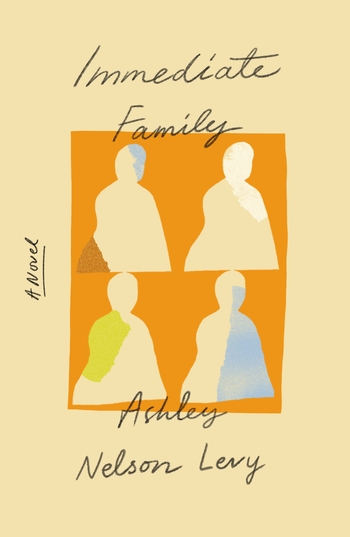
I thought a lot about waiting while writing Immediate Family, about how much of life operates in a holding pattern. The narrator’s desire to have a child spiritually pins her to the spot, and while she’s stuck there she must ask herself hard questions in the hope that the answers—if they can loosely be called that—might free her.
The books below represent many kinds of middle states: characters may be trapped in grief, political exile, new motherhood, or the neighborhood of their youth. I hope that you find the raw beauty in each of these as I always do—in that unexpected breath of wind at the end signaling, finally, that they might be on their way.
The Copenhagen Trilogyby Tove Ditlevsen, translated by Tiina Nunnally and Michael Favala Goldman
Tove grows up in a poverty-stricken section of Copenhagen’s Vesterbro district and dreams of becoming a poet. Vesterbro is the kind of place where it seems impossible for a soul to leave, particularly to something bigger and brighter. This chronicle of a writer’s life is gorgeous and haunting, taking readers through a childhood amid Hitler’s ascent to power, through three marriages and several pregnancies, through her rise in Danish literary society, and finally through the depths of her addiction.
This story is told by Gavin, a young boy in a Taiwanese immigrant family of six, but his mother is the character that has stayed with me. She’s trapped in a state of grief, along with the rest of her family—grief and the state of Alaska, with its cold and terrifying beauty. The novel follows the family in the aftermath of the death of one of the children, as each person attempts to deal with the loss in insolation, an isolation felt spiritually and literally while the family tries to make ends meet in the middle of the wilderness.
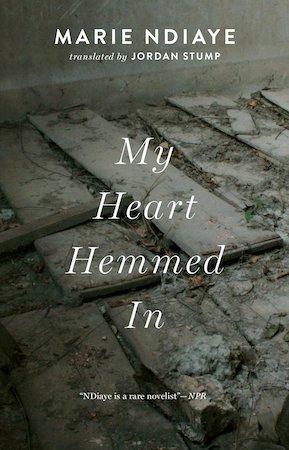
Nadia is a middle-aged schoolteacher who wakes one day to find that everyone has turned against her and her husband, Ange, and she doesn’t know why. Ange is soon the target of a violent crime and Nadia roams the streets in search of answers, paranoia and fear tracing her steps. NDiaye is masterful in ripping apart genre and reconstructing it—My Heart Hemmed In reads like noir but doesn’t concern itself with conventional plot twists, instead digging deeper into the narrator’s psychological and spiritual reckoning. Only by the end does she recognize the reason she’s been punished, and the reader feels a new kind of existence begin for her.
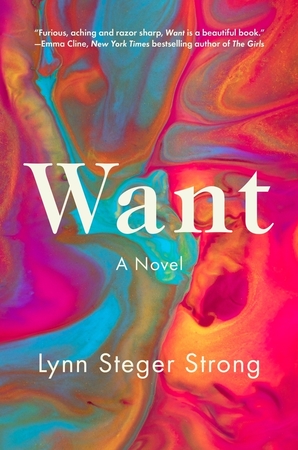
Elizabeth, a Ph.D. who can’t land a university position, has two jobs that still hardly pay the rent. She plays hooky to read books in bars and cafes, while at home in Brooklyn she has two young girls, a husband, and not enough money in the bank—she and her husband must file for bankruptcy. She sets her alarm for 4:30 am to take long, cold runs through the city, as if it might help to break free from it all. At the heart of this novel is an unsparing exploration of female friendship and middle-class economic precarity, but some of my favorite parts are about how much of life is occupied by the mundane, and how this rubs up against our desire for it to feel differently.
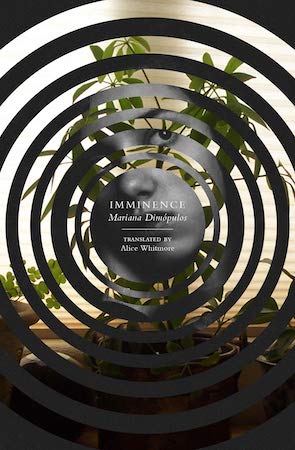
Imminence by Mariana Dimópulos, translated by Alice Whitmore
There have been many ambitious books about the ambivalence of new motherhood in the last decade, but this swift, elegant novel is nothing like them. Over the span of an evening, the narrator recounts the intimacies and anxieties of past relationships, and the construction of these overlapping vignettes creates a kind of mesmeric, dreamlike state, as the readers slowly begin to recognize the revelation she’s moving toward.
If we are talking about women operating in transient spaces, I don’t think a more perfect example exists than Leichter’s novel. In search of steadiness and a place to call her own, a young woman moves from temp job to temp job, filling in for a chairman of the board, for a mannequin, for a barnacle, for a mother, for a ghost. As the novel spins into the surreal, a very real question remains around how our work defines us.
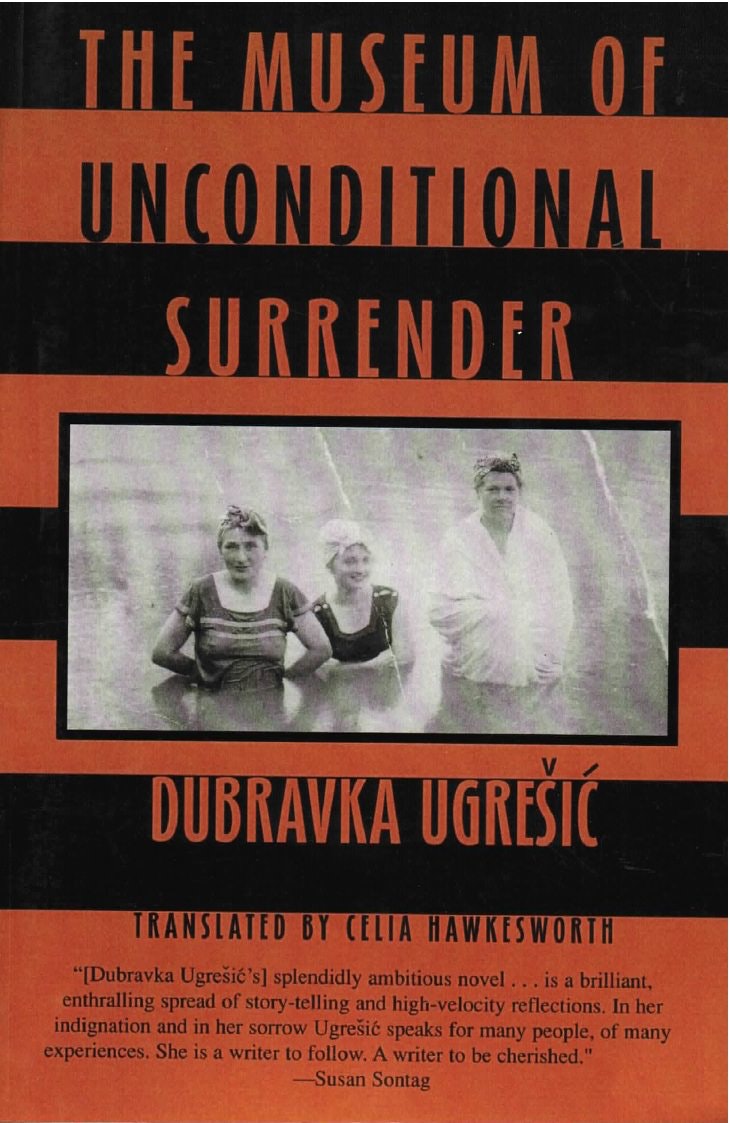
Written in a variety of literary forms—short essays, journal entries, stories—this novel explores the complexities of political exile, and how fragmented life can feel as a result. It’s divided into seven parts, four of which take place in present-day Berlin, the unnamed narrator’s place of temporary exile, as she calls it, from the former Yugoslavia. It’s one of the most poignant and original novels you’ll read on history, art, loss, aging, and the profound effects of war.
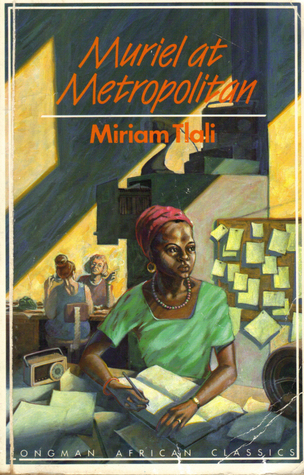
Originally published under the title Muriel at the Metropolitan in 1975, this is the first novel to be published by a Black South African woman during apartheid. The literal space Muriel is confined to is her desk, working for a white business. She describes the customers that come in and out, conversations with coworkers, daily life, while also capturing the devastating experience of being a Black woman during apartheid:
“The Republic of South Africa is a country divided into two worlds. The one, a white world—rich, comfortable, for all practical purposes organized—world in fear, armed to the teeth. The other, a black world; poor, pathetically neglected and disorganized —voiceless, oppressed, restless, confused and unarmed—a world in transition, irrevocably weaned from all tribal ties.”
In the end, Muriel frees herself from the job, but she’s still trapped in a world that dehumanizes her. The book was banned for over a decade and brought back into print in 2004 under the title Tlali preferred, Between Two Worlds.
When David Lowery and A24’s The Green Knight hit theaters this Friday, I, a medievalist scholar, was giddy with delight. The film is absolutely stunning, and it’s based on one of my favorite books: the 14th-century English poem Sir Gawain and the Green Knight. The plot of both the poem and the film begins when a mysterious figure, the Green Knight, bursts into King Arthur’s hall and demands that someone strike him with an axe. What can I say: medieval literature is weird.
Sir Gawain, Arthur’s nephew, bravely steps up to the plate, giving him a good whack on the neck. But after he’s beheaded, the Green Knight picks up his own severed head like nothing has happened and tells Gawain to meet him for a fight on Christmas of the next year. What follows is an extraordinary journey across the Welsh wilderness, as Gawain, the poem’s protagonist, chases down the mysterious knight to fulfill his end of a bargain. The film’s visuals are stunning, featuring moody court scenes and sweeping panoramas of the English landscape. And with the wildly talented and unbelievably handsome Dev Patel playing Gawain? For medieval nerds like yours truly, July 30th was like Christmas.
The thing is, in the original Middle English, the Green Knight is unambiguously hot.
Like most great adaptations, Lowery’s The Green Knight takes plenty of liberties to remake an old story for modern viewers, revising plot, themes. Characters’ roles change: Guinevere fades into the film’s background, while Arthur becomes a more prominent father figure. Certain textual nuances, like the poem’s emphasis on clothing and decorative detail, are lost or simplified. Meanwhile, Lowery adds new subplots, like the haunting tale of Saint Winifred. That’s all well and good, and makes for a delightful twist on the original. As a scholar and lover of the poem, however, I do nonetheless have my personal bone to pick: in the film, the Green Knight character is Not Hot. And, according to the original poem, he should be. Very.
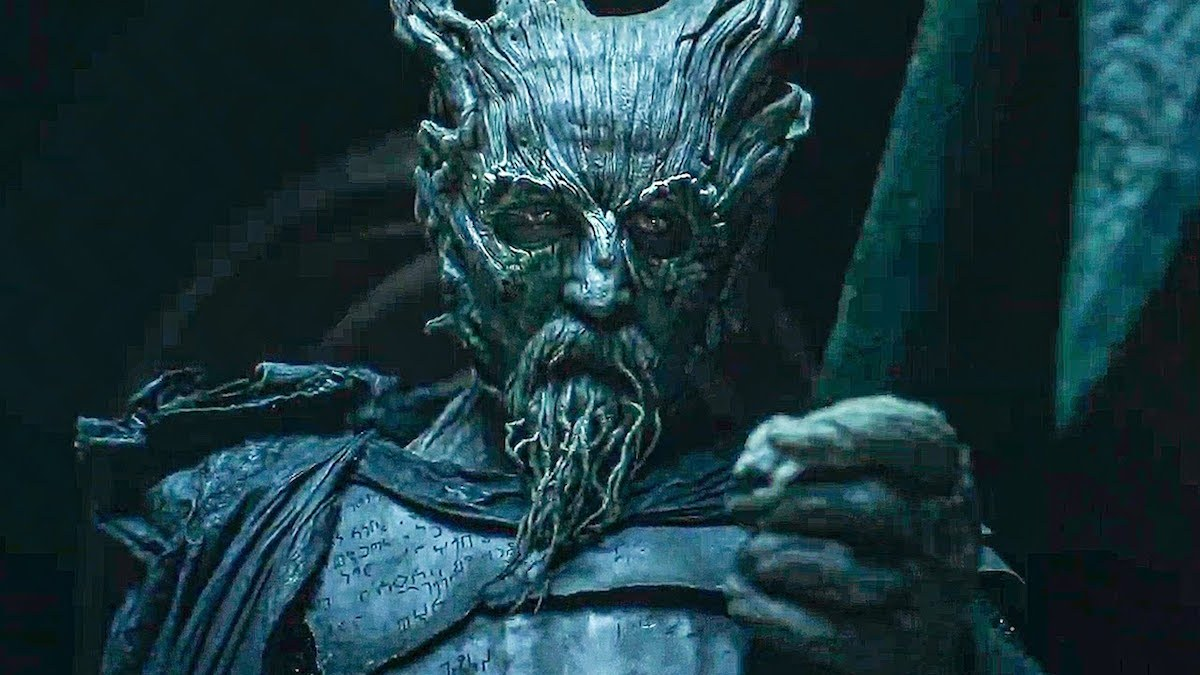
Now, calling the film’s Green Knight is homely is no knock to the ruggedly handsome Ralph Ineson, who plays him under so much CGI and prosthetics and makeup that his real face is hardly visible. Instead, we get the clear sense that, in keeping with the film’s dark, supernatural aesthetic, the film’s producers chose to make the Green Knight monstrous rather than babe-material. His bark-covered face is spooky rather than suave.
Ralph Ineson barely recognizable as the Green Knight
The thing is, in the original Middle English, the Green Knight is unambiguously hot. We’re first introduced to him at the beginning of the poem, when the Green Knight crashes Arthur’s Christmas party. The narrative gaze dwells on the Green Knight’s huge, muscular body, on his square and thick neck and abs (“swyre” and “swange”) and big long sides and limbs (“lyndes” and “lymes”). He is the biggest smokeshow of his size (“the myriest in his muckel that myght ride”)! His luscious hair is splayed out over his shoulders (“fayre fannand fax umbefoldes his schulderes”)! He’s riding a freaking horse! But there’s something delicate about his good looks as well—he has a slim waist and a taut stomach that is visible through his tight, fur-trimmed, embroidered coat (“both his wombe and his wast were worthily smale”). On and on the description continues, for almost a hundred lines. Sure, he’s head-to-toe emerald green (“overal ener-grene”), but the text doesn’t mince words—in spite of his otherworldly complexion, the Green Knight is a sexy, sexy man.
The Green Knight’s hotness matters, because it shapes how we understand the poem’s emphasis on and relationship to desire.
Call me thirsty, but the Green Knight’s hotness matters, because it shapes how we understand the poem’s emphasis on and relationship to desire, and to queer desire in particular. When I teach Sir Gawain and the Green Knight to undergraduates, my students are surprised to find it “steamy.” Sir Gawain and the Green Knight is often read, in fact, among queer and feminist medievalist scholars as a text that flirts with sexual transgression. When the poem carefully, intimately catalogues the Green Knight’s good looks just as it does the beauty of its female characters, it gives the reader permission to focus their erotic gaze broadly. This is a text, the poem tells us, where gender doesn’t determine who is worthy of a backwards glance.
In the film, on the other hand, Lowery and Patel construct a distinctly heterosexual Gawain. We meet him in a brothel with a woman in the first scene of the film. Throughout, Gawain’s relationships with women are front and center: he has a female lover in Camelot who does not exist in the original poem, and an adulterous affair with a mysterious seductress he meets on his journeys. Long closeups of the film’s beautiful ladies in soft lighting take the place of the poem’s admiring gaze at the Green Knight.
The lady of the castle hitting on Gawain in the bedroom scenes in the original manuscript
Yes, the film’s Gawain does receive one kiss from a lord of a castle—but he receives the kiss, and without much build up, the moment feels somewhat out of the blue. The film doesn’t really prepare us for the smooch, which ends when Gawain, as surprised as the audience, breaks away and flees the scene. In the poem, meanwhile, Gawain kisses a lord three times, and it’s Gawain, not the lord, who initiates the romance, which has higher stakes than just a chaste peck. To explain: as in the film, the lord of the poem goes out hunting each of the three days he hosts Gawain, and agrees to exchange his daily winnings with Gawain’s back at the castle each night. Gawain’s prizes, however, are somewhat scandalous: each day, the lady of the castle seduces and kisses Gawain. Gawain, quick to uphold his end of the bargain, kisses Lord Bertilak every day when he returns. As scholars like Carolyn Dinshaw have pointed out, it’s implied that if Gawain were to sleep with the lady, he would need to sleep with the lord too, according to the rules of the game.
The poem invites us to see more broadly, while the film’s intervention takes a primarily heterosexual point of view.
In the poem’s universe, it’s later revealed that the Green Knight and this lord—who are distinct characters in the film—are actually the same person in disguise. It also comes to light that the lady conspired with the disguised Green Knight to seduce Gawain, in what is basically an attempt at medieval swinging. So, this major plot twist of the poem, which does not come about in the film, hinges on the possibility of polyamorous relationships and queer intimacy between Gawain and the Green Knight, disguised as the lord. With this subplot, and all the preparation leading up to it, the poem invites us to see more broadly, while the film’s intervention takes a primarily heterosexual point of view.
With this in mind, as much as I enjoyed the film, I’m sad to lose the Green Knight’s sexiness. All adaption, of course, deviates from the original text, and that is well and good. Lowery’s The Green Knight offers us new ways of seeing the story, bringing into focus the pressures of masculinity and the relationship between humans and nature. But it also reiterates a vision of the Middle Ages that is primarily heterosexual—a vision that tells us more about how we think about the past than about how that past actually was. The original poem points us instead to the long history of queer desire, celebrating and playing with the complexity of eroticism and intimacy. The film’s de-sexified Green Knight, meanwhile, downplays the story’s queer possibilities. So much as I enjoyed the film, I invite you also to drool over the original—where the poem’s smoldering glance at the very handsome Green Knight may matter more than Lowery’s version gives it credit for.
Quotes from Sir Gawain and the Green Knight are from an edition by J.J. Anderson.
Those parts of the domed city were not the city at all—or maybe the parts we lived in were what was not the city. It was not, after all, our city, or at least had not been so originally. It had become, I suppose, our city. Or some parts had. The rest, we stayed clear of. At least most of us did. There were always a few who did not leave well enough alone. We had all seen those parts, seen how they seemed encased in dirty glass or Lucite, semitransparent and flickering walls, rooms and furnishings distorted beyond. When people dared to thrust their hands against the Lucite, they found it was not Lucite at all, but a sort of firm, jellylike membrane. They could slowly push their way through. They let their arms sink to the elbow or even—the more daring—to the joint of the shoulder, then groped around behind that translucent wall, and when they drew their arm free the fingers at its end were often clenched around something. The distorted broken-off leg of a chair, for instance—if that was in fact what it was—a skew slosh of metal, anyway. Or a pen that was a semicircular loop made for hands other than ours. These oddities could be sold—there were those who collected them.
We treated these collectors with as much suspicion as those who gathered the objects in the first place.
There were times, too—rarer these—when someone would thrust a hand through, then an elbow, then an arm, and begin to grope around, only to suddenly be taken hold of by something on the other side of the shimmering wall. From our vantage, we saw only a shape, a vague collection of angles, distantly humanoid in form, take hold and drag the person through. Such individuals never returned.
No one had ever crossed through the wall willingly. They had only felt around, one arm in, the rest of their body out, and drawn objects out. Perhaps these objects were in the form they had been in on the other side, or perhaps in coming through took on some distorted version of their true form.
I was, I suppose, unique. I was an orphan—but there were other orphans among us. My uniqueness was based not on that but on the circumstances of how I became such.
My parents worked together to bring bits and pieces of that other city across. They would take turns pushing through a shimmering wall, watching their arms distort and become a series of angles. They would draw an object out and sell it to collectors. That was how they lived. They always worked together, and as a result always took me along with them.
My earliest memory is this: my parents pressed against a vague and shimmering crystalline wall, one reaching through, the other, legs braced, grasping the first around the waist. I had been placed on a ratty blanket as far away from the wall as possible. I pawed the blanket, found crumbs or bugs on the floor, rolled them around in my mouth, spat them out. And then, after what seemed to me a long while, my parents turned, looking simultaneously terrified and triumphant, an unnatural and pain-wracked object held high in my mother’s hand.
Or maybe this is not my first memory. I saw that scene or scenes like it so many times in the years to come. Sometimes the object was in my father’s hand, sometimes my mother’s. Sometimes, too, they groped around and then, screaming, quickly withdrew, one dragging the other free as, on the other side of the shimmering wall, a being of awkward angles approached rapidly, tried to catch hold of them, and failed.
Was the being the same as us? I wondered. I had seen my father’s arm through the shimmering wall and was uncertain there was any difference in its distorted angles through the wall as compared to the angles of the arm (if it was an arm) of the being or beings that stalked them there. I wondered this only later, when I was seven or eight. My parents were still on a good run, taking just enough from behind each shimmering wall to provide us with another three weeks, or four, or five, of food, of life.
When you are older, my mother told me, you must find a companion, someone just like you, willing to watch out for you as you reach through the wall, and you for her. You must know how far you can reach and go that far but no farther. You must know how to sink your arm to the shoulder joint and then reach even farther without letting your head push through. And then, God forbid, when a being approaches from the other side, to withdraw quickly with the help of your companion. She will tell you something is coming, and she will help you draw your arm free before it is too late.
This was, indeed, what my mother was to my father, until the moment when she was not. Until something came and she did not alert my father quickly enough, or else my father was sunk too deep, or the being moved too fast. Before we knew it, it had caught hold of my father’s arm, and my mother was dragging on his waist, trying to tug him free. My father was screaming. There I was, nine years old, my arms around my mother’s waist, trying to help my mother pull him free.
And indeed he did come free, but without his arm, which had been neatly severed at the elbow, and just as neatly cauterized.
2.
For weeks after, we avoided those shimmering walls. And yet, as time went on, my parents realized they did not know what else to do to survive. Their whole livelihood had involved reaching through walls—they had no other skills. My mother still had two good arms to reach with, and my father one, and as we grew hungrier they decided I was old enough to assist my mother as a lookout. We had to take the risk. We would, we vowed, take that risk as seldom as possible.
That strung us along for another five years, until I was fourteen. And then the same collection of angles appeared behind the shimmering wall, and though I immediately shouted out, it was upon my mother too quickly and pulled her through. My father, holding on to her waist with his remaining hand and forearm, followed after. And I, holding my father’s legs, came last of all.
The passage through was strange, as if my body were being stretched and then reassembled to form a new creature. I could feel my father’s legs, my arms wrapped around them, but then, suddenly, they were not legs at all, and then my arms were not arms at all either. And then my mind caught up with whatever transformation I had gone through, and I could think of his legs as legs again, and my arms as arms, and was unsure what, if anything, had changed.
And then, I lost consciousness.
I was lying on a floor flecked with color, as if mica—though the color floated and spun and moved, which mica as I understood it would not. Things in the world have certain properties, and one comes to understand these properties and what they are, what they mean. One comes to count on things being what they are. And yet, was I still in the world? I did not know. What did I mean by world ? I was barely conscious, to be honest, and unsure I was in any world at all.
Near me was a being who resembled a human in every respect except for being carapaced in light. Does that qualify as every respect? Probably not. He was some manifestation of a human, though not human at the same time. Perhaps he had been so once, but it had been a long time since that was all he was.
At his feet lay the bodies of my father and mother. With a tool or instrument possessing a bright edge of light, he had begun to disjoint my father’s corpse. Both feet had been severed and lay idly flopped to either side of the body—bloodless, the mechanism he had used to sever them having apparently cauterized them at the same time.
Near me was a being who resembled a human in every respect except for being carapaced in light.
As I watched, he cut through one of my father’s legs just below the knee. It looked like the left knee, but something told me I was seeing it wrongly, that it was in fact the right.
My mother was apparently unscathed but equally dead.
When he noticed me stirring, he interrupted his task and spoke. “Hello there,” he said, his voice exceptionally deep and pleasing.
At first I could say nothing. When he repeated his greeting, I found myself mouthing it back to him. “Hello,” I managed weakly. He inclined his head, returned to his task. I could not move my limbs. I could lift my head and look around but little more than that. “Please, do not be afraid,” he said, then severed my father’s head.
“That’s my father,” I managed.
“Not anymore,” he said, and then made quick work of my mother as well.
In the end, the pair of them were less bodies than neat arrangements of sectioned parts, little more than stacks of firewood. Though, admittedly, to start a fire with them would have been very difficult indeed.
“How is it you speak my language?” I asked. He was moving between the pile that had been my father and the pile that had been my mother. He kept removing a portion of one or the other pile and putting it back in a different way, then standing back to judge the results.
“No,” he answered distractedly. “You are speaking our language.” His voice was beautiful, almost unbearably so, and somehow familiar too. It warbled and came to me in multiple tones, as if there were three layers of him for every layer of me.
I blacked out again. I don’t know why. When I came to again, I had crawled to the translucent shimmering wall and was trying, ineffectually, to shove my head through. How long I had been at this task, I had no idea.
The other being was beside me, bending down slightly, a concerned look just visible behind the blaze of light that enveloped his face.
“We are not going to hurt you,” he said. “Did you think we were going to hurt you? We don’t hurt children. We never do.”
“Who’s we?” I managed, through clenched teeth.
“We?” he asked. He gestured to his own chest. “We’re just like you,” he said. “You speak the same language as we do. You think the same thoughts as we do. But we’re not you.”
“Then what are you?”
But for this the being seemed to have no answer.
“Just sit back,” he said. “Relax. It will only take a moment to dispose of your parents.”
I watched it happen, though what exactly it was that was happening was difficult to say. The being moved back and forth between the piles, continuing to adjust them slightly until the one on the left, the pile that had been my mother, began to glow.
A moment later, he lifted my father’s head by the hair and then set it down again. And then the pile that had been my father began to glow too.
“We are sorry about your parents,” he said in that same beautiful voice. “But there was really no alternative.”
Slowly the piles that had been my parents began to quiver. The parts rose into the air, reshaping themselves into human form, with gaps between the pieces. They were teetering, stretched-out beings, assembled of dead flesh ligatured together with light. They moved jerkily, as if compelled by some other force. I watched their eyes darting about behind the carapace of light that had now swallowed their heads. Confused, they seemed to be casting about for something. And then, abruptly, their gaze came to rest on me.
“How interesting,” said the being. “They believe they recognize you.”
Within their carapaces, my parents seemed to be screaming, but I could not hear a sound. Awkwardly, they lurched toward me.
“It would be better for you to go now,” the being said.
And when I still did not respond, unable to move as what had once been my parents wobbled toward me, he reached out and took me by the neck and thrust me bodily through the shimmering wall.
3.
I grew up. Years passed. I chose to forget my parents. I built another entire life around myself, became a respectable member of society. I acquired a wife—or perhaps she acquired me, if acquired is the right word. I lived wholly in the city that was ours, never groping into that other city, turning away from the shimmering walls whenever I encountered them.
Things might have gone on like that until I died, but, simply, they did not. My wife, as had many around us, became subject to a wasting disease, her teeth and hair falling out, her body erupting in pustules and sores. She began to bleed from every orifice, slowly at first, then quicker and quicker. I remained unaffected.
“Kill me,” she begged. “Please, kill me.”
I took her to the treatment center, but we were turned away. No, they said, they would not treat her.
What, I asked the admitting nurse, would it take for her to get admitted?
There was nothing to be done, the nurse claimed. She shook her head. It was not an illness they could treat. They no longer had the proper medication.
But surely, I said, it was just a question of gathering the materials and then the medication could be made again. Again she shook her head. “We never had the formula, only the medication itself.”
“What do you mean?” I asked. And when she gestured back at an empty vial, distorted and twisted, I knew the medicine had not come from our city, but from the other one.
I kissed my wife, set off. There were doors in my mind that I had kept shut for so long. Now I opened them. Behind them, I found my parents and all they had taught me. Behind them, I saw again the strange portions of the city. I had seen such a vial before—or had seen a vial somewhat like it, anyway. Where had it been?
I walked idly, allowing my mind to wander. I tried to think like that young boy, dragged along by his parents as they pushed a hand through a shimmering wall. What kind of parents brought their child along for something like that? I tried to recall each wall my parents had approached and stretched their arms into, sometimes my father, sometimes my mother, and what, from my vantage, I had seen through them. I wracked my brain, saw again their sweating faces, their anxiety, then that moment of triumph as they brought an odd and skewed object back through the wall.
And then I realized: I would only have seen the vial so clearly if they had brought it back through the wall. No, they must have brought it out and sold it.
But no, I considered further after clambering out of my despair: I had no memory of the object being in my parents’ hands. And yet I did have a memory of the object, a clear image. Not in my parents’ hands but lying on the floor. Had I seen it myself through a wall? If so, where?
But no, in my memory the object was too close for that, not glimpsed through a wall. No, it was just there before me, at my feet. Or rather, just at the level of my eyes, maybe half a foot away. And then I allowed the memory to continue, and my eyes flicked up to a strange being swathed in light and holding a bright-edged instrument, and I knew what I had to do.
4.
I spent some time trying to find the right wall. I looked at many, dozens, but none seemed right. I tried to be systematic. I would come close and peer through and try to recognize what lay beyond, but each time I could not say for certain that I recognized anything. And then I began to think: Where had that being come from?
The one who had dragged me and my parents through the shimmering wall? He had not been inside the room when my mother first reached in, I was sure of it, and then, abruptly, he was. Perhaps each encased room behind a shimmering wall led to other rooms and these to others still, and these all were connected. That every encased room led to every other encased room, in which case it did not matter which shimmering wall I passed through, as long as I passed through one. Once I was through, I could rapidly look for the object I remembered by moving from room to room instead of groping through the shimmering wall.
At least, that was what I chose to believe.
I had not touched a shimmering wall in several decades, and yet the sensation immediately came back to me. At first the wall resisted, felt almost solid, but then, slowly, it began to yield. With a sucking sound, it drew my fingers in, and then my hand, and then my forearm. The sensation was odd and disorienting, as if my hand were being taken apart and put together in a way that made it something else.
And then my fingers broke through to the other side.
I plunged my other hand in. When it was sufficiently deep, I lowered my head and pushed it through as well. The sensation grew worse, much more intense, and for a long moment I didn’t know what or who I was. The stuff pressed against my face in such a way that I began to lose track of where my body ended and the jelly began. Soon, too, I could not tell if I was moving through it at all, and I lost all initiative to do anything but float, suspended, my legs still legs on one side, my hands something like hands on the other, but everything in between an undifferentiated mass.
How long was I there? Minutes perhaps, or hours, or days. I did not breathe, but I do not know that I needed to breathe. It was as if I were caught between two states and subject to neither one nor the other.
And then something took me by the hands and pulled.
I coughed and a spill of jelly slid from my throat. It lay for a moment in a quivering pool beside my face before, very slowly, vibrating its way back to the shimmering wall. I looked up, my vision bleary, and there, above me, was a being of angles refracting off one another, its body encased in light. He held an instrument whose bright edge was moving downward, toward me.
I lifted an arm to protect myself and suddenly the instrument withdrew.
“Ahhh,” said a voice that was exceptionally, almost unbearably beautiful. “You’re alive.”
I coughed up another lump of jelly. “Why wouldn’t I be?” I said.
“They never are, the adults,” he said. “Until we make them so.” I managed to get to my knees.
“We’ve met before,” the being said, his brow furrowing behind his carapace of light.
“Yes,” I said. “You killed my parents.”
“Not killed,” he said. “In fact, we returned them to life.”
I was on my feet now, stumbling. “Are you the only one here?”
“Well,” he said. “There’s your parents.”
“But they’re not like you.”
“No, they’re not. They’re not sufficiently there. Except for us, nobody is sufficiently there.”
“There? What do you mean?” He shrugged.
“Because of you,” I accused.
“In spite of us. That they can function at all is a minor miracle.” I glanced around for the vial, any vial. An old swirl of metal, a crumpled wooden box, forks that had twisted on themselves and had their tines bent in every direction. No vial.
I looked for a door. There it was in the back of the room. “Where does that door lead?” I asked.
“How can you still be alive?” he asked. “Is it because you passed through as a child? We never hurt children.”
Perhaps he intended to say more, but by this time I was sufficiently in control of my faculties to strike him hard in the temple and knock him off his feet. The light around his head made my fingers tingle but otherwise did not adversely affect me. A moment later my hand closed around his instrument. I activated the bright edge of light and pushed it deep into his side. I could smell flesh burning.
He grunted. “It won’t do you any good,” he said, and expired.
Once he was dead, the light around him flickered and went out. He looked now like an ordinary man. Remarkably enough, he seemed to resemble me. So much so that I thought at first he was my father. But no, not quite. And then I thought, If not my father, who? Dreading what the answer might be, I quickly turned away.
They were still encased in light and still seemed to be mutely screaming.
I left the body there. I had thought I might feel some measure of satisfaction in killing the being who had killed and then reanimated my parents, but I felt nothing at all. His face haunted me.
I went through the door, and from there into another room, and from there into another. I kept moving from room to room, each ordinary in every respect except for the one shimmering wall that opened onto another place, another city, my city. Sometimes I would see shadows on the other side of the wall. Once I even saw a hand protruding through it and feeling around frantically on the floor, though it quickly pulled back as soon as I approached.
After a few dozen rooms, I found them—the creatures that had once been my parents. They were still encased in light and still seemed to be mutely screaming.
At first they seemed not to notice me, and when I approached they did not acknowledge my presence. But then, abruptly, they did, coming at me and throwing their strange disjointed bodies onto me until I began to feel suffocated and, for my own protection, had to activate the instrument again. Their light went out and they collapsed into dust and were gone. I continued on.
How many more rooms? A hundred? Two hundred? More? There have been so many rooms since that I cannot say for certain, but there, at last, it was, the twisted vial, just as I had remembered it, tipped on its side in the middle of the floor. I snatched it up. Was it identical to the vial the nurse had shown me? No, not identical, but very close. I had no way of knowing if I had found what my wife needed to survive, but yes, perhaps it was so. It was not, in any case, impossible.
And so, vial in hand, I approached the nearest shimmering wall and pushed my hands through, eager to return to save my wife.
Or at least I would have. But the translucent wall was solid. It would not let me through.
I tried wall after all, but they all resisted me. I was trapped. Only then did I notice the glow that had begun to envelop me.
5.
I have lived through one of these cities. Now, I must live through the other. Meanwhile, my wife lies in her bed, suffering, dying. Perhaps she is already dead.
I am nearly done with this record. Once I have completed it, I will lean this notebook against a shimmering wall and wait for a hand to grasp it and pull it through. If you find this and read it, I ask only one thing of you: come back to this wall and push your hand through again. I will place in it this vial, which you must use to cure my wife. Once she is cured, bring her back here with you and convince her to push her hand through. I will do nothing to her, will not drag her through, for I know that it would likely kill her. No, I will only hold her hand for a moment, squeeze it, and let go.
And then it will be your turn. I have treasures beyond your wildest imaginings. If you will do this small thing for me, I will bring them to the wall. You will be wealthy, and powerful too. All you have to do is follow my commands, and trust me.
But if you do not do this, you will have nothing of me. You will have only the bright edge of my instrument, and I will have you in pieces.
It could have been soccer or tap dancing, it could have been Dungeons & Dragons or Model United Nations, but for editor Halimah Marcus and the contributors of the new anthology Horse Girls: Recovering, Aspiring, and Devoted Riders Redefine the Iconic Bond, what stamped them most profoundly in childhood was the act—physical, emotional, social, cultural, ineffable—of riding horses.
I took the appealing blue and gold book on a short trip to a cabin and, at the first sign of rain, cozied up with it under a blanket, a hot cup of tea nearby. But the blanket was ripped off during T. Kira Madden’s essay on the ridiculous and revered film Wild Hearts Can’t Be Broken and the tea spilled at the first line of Carmen Machado’s form-exploding feast of a piece and soon I was standing in the doorway just inches from a deluge.
This is not a cozy anthology. It does not snuggle you, or coddle you, or anesthetize you with nostalgia or even sink you with sadness. It spotlights an experience at once profoundly particular—the smells, the sounds, the inexplicable feeling of horse contact—and seriously universal: that thing we loved once that could not be taken with us, the child we were, the girl we were and how being a girl was the worst thing to be; the adult we became, the shame and the silence, the ferocity and the freedom.
I had the pleasure of chatting with Halimah Marcus, the executive director of Electric Literature, about her own horse girlery, how she put the book together and why, how she exploded—because she did—what it means to be a horse girl.
Editor’s note: Halimah Marcus is the executive director of Electric Literature.
Emma Copley Eisenberg:I’m wondering of course where the seed of this anthology comes from. What drew you to writing about horses and to this framing more specifically?
Halimah Marcus: I loved horses and riding as a child and as a teenager. I rode every day from when I was ten until I left for college, and riding—the horses, as well as the community I found at the barn—gave me a sense of purpose and belonging I didn’t have at school. I was raised in a Sufi community, which is of course unusual for a blonde white girl, and made me feel like a misfit at school. I also really bristled at the strictures of religion, which were very gendered and all about modesty and chastity. I didn’t feel truly comfortable anywhere. As a teenager, I also really struggled with body issues and disordered eating. Riding helped me escape from all that: my body, my home life, the restrictions placed on me as a girl.
Riding helped me escape from all that: my body, my home life, the restrictions placed on me as a girl.
Then when I got to college, and finally had a chance to reinvent myself so that I could fit in, I gave up riding completely. I was very self-conscious about it, actually. That’s where the whole “horse girl” thing comes in. Horse girls are meant to be spoiled, weird, smelly. Privileged but unpopular and unsophisticated. I don’t think anyone ever called me a “horse girl” explicitly but I intuited the categories that riding horses landed me in. College was where I began to pursue my intellectual and creative passions in earnest, and always had a sense that riding had no place in a literary life.
Fast forward 15 years. I’m an editor in New York, and I actually long for horses. I long to ride. I began to ask myself what it was all about—if there is actually something to the idea that girls have a greater connection with horses, and wondered if it was possible to disentangle the horse girl stereotype from all the toxic gender stuff, and expectations around race and money. I knew that, from my limited point of view, this would be an impossible undertaking and that the project needed to be an anthology.
ECE:I wanted to touch on two ideas that you just mentioned that it seems like you, in your introduction, and also many of the contributors are grappling with: 1) The resistance to being called a “horse girl” because of its connotations, specifically of uncoolness. 2) As Carmen puts it, that a horse girl would “smell like heterosexuality, independence, whiteness, femininity.” How did these truths influence the way you put the anthology together? Were you looking for points of view that would undermine the horse girl stereotypes?
HM: Calling the book Horse Girls was initially meant to be ironic, but guess what? There is no such thing as an ironic book title, I’ve learned. Because the book is called Horse Girls, I’ve had to identify as a horse girl more now than ever before. I think that’s true for other contributors as well. I don’t think any of us considered ourselves horse girls prior to this anthology and most likely still don’t, but we may still have “reclaimed” the term to some extent, making it more empowering and inclusive.
When soliciting writers for the anthology, I absolutely thought about who the horse girl stereotype excludes and actively worked to include those people. Alex Marzano-Lesnevich, for example, writes about how they were never a horse girl because they were never a girl. Braudie Blais-Billie writes about thinking of her and her siblings as “Seminole horse girls,” because there wasn’t a ready-made category of Indigenous horse girls for her to slot into.
ECE: I felt the ambivalence about the term shining through in almost all of these essays, but a lot of pride and tenderness too, and you definitely succeeded in offering a much more complex portrait of horse girl-ness. I’m wondering about formal concerns as well. Horses and horse culture offer certain metaphors as well as textures and rhythms. Did you find yourself writing or reading differently in this project than you otherwise might?
HM: It’s interesting that you should ask about language because so many words, expressions, and idioms come from horses and horse riding. (I think there might be more than from baseball, which is where I assume all expressions come from.) Champing at the bit, raring to go, being blinkered, right out the gate, to muck something out, using a carrot and a stick, being gun shy. I consciously tried to stay away from those phrases, while some other writers had fun playing with them. I also had to balance how much to explain certain horse-related terms that might not be familiar to everyone, and generally landed on the side of assuming a certain level of equine knowledge in the readership, even though I hope the essays will appeal to a broader audience. Context clues are powerful. Even if you don’t know what a fetlock is, for example, I am pretty sure it won’t ruin the essay or even the sentence.
ECE: Another fascinating language moment for me was when you wrote “I was once a horse girl, but I never became a horse woman.” Time, temporality, change, transformation seem at the heart of many of the essays. What does that line mean to you?
The term ‘horse girl’ is meant to make its subject feel ashamed, not so much for liking horses, but for being a girl. Meanwhile, boys who like horses get to be cowboys, masculine icons of America.
HM: The difference between what people generally mean when they say “horse girl” versus “horse woman” is vast. Horse girls are pigtailed brats; horse women are tough, grizzled athletes. The horse women I’ve known—my trainers—have been enormously influential in my life. I can’t tell you how much I looked up to them, how I sought their approval, attention, and instruction. The other people who held that authoritative role in my life were mostly men, and here were these strong, no-nonsense women who no one would dain to call a horse girl. That line you quoted is imbued with a lot of regret, because I quit and didn’t pursue riding as a profession. It’s an alternate path; the life I chose not to live.
ECE:That’s fascinating that in a way horse women become masculine figures or stand-ins, while horse girls tend to be imagined as the pinnacle of femininity. I’ve got no answers for that, but your contributors explore gender powerfully in this book. I also knew two horse women and they were—horses were not their work, they were their LIFE. Being a horse woman to them was like a calling or a religion, not a hobby, job, etc. It was fascinating.
I’m wondering what surprises cropped up (horse word??) during this process. Did the ways any of the contributors thought about the subject or offered their own insights surprise you?
HM: Once I had all the essays in, it was really powerful to trace certain themes and commonalities across this diverse group of contributors. I knew that for my introduction, I should try to come up with some sort of grand theory of the horse girl, and reading through the book, I kept coming back to this idea of shame. For me personally, and for so many girls, shame is a dominant emotion. That’s how our culture trains girls to feel: ashamed of their bodies, their desires, their sexuality, their origins, their upbringing. Ashamed to be too loud or too quiet or to say the wrong thing. Even the term “horse girl,” is meant to make its subject feel ashamed, not so much for liking horses, really, but for being a girl. It’s dumb because you are a girl. Meanwhile, boys who like horses get to be cowboys, masculine icons of America.
ECE:The idea of shame being a common undercurrent rings very true to me, and at the same time there’s another contradiction there, because you and many others write that being a horse girl offered you freedom. There is also that sort of flavor when we talk about horses and girls of the sexual, the weird myth (maybe this was just at my school who knows??) that you could break your hymen while riding a horse. How do you see sexuality and eroticism fitting into this conversation about horse girls, shame, and freedom?
Anyone who has dealt with feelings of shame and the desire to escape will relate to these essays.
HM: Right, and there’s that rumor that Catherine the Great had sex with a horse. Early on, when I told people about the anthology, many of them asked if Catherine the Great was going to be in it. What would that essay look like? An investigative report of whether an 18th-century empress engaged in bestiality?
This is a little bit of a tangent, but I really appreciate how, in the Hulu series The Great, you see that rumor get started by a disgruntled lady of the court. Because of course, that’s what it was! A nasty rumor designed to hurt the world’s most powerful woman. So yes, it is something I wanted to address. Maggie Shipstead’s essay bravely tackles the Freud of it all, who, as we all know, was obsessed with penises (which he called widdlers?), and likewise fascinated with horse penises for their size, and is therefore responsible for much of this mess.
Less sensationally, it’s quite common for riding to be seen as a hobby with the chief purpose of deferring boyfriends (girlfriends are not even considered by these parents) and sexuality, generally. I know my parents had that motivation.
ECE: That was actually such an eye-opening storyline in The Great and made me see the idea and intent of the horse sex story in a whole new way: that to be with a horse was somehow the ultimate slutiness, which you help explicate above, thanks Freud.
What haven’t we talked about yet that you’d like to touch on? What else do you want people to know about this book?
HM: I wish I could go through and summarize each essay, because they are all so unique and wonderful, but I will restrain myself. Each one is worth reading, and not just for former horse girls anonymous. I think that anyone who pursued something fervently in their youth that they’ve struggled to incorporate into their adulthood will relate to these essays, as will anyone who has dealt with feelings of shame and the desire to escape.
It’s increasingly easy to be somebody else online. More and more people are drawn to catfishing, creating fake accounts, or tailoring their own lives for social media. Whatever the reason behind altering yourself for Instagram, Twitter, or the newest hottest app, it’s undeniable how commonplace it is.
On Instagram, I have 5 accounts. My “rinsta” (real instagram), my “finsta” (fake instagram), a deep finsta (no followers, no following), a sapphic meme page, and a bookstagram. Throughout these accounts I choose which parts of my life to reveal. This continues throughout other apps. I have three Twitter accounts, two TikTok profiles, two Facebook pages, a sea of inactive Tumblr pages. With how influential and consuming social media has become, it’s helpful to compartmentalize across platforms and personas.
While influencing has become a full-time job for those who are rich or lucky enough to turn their identity into a brand, now, even “average” people take their time capturing pictures of their meals, vacations, and partners, to curate envy and attention.
Our online personas are as real as ever. And while it can be challenging to write about ever-changing technologies, these authors address the ways social media impacts our identities.
Sarah Marcus, a once-beloved influencer, gets canceled and left without a career. When she reaches out to her childhood friend, he suggests that she should become the face of his new business venture: The Atmosphere, a cult to cure men of toxic masculinity. The two cult leaders now must venture into the desert with a group of misogynists to see if they have the chops to make the world a better place, when they secretly only want attention and praise.
Korede’s sister, Ayoola, is obsessive. She’s addicted to social media, herself, and killing her boyfriends. After Ayoola’s third boyfriend ends up dead, Korede is frustrated with her sister’s murder streak and upset that she is her accomplice in the cover-ups. Then Ayoola sets her sight on a doctor who not only works with Korede, but is her secret crush. Their identities risk exposure as they test the durability of their sisterly bond.
Hilarious, biting, and embarrassing, this debut novel follows a couple and their distant acquaintance and Instagram crush, Jen. When they run into Jen at the Apple Store, she invites them on a weekend trip to her boyfriend’s house in the Hamptons. Tensions are high as the couple reconciles with their imagined Jen and the real Jen. Complete with adult braces, manifestation, and Jake Gyllenhaal, Morgan portrait of millennials is spot-on.
Anya is a New York City-based fashion editor with a throng of loyal social media followers. However, she is still infatuated with her coworker, Sarah. Though she starts out wishing she could befriend the beautiful and rich women, Anya learns that they are up for the same promotion, and her harmless obsession turns dangerous. Anya decides that the only way to beat Sarah is to embody what makes her so enviable.
When the young woman at the center of this novel discovers her liberal boyfriend is the creator of a popular alt-right conspiracy page, the world becomes untrustworthy. After an unexpected and life-changing event on the day of Donald Trump’s inauguration, the narrator revisits the origins of their relationship. Then, she flees to Berlin, the place they met, to try to reconcile with the gap in her boyfriend’s identity. Complete with catfishing, paranoia, and plenty of plot twists, Fake Accounts is an autofictional answer about how we live with our lies.
It might be impossible to get on the L Train or to tap through an influencer’s story without seeing Trick Mirror. In a series of essays, Tolentino addresses rape culture at UVA, girlbosses, Fyre Fest, and our relationship to social media. In “Always Be Optimizing,” one of the fan favorites of the collection, Tolentino dissects how women use themselves as avatars on social media. While documenting countless hours of our everyday life or “self-surveillancing”, we hand our data to tech monopolies like Facebook and Google.
This novel follows the parallel lives of two mothers, and their linked connection through Instagram influencer Lauren. Beth, Lauren’s wedding planner, is a new mother and her husband has lost all interest in sex, preferring to dote on their baby. Ruby, one of the photographers for the wedding, has a medical condition that makes her insecure, and a toddler she struggles to bond with. Their narratives are occasionally interrupted by Lauren’s Instagram posts and her seemingly flawless life. The three women struggle with dating, love, and their perceptions of perfection, until something has to give.
Lockwood, one of the hailed “Poet Laureates of Twitter,” Logs On for this experimental and unusual novel. When the narrator goes viral for the tweet, can a dogs be twins, she lives in the Portal, musing about trivialities and memes. However, midway through the narrative (formatted as a series of short paragraphs), she is jolted back to reality. Suddenly, the world of the Portal and her Internet virality don’t matter in the face of personal and familial tragedy.
Since she was young, Tara has lived with her foster “Mother,” a controlling and vindictive woman who isolated Tara from the world. Tara’s only escape is through a YouTube family’s vlogs. While watching those videos she is able to feel like a part of their family, and when they make a post looking for an intern, she applies. However, after gaining the job and getting closer to the family, she discovers the young family isn’t as perfect as they appear.
DON’T MISS OUT
Sign up for our newsletter to get submission announcements and stay on top of our best work.
YOUR INBOX IS LIT
Enjoy strange, diverting work from The Commuter on Mondays, absorbing fiction from Recommended Reading on Wednesdays, and a roundup of our best work of the week on Fridays. Personalize your subscription preferences here.



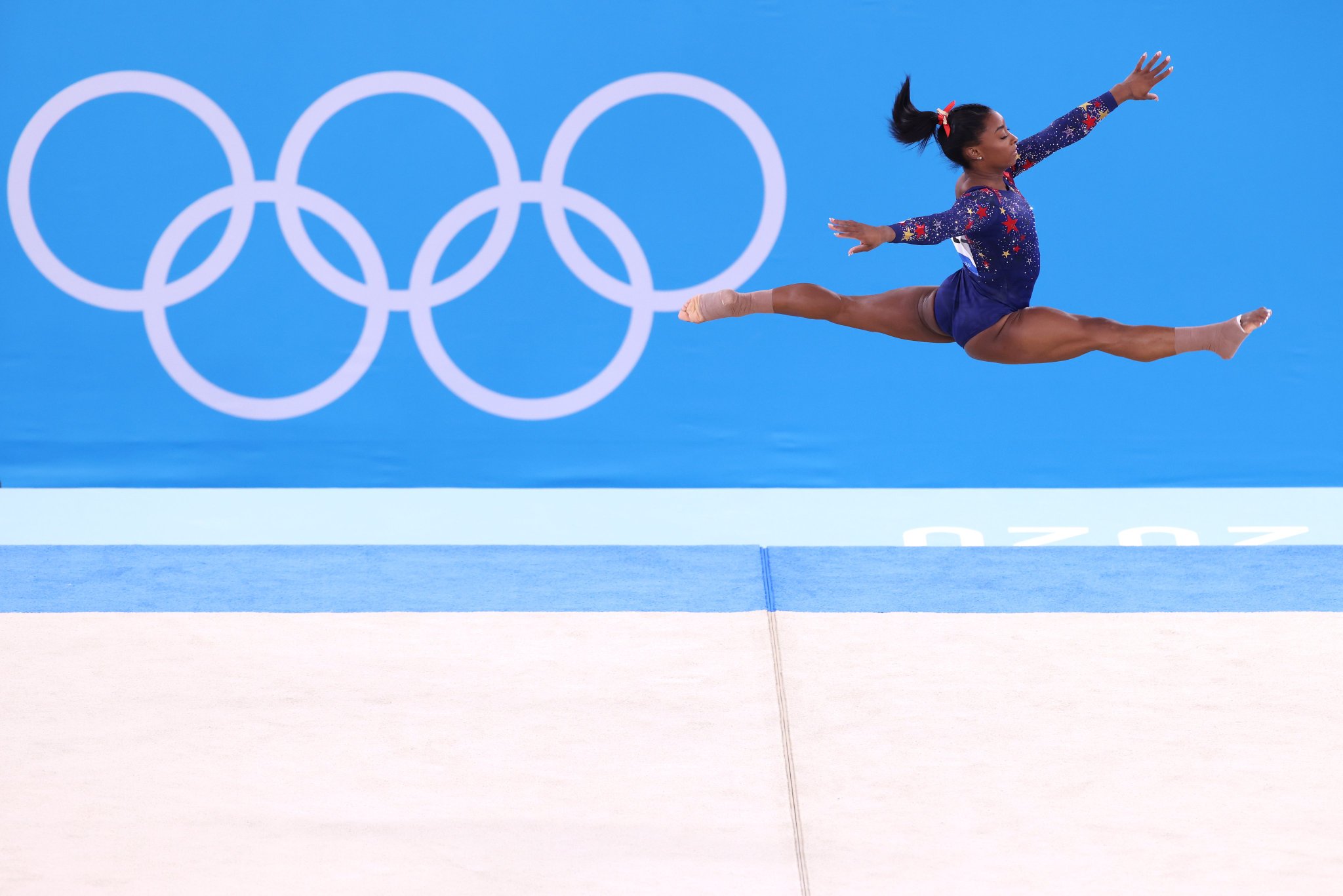


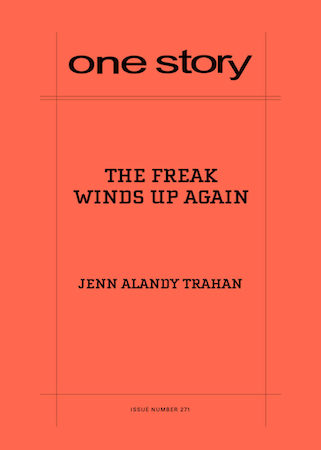

![RE: [YOUR SUBMISSION] (spoiler alert, the news is bad)](https://electricliterature.com/wp-content/uploads/2021/08/gemma-evans-zj475haUy2M-unsplash_50.jpeg)