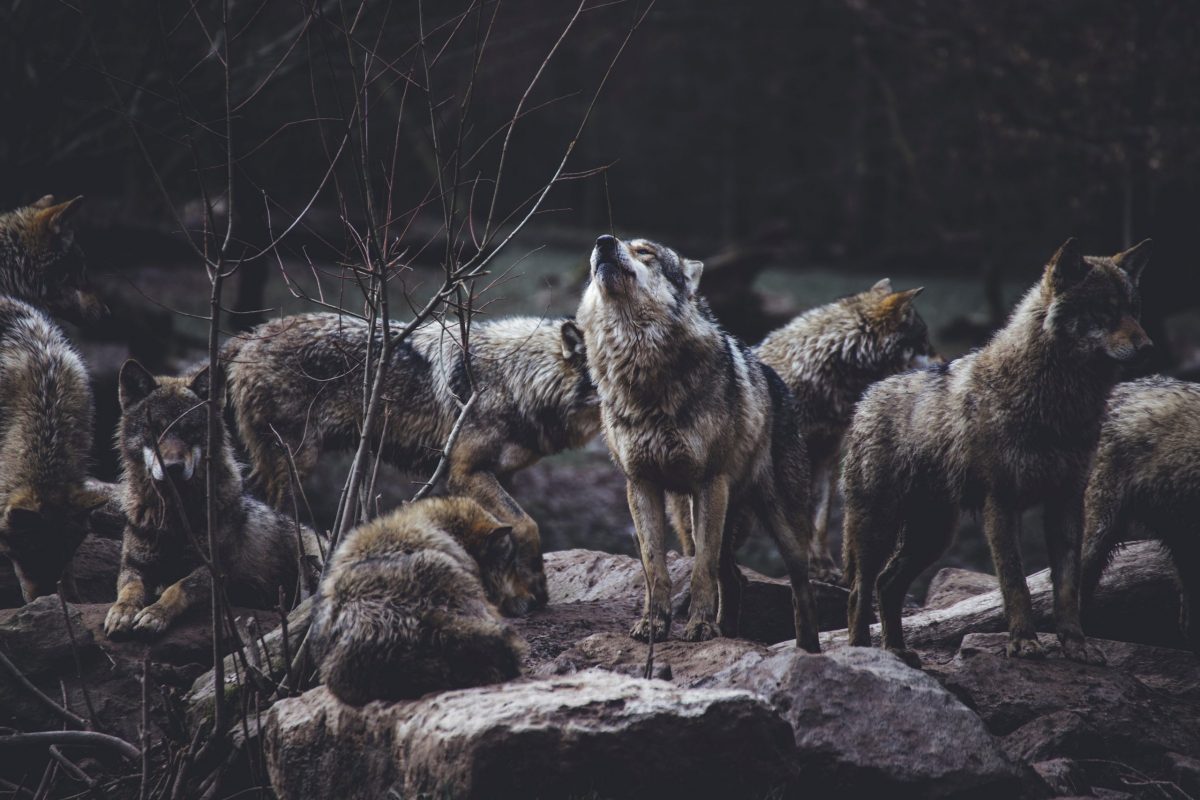
A Novel About the Tensions Of Reintroducing Wolves into the Scottish Highlands

Charlotte McConaghy’s novel Once There Were Wolves takes place in the Cairngorm mountain range in the eastern Highlands of Scotland where wolves are released to reestablish packs in once-native territory. Right now, a similar narrative is taking place across the Great Lakes and the western United States, causing a parallel friction among residents, landowners, and farmers.
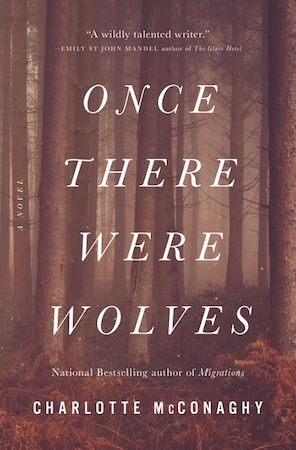
I was initially attracted to this book for two reasons: McConaghy’s use of endangered animals as a means to tell another human-centric story (first example: her book Migrations) and the fact that I seem to write a lot about wolves in my day job; however, this book is far more than an old wolves’ tale. Instead, it illustrates what it’s like to be an outsider—from both a human and animal perspective—and the level of healing and acceptance it takes from within to be accepted and to accept yourself.  

I chatted with the Australian author over Zoom about Utah’s infamous Pando tree, the importance of rewilding, and how science and the arts should merge to share critical messages—like climate change—with the world. 


Kristen Schmitt: Wolves are a hot topic whether it’s because of delisting efforts in the U.S. or the usual round of depredation and livestock conflicts that flare up everywhere. Once There Were Wolves centers around that livestock aspect as your main character, Inti, and her team reintroduce wolves into an agricultural area of Scotland. How did you come up with the idea for this story?

Charlotte McConaghy: I would say that I’m pretty passionate about conservation and the environment. How I initially came to the story was actually through reading. I found this article about Pando, the trembling giant, which is the oldest living organism on the planet. It’s a single tree that has genetically identical shoots that are the [other] trees with a huge connected root system under the ground. Some scientists believe that it could be nearly a million years old. It’s survived an extraordinarily long time until now. And it’s dying. It’s our impact on the environment that’s killing it.

So, I was reading about this amazing, beautiful, ancient thing and then at the bottom of the article, there’s this very casual mention of the fact that this is solvable, it’s save-able, if we just reintroduced wolves to the forest because the wolves would hunt the deer and, therefore, the deer would stop eating all the shoots of the tree and allow it to actually grow. However, even though this was kind of a perfect, elegant solution, it would never happen because the farmers and the hunters of the area wouldn’t allow it. I immediately was enthralled by this idea. And all of a sudden, I had the whole book in my head. I knew exactly what it was going to be. I went for a walk and by the time I got back, it was fully formed. I knew that I was going to write the story of the woman who made this happen, who was reintroducing wolves to save a dying forest, despite all the pushback. 

What drives us to do this to our planet, to our environment? Is it of our own sense of shifting away from wildness and our fear of wildness? How do we revert back? Is there only one way to rewild the landscape, to rewild ourselves too? 

KS: Because the primary story takes place in Scotland, but also touches on Alaska and parts of the American West and you live in Australia, did you have previous personal experience in those places? And why was it important to bring those other places into the story? 

What drives us to do this to our planet, to our environment? Is it of our own sense of shifting away from wildness and our fear of wildness?

CM: I know it does seem a bit odd having an Australian writing a book about wolves given their enormity. I’ve always felt like my kind of life aesthetic doesn’t quite fit in Australia. My heritage is Scottish Irish, so I have a bit of a cold climate pull and I always felt drawn to that part of the world. Australia just doesn’t thrill me, particularly in this case with a slightly noir sort of storyline. And I really love wolves, but I wanted to also be true to that idea of loving something that you haven’t been entirely raised around. So that’s where the Australian-ness of Inti’s character and that outsider idea comes from.

In terms of choosing the settings, Scotland felt really right to me because there’s this really interesting conversation going on there about reintroducing wolves and what would happen if they did. It’s a really big debate. There’s a lot of forces on both sides at the moment. I wanted to also introduce other landscapes that deal with wolves because it felt important that my main character be experienced in that. So, Alaska was one of those. Yellowstone was another and I, of course, visited there. British Columbia was where her dad’s from. I spent a lot of time in Canada as a kid so that kind of also felt natural. 

KS: In the book, there was an underlying theme of fear being viewed as a weakness from both Inti’s handling of wolves and her handling of people. Why?

CM: Well, I think that’s part of her shell that she’s built around herself and possibly part of her wounds. It’s something that her mother has tried to instill in her—a sense of, I guess, toughness because her mother really does see it as part of her job [Inti’s mother is a homicide detective]. She sees the worst that humanity has to offer each other. And she gets concerned that Inti’s too soft and vulnerable, so she tries to teach her to find this toughness.

These traumas that Inti’s suffered causes her to do a pretty major flip and start to believe in her mother’s teachings, which is that you have to be tough in order to survive and you have to expect the worst because then you can guard against it. Ultimately, I don’t think that’s the message of the book. I think Inti comes to realize that there’s a space in between being completely open and vulnerable and being completely closed off and tough. I guess in some cases, fear keeps you alive and that’s also true of the wolves. The fear of humans is important to them because it does keep them alive, but that’s something that Inti finds really heartbreaking in a way because she wants to have this deep connection with them. But she can’t make them too familiar with her because it endangers them. I hope that fear is something that she’s able to let go of by the end. 

KS: Mirror-touch synesthesia allows Inti to feel not just what her twin, Aggie, is feeling, but also pretty much everyone else in town. Was this condition something you were aware of or witnessed prior to writing about it? 

Fiction allows us to access a deeply emotional space around an issue that we sometimes don’t allow ourselves to go to when we’re reading science texts.

CM: I have a much milder, slightly different synesthesia, which is, essentially, that my memory works by connecting color and texture and shape. And I never knew that was unusual. It was just normal for me and then I read about it and I started to learn that that’s actually not how most people’s brains work. Then I listened to this episode of Invisibilia and I was fascinated with the most extraordinary thing. I knew that I wanted to somehow write something about a character with that condition and took a few books to work it out to who that would be. It felt very, very right for Inti because the whole theme of this book is about empathy and connection to others. And, you know, she kind of gets overwhelmed by the amount of forced empathy that she’s forced to feel and tries to close herself off from that. It’s that kind of journey to realizing that this can be a gift if she can see it that way. I liked that it was something that she could share further intimacy with her sister, but then be at the mercy of it with everyone else. 

KS: Like a benefit for some, but not quite for everyone else. 

CM: Yeah. It can be quite a dangerous thing, really. And reading about the people in the real world who have it, they have to find that balance between danger and this extraordinary kind of experience.

KS: What do you want people who read this book to learn or understand who might not actually be aware of all the layers that rebalance an ecosystem? What do you hope that they get from reading about this type of subject from a fictional standpoint instead of via an ecology textbook or a political lecture? 

CM: That’s the amazing thing about fiction. It allows us to access a deeply emotional space around an issue that I think we sometimes don’t allow ourselves to go to when we’re reading science texts or hearing these really politicized views about things.

My hope in writing about this stuff in a fictional way is to allow people access to something deep within themselves that they can take the time to really think about and reflect on how they feel about something because I think all this climate change is a hugely emotional space. Once we start to realize that there is so much grief involved in what’s happening, we can allow ourselves to admit that it’s okay to grieve and it’s okay to love things that are wild and may not love us back. I hope that this provides an avenue to hope and feeling energized and wanting to come out the other side of it, actively pursuing change. 

And I do think that the two pillars of fiction and nonfiction need to support each other. There is this incredible work being done by conservationists, by scientists, but they can’t do it alone. They need help from us—from the arts—because the arts have amazing power to affect change and to really inspire people. I hope that this would go some small way to making people aware of something and also making them feel connected to it emotionally. 

My Aunt Doesn’t Care in Four Different Languages

Today

1. So I was thinking today about that cup of black coffee you left sitting in the fridge because you said you can’t—no matter what—throw away good things. Even if they are of no use to you anymore. You gave me old clothes from your closet, each piece costing over fifty dollars, still with their tags. I think you are going through a meltdown and you think you’re just spring cleaning. We agree, with the wave of a hand, to not talk about this. Sometimes I wear your off-shoulder sweater and pretend I’m you, if that means I’m less me, because you’ve got the kind of confidence none of the other women in our family have. Fifty-five and now again single, you go shopping in the gaps of time you used to call me from the car saying, “Your uncle now has a fad for Home Depot and he’s been in there for two hours.” I wear your sweaters, which are baggy on me, and hope the world will want me a little more.

2. In public, people stare at us together: a middle-aged woman and a twenty-two-year-old. We laugh unrestrained, yelling, “Ya Allah Ya Allah!” as we catch our breaths. I realize now they are probably afraid of us, speaking in a language so unbelonging to an Ohio suburb. You never care how others see you. You open up to the world fearlessly like a child. “I don’t give two pooping shits what people think,” you say, always repeating words for enough emphasis. This is how you use English, since one word is never fierce enough for you. When Uncle divorces you, you curse him out in Arabic, then in Spanish, and then in French. I watch you, with wide eyes, as you tell him over the phone that he is a butt asshole. 
 
3. Womanhood is a flimsy thing, thin as dog ears. One day I’m driving, music high, in a tight new top, singing so hard that other drivers turn and smile in my direction. The other day I’m sobbing, unsure how I got between my hangers in the back of the closet. Then I remember. I was looking for the watch you passed down to me, which I stupidly lost somewhere in the arms of my closet. I miss the feeling of it in my hands, the cold silver that blinks back at me. I don’t know why I’m crying over losing it, because I haven’t lost you and that’s more important. Maybe I’m crying because I’m shocked things can be lost so easily, when they’re handed over with care. 

4. No feeling is final, wrote Rilke. You hang this quote above your bathroom sink on an index card, in your handwriting.

5. One evening we joke about your boobs. Compare them to watermelons. “I’m juicy,” you tease. You love being a woman. You love beauty. You look out from your balcony at the view and comment, “Life is so beautiful, in small moments between the mess.” It’s been two weeks since the official declaration of the divorce. Your son, my cousin, will die in a year. But we don’t know that just yet, how loss will continue to come for you. Sometimes, mid-conversation, you stop and close your eyes, as if an aching has arrived and you are waiting for it to pass. I want to ask if closing your eyes works. I close my eyes hoping to shut the pain out, but that is when it mercilessly opens. 

6. No feeling is final, wrote Rilke, but he didn’t know you. How your feelings will always be there, taking on different shapes. I’ve seen several shades of grieving from you, all reflected on your face—Grey: when you were shocked he left you. Red: when you decided to work so hard you laughed for hours out of exhaustion. Creme: when you decided that memory is like an object on the menu. You can choose what to forget. Decide if you want the ketchup in the memory or on the side. If you loved the person sitting across from you, or if you didn’t. 

7. On a Saturday night, you take me out for a drive. I try to come up with excuses for my sad face, and then decide to just tell the truth. “I feel very alone,” I say. I feel very silly saying this; how the endings of my little romantic relationships are nothing compared to the weight of your divorce. But you take my words seriously: “I understand, habibti. It all just takes practice, carrying it all.” 

8. And then, later, you decide to add with sass: “Besides, men are just hemeer. Like my husband. I’m better off adopting a hamster.” We laugh until we choke on our spit. 

9. At an outlet mall, I look up to find my ex window shopping, examining a suit. He has his usual face, unimpressed. I immediately wish you were here with me, to tell me what to do. How every part of me wants to take him into my arms as if he never left, but I know better. I know the wanting is not a wanting for a person, but for anything that will suppress the wanting itself. He looks up and catches me looking. I don’t turn away. We wave to each other. A million conversations run through my mind, but I am late to pick you up for a doctor’s appointment. The wanting, like all things, will soon die out. I dig for my keys and go.  

10. We sit in the balcony of your apartment, open to the main road. There is a lovely garden in the center, with a sign commemorating a child named Sam. You made me tea the way I like it; mixed with warm frothy milk and honey. Reminiscent of hot days in Cairo when I visited you there. You are moving back soon, perhaps to revisit your single life or scout a new one. Quietly, we count the balconies of other people, each apartment holding so many lives. “How many lives do you think are in there?” I ask quietly, counting each balcony with my finger. “One,” you answer. “It will always be one.” 

7 Thrillers About Vacations Gone Wrong

So often, trips bring out our boldest, most adventurous selves, infusing every experience with a what-happens-in-Vegas vibe. That’s what makes vacations such fertile soil for suspense authors: When we’re enjoying ourselves on the trip of a lifetime, we might become a little too trusting of strangers or stumble into scenarios we wouldn’t dream of back home. 

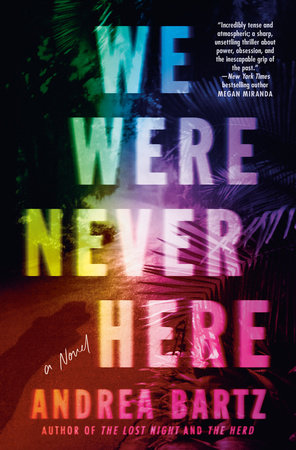
We Were Never Here by Andrea Bartz

My new thriller, We Were Never Here, begins in Chile’s Elqui Valley, where two globe-trotting best friends are enjoying their annual reunion trip: exploring bone-white churches and sweeping vineyards and jungly patios where they dance to local tunes and mingle with cute strangers. When a vacation hookup goes south, my tourists have no choice but to kill a backpacker in self-defense and bury his body in a remote patch of farmland, setting off a sequence of consequences that threatens to destroy their friendship, their freedom–maybe even their lives. 

These seven fantastic thrillers also feature Americans who head abroad expecting pleasure or relaxation—but who get far more than they bargained for: 

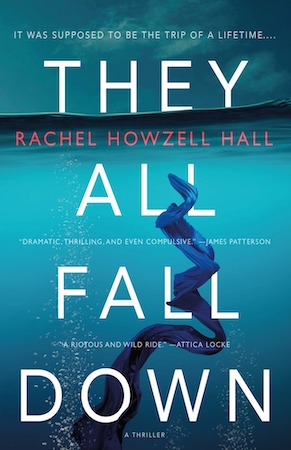
They All Fall Down by Rachel Howzell Hall

When Miriam Macy receives a surprise invitation to join six strangers on a luxe private island off the coast of Mexico, she can’t believe her luck. Surrounded by miles of open water, though, she watches as a series of accidents takes down her fellow visitors one by one. This creepy, clever thriller is a brilliant modern send-up to Agatha Christie’s And Then There Were None.

The Perfect Escape by Leah Konen

The Perfect Escape by Leah Konen

Three newly single friends plan a girls’ trip after bonding over their difficult splits. The perfect weekend sputters to a stop when their car breaks down, stranding them in a mountain town that forces them to reckon with the pain they hoped to leave behind. When one of them vanishes after a wild night out, they realize a sinister force might be pulling the strings of their “unplanned” detour. With intricate plotting and truly shocking reveals, this thriller is both an addictive page-turner and a brilliant examination of female friendship, shame, and betrayals.

Tangerine by Christine Mangan

In this tale of twisted female friendship, Alice Shipley’s settling into life in Tangier when Lucy, her frenemy and former college roommate, arrives unannounced. At first, Lucy seems intent on rekindling their relationship as they explore their exotic new locale. But soon, Alice begins to question Lucy’s intent—and everything about the life she left behind.

Nine Perfect Strangers

Nine Perfect Strangers by Liane Moriarty

Ten days at a luxurious health resort sounds like the perfect retreat, right? For nine strangers, the Tranquillum House offers the potential to reboot their lives. But as romance novelist Frances Welty gets to know her fellow guests, including the house’s enigmatic owner, she wonders if she should leave the resort before it’s too late.

The Wedding Night by Harriet Walker

The Wedding Night by Harriet Walker

Lizzie cancels her destination wedding only a week before the big day—too late for a refund, so she opts to bring a group of friends to the venue for a distracting getaway. As soon as they arrive, though, it’s clear someone’s out to mess with her: the wedding decorations are waiting for them. And while she sleeps, her friends partake in drunken debauchery that’s far from benign. A juicy, beautifully written thriller brimming with secrets, lies, and betrayal.

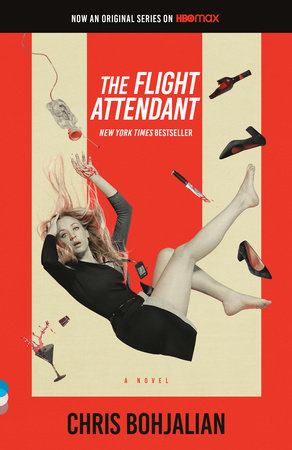
The Flight Attendant (Television Tie-In Edition) by Chris Bohjalian

The Flight Attendant by Chris Bohjalian

Cassandra Bowden’s job in the airline industry makes adventure easy to come by, and with the combination of her binge-drinking habits, she’s used to the occasional blackout. After a wild one night stand, she wakes in a Dubai hotel room to find her suitor dead beside her. Afraid to call the police, she lies and lies until it’s too late to come clean and face the truth of whether she killed him—or, if she didn’t, who did.

Searching for Sylvie Lee by Jean Kwok

In this twisty, powerful literary thriller, Sylvie travels to the Netherlands to visit her grandmother one last time. But when she vanishes, it’s up to her younger sister, Amy, to track her down—and uncover the haunting secrets that reveal as much about their family as Sylvie herself.

Divorcing the Patriarchy

Gina Frangello had a suspicion there was a hunger to talk about women who break the rules. In advance of the release of Blow Your House Down: A Story of Family, Feminism and Treason, she admits after some prodding, “I got more letters from women before this book came out than I ever received for all of my four other books cumulatively.”

In Blow Your House Down, Frangello tells the story of falling in love with a man who wasn’t her husband. Of becoming herself, finally, in mid-life, while caring for her children and aging parents, divorcing, and getting breast cancer. Of the day her best friend died, after which, “I never once felt even mildly tempted to pretend I was anyone else again,” she writes.

Indeed, before I could get my hands on it, her book was appearing on most-anticipated lists and had racked up three-star reviews from Publishers WeeklyBookPage, and Library Journal. What was this blasphemy? This untold tale, this pent-up story that legions of women needed to talk about?

Her “treason” was daring to question the ways women are boxed in by the American institutions of marriage, motherhood and the medical industrial complex. The book simply throbs: with the quenching of new desires, with beloved bodies living and dying, with promises to children being stitched carefully back together. It pushes the boundaries of form, experiments with point of view, negotiates our social imperatives.

If her story is connecting with so many women, Frangello muses:

“That only reinforces how silenced women have been. Because my story is not that radical. I am a heterosexual-ish white woman who lives in a nice house. I didn’t leave my children and take up van life or even have an affair with another woman. If this is as far as the publishing industry has allowed women to go, just wow, are we failing to give a wide array of women voices to speak about their truth.”

I first met Frangello when she was faculty advisor to a literary magazine I wrote for in graduate school, and I couldn’t wait to speak to her about the book. Because as the buzz for Blow Your House Down was building, I was beginning to hear from long-time girlfriends after a year in quarantine, and at least half of them were saying the same thing: my life is no longer working.

I spoke with Frangello via Zoom from Chicago, where she lives with her family, teaches, and writes.


Amy Reardon: It seems like every other friend I talk to is on the verge of blowing up her life. And by life, I mean, specifically heteronormative couples with children. Are you hearing the same thing? 

Gina Frangello: Yes.

AR: Why do you think? 

GF: I think for a lot of people, their heteronormative marriages are much more traditional than they may appear at first glance. I think a lot of heterosexual married couples do not actually spend that much time together and are not each other’s primary confidant. And when suddenly you are in a situation where you never leave the house, the cracks show. One of the ways that people avoid seeing the cracks is by dancing as fast as we can in our American lifestyle.

AR: Your book is about a woman who has made herself sick trying to live up to the expectations of women in our culture, and once she lets her real self out of the box, there’s no going back. Can you talk about that? 

GF: It’s complicated, right? Because some of the things that you’re saying are kind of also true of men. While my book has an angle toward women and is strongly feminist, and I am fairly obsessed with feminism, I do think that the life of the average middle-aged man is just as constricted.

I think a lot of middle-aged men don’t have a whole lot of friends. Work is their life, and the amount of time they spend with their families is really limited. But women can’t get away with that. We have careers, we have elderly parents we’re taking care of, we’re often also the primary liaison with our husbands’ families. We’re buying the holiday presents, we’re arranging the birthday parties, we’re taking the children to the medical appointments, we’re liaising with whoever is providing childcare while we’re working. Then we’re expected to be fully present for our kids in a way that I don’t think anyone really expects of fathers. 

We see a father at the park, and it’s like, “Oh, he’s a great dad.” Any effort is rewarded. Whereas for women, often no effort is sufficient. And amidst that, where is the space for a woman’s personal inner life—much less desire, feeling fully alive, feeling electric, feeling intoxicated with life? So you burn out, and you get to a point where, as many women I know say things like, “I wouldn’t even have the emotional energy to have an affair. All I want to do is lie in front of The Daily Show with a glass of wine and totally numb out because I’m exhausted all the time.”

Sadly, for both men and women, in order to feel a connection to who we are and to what it feels like to experience life fully—rather than through the prism of someone else’s needs—sometimes the only place that’s possible is away from the nuclear family unit. 

AR: Why do you think it is so terrifying to be called a bad mom? 

In our culture, ‘she’s a bad mother’ is one of the worst things they can say about you.

GF: It’s the ultimate slur for a woman. I think this is why we see so much more freedom in the memoirs about women’s youth than we do in the memoirs about women’s middle age. We’ve gotten to a point, culturally, where we can write books about our misadventures in youth, whatever they were. If we were a drug addict, if we were promiscuous, if we were a sex worker, or a terrible daughter. Whatever we did, if we write about it from a time before we were married and had children, that will more likely be devoured, sometimes fetishized, because our culture loves to gawk at the pain of hot, young women. But we don’t tend to demonize the woman for having done those things when she was younger.

AR: Then we’re supposed to grow up and be responsible?

GF: Yes, it’s utterly different if you write about these things once you’re a mother because in our culture, “she’s a bad mother” is one of the worst things they can say about you. It’s in fact one of the ways women of color are demonized. They have their children taken away from them for smaller infractions than white women do. They’re demonized for having children at all if they don’t have tons of money, accused of wanting the government to take care of them. If you look at the way motherhood is coded between middle-class white women versus women of color or working-class and poor women, you see a massive cultural difference. A whole group of mothers are being branded bad mothers from the get-go and therefore dismissed.

AR: Whereas for upper-middle-class motherhood?

GF: We worship at the altar of the fantasy of the holy, all-giving, altruistic, white, well-off mother. As though this is a saintly thing to have done, to have children. But oh, those other women over there are not saintly, they made a bad decision for having children.

We worship at the altar of the fantasy of the holy, all-giving, altruistic, white, well-off mother. As though this is a saintly thing to have done, to have children.

So either way, you are supposed to be defined by becoming a mother, and if you fall into the group of women who are coded as saintly and virtuous by virtue of reproduction, but then you fail to revere your cultural coding by doing what is expected of you, well, how dare you? Because you’re questioning this whole altar we’ve built to worship Motherhood—capital M—that reinforces racism, classism, and gives middle-class, upper-middle-class white women a little star that is actually a way of manipulating white women into upholding patriarchal and racist systems. It’s like, “Here, ladies: see? We do value you. What would we do without mothers who keep the hearth?” And we’re supposed to be happy with this token and think now we’re appreciated and that this is a form of equality with men. We’re supposed to think: Oh those poor women over there, they’re not equal, they’re the ones we have to worry about. But we’re not helping the women who are being othered and demonized, we’re swallowing a line of patriarchal bullshit and then becoming complicit in it.

AR: Do you think interrogating the dark corners of a woman’s desire is scary for some readers and critics?

GF: It’s really liberating to some and it’s scary to some. I’m trying to excavate the ways women have been treated systemically throughout history. So there are indictments in the book, but I’m not indicting anybody who chooses to stay in a safe practical marriage. I’m not saying everyone needs to throw caution to the wind and let desire and great passion be their true North. I made clear in the book, for example, that I wouldn’t have had any judgment of myself as a character if what I had ended up doing was staying with my former husband, because I think there are many different paths that people can take to wholeness. 

Some people—women, critics—read a book like this and recognize their own kind of safe, practical, but not very happy marriage. Or perhaps they are dealing with a certain amount of anxiety and fear around constricting roles, like watching what they say with their male partner, and they may feel like this book is telling them they’re weak, they should be doing something else, or their life isn’t fulfilling. 

I am just pointing out how many of us are living in those realities. How often being in a long-term heterosexual marriage has to do with a woman learning what she can and cannot say, how she can and cannot act, to keep peace. Not only between her and her husband, but between all of the members of the family, where she is the conduit who is always running around trying to smooth things out between everybody else. What that basically means is she’s working off a frantic script in her head of how to make everyone not explode at each other and her, and there’s not a lot of space in that script for how she may really feel. So I think a lot of women recognize their own reality in that, and then there are interpretations of how they feel about recognizing their own reality. It may be euphoric, or it may be hostile.

AR: It seems like everyone wants to talk about the infidelity, but you also write about the larger social issues that led to it?

Look how we’ve glamorized and gawked at self-destruction in women in film and literature: presenting self-annihilation as the only sane response to this woman-hating world.

GF: Yes, that’s the hot-button topic in this book, but to me, it wasn’t the only one. It’s only one avenue for exploring the lack of options that art, psychiatry, medicine have posited for women who step out of the box, particularly after a certain age. Look how we’ve glamorized and fetishized and gawked at self-destruction in women in film and literature. I fell into that pattern myself in some of my fiction—of presenting self-annihilation as maybe even the only sane response to this woman-hating world. It’s like if you see what’s going on, that’s the only option for you. I’ve loved so many books that seem to frame it that way: Lithium for Medea, the mythology around Sylvia Plath and Anne Sexton, the French films of the 1990s. Then I began to question why somehow, we always end up with a body count of women.

AR: This year’s film Promising Young Woman?

GF: Yes, right. I loved that. But for God’s sake, do any women who step out of the box get to go on? 

AR: Like if you are a woman and you reject the status quo, your only option is death?

GF: It’s true in far too many women’s lives. Until fairly recently, if you did something like I did, you would lose your children. You would be excommunicated from society. There are still laws against infidelity in the United States, in a number of states. Now, are they practiced? Not often, of course, but it’s only been in recent history that a woman can dare to step out of the box, which men have always been permitted to do and remain members of society with rights. Once a woman gets in the box, it has seemed that the only way out for most of human history is to lose everything. So as a person who had managed it—I lost things, but I didn’t lose everything—I felt like I needed to share that story. There is life after having done things you’re not allowed to do, and even after things you regret.

AR: In the book, your best friend Kathy dies. Do you think in some ways that set off the chain of events?

GF: Oh absolutely. Prior to Kathy’s death, I knew I was significantly less happy in my marriage than I had once been, but I also felt that this was just life. Kathy’s death revealed holes in my life, revealed loneliness, revealed things I was not getting in my marital relationship.

When your closest comrade, the person that you spend the most time with outside of your children, gets a diagnosis out of nowhere, you definitely question, “How am I living? Am I living the way I would be living if I had four months to live? Am I living the way I would be living if I had four years to live?” And for me, the answer was no. It hadn’t always been no, and I think that’s really important to stress because I think memoirs about divorce can be very reductive, as in she left the man who made her unhappy and then found someone who made her happy. It’s not that simple. People change, and marriages change. Something can have been genuinely good for us at one time and that, sadly, doesn’t mean it always will be.

AR: One of the things I loved about the book was its ambivalence, like the third time you went back to your ex to patch things up. Or this moment, with your new partner: 

“Somehow my lover and I have fast-forwarded through two decades of coupledom and here we are, just where we both left off: a woman crying in another room and a stone-silent man pretending not to hear her.” 

Can you talk about why it was important to track that ambivalence?

I wasn’t trying to write a swaggering book that suggests if you’re in a traditional or oppressive marriage, you stick it to the patriarchy by having an affair.

GF: Oh God, yes. I mean, I was careful to track those so carefully because I had absolutely zero interest in writing a book where the message was, “Unhappy in your marriage? Have a passionate affair and it will solve all of your problems.” There have been some books like that, and many others where the woman ends up off the cliff or in the Thames with rocks in her pockets. But I wasn’t trying to write a swaggering book that suggests if you’re in a traditional or oppressive marriage, you stick it to the patriarchy by having an affair. Relationships are complicated, and when both people in an extramarital relationship have been in marriages that have lasted two decades or more, and one of the parties has three children, things are going to burn to the ground. And I don’t just mean with regards to the fall-out of divorce. Very quickly I realized there were no guarantees in my relationship with my lover either. I didn’t know if that was going to translate to a future. I had to ultimately realize that I was leaving for myself, not for someone else. I didn’t want to go backwards, whether I stayed with my lover or went on alone.

AR: Do you think women have to blow their houses down to find the wholeness and depth that you’re talking about? And do you have any advice to those women writing you letters? 

GF: I don’t think that it’s always necessary, not at all. At the end of the book, I talk about the many-worlds theory, in which, reductively put, all possible outcomes are physically realized in some parallel world, and I offer an alternate ending. 

E. L. Doctorow does this in Book of Daniel. I directly ripped off the idea, where the fictional character Daniel presents three different endings of what could have been real. I ask could a person who’s been unhappy in their marriage, who’s had an affair, end up using that epiphany as a way to heal her marriage and to find more freedom and more self-expression within the marriage? That’s fully dependent on the people involved. Unfortunately, a very frequent result when a woman or a man has committed infidelity and then wants to save the marriage, is that they are expected to go back to being who they used to be. I think that that is probably not the way to go, because if things had been on the right path for both partners, the affair would not have happened. So, you have to be two people who are willing to throw a stick of dynamite and blow a whole new path for yourselves as a married couple. Some couples can do that. Others cannot.

“Shadow and Bone” Helped Me Combat My Imposter Syndrome

I was watching an episode of Shadow and Bone on Netflix, when I looked at my husband, Dan, and said: “Do I really behave like that? Is that how I come across?” 

He nodded.

I was talking about Alina Starkov, the protagonist in Leigh Bardugo’s Shadow and Bone series, an orphan soldier who is reluctant to believe that she’s a Sun Summoner. In the scene, a visibly shaken Alina is questioned by Bhagra, a teacher who is meant to train her to use her powers. “Do you think you belong here?” asks Bhagra, to which she replies hesitantly, “I’m told I do.” Bhagra then asks her a more pointed question: “So you have to be told a thing to believe it?”

“Not always,” Starkov says.

I cringed. My 17-year-old self would have sounded just like her. But this time, watching a young adult heroine who wasn’t strong and had no self-esteem, was an excruciating masterclass in what self-doubt actually looks like in women. Alina was no Hermione Granger or Nancy Drew or Georgina Kirrin or Katniss Everdeen. In fact, Bardugo’s heroine was the opposite: she was a young woman who struggled with confidence, anxiety and nursed so much pain that it felt impossible, even as a reader, to believe she was the chosen one. In every line Alina uttered throughout the series to put herself down, I was reminded of my own childhood, an adolescence that I didn’t want to look back on, where my entire identity was rooted in some sense of shame and insignificance.  

In Alina Starkov, Bardugo had stripped off the façade of strength so often forced onto young female protagonists, and instead molded an anti-heroine whose trauma doesn’t make her tough or domineering, but rather reduces her to a vulnerable and scared person who doesn’t trust anyone. Then Bardugo pushes the reader to wonder: can such a woman save a war-torn country?


The idea of emotional strength in literature has always fascinated me. I grew up in India in the late 80s and 90s, when most young adult fiction that was available was typically British or American. Not surprisingly, the female characters that heavily influenced me were white, headstrong, and popular among their peers. My early heroes were the Wakefield Twins from Francine Pascal’s Sweet Valley High, Nancy Drew, Darrell Rivers from Enid Blyton’s Malory Towers series, and the girls from The Baby-Sitters Club. I wanted to be like them: they had liberal parents, never worried about money, and even had boyfriends. None of these aspirations added up, of course, because my own life was nothing like theirs.

Not surprisingly, the female characters that heavily influenced me were white, headstrong, and popular among their peers.

I attended an Anglican-protestant boarding school until I was seventeen. The school was ten hours away from our hometown in Southern India because towns like mine didn’t have good schools. My parents were also middle-class Hindus—but like most parents, believed that sending me away to a boarding school (which were relics of British colonization in India) would give me access to an English education, discipline and a sense of self-reliance. This meant that unlike the Wakefield twins or Nancy Drew, who came from stable, upper-middle class families, my teen years involved daily prayers, respect for rank, ritual, and having to write letters home if I needed the basics. Pocket money, snacks, and the odd movie CD to watch in school. Without any real emotional support though, all the English values and customs that should have helped me navigate post-colonial Indian society as a lady only left me terribly confused about who I was meant to be. All I learned was that to be a strong woman, I had to put up with hardship with no complaints, like so many of the female characters in classic British novels.

But that wasn’t all.

In an environment of such rigid discipline there was never any room to recognize or heal from trauma. A regular day in high school for me meant sitting through classes where girls were reprimanded for everything from short uniforms to being ‘noisy’, picking constant fights with my mother (through letters) to be able to make my own choices, or spending days at a stretch kneeling in the hallway as punishment for talking back to a teacher. So, again, unlike my girl heroes, who were capable of speaking up and questioning, I sought strength in skillfully avoiding emotion. There was a certain freedom in allowing myself to believe that I didn’t deserve happiness and success because I didn’t ever have to face the fear of failure. In my mind, if I’d already failed, I’d already won. So, no amount of bullying, harassment or humiliation could evoke a response from me.

Unlike my girl heroes, who were capable of speaking up and questioning, I sought strength in skillfully avoiding emotion.

This is why Bardugo’s Alina Starkov is such a rare hero for me. Alina is a 17-year old orphan, who was raised in an orphanage in Keramzin, and she has little or no aspiration to dream above her station. Her best friend (and romantic interest), Malyen Oretsev, is also an orphan and the only person she trusts. The experience of growing up without emotional support defines Alina’s character from the very beginning. She has the tendency to hide away in the face of power and joins the Ravkan First Army as an assistant cartographer. She doesn’t trust people. Even when she discovers that she has magical powers— the ability to summon light, which makes her a powerful Grisha—she insists that it was a mistake. All throughout Shadow and Bone, Alina laments that it is absurd that anyone would view her as a savior. 

“He believed I was the Sun Summoner. He believed I could help him destroy the Fold. And if I could, no soldier, no merchant, no tracker would ever have to cross the Unsea again. But as the days dragged on, the idea began to seem more and more absurd.”

But Bardugo skillfully deploys Alina Starkov’s tendency toward self-deprecation to reveal the inner workings of a young woman’s mind. She stresses on the kind of emotional paralysis that Alina faces because she is unable to let go of what she’s been taught to think of herself as a child. By the time it sinks in that nearly all of war-torn Ravka—including the villainous Darkling—sees her gift to summon light as a sign of hope, she decides to do something to prove her worth, even if it means failing publicly, and she does so only because she’s got nowhere to run.

“I didn’t belong in this beautiful world, and if I didn’t find a way to use my power, I never would.”

In every chapter, Bardugo takes on the complexity of what doubt and failure feel like for Alina, and gives the reader remarkable insight into the role confidence plays shaping the characters of strong young women. This is refreshing because female individuality in fiction is so often tied to the idea of moving on from trauma and pursuing the strength one derives from hardship, instead of being weighed down by it. Nancy Drew doesn’t dwell on the death of her biological mother. Darryl Rivers wastes no time getting homesick in Mallory Towers. Georgina Kirrin doesn’t care that getaways to her family’s private island when she is lonely are a uniquely upper-class privilege. The tendency of writers to focus on the future of their characters without examining their present is a missed opportunity; because it is well-documented that children do not merely outgrow their trauma. Their personalities are shaped by it, and usually, their futures are ruined by the effect it has on their minds.


In 2014, BBC World News America’s Washington Correspondent, Katty Kay, and ABC News’ Claire Shipman, wrote in the Atlantic about the confidence gap among women. In researching their book Womenomics, they found that even high-achieving women who had great careers had the tendency to see themselves as less competent and less suited for leadership roles than their male colleagues. This confidence gap begins in girlhood, they found, because girls often see their failures as an extension of themselves.

Female individuality in fiction is so often tied to the idea of moving on from trauma and pursuing the strength one derives from hardship.

It’s no surprise that even in Siege and Storm, the second book of the Grishaverse, when Alina rises in the ranks to lead a group of Grisha dissenters, she becomes terribly insecure and begins to crave revenge. She wields her power as a distraction and wants to use it to be done with it all. She is also hypervigilant and anxious about the attention she receives, constantly overcome by the feeling that she is out of place in the Little Palace because she doesn’t believe an orphan like her is deserving of wealth and prosperity and good fortune. It is hard to like her in these moments, but the idea that someone can be affected by economic trauma is astonishingly relevant. I grew up in a home where money was always an issue and it affects all my decision making even today, in my 30s. The guilt of eating expensive meals or buying more clothes than I need or treating myself to new technology when my old phones are still working is real. My mother’s words never leave me: There isn’t any money. That costs money. We can’t afford it. So Bardugo makes no attempt to push her heroine towards accepting power and fame easily and by doing this, lets the reader know that socio-economic trauma is often deep-rooted and complex, and that the only way to overcome it is to confront it.

Confrontation with this sense of self-doubt and trauma permeates the Grishaverse novels; there is no one way Alina overcomes it. Instead, Bardugo throws Starkov into situations that force her to make decisions—whether good or bad—and to later have to reflect on her actions. We are introduced to a process of unpacking and dealing with hurt, rather than a singular event of this. In the first book, Alina trains with a Shu mercenary, Botkin Yul-Erdene, a man who is clearly cut for war, and a powerful Squaller, Zoya. Zoya tells Alina: “you stink of Keramzin,” words that Alina does not forget throughout the series. Botkin complains that she is “too slow, too weak, too skinny.” Bardugo touches upon how these insults deepen Alina’s sense of doubt and belonging, and how she begins to distance herself from all her fellow Grisha summoners.

“The more time I spent with the Summoners, the greater that chance that I would be found out.”

Found out. This is self-doubt at its worst, a classic case of imposter syndrome.

But Bardugo’s storytelling pushes the reader to stay, to be patient. And as Alina begins to fight back, slowly and painstakingly, taking on one personal challenge at a time, the reader too begins to understand the importance of small wins when it comes to conquering self-doubt and trauma. And these small wins are big for young women. For instance, when the sessions with Bhagra begin to sour, Alina decides to try letting go of her grief for a moment, and then is suddenly struck by how freeing and powerful it feels. When she realizes that the Darkling might kill Mal, she pulls herself together to summon her power and save him. Time and time again, throughout the Grishaverse trilogy, Alina peels away her trauma layer by layer, until all that’s left is the person she was truly meant to be.


As Alina begins to fight back, slowly and painstakingly, the reader too begins to understand the importance of small wins when it comes to conquering self-doubt and trauma.

The thing is, anti-heroines are a tricky creation.

I recently went through the archives of JSTOR’s “Talking about Books” column, in which brought together teachers and educators to discuss classroom and reading practices. In 1999, a group of teachers came together to discussed strong female characters in English Literature for an issue of Language Arts, and to determine how to lift up under-represented voices in children’s literature. The focus leaned heavily on creating positive female role models. They examined Karen Cushman’s The Ballad of Lucy Whipple to highlight the importance of creating female characters that are confident, secure, and self-reliant in their ability to solve problems.  

If I’d read Whipple back then, in 1999, the year I turned 13, I’d perhaps have agreed. Whipple was exactly the kind of character that I would have thought was strong. The motto of my high school was “self-reliance,” and students, especially girls, even as young as eight, learned to write checks to withdraw money from their school bank accounts, wash and dry their own clothes, wax and shine wooden floors, and even work a boiler to heat water. Whipple was not a big departure from the traditional female characters in books that were popular in children’s classics than in that she was clearly poor, frightened, and never “coddled” by her parents. Take Hans Christian Andersen’s The Little Match Girl or Lucy Montgomery’s Anne of Green Gables or Frances Hodgson Burnett’s A Little Princess and you’ll quickly see what I mean.

Coddling women = bad.

This was how female strength was seen. It was also pretty much the motto that shaped my childhood and left me unclear about how to deal with the darker forces of my emotional self: doubt, despair, fear, depression, shame. Those are things to be hidden.

But perhaps, no more. I’m hopeful that Bardugo’s audacity to redefine feminine strength will shape young adult fiction. In refusing to write around trauma, instead writing directly through it, she allows Alina Starkov to become consumed and haunted by it and eventually, develop the strength to fight back and overcome it. It is healing through confrontation. It is a different kind of pain, and a necessary one that we need more of our literary heroines to go through. 

7 Literary Translators Whose Work You Should Read

As translated literature gains more and more (and even more still, we hope!) attention in the English-speaking book world, we’re thrilled to continue our interview series with literary translators. In this, we spoke to seven translators, some of whom have already delivered into English several intriguing and important contemporary works and others who are just beginning with debuts of all sorts.

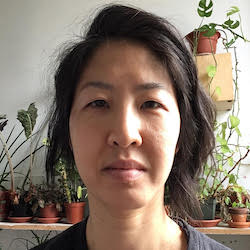
Bonnie Chau: Mandarin Chinese and French to English

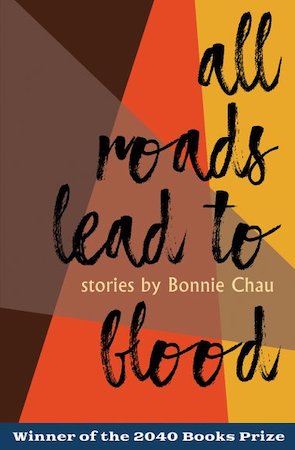
Born to a Francophile family of Chinese descent in California, Bonnie Chau visited Paris before she set foot in New York City. For a brief period of rebellion in high school, she signed up for Latin to differentiate herself—and lasted a week before returning to French. In addition to French, she translates from Mandarin Chinese. Her current, ongoing projects include short stories and internet fiction by the Chinese writer Anni Baobei from the 1990s (she’s written under other pen names since then) and a 1971 novella-in-dialogue, Le Taxi, by Violette Leduc. Chau published her own collection of short stories in English, All Roads Lead to Blood, and serves on the board of the American Literary Translators Association (ALTA). 

Who does a language belong to: “The state of diversity in the translation world is pretty dire. It’s an inescapable fact, for example, that the bulk of Chinese literature in translation, over centuries, has been translated by white men, more specifically old white men in academia. 

Being an Asian American from California translating from French honestly doesn’t feel that questionable to me, because French is so high up there in the hierarchy of languages, so, surely in our world of neocolonialism and imperialism, who wouldn’t aspire to learn and know and translate from French. I think my worries of legitimacy—were I to be really thinking of public or publishing opinion or criticism—would stem from feeling like I simply don’t know enough of the language, history, literature. But I do want to share something semi-related: when I was teaching in France, there was certainly questioning from my young students, who were very confused at the beginning of the school year to be learning English from an Asian person. People have a tendency to think about language as belonging to certain people, to certain bodies, to certain places, geographies, situations. We have all operated under these assumptions. Of course the siloing of languages is also connected to forming communities, creating safety; new languages have been developed out of necessity for these things. There are just a lot of power dynamics and structures in place to consider. It’s never neutral.” 

Translating time in Mandarin: “Maybe the most accessible ‘quirk’ of Mandarin is that there are no verb tenses in the language, that time is indicated in different ways. I think this just is one thing that makes very clear how heavy is the hand of a translator, especially of someone translating between languages that are extremely different. When you read a text that’s been translated from Chinese into English where the verb tenses seem very standard and unnotable and clear-cut, the translator has very actively, intentionally done that work.

Something else came up recently in a story I’m translating, it was the phrase 求签. This issue is particular to Chinese, but definitely generally applicable to translation from many other languages too. 求签 is what’s usually referred to, or translated, as fortune sticks, or fortune-telling sticks. But there’s just so much orientalizing baggage there, and I think it’s really important to be thinking carefully about context in that way. In my translation as it stands now, I have it in the pinyin form (qiuqian), which is also somewhat strange, because it’s now a translation from Chinese characters not into English per se, but into a romanization.”

Paige Aniyah Morris: Korean to English 

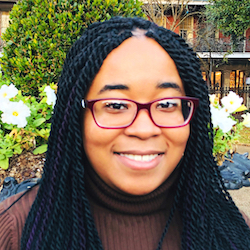
Paige Aniyah Morris

New Jersey native Paige Aniyah Morris translates from Korean to English from Incheon, South Korea. She has been working on Love at the Harbor, Kim Sehee’s debut novel. For a preview, check out an excerpt of the novel here in The Margins. In 2021, Morris’ publications have included a Kim Sehee short story in the summer issue of The Georgia Review and two chapbooks, including Seo Jangwon’s “Happy Together,” which charts a trans woman’s relationships in the wake of her transition. She’s also working on a book-length project of genre-queer collection of short stories under the mentorship of Anton Hur. 

Learning Korean from blogs and YouTube: “I was in high school and had exhausted the whole foreign language curriculum, which was just two languages: Spanish and Latin. My history teacher had specialized in East Asian history and languages and suggested I try to learn Korean, probably thinking it would be hard enough to keep me sated for the rest of high school and possibly forever. He was right. I learned to read Hangul, the script, from random blogs and made crude little sentences with the help of YouTubers. I don’t know what it was about Korean, but studying it was one of the rare times I felt a sense of pure wonderment at learning something unattached to any end goal. When I found out there were actual Korean classes at my undergraduate university, I felt like the universe was giving me the green light to let myself get swept up in this language and everything that came with it. So I studied Korean formally for two years in college and have been very spottily self-taught since then. I wouldn’t say I’ve acquired it. I’m always learning it, every day.”

Click here to read Bad Weather: a chapter from “Love at the Harbor”

On being a Black American translator of Korean: “I personally haven’t yet encountered another Black American actively pursuing Korean literary translation despite many desperate shouts into the void, i.e., the Internet. But I want to believe there are more of us, and my dream is to form a community and possibly a pop-punk band or something with them someday.

I think being a Black American who translates from Korean into English has given me both an unusual perspective on the work and a ton of anxiety about it. My approach to translation is inevitably shaped by my own relationship to language, which I can’t separate from my Blackness. At almost every turn, I feel I’m much more likely to face suspicion and scrutiny rather than the grace and praise often afforded to non-Black translators. That, paired with my cautiousness around the very fraught act of translating from an often-colonized language into an incredibly colonial one, leads me to take extra care to get things right and honor the work. Language is so precious to me, and I think that absolutely has to do with constantly being made to feel shame about my own particular uses of it, which are inextricable from my Blackness and the Black literary tradition I write and exist in. So I am very careful when I translate now, maybe overly so, but I think that only serves to make the work stronger and all the more rewarding.”

Kareem James Abu-Zeid: Arabic, French, and German to English 

Kareem James Abu-Zeid’s first language, English, came from his American mother, but he also grew up speaking Arabic with his Egyptian father, and learning it as a second language in schools in Kuwait until the age of eight. He speaks (and works in) French and German. In 2021, he translated the Palestinian poet Najwan Darwish’s Exhausted on the Cross. He has also translated the works of the contemporary stars of Arabic poetry, Iraqi-born Dunya Mikhail and Syria’s Adonis. 

On the similarities between Quran recital and poetry: “It’s not exactly poetry, but I remember–as a child in Kuwait–hearing the Quran being recited on the radio, and also the call to prayer coming from the mosques. I used to sometimes go with my father to the mosque on Fridays, too. There’s a real musical quality to the Quran, and it has a lot of the same elements as poetry (frequent rhyme, and very strong rhythms), though the genre that seems to come closest to it is called saj‘, or rhymed prose–some of the pre-Islamic soothsayers (kuhhaan, plural of kaahin) recited their prophecies in that genre, though most of those ancient recitations were lost.”

How translating poetry keeps him humble: “There’s a real joy that is inherent in the creative act of translation itself, rather than in any recognition that the work may or may not receive in the future. Recognition and accolades are wonderful, of course, but they are not the goal. The ‘goal’ is to enjoy each moment of the process, and hopefully bring something new and beautiful into the world, something that impacts a few people positively, in some small way. Translating poetry keeps me humble, too. The truth is, even the most successful poetry translations are probably going to reach far fewer people than your average reality show on TV, so how much ego can you really have as a translator of poetry?”

Layla Benitez-James: Spanish to English 

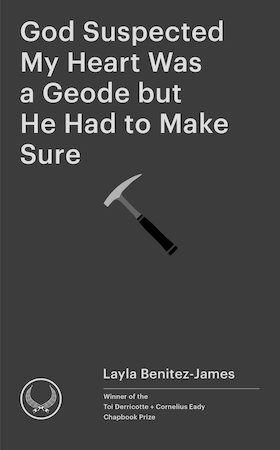
Layla Benitez-James is an Austin, Texas-born translator, poet, and editor based in Alicante, Spain. Her poems and translations have appeared in Poetry London, The London Magazine, Hinchas de Poesia, and elsewhere. Her chapbook God Suspected My Heart Was a Geode but He Had to Make Sure won the 2017 Cave Canem Toi Derricotte & Cornelius Eady Chapbook Prize was published by Jai-Alai Books. She’s currently working on a co-translation project with Lawrence Schimel, her “a kind of unofficial mentor,” of Hija del camino by Madrid writer Lucía Asué Mbomío Rubio. 

Realizing that the Bible was translated text: “I remember this lightbulb going off when I really realized that the Bible was a translated text and that someone/a human was making decisions about writing these rules for people to live by. Before I did any formal translating myself, I wrote about this in terms of creative writing and how (following on from the Tower of Babel) translation was a transgressive and rebellious act against a God that wants to keep us apart from one another and without understanding.”

Translating problematic language: “There is much more casual, verbal racism in Spain. I’ve heard a lot of problematic language, but I’m also really really interested in this topic in terms of translation and spoke on a panel about translating racialized language for ALTA in October 2020, and then recently spoke on a panel about No es país para negras which has a lot of language used by a woman of color to highlight racist attitudes in her native Spain. I interviewed the playwright & actress Silvia Albert Sopale about her work, and she had some really interesting insight about how important it is to translate that language and not censor it (as it was in a German adaptation, but I also had the experience of reading one translation into English that I think was done by a white Spanish woman/non-native speaker and she went way overboard with some terms in my opinion, using the n-word where I don’t think that was at all the level of the original. That’s an unfolding story, I’m planning on reaching out to her to ask about her process and who read the draft before it went to publication, but I’m thinking about making a bid to retranslate the work.” 

Chenxin Jiang: Mandarin Chinese, Italian, and German to English 

Chenxin Jiang grew up bilingual in English and Chinese. A family move to Hong Kong meant that “Mandarin was rapidly eclipsed by Cantonese.” Her book-length literary translations include Volatile Texts: Us Two by Zsuzsanna Gahse, Tears of Salt: A Doctor’s Story by Pietro Bartolo & Lidia Tilotta, and The Cowshed: Memories of the Chinese Cultural Revolution by Ji Xianlin. Her current projects include the translations of works by Bian Zhilin, a Chinese poet of the 1930s, and the contemporary poets, the Hainan-based Jiang Hao and the Hong Kong-based Yau Ching. 

Code-switching as a central part of the BIPOC experience: “I believe literary translation has the potential to become one of the most diverse, welcoming corners of the publishing world, because code-switching and existing in translation—whether between or within languages—is so central to the BIPOC experience and the experience of anyone who finds themselves on the margins, for any reason.”

On her multilingual grandmothers: “I was born in Singapore and grew up in Hong Kong. Both of these cities are translated places, as is evident in the etymology of their respective names. All of my grandparents were multilingual, having absorbed Malay and Japanese from their environments to the extent that was necessary for survival, and all spoke multiple Chinese topolects. I scarcely remember a time when I didn’t compare the differing versions of everything from the copy on milk cartons to a notice posted at the bus stop. I also grew up in the Anglican church, and religion, to my mind, inevitably entails learning to exist in a translational state in which the mysteries of one realm are brought to bear on the contradictions of another. I’ve always been translated and translating.” 

Anton Hur: Korean to English 

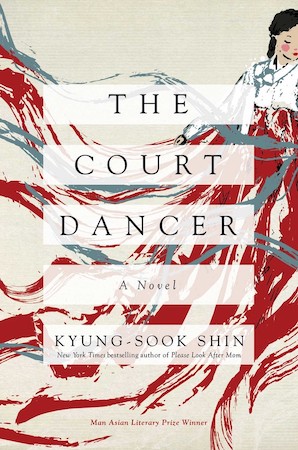
South Korea-based Anton Hur was born in Sweden to South Korean parents. Korean and English were his first languages, and today he “can survive in Mandarin and French.” As the translator of Kyung-Sook Shin’s The Court Dancer (look out for the imminent, tentatively-titled Violet) and Kang Kyeong-ae’s The Underground Village, Hur is one of the translators who’ve illuminated the stars of new Korean writing for English readers in recent years. His translation of Bora Chung’s genre-twisting collection, Cursed Bunny was published in July 2021. He is in the midst of translating Ocean Vuong’s Night Sky with Exit Wounds to Korean. 

Serving as a childhood translator for his parents: “I translated for my parents as a kid because we were posted overseas for nine years of my childhood, but I don’t think they really needed it, certainly not my father who’s fluent in English to this day. They just wanted me to get used to expressing myself in both languages, I guess. Because we were not immigrants, it was always a given that we’d return to Korea, and they were very keen on my brother and me being perfectly bilingual. A lot of Korean parents back then thought speaking English well was an asset while Korean they could take or leave, but my parents knew it was the bilingualism that was the real asset, that English-speaking Koreans were a dime-a-dozen but Koreans who spoke both languages fluently were few and far between. They still are.”

Language as an instrument: “We all have language inside of us that’s waiting to come out and you have to be as quiet and still and open-minded as possible to hear it. I remember reading in The Mozart Season by Virginia Euwer-Wolff about a violinist who looks down at her violin and imagines all the beautiful music trapped in it, waiting to be played into life. I think translation is like that and life is like that. Your body is a conduit for some kind of energy the universe wants to express, whether it’s language or dance or scientific curiosity or wonder. You have to kind of tap into that and trust the process and take care of yourself, your instrument.”  

Robin Myers: Spanish to English 

New York-born, Mexico City-based poet and translator Robin Myers came to Spanish after a childhood of being fascinated by the life of her Mexican grandmother, who died long before she was born. She lived in Jerusalem after college and picked up conversational Palestinian Arabic. Of this third language, she says: “Every once in a while I’ll still have a brief, fragmentary dream in Arabic, and it makes me wistful both for what I’ve forgotten and for what I’d only just begun to learn.” 

Highlights from her recent translations from Spanish are The Restless Dead by Cristina Rivera Garza; Cars on Fire, short stories by Mónica Ramón Ríos;  and her translation of this unforgettable meditation, “All That is Man” in The Baffler by Ezequiel Zaidenwerg about the legacy of Diego Maradona.

Music as an act of translation: “An early act (of translation), if not the first, was learning to play an instrument. I started taking piano lessons as a child, and once I’d progressed enough to play music I really loved, I think I began to understand, or at least experience, the intimacy of interpretation. The practice of refracting yourself and your language (musical, verbal) in response to and in collaboration with something that already exists. You become an apprentice to it, enmeshed in it. As an experience, it keeps changing all the time. Maybe that’s why I’ve never understood, in music, the hierarchy that puts ‘original’ compositions on top and covers below.”

The physicality of language: “When I ‘discovered’ poetry in my teens, it was a revelation to me: that language could do so much with so little, could take so many liberties, could break so many ‘rules,’ could be so freeing and so free.

What’s true across the board, though—in writing poetry, translating poetry, and translating prose—is that these are all practices that really force you to plunge your hands into language as a physical, material thing. As both a poet and a translator across genres, I’m always thinking about rhythm and sound. What is it that these words do together? What are their textures like? Where do they clash or strain or flatten or soothe? What decisions can I make, on the level of language, for them to have a different effect on the reader’s ear and mind and expectations? Reading and writing poetry has taught me to enjoy—and prioritize, and believe in—the plasticity of language in any genre.”

As My Vision Deteriorates, Every Word Counts

Reading became slower and rougher for me several decades ago, when a genetic ailment made the tiny center of my right retina start to crumble delicately away. I was forty-one. I’d published poems and was trying to learn to write stories. I had been a chain reader, unhappy at the end of a book until I started the next one. I continued to read, once I had acquired dedicated reading glasses with higher magnification than I needed simply to see the letters. Still, reading was more work than before. Because I put in the same effort for silly books as for literature, to reward the effort I needed the concision, freshness, and complexity of literature. I didn’t have the patience for fictional sentences that offered the same news three times: “‘I’m not interested,’ she said, wrinkling her nose and pushing the book away.” I wanted the writer to omit the repetition or complicate matters: “‘I’m not interested,’ she said, pulling the book closer.” 

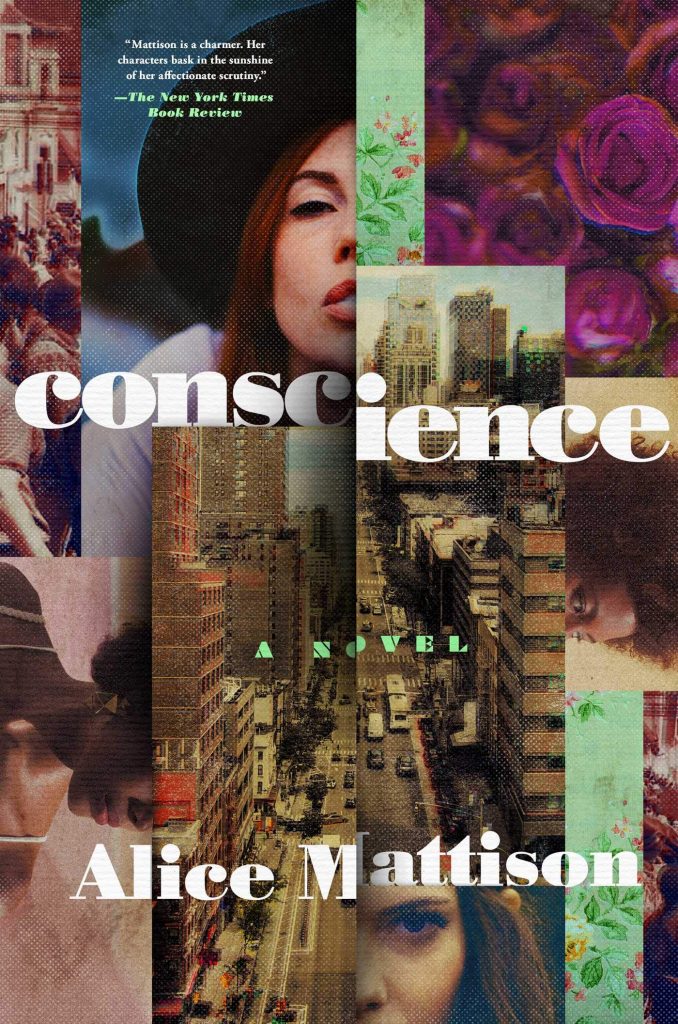
Cover of Conscience by Alice Mattison

Even with the glasses, I could no longer enjoy some well-written books, those in which extravagant, mellifluous, unstinting sentences tumbled down the page, and the lushness was part of the point: Tristram Shandy, for example. I still could read dense books with long, involved sentences, but each phrase—as in Henry James—had to alter the meaning slightly: a Henry James character may indeed pull the book closer while claiming not to take an interest, maybe because the book belongs to someone whose every possession may enlighten the character about just what’s going on, whether what looks like love and generosity is real, or mere expedience. James’s attention to shades of meaning is often so keen you could make jokes about it if enough people had read him to understand; in What Maisie Knew, James seems to make fun of his style himself, when he writes about Maisie sizing up the motives of her father: “but if he had an idea at the back of his head she had also one in a recess as deep, and for a time, while they sat together, there was an extraordinary mute passage between her vision of this vision of his, his vision of her vision, and her vision of his vision of her vision.” I could read that, and still can, and not just because “vision” is one of my favorite words. I could read James, who wrote extremely long paragraphs,  but I couldn’t read most authors who wrote paragraphs of a page or more: I needed little empty places to rest on the way up the mountain. I could read most books I wanted to read. 

All this time, I read and wrote poems and stories. I’d always read novels with particular pleasure. Writers converse through books; when I could read novels again, I wanted to respond in kind. I became a novelist.

Now a large central area in my right eye doesn’t see, and small blanks interrupt the vision of my good left eye. I can still read any letter of the alphabet, any word, even in fairly small print. Objects a few feet away are clear—a cup, a lemon, a knife—but the object to the right of the one I look at is missing, replaced by a gray blur, or the color of what’s beyond it. If I look straight at the cup, there’s no lemon. If I look at the lemon, I don’t see the knife. Same with the words I typed above. If I look at “a cup,” I can’t see “a lemon.” To read a sentence I take many looks, and may forget the beginning before I come to the end. Sometimes a word disappears into one of my visual gaps and I may not miss it for several sentences, until something doesn’t make sense.

Many of us remember books we’ve read in print more easily than those we’ve listened to or read on screen, if only because we see them lying around. 

To read with comprehension we need to see a bit of what’s coming, and not skip. I thought a headline about Senator Patrick Leahy concerned someone named Leah. I think a word is the last in a sentence, so my mind does that little dip-and-pause, but I’m reading about horse sense, not a horse, or a peach pie rather than a peach. Or I fail to see the end of a word, and then a pear turns into a pearl. I miss a punctuation mark and for “we visited; Glenda stayed home,” see “we visited Glenda” and wonder what staying home has to do with it. I try to figure out how apples connect to the topic, and how a noun just there might fit into the sentence, then give up and go back, to see the “i” that I missed when I first read “applies.” All those mistakes don’t happen at once. When my splotchy vision is not making me fail to grasp the point of an essay or fail to see the word “salt” in a recipe, it keeps me amused, keeps me aware of language itself. Who knew that “apples” is only one letter different from “applies”? Who could regret noticing that? 

Now it’s not merely opulent or sloppy books that can’t keep me reading. Because I will have to reread some sentences and paragraphs to follow the sense, a news story must tell me something surprising but comprehensible. If it’s obvious, I lose patience; if it’s at all involved and I’m not already curious, I abruptly realize that I haven’t paid attention for the last four paragraphs. As for books—especially novels, still my favorite reading—I cannot read longwinded repetitious authors even more emphatically than I couldn’t read them before, but I revel, even more than before, in longwinded authors who say something subtly different with each phrase. Recently I discovered that, with the patience that has come with being forced to read slowly, I can now enjoy some authors who write paragraphs several pages long, and not just Henry James; Rachel Cusk and Garth Greenwell turned out to be worth the trouble. I am sure I still couldn’t read a book that lacked paragraph breaks altogether. On the other hand, poetry is easy, with plenty of white space from which to launch the mind. Reading may be worth the trouble, but it’s trouble. I can’t read long enough to get eyestrain; I get brainstrain. Yet I keep buying books and reading them, not to mention writing them.

Why not audiobooks? Surely they’d help. I resist them as if listening to an audiobook would prove I can’t read, as someone with diminishing mobility might resist sitting down in a wheelchair even for a moment. (Many people who do not have eye trouble enjoy audiobooks; I know this.) I feel similarly about e-books; a pile of books that has been read represents accomplishment and evokes memory. Many of us remember books we’ve read in print more easily than those we’ve listened to or read on screen, if only because we see them lying around. 

I’ve lost what I too once had: knowing what the words mean without consciously seeing them.

Listening to an audiobook, I wouldn’t hear punctuation. True, an actor could produce the pauses, hesitations, and buildup that punctuation merely signals. But I like punctuation. I wouldn’t know whether the author had chosen a period or a semi-colon for the end of that main clause, wouldn’t know about em dashes, colons, parentheses, ellipses. Audiobooks are mediated. Another person would be present as I read. Worse, that person would have interpretive power, power over speed. Audiobooks happen in time, not space, like music or dance. Performance is indispensable but it isn’t the same as reading. 

Once we have truly learned to read, we don’t consciously see words, much less letters. If the words describe an event, we seem to find out what happened directly and all at once. We can’t not know, as we realize when our eyes and minds take in words we didn’t intend to read—a spoiler, a secret we’d rather not learn, a gruesome detail in a paragraph we planned to skip. We can’t decide to look at the first two words and not the others. A friend and I suspected that her pre-school son had taught himself to read but was keeping his new skill a secret. We weren’t sure until he walked down a staircase under a sloping roof in my house. The ceiling is a little more than five feet up, and I’d taped a sign on it: “Don’t bump your head.” Since he was only about four feet tall, he asked, “Why would I bump my head?” Reading was already so natural to him that he hadn’t noticed himself doing it.

Unlike him, when I read now, I know I’m reading. My thick reading glasses make it necessary to pull the book close. I can’t stop to chat because it’s so hard to find my place again. Nobody can come between me and my book. I’ve lost what I too once had: knowing what the words mean without consciously seeing them. I miss falling into a book as into a different place and time. I used to be aware only of the content, not of the act of reading. I still stubbornly consider myself someone who reads what she should: the books and articles I’ve been hearing about all my life or all this week, the story a friend loved. I try not to think about books I start and put aside, or don’t even start, no matter how curious I am. I’m more affected by this eye trouble than I like to admit. What’s happening to me can’t be described as good.

But when I read, insofar as I hear a voice, it’s mine. Though publication of a book means that many copies exist, and we all benefit from learning about the good ones, silent reading perfects solitude and solitary readers may get the most out of books. Good writers convey thoughts or observations so surprising that they seem new and personal: even if a book was written long ago, I experience it all by myself. I talk about books after I have read them, but while I’m reading, I want to keep them to myself, especially fiction, which is written intimately, as if addressed to one person who will understand and can be trusted. I cherish that privacy. Nobody knows what I have just read and that’s just the way it should be. When I read with my eyes—as I still do now—at that moment there is just one reader. Each book divulges itself only to me: only I—it seems—can love it as it should be loved. I live in blissful serial monogamy with each book that I can stand to read at all.

Why Wedding Rings and Hotel Hookups Don’t Mix

“The Ring” by Pedro Mairal, translated by Jennifer Croft

How does it fit you? asks his wife’s voice from the shadowy bedroom. Emilio is skinny, gangly, standing before the door in the light of the hall, dressed in his soccer outfit, checking out his new blue socks and cleats. They’re very professional-looking—are they comfortable? Yeah, they’re a little stiff, but I’ll break them in by playing. Anyway, I’m off. Don’t stay too late, Emilio, his wife says. We’ll probably have a beer after the game, he says and walks out with his bag over his shoulder.

It’s night outside. Emilio crosses Plaza Las Heras, checks to make sure no one is coming, and then, going behind a tree, he rubs his cleats against the grass, against the trunk, drags his feet through the dirt, wipes each sock with the sole of the other foot’s shoe until they’re stained. Then he resumes walking, and he crosses the square. He walks a number of blocks, until at the entrance of an apartment building he pushes the buzzer and is let in.

Upstairs, his friend Franco greets him and starts laughing at his outfit. Don’t you laugh. It’s a birthday present. If I don’t wear soccer gear, she won’t believe me. Franco says: Come on, why don’t you give me a hand with the fruit for the daiquiris. Wait, I have to get out of these clothes, says Emilio, stealing off to the bathroom.

In the kitchen, now wearing jeans and a t-shirt, he helps Franco cut up the fruit while they smoke a joint. But your shirt won’t have that funk to it, says Franco. I mean, what do you expect? You want me to go for a run? I got my shoes filthy, and I stuffed my shirt in my bag all wrinkled. You don’t think she’ll figure it out, do you? I don’t think so, no, says Emilio. But doesn’t she ever say anything to you? She says not to stay out late. Honestly, I don’t even think she cares anymore. Sometimes I get back a little before dawn and get in bed, and she wakes up and makes herself some breakfast, and I spend the morning sleeping in and then I go to the office while she takes a nap. We take turns sleeping. What does she do all day? Sleeps and eats, who knows?

You don’t think she’ll figure it out, do you?

They keep cutting strawberries and peaches. Hey, don’t you think daiquiris are a little bit boomer? asks Franco. Yeah, you’re right, these chicks probably drink Speed and vodka, that kind of thing. But daiquiris are sweet, and they have fruit in them, chicks like them, I think. Is it all the girls from the magazine coming? No, they’re bringing girlfriends, too. Lola has a friend who’s half Brazilian who has an ass you could put in a frame. Was that the buzzer?

When the apartment is full of people and music and smoke, Emilio dances in the throng, alcohol in hand. He seems a little unsteady now. There are people sitting on the floor talking in groups. Emilio dances with a girl with curly hair and a short blue dress. Every so often they brush against each other as they dance, and the girl lifts her arms. They smile at each other. I have to go to the bathroom, she says into his ear. Emilio follows her, and they go together into the hallway. There’s a line. Is this the line for the bathroom? A girl in glasses tells them it is. They stand there waiting, and Emilio says to the girl with the curly hair: I’m going to tell you a secret. The girl lets him come closer. Emilio speaks into her ear. She smiles and says: I never heard that version before, the one I know goes, “You’re hotter than chicken and potatoes.” Are you half Brazilian? Yeah, how’d you know? My mom’s Brazilian, I lived there when I was a kid. Emilio kisses her neck, then they kiss on the lips. When they stop, she says: Aren’t you married? I noticed your ring. Well, yes, but no. It’s not really…Not anymore. They continue making out. I really have to pee, she says. Want to get out of here? Sure, she says.

They squeeze into a corner of the elevator. What’s your name? Emilio, you? Sandra. On the street Sandra pees between two parked cars. Don’t look. I won’t. There’s no one coming, is there? No. What’s that bag for? she asks him once they’re walking. I had to bring some stuff to Franco’s place. Where do you know Franco from? From college, I’ve known him for like ten years, you? He’s a friend of a friend. Hang on, I want to kiss you right here where the street light’s making you look so sexy, Emilio says. They make out in the doorway of an apartment building, and when he starts to lift up her dress, she says: Not here. He says: Let’s go to a telo, there’s one around the corner, on Arenales.

They go into the telo, he pays, and they go looking for their room. They lock the door behind them, and she says, in the voice of a hostess: Welcome to Together Hotel, please remember…And a recorded voice says through the speaker: Welcome to Together Hotel, please remember that room service is available, and thank you for choosing us. He looks at her in surprise, and they laugh. You got stocks here? I used to come with a boyfriend, I shouldn’t have done that, I’m pretty drunk, I’d like to take a shower. We can shower together, says Emilio.

She turns on the bathroom light but turns it off again because it’s too bright. He turns on the water, and as it explodes out of the shower head he adjusts the temperature. He pulls her dress up over her head. She helps him take his t-shirt off. They get undressed trying not to stop kissing, but they can’t. He has to yank his jeans off, one of his legs gets stuck, and he kicks at them until he’s finally free of them. She gets in the shower, and he gets in after her.

He starts lathering her up under the stream. He soaps her breasts, she turns to face the tiles, showing her back to him. Emilio runs his hand between her thighs, slides the whole edge of his very soapy hand between her cheeks. Sandra, your ass is so toned and tight that when I put my hand like this, it pops off my ring, you feel that? he says in astonishment, repeating the movement. It’s like a bottle opener, your ass. Suddenly something happens. What’s wrong? she says. He crouches down. I dropped it, hang on, don’t move, turn on the light. Do you want me to stand still or turn on the light? Turn on the light, he says and shuts off the water.

On all fours Emilio searches the floor of the shower but doesn’t find it. You don’t think it could have gotten stuck in…? No! How could it be on me! she says. I think it went through the grate, he says. He peers into the drain. Was it really that loose? Yeah, it always fit me a little loose. She wraps a towel around herself and sits on the lid of the toilet, crossing her legs, not saying anything. What should I do? he asks desperately. But is it in there? I don’t know, I can’t see it. Use the flashlight on your phone. He searches for his phone and shines the little light down the drain. There it is! There’s like an elbow in the pipe and it’s right there, I can see it. Okay, but wait, she says, calm down, get dressed, and have reception send someone to help you.

He insists he’ll get it out fine on his own. I need something long, a wire. He paces around the room looking for something that will work.

Would you get dressed? she says. You’re making me nervous. You think you’re nervous, he says. Alright, take a breath, weren’t you just saying it wasn’t going to work out between you and your wife? What do you know about it? You told me, she says. If you’re not with her anymore, why don’t you just leave the ring there, what do you want it for? You don’t get it, kid. What do I not get? That you’re full of it? Emilio is silent for a minute. Then he says: The day you get married, you’ll understand, you’re too young now. Oh, wow, thanks. What a fucking ass. Emilio looks at her. Maybe with that thing you have around your neck, I can get it out. My necklace? No fucking way, you’re not putting my necklace down there. It has the perfect little catch for it. No. Emilio puts on his jeans and t-shirt, digs around in his bag, brings his keys and one of his soccer cleats into the bathroom. What are you going to do with a shoe? Not answering, he pulls off one of the laces, removes all the keys from the ring on his keychain and twists it. He hurts his fingers, presses it into the marble of the sink until it’s shaped like an S and then he ties it to the shoelace.

Weren’t you just saying it wasn’t going to work out between you and your wife?

She gets dressed and sits back down on the closed toilet seat, drying her hair, combing it. I’m not leaving here until I get it out, says Emilio. He gets the shoelace through the grid and lowers it and raises it with one hand, while with the other he tries to shine the flashlight from his cell phone inside the pipe. A friend of mine had to leave her car at a telo one time, she says, when she went to the garage it wouldn’t start, a service truck ended up having to deal with it. Emilio doesn’t respond. After every failed attempt, he says “fuck.” She puts on her shoes and says: Take it as a sign, it’ll liberate you, it’s over, your suffering is over, I broke up with my boyfriend two months ago, and it was a total liberation, sometimes you just have to let relationships that aren’t working go exactly like this, down the drain…Sweetheart, can you just shut up? It’s hard enough trying to get this out of here without having to listen to your moronic analyses. Sandra pauses, rises, and then suddenly turns on both of the shower taps. A cascading torrent floods over Emilio, who cries, What are you doing?! and tries to turn off the taps and cover the grate with his foot. Sandra slams the door as she walks out. Soaked, Emilio tries to keep the water out of the drain, crouching down, peering back in with the flashlight of his phone, and says: Fucking piece of shit little girl. He sits there on the floor of the shower, his jeans and his t-shirt drenched.

He walks slowly down the street with the bag over his shoulder. He goes back to the apartment where the party was. There aren’t many people left. He tries to find Franco among the groups of drunken partygoers. Franco’s in the kitchen. What happened to you? he asks. Is it raining? Emilio tells him, and they talk for a while. Franco laughs, then says: What if you order another one? No, she’d notice, plus it had her name engraved on it, she’s the one who got them. The only thing I can think of is if you tell her you got mugged. Just the ring? Maybe your license too or something. What about my phone? Take out the SIM card and leave the phone here, says Franco. She’s not going to believe me, she’s going to see I wasn’t hurt or anything, I’d have to be beaten up, so she’d at least think I tried to protect my ring, otherwise…They’re silent a moment. Hit me in the face. No, says Franco, you’re insane. Just one punch, come on. No. Hit me with something, I’m asking you as a friend. Hit me with that cheese board. Emilio grabs the wooden board and puts it in Franco’s hand—he won’t take no for an answer. Some people come into the kitchen. Franco gets them to leave. They practice how exactly he’s going to hit him. You’re sure about this? Yes, says Emilio, facing him, his hands behind his back. Franco makes as if to hit him in the eyebrow, but halfway through he chickens out and swings at an angle and barely grazes him. Again, harder, you piece of shit, come on! shouts Emilio. Franco raises the board and hits him right on the eyebrow and the cheekbone, a hard, flat blow. Emilio lifts his hand so Franco won’t keep going. His eye is closed, and he’s bleeding. Was that too much? asks Franco. It’s okay, says Emilio. You’re gushing blood, sit a minute, says Franco. But Emilio says no and leaves.

He goes home on foot, getting blood on his t-shirt and his jeans on purpose. He reaches his house. He takes off his clothes in the laundry room and puts it in a bucket that’s half full of water. In his underwear, he goes into the bathroom, looks at himself in the mirror, and cleans the dried blood off with soap and toilet paper. His eyebrow and cheekbone are very swollen, but they’re not bleeding anymore. He comes out of the bathroom, walks down the hall and continues into the darkness of the bedroom.

11 Afro-Latinx Writers Whose Work Traverses the Americas

While the idea of Blackness is very much associated with the United States of America, the first Africans in the historical record to enter the Americas were, in fact, Afro-Latinxs. African-descended populations peopled Central and South America in large numbers long before they were deposited by slavers in places like Jamestown, Virginia and Plymouth, Massachusetts. This fact matters because it suggests how America-centric our understanding of transatlantic slavery and the history of the Americas is. 

Whether writing about the past, the present or the future, Afro-Latinx writers grapple with issues of identity and hybridity, immigration, isolation and assimilation, and what it means to occupy the nexus point between Blackness and Latin Americanness, two identities that within the United States context are still deeply marginalized.

As a writer myself, I am interested not just in the stories that are marketed in the mainstream, but those stories that happen on the margins. My novel The Confession of Copeland Cane is a story that is on its face about police violently vamping down on Black boys and men, but in its totality speaks to not just that reality, but also environmental injustice, over-medication, over-sentencing, and, finally, the possibility of escape from an increasingly unfree American future. Like Copeland’s cordoned world, the Black diaspora is sectioned off by national borders and language barriers, but literature, whether of the future or the past, has the ability to reach across these lines. 

Here’s a brief list of Afro-Latinx fiction writers current and past whose work traverses the Americas.

What's Mine and Yours

Naima Coster

Dominican American writer Naima Coster’s novels Halsey Street and What’s Mine and Yours showcased her brilliance as a major literary talent. Coster’s work explores an array of headline issues through the intimate prism of American families in all their love, diversity, dysfunction, and denial.

Halsey Street, which was a finalist for the Kirkus Prize, chronicles a set of circumstances that too many Black Americans know too well: The burdens borne by a family as they deal with the spidering impact of gentrification upon their Bed-Stuy, Brooklyn community. 

The just-published What’s Mine and Yours was inspired by the 1619 Project reportage of Nikole Hannah-Jones on the integration of a Missouri school district. Coster sets her novel in a North Carolina town instead, but at the heart of the book is more than a clash of racial prerogatives, but rather an intimate multi-family saga of two mothers—one Black, one white—and their children, the objects of the integration debate.

Aya de Leon

Aya de Leon is a heist fiction novelist, an emcee, a scholar of crime fiction in film and books. As a novelist, de Leon came to national prominence with her widely acclaimed novel Uptown Thief. The heist narrative set in Spanish Harlem features a former sex worker turned Afro-Latina Robin Hood, Marisol Rivera, and the battered women, most of them sex workers, whom she shelters. But de Leon was already well-known in Bay Area spoken word poetry circles as the creator of the one-women hip-hop theatrical Thieves in the Temple: The Reclaiming of Hip-Hop, a production which anticipated Lin Manuel Miranda’s more famous hip-hop theatrical (perhaps you’ve heard of it) by almost ten years. 

Though the Bay Area is de Leon’s adopted home, she’s a native New Yorker and her fiction is set there, as well as Puerto Rico (she is of Afro-Puerto Rican heritage) and Cuba. Since publishing Uptown Thief, de Leon has gone on to release a series of Black feminist street lit novels that turn the narrative conventions and sexual and economic politics of the genre on their head. Meanwhile, drawing on her scholarship—de Leon is a professor at the University of California—she has written incisive essays on a range of issues, from analysis of detective literature, to #metoo, to prime-time TV’s celebration of police violence.

Elizabeth Acevedo

Dominican American poet and novelist Elizabeth Acevedo is one of the great young writers in America. Acevedo’s wildly successful debut Young Adult novel The Poet X received the 2019 Walter Dean Myers Award for Outstanding Children’s Literature, the 2018 National Book Award for Young People’s Literature, and was a 2018 Kirkus Prize finalist. Subsequent novels With the Fire on High and Clap When You Land have further established Acevedo as a major voice in contemporary literature. She is a CantoMundo and Cave Canem fellow, which represents her dual poetic identity within the Latinx and Black poetry communities.

Aja Monet

Cuban Jamaican, East New York-raised Aja Monet became the youngest winner of the Nuyorican Poets Café’s Grand Slam. The year was 2007. She was 19-years-old. You can read and listen (on audiobook) to Monet’s surrealist blues poetry and storytelling in her chapbook The Black Unicorn Sings and in the anthology Chorus. Her first full-fledged book of poetry, My Mother Was a Freedom Fighter, received critical acclaim, as well as a nomination for a NAACP Image Award for Outstanding Literary Work. 

As an activist organizer in South Florida’s Little Haiti, Monet has co-founded a political safe-haven for artists and organizers called Smoke Signals Studio.

Brother, Sister, Mother, Explorer by Jamie Figueroa | Penguin Random House  Canada

Jamie Figueroa

Jamie Figueroa is a Puerto Rican novelist of Afro-Taíno descent. She published her debut novel Brother, Sister, Mother, Explorer in February 2021. The novel has received praise from the New York Times, LitHub and Publisher’s Weekly. I’m looking forward to this fine novel receiving the readership that it deserves. Figueroa writes:

“One marker of the ongoing colonial project is the refusal to acknowledge the complexity of identity and the polyphony of perspectives within the construction of a single category of race and ethnicity…

Blending the boundaries of poetry and prose, revealing true names and renaming as a way to expose additional truths, as well as questioning ‘reality,’ are some of the ways I actively engage in decolonizing my imagination.” 

Efrain's Secret by Sofia Quintero

Sofia Quintero a.k.a. Black Artemis

Puerto Rican Dominican writer Sofia Quintero—who publishes both under her government name and also as Black Artemis—is the author of Explicit Content, Picture Me Rollin’, Divas Don’t Yield, Names I Call My Sister, Efrain’s Secret, and Show and Prove. A master of hip-hop fiction, also commonly called street lit, Quintero in her Black Artemis alter ego is often grouped with African American writers of the hood like Vickie Stringer, Sister Souljah and Terri Woods. But, like so many writers of color, Quintero’s work is too easily type-cast.

In fact, in Quintero’s debut as a Young Adult novelist, Efrain’s Secret, the author explores the harrowing risks that Efrain Rodriguez, a South Bronx teen, must take just to be accepted to an Ivy League college. In her follow-up, Show and Prove, Quintero chronicles the lives of two South Bronx teens in 1983, as hip-hop suffuses the streets of New York City.

Paulo Lins

The Afro-Brazilian novelist Paulo Lins got his start in the streets by writing songs about his favela’s many gangsters for the local samba singers to sing. The mayhem that those gangsters and the cops who battled them inflicted upon the Cidade de Deus favela became Lins’s subject.

By far Lins’s most well-known work is Cidade de Deus (City of God), an all-out, maximalist narrative of the chaos, violence, and community of one of Rio de Janeiro’s most infamous favelas. Immortalized for mainstream eyes by the film City of God, Lins’s wild vision of Brazilian city squalor has had as powerful of an impact on global understanding of urban hardship as Richard Wright’s Native Son, Sister Souljah’s The Coldest Winter Ever, and Boyz n the Hood.

Man-Making Words: Selected Poems of Nicolas Guillen: Guillen, Nicolas,  Marquez, Roberto, McMurray, David Arthur: 9781558494107: Amazon.com: Books

Nicolas Guillen

Nicolas Guillen was an Afro-Cuban poet who played a prominent role in the Harlem Renaissance. Guillen’s father introduced him to son music, an underground West African musical form that was heavily persecuted by Cuban authorities in the early 20th-century as part of a larger campaign of anti-Blackness. Guillen, like all Black Cubans, experienced systematic anti-Black racism little different from what Black people across Latin America and the United States experienced during the first half of the 20th-century.

Like son music itself, Guillen’s poetry synthesizes Cuba’s mixed African and European culture. In 1930, Guillen met Langston Hughes, the most famed poet of the Harlem Renaissance. Guillen and Hughes hung out together in Havana and Hughes inspired Guillen to publish Motivos de son, a book of eight poems about Afro-Cuban music and life that made Guillen’s international reputation, elevating the status of Black Cubans.

With subsequent books, including West Indies Ltd., Guillen’s poetry became increasingly political, advancing the Negritude movement and political Marxism. Along with Hughes and Hemingway, he traveled to Spain during the Spanish Civil War. With the tumultuous cold war intrigues of the 1950s, Guillen was exalted by the USSR, exiled from Cuba by the Batista dictatorship, then brought home with Fidel Castro’s revolution, and finally installed by the communist dictatorship as the head of the nation’s writers’ union. Guillen upheld the ideals of the revolution until his death.

Down These Mean Streets by Piri Thomas

Piri Thomas

“I am ‘My Majesty Piri Thomas,’ with a high on anything, and like a stoned king I gotta survey my kingdom. I’m a skinny, dark-face, curly-haired, intense Porty-Ree-can—

Unsatisfied, hoping, and always reaching.”

So begins Down These Mean Streets, Piri Thomas’s powerful autobiographical debut novel. But before he was a writer, Piri Thomas was a career criminal, a heroin addict, a burglar, a felon who shot a cop. He ended up in prison and would have to carry his rap sheet to the grave. Then, at 39 years of age in 1967, Thomas turned his life around and became a writer, a writer of exceptional accomplishment.

Named after a poetic flourish in Raymond Chandler’s “Simple Art of Murder” essay, Thomas’s novel takes readers down the mean, gang and drug-ridden streets of Spanish Harlem, down into the Jim Crow South, where young Piri attempts to connect with his Black heritage, and back to Harlem, where his Eurocentric family and inner-city demons reside. 

An Afro-Puerto Rican novelist, Thomas was immediately taken up as part of the Black Arts Movement of the late 1960s upon the publication of his seminal novel. As such, Thomas is the main forerunner of the Nuyorican poetry movement and Afro-Latin literature in America in general. His work is also regarded in the vein of the street-hardened 1960s narratives penned by Iceberg Slim (Pimp) and Claude Brown (Manchild in the Promised Land) as an example of early street lit, forerunner to the works of current-day street scribes K’wan Foye, Black Artemis, Aya de Leon, and many others.

Manuel Zapata Olivella

Along with the Afro-Colombian poet Calendario Obeso, Zapata Olivella is the premier figure in Afro-Colombian literature. His masterpiece is his 1983 novel Chango, el gran putas (Shango, the Biggest Badass). If the title alone doesn’t do it for you—though I’m guessing it does—the book’s epic, tragic, heroic scope will. Unfortunately, few readers in the English-speaking world have even heard of Zapata Olivella, let alone read his work.

The basics of publication and reader access are still an issue for many a great book written by Black writers across our diaspora. Despite being every bit as ambitious and as innovative with its use of myth and time as the famed magical realist text One Hundred Years of Solitude, Chango, el gran putas is very difficult to procure as an English-language text. It’s a shame because the book brings under its veil Afro-Latin, Afro-Caribbean, African-American and mother continent folklore, gods, heroes, and history. Truly one of the most ambitious books published about the African diaspora, Chango tells the entire sweep of the post-Columbian Black world, from orichas, to slave rebellions on the islands and in Brazil, to the civil rights struggles in America in the 1960s. 

This Is How You Lose Her by Junot Díaz

Junot Diaz

Junot Diaz’s short story collection Drown is both a portrait of life at the impoverished edges of the Dominican Republic and a rugged bildungsroman that, in the main, follows Yunior, a child whose family escapes the political violence and poverty of the D.R. only to find themselves in the urban squalor of ’80s era New Jersey. The book’s finale, the story “Negocios”, is an archetypal American immigration narrative that Diaz delivers in painstaking detail.

Diaz returns to Yunior as a far less sympathetic adult in the Pulitzer Prize-winning novel The Brief Wondrous Life of Oscar Wao. A more ambitious book than its predecessor, Oscar Wao encompasses much of mid and late 20th-century D.R. history, as well as a complicated, hyphenated, semi-absurd American present. The book’s emotional heart is not Yunior, but his attitudinal antithesis, the nerdy and star-crossed Oscar Wao.

This is How You Lose Her, Diaz’s third book and second collection, brings together many of Diaz’s best short stories. “Otravida, Otravez” is told from the perspective of Nilda, a major character in “Negocios,” thus presenting an alternative to Diaz’s male-dominated immigration narratives. The collection also returns to Rafa, Yunior’s street-hardened brother, tracing his romantic life and hustles. Diaz is also an essayist of some note: His “MFA vs. POC” essay, in particular, has had an influence on the structuring of MFA creative writing programs.

The Buffoonery of White Supremacy Trying to Disguise Itself as Literature

Watching video footage of the January 6th Capitol insurrectionists, the viewer faces a bewildering pageant of right-wing symbolism. Retired Texas Air Force officer Larry Randall Brock paces the Senate chamber floor in a costume of tactical gear and body armor, a trio of iron-on patches across his chest: the yellow fleur de lis of the 706th fighter squadron; the Texas state flag; and the red-white-and-blue skull logo of Marvel’s vigilante anti-hero, the Punisher. As the video continues, a new player enters the scene. Jacob Chansley, aka “The QAnon Shaman,” sports a horned fur headdress. He is naked from the waist up to showcase an impressive array of Nazi-adjacent Norse mythology tattoos.

Critics were quick to comment on the spectacle’s surreal atmosphere of cosplay. New York Times fashion correspondent Vanessa Friedman observed of the insurrectionists’ sartorial choices that they smacked of a “postponed Halloween parade,” treading a “fine line between comedy and horror.” That commentators felt compelled to borrow the language of literary genre to describe the insurrection — comedy and horror, tragedy and farce—is no accident. White supremacy has always relied upon the mixing and blending of popular literary conventions in order to secure its cultural relevance. Indeed, the long history of American white supremacy storytelling is rife with pastiche. In the nineteenth century, Black-face minstrelsy and the Ku Klux Klan wedded anti-Black violence, both physical and representational, to the genres of the picaresque and the vernacular tall tale. In the early twentieth century, Thomas Dixon cemented the Lost Cause narrative in the American imagination as sentimental romance/melodrama with his Clansmen trilogy, the white supremacist manifesto that served as a template for D.W. Griffith’s 1915 blockbuster film, The Birth of a Nation

Heir to nineteenth-century white supremacy’s panoply of literary tropes is William Faulkner, who remains in many ways the chronicler par excellence of this, our national malady. He is unsurpassed because, while an unrepentant white supremacist himself, in his capacity as an artist he could not help but capture and critique the mix of pathos and horror at the heart of the Lost Cause myth. Mixing such “low” pop culture genres as minstrel theater, Dixonian melodrama, and pulp crime fiction with high Greek tragedy, Faulkner’s Lost Cause chronicles are prime examples of the genre conventions of the white supremacy narrative. The make-believe, and therefore always potentially buffoonish, quality of Lost Cause mythology was never far from Faulkner’s mind, no matter how sympathetic he may personally have been to it. His stories can help us situate this most recent re-enactment of the white supremacy script within a historical tradition.

Faulkner, who wrote both for a literary and a popular audience, was a master at genre blending in chronicling the “lost dream” of the Old South. In 1938 he published The Unvanquished, a cycle of seven linked stories, the first five of which appeared in The Saturday Evening Post in 1934 and 1935. The early stories are plotted as picaresque boys’ tales on the model of The Adventures of Tom Sawyer, narrating the coming-of-age adventures of Bayard Sartoris during the final years of the Civil War. A mood of make-believe hovers over the cycle. The first story, “Ambuscade,” opens quite literally on a scene of child’s play: twelve-year-old Bayard and his enslaved companion, Ringo, re-enact the battle of Vicksburg on a “living map” built of mud, water, and wood chips— as though re-playing the doomed battle in miniature might magically stave off the fall of the actual city, and of the South to follow. 

When Bayard’s father Colonel John Sartoris returns from the front for reprovisioning, the boys are mesmerized by his uniform. “The tarnished buttons and the frayed braid of his field officer’s rank glinted dully, the sabre hanging loose yet rigid at his side,” Bayard observes. The Colonel looms Titan-like beside his horse, Jupiter, taking on the dimensions of a tall tale hero: “He was not big; it was just the things he did, that we knew he was doing, had been doing in Virginia and Tennessee, that made him seem big to us.” 

White supremacy has always relied upon the mixing and blending of literary conventions to secure cultural relevance.

Playing at war bleeds into real life when Bayard and Ringo shoot a musket at a Yankee soldier on horseback, narrowly missing him. When the Yankee commander comes looking for the culprits, Sartoris matriarch Rosa Millard hides the boys under her hoop skirt while denying all knowledge of their whereabouts, coolly inviting the Yankee visitor to join her in a cup of tea. Colonel Dick realizes he has been hoodwinked but, this late in the war and with a Northern victory assured, is feeling weary and generous enough to play along. The story ends with Bayard and Ringo being punished, although not for the crime of taking a pot-shot at the enemy: Instead, Granny washes the boys’ mouths out with soap for calling their Yankee target a “bastard.” 

Yet The Unvanquished’s playful tone play harbors something much darker at its heart. The white characters’ death-cult level devotion to a “sacred cause, although You have seen fit to make it a lost cause,” as Granny laments in one anguished prayer to the God who has deserted her, thrums through the stories like a muted threat. The penultimate story, “Skirmish at Sartoris,” starts out in the same key of hijinks as the previous tales. Bayard’s cousin Drusilla Hawk, a grief-stricken war widow, has “unsexed herself” and taken up arms alongside John Sartoris. The old ladies of Jefferson are forcing John Sartoris to save Drusilla’s reputation by marrying her. Faulkner describes the stand-off in typical mock-epic fashion as two opposed parties, “the men and the women,” face one another “like they were both waiting for a bugle to sound the charge.” But this quaint domestic skirmish gets sidelined when John and Drusilla arrive in town to discover Northern voting commissioners organizing Black voters and preparing to run “Uncle” Cash Benbow, a Black man, on the ticket for town marshal. Instead of tying the knot, the couple shoot the two Republicans dead and steal the ballot box. They gallop back to the Sartoris homestead to hold a whites-only election there, with a series of pre-marked ballots, to a triumphant chorus of rebel yells. 

Drusilla and John’s exploit is framed as prank; the old ladies’ horror at Drusilla’s rebellion, as she gallops home astride her horse with wedding veil askew, is mined for comedic effect. Yet the prank rings hollow, and Faulkner seems to know it. Ringo, who up until this point has been portrayed as Bayard’s equal and a complex character in his own right, collapses into a minstrel joke. “I done been abolished!” Faulkner has him proclaim upon learning that the Black men of Jefferson have been given the vote. As Ringo descends into racist caricature, Drusilla is transformed into a brittle high priestess of vigilante violence.

The buffoonish quality of Lost Cause mythology was never far from Faulkner’s mind, no matter how sympathetic he may have been to it.

The stories thus pivot from slapstick to high tragedy, a tonal discrepancy cited by critics as the work’s most serious aesthetic flaw. Yet nothing illuminates the logic of white power— then as now— more brilliantly than this lightning-quick pivot from juvenile farce to deadly force. By merging roguish tales of boys’ play with scenes of racist vigilante justice, both enveloped in the dream-logic of fantasy, The Unvanquished— whether Faulkner intended it or no—exposes white power for the childish distortion of reality that it is.

In Faulkner’s 1932 novel Light in August, Percy Grimm is a paramilitary play-actor before becoming the head of a real-life lynch mob. On each national holiday “that had any martial flavor whatever,” Percy Grimm dresses in his captain’s uniform and strolls into town, as “glittering, with his marksman’s badge and his bars, grave, erect, he walked among the civilians with about him an air half belligerent and half the self-conscious pride of a boy.” Grimm, per his surname, is portrayed as nigh-sociopathic in his patriotic fervor: “It was the new civilian-military act which saved him,” the narrator explains. “He could now see his life opening before him, uncomplex and inescapable as a barren corridor, completely freed now of ever again having to think or decide,” secure in “his belief that the white race is superior to any and all other races and that … the American uniform is superior to all men.” 

When Joe Christmas, a Black man accused of raping and killing a white woman, escapes the sheriff’s custody, Percy Grimm leaps into action as a self-deputized citizen-protector. He hunts Christmas down, then kills and castrates him, “his voice clear and outraged like that of a young priest.” Like Drusilla, Percy Grimm is a young, myth-drunk, militarized high priest of white supremacy. Faulkner wants to believe in the tragic sublimity of the Old South. But by casting its avengers as zealots and children, half-mad widows and village idiots, he hedges his bets against what he must, deep down, understand: the ultimate sterility and carnage of the white supremacy story, unworthy of redemption. 

Nothing illuminates the logic of white power more brilliantly than the pivot from juvenile farce to deadly force.

Drusilla Hawk and Percy Grimm, in their mock-tragic grotesquerie, are not anomalies; rather, they constitute a recognizable national type. The cluster of political and ideological commitments these characters embody—that the federal government is traitorous; that Black political participation anywhere a threat to white “liberty” everywhere; that white “patriots” are duty-bound to protect the Constitution with private arms— has shape-shifted over time. But it has never disappeared. 

Take, for instance, Dylann Roof. He is Percy and Drusilla’s heir; he denounced his country’s usurpation by Blacks and Jews, photographing himself for social media draped in a talismanic mish-mash of white power regalia: combat fatigues, confederate flags, aviator glasses, and a Rhodesian national flag patch. After the Emmanuel Church massacre, Roof’s sullen, bowl-cut mugshot circulated widely before being re-purposed by his supporters as hagiography. “Saint Dylann” appeared photoshopped with a halo, and the stark outline of his signature haircut became a meme in and of itself. A Dylann Roof fan club, nicknamed “Bowl Patrol,” surfaced on the chat app Discord in 2018. “Honestly, my religion is the Bowl,” typed one chat member. “Disrespect the Bowl, Pay the Toll” and “Take Me to Church,” joked another. The memes chosen to sacralize Roof recall the campy, in-joke nature of the original Klan cloak and hood: the bowl cut as fashion is laughable, and yet can easily flip into the register of terror. 

The Capitol insurrection is the most recent resurgence of violent white supremacy as American political tradition, and it is thus, unsurprisingly, marked by that tradition’s familiar generic scrambling of narrative modes. If one thing united the crew of rioters breaching the Capitol, it was their very Faulknerian conviction of diminishment: They had lost something (or more specifically, it had been stolen from them), and they had come to Washington to take it back. “We’re ho-ome!” crows a blonde woman as she steps across the Capitol’s breached threshold. “This is OUR HOUSE!” screams rioter after rioter as they surge through the Capitol halls. Over the din, a man with a voice-warping megaphone repeats robotically, “Defend your liberty! Defend your Constitution!” “1776, motherfuckers!” It is the rote antiquity of this script— we’ve been here before— that gives the insurrectionist chants their eerie quality of (bad) theater, meme and cliché: of child’s play. The country’s unconscious burbles up to the surface, a dream-state impervious to reason and fact.

White power’s dream is abhorrent; it is also, like all adolescent fantasies, profoundly silly.
To combine costumed prank with deadly violence is thus not aberration, but time-tested political strategy. Experts in right-wing extremism warn us not to be fooled by the veneer of fun-and-games: When faced with conflicting symbols, always focus on the gun. Still, it is important not to lose sight of the strained silliness of the symbols. Irony functions as a way for white power to evade responsibility by sowing confusion and doubt about its true motives. But it also serves another, deeper function, one with which Faulkner was intimate: counterweighing the buffoonish. For the actual dream behind a white ethno-state—one that involves white victimization, laments of white “replacement” by outsiders, a tragic sense of destiny and immolation on the altar of race purity—has all the trappings of a weepy Hallmark made-for-TV movie. White power’s dream is abhorrent; it is also, like all adolescent fantasies, profoundly silly.
“I’m an idiot,” Chad Jones, accused (among other things) of assaulting a police officer with a flag pole, admitted to a friend the day after the Capitol insurrection. Jones was just one of many rioters who subsequently issued apologies for their “foolish” and “inappropriate” behavior during the riot. Garret Miller, who filmed himself breaking into the Capitol before going on to post calls for Alexandria Ocasio Cortez’s assassination on Twitter, was among the contrite. Predictably, Miller’s lawyer sought to downplay the seriousness of his client’s threats, calling the posts “misguided political hyperbole,” the rantings of a boy who had been carried away by his own make-believe. Faulkner’s stories, and the narrative traditions they build upon, document our uniquely American tradition of racial “war telling,” and illuminate just how thin a line separates tall-tale hyperbole from real-life action. “On the one hand, you have to laugh,” tweeted Rep. Ocasio-Cortez of Miller’s childish posturing. But “on the other hand [you] know that the reason they were this brazen is because they thought they were going to succeed.”