Over the last decade there has been a push towards better representation in visual media. While movies and television have provided more examples of non-white characters in key roles, there has also been an uptick in linguistic diversity in film. Movies like Lulu Wang’s The Farewell, which slips between Mandarin and English, and the more recent hit Minari, which is mostly in Korean, provide meaningful examples of what it feels like for many to not only be seen on screen, but also heard.
I felt an immense responsibility to do it right, since I knew for most listeners this would be their first experience hearing Ojibwe spoken.
Language is a crucial element of media representation that isn’t initially obvious for those from a mostly monolingual culture—since there is an expectation that everyone should speak English in the United States, for example, there are fewer instances of characters moving between multiple languages, even though many of us do so on a daily basis. If anything, moments of non-English dialogue are thrown in as an afterthought. As someone who is a heritage speaker of Japanese, I cannot begin to count the number of times I have been jolted out of an otherwise immersive story because of a character speaking Japanese in a way that is utterly incomprehensible. The disappointment is sharper because there are so few instances that I hear myself represented and, when I do, the language is often treated with less care. Nuances—such as regional dialects and switching between casual or honorific language depending on who you are speaking to—are flattened or removed altogether. Many believe Japanese is a monolithic language, that there is one way to speak it, when in fact it is a rich language made up of numerous dialects. Yet when I do hear my Japanese spoken on screen, the Japanese spoken in and around Osaka, I feel a thrill run through me, the joy of recognition.
While linguistic representation is becoming more important in film, the conversation around representation and inclusion, particularly when it comes to language, has also appeared in the realm of audiobook narration. As the audiobook relies solely on a narrator’s voice, there is much more linguistically at stake, particularly when it comes to books with multilingual characters. According to the Audio Publishers Association’s Sales Survey, audiobook revenue reached $1.3 billion in 2020. There is keen interest in which books are being turned into audiobooks and, more importantly, who will do the reading.
All three narrators that I spoke to understood the importance of blending other languages with English and made sure to prepare accordingly for their recordings.
I asked Angeline Boulley, author of the novel The Firekeeper’s Daughter, whether she had any concerns about having her story, a thrilling crime novel that centers on a Native American female character blending traditional Ojibwe medicine with chemistry to solve a mystery, turned into an audiobook. Boulley had grown up listening to audiobooks on tape and admitted to having some trepidation as someone who had long loved the format. However, when she listened to narrator audition samples, her concerns faded. “The instant I heard Isabella Star LaBlanc’s voice, I knew she was my top choice!” Boulley said, “She sounded exactly the way Daunis sounds in my head. I also loved her different voices—especially for Granny June. Isabella got the cadences exactly right.” Boulley’s enthusiasm around finding the perfect voice for her characters felt similar to the excitement I get whenever I hear my dialect spoken, that same spark of recognition in hearing something that sounds like those you love.
La Blanc’s background is in stage and screen acting, and her work on The Firekeeper’s Daughter is her first foray into audiobook narration. Knowing that language played an important role in the story, I asked LaBlanc how she navigated the use of Ojibwe.
“I felt an immense responsibility to do it right, since I knew for most listeners this would be their first experience hearing Ojibwe spoken.” LaBlanc said. She worked with Boulley herself, combed through online resources, and spoke to a few Ojibwe friends before heading into the studio to ensure her speech was not only accurate, but felt real to the listener. “I wanted the Ojibwe to sound just as alive as the English,” she said, “It was a challenge, but I was so honored to be trusted with it.”
Meaningful representation always takes effort and intention.
The care LaBlanc put in to her performance was mirrored in the responses I got from the other audiobook narrators I spoke to. Natalie Naudus, an Asian American narrator who comes from a vocal performance and opera background, detailed her own approach to getting dialect and language right. For new dialects, Naudus describes careful study of documentaries and interviews, developing charts outlining the vowel and consonant changes, as well as finding a fluent speaker to read lines for her to use as she rehearses. When she needs to narrate non-English languages she draws both from her training in Opera and from her own experience growing up Asian American. Naudus said, “I’ve had quite a bit of training in languages from my Opera days and growing up attending Chinese school on Sundays, so I’m good at emulating sounds.”
Avi Roque, a trans Latinx narrator with a background in both theatre and on-camera work, emphasized the importance of preparing for a role. Like Naudus, Roque highlighted their approach to checking words they might be unfamiliar with or recording themselves shifting between English and Spanish, to get the sounds in their ear. When moving between different characters, “I never want to be offensive or too much of a caricature,” they said, “I want to take care of these characters and be respectful and honest.”
All three narrators that I spoke to understood the importance of blending other languages with English and made sure to prepare accordingly for their recordings, whether they were already intimately familiar with the language or whether they needed to practice a slightly different dialect.
The approaches that LaBlanc, Naudus, and Roque bring to their narration highlight the intense work that goes into producing media that accurately, believably brings multiple language to life—and how language can make a listener’s experience even more immersive when it is done well. Meaningful representation always takes effort and intention; these narrators are able to capture diverse experiences through linguistic representation, not only because of their backgrounds, but because they want to and make the representation a priority. There is a sense of responsibility, an earnest desire to bring these stories to life in a way that puts many other mainstream, big budget productions to shame.
As the number of multilingual individuals increases and as the demand for more media representation continues to climb, there is a true opportunity for audiobooks to flesh out what meaningful media representation means. For so long representation has stood simply for visual representation, seeing someone who looks like you or your loved ones on the screen. But as the success of both The Farewell and Minari indicate, there is something just as powerful about hearing someone who sounds like you and your loved ones. Narrators like LaBlanc, Naudus, and Roque bring characters to life for those whose identities are linked by language, creating an aural experience that reflects the voices that have been shut out of media for so long. The hope is that producers will continue to tap into the pool of performers from diverse backgrounds, to continue to provide voices and languages in all genres that make listeners feel that characters like them are worth writing about and are worth performing for a wide audience.
Campus novels are nostalgic. The historic brick buildings, the quiet libraries, and the green quads create a romantic setting, one that’s usually marked with autumnal leaves, thick sheaves of snow, or hints of flowers depending on the semester. The students and professors that populate the campus are contained and connected, if not by location by their shared purpose of learning. The setting and cast of characters are meant to evoke a familiar memory, whether it’s our own college experience or the idealized versions we’ve seen represented in media.
This nostalgia is also one reason why I love campus novels so much. I’m partial to books that feature colleges, because I enjoyed it much more than high school and I went to a school with a campus fit for idealizing: a small college in the northeast with brick buildings and quiet libraries and green quads.
But the most enjoyable campus novels, for me, balance this nostalgia with criticism of the system of higher education they’re portraying. That criticism is clearest in campus thrillers. The contained setting becomes claustrophobic. The loosely connected community brings up more questions of motive than a feeling of comfort. And as the suspense picks up, it’s the darker elements of higher education that begin to subvert the nostalgic setting—the student debt, the staff that go unnoticed, the classist systems, the power disparity rife for exploitation.
Here are eight excellent thrillers that use the college campus as a setting to explore the darker side of academia, leverage the competitive atmosphere, and present a compactly contained mystery that keeps you reading.
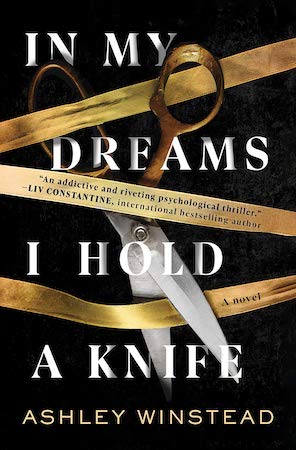
Jessica Miller is an overachiever, and she didn’t let a tragic end to her senior year or a devastating breakup with her college sweetheart stop that. She moved to New York City after graduation, became the youngest partner at her consulting firm, and made enough money to pay off her student loans and convince herself—if not her dad—that she shouldn’t keep mourning the fact that she didn’t get into an ivy league and instead went to the number-sixteen school in the country, Duquette.
When Jessica returns to campus for her reunion, though, this hard-earned facade of success doesn’t distract her classmates. Instead, her group of former friends, the self-declared East House Seven, find themselves forced into retreading the past, reliving their complicated relationships, and, ultimately, uncovering the truth about who murdered one of their own.
Catherine House is a prestigious private college that has graduated senators, professors, business owners, and more. An old house tucked in the countryside in Pennsylvania, the remote campus is consuming—and the school likes it that way. Even the famous alumni keep any details of their three years at the school to themselves.
When Ines arrives at Catherine House for her first year, she’s grateful for the escape from the outside world, the parties with school-sanctioned wine, and the free tuition that every Catherine student enjoys. But soon Ines begins to wonder how many of her other classmates are also running from their pasts, and she becomes determined to find out what the mysterious school is really teaching students.
This book is narrated by Jess Walker, who attends university in East Anglia to study with Lorna Clay, an American academic whose book The Truants was a crossover academic and trade success. Jess becomes fast friends with Georgie, a wealthy classmate, Alec, a journalist from South Africa, and Nick, another classmate who quickly confesses his feelings for Jess. Despite these friends, it’s Lorna that Jess yearns for approval from, both academically and personally.
The desolate concrete of the campus and the cold, grey skies create the backdrop for this eerie thriller. Lorna’s book The Truants argues that great artists need to break themselves down in order to create. Both Jess and Georgie take Lorna’s class on Agatha Christie, with an emphasis on Christie’s never-explained disappearance. Jess soon learns that Lorna, too, is running from a scandal—but she doesn’t learn this before she and her friends become entangled with this professor in a series of complicated relationships that end in tragedy.
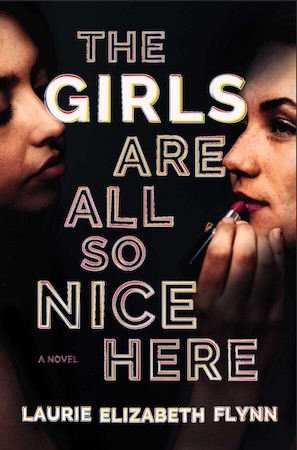
Like In My Dreams I Hold a Knife, this thriller centers on a college reunion that dredges up old feelings of inadequacy, competition, and, of course, guilt. Ambrosia Turner is reluctant to attend her 10-year reunion at Wesleyan, but she relents after receiving letters from her former friend Sloan Sullivan, or Sully. Although they haven’t talked in years, Ambrosia is touched, and not a little concerned, that Sully has reached out this way. In chapters alternating between the present day and the beginning of college, we learn why Ambrosia is uncomfortable returning to a campus where she felt awkward and out of place, how her fiery friendship with Sully made her feel like she finally fit in, and what tragic ending to their friendship kept them away from each other and campus—until now.
This book opens with conviction: Mariana Andros knows Edward Fosco is a murderer, but she isn’t sure how to prove it. Mariana is a therapist grieving her late husband Sebastian when her niece Zoe, a student at her alma mater Cambridge, calls with terrible news: Zoe’s friend has been murdered. Mariana goes to stay with her niece, and while she’s there meets the American professor Edward Fosco who is too close to a group of students, all young women, he affectionately calls the maidens—a group that Zoe’s late friend belonged to.
Taking matters into her own hands, Mariana races around campus, talking to both her old professors who are hesitant to break traditions and members of staff who see everything and resent the students, as she uncovers more than one mystery.
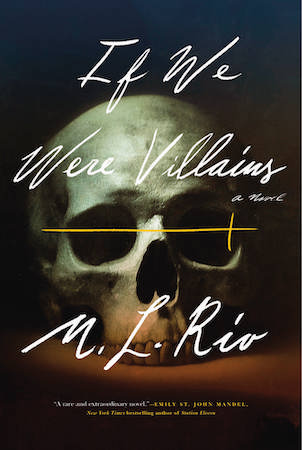
This Shakespeare-inspired thriller opens when Oliver Marks is released from jail after ten years, and he finally tells Detective Colborne what really happened on campus at the Dellecher Classical Conservatory with his group of seven close-knit, competitive friends.
The book is organized into five acts. Each opens as Oliver walks around campus for the first time since his arrest, then scenes of his story follow. Oliver and his friends, who easily slip into Shakespeare passages or respond with quotes from his more famous works, grow closer over the years as their other, less successful classmates are cut from the program. By senior year, the group of seven with roles strictly defined becomes claustrophobic, and the tension becomes dangerous—and Oliver finally shares who snapped.
The narrator of this novel lives a solitary, regimented life in New York City, though he spends most of his time indoors and, over the course of the novel, documenting the story of his time at Oxford. In the fall term of their first year, the narrator and five other students started a game. The rules started out simple: Complete a dare at each level or face a consequence. But as the game evolves and complicates, the dare and consequences become increasingly taxing on the group—until eventually the results become tragic.
Set for Life

I’m scratching tickets right now
I won $10 and another ticket
Do you know what the ticket says?
“Win $10,000 a month for 25 years”

Can you imagine?
“Win $10,000 a month for 25 years”
That would be my retirement
Aha, retirement

Scratch scratch   scratch   scratch

Because I won $20 yesterday, I traded it for tickets
I didn’t take the cash I took more tickets
I got those 4 and then 3 from like a week ago
So, 7 tickets total

It’s called Set for Life
I’m going to send you a picture
of the winner one and the other winner one
So, you see the whole ticket

It’s the same ticket I sent before when I won the $500
Did you get the picture?
We aren’t in Mexico;
you should’ve gotten it by now

See, one of them says ticket and the other one says $10
Hopefully the next one will say “life”
I got nothing on this one
I have 3 more chances

Right?                                                          	Right.
Jackpot

Mija, have you heard
of the prize in LA?
890 million, can you believe it?
And by Friday, it’ll be 900 million –
almost a billion-dollar jackpot!

Chingado

mucho dinero

I’d be happy with maybe
just half a million

I could help a lot of people too
people that really need it
people that have nothing to eat
people in small towns

Eh

I don’t know

I’m just dreaming

Mis pies están
un poco cansados

Por que, Papí?

Just work

Every day’s the same
cleaning teeth
taking impressions
cleaning instruments
cleaning the room after the patient leaves
doing set-ups for treatments

Then I have to sweep the office after everybody leaves

take out the trash

It’s okay for me because
I make more money
I can make an hour overtime
just cleaning

fuck it

In other offices
you are done with your shift and
you go home
somebody else will clean the office that day
a cleaning group

The Doctor doesn’t have anyone to do it
so I do it
it’s not much to do—
just sweep and mop

Doesn’t take me that long because
the office is not that big

I just turn on the music
on my phone
and I’m happy.
I never planned on becoming a home mixologist, or a mixologist of any kind. In fact, for much of my early drinking life, I hemmed and hawed every time I ordered a drink, sticking with less than satisfying standards like Greyhounds and vodka gimlets. Then I moved to the Bay Area and began drinking more bourbon (hello, Manhattans and Kentucky Mules). I also started consuming the gorgeous, complex, and often wholly original drinks on offer at various bars and restaurants. I doled out a lot of cash for hibiscus rum punches and fruity swizzles, rye-based cocktails made with burnt sage, pear vodka champagne cocktails, and smoke-infused potions until I realized, Hey, I can do this at home!
Crafting a cocktail that embodies a written story—drawing upon the scents, flavors, and imagery that make the book unique—results in a sort of flavor narrative of my experience with the written text. The visceral experience of a cocktail becomes a tangible language to express what a book means to me, and how it’s affected me.
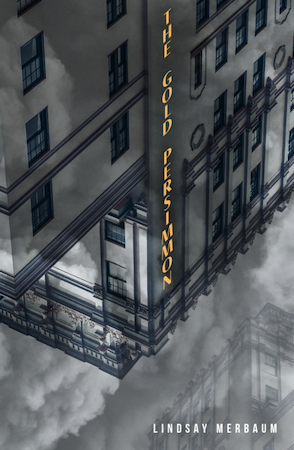
After I finished a compendium of strong, spooky cocktails and mocktails as a giveaway for my forthcoming novel, The Gold Persimmon, it was only natural that I’d widen my circle of drinking buddies to include all the authors I was in the trenches of pre-book release panic with on Facebook. It brought me joy and a sense of accomplishment to support other writers this way.
When I finish a cocktail for an author, I send them a photo and the recipe, along with an explanation of how the ingredients reference elements of the story. I outline how I framed those choices when photographing the cocktail. The image is of the utmost importance: what kind of glass I choose, the background and props I employ are all key to creating a visual narrative to complement the flavor narrative. I often end up crafting whole tableaus or shadow boxes to achieve a certain effect, like the barren terrain of Mars, an enchanted forest, or an empty swimming pool. I want a potential reader to have a sense of the book at a glance and become so fascinated by the display, they can’t help but buy the book—and enjoy it with a drink in hand.
In this clever, irreverent, and thought-provoking novel, a handful of scientists have been given one-way tickets to Mars by an all-powerful corporation. The newly-minted Martians have also been issued an extensive—and sometimes existential—manual on how to conduct themselves in space, including admonishments against heterosexual sex for fairly obvious reasons, but humans gonna be humans.
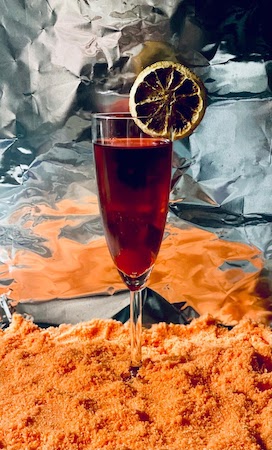
Rooted in red sand sugar to mimic the orange-red wasteland of the characters’ new home, this cocktail honors classic Earth flavors—cherry and orange—which complement Mars’ signature color palette. A tin foil backdrop has both a reflective and obscuring effect to mimic the cultural, psychological, and sexual confusion of the colonizing scientists who are way out of their depth in space.
Ingredients
Dry champagne
4 tsp. cherry liqueur
Dashes of Orange bitters
Maraschino cherry and dried orange slice garnish, if desired
Instructions
Spoon a cherry into a champagne flute. Pour the liqueur into the glass, then top with champagne. Add a few drops of orange bitters and garnish with a dried orange slice, if desired.
Marya Zhukova is an intelligent woman who knows her own mind, and that mind is set on two things: advancement and liberation for women in Russia, and her girlfriend. But Marya lives in 19th-century St. Petersburg, a time fraught with gender and class conflicts, and with strict expectations when it comes to women of means. Can her relationship with Vera survive, especially once Marya takes on a husband whose intellectual curiosity matches her own?
To complement the rye base, I chose Lapsang Souchong for its delightfully smokey flavor, and because it was the most popular tea used in the traditional Russian Caravan blend, so named for the caravans in which it traveled from China to Russia. I added Drambuie for its honey tones, a reference to the honey served at Christmas as a symbol of happiness and peace. Lavender syrup adds some beautiful floral notes and is also a nod to the soap Marya smells on Vera’s skin the first time the lovers touch.
In presenting this booktail, I used a classic Russian tea glass surrounded by sumptuous black velvet, lavender, and dried peony petals. The glass is garnished with a large Vosges chocolate decorated with edible gold leaf and filled with hazelnut, Reishi mushroom (for all the mushrooms consumed in this book!), dulce de leche, and dark chocolate. The combined effect is the perfect tea for a society lady, or for lady lovers.
Ingredients for lavender syrup
1 cup water
1 cup white sugar
¼ cup dried organic lavender
Instructions for lavender syrup
Stir all ingredients together in a small pot. Cover and bring to a boil. Simmer for 15-20 minutes uncovered. Set aside to cool, then strain into a clean glass or jar. Keep refrigerated.
Ingredients for cocktail
2 oz. rye
1 oz. Lapsang Souchong tea
0.5 oz. Drambuie
0.5 oz. lavender syrup (see recipe above)
Instructions for cocktail
First, prepare the syrup. Once cool, add all ingredients to a mixing glass with ice. Stir until well-chilled, then strain into a chilled glass.
Mona has her adult life all figured out: good grades and a lucrative job offer waiting for her upon graduation. Until the recession hits and she finds herself living at home, trapped in the middle of her parents’ crumbling marriage. Her mother tells her to buck up and attend workshops for the unemployed in a church basement, while her dad tries to surreptitiously buy her some weed. She’s snarky and bitter and feels cheated out of the future she was promised. I appreciated Mona’s sharp wit and meanness, which serve as a shield to hide her fragility and emotional chaos.
For this cocktail, I chose tequila and Blue Curaçao over the traditional Triple Sec or Grand Marnier combo for its blue, sea-like look. Coconut water helps blend the flavors and, next to avocado toast, it’s the perfect symbol of millennial pretension and privilege (or what is perceived as such). Chili powder adds a touch of spice, while coffee cacao bitters are a nod to the coffee Mona is constantly consuming.
In presenting this drink, I chose a reflective base and intentionally used the “wrong” glass (a tall beer glass) to make the vessel fronting this tableau of woe seem larger than life. Also, what 20-something has cocktail glasses? (The recipe will not yield this volume, just FYI. But feel free to double, or triple it. Mona probably would.) In the background are self-help books, plus a copy of Sartre’s No Exit (“hell is others.”) I also included a pipe and lighter to reference the weed-smoking Mona can’t afford. The pipe is complementary in color, with eyes painted on the bowl and along the stem that could be meant to ward off bad luck, but also reference the opening of the third eye, or inner eye to the self. Seeing ourselves clearly is perhaps the most difficult sight of all.
Ingredients
1.5 oz. tequila blanco
1 oz. Blue Curaçao
1 oz. coconut water
Dash of chili powder
Dashes of coffee cacao bitters (or few drops each of coffee bitters and chocolate bitters)
Instructions
Combine all ingredients in a shaker with ice. Agitate vigorously until the shaker feels frosty. Strain and pour into a martini glass.
In this dark, surreal play-in-poems, two girls set off into the woods to search for a mother they will not find. Instead, they grow into womanhood and all its struggles.
For this recipe, I chose vodka for its strength, malleability, and invisibility as a flavor. The author had mentioned she was partial to prickly pear, which brings in some gorgeous color to match the book’s cover. The plant’s prickles symbolize the girls’ many trials. Chartreuse is floral in a complementary way, with an appropriately eerie green tone. Lemon is for the sharp pain and bitterness of life. Lastly, Virtue bitters bring out the other florals and reference the virtues of womanhood: strength and perseverance.
This book is rife with references to plants, the forest, the sea, and other natural imagery. To honor that theme, I chose to cultivate an enchanted forest vibe for the presentation, with the booktail at the center looking as irresistible as a poisonous jewel or berry. I built the woodland tableau atop green sugar, outfitted with sticks, leaves, and flowers from my yard, along with a few crystals.
Ingredients
1.5 oz. vodka
0.5 oz. prickly pear syrup
0.5 oz. Green Chartreuse
0.5 oz. lemon juice
Dashes of Strongwater brand Virtue bitters
Instructions
Combine all ingredients in a shaker with ice. Agitate vigorously until the ice breaks up and the shaker turns frosty. Strain into a martini glass, or other stemmed vessel of your choosing.
Lodestone-peddler Melaine lives in a world where magic is everywhere, but the best spells are reserved for the rich and powerful. Melaine violates taboo by hustling her raw magic into lodestones for a tuppence, a career path she’s desperate to leave behind. When she achieves an audience with her childhood idol, the Overlord, she learns the people may all be prey to even more malevolent forces. Faced with menacing apparitions, ancient curses, and an even greater horror that could threaten the entire kingdom if unleashed, Melaine’s desire for survival is contested by her growing feelings for the Overlord.
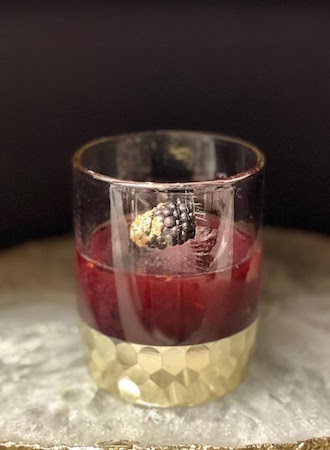
I was inspired by this novel’s portrayal of magic as a kind of currency that further divides the haves from the have-nots. I chose blackberries as a reference to Melaine’s signature black lodestones with a purple sheen. Drambuie is a nod to the honey in the mead that the common folk enjoy, and lemon represents the bitterness of the people’s suffering.
In presenting this booktail, I set the gold-bottomed glass atop a gold-rimmed geode platter, which contrasts beautifully against the natural purple of the elixir. The (very optional) gold leaf on the blackberry garnish adds a touch of magic.
Ingredients
1.5 oz. bourbon
⅓ cup fresh blackberries
1 oz. Drambuie
0.5 oz. lemon juice
Walnut bitters
Instructions
Place a large ice cube in a single rock glass and set aside.
In a shaker, muddle the berries. Add fresh ice then the bourbon, Drambuie, and lemon juice. Agitate vigorously and strain into the glass. Add a few drops of the bitters. If desired, garnish with a fresh blackberry. First, decorate the berry with edible gold leaf (if you’re feeling fancy), then gently set it atop the surface of the ice.
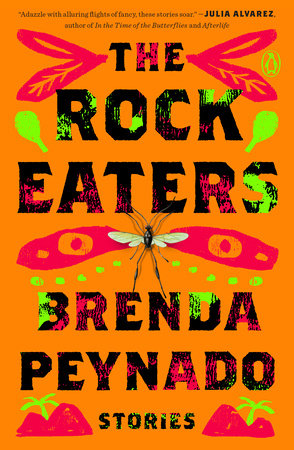
The stories in The Rock Eaters often have an elastic relationship with reality, familiar political landscapes or emotional struggles warped by the uncanny. Some stories fall more explicitly within the bounds of science fiction or fantasy, but most show us a world nearly known, but not quite.
In “The Touches,” humans are cared for by robots and live in airtight cubicles in a plague-filled world they call “dirty,” while they spend most of their lives in a virtual reality known as “clean.” In “Thoughts and Prayers,” families pray to cow-like angels to save their children from rampant school shootings. In “What We Lost,” humans lose body parts at the whims of an unnamed dictator. In “The Dreamers,” people “sleep about a third of their lives…but all in one go before [they] die. [They] live [their] youth and sleep away [their] old age.” In the title story, the children of immigrants—who inherited their parents’ ability to fly—start swallowing rocks to anchor themselves to their ancestral land.
I met Brenda Peynado in the summer of 2019, when Peynado was teaching at Orlando’s University of Central Florida and I was in town on a residency. Peynado sold her debut story collection, The Rock Eaters, that summer, and now, two years and one pandemic later, I have at last been able to read the book in physical form.
Peynado and I discussed underground movements, virtual Metallica concerts, lucid dreaming techniques, and the differences between realities lived and remembered.
Deirdre Coyle: “The Touches” is a story about a plague-ridden world that was originally published in November 2019. What was it like revisiting that story in 2020?
Brenda Peynado: It was really wild that so many of [the events in the story] ended up happening. Not just the pandemic, but then I also got pregnant [as does the protagonist]. So, the main character thinking about legacy and what she’s going to give this virtual reality child has been also really interesting for me. I ended up getting an Oculus Quest that first summer of the pandemic, a VR headset, and I spent most of the summer of the pandemic in VR, playing in the lightsaber dojo. I also went to a jellyfish viewing and a Metallica concert in VR. You could see other audience members. You couldn’t see their facial expressions, because the technology isn’t that good yet, but you could see their hand movements and their head movements, when they sat up and sat down. So I could see the people around me headbanging to Metallica.
I think that story came out of a feeling of isolation that I had because I had moved out to the suburbs and wasn’t really connecting with people well, because we lived so far away. I wanted to write a story where that isolation was more concrete, and a pandemic was definitely a way of doing that. Now, of course, so many of us are coming out of quarantine, where the isolation was literal. I think we all have the potential to be that isolated, and to quarantine ourselves from people, or to have quarantine imposed on us in various ways, so in that way, I’m not surprised that I would have written that story before the pandemic. It’s more extreme, but it’s something that we can all experience in really small ways, and that’s where the impetus for the story came from.
But then in other ways, [there were] things that I could not have anticipated. I knew that I wanted some people to refuse quarantine [in “The Touches”], but I always thought it would be an act of rebellion in a sort of individualist way—individuals might choose to quarantine, and there might be an underground movement, but it would be very underground. Something that people didn’t talk about because it was risqué.
I never could have anticipated how things have split along party lines, in terms of quarantining or not quarantining. I think if I were to write that story today, I would have to acknowledge the politics of that. It’s not just a small, underground movement of people who are willing to break quarantine and touch. The whole country is wracked by that divide. Who could have guessed?
DC: If I tried to imagine a pandemic, I would never have guessed that this is how it would have played out.
BP: Right? That a huge section of America would be like, “You know what? I’d prefer to risk death than not go to Wal-Mart.”
DC: It’s not at all like “The Touches” in the sense that people who don’t want to quarantine seem to be very vocal about it.
BP: Right, and the motivation seems weird. In my head, I was thinking the people that broke quarantine probably [did so] because they couldn’t imagine suddenly not seeing their family or their friends. But I couldn’t have imagined just sheer, “I want to go to Wal-Mart when I want to go to Wal-Mart,” and not “I desperately want to see my best friend that I haven’t seen.”
DC: On the one hand, the story feels terrifyingly Matrix-like with people in their pods, but there was another level where—and again, this is me reading it in 2021—it made me feel safe to imagine being taken care of by a robot while I live in virtual reality. I think that having that instinctive reaction was a little bit terrifying in its own way, that on some level I feel this way now.
BP: Yeah, that it actually sounds like a positive experience. Like, oh, my little quarantine box, all snug in my nest!
DC: In “The Drownings,” you talk about the “liminal moment when a fluid darkness answers all the questions there are to ask.” I was thinking about liminality more broadly in the collection, and especially in the stories like “The Drownings” that are narrated by teen and pre-teen girls. I wondered how—or if you do—see the liminality of that time of life informing the genre liminality of fabulism?
BP: Oh, I love that question. I do think that so much about growing up has that liminal quality because you don’t have the language to either ask the questions that need to be asked or to name the things that are happening to you. I think one of the reasons why I love writing in children’s or communal voices, or teen voices, is that they don’t have to name what is happening, and so it allows [the narrative voice] to be maybe more complicated than an adult who thinks they already know the answers—even if they don’t know the answers, they have the language for it. Language can be so limiting sometimes, once you have terms and you can quarantine them off in boxes, and understand how you feel about it.
It’s always hard returning to a place of your youth and realizing that it was never what you thought it was, or what you had made it out to be.
I remember that haze of being a pre-teen. The world was happening, and the feeling of it happening was so much more important than the words.I wanted to try to give that feeling in fiction, even though I was communicating it in words. Just that feeling of, “you can’t pin this down,” or “you can’t quite name this,” and allowing it to be a little bit more expansive than the words we might use otherwise.
In the first story, “Thoughts and Prayers,” the main character is dealing with some really heavy things, and having feelings for her friend—and her mother does know the words for it, but doesn’t want to put it into words. As a result, the girl can think whatever she wants about her relationship with her friend, without having to pin it down—until, of course, she loses it.
I do think that fabulism can short-circuit so many of our boxes for things. Fabulism has to prove less about the world, because you already have short-circuited people’s logical expectations. So if you’re like, “Well, these people can fly,” then there’s less of an onus to prove exactly how and why and when they flew. What I like about using conceits for something very emotional is that you can get rid of the reader’s expectations about the logic of whatever it is and just let them feel the magic or the emotion of whatever that wild conceit is. One of my favorite parts of fabulism is that I can tackle some pretty political and large things like violence and race and xenophobia and short-circuit a lot of the reader’s expectations in ways that I know other writers can do with realism, but is harder for me to do with realism.
DC: I really loved the recent essay you wrote for Lit Hub about fabulism and sincerity. You write that you’re “insisting on a truth that spites realism.” I love spite. I’m super interested in spite. Can you say more about spite as inspiration, or motivation?
BP: That’s a really interesting question because I think my characters are often coming from a place of love, but they’re often fierce and they’re violent and they don’t do the right thing, in a lot of ways. I think that comes from a lot of my own emotion in storytelling. It comes from a place of love, but also a place of fierceness and anger, and those two things tied together are a lot of what my characters are dealing with.
I reject so much of what I read in terms of people’s reality that doesn’t—it’s not that I reject people’s reality that doesn’t fit my own, but I often reject something that feels like it’s not giving the complete picture, or that seems like it’s missing something essential about the society it thinks it’s looking at, or the people that it thinks it’s giving credence to. So in terms of writing out of spite, I definitely think I write out of love, but the spite part comes when I feel like people have been getting short shrift, or something has been excluded from the narrative, and so from that place I definitely write with a sort of fierceness in mind.
And there’s so much about realism that is banal realism. That is hard to believe when you live in a place that is so wondrous. I just feel like wondrous things are happening all around me and all the time, and even incredibly large, bizarre things happening all the time. There’s a lot of quiet realism that I love, but there’s something missing from it when I think of the grand gestures that have made up my life. Maybe it’s that I don’t feel like I have a banal life. In that way, I feel like that is a kind of realism, a kind of reality, but it’s not necessarily the reality.
DC: I often feel that reading fabulism or magical realist work better reflects how the world feels to me, what reality feels like to me. Which isn’t to say that I don’t also have many beloved works of straight realism—however you want to define that—but that’s how I think of my predilection for fabulism.
BP: I think there’s also lived reality, and then there’s remembered reality. We don’t remember those small moments, we remember grand gestures, and tie things together across different parts of our life. When I think about oral histories or family stories, it’s never been all realism. Nobody’s telling you about their day, and if they are telling you about their day, you’re about to get really bored because those are harder stories to trap people in. So a lot of times those family stories have these grand, mythic, cross-generational exaggerations, and that’s what remembered life is like.
One last thing about that—my parents came from the Dominican Republic, and they had this grand legacy that went back hundreds of years. They had all these stories about when people came to the New World, and people’s great-great-great grandparents, and all that. So for me, growing up, remembered history and remembered life were the things that gained purchase. But I think a lot of American thought is very ahistorical, especially when people move from place to place. It’s such a large country that people often don’t stay connected, necessarily, to their roots, although some people definitely do. But I wonder if that kind of banal realism does feel true to them, because there is no remembered history for them in their family, in that same way. I haven’t thought that out, but I wonder.
DC: Although some of your stories take place in unnamed countries, several are explicitly located in Florida, and one in the Dominican Republic, places where you’ve lived and spent time. How did your own sense of place impact the stories where you did decide to place the story in a specific location?
I reject the idea of the suburbs as a place of fakeness and sameness, because there’s so much hiding beneath the surface of all of those houses.
BP: There’s so much about Florida that is wondrous and interesting, and there are so many different versions of Florida, you know, there’s the swamp Florida, the upper panhandle feels-like-Georgia Florida. I grew up in the suburbs of Tampa, and there’s something so particular about that place. I reject the idea of the suburbs as a place of fakeness and sameness, because for me, there was so much hiding beneath the surface of all of those houses. Our suburban household was like a little plot of the Dominican Republic. My family friends would come over, and they were people that my parents had met back on the island, and their kids. There was something so magical about the backyard and what you could find there, and that probably informed my sense of liminality and skew, of things hiding beneath the surface that were pretty wondrous.
And also moving from being ripped up every year to spend the summer in the Dominican Republic, and how different a place could feel, even the words that you used to describe maybe the same thing, and how different they were and how even, like, strawberry-flavored ice cream in the States was so entirely different than the Helados Bon of strawberry in the Dominican Republic. So things like that just made me realize how much there was underneath the words that people use, and the surface of things, and I really loved—one of the reasons why there are a lot of unnamed countries [in The Rock Eaters] is that mish-mash, I suppose, in my growing up of the U.S. and the Dominican Republic, but also how the Dominican Republic that I visited and remembered—I wish, when I lived there, it had been a homecoming, but instead it was very clear to me that I hadn’t lived there, and a lot of times the country that I remembered or imagined fondly from when I was a child was—it never existed, it was sort of skewed through the eyes of a child that didn’t really understand what was going on. And so I knew that I couldn’t name those imagined countries; they had to be imaginary, because so much of what I loved about the Dominican Republic was this imagined space.
It’s always hard returning to a place of your youth and realizing that it was never what you thought it was, or what you had made it out [to be] in all those years, that you were thinking about it romantically.
DC: Right, and you can’t know for sure whether it is the place that’s changed or if it’s your own brain, or a combination.
BP: Yeah, and I think that’s what’s so lovely about horror as a vein of fabulism is that uncanny feeling of not being able to quite pin something down. That it’s not one thing or the other and that you might never know. That’s usually what gives you that feeling of the uncanny, and the horror, the fact that you will never be able to pin something down or know its true self.
DC: Even in “The Rock Eaters,” which I don’t read as horror, it is kind of horrifying that the children are swallowing rocks. That image is very startling, even though the story itself is not horror in that sense.
BP: I think one of the stories that might be more considered horror is probably “What We Lost.” People are losing body parts, and the most horrifying part is they don’t quite know where their limbs have gone. If they had known exactly where their limbs were, it would be more of a thriller/revolution story. But instead, it’s this horror of not quite knowing where their nose is now.
DC: If you were to live inside the world of one of these stories, which would you choose and why?
What is that core part of their self that is so core that if it was confronted in a dream, they would reject it?
BP: I really like the world in “The Dreamers” because I would really just like to sleep all at once. I’m so horribly impatient and I hate that we have to go to bed for so many hours a day, and I do like the fact that [in “The Dreamers”] you can choose and be a rebel and sleep before your time. There’s something that’s really hopeful about also being able to live your youth and choose it, in a way. I like the idea of choosing the life that you live in a more obvious way than I think maybe people think of their lives. They just think, I’m here, I’m living it, I kind of have no choice but to move forward. There’s something freeing about having consciously chosen to be awake for this moment, to make the best you can out of this moment if you are, in fact, awake and not dreaming.
Also, I live such strange lives in my dreams, and then a few hours later I wake up and I sort of forget about it. But there must be something that is so freeing about dreaming for 20 years. That is a life. What would that look like? Maybe it looks like all the stories in The Rock Eaters mish-mashed together, and that’s the whole dream.
Which one would you want to live in?
DC: I would pick “The Dreamers,” too. I think I would choose to go to sleep early; staying awake seems too hard. Imagining peacefully falling asleep and knowing that you could be in a dream state for decades seemed really nice.
BP: I’d imagine that in that world there would be a lot of people who would be afraid of what dreaming was like, and would prepare for it in monastery kinds of ways of like, “This is how you control your dreams,” and lucid dreaming. People who are like, “We are going to lucid dream. We are going to control this uncontrollable decade, or two decades, of our life.”
DC: I did once read a book that marketed itself as a field guide to lucid dreaming. I got better at lucid dreaming for a while, but then I stopped doing the things you’re supposed to do to get yourself to do that.
BP: Were you able to lucid dream?
DC: Yeah. I had this bracelet that I would touch to remind myself to check whether I was dreaming. The idea is that if the “reality check” is such a normal part of your day, it will be there in your dream, too. And eventually, I had a dream where I touched the bracelet, and was like, “Oh, I’m dreaming.” And I knew. So it did work, but then I stopped wearing the bracelet, and now I haven’t had a lucid dream in a long time.
BP: That’s so interesting. And I think it says a lot about what fiction can do, too. In dreams, we’re willing to go along with so much, even though it seems strange. I feel like once in every dream, I’m like, “This is weird!” And then I’m like, “Okay, that’s just what we’re going with.” I feel like fabulism does a lot of that, but then that reality check of, “is this a normal part of life,” or “is this a normal part of my body,” is really interesting.
I’ve only lucid dreamed once, and that was when a colleague looked at me in the hallway of the dream and said, “I don’t know you.” And I thought, “This is definitely a dream, because you absolutely know me.”
I wonder what each person’s touchstone is. What is that core part of their self that is so core that if it was confronted in a dream, they would reject it? Maybe that’s what really wild fiction does. It keeps that core moment, and keeps you in the dream by keeping that core stable. Then the rest can go to weirdness all around it.
Nawaaz Ahmed has a particular talent for fiction that captures the spaces in between distant bodies. When we were both MFA students at the University of Michigan a decade ago, he saw a pair of construction cranes moving high above the street and said, I want to write a short story about those cranes that will never meet. He saw longing in the empty sky between them and, unintimidated by that vast space, he chose to write inside it.
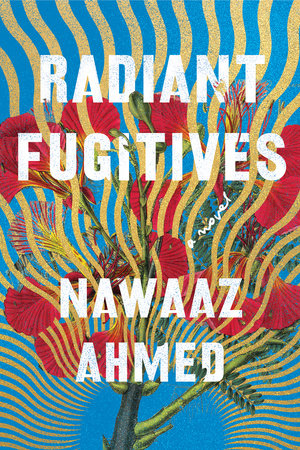
His debut novel Radiant Fugitives, described as “a fearless exploration of the clash between identity, sexuality, and religion,” glides across spaces in between disconnected poles—between queerness and Islam, between family and public life, and between politically divided Americans.
The book takes place in Obama-era San Francisco over the course of five days. It’s the last week of Seema’s pregnancy and the women in her family have come to help. But this is not a joyful gathering—years ago, when Seema came out as lesbian to her Indian Muslim family, she was exiled by her father and rejected by her devout sister, Tahera. Their mother is now terminally ill and so, by her insistence, the three women have come together in an emotionally volatile reunion.
Those circumstances might constitute a heady enough challenge for some writers to tackle, but in Nawaaz’s work, yet more thickens the stew: the book is narrated by Seema’s unborn baby, Ishraaq. He speaks in precise prose layered through with the poetry of John Keats, Obama’s speeches and verses from the Quran. It’s a tightly plotted—and yet lushly rendered—tinderbox of a novel.
As fellow Muslims and immigrants, Nawaaz and I have often talked about the fraught dissonances that we explore in our fiction. So we were both intrigued by Sanjana Sathian’s recent essay about respectability and the “good immigrant novel.” In our conversation, we talked about the expectations placed upon immigrant and Muslim writers, and falling in love with characters who don’t always love us back.
Roohi Choudhry: This is a book of so many layers. There are layers of American identity politics and the dawning of the Obama era. And then, intimate relationships—between a baby and his mother, between sisters, lovers. Poetry is another layer, too. So how did you decide to interlace all these threads?
Nawaaz Ahmed: The ways that the book deals with various themes and layers have to do with our ways of seeking. Poetry is a way—the seeking of art. Politics is seeking a particular cause. And faith. I saw that as three main ways in which we seek meanings in our life.
Once we stop believing in God, then what replaces it?
Tahera embodied art and faith. This kind of exploration of what faith does for our selves and what do we do when we have lost faith, or we don’t have access to faith. I mean, once we stop believing in God, then what replaces it? At least at that time, because I was interested in writing, it seemed like art was the one thing that spoke to me directly. And then developing Seema’s character, I realized that art wasn’t speaking to Seema. She had to find something else. She tries to find it in various causes and moves from cause to cause.
I would have liked to title my book “ways for our searching” but it didn’t work out. I think Radiant Fugitives is the same thing in a way—I see fugitives as being these people searching for something. How do we search for this light in our lives?
RC: Over the years, we’ve talked about feeling pressured to write our complex stories in a minimalist way and feeling constrained by that expectation. And that also reminded me of what Chimamanda Ngozi Adichie says about the danger of the single story. So, has minimalism been a pressure? And how has that affected how you think about the book?
NA: I was definitely trying to capture the complexity of this world. I did not want these characters to become defined by “she’s gay,” “she’s Muslim,” “he’s Black.” I definitely didn’t want that kind of single story for these characters. Because one of the themes of the book is just how complex the world is, how vast the universe is and all these things that are impacting us at any given moment. We are dealing with our personal selves in this very political world.
RC:That complexity of the universe makes me think about the Sanjana Sathian essay. And this term that she used about minority authors expected to be “cultural tour guides”—she pushes back against the idea. I’ve definitely felt that frustration too: people in workshops saying, “I always learn so much from your work.” So, since you’re showing the world as complex, was it challenging to show all of these complexities without becoming a cultural tour guide?
NA: There is a tour guide.
RC: Oh yeah? The baby?
NA: The baby is definitely a tour guide, but he’s not the tour guide for “let me explain this culture,” or “let me tell you something about Islam.” But through his eyes, he does lead you to some of these things that I wanted to explore— the role of love, faith, art, politics, causes.
If I have to be this tour guide, let me be a tour guide to show America to my mother, rather than show the Islamic community to American readers.
The narrator does go into the specifics of various things, but I was hoping that in the ways he approaches the tour guiding, that there were universal things that he was pointing to, rather than this is how you pray. There’s a whole paragraph about namaz that just talks about the various positions. And you could think of that, I guess, as some way of providing information. But I saw it as here is a ritual that has its terms and has its space. The more important part of that is not these particular terms but the fact that all these people are doing it. At least I hope that’s how it comes across. What’s important is that they’re all engaged in this, in this particular time. And there’s a sense of community and a sense of belonging in that.
RC:That’s definitely how it comes across. I’m wondering if the whole cultural tour guide issue is a function also of what gaze we’re writing for. Reading your book, I never felt that this was meant for someone else’s gaze. I never felt that this was not for me. That’s a rare feeling as a Muslim reader. Was that something you’ve been considering as you went?
NA: Four or five years ago, Matthew Salesses asked me, who is your audience? If there is one person you would put at the center, who would it be? And I had to say it would be my mother. The book is written in a way for my mother. And so, there are certain things I do not have to explain. The thing that I had to explain more is the American politics, because that’s what she knows the least about. And of course, a lot of readers, including my editor, resisted. Like, “we know all this.” I’ve had various readers say that. And I felt like that was very important for me to keep in the book because my mother doesn’t know all this.
And so, if I have to be this tour guide, let me be a tour guide to show America to my mother, rather than show the Islamic community to American readers. I think my focus has been, how do I explain what’s happening in the US? What does it mean to be living in the US as an immigrant? How do I describe that experience to the family that I’ve left behind? That was one of my main preoccupations, rather than the other way around.
RC:That’s very beautiful and refreshing. Because there are so many other books that might have characters who look like us, but they’re not written for us. So that’s one of the things I love most about your book.
Going back to that essay, Sathian also talks about this issue of “dirty laundry”—that the white American gaze demands that marginalized writers air their community’s “dirty laundry.” I wondered if that expectation came up for you?
NA: I’ve been thinking about that, and it has definitely colored the book. And maybe this isn’t the thing for a “true artist” to say, there’s this idea that true artists have to be focused on the telling of the truth and the telling of the truth includes dirty laundry. And I believe in that, to a certain extent. But I also question the use of the word “truth.” The writer has an author’s perspective and that’s what they’re airing, and to call it the truth, I think, is giving it a bit more power than that.
What was important to me is to describe what is happening, but also, allow the reader to be able to see through other perspectives. So, we can talk about how Islam, for example, deals with homosexuality—I don’t know if that qualifies as dirty laundry. But definitely, it’s there in the book and people may be like, “Oh my god, look at how she’s treating her sister.” That bigotry is definitely there. But it was important to me to use a narrator who will not judge it but will present it giving Tahera as much fairness and respect as he can.
RC:Yes, and as we’re talking I’m questioning—what is dirty laundry, what does that actually mean for this context? Because I don’t think that queerness is the dirty laundry. And I think that’s an important question for us as Muslim writers to think about, rather than take it for granted or let others define it. Speaking for myself, the dirty laundry to me is Tahera’s reactions. Her bigotry. I could imagine that showing this darker side of the book’s most devout Muslim character might feel really hard in this post-Trump era. There’s a sense in the community of “we’ve gone through enough.” And it feels like there’s a pressure to show very positive aspects of being devout and so then, this whole darker side of religiosity falls to the wayside.
NA: I think there are two aspects to dirty laundry. One is that I am not airing it. There is already a conception of Islam as being homophobic. In the news, you hear things like what happened with ISIS, the stoning of homosexual men in Iran. There are these things that are already there in the world. And we have to deal with it.
Also, people in the US might say: “we are not fundamentalist Muslims and we should not be tarred by the same brush.” Then we are slipping into the danger of the single story—that all Muslims are going to be tarred by how Tahera is portrayed. I think the fear of airing dirty laundry seems to come partly from that fear. So, we have that in the background, I think, and I can see why someone here would not want to have the burden of all that on them.
So, in writing Tahera’s character, you get into this area of how do you not speak for all Muslims. What I tried to do is make Tahera so individual, her reasons for how she acts and even her anger is not just completely based on faith. It stems from her history, it stems from this whole pressure that she’s feeling about how she feels ill-treated in America. To attribute it to just religion or just one aspect of her character is reductive. And these reactions are not only because of religion, but there’s this whole complex world that is putting pressure on the characters, or on us. It’s not like “this is Islam’s dirty laundry,” but this is how we are as human beings.
RC:I want to talk about Tahera more. I mean, she’s such a difficult character, right? I felt so many emotions towards her. All your characters are complex, but she seems especially so, and I felt sympathy and a lot of resistance towards her. That’s perhaps why I brought her up with that whole dirty laundry thing because as I was reading, I thought, well, the reality is I do know people like her in my family. I can imagine them reacting the same way—like her reactions to Fiaz, or to homeless men on the street—it was familiar and hard. And I wondered how it was to write someone like that.
NA: The biggest fear that I had is that I was being unfair to Tahera. I needed to be able to see why she acts that way. And I think I put the most amount of pressure on Tahera—she leaves her family, she comes to a place where even her dress is a symbol. And she feels like neither Seema nor her mother would accept her for who she is, as much as she has a problem accepting them. I have a lot of sympathy for that.
The hope is maybe we’re not trapped in this harsh world where people are always going to be unkind to each other.
The world is not very kind to outsiders. And there is a big backlash in the US—the reaction to Obama, and Trump’s win and evangelical pushback—even though Trump is not particularly religious or moral, we have a huge section of that population supporting him. I think that comes from a sense of being threatened. And of feeling like you have been cast out in some way. And that is something which I wanted for Tahera, too. That kind of outsiderness that Tahera feels when she goes to this liberal neighborhood and this liberal city is part of why she finds herself resisting so many things. And that does not make her likable.
RC:Still, Tahera is a character whose beliefs are bigoted towards you, the writer. And how is that? To spend years with this woman. I don’t know if I could do it.
NA: Part of writing the character was to actually deal with it. Deal with the fact that there are people like that— people who I know or love because they are family. One of the reasons to write the book is to explore what that actually means for myself.
I see Tahera also on a journey in the book. My hope is that if there had been other circumstances, Tahera could grow and make other choices. The hope is that we are all acting out of our best intentions and that we are being derailed in some cases by circumstances. Because if not, the alternative that we are forever trapped in this harsh and ugly world is terrifying.
The hope is maybe we’re not trapped in this harsh world where people are always going to be unkind to each other. And that there may be some ways in which we can come together.
Because people change, people do, maybe not in five days. But hopefully over a lifetime. And we have to have that possibility.
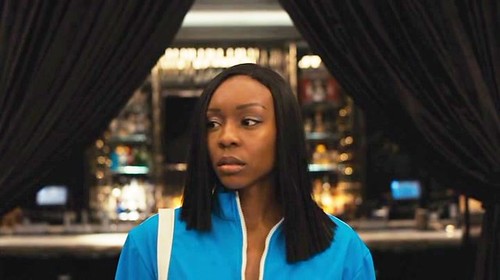
You might be fooled from the opening of Brandon Cronenberg’s Possessor (2020) that this is a Black woman’s story. The film opens on the immaculately laid braids of Gabrielle Graham’s Holly Bergman as she pierces her own scalp with what looks like a digital meat thermometer. As she adjusts the dials on the strange device, she emotes into the mirror, her face briefly sparkling with joy before it gives way to a long, stifled sob.
Holly is the only Black character of note in the movie and perhaps that’s why she has remained with me in the eight months since I saw the film. Even though she is only a footnote in Possessor, a movie otherwise full of striking images, it’s her seven minutes of screen time I return to. I watch, over and over again, as this Black woman dressed in an unsophisticated cerulean uniform stabs the man she’s being paid to serve before dying horrifically in a hail of police gunfire.
Holly is the only Black character of note in the movie and perhaps that’s why she has remained with me in the eight months since I saw the film.
Of course when we see Holly on screen it’s not Holly’s character we’re witnessing. It’s a white woman piloting her body—English actress Andrea Riseborough as the mysterious Tasya Vos. Vos works as an elite assassin for a corporate firm that orchestrates murders using a futuristic brain control technology. From a padded bed in a laboratory miles away, she inhabits a stranger’s body, kills the target, and then commits suicide in the possessed body to return to her own.
In the simplest terms it’s a body swap with only one body, viscerally portrayed with abstract aesthetics and droning music. When things go right, it’s a neatly packaged, if elaborate, scheme. There are no loose ends, a clear motive, and a perpetrator who can’t speak in their own defense—a “clean tragedy,” as former assassin Girder put it. But things never seem to go right.
The possession process is strenuous, with each job taking a clear toll on Vos. Coached by a typically cool Jennifer Jason Leigh as her boss Girder, Vos is said to be unique in her ability to commit hits while maintaining emotional detachment. Each murder is intricately structured, with hours of reconnaissance and prep as the team builds a story. They create a pattern of behavior and a motive so that the death, while tragic, does not provoke further investigation. Vos witnesses just enough of a stranger’s life so that she can imitate it, control it, end it. What makes the possession easier is that her targets are people like Holly: people not important enough to arouse suspicion until it’s too late.
After murdering the target, Vos-as-Holly is supposed to then shoot herself, completing the possession and reentering her own body. But she’s unable to pull the trigger, her hands trembling on the grip. Here I think I see Holly emerge, wresting control from Vos, resisting this posh, white woman from an unseen Get Out-esque Sunken Place. I imagine Holly acting on one of our most basic human instincts to self-preserve. One of our most ingrained instincts to resist white dominance.
How often Black people become pawns in plans we know nothing about. Was Holly chosen because she was the only Black waitress? Someone already on the periphery of society, someone whose life and death could go mostly unnoticed? Perhaps they found a background scarred with violence or mental illness, one that would align with the narrative they want to create for the assassination. How easy it would be to create a patchwork of a gritty, Black life that could be used to wave away its violent ending. If Holly’s actions were out of character, and one of her coworkers or friends went to the police about her strange behavior, would anything be investigated?
How rarely Black victims are given the benefit of the doubt. How rarely our murders are called murders, our killers called killers.
How rarely Black victims are given the benefit of the doubt. How rarely our murders are called murders, our killers called killers.
And if Vos-as-Holly failed to execute the suicide, there’s no chance of Holly leaving the building alive. Her Blackness is a failsafe. No Black person is politely escorted out of the building in handcuffs after committing murder. No cops are going to offer her some pizza on their way to a prison cell. Holly points her gun at police who immediately riddle her body with bullets, her body writhing in a haze of visceral gunfire—an image that would be cliche if it weren’t so disturbing. But it’s Vos, skin so white it’s almost translucent, who we see wake up, gasping for breath, in a hospital gown.
Nobody worries about Vos’s clear affinity for violence, even as she unnecessarily escalates the brutality of her kills. Is this an affinity that’s been exacerbated by her line of work? Is it easier for her to take out her bloodlust on strangers on society’s margins? Or is she just more comfortable embracing cruelty when she’s inside a different body, particularly a body that is culturally viewed as inherently violent? Vos defends her choice to use a knife over a gun as more “in-character” for Holly, but whose character is she talking about? Is she talking about Holly, or herself, or Holly as perceived by Vos and her murderous white coworkers?
Holly’s death is familiar to me not just because it resembles the long history of police murders of Black people, but also because of her death’s relationship to capital and the workplace.
Holly’s death is familiar to me as an American not just because it resembles the long history of police murders of Black people but also because of her death’s relationship to capital and the workplace. Vos is not operating alone when she possesses Holly but with a team of professionals whose violence has been formalized. What they’re doing isn’t legal but the movie smartly never makes it seem like they are committing a crime. The legitimization of their work resembles extralegal exertions of power that elite classes of white people have maintained throughout history. At a certain point of class and privilege, legality is as irrelevant as ethics. It’s how religious institutions and financiers have maintained rampant and barely-disguised rings of sexual abuse and human trafficking. How lynchings as an act of violence against Black men and terror against Black communities have never disappeared, only evolved.
The main possessed body in Possessor is not Holly, but Colin Tate, played by Christopher Abbott. Abbott is not Black, though it’s easy to read racialization into his character. He’s a fatherless American drug dealer dating a client who is the posh daughter of a successful corporate businessman. He stands out in this Canada-United Kingdom co-production that features a mostly Canadian and English cast. Colin’s relationship with Ava is his tether to the outside world—she gets him his job, his apartment, and his friends—and it’s this relationship that makes him a target. Murders and future tech aside, it’s a typical corporate power grab; Ava’s brother wants their father out of the picture so he can gain control of the family’s rapidly expanding data-mining company. In exchange for the hit, Vos and the firm will be paid handsomely in cash along with, most importantly, a hefty share of the company. If it sounds convoluted, it’s because it is, but the complications just ensure that it’s a mission only Vos could take on.
Colin isn’t a great boyfriend or an upstanding citizen but he’s hardly a kingpin mastermind—rather, his life can be conveniently simplified into a violent archetype. In the narrative that Girder has created, he’s a thug who feels emasculated by his girlfriend, begins to abuse drugs, and kills the family in an emotionally stunted rage. An old dog up to old tricks. It’s a story based on notions of class and criminality that fit dominant social perceptions of a type of poor, young man.
Perhaps for Vos it was a thrill to literally control a Black body in the way that the Atlantic slave trade or Jim Crow never could.
It’s a remarkable performance from Abbott who truly seems to evoke Riseborough as Colin fades in and out of consciousness in his body. Colin has no language to describe what is happening to him—obviously the nature of Vos’s work is highly secretive—but perhaps he subconsciously knows how to fight for self-determination. With each small act of resistance to Vos’s control, Colin engages in a miniaturized version of a familiar class struggle made all the more grotesque by the literalization of how capitalism takes aim at the body.
As demonstrated with Colin, the possessed person doesn’t simply disappear under their possessor. So I keep returning to Holly’s brief appearance, wondering what the film would look like if it were about her. What is it like for Vos to occupy the body of a young Black woman? And what is it like for Holly, her subconscious still somewhere in this body that has been hijacked by some white lady she’s never met? It seems fitting that the film opens on Holly’s braids, which she then covers with a cheap, blunt wig—a keen metaphor for her possession. Holly’s mind is just under the surface of Vos’s control, her free will temporarily masked by a synthetic object.
Perhaps for Vos it was a thrill to literally control a Black body in the way that the Atlantic slave trade or Jim Crow never could. Maybe Vos liked putting on this Blackness. Maybe she took this as an opportunity to do all the things that white people on Twitter whine they’re not allowed to do: say the n-word, wear cornrows, misuse AAVE. And then she got to flee the body before she became just another Black girl killed by the police, her death forgotten and uninvestigated.
If there’s one thing 2020 has made clear, there’s seemingly no amount of Black death and trauma that is unacceptable to white people.
With each job, Vos seems to lose another shred of her humanity. I wonder if, as she discards parts of herself, she gains parts of the lives she briefly inhabits. What if she took some of Holly before she expired in that storm of gunfire? What could be learned from living briefly as Holly, from living briefly as me? I’m not talking about some magical life lesson taken from walking in another’s shoes but something more personal. If there’s one thing 2020 has made clear, there’s seemingly no amount of Black death and trauma that is unacceptable to white people. Besides, Vos is a serial killer. I don’t expect her to learn empathy from two days in a Black woman’s body. But maybe two days inside my mind would be enough to take some of my Blackness with me. Would Vos get my great-grandmother’s lace cookie recipe? Would she, months later, get a whiff of cocoa butter and recognize it as the oil I use on my elbows during the dry winter months?
The cruelty of Possessor is not in the assassinations. It’s hard to be scandalized by violence in 2021, even when it’s photographed as lushly as it is here. It’s in the plan. The completely architected takeover of one’s body and the prolonged loss of control. In the betrayal by someone who watched you long enough to package your life but not enough to recognize your humanity. In the forcible surrender to some white strangers who have sold your body and played their part in the centuries-old capitalist legacy of trading your kinfolk.
It’s what makes the Sunken Place so existentially frightening. In a world where we, as Black women, are still allowed so little freedom of movement and expression, the idea that we could further have our personhood stripped from us—and that nobody would notice—is horrifying. The total loss of free will is worse than any atrocity that could be rendered on-screen. Holly and Colin are already vulnerable. Alone, marginalized, dependent, poor. They are the easiest to commodify, the easiest to subsume.
Watching Possessor, all I could think about were the generations of Black lives before mine that had been ended because of white greed.
Possessor is clearly a movie about power and ownership which is why it was so frustrating that this racial reading was not touched on by most of the reviews. They took the film at face value, noting the clever Amazon-esque technologies and grimly sophisticated arthouse imagery. But I had spent the summer screaming Breonna Taylor’s name at protests a few blocks from my apartment in Minneapolis. I’d seen her image become a grotesque meme, a punchline, a song lyric, an object. The commodification of her name and face made me cringe at best, made me feel hopelessly sick at worse—but perhaps, I told myself, this was a way forward. Perhaps if we all knew her name, if her face became impossible to forget, her family could get justice. It could push the needle on the cultural disdain this world has for Black women. Even if it was crass and inhumane, maybe this objectification would be enough to shock white people into recognizing the inherent brutality and white supremacy of a society that values capital above all else. But that didn’t happen. Watching Possessor, all I could think about were the generations of Black lives before mine that had been ended because of white greed.
So much of the language around Black death—particularly when white people lead the conversation—uses imagery of sacrifice and martyrdom. The belief that Black people, above all, are useful is a pernicious trope of white supremacy. It’s my white acquaintance only-kind-of-joking that I should publicly accuse her historically white company of racism and get them “cancelled.” Her unspoken assumption that I would be willing to endanger my career over a company I didn’t work for so that she could avoid any uncomfortable conversations. It’s the offices I’ve worked in that assume that I alone can, will, and want to solve systemic issues of workplace diversity—for no additional pay or compensation.
And it’s white people who presume they’re well-intentioned using the continuous cycle of Black death to build and sell an anti-racist brand, to give themselves or their white children a quick and soon-forgotten lesson in privilege, to express a sick gratitude that a stranger’s wrongful death has made the world better. All the characters in Possessor are objects, animated by larger issues of power and control to drive a central narrative. But like so many Black characters on screen, Holly has no meaning beyond her death.
Like so many Black characters on screen, Holly has no meaning beyond her death.
If I were a cruder person, and if Possessor were a worse movie, I’d say that Holly’s presence feels like bait. It’s a moment to include in the trailer that will convince an increasingly diverse and international film-going audience that this is not your grandfather’s (or father’s, in the case of Brandon Cronenberg, son of David Cronenberg) lily-white sci-fi flick. Maybe someone on film Twitter will live-tweet that opening scene and invoke the most hallowed names of online cinematic discussion: Jordan Peele. There are plenty of movies from the last few years that have attempted to ride Peele’s specific brand of racial horror to commercial success, although none have been able to grapple with race and villainy with much sophistication (see the recent, much-mocked trailer for Karen). But because Possessor is so good, so effectively chilling, it feels all the more disappointing that Holly gets sidelined and that the trope of the Black character dying first is played completely straight.
But perhaps these reviewers didn’t contend with Holly because the film doesn’t either. In a film that’s otherwise brimming with ideas, there’s no interrogation of what it means for a white woman to take control of and kill a young Black woman for money. The film presents the murder as Vos visualizes it—a completed job, nothing more. Holly’s Blackness, her humanity, do not meaningfully register to Vos and thus not to the film, and, I suppose, to its white audience members. Instead it’s Vos and Colin’s power struggle that forms the central conflict of the film as the two move through mostly wealthy and almost exclusively white spaces. With a few exceptions of images of her blood-spattered track suit and white sneakers, Holly doesn’t appear again. Like a rock dropped into a pond, her brutal death is just another tiny tragedy that ripples briefly before being swallowed, lost forever.
Like so much science fiction, Possessor is able to imagine so much but only from within a white gaze. Though the film is able to depict Vos as monstrous, as evil, as a complicated and realized protagonist, it’s unable to depict Holly as anything more than a victim. Her death is a stepping stone for Vos’s character development and growing bloodlust. The first time I saw Possessor, I kept waiting for Holly to return in some way. For any Black person to show up. It doesn’t happen.
Holly’s Blackness, her humanity, do not meaningfully register to Vos and thus not to the film, and, I suppose, to its white audience members.
That science fiction is obsessed with whiteness is not a new complaint, and I’d be remiss to ignore the explosion of Black science fiction in both literature and film in the last ten year. But what I struggle with is films like Possessor, who initially seem invested in portraying racial dynamics but only when it comes to depicting extreme violence. Films where we only seem to exist to be brutalized, to add authenticity, to get killed off because the stakes need to be raised without diminishing the screen time of the white characters.
When I rewatch the film I hope that, as Colin fights for control over his body, he senses someone resisted before him. Like so many others searching for self-determination, he might find that a path has been cleared by a Black woman before him. Maybe, as his hands were unable to pull the trigger and he unsuccessfully tried to regain control of his body, he recognized that someone else had been here before him.
I find myself hoping that Holly’s resistance has made Colin’s possible. Then I wonder if I’m searching for meaning where there is none: am I making someone a martyr who never wanted to be one? Is it better if she died for no reason? I hope that one of Vos’s victims will eventually completely overpower her and whatever is left of Holly might finally get some rest. As I replay Holly’s seven minutes again and again, I try to tease out the lines of Graham’s short, startling performance. I want to trace when Holly emerges and Vos falls back. I want her to know that someone noticed when she was gone.
I have always wanted to write the story the photographer told me, but I could not have done so without her permission or her collusion: other people’s stories are inviolable territory, or that’s how it’s always seemed to me, because often there is something in them that informs or defines a life, and stealing them in order to write them is much worse than revealing a secret. Now, for reasons that don’t matter, she has allowed me this usurpation, and in return has only asked that I tell the story just as she told it to me that night: without tweaks, embellishments, or pyrotechnics, but also without muting anything. “Begin where I begin,” she said. “Begin with my arrival at the ranch, when I saw the woman.” And that’s what I intend to do here, and I’ll do so fully aware that I am the way she has found to see her story told by someone else and thus to understand, or try to understand, something that has always escaped her.
The photographer had a long name and two long surnames, but everyone always called her Jay. She had become something of a legend over the years, one of those people who others knew things about: that she always dressed in black, that she wouldn’t have a sip of aguardiente even to save her life. Everyone knew she talked unhurriedly with people before taking her camera out of her bag, and more than once journalists wrote their articles based on material she remembered, rather than what they had managed to find out; it was known that other photographers followed her or spied on her, thinking she didn’t notice, and tended to stand behind her in a futile attempt to see what she saw. She had photographed Colombian violence more assiduously (and also with more empathy) than any other photojournalist, and the most heartrending images of our war were hers: the one of an old lady weeping in the roofless ruins of a church that guerrillas had blown up with a gas cylinder; the one of a young woman’s arm with the initials, carved with a knife and already scarring, of the paramilitary group that had murdered her son in front of her. Now things were different in certain fortunate places: violence was retreating and people were getting to know something like tranquility again. Jay liked visiting those places when she could to relax, to escape her routine or simply to witness first hand those transformations that would once have seemed illusory.
That’s how she reached Las Palmas. The ranch was what was left of the 90,000 hectares that had once belonged to her hosts. The Galáns had never left the province of los Llanos, nor did they have plans to renovate the old house, and they lived there contentedly, walking barefoot on the dirt floor without startling the hens. Jay knew them because she’d visited the same house twenty years before. Back then the Galáns had rented her the room of one of their daughters, who had gone to study agronomy in Bogotá, and from the window Jay could see the mirror of water, which was what they called a river some hundred yards wide and so calm it looked like a lagoon; the capybaras swam across the river without being pushed off course by the current, and in the middle of the water sometimes a bored black caiman surfaced, floating perfectly still.
Other people’s stories are inviolable territory, or that’s how it’s always seemed to me, because often there is something in them that informs or defines a life
Now, on this second visit, Jay would not sleep in that room full of someone else’s things, but in the comfortable neutrality of a guest room with two beds and a nightstand between them. (But she would only use one bed, and even had a hard time deciding which one.) Everything else was the same as before: there were the capybaras and the caimans, and the calm water, the stillness of which had been increased by the drought. Most of all, there were the people: because the Galáns, maybe due to their reluctance to leave the ranch except to buy supplies, had managed to get the world to come to them. Their table, an enormous wooden board next to a coal-burning stove, was invariably full of people from all over, visitors from the neighboring ranches or from Yopal, friends of their daughters with or without them, zoologists or veterinarians or cattle ranchers who came to talk about their problems. That’s how it was this time too. People drove two or three hours to come and see the Galáns; Jay had driven seven, and she’d done so with pleasure, taking time to rest when she stopped for petrol, opening the windows of her old jeep to enjoy the changing smells along the road. Some places have a certain magnetism, perhaps unjustified (that is, made up of our mythologies and our superstitions). For Jay, Las Palmas was one of those places. And that’s what she was looking for: a few days of quiet among spoon-billed birds and iguanas that climbed down from the trees to eat fallen mangos, in a place that in other times had been a territory of violence.
So the night she arrived, there she was sitting under a tube of white light eating meat and chunks of fried green plantain with a dozen strangers who were obviously strangers to each other as well. They were talking about whatever—how the region had been pacified, how there was no longer extortion, and how cattle were rarely stolen anymore—when she heard the greeting of a woman who had just arrived.
“Buenas y santas,” she said.
Jay looked up to say hello, as everyone did, and heard her apologize without looking at anyone, and saw her pull up a plastic chair, and felt something akin to recognition. It took a few seconds to remember or discover that she’d met her right there, at Las Palmas, twenty years earlier. She, however, did not remember Jay.
Later, when the conversation had moved over to the hammocks and rocking chairs, Jay thought: better this way.
It’s better that she hadn’t recognized her.
II
Twenty years earlier, Yolanda (that was the woman’s name) had arrived as part of a retinue. Jay had noticed her from the start: the self-restraint of a guarded prisoner, the tense steps, that way of moving as if she were in a hurry or carrying out an errand. She wanted to appear more serious than she actually was, and most of all more serious than the men in the group. During breakfast on the first day, when the table was moved to the shade of a tree from which mangos fell with the dry thud of a bocce ball (and yes, there was the waiting iguana), Jay watched the woman and listened to her speak, and watched the men and listened to them speak, and learned they were coming from Bogotá and that the man with the moustache, to whom the others spoke with meekness and even reverence, was a second-tier politician whose favors the region’s landowners sought.
They called him Don Gilberto, but in the use of his first name, for some reason, Jay detected more respect than if they’d called him by his surname or his position. Don Gilberto was one of those men who spoke without looking at anyone or using anyone’s name, but everyone always knew to whom his words or suggestions or orders were directed. Yolanda had sat beside him with her back straight, as if she were holding a notebook ready to write things down, receive instructions or take dictation. When she settled down on the bench (outside there were no chairs, just a long bench made of planks of wood that all the diners comically had to pick up at once in order to sit down), she had moved her plate and cutlery away from the man’s: two inches, no more, but Jay had noticed the gesture and found it eloquent. In the light that opened between them, in her painstaking wish that they not touch, something was happening.
They talked about the upcoming elections; they talked about saving the country from the communist threat. They talked about a dead body that had floated down the river in recent days, and everyone agreed that he must have done something: things like that don’t happen to people with nothing to hide. Jay didn’t mention the house she’d visited that morning, a half hour’s drive away, where a schoolteacher had been accused of indoctrinating the children, found guilty and decapitated as a lesson to his adolescent pupils; nor did she mention the photographs she’d taken of the pupil whose fate it had been to find the head on his teacher’s desk. She did talk, however, of the music of the plains: one of the men at the table turned out to have written several songs: Jay had heard one of them, and surprised the rest (and surprised herself) by reciting the chorus, some lines with galloping riders and an evening sun the color of a pair of lips. She felt she had called attention to herself, perhaps improperly. She also felt that she’d eased things for Yolanda; that the men’s gazes on Yolanda became lighter. She felt her wordless gratitude.
Before the last cup of coffee, Señor Galán said: “This afternoon there are horses for anyone who wants to ride. Mauricio will show you around and you can see the property.”
“And what is there to see?” asked the politician.
“Oh,” Galán said. “You can see everything here.”
Jay let the hours slip by in a green hammock, alternating between beer and sugary aguapanela, taking catnaps and reading a book by Germán Castro Caycedo. At the agreed time, she approached the stables. There they were: four saddled horses looking at the same point on the horizon. The man who was going to guide them was wearing rolled up trousers and a knife on his belt; Jay noticed the skin of his bare feet, cracked and split like desiccated earth, like a dried-up river bed. The man was tightening girths and lengthening reins as the guests mounted their horses, but he never looked anyone in the face, or his gestures gave that impression: hard cheekbones, grooves instead of eyes. He pointed Jay toward a horse, off on its own, that she thought too skinny; once in the saddle, she felt comfortable on the mount and forgot her objections. When they set off, she noticed that the politician had not come. Yolanda and three of her colleagues were there: the one with the pretentious sideburns, the one with the slicked back hair, and the one with the lisp who spoke loudly (and rather aggressively) to cover it up or attenuate his hang-ups.
The sky had opened up: a yellow light shone in their faces as they advanced across arid land, past skulls of cows and capybaras, beneath the flight of attentive vultures. The heat had eased off, but there was no wind, and Jay felt sweat on her lower back. Every once in a while she caught a vague whiff of something decomposing. There was a wool blanket on top of Jay’s saddle, to soften the rigors of the hard leather, but she must have been doing something wrong, since twice she had tried to gallop and twice she’d felt pain in her pelvis. So she stayed at the back, as if she were looking after the group. Up ahead, Mauricio pointed things out wordlessly, or speaking so quietly that Jay didn’t manage to hear. It didn’t matter: she just had to look in the direction of his arm to see the unusually colored bird, the huge wasps’ nest, the armadillo that caused a stir in the group.
At a certain moment, Mauricio stopped. He gestured for silence and pointed toward a cluster of trees that Jay wouldn’t have called a forest. At the heart of the little wood, its head raised as if sniffing the air, was a deer.
“How lovely,” Yolanda whispered.
That was the last thing Jay heard her say before the accident. The horses and their riders set off again, and what happened next happened very quickly. Jay didn’t notice everything, the sequence of things at the moment they happened, but explanations abounded later: that Yolanda had let go of the reins, that her horse had started to gallop, that Yolanda had squeezed her legs (the reflex of someone trying to keep her balance) and the horse had bolted. This Jay did see: the horse whirled around and took off at an explosive speed toward the ranch, and Yolanda could do nothing but hold onto its neck (she didn’t even try to grab the reins, or she reached for them and couldn’t find them in the midst of her efforts not to fall off), and that was when Mauricio also took off in a miraculous maneuver, something Jay had never seen before, and cut off the rebel horse’s route with his horse, and with his horse’s body and his own body crashed into it and toppled it. It was an unbelievably dexterous movement, and would have turned Mauricio briefly into a hero (the one who nips a dangerous situation in the bud and prevents it getting out of hand) if Yolanda had not been thrown forward in a bad way, if her head had not smashed against the ground, against the dry cracks from which dust-covered stones jutted out.
Jay dismounted from her horse to help (a dancer’s leap) though there was nothing she could have done. Mauricio, however, was already taking a radiotelephone out of a saddlebag and calling the people at the ranch to tell them to send a car, to start looking for a doctor. The fallen horse was back on its feet now. It stood there quietly, looking nowhere in particular: it had forgotten its urgency to return home. Yolanda was also quiet, lying face down, with her eyes closed and her arms under her body, like a little girl sleeping on a cold night.
Later, when Señor Galán took Yolanda to a hospital in the city, there was much debate over the actions of the plainsman. He should not have knocked over the other horse, some said; others argued that he’d done the right thing, because a horse that bolts is more dangerous for its rider the further it’s allowed to run (the speed, the difficulty of keeping one’s balance). They told anecdotes from other times; they talked about invalid children; they said that growing up on the plains a person learned how to fall. Don Gilberto listened to the discussions in silence, with his expression deformed by something that looked less like worry than rage, the anger of the owner of a toy that others have not taken care of. Or maybe Jay was not interpreting correctly. His silence was difficult to read; but during the night, when Galán called from the clinic with the latest news, he looked alarmed. He had begun to drink whiskey from the same glass in which he’d been served aguapanela, lying in a colorful hammock, but not rocking, rather anchored to the tile floor by a foot with dirty toenails. His whole being was a question. The information he’d received did not satisfy him.
Yolanda was in an induced coma. Her left arm was badly bruised, but nothing was broken; her head, though, had received a blow that could have killed her instantly, and which had provoked a hematoma with unpredictable consequences. The doctors had already trepanned her skull to relieve the pressure of the blood, but there was still a risk, or, to be more accurate, it was not yet possible to name all the many risks that might remain. “We’re not through to the other side,” said the man who’d spoken to Galán, perhaps using the same words the doctor had used to tell him. It was one of the members of the retinue, one of the most obsequious and, at the same time, of the least visible, and it was strange to hear him describe the skin broken by the hard earth, the face swollen and darkened. Don Gilberto received the words with a surly grimace and poured himself more whiskey, and Jay thought of the strange form power can take: it is a subordinate—an assistant, an employee—who apprises us of someone else’s fate, someone who matters to us. Maybe that’s what made Jay feel, before the man’s preoccupation, something cold, something distant.
After midnight, now drunk, or talking as if he was drunk, Don Gilberto said goodnight. Jay stayed up a while longer, a while made up of dense silences or prudent whispers, as if the convalescent were in the next room. The man who lisped had also had quite a few drinks and was now trying to get Jay to accept a too-full glass of whiskey. As she pretended to drink it, Jay felt suddenly invisible, for the rest had begun to speak as if she were not there.
“The boss is scared,” one said.
“Of course,” said another.
“She’s not just anyone.”
“It’s Yolanda, and he…”
“Yes. It’s Yolanda.”
“He’ll die if something happens to her.”
“He will. If something happens to her, he’ll die.”
The voices blended together. One voice was all the voices. Jay began to feel weary (that treacherous weariness with which other people’s emotions wear us down). She sank into her hammock and it was as if someone was tucking her in. She didn’t know when she fell asleep.
When she woke up, the rest had all gone to their rooms. They’d turned out the light in the walkway where the hammocks hung, so Jay found herself in a dark place of barely perceptible silhouettes. It smelled of burned oil; the only sound, which filled the night, was the chorus of nameless insects and frogs. A light bulb shining in the distance enabled her to reach the open kitchen, walking with difficulty among sleeping dogs and potted geraniums, and find the fridge: she would pour herself a glass of iced sugar water and go to her room, like everyone else. And the next day she’d ask for news of the other woman, spend the morning around the ranch and take a few photos and after lunch she’d go back to Bogotá. That’s what she decided. But then, as she poured herself a glass of aguapanela at the big wooden table, her gaze sought the quiet river, maybe to see if the caimans came out at night. She didn’t see any caimans, but she did see a silhouette the size of a large capybara sitting upright on the riverbank. Jay walked as far as the wooden fence and from there her eyes, adjusting to the darkness, made out a hat, then a seated man, then that the man was Don Gilberto. Later she would wonder why, instead of going to bed, she had decided to approach the man. Because of what she’d seen at breakfast, perhaps, or perhaps due to the boss’s singular preoccupation?
“Good evening,” she said when she was near him.
Don Gilberto barely turned. “How are you, señorita?” he said without any interest.
Jay knew that he had carried on drinking and fleetingly wondered if it was wise to stay near him. But her nebulous curiosity was stronger that those precautions. The man was sitting in the dirt—on the sparse grass that grew unconvincingly on the bank—his arms around his knees and back hunched over. Jay looked for a space free of capybara shit and sat down without asking if he minded, not beside the man, but close enough to carry on a conversation. At night, the waters reflected the misty moon, and Jay tried to remember the name of the trail of light the moon makes on the sea. But she couldn’t remember, and besides, this wasn’t the sea, but a quiet river in the Eastern Plains, and there was no trail here, rather a slight whitish glow.
Jay held out her hand and said her name.
“Yes, I know who you are,” Don Gilberto said, forcing his consonants, which came out slurred in any case. “The photographer, no? From Bogotá.”
“What a memory,” Jay said. “But politicians are like that, you remember everyone.”
Don Gilberto did not respond to the comment. Jay added: “I’m so sorry about your assistant.”
“Yes,” Don Gilberto said. “What do you make of this little problem?”
Little problem? Yolanda could emerge from the coma with serious mental impairment, or with her motor functions damaged; or she might not emerge from it, remain wrapped in that artificial sleep and not come back to life. That was much more than a little problem, Jay thought, and thought her curiosity had not been mistaken.
“Well, I wouldn’t call it that,” Jay said. “It’s a serious matter. Aren’t you concerned…?”
“I know it’s a serious matter,” Don Gilberto cut her off.
“Of course,” Jay said. “I didn’t…”
“Don’t be preaching to me, you don’t know her,” the man said. “I do. I know who she is and what would happen.”
He didn’t finish his sentence. “Sorry,” Jay said. “That came out wrong.”
“If she dies, she dies on me, not on you.”
“Yes,” Jay said. “Sorry.”
Then the man took an aluminum canteen from between his legs, took off the lid that served as a cup and drank a shot. The aluminum cast a timid flash of white light, like the quiet water. Then, Don Gilberto filled the cup again and offered it to Jay.
“No, thank you,” she said. She thought that accepting a drink might send the wrong signal.
The man drank the shot and put the lid back on the flask. “What do you think will happen?” he asked.
“To her?” Jay said stupidly. “I don’t know. I’m not a doctor. They say in cases like this there can be aftereffects.”
“Yes, but what kind of aftereffects? Do people get left as invalids, for example?”
“I don’t know,” Jay said. “I imagine that it’s possible.”
“Or are they left not right in the head? Confused, say, or with amnesia? Do they forget things?”
“Oh, I see,” Jay said. “You’re worried about what she knows.”
Don Gilberto, for the first time, turned his head (his position didn’t allow him to do so easily) and looked at Jay. In spite of the semi-darkness, Jay saw in his half-closed eyes that sort of drowsiness of someone who’s had too much to drink. No, it wasn’t drowsiness: it was like something had got in his eyes and was irritating them.
“Like what?” Don Gilberto said. “What do you mean?”
“Nothing, nothing,” Jay said. “That she works with you and maybe she has important knowledge, important information. Nothing else.”
Don Gilberto turned back to look at the river. “Important knowledge,” he repeated.
“Yes,” Jay said. “I suppose.”
“Well yes, señorita, I think you’re right,” Don Gilberto said. He poured himself another shot of whiskey in the canteen lid, then another, as if struck by a kind of urgency, and continued talking. “But it’s that one doesn’t know, don’t you think, one doesn’t know what goes on in the head of a person like that. A person who’s had an accident like that. Like Yolanda. My assistant. She’s in a coma, she might come out okay or she might not, right now she’s in a coma. And what happens in her head? What will she remember when she wakes up? Will she not forget anything? Important information, yes. Information from all these years she’s been with me: several now, three or four. In years like these, one finds out many things, my friend. Important knowledge. That might be lost, right?
You said it. Sure, that’s what’s worrying me: that the things she knows will get lost. You think that’s possible? That she might wake up and will have forgotten things, just like that? You think that happens?”
“Yes,” Jay said. “Sadly.”
Don Gilberto made an ambiguous noise in his throat: was it agreement, resignation? She could hear frogs; Jay could hear something that might or might not have been cicadas. She looked at her watch and discovered, in the dim light, that it was already past two in the morning. The night had cooled down and there was an uncomfortable note in the conversation with that man, a dissonance or some kind of hostility. Jay’s curiosity came up against the limit of her weariness. She stood up and spoke down toward his hat:
“Well, we’ll see how everything is tomorrow.”
The hat nodded: “Yes. We’ll see.”
Jay began to walk back to her room. The next day she’d go back to Bogotá. The night was blue and black and refreshed by a soundless breeze. She had to be careful not to step where she shouldn’t, and this was frustrating, because Jay would have liked to look up and walk without worrying, take deep breaths and smell the dense odors of the ranch. She took a detour so as not to arrive too soon at her bedroom, to hold onto the darkness of the world, and the detour took her to a corner where a single hammock hung. It wasn’t a social area: more like a private space where (Jay imagined) Señor Galán would take his siestas. She lay down in the hammock and stayed there, swaying in the darkness, and in the darkness she thought over the day’s events: breakfast, the cutlery that Yolanda moved away from her boss’s, the ride that started off so well and then Yolanda’s mistake (dropping the horse’s reins) and the plainsman’s maneuver, that swift and expert maneuver, which in her memory stretched out to allow her to see Yolanda’s face, the expression of anxious gravity that transforms our features in an emergency, in a moment of terror, in a second that is the threshold of something serious. And in her memory Don Gilberto’s face also appeared, even though he hadn’t been there. Jay had jumped down off her horse to help the fallen woman and there was her boss first, crouched down beside her, stretching out his hand as if he wanted to hold her head, but without actually doing so. When it wants our attention, memory tends to resort to distortion or deceit.
“Shit,” Jay said.
A long time later, talking about that day, Jay would leave a gap at this point in the tale. She would explain it by saying that there, in the hammock, she realized something, but she didn’t know or never would know what she’d realized. “Shit,” she’d said quietly, and she said it the way we say it when we drop a glass and it shatters on the floor, or when we remember something important we’ve forgotten at home (and we smack ourselves on the forehead, or slam the edge of our fist against the steering wheel). She would tell about standing up from the hammock and beginning to walk to her room, but halfway there (as she was passing the corridor where she’d fallen asleep in a hammock hours earlier) she turned and stepped down onto the ground of the garden, what the Galáns called the garden, and kicked a fallen mango and slipped between the rails of the wooden fence to go down to the riverbank, to the space where the riverbank began, and confirmed that Don Gilberto was still there, sitting beside the quiet water.
Jay arrived spectrally by Don Gilberto and tried to make her presence known by dragging her feet as she got near. She didn’t sit beside the man, but almost in front of him, in order to see his face better. And then she said:
“Don Gilberto, I’m so sorry. I just found out.”
“What happened?”
Jay thought silence advisable. Don Gilberto spoke again. “What happened? Did Yolanda die?”
“I’m so sorry,” Jay said.
Later she would think of the miracle of the human face, which could transmit more emotions than we’d learned to name with so few tools.
And then she saw it. Jay saw what happened on Don Gilberto’s face, an encounter of emotions, a movement of muscles, and later she would think of the miracle of the human face, which could transmit more emotions than we’d learned to name with so few tools. The one Jay saw, the one that manifested itself in the slanted eyes and the arch of his brows, was relief. It is not impossible that there had not been sadness there first, or consternation, or a fleeting depression, but the depression or consternation or sadness gave way to relief, and the impression was so strong that Jay, who had come to the riverbank looking for that revelation, had to look away, as if ashamed of what she saw.
Shortly before first light, something woke her. A rooster crowed in the distance, maybe on another farm. Jay reached for her watch on the bedside table: she hadn’t been asleep for three hours yet. She felt a draft and noticed then, with her eyes half shut, that the door to her room was open. But she remembered (or thought she remembered) closing it carefully. A dog must have pushed it, she thought, or the wind. She closed it quietly so she wouldn’t wake anyone, and was on her way back to bed when she saw the man.
Don Gilberto was sitting on a plastic chair, his hands on his knees. Jay heard his breathing first and then his words: “Did I frighten you, señorita?”
Jay checked her clothing—full-length pajamas with trousers and shirt—and looked toward the window, toward the door.
“What a shame to frighten you,” Don Gilberto said. Now Jay heard in his voice the drunken consonants. “I wanted to tell you about a snag.”
“Couldn’t you tell me later?” Jay began. “I’m tired, and—”
“No, it has to be now,” the man cut her off. “It’s that I found something out.”
Jay was still standing, a step from the door. She tried to project her voice. “What?”
“That Yolanda hasn’t died,” Don Gilberto said. “Incredible, isn’t it?”
“Ah, yes. I was told.”
“You were told? How strange, eh? Who told you?”
Jay didn’t answer. The rooster, in the distance, crowed again. She could not see Don Gilberto’s face clearly; absurdly, Jay thought of a Francis Bacon painting. Against the white wall, Don Gilberto’s sloping shoulders gave him a melancholy appearance, as if the lie had saddened him, but in his voice (in the alcohol in his voice) there was a willingness to threaten, to cause fear.
“If you knew how little I liked,” he said.
“Look, Don Gilberto, I don’t know what you’ve been told, but I—”
“Being deceived. How little I like being deceived. That’s really nasty, girl.”
Girl, Jay noticed.
“I was told,” she said.
“No, I don’t believe you were. Nobody told you anything. And what a drag, no? What a little problem. What a bitch of a problem we’ve got.”
“It was a mistake,” Jay said.
“You’re fucking right it was a mistake,” the man said. “You just don’t do that kind of thing, honey. Is it going to be up to me to teach you a lesson? Teach you not to do that sort of thing?”
Jay realized she was standing between the man and the door. She moved toward the window to make herself visible, because the first workers would soon be going out, and also because that way she left the way free for the man: like when you open the door and turn on the outside light to lure a moth out of your room.
The man said: “You people just never learn.” And then: “You’re leaving today, aren’t you, girl?” And then: “Yes, you’re leaving today. So I won’t have to run into you again. What a drag.”
He stood up slowly, as if it was hard work carrying the weight of his own shoulders, and walked out into the early morning.
III
“And have you been to Las Palmas before?”
Twenty years later, Jay found herself again facing that woman whose death she had feigned. All day Saturday, crossing paths with her in the walkways and sitting at the same table for breakfast and lunch, she had tried to see in her features some vestige of what had happened. Would that not be carved into her face? Could someone go through an experience like that without her face registering it forever? But what there was in Yolanda’s features (Jay now realized she’d never known her surname) gave nothing away.
She must be approaching fifty, Jay estimated, but there was something infantile in her gaze, something innocent. And now this innocent woman was asking Jay if she had come to Las Palmas before. And Jay didn’t even hesitate.
“Never,” she said. “This is my first time.”
“And do you like the plains?”
“Yes, very much. It’s like another world.”
If Yolanda wanted to play the cliché game, Jay could give as good as she got.
They were on the veranda where the hammocks were, each with a beer in hand, waiting for the cook to tell them dinner was ready. Jay had not sought out this situation, but had planned on sitting beside Yolanda at dinner. It hadn’t been necessary: she found her here, putting insect repellent on her ankles and arms, and asked her for a little; and that’s how they began talking, at first with the fading evening light, then under the white light of a neon tube.
“I come every year,” Yolanda said. “Of course, it’s easy for me, because I live in Yopal. You’re from Bogotá, aren’t you?”
“I am.”
“Oh, I could never live there. It’s so cold.”
“Well, I travel a lot. That helps.”
“For your work, no? You’re a photographer.”
“Exactly.”
“And what kind of photos do you take?”
“Journalism,” Jay said. “I spent many years photographing the conflict.”
“The conflict?”
“The violence, the war. So I’ve been all over the country, from one side to the other.”
“Of course,” Yolanda said. “And what were you looking for? The sites?”
“The sites, yes, but the people as well. The victims of the war, so many of them.” Pause. “But, how strange, I never came to this part of the plains.” Pause. “Nearby, but never over here.” Pause. “There was a lot of violence around here, wasn’t there?”
“Yes, at one time. Not anymore.”
“And nothing happened to you? Or your family?”
“Things are much better now,” Yolanda said.
“Everywhere,” Jay said. “You can’t imagine what it’s like, travelling to places I went ten or twenty years ago for a massacre or whatever, and seeing that it’s so different today. People’s faces change when they’re not afraid. People’s faces say so much.”
“And they don’t mind you taking their photos?”
From the kitchen, an open patio where a skinny black woman moved like she was a whole team, came cooking smells and the sounds of pots and pans. They were going to eat a chicken that the Galáns had instructed should be killed that afternoon. Jay had gone to see the spectacle of the plucking; she hadn’t wanted to keep watching when the cook held the hen down on a board by its neck, and took out a knife.
“No,” Jay answered. “Well, sometimes. But almost never, because first we’ve talked, we’ve gotten to know each other. I can’t stand it when some photographers go around hunting other people’s sadness. I’ve never taken a photo of anyone who hasn’t first told me a story.” Pause. “You, for example. If I were going to take photos of you, first I’d sit down and talk for a good while, until you told me your stories. What had happened to you. What the war had left you.”
Yolanda let out a tiny laugh. “With me you’d be wasting your time. I was fine.”
“Sure,” Jay said. “But that’s strange. Everybody has something to tell.” Pause.
“I’ve never been in this part of the plains, as I said, but I have been near here. In Arauca, near the Venezuelan border. There was a lot of trouble there twenty years ago.”
I’ve never taken a photo of anyone who hasn’t first told me a story.
“Was there? I don’t remember.”
“I knew a woman back then. She’d lived through the worst years without anything happening to her. When the bodies of murdered people floated down the river, she’d see them and sometimes recognize them, but nothing ever happened to her or her family. Later she began to work for a politician, after two, three years, she came to trust him. They traveled together on his campaigns. She became his right hand and he said to her all the time: ‘What would I do without you? I’d die without you.’ That sort of thing. One day, in a hotel in Bogotá, the boss knocked at her door. She opened the door, of course: what else could she have done? At six in the morning. That’s what that woman told me: that it had been at six in the morning. I don’t know why it mattered so much.”
Yolanda was looking toward the darkness, or toward the river that slipped by in silence beyond the darkness. “I think there’s a woman on the riverbank,” she said.
Jay didn’t say anything.
“A few days ago they found a python nearby. We were sitting here on the patio talking, like you and I are, and one of the workers came and told us. The python was looking for food. They found it on the other side of the river, where the woods are. Can you imagine the fear?”
Jay turned toward the river, but she didn’t see anyone. From the other patio, however, came the black woman. “Dinner’s ready,” she said with a sweet smile. She was missing her two front teeth.
The next day, while she was packing, Jay spent a few minutes cleaning her camera. She had several hours’ drive ahead of her; she had to call the police to check the state of the road, if any landslides or accidents had been reported, or if there was no news. But outside it was sunny and the busiest moment had passed, when the workers come to have breakfast with the guests and the smell of their work clothes mixes for a few seconds with the smell of the coffee and the eggs. The house had entered its brief mid-morning quiet spell: everyone had gone back to work and the visitors had gone to see animals and the Galáns were sitting down going through invoices or settling up with a supplier or a client. Jay left her room, camera in hand, and looked for Yolanda. She found her taking a siesta in a hammock and, without warning, took a photograph of her.
Yolanda opened her eyes. “What happened?”
“Sorry,” Jay said. “You don’t mind?”
“But here?”
“Yes,” Jay said. “Right there, why not.”
Yolanda lay back again. Jay gave her a couple of instructions, moved a tin of beer out of the shot and walked around the hammock to find the best light, the best angle.
Yolanda covered her face with her hands; the shutter sounded once, twice. Yolanda asked: “Doesn’t it matter if I’m crying?”
“It doesn’t matter,” Jay said. “Cry as much as you want.”
Hollywood. It’s one of those locations—it’s hard, somehow, to call it a concrete place—that conjures up all sorts of archetypes: the ruined writer, egomaniacal director, sleazy executive, out-of-control star.
In writing my memoir Always Crashing in The Same Car—a book with elements of criticism, travelogue, almanac, and commonplace book woven throughout—I looked to interrogate some of these archetypes, alongside wider American mythologies of artistic freedom, creative burnout and renewal, success and failure.
One of the problems of being from Los Angeles, or at least the version of Los Angeles that I am from, is the difficulty of disentangling these myths from the city’s more plainspoken and often problematic realities; of separating The Movies—which are as embedded in those realities as politics are in D.C’s—from regular old LA. Visitors can have that problem too.
Here are eight books to help us do so, and to help us understand there’s much more to the movies than just the movies themselves.
This magisterial history of Los Angeles in the ’60s—a corny-as-hell adjective, I realize, but absolutely apt in this case—barely touches upon the movies at all. Instead, it focuses on the city’s rich history of activism: the Watts Rebellion, Chicano Blowouts, gay liberation and radical feminist movements, alongside the myriad other currents that reshaped LA during that ferocious decade.
It’s essential (and, it must be said, absolutely riveting) reading, one that lays out as well the city’s long history of racism and redlining, the longstanding corruption and white supremacist brutality of its police department, etc. That the movies don’t really appear in these pages tells you all you need to know about them. Or at least tells you something it’s important never to forget.
Yu’s incredible, Pulitzer-winning novel deserves all the accolades it has received and then some. For all its formal daring and inventiveness, its incisiveness and acuity about Hollywood’s problems of representation, the book is also fantastically playful—a straight-up blast to read—and appealingly tender. It’s the latter quality that seals it for me, that element of heart one finds in all of Yu’s fiction, really.
If you have to read one book about a screenwriter gone completely off the rails, I’d recommend this one. Stone was a genius, of course—one of the pillars of late-century American paranoid brilliance, alongside Denis Johnson and DeLillo—and all of his novels are amazing, like Joseph Conrad stuffed to the gills with mescaline.
This one follows said screenwriter, Gordon Walker, to Mexico, where he plans to oversee his own adaptation of Kate Chopin’s The Awakening. To say this plan goes to hell would be an understatement. In a sense, this novel includes all the archetypes—not just ruined writer, but egomaniacal director, out-of-control starlet, and many others—but Stone’s vision is so grand and fevered it transcends nearly everything and arrives (like Malcolm Lowry’s Under the Volcano, which may be this novel’s closest cousin) at a place I wouldn’t hesitate to call “religious.”
This book-length essay on the writer’s own encounters with the movies—as a child, as a critic, and as a fan—is one of Baldwin’s less-frequently-read books, I suspect, which is a shame.
Beginning with his first boyhood vision of “Joan Crawford’s straight, narrow, and lonely back”—and then chasing that with images of Tom Mix serials, Randolph Scott’s appearance in 1936’s The Last of the Mohicans, all the way through the well-intentioned liberalism of ’60s films like Guess Who’s Coming to Dinner?, and even The Exorcist—Baldwin goes for the jugular here. Or maybe it’s better to say that the jugular—Hollywood’s soft and depressingly white underbelly—is already exposed and Baldwin merely filets it carefully in a protracted flight of memoir and criticism that is as relentless, as merciful, as unbending, and as beautiful as his best work always is.
To discover how deeply Baldwin loved the movies is a surprise. To discover that they were not always so capable of loving him back is, alas, less so.
Rhinestone Sharecropping by Bill Gunn
One of the best novels ever written about the movies is not currently in print, alas. Bill Gunn’s genius ought to be household knowledge. Instead, sadly, it’s a semi-concealed secret.
Gunn appears as an actor in Kathleen Collins’ great, recently rediscovered, movie Losing Ground. His work as a director, or some of it at least (1980’s two-part Personal Problems and his 1973 avant-vampire flick Ganja and Hess), has appeared on The Criterion Channel. But his 1970 feature Stop (only the second ever to be directed at a major studio by a Black filmmaker) remains in the vaults after it was shelved, and both his novels are difficult to find. Rhinestone Sharecropping is the better of the two: an unsparing, strange—and oddly rollicking, for all its fury—story of a Black writer’s attempt to navigate the studio system in writing the story of a famous football player. (It is unsurprising to discover the novel is autobiographical, based on Gunn’s own engagement with a 1977 Muhammad Ali biopic called The Greatest.) NYRB, are you listening? This and Gunn’s other novel, All the Rest Have Died, deserve to be reintroduced to a much wider audience.
Léger’s gorgeous, elliptical and unshakable novel—is it a “novel?”—about Barbara Loden was an enormous inspiration for me as I wrote Always Crashing in The Same Car and remained always to hand on my desk. Loden, if you don’t know, was an actress and filmmaker who wrote and directed one indisputable masterpiece, 1970s Wanda, before dying in 1978. Wanda itself is essential: a spare, atmospheric drama about a coalminer’s wife and a bank robber, about a kind of blank, hardscrabble existence the movies usually ignore.
Léger’s book interrogates not just the film, but Loden’s life, the life of a preternaturally gifted female artist adrift in the brutally masculine world of sixties and seventies Hollywood. In a way, that life is a stand-in for an entire generation of female artists (Polly Platt, Carole Eastman, Toby Rafelson, many others), some of whom I write about in my own book. And yet it remains, like every great artist’s—and like Léger’s book itself—sui generis: a work like no other.
Steve Erickson is one of the greatest writers Los Angeles has ever produced—one of America’s living greatest—and with this novel, he tilts his hand at the vaunted “New Hollywood” of the 1970s.
As is typical with Erickson, he psychedelicizes it, funneling it through the life and mind of Vikar, a hulking savant with a tattoo of Montgomery Clift and Elizabeth Taylor on his shaven head who steps off a bus in 1969 and straight into the world of the Manson murders, John Milius, Brian DePalma at the beach: the wild world of Hollywood at its most creatively fruitful. What alters history and renders it anew is Vikar himself and his gnostic, almost religious vision of a hidden movie, one that exists, frame-by-frame, tucked inside every other film that’s ever been made. Incredible.
A Year in the Dark by Renata Adler
Renata Adler’s first book was neither a novel nor a collection of her journalism, but rather this: an account and an assemblage of her year spent as a house film critic for the New York Times. Adler was, by her own admission, an improbable candidate for the job, and she happened to drop in for what is now considered an absolute watershed year in American cinema: 1968.
Hindsight has a tendency to render aesthetic judgments obvious—to make it seem as if our later consensus about any work of art was the one any savvy person would have reached in the moment—and so it is mesmerizing to watch a critic as acute and gifted as Adler wrestle with Kubrick’s 2001, with Yellow Submarine, with films by Godard and Pasolini and innumerable others at their point of release.
Adler’s writing, naturally, ranges way beyond the movies, as she writes about spring’s civil unrest in France, about the protests that rocked the Venice Film Festival later in the year, and also restores a powerful sense that both art and our judgment of it is shaped by the politics of its time. What is urgent, what is playful, what is strange and what is tedious might appear one way in 1968. But it is something else entirely, often wonderful indeed, that greets us here in 2021.
In YZ Chin’s debut novel, Edge Case, Edwina, a Malaysian woman in New York City, comes home one day to find her husband has left her. As the novel progresses, she sifts through the memories of their relationship to understand all the ways their paths diverged and things fell apart. Seems simple enough. But against this backdrop, Chin’s protagonist encounters larger life uncertainties—a toxic workplace, an overbearing mother, but most of all, an expiring work visa that if not converted into a green card, will mean the end to the American life she has built.
The so-called, “skilled” immigration—where an immigrant moves to the US later in life via a work visa—is a harrowing but dull landscape of forms, delays, and visa stamps. Yet in Edge Case, Chin shows us that the monster here is not overt violence, it is simply the unknowable threat of expiring paperwork, and being beholden to unworthy corporations and immigration officers who hold one’s visa, and quite literally one’s life, in their hands.
I chatted with Chin over Zoom about the antagonism of the green card application process, why writing by writers of color is always presumed autobiographical, and what it means to become an Asian American writer.
Vanessa Chan: Edge Case explores the subject of so-called “skilled” immigration—the protagonist Edwina is seeking a green card to extend her life in the US. This is different than the more commonly written about American immigration story, where an immigrant comes to the US as a child, and faces discrimination growing up in white supremacy. Can you talk about those differences and what it took to show this on the page?
There is a shadow of alternate realities that certain kinds of immigrants live with that not everyone understands.
YZ Chin: I had an OMG moment when my first book, Though I Get Home, was published, and I saw it shelved under Asian American fiction. It’s not that I disagree with the categorization, it’s just that I realized I had never thought of myself as an Asian American. That got me thinking, what does it mean to be an Asian American writer? What do I know about Asian American literature? I started wondering to myself, if I am an Asian American writer, what are my contributions to Asian American literature? I’m an immigrant yes, but I don’t fully understand all the nuances of growing up Asian American in the US. Still, I do understand what it’s like growing up a minority. I’m a second-generation Chinese immigrant in Malaysia. I understand being a minority, and sometimes being unloved or being an outsider. It is interesting to port the context of being one type of immigrant to another type of immigrant and trying to fit that into the book was almost a second coming of age for me as an immigrant—going from one to the other. Also, sometimes immigration can feel like regret. One wonders: did I make the wrong choice in staying vs. going back? Or should I not have left? There is a shadow of alternate realities that certain kinds of immigrants live with that not everyone understands. When I got pregnant I told my husband, “There’s an American in my stomach.”
What I found really comforting is that Shirley Geok-Lin Lim, whom I love, is an Asian American writer who is also Malaysian. She has this lovely poem called, “Learning to love America” and it’s beautiful—the last couple lines are, “because it is late and too late to change my mind / because it is time,” and that helped me think about this.
VC: One of the reasons skilled immigration is not written about is because it’s dry and full of paperwork. But you did a really good job in Edge Case making it accessible for people who are unaware of the process.
YZC: Exactly. It’s not that you live here a certain number of years and you automatically get citizenship, which is what some people told me they thought this kind of immigration was like. There are so many things outside of your control. It all feels like an amorphous thing you’re up against, but there’s no one to fight. It’s a PDF file, it’s paperwork. But it is such a big deal.
VC: Ultimately this is a novel about microaggressions. While there are some big, frightening scenes where the characters feel powerless, the violence is not overt. It’s more simmering, and you feel a sense of worry and panic. What draws you to writing about that simmer?
YZC: Withholding the catharsis is parallel to immigration. You can’t kick and punch a PDF file. You can’t rebel against green card paperwork. The first time I applied for an H-1B work visa, I didn’t get past the lottery stage because of the cap on the number of work visas issued. When I was informed that I lost the H-1B lottery, I couldn’t take my anger out on anything. It was just zeros and ones telling me, “Nope sorry, we don’t want you.” There’s a lot of pent-up frustration in the immigration process already, which I thought was interesting to reflect as the central conflict in the main character’s life. The character is caught in many uncertain states because uncertainty is the main ingredient in this kind of green card-beholden immigrant’s life.
VC: A lot of this book is about leaving—a husband leaving his wife, a woman does not want to leave the United States. Can you talk a little bit about why departures inspire you?
YZC: Growing up, both my paternal and maternal sets of grandparents are from China. But they don’t really like to talk about why they left. Was it poverty, was it really difficult in China, were they just seeking adventure? Because of these four people’s decision to leave, I was born in Malaysia. You wonder, what if they had decided to stay, what would I have become?
And as far as myself, at 18, I received a government scholarship to study overseas. When you apply, they give you choices, select the top three countries you want to go to. The US was my last choice. I actually wanted to go to New Zealand. This was before Lord of the Rings, but I had this romantic idea of what New Zealand was like, with rolling meadows and tall cliffs. So I put New Zealand first, Australia second because it’s next to New Zealand. Then I put the US third because I was born on the Fourth of July. That’s literally why I am sitting here talking to you. All these years later I wonder, did I really make the choice to leave, or was the choice made for me? That’s maybe what Edge Case is about—people making decisions when it doesn’t seem like they have much of a choice.
VC:Another theme of the novel is Edwina’s fraught relationship with food—from the struggle she has with being called fat by her mother, to how her emotional unraveling is defined by her failure to stay vegetarian. She even meets her husband at a gathering where food is the central convener. What is your relationship to food in literature?
YZC: I notice that in America a lot of great writing by writers of color involves beautifully linking the relationship to food to cultural heritage, and that is great. But a side effect of that is that there are reader expectations where, if you are a writer of color, then food is the way to connect with you. You could go to a party, and someone asks where you’re from and you say, “I’m from Malaysia,” and they go, “Oh I love Asian food.” To me as a new Asian American, it’s a strange experience. I also don’t want to write what some people have called tour guide fiction—where you write about where you’re from and you describe every food and smell in painstaking detail—it can be very exoticizing. With this novel, I was trying to think of a way in which someone’s chosen identity was disrupted. Edwina chose to be a vegetarian, something she felt passionately about. What does it mean to not only lose that part of her chosen identity, but to be actively sabotaging it? I wanted to have her think, am I still me if I am not a vegetarian anymore?
VC:What part of your brain did you pluck Edge Case from? Did you always have an inkling of what it was going to be?
YZC: After writing my first book, which is set in Malaysia, I remember giving a public reading and after, a white man came up to me and said, “I can’t imagine living in a place like that,” because my first book is about political prisoners. That comment really stuck with me because I hadn’t intended to frame Malaysia as the most horrible place in the world.
All these years later I wonder, did I really make the choice to leave, or was the choice made for me?
People also started saying, “What’s your next book about? Are you going to write about the US or Malaysia?” It was a weird question, as though those are my only two choices. I heard the implication being “When are you going to write about American stuff that is interesting to me, the American reader?” These things sat with me, and a cheeky writing voice started coming to me when I wanted to address those questions. Then the main arc of the book became clear—someone is in the process of losing someone that they very much love and is in the denial. All of these things, stir them into a pot, and in the end, here we are.
I will say, there’s this burden of representation. Of course, we don’t always need to write likable Asian characters, but it’s always something I worry about publishing in the US because you are publishing to a default audience that may not have all the context. You don’t want to write tour guide fiction but you also have that burden of explaining. I also want to point out that though I did work in tech and go through the green card process, Edge Case is not autobiographical.
VC: It’s funny you mention that the novel is not autobiographical. Because that’s an assumption that a lot of white writers make when encountering work by writers of color—as though every grief in the book is culled from our lives, as though we have no imagination.
YZC: I was so shocked when people came up to me assuming my first book was autobiographical. It’s about a woman who gets thrown into prison, who is not me! If that happened to me, I would’ve probably written a memoir! People just assume. In fact, people are very opinionated about what I should write about! Like, “Oh you should write about my life!” Or, “Oh you speak Mandarin, you should write about this Tang Dynasty poet.” It’s a weird writer problem. No one goes up to a software engineer and says, “Okay, here’s what you should code.”
VC: I read your wonderful essay on LitHub about how even though you are multilingual in the way many Malaysians are, you chose to claim English as yours in your writing even though it is a “colonizer’s” language.
YZC: I speak Mandarin. I speak poor Cantonese. And I speak Malay, though my Malay used to be much better. I went to an SMJK (C), a Chinese language medium school in Malaysia. I read a lot of Mandarin literature growing up. So when I read English books, they felt like an escape from my real life because they felt so far away and impossible. In a way, writing in English afforded me a sense of freedom. Writing in Mandarin, I feel like the shadows of my parents reading what I wrote because Mandarin is their best language. For English, especially when I first started out, it was important for me to feel like, “This is just for me. This is my special, secret thing.” With English, I don’t have to answer to anyone or have any expectations weighing down on me before I finish anything. So, English ended up being where I felt more creative.
VC: The novel is written in an unusual form, a first-person direct address. Why did you choose this?
YZC: The overt addressing allows the character to engage in personal mythmaking. We all do this. When you talk to a therapist, you’re not being objective with yourself. You’re trying to present yourself a certain way—you may be seeking absolution or trying to justify your action—whatever it is, you cast yourself in a specific light. In Edwina’s case, she doesn’t know who she is anymore, but she wants to present confidence, so it’s her way of crafting this myth about herself. She gets to tell a stranger who is she is, and it’s vital for her emotional resilience to do so.
VC:Timewise, the book is set after Trump was elected, which was a very specific choice especially as it relates to immigrants. Can you share more about this choice?
YZC: I remember posting on social media when the first Muslim ban happened, about how outrageous it was. And a lot of my Malay Muslim friends said, “Oh biasalah, we always get detained at the airports.” That really got me thinking about how this degradation is something they just accept as part of existing. Which of course ties back to how much will you take to get a green card and what will you let slide in order to pursue your life in a different country? Setting the novel after the Trump election meant there was more at stake. That was the point people started having awareness of the kinds of indignities that immigrants go through.
DON’T MISS OUT
Sign up for our newsletter to get submission announcements and stay on top of our best work.
YOUR INBOX IS LIT
Enjoy strange, diverting work from The Commuter on Mondays, absorbing fiction from Recommended Reading on Wednesdays, and a roundup of our best work of the week on Fridays. Personalize your subscription preferences here.