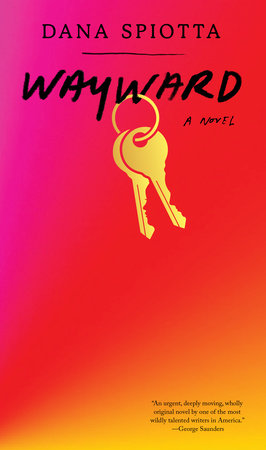
Dana Spiotta’s novels often feature inventive structures reflecting the tastes of her educated, often Gen X protagonists, who tend to be practicing artists or interested in the arts, though 2006’s Eat the Documentalso dealt with the intergenerational fallout of radicals protesting the Vietnam War. However, in Spiotta’s newest novel, Wayward, the characters in the predominately white liberal space Spiotta writes about are devastated by the choices of other whites.
In Wayward, Sam is living a comfortable life in the Syracuse suburbs with her husband and teenage daughter, only to have all faiths shaken in the aftermath of the 2016 election, right as her mother’s health is failing and she is entering perimenopause. In an effort to reckon with her own complicity in modern-day American society, Sam upends her own life, and along the way interrogates the female body, aging, and white womanhood present and past.
Dana Spiotta is the recipient of a Guggenheim fellowship, a Creative Capital Award, and the John Updike Prize from the American Academy of Arts and Letters. Her books have been nominated for a National Book Critics Circle Award, a National Book Award, and a New York Times Notable Book Award.
Spiotta and I recently spoke by Zoom, and discussed writing a different kind of mid-life crisis, writing the body, and making art in a capitalist society.
Deirdre Sugiuchi: In Wayward, you addressed the intergenerational impacts of white male patriarchy. Can you just discuss writing, particularly as a Gen X woman identifying as white?
Dana Spiotta: What I thought was interesting about Sam is that she has wealth and she’s white and she hasn’t had a very hard life. But as a woman, she experiences oppression. I was interested in sorting out the complexity. Having her realize in mid-life as she’s going through these perimenopausal symptoms and she can’t sleep in the wake of the election, that she needs to interrogate some of the assumptions about the status quo that she has both colluded in and also been oppressed by at the same time.
I find in fiction, it’s very interesting to explore these kinds of paradoxical points that kind of go in two directions at once. Sam knew, of course, that the country was not equitable. She knew that there was racism and misogyny, but she wonders whether she has done enough. She is having this reckoning with her own moral core, which is a good thing to do in mid-life, but is a hard thing to do because you have so much invested in the status quo.
The other reason why mid-life is such an interesting point for me is because you’re losing your elders, your parents are failing, and if you have children, they’re growing up and separating from you. Physically you’re at a very complicated place with your hormones going up and down. When a lot is required of you, you are not completely yourself. Or maybe you are, right?
What is the role of anger with women? What’s an appropriate place to put the anger?
I hadn’t read a lot of books or seen a lot of films that dealt with menopause in fiction deeply. What’s interesting about it is we’re told that the rage-y feelings that you have when you are an adolescent and you’re going through those hormonal changes and when you’re in mid-life, although it’s less talked about, that that’s all driven by hormones.
I don’t know if you’ve had this experience, but when you were PMS-ing, you’d get angry, but it wasn’t that you were irrational, it’s just that your ability to swallow the anger was diminished. So you had distorted feelings that were real, just harder to express.
I think that happens in menopause too, who you are is somewhat distorted by hormones, but it’s also revealing some suppressed truths. But on the other hand, when you get to a rage point, you don’t feel good afterwards. You feel ashamed. I was interrogating that idea too. What is the role of anger with women? What’s an appropriate place to put the anger?
DJS: In Wayward, you address consent and spiritual abuse with Clara Loomis, a member of the Oneida community. It parallels a situation another character experiences in modern-day Syracuse. Can you discuss writing consent and young women?
DS: In Oneida, they had this complex marriage where everybody was married to each other. They wanted it not to be about possession and property and vanity, this kind of a Bible communism kind of idea, and heaven on earth. They didn’t want shame with sex. They wanted birth control, so they had male continence. But of course, they got into that weird spiritual cultivation and eugenics.
John Humphrey Noyes was the most spiritual; he had the most children. Some people say like 18 or 20. And of course, consent in that context is impossible for someone to give. Because if you were an 18-year-old girl and the most spiritual head of the Oneida community wants to sleep with you, wants to have the sexual congress with you to celebrate God, you’re supposed to be free to say no, but are you really? It made you see that (Clara’s) own problematic elements had their root in this more innocent time in her life, where she was trying to escape Victorian society and the limits that were put on women there.
DJS: In Wayward, you are writing about a largely white world thathas been disrupted by thechoices of other white people. It’s the most politically focused novel you’ve written since Eat the Document. Can you discuss this—why now and what echoes you’re working with?
America is a really hard place to be an artist.
DS: I am interested in writing about what it’s like to be alive in a specific time and place. To write that kind of fiction, you have to engage the bigger cultural issues. It’s impossible to write about America since 2016 without writing about the bigger political things that are happening. How could you write without writing about equity? Without writing about race? Just like in Eat The Document in 1972, you’d have to talk about the Vietnam War.
But I also think the specific place of Syracuse itself is very progressive, and right outside it, you have these rural areas that in the past, I think Sam—she’s a good liberal, she’s got this lefty background—would say, “Oh, these good working-class people. They have a raw deal.” But then she kind of realizes that they all voted for Trump [laughs] and she has to reconfigure her view of them. In Syracuse, it is almost impossible to escape because there’s so much poverty here. There’s such segregation between the haves and the have-nots.
DJS: I loved the way Syracuse, place, and architecture inform this novel.
DS: I think fiction works best when it’s really specific and really particular and eccentric. Locating it in this very specific place seemed important.
A lot of times when people write about mid-life crisis, especially for a woman, you have a sexual affair because you’re feeling like your allure is fading or something, and that’s how you deal. Before I even knew who Sam was, I had this idea that this woman was looking at this old house that was once beautiful, but it’s falling apart. She signs a contract (to buy it), and then only when she’s driving home, does she realize she’s actually leaving her husband. She doesn’t realize she’s leaving her daughter.
I liked the idea that instead of falling in love with a person as a way out of the marriage, she falls in love with a specific place. I think somehow the wreck of a building speaks to her because of her body’s own decay or changing. That got me into all the self-optimization subculture, the narcissism of the gym bros, and listening to a bunch of podcasts of people talking about how to expand their life. And you’re just thinking, “For what? What is all the extra life for?” Which seems to be a big question that Sam asks. She also finds that kind of precious and narcissistic and solipsistic. That’s something I was into too, this weird obsession with self-care and self, self, self in America. In the face of so much that seems obscene.
One of the things that was interesting, is that internalized misogyny that she has. She’s at that party after the election, and the younger women say, “It’s women over 40 that put him over. White women put him over the top.”
And she’s like, “Yeah, I sort of hate these women too, and I am one,” and she’s very hard on the moms who are really fit and do plastic surgery. But the ones who don’t, she’s hard on them too. All of that is really an expression of her own inquiry about herself. Just because you’re aware of your own internalized misogyny doesn’t allow you to escape it.
DJS: Sam is wrestling with being a complicated white woman and also with how complicated white women are historically. Can you discuss?
Reading is almost inherently counterculture right now, because it’s long, deep and requires this kind of focused attention. You can’t click through it.
DS: Again, it’s that complicity of historically and presently benefiting from the status quo. There’s a price. You can look and see that you are both complicit in it, and also that you are subjugated. This is what we all have to understand, is that to try to fix things is to benefit all of us, right? She wants to reject that and find a different relationship to the world where she is not complicit with these things. Doing nothing is complicit.
This is the thing that Generation X has to wrestle with. We don’t run the world because of course all these old men still run the world, but we run a lot of the world, and it’s still really messed up. #MeToo really affected a lot of women of my generation, because we inherited from second wave feminism, radical change, and then what did we do with that?
One of the reasons why Trump won is because he hates immigrants. Another reason is because there’s a lot of misogyny in the country. And so all these women going back at the same time and looking at what they put up with, is another kind of reckoning too that the book is interested in. The legacy of that is that for young women coming up, they have to fix it because you didn’t.
DJS: “Yeah, sorry, kids.”
DS: “Should have done better. Yeah.” I think we are going to do better. A lot of really brave women are changing things—this is what is great. Things can change and they ought to. You can’t just kind of go into your bubble and just think about yourself and get away with that.
Somehow when you see yourself as part of the whole world, the urgency of obsessing over yourself kind of dies down. You can see with more clarity. You can actually have a more integrated authentic relationship to the world.
DJS: In all your books there is this recurring theme of money vs. art.
DS: Stone Arabia is less political, but money was so important in that book, and poverty, and to face middle age when you haven’t bought into the capitalist dream. I guess one of my questions is, can you remain counter to the culture? Can you have that relationship as you age and as the culture kind of wears you down and co-opts you? America is a really hard place to be an artist, particularly.
When we buy into these technologies that are monetized, that shapes who we are as artists, our thoughts and how we live our lives.
I’m hardcore Gen X. My generation grew up being much more suspicious of rich artists. Today, it’s sort of like you’re a brand. Part of me is very skeptical of that, and I realize that makes me old in a lot of ways [laughs]. Which is fine. One thing that Generation X got right, maybe, is being suspicious of being co-opted and being made into that.
DJS: I remember fifteen years ago when one of my friends’ bands got sponsored by Outback Steakhouse, people freaked out. But now it’s like, “Well, the only way you can make a living is by getting some sort of corporate sponsorship.”
DS: These things have an effect, and I think some of it is technologically driven. When we buy into these technologies that are monetized, that does shape who we are as artists. When we participate in it, it shapes our thoughts and how we live our lives. We have these dopamine addictions to our iPhones or social media and that changes the culture in profound ways.
I think that’s one thing that’s interesting to do in fiction, to explore this, because it is sort of an antiquated technology, reading. But reading is almost inherently counterculture right now, because it’s long and deep and requires this kind of focused attention. You can’t click through it. You can’t comment while you’re reading. It’s participatory, it goes back and forth between the reader and the writer, but it’s very different from being on Twitter, Facebook, or Instagram.
(Fiction) is a fun place to engage with technology, and to think about how we use it in an estranged way. I like putting internet things in novels because it’s so much a part of our lives. You can’t write a novel about what it’s like to be alive now and not talk about technology that shapes us.
For me, it was all about putting it back on the body. When you press your phone awake, what does it feel like? How does it feel in your hand? All of that body experience of the technology. We’re spending so much time on it. How is that going to change Gen Z, how they’re growing up and how it makes them see the world? It’s interesting to me.
Short stories, to me, are sparked by desire. I don’t mean they’re all love stories, though they certainly can be. I mean they are collisions or conflagrations, small or spectacular traffic accidents in which the desires of one person bump up against the impossible—whether in the form of some unattainable dream or the competing desires of another person. In the pursuit of these desires characters can find meaning, even if it doesn’t turn out as they hoped it would. After all, desire can be wayward, even foolish or dangerous, and clarifying at the same time. Your fantasy of the life you want tells you a lot about what’s missing in the life you already have.
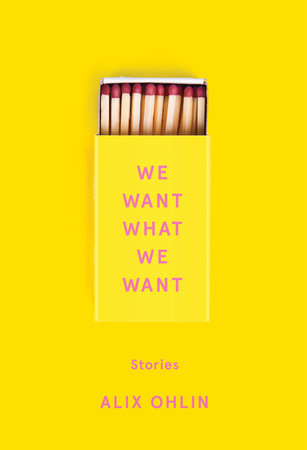
Many of the stories in my new collection,We Want What We Want, are about people who want to remake their lives and who discover, in the attempt, some astringent and inescapable truth about who they are.
In “Point of No Return,” a woman tries to find peace through increasingly outlandish New Age therapies. What she’s really looking for is an existence that can be purely and fully controlled, which is of course unreachable. In “The Brooks Brothers Guru,” a woman sets off to rescue her cousin from a strangely sophisticated cult he has joined, but finds herself questioning her isolation and craving the community he has found there. “Money, Geography, Youth” is a nest of conflicting desires as a young woman comes home from a year abroad to discover that her father is engaged to her best friend. Is this rushed engagement just an inappropriate and mismatched set of needs? Or is it something potentially less ridiculous, and more complicated? I’m always reaching for that space where a seemingly absurd desire deepens into something more ambiguous, and harder to deny.
Here are 8 short stories I love, that have opened up the way I think about desire and its impossibilities—about why and how people want what they can’t have, and what they do about it.
In Vancouver, in 1921, a young man named Nelson lives in the back of a laundry in Chinatown. He wants to play hockey, but racism keeps him from the game—until, that is, he has the idea to disguise himself and join a new female team, the Valkyries. His friendship with a teammate complicates his desire, and Nelson’s ambitions—to play, to love, to belong—ultimately prove impossible. Still, “at fleeting moments, caught up in the joy of it all, he felt neither boy nor girl but simply a child again, playing shinny with Sammy in Stanley Park.”
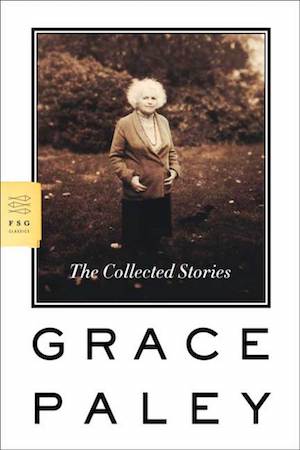
Paley—there is no greater genius of compression and wit—wrings beauty and pathos out of this brief story in which a woman runs into her ex-husband while returning a decades-long overdue book to the library. The narrator’s reflection compacts every unattainable desire of a full and storied life:
“I want, for instance, to be a different person. I want to be the woman who brings these two books back in two weeks…I want to have been married forever to one person, my ex-husband or my present one.”
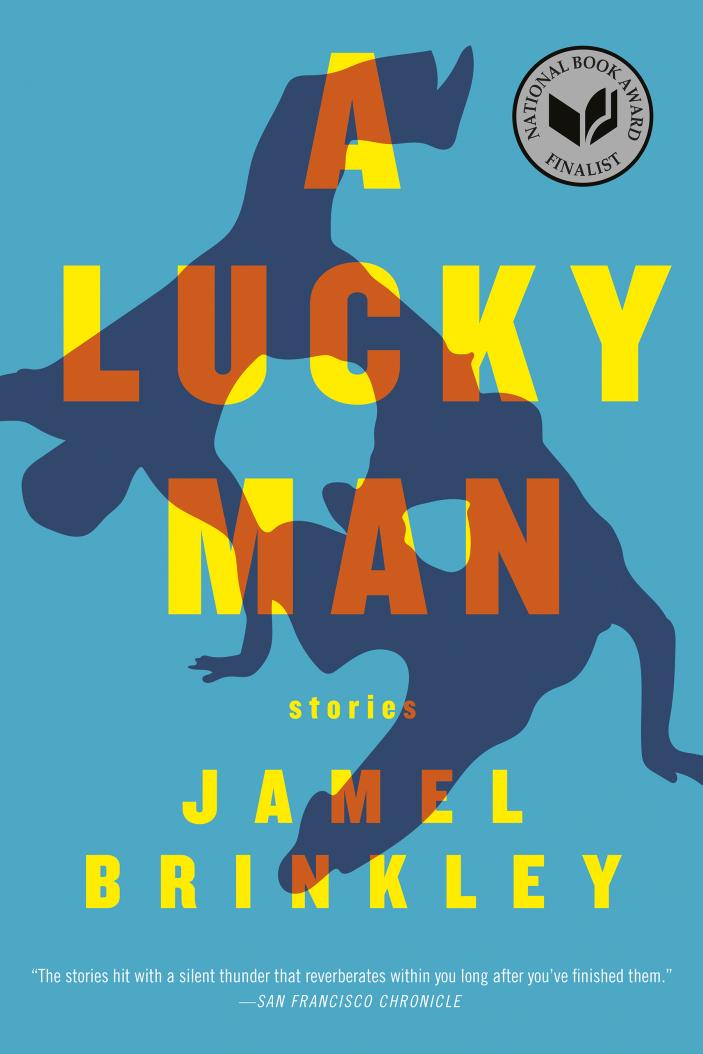
“No More Than a Bubble” inA Lucky Man by Jamel Brinkley
This sinuous and elegantly surprising story starts with two friends pursuing a couple of attractive women at a party. At first, it seems like a story about a hookup, but what the narrator’s really looking for is more elusive than that—it has to do with his father and his own identity, and he’ll be looking for it his entire life.
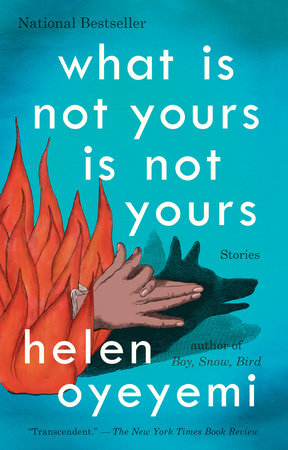
All the stories in Oyeyemi’s collection What Is Not Yours Is Not Yours court and subvert tropes of the fairy tale, and each one is hectic with passing characters and unanswerable questions. This story starts out following one teenage girl who, longing for the attention of another, follows her to puppet school. But its most poignant character is a puppet who longs for desire itself.
Paul Yoon is a master of dramatizing the complex and subtle movements where the conditions of world politics wash over the lives of individual people. In this heartrending story set in a village of Korean laborers near the southeastern edge of Russia, a boy sets out to find his father—a quest for reconnection and belonging in a world of displacement.
This exquisite, thoughtful story centers on a park ranger in training, Chuntao, who wants to love both her job and her species but can’t do either while visitors to the park behave in ways so destructive and selfish. “Hungry for danger, hungry for disaster?” Chuntao thinks. “It was a desire that lived in only two kinds of people: those who had only known both and those who had never known either.”
The impossible wants of the characters in this remarkable story circle around the most ordinary of objects, a bicycle. Yet each of the characters wants something extraordinary: to be forgiven, to find justice, to bring a loved one back from the dead.
This story of a young artist in New York dealing simultaneously with professional rejection, shortness of breath, and a stalker kept me up at night after reading it—it’s so profoundly uneasy and sad. What the protagonist wants, the thing she (heartbreakingly) can’t have, is to live “beyond the body”—to make her art and to be free.
“Do you, Miss Caesara Pittman, in the year of our Lord eighteen hundred and sixty-six, aver to tell the truth, the whole truth, and nothing but the truth?” Davidson, the attorney of the City of New Orleans, asks. It’s hot outside and hot in the courtroom. Too hot for so many people to be on those benches, close as piglets on a mama pig’s teats.
I touch the Good Book, my fingers touching on the gold edges. That man, Buford—now I know his family name—sits at the table by his own lawyer, who wears those round glasses. Buford’s eyes wide with hate. He making all kind of faces at me. With those stitches down his cheek, looks like he’s Lucifer hisself. But this book never sent me wrong. I place my hand on my left breast.
“Yessuh, I do,” I say. “I promise on my very heart.”
“Where were you on the evening of Wednesday, July 25, 1866?” Davidson rests his hands behind his back, making his belly stick out some. He’s more than a couple of feet away. But I smell talc and pipe tobacco every time he pass by.
“As you say, mister. It was Wednesday, and I was down on Good Children Street to buy baguettes. I make bread pudding for my husband and young ones on Saturdays.”
“You got to let it stale up good before you use it.”
“Of course.” Davidson laughs. Some of my folk in the gallery laugh good, too.
“It was long about sunset…” I wasn’t far from home, had a basket on my arm. Had left the butcher where I cut offal for other free Creoles like myself. Had just passed the barn where they keep the streetcar mules when footsteps made themselves known to me. Some girls had been handled wrong lately. And some of them had been shamefully desecrated.
“I didn’t come down here for no Devil work,” I said, hoping to be heard. A man came out the shadow. Under the gaslight, this white man wore the clothing of a man of God. A white collar around his neck. A cross hanging underneath that.
“Just taking note of one of our Father’s children.” In the light, he rubbed his hands like he was cold.
But he had big shoulders and big, rough grabbing hands. The kind of hands that plowed soil or worked a cargo ship. Not the kind of hands that prayed over the sick or baptized little ones. I held my hand out, palm up. “You ain’t no kind of priest.”
He smiled, all the yellow teeth in his mouth shining at me. Looked like a mouth full of kernels.
“I don’t take offense in the ignorance of your kind none,” he said. And I wondered if I was wrong about who he might be. But I thought on the book and words came to my mouth.
And I saith: “Take no part in the unfruitful works of darkness, but instead expose them.”
“What?”
“I rebuke you!” I knew enough to know that a priest should have got a twinkle in his eye when you said the Scripture to him. But this heathen’s eyes stayed black. He might as well have been deaf. I dropped my basket and ran. I was fast but got tangled in my skirts. Fell on those cobblestones. Hurt my wrist.
He fell on top me, clawing at my clothes. Pushed me on my back. He pulled at my chignon. That made me madder than what I already had reason to be mad about. He shouldn’t have done it. But, the exacerbated madness reminded me of the poultry knife I kept in my hair. I bought my manumission five years before the war. I was a free woman, but that didn’t mean I didn’t have to prove it from time to time. When slave traders needled me, I had my papers in one hand and my shiny little knife in the other.
This man’s sick breath was on my face, and he was yanking my skirt. So, I jugged that knife in right under his left eye and drug it down to his lip. I smelled the metal that’s in blood. He yowled like a pitiful li’l dog. If I would have drug up instead of down, I could have popped his eyeball out like a—
Davidson raises his arm. “Thank you, Miss Pittman. That will do enough. We do not wish to give the jury night terrors.”
I huffed.
“What about my terrors?” I say, but he don’t hear.
Davidson points at Buford. “Is this the man who accosted you?” Buford still making faces. He ugly as a pot of chitlings. His outside match his insides. I like that I did that to him.
Outside the courtroom window, the paddleboat toots. I watch a colored man throw bread at a duck. Some changes done happened since the war between the states. I was a slave most of my life working the house on a plantation up near St. Francisville. I ain’t a slave no more, but I know these people in the juror box. Few of them would have wished any of us found freedom. Mr. Barker with the ruddy red cheeks sells candles and other fine things. The man with the mutton chops runs carriages. The dandy one on the end is from Virginia, almost a carpetbagger. Virginians used to sell my people to New Orleans for punishment. They hoped heat and terror work would kill us all. And then there’s all the marching men the white mob killed at the convention not long after my meeting with Buford. The whites trapped the good men inside that Mechanics’ Institute. When the men surrendered, dropping weapons, hands up, the white mob murdered them anyway, right in the streets. Paul Dostie was holding a white flag when they shot him.
I expect no kind of justice here. I’m just another darky, hardly worth throwing away the life of one of their own, guilty or not.
So, we really only here on account of how loud Buford screamed when I cut him. Like a babe with the colic. They saw my clothes, shredded like I’d been clawed by a lion. And they saw Buford, too big around the shoulders and too rough around the hands to be a priest. The police grabbed Buford on the spot. We made the papers. That’s why we here. Because of all the attention.
“That man at that table over there?” I ask.
“Yes, miss,” Davidson, the attorney of the City of New Orleans, says. “Have you seen him afore?”
“The man over there who’s ugly as sin?” Some of my folk up the galley laugh again. But the men in the juror box are beet-faced.
“Miss Pittman, I must insist—”
I squint. “I never seen that man before in all my born life,” I say. “I swear it.” People all around the room gasp.
The judge bangs his gavel. Buford’s lawyer with the round glasses stands.
“Your honor, I move for an immediate dismissal of the present matter.”
Later, it’s dark out. The bells of St. Louis Cathedral over Jackson Square ring out. This is how I know it’s round midnight when Buford shows his face at the exit of the district jail. A policeman shoves him out. Buford dusts off his coat and starts toward the cathedral. But he won’t make it. I doubt he was going to pray to the Lord anyhow. Don’t matter none. My basket is full of baguettes and oranges for my young ones. And I have a knife. A long one, too. I use it for gutting sow. When I pull it out, it shakes like it’s singing. Don’t matter if Buford was going to pray. I’m his Lord tonight.
To be a woman, or female-identifying, is to be a creature of contradictions. Women construct multiple personas to make themselves palatable in different contexts, temper emotion for fear of repercussions, and endure such constant scrutiny that they must become endlessly adaptable. Magical feminism—a subgenre of magical realism that’s usually employed in a feminist and postcolonial context—embodies these contradictions, producing them on the page by melding the surreal and the quotidian.
Contradictions in magical feminism are accepted as part of the general female experience: women can be both witches and healers, can bear the burdens of sexual trauma and still seek pleasure. The mundane and the impossible coexist to achieve a defamiliarization that mirrors the strangeness of everyday female experience. There could be demons manning the cash register at the grocery store, ghosts riding the bus, or people turning into animals. Magical feminism also subverts the restrictive conditions of reality to allow female-identifying characters to reclaim agency. In these texts, women use extraordinary power in order to affect their wills; magic enables them to re-create the world as they want it to be.
Short stories are the perfect vehicle for magical feminism because each one functions as its own encapsulated world. Every story has its own rules, its own internal logic. Story collections, then, can convey one writer’s manifold experiences of reality, communicating a few central themes from a multitude of angles. If a short story is a planet, a collection is a universe.
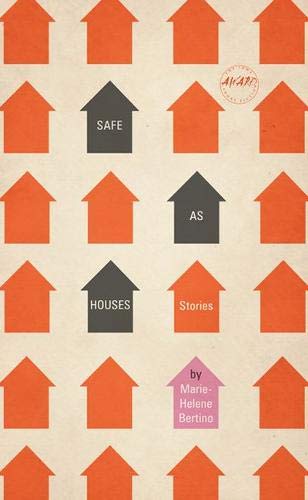
This Iowa Short Fiction Award-winning collection runs the gamut from actual aliens to emotional alienation. In the title story, an English professor mourning the loss of his wife robs other people’s homes of sentimental objects. Another piece features a woman having dinner with the idea of her ex-boyfriend, wondering why we often love the fantasies we invent more than our own realities.
This book proves that not all houses are shelters. Still, it’s possible to find comfort in the corners of Bertino’s world. Read a story from the collection here, and to hear Bertino talk more about the art of incorporating magical feminism into fiction, listen to her salon with Elissa Washuta here.
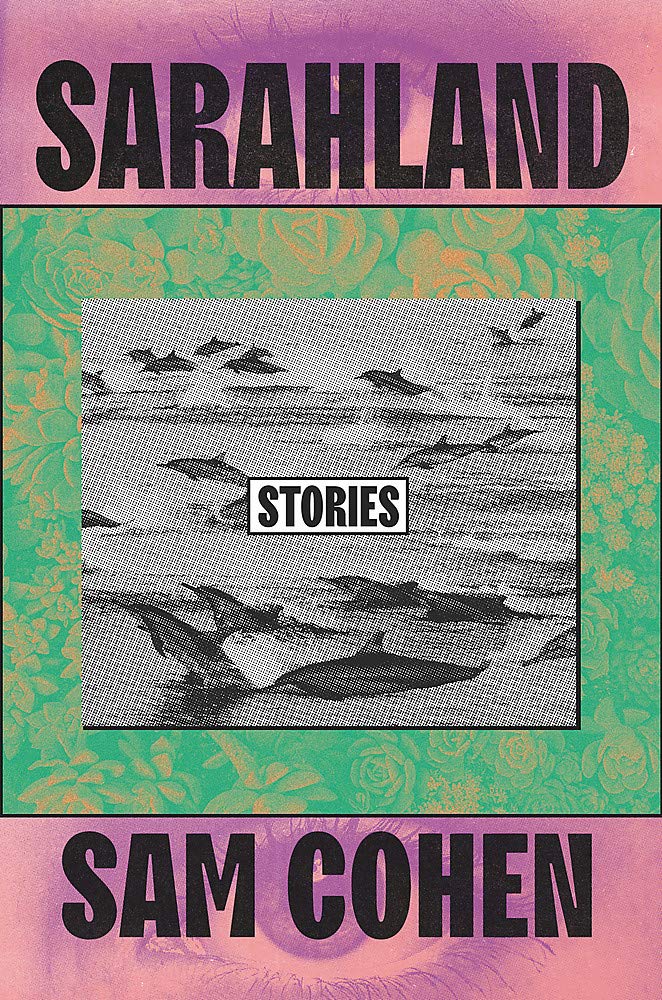
Cohen’s debut features a host of protagonists, all named Sarah, who grapple with whiteness, privilege, and heteronormativity in ways that range from quotidian to fantastic. Each Sarah resists the singular (but also conventional) identity that’s been assigned to her: one plays dead for a necrophiliac, one becomes a tree, and one submits to a culture of normalized sexual violence in pursuit of a coveted “Mrs. Degree.” The collection as a whole employs strangeness to interrogate how malleable women’s identities can really be. Read “Sarahland” here.
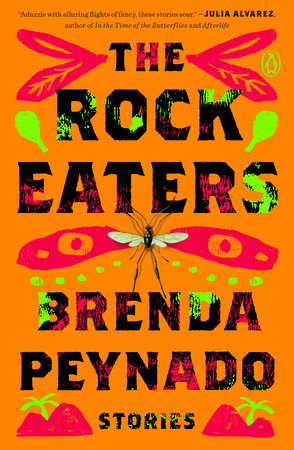
This collection proves Peynado’s mastery of double-meanings and metaphors. A story called “The Dreamers” explores an overlapping group of young, undocumented immigrants and a magically sleepless religious order. In the title story, children levitate, floating away from their families and home countries. They take to eating rocks in order to stay grounded. This genre-bending book tackles diaspora and xenophobia, using speculative elements to make the difficult experiences of first-generation immigrants emotionally intelligible.
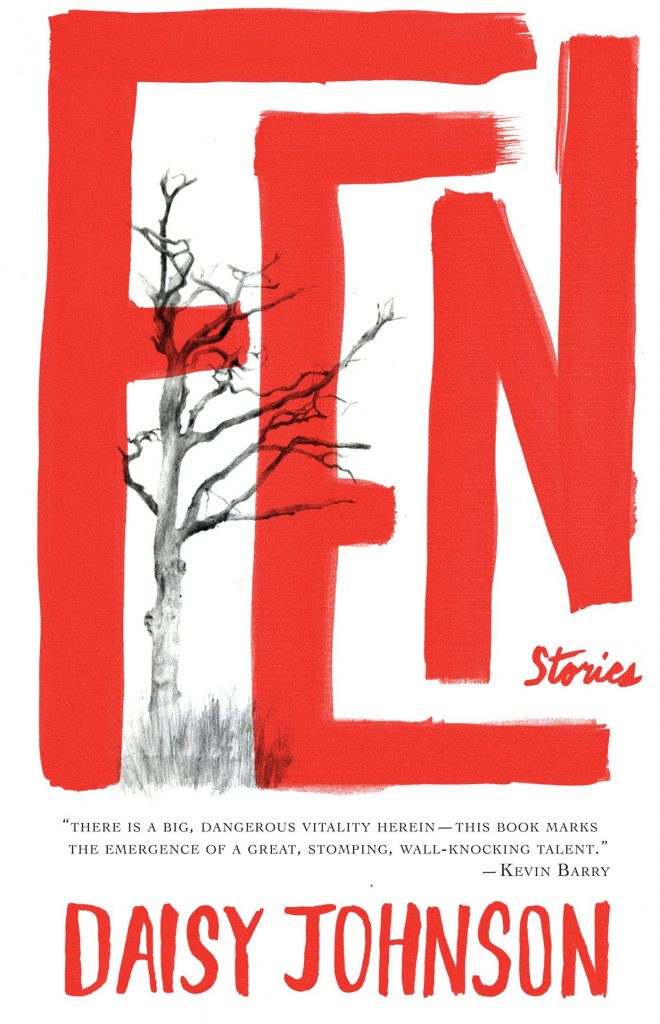
Best known for Everything Under, her genderfluid take on the Oedipus myth, Daisy Johnson’s stories are just as creative and timely as her novels. In this collection, set entirely in the drained marshlands of England, girls transform into eels, the dead are reincarnated as foxes, and a house falls in love with its inhabitants. The fens are liminal spaces that change with the tides, and Johnson draws sharp parallels between the landscape and what it means to be female. Read Roberto Rodriguez-Estrada’s interview with Johnson here.
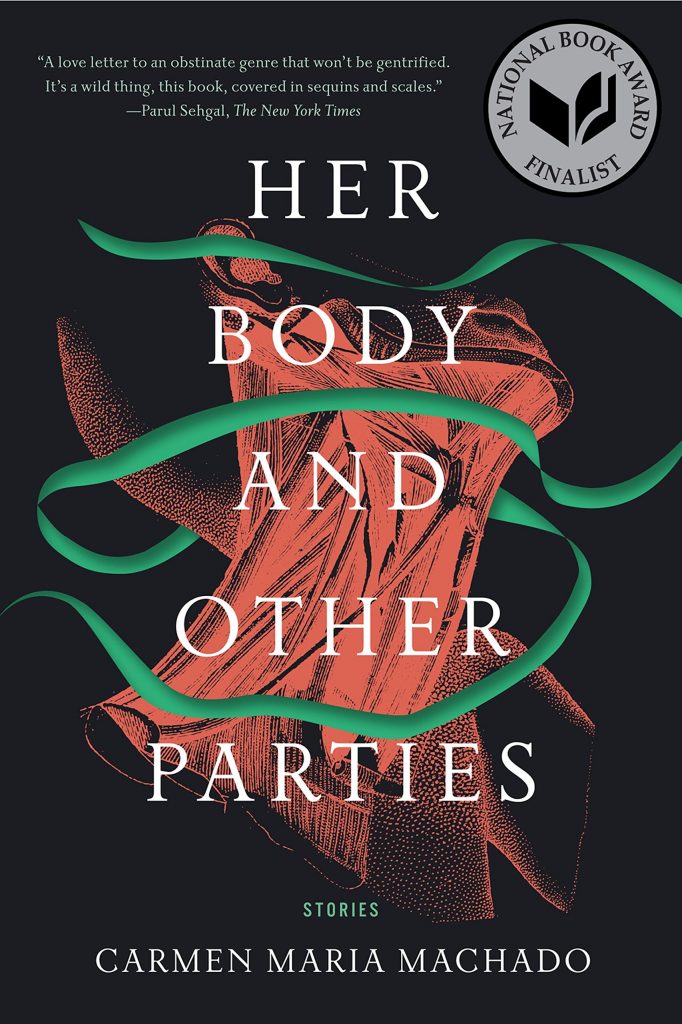
Magical feminism at its finest: this collection handles queerness, trauma, and women’s agency through an uncanny lens. Machado’s tales, like many magical feminist pieces, defy genre classifications: she writes a campy take on Law and Order: SVU with as much poignancy as a story about an epidemic causing women to evanesce.
A National Book Award finalist and winner of the Shirley Jackson Award, this book asks what it means to have a female body and what powerful forces such a body might contain. Read more about the impact of Machado’s work in “What I Don’t Tell My Students About The Husband Stitch.”
Pregnancy and motherhood are at the fore of this book. In one story, thirteen simultaneously pregnant teenagers bewilder a high school guidance counselor. In another, a woman who’s had a miscarriage suffers quietly as she anticipates the destruction of an approaching hurricane.
Throughout this collection, Hunt asks who gets to be a mother, who deserves to be one, and how those two things differ. She also uses the surreal to look at the romantic and interpersonal. In “Beast,” a woman who’s questioning her relationship turns into a deer at night. You can read Hunt’s personal, intimate writing over and over, relishing something new every time.
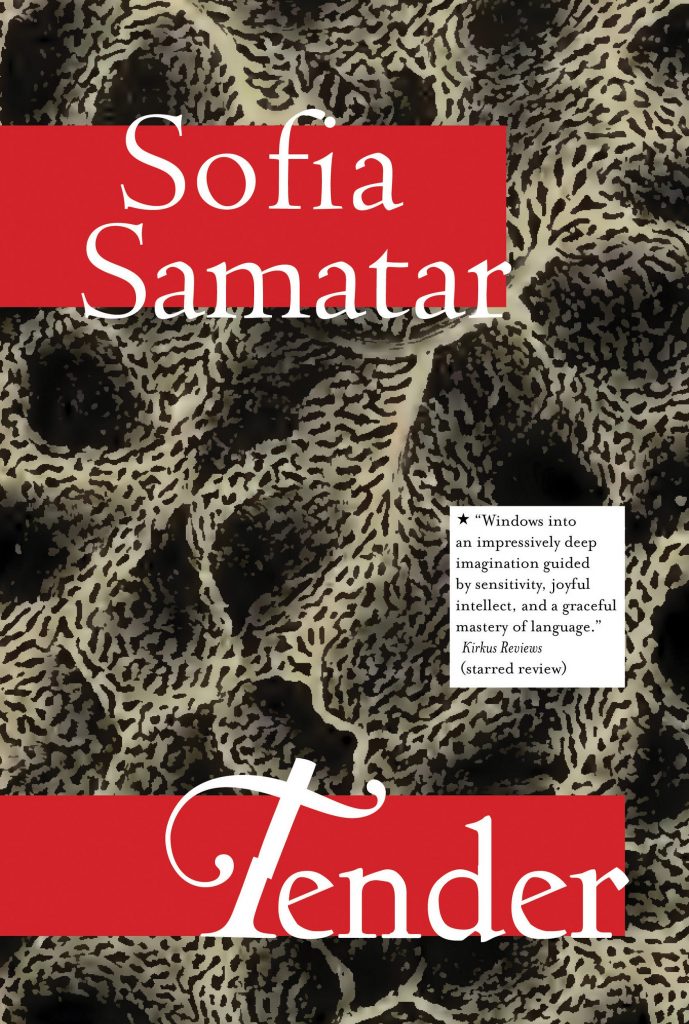
Sofia Samatar updates some classic myths and invents her own with this collection. In “Selkie Stories are for Losers,” a poignant coming-of-age story featuring the were-seals of Irish and Scottish legend, a teenager comes to terms with the reason her mother has left her family.
The title story revolves around a woman who’s given up her life as a mother and businesswoman to tend a radioactive waste facility, which she can never leave. Throughout this collection, Samatar employs magical realism and sci-fi tropes to interrogate how women claim agency—and at what cost. Read Samatar’s “Miss Snowfall” here.
Contemporary readers already know that female characters have little power in fairytales. But what would happen if Belle never fell in love with the Beast, or if Red Riding Hood’s desire was fierce enough to tame the wolf?
Carter twists traditional tales into almost unrecognizable shapes in this collection, highlighting how women are perceived, objectified, and often underestimated. Outside the context of their fables, her characters are recognizable in their humanity: driven by desire, rash in their decision-making, and infinitely fallible. These stories revolutionized the feminist fairytale in the 1980’s, and remain just as relevant today. For a glimpse into the collection, read “The Lady of the House of Love.”
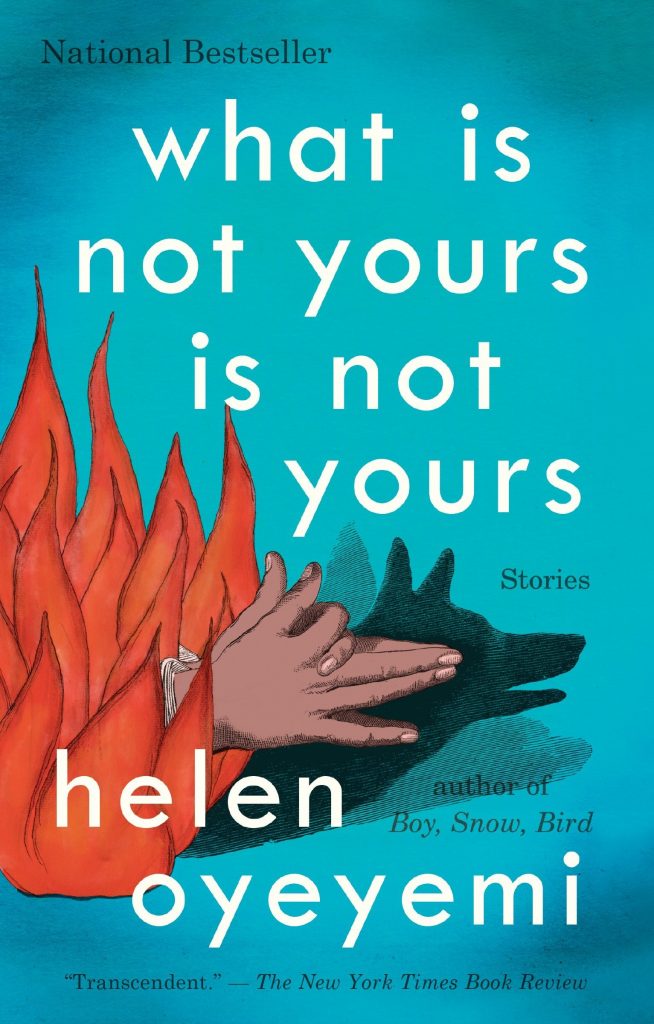
The nine linked stories in this collection address youth and desire, locks and keys, individuality and conformity. They lay bare identity from different angles, usually in ways that provide more questions than answers. They are all undeniably magical. “Is Your Blood As Red As This?” features one character who’s a ghost and another who’s a genderless puppet in human form. In “Books and Roses,” one key opens a library, a garden, and clues to two lovers’ fates. Oyeyemi’s prose is dreamlike, scintillating, and impossible to put down.
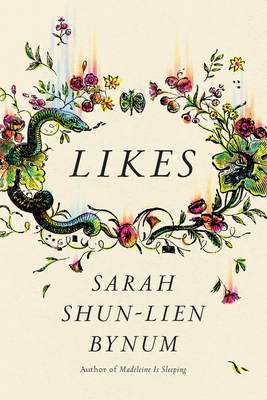
Likes follows girls becoming women, women reminiscing on girlhood, and all of the changes that come in between. Bynum’s metamorphoses encompass both the strange and the mundane: in one story, a father watches his daughter grow through the lens of her Instagram page; in another, a mother and daughter navigate a world of fairies, elves, and private school elitism. Bynum’s writing is sharp and observant throughout, defamiliarizing a world we know so well that it often gets overlooked.
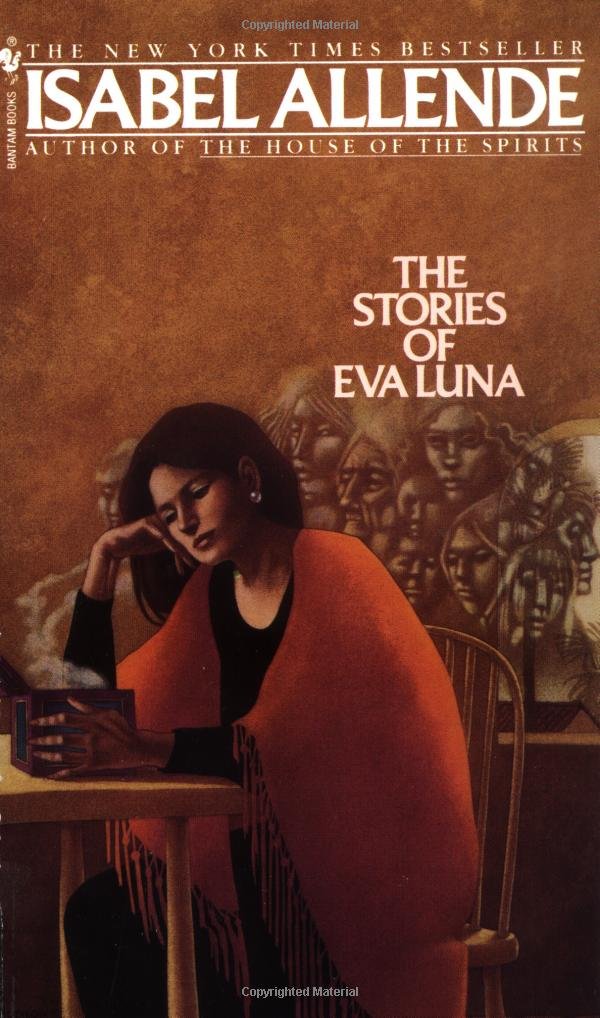
This collection is arguably the progenitor of the magical feminist genre. The book’s narrator entertains her lover with the stories it contains; Interweaving the real and the magical, Eva Luna’s stories explore love, vengeance, and female strength. She describes a priest whose prayers to a local saint restore his sight, a schoolteacher who enlists the whole town in burying the body of the man she has decapitated, and a woman who sells words so powerful they turn an outlaw into a political candidate. This collection explores the ways women use words to shape both their own identities and the world around them.
I believed the stories of the Bible more than I believed anything else for the majority of my life. I quoted scripture to make decisions, considered parables when confused, consumed evangelical Christianity in a kind of keg stand of my own righteousness. But what I learned when I lost my faith, slowly and then all at once, is that evangelical Christianity isn’t a religion—it’s a culture. Losing your faith is both an existential drought and a culture shock.
I lost the most influential book in my life the minute I lost my faith. There isn’t much scripture to tell you how to stop believing. And it was hard for me to find stories in general that I needed to help understand and survive my experience. There were books about breakups and friend fights and college decisions; novels about worrying about your future and your family and your dreams. But there weren’t very many novels about wondering whether everything you’d ever believed was a lie. There were even fewer novels that were able to untangle the harm the white evangelical church has done and also the love it can provide.
When I started working on my debut novel God Spare the Girls, I was processing my own loss of faith, and trying to understand how something that had been so fundamental to my development as a person could have also been so harmful. The story is tightly focused on Caroline Nolan, the daughter of a megachurch evangelical pastor, who is forced to question everything she’s ever known when she discovers her father’s secret. The drama that unfolds centers on her church, her community, and her family, but it’s also about the internal drama of questioning and how painful that can be.
No work, though, is ever really the first. As I wrote, I found other books about Christianity, books about losing faith, books about seeing the place that you’ve known your whole life after the scales have fallen from your eyes. These 7 books made me feel the way I hope my book can make someone feel: less alone.
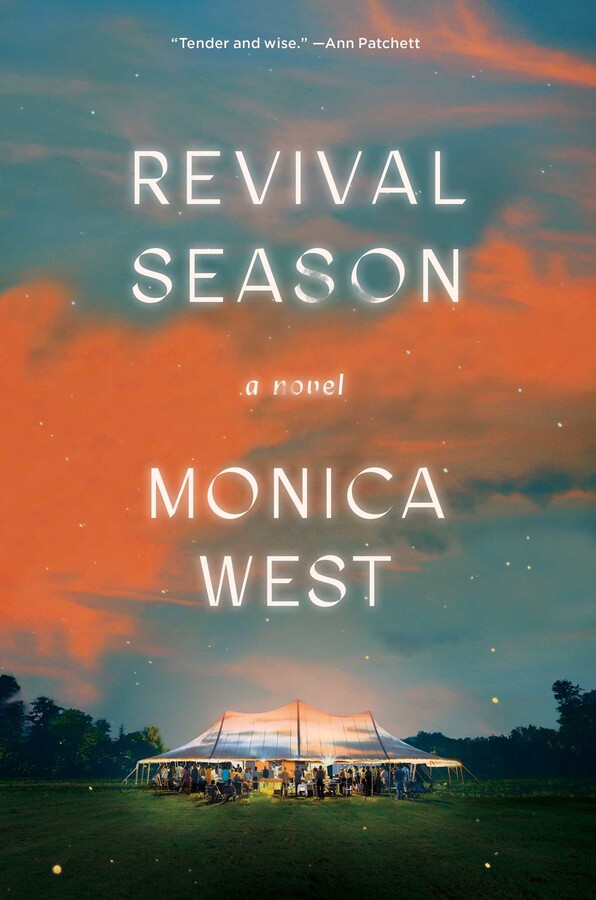
Monica West’s story is about a young revival circuit preacher’s daughter who is forced to question the nature of miracles and the power of God. Though we did not know each other when we were writing our books, all of the same questions are in each of our novels: how do you question truth? How do you recognize power? What do you do when something you thought was good turns out to be bad? The plots aren’t similar, and the places our protagonists end up are drastically different, but reading Revival Season made me realize just how universal these questions are, and just how meaningful.
Brit Bennett is a beautiful writer and her prose is mesmerizing, but what I loved most about her debut novel The Mothers is its contradictions. The story is about Nadia returning to the place where she grew up and being forced to confront her past: including her relationship with the pastor’s son. Bennett lays bare the biases of this California church and the effects of a tight-knit community that gossips. She doesn’t shy away from describing the shame many young women in the church feel.
The Tabernacle of the Gospel Truth—the fundamentalist church in Tom Perotta’s The Abstinence Teacher—is a bit more extreme than modern-day evangelicalism, but their beliefs on sex are the same. This story of a high-school teacher forced to teach a Christian sex-ed curriculum is way funnier than it has any business being. Its central pastor is warm and loving, but holds strict doctrinal beliefs, and Perrotta isn’t afraid to make good-natured jokes about the culture of Christianity.
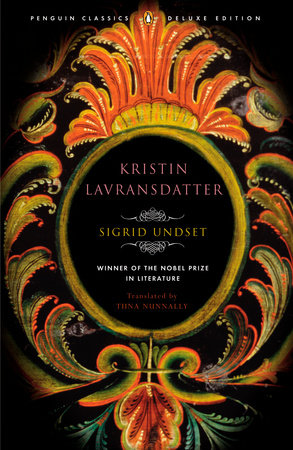
This early 20th-century Norweigian trilogy is a family saga about a young girl named Kristin Lavransdatter living in the 14th-century. Kristin is sent to a nunnery, and though her faith isn’t evangelical, much of the books focus on her questions about God’s nature and his wrath. “I didn’t realize then that the consequence of sin is that you have to trample on other people,” she says. The book is full of as many proverbs as the Bible (“man proposes, God disposes”), and treats the faith of this young girl as just as valid as the knowledgeable priests she interacts with.
Gifty, a talented 28-year-old scientist, must deal with her faithful mother’s second major depressive episode. Gyasi does a marvelous job of explaining the tension between heathen child and religious parent, and of laying out how unaware of our own trauma we can be.
Flannery O’Connor’s first novel Wise Blood is one of the only books I’ve ever seen that displays the pipeline from extremely religious evangelical to extremely pronounced atheist. Her protagonist Hazel Motes, grew up with doubts about his faith and after the war begins to preach the gospel of his lost faith. What I love about this book is that O’Connor portrays Motes with such sympathy, allows him to be terrible to people around him without ever demonizing him, and shows that zealousness isn’t reserved for Christianity alone.
James Baldwin’s novel Go Tell it On the Mountain is one of my favorite stories about preacher’s kids. Baldwin’s protagonist John Grimes is desperate not to be like his father, the best pentecostal preacher in Harlem. The novel is littered with Biblical allusions and stories, and Baldwin is forthright with the cause of Grimes’s loss of faith—his disillusionment with his father:
“John’s heart was hardened against the Lord. His father was God’s minister, the ambassador of the King of Heaven, and John could not bow before the throne of grace without first kneeling to his father.”
As both a Virgo and a lesbian, I love talking about books, and I loved talking about astrology, and I’m always right. Therefore, you can be assured that this list is scientifically accurate and you’ll definitely love the books assigned to your sign. I’m not here to tell you who you are, I’m just here to tell you what to read.
Taurus is such an embodied sign that I know they’ll love this book about bodies, gender, and race. Tauruses will come out of this book with a deeper understanding of themselves and their relationship to their bodies.
Tauruses are nature-lovers, grounded in the physical world and born with a deep appreciation for the land. Thoughtful, earthy Taurus will love this book about animals and how humans relate to and interact with them.
Nobody appreciates pop culture more than Geminis—you have to stay relevant to be the coolest person in the room, after all. This book is quirky, funny, and full of glittery essays that are sure to entertain.
This book is literally set against the 1966 flood of Venice, how much more Cancer-y can you get? Add a strange friendship between a novelist and her mysterious fan, and I know any Cancer will drink this book up.
This book is literally set at a music festival. A music festival! It’s about love and music and two girls finding each other over the course of three days. Is that enough for you, Leo?
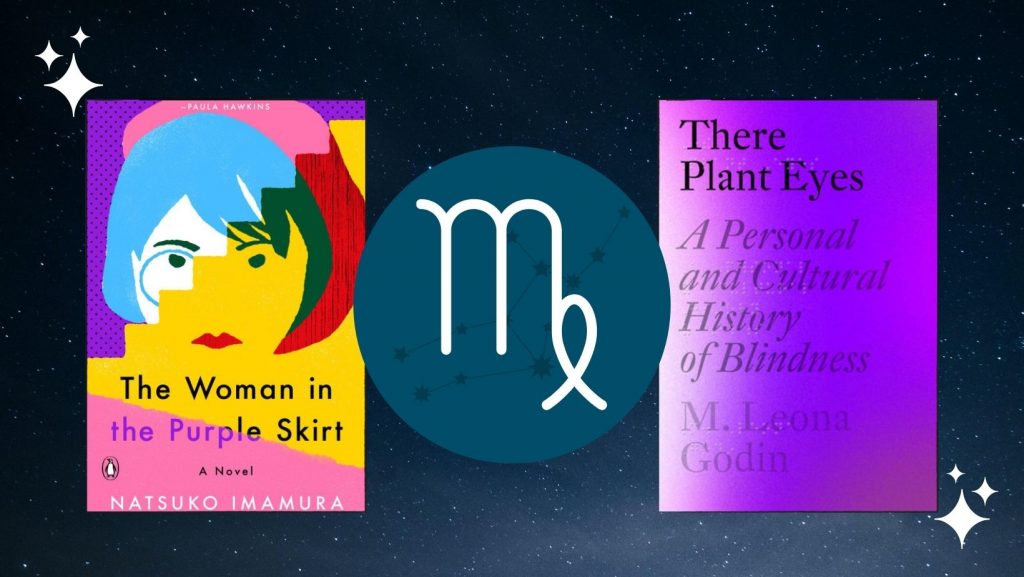
A suspense novel about obsession and manipulation. People don’t think of Virgos as dark, but watch what happens when intense analysis meets obsessive observation.
This book about the depiction of blindness in popular culture is an expertly-assembled collage of information that any Virgo would appreciate. An compliation of history that moves from Stevie Wonder to John Milton to Godin’s personal experience, this book is both expansive and focused, a trait that Virgos are sure to love. Check out our reading list by M. Leona Godin.
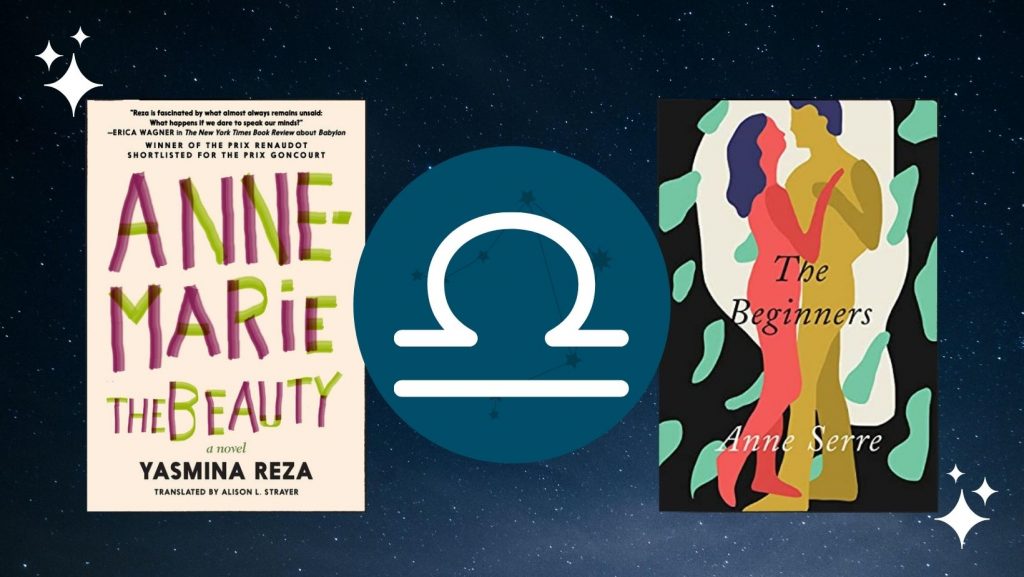
This novel about an aging actress reflecting on fame, her marriage, and her career belongs in Libra 101. Gimlet-eyed, sparkling, and insightful, just like a Libra.
The Beginners by Anne Serre, translated by Mark Hutchinson
Only a Libra could be happily married for 20 years, only to fall in love-at-first-sight with a man who reminds them of a book character.
This hybrid book weaves together essays and autofiction as it follows the story of a poem that connects two women across centuries. There’s murder, blood-drinking widows, and, of course, poets. It’s Scorpio heaven.
A ghost story about two women who go missing years apart in Vietnam. Hauntings, revenge, and possessions abound in this time-bending novel that couldn’t be more Scorpio if it tried.
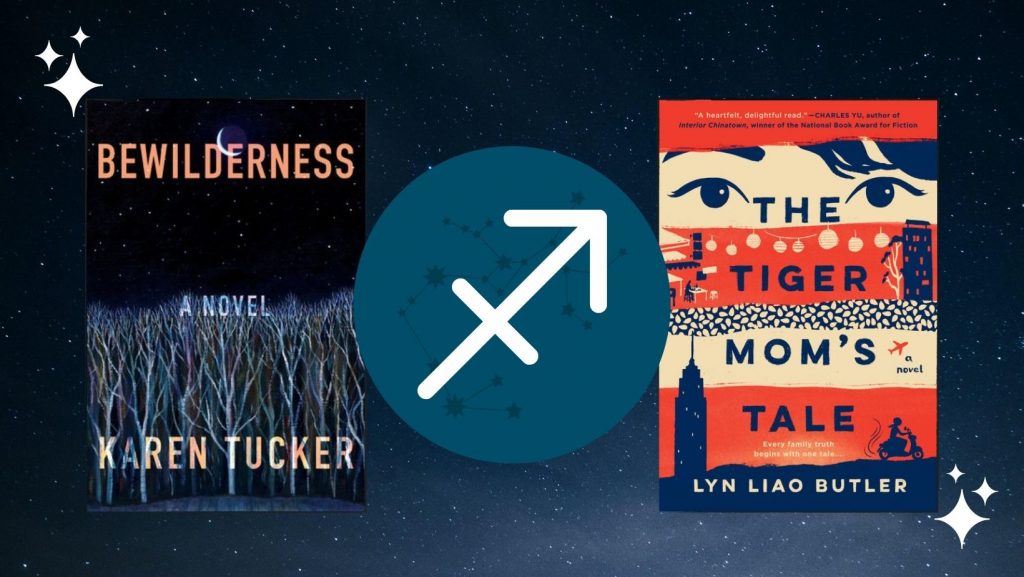
A novel about travel, family secrets, and whirlwind romance—do I have your attention, Sagittarius? A young woman living in New York City has to decide whether to return home to Taiwan, or leave her family forever. High stakes and high drama for this fire sign.
A couple create an app that becomes popular beyond their wildest dreams—such a Capricorn thing to do—but with the fame comes drama and instability.Tech meets religion meets marriage in this geek-chic novel that’s perfect for any Capricorn who loves following startup news.
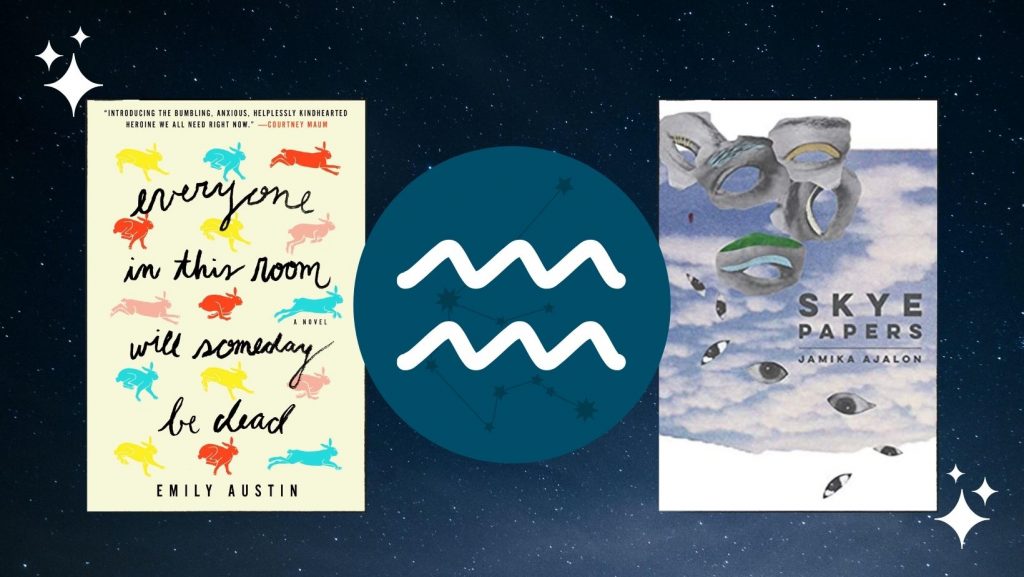
This novel about death, casual obsession, and the unexpected is perfect for an Aquarius. A woman pretends to be someone she’s not while becoming increasingly intrigued by the death (murder?) of her professional predecessor. Much like Aquarians themselves, this novel sounds dark but is actually quirky and fun. Check out our reading list by Emily Austin about books that will make you feel happy to be sad.
Punks, artists, and revolutionaries populate this novel about three new friends exploring the underground art scene in 1990s London. This novel is brilliantly weird and wildly Aquarian.
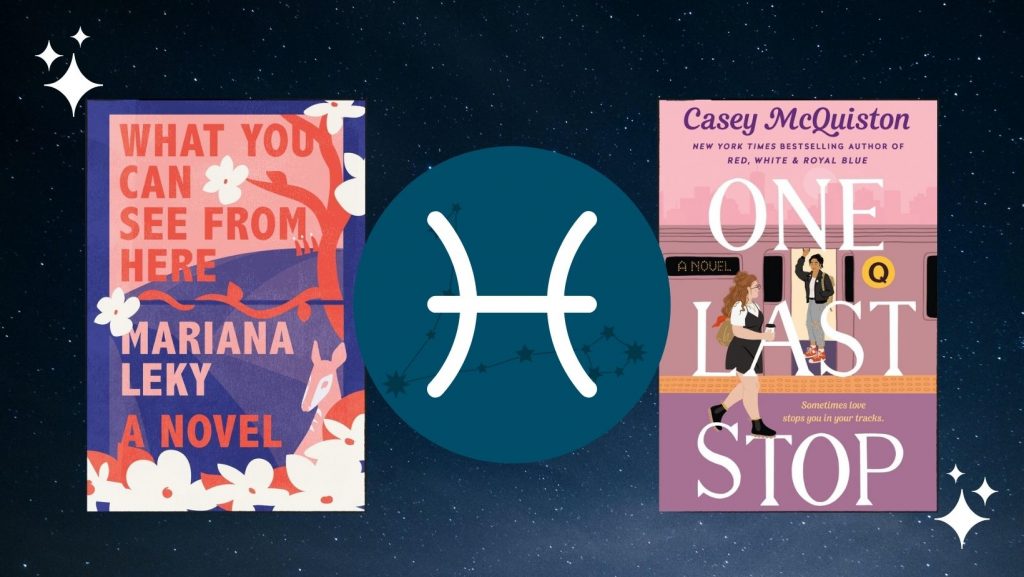
Romance! Mystery! Time travel! This sweet novel about two women falling in love on the Q train is the perfect Pisces summer read. You’re welcome in advance.
A woman’s dream of death sets an entire West German village on edge as they try to guess who will be the one to die. Any novel where an entire town believes in magic and visions is going to be a good pick for Pisces, but this one is especially great.
When I drove to my high school girlfriend’s house to have sex with her for the first time, I still did not know what two girls were supposed to do in bed. I wasn’t so much curious about sex as resigned to it; my girlfriend was the one who had insisted sex was “the closest you could get to someone,” and that every couple in love did it—none of which told me what exactly it was or how it would feel. I kept a journal that summer, and that night, I wrote a frantic, stream-of-consciousness account of what sex that afternoon had been like: the washed-out alienness of my girlfriend’s face against her pale, naked torso; the clunk of a cassette tape flipping and flipping again as I worked up the will to do anything more than lie there with our shared sweat sticking my skin to hers.
Lesbian sex, I learned over the next four months, was cunnilingus and fingering, then switching places for more cunnilingus and fingering, then holding each other and rhapsodizing about how beautiful our cunnilingus and fingering had been. Lesbian sex was sobbing beforehand because I didn’t want to do it, and my girlfriend sobbing because we couldn’t just stop. It was crying myself out, then being too numb to care what we did next, so why not give her what she wanted? Lesbian sex was the existential loneliness of my girlfriend’s face disappearing between my thighs, was staring at the X-Files posters on her wall and begging my body not to betray me with sound or scent or motion, was mentally tallying the time I’d been touching her and watching her face for any sign I’d be allowed to stop. But in my journal, after that first night, lesbian sex was simply platitudes: we had sex, we had tender sex, we had loving sex—as if the story of what we were doing erased its reality.
After years of trying to find words for what I’d experienced, a friend lent me a copy of Patrick Califia’s Macho Sluts. Published in 1988, Macho Sluts was a collection of character-driven pornographic short stories and an infamous salvo in the war between feminists who proudly practiced BDSM and those who believed that egalitarian, reciprocal sex was the only acceptable erotic act for lesbians or feminists. (Califia, who has since transitioned to male, wrote at the time from within the lesbian community.) My friend had found the book formative in their journey as a BDSM top and thought perhaps I too might see some of my nascent desires reflected in “Jessie,” where a bottom in leather restraints picks up an aloof rock star at a women’s music venue, or “The Calyx of Isis,” where the owner of a fantastical women’s sex club in San Francisco orchestrates a veritable feeding frenzy of an SM scene. Where I saw myself, though, was in the book’s coda, a modest, nasty skewering called “A Dash of Vanilla.”
“Vanilla”is the BDSM community’s term for normative sex acts—the kinds Califia’s detractors would have considered virtuous—and indeed this final story in the collection describes a sex act with no negotiated power exchange or pain play. What we see instead is a protracted sex scene that reads like a hostage situation, a grueling, claustrophobic, moment-by-moment account of the narrator performing cunnilingus on her long-time lover, an act that must end either in the lover’s orgasm or the narrator’s failure.
Lesbian sex was sobbing beforehand because I didn’t want to do it, and my girlfriend sobbing because we couldn’t just stop.
The narrator’s distress, physical pain, and aloneness are palpable throughout. “You’ve told me to stay in one place and do the same thing until you come,” the narrator says early on in the encounter. Adding to the loneliness of the piece, the narration addresses the partner in second person in a constant internal monologue, though outside the narrator’s head, the lovers barely speak. “You’ve also told me that you sometimes need to move around to put my tongue in the right place…You never seem to be able to tell me what’s going on while it’s happening, so I have to guess, and half of the time I’m right and half of the time I’m wrong.”
By the middle of the encounter, the narrator’s neck aches, her hands are numb, her mouth is dry, and there is sweat in her eyes. “I get progressively more depressed and full of despair,” the narrator tells her lover silently, “because nothing seems to be happening or changing or getting better with your body and its physical response.” Later, her despair turns outward: “I am angry with you because you are taking so long, angry because you leave me alone down here, with no idea what is going on with you, if you are enjoying it or not…”
This feeling of disempowerment, of profound isolation in a moment that is meant to be intimate, is gut-wrenchingly familiar. So too is the double-bind: move but don’t move; please me, but I can’t tell you how. When my high school girlfriend insisted that two people in love couldn’t just stop having sex, I would second-guess my own refusal, and then I too would find myself between a lover’s legs with no roadmap. With the one thing I wanted—to stop having sex altogether—off the table, every imaginable next step seemed as meaningless and yet as unavoidable as the next.
I say this now, but at the time, I did not understand that I was miserable. The stories of what sex was supposed to be obscured how it actually felt. When I sobbed about not wanting to have sex, I was lamenting my own failure: sex was a beautiful, magical thing that two people in love did together. What puritanical, anti-feminist dogma must I have internalized that my impulse was to avoid it?
I say this now, but at the time, I did not understand that I was miserable. The stories of what sex was supposed to be obscured how it actually felt.
Nobody around me saw how miserable I was either. My girlfriend and I were two cis white femme teenage girls who walked around our liberal college town holding hands. Teachers, friends’ parents, the local queer youth organization’s board of which my girlfriend and I were token members, all seemed either to think we were adorable or to think they should think we were adorable. It was the late 1990s, love was love; if I couldn’t make it through calculus class or college counseling without bursting into tears, then surely the problem was college, or calculus, and not what happened privately, after school, with someone who just happened to be another girl.
The narrator in “Vanilla” also tells herself stories about how sex feels. “I’m….glad you insist that I get you off,” she says, early on, “insist that I keep trying and work to get better at it.” But in the context of the pain and distress that come later, this assertion reads to me like those hollow lines from my high school journal: less a true reflection of the narrator’s attitude than an attempt to persuade herself that what follows is wanted.
It does not, it seems, read that way to critics. Contemporary reviewers of Macho Sluts tend to focus on the explicit BDSM stories that make up the bulk of the book, mentioning “Vanilla” only as an afterthought. The mention in the Bay Area Reporter, Califia’s local queer newspaper, takes the story at face value: “‘A Dash of Vanilla’ is just that.” The one in lesbian erotica magazine On Our Backs comes closer: “This story didn’t so much pass a wet test as made my jaws ache,” the reviewers write, but then add “but that’s just as much a part of lesbian sex as getting off”— as if they see the story’s failure to arouse not as deliberate commentary, but as the forgivable misstep of a self-avowed pervert attempting to cater to the lesbian mainstream.
What made it so hard for those first queer reviewers to see the misery in “A Dash of Vanilla”? I imagine they were seduced—particularly after the rest of the book’s hoods and gags, canings and restraints, bottoms ceding power to tops—by preconceptions of what vanilla sex is supposed to be.
It’s the kind of harm I felt alone in for years, the kind that comes from focusing on the story of what sex is supposed to be without examining how it actually feels.
The sex in “A Dash of Vanilla” does have the trappings of gentleness and egalitarianism. Neither partner seeks out pain, though the narrator, with her stinging eyes and aching neck, experiences it unacknowledged. Both partners have orgasms, though the narrator’s, which happen uninvited as she tries to give her lover pleasure, add to her sense of failure. Both partners are women, both cisgender, both racially unmarked in a way that reads as white in context, and the violence of cis white women is notoriously slippery—easy to overlook, or to pin on someone else.
More disorientingly, the violence in “Vanilla”isn’t straightforwardly about a victim and a perpetrator. The sex is unpleasant without being exactly assault; there is coercion, but it is unclear how much comes from the lover directly and how much from the widespread belief that bringing one’s partner to orgasm is the only way to make a sexual encounter a success. If there is a guilty party here, it is not so much the lover as the institution of vanilla sex.
It is tricky too to assign blame for what happened to me in high school. There were moments where my girlfriend clearly pushed and crossed boundaries, but the stories she used to manipulate me—sex is beautiful and intimate; you can’t just stop—were not her invention, and I think she genuinely believed them.
But the point of focusing on the violence is not so much to identify and remove a perpetrator, it’s to identify and acknowledge a particular kind of harm. It’s the kind of harm I felt alone in for years, the kind that comes from focusing on the story of what sex is supposed to be without examining how it actually feels. The kind that comes from telling very narrow stories about what eroticism is rather than acknowledge its breadth and potential.
I am, it turns out, both gray asexual and kinky. I don’t have much desire for sex itself, which helps explain why I felt so lost in it as a teenager. The kinds of physical intimacy to which I am drawn involve power and pain—activities that almost never appear in stories of what people do when they love each other. I do not know if the cultural stories about sex serve anyone (though the reviewers willing to concede being unaroused and in mouth pain as a regular feature of lesbian sex makes me suspect not), but they were certainly never going to serve me.
What pain could I have avoided if I’d heard any message from anywhere that you could love someone and still categorically not want to have sex with them?
Those stories didn’t serve Califia either, who writes in the introduction to Macho Sluts: “Our culture insists on sexual uniformity and does not acknowledge any neutral differences—only crimes, sins, diseases, and mistakes.” What pain could I have avoided if I’d heard any message from anywhere that you could love someone and still categorically not want to have sex with them? What joy, confidence, and connection with my own body could I have felt if—free from pressure to have sex I didn’t want—I had had the space to imagine what acts might actually bring intimacy and pleasure?
“A Dash of Vanilla”’s sexual encounter ends with a troubling moment. The lover’s elusive orgasm finally complete, the narrator begins to digitally penetrate her lover, despite her lover clearly telling her not to. “I say, ‘Why? Why not? I want it. You can’t stop me. Give it to me.’ Then I fuck you.” This moment, more unambiguously than anything the lover inflicts on the narrator, reads as a sexual assault.
Maybe the unwanted fucking is reciprocation: after being used by her lover in ways that feel at once pleasurable and awful, the narrator turns the tables. Maybe it is revenge—a trapped animal lunging at her captor. Or maybe it is a wounded answer to those who refuse to see violence when it is couched in gentleness at the hands of women. If the lover’s womanhood enables her to hurt the narrator and get away with it, then maybe crude misogynist violence against her is a satisfying cheap shot. Whatever it is, it undermines some of what makes the story special to me. I read “A Dash of Vanilla” as an exploration of the psychological harm wrought by normative sexual expectations. A moment where the narrator violates her lover, with no real indication of the moment’s impact on the lover, feels out of place. It gives me pause when recommending this story, though I do still recommend it to anyone who can stomach this final, unsettling act.
We tell ourselves so many stories about what sex is and what it is supposed to be. The anti-pornography feminists in resistance to whom Califia wrote Macho Sluts insisted that BDSM was violent, dangerous, misogyny incarnate, while rarely applying the same scrutiny to vanilla lesbian sex. The good ’90s liberals around whom I came of age claimed that sex was a beautiful expression of love but never once suggested I notice how my body felt imagining or doing it. I have so often felt alone, even within queer communities, in a reality that does not match these stories.
Compassionate depictions of experiencing sexual assault are, thankfully, somewhat common these days, but I do not see myself in them. To find a piece of writing that gets at the kind of ambiguous sexual misery I felt alone in—particularly one involving queer partners, particularly one that implicates the institution of vanilla sex as a root cause—is an astonishing gift. It has been more than thirty years since Macho Sluts’ publication and more than ten since I first read “A Dash of Vanilla.” Nothing I’ve read before or since has come as close to reflecting lesbian sex as I knew it.
Our youngest sister’s name unnerves me, and unlike Beth and I, she was not given another. By their third child, our Chinese parents had mellowed, and, wishing to save this child some trouble, deemed a Chinese name unnecessary to avoid the perpetual questions of, how do you spell that name, how do you say it, and, what does it mean. We didn’t know why our parents chose “Veronique” when our family had no history being French. But unmarked by an ancestral Asian name, Veronique was free to do as she pleased. Notably, she was exempt from our parents’ teachings, which were immigrant in nature and amounted to a tome of well-meaning and honest but baffling and completely contradictory advice.
Blend in just enough but also aim for the top.
Stand out too much and you will inevitably be cut down.
Save and live frugally so you can be rich.
Since Veronique was exempt, she turned out, by Beth’s and my standards, not quite right. She wavered between average and terrible in school. She ran with the popular people who summered at vineyards and on freshwater lakes. Pierced ears were out of the question for us, but since adolescence, hers have been lined with tiny holes.
Perhaps my husband has always had opinions about my sisters, I just pretended not to hear them. I was still wooed by his presence, that I had found a husband, especially one with bone structure and shiny, not-a-speck-of-dandruff black hair. But one day, when I had been complaining to him about Veronique, he told me that I was the right balance of both.
Sorry?
He said Beth angered too easily and, as stunning as Veronique was, he would be bored with her after a year.
It occurred to me then that we had been married almost a year; our anniversary was coming up.
You’re the right balance of both, he repeated, a fact that I knew, but this was the first time I’d heard it from him. The mention of balance reminded me of zhōng yōng, or the Confucian belief that one should strive for moderation, should stay in the middle path, to achieve the golden mean. Confucius must have later passed his beliefs to a fairytale writer. Goldilocks and the Three Bears. Not too hot and not too cold, a girl in constant search of porridge that was just right.
My mind had a tendency to jump, and Beth often said that I liked to jump to conclusions and wind myself up without cause.
So, from brown bears in a fairy tale, my mind naturally went to panda bears. A panda bear I would steal and try to raise as a pet. A panda bear ameliorated my parents’ homeland, a place of oppression and conformity, of blinding nationalistic pride, robotic children, and severity, or so I was told. But how could a place so severe produce an animal of universal adoration and curiosity? Like the platypus but furrier, arguably the laziest mammal in the world, too lazy to even camouflage itself properly, or to mate. A panda’s main form of exercise was to eat. A panda had few natural predators or concerns. An image of that black and white bear could melt my heart and, momentarily, the trouble I felt about being a Chinese American woman was gone. This trouble included but was not limited to the tome of contradictory advice, not just from parents and from friends of my parents who were also parents, but from society at large, something to the effect of being white-adjacent or not quite white enough but neither black nor brown, still you had to find your place as neither the quiet one nor the dragon lady nor the concubine, but somewhere in between. Lastly, this trouble came from being a middle sister, and then feeling doubly or triply invisible but also perpetually in a race, that I could not be my own person, because if I could not do anything first or last, then whatever I did would feel borrowed, thus small.
As of last month, Veronique was in Seoul. Before Seoul, Paris and Marrakech. She was studying tango, then watercolors, how to bake a crispy baguette. In Seoul, she was learning about skin and ways to make hers look like glass. Her morning routine took an hour, her night routine two more, and in between she had to lie down. She could not exert herself or work, either produced too much sweat. Salt from sweat undid the creams, it drew out moisture and thus a woman’s youth. Veronique was twenty-six and unmarried. Like any good dough, good skin needs to rest.
What’s next? I asked Seoul Veronique on our sisterly group chat.
She talked about acting, doing commercials at first and then transitioning into serious films that could win awards. Having never acted before, she was considering taking a class.
I don’t want to waste my life, you know, she said.
I know, I said, and encouraged her to take the class.
But who knows, she said.
That was Veronique in six words. You know, I know, who knows.
Beth didn’t text the group much anymore. She was busy running her own company and pregnant with her first child. She was an overseer, the leader of the pack. I sent her many edible gifts, and, in our own private chats, rows of yellow prayer hands. I did worship Beth, and both Veronique and I looked to her for final say.
Because no one had told me otherwise, I believed Veronique to be in Seoul, applying jelly masks and lying down, when I received a text from her about being in town, in Boston where my husband and I lived. I still didn’t believe it until there was a knock on the door, and, half expecting a panda bear, I opened it to find Veronique.
Wow, I said. It was universally recognized that out of us three, she looked the most white. Being beautiful in Asia was that easy, and her time in Seoul had further whittled down her waist and enlarged her breasts. I missed my baby sister but was reminded again of what it was like to have her in the room. My tick of rapidly patting my collarbone returned.
Child Veronique had been gullible. It was easy to convince her of anything—nail polish poisons the mind; big breasts lead to cancer. But my image of Veronique as a child no longer matched what I was seeing. She possessed more womanhood than I did, and the cognitive dissonance overwhelmed me.
Openly, my husband flirted. He greeted her with a fist bump and then asked about Paris, misremembering that the flight had been from Seoul. He and I visited Paris once to do the usual touristy things. What’s showing at the Pompidou now? he asked. How’s the terrine de canard?
Veronique didn’t correct him about Paris and carried on as if all of it made sense. Her long hair was wound up in a hefty bun, her fingernails were acrylic and bright yellow. Soon, my husband went away, bored or having run out of Parisian expertise to share. By the time I got out the peach iced tea and opened a family-size bag of barbeque-flavored chips, Veronique had an announcement to make. As she announced, she turned her wrists in the air and bounced up and down a little, like both a large-breasted woman and a child. Thanks to Beth, she was moving to Boston long term. She had found an entry-level job here and a place in Beacon Hill.
Beth? I said.
Yes, we spoke, she continued. When she was in Seoul, Beth had called and questioned Veronique about her life. At first Veronique was resistant, but they kept calling each other and eventually worked it out.
Worked what out? What exactly was it? Up until that moment I assumed that Beth only called me. I couldn’t conceive of Beth and Veronique holding a discussion without me, or being sisters on their own. I admit to the narcissism. It was a monstrous feeling that I could not shake.
I want to try office work, Veronique said. I’ve never given it a fair chance. But Beth helped me see that what I truly feared was liking office work too much. I feared that I would get sucked into its dynamics and politics, the artificial sense of productivity. But now I can see myself enjoying reports. I want to get water from a water cooler.
Tomorrow, Veronique would be starting at Beth’s company that, unbeknownst to me, was about to expand. Supply was to quadruple and a headquarters had opened downtown, by the government center.
Blindsided, I mouthed the words, what the fuck is going on. The technique I’d read about online—first form the words with your mouth and if they still seem acceptable, then you can say them aloud. What the fuck felt inappropriate, so I told Veronique that Beth never mentioned a headquarters, and it seemed a large enough topic to bring up.
Maybe she did, Veronique said. You do have some trouble with listening.
I said I didn’t think so.
You’re patting your collarbone again, she said.
So?
So, we worried that you would overreact. But we also didn’t want you to feel left out.
When Veronique began to talk like this, I knew that Beth was up to no good. I kept patting my collarbone and added that I’ve never felt left out nor did I overreact.
Veronique then expressed her excitement for office work again, her desire to reinvent herself.
Don’t we all want to be taken seriously? she asked, which was something Beth liked to say when she thought the other person was on the verge of becoming a joke.
Veronique ate more barbeque chips, and I only encouraged her. My hope was that if she kept going, her slightly thicker waist would return.
Beth’s company sold test prep books for a national exam that all college-bound students had to take. Given the collective immigrant faith in meritocracy, a faith that was also a burden, she and I had excelled in school and on tests. After college, then grad school, there were no more tests to take, no more prep to be done, and that bothered Beth enough to quit her decent but unexciting accountant job to start a company of her own.
By sheer coincidence, though at times I couldn’t even believe it myself, I worked for the testing firm that wrote the national exams that all college-bound students had to take. Like Beth, I couldn’t extricate myself from test prep, a world where so much of my identity had formed and worth been assessed. I was part of a large quality control unit that reviewed test questions and pushed them along to be approved. A question went through rounds of checks, and there were hundreds of questions, allowing for an excess number of meetings. I enjoyed office work because I enjoyed busy work. After one deadline passed, two more took its place. I felt Herculean and joyous in my efforts, however pointless they were.
I never forwarded any official material to Beth, no emails or texts, there was to be no paper trail. But I had a photographic memory, and in person or over phone, from a restricted number, I could scroll through test questions like a Rolodex and recite them. Whenever I did this, I felt our sister bond strengthen. Throughout childhood, she warned me to stay out of her way. She didn’t admire my husband, who on several occasions she’d described as daft. Beth’s judgement was hard to fend off until I finally became useful to her and she no longer harangued me about my choices. She called me her little consultant. She thanked me for my time.
After Veronique finished the potato chips and left, I didn’t text Beth right away and continuously. I didn’t call and hang up or call and leave a message. I think I hoped the knowledge of whatever Veronique had said to me would wash off, and within a week, exactly seven twenty-minute showers later, it did. I put aside my narcissism and Beth’s betrayal. I went back to my belief that our baby sister was still in Seoul.
But then on our next Rolodex call, Beth began to praise Veronique. Since coming to work for her, Veronique fit in well with their gorgeous new corporate space. The space had high ceilings, exposed brick, free beer, coffee, and cucumber water throughout the day. The entire team loved her and vice versa, a team of coders and data scientists, five service agents, a pool of interns who took these tests regularly, on payroll, as fake students, to assess seasonal change.
We’ll be holding more events here, Beth said. Receptions and cocktail hours, maybe even a dinner or two. We’re looking for some local art to put on the walls.
From then on, the company change was obvious. Beth even threw the phrase “boutique test prep” into the mix.
Because studying is so boring, she said. No one likes doing it, and larger companies lack a certain je ne sais quoi. Which is where Veronique comes in, she added.
Somehow Beth and I had skipped a step. She hadn’t told me about hiring Veronique or the new headquarters, nor had I expressed my annoyance at her for having withheld the news. Yet somehow, happily ever after, we were on the other side.
We’re considering promoting her, Beth said.
Ok, I said, but not very nicely.
Said another way, we are promoting her. As of next week, she’s the new Chief Marketing Chair.
Ok, I said, even less nicely and followed by a groan.
It’s a small promotion, Beth explained. Or one might even say a trial. There’s certainly a chance she could be un-promoted if the working relationship doesn’t pan out.
A third ok was overkill, I thought, so we were both quiet for a few seconds. Then she said, don’t think you’re not doing something hugely important as well.
I formed the words first and deemed them acceptable to say. Beth, I hate when you use double negatives. It’s like being thrown a knot to untie.
The elevator in our building was too small and slow. Yet more tenants preferred it, even when going to floors like two, three, and four. One thing my co-workers liked about me was that I didn’t feel strongly about anything, I didn’t complain or emote unnecessarily, I didn’t hold grudges or care about quid quo pro. Whenever these traits were applied to me in a performance review, painted on as if with a fine oriental brush, I would smile and nod. Yes, that was me. But I had stronger opinions than I let on and hated more things than people knew. I hated standing in the elevator with people, for instance. I hated being the middle sister, a child of immigrants, a Chinese American woman, even in modern times, which was still better than any time before. I hated having to be grateful. I hated contradictory advice.
But I had stronger opinions than I let on and hated more things than people knew.
On a calm and collected day, I didn’t hate any of these things, I just found them impossible to manage all at once.
Yesterday, I stood next to a man holding two boxes of pepperoni pizza and a box of buffalo wings. Today, I was stuck in between a double-decker stroller with toddlers and a laundry basket with visibly stained clothes. To make it to the sixteenth floor, I had to close my eyes and think about something soothing. Yesterday I thought about pandas bears, but today I thought about test prep.
Some say standardized tests are aptitude driven, you either are a genius or are not, and to over prepare as some groups do defeats the test’s purpose of assessing the innate. Was there truth behind this reasoning? Or a need to discount those who had gained entry, through scores, to places they weren’t supposed to be. Certainly, I’d overprepared, but besides aptitude, tests can measure determination and hard work. They can move us closer to, or at least give the illusion of, the American dream. The American dream is the immigrant dream, and the immigrant dream is your parents’ dream, which over time becomes yours—it’s not a choice, so you have to do well on the tests, on all the tests, to prove that you’re not a mistake. Here was where truly great test prep could help. Truly great test prep was meant to be tedious, but, in that tedium, you could feel ascendant. Hence why helping Beth’s company was important to me. I wanted her materials to be the best, so that her students could take on a dubious system and then make the world a better place. At least, I thought that was our goal, hers and mine together, but now I wasn’t so sure.
Elevator sounds. Elevator dings. The stroller I was pressed against left. A dirt bike rolled in to take its place. I pounded my collarbone and softly gasped for air.
A week later, I was at my office’s water cooler, one finger on the red tab for hot water and one finger scrolling through my phone, when I came across Veronique’s face on a new social media account that Beth’s company had invited me to like.
My sister’s skin was still blemish free and glass like. Her hair was ironed straight, the lighting professional. She wore a low-cut green sweater, a plaid mini skirt, and glasses, which Veronique in real life didn’t need. She looked much younger than twenty-six and could’ve passed for sixteen. She was holding one of Beth’s new books, flipping through it and smiling as if none of the content was obscure. I swiped to another picture of her sitting in a chair by a desk, head focused and tilted down, a pen in her flirtatious mouth, a second low-cut sweater, the fake glasses folded and casually tossed on the desk.
Real-life Veronique rarely used books or desks. If she ever did study, it was sprawled across pink shag rugs with her phone in her hand. I tried but I couldn’t zhōng yōng myself, I couldn’t stop digging up dregs. In college, her major was what? Communications? Beginner’s French? She was always wearing oversized boyfriend sweaters and had been in a threesome, twice. When I asked how an activity like that could keep happening, she said, I was curious, you know, I wanted to experiment and, who knows, to find myself, I was sober both times.
As I scrolled, my tea mug overflowed, scorching my thumb. The person waiting behind me handed me paper towels with a look that said I didn’t deserve them.
That night, I asked my husband what he would do, but it was useless talking to him in March, which was madness, or mid-April through mid-June, which were the playoffs.
To practice my silent mouthing technique, I went for a long stroll. Since no one was around, I unmuted myself and spoke to surrounding plants. Who was more daft? My husband or my little sister? Who was more useful, Veronique or me? The plants stared at me in shock. They all seemed to say, don’t be such a big little bitch.
Next year’s entrance exams were changing. Instead of A through E multiple choice answers, it would just be A through D. No guessing penalty, no experimental sections, no essay required. But the test itself was going to be much longer, the questions themselves more advanced, to finally catch American students up with the rest of the world. I, however, gave no hint of that to Beth. During our next Rolodex consult, I recited hundreds of questions to her, but modified them to be easier. I said the test length was to be cut down.
What’s the move there? Beth asked about the easier, shorter format.
I said I wasn’t privy to that information. I was just the messenger.
We’re growing, she said about her company.
I said, Veronique already told me.
But what I mean is we’re going national, Beth said. These next editions will be sold both online and in stores.
For previous editions, a student had to fax in an order form and wait some variable amount of time to receive a nondescript brown package in the mail. That the student had to find a fax machine made for a self-selecting clientele and added to the necessary tedium. You couldn’t feel ascendant unless you jumped through enough hoops.
And if all goes well, she continued, we’ll consider in-person classes themed around dinner parties and costume galas.
Isn’t that too much? I asked.
Much?
Silly, I mean.
People like buying into an experience.
But this is studying for an exam, Beth, a boring five-hour exam that many students have to take twice.
So? Why can’t there be some glamour in it? Why can’t it also be cool? She asked what I thought of their new ad campaign with Veronique. To get those shots, they’d hired professional photographers and a glam squad.
Are you asking me what I think about the pictures? I said.
That’s my question.
The ones that make our sister look like jailbait?
No younger than the kids taking these exams, she said.
The start of a possible joke: three women walk into a bar—a quiet one, a dragon lady, and a concubine—and each asks for a bowl of porridge.
I stopped reaching out to my sisters for a while. At work, I was checking answers to exam questions nonstop, and they were busy probably redecorating headquarters. The launch event for the new books was being held there; a postcard was sent to me inviting me to RSVP, then to spread the word on social media, then to come. The postcard was letterpressed, with a redesigned logo and a generically warm message from the co-founders, sisters and test prep gurus Beth and Veronique.
Who went to launch events for boutique test prep books? Boutique parents, I guessed, private school counselors, teachers and tutors.
That night, in the group chat, I decided to ask Veronique which country she was heading off to next. It seems you’ve been back long enough, I wrote. Wherever she wanted to go, I offered to pay. The Sahara sounded nice, or Mongolia with its high-altitude plains. Maybe there she could meet a real guru, a real teacher and sage who could tell her the secrets of life. An hour later I was still texting. It was just me, talking and musing, not unlike a rant. The rant was not solely directed at Veronique, I lashed out at Beth too. I said she was using our sister’s sex appeal to sell test prep books, how low. She was using me as well, but I worshipped Beth whereas Veronique was naïve. In between texts, I sent gifs of pandas climbing playground equipment and falling down.
Beth finally got me on the phone. I’d ignored her earlier calls while I was hunting for the best panda gifs.
What’s going on with you? she said in her big sister voice. Time to calm down now.
You always do this, I said. You always want to be the one holding all the cards.
I’m not sure what you mean, she said. I’m trying to run a company here. Of course I hold all the cards.
But you like to play favorites, I said. You’re hot and then cold.
I have so much on my plate. I’m also pregnant, don’t forget.
Sure, you are, I said.
You doubt that I’m pregnant?
Beth was legitimately with child and had been for two and half trimesters. But she couldn’t keep using her condition as a crutch. I said I’d assumed that she was pregnant, but what did I know anymore? Moving forward I would stop assuming things about other people and be more transparent about what I knew.
Listen to yourself, said Beth, except what she meant was listen to her. Listen to me, you’re mad because I haven’t given you enough credit. Mad it’s not you in the ads or postcards. Your husband’s not talking to you again, and you’re wallowing. That’s what this is. A big pity party for you.
Sure, it is, I said again.
What else would it be?
Not that, I said.
Whatever it is, I can’t support it. I can’t support both you and her and my unborn child. I’m only one person with lots going on, and you as your own person need to get a handle on it.
I do have a handle on it.
Do you? Veronique said the last time she saw you, you were so oblivious, that you were so out of it and disengaged.
The next words I didn’t form first with my mouth. I trusted my mouth to say exactly what I meant. I scored better than you did, Beth. On that national exam for top tier schools, I outscored you by a whopping total of fifteen points.
Which is one question, Beth said. A single question that, by dumb luck, you got right. And if we were to take the test again today, I would certainly outscore you. Without a doubt. I would do better.
Your company is a scam, I replied. Fraudulent really and based on illegally obtained data, the exact opposite of a meritocracy and what you’re trying to represent.
An uncomfortably long silence followed, and when remorse started to reflux, I pushed it back down. Stay strong, I told myself, enough was enough and there were only so many ways she could retaliate.
I love you, she finally said, which was not one of the ways I had predicted. I love you and I hope you can remember that.
Then she hung up.
From the tome of contradictory advice: love, as an emotion, was not too far off from hate. They were sometimes very similar, and at times I would argue the same. I hate you could mean that I hate your actions and behavior, I love you enough that your actions have hurt me, have made me unhappy and sad. If I didn’t love you at all, nothing you did would matter and I would not care.
In short, “I love you” was a bomb, and after Beth used it on me, I went out in the living room to sit next to my husband on the couch. Since the playoffs were still ongoing, he had split our TV screen in half so he could watch two games at once.
What do you think I should do? I asked.
He shifted to give me half a cushion space on the couch but didn’t look at me or turn his head away from the screen.
I don’t want to lose them, I said. I feel like I’m losing them or have already lost.
You won’t lose, he said.
I asked if I was being petty.
No way, just the right amount.
As I leaned into my good husband, I wrapped my arm around his and nuzzled his neck. Whenever a team scored and both his arms went up like the letter Y, followed by a primal hoot, my head would slide out of this nook and hit the back of the couch with a thud. Still, with a pounding headache, I nuzzled back in. Veronique and Beth could augment each other, they could egg each other on. The backseat of a car, sitting three in a row at the movie theater. Me in the center, enclosed and protected but trapped. So, I didn’t always like being around them, which led to my constant search for an ally. My husband was the first man I dated, and I married him within six months.
Beth postponed our next Rolodex chat. She said she had some stuff to take care of, then she and her husband were off to Martha’s Vineyard for their babymoon. I asked if we were fine again. I said my habit of conclusion-jumping had taken hold, and after I got it out of me, after that terrible outburst of unfounded conclusions, I felt a lot better.
Love, as an emotion, was not too far off from hate.
Yeah, yeah, she said and deleted our call from an online calendar that we’d shared for many years. We found another time, but the day before she asked to push the call just by a week. A week turned into a month, one month into two. Then she had to postpone altogether because she had gone into labor with her child, a girl.
I should be there, I said, and she stated that her husband was already here, his parents and ours were coming tomorrow, and Veronique was bringing her a deluxe sushi platter right after the birth. Beth was dying to eat fatty tuna, yellowtail, and to have a glass of vintage red wine.
I knew I was being punished and that her comment about the wine was a test. Desperate students often emailed our company’s help desk, asking for any insider strategy or test-taking tips. For multiple choice, the best strategy is no strategy, just simple, common sense. The answer to every problem is given to you, and from the list of possible answers, all you have to do is choose.
I offered to bring the wine.
No, that’s too much, Beth said, drawing this out for as long she could. Wine at a hospital? That’s ridiculous.
I know the kind you like. I know which brand and year.
But it’s so late already, she said. Which liquor store is even open?
All of them, Beth. They’re all open right now because it’s 3pm on a weekday.
Is it? Is that really the date and time? Pregnancy brain.
I said I could be there within the hour.
The hour, my, that’s quick. The baby won’t have arrived yet but you’re more than welcome to try.
In Katie Kitamura’s latest novel, Intimacies, an unnamed woman moves to The Hague after the death of her father, relocating to a city and country where she has few personal connections. She takes a temporary job at an international organization known only as the Court, where she translates the legal intricacies of large-scale human atrocities for the men accused of perpetrating them. As an interpreter, her role is not to involve herself in the trial, to argue or add information, but to “throw down planks across the gaps” between words, an impersonal tool within the Court’s bureaucratic machinery.
The novel opens at a turning point in the narrator’s time in The Hague. She is halfway through her temporary contract with the Court, and she must consider whether or not to continue on in her work. She has also become romantically involved with a Dutch man, Adriaan, who asks her to live in the apartment he had shared with his family while he leaves for Portugal to disentangle himself from his marriage. As Adriaan’s absence lingers, the narrator finds herself thrust into ever-shifting situations: her relationship, her involvement in the personal life of a man who had been attacked near her friend’s apartment, and the sudden pressure of working on one of the Court’s high-profile cases as the hand-picked interpreter for an accused former president.
In Intimacies, the ambiguities the narrator faces in her personal life blend with concerns about the role and power of the Court and the narrator’s place within it. In my interview with Kitamura, we discussed the moral question at the heart of Intimacies and the novel’s concerns with language, neutrality, and complicity.
Alyssa Songsiridej: To start off, I’d like to ask a bit about the narrator’s job—why did you decide to write from the perspective of an interpreter at the court, a crucial but also extremely depersonalized role? What interested you in this particular point of view?
Katie Kitamura: I’m interested in writing characters who have a very particular relationship to language, who are dedicated to speaking the words of others, with great fidelity. The narrator in my last novel is a translator; the narrator in this novel is an interpreter; the narrator in the novel I’m writing now is an actor. I think of them as characters that language passes through, as it moves from one place to another.
It’s hard for me to think of anything more intimate, more personal, than language. But for these characters, their professional relationship to language demands a certain erasure of self. How does this change how these characters perceive themselves? How does it alter the way they behave, the scope of possible action? These were some of the questions that I wanted to think about in the novel.
AS: In past interviews, you’ve said that you’re interested in “morally fantastic fiction,” in setting up a situation with a moral question at its heart. In Intimacies, I began to sense (and please correct me if I’m off) that the moral question concerned neutrality, if neutrality is possible or even desirable. I’d love to hear you talk a bit about this and how it pertains to the narrator’s role as an interpreter for the Court. I’m also wondering if the narrator’s professional role—simultaneously intimate and depersonalized—has an effect on her relationships outside of work.
KK: That’s very much what I hoped to do—to think about neutrality, or the appearance of neutrality, and how it can give way to something very different. The narrator has been trained to think of herself as neutral, as a cog in the machine. But the machine itself isn’t neutral. The institution, its language, none of these things are neutral.
The narrator occupies a position that is adjacent to power, and over the course of the novel, she is forced to consider the possibility that this position is not especially neutral, and shouldn’t be considered as such. A great deal of cover is offered by the assumption of neutrality. A lot of things can be obfuscated, including complicity and implication.
AS: In Intimacies, the narrator’s relationship to language seems almost the opposite of the main character in your earlier novel, A Separation. In A Separation, the narrator witnesses a fight between a couple speaking in Greek, and while she doesn’t understand their language, she understands what’s happening between them. In Intimacies, on the other hand, the narrator is laser-focused on the specificities of the words to the point where she, at times, loses the thread of the actual trial. Could you talk a bit about this tension within language, the sort of distance or difference between precision and meaning?
KK: I hadn’t noted that distinction until now—but you’re completely right, those two scenes function in opposition to each other. In the first case, there’s an enforced distance, and in the second, there’s an enforced proximity. That possibly holds true in a larger sense, across the novels. It’s even present in the titles—A Separation, as opposed to Intimacies.
For these characters, their professional relationship to language demands a certain erasure of self. How does this change how they perceive themselves?
I think the narrator in A Separation begins from a position of relative certainty—she thinks she understands the narrative of her life and her relationship. She has, much as in the scene you reference, distance. Over the course of the novel, that certainty unravels and that distance collapses.
In the case of Intimacies, it’s almost the opposite. She begins from a position of uncertainty and destabilization, and very slowly moves toward some greater stability. She begins to recognize certain aspects of her life, there are memories and incidents she is able to put into context. She acquires the distance that the narrator in A Separation loses.
I’ve thought a lot about the similarities between these two characters—the fact that they are both observers (even in some situations, voyeurs), the fact that they both have a passive relationship to language. But in some essential, foundational way they are very different and you can see that difference in those two scenes you reference.
AS: The Court and The Hague both become almost like characters themselves, places and systems that operate in specific ways that have major consequences for others. I was wondering how you viewed the institution and the city, how you became familiar with them and how they worked as elements within the narrative.
KK: The Court is based loosely on the International Criminal Court, although the novel isn’t intended to act as a representation of that institution or its activities. Nor is it intended to act as a critique of the international criminal justice system—although it is intended to acknowledge that it is a system, and one that necessarily operates in a context, and in tandem with other governmental bodies and institutions. The ICC is more accessible than you might think—any person can observe a trial from the public gallery, and transcripts of the trials are available online. From a research perspective, that made writing the particularities of a plausible fictional court much easier.
In terms of The Hague, while I was researching and then writing the first draft of the book, I had a genuine sense of uncanny familiarity—aspects of the city and the culture felt like they were coming to me from some place of old knowledge, rather than the more clinical knowledge that comes from research. I decided to write that feeling into the novel. It was only when I finished writing a full draft that I realized that I had spent considerable amounts of time there as a child. I had many isolated childhood memories that I was then able to place in The Hague.
That feeling of delayed recognition was powerful to me, and I wrote it into the novel on the first revision. I think it’s a moment that’s important to the emotional logic of the novel, a piece that was missing in the first draft. It’s a case of my unconscious knowing something that my conscious mind couldn’t quite work out until later.
AS: So much of Intimacies seems concerned with context, with information and how it is withheld or delivered, both in the narrator’s work at the Court and also within her personal life. For example, the Court’s Detention Center changes depending on whether the narrator is translating for an “accused” inside of the building in the middle of the night, or if she is just passing it on her way to work in the morning. Also, an unappealing character, the defense attorney Kees, elicits different reactions from others at a party vs. at work with colleagues. Would you be able to talk a bit about this, the way that different situations and information affect the characters in the novel?
What does it mean to be complicit in something you don’t fully understand, much less control?
KK: The idea of partial access to information is really important to this novel. The narrator has fragments of information, pieces of the story, but never the complete narrative. This is, I think, not too different to how many of us move through the world—with a partial understanding of the larger narratives that are at play. That’s destabilizing, and it also compromises how we are able to respond ethically. What does it mean to be complicit in something you don’t fully understand, much less control?
Something similar happens in the narrator’s personal life, although the consequences are a little different. I’m always fascinated by how our perception of people—even people we know very well—changes depending on the context. Your knowledge of a person can suddenly give way and dissolve. They can seem like a stranger, like another person entirely. How do you then create intimacy, where do you locate the foundation for an enduring relationship?
AS: I do want to ask an additional question about Kees, even though he really is so unappealing. I was really struck by this line Adriaan, the Dutch man the narrator is romantically involved with, says about Kees’ role as defense attorney. He states that attorneys like Kees don’t have “recourse to the same cowardice” that other people do when it comes to facing the atrocities committed by their clients. They have to “inhabit and inhale their atmosphere.” Could you talk a bit about this ability and how it relates to the narrator’s role as interpreter (more passive but still having to take in the accused’s crimes). Also, how are these ideas connected to the question of neutrality mentioned earlier?
KK: Over the course of the novel, it becomes obvious that the narrator doesn’t have this ability that Kees does have—to live inside the world and the reality of these crimes and maintain a sense of equilibrium. She can’t maintain that kind of cognitive dissonance, she can’t negotiate the divide between the court and the everyday world outside, she can’t move fluidly from the tribunal to the dinner party in the way a character like Kees does.
This is possibly linked to larger questions about what it means to witness. It’s a layered and complicated act, ethically speaking. It requires living with moral ambiguity, whether it’s the ambiguity of being an observer, or maintaining neutrality, or telling stories that we don’t feel are ours to tell.
AS: I was also hoping you might talk about home and identity, which seemed to me more present as an absence in Intimacies. For example, the narrator is not rooted to any particular place, no longer has much family, and her racial identity is shown toward the end of the novel through characters’ reactions or interpretations of her, such as her tense interaction with the former president or the way the hostess at a Chinese restaurant speaks to the narrator hopefully in Mandarin. The interaction with the former president in particular felt very powerful to me, a move I don’t think I’ve seen before in other works of fiction. How did you view these ideas as influencing the narrator and the other thematic threads of the novel?
KK: Much like the narrator’s grief at her father’s death—which is mentioned once early on, and then not again until it returns in the final sections of the novel—the question of her identity is established at the beginning, and then returned to in the scene with the former president, which to me is the most important scene in the book. I think those two things—grief and identity—underpin the novel and provide the structure for it. They’re the axes that the two significant epiphanies (for lack of a better word) of the novel turn around.
As I said, the novel is about complicity. I always knew that at some point, the narrator would be asked to consider her own complicity as a person belonging, as the former president points out, to two countries with deeply violent, imperialist histories. To some extent, I think I was trying to keep my powder dry, for that final scene—so that moment of compromised reckoning would come up out of nowhere, but still have that whisper of both inevitability and truth, much as it does for the narrator herself.
I’ve never read the ending of a book first, though I do have a habit of flipping to the back before I begin, turning instead to the acknowledgments page. There are stories embedded here. Acknowledgments capture the real-life intimacies of the literary world and lay bare the backdrop of the writing process.
There are the institutions and residencies that, stitched together, create a map of where the book was written.
The acknowledgments remind me of a playwright’s list of characters that come before the first act, a glance into the cast of a life and how a book is made. There are lovers, chosen families and birth families, friendships cascading from childhood into adulthood. There are teachers and classmates, the traces of the classroom where books sometimes begin. The agents and publishers and editors who have ushered forth the words between the covers. There are the institutions and residencies that, stitched together, create a map of where the book was written. And of course, there are the fellow artists, the writing groups, the people a writer thinks alongside, the strange blending of heroes become friends, of friends who are our teachers and most honest critics. The ones who saw the early scaffolding of a book and coaxed it along, staking it up like a tomato plant. In the white space around the black ink, I see the fury and exhaustion and hunger and mourning and delight of comradery in the process of making a book.
Some have bristled against all this gratitude. In The New Yorker, Sam Sacks claims the acknowledgments are incestuous backscratching, full of “humblebragging” and formulaic thanks that are really just an “extension of the book’s publicity.” Noreen Malone agrees, in particular taking Sheryl Sandberg to task for seven and a half pages of thanks when her book is less than 200 pages long. While it’s easy to get grumpy about namedropping that seems obligatory rather than earnest, it’s also not difficult to feel the tonal difference between the two. Not to mention that many writers, especially when beginning their careers, are advised to treat acknowledgments strategically, using them to glean which journals, residencies, and agents might be a good fit for their own work. All these thanks (whether humblebrags or earnest appreciation about going to Yaddo or MacDowell) light up professional pathways, which, in a world where many debate the need for an MFA in order to professionalize, is an act of democratization. The end pages of a book offer breadcrumbs along paths that circumvent academic institutions.
Acknowledgments are…a small resistance to the capitalist illusion that this is just a product you bought.
Personally, I’m tickled when the thanks feel like a group huddle, or a series of toasts, full of inside jokes, private nods and allusions tucked into this public arena of gratitude. It’s charming, and very human, that when faced with finality of publication we have an urge to capture the immensity of the creative process. In her debut collection Her Body and Other Parties, Carmen Maria Machado, well, acknowledges, that when publishing a first book the list of thanks can get quite long since you have to thank all those who have supported your career thus far, not just those who have shaped this book in particular. (Her acknowledgments did get briefer for her second book, In the Dream House.) Ocean Vuong takes this sentiment further: He elected to thank not just his mentors, family, and friends, but also artists living and deceased who had influenced him when crafting On Earth We’re Briefly Gorgeous. He nods to literary greats like Baldwin, Barthes, Duras, O’Hara, Siken, as well as Whitney Houston, Etta James, Nina Simone, Frank Ocean, and Charles Bradley. I picture him dancing, swooning, swaying to them. His gesture implies that even if they aren’t reading this book, they are very much still worth thanking, that acknowledgments aren’t just written to the people they address, they are meant to create a fuller picture for readers about the other art that bleeds into the work and keeps it company. Acknowledgments are a commentary about how the work is made, a small resistance to the capitalist illusion that this is just a product you bought, a reminder that the work still exists outside the market, that the making itself matters.
Acknowledgments are not subordinate or tangential to the work but exist alongside the prose.
I have a voyeuristic interest in studying the acknowledgments as paratext of a book, to look in on the intimacies writers choose to share with readers. In my mind, they are not subordinate or tangential to the work but exist alongside the prose, especially in the case of nonfiction when the beloveds described in the book are also those who are thanked. I scrutinize how the authors address their subjects differently in this semi-epistolary mode. When Maggie Nelson writes, “This book would not exist without Harry Dodge, whose intelligence, foxiness, vision, fortitude, and willingness to be represented have made this project, along with so much else possible,” we are seeing both within The Argonauts (which chronicles the dual metamorphoses of Nelson’s and Dodge’s bodies: her pregnancy and his transition) and outside of it. It’s impossible to ignore that Dodge has taken her author photo, too, just as it’s impossible not to have her thanks colored by her description of Dodge’s reactions to her first draft: “At lunch he tells me he feels unbeheld—unheld, even…We go through the draft page by page, mechanical pencils in hand, with him suggesting ways I might facet my representation of him, of us…he is, after all, a very private person.”
These acknowledgments reiterate how complex it is to represent another person. After all, the book begins with Nelson uttering “I love you” to Harry for the first time while being penetrated in the ass by him, and the tenderness, urgency, and pleasure of this description juxtaposed with her direct thanks to him remind us how a text can’t encapsulate an entire reality. In nonfiction, writers are always deciding what not to include from life and it’s clear there’s vulnerability and omission both here. She ends with, “Thank you for showing me what a nuptial might be—an infinite conversation, an endless becoming.” Her thanks is expertly crafted, and undeniably a different tone than the fragments that precede it. Likely this was not something that an agent or editors commented on or pushed her to revise. This poignant sentence offered in the acknowledgments has more weight when put into the context of all Nelson has let us witness between them.
In a much different tone and approach, Anne Boyer’s acknowledgments in her Pulitzer Prize-winning The Undying extend a simple gratitude for those “whose care, conversation, encouragement, feedback, and example” aided in the creation of her book, which is an account of her experience with breast cancer and an excoriating critique of the medical industrial complex. She lists 45 people and the myriad workers who were part of her ongoing care, without indulging in further elaboration on the roles they played in the book or her care. I can’t help but think about how later in her memoir, Boyer (much like Nelson) shares a meta-narrative about the revision process of the book. “A friend wrote about what is missing from an early draft: ‘There is only intermittently any Us.’ My response to him is, at first, I can’t lie….What I meant was that I can’t pretend to have felt less alone.” When I read this, the sparseness of her thanks struck me again because it communicates that both can be true: She was alone in the pain and the wreckage of her body yet surrounded by people who cared for her. In the case of both Boyer and Nelson, it’s as if to say, this naming can never be enough, because the nature of memoir is one person’s perspective.
Writing is both a singular and communal act, because, as my university department wants us to impress upon our students, “Thinking is writing and writing is thinking.” To write is to be in conversation with others, to be influenced by and entangled with others (which Catherine Lacey and Forsyth Harmon map out beautifully in The Art of the Affair). Writing is reading and researching, walking and thinking, speaking and silence, listening and questioning. Writing needs pleasure and relaxation, just as it requires the drudgery of the daily: emails, groceries, laundry, calendars. Writing needs the ache and élan of living that teaches us our own capacities and breaking points. Acknowledgments have the ability to expose that living. They allow us to witness the palimpsest of influence these acknowledgments, these elegies, these testaments, these toasts, these praises, these honors and recognitions. I turn to the back of the book because I am compelled to witness these gratitudes, to the pages that are built into a book’s form to say thank you.
DON’T MISS OUT
Sign up for our newsletter to get submission announcements and stay on top of our best work.
YOUR INBOX IS LIT
Enjoy strange, diverting work from The Commuter on Mondays, absorbing fiction from Recommended Reading on Wednesdays, and a roundup of our best work of the week on Fridays. Personalize your subscription preferences here.