Why “The Baby-Sitters Club” Still Matters

My parents’ basement is a home to many things, including (but not limited to) a slightly deflated exercise ball, a copy of Sound of Music on vinyl but no record player, and a stack of worn-out Baby-Sitters Club books. Today I’m here for the books. Neatly on top is the very first: The Baby-Sitters Club #1: Kristy’s Great Idea by Ann M. Martin. The worn-out cover features four girls lounging together and giggling against a faded yellow background. I wanted to be them then, and honestly, I want to be them now. The cover reads: “Four friends and babysitting—what could be more fun?”

The middle-grade series, first published in 1986, follows a group of friends and their local babysitting business, exploring themes of early adolescence, crushes, family, and more. And while the original series is understandably dated in many ways, the BSC continues to find its audience with newer generations via a live-action Netflix adaptation and re-released books with new cover art.

Even if it wasn’t your first choice to read as a kid, the BSC was undeniably everywhere. Their colorful spines lined the shelves of the bookstore’s children’s section, and they were a trusty staple at the local library. For many of us who read it and loved it, the series allowed us to pluck ourselves out of the mundanity of childhood and exist in the technicolor BSC universe where teen girls were always surrounded by friends, were financially independent, and navigated school and boys effortlessly. These girls were our role models, our entertainment, and our opportunities to reimagine our lives as the people we wanted to be. 

We Are the Baby-Sitters Club

Standing in my parents’ basement with a stack of BSC books in my hands, I’m suddenly aware that time has passed and I have aged since the last time I was here. I am reminded of how overwhelming childhood is, and how Martin’s series made aspects of it easier (and other aspects much more confusing.)

Editors, writers, and lifelong Baby-Sitters Club fans Marisa Crawford and Megan Milks seamlessly capture this chaos and beauty of childhood in the anthology We Are The Baby-Sitters Club: Essays and Artwork from Grown-Up Readers, a collection I didn’t know I needed until it was in front of me.

At its core, it is a love letter to the BSC reader. Featuring a foreword by Mara Wilson and essays by Myriam Gurba, Kristen Arnett, Yumi Sakugawa, and other writers, we are invited to celebrate the series’ everlasting impact for all of its strengths and weaknesses.

I chatted with Crawford and Milks over email about what we carry with us from childhood, what we learned from Ann M. Martin, and The Baby-Sitters Club as our first window into who we would ultimately become. 


Anupa Otiv: Immediately upon finishing the collection, I dug for my old copies of the BSC and devoured them, as if I were 12 years old again. This anthology feels like returning to a former version of myself. When writing and editing, was it a challenge to speak for your younger selves? What was it like to be in that headspace again?

Marisa Crawford: I think that idea of speaking for or with your younger selves is so important. As an editor, working on this project was illuminating because it allowed me to see all these other experiences of young BSC readers, along with the adult writers they grew into. I think there’s something really powerful in revisiting the things you loved as a child—keeping that intense love that initially drew you to it, but now with a new, more adult understanding of the world that makes that initial relationship more complicated.

Each of the pieces in We Are the Baby-Sitters Club explores that relationship in different ways, and puts our adult selves in conversation with our younger selves. Jami Sailor, for example, didn’t read the BSC books as a kid but writes about discovering them as an adult when looking for media about characters who were, like Jami, diagnosed with diabetes as a pre-teen, and relating to Stacey’s experiences. And Chanté Griffin writes about feeling uncomfortable as a young reader with how the books address race in the stories about Jessi, and being able to now articulate those feelings as an adult. In my own piece, I did find it challenging to speak for my younger self—finding the right balance of honoring the young reader I was while also having a critical distance from that reading experience was harder than I would have imagined—but then again, of course, we shouldn’t be surprised that revisiting The Baby-Sitters Club forces us to look at our childhoods in new, sometimes difficult ways.

Megan Milks: Getting into the ‘younger self’ headspace you’re describing isn’t new for me—I’ve done a lot of writing that returns me to adolescence, but my confrontations with my younger selves are typically harsh and critical. One of the things I appreciated going back to the Baby-Sitters Club series as an adult is how evident are the affection and compassion Ann M. Martin has for the characters. Even as she gives them dignity, wisdom, and maturity, she also just lets them be kids—goofy and sensitive and figuring it all out. And of course, they’re kids looking after other kids—so they are in the business of practicing compassion and care.
AO: The idea of role-play comes up in several pieces, including Kristen Arnett’s opening essay, appropriately titled “Fun With Role-Play.” This essay perfectly captured the unbridled chaos of play in our youth and how the BSC storylines were merely a jumping-off point for our imaginations to run wild and mimic what we believed girlhood, adulthood, and everything in-between to be. What role does experimentation play in defining ourselves in our youth? 

MM: I love this way of thinking about Kristen’s essay. And I love her use of second-person point of view in it—the remove adds a layer of voyeurism that is so perfect for the kind of doll play she’s describing, at the same time that it creates distance between her authorial and childhood self. That kind of play and experimentation—with dolls, and with writing/art—is crucial to trying out new possibilities for the self. And I think it is crucial for us as adults as well to maintain that sensibility in whatever forms we can.

AO: Something you touched on in your essay, Megan, was how the initial confusion or frustration we felt reading the series as children was actually a reflection on some undiscovered truth about our own identity. How do you feel the books we consume during our childhood shape our “adult” understanding of identity, gender, and sexuality, both positively and negatively?

Literary characters provide important models for who and how to be. The more possibilities that are modeled for us in childhood, the more possibilities we have for ourselves.

MM: It’s hard to isolate how we are shaped by the books we consume from the reasons we seek them out and connect with them. And we’re shaped by everything we consume, all the time. That said, it does seem clear that literary characters provide important models for who and how to be. The more possibilities that are modeled for us in childhood, the more possibilities we have for ourselves. I sometimes look back and lament that I never read the Weetzie Bat books as a kid—what new ways of being might this very queer world have unlocked? At the same time, I don’t know that I would have been able to respond to them that way then—I would have probably just thought they were weird.

AO: A common thread we see woven throughout the anthology is the effect that the diversity of the characters, or lack thereof, had on our experience with the books. How did Ann M. Martin’s diverse characters help people grappling with their identity in their youth? How did it potentially hurt them?

MC: I can’t speak for other readers of the books, but for me, I think that seeing diversity in the BSC family structures, and childhood illness represented in the books, helped normalize some of my own experiences as a kid. Building off what Megan said, seeing our own experiences reflected in books can be hugely affirming, whether we’re kids or adults, and the opposite experience can be isolating and painful.

Our anthology’s contributors’ experiences of course varied widely—we each experience books and all media in so many different ways. Frankie Thomas writes about Kristy as a proto-queer character and expresses frustration with Martin for suggesting that, in time, Kristy would be “ready” for a boyfriend. In Sue Ding’s essay about making her documentary The Claudia Kishi Club, she talks about Claudia serving as a model and inspiration for her and other Asian American artists. Jamie Broadnax critiques how the skin tone of Jessi Ramsey, the one African American BSC character, was often depicted as lighter than the book’s descriptions on book covers and other imagery, which Broadnax says sends a colorist message to young readers. 

AO: Kelly Blewett put it beautifully in her essay, “Scripts of Girlhood: Handwriting and the Baby-Sitters Club”: “Reading as a child wasn’t just to pass the time or enjoy the plot. It was to figure out who we wanted to be.” This is so poignant and really describes the heavy lifting that books have done in defining our youth. What did you rediscover about yourselves in the process of rereading the series?

MC: I realized how much these books, while reading them as a kid, became a mirror for me. I was able to see myself in the characters, but I also projected what I needed to see onto them. Of course, that’s not an experience all readers get to enjoy as fluidly—as a white, cis girl, I had the privilege of seeing myself in the pages of these books with more ease and less complication than other readers may have experienced.

Revisiting the BSC books, but also especially through reading all the smart things our anthology’s contributors had to say, made me see even more clearly how the BSC influenced more parts of my life than I ever even realized—from remembering all the many outfits I modeled after Claudia (where would any of us be without her visionary fashion?!) to recognizing that duh, of course, religiously reading BSC books as a kid likely influenced my lifelong obsession with wanting a close-knit group of friends, or my learned understanding that I, as a young woman, should be nurturing, caring, and giving, even sometimes to a fault. Watching these characters create and work and grow together taught us so much.

MM: I rediscovered my dislike of the baby-sitting subplots. They took up space that could have gone to intra-BSC conflicts and intimate moments, as well as additional descriptions of Claudia’s outfits.

There’s something powerful in revisiting the things you loved as a child, with a new, adult understanding of the world that makes that initial relationship more complicated.

AO: Especially with children’s literature, there can be a disconnect between the intention of the author and what young readers actually take away from it. In my case, I can’t say I retained lifelong lessons about being a good friend from the BSC, but I do remember that Claudia Kishi once wore tights with clocks on them. What from the series continues to stick with you today and how is that different from what Ann M. Martin probably intended?

MM: I remember learning what molasses was from descriptions of Logan Bruno’s voice. And being always incredulous that the club had enough business—and time!—that they needed to meet Mondays, Wednesdays, and Fridays. That is too much club time! But in terms of lifelong lessons (or existential concerns, as the case may be), I am still haunted by the idea, which is common in any group-based series, that in any given group dynamic, individual identities must sort themselves out and define themselves against each other with clear and consistent overlaps and divergences.

MC: Certain random phrases and language from the books—”needless to say,” “fork it over,” “oh my Lord,” etc., have stuck in my brain, forever associated with the BSC. And of course the ever-alluring concept of a “hollow book” for hiding junk food and other forbidden items. For a series that is so much about the power of friendship, the moments that stick with me most poignantly are pretty sad, lonely ones—Stacey secretly eating candy bars while dealing with her parents’ divorce, Claudia drinking tea with her grandmother Mimi on the cover of Claudia and the Sad Goodbye. I guess it speaks to the wide range of feelings these books were able to evoke, and the incredible detail in these stories. 

How did the community aspect of this collection shape its direction and final form? What was your intent with the project and how did this group of unique perspectives make it what it is now?

MC: There’s something really special about realizing you’re in the company of a fellow Baby-Sitters Club fan. I’ll never forget how I felt stumbling upon Kim Hutt Mayhew’s blog What Claudia Wore online in the mid-2000s—I was in grad school and probably was supposed to be reading literary criticism about modernist poetry or something, but I felt this incredible rush of recognition to discover someone else who grew up reading the BSC books, still loved them, and was unapologetically indulging in that love in this really fun, smart, grown-up way. I felt that same recognition when I listened to Yodassa Williams’ storytelling performance about the BSC, and saw Siobhán Gallager’s Jaded Quitter’s Club comics, and Sue Ding’s Kickstarter for her film Claudia Kishi Club.

For people who grew up reading The Baby-Sitters Club and still see value in these books, and still can’t let them go, I think it can make us feel like bad grown-ups or something sometimes. So there’s something comforting in knowing we’re not alone in this obsession, that yes, actually, of course, it makes perfect sense to give these texts that shaped so many young people’s lives the deep attention and celebration and critique that they deserve.

MM: I love what Marisa is saying about this guilt over being “bad grown-ups”—ha, exactly! But yeah, most of us who were part of that original generation of BSC readers grew up pre-internet, when fandoms were harder to access—I guess it’s no surprise that we are accessing them now, and that so many folks like Kim, Yodassa, Siobhán, and Sue have been creating fan content as adults, and inviting that community (or club!) dimension that we didn’t get then. Another contributor, Logan Hughes, writes about participating in the BSC fan fiction community as a queer and trans adult. Marisa and I were definitely interested in creating a sense of community with the book—and we hope the title We Are the Baby-Sitters Club reflects that.

Like any fan-based community, our love and investment come with critique—disappointment in what the series got wrong, ideas for what it could have done better. As we were developing the anthology, we knew from the start that we wanted to combine enthusiasm for the series and its legacy with more critical perspectives—and we made that clear in our call for pitches. We also prioritized bringing together a diversity of voices and perspectives, and so combined solicitations with an open call that named a number of topics, like the series’ handling of disability, for example, and its lack of body diversity, that we knew we wanted the book to cover.

8 Books About Childhood Friendships Throughout the Years

The lives we lead, if we’re lucky, are filled with friends. Best friends and fair-weather friends, lifelong friends and friends with benefits. Friends we’d prefer as lovers, friends we’d prefer as just acquaintances. Friends who grow apart: emotionally, geographically. Friends who change on us (or perhaps it’s we who change on them). As social creatures, our friends help us make it through the world. They’re a resource made all the more precious by the current pandemic’s social restrictions.

product image

My debut novel, Let’s Get Back to the Party, is about two estranged childhood friends who reconnect as adults only to realize they have entirely different perspectives on what their friendship meant. One man cares too much about it; the other man couldn’t be bothered to care at all. What kind of havoc does time wreak on memories of old friends?

Here are a few cherished novels that, in their own nuanced ways, offer some ideas.

Sula by Toni Morrison

Sula by Toni Morrison

The adolescent friendship between Sula Peace and Nel Wright is the beating heart of Morrison’s slim and powerful novel. A deadly accident (as girls) and a betrayal (as women) strain their relationship over the years. The beauty of this novel is in its concluding moments, which suggest that even in death—and after—one’s first thoughts turn to our closest childhood friend.

Never Let Me Go by Kazuo Ishiguro

Kathy H., Ruth, and Tommy are friends at an English boarding school that doubles as a factory for clones intended to be organ donors. The sci-fi elements of Ishiguro’s novel take a backseat to the nuanced friendship between these three teenagers, whose love and care for one another, even in the face of unavoidable fates, are proof of the souls in these engineered bodies.  

Swing Time by Zadie Smith

Swing Time by Zadie Smith

Jealousy and envy spoil the friendship between two mixed-race girls, the unnamed narrator and Tracey: both of them aspiring tap dancers, only one of whom actually meets with a successful career. What results are some bitter betrayals and reckless confessions brought on by spite, and a story that becomes one of frenemies trying to reconcile their relationship.

Rusty Brown by Chris Ware

Rusty Brown by Chris Ware

The work Chris Ware does with time and memory in this stunning graphic novel makes it one of the most moving reading experiences I’ve ever had, an experience compounded by the awkward relationship between the title character and the kind-hearted Chalky White. By contrasting Rusty and Chalky as school-age children and adult men, Ware illustrates the ways friends grow and change—and don’t.

The Plot Against America by Philip Roth

“[Seldon] was the stump, and until he was taken to live with his mother’s married sister in Brooklyn ten months later, I was the prosthesis.” Just as compelling as the vision of a country under President Charles Lindbergh is the narrator’s relationship with his childhood friend Seldon Wishnow, who ends up bearing the terrible brunt of life as a Jew in fascist America with the fictional Philip Roth as witness.

Cat's Eye by Margaret Atwood

Cat’s Eye by Margaret Atwood

In Margaret Atwood’s 1988 novel, the artist Elaine Risley sees a retrospective of her paintings as an opportunity to process her childhood relationships: with her brother, with her friends, and particularly with a new girl at school named Cordelia. Through flashbacks, we not only learn the ways strained friendships shape us as people, but the ways in which they can build motifs that appear (consciously or unconsciously) in the art we create.

Edinburgh by Alexander Chee

A story about the trauma of child abuse written with incredible tenderness, Alexander Chee’s debut novel centers on the relationship between Fee and Peter. Both boys meet as members of a school choir, where the nefarious behavior of the choir director overshadows their young love. One’s heart aches to think of how these boys would have turned out had they been spared such suffering.

The Nickel Boys by Colson Whitehead

The Nickel Boys by Colson Whitehead

Friendship in a dangerous world is also the subject of Colson Whitehead’s most recent novel, set at a reform school where abuse (physical and psychological) runs rampant. Elwood Curtis and Jack Turner have competing ideas of what it takes to survive in a world set against you. The novel’s surprising and emotionally satisfying ending, set decades later, proves just how much our childhood friends can shape us.

Let’s Toast the Bride and Groom (over Zoom)

Prothalamion in a Pandemic 
for Nicki and Ted 

The weather here is not the weather there. 
Still in their nylon sheaths, the wedding clothes. 
How will we fete this disappointed pair? 

A trap, a trick, a sleight of hand--unfair, 
The shell game of the word supposed. 
The weather here should be the weather there. 

We saved the date, but were mistaken where. 
Must we inside our houses strike a pose 
And send a snap to cheer this saddened pair? 

We must—must call, write, click a link and share, 
Leave on their doorstep bottles decked with bows. 
The weather here, though not the weather there,
 
Is warm, with jacaranda-purpled air. 
If not the peak of springtime, then the snows 
of winter for the union of this pair. 

Or maple trees in full autumnal flare. 
Or whenever they can pluck from thorns a rose. 
Though the weather here is not the weather there, 
They shall weather this together, tethered pair.

Antenna

Could one 
compose 
a poem 
in metal 
segments, 
long and 
hollow, 

they would 
slide, one 
inside 
another, 
down until 
they are a 
citadel 
capped 
with a round lid.
 
Then out 
again, a 
rigid snake, 
each piece gliding out 
to a stopping click. A pause. 

And then I would electrify, 
awaken it to listening. 

Would it be alive, then— 
drawing up power, 

sending its one transmission out, a wave, impersonal— 
would it be like loving the dead, the indifferent, the far away? 
Like loving you, lost as you are?

9 Books About the Complexities of Identity

I have spent most of my reading life reaching out for stories and poems which bloomed no easy answers of belonging. I wonder if it’s due to my own complicated identity as a queer brown person without a linear narrative around immigration and community—both heavy words that connote movement and endurance—or if it was my own seeking to make my own postcolonial state harmonize with others around me. As a reader, what most racialized Americans know intuitively is that there is a dearth of representation and voices that reflect diverse readers or the diversity of the North American continent. While white America still secretly holds the belief that to diversify literature means to compromise craft or quality—I’ve heard this whispered behind hands at readings and by people representing literary organizations—I believe that moving beyond white aesthetics to be uncanny in its ability to stretch American literature.

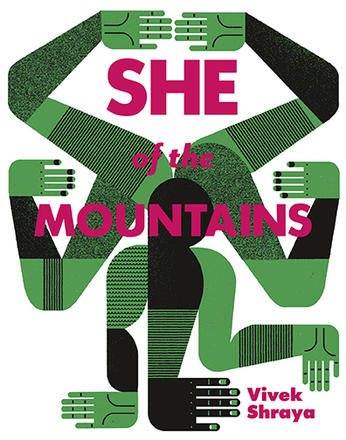
As I wrote Antiman, I was haunted by whether I could belong in this genre. I was inspired by books like Rolling the R’s by R. Zamora Linmark, Autobiography of My Hungers by Rigoberto González, and She of the Mountain by Vivek Shraya. These were all books of prose written by poets that explored the boundaries of form and genre: where does the poem end and the story begin—or was it the other way around? What moved me most was that these two genres offered different sensibilities for distillation of thought and emotion. Certainly, they allowed for complications of racial belonging, identity, and queernesses to perform their devasting craft moves through genre interactions. Other books that allowed me space to move through genre and narrative were Dear Current Occupant by Chelene Knight and The Atlas of Reds and Blues by Devi S. Laskar.

The books below are examples of nonfiction work and poetry collections that I see as important to the kind of searching that I constantly do. A question common to all of these books is their answers to the ubiquitous, micro-aggressive “where are you from?”. Here are complicated identities and belongings laid bare in recent books that provoke this central question: What is identity when it’s not white? How many belongings can we hold simultaneously?

Shame on Me

Shame on Me: An Anatomy of Race and Belonging by Tessa McWatt

My cousin first recommended to me this memoir written by the Guyanese Canadian writer Tessa McWatt. In this nonfiction winner of the 2020 Trinidadian OMC Bocas Prize, the writer mires through the dehumanizing question of “what are you?” posed by white Canadians unfamiliar with the multiplicity of Caribbean-ness.

As a highlight of multiple belongings and complicated identities in diaspora, removed from the Guyanese context, McWatt structures her book around the physical characteristics to which most people ascribe to racial particularities. Chapters on the mouth, hair, lips, nose, serve as provocation for deeper diving into both the writer’s ethnic and racial history as well as the contemporary reading of her body in Canada. The beginning of the memoir opens with a prose poem in sections that imagines the lives of the writer’s foremothers: the African enslaved woman, the Indian indentured woman, the Indigenous ancestor, and more.

What I am drawn to in this book is the balance of personal narrative, research, and poetry by a writer from my parents’ own country. She writes in a language that I understand: she writes the Creole body that has always been in a state of motion. It’s not a common narrative, in fact, it’s exceptional. Anyone interested in complicated identities and deft prose should pick up this book.

Foreign Bodies by Kimiko Hahn

In her tenth full collection of poetry, Kimiko Hahn uses the notion of the foreign body (titled so aptly) to plumb the depths of belonging. Inspired by Dr. Chevalier Jackson’s exhibit of swallowed objects at the Mütter Museum, the speaker in these poems also considers the objects around her that launches the interrogation into the personal, interiority of a biracial daughter of a newly deceased father. The way the objects in the poems serve as provocation find the reader grappling through the associations that occur throughout this deft, precise work.

The formal elements of this text see creation and specificity that result in surprise and my own personal delight. One of the most moving aspects in this book (there are many to be clear) for me is the essay behind the poems called “Nitro: More on Japanese Poetics” where the poet distills the concept of kakekotoba, translated as “pivot-word” where there are multiple significations that the word points to in a kind of semantic ambiguity that provokes the reader into multiplicity. Consider even the title of the collection Foreign Bodies that signify both the swallowed object and the human body that is treated as though it does not belong. It’s easy to see why Hahn endures as a poet.

Curb by Divya Victor

I have been eagerly awaiting this collection from Victor since, after I read her previous book Kith, I recognized a poet who uses form and content to show the inconstancies of the “official” narrative that we read through media or colonial record. In Curb, Victor works her spell-craft as she implicates form in her speakers’ questioning violence against South Asian Americans in our heated and racist time. Some of the poems take the form of immigration documents, while some are free verse explorations of the particular South Asian people hunted by our nation in crisis.

She uses particular moments of violence against South Asians in the United States to wrest back control of the stories of victims of white supremacy such as Sureshbhai Patel, Balbir Singh Sodhi, Navrose Mody, Srinivas Kuchibhotla, and Sunando Sen. The violences are official: paperwork and through the police system, as well as the personal attacks of the white citizenry of the United States. All of these violences elucidate the implausibility of the South Asian American citizen and show how as a demographic we are both invisible and hyper-visible.

The curbs in this collection serve many purposes: to show suburban life, the peripheral nature of South Asian belonging and inclusion, and the structures (an infrastructures) of (white)power that threaten us every day. This is poetry as documentation, a testimony to the endurances of white supremacy.

All the Rage - Riffraff

All the Rage by Rosamond S. King

In her second collection of poems, poet Rosamond King explores the systemic racism that undergirds American society. The queer, US-based poet herself is of Caribbean and Continental African heritage, and to her craft, she brings a multiplicity of belongings from which the speaker implicates the reader in the virulent bigotry they encounter. The speaker warns the reader “I am not safe—and neither are you” as she deftly lays out lines that upset grammatical expectations of punctuation, reimagining punctuation as a stop and start of breath for the reader. By doing so, the particularities of “abattoir” glisten from the page and strike the reader with poems that sparkle with blood and rigorous interrogation.

Also emerging in this incisive, daring collection is awareness of survival in the time of the pandemic—specifically in Corona, Queens. Rosamond S. King proves again and again that she is a poet rooted in place with connections across seas and communities. The collection, inclusive of Trinidadian Creole English, hashtags, and outside textual references, ends with a section that takes the reader into moments of bodily and psychic joy. This book, as the title suggests is all the rage. 

Southbound: Essays on Identity, Inheritance and Social Change by Anjali Enjeti

This debut collection of twenty essays by Enjeti comes a couple of months before her novel The Parted Earth, proving her to be a virtuoso in two different genres: fiction and nonfiction. Southbound serves as a political travelogue of sorts, complete with various political awakenings, for a mixed-race South Asian woman who came of age in the American South.

The essays are well-researched and spin together threads of personal experience and culture into moving pieces that illustrate how identity can serve towards the end of coalition building for social change in our conservative-leaning, white supremacist country. The first essay that serves as an introduction is titled, “What Are You? Where Are You From?” asking the reader the questions she finds herself being asked. Enjeti implicates her own self in South Asian anti-Blackness and how white supremacy of the South has shaped her own understandings of electoral politics, feminism, and identity.

What moves me in this book is the honesty that the writer presents of her own experiences moving into accompliceship in smashing the systems of power that seek to disempower. The narrator survives and learn from an anti-immigrant Chattanooga, a father that denies racism as a survival strategy, the closely allied politics of both the United States and India, that resonate closely with my own experiences. Here the belongings Enjeti states are deeply Southern: South India and the American South—a complication of a daughter of immigrants hailing from Asia, Europe, and the Caribbean. This book can also serve as a guidebook to those who are looking to interrogate their own internalized biases and those who wonder what it means, emotionally and intellectually, to practice the fierce politics of radical justice.

Children of the Land by Marcelo Hernandez Castillo

In this tender memoir, poet Marcelo Hernandez Castillo traces his family’s complicated relationship with movement: consanguine connections, parentage, nation, and the intimacies as the young poet learns about himself through writing and exile. Hernandez Castillo’s hard relationship with his father’s deportation to Mexico haunts the young poet as he mediates his life as an undocumented DACA recipient in a country that makes his life difficult through its xenophobic laws and legislation. He learns how to hide himself, his status and his queerness, to survive. 

What finally emerges from this memoir for me was a spirit that triumphs over ICE, over the people who would deny the poet humanity and dignity. This memoir by a poet uses language to cast and recast its multiple hauntings and belongings in a way that moves me as a reader to consider even more closely, how patterns of American racialization and land demarcation drains psychic energy. There are no easy answers here, but there is lyrical beauty and transcendence. 

The Body Papers by Grace Talusan

Talusan’s award-winning debut memoir tells a complicated narrative of undocumented immigration to the United States from the Philippines. The writer as a young woman learns how to navigate the American school system despite the racism that seeks to cut her down. This is not the only complication of her narrative—a victim of sexual abuse by a family member causes her to ask questions of her own body.

After a cancer diagnosis, Talusan emerges into the new avatar of a storyteller—a gift of her familial inheritance that seeks to rescue the teller instead of the destructive violence she endured. The voice is arresting and devastating in its candor. In fact, Talusan’s memoir narrates the interior life of the writer as well in a seldom-told story of undocumented immigration to the United States from Asia. 

Northern Light: Power, Land, and the Memory of Water by Kazim Ali

One of the queer South Asian writers whose books have been instrumental to me is Kazim Ali—and in particular, the mixed-genre book Silver Road that included poetry, fragment, and narrative. In his new book of nonfiction Northern Light, Ali takes a journey into discovering the physical and spiritual fallout of the hydroelectric dam project on the Nelson River in Manitoba, Canada that his father (one of 40 people at work on its engineering in the late 1970s) helped design.

Born in the United Kingdom to immigrants from Pakistan—originally from South India pre-1947, the date of India and Pakistan’s partition—Ali asks himself hard truths about the settler colonial project that sees him as complicit, his early forays into English literacy occurring in the temporary town of Jenpeg, 500 kilometers north of Winnipeg. He returns to this land after reading about the high suicide rates of the Pimicikamak people who reside in Cross Lake Treaty Lands.

Haunted by the question of his role in telling this story, this memoir asks how we as South Asian immigrants with tenuous and complicated belongings to the new national spaces of North America must reckon with the legacy of indigenous erasure from the land, sky, and most importantly waters. What does it mean to move beyond allyship with the earth and the People indigenous to it? In deeply poignant, researched, unsettling prose, Ali ends the book with a direct address to the reader, “Where does your electricity come from? Upon whose land does your home sit?”

I’m Not Like Other Girls—I’m a Clone with Mind Control Powers

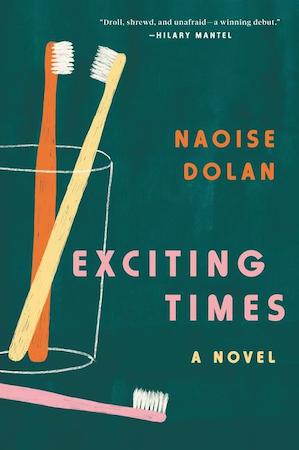
The events of Sara Flannery Murphy’s novel Girl One begin in the early ’70s, when nine women gave birth to babies created without male DNA while living together in a small commune known as The Homestead. (Picture Ina May’s Farm, but minus the fathers and their beards.) The mothers reared their children together as a group, even though each woman’s child was her exact replica. The Homestead was once the subject of newspaper headlines, magazine articles, and in-depth interviews, but 20 years after the commune fell apart, the moral outrage and general fascination with these women has mostly faded away. When Josephine Morrow—the first child born via parthenogenesis—learns that her mother is missing and that, perhaps, her mother’s version of the past may have glossed over some major details, she sets out on a cross-country fact-finding car trip to reconnect with the mothers and daughters who once made up her whole world. 

As she pieces together the truth about where she comes from, it becomes clear that in order to save the people closest to her, Josephine—who spent most of her life hoping that no one would notice who she was—needs to become a version of herself so concentrated and potent that who she is not only known, but impossible to deny. 

I chatted with Murphy about the actions of men who feel threatened, the misogyny of “I’m not like other girls,” and the sexism of reducing women in politics to snakes and witches.


Janelle Bassett: When Girl One opens, Josephine is returning to her hometown where her mother has gone missing and her childhood home has been set on fire. What made you decide to start the story with Girl One and Mother One—two people whose relationship to each other changed the world—not only apart, but essentially estranged?

What if men were facing the prospect of being cut out of the fertility process altogether?

Sara Flannery Murphy: The core of the story has always been Josephine’s journey to seeing her mother fully after a lifetime of not understanding her. But on a deeper level, I think about the ways mothers can be both the whole center of your universe and complete mysteries. I was so close to my mom as a kid, yet she was raising children in a religious household on the heels of a more secular, liberal youth. So I’d get these occasional glimpses into her past that she’d avoid or dodge.

As I’ve grown up and we’ve left religion behind, I’ve loved having a more complex understanding of my mom as an actual person. Like Josephine, though, I went through a stage where I’d think: fine! You don’t want me to know the real you? Maybe I don’t care, then! Because after that blissful closeness of childhood comes this stage where you start to see your mom as boring—someone to grow beyond.

JB: Totally. But also… ouch. Something I thought about while reading Girl One was the particular loneliness that comes from being “different” while looking the same. Can you talk about how Josephine’s personality and her ability to form relationships were shaped by her being the first child conceived without male DNA? Being labeled a miracle AND a monster before you’re even wearing your first diaper is really a lot to handle.

SFM: Josephine is lonely—she doesn’t reference childhood friends, she doesn’t make friends with her med school colleagues—but she doesn’t conceptualize herself as lonely. In a way, her difference is a shield for her, because she has a reason to be aloof. I’ve known quite a few people who have that love-hate relationship with their own intelligence or anxiety or various outsider qualities— where you yearn to belong, but also find a shelter and identity in your weirdness.

JB: I love the scenes where the sisters (or the other women born via parthenogenesis) get the chance to talk to each other privately, candidly, after being reunited. Many of these scenes take place in beds, a sort of call-back to the intimacy they must have shared as children—sleeping near each other and giggling after lights out. The late-night, feminine co-conspirator energy of those sections rang so true for me. How did you tap into that?
SFM: Piggybacking on my previous answer, it was lovely to explore Josephine’s awakening to regaining these female friendships. At first, she’s so bluntly focused on finding her mom that she doesn’t relish the reconnection, but over the course of the story, it becomes more and more meaningful to her that she found this companionship again.

I’ve been fascinated by the way women supposedly manipulate the world—that my very body was sending signals to men that could manipulate them into lust, violence.

I also wanted to show that Josephine hadn’t sought out other girls and women because she was fixated on the idea of male approval as this ultimate prize. Reading my old journals from my late teens, early 20s, it breaks my heart to see my “not like other girls” misogyny. I know now it was from deep insecurity, this terror of not fitting in with other girls. And when I felt left-out, I had this whole model of misogyny at my disposal to aim at girls who rejected me. I was fully responsible for my own sexism, but it’s such an easy trap to stumble into when the pitfalls are surrounding every step. Even now, I catch myself when I judge moms at my kids’ schools—so easy to mutter in my head about cliquish suburban mommies, when having mothers as friends is incredibly affirming.

JB: Some scenes felt like they had a clear horror movie influence. I am thinking of the scene in Emily’s room and, much later, in the forest where words were slashed into the trees. (There are probably more examples, but I’ve blocked them out because I’m delicate and wimpy when it comes to anything remotely scary!) Did you watch or rewatch any particular movies for inspiration while writing these parts?

SFM: Ooh, good question! I’m constantly watching horror movies and they’ve turned into a gothy stew in my brain that affects everything I write. I’m really into the isolation of the woods, and the way these pockets of wild forest still live on in developed cities. In my childhood home, we had an undeveloped patch of forest next to our backyard and it felt so enchanted and scary.

There’s a brilliant episode in Atlanta that plays with this, when Alfred gets lost in the woods in the middle of an otherwise heavily populated area. (The episode is called … “Woods”.) Atlanta isn’t explicitly horror, and it’s not an obvious influence on Girl One, but I was rewatching because I admire that series so damn much and it struck me how many tiny connections worked their way into my books over the years. And as to Emily in the attic, that was my nod to the Bronte-inspired idea of the madwoman.

JB: I saw that Atlanta episode! Yes, it felt like anything could happen to him out there under cover of night and dense foliage. Now, let’s talk powers. Josephine learns she has the ability to control people’s minds, forcing them to do what she wants. About wielding her new power she says, “I wanted to feel that dizziness that I now associated with reaching into the world and getting what I wanted from it.” Suddenly she can make people listen, and this ability seems to help her make sense of what it is she actually wants. And Cate’s power is healing bodies. She can fix what’s broken, clean up the worst messes. Tell me about how you chose the daughters’ unique abilities and the way they play into (or against) female stereotypes?

SFM: My editor, Daphne, wanted each power to tie specifically to rumors, fairy tales, and stereotypes that women have faced for hundreds of years. Without giving too much away, Delilah’s powers tie into witchcraft; Emily’s into soothsaying. And the powers aren’t just nodding to the supernatural side of things, but to very real misogyny.

I’ve always been fascinated by the way women supposedly manipulate the world around them. I internalized this idea that my very body was sending signals to men that could manipulate them into lust, violence. Then you watch political races with women candidates who are accused of being snakes, witches, of running everything behind the scenes while also being weak and ineffectual. It’s Eve with that apple all over again. And it’s a pernicious idea: women are constantly guilty without having the power that comes along with responsibility. Which isn’t to say women can’t be powerful or hurt people through that power. But just that there’s a disproportionate sense of women being manipulative, and it’s difficult to argue transparently against that claim.

At first, Josephine’s mind control powers belonged to a different Girl. I loved that idea of—okay, what would it look like if women could manipulate people, unnaturally so? Her whole personality sparked to life when I gave her mind control instead of super-strength. She has to learn how to not use it for selfish, harmful reasons— she has to face her own arrogance.

JB: One of the most ominous parts of the book, for me, was realizing that the men in the woods weren’t on their side—that their strength and authority would be used against them, not for them. And other male characters in the book turn out to be… less than trustworthy. These dudes are really making the case for parthenogenesis!

SFM: I struggled with this because I didn’t want every man in the book to be terrible. It sounds goofy because men (well … white/cis/straight ones, anyway) aren’t struggling for positive representation. But it didn’t feel nuanced enough to make men nothing but villains, because, for so many women, men are positive presences in our lives.

But yeah, overall? The men aren’t doing great in this book. When the majority of the story takes place in 1994, “virgin birth” is still limited, but the promise—or threat—of it has entered the public imagination. The ability to create life is so powerful, yet it’s been turned into a liability for women (and people with uteri) for thousands of years. What if men were facing the prospect of being cut out of the process altogether?

If women were able to reproduce without men, that would be a huge threat to men’s role in the gene pool, and to women’s roles in the world. So the men that Josephine and friends encounter are angry, and scared, and … well, not on their best behavior.

JB: I really like the idea that the women in Girl One are part of a semi-hidden lineage—that throughout history people have been able to reproduce on their own from time-to-time, but these stories have been passed down as fairy tales and fables instead of facts. By the end of the book, Josephine has gone from being a private, guarded loner to being part of this high-powered (wink wink) close-knit group. Plus, she has a fuller understanding of her mother and her origins, a budding romantic relationship, and then this historical connection to a long line of outsiders with otherworldly skills. Can you talk about who Josephine is at the end of the book after all the losses, gains, headlines, miles and fires?

The ability to create life is so powerful, yet it’s been turned into a liability for women (and people with uteri) for thousands of years.

SFM:  From the beginning, I wanted to trace her shift from this arrogant but naïve young woman who puts so much stock into male approval to someone who’s able to think honestly about the strength and power of other women.

The process is painful for her, and she resists it. I didn’t want to present change as a neat, singular destination. I wanted Josephine to backslide—even late in the book, she underestimates other women, or puts trust in the wrong people. But her inner transformation, ultimately, is more powerful even than finding out she has superpowers.

JB: In a virgin birth scenario, would you rather be the mother or the daughter, the original or the replica?

SFM: Daughter (no offense, Dad, I love you). Because I’ve already reproduced with a partner and it hasn’t been so bad. Also, significantly, because I want some powers! I don’t know which one I’d get. Maybe a boring one, like the ability to fall asleep at will, or to predict but not control the weather.

JB: The powers are pretty alluring, but think I’d go with Mother. We all pretty much end up becoming our moms with regular reproduction, but at least we have a few years where we can pretend that’s not what’s happening! Hey, maybe that’s how the daughters’ powers developed—from the supernatural angst of becoming their mothers.

SFM: OMG. I’m using that. 

7 Short Stories about Political Issues That Resist Easy Answers

It can be too easy to write villains— people stunted and incapable of love or compassion—when we write about opponents of our politics, especially in short stories, which have so much less space to detail nuance. Sometimes writing about villains and pointing the finger is necessary in a world that turns away from the victim. The raison d’etre in these polemic stories is to reveal the bad guy for his badness. “Cat Person” by Kristin Roupenian is one example. But there are also stories that resist easy answers and reveal the gray area between revenge and justice, kindness and complicity, defensiveness and love’s protectiveness.

The Rock Eaters by Brenda Peynado

The stories in my debut collection, The Rock Eaters, are anything but apolitical. The first story features a school shooting and a neighborhood overseen by angels that sends for an Instagram prayer group to protect them (#ThoughtsandPrayers). Another story considers a group of Latina girls, already world-weary of racism, confronting the whitest girl they’ve ever seen. Latin American superheroes storming the US border headline another.

The stories drop weirdness and exaggeration onto stages of political hot topics—race, class, immigration, gun violence, toxic masculinity, and feminism—to disarm the reader from their easy cheat sheets of right and wrong. In most of these stories, the worst harm comes from the best intentions: protect those you love, be fierce in your justice, be gentle in your mercy. I suppose I have a fascination with understanding why we are capable of inflicting such sorrow and hurt in the world alongside having such capacity for love. 

Here are seven political stories that resist easy answers:

Friday Black: Adjei-Brenyah, Nana Kwame: 9781328911247: Amazon.com: Books

“The Finkelstein Five” in Friday Black by Nana Kwame Adjei Brenyah

An act of horrifying violence makes the national news, a white man beheading five black kids with a chain saw in “self-protection,” galvanizing a movement of people standing up to racism. The narrator of this story has every right to be furious and to want justice. But in a world determined to cast him aside, that wants him to keep quiet, that won’t allow true justice, he has to grapple with the meaning and consequences of retributive violence.

Lulu” in Land of Big Numbers by Te-Ping Chen

In Communist China, a brother and sister take diverging paths: one radicalizing and one becoming complacent. The narrator watches his sister Lulu throw her life into bringing awareness via social media to atrocities committed by the party to dissidents. He begs her to stop, thinking she is throwing her life away; there’s no way that she won’t be caught. And she is caught, again and again. He just wants her to have a normal apolitical life like the one he has, playing competitive video games. How easy and sympathetic it is in this story to want a normal life. When any chance of protest seems hopeless, why not give up? Both of the siblings’ choices are equally heartbreaking.

Exotics” in Milk Blood Heat by Dantiel W. Moniz

This story details a horrific act by people of privilege in a secret society. This story, however, chooses to focus not on the society-members, who are villainous enough, but the people employed to serve them, the waitresses, cleaners, kitchen staff. Driven by their own needs, by capitalism, by wanting to keep their own families in the green, they are lulled into complicity.

What It Means When a Man Falls from the Sky by Lesley Nneka Arimah

Skinned” in What it Means when a Man Falls from the Sky by Lesley Nneka Arimah

Ejem is a feminist in a world where upper-class women are granted clothing only by their association with men: fathers before they come of age and husbands when they are married. Well-past the age she should have been married, which is scandalous in itself, Ejem decides to wear clothing granted by no man, a scandalous “self-cloth.” In this story, it’s other women who are the greatest enforcers of the code: “You don’t get to be covered without giving something up; you don’t get to do that,” one of her good friends says. But in the margins of the story are women of the servant class, and the finale of the story is a wonderfully complex moment of intersectionality of class, race, and gender, the privilege of Ejem’s feminism becoming apparent to her.

The Office of Historical Corrections by Danielle Evans

Boys Go to Jupiter” in The Office of Historical Corrections by Danielle Evans

This story begins with a college girl donning a confederate flag bikini because she looks good in it and escalates when a picture of her in the bikini finds its way to her college campus. Angry, plagued by the death of her mother and her best friend’s brother, she escalates the situation with a giant “eff you” to her college-mates who want to cancel her. The story escalates to a dramatic confrontation between her and the rest of the school, her refusal to take responsibility taking centerstage. The more we learn about her, the more complicated this refusal seems.

Redeployment by Phil Klay

“Psychological Operations” in Redeployment by Phil Klay

A veteran of the Iraq war is back in college and asked how he could kill other Muslims by another student on campus. What follows is a rollercoaster of psychology as the vet tells his story, moving through excuse, blame, admission, denial. Their attempt to understand each other ends in a deeply powerful non-answer that leaves the reader as stunned as the narrator.

Drinking Coffee Elsewhere by ZZ Packer

“Brownies” in Drinking Coffee Elsewhere by Z.Z. Packer

In this classic story, a Girl Scout troupe of Black girls from Atlanta goes to summer camp. They think a white girl called them a racial slur, and they plan their revenge. But it turns out the situation is not what it seemed, and the story delivers what could have been a straightforward take on racism, but instead is an incredibly complicated take on cruelty.

7 Books About the Heartbreak of Losing a Sibling

Perhaps one of the more bizarre aspects of having siblings is the sense that this person, your sister or brother, could have been you. Some other combination of the same genetic material has produced this person, who sometimes seems almost like a shadow self or an other-worldly version of yourself. It’s like seeing alternate versions of the way you turned out. Variations on a theme. This can be interesting, but it can also be horrifying.
Because I grew up in such a large family, I’ve always been attuned to, and interested in, the effects our relationships with our siblings can have on us. I’m particularly interested in the deep intimacy that can result, especially, but not exclusively, between sisters, and the ways this intimacy can corrode, reform, even completely disappear, over a lifetime. 

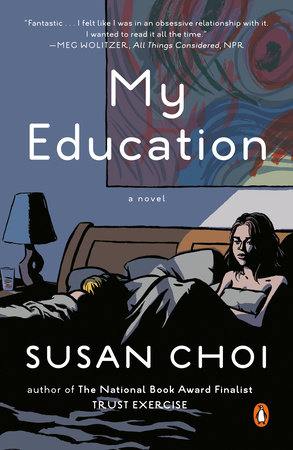
In my debut novel, The Comfort of Monsters, the protagonist Peg McBride loses her younger sister. Because they were exceptionally close as girls, and because Peg was, ostensibly, the last person to have seen her alive, she carries a deep sense of guilt and shame about her sister’s disappearance.

In writing my book, I looked to literature that explored these complicated connections and what happens when they are broken: when a sibling dies, disappears, or flees. Below are seven books that showcase the specific horror and heartbreak of loving and losing a sibling:

Long Bright River by Liz Moore

Long Bright River by Liz Moore

With a heart-racing plot and a gorgeously flawed, yet painfully perceptive, narrator, Moore’s novel tackles a heady set of subjects: intergenerational trauma, addiction, sex work, police misconduct, single motherhood, and sisterhood. Set mostly in the Kensington neighborhood of Philly, Long Bright River follows Mickey Fitzpatrick, a beat cop, who undertakes a desperate and at times ill-informed mission to find her missing and long-time heroin-addicted sister. Mickey mines her past as much as her present to understand how both she and her sister ended up in the novel’s present moment. Her search for her sister is set against a disturbing slew of femicides, and like the narrator herself, readers are holding their breath every time another victim is discovered. A beautiful, wrenching book about the ties that bind us and break us. 
Housekeeping by Marilynne Robinson 

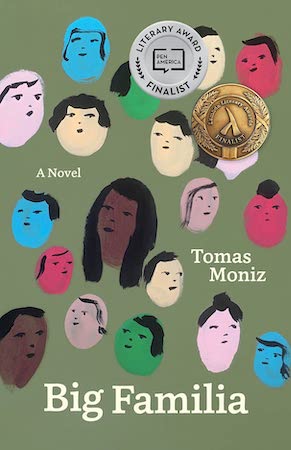
In Housekeeping, a pair of sisters, Ruthie and Lucille, work through the wreckage of their mother’s suicide at the not-always-so-steady hands of their aunt Sylvie. Though the sisters were once close, spending days skipping school and playing in the woods, eventually Lucille feels the tug of proper society. And one day—fed up with her aunt’s eccentric habits and poor housekeeping, and desperate to belong and live a “normal” life—Lucille abandons her sister Ruthie and goes to live with her schoolteacher. Lucille’s desertion ripples through the novel, haunting Ruthie, and readers until the very last sentence. A deeply empathetic and moving portrait of the sometimes irreparable ways we so often grow apart from those we love. 

Caucasia by Danzy Senna

Caucasia by Danzy Senna

The pulsing heart of Danzy Senna’s debut novel is the narrator Birdie Lee’s love for her older sister Cole, which is a beautiful but complicated kind of love. The sisters’ mother is white and their father is Black, and though the girls are so close they share a secret language, in public people often don’t believe they are sisters. Birdie is so light-skinned that people sometimes mistake her for white. When their parents decide to split up, supposedly to protect their mother who believes the FBI is after her, Birdie’s life is changed forever.

Birdie and her mother run away; Birdie is forced to become Jesse Goldman and to pass as a white girl, because her mother says that the FBI will be looking for a white woman with two Black daughters, not a white woman with one white daughter. Birdie lives several years on the run, pretending to be Jesse, and the consequences of her mother’s lies are devastating. All the while, Birdie yearns for Cole, for their secret shared language, for the sense of self she used to find reflected in Cole’s face, for her father, and for wholeness. Eventually, she leaves her mother and sets out to find the other half of her family. Caucasia is a fast-paced, heart-breaking, and whip-smart read about the deeply constructed nature of race and the very real harm these constructions inflict. 

The Unpassing by Chia-Chia Lin

In this debut novel, set against the bleak backdrop of the Alaskan wilderness, Chia-Chia Lin portrays a Taiwanese immigrant family of six as they try to make a new home in a beautiful but nearly inhospitable place. Tragedy strikes the family when several of the children contract meningitis. The narrator, Gavin, is so sick that he is unconscious for a spell. When he awakes, he finds out that his sister Ruby has died. Gavin grapples with his grief throughout the novel, believing himself partially responsible for passing the sickness onto Ruby, and thus for her death. Ruby’s death haunts the whole novel’s telling, and remains a powerful vacuum of grief, like a large black hole, that the family struggles not to fall into. The Unpassing is an empathetic, deeply felt, and lyrical portrait of childhood loss, of never-ending grief, and of unbearable unbelonging. 

A Home at The End of the World by Michael Cunningham

The narrator, Bobby, adores and even idolizes his 16-year-old brother Carlton. And when Carlton renames his little brother—christening him Frisco—he turns him into a “criminally advanced nine-year-old”. Bobby yearns to live up to his brother’s opinions of him, so he tags along on a number of adult exploits, including taking acid with his breakfast cereal, following his brother to a cemetery where he spies on him having sex with his girlfriend, and attending their parents’ boozy house parties. The narrator doesn’t just want to grow up to be like his older brother, he wants to be his older brother. But Carlton’s death, at the hands of a shocking accident, alters both Bobby’s and his parents’ lives forever. And though the remainder of the novel takes readers far from the moment of Carlton’s unexpected death, to—as the title suggests—“the end of the world,” the magnitude of this loss continues to haunt Bobby into adulthood. 

Sing, Unburied, Sing by Jesmyn Ward

Jesmyn Ward’s novel, Sing, Unburied, Sing, is the story of Jo-Jo, a 13-year-old boy who is struggling to navigate his fraught familial dynamics. His father, Michael, who is white, is in prison at the infamous Parchman penitentiary and his mother, Leonie, who is Black, is an on-again-off-again drug user. And so the care of his little sister Kayla often falls to young Jo-Jo, and they form an intense, survivalist bond that Ward portrays with heart-wrenching tenderness. Haunting, and complicating these dynamics, is the ghost of Jo-Jo’s uncle, Given, who was the victim of a suspicious, likely racially motivated, shooting accident. Leonie is perhaps most affected by the loss of her brother Given and harbors wrenching guilt both about his death and her relationship with Jo-Jo’s father, Michael, who we later learn is related to Given’s killer. Leonie is deeply jealous of Jo-Jo and Kayla, because their closeness reminds her of her own loss. Though the meat of the book centers on Jo-Jo’s fraught relationship with his mother, who is spiraling out of control throughout the novel, Given’s absence affects the entire family. A powerful, lyrical exploration of the ways that violent loss and systemic racism have ripple effects through generations. 

Nox by Anne Carson

Nox—a difficult-to-categorize, shape-shifting sort of book—is required reading on grief. It’s a notebook of memories, including letters, poems, photographs, collages, paintings, and other fragmented artifacts compiled after learning of her estranged brother’s death overseas. Equipped only with one letter from her brother Michael, a handful of phone conversations with him over the years, and a limited knowledge of his movements, Carson struggles to write “an account [of his life and death] that makes sense.” And in some ways, though these investigations begin to sketch out a story for Michael, ultimately the assembled fragments are too inscrutable to become anything beyond that—a sketch, a kind of bizarre constellation of answers to all of Carson’s questions. A one-of-a-kind exploration of the circular processes of grieving, especially for a brother, a sibling, a person you feel you never really knew. 

“Give My Love to the Savages” is Satire About Black Masculinity

In “This Isn’t Music,” from Chris Stuck’s debut short story collection Give My Love to the Savages, a Black man who has recently moved home is covering his insecurities by making fun of everything around him, from the town’s blue-collar white residents to his Black ex-girlfriend. “You’re a snob,” the narrator says, “but only because you’re observant, hyper-observant. That’s your excuse.” 

Chris Stuck has a gift for writing Black characters—often professionals—who are adrift. In different stories, a couple ruin their vacation by live-posting it, a Black conservative searches for love on a cruise ship, and an affair with a white woman turns into a Get Out-esque proposal where being a “kept man” has a new meaning. Everyone is alienated from their surroundings and not sure where to go next.

That in-betweenness is a bougie Black feeling. It’s a mixed-race one, too. Stuck has a Black parent and a white parent, and he addresses multiracial identity directly, in the Pushcart Prize-winning title story and in the collection’s wrenching opener, “Every Time They Call You Nigger,” which was originally published in Meridian

Raised in Virginia and living in Portland, Oregon, Chris Stuck has an MFA in Fiction from George Mason University. Give My Love to the Savages is his first book, and Publishers Weekly praised its “inventive spin on Black satire” and “perfect balance of absurdism and realism.”

We spoke over video chat about Black in-betweenness and dropping your first book in your 40s.


Chris L. Terry: Writing that pushes the boundary of what’s acceptable can be really compelling. Do you feel like you’re working in that space?

Chris Stuck: It’s not like I’m trying to be controversial or anything, but I am trying to examine it. Like my story about the guy who becomes a penis, “How To Be A Dick in the Twenty-First Century.” I was having fun, writing a story that was amusing to me, and I thought my editor was gonna nix it. She loves that story for some reason! I had it buried in the collection so readers could sort of ease into the book, have a few warm-up stories before they got a six-foot-tall Black penis narrating a story. 

CLT: “How To Be A Dick” makes it humiliating to be a penis. I like that one-two punch at the beginning of the collection: the poignant, personal-feeling “Every Time They Call You Nigger,” then this absurd story about a penis. It sets the parameters for the wide variety of topics and feelings that the book has to offer.

CS: I generally like fiction that has some kind of edge to it. I think a lot of fiction is so earnest that it gets boring. But sometimes I think about the humor in my book and worry that people don’t like humor in literary fiction. Some stuff, Black writing especially, tends to be what you would expect or what’s already been done. I love all Black writing, but sometimes we can be put into a box and accept it and just produce art that’s always been made by other Black folks in that box, whether that be slave narratives, inner-city narratives, drug and crime narratives, or the use of Black vernacular in a performative way in order to prove how Black you are to a white reader. This is no diss to anyone who does that, but the work that’s always intrigued me has always gone against the grain. Not everyone feels that way and that’s cool, too.

CLT: Paul Beatty has an essay about how his work attacks a certain sobriety that can feel required in Black literature. The idea that a story needs to be maudlin and dead serious to be great. I think, as a Black writer, there can be some pressure to not use humor because we need to convey things about our experiences that other people don’t take seriously. And, I agree, it can feel really stifling.

I love all Black writing, but sometimes we can be put into a box and just produce art that’s always been made by other Black folks in that box.

CS: When my agent, Dan Mandel, went out with this book, it was out there for a fucking year, and I noticed that most of the editors were white. So, it was hard not to get upset about that racial dynamic, and the monolith of publishing. I wasn’t what they wanted. At the same time, my stories were getting published in journals by white students in MFA programs. They were publishing me enthusiastically, so I had to check myself on some of that stuff.

Yet, no one wanted the actual book. I thought my agent would pat me on the back and say, “Well, we gave it a shot.” But he said we weren’t giving up. He made up a new list of editors and publishers. I saw Amistad was on it and I realized I’d never considered them simply because Amistad had a history of more traditional Black narratives. I didn’t think they’d dig what I do. Dan sent the manuscript out on a Thursday, I think, and Tracy Sherrod at Amistad called me the next Tuesday.

CLT: There is that generation, Danzy Senna and Mat Johnson, older Gen Xers who were writing about mixed-race Black experiences. Even Paul Beatty, who writes skewed Black experiences. I feel like maybe you and me are the next generation of that. We’re inspired by them. 

CS: Definitely. They opened a door that we can go through and run off somewhere else. It’ll be the same for the ones who come after us. When we were growing up, we were the only mixed kids around. Now, I look at my younger cousins and their kids. There are mixed kids everywhere! Like, where did y’all come from? I get into old guy mode. Do you know how hard it was for us?

CLT: A lot of your characters are Black people who are isolated or adrift, like the couple in “Chuck and Tina Go On Vacation” who post their whole trip on the ‘gram. Or, “This Isn’t Music,” my favorite story in the collection, about the guy who moves back to his hometown and is having an affair with his ex. Tell me more about writing these characters.

CS: I like characters who are in between destinations, or between races in some way. That’s the way I’ve always felt. Every job I’ve ever had was just the job to make money, and it was never what I wanted to do. So, I’m always adrift. I envy my friends who are engineers and love their jobs. I was always thinking about something else while I was having to do a job or school, you know? Thinking, This is boring. I can’t wait to get to do what I want to do.

So many times, Black characters are relegated to being down and out in fiction. That’s a narrative that publishing is familiar with, so they just keep hitting it over and over again.

My last job was in diversity consulting, for a small Black-owned company here in Portland, Oregon. My boss was a successful dude and I want to see more of that in writing. So many times, Black characters are relegated to being down and out in fiction. That’s a narrative that publishing is familiar with, so they just keep hitting it over and over again. Even my editor, she was like, there’s only one or two blue-collar characters in your book. And I was like, but these white-collar characters are like you! 

The guy in “This Isn’t Music,” he tried to go into higher education, but his heart wasn’t in it, so he went back to driving trucks. There’s that in-betweenness again. So there’s the question: as a writer, what do I write? How the world is keeping us down? Because in so many ways, it is. It’s reality. Or do I write about how some of us are actually excelling or trying to? Most of my family’s blue-collar, and when I’m around them, I occasionally feel how I’m not like them. But if I’m around more highly educated people, I feel like they’re stiff as fuck. I love it and hate it, but I feel like that’s my material.

CLT: I like how a lot of your characters are professionals. Do you feel like a middle-class identity separates a Black person from the Black mainstream?  

CS: I do have people in my family who got into the right line of work, but when they come back to their family, it’s a lot of code-switching. With my mother, I could tell who she was talking to on the phone by her tone and diction. When I’d call her at work growing up, it felt like she was another person. It was “Professional Ma” on the phone. White folks are listening, boy. That’s what some of “Every Time They Call You Nigger” is about, figuring out where the hell to be comfortable in all these different worlds.

A Black person has never said I wasn’t Black enough. It was always someone who wasn’t Black.

Black people travel across so many different lines every day. So, people who have done well in life, I don’t think that separates them. If you’re tapped in, you’re tapped in. If you’re stuck up, like so many Black conservatives and certain Black social critics seem to be, you were never tapped in. It’s sad to say, but Black success is still such a new thing in the American mind. The first example we probably think of is the Huxtables. Maybe now it’s the Obamas. A fiction and a reality. But white America has had examples since the beginning of time. So it’s another in-betweenness that we have to deal with. You have to hold on to your Blackness yet know that Blackness is a broad state of being.

CLT: How does it feel to be bringing your first book into the world in your 40s?

CS: It’s too late yet right on time. I went to graduate school right out of undergraduate. I had classes with some of the professors that taught in the graduate program, and they were like, “Oh, you should apply.” So, I did and got in. But I was 23, in an MFA program, and I was a complete stoner, drunkie too. I still had to figure myself out. 

Right after that, I got a fellowship at the Fine Arts Work Center. While we were there, Jonathan Safran Foer’s agent or editor came to visit and she told us about him and his great book, even what his advance was. Naturally, everyone was jealous. He was younger than us, and we were young, too! Everyone wants to be the wunderkind, but I couldn’t deal with that. Back then, I didn’t have the confidence or the intelligence. I would’ve washed out. I think a lot of writing is just confidence. I know who I am now. I didn’t know myself for so long. I don’t think the male brain matures until the age of 27. Mine was probably after that. 

CLT: How do you decide if or when you want to address mixed-race identity in a story, as opposed to just Black identity?

CS: The first story and the last story in Give My Love to the Savages are the only ones about mixed race, although other times I’m dealing with interracial situations. In the first story, I was talking about every time I’ve been called “nigger.” I wrote myself as the character and then started to change things. I don’t want it to be, “Me, me, me.” I want it to be a version of me or someone like me. 

For the last story, a friend, who is white, told me her cousin flew into L.A. right when the riots were starting. And I tried to write it the way she told it, but it just wouldn’t work, which was for the best. But as soon as she told me that story, I knew the character was gonna be mixed-race because of Rodney King, the LAPD, and everything with race surrounding that. If the character was white, there could be some complications, especially with having a racist father, but not as many as if he was mixed with a white racist father and some baggage in his past. That’s just where my creative mind went with it. It felt like a story I hadn’t seen before, a story I could partially relate to. I’m always looking for the complications in stories, the in-betweenness again, and in a way, it’s an update on the “passing” narrative. How more in-between can you be than being a mixed kid with a racist white father driving around L.A. just as the ’92 uprising begins?

CLT: In your work, even if it isn’t explicitly a mixed-race character, there’s still having these interracial, experiences. I think that those are stories that we’re positioned to tell. 

CS: For sure. Sometimes writers of color are pushed to exploit their corner of oppression, like, “Oh, I’m mixed. This is my niche. This is what I’m going to do forever.” I don’t want to be the mixed-race guy who just writes mixed-race characters. But I get if someone would. Sometimes, mixed folks are really into being mixed. I play around with that with my social media handles @super_biracial and @super_biracial_man just because I always got jokes. I actually identify as Black, not biracial. I was lucky to grow up around my Black family for 90% of my life. I was raised to be a Black man, even by my white father. So I could always see my brothers’ and cousins’ in-betweenness too because I’m them and they’re me. A Black person has never said I wasn’t Black enough. It was always someone who wasn’t Black. Yet being mixed, I can also see all the different nooks and crannies of race. I can travel across lines that some darker Black folks don’t or can’t. In some way, I feel like it’s a lucky position to be in as a writer. The stories are unfortunately endless. 

The Chaotic Insides of Other People’s Homes

“A Bone for Christmas” by Genevieve Plunkett

An old woman had not left her house for a very long time. She had missed dentist appointments and a meet­ing with the podiatrist. It was possible that her son was keeping her inside the house against her will, selling her belongings, neglecting her care. The girl who had re­ported the case had not wanted to identify herself. She did, however, have much to say about the issue of cat feces.

Everywhere, she had said over the phone, and her voice had cracked with emotion. It’s like a minefield. Of cat shit.

Petra, ever diligent, had written this in the file.

The old woman’s house was on the mountain, on a road called Bottom Furnace. It was late January, so there was ice on the mountain also, and frost heaves, and some small, impassable bridges. There was never cell service. Petra kept a flashlight and a blanket in the trunk of her car along with a set of flannel underwear, still in the package. She had never asked herself how, in the case of a breakdown, she would get herself into the underwear.

Petra liked street names, how strange they could sometimes be. Bottom Furnace, she imagined, would go well with Lost Lake Road and Swearing Hill. Last week, she had driven to a house on Mad Tom and to another on a road called Twitchel. She liked the old names of the people that she visited: the Ethels and the Hirams. Hyacinth and Sissy and Eugenia. Lester, with his pipe and his large, scaly ears. She made sure that they were being cared for, that they had enough fuel for the winter, and sometimes, out of kindness, she checked the mousetraps for them. She asked if there was anyone harming them, or if any of their medication had gone missing.

There was wildlife too: the black bears, the folded flight of herons over her windshield. How red foxes trotted with their heads turned, conscious of traffic. In the winter, there were mostly little birds, crows cawing, and recently, a small white cat in her backyard. She had built a shelter for it from a Styrofoam cooler lined with straw, after seeing the design in a children’s magazine.

Can we let her inside? Petra’s son had asked about the cat, his concern only deepening a well of desire within her to let worlds mingle, just for once.

Petra turned onto the mountain road. She removed a glove, finger by finger, with her teeth and placed her hand against the heating vent on the dashboard. Vermont Public Radio had been playing Brahms all morning, which always brought her heart to a crawl, made her feel like damaged goods—in an appreciative sense. It carried a memory too, something almost a decade gone: a man­sion, august with green vines and piano attics. Walking there under the weight of her violin case, over a foot­bridge where there was a pond, reflecting the colors of dawn. How young she had been, feeling as though she were truly, truly herself, in the same way an adolescent moose charges top-heavy from the tree line. Endearing; terrifying.

There had been an ice storm the previous week and some of the trees along the road were bowed or broken. She could see the fresh wood where someone had used a chainsaw to clear a limb that had fallen. The wood chips were bright against the gray, muddied snow. Lately, the majority of her cases had taken place on these remote stretches, in areas referred to as hollows—places that seemed to Petra to be utterly random and lonely. It wor­ried Petra’s husband to know that his wife was out there by herself. For his sake, she often left out certain details, like her encounters with unchained dogs, or the old man in the wheelchair, who had snorted a line of cocaine off the back of his gnarled hand. And, of course, there were things like cat feces, which, knowing her husband, would have dismayed him most of all.

How young she had been, feeling as though she were truly, truly herself.

Her husband was a tortured man. He would not use public restrooms, or see movies at the theater. Some­times he microwaved slices of bread, or pickles, of all things. Sometimes he boiled water before drinking it, just to make himself feel better. After six years of mar­riage, he had never shared a drink with his wife, never sampled food from her plate, never used the shower af­ter her without first wiping it down.

Yes, he’d say, with perfect self-awareness. I know that it’s all in my head.


She found the address without difficulty, just as the in­termezzo on the radio was ending. The house was lop­sided with a mossy roof and an enclosed front porch almost fully obscured by blinds. She could see, from where the blinds were askew, that the porch was filled with bits of furniture with the legs thrown upward, sun-bleached fabrics, and piles of newspapers with the pages bent against the glass.

Caroline Marrows was the old woman’s name. Petra confirmed the spelling on the case folder, then repeated it under her breath as she walked over the ice to the house.

If I don’t do it—repeat it like that—she had tried to explain to her husband, then I will spend the whole interview worrying that I’ve said the wrong name. Like a madness.

You mean an idiosyncrasy, he had replied.

A girl in short sleeves and a winter hat met Petra at the inner door. She seemed to look beyond her, through one of the cracks in the blinds, as if checking to see what kind of car she had arrived in, or if there was any­one else with her. Petra extended her hand.

I’m here to see Mrs. Marrows, she said. The girl did not speak, but she moved aside for Petra to pass through. Her face was long and peevish. She reminded Petra of someone working at a carnival, a face that says, Come on and try your luck.

Petra entered a cluttered kitchen with a warped li­noleum floor. Above the sink, which was piled with dishes, there was a small window with a drawn curtain. The hard winter light glowed through a pattern of red flowers flecked in the center with yellow. Petra found herself taken by these curtains, their implied intentions: like a petition for all that was nice and long ago.

She was accustomed to finding her way through unfa­miliar houses. Upstairs, they would sometimes tell her. Casey’s old room, as if she were privy to the house’s his­tory. Once, she’d walked into a log cabin and was led by a German shepherd to a skylit room where a large woman lay suspended in a hammock. The whole space was rigged with hammocks, for the cats and ferrets, for potted plants by the window. The woman was on oxygen and had a list of health issues. She told Petra that she was saving her money for a trained monkey that could change out the toilet paper, fetch chips with nimble hands that would not crush the bag. A ferret had emerged from in­side the woman’s sleeve then tumbled to the floor, limp­ing away to some other, unimaginable part of the house.

What Petra remembered vividly was the floor, which was, due to the hammocks, almost completely bare—or at least would have been, had it not been for the tum­bleweeds of dust, fur, and little pellets of dry food, com­pressed so densely that the cats batted them around like toys. Petra had stared at this expanse of oddly sculptural bits of filth and thought, sadly, of her husband. How the sight would have overwhelmed his mind, propelled him into a fit of highly specific madness, like the time he took sandpaper to his top lip, because he was convinced that it would prevent him from catching a cold. She had given him two Xanax and sent him to bed. The result had been so effective that she often wondered if she could get away with spiking his coffee some mornings.

It would shed no light on her husband’s condition to re­veal that he spent most of his days working with dirt. In his lab, he dealt mostly with a black, pungent substance called char, which needed to be stirred and measured. His work was environmental, a tireless search for what was fertile, what dark, smelly matter would best pro­duce life. He moved about the counters and test tubes with his horn-rimmed glasses, his long lab coat and nice shoes, barely touching anything.

He dislikes correspondences by mail, his assistant said. Make sure you never lick the envelope.

And then the baby was born. He was born gaunt and nearly translucent. The infant’s frailty was something that the man in horn-rimmed glasses could understand wholly, he found, and he kept vigil in the NICU with such haggard tenderness that Petra was spun right up with it. She joined him in his delirium: the cleaning of little red skin folds, hot towels from the dryer, and bottle temperatures. Visitors were asked to speak at a low volume and douse their hands in disinfectant lotion.

Petra found Mrs. Marrows in a back room where the windows, curtains and all, were cocooned in sheets of plastic. They billowed every few minutes in the draft, which gave her the disorienting feeling of being on a ship, or very high off the ground. Besides the peevish girl who had met her in the doorway, there had also been a man, presumably the old woman’s son, who had not spoken, but nodded to the side, so that Petra was not sure if he was acknowledging her or cracking his neck. He was wearing a hooded sweatshirt, the front of which was obscured, almost down to his belt buckle, by a thin beard. He had taken a step back to allow Petra to pass through to the hallway, and she had heard the linoleum pop and groan beneath his steel-toe boots.

Mrs. Marrows smiled from her armchair. The way that she was seated there, beneath a heap of afghans, reminded Petra, eerily, of a trick of puppetry, as if the woman were standing behind the chair, sticking her head through a hole.

Mrs. Marrows, Petra began, worried momentarily that she had the wrong name. I hope you are staying warm.

The woman nodded. The plastic on the windows made a sucking sound, and Petra once again had the sensation of being in a tower, high above the ground. She noticed that the room was almost bare. It might have passed for tidy had it not been for the whorls of cat hair pressed into the rug, like the meteorological images of clouds.


Last spring she had brought her husband to a concert. She had not told him that she knew the composer, that once, in college, they had slept together. The music was tremulous and experimental. She was filled with visions of the deep sea, of dazzling ancient creatures.

It was the first time that they had left their son at home with a babysitter. He had just reached the age that her friends had warned her about. It will be why this and why that, they told Petra. Just you wait. But her son rarely asked why. Instead, his questions were fully formed, with their own gravity.

How do you know that a caterpillar is not cut in half?

Who is a window washer, really?

After the concert, Petra’s husband had frowned. Too long, he said. It sounded like listening to someone weeping. For too long.

The boy was asleep when they got home, the babysit­ter watching television with her bare feet on the couch cushion. Everything was fine, she said, except he would not eat his beets. He was worried that they would stain his teeth forever. He thought that the celery would tie a knot in his stomach. She shrugged.

Petra’s husband had smiled at the babysitter as he counted her bills at the door, but then he spent the rest of the night scrubbing the couch cushion, turning it around and forgetting which was the sullied side, then cleaning the rest of the house, just in case. Petra could hear him going through the silverware as she fell asleep, hearing music in her dreams, like the clink of polished knives laid out across the table.

Something was wrong. The man with the long beard and the steel-toe boots was not happy. He had appeared in the doorway, his head stooped. I’m just not comfortable, he was saying. I’m just not comfortable with her being here.

When he stretched his arms up to grab the door­frame, Petra saw the hair on his belly. She saw his belt buckle, the butt of a smallish gun just off-center. I’m just not comfortable.

The plastic on the windows billowed. Petra did not know if the man had meant to reveal the gun as a threat, or if it had truly been an accident. She had a strong desire to be back in her car, to have her public ra­dio, her fingers jammed into the warm vents. I must not act rashly, she thought, followed by: If I could only rip through the plastic, I might escape through the window.

The man looked at her.

I have an uncomfortable feeling about her, he said, still not addressing Petra outright, although he did not appear to be speaking to the old woman in the chair either. It heightened her sense of danger, to be disre­garded this way, as one would a prisoner. She looked down, avoiding his eye, and noticed that her hand was on the zipper of her purse. Somehow, she had unzipped it, perhaps in an unconscious effort to reach for her pep­per spray. Her husband bought her a new can of it every Christmas. He said that you never knew how much po­tency was lost over time.

It doesn’t spray as fast as you expect it to, he would explain, year after year. You have to keep your finger down. It was useful advice.

As her son grew, his questions continued: What if an acorn fell into his mouth while he was yawning? If a finger grew too long? Just yesterday, he had sat behind her in the car and spoken of next Christmas—the child only ever talked about next Christmas, as if the pres­ent or approaching Christmas was too real to bear. He wanted to have a tree strung with popcorn and bells. But not stars. Never stars.

Do glass planets exist? he asked. Do children ever get a bone for Christmas? Just a bone?

What’s your name? the man asked Petra. She told him and he shook his head, unconvinced. I’m not comfort­able with you being here anymore, he told her, his index finger pointing to the floor. With the other hand, he adjusted his belt.

They should all just sit down and talk, thought Pe­tra, but the only piece of furniture was the old wom­an’s chair. In the corner, there was a large crater in the rug where something round and heavy once stood—the base of a lamp, maybe, or some kind of barrel. As Petra’s eyes traveled over the rug, she saw many other shapes: small circles from a set of table legs, the right angles of a chest or bookshelf, all of which made her feel as if the world were disappearing around her, piece by piece. She took a step forward and the man stood rigid, blocking her path.

She had seen her husband angry plenty of times. The way he moved his tongue around inside his mouth, as if tasting his own fury. How he studied his knuckles, wondering, she supposed, if this was the day that they would burst at the seams. But perhaps she was not being fair, for he had never been violent. With their son he was always soft-spoken. But one night they had gone out with friends and she had become quite drunk, grabbing hold of him for balance, touching him flirtatiously—her own husband—so that the other couple raised their eye­brows in amusement. At home, he could not look at her.

You embarrassed yourself, he said, and she saw there, in the line of his jaw, all the capacity any man had ever had for hatred.

The man blocking Petra’s path did not seem to know what to do with his hands. They hung stiffly at his sides and it made Petra feel a little sorry for him, as if he could not commit to being fully menacing. This did not mean that Petra was unafraid; his indecisiveness signaled to her that he was capable of anything. When she had ar­rived in the room, she had noticed an aged brass pole in the corner to her left. Her first thought was that it was some kind of antique pole for an IV bag, used for a homebound patient. Medical equipment—albeit never outdated medical equipment—was not an uncommon sight in her work. But it was not an IV pole. Petra saw now that it was a stand with a curled hook meant to hang a birdcage. At some time, perhaps in the distant past, or perhaps not so long ago, someone had kept a bird and fed it food and talked to it through the bars. Petra’s son would have something to say about this. It occurred to her that she might try telling the man that she had a son, that her son was waiting for her to come home. He was the kind of boy who would worry about the moss on the roof, wonder if the lacy white roots dangled down from the ceiling. He would not like there to be a stand without a cage.

The girl who had opened the door for Petra appeared behind the man. The man’s shoulders softened. He scratched the inside of his ear with his pinkie. What­ever he had wanted to do, it seemed, he could not do in front of her.

Come with me, he said, and he motioned for Petra to follow.

Once, during one of her investigations, Petra had dis­covered a dead body. She had been obliged to wait around for the state’s attorney and the medical examiner to show up. She had had to pee, but she did not want to be in the bathroom when they arrived. She did not even know if it was permissible to use the toilet of the deceased. The body was that of an old man, who had seemed to have fallen and caved in one side of his head. There had been no odor until the body was moved and the wound, which had been pressed to the floor, was exposed. When she got home, she had gone straight to the shower, turned the heat up as high as she could stand it. She wondered, briefly, as she scrubbed beneath her fingernails, if this was how her husband felt all the time, this itch, this dread. It’s not about dirt, she had thought, but the epiphany had not lasted, and the next day, she had found herself stupefied once again, when he threw into the waste bin a perfectly good carton of milk.

Petra’s husband did love her. He loved his lab and his nice shoes. He loved the deep freeze of winter. It was a relief to make his own heat, he said, to know that it was his own. He loathed the ocean for its warm currents and the city for its hot breath, all the secondhand air. Where there was life and where there was passion, there was also filth, he said. And when it came to sex, he braced himself against his wife, like a tree trunk in a flood, waiting for her desire to run its course.

With the composer it had been different. They had met in a student ensemble in that grand music building with the vines. He had played first violin and she, sec­ond. The composer had been a child prodigy. He could play twenty instruments by the time he was fifteen. Pe­tra could not even name twenty instruments. She was always impressed when she remembered the name for the timpani, that thunderous one.

Where there was life and where there was passion, there was also filth.

The composer had been sloppy, kissing her all over, like a house painter without a plan. His arms were just strong enough that he found he could lift her, although he could not figure out where to put her. He swept the books off his desk and they landed facedown on the floor. She remembered being flattered, as if she had not expected to be revered over books, especially by some­one so studious. She knew, even back then, that he was brilliant. She had watched him play, his bow drawing the notes from the strings, each measure a new tension discovered, then broken. But then there he was, wheez­ing and sweating, bumping his elbow, pulling her hair.

I like this, she had wanted to say. But the composer seemed ashamed.

I have a lot on my mind, he told her and picked up her clothes from around the room.


They had moved into the kitchen. The girl in the win­ter hat had made herself comfortable, sitting at the ta­ble across from Petra and lighting a cigarette. In front of her was a clutter of bottles, paper plates, various greasy tools that did not seem to belong. From beneath the mess, she unearthed a fashion magazine and began to read it, turning the pages with the hand that held the cigarette, decadently, completely at ease. The man with the long beard stood beside Petra’s chair. He had said nothing of the gun and Petra was beginning to wonder if she had been mistaken. Maybe her eyes had deceived her and she had been following his orders for nothing.

I love my mother, the man said to her. Something bulged in his jaw.

Petra felt sympathy for the man and so did not know what led her to say what she said next. She leaned back in her chair.

I was told there would be cat feces, she said.

The man looked at her. His beard, Petra noticed, was graying near his mouth and chin, but down at the bottom, where it was sparser, she could see the bright orange hairs, glowing in the sun.

She clasped her hands together. Cat excrement, she said.

The man grew rigid, looked at the girl in the winter hat, who lowered her eyes and flipped her magazine, suggesting that she did not intend to hear any of this. He turned back to Petra.

What? he asked her. What did you say?

Your house, she said, louder this time. It’s not as filthy as I expected.

Sometimes Petra dreamed of the composer. She dreamed of his lips pressed all over her, his hands grabbing. There was something about her that he could not figure out, and he would become more and more enraged, moving her around the room, forcing her against the wall until the plaster cracked. And sometimes, because it was a dream, it became her skin that was cracked and then her whole body, under the force of him. Parts of her came right off, like bits of glass, and, in the midst of her arousal, which was strongest in this dream, there would be a small voice crying out, as if to a child. Stay off the floor! You’ll cut your feet!

The man leaned in. His beard intersected a ray of sun­light from the window, which, catching the lighter strands, illuminated the whole, ragged length of it. Something near his waist clunked against the edge of the table.

Who called you? he asked. He seemed rejuvenated by this new, palpable offense. Petra could smell his breath. It smelled like a hole, like wet tobacco, like menthol.

I have no idea, she said.

Roland, said the girl in the hat. Roland, she said again in a scolding voice that was older and huskier than Petra would have expected. But he paid no attention and reached again for his belt.

Petra wondered if the man would really keep a loaded gun pointing down his pants, if he would wave it around, like a lunatic in a movie, or aim it straight. She wondered why she had not tried to run, or why she even bothered carrying the pepper spray. You have to hold down the button, she thought. It doesn’t come out like you think.

Roland, said Petra, just as the girl had. What a big name to have, she thought, way up here on this mountain. She looked at him and found that she was laughing. She said his name again—Roland!—laughing harder still, just to see what he would do.

Sometimes, Petra passed cows standing coolly on the wrong side of the fence. Roadkill that had been rained on and was hard to identify. A raccoon, circling in a daze under the midday sun. Her husband liked rac­coons, because they washed their food.

They also eat trash, she explained.

Her son worried that raccoons might not recognize their own reflections. Because of their masks.

Last summer, a rabbit had darted in front of Petra’s car. It would have been killed by the pickup truck in the oncoming lane had the truck not stopped abruptly as well. There was a man behind the wheel of the truck. He had a pipe in his mouth. The rabbit cowered in the space just in front of the truck’s tire, and Petra met the man’s eye. She shook her head, as if to say, Don’t go. He held onto the pipe and nodded and they both waited. At some point, the rabbit had hopped back toward Petra’s car and disappeared from view. The man in the truck shrugged: the rabbit could be anywhere. So they waited some more.

Go, Mommy, Petra’s son had said from the car seat. He wanted to know about ghosts. He wanted to know where green olives came from.

Petra’s husband often wanted to know how long she spent in the shower after work. Did she remember to wash her hands when she was in there? And her feet? Letting the water run over them was not the same as washing. Getting dirty was not proof that she was help­ing anybody.

Go, Mommy, said the boy. Petra had looked once more at the man in the truck and then stepped on the gas, leaving the rabbit—dead or alive—behind.

What if a house painter paints all the doors shut? her son had asked.

Petra had driven on.

What about pitchforks? Bathtub drains? Do storks ever forget how to walk? They passed a cornfield, a country store. Someone was hammering a PICK YOUR OWN BLUEBERRIES sign onto a post. Petra pulled the car over and turned off the engine.

Look, she said, turning to the boy. One day I will die and a bunch of men that you don’t know will dig a deep hole. They will put me in the hole and I will stay there until I am a pile of bones. Any questions?

The boy stared at her and shook his head. He looked out the window at the person hammering the sign: a woman wearing an apron over a long patterned dress. He was silent as his mother started the car and turned back onto the road. It seemed to him that they drove for a long time, until the passing telephone wires created a sort of wave, a pulsing nothingness in his head. And when they reached home, he saw that his house was standing where they had left it, that it had not floated away. He saw his father’s face in the window, exhausted from holding it down.

So You Think You’re the Main Character

Last week, Slate published an essay by a writer who claims to have inspired “Cat Person” by Kristen Roupenian, the viral 2017 short story. Alexis Nowicki says that the story contains details from her life and previous relationship, all used without her prior knowledge or consent. The Slate piece has rekindled an ever-smoldering conversation about the definition of autofiction; a genre that exists at the disputed border between fiction and nonfiction. 

Roupenian never classified her short story as a work of autofiction. “It has always been important for my own well-being to draw a bright line, in public, between my personal life and my fiction,” Roupenian wrote in an email statement to Nowicki. But as soon as “Cat Person” was published, people were quick to ascribe autobiographical intent. Due to the story’s discourse-adjacent themes, as well as the gender of its author, the piece was routinely described as an essay or an article. Some readers assumed that the writer was using personal experience as a launch pad for a #MeToo take. 

For Roupenian, the blurring of herself and her protagonist wasn’t just an issue of willful misreading. Because of the reactions the piece provoked, it became, in her mind, a matter of safety. “I have always felt that my insistence that the story was entirely fiction, and that I was not accusing any real-life individual of behaving badly, was all that stood between me and an outpouring of not only rage but potentially violence,” Roupenian told Nowicki. 

Both the author and her muse went viral, becoming publicly exposed in ways that they could never have fully consented to.

In her essay, Nowicki describes the unsettling experience of realizing that she was the star of someone else’s story. She argues that “Cat Person” was an invasion of her privacy, explaining how acquaintances recognized her in the piece and made false, hurtful assumptions about her past relationship, based on a partial, fictionalized portrayal. Of course, Nowicki’s disclosure doesn’t take any of the focus off Roupenian. Instead, both the author and her muse went viral, becoming publicly exposed in ways that they could never have fully consented to. They’ve become the main characters of a new story, one that’s overpowered the original fiction.

I started binging TikTok last summer, during the peak of the pandemic and early days of the app’s “main character” trend. In these videos, creators emphasize, or imagine, that they are the main characters in their lives. This could consist of plugging oneself into an established TV or movie trope, or dramatizing a totally mundane moment. In one video, hashtagged “maincharacter,” the creator jokes about walking away from friends for a moment “to be the unique one.” Images of him sitting alone, dramatically staring off into the distance, flash over a Lana del Rey song. The caption on another clip reads, “I literally just ran through the field with this song it was cinematic it felt like nothing could stop me and I felt like the main character.” 

It makes perfect sense that, at the height of quarantine, teenagers began inserting themselves into other, more compelling narratives. For the past year and more, as coronavirus cases waxed and waned around us, everyone has been talking about time—how it moves and how we move inside of it. Quarantine time was, somehow, both abundant and in short supply. For those of us privileged enough to stay home, days passed slowly, full of desolate hours, while months slipped by. 

But this was never an issue of time so much as an issue of plot, or story. Time didn’t abscond, wasn’t passing slower or faster; we just lost our daily distractions from its passage. In The Art of Time in Fiction, Joan Silber describes time as an “agent” of plot. A character makes a decision and then time passes, forcing consequences. Seasons pass, and seed-choices bear fruit. What was missing from many of our quarantined existences was not the experience of time passing, but rather the presence of plot, of one event leading to another. This absence was at stark odds with the causality of the world beyond our quarantine bubbles. Out there, decisions, actions, fleeting moments of contact and exposure, all had serious, even deadly consequences. If we were lucky, we could afford to live in a room, in an apartment, where nothing much happened. Time moved forward, but didn’t yield the gifts or the consequences that we’ve grown accustomed to. Without narrative movement, and so little to do or decide, it became harder to see ourselves as the architects of our own lives. 

What was missing from many of our quarantined existences was not the experience of time passing, but rather the absence of plot.

Stuck in a plotless existence, with no action rising or climax in sight, TikTok users transformed themselves into characters compelling enough to carry such a story. On TikTok, reimagining your life as a work of art, and casting yourself in the starring role, is called romanticization—or delusion. In the literary world, we call it autofiction. 

In autofiction, as on TikTok, artists position fictionalized versions of themselves against carefully constructed backdrops. These two genres exist at the intersection of solipsism and craft, a place where the “authentic” self is performed for a mass audience. Both forms seek to elevate the mundane, depicting experiences that nearly everyone can recognize. We read other fictions to escape or experiment, to meet characters we admire, lust after, or abhor. But a work of autofiction promises something closer to a home: a consciousness not unlike our own, navigating the mundane turns and sharper edges of our common world.

 As some of us emerge and others stay enclosed, we can all relate to autofiction more easily than ever. At the heart of these novels, which often decentralize plot or outright forswear it, is a writer typing in a still room. In Patricia Lockwood’s recent novel, No One Is Talking About This, her fictional stand-in quips, “The plot! That was a laugh. The plot was that she sat motionless in her chair.” In last year’s Drifts, Kate Zambreno describes the novel she is writing, the one we are now reading, as “a memoir about nothing.” In between thinking about writing her book and thinking about how she is failing to write her book, Zambreno’s protagonist cries and masturbates, watches movies and windows and neighborhood cats. While not technically pandemic novels, these works of autofiction arrived just in time. Like a main character video, they allowed us to imagine that our plotless lives might still have meaning. They suggested that there was still art, or at least the potential for art, in all those dark pandemic days, the ones that felt like we were just barely existing. 

Of course, most of us know that our lived realities do not merit fictionalization. But autofiction, like social media, can be aspirational (and just a bit delusional). If authors can be main characters, then maybe we can too. 

But a work of autofiction promises something closer to a home: a consciousness not unlike our own, navigating the mundane turns and sharper edges of our common world.

Inherent to TikTok, and perhaps autofiction as well, is the notion that main character is a desirable role. We all want to be stars, social media assumes. We want to stomp down the street to a film score, to never be without flattering lighting, adoring fans, or a wind machine to blow our hair. And when it comes to fiction, who wouldn’t want to be both the artist and the muse? To be reassured not just that your life is worth reading, but that your internal narration and witty asides are actually the stuff of literary greatness? 

But there is a downside to starring in your own fiction. In the past, novelists have largely been able to avoid the kind of stress, exhaustion, and exposure that routinely plagues social media personalities. Unlike lifestyle influencers, writers of autofiction have maintained an air of mystery. They’re not in the business of teary-eyed confessionals or incessant life updates. No matter how personal their work, they’ve always been able to cry fiction. 

In his 2014 novel 10:04, Ben Lerner deliberately blurs the lines between his “real” self and his fictionalized narrator, who shares his name. 10:04, like Drifts, is simultaneously a novel and the account of crafting said novel. The protagonist, like Lerner himself, is attempting to expand a story that he wrote for The New Yorker. As events unfold, we’re constantly led to question the veracity of the story; whether these things actually happened to Lerner or are just plot points he’s considering. 

At one point, rhapsodizing about his novel in progress, Lerner writes, “I’ll project myself into several futures simultaneously.” How fun, and how convenient. It’s the oldest trick in the action movie: flood the enemy with dupes, dummies, and clones. They’ll never know which one is real, and you can creep past all those doppelgangers to emerge unscathed. 

If authors can be main characters, then maybe we can too. 

In a recent interview with Bomb, Kate Zambreno says that she “writes narratives in which there is an I who is me and not me.” Zambreno adds, “The tradition is not something I’m inventing.” That’s true, of course: autofiction, by any other name, has existed for centuries. But writers are now expected to post a kind of autofiction daily, in addition to their published work. For young writers and journalists, maintaining a social media presence is increasingly non-negotiable. In addition to any fictional avatars they might want to manifest in their work, they also have to project a version of themselves onto their Instagram and Twitter feeds. In a New Yorker piece on the “main character” TikTok trend, Kyle Chayka notes, “Influencers have to be main characters around the clock.” Increasingly, so do writers. 

While authors like Lerner might deliberately obscure the seam between fact and fiction, readers now have their own methods of demystification. As Lockwood notes, “I think we’re in a position to better be able to tell when something is autofiction because people’s lives are more online. You can go back through my timeline and see where the real me is experiencing things that eventually make it into the novel.” Readers don’t need to wait for, or be limited to, an author’s disclosures. They can compare any writer’s work to their feeds, inferring what is real and what is fabrication. 

Now that authors are expected to become brands themselves, they have less control over when and how they adopt a starring role. What was once a choice—to maintain a demanding social media presence, or to be the main character of your own work—feels increasingly inevitable. If you’ve borrowed details from real life, or if your writing is in any way autobiographical, readers may very well trace the fiction back to its source, even if you’ve tried to fictionalize or obfuscate. In a post-privacy world, we’re all writing autofiction, whether we like it or not.