Years ago I wrote a poem, “Mirror Window.” The gist of it was that I kept mixing up the words, mirror and window; I said one when I meant the other. It was alarming, I was not yet forty, too young to lose language. My daughters noticed and teased me about being old, as daughters will, and I wrote about that, kind of a circle of life thing.
I’ve gone back and read the poem and it’s not bad, but like all my writing at the time and from years before, from my teens, I filed it away and distracted myself with being young: sex-and-drugs-and-rock-and-roll, i.e., men, and then marriage and a shiny, happy family in a house on a hill. I have conflicted feelings about this. On the one hand, I was distracted from writing by love, lucky me; on the other, love was conditional or finite, humans being human, especially me. The writing was a constant, but me as a writer was something—someone—I could not see. I thought of it as a hobby.
The writing was a constant, but me as a writer was something—someone—I could not see. I thought of it as a hobby.
In my late 40s, I tried “Mirror Window” again. This time it took the form of an essay, which came about because I was in possession of a large, antique mirror that I didn’t like but couldn’t get rid of. Let me go back.
I got the mirror when my mother died a decade earlier, not just my mother but my father too, he in March and Ma in June, both suddenly, neither yet seventy or sick. I was thirty-seven years old, an only child, or an adult only child, and a mother myself, in a complicated marriage. I was left with a split level to sell in the dead middle of Long Island. The contents were all mine, down to the coffee cup in the sink with Cherries in the Snow lipstick left on its rim. Consequently, the objects and furnishings and jewelry held—hold— outsized sentimental value.
Time passed, the parameters shifted. Love was indeed finite. My marriage ended and my little family reconstituted itself. We moved, with the mirror, to where we fit better with one less of us. That’s when I decided to paint its frame, give it a new look for my new life. I laid it out on a tiny patch of city yard on a sunny day, and in the course of sanding it down, I was on my hands and knees hovering over my reflection, focused on the task, not noticing myself. And then I did, and I saw how I’d look if I were on top of someone. How I looked during sex was on my mind at the time—I was a divorcée, it was still called that—because I was having a lusty adventure with a man seventeen years my junior. I was on top regularly.
We both reveled in our age difference but the truth was, I’d been trying to hide it.
The vantage point over my reflection showed my hair hanging in lank curtains on either side of my face, red with exertion. Gravity plus the sanding effort yielded sagging and swaying. The word “jowls” made itself manifest. I’d never looked my age before, but kneeling over this mirror, I sure did.
The distracting fling with this guy had turned into foolish fantasies about a life together. Once during pillow-talk, we did that thing of revealing something each had never told anyone else. My dark secret: Botox. We both reveled in our age difference but the truth was, I’d been trying to hide it.His dark secret? He admitted that he would stay a relationship’s course until someone new came along to provide him with a reason to leave. I knew this was true. It was the case with us; I had recently been the new one. “Mirror Window” was an essay about heartbreak. Once again, I filed my work away.
It turned out there was more to it than heartbreak. It turned out that refinishing the mirror gave me a window into a future with him I could not countenance, in both senses of the word—countenance like face and countenance like support. The truth is even if I had not sagged over the mirror that day, I was already worried about being where I am now, here in my sixties with a younger man who’d all but warned me he’d be watching for the exit. People do tell you who they are, and you should believe them, and he did, and I did.
I’m vain enough to want to ‘age gracefully,’ of course.
I’m vain enough to want to “age gracefully,” of course. The aging part has a mind of its own, but I grapple with what the graceful part should look like. I have had loss and sorrow and disappointment, who hasn’t, but that’s alongside great joy and the gift of an open heart. My pro-aging formula (a clap-back to the labels on the anti-aging stuff I buy) is to balance and re-balance on the inside so that when yet another signifier of my age shows itself on the outside, like a mirror taking the point of view of a lover, it’s not a disadvantage. It’s righteous.
I haven’t been completely successful at this. Unexpected reflections in shop windows startle me every time. Seconds pass before I realize it’s me, and that is strange. Recognizing myself is a process. I am in my sixties now, with Past Me and Future Me reflected too. Maybe the graceful part is that I’ve wised up. There’s less time ahead than has gone before. I’ve set (most) distractions aside and can see—I can’t not see—that recognizing myself, my selves, was always a process.
So I reframed. My longest, truest commitment, to writing, was never a hobby. It is what I do and who I am. First novel at 60, forthcoming novel at 65, third in the works. Now and then the hot chill of regret passes through me. I should have started sooner. I should have been less high, less young, less seductive and less seduced, less distracted. Well, wait. That’s not right. I was full of life and love, and sorrow, joy, and disappointment—the open heart. Regret is beside the point. I know there’s no grace in that.
Let me keep going.
I am still new at being me, the writer. I have so many ideas that I cast around too long before I settle on something. A writer friend advised, “Just write about what you always think about.” Mirrors and windows. It’s not a sophisticated metaphor, but it is simple, it is effective. In my work, my women think a lot about how to age gracefully even as they learn to recognize themselves in their new old faces. They stare into their bathroom mirrors and wonder what to do about the jowls even when they are nobody’s lover, let alone on top. They too are startled when they catch an unexpected reflection in a shop window.
Two crazy things happened recently on the same locked-down day. I went through my apartment in a pandemic-fueled mission to spruce things up. I decided to repaint the frame on my mother’s mirror again, it’d been a long time, and I wanted it to match a smaller mirror that I bought at a yard sale in Montauk thirty years ago, with an infant in my arms and a toddler hanging from my legs. I was inspecting this smaller mirror and I was surprised. Oh. It’s a window frame. A window frame, fitted with mirrored squares instead of clear glass. I’d had it for so long I didn’t register it anymore, even though I passed it several times a day. I actually own a mirror window.
Mirror window. It wasn’t a mix-up, I hadn’t lost language. I was telling myself something I couldn’t hear yet.
Not an hour later, I picked up a package containing the manuscript of my new novel—about distorted memory, accepting who you once were, and recognizing who you are now—from my editor. I poured some red wine and sat down, thrilled and grateful to see his old-school, handwritten edits on manuscript pages. On page 178, there was a strong delete mark through the word “window,” and his caret and note indicating it should be replaced with the word “mirror.” I’d done it again.
Mirror window. It wasn’t a mix-up, I hadn’t lost language. I was telling myself something I couldn’t hear yet. I was showing myself something I didn’t see yet. It’s like the two words were saying, and kept saying, Look inside, look outside, write it down, make it your life.
My daughters are now old enough to tease each other about getting old; I’ve aged out of the joke but I’ve revised the old poem, newly titled “Last Laugh,” wherein I give myself the final word, a circle of life kind of thing. I revised the saggy-jowls essay, and this is how it’s ended up: published, not filed away. I’m tunneling into the third novel, and in an opening scene my protagonist is holding a chaotic yard sale, everything must go, including her dead mother’s furniture, including a window frame fitted with mirrors for panes, just like mine.
Near the end of Pik-Shuen Fung’s debut Ghost Forest, the narrator laments: “…I am overcome with envy for the people who live where they were born and raised. Why is it that I have to choose?” I thought about this dilemma—the privilege of choosing where one lives—but I also wondered if it wasn’t a false choice, particularly for children of immigrants. Obviously, we cannot pick our place of birth. We have no say in whether our parents decide to leave their cultural homeland and raise us in another country where we must assimilate.
In the case of Ghost Forest’s unnamed protagonist, she comes of age in Vancouver, Canada, alongside her sister, mother, and grandparents, while her father remains behind in Hong Kong. Through short vignettes, she pieces together her memories as a young child and anecdotes passed down from the women in her family. While a college student studying painting, she encounters moments of quiet conflict with her father that continue to reverberate into her adulthood.
The novel presents a familiar immigrant narrative of split families and split identities told by a fresh, contemporary voice—a perspective many diasporic readers will recognize. Entangled with the struggle for wholeness that underlies the main character’s experiences, what scholar Anne Anlin Cheng describes as “racial melancholia,” another more immediate and palpable feeling of loss takes hold as she recounts her sick father’s final days and her family’s visits to the hospital.
Over a video call, Fung and I spoke to each other from our respective homes in New York, a city where we both ended up after childhoods spent on the opposite coast and a world away from relatives in Hong Kong. Marveling at many of the parallels we shared, I told her that my own father passed away two years ago. I felt grateful to Fung for so poignantly articulating the process of grieving and recovering family stories. In a literal sense, her incorporation of Cantonese mirrored attempts in my own fiction to replicate a language I grew up hearing but not writing. Our conversation, much like the emotions of joy and sadness that bubbled up for me while reading Ghost Forest, offered an opportunity to not only see each other, but also feel seen.
Mimi Wong: Where did the novel begin for you?
Pik-Shuen Fung: I was actually in art school, so I was doing my master’s at the School of Visual Arts, and it was the summer between my first and second year, and my dad had just passed away. So I was grieving. I was just in this mindset of making artwork. One day, I wrote out a vignette, and since I was in art school, I thought about how I could turn it into something I could show in my studio. I recorded myself reading it out loud. Then I turned it into a voiceover for a video project. The vignette I had written had a sort of circular quality, and I really enjoyed that. So I wrote a few more [vignettes], and then I made it into a type of short film.
MW: What were the visuals accompanying the film?
PSF: I tried a lot of different visuals. In hindsight, it was really apparent that I just wanted to write. But because I was in an art program, I was thinking about it visually. I tried appropriating some random footage I found on YouTube. Then ultimately, I found this really beautiful Chinese ink painting from the Yuan dynasty by a painter called Ni Zan, who was considered one of the Four Great Masters of the Yuan dynasty. There was a painting that he made the year his wife passed away called Wind among the Trees on the Riverbank(1363). I took fragments of that painting and matched it to the fragments of my voiceover.
MW: I love the way you play with fragmentation because I thought it was such an appropriate way to reflect how many of us learn about our family stories. They come to us and like bits and pieces over our lifetime. Our parents tell us some of it, but usually not anything in full. I’m curious to hear you talk a little more about how you were playing with that form.
PSF: I think that because that was the form I began writing in, and because I was continuing to experiment with the video, I decided to continue writing in fragments, and not in any particular order. I just wrote whatever was most interesting or charged for me. Then I would print them out on tiny pieces of paper and then rearrange them on my floor many, many times. And that’s how I grew the book. It was an intuitive decision in the beginning, and over time I also saw that it really worked, as you said, to capture the way that our families tell us or don’t tell us their histories, and also the experience of grief and memory.
MW: How did you go about digging into these memories? Especially young childhood memories, I feel like it can be really difficult. How did you kind of get in touch with your younger self?
I was more interested in leaving space for the reader to draw their own connections. I wasn’t as interested in describing the interiority of the characters.
PSF: Since it’s a novel, I didn’t feel limited to the experiences of my own memories. I think that what I was interested in doing is mimicking the experience of memory. And to me that is non-linear, it’s associative, and sometimes one image brings up the next image. Also, in my experience, memory isn’t always full of detail. Sometimes certain details really stick with me. But other times it’s like there’s only one detail that is salient.
To answer your question, I probably wrote most of the childhood scenes in my editing process. That was what my editor pushed me to do more of. It was really trying to choose which moments in the narrator’s childhood I felt were emotionally resonant, and not just because the book is so short. I really wanted every part to have some kind of emotional resonance. I think the difficulty was probably just in choosing what to add in during that stage.
MW: I also really love the way that you use Cantonese in the novel. For me, there’s something so inherently nostalgic about hearing it and seeing the way that the character is absorbing it. Was there any sort of approach you had in mind about how you wanted to use this secondary (or first) language? Were there any pitfalls you wanted to avoid?
PSF: Cantonese is my mother tongue, but I feel much more comfortable expressing myself in English. Also, my reading and writing level is really, really low, like elementary school level. I think for me choosing when to use Cantonese came down to whether I felt like it could only be expressed in Cantonese. So in my book, it’s a lot of the proverbs. There was a period when I went through this very complicated process of converting the Cantonese I wanted to use. I would convert it into pinyin, which is because I studied Mandarin in college, so I could write in pinyin, and then try to find the simplified character, and then convert it to the traditional character, and then put that into the manuscript. It took me so long.
By the end, I had this realization, I wouldn’t even be able to read this, and I’m really writing this book for people like me. So I went and changed it all back to the Cantonese romanization because a lot of times when I read romanization, I immediately know what is being spoken in Cantonese. Whereas if I had seen characters, I probably would have just, I don’t know, maybe put it in my Google translate app or something.
MW: One of the examples that I thought was really interesting in terms of it being something that was almost not translatable occurs in the second chapter, or the second fragment, where you talk about “gwaai” (乖). I immediately recognized it. I feel like there are a lot of connotations to that word that you can’t translate. What was your kind of understanding of what that term means, and how did you experience it growing up?
PSF: I think I really disliked the word. It’s like this combination of good, obedient, well-behaved, and respectful of your elders. Or it’s like the child embodiment of filial piety. Actually, I have a story about this word. I remember talking to my mom years ago. We were talking about this visual artist whose parents did not support her becoming an artist. So she ran away from home, and made it on her own, and became really successful as an artist all by herself. And my mother said, “Oh, she’s so lek.” [Meaning] impressive or talented. And then I looked at her, and I was like, “Do you think she’s gwaai?” And then she just completely changed the subject because I think that it just doesn’t fit into that concept of gwaai.
MW: To talk a little bit more about the characters of the different family members, I thought it was so interesting that they all kind of comment on their temper, or each other’s temper, especially given the fact that a lot of them seem to actively trying to control their emotions. I got the sense the narrator was not feeling certain things or pushing down certain things. How did you try to convey these different emotions even when maybe the characters themselves aren’t fully in touch with them?
PSF: Growing up, I didn’t realize my family was always talking about tempers. Tempers was just such a frequent topic. The first time I saw that reflected in a book was in Weike Wang’s Chemistry. And I was so happy to see someone writing about that as a trait that might run in a Chinese family.
Being Asian American or Asian Canadian, a lot of times it’s like people just look at our faces and assume that we’re a certain way.
In my experience, there’s so much focus on this idea of tempers, and having bad tempers, and that being inherited. But at the same time, I’m not writing about most other emotions openly in the novel. That’s the one emotion that’s focused on. As for the characters in my book, I think that I wasn’t so interested in how to convey the emotions that different characters were feeling. I was more interested in leaving that unexplained or leaving space for the reader to draw their own connections. I wasn’t as interested in describing the interiority of the characters.
MW: That’s interesting that you were reading Chemistry and recognized something that made you think, “Oh, I hadn’t thought to verbalize it this way, or even identify it.” I think that’s what’s really cool right now about reading so much new fiction by second generation or 1.5 generation writers who are trying to articulate what this weird experience is—growing up with immigrant parents in a country that’s not your homeland. What does it mean to you to be part of the Asian diaspora?
PSF: For me, just having more types of representation in general for 1.5 generation, second generation, people like us, is exciting. Being Asian American or Asian Canadian, a lot of times it’s like people just look at our faces and assume that we’re a certain way. To have more of us writing about our experiences and be able to recognize ourselves in all our forms, to me that’s what is exciting about what’s happening now in fiction.
MW: What I really enjoyed about the experience of reading your novel was, on the one hand, it was very much an individual experience. I was stepping into the main character’s experience and stepping into this other person’s shoes and seeing the world through their point of view. But then I also loved all the things that I did recognize and that felt familiar to me. That was a new feeling, and it made me wonder, “Oh, is this what other people get to feel all the time?”
PSF: Oh my god. Yeah. Have you read Do Not Say We Have Nothing by Madeleine Thien? When I read that book—reading about a Chinese Canadian girl in Vancouver—I just started crying because I realized it was the first time that I’d seen my particular type of experience represented in a novel. Until recognizing it, we don’t even know that such a big experience has been missing from our reading lives.
At first glance, I believe that all fiction is about intimacy. The act of reading is a search, driven by curiosity and perhaps intellectual loneliness, for what is both otherand what is familiar. This is where intimacy lives: in this bardo where the cup is neither empty nor full; where we are neither the other person, nor ourselves. We often link intimacy with sex, or with deep, probing conversations. Crying in front of a lover without covering your face. Writing a long letter, or even arguing. Feelings of purging, but also connection.
The characters in my story collection, Prepare Her, can often be found looking for intimacy and human connection in peculiar ways. In “Something for a Young Woman,” Allison, feeling unfulfilled, leaves her husband, but then finds herself obsessing over an old boss, as if she cannot help but replace one weary relationship for another. In “A Bone for Christmas,” Petra’s marriage to a man with crippling OCD begins to feel so sterile, that, out of curiosity, she provokes a man with a gun. A cowboy sitting on a dead horse becomes an act of intimacy for April, in “Rodeo,” as she slowly realizes that her husband is a stranger. And “Trespassers’” 15-year-old Emi finds the absence of intimacy in her young sex life, as well as her friendship with Catherine, upsetting to the point of dissociation.
I love works of fiction in which intimacy is found, or sought after, in unconventional ways, because I feel that it is the nature of intimacy to be surprising, frightening, and sometimes downright otherworldly. I have found seven books that approach intimacy from this angle, that hunger for human connection in the corners of the unexpected and strange.
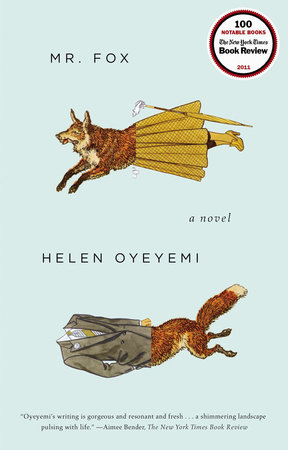
Rife with fairy tales and fairytale logic, the playful structure of this novel reminds me of riding in a car with the windows down; while it may appear that you are following one route, a hundred other stories, sounds, and smells are rushing in. In the central storyline—for there are many—Daphne Fox feels painfully distanced from her husband, a famous writer, and finds herself befriending his imaginary muse, Mary, to get closer to him. In a startling act of intimacy, Daphne gives Mary—who appears before her naked—her own favorite “lilac shirtwaist” from her honeymoon to wear.
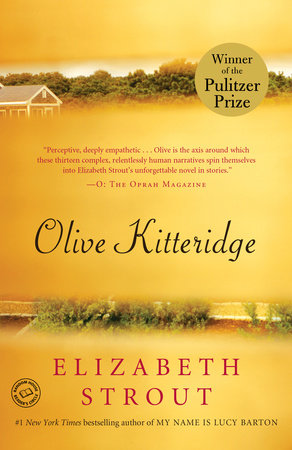
This entire novel in stories is about intimacy, beginning with Olive’s husband, Henry, whose heart breaks for a young widow, and who longs for people everywhere to be paired, and never alone. It is Olive, however, in her brusque and unruly way, who ties these otherwise unrelated stories together in a sweeping, literary act of intimacy. Her tears over an anorexic girl in “Starving,” help to open a man’s eyes to the dearth of intimacy and compassion in his marriage. And, in “A Different Road,” Olive finds herself feeling tenderness for a most unlikely candidate: a young man who is holding her at gunpoint in a public restroom.
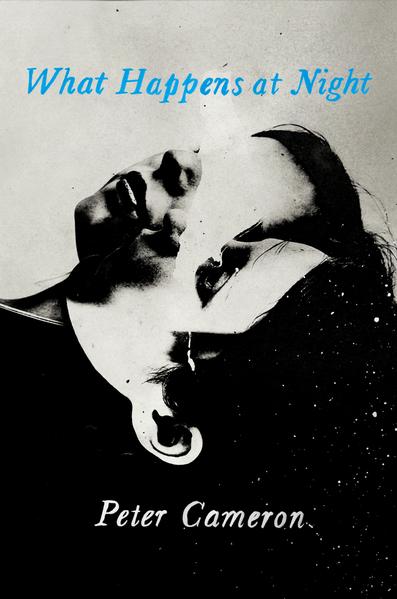
The husband and wife in this novel remain unnamed, which is perhaps a reflection of their state of emotional estrangement when they arrive at a grand, but somehow obsolete hotel somewhere in snowy northern Europe. Estranged does not mean loveless, however, and the story of their love for each other unfolds heartbreakingly, in the cold and unfamiliar rooms of the hotel. As the wife, who is dying from cancer, continues to reject intimacy, the husband cannot seem to help himself from forming strange—sometimes unsettling—connections with the hotel’s regulars.
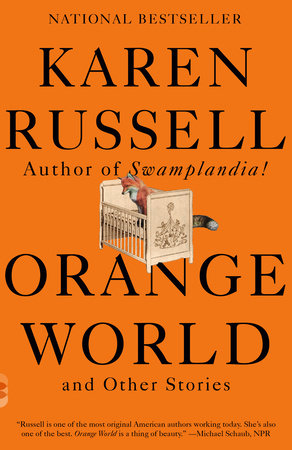
In Russell’s stories, where it seems anything is possible, I find myself reading on high alert, careful not to miss any crucial pieces of the worlds that are forming before my eyes. In “Bog Girl: A Romance,” a teenage boy experiences his first feelings of love when he unearths—or un-bogs—a 2000-year-old mummified girl. It seems that he has discovered a perfect, one-sided intimacy in the bog girl’s frozen, but serene smile—that is, until she re-animates. In “The Gondoliers,” a young girl linked from birth to her sisters by a gift for bat-like sonar, seeks solitude in a “dead spot” of polluted water. While this might appear counterproductive to the spirit of my list, I find the escape from intimacy, and the search for it, one and the same.
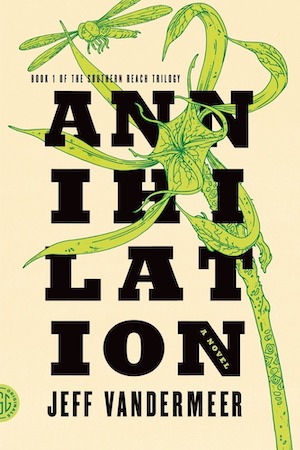
In this first book of Vandermeer’s Southern Reach Trilogy, the narrator, known only to us as “the biologist,” volunteers to go on an expedition to a dangerous and undisclosed wilderness called “Area X.” There, she discovers a lush and dangerous ecosystem complete with bizarre biological riddles, life-altering psychological suffering, and perhaps the one thing that surprises her the most: a glimpse into her late husband’s soul.
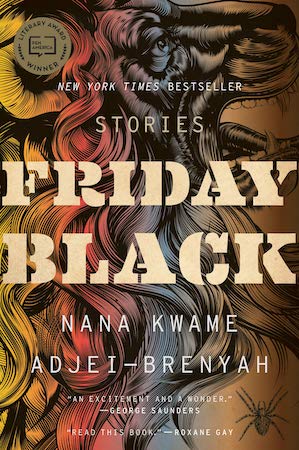
When intimacy exists in dystopia, it can appear alien, or uncanny, in contrast to its surroundings. In Adjei-Brenyah’s story “The Era,” a high schooler named Ben, begins to fall for a girl despite a life’s worth of programming against emotional decision-making and compassion. It is with a backward, convex, kind of thrill that we watch intimacy for the sake of intimacy become an act of rebellion. By creating a future that is whittled down to the bare, ugly essentials, Adjei-Brenyah makes us crave the complexity and disorder of the heart more than ever.
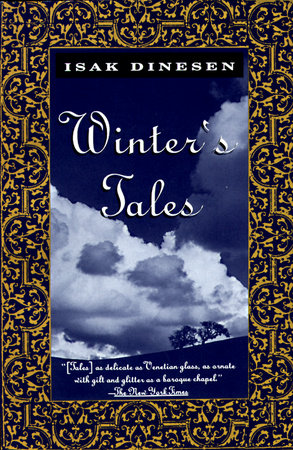
This collection is perhaps the most perplexing when it comes to the author’s intentions, in the way that it blends the archetypal and the deeply personal. Dinesen’s characters are dreamers, faced with moments where their dream worlds crest and break through to reality. Profound conversations about impossible realizations take place. Intimacy is touched upon and then lost. It is dizzying, enchanting, and I am compelled to include it in this list, because sometimes the strangeness of the mind, and the bleak terror of a heart’s desire, make the most exotic backdrop for a fairytale.
That night, as she waited in bed beside the boy, her husband lounged in a hotel room somewhere, reading a book or watching TV or playing video games, eating from a room-service tray laid out on the bed. Even if he was working on spreadsheets or filling out service reports on his laptop, the image of him there, by himself, in a quiet space, seemed luxurious and exotic. In her darkest moments, she imagined that her husband craved this time away from them, a wave of relief washing over him each Monday as he pulled out of the drive. Four whole uninterrupted nights of sleep! Blackout curtains!
A discrete, achievable task to accomplish that day! A paycheck to expect at the end of the week!
Did he ever stay away a day longer than needed? Delay his departure from St. Louis or Indianapolis with one more cup of coffee? Anger ballooned inside her as she imagined him dallying on the Internet in a café. He should leave the moment he was finished. He should get up early—as early as she did—and get his work done quickly so that he could rush home. That’s what she would do if she were away.
Her problem was that she thought too much—“toxic thinking” and so forth—so she tried to stop, but a physical sensation of exertion remained.
Was it her fault that her husband made more money? That it made more sense for her to quit her job than for him to quit his?
Was it her fault that he was always gone, rendering her a de facto single mom for the majority of the week?
Was it her fault that she found playing trains really, really boring? That she longed for even the smallest bit of mental stimulation, for a return to her piles of books, to her long-abandoned closet of half-formed projects, to one entire afternoon of solitude and silence?
Was it her fault that, though she longed for mental stimulation, she still found herself unable to concoct a single original thought or opinion? She did not actually care about anything anymore. Politics, art, philosophy, film: all boring. She craved gossip and reality TV.
Was it her fault that she hated herself for her preference for reality TV?
Was it her fault that she had bought into the popular societal myth that if a young woman merely secured a top-notch education she could then free herself from the historical constraints of motherhood, that if she simply had a career she could easily return to work after having a baby and sidestep the drudgery of previous generations, even though having a baby did not, in any way, represent a departure from work to which a woman might, theoretically, one day return. It actually, instead, marked an immersion in work, an unimaginable weight of work, a multiplication of work exponential in its scope, staggering, so staggering, both physically and psychically (especially psychically), that even the most mentally well person might be brought to her knees beneath such a load, a load that pitted ambition against biology, careerism against instinct, that bade the modern mother be less of an animal in order to be happy, because—come on, now—we’re evolved and civilized, and, really, what is your problem? Pull it together. This is embarrassing.
Actually, if you thought about it, it really wasn’t fair to call her a night bitch. Such a gendered slur didn’t account for the fact she had made a boy with her own body, nurtured his multiplying cells for months and months to her own detriment, to her own fatness, to the decline of her youthful sex appeal, which wasn’t supposed to matter. A real feminist wouldn’t care about such things as the shape of one’s body or being thin or appealing to heteronormative cis men, and actually she did not care about this, but she did care about being hot in her own eyes. It’s just that a person has ideas about herself, has a vision for herself, and her vision for herself had not been of a mother, but now that she was one, she felt strongly that she needed to be a hot one.
But there wasn’t really a commensurate word to degrade men, was there?
If she was Night bitch, was the boy, then, a rotten little cock when he looked her in the eye and then proceeded to dump an entire bin of freshly collected toys on the floor, his only explanation afterward that of macaroni? No.
And was her husband, in turn, a computer nutsack when he was leveling up his Pit Lord for long hours into the night, thus effectively curtailing the potential for a satisfying sex life, thanks to his absence in bed and also to the fact that he was playing video games? Was he a nutsack? Maybe.
Bitch just had a ring to it, that condemning, inescapable ring, a ring that fucker or asshole could never fully conjure for a man. Bitch was flat and sharp and final. She thought of a bored, small-town bureaucrat in a shabby little office with orange carpet and flickering fluorescent bulbs stamping official yet pointless documents with clicking, metal thuds. Bitch. Bitch. Bitch. Thank you. Have a nice day.
The house waited silent and clean, the paint smudges of that day a distant memory. The boy, beside her in bed—bathed not once but twice, for he needed a midday bath and then a night-night bath, to calm him, to try to soothe him into sleep any way she could—was also finally, gloriously asleep. She inched from bed, down the stairs, into the bathroom. She had bruised her tailbone in the fall earlier, or else the tag in her pants had been irritating her back. In indistinct yet nagging discomfort, she reached toward the base of her spine. Her finger found a swollen lump, and when she checked it in the mirror, she saw a raised mound, hot to the touch.
She pressed the spot at the base of her spine with two fingers and flinched at the pain, then twisted around again to examine it in the mirror and, when she couldn’t get a close enough look at it, retrieved a hand mirror, which provided little enlightenment as to the nature of the bump, then opted to take a picture of it with her phone, only to find a blurry red mass on the screen after repeated tries. She thought she felt a hair protruding from the bump and decided tweezing it would relieve her discomfort, and so picked at it blindly for a time, only exacerbating the pain and causing the thing to begin to seep.
Fuck it, she said to no one, and stomped to the closet in the guest room to retrieve a box of her old art tools. As she opened the lid, the pungent smell of the paints and putties and the noxious tang of old glues calmed her and immediately transported her to those long hours alone, fingers dirty and sore, every manner of clay and paint and glue splatter on her clothes. She inhaled deeply, intoxicated, before steeling herself against the tears she felt welling from a place of profound and desperate longing to return to her projects—any project—and the complete inability to do such a thing. She quickly sorted through a shallow tray to find a sharp X-Acto knife—what she had been looking for all along—then washed it at the kitchen sink and held it above a flame on the stove. In the bathroom, she traced the tip of it down the red lump and felt instant relief as it oozed open. She held a hot washcloth to the lump, pushing to drain the fluid, then dabbed it with a hand towel. When she looked again, it had deflated. A flurry of hair poked from the incision she had made. The only word she could think to describe it was tail.
“Man hordes [:] a blessing or a curse? Tonight we hold a debate.”
All over the United States, men (“always white men”) are hoarding together to perform unprompted, unpredictable tasks. Afterwards, they have no recollection of joining the horde; a perfect black hole where their actions lived.
A man horde in Columbus, Ohio, rescued a ten-year-old girl’s kitten from a very tall tree.
A man horde mowed twenty-six lawns in Drain, Illinois.
A man horde in Plano, Texas, kicked a German Shepherd to death.
According to the CDC, men are three times as likely to horde if they’ve horded before—and it’s into this dark, satirical context that Alex McElroy’s debut novel unfolds.
The Atmospherians follows the story of Sasha, a disgraced wellness influencer, and her childhood friend Dyson, who wants to start a cult to reform men. Here, the men (or Atmospherians) will become the equivalent of film extras: “people who provide the atmosphere and stand in the background. What better aspiration for men? To… let the action continue without them.” By joining the cult as its co-founder, Sasha finds an escape from a life that has closed in around her; but she is also finds herself on several acres of inhospitable land with thirteen men.
In turns funny and grim—but always verging on the terribly real—McElroy’s skillful debut takes readers deep into the strange zeitgeist of wellness, internet culture, and the many faces of masculinity that often seem to coalesce into one. As one of the questions in Dyson’s survey to the potential Atmospherians reads:
It’s so hard for men in this world.
☐ True.
☐ Very True.
In many ways, McElroy’s novel is perhaps the story of a world (our…world?) in which the choices before us can feel bizarrely skewed.
Richa Kaul Padte:As teenagers, Sasha invites Dyson into “a world of self-doubt and surveillance”—diet culture, body policing, toning, shaping, the list is endless. She reflects: “For him, this was a vacation. Once he shed the weight, he would return home to the safe shores of masculinity, abandoning me.” I know this is sort of a central question of your book, but just briefly: how safe are those shores?
Alex McElroy: This is such a great point—and it highlights one of the main conflicts of the book. In this passage, Sasha is speaking out of resentment and an awareness of Dyson’s male privilege. Yes, life will likely easier for Dyson because of the gendered inequalities built into a patriarchal society. However, when Sasha fails to see the ways that Dyson’s conditioning harms him and makes him vulnerable, she loses touch with her own humanity. The shores of masculinity might be safer than what Sasha experiences every day, but that doesn’t make them unimpeachably safe for the people who live there. And the book asks Sasha to reckon with this reality.
RKP: At the heart of The Atmospherians is not just the performance of identity, but a feeling that this performance is what gives characters a sense of self—for Sasha, this has mainly happened online; for Dyson, offline. But over time, the more stable their performances grow, the more their selves seem to fracture under the weight. Is our compulsion to be singular selves without contradictions largely down to the internet pushing us to stay “on-brand”, or is there also an offline drive to fashion ourselves into consistent entities?
AM: Consistency is a privileged position—like, imagine if the world is so built for you that you never need to adjust who you are? Which is to say, I don’t think that it’s the internet pushing us to stay on-brand. I think that the notion of remaining on-brand has been, for generations, a fairly problematic demand imposed on marginalized people—and weaponized against them when they do not remain consistent. It is normal to code switch, to be inconsistent, to contain many selves. Think Whitman and his multitudes. That said, the desire to be consistent and singular is normal insofar as its normal to wish you could avoid the realities of being human: we’re inconsistent, we contradict ourselves, we shape-shift as a means of protection.
RKP: There are files on each of the Atmospherians, but one stands out—an outlier named Peter who “Dyson described…as ‘already a very good man’. There were no redder flags.” I think many of us have arrived at this realization in different ways, but: what is UP with the so-called “nice guys”? What makes them the reddest flags of all?
Consistency is a privileged position—like, imagine if the world is so built for you that you never need to adjust who you are?
AM: Sasha has been burned by men who called themselves nice guys, and now she’s suspicious of the label. The movie Promising Young Woman—and apologies to my friends who hated it—does a good job of interrogating the nice guy brand, delving into what might lurk beneath that superficial label. To speak more generally, over the last couple years, I’ve learned that when you think you’re an expert in something you tend to set yourself up for a humbling. It’s dangerous to assume you don’t have anything more to learn. That can be applied to self-identified “nice guys.” They view their behavior as the behavior of a nice guy, and any critique of their behavior as toxic can seem, to them, like an attack.
RKP:Sasha is being aggressively hounded, both online and off, and while she wants her earlier, uncorrupted fame back, she also recognizes “the value in being forgotten.” There are several legal cases pertaining to the “Right To Be Forgotten” currently underway, which largely call on Google to scrub certain images, videos or information from its search results. The trouble, though, is that the people fighting these cases range from victims of revenge porn to politicians accused of misdeeds.
As the line between curtailing the endless archive of digital memory and supporting the crucial call for collective memory (“never forget”) becomes increasingly muddled, I’m curious to know: where do you stand?
AM: This is such a complicated issue, and I don’t think it’s as simple as whether to leave these details online or to scrub them. They need to be taken on a case by case basis. In the instance of revenge porn, it is absolutely necessary that the images be scrubbed from the internet. That is a nonconsensual violation. In my opinion, what’s missing, right now, is not a standard policy but a trustworthy organization capable of determining whether something should be scrubbed or maintained. I don’t trust Google to serve as that organization—which seems where we’re at now—nor do I have particular ideas about who should take on this role. Is it the job of the state? It’s hard to trust the state. Corporations? Yeah, right—but I’m sure they’ll try. Perhaps this is kind of a non-stand, but I lean on the side of largely maintaining collective memory and [also] finding a way to create a commission capable of determining when it is best to forget.
RKP:I don’t want to give too much away, but at one stage in the book I felt a shift in my emotional landscape towards the men that mirrored Sasha’s—what she describes as “a little slug of sympathy… marking its trail.” And like Sasha, “I could have allowed myself this empathy, this softness, but it scared me.” As she reflects: “It is always easier—safer—to look away.” What made you decide to look?
AM: I’ve had a tendency, in my life, to eagerly sympathize with people who’ve hurt me and to think myself into their perspectives. I’ve had a father and a mother and stepfathers and stepmothers who have hurt me deeply, yet I still love them. This isn’t always a great habit to have in life—loving people who hurt you—but it can be helpful when writing fiction.
Loving people who hurt you isn’t always a great habit to have in life, but it can be helpful when writing fiction.
Throughout the process, I thought a lot about Kaitlyn Greenidge’s 2016 essay “Who Gets to Write What?” in The New York Times about creating a racist white character. She writes, “I was struck by an awful realization. I had to love this monster into existence.” And that seemed true of my book. I don’t like how these men act, but in order to write about them, I needed to love them at some level. And that’s what pushed me to look, because I think that’s what fiction requires—so long as it doesn’t completely center the “monster.”
RKP: Explaining his idea for The Atmosphere, Dyson “hopp[ed] from truisms to clichés to conclusions as if they were rocks in a stream.” As Sasha later says: “he aimed for the cadence of wisdom, wasted no time striving for content…Cadence dug a trench in the mind.” This emphasis on cadence is not just a cult-ish feature though, and belongs to start-ups and influencers alike—a “language of strategic confessions and origin stories” that I suspect is often the language I end up using online too. Why do things feel less true when they are stripped of cadence, even when we intellectually understand that cadence is often what obfuscates?
AM: I think we’re just accustomed to how certain arguments work. There’s a reason why we have English composition classes to teach basic structures of argument and paragraph development—we best internalize meaning when it arrives in a form that prioritizes information how we’re accustomed to reading. The same is true of the cadence of online speech. When someone begins a tweet, Freaking out that or I can’t believe or So excited to announce or No one is talking about or I’m tired of talking about or—you get it—we intuit how to absorb the information that follows. So, things that don’t fit those cadences sound less true, because the structure of the information is unfamiliar to us and is thus harder to absorb. It’s like if you went to see a stand-up show and the comedian speed-read their entire set off a notepad then rushed off the stage. Same words, but likely very unfunny.
Many people of African and Asian heritage living in Britain today are descendants of immigrants from Britain’s former colonies, who arrived after the 1948 Immigration Act allowed them in to help rebuild the “Mother Country” after the Second World War. The 1967 Sexual Offences Act partially decriminalized homosexuality in the UK, where queer men, in particular, were persecuted under amendments that had existed for almost a century. The history of multiracial Britain in the latter half of the 20th century, therefore, has coincided with a trend towards equal rights for LGBTQIA+ people, culminating in the passing of a law allowing them to marry.
Literary fiction has observed all these changes. In 2004—a year after Tony Blair’s Labour government repealed Clause 28, which had been introduced in 1988 to prohibit the discussion of homosexuality in schools—Alan Hollinghurst won the Man Booker Prize for The Line of Beauty, a depiction of multiracial queer life in Margaret Thatcher’s London as the AIDS crisis erupted (Hollinghurst’s gay-as-hell debut, The Swimming Pool Library, came out in ’88 and was a bestselling middle-finger-up to Clause 28). Writers like Jeanette Winterson, Philip Hensher, Sarah Waters and Patrick Gale have all explored queer life and love against the backdrop of societal change, happy not to have to live and write their truth in secret as E. M. Forster had to. But, as everywhere, queer, trans, and intersex writers of color have been underrepresented in the British narrative, and our literary timeline tells a story of its own.
I was recently introduced to the Jamaican author Andrew Salkey’s 1960 novel Escape to an Autumn Pavement, which must be one of the first examples of Black British queer fiction. Published when gay sex was still illegal, it takes an unflinching look at queer Black life while being reticent about actual bodily contact. Reading it, I saw many similarities between the mindset of its narrator, Johnnie, and that of Jesse, the protagonist of my novel, Rainbow Milk. Both are migrants, both feel disconnected from “home”—however that is defined—both are queer and questioning in a world that wants them to be straight and Christian, both are Black flaneurs pounding the streets of London, looking for a purpose and for something to do with their eloquence. Writing in 2018-19, however, I could write much more clearly about sex than Salkey could. The problem for queer people over the years has often been a lack of honest stories to peg theirs to, to show that they’re not alone and that others came before who faced the same issues and found some answers. Hopefully, the next generation will have these books at hand.
Surge is a poetry cycle that reimagines the night of January 18, 1981, when a group of young Black people from South London gathered for a house party, in which 13 died in a fire, and another a year later from suicide. It has never been established whether the fire was caused by an accident or arson, and given the extreme racial tensions in the UK at the time, the question has hung in the air for 40 years. Two months after what came to be known as the New Cross Massacre, the Black People’s Day of Action took place as a protest against institutional racism and the lack of care for our health, safety and justice, foreshadowing the events of 2020.
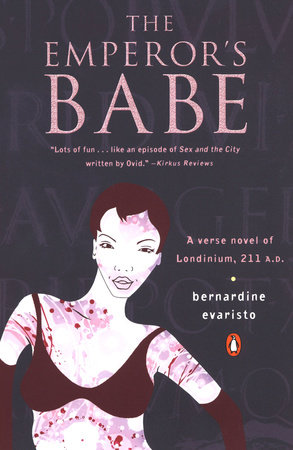
Fans of Evaristo’s Booker Prize-winning Girl, Woman, Other should check out her earlier work. The Emperor’s Babe, her second novel, began to take shape upon the discovery, in East Anglia, of the 10,000-year-old remains of an African girl of about ten. Roman Britannia was once ruled by Septimius Severus, who was half-Libyan. The Emperor’s Babe is a hilarious verse-novel in which Zuleika, a young Sudanese immigrant, is married off to a portly, perpetually absent Roman, but begins an affair with the emperor himself. Written in hendecasyllabic couplets combining Latinate diction with South London slang, Babe reimagines Londinium as the playground of slave girls and drag queens, while challenging the myth of Britain’s Black presence as being a recent thing.
Housegirl follows two teenage girls—one, a sensible, pious type from Ghana who has been working as a housemaid; the other a queer, independent spirit, born and raised in South London. What could they possibly have in common? Will they get on? What can they learn from one another? Is it better to bury the truth or live by it? A wildly funny, moving, and immersive take on queer femininity and heritage, and a nostalgic trip back to early-2000s Brixton.
While working at a London gallery, Mathilda—a working-class, queer Nigerian woman—comes across a portrait of the near-forgotten (fictional) Black Scottish Modernist poet Hermia Druitt, and is transfixed. She needs to know everything about this magical figure, and follows her footsteps to the obscure artists’ colony, somewhere in mainland Europe, that Druitt once stayed at. What follows is a clash of cultures: minimalism v maximalism; pragmatism vs decadence; Eurocentrism vs Black history, in one of the most luxuriously written and sharply witty novels I’ve read in years.
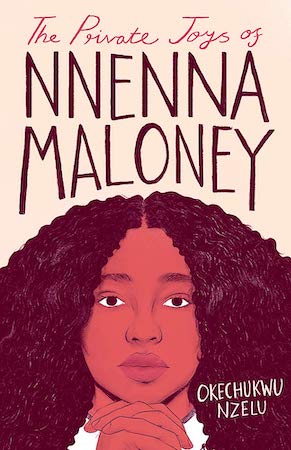
Nnenna Maloney is a 15-year-old biracial girl whose white English mother, Joanie, will not reveal who her father is. Regardless, she keeps her head down and does well at school; too well, when it emerges Nnenna might have done enough to earn a scholarship to the Sorbonne. Interspersed in the story is Joanie, 15 years earlier, as a young woman trying to find herself as a student at the University of Cambridge. We all wonder what our parents’ lives must’ve been like before we were born, and this is a perfect summer read full of the embarrassments of teenage longing.
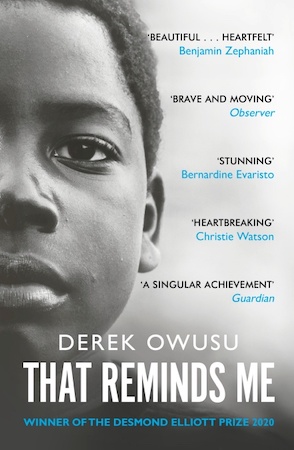
That Reminds Me feels more like a collection of shattered fragments than a conventional novel, but that is its beauty and correct form. In tightly written prose poems, Owusu tells the story of K, a Ghanaian boy who was sent to live in rural England with a white English family as a baby. His birth mother came to claim him when he was eleven and already used to a way of life and identity that is immediately blown apart in the city. K has to build another version of himself from the ground up, one that is an acceptable form of Black masculinity for his new environment. But who really is K, and will that question consume him?
Another great entry into the twins/döppelganger genre to add to those by Toni Morrison, Helen Oyeyemi, Brit Bennett and others. Oto and Wuraola are born to wealthy parents in an affluent part of the Nigerian city of Ibadan. Wuraola is a beautiful girl; and so is Oto, but she was born intersex and is being forced to live as a boy. Hers is a battle against tradition, ancestry and gods, but Oto never loses her wicked sense of humour, and soon she will be old enough to make her own decisions.
Escape to an Autumn Pavement, is, I believe, an unfairly forgotten novel that should be a classic. Johnnie Sobert is a well-educated Jamaican man who has moved to England for… well, he’s not quite sure what. He coasts along comfortably enough living in a Hampstead rooming house and working at a West Indian club in Soho. Attracted to both women and men who make him choose between their binary prisons, and a magnet for well-meaning racists, Johnnie is a flaneur looking for a vessel for his eloquence, desiring of a history and the space to be himself. Sardonically witty and remarkably fresh, fans of James Baldwin’s later novels will love this.
Our narrator, a successful auteur known only as “maestro”, is in Italy promoting his latest film, hailed as a masterpiece, at a prestigious international film festival. While looking for the perfect espresso, he gets chatting to a woman who seems to reveal a lot of her own story very quickly, and takes him deep into the inner-city belt to show him a mural painted decades before by her late lover, who committed suicide. Upon deciding that she must be the subject of his next film, their perfect relationship begins to splinter. Diary of a Film is an exquisitely written homage to classic queer cinema and European travel, and a serious dialogue about who gets to tell whose stories.
Growing up I was touched inappropriately and repeatedly by someone I loved and trusted. The first few times it happened, I think I thought of it as part of a game and I played along, but as I got older, visits to this person’s home filled me with dread. The gradual realization that I had been participating in something I thought was one thing and turned out to be another altogether was sickening—literally. My stomach burned at the thought of seeing this person I both loved and feared. I was ten before the reality of what had transpired—what would continue to transpire—actually dawned on me, and I was also crippled by the fact that I had no name for it or the feelings it gave rise to.
Worst still, I didn’t have the words to stop it.
But where does a child go in search of the ones that tell of such a thing? To whom do we deliver these words in order to seek protection when the abuser themselves is someone who claims to love us?
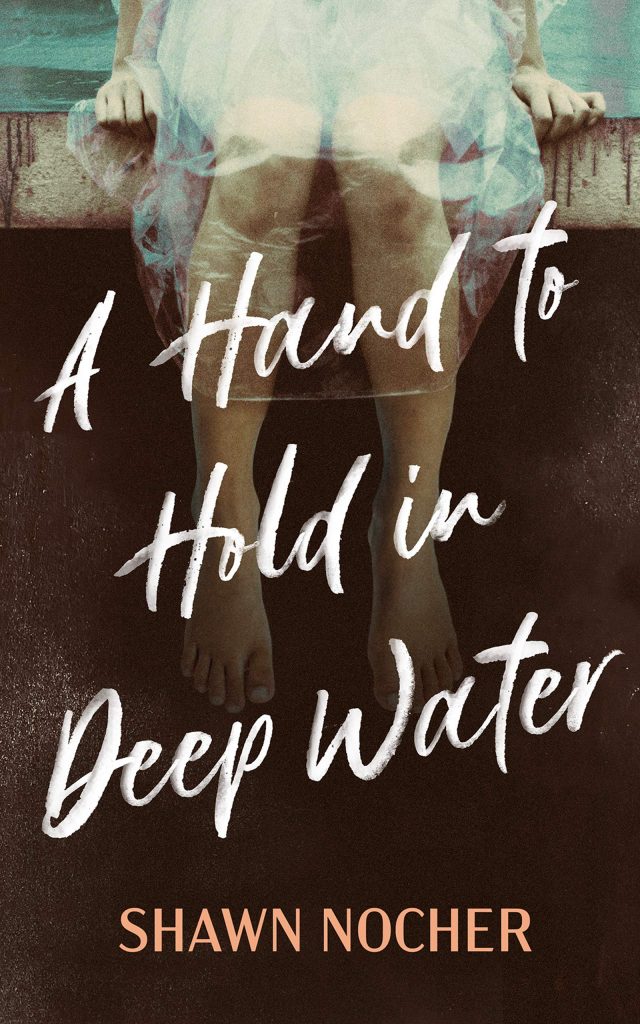
Almost twodecades later, I began to write a novel with incest at its core. What happened to me was nothing at all like what my character endures. May DuBerry Cherymill, one of the main characters in my debut novel, A Hand to Hold in Deep Water, is raped by her father and bears his child. Her experience is far more brutal than mineand for a time I even questioned whether I had the right, in the age of own voices, to tell her fictional story. I wondered if my own experience, if measured by degree, made me less qualified to know my character’s experience. How do we quantify victimization? Stranger rape versus date rape, adult victim versus child victim, violence versus coercion? All these things matter in a court of law, but in the court of our own mind it’s a very different process. We judge ourselves harshly.
What happened to me over the length of my childhood was complicated, but the way it bled into the rest of my life was surprisingly simple. I suffered from depression and a fear of being touched by even my closest family members, a sense that physical gestures that most would interpret as comforting are actually disingenuous. Friends will tell you I’m not a hugger. As a young adult, taking leave of my godmother, a woman I adored, she reached to hug me goodbye and stopped herself. Oh, I’m so sorry. I know you don’t like goodbyes. Something crinkled in my heart at that moment. I felt discovered, as if my secret had slipped out in some kind of code that she was at that very moment deciphering. Other than my husband and children, I am not one to relax into a hug between friends or the family I grew up in. There is always that moment of discomfort that leaps into my throat just a split second faster than the alleged warmth of a hug. The length of a hug is measured by how long I must endure before I can wiggle my way out of it—released, back to breathing my own air.
What happened to me over the length of my childhood was complicated, but the way it bled into the rest of my life was surprisingly simple.
Surprisingly, when I met my husband, I couldn’t keep my hands off of him. We still, to this day, hug and touch one another constantly. He is the human I am good with. He is the one I trust implicitly and, other than my children, he is the only person who can wrap me in his arms without that spark of dread igniting.
The depression that trailed me through my childhood, teens, and adulthood, wasn’t something I attached to my victimization. I didn’t see a clear and direct line between the two. I only knew that I couldn’t catch a lick of true happiness on most days. The kindness of others made me squirm and felt like a debt. What do I owe in exchange? What will you take from me? My husband may have been the exception, but any flickering sign that he didn’t have my best interests at heart could send me into a strange and feral rage, convinced he had tricked me into loving him.
At twenty-seven, in a writing class led by Richard Bausch, I wrote a short story that would eventually become the first chapter in my debut novel. It wasn’t a masterpiece, but it clung to me over the next twenty years, and I obsessively imagined a backstory around the characters that would explain how they found themselves in that moment. In the original version I wrote back in that class, Willy, nearly seventy years old and steeped in his own disappointments, is awaiting the arrival of his thirty-five-year-old stepdaughter. His much younger wife had “run off” thirty years earlier, leaving him toraise Lacey, only five at the time, alone. The missing wife, May DuBerry Cherymill, was at the crux of the story. And I kept asking myself, who was May, and what would compel a woman to abandon her child and a man she loved?
I kept asking myself, who was May, and what would compel a woman to abandon her child and a man she loved?
Precisely how I landed on May’s backstory—that she was a victim of paternal rape, from which she became pregnant with Lacey—is a mystery to me, but I did know that Willy and Lacey, who appeared in that first short story, were loved by May, and that she left them would require a damn good explanation. I was a mother myself when I conceived of May and so it was natural to examine my own self for a link to who she was and what her experience had been. At the same time, I needed to be sure that, from a plotting standpoint, her backstory justified her husband and child choosing not to look for her, believing she disappeared of her own volition.
When I dug into my gut and dredged up a plausible explanation for May’s behavior, I found myself writing a story with an incest victim in the bullseye, paying particular attention to the way a victim’s mind bends and spirals in the years following trauma. May held on to her secret in the same way I held on to mine, never really making a conscious connection between her own abuse and the sense that she was somehow unworthy of the love around her. I didn’t plan to make May suffer with depression. But it dripped onto the pages and I couldn’t wipe it away. I didn’t plan for May to be backed into a place in her head that she couldn’t escape from. She went there on her own and I chose instead to bear witness. I did my due diligence in researching this novel, but never once had to research the long-term effects of incest. I simply took my own smaller—but by no means small—experience and I used it to infect May, watched the viral bloom of it.
This novel went in and out of a drawer over two decades. But always when I pulled it out, May was waiting for me.
Sometimes what landed on the pages surprised me. Niggling thoughts that had woven in and out of my consciousness over the years suddenly became clear. Part of the novel includes May’s diary and it is through this diary that we learn what May has endured. At one point she writes, “I don’t know how to tell of this, and so I will tell it slow, just as it happened, and in the end of the telling I will read it back to myself and find the very place where I went wrong.” She then proceeds to relay the most recent attack upon her by her father. At the end of the passage, she concludes, “I have read this over and tried to imagine it different. What I could have done different is nothing. I am nobody special.” There it was, the truth of what had been clawing at me most of my life, I am nobody special. I had been stripped of the chance to believe I had a place and a purpose in this world. That sense of worthlessness has its collateral damage as well. For May, for me, it meant that we were never able to fathom the ways in which we were loved. We can love, but our capacity to be loved is compromised. The inability to know our worth makes it difficult to maintenance the most important connections in our lives—spouse, children, extended family, and dear friends.
May is drawn to water and fantasizes about drowning. My impulses were more violent when it came to self-harm. I fantasized about terrible accidents—usually involving a rogue vehicle, a stray bullet, a sharp knife—that would take me away. Unlike May, I was a good strong swimmer until I was ten and developed an inexplicable fear of water, of what lay under the surface. I am not exaggerating when I say that for many years I could not even take a bath. I went to college on the water and live in a town that boats on weekends. I waterskied as a child, swam in a lake every summer, and grew up with a swimming pool in my backyard, but by the time the abuse stopped in my early adolescence, those things were lost to me. My fear of water is real. I hyperventilate in water. The pressure of it enveloping me, the terror of something below the surface touching me and not knowing what that something is. Perhaps that is why I couldn’t help but imagine May drawn to water but incapable of swimming. I took the thing that had been stolen from me and turned it into May’s Kryptonite.
This novel went in and out of a drawer over two decades. But always when I pulled it out, May was waiting for me, and I would get an uncanny sense of having abandoned her. It was as if she was slipping off the pages and admonishing me to get on with it—get this thing written. I melded my own shame with her storyline and it unfolded organically, though the inevitability of where it would take her frightened me. She was the character I had to let chart her own course. I ached for her to heal, but I refrained from intervening in what was happening on the pages.
Imagine my surprise when I wrote a character who is utterly destroyed by her victimization—who doesn’t rise out of the ashes—and found myself rising instead.
We call these women survivors, but the euphemism does a disservice to those who do not survive, to those who will never rise again beyond the shame or dig themselves out of the sadness, those who will never again see their own value. The word survivor is meant to empower us. But it becomes instead a challenge, one most of us cannot rise to, crippled as we are by the way our mind has turned on us. And so, once again, we fail.
What we do is endure. We accept that we are nothing special.
My years of sadness were bundled with shame and a sense that if someone knew me—really knew my deepest self and secrets—they would know I was unworthy. But I didn’t consciously attach it to what had happened to me as a young girl. That is to say that I couldn’tplot the way from abuse to my mental state. Only that the feeling in the pit of my stomach when my depression crested matched perfectly to the feeling I recalled hitting me for the first time when I was ten and on the way to see the person I loved and feared. And then, in the last year of writing the first draft of this novel, a strange thing began to happen. As May’s depression deepened, mine began to lift. A kind of transference was taking place. The clarity around cause and effect was on the pages.
Writer Roxanne Gay has paid a lot of attention to the healing power of writing. And I have, for the most part, scoffed at this idea. I misunderstood what she meant when she said “I wrote myself back together again. I wrote myself towards a stronger version of myself.” I assumed I needed to write a heroine in order to claim my own healing. In other words, I needed to use the example of a fictional character who overcomes trauma in order to inspire mere mortals like myself to do the same. So imagine my surprise when I wrote a character who is utterly destroyed by her victimization—who doesn’t rise out of the ashes—and found myself rising instead. I can’t explain it, I don’t understand it. In some hyperbolic way—in writing a horrific fictional experience in which the blame cannot be pinned on the victim—I wrote my own grief and in doing so, I gave it away. May Duberry Cherrymill is now folded neatly into the pages of a novel, and, lucky me, I have stepped out of it, nearly whole. I am walking away.
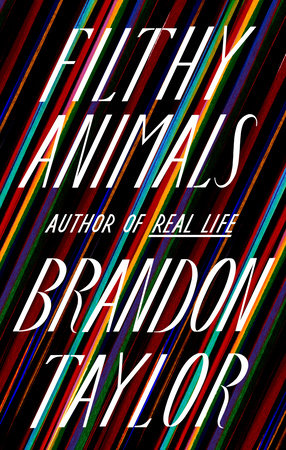
Anyone on Dionne Warwick’s internet in the year of our Lord 2021 is familiar with the ubiquity of infographic jargon like, “No thoughts, just vibes.” That’s exactly how I feel when I read this author’s work: “No thoughts, just Brandon Taylor.” Except the only thing is my head is not empty when I read this Booker Prize finalist’s words—quite the opposite. Every sense is accounted for. Every word is deliberate. It is a feast. Few can capture the ennui of the ordinary and overlooked and turn it into a prismatic oeuvre like Taylor. And while his critically lauded New York Times Notable Book, Real Life, marked his debut last year, his collection of short stories, Filthy Animals, is, as he puts it, a truer introduction.
It was never a question of if, but when Taylor would release a collection of short stories. At long last, it’s here. Teeming with the same tenderness and sophistication that’s deemed Taylor a writer-to-watch last year, Filthy Animalsthreads longing, desire, and violence among a group of young adults set against the backdrop of the Midwest. In one story, a potluck serves as the impetus to the main character’s panic attack in the bathroom, begetting a turbulent love triangle with two dancers in an open relationship. In another, the title story, a young man, weeks away from being sent to an “enrichment program” by his parents, contends with feelings for his best friend. “What Made Them Made You” offers an intimate portrayal of a family fractured by a young woman’s battle with cancer.
It is vivacious as much as it is delicate, enigmatic as it is exposed. And it is sure to be one of many opuses born from the mind of a writer whose craft continues to carve its indelible mark on the world.
Editor’s note: Brandon Taylor is the editor-at-large at Electric Literature’s Recommended Reading.
Greg Mania:In our last interview, we talked about your love for the short story, and you shared that your publisher bought a collection of your own along with Real Life. How does it feel now that your debut collection is about to be released into the world?
Brandon Taylor: I feel nervous but also really excited to share this book with readers. In many ways, this book feels like a truer introduction than the novel, and so I’m just nervous and excited to be sharing these stories with the world.
GM: How so?
BT: Mostly because the short story is where I feel that I have something to say. I’ve given a lot of thought to what the story is and what it can be. I’ve read very deeply into the tradition of the American short story, and I’ve had a lot of arguments and discussions and rich conversations about the short story in a way that I simply haven’t had with the novel.
Why should I write about people doing amazing things when for the most part, life’s cruelest moments are so proximal to its most boring.
My education in the story feels more complete than in the novel, and so when I say it feels like a truer introduction, I just mean that I feel a degree of freedom and openness and fluency in the short story that I simply do not have in the novel form. I believe in my craft and my artistry in the story in a way that I don’t in the novel, and also, these stories in particular feel like a deeper, truer reflection of my life than the novel. I mean, much was made of the autobiographical content of Real Life, but it also felt like there was very little of my actual feelings in that book. It was an autobiographical novel, but it wasn’t a personal novel, I don’t think. Whereas, the stories in Filthy Animals are so much closer to the bone for me. They’re much more personal. So that’s what I mean by truer introduction. There’s more of myself and my art and my thoughts on display in this book than in my first novel.
GM:What was the short story—or writer—that made you fall in love with the genre?
BT: The first short story I remember loving most was Annie Proulx’s legendary story “Brokeback Mountain.” I bought it as an original standalone CD and I listened to it for basically a year. That story and its language just really got inside of me. As for the short story writer who I revere the most and who I turn to at almost every corner, I’d say it’s the Canadian writer Mavis Gallant.
GM: What impact does it (short stories) have on you that other genres don’t?
BT: I think that the short story is just such a capacious form, and it’s the form of narrative prose literature that has the closest relation to revelation and epiphany. I think a short story is so good at drawing the disparate elements of a life, of a moment, into relation and working via that juxtaposition to create networks of meaning. I think sometimes the novel can feel a bit dubious or it can become a victim of its own structures and inertia whereas a story is just alive at every point. And my own feeling is simply that short stories feel truer than novels. Not in the case of literal fact or things that can be proven. But in terms of human feeling, the story feels truer, closer to the bone than the novel. I think novels as a form can be very insincere in a way that can be difficult to suss out. But in a story, you know the moment something becomes phony.
GM:You mentioned, on Twitter, when the title story “Filthy Animals” went up on Electric Literature, that this story started out as a joke, and that it’s taught you a lot about the kind of fiction you want to write. What did you learn from writing this story?
BT: This story was where I learned not to be so protective of my characters. It forced me to face up to the fact that fiction could have a moral vision and that the moral vision was this complicated texture that allows a reader to make sense of the characters’ actions and thoughts. I learned that you can’t write a good story without attending—in some way—to the moral universe of a story. That it has to feel internally coherent in terms of the choices you make. Letting characters do harm to themselves or others, being honest about the kinds of things people do and say and have done to them. Being rigorous in terms of tracing out consequences for things. Not just muting explosions or cutting away during the difficult parts, but really hanging in there making sure that you’re writing honestly, deeply into the human situations you’ve created for your characters. I learned a lot about sustained, moral imagination from this story, and how one can write difficult, painful things but not do so in a manipulative or exploitative way.
GM: Since you’re part of the Electric Literature family, I have to ask you this: how has being an editor at Recommended Reading shaped your short story collection and writing in general?
BT: When I first became an editor at Electric Literature, I had very little experience. I had never even edited a story before, if we’re being honest. But it was immediately an education. First and foremost, when you edit a literary magazine, you learn so much about what the other writers out there are doing. You get to ask questions about what is working, what is less successful, and why. You really get to kick the tires on stories. And then you bring them to an editorial call, and subject the story to intense, readerly scrutiny. It’s like you develop X-ray vision. One of my teachers at Iowa, Charlie D’Ambrosio, says that you learn the most about your own writing when you are discussing someone else’s writing. And maybe that’s true, maybe it’s not. But I learned so much from being an editor. I learned a lot about the standards to which I can hold my writing and the kinds of things one needs to look out for in writing stories. It was just a really powerful education. I got more from that than my MFA, for sure.
GM:What other disciplines inform your writing and how?
BT: I don’t know about disciplines. But I learned to think and write critically in my Ph.D. program in biochem. And I learned how to do research and how to synthesize information and put together arguments, how to structure ideas so that there is flow and coherence and so that a larger idea emerges across the span of a text. So that’s one thing, for sure.
Maybe the thing that most influences my writing is simply growing up on a farm. It taught me not to be precious about work.
Another is drama. There was this moment in undergrad when I took a theater course, and we studied plays and talked about Stanislavski and Brecht and Ionesco and Chekhov, and etc. And there was just something so…foundational in that education. I think I started to understand drama and narrative, and how to construct scenes and how to access mystery. So I think a lot about that.
And, maybe the thing that most influences my writing is simply growing up on a farm. It taught me not to be precious about work. It taught me how to work hard and diligently and without complaining. And it informs a lot of my work in that I don’t think I tend toward the sentimental or the coy or the precious or anything like that because I grew up doing farm chores and watching my mom go to work in a factory and later cleaning hotels. And I just don’t have a single sentimental bone in my body because of it, and I think it likely informs my worldview. I’m not a romantic, and I think if I hadn’t grown up on a farm in a rural working poor family and if I hadn’t seen that kind of life up close, I think I’d be pretty pretentious and useless as a writer.
GM: There are obviously themes—intimacy, desire, pain— binding this collection. Why is it important for you to consider a story’s place in the larger picture?
BT: I touched on this earlier, but I don’t write stories just for the sake of writing stories. I don’t have a pile of uncollected stories lying around needing a reason to exist. I just don’t work that way. And so, I don’t sit down to write a story until I have a sense of where it will fit within a manuscript. And that means I spend a lot of time not writing until the overarching, operating logic of the thing clicks into place, and then I begin to write stories one after another until the book feels filled. So the interconnectedness—be it narrative, thematic, character, etc.—is very much the driving force of my stories. I tend to linger in the worlds of the stories and take my cue for the next story from some unresolved note in the one I’m wrapping up. The stories lead me to where I need to go. It’s associative, but it all begins with that first trigger shot, the glimpse of the larger associative constellation and network that’s hidden behind the shape of that first story.
GM: The Midwest remains central, almost a character in and of itself, in this book. Has your intention for retaining its prominence remained the same since Real Life?
BT: It’s where I learned how to write about people, and it’s where I was a real adult, mature, observational, intelligent for the first time. So I am familiar with its rhythms and customs, and the like. So I write about it because I know it. Because it’s at hand. I used to try to write about New York, but I’ve never lived there. I don’t know what the light is like there. Not really. So to write about any other place would feel kind of flat and false and dishonest. My relationship to the Midwest is basically unchanged these last several years.
My next two books are also set in the Midwest, though, it’s more granular in those books. Closer. There is a growing confidence in the texts to name specific places, specific things, and that’s probably the biggest way my relationship to writing about the Midwest has changed. From a vague, unnamed generality in Real Life to an almost full-scale recreation of Madison in my novel Group Show.
GM:Your ability to bring out the beauty in the ordinary is one of my favorite things about your work. How did you develop that keen sense of observation?
BT: I’m drawn to the mundane because that is what most of life is. I’m not particularly interested in glory or the exceptional. I think we have enough bards of exceptional lives and exceptional circumstances. I had a really hard life. And I watched horrifying and banal things strike myself and others almost daily. And it just seems like, why should I write about people who are running into burning buildings and doing amazing things when for the most part, life’s cruelest moments are so proximal to its most boring.
I’ve spent most of my life just watching things happen and paying attention to stuff that other people overlook, and I guess I’m sensitive to the things people overlook because I come from a long line of the terminally overlooked. Factory workers and hotel maids and people on disability and drunks and the working rural poor where no one has phones and the electricity might get turned off tomorrow, who knows. I didn’t have a working bathtub until I was like nine or something. So, to me, the ordinary is always charged with something. There’s always something to say about life’s ordinary cruelties. So I try not to shy away from that in my work.
GM:What are some things you want to explore in your next collection? Will there be a next collection?
BT: I’ve finished two other collections of stories, Other Years and something I’m tentatively calling Race and Class, and I think of them as being uniquely Black responses to my first four books. The stories are, I think, more philosophical in a Ben Lerner-y/Rachel Cusk-y way. So, yes, maybe one day, those two collections will find their way into the world. We’ll see.
We were supposed to be unarmed security guards, just a couple fellas watching over things, but Ernie carried a gun anyway. He showed it to me my first night working at the museum. We were about to make our rounds when he said, “Hey, Shelton. I wanna show you something.” He hoisted his foot on top of the front desk and drew the gun from a holster strapped to his ankle. He presented it to me on his palm, like it was a mouse he kept in his pocket. The scratched gray revolver was almost as small, the kind corner boys in DC would’ve called a “better than nothin’.”
“My brother, Ralph,” Ernie said, “he’s a bail bondsman, by the way. His wife, my sister-in-law, she’s Black. Myra’s her name. Yep.” He rocked forward and back on his heels and kept looking at me.
I nodded and said, “Good to know.” Then I looked away, hoping he didn’t think all us Black folks knew each other.
Ernie was likable enough for a white guy. I mean, I guess I liked him at the time. We had things in common. He was divorced. Sylvie had left me. Like two stray dogs, we could smell how lost and alone the other was.
Five minutes after meeting me, he said he was a retired cop, which made me a little nervous. But he talked so much about “collaring perps” and “walking a beat” that it sounded more like TV lingo than real life. I suspected he hadn’t “served on the force” for very long, if at all. The only thing I knew for sure was he was forty-three, just a big white dude who was constantly red-faced and sweating. The sour smell of alcohol seeped from his pores. The damp, curled ends of his hair were always glued to his shiny forehead.
“Here, Shel. Hold it.” He gestured at the gun. “See how it feels.”
My being from DC had put ideas in his head. Maybe I harbored a dark past that had gotten by the background check. But I didn’t, nothing that serious anyway. The worst things I’d ever done were shoplift beer or scrawl graffiti as a young’un.
Like two stray dogs, we could smell how lost and alone the other was.
With Ernie watching me, I took the gun and pointed it. I felt I should comment on it, as if I knew the first thing about them. I moved it up and down and said, “Wow, got a good balance to it,” and Ernie beamed like a new father. He was still watching me, waiting for me to do something, so I spun the gun around my trigger finger and handed it back to him like a gunfighter. I didn’t even fumble. A new respect sparkled in Ernie’s yellow eyes. I’d bought a gun recently and still wasn’t sure why. It seemed like a good thing to have, even though I could never hold it for long. A hot second or two, and my hand turned clammy. I’d have to set the gun back in the lockbox in my closet. As we started our rounds, Ernie walked beside me, watching a wildlife documentary on the cracked screen of his phone. There wasn’t much work to do. There never is, guarding a wax museum. We simply sprayed the mannequins with our flashlights and made sure nothing was moving that wasn’t supposed to be. It was the weirdest and easiest job I’d ever had, during the weirdest and hardest time in my life. After the first day, I wasn’t sure how long I’d last. I wanted to quit after the first hour.
The museum was called the Waxsonian, and it was owned and operated by an older Vietnamese guy who’d reinvented himself when he came to America. He even changed his name to, of all things, Richard Doberman. According to Ernie, he’d been taken in by a white family when he first came to the US and eventually took their last name, even married one of their daughters. “Can you believe that? Dick fucking Doberman. Almost sounds like a porn star, don’t it?” Whenever Ernie found something funny, he wheezed out a few chuckles and then exploded in a convulsive fit of coughing. “But you gotta respect the man’s hustle. Am I right?”
I said he was right.
Apparently, Doberman had made major bucks in some business or other, enough to make converting an old bank building into the Waxsonian seem like a good idea. Ernie and I could never tell exactly how successful the place was. We didn’t think it was important enough to have a security guard, let alone two. All we knew was it somehow stayed open, housing over three hundred mannequins, most of them pretty close to real. There was Obama and all the other famous presidents, celebrities like Babe Ruth, Marilyn Monroe, and Muhammad Ali. When the museum was dimmed to only security lamps, the dummies displayed in the glass cases looked like people frozen in big blocks of ice.
I listened off and on to the British dude narrating the documentary on Ernie’s phone. He talked about the “seamless coiling” of a running cheetah. How there’s a certain point in its stride when none of its paws touch the ground. I walked alongside Ernie, watching the animal hang in the air. The British dude then started talking about the cheetah hunting a wildebeest, how it swats the back legs, trips the prey, and goes in for the kill.
Ernie stopped mid stride and watched. Bored, I wandered over to the cowboy display. Doberman had a thing for westerns and dedicated a whole section of mannequins to those movies. There was Clint Eastwood, squint-eyed, biting down on a cigarillo. Gene Autry, holding a white guitar to his chest. And Roy Rogers, also with a guitar, but standing next to a golden horse. Out of all of them, the John Wayne mannequin looked the most realistic. I caught myself staring at it, half expecting it to wink at me. Then I noticed the mannequin of a Native American behind him like Tonto, set decoration.
That was when Ernie sidled up next to me. “I bet you don’t know what happened to cowboys, do you?”
I said I didn’t really care all that much, but I guess he didn’t hear me.
“It’s an easy one. Barbed wire.” Ernie selected another video on his phone and waited for it to load. “Cowboys used to keep the cattle together in herds, but when barbed wire fences came along, no one needed cowboys anymore. They lost their families. Some of them became outlaws. There are still some around, like in Wyoming and Texas, but they ain’t real cowboys.” Ernie tugged at his belt and hitched up his pants. “Now they’re just guys on horses.”
Around seven in the morning, quitting time, Mr. Doberman walked in the door, happy. He sported a toothy grin, slick black hair parted on the side, and he was threaded in his usual JCPenney’s finest: a western shirt, boot-cut slacks, and cowboy boots.
“Everything go all right last night, fellas?” His English was flawless. He sounded more American than we did. If you closed your eyes, you’d swear he was from down south somewhere, Alabama or Georgia maybe.
“Yep,” Ernie said. “All was quiet on the home front.”
I was the new guy, so I never knew what to say to the dude. I only ever stared at Doberman, unable to reconcile his voice with his ethnicity. Most Asians I’d come across in DC were voiceless people behind corner store glass. They didn’t speak a lick of English, much less sound like a country star. “Great,” Doberman said. “Why don’t y’all get outta here and get some sleep. I’ll see you boys tomorrow.” He always dismissed us like a sheriff did his deputies, and Ernie and I walked out to our cars.
After my first shift, Ernie invited me to hang out with him in his beat-up minivan for a while, which quickly became our routine, since neither of us liked going home right away. He opened his glove box, and I spotted a bag of weed and a pint of Virginia Gentleman among a wad of old papers and parking tickets. He said, “Ain’t too early, is it?” and dug out the bourbon. As he tipped back the bottle and took a few gulps, the brown liquor glugged softly. A string of fat bubbles rose to the top. I’d acquired a bit of a drinking problem growing up. When Ernie passed me the liquor and I felt the bottle in my hand, I couldn’t resist. I looked out at those leafy suburban streets and thought of Sylvie. I took a quick swig just to get it over with. The sweet burning liquid swept through my chest in a wave. I licked the warm walls of my mouth. I hadn’t taken a drink in three years, a stretch of time when I used to have nightmares about relapsing. During better times, I was so happy to be over all that, but now here I was. I took another swig, and looked out the window again, knowing this was the beginning of a long, ass-ugly binge.
Ernie shook his head and laughed. “Don’t be scared. This is the suburbs, brother. No one’s gonna arrest us. We own this damn place.” I wasn’t sure who he meant by “we.” He let out a hoot and then rolled down his window and fired a glob of spit into the air like a cannon. He wiped his mouth with his wrist and laid the pint down between us. I lit a cigarette and shook one out for him since he’d killed his whole pack during our shift. “Menthols?” Ernie grimaced. “What is it with Black guys and menthols?”
“They’re stronger,” I said. “They taste better, too. They leave your breath minty fresh.”
“Well, damn,” Ernie said, “you ought to do a commercial.”
We passed the bottle a few more times, watching the sun get brighter. The liquor started hitting me. I smiled for no reason at all and watched Ernie squint so hard against the sun that he reminded me of some down-and-out philosopher.
Even though the town house I’d rented was a damn sight more expensive than I’d counted on, I took the security guard job to forget about Sylvie leaving me more than to pay the bills. I was twenty-six and had my head up my ass. Being a security guard at a wax museum almost made sense with the trajectory my life was taking. The only other job I’d ever had was at a DC hardware store, where I worked since the twelfth grade. I went from cashier to head clerk pretty fast, almost made manager. Then I got the bright idea to move out of the city. We’d lived in DC all our lives. I thought Virginia would be different, even if it was just twelve miles away.
After two months in the suburbs, though, Sylvie wasn’t having it. She was a city girl. She wasn’t built for the burbs, she kept saying. The girl barely left the house, and when she did, she usually got lost. She spent more and more of her time lounging around in our La-Z-Boy in one of my old football jerseys, one leg draped over the arm of the chair. She looked like she just woke from a nap, her eyes always tired and wet. I’d already run out of comforting things to say. What do you say to someone who can’t stop crying? Best I could do was to tell her she needed to get out more. “You’re in here hibernating like a bear,” I said. “Let me take you out.” But she still stared at the TV. So You’re Having a Baby and A Baby’s Story on the educational channels were her favorites.
It was our second crack at the whole living-together thing, and the shit wasn’t going well. Whenever I went out to look for a job, I’d come home to find all the furniture rearranged back to the way it was in our old place. Every night while Sylvie slept, I’d un-rearrange it, knowing she’d put it right back when I was gone.
Eventually, she moved back in with her mother, and the mail was all I had to come home to after my shift at the museum. It was always just junk mail, but occasionally I’d get a sympathy card, one or two stragglers still being forwarded from our old address. Some of them actually mentioned the pain of losing a child, and I’d wonder when they’d stop coming. I’d heard of people getting twenty-year-old letters that had been lost in the mail. I thought I’d still be getting the things in my fifties. On top of that, once a week I got a bill from the funeral lending company with past due stamped on the outside. I had the nerve to open only one of them. I saw the balance, twelve thousand dollars and one cent. That one cent always bothered me. I couldn’t open any of the others. I just put them in a box in my closet and crawled into bed with my uniform on, shoes and all.
At the Waxsonian, Doberman didn’t give us much in the way of entertainment, nothing to take our minds off our pitiful lives. There were no security monitors or cameras to mess around with, no high-tech control center with blinking lights. The museum was pretty low budget in that sense. I mean, we weren’t guarding plutonium or a nuclear reactor, but the dude could’ve given us something to tinker with. All we had was our phones and each other’s corny stories to keep us company.
By the second week, I had the sneaking suspicion that I’d been hired to keep an eye on Ernie more than guard the museum. Most nights, we shot the shit for a few hours and then dozed off after lunching on microwave burritos and a few beers. Then we’d wake up and shoot the shit some more. On Friday and Saturday nights, car headlights would sweep into the parking lot and rouse us from our naps. Catholic school kids trying to get some booty in their parents’ BMWs. We spent those nights chasing them away, Ernie always waiting until the girls had at least a titty out before he tapped on the window.
Occasionally, when he was especially lazy, I’d do rounds by myself. I’d walk the halls of the museum with my flashlight, scanning each mannequin’s face. Obama. Frank Sinatra. Richard Nixon. A young Elvis and an old Elvis in dueling poses. I would stroll along, bored out of my mind, and suddenly catch myself in front of the female mannequins. Diana Ross. Dolly Parton. Even Nancy Reagan’s old ass.
Though I said I’d never treat the mannequins like people, once or twice I did touch them. The hair on their heads was surprisingly soft and realistic, but their clothes hid broomstick limbs locked into hard, narrow bodies. Even their molded heads were as hollow as pumpkins. I suppose if they’d felt more natural, a less sane man would’ve planted a kiss on one of them. I wasn’t that far gone, but occasionally as I walked around the museum, I did get an eerie sense that the world had stopped, and I was the last person alive.
I thought working at night would make me feel invincible. I thought I would own the night, but all I really owned was my loneliness. It was the same for Ernie. The way he latched on to me said I was probably the closest thing to a friend he’d had in way too long. He talked a lot about women and what pains in the ass they could be, especially if we broke out the liquor early and caught ourselves staring at Pam Grier.
Even though Ernie had been divorced for a while, he still referred to his ex as “the wife.” He’d say how, before she asked for the “big D,” which was what he called the divorce, the wife told him that he’d turned into a beast. “She actually used that word, man. Beast! Believe that? Like I got fangs or something and hair all over my body. I mean, goddamn, she didn’t even mean it in a good way, like in bed, you know?” Sometimes, he’d lower himself onto the black-tiled floor, his knees popping and cracking, and he’d start doing push-ups, or try to anyway. “She didn’t mind me being an animal when a burglar broke into our house. Oh, no, she didn’t mind that shit. I had him hog-tied before he knew what hit him.” He attempted a push-up, but his arms didn’t cooperate.
The one time Ernie asked me about Sylvie, I pretended everything was fine. I never let on that she’d bailed on me before I even took this job. I could tell it made him jealous. I had a woman to go home to, and he didn’t. It was one of the only times he ever got shy. He mumbled, “You two engaged?”
I said, “No, we’re just living in sin for right now.”
He wheezed a laugh that didn’t become much more. “No kids then, huh?”
I shook my head, no, but I didn’t actually say the word.
When Sylvie and I first moved, I tried to play up the suburbs as more civilized than the city. I practically bankrupted myself taking her to the best restaurants: all-you-can-eat crab joints, restaurants with cloth napkins, Italian places with real Italian waiters who grated big wedges of cheese over your pasta. Sometimes, I’d let the waiters keep grating and grating just to see how long they’d go. I pointed out forests and fields of grass whenever Sylvie and I passed them. “Like grass is some shit I’ve never seen,” she’d say. I’d reel off facts about the suburbs, like the median income or the price of an acre of land. I ran down crime statistics. I said how there were more potholes in cities, how cities were harder on cars and lowered their resale value, and how city people were usually myopic, “which means they can’t see far.” She said she knew what it meant, even though we both knew she didn’t. I barely knew what it meant, and I was the one with a few college courses under my belt. “More people in cities have to wear glasses than anywhere else,” I told her. “Because everything’s always up close.” Of course, she turned it around on me, talking about how she liked things up close, and obviously I didn’t.
I just couldn’t understand why she wanted to go back to our old block. It was an okay-looking neighborhood and everything. There were stately brick houses with clean yards, some good people. But none of that mattered when you could still buy weed, rock, and heroin any time of day, a gun, too, if you wanted. It was a place where it wasn’t strange to hear sirens or pops off in the distance a few times a week. One or two, and it was probably firecrackers or a car backfiring. More than that, and it meant somebody was getting clapped. At least one person in each of our families had been shot, some of them killed. Men, women, even children.
My third week on the job, Ernie started in about his brother’s bail bond business. “It’s booming, partner. There’s always gonna be criminals to bail out.” He was tuning a police scanner that he’d brought in from his van. “It doesn’t really get interesting until they don’t show on their court dates, though. That’s when the skiptracing starts. Ralph’s skiptraced all over the country. Geez, all over the world.” I’d had to bail out a few hood cousins so I already knew about bail bonding. Whenever Ernie started with the cop lingo, I knew not to take him seriously. “It’s really a racket when you get right down to it. Bail bondsmen cater to the criminal element. They can get away with things cops can’t.” We listened to the police scanner, teasing out from the static a conversation between two cops about a movie one of them had seen over the weekend. They said something about a blond’s nice ass.
Ernie continued. “Ralph’s been to West Virginia, Tennessee, Arkansas.” He bent his thick fingers back one by one, counting. “He had to fly down to Meh-hee-co one time to get some little chico wanted for a bunch of robberies.” Ernie rubbed the stubble on his cheeks. This was another questionable story, but I let it go. I’d learned to enjoy his altered sense of reality. It made me not feel so bad about being drunk.
Ernie and I swigged our beers and gazed out the large museum windows into the night. “I moonlight with him every now and then when I need the money.”
I smiled, remembering how he’d made a point of Ralph’s marriage to a Black lady.
“You think you’d ever want to help us out?”
I laughed. “I’m not a bounty hunter. I’m not trying to get shot either.”
“Believe me, you won’t get shot. The most I’ve ever had to do is tackle somebody and sit on them till Ralph threw on the cuffs. I get paid up to two grand just for doing that.”
“Really.” My funeral home bills were so overdue that a deep-voiced collector was leaving messages on my phone once a week. I would’ve had to sell a kidney just to partially pay them off.
“I’m telling you,” Ernie said, “it’s easy. You look like you’re in great shape. You play ball in high school? What am I saying? All you guys play ball, don’t ya?”
“I did, but I don’t know about all of us. I bet you’re gonna ask if I like fried chicken next.”
“Man, you know I didn’t mean it like that. Besides, I love fried chicken.”
I draped my arm over his shoulder and pulled him to me. “Of course you do, Grand Wizard. Haven’t burned any crosses lately, have you?”
Ernie pushed me away. “I’m telling you. You got nothing to worry about.”
My block back in DC flashed through my mind. “Nothing will happen to you. I’ll set it up.”
I didn’t have one reason to take him seriously.
During my fourth week, Ernie and I really started getting cock-eyed on the job. A twelve-pack of beers one night, a fifth of Wild Irish Rose the next, Thunderbird and Rebel Yell after that. Ernie was shadow-boxing with the mannequins by then. He stood in front of Clint Eastwood playing draw, and I stood drunk and antsy by the front desk. He ambled over to me, tossing the gun from hand to hand, around his waist, and under his leg.
“That thing’s not loaded, is it?”
He said, “What am I, an amateur?” and set it on the desktop. His hair was curled up more than usual and pasted to his slick forehead.“ If Patty could see me now. She’d say I need to get my poop in a group.”
Stupidly, I asked why she left him.
You’d think I’d just insulted his mama. He whipped his head around. His eyes blazed, but then they died out. “I don’t know, man,” he said.
The alcohol made me serious all of a sudden. I put my hand on his back, but I didn’t leave it long.
“You know what it was? She started taking these fucking classes at the community college, psychology and whatnot. Then she started hanging out with one of her teachers. She’d come home wanting to analyze me and shit.” He said after she kicked him out, she actually let the teacher move in.
I messed up by asking if he thought the wife was hooked up with the teacher.
“Hell no. Patty ain’t gay.” He looked at me for a long time. “How you gonna ask me something like that?”
I told him I was sorry.
He spun away. He got down and did one enraged push-up. Then he lowered himself back to the floor.“ I told you about the burglar, right? I had him hog-tied before he knew what hit him.”
“Yeah, you told me.”
“Who’s gonna protect Patty now? That teacher?” He rose one creaky joint at a time and plopped down next to me at the front desk. He tipped his chair back against the wall and took a nip from the bottle. “Man, all the big Ern wants is a nice woman to be with. A good meal, some cable TV, maybe a glass of wine. And I don’t even drink that much.” He swallowed a long hit of Rebel Yell and took a wincing breath. “I’m a Christian. I wear a plastic watch, and I drive a minivan.”
I laughed to fill the dead air around us. Ernie chimed in halfheartedly. He handed me the bottle, and I partook of its pleasures. “You ever been shot?” I picked his gun up off the desk.
“Nope.”
“You ever seen anyone get shot?”
“Shit yeah. What about you?” He focused on me. His bloodshot eyes brightened. He hoped I had a ghetto story to tell.
I lied and said no, I hadn’t.
Sylvie had been gone for a month and a half, and I was spending a lot of time on the couch. My house still had a landline, an old beige touch-tone phone that I kept next to me, the mismatched black cord coiled up like a snake. When she first left, I took satisfaction in watching all the sports I wanted since she always griped when the channel rolled over to ESPN. Eventually, though, I started watching all her shows. Bundles of Joy. Babies Do the Darndest Things. Even Oprah. I’d sit there and dial her mother’s house, and I’d always hang up after the first ring. On rare occasions, after I’d hung up, I’d call her a bitch in my head and feel like a criminal. I was drinking like a fish, smoking like a chimney. Somehow, I even lost my cell phone and was too messed up to get a new one. I was back on my bullshit.
So, it was never a question of if I’d do something stupid but when. Conveniently, it happened on a Sunday, my night off. I was home, holding down the couch as usual, my fifth beer balanced on my chest. The phone was on my stomach. In the lockbox next to me, the metal plating of my gun reflected lamplight as clear as a mirror. When the phone rang, I thought it was just the bill collector, but then I thought it could’ve been Sylvie. I was so out of it that I almost expected to hear her voice when I picked up. But it was only Ernie on the other end, saying my name.
“Everything all right?” He’d never called me before. I didn’t even remember giving him my number.
“Yeah, all’s fine.” He inhaled deeply. A long silence passed. “Well, what’s up?”
“Nothing. I’m just calling to see if you want to make some money tonight.”
“Tonight? We’re supposed to be off, aren’t we?”
“It’s my brother, Ralph,” he said. “He needs some help. I told him you were interested. He needs two guys this time.”
I sighed. “I never said I was interested.”
“It’s not anyone violent. Ralph’ll handle everything. He probably won’t even need us, and we’ll get paid just for showing up. He said we can split the bond collateral three ways. It’ll be a little over a grand apiece.”
I could hear that collector’s bottomless voice echoing in my ear.
“One thousand dollars,” Ernie said. “For doing nothing.” After a moment, he said, “You’d be doing me a favor, too. Seriously, I could use the money. The wife’s got the irons to my ass on the alimony.” His voice took on a low, pitiful tone I’d never heard before.
I stood and walked a wide circle in the living room as the long phone cord curled around my feet. I didn’t say anything for a time.
“Shel, you there?”
“Yeah.”
“Maybe you can just watch this first time. See how it goes down.”
“I don’t know.” I looked at my beer. “I’ve been drinking. Well, actually, I’m drunk.”
Ernie said, “Shit, so am I.”
Surprisingly, that was all it took.
I drove over to the Waxsonian, where Ernie and his brother were already waiting next to a large truck. The fat-tired Ford was as red as a fire engine. All the spotlights and long antennas made it look like a humongous remote-controlled toy. Ralph appeared to be in his late thirties, shorter than Ernie, about my size, and stocky as a silverback. He wore a camouflage baseball hat with military insignias.
“Ralph Zabriski. Nice to meet ya.” He removed a hand from the pouch of his sweatshirt. We shook firmly. He had a large holstered revolver perched on his right hip; a flashlight and stun gun were on his left. “Now that we’re all here,” he said. “Tonight, we’re gonna be violating one Josephine Powell. She goes by Phiney.”
“Violating,” I said.
“It’s a law-and-order term. Don’t take it literally. Just means we’re taking her into custody.” Ralph popped a stick of gum into his mouth and continued. “Phiney’s staying over at a house somebody rented for her. I’m gonna knock on the door and ask her to step outside. If she’s cooperative, I’ll cuff her. You guys will be around back just in case.”
I asked what crimes she committed.
“Bad checks, in the tens of thousands.”
“See, told you, petty larceny. Easy money, buddy.” Ernie grinned at me, his eyes glassier than usual.
Ralph hopped up on one of his truck’s large rear tires and dug around in a toolbox in the truck bed. I thought again about his wife. I wondered if she was light skinned like Sylvie or dark skinned, if she was heavy set or thin, if she resembled Sylvie at all.
“Ernie, you ride with Shelton. You guys will follow me. Now, I gotta know. Are either of you armed?”
“Always.” Ernie removed his gun from his ankle holster and set it on the hood of the truck with a clank. I pulled mine out and set it gently next to his. It was bigger and shinier than his. His face twisted up ever so slightly.
Ralph picked up my gun and looked at it. “Since neither one of you is sober, I should confiscate these till we’re done.”
I prayed he would. I didn’t know why I’d brought it.
“But I’m not gonna,” Ralph said. “You might need them. I’m just telling you right now, if anything happens, you’re on your own.”
Ernie and I looked at each other and nodded.
“Okay. Here.” Ralph dumped six pairs of handcuffs onto the hood of the truck. “Take two each,” he said. “Phiney hasn’t exactly been eating at the salad bar.”
She was staying at a house in East Falls Church. We arrived there around ten thirty, the moon hanging low in the sky. We parked a few houses down from hers and walked up the street, ducking under tree limbs. She lived in a small shotgun bungalow. As we hid in the shadows, Ralph told us to go around back. He’d take the front. “I’m not losing my license because of you two,” he whispered. “So, don’t do anything stupid.” He tapped the revolver on his hip. “Don’t pull these out unless she’s got a weapon. Hear me?” He pointed to the stun gun hooked to his belt. “If she puts up a fight, I’ll just tase her.”
Ernie and I split up, and I crept around the right side of the house. It was one of those moments when you don’t feel like yourself. I didn’t know how I’d ended up there. I was sitting on the couch drinking beer and watching TV a half hour earlier. I sneaked into the backyard through an open gate, and I thought, This is what a burglar feels like. I heard Ernie climbing noisily over the fence. Finally, he poked his head around the other corner of the house, shaking his head to steady himself. That was when Ralph knocked on the door.
Someone began stomping around inside the house, a series of thumps that rattled the windows in their frames. I tiptoed up the porch steps and peeked through the back door. I could see straight down a hallway to the front. Without realizing it, I caught a glimpse of her. All the lights were off. Phiney’s big body moved slowly across the dark hallway. It was like looking through the observation window at the National Aquarium as a large fish glided into view. She moved in front of the door and turned on the hall light. She was a sister, light skinned like Sylvie. And she wasn’t just plump. She was built, muscular. The woman had been working out. She was a head or two taller than Ernie and broad as a barn. She wore a pink tank top and shorts. Her hair was, for some reason, tied up in crooked pigtails.
She opened the door, but as soon as she saw Ralph, she flung it closed. It snapped his head back, dropping him to his knees. Phiney spun around and charged down the hallway. I moved to the side of the door and ducked down by the porch steps. I had no idea what I was gonna do when she exploded through the door. I fumbled with the handcuffs in my back pockets and dropped them. I reached for my gun and dropped that shit, too. What the fuck was I doing there? Ernie shuffled around behind me as the door flew open and slapped the outside of the house. She stopped and stared down at us. My shoulders were level with her knees. The porch light eclipsed her head, a black sphere hovering where her face should’ve been.
I reached out and clutched one of her legs and prickly hairs brushed the palm of my hand an instant before she kicked me right upside the head. I fell to the ground and tasted dirt and beer, with a chaser of vomit. Her legs blurred by me as she ran to the back fence faster than I expected. She called for help. She screamed that we were killing her. It was so dark I couldn’t see her or Ernie anymore. I could only hear their feet swishing through the grass.
I followed the sound and made out Ernie in the darkness. He was pulling at her clothes, trying to get a hold of her. He kept saying, “C’mon. Come with me.” At one point, I swore he called her “sweetie.” The next thing I knew, Ernie tripped and hit the ground. All his air left him in a painful wheeze. He gasped my name, reaching an arm out. I helped him stand. I looked ahead and could barely make out Phiney swinging a leg over a chain-link fence and disappearing into a neighbor’s yard. Ernie threw his good arm over my shoulder, and we made our way back to the front. I almost wanted to go back and find my gun. But then I thought, fuck it, leave it. I didn’t want it. Ralph yelled, “I’m going after her,” and sped away in his truck, skidding around the corner, but we didn’t care. A few moments later, tires screeched. There was some kind of collision. Ralph’s horn blared. Then it stopped.
Ernie and I didn’t say anything to each other. He slumped on the hood of my car and let his bum arm dangle. After fifteen long minutes, Ralph’s truck crawled around the corner like a tank and stopped in the middle of the street, all of its spotlights blazing. Ralph jumped out and hobbled over to us, wiping blood from his upper lip. He blew his nose and spat a wad to the ground. “This is the third broken nose in three years. You guys okay?”
I said I was fine.
“Ernie?” Ralph studied his face.
“Leave me alone, you asshole.”
“Where is she?” I peered into the cab, expecting to find her restrained in the passenger seat, but it was empty.
“In the back,” Ralph said.
I turned to the truck bed and saw the outline of her big body. Ralph and I walked around to the tailgate. “What the fuck did you do to her?”
He scratched his neck. “I was chasing her, and she ran into my fender. I was only going five miles an hour.”
Phiney lay on her stomach, groaning like she was dreaming. Her arms were bent at her sides. Three linked cuffs held her wrists over the small of her back. I followed the length of her body and saw that she had only one slipper on. Her other large foot was bare and callused. I couldn’t believe I was standing there with two white dudes I barely knew, over the body of a woman I just helped hunt down, a Black woman.
“We need an ambulance.”
“No, we don’t,” Ralph said. “Calling an ambulance will open a can of worms we can’t close. No, she got her clock cleaned, that’s all. Seen it a hundred times.”
I leaned over the truck bed and watched her. Her face twitched. The rhythmic rising and falling of her body showed she was breathing. Her eyes fluttered, and she mumbled gibberish, something about going to jail. We were just standing there when Ernie lifted her large foot and gazed at it.
Ralph was too busy massaging his nose to notice. “It was hell getting her in here,” he said. “She’s five hundred pounds if she’s an ounce.”
Ernie held Phiney’s foot loose in his hand, as if it had just fallen into his palm. His head tilted to one side. Her other slipper rested against her leg. It was the biggest terry cloth slipper I’d ever seen. I picked it up and eased it onto her foot. Ernie set her leg down. We didn’t dare look at each other.
Ernie and I didn’t talk much on Monday night. We barely drank. His left arm was in a sling, and I had a knot on my forehead. It was around one in the morning, and we were watching a documentary on his phone. It was about African pelicans, how they migrated north, stopping at lakes and rivers for rest and water. About halfway through their trip, though, they ran into a drought. What used to be a lake the size of a football field had dried to dust. The British dude narrated so heartlessly. The ground was cracked, waves of heat wiggling up. The pelicans stopped flying and started walking so their chicks could keep up. After a few days, they had to leave the chicks behind. For their own survival, the British dude said. They showed the pelicans flying away as the chicks on the ground watched them go. Some of the chicks flapped their wings. Some still walked. One simply stopped. It didn’t squawk or try to fly. It just sat there and waited.
“That’s messed up,” I said. “The cameraman’s right there, I’m sure he’s got some water.” I sat forward and wrung my hands.
“They can’t,” Ernie said, flatly. “It’d mess up the flow of nature.” It was about the only thing he said all night.
When seven rolled around, quitting time, Mr. Doberman strolled in the door, smiling as usual. One look at us, though, and he was confused. “What the hell happened to you two?”
I glanced at Ernie. He didn’t want to talk. “Rough weekend,” I said. It was probably the most I’d ever said to the dude.
He blinked a few times. I could see his wheels turning. What stupid shit had we been up to while he wasn’t there? An empty fifth of Rebel Yell that we’d forgotten about stuck up out of the trash can next to the front desk. He picked it out and held it up by two fingers. He eyed both of us again before dropping the bottle back into the trash. “Fellas?” he said. “Don’t come back here. And don’t think about asking me for a reference.”
He watched us go. I looked over my shoulder and saw Doberman glancing around, inspecting things. It made me want to go back and apologize. This isn’t the real me. I’m not usually like this. But I turned and jogged up to Ernie. We went out to our cars like any other morning. I began to think on that morning, genius that I was, that maybe I’d attached myself to the wrong person. Ernie was so pitiful with his back hunched, his arm pressed tight to his body by the sling. We’d probably never see each other again, but all I said was, “Later, man.” I got in my car and let him leave out of the parking lot first. He didn’t give me his usual wave.
We weren’t alike, really. We hadn’t picked each other. Life had put us together.
I’m still not sure what Ernie and I were to each other. We weren’t alike, really. We hadn’t picked each other. Life had put us together. I knew almost nothing about him. I didn’t know where he grew up, couldn’t say if he was left-handed or right-handed. I didn’t even know where he lived. I thought I should’ve known at least one true thing about him. That’s probably why I followed him that last day.
I stayed a few car lengths behind, expecting to tail him home to some run-down apartment building or maybe a dingy trailer. To my surprise, he stopped in a cookie-cutter residential neighborhood a few miles from the museum. He parked in front of a ranch house across from a golf course. The house was a dull blue with white shutters and boxy bushes. A sprinkler shot a long jet of water over the lawn. As I parked a half block or so behind him, a middle-aged woman in a yellow robe came out on the front steps to water her plants. When she saw Ernie posted across the street, she paused there, and her face stiffened.
A second later, another woman came outside. She wrapped her arm around the wife’s waist. They both glared at Ernie before turning to go back inside, first the wife and then the teacher. He didn’t get out or try to talk to them. He just sat there in front of the house, probably tipping his head back to take a drink.
I stayed there for five minutes, realizing this was a funeral. He eventually pulled away, and I turned my car around and went back to my rented house. I sat by the phone, trying to pump myself up to call Sylvie. I rearranged all our furniture, worked up a good sweat, and then stopped. This call wasn’t going to be easy. It was my last chance. After some hesitation, I dialed the number. I circled the living room as the line rang. By the tenth ring, I thought no one was there, but I let it keep going. I turned and something made me look back. I could see the long black phone cord trailing behind me just like a tail. And that was when someone finally answered.
You know the rules: the second person is a gimmick, the first person plural is distracting, and omniscience is antiquated. It’s all true. But it’s also all wrong.
As a writer, it’s hard to use any of the aforementioned narrative voices. They’re poorly executed or maligned by critics so often that people can be reluctant to read anything other than close third person stories. (How many of those have you read this year?) Not to mention the fact that free indirect style is so omnipresent as to seem peerless. It’s enough to make anyone forget that alternative points of view exist. But when they’re done right, these rule-breaking perspectives can make for a transcendent reading experience, creating connections between the reader and the protagonist in ways that the third person can’t.
Consider the case of How Late it Was, How Late, James Kelman’s novel about a man who wakes up blind and must navigate his newly darkened world. It employs a second person stream of consciousness that forces the reader to undergo the protagonist’s pain and distress herself, rather than taking it all in from a safe third-person distance. Or take Arundhati Roy’s TheGod of Small Things, which uses an omniscient narrator to convey a sense of fate as the lives and loves of its characters clash. There’s also Then We Came to the End, in which Joshua Ferris uses the first person plural to recount the comic decline of an ad agency through its hive-minded gossip. All of these narratives make the reader confront the same dangers and disasters as their protagonists in real time, using divergent techniques to write about emotional experience. They also do it in ways that you haven’t seen a thousand times before, or studied in your college classes.
Perhaps these less popular perspectives might also reshape your idea of what it means for writing to be “literary,” or broaden the scope of your own work. They may help provide some new options for a piece you’ve been stuck on. Or maybe you just want to read something a bit different. Either way, if you’re looking to expand your horizons, here are twelve rule-breaking novels that create vibrant characters and immersive stories using unconventional points of view.
In Calvino’s classic 1979 work of metafiction, you, the reader, are attempting to pursue a book called If on a winter’s night a traveler. But you keep getting interrupted. You read a compelling opening section before you’re forced to put your book down and pick up something new. With every chapter, you encounter a different adventure: an international book-fraud conspiracy, a mischievous translator, a reclusive novelist, a collapsing publishing house, and several repressive governments. This is a story about what it means to get lost in a book and—though you may have been searching for an escape—what it means to find yourself on the other side.
Willis Wu is just an extra on a cop show called “Black and White,” working nonstop to become Kung Fu Guy, the greatest role an Asian actor on the series can play. The second person functions a couple different ways in this book: first, the whole thing is structured like a screenplay, so the narrative voice reads like stage directions; second, Will doesn’t see himself as the protagonist in his own life, so the distance that the second person creates feels natural. But when Will stumbles into the spotlight, he’s forced to re-examine the roles he imagined he’d always have to embody, both on and off-screen.
This collection of stories, many of which are jokingly modeled on the popular genre from which the book takes its title, features the second person in a semi-ironic way that ultimately reveals the tenderness at the heart of the encounters she evokes. In “How to Talk to Your Mother (Notes),” a daughter looks back on her life and her relationship with motherhood after her own mother dies. And in “How to Be an Other Woman,” the protagonist loses herself in a relationship with a married man. Moore’s second person writing is a revelation, a relief; her “you” holds space for grief, for longing, and for interiority.
You’re traveling to Morocco on unspecified business when you’re robbed of your wallet and passport. Freed from the burden of your identity, you have the chance to become anyone you want—including the famous actress for whom you serve as a body double. In this funny, mysterious, and taut novel, Vida explores free will and the possibilities inherent in female identity.
In this searing novel based on real events, Toewes imagines the minutes of a secret meeting: eight women in a remote Mennonite colony convene after they discover that several of their men have drugged and assaulted over 100 women. Together, they must decide the future of the colony’s women: will they stay and fight, or leave to face the world outside the colony, for which they are unequipped?
Narrated by a chorus of Redditors, Osworth’s forthcoming novel concerns an elite video game coder who is fired from her company after she tells a journalist about the mishandling of her workplace harassment suit. Eliza’s story is the flashpoint for a conflict between angry male gamers and the women who resist them online—as she’s threatened and stalked around New York, a collective called the Sixsterhood eventually takes her under their wing. But the threat of violence doesn’t exist only online, and the Sixsterhood can’t protect Eliza forever.
Quan Barry naturally uses the first person plural to bring readers into the fold of the field hockey team that’s central to her novel. Set in the coastal town of Danvers, Massachusetts, the story follows the 1989 Danvers High School Falcons as they work towards a state championship title. The team will do anything to win—including summoning some dark forces from their past, since their town was the site where the Salem witch accusations first sprung up. With preppy sports, magic, and a delightful cast of collective narrators, this novel is funny and unforgettable.
A coming-of-age novel unlike any other, We The Animals is narrated by three brothers who wrestle with their parents’ tumultuous relationship. The boys fight to ensure each other’s survival until an act of violence tears one brother away from the group. This lyrical, energetic, and ultimately haunting story about family bonds draws its power from Torres’s masterful use of the first-person plural.
In the first two pages of this book, you’ll hear from two people and one haunted house, all of whom take turns narrating the mysterious story of Miranda Silver. Miranda has pica, an eating disorder passed down through the women in her family. As she fights the impulse to destroy herself after her mother’s death, her strange hunger spirals outward and threatens to consume everyone she loves. The narrative voices in Oyeyemi’s virtuosic novel leap from a close third person to a grieving first person to an accusatory incantation and back again, sweeping the reader along in a current of language that makes this book impossible to put down.
Ada is a young Nigerian woman who shares her body with Ogbanje, troublesome spirits who tie her to the other side of the grave. When Ada travels to America for college, these spirits grow and ultimately crystallize into alternate personalities—after a traumatic assault, they take over completely, and Ada’s life spirals out of control. This searing debut puts several points of view in one body to explore what it’s like to have a fractured sense of self, and the surreal narrative voices illuminate the chaos inherent in constructing an identity.
Each chapter of Pamuk’s Nobel Prize-winning novel has a new narrator, but these perspectives are a far cry from the rotating third person that’s popular in contemporary novels. Pamuk’s point-of-view charactersinclude, but are not limited to: a coin, a dead body, the devil, two dervishes, and, of course, the color red. The plot follows several miniaturists in the Ottoman Empire who are commissioned by the Sultan to create a book celebrating the glories of his domain. But it’s a dangerous task, and when one of the commissioned artists disappears, the only clues to his fate lie in the incomplete illuminations he left behind.
Let us not forget omniscience, the oldest literary voice, and possibly the least fashionable. But Lauren Groff uses it to incredible effect in this novel, which tracks the seemingly predestined course of a marriage. Her omniscient narrator often interjects in bracketed asides like a Greek chorus would. And the truths that only an all-knowing entity could reveal demonstrate how sometimes, the key to a marriage lies not in what’s shared, but in what’s hidden.
DON’T MISS OUT
Sign up for our newsletter to get submission announcements and stay on top of our best work.
YOUR INBOX IS LIT
Enjoy strange, diverting work from The Commuter on Mondays, absorbing fiction from Recommended Reading on Wednesdays, and a roundup of our best work of the week on Fridays. Personalize your subscription preferences here.