As My Vision Deteriorates, Every Word Counts

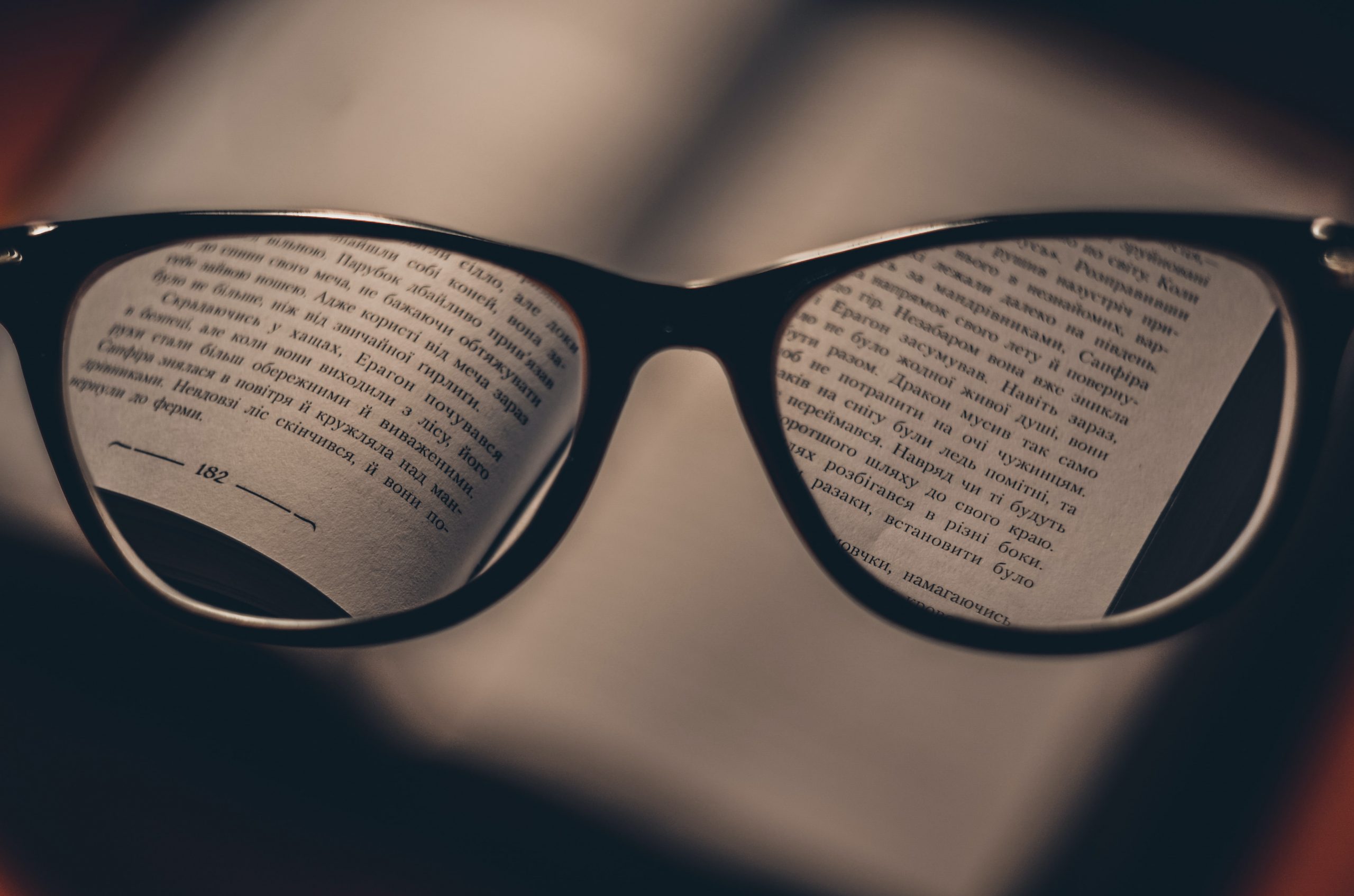
Reading became slower and rougher for me several decades ago, when a genetic ailment made the tiny center of my right retina start to crumble delicately away. I was forty-one. I’d published poems and was trying to learn to write stories. I had been a chain reader, unhappy at the end of a book until I started the next one. I continued to read, once I had acquired dedicated reading glasses with higher magnification than I needed simply to see the letters. Still, reading was more work than before. Because I put in the same effort for silly books as for literature, to reward the effort I needed the concision, freshness, and complexity of literature. I didn’t have the patience for fictional sentences that offered the same news three times: “‘I’m not interested,’ she said, wrinkling her nose and pushing the book away.” I wanted the writer to omit the repetition or complicate matters: “‘I’m not interested,’ she said, pulling the book closer.” 
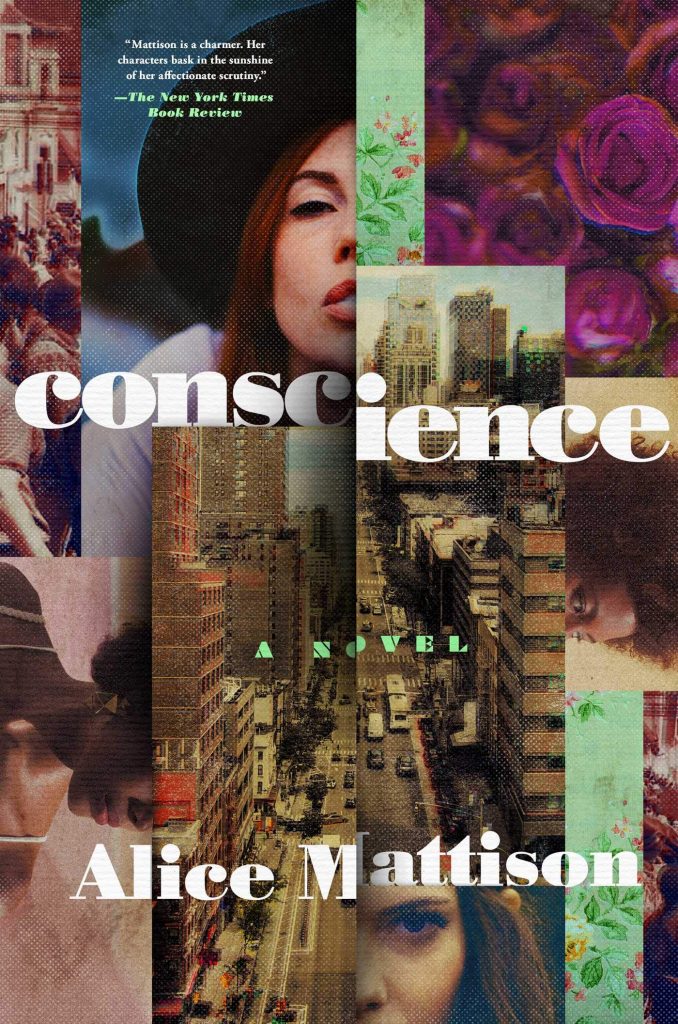
Cover of Conscience by Alice Mattison

Even with the glasses, I could no longer enjoy some well-written books, those in which extravagant, mellifluous, unstinting sentences tumbled down the page, and the lushness was part of the point: Tristram Shandy, for example. I still could read dense books with long, involved sentences, but each phrase—as in Henry James—had to alter the meaning slightly: a Henry James character may indeed pull the book closer while claiming not to take an interest, maybe because the book belongs to someone whose every possession may enlighten the character about just what’s going on, whether what looks like love and generosity is real, or mere expedience. James’s attention to shades of meaning is often so keen you could make jokes about it if enough people had read him to understand; in What Maisie Knew, James seems to make fun of his style himself, when he writes about Maisie sizing up the motives of her father: “but if he had an idea at the back of his head she had also one in a recess as deep, and for a time, while they sat together, there was an extraordinary mute passage between her vision of this vision of his, his vision of her vision, and her vision of his vision of her vision.” I could read that, and still can, and not just because “vision” is one of my favorite words. I could read James, who wrote extremely long paragraphs,  but I couldn’t read most authors who wrote paragraphs of a page or more: I needed little empty places to rest on the way up the mountain. I could read most books I wanted to read. 

All this time, I read and wrote poems and stories. I’d always read novels with particular pleasure. Writers converse through books; when I could read novels again, I wanted to respond in kind. I became a novelist.

Now a large central area in my right eye doesn’t see, and small blanks interrupt the vision of my good left eye. I can still read any letter of the alphabet, any word, even in fairly small print. Objects a few feet away are clear—a cup, a lemon, a knife—but the object to the right of the one I look at is missing, replaced by a gray blur, or the color of what’s beyond it. If I look straight at the cup, there’s no lemon. If I look at the lemon, I don’t see the knife. Same with the words I typed above. If I look at “a cup,” I can’t see “a lemon.” To read a sentence I take many looks, and may forget the beginning before I come to the end. Sometimes a word disappears into one of my visual gaps and I may not miss it for several sentences, until something doesn’t make sense.

Many of us remember books we’ve read in print more easily than those we’ve listened to or read on screen, if only because we see them lying around. 

To read with comprehension we need to see a bit of what’s coming, and not skip. I thought a headline about Senator Patrick Leahy concerned someone named Leah. I think a word is the last in a sentence, so my mind does that little dip-and-pause, but I’m reading about horse sense, not a horse, or a peach pie rather than a peach. Or I fail to see the end of a word, and then a pear turns into a pearl. I miss a punctuation mark and for “we visited; Glenda stayed home,” see “we visited Glenda” and wonder what staying home has to do with it. I try to figure out how apples connect to the topic, and how a noun just there might fit into the sentence, then give up and go back, to see the “i” that I missed when I first read “applies.” All those mistakes don’t happen at once. When my splotchy vision is not making me fail to grasp the point of an essay or fail to see the word “salt” in a recipe, it keeps me amused, keeps me aware of language itself. Who knew that “apples” is only one letter different from “applies”? Who could regret noticing that? 

Now it’s not merely opulent or sloppy books that can’t keep me reading. Because I will have to reread some sentences and paragraphs to follow the sense, a news story must tell me something surprising but comprehensible. If it’s obvious, I lose patience; if it’s at all involved and I’m not already curious, I abruptly realize that I haven’t paid attention for the last four paragraphs. As for books—especially novels, still my favorite reading—I cannot read longwinded repetitious authors even more emphatically than I couldn’t read them before, but I revel, even more than before, in longwinded authors who say something subtly different with each phrase. Recently I discovered that, with the patience that has come with being forced to read slowly, I can now enjoy some authors who write paragraphs several pages long, and not just Henry James; Rachel Cusk and Garth Greenwell turned out to be worth the trouble. I am sure I still couldn’t read a book that lacked paragraph breaks altogether. On the other hand, poetry is easy, with plenty of white space from which to launch the mind. Reading may be worth the trouble, but it’s trouble. I can’t read long enough to get eyestrain; I get brainstrain. Yet I keep buying books and reading them, not to mention writing them.

Why not audiobooks? Surely they’d help. I resist them as if listening to an audiobook would prove I can’t read, as someone with diminishing mobility might resist sitting down in a wheelchair even for a moment. (Many people who do not have eye trouble enjoy audiobooks; I know this.) I feel similarly about e-books; a pile of books that has been read represents accomplishment and evokes memory. Many of us remember books we’ve read in print more easily than those we’ve listened to or read on screen, if only because we see them lying around. 

I’ve lost what I too once had: knowing what the words mean without consciously seeing them.

Listening to an audiobook, I wouldn’t hear punctuation. True, an actor could produce the pauses, hesitations, and buildup that punctuation merely signals. But I like punctuation. I wouldn’t know whether the author had chosen a period or a semi-colon for the end of that main clause, wouldn’t know about em dashes, colons, parentheses, ellipses. Audiobooks are mediated. Another person would be present as I read. Worse, that person would have interpretive power, power over speed. Audiobooks happen in time, not space, like music or dance. Performance is indispensable but it isn’t the same as reading. 

Once we have truly learned to read, we don’t consciously see words, much less letters. If the words describe an event, we seem to find out what happened directly and all at once. We can’t not know, as we realize when our eyes and minds take in words we didn’t intend to read—a spoiler, a secret we’d rather not learn, a gruesome detail in a paragraph we planned to skip. We can’t decide to look at the first two words and not the others. A friend and I suspected that her pre-school son had taught himself to read but was keeping his new skill a secret. We weren’t sure until he walked down a staircase under a sloping roof in my house. The ceiling is a little more than five feet up, and I’d taped a sign on it: “Don’t bump your head.” Since he was only about four feet tall, he asked, “Why would I bump my head?” Reading was already so natural to him that he hadn’t noticed himself doing it.

Unlike him, when I read now, I know I’m reading. My thick reading glasses make it necessary to pull the book close. I can’t stop to chat because it’s so hard to find my place again. Nobody can come between me and my book. I’ve lost what I too once had: knowing what the words mean without consciously seeing them. I miss falling into a book as into a different place and time. I used to be aware only of the content, not of the act of reading. I still stubbornly consider myself someone who reads what she should: the books and articles I’ve been hearing about all my life or all this week, the story a friend loved. I try not to think about books I start and put aside, or don’t even start, no matter how curious I am. I’m more affected by this eye trouble than I like to admit. What’s happening to me can’t be described as good.

But when I read, insofar as I hear a voice, it’s mine. Though publication of a book means that many copies exist, and we all benefit from learning about the good ones, silent reading perfects solitude and solitary readers may get the most out of books. Good writers convey thoughts or observations so surprising that they seem new and personal: even if a book was written long ago, I experience it all by myself. I talk about books after I have read them, but while I’m reading, I want to keep them to myself, especially fiction, which is written intimately, as if addressed to one person who will understand and can be trusted. I cherish that privacy. Nobody knows what I have just read and that’s just the way it should be. When I read with my eyes—as I still do now—at that moment there is just one reader. Each book divulges itself only to me: only I—it seems—can love it as it should be loved. I live in blissful serial monogamy with each book that I can stand to read at all.


Why Wedding Rings and Hotel Hookups Don’t Mix

“The Ring” by Pedro Mairal, translated by Jennifer Croft

How does it fit you? asks his wife’s voice from the shadowy bedroom. Emilio is skinny, gangly, standing before the door in the light of the hall, dressed in his soccer outfit, checking out his new blue socks and cleats. They’re very professional-looking—are they comfortable? Yeah, they’re a little stiff, but I’ll break them in by playing. Anyway, I’m off. Don’t stay too late, Emilio, his wife says. We’ll probably have a beer after the game, he says and walks out with his bag over his shoulder.

It’s night outside. Emilio crosses Plaza Las Heras, checks to make sure no one is coming, and then, going behind a tree, he rubs his cleats against the grass, against the trunk, drags his feet through the dirt, wipes each sock with the sole of the other foot’s shoe until they’re stained. Then he resumes walking, and he crosses the square. He walks a number of blocks, until at the entrance of an apartment building he pushes the buzzer and is let in.

Upstairs, his friend Franco greets him and starts laughing at his outfit. Don’t you laugh. It’s a birthday present. If I don’t wear soccer gear, she won’t believe me. Franco says: Come on, why don’t you give me a hand with the fruit for the daiquiris. Wait, I have to get out of these clothes, says Emilio, stealing off to the bathroom.

In the kitchen, now wearing jeans and a t-shirt, he helps Franco cut up the fruit while they smoke a joint. But your shirt won’t have that funk to it, says Franco. I mean, what do you expect? You want me to go for a run? I got my shoes filthy, and I stuffed my shirt in my bag all wrinkled. You don’t think she’ll figure it out, do you? I don’t think so, no, says Emilio. But doesn’t she ever say anything to you? She says not to stay out late. Honestly, I don’t even think she cares anymore. Sometimes I get back a little before dawn and get in bed, and she wakes up and makes herself some breakfast, and I spend the morning sleeping in and then I go to the office while she takes a nap. We take turns sleeping. What does she do all day? Sleeps and eats, who knows?

You don’t think she’ll figure it out, do you?

They keep cutting strawberries and peaches. Hey, don’t you think daiquiris are a little bit boomer? asks Franco. Yeah, you’re right, these chicks probably drink Speed and vodka, that kind of thing. But daiquiris are sweet, and they have fruit in them, chicks like them, I think. Is it all the girls from the magazine coming? No, they’re bringing girlfriends, too. Lola has a friend who’s half Brazilian who has an ass you could put in a frame. Was that the buzzer?

When the apartment is full of people and music and smoke, Emilio dances in the throng, alcohol in hand. He seems a little unsteady now. There are people sitting on the floor talking in groups. Emilio dances with a girl with curly hair and a short blue dress. Every so often they brush against each other as they dance, and the girl lifts her arms. They smile at each other. I have to go to the bathroom, she says into his ear. Emilio follows her, and they go together into the hallway. There’s a line. Is this the line for the bathroom? A girl in glasses tells them it is. They stand there waiting, and Emilio says to the girl with the curly hair: I’m going to tell you a secret. The girl lets him come closer. Emilio speaks into her ear. She smiles and says: I never heard that version before, the one I know goes, “You’re hotter than chicken and potatoes.” Are you half Brazilian? Yeah, how’d you know? My mom’s Brazilian, I lived there when I was a kid. Emilio kisses her neck, then they kiss on the lips. When they stop, she says: Aren’t you married? I noticed your ring. Well, yes, but no. It’s not really…Not anymore. They continue making out. I really have to pee, she says. Want to get out of here? Sure, she says.

They squeeze into a corner of the elevator. What’s your name? Emilio, you? Sandra. On the street Sandra pees between two parked cars. Don’t look. I won’t. There’s no one coming, is there? No. What’s that bag for? she asks him once they’re walking. I had to bring some stuff to Franco’s place. Where do you know Franco from? From college, I’ve known him for like ten years, you? He’s a friend of a friend. Hang on, I want to kiss you right here where the street light’s making you look so sexy, Emilio says. They make out in the doorway of an apartment building, and when he starts to lift up her dress, she says: Not here. He says: Let’s go to a telo, there’s one around the corner, on Arenales.

They go into the telo, he pays, and they go looking for their room. They lock the door behind them, and she says, in the voice of a hostess: Welcome to Together Hotel, please remember…And a recorded voice says through the speaker: Welcome to Together Hotel, please remember that room service is available, and thank you for choosing us. He looks at her in surprise, and they laugh. You got stocks here? I used to come with a boyfriend, I shouldn’t have done that, I’m pretty drunk, I’d like to take a shower. We can shower together, says Emilio.

She turns on the bathroom light but turns it off again because it’s too bright. He turns on the water, and as it explodes out of the shower head he adjusts the temperature. He pulls her dress up over her head. She helps him take his t-shirt off. They get undressed trying not to stop kissing, but they can’t. He has to yank his jeans off, one of his legs gets stuck, and he kicks at them until he’s finally free of them. She gets in the shower, and he gets in after her.

He starts lathering her up under the stream. He soaps her breasts, she turns to face the tiles, showing her back to him. Emilio runs his hand between her thighs, slides the whole edge of his very soapy hand between her cheeks. Sandra, your ass is so toned and tight that when I put my hand like this, it pops off my ring, you feel that? he says in astonishment, repeating the movement. It’s like a bottle opener, your ass. Suddenly something happens. What’s wrong? she says. He crouches down. I dropped it, hang on, don’t move, turn on the light. Do you want me to stand still or turn on the light? Turn on the light, he says and shuts off the water.

On all fours Emilio searches the floor of the shower but doesn’t find it. You don’t think it could have gotten stuck in…? No! How could it be on me! she says. I think it went through the grate, he says. He peers into the drain. Was it really that loose? Yeah, it always fit me a little loose. She wraps a towel around herself and sits on the lid of the toilet, crossing her legs, not saying anything. What should I do? he asks desperately. But is it in there? I don’t know, I can’t see it. Use the flashlight on your phone. He searches for his phone and shines the little light down the drain. There it is! There’s like an elbow in the pipe and it’s right there, I can see it. Okay, but wait, she says, calm down, get dressed, and have reception send someone to help you.

He insists he’ll get it out fine on his own. I need something long, a wire. He paces around the room looking for something that will work.

Would you get dressed? she says. You’re making me nervous. You think you’re nervous, he says. Alright, take a breath, weren’t you just saying it wasn’t going to work out between you and your wife? What do you know about it? You told me, she says. If you’re not with her anymore, why don’t you just leave the ring there, what do you want it for? You don’t get it, kid. What do I not get? That you’re full of it? Emilio is silent for a minute. Then he says: The day you get married, you’ll understand, you’re too young now. Oh, wow, thanks. What a fucking ass. Emilio looks at her. Maybe with that thing you have around your neck, I can get it out. My necklace? No fucking way, you’re not putting my necklace down there. It has the perfect little catch for it. No. Emilio puts on his jeans and t-shirt, digs around in his bag, brings his keys and one of his soccer cleats into the bathroom. What are you going to do with a shoe? Not answering, he pulls off one of the laces, removes all the keys from the ring on his keychain and twists it. He hurts his fingers, presses it into the marble of the sink until it’s shaped like an S and then he ties it to the shoelace.

Weren’t you just saying it wasn’t going to work out between you and your wife?

She gets dressed and sits back down on the closed toilet seat, drying her hair, combing it. I’m not leaving here until I get it out, says Emilio. He gets the shoelace through the grid and lowers it and raises it with one hand, while with the other he tries to shine the flashlight from his cell phone inside the pipe. A friend of mine had to leave her car at a telo one time, she says, when she went to the garage it wouldn’t start, a service truck ended up having to deal with it. Emilio doesn’t respond. After every failed attempt, he says “fuck.” She puts on her shoes and says: Take it as a sign, it’ll liberate you, it’s over, your suffering is over, I broke up with my boyfriend two months ago, and it was a total liberation, sometimes you just have to let relationships that aren’t working go exactly like this, down the drain…Sweetheart, can you just shut up? It’s hard enough trying to get this out of here without having to listen to your moronic analyses. Sandra pauses, rises, and then suddenly turns on both of the shower taps. A cascading torrent floods over Emilio, who cries, What are you doing?! and tries to turn off the taps and cover the grate with his foot. Sandra slams the door as she walks out. Soaked, Emilio tries to keep the water out of the drain, crouching down, peering back in with the flashlight of his phone, and says: Fucking piece of shit little girl. He sits there on the floor of the shower, his jeans and his t-shirt drenched.

He walks slowly down the street with the bag over his shoulder. He goes back to the apartment where the party was. There aren’t many people left. He tries to find Franco among the groups of drunken partygoers. Franco’s in the kitchen. What happened to you? he asks. Is it raining? Emilio tells him, and they talk for a while. Franco laughs, then says: What if you order another one? No, she’d notice, plus it had her name engraved on it, she’s the one who got them. The only thing I can think of is if you tell her you got mugged. Just the ring? Maybe your license too or something. What about my phone? Take out the SIM card and leave the phone here, says Franco. She’s not going to believe me, she’s going to see I wasn’t hurt or anything, I’d have to be beaten up, so she’d at least think I tried to protect my ring, otherwise…They’re silent a moment. Hit me in the face. No, says Franco, you’re insane. Just one punch, come on. No. Hit me with something, I’m asking you as a friend. Hit me with that cheese board. Emilio grabs the wooden board and puts it in Franco’s hand—he won’t take no for an answer. Some people come into the kitchen. Franco gets them to leave. They practice how exactly he’s going to hit him. You’re sure about this? Yes, says Emilio, facing him, his hands behind his back. Franco makes as if to hit him in the eyebrow, but halfway through he chickens out and swings at an angle and barely grazes him. Again, harder, you piece of shit, come on! shouts Emilio. Franco raises the board and hits him right on the eyebrow and the cheekbone, a hard, flat blow. Emilio lifts his hand so Franco won’t keep going. His eye is closed, and he’s bleeding. Was that too much? asks Franco. It’s okay, says Emilio. You’re gushing blood, sit a minute, says Franco. But Emilio says no and leaves.

He goes home on foot, getting blood on his t-shirt and his jeans on purpose. He reaches his house. He takes off his clothes in the laundry room and puts it in a bucket that’s half full of water. In his underwear, he goes into the bathroom, looks at himself in the mirror, and cleans the dried blood off with soap and toilet paper. His eyebrow and cheekbone are very swollen, but they’re not bleeding anymore. He comes out of the bathroom, walks down the hall and continues into the darkness of the bedroom.

11 Afro-Latinx Writers Whose Work Traverses the Americas

While the idea of Blackness is very much associated with the United States of America, the first Africans in the historical record to enter the Americas were, in fact, Afro-Latinxs. African-descended populations peopled Central and South America in large numbers long before they were deposited by slavers in places like Jamestown, Virginia and Plymouth, Massachusetts. This fact matters because it suggests how America-centric our understanding of transatlantic slavery and the history of the Americas is. 

Whether writing about the past, the present or the future, Afro-Latinx writers grapple with issues of identity and hybridity, immigration, isolation and assimilation, and what it means to occupy the nexus point between Blackness and Latin Americanness, two identities that within the United States context are still deeply marginalized.

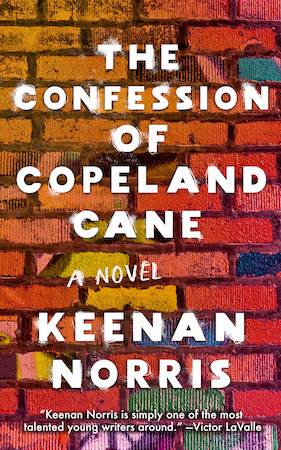
As a writer myself, I am interested not just in the stories that are marketed in the mainstream, but those stories that happen on the margins. My novel The Confession of Copeland Cane is a story that is on its face about police violently vamping down on Black boys and men, but in its totality speaks to not just that reality, but also environmental injustice, over-medication, over-sentencing, and, finally, the possibility of escape from an increasingly unfree American future. Like Copeland’s cordoned world, the Black diaspora is sectioned off by national borders and language barriers, but literature, whether of the future or the past, has the ability to reach across these lines. 

Here’s a brief list of Afro-Latinx fiction writers current and past whose work traverses the Americas.

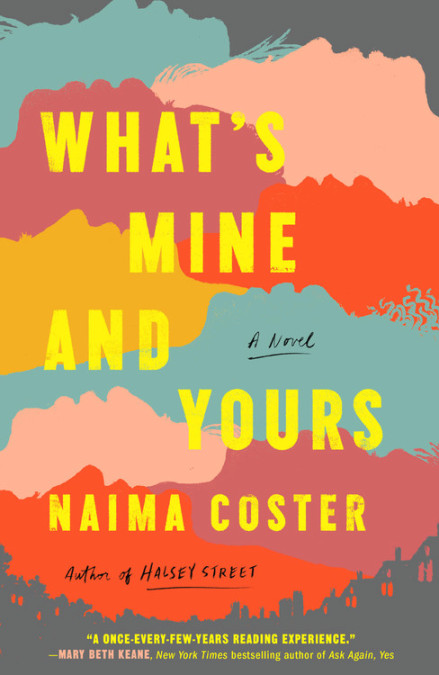
What's Mine and Yours

Naima Coster

Dominican American writer Naima Coster’s novels Halsey Street and What’s Mine and Yours showcased her brilliance as a major literary talent. Coster’s work explores an array of headline issues through the intimate prism of American families in all their love, diversity, dysfunction, and denial.

Halsey Street, which was a finalist for the Kirkus Prize, chronicles a set of circumstances that too many Black Americans know too well: The burdens borne by a family as they deal with the spidering impact of gentrification upon their Bed-Stuy, Brooklyn community. 

The just-published What’s Mine and Yours was inspired by the 1619 Project reportage of Nikole Hannah-Jones on the integration of a Missouri school district. Coster sets her novel in a North Carolina town instead, but at the heart of the book is more than a clash of racial prerogatives, but rather an intimate multi-family saga of two mothers—one Black, one white—and their children, the objects of the integration debate.

Aya de Leon

Aya de Leon is a heist fiction novelist, an emcee, a scholar of crime fiction in film and books. As a novelist, de Leon came to national prominence with her widely acclaimed novel Uptown Thief. The heist narrative set in Spanish Harlem features a former sex worker turned Afro-Latina Robin Hood, Marisol Rivera, and the battered women, most of them sex workers, whom she shelters. But de Leon was already well-known in Bay Area spoken word poetry circles as the creator of the one-women hip-hop theatrical Thieves in the Temple: The Reclaiming of Hip-Hop, a production which anticipated Lin Manuel Miranda’s more famous hip-hop theatrical (perhaps you’ve heard of it) by almost ten years. 

Though the Bay Area is de Leon’s adopted home, she’s a native New Yorker and her fiction is set there, as well as Puerto Rico (she is of Afro-Puerto Rican heritage) and Cuba. Since publishing Uptown Thief, de Leon has gone on to release a series of Black feminist street lit novels that turn the narrative conventions and sexual and economic politics of the genre on their head. Meanwhile, drawing on her scholarship—de Leon is a professor at the University of California—she has written incisive essays on a range of issues, from analysis of detective literature, to #metoo, to prime-time TV’s celebration of police violence.

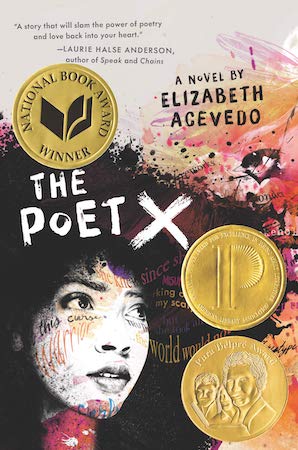
Elizabeth Acevedo

Dominican American poet and novelist Elizabeth Acevedo is one of the great young writers in America. Acevedo’s wildly successful debut Young Adult novel The Poet X received the 2019 Walter Dean Myers Award for Outstanding Children’s Literature, the 2018 National Book Award for Young People’s Literature, and was a 2018 Kirkus Prize finalist. Subsequent novels With the Fire on High and Clap When You Land have further established Acevedo as a major voice in contemporary literature. She is a CantoMundo and Cave Canem fellow, which represents her dual poetic identity within the Latinx and Black poetry communities.

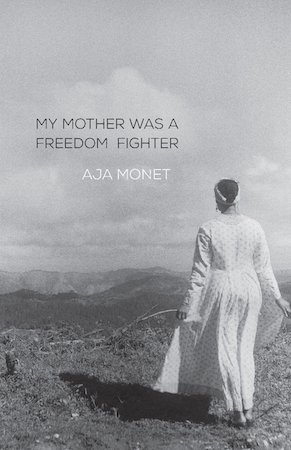
Aja Monet

Cuban Jamaican, East New York-raised Aja Monet became the youngest winner of the Nuyorican Poets Café’s Grand Slam. The year was 2007. She was 19-years-old. You can read and listen (on audiobook) to Monet’s surrealist blues poetry and storytelling in her chapbook The Black Unicorn Sings and in the anthology Chorus. Her first full-fledged book of poetry, My Mother Was a Freedom Fighter, received critical acclaim, as well as a nomination for a NAACP Image Award for Outstanding Literary Work. 

As an activist organizer in South Florida’s Little Haiti, Monet has co-founded a political safe-haven for artists and organizers called Smoke Signals Studio.

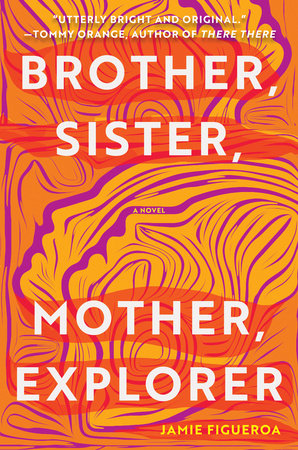
Brother, Sister, Mother, Explorer by Jamie Figueroa | Penguin Random House  Canada

Jamie Figueroa

Jamie Figueroa is a Puerto Rican novelist of Afro-Taíno descent. She published her debut novel Brother, Sister, Mother, Explorer in February 2021. The novel has received praise from the New York Times, LitHub and Publisher’s Weekly. I’m looking forward to this fine novel receiving the readership that it deserves. Figueroa writes:

“One marker of the ongoing colonial project is the refusal to acknowledge the complexity of identity and the polyphony of perspectives within the construction of a single category of race and ethnicity…

Blending the boundaries of poetry and prose, revealing true names and renaming as a way to expose additional truths, as well as questioning ‘reality,’ are some of the ways I actively engage in decolonizing my imagination.” 

Efrain's Secret by Sofia Quintero

Sofia Quintero a.k.a. Black Artemis

Puerto Rican Dominican writer Sofia Quintero—who publishes both under her government name and also as Black Artemis—is the author of Explicit Content, Picture Me Rollin’, Divas Don’t Yield, Names I Call My Sister, Efrain’s Secret, and Show and Prove. A master of hip-hop fiction, also commonly called street lit, Quintero in her Black Artemis alter ego is often grouped with African American writers of the hood like Vickie Stringer, Sister Souljah and Terri Woods. But, like so many writers of color, Quintero’s work is too easily type-cast.

In fact, in Quintero’s debut as a Young Adult novelist, Efrain’s Secret, the author explores the harrowing risks that Efrain Rodriguez, a South Bronx teen, must take just to be accepted to an Ivy League college. In her follow-up, Show and Prove, Quintero chronicles the lives of two South Bronx teens in 1983, as hip-hop suffuses the streets of New York City.

Paulo Lins

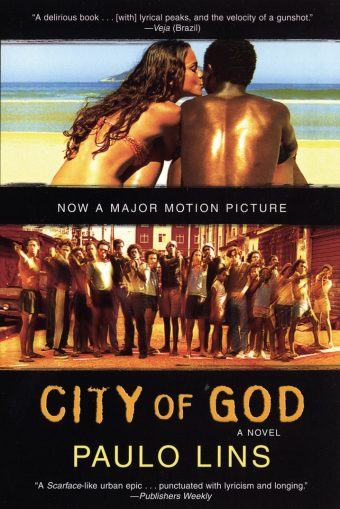
The Afro-Brazilian novelist Paulo Lins got his start in the streets by writing songs about his favela’s many gangsters for the local samba singers to sing. The mayhem that those gangsters and the cops who battled them inflicted upon the Cidade de Deus favela became Lins’s subject.

By far Lins’s most well-known work is Cidade de Deus (City of God), an all-out, maximalist narrative of the chaos, violence, and community of one of Rio de Janeiro’s most infamous favelas. Immortalized for mainstream eyes by the film City of God, Lins’s wild vision of Brazilian city squalor has had as powerful of an impact on global understanding of urban hardship as Richard Wright’s Native Son, Sister Souljah’s The Coldest Winter Ever, and Boyz n the Hood.

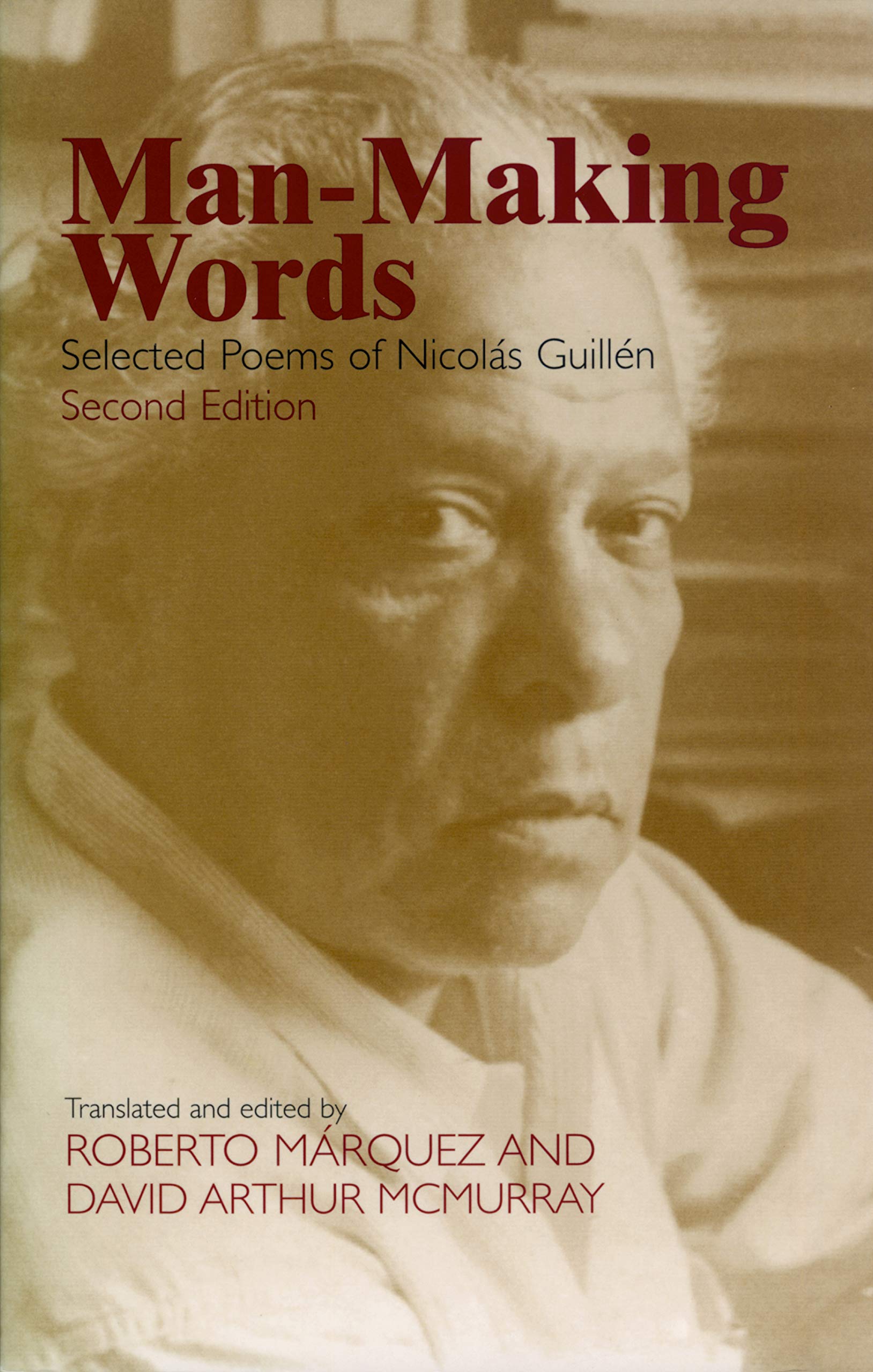
Man-Making Words: Selected Poems of Nicolas Guillen: Guillen, Nicolas,  Marquez, Roberto, McMurray, David Arthur: 9781558494107: Amazon.com: Books

Nicolas Guillen

Nicolas Guillen was an Afro-Cuban poet who played a prominent role in the Harlem Renaissance. Guillen’s father introduced him to son music, an underground West African musical form that was heavily persecuted by Cuban authorities in the early 20th-century as part of a larger campaign of anti-Blackness. Guillen, like all Black Cubans, experienced systematic anti-Black racism little different from what Black people across Latin America and the United States experienced during the first half of the 20th-century.

Like son music itself, Guillen’s poetry synthesizes Cuba’s mixed African and European culture. In 1930, Guillen met Langston Hughes, the most famed poet of the Harlem Renaissance. Guillen and Hughes hung out together in Havana and Hughes inspired Guillen to publish Motivos de son, a book of eight poems about Afro-Cuban music and life that made Guillen’s international reputation, elevating the status of Black Cubans.

With subsequent books, including West Indies Ltd., Guillen’s poetry became increasingly political, advancing the Negritude movement and political Marxism. Along with Hughes and Hemingway, he traveled to Spain during the Spanish Civil War. With the tumultuous cold war intrigues of the 1950s, Guillen was exalted by the USSR, exiled from Cuba by the Batista dictatorship, then brought home with Fidel Castro’s revolution, and finally installed by the communist dictatorship as the head of the nation’s writers’ union. Guillen upheld the ideals of the revolution until his death.

Down These Mean Streets by Piri Thomas

Piri Thomas

“I am ‘My Majesty Piri Thomas,’ with a high on anything, and like a stoned king I gotta survey my kingdom. I’m a skinny, dark-face, curly-haired, intense Porty-Ree-can—

Unsatisfied, hoping, and always reaching.”

So begins Down These Mean Streets, Piri Thomas’s powerful autobiographical debut novel. But before he was a writer, Piri Thomas was a career criminal, a heroin addict, a burglar, a felon who shot a cop. He ended up in prison and would have to carry his rap sheet to the grave. Then, at 39 years of age in 1967, Thomas turned his life around and became a writer, a writer of exceptional accomplishment.

Named after a poetic flourish in Raymond Chandler’s “Simple Art of Murder” essay, Thomas’s novel takes readers down the mean, gang and drug-ridden streets of Spanish Harlem, down into the Jim Crow South, where young Piri attempts to connect with his Black heritage, and back to Harlem, where his Eurocentric family and inner-city demons reside. 

An Afro-Puerto Rican novelist, Thomas was immediately taken up as part of the Black Arts Movement of the late 1960s upon the publication of his seminal novel. As such, Thomas is the main forerunner of the Nuyorican poetry movement and Afro-Latin literature in America in general. His work is also regarded in the vein of the street-hardened 1960s narratives penned by Iceberg Slim (Pimp) and Claude Brown (Manchild in the Promised Land) as an example of early street lit, forerunner to the works of current-day street scribes K’wan Foye, Black Artemis, Aya de Leon, and many others.

Manuel Zapata Olivella

Along with the Afro-Colombian poet Calendario Obeso, Zapata Olivella is the premier figure in Afro-Colombian literature. His masterpiece is his 1983 novel Chango, el gran putas (Shango, the Biggest Badass). If the title alone doesn’t do it for you—though I’m guessing it does—the book’s epic, tragic, heroic scope will. Unfortunately, few readers in the English-speaking world have even heard of Zapata Olivella, let alone read his work.

The basics of publication and reader access are still an issue for many a great book written by Black writers across our diaspora. Despite being every bit as ambitious and as innovative with its use of myth and time as the famed magical realist text One Hundred Years of Solitude, Chango, el gran putas is very difficult to procure as an English-language text. It’s a shame because the book brings under its veil Afro-Latin, Afro-Caribbean, African-American and mother continent folklore, gods, heroes, and history. Truly one of the most ambitious books published about the African diaspora, Chango tells the entire sweep of the post-Columbian Black world, from orichas, to slave rebellions on the islands and in Brazil, to the civil rights struggles in America in the 1960s. 

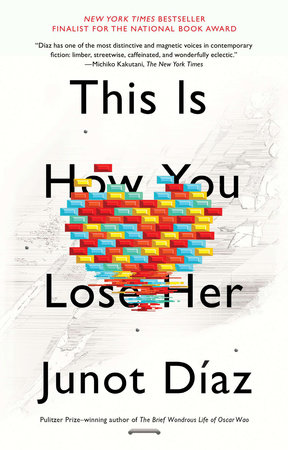
This Is How You Lose Her by Junot Díaz

Junot Diaz

Junot Diaz’s short story collection Drown is both a portrait of life at the impoverished edges of the Dominican Republic and a rugged bildungsroman that, in the main, follows Yunior, a child whose family escapes the political violence and poverty of the D.R. only to find themselves in the urban squalor of ’80s era New Jersey. The book’s finale, the story “Negocios”, is an archetypal American immigration narrative that Diaz delivers in painstaking detail.

Diaz returns to Yunior as a far less sympathetic adult in the Pulitzer Prize-winning novel The Brief Wondrous Life of Oscar Wao. A more ambitious book than its predecessor, Oscar Wao encompasses much of mid and late 20th-century D.R. history, as well as a complicated, hyphenated, semi-absurd American present. The book’s emotional heart is not Yunior, but his attitudinal antithesis, the nerdy and star-crossed Oscar Wao.

This is How You Lose Her, Diaz’s third book and second collection, brings together many of Diaz’s best short stories. “Otravida, Otravez” is told from the perspective of Nilda, a major character in “Negocios,” thus presenting an alternative to Diaz’s male-dominated immigration narratives. The collection also returns to Rafa, Yunior’s street-hardened brother, tracing his romantic life and hustles. Diaz is also an essayist of some note: His “MFA vs. POC” essay, in particular, has had an influence on the structuring of MFA creative writing programs.

The Buffoonery of White Supremacy Trying to Disguise Itself as Literature

Watching video footage of the January 6th Capitol insurrectionists, the viewer faces a bewildering pageant of right-wing symbolism. Retired Texas Air Force officer Larry Randall Brock paces the Senate chamber floor in a costume of tactical gear and body armor, a trio of iron-on patches across his chest: the yellow fleur de lis of the 706th fighter squadron; the Texas state flag; and the red-white-and-blue skull logo of Marvel’s vigilante anti-hero, the Punisher. As the video continues, a new player enters the scene. Jacob Chansley, aka “The QAnon Shaman,” sports a horned fur headdress. He is naked from the waist up to showcase an impressive array of Nazi-adjacent Norse mythology tattoos.

Critics were quick to comment on the spectacle’s surreal atmosphere of cosplay. New York Times fashion correspondent Vanessa Friedman observed of the insurrectionists’ sartorial choices that they smacked of a “postponed Halloween parade,” treading a “fine line between comedy and horror.” That commentators felt compelled to borrow the language of literary genre to describe the insurrection — comedy and horror, tragedy and farce—is no accident. White supremacy has always relied upon the mixing and blending of popular literary conventions in order to secure its cultural relevance. Indeed, the long history of American white supremacy storytelling is rife with pastiche. In the nineteenth century, Black-face minstrelsy and the Ku Klux Klan wedded anti-Black violence, both physical and representational, to the genres of the picaresque and the vernacular tall tale. In the early twentieth century, Thomas Dixon cemented the Lost Cause narrative in the American imagination as sentimental romance/melodrama with his Clansmen trilogy, the white supremacist manifesto that served as a template for D.W. Griffith’s 1915 blockbuster film, The Birth of a Nation

Heir to nineteenth-century white supremacy’s panoply of literary tropes is William Faulkner, who remains in many ways the chronicler par excellence of this, our national malady. He is unsurpassed because, while an unrepentant white supremacist himself, in his capacity as an artist he could not help but capture and critique the mix of pathos and horror at the heart of the Lost Cause myth. Mixing such “low” pop culture genres as minstrel theater, Dixonian melodrama, and pulp crime fiction with high Greek tragedy, Faulkner’s Lost Cause chronicles are prime examples of the genre conventions of the white supremacy narrative. The make-believe, and therefore always potentially buffoonish, quality of Lost Cause mythology was never far from Faulkner’s mind, no matter how sympathetic he may personally have been to it. His stories can help us situate this most recent re-enactment of the white supremacy script within a historical tradition.

Faulkner, who wrote both for a literary and a popular audience, was a master at genre blending in chronicling the “lost dream” of the Old South. In 1938 he published The Unvanquished, a cycle of seven linked stories, the first five of which appeared in The Saturday Evening Post in 1934 and 1935. The early stories are plotted as picaresque boys’ tales on the model of The Adventures of Tom Sawyer, narrating the coming-of-age adventures of Bayard Sartoris during the final years of the Civil War. A mood of make-believe hovers over the cycle. The first story, “Ambuscade,” opens quite literally on a scene of child’s play: twelve-year-old Bayard and his enslaved companion, Ringo, re-enact the battle of Vicksburg on a “living map” built of mud, water, and wood chips— as though re-playing the doomed battle in miniature might magically stave off the fall of the actual city, and of the South to follow. 

When Bayard’s father Colonel John Sartoris returns from the front for reprovisioning, the boys are mesmerized by his uniform. “The tarnished buttons and the frayed braid of his field officer’s rank glinted dully, the sabre hanging loose yet rigid at his side,” Bayard observes. The Colonel looms Titan-like beside his horse, Jupiter, taking on the dimensions of a tall tale hero: “He was not big; it was just the things he did, that we knew he was doing, had been doing in Virginia and Tennessee, that made him seem big to us.” 

White supremacy has always relied upon the mixing and blending of literary conventions to secure cultural relevance.

Playing at war bleeds into real life when Bayard and Ringo shoot a musket at a Yankee soldier on horseback, narrowly missing him. When the Yankee commander comes looking for the culprits, Sartoris matriarch Rosa Millard hides the boys under her hoop skirt while denying all knowledge of their whereabouts, coolly inviting the Yankee visitor to join her in a cup of tea. Colonel Dick realizes he has been hoodwinked but, this late in the war and with a Northern victory assured, is feeling weary and generous enough to play along. The story ends with Bayard and Ringo being punished, although not for the crime of taking a pot-shot at the enemy: Instead, Granny washes the boys’ mouths out with soap for calling their Yankee target a “bastard.” 

Yet The Unvanquished’s playful tone play harbors something much darker at its heart. The white characters’ death-cult level devotion to a “sacred cause, although You have seen fit to make it a lost cause,” as Granny laments in one anguished prayer to the God who has deserted her, thrums through the stories like a muted threat. The penultimate story, “Skirmish at Sartoris,” starts out in the same key of hijinks as the previous tales. Bayard’s cousin Drusilla Hawk, a grief-stricken war widow, has “unsexed herself” and taken up arms alongside John Sartoris. The old ladies of Jefferson are forcing John Sartoris to save Drusilla’s reputation by marrying her. Faulkner describes the stand-off in typical mock-epic fashion as two opposed parties, “the men and the women,” face one another “like they were both waiting for a bugle to sound the charge.” But this quaint domestic skirmish gets sidelined when John and Drusilla arrive in town to discover Northern voting commissioners organizing Black voters and preparing to run “Uncle” Cash Benbow, a Black man, on the ticket for town marshal. Instead of tying the knot, the couple shoot the two Republicans dead and steal the ballot box. They gallop back to the Sartoris homestead to hold a whites-only election there, with a series of pre-marked ballots, to a triumphant chorus of rebel yells. 

Drusilla and John’s exploit is framed as prank; the old ladies’ horror at Drusilla’s rebellion, as she gallops home astride her horse with wedding veil askew, is mined for comedic effect. Yet the prank rings hollow, and Faulkner seems to know it. Ringo, who up until this point has been portrayed as Bayard’s equal and a complex character in his own right, collapses into a minstrel joke. “I done been abolished!” Faulkner has him proclaim upon learning that the Black men of Jefferson have been given the vote. As Ringo descends into racist caricature, Drusilla is transformed into a brittle high priestess of vigilante violence.

The buffoonish quality of Lost Cause mythology was never far from Faulkner’s mind, no matter how sympathetic he may have been to it.

The stories thus pivot from slapstick to high tragedy, a tonal discrepancy cited by critics as the work’s most serious aesthetic flaw. Yet nothing illuminates the logic of white power— then as now— more brilliantly than this lightning-quick pivot from juvenile farce to deadly force. By merging roguish tales of boys’ play with scenes of racist vigilante justice, both enveloped in the dream-logic of fantasy, The Unvanquished— whether Faulkner intended it or no—exposes white power for the childish distortion of reality that it is.

In Faulkner’s 1932 novel Light in August, Percy Grimm is a paramilitary play-actor before becoming the head of a real-life lynch mob. On each national holiday “that had any martial flavor whatever,” Percy Grimm dresses in his captain’s uniform and strolls into town, as “glittering, with his marksman’s badge and his bars, grave, erect, he walked among the civilians with about him an air half belligerent and half the self-conscious pride of a boy.” Grimm, per his surname, is portrayed as nigh-sociopathic in his patriotic fervor: “It was the new civilian-military act which saved him,” the narrator explains. “He could now see his life opening before him, uncomplex and inescapable as a barren corridor, completely freed now of ever again having to think or decide,” secure in “his belief that the white race is superior to any and all other races and that … the American uniform is superior to all men.” 

When Joe Christmas, a Black man accused of raping and killing a white woman, escapes the sheriff’s custody, Percy Grimm leaps into action as a self-deputized citizen-protector. He hunts Christmas down, then kills and castrates him, “his voice clear and outraged like that of a young priest.” Like Drusilla, Percy Grimm is a young, myth-drunk, militarized high priest of white supremacy. Faulkner wants to believe in the tragic sublimity of the Old South. But by casting its avengers as zealots and children, half-mad widows and village idiots, he hedges his bets against what he must, deep down, understand: the ultimate sterility and carnage of the white supremacy story, unworthy of redemption. 

Nothing illuminates the logic of white power more brilliantly than the pivot from juvenile farce to deadly force.

Drusilla Hawk and Percy Grimm, in their mock-tragic grotesquerie, are not anomalies; rather, they constitute a recognizable national type. The cluster of political and ideological commitments these characters embody—that the federal government is traitorous; that Black political participation anywhere a threat to white “liberty” everywhere; that white “patriots” are duty-bound to protect the Constitution with private arms— has shape-shifted over time. But it has never disappeared. 

Take, for instance, Dylann Roof. He is Percy and Drusilla’s heir; he denounced his country’s usurpation by Blacks and Jews, photographing himself for social media draped in a talismanic mish-mash of white power regalia: combat fatigues, confederate flags, aviator glasses, and a Rhodesian national flag patch. After the Emmanuel Church massacre, Roof’s sullen, bowl-cut mugshot circulated widely before being re-purposed by his supporters as hagiography. “Saint Dylann” appeared photoshopped with a halo, and the stark outline of his signature haircut became a meme in and of itself. A Dylann Roof fan club, nicknamed “Bowl Patrol,” surfaced on the chat app Discord in 2018. “Honestly, my religion is the Bowl,” typed one chat member. “Disrespect the Bowl, Pay the Toll” and “Take Me to Church,” joked another. The memes chosen to sacralize Roof recall the campy, in-joke nature of the original Klan cloak and hood: the bowl cut as fashion is laughable, and yet can easily flip into the register of terror. 

The Capitol insurrection is the most recent resurgence of violent white supremacy as American political tradition, and it is thus, unsurprisingly, marked by that tradition’s familiar generic scrambling of narrative modes. If one thing united the crew of rioters breaching the Capitol, it was their very Faulknerian conviction of diminishment: They had lost something (or more specifically, it had been stolen from them), and they had come to Washington to take it back. “We’re ho-ome!” crows a blonde woman as she steps across the Capitol’s breached threshold. “This is OUR HOUSE!” screams rioter after rioter as they surge through the Capitol halls. Over the din, a man with a voice-warping megaphone repeats robotically, “Defend your liberty! Defend your Constitution!” “1776, motherfuckers!” It is the rote antiquity of this script— we’ve been here before— that gives the insurrectionist chants their eerie quality of (bad) theater, meme and cliché: of child’s play. The country’s unconscious burbles up to the surface, a dream-state impervious to reason and fact.

White power’s dream is abhorrent; it is also, like all adolescent fantasies, profoundly silly.

To combine costumed prank with deadly violence is thus not aberration, but time-tested political strategy. Experts in right-wing extremism warn us not to be fooled by the veneer of fun-and-games: When faced with conflicting symbols, always focus on the gun. Still, it is important not to lose sight of the strained silliness of the symbols. Irony functions as a way for white power to evade responsibility by sowing confusion and doubt about its true motives. But it also serves another, deeper function, one with which Faulkner was intimate: counterweighing the buffoonish. For the actual dream behind a white ethno-state—one that involves white victimization, laments of white “replacement” by outsiders, a tragic sense of destiny and immolation on the altar of race purity—has all the trappings of a weepy Hallmark made-for-TV movie. White power’s dream is abhorrent; it is also, like all adolescent fantasies, profoundly silly.

“I’m an idiot,” Chad Jones, accused (among other things) of assaulting a police officer with a flag pole, admitted to a friend the day after the Capitol insurrection. Jones was just one of many rioters who subsequently issued apologies for their “foolish” and “inappropriate” behavior during the riot. Garret Miller, who filmed himself breaking into the Capitol before going on to post calls for Alexandria Ocasio Cortez’s assassination on Twitter, was among the contrite. Predictably, Miller’s lawyer sought to downplay the seriousness of his client’s threats, calling the posts “misguided political hyperbole,” the rantings of a boy who had been carried away by his own make-believe. Faulkner’s stories, and the narrative traditions they build upon, document our uniquely American tradition of racial “war telling,” and illuminate just how thin a line separates tall-tale hyperbole from real-life action. “On the one hand, you have to laugh,” tweeted Rep. Ocasio-Cortez of Miller’s childish posturing. But “on the other hand [you] know that the reason they were this brazen is because they thought they were going to succeed.” 

In “Wayward,” A White Woman’s Midlife Crisis Gentrifies the Neighborhood

Dana Spiotta’s novels often feature inventive structures reflecting the tastes of her educated, often Gen X protagonists, who tend to be practicing artists or interested in the arts, though 2006’s Eat the Document also dealt with the intergenerational fallout of radicals protesting the Vietnam War. However, in Spiotta’s newest novel, Wayward, the characters in the predominately white liberal space Spiotta writes about are devastated by the choices of other whites.

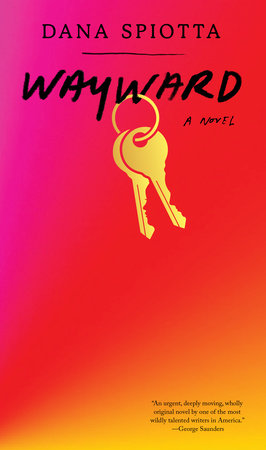
Wayward by Dana Spiotta

In Wayward, Sam is living a comfortable life in the Syracuse suburbs with her husband and teenage daughter, only to have all faiths shaken in the aftermath of the 2016 election, right as her mother’s health is failing and she is entering perimenopause. In an effort to reckon with her own complicity in modern-day American society, Sam upends her own life, and along the way interrogates the female body, aging, and white womanhood present and past.  

Dana Spiotta is the recipient of a Guggenheim fellowship, a Creative Capital Award, and the John Updike Prize from the American Academy of Arts and Letters. Her books have been nominated for a National Book Critics Circle Award, a National Book Award, and a New York Times Notable Book Award.

Spiotta and I recently spoke by Zoom, and discussed writing a different kind of mid-life crisis, writing the body, and making art in a capitalist society.


Deirdre Sugiuchi: In Wayward, you addressed the intergenerational impacts of white male patriarchy. Can you just discuss writing, particularly as a Gen X woman identifying as white?

Dana Spiotta: What I thought was interesting about Sam is that she has wealth and she’s white and she hasn’t had a very hard life. But as a woman, she experiences oppression. I was interested in sorting out the complexity. Having her realize in mid-life as she’s going through these perimenopausal symptoms and she can’t sleep in the wake of the election, that she needs to interrogate some of the assumptions about the status quo that she has both colluded in and also been oppressed by at the same time. 

I find in fiction, it’s very interesting to explore these kinds of paradoxical points that kind of go in two directions at once. Sam knew, of course, that the country was not equitable. She knew that there was racism and misogyny, but she wonders whether she has done enough. She is having this reckoning with her own moral core, which is a good thing to do in mid-life, but is a hard thing to do because you have so much invested in the status quo.

The other reason why mid-life is such an interesting point for me is because you’re losing your elders, your parents are failing, and if you have children, they’re growing up and separating from you. Physically you’re at a very complicated place with your hormones going up and down. When a lot is required of you, you are not completely yourself. Or maybe you are, right? 

What is the role of anger with women? What’s an appropriate place to put the anger? 

I hadn’t read a lot of books or seen a lot of films that dealt with menopause in fiction deeply. What’s interesting about it is we’re told that the rage-y feelings that you have when you are an adolescent and you’re going through those hormonal changes and when you’re in mid-life, although it’s less talked about, that that’s all driven by hormones.

I don’t know if you’ve had this experience, but when you were PMS-ing, you’d get angry, but it wasn’t that you were irrational, it’s just that your ability to swallow the anger was diminished. So you had distorted feelings that were real, just harder to express.

I think that happens in menopause too, who you are is somewhat distorted by hormones, but it’s also revealing some suppressed truths. But on the other hand, when you get to a rage point, you don’t feel good afterwards. You feel ashamed. I was interrogating that idea too. What is the role of anger with women? What’s an appropriate place to put the anger? 

DJS: In Wayward, you address consent and spiritual abuse with Clara Loomis, a member of the Oneida community. It parallels a situation another character experiences in modern-day Syracuse. Can you discuss writing consent and young women?

DS: In Oneida, they had this complex marriage where everybody was married to each other. They wanted it not to be about possession and property and vanity, this kind of a Bible communism kind of idea, and heaven on earth. They didn’t want shame with sex. They wanted birth control, so they had male continence. But of course, they got into that weird spiritual cultivation and eugenics. 

John Humphrey Noyes was the most spiritual; he had the most children. Some people say like 18 or 20. And of course, consent in that context is impossible for someone to give. Because if you were an 18-year-old girl and the most spiritual head of the Oneida community wants to sleep with you, wants to have the sexual congress with you to celebrate God, you’re supposed to be free to say no, but are you really? It made you see that (Clara’s) own problematic elements had their root in this more innocent time in her life, where she was trying to escape Victorian society and the limits that were put on women there.

DJS: In Wayward, you are writing about a largely white world that has been disrupted by the choices of other white people. It’s the most politically focused novel you’ve written since Eat the Document. Can you discuss this—why now and what echoes you’re working with?

America is a really hard place to be an artist.

DS: I am interested in writing about what it’s like to be alive in a specific time and place. To write that kind of fiction, you have to engage the bigger cultural issues. It’s impossible to write about America since 2016 without writing about the bigger political things that are happening. How could you write without writing about equity? Without writing about race? Just like in Eat The Document in 1972, you’d have to talk about the Vietnam War.

But I also think the specific place of Syracuse itself is very progressive, and right outside it, you have these rural areas that in the past, I think Sam—she’s a good liberal, she’s got this lefty background—would say, “Oh, these good working-class people. They have a raw deal.” But then she kind of realizes that they all voted for Trump [laughs] and she has to reconfigure her view of them. In Syracuse, it is almost impossible to escape because there’s so much poverty here. There’s such segregation between the haves and the have-nots. 

DJS: I loved the way Syracuse, place, and architecture inform this novel.

DS: I think fiction works best when it’s really specific and really particular and eccentric. Locating it in this very specific place seemed important. 

A lot of times when people write about mid-life crisis, especially for a woman, you have a sexual affair because you’re feeling like your allure is fading or something, and that’s how you deal. Before I even knew who Sam was, I had this idea that this woman was looking at this old house that was once beautiful, but it’s falling apart. She signs a contract (to buy it), and then only when she’s driving home, does she realize she’s actually leaving her husband. She doesn’t realize she’s leaving her daughter.  

I liked the idea that instead of falling in love with a person as a way out of the marriage, she falls in love with a specific place. I think somehow the wreck of a building speaks to her because of her body’s own decay or changing. That got me into all the self-optimization subculture, the narcissism of the gym bros, and listening to a bunch of podcasts of people talking about how to expand their life. And you’re just thinking, “For what? What is all the extra life for?” Which seems to be a big question that Sam asks. She also finds that kind of precious and narcissistic and solipsistic. That’s something I was into too, this weird obsession with self-care and self, self, self in America. In the face of so much that seems obscene. 

One of the things that was interesting, is that internalized misogyny that she has. She’s at that party after the election, and the younger women say, “It’s women over 40 that put him over. White women put him over the top.”

And she’s like, “Yeah, I sort of hate these women too, and I am one,” and she’s very hard on the moms who are really fit and do plastic surgery. But the ones who don’t, she’s hard on them too. All of that is really an expression of her own inquiry about herself. Just because you’re aware of your own internalized misogyny doesn’t allow you to escape it. 

DJS: Sam is wrestling with being a complicated white woman and also with how complicated white women are historically. Can you discuss?

Reading is almost inherently counterculture right now, because it’s long, deep and requires this kind of focused attention. You can’t click through it.

DS: Again, it’s that complicity of historically and presently benefiting from the status quo. There’s a price. You can look and see that you are both complicit in it, and also that you are subjugated. This is what we all have to understand, is that to try to fix things is to benefit all of us, right? She wants to reject that and find a different relationship to the world where she is not complicit with these things. Doing nothing is complicit.

This is the thing that Generation X has to wrestle with. We don’t run the world because of course all these old men still run the world, but we run a lot of the world, and it’s still really messed up. #MeToo really affected a lot of women of my generation, because we inherited from second wave feminism, radical change, and then what did we do with that?

One of the reasons why Trump won is because he hates immigrants. Another reason is because there’s a lot of misogyny in the country. And so all these women going back at the same time and looking at what they put up with, is another kind of reckoning too that the book is interested in. The legacy of that is that for young women coming up, they have to fix it because you didn’t. 

DJS: “Yeah, sorry, kids.”

DS: “Should have done better. Yeah.” I think we are going to do better. A lot of really brave women are changing things—this is what is great. Things can change and they ought to. You can’t just kind of go into your bubble and just think about yourself and get away with that. 

Somehow when you see yourself as part of the whole world, the urgency of obsessing over yourself kind of dies down. You can see with more clarity. You can actually have a more integrated authentic relationship to the world.

DJS: In all your books there is this recurring theme of money vs. art. 

DS: Stone Arabia is less political, but money was so important in that book, and poverty, and to face middle age when you haven’t bought into the capitalist dream. I guess one of my questions is, can you remain counter to the culture? Can you have that relationship as you age and as the culture kind of wears you down and co-opts you? America is a really hard place to be an artist, particularly.

When we buy into these technologies that are monetized, that shapes who we are as artists, our thoughts and how we live our lives.

I’m hardcore Gen X. My generation grew up being much more suspicious of rich artists. Today, it’s sort of like you’re a brand. Part of me is very skeptical of that, and I realize that makes me old in a lot of ways [laughs]. Which is fine. One thing that Generation X got right, maybe, is being suspicious of being co-opted and being made into that.

DJS: I remember fifteen years ago when one of my friends’ bands got sponsored by Outback Steakhouse, people freaked out. But now it’s like, “Well, the only way you can make a living is by getting some sort of corporate sponsorship.” 

DS: These things have an effect, and I think some of it is technologically driven. When we buy into these technologies that are monetized, that does shape who we are as artists. When we participate in it, it shapes our thoughts and how we live our lives. We have these dopamine addictions to our iPhones or social media and that changes the culture in profound ways.

I think that’s one thing that’s interesting to do in fiction, to explore this, because it is sort of an antiquated technology, reading. But reading is almost inherently counterculture right now, because it’s long and deep and requires this kind of focused attention. You can’t click through it. You can’t comment while you’re reading. It’s participatory, it goes back and forth between the reader and the writer, but it’s very different from being on Twitter, Facebook, or Instagram. 

(Fiction) is a fun place to engage with technology, and to think about how we use it in an estranged way. I like putting internet things in novels because it’s so much a part of our lives. You can’t write a novel about what it’s like to be alive now and not talk about technology that shapes us. 

For me, it was all about putting it back on the body. When you press your phone awake, what does it feel like? How does it feel in your hand? All of that body experience of the technology. We’re spending so much time on it. How is that going to change Gen Z, how they’re growing up and how it makes them see the world? It’s interesting to me.

8 Short Stories About People Who Want What They Can’t Have

Short stories, to me, are sparked by desire. I don’t mean they’re all love stories, though they certainly can be. I mean they are collisions or conflagrations, small or spectacular traffic accidents in which the desires of one person bump up against the impossible—whether in the form of some unattainable dream or the competing desires of another person. In the pursuit of these desires characters can find meaning, even if it doesn’t turn out as they hoped it would. After all, desire can be wayward, even foolish or dangerous, and clarifying at the same time. Your fantasy of the life you want tells you a lot about what’s missing in the life you already have.

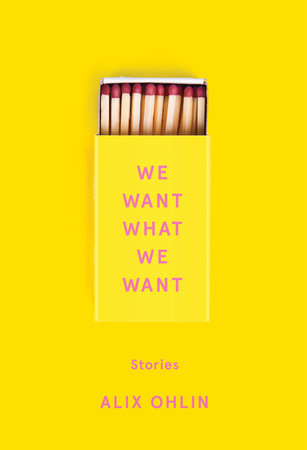
We Want What We Want by Alix Ohlin

Many of the stories in my new collection, We Want What We Want, are about people who want to remake their lives and who discover, in the attempt, some astringent and inescapable truth about who they are.

In “Point of No Return,” a woman tries to find peace through increasingly outlandish New Age therapies. What she’s really looking for is an existence that can be purely and fully controlled, which is of course unreachable. In “The Brooks Brothers Guru,” a woman sets off to rescue her cousin from a strangely sophisticated cult he has joined, but finds herself questioning her isolation and craving the community he has found there. “Money, Geography, Youth” is a nest of conflicting desires as a young woman comes home from a year abroad to discover that her father is engaged to her best friend. Is this rushed engagement just an inappropriate and mismatched set of needs? Or is it something potentially less ridiculous, and more complicated? I’m always reaching for that space where a seemingly absurd desire deepens into something more ambiguous, and harder to deny. 

Here are 8 short stories I love, that have opened up the way I think about desire and its impossibilities—about why and how people want what they can’t have, and what they do about it.

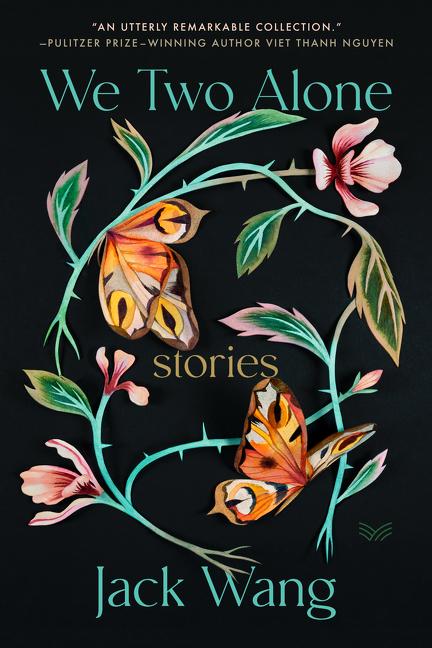
“The Valkyries” in We Two Alone by Jack Wang

In Vancouver, in 1921, a young man named Nelson lives in the back of a laundry in Chinatown. He wants to play hockey, but racism keeps him from the game—until, that is, he has the idea to disguise himself and join a new female team, the Valkyries. His friendship with a teammate complicates his desire, and Nelson’s ambitions—to play, to love, to belong—ultimately prove impossible. Still, “at fleeting moments, caught up in the joy of it all, he felt neither boy nor girl but simply a child again, playing shinny with Sammy in Stanley Park.”

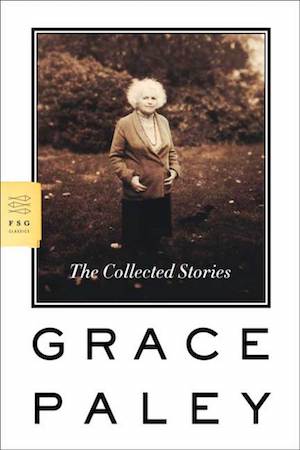
“Wants” in The Collected Stories by Grace Paley

Paley—there is no greater genius of compression and wit—wrings beauty and pathos out of this brief story in which a woman runs into her ex-husband while returning a decades-long overdue book to the library. The narrator’s reflection compacts every unattainable desire of a full and storied life:

“I want, for instance, to be a different person. I want to be the woman who brings these two books back in two weeks…I want to have been married forever to one person, my ex-husband or my present one.”

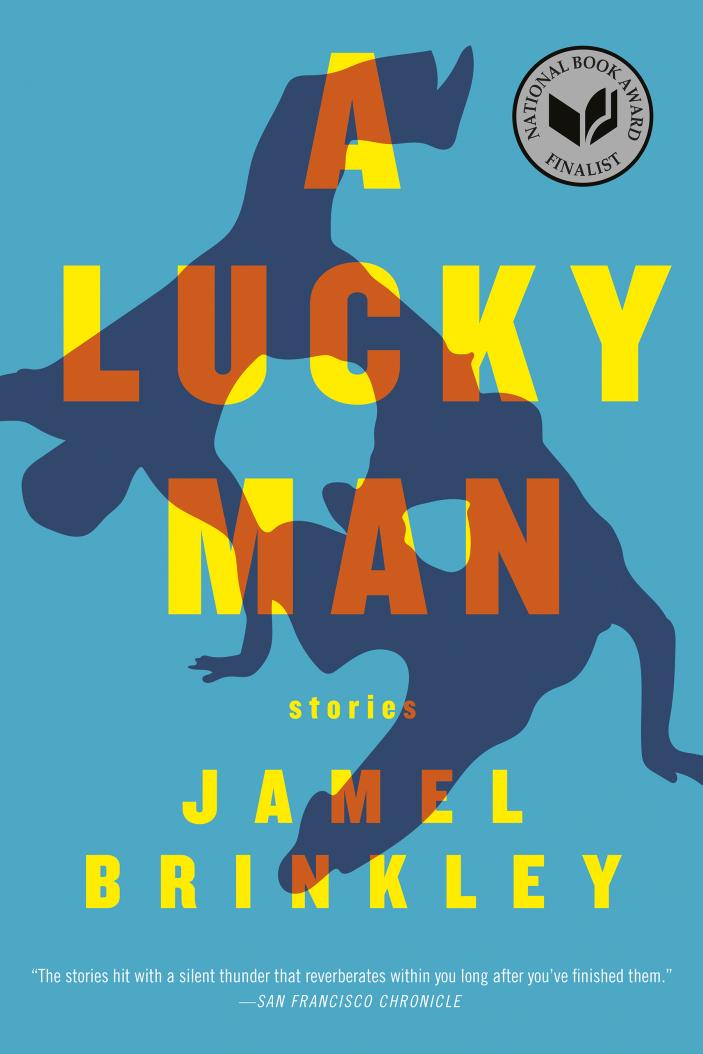
A Lucky Man

“No More Than a Bubble” in A Lucky Man by Jamel Brinkley

This sinuous and elegantly surprising story starts with two friends pursuing a couple of attractive women at a party. At first, it seems like a story about a hookup, but what the narrator’s really looking for is more elusive than that—it has to do with his father and his own identity, and he’ll be looking for it his entire life.

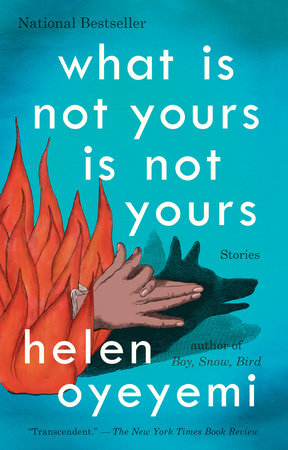
What Is Not Yours Is Not Yours by Helen Oyeyemi

“Is Your Blood as Red as This” in What Is Not Yours Is Not Yours by Helen Oyeyemi

All the stories in Oyeyemi’s collection What Is Not Yours Is Not Yours court and subvert tropes of the fairy tale, and each one is hectic with passing characters and unanswerable questions. This story starts out following one teenage girl who, longing for the attention of another, follows her to puppet school. But its most poignant character is a puppet who longs for desire itself.

The Atlantic

Person of Korea” in The Atlantic by Paul Yoon

Paul Yoon is a master of dramatizing the complex and subtle movements where the conditions of world politics wash over the lives of individual people. In this heartrending story set in a village of Korean laborers near the southeastern edge of Russia, a boy sets out to find his father—a quest for reconnection and belonging in a world of displacement. 

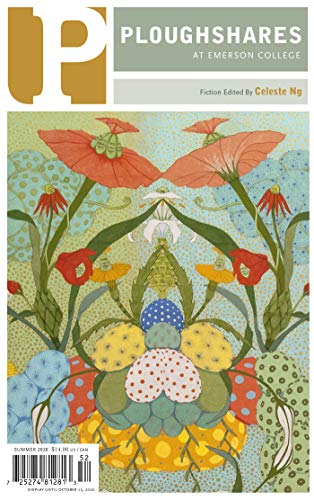
Ploughshares Summer 2020 Guest-edited by Celeste Ng - Kindle edition by Ng,  Celeste, Yu, Charles, Brinkley, Jamel, Greenidge, Kaitlyn, Shepard, Karen,  Larson, Sonya, Hadero, Meron, Lioutaia, Maria, Fishbane, Joel, Gordon,  Peter. Literature

“Code W” in Ploughshares: The Summer 2020 Issue by Sonya Larson

This exquisite, thoughtful story centers on a park ranger in training, Chuntao, who wants to love both her job and her species but can’t do either while visitors to the park behave in ways so destructive and selfish. “Hungry for danger, hungry for disaster?” Chuntao thinks. “It was a desire that lived in only two kinds of people: those who had only known both and those who had never known either.” 

“The Liberator” in Freeman’s: The Future of New Writing by Tania James

The impossible wants of the characters in this remarkable story circle around the most ordinary of objects, a bicycle. Yet each of the characters wants something extraordinary: to be forgiven, to find justice, to bring a loved one back from the dead.  

Breathing Exercise” in The Yale Review by Raven Leilani

This story of a young artist in New York dealing simultaneously with professional rejection, shortness of breath, and a stalker kept me up at night after reading it—it’s so profoundly uneasy and sad. What the protagonist wants, the thing she (heartbreakingly) can’t have, is to live “beyond the body”—to make her art and to be free.

True Justice for a False Man of God

Caesara Pittman, or a Negress of God 

“Do you, Miss Caesara Pittman, in the year of our Lord eighteen hundred and sixty-six, aver to tell the truth, the whole truth, and nothing but the truth?” Davidson, the attorney of the City of New Orleans, asks. It’s hot outside and hot in the courtroom. Too hot for so many people to be on those benches, close as piglets on a mama pig’s teats. 

I touch the Good Book, my fingers touching on the gold edges. That man, Buford—now I know his family name—sits at the table by his own lawyer, who wears those round glasses. Buford’s eyes wide with hate. He making all kind of faces at me. With those stitches down his cheek, looks like he’s Lucifer hisself. But this book never sent me wrong. I place my hand on my left breast. 

“Yessuh, I do,” I say. “I promise on my very heart.” 

“Where were you on the evening of Wednesday, July 25, 1866?” Davidson rests his hands behind his back, making his belly stick out some. He’s more than a couple of feet away. But I smell talc and pipe tobacco every time he pass by. 

“As you say, mister. It was Wednesday, and I was down on Good Children Street to buy baguettes. I make bread pudding for my husband and young ones on Saturdays.” 

“On Saturdays?” Davidson’s curled mustache shakes. 

“You got to let it stale up good before you use it.” 

“Of course.” Davidson laughs. Some of my folk in the gallery laugh good, too. 

“It was long about sunset…” I wasn’t far from home, had a basket on my arm. Had left the butcher where I cut offal for other free Creoles like myself. Had just passed the barn where they keep the streetcar mules when footsteps made themselves known to me. Some girls had been handled wrong lately. And some of them had been shamefully desecrated. 

“I didn’t come down here for no Devil work,” I said, hoping to be heard. A man came out the shadow. Under the gaslight, this white man wore the clothing of a man of God. A white collar around his neck. A cross hanging underneath that. 

“Just taking note of one of our Father’s children.” In the light, he rubbed his hands like he was cold. 

But he had big shoulders and big, rough grabbing hands. The kind of hands that plowed soil or worked a cargo ship. Not the kind of hands that prayed over the sick or baptized little ones. I held my hand out, palm up. “You ain’t no kind of priest.” 

He smiled, all the yellow teeth in his mouth shining at me. Looked like a mouth full of kernels. 

“I don’t take offense in the ignorance of your kind none,” he said. And I wondered if I was wrong about who he might be. But I thought on the book and words came to my mouth. 

And I saith: “Take no part in the unfruitful works of darkness, but instead expose them.” 

“What?” 

“I rebuke you!” I knew enough to know that a priest should have got a twinkle in his eye when you said the Scripture to him. But this heathen’s eyes stayed black. He might as well have been deaf. I dropped my basket and ran. I was fast but got tangled in my skirts. Fell on those cobblestones. Hurt my wrist. 

He fell on top me, clawing at my clothes. Pushed me on my back. He pulled at my chignon. That made me madder than what I already had reason to be mad about. He shouldn’t have done it. But, the exacerbated madness reminded me of the poultry knife I kept in my hair. I bought my manumission five years before the war. I was a free woman, but that didn’t mean I didn’t have to prove it from time to time. When slave traders needled me, I had my papers in one hand and my shiny little knife in the other. 

This man’s sick breath was on my face, and he was yanking my skirt. So, I jugged that knife in right under his left eye and drug it down to his lip. I smelled the metal that’s in blood. He yowled like a pitiful li’l dog. If I would have drug up instead of down, I could have popped his eyeball out like a—

Davidson raises his arm. “Thank you, Miss Pittman. That will do enough. We do not wish to give the jury night terrors.” 

I huffed. 

“What about my terrors?” I say, but he don’t hear. 

Davidson points at Buford. “Is this the man who accosted you?” Buford still making faces. He ugly as a pot of chitlings. His outside match his insides. I like that I did that to him. 

Outside the courtroom window, the paddleboat toots. I watch a colored man throw bread at a duck. Some changes done happened since the war between the states. I was a slave most of my life working the house on a plantation up near St. Francisville. I ain’t a slave no more, but I know these people in the juror box. Few of them would have wished any of us found freedom. Mr. Barker with the ruddy red cheeks sells candles and other fine things. The man with the mutton chops runs carriages. The dandy one on the end is from Virginia, almost a carpetbagger. Virginians used to sell my people to New Orleans for punishment. They hoped heat and terror work would kill us all. And then there’s all the marching men the white mob killed at the convention not long after my meeting with Buford. The whites trapped the good men inside that Mechanics’ Institute. When the men surrendered, dropping weapons, hands up, the white mob murdered them anyway, right in the streets. Paul Dostie was holding a white flag when they shot him. 
I expect no kind of justice here. I’m just another darky, hardly worth throwing away the life of one of their own, guilty or not. 

So, we really only here on account of how loud Buford screamed when I cut him. Like a babe with the colic. They saw my clothes, shredded like I’d been clawed by a lion. And they saw Buford, too big around the shoulders and too rough around the hands to be a priest. The police grabbed Buford on the spot. We made the papers. That’s why we here. Because of all the attention. 

“That man at that table over there?” I ask. 

“Yes, miss,” Davidson, the attorney of the City of New Orleans, says. “Have you seen him afore?” 

“The man over there who’s ugly as sin?” Some of my folk up the galley laugh again. But the men in the juror box are beet-faced. 

“Miss Pittman, I must insist—” 

I squint. “I never seen that man before in all my born life,” I say. “I swear it.” People all around the room gasp. 

The judge bangs his gavel. Buford’s lawyer with the round glasses stands. 

“Your honor, I move for an immediate dismissal of the present matter.” 

Later, it’s dark out. The bells of St. Louis Cathedral over Jackson Square ring out. This is how I know it’s round midnight when Buford shows his face at the exit of the district jail. A policeman shoves him out. Buford dusts off his coat and starts toward the cathedral. But he won’t make it. I doubt he was going to pray to the Lord anyhow. Don’t matter none. My basket is full of baguettes and oranges for my young ones. And I have a knife. A long one, too. I use it for gutting sow. When I pull it out, it shakes like it’s singing. Don’t matter if Buford was going to pray. I’m his Lord tonight. 

11 Short Story Collections that Practice Magical Feminism

To be a woman, or female-identifying, is to be a creature of contradictions. Women construct multiple personas to make themselves palatable in different contexts, temper emotion for fear of repercussions, and endure such constant scrutiny that they must become endlessly adaptable. Magical feminism—a subgenre of magical realism that’s usually employed in a feminist and postcolonial context—embodies these contradictions, producing them on the page by melding the surreal and the quotidian. 

Contradictions in magical feminism are accepted as part of the general female experience: women can be both witches and healers, can bear the burdens of sexual trauma and still seek pleasure. The mundane and the impossible coexist to achieve a defamiliarization that mirrors the strangeness of everyday female experience. There could be demons manning the cash register at the grocery store, ghosts riding the bus, or people turning into animals. Magical feminism also subverts the restrictive conditions of reality to allow female-identifying characters to reclaim agency. In these texts, women use extraordinary power in order to affect their wills; magic enables them to re-create the world as they want it to be.

Short stories are the perfect vehicle for magical feminism because each one functions as its own encapsulated world. Every story has its own rules, its own internal logic. Story collections, then, can convey one writer’s manifold experiences of reality, communicating a few central themes from a multitude of angles. If a short story is a planet, a collection is a universe. 

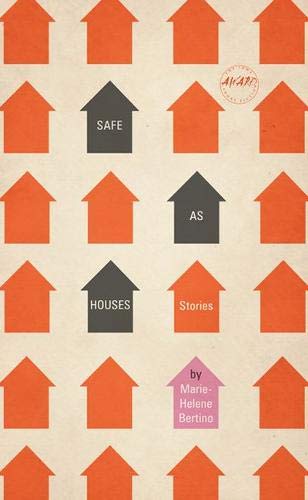
Safe as Houses by Marie-Helene Bertino

This Iowa Short Fiction Award-winning collection runs the gamut from actual aliens to emotional alienation. In the title story, an English professor mourning the loss of his wife robs other people’s homes of sentimental objects. Another piece features a woman having dinner with the idea of her ex-boyfriend, wondering why we often love the fantasies we invent more than our own realities.

This book proves that not all houses are shelters. Still, it’s possible to find comfort in the corners of Bertino’s world. Read a story from the collection here, and to hear Bertino talk more about the art of incorporating magical feminism into fiction, listen to her salon with Elissa Washuta here

Sarahland by Sam Cohen

Cohen’s debut features a host of protagonists, all named Sarah, who grapple with whiteness, privilege, and heteronormativity in ways that range from quotidian to fantastic. Each Sarah resists the singular (but also conventional) identity that’s been assigned to her: one plays dead for a necrophiliac, one becomes a tree, and one submits to a culture of normalized sexual violence in pursuit of a coveted “Mrs. Degree.” The collection as a whole employs strangeness to interrogate how malleable women’s identities can really be. Read “Sarahland” here.

The Rock Eaters by Brenda Peynado

This collection proves Peynado’s mastery of double-meanings and metaphors. A story called “The Dreamers” explores an overlapping group of young, undocumented immigrants and a magically sleepless religious order. In the title story, children levitate, floating away from their families and home countries. They take to eating rocks in order to stay grounded. This genre-bending book tackles diaspora and xenophobia, using speculative elements to make the difficult experiences of first-generation immigrants emotionally intelligible.

Fen by Daisy Johnson

Best known for Everything Under, her genderfluid take on the Oedipus myth, Daisy Johnson’s stories are just as creative and timely as her novels. In this collection, set entirely in the drained marshlands of England, girls transform into eels, the dead are reincarnated as foxes, and a house falls in love with its inhabitants. The fens are liminal spaces that change with the tides, and Johnson draws sharp parallels between the landscape and what it means to be female. Read Roberto Rodriguez-Estrada’s interview with Johnson here.

Her Body and Other Parties by Carmen Maria Machado

Magical feminism at its finest: this collection handles queerness, trauma, and women’s agency through an uncanny lens. Machado’s tales, like many magical feminist pieces, defy genre classifications: she writes a campy take on Law and Order: SVU with as much poignancy as a story about an epidemic causing women to evanesce.

A National Book Award finalist and winner of the Shirley Jackson Award, this book asks what it means to have a female body and what powerful forces such a body might contain. Read more about the impact of Machado’s work in “What I Don’t Tell My Students About The Husband Stitch.”

The Dark Dark by Samantha Hunt

Pregnancy and motherhood are at the fore of this book. In one story, thirteen simultaneously pregnant teenagers bewilder a high school guidance counselor. In another, a woman who’s had a miscarriage suffers quietly as she anticipates the destruction of an approaching hurricane.

Throughout this collection, Hunt asks who gets to be a mother, who deserves to be one, and how those two things differ. She also uses the surreal to look at the romantic and interpersonal. In “Beast,” a woman who’s questioning her relationship turns into a deer at night. You can read Hunt’s personal, intimate writing over and over, relishing something new every time.

Tender by Sofia Samatar

Sofia Samatar updates some classic myths and invents her own with this collection. In “Selkie Stories are for Losers,” a poignant coming-of-age story featuring the were-seals of Irish and Scottish legend, a teenager comes to terms with the reason her mother has left her family.

The title story revolves around a woman who’s given up her life as a mother and businesswoman to tend a radioactive waste facility, which she can never leave. Throughout this collection, Samatar employs magical realism and sci-fi tropes to interrogate how women claim agency—and at what cost. Read Samatar’s “Miss Snowfall” here.

The Bloody Chamber by Angela Carter

Contemporary readers already know that female characters have little power in fairytales. But what would happen if Belle never fell in love with the Beast, or if Red Riding Hood’s desire was fierce enough to tame the wolf?

Carter twists traditional tales into almost unrecognizable shapes in this collection, highlighting how women are perceived, objectified, and often underestimated. Outside the context of their fables, her characters are recognizable in their humanity: driven by desire, rash in their decision-making, and infinitely fallible. These stories revolutionized the feminist fairytale in the 1980’s, and remain just as relevant today. For a glimpse into the collection, read “The Lady of the House of Love.”

What is Not Yours is Not Yours by Helen Oyeyemi

The nine linked stories in this collection address youth and desire, locks and keys, individuality and conformity. They lay bare identity from different angles, usually in ways that provide more questions than answers. They are all undeniably magical. “Is Your Blood As Red As This?” features one character who’s a ghost and another who’s a genderless puppet in human form. In “Books and Roses,” one key opens a library, a garden, and clues to two lovers’ fates. Oyeyemi’s prose is dreamlike, scintillating, and impossible to put down.

Likes by Sarah Shun-Lien Bynum

Likes follows girls becoming women, women reminiscing on girlhood, and all of the changes that come in between. Bynum’s metamorphoses encompass both the strange and the mundane: in one story, a father watches his daughter grow through the lens of her Instagram page; in another, a mother and daughter navigate a world of fairies, elves, and private school elitism. Bynum’s writing is sharp and observant throughout, defamiliarizing a world we know so well that it often gets overlooked.

The Stories of Eva Luna by Isabel Allende

This collection is arguably the progenitor of the magical feminist genre. The book’s narrator entertains her lover with the stories it contains; Interweaving the real and the magical, Eva Luna’s stories explore love, vengeance, and female strength. She describes a priest whose prayers to a local saint restore his sight, a schoolteacher who enlists the whole town in burying the body of the man she has decapitated, and a woman who sells words so powerful they turn an outlaw into a political candidate. This collection explores the ways women use words to shape both their own identities and the world around them.

7 Novels About Losing Faith in Religion

I believed the stories of the Bible more than I believed anything else for the majority of my life. I quoted scripture to make decisions, considered parables when confused, consumed evangelical Christianity in a kind of keg stand of my own righteousness. But what I learned when I lost my faith, slowly and then all at once, is that evangelical Christianity isn’t a religion—it’s a culture. Losing your faith is both an existential drought and a culture shock. 

I lost the most influential book in my life the minute I lost my faith. There isn’t much scripture to tell you how to stop believing. And it was hard for me to find stories in general that I needed to help understand and survive my experience. There were books about breakups and friend fights and college decisions; novels about worrying about your future and your family and your dreams. But there weren’t very many novels about wondering whether everything you’d ever believed was a lie. There were even fewer novels that were able to untangle the harm the white evangelical church has done and also the love it can provide. 

When I started working on my debut novel God Spare the Girls, I was processing my own loss of faith, and trying to understand how something that had been so fundamental to my development as a person could have also been so harmful. The story is tightly focused on Caroline Nolan, the daughter of a megachurch evangelical pastor, who is forced to question everything she’s ever known when she discovers her father’s secret. The drama that unfolds centers on her church, her community, and her family, but it’s also about the internal drama of questioning and how painful that can be. 

No work, though, is ever really the first. As I wrote, I found other books about Christianity, books about losing faith, books about seeing the place that you’ve known your whole life after the scales have fallen from your eyes. These 7 books made me feel the way I hope my book can make someone feel: less alone. 

Revival Season

Revival Season by Monica West

 Monica West’s story is about a young revival circuit preacher’s daughter who is forced to question the nature of miracles and the power of God. Though we did not know each other when we were writing our books, all of the same questions are in each of our novels: how do you question truth? How do you recognize power? What do you do when something you thought was good turns out to be bad? The plots aren’t similar, and the places our protagonists end up are drastically different, but reading Revival Season made me realize just how universal these questions are, and just how meaningful.

The Mothers by Brit Bennett

Brit Bennett is a beautiful writer and her prose is mesmerizing, but what I loved most about her debut novel The Mothers is its contradictions. The story is about Nadia returning to the place where she grew up and being forced to confront her past: including her relationship with the pastor’s son. Bennett lays bare the biases of this California church and the effects of a tight-knit community that gossips. She doesn’t shy away from describing the shame many young women in the church feel. 

The Abstinence Teacher by Tom Perrotta

The Tabernacle of the Gospel Truth—the fundamentalist church in Tom Perotta’s The Abstinence Teacher—is a bit more extreme than modern-day evangelicalism, but their beliefs on sex are the same. This story of a high-school teacher forced to teach a Christian sex-ed curriculum is way funnier than it has any business being. Its central pastor is warm and loving, but holds strict doctrinal beliefs, and Perrotta isn’t afraid to make good-natured jokes about the culture of Christianity. 

Kristin Lavransdatter by Sigrid Undset

Kristin Lavransdatter by Sigrid Undset

This early 20th-century Norweigian trilogy is a family saga about a young girl named Kristin Lavransdatter living in the 14th-century. Kristin is sent to a nunnery, and though her faith isn’t evangelical, much of the books focus on her questions about God’s nature and his wrath. “I didn’t realize then that the consequence of sin is that you have to trample on other people,” she says. The book is full of as many proverbs as the Bible (“man proposes, God disposes”), and treats the faith of this young girl as just as valid as the knowledgeable priests she interacts with. 

Transcendent Kingdom by Yaa Gyasi

Transcendent Kingdom by Yaa Gyasi

Gifty, a talented 28-year-old scientist, must deal with her faithful mother’s second major depressive episode. Gyasi does a marvelous job of explaining the tension between heathen child and religious parent, and of laying out how unaware of our own trauma we can be. 

Wise Blood by Flannery O’Connor

Flannery O’Connor’s first novel Wise Blood is one of the only books I’ve ever seen that displays the pipeline from extremely religious evangelical to extremely pronounced atheist. Her protagonist Hazel Motes, grew up with doubts about his faith and after the war begins to preach the gospel of his lost faith. What I love about this book is that O’Connor portrays Motes with such sympathy, allows him to be terrible to people around him without ever demonizing him, and shows that zealousness isn’t reserved for Christianity alone. 

Go Tell It on the Mountain by James Baldwin

Go Tell it On the Mountain by James Baldwin

James Baldwin’s novel Go Tell it On the Mountain is one of my favorite stories about preacher’s kids. Baldwin’s protagonist John Grimes is desperate not to be like his father, the best pentecostal preacher in Harlem. The novel is littered with Biblical allusions and stories, and Baldwin is forthright with the cause of Grimes’s loss of faith—his disillusionment with his father:

“John’s heart was hardened against the Lord. His father was God’s minister, the ambassador of the King of Heaven, and John could not bow before the throne of grace without first kneeling to his father.”

Your Summer Reading Horoscope

As both a Virgo and a lesbian, I love talking about books, and I loved talking about astrology, and I’m always right. Therefore, you can be assured that this list is scientifically accurate and you’ll definitely love the books assigned to your sign. I’m not here to tell you who you are, I’m just here to tell you what to read.


Aries

Animal by Lisa Taddeo

Taddeo’s debut novel explores female rage, male violence, and the strength that’s required to step into your power. Perfect for the fiery Aries who wants to examine the intersections of revenge and freedom. Read our interview with Lisa Taddeo about writing desire and depravity.

Walking on Cowrie Shells by Nana Nkweti

People sometimes forget that Aries love to have fun. This short story collection examines the complexities of Cameroonian American identity in fascinating, unexpected ways. Not even an Aries could lose interest in this book. Read our interview with Nana Nkweti about the multiplicity of African womanhood.


Taurus

Don’t Let It Get You Down by Savala Nolan

Taurus is such an embodied sign that I know they’ll love this book about bodies, gender, and race. Tauruses will come out of this book with a deeper understanding of themselves and their relationship to their bodies. 

Wild Souls by Emma Marris

Tauruses are nature-lovers, grounded in the physical world and born with a deep appreciation for the land. Thoughtful, earthy Taurus will love this book about animals and how humans relate to and interact with them.


Gemini

With Teeth by Kristen Arnett

Messy. Queer. Kristen Arnett. What more do you need, Gemini? Read our interview with Kristen Arnett about how being a queer mom is terrifyng.

The 2000s Made Me Gay by Grace Perry

Nobody appreciates pop culture more than Geminis—you have to stay relevant to be the coolest person in the room, after all. This book is quirky, funny, and full of glittery essays that are sure to entertain.

Cancer

Ghost Forest by Pik-Shuen Fung

This family novel about grief and memory is perfect for Cancers who love being in their feelings. While mourning her father’s death, a Chinese Canadian woman turns to her mother and grandmother for answers about his life in Hong Kong. Cancers are sure to love this emotional book. Read our interview with author Pik-Shuen Fung about family separation and living between countries. 

Palace of the Drowned by Christine Mangan

This book is literally set against the 1966 flood of Venice, how much more Cancer-y can you get? Add a strange friendship between a novelist and her mysterious fan, and I know any Cancer will drink this book up.


Leo

Malibu Rising by Taylor Jenkins Reid

A famous family, a house party in a Malibu mansion, a story told over the course of a single night. It’s Leo catnip, plain and simple.

Rise to the Sun by Leah Johnson

This book is literally set at a music festival. A music festival! It’s about love and music and two girls finding each other over the course of three days. Is that enough for you, Leo?

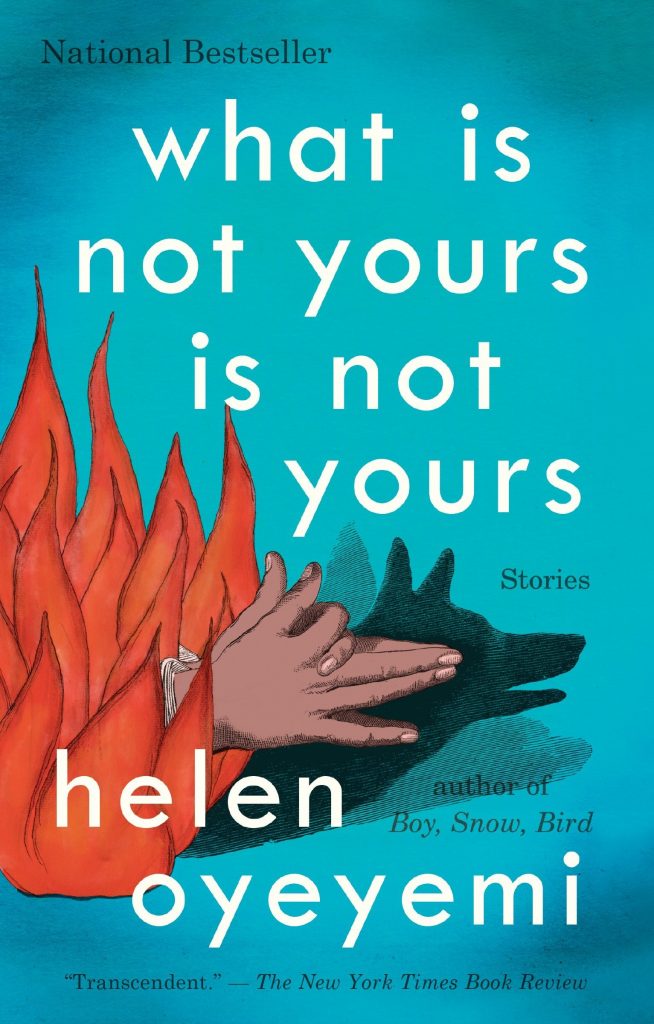

Virgo

The Woman in the Purple Skirt by Natsuko Imamura, translated by Lucy North

A suspense novel about obsession and manipulation. People don’t think of Virgos as dark, but watch what happens when intense analysis meets obsessive observation. 

There Plant Eyes by M. Leona Godin

This book about the depiction of blindness in popular culture is an expertly-assembled collage of information that any Virgo would appreciate. An compliation of history that moves from Stevie Wonder to John Milton to Godin’s personal experience, this book is both expansive and focused, a trait that Virgos are sure to love. Check out our reading list by M. Leona Godin.


Libra

Anne-Marie the Beauty by Yasmina Reza, translated by Alison L. Strayer

This novel about an aging actress reflecting on fame, her marriage, and her career belongs in Libra 101. Gimlet-eyed, sparkling, and insightful, just like a Libra.

The Beginners by Anne Serre, translated by Mark Hutchinson

Only a Libra could be happily married for 20 years, only to fall in love-at-first-sight with a man who reminds them of a book character. 


Scorpio

A Ghost in the Throat by Doireann Ni Ghriofa

This hybrid book weaves together essays and autofiction as it follows the story of a poem that connects two women across centuries. There’s murder, blood-drinking widows, and, of course, poets. It’s Scorpio heaven.

Build Your House Around My Body by Violet Kupersmith

A ghost story about two women who go missing years apart in Vietnam. Hauntings, revenge, and possessions abound in this time-bending novel that couldn’t be more Scorpio if it tried.


Sagittarius

Bewilderness by Karen Tucker

This novel about friendship, hustling, revenge, and the opioid epidemic is perfect for a Sagittarius looking to get a little more literary. Check out our reading list by Karen Tucker about hunger and hustle in the restaurant industry.

The Tiger Mom’s Tale by Lyn Liao Butler

A novel about travel, family secrets, and whirlwind romance—do I have your attention, Sagittarius? A young woman living in New York City has to decide whether to return home to Taiwan, or leave her family forever. High stakes and high drama for this fire sign.


Capricorn

The Startup Wife by Tahmima Anam

A couple create an app that becomes popular beyond their wildest dreams—such a Capricorn thing to do—but with the fame comes drama and instability. Tech meets religion meets marriage in this geek-chic novel that’s perfect for any Capricorn who loves following startup news.

Mona at Sea by Elizabeth Gonzalez James

Capricorns will immediately relate to Mona—the confident, driven, job-focused narrator who lands her dream job only to be sent spiraling by the 2008 recession. Caps will also not-so-secretly enjoy the opportunity to watch someone fail from a safe distance. Check out our reading list by Elizabeth Gonzalez James about being unemployed and underemployed.


Aquarius

Everyone in This Room Will Someday Be Dead by Emily Austin

This novel about death, casual obsession, and the unexpected is perfect for an Aquarius. A woman pretends to be someone she’s not while becoming increasingly intrigued by the death (murder?) of her professional predecessor. Much like Aquarians themselves, this novel sounds dark but is actually quirky and fun. Check out our reading list by Emily Austin about books that will make you feel happy to be sad.   

Skye Papers by Jamika Ajalon

Punks, artists, and revolutionaries populate this novel about three new friends exploring the underground art scene in 1990s London. This novel is brilliantly weird and wildly Aquarian. 


Pisces

One Last Stop by Casey McQuiston

Romance! Mystery! Time travel! This sweet novel about two women falling in love on the Q train is the perfect Pisces summer read. You’re welcome in advance.

What You Can See from Here by Mariana Leky, translated by Tess Lewis

A woman’s dream of death sets an entire West German village on edge as they try to guess who will be the one to die. Any novel where an entire town believes in magic and visions is going to be a good pick for Pisces, but this one is especially great.