Growing up I was touched inappropriately and repeatedly by someone I loved and trusted. The first few times it happened, I think I thought of it as part of a game and I played along, but as I got older, visits to this person’s home filled me with dread. The gradual realization that I had been participating in something I thought was one thing and turned out to be another altogether was sickening—literally. My stomach burned at the thought of seeing this person I both loved and feared. I was ten before the reality of what had transpired—what would continue to transpire—actually dawned on me, and I was also crippled by the fact that I had no name for it or the feelings it gave rise to.
Worst still, I didn’t have the words to stop it.
But where does a child go in search of the ones that tell of such a thing? To whom do we deliver these words in order to seek protection when the abuser themselves is someone who claims to love us?
Almost twodecades later, I began to write a novel with incest at its core. What happened to me was nothing at all like what my character endures. May DuBerry Cherymill, one of the main characters in my debut novel, A Hand to Hold in Deep Water, is raped by her father and bears his child. Her experience is far more brutal than mineand for a time I even questioned whether I had the right, in the age of own voices, to tell her fictional story. I wondered if my own experience, if measured by degree, made me less qualified to know my character’s experience. How do we quantify victimization? Stranger rape versus date rape, adult victim versus child victim, violence versus coercion? All these things matter in a court of law, but in the court of our own mind it’s a very different process. We judge ourselves harshly.
What happened to me over the length of my childhood was complicated, but the way it bled into the rest of my life was surprisingly simple. I suffered from depression and a fear of being touched by even my closest family members, a sense that physical gestures that most would interpret as comforting are actually disingenuous. Friends will tell you I’m not a hugger. As a young adult, taking leave of my godmother, a woman I adored, she reached to hug me goodbye and stopped herself. Oh, I’m so sorry. I know you don’t like goodbyes. Something crinkled in my heart at that moment. I felt discovered, as if my secret had slipped out in some kind of code that she was at that very moment deciphering. Other than my husband and children, I am not one to relax into a hug between friends or the family I grew up in. There is always that moment of discomfort that leaps into my throat just a split second faster than the alleged warmth of a hug. The length of a hug is measured by how long I must endure before I can wiggle my way out of it—released, back to breathing my own air.
What happened to me over the length of my childhood was complicated, but the way it bled into the rest of my life was surprisingly simple.
Surprisingly, when I met my husband, I couldn’t keep my hands off of him. We still, to this day, hug and touch one another constantly. He is the human I am good with. He is the one I trust implicitly and, other than my children, he is the only person who can wrap me in his arms without that spark of dread igniting.
The depression that trailed me through my childhood, teens, and adulthood, wasn’t something I attached to my victimization. I didn’t see a clear and direct line between the two. I only knew that I couldn’t catch a lick of true happiness on most days. The kindness of others made me squirm and felt like a debt. What do I owe in exchange? What will you take from me? My husband may have been the exception, but any flickering sign that he didn’t have my best interests at heart could send me into a strange and feral rage, convinced he had tricked me into loving him.
At twenty-seven, in a writing class led by Richard Bausch, I wrote a short story that would eventually become the first chapter in my debut novel. It wasn’t a masterpiece, but it clung to me over the next twenty years, and I obsessively imagined a backstory around the characters that would explain how they found themselves in that moment. In the original version I wrote back in that class, Willy, nearly seventy years old and steeped in his own disappointments, is awaiting the arrival of his thirty-five-year-old stepdaughter. His much younger wife had “run off” thirty years earlier, leaving him toraise Lacey, only five at the time, alone. The missing wife, May DuBerry Cherymill, was at the crux of the story. And I kept asking myself, who was May, and what would compel a woman to abandon her child and a man she loved?
I kept asking myself, who was May, and what would compel a woman to abandon her child and a man she loved?
Precisely how I landed on May’s backstory—that she was a victim of paternal rape, from which she became pregnant with Lacey—is a mystery to me, but I did know that Willy and Lacey, who appeared in that first short story, were loved by May, and that she left them would require a damn good explanation. I was a mother myself when I conceived of May and so it was natural to examine my own self for a link to who she was and what her experience had been. At the same time, I needed to be sure that, from a plotting standpoint, her backstory justified her husband and child choosing not to look for her, believing she disappeared of her own volition.
When I dug into my gut and dredged up a plausible explanation for May’s behavior, I found myself writing a story with an incest victim in the bullseye, paying particular attention to the way a victim’s mind bends and spirals in the years following trauma. May held on to her secret in the same way I held on to mine, never really making a conscious connection between her own abuse and the sense that she was somehow unworthy of the love around her. I didn’t plan to make May suffer with depression. But it dripped onto the pages and I couldn’t wipe it away. I didn’t plan for May to be backed into a place in her head that she couldn’t escape from. She went there on her own and I chose instead to bear witness. I did my due diligence in researching this novel, but never once had to research the long-term effects of incest. I simply took my own smaller—but by no means small—experience and I used it to infect May, watched the viral bloom of it.
This novel went in and out of a drawer over two decades. But always when I pulled it out, May was waiting for me.
Sometimes what landed on the pages surprised me. Niggling thoughts that had woven in and out of my consciousness over the years suddenly became clear. Part of the novel includes May’s diary and it is through this diary that we learn what May has endured. At one point she writes, “I don’t know how to tell of this, and so I will tell it slow, just as it happened, and in the end of the telling I will read it back to myself and find the very place where I went wrong.” She then proceeds to relay the most recent attack upon her by her father. At the end of the passage, she concludes, “I have read this over and tried to imagine it different. What I could have done different is nothing. I am nobody special.” There it was, the truth of what had been clawing at me most of my life, I am nobody special. I had been stripped of the chance to believe I had a place and a purpose in this world. That sense of worthlessness has its collateral damage as well. For May, for me, it meant that we were never able to fathom the ways in which we were loved. We can love, but our capacity to be loved is compromised. The inability to know our worth makes it difficult to maintenance the most important connections in our lives—spouse, children, extended family, and dear friends.
May is drawn to water and fantasizes about drowning. My impulses were more violent when it came to self-harm. I fantasized about terrible accidents—usually involving a rogue vehicle, a stray bullet, a sharp knife—that would take me away. Unlike May, I was a good strong swimmer until I was ten and developed an inexplicable fear of water, of what lay under the surface. I am not exaggerating when I say that for many years I could not even take a bath. I went to college on the water and live in a town that boats on weekends. I waterskied as a child, swam in a lake every summer, and grew up with a swimming pool in my backyard, but by the time the abuse stopped in my early adolescence, those things were lost to me. My fear of water is real. I hyperventilate in water. The pressure of it enveloping me, the terror of something below the surface touching me and not knowing what that something is. Perhaps that is why I couldn’t help but imagine May drawn to water but incapable of swimming. I took the thing that had been stolen from me and turned it into May’s Kryptonite.
This novel went in and out of a drawer over two decades. But always when I pulled it out, May was waiting for me, and I would get an uncanny sense of having abandoned her. It was as if she was slipping off the pages and admonishing me to get on with it—get this thing written. I melded my own shame with her storyline and it unfolded organically, though the inevitability of where it would take her frightened me. She was the character I had to let chart her own course. I ached for her to heal, but I refrained from intervening in what was happening on the pages.
Imagine my surprise when I wrote a character who is utterly destroyed by her victimization—who doesn’t rise out of the ashes—and found myself rising instead.
We call these women survivors, but the euphemism does a disservice to those who do not survive, to those who will never rise again beyond the shame or dig themselves out of the sadness, those who will never again see their own value. The word survivor is meant to empower us. But it becomes instead a challenge, one most of us cannot rise to, crippled as we are by the way our mind has turned on us. And so, once again, we fail.
What we do is endure. We accept that we are nothing special.
My years of sadness were bundled with shame and a sense that if someone knew me—really knew my deepest self and secrets—they would know I was unworthy. But I didn’t consciously attach it to what had happened to me as a young girl. That is to say that I couldn’tplot the way from abuse to my mental state. Only that the feeling in the pit of my stomach when my depression crested matched perfectly to the feeling I recalled hitting me for the first time when I was ten and on the way to see the person I loved and feared. And then, in the last year of writing the first draft of this novel, a strange thing began to happen. As May’s depression deepened, mine began to lift. A kind of transference was taking place. The clarity around cause and effect was on the pages.
Writer Roxanne Gay has paid a lot of attention to the healing power of writing. And I have, for the most part, scoffed at this idea. I misunderstood what she meant when she said “I wrote myself back together again. I wrote myself towards a stronger version of myself.” I assumed I needed to write a heroine in order to claim my own healing. In other words, I needed to use the example of a fictional character who overcomes trauma in order to inspire mere mortals like myself to do the same. So imagine my surprise when I wrote a character who is utterly destroyed by her victimization—who doesn’t rise out of the ashes—and found myself rising instead. I can’t explain it, I don’t understand it. In some hyperbolic way—in writing a horrific fictional experience in which the blame cannot be pinned on the victim—I wrote my own grief and in doing so, I gave it away. May Duberry Cherrymill is now folded neatly into the pages of a novel, and, lucky me, I have stepped out of it, nearly whole. I am walking away.
Anyone on Dionne Warwick’s internet in the year of our Lord 2021 is familiar with the ubiquity of infographic jargon like, “No thoughts, just vibes.” That’s exactly how I feel when I read this author’s work: “No thoughts, just Brandon Taylor.” Except the only thing is my head is not empty when I read this Booker Prize finalist’s words—quite the opposite. Every sense is accounted for. Every word is deliberate. It is a feast. Few can capture the ennui of the ordinary and overlooked and turn it into a prismatic oeuvre like Taylor. And while his critically lauded New York Times Notable Book, Real Life, marked his debut last year, his collection of short stories, Filthy Animals, is, as he puts it, a truer introduction.
It was never a question of if, but when Taylor would release a collection of short stories. At long last, it’s here. Teeming with the same tenderness and sophistication that’s deemed Taylor a writer-to-watch last year, Filthy Animalsthreads longing, desire, and violence among a group of young adults set against the backdrop of the Midwest. In one story, a potluck serves as the impetus to the main character’s panic attack in the bathroom, begetting a turbulent love triangle with two dancers in an open relationship. In another, the title story, a young man, weeks away from being sent to an “enrichment program” by his parents, contends with feelings for his best friend. “What Made Them Made You” offers an intimate portrayal of a family fractured by a young woman’s battle with cancer.
It is vivacious as much as it is delicate, enigmatic as it is exposed. And it is sure to be one of many opuses born from the mind of a writer whose craft continues to carve its indelible mark on the world.
Editor’s note: Brandon Taylor is the editor-at-large at Electric Literature’s Recommended Reading.
Greg Mania:In our last interview, we talked about your love for the short story, and you shared that your publisher bought a collection of your own along with Real Life. How does it feel now that your debut collection is about to be released into the world?
Brandon Taylor: I feel nervous but also really excited to share this book with readers. In many ways, this book feels like a truer introduction than the novel, and so I’m just nervous and excited to be sharing these stories with the world.
GM: How so?
BT: Mostly because the short story is where I feel that I have something to say. I’ve given a lot of thought to what the story is and what it can be. I’ve read very deeply into the tradition of the American short story, and I’ve had a lot of arguments and discussions and rich conversations about the short story in a way that I simply haven’t had with the novel.
Why should I write about people doing amazing things when for the most part, life’s cruelest moments are so proximal to its most boring.
My education in the story feels more complete than in the novel, and so when I say it feels like a truer introduction, I just mean that I feel a degree of freedom and openness and fluency in the short story that I simply do not have in the novel form. I believe in my craft and my artistry in the story in a way that I don’t in the novel, and also, these stories in particular feel like a deeper, truer reflection of my life than the novel. I mean, much was made of the autobiographical content of Real Life, but it also felt like there was very little of my actual feelings in that book. It was an autobiographical novel, but it wasn’t a personal novel, I don’t think. Whereas, the stories in Filthy Animals are so much closer to the bone for me. They’re much more personal. So that’s what I mean by truer introduction. There’s more of myself and my art and my thoughts on display in this book than in my first novel.
GM:What was the short story—or writer—that made you fall in love with the genre?
BT: The first short story I remember loving most was Annie Proulx’s legendary story “Brokeback Mountain.” I bought it as an original standalone CD and I listened to it for basically a year. That story and its language just really got inside of me. As for the short story writer who I revere the most and who I turn to at almost every corner, I’d say it’s the Canadian writer Mavis Gallant.
GM: What impact does it (short stories) have on you that other genres don’t?
BT: I think that the short story is just such a capacious form, and it’s the form of narrative prose literature that has the closest relation to revelation and epiphany. I think a short story is so good at drawing the disparate elements of a life, of a moment, into relation and working via that juxtaposition to create networks of meaning. I think sometimes the novel can feel a bit dubious or it can become a victim of its own structures and inertia whereas a story is just alive at every point. And my own feeling is simply that short stories feel truer than novels. Not in the case of literal fact or things that can be proven. But in terms of human feeling, the story feels truer, closer to the bone than the novel. I think novels as a form can be very insincere in a way that can be difficult to suss out. But in a story, you know the moment something becomes phony.
GM:You mentioned, on Twitter, when the title story “Filthy Animals” went up on Electric Literature, that this story started out as a joke, and that it’s taught you a lot about the kind of fiction you want to write. What did you learn from writing this story?
BT: This story was where I learned not to be so protective of my characters. It forced me to face up to the fact that fiction could have a moral vision and that the moral vision was this complicated texture that allows a reader to make sense of the characters’ actions and thoughts. I learned that you can’t write a good story without attending—in some way—to the moral universe of a story. That it has to feel internally coherent in terms of the choices you make. Letting characters do harm to themselves or others, being honest about the kinds of things people do and say and have done to them. Being rigorous in terms of tracing out consequences for things. Not just muting explosions or cutting away during the difficult parts, but really hanging in there making sure that you’re writing honestly, deeply into the human situations you’ve created for your characters. I learned a lot about sustained, moral imagination from this story, and how one can write difficult, painful things but not do so in a manipulative or exploitative way.
GM: Since you’re part of the Electric Literature family, I have to ask you this: how has being an editor at Recommended Reading shaped your short story collection and writing in general?
BT: When I first became an editor at Electric Literature, I had very little experience. I had never even edited a story before, if we’re being honest. But it was immediately an education. First and foremost, when you edit a literary magazine, you learn so much about what the other writers out there are doing. You get to ask questions about what is working, what is less successful, and why. You really get to kick the tires on stories. And then you bring them to an editorial call, and subject the story to intense, readerly scrutiny. It’s like you develop X-ray vision. One of my teachers at Iowa, Charlie D’Ambrosio, says that you learn the most about your own writing when you are discussing someone else’s writing. And maybe that’s true, maybe it’s not. But I learned so much from being an editor. I learned a lot about the standards to which I can hold my writing and the kinds of things one needs to look out for in writing stories. It was just a really powerful education. I got more from that than my MFA, for sure.
GM:What other disciplines inform your writing and how?
BT: I don’t know about disciplines. But I learned to think and write critically in my Ph.D. program in biochem. And I learned how to do research and how to synthesize information and put together arguments, how to structure ideas so that there is flow and coherence and so that a larger idea emerges across the span of a text. So that’s one thing, for sure.
Maybe the thing that most influences my writing is simply growing up on a farm. It taught me not to be precious about work.
Another is drama. There was this moment in undergrad when I took a theater course, and we studied plays and talked about Stanislavski and Brecht and Ionesco and Chekhov, and etc. And there was just something so…foundational in that education. I think I started to understand drama and narrative, and how to construct scenes and how to access mystery. So I think a lot about that.
And, maybe the thing that most influences my writing is simply growing up on a farm. It taught me not to be precious about work. It taught me how to work hard and diligently and without complaining. And it informs a lot of my work in that I don’t think I tend toward the sentimental or the coy or the precious or anything like that because I grew up doing farm chores and watching my mom go to work in a factory and later cleaning hotels. And I just don’t have a single sentimental bone in my body because of it, and I think it likely informs my worldview. I’m not a romantic, and I think if I hadn’t grown up on a farm in a rural working poor family and if I hadn’t seen that kind of life up close, I think I’d be pretty pretentious and useless as a writer.
GM: There are obviously themes—intimacy, desire, pain— binding this collection. Why is it important for you to consider a story’s place in the larger picture?
BT: I touched on this earlier, but I don’t write stories just for the sake of writing stories. I don’t have a pile of uncollected stories lying around needing a reason to exist. I just don’t work that way. And so, I don’t sit down to write a story until I have a sense of where it will fit within a manuscript. And that means I spend a lot of time not writing until the overarching, operating logic of the thing clicks into place, and then I begin to write stories one after another until the book feels filled. So the interconnectedness—be it narrative, thematic, character, etc.—is very much the driving force of my stories. I tend to linger in the worlds of the stories and take my cue for the next story from some unresolved note in the one I’m wrapping up. The stories lead me to where I need to go. It’s associative, but it all begins with that first trigger shot, the glimpse of the larger associative constellation and network that’s hidden behind the shape of that first story.
GM: The Midwest remains central, almost a character in and of itself, in this book. Has your intention for retaining its prominence remained the same since Real Life?
BT: It’s where I learned how to write about people, and it’s where I was a real adult, mature, observational, intelligent for the first time. So I am familiar with its rhythms and customs, and the like. So I write about it because I know it. Because it’s at hand. I used to try to write about New York, but I’ve never lived there. I don’t know what the light is like there. Not really. So to write about any other place would feel kind of flat and false and dishonest. My relationship to the Midwest is basically unchanged these last several years.
My next two books are also set in the Midwest, though, it’s more granular in those books. Closer. There is a growing confidence in the texts to name specific places, specific things, and that’s probably the biggest way my relationship to writing about the Midwest has changed. From a vague, unnamed generality in Real Life to an almost full-scale recreation of Madison in my novel Group Show.
GM:Your ability to bring out the beauty in the ordinary is one of my favorite things about your work. How did you develop that keen sense of observation?
BT: I’m drawn to the mundane because that is what most of life is. I’m not particularly interested in glory or the exceptional. I think we have enough bards of exceptional lives and exceptional circumstances. I had a really hard life. And I watched horrifying and banal things strike myself and others almost daily. And it just seems like, why should I write about people who are running into burning buildings and doing amazing things when for the most part, life’s cruelest moments are so proximal to its most boring.
I’ve spent most of my life just watching things happen and paying attention to stuff that other people overlook, and I guess I’m sensitive to the things people overlook because I come from a long line of the terminally overlooked. Factory workers and hotel maids and people on disability and drunks and the working rural poor where no one has phones and the electricity might get turned off tomorrow, who knows. I didn’t have a working bathtub until I was like nine or something. So, to me, the ordinary is always charged with something. There’s always something to say about life’s ordinary cruelties. So I try not to shy away from that in my work.
GM:What are some things you want to explore in your next collection? Will there be a next collection?
BT: I’ve finished two other collections of stories, Other Years and something I’m tentatively calling Race and Class, and I think of them as being uniquely Black responses to my first four books. The stories are, I think, more philosophical in a Ben Lerner-y/Rachel Cusk-y way. So, yes, maybe one day, those two collections will find their way into the world. We’ll see.
We were supposed to be unarmed security guards, just a couple fellas watching over things, but Ernie carried a gun anyway. He showed it to me my first night working at the museum. We were about to make our rounds when he said, “Hey, Shelton. I wanna show you something.” He hoisted his foot on top of the front desk and drew the gun from a holster strapped to his ankle. He presented it to me on his palm, like it was a mouse he kept in his pocket. The scratched gray revolver was almost as small, the kind corner boys in DC would’ve called a “better than nothin’.”
“My brother, Ralph,” Ernie said, “he’s a bail bondsman, by the way. His wife, my sister-in-law, she’s Black. Myra’s her name. Yep.” He rocked forward and back on his heels and kept looking at me.
I nodded and said, “Good to know.” Then I looked away, hoping he didn’t think all us Black folks knew each other.
Ernie was likable enough for a white guy. I mean, I guess I liked him at the time. We had things in common. He was divorced. Sylvie had left me. Like two stray dogs, we could smell how lost and alone the other was.
Five minutes after meeting me, he said he was a retired cop, which made me a little nervous. But he talked so much about “collaring perps” and “walking a beat” that it sounded more like TV lingo than real life. I suspected he hadn’t “served on the force” for very long, if at all. The only thing I knew for sure was he was forty-three, just a big white dude who was constantly red-faced and sweating. The sour smell of alcohol seeped from his pores. The damp, curled ends of his hair were always glued to his shiny forehead.
“Here, Shel. Hold it.” He gestured at the gun. “See how it feels.”
My being from DC had put ideas in his head. Maybe I harbored a dark past that had gotten by the background check. But I didn’t, nothing that serious anyway. The worst things I’d ever done were shoplift beer or scrawl graffiti as a young’un.
Like two stray dogs, we could smell how lost and alone the other was.
With Ernie watching me, I took the gun and pointed it. I felt I should comment on it, as if I knew the first thing about them. I moved it up and down and said, “Wow, got a good balance to it,” and Ernie beamed like a new father. He was still watching me, waiting for me to do something, so I spun the gun around my trigger finger and handed it back to him like a gunfighter. I didn’t even fumble. A new respect sparkled in Ernie’s yellow eyes. I’d bought a gun recently and still wasn’t sure why. It seemed like a good thing to have, even though I could never hold it for long. A hot second or two, and my hand turned clammy. I’d have to set the gun back in the lockbox in my closet. As we started our rounds, Ernie walked beside me, watching a wildlife documentary on the cracked screen of his phone. There wasn’t much work to do. There never is, guarding a wax museum. We simply sprayed the mannequins with our flashlights and made sure nothing was moving that wasn’t supposed to be. It was the weirdest and easiest job I’d ever had, during the weirdest and hardest time in my life. After the first day, I wasn’t sure how long I’d last. I wanted to quit after the first hour.
The museum was called the Waxsonian, and it was owned and operated by an older Vietnamese guy who’d reinvented himself when he came to America. He even changed his name to, of all things, Richard Doberman. According to Ernie, he’d been taken in by a white family when he first came to the US and eventually took their last name, even married one of their daughters. “Can you believe that? Dick fucking Doberman. Almost sounds like a porn star, don’t it?” Whenever Ernie found something funny, he wheezed out a few chuckles and then exploded in a convulsive fit of coughing. “But you gotta respect the man’s hustle. Am I right?”
I said he was right.
Apparently, Doberman had made major bucks in some business or other, enough to make converting an old bank building into the Waxsonian seem like a good idea. Ernie and I could never tell exactly how successful the place was. We didn’t think it was important enough to have a security guard, let alone two. All we knew was it somehow stayed open, housing over three hundred mannequins, most of them pretty close to real. There was Obama and all the other famous presidents, celebrities like Babe Ruth, Marilyn Monroe, and Muhammad Ali. When the museum was dimmed to only security lamps, the dummies displayed in the glass cases looked like people frozen in big blocks of ice.
I listened off and on to the British dude narrating the documentary on Ernie’s phone. He talked about the “seamless coiling” of a running cheetah. How there’s a certain point in its stride when none of its paws touch the ground. I walked alongside Ernie, watching the animal hang in the air. The British dude then started talking about the cheetah hunting a wildebeest, how it swats the back legs, trips the prey, and goes in for the kill.
Ernie stopped mid stride and watched. Bored, I wandered over to the cowboy display. Doberman had a thing for westerns and dedicated a whole section of mannequins to those movies. There was Clint Eastwood, squint-eyed, biting down on a cigarillo. Gene Autry, holding a white guitar to his chest. And Roy Rogers, also with a guitar, but standing next to a golden horse. Out of all of them, the John Wayne mannequin looked the most realistic. I caught myself staring at it, half expecting it to wink at me. Then I noticed the mannequin of a Native American behind him like Tonto, set decoration.
That was when Ernie sidled up next to me. “I bet you don’t know what happened to cowboys, do you?”
I said I didn’t really care all that much, but I guess he didn’t hear me.
“It’s an easy one. Barbed wire.” Ernie selected another video on his phone and waited for it to load. “Cowboys used to keep the cattle together in herds, but when barbed wire fences came along, no one needed cowboys anymore. They lost their families. Some of them became outlaws. There are still some around, like in Wyoming and Texas, but they ain’t real cowboys.” Ernie tugged at his belt and hitched up his pants. “Now they’re just guys on horses.”
Around seven in the morning, quitting time, Mr. Doberman walked in the door, happy. He sported a toothy grin, slick black hair parted on the side, and he was threaded in his usual JCPenney’s finest: a western shirt, boot-cut slacks, and cowboy boots.
“Everything go all right last night, fellas?” His English was flawless. He sounded more American than we did. If you closed your eyes, you’d swear he was from down south somewhere, Alabama or Georgia maybe.
“Yep,” Ernie said. “All was quiet on the home front.”
I was the new guy, so I never knew what to say to the dude. I only ever stared at Doberman, unable to reconcile his voice with his ethnicity. Most Asians I’d come across in DC were voiceless people behind corner store glass. They didn’t speak a lick of English, much less sound like a country star. “Great,” Doberman said. “Why don’t y’all get outta here and get some sleep. I’ll see you boys tomorrow.” He always dismissed us like a sheriff did his deputies, and Ernie and I walked out to our cars.
After my first shift, Ernie invited me to hang out with him in his beat-up minivan for a while, which quickly became our routine, since neither of us liked going home right away. He opened his glove box, and I spotted a bag of weed and a pint of Virginia Gentleman among a wad of old papers and parking tickets. He said, “Ain’t too early, is it?” and dug out the bourbon. As he tipped back the bottle and took a few gulps, the brown liquor glugged softly. A string of fat bubbles rose to the top. I’d acquired a bit of a drinking problem growing up. When Ernie passed me the liquor and I felt the bottle in my hand, I couldn’t resist. I looked out at those leafy suburban streets and thought of Sylvie. I took a quick swig just to get it over with. The sweet burning liquid swept through my chest in a wave. I licked the warm walls of my mouth. I hadn’t taken a drink in three years, a stretch of time when I used to have nightmares about relapsing. During better times, I was so happy to be over all that, but now here I was. I took another swig, and looked out the window again, knowing this was the beginning of a long, ass-ugly binge.
Ernie shook his head and laughed. “Don’t be scared. This is the suburbs, brother. No one’s gonna arrest us. We own this damn place.” I wasn’t sure who he meant by “we.” He let out a hoot and then rolled down his window and fired a glob of spit into the air like a cannon. He wiped his mouth with his wrist and laid the pint down between us. I lit a cigarette and shook one out for him since he’d killed his whole pack during our shift. “Menthols?” Ernie grimaced. “What is it with Black guys and menthols?”
“They’re stronger,” I said. “They taste better, too. They leave your breath minty fresh.”
“Well, damn,” Ernie said, “you ought to do a commercial.”
We passed the bottle a few more times, watching the sun get brighter. The liquor started hitting me. I smiled for no reason at all and watched Ernie squint so hard against the sun that he reminded me of some down-and-out philosopher.
Even though the town house I’d rented was a damn sight more expensive than I’d counted on, I took the security guard job to forget about Sylvie leaving me more than to pay the bills. I was twenty-six and had my head up my ass. Being a security guard at a wax museum almost made sense with the trajectory my life was taking. The only other job I’d ever had was at a DC hardware store, where I worked since the twelfth grade. I went from cashier to head clerk pretty fast, almost made manager. Then I got the bright idea to move out of the city. We’d lived in DC all our lives. I thought Virginia would be different, even if it was just twelve miles away.
After two months in the suburbs, though, Sylvie wasn’t having it. She was a city girl. She wasn’t built for the burbs, she kept saying. The girl barely left the house, and when she did, she usually got lost. She spent more and more of her time lounging around in our La-Z-Boy in one of my old football jerseys, one leg draped over the arm of the chair. She looked like she just woke from a nap, her eyes always tired and wet. I’d already run out of comforting things to say. What do you say to someone who can’t stop crying? Best I could do was to tell her she needed to get out more. “You’re in here hibernating like a bear,” I said. “Let me take you out.” But she still stared at the TV. So You’re Having a Baby and A Baby’s Story on the educational channels were her favorites.
It was our second crack at the whole living-together thing, and the shit wasn’t going well. Whenever I went out to look for a job, I’d come home to find all the furniture rearranged back to the way it was in our old place. Every night while Sylvie slept, I’d un-rearrange it, knowing she’d put it right back when I was gone.
Eventually, she moved back in with her mother, and the mail was all I had to come home to after my shift at the museum. It was always just junk mail, but occasionally I’d get a sympathy card, one or two stragglers still being forwarded from our old address. Some of them actually mentioned the pain of losing a child, and I’d wonder when they’d stop coming. I’d heard of people getting twenty-year-old letters that had been lost in the mail. I thought I’d still be getting the things in my fifties. On top of that, once a week I got a bill from the funeral lending company with past due stamped on the outside. I had the nerve to open only one of them. I saw the balance, twelve thousand dollars and one cent. That one cent always bothered me. I couldn’t open any of the others. I just put them in a box in my closet and crawled into bed with my uniform on, shoes and all.
At the Waxsonian, Doberman didn’t give us much in the way of entertainment, nothing to take our minds off our pitiful lives. There were no security monitors or cameras to mess around with, no high-tech control center with blinking lights. The museum was pretty low budget in that sense. I mean, we weren’t guarding plutonium or a nuclear reactor, but the dude could’ve given us something to tinker with. All we had was our phones and each other’s corny stories to keep us company.
By the second week, I had the sneaking suspicion that I’d been hired to keep an eye on Ernie more than guard the museum. Most nights, we shot the shit for a few hours and then dozed off after lunching on microwave burritos and a few beers. Then we’d wake up and shoot the shit some more. On Friday and Saturday nights, car headlights would sweep into the parking lot and rouse us from our naps. Catholic school kids trying to get some booty in their parents’ BMWs. We spent those nights chasing them away, Ernie always waiting until the girls had at least a titty out before he tapped on the window.
Occasionally, when he was especially lazy, I’d do rounds by myself. I’d walk the halls of the museum with my flashlight, scanning each mannequin’s face. Obama. Frank Sinatra. Richard Nixon. A young Elvis and an old Elvis in dueling poses. I would stroll along, bored out of my mind, and suddenly catch myself in front of the female mannequins. Diana Ross. Dolly Parton. Even Nancy Reagan’s old ass.
Though I said I’d never treat the mannequins like people, once or twice I did touch them. The hair on their heads was surprisingly soft and realistic, but their clothes hid broomstick limbs locked into hard, narrow bodies. Even their molded heads were as hollow as pumpkins. I suppose if they’d felt more natural, a less sane man would’ve planted a kiss on one of them. I wasn’t that far gone, but occasionally as I walked around the museum, I did get an eerie sense that the world had stopped, and I was the last person alive.
I thought working at night would make me feel invincible. I thought I would own the night, but all I really owned was my loneliness. It was the same for Ernie. The way he latched on to me said I was probably the closest thing to a friend he’d had in way too long. He talked a lot about women and what pains in the ass they could be, especially if we broke out the liquor early and caught ourselves staring at Pam Grier.
Even though Ernie had been divorced for a while, he still referred to his ex as “the wife.” He’d say how, before she asked for the “big D,” which was what he called the divorce, the wife told him that he’d turned into a beast. “She actually used that word, man. Beast! Believe that? Like I got fangs or something and hair all over my body. I mean, goddamn, she didn’t even mean it in a good way, like in bed, you know?” Sometimes, he’d lower himself onto the black-tiled floor, his knees popping and cracking, and he’d start doing push-ups, or try to anyway. “She didn’t mind me being an animal when a burglar broke into our house. Oh, no, she didn’t mind that shit. I had him hog-tied before he knew what hit him.” He attempted a push-up, but his arms didn’t cooperate.
The one time Ernie asked me about Sylvie, I pretended everything was fine. I never let on that she’d bailed on me before I even took this job. I could tell it made him jealous. I had a woman to go home to, and he didn’t. It was one of the only times he ever got shy. He mumbled, “You two engaged?”
I said, “No, we’re just living in sin for right now.”
He wheezed a laugh that didn’t become much more. “No kids then, huh?”
I shook my head, no, but I didn’t actually say the word.
When Sylvie and I first moved, I tried to play up the suburbs as more civilized than the city. I practically bankrupted myself taking her to the best restaurants: all-you-can-eat crab joints, restaurants with cloth napkins, Italian places with real Italian waiters who grated big wedges of cheese over your pasta. Sometimes, I’d let the waiters keep grating and grating just to see how long they’d go. I pointed out forests and fields of grass whenever Sylvie and I passed them. “Like grass is some shit I’ve never seen,” she’d say. I’d reel off facts about the suburbs, like the median income or the price of an acre of land. I ran down crime statistics. I said how there were more potholes in cities, how cities were harder on cars and lowered their resale value, and how city people were usually myopic, “which means they can’t see far.” She said she knew what it meant, even though we both knew she didn’t. I barely knew what it meant, and I was the one with a few college courses under my belt. “More people in cities have to wear glasses than anywhere else,” I told her. “Because everything’s always up close.” Of course, she turned it around on me, talking about how she liked things up close, and obviously I didn’t.
I just couldn’t understand why she wanted to go back to our old block. It was an okay-looking neighborhood and everything. There were stately brick houses with clean yards, some good people. But none of that mattered when you could still buy weed, rock, and heroin any time of day, a gun, too, if you wanted. It was a place where it wasn’t strange to hear sirens or pops off in the distance a few times a week. One or two, and it was probably firecrackers or a car backfiring. More than that, and it meant somebody was getting clapped. At least one person in each of our families had been shot, some of them killed. Men, women, even children.
My third week on the job, Ernie started in about his brother’s bail bond business. “It’s booming, partner. There’s always gonna be criminals to bail out.” He was tuning a police scanner that he’d brought in from his van. “It doesn’t really get interesting until they don’t show on their court dates, though. That’s when the skiptracing starts. Ralph’s skiptraced all over the country. Geez, all over the world.” I’d had to bail out a few hood cousins so I already knew about bail bonding. Whenever Ernie started with the cop lingo, I knew not to take him seriously. “It’s really a racket when you get right down to it. Bail bondsmen cater to the criminal element. They can get away with things cops can’t.” We listened to the police scanner, teasing out from the static a conversation between two cops about a movie one of them had seen over the weekend. They said something about a blond’s nice ass.
Ernie continued. “Ralph’s been to West Virginia, Tennessee, Arkansas.” He bent his thick fingers back one by one, counting. “He had to fly down to Meh-hee-co one time to get some little chico wanted for a bunch of robberies.” Ernie rubbed the stubble on his cheeks. This was another questionable story, but I let it go. I’d learned to enjoy his altered sense of reality. It made me not feel so bad about being drunk.
Ernie and I swigged our beers and gazed out the large museum windows into the night. “I moonlight with him every now and then when I need the money.”
I smiled, remembering how he’d made a point of Ralph’s marriage to a Black lady.
“You think you’d ever want to help us out?”
I laughed. “I’m not a bounty hunter. I’m not trying to get shot either.”
“Believe me, you won’t get shot. The most I’ve ever had to do is tackle somebody and sit on them till Ralph threw on the cuffs. I get paid up to two grand just for doing that.”
“Really.” My funeral home bills were so overdue that a deep-voiced collector was leaving messages on my phone once a week. I would’ve had to sell a kidney just to partially pay them off.
“I’m telling you,” Ernie said, “it’s easy. You look like you’re in great shape. You play ball in high school? What am I saying? All you guys play ball, don’t ya?”
“I did, but I don’t know about all of us. I bet you’re gonna ask if I like fried chicken next.”
“Man, you know I didn’t mean it like that. Besides, I love fried chicken.”
I draped my arm over his shoulder and pulled him to me. “Of course you do, Grand Wizard. Haven’t burned any crosses lately, have you?”
Ernie pushed me away. “I’m telling you. You got nothing to worry about.”
My block back in DC flashed through my mind. “Nothing will happen to you. I’ll set it up.”
I didn’t have one reason to take him seriously.
During my fourth week, Ernie and I really started getting cock-eyed on the job. A twelve-pack of beers one night, a fifth of Wild Irish Rose the next, Thunderbird and Rebel Yell after that. Ernie was shadow-boxing with the mannequins by then. He stood in front of Clint Eastwood playing draw, and I stood drunk and antsy by the front desk. He ambled over to me, tossing the gun from hand to hand, around his waist, and under his leg.
“That thing’s not loaded, is it?”
He said, “What am I, an amateur?” and set it on the desktop. His hair was curled up more than usual and pasted to his slick forehead.“ If Patty could see me now. She’d say I need to get my poop in a group.”
Stupidly, I asked why she left him.
You’d think I’d just insulted his mama. He whipped his head around. His eyes blazed, but then they died out. “I don’t know, man,” he said.
The alcohol made me serious all of a sudden. I put my hand on his back, but I didn’t leave it long.
“You know what it was? She started taking these fucking classes at the community college, psychology and whatnot. Then she started hanging out with one of her teachers. She’d come home wanting to analyze me and shit.” He said after she kicked him out, she actually let the teacher move in.
I messed up by asking if he thought the wife was hooked up with the teacher.
“Hell no. Patty ain’t gay.” He looked at me for a long time. “How you gonna ask me something like that?”
I told him I was sorry.
He spun away. He got down and did one enraged push-up. Then he lowered himself back to the floor.“ I told you about the burglar, right? I had him hog-tied before he knew what hit him.”
“Yeah, you told me.”
“Who’s gonna protect Patty now? That teacher?” He rose one creaky joint at a time and plopped down next to me at the front desk. He tipped his chair back against the wall and took a nip from the bottle. “Man, all the big Ern wants is a nice woman to be with. A good meal, some cable TV, maybe a glass of wine. And I don’t even drink that much.” He swallowed a long hit of Rebel Yell and took a wincing breath. “I’m a Christian. I wear a plastic watch, and I drive a minivan.”
I laughed to fill the dead air around us. Ernie chimed in halfheartedly. He handed me the bottle, and I partook of its pleasures. “You ever been shot?” I picked his gun up off the desk.
“Nope.”
“You ever seen anyone get shot?”
“Shit yeah. What about you?” He focused on me. His bloodshot eyes brightened. He hoped I had a ghetto story to tell.
I lied and said no, I hadn’t.
Sylvie had been gone for a month and a half, and I was spending a lot of time on the couch. My house still had a landline, an old beige touch-tone phone that I kept next to me, the mismatched black cord coiled up like a snake. When she first left, I took satisfaction in watching all the sports I wanted since she always griped when the channel rolled over to ESPN. Eventually, though, I started watching all her shows. Bundles of Joy. Babies Do the Darndest Things. Even Oprah. I’d sit there and dial her mother’s house, and I’d always hang up after the first ring. On rare occasions, after I’d hung up, I’d call her a bitch in my head and feel like a criminal. I was drinking like a fish, smoking like a chimney. Somehow, I even lost my cell phone and was too messed up to get a new one. I was back on my bullshit.
So, it was never a question of if I’d do something stupid but when. Conveniently, it happened on a Sunday, my night off. I was home, holding down the couch as usual, my fifth beer balanced on my chest. The phone was on my stomach. In the lockbox next to me, the metal plating of my gun reflected lamplight as clear as a mirror. When the phone rang, I thought it was just the bill collector, but then I thought it could’ve been Sylvie. I was so out of it that I almost expected to hear her voice when I picked up. But it was only Ernie on the other end, saying my name.
“Everything all right?” He’d never called me before. I didn’t even remember giving him my number.
“Yeah, all’s fine.” He inhaled deeply. A long silence passed. “Well, what’s up?”
“Nothing. I’m just calling to see if you want to make some money tonight.”
“Tonight? We’re supposed to be off, aren’t we?”
“It’s my brother, Ralph,” he said. “He needs some help. I told him you were interested. He needs two guys this time.”
I sighed. “I never said I was interested.”
“It’s not anyone violent. Ralph’ll handle everything. He probably won’t even need us, and we’ll get paid just for showing up. He said we can split the bond collateral three ways. It’ll be a little over a grand apiece.”
I could hear that collector’s bottomless voice echoing in my ear.
“One thousand dollars,” Ernie said. “For doing nothing.” After a moment, he said, “You’d be doing me a favor, too. Seriously, I could use the money. The wife’s got the irons to my ass on the alimony.” His voice took on a low, pitiful tone I’d never heard before.
I stood and walked a wide circle in the living room as the long phone cord curled around my feet. I didn’t say anything for a time.
“Shel, you there?”
“Yeah.”
“Maybe you can just watch this first time. See how it goes down.”
“I don’t know.” I looked at my beer. “I’ve been drinking. Well, actually, I’m drunk.”
Ernie said, “Shit, so am I.”
Surprisingly, that was all it took.
I drove over to the Waxsonian, where Ernie and his brother were already waiting next to a large truck. The fat-tired Ford was as red as a fire engine. All the spotlights and long antennas made it look like a humongous remote-controlled toy. Ralph appeared to be in his late thirties, shorter than Ernie, about my size, and stocky as a silverback. He wore a camouflage baseball hat with military insignias.
“Ralph Zabriski. Nice to meet ya.” He removed a hand from the pouch of his sweatshirt. We shook firmly. He had a large holstered revolver perched on his right hip; a flashlight and stun gun were on his left. “Now that we’re all here,” he said. “Tonight, we’re gonna be violating one Josephine Powell. She goes by Phiney.”
“Violating,” I said.
“It’s a law-and-order term. Don’t take it literally. Just means we’re taking her into custody.” Ralph popped a stick of gum into his mouth and continued. “Phiney’s staying over at a house somebody rented for her. I’m gonna knock on the door and ask her to step outside. If she’s cooperative, I’ll cuff her. You guys will be around back just in case.”
I asked what crimes she committed.
“Bad checks, in the tens of thousands.”
“See, told you, petty larceny. Easy money, buddy.” Ernie grinned at me, his eyes glassier than usual.
Ralph hopped up on one of his truck’s large rear tires and dug around in a toolbox in the truck bed. I thought again about his wife. I wondered if she was light skinned like Sylvie or dark skinned, if she was heavy set or thin, if she resembled Sylvie at all.
“Ernie, you ride with Shelton. You guys will follow me. Now, I gotta know. Are either of you armed?”
“Always.” Ernie removed his gun from his ankle holster and set it on the hood of the truck with a clank. I pulled mine out and set it gently next to his. It was bigger and shinier than his. His face twisted up ever so slightly.
Ralph picked up my gun and looked at it. “Since neither one of you is sober, I should confiscate these till we’re done.”
I prayed he would. I didn’t know why I’d brought it.
“But I’m not gonna,” Ralph said. “You might need them. I’m just telling you right now, if anything happens, you’re on your own.”
Ernie and I looked at each other and nodded.
“Okay. Here.” Ralph dumped six pairs of handcuffs onto the hood of the truck. “Take two each,” he said. “Phiney hasn’t exactly been eating at the salad bar.”
She was staying at a house in East Falls Church. We arrived there around ten thirty, the moon hanging low in the sky. We parked a few houses down from hers and walked up the street, ducking under tree limbs. She lived in a small shotgun bungalow. As we hid in the shadows, Ralph told us to go around back. He’d take the front. “I’m not losing my license because of you two,” he whispered. “So, don’t do anything stupid.” He tapped the revolver on his hip. “Don’t pull these out unless she’s got a weapon. Hear me?” He pointed to the stun gun hooked to his belt. “If she puts up a fight, I’ll just tase her.”
Ernie and I split up, and I crept around the right side of the house. It was one of those moments when you don’t feel like yourself. I didn’t know how I’d ended up there. I was sitting on the couch drinking beer and watching TV a half hour earlier. I sneaked into the backyard through an open gate, and I thought, This is what a burglar feels like. I heard Ernie climbing noisily over the fence. Finally, he poked his head around the other corner of the house, shaking his head to steady himself. That was when Ralph knocked on the door.
Someone began stomping around inside the house, a series of thumps that rattled the windows in their frames. I tiptoed up the porch steps and peeked through the back door. I could see straight down a hallway to the front. Without realizing it, I caught a glimpse of her. All the lights were off. Phiney’s big body moved slowly across the dark hallway. It was like looking through the observation window at the National Aquarium as a large fish glided into view. She moved in front of the door and turned on the hall light. She was a sister, light skinned like Sylvie. And she wasn’t just plump. She was built, muscular. The woman had been working out. She was a head or two taller than Ernie and broad as a barn. She wore a pink tank top and shorts. Her hair was, for some reason, tied up in crooked pigtails.
She opened the door, but as soon as she saw Ralph, she flung it closed. It snapped his head back, dropping him to his knees. Phiney spun around and charged down the hallway. I moved to the side of the door and ducked down by the porch steps. I had no idea what I was gonna do when she exploded through the door. I fumbled with the handcuffs in my back pockets and dropped them. I reached for my gun and dropped that shit, too. What the fuck was I doing there? Ernie shuffled around behind me as the door flew open and slapped the outside of the house. She stopped and stared down at us. My shoulders were level with her knees. The porch light eclipsed her head, a black sphere hovering where her face should’ve been.
I reached out and clutched one of her legs and prickly hairs brushed the palm of my hand an instant before she kicked me right upside the head. I fell to the ground and tasted dirt and beer, with a chaser of vomit. Her legs blurred by me as she ran to the back fence faster than I expected. She called for help. She screamed that we were killing her. It was so dark I couldn’t see her or Ernie anymore. I could only hear their feet swishing through the grass.
I followed the sound and made out Ernie in the darkness. He was pulling at her clothes, trying to get a hold of her. He kept saying, “C’mon. Come with me.” At one point, I swore he called her “sweetie.” The next thing I knew, Ernie tripped and hit the ground. All his air left him in a painful wheeze. He gasped my name, reaching an arm out. I helped him stand. I looked ahead and could barely make out Phiney swinging a leg over a chain-link fence and disappearing into a neighbor’s yard. Ernie threw his good arm over my shoulder, and we made our way back to the front. I almost wanted to go back and find my gun. But then I thought, fuck it, leave it. I didn’t want it. Ralph yelled, “I’m going after her,” and sped away in his truck, skidding around the corner, but we didn’t care. A few moments later, tires screeched. There was some kind of collision. Ralph’s horn blared. Then it stopped.
Ernie and I didn’t say anything to each other. He slumped on the hood of my car and let his bum arm dangle. After fifteen long minutes, Ralph’s truck crawled around the corner like a tank and stopped in the middle of the street, all of its spotlights blazing. Ralph jumped out and hobbled over to us, wiping blood from his upper lip. He blew his nose and spat a wad to the ground. “This is the third broken nose in three years. You guys okay?”
I said I was fine.
“Ernie?” Ralph studied his face.
“Leave me alone, you asshole.”
“Where is she?” I peered into the cab, expecting to find her restrained in the passenger seat, but it was empty.
“In the back,” Ralph said.
I turned to the truck bed and saw the outline of her big body. Ralph and I walked around to the tailgate. “What the fuck did you do to her?”
He scratched his neck. “I was chasing her, and she ran into my fender. I was only going five miles an hour.”
Phiney lay on her stomach, groaning like she was dreaming. Her arms were bent at her sides. Three linked cuffs held her wrists over the small of her back. I followed the length of her body and saw that she had only one slipper on. Her other large foot was bare and callused. I couldn’t believe I was standing there with two white dudes I barely knew, over the body of a woman I just helped hunt down, a Black woman.
“We need an ambulance.”
“No, we don’t,” Ralph said. “Calling an ambulance will open a can of worms we can’t close. No, she got her clock cleaned, that’s all. Seen it a hundred times.”
I leaned over the truck bed and watched her. Her face twitched. The rhythmic rising and falling of her body showed she was breathing. Her eyes fluttered, and she mumbled gibberish, something about going to jail. We were just standing there when Ernie lifted her large foot and gazed at it.
Ralph was too busy massaging his nose to notice. “It was hell getting her in here,” he said. “She’s five hundred pounds if she’s an ounce.”
Ernie held Phiney’s foot loose in his hand, as if it had just fallen into his palm. His head tilted to one side. Her other slipper rested against her leg. It was the biggest terry cloth slipper I’d ever seen. I picked it up and eased it onto her foot. Ernie set her leg down. We didn’t dare look at each other.
Ernie and I didn’t talk much on Monday night. We barely drank. His left arm was in a sling, and I had a knot on my forehead. It was around one in the morning, and we were watching a documentary on his phone. It was about African pelicans, how they migrated north, stopping at lakes and rivers for rest and water. About halfway through their trip, though, they ran into a drought. What used to be a lake the size of a football field had dried to dust. The British dude narrated so heartlessly. The ground was cracked, waves of heat wiggling up. The pelicans stopped flying and started walking so their chicks could keep up. After a few days, they had to leave the chicks behind. For their own survival, the British dude said. They showed the pelicans flying away as the chicks on the ground watched them go. Some of the chicks flapped their wings. Some still walked. One simply stopped. It didn’t squawk or try to fly. It just sat there and waited.
“That’s messed up,” I said. “The cameraman’s right there, I’m sure he’s got some water.” I sat forward and wrung my hands.
“They can’t,” Ernie said, flatly. “It’d mess up the flow of nature.” It was about the only thing he said all night.
When seven rolled around, quitting time, Mr. Doberman strolled in the door, smiling as usual. One look at us, though, and he was confused. “What the hell happened to you two?”
I glanced at Ernie. He didn’t want to talk. “Rough weekend,” I said. It was probably the most I’d ever said to the dude.
He blinked a few times. I could see his wheels turning. What stupid shit had we been up to while he wasn’t there? An empty fifth of Rebel Yell that we’d forgotten about stuck up out of the trash can next to the front desk. He picked it out and held it up by two fingers. He eyed both of us again before dropping the bottle back into the trash. “Fellas?” he said. “Don’t come back here. And don’t think about asking me for a reference.”
He watched us go. I looked over my shoulder and saw Doberman glancing around, inspecting things. It made me want to go back and apologize. This isn’t the real me. I’m not usually like this. But I turned and jogged up to Ernie. We went out to our cars like any other morning. I began to think on that morning, genius that I was, that maybe I’d attached myself to the wrong person. Ernie was so pitiful with his back hunched, his arm pressed tight to his body by the sling. We’d probably never see each other again, but all I said was, “Later, man.” I got in my car and let him leave out of the parking lot first. He didn’t give me his usual wave.
We weren’t alike, really. We hadn’t picked each other. Life had put us together.
I’m still not sure what Ernie and I were to each other. We weren’t alike, really. We hadn’t picked each other. Life had put us together. I knew almost nothing about him. I didn’t know where he grew up, couldn’t say if he was left-handed or right-handed. I didn’t even know where he lived. I thought I should’ve known at least one true thing about him. That’s probably why I followed him that last day.
I stayed a few car lengths behind, expecting to tail him home to some run-down apartment building or maybe a dingy trailer. To my surprise, he stopped in a cookie-cutter residential neighborhood a few miles from the museum. He parked in front of a ranch house across from a golf course. The house was a dull blue with white shutters and boxy bushes. A sprinkler shot a long jet of water over the lawn. As I parked a half block or so behind him, a middle-aged woman in a yellow robe came out on the front steps to water her plants. When she saw Ernie posted across the street, she paused there, and her face stiffened.
A second later, another woman came outside. She wrapped her arm around the wife’s waist. They both glared at Ernie before turning to go back inside, first the wife and then the teacher. He didn’t get out or try to talk to them. He just sat there in front of the house, probably tipping his head back to take a drink.
I stayed there for five minutes, realizing this was a funeral. He eventually pulled away, and I turned my car around and went back to my rented house. I sat by the phone, trying to pump myself up to call Sylvie. I rearranged all our furniture, worked up a good sweat, and then stopped. This call wasn’t going to be easy. It was my last chance. After some hesitation, I dialed the number. I circled the living room as the line rang. By the tenth ring, I thought no one was there, but I let it keep going. I turned and something made me look back. I could see the long black phone cord trailing behind me just like a tail. And that was when someone finally answered.
You know the rules: the second person is a gimmick, the first person plural is distracting, and omniscience is antiquated. It’s all true. But it’s also all wrong.
As a writer, it’s hard to use any of the aforementioned narrative voices. They’re poorly executed or maligned by critics so often that people can be reluctant to read anything other than close third person stories. (How many of those have you read this year?) Not to mention the fact that free indirect style is so omnipresent as to seem peerless. It’s enough to make anyone forget that alternative points of view exist. But when they’re done right, these rule-breaking perspectives can make for a transcendent reading experience, creating connections between the reader and the protagonist in ways that the third person can’t.
Consider the case of How Late it Was, How Late, James Kelman’s novel about a man who wakes up blind and must navigate his newly darkened world. It employs a second person stream of consciousness that forces the reader to undergo the protagonist’s pain and distress herself, rather than taking it all in from a safe third-person distance. Or take Arundhati Roy’s TheGod of Small Things, which uses an omniscient narrator to convey a sense of fate as the lives and loves of its characters clash. There’s also Then We Came to the End, in which Joshua Ferris uses the first person plural to recount the comic decline of an ad agency through its hive-minded gossip. All of these narratives make the reader confront the same dangers and disasters as their protagonists in real time, using divergent techniques to write about emotional experience. They also do it in ways that you haven’t seen a thousand times before, or studied in your college classes.
Perhaps these less popular perspectives might also reshape your idea of what it means for writing to be “literary,” or broaden the scope of your own work. They may help provide some new options for a piece you’ve been stuck on. Or maybe you just want to read something a bit different. Either way, if you’re looking to expand your horizons, here are twelve rule-breaking novels that create vibrant characters and immersive stories using unconventional points of view.
In Calvino’s classic 1979 work of metafiction, you, the reader, are attempting to pursue a book called If on a winter’s night a traveler. But you keep getting interrupted. You read a compelling opening section before you’re forced to put your book down and pick up something new. With every chapter, you encounter a different adventure: an international book-fraud conspiracy, a mischievous translator, a reclusive novelist, a collapsing publishing house, and several repressive governments. This is a story about what it means to get lost in a book and—though you may have been searching for an escape—what it means to find yourself on the other side.
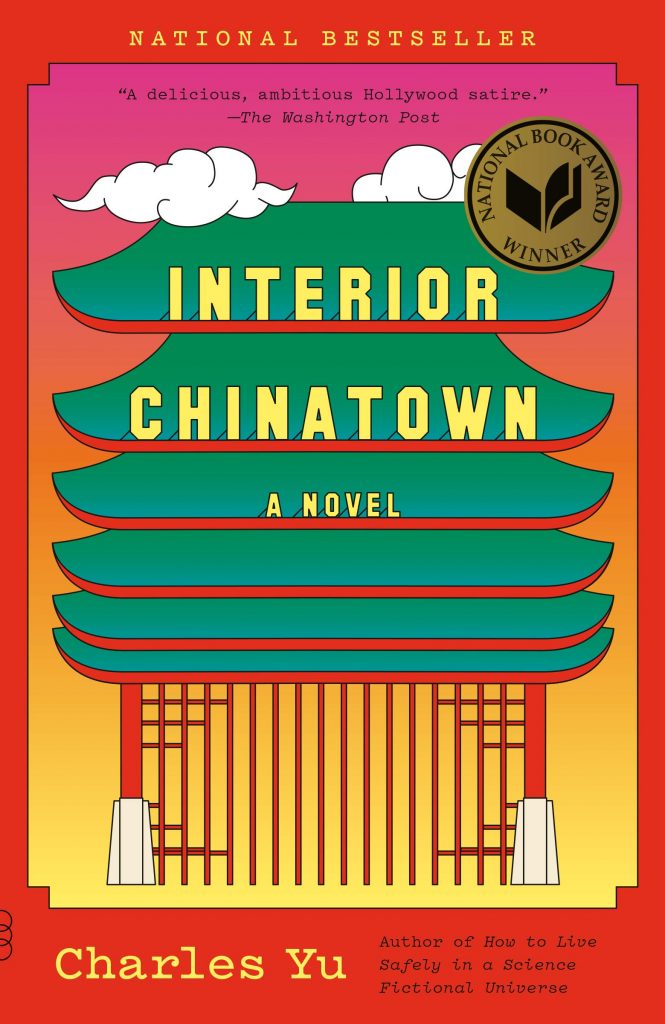
Willis Wu is just an extra on a cop show called “Black and White,” working nonstop to become Kung Fu Guy, the greatest role an Asian actor on the series can play. The second person functions a couple different ways in this book: first, the whole thing is structured like a screenplay, so the narrative voice reads like stage directions; second, Will doesn’t see himself as the protagonist in his own life, so the distance that the second person creates feels natural. But when Will stumbles into the spotlight, he’s forced to re-examine the roles he imagined he’d always have to embody, both on and off-screen.
This collection of stories, many of which are jokingly modeled on the popular genre from which the book takes its title, features the second person in a semi-ironic way that ultimately reveals the tenderness at the heart of the encounters she evokes. In “How to Talk to Your Mother (Notes),” a daughter looks back on her life and her relationship with motherhood after her own mother dies. And in “How to Be an Other Woman,” the protagonist loses herself in a relationship with a married man. Moore’s second person writing is a revelation, a relief; her “you” holds space for grief, for longing, and for interiority.
You’re traveling to Morocco on unspecified business when you’re robbed of your wallet and passport. Freed from the burden of your identity, you have the chance to become anyone you want—including the famous actress for whom you serve as a body double. In this funny, mysterious, and taut novel, Vida explores free will and the possibilities inherent in female identity.
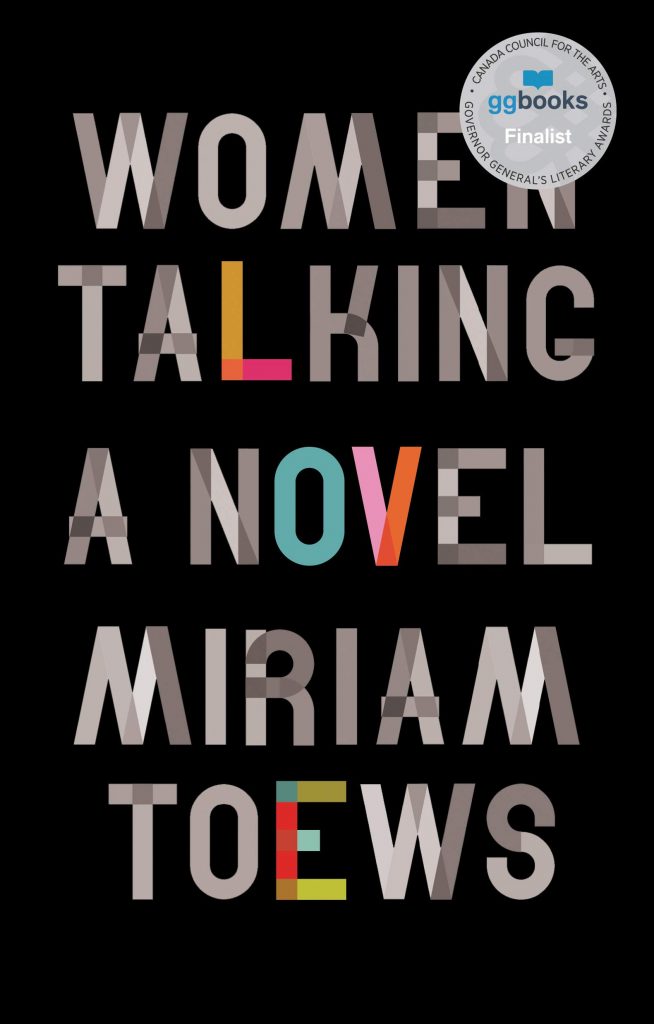
In this searing novel based on real events, Toewes imagines the minutes of a secret meeting: eight women in a remote Mennonite colony convene after they discover that several of their men have drugged and assaulted over 100 women. Together, they must decide the future of the colony’s women: will they stay and fight, or leave to face the world outside the colony, for which they are unequipped?
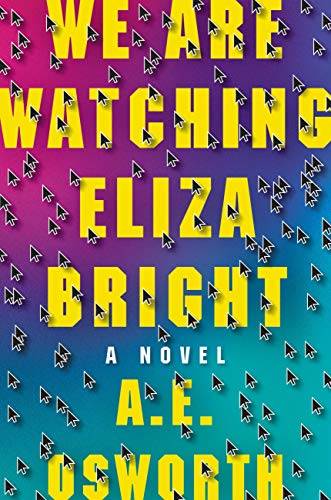
Narrated by a chorus of Redditors, Osworth’s forthcoming novel concerns an elite video game coder who is fired from her company after she tells a journalist about the mishandling of her workplace harassment suit. Eliza’s story is the flashpoint for a conflict between angry male gamers and the women who resist them online—as she’s threatened and stalked around New York, a collective called the Sixsterhood eventually takes her under their wing. But the threat of violence doesn’t exist only online, and the Sixsterhood can’t protect Eliza forever.
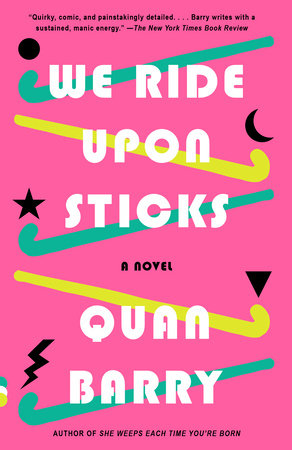
Quan Barry naturally uses the first person plural to bring readers into the fold of the field hockey team that’s central to her novel. Set in the coastal town of Danvers, Massachusetts, the story follows the 1989 Danvers High School Falcons as they work towards a state championship title. The team will do anything to win—including summoning some dark forces from their past, since their town was the site where the Salem witch accusations first sprung up. With preppy sports, magic, and a delightful cast of collective narrators, this novel is funny and unforgettable.
A coming-of-age novel unlike any other, We The Animals is narrated by three brothers who wrestle with their parents’ tumultuous relationship. The boys fight to ensure each other’s survival until an act of violence tears one brother away from the group. This lyrical, energetic, and ultimately haunting story about family bonds draws its power from Torres’s masterful use of the first-person plural.
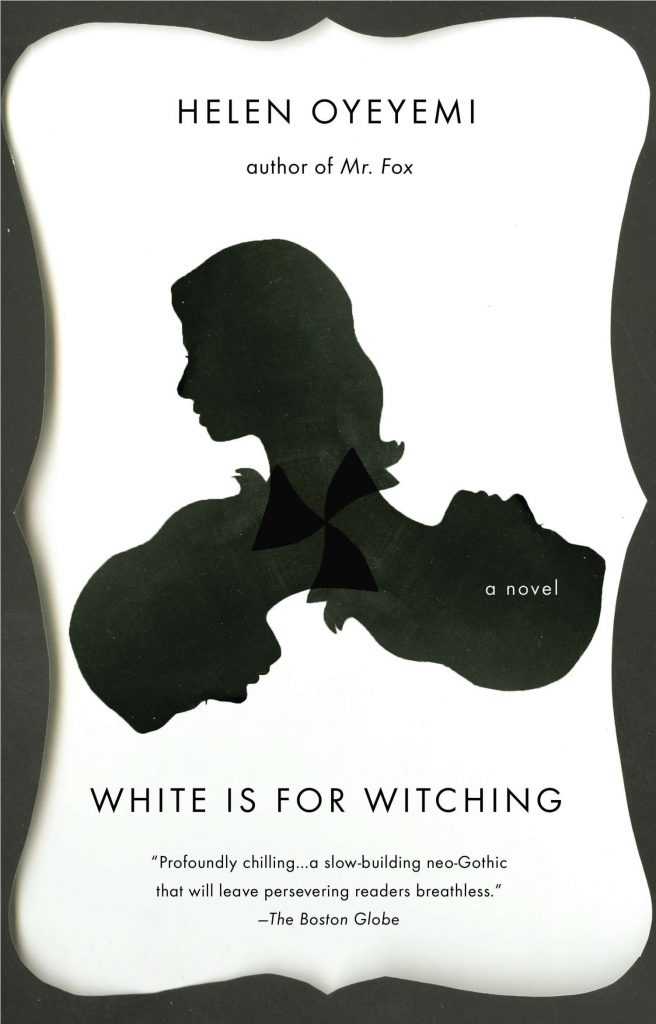
In the first two pages of this book, you’ll hear from two people and one haunted house, all of whom take turns narrating the mysterious story of Miranda Silver. Miranda has pica, an eating disorder passed down through the women in her family. As she fights the impulse to destroy herself after her mother’s death, her strange hunger spirals outward and threatens to consume everyone she loves. The narrative voices in Oyeyemi’s virtuosic novel leap from a close third person to a grieving first person to an accusatory incantation and back again, sweeping the reader along in a current of language that makes this book impossible to put down.
Ada is a young Nigerian woman who shares her body with Ogbanje, troublesome spirits who tie her to the other side of the grave. When Ada travels to America for college, these spirits grow and ultimately crystallize into alternate personalities—after a traumatic assault, they take over completely, and Ada’s life spirals out of control. This searing debut puts several points of view in one body to explore what it’s like to have a fractured sense of self, and the surreal narrative voices illuminate the chaos inherent in constructing an identity.
Each chapter of Pamuk’s Nobel Prize-winning novel has a new narrator, but these perspectives are a far cry from the rotating third person that’s popular in contemporary novels. Pamuk’s point-of-view charactersinclude, but are not limited to: a coin, a dead body, the devil, two dervishes, and, of course, the color red. The plot follows several miniaturists in the Ottoman Empire who are commissioned by the Sultan to create a book celebrating the glories of his domain. But it’s a dangerous task, and when one of the commissioned artists disappears, the only clues to his fate lie in the incomplete illuminations he left behind.
Let us not forget omniscience, the oldest literary voice, and possibly the least fashionable. But Lauren Groff uses it to incredible effect in this novel, which tracks the seemingly predestined course of a marriage. Her omniscient narrator often interjects in bracketed asides like a Greek chorus would. And the truths that only an all-knowing entity could reveal demonstrate how sometimes, the key to a marriage lies not in what’s shared, but in what’s hidden.
Aptly named after the ritual in the Black church of passing a basket down each aisle so that worshippers can give monetary donations, The Collection Plate asks us to give ourselves completely over to it as well. It also demands that we take up the warm and, at times chilling, musings that Kendra Allen leaves each reader to grapple with. Through Allen’s watchful eyes, we explore privilege, misogyny, generational trauma, Black girlhood, systemic violence inequality, as well as a speaker unafraid to tell us the truth no matter how terrified we might be to hear it.
In her poetry collection, Allen bravely explores the depths of Black femininity and its proximity to toxic masculinity. The speaker grapples with what it means to be a Black daughter tasked with carrying the weight of generational trauma in this world. At times, it feels almost too hard to bear—let alone bear witness to. Yet, Allen manages to show us the power in her pain. “Wound,” she writes, “makes you / prophetic.” The Collection Plate asks us to see beyond seeing—and approaches Black pain and suffering in a way that is tender and raw. It interrogates our complicity within it and demands not only our attention but our action as well.
In early June, I sat down with Allen to discuss these themes and other pressing concerns introduced to us in her stunning new book, The Collection Plate.
Skye Jackson: Your book is called The Collection Plate, which like many of the poems included in the book, brings to mind the pageantry and symbolism that evoke the Black church. What did it mean for you to explore and delve into the nuances and at times hypocritical nature of the Black church? Why was it crucial for you to portray it with such care and honesty here?
Kendra Allen: I grew up in the Southern Black church. I’m from Dallas. I grew up in my great-great uncle’s Baptist church, which is very different. Everybody knows who you are.
SJ: You can’t get away with anything!
KA: Yeah! And the church is not even that big, but it looked like a house. And so I grew up in this church and was there four days a week for 16 years of my life straight. Like you said, you can’t get away with a lot… but the pastor was getting away with a lot! He could get away with everything. I grew up with this moral compass that nobody was really following around me, but I had to follow, and it didn’t make sense.
I’ve always been very obsessed with masculinity and men, with what they’re allowed to say and get away with. My uncle would walk into church and I would have to stand up on his arrival like he’s God. Or all of the rules… you can’t wear this, you can’t say this, or you can’t say that.
[Men are] just terrorizing the church, when you really think about it. I’m like why is God a “He” all of the time? Why do we listen to men first? It’s internalized misogyny. We would agree with a man first before we listen to this woman. In the church, women pastors rarely get treated the same. They rarely get to preach. Sometimes I’d rather listen to them! The male pastors can be so long-winded! So, I used those poems to take that longwindedness of the male pastors and compact them into very short poems. Because who has time for all of that?
SJ: I do actually have a question about the Father figures in the poems. The specter of the “Father” figure looms large in the book. We see the speaker desirous of a relationship with him but also repelled by him as well. The use of the capitalized “F” in Father throughout the text almost imbues him with a God-like essence. Why did you make the creative choice to portray the “Father” figure in this way? Alternatively, what are these poems saying about Black girlhood and adolescence in the examination of paternal relationships?
KA: The initial thing that made me think of “Our Father” as a recurring character in this collection is because one of the first things I learned was The Lord’s Prayer. Every single night my mom would make me get on my knees and pray. The prayer starts with “Our Father, which art in heaven…” And then every time I would hear my mom pray, she would say, “Father this…” and “Father that…” Your father, our father, whatever. I would just hear this on repeat all the time.
I would also think about this notion that Black kids, in general, don’t have fathers. Black women, in general, either don’t really have a super great relationship with their fathers or it’s just nonexistent. There’s no balance. I think I lived my life like that a lot. There was no balance at all. It was always very extreme. Something would either be the greatest or the worst.
I knew I wanted to talk about God in a religious sense, but also a God I created in my head and in my heart, and also a God that I’ve made out of my actual father to have so much influence over my mind. I don’t like that feeling.
At what point do I break the ties from worshipping these patriarchal figures? And how do I go from worshiping them to honoring and setting boundaries for myself?
It’s weird. You grow up and you see all these women who took the path you could have so easily taken, but they didn’t have a choice. It’s hard to say, “Y’all can set boundaries” and “I would never have to deal with this.” It’s very hard to say that because we weren’t living in like those times and those states of being. I don’t have children. I don’t have a husband. I don’t have anything tying me down. I can just get up and go. But maybe they wanted to do that too and they couldn’t. I just really wanted to explore the reasons why.
SJ: It’s interesting that you say that because we do tend to look at older generations and judge them for the things that they did or didn’t do. But we also have to consider the fact that people back then did not have the language to talk about certain things. As a result, we live in this Black culture in which things were left unsaid and unaddressed for years.
At what point do I break the ties from worshipping these patriarchal figures? And how do I go from worshiping them to setting boundaries for myself?
KA: I love what you just said about not having the language for it. Our ancestors were just focused on survival and I had to learn that as well.
To that note, this book helped me come to terms with the fact that as much as I would like to save my mother, I cannot do it. I think this book helped me see all facets of that.
SJ: Water plays a huge role in the text. We see the speaker using it, almost as a conduit, to examine her own life and the lives of others around her. Water becomes a character here. Can you speak to the presence of water in the text? Why does it simultaneously anchor and alternatively frighten the speaker?
KA: A lot of these poems started as water poems about the desegregation of swimming pools. We see water used as a theme a lot or used as metaphors. I think I wanted it to be a metaphor because the book opens up with me getting baptized at the age of eight. What am I doing getting baptized at age eight? I don’t know what I want!
SJ: Yes! I literally wrote a note in my book on that line saying, “What were you getting saved from at eight years old?” You’re a child! You haven’t done anything wrong. But this system is so ingrained in us.
KA: Exactly! I’ve done nothing. Except for what y’all have made me do! So it’s your sins!
SJ: Putting your sins on the next generation of people.
KA: Yes! I think water for me, it allowed me to talk about tears, it allowed me to talk about wetness in general.
So why is it that this majority Black town is going without water? Why is it that something that is a human right is being denied to these people? I know it’s because they’re Black.
I was very tied to talking about the desegregation of swimming pools. But then I thought, what about the desegregation of church and state? Or the desegregation of all these big things in my life that maybe I didn’t understand as a kid. What about me was so eager to get baptized in this dirty water with dead water bugs in it?
I’m also thinking about birth, how I was birthed into being sad. I never knew I was sad my whole life until it just hit me. My parents, of course, deal with mental health issues. I feel like I was birthed into that and I just didn’t know.
Then, of course, literal birth with all the fluid and all the liquid. I wondered how we can build the body back up. I was thinking about that when I was writing the poem where my father gives me his issues. I get in the water, I swim and then he fills me back up with spit and lets me spill all over town. Spit is like water.
SJ: The speaker uses water to examine the reality of privilege versus poverty in the United States. For me, each of these poems immediately brought to mind the ongoing and horrifying unaddressed water crisis in Flint, Michigan. Why was it important for you to use water to discuss those pressing issues?
KA: I saw Little Miss Flint and I remember thinking, “Why is she so old now?” She was a little girl and now she’s a full-fledged teenager. She’s still fighting.
SJ: Nothing has changed.
KA: Yes, and I started thinking about the show, Naked and Afraid, as well. I used to watch it with my daddy when I was at his house. It would always be on. It would be funny when they didn’t have any water because they told you to get water at the beginning. But instead, you chose to get a machete and now you’re thirsty! You should have gotten a pot to clean your water.
I just wanted those poems to say the same thing, but put them in a different scene and a different setting. The same thing is happening in real life but y’all care more about a scripted reality show. The people that fall out from dehydration are immediately helicoptered off the show and suddenly everything is over. These people are going to be saved and everything is going to be fine for them. So why is it that this majority Black town is going without water? Why is Jaden Smith having to bring them water? Why is it that something that is a human right is being denied to these people? I know it’s because they’re Black. Why is it taking so long? When you really think about it, it’s wild. This country is trash. Why has this little girl been on Beyoncé’s internet for all of her childhood fighting for this cause? If you don’t care about children, then you don’t care about any of us. It’s very eye-opening and sad.
I think about shrinking bodies and also how society tells us that being small, skinny, and thin makes you better. We see all of these people’s bodies slimming down due to literal health crisis and it’s not an issue. But we see these bodies slimming down on Naked & Afraid and they leave saying, “Oh, I lost 27 pounds!” And for some reason that’s good! This goes into conversations about desirability, fatphobia… all that stuff that just allows Black people to be overlooked and die.
SJ: That brings to mind a line from one of your poems in the book. It’s stuck in my mind. You said, “hydrated hierarchies.” I wrote that down and thought that’s exactly how it is.
We also have to talk about the poem, “I’m tired of yo ass always crying.” I can’t stop thinking about it. In it, you explore the dangerous and ubiquitous nature of white tears. Towards the end of the poem, you wrote the haunting line:
“if you care for me—and when you hear the sound, believe me we must run.”
Can you speak to that theme of white tears and why it was so important for the speaker to issue that warning to us as readers? When you wrote “Free the Nipple,” I knew exactly who you were talking about!
KA: Of course you do! First of all, we absolve white women of white supremacy a lot. They just get a pass to do a whole lot of damage. From the beginning of time, we’ve seen white people set up everybody else and use the vehicle of white men to do it. I feel like we don’t talk about it until we hear white women talk about the bad behaviors of white men. And I’m like, “Hold up!” I wasn’t really around white people until I went to college in Chicago and I had three white girls in my dorm room. I felt like I was in the Matrix. I was like… are y’all serious? This wasn’t just from my roommates but others as well. I just had to learn quickly… white woman-ness, in general, is very dangerous. It’s very dangerous because it hides its hands all the time. There’s always someone there to protect them.
We absolve white women of white supremacy a lot. They just get a pass to do a whole lot of damage.
In grad school, a lot of white women talk about problems that aren’t really problems. When they start talking about the issues in their lives and just the struggles… I just wonder what we are talking about. I just had to see how quickly they switch up on you. It’s like a Jekyll and Hyde situation.
That poem for me was just how we see white women when they get caught with Black men, when they get caught killing somebody, when they get caught judging somebody. When they get caught doing anything, how quickly those tears come. I could literally never. I would be called weak. I would be called so much to the point that I would never cry in public. I fear crying now in front of people. It’s so hard for me to let a tear out unless I’m angry.
I had a student write an essay. We were reading Kiese Laymon’s essay, “How To Slowly Kill Yourself.” I will never forget this. I knew that they know that they do this on purpose, but her saying it made it so real. She wrote that all of her life, she had been taught that if something goes wrong, she should just cry to get out of it. If you get stopped by the police, cry, you won’t get a ticket. If you hurt somebody, just cry and they’ll forgive you. She was just saying what we know especially as Black women. We know it’s something that they must have been taught their whole lives. There’s no other way they would know to just do that without somebody teaching you.
When she said that, I thought, “Wow, this is their generational ticket.” This is what they learn through generations. You will live an okay life as long as you know how to turn on the tears. I’m also envious of that. I want to be the damsel in distress.
SJ: But we don’t have that luxury.
KA: Yeah! You don’t get that luxury. You just hear people say that so openly, it’s like peak privilege to get out of accountability for everything. For me, that poem, I was angry, but I saw similarities with Black men and white women. But that’s a whole other essay that maybe I’ll write later. There are similarities in the way they get absolved for very harmful and abusive behavior. It’s always so crazy to me. So that’s why I had to write that, because I’m tired of yo’ ass always crying. Like what are you crying for? What’s going on? Nothing happened. I feel unsafe.
I wanted to use that poem to say that they use tears to say that they are scared or they’re sorry. But their tears make me feel unsafe. I feel like when you cry. someone is going to come get me. Or my body doesn’t feel safe. Until you’re able to acknowledge that, I don’t really care about your issues as a white woman. They don’t seem very real to me.
SJ: You know, historically,white tears lead to terror. I think ofEmmettTill and Carolyn Bryant. It just evokes terror, death and injustice.
KA: I’m just thinking about historically, we know that white women get Black men killed. We know that, but we don’t say anything about the harm that it causes Black women. Then Black women are expected to riot the streets when white women get Black men killed. It’s so many factors and layers to it. It will take a lifetime to dismantle this. We probably won’t see it in our lifetimes but hopefully, the kids after us will. There’s just so much anger and hurt. I don’t trust white women. It’s very hard.
Even when I’m thinking about this book. My team is all white women and I’m in their hands. Of course, they try to be aware, but is that enough? I just don’t know.
SJ: I love your willingness, not only to interrogate whiteness, but also inequalities in Black relationships as well. For instance, in the poem “most calvaries have dead people,” you begin the poem with an epigraph from Nannie Helen Burroughs that reads:
“White men offer more protection to their prostitutes than Black men offer to their best women.”
Can you speak a bit about why that quote resonated so deeply with you? Why do you think society and, as the quote states, Black men refuse to protect Black women?
KA: I come off as very masculine and all of those stereotypical qualities of what makes a man. I feel like everything men tell me that makes them men, I see the women in my family with those qualities… not them. That has always confused me.
What makes us submit to this mediocre, empty love? Just to say we’re being loved!
I genuinely want to talk about it because I feel like Black men in today’s time don’t think that Black women are deserving of anything… or of any love that isn’t tied to suffering. We have to prove that we deserve it. We have to go through the trenches and I’m not finna do that. I’m gonna treat you how you treat me. So come correct or your feelings are finna get hurt. I think I’ve adopted those qualities from the women in my family. The women in my family always told me certain things like don’t date jealous men, don’t let them talk to you a certain way, and to make them respect you. But on the flip end, I would see them get into relationships where all of that goes out of the window!
What is it that makes us submit? When they say that is something that Black women don’t do. What makes us submit to this mediocre, empty love? Just to say we’re being loved! Even though you know that this man doesn’t even see you as a person. I learned that through my relationship with my own father. My opinions are not respected because it’s coming from me.
I used that quote because I quickly realized… and I mean, quickly by age ten. I’ve been dealing with this back and forth pulling for power. I really just wanted power over men because I can’t let my guard down. I need that power. So I think I used that quote to show how easily I try to give in. It’s a fight at first, then I give in and I go into the water, open myself up, and then I’m dragging myself back out. Then I’m spilling all over town. I have to fix myself back up again, but then you want me to go back and start the cycle all over again because you feel like it.
It’s so much to perform for men. It’s exhausting. We see women like Megan Thee Stallion, she’s desirable to a lot of men. She’s so pretty. We see what happened with her. You don’t find her desirable in a sense of petiteness or smallness. You see her as being able to take care of herself. I know that I’m seen that way. I’m not that tall. I’m not that thick. I wish I was! The male interactions I’ve had, they see me as just able to handle stuff because I don’t let them handle stuff for me.
We see that on a bigger scale, like Megan getting shot. Everybody is suddenly like… well what did she do? What did she say? Or not believing her. There are so many caveats that Black women need to be able to hop over just to be believed. To be believed, you have to come up with video evidence…which she had, but it still was not enough. What is it that will be enough for you to not even treat me like a woman but as a person?
“Most calvaries” is that poem where I’m able to understand that I can save myself. I can’t be waiting on love. I can’t be waiting on respect because I have those things for myself. I’m building those things for myself. However you decide to treat me or not treat me, it will just roll off my back. I can’t wait around for it. I’m to that point where it’s just not interesting anymore. Like when I’m on the internet and I see Black women crying for Black men to love them, begging them to treat them better. I’m to that point where I’m just not gonna do it. If you like Black women, great. If you’re performing that you like Black women, we’ll find out eventually!
It all came out through the water poems. You know, they say water is cleansing.
SJ: I’m always interested in Black people’s relationship to water in this country because it’s so fraught. There’s so much there, but I feel like people aren’t really talking about it. I find it so fascinating, so I’m glad that you are exploring this.
“We will never find the pieces to put them back together,” concludes Jeffrey Eugenides’ debut novel, The Virgin Suicides. The narrators, a group of men who had grown up alongside the five Lisbon daughters during the 1970s in Grosse Pointe, Michigan, are ultimately unable to make sense of the girls’ suicides—but readers can.
In an interview with The Paris Review in 2016, Eugenides shares that the novel was inspired by a comment from his nephew’s babysitter, who had told him that she and her sisters had all attempted suicide because, in her words, “we were under a lot of pressure.” The tidbit of trivia syncs perfectly with the popular interpretation of the novel, echoed in The New Yorker, Literary Hub, and elsewhere, as a tale about the existential challenges of adolescence, particularly in regards to girls becoming women, on whom so many contradictory expectations are placed and so little agency is permitted. After all, in attempting to protect their daughters, the Lisbon parents imprison them at home, driving the girls to take their own lives.
But there is also a particular historical context to The Virgin Suicides. A suburb of Detroit populated by the city’s white former residents, Grosse Point was home to just two Black people in 1970, as Mark Binelli reports in his book, Detroit City is the Place to Be: The Afterlife of an American Metropolis. Binelli’s book details how waves of racial and economic strife beginning in the 1950s cleaved the populations of Detroit and its suburbs into Black and white, respectively, creating one of the most enduring examples of white flight in the United States. He also describes how the fallout of that history has nearly destroyed the city. Reading The Virgin Suicides through this historical lens, the Lisbon parents’ sequestering of their daughters reflects the self-destructive mentality of white flight, making the girls’ suicides not unlike Detroit’s urban decay.
The Lisbon parents’ sequestering of their daughters reflects the self-destructive mentality of white flight, making the girls’ suicides not unlike Detroit’s urban decay.
Detroit’s white flight was fueled by a combination of economic pressure and racism, according to Binelli. The modern city was built upon the auto industry, which consolidated around Detroit as manufacturers set up shop locally and grew from military contracts during World War II. Post-war, however, various forces began to claw away at that consolidation: manufacturers sought to escape strong local unions, the federal government urged the dispersal of industry due to Cold War bombing fears, and the surrounding suburbs bribed businesses with lower taxes and white residents with segregated neighborhoods.
White city-dwellers had already been violently resisting integration, as in 1943, when the opening of a housing project in a predominantly white neighborhood led to nearly two days of rioting, leaving 34 dead and 1,800 arrested, most of them Black. By the summer of 1967, when a raid by the Detroit Police Department on a homecoming party for two Vietnam veterans exploded into five days of violence, leaving 43 people dead and 7,000 arrested (again, most of them Black), many white former residents had already turned their backs on Detroit as a Black city.
Detroit’s white flight was fueled by a combination of economic pressure and racism.
Grosse Pointe, on the other hand, is described by Binelli as a “Waspy, old-money” east-side suburb of Detroit. While wealthier than other, more working class suburbs, Grosse Pointe played the same function in buffering white suburbanites from Black urbanites. As Binelli relates from his own childhood growing up in neighboring St. Clair Shores, it was rumored that officers from the Grosse Pointe Police Department used a racial slur disguised as an acronym to describe Black people in the area: “NOMAD: Nigger on Mack After Dark,” Mack Avenue being the boundary between the suburb and the city.
Elements of the Black-white, city-suburb divide can be found in The Virgin Suicides. In “‘Oddly Shaped Emptinesses’: Capital, the Eerie, and the Place(less)ness of Detroit in Jeffrey Eugenides’s Virgin Suicides” from Comparative American Studies: An International Journal, University of Maine lecturer Brian Jansen indexes the narrators’ references to Detroit as “the impoverished city we never visited,” as well as to Grosse Pointe’s segregation. As Eugenides writes, the suicides of the Lisbon girls distract the local chamber of commerce from its primary, racist purpose: “While the suicides lasted, and for some time after, the Chamber of Commerce worried less about the influx of black shoppers.” The presence of the narrators, the Lisbons, and the other residents of Grosse Pointe in the suburb is not explicitly framed as the product of white flight, but that can nevertheless be gleaned from snippets like, “Occasionally we heard gunshots coming from the ghetto, but our fathers insisted it was only cars backfiring.” The fathers had left Detroit, and they insisted that there was no reason for their children to look back.
The fathers had left Detroit, and they insisted that there was no reason for their children to look back.
The Lisbons had presumably also arrived in Grosse Pointe for similar reasons: fleeing what they saw as the violence of Black Detroit. But in order to safeguard their five daughters—the protection of white women from the supposed predation of Black men being a recurring trope in white supremacist propaganda—the Lisbons took their segregation one step further, shutting out not only the Black city, but the white suburbs, too. As the narrators recollect, two weeks after Cecilia, the youngest, attempts suicide for the first time, “Mr. Lisbon persuaded his wife to allow the girls to throw the first and only party of their short lives.” The Lisbons believe that, to protect their children, they need to shut out the world, rather than reconcile themselves with it. Instead, they help dig their girls’ early graves. In a similar fashion, the former white residents of Detroit thought they could simply escape to the suburbs, rather than confront the reality of, and their role in, the agony of the city.
If violence nevertheless revisits the Lisbons, it does the same to Detroit’s suburbs as well. As Binelli notes, the city received one of its worst batterings during the Great Recession of 2008, when the auto industry teetered on the brink of collapse, causing the entire economy of the area to wobble with it. But as poverty fueled crime, it wasn’t confined to the city. There were otherwise unheard of reports of armed robberies at fast food restaurants in St. Clair Shores, of a shooting at a nearby mall, of carjackings in Grosse Pointe.
If white flight is suicide, then its ostensible inversion, gentrification, is not resurrection, but murder.
As the final line of The Virgin Suicides puts plainly, there are no easy answers to difficult questions. If white flight is suicide, then its ostensible inversion, gentrification, is not resurrection (or “revitalization,” as it’s often euphamistically dubbed), but murder. As Binelli notes, despite Detroit’s difficulties, it has been experiencing growing gentrification since the nadir of 2008. Once starved of resources by a fleeing white tax base and hostile county and state governments, Detroit’s low housing costs attracted young white people, who brought with them the cultural capital necessary to draw financial capital and, accordingly, more white people. The return of white people to Detroit does not signal a reconciliation between the city’s populations, but the displacement of longtime Black residents—who, with sad irony, are increasingly forced to the suburbs (albeit, not Grosse Pointe).
It could be said that the pieces of Detroit which were broken by white flight still remain lost. But if the city’s history helps contextualize the violence of The Virgin Suicides, then it might provide hope of a genuine resurrection, too. As Binelli and other residents of Detroit are fond of pointing out, the city’s motto was coined after a devastating fire in 1805, which leveled nearly all of the previous structures, including most of the US Army fort that was its namesake. Today, the motto is inscribed in Latin on both Detroit’s flag and sea. “Speramus Meloira; Resurget Cineribus,” it reads, which translates to: “We Hope for Better Things; It Shall Rise from the Ashes.”
It is not hard to get a laugh at a funeral. Despite being painfully introverted and clinically anxious, I once confidently gave a eulogy containing jokes because I know humor is sharpest in sad settings. Another time, at a wake for someone I loved, I witnessed an unwitting kid learn the casket that he had been nonchalantly leaning on contained a body, and I cannot recall a time I laughed harder. Colors are intensified when they contrast; blue is sharpest next to orange. That same sort of marvel is true for happiness and sadness.
As the title hints, my debut novel, Everyone In This Room Will Someday Be Dead, centers around death. It is about a morbidly anxious young woman who stumbles into a job as a receptionist at a Catholic church, where she hides her atheist lesbian identity, and becomes obsessed with her predecessor’s death. Despite being about mortality and depression, my honest hope for it is that it will be responsible for creating some serotonin.
The seven books listed below are for people who feel like crying but are having trouble determining whether the cathartic release they seek should involve tears of laughter or sadness. These books will break your heart and have you in stitches. You will feel like you would sitting in the audience of a depressed comedian whose poignant wit will have you cackling, blubbering, and feeling alive.
This is a collection of essays written by Twitter’s favorite sad girl. The essays are about sex, death, substance abuse, and the trauma of existing. The writing is of course sad, but it also made me laugh out loud in public. I am normally very quiet.
This book is the companion to the award-winning TV series about a dry-witted woman, known only as Fleabag, as she navigates her life in London while trying to cope with tragedy. The Scriptures contain the scripts and commentary for this hilarious and heartbreaking series and are what I would put my hand on if, by some terrible series of events, I were ever sworn into government.
I doubt it is surprising to learn that a story about a queer taxidermist, who is grieving the suicide of her father, whose mother makes sexual art with dead animals, and who is in a tough love triangle, will destroy and delight you.
Eleanor is a gut-wrenching character who, despite the title of her story, is actually not doing that great. She has no friends, no ambition, scars on her face, no filter, bad social skills, a humdrum existence, a drinking problem, a story that will punch you in the gut, and yet—she is so funny.
This is a novel about Mona, a 23-year-old woman who cleans houses. She dates a middle-aged man with substance abuse problems who she calls Mr. Disgusting. I burst out in laughter and I burst out in tears while reading this.
This sequel to Pretend I’m Dead follows Mona at 26. She is cleaning houses, having affairs, grappling with trauma, still making us sad, and still tickling us pink. This novel, like the one before, manages to touch on heavy topics while also being laugh out loud funny.
Janet wants to be happy, but she is comfortably dejected. She wears all black, listens to the Smiths, and hates her boyfriend. This is a story about a holiday season that she spends trying a new pill that promises happiness. This is a wise, sad, and funny story about depression. If anyone gets sad serotonin, it’s Janet.
I was gathering sticks in the field when someone waved to me from a window of the state prison. It was early summer, crickets vibrating all around. The sky ripe with dusk. Against the stout concrete building, I could just make out the motion, a distance away, the arm extended from the tiny slit of a window, waving. The sort of big, dramatic wave that you see people doing in old movies, like when lovers are departing on a train or boat. I looked at the guard towers, the layers of fence crowned with barbed wire, the sign reading STATE PRISON—NO TRESPASSING—Dept. of Corrections. There was no one else nearby, so I waved back. In another moment, the floodlights clicked on and I shuffled back into the woods toward home.
The next day, the arm was there again, reaching out from between the bars and waving to me just as it had before. It was afternoon and I could see the whole thing more definitively, could see how excitedly the arm moved, back and forth, in a proud arc. The emotion of the gesture seemed unmistakable, as if the person on the other side of the bars was brimming with joy at the sight of me. This time, I couldn’t help but feel excited too. I was ten years old and didn’t have any friends. I dropped my sticks and jumped in the air and waved my arms over my head like I was signaling a plane to the runway.
The prison stood in a long field surrounded by two miles of woods that eventually led back to the house where I lived with my parents and older brother. I was building a fort in the woods. There was a fallen oak just past the edge of the field and I stood in its ditch and wove sticks through the exposed roots to make a roof. My brother thought the fort was stupid and he told me so every chance he got. But I had big plans. I imagined an elaborate series of treetop platforms connected by ropes and ladders and elevated boardwalks. But all I’d managed so far was a hole in the ground covered with an ugly mesh of roots and sticks.
The prisoner waved to me the next day, and the next day, and the next day after that. I fell asleep each night wondering who they were. I didn’t know anyone in prison. I asked my brother but he only laughed at me.
“I bet it’s some psychopath,” he said. “You know what? I bet it’s that guy who kidnapped and murdered all those little kids a few years ago. Münz? Yeah, Münz the Maniac. That was his name.”
What if it was Münz? Or some other monstrous criminal? I imagined serial killers with teeth like nails and cannibals dressed in blood-spattered aprons. The prisoner kept waving to me, every day, and at bedtime, my imagination unraveled like a scroll of every crime I’d ever heard of. What if he was a mafia hitman? What if it was the lady who had cut off her husband’s penis? What if the arm belonged to some creep who drove a white van and diddled little kids?
But then I remembered, in school, the pictures I’d seen of Dr. Martin Luther King being led away in handcuffs. I decided he must be somehow noble or heroic. There was a boulder in the field outside the prison and I made a habit of sitting down on it every afternoon while I was gathering sticks. I would sit on the rock and watch my prisoner waving, and I would wave back, and we would carry on that exchange, waving back and forth, for a minute or two before I stood up and went back to building my fort. Once, I thought I heard him shouting something down to me—two syllables, unintelligible, the sound just barely discernible over the breeze. I stood still and listened but the sound was too far away and could have come from anywhere.
I began to invent a whole life for my prisoner. After a few weeks, I’d come to the decision that he was a normal person who had simply been caught up in difficult circumstances. I decided that his crime was somehow righteous: he’d attacked his lover’s abusive spouse or pulled a robbery to pay for his child’s surgery. I imagined that he might be released some day and, knowing no other person, he might wait for me at the boulder in the field. I could shelter him in my fort, I thought, at least until he got back on his feet. I imagined sitting in the fort, rain pittering on the roof I’d build, a column of smoke rising up through the trees as me and my prisoner cooked hot dogs over a fire. In another fantasy, I bumped into him somewhere—at the grocery store or the park—and recognized him simply by the energetic flap of his wave.
I held the prisoner in my imagination and every day, when I waved to him, my idea of him grew and became more refined. Maybe, I thought, the prisoner had, in fact, made serious mistakes. Mistakes for which his atonement must be profound. I came to the idea that he’d killed a pedestrian while driving drunk. Or maybe he’d been involved in gang violence at a young age and now, an adult, he’d been transformed by the weight of his guilt. In truth, I wanted for his crime to be both brutal and purposeful, a badge upon his soul that spoke to the absolute depths of his anguish and a testament to his reformation. Whoever the prisoner was, I just wanted to believe that he was a good person.
One night, I scrounged some cardboard from the recycling bin, and after everyone was asleep, I painted a sign. I wrote the word Hi! in dark blue letters, big enough to be read from a distance. When my brother found the sign the next day, he laughed at me. “You’re really in love with the maniac, aren’t you?” he said. “You’re really in love with Münz. I bet if he ever gets out of that place, he’s going to come straight here. First thing, he’ll come looking for you.” I didn’t care. I marched out to the field and held up my sign. The prisoner waved to me with such joy, such enthusiasm. As if something great had happened. As if being here on Earth and being able to recognize another creature like yourself, if only from a distance, were cause enough for celebration.
Then, one day, late in the summer, I went out to gather sticks and was greeted only by the gray face of the prison building. I looked to the window and it was empty. I stood before the imposing shadow of the tower, the indifferent curl of barbed wire. I jogged the perimeter of the building, wondering if he had been moved to another cell. Or, maybe, he had been released? A sick feeling began to form in my stomach. Maybe—oh, please, God, mercy—he’d been given the death penalty?
I walked back into the woods and continued working on my fort but stopped when I noticed a pile of cigarette butts smashed up in the corner on the dirt floor. I stood for a moment in frozen panic, then noticed, tucked up among the roots, a dirty magazine—a pair of legs, opened and wrinkled with moisture. Someone had been inside my fort. I remembered what my brother had said: if Münz was ever released, he’d come straight for me. Who else could it be? He’d seen me every day from the window of his cell, had seen me coming in and out of the woods. Anyone walking this direction from the prison would be able to find my dumb fort, no problem.
I yanked down the sticks I’d so carefully woven until all that was left of my fort was a mess of dead branches scattered around the forest floor. I ran home and got there just in time for dinner. I ate silently, wondering if I’d left a trail—footprints or snapped twigs—that could be tracked back to my house.
But nothing happened. A few days later, I crept back through the woods. As I approached the site of my ruined fort, I could smell cigarettes. I hid behind an old log and watched from a distance. I saw a figure standing up from the ditch of the fallen tree. My heart froze. But in a moment, I realized it was just my brother. I watched him stub out a cigarette then wander off through the trees. Then I walked out to the field and stared up at the empty window where there used to be a person who waved to me. I began to gather sticks.
If you’re like a lot of people, you thought of Maxine Hong Kingston or Amy Tan, maybe Gish Jen or Celeste Ng—wonderful writers, all. But there’s a whole new wave of Chinese American fiction writers that should be lighting up your radar.
In the past few years, an impressive number of Chinese American writers have burst onto the scene with novels and short story collections on a wide range of subjects—Beijing slackers, the Wild West, queer love, and yes, a global pandemic, to name just a few—in a dazzling array of styles and subgenres. Taken together, these works of fiction offer a complex portrait of the Chinese diaspora.
My own debut story collection, We Two Alone, adds to that portrait. Set on five continents and spanning nearly a century, We Two Alone tells not the story but some of the many stories of the Chinese immigrant experience. In one, a laundry boy risks his life to play organized hockey in Vancouver in the 1920s by pretending to be a girl. In another, a family struggles to buy a home in a white neighborhood in Port Elizabeth during the era of apartheid. All of these stories, mine and others’, help us understand the myriad ways of being “Chinese,” especially in America.
Here are eight recent works of fiction—all debuts—from the Chinese American New Wave:
Candice Chen moves from Utah to New York City, trying to outrun millennial ennui and the expectations of her dead parents. When a fungal infection turns most of the world into zombies, a pregnant Candice falls in with a misbegotten band of survivors. Like Candice herself, who continues at first to work in an empty office building, even as the city hollows out, those who get infected are doomed to repeat mindless routines, which suggests the ways that late capitalism might be making zombies of us all.
A fraternal twin endangers herself when she begins to post pro-democratic messages on social media. A woman who takes calls for a government helpline is tracked down by an abusive ex. A group of subway riders in Beijing acquiesces to authorities while trapped underground for months, in what might be a perfect allegory for social and political apathy—and ways to resist. Ranging from tender and mournful to gently absurd and dystopian, the stories in this collection are razor-sharp frontline reports on the paradoxes of contemporary China.
After hearing her mother’s story about a tiger spirit that wants to be a woman, Daughter grows a tiger tail, becomes lovers with a girl named Ben, and unravels the mysteries of her matriarchal line from Taiwan to Arkansas and beyond. This is a fabulist novel in which men can fly and women give birth to geese, rendered in fearlessly carnal and inventive language. Bestiary came out last year, when the author was 22. If you think Beth Harmon in The Queen’s Gambit is a prodigious young talent, wait till you read K-Ming Chang.
Unbeknown to their parents, Jack’s five-year-old sister Annabel is sleepwalking at night through their neighborhood in Plano, Texas, and bullying a girl at school named Elsie, but it’s not until Elsie makes confused Atonement-esque accusations against Jack’s father that the Cheng family is truly upended. Part dream and part nightmare, with an epigraph from Dracula, this lyrical, meditative, and nocturnal novel trawls some of the real monsters lurking beneath the placid surface of America’s tonier suburbs.
This elegant collection of stories is often about the fuerdai, the second-generation rich. In “Fuerdai to the Max,” a couple of louche characters run back to Beijing after tormenting a schoolmate in the US. In “Days of Being Mild,” a ne’er-do-well and his motley crew try to shoot a music video in Beijing for a band called Brass Donkey before his father sends him to a respectable job in the States. Like the Bei Piao—twentysomethings who drift to Beijing—these stories are “very good at being young.”
If Home Remedies is about the well-off, Sour Heart is about the down and out, those who live in the crumbling apartments of Bushwick, Flatbush, and Woodside. The first story opens with a memorably long, gut-churning, and hilarious sentence about the challenges one family faces anytime anyone needs to take “a big dump.” Whether the subject is a clingy younger brother, a menacing girl at school, or sexual exploration gone awry, these seven stories capture both the humor and the terror of girlhood in bawdy and bracingly honest prose.
25-year-old Alexandra is a tech reporter in San Francisco who’s overlooked at work, so when her boyfriend J, who’s white, gets accepted to a Ph.D. program at Cornell, she decides to go with him. But their unsettling road trip through Middle America, and her ensuing loneliness in Ithaca, make her question her relationship with J, who’s often oblivious on matters of race. The novel’s artful blend of fiction and nonfiction produces an incisive meditation on interracial relationships. Autofiction may be fiction’s subgenre du jour, but this novel is built to last.
When Ba dies in the night, 12-year-old Lucy and her androgynous younger sister Sam set off to give him a proper burial and to make their way as orphans on the scabrous American frontier. As they take divergent paths, we learn of the family’s ill-fated search for gold in the hills of California. Like recurring chapter titles such as “Mud,” “Wind,” “Water,” and “Blood,” the story feels elemental, and Zhang is a stylist through and through. This is a novel that reminds us that Chinese people helped build this country and have been in America for a long, long time.
Katharina Kepler is a witch, or so her neighbors think. She’s also the mother of brilliant Johannes, mathematician, and author of the planetary laws of motion (you may have heard of him)—not to mention, an odd woman, an herbalist with a frank disposition who tries to serve cures, who doesn’t quite fit in. Rumors say she served her neighbor a bitter drink that made her ill, that a pig died after she touched its hoof. But is she a witch?
Rivka Galchen’s latest book, Everyone Knows Your Mother is a Witch, is about fear, suspicion and the ways we make each other into monsters. A reimagination of the trial of Katharina Kepler, told in her voice, it’s a novel about the power of narrative over rational, or factual, truths that plays with layers of belief. In all of these ways, it’s a 17th-century witch novel that feels especially relevant for our fractured, divided, complicated times.
Funny, imaginative and laced with a sly, knowing charm, as one can expect from Galchen, the novel looks at who we are in times of hysterical fear with refreshing empathy. After all, this isn’t just the story of a witch trial—it’s the story of us.
A few days before the publication of her novel, I talked over Zoom with Galchen, my friend and former writing teacher, about alternative facts, misfits, astrology, and the paradox of writing historical fiction to understand our current moment.
Carianne King:How did you discover Katharina’s story? What was the spark that made you think it could be a novel?
Rivka Galchen: I actually came across her totally by chance. These past four years have been stressful for everybody in different ways, and I think it’s affected their reading in different ways. I found that I was reading a lot of nonfiction scientific biographies. I know that sounds like a random genre. But I found it really comforting.
In retrospect, it was a way of processing the present, overwhelming political moment by reading about past political moments. Almost all of the scientific biographies I read were about people who were bullied around by politics and history. So, I think, subconsciously, that was part of what was going on. I was reading about past political moments, but without reading about politics.
I really wanted to read about Kepler, but there really wasn’t anything in the English language. I looked everywhere.
I bought this book by the scholar Ulinka Rublack called The Astronomer and the Witch. It wasn’t even about Kepler, but I thought, “I’ll learn something about Kepler.” I didn’t really know anything about the story, but when I read the book, I was thunderstruck. It just seemed like the most interesting thing to learn about, the most interesting time period, and she just seemed like the most interesting character—and that was it, that was how I came to her story.
I noticed when I was reading the book, this scholarly book, I was reading it with a lot of suspense. Like, “I wonder if she is a witch or not!” I observed that emotion in myself, and that was part of it, too.
I also connected Katharina to women in my life—older women who don’t read the room, who are really smart, really capable, but who rub people the wrong way, or who people process weirdly because they have their own norms and their own way of doing things. I’ve thought of Katharina like that. She was almost the oldest woman in town, she’d been making her own living for decades and that was just not normal. Her child was very exceptional. I thought that she must seem strange to people. And that did connect to women, and men, in my life who are more susceptible to being misunderstood.
CK: The novel reimagines the depositions of Katharina’s neighbors, based on real historical documents. How did that fill in a picture of who she was?
RG: I think what I found most moving and touching and sort of sad was that Katharina was someone who was outgoing—someone who felt like she had quite a bit to offer. She was that person who gives you advice maybe when you don’t want it, or maybe you don’t want it at the time, and then it goes badly. Or, maybe, sometimes, it’s bad advice!
What I found moving is that you can actually see, in the deposition of the tailor, for example—he didn’t want to throw her under the bus, as we would say today. He knew he didn’t really know what the truth was, and he was also a man who had suffered terribly. He was like, “Well, maybe, maybe if we looked into it…” and I found that to be such a human moment.
When I was first writing this, I thought, how do you write this story? Because if it’s just a bunch of evil people persecuting an innocent person—that’s a nonfiction story, that’s not a novel. But there were these moments where I saw a human trying to contend with something beyond that.
I actually think it’s really hard to write about positive feelings. It’s often more fun to write about anger and rage and anxiety and paranoia.
CK: Do you observe that women who go against the grain, both back then and now, in 2021, are often the ones to be called witches?
RG: I think “unrelatable” or “unlikable” are the more modern witch terms. Maybe with a dash of “ambitious,” though I feel like that is maybe more of a 1980s slander used for women. Today, at least in my mini-world, I’d probably feel pretty good about being called a witch. It does remind me, though, of watching reruns of the sitcom Bewitched every morning before school as a kid. Right before it, there was I Dream Of Jeannie. Both shows were about women with, literally, extraordinary powers. It’s interesting to think how those shows “worked.” Both of the powerful women were very likable! Thinking on those shows, I wonder if in some ways we’ve slid backwards, even if in other ways we’ve progressed.
CK: Reading the novel, I was reminded, of course, of “alternative facts” and the Trump era we just witnessed. How much was this on your mind, either subconsciously or explicitly, as you were writing?
RG: It definitely was on my mind, but the way that I work, it had to be at the back of my mind and not the front. I really wanted to escape the present moment. I think we all found it stressful. I started to hate my laptop, because that was where I read the news.
I think it’s really hard to write about positive feelings. It’s often more fun to write about anger and rage and anxiety and paranoia.
Katharina, she’s the mother of an amazing mathematician, and she has this almost childlike, sweet sense that if you can prove something, people will listen because you’ve shown why it’s the case. I find that quite moving because it’s so incorrect. It’s not the way humans seem to work. And so that was part of the connection to the present moment—it was just the folly of thinking, like, if you just run a fact-check on this, it’s going to go away.
That was part of it, and also, I’m still one of those people, who felt like we’re watching the end of American democracy. In a funny way, to go back and read about the Thirty Years’ War and find out that it ended. I think there was something comforting about traveling back in time where these becamestable horrible things instead of suspenseful horrible things.
CK: I read that Donald Trump used the term “witch hunt” 300 times on Twitter during his presidency. What do you notice about how the term has been appropriated today? Is Donald Trump a witch?
RG: The man, devastatingly, has powers. But his powers seem so human—in their origins: extreme selfishness, extreme greed, extreme aggression, extreme cowardice. I don’t think he merits the aura of the supernatural.
But in terms of that phrase, “witch hunt,” it has been terrifying to see him convince millions of people that the perpetrator of injustice is the opposite: a victim of injustice. We see how the spell is cast, yet remain vulnerable to it.
CK: Simon, Katharina’s legal guardian, who helps transcribe and tell her story, is told, “People don’t like an old lady story.” Do you agree that the perspectives of older women are often sidelined in fiction?
RG: One of my favorite books is Memento Mori by Muriel Spark—it’s about a bunch of octogenarians, but she wrote it in her 30s! They’re all getting these phone calls that one day, they will die, and so it’s like a mystery or a murder mystery, but it’s actually true. They’re all old and they are going to die.
It’s not like there’s no books with older people and older women in particular. It’s not none. There’s just very few. And then it always stayed with me that Spark wrote that book when she was in her 30s, that it was actually a relatively early book for her. And she’s such a strange human being, and I thought that part of that strangeness that worked for her was that she could take these people seriously when most 30-year-olds would be writing about love and marriage—or whatever it would be.
CK: Speaking of stories we tell ourselves, many people I know are either earnestly or ironically obsessed with astrology today. What do you make of today’s astrology trend?
I think ‘unrelatable’ or ‘unlikable’ are the more modern witch terms.
RG: When I was trying to learn more about astrology, I connected to this feeling of being underserved by the knowledge-gathering tools around you. Like, feeling underserved by self-help and neuroscience and even just in terms of your own life and your relationship to all those things covered in astrology—like love, work, money. I feel really sympathetic to those tools being inefficient. I can’t make the same leap into feeling like this random, other cockamamie thing out of nowhere is somehow sufficient. But I can connect to the emotion of why people do.
There are details in the novel about how it’s a time of scarcity, and so you do empathize with how the characters are grasping for something that would help them make sense of their suffering.
RG: It would feel like a persecution if the crop failed! You sort of feel like, “The crop failed me.” And if you don’t want it to be because of an angry or indifferent god, you’ve got to find some evil out there.
CK: Katharina weighs how much to engage with her accusers. In fractured times, given the choice between getting into the middle of the hysteria, which could be maddening, or staying impartial and letting things play out, do you think there’s a better choice? To me, it seems like a lose-lose!
RG: I wish that I knew! That’s my big question. It does feel like a lose-lose. I feel that in the contemporary moment, whatever the issue is—it just seems really obvious that you talk to someone who is anti-vaccine, they’re only going to be more anti-vaccine after the conversation, and you’re only going to be more pro-vaccine, or whatever the issue might be. I almost never see a model where you reasoned it out with someone and share your different views and come to something—I just never see that happen. It actually always seems to be other things that shift people.
CK: For Katharina, her witchiness comes from being a misfit, or misunderstood—but I think it also connects to her power, her ability to see things others can’t. Could it ever be a good thing to be called a witch?
RG: Definitely! Being at an angle from whatever setting one is in—that confers insight. So does being vulnerable.
DON’T MISS OUT
Sign up for our newsletter to get submission announcements and stay on top of our best work.
YOUR INBOX IS LIT
Enjoy strange, diverting work from The Commuter on Mondays, absorbing fiction from Recommended Reading on Wednesdays, and a roundup of our best work of the week on Fridays. Personalize your subscription preferences here.