By the end of elementary school in 2008, I was awkward. I hit puberty in the fourth grade; my doctors blamed hormones in KFC or suggested I would wind up being 6’2 (I didn’t). My mom was in and out of rehab and AA and my brothers were sending letters from jail. In all honesty, there isn’t a lot I remember from those years. Most of my recollection comes from stories of others. I scribbled out my own face in my sixth grade yearbook, and gave myself thick downturned brows and highlighted acne in my seventh.
I didn’t like myself, but I wanted to be liked. I would practice complimenting the popular girls’ outfits, in hopes they would return the favor. I let anyone copy my homework and bought souvenirs for my entire class when I went on vacation. And in my mostly-only-child loneliness, I turned to the internet.
I didn’t like myself, but I wanted to be liked. And in my mostly-only-child loneliness, I turned to the internet.
If the first messaging board for millennials was AIM, for “zillennials” (1995-2000) it was Yahoo! Answers, the community knowledge market that was deleted this week after more than 15 years (much of it spent being famous for hilariously wrongheaded questions). As a sad and nerdy preteen, I didn’t think there was another person alive who could relate to me. I thrived in my English classes, often stating that my dream was to be a writer. J.K. Rowling or Stephen King were the only alive writers I knew, but they were old and had been famous my entire life. Still, there had to be other young people out there who loved reading and writing. Meeting them in college seemed likely, but that was a future hypothetical, and it seemed just as mystical as being a writer. No one I was related to had ever gone to college, but the media assured me it was filled with writers and artists.
Still, I wanted to find a community in the moment, and I had access to an iMac G3, thick and blue and stored away in my family’s “computer room.” My mom had believed the internet would be a fad that would pass like car phones or technicolor, but my dad had worked his way into an office at a massively growing energy drink company that gifted him with a desktop and a laptop. So, after I left school, I would head straight to the desktop and onto Online.
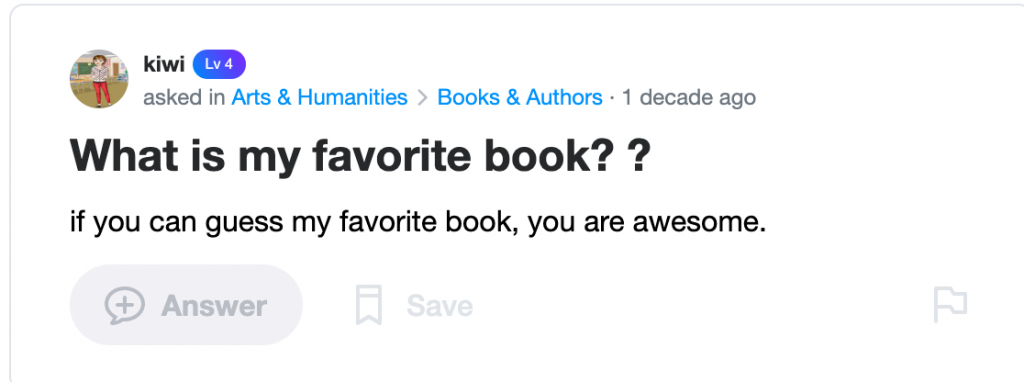
Yahoo! Answers was one of the only sites I knew. It was attached to my email, and although it said 13+ no one checked. I branded myself as “Kiwi,” a nod to a fruit I had tried once and a viral YouTube video. Now, I understand why so many people asked if I was from New Zealand, but at 11, I only knew to not use my real name.
I frequented multiple subsections. Under Gaming, I asked about Nintendo releases, trading shiny Pokemon, and the best methods to beat gym leaders. In Relationships, I ranted about my school crushes or how to stop having dreams about kissing girls.
I also linked to PhotoBucket images of myself, a preteen, asking if anyone thought I was pretty. On one occasion, I linked an image of my friend group and asked the strangers to rank us. I gave us fake names and ages and interests. I created an alternate world where I imagined I was well-liked and popular, but I was still begging for someone real to put me first.
In Books & Authors, I forged the perfect version of myself, cemented in my own creativity and honesty.
But in the Books & Authors section, I shone. Here, I forged the perfect version of myself, cemented in my own creativity and honesty. Although I would still lie about my age, I did read the commonly referenced books and short stories. And I was creating the poetry and short stories that propagated my love for writing.
In Books & Authors, I waited to be discovered. I thought a publisher would email me after reading the plot for my book. They would sign me immediately, lifting me out of my small beach town and into New York City. Because that’s how it happened in shows or movies. I imagined being published in The New Yorker or The Paris Review and wearing chic pea coats and scarves.
The subsection was the home for students who didn’t want to read The Great Gatsby, or for those seeking the next Harry Potter. But it was also filled with wannabe writers looking for a community. In these early days when social media was MySpace and maybe Facebook, finding other people who valued your interests still seemed daunting.
I’m sure there were forums and niches across the Internet, but Yahoo! Answers was right there. And unlike fanfiction websites, you could talk about your original characters, poems, or grandiose novels with plot twists and magic.
All ten responders guessed Twilight. The answer was Twilight.
I wasn’t actually writing these books, of course, and I doubt any of the other posters—who were probably also 11—were writing theirs. But Yahoo! Answers gave me a space to imagine the possibility of writing, and to treat it like a potential reality. I used the site to test out ideas about plot and character and setting. I would ask questions like, “What is the best name for my main character? She is 17 (like me) and has long dark hair and has a crush on her best friend but he likes the pretty blonde girl. The main character dies at the end.”
Or I would ask “Would you read my book?” and share a paragraph or two of text or the main events. Usually they were all about some tormented and sad girl who never “gets the boy” and always is surrounded by death.
But people would answer. They would respond with genuine enthusiasm and encouragement. These strangers with no icons would make good suggestions. I imagined them in their computer rooms across the world typing, “Your idea sounds so awesome! I can’t wait to read!” And then I imagined one day sending them all copies of my bound book.
Of course, I was on the other side of that desktop too. I would follow people who gave the best tips or had beautiful fully-formed visions for their novels. I refreshed the Books & Authors page, waiting to give advice, hoping I would be crowned as “Favorite Answer.”
This form of internet anonymity, and the storytelling that accompanied it, felt genuine—maybe even more genuine than my imaginary novel-writing.
The point of Yahoo! Answers wasn’t to develop a following, though. There was no attempt to add people I knew from real life. Instead, I invented this older version of myself, who wrote books and had boyfriends and took French in high school. This form of internet anonymity, and the storytelling that accompanied it, felt genuine—maybe even more genuine than my imaginary novel-writing. I wasn’t photoshopping myself or “lying for clout.” I used my questions and answers to embody who I wanted to become, who people listened to and respected.
Over the last few years, I’ve tried to access my old account. I would almost get in, but would get stuck on the security questions. The answer to “What’s your favorite fruit” was, oddly enough, not kiwi. In the erasing of my puberty—deleting my middle school Facebook account, burning old photos and throwing away my diary—my account on Yahoo! Answers was one of the only things that could tell me what I was thinking back then. I never got in.
Instead I searched keywords where I knew I’d find myself. I forged a collection of misassembled queries all dating back “a decade ago.”
The search for “What do you think of my story” drew over 830,000 results. “What do you think of my book” was almost 740,000. Hundreds of thousands of queries for poetry, next reads, and literary interpretations. An outlet for writers of all ages to pass around advice on a tiny and imperfect place on the Internet. Where you could be anyone, and people didn’t look at your followers before giving earnest opinions.
Now that Yahoo! Answers shut down, the archive of that moment in time is gone. The Internet adapted in the last decade, producing better question and answer sites, community forums, and baby naming groups.
Now that the site is gone, it takes with it the proof of my first real steps towards writing.
The naiveté of Yahoo! Answers and the stories it allowed us to craft, not just under Books & Authors but across the site and with ourselves, cemented it into infamy alongside MySpace and Chatroulette. But its ability to produce genuine interactions, regardless of following, feels lost in time. It can exist in pockets, here and there, but for a site to let users be themselves—not commodities, not chasing clout or influence—doesn’t seem feasible anymore.
With our entire identities and data existing online, true anonymity is harder to access, maybe impossible. In any event, it’s not the default, like it was on Yahoo! Answers, where everyone chose what name they wanted to give to the world. And while on a hand that inability to hide has benefits (holding cyberbullies or racist trolls accountable), it also means kids and teens have one less place to explore being a different version of themselves. In middle school, there is nothing more terrifying than being authentic and vulnerable, and on Yahoo! Answers no one judged you for asking ridiculous questions or telling your most private secrets—or for trying to learn what it meant to be a writer, and make your creative dreams come true.
This often silly and informative platform allowed every awkward tween to dip their toes into cultivating their digital image, not curated or for likes, just for themselves. And now that the site is gone, it takes with it the proof of my first real steps towards writing, along with all of our poorly typed and embarrassing questions.
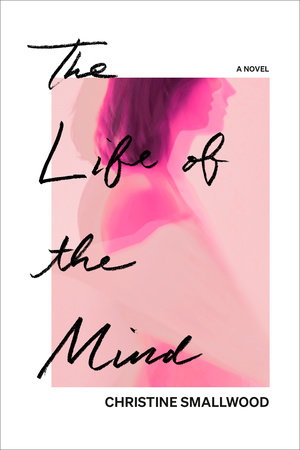
In Christine Smallwood’s debut novel The Life of the Mind, protagonist Dorothy escapes the stifled environment of an academic conference for one she finds even more depressing: the slot machines. There, she runs into her former dissertation advisor, Judith, a woman who caused her significant emotional distress. Beholden to the complicated tangle of relationship etiquette that academia breeds, Dorothy follows Judith poolside, where she reflects, “Judith was a teacher and a foster mother and employer, and more than that, she was a node in a large and impersonal system that had anointed her a winner and Dorothy a loser.”
Dorothy, for much of Smallwood’s novel, is trapped in a dance of power dynamics. As an adjunct at the university where she teaches, she is severely undercompensated and unsupported by her department. She prints her papers at the library, where a member of the staff asks her to use the faculty printers instead. She attends conferences due to Lauren Berlant’s theory of “cruel optimism,” in which people “remain attached to fantasies and aspirations” even when those hopes begin to hurt them. She is stuck in a system that fails her again and again.
In addition to bearing witness to the collapse of academia, she experiences a more personal, bodily loss: a miscarriage, around which the book is structured. Interrupting the hushed rooms of conference panel ballrooms and the library is blood. This tension between the physicality of Dorothy’s loss and her cerebral interpretation of myriad different endings—academia as we know it, the baby she might have had, her graduate school career—reverberate throughout the book.
Over Zoom, I spoke with Smallwood about the way language shapes our perception of the body, the adjunct crisis, the energy in a library, and intellectual posturing.
Jacqueline Alnes: Dorothy is suffering a miscarriage throughout much of the book. It’s a pain she keeps secret from her best friend and therapist. I feel like historically women have often held this experience as a private one. What about writing a character miscarrying interested you?
Christine Smallwood: The easiest way to answer it is that it was my experience. I had a blighted ovum and a miscarriage that is very similar to the one described in the book. When it happened to me, I didn’t tell a lot of people. I wound up telling people after the fact or later, but right when it happened, I felt shame and a sense of secrecy. Later on, I was curious about that.
Intellectually, I know it’s not something to be ashamed of. It’s an incredibly common experience, yet why did I feel like I couldn’t talk about it?
JA: There’s such a deep personal shame associated with it for so many people. Or failure. I’ve heard friends talk about feeling like their body has failed them in some way.
CS: It did feel like a failure, or like something had malfunctioned. Dorothy is not me, but some of the thoughts she has in the book were also my thoughts. I didn’t feel grief, I didn’t have a religious idea that a life died, but something was happening that isn’t happening any more and I didn’t know how to feel about that.
JA: The language you are using is interesting, and mirrors what Dorothy uses in the book. She is having this deeply human experience and the doctor uses the word “blighted.” You also used the word “malfunction.” Those words seem so sterile and clinical compared to what Dorothy experiences in the novel, which is bleeding, everywhere, all day, at conferences, while teaching, at parties. It’s pervasive, and feels so oppositional to the language doctors use to classify our bodies.
CS: That’s right. We have these very medicalized relationships to our bodies. Anything revolving reproduction, even if it’s just menstruation, the actual embodied experience can feel gnarly and feel far away from the language that you’ve used ahead of time to anticipate it.
JA: It strikes me that bodies in academia become distant in similar ways. My body in front of a classroom is a thing that I view as more of an object than a body. I pick out the outfit that I will wear, think about how I will speak, think about the way I move through the room. There is so much that’s constructed, even if I try to remain accessible. Was it interesting for you to explore this body, especially in these academic settings?
Intellectually, I know a miscarriage is not something to be ashamed of. It’s an incredibly common experience, yet why did I feel like I couldn’t talk about it?
CS: A thousand times yes. There are all of these different performances. You are in front of your students, you are at a faculty meeting. I was reminiscing about grad school with a friend the other day and he was reminding me that there had been so much private conversation about women’s bodies in the department, like “Oh, so-and-so dresses like this.” It was something that was talked about and dissected. I don’t think I took in at the time how much conversation and discomfort there was around on how people presented themselves physically. And then, of course, during office hours, you are often alone with another person. Your body is always there.
JA: There is something about academia that encourages this facade of productivity or like you have it all together. I have found that on Zoom, I’ve found it strangely easier to be more open in situations, like when a family member of mine passed away. I don’t think I would do that in person because of how embodied that grief might be.
CS: I don’t know how it compares to other kinds of workplaces.
JA: True.
CS: I think in every work place, there is probably body anxiety about doing presentations or turning around in front of people or picking something up off the ground. I think you’re always aware of that. But I do think in academia, everything is just a little bit extra. I wonder if it has something to do with the pretense that we are all there to be intellectuals and to talk about things that are fairly disembodied and then to bring our bodies into that space might feel an extra disjunction.
JA: It encouraged me to think about what parts of myself I hide on a daily basis, and about why I do that. Some of it is the precariousness of student evaluations and how students might view me as a woman—and I know even in saying that, I have so much privilege as a white woman who appears able-bodied. There are so many layers of power in academia.
CS: You’re getting evaluated in a customer service kind of way by students and then also being evaluated by people above you. Until you are actually tenured, you are in a precarious position. You are open to judgement.
JA: Do you think that academia encourages people to outwardly show their intellectual capacity in some way?
CS: Well, that is the business that academics are in, so it stands to reason that you would be expected to perform in a certain way. Intellectual posturing can also be fun. A kinder way to say it is that we are there to talk about ideas and so let’s talk about them. I think it gets tricky only when someone probes too deeply into another person’s ideas and then it feels tactless. If someone were to be too aggressive in asking about a reading or ask a question that could expose you haven’t read a book, I feel like in a department, you’re always walking right up to the line of calling people out.
It’s been a while for me, though. I left grad school in 2014.
JA: Dorothy struggles with power dynamics between her advisor, her former cohort, and feels like a failure in so many spaces. It is such a striking representation of the way the current system fails so many people. What was it like writing into those relationships?
CS: It was depressing. I got discouraged at one point and put the book away for a while. I decided I was going to write a TV pilot set in academia about a manipulative senior faculty member. I wrote this pilot script about a character who wound up being Judith. The whole time I was doing it, I thought I had left my book behind, but after I finished the script, I realized I had successfully tricked myself into continuing on with the book. It involved a lot of rewriting.
JA: I was really into Dorothy’s course, called Writing the Apocalpyse, which seemed way too fitting for the world we’re living in. I read it now, a year into a pandemic. Why this course? And what about it informs the way Dorothy sees the world?
I think it’s really unethical for departments to continue to accept graduate students when there aren’t jobs for them.
CS: I knew that the book was going to be about endings and what endings mean, and so I decided to give her a class to think about that. It seemed plausible to me that she would design this class. Adjuncts do so much teaching of composition or first year writing but they are allowed to design the course around themes. I did that for a couple semesters, and if you pick different interesting readings you can kind of convince yourself that you’re not teaching first-year writing.
JA: We are privy to Dorothy’s precarity as an adjunct on a granular level: she decides whether she can afford to spend money on therapy and, while talking to a friend, she expresses that her job is “real” before realizing many people don’t have to insist on the validity of their career. The adjunct crisis is so real. What do we do about it?
CS: I’m not an expert. I have not thought about this in the way that other people have. My gut sense is that there are too many people enrolled in graduate programs. I think it’s really unethical for departments to continue to accept graduate students when there aren’t jobs for them. Graduate students are used as a labor force. For example, at Columbia, where I went, there were a very large set of English Ph.D. candidates. The reason they had so many was because they used them to staff the university’s required writing classes, the freshmen comp class. Why were they doing that? Why were they churning out so many PhDs who couldn’t get jobs? Oh, I know why, to staff their writing program. That is really unethical.
There are some people who say, “Graduate school is great. You study, you read a lot of books, it doesn’t matter if there’s not a job at the other end.” But, I don’t know. You enter at a certain age, you leave six to eight years later, you’ve acquired no capital, you’re economically behind, and you’re not trained for any other type of work. I actually don’t think it’s okay to pass that risk onto students.
JA: In the programs that I attended, there was very little formal training on how you might market skills outside of academia.
CS: Can you market your skills outside academia? I don’t know if it’s really true. I think that you can switch careers, but you can have those careers without having your Ph.D. I don’t think there are actually that many jobs outside of academia for which a Ph.D. is such an advantage. Some of the alternatives to academia stuff is an alibi for the university to avoid saying the truth, which is that graduates are kind of screwed.
The other thing is that I believe there should be different tracks within Ph.D. programs. I don’t think everybody needs to write a dissertation. Not everybody needs to be on a track for that. The weird thing about academia is how many things you’re supposed to be good at. You’re supposed to be a good teacher, a committee member, a mentor, a writer. It’s a lot of different jobs that have been compressed into one job. Academics should figure out how to separate out some of that work. If you’re someone who wants to teach at a liberal arts college, you don’t actually need to write a dissertation.
JA: The training would look wildly different. There are some parts of the job for which you receive zero training and then you’re expected to excel.
CS: I don’t know what your program was like, but we were never really taught to design a syllabus or a curriculum. There are things you are just expected to figure out for yourself.
JA: What was your program like?
You enter at a certain age, you leave six to eight years later, you’ve acquired no capital, you’re economically behind, and you’re not trained for any other type of work.
CS: I finished my PhD. I don’t necessarily think that the skills are transferable. I don’t regret it, but I definitely am someone who looks at life as a series of decisions that have led to me being me. I wouldn’t be me if I hadn’t gone through that program. It was very difficult and I was very unhappy at different points. At other points, I was happy.
The thing about my book is that I hope people understand that Dorothy wants to have this life. She loves books, loves talking about them, loves thinking about them. She’s an intellectual. I am too. There really aren’t that many places where you can immerse yourself in reading and talking about literature with intelligent people.
JA: Dorothy lives so much in her mind. I love that scene where she is on the subway and she is literally hearing from the book. I thought it was a nice way of putting something into words that is so often intangible—like, how do I express to people that sitting in a room alone reading is magic? But in other scenes, like at a party, Dorothy is present, but devoid of the experience itself. She is so trapped with her own thoughts that she doesn’t seem to enjoy the sensory parts of the world.
CS: One way to think about writing is that we have these experiences and then we go away to our private place and analyze them. Dorothy does that writing in the moment. That is what I think feels odd to a reader. You have no delay there. She is always already writing the experience while she is having it.
There is also a question I have about Dorothy, which is how much of this is the miscarriage, and how much of this is who she is? If we could pluck Dorothy out of this book and put her into a different one, would she still exhibit this inability to inhabit her experience? Or not? I don’t know the answer to that question. Is the point of the book that the miscarriage is responsible for this disjunction? Or not?
JA: I was going to ask the same question about her apocalypse class. Is it the precarity of her situation as an adjunct that’s forcing her into thinking about endings and the world as a dismal, burning place? Or is part of it her, too? Would she work a corporate job and also be inclined to think the world was ending?
It was Saturday night and the four of them were sitting around the dining room table at Sasha’s house, telling stories. Do you remember, do you remember?—that was the song they were singing. Nils and Anna hadn’t seen Sasha for years—they’d missed the wedding, and didn’t know Karen, his third wife, at all. But there were no hard feelings; they drank, had some mood-loosening hash; it was like no time had passed. At dinner, Sasha had clapped and rubbed his hands together, blown through his fingers as though he were holding dice. He’d sung of the friends they’d had in common and spoke of their great adventures. He’d told the stories of their youth in such luxurious and precise detail that the episodes began to seem new, as if they’d happened to someone else.
Dinner had been delicious, ram and ewe, heaping platters of food. Now they were into the wine, and it seemed no one wanted the night to end. At some point, Karen stood and wandered around the kitchen, where she spent half an hour opening and closing drawers as Sasha held forth. “I feel like a sultan,” Sasha said. “This is Homeric. We’re riding the lightning here. Pass the lute, for this has been the best night yet.” He reached for his cup and began talking again.
“He never listens,” Karen said from the kitchen. She had the refrigerator open and was staring into its gray light as though it held some sort of secret scroll.
“Have mercy,” Sasha said, and clutched at his heart.
The house was deep in the country, and it had taken Anna and Nils almost an hour of driving narrow, winding roads to find it. When Nils had tried to apologize for being late—trouble with the kids, a new babysitter—he’d been waved off. “Old friends,” Sasha said, wrapping him in a bear hug so tight his neck hurt. “And Anna, still so beautiful. Welcome.” He’d made them little paper hats, which he placed on their heads as they stepped through the door. “Remember these?” he’d said.
“Of course,” said Anna. It was something he’d done when they were in grad school. Each hat, when unfolded, revealed some sort of blessing or fortune you would take with you into the good, cool night. It was, in fact, how Nils and Anna had met.
“I see you’ve got your hats,” Karen said.
“We’re playing along,” Anna said.
Nils folded his and put it in his jacket pocket.
“Fine, fine, you don’t have to look now,” Sasha said. “Save it for the drive home. But don’t forget. Or it’ll never come true.” He shut the door and began pouring drinks. This was how things had always gone between the three of them. They took themselves to the dining room, and the night unfurled like a dark sail around them.
Karen returned to the table as Sasha was winding down. With some shock, Nils and Anna had come to realize that a number of the old friends they’d been talking about—not close friends, but still—were now dead: one or two heart attacks, a ski accident, cancer. A great spin on the roulette wheel, the marble magnetized, succinct, final. Sasha pushed out his chair and walked down the hall to the bathroom. “It’s unendurable,” he said when he came back. His cheeks were flushed, and Anna thought he might’ve been crying. “They stand on the banks,” he said. “They’re in this very room.” A thick, heavy silence fell over the group. As though recounting a dream, Sasha then began to list his own reversals in fortune, which had been great—he’d built and lost companies, an accident had left him unable to have children—and what he had learned from them, which was almost nothing. “Except for this: if you find a beautiful woman, you hang on, you hang on, you hang on,” he said, looking at Karen, “and you never let go.”
The effect that these stories had on Nils and Anna was immediate and strange. As their old friend spoke, each scene, familiar and not, had emerged as though from some shrouded, timeless woods, taken physical shape on the table in front of them, and said: study me for the clues to your life. And what did they see? Only that they, themselves, had been lucky, happy; they’d been content. They were not dead, they’d had their children. There was nothing wrong with celebrating that, but that’s not what stories were supposed to do, and the idea that they’d arrived at some point where all had been said was, somehow, horrendous. Who would want that?
Karen reached out and rested her hand on the crook of Sasha’s elbow. Anna and Nils reluctantly folded their napkins. Outside, the wind picked up and blew little gusts of snow against the kitchen window, and for a minute it seemed as though no one would ever speak again.
“Karen tells stories,” Sasha finally said. He coughed into his hand. “It’s what she does for a living.”
“Translates,” Karen said.
“Really?” Anna said. “I didn’t know that.”
“Why would you? I’m the odd man out.”
“We haven’t asked you a single question,” Nils said. “We’ve been rude.”
“She’s incredibly smart,” Sasha said. “You, I mean. You are incredibly smart.”
Anna turned to Karen. “Perhaps you could tell us a love story,” she said.
“Yes,” said Nils, and patted her hand. “If you have one, it’s the best way to end.”
“They aren’t really love stories,” Karen said. “They’re more like fables.”
“Surprise us,” Sasha said. “We can switch gears. I think that’s something we’re ready for.”
They cleared the table, and took themselves to the spacious living room, where they sat on an L-shaped couch that faced an enormous gas fireplace.
“This is our first time out in who knows how long,” Anna said. She sat close to Nils on the couch. The night was approaching its natural end, of course, but Anna felt as though something important was on the verge of passing between her and Nils, and in that sense the evening didn’t feel finished. She took his hand. Their babysitter would be wondering where they were, but she knew to call if something was wrong.
Karen returned from her office with a stack of loose paper, which she arranged messily on her lap. She read silently for a few minutes and no one said a word. “This one,” she finally said, “is new. It doesn’t fit with what you were talking about earlier.” She rubbed her belly with an open palm. She was frowning slightly. “But it’s been bothering me, and I’d like to try it out.”
“Is it a love story at all?” Anna said. “Will we be scared?”
It begins as a love story, but it becomes something else, too.
“Yes,” Karen said. “No. It’s about a forest, and two foxes, and a wolf.” She hesitated. “And a woman,” she finally said. “You might find it upsetting because you have children. But it is about love. It begins as a love story, but it becomes something else, too.”
“Okay,” Sasha said. He was fiddling with the fire. He couldn’t get it to work, and there was a brief silence as Karen regarded him. He quit fumbling and sat down. Then she began.
“Once upon a time,” she said, “in a tall, thick forest that grew next to a northern village, a small fox lived with his wife. For many years they’d been content, their days together long and full. But when it came time to have a child, and they found they could not—for each child they conceived arrived stillborn, some fur but no breath, and left a stain of blood upon the snow—they were visited by great sadness. Over time this sadness bloomed a shadow, and soon grief hung on their door. The forest fell dark, the nights became long, and the joy they’d previously felt in each other’s company could no longer be found. Days passed with no words of comfort. When, at night, they reached for each other, it was like touching air. This cannot go on, thought the fox. And so, one day he left his tired wife sleeping and returned only as the sun was going down with a human child they could call their own.
“His wife met him at the door. He handed the bundle to her as though it were a great gift, and the small child seemed to glow in her arms. He cried softly, he cuddled, he burrowed directly into his wife’s neck. He was unafraid. She let out one happy sob and brought the swaddled child inside. That night, they fed him milk and meat, poured water from a basin, bathed him with their tongues. He grabbed playfully for their bristly fur. They made a bed out of branches and sang him asleep in a tidy corner of their den.
“In bed that first night, she reached for her husband. I didn’t know what I’d do, she said quietly. Before long, she stole from their bed and returned with the sleeping child in her arms. They listened to the wind outside. It began as a whisper, then grew louder and more fulsome. Boughs cracked and fell. Then it stopped, and it seemed the forest was as quiet as it had ever been.
“In the morning, the child stirred, stretched, and opened his eyes. Welcome, she said. We have been waiting for you our entire lives, and we have so much to tell you.”
Karen cleared her throat. “However,” she said, “bringing this child into their home did not come without complication. For in doing so the fox had broken the oldest rule in the forest, which was this: the separation between the village and woods must always be maintained. This meant that no matter how happy they were, they would always have to hide this child. Any transgression, even a slight breaking of this rule, meant death.”
“By whom?” Anna said.
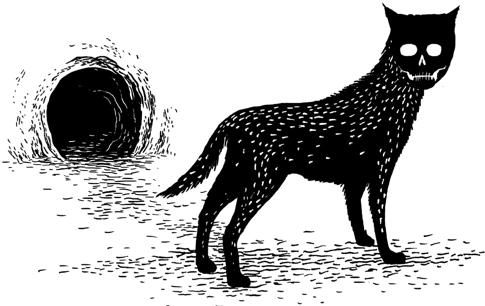
“Wolf,” Karen said. “He patrolled the woods and kept its boundary. He’d been around in one shape or another for a long time, and killed whomever he pleased, including, years ago, the fox’s father. And the second complication was this,” she continued. “The fox had not found the small child by the river, abandoned for the nuns, as he had told his wife. He’d stolen him from a small house near the edge of the forest. This was not an impulse. He’d watched for weeks from the woods. He’d heard the child’s cry, seen his mother soothe him, and waited patiently until one day, as he knew she would, the woman left her child alone on a blanket on the porch. The fox didn’t hesitate. He slipped on his father’s magic cloak, took on the form of an old man, and, breaking the rule, stepped quickly out of the forest. As he ran away with the child in his arms, he heard the woman calling for him; her cries were like the screaming wind. It was the most desolate sound imaginable.”
Here Karen paused. Sasha had started fiddling with the fireplace again.
“He’d taken the child and left the woman, who had no one else, no husband, no parents, all alone,” she said. “But he thought: what is her unhappiness, compared to ours? This was something he could never tell his wife, for she was kind and knew something of loneliness, and would not forgive him for his cruelty.”
The child grew quickly. He learned to turn over, and soon he was sitting by himself. Wherever the fox’s wife went, the child followed her with his eyes, and if she was ever out of sight, he balled his fists and cried quietly until she returned to him. Goodness, she’d say, and sweep him into her arms. I’m not going anywhere.
Each morning, the fox woke before the sun, warmed milk on the stove, brought the sleeping child to his wife. Just a little longer, she’d say to him with the child in her arms, and then I will come help you gather wood and wool for the winter. As the sun went down, he’d return to their den in time to hear his wife humming the child to sleep. They clipped his fingernails, put them in a jar, cleaned the wax from his ears. They bathed him in the brook, sopped the folds of his legs. Gently washed behind his neck, wiped him clean and dry. They sang late into the night. Soon he fell ill with his first fever, and a fearful stillness descended on the home: perhaps, they thought, this was how they’d lose him. But the fox’s wife dipped a cloth in cool water, spread it across his uncreased forehead, hushed his cries, and waited for him to return to himself. Soon he did. Now you are ours, she said.
And so their early days as a family passed. They were careful, they kept to themselves. There was no before, only after. They were as dear to each other as could be imagined.
“But nothing lasts forever,” Karen said, “and soon the weather turned and a sharp feeling began to nag at the fox. He didn’t know what it was. Or, he did know— he had lied to his wife, and he dreaded being found out; and he was afraid that Wolf, who had killed his father, would hear of what he’d done and come for him. No one in the forest had seen Wolf in ages; that didn’t mean he wasn’t there.
There was no before, only after. They were as dear to each other as could be imagined.
“But there was more to it than that. There were days when he spoke to no one, and no one spoke to him; when the child would cry if he held him; when his wife became impatient with him. He felt excluded, and soon began to feel sorry for himself. He wanted to say: you should be grateful for what I’ve done! I put my life in great danger for your happiness! But then, of course, he would remember that he’d lied to his wife and told her he found the child by the river.”
Karen turned a page and continued. “She too noticed the distance growing between them. There’s no such thing as too much happiness, she told him one night. She picked up the sleeping child’s arm and dropped it gently. Everything else sorts out.”
Nils adjusted his legs. It seemed that the couch had grown softer, and now curled around them in the dimly lit room. Anna had her eyes closed. Suddenly, the fire whooshed to life, and Sasha sat down next to Karen. He put his arm around her. “There,” he said. In the low firelight, and sitting beside her, he looked older than he had during dinner. “That’s better, isn’t it?”
“Yes,” Karen said. “Much.”
With winter came darkness and snow, the sense of an ending, but also the turning and blossoming of something else, and one cold morning the fox wandered a great distance from home. He stepped lightly, followed a path cut by a frozen stream through the woods. He had no destination in mind. Bare branches, encased, glistened with ice. There was no sound that was not muffled, and the gray winter sky felt dense and close.
Soon, and for reasons he couldn’t understand, he began to feel light-headed. He paused to catch his breath. Suddenly, he had a vision of the forest from a great height, as though he soared above it. He shook his head. Next, he smelled summer grasses, though they were buried in snow. This is strange, he thought. I must be very tired. He found a small hollow under a great oak tree and soon fell into a deep sleep in which he dreamed he was wandering the forest, looking for a handful of berries he’d lost. Then he dreamed of his wife before their child—he saw her in bed, waiting for him. His body began to quiver. It was not a dream he wanted to end. But soon the image of his wife began to drip at its edges, and he felt fear rise in his throat. His wife gave way to a vision of Wolf, lurking in the forest, watching him with his viscous, yellow eyes. He could smell Wolf’s decaying breath. His father was there.
When he woke, it was to the sound of anxious chirping. What have I done? he thought. When he arrived home, his wife met him at the door. Where were you? she said. I was worried. Nowhere, he said. Well, she said, we have news. With this she stepped aside. The child sat in the middle of the floor. Then, with one chubby arm, he reached for a stool, pulled himself standing, and began to take his first steps.
He’s been working all day just to show you, his wife said. She was beaming.
The fox knew it wasn’t true, and that she’d said it only to include him. She rested her head on his shoulder.
He will want to go outside, the fox finally said. It’s too dangerous.
I know, his wife said. I’ve thought of that.
She stood and retrieved a child-sized vest she had sewn from the fox’s own cloak, and with a flourish she draped it gently across the child’s shoulders. Now, rather than a human child holding on to the stool, there appeared a small fox. My father would not have liked this, the fox thought. Then he said so to his wife.
Your father isn’t here, she said. And no one will ever know.
“The child grew,” said Karen. “His hair was black and knotted, his eyes were like little dark stones. He was sweet-natured, curious about every little thing.” She coughed and adjusted the pages in front of her. “Every morning, before leaving their den, they dressed him in his vest, and every night upon returning they hung it near the fire to dry. They were wary of the magic contained in this cloak, but it allowed them to leave their den, and with the child appearing to all like a fox, perhaps they wouldn’t even warrant a second glance. The child clung to the fox’s back, and they ran through the cold in the falling snow. They trotted, they gamboled, they hunted together. The forest in winter was beautiful, and there were mornings where it felt to the fox and his wife as if the trees and sky and rolling hills, the blue-lit afternoons and evenings, had been created for them alone.
“But still there were some nights the fox could not sleep, and on those nights he found himself wondering about the child’s real mother. Sometimes she appeared to him in his dreams, walking through the forest, calling for her child, heartbroken, bereft. In these dreams, she moved through the woods, looking behind every tree, in every den. Other times he imagined her as a pale, long-fingered ghost who came into the forest not to find her child but to kill whomever had taken him. She moved like the wind; she would not stop. Often, he’d wake just as she had found them, and he would go and stand at the door and listen to the night sounds in the forest until he calmed down.
“This small, small child,” Karen continued. “His wife could not be without him, nor he without her. He would not eat unless it was she offering food. When the fox held him, singing, he would not sleep until his wife gently took him back into her arms. Time passed; they were content.
“But one night, looking directly at the ceiling while his wife slept, he thought: she is wrong, there is such a thing as too much happiness. If it announces itself too garishly, someone will come to snatch it away.”
Sasha stood up to get a drink.
“What do you do with a story like this?” Nils asked. “When you’re done, I mean.”
“I suppose that when I have enough of them, I’ll put them all together and make a book.”
“I read these stories when I was a kid,” Anna said. “I couldn’t get enough.”
“Right,” said Karen.
“I’m back,” announced Sasha, and sat down near Nils.
“So,” Karen said, and looked down at the pages in front of her. “He can’t stop thinking about this woman, the child’s mother. There are some days when, for reasons he can’t quite explain, she enters his every waking thought. It’s alarming to him, and unexpected. He doesn’t know what to do.”
“Right,” Sasha said. “We got that.”
“No,” Karen said, “like, he really thinks about her.” She stopped here and looked at Anna. “This isn’t a children’s story. It’s something else.”
“I’m sorry,” Anna said. “I didn’t mean to upset you. Excuse me,” she said, and stood. She walked down the hall to the bathroom. While she was gone, no one spoke. The fire was blue at its base, and licked the fake logs in a hypnotic, predictable way. When Anna returned, she sat near the edge of the sofa, close to, but not touching, her husband.
“Where were we?” Karen said. She looked at the page in front of her for where she’d left off.
“He’s thinking about the woman,” Nils said. “The child’s mother.”
“Yes,” Karen said. “Right. Time passed, and this unsettled feeling did not go away. It felt to the fox as though the woman were reaching out to him across some other plane, some dark dimension he couldn’t quite see. He was deeply bothered by this feeling. It would not let him go. And so one day, even though he knew it was not a great idea, he left home and went in search of her.”
Though he knew where the woman lived, the fox was apprehensive about returning. He walked for most of the day and then paused at the edge of the woods. With a backwards glance, he drew the cloak over his shoulders. He felt the transformation in his chest, painful but quick. The child’s house was as he remembered: red door, peeling shutters. The garden grew untended and wild.
Dry sticks lay across the brittle lawn and he was careful with his steps as he approached.
It appeared that no one was home. He looked in one window, then another. He saw the woman’s bed was unmade. The kitchen smelled of rotting food. The child’s room was untouched, as though he were expected back at any moment.
Then he saw her: thin and dressed in her nightclothes, she sat alone in front of the fireplace. He couldn’t see her face. He cupped his hands to the window, and then, as if she knew he was there, she stood and made her way across the room. She moved slowly and gracefully, walked as though she were the ghost he’d seen in his dreams. Leave, his thoughts commanded him, but he could not. She pulled at him with a strange gravity, and he found himself wanting to speak to her. Her hair was matted and rangy, the hem of her nightgown was stained with mud. She had been in the forest, after all.
He retreated to the woods until night fell. He tried to clear his head but could not: it felt as though his brain had become gauze. When it was dark he returned, stood by her window, and watched as she lay down in her empty bed, closed her eyes, and slept. He did not know what to do. Finally, he wrapped the cloak around his shoulders, climbed through the window, and slipped into the bed next to her. She smelled like an animal at the end of its life. Her very breath was sorrow. Even in sleep she must’ve known he was not her child, but nonetheless she curled around him, pulled him to the hollow of her rancid chest, and fell into a deeper dream, the deepest there was. She called to her child, wanting only him. He remained in her embrace and listened.
Finally, he pulled away. He left through the window, closed it, and swept his footprints from the garden’s bed. On the front porch, he left the child’s blanket, and on top of that a pile of small bones. It would hurt at first, he knew, but it was better this way.
“Time passed and the fox just…did nothing,” Karen said. “Now and then he returned to the house and lay with the woman, but that soon stopped, and soon he found he could live with the pain he’d caused, and the lie he’d told his wife, simply by pretending he hadn’t done anything wrong. In fact, it was a secret he liked keeping. Occasionally, a vision of the woman haunted him, but mostly she didn’t, and the fox family lived happily for a while. They kept to themselves, but their old friends understood, and soon stopped visiting. All families turn inward over time. It is what happens when a child arrives. Habits are broken, and new habits are formed, clung to. It’s one of the old stories. It’s how you stay safe.”
There was a loud sound from the kitchen, followed by a rush of water. “That’s just the dishwasher,” Sasha said. “It’s a piece of garbage.”
“Anyway,” Karen continued, “soon the leaves began to change and the days grew cold and short, and the fox, in his state of contentedness, forgot about the woman in the village and what he’d done. But one winter morning he woke early and knew something wasn’t right: the forest was a little too quiet, the sun late in rising. He crept out of bed and went outside. When it should have been light, it was dark. Where he should’ve smelled a crisp winter morning, he smelled something animal and foul. He blinked his eyes and swatted at his nose to clear the stench. And when he looked up, he saw that Wolf had come, and now sat near his door.
“Wolf was enormous and lanky. He moved rarely, and only when he felt like it. His eyes were yellow and depth- less, unblinking; he thought in a slow and deliberate way. The fox hadn’t seen him in years, and he felt his stomach drop in fear.
“It’s so strange, Wolf finally said. A human in the woods.
What is she looking for, I wonder? The fox shook his head. He could not speak. I know you’ve seen her, Wolf said. And I know where you go at night. Then he stood. His mouth was a black gaping pit. It’s not something we can have, he finally said. It just isn’t.
“The fox felt urine stream down his rooted leg. He was remembering his father. He closed his eyes and prepared for his own life to end. But when it didn’t, he slowly uncovered his head. He opened his eyes and with relief realized that Wolf hadn’t mentioned his wife or the child. He nodded at Wolf and said he would not see the woman again. At this, Wolf laughed. And then he opened his mouth and commenced with a great yawn. We’ll see, he said. And with that, he turned and walked slowly back into the forest.”
“Hmm,” Sasha said. “That was easy.”
“No, no,” Karen said. “A visit from Wolf is never that simple.”
That morning when the child woke he was unhappy and listless, wan, full of complaint. Soon, he caught a cold and slept for two days. When he woke, it was like something inside him had shifted; as though the little machine of his heart fluttered here and there irregularly, and as a result different chords were pulled in his mind, and the song he sang changed its key. Some days, he was content to play on his own. Other days he was inconsolable. On these days, the fox could feel his wife’s sadness returning. It was like a low fog sifting over the forest floor, pushing at the windows of their den, trying to get in. Month after month passed, and they became exhausted, short with one another, angry themselves.
If the child cried for more than a day, sometimes the fox’s wife took the cloak from its peg and transformed into a young woman. Her paws became fingers, her brown eyes turned blue. From the door she would glide to wherever the child was and take him in her arms, sing softly, wipe his tears with her thumb. This always calmed him. And once he was asleep, she would remove the cloak, lie down next to her husband, and quietly weep on his shoulder.
“For months,” Karen said, “this sadness afflicted them. They began to feel…helpless. There was nothing to be done. The forest was heavy with snow, the light was flat. The child wanted nothing to do with either of them. He sat cross-legged in a corner, stared at the wall. He walked in small circles in the center of the room. When picked up, he thrashed and screamed. Sometimes he would cry for hours, and the crying would make him vomit. He stopped eating.
“And then one day,” Karen said, “they woke up and the child was gone.” She paused. “They looked everywhere,” she finally said. “They had not left their door open, and the child could not unlatch it. There were no windows left ajar. A child like that could not just disappear, but that seemed to be exactly what had happened. For a week they walked the woods, calling his name. They left the door open at night in the hope that he would return on his own, left food in places around the forest, they begged and cried and prayed, but he didn’t return. Soon a winter storm arrived. The temperature dropped, and the wind picked up, and the forest floor was covered even more deeply with snow. It was the worst storm they’d seen in years. Neither would say it, but they knew all hope of finding the child was lost. Soon, his wife took to their bed and would not leave it. When the fox tried to talk to her, to reassure her, it was like talking to an empty box. She’d gone vacant. When he brought her food, it remained uneaten.”
Karen cleared her throat. “When the storm relented, he left her and resumed his search in the woods. He crossed the stream and traveled farther than he ever had, to the darkest parts of the forest, asking everyone he met about the human child. The answer was always the same. He knew the woman had not found and taken the child back—every night he ventured to her house to peer into her windows. She sat alone in her living room, staring into whatever dark space unfurled in front of her. The child had not returned.”
“He just disappeared?” Sasha said.
“You need to stop interrupting,” Karen said, and looked at him with what appeared, to Anna and Nils, to be genuine anger. “The three of you have been talking all night,” she said. “You asked for a story, it’s almost done.”
“Sorry,” Nils said,
“Yes,” said Anna, “please continue.”
Eventually, with his wife still sick in bed, the fox went in search of Wolf. After two days of walking and calling for the child even though he knew all hope was lost, the forest opened, and he found Wolf standing at the mouth of a great cave. Near the entrance, a heap of blanched and cracked skulls were stacked like stones. Enormous worms wound around his paws. Wolf nodded to the fox. He grinned, then dropped his head and returned to licking the pile of bones at his feet. I have, he said, no idea why you’ve come.
The fox was struck dumb. The darkness that orbited Wolf stretched its living fingers and beckoned to him. But then he felt anger surging from his shoulders like an old thought. He crossed the distance between them and lunged.
Oh, ho! said Wolf, surprised and even slightly pleased at the fox’s stupidity. He bit again and again at Wolf’s neck while Wolf stood to his full height and did nothing at all. The fox felt the large worms wrap around him. They squeezed his legs, his hips, his chest. Your pain is the breaking of the shell that encloses your understanding,
Wolf finally said. Tell me when you are tired, and then I will show you something. Eventually, the fox could no longer stand, and with great heaving gulps of air lay down. With a yawn, Wolf turned and stepped into his cave without a backward look.
The fox felt as though he’d left the earth. He no longer cared about anything at all. The walls of the cave were wet and putrid, and as he followed Wolf, the sounds of the forest receded behind him. It was as though he were slowly entering a cold and unforgiving afterlife. With some sadness, he realized his memories of his own father had been wiped clean: when he tried to think of him now, he saw only a dark and bending absence. Finally, the tunnel opened up to a great cavern, lit by torches. He was met by the smell of decomposing leaves. There was no sound at all. The floor was piled high with bones. You see? Wolf said, and shrugged. There are no children here.
Karen adjusted herself on the couch and looked quickly around the room.
“His wife did not recover. In the morning he brought her tea, breakfast. She refused to eat. She refused to leave the bed. She refused to allow him to move the child’s belongings—the cloak she’d made, the toys. His clothes. In the evening, he crawled next to her and sometimes it was like sleeping with a statue. Other times, she talked in her sleep, thrashed, and nested; she roamed her own unconscious, dark roads that did not end. One night, she opened her eyes, looked directly at her husband, and said: That’s not true. The fox didn’t know to what she was referring. He knew that he had brought her great pain, but he had not said anything for days.
“And so they moved carefully through the fraught and fragile months. They searched the forest out of habit. They took no pleasure in the passing hours. During the first year, the child visited them both in their sleep, and in these dream visions the fox saw a young man standing near the edge of the forest, one arm raised in greeting. His wife saw him running through the woods, with sunlight at his back. Neither saw him for what he was.
“As time passed, the fox found he could no longer remember what the child looked like. When he tried to imagine him, all he saw was a large white stone that gave off a shimmering light and vibrated with hatred for him and what he’d done. His wife remembered, though. She could describe the child’s chubby legs, and the constellation of his birthmarks, his thick black hair, the feel of his toothless gums on her outstretched wrist. His smell. She removed the cloak from its peg, transformed into a woman, and sat in the middle of the room for days as if to call him back. But it was for naught. The boy, the fox felt, no longer existed, and after his disappearance they’d invented and replaced him with a different child made from memory—it was this they were mourning, and warming themselves by. It was not enough, but it was what they had.”
“And so,” Karen said, “that was how they aged.”
“And he never tells her,” Anna said. “Not about Wolf, not about the woman, not about the child.”
“Well,” Karen said. “It’s complicated. One of the things he’d seen in the cave were the small bones of their stillborn children. So he was shaken, and he tried hard to forget that, and did his best to keep that knowledge from his wife. If you keep one secret, you can’t tell another—eventually all of it will come out. Many years passed, however,” she said. “And finally, when they were old and near death themselves, and all of this was a distant memory, and perhaps he thought he’d be forgiven, the fox confessed to what he’d done. He began on the day he brought the child home, and he told her about the woman, and his visits to her house, and how, one spring morning, he’d opened the door and seen Wolf. She listened patiently. Her face made no expression he recognized. He felt unburdened, like a weight was off his neck and shoulders; but he also felt deep shame at the way he had kept this from her. She did not rescue him from this feeling.”
“Good,” said Anna. “That seems about right.”
The next day, he woke to an empty bed. He sat up and saw she’d cleaned their den. Everything was in its place: the floor swept, the child’s toys tucked neatly in the corner, the clothes she’d sewn for him years ago folded and stacked. She stood near the fire. Take me to her, she instructed her husband. She opened the door and stepped out.
If you keep one secret, you can’t tell another—eventually all of it will come out.
By the time they got to the village, the sun was going down and the sky was gold-streaked and orange. They shared the cloak, now old and moth-bitten, and felt the quickening of their transformation: a short old woman and a fat, ugly old man, shuffling together, arm-in-arm. No one paid them any mind. They passed husbands, wives, children; through open windows they heard dinner conversations, spoons on plates, the sounds of family happiness. Finally, they reached the house they were looking for. It was as he remembered it.
The woman answered. She’d had little company over the years, and her face betrayed neither shock nor recognition at the sight of this odd couple at her door. She was polite and invited them in. She led them through the small house, and they sat facing one another in ratty and dirty chairs as the sky dimmed, banded blue, then went dark.
I’d offer you tea, but I have none, the woman finally said. She was old now. Her features were like carved wood, and her eyes were as dark as night. She studied them closely, violently cleared her throat, and resumed staring. I’ve been waiting for you, she finally said, and I know why you’re here. Then she said the child’s name. The fox’s wife began to cry. Are you here to bring him back? the woman asked.
When neither the fox nor his wife spoke, she had her answer. She sighed and looked out the window. She composed herself and dabbed at her cheeks with a large square of blue cloth. The fox recognized it as the blanket he’d left on her doorstep years ago.
Finally, the fox felt his wife tug at the cloak, and saw the woman startle at their change in appearance.
His wife spoke first. She described their den in the forest, the light of the seasons, where they lived and how. She described how they’d made the child’s bed, taught him to run and burrow and hide. She talked of the long nights when he had a fever and the relief she felt when it broke. The woman listened closely. Was he very happy? she finally said. Did he sleep through the night? Did he pull his ear to soothe himself like he used to?
This is some sort of trap, the fox thought. He tried to look for her teeth, to see if she’d sharpened them, but she kept them well hidden, and he found that he could answer these questions, and that talking like this settled his mind. The woman leaned forward in her chair.
You’ve brought him back to me, she said.
No, the fox’s wife said, and let out a soft cry. No, we haven’t. He’s gone.
The woman spread her arms.
You’ve brought him back, she said. She seemed to grow in her seat. It was the not knowing, she said. It was imagining the darkness, and his pain. That’s what it was. That’s all it is. This is the end of your life. That’s all it could ever be.
And then she wept too.
“And that’s the end?” Sasha said.
“Yes,” Karen said.
“They just cry?” said Nils.
“Well, there’s another version,” said Karen, “in which there is no reunion. And another version, where the woman reaches for the fox and squeezes him to death with her bare hands for what he did. And a third version, where the child returns, now a man.” Karen was sweating slightly. She seemed relieved to finally put the story down, ready to go to bed. She had one hand on her belly and rubbed it as though it might bring her luck. “The three of you. You should see your faces,” she said. “Do you want to hear what Wolf originally said? It’s an old poem. He said: Your pain is the breaking of the shell that encloses your understanding. And could you keep your heart in wonder at the daily miracles of your life, your pain would not seem less wondrous than your joy. Pain is the bitter potion by which the physician within you heals your sick self. Trust the physician and drink his remedy in silence and tranquility. I didn’t include that this time, though. Even though I like it.”
“Huh,” Sasha said.
Karen was looking out the window now. “This is the end of your life,” she said.
It was late. The fable had taken them long into the night, and there would be no more stories. Anna and Nils knew their babysitter was most likely asleep on their couch, the television quiet and casting a blue light across her tranquil, young face. For a long time no one moved, and the four of them sat as though rooted to the couch. To someone standing outside the house, peering in, they would’ve appeared as a still life in which each solitary figure was lost in thought, flat-lipped, as though on the verge of hearing the answer to some private riddle. But of course, they had heard the answer. Finally, someone coughed and the spell was broken.
“Did you ever open your hats?” Sasha said.
“We didn’t,” said Nils. “I forgot mine completely.”
A young snow began pelting the roof. They would need to leave soon; they should’ve left hours ago. Perhaps now, Anna thought, they would never leave. But just then, there was a thunderous crack, and the lights in the kitchen cut out. The fire sputtered, hissed, and went out as well, and the room was plunged into complete darkness.
“Here’s the scary story you were asking for,” Sasha said. He stood. “We’ve got candles somewhere.”
“Don’t bother,” Nils said. “Our eyes will adjust.” But Sasha was already knocking into furniture as he crossed the room.
“I liked that story,” Anna said. “Very much.”
“Thank you,” Karen said.
Nils reached for his wife in the darkness, but when he grasped, he felt nothing but air. Had she moved? He heard noise from the kitchen, cabinets being open and shut. It sounded like an animal was rooting around. “Anna,” he said, but she didn’t answer. Finally, he saw her and was struck by a pale fear, though he didn’t know why. She had stood and was at the window. “Anna,” he said again, but she was thinking of something else. An image had come to her: their first child, in her arms, in the early morning, both of them lost in those tired happy days that never seemed to end but could not be remembered, and would not come again.
“I’ve got one,” Sasha said from the kitchen. “I’ve found a candle. Hang on, hang on, hang on. Nobody move. Soon there will be light. Nobody move a muscle. I’ll be right there.”
The mother and son relationship is complex—fraught with pain, hurt, love and triumph.
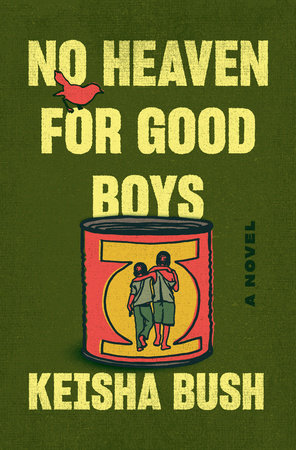
In my debut novel, No Heaven For Good Boys, the protagonist’s mother, Maimouna, loves all of her children—but when her only son, Ibrahimah, is taken from her, she spirals into a sea of hopelessness and depression. Maimouna and Ibrahimah’s journey is hard and painful, and the entire family struggles to weather the storm, but with love and perseverance, they are both able to find their way back to the path of hope and faith. Love, not hate, saves both mother and son, and offers a lesson for us all in these stricken times.
In the stories below, mothers and sons do not always prevail over the obstacles, but for most, it is love that illuminates the path to redemption. Maternal love is the elixir, of sorts, for the grief that can too often define the stories of our lives.
In this narrative, a son is trying to grow into a man, and his mother, forced to carry the burden of the strong Black woman, struggles to release the reins for fear that her son is not ready to face the harsh repercussions of an unjust world. When his mother finally loosens her tight grip, the son learns that being a Black man in America requires more pain than he anticipated.
This novel, structured as a son’s letter to his mother, pulls the reader headfirst into the complicated experience of coming of age with a broken parent. Vuong explores how generational trauma and pain—in this case, the Vietnam War—are handed down from parent to child. The experiences of his mother become his own, so much so that he cannot say where the wounds of his mother’s body end and the wounds of his own begin.
Freeman’s poems weave through time and space, heart and emotion, in a constant flow of dualities and multitudes. To cause pain and receive pain. To lose what we hold dear, only to one day be the one someone else loses. Is it one’s duty to participate in the acquisition and loss of things and people we hold most dear? Freeman grapples with this question throughout this epic journey that centers around the life and loss of his mother, reinforcing that the love of a son for his mother is boundless and complicated.
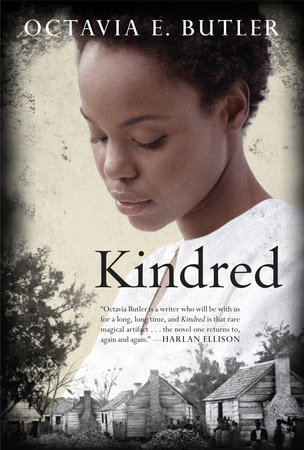
This time-travel story traces the complicated shared history of mother, son, and great-great-great-granddaughter and the tragedy that lies in wait for them all when love and possession cross boundaries into obsession.
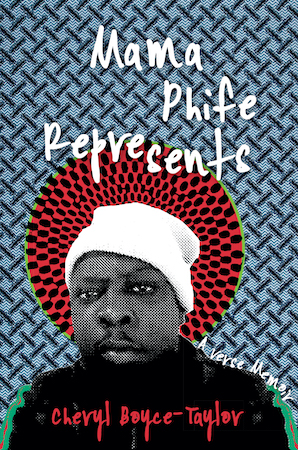
A mother grapples with the loss of her son, and reflects on motherhood. In the way Maps is an ode to Freeman’s mother, Mama Phife writes to the son she has lost. “Grief is a dangerous widow,” she states and at one point poses the question, “honey when will the sun return?” In the scarce pages of this epic poem, we come to understand and see the writer’s grief in a way that anyone who has lost a loved one can recognize but may have struggled to put into words, and allows the reader to acknowledge that grief is universal and does not play favorites.
After his mother disappears, a son searches for understanding of the life he’s supposed to make without her. Raised by a white family, he struggles to make peace with his love for his birth mother, whom he hasn’t seen in ten years, and the ideals and wants of his adoptive mother and father.
Films
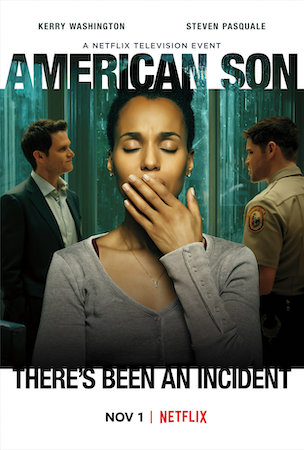
American Son, directed by Kenny Leon, screenplay written by Christopher Demos-Brown
The experience of Black motherhood in America is a very specific and solitary terror. In this visceral portrayal of a mother’s love for her Black son, we never need to meet Jamal to know how desperately his mother loves him, how complicated their love is, and the tragedy of that love in an unequal world where not all boys can be boys. Everyone is implicated in this story, as we all should be.
Mother, directed by Tatsushi Ohmorir, screenplay written by Takehiko Minato, Tatsushi Ohmori
Mothers are never without their faults and shortcomings, yet in this story Akiko’s abuse of her son Shuhei is irredeemable. There are no moments of joy or relief in this mother and son story, but their relationship does pose the question of whether or not people who are unfit to care for themselves should be allowed to have children. Akiko is not just irresponsible or erratic—she seems to be suffering from mental illness, needs to be in the care of others, with a long-term treatment plan. The tragic end of this story only solidifies how costly abusive parents are to the greater society, and why the right to procreate needs to be earned.
The Notorious B.I.G. weaves a tale of growing up poor, Black, and male in America, but throughout so many of these tracks is his relationship with his mother, who raised him on her own. Through the days of thugging, feelings of depression and hopefulness, and the shine of celebrity, the listener cannot deny that Biggie’s mother was a rock in his life and that he loved her dearly. His premature death felt by so many fans across the world can never compare to what his mother felt losing her child.
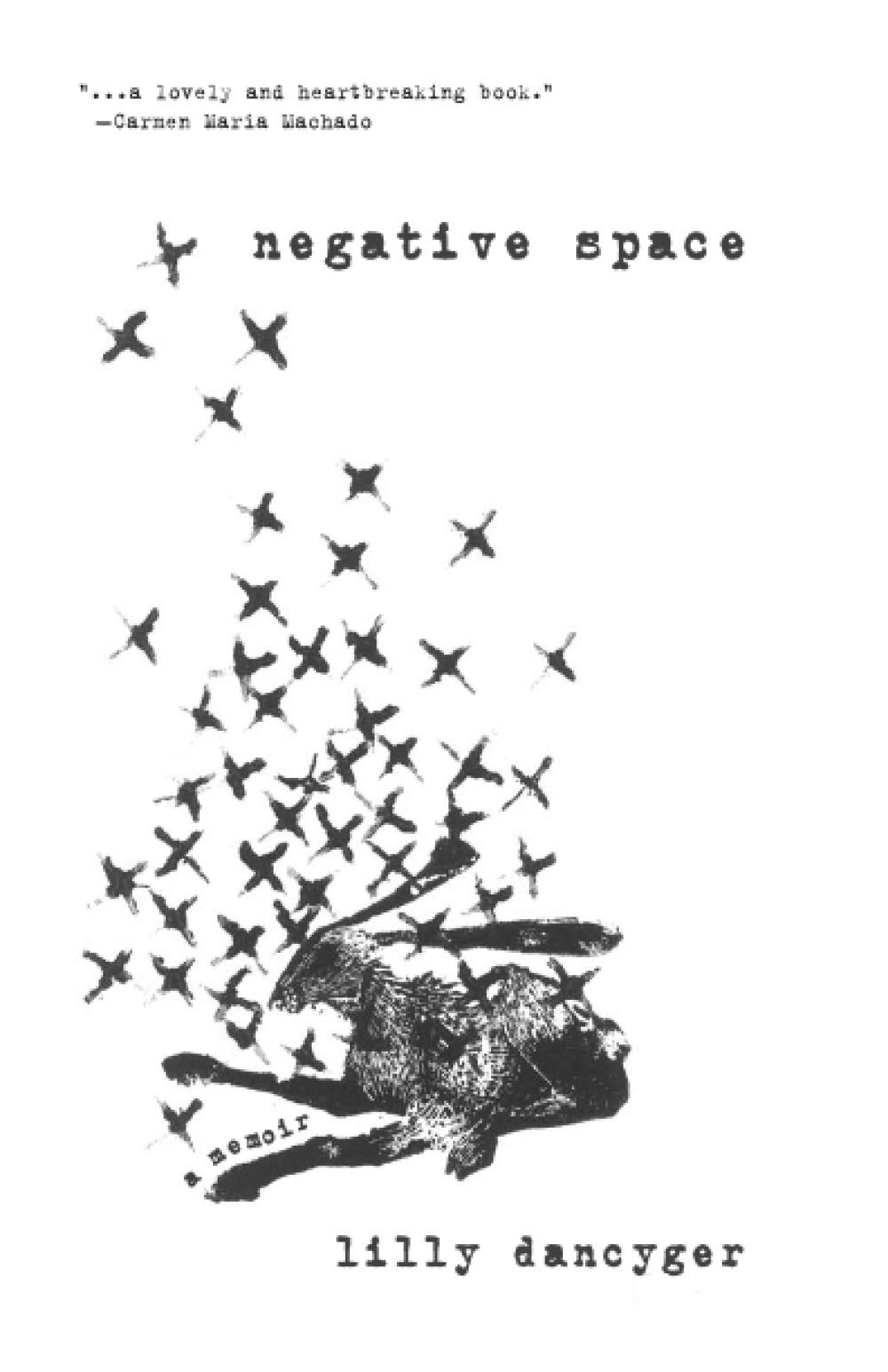
When Lilly Dancyger was twelve-years-old, her beloved father Joe died. Theirs had been a tender, playful, stalwart relationship full of intellectual banter, cunning life lessons, sand drawings awaiting the waves. And drugs. In addition to being a part of the thriving East Village art scene in the early ‘80s—creating beautiful yet troubling sculptures from roadkill, human hair, and paper-mache—Joe Schactman had a serious heroin habit. So did Dancyger’s mother, Heidi. While her father didn’t die from an overdose, his addiction left an imprint on Dancyger ’s heart and spirit. Along with her grief, unwavering adoration, and pieces of his artwork, it became her inheritance.
After spiraling into and pulling herself out of her own drug addiction, Dancyger sets out to get to know her father in ways most of us rarely are privy to. She reads through his old journals, love and hate letters between her parents; she interviews old friends of his and, most extensively, her own mom with whom she’d had an especially tumultuous relationship. Her memoir Negative Space is the result of this hard work, an exquisitely intimate unveiling of not only her father, but of her mother and herself. The language is elegant, precise, boney with wisdom and devotion. Each sentence is a finely wrought work of art unto itself. “Never be embarrassed by your ability to make just the right sentence, with all the exact words you wanted and needed,” Joe wrote in his last letter to Dancyger. And so she has.
Jane Ratcliffe: You note that in the process of writing this book you learned there is no “the truth” about your father’s life. Letters, people you interviewed and your own memories would contradict one another, so you set out to write “a truth.”
Lilly Dancyger: My background is in journalism, so I was very aware when I was interviewing people that they were only going to give me a little piece of the story. The deeper I went into it, the more I realized that no matter what version of the story I told, there was going to be somebody who disagreed with it.
It’s unavoidable that all parental figures are going to impact us and likely damage us in some way, despite their best efforts.
LD: I think it’s unavoidable that all parental figures are going to impact us in some deep way and likely damage us in some way, despite their best efforts. Even wonderful parents. In some ways, both of my parents were really wonderful and did a lot of things right. But they also did a lot of things wrong.
I don’t want to speak in sweeping gendered terms, but just from my own perspective, the mother-daughter dynamic is so fraught, and that’s what a lot of that mother wound conversation tends to be about. In my childhood, my relationship with my father was simpler; and even in my adolescence, the fact that he wasn’t here made it easy for me to just love him and not resent him and not push back against him in the way that I did with my mother. My relationship with my father kind of stayed static in this idealized, adoring version of a relationship. But that also was the impetus for this whole project in that that became insufficient. It started to feel thin and too simple. As my relationship with my mother evolved past that initial, teenage rupture, and we started to find more depth, I started to see how one-dimensional it was to hold on to just this perfect idea of my father. So I went digging into the father wound; I was looking for where that rupture was, because it was under the surface, and it was maybe more scar tissue than wound. But sometimes for scar tissue to heal, you have to first rip it open.
JR: Beautiful and true. After your father’s funeral, you go into an extended period of mourning. Could you tell us about your mourning process then and possibly now?
LD: I grew up with witchcraft and the occult around me, from my mother and her friends. And it wasn’t long after my father died, that I started getting into all that on my own and made an altar. Mourning him was the first impetus for my wanting to connect to something bigger. I never believed in God or an afterlife or anything like that. But I also wanted to feel like he was still somewhere, still existent in some way. Grappling with what that might mean was the start of some spiritual exploration for me. I had a lot of really vivid dreams about him soon after he died that felt very much like visits and made it hard for me to ignore this feeling that there was something.
JR: After you drop out of school, you wandered the streets and got high most days. You write “I wanted to get out of my body, to find the limits and see if they would finally make me feel calm.” The drugs and all-nighters didn’t provide this for you. Can you talk about your relationship with your body these days? And have you found calm?
The fact that my father wasn’t here made it easy for me to love him and not resent him. My relationship with him stayed static in this idealized, adoring version.
LD: I definitely am a much calmer and happier and more level-headed person than I was back then, for sure. I also have unexplained chronic pain, which I’ve come to understand is very likely connected to a lot of the material in this book, to unresolved emotional issues and trauma. It took me a long time to even consider myself a person who had trauma. I went to therapy and started writing and realized, okay, not everybody has these experiences. Unresolved emotional things can manifest as physical pain. So that feeling of wanting to get out of my body…I don’t have the same version of that feeling that I did then, but I do still sometimes have a fraught relationship with my body where I wish it would leave me alone and relax sometimes.
JR: When it comes to drug use, your parents set the bar high for suffering. So much so that despite your daily hankering for coke as a teen and waking “every morning with my sinuses burning and the taste of death in my mouth,” you didn’t consider yourself addicted. It can be tricky to calibrate suffering and resilience from our own perspective rather than in comparison to those who raised us. Have you found your perspective now?
LD: It takes time. It’s a weird, difficult process. I think that’s a big part of why I didn’t think of myself as a person who had trauma for so long, because I had it pretty good compared to my mother’s life. She went through a lot of things that are very obviously traumatic. It took me a while to recalibrate that. I’m realizing that there are gradients to trauma and to addiction and to resilience. I always have thought of myself as a very resilient person. But then you dig into your past and your experiences and realize that a lot of resilience is sometimes also masking things.
JR: Your father hitchhiked a lot and as a teen you longed to, as well, but knew it wasn’t safe to do alone. You write: “But I like to imagine my father’s travels, thinking that they’re in my DNA and that maybe what I felt back then wasn’t desire, but memory.” There is so much talk about intergenerational trauma these days, perhaps the same is true of longing?
LD: I always knew that I was a lot like him, but writing the book, I realized that I’m a lot like him, in even more ways. So it just made sense to me that, Oh, yeah, of course, he did this thing that I always had this intense pull towards. I don’t know how much of that is just a similarity in personality type or was his stories or his attitude that was passed down to me. Or if there was some kind of more deep-seated, ingrained whole. It makes sense to me that if trauma can imprint your DNA, other things can too. They say that your gut biome is dictated by your parents’ and even your grandparents’ diets. I think there’s so much to all of that that we just don’t really understand. And inclinations, desires, all of that. I’m sure, it’s passed down like that.
JR: It can be so hard to allow our parents to simply be people, we want them to be protectors and role models, et cetera. But in the process of writing this book, you learn some hard truths about both of them—and very much humanize them.
LD: I was able to embrace the idea of my parents as people intellectually, and able to write about it. But I still definitely feel that indignation sometimes on a human level as a daughter about both of them. It’s an ongoing endeavor to actually just allow them to be people and understand that they aren’t required to be any more perfect than anyone else just because they’re my parents. But that still is a hard idea to let go of, because there’s so much that you want your parents to do and to be for you and to be able to provide, even now. It’s one thing looking back and embracing past versions of them as people, but then also as an adult in my 30s, this is an ongoing thing happening. And I still want more from both my parents, even my father, who is not here and can’t possibly do anymore at this point.
JR: You also had to acknowledge them as sexual beings. For one thing, your mother’s naked torso appearing in some of your dad’s artwork; and then your dad’s interpretation and presentation of her body and women’s bodies in general. Plus, all that you learned about their life together. We’re back to the intimacy. What was that experience like?
LD: That was definitely one area where I found myself kind of shying away. I don’t really need to know all the details, but a lot of it is just so right out there on the surface if you look at the work. And, also, my mother was a stripper for a lot of my childhood. So sexuality was not taboo or hidden. She was a stripper and a lot of her friends were strippers, and they were all my friends. My godmother was somebody who she met at a club. I remember she explained to me at a very young age, what she did for a living and she just said, well, women’s bodies are so amazing that sometimes men will pay money just to look at them. I was like, okay, yeah, makes sense.
JR: You write: “I’d been thinking of truth as something stronger than memory, something that could—and even should—erase what I remembered if they didn’t match up.” Can you elaborate on this?
LD: That was a part of my grappling with truth as you mentioned in the beginning—is there a true version of this story? There were a couple of points where my memory didn’t match up with what people were telling me in very clear irreconcilable ways. I kept waiting for this shattering moment, or this shift, where this whole understanding of my father would change, but it wasn’t like that. It was layering and deepening and broadening but the memories I had are still there, unchanged, they’ve just been added to. I’m realizing that was one of the big aha moments of this process. At first, I felt like I was failing. I felt like I had denial mechanisms I had to fight through, that I was holding on to something and I had to surrender myself to the story. But I realized that multiple things can be true at once: He could be sexually aggressive with his wife and stealing from his friends and doing all of these unsavory things and still be just as wonderful as I remember him. That was a big relief.
Clever, irreverent, and with a deliciously anachronistic soundtrack, Dickinson, the Apple TV+ comedy about the life of poet Emily Dickinson (played by Hailee Steinfeld), dropped its second season in early 2021. When the show debuted in 2019, no one could have predicted how viscerally audiences, now a year into wearing nap dresses and baking sourdough bread, would eventually identify with Emily’s cloistered life in nineteenth century Amherst, Massachusetts. But as much as the show supplies coziness, comfort, and humor to a pandemic-weary audience, it also does something far more daring.
Season 2 of Dickinson opens with the following note:
The records of Emily Dickinson’s life up to and including Sue and Austin’s marriage are full and factual compared with what lies ahead. Over the next few years, just a handful of letters survive. The truth, perhaps, is hidden in her poems.
With that, the season plunges into what showrunner Alena Smith calls “experiments with surrealism.” As a graduate student of history at Yale University, I’ve been trained to probe for evidence, contextualize facts, and avoid ambiguity. But something about Dickinson’s methodology—its audacious embrace of historical fuzziness—is appealing. So what if we have limited archival records of Emily’s life? Can’t we, as Dickinson suggests, seek truth outside the traditional historical record?
Women’s history, and especially the history of women of color and LGBTQ women, is frequently based on scant and nontraditional archival evidence.
Women’s history is notoriously absent from high school textbooks and common cultural knowledge. I once performed an experiment in an Ivy League classroom in which I asked about 20 undergrads to name five American women from before the year 1900, excluding First Ladies. No one even came close. In high school, my AP English class took a three-hour bus ride to traipse through the Massachusetts homesteads of Henry David Thoreau and Ralph Waldo Emerson, bypassing the nearby homes (and ignoring the literature) of Louisa May Alcott and Emily Dickinson. For all of these reasons, when I started graduate school I decided to focus my research on uncovering women’s stories. But it isn’t an easy task. Women’s history, and especially the history of women of color and LGBTQ women, is frequently based on scant and nontraditional archival evidence. As such, it is often looked down upon by traditionalists in the academy.
For centuries, white men almost exclusively wrote, read, and were the subjects of history. Leopold von Ranke, the celebrated father of the modern historical profession, used words like “penetrate,” “master,” “conquer,” and “dominate,” to describe the historian’s relationship to archives—mirroring in his language the patriarchal values espoused in his work. Von Ranke died in May 1886 (coincidentally, the same month and year as Emily Dickinson), but not before defining history as objective, scientific, and, implicitly, sexist. As women’s and gender historian Bonnie G. Smith writes, “the language of science, just as historians began to make copious use of it, was already the language of gender and its hierarchies.”
Up until the mid-20th century, any woman’s contribution to the historical profession was written off as amateurish. But women couldn’t professionalize even if they wanted to.
Up until the mid-20th century, any woman’s contribution to the historical profession—beyond the invisible but invaluable hand of a wife or daughter organizing, transcribing, and even researching on behalf of a male relative—was written off as amateurish. But women couldn’t professionalize even if they wanted to. Throughout the 19th century, women were excluded from most major universities, as Dickinson notes in Season 1 when Emily and Sue (Ella Hunt) sneak into an Amherst College lecture dressed as men. Unsurprisingly, the writers and subjects of history were one and the same. Alexis Coe, the first woman biographer of George Washington in four decades, dubbed these navel-gazing dudes the “Thigh Men of Dad History.” But for a few conspicuous outliers (think: Joan of Arc, Marie Antoinette), women were widely overlooked until the second wave feminist movement in the 1970s. And even then, male historians derided women’s history as emotional, partisan, and biased.
At the Seneca Falls Convention in 1848—Emily Dickinson would have been 17 years old at the time—activists like Elizabeth Cady Stanton and Lucretia Mott protested the exclusion of women from public life. In the Declaration of Sentiments, signed in Seneca Falls by 19th-century celebrities like Frederick Douglass, Stanton explained that men “made [women], if married, in the eye of the law, civilly dead.” Stanton and others would take it upon themselves to write a six-volume, 5,700-page History of Woman Suffrage, knowing full well that without such a voluminous record, male historians would undoubtedly ignore their movement. As Stanton argued throughout the 19th century, the American legal system enshrined the patriarchy. A woman’s identity was literally subsumed by that of her husband upon her marriage. She had no right to property, not “even to the wages she earn[ed],” and of course, she was deprived of the right to vote.
The patriarchal power structures upon which our social and political institutions were constructed allowed male historians to justify their omission of women’s stories. Citing a lack of traditional evidence, these men noted that women were absent from legal documents, property deeds, and voting rosters—the very types of archival sources that document and thus legitimize men’s history. Indeed, since women were excluded from so much of public life, their words and lives could only be preserved in letters and diaries. Far too many of these valuable sources have been lost to time, if they existed at all. For all but the most elite women, like Stanton and Emily Dickinson, literacy itself was a privilege. Emily, as the show is quick to acknowledge, was a wealthy white woman. One wonders whether the show would exist at all if it was instead about Phillis Wheatley, an enslaved Black poet.
For women of color, the fight for legal (and historical) recognition of their humanity was even more fraught. In 1913, when thousands of suffragists marched on Washington to demand the right to vote, anti-lynching activist Ida B. Wells refused to comply with Southern suffragists’ segregationist demands. Even among suffragists—women who fought for equality of the sexes—racial hierarchies remained entrenched. Rather than marching in the “colored” section at the back of the procession, Wells placed herself in the white delegation up front. A photograph of her integrated section made the front page of several newspapers. Wells successfully inserted herself, and her fellow Black women in general, into the political narrative and the historical record. Her boldness is a reminder that women’s, and in particular women of color’s, erasure in history was never simply due to a dearth of archival sources. Rather, these absences exist because white male historians defined the archives in contrast to, and with the aim of excluding, these groups.
It has always been up to women ourselves to make sure our stories are not forgotten. And Dickinson knows this; it’s why the show proceeds on the basis of just a few surviving letters, why it embraces speculation and the speculative, sexuality and seances. Combining context and conjecture, it reveals the realities of racial and gender oppression while delighting in taboo subjects like death and desire. Indeed, it is through embracing conjecture that the show, counterintuitively, achieves reality. Dickinson is a revolutionary reimagining of what we as writers, artists, and consumers can do with women’s history. The show conjures a rich and textured life in 19th century New England, portraying tensions between progress (railroads!) and tradition (county fairs!). We gain insight into financial realities for women, such as when Louisa May Alcott (Zosia Mamet) gives Emily publishing advice: “Bawdy is good for commercial,” she instructs in a Season 1 guest appearance. “That shit sells.” But most importantly, Alcott warns, “never get married.”
It has always been up to women ourselves to make sure our stories are not forgotten.
Today we recognize Emily Dickinson as one of the best American poets, but few know that she never published in her lifetime. One of Dickinson’s most crucial plot elements is unraveling why an ambitious and talented woman decided not to publish her work. At first, her father forbids it. But later, when the editor of TheSpringfield Republican gets his hands on her poetry, Emily realizes that she does not want fame. At the end of Season 2, Emily fights to get her poems back from the editor, and thus retain her anonymity. This plotline stares into the archival gaps—the fact that Emily’s poems were never published—and says, so what? There’s even more of a story here: the story of Emily Dickinson and the mystery of why she did not publish her work. Indeed, the show uses Emily’s poem, “I am nobody! Who are you?” as a launch point to explore this very issue.
Another unanswered question leads to Dickinson’s exploration of sexuality. Counter to the conventions of the era, Emily never married. In its attempt to find out why, Dickinson reads between the lines of Emily’s poetry. There, in poems like “Wild nights—Wild nights!” and “One Sister have I in our house,” Emily’s relationship with her best friend/sister-in-law comes to light. An affair with Sue was never going to emerge explicitly in the archives. The word homosexual did not even exist in English until 1892, years after Emily’s death. But just because the terminology did not exist in the mid-1900s does not mean that people weren’t queer. Emily wrote:
I chose from this single star From out the wide night’s numbers— Sue—forevermore!
If we don’t dare to consider that what is unsaid might actually have been unsayable, we aren’t writing good history; we are perpetuating erasures.
Beyond Emily and Sue’s relationship, Dickinson combats Victorian notions of female frigidity through the other women in the Dickinson household. Emily’s sister, Lavinia (Anna Baryshnikov), experiments with desire in a way that would have been taboo at the time, and as such, would not be visible in traditional archives. From sketching her own nudes to her hilarious attempt at a seductive spider dance—inspired by the 19th century dancer Lola Montez—Lavinia’s playful and experimental sexuality feels completely familiar and inevitable to modern audiences. Meanwhile, Mrs. Dickinson (Jane Krakowski) rhapsodizes about the pleasures of domestic life. Ever the perfect housewife, Emily’s mom claims to love hosting tea parties and cleaning so much that she resists hiring a maid. Yet by Season 2, she expresses frequent frustration with the emptiness of her life—from her husband’s lacking libido to her own limited agency. Eventually, she fantasizes about a dead sea captain, based on a grainy lithograph in the local newspaper, in order to find some fulfillment. Though middle-aged women’s sexual longings are rarely apparent in archival sources, the series brings audiences closer to historical accuracy than a footnote ever could by imagining Mrs. Dickinson’s desires.
So much of our cultural memory is not contained in textbooks; it’s in the films and shows we watch, the musicals we sing along to, the stories we read.
So much of our cultural memory is not contained in textbooks; it’s in the films and shows we watch, the musicals we sing along to, the stories we read. Although the wild popularity of recent productions like Bridgerton and Hamilton reveal an appetite for popular history, they both have limitations. Bridgerton is a work of pure fiction, and Hamilton’s subjects, the Founding Fathers, are among the most highly archived figures in U.S. history. (Meanwhile, Hamilton definitely does not pass the Bechdel Test, cartoonist Alison Bechdel’s 1985 standard that stories must include at least two women who talk to each other about something other than a man.) As creators and consumers of popular history, we should use the Dickinson model to bring more intersectional feminist stories to the forefront of cultural conversations. We need a film about Black women suffragists in Chicago’s Alpha Suffrage Club; we should make a musical about Jewish labor organizer Rose Schneiderman. How about a TV series about Mabel Ping-Hua Lee, a Chinese-American women’s rights activist at the turn of the 20th century? Or perhaps a biopic about Christine Jorgensen, one of the first openly-transgender American women?
Instead of omitting stories because of a lack of traditional evidence, we should put those stories front and center, acknowledge their ambiguities, and decide that they are important enough to tell anyway. Dickinson proves that this kind of reimagination is possible—the series is as much an ode to overlooked women in history as it is an anthem for ambitious creators today. Leopold Von Ranke and the dudes of “Dad History” must no longer define the stories we consume. From Seneca Falls to the suffrage movement—and the myriad moments before and since that rarely receive mainstream attention—we can, and should, use imagination to fill in archival gaps and bring these essential stories to life.
Growing up, my parents never told me anything about their immigration story to the United States. I knew we were Vietnamese, that there was a war and then a great exodus. But the hard details were left silent. Trying to figure out what happened from other sources was likewise difficult given the lack of written stories by Vietnamese people. All my searches at the library brought up only war memoirs by American veterans or thick history books written by white men. And then there are the Vietnam War movies centered on the American experience, where the Vietnamese stayed voiceless.
It wasn’t until college that I encountered a book by a Vietnamese American writer. From there, I tried to read every book by a Vietnamese American I could find, learning that unspoken history along the way, often waiting years until another book was published. Reading and writing about Vietnamese diasporic literature for the last eight years as a contributor and now editor of diaCRITICS, I can confidently say the landscape of publishing has changed dramatically. Indeed, it almost feels as if we are in a Vietnamese diasporic literary boom, that our voices and stories are finally being heard, something I could have only dreamt of as a young Vietnamese American.
So it’s particularly delightful to have my debut novel Things We Lost to the Water published at this time.Things We Lost to the Water follows the experiences of a family of refugees who settle in New Orleans after the Vietnam War. There, they learn to make a new home while mourning the disappearance of an old one. It’s an exploration of immigrant lives and the various ways the past can haunt us. But more than this, I hope the book will remind people that Vietnamese Americans—and more generally Asian Americans—are part of the American South, its story, and its history. But this book wouldn’t have been possible without the growing canon of Vietnamese American writers telling stories that defy expectations of what it means to be Vietnamese American.
Here’s are some of the books I think are essential to understanding not only the Vietnamese American experience, but also Vietnamese American literature, its diversity and complexity.
Monkey Bridge follows the dual narratives of Mai, a child when she leaves Vietnam as the War ends, and her mother Thanh, through letters addressed to her daughter. Also central to the story is Thanh’s father Baba Quan, a mysterious figure whose secrets threaten to unravel everything Mai thinks she knows about the Vietnam War and her family’s role in it. The titular monkey bridge is a type of passway made of thin bamboo used to cross streams. Crossing it takes balance and bravery. Metaphorically, the monkey bridge is the path that Mai walks as she comes to learn more about the truth of her family’s history, on the cusp of obliterating everything she’s ever known.
Truong’s debut novel introduces readers to Binh, a gay Vietnamese chef in Paris, serving Gertrude Stein and her companion Alice B. Toklas. Through Binh’s eyes, we see Stein’s private life and her literary salons in addition to his past in Vietnam, how he came to be in exile, and his current life as a nearly invisible servant. The book touches on big themes of colonialism and power but also identity and the search for love. In enthralling prose, Truong shows us that the history of the Vietnamese diaspora doesn’t start at the War. It goes further back and that history has a richness worth exploring.
Using food as its compass, Stealing Buddha’s Dinner navigates Nguyen’s alimentary desires as a young refugee. Nguyen grows up with Vietnamese staples such as chả giò, bánh xèo, and gỏi cuốn, but in very white suburbia she longs for Pringles, Toll House Cookies, and 7UP. Food becomes a way to fit in, which is what the young Nguyen wants desperately. More than a coming of age story, Nguyen’s memoiris a thoughtful exploration and deconstruction of American identity and dreams. It also shows a thoroughly modern, blended American family that is Vietnamese, Mexican, and Midwestern.
Told as a flashback in a confession, Nguyen’s Pulitzer Prize-winning novel The Sympathizer is, on one hand, a refugee story of an unnamed narrator who leaves Saigon during its fall and settles in Los Angeles. But things quickly get wonderfully weird. There’s the fact the narrator is a spy for the Communists; an Apocalypse Now-esque film shoot that goes wrong; and an attempt by exiled troops to return and overthrow the Communist government (to say nothing of the infamous squid scene!). All the while, the narrator’s sympathies—for his communist brethren as well as his new American ideals—hangs in the balance. The Sympathizer is a bold book of big ideas, but it’s also a spy novel and a rollicking metafiction. And though it doesn’t attempt to be realism in any sense, it gets to the heart of the complexities and politics of Vietnamese American identity.
Using prose, poetry, photographs, and songs, We Are Meant to be a Gentle explores creation myths, word etymology, and historical documents in the author’s attempt to find where she stands in the story of the Vietnamese diaspora as the daughter of a South Vietnamese journalist with a Danish stepfather, growing up in the Sierra Nevada with a biological father that stayed behind in Vietnam. This is an interrogation of the language we use to describe our experiences and an act of resistance against any neat idea of a singular Vietnamese refugee narrative.
To speak of the Vietnamese American experience is to, at some point, remember the violence that led many away from their country of birth. The title of Ocean Vuong’s debut, Night Sky with Exit Wounds, alludes perfectly to that. Vuong writes of that violence in the titles of some of his poems—“Aubade with Burning City,” “Deto(nation),” “Self-Portrait as Exit Wounds.” Still, Vuong is cognizant of the tenderness that is distinctly Vietnamese and queer. This powerful collection deals with the inheritance Vietnamese Americans are given as well as the love we are handed over to nurture. And through that—a way towards healing.
There is always that gap of experience between parents and their children, but it seems larger for families who have gone through historic trauma. Thi Bui fills that gap in the graphic memoir The Best We Could Do. Often reticent about their own experience, Bui’s parents hardly ever opened up about what happened. But the birth of her son gives the author and illustrator the impetus to explore their journeys—from Vietnam to the US and through parenthood. Using oral history style interviews, Bui illustrates the pain they were subjected to and the sacrifices they made—from French occupation to the aftermath of the War. Revelatory and heartbreaking, TheBest We Could Do felt like the book I was waiting for all my life.
Moved by the suicide of their great-grandmother, doan charts the trajectory of intergenerational trauma that goes back as far as Vietnam’s ancient history (the Trung Sisters who drown themselves after defeat) and the gendered impacts of occupation, colonialism, patriarchy, and capitalism. Significantly, water/tongue is about bodies—particularly the femme Vietnamese diasporic body—and not just when it suffers at the hands of oppression, but how it survives. Spare, daring, and haunting, doan takes a radical look at history and systems of oppression and asks readers to reimagine it as something alive and living on our bodies.
If I Had Two Lives begins in 1997, long after the War. The daughter of a prominent activist, the unnamed narrator is sent to live in the United States with relatives where she lives a lonely existence until she meets a mysterious and seductive woman and her husband. The woman reminds the narrator of a childhood friend and soon their lives become inextricably intertwined. Though it touches on many of the themes seen in other Vietnamese American literature—such as Americans’ general misconception of Vietnam and Vietnamese people—If I Had Two Lives opens up the possibility of postwar Vietnamese American narratives and lives. We are, after all, not a war.
If Rosewood signals a new frontier of Vietnamese American narratives, Kim-Anh Schreiber and her book Fantasy imagines new ways of telling these stories. Part film criticism, part narrative prose, and part unstageable play, Fantasy focuses on a biracial Vietnamese German American woman’s distant relationship with her Vietnamese mother, who abandons her after coming to the States. The result is a haunting of the narrator’s life by the figurative ghosts of her mother and her Vietnamese heritage. Which makes the essay about Nobuhiko Obayashi’s horror film House that takes up a third of the book more poignant, a frame through which the narrator can view her life. Schreiber represents a possible future for Vietnamese American literature—one that is rooted in a shared diasporic experience yet unbounded by convention. In doing so, Schreiber tells a unique story that defies any expectation of what it means to be Vietnamese American.
The costume maker could turn you into anything—a bird cage, a piano, a plant—but she made no guarantees that you could return to the way you were before the transformation, and she wasn’t gentle. There was the quilting incident, for example, when the client was so affected by the flattening that she’d run out of the costume maker’s apartment trailing a blanket of blue where her right arm should’ve been. And there had been more than one missing person, when the transformation had gone so well that there could be no going back.
But the costume maker was good. The best. Once the costume had been made, there was no way to know which common household objects were wood and metal and glass, and which were neatly-disguised humans keeping watch over the house and its inhabitants. Yes, the costume maker could turn you into anything, but when a woman came in asking to be another human, her brother, the costume maker drew the line.
“I don’t do humans,” the costume maker said. They were sitting across from each other in the costume maker’s Boston apartment, the walls of her home office bordered with brightly colored fabrics, springs, cedar planks, yarn, glass. Noise from the city street below drifted through the open window, the summer day still morning-cool.
“That’s just it,” the woman said. “Hen isn’t a human. He’s a ghost.”
The costume maker was intrigued. To make a ghost, she had to make death and then unmake it. But why? There were plenty of ways to haunt as a windowpane or a radiator.
The woman pinched the coarse brown hairs of her eyebrow and pulled. “My dad is dying,” she said. “I was washing the dishes last night, and I thought: I have to tell Hen. I asked him to visit my dad in a dream or something, because it would mean a lot to him to see Hen again now, at the end. But then I got worried my dad would take that as an invitation to cross over, so I told Hen, keep him company, but don’t let him die. And that’s when I thought of you. If you could make me Hen, then I could tell Dad to keep living, and maybe then he would listen.”
The costume maker drank her coffee from a small clear glass and watched the man in the brownstone opposite hers lean out the window to remind his son to fill up the tank after work; you know how your mother hates when you bring it back empty. The woman bit her nail, tearing a whole half-moon free.
To make a ghost, the costume maker didn’t just have to make and unmake death. She had to cut the singular shape of Hen and fill it with everything he had been. Who he had loved, and how. How he moved when he danced and what he did with his hands when he lied. What words did he mispronounce? How did he keep his hair?
“This is going to take a long time,” the costume maker said, thinking of all the threads spiraling out from the web that is a body, all that silk scaffolding between you now and you yesterday and you the day before and everyone else, too, along the way.
“My dad is dying,” the woman reminded her, pulling a sliver of torn nail from her tongue.
The costume maker finished her coffee. The man in the brownstone opposite hers watered a jade plant that must have been older, even, than the costume maker, and the excess water fell to the street like a small and gentle storm. “Tell me everything,” the costume maker said. “Leave nothing out.”
The woman wore a smock dress and chewed the disks of ice that had collected at the bottom of her cup. She wore high-waisted jeans and ate a coconut macaroon. She wore a corduroy skirt and licked pistachio salt from her thumb. It rained some days and sunned others, and when the costume maker was finished, the man who walked across her lamp-lit living room was just as real as the woman who had folded her linen blouse and draped it over the back of the costume maker’s chair not so long before.
“Is it believable?” Hen asked, his voice deeper than the woman’s had been. His cheeks softer.
The costume maker leaned against the open window, letting the night-air cool her sweat, her glass half-full of whiskey. She had used everything for this. Her best materials, her best tricks. She had transformed the woman into death and pulled her back as someone else, and she knew then that there would be no going back. “You tell me,” she said.
Hen considered his hands, his elbows, his feet. He cleared his voice and pressed a palm to his heart. “Good enough,” he said, and walked, duck-footed, out the door.
The costume maker considered the spent materials strewn about her apartment. The woman’s handbag still hung from the chair, her clothes, her shoes, everything just as she’d left it, and the costume maker knew the woman would not come back for them. She would spend the rest of her days as Hen, with his bad teeth and sensitive stomach and penchant for selfish women. The costume maker didn’t ask if it was worth it. She picked up the woman’s linen blouse and pulled it on over her own skin.
Across town, around many corners, Hen walked up three stone steps and into his parents’ apartment, where his mother dropped the electric tea kettle on the kitchen floor to cover her mouth from speaking her dead son’s name. Still it came out—“Hen”—caught in the cup of her hand.
Hen grinned, sorry for having startled her, but proud, too, for having found his way back after all this time. He pat-patted his heart, as though to say here it is, it’s here, I’ve kept it. His mom shook her head. Hen pointed down the hall to where his dad was dying, asking permission to go keep him company, and his mom canted her head like she was listening for the answer to a question she didn’t dare to ask.
The narrow hall was lined with photographs: Mom and Dad dancing at a wedding by the sea. Hen walking down a cobblestone street, his mouth hooked open in speech. Soph on the swings, her body pitched forward through the chains, her toothy smile half erased by the sun. In the picture, she is at the forward-most point of the pendulum, the farthest she’ll ever go, right before the backwards fall.
Soph.
In the room at the end of the hall, Hen’s dad coughs. He is close to the end. Hen, having been to the end, can hear it. “I’m here,” Hen says, and he takes his sister’s photo off the wall.
April 30, 1975—the day Americans helicoptered out of Saigon and Communist forces rolled in their tanks—goes by many names: the Liberation, the Reunification, the Fall. In the U.S., the day marked the end of two controversial decades of guerrilla warfare and the start of a reckoning for veterans who returned home with what would soon be named PTSD. In Vietnam, it launched the flight of hundreds of thousands of refugees on flimsy fishing boats, the beginning of skirmishes with Cambodia that would climax in the invasion and occupation of Vietnam’s neighbor, and the first attempts to rebuild a nation that even today bears the legacy of Agent Orange.
For people who exist thanks to the small successes of those fishing boats (between 10 and 70 percent of refugees died at sea), the day is suffused with nostalgia for an expired yellow-striped flag and the eerily steady voice of Khánh Ly, who sings, much like Fairuz, of a beloved city left behind. Khánh Ly recorded “Em Còn Nhớ Hay Em Đã Quên” (“Do You Remember, or Have You Forgotten?”) two decades after Communist victors renamed Saigon as Ho Chi Minh City. Since then her lament has been covered by womenandmen alike; there are multiple karaoke videos for those who wish to warble their own yearning. Such music can be heard at gatherings of Việt Kiều, or Overseas Vietnamese, in Sydney and San Jose, Montreal and Berlin, even though the city they dream of has since been swallowed by a hypercapitalism that sprouts skyscrapers from dust.
This year is rich in new books from those who bear the legacies of that day: who can hear, even in pain, what Khánh Ly calls “the language of poetry.” These are my picks from the diverse writers shaped by the conflict in Vietnam.
Nguyen dedicates her latest poetry collection to her mother, who raised Nguyen after her American father’s desertion. Nguyen calls her “Diệp / Linda,” a nod to the bifurcated identities of people who depart Vietnam for America. In a black-and-white photo, Diệp slings a leg jauntily over a motorbike’s handles. The poems circle around Diệp’s life as a stunt motorcyclist in a Vietnamese women-only circus and the other dangers she skirts, such as the napalm developed at Harvard and manufactured by Dow Chemical that rains in:
8 million tons of bombs in Vietnam Burns at 1,500–2,200°F (1/5th as hot as the surface of the sun) Very sticky stable also relatively cheap
Becker, who began her journalistic career covering Pol Pot’s rise to power in Cambodia, turns her focus to her female colleagues in Vietnam, plucking out the stories of an American, an Australian, and a French journalist. Becker draws on letters and interviews to tell the stories of women plunged into a mostly male world, where they encountered Western sexism in equal or greater measure than that which they’d already known in their home countries. Becker points to her own flight from sexist academia and into a war zone:
Soft spoken and to the point, she asked, Why had I crossed the ocean to cover a war?
The short answer was a nightmare I was all too keen to leave behind. My master’s adviser had rejected my thesis on the Bangladesh War of Independence after I refused to sleep with him. He said the one was not related to the other.
One of the greatest living makers of the persona poem, Komunyakaa began writing as a journalist embedded with American forces in Vietnam. His forthcoming compendium of the past two decades flips between war and sex, showing them to be two opposite expressions of domination. They are also linked to each other, as the arrival of GIs in Vietnam, like that of many colonial or neocolonial forces in other nations, spurs the rise of local sex work. An excerpt from the sonnet sequence “Love in the Time of War” reveals the thin line between violence and love:
Bull’s-eye. Maggie’s drawers. Little Boy. Fat Man. Circle in the eye. Bayonet. Skull & Bone. Them. Body count. Thou
& I. Us. Honey. Darling. Sweetheart, was I talking war in my sleep again? Come closer. Yes, place your head against my chest.
Komunyakaa’s home state of Louisiana is today the site of a thriving Vietnamese diasporic community, mainly settled in the humid heat of New Orleans that recalls the climate they left behind. Debut novelist Nguyen follows one of these families as they cope with the memory of people and places they may never see again. That sense of loss is compounded with the arrival of Hurricane Katrina. In the nonfictional world, one of the symbols of Katrina’s destruction was the shotgun house, a narrow ranch in which each room doubles as a hallway to the next; they clustered in areas most vulnerable to flooding, and, before the storm, were primarily occupied by the city’s poorest residents. Nguyen’s family moves into one such place:
The wife told Hương it was called a “shotgun house.” Ngôi nhà súng, she clarified. “See?” she said. She placed the suitcase down and mimed the shape of a gun with one hand. With her other, she held her wrist. Closing one eye, she looked through an invisible scope and the appearance of intense concentration fell onto her face. For a few seconds, she stood silently, so focused on something in the distance that Hương looked toward where the wife stared, too. Then “Psssh!”—the imitated sound of gunfire.
The Truffle Eye by Vaan Nguyen, translated by Adriana X. Jacobs
The cover of this bilingual poetry collection is a shifting blue-green, appropriate for a language in which xanh can mean either color. But The Truffle Eye is in fact translated from Hebrew, the language of a poet born to two of the 360 Vietnamese refugees to enter Israel between 1977 and 1979. On facing pages, the poems grow right-left in Hebrew and left-right in English, pressing out from an unwritten and unreachable Vietnamese spine. In her introduction, Jacobs (whom I know and who gifted me the book), writes of Nguyen:
Her connection to this history is understandably complicated. In her words, “Whenever a humanitarian crisis pops up, I’m approached by various media outlets that want to interview me about the refugee experience, but the only thing I can do is read poetry at one of Maayan’s flash readings, because I am a poet who does not feel like a refugee.” Although her parents spoke Vietnamese at home, Nguyen feels most at home in her native Hebrew.
So died in December, a half-year before the release of his debut fiction, a collection of short stories that illuminates the lives of Cambodians who escaped the Khmer Rouge, as well as their descendants in the United States. The sadness with which So’s death was mourned is contrasted by the humor of his writing. Afterparties’ opening story, “Three Women of Chuck’s Donuts,” circles around fried dough and Khmer identity:
Being Khmer, as far as Tevy can tell, can’t be reduced to the brown skin, black hair, and prominent cheekbones that she shares with her mother and sister. Khmer-ness can manifest as anything, from the color of your cuticles to the particular way your butt goes numb when you sit in a chair too long, and, even so, Tevy has recognized nothing she has ever done as being notably Khmer.
Nguyen’s sequel toThe Sympathizer races through a thriller plot while administering doses of postcolonial theory (discussed in my interview with the author for this publication). But its jewel is its prologue, a lyric account of fleeing Vietnam that is subtitled We and narrated from this plural point of view, demonstrating how the terrifying act of migration renders differences in class, religion, and other vectors temporarily insignificant: all are bound to the same odds of survival.
We were the unwanted, the unneeded, and the unseen, invisible to all but ourselves. Less than nothing, we also saw nothing as we crouched blindly in the unlit belly of our ark, 150 of us sweating in a space not meant for us mammals but for the fish of the sea. With the waves driving us from side to side, we spoke in our native tongues. For some, this meant prayer; for others, curses. When a change in the motion of the waves shuttled our vessel more forcefully, one of the few sailors among us whispered, We’re on the ocean now. After hours winding through river, estuary, and canal, we had departed our motherland.
In our series “Can Writing Be Taught?” we partner with Catapult to ask their course instructors all our burning questions about the process of teaching writing. This time we’re talking to Ingrid Rojas Contreras, who will be leading a year-long novel generator—apply with the first chapter of your novel in progress, and leave with a completed draft (or the skills to get to one), plus an understanding of what’s ahead of you in the publishing process. Rojas Contreras talked to us about reading aloud, eating gummy bears, being the only writer of color in the workshop, and why audience is political.
What’s the best thing you’ve ever gotten out of a writing class or workshop as a student?
I did my MFA at Columbia College in Chicago, back when the program was using oral storytelling as a model to teach creative writing. Our in-class pre-writing involved telling a scene to the workshop circle aloud. It sounds terrifying, and it was. But I learned so much about tension and traction and keeping the reader’s attention in that way. It’s very obvious when you’re telling a story to someone and you’ve failed to frame it the right way! (I should say I was also working on experimental stuff and more traditional-narrative forms, and the process worked for both.) As someone who didn’t grow up reading but did grow up around family storytelling circles, I appreciated this intersectional entry point into writing.
What’s the worst thing you’ve ever gotten out of a writing class or workshop as a student?
This was both a good and a bad thing—I was often one of two writers of color in a workshop. I got a lot of feedback that was consciously or unconsciously asking me to tailor my stories to the white gaze. It really sent me for a loop. For a while, I tried to meet those insatiable requests. Then I realized the politics of it, and the experience taught me to stay the course on my own vision and inclinations. I began to think deeply about who I was writing a particular piece to.
What is the lesson or piece of writing advice you return to most as an instructor?
I think it has to do with the above! I think audience is the first political decision you can make as a writer. The intended audience for a piece and the author’s vision should be what guides the writing and crafting of a piece. I do many exercises to help writers get clear on this.
Does everyone “have a novel in them”?
I believe that.
Would you ever encourage a student to give up writing? Under what circumstances?
If a writer’s heart is no longer in it, that’s the only circumstance I can think of! It’s also possible to take a break from writing, and give up on it momentarily. Nothing has to be forever. Fluidity is important to any creative process.
What’s more valuable in a workshop, praise or criticism?
Neither! The most valuable thing in my opinion is helping a writer arrive to an artistic statement of purpose which then implies stylistic, structural, and poetic decisions. A workshop’s effort in critiquing a piece should be about echoing back to the writer the parts of their work that are aligning with their visions, which are misaligned, and helping to peruse what the state of a piece might imply to the writing/re-framing/editing of a work.
Should students write with publication in mind? Why or why not?
I would say in a first draft, it’s best to put thoughts of publication off. In putting words on the page for the first time, chasing after a story should be an act of discovery. In a second draft, when the writing can become more conscious, that’s when I bring thoughts of publication in.
In one or two sentences, what’s your opinion of these writing maxims?
Kill your darlings: Against it. My dear friend R.O. Kwon wrote a piece against this maxim, and I agree with her: “I want any novel I write to be full of darlings. If possible, all darlings. I don’t want any published novel of mine to include a single line that bores me, that hasn’t been shaped, pressed, and attentively loved into the most truthful, living version of itself.”
Show don’t tell: Against it as well. My imagination of what writing can be includes a myriad of cultural approaches to story. There is an art to telling, and there is an art to showing. I want to preserve the artistry of the voice in the workshop, and maxims like these dictate writers engage an anglo-american style.
Write what you know: I think this one is a good guiding principle for beginning writers, but there’s a political nuance which I think this maxim obviates. What of otherized writers who are expected to tell a story? For many of us this maxim feels like an airless, claustrophobic command.
Character is plot: Character is plot in some stories, and character is not plot in others. We do study characters as agents of narrative, but not of plot per se. Books are a collection of pages in which a writer is considering a specific and complex question. In class we work toward enunciating this existential/pivotal question and look at characters as embodiments of that preoccupation.
What’s the best hobby for writers?
Being weird. I think that’s a great hobby to cultivate.
What’s the best workshop snack?
This is such a hard question… I’m going to go with gummy bears? They’re sweet and bite-sized. Is there a right answer?
DON’T MISS OUT
Sign up for our newsletter to get submission announcements and stay on top of our best work.
YOUR INBOX IS LIT
Enjoy strange, diverting work from The Commuter on Mondays, absorbing fiction from Recommended Reading on Wednesdays, and a roundup of our best work of the week on Fridays. Personalize your subscription preferences here.