The movie industry had to suffer a pause unlike anything it had ever seen before when theaters had to be shuttered due to the Covid-19 pandemic. The delay in film releases came at an inopportune time for many of us, who would love to watch new cinema while isolating at home—either because it reminds us of the world we feel cut off from, or because it distracts us from a world that feels more and more dystopian. But between Netflix series and HBO streaming some new films on release, we’re still finding ways to go to the movies without going to the movies—and with these screen adaptations of classic and contemporary novels set to hit in the next year, you can also read books without reading books. Here are some of the books that will be brought to life in 2021.
The White Tiger is a film about a driver for a rich upper class’s couple in India who is forced to cover up a crime for his employers. Touching on the implications of India’s caste system, The White Tiger promises to be an emotional rollercoaster and a darkly funny consideration of class akin to Parasite.
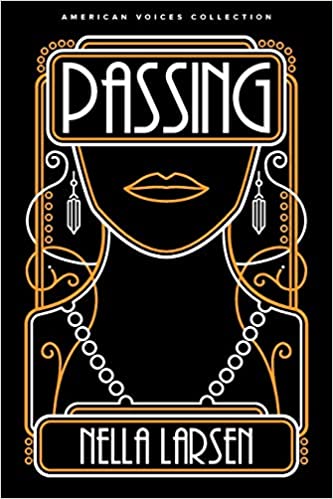
Nella Larsen’s Passing is a novel by Nella Larsen that focuses on childhood friends Irene and Clare, who cross paths as adults when Clare is living as a white woman, keeping her race secret from everyone including her husband after one writes the other a letter. Written and directed by Rebecca Hall, Passing stars Tessa Thompson and Andre Holland, which like everything they’re in, means it can’t help but going to be good.
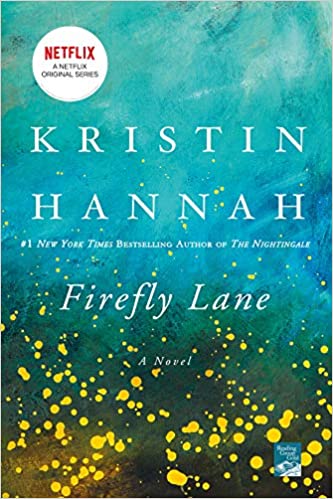
Firefly Lane is another Netflix adaptation, from acclaimed author Kristin Hannah. The series follows two friends, played by Katherine Heigl and Sandra Chalke, from the beginning of their friendship to the present, as they experience life through three decades together.
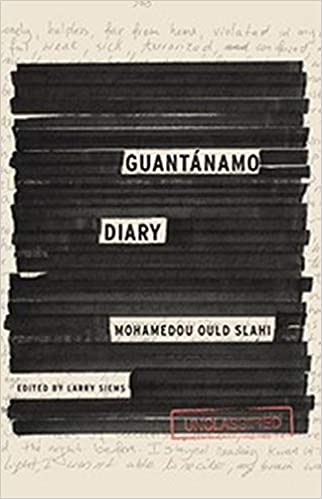
GuantánamoDiaryby Mohamedou Ould Slahi (movie title: The Mauritanian)
Release Date: February 19, 2021
Guantánamo Diary was written and published while Slahi was still imprisoned in Guantánamo Bay. The film, starring Jodie Foster, Benedict Cumberbatch, and Tahar Rahim (in the titular role), was made and is being released after Rahim is finally free, and with material that was previously censored.
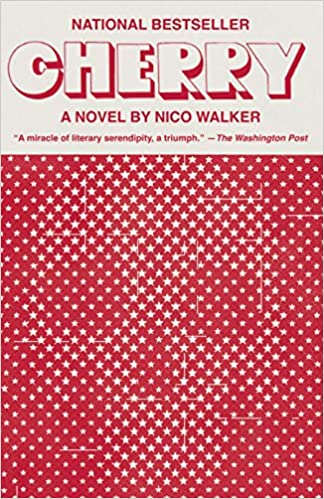
Cherry teams up the Russo brothers and Tom Holland in a movie adapted from Nico Walker’s semi-autobiographical novel, written while the author was incarcerated, Holland stars as the title character, who is an ex-soldier dealing with PTSD and a drug addiction, and decides to try to rob a bank.
Ness is involved in writing this screenplay, so fans of his science fiction YA novel, about a world with no women where everyone can hear each other’s thoughts, can at least be assured that it will be faithful to the book. The fact that Mads Mikkelson and David Oyelowo will get the chance to out-cool themselves in scenes will only make this movie even better.
Infinite is based off of the book The Reincarnationist Papers, about a man who realizes that the images he is seeing are not just hallucinations, but visions from the past. Directed by Antoine Fuqua of Training Day fame, this movie should be a lot of fun.
Ben Affleck and Cuban actress Ana de Armas star in anthis adaptation of the Patricia Highsmith novel. Director Adrien Lyne (Jacob’s Ladder) will head this project starring the real-life couple playing a husband who is the prime suspect in the disappearance of his wife. Highsmith novels make great adaptations (see: Strangers on a Train, The Talented Mr. Ripley) so we have high hopes for this one.
There may not be a movie that is as anticipated as Dune this year, a rare feat since that might have also been true last year. Ever since David Lynch’s acid-dream of an ‘80s adaptation, it feels like Hollywood has wanted to A.) never try to remake Dune again and B.) couldn’t wait to try to remake Dune again as soon as possible. Because it is a giant space opera, half of Hollywood is involved, but piloted by Denis Villeneuve, who has slowly shifted to more and more sci-fi films since Sicario (with Arrival and Blade Runner 2049), this film looks like the rare combination of Oscar bait and potential box office hit (assuming we can go out and see movies again.)
The Nightingale is directed by Mélanie Laurent, whose prior directorial work includes Galveston (and who is also know for her role as Shoshana in Inglourious Basterds) and stars the Fanning sisters, Dakota and Elle, as sisters who are torn apart during the start of World War II.
Moburg’s novel was published a few years after World War II and focuses on rural families. The novel, which is about a few people emigrating from Sweden to the United States in the mid-1800s, spoke to a lot of what was felt and going on at the time. Sixty years after it was first published, this story still speaks to the immigrant experience not only the moment it was written about the immigrant experience.
The Power of the Dog is a dark book about two brothers who get into a fight after one of them gets married. New Zealand writer/director Jane Campion heads the film, which stars Benedict Cumberbatch, Jesse Plemons and Kirsten Dunst.
Ana de Armas plays a fictionalized Marilyn Monroe, with Adrien Brody and Bobby Cannavale starring alongside her. Directed by Andrew Dominik (The Assassination of Jessie James by the Coward Robert Ford) fame, this will be a beautifully shot film that brings Joyce Carol Oates’s novel to life.
Australian author Liane Moriarty’s latest novel is about nine strangers who all end up at the Tranquillum House, hoping to put the stresses of their lives and the cities away. For many of us stuck in isolation looking for a way out of our troubles, following these characters as they go through the Tranquillum House during this Hulu Series will be sure to be a treat.
Taylor Sheridan (of Sicario and Hell or High Water fame) writes and directs this film based on the Michael Koryta novel of the same name. As is often the case with Sheridan, the stakes are high from the beginning, as a teenager who witnesses a murder has a survival expert trying to protect him from two assassins and a forest fire. Starring Angelina Jolie and Jon Bernthal, this will be an intense film.
Shadow and Bone is set in a folklore-inflected fantasy world, where protagonist Alina must develop her previously hidden magical power under high-stakes conditions. The Netflix series also includes elements of Bardugo’s bestselling Six of Crows, a magical heist novel set in the same universe. Starring Jessie Mei Li of All About Eve, this promises to be a beautifully shot series.
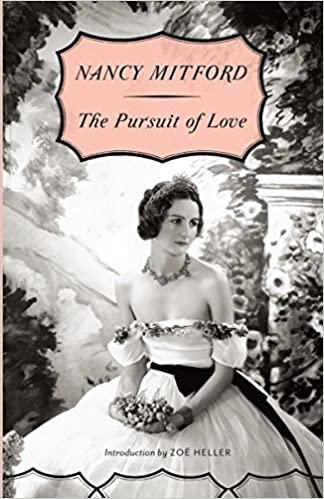
Based on the bestselling novel by Nancy Mitford, The Pursuit of Love tackles the themes of love amidst different classes and divisions of people—and during one of the more divisive periods of recent history, this seems like a timely adaptation. Originally published in 1945, The Pursuit of Love is set between the two World Wars, and will star Emily Beecham and Lily James. This show will air on BBC One.
Delia Owens’s Where the Crawdads Sing is a murder mystery starring Daisy Edgar-Jones. The film, set in North Carolina, follows Kya, who lives in the Deep South and is a suspect in the murder of her former partner.
There are—to begin, unforgivably, with a cliche—two kinds of readers: those who forget all about secret bookcases and gardens and wardrobes once they’ve reached adulthood, and those who, when they move into a new home, still immediately check every loose floorboard and knock on every wall in the hopes they’ll encounter a treasure map, a hidden room, a keyhole under the layers of paint. Of course I belong entirely to that second group, and I have spent admittedly far too much of my adult life still looking for these passageways. I have long wanted to walk through one of these secret doors, the place where the mundane—the bookstore, the country house, the nursery in Kensington—transforms into the wondrous: Fantasia, Narnia, Neverland. But lately, as the pandemic drags on into nearly a year of relative confinement, I’ve been wishing instead to stop at the threshold, to open the door of the spare room and crawl into that wardrobe and not come out again.
When I was young, I wanted the wondrous more than anything. It’s not a new story, or even a very interesting one: the child, lonely, bullied, unhappy, finds a book. And in that book, a child, lonely, unhappy, finds a place where a kind of low, slow magic still exists, where gym class doesn’t, where underdogs are issued powerful weapons and magical powers. I wanted desperately then to have adventures, to fall in love, to be a hero. And crossing over into a fantasy world was the only way I thought it could happen.
Now, it’s not the wonderland that intrigues me; it’s the in-between, the space between the worlds.
But like children eventually do, I grew up. And I had plenty of adventures, and plenty of love affairs, and got to be a hero and a villain sometimes, too. I still looked for secret doors, but mostly out of the habit of hope. And I had a daughter of my own, and I started reading aloud to her the same children’s adventures I grew up on. As I related how cold and miserable Edmund was in the White Witch’s dungeon, or how Wendy was shot down by the Lost Boys, I realized: I’m too tired and too old for a real adventure. Now, it’s not the wonderland that intrigues me; it’s the in-between, the space between the worlds. At 42, let’s be real, I can’t imagine a talking animal giving me a magic talisman without snickering a little. The first time I thought about how the Pevensie children’s mother must have broken her heart with worry when she sent them to the country, I think I wept a little to be so grown up at last.
This is always the way of fantasy. The true wonderland is only for children, a place to escape the world of grown-ups like me. Even the most fervent believers in fairies among us will eventually take on the role of tooth fairy ourselves, slipping money under the pillow of our children or nieces or nephews. It feels sad, but it’s part of the magic; those other worlds belong to the young, a place to work out your fears and your bravery far away from the bland good intentions of the adults who make you wear bicycle helmets and eat your vegetables. The wonderland is sacred, and sealed off from adults, which makes it all the more bittersweet for those of us who continue to search for its entrance. (Of course, as the Narnia books make clear, you can still get back to Narnia as an adult: but that is a one-way passage only, at the very end of this life.)
But the wardrobe, the nursery? They are the most liminal of spaces; the place you go before and after you put away those childish things. They are the place you go before and after you grow up, like Wendy, like Susan and Peter, before and after the magic slips through your fingers. And they are still left to us; in fact, I feel they can only be truly appreciated when we are grown. They are many, and varied, and everywhere: parking lots and lobbies and stairwells, anywhere you go on your way to somewhere else. But while these mundane spaces can be uncanny or unsetting—especially during a pandemic—I am looking still for the very particular kind of secret door or false wall or grandfather clock that you step into and watch the old world fall away. The liminal space, as it relates to children’s literature, is a truly transitional place into magic, a hushed, dusty hallway between the ordinary and the extraordinary. Perhaps the most tragic thing about them is that you can’t stay there, no matter how much you may want to. They are not like Oz, or Narnia, where you can stay for a hundred years, becoming kings and queens and heroes before you finally decide to go home. They are not stopping places at all.
They are the place you go before and after you grow up, before and after the magic slips through your fingers.
Lately, my whole life feels like a liminal state. Maybe that’s why these spaces feel so seductive—maybe I’m still having trouble finding somewhere to belong. I am not old, but not young; I’m a mother, but not for so long that I can’t remember childless days; I’m supposedly past my artistic peak, but I long to create a masterpiece. And like everyone else, I am living in the waiting room of the pandemic, itself an increasingly unbearable space with both too much dream and too much reality to bear. The pandemic has forced upon us the most static and dull of all liminal spaces; who would not long for the more fertile secret highways of children’s literature, where you can hunker down while somewhere nearby, an adventure is being born?
Even at my most practical, I’ve always felt only a tenuous hold on this world. In his The Divided Self, R.D. Laing writes about the “ontologically insecure,” who at some level, have never quite accepted or felt comfortable in reality. And so lately, with reality pressing heavy on me, I feel a deep need for a physical manifestation of the Wardrobe in Spare Oom. I want to sit surrounded by soft coats and the smell of mothballs, but also holly and fir, and fresh powder over clean untroubled earth. I want to be warm and safe but perched at the precarious edge of possibility, ready to leap into adventure though I never actually will. Though I blame this new desperation on the dull duality of liminal spaces in the pandemic, I also understand it comes, too, from my role as a parent, where I create miracles daily for my child but suffer the lack of miracles for me.
In children’s literature, the passageways always pop up at the children’s most desperate hour of need. James is being horribly abused by his aunts when he finds his way into the giant peach. Bastian is being hunted by bullies after the death of his mother when he finds the Fantasia book in the antiquarian’s shop. Wendy has been told she must grow up and leave the nursery. The Pevensie children have been sent to the country to avoid the horrors of the Blitz in London during World War II. The passageways here are liminal spaces functioning as escape hatches from trauma and pain—too much reality. And so it’s not when our heroes and heroines get to Narnia or Neverland that the world falls away; it’s immediately on opening the wardrobe door or nursery window. Mary’s life doesn’t change on entering the garden, but rather on finding the locked door that leads to it. The children in Peter Pan learn to fly in the safety of the nursery, charged suddenly with the energy of adventure. It’s not transformation, but rather the possibility of it, that creates the space for healing for so many damaged children in literature.
I want to be warm and safe but perched at the precarious edge of possibility, ready to leap into adventure though I never actually will.
This, to me, suggests that liminal spaces have a regenerative power of their own. They are often seen as uncanny, as creepy, because they are neither fish nor fowl, and because waiting is uncomfortable, unsettling. Waiting is, in fact, a repellent concept for most children, eager to be in action, eager for answers. But the older I get, the more restful I find the idea of waiting, of the dark cool wardrobe and the nursery at night, just before Peter comes. I think about the part in the story where the protagonists begin their journey, when they open a door and step into a darkness and the voices of the outside world fall away. I think of Dorothy, one hand on the doorknob, still and hushed in black and white, no farmhouse noises, no technicolor chaos and dead witch quite yet. I think how perfect it would be to live in that pocket in-between, when magic is possible but not yet here, when the strain and stress of heroism isn’t yet required. But as Sondheim writes in Into the Woods—an entire musical about liminal spaces and the consequences of fairy tales—“who can live in the woods?” The Baker’s Wife goes on to sing, “Must it all be either less or more / Either plain or grand? / Is it always ‘or’? / Is it never ‘and’? / That’s what woods are for.” That’s exactly why children, uninterested in complexities, hurry to leave the liminal spaces, while adults want so much to linger in them. The truth is, no one can live in those woods.
These days, though, I console myself—foolishly perhaps—with the thought that writing is a kind of liminal space, with all the possibilities of wonder and none of the risk. We can’t get back to Neverland once we are grown, but we can write a path through the midnight sky. We can spend the afternoon immersed in creating new secret gardens and fake walls and hidden passages. Perhaps we can live in the uncanny comfort of the liminal space after all, through writing the hallways and highways and phantom toll booths that will lead new readers there. Perhaps we liminal adults can feel we, too, belong, that the world is almost a good place for us, too, if we can remake it in these spaces. It’s pretty to think so, anyway.
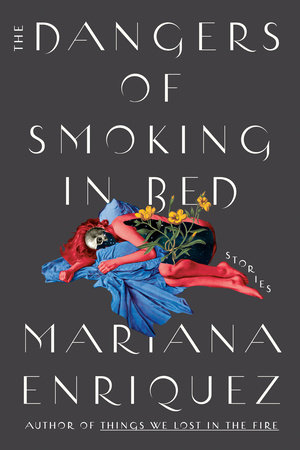
In The Dangers of Smoking in Bed, Argentine writer Mariana Enriquez lures us on road trips with a zombie baby, and a group of catty teenager girls to quarry, and into neighborhoods besieged (by a curse) in Buenos Aires and (by a stink) in Barcelona, and to a sleepover on Buenos Aires’s outskirts, or the first-person plural narrator describes it, “East Bumfuck” (incredible rendering from Spanish by the collection’s translator, Megan McDowell).
The short story collection, Enriquez’s second in English after the 2017 English debut of The Things We Lost in the Fire, features witchcraft, hysterical teenagers, and heart fetishists. Enriquez carves the horrors—madness, cannibalism, and cruelty—and then twists them at full tilt, racing us to endings that terrified even on a second read. In particular, “Our Lady of the Quarry,” spirals hellward when a teenage girl’s rabid envy of an older woman and younger boyfriend, whose attention the girl and her friends covet, hits a delirious point of no return. The collection’s final story, another teen girl group saga, is even more disquieting. In “Back When We Talked to the Dead,” the state-led terrors of Argentina in the 1970s and its disappeared people are dealt with through a Ouija Board seance.
I spoke to Mariana Enriquez—who lives in Buenos Aires where she is the director of literature for Argentina’s Fondo Nacional de las Artes—about her grandmother’s stories, Instagram witches, the country’s very real and horrific past, and passing the blame for collective responsibility.
J.R. Ramakrishnan: Your collection is terrifying! What’s the earliest scary story you remember hearing as a child? I read that your grandmother was an influence for your stories. Did you make up your own stories and if so, what was your first (or an early) horror story?
Mariana Enriquez: I didn’t really make up my own scary stories, or they weren’t good enough to scare. I was a pretty good liar as a child, as most writers are I think. My first horror story came from my grandmother, as you mention. I added things to it: she told me that, when she was a little, her baby sister died and was buried in the backyard. The girl, dead and in her grave, cried at night when it rained. Well, that was scary for me but the whole story—that to my knowledge it’s true, except maybe the crying–happened in Corrientes, a state in the north of Argentina, where she grew up. She didn’t specify this, so I thought she mentioned our backyard. Subsequently, I was quite scared of hearing the dead baby crying every rainy night. My grandmother was terrified of storms. The first story in this collection is based on this—I ended up thinking about family secrets and the fate of lost bones and bodies, and of course, it’s a ghost story with a very “palpable” ghost, but the origin was this tale of the baby sister of my grandma.
JRR: In “Angelita Unearthed” and “The Well,” you have families where the women believe in what the occult but the men don’t. For the father in “Angelita Unearthed,” the grandmother “could talk some nonsense.” Similarly, in “The Well,” Josefina’s dad is furious at the grandmother “for filling up her head with those superstitions.”
Would you talk about this gender divide in belief, which seems to be quite common in many cultures?
ME: Yes, of course. But only this kind of belief I would say. A certain superstitious belief in the supernatural, not the occult. The occult has been a territory of men, from mysticism to more organized systems, indeed the famous occultists, except maybe for Madame Blavatsky, are men: Aleister Crowley, Allan Kárdec, Éliphas Levy. The occult has been much more open to women and minorities than other belief systems, but still dominated by men, especially before the late 19th century. And of course priests of almost any religion are men in the high ranks. So I won’t say at all men are less inclined to the occult or the magical thinking or religious thinking, cause it’s just not true. But there’s a certain specific belief that is less hierarchic, popular, secret, transmitted from generation to generation that yes, it’s more the terrain of women. The “healer” in “The Well” is an example, here these women are called “vencedoras”; or women like my grandmother, who grew up knowing recipes made of plants and stuff to make you feel better and were devoted of certain pagan saints or believed in forest beings. These more earthy beliefs fall in the gender divide, but not the belief in the occult. It’s just one belief it’s more respected than the other. The father in “Angelita Unearthed” could very well be a minister, someone who in the end also believes in the supernatural, and still he would have contempt for the grandmother’s beliefs.
JRR: What do you think about the popularity of occult/witchcraft/tarot/divination with social media, for example the “influencer witches” of Instagram, in recent years? It’s quite fashionable and accepted in the way I would imagine your character The Woman in “The Well” would not have been treated (i.e. probably is publicly shunned as evil).
I was a pretty good liar as a child, as most writers are I think.
ME: I don’t pay much attention to them, to be honest with you. I know they exist and I guess in a way, as many are women, it has to do with the current situation of how, for example, Tarot or astrology are claimed by feminists (or some of them anyway, or in any case, they are censored). But I don’t think it’s the case with The Woman in “The Well.” She comes from a very different tradition that still exists and there’s nothing remotely fashionable about it. It’s not only a different generation but a different social status: a woman like the one in “The Well,” now or then when the story is supposed to happen (the ‘90s) is a poor woman from the country that would not have a clue about social media. It’s also a South American woman, which changes the game completely here: she didn’t learn about this from books, but from her mother and she would not talk about what she does, because she believes in the power of secrets.
JRR: I was so taken by this line in “The Cart”: “We were scared, but fear doesn’t look the same as desperation.” Would you discuss this line? The family are privileged even in the chaos that has descended upon their neighborhood since the homeless man cursed it.
ME: Well they were spared, that was what happened. The mother and the children didn’t curse or insult the man, so the curse doesn’t fall upon them, or at least not that hard. It’s a pretty moral story really, more than I would think! But I’ve seen a lot of very racist and bad treatment of the poor in lower-middle-class neighborhoods to the poorer (let’s say people from the slums), and really there’s not much difference between the two, just the fear of falling deeper into poverty, that really can make you a monster. So it’s a bit of a curse story that spares the one family that had some class consciousness and decency.
JRR: The ending that shocked me the most was in “Our Lady of the Quarry.” The jealousy the girls have towards Silvia is intense. Natalia does the worst but the “we” are complicit in what happens in the end. What was the inspiration for this story?
ME: Reality. My own teenage friends. The quarry is real, what Natalia does with her menstrual blood is something a friend of mine did and the utter jealousy of other girls was something that was rampant when I was a teen. I like to think I wasn’t like that, but I don’t know, maybe I am trying to think I was better. Teenage girls can be awful as we know.
JRR: You take the horror trope of the Ouija Board to the next level in “Back When We Talked to the Dead,” where the teenage girls are trying to contact the dead, disappeared people from Argentina’s Dirty War, including the parents of one of the girls. In the end, it is Pinocchia (her name!), the one girl who didn’t have anyone disappear, is most affected, and it seems “disappears” in a way herself. It seems that the message the reader is supposed to channel is that even the ones who were not directly affected by the terror of this period, were affected. I wonder if you agree with this reading of the story? Also would you talk about the fact that the other girls refuse to take responsibility for what happens and believe the result was because Pinocchia bothered the spirits? Like it was almost her fault?
ME: First, and not to correct you, but I don’t use “Dirty War” and most people don’t here, we use dictatorship. The term “war” implies there were two sides and really it was state terrorism. Yes, there were organized militias that had to be stopped but that had to be done legally in whatever legal terms—taken to court, jail, whatever—but to make bodies disappear is a whole different game.
Also, Pinocchia was how we called a friend those days because she was quite thick in school matters. Argentines can be brutal with the naming, mostly people take it with humor and it’s not offensive (depends obviously; she wasn’t). Yes, the story is about how a dictatorship is a trauma and a scar for everybody that lived through a period like this; even if you weren’t directly affected as, let’s say, your mother was taken, you lived in a society where this was happening and to grow up in this is traumatizing for everybody in different ways. Also the blaming of Pinocchia… I always thought about it in a very human way, it’s difficult to take responsibility and we always end up blaming someone else, especially the most vulnerable or the more daring, for our collective mistakes.
JRR: The “we” point of view in this last story, as in “Our Lady of the Quarry,” chilled me. It made me think of the Chilean writer Nona Fernández’s Space Invaders, which is about how young people come to terms with the brutalities and memories of the Pinochet era. Have you read much about the ‘70s and ‘80s in other countries in Latin America and considered it with your own experience of this period?
It’s difficult to take responsibility and we always end up blaming someone else, especially the most vulnerable, for our collective mistakes.
ME: I feel many writers my age are writing about those periods (that are roughly the 70s, except in Chile where it was much longer, and the effects it had on our minds and bodies, and on our parents and the way they raised us. And of course, the institutions. I love Nona’s work and the literature about the dictatorship in Chile is the one I feel closer to. Even when they are not “direct” about it, and even when the experiences in my country and Chile are quite different. There’s a huge literature in Argentina written by sons of the disappeared and the range is wild: you have poetry, humor, autofiction, diaries, very grotesque fiction, you name it. It’s intense and it opened a door for everybody of the younger generations to talk and write about those years and its consequences from our perspective.
JRR: For readers unfamiliar with the contemporary literary scene in Argentina, which emerging writers should we be looking out for (either in translation and in Spanish)?
ME: Gabriela Cabezón Cámara, Agustina Bazterrica, Ariana Harwicz are the translated ones that come at the top of my head. Roque Larraquy is pretty wild, too. I wish too that they would translate Camila Sosa Villada and Leo Oyola or Luciano Lamberti soon.
My mom says every mother needs a daughter. It’s not that she doesn’t love and appreciate her two sons. My middle brother knows best how to comfort her in times of grief. My younger brother is the child she buddies around with, the precious youngest by quite a few years. But I—her only daughter and her oldest child—share something fundamental with her: I go through life as a woman.
Maybe that’s why I was more scared to have a daughter than a son. While I don’t know firsthand the pressures of boyhood and manhood my son will face, I do have preconceived and experienced notions about growing up female. When I was pregnant with my daughter, I worried that having once been a girl might make it harder for me to see her objectively as her own person, to mother her and help her navigate the world.
Throughout literature, there are examples of the simultaneously special and fraught relationship between mothers and daughters. And there are many motherless daughters whose overarching narrative asks, How will she survive without a mother to guide her through life?
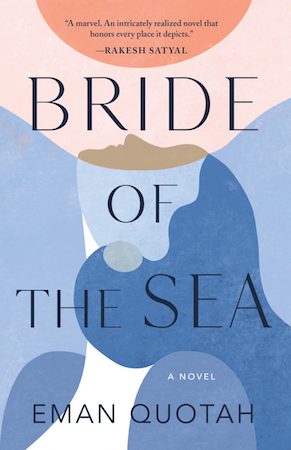
My novel, Bride of the Sea, tells the story of Hanadi, a daughter separated from her father when her mother, Saeedah, abducts her. In the end, though, the true rift is with her mother. That’s not a spoiler—I tell readers so on the first page of the book. By disappearing in America, Saeedah also strands herself far from her own mother, severing one bond in the interest of strengthening another.
In Saeedah’s culture of origin, people often repeat these words of the Prophet Muhammad: “Heaven is beneath the mothers’ feet.” Yet in life and in books, mothers and daughters often are torn apart. Here are eight books in which that happens.
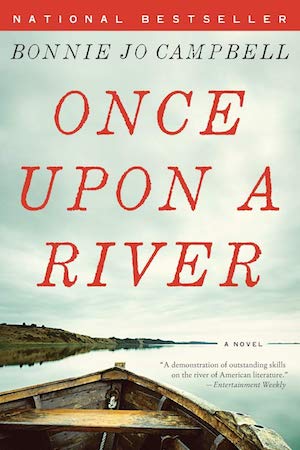
Margo Crane’s mother disappears from their rural Michigan home one day, leaving only a note. After surviving rape and family violence, 16-year-old Margo flees in the teak rowboat her grandfather bequeathed her, embarking on a river odyssey that leads her to her mother and then away again. Margo’s life current pushes her toward her own motherhood; in the story’s coda, a pregnant Margo floats in the river, “a paradise for a girl swollen up the way she was.”
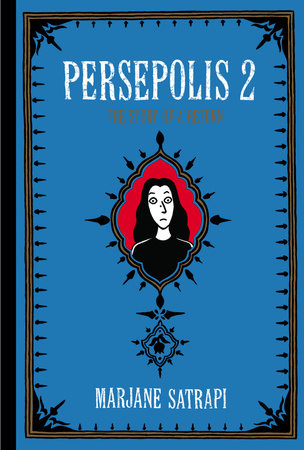
In the second volume of Satrapi’s classic graphic memoir, her parents have sent her to Austria to escape the religious strictures of revolutionary Iran. Her mother’s best friend vows to care for teenage Marjane “like her own daughter,” but instead abandons the girl at a boarding house run by nuns. When Marjane’s mother finally is able to visit, she walks right past her daughter at the airport. “She hadn’t recognized me,” Marjane writes, “and with good reason: I’d almost doubled in height and size.” Similarly, the sacrifices mother and daughter have made for Marjane’s freedom alter their relationship forever.
When young Plum Valentine becomes pregnant in her native Jamaica, the baby’s father doesn’t want to stunt her future in America. Or so he tells himself. He steals the newborn and raises her in secret. Searching constantly for the little girl who was taken from her, “Plum pictured her daughter like this: hair parted in four distinct sections, each section a mini afro puff; pudgy cheeks; a smile that opened up dimples; skin the color of chocolate batter; pudgy arms and legs in a frilly yellow dress. Except the baby wasn’t hers. Just a stranger on the train, a baby who smiled openly at anyone who caught her eye.”
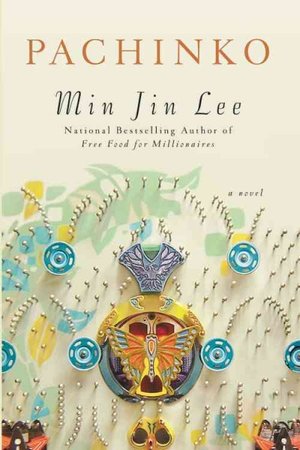
Lee’s rich family saga spans much of the 20th century, with mother and daughter Yangjin and Sunja enduring multiple separations. Yangjin orchestrates the first and longest, convincing a young pastor to marry Sunja —who is pregnant by a wealthy, married man—and adopt her child. “Of course it would be far better for them if she went away,” Yangjin tells the pastor, who plans to leave Korea for Osaka, Japan. Yangjin’s maternal sacrifice, as much as Sunja’s doomed love affair, sets the family’s fate in motion.
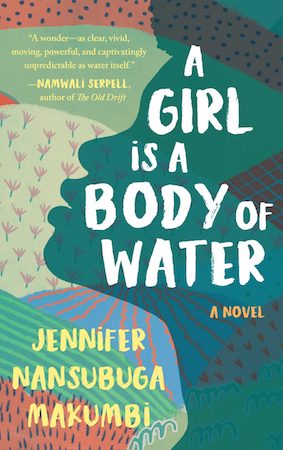
Kirabo Nnamiiro, heroine of Makumbi’s brilliant coming-of-age novel, spends much of her Ugandan girlhood searching for her lost mother. She seeks the counsel of a village witch, who is also her grandfather’s mistress, and later hangs posters asking after her mother in her boarding school’s hallways. When the father of Kirabo’s great love, Sio, dies, Kirabo wishes her mother were dead, rather than merely missing: “A dead mother gives you options. You can imagine and create and give yourself the perfect mother.”
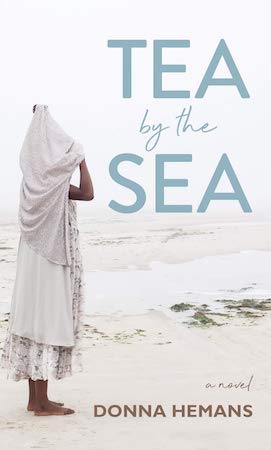
Deya, the daughter of Palestinian immigrants to Brooklyn, attempts to escape the strictures of womanhood in her paternal grandparents’s conservative household. She doesn’t realize she’s following in the footsteps of her long-dead mother and her paternal aunt, who ran away as a teenager. Motherless Deya discovers dark family secrets, but also the possibility of healing and forging her own future.
Afaf Rahman is ten when her older sister runs away from their Palestinian immigrant home in suburban Chicago. Wracked by grief, Afaf’s mother never overcomes the loss of her elder daughter or the depression that follows. Afaf feels motherless, although she lives with her parents well into her 20s. When Afaf grows closer to God and decides to wear hijab, her irreligious mother scoffs. Afaf wonders if she’s made a mistake. It is as though “her mother’s power over her outweighs the Lord’s.” Isn’t that so often the case for daughters, even when our mothers are not with us?
American chattel slavery systematically ripped children from their mothers. In Morrison’s masterpiece, an enslaved woman named Sethe, who never had a mother’s love, feels she must choose between mothering her child and saving her from slavery. The loss of her daughter haunts Sethe— literally and figuratively—long after she gains freedom. In Beloved, ghosts are real and a mother’s love cannot undo the terrors of slavery.lee
“Just,” his son corrected him at the airport. “Just ‘Just.’ ”
Bond, James Bond, Harry thought. Like they were starring in a rip-off action flick and not the road-trip buddy comedy he’d been hoping for. “Harry, Harry Krier,” he said, holding out his palm for an ironic handshake.
“I know,” Just said, horrified. “I know your name.”
“I know! I know you know. It was a joke.” Harry had insisted on meeting his son at baggage claim rather than at the curb outside, but now he was dismayed at all the witnesses. Also, Just didn’t have any luggage. Only a ratty backpack slung over one shoulder. Harry went in for a hug instead of the handshake. Just raised his arms, awkwardly returning the embrace, and Harry caught a whiff of body odor. His son had grown tall enough that Harry’s nose was armpit height. Willow had been tall, Harry remembered. Willow had been an Amazon. Maybe she still was.
After fifteen years without seeing Just, Harry had steeled himself for almost any physical manifestation of his son, for Just to look exactly like his mother, Willow, or exactly like Harry himself. He was ready to be bludgeoned with memory, or guilt, or joy. But Just was a nearly blank slate — brown hair and eyes, a body that gave no hint of what its occupant used it for, no swimmer’s shoulders or runner’s wiriness. Jeans and sneakers and a plain black T-shirt. Such an ordinary boy, Harry thought, and the words seemed heartless, but not the emotion. Whole and healthy and ordinary. He could deserve no better fortune. He didn’t even deserve that.
“Sorry,” Just said, breaking the hug. “I probably need to shower.”
“You’re fine,” Harry said. “You’re perfect.”
Commentary on the flight (okay), the autumn weather (chilly, gray), and the traffic (heavy) got them out of Logan and onto I-90 heading toward Brookline.
“There are a lot of Dunkin’ Donuts here,” Just observed, looking out the car window.
“Do you want to stop for anything?” “No. I was just saying. There’s a lot.”
“I thought we’d have dinner at home, if that’s okay.
Miriam’s picking something up.”
“That’s fine,” Just said, and he asked Harry how he and Miriam had met.
“I sold her a condo.” After closing, they’d gone out for a celebratory drink. Six months later he’d moved into the condo with her. There was no stipulation against this in the National Association of Realtors bylaws. Second marriage for her. First for him, technically.
“Do I want to know what technically means?” Miriam had asked.
“I was very young,” he’d said, and the truth of this had hit him with unexpected force — a load of bricks, a piano out a window. He’d been very young when he was living in Arcosanti with Willow, and he wasn’t any longer, and he never would be again. Wherever else his life might take him, it would not take him back there, to the red desert hills and the bleached sheet of sky snapped open every morning above them, their baby squalling in a hand-painted card-board box. Now that baby was sitting in his Lexus, six feet tall and applying to Harvard.
On the phone, Willow had rattled off names like she was reading an online list of Boston-area colleges, not just Harvard, MIT, Tufts, but the off-brand schools out-of-staters never applied to, like Lesley, Suffolk, Simmons. “I thought Simmons was a girls’ school,” Harry had said. “I mean, women’s. A women’s college.” Was his son transgender and no one had bothered to mention it to him?
“He’s still narrowing down the list,” Willow had said. “There’s a school counselor who helps.”
Harry hadn’t realized that tiny Jerome, Arizona, even had a high school. After Arcosanti, Willow had ended up in a mining town turned vertiginous ghost town turned artist colony / tourist trap. She’d bought a house and a metalworking studio for almost nothing because it was at geologic risk of sliding off the mountain. Uninsurable, but she hadn’t cared. She’d sent photographs of Just posed with the lawn ornaments she made and sold; birdhouses on sticks were popular.
“He buses to Cottonwood,” Willow said, like she could hear what Harry was thinking. “It’s a good school. Pretty good, I guess.”
“It’ll have to be if he’s applying to Harvard,” Harry said, pointlessly.
“Look, everyone understands how competitive it is. Can he stay with you or not?”
Harry hadn’t wanted the conversation to go this way. He felt like no conversation he’d ever had with Willow had gone the way he’d meant it to. “Of course he can stay.”
“He just needs a place to sleep. He can get himself to the campus visits on the subway. Right? I think that’s right.” Her voice was suddenly uncertain.
She’d never lived in a town with more than five hundred people, he remembered. Neither had their son. “I’ll show him around,” Harry said. “I’ll take time off work.” “You don’t have to.” Willow never told him he had to do anything. She hadn’t made him the bad guy. He was the no- guy. Not the villain, just written out of the script entirely, and he’d let her do it. Miriam had rented that movie with Daniel Day-Lewis, the one where his character screams, “I abandoned my child! I abandoned my boy!” At least that guy abandoned the little deaf boy to become an oil baron, Harry thought. I abandoned my boy to become a real estate agent. The saddest movie never made. Or maybe it was a road-trip buddy movie after all, now that Just was finally here, and the real movie of Harry’s life had simply had a very, very long setup.
Harry had first encountered Arcosanti as a single slide in a darkened college classroom. The freshman course was a year
long and quixotic, lectures three times a week on subjects like “the urban consciousness.” Paolo Soleri’s work came after images of Babylon and Alexandria, Levittown and Detroit, and immediately after a slide with a big question mark on it, symbolizing, the professor felt the need to explain, how no one knew what the future of cities would hold. The next image was an architectural drawing of insane complexity, a palace of tunnels and arches, pencil lines so fine and densely clustered, the city looked woven. Harry felt an immediate sense of loss when the instructor clicked it away. The drawing felt like the maps that appeared on the frontispieces of all his favorite novels, a key to an alternate world, its promise of transport. He used interlibrary loan to get hold of all Soleri’s books, even The Omega Seed: An Eschatological Hypothesis and The Bridge Between Matter and Spirit Is Matter Becoming Spirit. At a copy shop, he had the drawing made into a poster, blown up until the lines bled, the city an unraveling skein of wool. No, not a city — an arcology,a system that functions so perfectly with and for its inhabitants that the place and people become a single living organism. “Like a snail in its shell,” an acolyte explained on the first day of the summer workshop Harry signed up for at Arcosanti, an experimental arcology being built in the desert north of Phoenix.
Soleri lived south in Paradise Valley, coming to Arcosanti only for master classes, which sometimes felt like the only class; most of the workshop turned out to be manual labor, digging foundations or pouring concrete or repairing the buildings that had already stood long enough to start crumbling. Arcosanti had been founded in 1970, and a quarter century later the future had not materialized. The towering
arches from Harry’s drawing were covered in peeling paint. The round, porthole-style windows, a Soleri trademark, made the buildings look like concrete ships, a fleet that had set sail for the future and run aground in rough weather. The nicest building was the cafeteria, where tourists could join the residents for communal meals. Upstairs was the gift shop, where tourists could buy metal wind chimes forged on-site. This income, plus workshoppers’ tuition fees, financed the city.
“But isn’t arcology also about humans taking responsibility for our own relationship to the natural world?” a girl asked that first day of the workshop. She did not bother to raise her hand. “I feel like a snail’s not the best metaphor. I mean, a snail’s got no agency.”
She was white with blond hair braided into cornrows that left pale furrows of scalp exposed and rapidly reddening in the sun. Despite this, Harry thought she was beautiful. She was wearing steel-toed boots, overalls, and a sports bra, her body underneath rangy and tan. She was sexy, although this was a word Harry’s brain gained the confidence to use only after they’d actually had sex, after the miracle of Willow choosing him out of all the architecture students and career-changers and spiritual seekers in the workshop.
Miriam had picked up sushi on her way home from work. Harry knew it was meant to be a treat — it was from the best place in the neighborhood — but seeing how carefully Just observed them mixing wasabi into soy sauce, Harry guessed that Just had never had sushi before.
“If you don’t like it, we’ll get something else,” he assured Just.
“It’s fine,” Just said and gamely thrust a raw shrimp in his mouth.
Harry felt proud, then ashamed — nothing his son did was anything Harry could take credit for.
“So why Harvard?” Miriam asked.
“That’s the one school nobody ever asks that about,” Just said. “It’s Harvard.”
“But what makes it somewhere you want to go?” “It’s Harvard?”
Miriam gave him a confused look. “You need an answer to that before your interview.”
“It’s a group thing. Like, an informational presentation.
Individual interviews are with alumni in your region.” “There’s a Harvard alum living in Jerome?” “Prescott. About an hour.”
“Still. They’re everywhere.”
“Like roaches,” Harry contributed.
“Preparing Earth for the alien invasion,” Miriam said, “when they’ll team up with our new extraterrestrial overlords.”
Just looked at them as if this conversation were causing him physical pain. Harry supposed it might be. He tried to remember being eighteen.
“You should have a question ready to ask,” Miriam said. “If there’s time for Q and A.”
She was really throwing herself into this college-counseling thing, Harry thought. He wondered if she were wishing she had her own child to go through this. But no
kid of theirs would be anywhere near college age. If she’d gotten pregnant the very first time they’d ever had sex, the kid would still be learning to read. And Miriam had talked about it that very first time in her direct way — not just pills or condoms but how she didn’t want children, then or ever. “Me neither,” he’d said. He’d omitted mentioning that he already had one.
“What majors are you interested in?”
“Miriam. Leave the grilling to the admissions people.” “I wasn’t grilling, I was making conversation.” Making it, manufacturing it, because it wasn’t happening naturally. “Not everyone’s born knowing what they want to do. Just you.”
“What do you do?” Just asked her, making conversation, except that now Miriam would think Harry had never bothered to tell Just one single thing about her.
“I’ve told you that,” Harry protested.
“I’m a lawyer,” Miriam said, and Harry knew the fact she didn’t specify what kind meant she didn’t think Just was savvy enough to understand or care.
“That was what you always wanted to do?”
“My parents watched a lot of TV-lawyer shows. I thought I’d get to make lots of speeches.”
“So you’re in litigation?” Just asked. Miriam nodded, surprised, and Harry wanted to cheer.
“Knowing what you want out of life, it’s a superpower,” Harry joked. “Rarer than radioactive-spider bites.”
“So in the absence of spider bites, you joined a cult?” Miriam sniped.
“You were in a cult?” Just asked with sudden interest, not understanding that Miriam was talking about the place his parents had met, the town he’d been born in.
“It wasn’t a cult,” Harry said. But it had been, a little. The least effective cult in the world, making you dig holes and eat generic peanut butter until all your illusions were crushed. He’d been looking for the jobs that weren’t on television, he thought. He’d been looking for the secret options he was sure existed. But there weren’t options, not really. TV had it pretty well covered. He didn’t want to think the world was like that for everybody, but it had been like that for him.
“I don’t see how he’s competitive for Harvard,” Miriam whispered that night in bed.
Harry flicked the sheets aside before he got in, to see what she was wearing. Nothing, as usual. She wasn’t going to let Just’s presence in the guest room change that. Hopefully, Just wouldn’t change anything else between them either. Harry stripped off his own pajama pants.
“It’s cold,” Miriam complained and pulled the covers back up as he climbed in.
“You’ve only known him for four hours,” Harry protested.
“Four long, monosyllabic hours.”
“He’s a teenager. They’re all like that,” Harry said with false authority.
“Not the ones who get into Harvard or MIT.”
“Look, I can’t say whether his mom’s had a realistic conversation with him about it, but there’s no way to ask without making everything worse. I’m not proud that I don’t know enough about my own son to tell whether this whole college-visit trip is deluded, but I don’t.”
“Okay,” Miriam said. They were both still whispering or her voice might’ve lowered with surrender. With tenderness, Harry thought as she brushed his hair off his forehead. He reached for her hip under the covers. She was bony in a deliberate way, sleek as a greyhound. They didn’t even try to work out together because he couldn’t keep pace with her on her runs. He wasn’t soft, exactly, but he was softer than her.
He’d been softer than Willow too. Even after his summer of hard labor, she’d looked like she could break him. Willow was his first, and it took him years to understand that much of what he thought he’d been learning about sex, or about women, were things unique to that summer: the layer of concrete dust their sweat lacquered to their unshaved bodies; the calluses over her hip bones where her tool belt rubbed; the challenge of fitting themselves onto the bunk beds in the plywood dormitories or behind the shelves at the wind-chime foundry; lying on a blanket in the desert at night, stars flickering above them as the temperature dropped and they both pretended they weren’t cold. Maybe Willow hadn’t been. She’d seemed superhuman, impervious to discomfort or doubt. This was why he hadn’t believed her when she’d told him she was pregnant. It seemed like a mistake her body wouldn’t make. He’d thought she was joking.
“Are we naming it Paolo? Or Soleri?”
“Fuck you. This isn’t fucking funny.”
“Oh. No, it wouldn’t be.”
“Wouldn’t?”
If it were happening to someone else, he was thinking. Which it must be, because surely it wasn’t happening to them. But her face convinced him that maybe it was. He was still groping for the right way to ask whether she planned to keep it when she answered his question. “We’ll stay,” she said. “We’ll raise the baby here.”
“What do you think of the costume?” Just asked in the morning over bagels and cream cheese, gesturing to his clothes. Miriam had already left for work. Just was wearing slip-on brown shoes, khakis, and a red polo shirt. “Do I look right?”
Costume? That implied Harry knew what Just dressed like normally, which he didn’t. “Honestly?” Harry said. “You look like you work at Target.”
Just looked down at himself, then got up from the table without a word. Poor kid, Harry thought, alone with his mom out there in the desert, has barely seen a Target. Maybe he isn’t allowed to shop there, at the big-box stores. Maybe it’s all thrift shops and farmers’ markets. Just returned in a forest green polo. “Is this the uniform for anything?”
“Dick’s Sporting Goods? Bennigan’s, maybe? But I don’t think there are any more Bennigan’s. I think they all went out of business.”
“So the shirt’s safe?”
“I’d say so.”
Compared with the other prospective students’ outfits in the MIT admissions office, Just’s costume turned out to be marginal. He wasn’t painfully underdressed, but most of the others wore button-downs. There were almost no backpacks, and none as ratty as Just’s. He’d unpacked since the airport, and the deflated bag sagged off his shoulder.
“Do you want me to take that?” Harry asked. “Leave it in the car?”
Just declined, clutching the strap like a security blanket.
One poor child had a sweater vest and puffy insulated lunch bag. Harry felt a flutter of relief—he was doing better than that kid’s father, at least. There were more girls than Harry had expected, wearing shorter skirts than he’d expected, and he felt creepy watching all the teenage legs.
“I’m doing the shadow-a-student program after the info session,” Just reminded him. “You can still meet me after lunch?”
“I’ve got a showing scheduled nearby, but I’ll be back in time.”
“Great. I’ve got your number in my phone,” Just said. “I should go get a seat.”
Harry could tell he was being dismissed. The reception area was emptying as students filed into a nearby room. But it wasn’t just students. “There are parents going too,” Harry said. He’d meant it to come out as a disinterested observation, but he could hear his own neediness.
From the look on Just’s face, his son heard it too. “Sorry. I didn’t realize other people could come. And now you’ve got that showing scheduled.”
Other people. That’s how far they were from Just ever calling him “Dad”; he wouldn’t even use the word parents.
The possibility of living year-round in Arcosanti had dogged the workshoppers all session as both promise and threat. Workshoppers had to be officially invited to become residents, but none of them knew who made the decision or by what criteria. At first, Harry had thought perhaps Soleri took notes during the weekly classes, peering into their souls. By the end of the summer, he suspected one of the beady-eyed foundation reps was looking through their financial declarations to see whose families might donate the most. By then, most of the acolytes were tired of the labor, of the food, of one another. They wanted to go home and feel, from a safe distance, like they’d contributed something, like they’d watered a pale green shoot so tender that it was nobody’s fault if it failed to thrive. Soleri was just too far ahead of his time. The foundation couldn’t build Arcosanti any faster without big donors, and big donors did not line up to support revolution. Actually taking up residence in Arcosanti seemed to Harry like believing in something that had already been lost, like pledging oneself to the Temple of Apollo while knowing the Christians were coming to raze it.
He wanted to look at Arcosanti and see what she saw, not the ruin of something, but its beginning.
“I didn’t realize you could just turn it on and off like that,” Willow said. “Belief.” She’d grown up in the Pacific Northwest on a succession of live-off-the-land efforts that all went sour: goats, organic tomatoes, mushrooms cultivated with a secondhand marijuana-grow setup. Then her parents gave up on the mushrooms and started growing marijuana — the kind of thing no one gets in real trouble for, they assured her, until they did, and she lived with a grandfather in Olympia until her mother got paroled. By the time Willow came to Arcosanti, her parents were living in a clothing-optional eco-village outside Bellingham.
“They’re in it for the long haul,” Willow told him once. He hadn’t been quite sure what she meant, but he’d liked that she thought he was the kind of person who would know. He was flattered and in love. Maybe he loved her in the way only a nineteen-year-old loves somebody, but most nineteen-year-olds don’t know there are other ways to love. And he still wanted to love their city. He wanted to look at Arcosanti and see what she saw, not the ruin of something, but its beginning.
At the residential interview the foundation rep asked about the tenets of arcology, then whether Harry and Willow understood that they would be classified as volunteers and paid only a modest stipend beyond room and board.
“We’re in this,” Harry said, “for the long haul.”
Miriam called to check in. Harry answered his phone in his car, waiting in front of a property he could already tell the buyer wasn’t going to want. He knew before he shared it that a description of the morning would rile Miriam, but as soon as she started in — “Does he know the difference between MIT and ITT Tech? Did he see the TV ads and get confused?” — he felt disloyal for having said anything. “Lay off him,” he told Miriam. “Please.”
“Okay, sorry. But I had an idea this morning: What if it’s all a pretext? Maybe he knows perfectly well that he won’t get into these schools, but he needed an excuse to come see you.”
“He didn’t need an excuse for that.”
“But maybe he felt like he did. To tell Willow, maybe.” “She would have let him come.”
“Would she?”No, not when Just was younger. She would have been too worried that Harry wouldn’t send him back. And neither of them had had the money for travel. But more recently? Just could simply have asked. He didn’t need to playact an entire college trip. It was both flattering and ugly — that Just might have invented a pretext to see him; that Just thought he needed one. It inflated Harry’s heart and cracked it all at once. Like having children, Harry thought. This was what it felt like from the moment they were born. He’d forgotten how it was, the light and the shadow. Still there, after all these years, his capacity to be destroyed.
“I thought you were named Justin, officially,” he told his son at a café in Kendall Square. Turkey sandwich and a Coke for Harry, coffee for Just, since he’d already eaten in the MIT dining hall. “For almost three years I believed that. Your mother and I had agreed on Justin. She never told me she changed her mind.”
They’d invented a last name, a combination of their family names. They’d agreed to pair it with Justin, and Harry didn’t mind Willow calling the boy Just, though it could be confusing: Just, go to sleep. Just go to sleep. But later, on the birth certificate, he saw that she’d actually named their son Justice. No middle name at all, although that was the place, he’d suggested, that you were supposed to put the risky, potentially embarrassing part of the name. “You think it’s okay for a child’s name to be embarrassing?” she’d said when he’d tried to explain this, about middle names. “You named him Justice,” Harry retorted. “Without telling me.” But Willow said she thought Justice was beautiful, not embarrassing. She had a way of making every argument into one he couldn’t win.
“How’d you find out?” Just asked.
Harry told him he’d finally seen his birth certificate. What he didn’t tell Just was that his parents, who were encouraging him to file suit for sole custody, had told him to make a copy. Harry hadn’t filed the suit after he and his parents were counseled by lawyers that the Arizona courts were never going to side against the mother.
Just asked him if he’d been mad, and Harry said that he had, but not about the name. “Justice is fine,” he said. “I just thought we’d settled on something different.”
“I like them both,” Just said diplomatically. “I would have been fine with either.”
He’d taken his coffee black, and Harry couldn’t tell from the way he was drinking it if he actually liked it or if he thought it was what he ought to want. Harry was tempted to offer something different. Root beer? Hot chocolate? Kid drinks.
“The info session,” Just said. “It would have made me nervous, having you there. That’s all.”
“You don’t have to explain.”
“I didn’t want it to be, like, something hurtful.”
“You didn’t hurt me,” Harry lied. “I mean, I wish I didn’t make you nervous, but I get that we don’t know each other that well.”
“It’s not that,” Just said, then opened his mouth like he was going to add that they knew each other fine. Then he shut it.
An honest boy, Harry thought. He might not get into MIT, but he was honest.
The long haul — two years in, Harry thought he’d figured out what it meant. The only diapers they could afford were old dish towels from the cafeteria, which had given Just an intractable rash. The foundation refused to advance Harry the money he needed to take his son to a doctor. Harry was supposed to be grateful that they’d been moved out of the plywood dorm into a family apartment with leaky windows. The long haul — a lifetime of pretending you didn’t want or need the things other people wanted, not just TVs or fancy shoes but shampoo and diaper cream, a lifetime spent paying the price of pushing back against what your life was supposed to look like. Maybe Willow’s parents had moved to the nudist colony because after decades of the long haul, they didn’t have the money to buy clothes.
Willow kept the faith, kept it years beyond his ability to understand her. Did he understand how rare Arcosanti was, she asked, a place that really meant something? And he could hear how long she’d watched her parents look for such a place, how miserable they’d made her, trying. Arcosanti was supposed to be the city of the future, but he could see every single day of his future there and they all looked the same, dusty and exhausted and poor. The only other child living in Arcosanti was a four-year-old so grubby that tourists stuck money into the chest pocket of her overalls. Not Justin, Harry was determined. That would not be his son’s life.
Just had scheduled visits to Emerson College and Tufts the next day, nearly back to back. If he had more time that week, Harry offered, they could visit Northeastern. Or UMass Boston. Or even Roxbury, which, Miriam said, was a really solid community college. “You know, if you wanted to get some Gen Eds out of the way before transferring to a four-year school.” Harry kept his eyes on the road, but he was aware of his son turning to give him an inscrutable look.
Last night Harry had been unable to sleep, imagining Just receiving an endless stream of rejection letters, growing frustrated and angry at the whole Northeast, at his father. What if he didn’t return for another fifteen years? Harry had ended up insomniacly reading online message boards full of panicky teenagers posting their grades, test scores, desired schools, asking other anxious teens to estimate their odds of acceptance. All the subject lines read Chance me?
Chance me for Harvard? Chance me for MIT? I got a B+ once and I think I’m doomed.
This morning he’d followed Miriam into the bathroom, asking her to strategize where else Just could apply, how he might be lured back to Boston, where Harry could start to learn things like what his son liked to eat or drink, what he liked to study, what he wanted his life to be.
“Of course you can use our address for the in-state tuition,” Harry rattled on now. “I mean, more than that — you know you’re welcome to stay with us for as long as you like.”
“Is Miriam okay with that?”
Miriam had not been asked about that. Harry imagined she wouldn’t be okay with it. Not for an entire semester or year. But she would understand why he’d had to offer. She would understand that this was Harry’s last, best chance. “Emerson is mostly an arts school,” Harry finally said.
“I know,” Just said and, after a long silence, added, “It costs, like, thirty-six thousand per year. That’s not even including room and board. That’s, like, another fifteen thousand.”
“Well, it’s in downtown Boston,” Harry said, as if he thought those numbers were reasonable, which he didn’t.
“If I used your address, I’d have to list your income,” Just said patiently. “For the financial-aid forms.”
Willow had been vehemently refusing Harry’s money for the past fifteen years. Harry hadn’t realized that the federal government wouldn’t care — he’d be automatically expected to contribute. “We’re keeping you out of the picture,” Just assured him. “If I apply to any of the really expensive ones, Mom and I are going to say my father’s unknown. Or that he died. You’ll be protected either way.”
“They’re going to declare me dead,” Harry told Miriam that night in bed, but he’d made the tactical mistake of mentioning the cost of every school’s tuition first, so she expressed more relief than shared indignation. “It’ll be like I never existed.”
“Just on a financial-aid form. Not in real life.”
“You still think he’s here to see me?”
Miriam had no response. She put her hand on his head in sympathy, but it felt awkward, like he was a little kid she was checking for fever. He reached up and pushed her hand onto the pillow.
“I’m sorry,” she said.
If he could do it again, he thought, surely it would all go better? Where was his second chance, to get this right?
“Any of this making you reconsider your no-children stance? You too could have a teenager planning to pretend you never existed.”
“Ha,” Miriam said. “No. Holding firm on that one.”
But as she spoke Harry felt something crumple inside of him, heard a small voice protest. If he could do it again, he thought, surely it would all go better? Where was his second chance to get this right?
He wasn’t sure what he was waiting for, by the end. His parents had twice set up elaborate itineraries with paid-for taxis and plane tickets. The nearest scheduled bus service was thirty miles away. Twice he’d crouched at the edge of the Arcosanti parking lot in the predawn dark until he heard the cab crunching down the dirt road. Then he’d grabbed his backpack and run in the opposite direction, back to his and Willow’s room. His parents had called Arcosanti’s main office both times in a panic after he failed to get off the plane in Newark. They were sure he was being held against his will. No one had taken his ID, he told them, and no one was holding him prisoner. “I just couldn’t do it. I couldn’t leave them.” His parents sent cash then, paper-clipped to a phone number for a company in Phoenix that had agreed to send a car up, “for whenever you’re ready to leave.”
But when he finally left, he didn’t call the number or take the cash. He put it in an envelope on his pillow with a letter for Willow and a series of flip-book drawings for Just. Harry couldn’t really draw, but there was a big stick figure and a little stick figure and if you flipped through quickly enough, they hugged. He hadn’t wanted to sneak away in the dark, hadn’t wanted to feel like he was doing something that required sneaking, but he knew he’d never make it in daylight. He wouldn’t survive the goodbyes, would cave again, convince himself that maybe the next day, or the next, Willow would either agree to leave with him or let him take Just or, conceivably, his belief in arcology might reawaken strongly enough for him to make it through another year or five or ten. In the dark, though, he knew none of this would happen.
That night he pressed his cheek against Just’s and inhaled. His boy’s face was impossibly soft and smelled like the silt beds in the foundry. Harry left on foot, the road shining white under a full moon, and hiked out to Cordes Junction. The town wasn’t more than a truck stop huddled against I-17, but he found a trucker willing to take him south to Phoenix. He called his parents collect from the airport, and they arranged a ticket for a flight home. During takeoff he watched the desert drop away beneath him and felt no relief, just a gutting pain. They were at cruising altitude, Arizona gone already, when he had two thoughts: that he’d stayed so long because he’d wanted his son to at least remember him and that he hadn’t stayed long enough for that to be true.
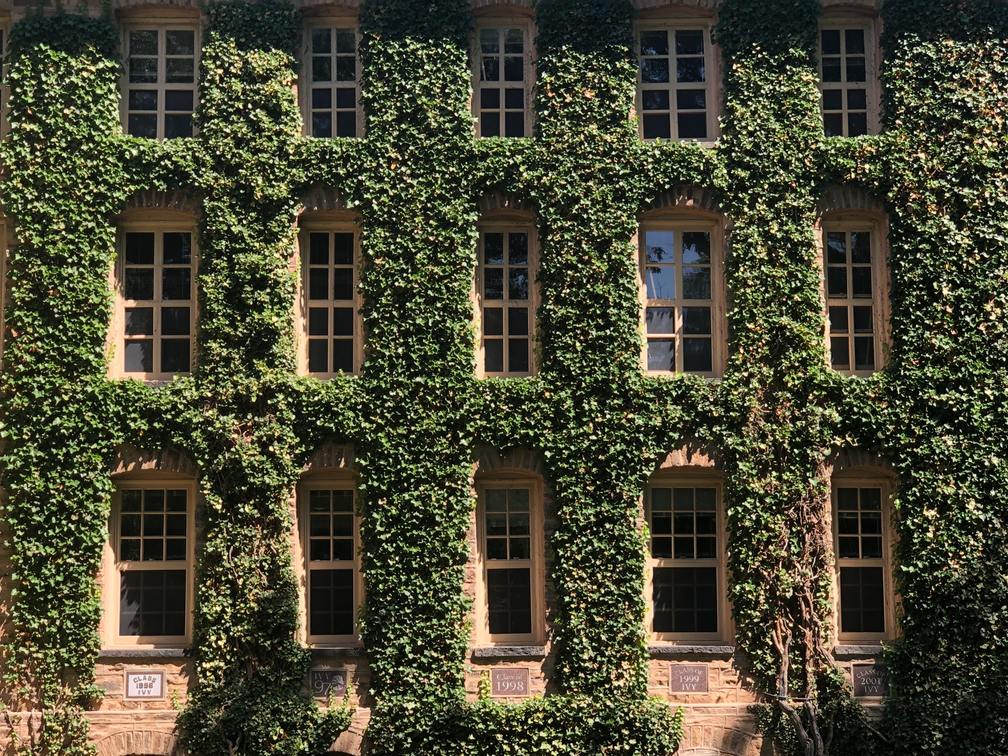
At Harvard’s Agassiz House, Just didn’t even want him in the foyer and still refused to surrender the ugly backpack. Harry said he’d find a café to answer some e-mails and sift through new listings. He walked back toward Harvard Square, peering in all the independent cafés for an available table, and paused outside a Panera Bread on Mass. Ave. Panera; he imagined Willow shaking her head, his own younger self wincing. He kept walking. Maybe he could work under a tree. Or at a library, at least until a security guard chased him out. Could he pass for a graduate student? Probably not at Harvard, where he imagined they all finished their PhDs by twenty-seven.
He crossed the street and went back through the brick and iron gates. The campus was shamelessly beautiful, a stately parody of itself. He wondered if Just was falling in love right this moment with something he was never going to have.
Harry’s last year in Arizona, he’d thought a lot about college. Not just the parties — late-night pizza and red plastic cups — but those darkened rooms full of ideas. Every idea Arcosanti ever contained felt bleached and flattened by the desert sun. Harry had been in his early twenties. He could sit in a classroom and look just like everybody else. No one would ever know he had a son. They would never even know he’d left college. He’d wanted to believe that Arcosanti was like Narnia, that you could step out of the wardrobe and back into the very afternoon you’d found it. But of course you couldn’t.
Students started to stream out of the buildings, changing classes. They wore nice sweaters and had clean backpacks. Harry tried to picture Just among them. He couldn’t. Until he could, because there was Just, walking straight by him, holding a video camera in front of his face. He was walking alone, without a tour guide or admissions host. He hadn’t made it twenty feet past Harry before a campus security guard stopped him. They were close enough for Harry to hear when the security guard said, “No filming.” Just was trying and failing to convince the guard he had a video permit from Public Affairs when Harry walked up behind them.
“I’m sorry, Officer,” he said. “My son’s a prospective student. He didn’t know about the filming rules.” My son. Harry could taste the words in his mouth long after he’d said them.
“Can I see some ID?”
“I don’t have one,” Just said too quickly, and the guard bristled.
There was so much, Harry thought, that his son needed to learn about the world. “Here’s mine,” he said, pulling out his wallet, and he watched the guard write down the name.
After being escorted to the nearest campus entrance, they were left courteously enough on the sidewalk outside.
“Different last names,” Harry said. “This won’t hurt you if you decide to apply.” Just was raising the video camera to film the guard’s retreating back. Harry swatted it down. “What are you doing? What were you doing?”
“We’re on city property,” Just said. “They can’t stop you filming from here.”
“You researched this?”
“Sure. But someone from Tufts had tipped Harvard off. They asked me to leave admissions before I got much of anything.”
“What did you do at Tufts?”
“It’s for a documentary. I’m not just screwing around. Mom’s been dating this Italian video artist. He gave me this,” Just said, holding up the camera. “I’ve been recording audio from the info sessions on my phone, but he said I should try for some quality footage too. He’s going to help me edit everything together. You know college in Italy is, like, completely free? Harvard costs sixty thousand a year. It’s so fucked up.”
“You’re making some kind of exposé?”
“Mom said not to tell you. She said she wasn’t sure you’d be cool with it.”
“What else did your mom say about me?” It was a huge question, ridiculous, too big for the rest of their lives, let alone for a sidewalk outside of Harvard Yard with students pushing past them.
Harry led them across the street to the nearest café’s outdoor tables. They sat, and Just returned the camera to the backpack, wrapping it carefully in the red polo shirt. It took him a long time to answer.
“Honestly?” he said. “Not a ton. You two were on a summer workshop together, and then you went back to school.”
“Four years. I was there four years.” Harry tried to meet Just’s eyes, but his son was staring at the perforated black metal tabletop. “I didn’t want to leave you.”
He just hadn’t seen how they could love the boy as much as they did and still raise him in Arcosanti. Willow hadn’t seen how he could love the boy as much as he said he did and still threaten to leave. There’d been no possible compromise, not one Harry had been able to see then and not one he was able to see even now. Which meant that in the great forking of his youth, he had ended up with nothing but bad choices. The painless road must have split off earlier, before he’d fallen in love with Willow, before he’d fallen in love with arcology. But that meant Just would never have existed.
“If you finish the movie — what do you do with a film like this? Submit it to festivals?”
“Put it on YouTube, probably. Higher education in this country is out of control.”
It sounded so rehearsed that Harry wondered who Just was imitating. Willow? The Italian filmmaker? Or maybe the words were really Just’s. Maybe this was what his son sounded like. At sixty thousand a year for tuition, he wasn’t wrong. Harry wondered what he’d sounded like as a teenager, parroting Paolo Soleri. Soleri had died last year, ninety-three years old. There’d been a memorial celebration at Arcosanti, a reunion of past residents and workshoppers. Harry hadn’t attended, but he’d been invited. He still got all the mailings, the pleas for donations. He still read them before he put them in the recycling bin.
“You should have told me,” Harry said. “What you were doing.”
“Mom said — ”
“Whatever she said. You were lying to me, and you were using me and Miriam. That wasn’t fair.”
Just took a moment to think about it, and when he said, “I’m sorry,” even though he said it to the sidewalk, it sounded sincere.
“Do you still want to visit Boston College this afternoon?”
Just’s head jerked up, his expression hopeful but suspicious.
“For footage,” Harry said. “I’m assuming you don’t actually plan to apply.”
“You’d do that?”
Was this a desperate ploy for his son’s affection? And did he believe this documentary would ever get made or that if it did, it would say anything that hadn’t already been said better by somebody else? Probably not. But maybe. This was his son, would always be his son. Didn’t you have to hope, totally and shamelessly, for “maybe”?
“I would. Although, for the record, I really liked college. I learned a lot. You should go. It doesn’t have to cost sixty thousand dollars.” Harry thought of himself scribbling notes in a dark room, desperate for someone to show him a picture of the future. That there wasn’t one was perhaps the best fatherly advice he had. Every possible arcology, they were all shipwrecked and insufficient. There was no city of the future, only the lecture slide before it, blank except for a question mark. But uncertainty could be a superpower. It could even be a love story, if you looked at it from a certain angle.
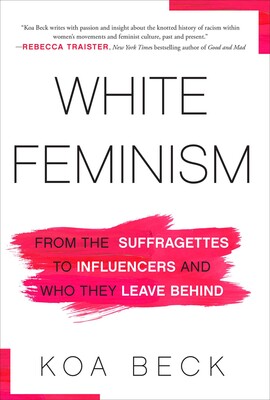
I interviewed Koa Beck not long before the coup attempt in Washington. I am writing this one week after that historic, horrific event. In the intervening period, a flurry of media coverage has focused on whiteness in America—its myths and privileges, its erasures and echo chambers, its facilitation of violence and oppression. In her book White Feminism, Beck, who among other prominent media roles was previously the editor-in-chief of Jezebel, examines the impact whiteness has had on the crusade for gender equality. What she finds is as pervasive as it is toxic.
“When I trace the phrasing ‘pro-woman’ through the length of my editorial career,” Beck writes, describing workplaces, policies, and groups that claimed the mantle, “I always end up in the same place: white feminism… stealthily positioned as being all-encompassing.”
According to Beck, white feminism is a “practice” and “state of mind” in which gender equality is a matter of “personalized autonomy, individual wealth, perpetual self-optimization, and supremacy.” Instead of questioning power structures, it embraces them, “replicating patterns of white supremacy, capitalistic greed, corporate ascension, inhumane labor practices, and exploitation, and deeming it empowering for women to practice these tenets as men always have.” (When I caught up with Beck after the assault on the U.S. Capitol, she emphasized that “white feminism has inherited a deliberate and structural lack of racial literacy from white supremacy.”) With its narrow focus on the self, white feminism is also seductive. “It positions you as the agent of change, making your individual needs the touchpoint for all revolutionary disruption,” Beck writes. “All you need is a better morning routine, this email hack, that woman’s pencil skirt, this conference, that newsletter.”
Beck is talking, of course, about Lean In, The Wing, the commodification of feminist slogans, wellness culture, Girl Boss, and so much more. But white feminism isn’t new—far from it. Her book details, for instance, how white feminism shaped the fight for women’s suffrage, rendering it less radical and less inclusive than it could, and should, have been. As is so often the case in the story of America, the people negatively affected by the forces of white feminism are people who aren’t white. “Women of color are poor people are being left behind, and yet the trappings that uniquely target us”—Beck is a queer woman of mixed race—“like poverty incarceration, police brutality, and immigration, aren’t often quantified as ‘feminist issue.’”
White Feminism mixes criticism with reporting, history with memoir. Ultimately, though, it is a manifesto: Beck is calling for collective action to demolish white feminism and build something better in its place. We talked about how that might happen, and when. With its unprecedented combination of devastating events (a pandemic, right-wing insurrection) and positive ones (Black Lives Matter), there’s no time like the present to start pushing for meaningful change.
Seyward Darby: This book is in part about who has power over language and ideas—for instance, who gets to decide what feminism is. You note that white feminism has become the most dominant form of the concept because white women have had the power to make it so. What distinguishes it from other forms of feminism?
Koa Beck: Feminism as an ideology has been explored, advocated, organized, and lobbied for by a lot of movements of people. I really wanted to make sure to underscore that that Native people have had their own gender rights movement for a long time, same with Chicanas, same with Black feminism, and same with Black lesbian feminism. The only ideology arguably that isn’t aware of that is white feminism.
I don’t think white feminism is feminism, but when I was doing archival research, reading reports from suffrage meetings, you would think that they thought they invented feminism. In fact, there had already been a lot of efforts by women of color and working-class women, especially immigrant women around the turn of the century. They were working in laundries and factories and pushing against being exploited with low pay, no bathroom breaks, no emergency exits. It was very much a feminist uprising to challenge their powerful employers with a union presence and walk-outs.
But a lot of the mechanisms by which we can challenge power on a structural level white feminism does not advocate for. That was true in 1920, and it’s also true in 2020.
SD: That leads me right to my next question. Can you talk about the ways in which white feminism has never been interested in seriously rocking the economic and social boat?
KB: White feminism always wanted to partner with consumerism. One of the P.R. challenges for what we think of as modern suffrage—so women in 1915, ‘16, ‘17, who were white and middle to upper class—was that women who spoke publicly about their opinions were often considered deviant. They overcame that challenge by signaling that suffrage didn’t really challenge what women were supposed to be. A suffragette was white, thin, able-bodied, and middle-class. If she was not a mother already, she wanted to be. A lot of early suffrage representation is of a woman either clutching a baby or holding a child. She also aspired to shop. White suffragettes saw that they could use companies like Macy’s, which sold a branded outfit for women who supported the vote, to relay their messages for them: They weren’t advocating for women to be too autonomous. Women would still shop and support the economy, still have children, still be a mother and a wife.
SD: So what’s changed since then?
White feminism has always aimed to partner with power, as opposed to re-interpreting it, dismantling it, or redistributing it.
KB: The scale of the corporate endorsement of white feminism. White feminism as an ideology and a practice has always aimed to partner with power, as opposed to re-interpreting it, dismantling it, or redistributing it. It’s reached new heights in my lifetime and career. In newsrooms, covering gender and gender rights, I would weirdly find myself in these lanes with the Lean In crowd. And that [white feminism] was supposed to be the extent of my beat or what the story was.
SD: Various entities and individuals come in for criticism in your book, including The Cut, Sheryl Sandberg, The Wing. You also describe Beyoncé’s performance at the 2014 MTV Video Music Awards, where she had a huge sign that said FEMINIST behind her on stage. You write that initially, like a lot of people, you thought it was a progressive moment, but that you later changed your mind. I’m hoping you can explain why. Do you see Beyoncé as practicing white feminism?
KB: We need many books on Beyoncé’s feminism. I encourage other writers to go there. I feel like I can’t comment on her feminist politics, mostly out of respect for her, but also because I know so little about the infrastructure of her enterprise. She operates culturally so differently than other public figures I cite the book. I will say that, as powerful as that moment was, my skepticism grew not so much from watching Beyoncé than it did from seeing how the performance seemed to set in motion a lot of white-feminist mechanics, specifically for marketers and P.R. people. Because Beyoncé had made this declaration, it took on the tenor of a trend, which is always kind of dangerous. Unfortunately, people try to capitalize on a moment regardless of their own ideologies, whether they’re overtly feminist or not.
SD: Is a more revolutionary, inclusive version of feminism incompatible with American capitalism? Put another way, if a young woman aspires to lead a corporation, can she really be a feminist?
KB: From a historical standpoint, a lot of movements led by women and people of color have been clear in their belief that the revolution for gender equality can’t happen under capitalism.
As for me, thinking about a lot of corporate environments that I’ve walked in and out of throughout my career, I think that the hard and fast rules of capitalism need to go. What I mean when I say that is this endless, endless more that has to be accrued. It is the force that maintains a lot of oppression. Whatever you achieve as a performance metric is never enough. In interviewing women, what I’ve encountered is that there needs to be a scaling back of that idea. So if a company is willing to lower performance metrics so that parents can take paid leave, I would consider that to be a good thing. If it were willing to scale back production expectations so union members can actually have time off, I would consider that a good thing. I would put the question to the companies and corporate people who are engaging with this book. If you can square the dynamics of capitalism specifically with people’s needs, I invite you and dare you to do it.
SD: Let’s talk more about solutions then. What can institutions do, and what can individuals do?
KB: One of the key components of a lot of these broken systems that we’ve been talking about is that they individualize us. They award us accolades to distinguish us from one another or, as we saw with the stories that came out of the #MeToo movement, they issue personal threats, all to maintain the system as it is. The best frame of mind, then, is to not think as individuals. Think more collectively with other women, actually approach and work with them to dismantle narratives and power structures or thinking of ways around them. I don’t think the answers are individualized.
SD: You talk about ways in which in various leadership roles in media you worked to change systems or policies supported by white feminism. I’m wondering if you have any regrets—situations where, looking back, you realized you were falling back on white feminism to guide you.
A lot of movements led by women and people of color have been clear in their belief that the revolution for gender equality can’t happen under capitalism.
KB: I definitely regret, towards the earlier part of my career, not thinking in terms of union organizing. I wasn’t a part of a union until I was at Jezebel. Prior to that, my strategy for going up against power was basically saying, I will not ask the staff to do that. Or, I don’t think that’s an appropriate use of resources. I would go to a meeting and assert myself, puff myself up really big to say what I wouldn’t do. I do think that is a very white feminist narrative, thinking, I’m the executive editor, so I will just go in there and say no, and that will be the end of that.
At Jezebel, the dynamic was different. I would say, I’m going to talk to the union and I’ll be back. There was a whole organized body with me that makes decisions and weighs out scenarios for everyone. It was extremely helpful and more successful. And history bears that out.
SD: You started working on this book before COVID-19 happened. How has the pandemic shaped the way you think about white feminism?
KB: I turned in my final draft right before COVID struck. I saw the writing on the wall very clearly—the patterns of who gets exploited, especially in times of crisis, whose lives have no value, whose lives have a lot of value, who has the money to insulate themselves. My editor and I basically had like a very long email where we established that COVID needed to go into the book it takes so much of the material and puts it right in your face.
While I was waiting on definitive data, I was assessing: OK, if this if this is what the government is saying an essential worker is, I know those fields are predominantly made up of women of color. I was basically just sitting around, waiting for The New York Times article that said that. There were also a lot of gender differences at the top of the pandemic, in terms of assessing the threat. Women were surveyed as being a lot more scared and concerned, even though men had much higher fatalities from it. My assessment of that is women are very familiar with circumstances jeopardizing both the health of their families and themselves and their economic security. That’s true from lack of paid parental leave to getting a chronic illness and your disability not covering it. Women are already very attuned to this reality because of the way that we do not see them and their labor and their lives.
I’ve always been struck by how deeply, deeply, deeply sexist economics are. The way that we have envisioned our country in terms of money and value does not factor in a huge portion of how we all live and how we need to live in terms of caretaking for others, whether it’s children or elders or disabled people or the chronically ill. With COVID, we’re seeing that in a hyper-distilled way. I think there’s a good opportunity to rebuild something better that holds businesses and the government accountable.
David F. Walker and Marcus Kwame Anderson’s graphic novel The Black Panther Partymay be the first introduction to the revolutionary party for some. For others, it will provide additional context to the history. The graphic novel spans from the founding of the party by Huey P. Newton and Bobby Seale in the mid-’60s to its unfortunate demise when members were murdered, ostracized, or imprisoned. It covers the constant government attacks to the Party—cue J. Edgar Hoover, who stated the Black Panthers were the “greatest threat to the internal security of the country”—and its internal strife, against a background of increased racial tensions throughout the nation.
Walker and Anderson’s collaboration reveals that the Black Panthers weren’t without faults, yet the organization’s focus from the beginning was always giving Black communities the strength and power to be informed of and fight for the rights they deserved. From food pantries to educational programs to a newspaper circulating relevant and under-reported news affecting Black people, the Black Panthers served their community first, which seemed radical to those who never thought Black people deserved basic rights in the first place.
I spoke with the author and illustrator about the challenges of bringing forth more rounded information about the Black Panther Party, and the cyclical ways social justice movements have fought not only for our voices to be heard but for survival.
Jennifer Baker: David, in the afterword you spoke pretty poignantly about having conflicted feelings about writing a book about the Black Panthers. What was your approach in regards to this graphic novel? Did you and Marcus think about what existed already or did you primarily think about what you wanted to do?
David F. Walker: I went arrogantly into it thinking “I know a lot.” Thinking this would be easy. And that was my first mistake because I didn’t know as much as I thought I did. When I went into it [it was] with the attitude that this book would be for people who knew nothing about the Panthers. I didn’t dumb it down in any capacity, [but] I felt like if you never heard of the Panthers or if all you know is the name or had seen an image or know about Bobby and Huey, that this would be sort of the Panthers 101 History as a great jumping off point. And even then it was still a challenge—despite what seems like a lot of material out there, there’s not really as much as you would think, and some of it is sort of one-sided and at times even unreliable in its information. It was definitely a big challenge, and I think that also for myself there were definitely people in the Party who I didn’t have as much of an understanding of, [and] I began to understand them more. And at times [this] was conflicting because these were actual people. We learn about them as iconic figures, but they were people who made some really great decisions and some not so good decisions.
Marcus Kwame Anderson: Not dissimilar to what David was talking about, I was going in with a good amount of knowledge. I came up in the ’80s and the ’90s and I remember “It Takes a Nation of Millions to Hold Us Back” [by] Public Enemy, there was just all kinds of Panther references. And I remember them talking about being a supporter of [JoAnn] Chesimard (Assata Shakur). So it was at that time when I was in high school in the ’90s where it sprouted the interest to learn more. But like what David was saying, no matter what you know there is so much more, so I was coming in with information but David is very humble about what he does. When I was reading the script I was impressed with how much he did get in there and how much of a big picture it gives. I was excited, and for me it was a very huge task but also felt like a task that I was kind of meant to do, just in the sense that my interest in work that deals with the African diaspora and social commentary and all that and my love of comics, they really merged on this project in a way even before I knew about this project.
JB: Marcus, can you talk a little bit about your artistic approach? There’s a softer element to your work. There’s not as many hard edges and there’s a great attention to hues and how they balance out on the page.
I grew up reading comics back in the ’80s, ’70s, and before, and there was one brown for Black people, period. I’ve never gone to a default brown.
MKA: I always try to draw what I want to read. When I read comics I’m a fan of people that are inventive when it comes to page layout and panels. One of the things you’ll see if you read the book is oftentimes I’ll break the panels with borders, not necessarily just to do it, there’s always a reason for that. I grew up reading comics back in the ’80s, ’70s, and before, and there was one brown for Black people, period. I’ve never gone to a default brown, so I would look at it like Huey’s complexion is darker than Bobby’s. And then you have Angela has her complexion so I tried to really be true to that. One of the challenges is I was working from a lot of black and white reference images. But for a lot people who are still around I was able to find some color images for color references. And David and I had also talked about coming up with simpler color palette and some colors that could be found in the Panthers’ newspaper because the newspaper was a huge part of the Party and the design was very dynamic. A big part of the color theme was orange and blue, that’s my favorite complementary color combination, so I kind of built a lot of the color around that. But then you’ll see there are pages where the murder of Fred Hampton, scenes that depict racist violence, are in more red hues and that was a very deliberate choice. But for a lot of the scenes that were less violent I went with some softer colors like you were talking about.
JB: I also want to get into the women that are featured. I haven’t amassed as much Black Panther history myself, but there’s a lot that was revealed to me. Because of how information was unraveled I had a deep appreciation for seeing women like Erika, Kathleen Cleaver, and Tarika Lewis actually discussed.
The leadership roles were primarily men, but the Party lasted as long as it did because of women.
DFW: Thank you for bringing that up, because I honestly feel like if there’s one part of the book where I fell short it’s this particular part. I actually wanted there to be more about the role of women and specific women in the Party. When I went into this [I was] thinking “I know all about the Panthers, this is gonna be easy,” but then the more research I did it seemed like it was impossible. It really felt like women were written out of the history. And I really had to dig deep to find stuff. In some cases I had to talk to people who were in the Party to get a feel for it. Elaine Brown’s memoir, her autobiography, is probably one of the key publications that deals with women in the Party, but that’s only one person’s story. Kathleen Cleaver has yet to produce anything along those lines and Angela Davis, she doesn’t talk as much about the Panthers. And I was getting really really frustrated and I was committed to having something in the book.
It was one of the last sections of the book that I finished writing because I was still conducting the research. And I think more than anything else, where I talk about the stuff that I learned and how incomplete the history of the Party, the women and the role that they played is the thing that stands out in my mind the most. And I feel like that definitive book has yet to be written. That story has to be told, because when you look at the numbers more than half of the party was made of women, rank and file women. The leadership roles were primarily men, but the Party lasted as long as it did, it survived and did all that it was able to do because of women. I don’t know that it would be me [to write it] but it really needs to be about the complexity of gender, gender identity, and what women have to do just to survive. And not just survive but get acknowledged for the work that they’re doing.
JB: You’re right that there’s such a dearth of Black women in our history books and in their connection to the Party. Even your intro of Civil Rights and reading more books, I’ve learned how PR driven some movements were.
DFW: When I look at … history or Black history, the role of women—I didn’t realize this ‘til I got older and began taking my work more seriously—I didn’t realize how much the role of women was diminished. And now that I see it I’m more aware of it all the time. To the extent that I feel like okay, as I move forward in my career and my life, one of my life battles has to be to help level that playing field and to help find opportunities for creators who might not get the break that they need and for stories to be told that might not have been told.
I would love for people to start talking to their families and recording their stories. That’s how we’re going to understand the Party.
I remember reading just a paragraph of how Tarika was the first woman to join the Party, and Marcus can talk about this too, figuring out what she looked like was so hard. ‘Cause there were pictures of her, but there’s only three or four and none of them were labeled correctly. And so it took forever. There are several women who I have pictures of. There’s one woman whose name escapes me at the moment. But I had 30 or 40 pictures of her with her name and there were enough pictures that I thought “Okay, she had to be somebody if someone took this many pictures of her.” But I couldn’t find her name in a single book. In the back of my mind, I’m thinking, “There’s the story here.” I want to know her story. She has this dynamic look about her. There’s pictures of her in the newspaper and a couple other photo essays but nobody took time to write about her. And that to me, when we talk about the Panthers and when we talk about people in general, the rank and file, that’s where the true story of the Panthers is. Some of those rank and file members are still with us, they’re our parents or grandparents, our aunts and uncles. I would love for people to start talking to their families and recording their stories. That’s how we’re going to understand the Party, what they went through and how to learn from what they went through.
MKA: What David mentioned with Tarika Lewis is really important. Because … there were more recent pictures of her when I was researching her, so I found myself really trying to cross reference her pictures with older pictures to try and de-age her. But it really was a challenge. Speaking to David’s earlier point of the importance of someone following this work, I’m just thinking about the fact that a lot of the people in the Party and the people we’re speaking about aren’t here, and the people who are right now I do think it’s important for as much of their story to be told both in our book and otherwise, because they’re not going to be around forever. And I don’t want some of the lesser known aspects of the history, especially about the rank and file people, to be lost.
JB: With this contribution to literature about the Black Panther Party, is there a conversation you want us to engage in or dissect a bit more when it comes to social justice parties and grassroots work for us and by us?
Look at what happened to the Panthers, and know that those same tactics are being used against you right now.
DFW: There was a moment when I was working on the book where I realized that the age that I am right now, right this very minute I am old enough to be the father of any founding member of the Panthers. Bobby was the oldest when he formed the party, I think he was 25, 26. Bobby Hutton was only 16. Huey was in his early 20s, and there were moments when I was reading about what they did and things that happened to them and I realized I was reading it from a middle age man’s point of view, where I don’t have the same fire in my belly that I had in my early 20s and my late teens. And what I was thinking about was, how do we keep that fire in our bellies, the thing that drives us the way it drove the Panthers? How do we keep that going as we get to middle age and how do we survive long enough to do something with it? One of the worst tragedies of the Panthers is that all the people who were killed, most of them were killed before they hit 30 years old. And when Huey died he was in his 40s, but he might as well have been in his 80s in terms of all the things he’d been through. And so it was just really interesting to me because I thought about what would it take for me now as a man in his 50s to take arms? And more importantly, what would I say right now today to young people? I look at what’s going on with the BLM movement and I see people out in the streets and there’s part of me that’s like, “Maybe I should go out there with them, but I got a bad back. And I don’t want to fall and break a hip.” I really would like to see more people my age think about how we can help educate and mentor young people. But I would like young people to look too, as they wonder why nothing has changed in their mind, look at why it hasn’t changed. Look at what’s happening. Look at what happened to the Panthers, understand how they were infiltrated, how they were turned against each other. And know that those same tactics are being used against you right now.
MKA: When I started working on the illustrations it was last spring or summer of 2019, so this is pre-George Floyd but post many other travesties of justice. And as I’m reading about these things all these uprisings that happened in history into the 20th century, some of them you could’ve just changed the names and it would’ve been any headline that we could speak of in the last ten years. Then the tail end of my work directly overlapped with the deaths of George Floyd and Breonna Taylor, so those uprisings were fresh in my mind. There was a surreal moment this past May where you would see a lot of people who had previously been very uncomfortable with the phrase or idea of BLM becoming more comfortable, and all these companies getting their graphic designers to put statements about. And I don’t want to make light of it too much because I think even incremental progress for people, the idea of BLM being less vilified is positive. But I felt reinvigorated living with the Panthers for a year. I had read about them and learned about them, but to create this book I felt like I was living with them this past year and it really did help reignite a fire within me. I also think it’s important for this story to be out there so it can inspire people, but they can also learn from the ways it didn’t work. I really think that’s what progress is. We stand on the shoulders of others and you take inspiration from the things that worked and then you try to rebuild from the things that didn’t.
It’s well-worn advice by now that you shouldn’t go into debt for an MFA. But how can you avoid it? Every year, the limited fully-funded programs—think Michener Center for Writers, Rutgers, Cornell, Brown, Purdue, Iowa, Johns Hopkins—receive a flood of applications. Fully-funded MFA programs at Syracuse University and Hunter admit around 6% and 2% of applicants, respectively.
Statistically, it’s a simple fact that not every writer who feels committed to completing an MFA will find a seat in a fully-funded program—and those application fees add up. For example, Vanderbilt’s fee is $85 and Boston University’s is $95. Plus, even at full funding, location matters, as living on a graduate student’s salary has wildly different implications in different housing markets; some “fully funded” students do end up taking out loans to bridge the gap between stipends and what it means to pay rent.
Highly selective programs with extensive funding can be a gift for writers, but you also need a backup plan. This isn’t about thinking of MFA safety schools, but rather applying widely to programs that are a good fit both academically and financially. There are over 160 residential MFA programs in the United States, all of which have a different mix of aid and aesthetic. Even if full funding is not advertised, at some schools, you may still get it.
No matter what you get from the Registrar’s office, for any offer of admission, prospective students should ask to speak to current enrollees and recent grads and do as much vetting as possible. No program is perfect.
With that in mind, here are 10 programs for the cost-conscious to get started with, based on the institution’s financial transparency and publicly available data.
Indianapolis, where Butler University is located, boasts a low cost of living in what is still a relatively major city, Indiana’s largest. As a private school, residency conditions do not apply, and Butler’s tuition and fees run about 16K a year. The MFA was established in 2008 and matriculates upwards of 15 students annually. There are a wide variety of scholarships available, including many that are not linked to instruction. Butler offers some paid teaching positions for second year students; in any given cohort, about half of enrollees would be eligible. As a university founded in a Christian religious tradition, Butler may not be right for everyone, even though its mission and degree programs (including the MFA) are firmly secular. However, with funding, this very small school can be an economical choice in a Midwest capital.
Founded in 1978, the Eastern Washington University program offers full and partial funding for many students in poetry, fiction, and nonfiction. A land-grant institution in Washington state that is closer to Idaho than Seattle, the MFA is housed in Spokane, a small walkable city with low living costs. A two year program, students who are not fully funded in their first year through a teaching assistantship have a chance to get second-year funding and stipend through community-based programs and publishing, including with the literary journal Willow Springs Magazine. EWU’s tuition is on the lower end, at $12,704 a year. Through a western states partnership, those who reside in Alaska, Arizona, Colorado, Hawaii, Idaho, Montana, or Nevada do not have to establish residency. A unique aspect of EWU is that classes are largely held in the evenings, making it possible to hold a day job if needed.
The University of Florida, Gainesville MFA program is a fully funded three-year program, and receives upwards of 500 applications a year. It admits only six students in each genre of poetry and fiction. Founded in 1949, UF is a well-ranked, established program and has maintained the very low application fee of $30. The town of Gainesville, in the central panhandle of Florida, is an inexpensive place to live, making it likely that a stipend will in fact cover living costs. UF is a very pedagogically focused school. It prioritizes permanent faculty rather than visiting writers or temporarily appointed professors to deliver instruction, and the admissions statement is clear that applicants are selected on what the committee sees as potential to develop through the course of study. The program emphasizes world literature, and over half of its faculty are bilingual and born outside America.
If you absolutely have to be in New York, take a look at Long Island University. Located in Brooklyn, this school has ample paid internship opportunities at PEN World Voices Festival, the National Book Foundation, and the Brooklyn Academy of Music, among others. LIU also offers teaching assistantships that will offset costs. Tuition is half that of other NYC-based schools like Columbia, which is highly relevant for those students who may pay some out of pocket. As a private school, state residency requirements do not apply. Founded in 2007, LIU’s MFA has programs in poetry, fiction, playwriting, creative nonfiction, and cross-genre projects. New York is, of course, extremely expensive, so applicants must balance funding against cost of living. With a $50 application fee, for those who feel strongly about being in the epicenter of American publishing, LIU may be worth the relatively low initial cost.
Established in 1982, the McNeese State University MFA offers all who are admitted some level of funding, though it does not provide free rides. By their own metrics, MSU students enrolled in the MFA pay about $1,500 per semester for three years. The application process begins at no cost—prospective students are not asked to contribute any application fees or paperwork until after they are accepted. This is a positive model that helps students understand if they are a good fit before committing to fees or devoting time to formal applications. Prospective students should send in their work in poetry or fiction, their statement of purpose, and an additional letter spelling out one’s interest in teaching introductory composition. MSU is in Lake Charles, Louisiana, a gulf town about halfway between Houston and New Orleans with a very low cost of living. Demographically, Lake Charles is nearly 50% Black. MSU as a university enrolls more female identified students and employs more female identified faculty than average, making it a highly diverse option.
Founded in 2000, the fully-funded program at the University of Mississippi Oxford is free to apply to, and the phased application is very low stakes. Email in a writing sample along with a statement of purpose essay, and the first part of the application is done. Much like other Gulf schools, it’s only once these initial materials are reviewed are some students asked to move to Phase II, which requires filling out the graduate application and providing letters of reference. In many ways, applying to UM is like submitting to a literary magazine or pitching agents. Applicants will only hear back and be asked for additional materials if the committee is interested. UM offers funded positions that do not involve teaching, and specifically earmarks financial aid for students of underrepresented groups. Oxford is a diverse city that is approximately 22% Black.
The University of New Hampshire’s program is newer, founded in 2007. It is very small and also very selective. Graduate school tuition rates were $14,170 in 2020. Residents of Rhode Island receive a discount. UNH has a reputation of being very community-minded, the kind of school where students celebrate on another’s successes. An advantage of UNH is the availability of paid internships in research and communications, and stipend positions at the literary magazine, Barnstorm. Top applicants will receive tuition waivers and a stipend through teaching fellowships. Durham, New Hampshire, has a high cost of living for such a small city, but in contrast, the housing costs in Boston, about an hour away, are 60% more than this college town.
The Texas State University MFA, founded in 1991, is a large program, with upwards of 70 candidates enrolled at any given time. The cost of living in San Marcos, located between San Antonio and Austin, is slightly lower than the national average. While TXST is technically only partially funded, 90% of applicants receive full funding, a hefty percentage. In-state tuition rates are $8664 annually, but essentially no students pay the full balance. While 75% of candidates are from outside of Texas, the university has a generous out of state waiver that is not contingent on residency. In 2019, this applied to 100% of students, suggesting that while not guaranteed, getting a waiver is highly achievable. If not offered full funding, note that TXST is a 3-year program, which could potentially increase costs and delay entry into the job market by a year. The university is designated as a Hispanic Serving Institute, with 25% of enrolled students identifying as Hispanic or Latinx.
University of Texas, El Paso has both a residential and a fully online program; this section covers the residential course of study. Since 1992, UTEP has enrolled a cohort of a dozen MFA students, and like other Texas-based programs, it is a 3-year course of study. That said, this program has the lowest tuition of any program on this list, at $6600/year. Graduate stipends pay $1200 per month for ten months, which is fairly average, but put in context of El Paso’s extraordinarily low cost of living, those dollars will stretch much farther than in other cities. UTEP is distinctive in that it offers a bilingual English/Spanish MFA, though bilingualism is not required of any applicant. Classes draw on both Spanish and English texts, and the program offers support for student matters like housing and financial aid in both languages. The campus is located near a shared border crossing with Ciudad Juarez, Mexico.
The St. Mary’s College program refreshingly focuses on life after an MFA and publishes statistics on the careers of its graduates. All incoming students are funded at 40–50% of tuition in their first year, and a smaller percentage in their second year. This brings tuition costs at this private school down to something that is more in line with a public school, with no penalty for not having California residency—although note that attending SMC means living in San Francisco, which is more expensive than New York. All students are invited to apply for graduate teaching assistantships, which offer an additional stipend. SMC is an option for students who are interested in interdisciplinary work, as there is funding for dual-concentration students who may take three years to complete their degree. The college also provides paid internships with Lambda Literary, Kearny Street Workshop, Hedgebrook, and is notably LBGTQIA+ friendly. Without a full portfolio of funding, St Mary’s can be unreachable for many, but because it has a free application process, it’s worth seeing where an application shakes out in the funding hierarchy.
A comprehensive list of MFA programs from Poets & Writerscan be found here.
The doves were moaning crying cooing calling
Inside their houses the people were moaning crying cooing calling
A damp hot air    A person shouldn’t be allowed to write a poem
kept cool in a cake of conditioned air
What are your opinions?      A person might be proud of their opinions
Like polishing ordinary rocks and collecting them in a box
Some advice:      Or not
I take off the voice of a prophet
I sink my opinions into the sea
What sound is there now in the hot damp world?
Some advice:      Who cares      say the shaggy globes of white clover
Who cares sing the doves      Who cares says the damp blunt air
boiling with the odor of our choices
My new blue kitchen cabinets painted blue
My new blue kitchen cabinets painted blue
Black countertops, black granite flecked with dirty starlight
And saltillo tile from Saltillo, Mexico, baked, glazed earth and still some little imprints from the foot
of a dog who passed probably 50 years ago
When the earth had fewer dogs probably but more species, fewer people, but more thick forest,
more dark trees and the webs strung between the trees, clumps of sticks pushed into nests with the
vulnerable blue, white, or cream eggs inside, speckled, warm, the squirrels’ nests that contain two
entrances that are also two exits, a burrow in the sky, warm and dry
A bird singing with its narrow throat, its voice a slender stem
The legs of the insects slender as stems
The stems numerous and dense moving in quick ticks
My thoughts numerous and dense
Thickly sprouting, dumb

Reading the APPENDIX TO THE JOURNALS OF THE HOUSE OF REPRESENTATIVES
OF NEW ZEALAND. SESSION I., 1884

H.B. Sterndale to Hon. J. Vogel, “concerning the resources of the greater number of those islands of
the Pacific upon which I have at any time resided or with which I have been engaged in trade”

“Beginning with the dark hour just before dawn, the stars are shining with an intense brilliancy,
reflected on the steel-bright surface of the calm lagoon. The sandy pathways seem like snow. The
heavy forest of towering palms and banyans, interlocked with trailing vines, assumes weird and
fantastic shapes, and shows a black outline against the clear blue sky; under their dark shadows
twinkle innumerable points of light—the lamps of great glow-worms and luminous grubs.”

………….reading and relishing (as Sterndale was writing and relishing) the precise prose used to
describe what could be plundered, what could be eaten, what could be taken, what could be
converted into such a thing that it could be transformed (like melted tortoise shell or chopped and
canned bêche-de-mer), shipped, sold and bought, several times over, until it found a temporary
resting place, in an establishment or a home, with a creature in a far part of the world intent upon
bringing what is lush, vibrant, and tasteful into her home
I have a confession to make: with nearly half a century behind me, I still read children’s books. The best are truly ageless—think Alice in Wonderland, The Little Prince, Winnie-the-Pooh. No other genre, to my mind, is as consistently capable of reawakening our sense of wonder and joy, of brushing the dust off our somewhat faded vision of the world.
In fact, I drew on my lifelong love of fairy tales and nursery rhymes in my own fourth novel, The Charmed Wife, a genre-bending mix of fantasy and realism that plays with storytelling conventions as it upends the familiar narratives of Cinderella, Sleeping Beauty, Bluebeard, and many other childhood favorites. True, my book features talking mice and divorce proceedings alike, and is decidedly not for the little ones, but I myself continue to find something deeply soothing in settling down with a cup of tea and a proper children’s book—and even more so now, during these anxious days of health worries, political unrest, and isolation.
So, if, like me, you gravitate toward more innocent pleasures as your comfort reads but have already exhausted all the old staples, here are some lesser-known offerings that may appeal both to the children in your family and to the child in you. Fair warning: many of these are darker, sadder, or odder than your regular boy-wizard, unicorn-princess fare. All are very good.
Quite simply, these are the best children’s books I know. I grew up in Russia, and the Moomin trolls were a vital part of my childhood, as they have been for every child in Scandinavian countries since their appearance some three-quarters of a century ago. They are beginning to gain a devoted following in the U.S. too, but are not a household presence yet. By all rights, they should be.
Written and illustrated by the Finnish Tove Jansson (1914-2001) and inspired by her bohemian upbringing, these books—eight novels, a collection of short stories, and a number of picture books and comics—cover the adventures of the easy-going, fun-loving Moomins and their quirky friends. The stories celebrate family, openness to new things and new people, love of nature, simplicity, hospitality—the most important things in life, in short—and they do so with subtle humor, charm, and wisdom.
The earlier books (Finn Family Moomintroll, Moominsummer Madness) are filled with summery pleasures, as delicious as strawberries savored amid carefree laughter at a June picnic. The later (Moominland Midwinter, Moominpappa at Sea, and Moominvalley in November) are more somber in spirit, with a distinct vein of wintry sadness running through them, but, in my opinion, they are the most rewarding of the lot. Oh, and whatever book you choose to start with (and once you start, you will read more), it is very important to remember: Moomins are NOT hippos.
Mio, My Son by Astrid Lindgren, illustrated by Ilon Wikland, translated by Jill Morgan
The Swedish writer Astrid Lindgren (1907-2002) is celebrated as the creator of the spirited Pippi Longstocking and the mischievous Karlsson-on-the-Roof, but she wrote many other books besides. In Mio, My Son, an orphan boy is whisked off to a faraway land where he discovers that he is a long-lost son of the king and it is his destiny to fight the sinister Sir Kato with a heart of stone.
Published in 1954, the same year as The Fellowship of the Ring, it too features a struggle of good versus evil and a villain who lives in a fortress with the evil red eye roaming over the land, but it has the singsong rhythm of a folktale. Children will enjoy an ancient well that whispers fairy tales every night, a forest full of flying horses, and a flock of bewitched birds, while adults will doubtless see that the story is not as straightforward as it appears and will appreciate the courage of a boy who uses imagination to escape his life of loneliness and heartbreak.
Leonora Carrington (1917-2011) was a British-born surrealist painter of starlit gardens, bird-filled mazes, and magnificent horses in bloom, a one-time partner of Max Ernst, and a writer of wonderfully enigmatic stories. At the age of 26, after a bout with madness, she moved to Mexico where she eventually married and had two children. This slim volume is filled with fantastical drawings Carrington painted on the walls of her sons’ nursery and fragments of dreamlike tales she told them, with math-minded monsters, headless boys, and just the right amount of nasty scatological humor to make you gasp and giggle.
The German writer Christian Morgenstern (1871-1914) wrote haunting, pensive poetry in the vein of nonsense rhymes of Lewis Carroll, Edward Lear, and Mervyn Peake. His immense popularity in German-speaking countries has not waned to this day, but he was long considered untranslatable here. Today he can be found in several different English editions.
For a quick introduction, pick up the short picture book In the Land of Punctuation. A witty story of commas and periods going to war against semicolons, it is ostensibly aimed at younger readers, but adults will not fail to discern sinister political overtones in the plot. A longer collection of poems, Songs from the Gallows, is overall less gruesome (its name notwithstanding) and wildly inventive. You will meet creatures walking on their noses, the mysterious moonsheep, a cold that catches people, a lamp that darkens the daylight, an architect who has built a house out of empty spaces, and many other delirious creations. And if you happen to stumble upon an illustrated vintage copy, you will see that Morgenstern’s poems inspired, among others, H. A. Rey (famous as the creator of Curious George) and—drumroll, please—Paul Klee.
Another Swedish writer on the list—just what is it, I wonder, about those stark Scandinavian seascapes that predisposes one toward the best kind of children’s writing?—Selma Lagerlöf (1858-1940) was the first woman to win the Nobel Prize in Literature. This book was commissioned by a teachers’ association and intended as a geography lesson for Swedish children: Lagerlöf used the narrative to introduce various provinces of the country. If this sounds didactic and tedious, it is not. The story is simple. A boy is unkind to an elf, the elf punishes him by shrinking him to a tiny size, and the boy then joins a flock of wild geese in their seasonal migration.
This tale of growing up (both metaphorically and literally) glows with a great love of nature and is filled with much excitement—rat battles in medieval castles, wooden statues of old sailors that come alive, enchanted towns at the bottom of the sea, stately bird dances, and, best of all, the stern and wise leader of the geese, the old Akka from Kebnekaise. A childhood friend of mine used to say that she wanted to be Akka when she grew up. Because Akka is that kind of goose.
The Italian author of the existentialist masterpiece The Tartar Steppe, Dino Buzzati (1906-1972) also wrote a strange children’s book about a war between bears and humans that features a great snowball fight, a kidnapped cub, a bevy of ghosts, some ursine gambling and carousing, terrifying Marmoset the Cat, and enchanting illustrations by the author. Oh, and much of the narrative is in verse. It is certainly eccentric and quite dark in places, but it is also very moving and unlike anything else on your shelves.
George MacDonald (1824-1905) probably needs the least introduction of anyone on this list. The Scottish poet and minister was a pioneer of modern fantasy and, as such, a great influence on C. S. Lewis and J.R.R. Tolkien, among others. True, many of his stories seem rather old-fashioned today, their symbolism a trifle heavy, their overtones preachy, the poetry, generously sprinkled throughout the texts, clumsy and sentimental; but the best of them—“The Light Princess” and “The Golden Key,” to name but two—are still striking in their beauty, and the experience of reading Phantastes: A Faerie Romance for Men and Women (1858) is much like a dreamlike, meandering sojourn along the hazy border between the mundane and the magical, absolutely worth undertaking.
A classic in its native Poland, this book was written in 1922 by physician and educator Janusz Korczak (1878-1942), who for years served as the director of a Jewish orphanage in Warsaw and, during the Nazi occupation, refused several offers of sanctuary and perished at Treblinka along with all his students. The story of an orphaned child who becomes a king and tries to change the world for the better reflects the harshness of its times and is not for the faint-hearted, filled as it is with ten-year-old cognac-swilling soldiers, grim depictions of war, and much grief. Also, while undoubtedly generous in spirit, it does suffer from some cringeworthy stereotypes borne of the period. That said, it takes children and their rights with the utmost seriousness, brilliantly explores the themes of personal responsibility and social justice.
Everything I have read by Eva Ibbotson (1925-2010) has been delightful—charming, lightly told, but with plenty of serious issues lurking beneath the fun. My personal favorites are the hilarious Which Witch?, about a dashing dark wizard’s tournament-style search for a bride, and The Secret of Platform 13, in which the old trope of an ordinary child transported to a fairy-tale kingdom is turned on its head. Here, a magical boy finds himself trapped in the mundane world of London for nine years, and the rescue party—consisting of an invisible giant, a batty fey, an old wizard, and a girl hag—set out to find him and bring him back to his royal parents.
“It is an anxious, sometimes a dangerous thing to be a doll. Dolls cannot choose; they can only be chosen.” Rumer Godden (1907-1998) was a prolific English author who wrote both for children and for adults. The Doll’s House, published in 1947, concerns a mismatched family of dolls that belong to two little sisters who inherit an old dollhouse, and a precious but cruel china doll to go with it. Told with great sensitivity and beauty, the tale celebrates mindfulness toward the weaker and the less fortunate, and will appeal even to readers who—like myself—do not care for dolls at all. And you will never look at dolls the same way again.
E. Nesbit (1858-1924) wrote over sixty children’s books, including such classics as The Railway Children and Five Children and It. Her complicated life has not only been the subject of a couple of excellent biographies but also served as the inspiration for A.S. Byatt’s luminous novel The Children’s Book. This whimsical collection of eight stories, all united by the theme of dragons, is not particularly deep, but it is highly amusing and can be enjoyed in small doses. My twelve-year-old daughter, who has been prone to nightmares of late, keeps it under her pillow along with a flashlight, and swears it is the best remedy she knows for calming down after a bad dream. Sometimes you can ask nothing more of a book.
If you thought the Disney movie was overly sad, do not pick up the original book, written in 1923 by the Swiss writer Felix Salten (1869-1945)—it will break your heart. If you do brave it, however, it will stay with you as one of the most powerful coming-of-age stories you are likely to read, as a child or an adult. A true classic.
Since it seemed wrong to conclude the list without someone currently alive being included on it, here is Peter Sís, a wonderful Czech artist and writer. Among his many picture books, The Three Golden Keys (1994)—about a man’s walk through his deserted childhood city much like Prague—and Tibet: Through the Red Box (1998)—about a fantastical Tibetan journey that starts with a father’s diary and its secrets—are visually arresting, intricate, and atmospheric. The Wall: Growing Up Behind the Iron Curtain (2007) is very different in mood, and will introduce younger readers to what it was like to be a child in another place and at another time—a vivid lesson in both history and empathy.
DON’T MISS OUT
Sign up for our newsletter to get submission announcements and stay on top of our best work.
YOUR INBOX IS LIT
Enjoy strange, diverting work from The Commuter on Mondays, absorbing fiction from Recommended Reading on Wednesdays, and a roundup of our best work of the week on Fridays. Personalize your subscription preferences here.