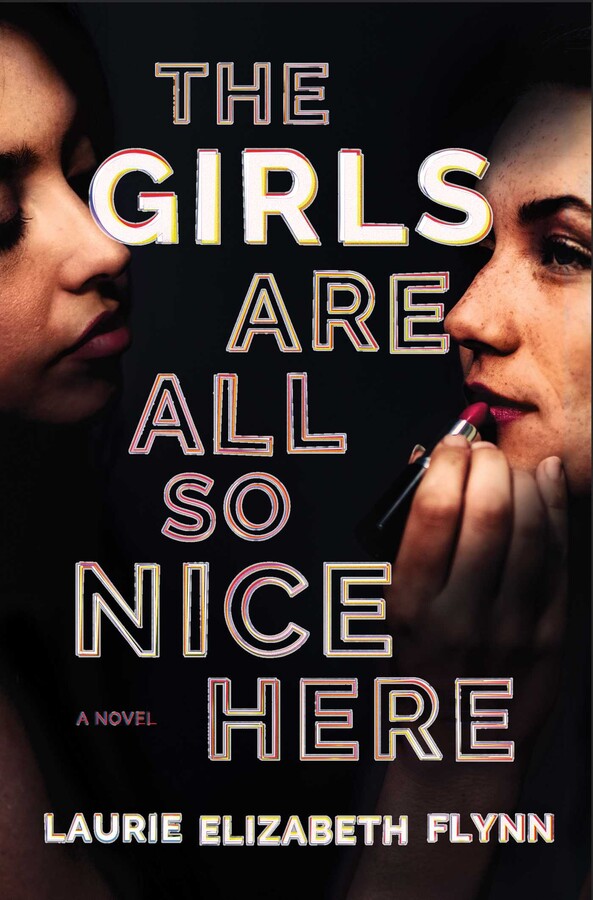
There’s a sentence in my novel The Girls Are All So Nice Here that has remained largely unchanged from first draft to final copy: “It would be years before I realized that girls weren’t supposed to own their ambition, just lease it from time to time when it didn’t offend anyone else.”
When I wrote this line, I knew I had unearthed a major source of my main character Ambrosia’s anger: not toward anyone in particular but toward a society that asks her to have a certain attitude about her goals and achievements. She feels the need to act modest, humble, and surprised when successes happen to her, even when this is much too passive: she has worked hard to make things happen. Amb has been raised, like many of us, with the old adage: good things happen to good people. But while this sentiment is well-meaning, it fails to encompass the unspoken double standard, which is that women are expected to be good at the expense of their own desires.
The events that unfold in The Girls Are All So Nice Here are rooted in Amb wanting more than what she perceives that the world is willing to give her. When her desires mutate past the cookie-cutter shape of societal expectation, her envy takes a deadly life of its own. This book, unsurprisingly given its title, is laser-focused on girls and the labels we inherit, the assumption that we will be palatable and grateful and above all, nice. Amb comes to resent nice so much that she goes in the altogether opposite direction, to horrific consequences.
I have long been fascinated by the burden of expectations placed on women—particularly, how those constraints can be responsible for what happens when we attempt to cast them off— and I tend to gravitate toward stories that put this dynamic at the forefront. These books are ones wherein the woman at the helm wants something very different than what everyone else expects from her, and in that dichotomy, the dark underbelly of expectation is revealed.
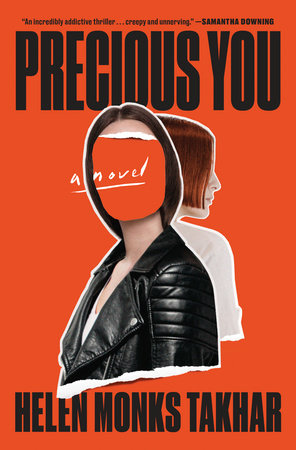
Ani FaNelli lives a perfect life on the surface—a glamorous job, handsome fiancé, and lavish wedding to plan. But she has built this life on top of a very dark past. As much as she has reinvented herself, cleaving her way to her dream life with ambition and willpower, the teenage girl she used to be still lurks under the glossy facade. She feels like she should be grateful for what she has, but the pull to her past is about to resurface. As the title implies, Ani is expected to feel lucky, but the truth is so much more complicated.
Violet has long existed in the shadow of her charismatic best friend Stella, and she’s expected to feel grateful for Stella’s attention and content to fulfill her role as the hardworking, steadfast friend to Stella’s endless drama and intrigue. But when the career Violet worked hard for is threatened—by Stella herself— she discovers that she’s capable of darker deeds than she ever expected.
Louise is as plain as Lavinia is dynamic—or so we think. As their friendship plays out, Louise is the less glamorous, less interesting one, a role she plays eagerly at first as the price to pay for entering Lavinia’s orbit, until she gets a taste of what Lavinia’s life is really like—and wants more for herself. A glittering, searingly written exploration of the expectations within a friendship.
This piercingly sharp story focuses on women at two different stages of life: Katherine, in her early 40s, is a magazine editor, and Lily, in her early 20s, is an intern. Katherine is drawn to Lily at the same time as she calls her a “snowflake,” an entitled millennial. The twisted events that ensue speak not only to competition between coworkers, but how women are saddled with generational expectations and stereotypes depending on our ages.
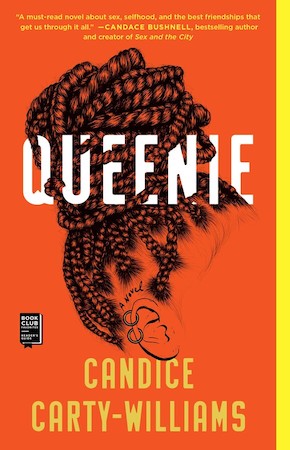
The titular protagonist, Queenie Jenkins, is a 25-year-old Jamaican British woman living in London and working at a newspaper. After a breakup with her white boyfriend, Queenie is sent into a tailspin of bad decisions and questions her place in the world. She faces pressure to compare herself to her white peers and finds temporary solace in men who aren’t right for her, leaving her sense of self-worth even more precarious. Her attempts to figure out exactly who she is on her own terms are raw and authentic to read.
What I was immediately drawn to in Baker’s stunning debut is the use of a Greek chorus of women addressing the reader as “we,” a voice that made me feel seen and heard as a woman by airing the grievances many of us have felt at times in our lives. This story centers on the mysterious death of a male CEO and the four women who may or may not have been involved, and dives deep into toxic workplace culture and the many injustices women are expected to put up with to be part of workplace culture. The women in Whisper Network are expected to smile, put up with harassment, and never let emotions get in the way of their jobs—and at what cost?
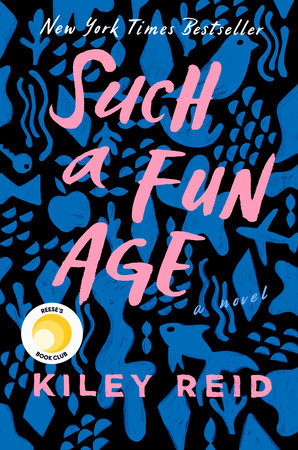
In Reid’s astute, incisive debut, Emira is a Black babysitter to a wealthy white family. While watching the family’s young daughter at a local market, a racially charged incident occurs, which is captured on camera. Emira wants to move on with her life, but her employer, Alix, fixates on the event and attempts to ingratiate herself deeper and deeper into Emira’s life. Emira faces expectations from not only Alix but also Kelley, the boy she’s dating (who happens to be the one who took the video), her friends, and her employers. The intersection of other people’s demands and Emira’s own wants comes to a head in such a satisfying way.
Alice Lange is the popular golden girl who every parent loves, so when she goes missing, her idyllic neighborhood is left fractured. Everyone fixates on what happened to Alice—where she went, and how the signs that she was receding into a darker world might have been there for much longer than anyone suspected. This haunting story investigates the cult of suburbia, and how this can provide an expectation in and of itself: that a girl from a good family in a good neighborhood should turn out a certain way, and what happens when she wants something other than what everyone else wants for her.
This bold, unapologetic novel, releasing in May, has already garnered big buzz, for good reason. Sophie has recently abandoned her Chicago career for a slower-paced lifestyle in small-town Texas with her husband and son, a lifestyle within which she’s expected to be satisfied and fulfilled. But Sophie finds herself bored quickly, and her fixation with a beautiful, charismatic socialite fills the void. She joins up with the Hunting Wives, but this is no clique of suburban moms: these women play games, some with devastating consequences. What I loved was the upending of the “old boys’ club” stereotype. These women have big sexual appetites and aren’t constrained within any sort of framework.
Bad things happen when you don’t invite the right people to your parties, my mom said. I explained why I didn’t want Alice at my baby shower: She sucked the life out of everything she touched.
I didn’t mail her invitation. I burned it at the kitchen sink at midnight. The gold lettering flared and hot metallic air blasted up my nose. I dropped the invitation in the sink, where the flames went out in a puddle of stinking spaghetti sauce, and spent the next hour googling whether breathing gold fumes was bad for the baby.
And yet: There she was, gliding down the path, all lipstick and neat white teeth, trailing her signature frilly pink entrails. I was halfway through tying balloons onto the lamp outside the door of my mom’s house. I backed into the doorway and stood there filling it. If there was one thing I could do, it was take up space.
“Jessa, darling, you look gorgeous! You’re as big as a house,” she said.
“What are you doing here?”
“Don’t be silly. It’s your baby shower! I’m here to celebrate you!” She shook out the ropes of shining organs and viscera that dangled from her pale neck. Only Alice could make entrails look like a party dress.
“Would it have killed you to come with a body?”
Her eyes glinted. “Maybe if you’d invited me properly I would have.” She floated closer and all the hairs on my arms pricked up. I crossed my arms over my stomach.
“Oh, relax, Jessa,” she said. “So much negative energy.” She slid past me into the party and left me on the front porch. My nostrils burned with her perfume.
I could have just walked down the steps, down the street, around the corner, and into the 7-Eleven. They had a table outside, a white plastic chair. Sometimes I liked to close my eyes, whatever I was doing, and think about how I could be sitting in that chair drinking a Blue Shock Mountain Dew Slurpee. For just a dollar ninety-nine, I could be doing that instead.
Alice’s voice tinkled through the open door. She was telling the story again to all my mother’s friends. How she went on a wellness retreat in West Palm Springs and came home with the ability to lift her insides right out of her body.
“It was completely life-changing,” Alice said. “Away from everything like that, you can really get in touch with your true self.” She hovered next to my mom’s chair. Her hair was perfectly coiled. Below her neck a cloud of delicate veins and organs drifted, not quite touching the floor.
I had a resolution: Once I had a baby, I would be a better grownup, the kind that didn’t care what Alice did with her life. So I went back to the party.
“If only Jessa could do one of those,” said my mom’s best friend Gladys. “It expands your horizons.”
“Jessa’s always been a homebody,” said my mom. “Oh, Jessa! There you are.” She pinned a ribbon on my chest that said “Mom-to-be” and whispered in my ear: “You’re neglecting your guests.” She steered me around to all of her friends, so that each of them in turn could congratulate me and touch my stomach. Through it all Alice floated nearby, chatting away in her mosquito voice.
Pat pat pat. “Carrying high! Must be a boy.”
(“Of course I wish she could have come! Well, she’s doing something much more important right now, isn’t she?”)
Pat pat pat. “My dear, you look exhausted! Must be a girl. Jealous little things, they steal all your beauty.”
(“Oh, you’re so sweet. I certainly didn’t master it right away. It took weeks of self-reflection.”)
Pat pat pat. “Only seven months along! It can’t be! Are you sure it isn’t twins?”
(“Diet, too. Eliminating toxins. Nothing processed or artificial.”)
Pat pat pat. “Are you getting any sleep, Jessa? Get it while you can! You won’t be sleeping at all once the baby comes!”
(“People feel so entitled to women’s bodies, you know? It’s so liberating to leave all that behind and force people to see you, really see you, right down to the guts!”)
I turned around and came face-to-face with Alice, who was hovering by the cheese plate.
“That looks delicious,” said Alice.
“It’s processed.”
“So dramatic, Jessa. One bite won’t hurt me.”
“Take some, then.”
“With these?” She waved her intestines at me. “It would be awfully rude.”
“You could have come to the party with hands.”
“You don’t know what it’s like. I can hardly bear to walk around inside my body now. I feel so objectified.”
“What’s wrong, dear?” said Gladys from across the dining room.
“Oh, I’m just wishing I could have some of this cheese plate.”
“Don’t be silly! Jessa, pass her some cheese.”
Alice turned to me with a faint smile and opened her mouth.
“I can’t,” I said.
“What are you afraid of, Jessa?” said Alice. Her voice was loud, and other conversations around the room paused. Everyone was watching us.
I speared a piece of cheese on a toothpick and held it to her lips. She opened her mouth and took it between her teeth, chewed, swallowed. The lump worked its way down the thick red cord of her esophagus and landed with a plop in her stomach.
“Won’t you have some?” said Alice. “You’re eating for two.”
I swallowed down vomit. “Heartburn,” I said.
“Let’s open gifts,” said my mom. She arranged me in an armchair with the pile of pink packages and bags. What I really needed was cash, but my mom said it was gauche to ask for it, so instead my plan was to unwrap them, pretend to love them, and keep the receipts.
I was almost through the pile when Alice floated towards me with something wrapped in her intestines.
“You haven’t opened mine yet,” she said. Barely visible in the nest of wriggling entrails was a tiny gold box.
“No,” I said.
“Don’t be rude, Jessa. Take the gift,” said my mom.
“No.”
Alice began to cry. “Why did you even invite me if you hate me so much?”
“I didn’t invite you. I don’t want you here!”
“Jessa!” said my mother.
Alice cried harder.
“Take the gift, Jessa.” said Gladys. “Look what you’ve done.”
“No.”
Gladys grabbed my hand and shoved it into Alice’s entrails. I felt acid burn my fingers, then nothing. I was out of my body, looking down on the top of my head from somewhere near the kitchen ceiling. My body took out Alice’s gift and opened it. Inside was a gift certificate. Gold lettering.
“It’s the same place I went!” said Alice. “You’ll have to wait until after the birth, of course. But it will be the perfect way to get your body back.”
I tried to imagine myself somewhere else, in a plastic chair. But I couldn’t get away from the tug of my body, sitting in my mom’s house, covered in bits of pink tissue paper. My mom cleared her throat. My body smiled and said thank you, she loved all the gifts.
“That house has become a mausoleum,” Idris Nasr tells his daughter, Ava, as he breaks the news that he is selling the family’s ancestral home in Beirut. In Ava’s mind, the house comes to life through memory: she feels the swampy summer heat and visualizes walls speckled with the blood of mosquitos. But Idris sees it differently. “The life has been taken out of it,” he says.
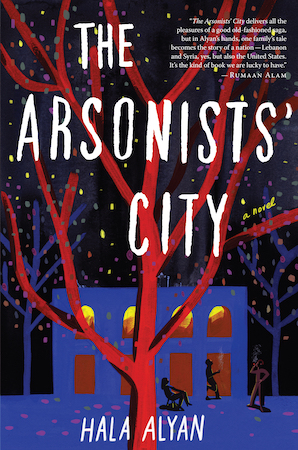
Home is a tenuous concept in Hala Alyan’s second novel, The Arsonist’s City, a sweeping family saga that examines the insidious long shadow of war. The Nasr family—made up of a Lebanese father, Syrian mother, and three American children—live in far-flung places: Austin, Brooklyn, Beirut, and Blythe, a small town in California. However distant they are from one another, and however far they might be from Beirut, they cannot escape the histories of violence that have left their family reckoning with intergenerational trauma. When they return to Beirut to mark the sale of their family home, long-held secrets and difficult memories begin to unravel, and political tensions in Lebanon escalate into thawra (revolution).
An award-winning Palestian American poet, clinical psychologist, and writer, Hala Alyan brings her talents to examine the ongoing crisis of Palestinian displacement in The Arsonist’s City through deeply imagined characters, place-based descriptions that teem with life, and attention to conflicts from past to present day. Over Zoom, we talked about how Alyan’s work as a clinical psychologist serves her fiction, the idea of home, the intimacy that secrets can offer, and the effects of intergenerational trauma.
Jacqueline Alnes: There is a line early in the novel, “They’d hurt that young man for no reason other than that people were hurting people.” One of the most poignant parts of this book for me is the ways you so deftly capture both the immediate impact of violence as well as the way that trauma radiates outward, oftentimes for generations. What draws you to write about all these different wounds?
Hala Alyan: The ways in which sociopolitical turmoil, occupation, and war trauma have spidered their way through my family’s history is something that I definitely keep gravitating back towards. It is a story that I feel the reverberations of on a daily basis, even as someone who is so privileged and so sheltered. I’m in Brooklyn now, I’m in a safe place, and my family is safe––thank God––but there are ways in which I see traumatic histories play out in myself, my family, and my community, in the anxieties that people have, in the ways that people are waiting for the other shoe to drop, in the ways that there is a deep mistrust of history, of certain institutions, of certain countries, of certain parts of the world. There’s a defeatedness in a lot of people I know around certain countries in my home region who wonder: Will those places ever be revived? Will they ever be actual options of places to live?
It’s also something I see a lot in clinical work. As a therapist, I work a lot with immigrants, children of immigrants, and folks that have been displaced. A generation later, you see how traumatic histories have trickled down to the folks that never lived in a war-torn zone or have never actually directly interacted with their parents’ house or their grandparents’ house. You see how that intergenerational trauma can touch even the most sheltered, comfortable, suburban kid. If a part of the world has been occupied or colonized, you never fully shed yourself from those shackles. You have the shadow of that for many generations.
JA: Having a safe place to live is a theme that resonates so powerfully throughout the book. Something that I kept thinking about is that homes are often viewed as concrete or permanent in some way, but in the book, some of them are the last vestiges of a wealth that no longer exists. Or, they’re structures that are beautiful and laden with generations of money, but they are located in precarious spaces.
HA: They aren’t safe. That’s something I think about a lot. You can have these ancestral homes that are gorgeous and so meaningful and such a part of your lineage, but if they are in a place where you can’t safely live or visit, then what are they but walls and plaster?
JA: When you mention working with people in the suburbs who still carry intergenerational trauma, I found it interesting that in the book we visit such a sprawl of places: Austin, Brooklyn, Beirut, and a small town in California, Blythe. How do you approach writing about place and home?
HA: I constantly lament the fact that there isn’t enough life for any of us to spend our youth in like ten different places. I am someone, for example, who always felt like I was supposed to live in Boston. I’m very attached to the idea, and I don’t know why. Same thing with Santa Fe and Tucson; I feel like I’m supposed to be in the Southwest. I’m someone who thinks a lot about factored timelines and the way that if you took this turn and you ended up in this place, you’d live an entirely different life. Not only would you have a different history, but your children would have a different history. Place colors the texture and the fabric of everyday life and zooming out also changes the entire trajectory of what happens to you: the opportunities you have, the people you fall in love with, where you go to school, etc.
This book feels to me like a love letter to Beirut.
JA: The novel alternates between present day and the 1960’s through the 1980’s. What drew you to those time periods?
If a part of the world has been occupied or colonized, you never fully shed yourself from those shackles. You have the shadow of that for many generations.
HA: I knew I wanted it to end in present day and I knew I wanted it to span the civil war, so in some ways, those became logistical markers; if I had a character coming of age as the civil war is happening, I would have to adjust the years accordingly. You see this in writers who write about things close to home, I’m fascinated with my parents’ generation. I’m interested in folks who moved to the States in the ‘70s and ‘80s. My parents didn’t move until ‘91, but people who moved during that era fascinate me. It was a time when there was still a high demand on assimilation. You got rid of your accent, taught your kid English; those were values that were being prioritized and communicated to immigrants and people seeking asylum. It’s interesting to really get inside the families that had that pressure. If they had moved to Chicago or New York City, it would have been a different story. But in a small town, the pressure to assimilate is higher.
JA: I felt like the present was a place in the novel where you could lean into queerness.
HA: Naj was one of the first characters I wrote and it was interesting to think about these different tension points of a queer character who is living very authentically to herself, but is in a position where telling her family doesn’t feel like it’s feasible. Playing with that tension also was important for me because there is this narrative––and it’s mostly a Western narrative–—that coming out is the graduation of queerness, that the end goal or destination of being queer is to come out, and I don’t think that’s something that resonates with people in different cultural backgrounds.
There are certainly people who are Muslim and Arab who want to ultimately come out, but imposing that narrative on people gets dicey. Writing a character who does live in this borderland space––and in a lot of ways is fulfilled in it––was really interesting.
JA: The book opens with Zakaria, who lives in the refugee camps outside of Beirut, and an epigraph from Svetlana Boym: “the main feature of exile is a double conscience…a constant bifurcation.” You have written about the Palestinian diaspora in your previous work. What aspects of this ongoing crisis did this book in particular allow you to explore?
HA: In some ways, Palestine is the shadow of the book; Palestine trails story. It’s in many ways the most central plot and one of the most central characters, but the book doesn’t center straightforwardly Palestinian characters or take place in Palestine. I was called upon to research these other countries and conflicts in the rest of the region. I have put a lot of attention on Palestine, and I always will, but writing this book enabled me to learn more about the Lebanese Civil War. I lived in Lebanon for a long time, I’ve taken all the classes, I read all the books, but there is still so much that is incredibly nuanced. The version of history you get depends upon the person who is telling it. Because it was a conflict so marked by sectarianism, many people, even now, will tell different stories of who started the civil war. It enabled me to research that more, to speak with people from different groups, and it also enabled me to think about that region as a gestalt.
These borders are arbitrary. The land kisses each other, these places are close to each other, and what happens in one happens in the others. What happens in Palestine spills over to Lebanon, spills over to Syria. What happens to Syria––I mean, we just saw this in the last decade. Their fates feel inexorably linked. This book allowed me to dig deeper into the history of the region as a whole and just to think more about this relationship between sister countries that have this reciprocal, sometimes mutually symbiotic, and at times a really divided dynamic. It let me dig into it in a way I hadn’t before.
JA: Why was it important to you to write this book now?
HA: When I finished writing this book, the revolution in Lebanon had not begun. The publication date got pushed back, which enabled me to go back and write things in. It was tricky. There was the inflation, the hunger, the poverty that people are experiencing, and I kept needing just one more paragraph; I felt an intense responsibility to capture what was happening in Lebanon. The publishers were very accommodating and generous, but they reminded me that at some point the story has to end; you’re not going to know what happens next.
JA: That’s so interesting. In fiction, I feel like there are varying degrees to which you have to be married to “truth,” however we want to define that. How much of an allegiance did you feel toward representing the world accurately in this book, even though it’s a novel?
There’s a defeatedness in a lot of people I know in my home region who wonder: Will those places ever be revived? Will they ever be actual options of places to live?
HA: I’ve got to be honest with you: I’ve never had any issues playing fast and loose with things in fiction. But, what happened in Lebanon post-thawra (revolution) starting, was such a different chapter. It set such a different tenor for the country, and set into motion so many unprecedented things, that I knew I had to allude to it. If I didn’t, it would have been really odd to anyone who knows anything about Lebanon.
Normally, I try to get the facts right so I speak with historians, and I do my research, but the past is much easier; the past is static. Writing about something that was dynamically shifting as I was doing edits was a whole different experience.
JA: They vary from being trivial to not, and some are only revealed when a body can no longer physically hold them. What intrigues you about this withholding of information, which, in itself, seems like a kind of an intimacy?
HA: I am fascinated with why we keep secrets and fascinated by how people decide what the truth is. I’m less interested in how people lie to other people than I am in how people lie to themselves. I am interested in how people decide what needs to be hidden and how it’s almost always tied to some narrative or some story they have about what will be accepted or loved. It’s very rarely tied in reality. It’s connected to their own story about what’s okay and what’s not okay. Writing that out is so gratifying to me.
I’m also, particularly with families, fascinated by the ways that the secrets we keep in families trickle down across generations. So the secrets that my great-grandmother might have kept, have impacted me. They have shot out backwards and forwards. They did something with the trust that my great-grandmother had with her mother and how that trickled down to my grandmother and mother. We learn how to hide things from the people we grow up with. We learn how open we are or how guarded we are from our families or caretakers. This idea that something that happened way before you were born can have a direct influence on you and how you move through the world –– what you share and what you don’t –– is such fertile territory to explore.
JA: I was going to ask if that’s why you love writing these rich, intergenerational stories.
You can have these ancestral homes that are so meaningful, but if they are in a place where you can’t safely live or visit, then what are they but walls and plaster?
HA: Totally. I think this is where psychology comes in. Something that happens to you is going to impact like three generations later. It just is. There is the epigenetic passing of trauma, but then also these subtle things that we pass down and inherit. This isn’t exclusive to people you’re genetically linked to; it’s also caretakers. We inherit things emotionally and psychologically from people. The fact that that is something I really believe means that the idea that something can go wrong at some point and then fast forward to see how something plays out means that it requires a family to really explore. You have to have several generations to see how a secret plays out so that’s why I think I end up writing these sweeping, long stories.
JA: I’m sure you are asked this often all the time, but you are a clinical psychologist who specialized in trauma and addiction work while earning your PhD. How does that inform your writing and the stories you’re drawn to?
HA: The training that you have to do in order to be a psychologist has been super useful to me as a writer. When you meet somebody for the first time as a therapist, you are taking a few fragmented, unconnected pieces of a story, and someone’s history, and over the few months or however long, you’re trying to help that person create a cohesive narrative. That’s very similar to writing a story: fiction, nonfiction, whatever. You have pieces of interests, hypotheses, interests of characters, and then you’re trying to create something that’s whole.
That kind of sleuthing feels very similar, as do the questions that you ask yourself when you’re doing therapy that have to do with client motivations: why do people do the things they do? People are constantly doing things that don’t make sense from the outside. Both you and I, in the span of the next two days, are going to do things that seem super irrational to people outside of us. There are such multifaceted, complex reasons for why people do things. To write good characters, you have to ask those questions about what moves somebody and what are a person’s desires and feelings and what they are moving toward.
Nearly a hundred pages arranged in 22 stacks of varying thickness reached from one wall of my apartment to the other. Lorde’s “Hard Feelings / Loveless” played from the bluetooth speaker on my bookshelf. I tried to pinch back tears—mostly of frustration and doubt—and failed.
It was late 2019, and I was finishing up edits on my debut poetry collection, due out from Big Lucks Books the following summer. I had the content: thirty-some poems in varying conditions, some complete or near-final drafts, others mere placeholder pages. I had a subject: love, including the desire, conflict, heartbreak, bitterness, and spectacle that accompany it. I had a name: That Ex, the charged eponym of the book’s speaker. But the manuscript held shape in only two dimensions: length, mass. It didn’t exist in that third dimension that makes a manuscript a book: It had no arc, that yearning of meaning against the gravity of language itself.
It had no arc, that yearning of meaning against the gravity of language itself.
I had ordered the manuscript chronologically by the approximate date of each poem’s completion, and this arrangement reflected nothing but the chaos of those years. These were the poems of my twenties; I had written them over the course of many relationships, crushes, and flings. But I wasn’t interested in writing a memoir-in-verse. (Worse, I knew readers wouldn’t be interested, either.) I shuffled the pages around the hardwood floor like enormous cards in a game of solitaire. I needed to bring order to the disparate experiences that produced these poems, but the possible plays seemed endless.
I tried grouping the poems together by form, but quickly discovered that no form appeared more than twice. This failed experiment offered an unexpected insight, at least: The shifts from monostiches to couplets to zig-zags to lines swimming in open space reflected the experience of the speaker trying out different inherited models for how a woman can navigate her world in the widening wake of a breakup.
I thought I could lean into this by dividing the book more explicitly into two parts, with poems twinned in form mirroring one another’s placements in the opposite half. It was fun to play with point and counterpoint in form—before and after, cause and effect, exterior and interior, conscious and subconscious, public and private—but I ultimately didn’t want to risk the oversimplification of obvious binaries.
I tried approaching the sequence like a scavenger hunt, with a word or phrase in each poem determining which one came next, a playful gesture toward the traditions of the ghazal, pantoum, or villanelle. This was interesting on a poem-to-poem level, but once I stepped back, I saw it as a purely formal exercise: The book still had no arc, no story. What I wanted was an emergent meaning. I wanted to mimic the setup and payoff of an individual poem within the expansive space of a book.
Following themes, I stacked the poems into four piles: crush, love, conflict, and heartbreak. I began to give in to a subtle narrative arc—I did want my little brat of a speaker to come out on the other side of something—but I thought it would be boring to tell the story of a woman who falls in love and gets her heart broken, or who gets her heart broken and then falls in love again. I had to be careful about what I centered as the book’s climactic feeling—and how it would leave the speaker transformed in the denouement.
If poems have always sung to me, then a well-ordered book of poems can feel like a pop album.
Sometimes when I’m stuck on something I’m writing I’ll try translating it into another art form to see if it’ll help me identify a resolution. I’ve reordered the images in a poem by thinking of them as clips in a film montage; I’ve reformatted a poem by imagining it as a building.
Most often I turn to music. So many of my poems begin with a realization: I like the way that sounds. I know I have to follow that first feeling to finish the poem. While this isn’t true for all poets, I’ve found that I can’t successfully access the abstractions available in poetry—metaphor, allusion, etc.—without grounding them in rhythm, harmony, and the play of assonance and consonance—all fundamental elements in music.
And if poems have always sung to me, then a well-ordered book of poems can feel like a pop album. Looking at the pages still spread across the floor, arranged and rearranged unsuccessfully, I thought of the albums from my twenties that I considered expertly ordered—In Colour by Jamie xx, Lemonade by Beyoncé—and I decided to turn—or rather, return—to music. I thought that if I could reflect on how the best albums work, I’d be able to use those same principles to bring structure to That Ex.
The first song of any great album is an invitation. A voice—that we can trust, or that echoes with something of ourselves—piques our curiosity, offers a wager, shows us that something is at stake.
After we’re hooked, the early tracks establish a range in mood, tone, and theme, which surprises and delights us; each one advances the musical and narrative ideas of the album and leaves us eager to discover what the artist will try next. The listener’s experience of this range requires thoughtful transitions: In Colour, for example, segues the end of each song into the beginning of the next, while the stark transitions of Lemonade, in contrast, emphasizes the nonlinear quality of stages of grief.
Also critical: The hits, bangers, and singles are spread out. Albums that fail to do this are top-heavy, clustered, and inevitably forgettable. Artists want the listener to experience tension and release, so they intersperse the album’s standout anthems with longer, mood-establishing pieces and short tracks to slow us down and offer moments of relief: Think of Beyoncé preceding “Freedom (ft. Kendrick Lamar)” with “Forward (ft. James Blake).”
Toward the end, most great albums offer an unexpected complication: a change in tone like Jamie xx’s “I Know There’s Gonna Be (Good Times)” or a narrative surprise like Beyoncé’s “All Night.” In this way, they evade narrative cliché and the boredom of expected resolutions. Then there’s the outro: loose ends are either tied up or left playfully unresolved, and musical ideas from earlier in the album are reintroduced, a roll call of favorites and familiars before the final curtain. And, if we’re lucky, there’s a bonus track—a tonal coda, a narrative epilogue, or a flirtatious gesture in an entirely new direction.
With these principles in mind, I jumped back into the poems. I went through my music library and assigned a song to each poem to match its harmonies, and then, leaving the paper on the floor, I turned to my computer to pick up an effort that had been familiar to me since junior high: I started making a mixtape. (Instead of addressing a crush, I addressed my speaker: from one ex to another.) I arranged the tracks until I arrived at a playlist that felt complete and coherent—and then I returned to the floor of my apartment to reorder the poems accordingly.
Making the playlist took several tries, but none was frustrating; the experience of momentarily stepping out of the poems to look back at them through another form—in this case, music—was fun. Thinking of the book as a mixtape for my readers refreshed and reconnected the project with some of the feelings I had set out, years before, to capture: intimacy, candor, vulnerability, mischief, and play.
A virus outbreak makes us aware of the presence of death in our lives. Or one could say that the threat of a virus makes us aware of the fragility of life in a progressively estranged world. Older virus outbreaks provide information to fuel medical awareness. Scientists are currently researching the similarities between survivors of Ebola and patients with “long Covid” in order to develop treatments to combat the coronavirus. By the same token, reading about the human toll of Ebola can help us understand how our communities can be a driving force on the road to recovery.
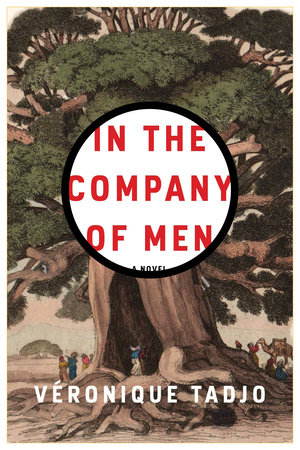
“The history of Ebola is punctuated with speculations, questionings, incomplete answers, and a whole lot of theories,” notes a narrator in the novel In the Company of Men (original title: En compagnie des hommes) by Franco-Ivorian writer Véronique Tadjo, translated by Tadjo and John Cullen.
What are the facts? The Ebola virus first emerged in West Africa in 1976 but from March 21, 2014 to June 2016, it had a deadly effect in Guinea, Liberia, and Sierra Leone with 11,323 confirmed deaths. The difference with coronavirus is that Ebola is less contagious but more deadly—the virus has a 50 percent mortality rate. The Ebola virus is transmitted through bodily fluids and can lead to fever, muscle aches, vomiting blood, and death by organ failure.
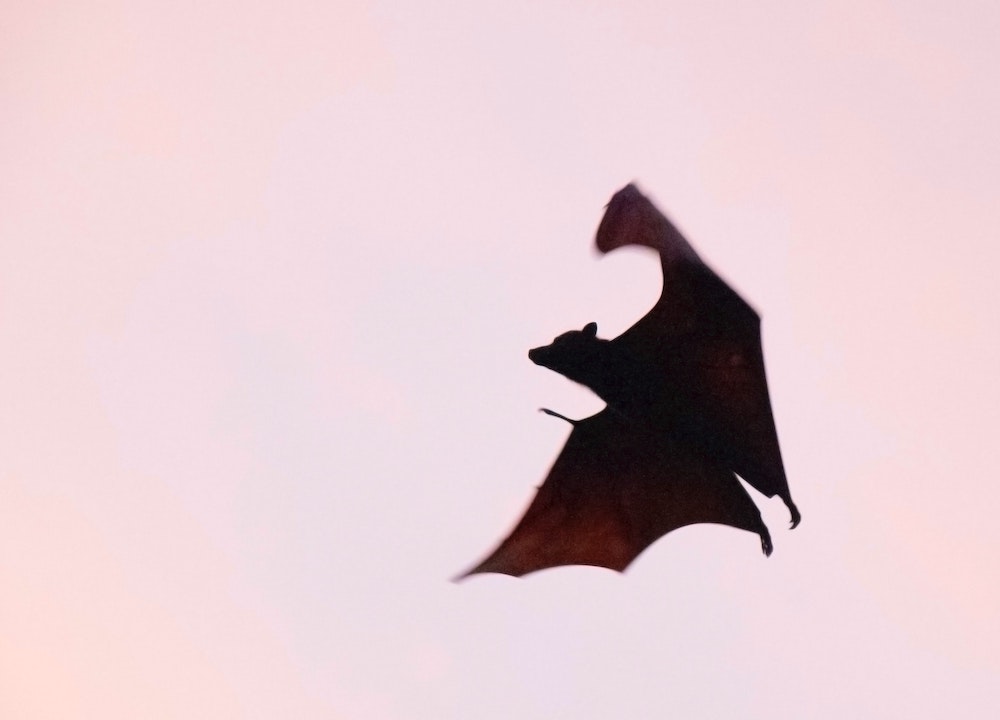
Tadjo’s first-person narratives reveal a varied ensemble of storytellers who recount their experience: a doctor, a gravedigger, a foreign volunteer, a distant relative of an orphan, a man who loses his fiancée, the Congolese researcher who discovered the virus, and more. But humans are not the only narrators in the novel. The author also writes from the point of view of the sacred Baobab tree who represents nature and serves as the voice of reason; the criticized Bat who spreads his wings to reveal its consciousness and wisdom; and the omnipresent Ebola virus itself. The novel’s layered story highlights the faith and commitment of those who were involved in the management of the epidemic, and the ones who’ve bravely battled the virus.
Relying on African oral tradition, the story unfolds through the wisdom of the ancestral Baobab, the mythical symbol of the bond between nature and mankind. The voice of the Baobab calmly and powerfully leads us through the crisis. The tree shows the link between humanity’s exploitation of nature and the epidemic and warns that if human greed lingers on, nature will give us more viruses, pandemics and disasters. “Humans today think they can do whatever they like,” whispers Baobab.
The multiple angles in Tadjo’s story together form a poignant reflection on the Ebola crisis, which is underlined by the perceptiveness of all characters. Through the polyphonic narrative the author informs us how a viral threat exposes our weaknesses, but also highlights our connection. A crisis gives us space to reconsider how we depend on one another in society, because the death threat discards cultural hierarchy and economic privileges. In the ongoing pandemic this interconnection has become glaringly visible: people in “low-status” jobs are most essential.
The Ebola virus outbreak, as described in Tadjo’s book, unraveled through a chain reaction. The poor and socially disenfranchised were the first affected, and the least likely to have a safety net. The people who were desperate to survive and hunted and ate the Bat, unleashing the virus; they were then condemned to fight the battle against Ebola alone, as if their lives were deemed worthless.
The crisis accelerated through fear and ignorance. One of the narrators Tadjo inhabits states that religion can be an obstacle because some prefer to listen to a priest who full-heartedly believes that Ebola is the incarnation of Evil, which will punish people who have strayed from the word of God. Others are villagers holding on to indispensable rituals of death because they can’t accept the idea that their loved ones will be buried in plastic in a mass grave—after all, memorials are essential to navigate grief where one needs human connection to handle the pain—but fueling hundreds more deaths by gathering for a funeral.
But despite tinges of despair and chaos, solidarity rings through the accounts of all narrators. As a prefect, responsible for the outreach teams in his region, notes: “I’ve understood one thing: scientific reason can’t satisfy every human need. In the fight against Ebola, human beings have always been more important than everything else. They are the agents of their own recovery, their own safety.”
Tadjo captures layered and poetical moments of humanity in her narrative: from the traditional healer who uses ancestral knowledge to bring relief to the sick; to the burial teams who make concessions so families can cloth the diseased and visit the grave from a safe distance; to the Bat who regrets that he let Ebola escape from his body, and reminds us how Man and all living creatures in nature depend on another, despite long-standing divisions. In a broader context, the author reminds us that we have to respect the global ecological system in order to survive. It’s through the deforestation and the disturbance of flora and fauna that the Bat was able to get closer to society and transfer the virus: “the bats seek the company of Men.”
A crisis gives us space to reconsider how we depend on one another in society.
Building on the rich history of African literature, Tadjo mixes historical facts with testimonies. She uses the Ancien combattant, a song from the Congolese singer Zao, African legends inspired by the ethnologist and writer Amadou Hampâté Bâ, biblical quotes (John 20:1–18), and poems from the Cameroonian author Nsah Mala, Congolese poet Gabriel Okoundji, and her own collection of poems (Red Earth/ Latérite).
In the Company of Men shows a beautiful pastiche about the ebb and flow of a health crisis, renewal, a fable on the bond between human and nature. Despite the anonymity of the protagonists, and vagueness of the location, the author humanizes the crisis. Because the unnamed first-person discourse blends into layered polyphony, one can easily draw a parallel to our present-day reality. It’s in the moments of urgency and despair from the doctor who fights the virus in an ill equipped hospital, the Baobab who warns that the virus could cross borders, families are afraid of gestures of affection because of fear of contagion, to the lingering symptoms after patients have recovered from the virus, and more. Tadjo sharply shows how during a catastrophic health threat humanity can crumble which encourages introspection.
The fight against the Ebola virus was fought through scientific, social, economic and religious means. While Ebola did not have the same societal and economic disruption in our society as the coronavirus, it contained a warning that humans are certainly not the masters of the universe, and that the world is not our personal playground.
The 20th century Senegalese poet and storyteller Birago Diop wrote in Souffles: “Those who died never left/ They are in the shadow that lights up…/The dead are not under the earth/ They are in the tree that quivers,/They are in the woods groaning/ They are in flowing water … the dead are not dead.” Tadjo embodies his poem and creates a moving story where she beautifully harnesses the ability to weave spirituality into a contemporary African tale.
The Covid-19 pandemic highlights how fear and ignorance play a significant role in our behavioral responses during a health crisis. Mass media outlets have influenced how we react when faced with a modern imperceptible enemy. The media should combat fear and prejudice, but as Tadjo’s prefect notes during the height of the Ebola crisis: “Instead of inspiring compassion and support, the increased media coverage caused the opposite reaction: self-preservation and withdrawal.” Our current crisis-related individual and collective behavior continues without a break: a never-ending cycle of risk and prevention of infection, life and death, loss and remembrance.
The coronavirus is a viral wake-up call that holds up an unforgiving mirror to humanity: all our lives are interconnected and must be protected.
The coronavirus has altered the way we live, and the way we die. It’s a viral wake-up call that holds up an unforgiving mirror to humanity: all our lives are interconnected and must be protected.
Today, the coronavirus continues to surge in the U.S., U.K., India, and other parts of the world. It targets those with preexisting health conditions and continues to fuel massive social inequalities. It’s accelerated by the rise in consumerism during the global lockdown: the intricate capitalist ties that bind us all.
Whether you live in Los Angeles, Amsterdam or Istanbul, In the Company of Men reminds us to hold tight to our humanity when it comes to the elderly, vulnerable or the sick. We are all connected to the overworked healthcare professional in Barcelona, the exhausted Korean delivery driver who works from dawn to midnight, to the unheralded Amazon warehouse worker in Indianapolis.
The lesson for the future is clear: solidarity is humanity’s best hope for survival.
When people “from away” learn I’m from Maine, most respond in one of two ways: they tell me they’ve never been here, but it’s high on their list, or they say they love my home state. More often than not, the latter group spent idyllic summers at sleepaway camps by the lake, peeped at the fall colors, or vacationed on the coast in high season when the nights settle in cool, lobster shells are soft, and the sun stays above the horizon well into the evening hours. And they are right; it’s glorious. What they’ve seen, however, is really just one small corner of a larger, more complex picture of Maine and its people.
My family has lived in New England for twelve generations, the last nine in Maine. Although I spent most of my working life in cities, I never shook the push-pull of this place, never completely slipped its tether. Like my ancestors, I grew up eating fish from Maine’s lakes and bays, potatoes and berries from its farms, rhubarb from the sunny patch by the stone wall; I drank its water and breathed its air. And so, no matter how far I travel or how long I’m gone, my home state is literally in my bones and will be until they’re settled in the frozen ground.
My first novel, The Northern Reach, is set in the fictional Downeast town of Wellbridge, a hardscrabble place that has little in common with the quaint, cutified villages that dot the tourist coast. Rather, I imagine Wellbridge as one of Maine’s many hard, unyielding towns that produce tough, darkly funny people, eking out a living, hand to mouth, day to day, enduring what would break others and sometimes breaks them. It’s long shadows, ever encroaching woods, peeling paint, stinking bait shacks, rusted log skidders, and endless winters under the white snow sky. This is the Maine I know, the place I come from.
Here are a few of my favorite books that convey the broader story of my home state:
The history of Maine comes as much from the woods as the sea, and this is the story of how European loggers claimed, and very nearly destroyed, its forests. Beginning when Maine was part of New France and spanning the next 300 years, Barkskins describes the wretched conditions in those early, excruciating years and offers an unflinching look at the origin story of interloping white settlers in the state and their place in the history of New England.
In 1937, Helen Leidy took a teaching position in a North Woods lumber camp near Churchill Lake, married a local game warden, Curly Hamlin, and moved with him to an isolated cabin in the deep woods, connected to the outside world by a single, vulnerable phone wire and accessible only by dog sled or snowshoe in winter. Her chatty, first-person account of the years in the woods is an intimate time capsule of daily life in the wilds of Aroostook County, on what was then the largest privately owned timber tract in the country.
For all its natural beauty, sparkling air and crystal lakes, Maine has a long history of industrial pollution that went largely unchecked for decades. Paper and textile mills—once productive, now largely disused—still dot the landscape. A descendant of French-speaking Acadian immigrants who came to Maine to work the mills, Kerri Arsenault grew up in one of those towns and deftly weaves together the story of industrial abuse, of the people and the land, with the cultural history of her family in the part of the state called Cancer Valley. (If you’re interested in a fictional account of a dying Maine mill town, try Richard Russo’s Empire Falls.)
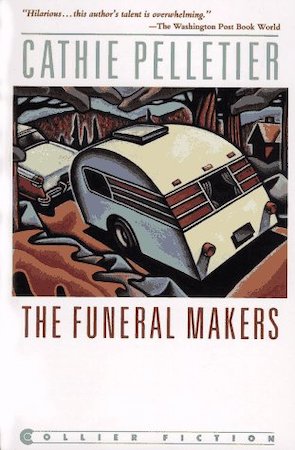
Cathie Pelletier’s novel clatters through Maine’s northernmost county in a riot of dark hilarity and looming heartbreak, eavesdropping all the way. She fills the dead-end towns, rolling potato fields and murky woods of Aroostook County with the language of the plain-spoken, such as Old Man Gardener:
“I remember that puny little wife of his going around with a book with bird pictures in it. I could’ve told her in a flash which bird was which . . . I don’t like the way some city folks carry on. I don’t like it. And what’s more the birds don’t like it.”
There is a perception that Maine’s summer people live gilded lives of ease and excess in their grand cottages on the coast, and though there is more than a grain of truth in that, it’s not the whole story. Life is never that simple. Sarah Blake’s gorgeous, chewy novel, as sprawling as the Milton family cottage on the private island they own, shows the dark side of privilege and its ripples across generations.
There is a long Protestant tradition in Maine that goes back to the Pilgrims and Puritans of Massachusetts. In her second novel, Elizabeth Strout explores loss, grief and faith through a religious lens in the story of Tyler Caskey, a minister who “lived with his small daughter in a town up north near the Sabbanock River, up where the river is narrow and the winters used to be especially long.” I loved Strout’s Olive Kittredge books, but this one is my favorite. Taking on great issues amidst small-town concerns, it’s quietly powerful and ultimately uplifting.
Paul Harding’s first novel won the Pulitzer Prize in 2010. Deeply evocative, beautifully written, and utterly heartbreaking, the book tells the story of an epileptic tinker and his clock-fixing son, as it meanders through time, from the son’s deathbed hallucinations back to his father’s days as a tinker—a salesman who traveled the back roads and woods of New England by wagon, winter and summer, selling and trading dry goods with farmers and hermits scattered in the wilderness.
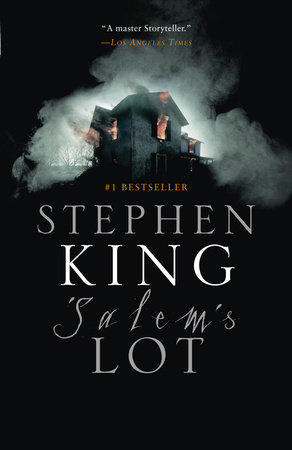
No list of Maine books is complete without The King. There are so many to choose from, but for me ‘Salem’s Lot is the best Maine book, diving deep into the insular and secretive way of life in small towns. When the vampires return, called by the dreadful Marsten House, the buried secrets, resentments and hatreds of the townsfolk make them easy pickings. And so the book offers a cautionary tale of what can happen when the aggrieved, made powerful by the vampire’s bite, get a bit of their own back. In harrowing fashion, King sets fire to the image of small towns as idyllic havens of benevolent neighborliness. Read it in daylight is my advice.
They want to give us the grand tour of the apartment, that’s how Tanya and Kire put it. “We just moved in last week and we’re almost done with everything,” Tanya is speaking so loudly into the receiver I have to hold the phone away from my ear. I can hear Kire yapping in the background. Here’s something I really hate: I’m on the phone and someone can’t stop yammering and doesn’t give a shit that I’m trying to have a conversation. “Have them come early, before it gets dark!” Kire barks, which is swiftly followed by Tanya’s loud repetition, “Yes, come early, come at seven, before it gets dark!”
Nino is sitting next to me, puzzling through a crossword puzzle. I nudge him and roll my eyes. He shrugs and then finally sniffs. “Alright then, we’ll see you soon!” I say, happy to hang up.
“God,” I groan. “She must’ve ruptured my eardrum. You could hear her, right?”
Nino nods.
“I hate housewarmings. Nino, are you listening? We need to get them something. It’s tomorrow.”
“Well, you know, we’re not exactly swimming in money,” he says without taking his eyes off the puzzle. The reading glasses he bought at a stall at the farmer’s market a month ago were poised at the tip of his nose. He only wears them at home because he didn’t want people to know he was growing old.
“I know,” I say, thinking of the thousand-denar bill I kept hidden in the side pocket of my purse in case I need to go for a drink or have the urge to buy something. And, of course, there are those three hundred euros I’ve set aside in a separate account. You never know what can come up. Nino doesn’t think about these things. Sometimes I wonder if he does know I’ve set aside a little something and is at ease because he believes this money is for the two of us, for hard times, God forbid. “This means we’re going to have to tighten our belts,” I add.
I wince at the thought of all the potato-stew, beans, and lentil soup we’ll be forced to eat for days on end. And there’ll be no more going out for drinks or coffee, even on the weekend, which is just around the corner. And we can’t invite anyone over for drinks, unless they brought their own liquor, which we could never ask them to do, because it would be so embarrassing. Not that any of our friends are much better off. Sometimes I feel they only want to come over to get a free drink.
We sit there in silence until I blurt, “But we’ve got to get them something.”
“Do we have to?” Nino asks. I’ve always found his disregard for social conventions annoying.
“Yes, we have to. We could drop by JYSK tomorrow on the way to their place,” I say, knowing the store is on the pricey side. But the fact is, I just want to go there. I dream the day when I will be able to purchase those fluffy pillows, those colorful doormats, those elegant bathroom soap dispensers and toothbrush holders, which I don’t really have any place to put because our sink is so wobbly.
“So what do they need?” he asks, filling in the crossword puzzle with his big, messy letters sprawling out of the boxes. He presses the pen so hard, he sometimes rips the page with its tip, making a pop that gives me goosebumps.
“How would I know? I just don’t get it. You go to somebody’s home for the first time and you’re supposed to bring a housewarming gift, but you have no idea what to get them because you’ve never been there before and you don’t know what they’re missing, and of course you can’t ask them what they need, because they’ll just lie and say, we don’t need anything! Stupid phony Macedonian humility, that’s all that is,” I grumble.
“M-hm,” Nino peers at me over the rim of his glasses, which is his way of saying he agrees. Then he takes them off and becomes lost in thought. “Yes,” he finally says, and falls silent again. It always takes him ages to say what he’s thinking. At the beginning of our relationship, his pauses impressed me, especially considering the words simply tumble out of my mouth as fast as I can think them up. But after a few years together, the silences are really starting getting on my nerves. “Yes,” he repeats. “You remember when we moved in here, and Tom and Lydia gave us that vase?”
We both look at it, which is easy in a living room as small as ours. The one big wall is barricaded by a block of square white cabinets with round brown handles. Some of the handles have fallen off, and the holes they’ve left look just like a pig’s snout. Several cabinet doors are loose, exposing threads of cheap plywood. Whoever designed this place had two shelves cut into the wall, which is where we keep our books. These are mostly books from our childhood, sets of Serbian translations we took from our homes. We don’t have a lot of new books. Because you know, we’re always saying Macedonian translations are so crappy, and the Serbian versions are so expensive, that there’s nothing to read anyway. The shelves used to have glass doors but for some reason the landlord took them off. In the middle of the wall there is a deep hole meant for a TV set. Ours is pretty small, albeit large enough for a room like this, so we put Tom and Lydia’s vase beside it. This vase, the nicest thing we own.
It’s a classic Greek-style amphora. Not those that are long and narrow, but with a fat belly, smaller than the ones you typically see in museums. It’s not brown and doesn’t have any Greek motifs. Rather, it’s a deep vibrant green. In fact, if you look up close, it’s got a mixture of different shades of green that all blend into each other and a fine web of thin cracks that give it a kind of rough texture, as if it were made of stone. Looking at this vase calms me. They gave it too us about a year ago, and come to think of it, we haven’t gotten together with them since. Even when we’re watching TV, I’ll glance at it. Then I’ll think of Tom and Lydia and a warm feeling comes over me.
I probably get this feeling because of their perfumes. It’s not that they wear a lot, but every time Lydia would swish her scarf or Tom came up close, the fragrance would hit me: his sharp, yet fresh, hers more flowery, more like the smell of some expensive hand cream. Lydia always smells like all the women with painted nails and jangling bracelets who used to come over to our house when I was a child and stroke my hair and pinch my cheeks. Tom is the kind of guy you could easily fall for, with his olive skin and hazel eyes, sitting elegantly in his chair with his legs crossed, one athletic arm dangling from the armrest, the other holding a perpetual cigarette in its hand.
“Jade-colored,” that’s what Lydia said as she removed the vase from the box to present it to us. Jade. I didn’t really know what color jade was, but I liked the sound of it
“It’s our housewarming gift,” said Tom in his husky voice.
“But dis is not our apartment,” Nino explained in the hard Slavic accent he was not the least ashamed of.
“Well, think of it as a step in the right direction,” said Lydia as she gently held it out to us. The textured gold rings on her strong and slender pianist fingers stood out against the vase’s deep greens. I thanked them in my somewhat broken English, trying to echo Tom and Lydia’s perfect British accent, knowing full well I overextend my vowels and sometimes confuse the “th” sound with “d” and “t.” I explained that what Nino meant was this was not our permanent home. We were only living here until we got back on our feet, until we settled some inheritance issues. They didn’t say a word, seeing I’d delved into waters they were not prepared to swim in, at least not while they were sober. It annoyed me that I was making more excuses than Nino. But nonetheless I kept digging myself deeper into a hole, saying the apartment was much too small for us, it was very old. But the location was great—
“Yes, it’s a fantastic location!” Tom chimed in, happy to change the subject.
“And new location of dis beautiful vase is?” Nino asked, returning attention to the gift, for which I was grateful. But my gratitude was short-lived. Because all this did was make Tom and Lydia look around the apartment and realize we were barricaded by cabinets, that the sofa and armchairs we were sitting in were old and mismatched and camouflaged by decorative covers, and that the stained and beat-up coffee table crammed between them barely left room for our legs.
“We’ll find a good place for it,” I said, just before Lydia suggested, “Maybe you could put it in the bedroom?” not knowing that we didn’t have one, that we slept on the two-seater sofa bed we could barely open even after wedging the coffee table into the corner of the room, so I just pretended I hadn’t heard what she’d said and asked, “Is it from Greece?”
Indeed, it was. They had bought it from a “perfectly charming” little shop in one of those picture postcard villages with the whitewashed houses and blue-shuttered windows, the balconies draped with bougainvillea, and narrow, cobbled lanes that meandered to hidden squares lined with cafes where one can have a cool glass of water and savor a spoonful of homemade preserves.
The vase was made by a local but internationally acclaimed artist. “The certificate is inside the box. You can read more about her later,” Tom cut in, eager to tell us about their Aegean island cruise, about the fresh octopus they had grilled, the dolphins leaping around the prow of their boat. The crystal-clear blue of the deep see where you can bathe nude. Where the water is so salty it seems to lick your skin. (“It makes love to you!” Lydia exclaimed and her head nearly lolled back in ecstasy.) And then once again about the dreamy little villages. The hospitality of the locals. The homemade specialties they had tasted. “The moussaka!” Lydia sighed.
“Svetlana makes very good moussaka,” Nino said, clambering to his feet. We hadn’t yet offered them anything to drink. “But for food we have only meze with cold homemade rakija or white wine.” Nino stooped as he was offering these “homemade specialties,” as Tom and Lydia later dubbed the tomatoes, peppers, cheese, and liquor Nino had lugged back from his uncle’s village.
“I wouldn’t drink whiskey or eat seafood while I’m in Macedonia,” Lydia said as she savored a pepper. Even the homely pepper looked distinguished between her elegant fingers.
We’d heard Lydia play once. She had stopped performing a while back, but agreed to give a recital. Tom was an art historian visiting on a university research scholarship and, without a job of her own, Lydia had little to do. Despite Nino, who works at the National Opera and Ballet, I know next to nothing about classical music, and really, it’s not something he enjoys either. Regardless, I was enchanted by the way she moved her body as she played: her elbows flaring, her back arching with the rhythm and the music, her torso swaying in circles, her head turned so that her silvery hair hung across her eyes. She had striking fingers: strong, angular, nimble as a spider. I became so enthralled I clapped when I wasn’t supposed to. The elderly lady I sat next to shushed me angrily. We were in the first row and Lydia must have noticed, Tom too.
I was just as embarrassed as we sat in our tiny living room, crowded with cabinets. It seemed like Nino didn’t give a damn. He kept topping up his glass of rakija and sweating since it had gotten so stuffy. We opened the balcony door leading to the miniature kitchenette, but we still couldn’t get a breeze. It was hot and the four of us were smoking, I more than ever, nervous that I had invited Tom and Lydia to this dump. I shifted my foot to cover what looked like a crusty ketchup stain on the carpet which I hadn’t noticed before. My embarrassment grew with the increasing realization of how stupid it was to invite them over. But we had no money and we wanted so much to hang out with them. We were flattered that they wanted to drink with us and tell stories about their dazzling past. We were flattered they chose us as their audience, flattered by how they looked, long and lean, in loose white flannel that outlined their sinewy figures and highlighted their sun-bronzed skin.
We’re not too bad ourselves. Maybe our apartment is awful, maybe we don’t have the money to move into a better one, but we look impeccable, especially me. That evening, even as I covered up the carpet stain, I could not help but admire how beautiful my heels were, how my sandals complemented my slender feet, how my red toe-nails glittered like wild strawberries. I was sure that we also smelled good and that if anyone came into the room, they’d notice the crisp mix of the fragrances we wore and the aroma of the cigarettes we smoked. But Nino had started to sweat. Beads had formed on his forehead and there were big wet patches under his armpits. He was clearly drunk and wouldn’t shut up.
Maybe our apartment is awful, maybe we don’t have the money to move into a better one, but we look impeccable, especially me.
“We’re working towards saving up to get a bigger apartment. We’d like to have children. We’re trying,” he said, his eyes a little crossed from all that rakija.
“We don’t have any children either,” Tom said, his head cocked back as he took a dramatic puff of his cigarette. “We don’t know why. It was nature’s way. We never bothered to get it checked out.”
“Some people are so inconsiderate,” Lydia added, “they’ll ask you right up front: what’s wrong with you? I remember this particularly brazen couple who asked me that and I said: what, do you mean physically or mentally?”
We tsk-tsked and then fell silent. I could tell Nino was getting emotional, like he always does when he’s drunk. He slapped both palms on his knees, as if finally mustering up the courage to do something grand: “Can I play someting?” he asked. Tom and Lydia shifted excitedly.
“Of course! Why in the world didn’t we think of that sooner… what a pleasure that would be,” their voices overlapped. Nino took out the violin from the case he kept behind the door.
“Someting traditional,” he announced, leaving room for Tom and Lydia’s sighs of satisfaction. He then improvised a jazzed-up version of Kaži, kaži, libe Stano, tears welling up in the corners of his eyes. To my taste, this song was too slow and sad, and it had too many grace notes. Honestly, I thought it was trite, but at the end of his little recital, Tom and Lydia gave him an encouraging applause.
“It’s about couple which can’t have keeds,” he began to explain. “D’ men says to d’ women: do you need anyting? Mannie or cloths? She says, no, I have everyting, but I don’t have child. D’ men says to d’ women: I’m gonna go to Greece and getchoo golden child. She says, golden child can’t call me dear mami. Very sad.”
“Oh it’s heartbreaking,” Lydia said, raising the rakija glass to her lips and accidentally hitting a tooth. Meanwhile, Tom unintentionally slammed his glass on the table and covered his face with his large hands. “Oh, oh,” he moaned. “Oh.” We all knew what was next. He always cried when he got hammered. Once he cried for an hour over the tsunami in Indonesia, but that was nothing compared to the way he blubbered over the war in Bosnia. It was like he wasn’t sure what was wrong with the human race. He insisted the world was falling apart, that the apocalypse was nigh.
“Things fall apart! The centre cannot hold!” he declared. I later found out he had been quoting a famous Irish poet whose name I can’t remember. “To make a child a man, a man a child!” he said with a solemnity that made me suspect this was a meaningful and well-known line. Lydia looked at him compassionately, while Nino and I didn’t know what to say. Tom and Lydia knew so many things and had traveled everywhere. They were incredibly open-minded and educated. We didn’t know anyone like them. True, they drank an awful lot and always got plastered, but it’s not like Nino and I are exactly lightweights, either. Lydia stroked Tom’s neck as he sank his face in his hands in a sweet, inspired state of despair. Watching this display of emotion somehow pleased me, but what was even more appealing was how Tom snuggled up to Lydia and gently laid his cheek upon her breast. His hand reached around her waist while his other hand cupped her breast, as Lydia toyed with his thick strands of ash-blonde hair. Cuddling his face against her chest, he rose up and kissed her throat, softly moaning. Lydia whispered in return, “My darling, my darling, it’s all right.” I saw her gently nip his earlobe.
Seeing people intimate in public usually makes me uncomfortable. But watching Tom and Lydia like this, in our apartment, got me excited. There was a warmth stirring inside me, rising from my groin. I couldn’t say a word for fear of falling softly apart. Lydia looked around and said that perhaps it was time for them to go. Tom shook himself out of his reverie and began to say, still choked up, that we were terrific hosts, that they had had such a wonderful time with us.
“Come back,” Nino replied, his eyes droopy as if he were about to fall asleep. For some reason he did not get up from his chair. Tom and Lydia bent down to give him a goodbye kiss. I took the four steps to the door to see them off, where they embraced me, their perfume lingering on my skin. Tom left a wet streak of tears on my cheek. As I closed the door, I didn’t want to wipe it off.
Nino was still sprawled in the armchair. I had to virtually step over him to get back to my seat in the cramped space, and as I did, he grabbed me. He pulled me down on his lap, and I felt he was hard. He kissed me on the throat, he wrenched my shirt off, he licked and squeezed my breasts, then pushed me over on the two-seater and in one brisk move he stripped off my panties and shoved his penis inside me. I was so aroused at first that I forgot about everything, which is hardly ever the case. I melted into a pool of flesh. But after a bit Nino began to falter and went a little limp. My ears suddenly switched on again and I could hear the rhythmic squeaking of the sofa, like a creaky old swing about to break. I opened my eyes and saw all the little pig snout holes in the cabinets peering down at us from the wall and then Nino just stopped.
“My knee’s numb. I keep hitting it against a loose spring,” he complained. Pity and shame swept over me. It was like we were in high school, fucking in my little brother’s bed.
“Fuck me on the table,” I said, not knowing where these words were coming from. I’d never spoken like that before. I wanted him to lift me as I was and carry me to the little dining room table adjoining the hall that pretended to be a kitchen, but that would never occur to him, so we strolled half-naked to our destination. I got up on the table and we continued unsteadily. This time I decided to keep my eyes closed. I imagined Nino was Tom, and that Lydia was sitting on the two-seater where Nino and I had just been fucking, watching Tom’s copper buns wriggling between my legs. “Shoot your wad!” I said, again saying something I had never said before, and I felt sugar running through my thighs and Nino letting go inside me. After this I felt nauseous all night long.
The next morning I realized it’d been one of my fertile days. If it’s a boy, I thought, I’ll call him Tomislav. If it’s a girl, I’ll name her Lydia. I told Nino. He looked puzzled. “Why?” he asked. It dawned on me we hadn’t experienced the same thing. “They’re just pretty names,” I lied, but Nino isn’t stupid.
But no, I didn’t get pregnant. Not that time, nor any other time Nino and I had sex. The doctors kept assuring us that, anatomically, we were fine and shouldn’t have a problem conceiving. Which is why I got more and more annoyed when I chanced to see a cradle in a furniture store window, and those dangly things you hang above them, those tiny wardrobes painted pink or blue. Not only were those kiddy things a painful reminder that sex was becoming more and more exasperating because we just couldn’t make a baby, but it also drove home the fact that we were stuck in a one-room apartment so jammed with cabinets there wasn’t room for a cradle anyway. There was no room for anything.
This might be why, when I get to JYSK, I feel like going into the children’s section with all the stacked up cradles and the fluffy kiddie pillows piled on the floor and just mess them up. It is all I can do not to go there. So, like usual, I go to see the shelves with the colorful cushions. But one cushion (hey, a single cushion!) costs six hundred denars, and I only have a thousand. I also don’t want to get them anything I deeply desire for myself. I’m not so crazy about furniture. What I really want are accessories.
So, then I stroll to the bedding section. Not that I can afford to buy Kire and Tanya matching sheets, and I don’t even know how big their bed was. No, I go there because our sheets are ugly. Nino has this inexplicable fondness for stripes. In fact, he once came home with matching Auschwitz pajamas and bedsheets.
I finally stumble on a selection of clocks on sale, some of which have unusually odd shapes. But then I think maybe giving a married couple a clock isn’t such a great idea. If someone gave me a clock, I’d think they were telling me I was growing old and my clock was ticking. Maybe they would think that I was saying: “Your time is up!” But then maybe the opposite: “May you live forever!” Right. This is what I’ll say when I give them this stylish clock that probably won’t fit with their furniture.
I have just twelve denars left. It is such a pitiful amount, I decide to spend it. I walk into the nearest shop and buy matches for eight denars. Out of sheer contrariness, I drop the remaining coins one by one as I walk out. “Madam, madam! You dropped something!” two responsible citizens call after me. I turned and looked them straight in the eye, then cast a disdainful glance towards the metal on the ground, as if to say here, it’s yours. As I wait for Nino by the curb outside, I take out the matches and light them one after the other, letting them fall at my feet when they were half burned down. When Nino arrives, it looks like I’m standing in the middle of a small pyre.
I hate our car. Whenever we go to Ohrid for vacation, I can barely endure the two-and-a-half-hour drive that feels like I’m riding a busted exhaust pipe. Not only is it outrageously loud and draughty as hell, but it rattles and shakes, and has that cheap plastic smell. Our car is like a toy, like something not meant for adults.
Nino has just come from a rehearsal at the Opera. On our way to Kire and Tanya’s for the housewarming, he looks lost in thought.
“You don’t care what I got them?” I shout over the clanking of our wreck, which rattles like a can whenever we hit a pothole on the streets of Skopje.
“Huh?” he says. It is like I’ve shaken him out of a dream. “Sorry. What did you get them?”
He has apologized, but too late. I feel the need to punish him. He didn’t even notice my symbolic little pyre. He should understand.
“It’s supposed to be from both of us. It will be embarrassing if you don’t know what’s in the box. ”
“Yes, you’re right,” he says. I can tell he’s trying to shut me up.
“Ok, it’s one thing not to go shopping with me, but you don’t even care what I got.” I know I’m pushing it, but I want to see how far I can go.
“Right. Please tell me what you got them. I really want to know, really,” he adds in a soothing tone, as he stares straight ahead. I look at his silhouette. He’s got this extremely large, beak-like nose. When we first met, I found it sexy. Now it just makes him look more “whatever you say, dear,” which gets on my nerves.
“A clock. A cool clock. If it doesn’t match their furniture, they can regift it, because I didn’t know what else to get them.”
“That’s ok. A clock is fine. It’s the gesture that matters anyway, not the actual gift. The act of paying attention. You know how excited they are to have finally found a place. You know how long they looked,” Nino says calmly, as if it isn’t the two of us who are stuck in a rut. “Here we are. I think that’s the right door,” he says, parking in front of an apartment block straight out of the 70s.
It’s definitely not a new building. That’s good, I think. Because now there are these nice new ones, with cute little porches, flashy doorways and intercoms, marble staircases with elaborate banisters. The walls at these places smell fresh. On the other hand, new buildings are really flimsy. If there’s an earthquake, they’re more liable to collapse and kill everyone inside. Which is why it’s better to live in an old building like ours, especially one of these sturdy ones that don’t just fall apart. Still, I gloat as we climb the stairs, because it smells of piss. As we huff and puff our way up, I relished the thought of Tanya and Kire having to lug all their groceries and the stroller and the baby up all these stairs, panting under the weight of all the bottled water you have to keep buying because the tap water in Skopje tastes like rust. The higher the floor, the cheaper the place. But that’s not going to happen to us. All we need is for Nino’s mother to die. Just let her die.
“This is it,” says Nino and rings the bell next to a shiny new white door with the plate Trpeski inscribed in gold. Look at my friend Tanya, the great feminist, taking her husband’s name, I think to myself. I could understand it if she had some peasant-sounding last name. But no. She just had to go for the hillbilly Trpeski.
They both meet us at the door, their mouths stretched wide in gleaming grins that reveal all their teeth. The scent of baby hits my face. The foyer smelled of baby, they both smell of baby. “Where’s the little one?” I ask. I haven’t seen her since shortly after she was born.
“She’s asleep,” Kire half-whispers. “We’d better go into the living room. We don’t want to wake her up. But first I’m going to have to ask you to take your shoes off. Babies like to crawl, you know.” So we take them off, which Nino isn’t too happy about. He’s always getting holes on his socks, and his feet tend to stink. Fortunately, Tanya and Kire have slippers. They don’t gloat over the grandeur of their entryway, probably because they want us to leave as quickly as possible. As for us, we don’t even have an entryway. Just a place where we pile our shoes, in front of the little bathroom where Nino had to shove the washing machine under the rusty old water heater that breaks down every six months and rumbles like an empty stomach whenever we turn it on.
Here there is ample room for four people. We can comfortably take off our shoes and marvel at the circular patterns on the floor tiling, just like the one in Tito’s mausoleum in Belgrade. There is room for coat hangers. There’s a shoe cabinet with a row of drawers and a stone bowl for depositing loose change, like the change I threw out earlier that day. Atop the coins, their car fob gleams. I can see my figure in the hallway mirror. It’s one of those mirrors that makes you look thinner.
Tanya doesn’t need a mirror like that to feel good about herself. She looks incredible for someone who gave birth less than a year ago. She doesn’t even have those puffy eyebags you see in new mothers. I examine her from head to foot as she guides us into the living room. Her hips are as slender as ever. It’s if she’d never even had a baby.
They usher us into the living room. I can’t disguise my admiration. Neither can Nino. Nino, who had the nerve to buy Auschwitz pajamas and bedding, could actually see the place was really nice. Matching armchairs and two-seater sofas complement the turquoise wooden coffee table that occupy the middle of the spacious room. A single peach scented candle adorns the table. An enormous abstract painting in pastel hues fills one whole wall. “This is one of our favorite things,” Tanya says, “a painting by Nevena Maksimovska,” a name that meant nothing to me. I nod, as if I know who she’s talking about, while Nino just stands there. “We asked her to make the painting just to cover that wall, and it turned out to be a masterpiece!”
“Yes, it matches your furniture,” I say, knowing Tanya won’t appreciate the remark. “Maybe what we got you won’t fit in so well in this room, but I’m sure you can find a place for it,” I say, handing her the gift-wrapped clock.
“Oh, you really shouldn’t have,” Tanya says. She and Kire give each other a look and smile courteously. Come on, unwrap this clock that has nothing to do with your living room, that looks like we picked it up at a flea market, I think to myself. “A clock!” Tanya exclaims. “Thank you, it really is beautiful. I’m sure we’ll find a place for it,” she adds.
I’ve forgotten my lines about time and eternity, so I just stand there with a stupid grin on my face. Nino steps in at the right moment, complimenting the floor to ceiling bookcase next to the painting. “Oh yes, we also had that made,” says Tanya, setting the clock down on the coffee table. She walks to the bookcase, stroked one of the shelves, and says, “Baltic birch,” as if we were supposed to know what that is.
“You get a lot of sunlight in here, don’t you?” says Nino, just for the sake of saying something.
“That’s the best thing about this apartment,” Tanya replies, slowly turning in a circle with her arms extended, as if she’s showcasing the place for sale. Coming to a stop, she gestures at the bay window across from the bookcase. We follow her out onto the balcony with green tiles just like the ones in the foyer. “And this is Kire’s project,” she says, showing us the lush potted flowers in bloom lining little shelves and hanging from handrails.
“Dude, I would’ve gotten you some flowers if I knew you were so into them.” Nino turns to Kire and slaps him on the back. Kire’s back is rather huge. In fact, he’s a big guy all around and doesn’t come across as a guy who likes flowers.
“What a great place to put your dining room table,” I say as we step back inside, admiring the space made by the bay window.
“The light bathes us in the morning when we sit down to breakfast with the sun.” Tanya waves a hand towards the windows like a flight attendant indicating the nearest emergency exit.
I make a note of this remark so I will remember to make fun of it to Nino later. When Tanya first got together with Kire, she would write him love poems. I don’t know how he could stand it. But then Tanya has an amazing body, so Kire puts up with her sentimental shit. From the sun-lit dining area, she takes us into the kitchen. “It’s got a pantry and natural ventilation,” Tanya says.
“You sound like a real estate agent,” Kire adds. We all laughed.
“The kitchen didn’t cost us that much,” Tanya continues. “It’s small, but efficient. We weren’t going for anything flashy.”
Yes, the room is nothing out of the ordinary. Јust a plain white kitchen, like any other, only that everything is brand new. The sink and faucet have a silvery gleam. Our faucet has long since turned green with bacteria and buildup, but I have no intention of cleaning or replacing it. Our landlord never invests in anything. He just waits for us to fix something when it breaks down. And he has a way of you screwing us over. He’s cross-eyed so he pretends he’s slow. We never know what he’s looking at, and whenever we ask him something, he seems disoriented. “I can’t argue with him. He’s not right in the head,” Nino says every time he spends our own money to fix the water heater or what not.
“We’ve got two more rooms,” Tanya says. “It’s just that Anfisa is asleep, so we’ll have to be quick. And quiet. Is that ok?”
Anfisa Trpeski. What a name. A grand display of petty bourgeois sentiment. “We don’t have to go in there if you’re afraid we might wake her up,” I say. I’ve had enough. It’s all I can do to refrain from looking down to see what kind of tiles they have in the kitchen floor. If there’s something I admire, it is nice tiles. And king-sized beds. If they have one and it has а pretty coverlet, I can’t be sure I won’t burst into tears.
We all tiptoe into a long hallway, to the left of which is a built-in closet with mirrored sliding doors. Train-like, we move one behind the other: Tanya up front, dressed in an unassuming yet costly white cardigan, her spine erect, obviously proud as a peacock to show us what she has created. Close behind her, Kire, like her bodyguard. Then Nino, thin as a rail in comparison to Kire, and finally me, bringing up the rear.
“This room is empty. We haven’t furnished it yet. It’s for Anfisa, when she gets a little older,” Tanya says. She opens the first door in the hallway, slides her hand in and gently flicks on a light. We catch a glimpse of pinkish walls.
“And now, the bedroom. Shhh,” Tanya whispers and opens the next door.
The scent of baby—of diaper cream, sweet and sticky—grows stronger as we moved further along the hallway. And when Tanya opens this last door, it hits us like a wave. The room is pretty big. Anfisa’s elaborate crib is decked with those dangly toys floating around her head. A lamp atop a corner bedside table gives the room an orange glow.
Nino backs out. “There’s too many of us,” he whispers after stretching his neck like a turkey to get a peak at the child.
Not that he’s really into kids. Even the cutest baby will rarely change the composure of his face. “Isn’t it adorable?” I’ll occasionally say when we see a baby. He’ll just nod and force a smile. That’s it.
In fact, sometimes I’ll ask him, “Are you sure you want kids?” And he’ll respond, “I do,” in a flat voice. Never, “Oh, you have no idea how much I do. It would be so nice to have a baby snuggle up between us.”
I’m so stupid—we don’t even have the room for a baby on that godawful two-seater. And here’s Tanya and Kire’s bed, which could easily fit three people. It’s humongous. I’m sure Anfisa will sleep in the middle once she gets a little older.
Kire follow Nino out of the room, leaving Tanya and me alone with the baby. “Let me have a peek at her,” I whisper, trying to ignore the bedsheets and covers and the rows of fluffy pillows. Right then, I just want to watch Anfisa sleep. I want to hold my head over that cloud of baby scent and close my eyes in the near darkness. I don’t want Tanya to see this. But she is right next to me, invading my space by shoving her head into it. Аll I can smell now is her heavy perfume. Тhe sight of her shiny long earring distracts me. Move away. Move away, bitch, I imagine telling her. Right then she places her hot palm on the small of my back, as if in sympathy, which makes me sick to my stomach.
“She’s beautiful,” I say in an unsteady voice. Then I take in a last breath of that scent rising from the crib before I straighten up and follow Tanya out of the room.
“And here’s our bathroom,” Tanya whispers after soundlessly closing the bedroom door behind her. I know I will have to use the bathroom before we leave, so I really don’t want to witness the latest feats of toilet designmanship, now, with her watching. I pray it is just an average bathroom. But it’s surprisingly large, with a brand new washing machine and a great big tub that houses a smaller, red tub for Anfisa. With its turquoise tiles, it’s oceany and smells of baby-soap.
“Really nice,” I mutter, eyeing the matching soap dispenser and toothbrush holder. “Where did you get these?” I ask.
“IKEA,” she answers quietly. “It’s gotten so expensive lately. What am I saying! It’s not that IKEA has gotten expensive, it’s our standard of living that keeps falling. We can’t afford things the way we used to. Even for me this cost too much. But they are beautiful, aren’t they?” she gently runs the long polished nail of her index finger along the neck of the soap dispenser.
In the living room Nino and Kire are deep in conversation, drinking whiskey. There is a bottle on the table and a bowl full of ice.
“Your apartment is wonderful,” I say.
“Yes, your apartment is wonderful,” Nino parrots after me. He’s going to just keep on repeating what I say because he’s clueless as far as apartments go. If they lived in a shack, he wouldn’t know the difference.
“You’ve really done a great job with the interior design. Great taste. Functional and cozy,” I continue, more emphatically.
“That’s all the wifey’s doing,” Kire chimes in. Tanya’s face lights up. But just like any other well-mannered lady, she attempts to diminish the value of her accomplishments.
“Oh, come on. Anyone can do this. I just had some more time on my hands to spend on the apartment. The agency found it right off the bat. The moment I saw it, I just knew. This is it. This is where I want to live,” she says, clasping Kire’s hand. They looked like a commercial for housing loans.
“It must be rough, though, carrying the stroller up all those stairs,” I delight in saying.
“Oh my, yes. I’m not saying this apartment doesn’t have its faults,” Tanya admits, which bothers me.
“Faults? Come on. Why do you think she has such a great butt? She’s lived on the top floor her entire life,” Nino say, pointing to me.
“Yes, it definitely does help with one’s figure,” Kire intervenes, stupid as ever.
“It’s a pity you don’t live on the top floor. But you know how hot it was at Mimi’s place because they were right under the roof? You get so hot, you don’t want to eat and so you get the best figure ever,” I say. “And eating nothing but beans and lentils four times a week? And climbing those stairs? Beat that, Kate Moss,” I say, knocking back the glass of whiskey Kire poured me. The tension I’ve created magically revives me. It’s as if my head has cleared. I motion to Kire to pour me another glass. Whiskey is such a rarity for Nino and me that I have every intention of getting wasted. I’m not going to be the one to drive our junk heap home. I’d rather be the drunk one, I think, downing my second glass. Nino is quietly chewing ice, trying not to look at me. He’s not stupid and knows exactly what I’m up to.
“Look,” Tanya says, “living up here definitely helps if you want to get rid of those post-pregnancy love handles.”
“Post-pregnancy love handles!” Kire says. “Don’t give me that. I’m the one with the love handles!” he laughs.
“You’re such a teddy bear,” Nino adds and the three of them laugh and laugh. What an amazing sense of humor, I think.
“And you know when she starts walking she’ll run you ragged!” I say with a sarcasm that goes right over their heads.
“True, she hasn’t started walking yet,” Tanya says. “But she can stand up! Though most of the time she crawls all over the place.”
“Is that so?” I say, pouring myself another whiskey. Nino looks at me, still chewing on his ice. He doesn’t want to argue in public. In fact, he never wants to argue, which drives me nuts.
“Yes, and she’s so fast!” Kire says. “And of course she’ll put anything in her mouth within reach.”
“She’s very cute,” Nino says.
“How do you know that?” I snap. “You’ve never really seen her.”
“I’ve seen a picture of her.”
“Liar,” I say. “You’re just showing off your manners.”
“I’m not lying,” he shoots back. “There’s a picture of her over there by the TV set. As for manners, we all know who lacks them,” he says and gulps down the rest of his whiskey. But there was no way he is catching up with me. I am already on my third. With every drink I am getting more and more pissed at him, and at his mother for not dying. The idea that she is sitting there all sick and hideous in her living room like a neglected houseplant, watching stupid soap operas all day, enrages me. If I ever turn out like her that, kill me, just kill me.
“Well, thank you, Nino. I know you think we’re partial because she’s our daughter, but she really is cute,” Tanya says.
“We hope that things finally work out for you guys, too,” Kire blurts out indelicately. I would be livid if Tanya said this, but Kire clearly means well. He’s just one of those dumb males who unintentionally says things that hurt people.
I wonder if I should hold my tongue. But why should I? Because if I do, they’ll never learn that they can’t talk shit in front of people who can’t have kids, people who don’t have a space to raise a kid, people who barely have the space to fuck in.
“I doubt it. Your friend Nino here shoots blanks.”
Nino finally loses his composure.
“What did you say?” Nino turns toward me, his expression dark.
There is a terrific silence and tension you could cut with a knife, as they say.
“Just like that. Boom, boom. Nada, zilch, zero,” I say, bursting into laughter.
“Hey, this is a little too intimate,” Kire says. Tanya would never say something like that, unless she could benefit from it. She’s savvy, unlike her husband. But he brings home good money, and they are annoyingly functional as a family. They take holidays together, then show us pictures of the azure beaches where they got great value for their money.
“Oh, come on, that’s not intimate,” I say. “I was just inside your bedroom. I saw your baby sleeping. Now that’s what I call intimate.”
“You’re mean and you’re a bitch, and you always have been,” Nino spits. “The doctors said I was just fine,” he says to Tanya and Kire, articulating every word. His face is transformed, which scares me a little. I like that. So, I knock back my whiskey and decide to egg him on.
“Yes, your male doctors in their male world of medicine. Your balls could be rotten and full of rice pudding and they’d still say it’s our fault.”
“Here we go again with that feminist shit of yours,” he says.
“Feminist shit? Thanks for reminding me I need to use the john,” I say, staggering to my feet. And then I see it on the TV table, the very same vase Tom and Lydia gave us. I am sure. I know that vase so well from seeing it so often. They gave both of us the identical vase.
“Wow, what a nice vase!” I say. “Where’d you get it?”
Tanya’s reply was cautious. “It’s by a Greek artist from the island of Paros. Tom and Lydia gave it to us after they came back from cruising the Aegean last year. Tom and Lydia—you remember them?”
“Why, of course we do,” I say, giving Nino a sideways glance. He can’t take his eyes off the vase, which I am now holding in my hands. The air is so heavy with anticipation I’m afraid to breathe. “It’s a beautiful vase,” I say, beginning to turn it over as if to inspect it. “What the name of the artist?”
“Anfisa Papadopoulou? Was it Papadopoulou?” Tanya turns towards Kire, who shrugs.
“Anfisa?”
“Yes, we loved that name. They said it means child of the flower.”
“Wonderful!” I say, as if I was exhilarated. “Are you still in touch with Tom and Lydia?”
“Of course,” Kire says. “They’re here, in Skopje. They’re back for another semester. I think two months ago. You haven’t seen each other yet?”
I shake my head, glad I’m not going to have a child called Lydia.
“Nino, look. Our vase is just a bit different than theirs. Because it’s handmade.”
“You’ve got one too?”
I don’t respond. I let them sit in silent dread, wondering what I’m going to do next.
“Hey Nino, catch!” I call and pretend to throw the vase. Nino jolts and makes as if to catch it, then drops his hands. That’s when I toss it at him.
The vase hits the parquet floor and shatters into little jade shards. As it breaks, it’s as if it releases the dusty stench of all the flattering hopes that Tom and Lydia, in their refined exoticism, raised in us.
Stone-faced, Kire and Tanya stare at the shards, as if they are imagining Anfisa crawling among the remains of her Greek namesake.
“We’re leaving,” Nino snaps. “Get your stuff.” He springs up and moves gingerly across the floor. There is no running away from this.
“She’s crying,” Tanya says, jumping to her feet. It’s only then that we hear Anfisa’s piercing little voice in the other room, Tanya’s excuse for leaving this mess. Deer-like, she leaps across the room and vanishes, depriving me of the pleasure of seeing her burst into tears, of telling me to go to hell, of screaming at the top of her voice, of just losing control. As she disappears, I catch her throwing Nino a look of compassion. Nino moves toward me, his slippers crunching the little bits of vase. He grabs me by the elbow and shoves me towards the entryway. “Come on. Let’s go.”
I turn towards Kire. “I would like to extend my deepest apologies,” I say, “for my unsensitive clumsiness. I mean, insensitive clumsiness. As you know, we have the same vase and Nino will drop it off tomorrow. Which provides you with the perfect opportunity to give us back the clock, which I am sure you don’t want anyway.” Nino snatches my jacket from the coat hanger, shoves it in my hand and tries to push me out the door.
“Dude, I’m sorry about this,” I hear him whisper.
“Hey, and I’m sorry about all the cleaning you’ll have to do,” I say over his shoulder, my voice echoing down the staircase. “And I’m really really sorry if I woke up Amanfisa,” I add.
Kire shuts the door and Nino races down the stairs without waiting for me.
“Hey, wait a minute! You don’t want me to trip and fall, do you?” I say, trying to keep up with him. But he obviously isn’t listening. By the time I get to the street, he’s smoking a cigarette at some distance. When he hears the glass door closing, he turns to face me but does not approach.
“What, you’re running away from me? So where are you going to go?” I say.
“Wherever I want!” he yells.
“Wherever you want? Maybe your mom’s, huh?”
“At least I have some place to go. Where are you going to go?”
“Go to hell if you want. I’m not going anywhere. I’m staying right here. You think I want to get into that junk car of yours? Go ahead!” I scream, and he really does go. I hear the engine coughing to life and the rumble of our car fading in the distance.
I sit on the edge of a concrete flower bed and stare at the pedestrian crossing. I’m just going to sit here doing nothing, I reason. Not a thing. I’m not going to get up, I’m not going to budge. I’m going to wait for something to happen, anything. But I’m not leaving this place. I imagine Nino driving home, his hawkish profile silhouetted against the car window, and feel a stabbing sorrow. I remember him playing Kaži, kaži libe Stano for Tom and Lydia. I remembered how gently and how well he played, not the least bit embarrassed for performing in front of a musician like Lydia, and how his beautiful, unrepentant playing made no difference because he was just going to go lie down on our two-seater bed and wait for his mother to die so we could be happy.
I lie on the concrete wall even though I’m wearing a short skirt. I might get some kind of feminine inflammation from the cold, I worry. And someone could rape me. No difference. Nothing was going to grow inside me. Nothing will come of nothing, Lydia and Tom had repeated that night, as if we were supposed to know what that meant. I roll the words in my mouth, expecting to see our junk car approaching with its cool darkness inside, and the outline of Nino’s nose and scruffy hair, and then me, snuggling up against him, laying my cheek on his violin hickey, feeling his graying stubble brushing my eyelids.
I was lucky enough to read an early draft of Naima Coster’s second novel What’s Mine and Yoursin February 2020. I was halfway through my pregnancy, and I saw everything through the lens of impending motherhood.
In the pages of What’s Mine and Yours, I found myself drawn to the central and complicated mother figures, Jade and Lacey May, who are both fighting for their children’s futures in drastically different ways. The narrative moves back and forth in time, starting in 1992, but what holds the storylines together is a county initiative to integrate students from the east side of town, which has a predominantly Black community, with the predominantly white west side of a town in the Piedmont of North Carolina.The integration is the narrative catalyst—but this deeply affecting book is about so much more. Coster tells the story of two families stitched together through circumstance and choice. This is a tender, fearless examination about love, legacy, and the bounds of family.
Naima Coster’s debut, Halsey Street, was a finalist for the 2018 Kirkus Prize for Fiction. Last year, she received the National Book Foundation’s “5 Under 35” honor and her sophomore effort continues to look at the connections between family and trauma. Over the course of a few days, Naima and I chatted about anti-Blackness and racism, motherhood and loneliness, writing Latinx characters, and how we make sense of our losses in life and in our fiction.
Crystal Hana Kim: How did you come up with this premise?
Naima Coster: I first thought of it after listening to “The Problem We All Live With”—two episodes of This American Life reported by the brilliant Nikole Hannah-Jones. She covers the integration program at a school district in Missouri—the one that Michael Brown attended, and I was so moved and challenged by her work. She includes audio footage of a meeting where white parents oppose the integration efforts, as well as the response of a Black girl who is in attendance and looking forward to the opportunity the integration will create for her. It left me wondering about how the effects of integrating a local high school would ripple through a community. What would happen between parents and their children? What would be the conversations around the dinner table? At after-school rehearsals? What tensions and intimacies would be created? How would the integration challenge the way people see themselves and what they’re entitled to? I had two characters I’d been thinking about—two mothers—and I decided to bring them and their stories into this situation to see what would happen.
CHK: Your novel also features this confrontation between Black and white residents. How did you decide to approach the racism and anti-Blackness inherent in the white residents’ opposition to the high school integration proposal? Did Hannah-Jones’s reportage influence the way you approached this subject matter?
NC: I was definitely thinking about all the coded language that is used to circulate the same old, racist ideas. I heard some of it on “The Problem We All Live With,” but I’ve also heard it my whole life—at school, at work, on the news, at parties. At the town hall about integration in the novel, Lacey May grandstands about how much she’s fought for her girls in order to argue that her kids deserve something that other kids don’t. She brings up this idea of merit as a way to reject the reality of her privilege. She believes she’s gotten everything she has through her own character and individual effort, and she thinks it’s right that other families have far less. Other parents at the meeting talk about being colorbind or that they don’t see race to dodge the implications of their position. They suggest that the worst thing you could do is call somebody racist and manage to make it seem as if they’re the ones being persecuted. It’s very gaslighting and strategic.
CHK: I’ve experienced that gaslighting time and again in my own life. On the opposite side of this integration debate is Jade, who fiercely advocates for her Black son Gee to attend Central High. How did you view Lacey May and Jade when writing?
The question I’m always turning over in my work is, ‘How do we live together?’ And the answer to that question is shaped so much by what we’ve inherited.
NC: I think about my characters always in relation to one another. They aren’t who they are in a vacuum. When I create characters, I am trying to get a handle on the web of complicated interpersonal dynamics that have shaped who they are. With Lacey’s daughters, the Ventura sisters, I thought a lot about how the three of them relate to each other and to each of their parents. And with Jade and Gee, I thought a lot about their relationships to themselves and how that contributes to the trouble they have connecting as mother and son. They’re both carrying so much and have lost so much. As a writer, I’m very interested in trauma, largely because I live with it every day: I often feel limited by things that have happened to me or are a part of my family story, but I’ve also figured out and am figuring out ways of surviving and reckoning. The question I’m always turning over in my work is, “How do we live together?” whether that’s in a marriage or in a high school or in a city. And the answer to that question is shaped so much by what we’ve inherited.
CHK: Lacey May is white, and she insists that her three half-Latinx daughters are white. This tension brought up interesting questions in the book about what it means to be a person of color, the relationship between race and ethnicity, and what it means to be Latinx. How did you decide on the Ventura sisters’ background?
NC: I identify as Latinx and yet I am constantly perplexed by the meanings of Latinidad, the boundaries it draws, the ways it’s constructed. The Ventura girls created an opportunity for me to parse through many of my own questions. It’s not uncommon in my Caribbean and Latinx family for relatives or siblings to all identify differently and present differently, and this is true also of the sisters in the novel. Noelle is white-presenting, Margarita appears ethnically ambiguous, and Diane is brown and regularly seen as Latina. But the way others see them doesn’t always align with how they see themselves. Noelle, for instance, strongly identifies as a person of color. Just charting the sisters’ movement through the world and their relationships to one another, I got to ask, What’s it like to be Latinx in North Carolina? What does it mean to be Latinx the further you get from the source of that heritage—the language, the parent, the place? When we say someone is white and Latinx, what are we talking about—their ancestry, their privilege, their presentation in public? Which public? At which point of time? Does it matter how they self-identify? What are the points of solidarity and shared experience between Latinx communities and other communities of color? The points of tension?
CHK: You’re working with a larger cast and a longer time span than your first novel. How was writing this different from the first? Did you have strategies for keeping track of all these lives?
How would integration challenge the way people see themselves and what they’re entitled to?
NC: The process for What’s Mine and Yours was wholly different from Halsey Street. I spent about two years thinking about the novel before putting any words to paper. I thought about Jade and I thought about Lacey May, and I thought about the premise. Since I knew I had such a large cast—the book includes nine points of view overall—I spent a lot of time writing about each character, their preoccupations and desires, before I started drafting. Also, this novel spun out unexpectedly from a short story I’d written, “Cold,” about Lacey May struggling to keep the heat on for her daughters while her husband is away. Although it has nothing to do with the integration plot, that story gave me a set of themes for the book: motherhood and loneliness, rifts within families, the stories we tell ourselves to make sense of our hardship, and how parents set out about securing their childrens’ futures, and the costs to both them and their kids along the way.
CHK: I love when a short story sparks new currents of thought that can then be expanded in novel form. You mentioned motherhood and loneliness. As a new mother myself, I was deeply drawn in by this theme. How has motherhood impacted your writing, if it has at all?
NC: I finished the book and sent it off to my agent a week before my due date! So, it was this interesting process where I wrote the book while I was pregnant and then I rewrote it while my daughter was a baby. First, I’ll say, that I can’t recommend being on deadline for a book during the first year of motherhood. It was very stressful, and I often felt squeezed. But rewriting the book while I was in the thick of new motherhood was really interesting. I had a much deeper sense of how difficult the postpartum period can be physically and emotionally, and how the needs of mothers are so often made invisible by society and often by the people nearest to them. I was able to use all of that. And every time I sat down to work on the book, I had to confront the tension of wanting to be with my daughter and also wanting to tend to myself through writing. I think that tension is something all the mothers in the book must face. How do I look after my children, how do I make sure they’re set up for a good life, when I also want to tend to my own life and desires? How do I do that without support or without good models for what it means to love yourself and to love a child at the same time?
CHK: A week before your due date! Congratulations. That is a feat. You mentioned “the stories we tell ourselves to make sense of our hardship.” How does this play out in your novel and why did you want to investigate this idea?
The two families in the book have suffered tremendous losses. And they create narratives to make sense of what’s happened to them.
NC: The two families in the book have suffered tremendous losses. And they create narratives to make sense of what’s happened to them, who they are, and to find reasons to keep living. The story Jade tells herself is that no matter how much she and her son have lost, their futures don’t have to be ruined. It’s a story she tells herself out of love and also fear. Lacey May tells herself the integration is jeopardizing her children’s future because it’s easier for her to focus on that imagined threat than to deal with the ongoing instability of the girls’ father and how that affects them. And, like many people who have benefited from systemic racism, she wants to believe she’s rightfully earned everything she has. And then there are the children who learn to see themselves one way as kids and carry that view into adulthood. Diane sees herself as a peacemaker, so she tries to hide parts of herself as she grows so as not to make waves. Margarita sees herself as unloved in comparison to her sisters and so she tries to make herself remarkable, impossible to ignore. And Noelle feels a lot of rage and disapproval toward her mother, so it’s painful to admit the way she winds up mimicking some of her choices and behavior. If you’re friends with anyone for long enough, you begin to see that the things they say about themselves out loud don’t always map onto what you know of them. It’s intimacy that uncovers those contradictions and sticky parts. I try to create that intimacy with my characters, to write them in a way that the reader becomes like a very good friend, who knows all their bullshit and inconsistencies, but remains close to them anyway.
CHK: It seems like the stories we tell ourselves to make sense of our hardship is directly tied to the tension of “rifts within families.” As adults, Gee and Jade have a strained relationship, as does Lacey May with her daughters. This fracturing between parents and children was also present in your first novel Halsey Street. What draws you to this theme?
NC: I’ve always felt alienated from uplifting platitudes about family because they haven’t felt true to my life. And I know so many people for whom they don’t ring true either. I suppose in my fiction I’m always trying to lean into some of those discomfiting realities—that home isn’t always a safe place, families aren’t always close, people who love each other aren’t always able to reach an understanding. I’ve been grateful every time I’ve read a book, whether fiction or memoir, in which family relationships are complicated, unstable, or strained. And so I try to be honest in my own work about how hard it can be to be in a family.
When we started sheltering in place at the beginning of the pandemic, in a burst of energy and optimism I haven’t experienced since, I started a social distance book club. I selected Lara Williams’s debut novel Supper Club, which I’d recently read, because I thought a book that centered on women gathering in person would offer some vicarious comfort in a time of so much loneliness and uncertainty. The novel is about Roberta, a young and somewhat lost woman who forms an intense friendship with a woman named Stevie, a quirky artist who is everything Roberta is not—brash, self-assured, magnetic. Together, they form a supper club, a space for women to eat as much as they desire. “What could violate social convention more than women coming together to indulge their hunger and take up space?” Roberta muses.
Over the course of the novel, the reader gets glimpses into Roberta’s backstory: her father left when she was young, she was raped by an acquaintance at university, and she was in a relationship with an emotionally and psychologically manipulative older man named Arnold. What seems, on premise, like an almost indulgent tale of food, friendship, and female debauchery, is in fact a story of women convening in the wake of trauma to create a safe space.
Toward the end of the novel, years after her breakup with Arnold, Roberta agrees to meet him for lunch. In a cafe, in a particularly characteristic move, Arnold mansplains the dangers of using the label “feminist.” When the server arrives with their food—a watercress soup for Roberta and a bánh mì for Arnold—something shifts. “Can I have that?” Roberta asks. “Your sandwich. Can we switch please? I don’t want this soup. I don’t know why I asked for it.” Williams elaborates:
I lifted up my bowl and handed it over. Arnold received it because he had no choice and watched as I lifted up his bánh mì and deposited it in front of myself. I wrapped both hands around it and took a large bite before he could protest. I felt the tiny slices of chili deliciously tingle my lips. I made a full-bodied sound to demonstrate my pleasure. Then, with my mouth full, I began to speak.
“You must be really embarrassed,” I said. “You must be really embarrassed you just explained feminism to me.”
Roberta has not avenged her rape—nor is there any way to undo the toll that such a violation wreaks on victims—but she has regained power, even if only by taking a sandwich that wasn’t hers to take. Though I didn’t realize it during book club, stories of women reckoning with their experiences of rape would feature prominently in my pandemic-induced year of rest and relaxation.
“No one likes a mad woman,” Taylor Swift croons in a song she released during the pandemic. “What a shame she went mad.” In this song, titled “mad woman,” Swift explores the concept of “madness” in both its gendered definitions of “angry” and “crazy.” Audre Lorde, Brittney Cooper, and Rebecca Traister, to name a few, have explored the power of women’s anger, and countless others have documented the historical tradition of dismissing women as “hysterical.” This sort of labeling is nothing new, and one of my friends and I refer to “crazy” as the “c-word,” a particularly offensive insult when it comes from a man. Yet it’s more than just offensive; it’s dangerous, as it discounts women’s credibility.
Cassie, the protagonist in Emerald Fennell’s recent film Promising Young Woman, spends her weekends pretending to be drunk, going home with men, and surprising them with her sobriety and a stern talking-to—and sometimes more than just a talking-to—all as part of a vendetta to avenge her best friend’s rape and subsequent death. Much like Supper Club, Promising Young Woman is a story of trauma that could be misread because of its candy coating and playful premise.
It’s in this place of mistaking one type of madness—anger—for the other—insanity—that we further endanger women. If they’re crazy, we don’t have to believe them.
Juxtaposed with the film’s hyper-saturated hues—a neon-signed coffee shop and an old-school diner, Cassie’s painted fingernails, rows of brightly-colored pastries—and a saccharine soundtrack that includes Paris Hilton’s Stars are Blind, we see a barrage of misogyny from men and women alike. Cassie is constantly dismissed as crazy. She’s called psycho. She’s called a sociopath. She’s called “a crazy fuckin’ bitch.” In response to being called insane, Cassie replies, “I honestly don’t think I am.” It’s in this place of mistaking one type of madness—anger—for the other—insanity—that we further endanger women. If they’re crazy, we don’t have to believe them.
Male vengeance, on the contrary, is the stuff of superheroes, something with a rich history and a mega-industry of its own. How many people wear a bat cape while they seek revenge? a friend recently asked, and it’s a great question. Men seek vengeance, while women are perceived as suffering from a bad case of PMS. Though we frequently see women’s rape and bodily harm on screen and in literature, what we don’t often see is women’s anger in response to such violations. And this erasure of rage can paint both the trauma and the victim’s reactions as “unbelievable.”
When we discussed Supper Club’s bánh mì scene in the social distance book club, a cis-hetero man in the group comented that this scene in particular—but also the entire novel—read like a woman’s revenge fantasy. He said this like it was a bad thing, as if it was so unbelievable that women would gather to eat like this. As if it was so unbelievable that Roberta would take Arnold’s sandwich. As if any of this was less believable than, say, a man developing superpowers after being bitten by a spider. Perhaps Supper Club might seem more believable if we were not desensitized to women’s anger in the wake of gendered violence. I imagine that the rarity of such moments explains why the man in our book club was dubious, and why everyone else enjoyed the novel. For the rest of us, Supper Club satisfied our desire to see angry women reclaim their power. Though her rapist is never punished, Roberta takes back agency by flipping the “make me a sandwich” script.
Now, when I think about the reactions of the various members of the book club, I consider WHO statistics about the prevalence of rape. If the global average (more than one in three women) were to apply to a book club of ten women, I wouldn’t be the only victim of sexual assault in the Zoom room. But as we discussed Supper Club last April, I wasn’t considering myself a victim of sexual assault. Instead, I was merely a reader who was buoyed by Roberta’s newfound agency, even if it took the form of a stolen bánh mì.
About a month ago, I watched Michaela Coel’s limited series, I May Destroy You. Days before my weekend binge-watch, I’d signed a contract with a literary agent, a milestone I’d been envisioning for years, and I wanted to spend the weekend catching up on good TV. AlI I knew about I May Destroy You was that it was about the aftermath of a rape, and it came to me highly recommended by a friend.
In the first episode, Arabella, a young Black British writer, realizes that she’s been raped at a bar, but she isn’t sure by whom because she was drugged. Arabella grapples with the emotional, personal, and professional fallout she experiences in the wake of being raped. There’s an investigation, there are horrific flashbacks, and as a Black woman, Arabella faces the intersecting forces of sexism and racism.
A few episodes in, when Arabella has sex with a new partner—already difficult for her in the aftermath of her rape—her partner, Zain, removes the condom during intercourse. I thought you could feel it, he tells her when she learns he’d removed it. That condom, he tells her, it was just so uncomfortable.
The next episode opens with Arabella in Zain’s bed, suggesting that the two have begun seeing each other regularly. Moments later, while Zain showers, Arabella tunes into a podcast and hears a story about another woman’s experience with non-consensual condom removal (also known as “stealthing,” the victims of which can be people of all genders). In that moment, Arabella understands: Zain has sexually assaulted her. She immediately leaves Zain’s flat, and it isn’t until she’s back in the police station following up on her earlier report of rape that she learns that Zain’s actions qualify as rape not only morally, but legally. At a writing summit that night, where Zain, also a writer, is present, Arabella acts on her anger and announces:
Zain Sareen is a rapist. He took a condom off in the middle of having sex with me. He placated my shock and gaslighted me with such intention that I didn’t have a second to understand the heinous crime that had occurred. I believe he is a predator… He is a rapist, not rape-adjacent, or a bit rapey, he’s a rapist under U.K. law.
Though this moment seems like a win for Arabella and other victims, it’s a moment of false victory. Over the next few episodes, Zain is “cancelled,” but then his book is published under a female pseudonym. Meanwhile, Arabella’s life continues to unravel. After all, she has been raped not once but twice. In the words of Representative Alexandria Ocasio-Cortez, who recently described the way the insurrection on the Capitol triggered her past trauma from being sexually assaulted, Arabella’s trauma “compounds.” On top of the horrific violations Arabella has experienced at the hands of men, she struggles with writer’s block. She loses her agent. She loses her book deal. She is consumed by social media, by her newfound role as a victims’ advocate.
Though I May Destroy You already felt relatable to me as an aspiring female writer, it wasn’t until I watched this show that I understood that a violation I’d experienced in my early twenties is, in other countries, considered rape. It was not just an isolated event that felt unsavory. It was a violation to be angry about, a violation that I could hypothetically avenge.
When I was 20, I briefly dated a man who was, by anyone’s definition, a real asshole. (A different asshole than the one who assaulted me, I’ll add, for what it’s worth.) One evening after dinner, as we sat on the piece of Foamiture that adorned my student apartment, he made a reference to a “classic” novel I’d never read. It might have been Don Quixote; I honestly don’t remember, and I probably still haven’t read it. Instead of pretending to understand the reference, I asked him about it. He looked at me dumbfounded.
“Do you read?” he asked scornfully.
If a story is so far outside some readers’ experience, the story need not even be considered, let alone believed.
I told him he was being rude, but what I didn’t yet understand was that if I had drawn a Venn diagram of books we’d both read, our circles might not have even been touching. They might have looked like planets in different universes. And that’s the problem with those lists of books you “must read” before you die; they favor dead white men, not women, particularly not women like Arabella: women of color who are dealing with the aftermath of a rape. For many men, these sorts of stories don’t even count as “reading,” let alone literature. If a story is so far outside some readers’ experience, the story need not even be considered, let alone believed.
In a recent critique of the documentary, Framing Britney Spears, writer Tavi Gevinson points out the fallacy of the film’s suggestion that a teenage Spears ever had true agency over her own sexuality. Gevinson explores issues of grooming and power imbalances in her own intimate relationships, particularly in an experience she had when she was eighteen. Gevinson writes of how she, now 24, understands her response to her own experience of sexual abuse:
I live with a low-simmering rage, accompanied by the knowledge that he could not possibly think about these encounters as much as I do, then wondering if my occasional wishes for vengeance or punishment — mere thoughts in my head — compromise my respectability, and therefore my believability, until I have convinced myself that nothing really happened, based more on how I might read as a victim (vindictive, heartbroken, always-knew-what-she-was-doing) rather than on the actions of another person (the whole reason we are here to begin with).
I wonder if Gevinson’s shame around experiencing rage and imagining a revenge fantasy, as well as her concern that such feelings minimize her believability, stem in part from this lack of visibility around experiencing such feelings in the wake of trauma.
I feel for men who want to look away from stories about rape, stories that do not mirror their own experiences, stories in which they more closely resemble, statistically speaking, the perpetrator than the victim. But I don’t feel for men nearly as much as I feel for those who (statistically speaking, primarily women) have experienced sexual violence. In her memoir Know My Name, Chanel Miller encourages all readers to engage with stories about rape. She writes:
Denying darkness does not bring anyone closer to the light. When you hear a story about rape, all the graphic and unsettling details, resist the instinct to turn away; instead look closer, because beneath the gore and the police reports is a whole, beautiful person, looking for ways to be in the world again.
The need to embrace the uncomfortable is not merely an exercise in empathy; it’s a way of expanding the realm of believability, a way of discerning anger from the other kind of madness. For the 35 percent of us—and this is one of the first times I’ve ever written myself into the “us” of an us vs. them binary—who have experienced sexual assault, watching or reading these stories impacts us on a visceral level. This is not an abstract concept. We are back in the room where we were violated; we are waking up the next morning confused and ashamed and angry at the men who’ve hurt us and the systems that have failed us.
In Know My Name, Miller reflects on the importance of imagination as a tool for recovering from depression in the wake of her rape and intense high profile rape case. “When I felt depressed,” she writes, “I wrote and imagined my future….The need for it to come true according to plan was not important. The act of imagining was.”
The act of imagining must not be underestimated. If I hadn’t watched I May Destroy You, I might never have come to terms with my own trauma. I’m not sure that listening to a podcast like the one Arabella listens to would have had the same impact on me as watching the scene of Arabella listening to the podcast, watching her react to the news, watching her seek revenge on Zain. By watching her react, I had to use my imagination and extend the empathy I extended to Arabella to myself.
Of course, the scene of Arabella calling Zain out was believable to me based on my lived experience, but I found the bánh mì exchange in Supper Club, as well as Cassie’s weekend hobby in Promising Young Woman believable, too, because after reading and watching stories that depict women acting out of anger, their anger has become normalized to me. It’s not shocking; it’s not the behavior of someone who’s unstable. And though I’d like to believe that knowing this is enough—that convincing cis men of such believability is beside the point—I know that there are tactical reasons to want to win them over, such as the gender breakdown of judges and legislators in America (spoiler alert: majority male).
Though California Assemblymember Cristina Garcia has been working on the issue of “stealthing” since 2017, she recently introduced “Assembly Bill 453 on Nonconsensual Condom Removal/Stealthing,” which would include stealthing in the California Civil Code. In the press release, Garcia writes,
I won’t stop until there is some accountability for those who perpetrate the act. Sexual assaults, especially those on women of color, are perpetually swept under the rug. So much stigma is attached to this issue, that even after every critic lauded Micheala Coel’s, I May Destroy [You] for its compelling depiction of the horrors of sexual abuse including of ‘stealthing,’ it got zero Golden Globe nominations. That doesn’t seem like an accident or coincidence to me.
Though I, like many others, suspect that I May Destroy You’s Golden Globe snubbing had more to do with racism than a cultural misunderstanding around stealthing, both reasons may be in play. Yet through this proposed legislation, Coel’s impact can be seen and felt with greater reverberations than those achieved by an award nomination. I May Destroy You created visibility for an issue, it showed rage in the wake of rape, and its existence makes room for other stories to do the same. And, as always, thanks are due to the women of color who lead the charge to make meaningful changes in our imagination, like Coel, and legislation, like Garcia.
Regardless of the modality—be it a violent tale of rape revenge, the story of a woman simply imagining vengeance, or that of a survivor regaining agency in her life in seemingly small ways—stories of coming to terms with rape are tools for inciting personal and cultural changes.
A few weeks ago, I watched the Instagram Live in which Representative Ocasio-Cortez said publicly that she was a survivor of sexual assault. As I listened to her speak about the way that the insurrection on the Capitol brought up her past trauma, I wondered if we were entering a new era, an era in which sharing these sorts of stories is not only accepted but praised. An era in which bravery looks like a politician making her trauma visible, rather than a masked hero fighting off villains. But then came the detractors, the deniers, the doubters, and as I read the responses, I couldn’t help wondering, Do you read?—as in, do any of you people making snide remarks regularly engage with the stories of survivors? If not, I’d be happy to share my reading list, though you might be surprised to discover that beneath that happiness I’m actually quite mad.
Perhaps it’s not surprising that even the prose in illustrator Forsyth Harmon’s debut novel Justine is deeply imagistic. Reading this short, powerful story feels like wandering through a museum exhibit about teenage girlhood on Long Island in the summer of 1999.
Narrator Ali and her friends feed their Tamagotchis, watch boys skateboard in parking lots, and pore over glossy fashion magazines to learn how they’re supposed to look. They have little language with which to describe the burgeoning class awareness, family dysfunctions, eating disorders, and repressed queer desires they’re trying to navigate, and so Harmon’s minimalist drawings emote for them, opening up more paths to understanding than the text alone can provide.
I sat down to talk with Forsyth Harmon about Justine and her larger project of examining the relationship patterns that recur in our lives even as we get older, how unprocessed trauma might drive these, and whether they are in our power to change.
Preety Sidhu: This story takes place in the summer of 1999, when teenagers were obsessing over glossy magazines and playing with Tamagotchis, rather than buried in cell phones and social media. What drew you to writing about this era? Did you find anything particularly liberating or constraining about writing a story set in this time?
Forsyth Harmon: I was drawn to writing about the time because it was an important time in my own life. For me, writing is very much a process of dredging and examining my own experience and processing it after the fact—in this case many years after the fact.
You might guess that based on the novel and the drawings, because I do think of this as a project of minimalism. I liked the constraint of not just 1999, but a few weeks over the course of the summer. It was fun to see what I could do within a very short period of time at a very particular time in history when, you’re right, we weren’t dealing with everyone having the internet yet and being super instantaneously connected, which does change plot structures.
It was also fun to, through research, dig really deeply into some of the things that I wasn’t as familiar with, even as someone who lived through that time. It was fun to do research on ’80s and ’90s hip-hop, which I had some understanding of. I really did love De La Soul—as a Long Islander you don’t hear the town of Huntington called out in rap music that often, so it was an important album to me. But it was really cool to gain an understanding of the Native Tongues movement, because Ryan’s character was so familiar with it. And to go down the rabbit hole of the Kings Park Psychiatric Center, although not specific to that time, and skateboarding tricks, fashion.
I was someone who as a teenager received Vogue, for instance. So what I did was order a bunch of old copies off of eBay, and re-immersed myself in the fashion of that period and was surprised by how many of those images had really emblazoned themselves on my mind. I remembered them so acutely. That was an interesting experience too, digging into that time capsule.
PS: It had a very similar effect on me, because I was a high school sophomore in 1999. I forgot how much magazines were a part of everything. The ones that had imprinted on my mind were also resurfacing as I read. I wonder if you think there are aspects of how these teenagers engage with each other that could only have happened in that era?
FH: I think it might be pretty universal to the age. The different accessories of adolescence change, but maybe their relations are dictated more by place than by time. There’s the really obvious things, like there are a lot of parking lots on Long Island. People spend time in basements because most of the homes made in Long Island have basements. Kids learn to drive early there, so there’s a lot of driving around in cars. The ways in which they come together have to do with the geography and the community. And, probably, some of it is dictated by class.
PS: That’s actually my next question! Ali is attuned to markers of social class throughout the book. When she hooks up with Ryan, she thinks she’ll never tell anybody because he’s “a dirty, drug dealing cutter.” Though when Ryan’s possible girlfriend confronts her about it, she notices the big diamond earrings, and BMW key on the yacht club fob, and the designer nail polish. It occurs to her after going to a party with Justine at a fancy house that they live on the wrong side of the tracks. How do you see social class as functioning in this particular group of friends? Do you see it as a factor in the other self-destructive behaviors—the eating disorders, the drugs and alcohol, the shoplifting—that they also engage in?
FH: They live in a community where displays of wealth are applauded, but having direct conversations about class is avoided and forbidden. Ali doesn’t have—she doesn’t have language for a lot of things—but she doesn’t have language for this burgeoning ability to distinguish around class. She notices objects and a lot of that is dictated by what she learns in the magazines. She has a sense for wealth geographies through neighborhoods. Those are two ways that she has some language for understanding those distinctions.
They live in a community where displays of wealth are applauded, but having direct conversations about class is avoided and forbidden.
She—and not just her, many people her age, or beyond her age—derives a lot of her sense of self-worth through comparison. Throughout the book, you can constantly see her stacking herself up against someone else or two other people up against each other and trying to figure out where she exists within this hierarchy, whether or not she’s aware of that. For Ali, class functions that way as well.
Whether I think it’s a driver in the self-destructive behaviors? I don’t know. These kids are also relatively well off, compared to a lot of other communities. Ali has a lot of relative privilege—she’s white, she lives in a pretty good safe neighborhood, she goes to a decent school. I don’t know that I would make that direct connection between class and their problems, any more than I would for anyone else.
PS: I got the sense that they’re not shoplifting because they need this stuff? They’re shoplifting because it’s forbidden so it’s a thrill, and maybe they want more than they can get with money?
FH: That’s right. They really bought into this matrix of longing and want to be—to put it bluntly—worthy of the wealthy white gaze, wherever they fall within that system. They do these things, even though it’s not based on need, and they’re so wrapped up in it that they have no consciousness of people who actually need these things. That’s not how the system around them is built. They’re built not to see that, only to see what they don’t have. And they act accordingly.
PS: All of these forbidden things seem like bonding rituals, or to be doing them together seems like part of the glue that keeps this group together.
They really bought into this matrix of longing and want to be worthy of the wealthy white gaze, wherever they fall within that system.
FH: Yeah, what is it about that? I was never a Greek system person, but what is it about the hazing? I don’t know if I have any insights about that.
PS: Although most of Ali’s sexual encounters on the page are with boys, there are hints that her feelings for Justine might be sexual as well, for example in the dream when Justine taps her shoe and warmth surges up her leg to her groin. One of their first encounters involves Justine teaching Ali the difference between cucumbers and zucchini “without once insinuating male genitalia,” which I read as a potential hint at queerness. In your mind, were you thinking of this as a queer relationship, even if the desire is really repressed or sublimated? Or were you looking more to explore the contours of obsessive female friendship, even without that element of sexual attraction?
FH: The sexual attraction is definitely there, that was a part of my intention. I do think that it’s—for both of those characters, especially Ali though—so repressed. That’s why it does come up in these really quiet ways throughout the book.
There was, to be transparent, one more explicit sex scene that was removed prior to publication. There were two concerns around it. I hadn’t thought of either of them myself, but when they were brought to my attention it really interested me. One was the adult gaze on minor activities and the other was—you may remember the scene that could have led to this—that Justine was quite a bit more drunk than Ali, and it didn’t put Ali in a very favorable light that she might take advantage of that.
But that piece is definitely there, and different readers have both read it as being there and not read it as being there. I was really thrilled to see it come up on Oprah’s LGBTQ list, because that was my first indication that there were readers who were seeing it that way and it was very much my intention that they did.
PS: You’ve illustrated books for other people before illustrating your own debut novel. In what ways was the process different when engaging with your own text?
FH: All of the projects I have worked on have felt quite different, in terms of the process. In The Art of the Affair with Catherine Lacey, which is about chains of relationship between artists and writers, we worked together to co-curate the content. Beyond that, it really was as simple as drawing portraits of those aforementioned. It’s a pretty direct translation of the text, if we think about images as translation.
To repress your physical appetite is also to repress your sexual desire, often the two are inextricably linked.
In Melissa Febos’sGirlhood—coming out at the end of March, very excited about it—I drew chapter frontispieces for each essay. That was different in that I was—this is probably the wrong metaphor, but—sifting through silt for gold, like image gold. I was reading each essay and looking across essays for images that would be representative of the material and flow nicely as a piece. There was a bit more artistic freedom in what I decided to represent.
In my own work, when I started this project, the images actually came more easily to me. I started doing a ton—they were actually full-color watercolors at the time—of these ’90s objects that came up, to borrow from the book’s subject matter, like vomiting up all of these images. That is how I first wound up creating the world of the characters and the writing. The more intense and constant writing came after that. After revising and rewriting, I saw that the images needed to be remade. The writing became more minimal and streamlined. I moved away from the watercolor images that I had initially drawn as a kind of mood board and toward the more spare black and white style of images that you see in the book.
PS: I’m so impressed with how this story makes fat-free strawberry yogurt so viscerally disgusting by the end, and feel more like a drug than any of the actual drugs the teenagers are doing. How do you see this shared eating disorder as fueling the relationship between Justine and Ali? It’s a thing that sets them apart from other friends even, the thing the two of them have together. Or does connecting primarily over this type of forbidden thing point to their failure to connect in deeper ways?
FH: Yes, to all of it. They connect in self-hatred and self-destructiveness and, although this is true almost everywhere, they are growing up in a specifically conservative, misogynist suburb. They are both at an age where the world starts treating them differently in a more visceral way, as women or burgeoning women. I can think back on my own experience as a teenager with an eating disorder, like maybe I don’t want a part in this. Maybe I would not like to make this transition to womanhood, maybe I’ll just step aside. That’s one part of it, outside of the really obvious answer, which is Kate Moss. That’s there too, obviously. The European beauty standard looms pretty large in this book.
You did bring up the repressed queer desire piece. To repress your physical appetite is also to repress your sexual desire, often the two are inextricably linked. Melissa Broder talks about this in a very different way, but around a lot of the same issues, in Milk Fed, which just came out and which I really recommend. There’s a piece of this desire between them that—not that they need help repressing it, but—it’s further repressed by the repression of their own bodies functioning.
DON’T MISS OUT
Sign up for our newsletter to get submission announcements and stay on top of our best work.
YOUR INBOX IS LIT
Enjoy strange, diverting work from The Commuter on Mondays, absorbing fiction from Recommended Reading on Wednesdays, and a roundup of our best work of the week on Fridays. Personalize your subscription preferences here.