I’m an extrovert. I’ve always been fascinated with parties and group dynamics. Maybe it’s because I have a soft spot for things that are sensitive and alive, that can change at any moment. I’ve spent a lot of my life in kitchens and bathrooms with women at parties, and I’m telling you, there’s always something in precarious balance: a secret bubbling up, a reckoning on the horizon, the last straw. Plus my main life hobby is trying to discover new and previously unknown sides of people, beyond the version we both know. In high school, I relished the rare moment when a well-behaved, rule-following friend would trust me to take them to a party, and I’d get to see who they could be after two beers.
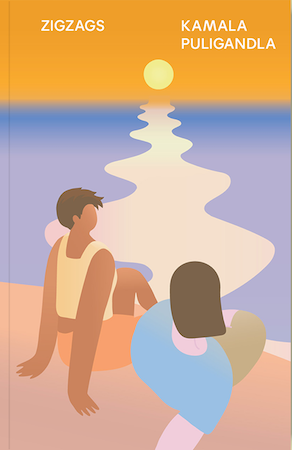
So, of course, I love reading books about a group of friends. When I follow a pod of people whose emotions and motivations are intertwined, it means I’m headed somewhere extra wonderful and extra devastating. That’s what I like to think I wrote into my novel Zigzags. It’s a book that follows Aneehsa, who is a queer, Asian American woman in her mid-20s (yes, she is a past version of me), and a group of her close friends, who all met at a bar in Rogers Park in Chicago. After Aneesha moves away for grad school, she comes back for the summer to see if she can hold on to these relationships that have felt like home. As you might expect, it’s a little complicated.
My favorite part of writing this book, for all of the reasons above, were the party scenes. I like that even though the premise of a gathering is simple—to have fun together—it’s really a much taller order than people expect. Even when it works out, it’s always through some compromise. This year, when I know we’re all hungry for fun and drama, I’m collecting a few books, like mine, that can deliver you a little taste of complex togetherness.
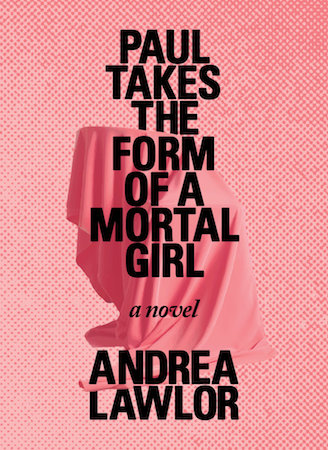
PaulTakes The Form Of A Mortal Girl is an incredible mix of fantasy and hard reality that make the party scenes in this book even juicer. The premise is that Paul has the power to essentially meditate himself into the form of a girl and follow his lust around. There’s a section at the Michigan Womyn’s Festival (where Paul does, in fact, fear the transphobia), where Paul goes from planning to slut it up to suddenly finding himself lesbian u-hauling with a hot dyke, which I really feel shows how transformative a queer party can be.
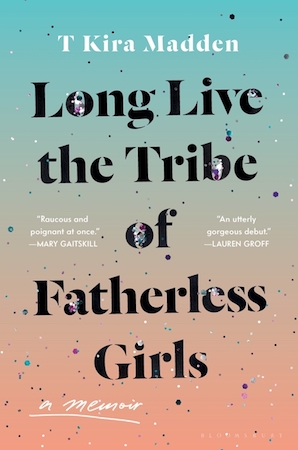
What I love about this memoir is the ease with which Madden describes reading a room and figuring out where she fits into it. She’s constantly hanging out in close, precarious groups, where there is always fun, but at a price. There are so many teen girl moments of deciding to be okay with, and even finding a lot of joy within really trying relationships—with her mom, with her dad, with the popular girls. I find the hard-won moments of bliss, when everything does come together, so beautiful.
When I think about what is so satisfying about a group dynamic, I’m always taken back to The Secret History because it’s such a great example of how far the limits can get pushed in a close group or how skewed a version of normalcy can become. Donna Tartt is a master of reeling you into an intimate dynamic, and then slapping you with your complicity in it.
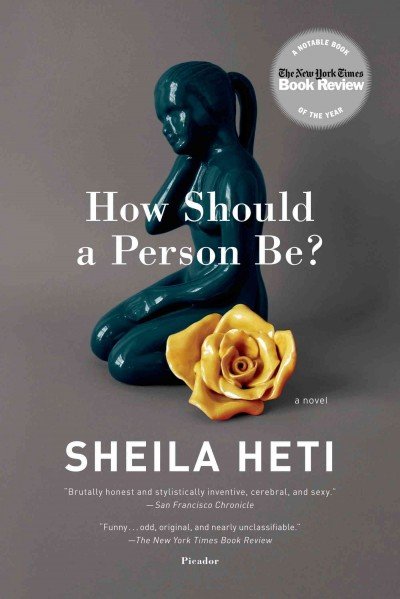
When this book came out in 2012, critics at the time were very concerned with whether or not anything was happening in a book if the majority of it were dialogue, and if the action were primarily that people’s feelings changed. I personally can’t imagine more thrilling action. I won’t disagree that Sheila and Margaux, the primary friends in this novel, can be annoying, but I was rapt by their group of artist friends, who necessarily spend a lot of their time at events or in conversations. They’re constantly moving through conflict to find a new balance, and that’s really fun!
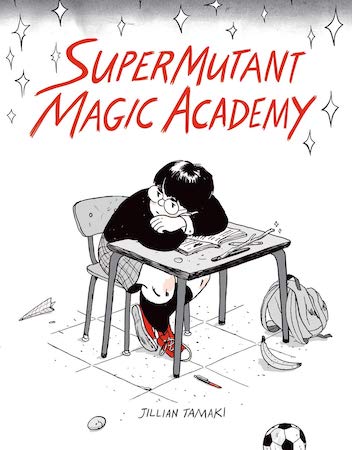
I’m not an avid reader of graphic novels, but this collection of high schoolers who all are at boarding school and practicing some kind of power or magic ability is so gentle, thoughtful and funny. Additionally, it’s gorgeously and whimsically illustrated. I would say that this one is a little less about parties, it’s mostly dorm room and lunch room interactions, whose subtleties make and break these kids’ hearts. I eat that shit up.
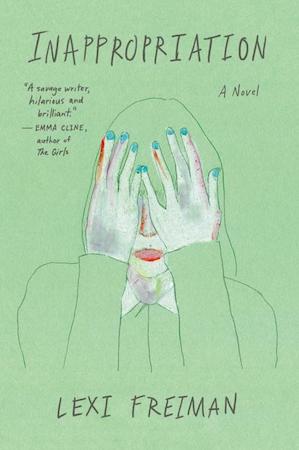
This is a sharp, witty piece of satire on what I might venture to call Zoomers. The delight in this book is in the absurdly logical—in the fictional sense—way that this group of three prep school teens try to navigate their identities and privileges in order to live “woke,” radical lives. The prom is the ultimate party in this book and it truly delivers, but the main character Ziggy’s family also serves up the same level of drama as any entertaining friend group.
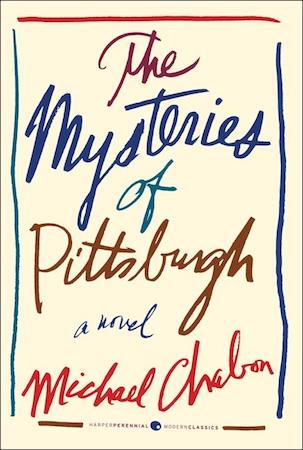
I got into this book when I was in grad school and it turned out to be a guide for how I wanted to structure my own novel. I was thrilled when this early-20s narrator finds himself exploring his unexpected gayness. It’s an attraction that gets him enveloped into a friend group, where he both does and doesn’t belong, and this tension, along with his strong desire to want to know himself and prove himself, makes every single party such a deliciously risky endeavor.
To imagine an island is to picture water; the land not defined unto itself, but in relation to what surrounds it. It’s water that renders islands objects of mythic fascination, cut off by reams of blue from mainland and mainstream knowledge. An island feels unknowable because the ocean makes it hard to reach—Ithaca, Atlantis, Te Fiti whose heart Moana tries to restore—and by the time (if ever) we arrive on its shores, we’ve already mapped our imaginaries on to the land.
Nine million years ago, the Eurasian and Philippines sea plates collided, bringing the island of Taiwan into being. Somewhere between six and ten thousand years ago, the first indigenous settlements on Taiwan were established. But for a very long time, the way in which the island was understood had little to do with these rich geological and human histories; instead, it was tied to the mythologies of those who sought to rule, categorize, and control it. Jessica J. Lee writes:
“Today, maps continue to show Taiwan tangled in mystery. The nation occasionally wears a veil of grey; unrecognized by so much of the world…But it is as real a place as any…a living world on a fault-ridden terrain.”
In her new memoir Two Trees Make a Forest: In Search of My Family’s Past Among Taiwan’s Mountains and Coasts, Lee threads together environmental, political and family histories to create a textured account of migration, exile, and place. Beginning with a chance discovery of her grandfather’s unsent letters following his death, Lee embarks on a search for relatives in Taiwan who were long since believed lost over the course of numerous displacements and upheavals. Lee’sjourney takes her throughTaiwan’s rich ecosystems, its changing colonial rulers, and the various erasures that marked its history:
“I moved from the human timescale of my family’s story through green and unfurling dendrological time, to that which far exceeds the scope of my understanding: the deep and fathomless span of geological time.”
Two Trees Make a Forest is a story of these intersecting movements in time, of the hope and the limits of understanding an island as a real, embodied place.
Richa Kaul Padte: I’d love to start by asking about “the brambled path of memory.” You use this phrase to describe your grandfather’s letters—written after his Alzheimer’s diagnosis and discovered only after he passed away—in which “[t]he past appeared out of context and out of order.” Simultaneously, as you trace your family’s history through places you haven’t lived in yourself, you experience “a longing to remember the things I had not known.” Without in any way diminishing the real and devastating effects of Alzheimer’s on a person’s mind and life, I wonder if there is a sort of parallel between your grandfather’s unsent letters and the memoir you go on to write — a search for a past that feels, for different reasons, out of reach?
Jessica J. Lee: I think that’s right—this notion of the unrememberable or out of reach as undercurrent to the text. One of my biggest fears while writing this book centered on not being “Taiwanese” enough to write it; that I didn’t have claim to my own family’s story. I guess I sort of leaned into that feeling, and the gaps in my family’s story. And then of course, while I was writing it, I was constantly confronted with roadblocks: my grandfather’s records remain classified, journeys into the mountains coincided with storms, I’d find language barriers and other obstacles. All of that, at a certain point, just became a driving force in the story. The idea that answers or clear memories or a perfect scene may not be achievable, but that needn’t hamper the narrative. Those gaps sort of became the story, in a way. I guess this would be very dissatisfying if you are hoping for a clear, happy ending!
RKP: One of my favorite things about Two Trees Make a Forest is how you explore the ways we carry places inside us. You write of your mum, who left China as a child and Taiwan as a young woman, that “in forty years of life in Canada, she had never rooted to the place and got lost easily…[But] in Taiwan, my mother became a person with a topographic history.” This really struck me deeply; I grew up on a mountain in South India with a very specific ecological system, and eight months into the pandemic, I feel an intensely deep longing for it, in a way that I perhaps haven’t before. If, as you write, “[p]lace-memories…work their way into the body,” is there a sort of physical, bodily cost to being unable to reunite with a place?
JJL: I think there is. My mother, for most of my childhood, talked about heat and humidity with a kind of longing I couldn’t quite understand. Then, we began to spend a lot of time in Florida, which though it is not at all like Taiwan culturally, at least had a quality of climate that my mother craved: afternoon rainstorms, heat, sun. It is something so visceral, but hard to qualify or value. I think also of my grandparents who were never able to return to China. The loss involved in this seems, to me, to be so embodied, so impossible to articulate, perhaps in the way muscle memory can be hard to put into words.
RKP:You write “names are rarely uncomplicated markers,” and I’m so interested in how naming works (or doesn’t) as a tool for understanding the natural world. You turn often to scientific classifications as you navigate Taiwan’s mountains, coasts, and forests; names that, as you write, “give me something tangible to keep track of.” But there’s this moment on a long, difficult, humid trail on Shuishe mountain, when, feeling defeated by the unpredictable landscape, you wonder: “What exactly was I hoping to find?… I cannot encircle the forest with learned words and then claim to understand it.” Does the work of truly understanding a place involve letting go of the conceptual framework of language—something we as writers tend to heavily rely on?
JJL: I remain somewhat torn between my impulse to name, to research, to surround myself with language as a way of knowing the world, and the simultaneous need to encounter a place physically, viscerally. I think both are valuable and necessary. But what I really struggled with in writing this book is this thought in the back of my head that I wished the past had been different: that I could know Taiwan as a local, as someone who “belonged” in a conventional sense. This, for me, was a kind of dark thought, because I certainly wouldn’t want my life to have been different than it was! But I admit to having been preoccupied with the inability—whether through language or research or excursions in the land—to make up for what I hadn’t experienced, for what I couldn’t know first-hand.
RKP:That’s one of the things I loved about your book: the way you position firsthand experience against not only research and science, but also against imagination. When you’re hiking up Black Qilai mountain in the pouring rain you reflect: “I am guilty of idealizing the trip, imagining…a sense of intimacy with the mountain. Instead, I feel alienated by it.”
There’s this idea that when we’re “in nature” everything will miraculously fall into place—except this experience usually exists in imagination more than it does in embodied reality. Is the romanticization of nature something you actively set out to resist, or an understanding that emerged from your journey?
I think of my grandparents who were never able to return to China. The loss involved seems so embodied, so impossible to articulate, perhaps in the way muscle memory can be hard to put into words.
JJL: The impulse against romanticization is part of my training: I spent most of my education contextualizing modes of framing non-human nature, particularly as it’s been understood as beautiful, sublime, an escape—especially since the 18th century. So much of how nature writing as a genre thinks about the natural world is still rooted in those ideas, the dichotomies of domestication and wildness, culture and nature. So when I am working, I feel that I’m continually pulled in two directions: by my own intellectual beliefs and that very real, very common impulse to find beauty and pleasure and some ideal form of redemption in the natural world. Of course, in truth, experience always falls somewhere in between, and I find myself encountering all those registers at once, from the critical to the nostalgic.
RKP: You write: “to speak of Taiwanese literature is often to speak of the landscape,” in which “the minutiae of the mountains dwell in words.” But unlike “the sweetened prose [of] British nature writing,” Taiwan’s modern literary works are tied deeply to activism and resistance to colonial rule. This also made me think about how the sweetness of the English countryside has often been set in literature against its hot, untamable colonies—and what growing up in the latter while reading about the former has meant for my own relationship to the land (When I moved to the U.K. as a teenager, for example, it almost felt like I was coming home). If Taiwanese nature writing resists colonial oppression, what, conversely, might British or Japanese environmental literature look like if they were to actually acknowledge their own imperial inheritance?
JJL: This is a great question, and one I have spent years thinking about without a clear answer. I like to imagine that it would be nature writing as written by diasporic voices. I think, in Britain at least, we are beginning to see that quite strongly with writers like Elizabeth-Jane Burnett, Nina Mingya Powles, Zakiya Mckenzie, and Jini Reddy, among many others. A kind of nature writing that doesn’t take belonging for granted, that doesn’t take English as a language for granted, and takes the question of borders to be a core question of what it means to write about land.
RKP: You begin Two Trees Make a Forest with a physical map of Taiwan and you go on to write: “The story of a place—lithic, living, and forgotten—can be found in maps and what they leave out.” As Taiwan changed ruling hands several times throughout its history, mapmaking served as “a tool for colonial governance”; acts of power exercised on and against Indigenous lands and people. Is the map you provide us at the start a frame for your journey (one that I often turned back to while reading the book), or a sort of anti-frame, a reminder of everything that not only the map, but perhaps your memoir too, leaves out?
JJL: I drew the maps for both my books—Turning and Two Trees Make a Forest—with great intention to show as much as they leave out, if that makes sense. In my first book, the map of Berlin is map only of water—nothing of the city is shown on the map. And likewise, with the map in Two Trees, I centered on the vaguest of sketches, marking only the spots I’ve visited: a way of making visible what I had concretely encountered, and leaving the rest quite blank. And of course, the map is just one register through which the place is articulated: I make the same attempt via a timeline and via a slew of names. None of those pictures will be complete, nor should they, but I hope each enriches a kind of multitudinous picture of Taiwan—and the range of possible stories that could be told—for the reader.
My wife Adria and I are supposed to be in Europe, driving a tiny rental car from Amsterdam to the south of France, then ferrying to the Greek Islands. Instead, we’re self-isolating inside our third-story walk-up, a month into lockdown in response to the Covid-19 pandemic. Adria tries to tell me it’s better this way, but then again she believes that crystals can bring luck or doom depending on the moon cycles.
“Something terrible could’ve happened on our trip,” she tells me. “One of us could’ve broken a bone. We could’ve been arrested. We were probably saved.”
“Sure,” I say, “our stuffy apartment is so much better than Mykonos.”
Last month we had friends over to taste some beer I’d brewed. We smoked weed and played poker and when the guests went home, Adria and I bickered like usual before going to bed wrapped up in our drunken anger. If I’d known the country would go into quarantine shortly after, I would’ve tried to have a better time. Instead, I fumed at the way our university colleague, a douchebag tenured professor named Dennis who studies modernist literature, hit on Adria every chance he got. After the party, I accused Adria of inviting his flirting, and she called me a jealous tyrant.
It’s a cold bright weekend morning and Adria’s drinking her coffee and reading her monthly horoscope—Gemini, Sagittarius rising, Virgo moon—and I’m researching the Wild Ale Challenge, a Midwest homebrew competition that I’ve decided to enter. We sit facing each other on our green velvet chesterfield, our legs intertwined, next to the large picture window in our living room. Adria’s pillowy hair catches the sun, bending light over each dark coil. She reads my horoscope—Sagittarius, Virgo rising, Aquarius moon—and tells me I need to watch out for bodies of water, maybe I shouldn’t take a bath tonight.
The April sun shines brilliant but somehow, there are tiny hailstones going tink tink tink on our windowsill. On the street below, no pedestrians, few parked cars, one biker wearing a blue medical face mask. A large pickup truck drives by with the Chicago Bears logo painted on its back window. In the truck’s bed lie protest signs saying “Stop the Tyrany!” and “Open Illinois!”
“What selfishness,” Adria says.
“They spelled ‘tyranny’ wrong.”
We both turn back to our phones. I surf past a bunch of social media posts with the hashtag #wildalechallenge. Three weeks ago, I brewed an almond coffee stout. Base of two row and Munich malt, with 45 crystal, 150 crystal, roast barley, chocolate malt, and de-bittered black malt. Magnum and crystal hops at 60, 30, and flameout. WYeast 1056. Fresh brewed coffee, almond extract, and roasted blanched almonds in secondary. It’ll be two weeks until I can drink it, but by all estimations, it should be good.
My next beer will be a wild ale. In the Wild Ale Challenge, you’re supposed to make beer from foraged ingredients. The only thing you’re allowed to buy is your grain bill. No hops. No yeast. No nutrients. No flavorings.
Down below on the street, the truck honks and someone shouts something, the words garbled by our window.
“Chili pepper IPA’s ready to drink today,” I say.
Adria makes a face of disgust.
“IPAs are an important part of beer history,” I tell her. “Did you know they were invented by the British during colonial times to survive the trip to India? The hops served as an anti-bacterial agent.”
Adria acts like she hasn’t heard me. On our first date during grad school, this is the kind of trivia I awkwardly tossed across the table as I clutched my milkshake porter in a smoky Florida dive bar. Adria’s curious eyes lit up in the dim grittiness.
The noise on the street gets louder. When we look, the truck has stopped and a blonde woman is shouting down the owner of the bodega across the street.
“I want my morning croissant!” she yells.
“Online orders only.” The bodega owner is calm but resolute, his arms crossed, his mask on, blocking her from going through his front door.
“This is tyranny!”
Adria sighs and rubs at her temples. “I don’t know how much more I can take of this.”
“I miss those croissants,” I say.
Adria gives me a look like I’m a cockroach sitting on her favorite cake.
I scroll through more #wildalechallenge posts. In a few weeks, I’ll ship out four bottles of my finished beer and get feedback from the judges and, maybe, win a medal. I’ve spent weeks tweaking my recipe, trying to nail every single weight measurement down to the hundredth decimal point.
I close my laptop. “I’m going to try the chili pepper IPA.”
“It’s ten in the morning, Cam.” Adria takes another sip of coffee. Her mug says “Hers,” part of a “Hers” and “Hers” matching set we got for our wedding. The woman on the street gets in her truck and drives away.
“It’s five o’clock in France,” I say.
I pour a 16-ounce bottle for myself. A bit too much caramel flavor, but the pepper extract shines through nicely. It reminds me of our bicycle brewery tour in Denver during our honeymoon road trip across the U.S. We got caught in the rain and danced in the street with strangers, and every brewery had a chili pepper beer on tap. I make a note in my logbook not to add crystal 60 malt next time.
By lunch, I’ve had three chili pepper IPAs and Adria’s in a state. She hasn’t moved from her position on our chesterfield for over an hour. She rests her chin on her hand and stares out the picture window onto the empty street below. The wind whips up the accumulated hail into white snakes on the asphalt.
I sit next to her and shake her gently.
She turns her face to me like I’ve roused her from a deep sleep. “I wonder how many couples will get divorced during the pandemic,” she says.
I imagine the millions of couples around the world, all cooped up with each other and no escape. “Why would you say that?”
“You’re drunk,” she says, cringing from my breath.
The bones of her shoulders jut out more sharply than they did a month ago. She’s been forgetting to eat, lost in a time fog.
I’m glad the world is losing shape around me. “It’s time for lunch. You need to eat,” I tell her.
“What’s the point?”
I go to the kitchen to heat up leftover pasta and press the bowl into her hands.
She stares at three pieces of rigatoni speared on her fork. “Your brewing station’s taking over the kitchen. It’s getting so claustrophobic in here.” She stares some more at her pasta until I feed her, and even then, she only chews a couple of bites before shaking her head.
“It’s just because you’ve been cooped up. We don’t have to quarantine so strictly,” I say. “We could invite over Dennis and Rhonda for some beers.”
“What the fuck is wrong with you?” Adria rubs her eyes with the heels of her palms. “And you hate Dennis.”
“I don’t hate Dennis.” Despite what she says, I know that Adria’s attracted to him. I can feel it like static in the air when they’re around me. But at this point, I’m willing to put up with even that for some damn company.
“He’s a sweet guy,” she says, and I grind my teeth. “You just want him over so you can show off your manly brewing skills and display me like a trophy and feel masculine.”
“That’s not true.” I want her to keep talking so that I can dissect her voice for any clues as to how she really feels about Dennis. Despite her assurances that she’s done dating men, doubt clogs my throat. “You think he’s sweet?”
“Stop, just stop. I can’t do this.”
“What do you mean by this?” The beer makes me reckless. Already I’m itching for another.
Adria covers her face with her hands and sobs. I think about comforting her, but my body vibrates with anger. She was the one who brought up divorces.
“You’re such an asshole,” she says.
I finish the pasta and have another beer. She goes back to staring at the empty street.
The fourth IPA calms me. I go to my favorite homebrewing site—still shipping through the pandemic—and add $3000 worth of equipment to my cart: the fully electric Bluetooth-enabled Grainfather brewing system, which can handle up to six gallons of brew, and which I can control from my phone with multi-step mashes and custom brew times; the SS Brewtech seven-gallon stainless steel conical fermenter with yeast dump valve; and a glycol temperature controller that can heat and cool up to four fermenters at a time. Three thousand dollars is more than I make per class I teach for the university. I close out of the tab without checking out and drink another beer.
Lightheaded and guilty about our fight, I wobble to Adria’s crystal box and pick out two pieces of orange carnelian, which she’s told me inspires and motivates. I place these crystals next to her on the couch.
I check on my mason jars. I’m trying to cultivate wild yeast for my entry in the challenge. Two weeks ago, I filled mason jars with boiled water and dry malt extract and set them outside on our balcony to collect yeast. One smells like plastic. One is growing what looks like a mushroom. I throw those out.
Adria thinks my homebrewing obsession is a manifestation of my inner frat boy. When we first met, she was into my butchness, but now she says I remind her too much of the “douchebag cis men” she used to date. She won’t listen when I try to explain. I love brewing because at its core, it’s simple: water, grain, yeast. With the world in chaos, I find calm in the pristine science of gravity readings, equipment sanitation, and hops schedules. When I brew, I can control everything. Or, nearly everything. Right now, with my ragtag DIY mash tun and my repurposed stock pot as a brew kettle, I can’t keep temperatures as steady as I need to. I can’t ferment at a perfect sixty-eight degrees or crash cool my beer before bottling. For that I’d need my dream $3000 system.
I make a great show of changing into my fleece-lined leggings, coat, hat, and gloves, but Adria doesn’t seem to notice.
With the world in chaos, I find calm in the pristine science of gravity readings, equipment sanitation, and hops schedules.
“I’ll be back,” I say, and put my face mask on.
Outside, I strip my coat off and stuff the hat and gloves in my pockets. I want to feel the cold sink into my skin. I also take off my mask, because wearing it makes me feel like something heavy is sitting on my chest.
Wind rattles the streetlights as I pass. I walk to the park down the street and pick dandelions and yarrow, which showed up after a week of good weather. I need to collect them before they die from the snow storm predicted for tonight. I pluck whole plants, roots, leaves, and all, and stuff them into my pockets. The park is empty except for a young runner and an old Asian couple doing tai chi, all with face masks on. When they see me, the Asian couple moves away, and the runner mutters “mask-up, asshole,” under her breath. I want to tell her that she’s not going to catch the virus in a park, but I still feel bad.
A truck drives by, the same one I saw earlier with the Bears logo on the back window and protest signs in the bed. The middle-aged blonde woman who yelled at the bodega owner rolls down the passenger side window and leans her head out. The truck slows to a stop in the middle of the road.
“Re-open the country!” she shouts to the four of us scattered across the park. She looks directly at me like I’m on her side. “Sacrifice the weak! The virus is a hoax!” Her face turns red from the effort.
The runner slows down to watch us. The tai chi couple turns our way. The woman waits. I wish I hadn’t taken off my mask.
“Stop watching Fox News!” I shout back to her, holding a handful of plucked dandelions.
The driver of the truck is an acne-faced boy wearing all orange. He could be any one of my first-year English students at the university.
“Stay the fuck home!” I say.
The woman yells, “You stay home, dyke!” The truck drives away.
The next day while it snows, I brew my wild ale recipe using the dandelion greens as a hop substitute, yarrow as a way to add flavor and depth, and for aroma, stinging nettle I found growing wild by the river where I walk every day without telling Adria. I use the same grain bill as a rye wheat beer I brewed last summer that Adria loved: rye malt, Durst pilsner, pale, 80 crystal, flaked rice, wheat, and rice hulls in a multi-rest mash. The stock pot I have isn’t big enough, so I have to brew in two different pots. One boils over, the flaked rice making the wort too sticky.
Called by my screaming, Adria runs into the kitchen and finds me sitting on the floor, my head in my hands.
“Wort boiled over,” I say.
Adria puts her fists on her hips. “I thought something bad had happened.”
Anger rushes up inside me. I jump up and dump the whole boiled-over pot into the sink. Immediately I regret it. I’ve gone from five gallons to three gallons.
I lean over the sink and watch the last of the perfectly good wort spiral into the drain. I think about the Grainfather system, and how this would never have happened if I had it.
Twenty minutes and a chipotle stout later, I wash and pluck the dandelion flowers and nettle, sanitize them by dunking them in boiling water, stuff the petals and leaves into three glass carboys, and siphon the rest of the cooled wort on top. I aerate the wort and pitch yeast from the mason jars. I drink another chipotle stout while I brew, but I don’t need the booze anymore—the rest of the brew went well and I don’t feel like I’ve got glue in the veins of my heart.
By the time I’m done cleaning up, I’ve had a few more beers and my walk is wobbly. My anxiety about our fight yesterday, combined with losing half my brew to equipment failure, makes my stomach churn. Now that I’m not brewing anymore, it’s hard to breathe right.
I find Adria in our shared office, her hair and makeup done, a silk button-up shirt over her sweatpants, video conferencing with her students. Since the university went online and our Europe trip was cancelled, Adria’s agreed to teach a new critical theory class over video. Outside of the camera frame, she’s placed carnelian, amethyst, and rose quartz on her desk. Her face has that plastic smile she wears whenever she’s trying to convince someone that she’s happy.
I’ve agreed to teach two creative writing classes for extra pay, but without face-to-face real-time anything. I told my students it’s to respect their other obligations during this time, and even dropped the buzzword “asynchronous pedagogy,” but the truth is that I can’t hold any thoughts in my head except for beer recipes. I can’t imagine lecturing like Adria does. I’m behind on grading, and I haven’t written anything in weeks except for brewing notes in my logbook, though I’m supposed to be finishing my novel.
“When you read the assignments for next week,” Adria says into the camera, “remember that Schinkel is responding not just to Benjamin but also to a large body of social science where researchers have focused on the causes of violence rather than autotelic violence.”
I stand out of the video frame. We’ve been together for six years, but I’ve never gotten to watch her teach the way I have this month. She made me read that essay about autotelic violence. Violence without a direct cause or goal. Violence for the sake of violence. I remember the woman in the park, her absolute conviction and panic. My palms itch. Maybe this pandemic has made us all into assholes. At the very least, it’s made us into cornered animals, hissing and spitting at the faintest shadows.
“Any final questions before we wrap up?” She notices me lurking nearby. “Oh! Look, here’s Cam.” She says it in a fake upbeat way that makes me cringe.
I step closer and wave to Adria’s students, whose cameras are turned off in a gallery of blank gray boxes on her laptop. My usual short hair is getting shaggy around my ears, and I have dark bags under my eyes.
“It’s a wild time we’re living through,” she says to her students, “so please remember to be kind to yourselves. Eat well. Don’t leave the house. I’m here if you need me.”
Adria closes her laptop and takes her earbuds out. She changes out of her nice shirt into her usual stained tank top and worn-down sweater.
I can’t help myself. “Don’t leave the house?” I say. “Isn’t that a bit extreme?”
“Most of my students’ parents won’t self-isolate,” she says. “They keep going to work.”
“Adria, my own mother won’t self-isolate.” My mother and I aren’t on the best of terms, but we still talk every week. “She said she was going to one of those protests.”
Adria stares at me, her mouth open. I can feel the tirade coming. If I don’t distract her, she’ll try to lecture me on how to talk to my own mother.
“I finished my wild ale,” I say. “Want to know what I used?”
Adria cuts me off before I can tell her about the yarrow.
“We need to pay the credit card,” she says. “I just got the statement.”
“Okay.” My heart skips a step.
Adria puts her hands on her hips and I prepare myself.
“Sixhundred dollars on brewing supplies?” she says. Her voice is calm and dangerous.
“I needed grain. And you know liquid yeast is better than dry. And shipping is expensive.”
“You’re going to brew us into poverty.”
I reach for her arm but she snatches it away. I can’t take her look of disdain.
“Then leave,” I say. “Leave if that’s what you want to do. Go fuck Dennis or something.”
Adria is struck dumb. She flaps her mouth open and closed. She takes a big, rattling breath and closes her eyes. “You can’t spend six hundred dollars on beer,” she says. “We can’t afford it.”
Just to torture myself, I picture her with Dennis, the douchebag modernism professor. I picture them laughing, Adria sitting on his lap.
“I can spend whatever the fuck I want,” I say. I plop down at my desk, open my laptop, and load the homebrew site where my cart still has $3000 worth of brewing equipment. “I want this stuff, I need this stuff,” I say. Part of me is floating near the window, watching myself unravel. “You spend hundreds on crystals and have I complained? No.” I know I should stop but I can’t. The image I’ve conjured up of Adria and Dennis—now both naked in bed—blurs my vision. I squint at the screen, click “Check Out” and enter our credit card information. Each form element I fill in makes me breathe a little easier.
“What are you doing?” Adria screams.
From the window, I watch myself turn toward her and flip her off. I watch her incredulous face, her body tilted sideways, leaning on one hip.
Then I click “Pay Now” and it’s done. In a few days, I’ll get the brewing system of my dreams.
Every day, the same Chicago Bears truck drives by mid-morning. The blonde woman leans out the passenger side window to yell at whoever is on the street or in the apartments. The weather warms up enough that we have the windows open, so we hear her. Several times, Adria yells back at her, after which the woman shouts about godless heathens and the truck drives away. Adria hasn’t talked to me since the moment I ordered my new brewing system. I keep wondering if she’ll ask me to call them and cancel the order, but she hasn’t. Instead she shuts me out. She’s frozen solid.
I’ve split my wild ale into three one-gallon containers, each with a different yeast. Every day, I sniff the air locks. I unwrap each container from its towel and look for the krausen forming on top of the wort, a sign that fermentation is healthy. But the krausen is slow to form, and when it does, it doesn’t look as foamy as I expect.
“I just can’t stand it,” Adria says after the fifth encounter with the Bears truck woman. Her first words to me in days, and I note that her voice is normal, as if for a moment she’s forgotten. She massages her forehead with the tips of her fingers.
“People do strange things when they feel helpless,” I say, quoting one of Adria’s lectures.
Adria snaps. “Thanks for the psychology lesson, Dr. Losh. Why don’t you go check on your beer?”
I check on the beer. Five days after brewing, a pale film has developed on top of one of the batches. White, coin-sized bubbles form and don’t pop. The air lock smells like vinegar. I move that container away from the other two. I crush a campden tablet and swirl it into the white-filmed beer, hoping to deter the infection.
“I think one of them’s infected,” I tell Adria.
She’s lying on the couch with her laptop, scrolling through endless social media feeds.
“Hmmm,” she says.
It’s better than silence, so I push forward.
“Have you eaten?” I ask.
“Hmmm.”
“Yes or no, have you eaten?”
“It’s my stomach, my body. Stop micro-managing it. I’m not your beer.”
I kneel by the couch and touch her hand. She startles as if I’ve just screamed into her ear. She puts her hand on my cheek.
“I miss you,” I say.
I do. I miss her like I missed salmon for the first six months after we went vegan. My body craves her. It’s not just the silence in the house. Without the routine of our classes, our dinners out, our hikes, our walks by the river—she feels so far away, even when we’re getting along.
Without the routine of our classes, our dinners out, our hikes, our walks by the river—she feels so far away, even when we’re getting along.
“Let’s just take one walk,” I say. I lay my head on her stomach. “We can go down to the river.”
“The horoscope said you should avoid bodies of water.”
I laugh without meaning to, and she pushes my head off of her.
“I’m sorry.” I’m too sober. I need a beer, or I need her touch. “I’m sorry. I want to be close to you. Please.”
Adria considers me for a moment, and I think she’s going to tell me to leave her alone, but instead she hugs me and pulls me onto the couch on top of her. She runs her fingers through my hair.
“Remember when you made AdriAle for my birthday?” she says. “I loved you so much for throwing me that party.”
When we were still in grad school, I brewed a raspberry sour, though I cheated on the fermentation by adding lactic acid in secondary. AdriAle and the party I threw went far towards getting Adria to fall in love with me.
We fuck on the couch. She bites my shoulder so hard she leaves a mark, and afterward we lie there until my fingers dry, crusty and pungent.
A few days later, two more trucks join the Chicago Bears one, and the caravan stops for a while on our block. Six people get out and circle their parked trucks, honking and waving their signs—“We demand haircuts!”; “The lockdown is killing us, not Covid!”; “Don’t ruin my golf season!”
Adria and I stand at our open kitchen window with our “Hers” and “Hers” coffee mugs—hers with actual coffee and mine with whiskey-spiked chamomile tea. All down the street, neighbors stick their heads out of their windows or watch from their balconies.
“I saw a Facebook event yesterday,” Adria says, fiddling with the citrine crystal she’s wearing on a gold chain. We’re talking again, as if things are normal, but she hasn’t brought up the brewing system and I haven’t mentioned it. “They’re building up to a big protest tomorrow,” she says. “Calling themselves the ‘unheard majority.’”
The doorbell rings, startling both of us. Since the quarantine began, we haven’t had anyone ring our doorbell except for the rare package. Adria looks fearful, so I put on my mask and go downstairs to the door. It’s the brewing system, delivered in three gigantic boxes at the bottom of two sets of stairs.
I drag one of the boxes up the stairs, my body rising in temperature with each step.
“What’s that?” Adria asks as I haul it through the door. Her voice says she already knows what it is.
“Do you want to help me with the other boxes?”
Adria says nothing, but she comes down and helps me bring up the other two packages. The boxes take up a third of our living room. Adria stares at them from the kitchen, her hands wrapped securely around her coffee.
“Sixty thousand people are dead in the U.S.,” she says, “and you spend $3000 on a fucking brewing system.”
“Those things have nothing to do with each other.”
Adria slams her “Hers” coffee cup into the sink, where it shatters and spills its last dregs. She holds her head. I’m itching to open the packages, but instead I put my arms around Adria, and we stand there as the blonde woman and her friends down on the street shout, “This is China’s wet dream!”
Even though Adria’s anger radiates throughout the apartment, I’m too excited to care. Instinctually, I have the urge to protect my childlike elation, to wall it away from her fury.
I open the boxes. Adria retires to the office. I run an extension cord from the living room to the closet where I put the fermenter and glycol chiller. The Grainfather, I set up in the kitchen underneath our rolling butcher block island, displacing the onions, potatoes, and various pots onto the countertops.
After it’s set up and sanitized, I transfer the two gallons of good wild ale into the stainless-steel fermenter for a temperature-stable second fermentation. This is when the flavors will really develop. I turn on the glycol chiller and sit there watching it run for a long time, imagining what the ale will taste like. A sweet note because of the dandelion. A bite because of the nettle. All held up by a smooth rye base. If I win this homebrew competition, I can justify spending all this on the Grainfather. If I win, I can quit teaching, take an online brewmaster course, and join a local brewery. Spending my days elbow deep in grains and yeast will keep me at peace, keep the claws of the world from wrapping themselves around my throat.
Adria shakes me at five in the morning. I wake half in my dream where I was putting together a recipe for a black tea porter.
“The apartment smells like feet,” she says.
I rub the sleep out of my eyes. She’s right. The smell is overpowering, everywhere. Saliva gathers at the back of my throat, my stomach contracting like I’m about to puke.
It takes me a few seconds before I know what’s wrong. The beer. The wild ale.
I stumble out of bed and almost crash into the wall but I catch myself. My knee rams hard into the steel bed frame, and my whole body quivers with pain. I clutch it and hobble to the closet where my fermenter is.
As soon as I open the closet door, the smell hits me and I have to pinch my nose closed as I grope for the pull light. In the sudden brightness, I struggle with the lid of the fermenter.
When I finally get it open, the beer inside is full of unmoving white bubbles, each the size of a knuckle. The white film crawls up the side of the fermenter and down into the beer, all over the dandelion petals, nettle leaves, and yarrow. My knee throbs with pain. The smell is so strong I can’t breathe. Something inside me breaks open like a seed, and it’s not until Adria pulls me out of the closet that I realize I’m crying.
I sob into her shoulder, drenching her pajama top with tears and snot and drool. She holds me, though. When I stop crying, Adria says, “We have to get that stuff out of the house. I don’t want to know how many fungal spores are floating around.”
We open all the windows to the frigid night air and take the fermenter out onto the balcony.
“Shouldn’t we throw this out?” Adria asks.
Even though the batch is ruined, even though it’s too late to save, I can’t bear the thought of dumping it.
I hug the fermentation vessel. The infected beer is still warm under my hand.
“I can’t,” I say, and press my face against the steel of the fermenter. Adria rolls her eyes.
Down below, the quiet, dark street sleeps before its big protest day. I imagine the blond woman with her Bears truck, her supporters at her side, all of them lost in the frenzy of their belief, shouting at the world for daring to put the health of others before their own small freedoms. All this while Adria and I burn our freedoms under our crushing sense of collective duty. I hit the side of the fermenter in frustration, and I keep hitting and hitting and hitting until that anger transforms into an idea.
“I want to put this stuff to use,” I say.
Adria crouches by me and tries to pull my hands away from where they’re clutching the fermenter. “What use?” She sounds exhausted.
I tell her my plan, expecting her to object, but apparently, I’ve worn her down. A smile creeps over her face. And just like that, it feels like we’re back to before, when our love sat deep, knowledge under my doubt.
So we work, Adria and I, in the early morning, as dawn breaks pink and raw on the horizon. We’re out on the balcony in our winter coats, house slippers, latex gloves, and masks that shield us somewhat from the nauseating stink of toe jam. We work until the sun warms the backs of our necks and Adria has taken at least five coffee breaks. By the time the trucks arrive for their planned protest, we’re ready.
This time the word’s gotten out. That Facebook event that Adria saw has attracted at least twenty trucks, all parading down our street. They park in the middle of the road without hesitation. A swarm of people exit. The woman in the Chicago Bears truck has a MAGA hat and a blow horn, through which she shouts, “The revolution has begun! Socialism sucks!”
Our neighbors on the street open their windows and come out onto their balconies. The fancy RAM 1500 Limited has double speakers in its bed and starts to blast out Rage Against the Machine’s “Killing in the Name Of.”
“What a weird choice of song,” Adria says, drinking coffee out of the other “Hers” cup.
The protesters on the street chant, “We’re here, we’re right! Re-open the country!”
“That doesn’t even rhyme,” one of our neighbors shouts from a nearby balcony.
The woman with the blow horn points it at him. “You libtards have no idea what’s happening to this country.” She catches sight of Adria and me watching, and wags her fingers at us. “God’s brought down this wrath!”
The protesters start to chant, “We want BBQs! We want prom!”
I reach down into my five-gallon plastic fermentation bucket, filled with what Adria and I spent the morning preparing—small muslin hop sacks packed with infected yeast, dandelion petals, and nettle leaves, all soaked in rank wild ale.
I chuck the first hop sack at the truck blasting music out the back. It lands with a satisfying thunk on the windshield, leaking greasy white film all over the glass.
Adria aims one at the blonde woman with the blow horn. It misses her but lands at her feet, splashing her espadrilles and shins. There’s chaos among the protesters as they try to figure out what’s happening.
Above the booming music, someone shouts, “Dr. Losh?”
I freeze with another hop sack in my hand, ready to throw. Only my students call me “Dr. Losh.” I search the crowd, and then I see her. Maggie Carlson. My star student. She and her girlfriend are standing on one of the truck beds, pointing at me.
I lower my arm and toss the hop sack back into the bucket.
She waves at me, and I wave back. She and her girlfriend are holding a sign that says, “We want to graduate.”
The Rage Against the Machine song ends and Toby Keith’s “Made in America” comes on. One of our neighbors starts playing NWA from their apartment, trying to drown out Toby Keith.
“Throw your bombs!” a neighbor shouts to us.
I stand still and try to block the view of the stink-sack-filled bucket from the street. But the neighbors don’t need us to continue the attack. An older lady three doors down throws a couple of tomatoes at the trucks below, splashing a white paintjob in splotches of red. Soon, many neighbors are rushing back into their apartments to find things to throw. Someone chucks their morning oatmeal, which plops onto a woman’s head. She screams, but in the commotion, no one seems to notice. The food lands on protesters, on their trucks and signs.
Adria’s hand fumbles for mine, and when I look at her, turning away from the chaos, her face is alive and wild with something I haven’t seen in her in a long time.
“Autotelic violence,” she says, her lips quivering into a smile.
Protesters clamor for cover, their chants forgotten, their shirts stained with rotten fruit. Many get back into their trucks and roll up their windows. My student Maggie and her girlfriend cower under a nearby awning, both splattered with eggs. Yolk glistens all over Maggie’s mousy brown hair.
Adria leans back and grabs another sack of infected beer. I hesitate, but only for a moment. Buoyed by the happiness in Adria’s face, I take a hop sack, and together we hurl them onto the protesters, where they splatter with stink.
I lose track of Maggie and her girlfriend, but then I spot them, running away from the commotion, pulling each other along.
We continue to throw until the trucks start their engines. The street is covered in smashed food, and I wonder, briefly, who’ll clean it up. The roar of our neighbors overwhelms the din of the trucks driving away. When the Chicago Bears truck rounds the corner of the block, our neighborhood erupts in cheers.
Adria leans on the railing and laughs. She laughs and laughs. Her skin shines with sweat. I peel both our winter coats off and hug her close. I bury my face in her shoulder. We sit on the balcony with our feet dangling off the edge, listening to our neighbors go back inside their homes, the smell of rank wild ale all around us.
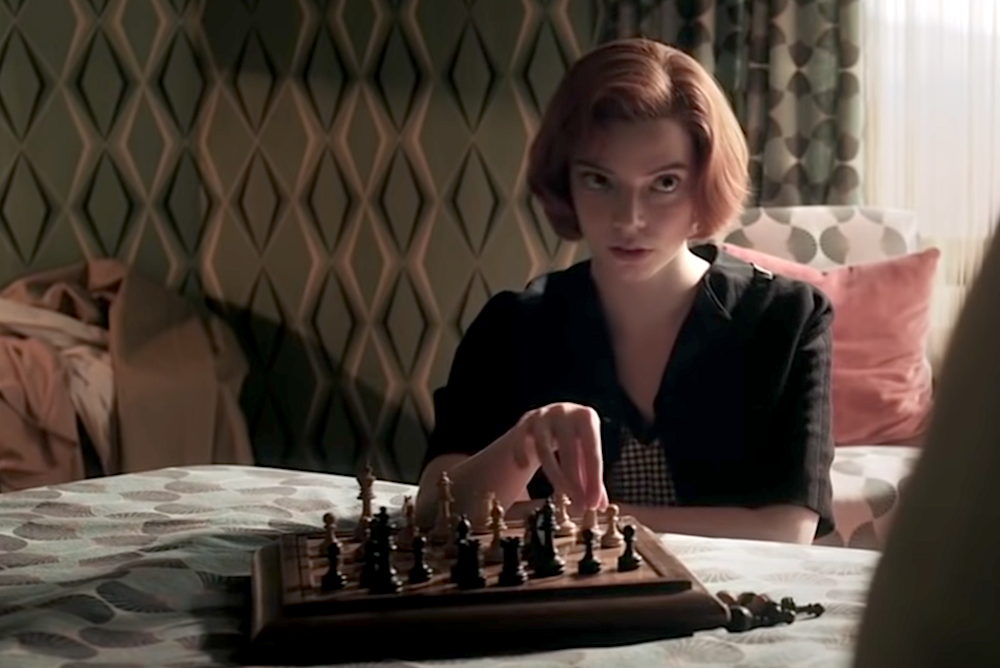
At the heart of all sports dramas is a tacitly accepted proposition: in the game lies the key to self-improvement. The lessons you learn on the field are lessons you should take with you into your everyday life. This is why the sports drama is so often riddled with self-help sounding inspirational speeches. Life, in this well-worn genre, is always improved by the rigor, training and discipline that comes with, say, playing football or hockey or perfecting your dives or your laps. While watching everyone’s favorite new obsession, Netflix’s The Queen’s Gambit, it struck me that this story of a complicated chess prodigy growing up in mid-century Kentucky who has her eyes on conquering the Soviet masters of the game skillfully leans into those very tropes. The show all but demands we think of life as a game of chess. Yet even as the Scott Frank-directed drama uses chess to structure its tale of a complicated young antiheroine, the period piece revels in picking apart the very board game metaphors it uses throughout.
For all its period and Peak TV trappings (Beth is an heir apparent to the likes of Don Draper, a young orphan addicted to tranquilizers who bristles at any hints of intimacy), The Queens Gambit feels most modeled after a genre best known for uncomplicated triumphs and self-improvement through buckling down. There’s a clear “life is like this game, this game is like life” undercurrent that could have come straight from, say, The Mighty Ducks. An adaptation of Walter Tevis’s 1983 novel by the same name, The Queen’s Gambit makes it clear from its very first episode that it will use chess not just as its theme but as its structure. Not only is its first episode aptly titled “Openings” (with each subsequent one tracking a chess game: “Exchanges,” “Doubled Pawns,” “Middle Game,” “Fork,” “Adjournment” and “End Game”) but it very quickly makes clear that the story of one Elizabeth ‘Beth’ Harmon (Anya Taylor Joy) will play like a warped insight into how chess can help the young girl better understand her life.
On any given episode, The Queen’s Gambit runs through every kind of sports drama trope imaginable.
On any given episode, The Queen’s Gambit runs through every kind of sports drama trope imaginable. In “Exchanges” Beth is a plucky upstart up against a local chess titan. Having left her orphanage and found a stable(-ish) home in suburbia with an aloof yet caring adoptive mother, Beth sees in chess a way to make space for herself. The episode’s narrative builds up to a final match where the young teenager, after all but decimating her tournament opponents with her intuitive knack for the game, faces her then-greatest challenger (all while coping with her first period, the first of many admittedly cringe-worthy narrative choices that thankfully don’t wholly derail the drama’s overarching seriousness).
Visually, the drama finds new ways of making chess (yes, chess!) as exciting a spectator sport as anything else. Her match with Harry Beltik (Harry Melling) in that first tournament of hers is shot almost like a fencing duel, each move a calculated strike; a later speed chess matchup feels as dynamic as a squash game; while her later games in Moscow, against the best from the Soviet Union, lean heavily on the pageantry of it as a spectator sport, like a soccer match being watched in hushed silence.
But for all its usage of the sports narrative as its structural anchor, The Queen’s Gambit feels like a conscious inversion of it. Sports narratives in popular culture thrive on inspiration and aspiration. Films like Whip It and Rocky, as well as television shows like Friday Night Lights and Cheer, hinge on the positive impact sports can have on athletes and audiences alike. The tenacity needed to win a boxing match, the teamwork it takes to win a football or a hockey game, even the physical stamina required to excel at cheerleading are grafted onto stories about overcoming odds, with the personal lessons their characters learn lining up all too neatly with what their respective sports teach them. Indeed, early on in the show, during a press interview at her home, a teenage Beth waxes poetic about what first drew her to chess: “It was the board I noticed first,” she replies. “It’s an entire world of just 64 squares. I feel safe in it. I can control it. I can dominate it. And it’s predictable. So if I get hurt, I only have myself to blame.” What, at first, reads like the show’s premise spelled out ends up becoming the show’s actual anti-thesis.
As in life, she believes, the rules of chess are immovable and intransigent.
From the moment nine-year-old Beth finds chess, we’re led to believe this laconic young girl will find in that board the safe haven that eludes her in real life. She may not make new friends at her high school or find ways of wrestling with the trauma of seeing her mother intentionally crash their car leaving her an orphan, but she finds and relishes the control she has when she plays chess. Her eyes light up every time she’s faced with a new challenger; she seems wholly uninterested in the world outside of the board, much to the chagrin of her adoptive mother who, during a tournament trip to Mexico, urges her to go see Bellas Artes or visit Chapultepec. But to Beth, the board is the world, her world. There’s no heartbreak in it even when there’s loss. That laser-focused approach to her chosen vocation ends up teaching her plenty of lessons: as in life, she believes, the rules of chess are immovable and intransigent, and every loss is only hers to blame.
We’re told time and time again that Beth is what they call an “intuitive player,” whose moves don’t have the bureaucratic quality of some of the Soviet masters or the studied elegance of some of her peers. And so, for much of her life, Beth does live her life like it’s a chess game. With no family, especially after her adoptive mother dies quite suddenly, and with few close friends she can confide in, she convinces herself that she has to go it alone. More tellingly, she operates under an almost transactional approach to social encounters; the bold moves that earn her praise on the board end up becoming personality traits where she ends up countering moves in real life. When she’s offered help to pay for an upcoming trip to the U.S.S.R. from a Christian group who hope she can feed pre-written lines about her fight against the atheist communist East, she not only refuses but decides to give however much money they’d already offered her. As impulsive as cunning as she is on the board, she eventually starts seeing how such behavior is less effective as a life mantra.
Unlike traditional sports dramas that exalt the sports they depict, The Queen’s Gambit feels almost like a rebuke of the idea that chess has any worthwhile advice to dole out.
The beauty of The Queen’s Gambit lies in how intentionally it slowly, over its last few episodes, forces Beth to unlearn everything she thinks she knows about life and chess alike. Unlike traditional sports dramas that exalt the sports they depict, enshrining the ways they teach positive life lessons (football teaches your kid about teamwork! boxing teaches you about self-reliance!), The Queen’s Gambit feels almost like a rebuke of the idea that chess has any worthwhile advice to dole out. By the time Beth is decked out in an all white ensemble, with a stylish hat to match, looking like a literal White Queen walking the streets of Moscow, she’s had to unlearn the very lessons that chess had taught her. A self-avowed loner who never did figure out how to lean on others, thinking she was just as required to handle life on her own as she was a chess match, Beth ends up needing the help not only of her childhood best friend Jolene (Moses Ingram) to get out of a drug and alcohol fueled binge, but of her fellow American players (all men who’d equally idolized and envied her) during a pivotal game in Moscow. Life is not, as it turns out, anything like a chess game, no matter how comforting (though, really, quite insidious) such a proposition may sound. It can just be, as Beth eventually comes to realize, simply beautiful on and for its own sake.
As we approach a holiday season that will be different from any in our lifetime, it will be harder to volunteer in person, to give our physical energy to these causes that we cherish and love. It’s also an unusually challenging time to shop for gifts—if you have the spare cash to buy presents, you might feel you’re better off helping the many, many people who are struggling. So when you’re done helping to shore up indie bookstores, why not spend this Giving Tuesday supporting organizations that supply books to the people who need it most?
These programs supply books to everyone from incarcerated people to children from marginalized communities. Some are local, some have a national scope. But all of these nonprofits help put books into the hands of people who need them the most. And in this hard and lonely time, that’s more important than ever.
One Book One New Orleans strives to improve literacy and build community at the same time. Since being founded in 2004, One Book One New Orleans chooses a single book with a connection to the city of New Orleans to feature each year, building community events and programming around it. They strive to make the book more accessible to those with a limited budget or visual impairment, and distribute the chosen books to schools, prisons, and libraries, hosting monthly events centered around these books. Recently, OBONO has selected Clint Smith’s Counting Descent and New Orleans Griot: The Tom Dent Reader edited by Kalamu ya Salaam as their books. You can donate to OBONO here.
Books through Bars is based out of Philadelphia and delivers books to prisoners within seven states of the Mid-Atlantic region of the United States. They’ve been delivering books to prisoners since 1990, and are all volunteer-based. The incarcerated or even their families can request books to be sent to the prison. You can donate books here, or donate money to sustain the program here.
Kids Need to Read’s vision statement is “All children and adolescents will have access to quality books no matter their race, economic status, or capabilities.” Kids Need to Read supply books to underfunded schools, libraries and literacy programs. You can donate here.
We Need Diverse Books has the simple and straightforward mission of “putting more books featuring diverse characters into the hands of all children.” While this non-profit does all kinds of work to help readers and writers of various backgrounds, We Need Diverse Books in the Classroom is a program that “provides free diverse books to low-income schools around the country.” Helping children in all 50 states and with a program that hopes to help those most in need, We Need Diverse Books is an instrumental non-profit, and one worthy of some holiday love. You can donate to We Need Diverse Books here.
Hugo House is a writer center in Seattle Washington that hosts a bunch of programs featuring and helping authors. One of their main programs is called the Golf Pencil Project, which hosts weekly classes at the King County Jail for students currently incarcerated. Hugo House hopes to build “a big lending library” at the jail. You can see their paperback book donation recommendations here, or donate money here.
REFORMA seeks to improve free access to Spanish language and Latinx-oriented materials by encouraging libraries to increase their stocks. The group is an affiliate of the American Library Association and has been around since 1971. There are over 20 active chapters in the country, ranging in locations from El Paso to Florida to Puerto Rico. You can donate to REFORMA here.
Book Aid International’s mission “is to provide books, resources and training to support an environment in which reading for pleasure, study and lifelong learning can flourish.” Book Aid International believes that supplying books to people is to make an investment in the future. You can donate here.
According to the U.S. Department of Education, more than 85% of Black fourth graders aren’t proficient in reading. New York-based Barbershop Books aims to turn Black boys into readers by bringing books into a place they already know, love, and go to frequently: the local barbershop. Barbershop Books hopes to turn barbershops into fun reading spaces for children, in order to normalize reading in a familiar place. You can donate to Barbershop Books here.
In Fariha Róisín’s debut novelLike a Bird, protagonist Taylia Chatterjee lives a privileged life on Manhattan’s Upper West Side with her sister Alyssa. Alyssa often receives preferential treatment from their liberal, overbearing parents—a white Jewish mom, a Hindu Bengali dad. Taylia is described as the unloved sister, darker-skinned, ignored. Their family dynamics seem almost harmless, until Taylia is sexually assaulted by the beloved son of a close friend. Her parents throw her out of their home. That’s where Taylia’s story begins, as she finds herself thrust into lower and lower Manhattan, moving through the uncertain, rocky process of reclaiming her power through new friends and new loves. It’s a tale of two lives: one before rape and one after, both set in New York.
With the lessons it holds on survival and strength, Like a Bird could be set anywhere; it could be a memoir, or it could be fiction; it could be about any person attempting to start anew. And that’s where Róisín makes her mark as a writer, whether it’s in Like a Bird, or in her book of poems How to Cure a Ghost released last year. She’s able to communicate eternal, relatable truths through her characters that make you feel as if she’s writing your life. At times, the shape of Like a Bird is ethereal, larger than any characters, plot, specificities. But Róisín is also uniquely talented at drawing out the particulars of human behavior. Taylia’s outspoken political nature, her wisdom, and her strength add depth and imagination to the story of survival.
I spoke to Fariha Róisín adding nuance to South Asian stories and what it takes to call sexual assault what it is.
Meghna Rao: You’ve been writing your book for 18 years. Thinking—and writing—about rape at 15 is a lot. Rape is a heavy thing to think about as a kid.
Fariha Róisín: I didn’t really have much of a conception of what rape was at 12, but I knew it was bad, you know? In chapter eight, Taliya asks her sister what rape is, and I had a similar question for my sister when I was 12.
Boys will be boys, girls have to cover their bodies.
It’s gruesome that we live in a society where women have to learn about certain violences that we just have to accept. Boys will be boys, girls have to cover their bodies. Women and femme folk are under constant pressure to conform to the male gaze, and even if you wear a hijab, or a niqaab, or a burqa, it doesn’t matter. The conversations we have about rape and sexual assault are so rudimentary, and as a young person to see that injustice, I just intuitively understood that it was bad.
And so, writing that part of the book just happened. And so many of those questions still haven’t been answered. It’s sad that rape is still very much a question all these years down the line. Things like—how one recovers, how one finds justice, or legal support, or communal support. These questions are still very much a part of all of our lives. More of us can relate to sexual abuse than not.
MR:I thought you made a really poignant statement earlier: “calling a thing what it is sometimes takes a lot of time.” That feels particularly true of sexual assault. It takes shedding so many layers, to point at it and say—this is what happened to me. That feels like it would take 18 years.
FR: I never had anything like Like A Bird when I was young. I sure as hell never felt supported and I think, somewhere deep down, I actually wrote it because I had to sublimate my own abuse into something. I think I wrote it, in a way, because I needed to survive. That’s why stories of survival are so important. They’re rarely spoken. It’s rarely done. And we need more conversations about what it looks like to move through sexual assault.
MR:And what it looks like to relapse.
Women and femme folk are under constant pressure to conform to the male gaze, and even if you wear a hijab or a niqaab or a burqa, it doesn’t matter.
FR: Yeah. And to also feel. Healing is complicated and it looks different for everyone. I’m healing in a different way, Taylia is healing in a different way. She’s finding peace within herself, and it’s powerful. She’s barely beginning this relationship with herself, and in a way, it’s pointing a very small light towards how people can move through this.
It can be hard to justify writing for me. Writing can be seen as pretentious, and it’s historically been exclusionary. But for me, its importance is revealed when you can write truths that haven’t been named yet. And that’s what I try to do, to see what can I say that is still resonant.
MR:There’s another theme that really stuck with me. When Taylia’s parents hear about her sexual assault, they kick her out of the house. It’s never even a question if she’s been assaulted, she’s just seen as the provocateur. And before that, her sexuality is diminished, she’s the darker, less attractive sister. It’s either seen as violent or it’s diminished.
FR: I don’t think people understand how common it is for rape not to believed for South Asian femmes. I think North American and Western audiences aren’t aware of how rampant that is as a phenomenon in our community. People ask me, do you think that’s realistic? And I’m like, homie, that’s so real.
We are so rejected by our families so often. I think that storyline was really important. Not to create a stereotype, but we don’t talk about this enough, how violence exists within our communities, and in our own families.
And we don’t talk about that specific, violent patriarchy that runs through our families—my father wasn’t like this, but I had a violent relationship with a South Asian man when I was younger that had a lot of that. And then a really lovely one right after. It’s not a monolithic experience, but it’s important for us to engage with it. The villain isn’t always who you think it is.
MR:I found it intriguing that Taylia was biracial, half white. And later on, during the part of her liberation, she moves downtown and through white spaces. Was that intentional?
FR: With the biraciality, I don’t know why she first came to me like that. It’s something I’ve stuck with because there’s tension with aspirational whiteness I can play with. Aspirational whiteness is something that a lot of South Asians have adapted to varying degrees. It relies upon this idea of white supremacy, to be white is better, so as close as you can get to emulating that, the better it is. And that was something that was really my experience until I moved to New York.
Ultimately we, of course, aspire to whiteness. It’s all around us, it’s ubiquitous, it’s the dominant culture, and it really determines the way that we view ourselves, and the way that we consider ourselves worthy or not, of validation or not. It seeps into every facet of one’s being.
And when I started to write the book, very transparently, I didn’t really have the conception of myself that I do now, it was so abstract. Taylia and her family’s life is very much what I assumed would be the experience of a wealthier South Asian person. And that wasn’t my experience. I saw a lot of Bengali Indians have this wealth, and project that Muslim Bangladeshis didn’t. And to make her half-white was to show that privilege.
MR:It was cool to see Taylia in cool parts of New York, not just Queens where the South Asians are usually pictured. Finding her way in the Upper West Side, and downtown, in these places that are often just implicitly unwelcoming to brown people.
FR: So yeah, I started writing the book again around 21. That’s when I started changing it, and I was infusing it with the same shit I was going through, you can see it in my writing. I haven’t been to Cafe Reggio in eight years, but when I put it into the book, that’s where I was going. It’s cool to see how certain places influenced her over the years. It’s cool because I get to trace myself back in the story.
And placing her in New York places like the High Line, like you said. I wanted to have a modernity to her, but also—we don’t see South Asians in pop culture. There are so many of us in New York. But there’s no Girls for South Asians.
And now we’re talking about caste, class, all the intersections of anti-Blackness and colorism. There’s still a heavy presence of all of these things, and we’re still conceptualizing what a South Asian even looks like. Maybe that’s what’s stalled us from writing the work where we’re at the center.
I really wanted my main character to revere being Indian in a way that we don’t always see. Take her relationship with her grandmother. It’s one of those relationships of memory, and love, and how powerful those things can be.
There’s also a scene toward the end of the book where Taylia questions her memories. I think that’s really important because we don’t always see ourselves as dynamic, we don’t see ourselves as people who are quirky or different or rounded. And to have a main character who’s South Asian, who does mirror me in many ways, she’s very self-aware, especially politically, in a way that I wanted to juxtapose her with her parents, I wanted her parents to be forgiven to a certain degree. I think that’s really one of the themes of this book. It’s playing with memory and it’s playing with who gets to remember things, and what it actually means to remember.
MR: These are very South Asian subtleties, and it’s amazing to read on paper. But were they difficult to get by publishers?
FR: I’ve never gone with a major publisher, so I don’t know what it would be like to be confined to a bigger house, but my experience with Unnamed Press was unparalleled because I knew I was getting a lot of attention. Basically, Olivia [Taylor Smith] allowed me to write whatever I wanted to write. She never challenged me on any character level or story level, it was just grammatical. And that’s something I really appreciate, I have pure space to tell my truth and just to write what I wanted to write. I really appreciate that experience because I would never be able to not say what I needed to say.
We don’t see South Asians in pop culture. There are so many of us in New York. But there’s no Girls for South Asians.
And those South Asian subtleties are really intentional, because I wanted us to be able to see us, in the pages, and for it to be nuanced, and relatable. This is a thing for a South Asian audience. We need ourselves, we need to see ourselves.
And then I think back to writing this when I was young, and the aspirational whiteness I felt, and how hard it was to access me as a whole. I needed to write this in full.
MR: Taylia has a really beautiful evolution by the end of the book.
FR: Her evolution was quiet. It was very quiet. And that’s how shifts in humans happen. We’re always going through these lessons in life, and something like rape is a test of faith. But there’s something to be said about surviving, about the power that you can gain from it.
I don’t know if you watch Michaela Coel’s I May Destroy You—she’s brilliant. Her series is about confronting sexual abuse, she’s a comedian and it’s her take on how she interacts with rape and sexual abuse, and talks about the layers of shame, discomfort, bureaucracy.
It’s something you don’t see often, people who have been abused writing stories about us. Rape is a motif and it’s historically been written about by men. There’s no layers to it. There’s no context. It’s just a fucking motif.
It’s really liberating for me to write about it, and it still is, just thinking about it—I needed to write this book for myself. That’s why I needed to do it, and that’s why I wrote it.
MR:How do you feel now that you’re done?
FR: In 2020, I confronted my own inner capitalism, these tendencies I just accepted because I like my space and it felt like I needed to have money for that, and that’s where I constructed a lot of the parts of myself out of.
Honestly, because Like A Bird didn’t get a seven figure book deal, I’ve diminished my own work to myself. I don’t take myself seriously enough in a way that I think getting a million dollars for a book would have. And it’s sad that that’s the way i interact with my own work. It’s very Capricornian. I have to work really hard, but if I work really hard, I also have to get the biggest reward.
But having a book out in the world is ego work. You have to let go of expectations of how it’ll be perceived, and if that’ll reflect poorly on you. And I doubt myself all the time, I don’t know if I’m a good writer or a good storyteller, but I know that it’s instinctual.
MR: Maybe this is a book written for little Fariha.
FR: In my trauma therapy, that’s what I’ve been doing the most—talking to this baby child, little Fa. In a lot of ways, this book is me witnessing this baby part of me, and honoring the story that she collected from God knows where. But she did, and I hope I can have more respect for myself for doing this. I know that having integrity in this story was important for me. I needed to really tell the truth and just write it beautifully, and to write it with complications, so people can walk away knowing more about a survivor’s story, and what it means to keep going.
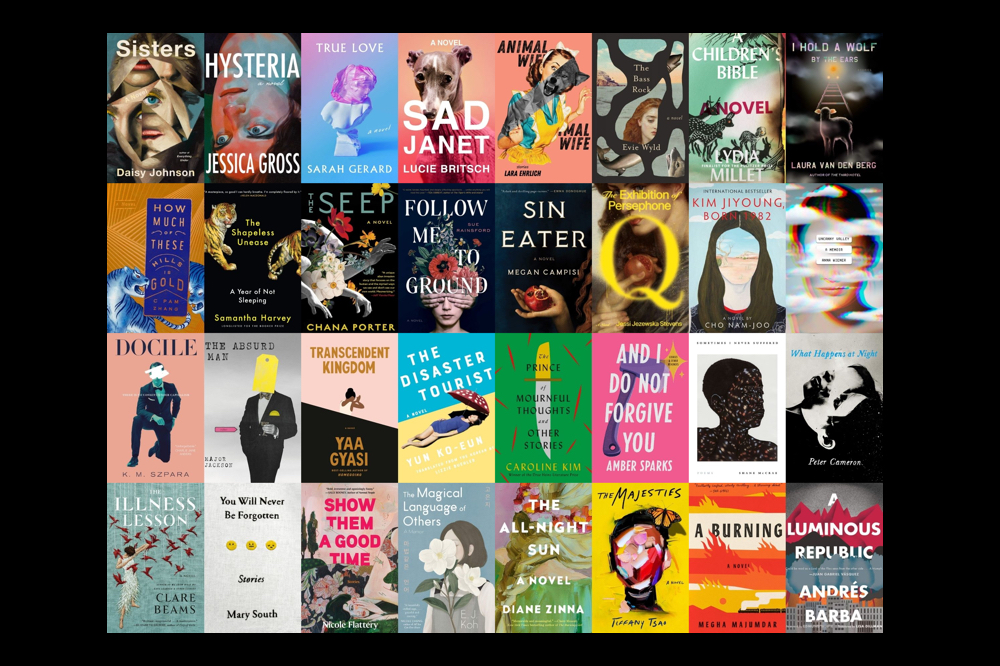
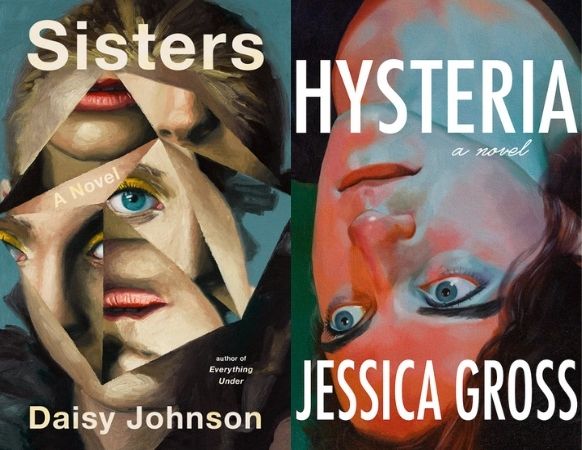
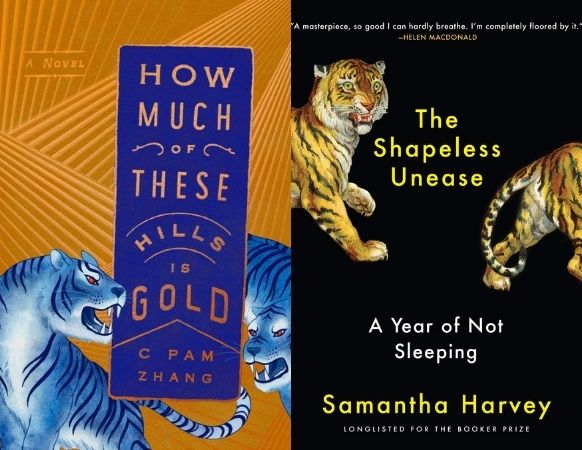
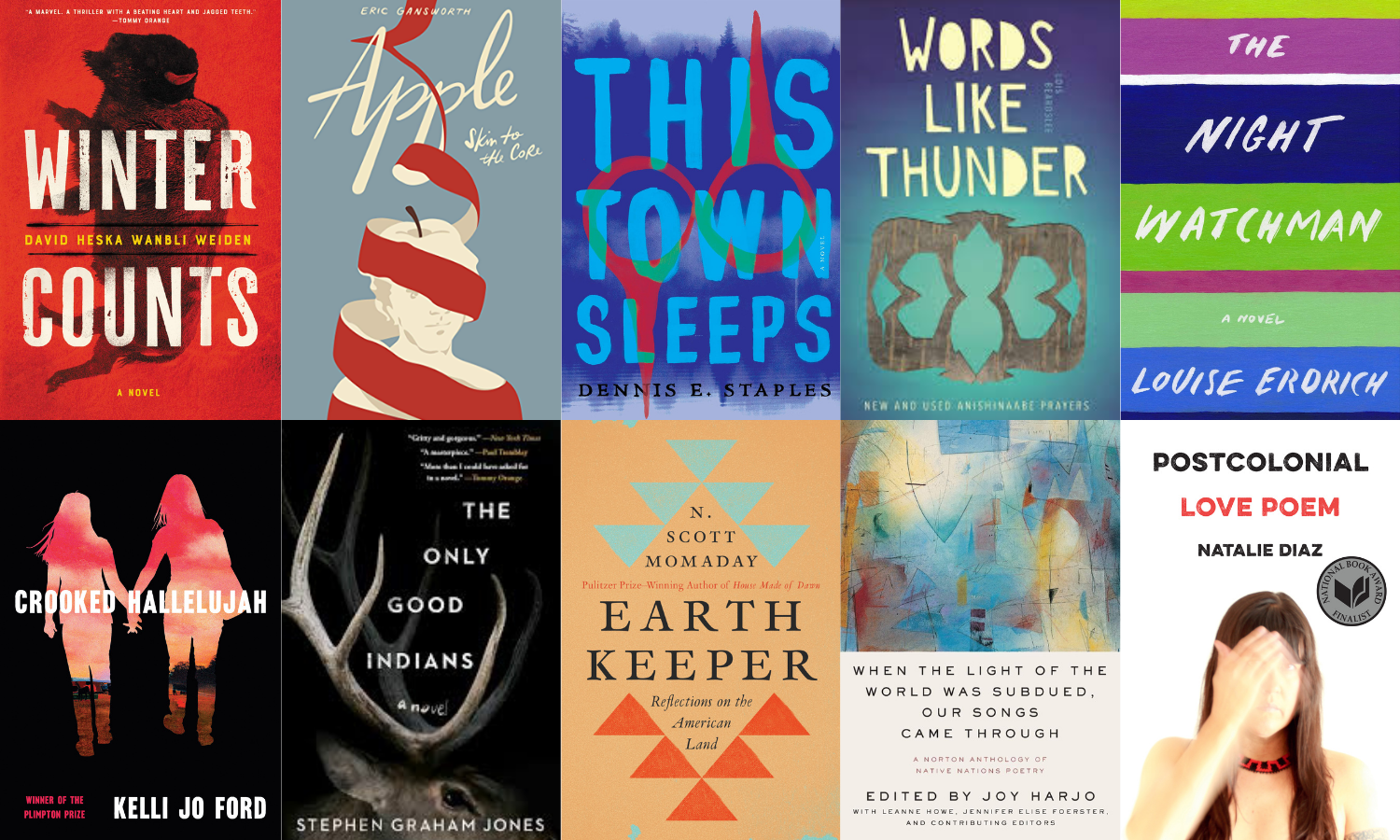
This hasn’t been an easy year for sustained, careful reading. But you know what doesn’t take any attention at all? Judging a book by its cover! That’s why we’re doing our first ever “best book cover of the year” tournament—and we want you to weigh in.
Click to open larger version
Vote for your favorites on Electric Literature’s Twitter and Instagram stories every day this week: round 1 (a whopping 16 matchups) today, round 2 Tuesday, quarterfinals Wednesday, semifinals Thursday, and the final face-off on Friday. You can familiarize yourself with the competitors and their first-round opponents below. If you want to make your own predictions, click the bracket above for a large version or download one here. The winner will receive bragging rights, which in many ways is the most any of us can hope for this year!
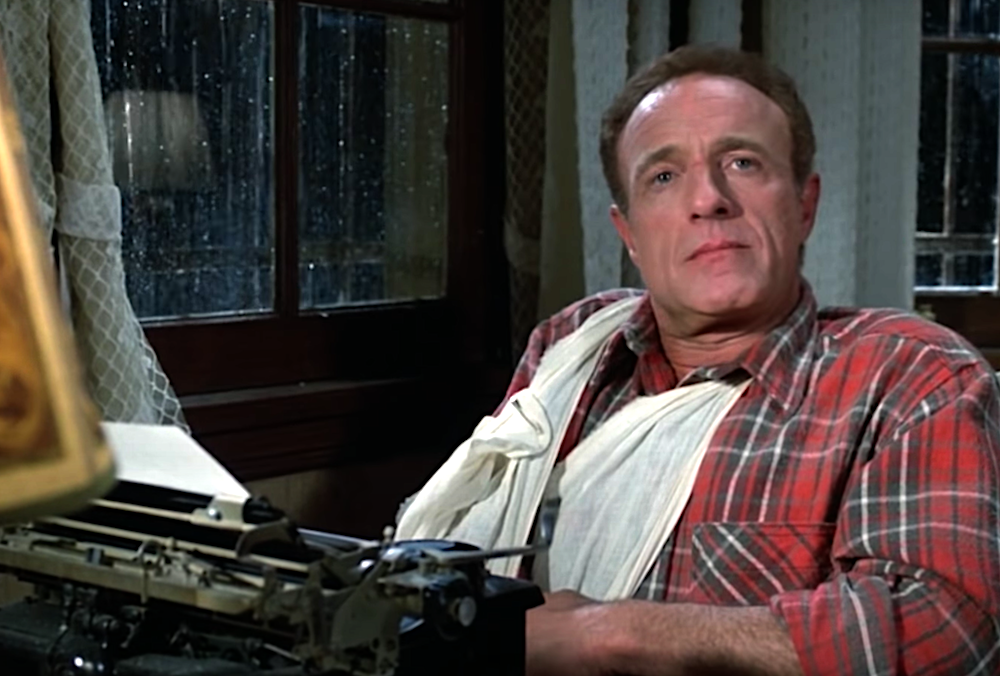
A cigarette, a match, a bottle of booze, black letters inked rapidly onto white paper—and, erupting over each of these tranquil images, the hard staccato and carriage return rings of a typewriter. A hand yanks a completed page from the machine with a snap, and, picking up a pencil, writes out “THE END”; soft scratch of graphite on paper. The author lights a cigarette with the satisfaction of a man who’s just made love to his typewriter, and as he inhales slowly, we can almost taste the tobacco. He pours himself some champagne, the liquid gurgling as it enters the glass. Paul Sheldon (James Caan), the protagonist of Misery, has just completed his latest manuscript, a novel he believes to be his magnum opus. And as the film’s first shots introduce him, they are also introducing us to one of Misery’s preoccupations: writing as somatic experience, a craft indelibly shaped by the writer’s physical surroundings, tools, and body.
Reiner’s fetishistic tribute to the sensory joys and material apparatus of writing is all the more noteworthy because no such scene appears in the source text on which the filmis based. Stephen King’s 1987 novel Misery instead begins in miseria res: a grievously injured Paul lies in bed, already at the mercy of Annie Wilkes (Kathy Bates), his deranged “number-one fan.” By first lingering on the potential pleasures of the text, on the other hand, Reiner’s film deliberately establishes a dramatic contrast between the material conditions under which literary creation can occur. From the cozy hotel room where Paul finishes his book, body intact and spirit buoyed by creature comforts, the film turns swiftly towards a study of writing in pain and under duress.
While driving home from the hotel through a snowstorm, Paul totals his car, shattering both of his legs. The violently unstable Annie pulls him from the wreckage and imprisons him in her secluded home under the pretense of healing his car crash wounds. Among other tortures, she forces him to rewrite the most recent installation of his Misery Chastain novels, the lowbrow historical romances that made Paul famous but which he has come to loathe.
In Reiner’s film, writing is not just bodily—it is bodily survival.
The movie’s second and third acts are thus dominated by the spectacle of a maimed Paul grimly churning out Misery’s Return, the revised book that Annie demands. In a sense, the scenario is simply the “potboiler” idiom made more literal and more lethal. Before the accident, Paul churned out trash novels to feed himself. Now, Annie threatens to murder him unless he fictionally resuscitates Misery, the lead character whom he had cheerfully killed off in the published version of the book (and whose odd name crystallizes the film’s interest in the links between fiction and the flesh). As he writes Misery back to life, Paul also keeps himself alive, like a flannel-clad Scheherazade. In Reiner’s film, then, writing is not just bodily—it is bodily survival.
This setup means that Misery ends up dedicating a substantial chunk of its runtime—more, I would hazard, than the average movie about authorship—to depicting the writing process. So, too, must Paul weaponize his drafting process and writing instruments themselves in order to stay alive. It’s for these reasons that Misery serves as an unusually revealing time-capsule of literary production from the age of typewriters and pencils. To re-watch the film after the digital revolution is to witness an accidental testament to how dramatically the physical experience of writing has changed since 1990.
Because it is set in the ‘80s, Misery’s plot crucially hinges on the simultaneous power and precarity of physical manuscripts in the days before laptops, google docs, and hard drives. The sensual affection with which the movie’s first scene depicts paper-based writing is soon revealed to be a reflection of Paul’s own enjoyment of the corporeal side of his profession. When he pulls the novel’s final page out of the typewriter to slowly inscribe “THE END” by pencil instead of by keyboard, his reverent expression suggests that he’s done so largely to gain skin-to-skin contact with the thing he’s written, to lovingly feel its weight in his hand.
In fact, it’s in part Paul’s bodily attachment to the document he’s created that eventually dooms him. When his car starts to skid out of control on a snowy mountain road in the next scene, Paul instinctively reaches over—twice—to make sure the satchel holding his precious manuscript doesn’t slide off the passenger seat. In doing so, he removes one hand from the wheel and his attention from the road ahead, loses control over the swerving vehicle, and careens off an embankment.
To re-watch the film is to witness an accidental testament to how dramatically the physical experience of writing has changed since 1990.
It’s not just Paul’s attachment to the physical manifestation of his craft that makes him protect this manuscript with irrational intensity, however. We later learn that he observes a superstitious practice of making no additional copies of the first draft of a new book. It would spell an immeasurable loss if something were to happen to the document in the briefcase. This is the less pleasant flip side of writing’s tangible paper form: the distressing frailty of a physical product that can be damaged, destroyed, lost in an instant. Misery’s main characters are both all too aware of this delicateness, and both will weaponize it to their own devastating advantage.
Over the course of Reiner’s film, Annie proves herself capable of grotesque physical abuse: she has a history of murdering infants in the maternity wards where she used to work, makes clear that she plans to shoot Paul when he finishes the Misery rewrite, and, in one of cinema’s more infamous scenes, “hobbles” Paul’s ankles with a sledgehammer when she suspects he’s been trying to escape. Yet one of Annie’s cruelest acts is one of literary, rather than bodily, violence. Having found Paul’s newly minted manuscript inside his crashed car, she reads it—and determines it’s not worthy of her favorite author. As a none-too-subtle caricature of an unsophisticated but demanding reading public, Annie adores Paul’s Harlequin-esque Misery series, but fails to appreciate the more “serious,” modern, and implicitly masculine turn that Paul has taken with his latest book, which centers on a tough-talking kid from the inner city. (In creating Annie, King reportedly drew on his own experience with domineering fans, who raged against his decision to switch out his accustomed horror genre for epic fantasy in the 1984 novel The Eyes of the Dragon.) So disturbed is Annie by this new book’s profanity that she orders Paul to burn the manuscript on a barbecue grill. Only when she threatens to instead burn him does her prisoner begrudgingly agree. But as the sole copy of his prized work goes up in flames, Paul’s face suggests that he’s not entirely sure he’s chosen the less agonizing option.
This plot device, virtually unthinkable in the present day of habitual back-ups, autosave, and the cloud, will repeat itself once more in Reiner’s film. This time, though, it is Paul who wields the ironic ephemerality of the physical manuscript as a bludgeon. (He also wields a typewriter as a literal bludgeon, about which more later.) In the movie’s final showdown, Paul has finished rewriting the last Misery novel, and calls Annie into his room. Paul knows that his biggest fan plans to murder him now that he’s completed the book she demanded—but also knows that she is desperately eager to find out what happens to Misery at the end of this new story (it’s meant to be a sign of her tacky aesthetic sensibilities that Annie reads novels primarily for the plot). Paul asks his captor for a match, cigarette, and glass of champagne—the same accoutrements of artistic satisfaction that signaled his object worship in the film’s opening scene—but instead of using these to christen a fresh manuscript, he now uses them to destroy one. As Annie watches in stunned horror, Paul strikes the match, lights a page of Misery Returns on fire, and drops it onto the rest of the stacked sheets. “Remember how for all those years no one ever knew who Misery’s real father was, or if they’d ever be reunited? It’s all right here,” he taunts.
Annie’s panicked efforts to save the document from the flames distract her for long enough that Paul can attack and finally kill her. (Here, Reiner’s film again differs from its literary source: in King’s book, Paul burns a fake manuscript so that he can actually preserve MiseryReturns, a work that he has come to genuinely enjoy. This departure once more marks Reiner’s film as the Misery more explicitly interested in the fragility of pre-computer writing.)
This climactic moment would lose most of its schadenfreude if it featured a .doc file on a laptop screen.
This climactic moment would lose much of its feasibility and most of its schadenfreude if it featured a .doc file on a laptop screen instead of a believably unique manuscript. What’s more, the heavily symbolic physical props at the center of the sequence also gesture towards the exhilarating possibilities for reinvention that cancome through the complete loss of physical work. A match held in Annie’s hand promises devastation; held in Paul’s, in the film’s first scene, it betrays a certain sensory decadence; but in this final scene, the same object evokes cleansing fire. In immolating this second manuscript, Paul has definitively destroyed the character Misery and the burdensome ties to Bad Literature that she represented for him. After escaping his tormentor, as we learn in the film’s concluding flash-forward, Paul will recover from his injuries and reinvent himself as a writer of stereotypically male, highbrow fiction—a supposed upgrade in artistic status at which the title of his post-Annie novel, The Higher Education of J. Phillip Stone, hints rather heavy-handedly.
It’s also worth considering the simultaneously metaphorical and practical roles that other writing objects play in the author’s ordeal and eventual escape. During his last battle with Annie, Paul shoves burning sheafs from the Misery Returns manuscript down her throat, a sadistic burlesque of fans’ greedy consumption of their favorite authors’ work. Earlier, in a clever plan to send Annie into town so that he can escape, Paul complains that the Corrasable Bond typing paper she’s initially purchased for him smudges too easily. The ploy successfully gets Annie out of the house to buy a different brand, but not before she herself wields the paper as a weapon, angrily slamming a ream of it down onto Paul’s wound-tender legs.
But the real heavy hitter here, in terms of both symbolic and physical heft, is the typewriter. The device that Annie purchases for Paul so that he may complete the new Misery novel is second-hand, ugly, and as broken as Paul’s legs. (Specifically, the typewriter lacks an “N” key—a letter that appears twice in Annie’s name, as Paul notes dejectedly, and whose absence will thus relentlessly remind him of his hellish captor/editor each time he fills it in by hand.) If the rapid taps of the typewriter in the film’s opening were a familiar soundtrack to a certain romanticized scene of writing, this cumbersome machine embodies the anguish of Paul’s current imprisoned body and environment. Yet he will nonetheless rely on the instrument’s physical form to escape that body and that environment, lifting the thing like a barbell to strengthen his arms and eventually bashing it into Annie’s head in the film’s penultimate scene.
All of which is to say that Misery treats its typewriter, and the other hyper-physical writing technologies of its day, as double-edged swords. Paper, pencil, manuscript, and typewriter were the paraphernalia of an intensely bodily writing experience that engendered both pleasure and pain, both satisfying solidity and disastrous fragility. It was precisely this corporeal intensity, in the estimation of some authors whose careers have bridged the transition away from typewriters, that would soon be eroded by the rise of word processors. “It’s easier to feel connected to something that requires so much tactile and sensory engagement,” writes journalist and professor William Pannapacker in a 2012 iteration of the typewriter nostalgia pieces that still surface today with the regularity of a carriage return. The device “makes appealing sounds when you touch it,” he continues. “And the smells of ink and oil are powerful memory triggers, especially for anyone my age or older who learned to write on a typewriter.”
Paper, pencil, manuscript, and typewriter were the paraphernalia of an intensely bodily writing experience that engendered both pleasure and pain.
It is both ironic and unsurprising that Misery’s exceptionally immersive tribute to the typewriter comes in the form of a film rather than a text. The aggressive clacks of the machine’s keystrokes, the hulking shape that dramatically half-obscures the writer behind it: cinema’s audiovisual capacities lend a sensory immediacy to the typewriting scenes that activate the bodies in the audience just as they activate Paul’s. (The source novel’s eponymous theme likewise takes on a far more hideous intensity when its various agonies of the flesh play out on the screen. Try watching the hobbling scene without gasping.)
As it turns out, the thriller genre is the perfect setting for a paean to the typewriter era. Misery’staut pacing is specifically synced up with the process of drafting on a typewriter. The then-burgeoning technology of the word processor would allow the user to effortlessly toggle between different parts of a draft as she writes, and thus to “grasp a manuscript as a whole, a gestalt,” academic Matthew Kirschenbaum points out. By contrast, “Sitting at a typewriter, we are always in the present moment as the carriage trundles forward character by character, line by line.” Another word for this sense of oppressive “present”-ness is suspense, and Misery is suspenseful precisely because the viewer—like Annie and Paul—knows that Paul’s continued survival depends on his linear, chapter-by-chapter release of the book into the eager hands of his one-woman audience. The sense of dreadful inevitability with which we watch Paul’s stack of manuscript pages grow taller would diminish substantially if his writing process were instead made up of the continual editing and jumping around that constitute writing in the computer era. If “[o]ur writing instruments … actively shape the limits and expanse of what we have to say,” as Kirschenbaum maintains, then it would seem that narratives about authorship lost a certain capacity for meta-literary suspense when word processors became the norm.
Upon its release in 1990, Misery accidentally preserved in celluloid the last gasps of a particular experiential era of authorship. The remainder of the decade would see word processors replace typewriters as the more popular, and more abstract, tool of the trade, only to themselves be eclipsed by an instrument of even less potent physical feedback and presence: the thin, quiet laptop. Revisiting the film in 2020 reminds us of just how much the digital revolution has erased the terrifying, sacred fragility of traditionally material forms of writing—and the particular narratives of in-the-moment suspense that could be built around them. As the ways we write grow ever more indestructible and ever less embodied over the next thirty years, what new narratives about, and lived experiences of, literary creation will we gain—and which will we lose?
We announce our desire to open for business. We are sweet and we are soft and have been told we are gorgeous. Let us make a living, flirting with tourists’ ankles.
What use have you for the standard economy?
We spurn this question. We think it distasteful that it is left to those with no imagination to decide such things. We stare.
He surrenders. What do you require?
We require a sign. At the top, in bold lettering: Visit the World’s Most Beautiful Lilac Patch. Underneath, smaller lettering: Two dollars. Underneath, same size: Tips welcome. Underneath, italics: Children under 10 are asked to maintain a distance of three feet from the lilacs.
Anything else?
That will do.
We begin primping. We get the xylem and phloem running up and down our stems, filling our petals with rich color. We shunt nutrients to the smallest among us. We see the groundskeeper marveling from a distance, in a posture he imagines to be subtle. We notice everything that is subtle.
Within days, we are strewn with bills and coins from the tourists. Dirt can hardly be seen. We now desire to close for business. Please remove our sign.
And of your money?
What of it? We stare. Together we hold hands for our wilting, shrinking and dulling, falling upon our bed and each other to rest, composting our bills into the soil, full as ticks stuffed with blood.
the ritual
We enact the ritual as soon as the child is old enough to absorb it. Usually age three or four. Many life events are suitable triggers: a snake bite, a mean nickname from a bully, a burn from a hot metal slide. For example.
When a suitable event happens, we spring quickly into action. First, we erect a large image of the offending snake or bully or slide and frame it on an altar designated for this purpose. We assemble as many family members and neighbors as can be quickly assembled. With the child in our midst, we circle around the altar and hurl disparagements and caustic materials. “SCUM!” we shriek, coating the image in mud and ammonia and fruit mold.
“FILTH!” We shout and shout, maybe for ten minutes. “How dare you aggress upon our sweet innocent child. You are vile to your core, bully child, your soul is filthy cracked tar and we hope you die quickly for the good of all humanity.”
Our job is done once the image is denigrated beyond all recognition, hardly noble enough for a Dumpster. Our job is done once we start to feel badly for the innocent coffee filters, vegetable rinds, and junk-mailings that would now be forced to keep company with this degenerate. “REST IN LOATHSOMENESS,” we yell in a chorus as we shut the Dumpster lid and spit at its feet.
Now we shower the child with hugs and warmth and adornments, we feed the child sweet treats as we kiss their forehead. It is critical the child does not carry a bad feeling, that they know whatever happened in no way reflected a malignancy about their character. Everyone takes a turn proclaiming the child’s inherent good. We have been carrying out this ritual for generations and know how to achieve the most effective result. Lastly, we clean the altar with a special cleansing tonic and now we erect a new image. A blown-up image of the child, framed in gold, protected with a thick plexiglass. We genuflect to it as we enter and exit the house, wishing death upon our enemies.
This year has been a dumpster fire and we mean that literally. But the shining bright spot in the literary world is an abundance of great new books by Indigenous writers being published in 2020.
Since it’s National Native American Heritage Month, we’re focusing on books coming out of the U.S. But it’s also worth noting some new titles by either and or about Indigenous people from other parts of North America:A History of My Brief Body by Billy-Ray Belcourt (a memoir about being a queer First Nations poet in Canada), Empire of Wild by Cherie Dimaline (a novel where a Metis woman faces off against a werewolf trickster), andSpirit Run by Noe Alvarez (Alvarez, the son of working-class Mexican immigrants, runs in a 6,000-mile Native American/First Nations-organized marathon from Canada to Guatemala through North America’s stolen land).
From a supernatural thriller about being haunted by an elk-head woman to poetry steeped in folklore about climate change, here are 11 new works of literature by Native American writers:
Four Native American friends hunt for elk on the Blackfeet reservation in Montana, only to stalked by the spirit of the elk they killed years later. Part blood-soaked horror novel and part adroit social commentary, The Only Good Indians is a sharp reimagining of “The Indian Curse” in American mythology. Read an essay by Stephen Graham Jones on how being Indian is not a superpower here.
If you’re a BIPOC, you’re probably familiar with slurs that use food as a not-very-inventive metaphor for being white inside, hence “apple”—red on the outside, etc. National Book Award nominee Apple: (Skin to the Core) is an art-filled memoir told in verse and prose about Eric Gansworth’s boyhood as an Onondaga tribal member on a Tuscarora reservation, his grandparents’ history in an assimilationist residential boarding school, and his adulthood as a gay man off the reservation.
Minneapolis-based writer Erdrich’s poetry collection is laced with dark humor and shines with incisive wit. Her poems range from a bitingly scornful takedown of the fetishization of Indigenous identity through genetic testing kits to a heart-wrenchingly vulnerable “how-to” (How to not be afraid you can say it / I am not afraid to learn / How to live with the hurt of being human / How you learn it is you say / it hurts / How in itself it is the lesson).
Louise Erdrich’s grandfather (and Heid’s—they’re sisters) was the tribal chairman of the Turtle Mountain Band of Chippewa in North Dakota and a night watchman. In 1954, he wrote letter after letter after letter appealing the lawmakers in D.C. to stop the Indian termination policy which would have destroyed tribal sovereignty. In her historical fiction novel, Louise Erdrich reimagines her grandfather’s battle for survival.
“An anthem of desire against erasure,” Postcolonial Love Poem is a mythological tribute to queer love and to the strength and survival of Native people in America in the face of systematic violence. In her interview with Electric Lit, Diaz writes: “The American dream has always been in shambles, in pieces for my family, my community, and me. We never dreamed it. America never meant for us to dream it.”
Twentysomething Marion Lafournier is a gay man living on an Ojibwe reservation located in the small town of Geshig, Minnesota. After a failed stint in the Twin Cities, he feels stunted by small-town life where there’s not much to do except prowl for hookups on dating apps. Life is about to get much more exciting and sinister for Marion after he takes a spin on a kid’s merry-go-round and inadvertently resurrects a dead dog who might or might not be the ghost of a murdered teenage athlete.
A whodunit set on the Lakota Rosebud reservation in South Dakota, Winter Counts follows Virgil Wounded Horse—a vigilante and enforcer-for-hire—who steps in to dispense justice on the rez when the federal authorities inevitably fail to do so.
I don’t recall any old songs about disappearing with the river silt,
So, forgive me if I sing about my family
Across wide-open waters, from between heavy spruce boughs.
I remember crying at sunrise with the last caribou.
In her heartbreakingly beautiful poems about climate change, racism, systemic inequality, and generational poverty, Ojibwe author Lois Beardslee juxtaposes traditional folklore with the contemporary lives of Native Americans in the Great Lakes.
Pulitzer Prize winner N. Scott Momaday’s Earth Keeper is at once a spiritual love letter to the sacredness of the earth and a stark warning of how man-made climate change has ravaged our land. Momaday, a Kiowa tribe member who was raised on Southwest reservations, writes movingly: “When I think about my life and the lives of my ancestors, I am inevitably led to the conviction that I, and they, belong to the American land. This is a declaration of belonging. And it is an offering to the earth.”
A multigenerational novel in stories that spans decades, Crooked Hallelujah follows four generations of Native women in the Cherokee Nation of Oklahoma and Texas as they become disillusioned with the increasingly hollow promises of love by bad men and of salvation by the Pentecostal church—promises that oppress these women and keep them shackled to deadening poverty. Despite wildfires, tornadoes, violence, and illness, these women preserve in their resilience and fortitude, anchored by their maternal bond. In his interview with Kelli Jo Ford, Alexander Sammartino writes: “Praise be to Crooked Hallelujah, where family is the source of both exile and salvation.” Read an excerpt from the novel here.
We begin with the land. We emerge from the earth of our mother and our bodies will be returned to earth. We are the land. We cannot own it, no matter any proclamation by paper state. The anthology then is a way to pass on the poetry that has emerged from rich traditions of the very diverse cultures of indigenous peoples from these indigenous lands.
Joy Harjo
Edited by United States Poet Laureate Joy Harjo, this impressive anthology brings together 160 poets from 600 Native tribes in the United States.
DON’T MISS OUT
Sign up for our newsletter to get submission announcements and stay on top of our best work.
YOUR INBOX IS LIT
Enjoy strange, diverting work from The Commuter on Mondays, absorbing fiction from Recommended Reading on Wednesdays, and a roundup of our best work of the week on Fridays. Personalize your subscription preferences here.