A Native Woman Battles Neocolonialism and Werewolves in “Empire of Wild”

In Cherie Dimaline’s new book, Empire of Wild, the main character, Joan, goes on a journey to prove that a traveling preacher is really her missing husband who has been lost for the past two years. As I turned each page, I began to understand how deeply important it is to me, as a Haudenosaunee woman, to read other Native heroines by writers like Metίs author Cherie. They are few and far between in literature. These haunting pages reminded me of our shared trauma—the missionaries evoked the abusive Residential Boarding Schools inflicted on us by settler control. But it also reminded me that, like Joan. our great-grandparents and grandparents were resilient anyway.

I wish this interview had been a podcast so that you could hear what this sounds like when Indigenous female authors speak to Indigenous female authors. Across the Zoom waves there was a connection and a language that doesn’t happen often for Indigenous authors when faced with the media. I hope that in this written interview, you can hear our laughter, our immediate sense of comfort and trust, and the urgency for interviews such as this. As said in this interview, we need more of us in these spaces. And quite frankly, we just need more of us recognized for doing the work we already do, for we are here, we are writing, and we are generations of connections colliding. That’s why you should publish us. And that’s what you should pick us up at the bookstore. 


Melissa Michal: I’ve read that the first two opening lines of the novel are a set of your favorite lines: “Old medicine has a way of being remembered, of haunting the land where it was laid. People are forgetful. Medicine is not.” They struck me because I am at a space in my own Indigeneity where I understand better how our ways haven’t disappeared. It also aligns well with what Linda Hogan said in The Woman Who Watches Over the World—our old ways are there waiting for us. We’ll always be able to call on that medicine.

Cherie Dimaline: The beginning was one of those bursts of writing that you live for. Right. Where it sort of happens and it’s exactly what you wanted to say. It doesn’t happen very often. I was trying to write about my community. And I always try and be really really specific because you know you become the spokesperson for Indigenous whatever because you’re Indigenous. And I’m like well…I wouldn’t ask a German person to reflect on French history and how it impacted your family because you’re all European. 

She’s a very modern woman and she’s still in her community, which can exist at the same time. She had just forgotten that beauty of being an Indigenous women—that she had forgotten, but that place that she is from had not forgotten. I always wanted it to be about Joan and that she had forgotten something and something beautiful that could be really powerful. 

MM: I read in another interview that Reverend Wolff and this story first came from you reading an article about missionary revivalists going into Indigenous communities, bringing people off of their land and out of ceremony, often fronted by Indigenous preachers. A Rogarou [a trickster in Métis stories] was the one that you thought would commit such a horrible act. What followed this in your writing process when continuing the story and how did the revivalists tie to writing the rest of the novel, or perhaps not tie to other parts of the novel? 

Cherie Dimaline: So here’s the real tea. I went to a First Nations literary event [a year before]. I had misread what we were supposed to do. I thought I was going to be on a panel with people like Lee Miracle, who is like my Auntie, and Tracey Lindberg who is a good friend of mine. I thought this is going to be fun. I love panels because I don’t need to really prepare. I just can come as myself and have a conversation. No ma’am. Each one of us was getting up in front of a packed audience and speaking for 40 minutes. Solo.

So I show up and I still don’t know. I sit on the stage. They have us sitting on the stage facing the audience like that’s not the most masochistic thing you can do to a writer. While each person is doing their brilliant talk…I think I was third…so two people go, 40 minutes [of] well prepared, brilliant Indigenous writers, thinkers, and I’m sitting there having a full panic attack facing the audience like… “Yes I’m totally fine. I am prepared like everyone else.” The topic of the whole conference was storytelling. I thought, “What are you going to do?” I looked out and it was mostly Indigenous people. I can crack some jokes to waste some of those 40 minutes and I can just talk honestly. 

[And] so I [said] “Instead of talking about storytelling, I want to tell you a traditional story. And we can talk about what that means and what it meant for me and where it comes from. But I’m just going to tell you a story.” For the first time in a very long time, I told a Rogarou story. I tell the story that comes from my family. My grandmother had all of those stories. And then we talked about it. I realized how I’ve been thinking of him and really he is this character who does this great and horrible work of showing you what can go wrong. He doesn’t say it. He doesn’t stop you from it. But he demonstrates in a lot of ways how things can go awry. When I was done, Tracy Lindberg turns to me and says you have to write a Rogarou story. 

And then a year later, I’m on this flight, Vancouver to Toronto, and it’s late and someone had left a magazine in the pocket of the seat in front of me. I pulled it out and it had this picture of a super sexy Jesus with the long hair. I wanted to read about this sexy Jesus. It was an article about these American financed, very heavily financed, missionaries that were coming into Canadian First Nations, up into the north into Inuit communities. They were having these full on missionary gatherings. And one of the main messages [was] that people were experiencing poverty, abuse, racism, not because of colonization, but because they had been worshipping false gods and sprits, so this was their punishment. The way forward was to come in and leave their paganism behind. So no more ceremony. Go to the grocery stores. Stop hunting like animals. Come in and your fortunes will turn around. That was the main message that people were getting from these missionaries. 

[Previously I had done] consulting work. The TransCanada company was trying to put a pipeline all across Canada. I was hired by the Indigenous firm that they had brought on to collect the stories. People were going into all the communities, all the First Nations and Métis communities that were going to be impacted by the proposed pipeline. They were collecting their concerns as stories. Then it would come to me. I had to try to piece it together to go into the approvals board for consideration to the National Energy Board. What I realized in putting these stories together is that communities were almost completely united in their giant “no.” It wasn’t going to happen. They weren’t going to allow a pipeline through. But some of the communities that had been Christianized for a long period of time, those communities involved in oil and gas were a little more like, “While that could be good for our community. There’s opportunities for jobs.” But more terrifying than that was that if you looked at what the National Energy Board was looking [at] in order to give approval was a formula called TLU. Traditional Land Use. So [they want to know] are the people in the community using this land already for ceremonial purposes? Are there trap lines? And the higher the traditional land use is, the harder it is to get approval to do any resource extraction or do any project.

So therefore, I’m sitting there with this article, which has nothing to do with sexy Jesus. This is about horrible missionaries. Totally catfished. And here I am reading it. I’m thinking about this. Who would do this? They’re fronted by these Indigenous preachers. So who would do this and allow this and promote a missionary group and bring people up off the land? Who’s financing them? Who could benefit from it? And then I remembered the TLU. If you could get people up off the land, it’s easier to exploit the land.  And then I’m horrified. I’m outraged and swearing under my breath on this flight! Then I’m thinking specifically about the preachers. Who would do that? Your auntie would kick your ass. Right? Where’s these people’s aunties?

MM: [Laughter] Cherie. Then I started thinking who would really do this and then the Rogarou came to me as someone who would take that loss to demonstrate the ways in how horribly this could go. The thing with the Rogarou, too, is you never know if he’s really showing you the wrong way or is this actually his intent. He’s a wily fucker. He’s completely terrifying. Anyway, it started from being reminded of the Rogarou because I totally screwed up and did not prepare a speech. And came full circle on that flight and reading the article. God, it’s terrible and I really want to talk about it.

There’s an idea weaving throughout here of Christianity and control, or at least Westernized religious organization, changing our identities and the very ways in which we carry ourselves as Indigenous people. Can you speak more about where this came about for you and what you were commenting on in regards to organized religion? Was it simply seeing the missionary revivalists, or had this already been on your mind?

CD: The summer before I spent some time in Winnebago. I was spending time with Stuart Snake who is part of the Native American church. Stuart, who just passed away a couple of months ago, was a brilliant Ho-Chunk man, keeper of knowledge and songs and language. I didn’t know a lot about the Native American church and he explained it in a really lovely way. You know when you have something important that you need to bring forward, you find any way that you can to carry it. If you have teachings or language or songs, or anything that you need to make sure is there for your kids and your grandkids, you find a way to move it forward. He said for him, the way that they carried those teachings forward during those times when we weren’t allowed to gather, when we weren’t allowed to sing or practice our spiritualities, he said that they put it inside of the Bible. In this way, religion became this really important vessel. Christianity became a vessel for something else. I remember sitting in his living room while he was working on his feathers and beading feathers with them, telling me that, and it stuck with me. Because I thought, “Isn’t that the way with everything?” Isn’t that what Indigenous storytelling is? Isn’t that the essence of what it is? Isn’t it just us finding ways to move our cultures forward? Even when you’re writing a crazy, sexy fiction story, right, you’re still in a way taking what’s important and putting it in there. 

I write first and foremost for community. There’s no way I can remove myself from my world view, who raised me, who I am, where I come from.

The reason why I love that you loved the beginning of Empire is I write first and foremost for community. There’s no way I can remove myself from my world view, who raised me, who I am, where I come from. But I am very cognizant of that when I write. My first audience is always you, is always us, especially when in the editing process to make things marketable, absolutely easier to understand and read. That’s the business side of it. I really stick to that idea, that this for some people might just be a fun story or a thriller. But for some people, maybe they haven’t heard about the Rogarou. Maybe there are Métis kids who have been taken into care outside of their community and this is the first time they’re going to hear about it and understand. Maybe some of the jokes where I throw a word or two of the language in and that’s the first time someone is going to hear it. There is that extra layer of responsibility. 

MM: How do you feel about the novel being categorized and/or described as incorporating magic or as magical?

CD: [Loud laughter]. I love this. I think it’s hilarious! A lot of the conversations that you’re going to have about where to categorize Indigenous literature, I’ve had many of those conversations. My first book was published in 2007. I went into a bookstore and for the first time I saw my book called Red Rooms. It’s connected short stories about being an urban Indian. It’s pow wow weekend and here’s what’s happening in the hotel when we sort of take over the city. The first time I saw my book on a shelf, it was in a section called New Age/Occult/Native spirituality. This is a fiction book of short stories where not one person is like “Let me explain to you how to do a sweat lodge ceremony.” People are hanging out. They’re snagging. They’re dancing. It has nothing to do with Native spirituality and nothing to do with the occult and sure as hell nothing to with New Agers!

I remember [thinking] I should just be grateful that it’s in the bookstore and then also I should probably burn the bookstore down. It’s that moment where I think, “What did I expect? How can I make this better?” I spend a lot of years trying to figure out…the first way I thought I was going to avoid this because I had heard a lot of other writers say “Good luck. We are a niche market.” Once they have one or two Indians, it’s like the Highlander, they can only have one. Once they have one, the door is closed. I started publishing with an Indigenous publisher. I thought that’s going to help because I’m keeping it in our community. 

And it did in terms of editing. My editor was Lee Miracle and her mother is Métis and she was raised Sto:lo. I had to explain some things. Not very much. But then working with Cree people, I had to explain nuances. It was a shorter distance to get there because we had a general understanding. 

Once they have one or two Indians, it’s like the Highlander, they can only have one. Once they have one, the door is closed.

I talked to Eden Robinson, who is apparently the Queen of magical realism, so I’ve read in articles, I asked her about this. I’ve heard myself be called dystopian, fair enough, but sci fi?! I don’t think so.  Horror, magical realism, fantasy. So we had that discussion and I said how do you feel about it. She said you just take it in stride. People are trying to put you in a category. In a lot of ways not out of harm, but just to get your stuff out there. That’s why it’s important that you talk about your work so that you can be the actual expert and you can say, “Well actually, this is not Magical Realism, this is based on a traditional story.”

Every time I say to someone, the Rogarou is real, they laugh. I’m like, no, I’m 45 years old and I swear to you that the Rogarou is real. They just think I’m being cute or selling something. No, you don’t have to buy what I’m selling. I’m telling you, he’s real. I can bring you to where he lives. It’s not far from where I live now. Sure he’s a teaching tool. Yes it’s metaphorical. Yes there’s many layers to him. But he wasn’t told to me as a story. These are people in my family that these things happened to, that ran into him, that saw him. They’re telling me it as a part of my history of who I am and who I need to be moving forward. 

There’s two ways we can combat the very strange colonized view of our story-telling. One is to talk about it and to be the expert. And two is you! Two is having Indigenous people represent us in media, at publishing houses, at literary festivals. I can’t tell you the difference when I speak to an Indigenous media person or when I’m at an event with an Indigenous moderator—the difference even in the quality that you’re going to get from me, I’m just going to tell you everything! Electric Lit is going to be like, “What the fuck happened? Do you guys know each other.” Kind of! I’m comfortable. I’m going to talk, as opposed to when I’m going to be like, here’s the history from 1928 and I’m trying to be measured and careful. It’s good to be with family and good to talk in a space where we already understand where we’re coming from in a way, what we’re facing, and what the nature of our stories is. 

So [being called] magical realism used to make me angry. I’m at the point where I think it’s hilarious because I don’t know what else to do. I just keep telling my stories. Just yesterday I visited my uncle and he told me a different story and it’s creepy as hell. “Well that’s another book, do you mind?” “Yeah, go ahead they’re yours. Take them.” So you keep learning and growing and talking about it. We’re seeing a difference. Now Indigenous people are studying Indigenous literature. I’m praying and waiting for the day when all the professors of Indigenous literature are perhaps maybe Indigenous. Right? [Laughter]

MM: [Laugher] Right. I mean go figure.

CD: Listen, I worked for a university once where they hired a brilliant white lady to teach a language course for the Inuit language over an Inuit woman. And I was…[very long pause] And this is common. It happens. The more of us there are, the harder we are to ignore. The more that people hear our point of view and our stories and expertise and our fucking badass knowledge, how can you deny that? If I was building a house, I wouldn’t ask a farmer how this structure can stand. I would find a carpenter. If I was planting a crop, I wouldn’t ask a carpenter which is the best soil. Find the expert for the land that you are on. Ask an expert. We are here. We are still here. We are not going anywhere. The more people realize that these are brilliant ways of knowing based on the land that we are now on that is currently now occupied as Canada and the United States, and one day might be something else—we don’t have all the answers, but we have ways of living that could be the best version of your life. We need more of each other. 

I want to see people of color, queer people, Indigenous people, making real decisions that will impact the industry because that’s how we move forward. 

We live in a time where a lot of our elders, our grandparents, of Indigenous literature are still with us. It’s beautiful, right. I can literally pick up the phone and call Maria Campbell, or Lee Miracle, send an email to Thomas King at the same time that I’m talking to all these beautiful, brilliant babies. They’re just these young, brilliant Indigenous writers. We’re all existing at the same time and it’s so powerful. 

I think now’s the time where we make a lot of big moves. Don’t fucking hire an Indigenous consultant or freelance in an Indigenous editor for one project. You need to have Indigenous people at the table making decisions, rebuilding a broken system of publishing. If you don’t have people of color, or if you don’t have queer people or you don’t have Indigenous people at the table, how do you think you are going to handle with care and expertise the brilliant work that’s coming out of those communities. You can’t because you’re part-time hiring someone so that you can check a diversity box. And you’re not properly training people who are from outside of those communities, even. 

I have an editor at Random House and Collins who is an older white lady, but who Eden Robinson works with. That was the main reason that I chose her. I had good success with Marrow Thieves and suddenly I had my pick. I picked specifically Anne Collins because she immediately started talking about the story. It wasn’t like ‘Here’s all the other Indigenous people that we have and we’re going to add you to our collections.’ And she spent years working with Eden Robinson and Eden said brilliant things about her. And Anne Collins says Eden’s been such a tremendous teacher and mentor for [her.] Anne is a legend in Canada, but she recognized that she had a lot to learn and she learned

Frankly, we’re all tired of doing this work of making people better. But there are people learning and they will mentor other people. Most importantly we need diversity at a decision-making level. Enough with this tokenism. Have people of power. I want to see people of color, queer people, Indigenous people, making real decisions that will impact the industry because that’s how we move forward. 

MM: Did the Rogarou come for Victor because he wanted to sell the land? Or does he represent that it could have come for any of them? And then why does it come for Zeus?

CD: Thank you for bringing this up. There is a layer to it. Yes, there are two reasons the Rougoru is coming for Victor. One is that he’s trying to sell the land, absolutely, and he’s not being considerate of Joan’s response. Victor at his essence is a lovely man. I thought, he probably doesn’t deserve this right now. The other reason is that the Rogarou has a vested interested in Joan. 

I desperately, desperately wanted to write an Indigenous woman as a hero. I so badly had to write her. I wanted to talk about that yes there’s trauma. Yes, there’s violence. Yes, there’s bullshit Indigenous women deal with the most for the longest time. But there is this capacity for such tremendous love. And I hear myself saying it. And I’m like God that sounds cheesy. Indigenous women can carry so much weight. And the heaviest weight we can carry is love. We keep trying to keep our families together. We keep choosing motherhood. We keep choosing community. We keep choosing to do the hard work. That’s not because we choose the burden. That’s not because we like it being hard. It’s because holy shit do we love our people. I think sometimes we forget to love ourselves. There’s so much negativity. It’s hard. It can be crushing if you allow it. She’s not perfect. It’s all her beautiful brokenness and the ways that she pulls it together while also then being pushed into a position to protect her family. 

There is a part of the Rogarou that is trying to reach Joan. She is in love and she is genuinely in love and it is a good love. So that is the point where he can dance a bit closer to her. But he can’t take her. But he can remind her of her who she is by reminding her that he exists. 

I named him Zeus because he was taking on more and more importance. I did hesitate because I love that kid. That kid was the best part of every little cousin that I had. But I thought I need to do this.

First of all, I have faith that Joan is on the way. Ajean is there with him. She’s not going to let him hurt himself or anyone else. We know now that Joan understands the power that she has. 

He really dislikes his mother, but for good reason. She’s given him good reason. It’s one of those things where it’s a rule and it’s there. He should be able to say his mom has been horrible to him because she’s been horrible to him. You don’t feel good about it, but it’s there. It happens. When I wrote the part where Ajean says “Oh my girl, I hope you’re on the way home,” and the sense that I got, the absolute confidence that I had, of this pissed off, beautifully broken, powerful half-breed in her truck, barreling down the highway, I felt good about that. Now she’s a superhero. I feel that way about some of my aunties. I wanted everyone to feel that. 

MM: Do you foresee writing a second novel to complete Zeus’ story, or do you feel the end merits a complete cycle?

CD: The way that I grew up hearing stories in my family, they were always open-ended. There was never the satisfaction of a clean, “This is what happened.” If you leave it a bit open, it means that you must be more involved. It means you’re here to think about it more. That’s the style that I write. I did that with The Marrow Thieves. So I said, I am not [going to write another book]. This is it because who knows what’s going to happen for us. I’m going to leave it open. This is the way I was told in my community. Therefore, that’s the way I’m going to tell it.

Then thousands of kids, many, many of them Indigenous, wrote petitions, letters, emails. They started Facebook profiles. The characters of the book have Instagram accounts. They send me messages: “Please don’t kill me.” “What am I doing now?”

It made me think about that discussion of the differences between history and tradition. History is a map of where we’ve been. Tradition is the ways in which we move forward. There’s a difference. Then I realized this is not the same time as when I grew up hearing these stories. I was able to meet with over 120,000 high school students in a year and a half with the Marrow Thieves. I met so many Indigenous kids and two spirit kids who had never seen themselves in a book before. For some of them it was the first time they had seen an Indigenous person on a book that wasn’t a cheesy Harlequin savage Indian man with abs. I realized that I understand the way I was told stories and they’re open-ended, but I owe these kids. I owe this to them. I sat down and started to write a sequel to Marrow Thieves.  While I would say I’m not going to write a sequel to Empire, while I’m working on other stuff, I can’t say that with any certainty. I can’t say that my stories come from the community and are for the community if I’m not then listening to the community. We’ll see where it goes. Who knows.

The Marrow Thieves is being turned into a television series which makes me think I should keep writing it. At a certain point, you hand over the power. Right? I can’t do that. There’s so many pieces in this story that I’m trying to take care of. I don’t want someone else taking it and changing our narratives. If you’re going to put this story out there, you have a responsibility to it. I have a responsibility to take care of it as it lives its life, which is really scary, but also really great.
How Do We Put Words to The Experience of Gender?

Transgender authors have long been put in specific boxes, but Zeyn Joukhadar’s second book, The Thirty Names of Night, has no time to dwell with such limits. The book wrestles with questions of selfhood and how one fits into the culture around them. 

The Thirty Names of Night | Book by Zeyn Joukhadar | Official Publisher  Page | Simon & Schuster

The story begins with Nadir, a closeted nonbinary Syrian American, as he steps forward into a new phase of his life. Still wrestling with the loss of his mother, Nadir turns to art, and chance brings him into the path of the journal of an artist named Laila Z, who dedicated her career to painting the birds of North America. The two stories swirl and tangle as unprecedented numbers of birds are mysteriously drawn to the New York City skies. 

I sat down to speak with Joukhadar to discuss writing about historical queer identities, wrestling with the cis gaze, and making space for ones-self. 


Parrish Turner: Much of The Thirty Names of Night is about what it is like to be out of step with the society you are in and the need to translate these experiences and form an identity. There’s an out-of-step-ness and search for authenticity, which can be true of both the immigrant and first-generation American experience as well as the trans and queer experience. 

Zeyn Joukhadar: In terms of the book, there are so many examples of people feeling out of step, whether it is being trans or of color or Muslim, an immigrant or just generational gaps. There’s a generational difference that changes how someone feels they need to live one identity or another. Nadir feels very differently about those things than his grandmother or his mother would. 

Obviously when it comes to Nadir’s other intersecting identities like his queerness, his transness, those things get really knotted because you can’t really separate them. For queer and trans people of color, those aren’t separable experiences. The way that one experiences one’s queerness or one’s transness is indelibly imprinted and affected by one being of color or an immigrant or disabled or neurodivergent or any number of things. But especially when you find yourself in a society where you are in a marginalized community that’s already beset with various sources of oppression, that becomes really fraught. 

Other people who have power over you do expect very specific performances of various identities. Unfortunately, those are the people that have the power to reward or punish what they see as authenticity or lack of authenticity. 

Any time you are writing about any marginalized community or character, especially when you are a part of that community, let’s say you have to be aware of what the expectations are of those who don’t share those identities. And then you have to decide, “If I do go about this in a certain way, am I satisfying that reader’s expectation or am I subverting it? And to what end?” Ultimately, the only thing you can really do is tell the best story you can and it really is that simple. But it doesn’t often feel that simple. 

PT: I have written down the word “legibility.” The words “legibility” and “authenticity” are very different, but intimately related ideas of “How do I get people to see me and treat me.” Especially in that intersection of queerness and race. 

ZJ: It’s been said before that whiteness is a prerequisite to any legible gender performance. And the gender binary is designed that way. To be seen in a gendered way, [people of color] have already failed before they’ve begun because the lack of whiteness will always affect how a person is gendered as a racialized person. 

For people who have genders that are not binary, there is also this sense that there is no way for me to ever be legible in the way I want to be, especially for nonbinary people who are not white. The nonbinary people in my life are constantly having to invent new modes of experiencing ourselves, playing with different concepts, combining different pieces of gender performance. 

For people who have genders that are not binary, there is also this sense that there is no way for me to ever be legible in the way I want to be.

I keep running into this feeling that there must be some immediately knowable truth about who or what I am. And maybe I feel that also as a biracial person. For me to be read and be placed in a gender and racial identity, that difficulty is very jarring for cis people and espcially cis white people, in a way that is often dangerous to me. In order for me to live in this body that is not always legible or is not always readable in the way I experience this body, I can’t overly value the way that other people read me and I can’t overly invest in the idea that there is necessarily any sort of one fixed unchangeable place. Maybe my gender does encompass many types of gender expressions and maybe that’s okay. 

I have to, on the one hand, divest from the idea that I am one thing that is readable all the time and also invest in the idea that things like gender markers and a very binary gender expression will never fully be able to hold me, and can’t hold a lot of people. 

PT: I am facinated by stories about queer Muslims and the hijab. And wonder in what ways do we want to perform, gender, race, even spirituality?

ZJ: When I was on tour for The Map of Salt and Stars in 2018, I had taken an overnight train to Ohio and we arrived really early in the morning. It was during Ramadan and I wanted to pray. I did Wudu in the Amtrak bathroom and found a quiet corner to pray. And I remember this really vividly, I had this moment of, do I cover my head? Because I wasn’t out in public, but I was out to myself as a boy. And if someone sees me praying and I’m not wearing hijab and they look at me and think that I am a cis girl. Do you know that meme of this person doing algorithms in their head? I didn’t know what to do with the fact that I could not control how other people looked at me. I realized that just being Muslim and inhabiting my body like I was could be read as unacceptable. And there was nothing I could do about it. 

In the end, I just said whatever, I’m gonna do me, but that also takes a lot of courage because when cis people are confused that is when violence happens for a lot of trans people. That has been my experience; their confusion often gives way to anger. 

PT: Right, this is a conversation about public perception, but also a conversation about the place on nonbinary identities in ancient religions.  

ZJ: This idea that nonbinary identities have always been present is such a fascinating one and one I was trying to delve into here in the book too. One thing that really fascinated me about the research that I did was how you can always find queerness in the historical archive; it is just that you often have to read between the lines or you have to look for things that get easily missed. Sometimes it is things that are intentionally coded or they’ve been erased or the person who is actually writing the record wasn’t able to talk about everything. 

I realized that just being Muslim and inhabiting my body like I was could be read as unacceptable.

I was an artist in residence at the Arab American National Museum in 2018 and I did some research in their archives. There were all these oral histories of auto workers in Detroit. I was listening to one recording in particular of someone who described herself as a female autoworker and used she/her pronouns for herself, to the best of my knowledge, right? I was listening to this person’s voice and I felt this sort of recognition in that how this person was speaking reminded me of the ways that I heard queer butch women and people who are AFAB and who have masculine identities. This person’s cadence and tone reminded me how other folks in my life have spoken and I felt this strong recognition of, Oh maybe this person was queer. This person obviously doesn’t say anything at all about being queer, but what has this person gone through, what can this person say, and what can’t they say about their experiences and themself? Even if that person wasn’t queer, there must have been people who were queer and who were there. Just the knowing that people were there and the knowing that, whether or not they were able to leave behind formal record of their queerness, their queerness still existed.  

PT:. How we manifest and talk about our queer identiies are so heavily shaped by culture and our place in history. How do you approach writing historical fiction about queer characters? 

ZJ: What I was trying to do throughout the book, in both timelines, was to articulate an experience of transness and or queerness that went beyond contemporary labels. On the one hand, I am aware that they can change, and do change and evolve all the time. For myself, the moments in my life where I first understood my transness, I didn’t have that word in a way that I could apply it to myself. Partly that was due to being transmasculine and not seeing a lot of transmasculine folks, but [also] as not being someone with a binary gender. 

What I tried to do was put words to that first wordless experience of transness and try and talk about a character coming to terms with his gender being something he doesn’t quite know how to describe and having that being a very beautiful and potentially sacred thing that leads him to a place of beauty and freedom that is only describable in the context of art. That there is this beauty within that experience. 

Labels are really useful for helping people find ways to talk to each other. But when it comes to putting it down on the page, I much prefer trying to get at the wordless experience.

Labels are really useful for helping people find ways to talk to each other. It makes it easier for us to find each other and talk about our experiences. But I do think that when it comes to putting it down on the page, and especially spanning different time periods, I much prefer trying to get at what the wordless experience was so that it can be something that lasts and something that, if the language does change or when it changes, will still be accessible and recognizable to those who need it. 

PT: I think that is one of the challenges of talking to cis pople about trans experiences. These are not linguistics based experiences. That is why I am excited about what is happening with trans fiction right now. A lot of what we had has been limited by this cis-gaze. Now trans writers are confident that those experiences have been covered and we can move onto something else. 

ZJ: You are right in saying that we are confident certain things have been articulated on the page and therefore, this frees us up. For a really long time we had to conform to specific narratives about ourselves. We are now putting words to what being transgender is actually like. My hope and my feeling is now, or eventually, cis people will be able to read some of the literature that trans writers are making and actually see themselves in that gender matrix and be able to say, “this applies to me too.” 

Editor’s note: The introduction originally described Nadir as a trans boy, but Joukhadar has clarified that the character is nonbinary.

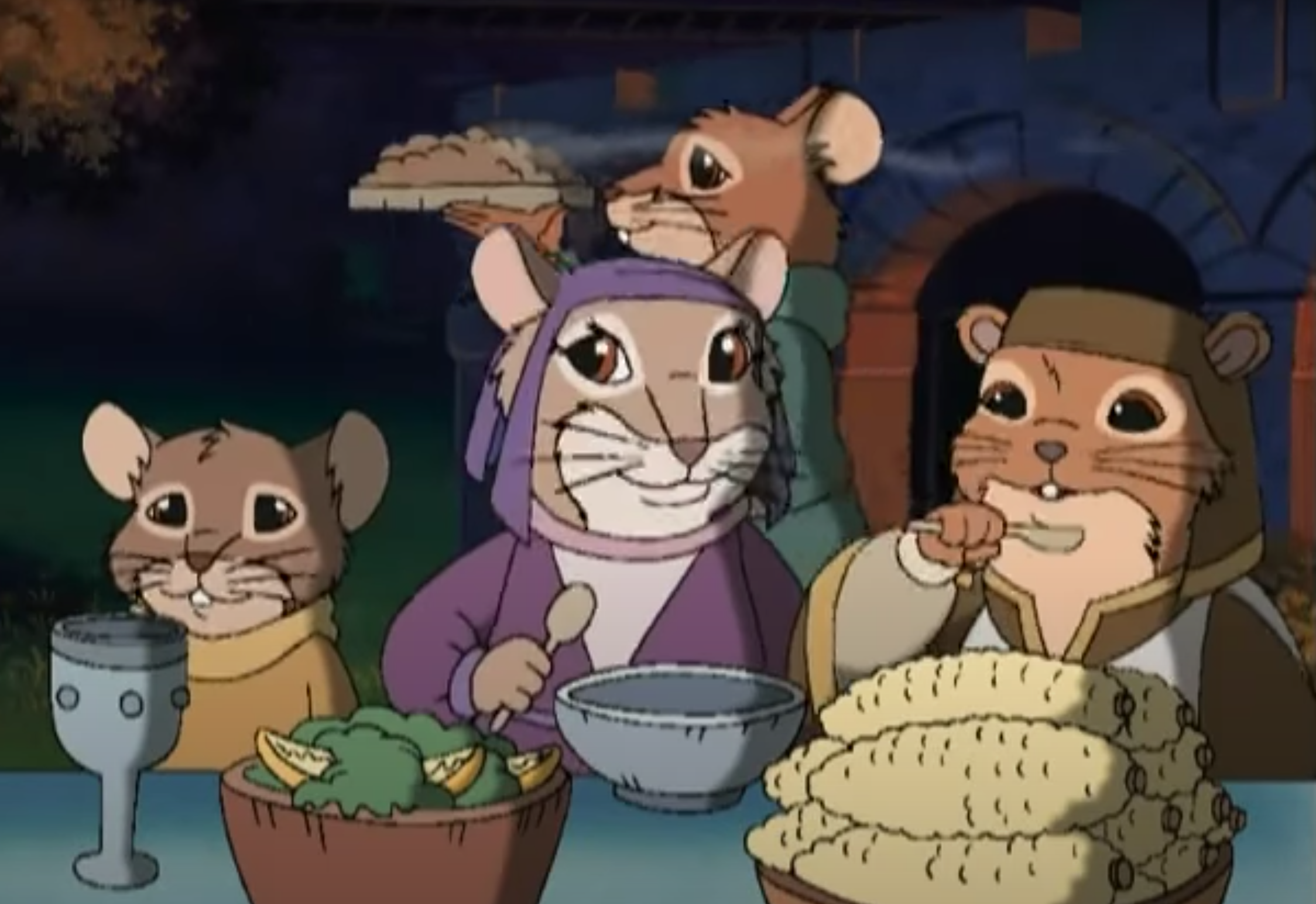
The 7 Best Feasts from the Redwall Books

Sometimes when I’m trying to trick my brain into calming down, I think about comfort foods: Toasted cheese on oatcakes; honey and blackberry pie; shrimp and hotroot soup; almond bread, warm and fresh from the ovens, spread with clover butter. 

This particular mantra of meals comes from the Brian Jacques Redwall series books I loved as a kid, a 22-novel world revolving around Redwall Abbey, its charming, medieval woodland characters, their adventures, and everything they ate along the way.

Jacques made food a character in these books as well as a ritual of familiarity or comfort or victory. As much as you expected heroic mice and a tale of adventure, you also expected feasts, especially to celebrate the triumph of good. 

Brian Jacques made food a character in these books as well as a ritual of familiarity or comfort or victory.

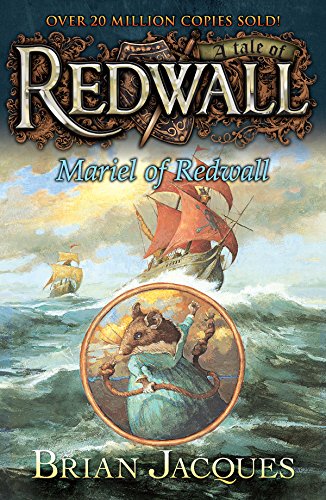
In Mariel of Redwall, for example, our heroes are preparing for battle in the story’s crescendo, about three-quarters of the way through the book, but before the action starts we have three pages of visiting warriors ruminating the food they’ve encountered: Turnip-potato-beetroot pie, cold fizzy strawberry cordial, damson shortcrust and cream, cowslip and parsley liquor, brown ale, cheese and mushroom pasties, and nutbread cake iced with clover honey.

It’s a meditation on what makes life delicious, and these little love letters to simple delights eventually became an illustrated Redwall cookbook. This means you can bring these iconic feasts to life—possibly even bring a little Eulalia to your Thanksgiving—and there’s a Redwall Feast Bot Twitter account listing out dishes daily. 

Meanwhile, let your brain marinate in something delicious and gentle, with some of my favorite foods and descriptions from the Tales of Redwall.

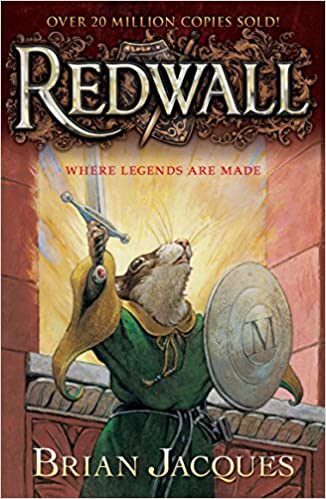
Redwall (Book 1)

“Bring the white gooseberry wine! Fetch me some rosemary, thyme, beechnuts and honey, quickly. And now, friends,” he squeaked, waving a dandelion wildly with his tail, “I, Hugo, will create a Grayling a la Redwall such as will melt in the mouth of mice. Fresh cream! I need lots of fresh cream. Bring some mint leaves, too.”

This is part of the first feast we get in Redwall, and it really sets the tone with the variety of flavors used in these simple meals as well as the abundance and near-outright worship of cream. As a kid, I didn’t think about where the anthropomorphic animals got said cream, and I won’t start now.

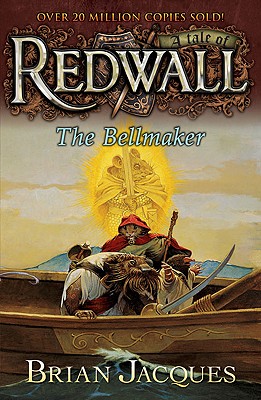
The Bellmaker (Book 7)

I say, I say, jolly old meadowcream pudden, wot?” 

“Just lookit those button mushrooms fallin’ out o’ that leek an’ onion pastie, m’dear. Absolutely spiffin’!”

It’s one thing to list the foods being enjoyed in narration, and entirely another to let a couple of hungry hares do it for you. It DOES sound absolutely spiffin’.

It was a joyous meal for honest creatures. Dishes were passed to be shared, both sweet and savory. October ale and strawberry cordial, tarts, pies, flans, and puddings, served out and replaced by fresh delights from Redwall’s kitchens. Turnovers, trifles, breads, fondants, salads, pasties, and cheeses alternated with beakers of greensap milk, mint tea, rosehip cup and elderberry wine.

But yes, the lists are also effective at making me wish I was at this meal. 

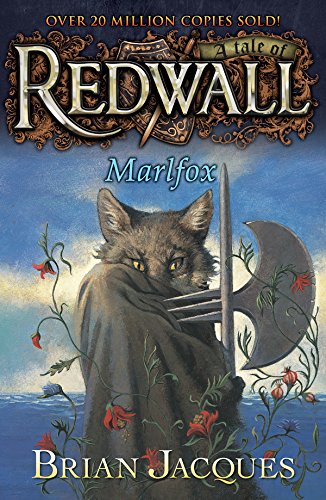
Marlfox (Book 11)

Hot cornbread with hazelnuts and apple baked into it, and a salad of celery, lettuce, shredded carrot, and white button mushrooms, with beakers of hot mint and dandelion tea to wash it down.

This is just one of the casual meals our characters eat while they’re out and about on quests, a quick breakfast or snack they find on their travels. And it sounds like something you’d currently find on a hip brunch menu for approximately $37.

Mariel of Redwall (Book 4)

 “Look, dried Applewood and sweet herbs to burn—it makes my abode smell fresh in the mornings. Now, you will find a small rockpool outside to wash in, and I will prepare wild oatcakes, small fish, and gorseflower honey to break your fast.”

This character’s name is Bobbo and he’s a dormouse with a wildly traumatic past who lives in a cave with his buddy Firl, who is a newt. We meet Bobbo when he pops up to help our heroes on their quest and rest at his cave with aromatherapy, a bath, and a delicious meal. I love you, Bobbo. 

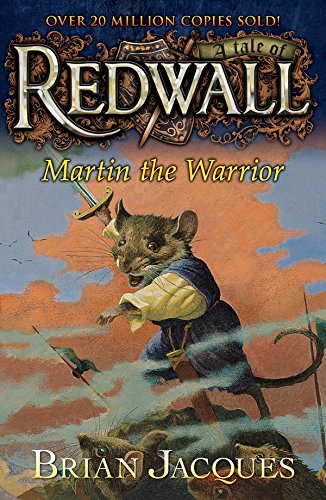
Martin the Warrior (Book 6)

Dishes went this way and that from paw to paw, snowcream pudding, hot fruit pies, colorful trifles, tasty pasties, steaming soup, new bread with shiny golden crusts, old cheeses studded with dandelion, acorn and celery. Sugared plums and honeyed pears vied for place with winter salads and vegetable flans.

New bread! Old cheeses! It’s a cornucopia of simple foods made well and with love, which qualifies them as comfort food even if I haven’t technically eaten them.

Mossflower (Book 2)

“You’ll like Goody Stickle…wait till you taste her spring vegetable soup, or her oat and honey scones, piping hot and oozing butter, or her apple and blackberry pudding with spices and cream, or just her new yellow cheese with hot oven bread and a stick of fresh celery, aye, and a bowl of milk with nutmeg grated on top of it…”

This is Gonff the Mousethief waxing poetically about a hedgehog’s cooking while he’s falling asleep in jail and it’s the same relaxation technique I use as an adult human to cope with our current pandemic realities. Hold steady, for on the horizon, there’s a good, warm meal prepared by loving paws.

The Force of a Daughter Cannot Be Measured

The Science Teacher’s Daughter

The science teacher does not feel feelings. He feels forces. “Now, what kinds of forces do you think I’m referring to?” he might ask his students, at least three of whom have called him “Dad” accidentally, which he finds sweet. He also finds it a bit intrusive, but only when he thinks about it on the weekends. Like a dog, he is smart at being lovable and at engaging the material of the world, but unaware of what exists in realms he can’t directly sense. To him, water is just hydrogen and oxygen.

The science teacher dwells on land and deals in sanity; he wakes up early to go for runs and learned to tie a tie many years ago. His learning objectives build on each other over the course of the semester in a purposeful progression. He enjoys the enclosed exhilaration of recreational hockey. After dinner, he washes the dishes promptly.

When he has something to say, he communicates in a clear, measured way—measured with beakers and rulers and quantified by graphs, but qualified too, always qualified, so no one would mistake him for mean. 

The science teacher is rational, even when it comes to love, which makes most people come undone at the edges no matter how cleanly they’ve constructed themselves. His wife is just his type: dark-haired, glasses-wearing. But he still loves her when she puts her contacts in and bleaches her hair.  

He is certain he will impregnate her sooner or later—an experiment whose hoped-for outcome is a person for whom “Dad” will be no accident. The only accidents will be those little organic spills he’ll clean up patiently. 

The science teacher’s hockey buddy always says, “Don’t stick your dick in crazy.” Though this phrasing is crude, the science teacher does take pride in having applied the lesson by choosing a stable mate. 

What he hasn’t learned yet is that while chemical reactions can be contained within the walls of a lab, there are other kinds of energy that have too much potential, that can move between minds without touching anything. Strangeness is contagious, and the science teacher’s wife is not a teacher, but a student of strangeness, and with or without her glasses she sees it everywhere except for in him. 

She reads The Wall Street Journal and watches baseball and drinks white wine. Yet there is something wavering in her.

She travels daily into the city to speak gently to people who do not fit inside their given circumstances, and she carries the mark of them with her. It’s a kind of contamination that isn’t quite a smell and isn’t quite a stain. 

On a Sunday evening in early September, she draws his head to her thigh. Her skin is as soft as it always is tonight, but is it slightly saltier? The teacher can’t tell; his tongue is too insensitive. He fucks her politely, pleased at her pleasure and not noticing her mind running. 

On the train the next morning, she is pregnant and she knows it. The city glows in pre-dawn splendor as it sneaks closer and closer. In her un-airconditioned office, strangers arrive and leave in their expected sequence. She listens aggressively, performing the affirmations she has practiced so many times. She stares the talkers down as they fall open. She stares until they snap shut again from the shame of being seen. 

She smiles. The smile grows as she does. She feels whole. It feels good. She scrapes out the piths of the people in front of her until all that is left inside them is the sticky residue of the worst things they have come in contact with. And she fills them back up. Slowly, over many cycles of the moon. 

All sensations are diluted over this great expanse of time. Her patients are barely aware of what is happening until suddenly they find they contain more of her than themselves. They feel whole. It feels good. Some of them also find it a bit intrusive, but only when they think about her on the toilet.

Her midwife’s name is Joy. Joy holds her while she is panting in the darkness and warmness of the outdoor birthing tub. The science teacher is at her side. His toes touch mulch and his fingers skim the water. She is pushing and pushing. He thinks she’s on the verge of a miracle, on the verge of a violent orgasm from the inside out. He marvels. The clouds are murky this morning, but he can see home through the oaks.

It’s raining, dripping into the pool. Drip, drop with each push, push, breath in, push, breath in, push, and she slips out: the science teacher’s daughter. Amphibious, alien, on the outbreath, like Sisyphus breaking free—the rock stays put. He cuts the cord. The newborn howls at the fragile sunlight and gentle rain. The father and mother take turns holding her to their naked chests, bundling her in their own living skins. She cries and cries, as yet unnamed.  

Processing Trauma By Giving It a Name

In the first few pages of Sarah Kasbeer’s essay collection, she shares a memory: when she was sixteen, her then-boyfriend punched her in the jaw. The memory, as we learn, is one mottled with blank spaces, a result of trauma and time, but also one that has shaped the course of her entire life. Through court documents she gains the courage to read two decades after the incident, Kasbeer begins to reckon with the truth of what happened to her.

To process pain in private is arduous in itself, but penning pieces that reveal the growths and gaps that stem from trauma is even more challenging—especially as a woman, for an audience. About this, Leslie Jamison, in her essay “Grand Unified Theory of Female Pain” wonders, “How do we talk about these wounds without glamorizing them? Without corroborating an old mythos that turns female trauma into celestial constellations worthy of worship?”

Kasbeer answers these questions through craft. She circles the site of trauma throughout the book, illuminating new complicated truths at each turn. Many of her essays, which have been published in places like Guernica, Elle, and Creative Nonfiction, are rooted in Illinois, a place steeped both in hope and horror, but range far beyond in subject matter; Kasbeer covers everything from the emotional lives of animals to the precision of a body mid-dive in A Woman, A Plan, An Outline of a Man so that readers might experience heartbreaks acute to adolescence as well as revel in the power of a woman who has rinsed herself free from shame.

Over the phone, I talked to Kasbeer about the cyclical nature of trauma, wound-dwelling, what it means to name violences, and how to tell the truth in nonfiction. 


Jacqueline Alnes: In some ways, to me, essay collections can feel like music where each essay is a variation on one song and you can listen throughout to the ways they work in concert with each other or how they change. In your collection, we return to a site of trauma and it resounds differently each time. How did you see this repetition informing your work? Or in some ways, did the repetition mirror the reality of trauma? 

Sarah Kasbeer: That’s it exactly. With a memoir in essays, you can revisit and relive the trauma the same way you experienced it. There are obviously things about trauma that remain fixed, but some of our memories change. In order to understand what happened and why means you have to go through different stages. First, you are triaging the thing that happened. Only afterwards do you begin to realize how it affected you in different ways. For me, it was present in my relationships, how I acted at work. It seeps into everything in your life. 

An essay collection lets you look at trauma through a prism. As time passes, you can have a different lens on the same story. Having a specific set of events that you’re circling means you really can’t write one essay about how “I was raped and now I’m fine” and be done. There are other interconnected events: How did people respond to you? How did you manage it for years? What about other things that happened that you didn’t realize were connected but that, in retrospect, left you not in the best place to handle a new traumatic event? Coming from a memoirist’s perspective—as the person who experienced the trauma—it’s kind of a muddled cloud. It’s hard to see the forest for the trees. Or it’s hard to see the trees for the forest. I’m not sure what I can’t see, but I can’t see one of them. 

JA: That’s such a beautiful way of putting it. I tell my students that, too. They write an essay and put so much weight on it as being the one essay they might write about a traumatic experience. I tell them they’ll probably write about it dozens of times, and each iteration will be valuable in a different way. 

SK: I think a lot about the way Leslie Jamison calls herself a “wound-dweller” in The Empathy Exams. I’ve always liked that description.

JA: There’s a scene that comes late in your collection when you’re at a gun range for the first time. Part of the appeal of the range, you discover, is that you hope someone will notice you are there and understand “you were mourning something real.” It is an attempt to make an often invisible trauma something able to be witnessed and held by someone else. Did writing mirror that process?

SK: Definitely. I carried two traumas for a very long time: my first boyfriend was abusive and violent, and then I was raped by an acquaintance. I do think that I already had a storage compartment for the bad feelings from the first incident. So it was easy to tuck it away the second, even though I knew it was there and affecting me on some level. It was more painful to excavate and look at it than it was to say I’m just going to put it into the container. 

At some point, I wanted other people to know. I wanted to put it on a sign on my front door. I want to scream it at everyone who passed by. I realized that I’d been holding this thing for so long. Part of the trauma is being alone. It feels like being trapped in a closet with the monster you’re afraid of. It helps to open the door and let it out.

My theory is that in the comment section of a personal essay about rape, there’s always a man who realizes he’s raped someone.

I wrote essays and put them out into the world partly because I wanted to be seen. I published my first one, the title essay in 2016. What I noticed that encouraged me was that I felt like people learned from it. My theory is that in the comment section of a personal essay about rape, there’s always a man who realizes he’s raped someone. I think one guy said in the comments something like, “Wait, but if XYZ.” Then a woman responded with, “Well, that’s what you should say: Are you okay? That’s why you should be actively asking for consent. Right?” At the time, this kind of discourse felt novel and useful.

I did feel pressure to create a work of art. For me, shining a light on this issue was valuable enough. But it is often artfulness that helps readers engage with the writing and think about how it relates to their life experiences. This was actually more rewarding than trying to turn a painful thing into art. It can be maladaptive to think, “Oh, well, if I take this thing and I make it into a book or I make it into an essay, and then it’s been, or it’ll be, worth it.” And that’s not really helpful either. But I do think that the way that you heal from this sort of thing is through relationships with other people, whether they’re strangers on the internet who write you messages, or it’s telling your family or your partner or whomever. In my case, writing led to that.

JA: T Kira Madden has an essay about how writing about trauma is not wholly healing in itself but that making room for cathartic acts alongside the writing can be. I have felt that in my writing—I have to be doing the work in therapy or other spaces alongside writing. 

SK: I have mixed feelings about it. I think that yes, you obviously have to go to therapy and do the work outside of the actual writing. But for me, writing is the way that I think through things. So to say that I’m not processing something when I’m writing, it would be intellectually dishonest. There’s always an extra step in writing of turning experiences from your life into a narrative. On a craft level, the reader is going to want to follow a thread because they feel they’ll get something out of it, whether it’s entertaining or beautiful or moving. And that’s not the therapy; there’s nothing moving about my therapy. 

JA: For me, there’s some power I find while writing that I don’t find in therapy. I feel like I have control on the page.

Something I found valuable here is how you write about coming to terms with what happened to you—to name rape and find power in the naming—but also reckon with the privilege that you have. You write that at one point, an ex “introduced me to ethnic slurs I didn’t even know existed” and admit that “at the time, I attributed them to shoddy upbringing” before talking about your perspective now. What did you find important to consider while writing about trauma from a position of privilege?

SK: That passage is from an essay about my first boyfriend who was violent. I think addressing the intersection between his expressions of racism and misogyny felt important, because it illuminated how oblivious my privilege allowed me to be about both issues When you’re writing about or working through your own trauma, the first thing you’re focused on is yourself. Once you get to a point where you’ve dealt with the things you needed to personally, you can look at the bigger picture and ask, why did this happen? I think a lot of women think “this happened because of me.” But if you look at the bigger pattern behind violence against women, misogyny is really the issue. 

While working on this, I also recognized that it is an utter privilege to have access to therapy. I didn’t have insurance that covered therapy until I was 30, which was the only reason I was able to work through my experiences. And also to be able to make  time. I don’t have kids and in the essay you mention, I wrote about having access to abortion, to reproductive choice. If I hadn’t had that, I would have been tied to this man who was a repeat offender for the rest of my life.

You can’t write about your life without acknowledging why you’re able to write about it.

JA: In your essay “Apollo’s Revelation,” you include direct email excerpts from the man who raped you. It reminded me a bit of Jeannie Vanasco’s Things We Didn’t Talk About When I Was a Girl. In that book, she reckons with what it means that she is including her rapist’s voice on the page. 

I found the email excerpts in your essay to be jarring, in a productive way, and wondered how you came to the decision to include them. 

SK: This goes back to what we were just discussing about how there’s therapy and there’s writing. In 2015, years before I wrote the essay, I emailed the guy, because I wanted him to know that I knew that he raped me. That was really the whole point of the email. I thought he probably just wouldn’t respond, but he did. He wrote me back in a way that wasn’t completely satisfying, but also not surprising. He admitted that what he’d done was not right, but he didn’t like the word “rape” being associated with it, which in some ways is understandable. I also couldn’t use the word for 10 years even though I knew this thing had happened. 

I thought about the email again three years later when I was trying to finish the book. It was one of the last essays that I wrote. I wanted to share any answers I had to the question I was circling with the reader. I realized I had this resource, which does it in direct quotes. Because the excerpts are pulled out of context, I tried to err on the side of making him seem somewhat reasonable compared to what I actually experienced based on his replies. But I also felt like, I’m going to tell my side of the story, no matter what, so I may as well also include his.

I understand the idea of not wanting to give an abuser a voice, but at the same time, sexual assault  is an epidemic. And the things that he said are things that I’ve heard repeated in the news in other people’s cases on social media. They’re not unique to him. 

JA: In “On the Edge of Seventeen,” there’s a part at the end where you name what has previously been unnamed: you bring in court documents that have language like “physical contact,” “bodily harm,” and “aggravated.” To me, it was so important to think about your journey of naming trauma throughout the book. 

SK: Yeah, those phrases stood out to me as well, which is why I included them. In part, I think because I always minimized, saying oh, yeah, I had this boyfriend who was a real asshole. He got drunk and punched me in the face. But really, he harmed me. He scared me. He stalked me.

To be able to rediscover on paper an objective account of what happened changed my whole perspective of the assault. It always held a lot of power over me, but then I saw it on paper and thought, yes, that is what happened. And now I can kind of stop questioning whether it was a big deal or not a big deal and just say, this is what it was and move on. 

JA: The language makes it so it’s visceral on the page, too, especially since you are framing the documents in your own narrative. 

Part of trauma is being alone. It feels like being trapped in a closet with the monster you’re afraid of. It helps to open the door and let it out.

SK: Yeah, it’s always tricky. I hate saying “my rape.” Or even “I was raped.” It’s like when news outlets use passive voice to say “police involved shooting,” right? When I was able to write “he raped me” I felt better, but it’s something I thought about the whole time I was writing. 

JA: You have this really great line when you are talking about leaving the church. You write that without religion, there’s no map for the gray area. I think it relates so well to ideas of truth in creative nonfiction and how you have crafted such complicated, empathetic essays. In your collection, you have court documents, interviews, and scientific studies, but then as you write, the murkier gray areas of life emerge. 

SK: I think the more you can frame contradictions, the more interesting an essay is. Obviously, there is no one arbiter of objective truth that we can go to and say, “this is what happened.” There are different strands of or different angles on the same incident. I think a lot about understanding things over time, and how my understanding has changed. Memories that were true to me at one time aren’t exactly true any more. And what does that mean? It doesn’t mean there’s an objective truth and I got it wrong, it just means that my understanding has changed with time. And there’s value in thinking about that change. 

You can only tell your side of the story, but if your side includes you wondering about someone else’s side of the story, then that becomes part of your truth too. The most interesting truths take a while to get to and aren’t the most obvious.

JA: I like the idea that you can honor a variety of truths and not feel like you have to flatten the narrative for the one that seems easiest.

SK: Exactly. The expected one is the one you’ve probably been thinking about for a while. The real story is underneath that. 

A Definitive Ranking of Roald Dahl Film Adaptations

Roald Dahl holds a special place in my childhood. I still have vivid memories of reading Charlie and the Chocolate Factory and Matilda in school (we even read his rather unsavory memoir Boy; his accounts of boarding school bullying haunt me to this day!) and of watching the delightful early ’90s film adaptations of some of his better known works.

It’s no surprise his books have proven fertile ground for both sublime cinematic gems and deliriously horrid film versions. 

I can still trace my love of language to his wordplay-loving novels, many of which I devoured as a young precocious kid. Take The Witches, which has just gotten yet another film adaptation. The book is terrifying all on its own given its premise, but it was the language which made me enjoy it all the more, opening up worlds I didn’t know were possible: “A real witch gets the same pleasure from squelching a child as you get from eating a plateful of strawberries and thick cream.” It’s the word “squelch” for me that truly signals why Dahl’s prose was always so wickedly revolting—and I mean that in the greatest sense. Diving into the worlds of Matilda or Charlie or James (or George, from George’s Marvellous Medicine, which my third grade class adapted into a play with yours truly in the titular role) was to enter a world where the wonder of childhood was the greatest antidote to the cruelty and capriciousness of adults. Dahl’s books never sugarcoated the ills of the world but presented them instead as dastardly evils in need of being faced and vanquished. 

But with characters that include wicked witches with nasty sores on their scalps, prank-prone Twits covered in hair all over, good-natured female spiders and Big Friendly Giants, it’s no surprise his books have proven fertile ground for both sublime cinematic gems and deliriously horrid film versions. 

For fun, I’ve gone ahead and ranked the many films that have tried to replicate Dahl’s wit and charm on the page. You may find the order revolting, so know it is wholly subjective and driven solely by my whims and desires. Dahl would have it no other way; I am a grown up, after all.

15. Four Rooms (1995)

Count me among those who never knew (or had selectively forgotten?) that Quentin Tarantino had directed a Dahl adaptation! Except, the more you learn about this ill-fated affair, the more you realize why it’s so seldom discussed. This anthology film—which features segments by Robert Rodriguez, Alexandre Rockwell and Allison Anders—is inspired by the British author’s lesser-known adult short stories. Revolving around guests staying at the Hotel Mon Signor, Four Rooms is, perhaps, like all anthology films, only as strong as its weakest entry. And well, when one segment is about a witch trying to secure semen to finalize a potion with her coven that co-stars Madonna… well, you can imagine.

14. Breaking Point (1989)

Speaking of Dahl adaptations that rarely get talked about: this remake of an adaptation of a short story feels remarkably forgettable. Made for television, this is a competent take on Dahl’s “Beware of the Dog,” a short story about a young pilot who, after a collision, finds himself bedridden, cared for British nurses who seem very interested in his squadron’s location—a detail they insist is moot considering the war (that’d be WWII) is over. But is it? The twist in this thriller is much more effective in the span of a short story (originally printed in Harper’s) than in a full-length film, but it may well still pack a punch if you don’t see it coming from a mile away.

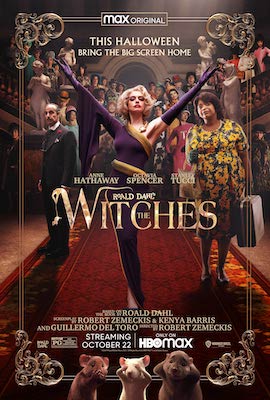
13. Roald Dahl’s The Witches (2020)

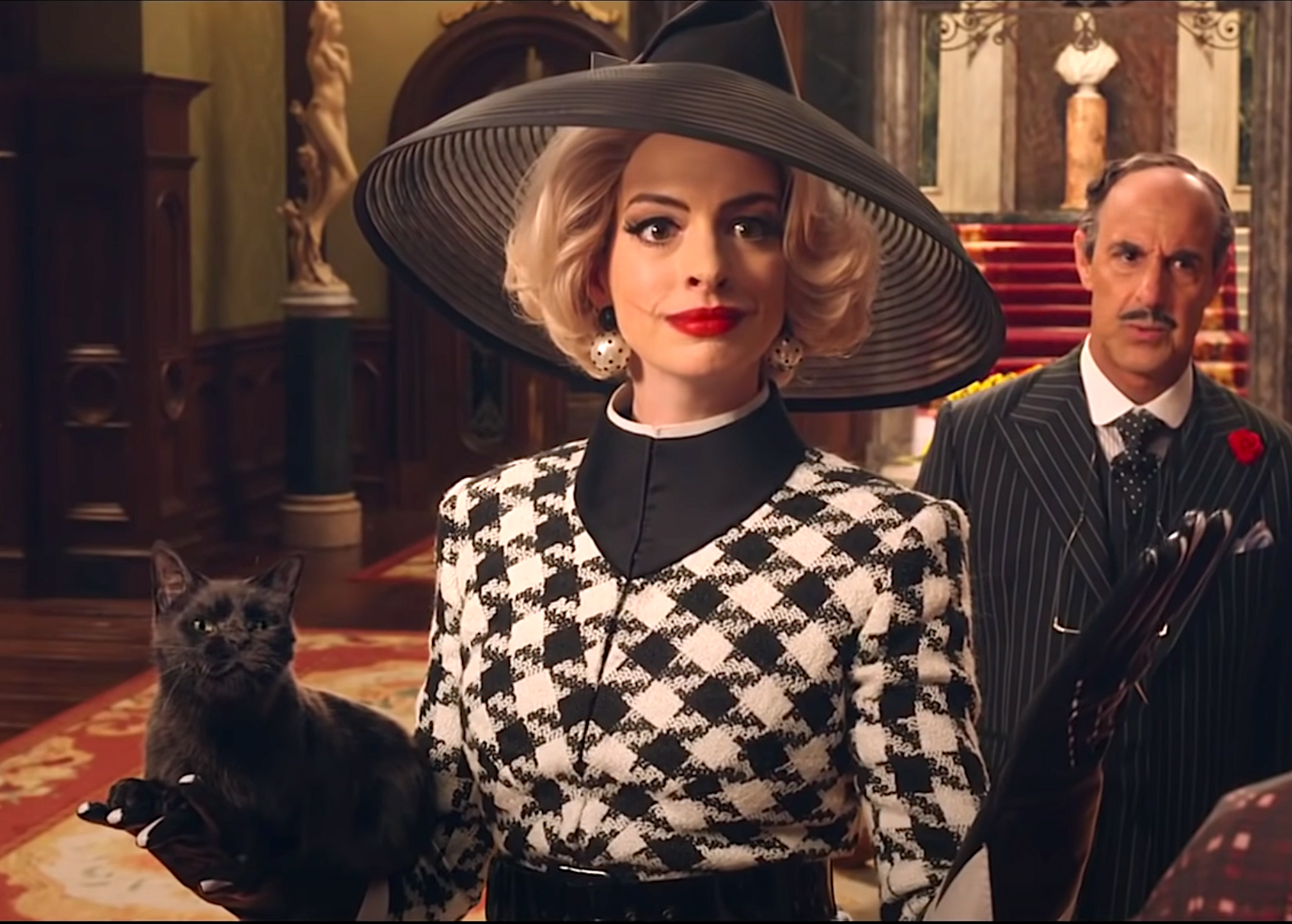
Let’s get this out of the way: the new Robert Zemeckis adaptation of Dahl’s 1983 classic may boast the author’s name in its title, but it is arguably the least Dahl-like of his filmed adaptations. With a screenplay that aims, alternately and incongruously, between being an outlandish campy remake and a grounded scary fantasy adventure, this garish-looking film ends up wasting the thematic potential of pitting a Melania-sounding Grand High Witch (Anne Hathaway channeling a “Be Best” sensibility) against a young orphaned Black boy in 1968 in Alabama who’s been turned into a mouse. Neither ridiculous enough to pull off its attempts at absurdity nor committed enough to its ‘60s Southern backdrop, Zemeckis’s film even fails at becoming an enjoyable bad film. It limps along, firmly believing standing apart from the 1990 film of the same name is an accomplishment all on its own. Hathaway’s costumes are fab, though.

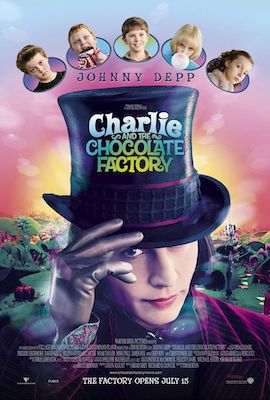
12. Charlie and the Chocolate Factory (2005)

Speaking of garish 21st-century takes on Dahl’s work, who could forget Tim Burton’s horrid adaptation of Charlie and the Chocolate Factory—no matter how hard we try? Turning the central candy maker into a pale, high-pitched loon who couldn’t help echo a certain King of Pop, Burton and star Johnny Depp keyed into Dahl’s cruelty but wrapped it in a wholly unsavory package when re-telling the story of a young, wide-eyed boy who earns a chance to visit the famed Wonka candy factory. Burton’s signature style has worn thin in recent decades, his gothic inspiration giving way to brassy CGI spectacles that feel rather weightless and toothless. This adaptation was no exception, valuing psychedelic art direction and kooky costumes over any and everything else. The line “Why is everything here completely pointless?” seems more self-aware than Burton and writer John August likely intended.

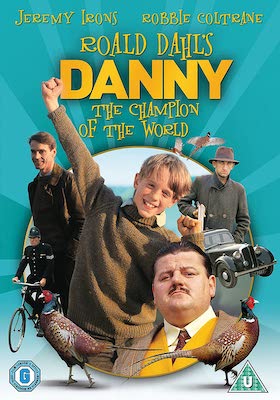
11. Danny, the Champion of the World (1989)

I’m not saying Jeremy Irons’s chiseled cheekbones alone make this take on Dahl’s story about a young kid and his pheasant poacher father endlessly watchable. But I’m also not not saying that. A tad quaint and truly the kind of British fare you’d expect for a made-for-TV movie, Danny, the Champion of the World follows Irons and his son Samuel (in the title role) as they hatch a scheme (involving the aforementioned pheasants) to stay in the land they own and foil the plans of the resident wealthy landowner who hopes to oust them for his own benefit.

10. The BFG (2016)

It’s a shame that the bottom rung of this list is populated by great names like Zemeckis, Tarantino, Burton, Guillermo del Toro (a writer on the recent Witches), and Steven Spielberg. Yet there’s no denying that the E.T. filmmaker was always going to be an odd match with Dahl. The director’s brand of mainstream schmaltz hasn’t precluded him from making transcendent family friendly fare, but somehow the gee-whiz CGI spectacle of The BFG muddles more than elevates this take on Dahl’s classic, which had already gotten a lovely animated treatment a quarter of a century prior.

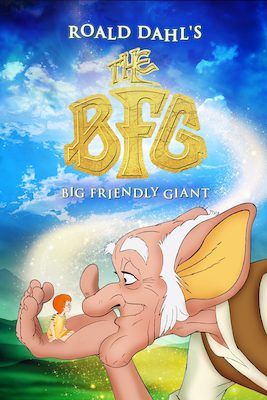
9. The BFG (1989)

I’m trying not to let nostalgia get the best of me here. I have fond memories of this animated take on the “Big Friendly Giant,” but looking back on it, the animation leaves a little to be desired. It’s not quite as slick as the great Disney fare of its time—and it feels all the more shoddy compared to Spielberg’s attempt—but there’s something to be said about its roughened edges, which are much more endearing than you’d first care to admit. Sometimes, after all, an absurd-sounding tale about a friendship between a young girl and a giant who catches dreams (and who ends up having a face-to-face with Queen Elizabeth herself!) is better suited for the malleable world of 2D animation.

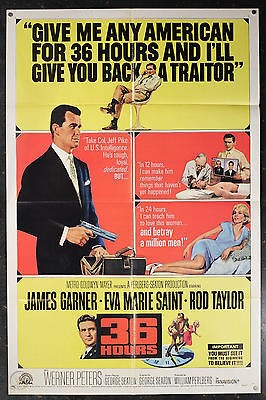
8. 36 Hours (1964) 

Listen, you had me at James Garner, Eva Marie Saint, and Rod Taylor. The success of this suspenseful George Seaton take on Dahl’s “Beware of the Dog” short story arguably depends on quite a high level of suspension of disbelief (the entire plot hinges on an intelligent officer being duped into thinking years have passed since he was unwittingly captured and is now encouraged to believe it’s okay to divulge key military secrets to his secretly-German-passing-as-British abductors). But it’s ingenious if you just let yourself be taken on its wild ride.

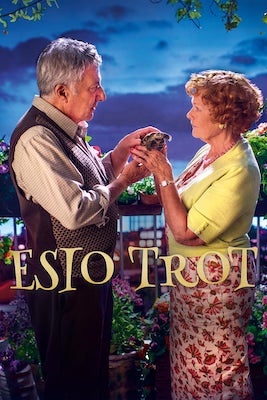
7. Roald Dahl’s Esio Trot (2015)

Proving not all Dahl’s stories revolve around horribly cruel adults, this sweet story centers on an elderly gentleman who concocts a plan to woo his downstairs neighbor with the help of a spectrum of differently-sized tortoises. That may well sound too twee, but trust the man behind British classics like Love, Actually and Four Weddings and a Funeral to bring just the right amount of sentimentality to this unlikely romcom to make it sing. Both on the page and in Richard Curtis’s amiable adaptation—which stars none other than Dame Judi Dench!—the tale of Mr. Hoppy and Mrs. Silver hums along with a sweetness that’s never too treacly. 

6. Revolting Rhymes (2016)

Nominated for an Academy Award for Best Animated Short Film back in 2017, this BBC production turned five of the six poems from the 1982 book into a breezy comedic take on some of your favorite fairy tales. Only don’t expect Little Red Riding Hood or Snow White to follow the scripts that have long been associated with them. Just as in Dahl’s playful poems (“The small girl smiles/Her eyelid flickers/She whips a pistol from her knickers/She aims it at the creature’s head and BANG! BANG! BANG! she shoots him … dead.”), the characters in Jakob Schuh and Jan Lachauer’s animated film turn the tables on those old-fashioned tales, remaking and refashioning them for a modern audience (spoiler alert: Red does get herself a wolfskin but the actual ending is decidedly less bloody, and much more touching, than Dahl’s original poem).

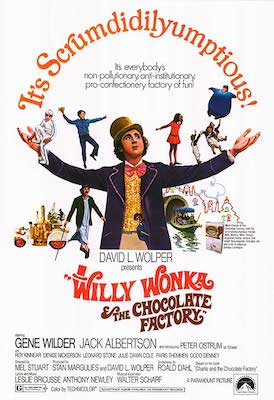
5. Willy Wonka & the Chocolate Factory (1971)

You’d be forgiven for thinking this family classic should rank higher—or possibly lower. Your mileage will vary depending on whether you fall into the “it’s an undisputed classic” camp or into the “it’s an aberration Dahl himself rebuked” one instead. Both are true! The best aspects of this musical adaptation of Dahl’s 1964 novel are the very things the author disavowed: its leading man (Gene Wilder) and its hummable songs (especially “Pure Imagination”). Those two decisions softened the edge of Dahl’s plot about the eccentric candymaker and, in the process, made the chocolate factory tour more saccharine than it reads on the page; Wilder is definitely off-kilter, but there’s a warmth to him that makes him endearing rather than terrifying. With his signature purple suit and hat, Wilder’s Wonka has become an icon (and a meme!) in his own right, eclipsing, perhaps, Dahl’s initial concept for the reclusive character. Nevertheless, there’s no denying that the film’s endurance has led many a film fan to get lost not just in Mel Stuart’s kitschy Wonka factory, but in Dahl’s book and sequel.

4. James and the Giant Peach (1996)

Before the peach became an emblem for thirst and class warfare on screen (see: Call Me By Your Name and Parasite, respectively), it was most iconically associated—in my head, at least—with this classic Roald Dahl tale. And while I admit I’ll never again be able to read this title without a certain emoji, and its many associations, coming to mind right away, that shouldn’t take away from the whimsical animated film that first made me fall in love with James in the first place. With a whimsy that feels of a piece with Dahl’s greatest writing, Henry Selick (he of Nightmare Before Christmas fame) made the many outrageous characters that populate this fable about a boy eager to rid himself of the horrid aunts who care for him (including a talking spider voiced by Susan Sarandon and a a centipede voiced by Richard Dreyfuss) feel both ridiculous and heartwarming in equal measure.

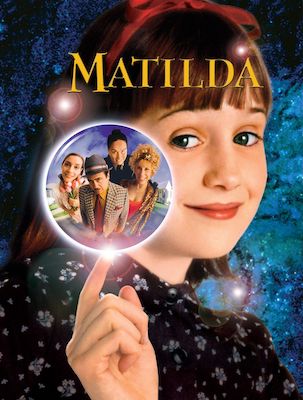
3. Matilda (1996)

If you were a bookworm growing up (and perhaps even if you remain one), there was something rather radical about Matilda, book and character alike. Here, after all, the penchant for stories and the hunger for reading were cast as central to a young girl’s budding magical powers. Matilda’s precocity may be cause for disdain by her parents, but to Dahl, it was key to her strength. Plus, she knew how to play a mean prank. With Mara Wilson in the title role, director Danny DeVito (yes, really) found the perfect girl to capture the giddiness of Dahl’s heroine without losing any of her bite. Moreover, DeVito’s fascination with black comedy (see Throw Momma from the Train and The War of the Roses) meant he didn’t shy away from the darker edges of this otherwise family-friendly affair. Pam Ferris’s cruel headmistress Agatha Trunchbull remained just the right mixture of appalling and absurd, anchoring, along with DeVito’s Harry Wormwood and Rhea Perlman’s Zinnia Wormwood that most insidious and dangerous of adults Dahl could envision: joyless anti-intellectual grown-ups with children in their care.

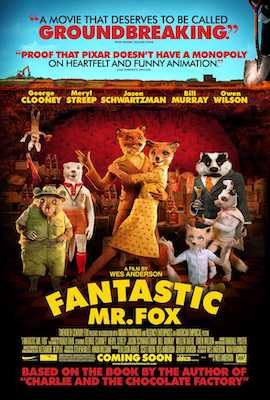
2. Fantastic Mr. Fox (2009)

Given Dahl’s wild imagination, it’s no surprise his work pairs so well with animation. Still, if you’d told me Wes Anderson, he of Rushmore and The Royal Tenenbaums fame, would helm one of my favorite—and, arguably, one of the best—Dahl adaptations around, I wouldn’t have believed you. Yet Anderson’s exacting visual formalism (he’s never met a symmetrically framed shot he dislikes) and his self-serious twee sentimentality made for a remarkably good fit for this stop-motion take on Fantastic Mr. Fox, which boasts the voice work of the likes of George Clooney, Meryl Streep and Anderson staples like Bill Murray, Jason Schwartzman, and Owen Wilson. Offering a decidedly playful and sly take on Dahl’s fable that nevertheless spoke to the filmmaker’s signature themes (a father-son relationship is here central in a way it is not in the book, for instance), Anderson managed to make this story about a wily fox intent on outwitting three farmers intent on capturing him into a film about the anxieties of family life and the weighted expectations of growing up. 

1. The Witches (1990)

Is it unfair to reduce the success of The Witches to Anjelica Huston’s divine performance as the Grand High Witch? Perhaps, but the Academy Award winner’s take on Dahl’s masterful creation is arguably what both grounds and elevates this adaptation. Yes, the film does give us a more traditional happy ending than Dahl envisioned for his boy-turned-mouse protagonist, but in Nicolas Roeg’s hands, this 1990 adaptation really revels in the dark fantasy elements that have made The Witches such a lightning rod of a book. The image of Huston’s monstrous true face, with her elongated nose and sore-filled scalp, is one of the rare instances in which a live action riff on Dahl has felt as much an homage to his deliciously dastardly prose as to Quentin Blake’s iconic illustrations. Add in Jim Henson’s puppet work, which feels now like a welcome lo-fi take on special effects, and you’ve got a truly terrifying family film that’s sure to scar you in all the right ways. If you haven’t caught it, let me just quote Huston’s witch: “You’re in for a treat!”

Stories Happen in the Space Between How We Feel and What We Say

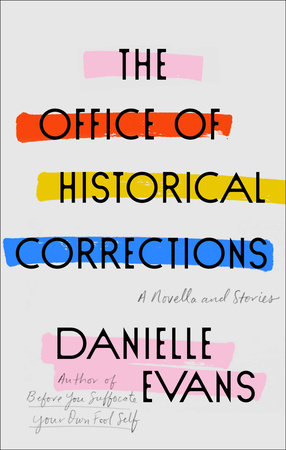
Short stories are a complex form, one that author and professor Danielle Evans continues to show herself adept in. The ever-shifting opportunities of short fiction are evident in Evans’s work, from her debut collection Before You Suffocate Your Own Fool Self to her latest, The Office of Historical Corrections.

The Office of Historical Corrections by Danielle Evans

The titular piece is a novella about a fictional office, the Institute for Public History, where we follow a field agent meant to correct a “contemporary crisis of truth” in America. In “Why Won’t Women Just Say What They Want,” a master manipulator attempts to make amends to the women in his life, though this attempt comes into question. In “Richard of York Gave Battle in Vain” Dori’s awkward invite to an equally awkward bridal shower exposes a bond in grief, and Best American Short Story 2018 entry “Boys Go to Jupiter” reflects the balance and backdrop of Claire’s decisions, her own evasive tendencies and the consequences. Everything is complicated in Historical Corrections, and by unraveling these complications through her characters, voice, and environment, Evans offers commentary on our daily life that isn’t just topical but eternally relevant. 

Danielle Evans and I spoke about her approach to the short story and teaching, the prevalence of questions that abound in her fiction, and how the true story, no matter the length, unveils itself in revision. 


Jennifer Baker: When I read this collection I thought “Race is definitely part of these stories and there’s so much more that Danielle is presenting that makes me realize how messed up we are as people.” Evasion sticks out to me especially now that we’ve been quarantined with ourselves and haven’t had to look at themselves very deeply before. Were you thinking about those connective threads even though these are all stand-alone pieces?  

Danielle Evans: I think my craft obsession is that gulf between what we think we’re saying and what we’re actually saying, or who we think we are and who we actually are. And that is something I come back to again and again both for context and for characterization. Because I think most possibility for narrative happens in that space. The space between how we feel and what we say, or who we thought we were and who we actually were when we had to make a choice makes narrative surprise possible. It makes writing these characters possible; it makes it possible for these characters to do something you didn’t expect them to do, but still feels in character and doesn’t break the mold of the story. And so a lot of the characterization is in that space, that sense of having sometimes a very self-aware performance that becomes second nature until something kind of calls it into question. (Like a long quarantine, perhaps). And it is related for me to those structural questions, though not exactly didactically determined by them, because I think the more of a sense of double consciousness or external gaze or other people’s expectations you have to navigate the world with, the more conscious you are of the gulf between what you would like to say and what you have to say if you would like to keep your health insurance, or what you’d like to say and what is safe for you to say and what will cause you harm if you say it. 

Because I’m writing Black women most of the time, I’m writing people who are very conscious of the stakes of not seeming in control or not meeting people’s expectations of them. Some of them react to that thinking [those expectations are] about respectability, and some of them react to that by understanding respectability is impossible. 

Jennifer: Related to that question of who we think we are is the story “Boys Go to Jupiter.” A version of it was published in 2017 with The Sewanee Review. I don’t know if you wrote this story post-2016 election or if it kind of formulated over time?

Danielle: Actually, I wrote that story in 2013, and I hung onto it for a while in part because I wasn’t supposed to be writing any short stories. I first got kind of mixed notes [on it], some people were excited about it, but I didn’t really have the energy to do a good revision of it at the time because I was working on this other thing. So, I put it in a drawer. I finished it finished it in… I guess it would’ve been early 2017. 

Because I’m writing Black women most of the time, I’m writing people who are very conscious of the stakes of not seeming in control.

The thing that changed between those early drafts and later drafts was mostly me trying to find a way to get more Aaron on the page. Because it is a story that’s about evasiveness. It is a story about a character who doesn’t want to be accountable or look at her own past or anything that she’s done. It’s a story about, partly out of grief and partly out of privilege, this person whose entire world is evasion and this is one of those things she really didn’t want to look at. And it was like, how could I get the scenes in this story so that Aaron feels like a person, which is important, when she’s not looking at him at this point like a person, or she’s not actually looking at the stakes of the situation or learning from it. All the work I did on it after 2014 was really scene-level work trying to think about how to let the Black characters in the story exist around this person who didn’t want to see them. So that you had the narrator, but you had something putting pressure on her version of the story.

Jennifer: How hard is that for you to figure out? Especially when you are considering the Black characters and not trying to implement a solitary focus of who the narrator is and their journey. You’re also thinking about the secondary and tertiary characters who matter so much to the story.

Danielle:  At one point I said, my third book is going to be a novel that takes place on campus, and I had this idea that there’d be four primary characters who would have their own section and Claire would be one of them. And then when I started writing it felt like a short story to me immediately. It felt like I could do the work in a short story space. In part, I felt like I could do the work because I realized that a lot of what I wanted to do with those other voices was to offset Claire. It’s a story that really belongs to Claire, and in some ways it would be problematic to have other characters come in to say, “oh she’s missing this” instead of inhabiting their own stories, to be secondary characters in her story for the sole sake of saying “oh but she’s wrong about this.”

I also felt there were ways in which [Claire] could obviously be wrong about things or obviously be missing things that I didn’t need to tell the reader. But if the reader wasn’t going to get to the end of the story and think “this is a story about a villain who doesn’t think she’s the villain” then there’s nothing I could’ve written for that reader. And it wasn’t my intention to try. What was important to me was that these characters put some pressure on her narrative by creating space for the omissions, but also feel like they didn’t just exist for that. That they were people off the page beyond what Claire was able to see from her own point of view. Trying to stick that into the story was a challenge because I felt like if I gave too much room to them I’m giving too much credit to Claire, but if I’m not giving enough room to them then they’re just there as footnotes to say “oh this person is unreliable.” I had to find enough room for that confusion to make the narrative go beyond what Claire understands. 

Jennifer: You mention seeing “Boys Go to Jupiter” as a short story and feeling that you could do this in the short form. And that you were attempting to write a novel. When it comes to recognizing form it sounds like you think very analytically. So I’m curious about your process. 

Danielle: I try to write a first draft as quickly as possible and take as much time as I need to revise. Because what I’m trying to figure out in the first draft is where the layers of the story are. 

I think, yes, the short story is a compact thing in some ways. For me, the pleasure of the short story form is to think about where all of the components of the story are coming at once. The story can be focused on a particular moment, but it can also move into the past and future as needed. And often when you get to a part in the story where the past, present, and future come together on the page in some way, that’s when you find out what the story is actually trying to do. And I like that compression, I like that intensity. I don’t think too hard about a first draft at all. But I do immediately on a second read start to ask what are the operating questions of this story, what are the operating intents of this story, and where do they come together on the page? 

I very much dread when somebody asks me to try to answer the question of how to be antiracist.

Jennifer: You said you didn’t intend for it to go where it went and maybe it’s an unanswerable question of how you got there. 

Danielle: There was a big rewrite between the first draft and the second draft. I figured out “oh this is where this is going, okay” and then to retool it to make it match the ending, which did feel like the right ending to me. But I felt like I hadn’t necessarily in the beginning set that up. And so, I wanted it to feel like you didn’t see it coming, but also that the story was unwinding, from the view of this character who feels various layers of guilt or evasion about what’s happened. But yeah, it’s interesting to think about it in the context of antiracist reading. This book was in ARCs late last year and I swear if it hadn’t already been in galleys when we were having the public conversation about Juneteenth, I probably would have changed the scene that references it. I was like, “Oh my god! Everyone is going to think I was trying to immediately write about topical things!” But the book was in galleys, so it was too late, people had already read it. The reference was there to mark that the story was set in some kind of alternate future, where Juneteenth was gentrified, and I just ended up writing about the present. Writing is a long process and in some ways always anticipating the future conversation, but of course you can’t actually predict the future or the exact world or conversation your book will be released into. 

Obviously racism was very much on my mind when I was writing these stories. But I also very much dread when somebody asks me to try to answer the question of how to be antiracist. You never want to be the reasonable negro in someone’s organization and you never want to be the unreasonable negro in someone’s organization. They’re both impossible positions.

Why Was Jack London’s Wife Written Out of His Legend?

Even if you’ve read Jack London, you might not know Martin Eden; whereas outdoors adventures The Call of the Wild and White Fang are frequently assigned in schools, the semi-autobiographical story of romance and writing is less well-known. The 2019 film adaptation by Italian director Pietro Marcello, released in the U.S. this October, may not move the needle too much—it’s a small release, with mixed reviews. But what’s really interesting about Martin Eden isn’t the story in the book or in the movie. It’s the story behind the story. 

London wrote Martin Eden (originally titled Success) during a voyage he and his wife, Charmian Kittredge London, took through the South Seas on a small yacht called the Snark. Charmian had given Jack the idea for the journey, one she had seen enacted by Joshua Slocum in his book about his own journey, Sailing Alone Around the World. She read Slocum’s book when it came out in 1900 and then saw the author speak at the Pan American Exposition in Buffalo, New York. When she and Jack started their affair, while he was still married to his first wife, the idea of this nautical journey around the world together was one of the shared interests that brought them together. 

Martin Eden focuses on a former sailor’s quest to find a better life through the pursuit of knowledge and art. Many scholars have observed that the text is somewhat autobiographical, but unlike the solitary Eden, who struggles with isolation from both his working-class background and the society he attempts to fit into, London was anything but a solo artist. Beginning with his 1904 novel The Sea-Wolf, London relied on Charmian to edit, type and sometimes even ghost-write parts of his famous novels. Martin Eden was no exception. Jack and Charmian began working on the novel while taking a break from their expected seven-year journey around the world, stopping to repair their boat in Honolulu in the summer of 1907, and Jack finished writing the novel in Tahiti in February of 1908. 

Marcello’s film emphasizes the androcentric lens. A young seaman who dreams of more for his life is transformed into an intellectually curious creature via his love for an upper-class woman, Elena (changed from Ruth in the novel). In Marcello’s telling, Elena and all of the other women who play opposite Martin are mere cardboard cutouts: flat and without growth. Martin (using their bodies, or minds) propels himself into a successful career as a bestselling author. When he meets his success, though, Martin finds it distasteful. He turns away from it—and from Elena, who comes back to him—because he feels that she, and the world around her, lack authenticity. Instead, the movie ends with a scene reminiscent of London’s ending. Except, instead of Eden jumping into the sea from a steamer bound for a new life in the South Seas, Marcell’s Eden just walks into the sea to his death. 

Both the movie and the book begin with a vision of a better life. Martin is fascinated by a painting of the sea he sees inside of Elena/Ruth’s eloquent home. He’s fascinated by how from far away the sea, and the boat within it, are beautiful, but up close they are just “careless dabs of paint.” To Martin, the idea that the painting’s beauty was only a trick was puzzling, foreshadowing the disillusionment he will have when he looks more closely at Elena and the others of her class and finds their beauty and wisdom disappears..

We can experience something similar by taking an up-close look at Jack London’s life. From far away, London was an individual genius writer. But up close, the ugly truth, the brushstrokes, that made that illusion so beautiful from afar are fully visible. Each adventure London sought and experienced, each book he wrote was aided by another force of nature: his second wife, Charmian Kittredge London.

Each book London wrote was aided by another force of nature: his second wife, Charmian Kittredge London.

When I was in the sixth grade, I visited Jack London State Park in Glen Ellen, CA on a field trip. Prior to this, I’d spent most of my childhood writing stories; however, I had no idea that one could actually become a writer. I had never even met a writer until the day I walked into the museum at the House of Happy Walls at Jack London State Park. Suddenly, walking through the exhibits, I saw you could spend your life traveling the world and writing about it. I fell instantly in love with Jack London and vowed to read everything he had ever written. What I didn’t know, though—and didn’t find out for decades—is that the house I’d visited that day belonged not to one writer, but two. Charmian Kittredge London, Jack London’s wife, was a writer, an adventurer, and the reason why this museum and park even existed, but when I walked through the museum, her story was not told. This idea of a woman’s life being devalued, or in Charmian’s case, eclipsed by her husband’s life, is all too familiar, especially in the literary world. And it is why I’ve spent the last six years of my life digging up the forgotten life of Charmian Kittredge London. 

Before they left on their long anticipated Snark journey the public was shocked that Charmian was not just going to be a passenger, but an actual member of the crew. The San Francisco Chronicle described her “In bloomer will tread the deck—Young woman to bear her share of navigating vessel during 7 years’ cruise.”  Although Charmian thought nothing of signing on as an able-bodied sailor, the idea of a woman disobeying gender norms caused several “concerned” citizens to write to Jack about their apprehension for Charmian’s health. She later remembered one of these letters: “I am minded of the solicitous old sea dog who warned Jack letter that it was not safe to take a woman outside the Golden Gate in a boat of the Snark’s size; that we would be bruised over our ‘entire person’ unless the boat be padded.”

It was on the Snark journey that Charmian came into her own as a writer. On the trip she’d begin to write three of the four books she’d publish during her lifetime:  The Log of the Snark, Our Hawaii and Our Hawaii: Islands and Islanders. As she wrote to her aunt while traveling on the first leg of the journey from San Francisco to Hawaii, 

I seem to be coming into my own…Without office life to vex & distract, my life is all education–the very living of it is such, & the work I do for Jack, is practical education, is practical education; there’s no let-up. Wouldn’t it be fine to go on writing? Perhaps I shall.

The thought of not only creating but publishing a book thrilled her. The public, the press and even Jack’s friends had been hard on Charmian since she married Jack and his oversized personality left her little room for her to be herself. But on the Snark, all changed. 

Over the next three years, Charmian would write every day about what they saw and experienced traveling from island to island on the Snark. But many of the extraordinary experiences she had, especially those that challenged gender norms, were excluded from her husband’s retelling of their adventures. For example, when Jack and Charmian spent a day surfing in Waikiki, Charmian was proud to catch a wave several times. So was Jack. When he wrote about his experiences surfing in the essay “A Royal Sport,” he failed to mention that his wife had successfully mastered a run or two. It was an omission that would recur throughout Jack’s account of the trip. Charmian understood that Jack’s brand was adventure. The more daring and interesting he appeared in his episode about their trip the more copies he would sell. And his feat of surfing on a ten-foot wooden surfboard would not have looked so adventurous if his small, fit wife had also accomplished the same thing. 

The Londons in Hawaii in 1915

They would visit seven major islands: Hawaii, the Marquesas Islands, Tahiti, Bora Bora, Fiji, Samoa, and the Solomon Islands, before their adventure ended abruptly in Sydney, Australia, because Jack developed a strange and troubling sickness. Charmian based her own writing on Joshua Slocum’s Sailing Alone Around the World, writing chronologically in a daily log that captured not only Jack’s adventures but her own. Writing the Log of the Snark shifted something in her and by the end of the journey Charmian saw herself as a writer. It was after their return from this journey, buoyed by this new found confidence, that Charmian began to provide even more input into her husband’s writing.

Had Charmian fully come into her own as writer before Jack began discussing and writing Martin Eden with her, she would likely have had more of her influence in it. Ruth (and subsequently Elena in the film adaptation) might have been a more dynamic character. In later years, Charmian would help Jack plan, research and write The Valley of the Moon, in which Saxon, the protagonist, is a strong woman who leads her husband on a quest out of the poverty of inner city life in Oakland to find a better, more meaningful life. But due to Jack’s image as an individual author, and the near-erasure of Charmian’s biography over the past 80 years, the truth of her input was never seen. When it comes to the lives of women, it’s time for us to step closer to the beautiful paintings of male lives and ask: What brush strokes were added by others to make that art?

Nobody Told Sanjena Sathian That Writers Are Supposed to Have Hobbies

In our series “Can Writing Be Taught?” we partner with Catapult to ask their course instructors all our burning questions about the process of teaching writing. This month we’re talking to Sanjena Sathian, author of the forthcoming novel Gold Diggers, who’s teaching a six-week fiction workshop on blending reality and unreality. In her class “The Real & The Unreal,” students will learn how to incorporate fantasy, magical realism, science fiction, or horror elements into literary work.


What’s the best thing you’ve ever gotten out of a writing class or workshop as a student?

Charlie D’Ambrosio convinced me of the importance of scene as the key way to dramatize every latent idea, character, or emotion in a story. I resisted this lesson for a long time, as I love chatty, essayistic narrators, but I realized that I did need to balance narration that “tells” with the vulnerability of “showing” in scene. Characters can run away from you in scene, saying what they want to say, instead of letting you hang out on your perch making wise observations. It’s good to give in a little.

What’s the worst thing you’ve ever gotten out of a writing class or workshop as a student?

Write even a dash of non-realism and you sometimes lose the entire class to people debating whether or not the magic was “real” or “necessary.” It can sometimes indicate a refusal to enter the space of the world that the author has put in the effort to create.

What is the lesson or piece of writing advice you return to most as an instructor?

I love my old professor Anne Fadiman’s favorite riddle: Q: How do you make a statue of David? A: You take away everything that isn’t David. We have to find the “David” of our pieces, leaving the rest of the marble on the floor. Other people offer different versions of this concept, asking what the “emotional question” or the “aboutness” of a story is. It’s about locating the heart of a piece, which the writer themselves may not actually recognize.

Does everyone “have a novel in them”?

Stability and sanity are nice, and I’m not sure the writing life is conducive to either or both.

We definitely all have narratives in us! But it takes immense work ethic and fanatical devotion to develop the craft of writing and to actually make that novel. 

Would you ever encourage a student to give up writing? Under what circumstances?

Definitely not. I don’t usually encourage people to try to do this with their lives—stability and sanity are nice, and I’m not sure the writing life is conducive to either or both—but I think everyone should write in some form, whether in literary journals or personal diaries.

What’s more valuable in a workshop, praise or criticism?

I think a workshop can identify the essential characteristics of a piece, which include the piece’s strengths and weaknesses. And often the things worth praising and the things worth criticizing are different sides of the same coin. 

Should students write with publication in mind? Why or why not?

I think we should all write with the goal of being legible—to ourselves and to others. I learned from years in journalism the maxim of “be kind to the reader.” That doesn’t necessarily mean imagining our names on the covers of bestsellers, but keeping a possible reader in mind can be very good for the work itself.

In one or two sentences, what’s your opinion of these writing maxims?

  • Kill your darlings: Ruthlessly! And remember that doing so isn’t an act of violence against your own work—it’s an expression of faith; it’s saying to yourself, I can do even better than this.
  • Show don’t tell: Show AND tell. Find the perfect balance between scene and summary; specific and general time; dialogue and narration.
  • Write what you know: Writing what we know gives the work an intimate and real quality, but we still have to make imaginative leaps, to ignite narrative engines (i.e. plots), and to empathize with and embody those unlike us.
  • Character is plot: Yes, but plot can come from outside character, too. You can put your characters in a completely “unreal” situation—they turn into a bug!—or a completely “real” situation—they’re going through a divorce; how they react to their given pickle pushes the piece forward, but the artifice of an inciting incident is also a way to let you explore your characters.

What’s the best hobby for writers?

Are we supposed to have hobbies?! 

What’s the best workshop snack?

Popcorn.

The National Book Awards Put Black Lives at the Center

The fête that is the National Book Awards didn’t lose steam because we were separated in our homes due to quarantine. There remained intrigue, surprises, celebration, and tears. So many tears. Not only from stunned winners but from executive director Lisa Lucas, who tried to hold them back during a speech full of gratitude and memories. In two months’ time she’ll hold a new role as senior vice president at Pantheon Books and Schocken Books, but last night she and the entire National Book Foundation team along with host Jason Reynolds steered us through the annual commemoration of books, books, books. But this wasn’t only a salute to everything leading up to the evening. It was also a reflection on a mission touted even more loudly since Lucas’s arrival to the Foundation. 

As is the usual format, the first honors of the evening tend to be the lifetime achievement awards. This year those accolades were bestowed to late Simon & Schuster CEO Carolyn Reidy (Literarian Award) and notable bestselling author Walter Mosley (Distinguished Contribution to American Letters). But in the middle, where there would normally be a break to dine, the screen instead faded to a video clip of 2011 poetry winner Nikky Finney’s speech where she talked about Black people being “explicitly forbidden to become literate” under slavery, and declared herself “officially speechless.” As her speech ended, a title card announced that the National Book Awards have been in existence since 1950 and “have honored over 2,700 books, becoming one of the most prestigious literary prizes in the world.” However, the text continued, only three writers of color were awarded prizes in the first 30 years of the Awards’ existence. They were Ralph Ellison (1953), Virginia Hamilton (1975), and Li Li Ch’en (1977)—I’ll also note that William Carlos Williams, of Puerto Rican–American descent, won the first award for poetry in 1950. Since 1999, a grand total of 13 writers of color have been awarded a National Book Award across categories. This data along with numerous stats over the years repeatedly conveys the limitations of the industry, not the artists.

Since 1999, a grand total of 13 writers of color have been awarded a National Book Award across categories.

At this point 2019 awards host LeVar Burton’s dulcet tones came in, conveying a firm commitment to “a National Book Awards that reflects the full depth and breadth of the human experience.” Over Burton’s declaration, viewers were greeted by an array of Black and Brown faces regarding their newly-won awards, and Black and Brown voices candidly discussing their challenges, beliefs, and love for the work they produced because we needed their stories as much as they needed to create them. 

For her first win in 2011, Jesmyn Ward said Salvage the Bones was “a life’s work and I am only at the beginning.” How right she was—Ward would win her second award for fiction, becoming one of the few to do so, in 2017 for Sing Unburied Sing. Terrence Hayes, poetry winner in 2010, said “It’s such a futuristic idea. A world in which the descendants of slaves become poets”—a sentiment echoed a year later in Finney’s speech about forbidden literacy. Ta-Nehisi Coates, nonfiction winner in 2015 for Between the World and Me a testimony of the disregard for Black life in America, insisted “You will not enroll me in this lie” of “Black people having a predisposition to criminality.” And 2018 winner for young people’s literature Elizabeth Acevedo stated the importance of the work being not for this moment on stage but for those reached. “I am reminded of why this matters,” Acevedo said, “And that’s it not gonna be an award and it’s not gonna be an accolade. But it’s gonna be looking someone in the face and saying ‘I see you’ and in return being told that I am seen.” 

Burton continued to infuse this moment with significance by consistently acknowledging an ongoing history that needs to demolished. This recognition alone does not initiate change, nor does it sustain it. It matters that what the National Book Awards did in this moment wasn’t a plea for donations; it was a call for the publishing industry to understand that the doors remain narrowly open, if open at all, for the rest of us and widely ajar for the chosen. How can we celebrate what has not been nurtured? 

How can we celebrate what has not been nurtured?

In the last several years, the National Book Award longlist and finalist pool have been more ethnically representative—in 2018, as in 2020, BIPOC won in all five categories—and so have the judges. More representation in those reading has also lead to more representation in what gets recognized. What a concept. 

It really doesn’t need to be said that representation is important. This truth is so evident to some (and to others appears to be a direct offense). But this year, from our homes, as many declarations have been made by many entities and individuals that they vehemently “believe Black Lives Matter,” it remains to be seen how much this statement aligns with a vision to make more space for Black lives to be in full view and without risk of being part of a “timely” interest. The work of artists then, artists now, and artists to come needs to be heralded and the creators need to know they’re not one of a few—they are part of an abundance. 

As this segment concluded, Burton left us with these words: “When we say that Black Lives Matter, let us say it as acknowledgement of all those deserving writers, and by extension readers, who previously have been excluded from this room. Let us say it with an awareness of these voices, their value, and their ability to show us a way forward out of our current darkness. And let us say it in gratitude.” Let it also be said with resounding earnestness for the greatness on the horizon and the many honors they’ll achieve on stage and off.