Changing Moms on the New Jersey Turnpike

“Anything Could Disappear” by Danielle Evans

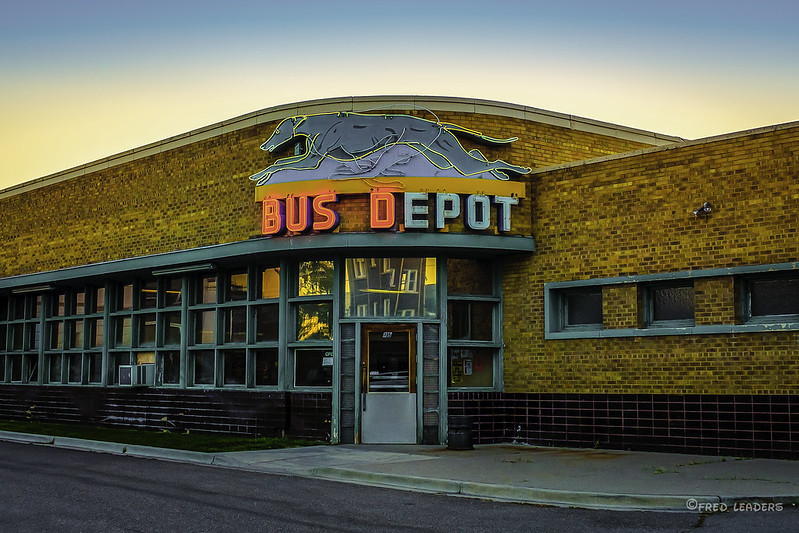
Vera was moving to New York on a Greyhound bus, carrying only a duffel bag. The morning she left Missouri, there was a heat advisory and an orange‑level terrorism alert. An hour outside of Chicago, there had been an older woman, crying and demanding that the bus pull over to let her off. From Chicago to Cleveland, she had sat next to a perfectly cordial man who had just finished a ten‑year prison sentence and was on his way home from Texas with nothing but his bus ticket and twenty dollars in his pocket. Between Cleveland and Pittsburgh, there had been a man who kept trying to get her to share a blanket with him, citing their proximity to the air‑conditioning vent, and between Pittsburgh and Philly, a teenage runaway had sat beside her and talked her ear off. And now there was this: a small, wobbly child whose mother had deposited him in the seat beside her with a simple “Keep an eye on him, will ya, hon?”

Vera tried to catch the eye of another passenger, maybe the woman two seats ahead of her on the other side of the aisle—she looked like the sort of person who would turn around and say, Keep an eye on him your damn self, lady; he’s yours, ain’t he?—but nobody looked up. The boy was around two years old, brown‑skinned with a head of curls that someone had taken the time to properly comb. He was dressed in a clean, bright red T‑shirt, baby jeans, and sneakers nicer than Vera’s. The mother was a thin, nervous white woman, with wispy hair in three shades of blond. She smelled strongly of cigarette smoke and chocolate milk. She had gotten on the bus with the boy and a girl, about seven, who looked like her in miniature. The little girl was chewing purple bubble gum with the kind of enthusiasm that would have prompted Vera’s own mother to ask, “Are you a young lady or a cow?” The mother had a cell phone pressed to her ear and was having a terse conversation with someone on the other end. She kept the phone cradled between her ear and shoulder, even as she leaned over the baby to kiss him on the forehead before walking farther toward the back of the bus.

“I feed him, don’t I?” she said into the cell phone. “When was the last time you did?”

The little boy made Vera nervous. He was a quiet, happy baby. He would occasionally clap his hands together, applauding something only he could appreciate. Still, he was so small. Vera was overcome by the unreasonable belief that he might break if she looked away from him. As she watched him, he seemed to be watching her back. In the window on the other side of the boy, Vera could see her own hazy reflection, nothing to write home about one way or the other. She had been on buses, at that point, for sixteen of the last twenty‑one hours. She was wearing jeans and an old T‑shirt from the college she’d dropped out of two years earlier. Her hair was pulled back into a ponytail that was starting to frizz. Vera was a few months past her twenty‑first birthday, which had happened without any of the fanfare and excess people tended to associate with turning twenty‑one. Josh and her coworkers at the record store had ordered her a pizza at work and opened a few beers to toast her. That was it.

Somewhere on the Jersey Turnpike, the bus pulled into one of those rest stops that appeared up and down 95 like punctuation marks. Vera went into the travel plaza to get a cup of coffee. In the women’s restroom, she stretched her arms above her head in the mirror and rolled up on the balls of her feet, then down again. She splashed water on her face, then pulled a small bottle of mouthwash from the duffel bag she’d carried in with her and swirled a capful around in her mouth before spitting into the sink.

When she got back on the bus, the little boy was still sitting in the seat beside her. Vera felt more charitably toward him now that she had seen how easy it was to walk away. She made faces at him that made him giggle. She tried to engage him in a game of patty‑cake, but he seemed more interested in the clapping than the repetition.

When the bus finally pulled into Port Authority, Vera squeezed past the boy’s seat to retrieve her duffel bag from the overhead bin. As she scrunched her face at the weight of the bag, the boy began to giggle again. She smiled back at him, then looked over her shoulder for his mother and sister. The people in the back of the bus were walking off one by one, but there was no sign of the blond woman or her daughter. Thinking maybe they’d somehow passed her already, Vera picked up the little boy, balancing him on her hip, and rushed off the bus, into the parking lot. No mother. She put the boy down and watched the rest of the passengers exit the bus, until it sat there, empty. Still no mother. “Excuse me,” Vera said to a heavyset older woman. “Did you see a blond woman and a little girl? They were just on the bus with us.”

“Woman on the cell phone?”

“Yeah,” said Vera.

“Think they got off in Jersey. Sounded like someone was supposed to meet her there.” The woman grabbed her suitcase from beside the bus and walked off.

Vera looked around at the rapidly dispersing passengers, wondering what the hell was wrong with them that none of them had noticed a child being abandoned. But as she unintentionally tightened her grip on his hand, Vera realized that to the crowd it looked like he’d been her little boy all along. In the lazy American vernacular of appearances, Vera, with her color and hair that matched his, looked more like his mother or sister than his own mother and sister did. Had that been why the mother had chosen her? Maybe she’d intended to leave him all along. Or maybe something terrible had happened to her at the rest stop, she’d been dragged off by a stranger and was hoping someone would notice she was missing before it was too late. Or maybe she’d just gotten distracted, smoking a cigarette for too long, and was now frantic because the bus had left without her.

In any case, the obvious thing was to go to the police, to let them straighten the whole thing out. But there was this little boy, who was holding on to Vera with his left hand while he sucked the thumb on his right. And there was this duffel bag, where, between two layers of clothing, wrapped in a layer of plastic, and then a layer of gift wrap, Vera had carefully placed a package containing twenty thousand dollars’ worth of cocaine. It was the last favor she was ever doing for Josh, and new as she was to this, she knew better than to walk into a police station with it.

“What’s your name, sweetie?” Vera asked the little boy.

He shook his head. She scanned him for signs of a name tag, finally finding one on the inner lining of his T‑shirt—someone had scrawled WILLIAM, in black Sharpie, on the tag inside.

“Come on, William,” Vera said. “Let’s get something to eat.”


Vera took him to a McDonald’s and watched him nibble at his French fries and chicken nuggets. She considered dropping him off on the steps of a police station and just walking away, but that felt fraught with unsavory possibilities. He might follow her and get more lost than he already was. Someone might see her leaving him and try to stop her. There’d be more questions asked than she had answers for. She had one thousand dollars in cash tucked into the lining of her handbag, and when she went to drop this package off tomorrow she’d have ten thousand dollars more, and her whole life in front of her.

The year before she’d dropped out, she’d fulfilled her university’s mandatory community service requirement by working with a literacy program at a women’s prison. There were women not much older than she was doing ten years for holding, selling, transporting—mostly their boyfriends’ drugs. A classmate said once that they’d bargained their lives for a few thousand dollars, which just emphasized for Vera how much the classmate had missed the point—most of these women weren’t getting money in the first place. They’d done it for love.

Fuck love. This was not a love story. Josh was in his late thirties, already balding and prone to wearing button‑down Hawaiian print shirts. He’d half‑heartedly hit on Vera once, but even he couldn’t take the flirtation seriously enough to be offended by her rejection. He owned the record store, which had been a hardware store until his father died. For at least the last decade he’d been making more money selling pot and small‑time quantities of pills out of the back room than he had selling records out of the front room; not because he’d started selling more drugs but because people had stopped buying music. Until now, Vera had strictly worked the front‑room business, maintaining plausible deniability of whatever else her employer was doing. She kept a blank face while ringing up music of questionable taste, pornographic album covers, actual pornography, and cigarettes that twenty-something men purchased for the fourteen‑year‑old girls lingering outside. Vera got good at pretending not to notice people who didn’t want to be seen.

The revival downtown had been promising her for years sputtered and stopped when the recession hit. Even after she’d dropped out of school, it had seemed better to stay put than to go an hour backward and end up at home again. Her father had suggested she get her cosmetology degree and work at the nail salon that had opened in town, and Vera said, You want me to get a job literally watching paint dry? When she called her parents back to apologize for her tone, she made it sound like Josh’s store was really something and she had big plans, when in fact every day she felt like she had less energy to even imagine what better version of herself she might become.

Beneath the renovated downtown lofts that nobody had moved into were boarded‑up windows that were supposed to be art galleries. The stoners who hung around the record shop were positively comforting in comparison to the kids who hung out in the downtown parking lots tweaking, flashing her the singed remainders of their teeth. Josh had refinanced the shop and then blew the money on a bad investment and had trouble paying the mortgage. Vera worked there for two years and made minimum wage the whole time. She had no savings and Josh knew it; he had more than once spotted her a twenty for lunch and dinner when it was close to payday and he saw she wasn’t eating anything. Through someone he knew he’d gotten ahold of this drug, which was not meth, which was not heroin, which was a flittery thing, a onetime thing. He wasn’t going to chance selling it in his own backyard—the cops had let him slide on the weed, but they were getting antsy. He knew a guy in New York though, and all she had to do was get it there and she could take a fee. Josh would get out of hot water with the lender, and she could get the hell out of Missouri and not look back.

When William had finished eating, Vera took his hand again and went outside to a pay phone. She called the phone number she had seen on the side of a city bus, and made an anonymous tip that a woman and a little girl may have been hurt near exit 9 of the Jersey Turnpike. No, she didn’t know their names. No, she didn’t know where they were coming from or where they were going. No, she couldn’t say why she thought they might be in danger. No, she couldn’t stay on the line. She caught a cab, checked into a hotel, put the baby to bed, and called her mother to tell her everything was fine.


In the morning, she took the train to the address Josh had given her. She took William with her because she wasn’t sure what else to do with him. The building was unspectacular from the outside, a grim brownstone. She rang the buzzer twice. On the second buzz, a female voice answered and asked who it was.

“I’m Vera,” she said. “Josh sent me.”

The door buzzed open. Vera walked up the narrow stairwell and opened the door in front of her. She thought at first she must have written the number down wrong. She was in an office—polished hardwood floors, bright accent colors on the walls, sunlight coming in through the loft windows, a sleek red couch, and a waiting area near a front desk. A woman with a blond‑streaked ponytail sat behind it. A sign on the wall behind her read BROOKLYN DELIVERS.

“Can I help you?” she asked.

“I need to talk to Derek. My name’s Vera.”

The woman hit a button on the phone. A few seconds later, a man with short dreads and a T‑shirt featuring a band she’d never heard of came out to greet her, a perplexed look on his face.

“I’m Vera,” she said again.

Derek stared at William, who Vera had propped up on her hip.

“You brought a baby?” he asked.

“He’s two,” Vera said, as if this were an adequate explanation.

“Hold on.” Derek disappeared into the back room, but before the door shut behind him, Vera could hear him say, “Who the fuck are we dealing with? He sent a girl with a kid.”

A second man, this one with scruffy blond hair and thick black‑framed glasses, came out of the room.

“I’m Adam,” he said. “Josh sent you?”

“Yes,” said Vera. She gestured toward William. “I’m sorry about him. I didn’t know where else to leave him. I just got here yesterday.”

“It’s cool. You want to leave him out here for a minute? Liz can keep an eye on him.”

Vera eyed the woman behind the desk. She hadn’t looked up from the computer screen. Vera deposited William on the floor and followed Adam to the back room, which looked like a more posh version of the front room— hardwood floors, plush couches, walls of file cabinets.

“This is not what I was expecting,” she said to Adam.

“We’re a courier service,” said Adam. “We deliver things. Mostly documents and packages for small businesses. Sometimes not.”

“Oh,” said Vera.

“You’re not what we were expecting either,” said Derek.

“Sorry,” said Vera.

“I didn’t say it was a bad thing. Just, Adam met Josh a while back on a road trip. From what he described, you don’t really seem like the kind of girl he’d be hanging around with. That his kid?”

“No,” said Vera.

“A woman of few words,” said Adam. “It’s a good instinct.”

They finished their transaction quickly, without any of the sinister fanfare Vera had anticipated. Josh’s money was wired. She put her cash in the bag where the drugs had been. She walked out to find William safely where she’d left him, and exited the building feeling an anticlimactic sense of relief.


Vera opened a bank account and deposited two thousand dollars. She sat in a coffee shop with William, calling through the rentals section on Craigslist. A few hours later, a Russian woman in Red Hook rented her an attic apartment. Vera had a list of friends willing to serve as fake landlord references, but the woman asked few questions once it became clear to her that Vera planned to pay both the first month’s rent and the security deposit in cash. The first night in the apartment, they slept on the floor. She watched the rise and fall of William’s chest, the delicate flaring of his tiny nostrils. He’ll need a bed, she thought, and as soon as she thought it, she realized that the idea of giving him back had gone out the window. He would be hers unless and until someone took him away.

For the time being, William seemed like less trouble than anything else she’d gotten herself into. He was quiet, he was happy, and he imposed a certain order on her life. Meals had to be eaten at set times. There was bedtime, and time for waking up. Vera rented a U‑Haul and picked up furniture around the city. When she went to buy a baby bed from a woman in Park Slope, the woman cooed over William and threw in a stroller for fifty bucks. By the end of the week, the apartment was in order and the money was half gone.

Vera had intended all along to look for a job once she got here, but now there was the problem of having William. She couldn’t very well take him along for interviews, or even to drop off résumés, because what if they wanted to talk to her then and there? Formal day care seemed likely to involve more paperwork than she currently possessed, which meant she’d need a babysitter, which meant she’d need to spend some time figuring out whom to trust with him. She felt a pang of guilt at her nervousness about leaving him with a stranger. After all, what was she? She googled “William,” “missing child,” and “New Jersey,” setting the dates within the past month, and found no evidence that anyone was looking for him.

On Sunday, Vera took William for a walk in Prospect Park. She bought him an ice pop from one of the street vendors. While she sat in the grass with him, feeding him ice and singing, to the best of her abilities, “Little Bunny Foo Foo,” she heard a voice call her name. She turned around to see the man with the short dreads approaching her.

“Vera, right?” he asked.

“Yeah,” said Vera. “Derek?”

He nodded. “So you’re sticking around?”

“Hopefully for good. I was just doing a favor on my way out here.”

“Expensive favor.”

Vera shrugged.

“So what’s your son’s name?”

“William,” Vera answered without hesitation, though she had not yet used the word son in reference to him. Derek sat down and began to play peekaboo with him.

“His dad around?”

“You see anyone but me around?”

“OK then,” said Derek. William uncovered his face and looked disappointed that Derek had stopped playing with him. Derek reached out and tickled William’s belly until he laughed his high‑pitched baby giggle.

“You know anyone who’s good with kids?” Vera asked.

“I’m not good enough?” Derek laughed. “I thought little man and I were getting along fine.”

“I need someone to watch him,” said Vera. “I need to find a job.”

“What do you do?”

“I used to be a cashier.”

“Just a cashier, or you kept records?”

“I kept records.”

“You ever answer phones?”

“When they ring.”

“Look,” said Derek. “Our receptionist just quit. She’s moving to LA. You interested? You answer phones, you file papers, you schedule pickups and deliveries, and ninety-five percent of what we do is legal.”

“And the other five percent?”

“Is why you’d be making twenty dollars an hour instead of eleven. We try not to get in the middle of the messy stuff. We get everything in small quantities here and there and then we overcharge for it because there’s a market of kids who want their drugs but are too lazy or scared to find their own dealer. We’re middlemen, basically. Not even middlemen, because we don’t even do that much buying straight from the source. We mostly stay under the radar.”

“What about William?”

“As long as he doesn’t fuss, you can bring him until you find someone to watch him.”

William grinned, and then covered his mouth with his grape ice–stained fingers, as if to show how unfussy he could be.


So just like that, Vera’s life fell into place, or out of it. She worked seven to four at the office, answering phones, filing papers, keeping two sets of books. She learned the last receptionist’s filing system—the bike messengers without a C next to their names were only to carry documents and other innocuous packages for businesses that needed to get something from one part of the city to another before the end of the business day. The ones with a C could make both regular deliveries and irregular deliveries. She liked the messengers—they came in and out of the office to pick up assignments, packages, schedules, checks. They consulted with each other about the fastest routes and the best bike locks. They called her, sometimes, sheepish and lost in a city that some of them knew in their blood and others were perpetually perplexed by, even as they pretended that no address daunted them. They were her age, or even younger, and they all had something urgent to be doing with their lives, only it hadn’t happened yet.

They competed against one another and their own personal bests to set records for transit time. They were paid by the number of deliveries they made. She could identify some of them by their scars—the accident scrapes and scratches or, in one case, the thin jagged line left by a bike thief ’s knife. Most of the messengers were oblivious to William’s presence, but a few gave him candy if they had it or sat down on the floor and played with him while they waited for Vera to finish doing what they needed done. Since no one seemed fazed by William’s presence in the office, least of all William, the idea of finding him a babysitter gradually faded away. One day she came into the office and found a playpen behind the desk, with a note on it from Adam and Derek, and the matter seemed settled.

Adam and Derek had grown on her. They were only a few years older than Vera was, but they seemed younger sometimes, both prone to fits of silliness and then mercurial sulking. They’d been friends since high school, somewhere in the Jersey suburbs, and sometimes they spoke their own language, comprised entirely of shared memories. They claimed to live untethered lives, apparently oblivious to how helpless they would each be without the other. Adam always left a coffee on Vera’s desk in the morning. Derek made her playlists or left her notes with her name drawn in fanciful script. A few years ago, Derek had been trying to start a graphic design business, about five years too late. Adam had been a bike messenger, who figured that if he were the person running things instead of the person delivering things, he could make more money without damn near killing himself in city traffic. Adam convinced Derek that he could turn his design business into a courier business if Adam went in for half, which, thanks to a loan from an uncle, he did. After a rough first year, they started splitting their business between legal and illegal goods, and three years later, here they were.

And now here was Vera, wiping her old life clean. She could have explained New York, probably even the job, maybe even the money, but there was no accounting for William. She deleted her Facebook page. She closed her old email account and opened a new one that only people who knew her now were aware of. She canceled her old cell phone service and bought a new phone. She called her mother once a week, using a phone card and a pay phone at the laundromat. I’m fine, she said, over and over again. I love you. I don’t know when I’m coming home to visit.

William began to talk more, and Vera took a certain pride in hearing him say her name. He called her Ve‑ra and not Ma‑ma, which seemed only fair, and which she explained by telling people she’d felt too young to be anybody’s mama when she had him. She read him bedtime stories at night and taught him his colors and letters. She had no one to ask how to do this right. At the first threat of snow, Derek bought him a winter hat, which Vera interpreted as part friendly gesture, part admonishment.

That night she gave William a bath with lilac baby soap. She washed his curly hair and his chubby body. He splashed in the bathtub.

“Are you happy?” Vera asked. “Am I taking good care of you?”

He flashed his baby teeth at her. Vera scooped him into a towel, dried, lotioned, and powdered him, and put him in his fleece pajamas. He fell asleep with his head nestled into the crook of her neck. Even as kids, some girls were about babies the way other girls were about bands or horses or witchcraft, but Vera had never been like that. Babies were loud and sticky, and part of why she’d started college in the first place was sex ed made it seem like it was one or the other—either you got a degree or an infant would be assigned to you. On the same block as Josh’s record store there’d been a coffee shop where one of the girls who worked there brought her toddler sometimes. The owner told her not to, and whenever she saw his car go past to pull into the parking lot, she’d run out the front door of her shop and into the front door of Josh’s and leave her son to sit until her boss left. Josh didn’t care because the girl was pretty, and anyway he didn’t do shit but plop the little boy in a corner. It was Vera who’d have to play games with him and turn safety hazards into toys, and even though she tried, he always just started screaming, and wouldn’t stop until his mother got back. He wouldn’t even smile for her. That William was so calm with her seemed like its own argument, like the universe telling her he belonged with her.

One night in November the city was blanketed in unexpected snow. Business operations shut down early. The trains were running slow and cabs were near impossible to flag. Vera wasn’t looking forward to the icy walk from the office to the train, or from the train to her apartment. She accepted Derek and Adam’s invitation to stay the night. They lived on the upper floor of the loft that housed the office. They put William to bed on the couch, and made her toaster pizza and hot chocolate with shots of rum in it. Though she teased them about their bachelor dinner, it felt good going down. It had been months since she’d spent an evening with people her own age.

Somewhere after their third cup of cocoa, Derek kissed her, or she kissed him, or in any case she spent the night with him, and then the next, and the one after. Within a week she had a toothbrush and a few changes of clothes upstairs in the apartment, and William had a second bed. She saw less and less of the attic in Red Hook, and when she was there she could sometimes see the landlady in the window of the building next door, marking her comings and goings with suspicion.

In December, they threw a holiday party at the loft. Vera hung garlands and mistletoe and purchased and decorated a small plastic tree. Everyone got drunk on rum-soaked eggnog and, when that ran out, cheap beer. People took slightly pornographic pictures making out under the mistletoe. At a dollar store, Vera had found a box of ornaments that were meant to be written on with permanent marker. She gave one to each of the party guests, and before long the tree was covered in bulbs that said things like New York I love you but you’re bringing me down. William was passed around from person to person like a particularly lifelike doll, and Vera was feeling charitable enough to let him be a part of everyone’s fantasy of domesticity, instead of just hers. People had brought him toys and stuffed animals. Derek bought him a set of wooden blocks. When he presented a second box, Vera started to protest that he was spoiling William, but he indicated it was meant for her. Vera stared for a minute. She’d been counting William’s presents as her own and couldn’t remember when she’d stopped seeing herself as a separate entity. She opened the box Derek had given her, and then put on the glass-beaded necklace it contained. Derek kissed her.

“I love you,” he said.

“You love rum,” said Vera.

“I love you and rum,” said Derek. He kissed her again. Later, Vera went into the back room to call her parents.

It was an hour earlier on central time, but still past her mother’s bedtime.

“Why are you waking me up?” her mother asked. “Is everything OK? Why is it so loud?”

“I love you,” said Vera.

“Are you drunk?” said her mother. “What are you doing out there?”

“I’m happy,” said Vera. “I’m not going to call for a while. I just wanted you to know.”

Keeping William made the past firmly the past, the Vera who’d left home a Vera who couldn’t exist anymore. She committed to the present. She liked waking up with Derek, the feel of something solid beside her. She liked the way he looked at her and the way he was with William and the way he surprised her. She liked the pattern of her life now, the domestic monotony tempered with the rush of feeling always close to the edge of something, the sensation of having the thing she loved and valuing it all the more because she knew it could all go wrong at any minute.


And then everything did. Jacob, one of the couriers, swerved to miss a puddle and slid into an eighteen‑wheeler in Manhattan on a rainy day. Jacob was a nineteen‑year‑old with startlingly blue eyes, an orthodontically perfect smile, a part‑time bartending gig, and an unrealized aspiration to be an actor one day. He had been in Vera’s office the day before, picking up a check and giving William a lollipop. He had been at the holiday party a few weeks earlier, drinking flaming tequila shots and kissing a girl with pink highlights and a crescent moon tattooed on the inside of her wrist. There was a somber memorial service, attended by dozens of his friends and fellow couriers, some wearing black bike helmets in solidarity. Vera had bought a black dress and clutched William close to her chest at the service. He had been the only one not crying.

Jacob’s mother was a doctor in Connecticut. She hired a law firm. The complaint charged the city with failure to institute proper regulations to ensure the safety of bikers. It charged Brooklyn Delivers with being reckless by expecting unreasonable delivery times and overlooking the myriad ways in which their employees violated safety protocols. All of this was true and—in spite of the unenforceable liability waiver that the employees signed—probably actionable. In the somber aftermath of Jacob’s death, Adam and Derek under-reacted for the first few weeks. For the better part of a month, they were uncommunicative and high most of the time. Vera stopped spending the night.

At home in her attic apartment Vera stayed up some nights, thinking of Jacob’s face the day he’d bent down to give William the lollipop. She thought of his mother’s grief, filtered through legalese. One night she imagined the irrevocable loss of William. Even the flicker of pretending he was gone left her with a feeling so complete and unfamiliar that she was wrecked, lay there sobbing so loudly that William woke up and cried too. She couldn’t bring herself to get up and go to him.

At the office, she searched for the first time in months for evidence that whoever had lost him wanted to find him. She clicked half‑heartedly through pages of missing‑child announcements, neither wanting nor expecting to find William’s face. There was photo after photo. A gap‑toothed blond boy on his mother’s lap. A cocoa‑colored girl with beaded braids, grinning and clutching a teddy bear. A seven‑year‑old with a pink bike. Some of them, Vera knew from the news, had already been found dead. For the others, she imagined improbable scenarios, scenarios in which people like her had rescued them and taken them off to some other life.

On the third page of results, she found a bulletin board for parents of missing children, and under the headline MY SON WILLIAM—MISSING SINCE OCTOBER, Vera finally saw the picture she’d been terrified of seeing: William, the way he’d looked when she found him, his eyes unmistakable. She tried to reason that she’d had her William since August, and so this must be another child, but she read on anyway, sick to her stomach. At the top of the page was his date of birth. He’d be three in April. The man posting the picture said he was William’s father. There was a second picture, of him with William and William’s mother, the same wispy blond woman from what felt like so long ago. It didn’t explain why she wasn’t the one looking for him. It didn’t explain how William had gotten from Chicago, where his father lived, to a bus on the Jersey Turnpike. In the second picture, William was an infant. Both the man and the woman were smiling broadly, their eyes sparkling. At the bottom of the post, the man claiming to be William’s father had listed the numbers for the police tip line and his own cell phone.

Vera dialed the second number.

“Hello,” she said. “May I speak to William Charles Sr.?”

“Speaking,” said a steely voice on the other end.

“I’m a reporter,” said Vera. “I came across your post about your son. I wondered if I could talk to you about his case?”

“You in New York?” asked the voice. “Your number came up New York.”

“Yes. We’re a small paper, but we cover national news sometimes if it’s of interest. I’m doing a series on missing children.”

“I can barely get the Chicago cops to pay attention, let alone the papers,” said the man.

“I’m listening,” said Vera.

“He was supposed to be with his mother and next thing I know she stops letting me talk to him on the phone. She moved to Jersey, to be with some guy, and said she didn’t want me calling. Sometimes I’d call anyway, and get the little girl—not mine, but I’d been around since she was little—and when I’d ask her about William she’d start crying. Then the guy they were living with took off, and my ex turned up dead. Overdose. Poor kid found her mother like that. They gave her to her grandma, who never liked me any, and she either can’t or won’t say what happened to my boy. All she says is that he wasn’t in the house. But he’s two. How far could he go?”

“I’m sorry, sir,” said Vera.

“I just want my son.”


For the next week it was Vera who walked around in a fog. Derek and Adam had gone into panic mode. They’d been cooperating while stalling when they could, but Jacob’s mother wouldn’t accept a settlement offer until their financial records had been released in discovery. They were worried that a thorough audit would reveal too many irregularities. On Monday Derek asked Vera to stay late. When they locked up for the day, he led her into the back room.

“We’re taking off,” he said. “New IDs, enough money to lie low for a while. Eventually we’ll figure something out. There’s a guy with a grow op who thinks everything will be legal soon.”

“Where?” said Vera. “When?”

“Cali,” said Derek. “Two weeks. Adam knows a guy.”

“What am I supposed to do?”

“You can come with us,” said Derek. “You should probably get out of town for a while anyway.”

The possibility dangled in front of her like a brass ring. She’d come this far. She could go farther. She could keep William. She could keep Derek. She pictured William all grown up, the chubbiness stretched out of his cheeks. “I grew up on a farm,” he’d say. “I’m pretty sure my parents did something shady for money, but man were they in love.” She tried to picture California but found she didn’t even have an image of it in her mind, only a vague fear of earthquakes.

“Get me the paperwork,” said Vera. “Let me think about it.”

She packed what would fit in her suitcase, and sold the rest. When William’s bed was gone she kept him with her, on a blanket on the floor, clinging to him. She gave notice to her landlady and came home from work the next day to find the apartment already being shown to a daunted would‑be subletter. At the end of the week, Derek left an envelope on her desk, with a California ID with her picture and the name Jessica. There was also a birth certificate for William, who’d been renamed Joshua. At the office, their days were measured in shredded paper, the whir of the shredding machines a threat and a promise. If everything could be erased, anything could disappear. If you could erase everything, you could start again.


She wanted to see the father before she made any decisions. She equivocated on making Derek any promises. She didn’t love him enough to make up for William’s potential absence, and so she didn’t see the point in pretending. She helped him pack. She kept his necklace around her neck. She buzzed Derek’s locks off with an electric razor. She dyed Adam’s blond hair black. Vera spent Derek and Adam’s last night in New York at the loft with them. She made margaritas. She curled up in Derek’s arms and imagined trying to explain to him how much bigger her guilt was than theirs. She got up before dawn and made them breakfast and kissed Derek goodbye. He offered to leave her with an address of a person he said would be able to tell her where to find them, and she said maybe it was better if he didn’t.

The next day, she and William got on a bus to Chicago. She bundled him in layers of winter clothing—a turtleneck, a sweater, a hooded jacket, and the hat Derek had bought him. He was uncharacteristically fussy, insisting that he was hot and itchy. One by one the outer layers were removed. From their stopover in Cleveland, Vera called Eileen, a friend in school in Chicago. She hadn’t seen Eileen in years, but they’d gone to high school together, and when she said she needed a place to stay for the night, Eileen offered to come get her at the bus station.

“My God, you have a kid!” she said when she saw them. “He’s so big.”

“He’s almost three,” said Vera.

“How was New York?” asked Eileen.

“Beautiful,” said Vera. “Exhausting.”

Eileen brought them back to her one‑bedroom apartment in Hyde Park. She pulled out the sofa and told Vera to make herself at home. Vera turned on a cartoon show and combed William’s hair. She kissed the top of his head and told him she loved him. She remembered being a child, seated between her mother’s legs watching TV while her mother parted and braided her hair, and felt, for the first time in years, homesick, sick for everything she could still lose.

She slept poorly. Over coffee, Vera asked if Eileen could keep an eye on William while she ran a quick errand. Vera took a cab to William’s father’s address. It was an old brick row house, beaten up a bit, but not neglected. The lawn was mowed, and the shutters had been recently painted. She walked around the block a few times and feigned interest in a house for sale across the street. BANK OWNED! read its sign. On her fifth circle around the block, she saw the door to the house open, and the man from the photograph come out, then turn behind him to help an older woman down the stairs. Both of them resembled William. He had a father. He had a grandmother. He had never been hers. They looked up. For a second, Vera thought William Sr. was pointing at her, and she was ready to confess. Then she realized he was pointing past her, at the foreclosed house, its overgrown lawn.


Back at Eileen’s, Vera found William circling the living room, clutching a teddy bear while Eileen typed a paper. Vera made grilled cheese for lunch. She told Eileen that she and William had another bus to catch, all the way to California, and would be gone that evening. In the afternoon, Eileen left for class, and told Vera to lock the door behind her on the way out. Vera hugged her goodbye. Eileen ruffled William’s hair.

“Lucky boy you are,” she said. “Such a big trip, for such a little person.”

The moment Eileen was out the door, Vera set fire to William’s forged birth certificate with a cigarette lighter, afraid she’d be unable to resist the temptation to keep him otherwise. She started a letter three times. On the first attempt, she emphasized that she hadn’t meant to take him, that it felt like he’d been given to her and she just hadn’t questioned it. A paragraph in, she realized this wasn’t her story anymore, that the point was not her own defense. In the second version, she focused on all of William’s milestones: her favorite things about him, his best days—she wanted to show he’d been happy and unharmed, but when she reread the letter it seemed cruel, to emphasize the time his father had missed and wouldn’t get back. In her third and final effort, she tried to account in a matter‑of‑fact way for the time she’d kept him, to assure his father that she’d done her best not to damage him, that he had not fallen into terrible hands, that he had suffered no irreparable trauma, that she was not a person who would ever harm him, though of course she understood now that she had. She held William in her arms until he fell asleep, then picked him up and tucked him into Eileen’s bed. She texted to confirm Eileen was on her way home. She left the note for William’s father and the note she’d written for Eileen, with William’s father’s name and address, sitting on the coffee table, next to Eileen’s apartment key. She walked three blocks and hailed a cab.

On the way to the bus station, the city went by in a blur of brick and beige and gray. Vera was startled and shaking. Adam and Derek were waiting until they could be found again, but Vera understood now that she would need to be lost forever, would need to let the whole of the murky country swallow her up. The cabdriver thought she was drunk and kept offering to pull over if she needed to throw up. The third time he offered, she said yes, but when she opened the door and leaned out, nothing came up. There was just the shock of the cold, and the dry empty heave of her belly.

Four Generations of Cherokee Women Navigate Love and Disaster

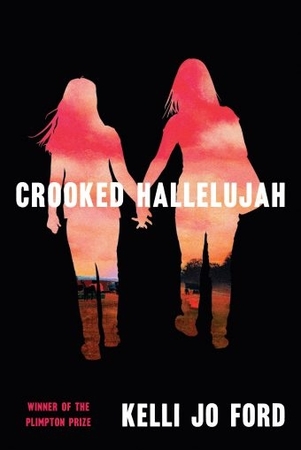
“Beautiful by-God circle of life this is,” belts the wry, guilt-ridden Justine, a dynamic force in Kelli Jo Ford’s debut novel-in-stories, Crooked Hallelujah. A beautiful series of circling lives might describe the book structurally, as the stories rotate through several perspectives over the course of about 40 years, rendering four generations of Cherokee women as they age in a religious, and ruthless, but still joyful world. 

Tornados, fires, abusive men, sermons, sickness—disaster appears in many forms for the young mother, Justine, and her ambitious daughter, Reney. But in Ford’s work near concurrent with the disastrous is the wondrous: a harmony from the church choir at the hospital bed, a mother’s prayer through a payphone, a wedding in 112 degrees of Texas heat. It is perhaps this quality above many impressive others that makes Kelli Jo Ford such a special writer: fearlessness—or the will to make suffering, and love, seen. 

Praise be to Crooked Hallelujah, where family is the source of both exile and salvation. I spoke to Ford, the Paris Review’s 2019 Plimpton Prize winner, over the phone on a Monday morning in late June about the book, her development as a writer, the world. 


Alexander Sammartino: As a teenager Reney tells us: “After taking stock of all the ways we matched and saying, ‘Good night my Tiny Teeny Reney,’ she’d hold me close and whisper, ‘Don’t be like me. Don’t ever be like me.’” It’s a beautifully devastating moment, how Justine quickly shifts to self-loathing after expressing her love for her daughter in such tender, childish language. There’s this immediate conflict between joy and despair. It’s a tension that feels essential to understanding Reney and Justine as a family unit. I’m wondering if you can start us off by talking about what brought you to this particular mother-daughter relationship. 

Kelli Jo Ford: I come from a long line of strong women, and often strong hearted people in close quarters can butt heads, even if they love one another. That relationship is certainly inspired by who I come from, where I come from. Like Reney, I grew up in a household that at times had four generations of women in it. 

In terms of that scene, Justine is a character we see working so hard trying to make life different and better for Reney. But in doing so, she is carrying what she sees as her failures with her. As someone standing back and looking at the characters, that’s certainly not how I see it, and I would think that’s probably not how other readers see it either. I think it’s much more complex than that. She was raised in a religion that—to her—felt so oppressive and judgmental. Even years later, she’s seeing her life through the lens that, of her inability to live up to the near impossible standards set by her mother and their church. That’s how the character sees herself, but I see her as an immensely loving young woman—still a very young woman—who is working so hard to try to make things different. 

Religion was forced upon her—and then also rejected her when she became pregnant. Imagine how scary that would be: if you’re being told that this is the one way and the only right way, and then you’re rejected by that authority? I think she carries that with her her whole life, down to the last moments we see her. There’s a deep internal conflict when you reject that thing that you feel is, perhaps, the answer to everything. What if you’re wrong? 

AS: You said you set out to write one good short story. You ended up with this amazing debut. I’m very interested to hear about that.

KJF: It took me many years to write the book. And that’s in part because I didn’t sit down going, Today I’m going to start my novel. I realized after the fact that was what I was doing. 

Religion was forced upon her—and then also rejected her when she became pregnant.

I kicked around for a long time. Worked in sandwich shops in Austin. I was the first person in my family to go to college, to graduate from college. I went to college right out of high school, I went to the University of Virginia as an out-of-state student, and I was overwhelmed and lost there. I had no idea what I was doing, how any of it even worked. I left UVA with them holding on to my transcripts because I owed them a lot of money. But eventually I found my way to AmeriCorps Programs, and I was able to get my transcript back and go back to college. 

Studying English was the path of least resistance, which is probably how a lot of people end up here. You do what you can do. You just keep doing it. Eventually I went to George Mason. And there I studied with some people who were really supportive. In grad school, though, again, I never had any interest in writing a novel, because I didn’t conceive that I could. I was just trying write “art stories.” 

I just didn’t quit. After I left grad school, I felt really burned out and didn’t want to think about writing for a while. When I picked it back up, I kept writing the same stories. It’s about following my obsessions, I guess. It became much harder when I became a mom, but there were some fellowships along the way that really, really helped me, that told me I could keep doing it. And also in a tangible way, that helped me financially. 

AS: It’s a great story of perseverance, for sure. 

I want to ask about an idea I noticed repeating throughout the book, this idea of fate. Very different characters express similar views of how the world feels determined for them. I’m thinking first of what comes from Justine’s grandmother—and I love this section, that we see her grandmother’s journal, the list of what she owes—but she writes: “I give nickels to pay on dollars I charge. I add up, take away. Nothing evens out, and I don’t think it will get fixed ever.” Later we hear from such a different character, Ferrell, an old white cowboy, who says: “Smoldering houses and charred land all over the Red River spoke to the notion that man can’t do much to change the course of nature.” I felt like all of the characters are coming up against the limits of what they can do in the world, and are struggling to negotiate that. How do you see fate operating in the book?

KJF: With Justine’s grandmother, Annie Mae, that was me feeling interested in the crisis of faith in a longtime believer. I’m drawn to that moment of self-perceived weakness, and seeing a person grapple with that. 

A lot of the notion Ferrell is expressing probably stems from growing up in a family of people who had to work very, very hard their entire lives, and were sold the myth in this country that you bootstrap it out and you work hard and you change your circumstances. Coming from people who I’ve seen work hard their entire lives at the expense of their bodies and well-being, and then not being able to have a good life once you no longer have the body to sacrifice—seeing people breaking their backs and struggling, but still ending up in circumstances that are hard, despite a lifetime of hard work. 

AS: This makes me think too of how these characters, as Cherokee women, are experiencing the world. We’ve talked about the effects of this colonizing religion, but I think there’s also an awareness of how Native Americans are represented, or are not represented, in popular culture.

I’m thinking for instance of Justine, in the hospital, watching a Native American man cry, and it makes her think of an old commercial, and she says: “Everywhere in this whole hospital are sad Indians crying, but nobody thought to make a commercial to save our lives. So we keep playing different takes on the same scene nobody watches but us.” Also, when Reney is a kid, and she’s watching the westerns that Nina would tape: “She cheered for the Indians, though she knew John Wayne would always end up the hero.” 

Can you say a little about this? 

KJF: These characters are living through displacement. Displacement upon displacement. Oklahoma isn’t where Cherokee people came from. But Lula has been able to absolutely see it as her home and embrace it, whereas Justine made the decision to run looking for a better life. As a result, Reney is raised removed from her grandmothers. Justine also didn’t grow up experiencing a lot of Cherokee culture because of the church that they were a part of. 

Imagine how scary that would be: if you’re being told that this is the one way and the only right way, and then you’re rejected by that authority?

What I see in those passages are characters who are learning about or craving connection, and then they’re getting it from Westerns or commercials. Do you remember that old commercial? Tommy Orange also wrote about it (and beautifully!). The actor wasn’t even Native, so the characters are getting these three times removed representations, but they’re craving connection to their culture so they soak it up.

That’s something I experienced. There’s an actor, Chief Dan George, and anytime he would come on in a Western, it would just be so exciting. You’re craving because we don’t have those representations. We certainly didn’t when I was a kid.

AS: Right. And what is there to connect with is crooked. I’m thinking of the title again now. 

I want to shift a bit here and talk about the language in the book. You’re such a master of the idiom. I’m thinking of Reney, as a kid, referring to Justine’s abusive boyfriend as “a sorry sack of snakes.” Justine says her daughter left without a “hi, bye, kiss my ass.” Ferrell calls the old women at the Dairy Queen “blue hairs.” I’d love for you to talk about your own relationship to the language here. 

KJF: The language of the characters, when they’re speaking—I can probably take very little credit for that. I grew up around storytellers who are so naturally descriptive and funny my whole life. If a character is speaking and says something about a sorry sack of snakes—thank you! Take that, pluck it from the air, and stick it in there. You know? It comes from absorbing a lifetime of storytellers and really smart, funny people. 

“Throw dirt on it”—that’s something that I grew up hearing my mom say all the time. 

The language of where I come from is really wonderful.

AS: This is the last question I have for you, and it’s kind of a big one. There’s so much joy in this book. There’s also domestic violence, sexual violence, historical violence—but there’s always joy, right? There’s a sunset over Tenkiller Lake. There’s a mother and daughter driving from Texas to Oklahoma, singing along to Prince in a Mustang. I thought it would be nice to finish the interview hearing from you about some things that give you hope, in fiction and in the world, especially right now, when it feels like the world is ending. 

KJF: That’s a tough one in terms of the real world right now. But I am taking great, great hope in seeing all the people—I feel like mostly young people—but people of all ages out in the streets right now, protesting for Black Lives Matter, the protests against police brutality of all kinds. On my more hopeful days, I feel like maybe we’re living through a moment that’s going to lead to substantial change. 

But it can be hard to have hope. I feel like people can get on a trip and be like, “children are going to save us,” when it’s up to us first. That’s our job! But I often find the lines of that old Whitney Houston song— “I believe the children are our future”—going through my head unironically, because I really do feel like the younger generations are so with it and smart and sharp, and they care greatly. I think that they’re going to shake some stuff up. 

I take great pride in fiction and in the real world in the connections that we work hard to maintain through generations. In the book, a mother to a daughter or a great grandmother to a grandchild—those things are there for the taking, perhaps, but they don’t last without great effort. In my book, the characters clearly have flaws and fail one another, sometimes in great ways, but I feel like they just keep fighting for one another out of love. I take great heart in that.

J.D. Vance’s “Hillbilly Elegy” Doesn’t Explain “Trump Country”—The Book Helped Create It

My first novel was released within six months of Hillbilly Elegy, J.D. Vance’s memoir of Appalachian roots and a youth spent in a Rust Belt community with a dearth of jobs and resources. Vance’s book came out just before the 2016 election; mine was released just after. Donald Trump’s victory had made Elegy a publishing juggernaut. The readership supporting the book’s sales—largely left-leaning, NPR-loving, blue voters, still shellshocked from the election aftermath—were looking to Vance’s book, as well as every “Trump Country” piece flicked out by the country’s prestige publications, for a thoughtful explanation of “what went wrong.” 

I’m from eastern Kentucky, not far from where Vance’s family originates. Like Vance, I left the region when I was young. Graduate school took me to one of the coasts when I was 25. I’ve lived in New York, on and off, ever since. Like many of those buying Vance’s book, I too, lean to the left, enjoy listening to NPR, and attend book festivals. And that year, from my author’s table, I watched book buyer after book buyer anxiously knuckling thirty-dollar hardbacks of Elegy. At first, I found the irony of this group paying an openly conservative Republican for his accounting of 2016 amusing. What happened? The short, satisfying answer: Appalachia happened. 

As the year wore on and the book maintained its float at the top of bestsellers lists, my amusement turned to anger, then sadness, and then, finally, exhaustion. The old story of America’s weird, craven Son of the Soil, was taking hold yet again, baggage and all, and within a demographic supposedly too discerning to fall for it. 

We need to take this opportunity to understand the region as more nuanced than the blighted backcountry that popular media pushes.

It’s fitting, then, that Ron Howard’s film adaptation of Hillbilly Elegy was released in theaters just after the 2020 election, with a Netflix release slated for later this month. As in 2016, it is poised to serve as an explanation, of sorts, for the stubborn blush of Trumpist red evident across Appalachia, and the rest of the southeast. The story it offers is one of people who cannot help or save themselves—from laziness, from addiction, from a failure to develop the self-respect necessary to “pull themselves up” within an economy and social system that prevents them at every turn. The film is just another addition to a narrative that is managing to dig a trench between this region and the rest of the country, a divide that will continue to snarl elections and deal further damage to a population that has taken more than its fair share of abuse. And in a year that saw the Biden-Harris ticket win by thinner than anticipated margins, we need to take this opportunity to understand the region as more nuanced than the blighted backcountry that popular media pushes—and that liberal readers and viewers, amazingly, tend to believe.

Vance’s “hillbilly” is not a person so much as a cultural emblem used to sell things, from products to political and social ideologies. Understanding this distinction calls for a dissection of the emblem and its origins. Large corporate interests seized control of the Appalachian region’s natural resources just after the Civil War, generating huge profits from coal and timber while workers toiled in dangerous conditions for shoddy wages. These corporate forces fought unionization at every turn, with brutality and out-and-out murder. The area’s real history is defined by locals fighting these forces in organized, principled fashion, from the Battle of Blair Mountain in 1921 to late-20th century worker efforts to unionize against large interests like the Duke Power Company, detailed in the 1976 documentary Harlan County, USA. One of my fondest memories of growing up in east Kentucky is going to a punk show at an American Legion and hearing a band from New Jersey play songs about union life that made the audience, filled with rural kids, homemade mohawks, and unnervingly large ear gauges, go wild: never cross a fuckin’ picket line! 

The American public was ill at ease with the idea of white poverty, and the region’s true, tangled history, involving manipulative corporate power, worker abuse, and worker uprising, implicated commercial forces that preferred a tidier story. Why was that quintessential American, the independent mountaineer, impoverished? Enter the hillbilly: an all-American icon of strangeness and stupidity, addiction, and laziness, whose poverty is his own fault, and perhaps even his due.  Some of the most defining representations of the modern hillbilly—particularly Lil Abner—coincided, tellingly, with the Great Depression. Hillbilly iconography is easy enough to grasp: at best, hill people are rugged, clannish Scots-Irish stock whose genetic toughness can, presumably, absorb the misery and bloodshed of poverty. At worst, they’re degenerates. The hillbilly became the most convenient means by which to frame the wild fluctuations of the southern mountain economy. 

The hillbilly became the most convenient means by which to frame the wild fluctuations of the southern mountain economy.

The icon hasn’t changed much since its mid-century iteration; now that moonshine is an artisan delicacy, the jug labeled XXX has been supplanted by a meth pipe, or a syringe. We’ve reached a cultural apex at which the humor—for those who notice—has extended beyond The Beverly Hillbillies and Hee Haw, and has begun to bend backward into itself in parody (in large part thanks to Adult Swim, which has aired such cult treasures as Squidbillies and The Heart, She Holler). 

One of the most objectionable aspects of Elegy is how Vance has politicized his own story with a worn “bootstrap” edict; the problem, he claims, is that the region’s people do not want to work, and are content to drain the welfare system dry. The hillbilly’s biggest obstacle is their own unearned cynicism, a “learned helplessness.” The strain of hillbilly that surfaces in Elegy, mentioned either in passing or as an element in the book’s many pieces of anecdotal evidence, is remarkably similar to the commercialized Hollywood model: nuance-free and vaguely threatening (Deliverance = pig fucking, Next of Kin = Swayze with a crossbow—admittedly, the best of a bad lot).

Both book and film position Vance as a translator of Appalachian people and culture; his hillbilly roots have been softened, we’re told, by a college education and a degree from Yale Law. This lends an upper-echelon credibility to his theories of regional degeneracy, at a time at which the public is developing a more critical sensibility to such objectification in other social groups. Simply put, woke culture has overlooked Appalachia, and work like Vance’s is one reason why. Commercial appeal might be a reason for this: the hillbilly is low-hanging fruit, but Christ, can he sell. Indeed, Vance’s approach has the feel of both a grift—a fairly transparent one, but one that works—and the initial public entry of one planning to run for political office.  

Much of the audience for this book, and the audience for this movie, will enter with comfortable expectations about the story they are about to follow, and those expectations will be fulfilled. A film version—helmed by one of the country’s great directors, and Oscar nominees with accents that fall closer to “goose absorbing enema” than “Breathitt County, Kentucky”—only ensures a wider audience for Vance’s account, for which Netflix paid a stunning $45 million. 

For those outside the region, Elegy quietly reinforces the understanding that Appalachia is not worth financial and political investment.

One questions, then, what this narrative is meant to inspire in its audience. For those outside the region, Elegy quietly reinforces the understanding that Appalachia is not worth financial and political investment, influences that could translate into meaningful results. Commerce will be less inclined to come to the region. Transformative policies will be slower to legislate.

For many Appalachian viewers, the reaction will likely be one of weariness. The social, political, and personal ramifications of the hillbilly projection are contributing to a specific strain of culture war. At a time at which the threat of fascism has never felt closer, the last thing the country needs is a narrative that alienates an entire region, deepening an already-substantial fissure between Appalachia and the rest of the country. When appealing for votes in the southeast, Trump presented himself as an outsider, and many Appalachian voters—not without good reason—responded to that assertion, so much so that Mitch McConnell found himself leaning on his association with Trump while successfully campaigning for his reelection to Kentucky’s senate seat this year. It raises the question: what would the electoral map look like if we took the “hillbilly” out of the equation and, instead, considered Appalachia as a constituency worthy of decency and respect? If nothing else, common sense calls for the public to add some perspective, and some humanity, to its regard for the region. The response could inspire major political shifts, and elicit meaningful reform. 

I left the region because I knew that my own personal “bootstrap” story was going to be a lot harder in a place with an unstable economy. I remain terrifically homesick. And yet my own hillbilly status is often a  liability in my world. The accent I slip into when nervous (say, during a job interview) or angry (when, say, publicly cut off by a panelist, or brushed off in a seminar) dooms me. I’ve lost jobs and opportunities, first impressions and peer regard, because of where I am from. Grimaces. Rolled eyes. The woman at the esteemed magazine who attempted a braying southern accent when I left the room. The dentist at the sliding scale clinic who took one look at my teeth—admittedly a wreck—and asked me, “Do you all have fluoride down there?” then jovially called me a “jackass” while my mouth was crammed with cotton. My cynicism may have sprouted at home, but it was sharpened to a razor’s edge by countless encounters with condescension and occasional, out-and-out cruelty in the outside world. Works like Hillbilly Elegy have made my professional and personal life more difficult, and will continue to do so. 

What would the electoral map look like if we considered Appalachia as a constituency worthy of decency and respect?

Here’s the truth about Appalachia: I know far, far more people who bust their asses working than not, and those who don’t have a job at which to do that spend their time frantically looking for one. Where I am from, people have sufficient empathy to recognize that, if you are physically and mentally able to work, you are lucky. And if there is a job for you to go to, every day, you are lucky

I’ve occasionally used the term “hillbilly” myself, with a grudging fondness. But the way in which Vance has molded the term to his particular agenda has renewed my distaste for it. If the culture tossing the word around can’t use it responsibly—that is, without an agenda that includes money or political influence, and without causing harm to the human beings who bear its particular stamp—then it shouldn’t be used. 

If we are going to make anything substantial of the next four years, we’re going to have to let our sense of empathy drive us to a point of true reason. Let’s start with losing the kind of monikers that sell these books and movies. Let’s engage in honest exchanges about how one’s chances for financial security and professional success rely more upon one’s geography, community, and particular, occupied notch in the socioeconomic ladder than on any flimsy notion of individual “grit,” and how we might bring the jobs and resources that power other regions to this area. Let’s focus on work and reportage that reflects Appalachia’s fierce intelligence and rich history. It’s time to stop the grift. 

7 Highly-Anticipated Books to Celebrate the 50th Anniversary of The Feminist Press

This year marks The Feminist Press’s 50th anniversary, a massive milestone for an independent press prioritizing the work of feminist thinkers and collectives. In 2017, Jamia Wilson joined Feminist Press as its new executive director and publisher, marking another milestone in being the first Black woman to lead the organization. During her tenure Wilson has paid increasing attention to the mission of centering underrepresented voices, seeing FP authors recognized as honorees and/or winners for the Kirkus Prize, PEN/Faulkner, and National Translation Award to name a few. When it comes to being the first, Wilson mentioned some advice she received from Roxane Gay and her late mother: “Both told me in their own work and lives to ensure that being the first does not mean you are the last. I have walked with this wisdom in heart and mind every day [at FP], from personnel to production, editorial, development, design and illustration, and other critical decisions.”

A quintessential part of FP has been the Louise Meriwether Book Prize for authors of color who identify as women and nonbinary/gender nonconforming. The contest includes publication by Feminist Press, and the first call for submissions was in 2016. The inaugural winner was YZ Chin for her collection Though I Get Home. To date, four winners have been announced and some finalists, such as Ivelisse Rodriguez and her book Love War Stories (a PEN/Faulkner finalist), were also published by the press. “I love being a part of the Louise Meriwether Prize process as both an editor, publisher, and a BIPOC author. It is an honor to bear witness to what I believe history will prove to be another literary renaissance of our time driven by the insurgent words and works of authors of color.  What I’m most intrigued by is the diversity of the submissions we receive and the throughlines I see throughout the process every year,” Wilson said. 

Through partnerships and other imprints such as Amethyst Editions, FP’s “queer imprint curated by Michelle Tea, dedicated to complicating mainstream LGBTQ+ representation beyond the traditional coming-out narrative,” Wilson emphasized how The Feminist Press stays ahead of much of publishing by welcoming so many who have experienced closed doors to visionary and expressive works. 

In January, Jamia Wilson will start a new role as vice president and executive editor at Random House, but not before leaving her mark with an impressive array of new titles we’ll be greeted with in 2021. She offers some recommendations for what to be on the lookout for. 

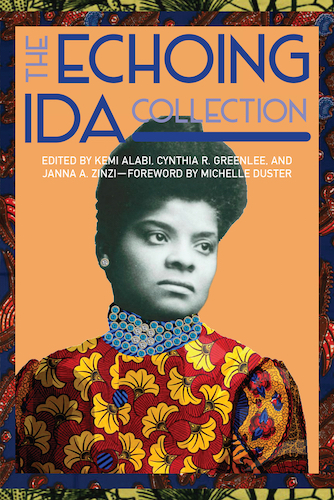
The Echoing Ida Collection edited by Cynthia R. Greenlee, Kemi Alabi, and Janna A. Zinzi (January) 

An anthology of journalistic articles from the Echoing Ida collective, founded in 2012, a community of Black women and nonbinary writers, edited by Cynthia R. Greenlee, Kemi Alabi, and Janna A. Zinzi and features a foreword from Ida B. Wells-Barnett’s great-granddaughter Michelle Duster. The pieces within this collection imbue the beliefs of their foremother and posthumous Pulitzer winner. 

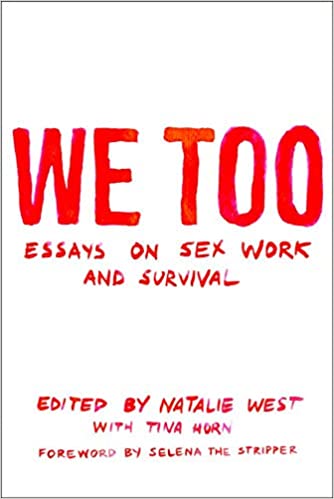
We Too: Essays on Sex Work and Survival edited by Natalie West with Tina Horn (February) 

Of We Too, Wilson says it is “just one example of why feminist publishing is evergreen, necessary, and always relevant. When people ask me why feminist presses still need to exist in 2020, We Too is one of the books I think about and mention immediately. This book, similar to Echoing Ida and the Crunk Feminist Collection, is both a book and a movement itself—and I’m grateful for its expansion of my own thinking and what this powerful work will do to promote empathy, action, and growth in all of its readers.” 

 I Had a Miscarriage: A Memoir, a Movement by Jessica Zucker (March) 

A memoir drawing from Jessica Zucker’s psychological expertise and her work as the creator of the #IHadaMiscarriage campaign combatting the silence, shame, and stigma surrounding miscarriages in the United States.

We Are Bridges: A Memoir by Cassandra Lane (April) 

A lyrical memoir by Cassandra Lane who retrieves her great-grandparents’ lost histories from violent erasure to articulate a blueprint for her and her son’s future. Lane’s debut is the winner of the 2020 Louise Meriwether First Book Prize.

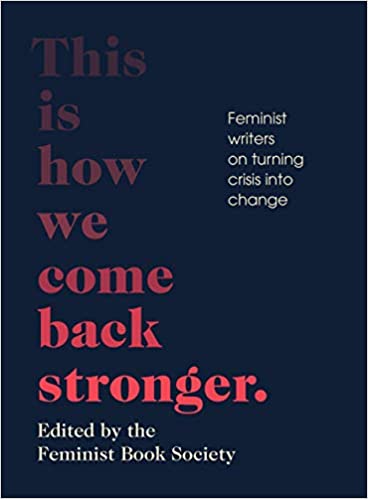
This Is How We Come Back Stronger: Feminists on Turning Crisis Into Change edited by the Feminist Book Society (April) 

A collection of essays, short fiction, poetry, and more by feminist writers in response to the personal and the political in the time of the COVID-19 pandemic. Edited by the Feminist Book Society with contributions by Glory Edim and Layla Saad. Wilson said, “I’ll be writing the introduction, and I’m delighted that we’re partnering with And Other Stories on this book.”

Black Box: The Memoir that Sparked Japan’s #MeToo Movement by Shiori Ito (July) 

An internationally recognized sexual assault memoir, written by Shiori Ito and translated by Allison Markin Powell, that revolutionized a feminist movement around rape, stigma, and silence in Japan. Ito writes palpably about pursuing justice and how she was initially told her case was a “black box” (or untouchable). 

We Were There! The Third World Women’s Alliance and The Second Wave (October)

A nonfiction account by Pat Romney of the rise of the Third World Women’s Alliance and the involvement of women of color in the second wave of feminism. 

A Woman Walks into a Bar…and Finds Freud

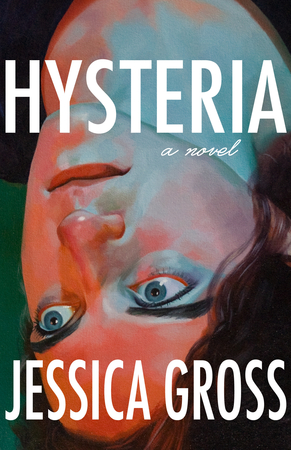
Plagued by a throbbing hangover, having just rendezvoused with her father’s colleague in her parent’s coat closet and then seducing her roommate’s brother home to bed, a woman walks into a dimly lit bar. “Dark and stormy,” she says. She is a woman who attempts to fill the ache of a void within her through sexual exploits, a woman who desperately desires her father’s affection, and serving her is no one other than Sigmund Freud, who is alive and well and mixing drinks in modern-day Brooklyn. 

Hysteria, Jessica Gross’s debut novel, is in many ways a fever dream. Absurd at times, relatable in others, and threaded with darkness, the narrative takes place over a two day period, allowing for the reader to dive deep into the unnamed narrator’s complicated psyche. With rigid therapists for parents, a host of feelings she has been trained to repress, and a skewed perception of the world that makes her feel like she’s teetering on the edge of coming undone, the narrator careens through a variety of liaisons that leave her hungry for something she cannot find words for. 

It is only when Freud (who might actually be Freud but also might be some strange projection the protagonist conjures in her time of need) presses his hands against her face that she is able to trace the root of her symptoms back to their origins, and even then her internal landscape remains shadowy, unknowable in ways. There is beauty in the ways in which Gross explores the complexities of her main character, allowing her carnal exploration while also laying bare the mechanisms that keep aspects of her emotional life contained.

Over the phone, Jessica Gross and I spoke about what it was like writing Freud into modern day; tensions between self-expression and restraint; and the power to be found in writing about sexual exploration from a woman’s perspective. 


Jacqueline Alnes: Hysteria is a word that carries so much weight.

There is a really interesting tension between containment and liberation in the novel. In some parts, the main character has so much emotion she feels she can’t contain it, but outwardly she is just standing still snapping a rubber band against her wrist, saying calm down, calm down to herself while really she wants to run freely down the street. What was it like exploring that tension? 

Jessica Gross: It felt very true to me. Many women I know, and also men, feel like certain emotions are okay to feel and others are not okay to feel. We’re told “be happier, be calmer, be cheerful, your pain is scary.” Many people are taught by their parents and the culture at large to corral feelings. With pain, I think it’s only by actually feeling it that people move through it.

JA: It’s funny to me that the main character’s parents are therapists, which is one of the spaces where you hope that you can express your full self or come with emotions and not be judged, but they almost seem like the people who are suppressing her in so many different ways. 

JG: Totally. First of all, people can be adept therapists and not as good at being parents. But also, her parents are cognitive-behavioral therapists. I got the sense, both from friends and from the research I did for this book, that CBT is more concerned with symptom management than with deeply understanding the roots of and intricacies of the patient’s emotional life. For that reason, it made a kind of sense to me that the narrator’s parents would employ strategies to train her rather than offering empathy and sitting with whatever she was going through. 

JA: I couldn’t stop reading once I started, and I finished late one night. The next morning, I wondered whether Freud in the book was real or not. I had the sensation that he was specific and tangible enough to be a real person, but also the main character had enough of an expanse in her emotional life to feel like she could have projected something like that. 

JG: Oh, that’s so cool for me to hear. In the initial conception, he was real. He just appeared. Through revision, it became easier to read him as her delusion, but it was important to me that it never be definitively stated that that was the case. The book takes place so much in her head, and what is in her head is real to her, and thus to the book. And I also just love the idea of Freud appearing out of nowhere.

JA: The main character’s perception of reality is so warped at times that it’s like, well, if she thinks that way about events that have happened, then what else could she fictionalize? 

JG: Exactly. Exactly.

JA: How did you get the idea for this book? 

We’re told be happier, be calmer, be cheerful, your pain is scary.

JG: I’ve been in psychoanalysis for a long time, over a decade. When I was thinking about writing a novel, I knew I wanted to deal with psychoanalysis and Freud in some way. I can’t really track it—it’s like a gap in my memory —but I wrote in my journal sometime in early 2016: write a novel about Freud. And then, somehow, I started writing a book where Freud appeared in this character’s life. 

JA: What was it like to write Freud into contemporary times?

JG: Oh, it was so much fun. Initially, I had the narrator going to Vienna.  But then I visited Vienna, where my father’s family is from—they were Jewish, and fled in 1938—and was filled with antipathy; I found myself conflating modern-day Vienna and the past I knew about. I hated writing the novel in Vienna, and then I realized I didn’t have to: if Freud randomly and surreally appeared in the recent past, he could appear anywhere!

I started having a tremendous amount of fun. It ended up making so much more sense to me that Freud would appear in a bar in Brooklyn. He looks just like a hipster bartender, so why not? 

JA: I loved that. There’s a level of absurdity, too, in finding Freud behind a bar. 

The intimacy of waking up with her every morning and then rehashing every detail she could remember or not remember about the night before based on how much she drank was interesting because it kind of had almost this like elliptical feel. Reliving scenes made the novel feel more expansive in terms of time, if that makes sense.

JG: The way her mind works is so recursive that it’s almost like she’s living everything like 17 times over again. 

JA: Your prose is so visceral and sensory. The narrator at one point describes the way people’s voices were being “drilled into the top” of her skull. And then the other voice was “sliding down my throat and through my chest and into my stomach where it made a red hot home,” which I loved. What do you consider when writing the body and sex? 

JG: The example that you picked out is interesting because there are so many bodily essential details that aren’t sexual. I feel like writing the body is the best way to convey something on the page, even something intellectual. With this book, I wanted to immerse the reader in the narrator’s experience. I don’t want to tell the reader something, I want to induce the sensation in a way that it might feel in the body. 

JA: Was it interesting to write the body in light of writing about Freud?

JG: In what sense?

JA: I’m thinking back to earlier in our conversation when you shared that one definition of hysteria is the way that emotions become visible or tangible in the body, like a symptom. Because you’re thinking so much about repression and sexuality, moments like the narrator tonguing the roof of her mouth hold a lot of weight. 

Freud looks just like a hipster bartender.

JG: Psychoanalysis is such an intellectual endeavor, but often where it starts—at least in my experience—is with a physical feeling of something being wrong.

JG: That’s interesting. And then it also makes me think about what about the body is private and what is public in regard to your narrator. She has all these private, intimate moments with her body—some with other people, but mostly with herself. 

JA: Yeah, she clearly has a very warped idea of how she appears to other people. Part of what I wanted to do with Hysteria was push the boundaries of acceptable discourse about sex. I think by now people are pretty comfortable hearing about women having sex, especially sort of disturbed sex. But discourse about women masturbating seems to have lagged behind. It was important to me, in my writing, to contribute to creating space for talking about that. 

In the context of the book itself, what’s interesting is that she masturbates less because she’s aroused and more as a way of connecting to herself, and as a stress reduction technique. And the only time she comes is when she’s in private. She can’t permit herself to let go in front of a man, which was interesting to me too.

JG: In addition to Fleabag, I’ve seen comparisons of Hysteria to Otessa Moshfegh’s My Year of Rest and Relaxation, which resonated with me. What are books that you feel Hysteria is in conversation with? 

JA: The book I thought about more than any other while I was writing was Portnoy’s Complaint. I read it in 2012 and I really loved it. I was excited by both the liberty Philip Roth took with writing sexual perversion and the way he dealt with psychoanalytic themes. Of course, Roth’s writing has been critiqued as misogynist; his narrators often objectify women. I was interested in inverting that. My narrator certainly doesn’t have a healthy relationship to her sexuality, I would say: I’m not condoning her objectification, which frankly hurts her more than anyone else. But because of the inversion of the power dynamic, it resonates differently, and in a way that excited me. 

We’re All Faking It For Social Media

I heard about Emma Cline’s 2016 debut, The Girls, as many of us did—through a whirlwind of praise and accolades, from literary critics and friends with good taste alike. When I read the novel, I immediately understood why. The Girls is mesmerizing and beautiful in both its language and its narrative, focused on the lives of the women in a 1969 California cult.

I met Emma Cline soon after, at a Paris Review party in New York (remember parties?). It always makes me a little nervous to meet someone whose work I admire, but Cline was charming and funny, and I probably managed not to say anything too weird.

Daddy by Emma Cline

So of course, I was thrilled to read Daddy, Cline’s second book and first collection of short fiction. “You pressed only slightly on the world and it showed its odd corners, revealed its dim and helpless desires,” muses the protagonist of “Los Angeles,” a story about a young woman working retail. The stories in Daddy feel like the result of this kind of pressure: tours through the odd corners of disgraced men’s minds and women’s internet rabbit holes. The world reveals itself in subtle details: “[he] had scars on his back from teenage acne but told her they were from a rock-climbing accident” (“The Nanny”); “This was why you lived in cities—abundance buffered you from the vagaries of human contact” (“Northeast Regional”); “her father had told her how hair and teeth had tightly wound cellular structures that held power” (“Marion”); “It had been bearable because it would become a story, something condensed and communicable” (“Los Angeles”). Every divot in a character’s inner monologue becomes a well.

Earlier this month, Cline and I talked on the phone about the dual meaning of “Daddy” and writing the aftermath of mens’ bad behavior.


Deirdre Coyle: A number of these characters have clear opinions about whether someone is a “good” or “bad” person. In “A/S/L,” a woman asserts that her husband is “not a bad person.” In “Northeast Regional,” a father thinks a waitress “must have thought he was the bad guy.” In “Marion,” a man tells a woman that she’s “a sweet girl”; in “The Nanny,” a man tells a woman that she’s “a nice girl.” At first I was amused by the short-sighted simplicity of men informing women that they’re good—whom among us, right?—but the stories go beyond that. How did you determine these characters’ morality judgments?

Emma Cline: I mean, there are always two levels of things, right? The characters live in this world where they think of themselves as good people, or other people as bad people. They can have those kinds of morality judgments, and I feel like as a writer, I try to stay away from those sort of binaries as much as possible. I guess part of the pleasure of choosing characters, choosing to write a certain story or situation, is [choosing] characters through whom I get to explore ambivalence, if that makes sense. I’m not interested in judging the characters or coming down on them as good or bad people, but I’m interested in the kind of characters who do see the world that way, and how seeing the world that way kind of allows them to get away with bad behavior longer, because they are captain to what is right and what is wrong. That kind of delusion is really interesting to me.

DC: So would you describe these characters as deluded?

EC: Yeah, I mean I think that’s where my interest lies as an author, at least in the story form. It’s that distance between how people think of themselves and how they actually are in the world. I think if these were characters who really saw themselves very clearly, I’m not sure that I would be that interested in following them through a situation. I always think about that when people are like, “Oh, this character is so mean,” or “This character is so envious,” or “judgmental,” or all of these bad qualities, and I just can’t imagine wanting to read or write about a really healthy, kind character. Although, you know, maybe some people would like that. And actually, there are probably exceptions to that rule that I can think of. But I think it’s fun and interesting to follow a flawed human being.

DC: It is interesting when people only want to read about characters they find relatable. For me, at least, I feel like that would be very narrow. 

EC: Right.

DC: The stories in Daddy don’t directly reference #MeToo, but in many of them, we’re seeing men deal with the aftermath of their actions. What was it like putting yourself in the heads of these men?

EC: As strange as it sounds, I think it could feel a little bit like a reprieve, even though these are people who are not the most pleasant consciousnesses to spend time in. But especially after writing The Girls, that was so focused on the aftermath of mens’ bad behavior, and having to think about it, and write about it [for] so long from the point of view of a young woman, and to have to experience it from the selfhood of a woman. There was something interesting to me about approaching it not from a victim—well, you know, I don’t even like using that word in this context. There’s something interesting about being a woman and writing these men. I don’t know if I can articulate it any better.

DC: Well it was such a shift from The Girls, which is so focused on these womens’ interiority. When I read the stories in Daddy that are narrated from mens’ perspectives, I was totally absorbed in it, and it felt very real to me. And I mean, I’ve never been a man, but I was really awed by that shift.

There are meta moments in a few of the stories where characters zoom out from their experience, and imagine describing it to someone else. In “Los Angeles,” the protagonist hears her future self narrating a sordid story to her coworker; in “Mack the Knife,” a man imagines telling his friend (the next day) about his drugged up girlfriend’s behavior. I immediately latched onto that because I think about that kind of thing all the time in my own life. What did it feel like, as a writer, to observe these characters observing themselves?

We all carry around a narrative about ourselves, this sort of movie of your own life that you can zoom out to.

EC: For me, it goes back a little to the idea of the narrative we all carry around about ourselves, this sort of movie of your own life that you can zoom out to. I feel like there are certain things in the culture that encourage it. I mean, it’s dumb and maybe basic bitch to say, but obviously, to me, social media encourages you to form this external narrative of your life and things in it and just the whole gestalt of how you see the world. There’s something that can be really alienating about always creating a narrative behind things that are happening, but I think it’s also rich fodder fictionally, for the reasons we spoke about earlier—that there’s a gap between that narrative of self and what is actually happening. What goes on in someone’s consciousness inside that gap is really interesting to me, and I think very revealing.

DC: It reminds me of the time a friend described Twitter as “writing fan fiction about yourself.” I feel like that’s kind of what these characters are doing—not in a social media context, but they’re imagining their own fan fiction. 

EC: Totally, and it can be so alluring. I just got an Instagram, but I’ve only done like three posts or whatever, and they’re all really dumb and not of myself. But I can feel how strong this pull is, because it is a form of control, which we lack in so many other areas of our lives. So much is out of control, and the idea of controlling one’s own image has this real pull. But I feel that it also is scary for that reason.

DC: I do think, if you’re in any creative profession, social media can be—well, I, at least, personally often find it harmful to my actual work, because it is so alluring to be on social media instead of doing anything else. I don’t know if most people feel that way.

EC: I can see that for sure.

DC: So I’ve never lived in California, so some of this might be projection, but both in The Girls and in the California stories in Daddy, the descriptions of the landscapes—the colors, and the canyons—feel so dreamy and surreal. Is this what it feels like to live in California?

So much is out of control, and the idea of [social media] and controlling one’s own image has this real pull.

EC: [Laughs] The landscape here is so potent for me. For whatever reason, it’s the landscape that I most respond to. I just find so much about the way California looks and the way cities look so improbable. Like in LA, all of these green hills with all of these houses on them. There’s something that looks a little surreal to the eye about seeing certain landscapes or scenes in California, and I don’t feel that way on the East Coast, for example.

This might be a lazy generalization, but I think living in California, you become more aware of the natural landscape because you interface with it more, and you’re more at its mercy. I think there was an earthquake three days ago, four days ago? Which is so bizarre. This sounds like a stoner thought, but just zooming out for a second, after the earthquake, I was like, if somebody explained that you would be living your life and occasionally the earth would shake and everything would move, it would not seem like a real thing that you could make your life around these moments. But it happens, and it’s almost commonplace, and that is so bizarre to me.

DC: It feels kind of science-fiction-y.

EC: Totally.

DC: Can you talk about the title?

EC: The title I liked for its multiple meaning. There’s a very innocent version of the word [daddy], sort of invoking all of these familial, good feelings and wholesomeness. And then of course there are all these other sort of shadings on the word that have more to do with power and sex. When I was thinking about titling the collection and looking at all the stories together, and thinking, “What’s the connective tissue?” or “What’s the animating force behind all of these stories?”, there’s something about that word that seemed to get at what I was trying to do with the stories. I’m always interested in the innocent surface and darkness underneath, whether it’s landscape, like we were just talking about—California is very beautiful, but it’s quite literally unstable. And then family structures, outwardly, are these places that are supposed to be very safe and loving but that often are deeply dysfunctional and violent. That, to me, is very interesting, and I liked the duality of that for the title.

9 Books About Mistaken Identity

There is a lot of news over the past week that will live on eternally. But one of the taglines that brought a bit of relief to the world was Donald Trump hosting a press conference at the Four Seasons Total Landscaping, which one presumes he thought was the Four Seasons Hotel. (Nobody’s admitting this, but come on.)  Once again, under this absolutely surreal government, real life steals a plot that would be far-fetched (but also hilarious) in fiction.

If you’re not yet ready to move from thinking about last weekend’s farcical error to thinking about this week’s farcical coup, here’s a list of ten books involving similar errors of mistaken identity. These books range from memoirs about wrongful accusations, to postmodern novels where characters chase their doppelgangers, to full-on comedies where all the characters’ costumes start to look the same. If anyone in the Trump administration read books, they might have known what was coming.

The Double by José Saramago

The Double, or O Homem Duplicado (literally, “the duplicated man”) in Portuguese,is about Tertuliano Máximo Afonso, who watches a movie in which the main character looks just like him. To find out more about the character, he calls the actor on the phone, only to be mistaken for the actor by the actor’s own wife. Eventually, the doubles meet, and fall even deeper into confusion and duplicity.

Twelfth Night by William Shakespeare

Twelfth Night shows that mistaken identity has been a part of our literary canon for centuries. Like most Shakespearian comedies, everyone in this play is trying to take advantage of, grift, seduce, or win over everyone else. But at the heart of the story are the twins Sebastian and Viola, who are easily confused—to hilarious and chaotic effect—because Viola spends most of the play dressed as a man. For in this world, that was all that was needed to confuse the characters (like how not reading past the words “Four Seasons” confused our government.)

City of Glass by Paul Auster

This novel opens up with the narrator Daniel Quinn receiving a call meant for the private detective named Paul Auster. The protagonist dutifully follows, resulting in a neo-noir revolving around identity. This postmodern novel asks: what does a protagonist do when mistaken for the author?

The Good Lord Bird by James McBride

In The Good Lord Bird, John Brown confuses the enslaved boy Henry Shackleford for a girl, whom he calls Onion. Early in the novel, Brown hears Henry’s father say “Henry ain’t a…” and mishears it as “Henrietta,” an error that he never thinks to investigate or correct. This helps establish John Brown’s character as a man of faith who never questions his gut or his first impression. Henry is able to use this mistaken identity to his advantage at times —but at other times, it puts him at great risk.

The Sun Does Shine: How I Found Life and Freedom on Death Row by Anthony Ray Hinton

The Sun Does Shine tells the story of Anthony Ray Hinton, who through a case of mistaken identity is sent to Death Row for 30 years. Hinton perseveres and is exonerated for the crimes he didn’t commit—but this isn’t primarily a story of hope. It’s a cautionary tale about a judicial system that can take nearly everything away from an innocent person, much of which can never be given back.

A Tale of Two Cities by Charles Dickens

In this Dickens classic, doubles play a key factor. This starts with the infamous opening line “It was the best of times, it was the worst of times” and continues on as a theme as the paired opposites echo multiple sets of doubled characters. This is most striking when Charles Darnay is being tried as a spy, partially due to the suspicion that his ordinary looks bring upon him. Darnay’s looks are so normal that even another lawyer, Sydney Carton, looks like him. Darnay’s lawyer gets him exonerated by claiming mistaken identity. The ability to mistake Darnay for Carton continues to play a factor throughout the novel, as they eventually weaponize their similarities (while Dickens also incorporates other doubles as well.)

An American Marriage by Tayari Jones

An American Marriage by Tayari Jones is a story about how the carceral system in the United States is more about punishment than correction. Roy and Celestial are newlyweds, living as close to an American Dream in their American Marriage that is afforded to them, when through a case of mistaken identity, Roy is arrested. Despite their bond, and their individual strengths, Celestial and Roy’s marriage, love, and lives are pushed to the brink. This story shows that no matter how well individual people know each other, the system’s imprecision can ruin people.

The Likeness by Tana French

In Tana French’s mystery novel, detective Cassie Maddox takes on a murder case that comes uncomfortably close: the victim looks just like Cassie herself, and has an ID using one of her old undercover aliases. In order to solve the murder, Cassie must take on Alexandra’s identity and life.

Mistaken Identity: Race and Class in the Age of Trump by Asad Haider

Mistaken Identity: Race and Class in the Age of Trump is a book exploring the differences that exist within the particular groups of people/communities that in America are viewed as monoliths. Haider goes deep in exploring these fissures within communities, while exploring how to better understand these communal identities. This one is more about the concept of “identity” than about mistaking one person for another, but watching how punditry struggles over demographics such as the “Latino” voting bloc, it’s clear that this book is as important as ever.

Nobody Gets to Tell Me How to Stereotype Myself

I was at a Christmas party with a man who wanted me to hate him. I should hate all whites, he felt, for what they have done to me. I thought hard about what whites have done to me. I was 40, old enough to have accumulated a few unpleasant racial encounters, but nothing of any lasting significance came to mind. The man was astonished at this response. “How about slavery?” he asked. I explained, as politely as I could, that I had not been a slave. “But you feel its effects,” he snapped. “Racism, discrimination, and prejudice will always be a problem for you in this country. White people,” he insisted, “are your oppressors.” I glanced around the room, just as one of my oppressors happened by. She was holding a tray of canapés. She offered me one. I asked the man if, as a form of reparations, I should take two. 

It was midway through my third year in academia. I had survived mountains of papers, apathetic students, cantankerous colleagues, boring meetings, sleep deprivation, and two stalkers, and now I was up against a man who had been mysteriously transported from 1962. He even looked the part, with lavish sideburns and solid, black-rimmed glasses. He wasn’t an academic, but rather the spouse of one. In fact, he had no job at all, a dual act of defiance, he felt, against a patriarchal and capitalistic society.  He was a fun person to talk with, especially if, like me, you enjoyed driving white liberals up the wall. And the surest way to do that, if you were black, was to deny them the chance to pity you. 

The surest way to drive white liberals up the wall, if you were black, was to deny them the chance to pity you. 

He’d spotted me 30 minutes earlier while I stood alone at the dining room table, grazing on various appetizers. My wife, Brenda, had drifted off somewhere, and the room buzzed with pockets of conversation and laughter. The man joined me. I accepted his offer of a gin and tonic. We talked local politics for a moment, or rather he talked and I listened, because, being relatively new to this small town, it wasn’t something I knew much about, before moving on to the Patriots, our kids, and finally my classes. He was particularly interested in my African American Literature course. “Did you have any black students?” he inquired.

“We started with two,” I said, “but ended with 28.” I let his puzzled expression linger until I’d eaten a stuffed mushroom. “Everyone who takes the course has to agree to be black for the duration of the semester.”

“Really?” he asked, laughing. “What do they do, smear their faces with burnt cork?”

“Not a bad idea,” I said. “But for now, they simply have to think like blacks, but in a way different from what they probably expect.” I told him that black literature is often approached as records of oppression, but that my students don’t focus on white cruelty but rather its flip side: black courage. “After all,” I continued, “slaves and their immediate descendants were by and large heroic, not pathetic, or I wouldn’t be standing here.”

The man was outraged. “You’re letting whites off the hook,” he said. “You’re absolving them of responsibility, of the obligation to atone for past and present wrongs…” He went on in this vein for a good while, and I am pleased to say that I goaded him until he stormed across the room and stood with his wife, who, after he’d spoken with her, glanced in my direction to see, no doubt, a traitor to the black race. That was unfortunate. I’d like to think I betray whites too.

More precisely it’s the belief that blacks are primarily victims that I betray, a common view held by both races. I, too, held it for many years. When I was in my early twenties and making my first crude attempts at writing fiction, I’d sit at my word processor and pound out stories brimming with blacks who understood only anger and pain. My settings were always ghettos, because that was what I knew, and the plots centered on hardship and suffering, because I knew that too. And I also knew this: white society was responsible for the existence of this miserable world, and it was my duty as a black artist to make this clear. Three of these stories gained me acceptance into the Iowa Writers’ Workshop. It was there that my awakening occurred.

My first course was with Frank Conroy, the program’s director. He was brutally honest and harbored a militant obsession with clarity. Most of the two-hour-long classes were spent with him shredding the stories and our egos. We squirmed in our seats and wiped our brows as he did his infamous line-by-line, zeroing in on words and phrases that confused the work’s meaning or failed to make unequivocal sense. It was the most intense and best writing class that I’d ever had. I went into the second semester confident that my prose had improved and that the most difficult course was behind me.

More precisely it’s the belief that blacks are primarily victims that I betray, a common view held by both races.

Randomly, I decided to take a workshop with James Alan McPherson. During the break before classes resumed, I read for the first time his books Hue and Cry and Elbow Room. The impact his writing had on me was profound. He, too, chronicled the lives of African Americans, and he had done it in short story form, my genre of choice at the time; this was the model I’d been searching for. I read the stories over and over again, convinced that I had found my literary father.

The contrast between Conroy and McPherson could not have been more stark. Conroy was tall, white, and boisterous; McPherson was short, black, and shy. Conroy cursed, yelled, laughed, and joked; McPherson rarely spoke at all, and when he did his voice was so quiet you often could not hear him. The students dominated his workshops. I was disappointed. McPherson was a Pulitzer Prize winner, after all, the first African American to receive that honor for fiction. He was the recipient of a MacArthur “Genius” grant, as well as countless other awards. I wanted his wisdom. I wanted his insight. He gave it mid-semester, when it was time to workshop my first story.

“Before we begin today,” he said, “I’d like to make a few comments.” This was new; he’d never prefaced a story before. A smile crept on my face as I allowed myself to imagine him praising me for my depiction of a den of heroin addicts, for this was not easy to do, requiring, among other things, an intimate knowledge of heroin addicts and a certain flair for profanity.

“Are you all familiar with gangster rap?” McPherson asked. We were, despite the fact that, besides me, all of the students were white and mostly middle to upper class. While we each nodded our familiarity with the genre, McPherson reached into a shopping bag he’d brought and removed a magazine. He opened it to a premarked page on which was a picture of a rapper, cloaked in jewelry and guns and leaning against the hood of a squad car. Behind him was a sprawling slum. “This person raps about the ghetto,” McPherson said, “but he doesn’t live in the ghetto. He lives in a wealthy white suburb with his wife and daughter. His daughter attends a predominantly white, private school. That’s what this article is about.” He closed the magazine and returned it to the bag. “What some gangster rappers are doing is using black stereotypes because white people eat that stuff up. But these images are false, they’re dishonest. Some rappers are selling out their race for personal gain.” He paused again, this time to hold up my story. “That’s what this writer is doing with his work.” He sat my story back on the table. “Okay, that’s all I have to say. You can discuss it now.”

For a few seconds, the only sound in the room was of my labored breathing. And then someone said, “McPherson’s right. The story is garbage.”

“Complete rubbish,” said another.

And so it went from there.

I did not sleep that night. At 8 a.m., when I could hold out no longer, I called McPherson at home and demanded a conference. He agreed to meet me in his office in ten minutes.

He was there when I arrived, sitting behind his desk. The desk was bare except for a copy of my story, and the office was bare except for the desk and two chairs. The built-in bookshelves held nothing, and nothing hung on the walls. There was no dressing on the window, no telephone, and no computer. It might have been the janitor’s office, a place to catch a few winks while the mopped floors dried. And McPherson might have been the janitor. His blue shirt was a mass of wrinkles and his eyes were bloodshot.  His trademark hat, a beige straw Kangol, seemed to rest at an odd angle on his head; from beneath it a single long braid had worked its way free and dangled rebelliously behind his right ear. He noticed me staring at it and poked it back into concealment.

“Are you okay?” he asked. His voice was gentle, full of concern. “You sounded like a crazy man on the phone.”

“Well, I’m not a crazy man.” I reached forward to tap my finger on my story and proceeded to rant and rave as only a crazy man could. “I did not make this stuff up,” I insisted. “I’m from the ghetto.” I went through the characters one by one, citing various relatives on whom they were based, and I mentioned that, just the week before, my younger brother had been shot in the back while in McDonald’s. I told him I had another brother who was in and out of prison, a heroin-addict sister-in-law, that I had once been arrested for car theft (falsely, but that was beside the point), and that many, many of my friends were still living in the miserable community in which I had been raised. “You misread my story,” I said in conclusion, “and you misread me.” I leaned back and folded my arms across my chest, waiting for his apology. Instead, I watched as he sprang from his chair and hurried from the room. He turned left into the hall, and a moment later he passed going right, with Frank Conroy calling after him, and then they passed left again, now with Connie Brothers, the program’s administrator, in tow, and after two more passes this awful parade came to an end somewhere out of view. Now Connie stood before me, looking as nauseous as I felt. “Jim is the kindest soul on Earth,” she said quietly. “Why, why would you insult him?”

For an instant, I saw myself at twelve, looking at a closed front door, behind which was my first love, who had just dumped me and left me standing on her porch trying, unsuccessfully, not to cry.

Connie magically produced a tissue and handed it to me. She rubbed my shoulders while I rambled incoherently, something about sleep deprivation and McPherson being my father. “It’s okay, sweetie,” Connie said. “I’ll talk to him.”

McPherson returned momentarily. I apologized. He told me it was okay, that workshops can make people uptight and sensitive. It had been difficult for him too, he explained, when he was a student there in the seventies. There was a lull in the conversation before he asked, “So, where’re your people from?”

He still does not believe me, I thought. I mumbled, “Chicago.”

“No, no. That’s where they are. Where are they from?”

“Oh, sorry. Arkansas.”

“Mine are from Georgia,” he said. He smiled and added, “That place is a motherfucker.” 

The essence of black America was conveyed in that response, a toughness of spirit, humor laced with tragedy, but at that moment all I saw was the man who had rejected my vision. Defeated, I thanked him for agreeing to meet with me as I rose to leave. He stood and shook my hand. As I was walking out the door, he called my name. I turned to face him.

“Stereotypes are valuable,” he said. “But only if you use them to your advantage.  They present your readers with something they’ll recognize, and it pulls them into what appears to be familiar territory, a comfort zone. But once they’re in, you have to move them beyond the stereotype. You have to show them what’s real.”

“What’s real?” I asked.

Without hesitation, he said, “You.”

It was one of those things that you instantly recognize as profound, and then, because you do not quite understand it, try to forget as quickly as you can. It was also one of those things that you cannot forget. And so it roamed freely in my subconscious, occasionally coming into sharp focus to remind me of its presence, but I allowed myself to be consumed by it no more than I would a housefly. For about a year. And then I went to see him again.

“I was wondering,” I said, “if you wouldn’t mind supervising an independent project.”

“That depends,” he responded, “on what you’d like to study.”

“Me,” I said. “I want to study me.”

We started with black folklore and history. Next we moved on to blues and jazz, and then we covered a broad range of black literature and culture. We studied black intellectuals and philosophers, sociologists, anthropologists, activists, filmmakers, and ex-cons. For four years, we dissected nearly every aspect of black life and thought, and in the process a theme emerged that had been there all along: life is a motherfucker; living it anyway, and sometimes laughing in the process, is where humanity is won.

I had become my own stereotype, a character in one of my short stories who insisted on seeing himself primarily as a repository of pain and defeat.

And this is what I learned about me: I had become my own stereotype, a character in one of my short stories who insisted on seeing himself primarily as a repository of pain and defeat, despite overwhelming evidence to the contrary. The very people with whom I had been raised and had dedicated myself to rendering in prose had become victims of my myopia. My stories showed people being affected by drug addiction, racism, poverty, murder, crime, violence, but they said nothing about the spirit that, despite being confronted with what often amounted to certain defeat, would continue to struggle and aspire for something better. That old slave song “We Shall Overcome” pretty much says it all.

The coursework I conducted with McPherson ultimately contributed to a doctorate in interdisciplinary studies. McPherson served as my dissertation chair. I knew when I started my academic career that I owed him a debt to teach black literature in a certain way. “Less time needs to be spent on the dragons,” he told me once, “and more on our ability to forge swords for battle, and the skill with which we’ve used them.”

The man at the Christmas party, of course, would rather that I talk about the dragons. And at first, when students take my class, they are surprised, even a bit disappointed, to see the course will not head in that direction. But by the end of the semester, they are invariably uplifted by the heroic nature of African Americans, in part, perhaps, because it is the nature found in us all. Sometimes students thank me for this approach. On occasion they ask me where I got the idea. I tell them I got it from my father.


Excerpt from Jerald Walker’s How to Make a Slave and Other Essays, used by permission of Mad Creek Books, an imprint of The Ohio State University Press.

In Samanta Schweblin’s New Novel, The Panopticon Is Cute

In Argentine author Samanta Schweblin’s latest novel, Little Eyes, characters indulge in long-distance voyeurism—and exhibitionism—via mobile stuffed toys with built in cameras, called kentukis. Translated from Spanish by Megan McDowell, Little Eyes has some of its characters buy kentukis as pet-like companions in their homes, while others buy connection cards to be inside the soft toys, which take the forms of moles, rabbits, and crows. 

Little Eyes by Samanta Schweblin

The relationship between the kentukis and their keepers couldn’t be further from a normal owner-pet relationship since inside each kentuki is an actual human being, on the other side of the world. The kentukis interact back more than say a cat purring even though their range of communication is limited. Schweblin infuses a large spectrum of human behaviors—jealousy, falling in love, pursuing a dream, murderousness—through the screen and proxy of the kentuki. 

Via email en español (with help on the finer points of translation from Rikki Matsumoto) , I spoke with Schweblin, whose eco-nightmare Fever Dream has won raving U.S. fans (including Jenny Offill) about screen intimacy, watching and being watched, and the genius of being old with technology.


J.R. Ramakrishnan: Most of us are used to the idea of being watched by security cameras and by the Internet. The kentukis are the observers of their owners. Could you talk about how you imagined the side of the watchers? 

Samanta Schweblin: I suppose I got to this other side of the mirror naturally, because of the type of device a kentuki is, and the possibilities it offers as a literary object. And there is also something about my own fears about our exposure to technology today. For decades, we have been concerned with the idea of ​​technological control in the hands of large companies or states themselves. It was already there, even in 1984 by George Orwell, and any apocalyptic idea regarding the control that can be inflicted at a massive level on citizens seems very genuine to me. But I think we sometimes neglect the power and harm that we, ourselves, as naive and poorly-educated users of technology, inflict on others. It is naive and clumsy harm, yet massive. And that was the place I was most interested in thinking about. I did not intend to think of the technological dangers from an explosive or apocalyptic place, but within the most intimate and personal worlds in which we live. Technology is neutral. It is neither good nor bad, nor interesting in itself. The interesting thing is how it is used, the interesting thing is the people behind it, and the limits to which they can reach or let go.

JRR: The world in which the kentukis exist is transnational and mobile. How did you choose your settings? I understand that you’ve spent time in Oaxaca previously.

SS: At first, I worked with cities that I knew, and almost all of them I knew for literary reasons, because I had been invited to readings or festivals: Lyon, Erfurt, Lima, among many others. And even artist residences: I spent two months in the Italian residence Civitella Rainieri, half an hour from Umbértide by car, and I went quite a bit to the city, so I knew quite a few corners for Enzo’s history. The eccentric artists’ residence isolated on the top of a mountain in the Oaxacan jungle does exist, and I also lived there for three months, almost ten years ago. 

But of course, as soon as the novel began to take shape, I had to abandon the eccentricity of working only with known cities. I needed to expand to much poorer or richer, or Nordic, or isolated areas, so I started to venture into writing sites I have never been to. I worked a lot with Google Earth, and even with the spontaneous collaboration of users of forums or social networks who lived near businesses or the houses where my characters were supposedly living. For example, I remember asking a Norwegian man I met in a forum: If there were such a device (as a kentuki), do you think that the device would be able to climb the sidewalk of the street on which you have your own business? I thought the man would never answer, but a few days later, I received a short message: “I’ll check it out.” And a week later, he wrote, “Yes of course there are ramps on the corners of every street, it could climb without a problem.”

JRR: The desire for connection (as well as voyeuristic thrills and much less benign impulses) seems to drive the interaction between the kentukis and their owners. I loved the part when Emilia’s skeptical friend Ines says, “Why don’t you find yourself a boyfriend instead of crawling around on some stranger’s floor?” It made me wonder the same. Could you talk about this preference of this screens-only long-distance connection in the book, and perhaps also in our real world? 

SS: I suppose that all distances—geographical, technological, cultural— shape our most effective idealizations and prejudices. And there is also the advantage that, if everything happens within the digital realm, all commitments can be ended with the push of a button.

Regarding voyeurism, I am interested in thinking about it beyond its sexual reading. I think there is something very sincere and beautiful in that curiosity we have to spy on others. In my own experience, seeing others when they don’t know they are being watched, has to do with an almost urgent need to know who I am. He who does not know he is being watched does not act. He is who he is, in his truest way. Are others really happy, those who say they are happy? Do the pains we are so afraid of really hurt that much? I think that if I can catch others dealing with these things in their most sincere ways, I get vital information for myself. I understand better what kind of impact they can have on me. And the kentukis are the eyes wide open to all these truths.

JRR: I was really struck by the connection between older people, the kentukis, and technology. Upon seeing an older woman murmuring to herself in the supermarket, Emilia thinks, “I may be crazy but at least I’m modern.” I imagine in your crafting of the book, the question of age and loneliness must have been very prominent. Would you discuss this? 

Technology is neither good nor bad, nor interesting in itself. The interesting thing is how it is used, the people behind it, and the limits to which they can reach or let go.

SS: The older generation, and now I’m just generalizing, are the ones that have been furthest from understanding some technologies. This gives them both genius and a much stronger lucidity than the generations that are already immersed in it can have. They have enough distance to not understand it at all and, at the same time, to see clearly the long list of follies that accompany these technologies. I was interested in that contrast. That added to the fact that old age has always interested me as a literary space. I usually go through it one way or another in almost all my books. I always think of the mistaken idea that, at 20, we have what it will be like to be 40, at 40 what it will be like to be 60, and so on. There is a great lack of knowledge of what old age really is. I remember last year when there were more books like that, that approached old age with such rawness, sincerity and lucidity. I remember reading them and thinking: They should have made me read these in high school. We would all be making much more decent, sensible, and happy decisions.

JRR: I couldn’t decide which was my favorite plot line. I was captivated by the Lyon-based kentuki falling in love with another kentuki operated by the married woman in Taipei but also by the unabashed hustle of Grigor who trades in offering a choice of handpicked kentuki connections in Zagreb. He says, “Ultimately, people loved restrictions” but even he is a little turned off by the end after what he sees. The desire for love and money, both very human drives, are acted through kentukis literally in the affair of the Lyon-Beijing-Taipei duo, and through them as commodities. Could you tell us about how you imagined these two plot lines? Both are extremely intricate and the Lyon-Beijing one is a bit heartbreaking!

SS: Grigor’s story was there almost from the first draft, because it seemed important to me to have a character who could get involved with this technology in a more calculating way, just to take advantage of it. Possibly Grigor’s is one of the characters who, without knowing it, does the most damage, and for that reason I wanted to have him very emotionally attached to me, that I, as a possible reader, understood that in his same situation perhaps I would have made the same decisions as he did, and I could see how he was led to dark places through actions and decisions that might have seem sensible.

I wrote the Taipei-Beijing story practically in one sitting, like a story. I wanted a love story, but I had never written one, so I thought it would be the one that would bring me the most trouble. Also, it happens in two cities that I don’t know, in three languages ​​and two cultures that I don’t know well, everything really was out of my comfort zone. In fact, the first drafts were riddled with foolish and unforgivable mistakes regarding the cultural customs or idiosyncrasies of each city. But then I assigned readers for each story in the book, which helped a lot with these kinds of details. My Chinese publisher, for example, was following this Taipei-Beijing story closely, a Croatian friend was following Grigor’s. A Peruvian writer from Lima, German friends from Erfurt, and so on.

JRR: The book is only set in the U.S. for a few pages but we are reminded of it in the name of the kentukis and Alina names her kentuki, Colonel Sanders. Would you discuss the naming and how you considered capitalism in this novel (especially in light of Fever Dream)? 

He who does not know he is being watched does not act. He is who he is, in his truest way.

SS: The name just appeared during the writing of the first draft and it stayed there for a while. Then I googled “kentuki” and found that there are cities in Australia and Ukraine that bear that name. Also a traditional Japanese food, an American rifle, a famous Russian race horse. I wanted that, a name that sounded familiar, and at the same time different in some cultures. I made a list of things that I wanted the name to reflect or invoke. I wanted a name that sounded cheap, popular, that resonated as something already known, already heard, and also something almost funny, and greasy too. I suppose that some of this in turn reflects the capitalist ideas you were asking about. All the answers always led me back to the name “kentukis,” so that’s how it turned out.

JRR: I must admit I felt like you had looked into my life, certainly in the broad strokes of Alina’s story (though not in the more distressing details) since for a brief period, I lived in Oaxaca with a former artist partner. Your rendering of the relationship between two artists was intensely done. I won’t spoil it for the reader but Sven’s final act is shocking. But isn’t the type of theft he commits, what all artists do for “material”? 

SS: It can be. I suppose that writers are also always looking and listening to everything hungrily for material. Although sometimes it can also work as a shield. In moments of pain, or fear, sometimes I find myself taking a distance and wondering, will this help any story? Perhaps what we call “our virtues” are nothing more than personal methods of evasion or defense.