The Force of a Daughter Cannot Be Measured

The Science Teacher’s Daughter

The science teacher does not feel feelings. He feels forces. “Now, what kinds of forces do you think I’m referring to?” he might ask his students, at least three of whom have called him “Dad” accidentally, which he finds sweet. He also finds it a bit intrusive, but only when he thinks about it on the weekends. Like a dog, he is smart at being lovable and at engaging the material of the world, but unaware of what exists in realms he can’t directly sense. To him, water is just hydrogen and oxygen.

The science teacher dwells on land and deals in sanity; he wakes up early to go for runs and learned to tie a tie many years ago. His learning objectives build on each other over the course of the semester in a purposeful progression. He enjoys the enclosed exhilaration of recreational hockey. After dinner, he washes the dishes promptly.

When he has something to say, he communicates in a clear, measured way—measured with beakers and rulers and quantified by graphs, but qualified too, always qualified, so no one would mistake him for mean. 

The science teacher is rational, even when it comes to love, which makes most people come undone at the edges no matter how cleanly they’ve constructed themselves. His wife is just his type: dark-haired, glasses-wearing. But he still loves her when she puts her contacts in and bleaches her hair.  

He is certain he will impregnate her sooner or later—an experiment whose hoped-for outcome is a person for whom “Dad” will be no accident. The only accidents will be those little organic spills he’ll clean up patiently. 

The science teacher’s hockey buddy always says, “Don’t stick your dick in crazy.” Though this phrasing is crude, the science teacher does take pride in having applied the lesson by choosing a stable mate. 

What he hasn’t learned yet is that while chemical reactions can be contained within the walls of a lab, there are other kinds of energy that have too much potential, that can move between minds without touching anything. Strangeness is contagious, and the science teacher’s wife is not a teacher, but a student of strangeness, and with or without her glasses she sees it everywhere except for in him. 

She reads The Wall Street Journal and watches baseball and drinks white wine. Yet there is something wavering in her.

She travels daily into the city to speak gently to people who do not fit inside their given circumstances, and she carries the mark of them with her. It’s a kind of contamination that isn’t quite a smell and isn’t quite a stain. 

On a Sunday evening in early September, she draws his head to her thigh. Her skin is as soft as it always is tonight, but is it slightly saltier? The teacher can’t tell; his tongue is too insensitive. He fucks her politely, pleased at her pleasure and not noticing her mind running. 

On the train the next morning, she is pregnant and she knows it. The city glows in pre-dawn splendor as it sneaks closer and closer. In her un-airconditioned office, strangers arrive and leave in their expected sequence. She listens aggressively, performing the affirmations she has practiced so many times. She stares the talkers down as they fall open. She stares until they snap shut again from the shame of being seen. 

She smiles. The smile grows as she does. She feels whole. It feels good. She scrapes out the piths of the people in front of her until all that is left inside them is the sticky residue of the worst things they have come in contact with. And she fills them back up. Slowly, over many cycles of the moon. 

All sensations are diluted over this great expanse of time. Her patients are barely aware of what is happening until suddenly they find they contain more of her than themselves. They feel whole. It feels good. Some of them also find it a bit intrusive, but only when they think about her on the toilet.

Her midwife’s name is Joy. Joy holds her while she is panting in the darkness and warmness of the outdoor birthing tub. The science teacher is at her side. His toes touch mulch and his fingers skim the water. She is pushing and pushing. He thinks she’s on the verge of a miracle, on the verge of a violent orgasm from the inside out. He marvels. The clouds are murky this morning, but he can see home through the oaks.

It’s raining, dripping into the pool. Drip, drop with each push, push, breath in, push, breath in, push, and she slips out: the science teacher’s daughter. Amphibious, alien, on the outbreath, like Sisyphus breaking free—the rock stays put. He cuts the cord. The newborn howls at the fragile sunlight and gentle rain. The father and mother take turns holding her to their naked chests, bundling her in their own living skins. She cries and cries, as yet unnamed.  

Processing Trauma By Giving It a Name

In the first few pages of Sarah Kasbeer’s essay collection, she shares a memory: when she was sixteen, her then-boyfriend punched her in the jaw. The memory, as we learn, is one mottled with blank spaces, a result of trauma and time, but also one that has shaped the course of her entire life. Through court documents she gains the courage to read two decades after the incident, Kasbeer begins to reckon with the truth of what happened to her.

To process pain in private is arduous in itself, but penning pieces that reveal the growths and gaps that stem from trauma is even more challenging—especially as a woman, for an audience. About this, Leslie Jamison, in her essay “Grand Unified Theory of Female Pain” wonders, “How do we talk about these wounds without glamorizing them? Without corroborating an old mythos that turns female trauma into celestial constellations worthy of worship?”

Kasbeer answers these questions through craft. She circles the site of trauma throughout the book, illuminating new complicated truths at each turn. Many of her essays, which have been published in places like Guernica, Elle, and Creative Nonfiction, are rooted in Illinois, a place steeped both in hope and horror, but range far beyond in subject matter; Kasbeer covers everything from the emotional lives of animals to the precision of a body mid-dive in A Woman, A Plan, An Outline of a Man so that readers might experience heartbreaks acute to adolescence as well as revel in the power of a woman who has rinsed herself free from shame.

Over the phone, I talked to Kasbeer about the cyclical nature of trauma, wound-dwelling, what it means to name violences, and how to tell the truth in nonfiction. 


Jacqueline Alnes: In some ways, to me, essay collections can feel like music where each essay is a variation on one song and you can listen throughout to the ways they work in concert with each other or how they change. In your collection, we return to a site of trauma and it resounds differently each time. How did you see this repetition informing your work? Or in some ways, did the repetition mirror the reality of trauma? 

Sarah Kasbeer: That’s it exactly. With a memoir in essays, you can revisit and relive the trauma the same way you experienced it. There are obviously things about trauma that remain fixed, but some of our memories change. In order to understand what happened and why means you have to go through different stages. First, you are triaging the thing that happened. Only afterwards do you begin to realize how it affected you in different ways. For me, it was present in my relationships, how I acted at work. It seeps into everything in your life. 

An essay collection lets you look at trauma through a prism. As time passes, you can have a different lens on the same story. Having a specific set of events that you’re circling means you really can’t write one essay about how “I was raped and now I’m fine” and be done. There are other interconnected events: How did people respond to you? How did you manage it for years? What about other things that happened that you didn’t realize were connected but that, in retrospect, left you not in the best place to handle a new traumatic event? Coming from a memoirist’s perspective—as the person who experienced the trauma—it’s kind of a muddled cloud. It’s hard to see the forest for the trees. Or it’s hard to see the trees for the forest. I’m not sure what I can’t see, but I can’t see one of them. 

JA: That’s such a beautiful way of putting it. I tell my students that, too. They write an essay and put so much weight on it as being the one essay they might write about a traumatic experience. I tell them they’ll probably write about it dozens of times, and each iteration will be valuable in a different way. 

SK: I think a lot about the way Leslie Jamison calls herself a “wound-dweller” in The Empathy Exams. I’ve always liked that description.

JA: There’s a scene that comes late in your collection when you’re at a gun range for the first time. Part of the appeal of the range, you discover, is that you hope someone will notice you are there and understand “you were mourning something real.” It is an attempt to make an often invisible trauma something able to be witnessed and held by someone else. Did writing mirror that process?

SK: Definitely. I carried two traumas for a very long time: my first boyfriend was abusive and violent, and then I was raped by an acquaintance. I do think that I already had a storage compartment for the bad feelings from the first incident. So it was easy to tuck it away the second, even though I knew it was there and affecting me on some level. It was more painful to excavate and look at it than it was to say I’m just going to put it into the container. 

At some point, I wanted other people to know. I wanted to put it on a sign on my front door. I want to scream it at everyone who passed by. I realized that I’d been holding this thing for so long. Part of the trauma is being alone. It feels like being trapped in a closet with the monster you’re afraid of. It helps to open the door and let it out.

My theory is that in the comment section of a personal essay about rape, there’s always a man who realizes he’s raped someone.

I wrote essays and put them out into the world partly because I wanted to be seen. I published my first one, the title essay in 2016. What I noticed that encouraged me was that I felt like people learned from it. My theory is that in the comment section of a personal essay about rape, there’s always a man who realizes he’s raped someone. I think one guy said in the comments something like, “Wait, but if XYZ.” Then a woman responded with, “Well, that’s what you should say: Are you okay? That’s why you should be actively asking for consent. Right?” At the time, this kind of discourse felt novel and useful.

I did feel pressure to create a work of art. For me, shining a light on this issue was valuable enough. But it is often artfulness that helps readers engage with the writing and think about how it relates to their life experiences. This was actually more rewarding than trying to turn a painful thing into art. It can be maladaptive to think, “Oh, well, if I take this thing and I make it into a book or I make it into an essay, and then it’s been, or it’ll be, worth it.” And that’s not really helpful either. But I do think that the way that you heal from this sort of thing is through relationships with other people, whether they’re strangers on the internet who write you messages, or it’s telling your family or your partner or whomever. In my case, writing led to that.

JA: T Kira Madden has an essay about how writing about trauma is not wholly healing in itself but that making room for cathartic acts alongside the writing can be. I have felt that in my writing—I have to be doing the work in therapy or other spaces alongside writing. 

SK: I have mixed feelings about it. I think that yes, you obviously have to go to therapy and do the work outside of the actual writing. But for me, writing is the way that I think through things. So to say that I’m not processing something when I’m writing, it would be intellectually dishonest. There’s always an extra step in writing of turning experiences from your life into a narrative. On a craft level, the reader is going to want to follow a thread because they feel they’ll get something out of it, whether it’s entertaining or beautiful or moving. And that’s not the therapy; there’s nothing moving about my therapy. 

JA: For me, there’s some power I find while writing that I don’t find in therapy. I feel like I have control on the page.

Something I found valuable here is how you write about coming to terms with what happened to you—to name rape and find power in the naming—but also reckon with the privilege that you have. You write that at one point, an ex “introduced me to ethnic slurs I didn’t even know existed” and admit that “at the time, I attributed them to shoddy upbringing” before talking about your perspective now. What did you find important to consider while writing about trauma from a position of privilege?

SK: That passage is from an essay about my first boyfriend who was violent. I think addressing the intersection between his expressions of racism and misogyny felt important, because it illuminated how oblivious my privilege allowed me to be about both issues When you’re writing about or working through your own trauma, the first thing you’re focused on is yourself. Once you get to a point where you’ve dealt with the things you needed to personally, you can look at the bigger picture and ask, why did this happen? I think a lot of women think “this happened because of me.” But if you look at the bigger pattern behind violence against women, misogyny is really the issue. 

While working on this, I also recognized that it is an utter privilege to have access to therapy. I didn’t have insurance that covered therapy until I was 30, which was the only reason I was able to work through my experiences. And also to be able to make  time. I don’t have kids and in the essay you mention, I wrote about having access to abortion, to reproductive choice. If I hadn’t had that, I would have been tied to this man who was a repeat offender for the rest of my life.

You can’t write about your life without acknowledging why you’re able to write about it.

JA: In your essay “Apollo’s Revelation,” you include direct email excerpts from the man who raped you. It reminded me a bit of Jeannie Vanasco’s Things We Didn’t Talk About When I Was a Girl. In that book, she reckons with what it means that she is including her rapist’s voice on the page. 

I found the email excerpts in your essay to be jarring, in a productive way, and wondered how you came to the decision to include them. 

SK: This goes back to what we were just discussing about how there’s therapy and there’s writing. In 2015, years before I wrote the essay, I emailed the guy, because I wanted him to know that I knew that he raped me. That was really the whole point of the email. I thought he probably just wouldn’t respond, but he did. He wrote me back in a way that wasn’t completely satisfying, but also not surprising. He admitted that what he’d done was not right, but he didn’t like the word “rape” being associated with it, which in some ways is understandable. I also couldn’t use the word for 10 years even though I knew this thing had happened. 

I thought about the email again three years later when I was trying to finish the book. It was one of the last essays that I wrote. I wanted to share any answers I had to the question I was circling with the reader. I realized I had this resource, which does it in direct quotes. Because the excerpts are pulled out of context, I tried to err on the side of making him seem somewhat reasonable compared to what I actually experienced based on his replies. But I also felt like, I’m going to tell my side of the story, no matter what, so I may as well also include his.

I understand the idea of not wanting to give an abuser a voice, but at the same time, sexual assault  is an epidemic. And the things that he said are things that I’ve heard repeated in the news in other people’s cases on social media. They’re not unique to him. 

JA: In “On the Edge of Seventeen,” there’s a part at the end where you name what has previously been unnamed: you bring in court documents that have language like “physical contact,” “bodily harm,” and “aggravated.” To me, it was so important to think about your journey of naming trauma throughout the book. 

SK: Yeah, those phrases stood out to me as well, which is why I included them. In part, I think because I always minimized, saying oh, yeah, I had this boyfriend who was a real asshole. He got drunk and punched me in the face. But really, he harmed me. He scared me. He stalked me.

To be able to rediscover on paper an objective account of what happened changed my whole perspective of the assault. It always held a lot of power over me, but then I saw it on paper and thought, yes, that is what happened. And now I can kind of stop questioning whether it was a big deal or not a big deal and just say, this is what it was and move on. 

JA: The language makes it so it’s visceral on the page, too, especially since you are framing the documents in your own narrative. 

Part of trauma is being alone. It feels like being trapped in a closet with the monster you’re afraid of. It helps to open the door and let it out.

SK: Yeah, it’s always tricky. I hate saying “my rape.” Or even “I was raped.” It’s like when news outlets use passive voice to say “police involved shooting,” right? When I was able to write “he raped me” I felt better, but it’s something I thought about the whole time I was writing. 

JA: You have this really great line when you are talking about leaving the church. You write that without religion, there’s no map for the gray area. I think it relates so well to ideas of truth in creative nonfiction and how you have crafted such complicated, empathetic essays. In your collection, you have court documents, interviews, and scientific studies, but then as you write, the murkier gray areas of life emerge. 

SK: I think the more you can frame contradictions, the more interesting an essay is. Obviously, there is no one arbiter of objective truth that we can go to and say, “this is what happened.” There are different strands of or different angles on the same incident. I think a lot about understanding things over time, and how my understanding has changed. Memories that were true to me at one time aren’t exactly true any more. And what does that mean? It doesn’t mean there’s an objective truth and I got it wrong, it just means that my understanding has changed with time. And there’s value in thinking about that change. 

You can only tell your side of the story, but if your side includes you wondering about someone else’s side of the story, then that becomes part of your truth too. The most interesting truths take a while to get to and aren’t the most obvious.

JA: I like the idea that you can honor a variety of truths and not feel like you have to flatten the narrative for the one that seems easiest.

SK: Exactly. The expected one is the one you’ve probably been thinking about for a while. The real story is underneath that. 

A Definitive Ranking of Roald Dahl Film Adaptations

Roald Dahl holds a special place in my childhood. I still have vivid memories of reading Charlie and the Chocolate Factory and Matilda in school (we even read his rather unsavory memoir Boy; his accounts of boarding school bullying haunt me to this day!) and of watching the delightful early ’90s film adaptations of some of his better known works.

It’s no surprise his books have proven fertile ground for both sublime cinematic gems and deliriously horrid film versions. 

I can still trace my love of language to his wordplay-loving novels, many of which I devoured as a young precocious kid. Take The Witches, which has just gotten yet another film adaptation. The book is terrifying all on its own given its premise, but it was the language which made me enjoy it all the more, opening up worlds I didn’t know were possible: “A real witch gets the same pleasure from squelching a child as you get from eating a plateful of strawberries and thick cream.” It’s the word “squelch” for me that truly signals why Dahl’s prose was always so wickedly revolting—and I mean that in the greatest sense. Diving into the worlds of Matilda or Charlie or James (or George, from George’s Marvellous Medicine, which my third grade class adapted into a play with yours truly in the titular role) was to enter a world where the wonder of childhood was the greatest antidote to the cruelty and capriciousness of adults. Dahl’s books never sugarcoated the ills of the world but presented them instead as dastardly evils in need of being faced and vanquished. 

But with characters that include wicked witches with nasty sores on their scalps, prank-prone Twits covered in hair all over, good-natured female spiders and Big Friendly Giants, it’s no surprise his books have proven fertile ground for both sublime cinematic gems and deliriously horrid film versions. 

For fun, I’ve gone ahead and ranked the many films that have tried to replicate Dahl’s wit and charm on the page. You may find the order revolting, so know it is wholly subjective and driven solely by my whims and desires. Dahl would have it no other way; I am a grown up, after all.

15. Four Rooms (1995)

Count me among those who never knew (or had selectively forgotten?) that Quentin Tarantino had directed a Dahl adaptation! Except, the more you learn about this ill-fated affair, the more you realize why it’s so seldom discussed. This anthology film—which features segments by Robert Rodriguez, Alexandre Rockwell and Allison Anders—is inspired by the British author’s lesser-known adult short stories. Revolving around guests staying at the Hotel Mon Signor, Four Rooms is, perhaps, like all anthology films, only as strong as its weakest entry. And well, when one segment is about a witch trying to secure semen to finalize a potion with her coven that co-stars Madonna… well, you can imagine.

14. Breaking Point (1989)

Speaking of Dahl adaptations that rarely get talked about: this remake of an adaptation of a short story feels remarkably forgettable. Made for television, this is a competent take on Dahl’s “Beware of the Dog,” a short story about a young pilot who, after a collision, finds himself bedridden, cared for British nurses who seem very interested in his squadron’s location—a detail they insist is moot considering the war (that’d be WWII) is over. But is it? The twist in this thriller is much more effective in the span of a short story (originally printed in Harper’s) than in a full-length film, but it may well still pack a punch if you don’t see it coming from a mile away.

13. Roald Dahl’s The Witches (2020)

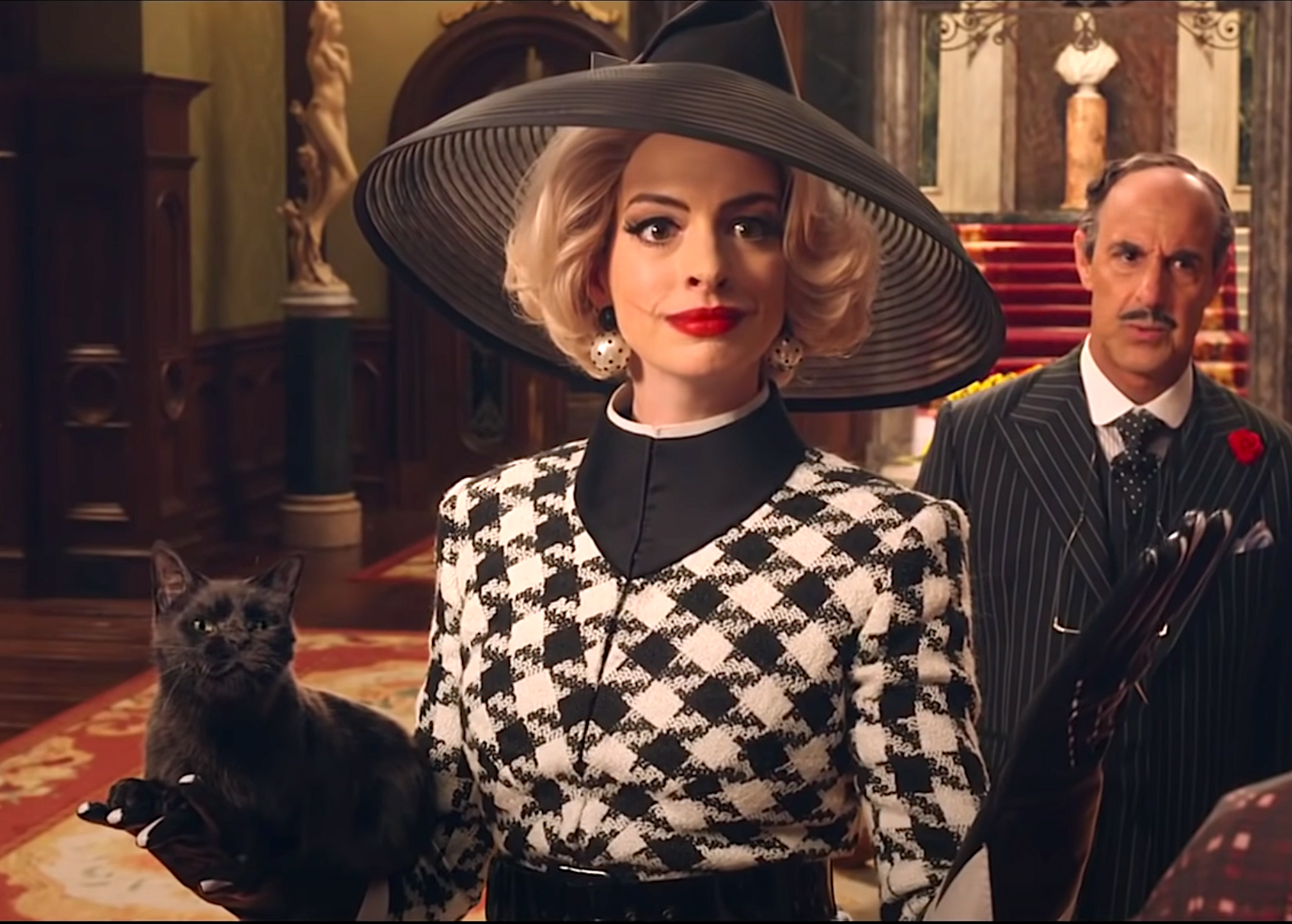
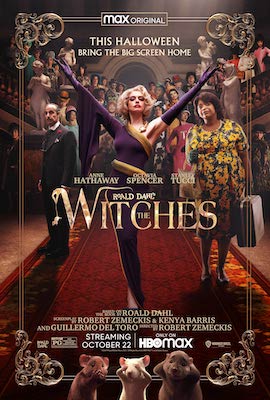
Let’s get this out of the way: the new Robert Zemeckis adaptation of Dahl’s 1983 classic may boast the author’s name in its title, but it is arguably the least Dahl-like of his filmed adaptations. With a screenplay that aims, alternately and incongruously, between being an outlandish campy remake and a grounded scary fantasy adventure, this garish-looking film ends up wasting the thematic potential of pitting a Melania-sounding Grand High Witch (Anne Hathaway channeling a “Be Best” sensibility) against a young orphaned Black boy in 1968 in Alabama who’s been turned into a mouse. Neither ridiculous enough to pull off its attempts at absurdity nor committed enough to its ‘60s Southern backdrop, Zemeckis’s film even fails at becoming an enjoyable bad film. It limps along, firmly believing standing apart from the 1990 film of the same name is an accomplishment all on its own. Hathaway’s costumes are fab, though.

12. Charlie and the Chocolate Factory (2005)

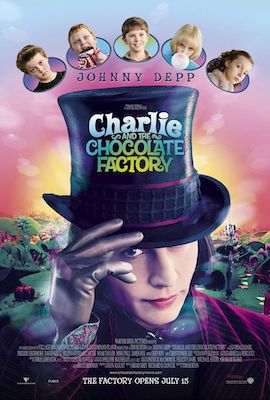
Speaking of garish 21st-century takes on Dahl’s work, who could forget Tim Burton’s horrid adaptation of Charlie and the Chocolate Factory—no matter how hard we try? Turning the central candy maker into a pale, high-pitched loon who couldn’t help echo a certain King of Pop, Burton and star Johnny Depp keyed into Dahl’s cruelty but wrapped it in a wholly unsavory package when re-telling the story of a young, wide-eyed boy who earns a chance to visit the famed Wonka candy factory. Burton’s signature style has worn thin in recent decades, his gothic inspiration giving way to brassy CGI spectacles that feel rather weightless and toothless. This adaptation was no exception, valuing psychedelic art direction and kooky costumes over any and everything else. The line “Why is everything here completely pointless?” seems more self-aware than Burton and writer John August likely intended.

11. Danny, the Champion of the World (1989)

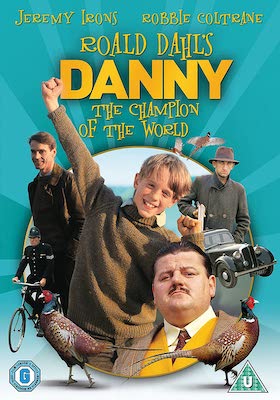
I’m not saying Jeremy Irons’s chiseled cheekbones alone make this take on Dahl’s story about a young kid and his pheasant poacher father endlessly watchable. But I’m also not not saying that. A tad quaint and truly the kind of British fare you’d expect for a made-for-TV movie, Danny, the Champion of the World follows Irons and his son Samuel (in the title role) as they hatch a scheme (involving the aforementioned pheasants) to stay in the land they own and foil the plans of the resident wealthy landowner who hopes to oust them for his own benefit.

10. The BFG (2016)

It’s a shame that the bottom rung of this list is populated by great names like Zemeckis, Tarantino, Burton, Guillermo del Toro (a writer on the recent Witches), and Steven Spielberg. Yet there’s no denying that the E.T. filmmaker was always going to be an odd match with Dahl. The director’s brand of mainstream schmaltz hasn’t precluded him from making transcendent family friendly fare, but somehow the gee-whiz CGI spectacle of The BFG muddles more than elevates this take on Dahl’s classic, which had already gotten a lovely animated treatment a quarter of a century prior.

9. The BFG (1989)

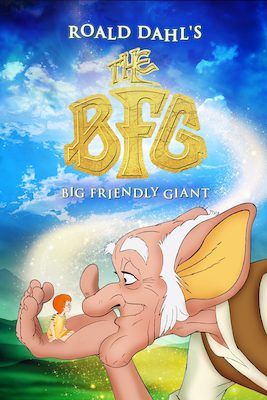
I’m trying not to let nostalgia get the best of me here. I have fond memories of this animated take on the “Big Friendly Giant,” but looking back on it, the animation leaves a little to be desired. It’s not quite as slick as the great Disney fare of its time—and it feels all the more shoddy compared to Spielberg’s attempt—but there’s something to be said about its roughened edges, which are much more endearing than you’d first care to admit. Sometimes, after all, an absurd-sounding tale about a friendship between a young girl and a giant who catches dreams (and who ends up having a face-to-face with Queen Elizabeth herself!) is better suited for the malleable world of 2D animation.

8. 36 Hours (1964) 

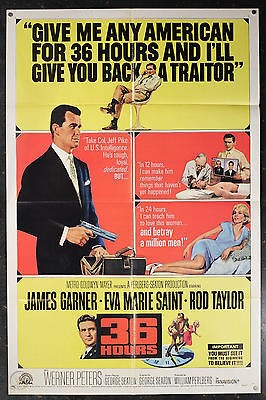
Listen, you had me at James Garner, Eva Marie Saint, and Rod Taylor. The success of this suspenseful George Seaton take on Dahl’s “Beware of the Dog” short story arguably depends on quite a high level of suspension of disbelief (the entire plot hinges on an intelligent officer being duped into thinking years have passed since he was unwittingly captured and is now encouraged to believe it’s okay to divulge key military secrets to his secretly-German-passing-as-British abductors). But it’s ingenious if you just let yourself be taken on its wild ride.

7. Roald Dahl’s Esio Trot (2015)

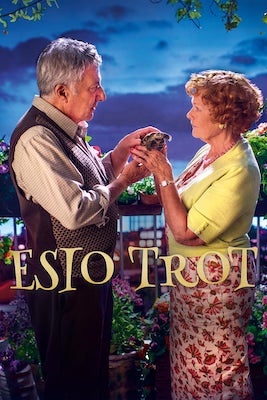
Proving not all Dahl’s stories revolve around horribly cruel adults, this sweet story centers on an elderly gentleman who concocts a plan to woo his downstairs neighbor with the help of a spectrum of differently-sized tortoises. That may well sound too twee, but trust the man behind British classics like Love, Actually and Four Weddings and a Funeral to bring just the right amount of sentimentality to this unlikely romcom to make it sing. Both on the page and in Richard Curtis’s amiable adaptation—which stars none other than Dame Judi Dench!—the tale of Mr. Hoppy and Mrs. Silver hums along with a sweetness that’s never too treacly. 

6. Revolting Rhymes (2016)

Nominated for an Academy Award for Best Animated Short Film back in 2017, this BBC production turned five of the six poems from the 1982 book into a breezy comedic take on some of your favorite fairy tales. Only don’t expect Little Red Riding Hood or Snow White to follow the scripts that have long been associated with them. Just as in Dahl’s playful poems (“The small girl smiles/Her eyelid flickers/She whips a pistol from her knickers/She aims it at the creature’s head and BANG! BANG! BANG! she shoots him … dead.”), the characters in Jakob Schuh and Jan Lachauer’s animated film turn the tables on those old-fashioned tales, remaking and refashioning them for a modern audience (spoiler alert: Red does get herself a wolfskin but the actual ending is decidedly less bloody, and much more touching, than Dahl’s original poem).

5. Willy Wonka & the Chocolate Factory (1971)

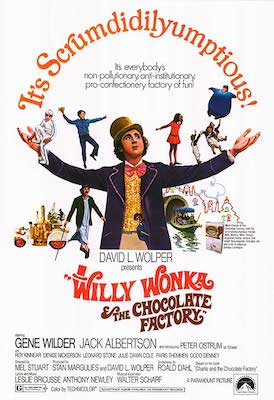
You’d be forgiven for thinking this family classic should rank higher—or possibly lower. Your mileage will vary depending on whether you fall into the “it’s an undisputed classic” camp or into the “it’s an aberration Dahl himself rebuked” one instead. Both are true! The best aspects of this musical adaptation of Dahl’s 1964 novel are the very things the author disavowed: its leading man (Gene Wilder) and its hummable songs (especially “Pure Imagination”). Those two decisions softened the edge of Dahl’s plot about the eccentric candymaker and, in the process, made the chocolate factory tour more saccharine than it reads on the page; Wilder is definitely off-kilter, but there’s a warmth to him that makes him endearing rather than terrifying. With his signature purple suit and hat, Wilder’s Wonka has become an icon (and a meme!) in his own right, eclipsing, perhaps, Dahl’s initial concept for the reclusive character. Nevertheless, there’s no denying that the film’s endurance has led many a film fan to get lost not just in Mel Stuart’s kitschy Wonka factory, but in Dahl’s book and sequel.

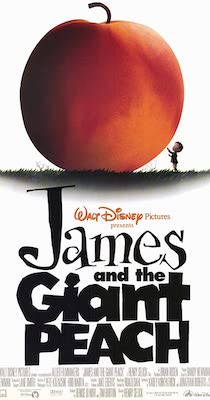
4. James and the Giant Peach (1996)

Before the peach became an emblem for thirst and class warfare on screen (see: Call Me By Your Name and Parasite, respectively), it was most iconically associated—in my head, at least—with this classic Roald Dahl tale. And while I admit I’ll never again be able to read this title without a certain emoji, and its many associations, coming to mind right away, that shouldn’t take away from the whimsical animated film that first made me fall in love with James in the first place. With a whimsy that feels of a piece with Dahl’s greatest writing, Henry Selick (he of Nightmare Before Christmas fame) made the many outrageous characters that populate this fable about a boy eager to rid himself of the horrid aunts who care for him (including a talking spider voiced by Susan Sarandon and a a centipede voiced by Richard Dreyfuss) feel both ridiculous and heartwarming in equal measure.

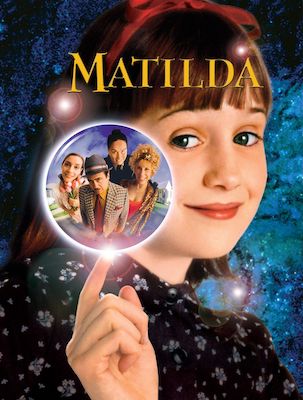
3. Matilda (1996)

If you were a bookworm growing up (and perhaps even if you remain one), there was something rather radical about Matilda, book and character alike. Here, after all, the penchant for stories and the hunger for reading were cast as central to a young girl’s budding magical powers. Matilda’s precocity may be cause for disdain by her parents, but to Dahl, it was key to her strength. Plus, she knew how to play a mean prank. With Mara Wilson in the title role, director Danny DeVito (yes, really) found the perfect girl to capture the giddiness of Dahl’s heroine without losing any of her bite. Moreover, DeVito’s fascination with black comedy (see Throw Momma from the Train and The War of the Roses) meant he didn’t shy away from the darker edges of this otherwise family-friendly affair. Pam Ferris’s cruel headmistress Agatha Trunchbull remained just the right mixture of appalling and absurd, anchoring, along with DeVito’s Harry Wormwood and Rhea Perlman’s Zinnia Wormwood that most insidious and dangerous of adults Dahl could envision: joyless anti-intellectual grown-ups with children in their care.

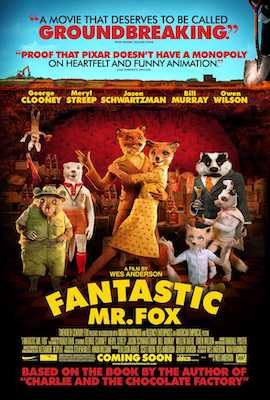
2. Fantastic Mr. Fox (2009)

Given Dahl’s wild imagination, it’s no surprise his work pairs so well with animation. Still, if you’d told me Wes Anderson, he of Rushmore and The Royal Tenenbaums fame, would helm one of my favorite—and, arguably, one of the best—Dahl adaptations around, I wouldn’t have believed you. Yet Anderson’s exacting visual formalism (he’s never met a symmetrically framed shot he dislikes) and his self-serious twee sentimentality made for a remarkably good fit for this stop-motion take on Fantastic Mr. Fox, which boasts the voice work of the likes of George Clooney, Meryl Streep and Anderson staples like Bill Murray, Jason Schwartzman, and Owen Wilson. Offering a decidedly playful and sly take on Dahl’s fable that nevertheless spoke to the filmmaker’s signature themes (a father-son relationship is here central in a way it is not in the book, for instance), Anderson managed to make this story about a wily fox intent on outwitting three farmers intent on capturing him into a film about the anxieties of family life and the weighted expectations of growing up. 

1. The Witches (1990)

Is it unfair to reduce the success of The Witches to Anjelica Huston’s divine performance as the Grand High Witch? Perhaps, but the Academy Award winner’s take on Dahl’s masterful creation is arguably what both grounds and elevates this adaptation. Yes, the film does give us a more traditional happy ending than Dahl envisioned for his boy-turned-mouse protagonist, but in Nicolas Roeg’s hands, this 1990 adaptation really revels in the dark fantasy elements that have made The Witches such a lightning rod of a book. The image of Huston’s monstrous true face, with her elongated nose and sore-filled scalp, is one of the rare instances in which a live action riff on Dahl has felt as much an homage to his deliciously dastardly prose as to Quentin Blake’s iconic illustrations. Add in Jim Henson’s puppet work, which feels now like a welcome lo-fi take on special effects, and you’ve got a truly terrifying family film that’s sure to scar you in all the right ways. If you haven’t caught it, let me just quote Huston’s witch: “You’re in for a treat!”

Stories Happen in the Space Between How We Feel and What We Say

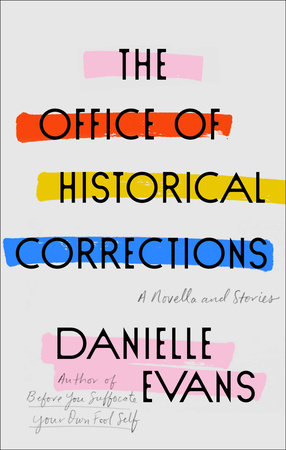
Short stories are a complex form, one that author and professor Danielle Evans continues to show herself adept in. The ever-shifting opportunities of short fiction are evident in Evans’s work, from her debut collection Before You Suffocate Your Own Fool Self to her latest, The Office of Historical Corrections.

The Office of Historical Corrections by Danielle Evans

The titular piece is a novella about a fictional office, the Institute for Public History, where we follow a field agent meant to correct a “contemporary crisis of truth” in America. In “Why Won’t Women Just Say What They Want,” a master manipulator attempts to make amends to the women in his life, though this attempt comes into question. In “Richard of York Gave Battle in Vain” Dori’s awkward invite to an equally awkward bridal shower exposes a bond in grief, and Best American Short Story 2018 entry “Boys Go to Jupiter” reflects the balance and backdrop of Claire’s decisions, her own evasive tendencies and the consequences. Everything is complicated in Historical Corrections, and by unraveling these complications through her characters, voice, and environment, Evans offers commentary on our daily life that isn’t just topical but eternally relevant. 

Danielle Evans and I spoke about her approach to the short story and teaching, the prevalence of questions that abound in her fiction, and how the true story, no matter the length, unveils itself in revision. 


Jennifer Baker: When I read this collection I thought “Race is definitely part of these stories and there’s so much more that Danielle is presenting that makes me realize how messed up we are as people.” Evasion sticks out to me especially now that we’ve been quarantined with ourselves and haven’t had to look at themselves very deeply before. Were you thinking about those connective threads even though these are all stand-alone pieces?  

Danielle Evans: I think my craft obsession is that gulf between what we think we’re saying and what we’re actually saying, or who we think we are and who we actually are. And that is something I come back to again and again both for context and for characterization. Because I think most possibility for narrative happens in that space. The space between how we feel and what we say, or who we thought we were and who we actually were when we had to make a choice makes narrative surprise possible. It makes writing these characters possible; it makes it possible for these characters to do something you didn’t expect them to do, but still feels in character and doesn’t break the mold of the story. And so a lot of the characterization is in that space, that sense of having sometimes a very self-aware performance that becomes second nature until something kind of calls it into question. (Like a long quarantine, perhaps). And it is related for me to those structural questions, though not exactly didactically determined by them, because I think the more of a sense of double consciousness or external gaze or other people’s expectations you have to navigate the world with, the more conscious you are of the gulf between what you would like to say and what you have to say if you would like to keep your health insurance, or what you’d like to say and what is safe for you to say and what will cause you harm if you say it. 

Because I’m writing Black women most of the time, I’m writing people who are very conscious of the stakes of not seeming in control or not meeting people’s expectations of them. Some of them react to that thinking [those expectations are] about respectability, and some of them react to that by understanding respectability is impossible. 

Jennifer: Related to that question of who we think we are is the story “Boys Go to Jupiter.” A version of it was published in 2017 with The Sewanee Review. I don’t know if you wrote this story post-2016 election or if it kind of formulated over time?

Danielle: Actually, I wrote that story in 2013, and I hung onto it for a while in part because I wasn’t supposed to be writing any short stories. I first got kind of mixed notes [on it], some people were excited about it, but I didn’t really have the energy to do a good revision of it at the time because I was working on this other thing. So, I put it in a drawer. I finished it finished it in… I guess it would’ve been early 2017. 

Because I’m writing Black women most of the time, I’m writing people who are very conscious of the stakes of not seeming in control.

The thing that changed between those early drafts and later drafts was mostly me trying to find a way to get more Aaron on the page. Because it is a story that’s about evasiveness. It is a story about a character who doesn’t want to be accountable or look at her own past or anything that she’s done. It’s a story about, partly out of grief and partly out of privilege, this person whose entire world is evasion and this is one of those things she really didn’t want to look at. And it was like, how could I get the scenes in this story so that Aaron feels like a person, which is important, when she’s not looking at him at this point like a person, or she’s not actually looking at the stakes of the situation or learning from it. All the work I did on it after 2014 was really scene-level work trying to think about how to let the Black characters in the story exist around this person who didn’t want to see them. So that you had the narrator, but you had something putting pressure on her version of the story.

Jennifer: How hard is that for you to figure out? Especially when you are considering the Black characters and not trying to implement a solitary focus of who the narrator is and their journey. You’re also thinking about the secondary and tertiary characters who matter so much to the story.

Danielle:  At one point I said, my third book is going to be a novel that takes place on campus, and I had this idea that there’d be four primary characters who would have their own section and Claire would be one of them. And then when I started writing it felt like a short story to me immediately. It felt like I could do the work in a short story space. In part, I felt like I could do the work because I realized that a lot of what I wanted to do with those other voices was to offset Claire. It’s a story that really belongs to Claire, and in some ways it would be problematic to have other characters come in to say, “oh she’s missing this” instead of inhabiting their own stories, to be secondary characters in her story for the sole sake of saying “oh but she’s wrong about this.”

I also felt there were ways in which [Claire] could obviously be wrong about things or obviously be missing things that I didn’t need to tell the reader. But if the reader wasn’t going to get to the end of the story and think “this is a story about a villain who doesn’t think she’s the villain” then there’s nothing I could’ve written for that reader. And it wasn’t my intention to try. What was important to me was that these characters put some pressure on her narrative by creating space for the omissions, but also feel like they didn’t just exist for that. That they were people off the page beyond what Claire was able to see from her own point of view. Trying to stick that into the story was a challenge because I felt like if I gave too much room to them I’m giving too much credit to Claire, but if I’m not giving enough room to them then they’re just there as footnotes to say “oh this person is unreliable.” I had to find enough room for that confusion to make the narrative go beyond what Claire understands. 

Jennifer: You mention seeing “Boys Go to Jupiter” as a short story and feeling that you could do this in the short form. And that you were attempting to write a novel. When it comes to recognizing form it sounds like you think very analytically. So I’m curious about your process. 

Danielle: I try to write a first draft as quickly as possible and take as much time as I need to revise. Because what I’m trying to figure out in the first draft is where the layers of the story are. 

I think, yes, the short story is a compact thing in some ways. For me, the pleasure of the short story form is to think about where all of the components of the story are coming at once. The story can be focused on a particular moment, but it can also move into the past and future as needed. And often when you get to a part in the story where the past, present, and future come together on the page in some way, that’s when you find out what the story is actually trying to do. And I like that compression, I like that intensity. I don’t think too hard about a first draft at all. But I do immediately on a second read start to ask what are the operating questions of this story, what are the operating intents of this story, and where do they come together on the page? 

I very much dread when somebody asks me to try to answer the question of how to be antiracist.

Jennifer: You said you didn’t intend for it to go where it went and maybe it’s an unanswerable question of how you got there. 

Danielle: There was a big rewrite between the first draft and the second draft. I figured out “oh this is where this is going, okay” and then to retool it to make it match the ending, which did feel like the right ending to me. But I felt like I hadn’t necessarily in the beginning set that up. And so, I wanted it to feel like you didn’t see it coming, but also that the story was unwinding, from the view of this character who feels various layers of guilt or evasion about what’s happened. But yeah, it’s interesting to think about it in the context of antiracist reading. This book was in ARCs late last year and I swear if it hadn’t already been in galleys when we were having the public conversation about Juneteenth, I probably would have changed the scene that references it. I was like, “Oh my god! Everyone is going to think I was trying to immediately write about topical things!” But the book was in galleys, so it was too late, people had already read it. The reference was there to mark that the story was set in some kind of alternate future, where Juneteenth was gentrified, and I just ended up writing about the present. Writing is a long process and in some ways always anticipating the future conversation, but of course you can’t actually predict the future or the exact world or conversation your book will be released into. 

Obviously racism was very much on my mind when I was writing these stories. But I also very much dread when somebody asks me to try to answer the question of how to be antiracist. You never want to be the reasonable negro in someone’s organization and you never want to be the unreasonable negro in someone’s organization. They’re both impossible positions.

Why Was Jack London’s Wife Written Out of His Legend?

Even if you’ve read Jack London, you might not know Martin Eden; whereas outdoors adventures The Call of the Wild and White Fang are frequently assigned in schools, the semi-autobiographical story of romance and writing is less well-known. The 2019 film adaptation by Italian director Pietro Marcello, released in the U.S. this October, may not move the needle too much—it’s a small release, with mixed reviews. But what’s really interesting about Martin Eden isn’t the story in the book or in the movie. It’s the story behind the story. 

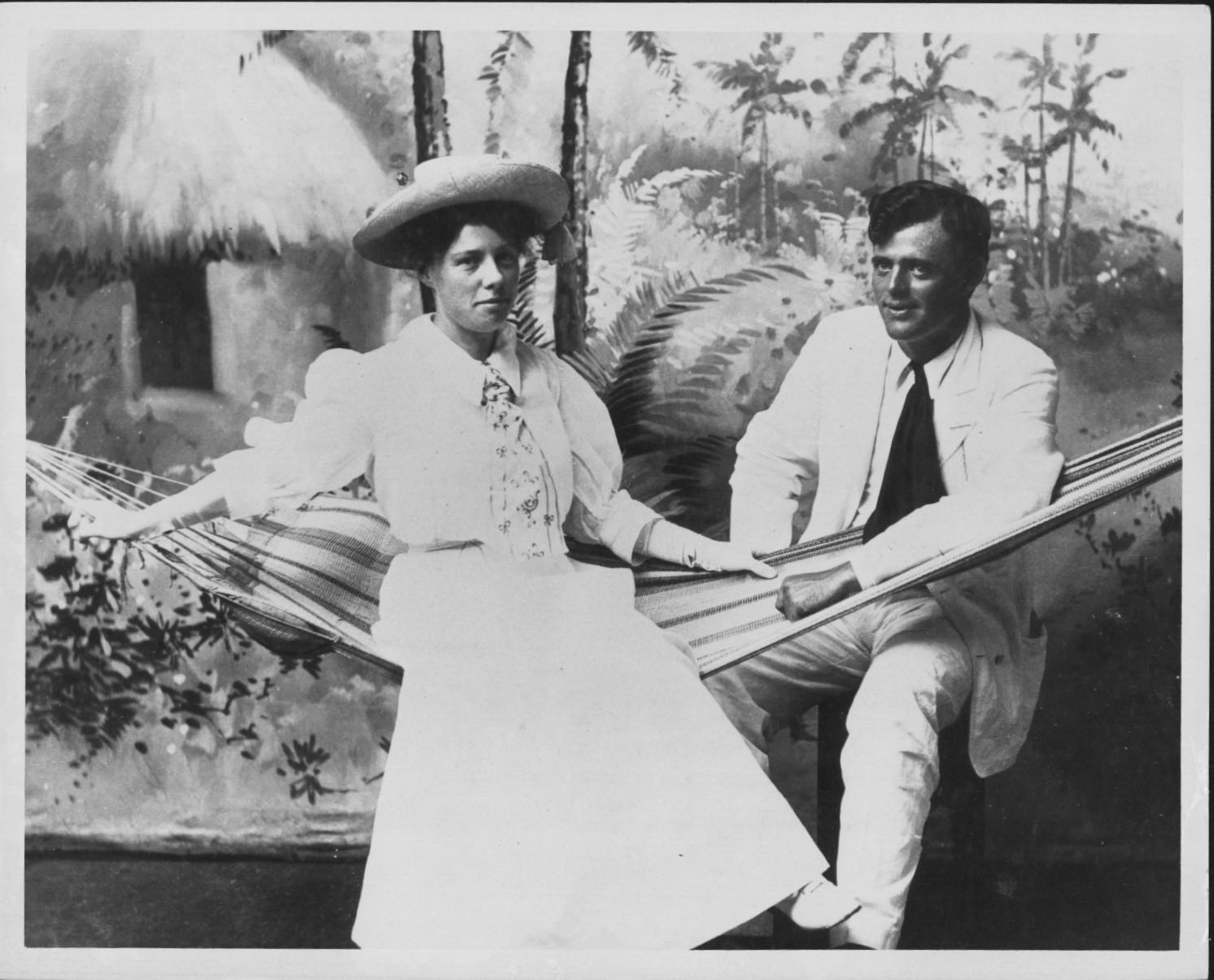
London wrote Martin Eden (originally titled Success) during a voyage he and his wife, Charmian Kittredge London, took through the South Seas on a small yacht called the Snark. Charmian had given Jack the idea for the journey, one she had seen enacted by Joshua Slocum in his book about his own journey, Sailing Alone Around the World. She read Slocum’s book when it came out in 1900 and then saw the author speak at the Pan American Exposition in Buffalo, New York. When she and Jack started their affair, while he was still married to his first wife, the idea of this nautical journey around the world together was one of the shared interests that brought them together. 

Martin Eden focuses on a former sailor’s quest to find a better life through the pursuit of knowledge and art. Many scholars have observed that the text is somewhat autobiographical, but unlike the solitary Eden, who struggles with isolation from both his working-class background and the society he attempts to fit into, London was anything but a solo artist. Beginning with his 1904 novel The Sea-Wolf, London relied on Charmian to edit, type and sometimes even ghost-write parts of his famous novels. Martin Eden was no exception. Jack and Charmian began working on the novel while taking a break from their expected seven-year journey around the world, stopping to repair their boat in Honolulu in the summer of 1907, and Jack finished writing the novel in Tahiti in February of 1908. 

Marcello’s film emphasizes the androcentric lens. A young seaman who dreams of more for his life is transformed into an intellectually curious creature via his love for an upper-class woman, Elena (changed from Ruth in the novel). In Marcello’s telling, Elena and all of the other women who play opposite Martin are mere cardboard cutouts: flat and without growth. Martin (using their bodies, or minds) propels himself into a successful career as a bestselling author. When he meets his success, though, Martin finds it distasteful. He turns away from it—and from Elena, who comes back to him—because he feels that she, and the world around her, lack authenticity. Instead, the movie ends with a scene reminiscent of London’s ending. Except, instead of Eden jumping into the sea from a steamer bound for a new life in the South Seas, Marcell’s Eden just walks into the sea to his death. 

Both the movie and the book begin with a vision of a better life. Martin is fascinated by a painting of the sea he sees inside of Elena/Ruth’s eloquent home. He’s fascinated by how from far away the sea, and the boat within it, are beautiful, but up close they are just “careless dabs of paint.” To Martin, the idea that the painting’s beauty was only a trick was puzzling, foreshadowing the disillusionment he will have when he looks more closely at Elena and the others of her class and finds their beauty and wisdom disappears..

We can experience something similar by taking an up-close look at Jack London’s life. From far away, London was an individual genius writer. But up close, the ugly truth, the brushstrokes, that made that illusion so beautiful from afar are fully visible. Each adventure London sought and experienced, each book he wrote was aided by another force of nature: his second wife, Charmian Kittredge London.

Each book London wrote was aided by another force of nature: his second wife, Charmian Kittredge London.

When I was in the sixth grade, I visited Jack London State Park in Glen Ellen, CA on a field trip. Prior to this, I’d spent most of my childhood writing stories; however, I had no idea that one could actually become a writer. I had never even met a writer until the day I walked into the museum at the House of Happy Walls at Jack London State Park. Suddenly, walking through the exhibits, I saw you could spend your life traveling the world and writing about it. I fell instantly in love with Jack London and vowed to read everything he had ever written. What I didn’t know, though—and didn’t find out for decades—is that the house I’d visited that day belonged not to one writer, but two. Charmian Kittredge London, Jack London’s wife, was a writer, an adventurer, and the reason why this museum and park even existed, but when I walked through the museum, her story was not told. This idea of a woman’s life being devalued, or in Charmian’s case, eclipsed by her husband’s life, is all too familiar, especially in the literary world. And it is why I’ve spent the last six years of my life digging up the forgotten life of Charmian Kittredge London. 

Before they left on their long anticipated Snark journey the public was shocked that Charmian was not just going to be a passenger, but an actual member of the crew. The San Francisco Chronicle described her “In bloomer will tread the deck—Young woman to bear her share of navigating vessel during 7 years’ cruise.”  Although Charmian thought nothing of signing on as an able-bodied sailor, the idea of a woman disobeying gender norms caused several “concerned” citizens to write to Jack about their apprehension for Charmian’s health. She later remembered one of these letters: “I am minded of the solicitous old sea dog who warned Jack letter that it was not safe to take a woman outside the Golden Gate in a boat of the Snark’s size; that we would be bruised over our ‘entire person’ unless the boat be padded.”

It was on the Snark journey that Charmian came into her own as a writer. On the trip she’d begin to write three of the four books she’d publish during her lifetime:  The Log of the Snark, Our Hawaii and Our Hawaii: Islands and Islanders. As she wrote to her aunt while traveling on the first leg of the journey from San Francisco to Hawaii, 

I seem to be coming into my own…Without office life to vex & distract, my life is all education–the very living of it is such, & the work I do for Jack, is practical education, is practical education; there’s no let-up. Wouldn’t it be fine to go on writing? Perhaps I shall.

The thought of not only creating but publishing a book thrilled her. The public, the press and even Jack’s friends had been hard on Charmian since she married Jack and his oversized personality left her little room for her to be herself. But on the Snark, all changed. 

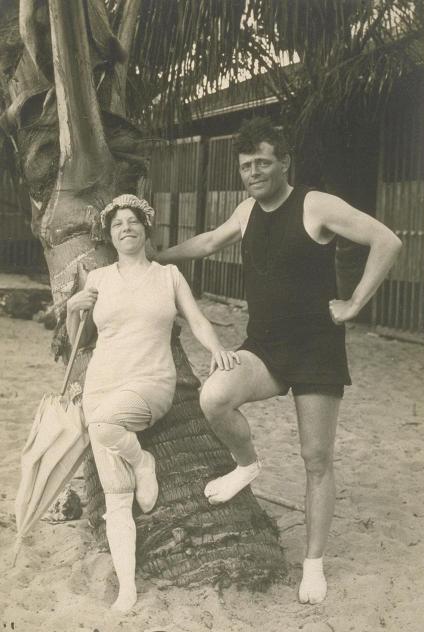
Over the next three years, Charmian would write every day about what they saw and experienced traveling from island to island on the Snark. But many of the extraordinary experiences she had, especially those that challenged gender norms, were excluded from her husband’s retelling of their adventures. For example, when Jack and Charmian spent a day surfing in Waikiki, Charmian was proud to catch a wave several times. So was Jack. When he wrote about his experiences surfing in the essay “A Royal Sport,” he failed to mention that his wife had successfully mastered a run or two. It was an omission that would recur throughout Jack’s account of the trip. Charmian understood that Jack’s brand was adventure. The more daring and interesting he appeared in his episode about their trip the more copies he would sell. And his feat of surfing on a ten-foot wooden surfboard would not have looked so adventurous if his small, fit wife had also accomplished the same thing. 

The Londons in Hawaii in 1915

They would visit seven major islands: Hawaii, the Marquesas Islands, Tahiti, Bora Bora, Fiji, Samoa, and the Solomon Islands, before their adventure ended abruptly in Sydney, Australia, because Jack developed a strange and troubling sickness. Charmian based her own writing on Joshua Slocum’s Sailing Alone Around the World, writing chronologically in a daily log that captured not only Jack’s adventures but her own. Writing the Log of the Snark shifted something in her and by the end of the journey Charmian saw herself as a writer. It was after their return from this journey, buoyed by this new found confidence, that Charmian began to provide even more input into her husband’s writing.

Had Charmian fully come into her own as writer before Jack began discussing and writing Martin Eden with her, she would likely have had more of her influence in it. Ruth (and subsequently Elena in the film adaptation) might have been a more dynamic character. In later years, Charmian would help Jack plan, research and write The Valley of the Moon, in which Saxon, the protagonist, is a strong woman who leads her husband on a quest out of the poverty of inner city life in Oakland to find a better, more meaningful life. But due to Jack’s image as an individual author, and the near-erasure of Charmian’s biography over the past 80 years, the truth of her input was never seen. When it comes to the lives of women, it’s time for us to step closer to the beautiful paintings of male lives and ask: What brush strokes were added by others to make that art?

Nobody Told Sanjena Sathian That Writers Are Supposed to Have Hobbies

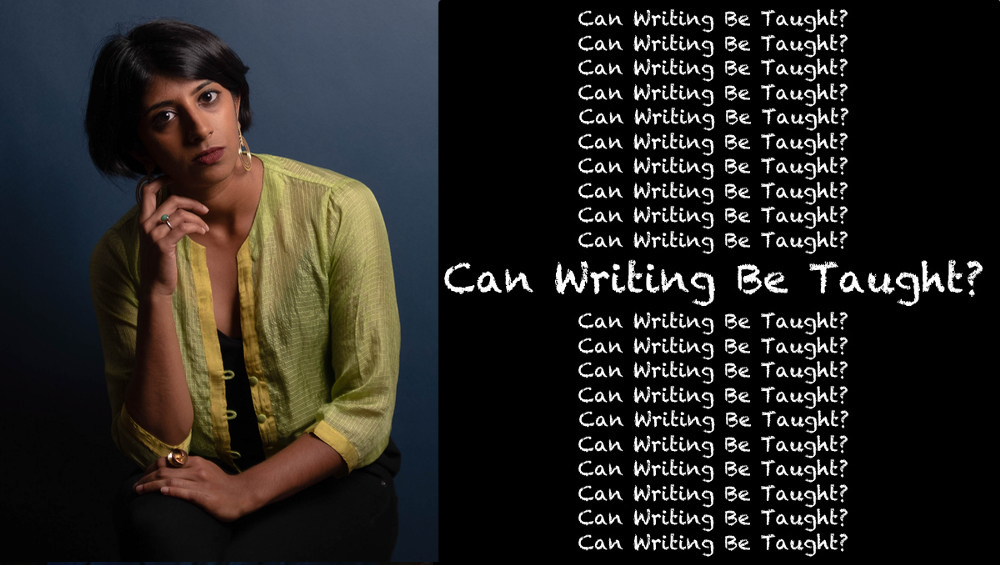
In our series “Can Writing Be Taught?” we partner with Catapult to ask their course instructors all our burning questions about the process of teaching writing. This month we’re talking to Sanjena Sathian, author of the forthcoming novel Gold Diggers, who’s teaching a six-week fiction workshop on blending reality and unreality. In her class “The Real & The Unreal,” students will learn how to incorporate fantasy, magical realism, science fiction, or horror elements into literary work.


What’s the best thing you’ve ever gotten out of a writing class or workshop as a student?

Charlie D’Ambrosio convinced me of the importance of scene as the key way to dramatize every latent idea, character, or emotion in a story. I resisted this lesson for a long time, as I love chatty, essayistic narrators, but I realized that I did need to balance narration that “tells” with the vulnerability of “showing” in scene. Characters can run away from you in scene, saying what they want to say, instead of letting you hang out on your perch making wise observations. It’s good to give in a little.

What’s the worst thing you’ve ever gotten out of a writing class or workshop as a student?

Write even a dash of non-realism and you sometimes lose the entire class to people debating whether or not the magic was “real” or “necessary.” It can sometimes indicate a refusal to enter the space of the world that the author has put in the effort to create.

What is the lesson or piece of writing advice you return to most as an instructor?

I love my old professor Anne Fadiman’s favorite riddle: Q: How do you make a statue of David? A: You take away everything that isn’t David. We have to find the “David” of our pieces, leaving the rest of the marble on the floor. Other people offer different versions of this concept, asking what the “emotional question” or the “aboutness” of a story is. It’s about locating the heart of a piece, which the writer themselves may not actually recognize.

Does everyone “have a novel in them”?

Stability and sanity are nice, and I’m not sure the writing life is conducive to either or both.

We definitely all have narratives in us! But it takes immense work ethic and fanatical devotion to develop the craft of writing and to actually make that novel. 

Would you ever encourage a student to give up writing? Under what circumstances?

Definitely not. I don’t usually encourage people to try to do this with their lives—stability and sanity are nice, and I’m not sure the writing life is conducive to either or both—but I think everyone should write in some form, whether in literary journals or personal diaries.

What’s more valuable in a workshop, praise or criticism?

I think a workshop can identify the essential characteristics of a piece, which include the piece’s strengths and weaknesses. And often the things worth praising and the things worth criticizing are different sides of the same coin. 

Should students write with publication in mind? Why or why not?

I think we should all write with the goal of being legible—to ourselves and to others. I learned from years in journalism the maxim of “be kind to the reader.” That doesn’t necessarily mean imagining our names on the covers of bestsellers, but keeping a possible reader in mind can be very good for the work itself.

In one or two sentences, what’s your opinion of these writing maxims?

  • Kill your darlings: Ruthlessly! And remember that doing so isn’t an act of violence against your own work—it’s an expression of faith; it’s saying to yourself, I can do even better than this.
  • Show don’t tell: Show AND tell. Find the perfect balance between scene and summary; specific and general time; dialogue and narration.
  • Write what you know: Writing what we know gives the work an intimate and real quality, but we still have to make imaginative leaps, to ignite narrative engines (i.e. plots), and to empathize with and embody those unlike us.
  • Character is plot: Yes, but plot can come from outside character, too. You can put your characters in a completely “unreal” situation—they turn into a bug!—or a completely “real” situation—they’re going through a divorce; how they react to their given pickle pushes the piece forward, but the artifice of an inciting incident is also a way to let you explore your characters.

What’s the best hobby for writers?

Are we supposed to have hobbies?! 

What’s the best workshop snack?

Popcorn.

The National Book Awards Put Black Lives at the Center

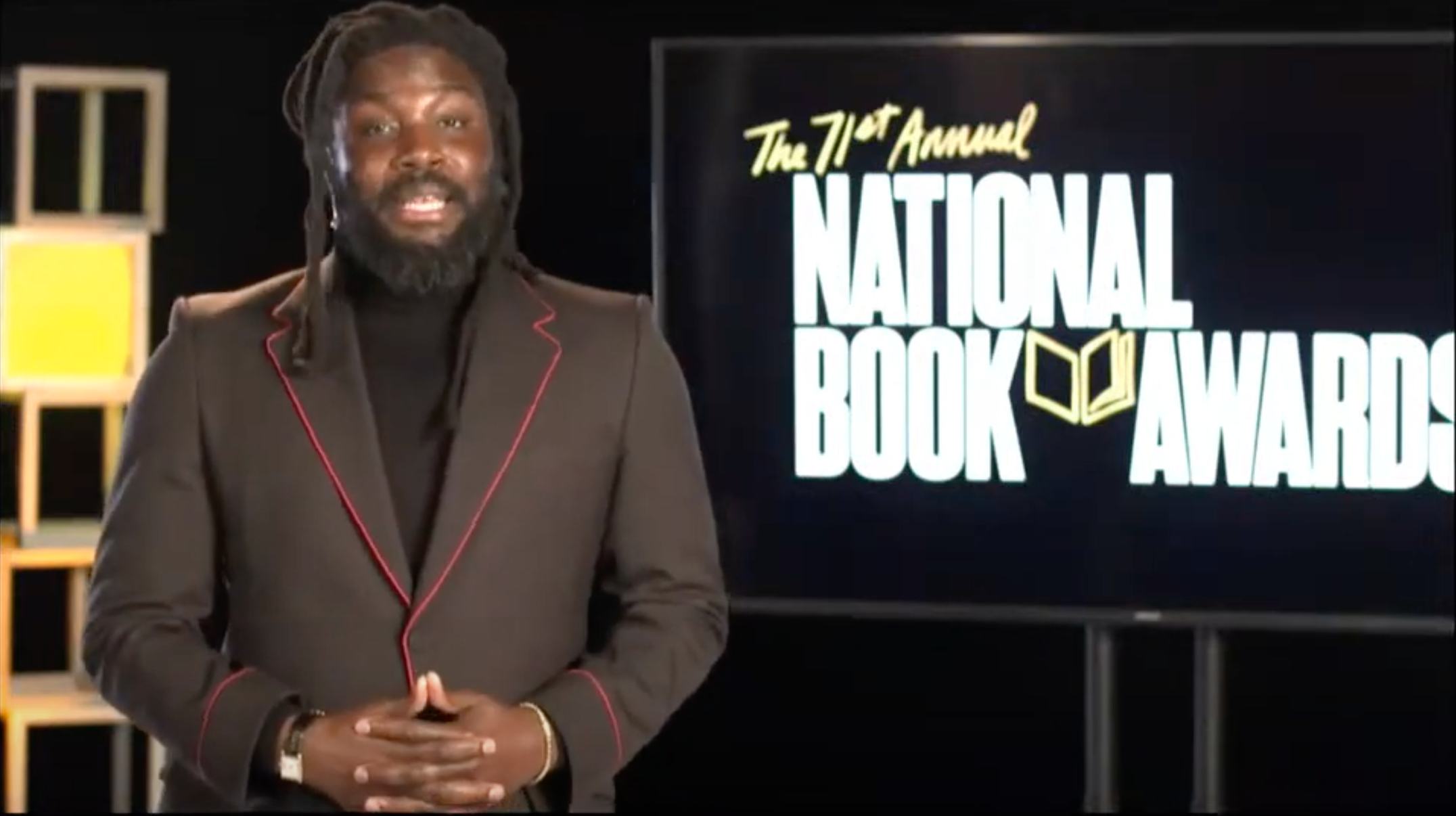
The fête that is the National Book Awards didn’t lose steam because we were separated in our homes due to quarantine. There remained intrigue, surprises, celebration, and tears. So many tears. Not only from stunned winners but from executive director Lisa Lucas, who tried to hold them back during a speech full of gratitude and memories. In two months’ time she’ll hold a new role as senior vice president at Pantheon Books and Schocken Books, but last night she and the entire National Book Foundation team along with host Jason Reynolds steered us through the annual commemoration of books, books, books. But this wasn’t only a salute to everything leading up to the evening. It was also a reflection on a mission touted even more loudly since Lucas’s arrival to the Foundation. 

As is the usual format, the first honors of the evening tend to be the lifetime achievement awards. This year those accolades were bestowed to late Simon & Schuster CEO Carolyn Reidy (Literarian Award) and notable bestselling author Walter Mosley (Distinguished Contribution to American Letters). But in the middle, where there would normally be a break to dine, the screen instead faded to a video clip of 2011 poetry winner Nikky Finney’s speech where she talked about Black people being “explicitly forbidden to become literate” under slavery, and declared herself “officially speechless.” As her speech ended, a title card announced that the National Book Awards have been in existence since 1950 and “have honored over 2,700 books, becoming one of the most prestigious literary prizes in the world.” However, the text continued, only three writers of color were awarded prizes in the first 30 years of the Awards’ existence. They were Ralph Ellison (1953), Virginia Hamilton (1975), and Li Li Ch’en (1977)—I’ll also note that William Carlos Williams, of Puerto Rican–American descent, won the first award for poetry in 1950. Since 1999, a grand total of 13 writers of color have been awarded a National Book Award across categories. This data along with numerous stats over the years repeatedly conveys the limitations of the industry, not the artists.

Since 1999, a grand total of 13 writers of color have been awarded a National Book Award across categories.

At this point 2019 awards host LeVar Burton’s dulcet tones came in, conveying a firm commitment to “a National Book Awards that reflects the full depth and breadth of the human experience.” Over Burton’s declaration, viewers were greeted by an array of Black and Brown faces regarding their newly-won awards, and Black and Brown voices candidly discussing their challenges, beliefs, and love for the work they produced because we needed their stories as much as they needed to create them. 

For her first win in 2011, Jesmyn Ward said Salvage the Bones was “a life’s work and I am only at the beginning.” How right she was—Ward would win her second award for fiction, becoming one of the few to do so, in 2017 for Sing Unburied Sing. Terrence Hayes, poetry winner in 2010, said “It’s such a futuristic idea. A world in which the descendants of slaves become poets”—a sentiment echoed a year later in Finney’s speech about forbidden literacy. Ta-Nehisi Coates, nonfiction winner in 2015 for Between the World and Me a testimony of the disregard for Black life in America, insisted “You will not enroll me in this lie” of “Black people having a predisposition to criminality.” And 2018 winner for young people’s literature Elizabeth Acevedo stated the importance of the work being not for this moment on stage but for those reached. “I am reminded of why this matters,” Acevedo said, “And that’s it not gonna be an award and it’s not gonna be an accolade. But it’s gonna be looking someone in the face and saying ‘I see you’ and in return being told that I am seen.” 

Burton continued to infuse this moment with significance by consistently acknowledging an ongoing history that needs to demolished. This recognition alone does not initiate change, nor does it sustain it. It matters that what the National Book Awards did in this moment wasn’t a plea for donations; it was a call for the publishing industry to understand that the doors remain narrowly open, if open at all, for the rest of us and widely ajar for the chosen. How can we celebrate what has not been nurtured? 

How can we celebrate what has not been nurtured?

In the last several years, the National Book Award longlist and finalist pool have been more ethnically representative—in 2018, as in 2020, BIPOC won in all five categories—and so have the judges. More representation in those reading has also lead to more representation in what gets recognized. What a concept. 

It really doesn’t need to be said that representation is important. This truth is so evident to some (and to others appears to be a direct offense). But this year, from our homes, as many declarations have been made by many entities and individuals that they vehemently “believe Black Lives Matter,” it remains to be seen how much this statement aligns with a vision to make more space for Black lives to be in full view and without risk of being part of a “timely” interest. The work of artists then, artists now, and artists to come needs to be heralded and the creators need to know they’re not one of a few—they are part of an abundance. 

As this segment concluded, Burton left us with these words: “When we say that Black Lives Matter, let us say it as acknowledgement of all those deserving writers, and by extension readers, who previously have been excluded from this room. Let us say it with an awareness of these voices, their value, and their ability to show us a way forward out of our current darkness. And let us say it in gratitude.” Let it also be said with resounding earnestness for the greatness on the horizon and the many honors they’ll achieve on stage and off. 

Changing Moms on the New Jersey Turnpike

“Anything Could Disappear” by Danielle Evans

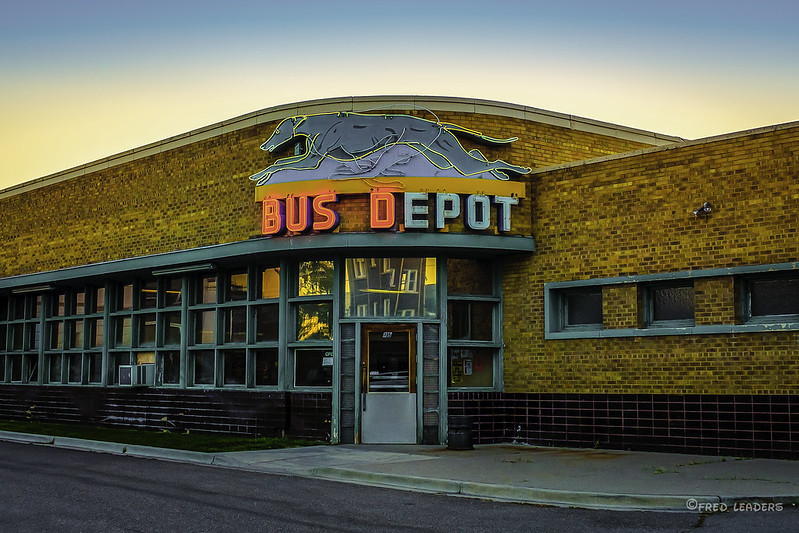
Vera was moving to New York on a Greyhound bus, carrying only a duffel bag. The morning she left Missouri, there was a heat advisory and an orange‑level terrorism alert. An hour outside of Chicago, there had been an older woman, crying and demanding that the bus pull over to let her off. From Chicago to Cleveland, she had sat next to a perfectly cordial man who had just finished a ten‑year prison sentence and was on his way home from Texas with nothing but his bus ticket and twenty dollars in his pocket. Between Cleveland and Pittsburgh, there had been a man who kept trying to get her to share a blanket with him, citing their proximity to the air‑conditioning vent, and between Pittsburgh and Philly, a teenage runaway had sat beside her and talked her ear off. And now there was this: a small, wobbly child whose mother had deposited him in the seat beside her with a simple “Keep an eye on him, will ya, hon?”

Vera tried to catch the eye of another passenger, maybe the woman two seats ahead of her on the other side of the aisle—she looked like the sort of person who would turn around and say, Keep an eye on him your damn self, lady; he’s yours, ain’t he?—but nobody looked up. The boy was around two years old, brown‑skinned with a head of curls that someone had taken the time to properly comb. He was dressed in a clean, bright red T‑shirt, baby jeans, and sneakers nicer than Vera’s. The mother was a thin, nervous white woman, with wispy hair in three shades of blond. She smelled strongly of cigarette smoke and chocolate milk. She had gotten on the bus with the boy and a girl, about seven, who looked like her in miniature. The little girl was chewing purple bubble gum with the kind of enthusiasm that would have prompted Vera’s own mother to ask, “Are you a young lady or a cow?” The mother had a cell phone pressed to her ear and was having a terse conversation with someone on the other end. She kept the phone cradled between her ear and shoulder, even as she leaned over the baby to kiss him on the forehead before walking farther toward the back of the bus.

“I feed him, don’t I?” she said into the cell phone. “When was the last time you did?”

The little boy made Vera nervous. He was a quiet, happy baby. He would occasionally clap his hands together, applauding something only he could appreciate. Still, he was so small. Vera was overcome by the unreasonable belief that he might break if she looked away from him. As she watched him, he seemed to be watching her back. In the window on the other side of the boy, Vera could see her own hazy reflection, nothing to write home about one way or the other. She had been on buses, at that point, for sixteen of the last twenty‑one hours. She was wearing jeans and an old T‑shirt from the college she’d dropped out of two years earlier. Her hair was pulled back into a ponytail that was starting to frizz. Vera was a few months past her twenty‑first birthday, which had happened without any of the fanfare and excess people tended to associate with turning twenty‑one. Josh and her coworkers at the record store had ordered her a pizza at work and opened a few beers to toast her. That was it.

Somewhere on the Jersey Turnpike, the bus pulled into one of those rest stops that appeared up and down 95 like punctuation marks. Vera went into the travel plaza to get a cup of coffee. In the women’s restroom, she stretched her arms above her head in the mirror and rolled up on the balls of her feet, then down again. She splashed water on her face, then pulled a small bottle of mouthwash from the duffel bag she’d carried in with her and swirled a capful around in her mouth before spitting into the sink.

When she got back on the bus, the little boy was still sitting in the seat beside her. Vera felt more charitably toward him now that she had seen how easy it was to walk away. She made faces at him that made him giggle. She tried to engage him in a game of patty‑cake, but he seemed more interested in the clapping than the repetition.

When the bus finally pulled into Port Authority, Vera squeezed past the boy’s seat to retrieve her duffel bag from the overhead bin. As she scrunched her face at the weight of the bag, the boy began to giggle again. She smiled back at him, then looked over her shoulder for his mother and sister. The people in the back of the bus were walking off one by one, but there was no sign of the blond woman or her daughter. Thinking maybe they’d somehow passed her already, Vera picked up the little boy, balancing him on her hip, and rushed off the bus, into the parking lot. No mother. She put the boy down and watched the rest of the passengers exit the bus, until it sat there, empty. Still no mother. “Excuse me,” Vera said to a heavyset older woman. “Did you see a blond woman and a little girl? They were just on the bus with us.”

“Woman on the cell phone?”

“Yeah,” said Vera.

“Think they got off in Jersey. Sounded like someone was supposed to meet her there.” The woman grabbed her suitcase from beside the bus and walked off.

Vera looked around at the rapidly dispersing passengers, wondering what the hell was wrong with them that none of them had noticed a child being abandoned. But as she unintentionally tightened her grip on his hand, Vera realized that to the crowd it looked like he’d been her little boy all along. In the lazy American vernacular of appearances, Vera, with her color and hair that matched his, looked more like his mother or sister than his own mother and sister did. Had that been why the mother had chosen her? Maybe she’d intended to leave him all along. Or maybe something terrible had happened to her at the rest stop, she’d been dragged off by a stranger and was hoping someone would notice she was missing before it was too late. Or maybe she’d just gotten distracted, smoking a cigarette for too long, and was now frantic because the bus had left without her.

In any case, the obvious thing was to go to the police, to let them straighten the whole thing out. But there was this little boy, who was holding on to Vera with his left hand while he sucked the thumb on his right. And there was this duffel bag, where, between two layers of clothing, wrapped in a layer of plastic, and then a layer of gift wrap, Vera had carefully placed a package containing twenty thousand dollars’ worth of cocaine. It was the last favor she was ever doing for Josh, and new as she was to this, she knew better than to walk into a police station with it.

“What’s your name, sweetie?” Vera asked the little boy.

He shook his head. She scanned him for signs of a name tag, finally finding one on the inner lining of his T‑shirt—someone had scrawled WILLIAM, in black Sharpie, on the tag inside.

“Come on, William,” Vera said. “Let’s get something to eat.”


Vera took him to a McDonald’s and watched him nibble at his French fries and chicken nuggets. She considered dropping him off on the steps of a police station and just walking away, but that felt fraught with unsavory possibilities. He might follow her and get more lost than he already was. Someone might see her leaving him and try to stop her. There’d be more questions asked than she had answers for. She had one thousand dollars in cash tucked into the lining of her handbag, and when she went to drop this package off tomorrow she’d have ten thousand dollars more, and her whole life in front of her.

The year before she’d dropped out, she’d fulfilled her university’s mandatory community service requirement by working with a literacy program at a women’s prison. There were women not much older than she was doing ten years for holding, selling, transporting—mostly their boyfriends’ drugs. A classmate said once that they’d bargained their lives for a few thousand dollars, which just emphasized for Vera how much the classmate had missed the point—most of these women weren’t getting money in the first place. They’d done it for love.

Fuck love. This was not a love story. Josh was in his late thirties, already balding and prone to wearing button‑down Hawaiian print shirts. He’d half‑heartedly hit on Vera once, but even he couldn’t take the flirtation seriously enough to be offended by her rejection. He owned the record store, which had been a hardware store until his father died. For at least the last decade he’d been making more money selling pot and small‑time quantities of pills out of the back room than he had selling records out of the front room; not because he’d started selling more drugs but because people had stopped buying music. Until now, Vera had strictly worked the front‑room business, maintaining plausible deniability of whatever else her employer was doing. She kept a blank face while ringing up music of questionable taste, pornographic album covers, actual pornography, and cigarettes that twenty-something men purchased for the fourteen‑year‑old girls lingering outside. Vera got good at pretending not to notice people who didn’t want to be seen.

The revival downtown had been promising her for years sputtered and stopped when the recession hit. Even after she’d dropped out of school, it had seemed better to stay put than to go an hour backward and end up at home again. Her father had suggested she get her cosmetology degree and work at the nail salon that had opened in town, and Vera said, You want me to get a job literally watching paint dry? When she called her parents back to apologize for her tone, she made it sound like Josh’s store was really something and she had big plans, when in fact every day she felt like she had less energy to even imagine what better version of herself she might become.

Beneath the renovated downtown lofts that nobody had moved into were boarded‑up windows that were supposed to be art galleries. The stoners who hung around the record shop were positively comforting in comparison to the kids who hung out in the downtown parking lots tweaking, flashing her the singed remainders of their teeth. Josh had refinanced the shop and then blew the money on a bad investment and had trouble paying the mortgage. Vera worked there for two years and made minimum wage the whole time. She had no savings and Josh knew it; he had more than once spotted her a twenty for lunch and dinner when it was close to payday and he saw she wasn’t eating anything. Through someone he knew he’d gotten ahold of this drug, which was not meth, which was not heroin, which was a flittery thing, a onetime thing. He wasn’t going to chance selling it in his own backyard—the cops had let him slide on the weed, but they were getting antsy. He knew a guy in New York though, and all she had to do was get it there and she could take a fee. Josh would get out of hot water with the lender, and she could get the hell out of Missouri and not look back.

When William had finished eating, Vera took his hand again and went outside to a pay phone. She called the phone number she had seen on the side of a city bus, and made an anonymous tip that a woman and a little girl may have been hurt near exit 9 of the Jersey Turnpike. No, she didn’t know their names. No, she didn’t know where they were coming from or where they were going. No, she couldn’t say why she thought they might be in danger. No, she couldn’t stay on the line. She caught a cab, checked into a hotel, put the baby to bed, and called her mother to tell her everything was fine.


In the morning, she took the train to the address Josh had given her. She took William with her because she wasn’t sure what else to do with him. The building was unspectacular from the outside, a grim brownstone. She rang the buzzer twice. On the second buzz, a female voice answered and asked who it was.

“I’m Vera,” she said. “Josh sent me.”

The door buzzed open. Vera walked up the narrow stairwell and opened the door in front of her. She thought at first she must have written the number down wrong. She was in an office—polished hardwood floors, bright accent colors on the walls, sunlight coming in through the loft windows, a sleek red couch, and a waiting area near a front desk. A woman with a blond‑streaked ponytail sat behind it. A sign on the wall behind her read BROOKLYN DELIVERS.

“Can I help you?” she asked.

“I need to talk to Derek. My name’s Vera.”

The woman hit a button on the phone. A few seconds later, a man with short dreads and a T‑shirt featuring a band she’d never heard of came out to greet her, a perplexed look on his face.

“I’m Vera,” she said again.

Derek stared at William, who Vera had propped up on her hip.

“You brought a baby?” he asked.

“He’s two,” Vera said, as if this were an adequate explanation.

“Hold on.” Derek disappeared into the back room, but before the door shut behind him, Vera could hear him say, “Who the fuck are we dealing with? He sent a girl with a kid.”

A second man, this one with scruffy blond hair and thick black‑framed glasses, came out of the room.

“I’m Adam,” he said. “Josh sent you?”

“Yes,” said Vera. She gestured toward William. “I’m sorry about him. I didn’t know where else to leave him. I just got here yesterday.”

“It’s cool. You want to leave him out here for a minute? Liz can keep an eye on him.”

Vera eyed the woman behind the desk. She hadn’t looked up from the computer screen. Vera deposited William on the floor and followed Adam to the back room, which looked like a more posh version of the front room— hardwood floors, plush couches, walls of file cabinets.

“This is not what I was expecting,” she said to Adam.

“We’re a courier service,” said Adam. “We deliver things. Mostly documents and packages for small businesses. Sometimes not.”

“Oh,” said Vera.

“You’re not what we were expecting either,” said Derek.

“Sorry,” said Vera.

“I didn’t say it was a bad thing. Just, Adam met Josh a while back on a road trip. From what he described, you don’t really seem like the kind of girl he’d be hanging around with. That his kid?”

“No,” said Vera.

“A woman of few words,” said Adam. “It’s a good instinct.”

They finished their transaction quickly, without any of the sinister fanfare Vera had anticipated. Josh’s money was wired. She put her cash in the bag where the drugs had been. She walked out to find William safely where she’d left him, and exited the building feeling an anticlimactic sense of relief.


Vera opened a bank account and deposited two thousand dollars. She sat in a coffee shop with William, calling through the rentals section on Craigslist. A few hours later, a Russian woman in Red Hook rented her an attic apartment. Vera had a list of friends willing to serve as fake landlord references, but the woman asked few questions once it became clear to her that Vera planned to pay both the first month’s rent and the security deposit in cash. The first night in the apartment, they slept on the floor. She watched the rise and fall of William’s chest, the delicate flaring of his tiny nostrils. He’ll need a bed, she thought, and as soon as she thought it, she realized that the idea of giving him back had gone out the window. He would be hers unless and until someone took him away.

For the time being, William seemed like less trouble than anything else she’d gotten herself into. He was quiet, he was happy, and he imposed a certain order on her life. Meals had to be eaten at set times. There was bedtime, and time for waking up. Vera rented a U‑Haul and picked up furniture around the city. When she went to buy a baby bed from a woman in Park Slope, the woman cooed over William and threw in a stroller for fifty bucks. By the end of the week, the apartment was in order and the money was half gone.

Vera had intended all along to look for a job once she got here, but now there was the problem of having William. She couldn’t very well take him along for interviews, or even to drop off résumés, because what if they wanted to talk to her then and there? Formal day care seemed likely to involve more paperwork than she currently possessed, which meant she’d need a babysitter, which meant she’d need to spend some time figuring out whom to trust with him. She felt a pang of guilt at her nervousness about leaving him with a stranger. After all, what was she? She googled “William,” “missing child,” and “New Jersey,” setting the dates within the past month, and found no evidence that anyone was looking for him.

On Sunday, Vera took William for a walk in Prospect Park. She bought him an ice pop from one of the street vendors. While she sat in the grass with him, feeding him ice and singing, to the best of her abilities, “Little Bunny Foo Foo,” she heard a voice call her name. She turned around to see the man with the short dreads approaching her.

“Vera, right?” he asked.

“Yeah,” said Vera. “Derek?”

He nodded. “So you’re sticking around?”

“Hopefully for good. I was just doing a favor on my way out here.”

“Expensive favor.”

Vera shrugged.

“So what’s your son’s name?”

“William,” Vera answered without hesitation, though she had not yet used the word son in reference to him. Derek sat down and began to play peekaboo with him.

“His dad around?”

“You see anyone but me around?”

“OK then,” said Derek. William uncovered his face and looked disappointed that Derek had stopped playing with him. Derek reached out and tickled William’s belly until he laughed his high‑pitched baby giggle.

“You know anyone who’s good with kids?” Vera asked.

“I’m not good enough?” Derek laughed. “I thought little man and I were getting along fine.”

“I need someone to watch him,” said Vera. “I need to find a job.”

“What do you do?”

“I used to be a cashier.”

“Just a cashier, or you kept records?”

“I kept records.”

“You ever answer phones?”

“When they ring.”

“Look,” said Derek. “Our receptionist just quit. She’s moving to LA. You interested? You answer phones, you file papers, you schedule pickups and deliveries, and ninety-five percent of what we do is legal.”

“And the other five percent?”

“Is why you’d be making twenty dollars an hour instead of eleven. We try not to get in the middle of the messy stuff. We get everything in small quantities here and there and then we overcharge for it because there’s a market of kids who want their drugs but are too lazy or scared to find their own dealer. We’re middlemen, basically. Not even middlemen, because we don’t even do that much buying straight from the source. We mostly stay under the radar.”

“What about William?”

“As long as he doesn’t fuss, you can bring him until you find someone to watch him.”

William grinned, and then covered his mouth with his grape ice–stained fingers, as if to show how unfussy he could be.


So just like that, Vera’s life fell into place, or out of it. She worked seven to four at the office, answering phones, filing papers, keeping two sets of books. She learned the last receptionist’s filing system—the bike messengers without a C next to their names were only to carry documents and other innocuous packages for businesses that needed to get something from one part of the city to another before the end of the business day. The ones with a C could make both regular deliveries and irregular deliveries. She liked the messengers—they came in and out of the office to pick up assignments, packages, schedules, checks. They consulted with each other about the fastest routes and the best bike locks. They called her, sometimes, sheepish and lost in a city that some of them knew in their blood and others were perpetually perplexed by, even as they pretended that no address daunted them. They were her age, or even younger, and they all had something urgent to be doing with their lives, only it hadn’t happened yet.

They competed against one another and their own personal bests to set records for transit time. They were paid by the number of deliveries they made. She could identify some of them by their scars—the accident scrapes and scratches or, in one case, the thin jagged line left by a bike thief ’s knife. Most of the messengers were oblivious to William’s presence, but a few gave him candy if they had it or sat down on the floor and played with him while they waited for Vera to finish doing what they needed done. Since no one seemed fazed by William’s presence in the office, least of all William, the idea of finding him a babysitter gradually faded away. One day she came into the office and found a playpen behind the desk, with a note on it from Adam and Derek, and the matter seemed settled.

Adam and Derek had grown on her. They were only a few years older than Vera was, but they seemed younger sometimes, both prone to fits of silliness and then mercurial sulking. They’d been friends since high school, somewhere in the Jersey suburbs, and sometimes they spoke their own language, comprised entirely of shared memories. They claimed to live untethered lives, apparently oblivious to how helpless they would each be without the other. Adam always left a coffee on Vera’s desk in the morning. Derek made her playlists or left her notes with her name drawn in fanciful script. A few years ago, Derek had been trying to start a graphic design business, about five years too late. Adam had been a bike messenger, who figured that if he were the person running things instead of the person delivering things, he could make more money without damn near killing himself in city traffic. Adam convinced Derek that he could turn his design business into a courier business if Adam went in for half, which, thanks to a loan from an uncle, he did. After a rough first year, they started splitting their business between legal and illegal goods, and three years later, here they were.

And now here was Vera, wiping her old life clean. She could have explained New York, probably even the job, maybe even the money, but there was no accounting for William. She deleted her Facebook page. She closed her old email account and opened a new one that only people who knew her now were aware of. She canceled her old cell phone service and bought a new phone. She called her mother once a week, using a phone card and a pay phone at the laundromat. I’m fine, she said, over and over again. I love you. I don’t know when I’m coming home to visit.

William began to talk more, and Vera took a certain pride in hearing him say her name. He called her Ve‑ra and not Ma‑ma, which seemed only fair, and which she explained by telling people she’d felt too young to be anybody’s mama when she had him. She read him bedtime stories at night and taught him his colors and letters. She had no one to ask how to do this right. At the first threat of snow, Derek bought him a winter hat, which Vera interpreted as part friendly gesture, part admonishment.

That night she gave William a bath with lilac baby soap. She washed his curly hair and his chubby body. He splashed in the bathtub.

“Are you happy?” Vera asked. “Am I taking good care of you?”

He flashed his baby teeth at her. Vera scooped him into a towel, dried, lotioned, and powdered him, and put him in his fleece pajamas. He fell asleep with his head nestled into the crook of her neck. Even as kids, some girls were about babies the way other girls were about bands or horses or witchcraft, but Vera had never been like that. Babies were loud and sticky, and part of why she’d started college in the first place was sex ed made it seem like it was one or the other—either you got a degree or an infant would be assigned to you. On the same block as Josh’s record store there’d been a coffee shop where one of the girls who worked there brought her toddler sometimes. The owner told her not to, and whenever she saw his car go past to pull into the parking lot, she’d run out the front door of her shop and into the front door of Josh’s and leave her son to sit until her boss left. Josh didn’t care because the girl was pretty, and anyway he didn’t do shit but plop the little boy in a corner. It was Vera who’d have to play games with him and turn safety hazards into toys, and even though she tried, he always just started screaming, and wouldn’t stop until his mother got back. He wouldn’t even smile for her. That William was so calm with her seemed like its own argument, like the universe telling her he belonged with her.

One night in November the city was blanketed in unexpected snow. Business operations shut down early. The trains were running slow and cabs were near impossible to flag. Vera wasn’t looking forward to the icy walk from the office to the train, or from the train to her apartment. She accepted Derek and Adam’s invitation to stay the night. They lived on the upper floor of the loft that housed the office. They put William to bed on the couch, and made her toaster pizza and hot chocolate with shots of rum in it. Though she teased them about their bachelor dinner, it felt good going down. It had been months since she’d spent an evening with people her own age.

Somewhere after their third cup of cocoa, Derek kissed her, or she kissed him, or in any case she spent the night with him, and then the next, and the one after. Within a week she had a toothbrush and a few changes of clothes upstairs in the apartment, and William had a second bed. She saw less and less of the attic in Red Hook, and when she was there she could sometimes see the landlady in the window of the building next door, marking her comings and goings with suspicion.

In December, they threw a holiday party at the loft. Vera hung garlands and mistletoe and purchased and decorated a small plastic tree. Everyone got drunk on rum-soaked eggnog and, when that ran out, cheap beer. People took slightly pornographic pictures making out under the mistletoe. At a dollar store, Vera had found a box of ornaments that were meant to be written on with permanent marker. She gave one to each of the party guests, and before long the tree was covered in bulbs that said things like New York I love you but you’re bringing me down. William was passed around from person to person like a particularly lifelike doll, and Vera was feeling charitable enough to let him be a part of everyone’s fantasy of domesticity, instead of just hers. People had brought him toys and stuffed animals. Derek bought him a set of wooden blocks. When he presented a second box, Vera started to protest that he was spoiling William, but he indicated it was meant for her. Vera stared for a minute. She’d been counting William’s presents as her own and couldn’t remember when she’d stopped seeing herself as a separate entity. She opened the box Derek had given her, and then put on the glass-beaded necklace it contained. Derek kissed her.

“I love you,” he said.

“You love rum,” said Vera.

“I love you and rum,” said Derek. He kissed her again. Later, Vera went into the back room to call her parents.

It was an hour earlier on central time, but still past her mother’s bedtime.

“Why are you waking me up?” her mother asked. “Is everything OK? Why is it so loud?”

“I love you,” said Vera.

“Are you drunk?” said her mother. “What are you doing out there?”

“I’m happy,” said Vera. “I’m not going to call for a while. I just wanted you to know.”

Keeping William made the past firmly the past, the Vera who’d left home a Vera who couldn’t exist anymore. She committed to the present. She liked waking up with Derek, the feel of something solid beside her. She liked the way he looked at her and the way he was with William and the way he surprised her. She liked the pattern of her life now, the domestic monotony tempered with the rush of feeling always close to the edge of something, the sensation of having the thing she loved and valuing it all the more because she knew it could all go wrong at any minute.


And then everything did. Jacob, one of the couriers, swerved to miss a puddle and slid into an eighteen‑wheeler in Manhattan on a rainy day. Jacob was a nineteen‑year‑old with startlingly blue eyes, an orthodontically perfect smile, a part‑time bartending gig, and an unrealized aspiration to be an actor one day. He had been in Vera’s office the day before, picking up a check and giving William a lollipop. He had been at the holiday party a few weeks earlier, drinking flaming tequila shots and kissing a girl with pink highlights and a crescent moon tattooed on the inside of her wrist. There was a somber memorial service, attended by dozens of his friends and fellow couriers, some wearing black bike helmets in solidarity. Vera had bought a black dress and clutched William close to her chest at the service. He had been the only one not crying.

Jacob’s mother was a doctor in Connecticut. She hired a law firm. The complaint charged the city with failure to institute proper regulations to ensure the safety of bikers. It charged Brooklyn Delivers with being reckless by expecting unreasonable delivery times and overlooking the myriad ways in which their employees violated safety protocols. All of this was true and—in spite of the unenforceable liability waiver that the employees signed—probably actionable. In the somber aftermath of Jacob’s death, Adam and Derek under-reacted for the first few weeks. For the better part of a month, they were uncommunicative and high most of the time. Vera stopped spending the night.

At home in her attic apartment Vera stayed up some nights, thinking of Jacob’s face the day he’d bent down to give William the lollipop. She thought of his mother’s grief, filtered through legalese. One night she imagined the irrevocable loss of William. Even the flicker of pretending he was gone left her with a feeling so complete and unfamiliar that she was wrecked, lay there sobbing so loudly that William woke up and cried too. She couldn’t bring herself to get up and go to him.

At the office, she searched for the first time in months for evidence that whoever had lost him wanted to find him. She clicked half‑heartedly through pages of missing‑child announcements, neither wanting nor expecting to find William’s face. There was photo after photo. A gap‑toothed blond boy on his mother’s lap. A cocoa‑colored girl with beaded braids, grinning and clutching a teddy bear. A seven‑year‑old with a pink bike. Some of them, Vera knew from the news, had already been found dead. For the others, she imagined improbable scenarios, scenarios in which people like her had rescued them and taken them off to some other life.

On the third page of results, she found a bulletin board for parents of missing children, and under the headline MY SON WILLIAM—MISSING SINCE OCTOBER, Vera finally saw the picture she’d been terrified of seeing: William, the way he’d looked when she found him, his eyes unmistakable. She tried to reason that she’d had her William since August, and so this must be another child, but she read on anyway, sick to her stomach. At the top of the page was his date of birth. He’d be three in April. The man posting the picture said he was William’s father. There was a second picture, of him with William and William’s mother, the same wispy blond woman from what felt like so long ago. It didn’t explain why she wasn’t the one looking for him. It didn’t explain how William had gotten from Chicago, where his father lived, to a bus on the Jersey Turnpike. In the second picture, William was an infant. Both the man and the woman were smiling broadly, their eyes sparkling. At the bottom of the post, the man claiming to be William’s father had listed the numbers for the police tip line and his own cell phone.

Vera dialed the second number.

“Hello,” she said. “May I speak to William Charles Sr.?”

“Speaking,” said a steely voice on the other end.

“I’m a reporter,” said Vera. “I came across your post about your son. I wondered if I could talk to you about his case?”

“You in New York?” asked the voice. “Your number came up New York.”

“Yes. We’re a small paper, but we cover national news sometimes if it’s of interest. I’m doing a series on missing children.”

“I can barely get the Chicago cops to pay attention, let alone the papers,” said the man.

“I’m listening,” said Vera.

“He was supposed to be with his mother and next thing I know she stops letting me talk to him on the phone. She moved to Jersey, to be with some guy, and said she didn’t want me calling. Sometimes I’d call anyway, and get the little girl—not mine, but I’d been around since she was little—and when I’d ask her about William she’d start crying. Then the guy they were living with took off, and my ex turned up dead. Overdose. Poor kid found her mother like that. They gave her to her grandma, who never liked me any, and she either can’t or won’t say what happened to my boy. All she says is that he wasn’t in the house. But he’s two. How far could he go?”

“I’m sorry, sir,” said Vera.

“I just want my son.”


For the next week it was Vera who walked around in a fog. Derek and Adam had gone into panic mode. They’d been cooperating while stalling when they could, but Jacob’s mother wouldn’t accept a settlement offer until their financial records had been released in discovery. They were worried that a thorough audit would reveal too many irregularities. On Monday Derek asked Vera to stay late. When they locked up for the day, he led her into the back room.

“We’re taking off,” he said. “New IDs, enough money to lie low for a while. Eventually we’ll figure something out. There’s a guy with a grow op who thinks everything will be legal soon.”

“Where?” said Vera. “When?”

“Cali,” said Derek. “Two weeks. Adam knows a guy.”

“What am I supposed to do?”

“You can come with us,” said Derek. “You should probably get out of town for a while anyway.”

The possibility dangled in front of her like a brass ring. She’d come this far. She could go farther. She could keep William. She could keep Derek. She pictured William all grown up, the chubbiness stretched out of his cheeks. “I grew up on a farm,” he’d say. “I’m pretty sure my parents did something shady for money, but man were they in love.” She tried to picture California but found she didn’t even have an image of it in her mind, only a vague fear of earthquakes.

“Get me the paperwork,” said Vera. “Let me think about it.”

She packed what would fit in her suitcase, and sold the rest. When William’s bed was gone she kept him with her, on a blanket on the floor, clinging to him. She gave notice to her landlady and came home from work the next day to find the apartment already being shown to a daunted would‑be subletter. At the end of the week, Derek left an envelope on her desk, with a California ID with her picture and the name Jessica. There was also a birth certificate for William, who’d been renamed Joshua. At the office, their days were measured in shredded paper, the whir of the shredding machines a threat and a promise. If everything could be erased, anything could disappear. If you could erase everything, you could start again.


She wanted to see the father before she made any decisions. She equivocated on making Derek any promises. She didn’t love him enough to make up for William’s potential absence, and so she didn’t see the point in pretending. She helped him pack. She kept his necklace around her neck. She buzzed Derek’s locks off with an electric razor. She dyed Adam’s blond hair black. Vera spent Derek and Adam’s last night in New York at the loft with them. She made margaritas. She curled up in Derek’s arms and imagined trying to explain to him how much bigger her guilt was than theirs. She got up before dawn and made them breakfast and kissed Derek goodbye. He offered to leave her with an address of a person he said would be able to tell her where to find them, and she said maybe it was better if he didn’t.

The next day, she and William got on a bus to Chicago. She bundled him in layers of winter clothing—a turtleneck, a sweater, a hooded jacket, and the hat Derek had bought him. He was uncharacteristically fussy, insisting that he was hot and itchy. One by one the outer layers were removed. From their stopover in Cleveland, Vera called Eileen, a friend in school in Chicago. She hadn’t seen Eileen in years, but they’d gone to high school together, and when she said she needed a place to stay for the night, Eileen offered to come get her at the bus station.

“My God, you have a kid!” she said when she saw them. “He’s so big.”

“He’s almost three,” said Vera.

“How was New York?” asked Eileen.

“Beautiful,” said Vera. “Exhausting.”

Eileen brought them back to her one‑bedroom apartment in Hyde Park. She pulled out the sofa and told Vera to make herself at home. Vera turned on a cartoon show and combed William’s hair. She kissed the top of his head and told him she loved him. She remembered being a child, seated between her mother’s legs watching TV while her mother parted and braided her hair, and felt, for the first time in years, homesick, sick for everything she could still lose.

She slept poorly. Over coffee, Vera asked if Eileen could keep an eye on William while she ran a quick errand. Vera took a cab to William’s father’s address. It was an old brick row house, beaten up a bit, but not neglected. The lawn was mowed, and the shutters had been recently painted. She walked around the block a few times and feigned interest in a house for sale across the street. BANK OWNED! read its sign. On her fifth circle around the block, she saw the door to the house open, and the man from the photograph come out, then turn behind him to help an older woman down the stairs. Both of them resembled William. He had a father. He had a grandmother. He had never been hers. They looked up. For a second, Vera thought William Sr. was pointing at her, and she was ready to confess. Then she realized he was pointing past her, at the foreclosed house, its overgrown lawn.


Back at Eileen’s, Vera found William circling the living room, clutching a teddy bear while Eileen typed a paper. Vera made grilled cheese for lunch. She told Eileen that she and William had another bus to catch, all the way to California, and would be gone that evening. In the afternoon, Eileen left for class, and told Vera to lock the door behind her on the way out. Vera hugged her goodbye. Eileen ruffled William’s hair.

“Lucky boy you are,” she said. “Such a big trip, for such a little person.”

The moment Eileen was out the door, Vera set fire to William’s forged birth certificate with a cigarette lighter, afraid she’d be unable to resist the temptation to keep him otherwise. She started a letter three times. On the first attempt, she emphasized that she hadn’t meant to take him, that it felt like he’d been given to her and she just hadn’t questioned it. A paragraph in, she realized this wasn’t her story anymore, that the point was not her own defense. In the second version, she focused on all of William’s milestones: her favorite things about him, his best days—she wanted to show he’d been happy and unharmed, but when she reread the letter it seemed cruel, to emphasize the time his father had missed and wouldn’t get back. In her third and final effort, she tried to account in a matter‑of‑fact way for the time she’d kept him, to assure his father that she’d done her best not to damage him, that he had not fallen into terrible hands, that he had suffered no irreparable trauma, that she was not a person who would ever harm him, though of course she understood now that she had. She held William in her arms until he fell asleep, then picked him up and tucked him into Eileen’s bed. She texted to confirm Eileen was on her way home. She left the note for William’s father and the note she’d written for Eileen, with William’s father’s name and address, sitting on the coffee table, next to Eileen’s apartment key. She walked three blocks and hailed a cab.

On the way to the bus station, the city went by in a blur of brick and beige and gray. Vera was startled and shaking. Adam and Derek were waiting until they could be found again, but Vera understood now that she would need to be lost forever, would need to let the whole of the murky country swallow her up. The cabdriver thought she was drunk and kept offering to pull over if she needed to throw up. The third time he offered, she said yes, but when she opened the door and leaned out, nothing came up. There was just the shock of the cold, and the dry empty heave of her belly.

Four Generations of Cherokee Women Navigate Love and Disaster

“Beautiful by-God circle of life this is,” belts the wry, guilt-ridden Justine, a dynamic force in Kelli Jo Ford’s debut novel-in-stories, Crooked Hallelujah. A beautiful series of circling lives might describe the book structurally, as the stories rotate through several perspectives over the course of about 40 years, rendering four generations of Cherokee women as they age in a religious, and ruthless, but still joyful world. 

Tornados, fires, abusive men, sermons, sickness—disaster appears in many forms for the young mother, Justine, and her ambitious daughter, Reney. But in Ford’s work near concurrent with the disastrous is the wondrous: a harmony from the church choir at the hospital bed, a mother’s prayer through a payphone, a wedding in 112 degrees of Texas heat. It is perhaps this quality above many impressive others that makes Kelli Jo Ford such a special writer: fearlessness—or the will to make suffering, and love, seen. 

Praise be to Crooked Hallelujah, where family is the source of both exile and salvation. I spoke to Ford, the Paris Review’s 2019 Plimpton Prize winner, over the phone on a Monday morning in late June about the book, her development as a writer, the world. 


Alexander Sammartino: As a teenager Reney tells us: “After taking stock of all the ways we matched and saying, ‘Good night my Tiny Teeny Reney,’ she’d hold me close and whisper, ‘Don’t be like me. Don’t ever be like me.’” It’s a beautifully devastating moment, how Justine quickly shifts to self-loathing after expressing her love for her daughter in such tender, childish language. There’s this immediate conflict between joy and despair. It’s a tension that feels essential to understanding Reney and Justine as a family unit. I’m wondering if you can start us off by talking about what brought you to this particular mother-daughter relationship. 

Kelli Jo Ford: I come from a long line of strong women, and often strong hearted people in close quarters can butt heads, even if they love one another. That relationship is certainly inspired by who I come from, where I come from. Like Reney, I grew up in a household that at times had four generations of women in it. 

In terms of that scene, Justine is a character we see working so hard trying to make life different and better for Reney. But in doing so, she is carrying what she sees as her failures with her. As someone standing back and looking at the characters, that’s certainly not how I see it, and I would think that’s probably not how other readers see it either. I think it’s much more complex than that. She was raised in a religion that—to her—felt so oppressive and judgmental. Even years later, she’s seeing her life through the lens that, of her inability to live up to the near impossible standards set by her mother and their church. That’s how the character sees herself, but I see her as an immensely loving young woman—still a very young woman—who is working so hard to try to make things different. 

Religion was forced upon her—and then also rejected her when she became pregnant. Imagine how scary that would be: if you’re being told that this is the one way and the only right way, and then you’re rejected by that authority? I think she carries that with her her whole life, down to the last moments we see her. There’s a deep internal conflict when you reject that thing that you feel is, perhaps, the answer to everything. What if you’re wrong? 

AS: You said you set out to write one good short story. You ended up with this amazing debut. I’m very interested to hear about that.

KJF: It took me many years to write the book. And that’s in part because I didn’t sit down going, Today I’m going to start my novel. I realized after the fact that was what I was doing. 

Religion was forced upon her—and then also rejected her when she became pregnant.

I kicked around for a long time. Worked in sandwich shops in Austin. I was the first person in my family to go to college, to graduate from college. I went to college right out of high school, I went to the University of Virginia as an out-of-state student, and I was overwhelmed and lost there. I had no idea what I was doing, how any of it even worked. I left UVA with them holding on to my transcripts because I owed them a lot of money. But eventually I found my way to AmeriCorps Programs, and I was able to get my transcript back and go back to college. 

Studying English was the path of least resistance, which is probably how a lot of people end up here. You do what you can do. You just keep doing it. Eventually I went to George Mason. And there I studied with some people who were really supportive. In grad school, though, again, I never had any interest in writing a novel, because I didn’t conceive that I could. I was just trying write “art stories.” 

I just didn’t quit. After I left grad school, I felt really burned out and didn’t want to think about writing for a while. When I picked it back up, I kept writing the same stories. It’s about following my obsessions, I guess. It became much harder when I became a mom, but there were some fellowships along the way that really, really helped me, that told me I could keep doing it. And also in a tangible way, that helped me financially. 

AS: It’s a great story of perseverance, for sure. 

I want to ask about an idea I noticed repeating throughout the book, this idea of fate. Very different characters express similar views of how the world feels determined for them. I’m thinking first of what comes from Justine’s grandmother—and I love this section, that we see her grandmother’s journal, the list of what she owes—but she writes: “I give nickels to pay on dollars I charge. I add up, take away. Nothing evens out, and I don’t think it will get fixed ever.” Later we hear from such a different character, Ferrell, an old white cowboy, who says: “Smoldering houses and charred land all over the Red River spoke to the notion that man can’t do much to change the course of nature.” I felt like all of the characters are coming up against the limits of what they can do in the world, and are struggling to negotiate that. How do you see fate operating in the book?

KJF: With Justine’s grandmother, Annie Mae, that was me feeling interested in the crisis of faith in a longtime believer. I’m drawn to that moment of self-perceived weakness, and seeing a person grapple with that. 

A lot of the notion Ferrell is expressing probably stems from growing up in a family of people who had to work very, very hard their entire lives, and were sold the myth in this country that you bootstrap it out and you work hard and you change your circumstances. Coming from people who I’ve seen work hard their entire lives at the expense of their bodies and well-being, and then not being able to have a good life once you no longer have the body to sacrifice—seeing people breaking their backs and struggling, but still ending up in circumstances that are hard, despite a lifetime of hard work. 

AS: This makes me think too of how these characters, as Cherokee women, are experiencing the world. We’ve talked about the effects of this colonizing religion, but I think there’s also an awareness of how Native Americans are represented, or are not represented, in popular culture.

I’m thinking for instance of Justine, in the hospital, watching a Native American man cry, and it makes her think of an old commercial, and she says: “Everywhere in this whole hospital are sad Indians crying, but nobody thought to make a commercial to save our lives. So we keep playing different takes on the same scene nobody watches but us.” Also, when Reney is a kid, and she’s watching the westerns that Nina would tape: “She cheered for the Indians, though she knew John Wayne would always end up the hero.” 

Can you say a little about this? 

KJF: These characters are living through displacement. Displacement upon displacement. Oklahoma isn’t where Cherokee people came from. But Lula has been able to absolutely see it as her home and embrace it, whereas Justine made the decision to run looking for a better life. As a result, Reney is raised removed from her grandmothers. Justine also didn’t grow up experiencing a lot of Cherokee culture because of the church that they were a part of. 

Imagine how scary that would be: if you’re being told that this is the one way and the only right way, and then you’re rejected by that authority?

What I see in those passages are characters who are learning about or craving connection, and then they’re getting it from Westerns or commercials. Do you remember that old commercial? Tommy Orange also wrote about it (and beautifully!). The actor wasn’t even Native, so the characters are getting these three times removed representations, but they’re craving connection to their culture so they soak it up.

That’s something I experienced. There’s an actor, Chief Dan George, and anytime he would come on in a Western, it would just be so exciting. You’re craving because we don’t have those representations. We certainly didn’t when I was a kid.

AS: Right. And what is there to connect with is crooked. I’m thinking of the title again now. 

I want to shift a bit here and talk about the language in the book. You’re such a master of the idiom. I’m thinking of Reney, as a kid, referring to Justine’s abusive boyfriend as “a sorry sack of snakes.” Justine says her daughter left without a “hi, bye, kiss my ass.” Ferrell calls the old women at the Dairy Queen “blue hairs.” I’d love for you to talk about your own relationship to the language here. 

KJF: The language of the characters, when they’re speaking—I can probably take very little credit for that. I grew up around storytellers who are so naturally descriptive and funny my whole life. If a character is speaking and says something about a sorry sack of snakes—thank you! Take that, pluck it from the air, and stick it in there. You know? It comes from absorbing a lifetime of storytellers and really smart, funny people. 

“Throw dirt on it”—that’s something that I grew up hearing my mom say all the time. 

The language of where I come from is really wonderful.

AS: This is the last question I have for you, and it’s kind of a big one. There’s so much joy in this book. There’s also domestic violence, sexual violence, historical violence—but there’s always joy, right? There’s a sunset over Tenkiller Lake. There’s a mother and daughter driving from Texas to Oklahoma, singing along to Prince in a Mustang. I thought it would be nice to finish the interview hearing from you about some things that give you hope, in fiction and in the world, especially right now, when it feels like the world is ending. 

KJF: That’s a tough one in terms of the real world right now. But I am taking great, great hope in seeing all the people—I feel like mostly young people—but people of all ages out in the streets right now, protesting for Black Lives Matter, the protests against police brutality of all kinds. On my more hopeful days, I feel like maybe we’re living through a moment that’s going to lead to substantial change. 

But it can be hard to have hope. I feel like people can get on a trip and be like, “children are going to save us,” when it’s up to us first. That’s our job! But I often find the lines of that old Whitney Houston song— “I believe the children are our future”—going through my head unironically, because I really do feel like the younger generations are so with it and smart and sharp, and they care greatly. I think that they’re going to shake some stuff up. 

I take great pride in fiction and in the real world in the connections that we work hard to maintain through generations. In the book, a mother to a daughter or a great grandmother to a grandchild—those things are there for the taking, perhaps, but they don’t last without great effort. In my book, the characters clearly have flaws and fail one another, sometimes in great ways, but I feel like they just keep fighting for one another out of love. I take great heart in that.

J.D. Vance’s “Hillbilly Elegy” Doesn’t Explain “Trump Country”—The Book Helped Create It

My first novel was released within six months of Hillbilly Elegy, J.D. Vance’s memoir of Appalachian roots and a youth spent in a Rust Belt community with a dearth of jobs and resources. Vance’s book came out just before the 2016 election; mine was released just after. Donald Trump’s victory had made Elegy a publishing juggernaut. The readership supporting the book’s sales—largely left-leaning, NPR-loving, blue voters, still shellshocked from the election aftermath—were looking to Vance’s book, as well as every “Trump Country” piece flicked out by the country’s prestige publications, for a thoughtful explanation of “what went wrong.” 

I’m from eastern Kentucky, not far from where Vance’s family originates. Like Vance, I left the region when I was young. Graduate school took me to one of the coasts when I was 25. I’ve lived in New York, on and off, ever since. Like many of those buying Vance’s book, I too, lean to the left, enjoy listening to NPR, and attend book festivals. And that year, from my author’s table, I watched book buyer after book buyer anxiously knuckling thirty-dollar hardbacks of Elegy. At first, I found the irony of this group paying an openly conservative Republican for his accounting of 2016 amusing. What happened? The short, satisfying answer: Appalachia happened. 

As the year wore on and the book maintained its float at the top of bestsellers lists, my amusement turned to anger, then sadness, and then, finally, exhaustion. The old story of America’s weird, craven Son of the Soil, was taking hold yet again, baggage and all, and within a demographic supposedly too discerning to fall for it. 

We need to take this opportunity to understand the region as more nuanced than the blighted backcountry that popular media pushes.

It’s fitting, then, that Ron Howard’s film adaptation of Hillbilly Elegy was released in theaters just after the 2020 election, with a Netflix release slated for later this month. As in 2016, it is poised to serve as an explanation, of sorts, for the stubborn blush of Trumpist red evident across Appalachia, and the rest of the southeast. The story it offers is one of people who cannot help or save themselves—from laziness, from addiction, from a failure to develop the self-respect necessary to “pull themselves up” within an economy and social system that prevents them at every turn. The film is just another addition to a narrative that is managing to dig a trench between this region and the rest of the country, a divide that will continue to snarl elections and deal further damage to a population that has taken more than its fair share of abuse. And in a year that saw the Biden-Harris ticket win by thinner than anticipated margins, we need to take this opportunity to understand the region as more nuanced than the blighted backcountry that popular media pushes—and that liberal readers and viewers, amazingly, tend to believe.

Vance’s “hillbilly” is not a person so much as a cultural emblem used to sell things, from products to political and social ideologies. Understanding this distinction calls for a dissection of the emblem and its origins. Large corporate interests seized control of the Appalachian region’s natural resources just after the Civil War, generating huge profits from coal and timber while workers toiled in dangerous conditions for shoddy wages. These corporate forces fought unionization at every turn, with brutality and out-and-out murder. The area’s real history is defined by locals fighting these forces in organized, principled fashion, from the Battle of Blair Mountain in 1921 to late-20th century worker efforts to unionize against large interests like the Duke Power Company, detailed in the 1976 documentary Harlan County, USA. One of my fondest memories of growing up in east Kentucky is going to a punk show at an American Legion and hearing a band from New Jersey play songs about union life that made the audience, filled with rural kids, homemade mohawks, and unnervingly large ear gauges, go wild: never cross a fuckin’ picket line! 

The American public was ill at ease with the idea of white poverty, and the region’s true, tangled history, involving manipulative corporate power, worker abuse, and worker uprising, implicated commercial forces that preferred a tidier story. Why was that quintessential American, the independent mountaineer, impoverished? Enter the hillbilly: an all-American icon of strangeness and stupidity, addiction, and laziness, whose poverty is his own fault, and perhaps even his due.  Some of the most defining representations of the modern hillbilly—particularly Lil Abner—coincided, tellingly, with the Great Depression. Hillbilly iconography is easy enough to grasp: at best, hill people are rugged, clannish Scots-Irish stock whose genetic toughness can, presumably, absorb the misery and bloodshed of poverty. At worst, they’re degenerates. The hillbilly became the most convenient means by which to frame the wild fluctuations of the southern mountain economy. 

The hillbilly became the most convenient means by which to frame the wild fluctuations of the southern mountain economy.

The icon hasn’t changed much since its mid-century iteration; now that moonshine is an artisan delicacy, the jug labeled XXX has been supplanted by a meth pipe, or a syringe. We’ve reached a cultural apex at which the humor—for those who notice—has extended beyond The Beverly Hillbillies and Hee Haw, and has begun to bend backward into itself in parody (in large part thanks to Adult Swim, which has aired such cult treasures as Squidbillies and The Heart, She Holler). 

One of the most objectionable aspects of Elegy is how Vance has politicized his own story with a worn “bootstrap” edict; the problem, he claims, is that the region’s people do not want to work, and are content to drain the welfare system dry. The hillbilly’s biggest obstacle is their own unearned cynicism, a “learned helplessness.” The strain of hillbilly that surfaces in Elegy, mentioned either in passing or as an element in the book’s many pieces of anecdotal evidence, is remarkably similar to the commercialized Hollywood model: nuance-free and vaguely threatening (Deliverance = pig fucking, Next of Kin = Swayze with a crossbow—admittedly, the best of a bad lot).

Both book and film position Vance as a translator of Appalachian people and culture; his hillbilly roots have been softened, we’re told, by a college education and a degree from Yale Law. This lends an upper-echelon credibility to his theories of regional degeneracy, at a time at which the public is developing a more critical sensibility to such objectification in other social groups. Simply put, woke culture has overlooked Appalachia, and work like Vance’s is one reason why. Commercial appeal might be a reason for this: the hillbilly is low-hanging fruit, but Christ, can he sell. Indeed, Vance’s approach has the feel of both a grift—a fairly transparent one, but one that works—and the initial public entry of one planning to run for political office.  

Much of the audience for this book, and the audience for this movie, will enter with comfortable expectations about the story they are about to follow, and those expectations will be fulfilled. A film version—helmed by one of the country’s great directors, and Oscar nominees with accents that fall closer to “goose absorbing enema” than “Breathitt County, Kentucky”—only ensures a wider audience for Vance’s account, for which Netflix paid a stunning $45 million. 

For those outside the region, Elegy quietly reinforces the understanding that Appalachia is not worth financial and political investment.

One questions, then, what this narrative is meant to inspire in its audience. For those outside the region, Elegy quietly reinforces the understanding that Appalachia is not worth financial and political investment, influences that could translate into meaningful results. Commerce will be less inclined to come to the region. Transformative policies will be slower to legislate.

For many Appalachian viewers, the reaction will likely be one of weariness. The social, political, and personal ramifications of the hillbilly projection are contributing to a specific strain of culture war. At a time at which the threat of fascism has never felt closer, the last thing the country needs is a narrative that alienates an entire region, deepening an already-substantial fissure between Appalachia and the rest of the country. When appealing for votes in the southeast, Trump presented himself as an outsider, and many Appalachian voters—not without good reason—responded to that assertion, so much so that Mitch McConnell found himself leaning on his association with Trump while successfully campaigning for his reelection to Kentucky’s senate seat this year. It raises the question: what would the electoral map look like if we took the “hillbilly” out of the equation and, instead, considered Appalachia as a constituency worthy of decency and respect? If nothing else, common sense calls for the public to add some perspective, and some humanity, to its regard for the region. The response could inspire major political shifts, and elicit meaningful reform. 

I left the region because I knew that my own personal “bootstrap” story was going to be a lot harder in a place with an unstable economy. I remain terrifically homesick. And yet my own hillbilly status is often a  liability in my world. The accent I slip into when nervous (say, during a job interview) or angry (when, say, publicly cut off by a panelist, or brushed off in a seminar) dooms me. I’ve lost jobs and opportunities, first impressions and peer regard, because of where I am from. Grimaces. Rolled eyes. The woman at the esteemed magazine who attempted a braying southern accent when I left the room. The dentist at the sliding scale clinic who took one look at my teeth—admittedly a wreck—and asked me, “Do you all have fluoride down there?” then jovially called me a “jackass” while my mouth was crammed with cotton. My cynicism may have sprouted at home, but it was sharpened to a razor’s edge by countless encounters with condescension and occasional, out-and-out cruelty in the outside world. Works like Hillbilly Elegy have made my professional and personal life more difficult, and will continue to do so. 

What would the electoral map look like if we considered Appalachia as a constituency worthy of decency and respect?

Here’s the truth about Appalachia: I know far, far more people who bust their asses working than not, and those who don’t have a job at which to do that spend their time frantically looking for one. Where I am from, people have sufficient empathy to recognize that, if you are physically and mentally able to work, you are lucky. And if there is a job for you to go to, every day, you are lucky

I’ve occasionally used the term “hillbilly” myself, with a grudging fondness. But the way in which Vance has molded the term to his particular agenda has renewed my distaste for it. If the culture tossing the word around can’t use it responsibly—that is, without an agenda that includes money or political influence, and without causing harm to the human beings who bear its particular stamp—then it shouldn’t be used. 

If we are going to make anything substantial of the next four years, we’re going to have to let our sense of empathy drive us to a point of true reason. Let’s start with losing the kind of monikers that sell these books and movies. Let’s engage in honest exchanges about how one’s chances for financial security and professional success rely more upon one’s geography, community, and particular, occupied notch in the socioeconomic ladder than on any flimsy notion of individual “grit,” and how we might bring the jobs and resources that power other regions to this area. Let’s focus on work and reportage that reflects Appalachia’s fierce intelligence and rich history. It’s time to stop the grift.