Boys Will Be Boys, Girls Have to Cover Up

In Fariha Róisín’s debut novel Like a Bird, protagonist Taylia Chatterjee lives a privileged life on Manhattan’s Upper West Side with her sister Alyssa. Alyssa often receives preferential treatment from their liberal, overbearing parents—a white Jewish mom, a Hindu Bengali dad. Taylia is described as the unloved sister, darker-skinned, ignored. Their family dynamics seem almost harmless, until Taylia is sexually assaulted by the beloved son of a close friend. Her parents throw her out of their home. That’s where Taylia’s story begins, as she finds herself thrust into lower and lower Manhattan, moving through the uncertain, rocky process of reclaiming her power through new friends and new loves. It’s a tale of two lives: one before rape and one after, both set in New York.

With the lessons it holds on survival and strength, Like a Bird could be set anywhere; it could be a memoir, or it could be fiction; it could be about any person attempting to start anew. And that’s where Róisín makes her mark as a writer, whether it’s in Like a Bird, or in her book of poems How to Cure a Ghost released last year. She’s able to communicate eternal, relatable truths through her characters that make you feel as if she’s writing your life. At times, the shape of Like a Bird is ethereal, larger than any characters, plot, specificities. But Róisín is also uniquely talented at drawing out the particulars of human behavior. Taylia’s outspoken political nature, her wisdom, and her strength add depth and imagination to the story of survival.

I spoke to Fariha Róisín adding nuance to South Asian stories and what it takes to call sexual assault what it is.


Meghna Rao: You’ve been writing your book for 18 years. Thinking—and writing—about rape at 15 is a lot. Rape is a heavy thing to think about as a kid.

Fariha Róisín: I didn’t really have much of a conception of what rape was at 12, but I knew it was bad, you know? In chapter eight, Taliya asks her sister what rape is, and I had a similar question for my sister when I was 12. 

Boys will be boys, girls have to cover their bodies.

It’s gruesome that we live in a society where women have to learn about certain violences that we just have to accept. Boys will be boys, girls have to cover their bodies. Women and femme folk are under constant pressure to conform to the male gaze, and even if you wear a hijab, or a niqaab, or a burqa, it doesn’t matter. The conversations we have about rape and sexual assault are so rudimentary, and as a young person to see that injustice, I just intuitively understood that it was bad.

And so, writing that part of the book just happened. And so many of those questions still haven’t been answered. It’s sad that rape is still very much a question all these years down the line. Things like—how one recovers, how one finds justice, or legal support, or communal support. These questions are still very much a part of all of our lives. More of us can relate to sexual abuse than not.

MR: I thought you made a really poignant statement earlier: “calling a thing what it is sometimes takes a lot of time.” That feels particularly true of sexual assault. It takes shedding so many layers, to point at it and say—this is what happened to me. That feels like it would take 18 years.

FR: I never had anything like Like A Bird when I was young. I sure as hell never felt supported and I think, somewhere deep down, I actually wrote it because I had to sublimate my own abuse into something. I think I wrote it, in a way, because I needed to survive. That’s why stories of survival are so important. They’re rarely spoken. It’s rarely done. And we need more conversations about what it looks like to move through sexual assault.

MR: And what it looks like to relapse.

Women and femme folk are under constant pressure to conform to the male gaze, and even if you wear a hijab or a niqaab or a burqa, it doesn’t matter.

FR: Yeah. And to also feel. Healing is complicated and it looks different for everyone. I’m healing in a different way, Taylia is healing in a different way. She’s finding peace within herself, and it’s powerful. She’s barely beginning this relationship with herself, and in a way, it’s pointing a very small light towards how people can move through this.

It can be hard to justify writing for me. Writing can be seen as pretentious, and it’s historically been exclusionary. But for me, its importance is revealed when you can write truths that haven’t been named yet. And that’s what I try to do, to see what can I say that is still resonant.

MR: There’s another theme that really stuck with me. When Taylia’s parents hear about her sexual assault, they kick her out of the house. It’s never even a question if she’s been assaulted, she’s just seen as the provocateur. And before that, her sexuality is diminished, she’s the darker, less attractive sister. It’s either seen as violent or it’s diminished.

FR: I don’t think people understand how common it is for rape not to believed for South Asian femmes. I think North American and Western audiences aren’t aware of how rampant that is as a phenomenon in our community. People ask me, do you think that’s realistic? And I’m like, homie, that’s so real.

We are so rejected by our families so often. I think that storyline was really important. Not to create a stereotype, but we don’t talk about this enough, how violence exists within our communities, and in our own families. 

And we don’t talk about that specific, violent patriarchy that runs through our families—my father wasn’t like this, but I had a violent relationship with a South Asian man when I was younger that had a lot of that. And then a really lovely one right after. It’s not a monolithic experience, but it’s important for us to engage with it. The villain isn’t always who you think it is.

MR: I found it intriguing that Taylia was biracial, half white. And later on, during the part of her liberation, she moves downtown and through white spaces. Was that intentional?

FR: With the biraciality, I don’t know why she first came to me like that. It’s something I’ve stuck with because there’s tension with aspirational whiteness I can play with. Aspirational whiteness is something that a lot of South Asians have adapted to varying degrees. It relies upon this idea of white supremacy, to be white is better, so as close as you can get to emulating that, the better it is. And that was something that was really my experience until I moved to New York.

Ultimately we, of course, aspire to whiteness. It’s all around us, it’s ubiquitous, it’s the dominant culture, and it really determines the way that we view ourselves, and the way that we consider ourselves worthy or not, of validation or not. It seeps into every facet of one’s being. 

And when I started to write the book, very transparently, I didn’t really have the conception of myself that I do now, it was so abstract. Taylia and her family’s life is very much what I assumed would be the experience of a wealthier South Asian person. And that wasn’t my experience. I saw a lot of Bengali Indians have this wealth, and project that Muslim Bangladeshis didn’t. And to make her half-white was to show that privilege.

MR: It was cool to see Taylia in cool parts of New York, not just Queens where the South Asians are usually pictured. Finding her way in the Upper West Side, and downtown, in these places that are often just implicitly unwelcoming to brown people.

FR: So yeah, I started writing the book again around 21. That’s when I started changing it, and I was infusing it with the same shit I was going through, you can see it in my writing. I haven’t been to Cafe Reggio in eight years, but when I put it into the book, that’s where I was going. It’s cool to see how certain places influenced her over the years. It’s cool because I get to trace myself back in the story.

And placing her in New York places like the High Line, like you said. I wanted to have a modernity to her, but also—we don’t see South Asians in pop culture. There are so many of us in New York. But there’s no Girls for South Asians. 

And now we’re talking about caste, class, all the intersections of anti-Blackness and colorism. There’s still a heavy presence of all of these things, and we’re still conceptualizing what a South Asian even looks like. Maybe that’s what’s stalled us from writing the work where we’re at the center. 

I really wanted my main character to revere being Indian in a way that we don’t always see. Take her relationship with her grandmother. It’s one of those relationships of memory, and love, and how powerful those things can be. 

There’s also a scene toward the end of the book where Taylia questions her memories. I think that’s really important because we don’t always see ourselves as dynamic, we don’t see ourselves as people who are quirky or different or rounded. And to have a main character who’s South Asian, who does mirror me in many ways, she’s very self-aware, especially politically, in a way that I wanted to juxtapose her with her parents, I wanted her parents to be forgiven to a certain degree. I think that’s really one of the themes of this book. It’s playing with memory and it’s playing with who gets to remember things, and what it actually means to remember. 

MR: These are very South Asian subtleties, and it’s amazing to read on paper. But were they difficult to get by publishers?

FR: I’ve never gone with a major publisher, so I don’t know what it would be like to be confined to a bigger house, but my experience with Unnamed Press was unparalleled because I knew I was getting a lot of attention. Basically, Olivia [Taylor Smith] allowed me to write whatever I wanted to write. She never challenged me on any character level or story level, it was just grammatical. And that’s something I really appreciate, I have pure space to tell my truth and just to write what I wanted to write. I really appreciate that experience because I would never be able to not say what I needed to say. 

We don’t see South Asians in pop culture. There are so many of us in New York. But there’s no Girls for South Asians.

And those South Asian subtleties are really intentional, because I wanted us to be able to see us, in the pages, and for it to be nuanced, and relatable. This is a thing for a South Asian audience. We need ourselves, we need to see ourselves.

And then I think back to writing this when I was young, and the aspirational whiteness I felt, and how hard it was to access me as a whole. I needed to write this in full.

MR: Taylia has a really beautiful evolution by the end of the book. 

FR: Her evolution was quiet. It was very quiet. And that’s how shifts in humans happen. We’re always going through these lessons in life, and something like rape is a test of faith. But there’s something to be said about surviving, about the power that you can gain from it.

I don’t know if you watch Michaela Coel’s I May Destroy You—she’s brilliant. Her series is about confronting sexual abuse, she’s a comedian and it’s her take on how she interacts with rape and sexual abuse, and talks about the layers of shame, discomfort, bureaucracy.

It’s something you don’t see often, people who have been abused writing stories about us. Rape is a motif and it’s historically been written about by men. There’s no layers to it. There’s no context. It’s just a fucking motif.

It’s really liberating for me to write about it, and it still is, just thinking about it—I needed to write this book for myself. That’s why I needed to do it, and that’s why I wrote it. 

MR: How do you feel now that you’re done?

FR: In 2020, I confronted my own inner capitalism, these tendencies I just accepted because I like my space and it felt like I needed to have money for that, and that’s where I constructed a lot of the parts of myself out of.

Honestly, because Like A Bird didn’t get a seven figure book deal, I’ve diminished my own work to myself. I don’t take myself seriously enough in a way that I think getting a million dollars for a book would have. And it’s sad that that’s the way i interact with my own work. It’s very Capricornian. I have to work really hard, but if I work really hard, I also have to get the biggest reward. 

But having a book out in the world is ego work. You have to let go of expectations of how it’ll be perceived, and if that’ll reflect poorly on you. And I doubt myself all the time, I don’t know if I’m a good writer or a good storyteller, but I know that it’s instinctual. 

MR: Maybe this is a book written for little Fariha.

FR: In my trauma therapy, that’s what I’ve been doing the most—talking to this baby child, little Fa. In a lot of ways, this book is me witnessing this baby part of me, and honoring the story that she collected from God knows where. But she did, and I hope I can have more respect for myself for doing this. I know that having integrity in this story was important for me. I needed to really tell the truth and just write it beautifully, and to write it with complications, so people can walk away knowing more about a survivor’s story, and what it means to keep going.
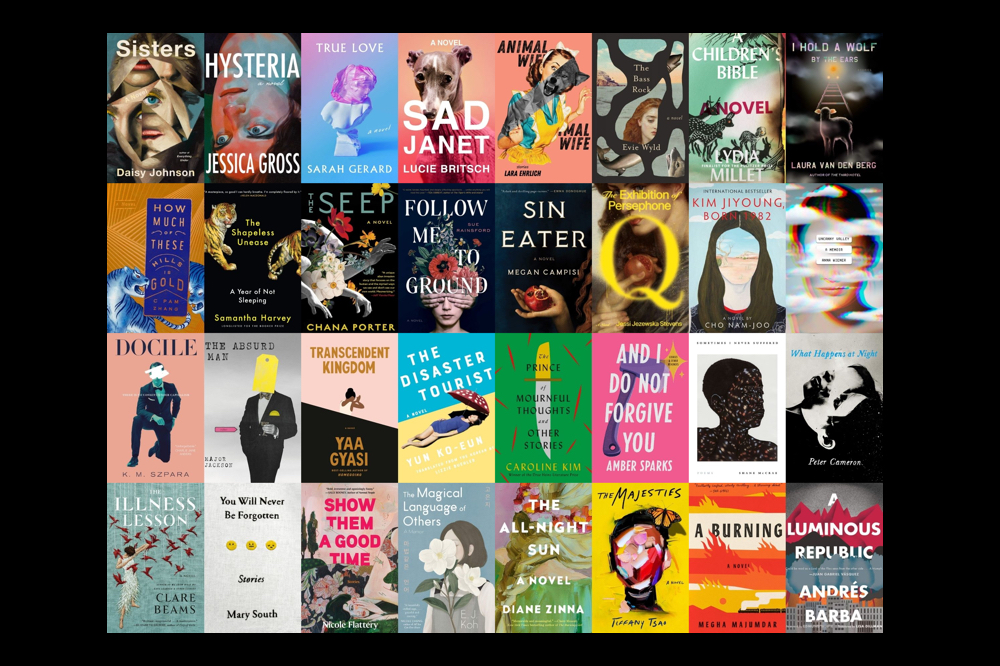
Help Us Pick the Best Book Cover of 2020

This hasn’t been an easy year for sustained, careful reading. But you know what doesn’t take any attention at all? Judging a book by its cover! That’s why we’re doing our first ever “best book cover of the year” tournament—and we want you to weigh in.
Click to open larger version

Vote for your favorites on Electric Literature’s Twitter and Instagram stories every day this week: round 1 (a whopping 16 matchups) today, round 2 Tuesday, quarterfinals Wednesday, semifinals Thursday, and the final face-off on Friday. You can familiarize yourself with the competitors and their first-round opponents below. If you want to make your own predictions, click the bracket above for a large version or download one here. The winner will receive bragging rights, which in many ways is the most any of us can hope for this year!

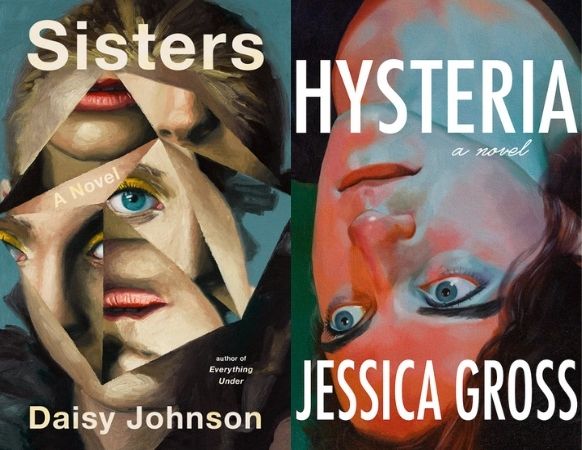
Sisters by Daisy Johnson vs. Hysteria by Jessica Gross

True Love by Sarah Gerard vs. Sad Janet by Lucie Britsch

Animal Wife by Lara Ehrlich vs. The Bass Rock by Evie Wyld

A Children’s Bible by Lydia Millet vs. I Hold a Wolf by the Ears by Laura van den Berg

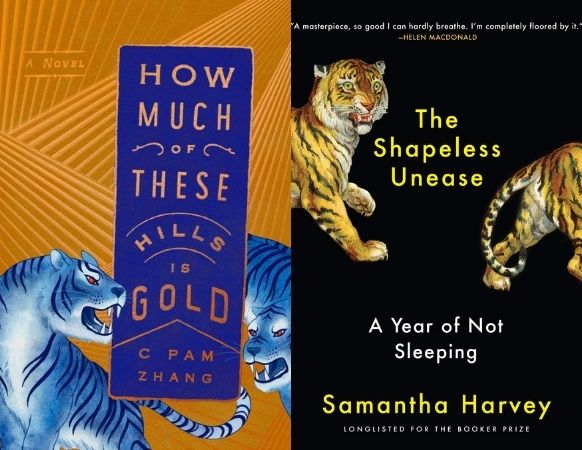
How Much of These Hills Is Gold by C Pam Zhang vs. The Shapeless Unease by Samantha Harvey

The Seep by Chana Porter vs. Follow Me to Ground by Sue Rainsford

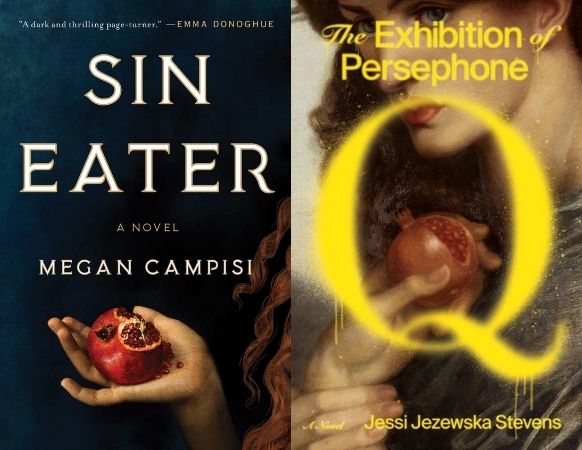
Sin Eater by Megan Campisi vs. The Exhibition of Persephone Q by Jessi Jezewska Stevens

Kim Jiyoung, Born 1982 by Cho Nam-Joo vs. Uncanny Valley by Anna Wiener

Docile by K.M. Szpara vs. The Absurd Man by Major Jackson

Transcendent Kingdom by Yaa Gyasi vs. The Disaster Tourist by Yun Ko-Eun

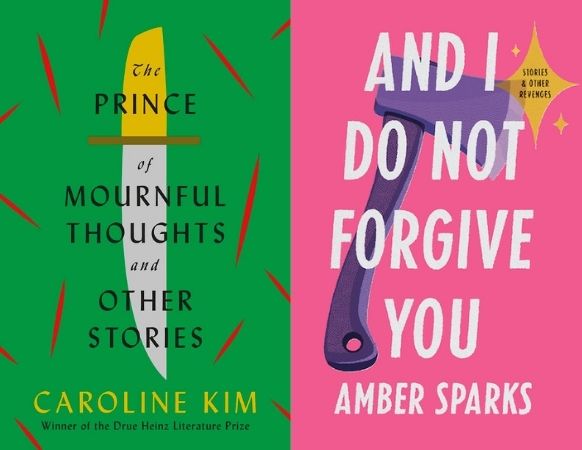
The Prince of Mournful Thoughts by Caroline Kim vs. And I Do Not Forgive You by Amber Sparks

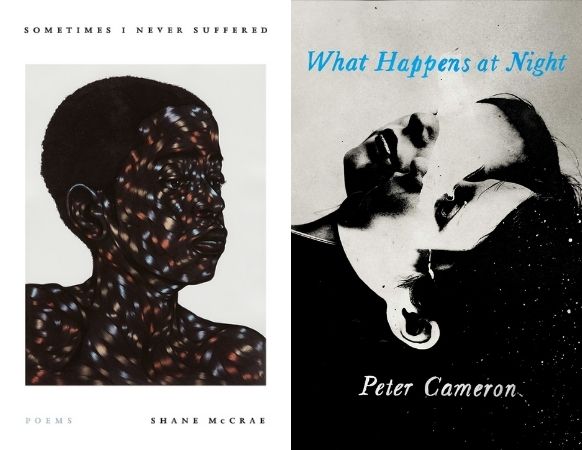
Sometimes I Never Suffered by Shane McCrae vs. What Happens at Night by Peter Cameron

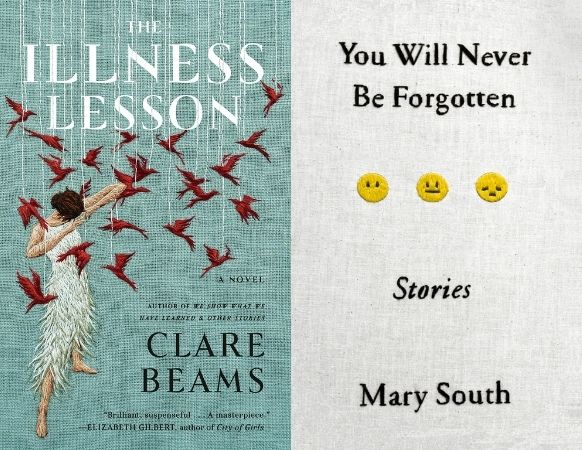
The Illness Lesson by Clare Beams vs. You Will Never Be Forgotten by Mary South

Show Them a Good Time by Nicole Flattery vs. The Magical Language of Others by E.J. Koh

The All-Night Sun by Diane Zinna vs. The Majesties by Tiffany Tsao

A Burning by Megha Majumdar vs. A Luminous Republic by Andrés Barba

“Misery” Is a Horrifying Love Letter to the Physical Act of Writing

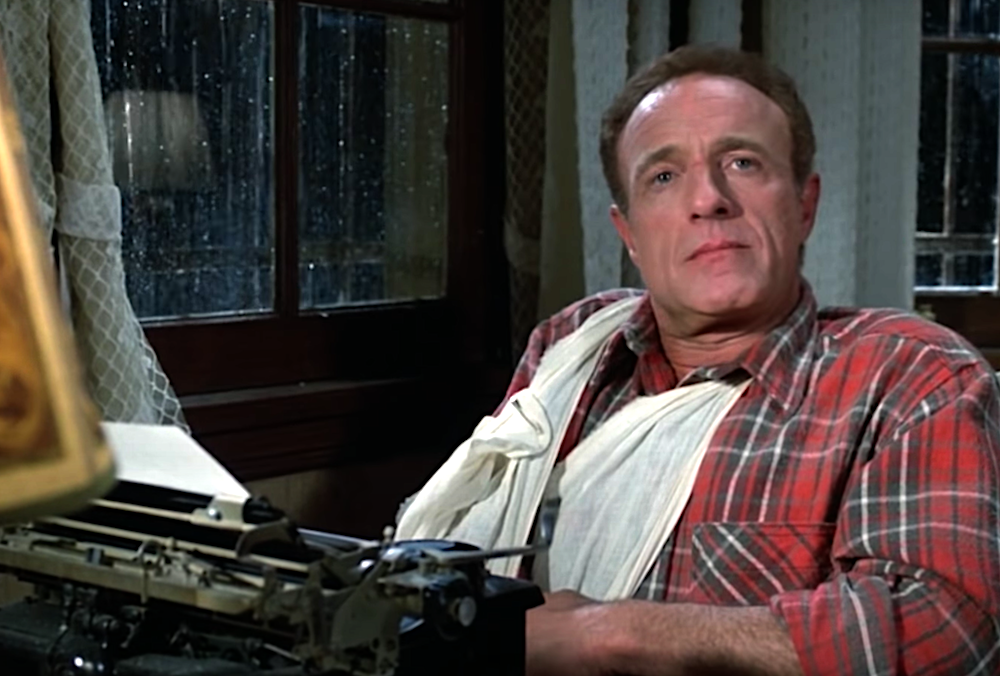
A cigarette, a match, a bottle of booze, black letters inked rapidly onto white paper—and, erupting over each of these tranquil images, the hard staccato and carriage return rings of a typewriter. A hand yanks a completed page from the machine with a snap, and, picking up a pencil, writes out “THE END”; soft scratch of graphite on paper. The author lights a cigarette with the satisfaction of a man who’s just made love to his typewriter, and as he inhales slowly, we can almost taste the tobacco. He pours himself some champagne, the liquid gurgling as it enters the glass. Paul Sheldon (James Caan), the protagonist of Misery, has just completed his latest manuscript, a novel he believes to be his magnum opus. And as the film’s first shots introduce him, they are also introducing us to one of Misery’s preoccupations: writing as somatic experience, a craft indelibly shaped by the writer’s physical surroundings, tools, and body.

Reiner’s fetishistic tribute to the sensory joys and material apparatus of writing is all the more noteworthy because no such scene appears in the source text on which the film is based. Stephen King’s 1987 novel Misery instead begins in miseria res: a grievously injured Paul lies in bed, already at the mercy of Annie Wilkes (Kathy Bates), his deranged “number-one fan.” By first lingering on the potential pleasures of the text, on the other hand, Reiner’s film deliberately establishes a dramatic contrast between the material conditions under which literary creation can occur. From the cozy hotel room where Paul finishes his book, body intact and spirit buoyed by creature comforts, the film turns swiftly towards a study of writing in pain and under duress. 

While driving home from the hotel through a snowstorm, Paul totals his car, shattering both of his legs. The violently unstable Annie pulls him from the wreckage and imprisons him in her secluded home under the pretense of healing his car crash wounds. Among other tortures, she forces him to rewrite the most recent installation of his Misery Chastain novels, the lowbrow historical romances that made Paul famous but which he has come to loathe. 

In Reiner’s film, writing is not just bodily—it is bodily survival.

The movie’s second and third acts are thus dominated by the spectacle of a maimed Paul grimly churning out Misery’s Return, the revised book that Annie demands. In a sense, the scenario is simply the “potboiler” idiom made more literal and more lethal. Before the accident, Paul churned out trash novels to feed himself. Now, Annie threatens to murder him unless he fictionally resuscitates Misery, the lead character whom he had cheerfully killed off in the published version of the book (and whose odd name crystallizes the film’s interest in the links between fiction and the flesh). As he writes Misery back to life, Paul also keeps himself alive, like a flannel-clad Scheherazade. In Reiner’s film, then, writing is not just bodily—it is bodily survival.

This setup means that Misery ends up dedicating a substantial chunk of its runtime—more, I would hazard, than the average movie about authorship—to depicting the writing process. So, too, must Paul weaponize his drafting process and writing instruments themselves in order to stay alive. It’s for these reasons that Misery serves as an unusually revealing time-capsule of literary production from the age of typewriters and pencils. To re-watch the film after the digital revolution is to witness an accidental testament to how dramatically the physical experience of writing has changed since 1990. 


Because it is set in the ‘80s, Misery’s plot crucially hinges on the simultaneous power and precarity of physical manuscripts in the days before laptops, google docs, and hard drives. The sensual affection with which the movie’s first scene depicts paper-based writing is soon revealed to be a reflection of Paul’s own enjoyment of the corporeal side of his profession. When he pulls the novel’s final page out of the typewriter to slowly inscribe “THE END” by pencil instead of by keyboard, his reverent expression suggests that he’s done so largely to gain skin-to-skin contact with the thing he’s written, to lovingly feel its weight in his hand. 

In fact, it’s in part Paul’s bodily attachment to the document he’s created that eventually dooms him. When his car starts to skid out of control on a snowy mountain road in the next scene, Paul instinctively reaches over—twice—to make sure the satchel holding his precious manuscript doesn’t slide off the passenger seat. In doing so, he removes one hand from the wheel and his attention from the road ahead, loses control over the swerving vehicle, and careens off an embankment. 

To re-watch the film is to witness an accidental testament to how dramatically the physical experience of writing has changed since 1990.

It’s not just Paul’s attachment to the physical manifestation of his craft that makes him protect this manuscript with irrational intensity, however. We later learn that he observes a superstitious practice of making no additional copies of the first draft of a new book. It would spell an immeasurable loss if something were to happen to the document in the briefcase. This is the less pleasant flip side of writing’s tangible paper form: the distressing frailty of a physical product that can be damaged, destroyed, lost in an instant. Misery’s main characters are both all too aware of this delicateness, and both will weaponize it to their own devastating advantage. 

Over the course of Reiner’s film, Annie proves herself capable of grotesque physical abuse: she has a history of murdering infants in the maternity wards where she used to work, makes clear that she plans to shoot Paul when he finishes the Misery rewrite, and, in one of cinema’s more infamous scenes, “hobbles” Paul’s ankles with a sledgehammer when she suspects he’s been trying to escape. Yet one of Annie’s cruelest acts is one of literary, rather than bodily, violence. Having found Paul’s newly minted manuscript inside his crashed car, she reads it—and determines it’s not worthy of her favorite author. As a none-too-subtle caricature of an unsophisticated but demanding reading public, Annie adores Paul’s Harlequin-esque Misery series, but fails to appreciate the more “serious,” modern, and implicitly masculine turn that Paul has taken with his latest book, which centers on a tough-talking kid from the inner city. (In creating Annie, King reportedly drew on his own experience with domineering fans, who raged against his decision to switch out his accustomed horror genre for epic fantasy in the 1984 novel The Eyes of the Dragon.) So disturbed is Annie by this new book’s profanity that she orders Paul to burn the manuscript on a barbecue grill. Only when she threatens to instead burn him does her prisoner begrudgingly agree. But as the sole copy of his prized work goes up in flames, Paul’s face suggests that he’s not entirely sure he’s chosen the less agonizing option. 

This plot device, virtually unthinkable in the present day of habitual back-ups, autosave, and the cloud, will repeat itself once more in Reiner’s film. This time, though, it is Paul who wields the ironic ephemerality of the physical manuscript as a bludgeon. (He also wields a typewriter as a literal bludgeon, about which more later.) In the movie’s final showdown, Paul has finished rewriting the last Misery novel, and calls Annie into his room. Paul knows that his biggest fan plans to murder him now that he’s completed the book she demanded—but also knows that she is desperately eager to find out what happens to Misery at the end of this new story (it’s meant to be a sign of her tacky aesthetic sensibilities that Annie reads novels primarily for the plot). Paul asks his captor for a match, cigarette, and glass of champagne—the same accoutrements of artistic satisfaction that signaled his object worship in the film’s opening scene—but instead of using these to christen a fresh manuscript, he now uses them to destroy one. As Annie watches in stunned horror, Paul strikes the match, lights a page of Misery Returns on fire, and drops it onto the rest of the stacked sheets. “Remember how for all those years no one ever knew who Misery’s real father was, or if they’d ever be reunited? It’s all right here,” he taunts. 

Annie’s panicked efforts to save the document from the flames distract her for long enough that Paul can attack and finally kill her. (Here, Reiner’s film again differs from its literary source: in King’s book, Paul burns a fake manuscript so that he can actually preserve Misery Returns, a work that he has come to genuinely enjoy. This departure once more marks Reiner’s film as the Misery more explicitly interested in the fragility of pre-computer writing.)

This climactic moment would lose most of its schadenfreude if it featured a .doc file on a laptop screen.

This climactic moment would lose much of its feasibility and most of its schadenfreude if it featured a .doc file on a laptop screen instead of a believably unique manuscript. What’s more, the heavily symbolic physical props at the center of the sequence also gesture towards the exhilarating possibilities for reinvention that can come through the complete loss of physical work. A match held in Annie’s hand promises devastation; held in Paul’s, in the film’s first scene, it betrays a certain sensory decadence; but in this final scene, the same object evokes cleansing fire. In immolating this second manuscript, Paul has definitively destroyed the character Misery and the burdensome ties to Bad Literature that she represented for him. After escaping his tormentor, as we learn in the film’s concluding flash-forward, Paul will recover from his injuries and reinvent himself as a writer of stereotypically male, highbrow fiction—a supposed upgrade in artistic status at which the title of his post-Annie novel, The Higher Education of J. Phillip Stone, hints rather heavy-handedly. 

It’s also worth considering the simultaneously metaphorical and practical roles that other writing objects play in the author’s ordeal and eventual escape. During his last battle with Annie, Paul shoves burning sheafs from the Misery Returns manuscript down her throat, a sadistic burlesque of fans’ greedy consumption of their favorite authors’ work. Earlier, in a clever plan to send Annie into town so that he can escape, Paul complains that the Corrasable Bond typing paper she’s initially purchased for him smudges too easily. The ploy successfully gets Annie out of the house to buy a different brand, but not before she herself wields the paper as a weapon, angrily slamming a ream of it down onto Paul’s wound-tender legs. 

But the real heavy hitter here, in terms of both symbolic and physical heft, is the typewriter. The device that Annie purchases for Paul so that he may complete the new Misery novel is second-hand, ugly, and as broken as Paul’s legs. (Specifically, the typewriter lacks an “N” key—a letter that appears twice in Annie’s name, as Paul notes dejectedly, and whose absence will thus relentlessly remind him  of his hellish captor/editor each time he fills it in by hand.) If the rapid taps of the typewriter in the film’s opening were a familiar soundtrack to a certain romanticized scene of writing, this cumbersome machine embodies the anguish of Paul’s current imprisoned body and environment. Yet he will nonetheless rely on the instrument’s physical form to escape that body and that environment, lifting the thing like a barbell to strengthen his arms and eventually bashing it into Annie’s head in the film’s penultimate scene. 


All of which is to say that Misery treats its typewriter, and the other hyper-physical writing technologies of its day, as double-edged swords. Paper, pencil, manuscript, and typewriter were the paraphernalia of an intensely bodily writing experience that engendered both pleasure and pain, both satisfying solidity and disastrous fragility. It was precisely this corporeal intensity, in the estimation of some authors whose careers have bridged the transition away from typewriters, that would soon be eroded by the rise of word processors. “It’s easier to feel connected to something that requires so much tactile and sensory engagement,” writes journalist and professor William Pannapacker in a 2012 iteration of the typewriter nostalgia pieces that still surface today with the regularity of a carriage return. The device “makes appealing sounds when you touch it,” he continues. “And the smells of ink and oil are powerful memory triggers, especially for anyone my age or older who learned to write on a typewriter.”

Paper, pencil, manuscript, and typewriter were the paraphernalia of an intensely bodily writing experience that engendered both pleasure and pain.

It is both ironic and unsurprising that Misery’s exceptionally immersive tribute to the typewriter comes in the form of a film rather than a text. The aggressive clacks of the machine’s keystrokes, the hulking shape that dramatically half-obscures the writer behind it: cinema’s audiovisual capacities lend a sensory immediacy to the typewriting scenes that activate the bodies in the audience just as they activate Paul’s. (The source novel’s eponymous theme likewise takes on a far more hideous intensity when its various agonies of the flesh play out on the screen. Try watching the hobbling scene without gasping.)

As it turns out, the thriller genre is the perfect setting for a paean to the typewriter era. Misery’s taut  pacing is specifically synced up with the process of drafting on a typewriter. The then-burgeoning technology of the word processor would allow the user to effortlessly toggle between different parts of a draft as she writes, and thus to “grasp a manuscript as a whole, a gestalt,” academic Matthew Kirschenbaum points out. By contrast, “Sitting at a typewriter, we are always in the present moment as the carriage trundles forward character by character, line by line.” Another word for this sense of oppressive “present”-ness is suspense, and Misery is suspenseful precisely because the viewer—like Annie and Paul—knows that Paul’s continued survival depends on his linear, chapter-by-chapter release of the book into the eager hands of his one-woman audience. The sense of dreadful inevitability with which we watch Paul’s stack of manuscript pages grow taller would diminish substantially if his writing process were instead made up of the continual editing and jumping around that constitute writing in the computer era. If “[o]ur writing instruments … actively shape the limits and expanse of what we have to say,” as Kirschenbaum maintains, then it would seem that narratives about authorship lost a certain capacity for meta-literary suspense when word processors became the norm. 

Upon its release in 1990, Misery accidentally preserved in celluloid the last gasps of a particular experiential era of authorship. The remainder of the decade would see word processors replace typewriters as the more popular, and more abstract, tool of the trade, only to themselves be eclipsed by an instrument of even less potent physical feedback and presence: the thin, quiet laptop. Revisiting the film in 2020 reminds us of just how much the digital revolution has erased the terrifying, sacred fragility of traditionally material forms of writing—and the particular narratives of in-the-moment suspense that could be built around them. As the ways we write grow ever more indestructible and ever less embodied over the next thirty years, what new narratives about, and lived experiences of, literary creation will we gain—and which will we lose?

Don’t Cross These Capitalist Flowers

lilac bed

We announce our desire to open for business. We are sweet and we are soft and have been told we are gorgeous. Let us make a living, flirting with tourists’ ankles.

What use have you for the standard economy?

We spurn this question. We think it distasteful that it is left to those with no imagination to decide such things. We stare.

He surrenders. What do you require?

We require a sign. At the top, in bold lettering: Visit the World’s Most Beautiful Lilac Patch. Underneath, smaller lettering: Two dollars. Underneath, same size: Tips welcome. Underneath, italics: Children under 10 are asked to maintain a distance of three feet from the lilacs.

Anything else?

That will do.

We begin primping. We get the xylem and phloem running up and down our stems, filling our petals with rich color. We shunt nutrients to the smallest among us. We see the groundskeeper marveling from a distance, in a posture he imagines to be subtle. We notice everything that is subtle.
Within days, we are strewn with bills and coins from the tourists. Dirt can hardly be seen. We now desire to close for business. Please remove our sign.

And of your money?

What of it? We stare. Together we hold hands for our wilting, shrinking and dulling, falling upon our bed and each other to rest, composting our bills into the soil, full as ticks stuffed with blood.

the ritual

We enact the ritual as soon as the child is old enough to absorb it. Usually age three or four. Many life events are suitable triggers: a snake bite, a mean nickname from a bully, a burn from a hot metal slide. For example.

When a suitable event happens, we spring quickly into action. First, we erect a large image of the offending snake or bully or slide and frame it on an altar designated for this purpose. We assemble as many family members and neighbors as can be quickly assembled. With the child in our midst, we circle around the altar and hurl disparagements and caustic materials. “SCUM!” we shriek, coating the image in mud and ammonia and fruit mold. “FILTH!” We shout and shout, maybe for ten minutes. “How dare you aggress upon our sweet innocent child. You are vile to your core, bully child, your soul is filthy cracked tar and we hope you die quickly for the good of all humanity.”

Our job is done once the image is denigrated beyond all recognition, hardly noble enough for a Dumpster. Our job is done once we start to feel badly for the innocent coffee filters, vegetable rinds, and junk-mailings that would now be forced to keep company with this degenerate. “REST IN LOATHSOMENESS,” we yell in a chorus as we shut the Dumpster lid and spit at its feet.

Now we shower the child with hugs and warmth and adornments, we feed the child sweet treats as we kiss their forehead. It is critical the child does not carry a bad feeling, that they know whatever happened in no way reflected a malignancy about their character. Everyone takes a turn proclaiming the child’s inherent good. We have been carrying out this ritual for generations and know how to achieve the most effective result. Lastly, we clean the altar with a special cleansing tonic and now we erect a new image. A blown-up image of the child, framed in gold, protected with a thick plexiglass. We genuflect to it as we enter and exit the house, wishing death upon our enemies.

11 New Books by Native American Writers

This year has been a dumpster fire and we mean that literally. But the shining bright spot in the literary world is an abundance of great new books by Indigenous writers being published in 2020.

Since it’s National Native American Heritage Month, we’re focusing on books coming out of the U.S. But it’s also worth noting some new titles by either and or about Indigenous people from other parts of North America: A History of My Brief Body by Billy-Ray Belcourt (a memoir about being a queer First Nations poet in Canada), Empire of Wild by Cherie Dimaline (a novel where a Metis woman faces off against a werewolf trickster), and Spirit Run by Noe Alvarez (Alvarez, the son of working-class Mexican immigrants, runs in a 6,000-mile Native American/First Nations-organized marathon from Canada to Guatemala through North America’s stolen land).

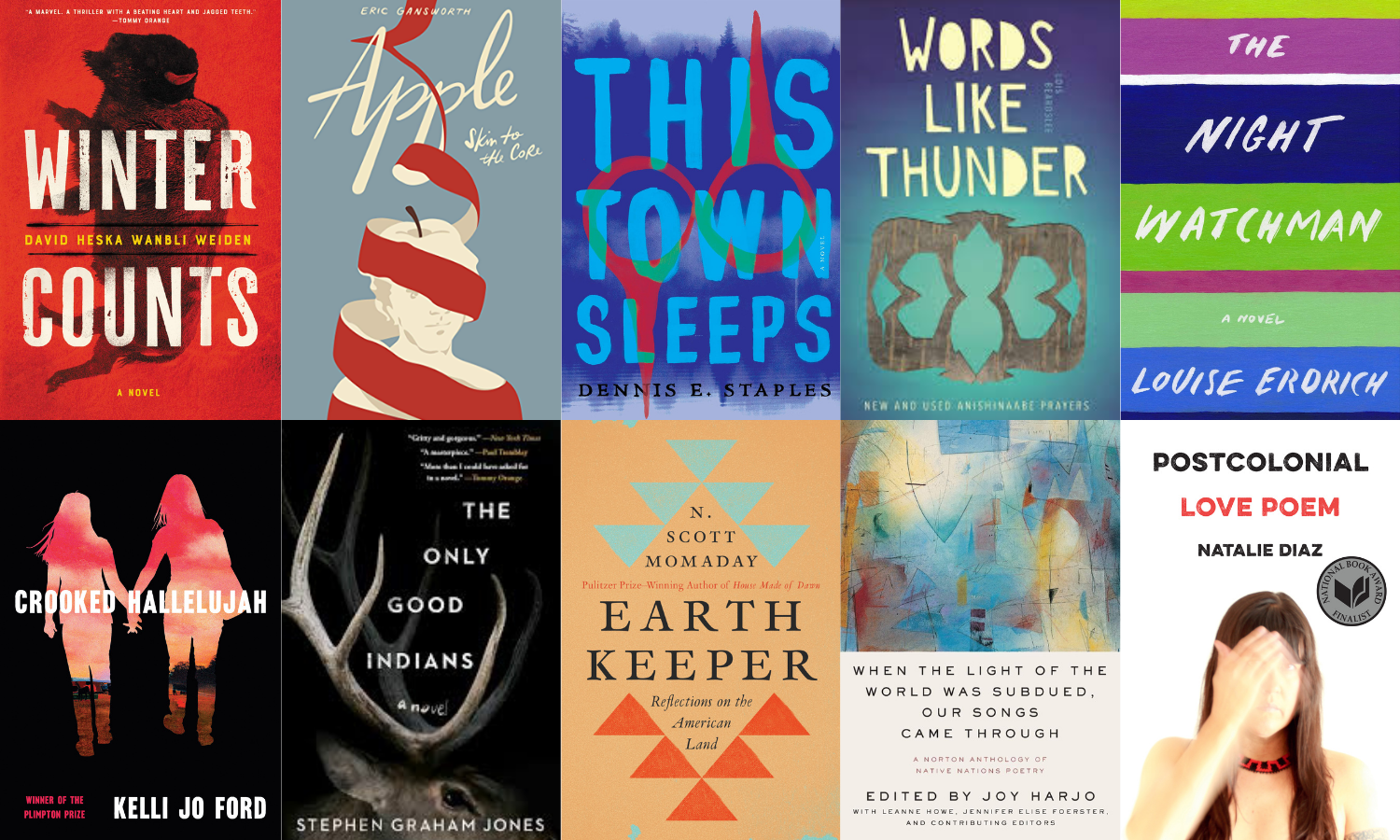
From a supernatural thriller about being haunted by an elk-head woman to poetry steeped in folklore about climate change, here are 11 new works of literature by Native American writers:

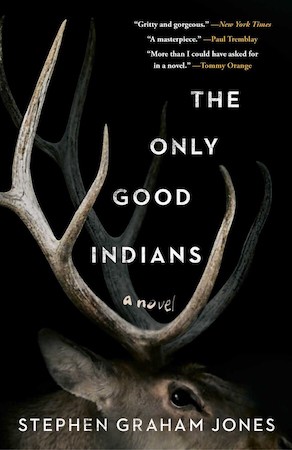
The Only Good Indians by Stephen Graham Jones

Four Native American friends hunt for elk on the Blackfeet reservation in Montana, only to stalked by the spirit of the elk they killed years later. Part blood-soaked horror novel and part adroit social commentary, The Only Good Indians is a sharp reimagining of “The Indian Curse” in American mythology. Read an essay by Stephen Graham Jones on how being Indian is not a superpower here.

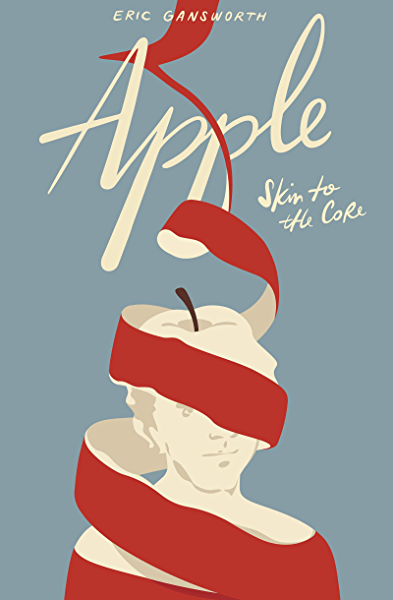
Apple: (Skin to the Core) by Eric Gansworth

If you’re a BIPOC, you’re probably familiar with slurs that use food as a not-very-inventive metaphor for being white inside, hence “apple”—red on the outside, etc. National Book Award nominee Apple: (Skin to the Core) is an art-filled memoir told in verse and prose about Eric Gansworth’s boyhood as an Onondaga tribal member on a Tuscarora reservation, his grandparents’ history in an assimilationist residential boarding school, and his adulthood as a gay man off the reservation.

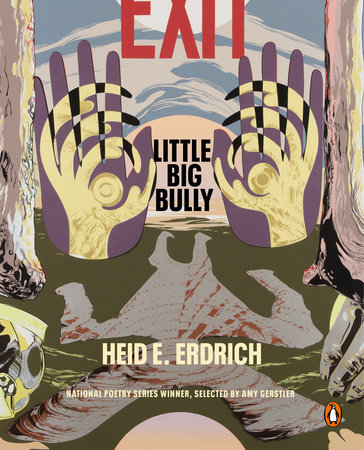
Little Big Bully by Heid E. Erdrich

Little Big Bully by Heid E. Erdrich

Minneapolis-based writer Erdrich’s poetry collection is laced with dark humor and shines with incisive wit. Her poems range from a bitingly scornful takedown of the fetishization of Indigenous identity through genetic testing kits to a heart-wrenchingly vulnerable “how-to” (How to not be afraid you can say it / I am not afraid to learn / How to live with the hurt of being human / How you learn it is you say / it hurts / How in itself it is the lesson).

The Night Watchman by Louise Erdrich

Louise Erdrich’s grandfather (and Heid’s—they’re sisters) was the tribal chairman of the Turtle Mountain Band of Chippewa in North Dakota and a night watchman. In 1954, he wrote letter after letter after letter appealing the lawmakers in D.C. to stop the Indian termination policy which would have destroyed tribal sovereignty. In her historical fiction novel, Louise Erdrich reimagines her grandfather’s battle for survival.

Postcolonial Love Poem by Natalie Diaz

“An anthem of desire against erasure,” Postcolonial Love Poem is a mythological tribute to queer love and to the strength and survival of Native people in America in the face of systematic violence. In her interview with Electric Lit, Diaz writes: “The American dream has always been in shambles, in pieces for my family, my community, and me. We never dreamed it. America never meant for us to dream it.”

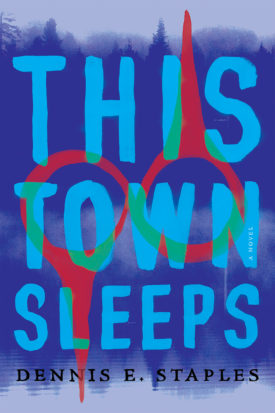
This Town Sleeps by Dennis E Staples

Twentysomething Marion Lafournier is a gay man living on an Ojibwe reservation located in the small town of Geshig, Minnesota. After a failed stint in the Twin Cities, he feels stunted by small-town life where there’s not much to do except prowl for hookups on dating apps. Life is about to get much more exciting and sinister for Marion after he takes a spin on a kid’s merry-go-round and inadvertently resurrects a dead dog who might or might not be the ghost of a murdered teenage athlete.

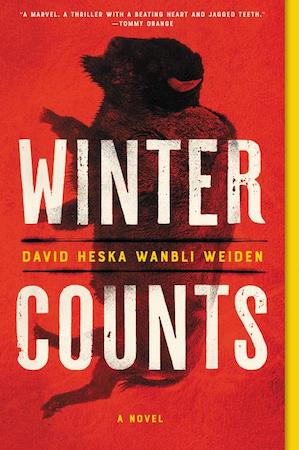
Winter Counts by David Heska Wanbli Weiden

A whodunit set on the Lakota Rosebud reservation in South Dakota, Winter Counts follows Virgil Wounded Horse—a vigilante and enforcer-for-hire—who steps in to dispense justice on the rez when the federal authorities inevitably fail to do so.

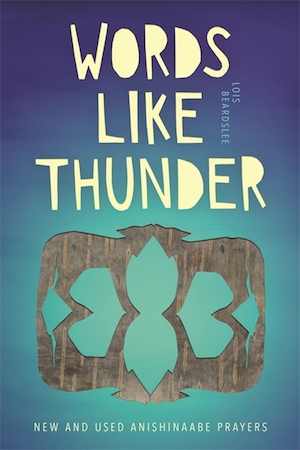
Words like Thunder: New and Used Anishinaabe Prayers by Lois Beardslee

I don’t recall any old songs about disappearing with the river silt,

So, forgive me if I sing about my family

Across wide-open waters, from between heavy spruce boughs.

I remember crying at sunrise with the last caribou.

In her heartbreakingly beautiful poems about climate change, racism, systemic inequality, and generational poverty, Ojibwe author Lois Beardslee juxtaposes traditional folklore with the contemporary lives of Native Americans in the Great Lakes.

Earth Keeper: Reflections on the American Land by N. Scott Momaday

Pulitzer Prize winner N. Scott Momaday’s Earth Keeper is at once a spiritual love letter to the sacredness of the earth and a stark warning of how man-made climate change has ravaged our land. Momaday, a Kiowa tribe member who was raised on Southwest reservations, writes movingly: “When I think about my life and the lives of my ancestors, I am inevitably led to the conviction that I, and they, belong to the American land. This is a declaration of belonging. And it is an offering to the earth.”
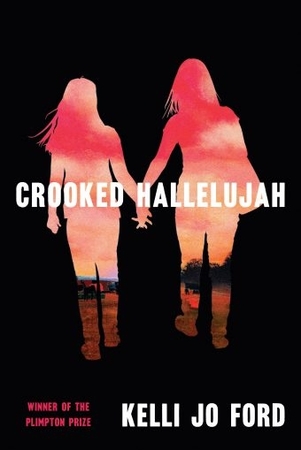
Crooked Hallelujah by Kelli Jo Ford

A multigenerational novel in stories that spans decades, Crooked Hallelujah follows four generations of Native women in the Cherokee Nation of Oklahoma and Texas as they become disillusioned with the increasingly hollow promises of love by bad men and of salvation by the Pentecostal church—promises that oppress these women and keep them shackled to deadening poverty. Despite wildfires, tornadoes, violence, and illness, these women preserve in their resilience and fortitude, anchored by their maternal bond. In his interview with Kelli Jo Ford, Alexander Sammartino writes: “Praise be to Crooked Hallelujah, where family is the source of both exile and salvation.” Read an excerpt from the novel here.
When the Light of the World Was Subdued, Our Songs Came Through

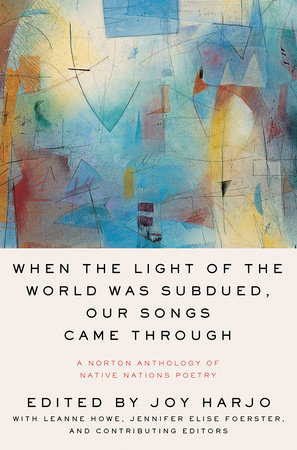
When the Light of the World Was Subdued, Our Songs Came Through: A Norton Anthology of Native Nations Poetry edited by Joy Harjo

We begin with the land. We emerge from the earth of our mother and our bodies will be returned to earth. We are the land. We cannot own it, no matter any proclamation by paper state. The anthology then is a way to pass on the poetry that has emerged from rich traditions of the very diverse cultures of indigenous peoples from these indigenous lands.

Joy Harjo

Edited by United States Poet Laureate Joy Harjo, this impressive anthology brings together 160 poets from 600 Native tribes in the United States.

16 Nonfiction Books That Tried to Define America

The most visited article in Wikipedia’s vast domain is the one called “United States,” but with just thirteen subsections it is far from the longest. Perhaps this is because no one article—or book, or multivolume collection—could ever paint a full and accurate picture of this country in all its baffling kaleidoscope facets.

This hasn’t been for lack of trying. Just as the white whale of “The Great American Novel,” or GAN in abbreviated form, has been a longstanding in-joke among fiction writers, so too have nonfiction writers sought to write the one opus that would at last put the essence of the United States between two covers. Let’s call it the “Defining America Volume,” or DAV.

I looked upon the height of this mountain and despaired when I was putting together my essay collection The National Road: Dispatches from a Changing America, which seeks to express the country’s legacy through a patchwork of reported stories that point toward an unseen whole. This micronarrative strategy was the only approach that made sense to me. As the creative writing bromide goes: the wider the subject you take on, the more you risk writing useless generalities that reach for everything and grab nothing.

There’s a distinguished cavalcade of authors, however, who took the chance and tried to write one nonfiction book that encapsulated the grandeur, folly, ugliness, bravado, idealism, and tempestuousness of the United States of America. They aimed for the DAV. All failed in the own ways. But some did a better job than others.   

Blue Highways, by William Least Heat-Moon

After getting laid off and divorced at age 38, Moon set out from his Columbia, Missouri home in a rehabbed van he called “Ghost Dancing,” resolving to travel through the U.S. only on little county and state roads. He visits towns with quirky names—Dime Box, Texas; New Freedom, Pennsylvania; Whynot, Mississippi—and chats up locals who tell him the unusual stories of their lives. He reaches few of his own conclusions about national spirit, preferring to let the unheard people speak.

A People’s History of the United States, by Howard Zinn

An oft-assigned college textbook, this fierce retelling of the nation’s story is channeled through the unapologetic lens of class and racial divides, emphasizing the uncomfortable repeating pattern of rich people’s wars fought by the nation’s poor and dispossessed. He trains his visions on the labor leaders, civil rights activists, poets, farmers and suffragists who insisted the country live up to its founding ideals that got lost along the way.  

Inside U.S.A., by John Gunther

A magisterial book whose ambition and scope defies belief. The author traveled to all the states in the nation—there were then 48—and talked to anyone there who would stand still. His two main questions: Who runs this place? What makes this place distinct? Figures, facts, personalities and landscapes come together in succinct portraits that culminate in a masterpiece of a final chapter. The result is the most readable almanac you’ve ever picked up, as well as the finest one-volume portrait of the U.S. ever written. Gunther was a journalist first, a poet second and a thoughtful patriot to the end.  

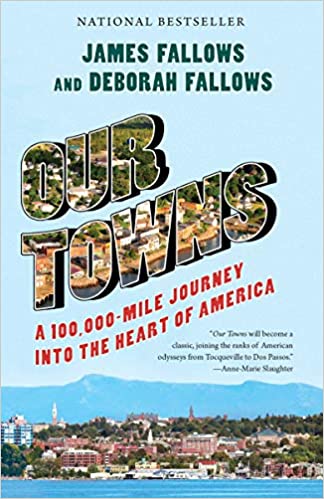
Our Towns, by James and Deborah Fallows

While presidential politics was entering a clown show phase in 2016, the husband and wife team set out in a Cirrus SR22 light aircraft to small cities across the country that showed both sanity and competence in their day-to-day management. A policy version of Blue Highways, the Fallows found enduring elements of America on the local level that go beyond the usual civic pieties. Their version of Gunther’s question: “What makes this town go?” yielded a banquet of surprising answers.

These Truths, by Jill Lepore

The Harvard historian takes us from 1600 up to 2018 in a whopper of a volume that cannot possibly have everything stuffed into it. But Lepore makes a valiant attempt to fit in as much color and analysis as possible in 955 pages about the first nation in the world, as she puts it, to be governed “not by accident and force but by reason and choice.” Wars, strikes, riots, slavery, new religions, emancipation, skyscrapers, railroads, movies, highways, muskets, prisons, capitol swamps—all of it pinned down in readable prose, never minding what had to be left out for space. Lepore could have been writing this DAV for the rest of her career.

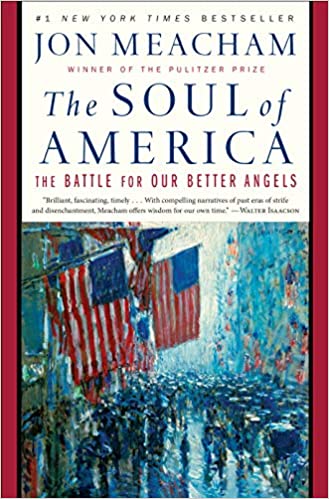
The Soul of America, by Jon Meacham

With Sewanee bearing and a gentleman’s club voice, Meacham is like an Episcopalian chaplain of the nation’s heritage in his frequent television appearances to offer long-range commentary on current events. His approach here—contra Zinn—is top-down: he wants to show how moral leadership in high places helped contain potential monstrosities rising up from below. Thus we see how Ulysses S. Grant helped quash the first version of the Ku Klux Klan, how Theodore Roosevelt extended the hand of friendship to Booker T. Washington, and how Abraham Lincoln made a call to “the better angels of our nature.”

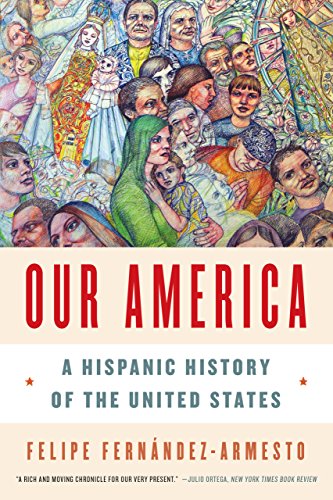
Our America: A Hispanic History of the United States, by Felipe Fernandez-Armesto

If 17th-century naval history had only gone a different direction, the middle part of the North American continent would be firmly Latin instead of a wayward project of the British. Even as it is, vast parts of the current United States—Florida, Texas, California and much of the country in between—was under the watch of the King of Spain long before the stars and stripes flew over it. The story told by Fernandez-Armesto is one of retreating political borders during westward Anglo expansion, but also constant cultural enrichment; significant economic and artistic contributions; and a hopeful look to the future where the global conception of the United States is inseparable from its rich Latin past. 

States of Mind, by Brad Herzog

America by way of #vanlife once again, as Herzog and his wife buy an RV and point it toward towns with funny names, in the spirit of Blue Highways, but with a gimmick: all the chosen destinations have evocative names, like Inspiration, Arizona; Love, Virginia; Wisdom, Montana; Justice, West Virginia. In each place, Team Herzog seeks out conversations with locals in the hopes that one of them might spit out a story that fits the premise of the town name. If this concept sounds cornball and forced, you’re not wrong. In some towns, you can feel the author’s mind working overtime to spin second-rate material into a passable moral lesson so everyone can move on.

Before the Mayflower, by Lerone Bennett, Jr.

The broad sweep of African-American experience in North America, starting in West African societal structures and continuing to the Middle Passage, slavery, sharecropping, the Great Migration, civil rights, the arts, protest, and contemporary politics. Saying everything about this gigantic subject is as hopeless as summarizing all of America in words, but Bennett’s work is by far the most complete and authoritative attempt.

The Lost Continent, by Bill Bryson

A young male journalist jumps in a vehicle and makes a giant loop around the country making witty observations along the way. This idea is as least as old as the railroad, and has been seized on by a diverse cast including J. Ross Brown, Mark Twain, Matt Field, Josiah Gregg, Ian Frazer, Richard Grant, and Jonathan Raban. To this groaning table, Bryson brings his characteristic mix of casual erudition mingled with wit, though he mainly finds reasons to be grumpy. Rural folk don’t come off particularly well in this supposed paean to small-town America. 

The Penguin History of the U.S.A., by Hugh Brogan

It’s hard to write about the U.S. in any capacity without taking an identifiable point of view or making an academic argument of sorts, but this 737-page tome plays it scrupulously down the middle. The prose is windowpane-clear and the values kept muted. You might call this a dispatch of the last 400 years from the Associated Press. As DAVs go, it’s pretty hard to beat from a pure “what happened” point of view.

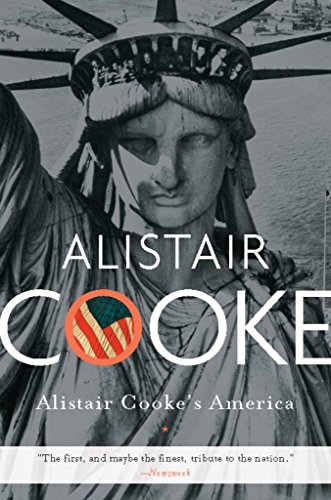
Alistair Cooke’s America, by Alistair Cooke

The avuncular British sage made a cottage industry of explaining the United States to his readers back home, and this illustrated apologia was a companion to a lengthy PBS series of the same name first aired in 1973. If you find it on your grandparent’s coffee table, it would be no surprise: it sold more than a million copies and tells a story that hews pretty closely to the traditional textbook line. More of a celebration than an assessment, its scope is still impressive.

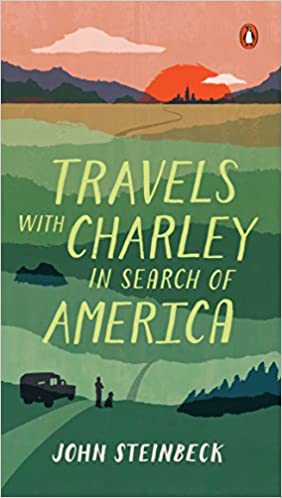
Travels With Charley, by John Steinbeck

Yet another middle-aged guy tricks out a van and tries to understand the country. Marked by breezy writing, curmudgeonly gripes about technology, and fast drive-by assessments, this one-time classic has come in for recent scholarly criticism based on revelations that Steinbeck had his wife with him far more often than he let on, and that his encounters were more embroidery than fact. 

An Indigenous Peoples’ History of the United States, by Roxanne Dunbar-Ortiz

A sharp challenge to the “untouched wilderness” idea of the continent, celebrated by eastern expansionists and textbooks up to this day, Dunbar-Ortiz relentlessly takes apart the romantic mythology that dominates traditional portraits of Native Americans and reveals the complex political societies that existed here long before the arrival of British religious separatists and Spanish adventurers, and have struggled to maintain cultural integrity in the intervening centuries. The story of territorial and human loss is enriched with anthropological details left out of many conventional histories.  

Democracy in America, by Alexis de Tocqueville

The granddaddy of all the DAV texts, and one that stands as the least-read but most-pedantically quoted book ever written about the United States. Tocqueville came to the country from France in 1831 on a mission to study its penal system, but he quickly upgraded his mission for a bigger look. He is at his best when he examines the flexibility of American speech—the folks at the tavern, the barbershop, and the horse stables who make plays on words and invent new ways of thinking about the relationship between humanity and its governors.   

A Walk Across America by Peter Jenkins

This Alfred College dropout was not the first person to walk across the country as a stunt—Charles Fletcher Lummis walked from Ohio to L.A. to take a newspaper job in 1884—but Jenkins’s account of his walk from upstate New York to New Orleans arrived at a time when Americans were sick of hearing about Vietnam and high gas prices and receptive to the neo-patriotic observations of a reformed hippie. Jenkins writes in basic prose of his visits with random people in out of the way places, and his sense of wonder and joy helps propel him south. That he meets his first wife at a Louisiana seminary also helped make this 1977 DAV a bestseller.  

Sleepwalking Through a Texas Childhood

An excerpt from Nights When Nothing Happened
by Simon Han

Jack Cheng knew about protection. He knew who gave it and who needed it, and he knew that he was the one who’d found his sister curled around the toilet one night, sleepwalking into the swinging kitchen door another night, and that was a calling.

Most nights had limped along since his parents began putting Annabel to sleep in her own room instead of theirs. When sleep finally came to them, they would snore the way kings and queens with servants to adjust their pillows all night long snore, dreaming dreams that were not anyone’s right to interrupt. At an hour when the house held its breath and waited for something to happen, Jack stayed up and read books in which characters died, literally, of fright. The sound of a leaf scraping across the sidewalk could draw him downstairs in socks until he reached hardwood. Then, realizing that his sister was still safe upstairs, he would stand in the dark before his mother’s favorite sheepskin rug and imagine that the rattling and scratching he was hearing behind the walls came from beavers, though he had never seen a beaver and confused them with raccoons.

Late one night in November, a steady pounding woke him up. He lay under the covers for some time, remembering that his mother had not been home when he went to bed, and wondering if she had come back from work or he had dreamed it. Downstairs, he found the front door open to the street. Had the calling moved beyond toilets and kitchens? He wandered outside without slapping on shoes, his mind still muddled with dream sounds. On the sidewalk, he skirted a pile of dog shit and an issue of The Dallas Morning News still wrapped in yellow film. The houses on both sides of Plimpton Court stood like tombs, each split down the middle by a cobbled pathway, one fledgling oak or elm on either side. In front of two houses, Christmas lights already spiraled up the thin trunks and framed the eaves, the work of professionals. From a balcony, an inflatable Santa raised a mitten in his direction and did not lower it. Jack had made a habit during the day of crouching by the window in the piano room and waving hello back, which always sent Annabel into fits of giggles. It had not occurred to him until now that the Santa could be waving good‑bye. He kept on, avoiding its eyes.

He found the first of Annabel’s glow‑in‑the‑dark slippers on the Brenners’ front lawn. Crouching down, he brushed grass clippings from the plush cotton. He pressed a hand on a sunken patch of grass. He pressed here, he pressed there. A strange thought came to him: maybe the heartbeat he was feeling did not belong to him but to the grass, and to the earthworms slithering beneath. If he followed the trail of heartbeats between the Brenners’ and the Driscolls’ he would find the other slipper. He rushed forward, staying low and close to a brown fence at the corner of Plimpton and Main that still gave off paint fumes. There was no time to pull up his socks. The cracks between the planks glowed a phosphorescent blue. A swimming pool. There was something about a lighted swimming pool at midnight that reminded Jack of murder and intrigue.

A car passed on Main Street, its headlights flashing through the fence and illuminating the leaves floating in the pool. His sister could be drifting toward this vacant stretch of road where high schoolers tore through in trucks with wheels bigger than her, blazing a shortcut out to Sheridan. He followed the path he imagined her taking, between houses and down alleyways, until he reached the sewage creek that cut through the community. During the summer, he remembered, the feet and underside of a duck had bobbed there for days. On the grass that sloped up from the creek, he spotted the glow of the other slipper.

His sister stood a few yards away, on the bridge that overlooked the creek. Under a towering steel streetlight, she swayed slightly. Her head was lifted, and a white glow bloomed from her neck, up to the stretch of baby fat under her chin. Her eyes were closed, as if she were basking in the pool of light. If Jack did not know better, he would have thought a spaceship had beamed her down to earth. He sidled beside her, a slipper in each hand. He was Annabel’s protector, but sometimes he did not know what to do with his hands.

“Hear me in there? Knock‑knock?”

Annabel blinked. “You found me, Daddy.”

A few dead crickets still clung to the lamp. The stink of the summer’s crickets had carried through the end of fall, and perhaps would last through a winter that never arrived. It was no wonder he’d thought American air to be unsafe. In those early years in Plano, Jack had held his breath around diapers and hospitals and graveyards and urinals and police stations and fertilizer and roadkill and cameras and his father.

“Daddy,” his sister said.

“Okay,” he said.

“Daddy. Daddy. Daddy. Dad—”

“I heard you.”

Now, that call again. That Breathe, Jack. That Take your sister away, Jack. Away from the light. Away from the image of dead crickets falling, as faintly as the first snow in China, into her little mouth. It was a new day, and they needed to go back: to the sprinkler‑fed grass, the potted mums, the vanilla‑scented pinecones that would remind him, in any season, of this place he’d lived in Texas. Take her back, Jack, take her back.


This fall of 2003, Jack was eleven and his sister five, the span between them never changing, though he felt that it should. Six years contained an entire life. They equaled, he reminded himself, the number of years that he’d lived in China. The more years Jack had accumulated in Plano, the more he’d shed of that first life, and in the days before Annabel began sleepwalking, what he recalled most clearly was his own daydreaming, perched by the fourth‑story window of his grandparents’ apartment in Tianjin.

His earliest memories were of looking down at older buildings, while his later ones were of looking up: craning his neck toward condos and offices that sprouted in a matter of months, crammed in staggered formation so that where one building ended in the skyline, the next began. They bled into his view of the muddy Hai River, the uniformed street sweepers, the market from which every few days his grandparents wheeled groceries home. There went the older buildings, the greenhouses growing like hair on their roofs. There went green itself.

The older and stronger Jack became, the more he saw the wobbly legs that held up his city. Beyond the high‑rises were the cobblestoned streets flanked by forts and villa‑style houses, complete with red tile roofs that Italian invaders had erected. The giant cross on a French cathedral bore down on pedestrians, slinging sun into their eyes. A Japanese house with manicured gardens had once been home to the last emperor of China, a traitor who’d sold out his country to the enemy. There were German barracks, British hotels, Austro‑Hungarian mansions. Jack could not point on his grandparents’ globe to where any of these invaders were from, but he could picture their faces, grinning demonically in the water swirling in Lǎolao’s mop pail, or in the faded brown rings at the bottom of Lǎoye’s teacup. With a swing of his sword, he knocked back bowls of their congealing soy milk, stabbed the heart of the electric fan that made the summers bearable. Lǎolao and Lǎoye saved their heads by ducking. They cursed the day they’d bought him the cheap plaything. What did it matter that Jack was defending them? They cared only about minor hazards like crossing a street, ordering Jack to hold on to them. When he shattered a vase made in Belgium, they fought back. Their palms cut deeper than swords; it hurt to sit down at the dinner table. Sometimes they picked up the phone and, instead of bickering with the milkman, reported him to his parents.

His parents. His parents in America. Jack saw them as they were in the photograph that leaned against a tin of sunflower seeds on the cabinet. His mother’s hair pulled back by a clip, a large vein visible on her forehead. Her eyes narrow and level, as if she were concentrating fiercely on not dropping the baby in her lap. She never scolded Jack as harshly as Lǎolao and Lǎoye demanded. Do the shoes I had Dàjìu buy for you still fit? she would ask. Are you eating the pork I told Lǎolao to cook? Have you read the English book I asked Èrjìu to bring from school? When his mother’s words grew tiresome, he used his grandparents as models to imagine, on the other end of the receiver, her moving mouth: Lǎoye’s long, drooping jaw lifted and chiseled into a robust square, Lǎolao’s puckered lips pulled into a taut line instead of a perpetually surprised O. His father was harder to construct because he did not come from Lǎolao and Lǎoye— did not come from anyone or anywhere, it seemed, his past in the countryside muffled by the low voices other adults used when talking about him, saying things like those people and places like that. In the photograph leaning against the tin, Jack’s father wore a suit so big his shoulders appeared inflated, though his dress shirt underneath was too small, the collar unbuttoned to give his thick neck room to breathe. While baby Jack and his mother looked straight at the camera, his father stood beside the chair, staring off at a different angle, which Jack once projected with a ruler to about five centimeters from the upper-right corner of the frame.

“You’re a damned rascal!” Lǎolao said.

“You’ll make us die early!” Lǎoye said.

“Time to send you to America!” Lǎolao said.

“You think we’re bluffing?” Lǎoye said.

His grandparents, for all their embellishments, eventually reached a moment of truth. They dragged Jack onto a bus to the Beijing airport, where they delivered him into the trust of two family friends, childless āyís whose faces he would forget within months. At the security check, he looked back at his grandparents and realized that they had become undeniably, irrevocably old. As Lǎolao waved from a distance, he could see the redness of her palm and the swelling of her fingers; perhaps all the times he’d squeezed her wrist crossing streets had cut off the blood in her hands from the rest of her body. Lǎoye’s shoulders hunched forward, and without a cane he teetered at the edge of an imagined cliff, helpless in the midst of people who rolled their luggage past him, not knowing how easy it would be to knock him over. Jack had made his grandparents frail, too frail to come with him. When they turned their faces away and dabbed their eyes with a single shared handkerchief, he wondered if they regretted sending him away. Maybe it wasn’t all his fault for being a dǎodànguǐ, maybe his leaving was, as he’d been taught to believe, inevitable. He was going to live with his parents, who seemed to him not people so much as a destination he did not want to visit.

But he would. He would have to. In the plane, the āyí to his left asked him if he was as eager as she was to try airplane food for the first time, and the āyí to his right let him in on a rumor about the otherworldly flushing speeds of the toilets. When the plane crawled backward from the terminal, the two women smiled and reached past him, their fingers meeting in the space behind his head. One āyí stroked the side of the other’s hand with her thumb, and the other extended a finger to tickle a vein under the wrist, and in the glimpses Jack allowed himself to take, their faces carried another message, shrouded in a language he could not access, lips that moved with words he could not hear.

Then from the ceiling, a voice spoke through warbled static, addressing the passengers first in Mandarin, then in English. Please direct your attention to the flight attendants for an important safety demonstration. Outside, the people wearing orange vests and waving orange sticks disappeared, replaced by a runway dressed up with meticulously spaced lights. There are several emergency exits on this aircraft. Following the voice’s instructions, Jack pulled out the laminated card in front of him, on which cartoon people encountered endless terrors but faced them without fear, without any feeling at all. Remember to secure your oxygen mask first before assisting your child. Where was he going, that the journey there could be so treacherous? After the smiling flight attendants began to blow into tubes on their life vests, Jack leaned forward and hugged his legs in the bracing position of the cartoon people. He did not move when one āyí placed her hand on his back and moved it in steady circles. We remind you not to tamper with, disable, or destroy the smoke detectors. He stared down, ignoring the āyí’s hand and focusing on the card he’d dropped. In the last panel there was a boy, a smaller version of the cartoon man behind him. He wanted nothing more than to whoosh down the giant yellow slide with them, his arms pointed stiffly forward, halfway to solid ground.


He would take other flights, hear other safety demonstrations. But five years later, on the first day of middle school, when his teacher stood at the front of the room and ordered twenty‑three sixth graders not to say kill, it was that voice Jack would remember, arriving over warbled static, and the English that followed. That feeling of being in a cartoon.

“Do not say die,” his English teacher said. “Do not say stab, murder, choke, shoot, or bomb. Especially bomb.” Mr. Morris rolled up his sleeves. Veins snaked up his arms and under his shirt, like those of bodybuilders or the elderly—Mr. Morris could pass for either. “Never say bomb.”

It was August. Jack sat at his new desk‑chair, not sure what to do with his legs. The formation of rows and columns left him feeling exposed. And girls—some wore perfume. Scents welled from below their necklines, calling back the candied fruit that he’d once swiped from the street vendors outside his grandparents’ apartment. He had not thought about the taste of glazed strawberries and pineapples and shānzhā for so long, the way he’d slid them up and off the skewer with his teeth. And the vendors, the spittle in their mouths as they raised their newspapers to whack him.

The girl in front of him turned around, the end of her ponytail whipping the top of his hand, to pass back a stack of letters, each addressed to the parents and signed by the principal. On his way to America, Jack remembered, he had carried a letter, too. A letter from his parents. A letter to prove that he belonged to parents, written in English.

“Is punch okay?” a boy asked from the back of the classroom.

“You can probably say punch,” Mr. Morris said.

“What about assassinate?”

Assassinate is usually reserved for public figures.”

“What about manslaughter?”

Manslaughter,” Mr. Morris said, as if trying out a name for a newborn. He fingered the swirl of his tie. “Well, manslaughter is not a verb. Speaking of verbs.”

A voice behind Jack said, “I’m scared.” Heads swiveled around, but no one could identify the speaker. Fingers were pointed in opposing directions, giggles shushed. After class, Jack wondered if he had been the speaker. If somehow he hadn’t known.

Jack should not have been scared. His parents had decided to live in Plano in order not to be scared. Plano had the lowest crime rate in Texas, highly ranked schools, churches bigger than schools, lighted tennis courts, malls that closed before 9:00 p.m. After he’d joined his parents, his mother had called his grandparents to let them know that he was here, he was safe. When a forgetful Lǎolao had asked where here was, she said near Dallas. Later, when she introduced Jack to their neighbors, she said that he was from near Beijing. Jack had wondered then if his homes were not only safe, but imagined.

He did not know, even by middle school, that in the late 1990s this affluent suburb had been dubbed “the heroin capital of America.” Nor that in the early ’80s, it had been called “the suicide capital of America.” Every year, a new wave of residents diluted the collective memory of the city, like fresh customers unwittingly enlisted in a company’s rebranding. Just say no was as much as his teachers were willing to tell him. No drugs, no suicide, no fights, no sex, no drinking, no depression, no slacking, and now, no saying, You wanna die? No more, I’m gonna kill you. And though no one had taken those threats seriously before, banning the words morphed them into something serious. Something threatening.

That night, his mother brought the letter to his room. She lay at the foot of the bed, the balls of her feet pressed into the carpet. Lǎoye had talked about how, as a child, she’d walk over the knots of his back. “Should I worry?” she asked.

His mother had always been a bony person, a woman of acute angles and protrusions. In the photograph propped against the tin of sunflower seeds, baby Jack had seemed eager to get off her lap. He had not seen the picture since he’d left, but having his mother near made him want to remember her, the way she’d been when she was far.

Mom,” he said.

Jack leaned against the headboard with another of his old Choose Your Own Adventure books in his lap. The books were too easy for him, but it was nice to fall asleep before reaching The End. When there were multiple endings in a book, the one he arrived at always left him bereft, though he could not say of what. He lost his page. A few ends of his mother’s hair fell over his toes. What would it feel like to touch his mother’s face with his feet? A privilege reserved, perhaps, for babies and toddlers, who would grow up unable to remember what it had felt like to touch their mothers’ faces with their feet.

Some children graduate to kisses. Like Annabel, who insisted on delivering one hundred each night before sleeping. She’d just started kindergarten at a new Montessori‑inspired school, and their parents were using the transition to try to make her sleep in her own room. Was she the reason their parents never kissed each other? Was he? They had probably kissed more when it was only the two of them in Houston. In Tianjin, he’d pictured his parents in America funneling rice into their mouths and swaying to Kenny G and dozing off in front of the TV, but not until Annabel was born had he thought about them kissing. Now his father was across the hall, tucking Annabel in. Surely he’d let her drag out her kisses. One hundred and two, one hundred and three. Jack imagined Annabel pulling his father back to bed, her hand clamped around a finger; he imagined his father pretending she was stronger than she was. Once she started crying, he would not be able to leave. It would be another long night. In the morning, Jack would run his hand across the mattress, the dips here and there.

His mother dug her elbows into his bed and pushed herself up. Tomorrow, before Jack or the birds had woken up, she would be gone, and no one in the house would remark on her absence; it had become normal again to start the day without her. Half of his mother was already on its way out of the room. She reached for the fan switch but changed her mind. Her finger hung in the air as if to say, This is a fan switch. This is a wall. “Close the fan,” she said.

Turn off the fan.”

“Good night, jīn gǒu’r.”

Gold dog, his mother called him. The dog to ensure he’d grow up healthy and strong, a humbling nickname, only she’d added the gold. Gold, golden, goldest, she’d say, as if Jack’s growing up were a series of escalating adjectives. The woman had not flinched at the bad reports his grandparents had made about him. The boy who’d joined her in this country did not say bad words, let alone banned words. He did not break expensive vases, or steal from poor street vendors. He did not cling to her. He did not dare sleep with her. Here was Jack, a boy who took so little space he might as well still be in Tianjin.

As his mother left the room, he shut his eyes. A few nights later, he would find Annabel lying on her side by the toilet across the hall. She would be sleeping deeply, her arms hugging the toilet’s base. Kneeling closer to her, he would spot faint yellow streaks along the tiles, discarded nail clippings. But the bath mat was soft, and as he lifted her head from it he would remember not China but a busy aisle in Home Depot, where his mother had pressed that softness to her face. She’d closed her eyes in the middle of the store, rubbed her cheek from one corner of the mat to the other. Strangers had looked over. He’d assumed then that the mat was for his parents’ bathroom, but when they got back, his father brought it upstairs, telling Jack to be careful because Turkish cotton was not easy to wash.

A Native Woman Battles Neocolonialism and Werewolves in “Empire of Wild”

In Cherie Dimaline’s new book, Empire of Wild, the main character, Joan, goes on a journey to prove that a traveling preacher is really her missing husband who has been lost for the past two years. As I turned each page, I began to understand how deeply important it is to me, as a Haudenosaunee woman, to read other Native heroines by writers like Metίs author Cherie. They are few and far between in literature. These haunting pages reminded me of our shared trauma—the missionaries evoked the abusive Residential Boarding Schools inflicted on us by settler control. But it also reminded me that, like Joan. our great-grandparents and grandparents were resilient anyway.

I wish this interview had been a podcast so that you could hear what this sounds like when Indigenous female authors speak to Indigenous female authors. Across the Zoom waves there was a connection and a language that doesn’t happen often for Indigenous authors when faced with the media. I hope that in this written interview, you can hear our laughter, our immediate sense of comfort and trust, and the urgency for interviews such as this. As said in this interview, we need more of us in these spaces. And quite frankly, we just need more of us recognized for doing the work we already do, for we are here, we are writing, and we are generations of connections colliding. That’s why you should publish us. And that’s what you should pick us up at the bookstore. 


Melissa Michal: I’ve read that the first two opening lines of the novel are a set of your favorite lines: “Old medicine has a way of being remembered, of haunting the land where it was laid. People are forgetful. Medicine is not.” They struck me because I am at a space in my own Indigeneity where I understand better how our ways haven’t disappeared. It also aligns well with what Linda Hogan said in The Woman Who Watches Over the World—our old ways are there waiting for us. We’ll always be able to call on that medicine.

Cherie Dimaline: The beginning was one of those bursts of writing that you live for. Right. Where it sort of happens and it’s exactly what you wanted to say. It doesn’t happen very often. I was trying to write about my community. And I always try and be really really specific because you know you become the spokesperson for Indigenous whatever because you’re Indigenous. And I’m like well…I wouldn’t ask a German person to reflect on French history and how it impacted your family because you’re all European. 

She’s a very modern woman and she’s still in her community, which can exist at the same time. She had just forgotten that beauty of being an Indigenous women—that she had forgotten, but that place that she is from had not forgotten. I always wanted it to be about Joan and that she had forgotten something and something beautiful that could be really powerful. 

MM: I read in another interview that Reverend Wolff and this story first came from you reading an article about missionary revivalists going into Indigenous communities, bringing people off of their land and out of ceremony, often fronted by Indigenous preachers. A Rogarou [a trickster in Métis stories] was the one that you thought would commit such a horrible act. What followed this in your writing process when continuing the story and how did the revivalists tie to writing the rest of the novel, or perhaps not tie to other parts of the novel? 

Cherie Dimaline: So here’s the real tea. I went to a First Nations literary event [a year before]. I had misread what we were supposed to do. I thought I was going to be on a panel with people like Lee Miracle, who is like my Auntie, and Tracey Lindberg who is a good friend of mine. I thought this is going to be fun. I love panels because I don’t need to really prepare. I just can come as myself and have a conversation. No ma’am. Each one of us was getting up in front of a packed audience and speaking for 40 minutes. Solo.

So I show up and I still don’t know. I sit on the stage. They have us sitting on the stage facing the audience like that’s not the most masochistic thing you can do to a writer. While each person is doing their brilliant talk…I think I was third…so two people go, 40 minutes [of] well prepared, brilliant Indigenous writers, thinkers, and I’m sitting there having a full panic attack facing the audience like… “Yes I’m totally fine. I am prepared like everyone else.” The topic of the whole conference was storytelling. I thought, “What are you going to do?” I looked out and it was mostly Indigenous people. I can crack some jokes to waste some of those 40 minutes and I can just talk honestly. 

[And] so I [said] “Instead of talking about storytelling, I want to tell you a traditional story. And we can talk about what that means and what it meant for me and where it comes from. But I’m just going to tell you a story.” For the first time in a very long time, I told a Rogarou story. I tell the story that comes from my family. My grandmother had all of those stories. And then we talked about it. I realized how I’ve been thinking of him and really he is this character who does this great and horrible work of showing you what can go wrong. He doesn’t say it. He doesn’t stop you from it. But he demonstrates in a lot of ways how things can go awry. When I was done, Tracy Lindberg turns to me and says you have to write a Rogarou story. 

And then a year later, I’m on this flight, Vancouver to Toronto, and it’s late and someone had left a magazine in the pocket of the seat in front of me. I pulled it out and it had this picture of a super sexy Jesus with the long hair. I wanted to read about this sexy Jesus. It was an article about these American financed, very heavily financed, missionaries that were coming into Canadian First Nations, up into the north into Inuit communities. They were having these full on missionary gatherings. And one of the main messages [was] that people were experiencing poverty, abuse, racism, not because of colonization, but because they had been worshipping false gods and sprits, so this was their punishment. The way forward was to come in and leave their paganism behind. So no more ceremony. Go to the grocery stores. Stop hunting like animals. Come in and your fortunes will turn around. That was the main message that people were getting from these missionaries. 

[Previously I had done] consulting work. The TransCanada company was trying to put a pipeline all across Canada. I was hired by the Indigenous firm that they had brought on to collect the stories. People were going into all the communities, all the First Nations and Métis communities that were going to be impacted by the proposed pipeline. They were collecting their concerns as stories. Then it would come to me. I had to try to piece it together to go into the approvals board for consideration to the National Energy Board. What I realized in putting these stories together is that communities were almost completely united in their giant “no.” It wasn’t going to happen. They weren’t going to allow a pipeline through. But some of the communities that had been Christianized for a long period of time, those communities involved in oil and gas were a little more like, “While that could be good for our community. There’s opportunities for jobs.” But more terrifying than that was that if you looked at what the National Energy Board was looking [at] in order to give approval was a formula called TLU. Traditional Land Use. So [they want to know] are the people in the community using this land already for ceremonial purposes? Are there trap lines? And the higher the traditional land use is, the harder it is to get approval to do any resource extraction or do any project.

So therefore, I’m sitting there with this article, which has nothing to do with sexy Jesus. This is about horrible missionaries. Totally catfished. And here I am reading it. I’m thinking about this. Who would do this? They’re fronted by these Indigenous preachers. So who would do this and allow this and promote a missionary group and bring people up off the land? Who’s financing them? Who could benefit from it? And then I remembered the TLU. If you could get people up off the land, it’s easier to exploit the land.  And then I’m horrified. I’m outraged and swearing under my breath on this flight! Then I’m thinking specifically about the preachers. Who would do that? Your auntie would kick your ass. Right? Where’s these people’s aunties?

MM: [Laughter] Cherie. Then I started thinking who would really do this and then the Rogarou came to me as someone who would take that loss to demonstrate the ways in how horribly this could go. The thing with the Rogarou, too, is you never know if he’s really showing you the wrong way or is this actually his intent. He’s a wily fucker. He’s completely terrifying. Anyway, it started from being reminded of the Rogarou because I totally screwed up and did not prepare a speech. And came full circle on that flight and reading the article. God, it’s terrible and I really want to talk about it.

There’s an idea weaving throughout here of Christianity and control, or at least Westernized religious organization, changing our identities and the very ways in which we carry ourselves as Indigenous people. Can you speak more about where this came about for you and what you were commenting on in regards to organized religion? Was it simply seeing the missionary revivalists, or had this already been on your mind?

CD: The summer before I spent some time in Winnebago. I was spending time with Stuart Snake who is part of the Native American church. Stuart, who just passed away a couple of months ago, was a brilliant Ho-Chunk man, keeper of knowledge and songs and language. I didn’t know a lot about the Native American church and he explained it in a really lovely way. You know when you have something important that you need to bring forward, you find any way that you can to carry it. If you have teachings or language or songs, or anything that you need to make sure is there for your kids and your grandkids, you find a way to move it forward. He said for him, the way that they carried those teachings forward during those times when we weren’t allowed to gather, when we weren’t allowed to sing or practice our spiritualities, he said that they put it inside of the Bible. In this way, religion became this really important vessel. Christianity became a vessel for something else. I remember sitting in his living room while he was working on his feathers and beading feathers with them, telling me that, and it stuck with me. Because I thought, “Isn’t that the way with everything?” Isn’t that what Indigenous storytelling is? Isn’t that the essence of what it is? Isn’t it just us finding ways to move our cultures forward? Even when you’re writing a crazy, sexy fiction story, right, you’re still in a way taking what’s important and putting it in there. 

I write first and foremost for community. There’s no way I can remove myself from my world view, who raised me, who I am, where I come from.

The reason why I love that you loved the beginning of Empire is I write first and foremost for community. There’s no way I can remove myself from my world view, who raised me, who I am, where I come from. But I am very cognizant of that when I write. My first audience is always you, is always us, especially when in the editing process to make things marketable, absolutely easier to understand and read. That’s the business side of it. I really stick to that idea, that this for some people might just be a fun story or a thriller. But for some people, maybe they haven’t heard about the Rogarou. Maybe there are Métis kids who have been taken into care outside of their community and this is the first time they’re going to hear about it and understand. Maybe some of the jokes where I throw a word or two of the language in and that’s the first time someone is going to hear it. There is that extra layer of responsibility. 

MM: How do you feel about the novel being categorized and/or described as incorporating magic or as magical?

CD: [Loud laughter]. I love this. I think it’s hilarious! A lot of the conversations that you’re going to have about where to categorize Indigenous literature, I’ve had many of those conversations. My first book was published in 2007. I went into a bookstore and for the first time I saw my book called Red Rooms. It’s connected short stories about being an urban Indian. It’s pow wow weekend and here’s what’s happening in the hotel when we sort of take over the city. The first time I saw my book on a shelf, it was in a section called New Age/Occult/Native spirituality. This is a fiction book of short stories where not one person is like “Let me explain to you how to do a sweat lodge ceremony.” People are hanging out. They’re snagging. They’re dancing. It has nothing to do with Native spirituality and nothing to do with the occult and sure as hell nothing to with New Agers!

I remember [thinking] I should just be grateful that it’s in the bookstore and then also I should probably burn the bookstore down. It’s that moment where I think, “What did I expect? How can I make this better?” I spend a lot of years trying to figure out…the first way I thought I was going to avoid this because I had heard a lot of other writers say “Good luck. We are a niche market.” Once they have one or two Indians, it’s like the Highlander, they can only have one. Once they have one, the door is closed. I started publishing with an Indigenous publisher. I thought that’s going to help because I’m keeping it in our community. 

And it did in terms of editing. My editor was Lee Miracle and her mother is Métis and she was raised Sto:lo. I had to explain some things. Not very much. But then working with Cree people, I had to explain nuances. It was a shorter distance to get there because we had a general understanding. 

Once they have one or two Indians, it’s like the Highlander, they can only have one. Once they have one, the door is closed.

I talked to Eden Robinson, who is apparently the Queen of magical realism, so I’ve read in articles, I asked her about this. I’ve heard myself be called dystopian, fair enough, but sci fi?! I don’t think so.  Horror, magical realism, fantasy. So we had that discussion and I said how do you feel about it. She said you just take it in stride. People are trying to put you in a category. In a lot of ways not out of harm, but just to get your stuff out there. That’s why it’s important that you talk about your work so that you can be the actual expert and you can say, “Well actually, this is not Magical Realism, this is based on a traditional story.”

Every time I say to someone, the Rogarou is real, they laugh. I’m like, no, I’m 45 years old and I swear to you that the Rogarou is real. They just think I’m being cute or selling something. No, you don’t have to buy what I’m selling. I’m telling you, he’s real. I can bring you to where he lives. It’s not far from where I live now. Sure he’s a teaching tool. Yes it’s metaphorical. Yes there’s many layers to him. But he wasn’t told to me as a story. These are people in my family that these things happened to, that ran into him, that saw him. They’re telling me it as a part of my history of who I am and who I need to be moving forward. 

There’s two ways we can combat the very strange colonized view of our story-telling. One is to talk about it and to be the expert. And two is you! Two is having Indigenous people represent us in media, at publishing houses, at literary festivals. I can’t tell you the difference when I speak to an Indigenous media person or when I’m at an event with an Indigenous moderator—the difference even in the quality that you’re going to get from me, I’m just going to tell you everything! Electric Lit is going to be like, “What the fuck happened? Do you guys know each other.” Kind of! I’m comfortable. I’m going to talk, as opposed to when I’m going to be like, here’s the history from 1928 and I’m trying to be measured and careful. It’s good to be with family and good to talk in a space where we already understand where we’re coming from in a way, what we’re facing, and what the nature of our stories is. 

So [being called] magical realism used to make me angry. I’m at the point where I think it’s hilarious because I don’t know what else to do. I just keep telling my stories. Just yesterday I visited my uncle and he told me a different story and it’s creepy as hell. “Well that’s another book, do you mind?” “Yeah, go ahead they’re yours. Take them.” So you keep learning and growing and talking about it. We’re seeing a difference. Now Indigenous people are studying Indigenous literature. I’m praying and waiting for the day when all the professors of Indigenous literature are perhaps maybe Indigenous. Right? [Laughter]

MM: [Laugher] Right. I mean go figure.

CD: Listen, I worked for a university once where they hired a brilliant white lady to teach a language course for the Inuit language over an Inuit woman. And I was…[very long pause] And this is common. It happens. The more of us there are, the harder we are to ignore. The more that people hear our point of view and our stories and expertise and our fucking badass knowledge, how can you deny that? If I was building a house, I wouldn’t ask a farmer how this structure can stand. I would find a carpenter. If I was planting a crop, I wouldn’t ask a carpenter which is the best soil. Find the expert for the land that you are on. Ask an expert. We are here. We are still here. We are not going anywhere. The more people realize that these are brilliant ways of knowing based on the land that we are now on that is currently now occupied as Canada and the United States, and one day might be something else—we don’t have all the answers, but we have ways of living that could be the best version of your life. We need more of each other. 

I want to see people of color, queer people, Indigenous people, making real decisions that will impact the industry because that’s how we move forward. 

We live in a time where a lot of our elders, our grandparents, of Indigenous literature are still with us. It’s beautiful, right. I can literally pick up the phone and call Maria Campbell, or Lee Miracle, send an email to Thomas King at the same time that I’m talking to all these beautiful, brilliant babies. They’re just these young, brilliant Indigenous writers. We’re all existing at the same time and it’s so powerful. 

I think now’s the time where we make a lot of big moves. Don’t fucking hire an Indigenous consultant or freelance in an Indigenous editor for one project. You need to have Indigenous people at the table making decisions, rebuilding a broken system of publishing. If you don’t have people of color, or if you don’t have queer people or you don’t have Indigenous people at the table, how do you think you are going to handle with care and expertise the brilliant work that’s coming out of those communities. You can’t because you’re part-time hiring someone so that you can check a diversity box. And you’re not properly training people who are from outside of those communities, even. 

I have an editor at Random House and Collins who is an older white lady, but who Eden Robinson works with. That was the main reason that I chose her. I had good success with Marrow Thieves and suddenly I had my pick. I picked specifically Anne Collins because she immediately started talking about the story. It wasn’t like ‘Here’s all the other Indigenous people that we have and we’re going to add you to our collections.’ And she spent years working with Eden Robinson and Eden said brilliant things about her. And Anne Collins says Eden’s been such a tremendous teacher and mentor for [her.] Anne is a legend in Canada, but she recognized that she had a lot to learn and she learned

Frankly, we’re all tired of doing this work of making people better. But there are people learning and they will mentor other people. Most importantly we need diversity at a decision-making level. Enough with this tokenism. Have people of power. I want to see people of color, queer people, Indigenous people, making real decisions that will impact the industry because that’s how we move forward. 

MM: Did the Rogarou come for Victor because he wanted to sell the land? Or does he represent that it could have come for any of them? And then why does it come for Zeus?

CD: Thank you for bringing this up. There is a layer to it. Yes, there are two reasons the Rougoru is coming for Victor. One is that he’s trying to sell the land, absolutely, and he’s not being considerate of Joan’s response. Victor at his essence is a lovely man. I thought, he probably doesn’t deserve this right now. The other reason is that the Rogarou has a vested interested in Joan. 

I desperately, desperately wanted to write an Indigenous woman as a hero. I so badly had to write her. I wanted to talk about that yes there’s trauma. Yes, there’s violence. Yes, there’s bullshit Indigenous women deal with the most for the longest time. But there is this capacity for such tremendous love. And I hear myself saying it. And I’m like God that sounds cheesy. Indigenous women can carry so much weight. And the heaviest weight we can carry is love. We keep trying to keep our families together. We keep choosing motherhood. We keep choosing community. We keep choosing to do the hard work. That’s not because we choose the burden. That’s not because we like it being hard. It’s because holy shit do we love our people. I think sometimes we forget to love ourselves. There’s so much negativity. It’s hard. It can be crushing if you allow it. She’s not perfect. It’s all her beautiful brokenness and the ways that she pulls it together while also then being pushed into a position to protect her family. 

There is a part of the Rogarou that is trying to reach Joan. She is in love and she is genuinely in love and it is a good love. So that is the point where he can dance a bit closer to her. But he can’t take her. But he can remind her of her who she is by reminding her that he exists. 

I named him Zeus because he was taking on more and more importance. I did hesitate because I love that kid. That kid was the best part of every little cousin that I had. But I thought I need to do this.

First of all, I have faith that Joan is on the way. Ajean is there with him. She’s not going to let him hurt himself or anyone else. We know now that Joan understands the power that she has. 

He really dislikes his mother, but for good reason. She’s given him good reason. It’s one of those things where it’s a rule and it’s there. He should be able to say his mom has been horrible to him because she’s been horrible to him. You don’t feel good about it, but it’s there. It happens. When I wrote the part where Ajean says “Oh my girl, I hope you’re on the way home,” and the sense that I got, the absolute confidence that I had, of this pissed off, beautifully broken, powerful half-breed in her truck, barreling down the highway, I felt good about that. Now she’s a superhero. I feel that way about some of my aunties. I wanted everyone to feel that. 

MM: Do you foresee writing a second novel to complete Zeus’ story, or do you feel the end merits a complete cycle?

CD: The way that I grew up hearing stories in my family, they were always open-ended. There was never the satisfaction of a clean, “This is what happened.” If you leave it a bit open, it means that you must be more involved. It means you’re here to think about it more. That’s the style that I write. I did that with The Marrow Thieves. So I said, I am not [going to write another book]. This is it because who knows what’s going to happen for us. I’m going to leave it open. This is the way I was told in my community. Therefore, that’s the way I’m going to tell it.

Then thousands of kids, many, many of them Indigenous, wrote petitions, letters, emails. They started Facebook profiles. The characters of the book have Instagram accounts. They send me messages: “Please don’t kill me.” “What am I doing now?”

It made me think about that discussion of the differences between history and tradition. History is a map of where we’ve been. Tradition is the ways in which we move forward. There’s a difference. Then I realized this is not the same time as when I grew up hearing these stories. I was able to meet with over 120,000 high school students in a year and a half with the Marrow Thieves. I met so many Indigenous kids and two spirit kids who had never seen themselves in a book before. For some of them it was the first time they had seen an Indigenous person on a book that wasn’t a cheesy Harlequin savage Indian man with abs. I realized that I understand the way I was told stories and they’re open-ended, but I owe these kids. I owe this to them. I sat down and started to write a sequel to Marrow Thieves.  While I would say I’m not going to write a sequel to Empire, while I’m working on other stuff, I can’t say that with any certainty. I can’t say that my stories come from the community and are for the community if I’m not then listening to the community. We’ll see where it goes. Who knows.

The Marrow Thieves is being turned into a television series which makes me think I should keep writing it. At a certain point, you hand over the power. Right? I can’t do that. There’s so many pieces in this story that I’m trying to take care of. I don’t want someone else taking it and changing our narratives. If you’re going to put this story out there, you have a responsibility to it. I have a responsibility to take care of it as it lives its life, which is really scary, but also really great.

How Do We Put Words to The Experience of Gender?

Transgender authors have long been put in specific boxes, but Zeyn Joukhadar’s second book, The Thirty Names of Night, has no time to dwell with such limits. The book wrestles with questions of selfhood and how one fits into the culture around them. 

The Thirty Names of Night | Book by Zeyn Joukhadar | Official Publisher  Page | Simon & Schuster

The story begins with Nadir, a closeted nonbinary Syrian American, as he steps forward into a new phase of his life. Still wrestling with the loss of his mother, Nadir turns to art, and chance brings him into the path of the journal of an artist named Laila Z, who dedicated her career to painting the birds of North America. The two stories swirl and tangle as unprecedented numbers of birds are mysteriously drawn to the New York City skies. 

I sat down to speak with Joukhadar to discuss writing about historical queer identities, wrestling with the cis gaze, and making space for ones-self. 


Parrish Turner: Much of The Thirty Names of Night is about what it is like to be out of step with the society you are in and the need to translate these experiences and form an identity. There’s an out-of-step-ness and search for authenticity, which can be true of both the immigrant and first-generation American experience as well as the trans and queer experience. 

Zeyn Joukhadar: In terms of the book, there are so many examples of people feeling out of step, whether it is being trans or of color or Muslim, an immigrant or just generational gaps. There’s a generational difference that changes how someone feels they need to live one identity or another. Nadir feels very differently about those things than his grandmother or his mother would. 

Obviously when it comes to Nadir’s other intersecting identities like his queerness, his transness, those things get really knotted because you can’t really separate them. For queer and trans people of color, those aren’t separable experiences. The way that one experiences one’s queerness or one’s transness is indelibly imprinted and affected by one being of color or an immigrant or disabled or neurodivergent or any number of things. But especially when you find yourself in a society where you are in a marginalized community that’s already beset with various sources of oppression, that becomes really fraught. 

Other people who have power over you do expect very specific performances of various identities. Unfortunately, those are the people that have the power to reward or punish what they see as authenticity or lack of authenticity. 

Any time you are writing about any marginalized community or character, especially when you are a part of that community, let’s say you have to be aware of what the expectations are of those who don’t share those identities. And then you have to decide, “If I do go about this in a certain way, am I satisfying that reader’s expectation or am I subverting it? And to what end?” Ultimately, the only thing you can really do is tell the best story you can and it really is that simple. But it doesn’t often feel that simple. 

PT: I have written down the word “legibility.” The words “legibility” and “authenticity” are very different, but intimately related ideas of “How do I get people to see me and treat me.” Especially in that intersection of queerness and race. 

ZJ: It’s been said before that whiteness is a prerequisite to any legible gender performance. And the gender binary is designed that way. To be seen in a gendered way, [people of color] have already failed before they’ve begun because the lack of whiteness will always affect how a person is gendered as a racialized person. 

For people who have genders that are not binary, there is also this sense that there is no way for me to ever be legible in the way I want to be, especially for nonbinary people who are not white. The nonbinary people in my life are constantly having to invent new modes of experiencing ourselves, playing with different concepts, combining different pieces of gender performance. 

For people who have genders that are not binary, there is also this sense that there is no way for me to ever be legible in the way I want to be.

I keep running into this feeling that there must be some immediately knowable truth about who or what I am. And maybe I feel that also as a biracial person. For me to be read and be placed in a gender and racial identity, that difficulty is very jarring for cis people and espcially cis white people, in a way that is often dangerous to me. In order for me to live in this body that is not always legible or is not always readable in the way I experience this body, I can’t overly value the way that other people read me and I can’t overly invest in the idea that there is necessarily any sort of one fixed unchangeable place. Maybe my gender does encompass many types of gender expressions and maybe that’s okay. 

I have to, on the one hand, divest from the idea that I am one thing that is readable all the time and also invest in the idea that things like gender markers and a very binary gender expression will never fully be able to hold me, and can’t hold a lot of people. 

PT: I am facinated by stories about queer Muslims and the hijab. And wonder in what ways do we want to perform, gender, race, even spirituality?

ZJ: When I was on tour for The Map of Salt and Stars in 2018, I had taken an overnight train to Ohio and we arrived really early in the morning. It was during Ramadan and I wanted to pray. I did Wudu in the Amtrak bathroom and found a quiet corner to pray. And I remember this really vividly, I had this moment of, do I cover my head? Because I wasn’t out in public, but I was out to myself as a boy. And if someone sees me praying and I’m not wearing hijab and they look at me and think that I am a cis girl. Do you know that meme of this person doing algorithms in their head? I didn’t know what to do with the fact that I could not control how other people looked at me. I realized that just being Muslim and inhabiting my body like I was could be read as unacceptable. And there was nothing I could do about it. 

In the end, I just said whatever, I’m gonna do me, but that also takes a lot of courage because when cis people are confused that is when violence happens for a lot of trans people. That has been my experience; their confusion often gives way to anger. 

PT: Right, this is a conversation about public perception, but also a conversation about the place on nonbinary identities in ancient religions.  

ZJ: This idea that nonbinary identities have always been present is such a fascinating one and one I was trying to delve into here in the book too. One thing that really fascinated me about the research that I did was how you can always find queerness in the historical archive; it is just that you often have to read between the lines or you have to look for things that get easily missed. Sometimes it is things that are intentionally coded or they’ve been erased or the person who is actually writing the record wasn’t able to talk about everything. 

I realized that just being Muslim and inhabiting my body like I was could be read as unacceptable.

I was an artist in residence at the Arab American National Museum in 2018 and I did some research in their archives. There were all these oral histories of auto workers in Detroit. I was listening to one recording in particular of someone who described herself as a female autoworker and used she/her pronouns for herself, to the best of my knowledge, right? I was listening to this person’s voice and I felt this sort of recognition in that how this person was speaking reminded me of the ways that I heard queer butch women and people who are AFAB and who have masculine identities. This person’s cadence and tone reminded me how other folks in my life have spoken and I felt this strong recognition of, Oh maybe this person was queer. This person obviously doesn’t say anything at all about being queer, but what has this person gone through, what can this person say, and what can’t they say about their experiences and themself? Even if that person wasn’t queer, there must have been people who were queer and who were there. Just the knowing that people were there and the knowing that, whether or not they were able to leave behind formal record of their queerness, their queerness still existed.  

PT:. How we manifest and talk about our queer identiies are so heavily shaped by culture and our place in history. How do you approach writing historical fiction about queer characters? 

ZJ: What I was trying to do throughout the book, in both timelines, was to articulate an experience of transness and or queerness that went beyond contemporary labels. On the one hand, I am aware that they can change, and do change and evolve all the time. For myself, the moments in my life where I first understood my transness, I didn’t have that word in a way that I could apply it to myself. Partly that was due to being transmasculine and not seeing a lot of transmasculine folks, but [also] as not being someone with a binary gender. 

What I tried to do was put words to that first wordless experience of transness and try and talk about a character coming to terms with his gender being something he doesn’t quite know how to describe and having that being a very beautiful and potentially sacred thing that leads him to a place of beauty and freedom that is only describable in the context of art. That there is this beauty within that experience. 

Labels are really useful for helping people find ways to talk to each other. But when it comes to putting it down on the page, I much prefer trying to get at the wordless experience.

Labels are really useful for helping people find ways to talk to each other. It makes it easier for us to find each other and talk about our experiences. But I do think that when it comes to putting it down on the page, and especially spanning different time periods, I much prefer trying to get at what the wordless experience was so that it can be something that lasts and something that, if the language does change or when it changes, will still be accessible and recognizable to those who need it. 

PT: I think that is one of the challenges of talking to cis pople about trans experiences. These are not linguistics based experiences. That is why I am excited about what is happening with trans fiction right now. A lot of what we had has been limited by this cis-gaze. Now trans writers are confident that those experiences have been covered and we can move onto something else. 

ZJ: You are right in saying that we are confident certain things have been articulated on the page and therefore, this frees us up. For a really long time we had to conform to specific narratives about ourselves. We are now putting words to what being transgender is actually like. My hope and my feeling is now, or eventually, cis people will be able to read some of the literature that trans writers are making and actually see themselves in that gender matrix and be able to say, “this applies to me too.” 

Editor’s note: The introduction originally described Nadir as a trans boy, but Joukhadar has clarified that the character is nonbinary.

The 7 Best Feasts from the Redwall Books

Sometimes when I’m trying to trick my brain into calming down, I think about comfort foods: Toasted cheese on oatcakes; honey and blackberry pie; shrimp and hotroot soup; almond bread, warm and fresh from the ovens, spread with clover butter. 

This particular mantra of meals comes from the Brian Jacques Redwall series books I loved as a kid, a 22-novel world revolving around Redwall Abbey, its charming, medieval woodland characters, their adventures, and everything they ate along the way.

Jacques made food a character in these books as well as a ritual of familiarity or comfort or victory. As much as you expected heroic mice and a tale of adventure, you also expected feasts, especially to celebrate the triumph of good. 

Brian Jacques made food a character in these books as well as a ritual of familiarity or comfort or victory.

In Mariel of Redwall, for example, our heroes are preparing for battle in the story’s crescendo, about three-quarters of the way through the book, but before the action starts we have three pages of visiting warriors ruminating the food they’ve encountered: Turnip-potato-beetroot pie, cold fizzy strawberry cordial, damson shortcrust and cream, cowslip and parsley liquor, brown ale, cheese and mushroom pasties, and nutbread cake iced with clover honey.

It’s a meditation on what makes life delicious, and these little love letters to simple delights eventually became an illustrated Redwall cookbook. This means you can bring these iconic feasts to life—possibly even bring a little Eulalia to your Thanksgiving—and there’s a Redwall Feast Bot Twitter account listing out dishes daily. 

Meanwhile, let your brain marinate in something delicious and gentle, with some of my favorite foods and descriptions from the Tales of Redwall.

Redwall (Book 1)

“Bring the white gooseberry wine! Fetch me some rosemary, thyme, beechnuts and honey, quickly. And now, friends,” he squeaked, waving a dandelion wildly with his tail, “I, Hugo, will create a Grayling a la Redwall such as will melt in the mouth of mice. Fresh cream! I need lots of fresh cream. Bring some mint leaves, too.”

This is part of the first feast we get in Redwall, and it really sets the tone with the variety of flavors used in these simple meals as well as the abundance and near-outright worship of cream. As a kid, I didn’t think about where the anthropomorphic animals got said cream, and I won’t start now.

The Bellmaker (Book 7)

I say, I say, jolly old meadowcream pudden, wot?” 

“Just lookit those button mushrooms fallin’ out o’ that leek an’ onion pastie, m’dear. Absolutely spiffin’!”

It’s one thing to list the foods being enjoyed in narration, and entirely another to let a couple of hungry hares do it for you. It DOES sound absolutely spiffin’.

It was a joyous meal for honest creatures. Dishes were passed to be shared, both sweet and savory. October ale and strawberry cordial, tarts, pies, flans, and puddings, served out and replaced by fresh delights from Redwall’s kitchens. Turnovers, trifles, breads, fondants, salads, pasties, and cheeses alternated with beakers of greensap milk, mint tea, rosehip cup and elderberry wine.

But yes, the lists are also effective at making me wish I was at this meal. 

Marlfox (Book 11)

Hot cornbread with hazelnuts and apple baked into it, and a salad of celery, lettuce, shredded carrot, and white button mushrooms, with beakers of hot mint and dandelion tea to wash it down.

This is just one of the casual meals our characters eat while they’re out and about on quests, a quick breakfast or snack they find on their travels. And it sounds like something you’d currently find on a hip brunch menu for approximately $37.

Mariel of Redwall (Book 4)

 “Look, dried Applewood and sweet herbs to burn—it makes my abode smell fresh in the mornings. Now, you will find a small rockpool outside to wash in, and I will prepare wild oatcakes, small fish, and gorseflower honey to break your fast.”

This character’s name is Bobbo and he’s a dormouse with a wildly traumatic past who lives in a cave with his buddy Firl, who is a newt. We meet Bobbo when he pops up to help our heroes on their quest and rest at his cave with aromatherapy, a bath, and a delicious meal. I love you, Bobbo. 

Martin the Warrior (Book 6)

Dishes went this way and that from paw to paw, snowcream pudding, hot fruit pies, colorful trifles, tasty pasties, steaming soup, new bread with shiny golden crusts, old cheeses studded with dandelion, acorn and celery. Sugared plums and honeyed pears vied for place with winter salads and vegetable flans.

New bread! Old cheeses! It’s a cornucopia of simple foods made well and with love, which qualifies them as comfort food even if I haven’t technically eaten them.

Mossflower (Book 2)

“You’ll like Goody Stickle…wait till you taste her spring vegetable soup, or her oat and honey scones, piping hot and oozing butter, or her apple and blackberry pudding with spices and cream, or just her new yellow cheese with hot oven bread and a stick of fresh celery, aye, and a bowl of milk with nutmeg grated on top of it…”

This is Gonff the Mousethief waxing poetically about a hedgehog’s cooking while he’s falling asleep in jail and it’s the same relaxation technique I use as an adult human to cope with our current pandemic realities. Hold steady, for on the horizon, there’s a good, warm meal prepared by loving paws.