I put a palindrome above the sink in the bathroom: Madam I’m Adam, on a piece of white paper, taped to the wall. To entertain the children, who are home all the time now. Who are bored. I put it up and felt like fun mom for a short time and then later, experienced the patience drain out of me around 3pm, like it just left my body all at once, like a liquid exit, like my body is a shotgunned beer and someone just drank me and my patience down. It is like that with me: not a slow ebb, but a sudden sharp emptying. I snap at both children. I have that edge to my voice that I hate hearing in other people. My voice tainting the room’s mood, the kids going to the other room to get a break from me. Later, I am a bit better, maybe food helped, or a little time on email of all things, just that small package of quiet time deleting email after email, and my son sees the palindrome sign and is delighted. “It’s that thing!” he says, pacing back and forth, trying to remember. “What is it called, when it’s the same letters back and forth?” My husband, sitting and looking at his phone in the living room, tells him it’s called a pandemic. We are all so tired. My son comes back into the bathroom, where I am now washing my hands after unpacking some groceries, and there’s a bubble of good-natured confusion in his voice when he says, “is it a pandemic when the words are the same backwards and forwards?” I start laughing even though I don’t want to confuse him more, but something about it fits, seems true, and I say, “Daddy’s just messing with you,” and even our son can tell something doesn’t sound quite right but by then I can’t spit out the real word and we are both laughing and laughing, clutching our stomachs, my son rolling into the towel hanging from the rack to catch his breath even though he’s still not totally sure which of these two long p words is for what, my daughter hearing and coming into the room laughing, what? what? their dad coming over, and laughing, all of us releasing something together for a moment, our daughter saying, my tummy hurts, my tummy hurts! the glorious tumbling laughter of children, and then our son says, “wait, what is a pandemic anyway?’ which I’m sure we’ve explained, but how to make sense of it anyway, and for a short second before the definitions descend the word isn’t anything scary at all.
Japanese folktales and tales of yore are riddled with female ghosts and spirits, and I’ve been fascinated by them since childhood.
Into adulthood, it occurred to me that what draws me to these female spirits is the way that they expose the true nature of people leading a regular lives in society, which they’ve grown accustomed to hiding without a second thought. I asked myself why it was that I liked female spirits more than the male ones. I suppose that being a woman myself had something to do with it, but there was more to it than that: the female ghosts and spirits seemed to me simply more interesting, more full of character. Female spirits deviated wildly from the way that women are demanded to be by Japanese social norms, and it was that discrepancy that attracted me. As well as a sense of surprise at how unusual they seemed, they generated in me a feeling of familiarity—as if what they were portraying was a part of myself as well. Maybe I had a wild lady inside myself, maybe I myself was a wild lady as well—these thoughts brought with them all the joy of a revelation. It also made me think afresh about Japanese women, myself included, who, so long as they don’t die or assume an entirely different form, remain unable to reveal their true natures.
Folktales and tales of yore have lots of geographical variations, and can undergo further changes when they’re set down in certain versions by particular artists. The versions of the tales I’m relating here are the ones that I read and heard when I was growing up. Also, admitting this may get me in trouble with the experts, but I don’t make any strict distinctions between ghosts, monsters, yokai and so on—I tend to think of them all as kinds of wild ladies.
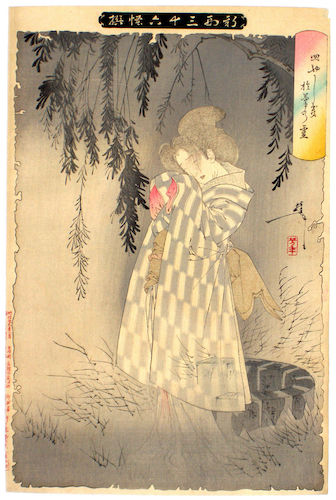
Okiku (painting by Tsukioka Yoshitoshi)
1. Okiku
Like the character of Kikue in Where the Wild Ladies Are, I grew up in the city of Himeji, where Himeji Castle is located. On school field-trips or when relatives came to visit, I would go up to the castle, and there, inside its grounds, stood the Okiku Well.
After becoming dragged into plotting of the men around her, Okiku is falsely accused of the loss of one of the house’s treasured set of ten plates, and eventually killed and thrown into a well. As a ghost, she emerges from the well each night, looking terrifying, and forever counting the plates: “One, two…” Getting to 9, she then exclaims, “Ah, there really is one missing!” But knowing her own innocence, she begins to counts again. For those who conspired to her take down, this spectacle must serve as a harrowing reminder of their deeds. As superpowers go, becoming a ghost and counting plates may seem relatively tame, but there’s something about this simplicity that conveys the depths of Okiku’s resentment. Living in a mansion echoing with the sounds of Okiku’s counting and the smashing of plates, those who destroyed her are drawn ineluctably to a bad end themselves, as if being swallowed up by the grotesquery they created.
As superpowers go, counting plates may seem relatively tame, but there’s something about this simplicity that conveys the depths of Okiku’s resentment.
In Japan, the season for telling ghost stories is summer, so that’s when TV adaptations of ghost stories are shown. Watching the TV adaptation of Okiku’s story as a child, and seeing the Okiku Well which really existed in the city where I lived being presented on TV as something fictional gave me the strangest sensation, like reality and fantasy had collided. It also made me feel very proud of Okiku. While writing WTWLA a few years ago, I visited Himeji Castle for the first time in over a decade, and saw the Okiku Well again. Recently restored, Himeji Castle seemed to me unnaturally white, but the Okiku Well looked to me just as it always had done. While there, I caught sight of a young boy visiting with his mother, looking into the well and imitating Okiku’s voice counting the plates: “One, two, three…” It strikes me as truly great that even into the 21st century, Okiku’s legacy lives on in that region.
Okiku planted inside me the awareness that horror is all around us in our every day lives—that it isn’t only scary, but also can generate feelings of familiarity and even strength. Of all the ghosts living inside me, she’s always number one.
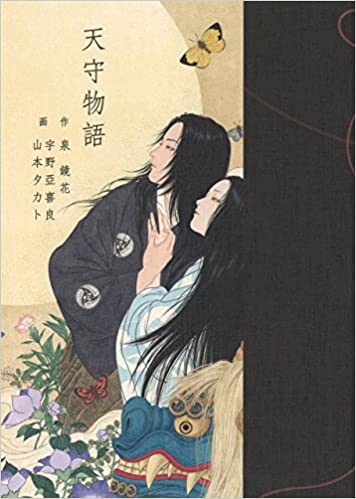
Cover of an out-of-print bilingual edition of Tenshu Monogatari
2. Osakabehime
As an adult, I discovered the existence of another wild lady in Himeji Castle: Osakabehime, a yokai who resides in the castle keep. In fact, there’s a small shrine in there dedicated to her. She also appears in Izumi Kyōka’s play Tenshu Monogatari [The Story of the Castle Keep]. She is waited on by a fleet of retainers, also spirits like herself, and is at loggerheads with the “world below” i.e. the world of humanity. She is self-possessed, cruel, and powerful.
In The Story of the Castle Keep, Zushonosuke is a human figure able to come and go between the two worlds, ascending to castle keep. Eventually he chooses the world inhabited by Osakabehime. Osakabehime has a sister called Kamehime, and the two of them take it in turns to visit one another in the castles that they inhabit. It recently occurred to me that they have a relationship a bit like Virginia Woolf and Vanessa Bell going between Monk’s House and Charleston.
Looking down from the Himeji Castle Keep, you see the Okiku Well directly below. It seemed like Okiku and Okabehime couldn’t have not known about one another’s existence, so in writing WTWLA, I decided to include a story depicting a loose sisterly bond between the two of them. With wild ladies both above and below, I can’t help but thinking that Himeji Castle really is a special place…
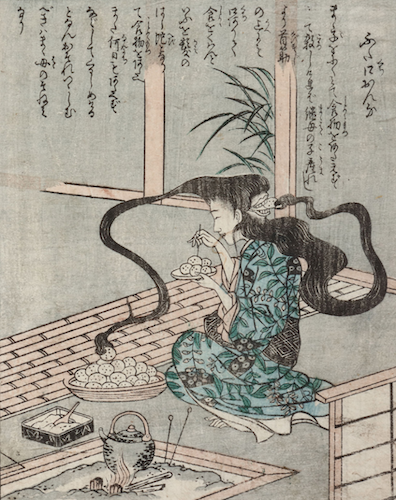
Kuwazu nyobo
3. Kuwazu Nyobo [The Wife with a Small Appetite]
Japanese folk tales and ghost stories feature many female spirits. Taking on human form as they do, these spirits are very well informed about the nature of the ideal Japanese woman: she must be beautiful, quiet, perceptive, hard working, and devoted to her husband. The people around this “ideal woman” exploit these characteristics to take advantage of and deceive her. And yet, when the truth is outed and the spirit shows her true form, it transpires that she is nothing like the ideal woman whatsoever. After revealing themselves in their entirety, the female spirits make a lunge for the humans with fangs bared.
People speak about this true form as terrifying (and sometimes, as a kind of terror unique to women) but if that was all that it was, these stories wouldn’t elicit fascination in the way that they do. People want to see more of these women’s true selves. We learned long, long ago from stories that there is always another side to this figure of the ideal woman. And yet, here in the real world, we continue to demand that women embody this ideal. I find this unbelievably stupid. Come on, we know already that’s impossible!
We learned long, long ago from stories that there is always another side to this figure of the ideal woman.
The kuwazu nyobo, or “the wife with a small appetite,” is a yokai with a second mouth at the side of her head. She appears to a man who goes around making the stingy-hearted and ridiculous claim, “If I take a wife, my food costs will increase, so I want a hard-working woman with a small appetite,” and the two promptly get married. The wife with a small appetite works hard and doesn’t eat a bite in front of her husband, so she appears to his selfish eyes as the ideal woman. And yet, rice and other ingredients keep disappearing from the house. Beginning to suspect that his wife is eating in secret, the man spies on her. He discovers that, when she thinks he’s not around, she cooks up a great load of rice, which she then forms into onigiri and tosses one after the next into the mouth at the side of her head. When the man announces that he wants a divorce, the woman reveals her true nature, and attempts to abduct the man. He narrowly escapes by hiding in a marsh where irises are growing, known for their power to ward off evil spirits.
The great thing about the wife with a small appetite is the look of composure on her face, as the mouth at the side of her head gaily chomps away at vast quantities of food. I can fully empathize, and I’m pretty sure there are a lot of other people who can relate too.
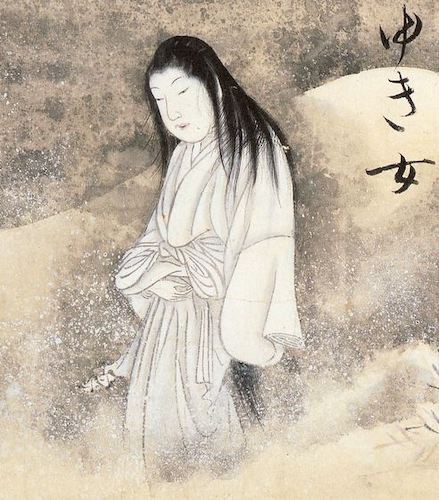
Yuki-onna, a spirit of cold areas similar to the tsurara-onna
4. Tsurara-onna [Icicle Woman]
This is a yokai who appears in the cold parts of the country in the winter when the icicles begin to form, and disappears when spring comes and things start to get warmer. She’s very pale and very beautiful.
One night as a blizzard rages, a beautiful young woman appears at the house of a married couple, asking for a bed for the night, as the bad weather has meant she is unable to get home. The couple let the woman stay, but the blizzard drags on, and the woman ends up staying in their house for days. One night, they invite her to take a bath, but she refuses. The couple is insistent, though, so in the end the woman heads to the bathroom. She is in there so long that the married couple goes to check on her, only to find her gone. The only trace of her is the icicles hanging from the ceiling.
Her story reminds us that anything at all can have a spirit.
In another story, a man becomes lovers with a beautiful woman, who appears as if from nowhere, and the two get married, but when spring arrives, the woman disappears. Believing that she’s run away, the man takes another wife, but when winter comes around again the woman returns, and angrily accuses the man, asking why he’s taken another wife. “Because you just disappeared!” replies the man! “Don’t bother to come back again!” At this, the woman transforms into an icicle that pierces the man’s chest, killing him.
I like this second story. Seen through human eyes, the woman’s behavior seems selfish, but from her perspective, disappearing when spring comes is a matter of course, and so her accusation of her husband is deathly serious. That always seems tragic to me. And then, in the blink of an eye, she returns to her true self, and stabs the man she loves with her own body. This seems to me to represent the true nature of an icicle: simple, unwasteful and wonderful.
She may not be as well known as the yuki-onna (snow woman), but there’s something about that little-knownness, and her overall sense of restraint of which attracts me to her. Her story reminds us that anything at all can have a spirit.
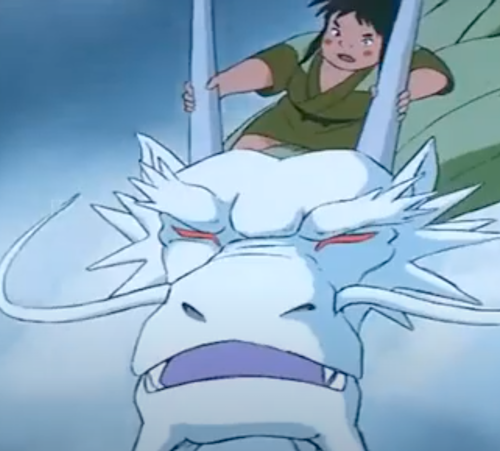
From the 1979 anime adaptation of Taro the Dragon Boy
5. The Woman Who Became a Dragon
When I was younger, I adored Miyoko Matsutani’s book, Taro, the Dragon Boy. Matsutani drew inspiration for the story from a folktale where a young boy climbs on his dragon-mother’s back and razes a mountain so as to create land for farming. Matsutani’s book begins as Taro goes venturing up to the lake far to the north search of his mother, who has changed into a dragon. When he finally reaches her, she tells him the story of how she morphed into a dragon.
Like Taro himself, she grew up on barren land not fit for farming grain. After losing her husband, she was forced to work throughout her pregnancy, accompanying the villagers who went to work in the mountains. While they were off laboring, she was asked to make their food. Catching three char fish, the woman grilled them and waited for the villagers to return, but they took their time, and eventually, unable to withstand her hunger any more, the woman ate all three char herself and transformed. She’d forgotten the old local superstition, that if you eat three fish you become a dragon.
Through the tears of a son who felt true pity for his mother, the woman who had become dragon was able to return to being a human.
Rereading this story in order to write this ranking, it surprised me to find the vivid description that the story gives the hardness of pregnancy. I suppose I wasn’t in a position to notice that when I was younger. Clearly suffering from morning sickness, the woman felt nauseous when she ate; the char fish lying in front of her were the first thing that she’d really had an appetite for in a while, and was therefore unable to resist the temptation. After transforming into a dragon, the woman gave the newborn child to her mother to look after. Her son Taro was given crystal orbs to suck on, and grew up healthy and strong. It later turned out that these orbs were his mother’s eyes—she had become blind in order to nourish her son, travelling to the northern lake in search of somewhere to live out her days.
Discovering all this, Taro doesn’t blame his mother for eating all the fish herself. Instead, he declares that the problem is that not everybody had enough to eat. Borrowing strength from his mother, and the animals, people and demon he’d met on his journey, he razes the mountains, thus creating fertile land for planting crops. Through the tears of a son who felt true pity for his mother, the woman who had become dragon was able to return to being a human, and regain her sight.
This story, which Matsutani wrote while breastfeeding her newborn baby, has true kindness at its core—kindness which says that if an environment or system makes humans unhappy, then it must be changed. This kindness is hugely powerful, and has the ability to save not just people who’ve suffered great hardship, but even a woman who has transformed into a totally different creature.
Tomie, the creation of the horror-manga artist Junji Ito, is a beautiful young girl. All the men who look at her are taken prisoner, and find themselves overcome by an unbearable desire to kill her. And they do, in fact, kill her using a variety of cruel and gory methods (content warning: this manga really is very gruesome), but she doesn’t die. If her body is dismembered, she simply multiplies, with each part becoming a brand-new Tomie. She has regenerative power enough to survive even immersion in acid—indeed, whatever is done to her, Tomie has the power to stubbornly come back to life. She thinks of the men simply as tools that she can use, and loves only herself—to the extent there are sometimes death matches between different versions of herself: Tomie vs. Tomie.
What makes Tomie so unique is not only these powers of hers, but also the way she reveals her true nature from the get-go, swearing, being nasty to others, and remaining alarmingly faithful to her desires. For the people around her, it’s an absolute nightmare. And yet, the men fall head over heels for her, killing her so that she multiplies in number—this cycle is repeated endlessly. Tomie is a totally unique presence, and so true to herself that I can’t help admiring her.
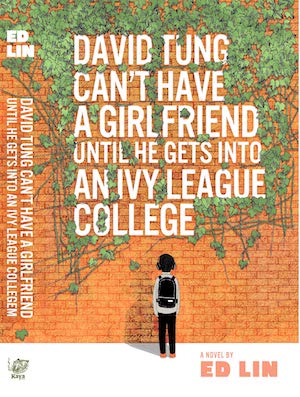
If you were to ask someone to picture an American high school, a very particular image comes to mind. It’s probably nothing like the setting that author Ed Lin describes in his young adult novel David Tung Can’t Have A Girlfriend Until He Gets Into An Ivy League College. The public school in the New Jersey suburb where Lin’s teen protagonist lives boasts a student body that is predominantly Asian American. The demographics create something of a pressure cooker: “Studying hard is the baseline for success here. Shark Beach students are bred to rip each other to pieces for every point on even minor quizzes, lifting that B-plus to an A-minus to an A. Sandbagging the competition is one route.”
The cutthroat atmosphere may sound exaggerated to some readers, but for me it’s all too familiar. Although I grew up on the other side of the country from the fictitious Shark Beach, I immediately recognized David’s experience of competing with other high-achieving peers. His sense of isolation and loneliness likewise feel uncomfortably real. Despite their shared racial identity, David, whose Taiwanese immigrant parents work at a restaurant rather than a white-collar job like most of his wealthier classmates’ parents, struggles to reconcile those differences that fall along class and ethnic lines.
Fortunately, David finds friendship and relief during his weekend trips to New York City’s Chinatown, where he attends Chinese school with other working-class kids. He narrates this double life with a balance of humor and sincerity. Lin, who previously authored a darker coming-of-age novel for adult readers called Waylaid, as well as two crime series, easily captures the voice of a quick-witted though sometimes socially inept adolescent. We chatted about the challenges of writing the second-generation Chinese American experience and who these stories serve.
Mimi Wong: I feel like sometimes with coming-of-age novels, or novels drawn from personal experience, they can be challenging because of how close you might feel to the character. For me personally, high school was the worst. They were the worst years of my life. So it can be really painful to go back. I was just wondering if you confronted anything like that or if you found other aspects challenging?
Ed Lin: I went to two different high schools. My first three years were in central Jersey in a not-so-great school system. I was the only Asian there. So there was a lot of almost “friendly racism,” you know? Then we moved to the middle of nowhere in Pennsylvania for my senior year. And that was real, legit racism. My first week there, I took a wrong turn, and I was going down this road, and there was this house that had a lynched gorilla suit in the front yard. And I was like, “Okay, I know what I’m dealing with.” Then when school started, these kids were coming up to me [saying], “Hey, you know, we have a Klan chapter here.” And I was like, “What?!” He’s like, “Yeah, so-and-so’s father is the editor of the newsletter.” The Klan has a newsletter? It’s like, “New arrivals: Asiatic family,” or something. That’s definitely part of my personal experience, this kind of schism. That senior year felt longer than the first three years of high school. So I think about the kids who are in that situation now, you know, not necessarily dealing with racism and a traumatic changing of schools, but who feel stuck and feel like no one’s really hearing them or seeing them.
David goes to a majority Asian American high school. And that was me being like, I don’t want to give an inch to white supremacy. I’m going to talk about us.
Part of David Tung is that he goes to a majority Asian American high school. And that was a part of me being like, I don’t want to give an inch to white supremacy. You don’t have any power over us. I’m going to talk about us. We got our own problems. We got our own issues to deal with. That is at the heart of the matter: the parent and the child interface, other children of different socioeconomic profiles, and how they’re dealing with it, too. Another part is there’s this model minority thing, where it’s like this faceless horde of overachieving kids. And I just wanted to show the pain that’s there. These achievements don’t come without a cost. There’s a lot of self-denial involved, to the point where you deny yourself even the feeling of appreciating how much you’ve done. You were never allowed to feel like you achieved anything. I hope that pain—and the humor—is reflected in the title, as well.
MW: What are the misconceptions that people who don’t come from that kind of majority-minority community have? What is not as visible to them?
EL: I don’t think they know how hard it is really. The academics, getting tutors and everything, is one thing. But then there’s also no real sense of family, either. I also grew up working for my parents, too, like David. We had a hotel. It’s a 24-hour business. A restaurant, at least, has closing hours. Anyone could come in [to the hotel] any time. I feel like it’s a very Asian immigrant thing to endure the pain. And this is passed to the second generation, as well. Just put your head down and work through it now. But that’s also not really participating in American society.
I feel like it’s a very Asian immigrant thing to endure the pain.
One thing the first-generation immigrants don’t get is that if you identify as Asian American, that is a political identity born out of the ’60s and the movement against the Vietnam war. And if you identify as Asian American, you’re obligated to speak up for all oppressed people—for all people, Black Lives Matter definitely, your BIPOC allies. One thing that I hope a non-Asian would get from reading this is the struggles of Asian Americans. Yes, they are unique, but also within the context of experiencing both racism and the super high expectations from the parents. My parents were not refugees. They were immigrants. And as immigrants, that chip on your shoulder is: “I came here, so now I have to prove that coming here was the right thing to do, and I can do this by making a shitload of money and then having my kids do really well, too. ‘Cause then that’ll prove to everyone back home that this was the correct thing to do. I need confirmation that this was the right thing to do.” And if you feel the whole weight of the village on you, it’s a really tough life to live.
MW: The immigrant story is to buy into the American Dream, and that’s what you’re chasing. I feel like part of the model minority stereotype is being complicit in that system. What’s really interesting to me in your novel is that it isn’t just representation for representation’s sake, even though David is a great character to get behind. But there’s also a healthy dose of self-critique and internal critique of the community. I’m curious to know what it is that you want to shine a light on?
EL: There are a lot of things about the Chinese American community that are pretty ugly. It’s almost like anti-Chinese culture, right? Because traditional Chinese culture emphasizes working together—holding together and branding people outside of your neighborhood as barbarians. We all got to stick together. But that’s not really [the case in America]. It’s like you’re all in cars and you’re racing. If someone runs out of gas or wipes out, it’s like, “Oh, well.” You just keep going. That’s the Shark Beach community.
David on the weekends is able to access going to Chinatown and seeing how another socioeconomic group of Chinese Americans live. In some ways, it’s easier for him to be with them because it’s easier for him to form true friendships ’cause he doesn’t measure up to the other people in Shark Beach High. He works in a restaurant, which is manual labor. But these other kids [in Chinatown] don’t really care. They haven’t been socialized to try to do the whole Ivy League thing to the same degree that they have in Shark Beach. Actually, with the immigrant kids, like a YK and Andy, even though he was born here, he doesn’t quite get it. Chun himself is like a real lost guy. He’s looking for a jail to get locked into. This is not to say that kids in Chinatown do not face the same kind of pressure. It’s just different.
MW: When you talk about the pressure from parents, I think that’s so real. But now there’s this Tiger Mom stereotype that unfortunately Amy Chua has put out there. How did you navigate writing a parent that felt true but didn’t also feed into these stereotypes?
EL: David’s mother is the major force in his upbringing here. I tried to show what her development was. She grew up being basically locked away at home and not allowed to go out and see anybody. Her preliminary takeaway from that is: “Oh, so that’s the proper way because I turned out okay. So in America I have to watch out even more. I’ve seen these American movies where these kids smoke pot as soon as they walk into school. It’s even worse there.”
The whole Tiger Mom thing, the straight A’s, the Ivy League schools, it’s almost like anti-learning where it’s driven by scores and everything. But your mind doesn’t retain anything. It’s more about test-taking than real learning. You can be groomed for anything, I guess. There’s not a tradition of cram schools here like there are in Asia, but there are similar things.
MW: That’s so interesting that you point out that here, with our individualistic mindset, it does feel like you’re much more isolated. I think that probably contributes to how lonely you feel, too.
EL: We don’t speak about our pain, which I think is one reason why mental illness, depression, suicide are so prevalent and yet also so taboo. I feel like it should be talked about as much [as], if not more than, the whole success thing.
MW: Like David, were you not allowed to date in high school?
I think about the kid that I was, or just me browsing in the library and finding something.
EL: Oh, no. Not at all. No. This is one thing cribbed from my mother here. You can date when you get into an Ivy League college. At least she didn’t specify Harvard or anything. I told someone else about my book, and they said that their friend’s father—somebody was calling to try to talk to his daughter—and this guy intercepted the call before his daughter could get it. He goes, “You can talk to her when you have a Ph.D. from Harvard!” He slams the phone down. I guess that is the Asian dad’s “get off my lawn” equivalent.
MW: Who was your imagined reader when you were writing this novel?
EL: It’s always me. I always write books for me. I think about the kid that I was, or just me browsing something in the library and finding something—”Hey, this guy’s got the same last name as me.” But it’s always me. Even when I think about the kids out there who are in pain, I just remember what it was like for me. It was just reaching out to myself. Have you seen that Netflix series, the German series, Dark? It’s got a lot of time travel stuff. Some people see visions of themselves from the past. So I’m writing for myself.
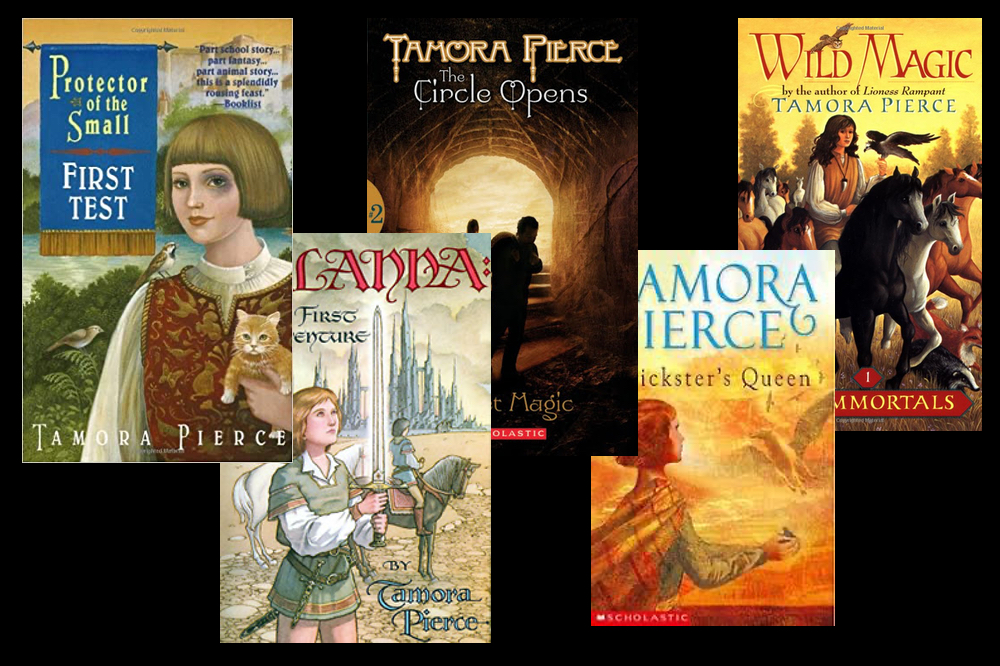
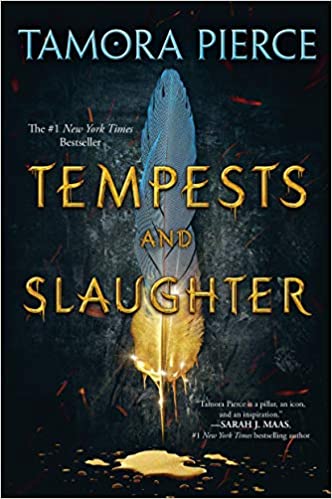
A definitive fact: Tamora Pierce is the true heroine of early-2000s YA fantasy. I’m far from the only teenager to have benefitted from Pierce’s frank depictions of female leadership, adolescence, and sexual agency (imagine a relationship in which the woman also wants sex! And has options for birth control!). Do these books still hold up, 10+ years after my middle school Tamora Pierce craze? A pandemic-ridden autumn seems like the ideal time to indulge in nostalgia and dive into some escapist fantasy with high magic, female knights, and a very badass black cat. Drawing upon an extensive bibliography (works cited: my teen angst, numerous re-reads, biased opinions, and Wikipedia summaries), I have compiled a ranking of book series by Tamora Pierce from worst to best.
Okay. No discussion here. If you really crave some Tamora Pierce, these’ll help flesh out different details in her Tortall universe. But Tammy’s strength is in creating a lovable cast of characters and witnessing their growth—these books are only good as a tag-on.
Set hundreds of years before Alanna even enters the picture, Beka is training to be a member of the Provost’s Guard, which mainly means tracking down bad guys with clubs. It’s a bad sign when the best part about this series is Beka’s cat, who you can find in a much-better series (cough Faithful cough). Sure, we gain insight into Tortall’s lower class, and the diary format with pseudo-Elizabethan slang is kinda fun (although, like this reviewer, I’m less convinced that we constantly need to hear breasts described as “peaches”). But moralistic, didactic Beka is by far from being the most interesting Tortall heroine. Her love interest is boring. It also doesn’t help that the Provost’s Guard, the Tortallian equivalent of the police force, is not exactly what I’m really into at the moment. A pass on the violent adventures of law-keeping, please.
Giving slight benefit of the doubt here, since there’s only the first book of the series out. Magic academies are always a fun time, and an aspect that hasn’t yet really been explored in depth in the Tortallian universe. It’s also cool that we get to spend more time in Carthak, a land that’s fairly villainized. At the same time, we already know Ozorne’s pure evil so the narrative tension just isn’t there for me. I’d much rather learn about Thom’s time at the convents… or reread The Immortals.
5. The Circle Series (actually three series all centered on the same characters)
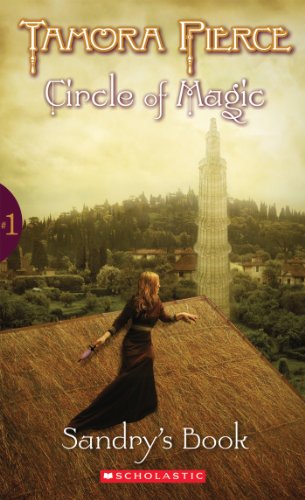
I have a soft spot for the Circle books, especially how Pierce literally writes magic into the everyday things around us, like plants or textiles or metals. (As an avid knitter, Sandry’s my girl.) It’s also remarkably great how all three series place friendship at its core; the Circle is formed of four friends, who strengthen one another’s magics. That said, The Circle of Magicis a slow, discombobulated introduction and I’m not a fan of the intense violence in The CircleOpens—it seems a bit gratuitous and is a jarring tonal shift. In general, the Circle books don’t have as satisfying of a character arc or cohesive narrative as the others. If we were ranking individual books, though… Will of the Empressis the perfect reunion epic, with its nuanced politics and poignant insight on adult friendships. Also, Briar is objectively the biggest heartthrob in the Tamora Pierce universe.
Super mixed feelings on this series, which centers on Alanna’s now-adult daughter, Aly, an aspiring spy. She finds herself enmeshed in a revolution in the Copper Isles, where the native rakas are plotting to overthrow the corrupt the luarins (a.k.a. white people) that have colonized them for centuries. On the one hand, this is Pierce’s most politically complex series yet and a personal favorite; Aly is a conniving, uber-talented, and snarky heroine that is an exciting change from Pierce’s other characters. (We love Alanna, but does she have a sense of humor? No.) On the other hand, Pierce’s handling of slavery and colonialism is sloppy, especially in the first book. Aly occasionally smacks of white saviorism. But Trickster’s Queen is a much more deft look at systems of power, and I’m very into how it highlights the logistics of revolution.
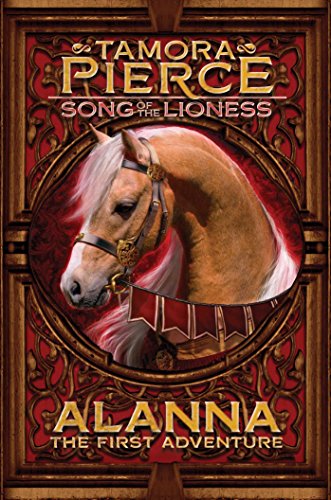
Where it all started, the original female-driven fantasy epic: a girl pretends to be a boy to become a knight, winding up with various magical powers and saving the entire nation. It’s the series that most Tamora Pierce lovers started with. This is where the ranking gets really hard. The Lioness books feel epic and timeless from the get-go, and there’s a wonderful level of detail in world-building. I love how the series unironically revels in a world of magic swords and horses with names like Moonlight. But partially due to the epicness of all it all, Pierce draws more upon archetypes here than in her later books. Characters like Duke Roger and Ralon of Malven are not super fleshed-out, performing the role of quintessential “bad guys.” Politics are similarly painted in broad strokes of good and evil. Still, it’s a classic that can’t be replaced in its scope, vision, and ability to conjure up overwhelming nostalgia. Would 10/10 still give to any teenager.
I stand firm in my choice of ranking Kel above Alanna. Even more than the Lioness books, Kel’s journey is an effective exploration of the everyday, grueling tasks of becoming a knight. (As a Virginia Woolf lover, I’m a sucker for books that explore the mundane. Fantasy is no exception.) The Kel books make everything in the Alanna books more complex, from the physical realities of knight training to the political systems of monarchy. Kel is the first girl to legally train as a knight in Tortall, thanks to Alanna’s trailblazing—but their temperaments couldn’t be more different. Kel’s cool-headedness, dogged determination, and just pure emotional stability makes for such a nice departure from many fantasy heroes. Plus, I’m a big fan of the ragtag fanbase that Kel accumulates throughout the series.
Animals! Gods! Monsters! Multiple female role models! A baby dragon! Shape-shifting! More animals! This series has it all. Plucky animal-lover Daine flees to Tortall after a violent bandit raid, where she slowly comes to terms with her inner magic. Her journey gets wilder and wilder, eventually culminating in a pretty legendary finale. In addition to her stellar cast of characters, I love how Pierce writes animal voices; they’re believable and lovable, but not in a saccharine Disney-esque way. It’s also satisfying to get so much of Lioness overlap, because we can see how beloved characters, like Alanna and Buri, are now reorganizing the country. Lastly, Daine’s quest to find a sense of home—as an orphan refugee (who also happens to have godly powers, #relatable)—is still a poignant meditation today on identity and belonging. A+, thank you Tamora Pierce.
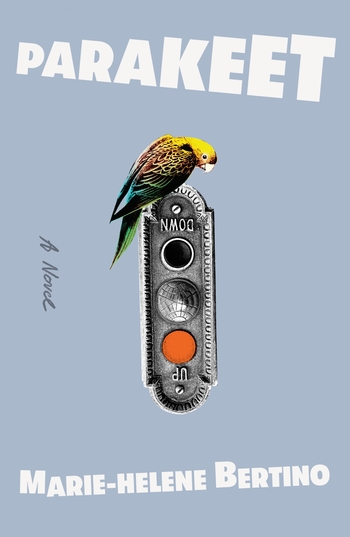
Entering the odd and exquisitely nonlinear world Marie-Helene Bertino’s Parakeetdislocates over and over. The novel begins with the unnamed bride protagonist talking to her deceased grandmother who appears to her in the form of a parakeet. Grandmother as parakeet tells her not to get married and to go find her missing brother. She also demands an explanation for what the internet is, and defecates all over the bride’s wedding dress.
With incredible sleight of prose, Bertino moves through the chronology of the bride’s life. Time slips and slides, and the bride’s mind fragments as she moves closer to her moment at the altar. On her way there, she deals with an old friendship, seeks out her brother who’s written a play based on her childhood, also called Parakeet, and inhabits the physical body of her own mother. The bride has suffered an injury but the exact nature of her trauma and its full revelation comes later and startles.
I spoke to Bertino about putting birds through a narrative prism, deconstructing femininity, how time moves when you are traumatized, and what being ambiguous and opaque to others means in America.
(Ed. note: Marie-Helene Bertino discussed magic and feminism with Elissa Washuta for Electric Literature’s virtual salon series—watch a replay here.)
J.R. Ramakrishnan: I tried to explain to a friend what your book is about and couldn’t quite do it because so much goes on!
Can we talk about the parakeet as a symbol? It appears as the grandmother of the bride and then throughout the book. I love the part when the bride says, “Every time I saw one as a child was a holiday.”
MHB: The bird in its literal form and as a metaphorical image goes through a lot of transformation and into a lot of different meanings. The most literal the bird is in the very first line with the grandmother. In that moment, the bird is meant to be exactly what it is: a transformative object meant to propel change in the bride’s life. It comes in the form of something that she loved, and something that brings her comfort and something that she would trust.
From then on, the bird refracts. I very deliberately did this—it was almost as if I put the bird through a crystal, and then wrote all the refractions that were reflected on to the wall. The bird then becomes an idea of immigrations, and of accidental immigrants. The bird becomes the title of a play, in which there are other birds, that is meant to signify a cherished childhood stuffed animal and memory. Where we find out how the bride has been injured, the parakeet is a distraction, a colorful distraction, from a very, very violent scene.
I challenged myself to use the metaphor in as many different ways as I could. The very last occurs in the very last three words that book has been hurtling towards the entire time—without even me really realizing it, to be honest. I wrote those words and realized, oh, it is about connection. This bird is meant to achieve for her this intimate connection has been unable to achieve for herself.
JRR: “Refraction” was exactly the word that came to me when I thought about what you do with time and how you move through it in the book. When the bride’s at the play, she thinks, “There is no memory in a play. A play is always present tense. I am newly injured in real time.” Could you talk about how you thought about time?
MHB: Time is very much meant to be a supportive infrastructure for the trauma in the book, so that it reflects what happens to your understanding of time when you have experienced an injury and trauma like the bride’s.
Anytime you make a mark on a page, I don’t care if you write the letter “A,” if you write a title, you write a paragraph, you are manipulating time, right? And what you choose to fill in on a page and what you choose to leave blank is a negative space. These are all units of time. I very much wanted to do to time, to use everything I could possibly think of, on a page with time, to help tell the story of time, of how sometimes it reverses, rewinds, moves faster and moves slower, the way it does when you’re in a catastrophic incident, and the way you do for every moment after that incident. The trauma forever changes you. Anytime you remember something, you re-experience it and time works in that same way on you again. It was a literal representation of how time begins to move independent of logic.
I was focusing on trauma, but I think it works the same way when you’re in love. Days can feel like years when you’re waiting for a loved one to return or when you’re waiting to see your child or when you’re waiting to give birth to your child. There is nothing emotional that doesn’t land on time somehow. I was very literally trying to represent that.
JRR: The whole book moves towards the bride’s wedding, which is obviously a heteronormative marker of femininity. You have multiple meditations of femininity including the bride inhabiting her mother’s body and her missing brother who has transitioned to being a woman.
The world tells you exactly what you are supposed to think a woman is. You are supposed to look like this. You are supposed to want to be this.
MHB: You know, just like the idea of the bird is being refracted, so is the idea of so-called femininity. The world tells you exactly what you are supposed to think a woman is. You are supposed to look like this. You are supposed to want to be this. Personally this has been extraordinarily frustrating throughout my life as I know it’s been for many, many women I know—and for no one more than transgendered folks. I just really wanted to deconstruct the conceits of femininity and refused to have the bride match the expected archetypes. My ideals of beauty have never matched what the world has told me they should be and perhaps that’s because I’m Basque and Italian, and culturally I grew up kind of different from the conventional American ideals. I’m not sure. It was just so important to me to say, actually here’s a strange-looking brown woman who doesn’t want to get married. She’s kind of mean sometimes, and loving at other times. She is also just as valid, feminine-wise as, as anyone else. And then obviously the Simone character was the PhD level of that idea today.
JRR: How did you create Simone?
MHB: So you get to know very quickly how limiting languages is. I knew when I was placing Simone in the bride’s literal point of view, that that could very easily be a situation of subjugation. The first thing I did was figure out this snag of craft, allowing Simone to tell her own story, for example. I gave her this monologue so that she could literally tell the bride in her own words what her story was. And then I had to make sure that the novel itself didn’t become a tool of oppression and didn’t itself do what they call dead naming. So as soon as Simone arrives, so to speak, in the text, there is no longer a character named Tom. The only time the character of Tom appears again is in memory.
I worked on these ideas with a sensitivity reader, a very, very smart professor of English, who is a trans woman, Grace Lavery. I asked her if I could have Tom appear in memory in the latter half of the book, without dead naming. We talked about how in a flashback that would work and she said if the bride is having a memory of Tom, that’s okay. It would be different if she were referring to him in the present tense and the present day scene. So speaking of time, I had to make sure that as I was going through all of these flashbacks in time portals that I wasn’t also having it act as an oppressive tool. It was fascinating to get really into the linguistics of how the present to her most respectfully.
JRR: The bride is ethnically ambiguous. The grandmother (the parakeet) says “kind of” when the bride says, “We’re white.” The bride then goes on to say: “We’re considered white now.” The bride’s great-grandfather is Roma and you have her mother-in-law say a horrible slur about her background towards the end of the novel. Would you talk about this? Do you have Roma roots as well?
MHB: Yeah, that is a bit of my own personal experience taken directly from my family. I read as ethnically ambiguous and have been approached several times in my life, sometimes aggressively about what I am. It’s always like, what are you? And not: who are you? Earlier this year, in Montana, an older, white drunk man approached me and demanded to know what I am. When I asked him to leave me alone, he became aggressive. It seems to really infuriate people. When a) they don’t know who you are, don’t know what you are, and b) when you are in some way opaque to them. How dare you show up in my line of vision and have me not know, immediately, everything I think I would know about you?
It’s hard for me to love America as much as I do, and love traveling around America as much as I do, and also have to constantly be reminded how I don’t belong in towns like Missoula, Montana.
This has happened to me enough in my life, that it’s all over my writing, and more and more with each thing I write. I think that many times you write what you wrestle with. It’s hard for me to love America as much as I do, and love traveling around America as much as I do, and also have to constantly be reminded how I don’t belong in towns like Missoula, Montana, and how it can be when that experience is erased by seemingly well-meaning white progressives. The restaurant where that verbal assault happened was owned by a woman who was not there that night but wrote me a letter the following week to tell me that if it makes me feel any better, what that man did was not racist. In my own work, I get to explore these themes and work through them a little. I gave that experience to the bride because I think it’s an important American one.
I am sometimes perceived as ethnically ambiguous, which sometimes leads to questions and confrontations like this one. But that aside, I don’t claim to be anything other than white. We actually are not sure about [the Roma roots] as there’s estrangement and liars on both sides of the family. There is a lot of alienation and a lot is not altogether known from that part from the Basque region. And that’s all I can say really—that’s about as nuanced as it is. It’s very difficult to explain when most people just see you and want to make a snap judgment of what you are.
Retail works like this: Someone walks in the door and she’s yours. You may not fall in love, but you have to put her body before yours. You must see whatever it is she wants to show you; smell her smell; satisfy her. You must sell yourself before you sell the suit.
I was twelve when I started working in my father’s store—Schmurr’s: Say what you need; get what you want. We got the whole Schmurr.
“Shorten the slogan, Irv, for Christ’s sake,” complained the eighty-year-old accountant.
“Shorten your mouth and maybe you’ll learn to add,” said my father, circling a number a half-mile down from the top of the ledger. They sat in Schmurr’s glass-encased office, which gave my father a commanding view of who was selling or talking or stealing. The accountant’s white hair had one large bald spot, a pink planet of a spot whose topography was speckled with mauve and brown gasses. My father banged his index finger into the ledger as though hammering a nail into oak. “To the moon, Alice!” my father yelled at the little old man, betraying his equal disdain for women and math morons.
In his own bald head, my father could figure columns of numbers the length of Rubber Avenue. Though he was a merchant of wearable goods—anything that could be hung on a rack or stacked on a shelf—what he loved most was numbers. He’d sell them if he could. But he couldn’t. Schmurr’s New York Bargain Goods was his inheritance, his own father’s most successful enterprise (after the Naugatuck screw factory went belly up), and it was his duty as oldest son to take it over. Numbers would have to wait or he could do them on the side. Just as a fine artist must sometimes steal time to do his art, my father had to steal time to figure his columns. You could say he stole time from his children, but he wouldn’t have known what to do with us, anyway.
Every night he’d bring home stacks of hard-bound, blue books and as we watched Walter Cronkite or What’s My Line? he would add and figure, mostly in an effort to catch the accountant in a mistake. I sat on the couch parallel to his and we parallel-watched Peggy Cass and Kitty Carlisle try to determine if someone was deceitful or really a horse buckler from Idaho. My father kept his head down and followed columns from top to bottom. His pencil was a baton, going down, softening the sound of the loud horns. He was in a swoon over his numbers. Water pooled in his mouth but he was in too much of a reverie to swallow. He figured out loud, saying the numbers softly to himself like a man in prayer, raising his voice only when he found a mistake: “224,289,486,552,594,604, son of a bitch!”
This was what my father lived for. The rest of it—the store, the goods, the coats, the pants, the hats, the wife—was filler.
I was filler. Stuart, however, was something more. To my father, Stuart was a successfully computed multi-figure, multi-decimal, quarter-mile column. He was the captain of the Naugy High football team and the president of the Naugy High band. With shoulders as big as boulders, he could both command the marching band and plow into a fierce defensive line. The only bad thing about him was that people used his football prowess as a launching pad to diminish me. Seemingly respectable, law-abiding customers would come into our store and start striking me down with hammers, axes, small talk.
“You athletic like your brother? You fast on the field, quick with the ball, comfortable on the court?”
I could only look down at the linoleum, or out at the sky, clutch my bony clavicle and sigh, “Not really.”
I saw retail as my only chance to be recognized as a rightful heir, to be considered an important, viable Schmurr.
The truth was I was afraid to challenge myself physically because I knew I’d always fall short of Stuart. I didn’t want to be short and I didn’t want to find out if I was short. I’d wait to find out; I’d wait as long as I had to. In the meantime, I had to be something.
So when retail beckoned, when one evening making dinner my mother stuffed a hard-boiled egg into a raw, wet meatloaf and said, “Hon, you want to work at the store?” I clutched my clavicle, that thin, protective guardrail, and said, “All right.” I saw retail as my only chance to be recognized as a rightful heir, to be considered an important, viable Schmurr.
Yet at twelve, I was only toying with my inheritance. Retail worried me. At its heart, retail is the art of getting familiar fast; of staring at a body you’ve never seen and summing up the size of its whole or its parts—either the whole oven roaster or, separately, her legs, thighs, breasts, back. Often in the course of doing business, you had to touch people. You had to zip, adjust, pull, snap, smooth, measure. If I was going to judge a woman’s size, I needed more evidence. If I was going to touch her, I wanted a longer courtship.
I started by dusting purses. I showed great promise, so my mother began grooming me for bras. There was no soft coddling or slow cooking where retail was concerned. At Schmurr’s my mother was all business: Schmurr’s wife. Mrs. Schmurr’s Department Store. And once I crossed the threshold of Schmurr’s as a worker, I became—in the eyes of the public and probably of God—Schmurr’s Daughter. The Daughter of Schmurr. There was no turning back. I could only stand and take my instruction. “If anyone asks about a bra,” my mother told me, “you say, ‘Playtex Cross Your Heart has good lift and separation.’ If anyone asks about a girdle you say, ‘Playtex Double Diamond has good tummy control.’ Then come get me.”
Waiting for my time to come, I hid in purses. The purse department was in the front of the store, yet it was hidden in the far wall of a tiny, three-sided alcove. The purses were right next to Schmurr’s large display window and therefore were heated from the afternoon sun. The sun passed through the family of mannequins, passed the fake fall leaves taped to the window, and always found its way to me. The sun blessed and covered me and I became a baby beneath a receiving blanket. If I didn’t fight it, I would have fallen asleep in the sunny tunnel of light and dust that shone down on purses.
Purses occupied the two top shelves of the alcove, and the other two shelves were stacked with diaper sets, baby blankets, baby boxed outfits, and baby boxed bath wear. Flanking the rows of shelving were racks of hanging baby clothes—rompers, overalls, acrylic pants with snap tops. Most of our customers—rubber workers who worked the assembly line across the street—didn’t want purses. Only occasionally did they buy baby clothes. They needed the raw essentials—underwear, workpants, support hose. Still, purses were a great place to duck and cover, so I stayed there and did whatever I could to make the purses present themselves well.
There were vinyl purses with plastic handles, snaps, and single or double straps. There were vinyl clutches and vinyl shoulder bags with an array of different surfaces: rough, smooth, patched, pebbled, or alligator-look. There were some evening bags: beaded, lame, or dyeable. I arranged them by size and texture and color. Beyond that, they needed constant dusting since they were at the front of the store and seemed to catch all the dust and chemical residue spewed by our next-door neighbor, U.S. Rubber. I’d spray Windex again and again on the vinyl bags, wipe them clean, wipe them until they sparkled and shimmered and until the customers had thinned out and it was safe to leave. I tried to make purses my life’s work. I tried to look busy and uninterruptable. I hoped nobody would find me. They always did.
“Little Girl!” they’d scream, as they ran in for their fifteen-minute break. “Blouses for big women! Stockings for big legs!” The questions got progressively harder and from time to time I’d have to leave my small alcove to stand in the aisle and field the assaults. “Little Girl! Blouses for big women with big busts!” “Little Girl! Stockings for fat legs and big butts!” I’d show them, tell them, then slip back to purses.
Stuart got to avoid retail for the fall season. He had football practice and was therefore excused until after Thanksgiving. When he helped at Schmurr’s, winters and summers, he didn’t have to do any dirty work, either. In Men’s, where he was stationed, it was easier. Men came in and asked for things but they always seemed to acquiesce to whatever we had, to make decisions quickly, to buy it before they’d tried it on, to wear it even if it didn’t fit. Women needed more time and pretty much always wanted to try on things. They wanted someone to counsel them or at least offer an opinion or a blessing. It was as if they were saying, “Pray for me. Please, pray for me.”
Before I started working at the store, I too would be home for the fall season and for all the seasons. Most days after school, I would come home and lie on my bed, on the pink spread that always caught the afternoon light. I could have taught my dog, our old terrier, a thing or two about lying in patches of sun. I knew how to catch the sun and make it stay on me, how to let it warm my head, neck, the small of my back. Stuart, three years older, was supposed to babysit me. He’d bring his football friends home after practice, around four thirty, before my parents got home from the store, and our kitchen table would be surrounded by a large sample of Naugy High Greyhounds eating two or three packages of Lorna Doones. My own room was right next door to the kitchen, in the former den, and even though Stuart would sometimes close the sliding pocket door that divided the two rooms I could clearly hear them. From my patch of sun, I could almost imagine I was sleeping. But I didn’t imagine what they said. They spoke about Sky Bar tongues, Snow Ball breasts, Sugar Daddy legs. They talked of Almond Joys, Mounds, Milky Ways, and Spearmint Leaves. They were breast and thigh guys rushing Candy Land. Stuart didn’t contribute much to the conversation except to laugh or say, “Shhh . . .” When they left, Stuart would open the pocket door that divided them from me and say, “Are you there?”
“No.”
“Okay.”
But it wasn’t okay. I didn’t want to hear it and I didn’t want to see it and I wanted to stay in purses forever. I was in purses the day Verna Pixley rushed the main door of Schmurr’s. I swear I heard glass spraying, as though she had crashed through the main display window, maiming the mannequins and wielding a semiautomatic rifle.
“Somebody quick!” she yelled to everyone. “I need a bra!”
I turned my back as soon as I could, squirted yet more Windex on a vinyl bag, and hoped one of the other salesgirls—Lena, Rita, Esther, Martha, Theresa—would come over and save me. I was not ready for this. It was too fast for me. I was not precocious in bras.
I made some fake, useless motions around the purses—touching the handles and fingering the clasps—hoping to look legitimately occupied, but she found me. “Little Girl! Fast, fast! I need a bra! Do you work here?” I turned around to face her, knowing as I did so that I had just left purses—probably, forever.
“Yes?” I said.
Walking out of the alcove, I stood in front of her and looked into her eyes, which were big and black and seemed to regard me with absolute shock, as if I was either her tormentor or savior.
“Can you help me?” she asked.
I couldn’t say yes, because I didn’t know if I could, but I couldn’t say no, because my father would kill me.
I was not ready for this. It was too fast for me. I was not precocious in bras.
“Follow me,” I said, with a twelve-year-old’s poise and presence, even as I looked furtively for my mother. She was at the cash register, her glasses on, pressing buttons and moving her lips. She might as well have been behind bars.
We ducked and dodged other customers and made our way to the back of the first floor. We passed the Ship’n Shore blouses; the knit, elastic-waist slacks; the poly-tricot nighties; the brushed flannel pajamas; the acrylic, vinyl-palm gloves; the Poll Parrot and Hush Puppies shoes; the pierced and pierced-look earrings. I could hear my father’s voice rise above the crowd. He spent his days waiting for his nights: his book of numbers. To pass the time, he yelled at the help and crooned to the customers.
“Yolanda, I’m a fonda’ you,” he sang to a customer, as she waited her turn at the cash register. “Eugenie, give me a penny and I’ll give you a dollar bill.” To my father, lyrics were kindred spirits to numbers. They had to fit and have the right number of syllables. “Daisy, Shmaisy, give me your answer do. I’m half crazy, give me eight, twenty-two.”
“That Mr. Schmurr got a perpetual song in his blessed heart,” Verna said as we made our way through the umbrellas and car coats. She told me she needed a new bra for her niece’s christening and right away I pictured girls in bridal-like gowns, boys in blue suits, and Verna Pixley in a new, bright-white Playtex.
At every step in that walk to the back of the store, we sank or bumped or floated into other customers’ arms or hips or bottoms. This was the three o’clock rush when the rubber workers of U.S. Rubber emptied into Schmurr’s. They were line workers, front-line footwear workers who assembled rubber boots and U.S. Keds. They had fifteen minutes to either grab a donut next door at the coffee shop or come to us to buy pastel shells or housecoats or half-aprons. When fifteen minutes was up, a whistle blew that you could hear clear down Rubber Avenue and the workers had to race back to their line. To save time, I thought, they must pee in their pants.
Fifty, sixty, seventy women filled Schmurr’s during the three o’clock rush. Men came in too, but not in such masses, not with such panic or dogged purpose. Our Men’s department upstairs was smaller and had mostly work pants for rubber workers, painters’ pants for painters, pants for the safety pin and lipstick tube workers, pants for the mechanics, the chemists, the bottle makers, the candy makers, and the mayor. The women were the bread and butter of Schmurr’s. My father understood that women had abundant and abiding buying potential. They needed to dress as workers and wives; as housekeepers, cooks, and food shoppers; as mothers, gardeners, and car drivers; as party, beach, and churchgoers. They got old and sick and needed to buy things that slipped on easily, that didn’t need buttoning. They needed proper dress for luncheons and club meetings. They bought novelty items, things they didn’t know they needed: furry slippers and nighties with French travel phrases. They got pregnant. They got fat. And they filled every inch of Schmurr’s with noise, heat, and smell. They filled it with their bodies, mostly big, hot bodies, so many bodies my own body felt unnecessary and weightless. In the rubber worker rush on Schmurr’s, I became disembodied, which was what I really wished for then.
If I were bodiless, I wouldn’t have to take gym. Without a body, I wouldn’t have to take off my clothes in the girls’ shower.
Just that day, the day Verna Pixley entered our store, I was working on a problem having to do with taking off my clothes in the girls’ locker room. Initially, this seemed a mathematical problem that could only have a mathematical solution. To get credit for gym class, we had to take off all our clothes and get in the gang shower. Now, none of us twelve-year-olds wanted to reveal our bodies—either to ourselves or to others. On the other hand, we wanted credit for jumping jacks, half pushups, half sit-ups, running our half-court basketball. So, what to take off; how to take it off; how to be naked without being naked; how to get wet while remaining dry.
Math failed me, so I went on to magic, logic, mechanical engineering. It was really about magic, so I worked the problem magically, picturing myself simultaneously dressed and undressed, dry and wet, and leaving the gang shower wrapped in a big towel and eligible for credit. Now, if I didn’t get credit for taking a shower I’d get a failing grade, a sixty-five, and my father, looking at my report card for two short seconds, would see before him the ninety-five, the ninety, the eighty-five, the eighty, and invite that sixty-five to stick in his craw.
What’s with the sixty-five? What about gym? he’d say, pointing to the sixty-five with the neat nail of his index finger. You need to be fit. Fit’s important. Fit’s the most important thing. Look at my bicep. Look! It was a big bicep, marbled with veins. It looked like a snow igloo bursting at the seams with a big, extended family inside. He worked at this. There were hand weights and hand grips and arm stretchers in the master bathroom. At parties or casual dinners with friends, he won more arm-wrestling matches and did more one-handed pushups than any other man. He’d get redder in the face, moan louder, push more. He had the biggest veins and biggest biceps and I had to be naked in the girls’ shower to win his approval.
What’s your excuse? he would say, his now-relaxed arm pointing again at the sixty-five. There was no excuse and the only way to survive in the world was to have no body. It all came down to having an invisible body, denying the body, or trying to just walk away from the body, leaving the shell behind and taking the head with you.
But for now, tunneling through the crowd with Verna Pixley, I needed my body and it was there for me, even though it felt slight and light as air. The girls—Lena, Theresa, Esther, Martha, Rita—each with different customers, looked at me with badly restrained smiles. I was a new act for the ongoing show of their lives, which often seemed purposeless and unending. When my segment was over and the rubber worker rush was gone, they’d go back to sizing, sorting, and straightening the same clothes they’d been handling for months. They were heroic by default and necessity.
If by excruciating boredom they didn’t fold a sleeve under a sweater or left uncorrected a size 16 mixed in with the 18s, my father could sniff it out like a Bullmastiff and come out of his cubicle with his snout in a state of agitated expectation. He’d approach the sweater bin, stiffen his body, lower his chin, and bark, What pain in the ass isn’t doing her job?
Finally, at the far corner of the first floor, Verna and I reached a cramped section close to the back exit. The size of a 1950s closet, it was not big enough to qualify as a department unto itself. Among ourselves, we called the section simply, Bras. On wooden shelves painted a deep aqua—the same paint we used on our aqua-colored ranch house—the bra boxes were stacked in uneven rows. They looked like books in the library. On the bra boxes I saw a mass of numbers and letters, a kind of Dewey decimal system I hadn’t yet learned. There were also pictures of women in bras from which I could determine the style—whether the straps had lace, for example, or whether there was a floral design on the cups. But the picture couldn’t tell me if the bra had a light liner or big pads or what-the-hell-size this huge Verna Pixley would wear. What the pictures—white women with pointed nipples and neat pageboys—told me was this: you couldn’t opt out of breasts. You couldn’t get a written excuse; you couldn’t be out that day.
“Playtex Cross Your Heart is nice,” I said, mimicking my mother. “It lifts and separates.” She looked at me like I was nuts.
“Lifts and separates,” I said again, holding my hands out like a book, then raising them up and out. It was a gesture Moses might have made to part the Red Sea. I had no idea what I was saying. Lift and separate sounded like something a bulldozer did to shale and rock.
“Oh yeah!” she said, suddenly, startling me. “I saw that commercial on TV. Playtex lifts and separates. That’s right. Right. Good.”
She was with me and I was with myself until I asked again, “What size?”
“Size big-as-you-got.”
“Sorry, but I need a number,” I said. “We need to get it right because bras are not returnable. That’s a state law, not Schmurr’s.” I felt I was a spiritual medium and my dead grandfather, the screw and retail magnate, was speaking through me.
I looked up at some big numbers I saw on the bra boxes. “Forty-two, forty-four?”
“Lordy,” she said. “It been so long. Can you read the tag on the bra I’m wearin’?”
And before I had the chance to scream, she had her shirt up in the back of the store as though the words “private parts” meant nothing to her.
Well, I would have needed a map to find that tag, the expanse of bra was so big and the terrain so diverse. On her back were both raised and recessed spots, dots and scars. And the bra itself was in places bumpy or smooth, threadbare or thick, heavy or light, white or beige according to various stretch, pull, or tension points. I found where the straining hook eyes came together but I had no room and not enough strength to flip the material over to find the tag.
“I can’t find it,” I said.
To which she replied, “I’ll just take off the whole thing then.” I must have had the look of a lean, nervous sprinter waiting for the gun to go off because she said to me, “Look, baby, I need this bra. Your daddy says in his jingle, tell us what you need and we get it for ya. I got less than five minutes. If I’m late, they kill me.”
We were both living with death threats—she from her supervisor, me from my father if I failed to make, or tried to make, this sale. “Go in the dressing room,” I said quietly, “and take off your bra.”
I looked high up on the shelf and saw forty-twos, forty-fours, but then there were the cup sizes, the Cs, the Ds, the CCCs, or the DDDs, the wired and not wired, the laced and plain, the cotton straps or stretch straps, the black or white. I was going for a forty-four DD when she called out from the dressing room. “Little Girl! I found the tag but it’s so old I can’t read it. Maybe forty-four! Quick. Just get me forty somethin’.” I pulled a forty-six DDD from the shelf and ran to the dressing room. There in the tiny closet of a room, I nearly drowned. For Verna stood before me naked from the waist up, with breasts as big and obscene as anything I could ever have imagined. The full-length mirror made me see four breasts, and for a moment the four nipples, like four wide puckery mouths, sucked all the oxygen out of the room, and it seemed I was breathless and floating. “See about this,” I said, almost throwing the bra box at her while trying to run out, but she said to me, “Girlie girl, I’m afraid I be too sweaty to try these on. You got some paper towel, sweet pea? Or just a rag?”
Then and there I must have made a decision, a heartfelt promise to heaven that for a “girlie girl” or “sweet pea” I would do anything for her. My father gave me names like pisspot, whiner, names of horses that would never win the Kentucky Derby.
But Verna’s names for me were loving, tender. She didn’t even know me and she was probably going to be docked money for returning late to her line. I ran for rags. What I found was a new roll of toilet paper in the utility closet and some baby powder. I grabbed them both and ran back. I unwrapped, unrolled, sprinkled, mopped, and felt like a true professional in the field.
“That’s good, honey doll,” she said to me, as I was balling up paper, rubbing her down. “That’s good, sweet plum. Nice, baby, nice, nice.” She pointed her index finger down her back. “Below the shoulder blade, lemon drop. That’s good.” Her tone worried me a little, but I was so in love with the promise of other fruit she had yet to call me that I just went on with my rubbing and mopping. “How’d you learn to be such a good helper?” she asked me.
“My mother’s teaching me but . . .” I knew I should just shut up and make a sale, but I wanted to tell her. Even though she was half naked, I edged slightly closer to her face and looked into her ear as I spoke. “I think I’m bad at bras,” I said.
Her whole body seemed to tighten. She crossed her legs at the ankles and bent way over, her breasts approaching the floor way before the rest of her came close. “You’re not bad at nothin’, sweetheart. Only don’t make me laugh. I’ll pee in my pants.”
“Don’t do that,” I said. “We’ll have to get you underwear, too, and I don’t understand underwear, either.”
“Don’t understand underwear?” Still bent over, she put one hand on her stomach and the other hand straight out, as though she was trying to stop traffic. “Don’t make me laugh!” But she laughed. She couldn’t help herself. And she peed. “Wait ’til you have your babies,” she said to me. “You start leaking now and then.”
Leaking. No one told me about leaking. “I got four minutes,” Verna said.
She had started trying on the bras, now that I had prepped her, and I went to look for “dry panties,” as they say in lingerie. Luckily, I ran into my mother, who was trying to make some order in the back-snap dresses.
“Ma!” I yelled. “I got some lady trying on a bra! Forty-six DDD.”
“You poor thing,” she said.
“And she needs underwear, too! I haven’t learned the underwear!”
“I’ll get it. I’ll get extra big—triple X—and meet you back there.”
Verna almost had the bra on, but needed me to hook it. As the two hook-eyes came together, she said, “Yes, Yes, baby. Good! Good!”
I felt I’d come in first, whatever it was I had entered. Then there was a knock on the dressing-room door. “Who is it?” I asked, resenting the intrusion with my customer.
“Just me,” said my mother. She opened the dressing room door and I saw a hand enter, a disembodied hand from which was dangling industrial-size panties. I grabbed them, gave them to Verna. “Meet me at the cash register,” I told her.
I was sorry to leave her. I would have helped her put on her blue sweat-soaked jersey and her black stretchy pants. I think she was sorry to see me leave, too. “Yes, darlin’,” she said.
I walked down the front aisle to the cash register carrying her old bra, the new bra box, and the price tag from her new pair of panties. My mother saw me and cheered.
“Atta way, babe.” The girls—Lena, Theresa, Esther, Martha, Rita— stood behind the counter, their bodies like packages they had wrapped in their own arms. I felt I was approaching a receiving line of New York aunts. Their faces, happy now as they saw me, were ready to snap into boredom at a moment’s notice. The old bra hung from my hand like cascading babies’ breath. My face was flushed. Verna was behind me now, calling, “Where’s my baby girl? Where’s that girl child?”
“Her name’s Ellen,” my mother called out from behind the cash register.
Beside her, my father was crooning, “Somewhere, over the rain hats,”
To a small white woman as he rang up her triangular plastic babushka. As I walked down the aisle he saw me, witnessed my victory, felt the spirited air around him, and interrupted his song to belt out an insult so everyone could hear. “That’s my pain in the ass.”
I was twelve, but at that moment I was pushed further out, over my head. And while I didn’t ask for retail, I knew, for better and for worse, it was beginning to happen to me. My father knew it, my mother knew it, and Stuart, having just now finished practice in the fall dusk, likely knew it, too. Retail was the woman I’d soon become.
There’s no denying that this is a rough—if not catastrophic—year for many businesses, from mom-and-pop-run local eateries to huge corporations like Macy’s. But as the Washington Post noted, a national array of bookstores and readerly good-will has helped Bookshop.org raise millions for indie book businesses. Luckily for us, this means that the indie publishing industry is also being kept somewhat afloat; like 2019, it’s still an exciting time for diverse works from smaller presses.
With the intense influx of news, you might have missed some of these exciting titles. (Dare we make a joke about 20/20 vision?) Below, we’ve curated a list of 20 books from 20 independent presses to round off your 2020 reading list.
Akashic
The Brooklyn-based indie press publishes urban literary fiction and political nonfiction, focusing on voices that are typically ignored by mainstream media or go against the corporate publishing world.
Laurel Brett’s debut novel features Garett Adams, a psychology professor in the 1960s, who is faced with a dilemma: a young woman, Daphne, seems to multiply into four different versions of herself, each accompanied by a different timeline. Is Daphne’s existence(s) scientific proof, a part of Garett’s research? Or is it all self-delusion? The Schrödinger Girl illuminates, explains, and juggles complex concepts with ease, leaving readers pondering the multiple realities after the book is finished.
The books division of Catapult—an organization that also offers writing classes and community, as well as a digital magazine—publishes “award-winning fiction and nonfiction of the highest literary caliber.”
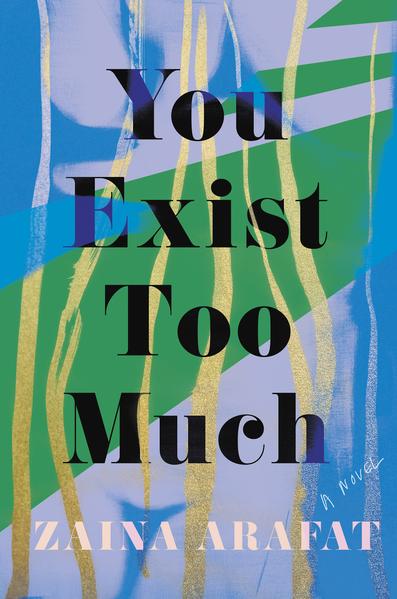
Zaina Arafat’s debut novel features a bisexual Palestinian American narrator who struggles with self-destructive love addiction. Her girlfriend leaves after discovering evidence that the narrator has cheated on her, prompting the narrator to check herself into rehab for love addiction, which doesn’t quite deter her from picking up and discarding numerous other lovers as she moves to the Midwest for graduate school and then back to New York. Meanwhile, she craves the approval of a perpetually disapproving Palestinian mother who won’t acknowledge her queerness. This isn’t a coming-out story or an immigrant story, but one about a complex, messy protagonist caught between identities and homelands, obligations and desires.
Coffee House Press
Dedicated to community inclusivity (check out their virtual programming!), the Minneapolis-based press aims to widen “the definition of what literature is, what it can do, and who it belongs to.”
Sansei and Sensibility combine a few of our most favorite things in a dazzling array of short stories: Jane Austen, a re-imagined Mr. Darcy, and Yamashita’s energetic prose. Karen Tei Yamashita takes Austen’s themes and sets them against a multicultural California landscape of the 1960s and 70s; beloved canonical characters are re-cast as Japanese American immigrants. Throughout the collection, Yamashita explores the question of inheritance—of how and what we inherit from our cultures, families, and histories—with poignant insight and humor.
Counterpoint Press
Berkeley-based Counterpoint Press is author-driven and devotes their energy to “fresh, cutting-edge, and literary voices,” publishing fiction and nonfiction, poetry, graphic novels, and anthologies.
In The Disaster Tourist, Yona Ko works for the South Korean company Jungle, which specializes in creating tour packages to destinations that have recently experienced some major disaster. After she speaks about a sexual assault by her boss, she is sent to evaluate a Vietnamese island that once had a sinkhole to assess whether it is still a worthy inclusion in Jungle’s portfolio. There, she discovers that desperate islanders who fear losing the business of Jungle tourists are planning to engineer a new sinkhole during a festival that might kill at least 100 people.
Deep Vellum Publishing
This Dallas-based non-profit emphasizes the importance of cross-cultural communication and translated literature. They’ve also recently awarded 43 emergency grants for Texas writers in response to COVID-19.
The Ancestry of Objects is both urgent and lyrical, braiding together themes of consent and control, family ghosts, and epic tragedy. A young woman starts an affair with a married man she meets at a restaurant. Within that same week, she can’t stop thinking about ending her own life. Tatiana Ryckman’s darkly erotic new novel questions what it means to survive, and the ways in which we split our identities to do so.
Dzanc Books
In addition to publishing innovative new fiction, the Detroit-based non-profit runs an online literary journal and multiple literary programs. The name, “Dzanc,” was formed from the five initials of the founders’ children.
The Snow Collectors combines a Gothic murder mystery narrative with the impending doom of environmental crisis. Henna goes to a forested, ever-snowing village to forget about the loss of her family; far from finding peace, she discovers a dead body and becomes involved with finding out the truth behind the Franklin expedition, a long-ago Arctic expedition. Tina May Hall’s prose is dreamily haunting, conjuring up ghosts, danger-tinged snowy landscapes, and eerie beauty.
Europa Editions
Perhaps the most well-known in the U.S. for publishing Elena Ferrante’s The Neapolitan Quartet, Europa Editions was founded in 2005 in Italy. Europa Editions is dedicated to bringing a wide range of international voices to British and American publishing markets.
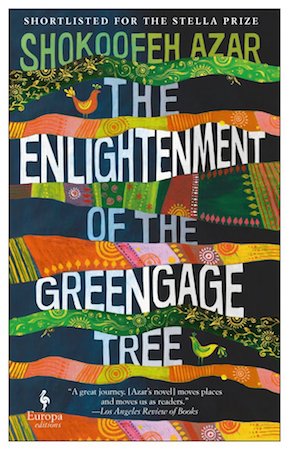
Shortlisted for the International Booker Prize 2020, The Enlightenment of the Greengage Tree explores the connections between the dead and the living. The novel is narrated by a ghost, 13-year-old Bahar, who tells the story of an Iranian family in the aftermath of the 1979 Islamic Revolution. Set amidst the chaos of post-revolution and oppressive violence, Azar’s novel examines how to process trauma through storytelling.
Feminist Press
Based in New York, this non-profit has been publishing feminist works and pushing for equality since 1970; they pride themselves on “books that ignite movements and social transformation.”
Apsara Engine is a graphic short story collection centered on women and gender-diverse characters. Bishakh Som blends South Asian mythology with contemporary reality, featuring half-human creatures, futuristic worlds, postcolonial cartography, time traveling tourists—and more. Som’s fiction debut is strikingly illustrated, full of sepia-toned watercolors, and poses questions about gender, bodies, and dualities.
Graywolf Press
Graywolf—a Minneapolis-based indie nonprofit publisher—specializes in poetry, literary fiction and nonfiction, and works in translation for adventurous readers.
In Deb Olin Unferth’s latest novel Barn 8, a rebellious teenager from Brooklyn ends up working as an auditor for United Egg Producers after heading to rural Iowa to find her deadbeat dad. Incensed by the conditions the chickens are kept in, she joins forces with the disillusioned head auditor and a band of animal rights activists, vegans, a farmer’s daughter out for revenge, and others to rescue 900,000 hens.
Red Hen Press
Red Hen Press sees literature as an essential human practice and is “committed to publishing works of literary excellence, supporting diversity, and promoting literacy in our local schools” in the greater Los Angeles area.
In this debut novel by Cuban American journalist Kristen Millares Young, Mexican American anthropologist Claudia flees Seattle for the Olympic Peninsula Makah reservation after her husband leaves her for her younger sister. She hopes to disappear into the whaling village of Neah Bay under the cover of interviewing an elderly woman she had previously befriended, aware of her connection to all the well-meaning but flawed interlopers of Neah Bay’s past. When the woman’s son also returns home seeking answers about his father’s murder, the two begin a complicated affair that ultimately highlights the awkwardness of Claudia’s presence in the community, problems with cultural appropriation, and the limits of her hopes of belonging there.
New Directions
Founded in 1936 by James Laughlin as a series of anthologies, New Directions Publishing “relaunched many classics with introductions by contemporary authors” and “proudly publishes great literature from around the world.”
The Hole by Hiroko Oyamada, translated by David Boyd
The Hole is the latest novel by Akutagawa Prize-winner Hiroko Oyamada. In it, a young woman named Asa quits her job so she and her husband can live closer to his job, in a house her in-laws have generously offered that also happens to be right next to theirs. Trapped at home all day, Asa has bizarre encounters with her husband’s family, about whom she knows very little. One day, she falls into a hole and meets someone there. This surreal, atmospheric literary thriller is a fresh take on the domestic suspense novel that builds to a neat, satisfying conclusion.
Other Press
Other Press is an independent publisher of literary fiction, nonfiction, and poetry that “attracts authors who are guided by a passion to discover the limits of knowledge and imagination.”
Beside Myself by Sasha Marianna Salzmann, translated by Imogen Taylor
In this debut novel by German playwright and essayist Salzmann, a young woman travels to Istanbul to hunt for her lost twin brother Anton. Gender-changing drugs are for sale on the streets, and as Ali wanders around looking for Anton, her own gender begins to break down and open up. The history of Anton and Ali’s family—who left the USSR for West Germany in the face of rising anti-Semitism after Stalin’s death—is woven into the present day events, as Ali navigates political upheaval and searches for connection and belonging.
Seven Stories
Seven Stories is a literary and political press named for the first seven authors “who committed to a home with a fiercely independent spirit” (Octavia E. Butler among them).
French cartoonist Emma gained international attention a few years ago when her cartoon blog post “You Should’ve Asked” went viral, highlighting how women often get submerged under the mental load of being the household task manager. In her second full-length translated graphic narrative, Emma explores everything from the burden of care placed on women to rape culture to police violence and green capitalism.
Soft Skull Press
Soft Skull Press publishes books in every genre that “engage art, culture, and current events in new and radical ways.”
Aoko Matsuda’s linked story collection Where the Wild Ladies Are (a reference to Maurice Sendak’s children’s classic Where the Wild Things Are) offers up a subversive, feminist reimagining of traditional Japanese ghost stories and folktales. In one story, a woman sleeps with the ghost of another woman who was killed by a man she refused to marry. Almost all the narrators are twists on stereotypes about women, such as a jealous wife or an overly talkative middle-aged woman, and many are linked to one another in clever ways throughout the collection.
Tin House
Originally founded as a literary journal in 1999, Tin House is now an acclaimed publisher, leader of workshops and seminars, and a podcast partner. They are based in Portland, Oregon.
A Girl is a Body of Water is a feminist epic centered on Kirabo, a young Ugandan girl, who starts questioning her origins. Kirabo has been raised by the women in her village, but struggles with the absence of her mother. In her quest to find answers, Kirabo starts spending more time with the local village witch, who teaches her about the “first woman.” Jennifer Nansubuga Makumbi explores what it means to honor one’s heritage and traditions, and what it means to come-of-age as a young woman in 1970s Uganda.
Transit Books
The Oakland-based non-profit, founded in 2015 by two MFA friends, is “committed to the discovery and promotion of enduring works that carry readers across borders and communities.”
Include Me Out by María Sonia Cristoff, translated by Katherine Silver
In Include Me Out, Argentine writer María Sonia Cristoff probes deeply at the idea of female silence. Mara, an interpreter, decides to conduct an experiment on herself: to be silent. She moves to a rural town in Argentina and becomes a museum guard, in order to speak as little as possible; however, it becomes trickier to keep her self-imposed rules when she must help re-embalm two highly-prized museum artifacts.
Two Dollar Radio
Two Dollar Radio, founded in 2005 by a husband-and-wife team, has a mission to “reaffirm the cultural and artistic spirit of the publishing industry” by “presenting bold works of literary merit, each book, individually and collectively, providing a sonic progression that we believe to be too loud to ignore.”
A History of My Brief Body is a genre-bending memoir in essays from Billy-Ray Belcourt, a queer man from the Driftpile Cree Nation and Canada’s first First Nations Rhodes Scholar. Belcourt writes about his identity and sexuality, about family connections that defy colonial brutality, about racism in online dating and medical care, and much more, ultimately calling on readers to imagine what a world without such structures of oppression might be.
Two Lines Press
Run by the Center for the Art of Translation, Two Lines Press is dedicated to “finding dazzling new, overlooked, and underrepresented voices, brought into English by the best translators” and to celebrating the often unsung work of literary translation. They publish both “exceptional new writing and overlooked classics that have not previously been translated into English.”
Lake Like a Mirror is the first story collection by Malaysian author Ho Sok Fong to appear in English. Her stories follow a dreamlike logic, full of eerie images and otherworldly elegance, and are pointedly political. One tells of women straying from the Muslim faith who are sent by religious authorities to a rehabilitation center—complete with cats yowling at the edges—where one woman walks naked and unimpeded at night, guards unsure how to apprehend her.
Unnamed Press
The L.A.-based publishing house, founded in 2014, aims to publish both new and established voices that “challenge conventional perspectives while appealing to a broad general audience.”
A satire of foodie-ism and gender norms, A Certain Hunger makes for a delicious—albeit twisted—read. Chelsea Summer’s debut is about an established food critic, Dorothy Daniels, who is passionate about both sex and good food. Dorothy, an unashamedly smart woman who is unafraid to claim that “Power is the ultimate aphrodisiac,” discovers a morbid taste that leads her down a darker path than Michelin-starred restaurants.
Verso Books
Founded in 1970, Verso is a leading force in independent radical publishing.
Burn It Down! Feminist Manifestos for the Revolution is an inclusive, comprehensive collection, containing over 75 feminist manifestos that span a vast time period, beginning from Sojourner Truth’s speech in 1851 and ending in the present. Editor Breanne Fahs states, “The feminist manifesto is impolite by nature.” These documents are a testament to the lasting power of female rage and the action-filled potential of unabashed female ambition.
In our series “Can Writing Be Taught?” we partner with Catapult to ask their course instructors all our burning questions about the process of teaching writing. This month we’re talking to Courtney Maum, who is leading an independent study on landing yourself a book contract—all the detailed, comprehensive information she includes in her book Before and After the Book Deal, but with exercises and guidance. This class is offered on a rolling basis, so sign up whenever you’re ready to get serious about selling your book.
What’s the best thing you’ve ever gotten out of a writing class or workshop as a student?
At the Wesleyan Writers workshop back in 2010, I took a masterclass with Michelle Hoover who taught us this thing called “The Desire Test.” Five questions that help you determine your characters’ internal conflicts. It changed the way I thought about story building and helped me develop plot. And Alexander Chee told me at the same conference that if you have a cliché in your story, you need to put a funny hat on it and make it dance around.
What’s the worst thing you’ve ever gotten out of a writing class or workshop as a student?
You should think like a writer every day, observe life as a writer. But even those lucky enough to be writing full time don’t write every day.
Anybody who has ever said that you have to write every day to be a writer is not a friend of mine. You should think like a writer every day, observe life as a writer. But even those lucky enough to be writing full time don’t write every day. Life gets in the way, obligations, work, email. If you can write in a solid way three times a week right now, you’re doing more than fine.
What is the lesson or piece of writing advice you return to most as an instructor?
Revision is where the writing actually takes place. That is a lesson I’ve had to learn the hard way, by spending many years thinking I was a first-draft kind of lady, and then realizing that I’m actually a 27th draft kind of gal. Revision is a privilege. Think of actors, when they audition—they usually get one shot. But we’re in a business where we get to hide our mistakes for quite a while.
Does everyone “have a novel in them”?
Probably. But not everyone will be the author of that novel. Some people are meant to share their stories in ways that don’t involve the written page.
Would you ever encourage a student to give up writing? Under what circumstances?
I regularly encourage people to give up the idea that they will make money from writing. That is pretty much the first thing that I tell aspiring writers. I’m very big on having a stream of income that is not dependent on your writing until you have, say, two books out or some kind of established career path. I blame our ingénue obsessed culture with making every writer think that they must make a living off their work, and that a published book is the only way to “make” it.
What’s more valuable in a workshop, praise or criticism?
I regularly encourage people to give up the idea that they will make money from writing.
Maybe silence. I have complicated feelings about the workshop structure. The problem, as I see it, is that the feedback (positive and negative) is often going toward a recipient who doesn’t yet know what to do with that feedback. And the setting is so public! I think you have to be pretty darn mature to understand what your writing needs.
Should students write with publication in mind? Why or why not?
I think 70% no and 30% yes. Write most of the time like nobody is going to read you, and then once in a while, write for a specific outlet or magazine to keep your game on point.
In one or two sentences, what’s your opinion of these writing maxims?
Kill your darlings: Yes, without remorse.
Show don’t tell: Show for three paragraphs, tell for one, and keep up this ratio through a book-length project.
Write what you know: Write what you know, sure, but always keep learning so that you know a lot about the world. When you don’t know something, research and get in touch with people who do know something about it. Interview people. Get out of your house.
Character is plot: Character can be plot if the character has a job and some problem in their life that can not be solved by sitting on the couch and thinking about it for a lot of pages.
What’s the best hobby for writers?
Sewing.
What’s the best workshop snack?
Crispy roasted chickpeas. But you have to bring enough to share.
It’s a horror story. The 400-year-long exile of Africans in America started with slavery and shifted to slavery-in-all-but-name under private prisons. Meanwhile, blacks have been subjected to a genocide that over the centuries has never relented, only changed in regards to the tools used to kill us. The fact that white Americans would sooner surrender their own civil rights to authoritarians than allow a smidgen of humanity for blacks highlights the cyclical nightmare of anti-blackness. Erasure also figures into the horror story. Not only does the U.S. government enact violence against black people, they use the education system to ensure our story is hidden—both atrocities we have survived and our stories of heroism in battling white supremacy.
Growing up, I knew better than to trust my majority white school to teach me my actual history.
Growing up, I knew better than to trust my majority white school—where I was learning Confederate revisionism about happy slaves though we lived in 1990s Pennsylvania—to teach me my actual history. Instead, I learned the truth about the past and present of white terrorism from my parents, who grew up in the Jim Crow South and had firsthand experience. And I learned by seeking out black culture. Through novels like Beloved, movies like Rosewood, and Afrocentric books I was able to piece together the history of slavery and genocide in America. A terrifying lesson, but it prepared me for life as a black man. It still manages to upset me how little those stories are known to the general public.
It wasn’t until graduate school that I learned about the 1921 Tulsa Race Riot, now more accurately called the Tulsa Massacre, and this because I was researching Jim Crow pogroms. The information I found online was organized by black scholars from first-person accounts of the survivors, not sanctioned by any mainstream outlet. Thus I took interest in David Lindelof’s HBO series Watchmen, a sequel to Alan Moore’s game-changing 1986 graphic novel, when I learned the story focused around the massacre.
The pogrom began like many American stories of racial violence—a black man accused of attacking a white woman. When black citizens of Greenwood, many of them World War I veterans, marched to the courthouse to prevent the young man from being lynched, white citizens seized on the excuse to attack Greenwood, known then as Black Wall Street for its many successful businesses. In a move that feels all too familiar for 2020, the National Guard joined with racist vigilantes in an assault on Greenwood that left between 75 to 300 black people dead—reports vary, but, given this is America, we can assume that it was closer to 300. Thousands of black people were displaced, their homes and property destroyed or looted. With a plot based around Tulsa, Watchmen became a touchstone of the 2019 television season and was nominated for 26 Emmys.
Many people I spoke had never heard of the Tulsa Massacre until they’d learned about it from a superhero show.
It is easy to be cynical about Hollywood’s new interest in black history. The Black Lives Matter movement has created opportunities for certain creators to tell their stories now that representation is a bullet point at quarterly shareholder meetings. Corporations are no more “woke” nowadays than when they were selling Elvis records to white teenagers while failing to cite the black artists who originally wrote the songs. In an age where Broadway has to turn the Founding Fathers black to make them seem cool—never mind they waged a revolution in defense of slavery—this could simply mean Hollywood is finally running out of stories to tell about white people. And it is certainly bemusing to find black stories told in the format of prestige television, a genre that has spent twenty years championing white maleness in the form of “antiheroes.” However, beyond cynicism, I was disgusted at how efficiently America has hidden its racial crimes, considering many people I spoke had never heard of Tulsa until they’d learned about it from a superhero show.
Tulsa was far from the only black neighborhood to be razed during Jim Crow. Like similar incidents large and small, it fit the pattern of white men using the “purity” of white women as an excuse for what were in fact economic attacks against upwardly mobile blacks. What makes Tulsa unique is that an atrocity of this scale—the thousand burning buildings, the mass graves—could be thoroughly censored by the U.S. education system, making it the Tiananmen Square of anti-black violence. In erasing the massacre, the government also erased the courage of the black population, who, not long after the invention of the airplane, were shooting back at whites firing on them from the sky.
As expected, the online chatter regarding Watchmen included complaints about introducing “politics” into Moore’s work, these complaints coming from white men who idolized the rightwing vigilantes written by Moore as villains and satirical figures. Moore is an anarchist who sought to deconstruct the fascist subtext in superhero comics, a fact that for decades has been misinterpreted by, well, fascists. Using Watchmen as a jumping-off point for exploring racist atrocity seemed more in line with the graphic novel than the hyper-violent fetishism of Zack Snyder’s inert 2009 film, or the endless nostalgic cash grabs from DC Comics.
I yearn for a world where someone could present the Tulsa Massacre without sandwiching it in a story about an alternate reality where a giant squid got dropped on New York.
Watchmen is also a weird program. It is a vision of a liberal dystopia where the cops mask up for their own safety from rightwing vigilantes, rather than our world where police collaborate with them. Robert Redford is president and reparations have been made to the victims of Tulsa. It uses Moore’s mythos to explore racism in policing and the idea of vigilantism as black empowerment. However, the very real historical trauma of Tulsa, an event that long went unacknowledged without reparations, is interspersed with scenes of Jeremy Irons comically trying to escape a steampunk prison by torturing and murdering human clones. So weird. It makes me yearn for a world where someone could present the Tulsa Massacre without sandwiching it in a story about an alternate reality where a giant squid got dropped on New York. This very fact highlights how insidiously genocide has been erased in our collective knowledge.
Lovecraft Country, the adaptation of Matt Ruff’s novel currently in its first season, also illustrates this erasure. The point of the book was to pay homage to the imagery while also critiquing the ideology behind the Lovecraft mythos. It’s a worthy premise. The idea of eldritch abominations with complete cosmic power over humanity loses its horror when put in the context of the black experience, where any mediocre white man can murder you and get away with it. H.P. Lovecraft was an unpleasant hypocrite who served up racism in a glossy sheen of faux-nihilism. “All life is pointless and the universe is cruel,” he would say, then turn around and say, “But these people’s lives are more pointless and we should treat them cruelly.”
Lovecraft Country is a loving homage to the pulps, each episode referencing tropes from vampires to secret societies to Treasure of the Sierra Madre style adventure serials. I fully expect them to fit some Flash Gordon space opera into the story, and I am here for it. It is deliberately set in the 1950s, a period mythologized as a golden era in American whiteness while grotesque levels of racist violence were occurring; the Emmett Till murder that sparked the Civil Rights Movement happened in the ‘50s. What stands out to me so far in the show is its theme of the black family and reconciliation. Atticus (Jonathan Majors) wishes to become a Magical Negro, and use that magic in his bloodline to keep his family safe. Episode three features a seance that evokes Beloved, in which Leti (Jurnee Smollett) summons the ancestral powers of black spirituality to defeat the kind of antagonistic ghost common in European folklore, and blackness wins. I was especially thrilled in that same episode by a scene of black resistance: when a cross is burned on her lawn, Leti sets about smashing the white men’s cars while black men with shotguns flank her, the closest I’ve seen a mainstream show acknowledge armed black resistance like the Deacons for Defense and Justice.
The show found its way onto the pop cultural radar in the first episode with its most effective moment of horror. The protagonists are attempting to have lunch in a diner when they are attacked by a white lynch mob, and have a car chase out of town with a firetruck in pursuit. It is a terrifying use of the snub-nosed, blood-red fire trucks of old that calls to mind the role of fire departments in enforcing Jim Crow. This breathtakingly tense sequence leads into the final stretch of the episode, when the trio is terrorized by a racist sheriff and his deputies, who are intent on murdering them because they dared to exist as black people in a “sundown town.” As we see these days in Kenosha and Portland (and Minneapolis and Chicago and Baltimore and L.A. and Ferguson and…), police forces have always been active as white nationalist death squads, and Lovecraft Country provides a historical context often ignored.
Frustratingly, this show, like Watchmen, also has to serve as education. Following the premiere, I found much talk online about sundown towns, something that is not taught in American schools. The showrunners seem to be aware that they have the platform to make up for decades of propaganda, as within the scope of four episodes they fit in references to nickel rides, eugenicist experimentation on black subjects, racist hiring practices, rape of slaves, resistance to neighborhood integration, and the looting of colonized peoples among a litany of horrors black people endured and still endure. These efforts, however noble, are also late in the game, and should not be the burden of a horror series on HBO.
The time to teach these lessons was years ago, and in schools instead of on streaming services.
The success of Watchmen and Lovecraft Country highlights the erasure of genocide, and the disastrously belated moment in which America is having its racial reckoning. In 2019, Ava DuVernay’s Netflix series When They See Us provided a long overdue challenge to anti-black bias in the legal system, and it is hard for me not to think about how a certain man called for the execution of the Central Park 5. Maybe it would have been more useful to tell their story while The Apprentice was on the air. Recently a superhero show hinted at a villain being a Neo-Nazi by saying they came from Portland, a reference to Oregon’s Black Exclusion Laws that went over a lot of people’s heads. The time to teach these lessons was years ago, and in schools instead of on streaming services.
The fact that history is now learned through the commoditized form of media and not presented in daily life has emphasized the intentional blindspot towards anti-black violence, itself proof of the swiftly eroding myth of American Exceptionalism. If another fun pulpy show arises that challenges white supremacy, I would watch it, but it would not make me happy. The concentration camps are already here.
One of my primary goals in writing Impersonation was to examine the many personae that we adopt in our lives, both in private and public, both in our relationships and in our work. When we encounter others for the first time, what assumptions do we make, and how does this guide our interactions with them?
Impersonation is the story of a single-mom ghostwriter, Allie Lang, who is hired to write a memoir of motherhood for Lana Breban, a high-powered lawyer and woman’s rights activist. Lana is known for her fierce, no-holds-barred language on social media and her galvanizing feminist stunts that have gone viral. Allie must write a book that will soften Lana’s public image and ideally make her more electable.
It should be news to no one that women politicians are held to absurd standards: one must be intelligent but not intimidatingly so; well-dressed but not showy; warm but not weak. The following books address this issue in myriad ways. The intersection of image-making and gender construction is not a small one. My hope is that someday, we may progress beyond judging politicians by outdated norms of gender, and instead choose candidates based on their abilities, intelligence, and effectiveness. One study showed that women leaders have been the most effective at handling the spread of COVID 19 in their countries. Enough said.
How are women groomed to run for and win campaigns? This fascinating book traces the inception and rise of Emily’s List, an organization whose goal is to help get women, like Elizabeth Warren, elected to public office.
What if Hillary never married Bill? This absorbing novel offers a kinder alternate reality in which Hillary is given a fair or at least fairer chance at the highest office in our country. What would the world look like from Hillary’s point of view? What would she have thought about her image makers—and about Bill’s?
This has to be one of the best written political memoirs that I’ve read, possibly because it is so personal. On the page, Michelle Obama comes across just as warm, intelligent, and funny as in her public appearances. I have no wisdom about the possibility of a ghostwriter here, but imagine and hope that Michelle herself provided most, if not all of the words here.
“This is about the specific nexus of women’s anger and American politics, about how the particular dissatisfactions and resentments of America’s women have often ignited movements for social change and progress.”
From one of our best writers on women’s rights, an examination of the political potential for women’s anger, “feminine” or not.
I love a good satire, and this is one of the best. Tracy Flick is a cult hero in her own right, willing to do anything to win a student council election. But how others treat her is just as revealing as how she treats them. And in many ways, she gets the last word.
This book offers a behind-the-scenes look at the first year in Congress of “the squad,” or Alexandra Ocasio-Cortez, Ayanna Pressley, Rashida Tlaib, and Ilhan Omar. It provides context and a look at Congress, and the ways that it has become rather ineffective and bogged down in tradition.
Ostensibly a novel about the Jewish holiday, Purim, but in fact, a gorgeous exploration of women near and in power, The Book of V. rages on the page against the overuse of the Madonna and whore archetypes. It is possible to be both Vashti and Esther, after all. Even the disgraced wife of a rising senator in 1970s Washington can rise up against authority and become the narrator of her own story.
DON’T MISS OUT
Sign up for our newsletter to get submission announcements and stay on top of our best work.
YOUR INBOX IS LIT
Enjoy strange, diverting work from The Commuter on Mondays, absorbing fiction from Recommended Reading on Wednesdays, and a roundup of our best work of the week on Fridays. Personalize your subscription preferences here.