Poems That Ask How We Value Black Women’s Lives

Destiny O. Birdsong’s debut poetry collection, Negotiations, is exactly what it sounds like. The speakers in this collection negotiate their body—asking what it’s worth to themselves, to romantic partners, to a society that caters to white people. The speakers negotiate with their memory, examining how trauma functions in their daily lives. The speakers negotiate with men, with their mother’s old sayings, with their health, with love or what was mistaken as love.
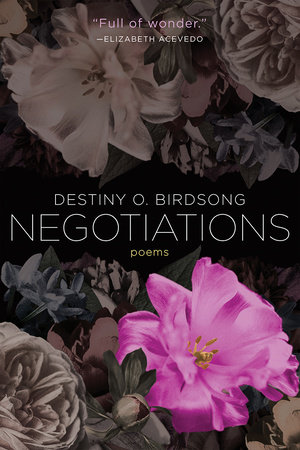
Negotiations

In this collection, Birdsong directly addresses those who have caused harm—such as rapists, racists, and others. She uses each poem to examine power or the lack thereof and explores what it means to be a Black woman in America, with her skin tone, her autoimmune disease, her hair. 

Destiny O. Birdsong is a Louisiana-born poet, fiction writer, and essayist. She has received many fellowships, including Cave Canem and the MacDowell Colony. Her work has won the Academy of American Poets Prize, Naugatuck River Review’s 2016 Narrative Poetry Contest, and others.

I chatted with Birdsong about living with a chronic illness, renegotiating beliefs, and expressing anger as a Black woman.


Arriel Vinson: The collection starts with slavery and pink hats, and your pussy. Tell me more about the title poem and how you’re negotiating with your body—and other bodies—throughout this collection.

Destiny O. Birdsong: The title poem, “Negotiations,” is one of the earliest pieces I wrote for this book, and I did so during the summer of 2017, shortly after the Unite the Right rally in Charlottesville, which explains my references to the city. “Negotiations” also contains elements of the Women’s March on Washington, which happened earlier that year, and some of the bizarre suggestions I heard from white people in the wake of both the 2016 election and the Charlottesville rally (like political poisonings and sex as conversion therapy for Neo-Nazis).

In the poem, I was attempting to address the schisms between me and those people—not only in our reactions to the persistence of racism, but in our strategies for reclaiming democracy (or whatever passes for it in America). Those schisms always require a certain kind of “negotiating” for me as a Black woman: I appreciate white allyship, but I am always aware that even the activist imagination is a privileged terrain. So too is bargaining with one’s body; I was reminded of this with “Naked Athena,” who stripped in front of a line of policemen in Portland earlier this summer. The stakes of such acts are higher for Black women, and no one better embodies that than Sally Hemings, who came into the poem because of her connection to Charlottesville and because she had to negotiate what was, by definition of her bondage, a sexually violent relationship with Thomas Jefferson in order to free her children. She serves as a historical precedent for my negotiations in racist and misogynistic spaces as both a Black woman and a sexual assault survivor. 

AV: Many of the poems in Negotiations consider worth: what a Black woman is worth, what or who is worth stealing or hungering for, who is stealing, etc. How is worth in Negotiations directly linked to power, the body, and money, or the lack thereof? 

DOB: I entered adulthood believing that my body was supposed to retain a certain kind of social capital in order to be valuable and desirable, and that capital lay in things like beauty, health, and sexual purity. A lot of the poems in the book chronicle my renegotiation of those beliefs in the wake of illness and assault. Letting go of all that allowed me to see myself clearer, see my God clearer, and reclaim my power.

But of course, in spite of all this work, everywhere I turn I’m reminded of how little this world values Black women, which affects me personally in some specific and contradictory ways. I’m often misread as being not enough of something: not smart enough, not beautiful enough, and in some instances, because I have albinism, not Black enough to even speak about these issues. Many of the poems in the book address that, but I also made space for the worlds in which I feel safest and most loved: the private spaces that me and Black women I love create with and for each other. That’s what’s saved me. That’s where I draw my strength, but also my sense of self-worth. I wanted the book to tell the totality of this reality: the blister and the balm. 

AV: There are poems in the collection where you wish harm on racists and others. We typically don’t see such public wishes for revenge, especially in a poetry collection. Why are anger and vengefulness useful in Negotiations

DOB: Unprocessed rage can kill you. I’ve watched it happen to people in my family, and to people I love. But I also know that not all rage should be unleashed into the world. Since childhood, the page has been a safe space for me to process things I didn’t understand, or to interrogate some of the silences in my family. Now, it’s a place for me to take my rage; I know I can put it there and keep me and everyone else safe. But rage is also a revolutionary act, which is something we’re thinking a lot about in a year filled with protests of all kinds. Black people are so often expected to forgive, and I do, but I also need to make it clear that I am not superhuman, and I get angry at injustice. I get angry when I’m harmed for no reason. My rage reminds me—and hopefully everyone else—that I’m human. And if, as so many people have told us, poetry is a testament of the human experience, then rage belongs here too. 

AV: Negotiations also navigates the speaker’s chronic illness. We see a call to Robert Hayden in relation to the speaker’s body on one hand, and a poem based on a hotep saying illnesses are man-made on the other. Why was it so important to give chronic illnesses space in this collection, and how are you negotiating with it in these poems?

Rage is a revolutionary act.

DOB: Living with a chronic illness is one of the many ways I negotiate space for myself—for my care—and misogynoir and class have just as much of an effect on how I do that as how I do anything else. And if I was going to talk about all the things I negotiate in order to survive, but leave that out, I only would have been telling half the story, which is something that already gets done so often to Black people in every space imaginable. I couldn’t do that to my body in these pages. And I couldn’t do that to the Black woman who might be reading this and needing to see someone like her, whose situation is complicated by illness, and whose life has been enriched by the ways she’s learned to live with it. 

AV: Many of the poems interrogate—and reject—ideals of womanhood in relation to men. The speaker considers her own mother’s loneliness, the concept of keeping a man/losing a man, and being enough for one. Tell me more about this.

DOB: I was raised by a single mother whose dream was to get married, and in some ways, our family lived holding our breaths for that moment. We dreamt about it, we prayed for it, and when it finally happened it was nothing like what we imagined. Even so, I wanted that life for myself, and I believed I was supposed to do whatever it took to make that happen: be submissive, accept ill-treatment, contort myself to fit whatever mold my husband would expect me to. But none of it worked. Then I watched women I love enter these really dangerous unions, and the texture of their lives changed. And so did they. They got angry, bitter, or complacent. And when I was in similar relationships, the same things happened to me. The whole notion was harmful, and I knew it would stay that way until I let it go. But this was also happening as my relationship to my body was changing, so a lot of it had to be mapped out on the page for me to even make sense of how my ideologies were changing, and how I was changing. In some cases, I’m still discovering truths about myself that I wrote in these poems. For example, I’ll have a really good therapy session, or a great journal entry where I make some declaration, and suddenly a line from one of the poems will pop into my head, and I’ll think, “Damn, now I finally understand what I meant when I wrote that.” It’s wild how poems will do that to you.  

AV: Trauma and memory are used often in Negotiations. The speaker remembers dialogue from men—such as her rapist—and it seems to permeate the speaker’s daily life. How do memory and trauma hold space in this collection? 

DOB: I used to think I had an amazing memory—and perhaps I did as a teenager—but lately I am surprised by what I don’t remember, or how some of my memories get skewed: the order of events gets scrambled, or someone said something foreboding about their intentions, and that information will come back to me in a flash of hindsight. Some of that forgetting, I know, is a survival strategy, a way to let go of the recent traumas I’ve experienced with illness and hate crimes and assault, but some of it is ancestral.

I grew up in a family where several people died suddenly and/or violently, and we rarely talked about their lives because it meant remembering their deaths. One summer, my mother’s two closest siblings unexpectedly passed away within a couple of weeks of each other, and the following summer, her grandmother died. I don’t remember those years so much as I step back into that space in my mind, into the Louisiana heat and the itchy stockings and the acrid smell of funeral homes and my mother’s laconic, but suffocating grief. Only my senses return; I’ve blocked out almost everything else because it was so painful to witness. But in self-protecting, and in protecting my mother, I’ve lost something valuable. I can’t remember if she ever cried (though she might not have done that in front of us kids), or the first time she laughed again, or the first time I heard her singing to herself after that. Today, I value the memories of my experiences because they provide context for what was and is happening to me as I heal, but also because they remind me that I survived, and they give me little glimpses into how I did it. I need that for the future; if something else catastrophic happens to me or to someone close to me, I want to remember how I got over, how I came out. Poems can bear witness to this after the fact. They can preserve the narrative of survival that gets lost in the act of surviving. 

AV: Throughout the collection, the speaker takes off her skin and either moves around without it, or watches someone else in it. In other poems, she admits to learning to love her body, but also hungers for it. Tell me more about this. 

Poems can preserve the narrative of survival that gets lost in the act of surviving.

DOB: I lived my whole life hating my skin, wanting something different. I wanted to be darker, to more obviously resemble my mother or other people in my family (even though my mother and I literally have each other’s faces). Then, in my mid-30s, I developed a horrible skin condition as a side effect of a medication, and I lived with it for almost a year while my doctors tried to figure out what was wrong (or rather, tried to convince me that I had another auto-immune disease). For all those months, all I wanted was the return of my healthy, pale skin, and I had to admit that all the other times in my life when I thought I looked monstrous was the result of my own self-hatred, and the internalized ridicule I’d received from others. All of that was fabricated and subjective, but this condition was real. That experience changed me, and it changed me while I was writing these poems. Strangely, just as my skin got really infected, I started masturbating. I’m not sure if I connected it in my mind then, but in hindsight, I see it as an act of reclamation of my body, which wasn’t obeying any kind of logic at the time, and maybe also some nostalgic act for my skin: I was aroused by what was under threat of destruction and maybe I was finally understanding that what I stood to lose was in fact beautiful. That kind of irony is perfect for poetry, right? 

AV: In all of these poems, you address capitalism, white privilege, sexism, and other means of oppression—sometimes outright and sometimes through more personal experiences. Why was this important in Negotiations?

DOB: These topics are…evergreen. It’s possible that Sally Hemings was writing about them 200 years ago in a diary we’ll never see, and here I am writing about them now because, just like her, they’re a part of my life. But I also write about them because I can’t think about them constantly. I have to make room in my head for joy, for hope and for conversations with my friends about recipes and gardens and paying off student loan debt. I have to live, but I also want to leave a record of how these things affected me and Black women like me. And once I put something on the page, it becomes more than just my experience, it becomes part of the Diasporic collective memory and the responsibility of non-Diasporic folks who read it, especially those who have the power to change things. I get tired of bearing that responsibility—and watching myself and other Black women do that work—alone. 

Safety Is Not Other People

Asylum

The dependence of hunger gives
way to a sharpened eye, a test subject
unsure if it’s in the control or the experiment
group. Sugar or water or the choice to leave
before someone else’s decision: paint me
a reverie like a radio dial or a waiting room’s
splintering pique for your name. I want you
to take my time. When a succulent is
overwatered, it melts from the bottom up,
irretrievable from a surplus, watching itself
drown on land. I snake a string of pearls
around the pot to give it something of the sea
to welcome it while wasting; a terminal
lucidity in its shrinking. And you take my time kindly by
the spoonful, certain to slip the knife
from my teeth, and how I love you harder for it.

When you’re not looking, I lick the counters:
Stray coffee grounds, mistaken yogurt dabs, cracker dust,
anything to keep the taste of you in my mouth even while
you’re here. We’re here. For now,
we draw a bath to forget that
RBG is dead, and what was scalding, we let turn cold
to know we’re still warm inside. What endurance
do we need to carve from ourselves next?

I’d carry your child if you’d have me, provided I still can
or ever could in these days of petroleum skin on the lake
shivering beneath wildfire smoke and Baldwin
rightfully back in vogue. Would one be a fortune? Salt!
Salt for the going, for the polish of the pearls.
Where next the dishes and chairs are placed matters
as much as the light and the will to eat.

Some Things That Are Not Love Happen Out of Love

and those are the things for which we must conjure
an alternate route in order to survive; acknowledgement is due, but without 
a whole body, the needs to be born, it is missing bone

-mass, about 10%, in the right hip joint. Surprisingly, the spine
looks okay. Usually, that’s where girls like you lose the most.
[Osteopenically speaking: sure. I can believe that.] I knew I was

walking into a room I hadn’t before, and I thought his parents
would be home, meaning safety, meaning answers
to the three-day absence of the one person my mind could

not unknot from. I hunkered Rocinante’s fat ass in place
alone affront the house, the poor van’s dyspeptic engine pinging
itself cool: maybe their car was in the alley. He wouldn’t

suggest you start taking salt tablets, because right now
you need to raise your blood pressure, and the salt
will do that. And more water. Water, not coffee. The ceiling fan

wasn’t moving, but its light was on; the porcelain heads
to the pull chains, for once, were still, two baby teeth dangling
from a robin’s egg gum. He said he was suicidal, that’s why

he’d needed to not talk to me, not see me, or be near seeing me
for three days. Consoled that it wasn’t my fault, I said that’s okay
and he took my hand and if you’d just raise your left arm and

lay your head on top it, I can get a better angle on your heart.
[Must it be a jab, sir? Surely, the echo is viable without a jab.] I just
wanted to help, let him know the child I was loved the child I saw

in him: a fellow loner, befuddled with these extra parts to cover,
and a number of hick histories to dissuade. Go team weirdo!
A resolute shift in his lean, new kind of press, one I wasn’t

sure I wanted not Within fifteen feet, the instinctual reaction is to not
move or scream when confronted with this person undoing
above inside me the fan light boiling my sight barium green lit copper blue

bird with a two-egg nest stenciled on the wall three fan tines because
a scream would give away the throat to four pillows to the couch
five fingers to a hand where’s mine need to just find home six animal yes

and when his face reached my mouth, I kissed it with all I that I was
to keep him from lowering back down. It was the one prayer
I could manage to summon, and it gave life back to one dead:

of course, I made a practice of this worship: it was for love! Of course, 
I’ve carved my form with something mistaken for vanity I’m sent girls all the time 
with this problem. But you’re already perfectly thin. Why do you

want to be thin? because vain is where this started. It has the subtlety
of a sledgehammer, my statement of control, and I’m working
on reframing repentance. I was a kid, and I did what I could to help.

12 Mystery Novels Featuring Black, Indigenous, and POC Protagonists

When I think mystery, my mind initially goes to the procedurals I watched with my elders as a kid—shows like Cagney and Lacey or Murder, She Wrote. In those shows, the mystery was always a murder or other terrible crime, and it was always solved. Sometimes the solution was predictable, other times viewers were caught off-guard, in the end the “good guys” always won. Nowadays, “mystery” to me means something bigger—sometimes psychological, other times supernatural. Not all mysteries revolve around a corpse, and even if they do, characters may try to uncover a lot more than just the murderer. Sometimes those seeking to right wrongs are everyday citizens with no badge or prior training, just a strong will to do good and be better. And now, unlike in the Cagney and Lacey days, more and more mysteries are driven by Black, Indigenous, and POC protagonists.

When BIPOC characters are the stars of mystery and crime novels there’s no doubt we’ll be privy to the complexity of how race affects their quest for a solution. The layers of this make for stories of power, inequity, and frustrations ready to boil over. This list includes a sampling of BIPOC characters and authors with free rein to be flawed and functional in their pursuit of truth and justice. 

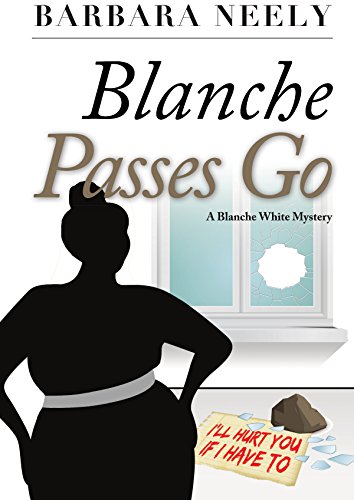
Blanche Passes Go by Barbara Neely

Rightly considered a pioneer for Black women in the crime/mystery genre, Neely died earlier this year at the age of 78. This is the last book in the series that began with Blanche on the Lam, published in 1992. Blanche White is a hard-working Black woman, raising a family and trying to find a place for herself. Unfortunately, everywhere she goes death seems to follow. Blanche uses her wit, intellect, and savvy to help solve these cases when authorities refuse to look beyond the surface. 

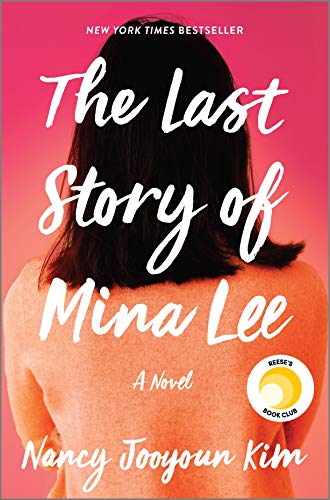
The Last Story of Mina Lee by Nancy Jooyoun Kim

Secrets are often central to many mysteries and they’re also at the forefront of instant New York Times bestseller Mina Lee. Dual perspectives allow readers to experience Mina Lee’s time in LA and her daughter Margot’s pursuit of the truth to find out how her mother died. 

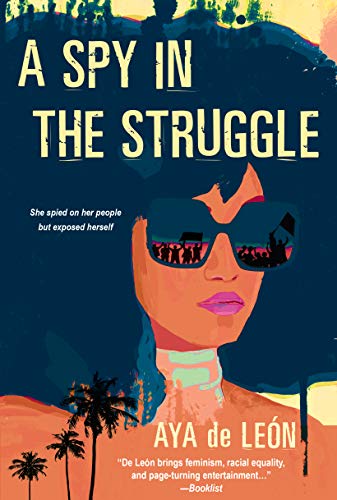
A Spy in the Struggle by Aya de Leon

Lawyer Yolanda Vance becomes embroiled in espionage, activism, romance, and—you got it—a mysterious death that needs to be solved. De Leon’s spy thriller focuses on Vance’s rationale for wanting a comfortable life versus coming to terms with her own moral compass when working undercover for the FBI.   

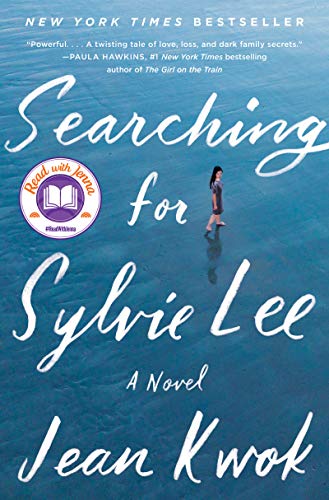
Searching for Sylvie Lee by Jean Kwok

Doting eldest daughter Sylvie Lee visits a family member in the Netherlands and disappears. Bereft younger sister Amy seeks answers and through her journey unearths what her seemingly fearless sibling kept hidden from everyone. 

Winter Counts by David Heska Wanbli Weiden

No holds barred, cussing up a storm, and ready to knock some heads, enforcer Virgil Wounded Horse has a personal stake in finding out who’s distributing heroin on his reservation when his nephew is involved. Wounded Horse’s investigation reveals many shady dealings and disturbing alliances along the way. 

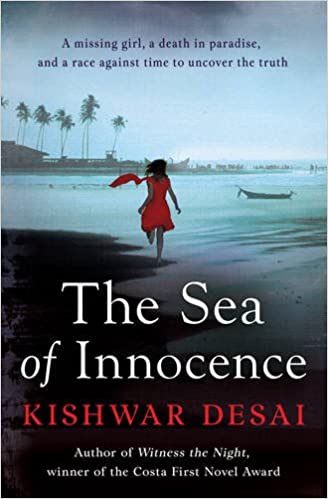
The Sea of Innocence by Kishwar Desai 

Investigator Simran Singh shows up for a third time in Desai’s Sea of Innocence. Of course a relaxing vacation becomes the landscape for a new crime Singh is forced to solve when a British teenager goes missing and a seedy underworld is revealed. Desai’s journalism and novels appear to take on similar focus when it comes to violence against women and holding patriarchal entities accountable.  

The Body Snatcher by Patricia Melo 

Sometimes mysteries also come in the form of wondering about the stability of one’s soul. Corruption and morality are at the heart of Melo’s Body Snatcher. For the protagonist (or antihero) to escape the turmoil he’s enmeshed in by chance and choice requires some contemplation of what one is willing to do to profit, if not survive. 

Bluebird, Bluebird by Attica Locke 

Locke’s work tackles regional resentment and the complications of being a Black law enforcer. Darren Mathews attempts to navigate his own personal turmoil with a marriage on the rocks, his estranged mother who always shows up at the wrong time, and professional backlash, all the while trying to solve the murder of a Black lawyer and white woman that are seemingly connected. 

The Only Good Indians by Stephen Graham Jones 

Horror, spirituality, and the supernatural come together in this exploration of revenge and obligation. The mystery here isn’t necessarily a “whodunit” so much as a “what happens next,” as several characters are haunted after a hunting trip on land designated for tribal elders. Graham Jones builds the tension through horrifying and realistic detail down to the hauntings and the mundanity of everyday life. 

Charcoal Joe by Walter Mosley 

No mystery/crime list is complete without the prolific Mosley—this year’s recipient of the National Book Foundation’s Lifetime Achievement Award. Charcoal Joe is the latest in Mosley’s well-known Easy Rawlins series taking place in 1968—the same year Martin Luther King Jr. was shot. Attempting to settle down after forming a new agency, Rawlins is once again thrust into a case he can’t refuse when a friend calls for help in exonerating his son from the murder of two white men at a highly racially charged time.

A Crack in the Wall by Claudia Piñeiro

Architect Pablo Simó is not living his best life. He doesn’t enjoy his job or his marriage and has an attraction to one of his co-workers. Another wrench is thrown into his soulless days when a young woman surfaces asking about someone who disappeared under suspicious circumstances, circumstances Pablo knows more about than he lets on.

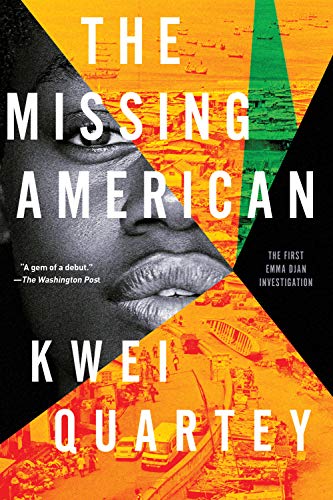
The Missing American by Kwei Quartey 

Emma Djan’s hopes of advancing in the Ghanian police force fall through, so she tries the next best thing: a detective agency. Derek Tilson travels to Ghana to find his father who suddenly disappeared when visiting someone he met through the internet. Derek and Emma partner up to uncover the depths of internet scams and fetish priests and those who aren’t too keen on being investigated.

For Laura Van den Berg’s Women, There’s No Easy Way Out

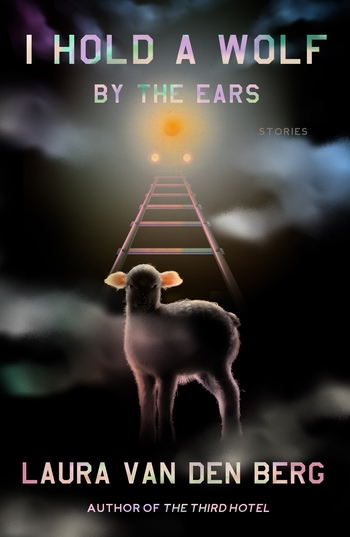
In Laura van den Berg’s collection I Hold a Wolf by the Ears, women are adrift in Florida, Iceland, Italy, in an unnamed medium-size American city, in their marriages, and in the depths of patriarchy. The collection’s title and its final story is the English rendition of the Latin, Auribus teneo lupum, which the van den Berg’s character translates as “there is no easy way out.” The characters of the collection, even the ones with overseas travel budgets, teeter on the edge of life itself. 

I Hold a Wolf by the Ears

Van den Berg narrates their troubles and their denials with fine elegance that obscures the dagger until it comes. In particular, the turns in “The Pitch,” a story of a couple in Florida and a mysterious missing brother in the woods, and “Karolina,” in which a woman runs into her ex-sister-in-law in Mexico City and what ensues is violence, past, present, direct, subtle, and stalker-y, unsettled me. 

I spoke with van den Berg about dying and her 100-supplement-a-day grandmother, empire striking through the American tourist, the most Florida of Wolf’s stories, and the ultimate Karen of the collection. 


JR Ramakrishnan: Almost all of the stories feature death or imminent death. I read that your father passed away recently. People’s awareness of death is very interesting—some people have it from having experienced it earlier and very intimately and others, maybe most, later in life. When did you start considering death? 

Laura van den Berg: As a child, I was terribly fearful of people in my life dying. I never had a major loss with a young child so I don’t really know exactly where that came from. It’s interesting thinking about this now because I lived with my grandmother when I was a teenager and she was obsessed with not dying. She was convinced that she was going to live not forever, but to 120. She actually lived to be 101. She—and this is not an exaggeration—took 100 supplements a day. Even when she herself was in her 80s and 90s, she refused to spend time with other elderly people because she felt like age was contagious. She had pretty intense ideas about death and dying. She was at once terrified of dying but also in total denial about age and illness. I lived with her at such a formative time so I am sure it had some sort of impact. 

JRR: There are a lot of Americans touring abroad in these stories. You have them in Italy, Iceland, and Mexico City. Your last novel was partly set in Havana. You guys have the advantage of empire and also wealth but at the same time, there’s this psychological and physical isolation, right? There’s also the expectation to be catered to. Your couple in Italy in “Cult of Mary” dislike the guide’s feminist politics and plan their TripAdvisor review. This concept of service seems 100% American to me. As someone who’s traveled much more than the average American, how do you see Americans abroad? 

LVDB: I started thinking a lot about this during The Third Hotel, and especially with the obsession with authenticity, which is often a huge part of the marketing of American travel. I had never really read travel blogs before but I started to read them because that novel is so much about tourism and specifically, a massive influx of tourism in a really singular place at a very specific moment in time. So much of the narrative around Havana is about “the authentic human experience,” which, of course, just a fiction, a dream of capitalism, and the type of thing that can be packaged and marketed quickly. 

I think part of the condition of the American abroad, and more specifically the white American abroad, is that we are coming from a place of empire. On the one hand, I think there is a profound desire to escape empire and be in a place that’s unfamiliar. Then there’s an equally strong impulse to recreate empire wherever you go. I think it means to be kind of caught in this duality of: I want to escape and have that, you know, “authentic” travel experience where I can see no traces of empire. And yet to be in that situation is actually so foreign and unfamiliar, it’s really destabilizing and then there’s the compulsion to actually create empire and be catered to in the ways you were speaking to before.

JRR: Who are your favorites of the Americans abroad genre? 

LVDN: I read, particularly for The Third Hotel, and have continued to read a ton of travel literature to use a very broad category, but certainly, everything from Garth Greenwell What Belongs to You to Katie Kitamura’s A Separation to Graham Greene. It’s become a very capacious genre. It’s ultimately not up to me as to whether it was a successful project or not, but part of my ambition for The Third Hotel was to reimagine what the American abroad novel might look like and to reimagine what travel writing fiction can look like.

I am inspired by contemporary works of travel literature. It remains a fraught genre and it comes with a ton of baggage. I felt like I needed to sit with that baggage and think about it very carefully if I was going to attempt to do work in that space. It has been a huge area of interest to me. Although lately I’ve been orbiting back to writing about Florida, which of course is the place that I know in some senses. 

JRR: I was wondering if you had read much of the opposite gaze, say someone from Beijing writing about Los Angeles? I don’t mean like an American immigrant narrative, but let’s say someone who’s maybe the Laura van den Berg of Iceland, maybe? 

LVDB: I think Hernan Diaz’s In the Distance might be an example of what you’re talking about. It’s a kind of Western but written from a POV of an immigrant. I love that book. I’m interested in not just Americans, or even other people from other countries coming to America, but also in other places and travel literature more broadly. 

JRR: What is the most Florida of these stories?

LVDB: Probably “Slumberland.” That story syncs with the landscape I see when I’m walking around now. A lot of the things and the places that my character photographs are right around my sister’s house and my neighborhood. I was actually staying with her when I started writing that story.

I aspired to write into those stories that very question of believing women and the consequences of not, but also the daily private ways that white women support patriarchal violence.

Then, “Lizards,” which came from me thinking of the boys I grew up with, who were basically misogynistic. I wondered what became of them, and what kind of conversations might they be having—or not—about Brett Kavanaugh with the women in their lives.

Another thing that happens here is lizards getting in your house, which really freaks me out. That feeling of nature, always wanting to come in, or trying to figure out ways to get around the barriers that humans have created, feels archetypically Florida to me.

JRR: In “Lizards,” and in “Karolina,” the question of women being believed (and not) in the context of gender violence looms. 

LVDB: I aspired to write into those stories that very question of believing women and the consequences of not believing women, but also the daily private ways that white women support patriarchal violence, not necessarily in super visible public ways but consciously and unconsciously.

For the wife in “Lizards,” certainly her husband is doing horrific, unforgivable things to her. She is the victim but there is a part of her that really craves the obliteration and the kind of permission to look away and just sleep through it. She is caught in between this useless, superficial, anger and also the desire that says, can I just turn off the news and go to sleep? Questions such as: What would I be willing to change in my own life to dismantle the structures that make someone like Kavanaugh possible? What would I be willing to give up? I don’t think this character is prepared to engage in such questions. I also didn’t want to create a simplistic, victim-perpetrator dynamic. I wanted to pose something more complex and a little bit more nuanced. And then with “Karolina,” the protagonist of that story is unwilling or unable to reckon with violence in her own family and she shelters it to protect her brother. To my mind, that private choice has really powerful political implications behind it.

JRR: At the end of “Karolina,” the protagonist inflicts some violence of her own. 

LVDB: Yes, for sure. There is this whole narrative that has been playing out with a friend off stage. She’s been fixated on wanting his time and his attention directed towards her that she’s missed the subtle ways he’s been trying to say, right now is really not a good time, I have other things going on in my life. That’s the reading intended of that story, that she becomes a kind of violent presence for them by appearing unbidden in the middle of the night, outside their home. She realizes far too late the dire situation that her friend’s been in but that she’s been willfully oblivious to. 

JRR: I got to ask, because we’re in 2020, is this character the Karen of the collection? 

LVDB: In terms of the Karen that you might see on the news, I would give the Karen award, dubious as it is, to the wife in “Lizards.” I don’t know how much self awareness she has, but in her defense, she’s being routinely drugged by a LaCroix-like portion, and that presumably cut down on one’s capacity for self awareness. In some ways, the protagonist in “Karolina” does act pretty Karen-like so perhaps they are neck-in-neck. I mean in my reading of her, there’s more self awareness, which I think in a lot of ways makes her actions more damning. There’s more cageyness, more secrecy, and more active manipulation. She probably is more adept at being able to read the room and shift her behavior as the social situations demand it. It might be more evil to do that, than perhaps the wife in “Lizards,” who is a little less self aware. But on the other hand, that runs counter to what I said earlier about the protagonist in “Karolina” being willfully oblivious to her friend’s situation. Yeah, I guess, it’s kind of a coin toss between them. Definitely two prospective Karens. 

JRR: I see from Instagram that you are a pretty serious boxer.

Boxing reminded me so much of revising a sentence or a paragraph over and over and over again.

LVDB: There are many gradations of seriousness—I am at least semi-serious and I aspire to be super serious.  I started by accident about two years ago. I rolled into the gym, thinking it was gonna be a cardio boxing class. Instead, it was a tactical boxing class and I didn’t know how to throw even like the most basic punches or do very basic footwork. The coach put me in a corner and I just stepped forwards and back and left and right for the full hour. On the one hand, it was so different than what I was expecting, tedious and frustrating, and on the other, I was totally enthralled.

It reminded me so much of revising a sentence or a paragraph over and over and over again. Boxing has some of that slightly obsessive resonance. I fell in swift love. I did work on all the basic stuff for a year and started sparring probably around this time last year. I would like to do an amateur fight at some point, probably a year from now. This wasn’t even part of my lexicon a couple of years ago and now it’s a huge part of my life.

JRR: There’s a long connection between boxing and writers. All menHemingway, Norman Mailer, etc. except for you and Joyce Carol Oates (who didn’t put on gloves herself). 

LVDB: Yes, she [Joyce Carol Oates] wrote about it [On Boxing]! Also Katherine Dunn boxed her whole adult life. She wrote as a journalist about boxing and boxed yourself and then collected her writings into One Ring Circus

JRR: We talked about the violence in your stories. I started boxing myself in the last year, and I mean, we can talk about it as a sport but obviously, it’s combat. 

LVDB: Yeah, certainly, if you are boxing competitively, it’s a very, very dangerous sport. The regulations have evolved over time—fights are shorter, rounds are shorter, fights are often stopped sooner. Still people get badly injured and even die. It’s appropriate, even if you love the sport to feel messy, complicated feelings about the physical risk factors people are exposing themselves to. 

Even in my humble context, sparring can be rough. I have definitely gotten black eyes, bruises, and bloody noses. People often say you must feel fearless to spar and it’s actually quite the opposite, I get really nervous before sparring. I’m working through a space of really visceral fear. It’s actually something that keeps bringing me back to it is having the space to sit in your own fear and move through it. Over time, there’s something really powerful about that. 

I’ve come to really love the rituals also. On the other side of the violence of a contact sport, there is this deep love, not always, but in my experience, there is often this deep camaraderie and respect that really can develop. You bond in a deep and unique way, right? This is not an activity that I’m doing with my friends; it’s a very specific relationship. It’s moving to me how often it’s the person who knocks you on your ass will be the same person who reaches down their hand and says, “Get up. Keep going!”

JRR: Although perhaps not in stylistic terms, but between boxing, Florida, Cuba, and writing about other places, it seems that you and Hemingway have quite a bit in common.

White people, we are a race. To write about whiteness is to write about race.

LVDB: I would say I hope that I write better! My most honest answer to that would be I have not read Hemingway in a really long time. I would have to probably need to revisit to have a more intelligent response. Hemingway had a very fascinating life but I do wonder to what extent, if at all, Hemingway thought about his own privilege, power, and empire and how that shaped his gaze. My sense is, based on the Hemingway I remember, probably not a lot. My enduring and ongoing ambition as an artist is to, not only be alert to those dimensions, but also to write into them and to think about how they have shaped my world.

JRR: White writers of the past like Hemingway would have not have had to consider some of the issues that white writers might (and do) consider in their writing now. I doubt he was giving too much thought to the kinds of things you thought about while writing these stories. 

LVDB: Oh for sure. I would also imagine that the idea of writing about whiteness—that whiteness is a thing that you would think to write about—would have never ever occurred to them. I think that’s something that a lot, or at least I hope a lot of, white writers, are thinking about now. There’s a sense if you’re writing about race, it’s about writing characters of color or of communities of color. You know, white people, we are a race. To write about whiteness is to write about race. There was definitely not a lexicon that was on their radar then. 

A Definitive Ranking of Tana French Novels

In the thirteen years since Tana French published her first novel, she’s gained a rabid and dedicated readership (a friend of mine refers to herself as a Tanavangelist), a shelf’s worth of awards (Edgar, Anthony, Macavity, Barry, and the Irish Book Award, among others), and countless places on critic’s picks and best of the year lists. And for good reason: French is a triple threat. She writes strikingly beautiful prose that avoids getting bogged down in its own musicality, creates atmosphere so three-dimensional you feel you could sink into it like a bath, and crafts deft, innovative plots that surprise readers of mysteries, thrillers, and literary fiction alike. 

These are, in the narrowest sense, detective novels: six entries in the Dublin Murder Squad series, focusing on investigators in the eponymous (purely fictional) police unit, and two standalone novels that are also about unsolved deaths. (Presciently, French stopped making professional detectives her central characters in 2018, just as white people were broadly catching on that in real life, the police were not the heroes.) But beyond mysteries and motives, you’re likely to encounter protagonists grappling with personal trauma and thorny ethical questions, a three-dimensional supporting cast, a tremendously powerful sense of place (see the house in The Likeness, the grove in The Secret Place, the wild Irish landscape in The Searcher), and luminously descriptive writing. There’s also the series storytelling mechanic French uses in the Dublin Murder Squad novels, brilliant in its simplicity, where the protagonist of every novel was a supporting character in a previous one, which keeps the series from stagnating.

The fact of the matter is that Tana French has never written a bad book. Even the worst of her output is worth your time, and every one of her eight novels has transcendent moments. But given that all things are, in fact, relative, some of them have to be better than others, and so I’m here to offer you the definitive Tana French ranking. I will not be taking questions.

I’ll preface my official ranking by telling you that there’s really no wrong reading order for these books. Publication order is easiest, because chronologically, the six Dublin Murder Squad books come first, followed by her two standalones. But if you have a more, shall we say, chaotic energy, just pick the one that piques your interest most and dive in. (One caveat to this: in my opinion, The Likeness should only be read directly after In The Woods, as the respective protagonists have the most immediate connection to each other of any of French’s characters, and there are pieces of Cassie’s narrative in The Likeness that won’t make sense without the context of her relationship with Rob in In The Woods. Or read The Likeness before In The Woods! Do you, I don’t know your life.)

8. The Trespasser (2016)

As I said above, French has never written a bad novel, and The Trespasser would be a notable accomplishment in the hands of a lesser writer, but as it stands among her other books, it’s an enjoyable read that doesn’t leave much of an impression. Antoinette Conway, who is Stephen Moran’s partner in The Secret Place, is a fine and interesting protagonist—cagey, angry, smart, overburdened with trust issues—but her psychological baggage and internal monologue don’t have quite the impact of, say, a Frank Mackey or a Cassie Maddox. If you like a relatively straightforward police procedural (albeit one that focuses pretty heavily on squad politics, corruption, and deconstructing the police narrative around what seems like a clear-cut case of domestic homicide), you’ll probably like this one just fine, but if you want a little something more from your mysteries, start elsewhere.

7. The Secret Place (2014)

This is the novel that saw French start to broaden her horizons past telling stories from the police perspective. The Secret Place features multiple narrators: Stephen Moran, a detective previously featured in Faithful Place, and several of the students of St. Kilda’s boarding school, most notably Holly Mackey, the teenage daughter of Frank Mackey (the narrator of Faithful Place). Holly spots what appears to be a clue to the unsolved murder of a teenage boy and brings it to Moran and his partner, Antoinette Conway. As Moran and Conway interview students and faculty at the school, French delves into nuanced explorations of class, gender, and age. There’s a lot that’s good here: the climactic interrogation scene is near-virtuosic in its plotting and execution, and the novel is extraordinarily insightful about the heightened experience of being a teenage girl, from the breathtaking cruelty to the intense friendships. But the teenage dialogue often doesn’t quite work, and ultimately the novel leans a little too hard into the suggestion of extramundane forces to totally stick the landing.

6. Faithful Place (2010)

If The Secret Place comes a little too close to fabulism, Faithful Place lands at the other end of the spectrum, solidly in the realm of concrete, mundane tragedies. Frank Mackey (Cassie’s mentor in The Likeness) has long kept a healthy separation between himself and his troubled, working class family. But when a body found in the neighborhood where he grew up turns out to be the girlfriend he thought abandoned him at 19, Mackey is forced to reexamine and reframe the experiences that shaped him. Excluded from the official proceedings due to his proximity to the case, Mackey undertakes his own guerilla investigation, and in doing so plunges himself back into his fraught family history. It makes for an immensely compelling character study, and as always, French’s writing is superb, but the resolution of the mystery is just a touch too obvious to be completely satisfying.

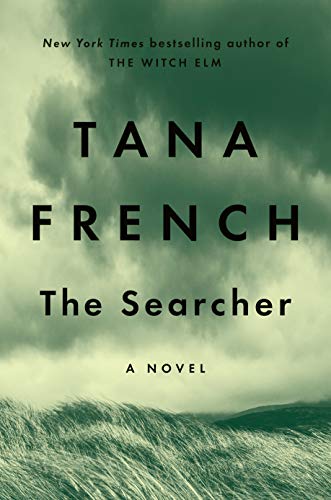
5. The Searcher (2020)

French’s latest novel is a standalone, and her first book to feature a non-Irish protagonist. Unmoored by the dissolution of his marriage, his distant daughter, and his retirement from the Chicago police force, Cal Hooper moves to the rural town of Ardnakelty in western Ireland, where he plans to spend his days fishing and renovating the old house he’s bought. But when Trey, a local teenager from a family with a bad reputation, befriends him and asks for help in finding a missing sibling, Cal is drawn unprepared into a web of secrets in the tight-knit community, which harbors more malevolence than he expects. French nails the elegiac tone of a certain kind of Western, and there’s an appealing stillness to Cal: he’s contemplative, but not complacent; introspective without being inactive. As he comes to care about Trey, and as he reckons with the limitations of policing as an institution, Cal finds himself being both overtly and subtly warned away from his ad hoc investigation, which only makes him more determined. Story is not the driving factor in this book—in fact, the plot is somewhat spare compared to the rest of French’s novels—but it’s by design, as the focus here is on character and atmosphere.

4. The Witch Elm (2018)

French’s first standalone novel is a frighteningly timely account of a young white man learning that he is not, in fact, the main character of the universe, and that all the events in his easy life that he’s previously attributed to “luck” were actually the result of what the rest of us would call “privilege.” After Toby is beaten badly and left for dead during a home invasion, he retreats to his uncle’s beautiful suburban home to recover, suffering cognitive issues and confusion alongside PTSD. There, he reconnects with the two cousins he grew up with, and when a gruesome discovery is made in the house’s backyard, Toby discovers that nothing he’s ever understood or believed about his life is what it seemed. French excels at unpacking a character’s psyche as they’re forced to recontextualize their own experiences, and it’s a nice little spin on the trope of the unreliable narrator. The Witch Elm moves a bit slowly in the first third, which can make it tricky to get into if you’re not already enamored of French’s writing, but it’s worth it.

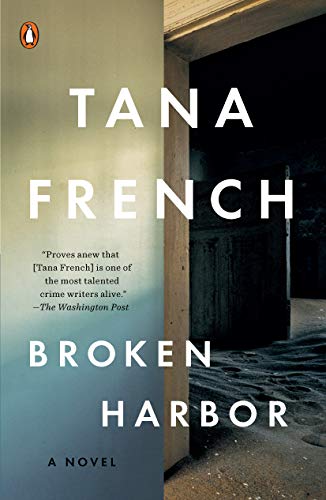
3. Broken Harbor (2012)

This tragic and unexpectedly scary book is the closest thing French has written to a full-blown haunted house novel, and it’s the kind of novel that sticks with you. Scorcher Kennedy, who appeared in Faithful Place, is the confident, stalwart detective assigned to a tragic crime: Patrick Spain and his two children are dead, and Jennifer, his wife, is in the hospital in critical condition. The family were living in a half-empty housing development abandoned during the economic crash, burdened with financial concerns after Patrick’s layoff, and marinating in burgeoning mental health crises. Patrick, convinced of the presence of some kind of wild animal in the house, has taken to posting increasingly unhinged statements on message boards and knocking holes in the wall; Jennifer, meanwhile, is trying her best to hold the family together. Kennedy has his own personal problems, including latent trauma from the death of his mother and a sister who’s dealing with the decompensation of her own mental health, not to mention responsibility for Richie, the rookie cop he’s been assigned to train. As the book progresses, Kennedy’s mindset (and his relationship with Richie) shift drastically, and he ends up compromising his own values in devastating ways. Broken Harbor is a brilliant exploration of the profound psychological effect a national economic collapse can have on an individual family.

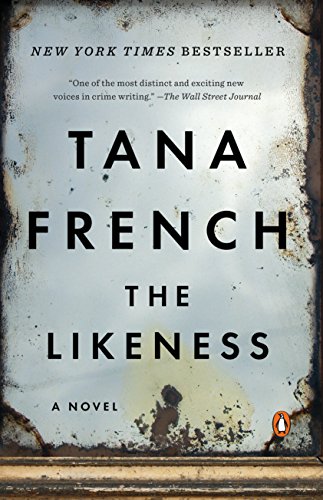
2. The Likeness (2008)

My personal favorite Tana French novel, The Likeness absolutely drips with gothic atmosphere. When a university student is found murdered, Cassie Maddox, Rob’s partner from In The Woods, is called in—not to investigate, not at first, but because the murdered woman could be her twin. Frank Mackey, her former mentor, asks Cassie to go undercover as Lexie, the victim, and embed herself with Lexie’s housemates, all of whom are suspects. The tension of Cassie’s attempts to navigate this insular group is exquisite, and as she develops her own individual relationships with the suspects, bumping around in isolation in their once-grand house, her sense of self starts to slip, bit by bit. The setting is lush and evocative, and Cassie is a compelling character (as is, we come to find out, Lexie). I’ve seen criticism that it’s too much to swallow that Cassie and Lexie could pass for one another, but most of French’s novels––hell, most mystery novels in general––require the reader to take a leap of faith. It’s just a little more central in this story than in some of the others, and if ever there were a book worth suspending your disbelief for, it’s this one.

1. In The Woods (2007)

I can’t imagine anyone familiar with French’s oeuvre is surprised that In The Woods—her debut novel!—still ranks as her best work to date. It’s a stone-cold stunner of a book, audacious, beautiful, and entirely confident in itself. When Rob Ryan was a kid, he went into the woods behind his housing estate with his two best friends. His friends were never found, but Rob was, trembling against a tree with cuts on his back and shoes soaked with someone else’s blood. He’s never been able to recover the memories of what happened that day, and when, as a detective, he’s called to investigate the murder of a young girl in those same woods, he conceals his conflict of interest, because he has to know.

Rob is the best of French’s unreliable narrators, and you know from the outset that he’s a bit of a shit. He’s a good detective and his working relationship with his partner Cassie is a thing of beauty, but his psyche is an absolute tire fire, a tangle of guilt, anger, and fear which French delves into with such gusto that it’s impossible not to get sucked in. 

In The Woods is by turns terrifying, heartbreaking, frustrating, and melancholy, and its impact on the mystery genre can’t be overstated. And though she hasn’t topped it yet, I have no doubt that if anybody can, it’s Tana French.

After Leaving the Jehovah’s Witnesses, I Am Writing My Way to the Truth

In “Little Fear of Lightning,” an episode of HBO’s Emmy-winning series Watchmen, several youth ministers travel in a yellow school bus from Oklahoma to New Jersey, all wearing the same black pants, white shirts, black ties, and beige bomber jackets. The young men disembark onto the grounds of a carnival, stepping into a frenzy of late-summer lust. Thrill-seeking screams drown out the clatter of the roller coaster while the crowd chokes the last drops of pleasure out of the clear night. 

Brothers.

Let us pray.

Dear Father, hold us in your light as we prepare to enter the whore’s den.

One minute to midnight, on the very brink of extinction.

Please open their hearts as you opened ours.

In Christ’s name, amen.

One of the men, Wade, is holding a folded copy of what is supposed to be The Watchtower magazine. The cover shows a photo of the Paradise that Jehovah’s Witnesses say will come immediately after Armageddon: two people cuddle a panda in the wilderness, a reward for having been faithful to Jehovah. It’s clear that Wade and his crew are supposed to be Witnesses, but they also bear Mormon stylings. So which are they? The show seems comfortable with the ambiguity of this code-switching, but within a few minutes of viewing, I can smell the Witness in Wade stronger than anything. It troubles me that he’s not carrying a book bag. I always carried one back when I was a JW, lest we sully our Bibles with cotton candy, saltwater taffy, or the fluids of the wicked.

Wade wades through the fair and witnesses a tableau of Watchtower-style cautionary tales: teens French-kissing before marriage, freaking out to devil music, and thrashing around in leather duds. They smoke cigarettes and throw attitude. It’s a playground for heathens. The scene is the opposite of what would get you shacked up with a panda in the new system. This was Hoboken, 1985—evil incarnate.

Wade approaches a young woman.

Are you ready to hear the truth? 

The fuck are you supposed to be? 

The doomsday clock just moved to one minute to midnight. At this very moment, the entire nuclear arsenal of our great country is ready to launch at the Russians, and vice versa.

The Jehovah’s Witnesses have the hottest Son of God.

What’s up with the pandas?

The woman is wearing crucifix earrings. Witnesses believe the crucifix to be a pagan symbol, and that Jesus was instead pinned to an upright stake with a nail long enough to go through both hands. The JWs have the hottest Son of God. It’s exquisite BDSM—not as goth as cults get, but close.

She takes Wade into a funhouse of mirrors. We see hundreds of Wades, but he doesn’t. Either light can’t penetrate this deep into the carnival, or there’s no personal insight in his gaze.

Have you ever had sex with a person?

No.

This might be your last chance, Oklahoma. You wouldn’t want to get nuked before you get fucked.

She steals his clothes and leaves. Now Wade’s naked and trying to hide his erection; he finally sees himself in the mirrors. Before he can run out to escape his refracted self, an explosion knocks him to the floor. All the mirrors shatter, covering him in shards. 

After Wade regains consciousness and stumbles naked outside, he sees a litany of bodies; the corpses of the wicked. The woman who stole his clothes is dead in a pool of her own blood, her face frozen in horror. The Ferris wheel is laden with casualties. This is exactly what Armageddon is supposed to look like—and what else could this be?—but it still shocks him into a scream. What happened! What happened! We zoom out over the carnage and across The Hudson River, past a flaming and collapsed Madison Square Garden, then past a giant squid clinging to several midtown Manhattan buildings. 

Somehow, seeing all this still doesn’t answer Wade’s question.


I used to be like Wade. 

I was a young preacher convinced I had the truth. I told people how to live their lives, while to most of them, I was nothing more than a mouthy kid with no authority, too green to have experienced the sin I was lecturing them about. 

In grade seven, I carried a Bible through the halls of Pius X High School, tucked under my arm with my textbooks. I felt it protected me. Catholics often mistook me for one of them, and on my shyer and weaker days, I let this misconception go. I sometimes brought an Awake! magazine to science class, the last place you’d expect to find a creationist periodical. It might’ve been a ploy my mother and I had concocted to inure me to lies; the mere presence of Witness literature would act like antibodies and block “false teachings” such as evolution. 

I was a young preacher convinced I had the truth. I told people how to live their lives.

By thirteen, I was witnessing alone to people who lived in mansions, telling them that the Paradise they’d built for themselves wasn’t the real thing. Because I wasn’t yet baptized—a step that marks formal dedication to the movement—I couldn’t officially be an “auxiliary pioneer,” a category of JW missionary who clocks 60 hours a month in preaching time. But the congregation let me do it unofficially, with an asterisk; here’s this kid with energy, let’s not discourage him and may he be an inspiration to all. 

I didn’t hang out with any worldly friends and had no other life except for rescuing neighbors from impending death at Armageddon. I was proud every time I suggested to an adult that their worldview might be missing a key component. I used openers like we’re asking your neighbors if they think politicians tell the truth, and can mankind’s governments really offer lasting solutions to our problems? My audience often slammed the door, which I figured happened to all messengers. I still racked up an impressive number of return visits with people who seemed open to what I was hawking.

I checked the boxes on the field service sheets: Not at Home, Call Again, or Do Not Call. The latter was reserved for hostile encounters. I remember one guy opened the door looking bedraggled in a housecoat, rambling about how he was Jesus Christ. He had a cult-leader aura, but I couldn’t recognize it at the time—I was in a cult myself, one that had no self-awareness. I retreated down the walkway and notched my first Do Not Call.

We Jehovah’s Witnesses were told many lies: We weren’t in a cult, just a strict religion, even though we weren’t supposed to question the doctrine or leadership, associate with non-JWs,  attend university, or otherwise engage in “independent thinking.” We were free to leave at any time, even though doing so meant being shunned by friends and family and dealing with the trauma that induces. The world was an evil place devoid of love, even though we saw evidence of good humanism everywhere. The truth sets us free, even though our minds shrank to tiny enclosures and we lived in constant fear. We were told these lies so often, we began to own them.

Jehovah’s Witnesses can’t be in the truth while being in the world—it’s a binary choice. They have to exist on the planet while pretending not to breathe its air. This creates cognitive gaps that are difficult to bridge. In her memoir Leaving the Witness, Amber Scorah writes, “I had performed mental contortionism to reconcile the irreconcilable so that I could feel comfortable. I had been ‘in the truth’ because I was afraid of the truth.”

I can think of no better place to reverse engineer my own contortions than on the naked page. 


Wade now works for a market research company. He observes focus groups through a one-way mirror and reports on the gaps he notices between what participants say they like about a certain TV ad, type of cereal, or perfume brand, and what they really think. It gives him pleasure to reveal these discrepancies to company executives.

They despised your commercial.

No! They all said they loved it.

You didn’t hire me to tell you what they said. You hired me to tell you the truth.

We can assume that Wade is no longer a JW. Maybe after having lived through a real Armageddon, he can’t possibly continue believing in a fake one. But he remains as committed as ever to the idea of truth-telling. If it’s a permanent mark of his past, at least he has repurposed it. 

Jehovah’s Witnesses can’t be in the truth while being in the world—it’s a binary choice.

Wade’s other job is as a vigilante named Looking Glass who wears a mirrored mask to interrogate people suspected of being in The Seventh Kavalry, a white supremacist group. Wade, who’s white, is sensitive to racism and knows how to root it out. I’m sure he remembered the hypocrisy of  Watchtower magazine covers, ones that showed a utopian veneer of racial harmony. According to a 2016 Pew Research Center study, over a quarter of Jehovah’s Witnesses in the United States are Black and almost a third are Latinx, but the group’s hierarchy has almost always been exclusively white. The week George Floyd was killed by racist white cops, the lead article on JW.org suggested passivity and silence: “Although some protesters may accomplish their aims, God’s Kingdom offers a better solution.” What the Witnesses don’t understand is that if Armageddon does come and they survive it, systemic racism will survive along with them, because it’s baked into their policies and practices. In the meantime, Witnesses of color have to fight for their very lives, and they have to do it either alone, or with the help of people they’re forbidden from associating with. 

Wade’s work—as at the focus group—is to be a human lie detector. He deploys tautologies and other traps to peer into hearts with uncanny skill. White supremacists stare into the mirror of Wade’s face—the Looking Glass—and are confronted by the ugliness within.

I wonder if Wade realizes he’s found a way to remain in the Hoboken funhouse without getting cut.


When writing about my experiences as a Jehovah’s Witness, I noticed dissonance in my memories of when I first recognized I was being deceived. Since I was writing discrete but overlapping essays, I was able to remember my “awakening” in manifold forms. Depending on which essay you believe, I either came to my senses: when I started playing guitar; when I affirmed my queerness by having sex; when my roommate Mat took me to the roof of our apartment building to explain astronomy and philosophy and that we were alone in the universe; when I started writing stories as compelling and believable as the ones used to brainwash me, and I was finally able to prove—through mimicry—that they were fabrications; when I realized that as a card-carrying white JW, I had spent years perpetuating the group’s model of white supremacy.

At the time I remembered them, each of these events felt like the single, defining moment I stopped believing, but they must be read as a collection; awareness is a gradual dawning. Kim Barnes writes that “memoir is not about what happened, but why you remembered it the way you did. That’s where the story is. That’s what we talk about.” You could say I found components of truth—whether factual, emotional, or aesthetic—in each of these scenarios. My awareness remains incomplete. I still don’t know when I realized that truth outside of human experience—such as the absolutes Jehovah’s Witnesses peddle—isn’t even something we can access.

I still don’t know when I realized that truth outside of human experience—such as the absolutes Jehovah’s Witnesses peddle—isn’t even something we can access.

There is probably much I’ve forgotten, or memories I’ve altered by remembering and retelling them too frequently, drawing them a little further away from their genesis each time. I’ve cataloged certain life milestones through the lens of a singular overwhelming emotion, where some details are remembered too brightly, and others not nearly enough. Why did I insist at the start of this essay that as a JW, I always carried a book bag, when I later admitted to tucking a Bible under my arm at school? What comfort does this difference enable? In his book The Truth of the Matter, Dinty Moore writes, “A helpful way to approach the question of memory in creative nonfiction is to occasionally investigate your own motives.”

Memory isn’t everything, but memoirists and other writers working in narrative nonfiction already know that. We complement memory with research into our own lives and pasts. We plumb journals, study photographs, and interview third parties who may remember things differently than we do. We use words, sounds, and other stimuli to trigger memories we thought were lost, but were simply waiting for the correct recall code. When I stumbled across documents I hadn’t seen in years—field service sheets, songbooks, the No Blood card that JWs carry to ward off unwanted transfusions—so much history came flooding back. We “braid the clays of memory and essay and fact and perception together, smash them into a ball, roll them flat,” as Carmen Maria Machado puts it in her memoir Into the Dream House.

Truth-making is not the writer’s work alone. In the essay “Against Catharsis: Writing is Not Therapy,” T Kira Madden writes, “Consider the writer bulking pages with the Full Experience, true and accurate to every degree—exact wording, exact description, complete dialogue transcription, every person and their backstories and histories and traumas (because, of course, this is what we carry every moment of our lives, what we bring forth to every interaction) filling the scene. There is no room within that scene for the reader.”

Truth-making is not the writer’s work alone.
Readers are collaborators in the writing process and are germane to it. In his essay “By Telling New Stories, We Build a New Future,” Matthew Salesses writes about “how easy it is for the audience to forget that it has a role in the story, to forget that it has power.” Desirae Matherly’s “Final: Comprehensive, Roughly” is an essay  in the form of an exam that illustrates this point. The instruction, With a magic marker, blot out statements you consider to be true is followed by song lyrics such as You’ve got to pick up every stitch, and You can’t always get what you want. Jenny Boully’s “The Body: An Essay” is a blank canvas the reader must build from the footnotes, one of which refers to an illustration that doesn’t exist except in the reader’s mind. These pieces annotate how a reader compares the text to their own experiences, mouthing the words over an inner narrative to find resonance. The truths that linger are the ones that are co-created.

Writer and reader will need each other to figure out bigger problems. What happens when the writer doesn’t want to discover the truth, despite saying they do? For example, do I really want to know if I’ve been permanently brainwashed by Jehovah’s Witness teaching? Do I want to know if I’m unable to shake the guilt of the group’s bogus moral code, or the fear of Armageddon? An engaged reader will be able to point out a glaring lack of questioning; they will know when an essay doesn’t push the writer to confront something difficult. In the Wham! song “Careless Whisper,” George Michael reminds us that There’s no comfort in the truth. It’s a line I consider to be true. I blot it out, as Matherly suggests, by writing as deeply into it as I can.

The next time I put on my mirrored mask, I will wear it inside out.

Ghost Solicitors Not Allowed

“Peony Lanterns”
by Aoko Matsuda
translated by Polly Barton

“Good evening to you, sir!”

He’d ignored the doorbell three times already when he heard the woman’s voice carrying through the thick steel door. Sitting on his sofa, Shinzaburō froze in alarm, hardly breathing. His body felt terribly heavy, and the thought of getting up was unbearable. Usually in this situation, Shinzaburō would have relied on his wife to answer the door, but with it being Obon, she was away visiting her parents. Besides, it was ten o’clock at night. Shinzaburō had no idea who his visitor was, but he believed that ringing people’s doorbells at this hour was unreasonable behavior—and Shinzaburō disliked people who behaved unreasonably. From a young age, he had been instilled with a firm grasp on what was and wasn’t reasonable. In his adult life, throughout his career as a salesperson, his professional conduct had always been eminently reasonable. Even when he’d been laid off as part of the company’s post-recession restructure, he had retained his sense of reason and walked away without a fuss.

That had been over six months ago. Shinzaburō’s wife had begun dropping gentle hints that he should find himself another job. He knew she was right—but somehow he couldn’t bring himself to do it. Both his mind and body felt leaden. Whenever he browsed job listings online he was hit by the unshakeable sense that he was being made a fool of, and he couldn’t stand the idea of visiting the job center either. Had he really become the sort of man who had to rely on a job center? The very idea seemed too wretched to bear. And there he’d been, believing that he was talented and had something to offer to the world. He’d gone about his life not being a nuisance to anyone, playing by the rules, acting reasonably at all times. How had it come to this?

While his wife was at work, Shinzaburō would do a bit of housework, but a token offering was as far as it went. The truth of the matter was this: spending all his time in his marl-gray tracksuit, shabby from constant wear, Shinzaburō had morphed into a big gray sloth. In the afternoon, he would lounge about on the sofa, watching reruns of period dramas and mulling over questions of no particular significance, like whether, back in the Edo period, his lack of fixed employment would have made him a rōnin. How much better that sounded than simply unemployed.

“Good evening to you, sir!”

The same voice again. From the light filtering through the living room curtain, it must have been obvious to whomever was outside that there was someone at home.

“Oh, damn it all!”

Shinzaburō got up from the sofa, slowly crept toward the door to avoid his presence being discovered—though he knew from long years of experience that such a thing was impossible—and peered through the spyhole.

Outside the gate stood two women. They were dressed in practically identical outfits: black suits, white shirts, sheer tights, and black pumps. One was somewhere between forty and fifty, and the other looked to be in her early thirties. The elder was staring with terrifying intensity at the spyhole, while the younger was shyly inspecting her feet. They made for an altogether peculiar pair. Immediately, alarm bells went off in Shinzaburō’s head. No one in his right mind would involve himself in a situation he knew would be troublesome from the outset. In this particular period of his life, Shinzaburō did not have the mental energy to spare on that kind of nonsense.

The women seemed to sense Shinzaburō’s presence in his cramped entranceway, and the elder one piped up again. “Good evening to you, sir!”

Shinzaburō guessed she must be the one who had done all the speaking so far. The younger one kept her head down, not moving a muscle. Something about the way she held one cheek angled toward the door suggested she was invested in what the person on the other side thought of her. Indeed, the way she carried herself was common among highly self-conscious women, thought Shinzaburō. The observational skills he had cultivated during his years as a sales representative, which enabled him to pick up on these little details about people, was a source of great pride to him. Very cautiously, Shinzaburō opened his mouth.

“Yes, what is it?”

“Oh, good evening, sir,” began the elder woman with an affected smile on her face. “We are door-to-door sales representatives, visiting the homes in this area in the best of faith. We are terribly sorry to disturb you at this hour, but we were wondering if you might be able to spare us a couple of minutes of your time.”

Something about the woman’s voice filled Shinzaburō with instantaneous exhaustion. He felt nothing but loathing for these stupid women who’d invaded his precious relaxation time and forced him to walk all the way to the front door. Don’t you know that I’m exhausted? he wanted to say. For six whole months now, I’ve been totally and utterly exhausted.

“No thanks, I’m afraid not. It’s late.”

No sooner had Shinzaburō delivered his curt answer, which he had hope would make them go away, than the younger one, who had been examining the floor so intently, raised her head to look toward the spyhole, and said in a weak, sinuous voice, “Come now, don’t be so inhospitable! O–pen up!

If a willow tree could speak, Shinzaburō thought, this is the kind of voice it would have. He blinked and found himself in the living room, the two women facing him across the coffee table. As if that wasn’t bad enough, they were sitting on the sofa, while Shinzaburō had been relegated to one of the more uncomfortable kitchen chairs he and his wife had bought online. He had no memory of carrying it into this room. Sandwiched beneath his buttocks was one of the Marimekko cushions his wife loved so much. Shinzaburō still had no idea what its pattern was supposed to represent, although right now that was hardly his most pressing concern.

While Shinzaburō was still wondering how on earth he had wound up here, the women sat looking at him, their four stockinged kneecaps arranged into a perfect row of iridescent silver. Seeing that they had his attention, they both pulled the same inscrutable expression and handed him business cards as white as their papery faces.

“Allow us to introduce ourselves.”

Flummoxed by being handed two cards at exactly the same time, Shinzaburō somehow managed to accept both and examined the names printed on them. The elder woman was Yoneko Mochizuki, the younger Tsuyuko Iijima.

Just then, Shinzaburō’s eyes fell on three steaming cups of green tea placed on the coffee table. Did I go and make tea without realizing it? he thought. Surely these two didn’t sneak in to the kitchen and make it themselves? What’s more, he noticed that the yōkan he’d been saving for a special occasion was there too, cut into neat slices. As Shinzaburō was trying to wrap his head around all this, Yoneko spoke.

“We took the liberty of examining the nameplate outside your door. It’s Mr. Hagiwara, is that right? Oh, good. Forgive our impertinence, but may we ask your first name?”

Why did they need to know? “It’s Shinzaburō,” he found himself saying, though he’d had no inclination to answer the question. It was as if his mouth was moving of its own accord.

“Shin–za–bu–rō,” Tsuyuko pronounced slowly.

Having his first name spoken like that by someone he’d only just met made him shudder. It was much too intimate.

“It’s an absolute pleasure to make your acquaintance, Shinzaburō.”

Between this woman’s honeyed tone and her flirtatious manner, there was definitely something overfamiliar about her. Shinzaburō averted his eyes. Did she think her looks would allow her to get away with such behavior? Sure, with her alabaster skin, her hair lustrous as a raven’s coat and all those coquettish sideways glances, she was undoubtedly beautiful. And yet, despite all these gifts, the epithet that seemed to fit Tsuyuko like no other was misfortunate.

Without waiting for an invitation, Tsuyuko took a sip of tea from her cup, leaving a sticky red lipstick mark on its rim. It came to Shinzaburō in a flash that as far as sales work was concerned, this woman was probably utterly incompetent. The same went for her companion, too.

“Well, if you don’t mind, we’ll get down to business,” said Yoneko, projecting her gray-haired head forward like a tortoise emerging from its shell. Shinzaburō nodded reluctantly, resolving to hear out their patter and then get them to leave. Changing the key of her already gloomy expression so it was positively funereal, Yoneko began to speak.

“Miss Tsuyuko here has had the most lamentable of lives, Mr. Hagiwara. She was born into a family of great repute and prestige, and yet here she is now, as you see, working all day long as a mere saleswoman. The cause of this tragic downfall was that her beloved mother passed away at a young age, leaving poor little Tsuyuko behind. Her father was a kind man, but rather weak of character, and it wasn’t long before he developed an intimate relationship with the maidservant.

As sad as it is to admit, it would appear that there are a great many weak-willed men out there. As for the maidservant, well! I know that of late people take leaks of personal information and so forth awfully seriously, but we do so much wish you to hear this story in its entirety, so I will on this occasion divulge that her name is Kuniko. Now, Mr. Hagiwara, we do most earnestly beseech you to exercise the utmost caution around women going by the name of Kuniko. For the thing is, you see, this Kuniko utilized her feminine wiles to claw her way to the stature of second wife. As if that wasn’t enough, she then resolved to gain sole possession of Tsuyuko’s father’s fortune, and began spoon-feeding him all kinds of groundless fabrications about Tsuyuko, morning and night . . . was not a man of strong character. Honestly, men like that really are the worst, aren’t they, Mr. Hagiwara? Anyhow, predictably enough, he foolishly believed every word that Kuniko spouted, and began to look coldly upon his daughter. Unable to bear this cruel treatment, Tsuyuko left home without even finishing high school. Her life from that point on has been one tear-inducing episode after another. To start . . .”

“Sorry, but why are you telling me all this?’ Shinzaburō finally broke in on her lament. For a long time, he had been stunned into silence by Yoneko’s phenomenal pace of speaking, which would have rivaled that of any rakugo performer, but eventually he managed to find his opening. “What does any of this have to do with me?”

At this obviously unexpected interruption, a look of unbridled annoyance flashed across Yoneko’s face, but she continued with a cool expression. “It has nothing to do with you personally, Mr. Hagiwara, but the fact that we have met in this way implies some kind of indelible connection between us. It’s Miss Tsuyuko’s heartfelt wish that you hear her story.”

Tsuyuko nodded in agreement, dabbing her tears with a white handkerchief that had miraculously appeared in her hand.

“You came barging in here! Does that qualify as an ‘indelible connection’? Besides, you’re acting very oddly, if you don’t mind me saying so! First, you said you were here as sales representatives, and now you’re here telling me your life story! Don’t you think that’s a bit inappropriate?”

As Shinzaburō began to lay down the laws of reason to these two utterly unreasonable women, they met him with expressions of genuine incomprehension.

“What exactly is wrong with that?”

“Now look here,” said Shinzaburō. “Don’t feign ignorance with me. I used to be a salesman too, so I know the score. Forcing your way into people’s houses and then acting like this is just not how it’s done.”

“Oh, Mr. Hagiwara! So you were in the sales industry too! Well, that only proves our indelible connection. Isn’t that just wonderful, Tsuyuko?”

“Oh yes, Yoneko!”

Shinzaburō looked on in horror as the two beamed at each other.

“But Mr. Hagiwara, your use of the past tense suggests you’ve given the profession up. Forgive my impertinence, but why is that? Would it be anything to do with restructuring, which has become so common in the business world of late?” Yoneko cocked her head and stared pointedly at Shinzaburō. This person was utterly unsuited to sales, Shinzaburō thought. Most likely she hadn’t even been through training. In his incredulity, he found himself answering her question without ever having meant to.

“Yes, that’s right. I lost my job when my company was restructured.”

As Shinzaburō spoke, he was all too aware that his head hung in embarrassment, as if of its own volition. He realized that this was the first time he’d spoken about what had happened to him to anybody other than his wife.

“Oh, Shinzaburō! What a terrible shame!” Tsuyuko said in a shrill voice, a hint of a smile perhaps meant to signify compassion hovering around her mouth. She leaned her slender body over the table toward him and rested her thin fingers gently on Shinzaburō’s forearm. Startled by the coldness of her touch, Shinzaburō hurriedly crossed his arms so as to shrug off any contact. Tsuyuko shot him a look that seemed to say, Well, fine, be like that. She turned away coyly for a moment, then looked back at him, more brazen than ever. Once again, Shinzaburō averted his gaze.

“Oh, Tsuyuko! How kindhearted you are! And what frostiness you are shown in return! Mr. Hagiwara, why is it that you feel no sympathy for Miss Tsuyuko?”

“Of course I feel bad for her, but that’s not the issue here! Besides, from what I’ve heard so far, it hardly sounds like the most unusual of tales. Every life has its dose of misfortune.”

At Shinzaburō’s words, the two widened their eyes into a charade of disbelief.

In a tone of utter astonishment Yoneko said, “My, what a horrendous age we are living in! In days of yore, anyone who beheld Tsuyuko’s great beauty and heard even a snippet of her tragic tale would be overwhelmed by sympathy and agree to commit lovers’ suicide with her on the spot! Isn’t that right, Miss Tsuyuko?”

Tsuyuko pressed her handkerchief to her eyes again and nodded with even greater fervor than before, then dissolved into gasping, theatrical sobs. She had to be faking it, Shinzaburō thought. He was getting more and more irritated with the duo’s outrageous behavior, and before he knew it, he was saying, “Okay then, what about you two? Are you not going to say anything about my redundancy? That seems pretty heartless to me! If you think I should be feeling sympathy for you, then I expect the same in return.”

Yet as Shinzaburō ended his frustrated outpouring, he saw that Tsuyuko and Yoneko wore expressions of total indifference. As he sat there unnerved by this transformation, Yoneko said with insouciance, “Well, men are the stronger sex. You are the blessed ones. Everything will turn out right for you in the end, I’m sure. I don’t have the least concern about you. What worries me is Miss Tsuyuko. Women are so utterly powerless. Can Miss Tsuyuko really go through her life as a single woman, I ask myself. Can she endure this way? Hmm, what’s that? The same goes for me, you’re thinking? Oh, you really need not worry about me. Please concern yourself solely with Miss Tsuyuko. And just to be clear, I’m not ordering you to commit lovers’ suicide. We have no wish to place that kind of burden on your shoulders. What we would like is for you to purchase our product.”

Shinzaburō had not been conscious of any ongoing preparations, but now, with timing that seemed almost too impeccable, Tsuyuko set something down on the table with a thump.

It was some kind of lantern thing. Didn’t those have some special name?

“It’s a tōrō, Mr. Hagiwara,” said Yoneko with a triumphant grin, as if she’d read his thoughts. These two were really too much to take.

“Of late, these portable lanterns are enjoying a surprising revival, Mr. Hagiwara! You’ll find they’re far more fashionable than flashlights! Many customers like to coordinate them with the design of their yukata when attending summer festivals, and now that it’s Obon, they’re great for hanging outside the house to welcome home the souls of the returning dead. Honestly, they are extremely popular! The exterior is silk crepe with a peony pattern and is very well-received by the ladies. Do you happen to be married Mr. Hagiwara? I believe you are, aren’t you?’

“Oh Shinzaburō!” exclaimed Tsuyuko in a high voice. “How absolutely despicable of you! What about me?”

“Oh Miss Tsuyuko, how cruel destiny can be! I tell you, she really does have the most awful luck with men. I go out of my mind with worry. Now, where was I? Oh yes, I was just saying that these peony tōrō lanterns are extremely popular with the ladies. Your wife will be absolutely delighted, I am sure. I have heard that those from the Western climes are good at surprising their lady friends with flowers and such little gestures of their affection, but males from Japan often neglect to do such things. Don’t get me wrong—I’m not trying to suggest that the same is true of you, Mr. Hagiwara! Only that with your unemployment causing your wife such hardship, occasionally gifting things that women like, these lanterns for example, is a rather good strategy, by which I mean to say—it wouldn’t do you any harm, would it?”

“Oh Shinzaburō! How it grieves me to think of you giving presents to another woman!”

“There there, Miss Tsuyuko. Do calm yourself. I’m quite sure that Shinzaburō will be buying two lanterns, one of which he will of course be presenting to you!”

“Oh Miss Yoneko, what are you saying! There is no way that a man as considerate as Shinzaburō would forget about you! He shall be buying three lanterns, for sure! Three, at the very least.”

So this is their sales strategy, thought Shinzaburō, utterly aghast. After watching them prattle on at each other for a while, he felt he’d had enough of being neglected.

“Look, I’m sorry, but I don’t want any of your lanterns. Contrary to what you seem to think, if I go around buying such stuff while I’m without an income, the only thanks I’ll get from my wife will be a good telling-off.”

There was a second’s pause and then a sickly, snakelike voice came slithering out of Tsuyuko’s mouth.

“Then we shall resent you, Shinzaburō.”

“W-What?”

“We will resent you,” she repeated, fixing him with a withering look.

“Now, now, Tsuyuko,” said Yoneko. “It will not do to rush Mr. Hagiwara into a decision. We mustn’t pressure him. Let’s allow him first to experience our much-vaunted lanterns. I have no doubt he’ll be delighted by them. Mr. Hagiwara, would you mind advising me where your light switch is?’

Shinzaburō looked toward the switch and, as if in silent understanding, the lights in the room immediately dimmed. Before Shinzaburō had time to register his surprise, the lantern on the table swelled with light, illuminating the darkened room.

On the other side floated the green-white faces of the two women. Shinzaburō remembered playing this kind of game with his friends at school—everyone shining flashlights under their faces to try and scare one other. Finally acclimatizing to the evening’s unrelenting stream of reason-defying events, Shinzaburō was sufficiently relaxed to reminiscence about his boyhood. Filtering through the peonies, the soft lantern light spilled into the room. It was as if another world had materialized, right there in his living room. With their legs concealed under the table, the women looked as if they consisted of their upper bodies alone, free-floating in the air.

“You two look just like gho—, I mean, you seem somehow not of this world.”

Immediately regretting his choice of words, Shinzaburō grimaced.

“You mean us?” asked Yoneko with a wry smile.

She seemed not at all displeased by the remark.

“And what would you do if we were . . . not of this world?” asked Tsuyuko, looking up at him through her eyelashes, lips iridescent with gloss, or spit, or something else entirely. Then without waiting for his answer, the two women dissolved into a fit of giggles.

The lights in the room blinked on.

“So you see, that’s how it works. It’s a rather good product, wouldn’t you say?” Yoneko and Tsuyuko smiled in unison.

“Indeed, but I really don’t need it,” said Shinzaburō. The two women shared a glance and nodded gravely. When they turned to look at Shinzaburō again, their faces bore entirely different expressions. “If you don’t buy our lanterns, Shinzaburō, I will perish,” said Tsuyuko.

“Now, Mr. Hagiwara, did you hear that? Miss Tsuyuko says she’s going to perish,” said Yoneko.

“Do what you like to me, I’m not going to leave here until Shinzaburō buys some!” said Tsuyuko, breaking into a screechy voice like a child throwing a tantrum.

“Oh, listen to that!” Yoneko went on persistently in a low murmur. “If your wife comes home and sees Tsuyuko here, she’ll be terribly jealous, won’t she, Mr. Hagiwara? If only you would buy a lantern, we’d leave immediately.” While Yoneko was speaking, she and Tsuyuko snuck glances at Shinzaburō.

“I said I wasn’t going to buy one,” said Shinzaburō firmly. The more excitable the two women grew, the more he found himself regaining his composure.

“Did you hear that, Miss Tsuyuko? You’d be better off giving up on a rotten-hearted man like this one.”

“No, Miss Yoneko. I trust him. I trust dear Shinzaburō.”

“Now, Mr. Hagiwara. Did you hear what Miss Tsuyuko just said? How awfully touching.”

Observing the farce being played out before his eyes, Shinzaburō found himself unexpectedly marveling at their teamwork. Yoneko was stunning in her supporting role. There was no way Tsuyuko alone would have garnered such impact. Their methods certainly ran against the grain of traditional sales techniques, but it had to be said there was something formidable about them. It must be down to desperation, Shinzaburō thought—desperation at their lack of success. He even began to consider just buying one of the damned things out of pity, but when he pictured his wife’s expression upon seeing the new acquisition, the temptation fizzled away. For two or three years now, his wife had only had eyes for Scandinavian homeware, not this traditional Japanese decor.

Tsuyuko and Yoneko were keeping up their noisy masquerade. With sudden clarity he saw that whether he chose to buy a lantern or not, hell awaited him regardless.

The next thing he knew, Shinzaburō was laughing out loud. It felt like a long time since he’d laughed properly like this. If push came to shove, he thought as he chuckled, you could carry on life like these goofballs did, and you’d still be fine. Well, depending on your definition of “fine,” of course—but at any rate, nothing terrible would happen to you if you broke the rules. With that thought, Shinzaburō felt a hot surge behind his eyes, and quickly clenched his teeth.

Apparently unnerved by this alteration in him, Yoneko and Tsuyuko spoke.

“Have you had a change of heart, Mr. Hagiwara?”

“Have you decided to accommodate my request, Shinzaburō?”

“No, I’m not going to buy a lantern. But, still, thank you, nonetheless.” His voice sounded dignified, somehow, and free. When he next looked, Tsuyuko and Yoneko appeared to be suspended in mid-air. The next moment, the lights in the room went out again, as if someone had blown out all the candles.


Shinzaburō woke to the sound of sparrows cheeping outside the window. He lifted his head from the living room floor and saw four lanterns strewn about him. Tsuyuko and Yoneko were nowhere to be seen.

At the sound of keys in the door, Shinzaburō quickly sat up and prepared himself for the next onslaught. But the person who came rushing into the room with a loud ‘Hi! I’m home!’ carrying her suitcase so the wheels didn’t leave marks on the floor was his wife. Taking in the messy room, with Shinzaburō stretched out sloppily on the floor, she frowned and said in a tone of utter disbelief, “Oh, for heaven’s sake!” Shinzaburō couldn’t help but notice that her gestures and her expressions weren’t unlike those of Tsuyuko and Yoneko. Why did all women pull the same face when they looked at him?

“What have you been doing in here? I thought you were supposed to be looking for a job while I was gone! And what on earth are these? Some kind of failed DIY experiment?”

Listening to his wife’s protestations as she picked up the lanterns littering the room, Shinzaburō thought of his wallet, which would probably be a few notes lighter, and a pang of dread spread through him. Of course, for a salesperson to take money without permission went against every rule in the book, but he wouldn’t have put it past those two. It was basically theft! How much were they charging for those blasted lanterns, anyway? Ah, there was nothing for it—now he really would have to find a job as soon as possible. Shinzaburō gingerly pulled himself up from the floor, from where a pool of light filtering through the curtain gently flickered.

Shinzaburō spotted Tsuyuko and Yoneko only once after that encounter.

He’d been on the early shift at his new workplace and was back home preparing dinner when he heard a woman’s voice outside the window. Peering through a gap in the curtain, he saw the two of them standing at the gate next to the nameplate. They appeared to be in serious conversation.

Shinzaburō remembered. It had slipped his mind entirely, but after coaxing the truth about the peony lanterns out of Shinzaburō, his wife had bought a sticker at the home goods store that read no sales visitors! and had stuck it up next to their nameplate. That had been about a year ago now. The business cards they had given him that evening many months ago had mysteriously vanished, and for some reason he couldn’t recall the name of their company, though he was sure he’d made a mental note of it.

“There’s one here too! How cruel.”

“We can’t go in now, not with this talisman stuck up . . . What a pity!”

“It’s so heartless.”

“It really is sheer heartlessness.”

Tsuyuko and Yoneko were wearing the same outfits as before.

A talisman, indeed! Shinzaburō smirked. Such melodrama, as usual! Just what exactly was the deal with these two? And yet, he couldn’t deny that he was a little bit pleased to have seen them again. The next moment, they both looked toward the window in unison and Shinzaburō lunged away from the curtain.

Poetry About Finding Power in the Grotesque

francine j. harris’s newest collection, Here is the Sweet Hand, asks what it means to be alone and how that solitude frames our ways of seeing. harris uses observation and loneliness—or the myth of loneliness—to examine being a Black woman, critique and rework musical traditions, and consider current and former political issues. The speakers in the poems question where power lies or where power might not, where the individual is influential or where the collective is. 

Here is the Sweet Hand

francine j. harris is the author of play dead, winner of the Lambda Literary and Audre Lorde Awards and a finalist for the Hurston/Wright Legacy Award, and allegiance, a finalist for the Kate Tufts Discovery and PEN Open Book Awards. An associate professor of English at the University of Houston, she has received fellowships from the National Endowment for the Arts, the MacDowell Colony, and the Cullman Center for Scholars and Writers at the New York Public Library. 

I chatted with francine j. harris about queer protection, Kanye West, and defusing transactional romantic interactions. 


Arriel Vinson: Throughout Here is the Sweet Hand, there is an ongoing theme of harboring, hiding, and holding onto burdens—and immediately I thought of the current moment and what Black women have to deal with. Why was this important to weave throughout the collection? 

francine j. harris: I’m not sure these motifs were wholly intentional. It seems like one of those things that is pretty universal, right? Like everyone thinks of shelter and harbor as protection. Though, I will say that I see myself going for agency in these poems with some of that “stuff of burden.” I’m interested in how things get tucked into amber and spooned into glacial ice. I really love the umbrella in the poem “Against Storm, Against Glib Thunder,” as a mode of queer protection. So perhaps what is intentional for me here is agency the speakers take with burdens. Standing on the frozen ice, turning your hand back on yourself. I’m interested in objectification (the making of objects) and how that allows us to wield power in our poems —maybe in our lives. 

AV: A few poems in the collection, such as “Ask me now and I would say” and “It is a Choice (because Kanye)” question truth-telling and memory. How did the retelling of stories/changing narratives find space in your poems, and what does that say about truth for the collection as a whole?

fjh: This is maybe an example of what I mean. In “Ask me now…” I find incredible power in the line “I get beneath her in the greased grass.” It’s probably a direct result of the demands I make on myself about self-implication. One of the things I really wrestle with and find emotional and creative power in is deliberating the degrees of mental agency someone has in violent situations. It’s a very long conversation, of course. But I’ve thought a lot about mental position despite situation. It’s different, of course, than the notion of fault. (Was it the speaker’s fault in this poem that another girl decided to attack her and wrestle her to the ground? No…but there is, nonetheless, a consciousness that the girl being attacked has in that situation. A character. A position).

I have found a lot of healing and strength in thinking about the extent to which that character, and that role has its own parameters of imagination and consciousness. It’s probably a natural transition then to be able to wrestle with the absurdity of West’s suggestion that slavery was a choice for Black Americans. Like…maybe that’s some of what he was thinking about—the mindset of an individual human being in the face of forced chattel slavery, and the fact that consciousness does not go away because of enslavement. But I think West came to a horrendous conclusion in thinking that way. To consider the expansiveness of someone’s mindset while they are being enslaved is to take their whole humanity into account—but to blame them for that circumstance is truly to confuse consciousness and awareness, with power. They are not the same thing. And so I wrestle with that a lot. There’s a lot of creative power for me in those working through those unanswerable questions. So I don’t even know that it’s “retelling” as much as it is about re-framing, perhaps to the extent of hyper reality. At least that’s how I think about it.

AV: A few of the poems examine women in relation to men, challenging the mystique of female loneliness and what loneliness even means. What is the function of loneliness in this collection?

I’m interested in how things get tucked into amber and spooned into glacial ice.

fjh: My hope is that you will make this decision as a reader.

AV: The use of music in Here is the Sweet Hand is so interesting. Speakers use operas to observe loneliness or Ty Dolla $ign to observe desire. Tell me more about examining artistic tradition and these themes in the second section of the collection. 

fjh: I rewrote “Or Nah” because of how much I loved the beat but hated the lyrics when I thought about them for too long. It’s this really catchy beat made of this sinister notion that someone is only interested in your company insofar as what you can do for them, and specifically in this case, if a woman is gonna’ fuck and suck off and die for some dude. There aren’t a ton of songs that crawl up under my skin like this one—and yet, I’ve got that beat in the canvas of my brain at this point. So yeah, I wanted to diffuse all that bullshit. The poem is difficult to read aloud; I’ve tried. So maybe it’s not supposed to be read. But I love how it looks in its moments. I think I like it—in beats. In snatches. To my mind, there is much more loneliness in that poem than there is in the classical suite. Though perhaps what they share in common is the desire to recast art that may not have been intended for my speakers in the language of their own daily reality.

AV: In Here is the Sweet Hand, there are mentions of meat—the bad smells, the rot, things eating each other, etc. But there are also mentions of seeds and the idea of growing or replanting oneself. Why are both of these so present in the collection, and how does it relate to Blackness? 

How much fearlessness is in being able to look the world raw in the face and see how ugly it can be and still love it despite itself.

fjh: What’s interesting about your questions is that I think you are making connections beyond what I was even really intending. I want to be smart enough to answer this question, but I’m not sure I know the answer. Oddly, and I’m not sure I can explain this, but when I used to worry about whether my poems came across as morose or not, I mostly worried that Black folks would think I was weird for all my bugs and meat and cemeteries and other morbid stuff. I don’t worry about that so much anymore.

But I think part of my relief is connected to how excited I got when Black poets would come up to me after readings, usually with a kind of wide toothy grin, giddy about the gore and darkness and grotesque elements in my poems. Maybe what it has to do with Blackness is the kind of private revelry I take with other poets about how much power we get from the grotesque. How much fearlessness is in being able to look the world raw in the face and see how ugly it can be and still love it despite itself. It’s a bit of duende. It’s anti-respectability. It’s grounded and honest and eager—for a kind of guttural beauty. It’s joy in the mess of circumstance. A reverence for a willingness to admit to the hideous. Truth be told, Black folks know that better than just about anyone. I think the poet Ai taught me about this, as well as Amiri Baraka and Larry Neal and Wanda Coleman. Poets like Tommye Blount, Justin Phillip Reed, Ashaki Jackson, and Ruth Ellen Kocher carry on in that tradition. And I like to think I live in that tradition as well.

10 Contemporary Books by Korean American Writers

In an interview in the NEA Arts Magazine, Toni Morrison revealed how she came to write The Bluest Eye:

“I wrote the first book because I wanted to read it. I thought that kind of book, with that subject—those most vulnerable, most undescribed, not taken seriously little black girls—had never existed seriously in literature.”

I felt similarly about middle-aged Korean immigrant men, men like my father who moved to America in their 30s and 40s, too old to ever be able to speak English fluently, too set in their ways to accept a culture where hierarchies are less rigid. Powerful at home, he was diminished in public, silent, unsmiling, removed, alone. I couldn’t help seeing him as strangers might. Who could guess at his inner life? Or even that he had an inner life? In my debut collection, The Prince of Mournful Thoughts, I tried to write the book I wanted to read: stories set during the Korean War, about important Korean historical figures, and the ordinary people I lived among but rarely saw reflected in the books I read.

The Prince of Mournful Thoughts and Other Stories

I remember how excited I was when Chang-rae Lee’s Native Speaker came out. I felt a new consciousness, a distinctly Korean American consciousness, finally become a part of the literary imagination. I’ve cheered and been heartened by the popular success of Min Jin Lee’s Pachinko, a moving account about Korean lives in Japan during the colonial occupation, World War II, and its aftermath. Their successes make space for others to follow, and I’m happy to say that there are many more than 10 contemporary Korean American books out there, not that there couldn’t be more. But lately, it’s become hard to keep up (a problem I welcome) and like Viet Thanh Nguyen said in an interview with NBC News, the more Asian American writers there are, the less the burden of representation, allowing for “greater eccentricity and experimentation.” I can’t wait to see what comes next.
In the meantime, here are ten contemporary books that enlarge our understanding of Korean America and introduce characters who, until now, haven’t existed seriously in literature.

Your House Will Pay by Steph Cha

Early in the novel, Grace, a young Korean American woman, thinks about her parents in this way: “Day by day, dollar by dollar, they built new lives in this foreign place, all so she and Miriam could grow up free and clear, American.” What follows shows her that little is “free and clear” for immigrant families like hers. Or for others also struggling to realize their American Dream. Based on a real-life tragedy that helped incite the L.A. Riots, Cha writes with impressive nuance about survival in a complicated world where the distinctions between victims and perpetrators are blurred by racism and capitalism.

Edinburgh by Alexander Chee

I had never encountered a character like Aphias Zhe (“Fee”) before reading Chee’s novel. When asked if he’s Chinese, he answers Half: “Saying it always makes me feel split down the middle. Like a cow diagrammed for her sides of beef.” Twelve-year-old Fee’s life is further compartmentalized in the wake of the sexually predatory behavior of his choir master. In gorgeous prose that serves as a kind of grace, Chee shows us the fallout of this trauma and the ways in which Fee survives, the ways in which he’s changed.

Drifting House

Drifting House by Krys Lee

This is one of my favorite collections of short stories, and “The Salaryman” is my favorite in this collection. Clear-eyed and unsentimental, Krys Lee takes us into the life of one of the many faceless white-collar workers one sees packed into South Korea’s subway trains, one of many not thriving in Korea’s golden economic boom. After losing his job, Mr. Seo lives on the street with other jobless men like himself, so ashamed they can’t go home to their families. Instead they spend their time waiting in line for free food, dreaming of driving trucks or working as laborers in America, contemplating selling their kidneys for cash, and lying to their families. One such man “will call his parents and his wife, as he does every week, pretending to be in America. He will tell his parents that he, the oldest son, is their guarantee. He will promise to bring his wife over after he gets settled.”

The Kinship of Secrets by Eugenia Kim

I thought a lot about the pain of separation and Korea’s division at the 38th parallel as I was reading this novel of two sisters torn apart by the vagaries of Korean history. When the family in the novel immigrates to America, they leave one child behind, for pragmatic reasons (easier to support a smaller family) and also as a placeholder, a promise to the grandmother that the family will return. They have no idea that soon the Korean War will erupt and keep them apart much longer than they anticipated. I loved this book because it showed me what life was like in Korea during the war and in its immediate aftermath, how people survived and even thrived.

The Interpreter by Suki Kim

“Interpreting is almost a habit,” thinks Suzy Park, though for most of her life, it’s her older sister, Grace, who took on the bulk of the responsibility of translating for their immigrant parents. “Grace, since she was little, had to pore over a letter from the bank trying to make sense of words like “APR” or “Balance Transfers,” or call Con-Edison’s 800 number for payment extension.” Within this page-turning murder mystery, Suki Kim depicts the isolations that result from upended Korean parent/child relationships in a way that rings devastatingly true. 

Once the Shore by Paul Yoon

It’s impossible not to fall under the spell of Paul Yoon’s spare, elegant prose in this collection of short stories. Set on a fictional island off the mainland of South Korea, there is something haunting about these stories even if they are as realist as they come. From one of my favorites, “So That They Do Not Hear Us”:

“The following year he was conscripted by the Japanese military, though to this day it was, for her, an abduction. They came for him riding horses. She clawed at their boots and the horses’ flanks. They kicked her down and she hit her head against the base of a tree. Briefly she lost consciousness. When she woke, her eyes focused on the animals and their soft sighs, their white breaths. Hooves lifting, stamping the ground. Tremendous eyes. As if they had come from myth.”

Sorry to Disrupt the Peace by Patty Yumi Cottrell

At the beginning of this funny, bittersweet novel, the main character, Helen Moran gets a call that her adopted Korean American brother died by suicide. Also adopted, also from Korea but not blood related to her brother, she says, “I was the only one, perhaps, who knew and understood him.” Deciding to become a kind of detective in order to find out why he killed himself, she returns home to her estranged parents. What follows is a confrontation with her past that finally gives Helen Moran a kind of illumination.

Shelter by Jung Yun

Kyung Cho, the protagonist of Jung Yun’s novel, has always struggled to be the good Korean son. Though he chose not to go to college in California when he had the chance, instead remaining near his parents in Massachusetts, he tries to keep a great distance between them.

“Brick by brick, he’s built a wall around his life, trying to preserve his family and home as his alone. He helps out his parents when asked and visits when invited, but not too often, and never as much as he should. It’s the most he’s willing to do, the absolute minimum he can get away with and still be considered a son.”

Smartly paced, Yun unfolds the violence at the heart of this family made more heartbreaking by her spare, understated prose.

East Goes West by Younghill Kang

East Goes West by Younghill Kang

Published in 1937, Younghill Kang’s novel can in no way be called contemporary yet I’m including it because it still has an unmistakably modern sensibility. A romp of a novel, thanks to the ebullience of the main character, Chungpa Han, who travels across the U.S. and parts of Canada, meeting Americans of all kinds—African Americans in Harlem, a senator who picks him up hitchhiking, the wealthy men and women who hire him as houseboys and drivers. I’ll never forget the scene when he becomes a waiter at a Chinese restaurant and calculates that among the nine waiters, there “were three Ph.D.’s from Columbia, and two more to be next June; a B.A. and B.S. and one M.A.” Yet, the only work they can get is waiting tables.  It reminded me too painfully of my own parents, college graduates, working in assembly-line jobs or their good friend, a professor back in Korea, whom they never failed to address as Dr. Kim.

Disappear Doppelgänger Disappear by Matthew Salesses

Matthew Salesses begins his novel with “An Abbreviated List of Disappearances” which includes the Chinese Exclusion Act of 1882, the Asiatic Barred Zone Act of 1917, and Executive Order 9066 in 1942 which effectively pushed Japanese Americans into internment camps. From there, he takes the idea of the “invisible Asian” to a whole new level. In interesting ways, Salesses plays with the ideas of identity and disappearance, beginning by giving his protagonist his own name, Matt. In fact, there are two Matts and two Yumi’s, his girlfriend, although one of them is named Sandra. Hyper-real, this novel made me laugh and think.

How Much Does Your Job Shape Your Identity?

“You think you’ve known someone for a long time,” a character in one of Jenny Bhatt’s short stories says of her Indian colleague shortly after he’s shot dead by a white man in a bar. “Maybe he never really took to us. Never really became one of us.” Turn by turn, each of his white co-workers talks about the deceased man, sometimes dismissively, sometimes pityingly, their accounts stitching together to form a patchwork of a man surrounded by bigotry. It’s not the story that lends Bhatt’s book its title, but the subtle insinuation lingers. It’s also the springboard for a perceptive, moving, and enriching debut collection.

The 15 stories that make up Each of Us Killers range dramatically across location, themes, styles, and tone but are all united by Bhatt’s astute understanding of her characters and the worlds they inhabit. From a yoga teacher who feels something uncoil within her after she learns to take a risk to a sari shop employee who dreams of a life beyond his immediate reach, these characters strain against the roles and norms assigned to them. 

Mostly set in India, Bhatt centers these stories through the work that her protagonists perform—they include a bartender, autorickshaw driver, college professor, maid, architect, street vendor, and more—with the pursuit of their professions offering keen insights into aspiration, morality, power, and most crucially, identity. It’s something the writer has grappled with herself. After nearly two decades, Bhatt quit the corporate life, dedicating herself to writing full time, much to the consternation of a world keen to fit everyone into an easy slot, often dictated by what they do. “So much of our identity is not about how we see ourselves but how others see us,” she wrote in an essay about emerging as a writer at the age of 40.

A literary translator and critic in addition to being a writer of fiction, Bhatt excels in her incisive understanding of the complex intersections of gender, class, caste, and race that determine so much of not only the work we do but also how we navigate our lives. I spoke to her on the phone about what work reveals about us, navigating the tropes expected from fiction set in India, and balancing aspiration and realism.


Harsimran Gill: I would love to hear more about why work has been such a big preoccupation in your fiction. I’m thinking of the lovely essay you wrote about emerging as a writer after 40, and it seems like these stories were being crafted at a time when the very definition of what work meant for you was changing? Do you think returning to India after so many years also played a part? Seeing the many different types of work that people are engaged in here, particularly informal labor and its constantly shifting nature? 

Jenny Bhatt: I had left my corporate job, which was such a big part of my identity. Because as a single woman, your career is your identity—if you’re not a mother or wife, you are your work. I was a workaholic for the last seven years of my career in the U.S., when I’d been working in Silicon Valley. That’s one of the reasons I burned out and eventually left. So all of a sudden, I found myself without some anchor, some identity to say, “Okay, this is who I am now.” It was certainly me trying to figure out what was going on.

I was born and raised in India till I was 18 but I’d been away till I came back in mid-2014. Narendra Modi’s government had just come into power and there was all this talk about “Achhe Din” [a popular campaign slogan of Modi’s BJP party, promising “good days” to come], how we’re going to have all these jobs. Yet, almost every other day, I was hearing about farmers committing suicide because the monsoons were ruining their crops or they couldn’t pay their debt.

I lived in Gujarat, on the outskirts of Ahmedabad, so I got to see many migrant workers from Rajasthan coming and doing all the construction work. I got to see many housemaids who were from Rajasthan. I talked to them a lot because I lived alone and they were my company. I could literally write a whole other book of stories on working people from all that I heard. Being in India just changed a lot of what my preoccupations would have been had I stayed in the U.S.

HG: Having written about it in so many stories, what do you think approaching fiction from that lens of work can do thematically or reveal about characters?

JB: I think for me, it’s certainly about how class and caste and gender play into our own sense of our working identity and what others think of us. The people I’ve written about come from different parts of society, and I wanted to explore what that meant to their trajectory in their workplace, what that meant to their luck or circumstances. And through that I guess I was understanding a bit of my own past because as you’re excavating the lives of your characters, you’re obviously learning about yourself. If you’re in India, you can’t write a story without getting into these socio-cultural divides, right? You just can’t.

HG: And yet we constantly hear that work isn’t really such a central preoccupation for most fiction writers. That there’s more interest in the “personal” like an editor said to you about this collection. Do you think that’s really true? Why doesn’t work feature more prominently in fiction, despite being such a large part of our lives?

JB: You know, when I gave up my job and I was going through this whole “what is my identity” question, I was looking for fiction that was focused on work, and I found very little. Maybe that’s why I wanted to write these stories so I could explore it more.

As a single woman, your career is your identity—if you’re not a mother or wife, you are your work.

What I think is happening—and I’m just speculating here—is not that people don’t want to write or read stories about work, because, like you said, it’s a huge part of our identity. Why wouldn’t we be interested? I believe that maybe publishing gatekeepers think other types of writing sell more. It’s like how some of them wanted more Indian tropes in my stories. They wouldn’t say that outright of course but you know they want those Indian stereotypes. Everyone I’ve talked to ever since this book has been announced has found it very interesting when I tell them the stories are about work. So people are curious.

HG: Yes, this problem of publishers only wanting a certain type of story to come out of India—there’s definitely an almost blinkered search for stereotypes. But that can also make Indian writers wary and prescriptive about what should or shouldn’t be written about when it comes to “tropes”. Which is why I was fascinated by the story “Mango Season” in the book, where we have all of it—mangoes, slums, poverty…

JB: Saris! Spices!

HG: Yes! All of these things which are overrepresented in the Indian fiction that gets championed by international publishing. But they are simultaneously very much a real part of India. Were you thinking about redefining or subverting those tropes with the story?

JB: Yeah, that story is very on the nose for a reason. 

Right about the time when I started to write ”Mango Season,” I came across several essays—they hadn’t all been written around that time but I came across them while going down some rabbit hole. One of them was a conversation at Granta between Kamila Shamsie, Mohammed Hanif, Mohsin Hamid, and Daniyal Mueenuddin about how not to write South Asian fiction. They were like don’t put mangoes in there! Then there was an interview with Jeet Thayil saying the same sort of thing, that this is all just exoticizing. And then an essay by Jabeen Akhtar

And then finally Soniah Kamal wrote an essay titled “When my Authentic is your Exotic” and I was like “yeah, exactly!” If you live in India, you do wait for mango season. You do have long conversations with friends about what’s the best mango. You do have long discussions about saris and how best to take care of them or about new patterns. So why is this considered exotic? If it’s necessary to the plot, it shouldn’t be exotic. 

So I sat down, literally made a list of the tropes, and decided that I’m going to write a story that has all of them in it but they’ll be essential to the plot. The story’s protagonist, Rafi, actually works at a sari shop. Mangoes are an important aspect of the story—for him they symbolize something he cannot have very often because he doesn’t make that kind of money. And with the food and spices, this is a man who went to bed hungry; all he had was this juicy mango, so yeah, of course he’s going to dream about food. And then finally, I wanted to be realistic and not end on this weird note. So Rafi’s life is what it is, even though he’s older and wiser for it.

HG: Yeah, so after toying with all these tropes and this character’s flight of imagination, where he dreams about a life of vastly improved circumstances, the ending is much more pragmatic. It had me thinking a lot about restraint when it comes to the endings of your stories, and short stories in general. This fading out instead of a big boom.

JB: In the beginning of “Mango Season,” Rafi is on the bus, and he’s seeing all these billboards. He’s had a hard day at work, but then he’s looking out and sees these things that he can someday aspire to—a tea seller becoming Prime Minister, or Bharat Matrimony promising you the bride of your dreams. But this is social realism, and at the time of writing this story, I was very disillusioned by what was happening in India politically. That the government was filling people with all these dreams and hopes, but then weren’t able to follow through with those promises. So what happens to a guy like Rafi? What happens to a young aspirational man like him who works hard, slogging every single day in the heat and dust?

With endings, what I love, and would love to be better at, is what I once heard Mohsin Hamid say on the BBC World Book Club podcast. He was talking about the ending of The Reluctant Fundamentalist—most of his novels are pretty short, they’re more like novellas—and he talked about how he likes to end on this two-beat. Where he gives one beat, and then he wants the reader to engage and figure out what that second beat will be. I went back and reread the ending of every single novel of his to see how he does that! It’s so terrific and works for short stories, even more than a novel.

HG: You have a wide diversity of characters in this collection, and the different stories assume different voices, whether its the collective first person in the titular story, “Each of Us Killers” or multiple first-person narratives in “Return to India,” which tells the story of an Indian man who is the victim of a racist murder, told from the point of view of his white colleagues. How do you decide what voice to take on as the narrator, especially when writing about characters of different identities and vastly different levels of privilege—race, caste, class, gender?

JB: You know, I don’t have an MFA. I went from being a management consultant to writing. So, to be honest, when I started writing these stories in 2014, I was actually approaching them as a DIY MFA. I would have a goal for myself about what I needed to get better at, whether it was a point of view, a voice, or a setting. But of course, the story itself dictates this to some extent. I hate it when a writer says, “well, the story told me what voice was needed.” No, it’s a very conscious decision.

“Each of Us Killers”, for example, was based on a real-life incident: the Una floggings of Dalit men. All the accounts that I was coming across were journalists’ voices reporting what happened, and the writer in me wanted to know about the people who were left behind. You’ve just told me that three people swallowed acid and killed themselves, but what about their families? What happened to them? Initially, I tried to take one person’s voice—the friend’s voice, or the father’s voice. But I didn’t know anything about the friend or the father. So I went to Una, and I remember sitting there on this cot with these folks in front of me while I was writing notes, and thinking, “okay, this is the point of view—it’s the collective”. Because they were all speaking almost in unison. They had a story and they were going to stick to it, and nothing more.

On the other extreme, you take the first story, “Return to India”, which was also inspired by a real life incident—Srinivas Kuchibhotla, a tech engineer, was shot dead in a bar in Kansas. And, again, we saw a lot of stuff in the news but what I didn’t hear as much was about the people that he worked with. I lived and worked as an engineer in the Midwest for 10 years. I know the microinequities and the microaggressions. Nobody thinks they’re being racist, but they are sometimes and they don’t even realize it. I thought of his colleagues all sitting there, probably saying prayers and feeling that the guy who shot him was terrible, but I wonder if they realized how many times they killed him over and over again. I wanted to tell that story. Through the point of view of all those well-meaning people who thought they were so good to him.

HG: You also have this story in the collection called “12 Short Tales of Women At Work”, with these really short glimpses of the harassment faced by women at the workplace. Was that always meant to be a part of the collection, even before you realized what your theme would be?

If you’re in India, you can’t write a story without getting into these socio-cultural divides. You just can’t.

JB: Yeah, that came out directly from the #MeToo movement in 2017. I’ve obviously experienced some of that, as has almost every woman I know in the corporate workplace. And yet I had not written a single story about it because I just couldn’t figure out how to write about it without being on the nose. I had been dancing around it, trying different things, I had unfinished drafts on my computer. Then we started to see #MeToo blow up in the west and then in India. That’s when I asked myself why I was bothering to say all this nicely or thinking about the best way to present this in fiction—look at what’s happening! I actually went to my Twitter feed and typed the stories out in tweet sizes, because I wanted to see how short I could get, and because so much of this was playing out on Twitter, especially in India, so many of the stories were being told there. I ended up writing 12 individual tweets.

HG: I’d love to talk a bit about Journey to A Stepwell”—it’s one of my favorites in the collection. The story has two nested narratives. A mother and daughter are traveling to visit a stepwell that is important to the women of the family, and the story goes back and forth between their bus ride there and her mother’s recounting of the folktale associated with the well–about four sisters who have stutters and are deemed unworthy their great beauty and talents. And then of course, an eligible distant relative visits, and they have to showcase their cooking skills but not reveal their stutter. Was this a folktale you had heard as a child?

JB: It is a Gujarati folktale that my mother used to tell me, because we’re four sisters too. It was one of our bedtime stories from a very young age. The Gujarati folktale tradition, like in many other Indian cultures, has of course been passed down orally from generation to generation. So she would tell us the story every few weeks or every few months, but she would change a few things here or there depending on the moral she wanted us to take away from it that time.

Obviously as I grew older, I wasn’t happy with the story and asked why the sisters have to suffer. Isn’t it bad enough that they have a stutter and they have to slave away in the kitchen and wait hand and foot on this stranger just so he’ll marry one of them? I would argue with my mother and she hated that but I did not like the ending. So of course when I got the chance, I had to tweak that!

HG: Yes! And the main narrative in the story is about the daughter, Vidya, summoning up the nerve to tell her mother that she wants to choose a promotion at her job over the marriage that’s been set up for her. Even the sisters in the folktale have all these unparalleled skills—sculpting, animal care, weaving— but like in most of our folktale, these talents are only considered useful as a way to make them more “marriageable” as opposed to legitimate forms of work. Were you thinking of rewriting these traditional folktales with this contrast?

JB: Yes, definitely. In the original folktale, as my mother used to tell it, the four sisters did not have any skills other than cooking. But I wanted to make sure that each of them had something unique that came from within and nothing to do with marriageability. I also didn’t want this to be a story within a story for no reason. I wanted to make sure that it connected back to the present-day story. As we learn of each of the sisters’ skills and how they were employed, we switch back to the bus where Vidya is with her mother—it’s giving her more food for thought. It was subversion, but I also wove the story in to allow the conversation with her mother to evolve.