Remember 2019, when quarantine was only a word you heard in sci-fi movies? When getting out of bed in the morning wasn’t an activity that caused burn out? When you had IRL plans sometimes? This year has been rough, and we don’t blame you if you don’t have the mental capacity to actually read a book. Fortunately, we’ve compiled some podcasts that’ll make you feel like a bookworm while also reminding you of the world before COVID. Dig into these podcasts even if you don’t have the energy to dig into the stack of novels that’s been growing on your nightstand.
Listen to if you miss: Wearing real pants and going to bars to eavesdrop on strangers as “research” for your “novel”
If you’re looking for a podcast that digs into your favorite fiction by women and offers it the same literary merit that most people offer Moby Dick or Shakespeare, look no further than Sentimental Garbage. Host and author Caroline O’Donoghue interviews her guests about their favorite chick-lit books, and then digs into the novels to discover what makes them work. Anyone who’s ever wanted their English class to ditch Dickens for Devil Wears Prada should check out this podcast.
Listen to if you miss: Talking about books over oat-milk lattes with your coolest friends
Described as “a smart, bookish brunch with the literary pals you’ve been waiting for,” The Stacks is a podcast hosted by Traci Thomas that’s part book club, part conversation with a friend, and part writing masterclass. Thomas meets with guests who range from authors to actors to community organizers, and they discuss all kinds of books—from classic favorites to highly anticipated new releases. Listeners can expect to hear guests talk about their publishing experience, reading habits, and guilty pleasure books, as well as thoughtful literary criticism.
Listen to if you miss: Meeting up with your writing group in whoever’s living room has the comfiest couch
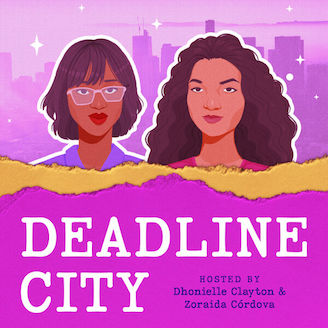
New York Times best-selling author Dhonielle Clayton and award-winning author Zoraida Córdova have joined together to create a podcast about all the things nobody ever told you about being a writer. Whether you’re curious about navigating the publishing world, editing your novel, or just staying interested in writing, this podcast offers an in-depth look at what it takes to write a book, and what happens after your first publication.
Listen to if you miss: Feeling happy, hopeful, or optimistic
Anyone who reads young adult (YA) literature knows how much fun these books can be. If you’re looking for books that are a little more playful than the stodgy literary classics, be sure to check out this podcast from Book Riot. Hey YA offers recommendations for YA books, the latest news about YA fiction, and interviews with YA authors. If you’re looking for book lists for horror enthusiasts, aspiring witches, political activists, or people with short attention spans, Hey YA has what you need.
Listen to if you miss: Going to parties just to snoop around a stranger’s apartment
Listeners looking to discover how teenaged bookworms became world-renowned authors will love this bookish podcast. Host Daisy Buchanan interviews a different author every week to snoop around their bookshelf and find out which books mean the most to them, which books inspire them, and which books just look good on the shelf. If you’ve ever wondered how a reader becomes a writer, you should listen to this podcast.
Listen to if you miss: Lying on the floor of your apartment after a party, talking to your best friends about things that straddle the line between petty and existential
This podcast isn’t really about books, but it is hosted by two internationally-renowned poets, Olivia Gatwood and Melissa Lozada-Oliva. In Say More, Gatwood and Lozada-Oliva interview each other, their friends, and experts about things they have a lot to say about. Although they don’t talk exclusively about writing or literature, Gatwood and Lozada-Oliva look at their topics and guests through the lens of a poet—which is to say, they flip the subjects on their head and break them into a million unexpected pieces. Topics include: sharks, prison abolition, gay porn, YouTube makeup tutorials, and cancel culture.
Listen to if you miss: Going to the library and spending a few hours wandering between the shelves
Every week hosts Lauren and Hannah get together to discuss the work, lives, and legacies of women writers from the 18th, 19th, and 20th century. Some of these authors are well known, like Jane Austen and the Bronte sisters, some are authors you may not have thought of in a while, like Beatrix Potter and L.M. Montgomery, and some are authors you’ve probably never heard of, like Sarah E. Farro and Sarah Piatt. The hosts are often joined by experts and academics to dig even deeper into the worlds of these women writers. Whether you’re a Charlotte, an Emily, or maybe more of an Anne, you’ll love Bonnets at Dawn.
Listen to if you miss:Going to the movie theater, sitting in a comfy seat, eating popcorn, and listening to other theatergoers murmur in the dark
This literary podcast invites acclaimed authors to read their favorite short stories. The twist? These readings are designed to be radio-theater productions that fully immerse readers in the world of the story. Using original music and sound design, Storybound invites listeners to engage with authors on a whole new level.
Listen to if you miss: Attending readings and chatting with authorsat your favorite indie bookstore
The Talking Book Podcast is the creation of indie audiobook recording studio The Talking Book. It’s great for listeners looking for interviews with their favorite underground authors, plus discussions of the editors’ favorite essays, excerpts, poetry, and fiction. If you’re yearning for the days when you could wander the small-press section at your neighborhood bookstore, you’ll love this podcast.
Listen to if you miss: Book club meetings with friends who always pick the best reads
James Murua’s blog has been called “the leading blog in African literature,” and his podcast is no different. James Murua’s Literary Podcast gives voice to African and Black authors, while also covering African literary news. Every week, Murua interviews a different African author, both newcomers and award-winners, and keeps listeners updated with the African and Black literary scene. Anyone looking for the literary news beyond the white-centric Western monotony will be thrilled to find Murua’s podcast.
Apologies, but I have to begin my introduction to this list of books by briefly mentioning my own book; shout your aggrievance about this to the heavens if you must.
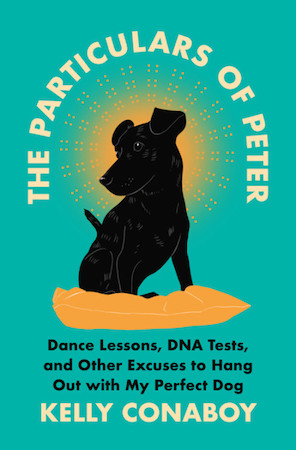
Writing my book, which is a hybrid of memoir and reporting about my dog, was difficult for me at times, because I’m not used to writing about myself, and it frankly makes me somewhat uncomfortable. But one thought brought me through it: the hope that readers would sometimes see themselves in my peculiarities, rather than see me. That they might also feel weird about throwing away their dog’s fallen whiskers, or that they might also sing to their dog about the fact that it is dinnertime, or that they might also look at their dog and cry because oh my god they love him so much, or that they also wonder whether or not they have dog hair in their lungs. My hope was that anyone reading it will, at least at points, think: That’s me, too.
This is one of my favorite reading-related feelings; that I am not alone in an odd or seemingly “dumb” question, or a peculiar way of thinking. Below is a collection that made me feel that way, that’s me, too, for various different reasons.
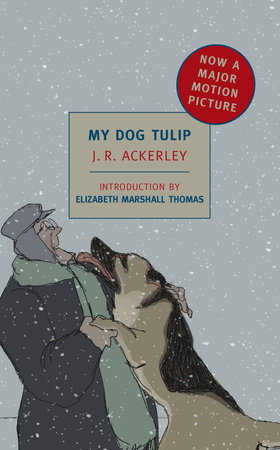
J.R. Ackerley’s book-length love letter to his dog is a relief to me, and I assume, to all of us who love our dogs with a passion that could inspire an entire memoir. I can’t read this book in public because there are too many moments that remind me too intensely of my own devotion to my dog, and prompt tears. The first one comes near the memoir’s start, after Ackerley’s recalls accidentally being bitten by his dog (she was going for an apple) and his dog’s subsequent apology-like reaction: “…later on, when she saw the bandage on my hand, she put herself in the corner, the darkest corner of the bedroom, and stayed there for the rest of the afternoon. One can’t do more than that.” Gaaah. You see what I mean?
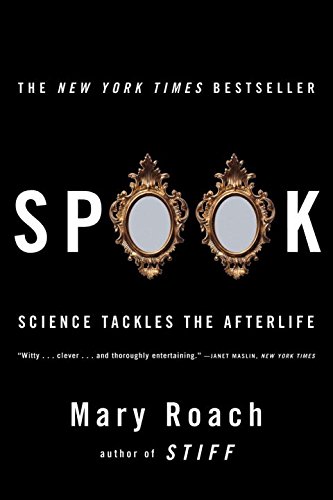
All of Mary Roach’s books are exactly what I want all of the time: intense deep dives into either arcane or seemingly un-arcane, but actually, when you think about it, also arcane topics. Cadavers, eating, ghosts, sex. Spook explores every question that might arise in your mind when contemplating the possibility of an afterlife, which I do often, and many you didn’t even know you should be thinking about—specifically, in that case, how a “vaginally extruded ectoplasm,” revealed during an infamous seance of the 1920s, might have gotten to its hiding place. (“In other words—please forgive me—she stuck it up there, and then she pulled it out,” Roach writes, paraphrasing a Harvard professor on the subject.) Roach always allows you to feel the excitement of sharing an odd question, and the greater excitement of reading about how she actually went to great lengths to figure it out. A true joy.
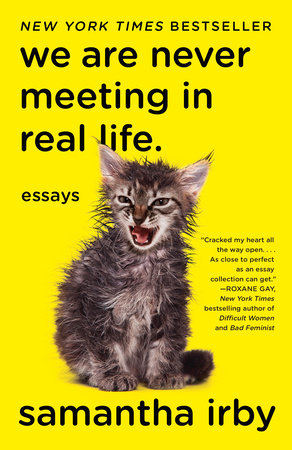
Irby’s writing is consistently brilliant and touching and vulnerable and hilarious, and I just love it so much. And like a lot of great humor, her writing allows you to indulge in human truths about yourself that you may not feel comfortable admitting otherwise, or human truths that she describes with such amusing and perceptive detail that you unconsciously attribute them to yourself, too, even though that is not always accurate, and you are not actually like that, and you are just reading something that is funny. I think about the Bachelorette application that opens We Are Never Meeting in Real Life. all the time. “Do you have any children? I’m counting the cat here. So, yes.” “Do you have any pets? I HAVE A CAT-CHILD NAMED HELEN KELLER; I believe we’ve been over this already.”
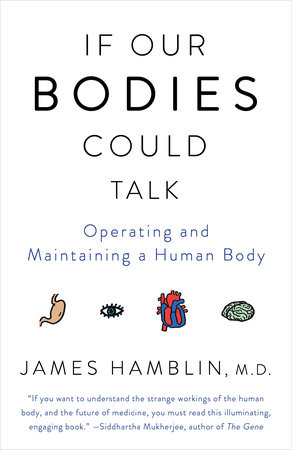
If Our Bodies Could Talk is essentially a list of all of the questions you are embarrassed about having because you assume that probably everyone else already knows the answers and you are a fool and should probably just keep your mouth shut. It turns out that is not entirely true! There are at least a handful of other people who have these questions—like the first one, “If I lose a contact lens in my eye, can it get into my brain?” (answer: no)—and James Hamblin is here to answer them all for us, patiently and with good humor. With every page you’re like, “Oh my god—I thought I was the only one who did not know how my heart knows to beat?” You weren’t. And now you do know, because of the book. Thank you, James Hamblin.
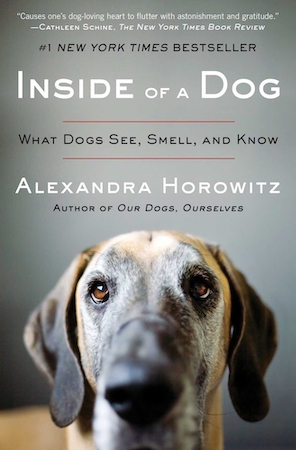
I believe there is no way to share your life with a dog without thinking, multiple times per day, “why is my dog doing this and, if I knew why, would I be able to use that knowledge to give him a better life, please, oh god, all I want to do is make him happy?” Alexandra Horowitz knows why and, luckily, she has written several books to enlighten us. She also gives permission, and direction, for what might seem to some like indulgence. I often like to let my dog linger on walks, stopping at every spot he might want to sniff. This can be an annoyance to anyone walking with me, or behind me, but I have always felt it was better to let him enjoy the sniffing, as it seems to be his favorite activity. Horowitz agrees. “Since I’ve begun to appreciate Pump’s smelly world I sometimes take her out just to sit and sniff,” she writes. “We have smell-walks, stopping at every landmark along our routes in which she shows an interest. She is looking; being outside is the most smelly, wonderful part of her day.” So, there you have it. At the instruction of Alexandra Horowitz, everyone else just needs to wait.
This book did nothing less than change my entire life. Reading it felt like someone was seeing into my mind and assuring me that the exact things that I felt were funny, the exact way of phrasing, the exact level of silliness, could exist in reality as a work of fiction to be enjoyed by all of the like-minded, of which presumably there were some. Every sentence of this book is hilarious, in a genuine, laugh-out-loud, read-it-aloud-to-whomever-is-near-you, sort of way. No space is wasted. It is a miracle, particularly for those of us who think so.
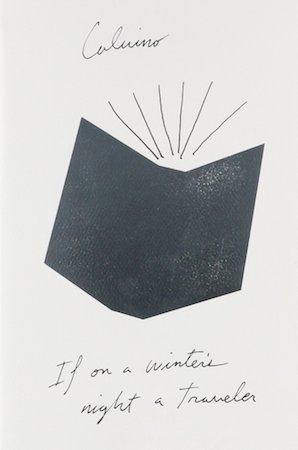
Direct addresses to the reader are not always pleasing, but every time I read this novel I am immediately stunned by direct-address-related pleasure. The first pages—instructions for how best to enjoy reading the novel (“Try to foresee now everything that might make you interrupt your reading. Cigarettes within reach, if you smoke, and the ashtray. Anything else? Do you have to pee? All right, you know best.”) and then a lengthy sidebar on how the reader might have come across the novel in the first place—immediately make one feel seen to the point of insecurity. Oh god, how does he know? Is he here? Can he see me? This energy, which moves the rest of the novel along briskly, (though it’s not always in the second person), feels specifically designed for you, the individual reader, as if it were tailored to your expect specifications. (Here by “you” I mean me, but I do predict that I also mean you.) Here I am, you (I) think, the exact audience for this book.
In an unpredictable year, we could count on one thing: Electric Literature readers will always be motivated by stories that put the world into literary context, and put literature into the context of the world. You loved book lists about defunding the police or destroying capitalism, recommendations for work by BIPOC writers, and essays about moving book events to Zoom, reading the “Earthsea” series as part of the work of racial justice, and knocking Joan Didion off her pedestal. But true to the chaotic nature of 2020, there were a few surprises too. Below are our most-read posts of the year, in ascending order of popularity.
Caldwell, the editor of the fantasy anthology A Phoenix First Must Burn, highlights books that take “Black girl magic” literally.
When [my anthology] sold, we were just beginning to see Black-authored YA fantasy and science fiction novels get major traction… It said that these stories didn’t just matter to us Black girls who grew up reading and imagining ourselves in fantastical and futuristic worlds, but that there is a wider market than maybe even we ourselves realized.
So what’s your excuse? No, just kidding, we promise that’s NOT the take-home message of this essay about the medieval memoirist who might as well be the patron saint of moms who write.
Margery’s Book offers perhaps the earliest example of how childbirth and motherhood can become generative in a literary context—even, or perhaps especially, when the writing is not about childbirth and motherhood. We need all the examples we can get.
Sourdough burst on the scene as a quarantine project in April, but Robin Sloan, author of Sourdough, had been looking into the magic of microbe-based baking for a while. We asked him to help us understand.
One of the things these microbial communities are amazing at is coordination, and I think there’s something about that worth dwelling on in this moment. Of course, I don’t want to be a lactobacillus, even if it means I can work in perfect harmony with a community of billions; but… I guess I’d be willing to LEARN some things from a lactobacillus?
Our wickedly funny former intern ranks the crypto-religious children’s classics, from the barely-remembered The Horse and His Boy to the unforgettable introduction of “Jesus’s fursona, Aslan.”
While the Chronicles of Narnia series might be a little polarizing—for some it’s a beloved childhood classic, for others it’s a cheesy Jesus-fest—I think we can all come to agreement on who is the worst Pevensie: Edmund. Another thing we can agree on is viciously pitting nostalgic pieces of media against each other to see who comes out on top.
J.D. Vance’s memoir of growing up in, and getting out of, Appalachia is frequently cited to explain “Trump country.” But, says Appalachia-born Whitaker, the smug superiority Vance demonstrates for the “hillbillies” of his youth actually contributes to the sense of alienation that Trump exploited.
At a time at which the threat of fascism has never felt closer, the last thing the country needs is a narrative that alienates an entire region, deepening an already-substantial fissure between Appalachia and the rest of the country. When appealing for votes in the southeast, Trump presented himself as an outsider, and many Appalachian voters—not without good reason—responded to that assertion, so much so that Mitch McConnell found himself leaning on his association with Trump while successfully campaigning for his reelection to Kentucky’s senate seat this year. It raises the question: what would the electoral map look like if we took the “hillbilly” out of the equation and, instead, considered Appalachia as a constituency worthy of decency and respect?
Was this interview with Garth Greenwell only so popular because we put “gay sex” in the headline? Mind your business. Anyway, even if it did get a bump from SEO, this is a barnburner of an interview, in which Greenwell resoundingly rejects the idea of a “general reader” who might object to his centering queer erotics.
Concepts like “general reader” make me uncomfortable. Who is this “general reader“? What is this “willingness” we’re supposed to care about? Do we assume that the general reader is straight? White? Male? Midwestern? I think it’s pretty impossible to make use of an idea like that without projecting onto it our hopes or our fears—I think it’s impossible to make any use of it that could do us any good. I don’t want any specter of the general reader, or the dominant culture, to shape what I write—whether I’m attempting to appease that specter or to spurn it.
You know what’s a better introduction to Appalachia than Hillbilly Elegy? Any of these works from the vibrant and long-lived “Affrilachian” tradition, all of which challenge misconceptions about the region.
Black Appalachians have always been invisible to mainstream culture that wrongly conflates “white” with “Appalachia.” Stereotypes are even more prevalent in today’s political climate but the presence of African people in the Appalachian mountains was documented as early as the 1500s. Many Black people are still settled in hollers, former coal camps and thriving urban Appalachian towns and cities throughout the region. Our ancestors were among the earliest settlers.
Even some otherwise intelligent people claim that “defund the police” is a confusing slogan for combating the misappropriation of our ostensibly public resources to police departments that use them primarily for violence and harm. But they might not think so if they read up a little. Jae-Yeon Yoo put together a list of books for those who actually want to understand.
We have seen that the U.S. policing system is deeply rooted in anti-Black, racist structures of power that uphold white supremacy. The past week’s events have shown us, once again, that our national crisis is beyond a matter of police reform; it is long past time that we hold the police accountable for their brutal actions, and start thinking of more viable options for our future.
“But,” you might be saying, “every time is a good time to read these singularly humane fantasy novels!” Yes, says Porter in his thoughtful consideration of what Ursula Le Guin’s work has meant to him and the world, but they hit different now.
To white protestors and accomplices, who say that they want to listen but are fearful of giving up some power so that we can all heal, I suggest you read the Earthsea cycle. You will need to learn to step away from the center to build a new world, and the Black majority in this fantasy series offers a better model than any white history. I encourage Black people to read Earthsea too, if only to remind yourselves that once upon a time a white woman in Portland saw us, recognized us as beautiful, and built an entire world where we had the privilege to decide that we could share our power.
Like the rest of us, readings and author panels had to abruptly adjust to being distanced and fully remote this year. Kate Reed Petty wonders whether there’s a way to leverage the possibilities of the internet to make these events feel more like human connection and less like… well, everything else we do on Zoom.
Don’t get me wrong—many of these events have been truly excellent. But the internet, which can be thrilling and inspiring and creative, rarely mimics the conventions of the physical world. So why are we still circumscribing book events according to the limits of what is possible in person?
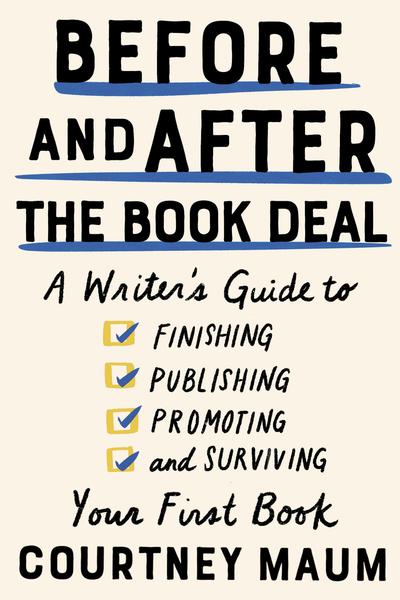
You’re already listening to podcasts that will make you an expert on science, murders, and things people are wrong about. So why not throw in some podcasts that will improve your writing chops? Maum, who knows what she’s talking about (she’s the author of Before and After the Book Deal) recommends several.
I am a big fan of listening in order to write better. Long before I published my first novel, I supplemented the MFA that I don’t have with a DIY MFA that saw me going to one reading series for every night that I was in New York City during a short-term job contract I had there. It was thanks to my over attendance at these reading series that I was able to identify the narrative shortcomings that were keeping me from getting work published in the magazines that I admired.
Add this to the list of things we’re mad at Amazon about! In 1996, a tiny press was set to release the first work by the reclusive author in decades. Here’s what happened next, why it was never published, and why Salinger never put out another book in his lifetime.
Salinger’s ideal publication run would be limited, under-the-radar, and relatively inexpensive. Later, it would come out that Salinger wanted the books to be sold only at retail price, with no mark-up for the store at all—and that he wanted his name removed from the cover entirely. It should just read Hapworth 16, 1924, with no author listed.
You may not always be in the mood to read Das Kapital—but thanks to speculative fiction, you don’t have to. These books make a better future seem possible by letting us see what it would look like (or make the flaws of our current system evident by taking them to their logical conclusion).
Speculative fiction immerses the reader in an alternate universe, hooking us in with a stirring narrative and intricate world-building—or the good stories do, anyways. Along the way, it can also challenge us to take a good look at our own reality, and question with an imaginative, open mind: how can we strive to create social structures that are not focused on white, patriarchal, cisgendered, and capitalist systems of inequity?
This is a manifesto, but it’s not a vendetta: Gurba likes and respects Joan Didion’s work. The problem is Joan Didion’s work doesn’t respect her—or rather, that it doesn’t leave room for the Mexican heritage of California, a state that’s been tacitly and sometimes explicitly ceded as Didion’s domain.
These days, I find what Didion doesn’t show more interesting than what she tells. Literary criticism, along with history, hands me a scalpel, enabling me to slice open the stomachs of those subjects made visible by her prose. I can poke at the exposed contents, smell them, learn from them, and give them a proper burial. Can we make etching their tombstones a collective effort?
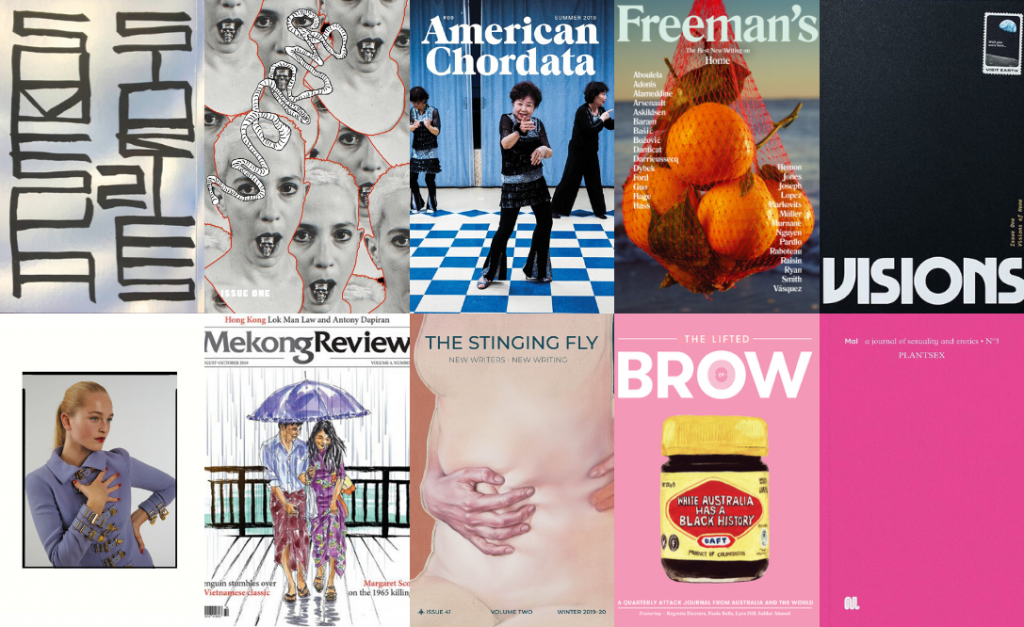
Electric Literature is obviously your favorite lit mag online. But for print enthusiasts—or, say, holiday gift-givers?—Watson, who runs curated magazine subscription service Stack, recommends independent literary magazines that reward your attention.
Of course the fact that pretty much anyone can now be their own editor-in-chief and creative director means that lots of the work committed to print isn’t all that good, but there are some extraordinary gems out there waiting to be found, and that’s what we spend our days doing.
One hundred years ago, in March, we noticed that people were seeking out books about plagues and pandemics in order to envision (or perhaps catastrophize about) the disaster we were facing. This list runs from the very real 1918 flu pandemic to a very fictional zombie invasion.
If the last thing you want to think about right now is global epidemic disease, we get that! But novels can also help people wrap their heads around something that may seem too big and scary to process. If you feel like you’re living in the first pages of a post-apocalyptic story, these books about historical and speculative future pandemics might help you feel less alone.
Before The Witcher was a TV show, it was a video game, and before it was a video game, it was a book. And while lots of TV shows are adapted from books, for some reason not that many video games are? These books, though, are just crying out to be games and someone should adapt them immediately.
Even in a game whose primary questline would be something world-changing like “restore magic,” what could be a better side quest than “ride every cat”?
All nonfiction writers who have ever lived in New York (and probably most fiction writers and a certain percentage of writers who don’t live in New York at all) have to go through their “leaving New York” essay phase. The pandemic accelerated this for a lot of us, since we were trapped in our tiny apartments. But what should we write about what we learned here in the City that Never Sleeps? That’s where this chart comes in.
Maybe you were heavily influenced by the “worst places in New York” Twitter discourse. Maybe you’ve just spent four months contemplating how you spend half your income to live in a tiny dark room. Whatever it is, you’re now fantasizing about saying Goodbye to All That. We cannot responsibly encourage you to move around the country right now, but we can help you get started on the inevitable personal essay you’ll write when you do!
R.O. Kwon’s yearly roundup may be the most-anticipated of all most-anticipated lists. It’s consistently one of our most popular pieces on the site, every year, and we couldn’t be happier that so many people are seeking out women and nonbinary authors of color to add to their TBRs.
This list is now in its fourth year, and has expanded to include nonbinary writers of color; it gets larger each year, and I’m told it’s used to help inform books coverage in other publications, that high school teachers and college professors look to this Electric Literature list when forming syllabi. This fills me with such complicated joy: my hope is that, one day, publishing will be so inclusive that a list like this will become less useful.
What do you do when you’re trapped in a malign pre-apocalypse story you don’t understand? You seek the insight of one of science fiction’s premier thinkers, of course. Ted Chiang took the time to talk about the pandemic, political progressivism, “good vs. evil” stories, and why the slow-motion disaster we’re living through would actually make a terrible science fiction novel.
If your goal is to dramatize the threat posed by an unknown virus, there’s no advantage in depicting the officials responding as incompetent, because that minimizes the threat; it leads the reader to conclude that the virus wouldn’t be dangerous if competent people were on the job. A pandemic story like that would be similar to what’s known as an “idiot plot,” a plot that would be resolved very quickly if your protagonist weren’t an idiot. What we’re living through is only partly a disaster novel; it’s also—and perhaps mostly—a grotesque political satire.
At least being stuck at home all year meant you got some reading in, right? Just settling in for a long, sustained session with a new book and your pristine attention span, unmarred by stress? Okay, well, maybe you have some catching up to do. We polled Electric Literature staff, former staff, and contributors on their must-read novels of 2020, and in roughly ascending order (we had a lot of ties), here are their 25 favorites. (You may also be interested in our lists for best short story collections and nonfiction.)
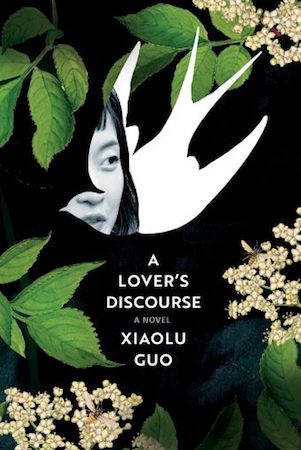
British Chinese author Xiao Lu Guo’s 2007 novel A Concise Chinese-English Dictionary For Lovers was critically acclaimed and her new epistolary novel A Lover’s Discourse meditates on the same theme: the loneliness of an immigrant struggling to express herself and find belonging in a country shaken by the throes of populism. The unnamed young woman in A Lover’s Discourse moves from China to London as a graduate student right in the middle of the Brexit referendum. Her loneliness and sense of disembodiment is heightened by her new identity as a Tier 4 immigrant, the recent death of her parents, and her struggle to be fully understood. She feels a “distance pain, an ache or a lust for a place where you want to belong” and tries to find a home in you, an unnamed half-British half-German man, to whom the letters she writes are addressed. Read an interview with Xiao Lu Guo here about using interracial relationships to examine immigrant identity and cultural differences.
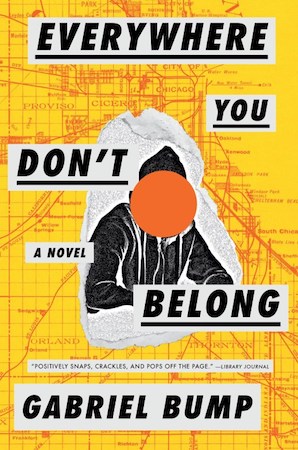
Where can a young Black man find belonging in America? Gabriel Bump’s debut Everywhere You Don’t Belong follows Claude Mckay Love as he comes of age in the South Side of Chicago and moves to Missouri for college. Read an interview with Gabriel Bump about how diversity meetings turn into white guilt parties with bad snacks.
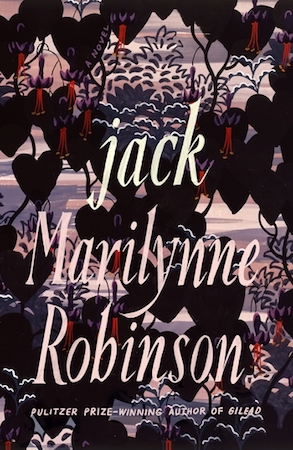
Marilynne Robinson returns with the fourth book in her Gilead series, Jack. Jack was a feral and destructive child in the earlier books, with a compulsion for stealing, drinking, and blowing up things just for the hell of it. As an adult, he’s a convicted felon, still a drunk, and now also a deadbeat dad. Living in St. Louis after a stint in prison, he’s determined to live as a hermit, emotionally sealed off from the world, until he meets Della Miles. A relationship between a troubled white ex-con and a respectable Black schoolteacher would be frowned up at any time in history, but this is the Jim Crow era where interracial relationships were illegal and met with violence. Beautifully written, Jack is a thorny novel about redemption and finding grace.
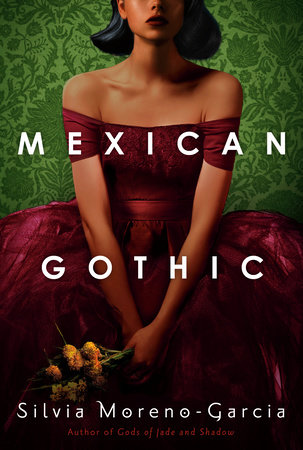
This story of a headstrong young debutante sent to a creepy mansion to look after her ailing cousin delivers exactly what it says on the tin—all the eerie delights of a gothic novel, all the vividness of Mexico in the ’50s. If you didn’t know that a Mexican gothic novel was exactly what you needed, well, now you know. Silvia Moreno-Garcia curated a reading list of classic gothic books from the 20th century for Electric Lit.
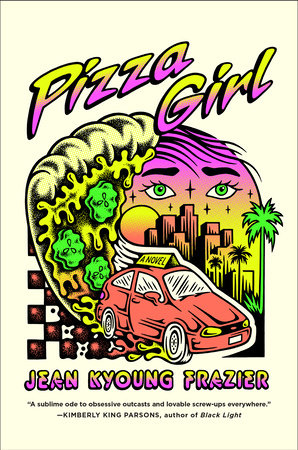
Pizza Girl is the queer slacker pizza delivery novel we didn’t know we’ve been waiting for. Jane is a Korean American teenager living in suburban Los Angeles and working the delivery run at a pizza joint with a B-cleanliness rating. Oh and she’s pregnant but not excited about it (and guzzling beers in the middle of the night, but that’s a secret). A special request for a pepperoni and pickle pie leads Jane to develop a crush and intense obsession with Jenny, a frazzled mom and recent North Dakota transplant. Read an interview with Jean Kyoung Frazier on writing against the idea that aimlessly fucking around is a specifically male thing.
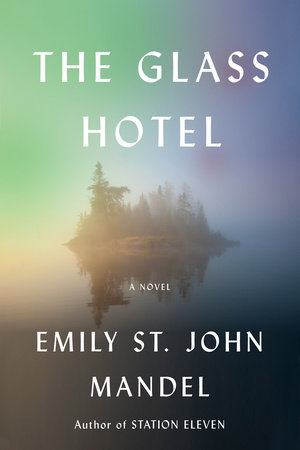
The pandemic drove many people to reread Mandel’s prescient post-apocalyptic novel Station Eleven, but the real hero of 2020 was this quietly riveting book about Ponzi schemes, strange hauntings, and the sacrifices we make for financial safety. Read an interview with Emily St. John Mandel about how history is doomed to repeat itself.
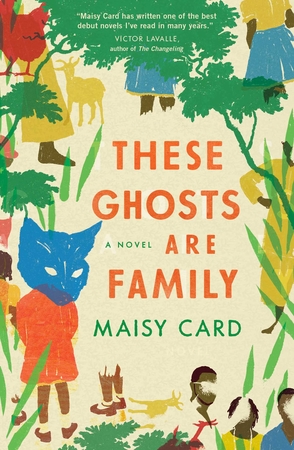
We love a rich intergenerational immigrant family epic, and These Ghosts Are Family is that and more: it’s also an investigation of how a long-held secret can upend a family, and how the dead never go away. Some of those hauntings are literal, in the form of ghosts; others are more metaphorical, the long aftereffects of colonialism and genocide. This debut novel follows the Paisley family from Jamaica to the U.S., where Abel Paisley, who has been living under a stolen identity after faking his death, is now facing his real one.
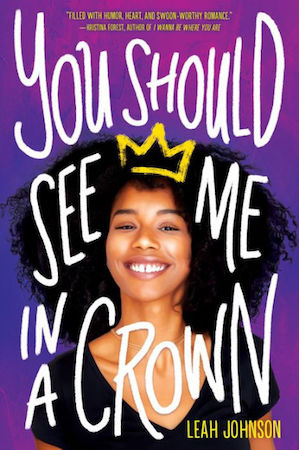
Because our best-of list is democratically sourced from our staff and contributors, we don’t usually include young adult novels—not enough of us read them regularly. But we’re big fans of Leah Johnson, whose Electric Lit essay “How Young Adult Literature Taught Me to Love Like a White Girl” got her the agent for this book (and who went on to be our social media manager for a while!). So of course we read, and loved, this exuberant story about two high school misfits competing for prom queen—while also falling for each other.
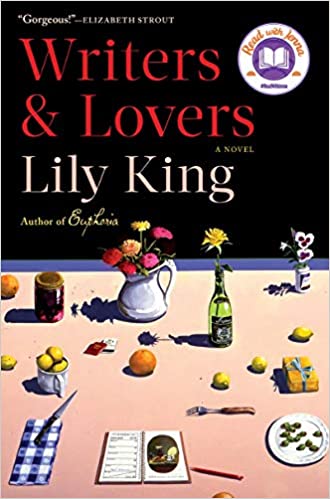
King’s protagonist Casey Peabody is living the writer’s dream: grief-stricken, adrift, lonely, and living in squalor, and struggling to finish her work. Plus, it’s the ’90s—truly the fantasy. In this witty, aching novel about creative identity, relationships, and sacrifice, Casey juggles three loves: two human men and the novel she’s been working on for years.
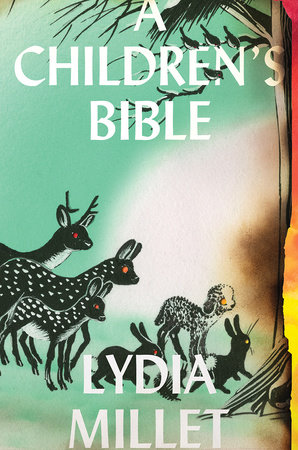
Is there any writer more professionally qualified to write a novel about climate change? In addition to writing 16 books, Lydia Millet has a master’s degree in environmental policy and works for the Center for Biological Diversity, a non-profit that seeks to “secure a future for all species, great and small.” This National Book Award finalist takes place one heady summer where a group of children and teenagers are staying at a lakeside mansion where their parents plan to have a debauched alcohol-fueled vacation. When a storm destroys part of the country, the adults decide to the best course of action is to kick their bacchanalia up notch while the children run away to higher ground in search of safety. Read an excerpt from A Children’s Bible and an interview with Millet about writing an American chaos story.
A white family leaves their Brooklyn life behind for a summer vacation in Long Island. With no cell service, the off-the-grid luxury Airbnb they’ve rented is “The Ultimate Escape” from real-world distractions. Until they get an unexpected knock on the door from the Black homeowners who claim that a mysterious blackout has engulfed New York City. A suspenseful novel about race, class, and privilege, Leave the World Behind asks how will we adapt in times of uncertainty and crisis: “The world operated according to logic, but the logic had been evolving for some time, and now they had to reckon with that. Whatever they thought they’d understood was not wrong but irrelevant.” Read an interview with Alam about being trapped inside while the world burns.
What happens when your deceased grandma turns into a bird and tells you not to go through with your marriage on the eve of the wedding? Oh and she shits all over the wedding dress too. Thanks, Grandma! Bertino’s magical realism novel is a bewitching dream laced with dark humor. Read an excerpt from Parakeetand an interview with Bertino about the strangeness of American beauty ideals.
Nobody explores the inner lives and fraught relationships of young Italian women like Elena Ferrante. The Lying Life of Adults is separate from the author’s beloved Neapolitan quartet, but fans will find many of the same things to love: an emotionally intense coming-of-age story about desire, deception, and the way we depend on other people.
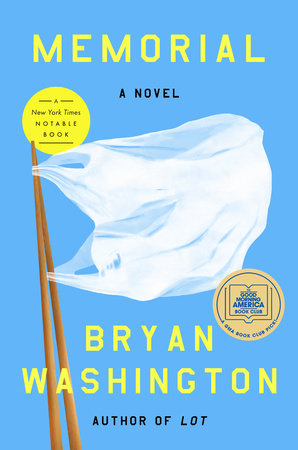
Set in Osaka and Houston, a slacker dramedy about two men of color in love. Mike is a Japanese American chef and Benson is a Black daycare teacher: they’ve been in an undiscussed-sort-of-relationship for four years. They’re constantly fighting, and having equally passionate makeup sex. Mike leaves Benson behind to visit his dying father in Japan, the same day that Mistuko, Mike’s taciturn mom, comes to stay with them. Needless to say, it’s an arrangement no one is pleased with. Memorial is a portrait of the messy complexities of relationships, both romantic and familial, and the things that are left unsaid.Read an interview with Washington about food as a love language and how remarkable it still is to write gay sex.
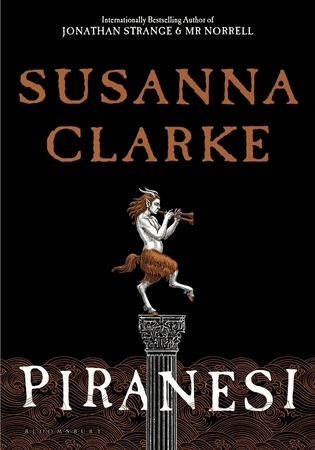
Structured as a diary written by a nameless man trapped in an endless, labyrinthine House, Piranesi might feel familiar to anyone who’s spent the year in social isolation—or it might evoke envy about how vast his home is compared to yours. This odd, often dreamlike book is teeny compared to Clarke’s nearly-800-page magnum opus Jonathan Strange & Mr Norrell, but it packs a proportional amount of strangeness and charm. Read an essay about how Piranesi is a portal fantasy for people who know there’s no way out.
Emezi’s second adult book is more tense and controlled than their explosive debut Freshwater, but no less riveting. It’s a little bit of a mystery, a little bit of a ghost story (Vivek dies right away, but is still an active voice in the novel), and very much a family drama full of tension and secrets. In the end, it’s not just about how Vivek died, as the title suggests, but about how he lived. Read an interview about why Emezi killed their main character on page one and read an excerpt from the novel.
There’s something so spooky and compelling about girls’ schools, and there’s something so spooky and compelling about misguided attempts at utopian living. So a novel about a mysterious illness at a 19th-century school for girls founded by a washed-up transcendentalist… well, what could it be but spooky and compelling? A bit Little Women, a bit The Fever, Beams’s first novel is an unsettling parable of women’s pain. Read an interview with Beams about whether the patriarchy is making teenage girls sick.
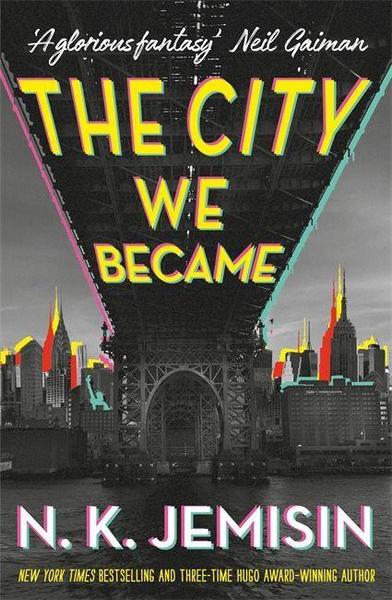
It’s become a cliche to say that “New York is practically one of the characters” in a movie or TV show—but New York is literally several of the characters in The City We Became, in which five formerly-normal humans become avatars of the city’s boroughs. The newly-minted city defenders (well, Queens, Brooklyn, Manhattan, and the Bronx—Staten Island is, predictably, just making things worse) must battle a Lovecraftian interloper who also represents gentrification. It’s a fantasy romp that’s also a sincere consideration of community, belonging, and how we shelter each other.
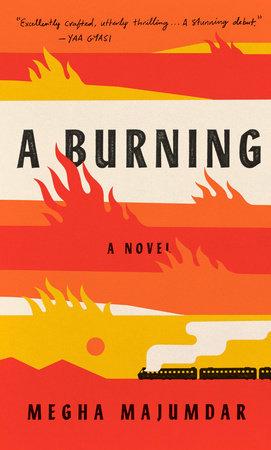
A Burning is epic in scope, encompassing three interwoven plotlines in modern India that tackle topics as large as social media, government overreach, and gender and sexuality. But Majumdar’s work is equally engaged in the details, tenderly conjuring the petty human desires and weaknesses that fuel large, inescapable catastrophes. Read an excerpt from the novel in Recommended Reading, or read an interview with Majumdar on what it means to hope in the face of injustice.
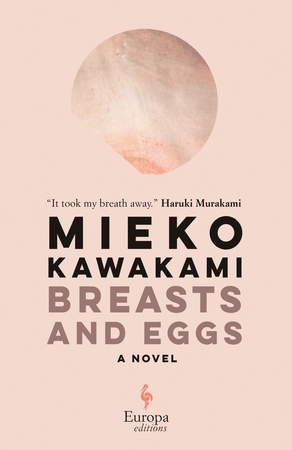
Already beloved in the Japanese literary world, Kawakami makes her English-language debut with this experimental novel about the burdens and expectations we place on women’s bodies. Main character Natsuko deals first with her sister’s desire for breast implants, then with her own pursuit of artificial insemination; both parts of the novel are intimate, unstinting, and reflective of and about our ideas of femininity and womanhood. Read an interview with the author.
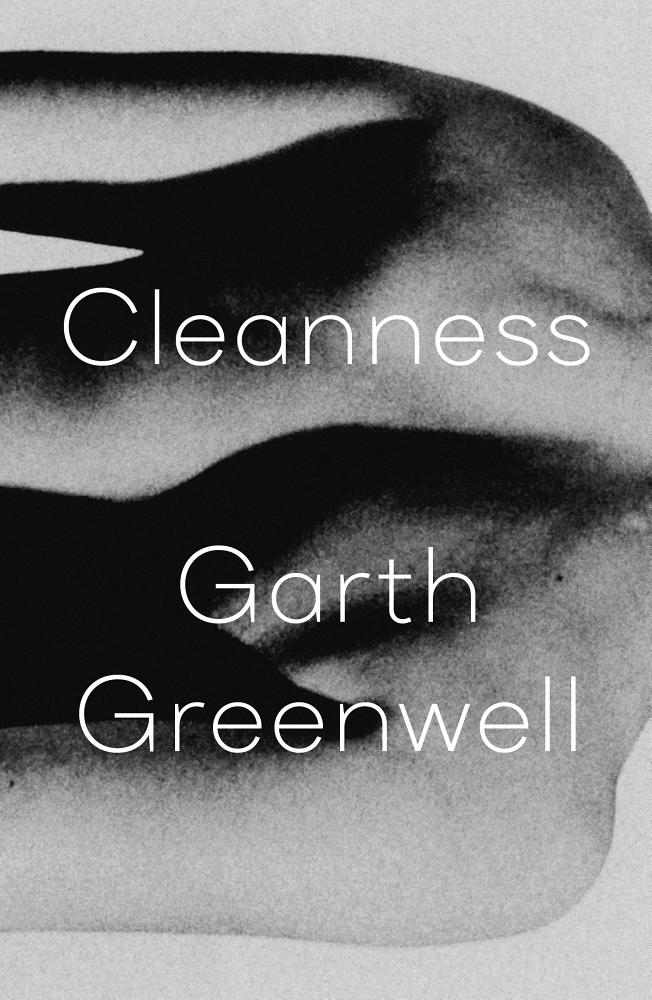
Garth Greenwell, he says in an Electric Literature interview, rejects the idea of the “general reader.” Perhaps Joe Public isn’t interested in the frank, tender eroticism of this novel about an American teacher seeking connection and intimacy in Bulgaria. But Garth Greenwell isn’t writing for some imaginary straight male default—he’s writing for people who recognize that “gay sex is the stuff of great literature.”
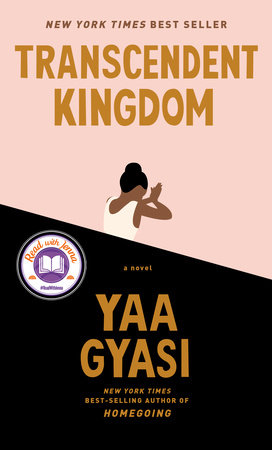
In Transcendent Kingdom, the people are addicted and depressed and so are the mice. In the lab, main character Gifty studies mouse neuroscience; at home, she navigates the even more complicated human cost of the deaths, tensions, mental illness, and opiate addiction in her increasingly alienated immigrant family. Read an interview with Gyasi.
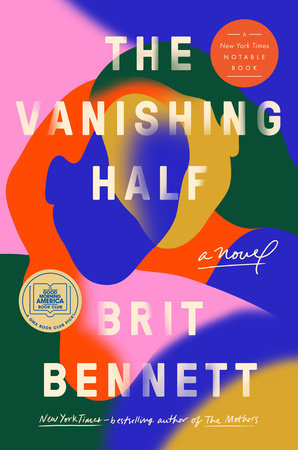
Whiteness is the invisible force behind so much oppression, violence, and inequality in this country—invisible by design, because whiteness erases its own tracks. The Vanishing Half keeps racism and colorism in the crosshairs by looking at whiteness from both sides: one twin who embraces her Black identity and her dark-complexioned daughter, and one who presents herself as white, including to her white husband. Both sisters, and their daughters, struggle with the societal and personal costs of racism as they strive to find their place and their identity. Read an interview with Brit Bennett about the performance of whiteness.
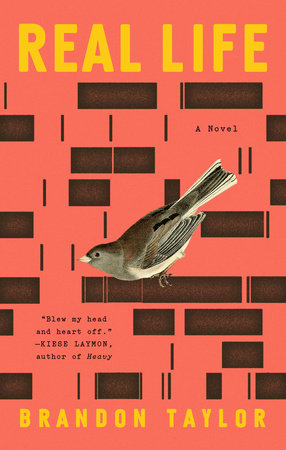
Brandon Taylor is the senior editor of Recommended Reading, so we’re a little biased, but you don’t have to take our word for it that Real Life was one of the best books of the year—a little thing called the Booker Prize agreed. This debut novel, about a queer Black doctoral student struggling to fit in at a quietly vicious Midwestern university, was one of six finalists for the prestigious award. Read an interview with Taylor about how he captured the loneliness of being Black and queer on campus.
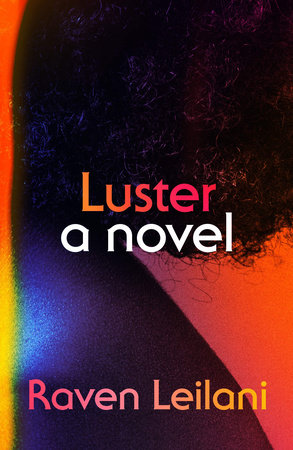
It’s a mixed blessing at best to be called the “voice of your generation,” but Raven Leilani may not be able to escape the label. Luster is about a young woman who enters into a fraught relationship with an older man in an open marriage, but much more than that, it’s about being financially insecure, creatively unfulfilled, emotionally adrift, and basically every other experience that’s endemic to being young in the destabilized modern era. It even features the quest for health insurance, which Nitya Rayapati, in an essay about Luster for Electric Literature, identified as the new equivalent of the “marriage plot.” Plus, the prose is gorgeous, as you can see in this Recommended Reading excerpt. You can also read an interview with Leilani about art, hunger, desire, and desperation.
In The Party Upstairs, Ruby—out of college, out of work, and newly out of a relationship—reminisces often about her senior thesis, a series of dioramas depicting the trash room in the Upper West Side co-op where her father worked and she grew up. Later she interviews for her dream job, designing dioramas for The Natural History Museum. “I’ve never made a diorama,” Conell told me when I asked her about the recurring theme over email, “but I’ve dreamed of dabbling.” I respectfully disagreed. The Party Upstairs functions like a diorama in words. Taking place over the course of a day, the reader is thrust into a narrative contained by time and place, glimpsing the inhabitants of Ruby’s apartment building with voyeuristic clarity, as if the side of the building had been peeled away, as if the characters’ lived in a dollhouse of Conell’s creation.
The Party Upstairs opens with Ruby and her father Martin, the co-op’s super, trying (and failing) to meditate together. The frustration that bubbles through their forced silence quickly reveals the novel’s central tensions. Ruby has just moved back into her parent’s basement apartment and struggles to find herself and her future in the neighborhood. Meanwhile, Martin attends to the maddening shitstorm (sometimes literally) that is building maintenance. While Ruby revisits her decades-old friendship with Caroline, the childhood playmate who occupies the co-op’s penthouse apartment, Martin uses meditation and bird-watching to try to calm his growing frustration with the extraordinarily needy tenants, which now include his own daughter. Told over a single day, the novel builds towards a swank party Caroline is hosting that evening, a party that Ruby may or may not attend and Martin will, no doubt, be tasked with cleaning up.
Thrilling and darkly humorous, Conell’s novel upends assumptions about class, family, and art. As with her previous book, Subcortical, winner of The Story Prize Spotlight Award, Conell’s writing is funny, brave, and delightfully fresh.
Anya Groner: As with many first novels, there are autobiographical aspects to The Party Upstairs. Like Ruby, you grew up as the only child of a two-parent family in the basement of the apartment building where your father was a super. How much do your own experiences dovetail with Ruby’s?
Lee Conell: At first, I resisted this novel as it began to grow into something novel-sized, mostly because of the autobiographical elements, which I worried might be impediments to imagining in the directions I needed to imagine. But I kept feeling drawn back to it, and in turn it became ever more its own strange self. After a while, so much of the novel seemed like its own thing, apart from my life, that the remaining autobiographical elements started to seem almost playful. There’s something fun about inviting speculation as to what in the book might be secretly “most real” or “authentic,” and what might be fiction—in part because a number of the characters in the book are bent on bestowing Martin and even Ruby with this extra degree of authenticity due to their working class background…as if their economic status makes Ruby and Martin’s motives more pure than the wealthier tenants in the building. The novel ended up being far more concerned than I initially realized with complicating ideas of real-ness.
AG: Dioramas appear throughout your novel—on the cover which features a diorama of a cardboard girl climbing the cardboard stairs in a cardboard apartment building, in the Natural History Museum, in Ruby’s senior project. The narrative voice moves through the building as if it were a dollhouse. In the opening passage, for example, Martin, the super, is thinking about “the corporate lawyer in 4D [who] had called screaming with fear about a water bug in the hallway, the financial analyst in 9A [who] had called about her tampon-clogged toilet, [and] the hedge-fund-portfolio manager in 6C [who] had admitted he’d drunkenly tossed his keys on the subway tracks.”
I found myself thinking about how dioramas are both intimate and voyeuristic, like one-way mirrors. The people (or animals) in the display are unaware they’re being observed. What other parallels do you see between dioramas and novels? And how did your understanding of dioramas evolve as you wrote The Party Upstairs?
LC: I love your description of dioramas as both intimate and voyeuristic, almost mirror-like. The artist Joseph Cornell’s shadow boxes often include mirrors. There’s this sense of observing our own selves becoming voyeurs. It’s something I think about a lot in both reading and writing fiction—part of the appeal is seeing inside someone else’s mind. Of course, that’s a bit of an illusion. I know I’m seeing the construction of another’s thoughts while also seeing myself in those thoughts, looking for moments of recognition. Dioramas seem to contain a similar distorted echo.
The diorama component also spoke to the way Ruby tries to preserve her memories of the past, to a degree that means she’s neither fully present with the people in her life nor able to admit that memory is an act of imagination.
AG: The apartment building functions as a metaphor for class. Ruby and her family live in the basement apartment, next to the trash room, while her wealthy best friend Caroline lives in the penthouse. When Caroline throws a party, it’s Martin’s job to pick the beer bottles from the roof. In a recent letter published in The Paris Review, you wrote, “Sometimes it seems to me that we’re unconsciously subscribing to one very limited story about inequality—the nonrich aspiring to be like the rich—over and over. But I’ve experienced a second story: that of the nonrich aspiring simply to live.”
How does your novel explore this second story of “the nonrich aspiring simply to live”? Are there other “second stories” that you hope to convey through your characters?
LC: Books about meditation practices and mindfulness often encourage the meditator to try to drop the storyline to which they’re clinging, consciously or unconsciously. Martin’s interest in meditation stems from his desires to lower his blood pressure and drop the frustrating storylines that swirl in his mind: about the building itself, yes, but also about the way he’s invisible to the tenants, even as he has to pay attention to their demands and lives.
One of the “second stories” that I hoped to convey is the psychic side effects of this invisibility. Class in America is often depicted as strictly aspirational, exploring the tension that derives from the premise of Person With Not Much Money wants all the shiny objects that Character With Lots of Money has. This narrative replaces discussions about a desire for basic dignity (access to affordable healthcare, housing, etc.) with assumptions about fetishistic consumerism. There’s certainly aspiration and occasional wanting of very shiny objects in my novel (shiny objects=extremely nice dresses), but my hope is that there’s also a story in there about how we treat others, how we project ourselves onto others, and how Martin’s job makes him hyper-aware of the flimsy safety net around them. Martin and Ruby both seek some form of sustainability so that they can get by without losing their sense of themselves.
AG: I can’t remember the last time I encountered so much trash in a novel! Trash is evocative, gooey, archeological, intimate. For your characters, it’s the stuff of romance, suffering, art, and shame. I get the feeling you enjoyed writing about trash. Your novelistic gaze goes where most of us look away. Why so much attention on trash? What can trash tell us?
LC: On a purely personal level, nearly every day as a child I witnessed great amounts of trash lined up in garbage bins by the elevator in my building. It’s the flipside of consumer culture, but it’s also its own landscape. And it’s a paradox of the city: Our inner lives are locked away, but there’s the trash of our life, in clear plastic bags, out there on the street for anyone to see. It felt like something that deserved attention.
At the same time, I think there’s a morality game around what we pay attention to, which distracts from the actual attention being paid! “Pay attention to me paying attention to this thing you’re ignoring, so that you can see I’m a good person!” Caroline and Ruby both play that game some. So—I was interested in looking at trash in the novel, but also interested at what the performance of that looking might…um… look like!
AG: Many of the wealthy characters are fascinated, often perversely, with suffering. As a kid, for example, Caroline leads Ruby in a game she calls “Holocaust-orphans-sisters-survivors” where she pretends they’re being gassed. There’s also Andy, an aspiring art photographer, who takes photos of “fringe people” beside “paragraph-long stories . . . about their desperation.” There’s so much dark humor in these scenes, even as they’re troubling. The line between compassion and exploitation is painfully blurred. What draws these characters to the macabre? What do their obsessions reveal about them?
LC: “Holocaust-orphans-sisters-survivors” is ridiculous in a lot of ways, but it points to Caroline and Ruby’s real desire to understand their history, even if they’re glamorizing it. There’s power in taking something horrible and making a game out of it, or a piece of art. When you are making a shape from a horrible thing, there’s strength being demonstrated. I believe on a real level these characters want to connect with something meaningful, something outside themselves. They want to feel they’re helping.
It’s a paradox of the city: Our inner lives are locked away, but there’s the trash of our life, in clear plastic bags, out there on the street for anyone to see.
But this desire for connection happens in a system that is the product of all sorts of forms of exploitation. Caroline, Andy, and Ruby all struggle to see or acknowledge this exploitation, and their roles in it. Caroline and Andy’s obsessions specifically reveal their concern with connecting and understanding suffering, their concern with being seen as good people, and the thrill they feel as witnesses to that suffering, particularly as portions of their lives are very cloistered. That desire to be perceived in a certain way cuts off their own curiosity about and empathy toward what it is they’re actually perceiving. Another form of seeing suffering in order to be seen as a virtuous person who sees suffering. Ahh, again with the mirrors!
AG: The Party Upstairs came out four months into the pandemic, when New York City was in lockdown. What was it like for you to release a New York City novel at a time when NYC was undergoing such radical change? Do any themes in the novel seem more pronounced?
LC: Releasing a novel that takes place in NYC while NYC was changing so much felt surreal, a good reminder that nothing is static. The unexpected parallels did feel uncanny at times. The novel takes place several years after the 2008 economic recession. A struggling economy, debt, grown children moving back in with their parents feel less distant now than when I was writing the book. The rhetoric around essential workers that arose when the pandemic began, how all of a sudden “we” are seeing these workers as essential, important, and visible, there’s a lesson in power and point of view, there. Martin’s perspective in particular—that desire to keep body, soul, and dignity alive—felt resonant.
“Z” by Julián Herbert, translated by Christina MacSweeney
I communicate with my psychoanalyst by phone. My psychoanalyst is called Tadeo. Tadeo pretends to be an impartial judge, but I can see he’s in favor of me allowing myself to be bitten. That’s no surprise. He was first eaten five months ago.
“It’s not a matter of ethics,” he says. “It’s about solidarity. Which in your case, at an existential level, means continuing to be alone.”
I almost burst out laughing: he’s talking about existentialism as if he were alive. He’s a good National University kid. I change the subject so as not to appear to be making light of his situation.
“Why not come upstairs so we can talk face-to-face? Or at least mouth to ear.”
“We are mouth to ear.”
“I mean through the door.”
“No, my friend,” he replies in an extremely somber tone, with the insincere serenity imparted by his academic training. “I’ve made it a rule not to smell my patients.”
“Except for Delfina,” I say, hoping to provoke him.
Tadeo clears his throat to cover a brief silence, then responds: “Delfina has no smell now. And she’s not my patient any longer.” For the last year I’ve been living in the Hotel Majestic, located on one side of the Zócalo in Mexico City. Once a week, Tadeo comes around and does a home psychoanalysis session. At first he used to come up to my room on the fourth floor, we’d make ourselves comfortable (he’d sit on a poorly upholstered chair; I’d perch on the bed) and chat. We generally left the television on to provide some background noise and deaden the carnivorous clacking of the guest in the next room.
Tadeo was the most sensible man I’d ever met until Delfina (I’ve never seen her, but I imagine she’s good-looking) seduced him and, as a sort of tribute, took a few mouthfuls of his left forearm, thus infecting him and causing (without the shadow of a doubt, unintentionally) six months of therapy to go up in smoke. Since then, Tadeo and I have held our sessions via the insipid phone in the lobby.
“Human,” I say.
“Pardon?”
“What you mean is that Delfina has no human smell now. Wouldn’t it be just the same if you called from your office?”
“Human, yes . . . Honestly, coming here isn’t just an overreaction. Who’d connect the call? There’s not a soul left in the lobby.”
He talks about professionalism, but he was having sex with his clients, eventually fell for one of them, and, because he was in love, allowed himself to be transformed into a beast. Or, not a total beast: a cannibal in transition. I’ve said this to him, and he acknowledges it, then sadly adds:
“Maybe I should be your patient.”
It’s a pleasantry. We both know that I’m no good; just a frightened, egotistical master of ceremonies, incapable of helping anyone, even when half the human race is mutating toward death or depression.
Tadeo claims it’s not a matter of ethics but solidarity. The truth is that lately it’s been a matter of food. I venture out to try to find some after dark. There are hardly any mature somnambulists around at that time: they prefer to hunt during the day, although twilight is their favorite hour.
(There’s no reliable data, but it appears that the prolonged ingestion of human flesh eventually leads to—among other things—retinal destruction: bright light is painful, and in the darkness they are like moles. When they go completely blind, they become what I call carnivorous flowers: groaning invalids trailing along the ground. They are still dangerous but strictly sedentary, which makes them relatively simple to avoid.)
In the early days, I was afraid to go outside. I survived on beyond-sell-by-date leftovers from the hotel kitchen: greenish cold cuts, rancid cheese, chocolate, frozen soup, dried fruit . . . However, as the months have passed, I’ve gained enough confidence not only to make forays to the local stores for provisions but also to have something resembling a social life. My greatest success in that respect has been acting as the emcee of the skateboarding competitions on Eugenia. My alimentary excursions provide everything I need: from Pachuca empanadas to granola bars, gallon bottles of mineral water to free liquor. The other day, behind the counter of a former print shop, I found a bag of marijuana and another containing what looked like psychotropic pills. I returned them to their place: when it comes to illegal substances, I’m prejudiced.
We both know that I’m no good; just a frightened, egotistical master of ceremonies, incapable of helping anyone, even when half the human race is mutating toward death or depression.
As long as no one kills me, everything is mine. The country has become a minefield of teeth, but it’s also a bargain basement. Thanks to the fantastical efforts of people whose business instincts drive them to do their duty each day, I enjoy a few of the old services that, in some unconscious way, used to make it pleasant to live among humans: fresh Tetra Brik milk in the mornings, for example. A delivery truck still supplies the 7-Eleven on the corner of Moneda and Lic. Verdad, despite the fact that the store has been looted four times in the last week and no one works there anymore: just a few junkie- faced dispatchers with bite marks on their backs who’ll take your money as soon as they’ve ransacked what little remains in the establishment, all the while shaking like ex-boxers with Parkinson’s. A few nights ago I came across an amazing windfall: moldy falafel and hummus, two pounds of pistachios seasoned with garlic and hot chili, half a strip of Coronado Popsicles, a bottle of Appleton Estate rum, and an iPod with—among other vaguely obscure gems— Smetana’s “From My Life” . . . I waited until sundown on Friday to celebrate my discovery. I’d decided to have a picnic: headphones on, I took my booty up to the terrace of the Majestic.
When I recount this episode to Tadeo, he falls back on the analytical approach he’s been using to treat me for just over a month.
“Have you thought about why you did that?”
“Like I said, to celebrate.”
“And you don’t think there might be some other reason? Some hidden vein of your need to put yourself in danger? Sunset is the very worst time for you.”
I try to change the subject again, but he won’t be sidetracked. “What do you think your neighbors made of it? Did anyone follow you to the terrace?”
“Yeah, one or two of them came to sniff me. Nothing unusual in that. But they did it politely, from a couple of tables away.”
With the exception of Lía, a perfectly human Jewish woman who lives on the second floor and whose only activity is foraging for pirated DVDs around the Palacio de Bellas Artes, all the other guests in the Majestic are bicarnal. While they haven’t yet come to the point of attacking me, their despairing, glazed expressions—exactly like the ones that used to make crack addicts stand out like sore thumbs—follow me everywhere.
Tadeo refuses to let the topic drop. “Did they say anything?”
He’s beginning to annoy me.
“I wasn’t taking much notice of them, because I was spying on the soldiers.”
“What soldiers?”
“The ones who come around in the afternoon to take down the flag.”
It’s the same old routine every day: in the morning, just before sunrise, an armed patrol parades across the Zócalo, unfurling a green, white, and red flag. When it’s fully extended, they attach a strong rope and hoist it up a concrete-and-metal pole that’s maybe 150 feet high. After that, marching in step with the same panache they displayed on arrival, they leave. The flag, on the other hand, spends the whole day up there, fluttering majestically over thousands of walking corpses and the hundreds of mouths of carnivorous flowers huddled in clumps around the Catedral Metropolitana. In the evening, just before sundown, the soldiers return to collect the gigantic standard: they perform their military ballet in reverse order, detaching and furling the patriotic symbol with exasperating solemnity. Part of their task is to bear the requisite arms. They aren’t just for show: almost every day the soldiers find themselves having to carry out the irksome task of executing a couple of the vermin who, having lost whatever brains they ever had, attack the squad without the least respect for their uniforms. In the majority of such cases the soldiers fire at point-blank range, into the temple: the .45-caliber bullets sound dully on the paving stones and the flesh eaters’ heads plummet to perform the Last Slam Dance of Mexico City. Even so, the soldiers rarely manage to avoid being nibbled. That might be why more than one of them inevitably stumbles or others attempt to keep their wrists hidden, readjusting the dirty bandages covering their peeling skin.
Practically the whole army has been infected to some extent. There’s no telling if this has to do with the constant patrols or the lonely nights in the barracks. And although it’s true that they get the best vaccines, it’s also the case that cells of deserters spring up on a daily basis (or at least that’s what CNN says: the national media have disappeared), at the service of the worm catchers. Anything that still functions here relies on corrupting everything else until it becomes an allegorical mural of destruction.
As happens with any real epidemic, ours began with a few isolated cases, indistinguishable from the general sense of outrage transmitted by the now-defunct (or, depending on how you see it, omnipresent) tabloid press. First, a construction worker murdered his lover and workmate on a building site. The authorities found traces of charred human intestines and heart on a piece of sheet metal placed over hot coals. The accused committed suicide during the trial. A year later, a young poet and professor at the University of Puebla was imprisoned for freezing fragments of his dead girlfriend, which he used as an aid to masturbation. Despite the fact that no one could prove he’d either killed or eaten her, the symptoms this individual displayed in the following years left no room for doubt: he was one of the earliest manifestations of a new reality emerging on the margins, belonging to no kingdom or species. A walking virus.
The first person to come to Mexico to study the phenomenon was an English scientist named Frank Ryan, a virologist whose theory was, in broad outline, that the human species’s tremendous evolutionary leap was due not to mammalian DNA but to the high percentage of viral information in our genome. What at first seemed like a polemical hunch capable of explaining diseases like AIDS and cancer became Ryan’s Law of Evolution, or the Clinamen of the Species: every organic entropy will eventually lead to the triumph of an entity, neither living nor dead, whose only actions are to feed and reproduce by invading host organisms.
The worst thing about our epidemic, what distinguishes it from every other one, is its annoying slowness. Once an organism has been infected, it displays two defining characteristics: first, the irrepressible urge to feed on human flesh—a desire fueled by smell; second, a gradual multiple sclerosis directly proportional to the quantity of human tissue consumed. It is here that individual willpower affects the process, since the ability to administer consumption and restructure the appetite (ridiculous but accurate socioeconomic comparisons employed every day by the Ministry of Health) decides the rate of transformation.
As there is not yet an official list of the evolutionary stages of the organism, in my free time (I have a lot of it) I came up with four categories that I will set out here for the consideration of future carnico-vegetal kingdoms:
The transitioning cannibal is the phase in which my psychoanalyst finds himself. It can last anywhere from a week to a year depending on the individual’s medical history, dietary habits, and use of experimental drugs (“Retrovirals and antipsychotics have proved to be helpful,” Tadeo said the other day in a tone of academic enthusiasm). In this phase the infected subject loses many vital functions, and so needs little food. The subjects’ interaction with their environments is largely unchanged—members of this tribe include the president of Mexico and all his most prominent detractors, leaders of the opposition parties, many doctors and educators, and almost the whole of the business community. The only thing that distinguishes them from someone like me is that they display withdrawal symptoms—nausea, dizziness, hyperventilation—when the smell of real humans is in the air.
The bicarnal creature has reached the stage where it can scarcely resist the temptation to eat you, but, out of a sense of shame, makes its approach with a classic Mexican display of exaggerated good manners: “Would you mind if I accompanied you, sir?” or something similar. This phase is the most revolting of all. I call them bicarnal because, in order to satisfy their appetites, they eat pound after pound of beef, pork, or lamb. They are often found in ruined minimarkets, devouring frozen hamburgers straight from the package. Sitting on the terrace of the Majestic, I once watched a group of them in the center of the Zócalo sacrificing a fighting bull (God only knows where they found it) and then eating the raw flesh. I also call them junkies or worm catchers: their main posthuman activity is trading in corpses. They are the lords and masters of what was once the Historic Center of the capital.
The mature somnambulist walks with a slight hunch and is splattered with the blood of any living thing that has crossed its path. They are blind, feeble, never speak a single word, and, apart from their terrifying appearance, are in fact depressingly dull creatures. They are few in number: this is the shortest stage of the contagion process.
The flower, finally, is the immortal face of what we will all soon be: nascent vegetal man-eaters in a perpetual and pestilential state of putrefaction. As sclerosis overtakes them, mature somnambulists search with what lingering remnant of instinct they possess for a place to drop (un)dead. Although I’ve occasionally seen solitary carnivorous plants, they are almost always found in clusters, as if the urge toward gregariousness is the last human trait to disappear. I once saw one of those corpses standing upright. But normally they are horizontal, lying in the street or on the floors of their houses, on benches, the roofs of cars, in planters, fountains . . . Rather than actually move, they spasm, and in this way crawl over one another, biting anything that comes within range, including their fellow flowers, constantly opening and closing their jaws (clack, clack, clack, clack, clack), producing a kind of manic teletype sound that used to keep me awake in the early days, and later gave me dreadful nightmares. Now it’s a lullaby.
The largest flesh-flower garden in existence grew up around the Catedral Metropolitana, on the side of the Zócalo that the terrace of my hotel overlooks. How could it be otherwise in a Catholic country? Since new terminal cases of the epidemic arrive there around the clock, the amount of food they need also increases. Each morning, buses park in the Zócalo and disgorge groups of devout pilgrims, who pray to God for the salvation of the world and, as proof of their faith, attempt to cross the vegetable patch of teeth that separates them from the doors of the cathedral. Not a single one of them gets even halfway: they are devoured in a matter of minutes, thus keeping the garden well irrigated with blood. It would be the weirdest of tourist attractions if all of Mexico were not already a cemetery.
At the end of our session, Tadeo asks:
“Are you going to come around to do the installation? I’m in Condesa, just off Amsterdam, a block and a half from Insurgentes and Iztaccíhuatl. The nearest metro station is Chilpancingo. I’m on the sixth floor. It’s easy to find.”
I briefly think it over.
“We don’t have to be in the same room,” he insists. “We can do it through the intercom.”
“It’s not you that’s the problem. I’ve just never been that far.”
“Come on, man. You’ll be fine. I’m on the street every day and nothing happens to me.”
“Yes, but you have a car.”
“Think of it as a therapeutic exercise in socialization: one way or another, you have to go on living in our world.”
He finally convinces me and we agree that I’ll come to his home next Monday (today is Friday) to rig up a satellite TV connection.
“But there’s one condition,” I say. “Forget about doing it over the intercom. I want to see you. I want to see your home. And, of course, I want to see Delfina.”
“Why?” he asks suspiciously.
“I dunno . . . To find out what kind of beauty it takes to make a man convert himself into a beefsteak.”
Now it’s Tadeo who hesitates. But a hundred and forty television channels and fifty music stations, plus ten hard-porn signals and a universal pay-per-view password, all free, is the sort of bribe that no one, not even a cannibalistic Lacanian psychoanalyst, can resist.
“OK,” he says, and hangs up.
I consider myself the overlord of this territory, but once, up there in the North, I was master of another: regional maintenance for the largest satellite TV company in the world. For years, I hoarded every imaginable pin, serial number, chip, card, and code in a safe in my desk. I migrated to Mexico City with these tools and toys after the first outbreaks of the epidemic. These small lucky charms represent the multipurpose treasure chest that I sometimes use as coinage: for example, I wager with them in the skateboarders’ club on Eugenia, where young punks have invented a version of the old monster truck jumps, this time over rows of the recumbent bodies of cannibalistic flowers. We lay bets on who can jump farthest on his skateboard. The most skillful make it all the way across. The majority return with their calves looking like ground meat due to virus-laden bites.
Things could be worse. Sometimes, in that racetrack of corpses and imbeciles, I win enough for a reinforced rubber and a toothless hooker to suck my dick. And when I’m on a losing streak, I pay my debts by installing a satellite television connection in some residential building in the neighborhood. On a bad day I might have to climb sixty feet above decomposing flesh without a safety harness. They all want to go on zapping: surfing on a wave of a hundred and forty channels while the love of their life takes slices out of their flesh. All of them. Even the dead ones.
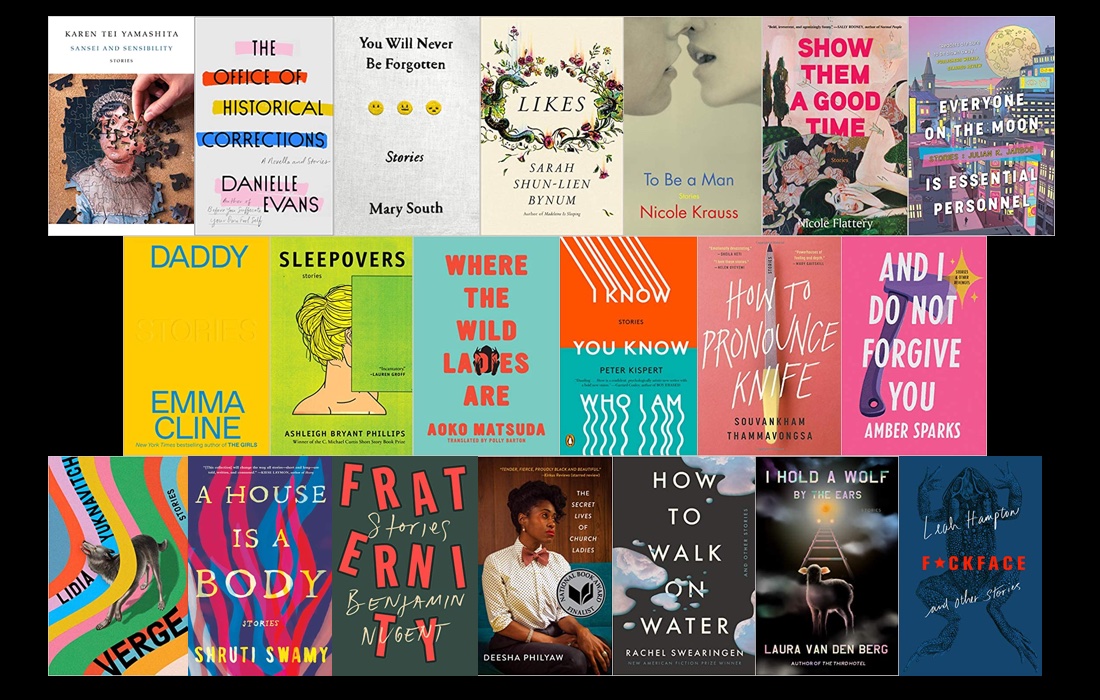
Did everyone else notice that the New York Times list of 100 notable books from 2020 only included one short story collection? Weird, right? There were actually so many great collections this year—but with the help of votes from Electric Lit staff, former staff, and contributors, we’ve narrowed it down to 20. In roughly ascending order (we had a lot of ties), here are our favorites of the year. (When you’re done, check out our picks for nonfiction books and novels.)
Recommending Julian K. Jarboe’s satirical queer science fiction collection in Recommended Reading, Casey Plett writes that “Jarboe’s writing makes me weepy and laugh deliriously at the same time.” Read the title story, “Everyone on the Moon Is Essential Personnel.”
Leah Hampton brings rage but also a sense of humor to stories about life, death, sex, and sadness in Appalachia. Read “Twitchell,” about a chemical company that may or may not be giving generations of people cancer (recommender Deb Olin Unferth called it “gut-wrenching”), and “Meat,” about interning at a slaughterhouse, in Recommended Reading.
Fraternity is a set of linked stories about the Delta Zeta Chi brothers, and how their toxic performative masculinity affects their lives. Read an interview between Nugent and Genevieve Sly Crane, author of Sorority, about taking inspiration from Greek life.
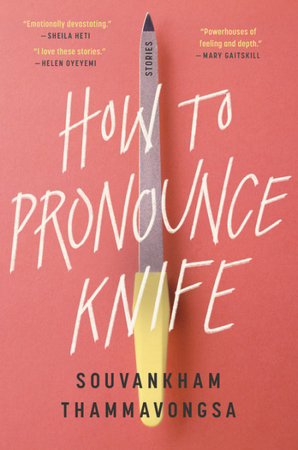
Thammavongsa’s tautly-written collection focuses on the stories of Laotian refugees who have made it to the United States. Read an interview with the author, or read the story “Randy Travis” in Recommended Reading, where Vinh Nguyen praised her “heartbreak, humor, and defiance all condensed in the most crystalline language and imagery.”
Sansei and Sensibility blends the stories of third-generation Japanese Americans with the characters of Jane Austen. Borders and realities collide in this beautiful collection, which deals with everything from class dynamics to what we really inherit from our ancestors.
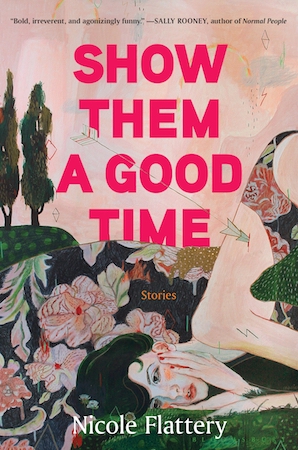
Recommending a story about a woman trying to date during the apocalypse, Colin Barrett writes: “‘Not the End Yet,’ like all the stories in Show Them A Good Time, is a story that is both funny peculiar and funny haha. The world is ending, but there is still time.” These are strange stories that upend the familiar.
Sleepovers focuses on stories set in rural North Carolina. In these bold, frank stories, characters navigate friendships and relationships, shedding light on a part of the forgotten South without being afraid to dig deep into its darkness.
The stories in this spiky, magnetic collection deal with characters about to go over the edge, whether that means the edge of their bodies (as in a story about searching for organs on the black market) or the edge of reality.
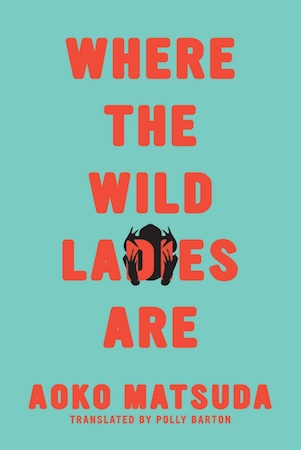
“If there is a specific subgenre of ghost story of which I am inordinately fond, it is the one in which the protagonist has sex with a ghost,” writes Carmen Maria Machado, recommending Aoko Matsuda’s story “Peony Lanterns.” Matsuda’s spirited (in a few senses) collection is inspired by traditional Japanese ghosts, and she also curated a list for us of female ghosts from folklore.
Kispert’s debut collection is all about lies and the (queer) liars who tell them. Recommending one of these stories, Kristen Arnett summed up Kispert’s work: “Peter Kispert is a funny writer, but he’s also ready to sucker punch you with feeling.” Read “In the Palm of His Hand,” about a man pretending to be Catholic for love, in Recommended Reading.
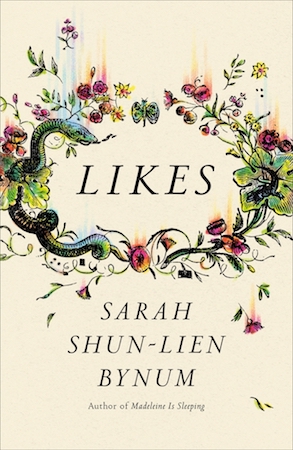
This fantastical collection Likes marries fairy tales the and modern world, illuminating the experiences of girls and women by pairing them with the strangeness of fable—or simply highlighting the strangeness of real life.
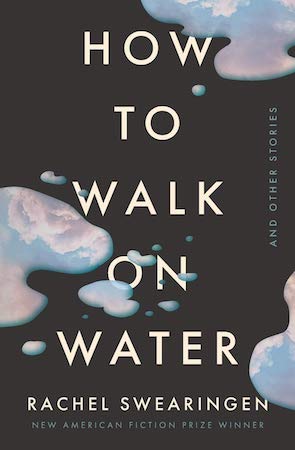
Caitlin Horrocks praised the “delicious mystery” of Swearingen’s story “Advice for the Haunted” in Recommended Reading. The rest of this debut collection likewise balances eeriness, danger, and uncertainty with minutely-observed descriptions of everyday life.
“Through Shruti Swamy’s collection, A House Is a Body, her varied characters share a singular quality—their painful desire to reach the reader with the secrets, shame, and truths they can share with no one else,” writes Laura Furman, recommending “The Neighbors” from this intense and groundbreaking book. Swamy also curated a list of books that take women’s bodies seriously.
The surreal, funny, genre-bending stories in And I Do Not Forgive You combine history, ghosts, fables, urban legends, time travel, and video games in perfect magical realist alchemy. Read an interview with Sparks about reimagining happily-ever-after.
Krauss is well-known as a novelist, and she brings the same deftness with literary fiction about flawed, conflicted characters to her first short story collection. The characters in To Be a Man aren’t all men, but the collection does wrestle with ideas about masculinity and what it means for individuals and society.
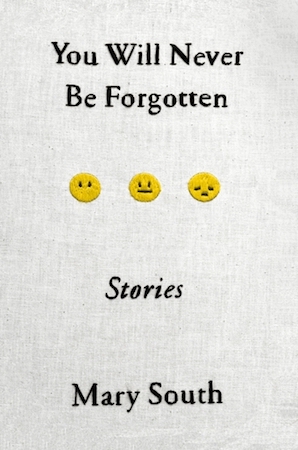
Mary South’s stories are dark and funny, both absurd and way too real—Karen Russell meets Black Mirror. “I don’t feel like I have to invent much or stretch the world too far past recognition in my stories—our current reality is often a horrifying dystopia,” she said in her Electric Lit interview.
This provocative collectionis fascinated with bad guys who don’t know that they’re bad. In her interview with Electric Lit, Cline said she wanted to investigate “that distance between how people think of themselves and how they actually are in the world.”
Recommending Philyaw’s story “When Eddie Levert Comes,” about a mother with dementia who is infatuated with the soul singer she believes to be her lover, Rion Amilcar Scott suggests that the reader brace for an emotional walloping. Philyaw’s National Book Award–nominated collection pulls no punches as it deals with the complex relationships and desires of Black women in a conservative church. Read an interview with the author about church ladies and secret sex.
The stories in this collection are about violence, desperation, dark secrets, and attempted escapes, but mostly they’re about death—imminent death, actual death, the fear of death. “I want to tell you about the night I got hit by a train and died,” begins “Last Night,” which you can read in Recommended Reading. This book is as insightful as it is unsettling, and you can’t look away. Read an interview with van den Berg about which of her characters is the biggest Karen.
The characters in these stories, writes recommender Kelly Link, “are not submerged in or extinguished by loss. They are, in fact, so urgent, so bright, so compelling that they linger long after I close the book.” Evans deftly weaves race, love, grief, and history in this rich and remarkable collection. Read the recommended story “Anything Could Disappear,” or read our interview with the author.
(This essay contains almost immediate spoilers for The Undoing, as well as discussion of birth trauma)
At the end of HBO’s prestige drama The Undoing, we watch, in a flashback, the murder that has been the central driving mystery of the show. We find out the perpetrator by seeing that person commit the crime. And yet, even as I watched this scene, I couldn’t believe it. I had immediately ascribed guilt to one of the women, and I could not believe that the murderer was a man.
The Undoing tells the story of a white, middle-aged, married couple, Grace and Jonathan Fraser (Nicole Kidman and Hugh Grant), affluent New York doctors, and their lovely, violin-playing son who goes to an expensive private school. Elena Alves (Matilda De Angelis) is a younger, poorer woman, presented as non-specifically nonwhite in the vague manner of TV, whose son attends the same private school on scholarship. Elena is found bludgeoned to death after a school fundraiser. At the same time, Jonathan mysteriously disappears. It’s likely that I should have suspected Jonathan from the beginning—everyone in the show did. But I immediately pinned the crime on Grace.
Before her death, Elena had seemed to be mystically or sexually drawn to Grace; we see her gazing at Grace while she breastfeeds, or standing naked before Grace in a gym locker room. Grace finds her crying in the bathroom at the school fundraiser, and Elena kisses Grace on the mouth as a thank you for her kindness. But in fact, we discover upon Jonathan’s return, Elena was having an affair with Jonathan. Her son was his cancer patient, and they became involved while Jonathan was saving the boy’s life. He did sleep with her, he confesses, but he did not kill her.
We are meant to wonder if she’s imagining or remembering. We’re meant to wonder if she knows the difference.
As viewers, we are closest to Grace, able to see the scenes that crowd her head: images of her husband and Elena together, images of Elena painting her portrait. We are meant to wonder if she’s imagining or remembering. We’re meant to wonder if she knows the difference. After these visions, Grace comes back to the present visibly shaken. These scenes in her mind are repetitive and intrusive, so detailed we imagine she really posed for Elena to paint her, or watched Jonathan and Elena have sex. Doing these things, or even imagining them, wouldn’t necessarily make her a murderer—but the dissociation itself, the perception that she doesn’t know the difference between past and present or between imagination and memory, raises our suspicion. At least, it raised mine.
I’ve been thinking a lot about dissociation and blame lately, how they can earn each other. I had a baby four months ago, and while we’re both okay now, the beginning of her life was very scary. The labor, so quick and violent, didn’t allow her to clear the fluid from her lungs and for the first 24 hours, she needed compressed air. Right after she was born, they let me hold her for a moment while they sewed me up and then a team of NICU staff took her away. My husband went with her, and when the doctors were done sewing, they left, too. The labor and delivery nurse, too, needed to do something elsewhere. And for a few minutes after Leah’s birth, when I was newly empty and totally alone, I had the sensation of being outside my body and observing myself from above. I mentioned this to a trauma therapist and she suggested I take the dissociation scale questionnaire, a series of 28 scenarios to which you answer what percent of the time you experience them. We all dissociate a little, she explained; it’s common, for instance, to be driving and realize you don’t remember part of the trip. But dissociation can also become more serious: you look down and don’t recognize the clothes you’re wearing, or you’re approached by someone who clearly knows you but whom you don’t remember.
One of the items on the questionnaire is the ability to ignore pain. I did not feel pain a few hours after Leah’s birth when I had a hemorrhage and the doctors were clearing blood clots from my uterus with their hands. “Do you want morphine?” they asked, and I said I thought I was okay. “You’re remarkably calm,” they complimented me.
Another of the scenarios is finding yourself somewhere and not knowing how you got there. The detectives show Grace footage of herself a block away from Elena’s studio where she was murdered. “What is this?” Grace asks. She looks as though she’s not sure what’s real and what isn’t (dissociation scenario 12). “I was walking. I take walks.” She squeezes her eyes shut as if to try to remember whether or not she had murdered someone. “That’s how I ground myself; I walk.” So, we think suspiciously, she needs to be grounded.
From the birth and the hemorrhage I had lost enough blood that I was light-headed even sitting up. I didn’t feel confident sitting in a wheelchair the length of time it would take to go up to the NICU to see Leah. They had a webcam pointed at the top of her head, so I watched her all day while I pumped, trying to simulate the time we would normally be spending together, hoping my milk would come in. It felt a bit like masturbation, watching a screen and jostling my body. Through the angle of the camera I could see gloved hands come in and out of the frame, adjust Leah’s tubes, but I couldn’t see her face. I didn’t really know what she looked like.
The doctor picked up on my dissociation but not my internal bleeding. You can have both.
A doctor came in to check on me that afternoon. I cried easily. I asked how we would know if I was going to have another hemorrhage. She said my hemorrhage occurred in the window where they’re common, and I was now outside of that window. Then she looked at me suspiciously. “Why aren’t you in the NICU with your baby?” she asked. And I thought, why AM I not in the NICU with my baby? Am I crazy? Am I a bad mom? I told her I still felt too light-headed to sit up for very long. She looked at my file and said, “I see you used to take Zoloft.” She asked if I thought it was time to start it again.
I was dissociated, certainly. I was separated from my baby. We had both almost died, and we both still could. The doctor picked up on my dissociation but not my internal bleeding. You can have both. In fact, it seems like they might go together pretty commonly, that they may both stem from the same circumstances.
It turned out I didn’t stop bleeding, even outside “the window where it’s common,” and seven days later I fainted in my home. One day after that, blood poured out of me in front of my three-year-old son, and I was taken by ambulance back to the hospital where they did a D&C and a blood transfusion. So it wasn’t Zoloft I needed, after all, or the suggestion that I was a bad mother, or the invitation to blame myself. I wasn’t hysterical or disinterested in my baby. I was bleeding to death, and showing signs of bleeding to death. The doctor, a woman, looked at my file and my tears and thought, anxious woman. I didn’t need her blame, I needed her to insert a balloon into my uterus to put pressure on the blood vessels and stop them from bleeding. But the blame was what I got.
Grace was not a murderer. Her husband was. And my husband could believe it, and it seemed from Twitter that men in general could believe it, and I could not. How could she be blameless? She seemed too much like me.
Twice a year for the first 22 years of my life, my family rented a cottage on a lake in Western Michigan. The families who rented cottages on either side of ours were always the same and we grew up together in a magical summer camp sort of way. One year we discovered one of the families had a sex criminal in it. He was caught molesting their exchange student, and then it was revealed he’d also been molesting his daughter. “How could she not have known?” I remember hearing my mother ask. She meant, how could his wife not have known he was a molester? It seemed like more outrageous behavior to her than the molestation itself.
When you go to your six-week check-up after having a baby, they give you a questionnaire to assess your level of postpartum depression and see if your stitches have healed enough to have sex. Scenario 3 on the Edinburgh Postnatal Depression Scale is “I have blamed myself unnecessarily when things went wrong.” The word “unnecessarily” itself feels lightly blaming to me; the question both assumes that there is a correct level of blame, and suggests that you are making a fuss out of nothing. Like me, this question is trying to clarify when women do not need to blame themselves. But it is also, like I am, blaming women for blaming women.
What’s wrong with me, I wonder, that this is my instinct? To blame a woman for no reason other than she seems confused?
Towards the end of The Undoing, when Grace testifies against Jonathan, I thought, my god, it’s her crime and she’s putting him away for life! Hell has no fury like a woman scorned, a saying we’re taught before we’re old enough to think for ourselves. When we finally see the murder scene, it’s interspersed throughout a scene where Jonathan is kidnapping his son, unraveling, fleeing from the cops who are chasing him. We cut back and forth between Jonathan smashing Elena’s head against a wall and him in the car with his son, singing a terrifyingly cheerful rhyme. Yes, I thought, but that doesn’t mean he did it. The mental gymnastics I went through to assign blame to Grace as the scene progressed were astonishing. We see Jonathan leave Elena in a heap on the floor and move toward the door. And then he leaves and Grace comes in in a fugue state and bludgeons her to death, I thought. But he doesn’t leave. Jonathan turns around and kills Elena with her sculpting hammer, just like every shred of evidence in the whole show suggested.
What’s wrong with me, I wonder, that this is my instinct? To blame a woman for no reason other than she seems confused? She goes for walks? Is it that I see myself in her? Or that I don’t? After my mom watches my son for an afternoon, I hear him repeating things she says. “What’s wrong with me? What’s wrong with me?” says my three-year-old boy, and from his mouth it is the first time it sounds unusual, the refrain I’ve heard women sing in the background my whole life.
If you can’t go out in the real world, why not at least read about it? These memoirs, essay collections, and deeply-researched reported works kept our panel of Electric Lit staff, former staff, and contributors engaged with the people and places outside our apartments throughout this singularly isolated year. In roughly ascending order (we had a lot of ties), here are the voters’ top 20 picks for the year’s best nonfiction. (You can also read our picks for short story collections and novels.)
There are very few non-scholarly resources on asexuality, and though it’s impossible for one book to cover every experience—there are as many kinds of asexuality as there are asexuals—Chen sets a thoughtful, rigorous, personally generous tone for what will hopefully be an expanding area of study. Read an interview with the author or her essay on why we need books without romance.
You might intuit from his name that Greg Mania is flamboyant and funny, and he is—but this memoir of gay nightlife, mental and physical illness, sex, relationships, and internet fame also showcases his more thoughtful and tender side. Mania curated a book list for us about coming of age in New York City.
Isabel Wilkerson is known for her in-depth reporting—she has won a Pulitzer Prize, among many other awards. In Caste: The Origins of Our Discontents, Wilkerson compares the caste systems of the United States, India, and Nazi Germany, and formulates eight pillars on which these systems are built. You can find Caste on our list of books that celebrate Black lives.
Talusan is an Electric Literature board member, but that’s only the cherry on top of her fascinating life. Her memoir takes readers from her childhood in the Philippines through her experience as a gay man at Harvard and finally her gender transition, analyzing throughout what it means to be seen as male, as female, as Asian, and (because of her albinism) as white. Read an interview with Talusan.
You may know R. Eric Thomas for his hysterically funny takes on politics and pop culture in his Elle column, but this memoir in essays proves that he can make you cry too. (Don’t worry, it’s still very funny.) Read an interview with the author.
Mikki Kendall centers the conversation on feminism around the often-forgotten/looked over peoples within mainstream feminism. Kendall has a knack for conveying her experience, and the experience of many Women of Color, as they try to make themselves heard within the mainstream feminist movements.
Student loan debt lurks at the center of many people’s lives, coloring every plan and decision they make, but we don’t talk about it enough. Arceneaux’s book of essays about the burdens of debt is painfully urgent.
Lisicky writes about moving to gay haven Provincetown, Massachusetts in the early ‘90s, when AIDS was rapidly consuming the community. The contrast between the queer idyll he lives in and the pandemic disease that stalks them makes this memoir tense, poignant, and cathartic. Read our interview with Lisicky here.
Women’s role in white nationalism is complex—it’s not exactly a bastion of female empowerment—but we need to understand how the concept of white womanhood props up the ugliest elements of American society. Darby goes deep on three women connected to hate movements. Read an interview with the author.
During the campaign, Donald Trump insisted that “suburban women” would support him because he was saving “the suburbs”—meaning, of course, that white people would support him because he was keeping their neighborhoods white. But the conflation of suburbs and whiteness goes back way further. Diamond examines the history of suburbia and what it means to us culturally, including as a marker for racial homogeneity.
You probably could have guessed that Silicon Valley’s startup world was highly toxic. But Uncanny Valley, an insider’s memoir from a woman who stumbled into a tech culture that was more sociopathic than she’d dreamed, makes it clear just how bad it was and how easy it was for certain kinds of people to choose not to notice. Read an essay about how Wiener reveals the corniness of the tech world.
In this reflective memoir, Taylor reckons with his father’s life and eventual death—and, in between, his attempted suicide. What does it mean to love a father who doesn’t want to live?
Pulitzer winner and former poet laureate Trethewey unearths a childhood marred by violence in this wrenching memoir about her mother’s abuse and murder. Simultaneously a memorial to her mother and an indictment of the man and the system that killed her, Trethewey’s book traces trauma through her mother’s life and her own.
Electric Lit’s Blunt Instrument columnist Elisa Gabbert surely never expected to be quite so timely, but sometimes the stars align and you put out an essay collection about doom, anxiety, and disaster in a year like 2020. If we’re going to live through a slow-motion catastrophe, at least we have beautiful writing about it. Read an interview with Gabbert.
From the title it sounds like this essay collection will be about gender and sports, and it is—including a deeply personal story about Faliveno’s manipulative relationship with her high school softball coach. But it’s also about queerness, class, and what it means to try to find your place. Read our interview with the author.
Eisenberg’s true crime story circles around a case that is many years cold: the 1980 murder of two women hitchhiking through West Virginia. But as Eisenberg finds when teaching summer camp in the area, the murders reverberated through the whole community—and in some ways, girls are still disappearing.
Jenn Shapland’s hybrid memoir/biography started with deep immersion into the undiscovered love letters celebrated author Carson McCullers wrote to another woman. Finding those letters also awoke Shapland to her own queerness, and she weaves her own story into her subject’s in a way that is illuminating and boundary-breaking (and earned her a National Book Award nomination). Shapland wrote a list for us of other biographies that are secretly memoirs.
In her third collection of essays, frank and funny bestselling author Irby, who is also the preeminent Judge Mathis chronicler of our time, takes on topics like bills, sex, periods, and the internet in a way that makes you actually want to think about them. Read our interview with Samantha Irby.
Poet Cathy Park Hong’s Minor Feelings calls itself “a reckoning,” and that’s how it reads: not just a memoir, not quite a manifesto, but a clear-eyed history and articulation of the Asian American experience that precisely diagnoses the cognitive dissonance of being racialized in America. Read our interview with the author.
This week, readers on Electric Literature’s Twitter and Instagram voted to narrow a field of 32 beautiful book covers down to their favorite of the year. Some of the margins were razor-thin—in particular, both Sin Eater vs. The Exhibition of Persephone Q in round one and Animal Wife vs. Follow Me to Ground in the quarterfinals were decided by fewer than 10 votes. But in the end, one cover prevailed.
From these four contenders, each of which had already knocked out three other hopefuls on their way to the quarterfinals, a vivid ultimate pairing emerged:
We spoke to the designers of the final two about the process of designing their eye-catching covers.
James Iacobelli, designer of The Majesties
What was the most important thing for you to convey about the book? How did you use the design to get that across? I wanted to find the right simple image that would portray the luxuriousness, complexity and destruction of this novel. It had to have menace but remain beautiful. Having been a fan of Joseph Lee’s art, I knew it was a perfect match.
Did you have any interesting false starts or first drafts you can tell us about? All along, I had been interested in the concept of deconstruction. I was working with silhouettes and butterflies. None had the impact I was looking for.
What’s your favorite book cover of 2020, besides your own? I’m obsessed with Howdunit.
Caitlin Sacks, designer of Animal Wife
What was the most important thing for you to convey about the book? How did you use the design to get that across?
The author, Lara, really guided me with the direction for the cover. We wanted to emphasize the duality of the title Animal Wife. Is she the human wife of an animal? Or is she the animal? The answer changes between stories.
I think there’s this idea so many women have, that once you get married and have kids, you’re trapped. Your life isn’t your own anymore. The cover wolf/housewife can be seen as a wild animal that’s been domesticated, or she’s a wife with a growing resentment for her family. Either way, those animal instincts are bound to kick in for self preservation eventually.
Did you have any interesting false starts or first drafts you can tell us about?
Two key phrases I used as my starting point were motherhood and abandonment. The title-story “Animal Wife” is a reimagined tale of the swan maiden, where the swan transforms into an unhappy wife and mother. So my original idea was a swan swimming in a lake with a gaggle of cygnets following close behind. The swan is reflected in the water, without her children; a life where she is free from familial responsibility. We ultimately agreed that it felt too tame a cover for this book.
What’s your favorite book cover of 2020, besides your own?
Wave If You Can See Me by Susan Ludvigson. My dear friend and jaw-droppingly talented designer, Vivian Rowe, created it. She and I met at Red Hen Press, an indie non-profit publisher, where we both became lead designers. I’m in constant awe of her work. She’s a fantastic illustrator, hand letterer, and graphic designer. She’s a triple threat! Hopefully you’ll be interviewing her next year for Best Cover 2021.
I’m so thankful to Red Hen for allowing me to create book covers and distract the staff with my incessant talking. I used to get in trouble for it in fourth grade, but everyone at the press seems to like it.
And finally, here’s your 2020 Book Cover Tournament winner:
Animal Wife by Lara Ehrlich! Congratulations to Lara, Caitlin, and Red Hen Press.
DON’T MISS OUT
Sign up for our newsletter to get submission announcements and stay on top of our best work.
YOUR INBOX IS LIT
Enjoy absorbing fiction from Recommended Reading on Mondays, strange, diverting work from The Commuter on Wednesdays, and a roundup of our best work of the week on Fridays. Personalize your subscription preferences here.