8 Books About Hexing the Patriarchy

First, a few key terms. Patriarchy is not, at the end of the day, defined by the gender of one’s leaders. It’s a societal model based on the rigid binaries and hierarchies necessary to divide, conquer, and control—e.g., men over women, men over nature, straight and cis over queer and trans, rich over poor, and, often, white over Black and Brown. Magic is energy moved with the intention of transforming reality. Therefore, for our purposes, #HexingThePatriarchy is channeling energy to dismantle this hierarchical world order and then cast a new, freer world. 

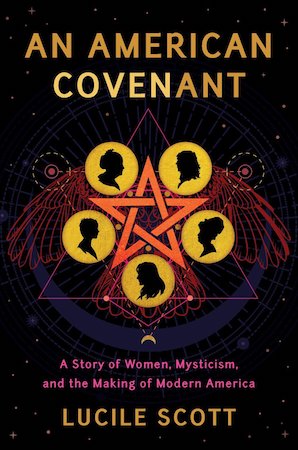
In An American Covenant, I set out to do my own small part in this large-scale quest by telling the stories of five powerful feminist mystics over three centuries who helped transform America—though by and large we’ve forgotten their names. It’s a story about resistance. It’s a story about power, control, and freedom. It’s also a story about a slight blonde lesbian in her mid-30s seeking transcendence while navigating personal and cosmic chaos—me. 

In most American mystic traditions, the natural world, including each and every one of us, stands as divine as anything on high in the sky. This belief has long beget radical notions of the equal right of all to a decent life here on earth—regardless of race, gender, profession, etc. This, of course, has the bonus of dovetailing nicely with our nation’s founding words. However, this alternate spiritual basis for the American experiment threatens the patriarchal powers that be by empowering all those they seek to control. And so, once we could no longer acceptably burn (or hang) feminist mystics, we were taught to mock them and their oft mainstream traditions into a spectral historical footnote. This book aims to help #HexThePatriarchy by pulling five of our feminist mystic leaders back into the direct light of herstory and their rightful place as American (s)heroes.

Below, I’ve included eight other books that aim to stick a flaming pebble in the spokes of the patriarchal machine—as eight connotes new beginnings and new societal orders. Some of the books are fiction, some non-fiction. Many emerged during, and are evocative of, a major wave of American feminism. Others explore a mystic or mystic tradition discussed in my book. All can help us recognize and touch the divine, mystic spark deep within so we can keep up the fight for however long it takes to win it. 

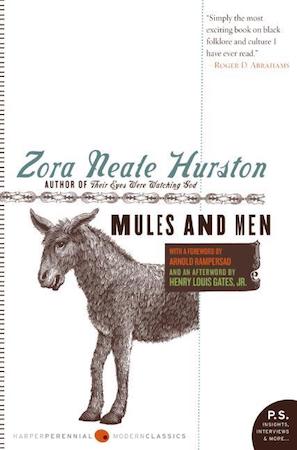
Mules and Men by Zora Neal Hurston

In the late 1920s, Zora Neal Hurston, then a leading light of the Harlem Renaissance, headed South to New Orleans and her “native village” of Eatonville, Florida, on a mission to create the first great anthology of African American myths, rituals, and songs. The result was Mules and Men—a book chock full of poetic resistance to the patriarchal powers that be. 

In my personal favorite section, Zora meets Luke Turner, who attests he is the nephew of New Orleans greatest Voodoo Queen, Marie Laveau. Zora then apprentices with Luke, learning his and Marie’s Hoodoo ways. She also learns of Marie Laveau’s true legacy, nearly lost to history—that she served as a symbol of liberation to people of color throughout New Orleans, both in life and after her 1881 death. Or as Luke put it:

“Time went around pointing out what God had already made. Moses had seen the Burning Bush. Solomon by magic knowed all wisdom. And Marie Laveau was a woman in New Orleans.” 

Radical Spirits, Second Edition: Spiritualism and Women's Rights in  Nineteenth-Century America / Edition 2 by Ann Braude | 9780253215024 |  Paperback | Barnes & Noble®

Radical Spirits by Ann Braude

In the late 1850s, up to 10% of the American free adult populace adhered to Spiritualism in some form or fashion. This mystic movement is rooted in ideals of equality and spiritual autonomy, eschewing biblically ordained hierarchies of gender, race, and class. Many early suffragists were Spiritualists—and nearly all Spiritualists supported women’s suffrage. Spiritualism’s popularity, therefore, helped fuel the spread of this “radical” notion, that women deserved the vote, across the nation. Plus, more oft than not, women served as mediums and the de facto heads of this largely headless movement. Braude’s book, which came out in 1989, was among the—if not the—first to chronicle Spiritualism’s pivotal role in giving 19th-century women a public political and social voice. It’s a fascinating read that lends a new mystic lens to American progressive culture and politics. 

The Illness Lesson by Clare Beams

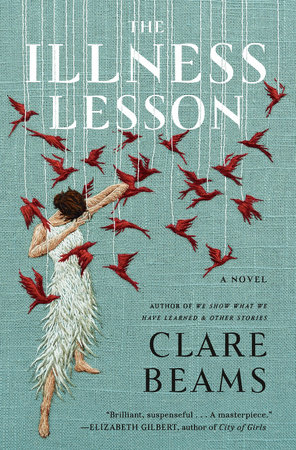
The Illness Lesson by Clare Beams

In the late 1800s, the American male medical establishment coined the term “mediomania,” in an effort to link insanity to Spiritualism, and cut down the threat to the patriarchal order. They then redefined insanity’s symptoms as the most common side effects of entrancement—rigidity, seizure, ecstasy. Eventually, they settled on the more widely employed “hysteria,” derived from the Greek hystera, meaning uterus. 

Beams riveting slow burn of a novel tells a story of “teenage hysteria” set in 1871 in New England. The prose is so thick with mystic symbols and smoldering repression that it reads like a startlingly lucid dream or nightmare—one that explores how, even when well meaning, the male medical and philosophical establishments can hex a woman by convincing her that her flawed, weak body, not the strict limits society puts on her, are responsible for her ills. It also poignantly expresses the power of pulling back that curtain and seeing the truth: you are strong.

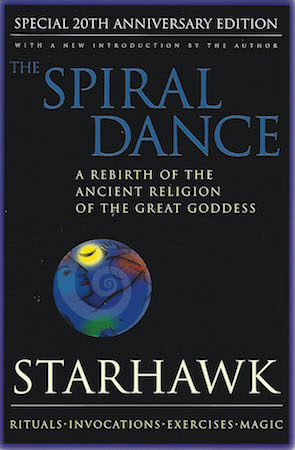
The Spiral Dance by Starhawk

In this second-wave feminist mystic classic, Starhawk codifies her nature-loving withcraft tradition, called Reclaiming, and her ideas on how the Craft can realign energy towards social justice. She also presents a potent book of spells, all helpful for dismantling the patriarchy, and her own take on the feminist legend that, circa 3,000 BCE, war and its Gods emerged to snuff out ancient matriarchies. Humanity, the story goes, then replaced that matriarchal order based on equality and personal autonomy with one of rigid hierarchical control. I’d say she stands as the high theologian of the Feminist Craft (though she’d probably not like my hierarchical terminology). 

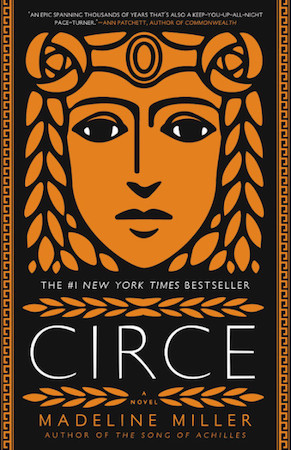
Circe by Madeline Miller

One’s cultural myths should reflect the values one holds most sacred, as our myths shape our psyches and life choices—even if we don’t think they do. However, most Western myths, told only from the perspective of white men, do not reflect the values I hold most sacred. And many of these myths began with the Greeks. In Circe, Madeline Miller recasts these archetypal tales through the gaze of the witch Circe, revealing the bombastic brittleness that always undergirded the patriarchal originals equating brutality with valor and narcissism with honor. 

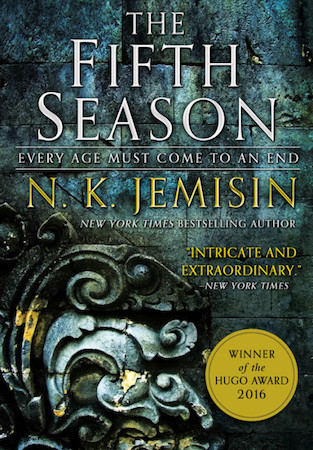
The Fifth Season by N.K. Jemisin 

In addition to recasting old myths, forging new but equally resonant ones can help shift how we perceive and therefore construct our world. In this, the first book in her Broken Earth trilogy, N.K. Jemisin reflects our own more lamentable values back to us via her mythic land, called the Stillness, where the earth is a violent father, not a nurturing mother, and the only way to survive seems to be to cling to a rigid cast system. By the end of the book, this belief is not just revealed as an illusion, but something far more sinister in this tale of how, exactly, the Stillness came to seem bent on destroying itself. 

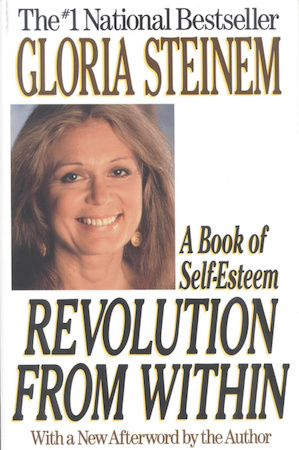
Revolution from Within by Gloria Steinem 

In the 1970s, many “second”-wave feminists believed if they changed the laws limiting women’s standing in society, the revolution would follow. By the 1990s and the “third” wave of American feminism, it had grown clarion it was a much longer game. In this incredibly well-researched book published in 1992, Gloria Steinem, the most famous of second-wavers, chronicles how to dismantle the carefully constructed muzzle the patriarchy puts on all of our “inner voices”—be we men, women, or in-between and beyond. She then provides historic and personal anecdotes demonstrating that, so freed, this inner-voice—often mystically referred to as a light—alters a person, makes them far less willing to accept powerlessness and near-impossible to control. 

Image result for wide sargasso sea book

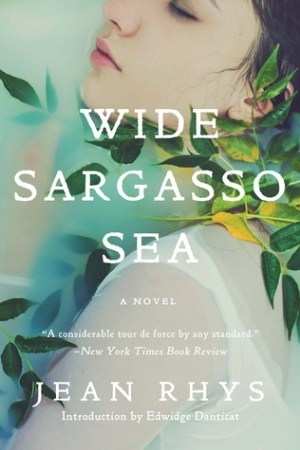
Wide Sargasso Sea by Jean Rhys

After I finished writing An American Covenant and pondering mystic journeys through my unconscious mind, I took a deep dive into French feminist psychoanalytic theory. From these thinkers, I learned how “the phallic order” employs many tools to dominate our minds. A clutch one is an over-reliance on highly linear narrative structures that confine our thinking to strictly prescribed, rationale boxes—cutting off access to all that lies beneath this mental veneer. 

Wide Sargasso Sea undermines that “phallic order” through its meandering impressionistic narrative style redolent with natural imagery and inner emotional states. It also undermines it via the plot itself. Rhys recasts Jane Eyre’s crazy woman in the attic into her protagonist and that classic 19th-century British novel into a mid-20th century anti-colonial, feminist treatise. The madwoman, Antoinette, is, in Rhys’ telling, a young Creole heiress married off to a broke but British—and therefore socially desirable—Mr. Rochester. From the early days of her Jamaican youth, Antoinette’s life is defined by the patriarchy’s urge to violently expunge in others all its been told is abject in itself. They may call you insane. They may call you uncivilized. They may call you Satanic. But you can, in turn, tell stories that hex them right back—and free us all in the process. 

Where Is Hong Kong Literature When We Need It Most?

One of my most vivid childhood memories took place in an English bookshop in Causeway Bay, a short minibus ride from my family home in Hong Kong. I was a voracious reader growing up, eyes constantly trained on any printed text available, even during dinnertime and when brushing my teeth. Intent on nourishing this interest, my mother took me to the children’s library at City Hall often, a floor above the marriage registry. And around once a month we would go to the bookshop, where I could take a book or two home.

I remember standing between the general fiction and the young adult aisles during one of these visits, my eyes scanning each of the titles and the names of their authors. I must have been less than ten years old. “Mom, why aren’t there any books written by Hong Kong people here?” I asked. “Why are all these books about other people in other places?”

“Maybe you’ll grow up and write them one day,” my mother said encouragingly. “Stories about Hong Kong people, by a Hong Kong person.”

It was more natural to me to imagine being on a different continent than to write about my immediate surroundings.

Yet when I ended up writing my first English book as a child, it was about an Australian girl who wanted a treehouse—a frivolity almost nonexistent in the concrete jungle I grew up in. It was more natural to me to imagine being on a different continent than to write about my immediate surroundings.

Twenty years later, that bookshop has long been shuttered, but the dearth of Hong Kong literature in English endures. I matured through a high school English curriculum consisting of tales that, though empowering for young girls, were based in faraway lands and eras: Little Women and Jane Eyre, plenty of Shakespeare, Sylvia Plath. On the rare occasion that the authors and protagonists resembled me at all—as in Amy Tan’s The Joy Luck Club and Maxine Hong Kingston’s Woman Warrior—their stories were so specific to the postwar Chinese American experience that I strained to see their relevance in my personal story, a love for mahjong aside.

Granted, English writing produced outside of the Western sphere has only achieved mainstream popularity over the past decade or two, when one could start finding a rush of names instead of a token representative narrative. I watched as South Asian authors started gaining ground in the noughts (Arundhati Roy, Kiran Desai, Mohsin Hamid, Suketu Mehta), then a surge of literature from Latin America past and present. Finally, for the past couple of years, Chinese writers have entered the spotlight, epitomized by the hype surrounding Liu Cixin’s The Three-Body Problem. But Hong Kong, with a population double L.A.’s and a millions-strong diaspora, is yet to produce stories of its own that enter the global consciousness.

There are so many stories about this fishing-village-turned-metropolis that are deserving of an audience outside its immediate borders, stories that help the world understand the economic, social, and political miracle that is Hong Kong. There is the brilliant work produced by the prolific sibling duo Ni Kuang and Yi Shu, forebears of the homegrown science fiction and romance genres, and Xi Xi, whose name resembles a little girl jumping from one hopscotch square to another, among many others. But I have never seen the English translations of their work available anywhere, either in my hometown or abroad.


Hong Kong certainly does not lack representation in the global imagination. It is a perennial favorite among expats and tourists, with its English fluency, abundance of mountains and beaches, accommodating nightlife, and breathtaking efficiency. From the 1968 The Thunders song “She’s in Hong Kong” to the 2015 film Already Tomorrow in Hong Kong, the city has long held fascination as a commercialized Shangri-la where East meets West, where Victorian architecture stands alongside dai pai dong stalls, and where organized crime gangs can ostensibly be observed from afar while basking in the safety of colonial-era laws. This sexy, highly fetishizable image is represented by the figures Hong Kong is most known for: kung fu stars Bruce Lee and Jackie Chan, stylish film director Wong Kar-wai.

The Wikipedia section for ‘Hong Kong literature in English’ lists not a single writer who was born and brought up in the city.

The problem with these portrayals is that they represent, at best, an outsider’s view of the city, however positive. The truth is, Hong Kong can be interpreted as two parallel spheres: one populated by locals, and another by the foreigners, who peruse our bars and pursue careers without ever having to speak the language. Our literary chroniclers tend to hail from the latter. The current Wikipedia section for “Hong Kong literature in English” lists not a single writer who was born and brought up in the city. While we can take pride in the volume of foreign interest in our hometown, whose tales certainly merit their own value, the lack of our own stories makes no sense. Is there only an appetite for imported viewpoints of Hong Kong, even in our own people? When can we start telling our own stories to the world?

Educator Emily Style famously posited that literature serves as both “windows and mirrors” to young readers: windows that offer them a perspective on the world and its multitudes, and mirrors that reflect themselves, building and affirming their identities in the process. A balanced curriculum of both windows and mirrors allows us to develop a healthy understanding of the self’s relation to the world. For English readers in Hong Kong, however, there are only windows, no mirrors. When we lose sense of what we look like, how are we able to show our true selves?


This question became all the more pertinent over the last year, when widespread protests wracked Hong Kong, turning our sleek malls and underground stations into battlegrounds of tear gas and Molotov cocktails. The milieu of both foreign and mainland Chinese media descended upon the city, quick to populate international headlines with political analysis and hot takes, painting the protesters as victimized martyrs, or spoiled brats ungrateful for the motherland’s contributions, or simply political pawns in the midst of the trade war. And because Hong Kong has always been a porous space where media from elsewhere is revered and quickly amplified, the lack of our own stories has made us highly susceptible to being understood as these simplistic tropes—both to the global audience, and to ourselves.

To use a parallel: When the Black Lives Matter protests erupted, the public turned quickly to the canon of BIPOC writing to understand the history and lived experiences of racism that persist to the present day. The patient work of writers such as James Baldwin, Toni Morrison, and Jesmyn Ward, to name but a few, finally paid off in educating and activating the public. But in Hong Kong, people held on to translated soundbites from foreign commentators and lukewarm political statements for ideological deliverance, reproducing them endlessly via social media memes.

The characterization of Hong Kong in the global imagination has once again been written by observers on the sidelines, not ourselves.

But we are yet to hear about the unique experiences of growing up in Hong Kong that are central to the ethos of the movement. How does it feel to need an immigration document in order to travel anywhere outside the one-hour radius that spans our city? To be told you’re part of a country, and yet somehow not; to speak, read, and write differently from the rest of said country? To learn the national anthem of one country, yet have your legal protection be underwritten by the institutions of another? To be told you’re special, and to have that status enshrined in law and in name, then have your privileges gradually drawn away? These are questions that are all pertinent to the Hong Kong identity and that speak to the core of the ongoing crisis. Yet mainstream coverage has centered predominantly on the angst and bitter defiance against the Chinese government, a narrative arc supported by cherry-picked quotes. After all, everyone loves a David and Goliath story, especially when it turns on the world’s burgeoning superpower, and the people cast as Davids rarely object to being glorified. And so the characterization of Hong Kong in the global imagination has once again been written by observers on the sidelines, not ourselves.


Perhaps this predicament is unsurprising. Writing is far from a popular profession in Hong Kong’s cutthroat, capitalist society; if you have a talent for English language and expression, you are shuffled into a career in law. For all of my mother’s comments that day in the bookshop, when I seriously informed her that I wanted to become a writer when I grew up, her initial reaction was, “Writing does not make money. It can be your night job, maybe, but it cannot be your profession.” This is reflected in students’ subject choices for the DSE, Hong Kong’s standardized high school exam: in 2019, only just over 3% of candidates chose to study either Chinese or English literature. When there isn’t much writing coming from Hong Kong to begin with, the chances of it capturing the attention of English-language publishers are low.

Meanwhile, along with Taiwan and Singapore, Hong Kong is easily sidelined to make way for the wider “China” narrative. With the protests, we are only able to win a supporting role as a righteous figure standing firm against a feared power; there is little room for more diversity and complexity. And of course, one can argue that with the gradual erosion of the freedom of speech in Hong Kong, locals have become more afraid to tell their stories than ever before, preferring to stick to the relative security of online forums and private messaging.

When all you read about is stories about people from elsewhere, it is easy to wish to be elsewhere.

The lack of Hong Kong representation in the English medium, and the Western aspirations it fosters, is self-reinforcing from a young age. When all you read about is stories about people from elsewhere, it is easy to wish to be elsewhere, particularly when one’s lived reality seems bleak and decidedly unrosy. The Hong Kong population has always been transient: one-sixth of local residents departed before the 1997 Handover, and another outgoing wave is expected in light of the city’s recent political turmoil. It is hard not to wonder whether the lack of local representation in the media has accelerated Hong Kong people’s wishes to leave.


There are many, many stories about this one-of-a-kind city that deserve to be told, beyond our political demands and Instagrammable urbanity. Stories that cannot be easily reduced to dramatic character tropes and loud headlines; stories written by people who have lived its ruthless optimism and messy reality, not just fascinated bystanders. A clear example I can think of is the McMug and McDull comics, created by Alice Mak and Brian Tse, about two anthropomorphic piglets struggling to grow up as they make sense of Hong Kong. A kindergarten storybook series turned sharp social critique, its language is simple yet laugh-out-loud punny, its culinary references mouth-watering, and its cruelly gentrifying backdrop recognizable to any visitor to the city. Its tone of voice is emblematic of our people: bitterly resigned to our capitalistic destiny, yet steeped in a let’s-get-on-with-it attitude. Such stories exist, and I’d like to believe there are people who’d like to read them.

The power of literature is in its ability to enable deep identification and empathy with one another’s experiences. If Hong Kong’s stories were made more accessible to a worldwide audience, perhaps we can start to be seen as full-bodied people with our own needs and foibles, not simply passive puppets under the specter of whichever political power is in charge. At a time when our city is under the global spotlight more than ever, the need to tell our own stories has never been more pressing.

Translating Love in the Time of Brexit

I’m willing to bet most of us have copy-and-pasted a phrase we don’t know into Google Translate, only to be confronted with a string of gibberish. Even in an era where translation is immediately available, there are always glitches. Novelist Xiaolu Guo is a master at exploring both the humor and the poignancy of mistranslation. 

When I first read her 2008 debut novel, A Concise Chinese-English Dictionary for Lovers, I was floored by the way Guo explored the sometimes daunting, sometimes thrilling process of learning English. Zhuang, or “Z,” is a young Chinese woman who comes to London and begins a relationship with an older British bachelor. While her English grammar and vocabulary improve throughout the course of the novel, Z learns that speaking the same language as your lover does not always lead to better understanding. 

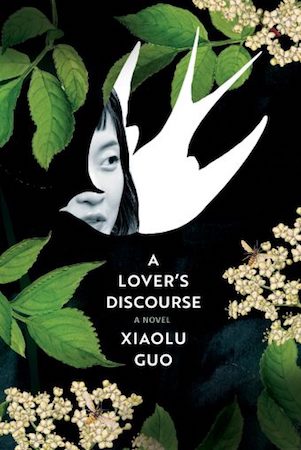
Guo’s latest novel, A Lover’s Discourse, explores transnational communication and immigration through a similarly interracial couple: a Chinese woman, who is a Ph.D. anthropology student, and a German-Australian man, who is a landscape architect. They meet at a book club in London, just as the Brexit movement is reaching its peak. While their relationship blossoms, they struggle to find a place that they both can call “home.” The novel also shares the title with Roland Barthes’ A Lover’s Discourse. Barthes, a French theorist, was fascinated by fragmentation and the idea of communication. Fittingly, Guo’s new novel is also structured in fragments, each chapter starting with a snippet of unidentified dialogue. It pays homage to Barthes, while simultaneously crafting its own “discourse” of love and (mis)communication. 

Guo, a filmmaker as well as a writer, offers an astute visualization of language learning. In her world, language is a being unto itself: viscerally alive—something (or someone?) that you can fall in love with, find a home in, or rub up against. Her meditations on “translation” are never as simple as translating words from one language to another—she uses mistranslation in interracial relationships as a way to examine cultural differences, lifestyle preferences, and interpersonal relationships. 

I had the chance to speak to Xiaolu in September, when we spoke about the importance of transnational identities, supermarkets, and, of course, Roland Barthes. 


Jae-Yeon Yoo: Your novel shares the same title as theorist Roland Barthes’ A Lover’s Discourse, and references Barthes throughout the narrative—whether that’s through narrative fragmentation or exploring the philosophy of love. Could you talk about your relationship with Barthes and how he influenced your work?

Xiaolu Guo: I was very attached to a few European authors when I was in Beijing, as an art school student. Barthes was one of the very important ones when I was studying film writing; [he offered] a different type of narrative, of fragments–not a complete narrative. I read Barthes’ A Lover’s Discourse in Chinese translation in my film school in Beijing. I loved it, without knowing any background information. Later on, I read his Empire of Signs. It was amazing to understand how Chinese characters, Hànzì (汉字), was a pure media of visual representation for someone like Barthes. I guess reading two works by Barthes really told me how the Western cultures see the Eastern cultures and how, actually, these cultures are different. I left China from all these kinds of influences; I wanted to see the West. 

I have to mention the first novel I wrote in English, A Concise Chinese-English Dictionary for Lovers. I wrote in broken English, and I was making an attempt to somehow make my own “lover’s discourse,” [of] when I first came to London, 18 years ago. In a way, Chinese-English Dictionary is a kind of naive attempt to record my journey in England, and to somehow pay homage to the certain Western writers I was so much in love with when I was in China. I just continued to write other books after that, making documentary films, going back and forth between China and Europe. My recent memoir [Nine Continents] is this farewell letter to all sorts of memories I had about China and how I grew up. I felt I needed a break, a kind of intellectual break. And therefore, I began to write this one. It’s a return to my earlier attempt—this is my continuation of the concerns in Chinese-English Dictionary. I thought, after all these years, perhaps I can court myself and court Barthes again to write this book. 

JY: I’m fascinated by how you explore imperfect, “broken” English. What initially spiked your interest in mistranslations and the untranslatable? 

XG: I’ll [start with] identity, when you talk about this word, untranslatability. I left China when I was 30-years-old, which is very old to start a new life as a second language writer. As a writer, you have this very loyal linguistic identity. Because if you’re a painter, you have a visual identity, and the visual is more universal than a specific linguistic identity, right? So if you are a writer, the linguistic identity is your first identity, beyond nationality. Say, I’m an American Chinese and I grew up speaking English. Even though my parents might be Chinese, I will still see myself as an Anglophone writer. When I came to the West, I was 30-years-old and I just saw myself as [a] monolingual Chinese linguistic. I transplanted myself in the West and that was this identity crisis: how do I interpret my vision through this broken English? 

That’s one of the reasons I just invented two characters [in A Lover’s Discourse]. The woman comes from a different language—of Chinese ideograms—that is so remote from the European alphabetical language of the man. With this novel, I thought not only about linguistic differences but also their different visions about life. For example, the Anglophone German man is a landscape architect. He believes in the human attempts to transform the landscape, and make use of that landscape. But the woman character is much more naturalistic in her belief; if you come from an East Asian Buddhist background, you sort of believe in human and nature as one entity. Whereas in modern life, humans have treated nature as an enemy, killing all the animals in order to somehow conquer nature. I tried to create the man and woman as these opposite forces. They hold opposite visions of life, not only linguistically, but culturally, philosophically. 

JY: I’d love to hear more about the narrator’s work as a Ph.D. anthropology student; I particularly enjoyed reading about her research, which focuses on a Chinese artisan village that produces copies of Western classical paintings. 

XG: Absolutely. I mean, this is a very big section which comes quite late in the book. The Chinese village is a real experience from my life. My father and my brother are professional painters—but they’re not artists like in a Western sense. Both were trained as propaganda painters. During the Cultural Revolution, my father was trained to paint Mao’s portrait, Red Army peasants. They were extremely skillful state artists to paint wherever they needed to paint for the Communist Party, but they might not paint what they wanted to paint in their private lives. Or if there was ever “private life” in China in the 60s, 70s, 80s—everything’s public; we belong to the state, we belong to the public. I wanted to write about that, but without involving my own memory of my father and brother. Then, a few years ago, I went to that village to do some research. I discovered how wonderful these artisans are—they are peasants, self taught–but they can do a “Mona Lisa” in one afternoon, Caravaggio in two days. They won’t even paint Picasso, because it’s just too easy to copy. I made a documentary called “Five Men and a Caravaggio,” about this Chinese artisan painting a Caravaggio work in three days. In the novel, I write about [a copy of] this well-known painting, “The Virgin of the Rock ” by Leonardo da Vinci. It’s such a representation of a Western ideal, of Virgin Mary and Christianity. In a way, I also wanted to say the Western religious painting is a copy, a reproduction of the idea of Jesus Christ and the Virgin Mary. The idea is reproduced, though the actual paintings might be original from one another. 

So, that was the thinking, how [the narrator] would use her experience as an argument against this fanatic worship of originality. I wanted to put the Ph.D. defense scene earlier in the book, when she challenged, “What is authenticity?” And the idea of authenticity or originality actually doesn’t exist. It’s just a discussion of history, in a way, about which history we belong to. I wish I could add a few more pages in the book to present the argument about originality. You know, to write a book is very painful. There are a lot of painful but almost random decisions, about what is the main bone for the book. I found it very easy to write about this Chinese village with all these crazy artisans painting Western art, because that’s how I grew up. But in this novel, I had to delete a lot of Chinese sections in order to shape the lovers’ relationship. In the China part, the male lover is not present, so I had to make the woman return to the U.K. sooner than she should. It’s really about control and, you know, giving up some sections in order to say the main theme. 

JY: In that exact Ph.D. defense scene, I was intrigued by the narrator’s thoughts on industrialization and capitalism—she talks about “a capitalistic system where reproduction was the main engine. All the things I wrote about originality were kind of beside the point. Originality is a fetish of people who want to control the art market and the publishing industry.” You’ve talked before about the censorship and self selecting nature of U.S. and U.K. publishing; I’d love to hear if you have any thoughts on what it means to be kind of an anti-capitalist consumer and/or creator of literature. 

If you are a writer, the linguistic identity is your first identity, beyond nationality.

XG: I mean, anti-capitalist. I don’t know. It’s a perhaps simplistic slogan from the character. But I think my vision of the current world, of art and life, is rooted in a kind of agricultural society where I see nature as part of my daily life. I somehow believe in this beautiful balance or harmony between individual life or collective life, nature and the environment. I have a very deep attachment to the rural countryside where I grew up, but I live in this very internet-oriented, speedy world. I travel everywhere, I live a very modern life in London, in Berlin or in another big place. I just have this kind of deep disconnection all the time. It’s who I am. I’m a mad gardener, a flower maniac; I need to grow plants in my tiny garden. It’s kind of a sad attempt of my lost past. As an artist, I know I live in this very contradictory state. I think this conflict and alienation permeates a lot of my novels.

Maybe I’d use that term, anti-capitalist, because I’m clearly in love with a few books [such as] The Society of the Spectacle by a French Marxist philosopher called Guy DeBord. He wrote about [how] authentic life has disappeared after, let’s say, the Industrial Revolution. We live in this very super-supermarket, where our life is decided by supermarkets and the choices we’re being offered have already been made by the market. We have some kind of organic thing for breakfast, but yet we don’t know where those organic things grow or where the farms are. I was very affected by that book and that kind of post-Marxist theory. There’s no way to go back to the agricultural world because, after the Industrial Revolution, we have divorced with our past. I think it’s incredible, our loneliness and sadness of urban life. Not only the sadness, there’s joy and wonderful excitement. But there’s an alienation of urban life; in a way, everyone is constantly uprooted and we’ve all adapted to this modern, urban, work-oriented life. Work is purely for capitalistic gain. I think about these things when I write and when I make films. I try to present those thoughts with narrative, with characters. 

JY: Yes, I noticed that uprootedness, foreignness, and home are really integral themes of the book. It’s also set during Brexit; how did those political circumstances shape this book?

With the pandemic and the Trump era, the dream about being American seems to be becoming deconstructed in such a powerful way, in a violent way.

XG: A storyteller knows that you need a crisis or an uncertainty. In this book, it’s post-Brexit, so she is not welcome. When I came to the U.K. 19 years ago, I could prolong my student visa another year. I remember it was very easy. And now you cannot do that. And there are many, many things about being an immigrant now in post-Brexit Britain. It’s all about leaving—it’s about not coming in or leaving basically, [becoming a] country that is shrinking in cultural difference. So that’s the background for the two characters. This means they might not settle in the country where they met. And so they are up and down, down and out, looking for a common home between the two. I didn’t want to write about Brexit at all, because you don’t want the novel to be dated, right? Once it’s published, it’s become dated news, old news, and I just wanted Brexit as the background. She came, Brexit happened, and then she immediately lost a future in that country. So that is a constraint to the future that they have. There is also the uncertainty of being in Europe or the U.S. as a foreigner, a non-white immigrant. You know, if I were a new immigrant, I would think twice if I would move to the U.S. It seems that with the pandemic and the whole Trump era, the whole dream or fantasy about being American seems to be becoming deconstructed in such a powerful way, in a violent way. 

JY: Any final thoughts or words?

XG: One thing I always say about my novels and documentaries and films, they’re kind of novelistic images. I try to minimize narrative, to reveal the ideas and discussions of our current life. The stories are always quite simple in my books because I can’t bear a confusing story in the novel—then I can’t really say those thoughts. A Lover’s Discourse is really an attempt of doing that. I also wanted to talk about identities through languages and through translation—the power of transnational identities, the work of translation. This novel is basically sort of suggesting that those are the very important limits in our modern international life, of multilingualism, of transnational identities. And if you don’t consider those things, the world becomes very insular, very conservative.

I Married a Stranger to Be Left Alone

An excerpt from Earthlings by Sayaka Murata

I felt something on my ankle and looked down thinking it was a bug, but it was just the laces of my sneaker. I couldn’t be bothered to put down the supermarket bags I was carrying in each hand, so I decided to leave my laces undone and started walking again.

I was on my way back to the condo by the station where I now lived, about a fifteen-minute walk from the house I had grown up in.

I got married three years ago, at the age of thirty-one. My parents had urged me and my husband to rent a condo by the station in Mirai New Town in Chiba where I was born and raised. I had resisted at first since it was inconvenient for commuting into Tokyo and also because I found the lack of change in my life depressing, but now I felt it was convenient in its own way, being located close to the station and supermarket.

I should have bought the mineral water online as I usually did I thought, adjusting my grip on the shopping bags as the plastic handles cut into my palms. I’d seen it was on sale and had picked up two bottles.

The breeze blowing in from the balcony that morning felt chilly so I’d worn a light trench coat, but now I was too hot. The sun was still strong even though it was already almost October.

When I finally got home, my husband was out on the balcony tending to the plants. He peeked his head around the curtain to greet me.

“This one with a thick trunk has gotten pretty dried out.”

“You don’t need to water that one until spring. I read in a book that when it gets cold, it sheds all its leaves and hibernates, and when spring comes around it puts out new shoots.”

“Oh, really? Plants are incredible!”

My husband was a meek guy and easily impressed. He gently touched the trunk with a respectful look, as though he were standing before the bronze statue of some great personage.

“You wouldn’t believe what plants are like in Akishina! They’re so rampant there you can easily be swallowed up by them. You have to constantly tend to the house and vegetable gardens or they’ll immediately succumb to the force of nature.”

“I never get tired of hearing about Akishina. It just sounds so amazing! So different from Tokyo. Your stories of your grandparents’ house are like a dream. Someday I really want to go there.”

He loved it when I talked about Akishina. He came in from the balcony.

“Tell me more!” he said happily. “Oh, I know. Tell me about the silkworm room again.”

“Well, I only ever heard about it from my uncle. I never actually saw it myself. But the silkworms were started off in an upstairs room. The room isn’t all that big, but according to what my uncle told me, the worms were kept in rows of bamboo baskets in there and fed mulberry leaves. They grew really fast, so before long the whole house would be full of them.”

He listened entranced, as though I was telling him a fairy tale. I always ended up feeling as though the stories I’d heard from my uncle were actually my own experiences, and I would get carried away talking about them.

“Oh, and in spring, they would always buy five chicks to raise for eggs, and after two or three years they would wring their necks and eat them at Obon or New Year.”

“You must have eaten those chickens at Obon, right, Natsuki?”

“Maybe, but I don’t think they kept any chickens at the Akishina house when I was little.”

“Oh, it’s wonderful, like the gift of life itself! I’ve only ever seen meat wrapped up in packs in the supermarket. Tokyo’s awful. You can’t learn any of the things that are important to being human there.”

He seemed to have the intense longing for the countryside that was typical of city people. My family never mentioned Akishina, so when he listened so intently to me I felt soothed by nostalgia.

As we chatted, I put a pan of water on to boil.

“What are you eating today?”

“I was thinking of having pasta, but after talking with you, Tomoya, I think I’ll have soba noodles instead. My uncle told me that back in Akishina they would boil the chicken with onions and shiitake and things to make soup. That made me think of kamo nanban soba noodles with duck and onion soup.”

“Mmm, sounds tasty.”

I put one portion of noodles into the pan. We rarely ate together, even on weekends. In that sense, too, it was comfortable having him as a life partner.

For his own meals, he usually bought whatever he felt like eating at the convenience store, like bento or rice balls. He hated his mother’s cooking and didn’t particularly want to eat anything homemade. When I was tired, I sometimes did the same, but I would often make something quick and easy like noodles.

“I think I’ll have a quick nap,” he said.

“Go ahead. It is the weekend, after all.”

“Okay, then.”

I had really wanted to get away from the place I’d grown up in, but the main reason I was glad I was still living here was not the proximity to the station but the cheap rent, which afforded us the luxury of renting a condo large enough to sleep separately, each in our own bedroom.

My husband sleepily drank a glass of cold mineral water from the refrigerator then went to his room. I’d never set foot in there, but I’d caught a glimpse of some shelves of his favorite books and some model figures that had been precious to him since childhood. We both spent a lot of time holed up in our respective rooms, but there was nobody here to harass us about it as there had been when we were little, so it was a pleasant enough existence.

I sat at the table to eat the soba noodles I’d made from my uncle’s memories and my imagination. They didn’t taste of anything. My husband had left the window open, and a breeze carrying the smell of autumn blew in and fluttered the tablecloth.


My husband was a full-time employee of a family restaurant an hour’s commute away in Tokyo, and I was an office temp at a company that rented out construction equipment. My contract had just come to an end, and since I had some savings I was taking my time to find a new job.

If too much time passed it would look bad when I went for interviews, so I was thinking of taking two weeks off at most. Still, I’d had to do a lot of overtime in my old job and was enjoying being able to laze around the house all day.

The only slight annoyance was that a number of my childhood friends still lived in the area. Some were single and living with their parents, but like us others were renting condos aimed at young families near the station, and some had even taken out loans to buy their own place. Hearing them all talk about how much easier it was to find day care nurseries here than in Tokyo and how being close to the grandparents was ideal for bringing up children, I thought idly that our town really was an ideal factory for raising children, just as I’d felt back when I was still in elementary school.

Gossip spread fast through the network of classmates left in the area. As soon as I stopped work, a text came from Shizuka.

Been ages 🎵 Bumped into your mom in the mall the other day. She said you’re off work at the mo ⭐ I left my job too and am working part-time now ~🎵 I’m free every Tuesday. Come over for lunch sometime?

I just wanted to relax and enjoy my break so I was a bit reluctant to respond, but I wrote back anyway.

Yay, it’s been ages! I’d love to 🎵 I’ll bring cakes ⭐

Ever since I was little I’d had the habit of imitating my friends’ use of emoji and style when texting. Shizuka never used that many emojis, but she did favor stars and musical notes, so I used them in my answer to her too. I didn’t mean anything much by it. I just thought that matching myself to others might help reduce the chances of causing offense if, for example, my words came across as too tense or gloomy or perhaps too curt and cold.

Shizuka lived in a nearby high-rise. We had ended up at different high schools and universities and had lost contact for a long time, but she had gotten back in touch after she married and moved back to the area six years ago.

I wasn’t the sort to have many friends, and whenever she texted me I found it annoying but was also kind of relieved. Without her to ground me, I thought, I and my husband could easily be left behind together by society.

We quickly decided on a date, and two days later I rang her doorbell carrying some cakes I’d bought from the mall by the station. She had started wearing even heavier makeup since getting married, but otherwise she hadn’t changed much since she was little. She greeted with me with an angelic smile.

“Natsuki, I haven’t seen you for ages! Come on in!”

She was much flashier than she’d been when we were little I thought as she welcomed me effusively. Taking the cakes from me, she showed me through to the living room.

The baby she had produced was sleeping in its cot in the living room. Shizuka’s place always reminded me of the silkworm room in Akishina. The sight of her baby lying here melded in my mind with the rows of baby silkworms in the silkworm room. I had started to think that maybe we, too, were made to breed by a huge invisible hand.

“How have you been?”

“Nothing’s particularly changed. Just I’m thinking that for my next temp job, I’ll look for something closer to home.”

“Definitely a good idea. After all, you’ll be thinking of having kids soon, right? Best get a job where you don’t have to do much overtime. Otherwise you won’t be able to cope with the housework, and you’ll be worn out even before you start raising a child.”

“In our house, my husband and I both do the housework and clean up after ourselves as much as we can.”

When I explained to Shizuka that we even shared the laundry, she sighed.

“That’s wonderful. You’re so lucky to have a husband who does his share of the housework, Natsuki.”

“I guess.”

My husband and I each cleaned our own rooms, and in the shared spaces like the living room, kitchen, and bathroom we had a rule that after using them we would return them to their original clean state within twenty-four hours. That way, since we mostly ate our meals separately, we could avoid burdening the other with our own washing up and cleaning. To begin with we’d set the time limit at twelve hours, but I’m the type that likes to go straight to sleep after eating and I couldn’t keep up.

It would probably be different if we had children, but it worked well for us to live according to these very simple rules. Shizuka seemed really envious of our situation.

“Your husband sounds like he’ll make a great dad, Natsuki.”

I laughed.

To avoid Shizuka’s inquisitive gaze, I automatically covered my belly with a handkerchief I’d placed on my knees.

She had at times nonchalantly tried to find out whether I was pregnant. If I happened to drink caffeine-free tea or refrained from alcohol, for example, she would immediately pick up on it and say, “I understand, it’s normal not to tell anyone until you’re sure, isn’t it?”

To be certain she wouldn’t make the mistake of thinking I was pregnant now, I asked for another espresso. She looked disappointed as she took my cup and headed for the kitchen.

“I might be jumping the gun a bit here, but don’t hesitate to tell me if you need help looking for a day care nursery or a good hospital or that sort of thing. That sort of information is so important, isn’t it?”

“Thank you. But we haven’t any plans at the moment.”

“Really? It’s not for me to poke my nose into your marriage, but you’d better not leave it too long. A friend of mine currently undergoing infertility treatment said that the hospital she’s going to is really good. If you’re interested, I’m sure she’ll give me the details. There’s a good herbal remedy for that kind of thing too,” she said, smiling.

Shizuka had changed, but in some ways she hadn’t changed at all. She’d grown up, but even now she still believed strongly in society. She had always been exemplary in learning to be a woman, truly a straight-A student. It looked excruciatingly tiring.

When the time came for her to collect her other child from day care, she picked up her baby, and I went back home. I felt rather tired and, without going into our living room, went straight to my bedroom and lay down on the bed.

I’d only been out for lunch and cake in the neighborhood, but I felt strangely exhausted. I decided to change out of my dress so I could sleep and sluggishly got up and opened the closet.

Inside was a tin box. Uncle Teruyoshi had found it in the storehouse when I was little and had given it to me. After taking off my dress, I gently took it out and opened it.

Inside was Piyyut’s blackened corpse, the yellowing marriage pledge, and the wire ring.

“Popinpobopia,” I murmured in a small voice.

I had the feeling that the ring flashed in response, as if that word were a magic spell.


My life had completely changed after what happened between Yuu and me.

Dad had always been taciturn, but after that incident he stopped talking to me altogether. Mom and my sister took turns to keep watch on me. Even after I went on to college and got a job, I was not allowed to leave home.

When I started working as a temp after leaving college, I’d said I’d wanted to live alone, but Dad had refused. “I never know what you’ll get up to without anyone to keep an eye on you,” he said, not looking at me. “It’s my duty to ensure you don’t bring dishonor on the Sasamoto family name.”

I was still expected to become a component for the Factory. It was like a never-ending jail sentence. I thought I probably wouldn’t ever be able to be an effective Factory component. My body was still broken, and even after becoming an adult I wasn’t able to have sex.

In the spring three years ago, when I’d just turned thirty-one, I registered on surinuke dot com. As its name suggested, this was a site where people seeking to evade society’s gaze for some reason, such as marriage, suicide, or debts, could appeal for information or find collaborators. I went to the MARRIAGE page and checked the category for NO SEX • NO CHILDREN • REGISTERED MARRIAGE to search for a partner.

Thirty-year-old male, Tokyo resident, urgently seeks marriage partner to escape family surveillance. Businesslike arrangement with all housework shared, separate finances, and separate bedrooms preferred. Absolutely no sexual activity, and preferably no physical contact beyond a handshake. Someone who refrains from showing bare skin in shared spaces preferred.

Quite a few men checked the box for NO SEX, but this one had caught my eye for having stipulated especially detailed rules. I’d be marrying a complete stranger on the verbal promise of no sex, so the less anxiety a potential partner provoked in me the better. I immediately sent him a message, and after meeting two or three times in a café, we came to a mutual agreement and tied the knot.

My husband was heterosexual, but he’d had to bathe together with his mother until the age of fifteen and simply couldn’t handle a real woman’s body. He did have sexual appetites but he could satisfy them with fiction and wanted to avoid seeing female flesh as much as possible. I never asked him for details, but from what he’d told me his father was extremely strict. If by getting married he could get them off his back, he would be grateful.

When we lodged our marriage papers at city hall, my parents and sister were so delighted it was almost creepy. Neither my husband nor I had many friends, and I didn’t want to see my relatives after what had happened, so we didn’t hold a ceremony. My sister strongly recommended we take a commemorative photo at least, but we decided against that too.

My husband had an elder brother, but they didn’t get along very well. In that respect, too, our family environments were similar. It made things easier.

I’d hoped that after my marriage I’d be able to leave the area I’d grown up in, but due to my parents’ strong wishes and the fact that it would have been astronomically expensive to rent a two-bedroom place in Tokyo, we chose this condo near the Mirai New Town station. My sister had also tried to persuade us to buy a place instead of renting, but we rejected that idea.

Life with my husband was pleasant in its own way. We ate our meals separately. If there were any leftovers we sometimes shared them. We also washed our clothes and underwear separately, me on Saturday, he on Sunday. We each washed our own towels, and we would do the shared items like the curtains, toilet mats, and so forth together on a day off once every few months or so. We took turns to clean the toilet every weekend. There were lots of rules, but as long as we kept to them it meant we didn’t have to do anything bothersome. Once I got used to the arrangement, I found it comfortable.

I was extremely relieved about his insistence on absolutely no sexual contact. He was more neurotic about it than I was. The loungewear I’d previously worn at home exposed my calves, which revolted him, so I started wearing a tracksuit instead. We hadn’t even so much as shaken hands. At most our fingertips had brushed handing over a parcel.

I’d always vaguely assumed that I would automatically become a Factory component when I grew up, but this didn’t happen, and with this arrangement we really did slip past the gaze of relatives and friends and others who lived in the neighborhood.

Everyone believed in the Factory. Everyone was brainwashed by the Factory and did as they were told. They all used their reproductive organs for the Factory and did their jobs for the sake of the Factory. My husband and I were people they’d failed to brainwash, and anyone who remained unbrainwashed had to keep up an act in order to avoid being eliminated by the Factory.

I once asked my husband why he’d registered at surinuke dot com. “I thought it was written into our contract not to pry into that,” he said, clearly uncomfortable.

“I’m sorry, that was out of order. I didn’t mean to infringe on our contract.”

“No, it’s okay. I feel surprisingly relaxed talking with you, Natsuki.”

It wasn’t that my husband had no interest in sex. Instead he thought it wasn’t something to do but rather something to observe. He enjoyed watching, but he was apparently disgusted by the notion of touching or being touched by someone who was discharging fluid. Another problem my husband had was that he hated working. This was obvious in his behavior at work, so he found it hard to hold a job down.

“Deep down everyone hates work and sex, you know. They’re just hypnotized into thinking that they’re great.” My husband was always saying that.

His parents, his brother and his wife, and his friends sometimes came to spy on us. My and my husband’s womb and testes were quietly kept under observation by the Factory. Anyone who didn’t manufacture new life—or wasn’t obviously trying to—came under gentle pressure. Couples that hadn’t manufactured new life had to demonstrate their contribution to the Factory through their work.

My husband and I were living quietly in a corner of the Factory, keeping our heads down.

Before I knew it, I had turned thirty-four, and twenty-three years had passed since that night with Yuu. Even after all this time, I still wasn’t living my life so much as simply surviving.

Early the following week my husband was fired from his seventh job.

“I can’t believe that company flouted the labor standards law so blatantly. I’ll get my revenge, just you wait!”

He couldn’t handle alcohol so he was guzzling Coke, shaking with rage. He had often felt uncomfortable at work and changed jobs of his own volition, but this was the first time he’d been fired. I was surprised too.

It appeared he’d been caught using money from the safe at the restaurant he’d been working at for the past year to play pachinko. After he told me about this, I thought it was hardly surprising he’d been fired. I was just glad the police hadn’t been involved.

“But all I did was invest money to make more out of it, then gave it back! What’s wrong with using the store’s money to do that? It’s so unfair.”

“Anyone who breaks the rules in the Factory is harshly judged. It can’t be helped. You’ll just have to find another job.”

My husband threw himself down on the sofa, pushing his face into a cushion. “Dad’s going to be on my back every day again now. I want to go somewhere far away!”

8 Epic Journeys in Literature

The journey story, where the hero must venture out into the world for reasons not necessarily entirely of his/her own devising, is likely as old as recorded literature.

Of course the journey story can also be understood as an allegory of the self, or soul, and its evolution in a lifetime, for storytelling is always an act, as Ann Carson says, “of symbolization.” In this sense, the journey story not only narrates the material events of a life, but also the interior transformations an individual undergoes.

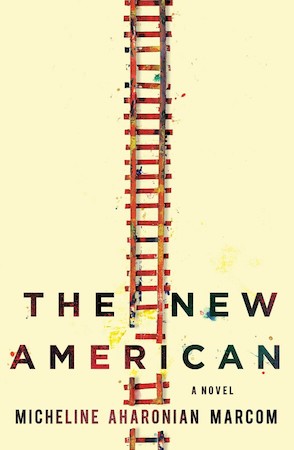
As I wrote my seventh novel, The New American—which takes up the story of a young Guatemalan American college student at UC Berkeley, a DREAMer who is deported to Guatemala and his journey back home to California—I thought a lot about these kinds of archetypal stories in imaginative literature. Here are a few of my favorites. 

The Epic of Gilgamesh by

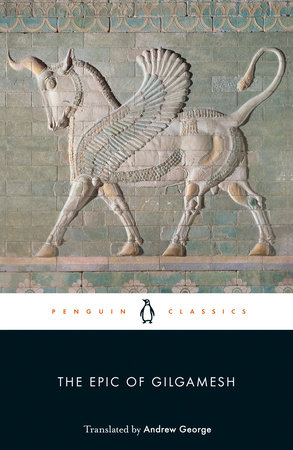
The Epic of Gilgamesh, or He Who Saw Deep translated by Andrew George

The epic poem, one of oldest works of world literature, was composed in its earliest versions over 4,000 years ago in Mesopotamia and written in Babylonian cuneiform on clay tablets. Much of the reason it is lesser known than the younger works of Homer is because the epic itself was not rediscovered until 1853, cuneiform was not deciphered until 1857, and it wasn’t well translated until 1912. Fragments of the story on stone tablets continue to be found in modern-day Turkey, Iraq and Syria.

The basic story follows the King Gilgamesh of Uruk (modern-day Warka, Iraq) and his friendship with the wild man Enkidu. They undergo various battles including fighting and defeating the bull of heaven. Later, upon Enkidu’s death, Gilgamesh journeys to the edge of the earth where he goes in search of the secret of eternal life and, not finding it, returns home to Uruk having in some manner, in spite of life’s sorrows and travails, made peace with his own mortality.

“Ever do we build our households, ever do we make our nests, ever do brothers divide their inheritance, ever do feuds arise in the land. Ever the river has risen and brought us the flood, the mayfly floating on the water. On the face of the sun its countenance gazes, then all of sudden nothing is there!”
The Odyssey by Homer

The Odyssey by Homer

Written down, along with the Iliad, soon after the invention of the Greek alphabet around the 8th-century BCE, the epic poem sings of Odysseus’ return home after the Trojan War and his encounters with monsters, the Sirens, shipwrecks, and captivity by Calypso on her island until he finally makes it back to Ithaca. Because the poem survived more or less continuously until modern times and has had influence in so many cultures for millennia (unlike the more recently rediscovered and older Gilgamesh), there’s no need to reiterate a narrative which so many of us already know, either directly or through the many stories the poem has inspired and influenced. One of my favorite moments comes in Book 14 when Odysseus finally makes it to Ithaca after ten years of traveling and, disguised as a beggar, seeks out Eumaeus the swineherd, who, not recognizing Odysseus, asks “But come…tell me of thine own sorrows, and declare me this truly, that I may know full well. Who art thou among men, and from whence?” These lines have seemed to me to in some way encapsulate some of storytelling’s most basic questions across the ages. 
The Divine Comedy

The Divine Comedy by Dante

Written after Dante had been sent into exile from his beloved city of Florence, the Commedia tells of the pilgrim’s descent into hell, his travel through purgatory, and eventually his ascent to paradise, with the Roman poet Virgil as his first guide, and later his beloved, Beatrice. The Commedia—the adjective “divine” in the title wasn’t added for several hundred years—begins with “Nel mezzo del cammin di nostra vita/mi ritrovai per una selva oscura” which can be translated from the Italian to “Midway through the road of our life I found myself in a dark wood.” This is another line from literature that has haunted me for years, not only for the allegorical  “dark wood” many of us might at times find ourselves lost in, but at Dante’s strange use of the word “our” even though the Commedia will tell of one pilgrim’s journey and search for the right way. The first person plural points, I think, to the common story of seeking meaning, understanding, and wisdom, and how in the case of this beautiful work, the company of literature with its manner of encoding in the song of language (even if you don’t speak Italian, read a few lines out loud and you can hear the poem’s rhythms) is a blessing in any reader’s life’s journey. 

Don Quixote by Miguel De Cervantes Saavedra

Don Quixote by Miguel de Cervantes Saavedra, translated by John Rutherford

Alfonso Quixano has read too many chivalric romances (popular in 15th and 16th-century Europe), has gone mad from his reading, and now confuses reality with fantasy: he imagines himself the knight-errant Don Quixote and he determines to set off in search of adventure. From that premise, we journey through the countryside with our knight errant and his squire, Sancho Panza, as they slay giants (windmills) and defend the honor of his lady-love, Dulcinea del Toboso (a neighboring farm girl), who doesn’t actually ever appear in the story. In addition to being an amusing, laugh-out-loud tour de force of strange encounters as the pair travel across La Mancha, the reality of the violence, ignorance, and venality—not of Don Quixote, but of the society in which he lives in 17th-century Spain—of corrupted clergy, greedy merchants, deluded scholars, and the like, is on full display. To this day, Don Quixote continues to reveal the joyous role of reading in our lives, how fictions make for all kinds of realities, and how very often it is the fool who sees the truth.

“When life itself seems lunatic, who knows where madness lies? Perhaps to be too practical is madness. To surrender dreams—this may be madness. Too much sanity may be madness—and maddest of all: to see life as it is, and not as it should be!”

Season of Migration to the North

Season of Migration to the North by Tayeb Salih

Tayeb Salih’s mid 20th-century masterpiece is narrated by an unnamed young scholar who returns from England to his village on the Nile after seven years of study abroad and encounters a mysterious newcomer, Mustafa Sa’eed, who also lived for many years in the north. The novel takes up the many complexities and legacies of colonialism in post 1960s Sudan, the difficulties of encroaching modernity, the tragedy of Sa’eed’s life in England, and the intricate web of communal relationships in a traditional village. It is some of the women characters, especially the irreverent and bawdy storyteller, Bint Majzoub, very much like a storyteller out of the Nights, who regales the elder male listeners with bawdy tales, that has stayed in my imagination since I first read the book a decade ago. But it is the style of the book, its formal narrative complexity and interplay, the beauty of its prose, its deep and complex interrogation of the self in the world, that have made it a book I continue to return to. “How strange! How ironic! Just because a man has been created on the Equator some mad people regard him as a slave, others as a god. Where lies the mean?”

The Bear by William Faulkner

The journey here is into the woods to hunt Old Ben, the last remaining brown bear of his kind and stature in the quickly diminishing woods of Mississippi at the turn of the 19th-century. As with so much of Faulkner’s work, the writing is sublime, the form strange, the land is a character, and we witness the maw of industrial capitalism as it reduces everything—animals, the land, people—to a ledger of profits and loss. The last scene of the illiterate woodsman, Boon, in a clearing—the land by then has been sold, Old Ben is dead, and loggers will imminently cut the remainder of the old woods down—sitting beneath a lone tree with squirrels running up and down its trunk screaming “They’re mine!” has long haunted me.  

Invisible Cities by Italo Calvino

Italian writer Italo Calvino’s fantastical novel is about the imagined conversations between the 13th-century Venetian traveler, Marco Polo, and the Tartar Emperor Kublai Khan of the cities Polo has seen during his travels. The book, however, is mostly made up of descriptions of cities—fantastical forays not into any visible or historical cities, but imaginary invented ones: both ones that might have been and could be, and ones which perhaps did or do exist but are now transformed by the lens of story and distilled to their strange often wondrous essences. Calvino reminds us in this glorious book how the stories we tell greatly shape our thinking, our cultural formations, our views. “You take delight not in a city’s seven or seventy wonders, but in the answer it gives to a question of yours.”

Their Eyes Were Watching God by Zora Neale Hurston

When I think of Hurston I recall her description in her essay “How It Feels to Be Colored Me” of the “cosmic Zora” who would emerge at times as she walked down Seventh Avenue, her hat set at a certain angle, who belonged “to no race nor time. I am the eternal feminine with its string of beads.” In Hurston’s extraordinary novel, Their Eyes Were Watching God, the eternal and timeless qualities of imaginative literature are on full display in the very specific groundings of place and time, spoken language and culture. The book opens with Janie Crawford recounting her life story to her friend Pheoby upon her return to the all-Black town of Eatonville, Florida. The book, set in the 1930s, follows Janie’s narration of her early life, her three marriages (the last for love), and the many trials she undergoes including the death of her beloved during her travels, before she finally returns changed, wiser, independent. “You got tuh go there tuh know there…Two things everybody’s got tuh do fuh theyselves. They got tuh go tuh God, and they got tuh find out about livin’ fuh theyselves.”

Carmilla Is Better Than Dracula, And Here’s Why

Our modern archetype of the vampire is as a man: Nosferatu, Dracula, Lestat, Edward. But some of the earliest vampires in literary and popular fiction were women. J. Sheridan Le Fanu’s 1872 vampire novella Carmilla hasn’t taken hold of the contemporary imagination in the same way as Bram Stoker’s novel Dracula, but Carmilla did it first (by 25 years). And she did it better. The Dracula myth as it’s understood today might be better described as Carmilla in drag. And now, her renaissance is nigh.

If Dracula is our default vampire, Carmilla lurks behind him, languid and sulking in the shadows, waiting to be invited in. “I wonder whether you feel as strangely drawn towards me as I do to you; I have never had a friend—shall I find one now?” she asks her primary victim, the enthralled Laura, whose life force she feeds on. She might as well be addressing the 21st-century reader, rediscovering Carmilla as a formative part of the vampire canon.

Dracula has been constantly adapted in the years since its release in 1897, from the silent film Nosferatu to Francis Ford Coppola’s take on Bram Stoker’s Dracula. The character of the mysterious count, influenced both by Stoker’s book and later pop culture interpretations, informs the way we imagine vampires. Think about sexy Draculas of yore: Gary Oldman in the ‘90s, for instance, and all the other seductive man-creatures with pan-Euro accents. The glamorous sheen of the Dracula legend, though, is grounded less in the text itself and more in our reproductions of him. 

Sure, he turns Lucy Westenra into a vampire, but the text itself is more concerned with his real estate holdings.

The tropes we associate with 21st-century vampire fictions—linking of sex and the forbidden, romantic obsession, and physical beauty—map onto Carmilla more than Dracula himself. Sure, he turns Lucy Westenra into a vampire, but the text itself is more concerned with his real estate holdings and the dynamics of the vampire hunters.

In contrast, Carmilla is pure psychological horror: the titular vampire tells Laura, “You are mine, you shall be mine, you and I are one for ever.” For a better analogue of our modern vampires, look not to the dominating Dracula but instead to his seductive predecessor. Carmilla is, put simply, a really sexy book—a better predecessor to the 21st-century’s class of smoldering, sparkling supernaturals. By contrast, Dracula is a vampire in the Hungarian folkloric tradition: enthralling but not hot. 

In Carmilla, the titular vampire circles her prey—a meek and obsessed nobleman’s daughter named Laura—until they are inseparable and in some cases indistinguishable. It’s a dance. Dracula’s primary motive is less about attraction and more about domination. It’s a violent text which loses sight of the attractiveness of vampiric stories: the sex factor.  

Much of our knowledge of vampires in folklore comes from a 19th-century monk, Augustine Calmet, who wrote a treatise on the supernatural called The Phantom World. Calmet offers case studies on vampiric folklore and presents a version of the Hungarian vampire of “revenant”: a ruddy, bloated creature who looks quite different from the suave ladykiller we imagine Dracula to be. In popular culture, he is represented as a sophisticate, while the text paints him more as a brute. 

Dracula, read straight from Stoker, isn’t even all that sexy.

Dracula, read straight from Stoker, isn’t even all that sexy. He has “massive eyebrows,” a mouth that is “fixed and rather cruel-looking.” As the original text portrays him, he’s more tyrant than heartthrob. “Even the deep, burning eyes seemed set amongst swollen flesh, for the lids and pouches underneath were bloated,” Stoker writes. 

That textual description of Dracula matches up with the story of Arnold Paole, a famous “real vampire” case in Hungary. Calmet describes Paole as, above all things, vital: “His body was red, his hair, nails, and beard had all grown again, and his veins were replete with fluid blood.” 

And the ways in which we’ve conceived of him—and the vampire legend more broadly—more closely resemble the mystery of Carmilla than the brutishness of Dracula. 

Contrast that description to Carmilla, a vampire inhabiting the body of a countess and dripping in cat-like glamour. Repeatedly described by Le Fanu as thin, ethereal, and enthralling, Carmilla better approximates and predicts what sticks about the vampire legend: the glamor, the iconography, the aesthetics. It seems that even the modern reproductions of Dracula are more indebted to her than the character they’re nominally portraying. 

Carmilla is also a queer novel. In a sense, it’s a proto-erotic thriller, which renders it a more useful predecessor to our modern vampire love stories. As Carmen Maria Machado wrote in the introduction of a 2019 edition of Carmilla which she edited, “to contemprary eyes, it is impossible to argue with the queer currents that run beneath Carmilla’s text.” Though the social mores of the 1870s meant Le Fanu couldn’t explicitly couple the female protagonists, the queercoding is plain as day.

Vampires are our fictional cipher for the outsider, and represent the embodiment of our cultural fears of the unknown. Dracula, a foreign aristocrat encroaching on British land—and women—represented a xenophobic reading of otherness. Carmilla, however, embodied the otherness of feminine desire and queerness. The taboo of vampirism superseded the taboo of lesbianism. Because she existed outside the social contract, she was allowed to exist as her sultry self. But the threat is still there: this time, though, Carmilla as a character and as a symbol poses a threat to the patriarchy. 

If we think of vampirism as a kind of procreation, then in the female vampire, we see an avenue for reproduction that doesn’t require a penis (though penetration is an important component). Lesbian vampires create and consume their victims at the same time. Fictional women have always been required to multitask, serving as Madonnas and whores, mothers and maids. 

When Carmilla bites her, Laura feels “a stinging pain as if two large needles darted, an inch or two apart, deep into [her] breast.” If we think of a woman’s breast as both a site for feeding and for sexual desire, this act takes on an intimate, reproductive meaning as well as its obvious horror overtones.

And the linkage of women and reproduction in horror is one that resonates today. Women have always been the primary consumer of the horror genre. Why, then, is our default vampire a sulky dude?

Where Dracula is a singular entity, Carmilla and Laura are the dark and light halves of the self, and they’re drawn to each other. That pull is the novella’s animating psychological force. Dracula as a text and Dracula as a character are more concerned with land deals, empire, and the propagation of a vampire race. But Carmilla’s inherent intimacy makes it a more appropriate template for our modern vampire myths.

In some ways, Dracula’s main function now is as a reference point.

In some ways, Dracula’s main function now is as a reference point. Stoker’s novel popularized tropes of the vampire myth ranging from garlic to coffins, and the sheer endurance of Dracula as a character put all subsequent Western vampire fictions in conversation with the Count. 

As Nina Auerbach puts it in Our Vampires, Ourselves, “There are many Draculas, and still more vampires who refuse to be Dracula or to play him.” And it’s interesting to think about the parts of the legend we’ve shaved off or collectively rejected. When Dracula brought vampire stories into the cultural fore, vampires weren’t sexy or sparkly—they represented the brute nature of death more than the death drive and desire that animates much of our modern connection with vampire stories. 

Because the animating force behind our interest in vampires is the connection between desire and death, sex and sin. We think of Dracula as a relic. Carmilla is spared that historical scrutiny in part because it was never as famous as its Transylvanian successor, but also because her story continues to resonate today. The tale of obsession, queer desire, and Gothic intrigue feels as enthralling in 2020 as it did in 1872. 

The Forgotten Brontë Sibling

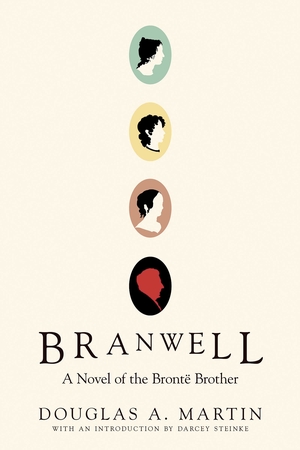
Douglas A. Martin’s novel Branwell: A Novel of the Brontë Brother has been described as a “queer speculative biography.” In imagining the life of the only brother in the Brontë family, Martin borrows language from letters and diaries, but the real magic of the book is Martin’s ability to inhabit the gaps and silences that surround Branwell himself. 

As a boy, Branwell suffers through the deaths of his mother and two oldest sisters. The surviving siblings—Charlotte, Branwell, Emily, and Anne—live with their minister father and maiden aunt in a parsonage that borders a graveyard. When the children aren’t roaming the windswept moors, they collaborate on massive volumes of stories about the imaginary kingdoms of Angria and Gondol. As he grows, Branwell seeks out the local pub, where the red-haired minster’s boy drinks and talks and boxes with the other men. He craves alcohol and later opium—Martin writes with heartbreaking clarity about the slippery logic of addiction—and from an early age, his sisters can see that “their brother’s affections are given almost entirely to men.” But Branwell himself is more evasive. He is desperate to be noticed, but fearful of being too visible. While he searches for “signs, tokens, in other people’s eyes,” he is also “afraid he might have been born with an evil nature.”

Unsure of his place in the world, Branwell fails to gain notice as a poet, translator, portrait painter, and a railway clerk, until he is hired as a tutor at Thorp Green. But he is soon dismissed under a cloud of scandal, and his trajectory turns from turbulent to tragic. Brontë biographers have pointed to a possible affair with his employer’s wife. Martin’s novel treats that as a cover story, and intimates that Branwell may have been grooming the boy he was hired to teach. Like Branwell himself, the novel is constructed of hints and conjecture, and fascinated by what might have been.

First published in 2005, Branwell has just been reissued by Soft Skull, with an introduction by Darcey Steinke. I caught up with Martin in the days before publication, and after sorting out the technological glitches of the social-distance era, we started by talking about Branwell, the Brontës, Byron, and Bowie. 


Brendan Mathews: When did you first learn that there was a brother in the Brontë family—a sibling who didn’t write one of the classics of 19th century British literature? 

Douglas A. Martin: I didn’t know about him at all, which is what intrigued me completely because I’d been taught the Brontës like everybody else in school, and Wuthering Heights was one of the first important reading experiences for me. I had been out of my MFA program for a year or so, and as I walked around the city I would stop to see Darcey Steinke at the New School. One day, she was writing a lecture on the Brontës and she casually mentioned that there was a brother, which completely took me aback. The way she described him fascinated me and made me feel like this was a person that I would have been in love with immediately if I’d been taught about him in school.

BM: What was it about him?

DAM: It was the way that Darcey talked about his awareness of self-fashioning. When I did my MFA, my critical thesis was on self-presentation in the work of Patti Smith and Anaïs Nin, and how they styled themselves determined the reception of their work—one being hyper feminine and the other being hyper masculine. When Darcey talked about Branwell’s sense of self-drama, and the way that he would faely comport himself around in his poet blouses, because he wanted to be Byron, that was really electric to me. But she also had ideas about how he was like David Bowie, and so, two things came together really nicely for me—this idea of self-determination, but that one can make one’s own codes, one could begin to forefront how one wanted to be read. You know, create a metaphor of the self, and that was as much through how he moved through the world as what he put on the page. 

BM: If anyone’s pitched to you as a little bit Byron, a little bit Bowie, it’s hard not to feel drawn to that. 

DAM: It was a weird thing for me too, because at the time, I was still really strongly female identified. I read only women writers, and I myself was much more interested in makeup and such than I am now. So I think he was also like a gateway drug to the male muse. 

BM: Tell me a little more about you in that moment. Did you grow up in a family where writing or making art was an acceptable profession? 

DAM: Not at all, but in a complicated way. I mentioned that one of the most formative early reading experiences for me was being assigned Wuthering Heights in school and not being able to understand it. I was an extremely high-strung, emotional kid and I wanted to be smart and I did not feel smart. A lot of this had to do with my class background, but also the schooling system that I was in, and not being able to understand this book that I was meant to read for class had me in literal tears. My mother gave me a lesson in reading, which is something I’ve really taken forward with me: that I wasn’t meant to understand anything, that it was about relaxing into the book. I remember very vividly allowing myself to dream through the reading experience of Wuthering Heights and knowing that pages could go by before something would become distinct for me—but that I also was absorbing something. So there’s that, and there’s the fact that at one point, my sister started writing poems and I was really jealous of that, and I thought I could do better. 

BM: Your sister writing poetry and you being convinced you could do better puts you pretty squarely in the Brontë tradition.

I was not in a world where ‘poet’ could be one’s profession at all.

DAM: Yeah, but I was not in a world where “poet” could be one’s profession at all. At the time, the writers that I’d been exposed to were Jackie Collins and Stephen King and Agatha Christie. These were the books that were around. 

So it wasn’t that there was an idea that I was going to be a poet, but my sister had done something that I thought I could do better for whatever reason. I’m sure that says something about me, and there’s a gender dynamic there as well. But I did in earnest start writing poetry around the time I was 16. It was after I began having sexual experiences, and I had no other place to put this experience outside of a poem and it felt like poems held that. 

So I was writing poetry and I went to college and I thought that that was just a foolish thing that one did in high school. Then I began keeping a diary and I slowly came to accept that one being a writer could be a valid profession and it could be a discipline and it could be something that one could work at and make come true no matter what one’s background was. 

BM: The Brontës were a poor family living out on the moors, but they’re convinced from childhood that they’re all going to be artists; it’s just a matter of choosing which art. And Branwell, based solely on his gender, was going to be the greatest of them all. But it’s the sisters whose names we know.

DAM: Thinking about Branwell, I just thought more and more about what it means to be essentially erased from history—and that became for me this thing about well, “he doesn’t matter because he didn’t create art,” which became a really close-to-home problematic for me. It seemed like this space that I could really get into, that one is meant to rise to certain occasions, to make this kind of worthwhile art. 

Before I’d really started with the book, I picked up a biography of the Brontës and I flipped to the index and began looking at entries about Branwell. The words Thorp Green completely electrified me. They made instant poetic sense to me. And the more I began looking into that dynamic there, that piece of the story, the mystery of it, the student-teacher stuff, it just was like, there’s no way I can’t write this right now. These are all of my issues: the larger dynamic of making art, making the right art, succeeding at art or not, and then within that—psychically, erotically—what’s happening for somebody in terms of power dynamics really just galvanized me and I said, I’ve got to do it.

BM: For all the ways in which the novel is soaked in desire and longing, there’s also an evasiveness, a kind of discretion, about what Branwell is doing and with whom he’s doing it. Was that an effort to protect his privacy, to think about how he would have thought about his life? Was it some kind of 19th century decorum? Or was it just Branwell’s inability to name what he was feeling or to express his own desires? 

DAM: For me, it’s all of them, and it’s a blend of them. Certainly, taking the premise of what could and could not have been said in a 19th century novel, there’s that decorum idea, and it’s complicated by the words not existing. But additionally, there’s what a character can or can’t admit to themselves, or allow themselves to see.  

I’ve long thought that Branwell himself needed the Henry James of the tales. He needed “The Turn of the Screw.” He needed to some extent what Joseph Conrad was doing in “Heart of Darkness.” Not triple-decker-novels, but those tales, the psychological cul-de-sacs that those writers are writing those fraught sexual dynamics from. I think that that could have made sense for him.

BM: This past year I taught Jekyll and Hyde and Dorian Gray, and there’s something about those books that can be shocking to 21st century students, because they read Jekyll’s inability to name the feelings inside him and the students are like, “well, he’s gay, right? How could no one have seen this?” And then they read Dorian Gray and they think Wilde is just putting it all there. 

Thinking about Branwell, I just thought more and more about what it means to be essentially erased from history.

DAM: That was one of the challenges of the book for myself: How do you write an identity when certain words don’t exist? I think oftentimes identity becomes a holding container and helps one feel a little bit more put together. For me, another big drama with Branwell is this expectation that one sets out into the world, and one’s work—one’s worth as a poet—is the adventure. You point to Dorian Gray and Jekyll and Hyde and these are books where what’s been constructed is how one stays inside with oneself. I think that was experienced in Branwell’s case as an effeminizing thing, which became a bad thing, a judgment thing, a failure thing, a castrating thing, to even go into those kind of words. 

Before I published Branwell I had published one other novel and I felt to succeed as a writer, there were expectations for me to do other things. It took me a really long time to figure out how to do what was expected of me, which was phrased as, “leaving my world behind.” And the solution became for me, it’s not that I’m going to leave my world behind—I’m going to find the connections to my world within these other worlds. 

BM: What world was it that you were expected to leave behind? 

DAM: My narration of my struggles with my family, with my sexuality, with my upbringing in the South. The kind of loose fictionalizing of autobiography that I was doing in my earlier work—work that I think has a lot in common with the work of early Jean Rhys. She was a really important figure for me in figuring all this out. She’s a writer who has integrity. And she moved from doing this thing that’s based in the self to figuring out where the self might be in a book like Wide Sargasso Sea, right? So that was that was something I came to. That was important.

BM: Who do you imagine Branwell might have been in the 21st century? There are aspects of his identity that he may have been able to accept or even celebrate. So I wonder if there could have been a 21st century Branwell, or if he’s very much a product of his own time?

How do you write an identity when certain words don’t exist?

DAM: I would be hard pressed to find a 21st century equivalent. I think when you say “a product of his own time,” that’s what makes sense to me. He’s constructed from the archive of his time. But I do think the possibilities for what art might look like would be numerous—if he had the right critics, if he had the right guides. For him, it’s not so much that “I want to go to the bar to get drunk.” It’s that “I want to go to the bar because that’s where my audience is, that’s where I can actually write and be alive.” It’s an act of writing; a writing on one’s feet. So now I’ve talked myself into an answer, which is I could see him like a Lenny Bruce character, a monologuist, where one could perform oneself in public in a way that was an elaboration and that allowed for exaggerations, and then those moments of tender truth within that. I could see him pulling something like that off. There’s no doubt that the people that experienced his ability to converse and tell a story were riveted by him. They really did fall in love with him. 

One of the problems for him was our demand for singular authorship. Those stories that he wrote with Charlotte as a child, if that could have progressed—or if he would have just been allowed to be in that book of poems [Note: in 1846, the Brontë sisters published a collection of poems; Branwell’s work was not included]. He’s not a good poet, despite my dream that he might have been, but I don’t think Charlotte was either. I don’t think Anne was. I think Emily was a poet of her time. But his being left out of that book was a huge turning point. Quite honestly, I think it was a vindictive move. I’m not dismissing the historical person Charlotte Brontë’s feelings here about having been let down or embarrassed by her brother, but I think that the way that it played out was the ultimate ostracism. The home that they had together was in that writing, and he effectively experienced himself being ghosted within his realm of sanctity. 

BM: It’s fascinating to see how you embed moments from the sisters’ novels in Branwell’s story—whether it’s the lightning-struck tree or the burning curtains or the way the relationship between Emily and Branwell feels awfully like Heathcliff and Cathy. You can see he’s living his art and they’re living it too and it’s finding an expression for them in their work. And he just has himself to be the page or the canvas. 

DAM: In many ways, it’s a nonfiction novel, because I always felt like I was writing along with something that had already been written about him. I never proceeded by a blank page; any bit of writing would happen with me opening one of their books and trying to enter onto that page of whatever book through Branwell’s eyes. That was the kind of translation that I was actively inscribing. What it would be like to fear that this might be the trace of you—and indeed it was. 

And so it’s not that I’m myself as an author trying to present the picture of Branwell, it’s more a curating of different angles of him. And then doing some kind of sculpting on that as well. I felt like all the books that were there were raw material and it was up to me to just polish him out of it. 

Poems That Ask How We Value Black Women’s Lives

Destiny O. Birdsong’s debut poetry collection, Negotiations, is exactly what it sounds like. The speakers in this collection negotiate their body—asking what it’s worth to themselves, to romantic partners, to a society that caters to white people. The speakers negotiate with their memory, examining how trauma functions in their daily lives. The speakers negotiate with men, with their mother’s old sayings, with their health, with love or what was mistaken as love.

Negotiations

In this collection, Birdsong directly addresses those who have caused harm—such as rapists, racists, and others. She uses each poem to examine power or the lack thereof and explores what it means to be a Black woman in America, with her skin tone, her autoimmune disease, her hair. 

Destiny O. Birdsong is a Louisiana-born poet, fiction writer, and essayist. She has received many fellowships, including Cave Canem and the MacDowell Colony. Her work has won the Academy of American Poets Prize, Naugatuck River Review’s 2016 Narrative Poetry Contest, and others.

I chatted with Birdsong about living with a chronic illness, renegotiating beliefs, and expressing anger as a Black woman.


Arriel Vinson: The collection starts with slavery and pink hats, and your pussy. Tell me more about the title poem and how you’re negotiating with your body—and other bodies—throughout this collection.

Destiny O. Birdsong: The title poem, “Negotiations,” is one of the earliest pieces I wrote for this book, and I did so during the summer of 2017, shortly after the Unite the Right rally in Charlottesville, which explains my references to the city. “Negotiations” also contains elements of the Women’s March on Washington, which happened earlier that year, and some of the bizarre suggestions I heard from white people in the wake of both the 2016 election and the Charlottesville rally (like political poisonings and sex as conversion therapy for Neo-Nazis).

In the poem, I was attempting to address the schisms between me and those people—not only in our reactions to the persistence of racism, but in our strategies for reclaiming democracy (or whatever passes for it in America). Those schisms always require a certain kind of “negotiating” for me as a Black woman: I appreciate white allyship, but I am always aware that even the activist imagination is a privileged terrain. So too is bargaining with one’s body; I was reminded of this with “Naked Athena,” who stripped in front of a line of policemen in Portland earlier this summer. The stakes of such acts are higher for Black women, and no one better embodies that than Sally Hemings, who came into the poem because of her connection to Charlottesville and because she had to negotiate what was, by definition of her bondage, a sexually violent relationship with Thomas Jefferson in order to free her children. She serves as a historical precedent for my negotiations in racist and misogynistic spaces as both a Black woman and a sexual assault survivor. 

AV: Many of the poems in Negotiations consider worth: what a Black woman is worth, what or who is worth stealing or hungering for, who is stealing, etc. How is worth in Negotiations directly linked to power, the body, and money, or the lack thereof? 

DOB: I entered adulthood believing that my body was supposed to retain a certain kind of social capital in order to be valuable and desirable, and that capital lay in things like beauty, health, and sexual purity. A lot of the poems in the book chronicle my renegotiation of those beliefs in the wake of illness and assault. Letting go of all that allowed me to see myself clearer, see my God clearer, and reclaim my power.

But of course, in spite of all this work, everywhere I turn I’m reminded of how little this world values Black women, which affects me personally in some specific and contradictory ways. I’m often misread as being not enough of something: not smart enough, not beautiful enough, and in some instances, because I have albinism, not Black enough to even speak about these issues. Many of the poems in the book address that, but I also made space for the worlds in which I feel safest and most loved: the private spaces that me and Black women I love create with and for each other. That’s what’s saved me. That’s where I draw my strength, but also my sense of self-worth. I wanted the book to tell the totality of this reality: the blister and the balm. 

AV: There are poems in the collection where you wish harm on racists and others. We typically don’t see such public wishes for revenge, especially in a poetry collection. Why are anger and vengefulness useful in Negotiations

DOB: Unprocessed rage can kill you. I’ve watched it happen to people in my family, and to people I love. But I also know that not all rage should be unleashed into the world. Since childhood, the page has been a safe space for me to process things I didn’t understand, or to interrogate some of the silences in my family. Now, it’s a place for me to take my rage; I know I can put it there and keep me and everyone else safe. But rage is also a revolutionary act, which is something we’re thinking a lot about in a year filled with protests of all kinds. Black people are so often expected to forgive, and I do, but I also need to make it clear that I am not superhuman, and I get angry at injustice. I get angry when I’m harmed for no reason. My rage reminds me—and hopefully everyone else—that I’m human. And if, as so many people have told us, poetry is a testament of the human experience, then rage belongs here too. 

AV: Negotiations also navigates the speaker’s chronic illness. We see a call to Robert Hayden in relation to the speaker’s body on one hand, and a poem based on a hotep saying illnesses are man-made on the other. Why was it so important to give chronic illnesses space in this collection, and how are you negotiating with it in these poems?

Rage is a revolutionary act.

DOB: Living with a chronic illness is one of the many ways I negotiate space for myself—for my care—and misogynoir and class have just as much of an effect on how I do that as how I do anything else. And if I was going to talk about all the things I negotiate in order to survive, but leave that out, I only would have been telling half the story, which is something that already gets done so often to Black people in every space imaginable. I couldn’t do that to my body in these pages. And I couldn’t do that to the Black woman who might be reading this and needing to see someone like her, whose situation is complicated by illness, and whose life has been enriched by the ways she’s learned to live with it. 

AV: Many of the poems interrogate—and reject—ideals of womanhood in relation to men. The speaker considers her own mother’s loneliness, the concept of keeping a man/losing a man, and being enough for one. Tell me more about this.

DOB: I was raised by a single mother whose dream was to get married, and in some ways, our family lived holding our breaths for that moment. We dreamt about it, we prayed for it, and when it finally happened it was nothing like what we imagined. Even so, I wanted that life for myself, and I believed I was supposed to do whatever it took to make that happen: be submissive, accept ill-treatment, contort myself to fit whatever mold my husband would expect me to. But none of it worked. Then I watched women I love enter these really dangerous unions, and the texture of their lives changed. And so did they. They got angry, bitter, or complacent. And when I was in similar relationships, the same things happened to me. The whole notion was harmful, and I knew it would stay that way until I let it go. But this was also happening as my relationship to my body was changing, so a lot of it had to be mapped out on the page for me to even make sense of how my ideologies were changing, and how I was changing. In some cases, I’m still discovering truths about myself that I wrote in these poems. For example, I’ll have a really good therapy session, or a great journal entry where I make some declaration, and suddenly a line from one of the poems will pop into my head, and I’ll think, “Damn, now I finally understand what I meant when I wrote that.” It’s wild how poems will do that to you.  

AV: Trauma and memory are used often in Negotiations. The speaker remembers dialogue from men—such as her rapist—and it seems to permeate the speaker’s daily life. How do memory and trauma hold space in this collection? 

DOB: I used to think I had an amazing memory—and perhaps I did as a teenager—but lately I am surprised by what I don’t remember, or how some of my memories get skewed: the order of events gets scrambled, or someone said something foreboding about their intentions, and that information will come back to me in a flash of hindsight. Some of that forgetting, I know, is a survival strategy, a way to let go of the recent traumas I’ve experienced with illness and hate crimes and assault, but some of it is ancestral.

I grew up in a family where several people died suddenly and/or violently, and we rarely talked about their lives because it meant remembering their deaths. One summer, my mother’s two closest siblings unexpectedly passed away within a couple of weeks of each other, and the following summer, her grandmother died. I don’t remember those years so much as I step back into that space in my mind, into the Louisiana heat and the itchy stockings and the acrid smell of funeral homes and my mother’s laconic, but suffocating grief. Only my senses return; I’ve blocked out almost everything else because it was so painful to witness. But in self-protecting, and in protecting my mother, I’ve lost something valuable. I can’t remember if she ever cried (though she might not have done that in front of us kids), or the first time she laughed again, or the first time I heard her singing to herself after that. Today, I value the memories of my experiences because they provide context for what was and is happening to me as I heal, but also because they remind me that I survived, and they give me little glimpses into how I did it. I need that for the future; if something else catastrophic happens to me or to someone close to me, I want to remember how I got over, how I came out. Poems can bear witness to this after the fact. They can preserve the narrative of survival that gets lost in the act of surviving. 

AV: Throughout the collection, the speaker takes off her skin and either moves around without it, or watches someone else in it. In other poems, she admits to learning to love her body, but also hungers for it. Tell me more about this. 

Poems can preserve the narrative of survival that gets lost in the act of surviving.

DOB: I lived my whole life hating my skin, wanting something different. I wanted to be darker, to more obviously resemble my mother or other people in my family (even though my mother and I literally have each other’s faces). Then, in my mid-30s, I developed a horrible skin condition as a side effect of a medication, and I lived with it for almost a year while my doctors tried to figure out what was wrong (or rather, tried to convince me that I had another auto-immune disease). For all those months, all I wanted was the return of my healthy, pale skin, and I had to admit that all the other times in my life when I thought I looked monstrous was the result of my own self-hatred, and the internalized ridicule I’d received from others. All of that was fabricated and subjective, but this condition was real. That experience changed me, and it changed me while I was writing these poems. Strangely, just as my skin got really infected, I started masturbating. I’m not sure if I connected it in my mind then, but in hindsight, I see it as an act of reclamation of my body, which wasn’t obeying any kind of logic at the time, and maybe also some nostalgic act for my skin: I was aroused by what was under threat of destruction and maybe I was finally understanding that what I stood to lose was in fact beautiful. That kind of irony is perfect for poetry, right? 

AV: In all of these poems, you address capitalism, white privilege, sexism, and other means of oppression—sometimes outright and sometimes through more personal experiences. Why was this important in Negotiations?

DOB: These topics are…evergreen. It’s possible that Sally Hemings was writing about them 200 years ago in a diary we’ll never see, and here I am writing about them now because, just like her, they’re a part of my life. But I also write about them because I can’t think about them constantly. I have to make room in my head for joy, for hope and for conversations with my friends about recipes and gardens and paying off student loan debt. I have to live, but I also want to leave a record of how these things affected me and Black women like me. And once I put something on the page, it becomes more than just my experience, it becomes part of the Diasporic collective memory and the responsibility of non-Diasporic folks who read it, especially those who have the power to change things. I get tired of bearing that responsibility—and watching myself and other Black women do that work—alone. 

Safety Is Not Other People

Asylum

The dependence of hunger gives
way to a sharpened eye, a test subject
unsure if it’s in the control or the experiment
group. Sugar or water or the choice to leave
before someone else’s decision: paint me
a reverie like a radio dial or a waiting room’s
splintering pique for your name. I want you
to take my time. When a succulent is
overwatered, it melts from the bottom up,
irretrievable from a surplus, watching itself
drown on land. I snake a string of pearls
around the pot to give it something of the sea
to welcome it while wasting; a terminal
lucidity in its shrinking. And you take my time kindly by
the spoonful, certain to slip the knife
from my teeth, and how I love you harder for it.

When you’re not looking, I lick the counters:
Stray coffee grounds, mistaken yogurt dabs, cracker dust,
anything to keep the taste of you in my mouth even while
you’re here. We’re here. For now,
we draw a bath to forget that
RBG is dead, and what was scalding, we let turn cold
to know we’re still warm inside. What endurance
do we need to carve from ourselves next?

I’d carry your child if you’d have me, provided I still can
or ever could in these days of petroleum skin on the lake
shivering beneath wildfire smoke and Baldwin
rightfully back in vogue. Would one be a fortune? Salt!
Salt for the going, for the polish of the pearls.
Where next the dishes and chairs are placed matters
as much as the light and the will to eat.

Some Things That Are Not Love Happen Out of Love

and those are the things for which we must conjure
an alternate route in order to survive; acknowledgement is due, but without 
a whole body, the needs to be born, it is missing bone

-mass, about 10%, in the right hip joint. Surprisingly, the spine
looks okay. Usually, that’s where girls like you lose the most.
[Osteopenically speaking: sure. I can believe that.] I knew I was

walking into a room I hadn’t before, and I thought his parents
would be home, meaning safety, meaning answers
to the three-day absence of the one person my mind could

not unknot from. I hunkered Rocinante’s fat ass in place
alone affront the house, the poor van’s dyspeptic engine pinging
itself cool: maybe their car was in the alley. He wouldn’t

suggest you start taking salt tablets, because right now
you need to raise your blood pressure, and the salt
will do that. And more water. Water, not coffee. The ceiling fan

wasn’t moving, but its light was on; the porcelain heads
to the pull chains, for once, were still, two baby teeth dangling
from a robin’s egg gum. He said he was suicidal, that’s why

he’d needed to not talk to me, not see me, or be near seeing me
for three days. Consoled that it wasn’t my fault, I said that’s okay
and he took my hand and if you’d just raise your left arm and

lay your head on top it, I can get a better angle on your heart.
[Must it be a jab, sir? Surely, the echo is viable without a jab.] I just
wanted to help, let him know the child I was loved the child I saw

in him: a fellow loner, befuddled with these extra parts to cover,
and a number of hick histories to dissuade. Go team weirdo!
A resolute shift in his lean, new kind of press, one I wasn’t

sure I wanted not Within fifteen feet, the instinctual reaction is to not
move or scream when confronted with this person undoing
above inside me the fan light boiling my sight barium green lit copper blue

bird with a two-egg nest stenciled on the wall three fan tines because
a scream would give away the throat to four pillows to the couch
five fingers to a hand where’s mine need to just find home six animal yes

and when his face reached my mouth, I kissed it with all I that I was
to keep him from lowering back down. It was the one prayer
I could manage to summon, and it gave life back to one dead:

of course, I made a practice of this worship: it was for love! Of course, 
I’ve carved my form with something mistaken for vanity I’m sent girls all the time 
with this problem. But you’re already perfectly thin. Why do you

want to be thin? because vain is where this started. It has the subtlety
of a sledgehammer, my statement of control, and I’m working
on reframing repentance. I was a kid, and I did what I could to help.

12 Mystery Novels Featuring Black, Indigenous, and POC Protagonists

When I think mystery, my mind initially goes to the procedurals I watched with my elders as a kid—shows like Cagney and Lacey or Murder, She Wrote. In those shows, the mystery was always a murder or other terrible crime, and it was always solved. Sometimes the solution was predictable, other times viewers were caught off-guard, in the end the “good guys” always won. Nowadays, “mystery” to me means something bigger—sometimes psychological, other times supernatural. Not all mysteries revolve around a corpse, and even if they do, characters may try to uncover a lot more than just the murderer. Sometimes those seeking to right wrongs are everyday citizens with no badge or prior training, just a strong will to do good and be better. And now, unlike in the Cagney and Lacey days, more and more mysteries are driven by Black, Indigenous, and POC protagonists.

When BIPOC characters are the stars of mystery and crime novels there’s no doubt we’ll be privy to the complexity of how race affects their quest for a solution. The layers of this make for stories of power, inequity, and frustrations ready to boil over. This list includes a sampling of BIPOC characters and authors with free rein to be flawed and functional in their pursuit of truth and justice. 

Blanche Passes Go by Barbara Neely

Rightly considered a pioneer for Black women in the crime/mystery genre, Neely died earlier this year at the age of 78. This is the last book in the series that began with Blanche on the Lam, published in 1992. Blanche White is a hard-working Black woman, raising a family and trying to find a place for herself. Unfortunately, everywhere she goes death seems to follow. Blanche uses her wit, intellect, and savvy to help solve these cases when authorities refuse to look beyond the surface. 

The Last Story of Mina Lee by Nancy Jooyoun Kim

Secrets are often central to many mysteries and they’re also at the forefront of instant New York Times bestseller Mina Lee. Dual perspectives allow readers to experience Mina Lee’s time in LA and her daughter Margot’s pursuit of the truth to find out how her mother died. 

A Spy in the Struggle by Aya de Leon

Lawyer Yolanda Vance becomes embroiled in espionage, activism, romance, and—you got it—a mysterious death that needs to be solved. De Leon’s spy thriller focuses on Vance’s rationale for wanting a comfortable life versus coming to terms with her own moral compass when working undercover for the FBI.   

Searching for Sylvie Lee by Jean Kwok

Doting eldest daughter Sylvie Lee visits a family member in the Netherlands and disappears. Bereft younger sister Amy seeks answers and through her journey unearths what her seemingly fearless sibling kept hidden from everyone. 

Winter Counts by David Heska Wanbli Weiden

No holds barred, cussing up a storm, and ready to knock some heads, enforcer Virgil Wounded Horse has a personal stake in finding out who’s distributing heroin on his reservation when his nephew is involved. Wounded Horse’s investigation reveals many shady dealings and disturbing alliances along the way. 

The Sea of Innocence by Kishwar Desai 

Investigator Simran Singh shows up for a third time in Desai’s Sea of Innocence. Of course a relaxing vacation becomes the landscape for a new crime Singh is forced to solve when a British teenager goes missing and a seedy underworld is revealed. Desai’s journalism and novels appear to take on similar focus when it comes to violence against women and holding patriarchal entities accountable.  

The Body Snatcher by Patricia Melo 

Sometimes mysteries also come in the form of wondering about the stability of one’s soul. Corruption and morality are at the heart of Melo’s Body Snatcher. For the protagonist (or antihero) to escape the turmoil he’s enmeshed in by chance and choice requires some contemplation of what one is willing to do to profit, if not survive. 

Bluebird, Bluebird by Attica Locke 

Locke’s work tackles regional resentment and the complications of being a Black law enforcer. Darren Mathews attempts to navigate his own personal turmoil with a marriage on the rocks, his estranged mother who always shows up at the wrong time, and professional backlash, all the while trying to solve the murder of a Black lawyer and white woman that are seemingly connected. 

The Only Good Indians by Stephen Graham Jones 

Horror, spirituality, and the supernatural come together in this exploration of revenge and obligation. The mystery here isn’t necessarily a “whodunit” so much as a “what happens next,” as several characters are haunted after a hunting trip on land designated for tribal elders. Graham Jones builds the tension through horrifying and realistic detail down to the hauntings and the mundanity of everyday life. 

Charcoal Joe by Walter Mosley 

No mystery/crime list is complete without the prolific Mosley—this year’s recipient of the National Book Foundation’s Lifetime Achievement Award. Charcoal Joe is the latest in Mosley’s well-known Easy Rawlins series taking place in 1968—the same year Martin Luther King Jr. was shot. Attempting to settle down after forming a new agency, Rawlins is once again thrust into a case he can’t refuse when a friend calls for help in exonerating his son from the murder of two white men at a highly racially charged time.

A Crack in the Wall by Claudia Piñeiro

Architect Pablo Simó is not living his best life. He doesn’t enjoy his job or his marriage and has an attraction to one of his co-workers. Another wrench is thrown into his soulless days when a young woman surfaces asking about someone who disappeared under suspicious circumstances, circumstances Pablo knows more about than he lets on.

The Missing American by Kwei Quartey 

Emma Djan’s hopes of advancing in the Ghanian police force fall through, so she tries the next best thing: a detective agency. Derek Tilson travels to Ghana to find his father who suddenly disappeared when visiting someone he met through the internet. Derek and Emma partner up to uncover the depths of internet scams and fetish priests and those who aren’t too keen on being investigated.