francine j. harris’s newest collection, Here is the Sweet Hand, asks what it means to be alone and how that solitude frames our ways of seeing. harris uses observation and loneliness—or the myth of loneliness—to examine being a Black woman, critique and rework musical traditions, and consider current and former political issues. The speakers in the poems question where power lies or where power might not, where the individual is influential or where the collective is.
francine j. harris is the author of play dead, winner of the Lambda Literary and Audre Lorde Awards and a finalist for the Hurston/Wright Legacy Award, andallegiance, a finalist for the Kate Tufts Discovery and PEN Open Book Awards. An associate professor of English at the University of Houston, she has received fellowships from the National Endowment for the Arts, the MacDowell Colony, and the Cullman Center for Scholars and Writers at the New York Public Library.
I chatted with francine j. harris about queer protection, Kanye West, and defusing transactional romantic interactions.
Arriel Vinson: Throughout Here is the Sweet Hand, there is an ongoing theme of harboring, hiding, and holding onto burdens—and immediately I thought of the current moment and what Black women have to deal with. Why was this important to weave throughout the collection?
francine j. harris: I’m not sure these motifs were wholly intentional. It seems like one of those things that is pretty universal, right? Like everyone thinks of shelter and harbor as protection. Though, I will say that I see myself going for agency in these poems with some of that “stuff of burden.” I’m interested in how things get tucked into amber and spooned into glacial ice. I really love the umbrella in the poem “Against Storm, Against Glib Thunder,” as a mode of queer protection. So perhaps what is intentional for me here is agency the speakers take with burdens. Standing on the frozen ice, turning your hand back on yourself. I’m interested in objectification (the making of objects) and how that allows us to wield power in our poems —maybe in our lives.
AV: A few poems in the collection, such as “Ask me now and I would say” and “It is a Choice (because Kanye)” question truth-telling and memory. How did the retelling of stories/changing narratives find space in your poems, and what does that say about truth for the collection as a whole?
fjh: This is maybe an example of what I mean. In “Ask me now…” I find incredible power in the line “I get beneath her in the greased grass.” It’s probably a direct result of the demands I make on myself about self-implication. One of the things I really wrestle with and find emotional and creative power in is deliberating the degrees of mental agency someone has in violent situations. It’s a very long conversation, of course. But I’ve thought a lot about mental position despite situation. It’s different, of course, than the notion of fault. (Was it the speaker’s fault in this poem that another girl decided to attack her and wrestle her to the ground? No…but there is, nonetheless, a consciousness that the girl being attacked has in that situation. A character. A position).
I have found a lot of healing and strength in thinking about the extent to which that character, and that role has its own parameters of imagination and consciousness. It’s probably a natural transition then to be able to wrestle with the absurdity of West’s suggestion that slavery was a choice for Black Americans. Like…maybe that’s some of what he was thinking about—the mindset of an individual human being in the face of forced chattel slavery, and the fact that consciousness does not go away because of enslavement. But I think West came to a horrendous conclusion in thinking that way. To consider the expansiveness of someone’s mindset while they are being enslaved is to take their whole humanity into account—but to blame them for that circumstance is truly to confuse consciousness and awareness, with power. They are not the same thing. And so I wrestle with that a lot. There’s a lot of creative power for me in those working through those unanswerable questions. So I don’t even know that it’s “retelling” as much as it is about re-framing, perhaps to the extent of hyper reality. At least that’s how I think about it.
AV: A few of the poems examine women in relation to men, challenging the mystique of female loneliness and what loneliness even means. What is the function of loneliness in this collection?
I’m interested in how things get tucked into amber and spooned into glacial ice.
fjh: My hope is that you will make this decision as a reader.
AV: The use of music in Here is the Sweet Hand is so interesting. Speakers use operas to observe loneliness or Ty Dolla $ign to observe desire. Tell me more about examining artistic tradition and these themes in the second section of the collection.
fjh: I rewrote “Or Nah” because of how much I loved the beat but hated the lyrics when I thought about them for too long. It’s this really catchy beat made of this sinister notion that someone is only interested in your company insofar as what you can do for them, and specifically in this case, if a woman is gonna’ fuck and suck off and die for some dude. There aren’t a ton of songs that crawl up under my skin like this one—and yet, I’ve got that beat in the canvas of my brain at this point. So yeah, I wanted to diffuse all that bullshit. The poem is difficult to read aloud; I’ve tried. So maybe it’s not supposed to be read. But I love how it looks in its moments. I think I like it—in beats. In snatches. To my mind, there is much more loneliness in that poem than there is in the classical suite. Though perhaps what they share in common is the desire to recast art that may not have been intended for my speakers in the language of their own daily reality.
AV: In Here is the Sweet Hand, there are mentions of meat—the bad smells, the rot, things eating each other, etc. But there are also mentions of seeds and the idea of growing or replanting oneself. Why are both of these so present in the collection, and how does it relate to Blackness?
How much fearlessness is in being able to look the world raw in the face and see how ugly it can be and still love it despite itself.
fjh: What’s interesting about your questions is that I think you are making connections beyond what I was even really intending. I want to be smart enough to answer this question, but I’m not sure I know the answer. Oddly, and I’m not sure I can explain this, but when I used to worry about whether my poems came across as morose or not, I mostly worried that Black folks would think I was weird for all my bugs and meat and cemeteries and other morbid stuff. I don’t worry about that so much anymore.
But I think part of my relief is connected to how excited I got when Black poets would come up to me after readings, usually with a kind of wide toothy grin, giddy about the gore and darkness and grotesque elements in my poems. Maybe what it has to do with Blackness is the kind of private revelry I take with other poets about how much power we get from the grotesque. How much fearlessness is in being able to look the world raw in the face and see how ugly it can be and still love it despite itself. It’s a bit of duende. It’s anti-respectability. It’s grounded and honest and eager—for a kind of guttural beauty. It’s joy in the mess of circumstance. A reverence for a willingness to admit to the hideous. Truth be told, Black folks know that better than just about anyone. I think the poet Ai taught me about this, as well as Amiri Baraka and Larry Neal and Wanda Coleman. Poets like Tommye Blount, Justin Phillip Reed, Ashaki Jackson, and Ruth Ellen Kocher carry on in that tradition. And I like to think I live in that tradition as well.
In an interview in the NEA Arts Magazine, Toni Morrison revealed how she came to write The Bluest Eye:
“I wrote the first book because I wanted to read it. I thought that kind of book, with that subject—those most vulnerable, most undescribed, not taken seriously little black girls—had never existed seriously in literature.”
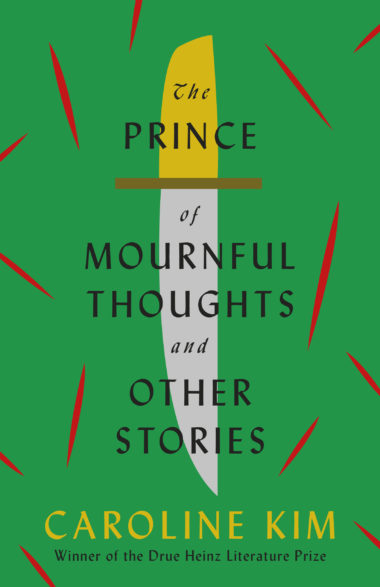
I felt similarly about middle-aged Korean immigrant men, men like my father who moved to America in their 30s and 40s, too old to ever be able to speak English fluently, too set in their ways to accept a culture where hierarchies are less rigid. Powerful at home, he was diminished in public, silent, unsmiling, removed, alone. I couldn’t help seeing him as strangers might. Who could guess at his inner life? Or even that he had an inner life? In my debut collection, The Prince of Mournful Thoughts, I tried to write the book I wanted to read: stories set during the Korean War, about important Korean historical figures, and the ordinary people I lived among but rarely saw reflected in the books I read.
I remember how excited I was when Chang-rae Lee’s Native Speaker came out. I felt a new consciousness, a distinctly Korean American consciousness, finally become a part of the literary imagination. I’ve cheered and been heartened by the popular success of Min Jin Lee’s Pachinko, a moving account about Korean lives in Japan during the colonial occupation, World War II, and its aftermath. Their successes make space for others to follow, and I’m happy to say that there are many more than 10 contemporary Korean American books out there, not that there couldn’t be more. But lately, it’s become hard to keep up (a problem I welcome) and like Viet Thanh Nguyen said in an interview with NBC News, the more Asian American writers there are, the less the burden of representation, allowing for “greater eccentricity and experimentation.” I can’t wait to see what comes next.
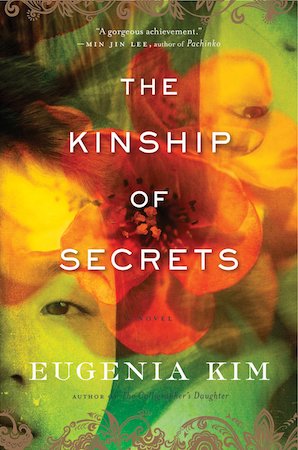
In the meantime, here are ten contemporary books that enlarge our understanding of Korean America and introduce characters who, until now, haven’t existed seriously in literature.
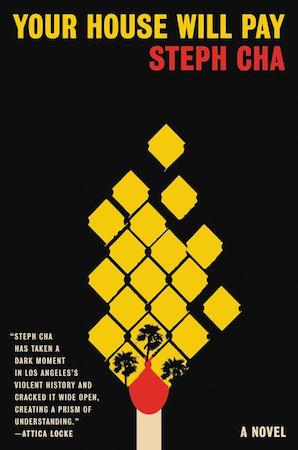
Early in the novel, Grace, a young Korean American woman, thinks about her parents in this way: “Day by day, dollar by dollar, they built new lives in this foreign place, all so she and Miriam could grow up free and clear, American.” What follows shows her that little is “free and clear” for immigrant families like hers. Or for others also struggling to realize their American Dream. Based on a real-life tragedy that helped incite the L.A. Riots, Cha writes with impressive nuance about survival in a complicated world where the distinctions between victims and perpetrators are blurred by racism and capitalism.
I had never encountered a character like Aphias Zhe (“Fee”) before reading Chee’s novel. When asked if he’s Chinese, he answers Half: “Saying it always makes me feel split down the middle. Like a cow diagrammed for her sides of beef.” Twelve-year-old Fee’s life is further compartmentalized in the wake of the sexually predatory behavior of his choir master. In gorgeous prose that serves as a kind of grace, Chee shows us the fallout of this trauma and the ways in which Fee survives, the ways in which he’s changed.
This is one of my favorite collections of short stories, and “The Salaryman” is my favorite in this collection. Clear-eyed and unsentimental, Krys Lee takes us into the life of one of the many faceless white-collar workers one sees packed into South Korea’s subway trains, one of many not thriving in Korea’s golden economic boom. After losing his job, Mr. Seo lives on the street with other jobless men like himself, so ashamed they can’t go home to their families. Instead they spend their time waiting in line for free food, dreaming of driving trucks or working as laborers in America, contemplating selling their kidneys for cash, and lying to their families. One such man “will call his parents and his wife, as he does every week, pretending to be in America. He will tell his parents that he, the oldest son, is their guarantee. He will promise to bring his wife over after he gets settled.”
I thought a lot about the pain of separation and Korea’s division at the 38th parallel as I was reading this novel of two sisters torn apart by the vagaries of Korean history. When the family in the novel immigrates to America, they leave one child behind, for pragmatic reasons (easier to support a smaller family) and also as a placeholder, a promise to the grandmother that the family will return. They have no idea that soon the Korean War will erupt and keep them apart much longer than they anticipated. I loved this book because it showed me what life was like in Korea during the war and in its immediate aftermath, how people survived and even thrived.
“Interpreting is almost a habit,” thinks Suzy Park, though for most of her life, it’s her older sister, Grace, who took on the bulk of the responsibility of translating for their immigrant parents. “Grace, since she was little, had to pore over a letter from the bank trying to make sense of words like “APR” or “Balance Transfers,” or call Con-Edison’s 800 number for payment extension.” Within this page-turning murder mystery, Suki Kim depicts the isolations that result from upended Korean parent/child relationships in a way that rings devastatingly true.
It’s impossible not to fall under the spell of Paul Yoon’s spare, elegant prose in this collection of short stories. Set on a fictional island off the mainland of South Korea, there is something haunting about these stories even if they are as realist as they come. From one of my favorites, “So That They Do Not Hear Us”:
“The following year he was conscripted by the Japanese military, though to this day it was, for her, an abduction. They came for him riding horses. She clawed at their boots and the horses’ flanks. They kicked her down and she hit her head against the base of a tree. Briefly she lost consciousness. When she woke, her eyes focused on the animals and their soft sighs, their white breaths. Hooves lifting, stamping the ground. Tremendous eyes. As if they had come from myth.”
At the beginning of this funny, bittersweet novel, the main character, Helen Moran gets a call that her adopted Korean American brother died by suicide. Also adopted, also from Korea but not blood related to her brother, she says, “I was the only one, perhaps, who knew and understood him.” Deciding to become a kind of detective in order to find out why he killed himself, she returns home to her estranged parents. What follows is a confrontation with her past that finally gives Helen Moran a kind of illumination.
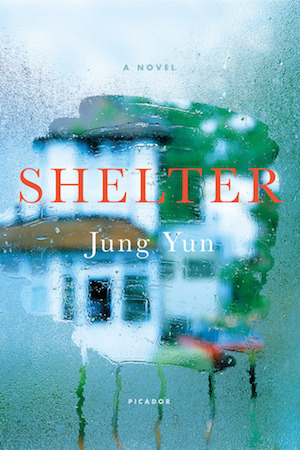
Kyung Cho, the protagonist of Jung Yun’s novel, has always struggled to be the good Korean son. Though he chose not to go to college in California when he had the chance, instead remaining near his parents in Massachusetts, he tries to keep a great distance between them.
“Brick by brick, he’s built a wall around his life, trying to preserve his family and home as his alone. He helps out his parents when asked and visits when invited, but not too often, and never as much as he should. It’s the most he’s willing to do, the absolute minimum he can get away with and still be considered a son.”
Smartly paced, Yun unfolds the violence at the heart of this family made more heartbreaking by her spare, understated prose.
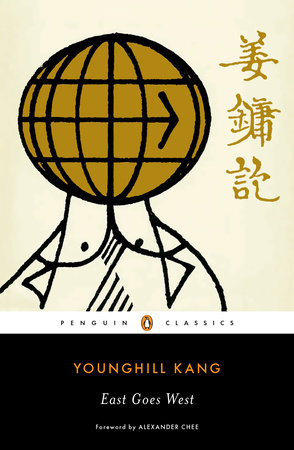
Published in 1937, Younghill Kang’s novel can in no way be called contemporary yet I’m including it because it still has an unmistakably modern sensibility. A romp of a novel, thanks to the ebullience of the main character, Chungpa Han, who travels across the U.S. and parts of Canada, meeting Americans of all kinds—African Americans in Harlem, a senator who picks him up hitchhiking, the wealthy men and women who hire him as houseboys and drivers. I’ll never forget the scene when he becomes a waiter at a Chinese restaurant and calculates that among the nine waiters, there “were three Ph.D.’s from Columbia, and two more to be next June; a B.A. and B.S. and one M.A.” Yet, the only work they can get is waiting tables. It reminded me too painfully of my own parents, college graduates, working in assembly-line jobs or their good friend, a professor back in Korea, whom they never failed to address as Dr. Kim.
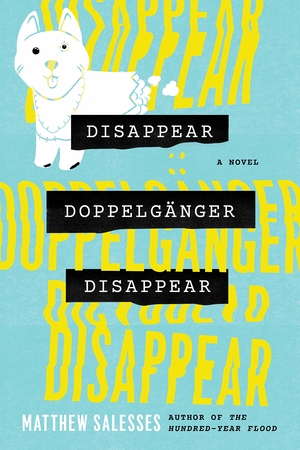
Matthew Salesses begins his novel with “An Abbreviated List of Disappearances” which includes the Chinese Exclusion Act of 1882, the Asiatic Barred Zone Act of 1917, and Executive Order 9066 in 1942 which effectively pushed Japanese Americans into internment camps. From there, he takes the idea of the “invisible Asian” to a whole new level. In interesting ways, Salesses plays with the ideas of identity and disappearance, beginning by giving his protagonist his own name, Matt. In fact, there are two Matts and two Yumi’s, his girlfriend, although one of them is named Sandra. Hyper-real, this novel made me laugh and think.
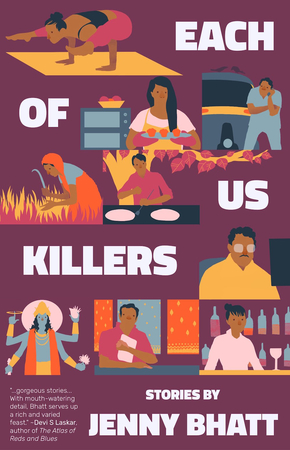
“You think you’ve known someone for a long time,” a character in one of Jenny Bhatt’s short stories says of her Indian colleague shortly after he’s shot dead by a white man in a bar. “Maybe he never really took to us. Never really became one of us.” Turn by turn, each of his white co-workers talks about the deceased man, sometimes dismissively, sometimes pityingly, their accounts stitching together to form a patchwork of a man surrounded by bigotry. It’s not the story that lends Bhatt’s book its title, but the subtle insinuation lingers. It’s also the springboard for a perceptive, moving, and enriching debut collection.
The 15 stories that make up Each of Us Killersrange dramatically across location, themes, styles, and tone but are all united by Bhatt’s astute understanding of her characters and the worlds they inhabit. From a yoga teacher who feels something uncoil within her after she learns to take a risk to a sari shop employee who dreams of a life beyond his immediate reach, these characters strain against the roles and norms assigned to them.
Mostly set in India, Bhatt centers these stories through the work that her protagonists perform—they include a bartender, autorickshaw driver, college professor, maid, architect, street vendor, and more—with the pursuit of their professions offering keen insights into aspiration, morality, power, and most crucially, identity. It’s something the writer has grappled with herself. After nearly two decades, Bhatt quit the corporate life, dedicating herself to writing full time, much to the consternation of a world keen to fit everyone into an easy slot, often dictated by what they do. “So much of our identity is not about how we see ourselves but how others see us,” she wrote in an essay about emerging as a writer at the age of 40.
A literary translator and critic in addition to being a writer of fiction, Bhatt excels in her incisive understanding of the complex intersections of gender, class, caste, and race that determine so much of not only the work we do but also how we navigate our lives. I spoke to her on the phone about what work reveals about us, navigating the tropes expected from fiction set in India, and balancing aspiration and realism.
Harsimran Gill:I would love to hear more about why work has been such a big preoccupation in your fiction. I’m thinking of the lovely essay you wrote about emerging as a writer after 40, and it seems like these stories were being crafted at a time when the very definition of whatworkmeant for you was changing? Do you think returning to India after so many years also played a part? Seeing the many different types of work that people are engaged in here, particularly informal labor and its constantly shifting nature?
Jenny Bhatt: I had left my corporate job, which was such a big part of my identity. Because as a single woman, your career is your identity—if you’re not a mother or wife, you are your work. I was a workaholic for the last seven years of my career in the U.S., when I’d been working in Silicon Valley. That’s one of the reasons I burned out and eventually left. So all of a sudden, I found myself without some anchor, some identity to say, “Okay, this is who I am now.” It was certainly me trying to figure out what was going on.
I was born and raised in India till I was 18 but I’d been away till I came back in mid-2014. Narendra Modi’s government had just come into power and there was all this talk about “Achhe Din” [a popular campaign slogan of Modi’s BJP party, promising “good days” to come], how we’re going to have all these jobs. Yet, almost every other day, I was hearing about farmers committing suicide because the monsoons were ruining their crops or they couldn’t pay their debt.
I lived in Gujarat, on the outskirts of Ahmedabad, so I got to see many migrant workers from Rajasthan coming and doing all the construction work. I got to see many housemaids who were from Rajasthan. I talked to them a lot because I lived alone and they were my company. I could literally write a whole other book of stories on working people from all that I heard. Being in India just changed a lot of what my preoccupations would have been had I stayed in the U.S.
HG:Having written about it in so many stories, what do you think approaching fiction from that lens of work can do thematically or reveal about characters?
JB: I think for me, it’s certainly about how class and caste and gender play into our own sense of our working identity and what others think of us. The people I’ve written about come from different parts of society, and I wanted to explore what that meant to their trajectory in their workplace, what that meant to their luck or circumstances. And through that I guess I was understanding a bit of my own past because as you’re excavating the lives of your characters, you’re obviously learning about yourself. If you’re in India, you can’t write a story without getting into these socio-cultural divides, right? You just can’t.
HG: And yet we constantly hear that work isn’t really such a central preoccupation for most fiction writers. That there’s more interest in the “personal” like an editor said to you about this collection. Do you think that’s really true? Why doesn’t work feature more prominently in fiction, despite being such a large part of our lives?
JB: You know, when I gave up my job and I was going through this whole “what is my identity” question, I was looking for fiction that was focused on work, and I found very little. Maybe that’s why I wanted to write these stories so I could explore it more.
As a single woman, your career is your identity—if you’re not a mother or wife, you are your work.
What I think is happening—and I’m just speculating here—is not that people don’t want to write or read stories about work, because, like you said, it’s a huge part of our identity. Why wouldn’t we be interested? I believe that maybe publishing gatekeepers think other types of writing sell more. It’s like how some of them wanted more Indian tropes in my stories. They wouldn’t say that outright of course but you know they want those Indian stereotypes. Everyone I’ve talked to ever since this book has been announced has found it very interesting when I tell them the stories are about work. So people are curious.
HG: Yes, this problem of publishers only wanting a certain type of story to come out of India—there’s definitely an almost blinkered search for stereotypes. But that can also make Indian writers wary and prescriptive about what should or shouldn’t be written about when it comes to “tropes”. Which is why I was fascinated by the story “Mango Season” in the book, where we have all of it—mangoes, slums, poverty…
JB: Saris! Spices!
HG:Yes! All of these things which are overrepresented in the Indian fiction that gets championed by international publishing. But they are simultaneously very much a real part of India. Were you thinking about redefining or subverting those tropes with the story?
JB: Yeah, that story is very on the nose for a reason.
Right about the time when I started to write ”Mango Season,” I came across several essays—they hadn’t all been written around that time but I came across them while going down some rabbit hole. One of them was a conversation at Granta between Kamila Shamsie, Mohammed Hanif, Mohsin Hamid, and Daniyal Mueenuddin about how not to write South Asian fiction. They were like don’t put mangoes in there! Then there was an interview with Jeet Thayil saying the same sort of thing, that this is all just exoticizing. And then an essay by Jabeen Akhtar.
And then finally Soniah Kamal wrote an essay titled “When my Authentic is your Exotic” and I was like “yeah, exactly!” If you live in India, you do wait for mango season. You do have long conversations with friends about what’s the best mango. You do have long discussions about saris and how best to take care of them or about new patterns. So why is this considered exotic? If it’s necessary to the plot, it shouldn’t be exotic.
So I sat down, literally made a list of the tropes, and decided that I’m going to write a story that has all of them in it but they’ll be essential to the plot. The story’s protagonist, Rafi, actually works at a sari shop. Mangoes are an important aspect of the story—for him they symbolize something he cannot have very often because he doesn’t make that kind of money. And with the food and spices, this is a man who went to bed hungry; all he had was this juicy mango, so yeah, of course he’s going to dream about food. And then finally, I wanted to be realistic and not end on this weird note. So Rafi’s life is what it is, even though he’s older and wiser for it.
HG: Yeah, so after toying with all these tropes and this character’s flight of imagination, where he dreams about a life of vastly improved circumstances, the ending is much more pragmatic. It had me thinking a lot about restraint when it comes to the endings of your stories, and short stories in general. This fading out instead of a big boom.
JB: In the beginning of “Mango Season,” Rafi is on the bus, and he’s seeing all these billboards. He’s had a hard day at work, but then he’s looking out and sees these things that he can someday aspire to—a tea seller becoming Prime Minister, or Bharat Matrimony promising you the bride of your dreams. But this issocial realism, and at the time of writing this story, I was very disillusioned by what was happening in India politically. That the government was filling people with all these dreams and hopes, but then weren’t able to follow through with those promises. So what happens to a guy like Rafi? What happens to a young aspirational man like him who works hard, slogging every single day in the heat and dust?
With endings, what I love, and would love to be better at, is what I once heard Mohsin Hamid say on the BBC World Book Club podcast. He was talking about the ending of The Reluctant Fundamentalist—most of his novels are pretty short, they’re more like novellas—and he talked about how he likes to end on this two-beat. Where he gives one beat, and then he wants the reader to engage and figure out what that second beat will be. I went back and reread the ending of every single novel of his to see how he does that! It’s so terrific and works for short stories, even more than a novel.
HG:You have a wide diversity of characters in this collection, and the different stories assume different voices, whether its the collective first person in the titular story, “Each of Us Killers” or multiple first-person narratives in “Return to India,” which tells the story of an Indian man who is the victim of a racist murder, told from the point of view of his white colleagues. How do you decide what voice to take on as the narrator, especially when writing about characters of different identities and vastly different levels of privilege—race, caste, class, gender?
JB: You know, I don’t have an MFA. I went from being a management consultant to writing. So, to be honest, when I started writing these stories in 2014, I was actually approaching them as a DIY MFA. I would have a goal for myself about what I needed to get better at, whether it was a point of view, a voice, or a setting. But of course, the story itself dictates this to some extent. I hate it when a writer says, “well, the story told me what voice was needed.” No, it’s a very conscious decision.
“Each of Us Killers”, for example, was based on a real-life incident: the Una floggings of Dalit men. All the accounts that I was coming across were journalists’ voices reporting what happened, and the writer in me wanted to know about the people who were left behind. You’ve just told me that three people swallowed acid and killed themselves, but what about their families? What happened to them? Initially, I tried to take one person’s voice—the friend’s voice, or the father’s voice. But I didn’t know anything about the friend or the father. So I went to Una, and I remember sitting there on this cot with these folks in front of me while I was writing notes, and thinking, “okay, this is the point of view—it’s the collective”. Because they were all speaking almost in unison. They had a story and they were going to stick to it, and nothing more.
On the other extreme, you take the first story, “Return to India”, which was also inspired by a real life incident—Srinivas Kuchibhotla, a tech engineer, was shot dead in a bar in Kansas. And, again, we saw a lot of stuff in the news but what I didn’t hear as much was about the people that he worked with. I lived and worked as an engineer in the Midwest for 10 years. I know the microinequities and the microaggressions. Nobody thinks they’re being racist, but they are sometimes and they don’t even realize it. I thought of his colleagues all sitting there, probably saying prayers and feeling that the guy who shot him was terrible, but I wonder if they realized how many times they killed him over and over again. I wanted to tell that story. Through the point of view of all those well-meaning people who thought they were so good to him.
HG:You also have this story in the collection called “12 Short Tales of Women At Work”, with these really short glimpses of the harassment faced by women at the workplace. Was that always meant to be a part of the collection, even before you realized what your theme would be?
If you’re in India, you can’t write a story without getting into these socio-cultural divides. You just can’t.
JB: Yeah, that came out directly from the #MeToo movement in 2017. I’ve obviously experienced some of that, as has almost every woman I know in the corporate workplace. And yet I had not written a single story about it because I just couldn’t figure out how to write about it without being on the nose. I had been dancing around it, trying different things, I had unfinished drafts on my computer. Then we started to see #MeToo blow up in the west and then in India. That’s when I asked myself why I was bothering to say all this nicely or thinking about the best way to present this in fiction—look at what’s happening! I actually went to my Twitter feed and typed the stories out in tweet sizes, because I wanted to see how short I could get, and because so much of this was playing out on Twitter, especially in India, so many of the stories were being told there. I ended up writing 12 individual tweets.
HG: I’d love to talk a bit about “Journey to A Stepwell”—it’s one of my favorites in the collection. The story has two nested narratives. A mother and daughter are traveling to visit a stepwell that is important to the women of the family, and the story goes back and forth between their bus ride there and her mother’s recounting of the folktale associated with the well–about four sisters who have stutters and are deemed unworthy their great beauty and talents. And then of course, an eligible distant relative visits, and they have to showcase their cooking skills but not reveal their stutter. Was this a folktale you had heard as a child?
JB: It is a Gujarati folktale that my mother used to tell me, because we’re four sisters too. It was one of our bedtime stories from a very young age. The Gujarati folktale tradition, like in many other Indian cultures, has of course been passed down orally from generation to generation. So she would tell us the story every few weeks or every few months, but she would change a few things here or there depending on the moral she wanted us to take away from it that time.
Obviously as I grew older, I wasn’t happy with the story and asked why the sisters have to suffer. Isn’t it bad enough that they have a stutter and they have to slave away in the kitchen and wait hand and foot on this stranger just so he’ll marry one of them? I would argue with my mother and she hated that but I did not like the ending. So of course when I got the chance, I had to tweak that!
HG:Yes! And the main narrative in the story is about the daughter, Vidya, summoning up the nerve to tell her mother that she wants to choose a promotion at her job over the marriage that’s been set up for her. Even the sisters in the folktale have all these unparalleled skills—sculpting, animal care, weaving— but like in most of our folktale, these talents are only considered useful as a way to make them more “marriageable” as opposed to legitimate forms of work. Were you thinking of rewriting these traditional folktales with this contrast?
JB: Yes, definitely. In the original folktale, as my mother used to tell it, the four sisters did not have any skills other than cooking. But I wanted to make sure that each of them had something unique that came from within and nothing to do with marriageability. I also didn’t want this to be a story within a story for no reason. I wanted to make sure that it connected back to the present-day story. As we learn of each of the sisters’ skills and how they were employed, we switch back to the bus where Vidya is with her mother—it’s giving her more food for thought. It was subversion, but I also wove the story in to allow the conversation with her mother to evolve.
After we have finished and put down a book, when the dust has settled, once we have slept many nights, had dinners, taken walks, taken care of our duties, then the book returns to us as a shadow-shape, as Virginia Woolf puts it, a visionary shape: “There they hang in the mind the shapes of the books we have read.” Why does the word shape keep occurring to her as the best way to speak of what lasts of the books we have read? In my experience, it tends to be writers who speak of the shape of books—not only of books they have read, but also of books they are writing. It is not just a mood or story the writer wants, or characters or ideas, but something more plastic, a form, just like sculpture has a form. A book is a watery sculpture that lives in the mind once the reading is done. When I think back on the books I have loved, I rarely remember the names of characters, the plot, or most of the scenes.
A book is a watery sculpture that lives in the mind once the reading is done.
It is not even the tone or mood I remember, but some residue remains—and that unlikely word is appropriate here—of a unique shape.
Sometimes the shape of an entire book will be compacted into the memory of a single scene: something simple—a room that was conjured in the mind, in which two characters sat, speaking. Sometimes the shape will be something more metaphysical: a new understanding of life, as the book ends. But how does an understanding turn into a shape? Perhaps because books always place us somewhere; they involve bodies in space, or the progress of minds. It’s as though a series of shapes—rooms, bodies, narratives, revelations—are laid one on top of the other, as you turn the pages of a book, and finally it’s like looking at a stack of translucent, colored sheets of plastic, which averages into an ultimate shape.
How are we, as readers, to judge the shape of one book against the shape of another—if the shape of a book is what lasts? How does one even describe a book’s shape to another person, when this shape does not correspond to something simple, repeatable or shared, like a triangle, circle or square? A book’s watery shape is formed by its movement—the progress the characters or the narrative took, which was a progress we lived through while reading it, and which then solidifies into a single, continuous episode, no matter over how many sessions we read the book. This mental episode excludes all the living that happened between the times we picked up the book. Yet the final, shadowy shape includes some of the living that occurred while we were turning its pages—not only what happened in our imagination, in the form of images of scenes, but also what room we were sitting in, what was going on in our life, what the days smelled like, how young we were, the political situation in general. The shape of the book ends up being some alchemy between the shape the writer created and the shape of our life as we read it.
This alchemy of these two separate worlds creates a frozen shape. But the shape is not actually frozen, for over the years and decades of recollecting the book, time melts and re-freezes the shape, again and again.
That is what makes literature such a living art form. The books we have read keep changing through time, perhaps more than a painting we love changes, because while paintings and theatre and movies live in our memories as things we have witnessed, a book is undergone like a dream. The specific images it calls up in the imagination can no more be communicated than the images from our dreams—so the real book is not the physical book, but its residual shadow-shape.
More mysterious is the fact that a writer is trying to create a shape when they write their books. But how can they be assured that the shape they are aiming for, that watery mental sculpture in their imagination, will be the same mental sculpture that appears in the reader’s mind? There is no way of assuring this, and no way of knowing if any book, read by a reader, leaves a shape of any resemblance to the shape the author had in their sights when they were making it. But it doesn’t matter. What else can an author do but try to create, with the book they are writing, a shape that is satisfying in the cavern of their own mind; something that seems to them to have a certain movement and harmony, and the most pleasing dimensions.
A circle or triangle doesn’t emerge from a movement, the way the shape from the progress of a narrative does. But say that was true of triangles and squares. If literal shapes were formed not by their sides, but by some unfolding in time that—once the unfolding had passed—left behind an inner sensation that we called “square” or “circle,” we would call literature one of the maths. And whether a book was a success or a failure would not be left in the hands of critics. It would be geometry that called it.
The real book is not the physical book, but its residual shadow-shape.
At the end of her essay, Virginia Woolf compares the pleasures of reading to the pleasure of being in heaven. In fact, God, who is stuck in his heaven, envies human readers—for while his heaven is one place, books offer multiple places. The reader doesn’t grow bored like God does. Yet I don’t feel that How Should One Read a Book? is an essay in praise of the heavenly pleasures of reading. Every time I read it, I am left with a darker feeling. I think the essay came from Woolf’s displeasure in having to pass through the critics in order to reach her readers. If the reader needs to be taught to read better, she says, it is to set an alternative standard for the writer, who is assaulted by the standard of the critics, who provide no real standards at all. Why? Because they are too busy: “Books pass in review like the procession of animals in a shooting gallery, and the critic has only one second in which to load and aim and shoot.” One second! Critics are killers of books, and since there will be no end to critics, the only hope for the writer is the hope of there being “another kind of criticism, the opinion of people reading for the love of reading, slowly and unprofessionally, and judging with great sympathy and yet with great severity.” Can a multitude of such readers triumph over these clumsy critics and make them ludicrous in the eyes of the world—such as this one, who “misses altogether and wastes his shot upon some peaceful cow grazing in a further field”?
In the 1970s and ’80s, the status of Virginia Woolf changed quickly and radically, from that of an important minor writer to a canonical, major one, a pivotal figure in twentieth-century English literature. How did this happen? It was largely because of the hard work of feminist academics. Decades after Woolf ’s death, the readers whom she was hoping for—with their own set of standards, different from those of the newspaper critic—came and read and understood her novels. Biographies were written about her, and countless academic papers and books, by people who had those qualities she thought the responsible reader must have: taste, sensitivity, patience, sympathy, curiosity, a history of having read widely and the understanding of literature that comes from having written oneself.
Stretched out on the beach, Lyuba removes her bikini top, nestles into the warm sand, and feels a prick. It’s a shell that sparkles in the sun. It looks very old. Without much thought, she tosses it aside and closes her eyelids, which glow with red light. Beside her, Jan steels himself for the test that will decide his fate. He’s crazy for Lyuba but doesn’t dare tell her. Soon he’ll have to return home, so he should either speak now or forever hold his peace. He picks up the shell, studies it. Through the little windows time has opened he sees a logarithmic spiral, the kind that rotates and expands from an infinitesimal point. He decides to set the shell on Lyuba’s belly button. If it balances for more than two minutes he’ll ask her to marry him. If it falls off he’ll return to his homeland, move away from the girl like that infinite spiral moves away from its center. As he lifts his hand, he notices that Lyuba has a strange belly button. It’s an outie. Nothing will balance there. Above, a peregrine falcon draws wider and wider circles in the sky.
Forty years earlier, a young woman lurks in the brush. It’s night, and this rainy June the vegetation seems fuller than usual. She carries an apple in her pocket, the only food she has to eat. If she searches under night’s cover she might find something else—the Germans must be asleep at their surveillance posts. Hunger is stronger than fear and, besides, she has legs made for running. She looks up at the sky, sees a miracle of floating parachutes, like beautiful pregnant kites. She crouches, watching them. Shots fire in the distance. The girl runs, hides, stumbles and falls face down on a soldier who looks asleep, but with his eyes open and almost transparent, eyes that look towards the sky as if asking a question. He’s not German, the Germans don’t wear this uniform. Taking care not get blood on her, she checks his pockets, finds a medal, some foreign coins, an iridescent shell, a photograph. She hides the money and throws the shell towards the sea. All of a sudden, giant hands seize her by the neck, a German soldier, he rips the coins away, repeating furiously, “Dollar! Dollar!” As she walks with her hands behind her head, she realizes: if she’d thrown away the coins instead of the shell it would have saved her life.
Almost two centuries before, a girl strolls along this beach. She thinks about her father, a man to whom nothing matters as much as money, and about her mother who shamelessly deceives him. Between her mother’s furious freedom and her father’s greed, the girl prefers her. She hates this Godforsaken place, this depraved town where nobody has dreams. Winter has sunk its teeth into the gray sea. The girl jumps, gathers her petticoat away from the lace of the waves, faint salt lines appear on her boots. She picks up a shell, toying with it on the way home. In the living room, by the fire, her mother seems to float atop the evening sadness. She wears a new dress, her hair upswept, cheeks burning. The girl decides to surprise her with a gift, and slips the shell inside her purse. As she does so, her hand grazes a piece of paper. She balls it up in her fist, waits smiling for the woman to caress her. But the girl bores her mother. The woman finds the shell, holds it up between two fingers, muttering, who put this crap here, she gives her daughter a shove and rushes off. Later, between the sheets, the girl reads the promissory note her mother signed to a moneylender. She tiptoes out of bed, leaves the note open on her father’s table. In the morning, cocooned in her blankets, she smiles, listening to the screams.
Centuries ago, also in Normandy, a crowd advances. The plague has been declared, and prophets sell salvation, threatening the stake. Desperate, mothers toss their newborns into the sea, as if the rocking waves offer a fate less tortuous than life. Warrior maidens promise to save them, and, though nobody believes them, they follow them still, in the end faith nourishes. Some move towards an unknown destination. Others retreat with the wagons carrying the deceased, and when they are exhausted, abandon them on the side of the road, without time to close the eyes of the dead. All tremble but for a little girl who smiles, jogs behind the crowd. She doesn’t have a family, at least not one she remembers. Her sole possessions are the clothes on her back and a shell she picked up on the beach. She does cartwheels for coins, which are tossed with hostile words that don’t bother her because she’s deaf. The blows yes, the blows hurt. That’s how she lost her hearing, and she has vowed to get revenge. The next time they strike me, she says, the next time. The occasion arises as a soldier pushes a young woman towards the stake. The girl cartwheels, extends her hand towards the soldier, and, irritated by the crowd’s silence and the cries of the condemned, he strikes her in the face, then rips off the shell hanging from her neck. The girl spits out a tooth. After dark, she chooses a live coal among the sleeping embers, creeps over to the hay cart where the soldier is snoring. A little while later, the town is burning, the soldier howls, his long hair in flames.
It’s freezing as night falls two hundred thousand years ago. Next to the bonfires, in the distance, the tribe swarms about, it’s hungry, it devours itself. There’s no hunting this winter, no fishing either, the grass can’t pierce the ice. The blackened forest seems dead, snow immediately covers the animals’ tracks between the giants trees. A female has fallen behind her group, can no longer keep up. And there’s no time to get to the cave where she could lie down on the furs. She’s alone on the beach and her belly is heavy. Her fear has been growing for a while now. Fear and urgency. How can she survive surrounded by ice? What will she do by herself until the heat arrives? The sea is a limitless field of ice that you can walk across. The rhythmic pains in her belly force her to squat. She’s never given birth, and begins to salivate, the mess that will flow from her might be her salvation. She also knows this won’t be easy. But blood, there is lots of blood between her legs, blood always comes first—thick, red, hot, nutritious blood. She howls, grabs ahold of her knees, pushes and roars, the effort breaks her. When she is exhausted, when she can’t go on any longer, finally something tumbles out. The female examines the sticky mess, poking at it, finding its scent. She opens her maw over the tempting body, about to lick the blood. How easy it would be to pounce on this defenseless, warm meal now beginning to whine, hunger overwhelms her and saliva floods her throat. Suddenly, on the snow covering the beach, a glimmer catches her eye. It’s a sparkling shell. For a second, it distracts her from her greed. The moon has risen, illuminating the shell’s iridescence. The female, so weary, feels an unfamiliar emotion awaken somewhere inside her body. Everything shines in the pale light, and in the strange silence the sky is a celebration of stars. She closes her jaws, clenches her teeth, restrains herself. With the flint she carries on her hip, she pierces the shell, gestures vaguely for good luck, ties the talisman around her daughter’s neck.
When the world was a boundless blue ocean, when all life existed underwater and the land was no more than bare rock, the first gastropods emerged and crawled onto the beaches. This was more than 500 million years ago. Maybe the patient sea salt allowed these creatures to accumulate their beautiful layers, maybe fate’s meticulous hand carved them, drawing expanding spirals on their shells. Beautiful, but defenseless, they bounced on the wild waves, fizzled in the foam, floated. Thus, pushed by the sea, a shell came ashore. There were hardly any clouds, the emergent land floated south, and Europe was a newborn island on whose beach the mollusk landed, it began to squirm, replicate itself, to expand its spirals until it became whirlpools, hurricanes, galaxies.
About the Translator
Rachel Ballenger is a writer and translator from the San Francisco Bay Area. She was educated at UC Berkeley. Among other outlets, her work appears in Your Impossible Voice, Gulf Coast and the Los Angeles Review of Books. An excerpt from her novel Take My Life won the Inprint Joan & Stanford Alexander Prize.
With this week’s recent announcement that season 4 of GLOW—which would have been the show’s final season—was canceled, many fans were left devastated. Sure, there are other ways to watch women wrestle on TV, even during the social distancing era—but where are we going to get our explorations of female friendship and community? Our body diversity? Our thoughtful, nuanced explorations of identity? Our ‘80s music cues? It would take a lot of books to fill GLOW’s wrestling boots, but we’ve given it our best go with a variety of reading options covering different aspects you might miss about the show.
Into GLOW’s exploration of the ‘80s, intensely intimate friendship between women, and complicated artistic tensions? Swing Time tackles all of these topics with Smith’s exuberant and eloquent prose. The narrator and Tracey meet in a tap dancing class in 1982, London; as the only two mixed-race girls in the class, they stand out—and become fast friends. Smith traces how their life trajectories diverge from one another, asking questions about lineage, talent, and racial inequality. (And if you want more books set in the ‘80s, check out this list.)
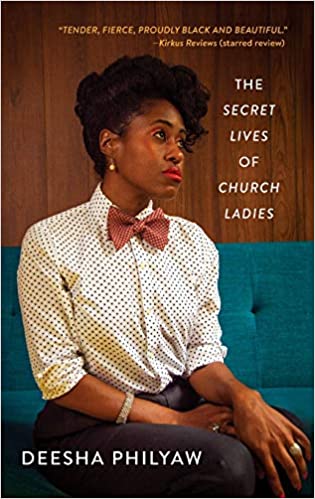
Filming the show provides a way for GLOW’s female characters to find a community, expressing sides of themselves they weren’t previously allowed to explore. (How dare they deny us more Sheila as Liza Minnelli!) In a similar vein, Philyaw’s debut collection of short stories explore the lives of churchgoing Black women. Whether eating brussels sprouts together or finding solace in a parking lot, Philyaw’s characters explore what it’s like to publicly follow the rules of the church whilebreaking them in private, discovering new truths about themselves.
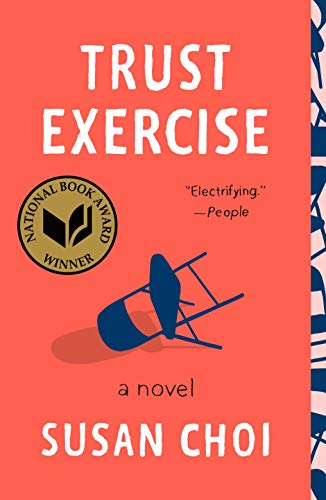
Do you love the meta-framing of GLOW, the shooting of a show-within-a-show? Trust Exercise shows just how important narrative framing is, and asks similar questions about who gets to tell which story. Set at a performing arts high school, Choi’s novel begins with a passionate affair between two theater kids—but what starts out as a typical-seeming love story spirals out into anything but. Choi masterfully juggles topics like class, age gaps, friendship loyalties, and the idea of “fiction” itself.
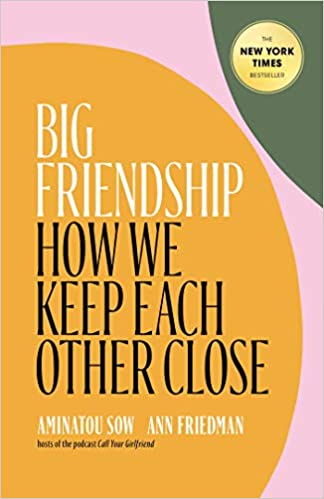
Our society tends to undersell friendship, usually placing romantic relationships or familial ties above being “just friends.” If you love how GLOW puts friendship (and the consequences of having a falling out, cough cough Debbie and Ruth) at the center of its narrative, try Sow and Friedman’s non-fiction book. The authors, co-creators of the podcast Call Your Girlfriend, talk frankly about what it means to have and sustain a “big friendship”—embracing both its messiness and gloriousness.
If you appreciate how GLOW tackles stereotypes, Interior Chinatown might offer a topsy-turvy lens into Hollywood stereotyping and racial microaggressions. Willis Wu, a self-identified “Generic Asian Man” who acts in bit roles for a never-ending cop show—the most Willis can hope for is to achieve the status of “Kung Fu Guy” (not unlike Jenny, reluctantly trapped in the role of Fortune Cookie). Structured as a screenplay itself, Interior Chinatown is a deft satire of the entertainment industry and stereotypes.
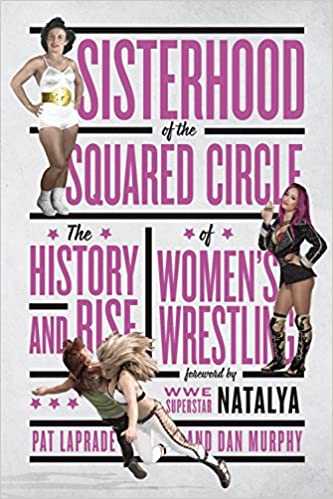
Are you one of those viewers that are super into the wrestling sequences? Have you sought out the original GLOW footage—and rewatched it many times? Take a deeper dive into wrestling with this thoroughly researched, detailed study on women’s wrestling. From the 1800s carnival circuits and to contemporary matches, the book tackles politics, big personalities, and the history of wrestling in the U.S. After this book, you’ll find yourself well-armed with information to beat anyone at wrestling trivia.
If you’re interested in how GLOW explores queer sexuality in tandem with the intense physicality of wrestling, try Levin’s novel about competitive female swimmers. The Sea of Light focuses around three women, each driven to success: Brenna Allen the coach, swim captain Ellie Marks, and recruited athlete Mildred “Babe” Delgado. As a tentative community forms between the women, they must balance their desires with societal pressures.
Are you into the backstage escapades of the GLOW crew? Can’t get enough of the big ‘80s hairstyles? Big Yolanda/Arthie shipper? Jump even further back in history and amp up the glitter with Tipping the Velvet. Set in the 1890s, the book centers on the relationship between Nan King and Kitty Butler, a male impersonator performer. Although Nan begins as Kitty’s dresser, the two run away to London to begin a double-act. Gender performance, disreputable women, and self-discovery take center stage in Waters’s debut novel.
Cable wasn’t available where we lived in rural Ohio, but my father had splurged on a satellite dish. New-fangled and cutting-edge, the big, half-moon monstrosity shot up its invisible rays to the heavens from the corner of our weedy vegetable garden, delivering the gifts of MTV and movie channels, and a carousel of sitcom reruns: The Brady Bunch, Different Strokes, Who’s The Boss, Three’s Company.
But no matter what else was on, at four o’clock, I turned to the Oprah Winfrey Show. Oprah talked to everyone, famous or not. She carried herself with a kind of authority, but was funny and charming, an adult I wanted to be around. Everyone was watching her. My teachers, the girls on my basketball team, my mother on her days off. My coach said Oprah cared about real people.
Today, Oprah was on the road, broadcasting from a small town in West Virginia. Two, maybe three hundred local citizens filled the auditorium. They were there to talk about the controversy that had put their little town in the national news that summer, after Mike Sisco, a 28-year-old gay, HIV+ man, had gone for a dip in the public swimming pool. When he got in, everyone else clamored out of the pool and ran, as Mike described it,“like in those science fiction movies where Godzilla walks into the street.” The thing is, by 1987, the public knew, or should have known, that AIDS could not be transmitted by swimming in the same waters as someone who was positive. The mayor ordered the pool to be drained and disinfected, and Mike was barred from returning. Mike was the monster. The monster was AIDS.
In 1987, after over 40,000 people, most of them gay men, had died of AIDS in the United States, after six years had already passed since the first known death, President Reagan delivered his first public speech about AIDS. Instead of focusing on sex education, the government fanned fear and prejudice. In 1986, conservative author and journalist William Buckley wrote an op-ed in the New York Times calling for “AIDS carriers” to be tattooed. A family in Florida whose three hemophiliac sons were infected from blood transfusions had been forced out of town, their home set on fire.
The hysteria around AIDS defined the ’80s, and like most kids during that time, I soaked up all the fear and disgust, without understanding the pain and grief: the images of AIDS patients in Time or Life; snippets on the evening news; Ryan White attending class via telephone; and the endless jokes at school—Gross, don’t touch me, you’ll give me AIDS. Homosexuality was a sin, and here, on TV, was more proof. If you were queer, you would die—and everyone hated you.
On Oprah, a man in the audience stands up to the mic. “I am repulsed by the man’s lifestyle. I am repulsed by his disease,” he says. “Nature will take care of something that’s wrong, it will eradicate it.” When he proclaims that gay men will become extinct “from the face of the earth in no time,” the audience breaks out in applause.
As the audience unleashes their vitriol, Mike sits there, listening, occasionally smiling, occasionally frowning, but mostly, his face is controlled, a protective mask. He wears a snazzy purple and green sweater, an earring glinting in his left ear. In a calm voice, he describes the pain of being ostracized and rejected. He’d been suicidal, depressed. For months, cruel outlandish rumors and lies had swirled around town, including that Mike had been seen licking the fruit at the grocery store, intentionally trying to infect people. His sisters and parents had welcomed him home, but now they too were struggling: “They were afraid to show the love they had for me… they were afraid of what the community would do to them,” he says. Mike left Dallas, where he’d been living, because he wanted to come home to be with his family: “I was dying, and I thought [the town] could overlook the fact that I am a homosexual and see that I need some compassion and to be in my hometown.”
Did some part of me recognize myself in Mike, in his queerness, in mine?
My heart thudding, I held the remote in my hand, my fingers alert—if my mother walked in, I would quickly change the channel. A feeling of secrecy and wrong-doing hummed inside me. Did some part of me recognize myself in Mike, in his queerness, in mine? Or did the show stay with me out of a fear that I would become like that, that I might lead such a sad, lonely life? I was a quiet kid who lived by the rules, content to slip into other lives through the books I read and the thrill of imagination: I never expected that one day I would start to let the world see my hidden self or that I would even want to be seen. I never expected the TV episode to lodge itself into my brain, to be remembered years later, a story that hung around, an impression, a shaping.
Twenty-five some years later, I started to write about a man who gets kicked out of his hometown pool. The scene grew into my novel, The Prettiest Star, about Brian Jackson, a gay man with AIDS who leaves New York City to return to his home town in Appalachia in 1986. The novel is about secrecy, shame, and denial, and it’s also a story about a family, about love and redemption.
Brian’s story is not my story. I didn’t lose close friends or lovers from AIDS. But I understand what it means to feel estranged from your family and hometown. How shame wears a person down. How for queer people the story of home is a complicated one, with no single door.
I came out as queer in my early 20s. Still, for years after that, I hid inside my body, performed gender, pretended. Not until my 30s, after I’d learned the words to express myself, after I’d met other trans-masculine people and built a supportive community, did I start to let go of some of that shame. Transitioning didn’t come suddenly, but was a slow journey, saddled by fear, like trekking out of a dark canopied forest that is the only home you know and then stepping into a clearing: here is the sky, here is the sun. You are here.
In my research for The Prettiest Star, I learned that Oprah had returned to Williamstown, West Virginia in 2010, 23 years after the original show. This time, Mike wasn’t there—he died in 1994. According to his sisters, after the show in 1987, Mike left town and moved to California. They said Mike didn’t regret going on the show, despite all the ugliness and hurt; he’d wanted to educate America about AIDS and gay people. He wanted to make a difference.
After re-watching the original tape, Oprah says she felt struck by Mike’s bravery and profoundly disturbed by the audience’s lack of compassion. The man who proclaimed AIDS would eradicate gay men was invited back on, and only after Oprah prods him does he admit minor regret about what he said. But he doesn’t apologize, not really. Instead, he frames his homophobia by expressing concern for Mike—wouldn’t he have found better healthcare and more understanding in a city (far away)?
In a startling moment, Oprah addresses him—and so she addresses us, the viewers—“But who are you?” She asks: “Who are you, Who am I? Who are we to say whether or not a person can come home to be with their family?”
Who are you?
Who are we?
As a country, we need to face our collective response to the men, and women, whose lives were cut short by AIDS, and who were victims of the homophobia, shunning, and cruelty that played out in small towns, in families, in cities, and in the national landscape. In The Prettiest Star, I try to bear witness, to tell Brian’s story, a story about the pain of homophobia, about queer existence and visibility and survival.
That day in 1987, the Oprah episode reaffirmed for me what the world had been telling me: if you were gay, you would be ostracized. You would be cut off from friends and family, and hated by your country. You may die from a terrible disease. I wasn’t at all surprised to hear a man say he was repulsed by gay men or hoped for their extinction, or by the audience’s applause.
But something else stuck with me, too.
I’m certain this was the first time I saw a gay man with AIDS tell his side of the story.
Back then, I didn’t know any gay people, let alone trans people. No one was out of the closet in my town. There was little to zero queer representation in pop culture or the media, except in the way of jokes—Jack on Three’s Company faking gay by adding a lisp or flip of the wrist—or the occasional villain or clown, always minor, always expendable.
I’m certain this was the first time I saw a gay man with AIDS tell his side of the story. A gay man who lived in a town like mine—a gay man who looked like my cousins, my neighbors. Who wasn’t wealthy or living in a far-away city. He was someone I recognized. And, maybe seeing him on TV, showed me another possibility: you could live your life with courage, without shame. Like Mike Sisco. Who, on a hot summer day, in a small town in West Virginia in 1987, went for a swim. And, then, he went on the Oprah show, in front of millions of people, to declare that, as a gay man with AIDS, his life had value.
Although natural births are making a comeback in the U.S. today, midwives have historically faced opposition for being as dangerously unprofessional, unhygienic, or just too “hippie.” However, midwives and doulas—birth workers without formal obstetric training—can often play crucial roles in forming female communities of power and support. Additionally, alternative birthing practices have deep roots in reproductive justice, with many midwives drawing upon indigenous practices and traditions. (If you’re looking for further reading on reproductive justice and women’s health advocacy, check out Efe Osaren’s list of books here.)
All this makes for rich literary fodder; the list of books below run the range of midwife narratives, addressing topics from legal battles to rural community drama, gristly birth descriptions to tender midwife-patient connections.
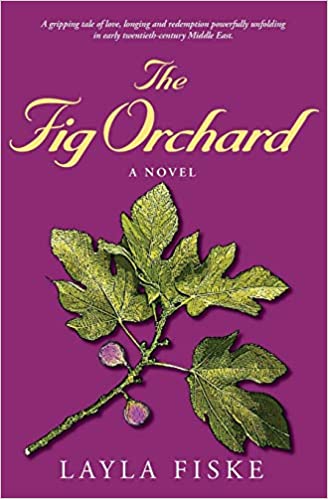
A politically and emotionally complex saga centered on Nisrina Huniah, a Palestinian woman who turns to midwifery. Set in the Middle East right around WWI, The Fig Orchard paints a vivid historical portrait of one woman’s journey: when Nisrina’s beloved husband is kidnapped to serve in the Turkish army, she chooses to go to a Catholic university and study midwifery, so that she can support her children without re-marrying. Fiske’s debut novel is an exciting exploration of tradition, religion, and female agency.
Rural midwives are often stereotyped as “backwards” or “old-fashioned,” but this Canadian bestseller shows that they can actually be feminist pioneers. Dora, the first daughter in five generations in the Rare family, finds herself as a midwife’s apprentice. When a new doctor threatens to shut down midwifery, Dora must decide if she wants to keep practicing. Set in a rural Nova Scotia village in the early 1900’s, McKay’s novel highlights the struggle for women’s rights, both in and out of the hospital room.
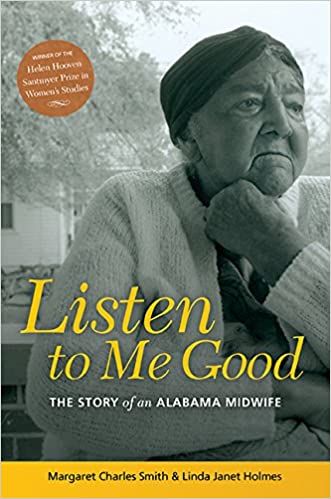
At age 91, Margaret Charles Smith was one of the oldest surviving traditional midwives in Alabama. Lay midwives like Smith were vital to the Black female community, drawing upon traditional knowledge and building a sense of solidarity. But in 1976, a state law condemned midwifery, causing many to lose their permits for the next five years. Published in 1996, this oral history documents Smith’s lifelong work of providing racially equitable healthcare for women, offering a view of the Civil Rights Movement from a rarely-seen angle.
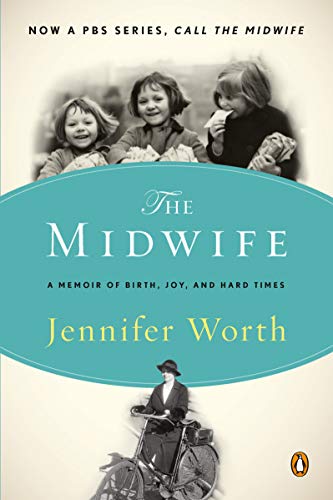
Birthing is always messy—and fairly often fatal—in Worth’s memoir. In this first book of the Midwife Trilogy, Worth writes of her real-life experiences as a midwife in the slums of 1950s East London. Featuring a cast of deftly drawn, unforgettable characters—from the lovable nuns that she lives with to the prostitutes of poverty-stricken streets—the book vividly describes Worth’s female-centered community. If you’re a fan of period British shows (looking at you, Downton Abbey fans), check out the critically-acclaimed BBC show of the same name, which is an adaptation of Worth’s series.
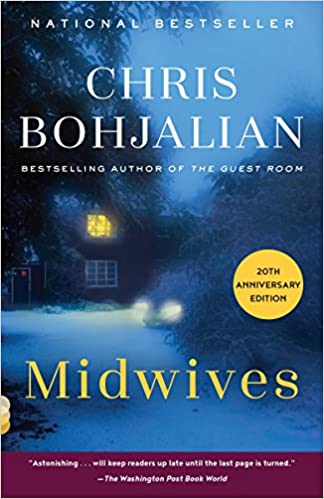
When a home birth goes fatally awry in rural Vermont, midwife Sibyl Danforth finds herself accused of manslaughter. That night unleashes a long court case, with doctors and attorneys that are only too happy to use Sibyl’s case to attack the midwifery profession. During the years following, Sibyl struggles to prove herself not guilty and, amidst the pressure, keep her family intact. If you’re looking for your next thriller, try Bohaljian’s tension-filled examination of human responsibility.
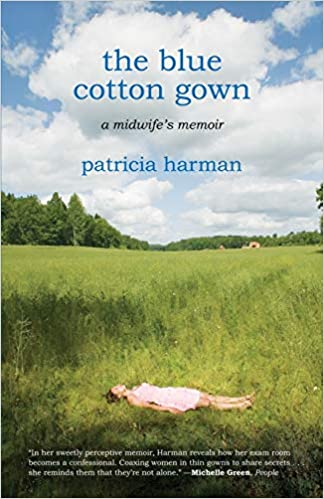
Patricia Harman runs a women’s health clinic in the Appalachian mountains of West Virginia; she works there as a midwife and manager, while her husband is the clinic’s ob-gyn doctor. Through her interactions with pregnant teenagers, abusive husbands, and transitioning patients, Harman shows the day-to-day life operations of midwifery. Meanwhile, she herself must deal with financial struggles and marital tensions. Focusing equally on individual midwife-patient connections and the larger logistics of operating a clinic, Harman intertwines both the professional and personal aspects of her life beautifully in her memoir.
Hill’s emotionally wrenching novel is told from the perspective of Aminata Diallo, who was kidnapped from her hometown in West Africa and forced into slavery in South Carolina. Because of the midwifery skills she learned from her mother, Aminata is considered to be more useful. Set against the backdrop of the American Revolution, Someone Knows My Name shows Aminata constantly fighting for her own and others’ freedom.
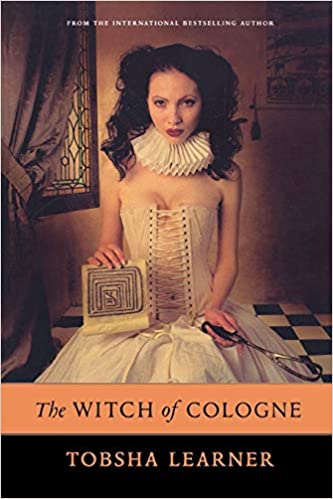
A historical drama that addresses forbidden love, mystical studies, and birthing babies in the 17th century? Add in the Spanish Inquisition and Jewish ghettos, and you’ve got The Witch of Cologne. Learner’s novel centers on Ruth, a fierce Jewish woman who is determined to practice kabbalah andmake a life for herself through midwifery skills. Through Ruth’s story, who faces torture for her religious practices and simultaneously falls in love with a Catholic churchman, Learner explores the ideas of faith and love.
This memoir begins in court, with the State of Florida Health and Rehabilitative Services vs. Gladys Milton. When Milton started practicing in rural Florida, many hospitals refused to serve Black and brown women; Milton was able to help by safely delivering thousands of babies. However, when the state medical agency unjustly asks her to “retire” or face charges, she must go to court to fight for her case. The struggle for reproductive rights and access to adequate healthcare rings only too true today, with a Supreme Court Justice nominee who could help overturn the Roe vs. Wade case.
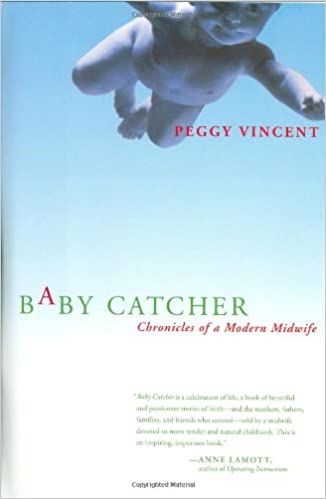
This memoir talks about Vincent’s own journey from a nursing school student to midwife in the 1980s, and her experience with “catching” over 2000 babies. Vincent’s humorous prose and her details—from jealous pets to oven-warmed blankets—make this an intimate, page-turning read. And if you’re looking for another contemporary midwife memoir after Vincent’s, try Carol Leonard’s Lady’s Hands, Lion’s Heart.
A midwife’s profession itself is based on bringing new life into the world. When a young midwife commits suicide, her friends are left struggling to make sense of her previous commitment to life with her abrupt and tragic death. In the wake of her death, they discover that Noelle, the midwife, has been hiding a shocking secret. Chamberlain’s page-turning thriller combines regret and hope, death and life to keep you reading late into the night.
No book list on contemporary midwifery would be complete without this classic text, written by founder of the Farm Midwifery Center. Gaskin’s 1977 book was a radical departure from previous medical texts that treated birth only from a clinical, scientific perspective; Gaskin draws attention to the emotional and generative aspects of childbirth. She includes tales of amazing births she has witnessed, as well as including practical techniques, statistics, and resources for natural birth. Already read Spiritual Midwifery? Try Gaskin’s more recent publication, Birth Matters: A Midwife’s Manifesta.
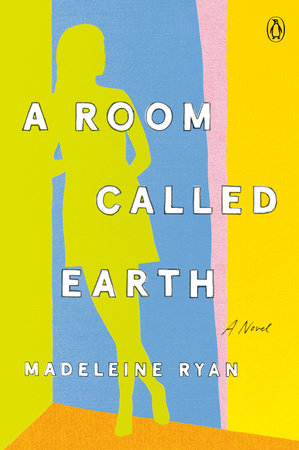
“I decided to wear a kimono and high heels to the party because I wanted people to see me in a kimono and high heels at the party,” the unnamed narrator of A Room Called Earth reasons in the novel’s opening line. And, just like that, readers are immersed in her mind, her world, and her movements over the course of one night. As she prepares for, attends, and, with varying degrees of success, attempts to engage with people at a house party, we are treated to her wide-ranging but methodical reflections on everything from sartorial choices to the devastating legacy of colonialism in Australia. We see—and feel—how she senses herself and her surroundings, how she processes all of this information, and how she responds to it.
A Room Called Earth is the first novel by Madeleine Ryan, an Australian writer who is autistic. Although her character’s neurology remains as unspecified as her name throughout the book, there were many aspects of her thought process, her interests, the way that she experiences the world, and the way she expresses herself that struck me as familiar as an autistic reader. I felt like I was reading a stream-of-conscious narrative for a type of consciousness that is still painfully misunderstood and misrepresented.
Through Skype, I talked to Ryan about autism in writing, her feelings about the label itself, and the extent to which she identified with her character.
Sarah Kurchak:Your character, this voice, never uses the word “autism,” or “autistic.” Do you think of her as autistic, or is that an outside assumption that has been placed on her?
Madeleine Ryan: I do see her as autistic, but I’m conscious that the label brings with it all of this stuff that I wish it didn’t. That, I think, is changing and opening up, and becoming more diverse, which is more representative of what it actually means. And more magical, which is what I see it as. I don’t see it as a disability. I don’t see autism as something that’s disabled, or defunct, or a burden in any way, or as something that’s really defined by the scientific and medical establishment. I know that it is, but I don’t live by their definition. It doesn’t sort of define my life. So it doesn’t define her for me.
I don’t see autism as something that’s disabled, or defunct, or a burden in any way.
So yes. I absolutely see her as autistic. I mean, there are lots of things I see her as that I haven’t labeled. And that I see the book as exploring, like feminism, veganism, mysticism, sexism, environmentalism. There are so many -isms.
As I was writing it, I became conscious she was autistic, and I knew that. By putting it on her, I was conscious of the cultural and social ramifications that that might have. But I was also aware that, to be able to create the change and open up, she needed to live with the label. If the word is going to expand, and represent what I see as something that’s sacred and just wonderful and an amazing addition to humanity, then she needed to be there. It was definitely a difficult choice, but I think it was the right one.
SK:I’m suspicious of non-autistic writers who create autistic-seeming characters without ever using the word. I feel like they’re dodging any responsibility they might have to real-life autistic people. If anyone takes issue with the portrayal, they can say, “Oh, we didn’t really mean to say so-and-so was autistic.” It’s really interesting to see an actual autistic writer deal with an autistic character without the label for entirely different and more admirable purposes.
MR: I’m so glad. I think that labels—not just the autism label but labels in general—have their place, but they can become lazy and heavy. And I think that avoiding that as much as I could in the book, in every sense, stays true to what it’s like in our own minds, to some extent. I’m not calling myself a feminist all the time, or identifying with labels when I think about myself. I only [use] a label when I think about how I’m interacting with other people, or the wider world, or when I’m going on long political rants in my mind, or trying to work through things. And even then I don’t know if labels come into it.
It’s much more of a social global sort of need, I think, in terms of categorizing people, and schools of thought. Stuff that, you know, has its place, but I think that it can become constrictive and limited and I didn’t want A Room Called Earth to be a world that was categorized in that way. I wanted those transient experiences and thoughts to be the defining feature. Which I think is the most sacred part of life. The labels are these kind of secondary things that we use to try to sort of navigate one and other, or society, but ultimately it’s that sort of transience and moment-to-moment quality that’s kind of uncontainable by anything that’s more interesting to me.
SK:At the risk of making you deal with yet another label, do you think that, beyond the character herself, there is anything inherently autistic about your prose, about the way you’ve approached this book, and the very concept of it?
MR: Well, yeah. I mean, it’s how my brain’s wired. I guess it makes perfect sense to me, the structure and the logic of it, and the blow-by-blow nature of it. And, in my mind, it’s very methodical. Absolutely. I have no doubt.
Labels have their place, but they can become lazy and heavy.
But at the same time, I was doing that thing of, “Well, this makes sense to me. If it resonates with others on the spectrum, or off the spectrum, fabulous. That’s lovely. If not, OK. But this inherent emotional and narrative structure feels right, and I’m just going to trust it.” And if that’s autistic or if it’s… Someone called it a circadian novel, so even that has a label, too. It fits in this category of books that [takes place] over 24 hours. And it goes here, and here, and here.
But yes, I think it could be described as that. Because it’s inside her mind. And if her mind is autistic, then, you know…
SK:As an autistic reader, one of the things that struck me about this book was that it seemed to contain none of the stuff that people always told me was necessary for a narrative, but that I always thought was just nonsense. Like the literary equivalent of small talk is not in your book.
MR: Ahh. What’s literary small talk to you?
SK: Having to establish a scene in a particular way. You introduce a character’s name at a certain point. You should say this, this, and this about their physical description instead of what impression just hits you at that moment.
MR: Got ya. I double majored in literature and creative writing at Melbourne Uni so many years ago now, and I think I had to spend so many years probably undoing all of that. I did not enjoy that at all. As you’re speaking, I’m going, “Oh yeah… all that stuff. Oh God. I’d forgotten!” I’ve spent so many years having to undo that, to find and hear something that felt like a story that was genuinely coming through me. Not my idea of a story, or how to tell a story.
God, all of those rules. All of those ideas about how to share an idea.
SK:Books have always struck me as a medium that can be particularly effective for introducing non-autistic people to an autistic thought process, because it draws readers sort of inside a person or character’s mind, instead of the outside-looking-in perspective that so many stories about autism have. And I thought this book was an excellent example of what I believed was possible.
MR: Wonderful. That makes complete sense to me. And I think that, as I was writing it and becoming aware of her being autistic, I was aware of the power of, like, “Yeah, well you’re in her mind. So… welcome.” It felt a lot more direct and intimate than experiences that I’ve had of watching stories about autistic people. I think every good story has its place, but I certainly haven’t watched—or read—anything that’s been that inside. There’s no escape from her world and how she thinks and processes, so there’s not that sense of safe distance or detachment. I think that that is powerful. And I hope that it can invite people in in a more profound and intimate way, for sure.
SK:Have books been a window for you into things you maybe didn’t otherwise understand?
MR: Yeah. Self-help books mainly! If you saw my book shelves, they’re predominantly self-help. And spirituality and psychology and mysticism. Those have absolutely been my life raft through the world in lots of ways. Both in terms of my person-to-person interactions, but also just a sense of being a part of something bigger than me and my mind, and the one-ness of everything. Those books have been a huge factor in navigating my way.
But prior to that, I grew up in a house of writers. My parents are both journalists. They had lots of fiction, lots of classic literature around the house. I did grow up around that, so I don’t doubt that is operating very heavily in my conscious and unconscious mind. But in terms of the last sort of 15 years or so of my life, it’s been self-help.
It’s funny, too, because my parents, they’re critics, and they were always like, “We don’t write in the ‘I’! You write in the most objective way possible.” And then here I am devouring self-help and everything I write is in the “I” and I’m autistic and it’s just so “ME! ME! ME!” I’m like the antithesis of everything that they are and believe in and what I grew up around. But I’m sure my work is probably a marriage of both worlds.
SK: Any time a woman writes fiction, there is a tendency for people to want to conflate her with her characters. Especially, I think, when a character shares any sort of identity with an author. Is that a problem you’ve faced? Do you have concerns that you will face it as you talk about this book and begin to promote it more?
MR: I can imagine that happening, but I don’t know if it bothers me. People are going to think what they’re going to think. The only person so far who has directly said to me, “Is this you?” was my dad. So I think we’re doing OK so far. I was like, “Dad, I don’t have a kimono. Calm down.” He was like “Oh, I thought you did.” And I was like, “No. I have a lot of silk dressing gowns, but I don’t have a kimono.”
If people do that, they do that… it’s that classic thing, isn’t it? A part of you is always in it. In everything we create, a part of us is in it, but it’s also not us. So she’s me and she’s not me. She’s her own living, breathing thing that I gave birth to. So in as much as a parent is their child, I’m her, is how I see it.
Gwen asked if I’d kill her. I had to think about it. The two of us sat in a theatre in downtown Toronto, paper programs in our laps. Black walls, black curtains, black metal legs supporting grey plastic chairs, all lit by the white glow of the house lights. The kind that bring out the red in your cheeks. Blood vision.
“I could do it,” I said. “Emotionally, I think I could.”
I took silent inventory. With me, I had a messenger bag containing a notebook and a bottle of red wine. The pockets of my jeans were empty, save for my old leather wallet. My keys, a ticket stub, a small black cellphone, and a handful of unused tissues cluttered the various compartments of my theater-school-grade corduroy blazer. I was unarmed. “But I don’t think I have anything that would really help me with the dirty work.”
“You can kill a zombie with your hands,” she said. “You do karate.”
I pictured the hypothetical scenario. A raspy moan, Gwen’s eyes covered in the instant cataracts of undeath, mouth gaping with angry eyebrows. She’d go for my exposed flesh first, probably—my face and neck. I’d guard myself, either through the automatic reflex of a karate high block or by cartoonishly palming her head to keep her at bay, the Bugs Bunny to her flesh-eating chicken hawk. Honestly considering my abilities and the implements at hand, I couldn’t imagine any way to remove Gwen’s head or destroy her brain.
Considering my abilities and the implements at hand, I couldn’t imagine any way to remove Gwen’s head or destroy her brain.
“I don’t know. Is karate even enough?” I said. “I’d have to run.”
Gwen raised an eyebrow. People crowded near the edge of the stage, looking up at the risers, squinting and doing basic math, trying to find a place to squeeze their party in with the rest of us spectators.
“Let’s say you had something,” she said. “Let’s say you had a bat or a shovel. Let’s say you could definitely do it.”
I asked where she was headed with this. Judging by the densely packed seating, we didn’t have a ton of time for zombie talk before the curtain’s rising.
“Okay,” she said. “If I attack you first, having not bitten anyone to spread the zombie virus, and you karate me back to death right here, will anyone believe you did it to save the world? Or will they all think you’re a murderer?”
Everyone in the theatre sat, shifting, murmuring, and turning off their phones. The collective noun is audience, crowd. But I was thinking about hordes.
“I’m just saying, the smart thing to do is let the situation get a little out of hand,” said Gwen. “Not too out of hand. Not 28 Days Later out of hand. Just enough that tomorrow’s headlines contain the word ‘infected’ instead of ‘murder.’”
The lights began to dim. For a moment, a couple hundred bodies sat in utter darkness.
“This is probably a good time to tell you I’m coming down with a fever,” Gwen whispered. “Remember, let it get a little out of hand.”
“What if you bite me?”
“I don’t care, I’m already dead.”
We talk about zombies to talk about each other. In pubs, at parties, in theatre audiences waiting for plays to start, we imagine the undead uprising in present tense. In a hypothetical survival scenario, your interests, obsessions, and special skills take on heavy significance. The summer job you had landscaping could make you the chainsaw-wielding splatterpunk who saves her friends in a cloud of gas fumes and blood. Time served on your high school baseball team might elevate you to the José Bautista of blunt-force head removal. Practical firearms experience accrued on a hunting trip with your uncle can cast you as Annie Oakley in St. John’s Revelation.
We talk about zombies to talk about each other.
As an old millennial, of the cohort who started surfing the web around age nine, I learned to write personality profiles for my digital self before learning the cardinal directions in school. Chat rooms, pop culture forums, and instant messenger programs like ICQ required me to socialize without a body. Like other people my age, I built digital avatars out of song lyrics and self-portraits. Screen name, age, country, favourite movie, favourite song, inspirational quote, uploaded image—disclosure of this data is an essential first step in communication for people who came of age during the rise of internet society, who spend most of our social lives in collectively imagined non-corporeal spaces. That’s why zombies are such an appealing conversation topic. A zombie apocalypse discussion is profile building for the meatspace. Agreeing to a set scenario with high stakes and an internal logic established by film, TV, video games, and past conversations, we define ourselves in opposition to the undead. We laugh, we drink, and together we agree that in a world consumed by viral walking death, the people we know and love will survive by virtue of our describable utility.
Because zombies are non-human, non-living, and unable to list their hobbies in order of practicality, the shambling corpses are barely part of the conversations they inspire. Generally, actual zombie talk begins and ends with taxonomy. If we’re really going to discuss a survival plan, we need to know what kind of monsters we’re running from. Are we dealing with classic slow zombies or a newfangled strain of rage zombies that can run? Do their bites quickly transform living victims into card-carrying members of Club Z or are we imagining a situation in which infection only means resurrection after a less supernatural death? These questions, along with the origin of the zombification vector—biomedical research gone wrong, trendy anti-aging cream applied too liberally, a novel coronavirus—help define the survival logic of the discussion. Everything else is about being alive together and staying that way.
Your zombie apocalypse profile is constantly changing with your interests, attitudes, and values. Physically active hobbies usually take up the first bits of conversation. The knee-jerk reaction is that a zombie apocalypse privileges those who can pulverize a skull. But close-contact melee with zombies is a losing battle. It’s like beating back the rising tide with a crowbar.
It only takes a few minutes to realize that survival is about creatively cooperating to make the best of the worst possible situation. Identifying friends and acquaintances with first-aid training leads to recollected adventures in babysitting. Finding shelter and foraging for food evoke shared memories of hiking, camping, and hunting. At one point, someone inevitably suggests commandeering a boat and waiting out the apocalypse on the water. This person will share stories of sailing, powerboating, or working at a marina over teenage summers. The conversation will progress, trust will emerge, and those of us with chronic medical conditions will ask if the survival party minds stopping at a pharmacy to loot EpiPens, inhalers, or insulin.
Your zombie apocalypse profile is constantly changing with your interests, attitudes, and values.
I am a lifelong martial artist, which usually puts me on guard duty. I graduated university with a performance-heavy theatre degree, which is generally thought to be useless unless you count the fact that it’s probably the reason we’re talking about zombies in the first place. I have asthma and a chronic back injury. My favorite band is the White Stripes. My favorite film is The Blair Witch Project. My inspirational quote is a haiku by Kobayashi Issa: “O snail / Climb Mount Fuji, / But slowly, slowly!” Please add me to your zombie survival network.
Zombies are the monster we talk about because the stories that focus on them use the language of breaking news and scientific discovery in a bid for verisimilitude. Mysticism, meet biohazard, meet broken quarantine, meet 24-hour news coverage and presidential addresses and riots. Exorcists, meet researchers. Demons, meet germs.
I was in Grade 9 math class on September 11, 2001. My teacher, Mr. Leonard, didn’t tell my class why school was suddenly cancelled, so it was only after being ferried home on a school bus, turning on the TV, and flipping to the all-news channel that I became aware of the mayhem. Sitting alone on the dusty grey couch in our sunlit family room, still wearing my school uniform, I saw the images we’ve all watched on repeat. Planes flying into skyscrapers. People jumping from windows. Buildings I’d only ever seen depicted in fiction collapsing. After the initial impacts, in that uneasy time when any horrible thing seemed possible, almost every channel replayed the footage for viewers just tuning in.
Something important and world-changing is happening, I thought, and it made me sick with guilt. Watching the news that day was the first time I understood the World Trade Center buildings as real, and as I saw them tumble over and over, I felt a mortifying, horrendous thrill. This could be the end. I felt flattered to be alive, witnessing violent history. The newscasts flashing on my family’s tube television taught me the vernacular of a world falling apart.
The zombie films of the early 2000s adopted the visual language of terrorist attack coverage as a shorthand to illustrate how the real undead threat ought to feel. Danny Boyle’s seminal 28 Days Later, released only thirteen months after the Twin Tower catastrophe, begins with the images of violent news footage prior to the film’s inciting outbreak. Its second sequence, which takes place after the evacuation of Great Britain, features actor Cillian Murphy silently walking through a decimated London, juxtaposing recognizable landmarks like Big Ben with the post-9/11 iconography of a wounded metropolis, most notably a makeshift memorial wall covered in drawings, letters, and photos of victims. The 2004 remake of Dawn of the Dead, written and directed by superhero filmmakers James Gunn and Zack Snyder, respectively, goes all the way with its allegory, using staged news footage of military deployments firing automatic weapons into swarms of bodies, and White House press briefings in which politicians are unable to confirm whether the victims of a spreading pathogen are in fact living or dead.
I’m not saying 9/11 invented the zombie apocalypse. That’s reductive. But it did familiarize the media language of mass mayhem that’s used to make zombie outbreaks seem more realistic in entertainment. Boyle and Snyder showed me what the news coverage would look like if monsters attacked instead of Al Qaeda. Their ability to self-justify their horror brought it closer to the border of potential reality.
Two years after Snyder’s Dawn of the Dead remake made malls the place to be for the apocalypse, zombie self- justification was bolstered even further by non-fiction. The eighth episode of the BBC documentary series Planet Earth, titled “Jungles,” captured a real-life, albeit diminutive, zombie apocalypse in high-definition film.
“These bullet ants are showing some worrying symptoms,” narrates David Attenborough over close-up shots of an insect in distress. “Spores from a parasitic fungus called Cordyceps have infiltrated their bodies and their minds.” The camera follows the fate of one ant, which, compelled to climb upward by the fungal filaments nesting in its body, clamps its mandibles into the stem of a plant before its head erupts, producing a white tendril that rains spore particles on the colony below. Bullet ants caught under the falling dust are doomed to the same fate, playing host to zombie mushrooms as mycelia manipulate their nervous systems. “The fungus is so virulent,” says Attenborough, “it can wipe out whole colonies of ants.”
As you’d expect, Cordyceps supercharged the zombie conversations of the Planet Earth era. The realistic images of disaster news coverage showed us what a zombie apocalypse looked like after that first fateful bite, but until Planet Earth, the origin had to be speculative, some sort of fantasy virus. Cordyceps gave us a clear beginning, a real zombifying infectant only one cross-kingdom jump away from fulfilling the prophecy of our catastrophic fantasies. “Have you seen Planet Earth?” someone would say after the clink of pint glasses. “How about those zombie ants?” Ten minutes later, the table is three weeks into a sustainable post-apocalyptic survival plan and more intimately connected than most first cousins. In the zombie apocalypse, you build a new family.
People we don’t know might as well be bad weather. They might as well be zombies.
With the missing piece of a realistic vector in place, zombie fiction finally possessed all the tools for a fully plausible secular apocalypse, leaning closer to speculation than fantasy. In 2013, video game developer Naughty Dog released The Last of Us, a narrative-driven experience that takes players from the eve of a human Cordyceps outbreak and the cold military response straight through to the bleak conclusion that humanity might not be worth saving. Featuring real motion-capture acting, touching voice performances, and easily the best script written for a major studio-developed video game, The Last of Us is overgrown with verisimilitude, achieving the exit velocity required to escape the gravity of horror genre and video game stigma.
The Last of Us, many critics argued, was not a game. One didn’t so much play The Last of Us as they endured it. The violence was too realistic, requiring the player to murder human beings with bricks or improvised petrol bombs, for no reward other than safety; no points, just survival. The Last of Us aspires to realism first, horror second, and in doing so reveals how meaningless those distinctions actually are. It’s the only zombie story that can make me cry in its final moments. It’s about the horrible things we do for family. People we don’t know might as well be bad weather. They might as well be zombies.
“I want you to cut it off,” said Bruce. “Dave can use the fire axe. But I’m probably going to pass out. I think if we make a tourniquet first, that might help. But we have to cut off my arm.” He looked at me from across a table covered in paper, wooden game pieces, and a map of the Royal Ontario Museum. “I show them my arm.”
“Bruce shows you his arm,” I confirmed. “The bloody teeth marks are surrounded by dark bruising. Deep blue and black veins stretch out from the wound, almost reaching his shoulder.”
As the game master of the tabletop role-playing game session, I maintained distance. The umpire and living statistical engine of the imaginary zombie apocalypse, I brought my best friends—Katie and her fiancé Dave, Emma and her pre-med student cello teacher, the soon-to-be-armless Bruce—on this field trip of nightmares. I couldn’t participate in the decision. I was there to watch and roll dice—and confirm or deny potential actions while the closest thing to a doctor at our table argued for an unanesthetized amputation.
“Can’t we do anything to numb the pain?” asked Katie. “You can knock me out. Then I won’t flinch.”
“None of us know how to knock you out,” said Emma. “This isn’t TV. If we hit you in the head, you might die.”
“Hold on. Hold on,” said Dave, hands out over the table as if physically pushing the rising emotions down onto the game pieces. “Can I just pause for a second? Peter, we don’t know enough to call these zombies. Right?”
I had to think about it. I consulted my notes. “There are similarities. Obviously.”
“This is a bad idea,” said Emma, sitting farther away from the table.
“Yeah, I don’t want to do this,” said Katie. “It’s my arm,” said Bruce.
And it went on like this.
Outbreak: Undead bills itself as a zombie survival simulator. Available to order as a couple of hardcover books from one of the nerdier corners of the Internet, it’s a comprehensive set of probability charts, lists, timetables, and tips on how to facilitate a fun and collaborative time imagining the end of the world. Devised by King of the Nerds contestant and dragon-enthusiast Ivan Van Norman, Outbreak: Undead is appealing because it helps apply rules to zombie apocalypse conversations. Personal profile building meets the aspirational realism of the zombie genre itself. A personality quiz translates every participant’s fitness ability, emotional capacity, and mental aptitude into statistical character sheets, and the game master handles the larger narration while dice take on the role of luck.
Emma, Katie, and Dave convinced Bruce to keep his arm. Even if they conceded that they were facing off against real-deal zombies, they couldn’t possibly know the underlying logic of whatever was causing Torontonians to hunger for the flesh of the living. Recognizing the zombie apocalypse is not understanding the zombie apocalypse. The mental gymnastics required to come to this conclusion still impress me—playing a game designed to simulate a zombie apocalypse, they pretended they didn’t know it was the zombie apocalypse until they’d accrued enough empirical evidence to make the comparison, only to deduce that whatever they were experiencing might not be the zombie apocalypse after all. It was Olympic-level suspension of disbelief.
I designed this armageddon, so I knew that eventually the black veins would stretch all the way to Bruce’s heart, killing him. And if his friends didn’t destroy his brain, or remove his head, or dissolve him in acid, or do something equally obliterating, he would return, no longer Bruce but a monster with his face.
Zombie talk is a way of painting our modern fears of annihilation with a bloodless coat of grey.
Before any of that could happen, their party was ambushed. As they attempted to escape onto Bloor Street through the broken glass of the museum entrance, three shambling ex-urbanites descended on Dave. He swung his axe; I rolled the dice. Two attackers stumbled back, but the third sunk its teeth into Dave’s neck. Katie and Emma blinked back tears and Bruce’s face sunk. Dave let out a deep breath. These four people had talked so many times about the undead end of the world as a hypothetical, but now words meant action, and action always means consequence. The fantasy fell apart. We only played Outbreak: Undead once more after that. Then we stopped talking about zombies altogether.
Zombie talk is a way of painting our modern fears of annihilation with a bloodless coat of grey. Self-justification animates those fears, makes them shuffle, and moan, and bite. By treating the zombie apocalypse as real in our conversations, we tacitly give ourselves permission to associate real disasters like bombings, and climate change, and economic collapse with fiction. All of those real destroyers of life are, after all, what the walking dead represent. They are the things that happen to everyone else by virtue of being on the wrong side of the camera. By talking about zombies, we drag them into our world, diminishing the border between fantastical death and the chaos that could end everything right now.
As I type these words, in the spring of 2018, an Ebola outbreak is killing people in the Democratic Republic of Congo. The last time the deadly microbe claimed human lives, killing 11,359 people between 2013 and 2016, the international epidemic was reported through the comparative lens of AMC’s horror serial The Walking Dead and resulted in viral zombie hoaxes on the Internet. My Twitter feed is filled with the images of the Congo quarantine, interspersed with news of the latest US school shooting—the third this year, which resulted in the deaths of children. Unimaginable suffering populates my computer monitor, and while it’s sickening and terrifying, it only feels half real. I have a mental block filtering the news through the genre tropes of horror films that rely on the same imagery of blood, tears, and biohazard warning symbols. Real danger is tempered by fantastical excitement, and what I’m left with is a sensation of unearned safety.
By talking about zombies, we drag them into our world.
I have my browser open to YouTube, playing a video of Ronald Poppo, recorded a year after he had the flesh chewed from his skull. Poppo is famous for being the homeless survivor of the Miami cannibal attack in 2012. One year before the release of The Last of Us, a naked Floridian by the name of Rudy Eugene accused Poppo of stealing his Bible. Eugene then beat Poppo senseless, removed his pants, and ate the unconscious man’s face. A police officer shot Eugene dead, saving Poppo, but not before the cannibal consumed the poor man’s eye, along with almost all the skin between his mouth and the crown of his skull.
In the video I’m watching, Ronald Poppo is playing guitar, having received medical treatment and various therapies. He has no eyes, and the smooth skin above his mouth does little to hide his bone structure. He is half skeleton, transformed by a bite. It’s easier to imagine Poppo as a living reminder of a near-apocalyptic outbreak, to imagine that the police officer who shot Rudy Eugene saved the world. But as Poppo puts down his guitar and extols the virtues of the social programs that literally saved his life, he doesn’t use the Z word. He is not the lone survivor of a one-man undead apocalypse. He’s just a survivor. To liken his trauma to the plot of a horror film feels exploitative. It feels disrespectful. But it also feels comfortable, much more so than admitting that what he experienced was simply the chaos that permeates human existence. That at any moment, the cameras could turn to me as a naked stranger dives teeth-first into my face, or as I join the panicking masses in the aftermath of a terrorist attack perpetrated by an angry white gun owner, or as I get sick from an ancient microbe and bleed to death from the eyes, nose, and anus.
Even as I write down those potential realities, trying to imagine each one in terrible detail, they remain as hypothetical as a zombie outbreak. Technically, I am more likely to be consumed by the terrors of human conflict, with its tanks, and its bombs, and its guns. But in my head, it’s all just as real as getting bitten, killed, and resurrected by my friend Gwen as we settle in to watch a play in a crowd of strangers.
Sign up for our newsletter to get submission announcements and stay on top of our best work.
YOUR INBOX IS LIT
Enjoy strange, diverting work from The Commuter on Mondays, absorbing fiction from Recommended Reading on Wednesdays, and a roundup of our best work of the week on Fridays. Personalize your subscription preferences here.