10 Books about Doomed Love

The pleasures of sex, like life, are temporary. Love is perhaps more complicated, but if we are being honest with ourselves, I think we have to admit that many love relationships have an expiration date, as evidenced by the fact that so many of them end. Being time-bound, however, does not make sex or love less desirable. Quite the opposite. 

Earnest, Earnest?

Eleanor and Earnest, the two ill-suited lovers in my first book of poetry, Earnest, Earnest?, are not meant to be together, but something drives them to return to each other again and again. To seek the connection of sex and love knowing this connection is likely to die is either reckless, or brave, or both. Beyond the prurient, this is what draws me to tales of doomed love—in these unions and breakups, I see a microcosm of the human predicament. My favorite visions of lovers who lose each other are contained in these ten books:    

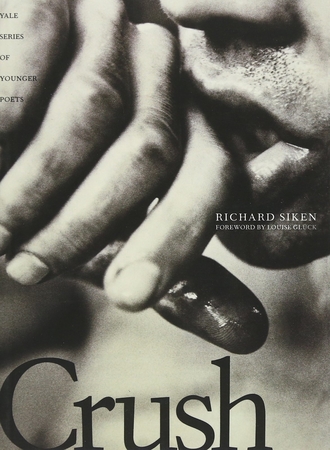
Crush by Richard Siken

“The entire history of human desire takes about seventy minutes to tell,” writes Richard Siken, “Unfortunately, we don’t have that kind of time.” And it is at breakneck pace that the lovers in Siken’s poems come together and split apart. Before he wrote Crush, Siken’s boyfriend died in a car accident, but that loss is transmuted in the book, so the lovers are torn apart for different reasons across the three sections—sometimes the cause is death, sometimes choice, but the result is always heartbreak. 

Brute by Emily Skaja

When we want someone to love us, we want them to love our body and our mind, yet this is rarely what we get. In Brute, the man the speaker lives with says to her, “I could never love someone so heavy.” What proceeds from here is an exquisite portrait of a brutal love affair. 

The House of Deep Water by Jeni McFarland

The House of Deep Water by Jeni McFarland

After the dissolution of her marriage and the loss of her job, Elizabeth DeWitt is forced to move back to River Bend, Michigan, the small town where she grew up, but—because of the color of her skin—never quite felt she belonged. Beth’s return is an unhappy one, and it leads her to reunite with her first doomed love, a man who dated her and her best friend simultaneously, and, ultimately, married her friend. The novel confronts not just the consequences of being the other woman, but also the consequences of being labeled other in the place you call home—it’s an exploration of how trauma and loneliness, like everything else in America, are not equally distributed. 

Bluets by Maggie Nelson

In Bluets, Maggie Nelson describes being left by a man, then falling in love with a color: blue. Part nonfiction, part prose poetry, what I love particularly is how the common wisdom of getting over or moving past a lost or unrequited love is interrogated and found to be lacking:

“For to wish to forget how much you loved someone—and then, to actually forget—can feel, at times, like the slaughter of a beautiful bird who chose, by nothing short of grace, to make a habitat of your heart.” 

Image result for dream house by carmen maria machado

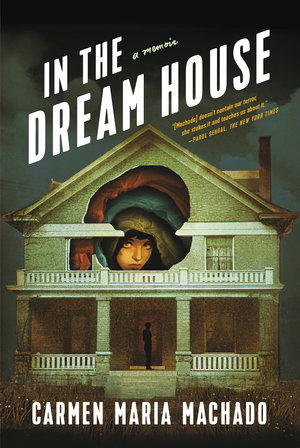
In the Dream House by Carmen Maria Machado

This memoir writes into the silence surrounding domestic abuse, and in particular domestic abuse in lesbian relationships; and asks whether knowledge can save us:

“Would knowing have made you dumber or smarter? If, one day, a milky portal had opened up in your bedroom and an older version of yourself had stepped out and told you what you know now, would you have listened?”

The inventive architecture ensures that with every section, the story changes and it stays the same. 

An Equal Music by Vikram Seth

An Equal Music by Vikram Seth

Michael Holme, a talented and accomplished violinist, is in love with Julia McNicholl, an equally gifted and skilled pianist, but he has a nervous breakdown and he leaves. Ten years later, a chance encounter reunites them in London, and they resume their relationship, but now Julia is married and has a secret. It’s a story about how we can be precise in work and imprecise in love. 

Autobiography of Red by Anne Carson

Autobiography of Red by Anne Carson

What slays Geryon is not violence, it’s Herakles’ carelessness and indifference: “It was raining on his face. He forgot for a moment that he was a brokenheart / then he remembered. Sick lurch.” But this is only the beginning of this novel in verse. 

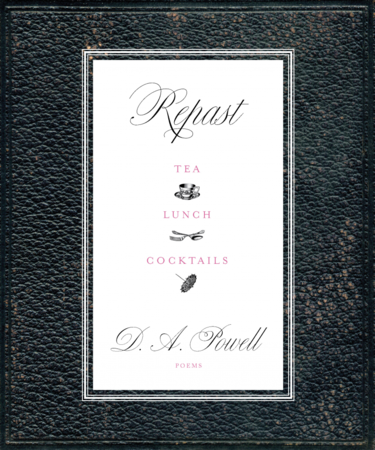
Tea by D. A. Powell

After the end of a relationship, D. A. Powell did not write for a year. When he began again, he “took my failed relationship as subject” and “turned my notebook sideways, pushing into what would traditionally be the margins of the page.” The result is this book of brief-but-long-lined poems, impeccable in their observation of how bodies tangle and disentangle, hardcore in their longing: 

. . . we rubbed each other out:     a pair of erasers

what happened to “significant” out of bed: abolished in the act of standing. like a “lap”

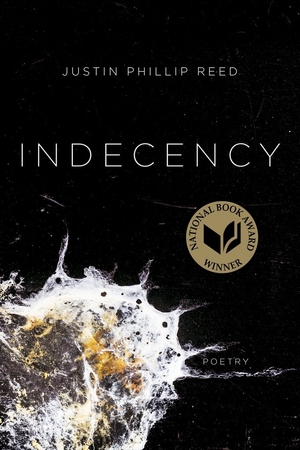
Indecency by Justin Phillip Reed

Sex and love are not entirely private matters. Rather, our most intimate acts and feelings are policed by what the larger political realm deems decent and indecent. Indecency explores how this societal policing limits access to pleasure for the queer Black speaker, and imagines how this could change:

. . . For a second, you realize

that every single man in the room

has his back to another. Suppose

this were not true all the time. 

Troilus and Cressida by William Shakespeare

Troilus and Cressida by William Shakespeare

We give too much time and space to Romeo & Juliet. My preferred tale of doomed love is Troilus & Cressida. Set against the backdrop of the Trojan War, which is also the backdrop of Western literature, Troilus (a teenager) swears undying love to Cressida (another teenager), yet after their first night together, he agrees to trade her to the Trojans. He promises to visit Cressida in the opposing camp, but spies on her instead, which is how he witnesses her first tryst with Diomedes. Troilus then calls Cressida a “whore,” and this is more or less how history remembers her. It’s a stark reminder that when things end, blame is rarely evenly assigned. 

A Scientist Tries to Understand Her Family Problems Through Mice

Yaa Gyasi’s debut novel Homegoing told the story of two branches of a Ghanaian family, one descended from a woman who marries a white slave trader and whose line stays in Ghana, another descended from her half-sister who is captured and sent to America in bondage.

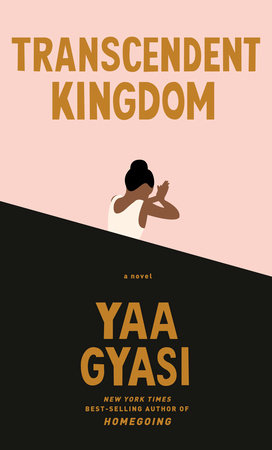
Transcendent Kingdom by Yaa Gyasi

Gyasi’s second novel Transcendent Kingdom follows Gifty, a Ghanaian-American doctoral student at Stanford studying the neuroscience of addiction and depression in mice. Gifty’s mother immigrated to Alabama, her father reluctantly in tow. When the Chin Chin Man, as Gifty and her older brother Nana call him, finds the racism and joylessness of life in Huntsville too much to endure, he returns to Kumasi and the family is never quite the same. Nana, a talented rising star on the basketball court, is prescribed opioids after an injury and ends up a heroin addict. After his death, her mother falls into a deep depression, often not leaving her bed for weeks on end. Though a pious member of her family’s otherwise all-white church as a child, Gifty struggles with a loss of faith, efforts to coax her mother back to life, and the alienation she finds in even her closest relationships as she attends Harvard and moves on to graduate school.

I spoke with Gyasi about writing a novel inspired by neuroscience, the unique challenges faced by Black immigrants to America, and the meaning of transcendence and salvation.


Preety Sidhu: Her mother’s depression is a major issue that Gifty grapples with throughout this book, and it comes about in part because Gifty’s father abandons their family, but more significantly in the wake of Gifty’s brother’s death from a heroin overdose. In Gifty’s research, there is a really interesting neural twinning between depression and addiction: “in depression, where there is too much restraint in seeking pleasure, or in drug addiction, where there is not enough.” To what extent do you see Nana’s addiction and Gifty’s mother’s depression as two sides of the same coin? Possibly as different responses to similar pressures?

Yaa Gyasi: In terms of me personally, I don’t think I actually thought about the fact that addiction and depression existed on this same continuum. That wasn’t something that was really on my mind until I started researching the neuroscience aspect of the novel, particularly the research that one of my close friends from childhood does. Right now she’s a postdoc at Stanford but when I started the novel she was a Ph.D. candidate in neuroscience. She researches the neural pathways of reward-seeking behavior. The way she always explained it to me, in lay terms so that I could understand it, was that she studied addiction and depression. I didn’t really think too deeply about what that meant until I started digging further into her work. That was when I started to see the connections—there’s the reward-seeking that mice do where they don’t care about risk and then there is the reward-seeking that the mice do not do even though there is a chance of pleasure. And I liked that. I liked that doubling and I felt like it would be a nice way to explore the relationships in the novel. 

PS: But you perfectly set up my next question, which is that you mentioned that Gifty’s research is based on the scholarship of your friend Christina Kim at Stanford University. In a literary sense, Gifty’s research is also so precisely and poetically aligned with the circumstances of her life and family history. How did this alignment come about? Did you have a sense of what Gifty’s family would go through and track down the corresponding science, or dig in farther? Or did you encounter this really compelling science and wonder how these issues might shape the lived experience of a family?

YG: The science really came first. It was my friend’s research that came first. I found it really interesting. I also found it interesting the way that she would talk about it to non-scientists, which felt to me to be this narrative-driven thing about addiction and depression. She would illustrate what the mice were going through and that felt like something that you could quite easily map on to human experience.

This book almost felt like a writing prompt, like: write a novel about a woman who studies addiction and depression. And you could go a million different directions with that kind of a prompt but I thought it would be nice to have a woman working on this research, who is also experiencing the things that she researches in real time in her life. So the aspects of addiction and depression that her mother and her brother go through really were born out of wanting to write about this specific field of neuroscience. 

PS: Gifty’s family are the only Black people at their Alabama church, because their immigrant mother doesn’t know any better, and it’s an incredibly isolating experience. After Nana’s death, Gifty and her mother are physically alone at a time when they shouldn’t be, until their white pastor finally decides to show up for them. Before that, her mother might be the lone person at that church still believing God can heal her son. Yet Huntsville is about two-thirds white, it does have a significant Black population who are not recent immigrants. Do you think having a local Black support system might have changed anything for this family? Can you speak more to your decision to not explore this kind of connection or community for them, in this particular story?

YG: Yes, I absolutely think that having a local Black community would have made a world of difference. For Gifty, in particular, perhaps also for her mother. But her mother is such a standoffish and reticent character. There’s a moment later in the book where it talks about how she never goes to the Ghanaian gatherings even. And I’m not sure why that is, but I think for some immigrants—and perhaps we’ll just speak specifically for Gifty’s mother—there can be this sense of, well I’m already isolated within this community in America, what does it matter to be isolated further? There isn’t a desire to assimilate or enmesh with the communities that already exist within the country. I’m thinking of Black immigrants, specifically, but you’re right that Huntsville has a pretty large African American population. I would venture a guess that Gifty’s mother does not really consider herself African American, and wouldn’t feel ease or comfort around that community, but also just doesn’t feel at ease or have any comfort around any community. So her choice to isolate herself has this ripple effect on her children, who would clearly benefit from any kind of engagement with their Blackness. Any kind of engagement with community in general. Her isolation isolates her kids in these really specific ways that I think are damaging both for Nana and Gifty.

PS: Do you think Alabama’s Black community may have embraced them if they pursued that option? 

YG: I think they would have been embraced. It might have been hard in the beginning, as they were just learning to fit in with American culture in general. But I think the avenue is open, particularly in a place like Alabama or like Huntsville that doesn’t have a large immigrant population. If you move to somewhere like New York that has plenty of Ghanaian Americans, I think you can settle easily into a Ghanaian American community and keep kind of separate from the African American community.

PS: For me, one incredibly painful moment in the book was learning after his death that Nana’s father wanted to take him back to Ghana as a child, and his mother’s anguish at having said no. The Chin Chin Man does paint a compelling, if perhaps overly simplistic, vision of Ghana as a much happier place than America, where “no one is enjoying” (which also was a very resonant comment at the moment). While Gifty doesn’t connect strongly with Ghanaian culture, she is aware that Ghanaian schizophrenics hear kinder voices than their American counterparts, that the smiles and ease with which her Aunt Joyce moves in the world could have been her mother’s, maybe. Do you think things might have worked out differently for Nana if he’d gone back, or even just known that his father wanted to take him? That he hadn’t been completely abandoned? 

I think for some immigrants, there can be this sense of ‘well I’m already isolated within this community in America, what does it matter to be isolated further?’

YG: Yes, I do think that things might have gone differently for him if he knew that his father wanted to take him or if he hadn’t felt so utterly abandoned. At the same time, I think there’s still a difference between wanting to bring somebody back with you and, after being told or feeling like you can’t do that, giving up entirely on the relationship. So it’s hard to say if the Chin Chin Man was the kind of person who would have the follow-through to go through with that, had he gotten a yes out of their mother, or if Nana would have encountered other related issues because of the nature of this father figure. So, hard to say, though I think probably it would have meant a great deal to him, just to have his father continue to attempt to be in his life in more significant ways. Whether that was bringing him to visit or bringing him to stay, but also following through on his promises to come see them, and keeping the lines of communication open. So yeah, I think it’s a good thought experiment, but hard to know. 

PS: And of course it’s only so useful to speculate about the versions that you didn’t write. I think what I’m trying to get at is it felt like there’s this underlying tragic thing that, it’s such a quick moment on the page but you could tell that it was pointing to something so much deeper.

YG: Well I think the mother probably felt that things would have gone differently if she had allowed it and I think she feels a lot of guilt around the fact that she didn’t do it. So yes, I do think there’s that. And there are fewer people suffering from addiction in Ghana, certainly, so the kind of access to that particular way of coping wouldn’t have been present for Nana, necessarily, had he gone back to Ghana. So yes, perhaps.

PS: I love how you claim the word “pioneer” for Gifty’s mother. You first set us up with the more standard cultural image of white American settler colonialists heading west in wagons, before dropping the line: “[t]hough she didn’t ford a river or hike across mountains, she still did what so many pioneers before her had done, traveled recklessly, curiously, into the unknown in the hopes of finding something just a little bit better.” What are your thoughts on the power of the word “pioneer” when used to describe the experience of immigrants of color moving to America?

YG: I liked that reclamation of the word for Gifty. You’re right, the associations with it here, you think of the West, you think of settler colonialism, you think of people killing the indigenous population and building their houses, you think of Laura Ingalls Wilder and Little House on the Prairie. Gifty is able to reclaim that term and say my mother is doing a similar thing, without any support and without much success, but she is also trying to make a space for herself in a hostile territory. If that is what pioneer-ism could be defined as, then she is also doing that. 

PS: I find Gifty’s relationship with her college friend Anne quite compelling, especially in how it ends. Anne is one of the closest and most loving—however imperfectly so—relationships Gifty has ever experienced, and yet after Gifty shares how Nana died, her heart hardens and she never speaks to Anne again. Either she doesn’t forgive Anne for extracting this information or for the privileges that allow Anne’s sibling to thrive despite experimenting with drugs. Gifty says “The last text Anne ever sent to me said, ‘I love you. You know that right?’ and it took everything I had not to respond, but I gave it everything I had. I took pleasure in my restraint.” Reading that line, I think of her experimental mice who show restraint and don’t fall into addiction, but Gifty has also established that too much restraint is correlated with depression. Do you feel that it is a healthy choice for Gifty to cut Anne off? Is there anything Anne could or should have done differently to avoid this fate?

YG: I do not think it was a healthy choice to cut Anne off. I think that Gifty suffers from it for many years. That choice to cut off the significant relationship in her life, you see reverberate through how she deals with relationships in general. I think of Gifty as a character who has built all of these walls around this particular part of her that hurts, built so many walls around this wound that is her father’s leaving, her brother’s death, her mother’s depression. Anytime anyone attempts to breach the wall, she cuts them off or distances herself or is just emotionally distant. I do think that the healthier option, the better option, would have been to be honest with Anne and keep her in her life. But I don’t think that college-aged Gifty was at a place in her life where she could recognize that.

PS: So I guess Anne was doomed, that there’s nothing she could have done differently.

YG: Poor Anne. 

PS: We get a clue or key to understanding this book’s title early on, as Gifty looks at a mouse’s brain and wonders what it might point to about the “comparable organ inside [her] own head.” She remembers the words of a high school biology teacher, that Homo sapiens are “the most complex animal, the only animal who believed he had transcended his Kingdom.” What does the idea of a person transcending their kingdom mean to you? Is it linked to what one of Gifty’s friends says about her: “You’re like taking the pain from losing your brother and you’re turning it into this incredible research that might actually help people like him one day.” Is there even more to it than that?

Salvation means being able to make choices that change the course of your life. Not being beholden to the faulty workings of [the] pathway in your brain.

YG: I think that’s part of it. I do think there’s more to it. There’s the moment later where Gifty says something like that she had spent her whole life hearing that humans have dominion over animals without ever hearing that she herself was an animal. This idea that humans are somehow set apart in a way that makes them different than other animals is one that Gifty is concerned with, particularly as she does this research that involves the manipulation of another animal in order to hopefully eventually serve the human animal. It’s a combination of things but it’s mostly about this idea of the dominance of the human-animal and does that cut us off from seeing things in a different way—being more charitable, being more attuned to the idea that we are, in Eula Biss’s words, continuous with everything on the earth.

PS: After seeing that she can inhibit reward-seeking behavior in addicted mice, Gifty says, “[t]hat saving grace, amazing grace, is a hand and a touch, a fiber-optic implant and a lever and a refusal, and how sweet, how sweet it is,” linking that church idea and language of salvation with the addicted mouse’s salvation, and by extension what salvation might have looked like for Nana. What does salvation mean to Gifty?

YG: I think for Gifty, in terms of her research and her obsessions, salvation means being able to make choices that change the course of your life. Not being beholden to the faulty workings of this pathway in your brain that has continued to allow you to press the lever, even when you consciously, or on some level, do not want to be pressing the lever. When it comes to her work salvation is about a refusal. For the other aspects of her life, I think it’s about freedom and transcendence—that word again—and an understanding of what she calls in some parts of this book “the whole animal,” the fullness of one’s life, being able to tap into the wholeness of your life.

You Probably Still Need the Soothing Embrace of Cottagecore

Cottagecore—the escapist aesthetic that romanticizes a simple, pastoral lifestyle—has been the internet trend of 2020. As Rebecca Jennings notes in Vox, cottagecore has become a way to make this national quarantine romantic by aestheticizing the joys of crafts and rural life. It’s also deeply rooted in previous pastoral movements, inspired by Romanticism (think: nature poems by Coledridge and Wordsworth) and pre-Raphaelite painters (like John William Waterhouse and William Morris). But as set in stone as the aesthetic seems to be, cottagecore is also a fluid movement filled with contradictions. On the one hand, it embraces returning to nature; on the other, it is an entirely virtual (and thus technology-dependent) phenomenon. Similarly, while cottagecore is coated with nostalgia for a simpler past—it’s been criticized for valorizing colonialism—it is also associated with progressive politics and LGBTQ+ subcultures. Accordingly, the books below showcase the long tradition of pastoral novels, as well as contemporary meditations on nature and cottage life. They offer a variety of takes on what could be called “cottagecore literature,” extending beyond Beatrix Potter and L. M. Montgomery—while still relating to the cottagecore aesthetic in some way. 

So the next time you pack a picnic lunch for frolicking in the meadows, consider tossing in one of these books to idle away your afternoon with.

The Way Through the Woods by Litt Woon Long

The Way Through the Woods: On Mushrooms and Mourning by Long Litt Woon

A memoir about mycology and mourning, The Way Through the Woods explores the author’s foray into mushroom foraging after her husband’s sudden death. Woon acutely describes the feelings of bleak grief after losing her partner of 32 years, and how mushrooming offered a way to connect with nature, re-vitalizing her life. Woon also offers educational insight into the fascinating forms of fungi all around us, from Norwegian forests to Central Park. After reading her vivid descriptions, you may find yourself taking a second look at the fungal growth on your week-old leftovers—or embarking on a mushroom forest adventure of your own. 

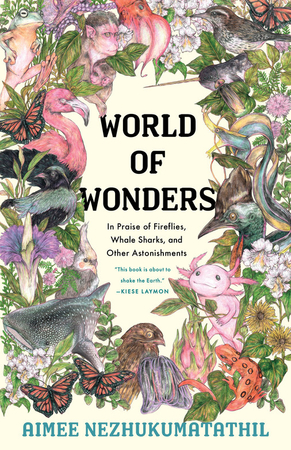
World of Wonders: In Praise of Fireflies, Whale Sharks, and Other Astonishments by Aimee Nezhukumatathil, illustrated by Fumi Nakamura

If looking for a way to appreciate the joy and beauty of our immediate surroundings, World of Wonders is the perfect choice—both in aesthetics and content. Nezhukumatahil’s non-fiction essay collection explores how we can find wonder in the everyday, even in places or creatures that we might not immediately deem “cute” or lovely. Growing up, Nezhukumatahil was constantly transplanted, moving from one different landscape to another; she found solace and kinship with the creatures around her, no matter where she went. Her lyrical prose is exquisitely illustrated by Nakamura’s vibrant and whimsical drawings.

As You Like It

As You Like It by William Shakespeare

The OG pastoral, written by someone who created a canon for pastoral plays. Published around 1599, As You Like It features genderbending, an idyllic mini-dukedom in the woods, and love verses carved onto trees. Rosalind—who dresses up as a man after she is exiled to the woods by her evil uncle and finds a way to set up a series of marriages—is a craftsy, DIY heroine after any cottagecore millennial’s own heart. (Side note: where is the contemporary adaptation of this play that we’re all waiting for? She’s the Man and 10 Things I Hate About You couldn’t hold a candle to a cottagecore version of As You Like It. Imagine Instagram poetry carved onto your neighborhood oak tree!)

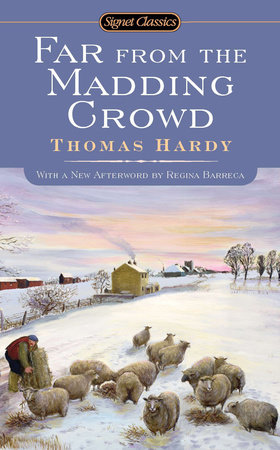
Far From the Madding Crowd

Far From the Madding Crowd by Thomas Hardy

Another classic of the traditional pastoral genre, Hardy’s 1874 novel shows both the idyllic and harshness of a farming community in rural Southwest England. The spirited, proud heroine, Bathsheba Everdene, inherits a large farming estate; while running the estate, Bathsheba also juggles the attention of three men. Hardy relishes in the details of everyday Victorian life (making this an apt supplement for lovers of Animal Crossing), as well as the drama of finding love. Bonus for those interested in animals: lots of sheep. 

Braiding Sweetgrass: Indigenous Wisdom, Scientific Knowledge and the Teachings of Plants by Robin Wall Kimmerer

If you’re worried about cottagecore having a colonial edge, throw away all the white influencers and read this instead. Kimmerer draws upon her background as a biology professor and Potawatomi woman, braiding together a narrative that is both holistic (such as symbiotic ecological systems at large) and specific (such as sweetgrass harvesting and lichen growth). Furthermore, she shows how these elements are interconnected to one another, and calls on us to be more mindful about the collateral damage we wreak on our environment. Kimmerer shows how we must cultivate “cultures of regenerative reciprocity” and “demand an economy that is aligned with life, not stacked against it,” with practices that acknowledge and celebrate the natural world around us. 

540489

Wise Child by Monica Furlong 

Set in a Scottish village during the Dark Ages, a nine-year-old orphan is taken in by the local wisewoman, Juniper. Wise Child learns about herbs, midwifery, and witchery; however, when her estranged mother comes back to claim her, Wise Child is faced with difficult choices about both magic and loyalty. If you’re specifically into the witchcore aesthetic or extremely invested in your home herb garden, Wise Child may be the book for you.

Pilu of the Woods by Mai Nguyen

If you’re more into faeriecore than witchcore, try Nguyen’s graphic novel about a friendship between a human girl and a tree spirit. Willow struggles with her turbulent emotions (vividly drawn by Nguyen as little water monsters), particularly in the wake of her mother’s death. After a rough day, she runs away to the nearby forest–and stumbles upon an equally distraught tree spirit, Pilu, who is lost. Together, they find a path home through the woods.  Pilu of the Woods is a bittersweet and beautifully illustrated look at friendship, family, and self-discovery. 

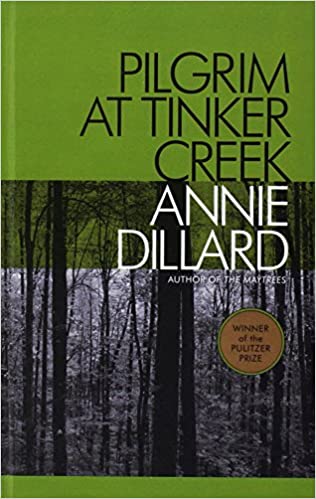
Pilgrim at Tinker Creek by Annie Dillard 

If you’ve already read Thoreau’s Walden, built your own log cabin, and are looking for another narrative on immersing oneself in nature, look no further. Winner of the 1975 Pulitzer Prize for General nonfiction, Pilgrim at Tinker Creek is a lyrical meditation and updated Transcendentalist homage. Dillard tracks the course of one year in Virginia’s Roanoke Valley, exploring the region on foot. She is meticulous about describing the flora and fauna around her, but also imbues the narrative with thoughts on theology, solitude, and the inherent violence and beauty of nature. 

Trophic Cascade by Camille T. Dungy

Trophic Cascade is another lyrical, acutely observed meditation on nature; Dungy’s poetry collection explores the themes of nature, motherhood, and power, including the ways in which racial violence plays out within our ecosystem. With sharp, vibrant prose, Dungy explores what it means to be rooted and inextricably connected to the world around us. “It seems everyone is silvered, dead, / until we learn to see the living—” she writes; in Dungy’s work, the ability to see life and hope comes from observing our environment and bearing witness. She is also the editor of Black Nature: Four Centuries of African American Nature Poetry, an anthology (not included on this list just because anthologies feel like an awful lot of people for one cottage). 

Arcadia by Lauren Groff

What can go wrong when a group wants to build its own bohemian community? Arcadia shows the dark side of “cottagecore,” or what happens when an aesthetically, idealistically pleasing idea turns sour. Bit, the novel’s shy protagonist, grows up in a hippie commune where everything is crafted by hand and everyone reveres nature. However, as Bit becomes an adult, he must reckon with the fallout of the commune and grapple with contemporary environmental disasters. Groff nails the intensity of climate change anxiety, while simultaneously luxuriating in beautiful descriptions of nature. 

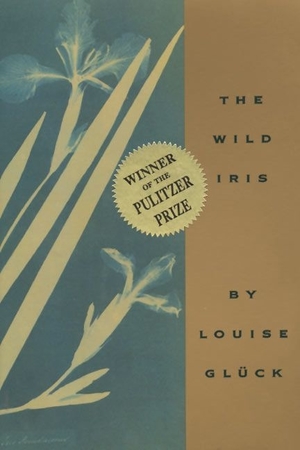
The Wild Iris by Louise Glück 

If you’re looking for a poetry book to place your dried flowers in, The Wild Iris is the perfect volume. Glück’s Pulitzer-winning collection, with its exquisitely crafted language, is one to reread on any occasion, but especially when you’re dreaming of running away to the woods. The flowers are often the narrators in Glück’s poems, such as “Wildflowers” or “Silver Lily.” Interspersed between the flower poems are various forms of prayers, like “Matins.” Glück explores the cycles of life and death, joy and grief, intimacy and distance in both the human and natural world. The Wild Iris questions—and ultimately celebrates—what it means to be alive “in the raw wind of the new world.”

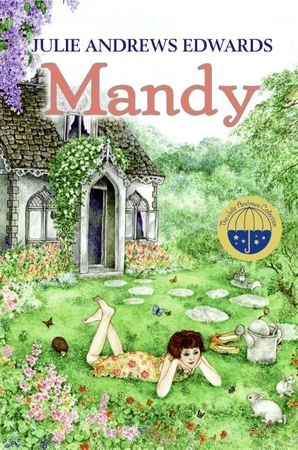
Mandy by Julie Andrews Edwards

Who could have known that Julie Andrews (yes, Mary Poppins, Maria from Sound of Music, and iconic Princess Diaries grandmother) would be the prophetess of cottagecore? Andrews’ novel centers on Mandy, a young orphan who decides to fix up a deserted cottage. Mandy climbs over the orphanage wall and, over the course of a year, becomes increasingly obsessed with crafting a lovely space for herself. This may be a book written for young children, but adults and kids will both be charmed by Mandy’s quest to find a place she can feel at home. 

15 Modern Indian Classics in Translation

When I wrote my first novel, The House With a Thousand Stories, I drew inspiration not only from great 20th-century novels like Toni Morrison’s Song of Solomon and important Indian English novels like Amitav Ghosh’s The Shadow Lines, but also from fiction written in the regional languages of India. My first language is Assamese but I also know how to read Bangla and Hindi. At home, we had a large stock of Bangla, Assamese, and some English books. The library I regularly visited had delicious thrillers written in Hindi that I devoured during summer vacations. All of these languages translated world classics, too. I read most of the great Russian novels in Assamese, some British and American classics by Twain and Dickens in Hindi, Bengali, and Assamese. Perhaps this is why every time a Western newspaper comes up with a recommended list of novels about India I find them insufficient. These lists always contain books written originally in English. Due to British colonialism, there is no doubt a large body of important Indian literary works that are read globally are written in English. But there is a problem here: only ten percent of India’s population knows English, and this group of people gets to represent India through their works.

Only ten percent of India’s population knows English, and this group gets to represent India through their works.

The rest of India’s population— who don’t have the privilege of learning English or away from the wealthy metropolitan centers of opportunities and thus English learning and discourse—read and write in one of the many official languages in India. India’s constitution lists 22 significant languages such as Assamese, Bengali, Bodo, Tamil, Gujrati, Kashmiri, Hindi, etc.—and that’s not including the thousands of dialects and tribal languages in which people write as well. These languages have a long and continuous written tradition. For instance, Assamese—my first language—has a literary tradition reaching back to the 5th century. With the arrival of print culture in the modern period, Assamese literature, like all other Indian literary cultures, flourished. A large amount of this was anti-colonial literature that led to the growth of nationalist consciousness and eventually contributed to British colonizers’ ejection from India. 

The colonial administration systematically tried to replace these strong literary cultures with English. But they failed. A complex body of literature emerged from this linguistic violence on India’s native intellectual culture and subsequent resistance. Modern Indian literature draws nutrients not only from South Asia’s indigenous traditions, but also from literary cultures in the U.K., Europe, Latin America, Russia, China, and the United States (because the colonial administration taught English widely and thus we natives could now read in English). 

Every Western list of books from India that doesn’t feature a single work written in one of India’s many languages reinforces colonial stereotypes.

Hence, every time a Western publication makes a list of books from India and doesn’t feature a single work written in one of India’s many languages, it reinforces colonial stereotypes and erodes the process of decolonization. It reestablishes the hegemony of the English language and wipes the rich local traditions that are longer and richer. The novels in this list—widely considered as modern Indian classics—attempt to challenge the Western stereotype that Indians primarily read in English or that Indian literature is written predominantly in English. In fact, in the last two or three decades, the reading public has shifted towards local consuming more and more literary works translated from Indian languages. I also belong to a generation of new writers from India who are comfortable writing in both English and a regional language. The future is at least bilingual, if not multilingual. 

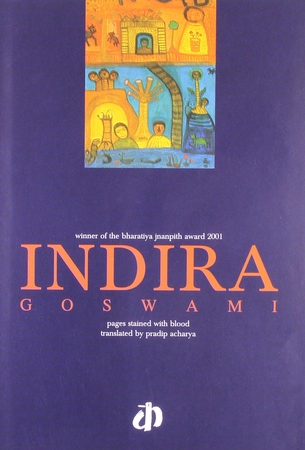
Pages Stained With Blood by Indira Goswami, translated from Assamese by Pradip Acharya

Set against the Anti-Sikh pogrom of 1984 that followed the assassination of the Indian Prime Minister Indira Gandhi, this is (as you might guess from the title) a bloody book. The novel follows the life of a young professor at Delhi University who witnesses the pogrom first-hand. The author, Indira Goswami, is one of the most loved writers in India and her deeply transgressvive, feminist, genre-bending autofictional novels won her the highest literary honor of the country, the Jnanpith Award. This book evokes Delhi and its history in a way that it is hard to forget, and rarely seen in Indian English fiction or popular orientalist narrative nonfiction. In the middle of this chaos, there is a love story that will stab your heart and make you smile. 

Sahni Bhisham Books - Buy Sahni Bhisham Books Online at Best Prices In  India | Flipkart.com

Tamas by Bhisham Sahni, translated from Hindi by Daisy Rockwell

Set against the backdrop of the communal riots around the partition of India in 1947, Sahni’s novel opens with a harrowing scene that perhaps has no parallel in Indian fiction: a long chapter that shows a man trying to kill a pig so that he can desecrate the local mosque with the pig corpse to incite a riot. This war, between the pig that wants to live and the man that is trying to kill it but isn’t able to, reminds me of Santiago’s struggle with the fish in Hemingway’s The Old Man and the Sea. The novel is a post-mortem of the turbulent period following partition, when communal riots killed close to a million, and the trauma that continues to haunt the subcontinent even to this date. Tamas has been translated into English and other languages many times, but I love the translation by American literary translator Daisy Rockwell. 

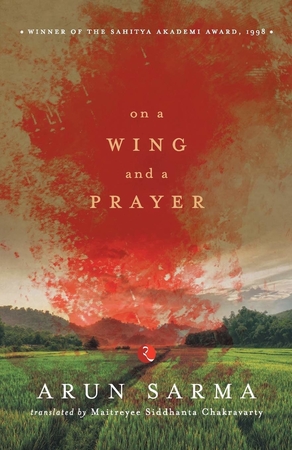
On a Wing and a Prayer by Arun Sarma, translated from Assamese by Maitreyee Siddhanta Chakravarty

These days, the Indian right wing often finds a new language, new terms, new concepts to demonize Muslims and minorities. One of their recent, ridiculous terms is “Love-Jihad,” the (self-evidently absurd) claim that conniving Muslim men are spreading Islam by tricking innocent Hindu girls into marriage. This book counters that parodic view, with a love story that is also a complex picture of one of the most persecuted minorities in India: the people of Bangladeshi origin in India’s Northeast. The novel is a meticulous picture of pre-independence rural India, and has one of my most favorite characters: Gojen, a lower-caste Hindu man who falls in love with Hasina, a girl from the immigrant Muslim community from erstwhile East Pakistan. Arun Sharma won the Sahitya Akademi Prize for his book.

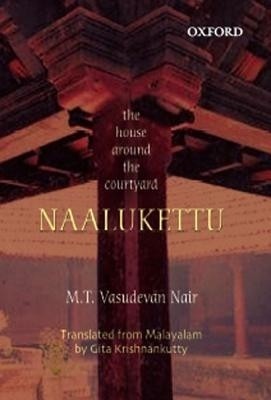
Naalukettu: The House Around the Courtyard by M. T. Vasudevan Nair, translated from Malayalam by Gita Krishnamurthy

Set in the South Indian state of Kerala, among the matrilineal Nair community, the novel follows the life of Appuni, whose mother is asked to leave the house for marrying against her family’s wishes. Appuni grows up listening to stories about his wealthy, powerful, upper-caste family, and the large house around the courtyard where the family lived. When he goes to claim a place in that location, he is rejected, which plants the seeds of revenge in his heart. This is considered a classic in Indian literature, and it’s hard to believe that it was M. T. Vasudevan Nair’s first novel (which also won him the Kerala Sahitya Akademi Prize in 1959). 

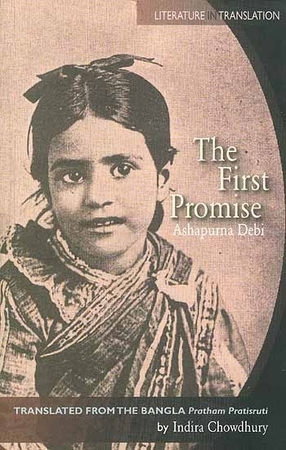
The First Promise by Ashapurna Debi, translated from Bengali by Indira Chowdhury

The first installment in a mammoth trilogy, this novel follows the life of child-bride Satya in 19th-century India. Rebellious, feisty, always questioning, Satya never loses an argument: why are women not allowed to read when the deity of knowledge is a woman who sits on a swan? Why can’t I call a British doctor to treat my husband who is suffering from typhoid? Why wouldn’t widows be allowed to marry? Set amid the growth of nationalist anti-colonial consciousness in colonial Bengal, the novel is about the domestic history of women who carried the “first promise” of hope and change for a progressive, liberal future, who are forgotten by public history. “My novel leans on the backbone of petty, daily activities,” Ashapurna Debi, who produced more than 150 novels, wrote in the introduction to the novel’s Assamese edition.

Sonam by Yeshe Dorje Thongchi, translated from Assamese by Mridula Baroaah

Set among the Brokpas, a polyandric indigenous community, this a fiercely feminist, women-centric novel. The central character, Sonam, chooses to have two men in her life because her husband Lobjang, the love of her life, has to live away from home for long durations to earn for the family. It is hard for Sonam to deal with her loneliness and desires, and she decides to opt for a second husband after discussing with Lobjang. Like most love triangles, this leads to conflict, tragedy, and reconciliation. Often compared with Chinua Achebe, Yeshe Dorje Thongchi is a writer from Arunachal, who belongs to the small Serdukpen tribe that numbers no more than 4,000. 

Zindaginama by Krishna Sobti, translated from Hindi by Neel K Mani

I love a good plot, but I couldn’t make this list without including this unruly novel that defies all expectations. I wonder if Zindaginama, which means the saga of life or the story of life, baffles us deliberately by mimicking the messiness of life in the best possible way? Sobti’s magnum opus is set in a small village in Punjab. If you pick this novel hoping to get a narrative thread that you can follow through the nearly 500 pages, you would be disappointed. But if you allow yourself to experience the sounds, the mingling, coalescing narrative threads, you would experience an intimate portrait of life in India before partition where many communities lived together for generations, with comparatively less acrimony and hatred!

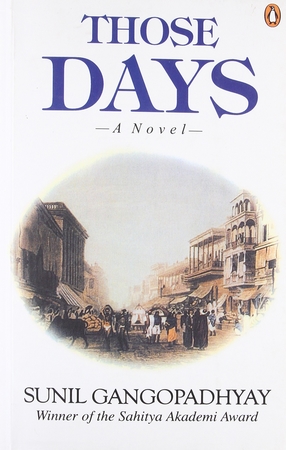
Those Days by Sunil Gangopadhyay, translated from Bangla by Aruna Chakravarti

Those Days, set in colonial Bengal, charts the life of many historical and fictional characters who worked towards the reformation of India. If you have enjoyed sprawling novels such as Anna Karenina you will enjoy this novel, but it is much more than that: the plot is tighter, faster; the details are meticulous; the characters unforgettable. Even the historical characters feel fresh and new in Gangapadhyay’s writing. It is a historical novel, but becomes far more than the portrait of an era when India was entering modernity since you will remember the novel for life of the protagonist Nabinkumar, who is in the middle of these changes. 

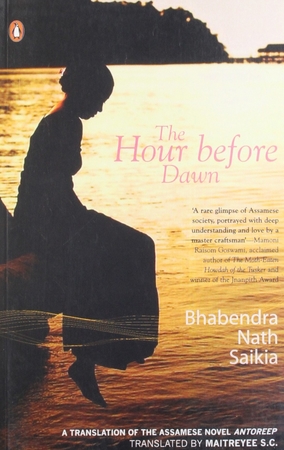
The Hour Before Dawn by Bhabendranath Saikia, translated from Assamese by Maitreyee S. C.

Occasionally, an Indian writer in English will emerge and claim that it is daring to write about poverty in India. What surprises me most is that there are thousands of novels set in India that are about poor people and their problems. The characters are in The Hour Before Dawn are poor, living in rural India, but their poverty is not a plot device. Menoka, the protagonist, is involved in an extra-marital relationship with the local petty thief. The novel explores the transgressions of Menoka and the costs she would pay for it, along with providing a meticulous picture of rural India.

godaan - AbeBooks

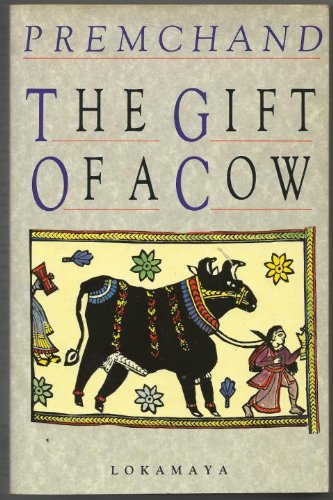
The Gift of a Cow by Munshi Premchand, translated from Hindi by Gordon C. Roadarmel

Comparable with Dickens, Balzc, or Gorky, Munshi Premchand wrote fiction about the poor peasants and their desires, aspirations, and struggles in colonial, semi-feudal India, in the critical-realist mode. In this novel, Hori, a peasant, is tired of living in poverty and starts hoping to own a few acres of land and a cow so that he can cultivate on his own. In a narrative that challenges caste, colonialism and class, Premchand tells us in great details why Hori’s dream remains unfulfilled.

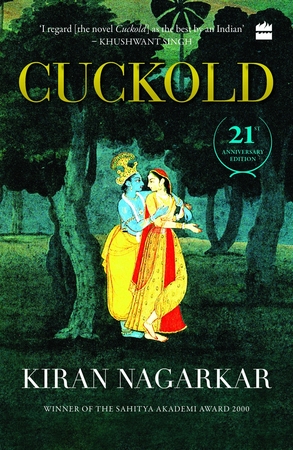
Cuckold by Kiran Nagarkar, translated from Marathi by the author

Author’s note: After publication, I found that though Nagarkar wrote some of his works in Marathi, Cuckold was originally written in English, then translated to Marathi by Rekha Sabnis and published by Popular Prakashan, Mumbai. For a Marathi-original novel, try one of Nagarkar’s earlier works such as Seven Sixes are Forty-Three (originally Saat Sakkam Trechalis), translated by Shubha Slee and published by Katha (2004)

Cuckold challenges you to read it: for its massive brick-like size and length, its rich imagination of the sixteenth-century kingdom of Mewar, and the difficult subject matter about a beloved mystic poet called Meerabai who was so obsessed with her love and attachment to the God Krishna that her husband felt abandoned. It is hard not to know about Meerabai or listen to her songs if you have grown up in India. Nagarkar chooses to narrate the novel from the point of view of her husband, Maharaja Kumar, providing the portrait of a complex person, statesman, husband, son; and yet, the novel manages to tell us a lot about Meerabai, and fall in love with her once again.

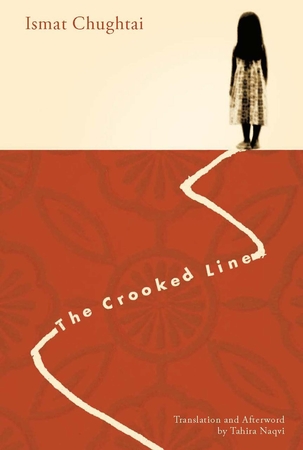
The Crooked Line by Ismat Chughtai, translated from Urdu by Tahira Naqvi

Written by one of my favorite fiction writers, The Crooked Line explores the life of Shaman, growing up in a North Indian Muslim household around the time of India’s independence. Chughtai, known for her controversial queer love story “Lihaaf,” wrote often about the experience of regular Muslim women in India. Like many of Chughtai’s earlier heroines, Shaman is rebellious, doesn’t do things that the society expects her to do as a woman, and even desires women in the novel. Part of the Progressive Writers Movement that started before Indian independence, Chughtai uses the form of the novel and the social realist mode to critique idiosyncrasies and conservative attitudes of Indian Muslims. It is a delight to read Chughtai’s fiction: with her quick, lively dialogues, layered but colloquial narration, and tinge of humor, she is one of the finest. 

Samskara by U.R. Ananthamurthy

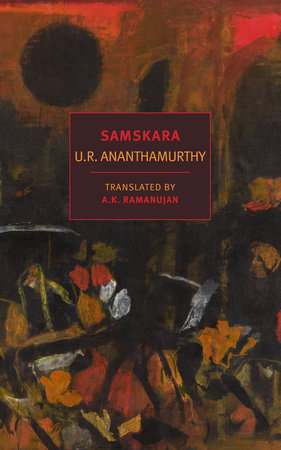
Samskara: A Rite for a Dead Man by U. R. Ananthamurthy, translated from Kannada by A. K. Ramanujan

Originally written in Kannada, and translated by the MacArthur “genius grant winner” A.K. Ramanujan, this book is part of almost all Indian literature classes. Set in a Southern Indian village in the state of Tamil Nadu, Samskara explores the stringent and puritanical traditions of an upper-caste Brahmin community in modern India. Praneshacharya, the main character, is married to a disabled woman. He takes care of her, more out of a sense of duty, than love, and believes that he is leading a virtuous, moral life. But when Narranappa, the rebellious man from this village who rejected the age-old traditions dies, Praneshacharya’s loyalty to the Brahmanical traditions start to wither away until he finds himself in a surprising path of transgression, doing things he never thought he would ever do. U. R. Ananthamurthy was nominated for the Man Booker International Prize and this novel.

Sangati: Events

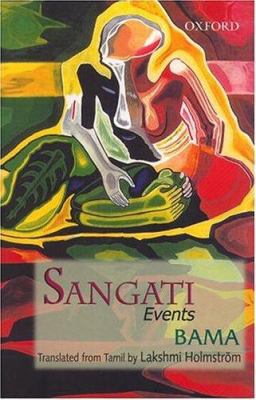
Sangati: Events by Bama, translated from Tamil by Lakshmi Holmstrom

Made up of a series of anecdotes or vignettes, Sangati is another novel that seeks to defy the conventions of the novel form. These anecdotes often celebrate the lives of Dalit women from the Periyar community in the state of Tamil Nadu and are juxtaposed with deep analysis and reflections in the narrator’s voice. This is one of the most important texts that informed Dalit feminism in India. 

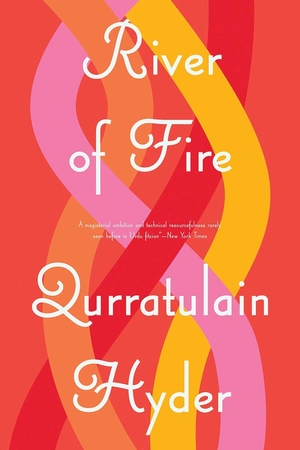
River of Fire by Qurratulain Hyder, translated from Urdu by the author

Hyder’s magnum opus is an astonishingly ambitious book. The story starts in the ancient city of Sravasti in the 5th century BCE during Buddha’s lifetime, and ends in modern India at the cusp of independence in the city of Lucknow. Covering multiple epochs through a wide cast of characters in the sub-continent, the book follows the same set of characters through different periods, using them as canvases to depict the moral, philosophical, literary and intellectual tussles of those eras, and perhaps to suggest a long, continuous subcontinental intellectual tradition.

The Health Insurance Plot Is the New American Happy Ending

In Raven Leilani’s Luster, Edie is a 23-year old Black woman who, amongst other problems, has irritable bowel syndrome. “I can’t shit,” she explains, describing her bowels at various points as “dysfunctional,” “inaccessible,” and “shy.”

She goes to see a doctor; the doctor suggests further tests. But with Edie’s insurance expiring in four days, she’s ultimately only prescribed an over-the-counter laxative. The doctor asks her to return once she has insurance. “The plea is so sincere,” Edie observes, “that when I visit the pharmacy to pick up my prescription, I wander the vitamin aisle and cry.”

Welcome to the Health Insurance Plot. 

The Health Insurance Plot is a cousin to the Marriage Plot, which refers to a story that concludes in a marriage. The Marriage Plot is still prevalent today, but in 19th-century England it was especially popular. All of Jane Austen’s novels, for example, end with weddings. At the time, marriage was essentially permanent and offered Austenian heroines domestic and financial security—a kind of happy ending.

These aren’t stories about women with diseases. They’re stories about women who are seeking security.

Today this happy ending is instead achieved by acquiring a job, one with great health benefits. The Health Insurance Plot may have a deadline, as in Kiley Reid’s Such a Fun Age, in which the protagonist anxiously seeks a job with insurance before her 26th birthday. Or the plot can follow a character through her uneven access to health care and into how this uncertainty feels. 

The characters embroiled in a Health Insurance Plot may have a specific ailment. Edie has her irritable bowels. In Lily King’s Writers & Lovers, Casey has a questionable lump. These health issues amplify the stakes of needing insurance, but they are rarely the primary plot. Sometimes the character is perfectly healthy, like Emira in Such a Fun Age

But Emira still needs a job with health benefits; insurance is an issue independent of illness. It’s worth noting these characters are usually millennial women, struggling with life things: love, sex, the gig “economy,” racism, having a body, making art. These novels aren’t stories about women with diseases. They’re stories about women who—much like their Austenian predecessors—are seeking security.


The American health system, Beatrix Hoffman argues, has always been characterized by two things. The first is a refusal to adopt a right to care– the closest thing the U.S. system has to a right to health care is EMTALA, an act passed in 1986 that requires the provision of emergency care for the indigent and uninsured. The second is the unequal and ineffective rationing of medical services by income, immigration status, race, region, and insurance coverage.

This rationing is reflected in recent American media and fiction. Consider a scene from Writers & Lovers by Lily King. Casey, a 31-year old white woman, is riding her bike. A car hits her. The woman in the car offers to take Casey to the hospital. Casey explains that she can’t afford that, leading the woman to exclaim, “I will pay! Of course I will pay!”

The work-health link can manifest as a persistent anxiety.

“When I tell her that without insurance X-rays will cost hundreds of dollars,” Casey notes, “she grows frightened and gets back in the car.” Afterwards, Casey feels relieved. She notes that her leg doesn’t “feel” broken. “I got lucky,” she thinks. “If the accident had been any worse, the cost would have sunk me.” (Lucky! She was hit by a car!)

Beyond cost, America also rations health care by employment status. So the Health Plot is also about work. (Luster, Such a Fun Age, and Writers & Lovers are great work novels.) The work-health link can manifest as a persistent anxiety. What kind of work provides insurance? How do I get a full-time job with benefits? Is this a job I want? Does that matter?

In Such a Fun Age, Emira does not have a particular physical ailment; she’s a young Black woman who’s just trying to figure life out. We’re introduced to Emira on the cusp of her 26th birthday, when she’ll be booted off her parents’ health plan. (“Should we get you a helmet for while you’re uninsured?” her boyfriend jokes.) 

 Emira loves Briar, the white child who she babysits part-time. But when Emira is racially profiled in a grocery store — accused of kidnapping Briar — she tells herself:

This wouldn’t have happened if you had a real fucking job…You wouldn’t leave a party to babysit. You’d have your own health insurance. You wouldn’t be paid in cash. You’d be a real fucking person. Taking care of Briar was Emira’s favorite position so far, but…part-time babysitting could never provide health insurance.

You’d be a real fucking person. Beyond the actual health inequity, what makes me so angry for Emira (and for myself) is that a “real job” becomes equal to “a nine-to-five position with benefits” becomes equal to “adulthood.” If Emira loves her babysitting position, why should she have to leave it?

Let’s look, for comparison, at Sally Rooney’s Conversations with Friends. The novel is set in Ireland, where there’s government-funded public health care. The protagonist, Frances, suffers from harsh period pain and is eventually diagnosed with endometriosis. 

But Frances is not worried about access to a doctor. She has a basic security where Emira, Casey, and Edie have only an abiding anxiety. She doesn’t have to apply to full-time jobs for insurance. Frances is a writer, and she’s able to pursue art while working part-time at a coffee shop.

Meanwhile, Casey is also a writer, and Edie a painter. When Casey and Edie make art in America, they experience not only the expected economic instability but an embodied insecurity: the threat of illness or even death, and an associated everyday anxiety. This in turn makes it more difficult to make art, or as Raven Leilani has put it: “There is also the fact of [Edie] trying to make art while she barely has enough money to eat or pay rent, and it is nearly impossible to produce anything when most of your bandwidth is spent trying to live.” 


So, suffering. One way health insurance is made urgent in these novels is by bringing up suffering. The stakes of insurance are made clear by the horror of physical and mental suffering, which occur seemingly at random to our protagonists. And in my experience, this is how sickness feels: challenging to ignore, and generative of a basic kind of nihilism:

Casey: “Then I remember the oncologist appointment tomorrow, and maybe none of it will matter because even if I get the job I’ll just be the teacher who has cancer and dies.” 

The stakes of insurance are made clear by the horror of physical and mental suffering.

Edie: “God is not for women. He is for the fruit. He makes you want and he makes you wicked, and while you sleep, he plants a seed in your womb that will be born just to die.”

Frances: “A searing anxiety developed inside me…first the realisation that I would die, then that everyone else would die, and then that the universe itself would eventually experience heat death, a kind of thought sequence that expanded outward endlessly in forms too huge to be contained inside my body.”

Of course nihilism is not new, and fiction has always dealt with illness, and suffering. The nihilism is because of mortality, not insurance. Health benefits can’t remove this anxiety. But not having insurance, or having other barriers to care, can press this anxiety into every day, and we already live so precariously now. Health inequity is especially present for marginalized groups, like undocumented immigrants who face greater barriers to even obtaining insurance, and Black women, who are two and half times more likely to die of maternal causes than white women. 

Why wouldn’t fiction account for these anxieties around care? This is what life is like. With no right to health care in America, “real fucking jobs” with health benefits are a clear path to some security. As a reflection of this, insurance is functioning in recent fiction the way marriage did long ago: as a happy ending, as a relief. 

In the American novels I’ve brought up, our protagonists get lucky. Near the end of these novels, the characters are offered full-time jobs. Of course they accept the offers. In Luster, Edie takes an internal communications job, “a job I actively do not want but that offers paid sick leave, health insurance, and a free mattress.” 

Casey from Writers & Lovers is offered a full-time teaching job with Blue Cross Blue Shield health insurance. It’s a happy moment. “There’s a particular feeling in your body,” she thinks, “when something goes right after a long time of things going wrong. It feels warm and sweet and loose.”

Insurance is functioning in recent fiction the way marriage did long ago: as a happy ending, as a relief.

And Emira, in Such a Fun Age, gets a job offer without benefits. But with a friend’s guidance, in what is a deeply satisfying scene, Emira negotiates the offer. She lowers her rate to secure health insurance. Emira hesitates to accept — she’s lowering her rate? — but her friend Zara intervenes. “Mira? It’s just for now,” Zara says. “This is a real-ass job.”


An ending does not necessarily provide closure. Both the Marriage Plot and the Health Plot offer happy endings. A partner, a real-ass job. But the Marriage Plot used to offer closure, the firm sense that insecurity would not return, even beyond a book’s pages. Since marriage was basically irreversible, its associated domestic and financial security was assured over time. In Austen’s Mansfield Park, when Fanny and Edmund marry, their happiness is “as secure as earthly happiness can be.” 

There was a finality to the Marriage Plot, but getting health insurance is no final thing. Health insurance is not wed to these characters by law. People lose their health insurance all the time. In the Health Insurance Plot, closure is untenable because insecurity is likely to return. 

Still, getting health insurance is a happy ending. In these novels, having insurance removes a latent anxiety. For Edie and Casey it opens up space to make art. And if either of them, or Emira, is hit by a car, she can now go to a hospital with a somewhat lessened fear of bankruptcy. Today this is a substantial, if tenuous, security. In America this is a lucky thing.

Sigrid Nunez’s “What Are You Going Through” Asks What We Owe to Other People

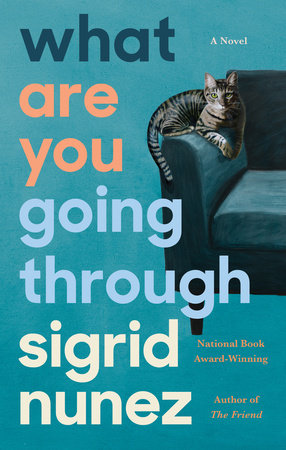
Sigrid Nunez’s latest novel, What Are You Going Through?, explores the rich interior life of a narrator whose name we never learn. She has a series of frank and meandering chats, some in her head, some with people; her Airbnb host, an ailing friend, a woman at her gym. Often she listens in on the people around her; a lecturer giving a fatalistic talk on climate change and capitalism, a mourning father and daughter at a café. The talks are about everything and nothing so the book is initially deceptively breezy. Until, that is, her ill friend—who’s been receiving cancer treatment at a local hospital—surprises her with a request: she wants help ending her life. This friend request closes out the first of the book’s three parts. Its weight and abruptness help transform the book from a casual read into a deeply empathetic study of the two women’s friendship and of the elaborate matrix of human connection. 

What Are You Going Through by Sigrid Nunez

This new book follows on the heels of her last book, The Friend, for which Nunez won the 2018 National Book Award. The Friend was widely praised for its unflinching and elegant three-pronged interrogation of grief, death, and friendship. In this follow-up Nunez again probes the depths of our fears about death and our desires for companionship. What does it mean to love your neighbor? Do we ever really have control over our lives? In What Are You Going Through?, Nunez mines a single complicated relationship for the truth of it all and endows us with many possible answers. 

I had the opportunity to speak with Nunez over the phone in August. We discussed the perennial nature of human suffering, how she’s inspired by eavesdropping on strangers, and why her writing will never be perfect. 


Naomi Elias: The book’s title is pulled from an essay written by Simone Weil in Waiting For God. Where did you first encounter the quote and why did it speak to you? 

Sigrid Nunez: I’ve known about it for many years and it just was something that really rang true to me when I first heard it and still does. Her definition of what it would mean to love your neighbor would be to really listen to that person and ask them, “What are you going through? What is your trouble?”

NE: Between this forced quarantine and the global protests this year has helped put in clear relief who is capable of compassion and who isn’t. It feels like the release of this book and the questions it’s asking about the function of companionship and acts of service couldn’t be more perfectly timed. 

SN: Well, I guess that might be true except the idea is that actually, you know, it’s always true because people are always going through this part of the human experience. You might not necessarily notice it but you’re surrounded by people who are living an ordinary life but they’re suffering from something; loneliness, or someone they know is ill, or they don’t have whatever they need. I guess we’re living in a time that feels intense because there’s such a focus on people suffering but really it’s always there. 

NE: Right, I just mean, it’s going to feel more relevant to people because I feel like the question of what we owe to each other is very en vogue especially in pop culture. A book with the same title, What We Owe Each Other, by the philosopher T.M. Scanlon was the inspiration for Mike Schur’s very popular television show The Good Place and I think impending ecological collapse and all the protesting has kind of forced more people to reevaluate their lives and their connections to each other. 

SN: Yeah, I agree. 

NE: This isn’t a book about death but rather a book about the questions we have when faced with our mortality and the self-audit the narrator starts to do of her life. You explore those questions through conversations the narrator has with other people. It’s loose in the way conversations have a loose flow but the book still feels structured. How did you outline the conversations and the book itself? 

SN: I wrote this book in exactly the same way that I’ve written every book that I’ve written. I don’t actually outline it or structure it ahead of time. That never felt natural to me. Although I know many writers who do do that. What I do is I gotta start somewhere so I just jump in with something. In this case, I decided to start with “I went to hear a man give a talk” and then, you know well, about what? Where? What? Where is she? Is she alone? I can start storytelling and then things flow into place.

I take certain things from life in that some of those conversations are from eavesdropping. In the bar early on where a woman and her father are talking about the mother who had died a year before, that was something that I heard many years ago and I was struck by that and how this young woman was desperately trying to get her father to focus on her pain at that moment and he just wouldn’t do it. He was just saying, well, your mother really suffered. Well, I remember she said she suffered. But she kept saying, I know dad, but I’m trying to tell you that I too need some attention here. I take things from life and I also invent things. Then at a certain point the options narrow down. You can’t just do whatever you want. You have to finish what you started, you have to make some connections. When it’s finished, then I see it should be in this three-part structure, these are the natural breaks. But none of this is actually planned beforehand. It all happens in the process. 

NE: In the first part of the book you slip into different perspectives including the perspective of the house cat owned by the narrator’s Airbnb host. Was that fun? Was going into a cat’s perspective a way to explore commonalities between what humans and animals are seeking from the world or am I reading too much into it? 

We’re living in a time that feels intense because there’s such a focus on people suffering but really it’s always there.

SN: It’s a little bit of a tricky thing because I don’t really like when animals speak because they don’t really speak. But in this case, she’s in bed and the cat jumps on the bed and she’s going to sleep and so it’s kind of unclear. I mean, is she dreaming? In the morning she says the cat told a lot of stories last night but this is the only one I remembered when I woke up. So it is unclear whether or not that’s a real cat or that’s a dream. But I did feel that if you put yourself into the mind of an animal, particularly a domesticated animal, it’s not hard to imagine how they could tell their story. If the rescue cat could tell their story it might come out like this. It seems like a true history for that cat for me, the idea that it would be happy now with this second mother but that it was taken away from its mother and that that was kind of traumatic. So that’s where that came from. It was fun to write. It was hard to write. It was actually much harder to write than I thought it would be. I struggled with that passage. I think in the end I liked the idea of having an animal represented. I thought that maybe it wouldn’t work or be too much. I thought, well, I have an editor, I have an agent, I have other people who read this before it gets published. If they think it doesn’t work or it’s too much, they’ll say, ‘I think you should get rid of that.’ And I would have done so. But everybody seems to love the cat! 

NE: For me, I wasn’t prepared for it but I certainly thought it was interesting. So many people wish they could talk to their pet so I feel like that’s a relatable thing. 

SN: Right!

NE: Switching gears a little bit, the book touches on the idea of assisted dying which is illegal in nearly every state in the U.S. The book doesn’t seem to take a side either way. Is it something you hoped to start a conversation about? 

SN: I think the conversation has started. I think people talk about it quite a bit. I didn’t think I was really opening up anything new there. I do think it’s a problem. I mean, it’s a huge problem because people don’t seem to know how to talk about it. We seem to be at an impasse. But I don’t really have any answers about it myself. One of the concerns of the medical establishment is how much resources are used for people at the end of their lives in the hospital. That’s not a good thing for the medical world. It’s just the way we do it. We make all these efforts at the end of life to keep somebody alive who in some cases does not really want that to happen, it’s their family that wants it to happen or in cases where it’s not really buying them very much, it’s buying them [time] at the cost of a really terrible prolonged suffering. But it’s just the way our culture is set up that you do everything you can to keep the person alive. There are plenty of people who feel that that’s not the best thing for the dying person, and it’s not the best thing for the people who love that person, and it’s not the best thing for the medical establishment.

NE: Would you feel comfortable saying whether you support it or not? 

SN: I certainly do support it. I mean, it’s up to the individual. But if I were aware that somebody had made the decision because their situation is absolutely terminal and they are aware of that and that rather than going through a long, prolonged period of suffering, they would rather have a euthanasia drug, certainly I would support that decision. I would respect that decision. I would understand it completely. 

NE: It prompted me to look into the death with dignity laws because it’s not something that I’ve thought a lot about but it was interesting to hear different perspectives on it. 

Often we say ‘words fail me’ or fall back on hideous clichés like ‘I’m sorry for your loss.’ None of it is really adequate. So where are the words that you’d feel really captures it?

SN: Yeah, Death With Dignity, and there’s also an organization called Compassionate Care I think. There are quite a few. There’s a certain amount of activism about this cause. It’s complicated because of course, I see how certain people are afraid that if you make it too easy that then people would pressure people into dying more quickly. Of course that’s a frightening thing. 

NE: I was struck by something the narrator says in the book—“every love story is a ghost story.” Is that something you believe? 

SN: I think that’s the title of the David Foster Wallace biography.

NE: Oh ok, I’m looking it up. Yes, Every Love Story is A Ghost Story: A Life of David Foster Wallace. So have you read that book? Is that where you got the line? 

SN: Well, I got the line from the title. I actually haven’t read the biography, but that’s what she’s referring to when she says that. I do have a friend who once said, “every story worth telling is a love story.” I think that’s a beautiful quote and I actually used it as the first sentence of a story that I once wrote. I wrote “every story worth telling is a love story but this is not that story.” I love that. 

NE: The narrator throws away the idea of journaling the experience she has with her friend because she says “language would end up falsifying everything, as language always does.” Do you as a writer ever feel you’ve written exactly what you wanted to write, as truthfully and faithfully as you intended? Or is the end result always a compromise?

SN: I think there’s pretty much always that anxiety that it’s always a little bit to the left or the right of what the thing really is. We have language but very often we say “words fail me” or we fall back on hideous clichés like “I’m sorry for your loss.” None of it is really adequate. So where are the words, where is the language that you’d feel really captures it? It’s a very familiar feeling for any writer, the frustration of, well, I’m doing the best I can but I realize that I’ll always be missing the mark because language is so imperfect.

MFA vs. GDP

“An MFA Story” by Paul Dalla Rosa

The summer before the summer I was meant to graduate graduate school I had a short story collection to put together and one hundred dollars left of my stipend. I had not been awarded a teaching fellowship, which would’ve paid me to teach “advanced” high school students short fiction over the break, and my F-1 visa meant I could not be employed outside of the university or I could face immediate deportation.

I explained my situation to others. In the last week of workshop, my friend Lydia and I went to our local dive bar that had no windows, smelt like sweat, and wouldn’t allow people in if they wore backwards-facing caps. We were day drinking and Lydia was deciding which books she would take with her when she left for the break. A gay couple her mother knew had a house in Maine. They were travelling and didn’t want the house to be broken into by teenage drunks. Lydia would house-sit. She knew my predicament but did not invite me. I asked her anyway. She said no.This reluctance characterized most people I knew; writers and poets who were taking Greyhounds south and either sunbathing in Williamsburg, or waiting tables in their hometowns where they didn’t need to pay rent. Lydia would take the summer to write three stories, one per month, and luxuriate sleeping naked atop strangers’ sheets.

With another three stories, at least as full drafts, we would each have a collection, the rough object of our masters’ theses due in seven months’ time.

We made a pact to spend our summers writing and hugged each other outside the bar. The sky turned gold with the slow beginnings of dusk.


I was being paid to be in graduate school but only for the months graduate school was in session. I was lucky. My position was fully funded, student debt would not bury me, and professors on the program’s faculty had appeared on The Late Show with Stephen Colbert. Only five fiction writers and five poets were admitted to the program each year. I wasn’t an American national. I had applied from Melbourne, FedExed a stack of fiction along with my personal statement, my letters of recommendation. I got in and it was a big deal.

When I found out, I burnt bridges. I told my boyfriend who I thought was holding me back that he was holding me back and that he wouldn’t hold me back, or really hold me at all, any more. I said similar things to my family. I boarded a flight, flew over an ocean, and read through a seven-hour layover in Dallas. Then I arrived in the city and realized by my taxi driver’s monologue and the number of boarded-up storefronts that the city was in a decades-long depression. People were routinely assaulted, the population was heavily armed, and New York State was in fact very, very far from New York City.

The workshop was challenging. Though my application had said I viewed criticism as an avenue for growth, it was a lenient version of the truth. I had lied but only about the things everyone lies about. When criticized, I first resent the speaker and then, afterwards, writhe sunken and alone, on my bedroom floor.

But I was fine. I was not the worst in the class nor was I the best, which didn’t worry me. I knew that a writer could be defined by their potential work, that is, even at twenty-nine, the work I hadn’t yet done.

My contemporaries dealt with the stress of the workshop in different ways. A man lifted stories of muggings, forced evictions, and suspicious property fires from the local paper and said he was writing the first great novel of the opioid crisis. When a book came out that winter that was hailed “as the first great novel of the opioid crisis,” he stopped coming to workshop. One woman baked elaborate things she took into class, ensuring, I believe, that the feedback on her novel would be gentler and more kind. Another woman rarely shared work, had possibly stopped writing, but cultivated a Twitter following of seven thousand and would underline sentences in people’s work she found problematic and then tweet those sentences to her followers. There were complaints to the faculty. The administration did not want to be tweeted about by those seven thousand followers and so stayed out of it altogether.

Now, with a hundred dollars, well, after the bar, seventy dollars, I walked home, avoided crossing directly through the darkening park, and thought about the months ahead. I didn’t have the money for a ticket to Melbourne. But even if I did, I feared that if I went back to Australia I would not come back, that something would detain me; money, immigration officials, a realisation or epiphany. Instead, I would spend the three months here living with my housemate, Zhen. Zhen, a poet from China, who often wore slide-on sandals with gym socks, had published work in The Paris Review and Harper’s, and so had been the subject of faculty-wide emails with photos of him sheepishly smiling, the journals held up under his chin. His poems were everything I wanted my stories to be. Beautiful. Surprising. Alive.


Our flat was actually the second story of an old Victorian the owner had converted into a duplex. A rickety wooden staircase attached to the house’s side led to our deadlocked front door. Zhen and I lived there together for one reason; we were both foreign. Two years ago, the program secretary had cc’d us together in an email with the details of the vacant flat. From Melbourne, I’d typed the address into Google and hit street view. I’d thought the elms of the park looked pretty. Even with its peeling white paint, in its own way, the house was too. In the image, there was broken furniture in the front yard and a man sitting on the front stoop. I zoomed in. Though his face was blurred, he was waving, like he was saying, “come in.” I said I would take the room.

Once I arrived and attended a campus orientation, I heard, infamously and semi-regularly, that there were rapes and muggings, often to the same victim at the same time, in the park across the road. I only went there if I was running late to workshop, only in daylight, moving fast, cutting straight through.

Our next door neighbor was a trans woman named Cyndi who smoked menthols in her yard wearing a dull and fraying, peach satin robe. The downstairs tenants were a young white family who fought constantly, believed Zhen and I were lovers, and once threw a small television through their front window.

That afternoon, I sat at the top of the steps and felt the summer before me, its prospects. I took my shirt off, opened Zhen’s laptop on my thighs. Zhen had a teaching fellowship for the summer and when he was out I used his laptop because I felt anxious, like I should be writing, when I used my own. I scrolled Craigslist. Some listings gave phone numbers though most gave an option to contact the lister through relayed email addresses. I sent messages to posters with jobs that were largely variable, both in what would be required of me and what I would be paid.

Sitting there, I watched the mother from downstairs, in denim hot pants and a tank top, pushing her twins’ double-stroller back and forth. There was no sidewalk, so she walked up and down by the edge of the road, she often did this, never going inside the park but walking adjacent. The twins looked past the age they should be in a stroller and lay mute, one putting his hand completely into the mouth of the other. I didn’t interact with them because once one of the children had waved at me and I waved back, and the mother spat at the ground and called me a kiddie fucker. That was our relationship.

I looked at my replies. I had responses from listings for Mighty Taco, a caretaker for an aged care village, and an attendant who would help take groups of trained corgis to summer weddings. I called the number for the dogs.

“I think there’s been a misunderstanding,” a woman said. “I don’t run a business. I just want six corgis at my wedding.”

“Oh.”

“I need to go now; my child is crying.”


My only regular work came from Cyndi, who paid me five dollars a week to stop by her house every morning and take photos of her breasts. She had begun hormones and each day her breasts developed slightly larger than the day before. She stood in her kitchen, undid her robe then I would take a photo with a disposable camera and she would say, ‘keep going.’ Cyndi posed. She did pirouettes. Then she would say, enough, and retie the robe.

I liked Cyndi. She was beautiful with dark hair, green eyes. Every morning she had a stale croissant and coffee like she was Audrey Hepburn in Breakfast at Tiffany’s.

As she ate, she liked to hear about the things I had to do. She was interested in the creative writing program, mainly, I think, because she found the university and its students impractical, partly unreal. I gave her the wifi password to our network and emailed her my stories, though we didn’t speak about them.

I told Cyndi how I’d read an interview with a writer who said he paid his rent in the seventies by giving his landlord blow jobs in the stairwell. I myself had been having disappointing sex in America for the past two years but had gotten little from it. “He was living in the Village,” I said. “I don’t think that’s so bad.”

“Maybe,” she said, “but have you ever met your landlord?”

Neither of us had. I wasn’t sure I had one. Every month I deposited rent into an account. When there was a problem, Zhen and I lived with the problem. Above Cyndi’s kitchen, there was a room she had barricaded shut with a chest of drawers. Inside was a broken window and, sometimes, a racoon. She didn’t contact anyone about it. I said, “I guess that probably wouldn’t happen anymore.”

“A blow job doesn’t make sense now,” she said. “I mean, economically.”

When she finished her croissant, she put on a white shirt with a mandarin collar, tied her hair back. She was younger than me, but how young was difficult to say. She was dressing for work though she wouldn’t tell me what she did. When I asked, she’d evade. “I work with animals.”

Sitting in her kitchen, I knew I wasn’t making enough money and she knew it too. I said she didn’t have to pay me, but she slipped five one-dollar bills into the elastic of my shorts and said, “This is America, baby.” Then she walked to the bus stop.


The listing was simple; “Night Work. Pays in Cash.” I had grown to like simple ads. Even when they lacked an actual description they were at least simple as advertised and the listers weren’t fussy. The word “work” in the listing sounded promising. The things I had been doing prior were difficult to define as work and thus I believed the pay for the job would be larger and possibly more regular. I sent my number.

Cyndi thought night work sounded like the mob or maybe a serial killer and when I said a serial killer wouldn’t advertise on Craigslist, she shrugged her shoulders and replied, “Actually, that’s factually incorrect.”

We were sitting in her kitchen. Sitting there, my phone rang. I had a short interview. A man asked me if I was the kind of person who said yes to things. I said, yes. Then he asked if I could move furniture. I said, yes. He gave me a time and address. I had the job.

That night, Zhen came home from teaching and sat, shirtless and in basketball shorts, writing in the living room. The living room was a kind of communal space neither of us used. I wanted to ask him to write in his room. I didn’t like seeing him write, his fingers hitting the keyboard like he was having a great time, like he was having the best time in the world, but I didn’t say anything because I was going out.

I left the house in trainers, shorts, a grey American Apparel Paris Review T-shirt I felt self-conscious wearing around Zhen. To get to the address I took a bus to an apartment on South Avenue. When I arrived it was close to ten.

The apartment looked a lot like my room. That is, bare, with cheap wall-to-wall carpeting. The man was maybe a decade older than me or he liked to tan. His skin creased like leather. He wore a singlet. His name was Vince. He walked me to the back of the lot to his van. I didn’t want to get into his van but he asked me to get into the van and I said, yes.

We drove a while in silence and then he put the radio on. I noticed a dream catcher hanging from his rear-view mirror. I asked him if he was Native American. He didn’t say anything to that, just turned up the volume.

We pulled into a parking lot close to the lake. The building there was a series of units laid out in a horseshoe, the concrete courtyard between them filled with plastic deck chairs bleached brittle in the sun. He had keys. He told me to wait in the van. He walked in, came back, and told me to follow him. He gave me a flashlight and told me that, if anyone asked who we were, the only answer I was to give was to shine my light in their face and say, “the police.”

We entered unit 2A. Inside, the rooms were filled with trash—furniture, refuse, broken electronics, boxes. It was like the duplex when Zhen and I moved in. Vince turned towards me. “This is it. We clear it.”

We moved everything into the van, and when we were done Vince walked around taking photos with his phone. He took photos of ripped-out patches of carpet, holes in the drywall, a red stain marring the kitchen’s yellowed, laminate floor.

Then we got back into the van and drove until we approached the city’s municipal dump, driving alongside it until Vince turned off-road and a line of chain-link fencing flashed in the van’s headlights. We got out. Vince approached the fence and pulled. The fencing had been cut. An entire panel of the fence peeled back, like a page. We opened the van and carried shit through. We carried it in the dark until we reached the landfill proper, then we dumped it.

The idea was getting refuse into the landfill without having to pay to put it there. If this was illegal, it didn’t strike me as particularly illegal. I didn’t feel like we were breaking any law that mattered. As we worked, I thought of myself not, as I often did, as a character in a short story, but a character in a low-budget reality-TV show, something that played in the early hours of the morning.

At the end of the night, he dropped me off at my house and handed me fifty dollars. He said come back tonight. It was 4 AM. The next night he told me the same thing.


When I didn’t have money, all I thought about was money, and when I did, I took Cyndi out to get frappes. Cyndi showed me the bus to the mall. We took it.

The shopping mall was on the edge of the city’s lake and seemed designed by someone unfamiliar with the lake, food courts looking out at the water, wide glass windows, viewing platforms. You couldn’t swim in the lake because it was filled with industrial run-off and heavy metals. Anyone could intuit this by looking at it. The water was the colour of shit or sometimes unnaturally bright, pearlescent, its surface slicked with oil. But the mall had some things going for it. Like every summer, this one was the hottest on record and the mall had AC.

Families who couldn’t holiday at the Great Lakes came up to holiday here and I saw them, flesh overflowing bikinis, guts paunched over nylon shorts, children a blur of pink skin and teeth and noise. They couldn’t swim in the lake, but they could at the pool in the mall. They could also drive go-carts. The place confused me on a conceptual level.

Cyndi and I walked into Sephora. When we were in an aisle, alone, no employees watching, Cyndi took a compact case off a shelf, then a kind of blush, a coral-shaded lipstick and put them in her bag. As we neared the security guard she turned to me. 

“I know it’s hard for you,” she said, “but act cool.”

At Starbucks, I remembered a reading Zhen had given, a reading organized by the program’s faculty. I had not wanted to go but did. In the bar, he read, “I wrote this in a Starbucks in Shanghai. On the bank of the Huangpu.” It wasn’t an aside or introduction. It was two lines of the poem. I was in a Starbucks and I wasn’t writing any poems. I wasn’t writing anything.

Almost every day I talked to Cyndi about this, and she would say, okay, yes, yes, sure, I get you. I asked Cyndi again if she had read my stories yet and she sipped her frappe and said, “No, not yet,” then changed the topic of conversation. Neither of us said much on the bus ride home.

My only measurement of time was that once a week Cyndi and I took a bus in the opposite direction and went to Walgreens where, under dim fluorescents, Cyndi would drop off a roll of film and collect the prints from the week before.

 Whether we went to the mall or Walgreens or Cyndi had work, every morning I took a photo of Cyndi and eventually walked up the stairs to my flat and sat at my desk.

I wanted from the MFA what most people wanted from most things, that is, total fulfilment of the self. It wasn’t lost on me that every day Cyndi became more of herself, realizing her potential, while I did not. Thinking this, I would remember that I was the worst kind of writer, the one who took the stories of others and used them as metaphors to illuminate themselves.


Every night, once the sun set, I took a series of buses to Vince’s place and then we drove to houses, condos, flats, driving on the interstate, sometimes alongside the black water of the lake, the shut-down air-conditioner factory, or through the streets of the city and then residential suburbs, houses pushed back from the street lights, deep in overgrown yards. We’d clear them, head to the dump, doubling back if we needed to. On a good run, we could clear two a night.

We worked as part of an operation, but it took me a while to figure out what the operation was. Vince sent the photos he took to someone and sometimes answered phone calls and gave brief reports. When I asked who he spoke to he said there was a woman in LA with money to make.

As far as I understood, properties foreclosed on years ago were bought from the banks, and then sold and resold through managed funds. People moved or were evicted and left things behind. Stained futons, busted-up shopping trolleys, pieces of drywall, a La-Z-Boy recliner with a blood stain running down its side, Jane Fonda’s Workout VHS tapes, a faded, cotton-candy pink Jacuzzi, a still-warm hibachi grill, faeces, human faeces, a Donald Trump Halloween mask. When the properties lay empty, vagrants circled, then squatted. Often services were still connected. We cleared the properties, Vince wrote up false invoices for the municipal dump, then the woman paid him, labor plus fees, then rented the properties at inflated rents to new tenants, ideally, people like me, students from the university.

I didn’t know if this was all the woman, if she was the owner or just worked for someone else. In a way everyone works for someone else, and if they don’t, they work within something else, something bigger. Systems, I thought. It’s about the systems. The economy.

I felt ambivalent about it. I didn’t feel like I was getting writing material, I was just doing labour. And that was fine by me.


As I took the photo of Cyndi one morning my T-shirt already clung to my back. This was mid-July now. When Cyndi went to work, I went back to my room to write, but the humidity was too much. I conserved energy, stayed inside, placed ice cube after ice cube on the small of my neck, made use of Zhen’s laptop, his digital subscriptions—n+1, The New Yorker—stopped reading and scrolled their online stores, considered a tote bag. I thought about new story ideas but then thought I would be better able to write them at some unspecified point in the future. I forgot the story ideas. I napped.

When I woke up it was the late afternoon. Outside my window, I could see the mother in the front yard, lying on a towel, talking into her phone. She was wearing a bikini. The children sat in the grass next to her, dazed, their skin watermelon pink. I watched her pick up a spray hose, hose one off and then the other, then put the hose down. I thought I saw movement in the park but I looked closer and it was just heat coming off the road.

I went into the living room. I noticed Zhen’s bike was in the living room. Zhen’s bike was not meant to be in the living room until he rode it home from teaching.

His door was shut too, which was unusual. The door was only shut when he was sleeping. Even when he was writing he left the door open like a taunt. He must have come back into the house while I was asleep.

I thought, that’s okay, he’s asleep. I had taken his laptop from his desk and had intended, like always, to put it back there. I slowly crept into my room, picked it up, considered quietly opening Zhen’s door, decided against it (too bold), and placed the laptop on the kitchen counter, where he sometimes used it as he cooked.

Midway back to my room, his door opened and there was Zhen.

We stood facing each other, then he said, “Have you been using my laptop?”

I tried to act cool. “Zhen,” I said, “why would I use your laptop? I have a laptop.”

We looked at each other. Zhen’s eyes narrowed.

I said, “You’re home very early.”

He considered this. Then he said today the teenagers didn’t want to write stories in the heat, they didn’t seem to want to write stories at all but today there was an excuse, so he had sent them home.

“Wait,” I said. “Stories? You’re teaching fiction?”

“Yes.”

“Not poems?”

“Not poems.”

“But you’re not in the fiction track,” I said.

“It doesn’t really matter what track you’re in,” he said. “I don’t think anyone cares.”

“Some people care,” I said. “Some people care.” I didn’t know what to say next, so I just strode back to my room and closed the door.


Sitting in the passenger seat of Vince’s van I knew, even in the dark, that we were parallel to the park, my park. But it’s a big park that crosses over many blocks, and I didn’t recognise my street until we were in front of the duplex. I asked what we were doing, and Vince said what we always do. He got out of the car but he didn’t walk to my house, he walked to Cyndi’s. He pulled a key from his pocket and opened the front door.

Vince turned on the lights and I hoped Cyndi wasn’t there. Vince walked through the rooms, the front room, the lounge, the kitchen. It was obvious someone was actively living there. An open box of chow-mein sat on the island-bench, noodles congealed in oil, a glamour magazine beside it, a disposable camera. I heard music coming from down the hall. He pulled out his flashlight and walked up the stairs. Each empty room we entered I felt relieved, but I knew she was home.

Then he opened the bathroom door, me close behind. First, we saw four tea-lights flickering on the sink, then a figure in the tub.

Cyndi screamed. Vince swung his flashlight. The beam of light hit her in the face, the light glinting across droplets on her skin. I could see her pupils constrict and felt something, like a dead weight plummeting through my chest and stomach. She raised a hand.

“It’s the police,” Vince said, his voice muffled. “Get out.”

She stood up, water sloshing below. She swallowed, tensed her shoulders, squinted. She looked past the light. She saw me. She recognised me.

“You’re not the police. Get out of my fucking house.”

“This isn’t your house,” Vince said, his voice kidnapper low. “You’re an illegal resident. Put something on, then leave.”

“Turn the light off, mother fucker.” She stepped out of the tub. She nodded at me. “You’re working for a fucking slum lord.”

I didn’t move. She watched me not move. I watched her bite down on her lip. Vince didn’t turn towards me. He didn’t turn towards me because I wasn’t a problem, not even a hypothetical one. He spoke again, calm. “This house isn’t yours.”

“Get out.”

“This house isn’t yours. You are illegally squatting.”

“And you’re trying to illegally evict me. Busting in like S.W.A.T., trying to intimidate me. I’m not an idiot.”

She found a towel, walked towards us. Vince stepped away. I stepped away. She walked past us, continued down the hall and into her bedroom, water puddling on the floorboards. She shut the door behind her. We heard a drawer pull open. Vince looked worried, started moving to the stairs. “We have to leave, now.”

I didn’t think she had a gun. I knew she didn’t have a gun. I knew she had a hair straightener and no extension cord, but I didn’t say these things aloud.

Vince started running. I followed. He yelled out over his shoulder, “I’ll be back tomorrow.”

Cyndi’s voice boomed behind us. “Come, either of you, and I’ll taser you. I’ll taser you right in the face.”

Outside, I crossed the road and vomited onto the lawn of the park.

Vince watched me. When I was done, he said we had another address to visit.

I shook my head, and climbed the stairs to my flat.


In the morning I went over. The doors were locked. Cyndi wouldn’t answer my texts, my calls, so I climbed into the house through the broken second-story window. Climbing the railing, I was worried someone would call the police. I was worried I’d be shot. If there was a racoon inside, it didn’t show itself to me. I jimmied out the chair blocking the door. Cyndi wasn’t there.

In the lounge she had written on the wall in coral lipstick. The message was for me, slick and glossy, the letters the size of dinner plates. YOUR STORIES ARE SHIT.

I read the message, read it again, nodded, and walked into the kitchen. Cyndi’s hormones were gone. Her photos too. I ate the leftover noodles on the bench. I knew she wouldn’t come back.

I called Vince and told him I couldn’t work for him anymore. Vince called me many names and I didn’t say anything back because I felt they were deserved, just not from him. Vince owed me a week’s pay but told me to go fuck myself.

That night a storm broke, far away, past the lake, dry lightning. I could see Vince from my room’s narrow window, walking in and out of Cyndi’s with a man I didn’t recognize. I watched in the dark. It was past 1 AM. I didn’t go outside to hassle them. I looked over the park and towards the lake.

I saw a flash of light and waited for thunder.


Within two weeks I had run out of money and could take comfort in the need to survive. It was easier not to write than confront the fact I was doing it poorly. I had little under three weeks left of the break. There were emails I sent to Cyndi, texts. I told her she could stay at my rental. She didn’t reply. I thought about what Cyndi thought of my stories. Cyndi is not a literary critic, I thought. Even the worst workshop critique would not say that. “Shit.” It was unjustified. Cyndi had a lot to work out.

When I emailed my professors, I got automatic replies or no reply at all. I decided to visit the faculty offices. It was the afternoon. I didn’t know what I wanted. Maybe I could have pled my case. I power-walked through the park, then came onto the campus, approached the limestone bell-tower of the English department. I couldn’t get into the building. Everyone was gone, even the cleaners. I don’t know where Zhen taught his high school students. The only movement I saw was the sudden burst of automated sprinklers across the quad.

I left the grounds. I walked to the supermarket. Inside the air-conditioned aisles I saw one of my teachers, Claire. This seemed like a good sign. This was where I was meant to be.

Claire was an adjunct with dark skin and even darker hair. Her lips were always chapped and in winter she always wore the same chequered teal and red sweater. I noticed her from a distance, down an aisle, and walked towards her. She had gotten her MFA and released her first novel very young. Once she had gotten drunk at a reception for a visiting author and I had asked her age and she had told me, and I left the conversation because we were the same age and I was ashamed. Her cart was filled with two jars of olives and a can of diced tomatoes. We were in the pasta aisle. She spent a long time looking at the prices, her lips pressed together.

“Hey,” I said.

“Oh, hi. You must rent around here too.”

“Yeah.”

She smiled and looked back at the price labels.

“What did you do for the summer?” I asked.

“What I always do; write, hope I have a job come August.” She picked up a box of spaghetti. It was the cheapest brand. She put the spaghetti back down.

I asked, “Do you know where the faculty are?”

“Probably writing or with their families.”

I nodded. “I’m looking for things to do.”

She said, “Write.”

“I was hoping I was going to teach for the summer, but I didn’t get classes.”

“If you don’t write no one will let you teach. You can stop writing once you start teaching, right, but you can’t get a teaching post without first writing.”

“I guess.” I picked up a bag of rice.

“Anyway, teaching’s overrated.”

“Maybe,” I said. “I think I just need money right now. Do you need anyone to walk your cat?”

“I can’t afford a cat.”

“Oh.” I don’t know why I said it, but I asked, “Do you want to get a frappe?”

She looked up at me. “No, I want to finish shopping and go home.” She pushed her trolley and moved away.

At the register, my card was declined. I was buying the bag of rice. I said, “That’s embarrassing” and sort of smiled at the cashier like we were in on a joke but the cashier did not smile back and I said, “I’ll just be a minute,” and she took the rice and put it behind the counter and I left the store.

Outside, I saw Zhen. He waved. He was across the street wheeling his bike alongside him, holding a brown paper bag gently against his chest. He crossed the street.

I asked what was in the bag.

He opened it and I saw a crinkle of gold foil. It was a bottle of champagne. It was not cheap champagne. I asked what it was for.

Zhen gave a small smile. “My novel,” he said. “I finished the first draft.”

I did not know Zhen was writing a novel. I asked what it was about.

It was about Internet venture capitalists in Shanghai, Zhen told me. It was written in the first-person-plural, spanned a little under four hundred pages, and dealt with the modern legacy of Mao.

I said, “That’s great” and he said, “It is great” and I said, “Great.”

“I mean, it’s okay,” he said. “Maybe the novel isn’t very good.”

“No,” I said. “It’s great.”

We walked like this, me repeating “great,” all the way home.


That night, after drinking the entire bottle alone, Zhen fell asleep in the living room, his laptop open next to him. Slowly, I slid it off the couch and picked it up.

I opened Finder. I did a document search. I typed in, “novel.” It wasn’t there. I typed in “Mao.”

When I opened the file, the light of the screen shifted, became dense with type. I sat there, still, reading one page and then another. I won’t describe them.

In that moment I felt many things. Desolate. Existential. But I had felt all of these things before, and will, I’m sure, feel them again. At one point in my life the MFA had been an escape hatch and I took it, but then I was inside the escape hatch, and it was just like being anywhere else.

I closed the document and loaded Craigslist. I found the interface calming, the empty space. I told myself I had to keep going. I went somewhere I had been avoiding. I went to the personals. Most of the ads were for women and seemed to insinuate sex or the possibility of payment for services. I needed money and felt the need to be bold. The morals of the transactions seemed clear to me. Simpler.

I went into the bathroom, lifted my shirt and looked at myself in the mirror. Even after almost two months of physical labour, I still had the body of a graduate student; nervous, pallid skin, skinny but with fat that had congealed around the back of my hips. I thought, yes, I am prepared to sell my body and I am prepared to lie over the Internet about the state that body is in.

I went back to the laptop. I started typing. I made my own listing. Posted it. I wrote I was a college student trying to make it in the world. I said I played sports I had never played, sports like grid iron, lacrosse, and soccer, and when a forty-six-year-old messaged me an hour later, asking if I wanted “to play” I said yes but that I only played with gifts. He wrote back, okay I’m coming. I sent the address. It was after midnight.

While I waited, lying on my bed, I thought, Mary Gaitskill, Mary Gaitskill, and dressed in what I imagined a college student would wear; Zhen’s basketball shorts, my American-Apparel, Paris Review tee.

When the man arrived, he told me he only had a credit card. I nodded and quickly ushered him into my room. The man was black, overweight, had a thin moustache and smelled, not-unpleasantly, of Old Spice. I didn’t know if I should play a part, be naïve, but settled on a business tone. I thought fast. I said the man could come with me to buy groceries, the store was just down the road. He was quiet for a moment and then said okay. I repeated yes. I began pulling down his sweatpants. Neither of us seemed very aroused.

Afterwards, the streets were empty, and the man stared at his feet as we walked or occasionally looked up, apprehensively, at the shadows of the park. It was warm out. I directed us to the supermarket that was further away but sold things in economy sizes. It was shut. We walked to the other supermarket, which was 24 hours. The man seemed nice but out of breath. I noticed wet patches slowly grow beneath his arms. I could feel dried cum on my stomach.

Inside, I filled my grocery cart with full cream milk, bread, eggs, orange juice. The man asked if I could hurry. I should have been sensible, grabbed a five-kilo bag of lentils. Instead, I got what I felt I deserved. Walking to the registers I picked up an on-sale, twelve bottle pack of San Pellegrino sparkling water.

It came to twenty-eight dollars. The man blushed as he took out his card. We left separately. No one was on the street. No one approached me. No one jumped out to stab me from the park.

At home, Zhen was snoring on the couch. I put the shopping away, threw the shorts into Zhen’s laundry pile.

I sent a text to Cyndi. She didn’t reply but I showered, feeling pleased with myself, my ingenuity.

I lay in the dark of my room and drank sparkling water from the bottle.


Four days later I’d run out of food. Again, I went onto Zhen’s laptop, checked my listing’s messages. There was one from a man in his twenties. The guy who came over looked younger, maybe nineteen. He was white, had blood-shot eyes and wore worn-out AirJordans. It was 2 AM. He sat on my bed, fidgeted, watched as I undressed, and said, “What are you, like, over thirty?”

“I’m twenty-nine,” I said.

“That’s pretty old.”

“It really isn’t,” I said.

“I’ll still fuck you but I’m not happy about it.”

I pretended we were being coquettish. I mentioned money, cash. He said we can talk about that later and asked for something to drink.

I held my T-shirt in front of my crotch, walked into the kitchen and filled a glass with sparkling water. I recognize, now, this was a poor decision.

I heard movement. I turned. He was crossing the living room. He was running. Between his hands, he gripped something flat and metallic. It was a laptop. I yelled. I charged. He pivoted and with one fist, jabbed me in the throat. My legs gave way. The glass fell, shattered. He was gone.

I pulled myself up. The front door was open. I ran onto the landing. I could see him across the road, and then he was swallowed by the elms of the park. I stood there, naked. Inexplicably, erect.

Zhen came out of his room. He kept his eyes level with mine. He asked, “Where is my laptop?” I didn’t say anything. Calmly, he told me that I should move. “Also,” he said, “your feet are bleeding.”


The next day we had a long and difficult discussion. Zhen wanted me to leave and was considering reporting my conduct to the university. But I could tell he was conflicted. I told him I was conflicted, too. I said that I was horrified and sorry I had caused him to lose so much work and he interrupted and said he’s not an idiot, the work is all on the Cloud. I told him that I would buy him a new laptop, and that in the interim, while I gathered the funds, he could have mine. His face was hard to read. Then I told him I would give him time to work on his novel. I would mark his student’s papers.

Zhen said, “Okay.”

And so that night Zhen gave me a pile of printed stories and another the next night and the next. The stories were bad. The kind of stories that no matter what was done to them would never be good. I was intimately familiar with this type of story. I wrote notes like, “This image!”, and, “Careful with your tenses.” Next to a line that was just a line like any other I drew a smiley face. I wrote, “This is a great story, you should consider an MFA.”

Zhen didn’t read the notes. He thanked me and let me subsist off packets of noodles from his shelf in the kitchen. At night I heard the downstairs tenants screaming. I lay in bed waiting for something terrible and final to reach me, but the only thing I could think of was the end of the program. The expanse that came after.

And then, lying there, late one night, I looked at my phone. My stipend had been deposited into my account and I felt that life was beautiful. I felt a rush.

Lydia texted me. She was back from Maine. “Where are you? There’s a party.”

Zhen and I went to the party. Bodies moved to music. Someone had gotten a keg. Outside a woman rested on her haunches by the side of the road. She was peeing into the gutter. She looked up. It was Lydia.


The next day, Lydia wanted to do something that would commemorate our summers. She said we should have a spa day, her treat. My hands were calloused, my feet blistered. I wanted a spa day. I felt good about it. Zhen came too.

We took a bus to the mall, Lydia repeating, “Are you sure this goes to the mall?”

I thought it was stupid that Lydia had lived here two years but didn’t know how to get to the mall. Then I remembered I hadn’t, either. I didn’t know if anyone else in the program would. The city wasn’t our city. It was a nondescript setting.

I asked if she finished any stories and she said, “Let’s not talk about stories.” I smiled. Whatever slump I’d gone through over the summer it was going to turn around. I could turn around.

At the mall we went to the nail salon. A woman led us to two large armchairs, then gave us towels, cucumber water. Everyone wore mandarin collars.

Lydia asked, “Can you guys do a mimosa?”

The woman said, “No.”

Lydia turned to me. “We’ll make them later.”

The woman asked what we wanted.

I said I wanted a pedicure.

Zhen said, “We’ll have the most expensive one.” It was forty dollars.

The woman took off Zhen’s slides, held his foot in one hand, then gently placed it in a tub of hot water.

I looked down and there was Cyndi. She nodded at me as she set down my tub. There were a lot of things I didn’t say that should have been said. I put my feet in the water and asked if she had really felt that way about my stories.

She bit her lip and said, “Paul, I didn’t read your stories.”

I said, “Oh.”

“It’s not a big deal,” she said. Then, turning my foot to the side, she said, “No one will.”

This felt right to me. I mean, it was true.

10 Books About the Promise and Perils of Alternative Schooling

The first day of school hits a little different this year, with hundreds of students logging in through Zoom, teachers protected with face shields, and potentially deadly risk for students, faculty, and staff attending in person. Debates have raged on about the pros and cons of opening schools back up, with many families considering alternative forms of education that don’t involve a classroom. But non-traditional education has been around much longer than COVID-19, from private governesses to homeschooling to a “pod” of superheroes (all right, maybe not that one). As we dive into September and deal with the chaos of the U.S. educational system, here are 10 books that showcase the merits and dangers of alternative schooling. 

Educated by Tara Westover

Educated: A Memoir by Tara Westover

This mega-bestseller documents the dangers of an isolated upbringing, and the power of knowledge to change one’s life. Westover grows up under survivalist parents, loosely “homeschooled” by her mother and closely monitored by her paranoid, controlling father. Under these abusive conditions, she secretly studies for the ACT; it is only through attending Brigham Young University that Westover finally leaves Buck’s Peak, a rural mountain in Idaho. Educated has garnered well-deserved acclaim for its sharp, visceral depiction of rural isolation. 
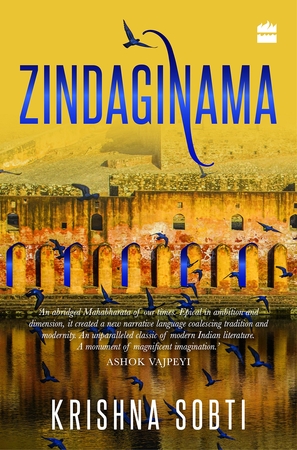
Pedagogy of the Oppressed by Paulo Freire

While education can be liberating, as Westover shows, certain forms of systemic education can be just as oppressive; the racial and financial disparities of the U.S. educational system have only become more and more glaringly evident under current circumstances. Pedagogy of the Oppressed examines how educational systems can go hand in hand with capitalism and colonization. In place of this pedagogical system, Freire outlines an alternative educational method, where the student is a co-creator of knowledge. First published in 1968, Pedagogy of the Oppressed has become a foundational text of critical pedagogy. 

The Umbrella Academy Library Edition Volume 1: Apocalypse Suite by Gerard Way

Umbrella Academy by Gerard Way and Gabriel Bá

The popular comic series written by Way (incidentally, lead singer of My Chemical Romance) features a dysfunctional family—in COVID times we might call them a “pod”—of superheroes who are all educated together. At the end of a cosmic wrestling match, 43 babies with strange powers are suddenly born to previously non-pregnant women. Sir Reginald Hargreeves, an extraterrestrial businessman, chooses seven of these superhero babies and educates them in the Umbrella Academy, training them on how to save the world. As far as alternative “academies” are concerned, this one may be a bit tricky to recreate at home! 

Hons and Rebels

Hons and Rebels by Jessica Mitford

An autobiographical account of family life, Hons and Rebels is a close look at the Mitford girls’ upper-class yet distinctly idiosyncratic upbringing in pre-WWII England. Jessica Mitford, well-known for her investigative journalism and Communist politics, describes what it was like to grow up in the Mitford family, English aristocrats who attracted much attention for their political views—one of Jessica’s sisters grew up to be an ardent Hitler fan, while another married the leader of the British Union of Fascists. Hons and Rebels describes the adventures and self-education of the Mitford girls (who clearly veered into different adult lives), from making up gibberish languages to watching chickens lay eggs. 

All of Us with Wings by Michelle Ruiz Keil

All of Us with Wings by Michelle Ruiz Keil

If Umbrella Academy has you in the mood for more fantastical schooling adventures, Keil’s YA-debut may be a good continuation. Xochi, a seventeen-year-old girl with a turbulent past, is on the streets of San Francisco when she meets Pallas, a twelve-year-old from an affluent family of rock stars. Xochi becomes Pallas’s live-in governess, growing accustomed and learning about the family’s free-love lifestyle. But when Pallas and Xochi accidentally summon ancient powers on the Vernal Equinox, their homeschooling takes a dive into the mythical, with both characters learning about the powers (and consequences) of vengeance. 

Stay and Fight by Madeline ffitch

In ffitch’s debut novel, Helen, a Seattle hipster, impulsively buys 20 acres of land in Appalachian Ohio. When her neighbors, Karen and Lily, are expecting a child and can no longer stay in their current home, Helen invites them to come join her. They start a self-sustaining, anti-capitalist unit of their own; ffitch’s characters believe in educating their child, Perley, at home in a particularly unregimented, semi-feral way. However, this lifestyle starts to change as Perley wants to attend school. Stay and Fight is a reimagining of the pioneer novel, thoroughly examining the societal systems in place and how we can challenge them. 

No Dream Deferred: Why Black and Latino Families Are Choosing Homeschool by Zakkiyya Chase

No Dream Deferred is a timely critique of American public schools, analyzing why exactly Black and Latino children are at a disadvantage. It’s no secret that the educational system in America has historically been—and continues to be—stacked against Black and Latino children; racial and socio-economic segregation is still very much a reality, as showcased in the student demographics of selective, competitive New York City high schools. No Dream Deferred thoroughly analyzes the system’s history, starting all the way from slavery; simultaneously, it shows how homeschooling emerges as an alternative option for these families, one that can be used to create a more equal form of education. Chase’s analysis of America’s flawed schooling system, deeply rooted in segregation, is all the more relevant to keep in mind today as we consider educational models beyond the classroom. 

Little Men by Louisa May Alcott

Little Men by Louisa May Alcott

Moral education doesn’t stop after Little Women; Alcott had further plans for unconventional schooling for the March family. After inheriting her aunt’s estate, Jo March now runs an alternative boarding school for youth; in typical Jo style, artistic pursuits are highly encouraged, every student tends to a garden patch of their own, and pillow fights are allowed on Saturday evenings. Alcott herself had an unusual upbringing, taught at home by her father, an educator reformist who supported Transcendentalism and experiential education. 

Baby Teeth by Zoje Stage

Stage’s psychological thriller is split between the perspectives of Hanna, a seemingly-angelic little girl who doesn’t speak, and Suzette, her mother who is homeschooling her. The catch? Hanna is plotting her mother’s death, so she can get her father all to herself. Suzette becomes increasingly unsure of the family’s decision to homeschool, as Hanna’s antics grow more and more extreme. Baby Teeth certainly challenges parents to think twice, before dismissing the glint in children’s eyes as a simple “prank”! 

Raising Free People: Unschooling as Liberation and Healing Work by Akilah S. Richards

We usually don’t include books that haven’t been published yet, but anyone thinking about alternative schooling should be excited for Richards’ non-fiction book, coming out later this fall. Raising Free People examines how oppression is rooted in the habits, disciplinary methods, and hierarchies of the current schooling system, suggesting both practical and ideological ways to move past this model. Drawing upon her relationships with Blackness, decolonization, and healing, Richards takes a thoughtful, intersectional approach. The book puts community-based healing at the forefront of unschooling, focusing on how all children can thrive in education—no matter their financial status, ability, or personal background. 

“Giving Birth Radicalized Me”

Lyz Lenz’s Belabored: A Vindication of the Rights of Pregnant Women is a smart, funny, moving examination of American culture around pregnancy and motherhood. The book is wide-ranging, examining pregnancy cravings, weight gain, and birth alongside discrimination against pregnant women and mothers and the crisis of maternal mortality which disproportionately affects Black and brown women. The book is structured around the trimesters of pregnancy, with each section beginning with a sarcastic take on the language used in a typical pregnancy guide. The introduction to the fourth trimester section begins, “Your baby is no longer a fruit or a vegetable. Your baby is a person. Your baby is crying. Your baby is pooping. Your baby is driving you crazy. You love your baby, but your vagina is still bleeding, and that first postpartum poop made you cry.” 

As Lenz puts it in her introduction, “to be a mother is to become a myth.” Her book aims to demythologize motherhood and insists throughout on structural changes needed to make motherhood manageable. 

Lenz is also the author of God Land: A Story of Faith, Loss, and Renewal in Middle America and a columnist at The Cedar Rapids Gazette. Her writing has also appeared in The New York Times, Glamour, Huffington Post, Time, The Washington Post, and elsewhere.

We talked about facebook mom groups, the toxic impact of wealthy white families making individual choices, how she almost didn’t write the book, and how to think about the political power of white motherhood in a way that isn’t weaponized against Black and brown families. 

We spoke by phone just after the derecho that did so much damage in eastern Iowa, where Lenz lives.


Nancy Reddy: I loved your book. I was reading it and talking to my mom about the book and about pregnancy and working motherhood. My mom was a working mom in the ’80s and ’90s, and she’s always amazed that it hasn’t somehow gotten better.

Lyz Lenz: I think one of the things that shocked me the most in researching the book is the husband stitch, when doctors stitch up a woman after birth and they give them a little extra stitch to make things nice and tight for your husband and it was just one of the many things that I was just shocked is still happening. I mean, in that moment, right after birth, how can you even advocate for yourself? Some of the women I talked to, they didn’t even find out until after, until their six week appointment, when they’re complaining of discomfort and the doctor’s like, well, I gave you an extra stitch, and you’re like, well did you fucking really now?   

You do hear individual cases of amazing labor stories, the ideal. I’ve had people apologize, like I’m sorry I just had a good experience. And I feel like, why would you apologize, that’s great. We need to know what a great experience looks like. But the problem is that these are too anecdotal and it’s not systematized. The Pro Publica report that I reference in the book about why American has such high maternal death rates is because these practices and procedures that could save women’s lives are not standardized across hospitals. I don’t think people are ill-intentioned, we’re just not doing what we need to do on a systematic level to make the process  of birth successful in America. It’s mind-boggling that we don’t do it. It’s a failure on every level, from hospitals and doctors to insurance companies to just the way we think about birth in our culture.

NR: You had this Twitter thread about birth stories the other day, and you commented that you’ve seen birth radicalize women. Could you talk more about that?

The process of having children and trying to work and trying to negotiate a life made me realize, oh, it is still the Dark Ages.

LL: I think in many ways giving birth radicalized me. I’ll talk about my neighbor Stephanie who’s in the book, who’s an Evangelical woman who started having children and homeschooled them, so she’s very much of that world. Through giving birth and realizing I can do this, this is my body, through the process of having four children, by the end she was demanding things and sticking up for herself in a way that she never had before. Because of this status as a mother and what I’ve seen my body do, I can now demand free time and get what I need because nobody’s going to just give it to you without you fighting for it. And now she’s no longer an Evangelical. But that process of her saying this is what I need ended up putting her at odds with her church. Her church was telling her, if you’re having problems in your marriage, just submit more. And she was like, why would I do that? If I submit more, I’m not going to get what I need. And if I’m going to take care of these children, I need to get what I need. For me, I think there was a similar process. I had grown up very Evangelical, very conservative, and coming out of that, I was like, oh, now I’m a feminist, and everything’s fine and the world is so advanced. And then the process of having children and trying to work and trying to negotiate a life, it made me realize, oh, it is still the Dark Ages. 

I went into birth wanting to do exactly the opposite of what my mother had done. She had eight kids, and by the end she had a midwife and wanted to do it all natural, but I felt like, oh I’m just going to trust medicine and I’ll just do whatever the doctors say, and then I had this horrific experience. I was bleeding and I didn’t know why and I was never told what was happening and if I hadn’t been proactive I never would have found out. I don’t wish to deepen the divide of those who have children and those who don’t—but for me, speaking for myself, having children made me realize how deeply we stigmatize mothers and how much we put on their shoulders. Like, the burden of the economy—we are making your fucking tax base! Give us some paid leave! For me, for my neighbor Stephanie, for a lot of women I talk to, birth is a radical process, whether it makes you realize the power of your own body and your own voice, or if you’re suddenly faced with the realization of how unfair the world is in a way you were somehow able to ignore before you had children. 

We are making your fucking tax base! Give us some paid leave!

NR: I’ve been thinking about your book and your Washington Post op-ed about the Wall of Moms in Portland in connection with Dani McClain’s book We Live for the We, which has the subtitle “The Political Power of Black Motherhood.” A lot of McClain’s book is about how she always understood motherhood as a political institution. So I’ve been thinking about the political power of white motherhood, which feels scary to say because it’s often been, as you say, weaponized in this horrible way—I think of white mothers screaming at Black children as they’re trying to integrate schools. So I’m curious what you think, either in your own mothering as a white woman, or white motherhood as an institution, how can we use that power in a way that isn’t evil?

LL: I think one of the failures is that we don’t recognize how power works. Right now, in the pandemic, I see a lot of parents bending over backwards to justify pulling their kids out of public schools and doing private school pods and everything like that. And it’s going to gut our school system and it’s going to fail, and it’s going to fail for the people who need it the most. And that’s going to be our fault. Right now, the justification machine is in motion. Because people are too unwilling to take their heads out of their own asses and see what consequences their actions can have. It’s the same thing you see on the Nice White Parents podcast—I’m not racist, I just want my kids to go to a better school. But if you’re always thinking about yourself, you’re not thinking about the world writ large, I think that’s the thing that nice white parents need to do, is to realize you’re not just making an individual decision. You’re making a decision that will impact others. I had this discussion with a mom the other day because she was saying, well, I have to do a pod because all the rich kids are getting tutors, and I was like, your kids are upper middle class, your kids are going to be fine. 

That was something that I really had to understand when I was writing the book because I am just another white mom, writing another book about motherhood. So that was something I had to really come to terms with, and I didn’t want this to be another soft little memoir about how motherhood is hard but worth it. I wanted to bitch slap some people and say, how we do motherhood is a problem. When white moms do their like, oh let’s share cellulite on Instagrams and lift up each other’s bodies, you’re only thinking about yourselves, you’re lifting up beautiful women who can filter their bodies and have free time. 

NR: Oh, that reminds me of the black and white photo challenge.

LL: Yeah, I saw it, and I was just like, I can’t right now, and then I saw something about how it was actually co-opting another Instagram thing for women in another country. 

NR: Oh yeah, it was women in Turkey.

LL: But it just ends up being like, oh how pretty you are. And I don’t think people are doing it intentionally, but it doesn’t matter if you’re doing it intentionally. You’re not thinking, and you have every opportunity to think.

NR: What I love about McClain’s book is that she talks about Black motherhood as a political institution and she always understands that what she’s doing is political. And I think that white women don’t always have to think about ourselves as being political, so it’s easy for us to think, like, oh I’m just making a choice for myself and my family. 

White womanhood is a political institution but we just don’t have to talk about it because that’s a privilege.

LL: Right. And it is a political institution. White womanhood is a political institution but like you’re saying, we just don’t have to talk about it because that’s a privilege. During the 2016 election, a friend of mine is a personal trainer and teaches classes of women early in the morning, so we’d all go to her garage and do kettlebells. And I remember coming in the day after the election wearing my Nasty Women t-shirt and the woman next to me said, I don’t like it that you’re wearing that, because I don’t want this space to be political. And I was like, every space is political. You just don’t have to see it because we’re not forced to confront it, because that’s our privilege. And she was like, well, I just want to have a nice time working out.

NR: But the fact that it’s all nice white ladies in the garage is already political. Like, the composition of your town is political, right?

LL: Exactly. It’s already political. We’re already being political. We’re just not being forced to grapple with the consequences of our actions because our money and our privilege insultates us. Right now, America has to grapple with the consequences of our actions with healthcare and shitty daycare and shitty schools, but instead of grappling with it, we’re running away. Like, we’re making pods. 

NR: I keep seeing these conversations—like the pandemic is revealing things, or making us see things differently, that it does really expose how everyone was kind of hanging on by a thread to start with. I’ve been thinking about Deb Perelman’s op-ed in The New York Times and your Time piece arguing that we need to entirely re-imagine motherhood. So there’s this strain of optimism in the world, like it’s so bad, people are going to have to do something better. Or maybe we’ll just kind of continue to be fucked because mothers always pick up the slack. So I wonder, what do you think? What do you make of that conversation about the pandemic and our system?

LL: Again, we always knew these problems were there. There’s this part in the book that I think about a lot, where, in writing it, I just got really frustrated, like I don’t even know what to say here, because every other woman writer and thinker and academic and Arlie Hochschild, if you’re not going to listen to her and she has a Guggenheim, you’re sure as hell not going to listen to me, but it’s worth repeating. Women who have been out here doing the work, talking about these problems, might be a little frustrated by our saying “the pandemic is revealing it” because they’re like, bitches, we’ve been shouting it for years. But I think the pandemic is forcing privileged white mothers to face the reality that they’ve been hiding from themselves for so long. 

One thing that really pisses me off about political reporting and op-ed-ery is that it’s often so deeply cynical and often cynicism takes the place of actual intelligence, so I try not to be needlessly cynical. So I do hope that we can. And I do think that Americans everywhere are screaming for help, screaming for some sort of change. And I do have hope that we will get there. And I know that there are people who have been doing the work before the pandemic. 

I do think that Americans everywhere are screaming for help, screaming for some sort of change.

Maybe it’s not about whether I have hope or not. Maybe it’s about whether I and the rest of us can dig in and get it done. We can’t just sit around hoping. This is our burden, and this is our job.

NR: In American culture, we pitch mothers these individual solutions—so instead of saying, this is actually impossible, we should have paid leave and affordable childcare, we say, here’s a mom hack, get a bigger white board.

LL: That’s also a thing I wanted to avoid doing. So often we tell moms to try hard to find their inner goddess warrior, and that’s bullshit, you can’t find your inner goddess warrior if you’re making minimum wage and you don’t have access to healthcare or childcare or, now, by the way, school. That inner goddess warrior bullshit only works if you can afford fancy face cream. But we need systemic change.

NR: So what are the changes you want to see?

LL: I think the Time piece outlines them. And again it’s new, it’s not radical. These are things Americans have been talking about for years. We need childcare. I covered the caucuses, and there were a lot of candidates who had great plans. Elizabeth Warren gave us a blueprint. We need universal healthcare. It’s disgusting that we live in this rich, rich nation and we can buy our local police military grade trucks but we cannot give healthcare to Americans who are dying because of the lack of it. We need childcare, and we need paid maternity leave. Those three things, a really, really great start. 

We’re one of the few industrialized nations that don’t have this already, and there’s no excuse.  The only excuse is our American culture is so steeped in a mythology that is demeaning to women. We talk about these changes, and Republicans are like, oh, so you want socialism? But I do think that that kind of rhetoric is starting to lose its power as people are literally dying. I hope that change is around the corner. 

So often we tell moms to try hard to find their inner goddess warrior, and that’s bullshit.

What American mothers need to realize is that it’s not just about us getting help for our kids now, it’s about our kids when they have kids getting help when they need it, so that we can go on our death cruises in our retirement and not have to babysit. 

NR: I was really interested in the subtitle—”A Vindication of the Rights of Pregnant Women,” and you talk in the introduction about Mary Wollstonecraft’s Vindication of the Rights of Women. What did it mean to you to place your book in that lineage?

LL: That was actually partially due to my editor, Remy Cawley. This was actually the first book she acquired as an editor. She bought it at Norton, and she moved to Bold Type, and she begged me to come with her because she believed in the book. And I’m so glad I did because when I started drafting the book I lost faith in it. I wasn’t the mother I had been when I sold the book—married, upper middle class. And I was not that person anymore. And I was just reeling from blowing up my life and I told her, I don’t know how I can write this. 

My editor helped me come up with a new outline and we changed the chapters and she really walked me through it. When we were going through edits and I wrote that introduction, and she said you need to place it in this context. But I said, well, I have problems with Wollstonecraft, with all these early feminists. And her argument was, well, that’s the point, that they didn’t get the job done, and now we need to take it a step further. I’m just a person in Iowa who wrote a book but if it can do anything, if it can kick the conversation into the next phase, because I feel like we’ve been stuck in this place for so long. So the subtitle recalls the past but also hopefully pushes us forward. 

10 Novels About Working Lives in India

During the current coronavirus pandemic, as every country tries to balance significant job losses in most sectors with insufficient numbers of essential workers, our work is more personal and more political than ever. The boundary between the home and the workplace has all but disappeared. The web of interactions between workers, bosses, customers, and suppliers has become more critical, complicated, and challenging.

Dhumketu, my mother’s favorite storyteller and a short story pioneer in the Gujarati language, often wrote: “Society is shaped by individuals. But an individual is shaped by work.” I am the sum total of the 20-some varied jobs I’ve had since my late teens. So most of my fiction and nonfiction also centers the working life. My story collection, Each of Us Killers, was written during the 2014-2018 period, when I’d moved back to India for a few years, and focuses on how socio-cultural divides like class, caste, gender, race, nationality, and more drive our aspirations and struggles at our workplaces.

That said, William Faulkner’s observation is also spot-on:

“. . . the only thing that a man can do for eight hours a day, day after day, is work. You can’t eat eight hours a day, nor drink for eight hours a day, nor make love for eight hours — all you can do for eight hours is work. Which is the reason why man makes himself and everybody else so miserable and unhappy.”

The Paris Review, The Art of Fiction No. 12.

No surprise then that many fiction writers have found, in that particular misery and unhappiness, plenty of grist for the writerly mill.

Yet, it’s only been in recent times that the mainstream publishing ecosystem has been spotlighting work-centered fiction. And, with fiction from or about India, there continues to be a strong Western preference for certain timeworn tropes: the family or lovers torn apart by the Partition, the aspiring slum-dweller, the miserable wife of an arranged marriage, the fervent fundamentalist, the crooked politician, the nagging mother-in-law, the homesick immigrant, etc. with characters’ professions and occupations often remaining under-explored, peripheral details. So here are some novels from India that eschew those tropes and center working lives. Each has been, in some way or other, part of the DNA of my own stories.

The Guide by R. K. Narayan

The Guide by R. K. Narayan

I came to this 1958 novel after watching the classic movie version. Raju, the protagonist, starts off as an opportunistic local tour guide, becomes the smooth-talking talent manager of his married-but-estranged lover, and finally gets mistaken for a great holy man. We see both Raju’s evolution and devolution as he journeys through these three occupations. Set in Narayan’s famous, fictional town, Malgudi, the novel’s prose moves from gentle humor to somber philosophy as it explores many sociocultural nuances and biases, which exist even today.

Chowringhee by Sankar, translated from Bengali by Arunava Sinha

Set in the cosmopolitan Chowringhee neighborhood of 1950s Calcutta, this novel is about the loves and lives of people who work at or frequent The Shahjahan, the oldest and largest hotel. The protagonist and narrator, Shankar, works there and acts as both an observer and a participant as he navigates rapidly-evolving values in a post-Independence world. The city and the hotel are very much also multi-faceted characters in the story. It’s important to point out that the novel predates Arthur Hailey’s The Hotel and enjoys cult status via plays, movies, and TV adaptations in India even today.

The Legends of Khasak by O. V. Vijayan, translated from Malayalam by the author

Like R. K. Narayan’s book above, this novel is also set in a fictional place. Khasak is a remote village in the Kerala countryside. Ravi arrives to take charge as the only teacher at a makeshift school. As he deals with all the villagers and children, incidents merge into a surreal narrative with myths, legends, fables, stories within stories, historical encounters across time and space, and more. The author’s own English translation stands apart from his original text but it is just as richly textured. And, like the previous two novels, this one enjoys cult status across several forms of media in India and has been translated into several Western languages too.

English, August by Upamanyu Chatterjee

English, August by Upamanyu Chatterjee

In the 1980s, the divides between urban and rural India were more pronounced than ever before. Chatterjee, a civil servant, writes about a young, urban IAS officer, Agastya. Stationed in a rural village and unable to sustain any interest in his government and administration work, Agastya is endlessly bored. His mind snags frequently on marijuana, masturbation, and English literature. His wry observations about everything happening (or not, as is often the case) in his life range from bitingly funny to absurdly tragic. Though certain aspects of the storytelling haven’t dated well, the novel remains an authentic portrait of the educated Indian youth trying to figure out their place in 1980s India.

Dangerlok by Eunice de Souza

Eunice de Souza was a tour de force in the Indian literary world as a professor, critic, poet, writer, editor, stage actor, and director. She only wrote two novels, though, and this one has a protagonist modeled after herself. Rina Ferreira teaches English Literature, lives alone with two parrots and a huge personal library, and writes letters to David, a man she probably still loves. Dangerlok, or dangerous people, are all around her daily and become the subjects of her vivid letters. The writer gives her protagonist lots of room to play and creates such a varied, wonderful world for her to inhabit that, as readers, we never want to leave it.

Hangwoman by K. R. Meera, translated from Malayalam by J. Devaki

Meera’s works have always addressed issues like patriarchal discrimination, power dynamics, and women’s independence. The protagonist here, Chetna, comes from a long line of executioners and is appointed the first woman executioner of India. This makes her an overnight celebrity but the noose is now a metaphorical thing around her own neck that she must wrestle with. Meera’s attentiveness to every small detail complements her dark humor and the plot’s twists and turns. Heritage, history, crime, mystery, justice, life, death, love, tenacity, endurance—this novel has it all. The English translation does have a few road bumps, however.

Fence by Ila Arab Mehta, translated from Gujarati by Rita Kothari)

A young woman, Fateema, dreams of a stable job, economic independence, and a home of her own. But she’s Muslim in the Hindu-dominated state of Gujarat and from the lower strata of society. So these are not simple or basic aspirations for her. She’s expected to resign herself to living in the Muslim ghetto neighborhoods of her city. She’s also ridiculed and ostracized by her own minority community for wanting so much. Mehta writes about a highly-charged, complex topic in Gujarat even today: the Hindu-Muslim divide. And Kothari’s translation of the original text with its several different Gujarati dialects is a multilingualism masterclass.

Temporary People by Deepak Unnikrishnan

This book is the only one on this list not set in India. But Unnikrishnan’s award-winning linked story collection about Indian (mostly) guest workers in the United Arab Emirates was rightly hailed as a new kind of immigrant narrative when it came out. Using hybrid narrative forms, surreal symbolism, mythology, and dark satire, these accounts highlight how economic, professional, and social progress can often lead to dehumanization. Linguistically, Unnikrishnan blends English, Malayalam, and Arabic to create a unique polyphony of voices that stay with us long after reading.

A Meeting on the Andheri Overbridge: Sudha Gupta Investigates by Ambai, translated from Tamil by Gita Subramaniam

Ambai is a Tamil writer well-known for her feminist literary works. At the age of 72, she departed from her usual oeuvre to write detective fiction with a middle-aged woman protagonist. In true Ambai style, she eschews the traditional whodunit for a deeper exploration of human vulnerabilities, social hierarchies, and sociocultural power dynamics. Set in Mumbai, this is a collection of three novellas depicting an everywoman who works as a private detective and takes care of her family—balancing both with a well-cultivated support network. She’s strong-willed but tender, pragmatic but takes no prisoners, efficient but always accessible.

Requiem in Raga Janki by Neelum Saran Gour

Gour’s writing has mostly focused on small North Indian towns and their rich histories. This novel is based on the true life of an early 20th-century royal courtesan-singer, Janki Bai. Among many well-known legends about her, there’s an incident where she survived a heinous stabbing due to her work, winning her the nickname of “Chappan Churi” meaning 56 knives. As we journey with Janki Bai from girlhood to matronhood, we see how her musical vocation shapes, torments, and restores her. Beyond Gour’s thorough research into the socio-political history and music of the time, the musicality and element of play to her narrative renders the life of this amazing artist with multiple resonances of meaning and texture.