Sigrid Nunez’s “What Are You Going Through” Asks What We Owe to Other People

Sigrid Nunez’s latest novel, What Are You Going Through?, explores the rich interior life of a narrator whose name we never learn. She has a series of frank and meandering chats, some in her head, some with people; her Airbnb host, an ailing friend, a woman at her gym. Often she listens in on the people around her; a lecturer giving a fatalistic talk on climate change and capitalism, a mourning father and daughter at a café. The talks are about everything and nothing so the book is initially deceptively breezy. Until, that is, her ill friend—who’s been receiving cancer treatment at a local hospital—surprises her with a request: she wants help ending her life. This friend request closes out the first of the book’s three parts. Its weight and abruptness help transform the book from a casual read into a deeply empathetic study of the two women’s friendship and of the elaborate matrix of human connection. 

What Are You Going Through by Sigrid Nunez

This new book follows on the heels of her last book, The Friend, for which Nunez won the 2018 National Book Award. The Friend was widely praised for its unflinching and elegant three-pronged interrogation of grief, death, and friendship. In this follow-up Nunez again probes the depths of our fears about death and our desires for companionship. What does it mean to love your neighbor? Do we ever really have control over our lives? In What Are You Going Through?, Nunez mines a single complicated relationship for the truth of it all and endows us with many possible answers. 

I had the opportunity to speak with Nunez over the phone in August. We discussed the perennial nature of human suffering, how she’s inspired by eavesdropping on strangers, and why her writing will never be perfect. 


Naomi Elias: The book’s title is pulled from an essay written by Simone Weil in Waiting For God. Where did you first encounter the quote and why did it speak to you? 

Sigrid Nunez: I’ve known about it for many years and it just was something that really rang true to me when I first heard it and still does. Her definition of what it would mean to love your neighbor would be to really listen to that person and ask them, “What are you going through? What is your trouble?”

NE: Between this forced quarantine and the global protests this year has helped put in clear relief who is capable of compassion and who isn’t. It feels like the release of this book and the questions it’s asking about the function of companionship and acts of service couldn’t be more perfectly timed. 

SN: Well, I guess that might be true except the idea is that actually, you know, it’s always true because people are always going through this part of the human experience. You might not necessarily notice it but you’re surrounded by people who are living an ordinary life but they’re suffering from something; loneliness, or someone they know is ill, or they don’t have whatever they need. I guess we’re living in a time that feels intense because there’s such a focus on people suffering but really it’s always there. 

NE: Right, I just mean, it’s going to feel more relevant to people because I feel like the question of what we owe to each other is very en vogue especially in pop culture. A book with the same title, What We Owe Each Other, by the philosopher T.M. Scanlon was the inspiration for Mike Schur’s very popular television show The Good Place and I think impending ecological collapse and all the protesting has kind of forced more people to reevaluate their lives and their connections to each other. 

SN: Yeah, I agree. 

NE: This isn’t a book about death but rather a book about the questions we have when faced with our mortality and the self-audit the narrator starts to do of her life. You explore those questions through conversations the narrator has with other people. It’s loose in the way conversations have a loose flow but the book still feels structured. How did you outline the conversations and the book itself? 

SN: I wrote this book in exactly the same way that I’ve written every book that I’ve written. I don’t actually outline it or structure it ahead of time. That never felt natural to me. Although I know many writers who do do that. What I do is I gotta start somewhere so I just jump in with something. In this case, I decided to start with “I went to hear a man give a talk” and then, you know well, about what? Where? What? Where is she? Is she alone? I can start storytelling and then things flow into place.

I take certain things from life in that some of those conversations are from eavesdropping. In the bar early on where a woman and her father are talking about the mother who had died a year before, that was something that I heard many years ago and I was struck by that and how this young woman was desperately trying to get her father to focus on her pain at that moment and he just wouldn’t do it. He was just saying, well, your mother really suffered. Well, I remember she said she suffered. But she kept saying, I know dad, but I’m trying to tell you that I too need some attention here. I take things from life and I also invent things. Then at a certain point the options narrow down. You can’t just do whatever you want. You have to finish what you started, you have to make some connections. When it’s finished, then I see it should be in this three-part structure, these are the natural breaks. But none of this is actually planned beforehand. It all happens in the process. 

NE: In the first part of the book you slip into different perspectives including the perspective of the house cat owned by the narrator’s Airbnb host. Was that fun? Was going into a cat’s perspective a way to explore commonalities between what humans and animals are seeking from the world or am I reading too much into it? 

We’re living in a time that feels intense because there’s such a focus on people suffering but really it’s always there.

SN: It’s a little bit of a tricky thing because I don’t really like when animals speak because they don’t really speak. But in this case, she’s in bed and the cat jumps on the bed and she’s going to sleep and so it’s kind of unclear. I mean, is she dreaming? In the morning she says the cat told a lot of stories last night but this is the only one I remembered when I woke up. So it is unclear whether or not that’s a real cat or that’s a dream. But I did feel that if you put yourself into the mind of an animal, particularly a domesticated animal, it’s not hard to imagine how they could tell their story. If the rescue cat could tell their story it might come out like this. It seems like a true history for that cat for me, the idea that it would be happy now with this second mother but that it was taken away from its mother and that that was kind of traumatic. So that’s where that came from. It was fun to write. It was hard to write. It was actually much harder to write than I thought it would be. I struggled with that passage. I think in the end I liked the idea of having an animal represented. I thought that maybe it wouldn’t work or be too much. I thought, well, I have an editor, I have an agent, I have other people who read this before it gets published. If they think it doesn’t work or it’s too much, they’ll say, ‘I think you should get rid of that.’ And I would have done so. But everybody seems to love the cat! 

NE: For me, I wasn’t prepared for it but I certainly thought it was interesting. So many people wish they could talk to their pet so I feel like that’s a relatable thing. 

SN: Right!

NE: Switching gears a little bit, the book touches on the idea of assisted dying which is illegal in nearly every state in the U.S. The book doesn’t seem to take a side either way. Is it something you hoped to start a conversation about? 

SN: I think the conversation has started. I think people talk about it quite a bit. I didn’t think I was really opening up anything new there. I do think it’s a problem. I mean, it’s a huge problem because people don’t seem to know how to talk about it. We seem to be at an impasse. But I don’t really have any answers about it myself. One of the concerns of the medical establishment is how much resources are used for people at the end of their lives in the hospital. That’s not a good thing for the medical world. It’s just the way we do it. We make all these efforts at the end of life to keep somebody alive who in some cases does not really want that to happen, it’s their family that wants it to happen or in cases where it’s not really buying them very much, it’s buying them [time] at the cost of a really terrible prolonged suffering. But it’s just the way our culture is set up that you do everything you can to keep the person alive. There are plenty of people who feel that that’s not the best thing for the dying person, and it’s not the best thing for the people who love that person, and it’s not the best thing for the medical establishment.

NE: Would you feel comfortable saying whether you support it or not? 

SN: I certainly do support it. I mean, it’s up to the individual. But if I were aware that somebody had made the decision because their situation is absolutely terminal and they are aware of that and that rather than going through a long, prolonged period of suffering, they would rather have a euthanasia drug, certainly I would support that decision. I would respect that decision. I would understand it completely. 

NE: It prompted me to look into the death with dignity laws because it’s not something that I’ve thought a lot about but it was interesting to hear different perspectives on it. 

Often we say ‘words fail me’ or fall back on hideous clichés like ‘I’m sorry for your loss.’ None of it is really adequate. So where are the words that you’d feel really captures it?

SN: Yeah, Death With Dignity, and there’s also an organization called Compassionate Care I think. There are quite a few. There’s a certain amount of activism about this cause. It’s complicated because of course, I see how certain people are afraid that if you make it too easy that then people would pressure people into dying more quickly. Of course that’s a frightening thing. 

NE: I was struck by something the narrator says in the book—“every love story is a ghost story.” Is that something you believe? 

SN: I think that’s the title of the David Foster Wallace biography.

NE: Oh ok, I’m looking it up. Yes, Every Love Story is A Ghost Story: A Life of David Foster Wallace. So have you read that book? Is that where you got the line? 

SN: Well, I got the line from the title. I actually haven’t read the biography, but that’s what she’s referring to when she says that. I do have a friend who once said, “every story worth telling is a love story.” I think that’s a beautiful quote and I actually used it as the first sentence of a story that I once wrote. I wrote “every story worth telling is a love story but this is not that story.” I love that. 

NE: The narrator throws away the idea of journaling the experience she has with her friend because she says “language would end up falsifying everything, as language always does.” Do you as a writer ever feel you’ve written exactly what you wanted to write, as truthfully and faithfully as you intended? Or is the end result always a compromise?

SN: I think there’s pretty much always that anxiety that it’s always a little bit to the left or the right of what the thing really is. We have language but very often we say “words fail me” or we fall back on hideous clichés like “I’m sorry for your loss.” None of it is really adequate. So where are the words, where is the language that you’d feel really captures it? It’s a very familiar feeling for any writer, the frustration of, well, I’m doing the best I can but I realize that I’ll always be missing the mark because language is so imperfect.

MFA vs. GDP

“An MFA Story” by Paul Dalla Rosa

The summer before the summer I was meant to graduate graduate school I had a short story collection to put together and one hundred dollars left of my stipend. I had not been awarded a teaching fellowship, which would’ve paid me to teach “advanced” high school students short fiction over the break, and my F-1 visa meant I could not be employed outside of the university or I could face immediate deportation.

I explained my situation to others. In the last week of workshop, my friend Lydia and I went to our local dive bar that had no windows, smelt like sweat, and wouldn’t allow people in if they wore backwards-facing caps. We were day drinking and Lydia was deciding which books she would take with her when she left for the break. A gay couple her mother knew had a house in Maine. They were travelling and didn’t want the house to be broken into by teenage drunks. Lydia would house-sit. She knew my predicament but did not invite me. I asked her anyway. She said no.This reluctance characterized most people I knew; writers and poets who were taking Greyhounds south and either sunbathing in Williamsburg, or waiting tables in their hometowns where they didn’t need to pay rent. Lydia would take the summer to write three stories, one per month, and luxuriate sleeping naked atop strangers’ sheets.

With another three stories, at least as full drafts, we would each have a collection, the rough object of our masters’ theses due in seven months’ time.

We made a pact to spend our summers writing and hugged each other outside the bar. The sky turned gold with the slow beginnings of dusk.


I was being paid to be in graduate school but only for the months graduate school was in session. I was lucky. My position was fully funded, student debt would not bury me, and professors on the program’s faculty had appeared on The Late Show with Stephen Colbert. Only five fiction writers and five poets were admitted to the program each year. I wasn’t an American national. I had applied from Melbourne, FedExed a stack of fiction along with my personal statement, my letters of recommendation. I got in and it was a big deal.

When I found out, I burnt bridges. I told my boyfriend who I thought was holding me back that he was holding me back and that he wouldn’t hold me back, or really hold me at all, any more. I said similar things to my family. I boarded a flight, flew over an ocean, and read through a seven-hour layover in Dallas. Then I arrived in the city and realized by my taxi driver’s monologue and the number of boarded-up storefronts that the city was in a decades-long depression. People were routinely assaulted, the population was heavily armed, and New York State was in fact very, very far from New York City.

The workshop was challenging. Though my application had said I viewed criticism as an avenue for growth, it was a lenient version of the truth. I had lied but only about the things everyone lies about. When criticized, I first resent the speaker and then, afterwards, writhe sunken and alone, on my bedroom floor.

But I was fine. I was not the worst in the class nor was I the best, which didn’t worry me. I knew that a writer could be defined by their potential work, that is, even at twenty-nine, the work I hadn’t yet done.

My contemporaries dealt with the stress of the workshop in different ways. A man lifted stories of muggings, forced evictions, and suspicious property fires from the local paper and said he was writing the first great novel of the opioid crisis. When a book came out that winter that was hailed “as the first great novel of the opioid crisis,” he stopped coming to workshop. One woman baked elaborate things she took into class, ensuring, I believe, that the feedback on her novel would be gentler and more kind. Another woman rarely shared work, had possibly stopped writing, but cultivated a Twitter following of seven thousand and would underline sentences in people’s work she found problematic and then tweet those sentences to her followers. There were complaints to the faculty. The administration did not want to be tweeted about by those seven thousand followers and so stayed out of it altogether.

Now, with a hundred dollars, well, after the bar, seventy dollars, I walked home, avoided crossing directly through the darkening park, and thought about the months ahead. I didn’t have the money for a ticket to Melbourne. But even if I did, I feared that if I went back to Australia I would not come back, that something would detain me; money, immigration officials, a realisation or epiphany. Instead, I would spend the three months here living with my housemate, Zhen. Zhen, a poet from China, who often wore slide-on sandals with gym socks, had published work in The Paris Review and Harper’s, and so had been the subject of faculty-wide emails with photos of him sheepishly smiling, the journals held up under his chin. His poems were everything I wanted my stories to be. Beautiful. Surprising. Alive.


Our flat was actually the second story of an old Victorian the owner had converted into a duplex. A rickety wooden staircase attached to the house’s side led to our deadlocked front door. Zhen and I lived there together for one reason; we were both foreign. Two years ago, the program secretary had cc’d us together in an email with the details of the vacant flat. From Melbourne, I’d typed the address into Google and hit street view. I’d thought the elms of the park looked pretty. Even with its peeling white paint, in its own way, the house was too. In the image, there was broken furniture in the front yard and a man sitting on the front stoop. I zoomed in. Though his face was blurred, he was waving, like he was saying, “come in.” I said I would take the room.

Once I arrived and attended a campus orientation, I heard, infamously and semi-regularly, that there were rapes and muggings, often to the same victim at the same time, in the park across the road. I only went there if I was running late to workshop, only in daylight, moving fast, cutting straight through.

Our next door neighbor was a trans woman named Cyndi who smoked menthols in her yard wearing a dull and fraying, peach satin robe. The downstairs tenants were a young white family who fought constantly, believed Zhen and I were lovers, and once threw a small television through their front window.

That afternoon, I sat at the top of the steps and felt the summer before me, its prospects. I took my shirt off, opened Zhen’s laptop on my thighs. Zhen had a teaching fellowship for the summer and when he was out I used his laptop because I felt anxious, like I should be writing, when I used my own. I scrolled Craigslist. Some listings gave phone numbers though most gave an option to contact the lister through relayed email addresses. I sent messages to posters with jobs that were largely variable, both in what would be required of me and what I would be paid.

Sitting there, I watched the mother from downstairs, in denim hot pants and a tank top, pushing her twins’ double-stroller back and forth. There was no sidewalk, so she walked up and down by the edge of the road, she often did this, never going inside the park but walking adjacent. The twins looked past the age they should be in a stroller and lay mute, one putting his hand completely into the mouth of the other. I didn’t interact with them because once one of the children had waved at me and I waved back, and the mother spat at the ground and called me a kiddie fucker. That was our relationship.

I looked at my replies. I had responses from listings for Mighty Taco, a caretaker for an aged care village, and an attendant who would help take groups of trained corgis to summer weddings. I called the number for the dogs.

“I think there’s been a misunderstanding,” a woman said. “I don’t run a business. I just want six corgis at my wedding.”

“Oh.”

“I need to go now; my child is crying.”


My only regular work came from Cyndi, who paid me five dollars a week to stop by her house every morning and take photos of her breasts. She had begun hormones and each day her breasts developed slightly larger than the day before. She stood in her kitchen, undid her robe then I would take a photo with a disposable camera and she would say, ‘keep going.’ Cyndi posed. She did pirouettes. Then she would say, enough, and retie the robe.

I liked Cyndi. She was beautiful with dark hair, green eyes. Every morning she had a stale croissant and coffee like she was Audrey Hepburn in Breakfast at Tiffany’s.

As she ate, she liked to hear about the things I had to do. She was interested in the creative writing program, mainly, I think, because she found the university and its students impractical, partly unreal. I gave her the wifi password to our network and emailed her my stories, though we didn’t speak about them.

I told Cyndi how I’d read an interview with a writer who said he paid his rent in the seventies by giving his landlord blow jobs in the stairwell. I myself had been having disappointing sex in America for the past two years but had gotten little from it. “He was living in the Village,” I said. “I don’t think that’s so bad.”

“Maybe,” she said, “but have you ever met your landlord?”

Neither of us had. I wasn’t sure I had one. Every month I deposited rent into an account. When there was a problem, Zhen and I lived with the problem. Above Cyndi’s kitchen, there was a room she had barricaded shut with a chest of drawers. Inside was a broken window and, sometimes, a racoon. She didn’t contact anyone about it. I said, “I guess that probably wouldn’t happen anymore.”

“A blow job doesn’t make sense now,” she said. “I mean, economically.”

When she finished her croissant, she put on a white shirt with a mandarin collar, tied her hair back. She was younger than me, but how young was difficult to say. She was dressing for work though she wouldn’t tell me what she did. When I asked, she’d evade. “I work with animals.”

Sitting in her kitchen, I knew I wasn’t making enough money and she knew it too. I said she didn’t have to pay me, but she slipped five one-dollar bills into the elastic of my shorts and said, “This is America, baby.” Then she walked to the bus stop.


The listing was simple; “Night Work. Pays in Cash.” I had grown to like simple ads. Even when they lacked an actual description they were at least simple as advertised and the listers weren’t fussy. The word “work” in the listing sounded promising. The things I had been doing prior were difficult to define as work and thus I believed the pay for the job would be larger and possibly more regular. I sent my number.

Cyndi thought night work sounded like the mob or maybe a serial killer and when I said a serial killer wouldn’t advertise on Craigslist, she shrugged her shoulders and replied, “Actually, that’s factually incorrect.”

We were sitting in her kitchen. Sitting there, my phone rang. I had a short interview. A man asked me if I was the kind of person who said yes to things. I said, yes. Then he asked if I could move furniture. I said, yes. He gave me a time and address. I had the job.

That night, Zhen came home from teaching and sat, shirtless and in basketball shorts, writing in the living room. The living room was a kind of communal space neither of us used. I wanted to ask him to write in his room. I didn’t like seeing him write, his fingers hitting the keyboard like he was having a great time, like he was having the best time in the world, but I didn’t say anything because I was going out.

I left the house in trainers, shorts, a grey American Apparel Paris Review T-shirt I felt self-conscious wearing around Zhen. To get to the address I took a bus to an apartment on South Avenue. When I arrived it was close to ten.

The apartment looked a lot like my room. That is, bare, with cheap wall-to-wall carpeting. The man was maybe a decade older than me or he liked to tan. His skin creased like leather. He wore a singlet. His name was Vince. He walked me to the back of the lot to his van. I didn’t want to get into his van but he asked me to get into the van and I said, yes.

We drove a while in silence and then he put the radio on. I noticed a dream catcher hanging from his rear-view mirror. I asked him if he was Native American. He didn’t say anything to that, just turned up the volume.

We pulled into a parking lot close to the lake. The building there was a series of units laid out in a horseshoe, the concrete courtyard between them filled with plastic deck chairs bleached brittle in the sun. He had keys. He told me to wait in the van. He walked in, came back, and told me to follow him. He gave me a flashlight and told me that, if anyone asked who we were, the only answer I was to give was to shine my light in their face and say, “the police.”

We entered unit 2A. Inside, the rooms were filled with trash—furniture, refuse, broken electronics, boxes. It was like the duplex when Zhen and I moved in. Vince turned towards me. “This is it. We clear it.”

We moved everything into the van, and when we were done Vince walked around taking photos with his phone. He took photos of ripped-out patches of carpet, holes in the drywall, a red stain marring the kitchen’s yellowed, laminate floor.

Then we got back into the van and drove until we approached the city’s municipal dump, driving alongside it until Vince turned off-road and a line of chain-link fencing flashed in the van’s headlights. We got out. Vince approached the fence and pulled. The fencing had been cut. An entire panel of the fence peeled back, like a page. We opened the van and carried shit through. We carried it in the dark until we reached the landfill proper, then we dumped it.

The idea was getting refuse into the landfill without having to pay to put it there. If this was illegal, it didn’t strike me as particularly illegal. I didn’t feel like we were breaking any law that mattered. As we worked, I thought of myself not, as I often did, as a character in a short story, but a character in a low-budget reality-TV show, something that played in the early hours of the morning.

At the end of the night, he dropped me off at my house and handed me fifty dollars. He said come back tonight. It was 4 AM. The next night he told me the same thing.


When I didn’t have money, all I thought about was money, and when I did, I took Cyndi out to get frappes. Cyndi showed me the bus to the mall. We took it.

The shopping mall was on the edge of the city’s lake and seemed designed by someone unfamiliar with the lake, food courts looking out at the water, wide glass windows, viewing platforms. You couldn’t swim in the lake because it was filled with industrial run-off and heavy metals. Anyone could intuit this by looking at it. The water was the colour of shit or sometimes unnaturally bright, pearlescent, its surface slicked with oil. But the mall had some things going for it. Like every summer, this one was the hottest on record and the mall had AC.

Families who couldn’t holiday at the Great Lakes came up to holiday here and I saw them, flesh overflowing bikinis, guts paunched over nylon shorts, children a blur of pink skin and teeth and noise. They couldn’t swim in the lake, but they could at the pool in the mall. They could also drive go-carts. The place confused me on a conceptual level.

Cyndi and I walked into Sephora. When we were in an aisle, alone, no employees watching, Cyndi took a compact case off a shelf, then a kind of blush, a coral-shaded lipstick and put them in her bag. As we neared the security guard she turned to me. 

“I know it’s hard for you,” she said, “but act cool.”

At Starbucks, I remembered a reading Zhen had given, a reading organized by the program’s faculty. I had not wanted to go but did. In the bar, he read, “I wrote this in a Starbucks in Shanghai. On the bank of the Huangpu.” It wasn’t an aside or introduction. It was two lines of the poem. I was in a Starbucks and I wasn’t writing any poems. I wasn’t writing anything.

Almost every day I talked to Cyndi about this, and she would say, okay, yes, yes, sure, I get you. I asked Cyndi again if she had read my stories yet and she sipped her frappe and said, “No, not yet,” then changed the topic of conversation. Neither of us said much on the bus ride home.

My only measurement of time was that once a week Cyndi and I took a bus in the opposite direction and went to Walgreens where, under dim fluorescents, Cyndi would drop off a roll of film and collect the prints from the week before.

 Whether we went to the mall or Walgreens or Cyndi had work, every morning I took a photo of Cyndi and eventually walked up the stairs to my flat and sat at my desk.

I wanted from the MFA what most people wanted from most things, that is, total fulfilment of the self. It wasn’t lost on me that every day Cyndi became more of herself, realizing her potential, while I did not. Thinking this, I would remember that I was the worst kind of writer, the one who took the stories of others and used them as metaphors to illuminate themselves.


Every night, once the sun set, I took a series of buses to Vince’s place and then we drove to houses, condos, flats, driving on the interstate, sometimes alongside the black water of the lake, the shut-down air-conditioner factory, or through the streets of the city and then residential suburbs, houses pushed back from the street lights, deep in overgrown yards. We’d clear them, head to the dump, doubling back if we needed to. On a good run, we could clear two a night.

We worked as part of an operation, but it took me a while to figure out what the operation was. Vince sent the photos he took to someone and sometimes answered phone calls and gave brief reports. When I asked who he spoke to he said there was a woman in LA with money to make.

As far as I understood, properties foreclosed on years ago were bought from the banks, and then sold and resold through managed funds. People moved or were evicted and left things behind. Stained futons, busted-up shopping trolleys, pieces of drywall, a La-Z-Boy recliner with a blood stain running down its side, Jane Fonda’s Workout VHS tapes, a faded, cotton-candy pink Jacuzzi, a still-warm hibachi grill, faeces, human faeces, a Donald Trump Halloween mask. When the properties lay empty, vagrants circled, then squatted. Often services were still connected. We cleared the properties, Vince wrote up false invoices for the municipal dump, then the woman paid him, labor plus fees, then rented the properties at inflated rents to new tenants, ideally, people like me, students from the university.

I didn’t know if this was all the woman, if she was the owner or just worked for someone else. In a way everyone works for someone else, and if they don’t, they work within something else, something bigger. Systems, I thought. It’s about the systems. The economy.

I felt ambivalent about it. I didn’t feel like I was getting writing material, I was just doing labour. And that was fine by me.


As I took the photo of Cyndi one morning my T-shirt already clung to my back. This was mid-July now. When Cyndi went to work, I went back to my room to write, but the humidity was too much. I conserved energy, stayed inside, placed ice cube after ice cube on the small of my neck, made use of Zhen’s laptop, his digital subscriptions—n+1, The New Yorker—stopped reading and scrolled their online stores, considered a tote bag. I thought about new story ideas but then thought I would be better able to write them at some unspecified point in the future. I forgot the story ideas. I napped.

When I woke up it was the late afternoon. Outside my window, I could see the mother in the front yard, lying on a towel, talking into her phone. She was wearing a bikini. The children sat in the grass next to her, dazed, their skin watermelon pink. I watched her pick up a spray hose, hose one off and then the other, then put the hose down. I thought I saw movement in the park but I looked closer and it was just heat coming off the road.

I went into the living room. I noticed Zhen’s bike was in the living room. Zhen’s bike was not meant to be in the living room until he rode it home from teaching.

His door was shut too, which was unusual. The door was only shut when he was sleeping. Even when he was writing he left the door open like a taunt. He must have come back into the house while I was asleep.

I thought, that’s okay, he’s asleep. I had taken his laptop from his desk and had intended, like always, to put it back there. I slowly crept into my room, picked it up, considered quietly opening Zhen’s door, decided against it (too bold), and placed the laptop on the kitchen counter, where he sometimes used it as he cooked.

Midway back to my room, his door opened and there was Zhen.

We stood facing each other, then he said, “Have you been using my laptop?”

I tried to act cool. “Zhen,” I said, “why would I use your laptop? I have a laptop.”

We looked at each other. Zhen’s eyes narrowed.

I said, “You’re home very early.”

He considered this. Then he said today the teenagers didn’t want to write stories in the heat, they didn’t seem to want to write stories at all but today there was an excuse, so he had sent them home.

“Wait,” I said. “Stories? You’re teaching fiction?”

“Yes.”

“Not poems?”

“Not poems.”

“But you’re not in the fiction track,” I said.

“It doesn’t really matter what track you’re in,” he said. “I don’t think anyone cares.”

“Some people care,” I said. “Some people care.” I didn’t know what to say next, so I just strode back to my room and closed the door.


Sitting in the passenger seat of Vince’s van I knew, even in the dark, that we were parallel to the park, my park. But it’s a big park that crosses over many blocks, and I didn’t recognise my street until we were in front of the duplex. I asked what we were doing, and Vince said what we always do. He got out of the car but he didn’t walk to my house, he walked to Cyndi’s. He pulled a key from his pocket and opened the front door.

Vince turned on the lights and I hoped Cyndi wasn’t there. Vince walked through the rooms, the front room, the lounge, the kitchen. It was obvious someone was actively living there. An open box of chow-mein sat on the island-bench, noodles congealed in oil, a glamour magazine beside it, a disposable camera. I heard music coming from down the hall. He pulled out his flashlight and walked up the stairs. Each empty room we entered I felt relieved, but I knew she was home.

Then he opened the bathroom door, me close behind. First, we saw four tea-lights flickering on the sink, then a figure in the tub.

Cyndi screamed. Vince swung his flashlight. The beam of light hit her in the face, the light glinting across droplets on her skin. I could see her pupils constrict and felt something, like a dead weight plummeting through my chest and stomach. She raised a hand.

“It’s the police,” Vince said, his voice muffled. “Get out.”

She stood up, water sloshing below. She swallowed, tensed her shoulders, squinted. She looked past the light. She saw me. She recognised me.

“You’re not the police. Get out of my fucking house.”

“This isn’t your house,” Vince said, his voice kidnapper low. “You’re an illegal resident. Put something on, then leave.”

“Turn the light off, mother fucker.” She stepped out of the tub. She nodded at me. “You’re working for a fucking slum lord.”

I didn’t move. She watched me not move. I watched her bite down on her lip. Vince didn’t turn towards me. He didn’t turn towards me because I wasn’t a problem, not even a hypothetical one. He spoke again, calm. “This house isn’t yours.”

“Get out.”

“This house isn’t yours. You are illegally squatting.”

“And you’re trying to illegally evict me. Busting in like S.W.A.T., trying to intimidate me. I’m not an idiot.”

She found a towel, walked towards us. Vince stepped away. I stepped away. She walked past us, continued down the hall and into her bedroom, water puddling on the floorboards. She shut the door behind her. We heard a drawer pull open. Vince looked worried, started moving to the stairs. “We have to leave, now.”

I didn’t think she had a gun. I knew she didn’t have a gun. I knew she had a hair straightener and no extension cord, but I didn’t say these things aloud.

Vince started running. I followed. He yelled out over his shoulder, “I’ll be back tomorrow.”

Cyndi’s voice boomed behind us. “Come, either of you, and I’ll taser you. I’ll taser you right in the face.”

Outside, I crossed the road and vomited onto the lawn of the park.

Vince watched me. When I was done, he said we had another address to visit.

I shook my head, and climbed the stairs to my flat.


In the morning I went over. The doors were locked. Cyndi wouldn’t answer my texts, my calls, so I climbed into the house through the broken second-story window. Climbing the railing, I was worried someone would call the police. I was worried I’d be shot. If there was a racoon inside, it didn’t show itself to me. I jimmied out the chair blocking the door. Cyndi wasn’t there.

In the lounge she had written on the wall in coral lipstick. The message was for me, slick and glossy, the letters the size of dinner plates. YOUR STORIES ARE SHIT.

I read the message, read it again, nodded, and walked into the kitchen. Cyndi’s hormones were gone. Her photos too. I ate the leftover noodles on the bench. I knew she wouldn’t come back.

I called Vince and told him I couldn’t work for him anymore. Vince called me many names and I didn’t say anything back because I felt they were deserved, just not from him. Vince owed me a week’s pay but told me to go fuck myself.

That night a storm broke, far away, past the lake, dry lightning. I could see Vince from my room’s narrow window, walking in and out of Cyndi’s with a man I didn’t recognize. I watched in the dark. It was past 1 AM. I didn’t go outside to hassle them. I looked over the park and towards the lake.

I saw a flash of light and waited for thunder.


Within two weeks I had run out of money and could take comfort in the need to survive. It was easier not to write than confront the fact I was doing it poorly. I had little under three weeks left of the break. There were emails I sent to Cyndi, texts. I told her she could stay at my rental. She didn’t reply. I thought about what Cyndi thought of my stories. Cyndi is not a literary critic, I thought. Even the worst workshop critique would not say that. “Shit.” It was unjustified. Cyndi had a lot to work out.

When I emailed my professors, I got automatic replies or no reply at all. I decided to visit the faculty offices. It was the afternoon. I didn’t know what I wanted. Maybe I could have pled my case. I power-walked through the park, then came onto the campus, approached the limestone bell-tower of the English department. I couldn’t get into the building. Everyone was gone, even the cleaners. I don’t know where Zhen taught his high school students. The only movement I saw was the sudden burst of automated sprinklers across the quad.

I left the grounds. I walked to the supermarket. Inside the air-conditioned aisles I saw one of my teachers, Claire. This seemed like a good sign. This was where I was meant to be.

Claire was an adjunct with dark skin and even darker hair. Her lips were always chapped and in winter she always wore the same chequered teal and red sweater. I noticed her from a distance, down an aisle, and walked towards her. She had gotten her MFA and released her first novel very young. Once she had gotten drunk at a reception for a visiting author and I had asked her age and she had told me, and I left the conversation because we were the same age and I was ashamed. Her cart was filled with two jars of olives and a can of diced tomatoes. We were in the pasta aisle. She spent a long time looking at the prices, her lips pressed together.
“Hey,” I said.

“Oh, hi. You must rent around here too.”

“Yeah.”

She smiled and looked back at the price labels.

“What did you do for the summer?” I asked.

“What I always do; write, hope I have a job come August.” She picked up a box of spaghetti. It was the cheapest brand. She put the spaghetti back down.

I asked, “Do you know where the faculty are?”

“Probably writing or with their families.”

I nodded. “I’m looking for things to do.”

She said, “Write.”

“I was hoping I was going to teach for the summer, but I didn’t get classes.”

“If you don’t write no one will let you teach. You can stop writing once you start teaching, right, but you can’t get a teaching post without first writing.”

“I guess.” I picked up a bag of rice.

“Anyway, teaching’s overrated.”

“Maybe,” I said. “I think I just need money right now. Do you need anyone to walk your cat?”

“I can’t afford a cat.”

“Oh.” I don’t know why I said it, but I asked, “Do you want to get a frappe?”

She looked up at me. “No, I want to finish shopping and go home.” She pushed her trolley and moved away.

At the register, my card was declined. I was buying the bag of rice. I said, “That’s embarrassing” and sort of smiled at the cashier like we were in on a joke but the cashier did not smile back and I said, “I’ll just be a minute,” and she took the rice and put it behind the counter and I left the store.

Outside, I saw Zhen. He waved. He was across the street wheeling his bike alongside him, holding a brown paper bag gently against his chest. He crossed the street.

I asked what was in the bag.

He opened it and I saw a crinkle of gold foil. It was a bottle of champagne. It was not cheap champagne. I asked what it was for.
Zhen gave a small smile. “My novel,” he said. “I finished the first draft.”

I did not know Zhen was writing a novel. I asked what it was about.

It was about Internet venture capitalists in Shanghai, Zhen told me. It was written in the first-person-plural, spanned a little under four hundred pages, and dealt with the modern legacy of Mao.

I said, “That’s great” and he said, “It is great” and I said, “Great.”

“I mean, it’s okay,” he said. “Maybe the novel isn’t very good.”

“No,” I said. “It’s great.”

We walked like this, me repeating “great,” all the way home.


That night, after drinking the entire bottle alone, Zhen fell asleep in the living room, his laptop open next to him. Slowly, I slid it off the couch and picked it up.

I opened Finder. I did a document search. I typed in, “novel.” It wasn’t there. I typed in “Mao.”

When I opened the file, the light of the screen shifted, became dense with type. I sat there, still, reading one page and then another. I won’t describe them.

In that moment I felt many things. Desolate. Existential. But I had felt all of these things before, and will, I’m sure, feel them again. At one point in my life the MFA had been an escape hatch and I took it, but then I was inside the escape hatch, and it was just like being anywhere else.

I closed the document and loaded Craigslist. I found the interface calming, the empty space. I told myself I had to keep going. I went somewhere I had been avoiding. I went to the personals. Most of the ads were for women and seemed to insinuate sex or the possibility of payment for services. I needed money and felt the need to be bold. The morals of the transactions seemed clear to me. Simpler.

I went into the bathroom, lifted my shirt and looked at myself in the mirror. Even after almost two months of physical labour, I still had the body of a graduate student; nervous, pallid skin, skinny but with fat that had congealed around the back of my hips. I thought, yes, I am prepared to sell my body and I am prepared to lie over the Internet about the state that body is in.

I went back to the laptop. I started typing. I made my own listing. Posted it. I wrote I was a college student trying to make it in the world. I said I played sports I had never played, sports like grid iron, lacrosse, and soccer, and when a forty-six-year-old messaged me an hour later, asking if I wanted “to play” I said yes but that I only played with gifts. He wrote back, okay I’m coming. I sent the address. It was after midnight.

While I waited, lying on my bed, I thought, Mary Gaitskill, Mary Gaitskill, and dressed in what I imagined a college student would wear; Zhen’s basketball shorts, my American-Apparel, Paris Review tee.

When the man arrived, he told me he only had a credit card. I nodded and quickly ushered him into my room. The man was black, overweight, had a thin moustache and smelled, not-unpleasantly, of Old Spice. I didn’t know if I should play a part, be naïve, but settled on a business tone. I thought fast. I said the man could come with me to buy groceries, the store was just down the road. He was quiet for a moment and then said okay. I repeated yes. I began pulling down his sweatpants. Neither of us seemed very aroused.

Afterwards, the streets were empty, and the man stared at his feet as we walked or occasionally looked up, apprehensively, at the shadows of the park. It was warm out. I directed us to the supermarket that was further away but sold things in economy sizes. It was shut. We walked to the other supermarket, which was 24 hours. The man seemed nice but out of breath. I noticed wet patches slowly grow beneath his arms. I could feel dried cum on my stomach.

Inside, I filled my grocery cart with full cream milk, bread, eggs, orange juice. The man asked if I could hurry. I should have been sensible, grabbed a five-kilo bag of lentils. Instead, I got what I felt I deserved. Walking to the registers I picked up an on-sale, twelve bottle pack of San Pellegrino sparkling water.

It came to twenty-eight dollars. The man blushed as he took out his card. We left separately. No one was on the street. No one approached me. No one jumped out to stab me from the park.

At home, Zhen was snoring on the couch. I put the shopping away, threw the shorts into Zhen’s laundry pile.

I sent a text to Cyndi. She didn’t reply but I showered, feeling pleased with myself, my ingenuity.

I lay in the dark of my room and drank sparkling water from the bottle.


Four days later I’d run out of food. Again, I went onto Zhen’s laptop, checked my listing’s messages. There was one from a man in his twenties. The guy who came over looked younger, maybe nineteen. He was white, had blood-shot eyes and wore worn-out AirJordans. It was 2 AM. He sat on my bed, fidgeted, watched as I undressed, and said, “What are you, like, over thirty?”

“I’m twenty-nine,” I said.

“That’s pretty old.”

“It really isn’t,” I said.

“I’ll still fuck you but I’m not happy about it.”

I pretended we were being coquettish. I mentioned money, cash. He said we can talk about that later and asked for something to drink.

I held my T-shirt in front of my crotch, walked into the kitchen and filled a glass with sparkling water. I recognize, now, this was a poor decision.

I heard movement. I turned. He was crossing the living room. He was running. Between his hands, he gripped something flat and metallic. It was a laptop. I yelled. I charged. He pivoted and with one fist, jabbed me in the throat. My legs gave way. The glass fell, shattered. He was gone.

I pulled myself up. The front door was open. I ran onto the landing. I could see him across the road, and then he was swallowed by the elms of the park. I stood there, naked. Inexplicably, erect.

Zhen came out of his room. He kept his eyes level with mine. He asked, “Where is my laptop?” I didn’t say anything. Calmly, he told me that I should move. “Also,” he said, “your feet are bleeding.”


The next day we had a long and difficult discussion. Zhen wanted me to leave and was considering reporting my conduct to the university. But I could tell he was conflicted. I told him I was conflicted, too. I said that I was horrified and sorry I had caused him to lose so much work and he interrupted and said he’s not an idiot, the work is all on the Cloud. I told him that I would buy him a new laptop, and that in the interim, while I gathered the funds, he could have mine. His face was hard to read. Then I told him I would give him time to work on his novel. I would mark his student’s papers.

Zhen said, “Okay.”

And so that night Zhen gave me a pile of printed stories and another the next night and the next. The stories were bad. The kind of stories that no matter what was done to them would never be good. I was intimately familiar with this type of story. I wrote notes like, “This image!”, and, “Careful with your tenses.” Next to a line that was just a line like any other I drew a smiley face. I wrote, “This is a great story, you should consider an MFA.”

Zhen didn’t read the notes. He thanked me and let me subsist off packets of noodles from his shelf in the kitchen. At night I heard the downstairs tenants screaming. I lay in bed waiting for something terrible and final to reach me, but the only thing I could think of was the end of the program. The expanse that came after.

And then, lying there, late one night, I looked at my phone. My stipend had been deposited into my account and I felt that life was beautiful. I felt a rush.

Lydia texted me. She was back from Maine. “Where are you? There’s a party.”

Zhen and I went to the party. Bodies moved to music. Someone had gotten a keg. Outside a woman rested on her haunches by the side of the road. She was peeing into the gutter. She looked up. It was Lydia.


The next day, Lydia wanted to do something that would commemorate our summers. She said we should have a spa day, her treat. My hands were calloused, my feet blistered. I wanted a spa day. I felt good about it. Zhen came too.

We took a bus to the mall, Lydia repeating, “Are you sure this goes to the mall?”

I thought it was stupid that Lydia had lived here two years but didn’t know how to get to the mall. Then I remembered I hadn’t, either. I didn’t know if anyone else in the program would. The city wasn’t our city. It was a nondescript setting.

I asked if she finished any stories and she said, “Let’s not talk about stories.” I smiled. Whatever slump I’d gone through over the summer it was going to turn around. I could turn around.

At the mall we went to the nail salon. A woman led us to two large armchairs, then gave us towels, cucumber water. Everyone wore mandarin collars.

Lydia asked, “Can you guys do a mimosa?”

The woman said, “No.”

Lydia turned to me. “We’ll make them later.”

The woman asked what we wanted.

I said I wanted a pedicure.

Zhen said, “We’ll have the most expensive one.” It was forty dollars.

The woman took off Zhen’s slides, held his foot in one hand, then gently placed it in a tub of hot water.

I looked down and there was Cyndi. She nodded at me as she set down my tub. There were a lot of things I didn’t say that should have been said. I put my feet in the water and asked if she had really felt that way about my stories.

She bit her lip and said, “Paul, I didn’t read your stories.”

I said, “Oh.”

“It’s not a big deal,” she said. Then, turning my foot to the side, she said, “No one will.”

This felt right to me. I mean, it was true.

10 Books About the Promise and Perils of Alternative Schooling

The first day of school hits a little different this year, with hundreds of students logging in through Zoom, teachers protected with face shields, and potentially deadly risk for students, faculty, and staff attending in person. Debates have raged on about the pros and cons of opening schools back up, with many families considering alternative forms of education that don’t involve a classroom. But non-traditional education has been around much longer than COVID-19, from private governesses to homeschooling to a “pod” of superheroes (all right, maybe not that one). As we dive into September and deal with the chaos of the U.S. educational system, here are 10 books that showcase the merits and dangers of alternative schooling. 

Educated by Tara Westover

Educated: A Memoir by Tara Westover

This mega-bestseller documents the dangers of an isolated upbringing, and the power of knowledge to change one’s life. Westover grows up under survivalist parents, loosely “homeschooled” by her mother and closely monitored by her paranoid, controlling father. Under these abusive conditions, she secretly studies for the ACT; it is only through attending Brigham Young University that Westover finally leaves Buck’s Peak, a rural mountain in Idaho. Educated has garnered well-deserved acclaim for its sharp, visceral depiction of rural isolation. 

Pedagogy of the Oppressed by Paulo Freire

While education can be liberating, as Westover shows, certain forms of systemic education can be just as oppressive; the racial and financial disparities of the U.S. educational system have only become more and more glaringly evident under current circumstances. Pedagogy of the Oppressed examines how educational systems can go hand in hand with capitalism and colonization. In place of this pedagogical system, Freire outlines an alternative educational method, where the student is a co-creator of knowledge. First published in 1968, Pedagogy of the Oppressed has become a foundational text of critical pedagogy. 

The Umbrella Academy Library Edition Volume 1: Apocalypse Suite by Gerard Way

Umbrella Academy by Gerard Way and Gabriel Bá

The popular comic series written by Way (incidentally, lead singer of My Chemical Romance) features a dysfunctional family—in COVID times we might call them a “pod”—of superheroes who are all educated together. At the end of a cosmic wrestling match, 43 babies with strange powers are suddenly born to previously non-pregnant women. Sir Reginald Hargreeves, an extraterrestrial businessman, chooses seven of these superhero babies and educates them in the Umbrella Academy, training them on how to save the world. As far as alternative “academies” are concerned, this one may be a bit tricky to recreate at home! 

Hons and Rebels

Hons and Rebels by Jessica Mitford

An autobiographical account of family life, Hons and Rebels is a close look at the Mitford girls’ upper-class yet distinctly idiosyncratic upbringing in pre-WWII England. Jessica Mitford, well-known for her investigative journalism and Communist politics, describes what it was like to grow up in the Mitford family, English aristocrats who attracted much attention for their political views—one of Jessica’s sisters grew up to be an ardent Hitler fan, while another married the leader of the British Union of Fascists. Hons and Rebels describes the adventures and self-education of the Mitford girls (who clearly veered into different adult lives), from making up gibberish languages to watching chickens lay eggs. 

All of Us with Wings by Michelle Ruiz Keil

All of Us with Wings by Michelle Ruiz Keil

If Umbrella Academy has you in the mood for more fantastical schooling adventures, Keil’s YA-debut may be a good continuation. Xochi, a seventeen-year-old girl with a turbulent past, is on the streets of San Francisco when she meets Pallas, a twelve-year-old from an affluent family of rock stars. Xochi becomes Pallas’s live-in governess, growing accustomed and learning about the family’s free-love lifestyle. But when Pallas and Xochi accidentally summon ancient powers on the Vernal Equinox, their homeschooling takes a dive into the mythical, with both characters learning about the powers (and consequences) of vengeance. 

Stay and Fight by Madeline ffitch

In ffitch’s debut novel, Helen, a Seattle hipster, impulsively buys 20 acres of land in Appalachian Ohio. When her neighbors, Karen and Lily, are expecting a child and can no longer stay in their current home, Helen invites them to come join her. They start a self-sustaining, anti-capitalist unit of their own; ffitch’s characters believe in educating their child, Perley, at home in a particularly unregimented, semi-feral way. However, this lifestyle starts to change as Perley wants to attend school. Stay and Fight is a reimagining of the pioneer novel, thoroughly examining the societal systems in place and how we can challenge them. 

No Dream Deferred: Why Black and Latino Families Are Choosing Homeschool by Zakkiyya Chase

No Dream Deferred is a timely critique of American public schools, analyzing why exactly Black and Latino children are at a disadvantage. It’s no secret that the educational system in America has historically been—and continues to be—stacked against Black and Latino children; racial and socio-economic segregation is still very much a reality, as showcased in the student demographics of selective, competitive New York City high schools. No Dream Deferred thoroughly analyzes the system’s history, starting all the way from slavery; simultaneously, it shows how homeschooling emerges as an alternative option for these families, one that can be used to create a more equal form of education. Chase’s analysis of America’s flawed schooling system, deeply rooted in segregation, is all the more relevant to keep in mind today as we consider educational models beyond the classroom. 

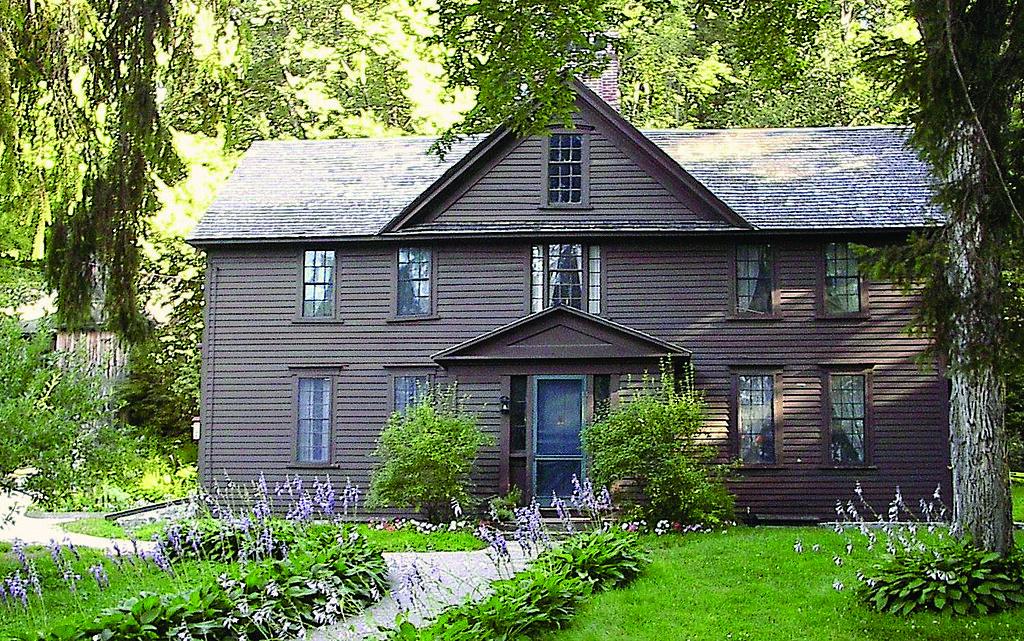
Little Men by Louisa May Alcott

Little Men by Louisa May Alcott

Moral education doesn’t stop after Little Women; Alcott had further plans for unconventional schooling for the March family. After inheriting her aunt’s estate, Jo March now runs an alternative boarding school for youth; in typical Jo style, artistic pursuits are highly encouraged, every student tends to a garden patch of their own, and pillow fights are allowed on Saturday evenings. Alcott herself had an unusual upbringing, taught at home by her father, an educator reformist who supported Transcendentalism and experiential education. 

Baby Teeth by Zoje Stage

Stage’s psychological thriller is split between the perspectives of Hanna, a seemingly-angelic little girl who doesn’t speak, and Suzette, her mother who is homeschooling her. The catch? Hanna is plotting her mother’s death, so she can get her father all to herself. Suzette becomes increasingly unsure of the family’s decision to homeschool, as Hanna’s antics grow more and more extreme. Baby Teeth certainly challenges parents to think twice, before dismissing the glint in children’s eyes as a simple “prank”! 

Raising Free People: Unschooling as Liberation and Healing Work by Akilah S. Richards

We usually don’t include books that haven’t been published yet, but anyone thinking about alternative schooling should be excited for Richards’ non-fiction book, coming out later this fall. Raising Free People examines how oppression is rooted in the habits, disciplinary methods, and hierarchies of the current schooling system, suggesting both practical and ideological ways to move past this model. Drawing upon her relationships with Blackness, decolonization, and healing, Richards takes a thoughtful, intersectional approach. The book puts community-based healing at the forefront of unschooling, focusing on how all children can thrive in education—no matter their financial status, ability, or personal background. 

“Giving Birth Radicalized Me”

Lyz Lenz’s Belabored: A Vindication of the Rights of Pregnant Women is a smart, funny, moving examination of American culture around pregnancy and motherhood. The book is wide-ranging, examining pregnancy cravings, weight gain, and birth alongside discrimination against pregnant women and mothers and the crisis of maternal mortality which disproportionately affects Black and brown women. The book is structured around the trimesters of pregnancy, with each section beginning with a sarcastic take on the language used in a typical pregnancy guide. The introduction to the fourth trimester section begins, “Your baby is no longer a fruit or a vegetable. Your baby is a person. Your baby is crying. Your baby is pooping. Your baby is driving you crazy. You love your baby, but your vagina is still bleeding, and that first postpartum poop made you cry.” 

As Lenz puts it in her introduction, “to be a mother is to become a myth.” Her book aims to demythologize motherhood and insists throughout on structural changes needed to make motherhood manageable. 

Lenz is also the author of God Land: A Story of Faith, Loss, and Renewal in Middle America and a columnist at The Cedar Rapids Gazette. Her writing has also appeared in The New York Times, Glamour, Huffington Post, Time, The Washington Post, and elsewhere.

We talked about facebook mom groups, the toxic impact of wealthy white families making individual choices, how she almost didn’t write the book, and how to think about the political power of white motherhood in a way that isn’t weaponized against Black and brown families. 

We spoke by phone just after the derecho that did so much damage in eastern Iowa, where Lenz lives.


Nancy Reddy: I loved your book. I was reading it and talking to my mom about the book and about pregnancy and working motherhood. My mom was a working mom in the ’80s and ’90s, and she’s always amazed that it hasn’t somehow gotten better.

Lyz Lenz: I think one of the things that shocked me the most in researching the book is the husband stitch, when doctors stitch up a woman after birth and they give them a little extra stitch to make things nice and tight for your husband and it was just one of the many things that I was just shocked is still happening. I mean, in that moment, right after birth, how can you even advocate for yourself? Some of the women I talked to, they didn’t even find out until after, until their six week appointment, when they’re complaining of discomfort and the doctor’s like, well, I gave you an extra stitch, and you’re like, well did you fucking really now?   

You do hear individual cases of amazing labor stories, the ideal. I’ve had people apologize, like I’m sorry I just had a good experience. And I feel like, why would you apologize, that’s great. We need to know what a great experience looks like. But the problem is that these are too anecdotal and it’s not systematized. The Pro Publica report that I reference in the book about why American has such high maternal death rates is because these practices and procedures that could save women’s lives are not standardized across hospitals. I don’t think people are ill-intentioned, we’re just not doing what we need to do on a systematic level to make the process  of birth successful in America. It’s mind-boggling that we don’t do it. It’s a failure on every level, from hospitals and doctors to insurance companies to just the way we think about birth in our culture.

NR: You had this Twitter thread about birth stories the other day, and you commented that you’ve seen birth radicalize women. Could you talk more about that?

The process of having children and trying to work and trying to negotiate a life made me realize, oh, it is still the Dark Ages.

LL: I think in many ways giving birth radicalized me. I’ll talk about my neighbor Stephanie who’s in the book, who’s an Evangelical woman who started having children and homeschooled them, so she’s very much of that world. Through giving birth and realizing I can do this, this is my body, through the process of having four children, by the end she was demanding things and sticking up for herself in a way that she never had before. Because of this status as a mother and what I’ve seen my body do, I can now demand free time and get what I need because nobody’s going to just give it to you without you fighting for it. And now she’s no longer an Evangelical. But that process of her saying this is what I need ended up putting her at odds with her church. Her church was telling her, if you’re having problems in your marriage, just submit more. And she was like, why would I do that? If I submit more, I’m not going to get what I need. And if I’m going to take care of these children, I need to get what I need. For me, I think there was a similar process. I had grown up very Evangelical, very conservative, and coming out of that, I was like, oh, now I’m a feminist, and everything’s fine and the world is so advanced. And then the process of having children and trying to work and trying to negotiate a life, it made me realize, oh, it is still the Dark Ages. 

I went into birth wanting to do exactly the opposite of what my mother had done. She had eight kids, and by the end she had a midwife and wanted to do it all natural, but I felt like, oh I’m just going to trust medicine and I’ll just do whatever the doctors say, and then I had this horrific experience. I was bleeding and I didn’t know why and I was never told what was happening and if I hadn’t been proactive I never would have found out. I don’t wish to deepen the divide of those who have children and those who don’t—but for me, speaking for myself, having children made me realize how deeply we stigmatize mothers and how much we put on their shoulders. Like, the burden of the economy—we are making your fucking tax base! Give us some paid leave! For me, for my neighbor Stephanie, for a lot of women I talk to, birth is a radical process, whether it makes you realize the power of your own body and your own voice, or if you’re suddenly faced with the realization of how unfair the world is in a way you were somehow able to ignore before you had children. 

We are making your fucking tax base! Give us some paid leave!

NR: I’ve been thinking about your book and your Washington Post op-ed about the Wall of Moms in Portland in connection with Dani McClain’s book We Live for the We, which has the subtitle “The Political Power of Black Motherhood.” A lot of McClain’s book is about how she always understood motherhood as a political institution. So I’ve been thinking about the political power of white motherhood, which feels scary to say because it’s often been, as you say, weaponized in this horrible way—I think of white mothers screaming at Black children as they’re trying to integrate schools. So I’m curious what you think, either in your own mothering as a white woman, or white motherhood as an institution, how can we use that power in a way that isn’t evil?

LL: I think one of the failures is that we don’t recognize how power works. Right now, in the pandemic, I see a lot of parents bending over backwards to justify pulling their kids out of public schools and doing private school pods and everything like that. And it’s going to gut our school system and it’s going to fail, and it’s going to fail for the people who need it the most. And that’s going to be our fault. Right now, the justification machine is in motion. Because people are too unwilling to take their heads out of their own asses and see what consequences their actions can have. It’s the same thing you see on the Nice White Parents podcast—I’m not racist, I just want my kids to go to a better school. But if you’re always thinking about yourself, you’re not thinking about the world writ large, I think that’s the thing that nice white parents need to do, is to realize you’re not just making an individual decision. You’re making a decision that will impact others. I had this discussion with a mom the other day because she was saying, well, I have to do a pod because all the rich kids are getting tutors, and I was like, your kids are upper middle class, your kids are going to be fine. 

That was something that I really had to understand when I was writing the book because I am just another white mom, writing another book about motherhood. So that was something I had to really come to terms with, and I didn’t want this to be another soft little memoir about how motherhood is hard but worth it. I wanted to bitch slap some people and say, how we do motherhood is a problem. When white moms do their like, oh let’s share cellulite on Instagrams and lift up each other’s bodies, you’re only thinking about yourselves, you’re lifting up beautiful women who can filter their bodies and have free time. 

NR: Oh, that reminds me of the black and white photo challenge.

LL: Yeah, I saw it, and I was just like, I can’t right now, and then I saw something about how it was actually co-opting another Instagram thing for women in another country. 

NR: Oh yeah, it was women in Turkey.

LL: But it just ends up being like, oh how pretty you are. And I don’t think people are doing it intentionally, but it doesn’t matter if you’re doing it intentionally. You’re not thinking, and you have every opportunity to think.

NR: What I love about McClain’s book is that she talks about Black motherhood as a political institution and she always understands that what she’s doing is political. And I think that white women don’t always have to think about ourselves as being political, so it’s easy for us to think, like, oh I’m just making a choice for myself and my family. 

White womanhood is a political institution but we just don’t have to talk about it because that’s a privilege.

LL: Right. And it is a political institution. White womanhood is a political institution but like you’re saying, we just don’t have to talk about it because that’s a privilege. During the 2016 election, a friend of mine is a personal trainer and teaches classes of women early in the morning, so we’d all go to her garage and do kettlebells. And I remember coming in the day after the election wearing my Nasty Women t-shirt and the woman next to me said, I don’t like it that you’re wearing that, because I don’t want this space to be political. And I was like, every space is political. You just don’t have to see it because we’re not forced to confront it, because that’s our privilege. And she was like, well, I just want to have a nice time working out.

NR: But the fact that it’s all nice white ladies in the garage is already political. Like, the composition of your town is political, right?

LL: Exactly. It’s already political. We’re already being political. We’re just not being forced to grapple with the consequences of our actions because our money and our privilege insultates us. Right now, America has to grapple with the consequences of our actions with healthcare and shitty daycare and shitty schools, but instead of grappling with it, we’re running away. Like, we’re making pods. 

NR: I keep seeing these conversations—like the pandemic is revealing things, or making us see things differently, that it does really expose how everyone was kind of hanging on by a thread to start with. I’ve been thinking about Deb Perelman’s op-ed in The New York Times and your Time piece arguing that we need to entirely re-imagine motherhood. So there’s this strain of optimism in the world, like it’s so bad, people are going to have to do something better. Or maybe we’ll just kind of continue to be fucked because mothers always pick up the slack. So I wonder, what do you think? What do you make of that conversation about the pandemic and our system?

LL: Again, we always knew these problems were there. There’s this part in the book that I think about a lot, where, in writing it, I just got really frustrated, like I don’t even know what to say here, because every other woman writer and thinker and academic and Arlie Hochschild, if you’re not going to listen to her and she has a Guggenheim, you’re sure as hell not going to listen to me, but it’s worth repeating. Women who have been out here doing the work, talking about these problems, might be a little frustrated by our saying “the pandemic is revealing it” because they’re like, bitches, we’ve been shouting it for years. But I think the pandemic is forcing privileged white mothers to face the reality that they’ve been hiding from themselves for so long. 

One thing that really pisses me off about political reporting and op-ed-ery is that it’s often so deeply cynical and often cynicism takes the place of actual intelligence, so I try not to be needlessly cynical. So I do hope that we can. And I do think that Americans everywhere are screaming for help, screaming for some sort of change. And I do have hope that we will get there. And I know that there are people who have been doing the work before the pandemic. 

I do think that Americans everywhere are screaming for help, screaming for some sort of change.

Maybe it’s not about whether I have hope or not. Maybe it’s about whether I and the rest of us can dig in and get it done. We can’t just sit around hoping. This is our burden, and this is our job.

NR: In American culture, we pitch mothers these individual solutions—so instead of saying, this is actually impossible, we should have paid leave and affordable childcare, we say, here’s a mom hack, get a bigger white board.

LL: That’s also a thing I wanted to avoid doing. So often we tell moms to try hard to find their inner goddess warrior, and that’s bullshit, you can’t find your inner goddess warrior if you’re making minimum wage and you don’t have access to healthcare or childcare or, now, by the way, school. That inner goddess warrior bullshit only works if you can afford fancy face cream. But we need systemic change.

NR: So what are the changes you want to see?

LL: I think the Time piece outlines them. And again it’s new, it’s not radical. These are things Americans have been talking about for years. We need childcare. I covered the caucuses, and there were a lot of candidates who had great plans. Elizabeth Warren gave us a blueprint. We need universal healthcare. It’s disgusting that we live in this rich, rich nation and we can buy our local police military grade trucks but we cannot give healthcare to Americans who are dying because of the lack of it. We need childcare, and we need paid maternity leave. Those three things, a really, really great start. 

We’re one of the few industrialized nations that don’t have this already, and there’s no excuse.  The only excuse is our American culture is so steeped in a mythology that is demeaning to women. We talk about these changes, and Republicans are like, oh, so you want socialism? But I do think that that kind of rhetoric is starting to lose its power as people are literally dying. I hope that change is around the corner. 

So often we tell moms to try hard to find their inner goddess warrior, and that’s bullshit.

What American mothers need to realize is that it’s not just about us getting help for our kids now, it’s about our kids when they have kids getting help when they need it, so that we can go on our death cruises in our retirement and not have to babysit. 

NR: I was really interested in the subtitle—”A Vindication of the Rights of Pregnant Women,” and you talk in the introduction about Mary Wollstonecraft’s Vindication of the Rights of Women. What did it mean to you to place your book in that lineage?

LL: That was actually partially due to my editor, Remy Cawley. This was actually the first book she acquired as an editor. She bought it at Norton, and she moved to Bold Type, and she begged me to come with her because she believed in the book. And I’m so glad I did because when I started drafting the book I lost faith in it. I wasn’t the mother I had been when I sold the book—married, upper middle class. And I was not that person anymore. And I was just reeling from blowing up my life and I told her, I don’t know how I can write this. 

My editor helped me come up with a new outline and we changed the chapters and she really walked me through it. When we were going through edits and I wrote that introduction, and she said you need to place it in this context. But I said, well, I have problems with Wollstonecraft, with all these early feminists. And her argument was, well, that’s the point, that they didn’t get the job done, and now we need to take it a step further. I’m just a person in Iowa who wrote a book but if it can do anything, if it can kick the conversation into the next phase, because I feel like we’ve been stuck in this place for so long. So the subtitle recalls the past but also hopefully pushes us forward. 

10 Novels About Working Lives in India

During the current coronavirus pandemic, as every country tries to balance significant job losses in most sectors with insufficient numbers of essential workers, our work is more personal and more political than ever. The boundary between the home and the workplace has all but disappeared. The web of interactions between workers, bosses, customers, and suppliers has become more critical, complicated, and challenging.

Dhumketu, my mother’s favorite storyteller and a short story pioneer in the Gujarati language, often wrote: “Society is shaped by individuals. But an individual is shaped by work.” I am the sum total of the 20-some varied jobs I’ve had since my late teens. So most of my fiction and nonfiction also centers the working life. My story collection, Each of Us Killers, was written during the 2014-2018 period, when I’d moved back to India for a few years, and focuses on how socio-cultural divides like class, caste, gender, race, nationality, and more drive our aspirations and struggles at our workplaces.

That said, William Faulkner’s observation is also spot-on:

“. . . the only thing that a man can do for eight hours a day, day after day, is work. You can’t eat eight hours a day, nor drink for eight hours a day, nor make love for eight hours — all you can do for eight hours is work. Which is the reason why man makes himself and everybody else so miserable and unhappy.”

The Paris Review, The Art of Fiction No. 12.

No surprise then that many fiction writers have found, in that particular misery and unhappiness, plenty of grist for the writerly mill.

Yet, it’s only been in recent times that the mainstream publishing ecosystem has been spotlighting work-centered fiction. And, with fiction from or about India, there continues to be a strong Western preference for certain timeworn tropes: the family or lovers torn apart by the Partition, the aspiring slum-dweller, the miserable wife of an arranged marriage, the fervent fundamentalist, the crooked politician, the nagging mother-in-law, the homesick immigrant, etc. with characters’ professions and occupations often remaining under-explored, peripheral details. So here are some novels from India that eschew those tropes and center working lives. Each has been, in some way or other, part of the DNA of my own stories.

The Guide by R. K. Narayan

The Guide by R. K. Narayan

I came to this 1958 novel after watching the classic movie version. Raju, the protagonist, starts off as an opportunistic local tour guide, becomes the smooth-talking talent manager of his married-but-estranged lover, and finally gets mistaken for a great holy man. We see both Raju’s evolution and devolution as he journeys through these three occupations. Set in Narayan’s famous, fictional town, Malgudi, the novel’s prose moves from gentle humor to somber philosophy as it explores many sociocultural nuances and biases, which exist even today.

Chowringhee by Sankar, translated from Bengali by Arunava Sinha

Set in the cosmopolitan Chowringhee neighborhood of 1950s Calcutta, this novel is about the loves and lives of people who work at or frequent The Shahjahan, the oldest and largest hotel. The protagonist and narrator, Shankar, works there and acts as both an observer and a participant as he navigates rapidly-evolving values in a post-Independence world. The city and the hotel are very much also multi-faceted characters in the story. It’s important to point out that the novel predates Arthur Hailey’s The Hotel and enjoys cult status via plays, movies, and TV adaptations in India even today.

The Legends of Khasak by O. V. Vijayan, translated from Malayalam by the author

Like R. K. Narayan’s book above, this novel is also set in a fictional place. Khasak is a remote village in the Kerala countryside. Ravi arrives to take charge as the only teacher at a makeshift school. As he deals with all the villagers and children, incidents merge into a surreal narrative with myths, legends, fables, stories within stories, historical encounters across time and space, and more. The author’s own English translation stands apart from his original text but it is just as richly textured. And, like the previous two novels, this one enjoys cult status across several forms of media in India and has been translated into several Western languages too.

English, August by Upamanyu Chatterjee

English, August by Upamanyu Chatterjee

In the 1980s, the divides between urban and rural India were more pronounced than ever before. Chatterjee, a civil servant, writes about a young, urban IAS officer, Agastya. Stationed in a rural village and unable to sustain any interest in his government and administration work, Agastya is endlessly bored. His mind snags frequently on marijuana, masturbation, and English literature. His wry observations about everything happening (or not, as is often the case) in his life range from bitingly funny to absurdly tragic. Though certain aspects of the storytelling haven’t dated well, the novel remains an authentic portrait of the educated Indian youth trying to figure out their place in 1980s India.

Dangerlok by Eunice de Souza

Eunice de Souza was a tour de force in the Indian literary world as a professor, critic, poet, writer, editor, stage actor, and director. She only wrote two novels, though, and this one has a protagonist modeled after herself. Rina Ferreira teaches English Literature, lives alone with two parrots and a huge personal library, and writes letters to David, a man she probably still loves. Dangerlok, or dangerous people, are all around her daily and become the subjects of her vivid letters. The writer gives her protagonist lots of room to play and creates such a varied, wonderful world for her to inhabit that, as readers, we never want to leave it.

Hangwoman by K. R. Meera, translated from Malayalam by J. Devaki

Meera’s works have always addressed issues like patriarchal discrimination, power dynamics, and women’s independence. The protagonist here, Chetna, comes from a long line of executioners and is appointed the first woman executioner of India. This makes her an overnight celebrity but the noose is now a metaphorical thing around her own neck that she must wrestle with. Meera’s attentiveness to every small detail complements her dark humor and the plot’s twists and turns. Heritage, history, crime, mystery, justice, life, death, love, tenacity, endurance—this novel has it all. The English translation does have a few road bumps, however.

Fence by Ila Arab Mehta, translated from Gujarati by Rita Kothari)

A young woman, Fateema, dreams of a stable job, economic independence, and a home of her own. But she’s Muslim in the Hindu-dominated state of Gujarat and from the lower strata of society. So these are not simple or basic aspirations for her. She’s expected to resign herself to living in the Muslim ghetto neighborhoods of her city. She’s also ridiculed and ostracized by her own minority community for wanting so much. Mehta writes about a highly-charged, complex topic in Gujarat even today: the Hindu-Muslim divide. And Kothari’s translation of the original text with its several different Gujarati dialects is a multilingualism masterclass.

Temporary People by Deepak Unnikrishnan

This book is the only one on this list not set in India. But Unnikrishnan’s award-winning linked story collection about Indian (mostly) guest workers in the United Arab Emirates was rightly hailed as a new kind of immigrant narrative when it came out. Using hybrid narrative forms, surreal symbolism, mythology, and dark satire, these accounts highlight how economic, professional, and social progress can often lead to dehumanization. Linguistically, Unnikrishnan blends English, Malayalam, and Arabic to create a unique polyphony of voices that stay with us long after reading.

A Meeting on the Andheri Overbridge: Sudha Gupta Investigates by Ambai, translated from Tamil by Gita Subramaniam

Ambai is a Tamil writer well-known for her feminist literary works. At the age of 72, she departed from her usual oeuvre to write detective fiction with a middle-aged woman protagonist. In true Ambai style, she eschews the traditional whodunit for a deeper exploration of human vulnerabilities, social hierarchies, and sociocultural power dynamics. Set in Mumbai, this is a collection of three novellas depicting an everywoman who works as a private detective and takes care of her family—balancing both with a well-cultivated support network. She’s strong-willed but tender, pragmatic but takes no prisoners, efficient but always accessible.

Requiem in Raga Janki by Neelum Saran Gour

Gour’s writing has mostly focused on small North Indian towns and their rich histories. This novel is based on the true life of an early 20th-century royal courtesan-singer, Janki Bai. Among many well-known legends about her, there’s an incident where she survived a heinous stabbing due to her work, winning her the nickname of “Chappan Churi” meaning 56 knives. As we journey with Janki Bai from girlhood to matronhood, we see how her musical vocation shapes, torments, and restores her. Beyond Gour’s thorough research into the socio-political history and music of the time, the musicality and element of play to her narrative renders the life of this amazing artist with multiple resonances of meaning and texture.

All the Church Ladies Are Having Secret Sex

There was a point reading Deesha Philyaw’s story “Snowfall” about a lesbian couple in her debut short story collection The Secret Lives of Church Ladies where I stopped and let out a big sigh. The passage, after listing the traits of Southern Black women, traits so familiar and so beautiful to me, it made me teary and reminded me of all of the matriarchs I knew growing up, Philyaw writes:

“But we lost all those things when we chose each other. Only the memories remain. Which is why, even though we grew up in different places, so many of our bedtime conversations start with ‘Remember when . . . ,’ as we lie there in the dark with our nostalgia and nothing to distract us from it. Not even each other, not anymore.”

This passage illustrates what Philyaw does well in this collection, which is to border and make bare the line between generations, the conservatism rooted in the Black church, and the consequences when we chose to keep or not to keep secrets. 

In The Secret Lives of Church Ladies, Philyaw imagines two best friends who are secret lovers, a woman who falls for a physicist, lovers who seek solace away from dying parents, and a teenage girl drawn into her mother’s affair with “God.” Each story reveals the inner lives of women who are often overlooked and stereotyped: The Black Church Lady. 

I spoke with Deesha Philyaw about sex as a literary device, writing “grown woman” stories, and the capacity of Black women to incite change.


Tyrese L Coleman: So, I hope this isn’t giving too much away, but one of the secrets to the secret lives is sex.

Deesha Philyaw: Yes, indeed! Lots of secret sex.

TLC: Secret Lives puts sex, the having and the not having of it, as a grounding device, almost. In many of the stories, there is a way that it either turns the plot or helps understand a character or leads the reader and/or the characters toward the emotional epiphany or climax (see what I did there?). Literary sex is often times described as awful or unsatisfying or an access point to examine some hidden shame. Your characters, however, for the most part, enjoy what they do. It seems that you are more concerned with the consequences of the sex rather than the act itself. Is that true? And were you trying to approach the topic in a different, more nuanced way than say the average literary short story? Why and how?

DP: I definitely find the consequences and circumstances of the sex in the stories far more interesting than the sex acts themselves. It is fun to titillate, though. And I wasn’t thinking in comparative terms, but I did want to write the sex without my own self-consciousness about it getting in the way. I wanted to write the sex so that it rang true to the characters and their situations. Sometimes that called for nuance, and other times, less so. 

TLC: What I also really enjoy is the moral ambiguity and, therefore dimensions, given to the Black women in this collection. Oftentimes, especially when we see stories about older Black women or church going Black women, they are already given angelic status, a martyr before they even die. But the women in Secret Lives are complex and driven by their own desire while navigating the conservative landscape of the Black church. 

DP: Right, we know those very limiting binaries and archetypes. We know the public faces that those women, and the rest of us, wear some or all of the time. But we also know that all of us are fully human, and, at times, full of longing and discontent, behind those masks.

TLC: This collection is not just heterosexual love, but queer love and sex as well. Black people are and have been notoriously homophobic, especially those “Church Ladies” who belong to auxiliary and usher boards. Can you talk about the importance of including a wider spectrum of the ways in which Black women love in Secret Lives?

DP: Well, I think even our collective homophobia is on a spectrum, inside and outside of the church. Growing up, I saw queer Black men and boys marginalized, mocked, and horrifically abused, but also sometimes embraced; there was a gamut. But queer women and girls were condemned and brutalized, without exception. That’s what I saw in my little Southern corner of the world. And so these women and girls show up in my stories as free—or trying to get free—as fully themselves, loving in all the ways that we love.

TLC: I also think that there is something to be said about the concept of two Black women loving one another as friends and romantically. One of my favorite stories in the collection is “Eula,” about two best friends who have a tradition of hooking up with one another despite the obvious denial of one of them. “Eula” felt to me like a commentary on the question of whether or not you could be queer and yet still be a god-fearing Christian woman. Can you talk a little about that?

The queer Black women and girls show up in my stories as free—or trying to get free—as fully themselves, loving in all the ways that we love.

DP: I think several stories in the collection ask the question subtly or outright, “Can you ____ and still be a (good) Christian?” It’s unlikely that either of the characters in Eula would be comfortable being called “queer.” I think their situation is one of fluidity, though they probably wouldn’t like that concept either. Once again, the binary is limiting. And then, to make things even messier, how do you define “Christian”? How do you define “good”? People like the characters in “Eula” end up in a kind of bondage, trapped by fear. Fear of going to hell, but also fear of their own desires. That’s no way to live.

TLC: And also a moral fluidity too as many of the characters flow in and out of traditional mindsets and behavior, but then again, there is something holding the steady, whether it be the actual church or their family. That steadiness may be deceiving but anchoring, yet those institutions where the conflict lies.

DP: Yes! Soon after I turned my manuscript into the publisher, it dawned on me: Mother-daughter stuff runs all up and through these stories. And that makes sense because I lost my mother to breast cancer in 2005, and my complicated relationship with her was probably the defining relationship of my life. So we see in the Church Lady stories, a mother can be an anchor, as you say, a steadying force, for better or for worse. And once I took note of the heavy mother-daughter presence in the collection, it occurred to me that, simply put, our mothers are sometimes contradictions. And so are we daughters as mothers. And so it goes.

TLC: What Secret Lives is not about is men, meaning, while they play pivotal roles, the fire in say a story like”Peach Cobbler,” is in the relationship between the mother and daughter. I feel like this is more a play on the concept of a secret life for Black women. Can you talk about the roles in which men play in these secret lives?

DP: My friend Damon Young said it best. He said that men are garnish in this book. LOL. It happened organically. When I think about my experiences in the churches of my youth, it’s the women I remember most. Partly because, as a girl, I was watching them to see what my options were for this thing called womanhood. But also because, as we know, women greatly outnumber men in the church, though not in the pulpit and positions of leadership. So it’s the women who loom largest in my memories and in my imagination. Also, I grew up surrounded by women and girls. I was raised in a house with women. My mother, my grandmother, and their friends—my characters speak with their voices.

Several stories in the collection ask the question subtly or outright, ‘Can you ____ and still be a (good) Christian?’

So, yes, in many ways, this world of women was a secret place. But I don’t know that we were necessarily intentional about keeping secrets from men. Sometimes, women keep truths from ourselves and other women too, to our detriment. And, let’s be real—sometimes, men don’t know what’s going on because they don’t listen to us. 

Thinking about the stories in Secret Lives, some of the men are . . . useful. They scratch an itch, provide comfort. Others also provide something, but are also terrible. And sometimes, of course, they are the secret.

TLC: One of the things I love about this collection is how “adult” it feels. Not so much because of the sex, but most of the main characters are dealing with concerns that feel like grown women problems. I just finished reading a novel about a twenty-something and, while I adore the book, I crave stories about Black women who are in their thirties, forties, fifties, etc. Why was it important to you to represent the perspective of the grown woman?

DP: Honestly, it’s because that’s where I am right now and because my thirties is when I really started to live. I didn’t develop a sense of humor until I was about 34.  I’m knocking on fifty’s door right now, and — the pandemic and Trump notwithstanding — this is my best, most interesting life.

TLC: You and I both have talked about how important it is to put the voices and stories of Black women out in the world. It has seemed to me that Black women do so much for others and ourselves in the dark. But, now, a Black woman has been added to a presidential ticket. We always hear the phrase “trust Black women,” but what does that mean to you and are we heading toward a reality where Black women are no longer making moves in the margins? 

It’s wild that people want to marginalize [Black women], but also want to be us, dress like us, look like us. We do it first and we do it best.

DP: Yeah, we’re making moves wherever we want to. It’s wild that people want to marginalize us, but also want to be us, dress like us, look like us. We do it first and we do it best. We just want people to move out of our way, to remove barriers, such as racism and misogynoir, out of our way. We’ve learned how to maneuver around them and confront them. But we didn’t invent white supremacy or misogyny, so it’s not our job to clean up that mess. Trusting Black women means believing us when we talk about these barriers, and then clearing a path for us. But when that doesn’t happen, we have to fight our way through, for justice or for access. And then we’re angry Black women. And you know the rest. 

But then we think about our ancestors. We think about Fannie Lou Hamer and Toni Morrison and Zora Neale Hurston. We think about our grandmothers. They made a way out of no way. They told stories that centered us, unapologetically. They lived, wrote, and fought for Black people, for us. They didn’t let white folks’ limited imaginations stop them from doing the things they wanted to do. Or at least aiming for it. Zora Neale Hurston’s mother encouraged her children to jump at the sun. We have to be just as brave.

What Will It Take to Hold Back the Sky?

The Pile

The sky was lowering slowly, the great blue weight of it, and we could feel the air being squeezed out of the world. The height of the sky was unpredictable—it appeared a little lower one day, the shadows longer, and the next day the sky had been cranked back up. Some people looked around those days and said, see? It will go back to normal, just wait, and others said, but look.

People had different reactions to the confusing descent of the sky. Perhaps the sky would not press down fully, perhaps it would remain where it was for the next couple years and then lift up on its own. Then we would be able to stand up more fully, the air would be lighter on our arms. But the sky was lowering slowly, bit by bit, when we weren’t looking. We tried to pretend it wasn’t happening, but we all knew it was. There was no knowing where it was going, but where it was going appeared to be us.

We went about our lives, appalled but trying to get through the day, dazed with hope that the sky would stop on its own, but the sky kept descending, inch by inch, and the shadows across the nation stretched out, unnatural and dismal and gray.

Many of us couldn’t sleep. Some of us were having problems with our necks from constantly looking up, gauging how far the sky had lowered today, and some of us glanced up so frequently our necks froze in place. Some of us found our backs hunching, protectively, in a posture of anticipation for the future, but it was obviously pointless, as our backs were no match for the sky. Others took the easy route and just toppled over dead with worry. Others ruminated about practical things, like whether it was time to redo the roof on their house. Some tried not to never think about it but the effort of not thinking made then gaunt.

Some said stop worrying, the lowering would stop at some point. Some said we could get along with it at this height.  But it was already brushing tops of mountains, there were reports it had crushed people who lived atop high mountain peaks. The sky cruelly lowered and crushed them and then lifted, leaving them flat and bloody.

Why didn’t they go down the mountain, said some.

How can you say that?

They didn’t have to stay there. Why didn’t they go?

Someone, I don’t know who, suggested building a pile. The word itself was aggravating and vague. A pile to rise up and stop the sky. What sort of pile? With what? What was the point? The sky stretched on for farther than we could see.

The idea caught on. Shut up and build one. Bring something of your own. Anything. Toss it on. We need a huge pile. Move.

Some people were excited by the idea of a pile. They brought everything they wanted to empty out of their homes. Old towels, shoes, end tables, chipped mugs, cribs, broken chairs. It was like a giant, disorganized rummage sale, but sadly with no sale element. The sheer size of the pile started attracting people. It appeared at first a mess and then official, and we craved being part of something organized, official.

What should we add to the pile? Some thought we needed sharp things. Knives, broken windows, handled carefully. Something that would scrape the sky and stop it from being lowered more, though we did not know if a sky was scrapable, as no one had touched it. People began to hurt themselves on broken glass, so this stopped.

There were debates, some polite and some heated, about what would be best to load onto the pile. Some felt bags of manure would be most efficient, but they made everything smelly, so that ended that. There was a theory involving bales of hay, and then old magazines, as everyone had old magazines they wanted to throw out.  It didn’t matter. Everything helped.

There was a general sense of panic. People started cutting off their hair and pushing it into the pile. Some began to up the ante by surgically removing parts of their bodies. A finger. A foot. Their bravery was applauded. Some people copied them, as though trying to appease someone, but no one was quite sure who.

It was only after people started offering up body parts that others handed over property. One man lifted his four-bedroom house off its foundation, hauled it to the pile, and pushed it in. Some people cheered him on, but few followed, and though some generous people offered him a couch to sleep on, others whispered they would not let him in their homes.

Go. Keep going. We needed more things. The pile was just about to brush the bottom of the sky. All our work was leading to something useful, it was almost there, we could see it.

What if it doesn’t work? Some of us said.

What do you mean?

So we build the pile and it brushes the sky and nothing happens. What if it doesn’t work?

People were tired of bringing objects from their homes, not to mention, hair, random limbs, purses, clothes they were embarrassed to have worn. They were sick of going through their closets and unloading everything. Their homes were starting to look bare.

There was, as we got closer, a feeling of doubt.  What if we have done all of this for nothing?

What’s the point?

The sky made a slight groaning sound, as though it was gearing up for something. We all jumped.

I’ve had it, said some of us. I’m tired.

It doesn’t matter.

I miss my chair.

Whose idea was this anyway?

The pile stood, a massive mess of offerings, and it was easy to just see it as that. A damned, stupid mess. A useless activity. A waste. It stood there, silent, holding so much anger and fear and hope. One could see why people would turn from it, now, just as it was brushing the sky, just now as its efficacy would be tested. It stood there, items rotting in the sun.  Hurry! shouted someone. One more thing. Everyone. Please. Find something.  Go! We could not see whether everyone was adding to the pile or giving up; we did not know if we were all capable of, at some point, having the same thought. We flung up tall ladders and we climbed higher and higher, and when they swayed as we perched on them, we tried to grab hold of the pure blue–but our hands closed over nothing. We opened our hands, closed them, but when we tried to grab the sky our hands held only air.Still, we kept building. The pile was smelly, slovenly, grand, full of hope. Go, someone shouted, please, come on, one more thing quick, a towel, a cotton ball, an SUV, anything! There was a creaking sound from above us, a shifting, and then everyone looked up.  

What If a Government Whistleblower Found Evidence of Aliens?

Imagine being back in 2007. Did your shoulders just unclench a little? Obama on the rise, fewer than 500,000 Tweets launched into the ether per year, David Bowie and Prince still rocking our plane of existence, what’s not to miss? But with a few minor tweaks, this placid past could have been even more tumultuous than the curse that is 2020. This is the world of Lindsay Ellis’s debut novel Axiom’s End, set in what seems like the very distant past and venturing into the most existential territory possible: what if the greatest government leak in American history was first contact with an alien race? 

Axiom’s End is the first book in a series of five that traces the relationship between Ampersand, an enigmatic alien marooned on Earth, and Cora, an adrift twentysomething who unwittingly becomes the only translator between the new species and our own. The novel wrestles with the importance and limitations of language, relative morality, and how fallible the concept of “truth” becomes in the face of an existential crisis. It’s a Netflix binge series of a novel, making you fall hard and fast for these unlikely allies, flipping ever-forward to discover how these disparate creatures can ever make their alliance, and eventual friendship, work. 

It’s also an unwitting parallel to the destruction of facts that define the Trump era. Cora’s estranged father, Nils, exploits the fears and suspicions of the populace to build his own cult of personality as a document-leaking “hero,” and the book slowly reveals the lengths that he’ll race to the bottom in order to promote his own conspiracy theory agenda and folk hero legacy. Ellis plumbs into depths that would have once been unimaginable, but have in fact rooted into our daily discourse.

I spoke to Ellis over Zoom about long writing processes, conspiracy theories, and the resurgence of sincerity in a deadly serious era. 


Tabitha Blankenbiller: What events or memories from 2007 drew you to that particular era? 

Lindsay Ellis: Originally the novel started as just a pitch: what if Julian Assange found out that there were aliens and leaked that information? Sort of a cute thought experiment that I kind of came up with, which leads to the end of the two-party system in the United States. It wasn’t originally a period piece, obviously, because it was conceived during the Obama era when it made sense. Then when I brought the draft back from the dead in 2017, it didn’t make sense anymore. There’s no way that this narrative could take place in Trump’s America. So the solution is it’s an alternate reality. I could either have created a different president, or make it a period piece. And the reason I went with period piece was because, even now, a lot of the story that I had originally come up with didn’t make sense in the 2010s. We didn’t have smartphones back in 2007, you couldn’t just instantly Google stuff back then. Originally I was going to hit it in 2009 because that was when the Manning leaks happened. But I was listening to Spotify one day and this Tori Amos song came on, which I mentioned in the Protest Music of the Bush Era video that was called “Yo George,” and it was just so resigned and so defeated. And it just sort of was like, in that moment, that’s it. That’s the mood.

The novel started as just a pitch: what if Julian Assange found out that there were aliens?

It’s difficult, capturing the snapshot of the era, because people don’t really like to think about it. I think nostalgia for this time is going to be very strange because I don’t think we have ever been so critical of a period in history as that period. Even when you look at ‘80s nostalgia, a lot of unjust things were happening in the ‘80s. But people weren’t really admitting it at the time, at least outside of the fringe left. Only in hindsight, unless you were, for example, in the gay community seeing, oh, wow, that is actually a really unjust time to be alive. But during the 2000s, we were aware. Everybody knew, especially in the second half of the Bush administration. It was a very resigned, trapped feeling, which is part of why I had Cora’s state of being in the first chunk of the novel feeling like resigned and trapped, not just by her personal circumstance, but by the world being the way it was.

TB: Sincerity is a huge element of the novel that makes it work and makes it breathe and makes it real. 2020 feels like a desperately sincere time. This may be the first time in my adult life I can remember sincerity outpacing cynicism in pop culture.

LE: When you look at the ‘90s and the sort of irony poisoning and, like, we’re too cool for politics, but mainstream culture has now realized and accepted that apathy kills. Literally, apathy is what got us Trump and far-right reactionary movements. These elements were always burbling under the surface, but nobody took it seriously because that sort of sincerity was saved for losers and Social Justice Warriors. I think now we are allowed, and almost encouraged to embrace sincerity and stakes because, you know, we’ve seen what the consequences are for that. It’s another interesting aspect of deciding to make it an alternate history—getting to plot how our course goes differently, but also how it is the same. Some events play out differently, but other elements are going to play as inevitable.

TB: When you started the novel in 2013, did you foresee American culture taking these turns that we’ve experienced, getting to this point where conspiracy theories are choking out any chance at truth?

I think now we are allowed to embrace sincerity because we’ve seen what the consequences are.

LE: There were things that, if you had your head to the ground at the time, for example with Gamergate, you knew where our ship was headed before everybody else. I was caught in that net very early on, and no one tracking that story was surprised when history turned out the way they did. But with the conspiracy theories, even back in 2013, part of the research I had to do led me down those fringe rabbit holes. I was always concerned; I don’t want to give validation to these people. I wanted there to be a concrete division between actual journalism, whistleblowing, and conspiracy theory, and especially between journalism and conspiracy theory. With conspiracy theories, you have a conclusion and then you work your way to that conclusion, cherry-picking evidence and ignoring evidence that contradicts your conclusion. And that’s not journalism.

TB: It’s universally known at this point how crappy it is to be debuting and promoting a book amidst a pandemic. Has there been anything that surprised you as positive from debuting in this awful time?

LE: Maybe not necessarily related to the time, but the thing that surprises me the most is people saying that this book got them interested in reading again. I can genuinely say I didn’t see that coming, the comment of “generally I haven’t been interested in the books I’ve been reading because they feel like a slog and like homework. But this one was really easy and accessible and fun.” And I appreciate that. I designed it to be heavy on momentum and easy and accessible, but I didn’t know it would succeed.

TB: I definitely had the same reaction. I didn’t read it all during my pregnancy, and then it was only a few months after my baby was born that we had the pandemic hit. So I had not read a single book, after being an MFA super literary snob, for a year and a half. Then I sat and read this in maybe 24 hours, which is the first time that’s happened in years.

LE: Thank you. Reading shouldn’t be work, you know. It shouldn’t be a slog. It should be fun, just like watching television or any other form of media. I do kind of wish we had more Stephen King-ish, easy to read and accessible books being considered literary. Not light and stupid; even stone-cold bummers can be enjoyable.

TB: The novel includes many pop culture details, for example an In-N-Out burger plays a memorable role. How did you choose what details to include and how did you make them work for you?

LE: I didn’t want it to just be stuff I was into, like Cora’s musical taste was not my aesthetic at the time. But it’s also kind of fun because when I decided, like, okay, Ani DiFranco is kind of to her what Tori Amos was to me. Going back through, like, all this music that I missed in the 2000s, I was like, oh, this stuff’s pretty good. I like this Neko Case! She’s got a bright future! And that’s a funny thing about the mid-2000s, because I was at NYU, which is very snobby (I guess all colleges are). So I missed out on Panic! at the Disco and My Chemical Romance and only discovered that stuff later. 

Things have just become worse domestically over the last 13 years. It makes it hard to create a scenario that feels threatening.

TB: What is your view on the popular desire to explore alternate histories like you’ve done with Axiom’s End, even when those alternate histories are even worse than the reality we’re stuck in?

LE: I think this is why dystopias are so much more extreme than the reality we inhabit. In this book’s case, I can’t say the Axiom’s End world is going to be worse than ours because we don’t know what’s going to happen in our own world. I hope it’s worse because if it’s not, we’re in for a world of hurt in our reality. I hope that the trajectory that I come up with is, in fact, the worse of the two timelines, because if it’s not, I don’t know if I want to live here anymore, at least in this country. 

It’s also been a challenge because we have become so much more polarized and the right wing has become so galvanized; things have just become worse domestically over the last 13 years, categorically. It does make it kind of hard to create a scenario that feels threatening. It’s difficult to make it feel like a reader today would be like, oh no, not fascists! or oh no, militias! That would be awful! You know, I guess the way I’ve gone about it is to deliberately parallel things that have happened to kind of remind people what creeping fascism looks like and basically just mirroring things that have happened in the last five years in our own world. I know what’s going to happen to Cora’s world, so. I think we have a better chance in the long term without aliens.

Fiction Prompts Based on Stranger-Than-Fiction Locations

Setting is a crucial aspect of any story; it affects tone, language, stakes, movement—basically every part of a story is determined, at least in part, by its setting. Naturally, we thought that compiling a list of weird and wild real-life locations would offer a lot of inspiration to any writers feeling stuck in one place. Since most of us are stuck at home, why not explore some of the more compelling corners of the world in your writing?

Houska Castle, Czech Republic. Photo via Flickr.

Houska Castle, Czech Republic 

It’s criminal how few castles have been built to close a gateway to hell and keep demons trapped in a bottomless pit so they can’t enter our world and reap chaos. Luckily for everyone, Houska Castle in the Czech Republic is doing its sacred duty of protecting mankind from a deep hole that’s reportedly a gateway to hell. According to legend, horrific demons used to crawl from the hole somewhat regularly, the Nazis practiced occult experiments at the castle, and one man who was lowered into the hole was brought back up minutes later only to have aged thirty years. This creepy castle is the perfect setting for a novel about a castle guard who falls in love with one of the demons and begins studying dark magic to win the creature’s affections. 

A quaint 1800s home in Lily Dale. Photo via Wikimedia.

Lily Dale, New York

This quaint little town in upstate New York seems like an ordinary, peaceful New England destination, but in reality it’s the center of Spiritualist culture and community. The town is populated by mediums, healers, and people who simply prefer the company of ghosts. This novel could follow an old woman trying to connect with the ghost of her dead daughter and gain the relationship they never had in life. Of course, this plan would be complicated by the daughter being dead and by everyone else in town being a nosy medium with a lot of misguided, if well-intentioned, advice to give.

Hoia-Baciu Forest, Romania. Photo via Flickr.

Hoia-Baciu Forest, Romania

Everyone loves a haunted forest, and no forest is more haunted than Hoia-Baciu. The trees grow in strange shapes: curves, arcs, and clockwise spirals that can’t be explained by scientists. There’s a perfectly oval clearing where nothing grows, and nothing has ever grown (again, scientists don’t know why). There are reports of ghosts, many missing people, and even UFOs. Basically, this forest is the platonic ideal of spooky forests. You could write pretty much anything about this place, but one good idea is a novel told in two slowly converging perspectives: one of a young man from modern times who has become obsessed with the forest, and another of a young man from the past who’s deathly afraid of the place for a very specific reason.

Coordinates for the spacecraft cemetery on Google Maps.

Spacecraft Cemetery, Pacific Ocean

From one dark, remote, unexplored world to another: there’s a remote location in the southern Pacific Ocean, the point furthest from any land, where spacecraft that no longer function are sunk to the depths of the ocean. I literally can’t believe people don’t talk about this more. This location is begging to be made into a sci-fi novel about a post-apocalyptic world in which divers stumble upon the cemetery and falsely believe the earth was once colonized by an alien race, and these aliens must be stopped before they come out of hiding and rise again.

The ruins of Madame Sherri’s Castle. Photo via Flickr.

Madame Sherri’s Castle, New Hampshire

Madame Sherri was a Broadway costume designer and New York City socialite who, after her husband’s death, built an enormous mansion in the woods of New Hampshire so she could throw parties for her friends (as one does). After Madame Sherri died, her house burned down, and now all that’s left of it is a curving stone staircase deep in the forest. This location would be perfect for a novel about a young woman lost in the forest at night, who stumbles upon a mansion where a party is in full swing and all the guests seem to be from another time. The woman slowly realizes that the mansion only exists at night, and she must solve the mystery of what happened at the final party before she becomes trapped in a ghostly soiree forever.

Inat Kuća in Sarajevo. Photo via Wikimedia.

Sarajevo Spite House, Bosnia and Herzegovina

Spite houses are usually extreme examples of pettiness, but there’s a little more going on with one particular spite house in Sarajevo. When the Austro-Hungarian government tried to colonize Bosnia and Herzegovina, part of their plan was to build a beautiful new city hall in Sarajevo. Enter: an old man. This Bosnian man’s house was part of the proposed city hall site, but he refused to sell his home, no matter how much money he was offered. In the end, he only agreed to give up his land when the government promised to move his house, brick by brick, and rebuild it exactly on the other side of the river. According to legend, the old man sat on the bridge between his old and new land every day in order to oversee the rebuilding of his house. For this story, perhaps write a novel about a forgetful man slowly regaining memories of his life as he watches all his belongings pass across the bridge in front of him. 

Alnwick Poison Garden, England. Photo via Flickr.

Alnwick Poison Garden, England

In the Alnwick Poison Garden, the phrase “stop and smell the roses” is a direct threat, as the plants in this garden are all poisonous; some of them are strong enough to kill through touch or smell alone. So who would live in a castle with such a poisonous garden? A woman who wants to keep everyone at a great distance because she was forced to leave the only woman she ever loved to marry a man she had never met. Luckily he died mysteriously early in their marriage, but she keeps the garden in order to isolate herself while she mourns the lost love she fears she’ll never find again.

Screenshot of “Plants Are Taking Over This Abandoned Fishing Village” via Youtube—National Geographic.

Houtouwan, China

Though most abandoned towns and buildings end up as lifeless, crumbling grey slabs of rock or concrete, Houtouwan went a different direction. This abandoned Chinese fishing village is deserted but certainly not dead, as its houses and streets are all covered in a thick layer of bright green vegetation. The entire hillside where the village rests has turned from a bustling village to a lush natural wonder, a verdant hill shrouded in ocean mist. Obviously, this means that during full moons the greenery shivers to life and the village fills with people made from grass. We’re imagining a short story collection about the moss-people who inhabit the village, with each story covering the daily life of a different moss-person.

Photo by Forest Simon on Unsplash.

Big Major Cay, Bahamas

Have you read the Warriors series? Okay, think of that but with pigs who swim. Feral pigs have taken over a small island in the Bahamas, and they love swimming around in the clear, blue water and stealing food from tourists (the pigs can and will jump into boats in shallow areas). This story could be told as a long-running children’s series about the interactions between the different pig clans on the island, or a speculative novel about the pigs forming a closed society on the island, gaining both language skills and mechanical knowledge, stealing a boat from the tourists, and going out into the world to spread their knowledge and dogmas to all the other pigs in the world.

11 Radical Bookstores to Help You Plan a Revolution

If the political landscape in America today has you longing for radical transformation, it might be time to head over (virtually, for now) to your nearest radical bookstore. Often volunteer-run nonprofit collectives, radical bookstores are the type of place where you can find whole sections of anti-racist, anti-capitalist, anti-patriarchal, and anti-imperialist readings. Whether you’re looking to challenge gender binaries, demystify the prison-industrial complex, understand the finer differences between anarchism and communism, or just find fun new stories by historically marginalized writers, radical bookstores can help you get ahold of the titles you need. 

During the pandemic, many are hosting virtual events and shipping online orders, making now the perfect time to connect with radical bookstores across America even if you don’t live near one. Below are eleven great stores to get you started. (If you’re looking for radical bookstores around the world, this website can help you search.)

Red Emma’s (Baltimore, Maryland)

Named for 19th-century anarchist Emma Goldman, who dedicated her life to “the struggle against state tyranny, capitalist exploitation, and patriarchal oppression,” Red Emma’s is a “worker-owned, cooperatively-managed bookstore, community events space, and restaurant in Baltimore.” Their aim is to bring together people who have long been involved in struggles for justice as well as people newly interested in radical, anarchist, and communist ideas. You can connect with Red Emma’s on Twitter, Instagram, Facebook, and Bookshop.

Boneshaker Books (Minneapolis, Minnesota)

Boneshaker Books is a “volunteer-run, radical bookstore” that aims to introduce readers to leftist politics, facilitate conversations, and support ongoing movements. During the pandemic, the store has launched four virtual book clubs — Abolition Book Club, Politics of Pandemics, Trans Book Club, and Utopias Book Club — with more in the works. Find Boneshaker on Twitter, Instagram, Facebook, and Bookshop.

Firestorm Co-op (Asheville, North Carolina)

Firestorm is a queer, feminist “collectively-owned radical bookstore and community event space” dedicated to supporting “grassroots movements in Southern Appalachia.” When someone broke into the store and emptied the register in early May, staff didn’t call the police because “there really isn’t anything that cops could do for us that we can’t do for ourselves and if someone is desperate enough to risk their freedom for $150, maybe we’ve all failed them.” You can find Firestorm on Twitter, Instagram, and Facebook.

Red Scare Infoshop (Tulsa, Oklahoma)

Located at the crossroads of the Osage, Cherokee, and Muskogee (Creek) Nations (also called Tulsa, Oklahoma), Red Scare Infoshop “affirms and promotes values of mutual aid, direct democracy, anti-authoritarianism, autonomy and solidarity” while opposing “capitalism, imperialism, patriarchy, heterosexism, transphobia, ableism, racism, colonialism, and all other forms of oppression.” They offer books and zines on leftist literature, subversive history, radical theory, and more. You can connect with them on Instagram, but during the pandemic they remain most active on Facebook.

Left Bank Books Collective (Seattle, Washington)

Collectively owned and operated by its workers, this decades-long fixture of the Duwamish Territory (also known as Seattle) radical community specializes in “anti-authoritarian, anarchist, independent, radical and small-press titles.” Before the pandemic, they had a long-standing tradition of being open every day except May Day and New Years. Now, they remain most active on Instagram and can also be found on Facebook.

Wooden Shoe Books (Philadelphia, Pennsylvania)

Located in Philly’s edgy and alternative South Street neighborhood, this all-volunteer anarchist bookstore collective “seeks to embody the principles of anarchism and other movements for social justice.” Founded over 40 years ago as an anti-profit bookstore, they remain nonprofit today. When telemarketers phone asking for the owner, workers enjoy pointing out that there is no owner; telemarketers usually get confused and hang up. Find Wooden Shoe Books on Twitter, Instagram, and Facebook.

The Peace Nook (Columbia, Missouri)

This non-profit, volunteer-based community resource space refers to itself as “an information and social change activism referral center. It is also a storefront offering books, fair trade imports, natural foods, environmental products,  posters, jewelry, T-shirts, magazines and much, much more!” They stock approximately 5,000 alternative book titles “including progressive literature and politics, feminist, African American, LGBT, Native American, personal growth and spirituality, holistic health, sustainable living and vegetarian cooking.” You can connect with The Peace Nook on Twitter, Instagram, and Facebook.

Microcosm Publishing Store (Portland, Oregon)

Looking for graphic narratives about precursor movements to Black Lives Matter, instructions on how to not get arrested at a protest, anarchist analyses of the COVID-19 pandemic, or perhaps just some good old-fashioned vegan Scottish recipes or tips for talking to your cat about evolution? Microcosm Publishing’s catalog of books and zines has got you covered. They also have a brick and mortar storefront currently open for socially distanced pick-ups. Connect on Twitter, Instagram, and Facebook.

Bluestockings Bookstore (New York, New York)

This beloved queer, trans, and sex worker collectively run bookstore describes itself as 98% radical, 2% glitter, and 100% volunteer powered. While staff are currently searching for a new physical space that will better accommodate the store’s disabled community, they are also maintaining an active calendar of virtual events and continuing to sell books online. You can find Bluestockings on Twitter, Instagram, Facebook, and Bookshop. You can also support their GoFundMe, which seeks to raise $150,000 towards helping the store move into new premises. 

Charis Books & More (Decatur, Georgia)

The South’s oldest independent feminist bookstore has been celebrating radical and independent voices in the heart of the South since 1974. Their mission is to foster sustainable feminist communities, work for social justice, and encourage the expression of diverse and marginalized voices. The store is currently hosting a number of online events, including recurring offerings such as Black Feminist Book Club, LGBTQ+ Book Club, Trans and Friends Discussion Group, Gender Creative Parenting Collective, Race Conscious Parenting Collective, and more. Find Charis on Twitter, Instagram, Facebook, and Bookshop.

Monkeywrench Books (Austin, Texas)

This all-volunteer event space, radical bookstore, and social hub serves up “insurgent literature for aspiring partisans.” They host an anarchist study group, a Jacobin socialist/leftist reading group, zine making and overdose prevention events, and more. Monkeywrench is ready to connect with you on Twitter, Instagram, and Facebook.