How Fantasy Literature Helped Create the 21st Century

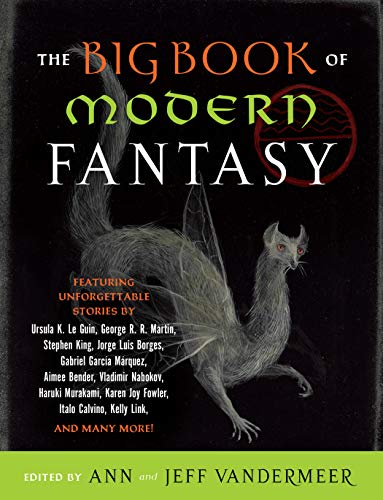
The following is the introduction to The Big Book of Modern Fantasyedited by Ann and Jeff VanderMeer, to be published by Vintage Books on July 21, 2020. Introduction copyright (c) 2020 by VanderMeer Creative, Inc.

Fantasy is a broad and various category that on the one hand can feature fire-breathing dragons and on the other can be as quiet as a man encountering a strange plant. As with The Big Book of Classic Fantasy, we have worked from a simple concept of what makes a story “fantasy”: any story in which an element of the unreal permeates the real world or any story that takes place in a secondary world that is identifiably not a version of ours, whether anything overtly “fantastical” occurs in the story. We distinguish fantasy from horror or the weird by considering the story’s apparent purpose: fantasy isn’t primarily concerned with the creation of terror or the exploration of an altered state of being frightened, alienated, or fascinated by an eruption of the uncanny.

Argument over the details of this broad definition could go on for hours, days, lifetimes. Only the most narrow and specific genres can be defined with precision, and fantasy is one of the broadest genres imaginable, if it even qualifies as a genre and not a mode, tendency, tradition. But every anthology needs criteria for selection, for inclusion and exclusion. For us, the defining moment of fantasy is the encounter with the not-real, no matter how slight, and what that moment signifies. Sometimes it is the entire world and sometimes it is the slight distance from reality that allows a writer to bring our reality into focus in a meaningful way.

The defining moment of fantasy is the encounter with the not-real, no matter how slight, and what that moment signifies.

We defined classic fantasy as stories from the early nineteenth century up to the end of World War II in 1945. Modern fantasy, then, begins with the end of the war. There are practical reasons for this separation: we knew it would require two books to offer an acceptable selection of the body of work we wanted to draw from, and we wanted those books to be balanced in size and scope. However, the separation also makes sense in the context of what was happening culturally in the middle of the twentieth century.

Soon after 1945, fantasy solidified into a publishing category. In 1939, two pulp magazines were established that helped readers see fantasy as its own category, separate from both weird/horror and science fiction: Unknown, edited by John W. Campbell, and Fantastic Adventures, edited by Raymond A. Palmer. Campbell and Palmer were quite different as editors, but they created markets for stories that were lighter or less horrifying than those in Weird Tales and its imitators, and not beholden to pseudo-scientific rationalizations that grounded the science fiction in Astounding and Amazing magazines. Nineteen forty-seven saw publication of the first Avon Fantasy Reader, edited by Donald A. Wollheim, and then in 1949 The Magazine of Fantasy, retitled The Magazine of Fantasy & Science Fiction, reappeared with its second issue and continues to be published up to this very day. F&SF (as it is known) lived in the liminal space between the pulps and the commercial slick magazines, publishing writers who had established themselves in the pages of Weird Tales and Unknown alongside writers like Shirley Jackson and James Thurber, familiar to readers of The New Yorker. While the popularity of these publications varied, they had a strong effect on English-language writers in particular, creating a sense of a type of fiction called fantasy that was different from other types of writing. F&SF in particular is heavily represented in this volume.
Just as fantasy was beginning to become a recognized, separate type of writing in U.S. magazines, the postwar boom in paperback publishing opened up new opportunities for writers and readers both, creating a space for the phenomenal success of Tolkien’s Lord of the Rings novels in paperback in the mid-1960s, and leading to countless imitators, some of them also bestsellers. The next decade saw the rise of the Dungeons & Dragons role-playing game, the conception of which was influenced not only by Tolkien but also the writing of well-known genre fantasy writers such as Fritz Leiber and Jack Vance (plus unjustly lesser-known ones, such as Margaret St. Clair). D&D would go on to influence not only the structure and content of other games (including computer games) but also many works of fiction, including television shows and movies. By the 1980s at the latest, fantasy, as a marketing category, was a significant part of most media. Today, it is arguably the dominant category of pop culture.

To some writers, fantasy is an element in a wider set of tools that can be taken out and used for a particular story or novel. Other writers are born with a worldview that skews toward fantasy or become steeped in the non-real and it becomes part of their core identity. Neither approach is inherently better than the other, but for the purposes of post–World War II fantasy it often signified a continuing widening of the breach between the real and the non-real in terms of what most general readers think of as “fantasy” and what kinds of fantasy have been most accepted by genre communities. At times, fantasy has become “that which is produced by a fantasy writer” or “that which I recognize as fantasy because of pop culture.”

The power of pop culture to familiarize readers with the fantastical cannot be overstated. Inherent to popularity is a tendency to render key elements familiar and conventional, even safe. Marketing categories let you know what to expect. (While this can create cliché and generic qualities, they also allow subversive and genre-defying material to reach a wider audience, by allowing “mimics” of a kind to infiltrate the mainstream. The cuckoo’s egg that cracks open to reveal a fairy.)

After 2001, pop culture and fantasy were nearly synonymous.

In a purely technical sense, until recently, sophistication in movie and television versions of fantasy has lagged behind the sophistication of even the most generic Tolkien-derivative fantasy. Thanks to Arthur C. Clarke and Stanley Kubrick, the year 2001 has a mythical science fiction meaning, but the actual year itself proved to be one of the most important in the history of pop culture fantasy, because it was at the end of that year that the first Harry Potter and Lord of the Rings movies were released, having an effect on the popular imagination of fantasy comparable to the effect of Star Wars on the popular idea of science fiction in 1977. Before 2001, the influence of written fantasy and Dungeons & Dragons made it a major source for much pop culture; after 2001, pop culture and fantasy were nearly synonymous.

Yet to this day, despite any amount of commercialization of fantasy, the short story remains a wild and unpredictable delivery system for unusual and bizarre fantastical ideas, images, and  characters. Sadly, the depth and breadth of this wildness often remains half-unseen. The post–World War II split between fantasy and literature, while hardly as deep as that between science fiction and literature, effectively rendered certain types of writing invisible to large groups of readers. For instance, The New Yorker’s long history of publishing fantasy stories has often been obscured by the magazine’s reputation for publishing slice-of-life stories. Even in the 1980s, when the craze for “dirty realism” was at its height among the English-language literati, all but the most puritanical literary magazines and journals still published stories with fantastical elements (often calling them “surrealism,” “fabulism,” or “magical realism” to distinguish them from genre fantasy). These days, we’re used to seeing fantasists such as Steven Millhauser and George Saunders appear in both The Year’s Best Fantasy and Horror and The New Yorker.

Because of the opposing poles of ubiquitous pop culture and literary movements like Magic Realism in Latin America, “fantasy” as a concept found favor in the mainstream, encouraging many writers who didn’t identify with the fantasy genre, or had been scared away from the fantastical by its genrefication, to employ fantasy as a device or idea in their fiction—including and up to a point where it is fascinating to discover that some stories that are clearly fantasy, coming from the mainstream side, have been ignored or dismissed as “not really fantasy” by the genre side. Conversely, on the “mainstream” side fantasy is often seen as referring solely to some bastard child of Harry Potter and Tolkien, with Borges or Calvino, for example, not fantastical at all—ironic, since Borges appeared more than once in F&SF and had little patience for the division between “popular” and “literary” fiction.

The post–World War II split between fantasy and literature rendered certain types of writing invisible to large groups of readers.

As ever in our anthologies, we seek to repatriate these “sides” because they are, in fact, closely related on the page, as opposed to their position on the map out in the world. That a kind of not-seeing occurs in both directions might best be exemplified by our experience of a major SF/F editor calling Jorge Luis Borges, derisively, “small press,” while the editor of a major mainstream literary market for fiction once in front of us fiercely denied that Borges and Calvino contain any trace of fantasy. Fantasy was wizards and, oddly, zombies.

In The Big Book of Classic Fantasy, we introduced the concept of “the rate of fey” as a barometer for fantasy, providing for fantasy what “sense of wonder” provides for science fiction and “the uncanny” provides for the weird—the fey is an otherworldliness, a strangeness emanating from the kinds of associations generated by elements like fairies, elves, and talking animals rather than from ghosts or monsters. With popular culture making many elements of fantasy so familiar as to be clichés, rates of fey diminish, just as in science fiction the sense of wonder diminishes with the umpteenth invocation of a conventional faster-than-light drive. The ubiquity of fantasy throughout post-1945 culture provides different challenges to writers who seek originality and otherworldliness. That struggle can be productive. For the period we cover in this volume, 1945 to 2010, readers will find a wonderful chaos of different approaches from writers with vastly different points of view and heritage, and often they will find those writers extending and wrestling with traditions and creating unpredictable new styles from old.

Organizing Principles and Process

Modern-era fantasy fiction poses a challenge related to organization, in that the wealth and variety of material can make a mockery of process. Indeed, most such collections trend toward the realm of “treasury” rather than “anthology.” The material, in a sense, demands it, because too narrow or too tight a focus risks leaving out many treasures. Whereas with our anthologies The Weird and The Big Book of Science Fiction there were definitional exclusions that made the task easier, in fantasy the wild, broad nature of the fiction makes that impossible. However, we have come to accept over a career of editing anthologies that no anthology can be perfect and that the best way to come close is to let your reach exceed your grasp (as Angela Carter liked to say).

Perhaps the most important idea in compiling this anthology was simply to make sure that no matter how surreal the fantastical elements, they are present throughout the story. These elements might be quite normalized or presented as normal, but whether it’s a person transformed into an animal or the effects of magical systems, the story is permeated by the fantastic.

We also found it worthwhile to think about organization in terms of how writers draw ideas from each other. The networks of influence linking many of the writers through this volume are not always predictable or well-known. For example, Vladimir Nabokov and Jorge Luis Borges stand out as having helped stimulate creative energy in many different writers, including writers on both sides of the post-war literary/genre divide. Borges, for instance, reoccurs as a clear and stated influence in the work of Angela Carter, Michael Moorcock, and Antonio Tabucci, to name just three. Often, also, fairy tales and folktales provide the foundation from which these writers launched their stories, but not in any simple way—the various crises, technological developments, and social changes of the twentieth century ended any possibility of serious writers just reiterating the tales of the past. Instead, for example, we get Abraham Sutzkever using a kind of folktale idiom to express what realism feels wrong for: his experience of the liquidation of the Vilna ghetto. Fantasy becomes something of use to a writer to make a political or social statement. It’s not just a mode, it’s a tool allowing conversation with predecessors and conversation with an often bewildering and sometimes horrifying world; it’s no surprise that absurdism and surrealism arose when they did. While in The Big Book of Classic Fantasy, we found few out-and-out surrealist stories that fit the book’s goals, with this volume we find numerous and diverse writers claiming surrealism as an inspiration as a movement and a valuable technique for writing about life when the “real world” feels far from real.

To select the stories in this book, we sought out previous anthologies to analyze existing canons—canons seen as “literary” and canons seen as “genre,” canons national and international. We evaluated individual stories in those canons to see how they held up for us as readers today. We looked for stories that seemed to use fantasy in ways that transcended pastiche. We looked for productive connections. We did not worry overmuch about including any particular individual writer, but sought more to show the diversity of approaches possible.

We chose a rough end date of 2010 to maintain the decade-long “exclusion zone” we feel is important for objectivity, and which we have used in our other anthologies. Several anthologies, including various annual best-of-the-year collections, already cover the past ten years in fantasy fiction. But this exclusion did mean that some emerging writers of note from the past decade had only published a few stories by our cutoff date and could not be included herein.

On a higher level of hierarchy, our process and thought process was informed by, as previously noted, ignoring where a story came from or how an author self-identified (genre or mainstream); repatriating the fringe with the core (turning a spotlight on forgotten writers); articulating the full expanse (including non-Anglo stories).

International Fiction

English-language modern fantasy could itself fill a five-hundred-thousand-word volume. For this reason, we have included fewer translations than in some of our prior anthologies. However, we have still provided a robust selection of international fiction, much of it little known or in English for the first time.

We, in English, still cannot see the entirety of world fantasy, which is both depressing and a challenge for future editors.

First-time translations include bestselling Swedish author Marie Hermanson’s “The Mole King,” Polish writer Marta Kisiel’s “For Life” (a writer never before published in English), Mexican writer Alberto Chimal’s “Mogo” and “Table with Ocean,” and the amazing “The Arrest of the Great Mimille” by French author Manuela Draeger. Other highlights of translation include Silvina Ocampo’s major long story “The Topless Tower,” Abraham Sutzkever’s “The Gopherwood Box” in a new translation, Czech writer Vilma Kadlečková’s “Longing for Blood” (her only story in English), and Intizar Husain’s “Kaya-Kalp,” rescued for this volume from obscurity in a long-forgotten journal from the 1960s.

It is worth noting that if an English-language modern fantasy volume could fill five hundred thousand words, then so, too, could, for example, “Latin American women writers of fantasy,” if only more was available in translation. We, in English, still cannot see the entirety of world fantasy, which is both depressing and a challenge for future editors to rectify more fully.

Emphasized in This Anthology

Whereas our prior classic fantasy volume featured many fairy tales with actual fairies and general uses of magic, this volume focuses more specifically on dragon stories. Something about the ferocity and versatility of the idea of “dragon” appears to have allowed these beasts, once at risk of extinction, to flourish into the modern age of fiction. Or, perhaps, we as editors were just much taken with them. (Certainly, here in Florida the proliferation of iguanas and other giant lizards due to climate change can have serious and important effects on one’s subconscious mind.)

As in classic fantasy, there are also many stories involving quests and swordplay. How could there not be? The people involved are not the typical heroes, however, and their atypicality seems more emphasized in these stories than in the classic tales. We also see more heroines, as in Joanna Russ’s story “The Barbarian” and in Jane Yolen’s “Sister Light, Sister Dark.” And unlikely heroes, such as in Fritz Leiber’s “Lean Times in Lankhmar” and Jack Vance’s “Liane the Wayfarer.” Leiber is featured in the classic volume with his first Grey Mouser tale from the 1940s, and it is striking to see how the earnest innocence of that yarn had given way to an altogether more realistic and jaded view of humanity and of our two heroes in “Lean Times.”

In 1939, Unknown and Fantastic Adventures magazines sought to bring more lightness and humor to fantastic fiction, and that effort had a lasting effect. Humor plays a large role in many of these stories, from David Drake’s “The Fool” to Terry Pratchett’s “Troll Bridge,” showing the versatility of fantasy as a genre. Sometimes, this humor has a satirical edge, as in our excerpt from Bulgakov’s The Master and Margarita (which we chose to place by its date of translation into English, given the novel was still very relevant to the Soviet condition at that time).

Fantasy has long been associated with kingdoms, and in this volume you’ll see that royalty, and attitudes to it, has changed in fantasy stories after 1945. For example, in “The Mole King” by Marie Hermanson, the reluctant King would prefer to live underground, like a mole, rather than face up to any royal responsibilities. In Sylvia Townsend Warner’s “Winged Creatures,” a sad little kingdom is undone by plague, and love is thwarted by time and chance. The prince in Intizar Husain’s story “Kaya-Kalp” decides he likes being a fly, after the princess changes him nightly in order to escape detection by the evil giant who has imprisoned her.

When reality itself often feels unbelievable, fantasy may allow the most perceptive portrayals of the real.

Metamorphosis is a subject of fantasy going back at least as far as Ovid, and perhaps best represented in the twentieth century by Kafka’s famous story. Modern fantasy features many highly unusual transformation stories. Qitongren’s “The Spring of Dongke Temple” includes a protagonist who wishes to become a bird, like the monks that preceded him. Stephen King’s “Mrs. Todd’s Shortcut” is a transformation story of sorts, in that Mrs. Todd becomes younger and younger each time she takes that shortcut. Gabriel García Márquez celebrates an old man’s transformation in “A Very Old Man with Enormous Wings.”

As urbanization has progressed, fantasy has also accommodated it, leading to inanimate objects as sentient beings, such as trains, sheds, and even cities (Sara Gallardo’s “The Great Night of the Trains,” Victor Pelevin’s “The Life and Adventures of Shed Number XII,” and Tanith Lee’s “Where Does the Town Go at Night?”). Even in urbanized modernity, talking animals abound, not to mention the talking plants and insects in Edgar Mittelholzer’s wonderful and newly discovered “Poolwana’s Orchid.”

Also, in a definitely modern and “relevant” vein, fantasy with a social message has flourished, allowing the distance from reality to be effective and sometimes biting. Examples include Alasdair Gray’s “Five Letters from an Eastern Empire,” Rachel Pollack’s “The Girl Who Went to the Rich Neighborhood,” Haruki Murakami’s “TV People,” Shelley Jackson’s “Fœtus,” and Sumanth Prabhaker’s “A Hard Truth About Waste Management.” When reality itself often feels unbelievable, fantasy may allow the most perceptive portrayals of the real.

The Gray Lands

We would like to end this introduction on a rare personal note. For more than thirty years, we have each of us edited fiction magazines and anthologies. We have had successes and discoveries beyond our wildest dreams. Our joy has existed in championing new and unjustly obscure voices, and, somehow, this quixotic quest has been rewarded beyond hope. It is unbelievably satisfying, but it also takes a toll. As importantly, we believe it’s vital to make space for the next generation and to encourage the upcoming, diverse future of anthology editors. For these reasons, The Big Book of Modern Fantasy is our last anthology together. We hope you enjoy it, and we hope you understand how much we love fiction and how much we love storytelling, and what satisfaction it gives us to present some new gems to readers that were once lost to the world.

Thanks to Matthew Cheney for his contribution to this introduction and our invaluable conversations about the history of modern fantasy.

Thank you for reading.

A Town Taken Over by Children from the Rainforest

In lucid prose, Spanish novelist Andrés Barba transports the reader fully into San Cristóbal, a city on the edge of a rainforest somewhere in Latin America, and into its daily life, petty politics, and societal fissures. A Luminous Republic cuts close to this pandemic moment in the fear, paranoia, and questioning that throbs through its pages. The novel recounts of an episode when an outside menace ravaged the city. The tormentors? A gang of 32 children, who appear to be from the jungle and speak an unfamiliar language. At first, they scavenge and commit minor theft but then their mischief grows violent, and San Cristóbal’s own children start defecting to join them. The adults have to take drastic action to stop the onslaught. The novel, slim at under 200 pages and utterly disconcerting to its very last sentence, also contains a period of quarantine. 

The novel takes the form of a testament offered after the incident, which might soothe and remind that this, too, shall pass. Barba’s narrator, a social worker who dealt with the debacle, reconstructs the incident (and its startling end, to which the novel’s gorgeous, enigmatic title refers) and its repercussions—personal, psychic, and public—well after the chaos has ended.

 A Luminous Republic, originally published in Spanish in 2017 to great acclaim, debuted in the U.S. with Lisa Dillman’s translation in mid April. I spoke to Barba about considering his novel right now, what childhood really means, and how we might narrate this time in a future one.


J.R. Ramakrishnan: It’s been an interesting, and perhaps an extra-chilling, experience reading your book right now. The town’s paranoia of the outsider children who cause havoc mirrors a bit of what we are going through globally with the pandemic. You also have a sort of quarantine in it too. I wonder what you think of this, and of how your novel reads now?

Andrés Barba: It’s true that there’s a strange parallel between what happens with these children and the Coronavirus; they come from somewhere else and “colonize” an environment, change the order of everything, force us to examine whether all of the old words we’ve long been using to describe our world still have the same meaning in the “new world.” I suppose that, in a way, is what literature in general tries to do: explore whether the language we’re using fits the world we’re living in, that the words we’re using are the right ones for the moment, or whether there are certain values or concepts that have become obsolete, that are no longer applicable to the feelings and concerns of a new moment.

JRR: When did you start thinking of childhood and related ideas of innocence? There is a gap between the innocence of the town’s own kids and other children in the book. But even before the outside children arrive, you note the pre-existing divide between the town’s children and the indigenous Ñee children, who can be ignored. It seems that this othering of children (who are not the same as “ours”) is especially intense, perhaps because of this idea of childhood purity? Could you talk about this aspect of the book and how you considered it?

AB: Yes, that’s right. In this novel, there are basically three groups of children: the “normal” children, the ones from the city, who live with their families and adhere to the adult conception of childhood; the Ñeé children, who are indigenous, and as such are seen as outsiders within the city, though they’ve been accepted by the paternalism of society; and the “wild” children, who appear suddenly and change the old conception of childhood entirely. 

These three types of children are also three fictions, made by adults to interpret a reality that, at its heart, is unreachable to them: childhood. Our concept of childhood—you can trace how it’s changed over time—is a fiction that has adapted to our needs: from the incarnation of innocence to the representation of the lost paradise, through the “good savage” or the “divine animal,” we’ve always determined the nature of childhood based on the needs of the present moment. But childhood itself, the true heart of what a child is, is out of our reach. It resists our fiction, our kitschy sense of what it should be. 

JRR: Your main narrator is a social worker who deals with the crisis of the children but you also have the perspective of one of the town’s children, Teresa Otaño, who writes an Anne Frank-style memoir about the time. How did you imagine this part? It seemed extremely real to me.

The dynamics of desire, envy, and fascination between children is incredibly rich as literary material, but I’ve rarely seen it addressed in literature.

AB: I needed a child’s or semi-child’s voice (Teresa is almost a teenager) to complete the picture. We needed to have a sense, even if it was very approximate, of how the group of “civilized” children looked at the group of “wild” children. I think the dynamics of desire, envy, and fascination between children is incredibly rich as literary material, and I’ve rarely seen it addressed in literature. When children speak in first-person in novels, it’s often kind of corny; but a child’s gaze, in reality, is always quite sharp. There’s nothing corny about it. Children are much less sentimental than we want to believe. We’re more sentimental when we observe children than they are when they observe us. 

JRR: From my understanding, the setting of the town of San Cristóbal is wholly made-up. The rainforest seems a little tricky to describe because its monotony but you captured its layers. I especially enjoyed this part: 

“The green that devours everything, an enormous, thirsty, mottled, stifling, powerful expanse in which the strong are sustained by the weak, the great steal light from the small and only the microscopic and diminutive can stagger giants.”

Have you spent much time in the rainforest? 

AB: Yes, you’re right, it’s a total invention; it could be many countries in Latin America, but it isn’t any in particular. The only rainforest I know well at all is the rainforest of Misiones, in Argentina, at the border of Brazil and Paraguay, a place that shares a lot with the place in the novel. But the fact that the place is anonymous is deliberate.

JRR: You also translate English and Italian novels. Did you consider doing this translation yourself? I imagine this is not customary. How do you think this work reads and feels in English? In recent years, I have acquired Spanish and it seems the gulf with English is so large—especially the million-syllable words, sentence lengths, nuance of the subjunctive, etc.

AB: No, I would never translate my own books. I think you have to translate into your mother tongue, never into a second language that you’ve acquired, no matter how well you speak it. You need a knowledge of the language you’re translating into that isn’t just lexical; it has to be sentimental and intuitive as well. You have to know by intuition how to respect the spirit of the book you’re translating. 

In this case, I couldn’t have asked for a better translator, Lisa Dillman. We’ve been good friends for many years, we’re almost like a literary couple. I wouldn’t think of any other English translator but her.

JRR: The novel is narrated as a reconstruction of the past, as well as its haunting of the present. I suppose this structure also made me think of the question of how we will tell this pandemic story once it’s long over, and especially how we think/thought and talk/ed the events then v. now. I have a question related this:

What do you think books have to offer in this time of panic? It does seem that many people are opening books for the first time in a long time since they can’t leave the house.

I don’t think books necessarily have the capacity to do ‘good.’ Reading can also make you more stupid.

AB: I don’t think books necessarily have the capacity to do “good.” Adolf Hitler was a great reader. It’s not so much that people read for the sake of reading, but that they read “well,” which is to say that they read books that take them out of their preconceived ideas about the world, that help them think about the world from new perspectives, think critically about what’s going on around them. So I’m not sure we can know if the fact that people are reading more is also helping them to “read” the world more intelligently. Reading can also make you more stupid.

JRR: As a novelist, who obviously considered this structure (with a fantastical episode as a plot), have you perhaps begun to think of how this episode and its many stories might be narrated in the future? I’m not sure if it’s a reasonable or realistic question but it certainly occupied me as I read your book, especially its last line. Any general thoughts?

AB: That will be very interesting! I think it will happen a bit as it does in this novel. The order in which we hear testimonies of this moment will be a reflection of how our society is composed: first will come white men from rich countries, then women, then people of color and racial minorities, then sexual minorities, then children, then whites from poor countries, and so on. 

You Can’t Just Take Things That Don’t Belong To You

“Absences”
by Mary Jones

The summer my father left my mother and moved to California to find himself, my mother rented an apartment in a small Upstate New York town called Rome, where she was born, and where her sister and her mother still lived. She wanted us to be closer to people who could help with us as she got back on her feet. She took a job as a waitress at an Italian restaurant on Dominick Street and worked very long and very late shifts. After work she’d come home and soak in a steaming hot bath then go into her room and lock the door and cry until the grey hours of morning. We’d sleep late, often until one o’clock in the afternoon, right around the time when Days of Our Lives would start, then we’d sit around the kitchen table and stare at the little black and white TV on the counter while we ate Captain Crunch, and my mother smoked her cigarettes, and drank her black coffee. This was classic Days of Our Lives; Days of Our Lives that had never been better. It was the summer Hope almost married Larry Welch, when Bo, wearing a black leather vest, drove in on his motorcycle to Bonnie Tyler’s “I Need a Hero” and rescued her from the wedding. We all stood and cheered and hugged as Bo drove Hope away on the back of his motorcycle in her giant white wedding gown. There was no one in the world we loved more than Bo. 
I didn’t understand what it meant that my father had to find himself. To me he seemed to be right there. I didn’t know why he left us. My sister and I were good kids and we got along with each other. We spent our days that summer lying in the sun in the back yard, or talking to our old friends on the phone. Sometimes we walked to our grandmother’s house, or rode our bikes to see our aunt. We didn’t hear from my father at all during this time, except for a single picture he sent of himself on a beach in California. In the picture the sky was pink and the low clouds in the distance looked like ghost ships. My father’s blond hair was reddish in the setting sun. He was wearing a white t-shirt, faded jeans, sneakers, and sunglasses. My father was a tall, good-looking man—I understood from a young age that he was the kind of man who was hard to hold down: women wanted him, they went after him, and they didn’t care about my mother, or about us—and here in this picture, he could have been a movie star. On the back he wrote the words, just, “wish you were here.” My sister and I were baffled by this sentiment and it took on an enduring importance in our young hearts. Did he mean he wished we, my sister and I, were there, or did he mean my mother? And if he did mean my mother, did that mean he still loved her, that one day he might come back for her and take us all away from this dreary town to a life that was warm and bright.

That fall I was starting the sixth grade. I hated my new school and all the dumb, dirty-haired kids who went there. My best and only friend was Jessica, a chubby girl who had frizzy red hair, squinty green eyes, and freckles. Physically, we were opposites; I was tall and thin with dark hair and dark eyes. She had some kind of seizure disorder, a condition I’d never seen before or since, and sometimes, right when you were in the middle of talking to her, she’d slip into one of her spells. Her eyes would roll into the back of her head and the muscles in her face would freeze and twitch, then, seconds later, just like that, she’d pick up with whatever she was saying like nothing had happened. Sometimes this would happen over and over while you spoke with her. She said the little seizures were called “absences.” She had no memory of them, and while she wasn’t exactly sure what triggered them, she assured us that it was absolutely no big deal at all and that we should just ignore it when it happened. 

The other kids at school seemed to like me well enough, but this was not the case for Jessica. They were not exactly nice to her to her face, but behind her back they were downright vicious: they called her Beef Jerky and did hideous impressions of her as she passed them in the hallways. If she knew about this, she never said anything about it, and she didn’t seem to really care. She had been held back in second grade and she’d started school a year late so she was older than everybody else by a mile. She’d already turned thirteen. She already had her period and had boobs and wore a bra. She’d already been as far as third base with her boyfriend, Tom, who was sixteen, and who owned his own car, which he picked her up in every day from school. She smoked Marlboro Reds, had tried pot, and even had her own favorite drink, Southern Comfort and lemonade, which we drank at her house some Friday nights when her mother was at work.  

On the way to school she liked to stop at Midnight Pharmacy, a small everything store, right next to our school. It was owned by a very old man named Mitch whose back was hunched at an unnatural angle. He wore a white button-up shirt, a black tie, and thick glasses. He did crossword puzzles at the cash register and never looked up unless someone stood right in front of him. Mornings, Jessica would get to the playground wild with excitement and we’d run to the school bathroom and she’d show me all the things that she stole that day, always giving me the things that I wanted most. I’d put on the black eyeliner, rub the strawberry lotion over my arms. “Come with me next time,” she’d say, laughing. “It’s so fun. You have to try it.”  

I’d been taught that it was a sin to steal, but I met her there one morning before school anyway. I was afraid we might see a teacher, or someone else from school, but we didn’t. We went into the make-up aisle and pretended to be talking about an assignment. I picked up a lipstick, examined it closely, then let it go up the sleeve of my white winter coat as I reached for another. The second one I made an elaborate show of putting back. After that, I slid a black eyeliner into my pocket. My heart pounded and blood rushed to my head. We walked out slowly, still talking about our schoolwork, then we hugged with happiness and ran all the way back to the playground. Before long, we were bringing our backpacks to Midnight Pharmacy, tossing in all the little things that we loved, mostly beauty products and candy. Then we moved on to Great American, a grocery store just down the block from the school, and to the 7-Eleven on the corner of James and Sycamore. It went on for months. I kept the stuff we took at my house—no one went into my room, or looked at my things. 

My mother still worked late nights at the restaurant but now she’d made friends with a few of the other waitresses, and after work they all went out for drinks. I was usually still awake when she got home. I’d hear her coming in, her body knocking into the table and chairs, glass bottles clanking in the refrigerator, then the click of her lighter, the smell of cigarette smoke, and she’d make her way into her room and fall onto her bed. Only an hour or so before her next shift would she rise to take her shower. I stood in the doorway of the bathroom and quietly watched as she put on her make-up. She sucked her cheeks in to get her reddish blush just right. She used a brown pencil to darken her eyebrows, then heated the tip of a black pencil with a lighter and lined the top and the bottom of her lid, turning the streak upward at the end to make her eyes look like a cat’s. She wore red lipstick, always blotting some onto a tissue which she left on the sink, and which I saw every time I used the bathroom for the rest of the day until I went to bed. 

One morning in January, Jessica and I were at Great American before school filling our pockets with tiny bottles of shampoo and mouthwash from the sample aisle. I saw a man coming toward us from the front of the store. He walked slowly up our aisle looking carefully at all the items on the shelves. He was a skinny man with thick blond hair, dressed neatly in a tan jacket, jeans, and sneakers. When he came along to where we were standing, he looked quickly at us. He seemed to be somewhat young. He turned the corner and was out of sight, but a moment later he was back again. 

This time he stopped in front of us, “Girls,” he said, “do you want to come with me?”

I lost my breath. “For what,” I said. 

“For all the stuff you’ve been putting in your pockets,” he said plainly. He looked around. No one else was in the aisle. Aside from a few cashiers, the store was mostly empty in the early morning.
Jessica took a few steps back and glanced over her shoulder, and for a second I wondered if she might try to make a run for it, but then her skin reddened and she started to cry. I tried to inhale but barely got anything in. I thought of my mother’s face, the shame she’d feel when she found out what we’d been doing. She didn’t need this, not now, and I felt sure it would be the thing that killed her. “Here,” I said, handing the man a crinkled ten dollar bill from my pocket. My aunt had given it to me for Christmas. I carried it with me in case we ever got caught. I knew it would not be enough to cover even half of what I’d taken that day alone, but it was all I had. “We were going to pay for it,” I said. When he looked at me doubtfully I added, “I swear. We were.” Then, “Please,” I said.
The man shook his head. He took a few steps away from us. For a moment I thought that everything would be okay. But then he turned and said, “Come on now, girls. Put the stuff back, and follow me.” He walked a few feet ahead of us. We looked at each other, emptied our pockets, then followed him down the aisle, and past the row of cashiers at the front of the store. There was a swirling feeling in my head and I thought that I might pass out. When he walked through the automatic doors and out of the store, Jessica and I both froze. “I’ll just have to take you to the station for a bit to fill out some paperwork,” he said. His face was expressionless. In the store, a young woman in the checkout line played peek-a-boo with a baby who was fussing in the front seat of her cart. “My car is right here,” he said, walking toward an old maroon sedan. He unlocked it. When we didn’t move, his tone deepened. “Come on now, girls,” he said. “You don’t want to make a scene for all your little friends to see.” Jessica’s face was wet with tears now. When we started moving toward the car, the man said very softly, “Good girls. That’s good girls. Good girls.”

I got in behind the driver’s seat, and Jessica got in behind the passenger seat. I knew she must have been thinking of her mother, a woman who was prone to fits of rage. She’d scream at the top of her lungs sometimes, the slightest things setting her off. I saw her punch through a wall once. Another time, when Jessica forgot to empty the dishwasher, she whipped a glass across the room. It hit the wall just behind where Jessica was standing, and shattered. Jessica had to clean it up. 

The car smelled of vanilla air-freshener and cigarettes. A crystal prism hanging from the rearview mirror shot tiny rainbows everywhere; they flickered and shimmered on the wood paneling of the dashboard. The leather seats were torn in places, the crusted foam leaking through. The engine was loud when he turned the key. Ice cold air blasted from the heater. The man lit up a cigarette, and unrolled the window a crack before pulling away. The sharp air from outside sent chills through my spine as his smoke blew into my face. “I saw what you girls were doing,” the man said after a few moments. “Not just today,” he said. “I’ve been watching you for a while.” 

“What do you mean,” Jessica said. “This was the first—”

The car was stopped at a red light a few blocks from where I lived. Flurries of snow sat almost motionless in the air. The man turned and looked at us. His eyes were light blue with flickers of darker blue. “Don’t lie to me,” he said. “Lie to your mommies all you want,” he said. “But please don’t lie to me.” He turned and looked out at the road. Joey Russo’s grandfather was crossing the street with his shopping cart full. When he got safely to the other side the man started driving again. He was quiet for a few minutes. Out the window kids were heading toward the school. There’d been a heavy snowfall the night before, and all morning we had the radio on praying they would announce a snow day. It was good packing snow, and some kids were having snowball fights as they made their way down James Street toward the school. In a few minutes, the bell would ring, and everyone would pour inside, change their wet boots to sneakers, go to their seats, say the pledge, and start their day. “You girls have to learn that you can’t just take things that don’t belong to you,” the man said. 

We drove along Black River Boulevard until it hit Mohawk Drive, then turned on Mohawk Drive, past the air force base and the row of abandoned factories, and a few minutes later, took the exit for Route 49. The car was big, and Jessica seemed small and far away on her side of the back seat. She rubbed her finger along the stiff edge of a rip in the leather. “Where are you taking us?” she said. I reached for her hand and squeezed hard.

The man didn’t respond. Instead he started talking about how he read that it was going to stay cold for a very long time this year. He said that one year, when he was very young, it snowed all the way through to the end of May. He went on about his childhood for a while, his life with his grandmother and his younger brother. He said there was nothing in the world he would want more than to be back there with them again.

I looked out of the window and kept silent as he talked. 

After a moment, he said, “How old are you girls, anyway?” He made eye contact with me through the rearview mirror. “Aren’t you a little young to be shoplifting?” he said.

“Twelve,” I said, though I was still eleven.

“Thirteen,” Jessica said. 

He shook his head, looking disappointed, then lowered his voice. “You’re very beautiful girls,” he said gently. He was looking at me again in the rearview mirror. I felt the skin on my face burn under his stare. I kept my head turned away. After a while he added, “I can see that you’re smart too.” He was quiet for a moment, then he said, “That’s what matters. Your beauty will fade someday when you’re older and all that will be left is what’s up here.” He tapped his head. He checked for cars before pulling away from a red light. “You girls can do great things with your life,” he said. “You can do anything you want to do.”

I felt a peace come over me. I liked him very much. I started to imagine that maybe we could keep in touch after all of this was over. Maybe he could be like a big brother, or an uncle who comes over on Sundays for dinner. I thought my mother would probably like him too. I caught his eye in the rearview mirror and smiled and he smiled back at me. 

Jessica was still crying. “It’s okay,” I said to her. “Don’t worry,” I said. 

“You’re not bad girls,” the man went on, looking out at the road. “You’ve just done a bad thing,” he said. “There’s a big difference there,” he said. “It’s a very important distinction.”

I felt a wave of shame for what Jessica and I had been doing, and I promised myself I was done with all that, that I wouldn’t take things that didn’t belong to me anymore. 

Jessica started to breathe harder. “Come on,” I said. “Calm down,” I told her. “It’s going to be okay.” The man looked pleased. I went on. “He just has to take us to the station to fill out some paperwork.” 

The busy road had given way to the country road. I looked out of the window and saw barns go by. I’d never been on this road, or anywhere near here. We were getting far from town, far from everything that was familiar. I wondered, then, why he wasn’t wearing a uniform. Why he didn’t have a police car. 

“Hey,” I said softly. “Are you really a cop?” 

“That’s a weird question,” he said, sort of smiling. His face reddened and he looked around. He lit a cigarette. His forehead twitched. “What else would I be?” he said.

His blond hair was thick and chopped looking. He had cut it himself. Staring into it, I suddenly felt very dizzy.  

“I want to get out of this car,” Jessica said, then. “Let me out of this car,” she said.

The man stayed calm. “That’s not what’s going to happen,” he said. 

It was still snowing. The snow was coming down hard now, just pouring out of the sky, being dumped out of the sky, and all along the road in front of us, in the car, everywhere, the bright whiteness was a blur. I put my head into my knees, pushed against the pulling. I felt as if I might be sucked out of the car and into the sky.

I caught Jessica’s green eyes and held on. She was breathless now, sweating. She tried the door but it wouldn’t open. “Mom,” she started to say. “Mom,” she screamed. “Mommy.” The sound poured into me, filled the car, echoed out into the snow-covered fields all around us. 

My heart pounded. 

Jessica slipped down in her seat, then, and her body became rigid. She started to jerk and twitch. When we first became friends, her mother had warned me that she might have a seizure like this one day. She’d told me what to do to keep her from hurting herself. She said it would only last a few minutes, and that Jessica might be a little confused and weak afterwards, but she’d be okay. I pulled her head onto my lap, turned her sideways so she wouldn’t swallow her tongue.

The man kept glancing at us through the rearview mirror. “What the fuck,” he said. “What the fuck is going on,” he said. “What’s wrong with her,” he said, screeching his car to the side of the road. He turned and looked at me, his lips curled with disgust. “Is she some kind of retard,” he said. “Is she some kind of fucking freak.”

“She’s having a seizure,” I said.  

What happened next happened very fast. He got out of the car and went around to Jessica’s side. He opened the back door, yanked her out of the car and let her fall, still convulsing, into the snow bank on the side of the road. I was still. My legs were heavy. I looked up at him and for a second I thought that he would slam the door shut, and drive off with me. Instead his face scrunched with anger. “You too,” he said. “Get the fuck out,” he said through closed teeth. “Get out of my fucking car right now you freaks.” He grabbed my arm and yanked me from the back seat. I stumbled onto the ground next to Jessica. He got back in the car drove away. I pulled Jessica’s rigid body far away from the road. We had been taken. But now we were free. A man had us. But now he let us go. A surprising feeling passed over me, then, almost like sadness: he didn’t want us. It was a quick, sickening impulse, and I recognized it as strange as soon as I felt it. I turned and vomited into the cold white snow. When I was finally done, Jessica’s body had softened.  

We were far from anywhere, all around us just snowy fields. The cold air stung my face, my hands. I worried about frostbite, amputation. When Jessica got enough strength back we started walking. Just about a half hour down the road was a house. The woman inside was kind. We told her we were lost, and she let us use her phone and her bathroom.

When Tom got there a little while later, he wanted us to call the police and report the man who he was sure would have raped and killed us, but we reminded him that we’d been stealing, committing a crime, and we all agreed that the man would probably go free, if they ever found him at all, while the two of us ended up in juvy. We all promised to never tell anyone about it, and we never did, not even our mothers. I got a trash bag, a big one, a lawn bag, and filled it with every single thing we ever stole and threw it in the dumpster behind the school. Jessica and Tom broke up not long after that, and in junior high, I got in with another crowd, girls who were on the cheerleading squad, who read books for fun, and worked on the school newspaper. Before I knew it, Jessica and I had completely lost touch. When we’d see each other in the hallways we’d say hi, but that was all. You would have thought that what we’d been through together would have brought us closer, that we’d share some special and unbreakable bond, but it was the opposite: In my mind the whole thing was so intricately connected to her that even a glimpse of her green eyes in the hallway could make me get physically sick.

My father eventually found himself. He came back to New York looking tan and gorgeous just over a year after he first left. His hair had turned completely blond from the sun. He’d had a girlfriend in California, but it didn’t work out, and somehow that experience, him having and losing this other woman, made him realize that it was us he’d loved and wanted the whole time, and he didn’t want to miss out on any more of our growing up. That was all well and good, except for the fact that he was too late. My mother had a boyfriend now—they were thinking of moving in together—and whatever love she’d held in her heart for him all those nights crying in her room had hardened into something that was more like hate. I didn’t blame her: I hated him too. He’d left us for dead. Some absences you can’t make up for, and more often than not, walking away from love means walking back to hate. There’s nothing you can do about that, except to move on, and try to do better the next time. Or the time after that.  

11 Novels Starring Essential Workers

During the coronavirus pandemic, we’ve all become keenly aware that there are certain jobs that need to be done for society to function at even its most basic level. As a nation, America has found it easy to call essential workers heroes and offer up nightly clapping and Blue Angels flyovers — harder to provide well-deserved hazard pay, personal protective equipment, and safer working conditions.

Collectively, it’s important for us to remember that essential workers are the heroes of their own stories, not just peripheral players in the stories of others. The following novels center the lives and experiences of mail carriers, grocery workers, healthcare providers, custodians, and other people with essential jobs, whose full humanity — on the page, as in life — far exceeds the boundaries of their job descriptions.

Convenience Store Woman by Sayaka Murata

Keiko Furukura applies to work at the Hiiromachi Station Smile Mart on a whim as a teenager and ends up staying for 18 years. Prone to unusual impulses, she finds that the clear rules of social engagement and chance to copy the speech patterns and behaviors of other employees provide a path to relative normalcy. She becomes one with the store and outlasts countless managers, coworkers, and customers. But when she hits 36 without marrying, starting a family, or pursuing a more prestigious career, she must decide how much of herself she is willing to give up to conform to the entrenched expectations of others. After reading Murata’s English-language debut, you will never look at convenience stores or their employees quite the same way again.

This Lovely City by Louise Hare

Hare’s debut novel follows Lawrie Matthews, a young Jamaican immigrant who travels to war-ravaged London aboard the Empire Windrush in 1948. He begins to carve a place for himself, working as a postman by day and playing jazz music in Soho clubs by night. When both he and a white woman walking her dog discover the body of a Black child near a pond, racist police are quick to dismiss the other witness and eager to pin the crime on Lawrie or any other member of the growing West Indian community.

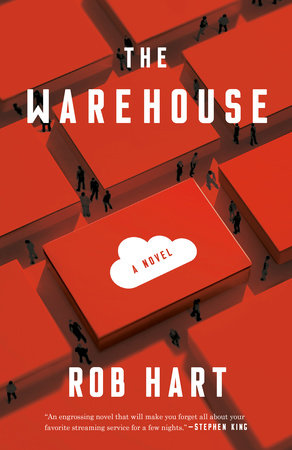
The Warehouse by Rob Hart

The Warehouse by Rob Hart

In this dystopian thriller, the totalitarian regime controlling people’s lives is an Amazon-esque mega-corporation called Cloud, which dominates both the retail and labor markets. After a series of mass murders have shut down all other stores, everyone either works for or is a customer of Cloud. Paxton reluctantly works as a Cloud security guard after his own business was bankrupted by their monopolistic practices while Zinnia works on the warehouse floor, though she is actually a secret operative on a corporate espionage assignment. Their story is interspersed with broadcasts to employees from Cloud’s billionaire founder, who is dying of pancreatic cancer. The book is dedicated to Maria Fernandes, who accidentally suffocated on gas fumes sleeping in her car while working three part time jobs.

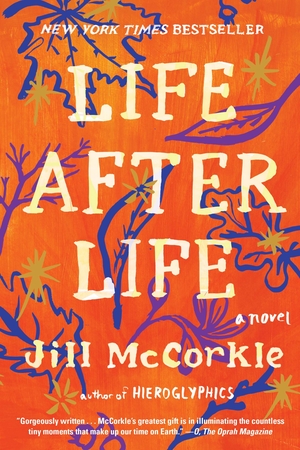
Life After Life by Jill McCorkle

Hospice worker Joanna comforts the dying and records the stories of their lives. She is the connective thread between the many residents and staff members at Pine Haven Retirement Facility, whose linked stories and memories and desires make up this book. McCorkle resists providing her complex, not-always-likable characters with easy closures, reconciliations, or happy endings, but delivers an impressive finale nonetheless.

The Beautiful Things That Heaven Bears by Dinaw Mengestu

The Beautiful Things That Heaven Bears by Dinaw Mengestu

Mengestu’s novel follows Sepha, an Ethopian immigrant running a small grocery store in a gentrifying neighborhood of Washington, D.C. Though born to an upper class family, he fled Ethiopia after his father’s murder and now socializes with friends from Kenya and the Congo who pursued more prestigious degrees and jobs in America than he did. When a white academic and her biracial daughter move next door, Sepha forms romantic feelings towards the mother and a tender friendship with the girl against the backdrop of simmering racial tensions in their neighborhood.

Pizza Girl by Jean Kyoung Frazier

Pizza Girl by Jean Kyoung Frazier

Frazier’s debut novel is about 18-year-old pregnant pizza delivery girl Jane, who lives in the suburbs of Los Angeles with a mother and boyfriend whose affections she finds smothering. When 39-year-old mom Jenny Hauser calls desperate for a pickles-and-pepperoni pizza for her son, Jane jumps to the rescue. She grows increasingly obsessed with Jenny and dreams of them escaping together, as she continues to deliver the special pizzas and works through the complicated legacy of her deceased, abusive, alcoholic father.

Trashed by Derf Backderf

Prize-winning cartoonist Derf Backderf once worked as a garbage man himself. In this graphic novel, he tells the stories of a group of garbage collectors in a declining Ohio town, interspersing their daily challenges in the sanitation business with information about the history of garbage trucks, the ecology of landfills, and how rich neighborhoods generate more trash than poor ones.

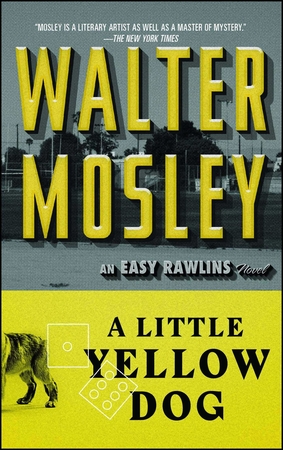
A Little Yellow Dog by Walter Mosley

In this installment in the Easy Rawlins series, Mosley’s detective has been working as a high school supervising custodian for two years while caring for a pair of adopted children. After an early morning liaison with a pretty teacher who claims her husband is threatening her, Rawlins finds himself a prime suspect of racist police when said husband and his twin turn up dead. The plot twists through a number of unsolved crimes from 1963, culminating on the day JFK is assassinated.

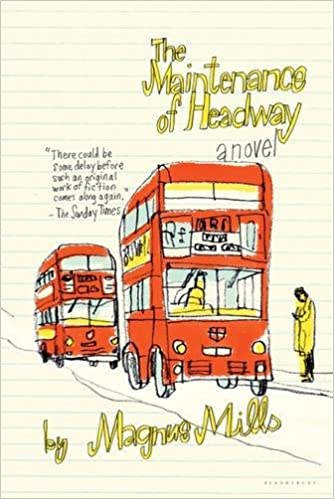
The Maintenance of Headway by Magnus Mills

Man Booker finalist Mills, a former bus driver, tackles the ludicrous bureaucracies of the London bus system in this slim and entertaining novel. His unnamed bus driver protagonist and colleagues must navigate self-important inspectors, annoying passengers, road work, bicyclists, taxi drivers, a colleague who causes chaos by stopping for passengers in the middle of green lights, and more as they attempt to maintain fixed intervals between buses on a regular service, even when this is unattainable and absurd.

Passage West by Rishi Reddi

Reddi’s debut novel follows the arrival of immigrant farm workers from Punjab to California’s Imperial Valley around the time of World War I. They navigate complex relationships with family members back home as well as Mexican, Japanese, and other immigrant workers in California. With xenophobia rising among the white population, corporations exploit immigrants and laws prevent foreign citizens from owning land, bringing family members to the United States, and marrying interracially.

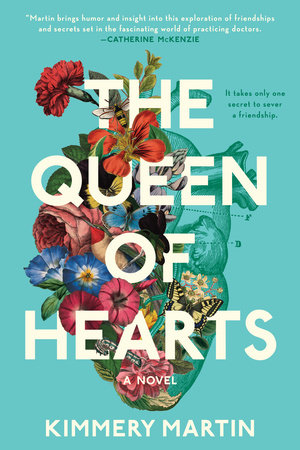
The Queen of Hearts by Kimmery Martin

The Queen of Hearts by Kimmery Martin

This debut novel from an emergency room physician centers the friendship of trauma surgeon Emma and pediatric cardiologist Zadie, who have been close to each other since childhood summer camp. When their former chief resident re-enters their lives, a tragic secret from their third year of medical school threatens to tear their relationship apart, while a difficult surgery that ends badly threatens the future of Emma’s career.

8 Books About Housing Inequality in America

At the root of social inequality in this country is something we’ve ignored for far too long: housing. Where we live matters. Housing drives all sorts of disparities in the U.S.: health, wealth, education, employment, exposure to the criminal justice system, even happiness. Yet, where we live is no accident: It is the result of decades of laws, policies, practices that inscribed the blueprint for racial and social inequality across the nation.

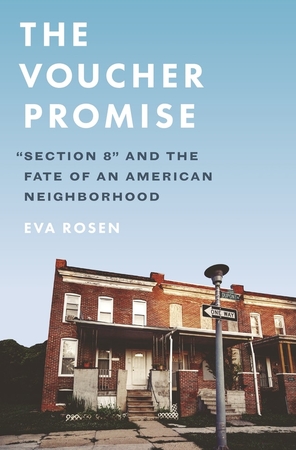
In The Voucher Promise, I take a look at how we provide housing for those who need it most, and how it is both part of the problem and the solution. The country’s largest federal housing assistance program, housing vouchers (colloquially known as “Section 8”), are a cornerstone of U.S. federal housing policy. Policymakers meant for vouchers to provide the poor with increased choice in the private rental marketplace, they even hoped vouchers could be a tool to dismantle segregation. But it’s not quite so simple.

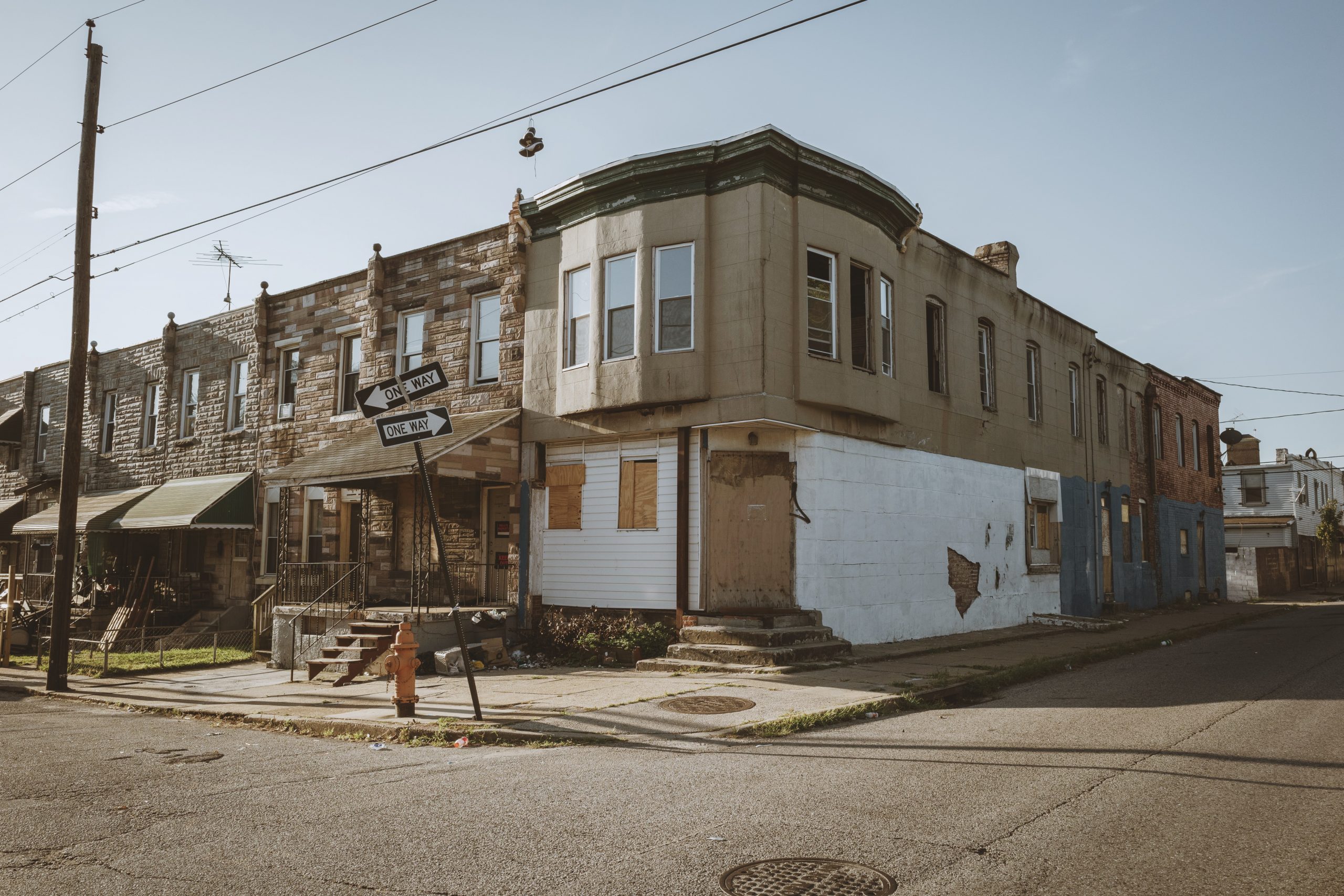
The book shows how vouchers shape the lives of families living in a Baltimore neighborhood called Park Heights. I tell the stories of the daily lives of homeowners, voucher holders, renters who receive no housing assistance, and the landlords who provide housing. The story of Park Heights tells the larger story of housing policies that confined Black residents to poor urban areas across the country—redlining kept Black homeowners out of the neighborhood until the ’60s, and blockbusting allowed them in under predatory terms.

Voucher holders disproportionately end up in this area despite rampant unemployment, drugs, and abandoned housing. While housing vouchers are flawed in their current form, they have great potential to be a tool to work our way out of decades-old residential patterns. With some key reforms, vouchers can be expanded to better resist landlord discrimination, offering recipients basic housing stability and the chance to live in a wider range of neighborhoods.

In order to understand the landscape of housing in Park Heights, it is important to understand the history of housing discrimination, which has affected the life chances and well-being of poor minority Americans throughout the history of this country. Even as the federal government deployed housing assistance as a key tool in its war on poverty and urban blight, and the legal system has been used to combat discriminatory housing practices, housing discrimination has remained deeply entrenched in both private and public practice, as well as in the law itself. A number of recent books examine the role that housing and housing policy have played in erecting the landscape of inequality we see across the country today.

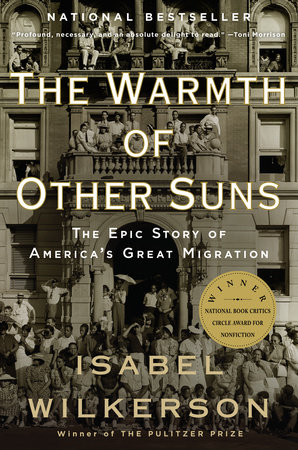
The Warmth of Other Suns by Isabel Wilkerson

The Warmth of Other Suns by Isabella Wilkerson

In this epic account the Great Migration, Wilkerson tells the story of the generations of African Americans who picked up their belongings to flee the violent, segregationist South and trekked North, searching for the freedom to pursue a better life. This book, based on over 1000 interviews, bridges the divide between narrative and scholarship. Wilkerson follows the stories of three Black Southerners, and the three roads that many thousands of migrants took—following the major rail lines of the times—to cities like Detroit, New York, and Los Angeles. This population movement, from North to South, defines American cities today, setting the stage for a new era of Northern racist backlash, discrimination, and levels of segregation never before seen in American history.

American Apartheid: Segregation and the Making of the Underclass by Douglas S. Massey and Nancy A. Denton

In this now classic work, Massey and Denton propose that if we want to understand racial inequality today, we are missing a key link: segregation. Segregation, they say, is not a “natural” outcome of social and economic forces that shift populations around the city, nor is it a temporary process through which Black Americans have passed. The depth of segregation in urban areas is unprecedented, and it shows little signs of change. What’s more, segregation makes communities of color vulnerable, because it “intensifies and magnifies any economic setback these groups suffer and builds deprivation structurally into their social and economic environments.”

Massey and Denton elucidate the myriad private ways in which segregation has been reinforced over time, including the de facto mechanisms of segregation—the violent mobs of the early 1900s, threats, intimidation, and bombings of Black homes—even in the North. And they outline the institutionalization of discrimination within the real estate industry, and de jure (by law), throughout the mission of the Federal Housing Authority. These practices served simultaneously to keep Black Americans in poor segregated neighborhoods, while also aiding the departure of the white middle class to the suburbs.

Importantly, Massey and Denton argue that segregation is more than simply “living apart,” it is a planned, systematic “apartheid.” And until we dismantle both the private and public mechanisms that sustain it, we will continue to see the racial sharp divide among people in this country.

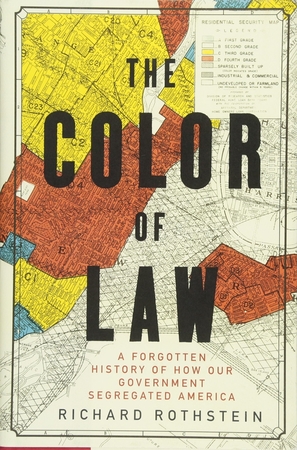
The Color of Law: A Forgotten History of How Our Government Segregated America by Richard Rothstein

Rothstein builds on the work of Massey and Denton to argue that while previous scholarships has highlighted the private, informal, and “extra” legal practices that create and sustain segregation—unscrupulous real estate agents, predatory mortgage lenders, private residential covenants, angry mobs—in fact these practices were supported, and even enhanced, by explicit, de jure, law and public policy. He enumerates a range of policies from zoning law, to police “protection” (or lack thereof), “sundown towns,” deed restrictions, highway construction that ripped through communities of color, and wealth building tools such as the mortgage interest tax deduction—all of which support and sustain residential racial segregation. Rothstein emphasizes that the effects of these laws are ongoing and will continue to do damage until they are dismantled. 

Race for Profit

Race for Profit: How Banks and the Real Estate Industry Undermined Black Homeownership by Keeanga-Yamahtta Taylor

The failure of the U.S. to provide safe, affordable housing on a large scale, Taylor argues, is directly tied to the government’s outsourcing of housing to the private market. Profiteering investors have their own set of incentives, and building safe, affordable housing is simply not as lucrative as building million-dollar condos. From redlining—where Black Americans were excluded from federal homeownership financing—to what Taylor calls “predatory inclusion”—where they were exposed to real estate exploitation—U.S. federal housing programs have long been a tool to protect and promote the financial interests of the private banking and real estate industries, rather than those of ordinary people.

Family Properties: How the Struggle Over Race and Real Estate Transformed Chicago and Urban America by Beryl Satter

By retracing the footsteps of her own father—both a civil rights attorney and a property owner—Satter outlines an ecosystem of players who shaped the housing landscape in postwar Chicago. She tells the story of the federal policies that gave birth to a dual housing market, one for Black Americans and one for white Americans, and the landlords and speculators looking to profit from this state of affairs. A speculator is someone who takes on risk in order to make a profit, by buying low and selling high. In Chicago, in the first half of the 20th century, speculators did this at the expense of Black homeowners and their livelihood. A house that a speculator bought one month for $4,000 from a white family, could be sold the next to a Black family for $14,000. The harsh contract terms and inflated prices were not meant to “sell” the home to Black families, but to swindle them, push them out, only to defraud another family. This practice led to deferred maintenance, poor conditions, and overcrowding, and precipitated racial turnover and rapid neighborhood economic decline. In turn, this visible blight fueled white racism. Satter’s story is not of white flight from declining neighborhoods, but of white exploitation and plunder of what these neighborhoods did have—riches, in the form of housing stock—essentially, destroying these neighborhoods and the livelihoods of the people who had risked everything to buy a home in them.

Stuck in Place by Patrick Sharkey

Deploying mountains of comparative data from the last half-century, Patrick Sharkey shows how Black and white Americans live in neighborhoods that are so different they can barely be compared. While only 4% of white Americans were raised in poor neighborhoods, for Black Americans this number is 62%. Inequality between Black and white households has barely changed since 1970. Patrick Sharkey shows how important neighborhoods are in explaining persistent racial inequality in this country, demonstrating how the poverty rate and racial composition of neighborhoods endure over time and across generations of families. One of the central tenets of the American Dream is the idea of social mobility—that it is possible to move up in the world, to get a better job, move to a safer neighborhood, buy a bigger house—yet, as Sharkey shows, for some groups in the U.S., this is simply not possible.

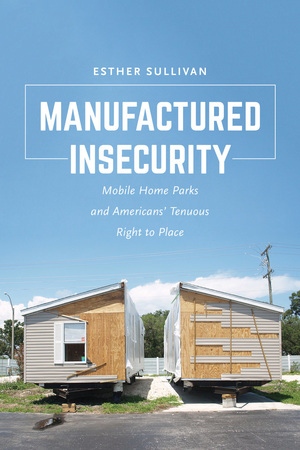
Manufactured Insecurity: Mobile Home Parks and Americans Tenuous Right to Place by Esther Sullivan

Trailer parks and mobile homes make up the largest segment of the unassisted affordable housing market in this country. And while most mobile homes aren’t actually ambulatory, most mobile home owners don’t actually own the ground beneath them. This makes them susceptible to eviction in a way that homeowners typically are not. Through the detailed stories of the residents Sullivan got to know personally, she highlights the largely unseen and highly unstable nature of the manufactured home industry.

Evicted by Matthew Desmond

Evicted by Matthew Desmond

In this Pulitzer Prize-winning book, Desmond tells the gut-wrenching story of the “hidden housing problem”: eviction. While we typically think of poverty as causing housing instability—a family loses their income, cannot pay rent, and then gets evicted from their home—Evicted shows how we have been looking at things upside down. In fact, he argues, housing instability causes poverty. When a person gets evicted, their job is jeopardized, their children’s grades are threatened, their mental and physical health at risk. Through the personal stories of several families and the landlords who house them, Desmond shows the devastating effects of a housing system that does more harm than good for so many who live in this country.

Reading “Catch-22” Reminds Us That Sometimes It’s Noble to Quit

“It doesn’t make a damned bit of difference who wins the war to someone who’s dead.”

When these words appear in Joseph Heller’s satirical antiwar novel Catch-22, they refer to World War II. But they could just as easily be about today’s “war” against the invisible threat of COVID-19. Winning a war is only beneficial to those who live past the war’s end. And, as U.S. workers are increasingly called to stay at or return to work, growing numbers of them won’t survive to see a post-coronavirus world.

There’s nothing new about the expectation that, in times of crisis, ordinary people must die in order to leave a better world for the rest—but Catch-22 is a rare work of fiction that challenges this notion. In 2020, it provides a valuable window into the American tradition of ignoring the human cost of victory. And reading it now also allows for a deeper appreciation of just how well it pinpointed the absurdity of “noble sacrifice.” 

The book’s protagonist, Capt. John Yossarian, wasn’t willing to die for the war—and this is precisely what makes Catch-22 one of the most enduring and important war novels to date. It’s a vicious satire of the war industry and a piercing reflection on humanity’s deepest secrets, but it stands out most for featuring a wartime protagonist unwilling to sacrifice himself. Published in 1961, among a body of U.S. war literature that glorified patriotic sacrifice, Catch-22 offered an alternative: the idea that wanting to stay alive is a noble cause, too.

The novel’s nonlinear narrative is propelled by the deaths of Yossarian’s friends and acquaintances, which inspire Yossarian to avoid combat in increasingly drastic ways. At first those deaths appear distant and bloodless (Kraft was “dumped unceremoniously into doom,” while Clevinger simply disappeared inside a cloud). As the book progresses, though, the death scenes become increasingly shocking and visceral, culminating in Catch-22’s goriest, and perhaps most famous, scene: the death of Snowden. 

Published among a body of U.S. war literature that glorified patriotic sacrifice, Catch-22 offered an alternative: the idea that wanting to stay alive is a noble cause, too.

Deaths from COVID-19 also appear distant and bloodless at first. Upon closer look, though, they slowly reveal their full horror. We hear that patients are put on ventilators, and imagine a neat, simple oxygen mask. In reality, the ventilators often used in COVID-19 cases involve a tube pushed into the airway to take over the process of breathing for a patient whose lungs no longer work. We hear of cold- and flu-like symptoms, and imagine the mild illnesses we’ve recovered from before. In reality, the coronavirus can wreak havoc on internal organs in ways we’re just beginning to understand, damaging the heart, lungs, kidneys, liver, intestines, eyes, and even the brain. 

This is the gory, visceral threat faced by workers now. At first, “essential workers” like janitors, grocery store clerks, and delivery drivers were the only ones risking infection to keep their jobs. But now, states and cities are in a foolish push to reopen mid-pandemic. The people caught up in the reopening sweep are mainly those who can’t work from home, like restaurant and retail workers, hair stylists, tattoo artists, and teachers. However, some offices are choosing to reopen even when the work could be done remotely, so many office workers must now risk infection for their jobs, too.

Most people cannot live without work—even when work threatens their lives. If an employee chooses not to return to work at a reopened business, they’ll lose the job and their unemployment benefits all at once. Without this income, of course, they’ll eventually lose access to necessities like housing and food.

Catch-22’s military leaders didn’t permit opting out; neither does modern capitalism.

From the start of this crisis, workers have been praised for putting their bodies in the virus’s line of fire. But while their sacrifices are brave, this praise narrative is deeply oversimplified. Like Yossarian, they are in a system that makes them feel they have no choice. Catch-22’s military leaders didn’t permit opting out; neither does modern capitalism. And like Yossarian, some workers are opting out anyway. They’re taking time off, organizing for better working conditions, or simply quitting. They’re choosing the risks of financial insecurity, employer retaliation, and public derision, over the risk of death.

While all non-remote workers are now caught in this impossible bind, essential workers have faced it from the pandemic’s start. They’ve been publicly praised, yet rarely given pay, benefits, or safety gear to match the risks of going to work now—much like Yossarian, who was rewarded with a useless medal while asked to fly an ever-increasing number of combat missions. Or, they’re like Yossarian’s roommate Orr, who had “a thousand valuable skills that would keep him in a low income group all his life.”

These employees—often underpaid, unappreciated, and disrespectfully called “unskilled”—were only deemed “essential” when powers-that-be realized that the economy rests on their backs. Without people in industries like cleaning, manufacturing, and transportation, businesses can’t run, and people can’t access the things they need to live. Suddenly, these workers became exemplars of honorable sacrifice who keep the country running in spite of COVID-19. 

Yet many “essential” employees don’t actually do anything required for the survival of others. People like construction workers and Starbucks baristas don’t provide necessary services in a pandemic. They could have been safely at home collecting temporary unemployment all along. Instead, they’ve been risking their lives at work, and they’re now being joined by all the non-essential employees called to return. Most workers are essential to the profits of their industries, not to life itself. 

Those industry profits are not insignificant: Jeff Bezos alone was already $34.6 billion richer by mid-May thanks to the pandemic, while at least eight Amazon warehouse workers have died of coronavirus. (The actual number of COVID-19 deaths at Amazon is almost certainly higher, but the company refuses to disclose the information.) But then again, World War II was profitable for those at the top and deadly for those at the bottom as well. As Yossarian said to Major Major, “Some people are getting killed and a lot more are making money and having fun.”

Even though lives are at stake for workers, quitting isn’t easy. Quitting itself is a heroic act.

Still, even though lives are at stake for workers, quitting isn’t easy. It means facing worse economic instability than they already face, not to mention possible employer retaliation and diminished future job prospects. It means accepting an interminable period of unpaid unemployment as the economy crashes into an unprecedented depression. Quitting itself is a heroic act. 

Quitting wasn’t easy for Yossarian, either. In another war novel, wanting to quit the war would have made him a pitiful character at best, a cowardly one at worst. In Catch-22, it made him a hero. Heller painstakingly shares Yossarian’s internal and external struggles as he fights to quit in a system that only wants his sacrifice, so we can see just how heroic quitting is: “He stepped into the briefing room with mixed emotions, uncertain how he was supposed to feel about Kraft and the others, for they had all died in the distance of a mute and secluded agony at a moment when he was up to his own ass in the same vile, excruciating dilemma of duty and damnation.”

On all sides, our protagonist is assailed by threats to his life (“Catastrophes were lurking everywhere, too numerous to count”), but the worst come from people supposedly on his side. The risks of opting out of combat missions are significant—Yossarian’s superiors threaten to court-martial or even shoot him if he does. But the risks of continuing to fly missions also can’t be denied, as Yossarian sees nearly everyone he cares about systematically killed.

Eventually, he realizes running away from combat entirely is the only reasonable choice, a choice which he must defend:

“But you can’t just turn your back on all your responsibilities and run away from them,’ Major Danby insisted. “It’s such a negative move. It’s escapist.”

Yossarian laughed with buoyant scorn and shook his head. “I’m not running away from my responsibilities. I’m running to them. There’s nothing negative about running away to save my life. You know who the escapists are, don’t you, Danby? Not me and Orr.” 

Such a comedic, poignant, deserter-as-hero narrative was virtually unheard of at the time Catch-22 was published. In 1895, Stephen Crane’s The Red Badge of Courage had set the stage for 20th-century U.S. war literature: its protagonist initially runs from battle, but spends the rest of the book overcoming his shame and fear to return to the fight. The main character in Ernest Hemingway’s 1929 A Farewell to Arms does desert the war, but love rather than self-preservation is the catalyst—and he meets a desolate fate in the end anyway. Norman Mailer’s 1948 The Naked and the Dead depicts war as meaningless and futile, but kills off its most frightened character in an embarrassing scene early on.

Catch-22 broke ranks. In creating a protagonist whose nobility sparks from his desire to live, Heller made one of the most compelling statements of any antiwar movement to date: that an individual life is more important than the ideals of country, honor, or sacrifice.

Heller was a bombardier in the war himself, and personally witnessed death over Avignon and other wartime experiences almost exactly like Yossarian’s. As his book caught on and the term “catch-22” worked its way into the popular lexicon, Heller remained adamant that the term did not apply to just any ironic or paradoxical situation. To him, a true catch-22 had to be dire and life-threatening—precisely like the situation workers face now. They can go to work, where they may die. Or, they can choose not to go to work, thus giving up the resources they need to live. 

Perhaps someday we will have a work of fiction that satirizes the coronavirus era as well as Catch-22 satirized World War II. For now, though, Heller’s war novel remains remarkably relevant to 2020’s cruel absurdities. After all, it really isn’t a satire of a specific war, but of American leaders’ indifference to the price of victory—which is why the Vietnam War initially helped make the book successful. Now, COVID-19 shows once again that its message is timeless. 

We should criticize the systems that ask people to put their lives on the line, not the people who choose to opt out.

Yossarian lives. That’s the most important fact of the book: that he finds his way out of an impossible-seeming situation and saves himself in the end. Not only does he live, but he does so with virtue and grace. He even refuses a soft, safe, unethical deal offered by his superiors, which would get him out of the war in exchange for his silence on atrocities. Instead, he quits in his own way, against all rules and advice.

As COVID-19’s death toll rises, some employees are choosing to quit their jobs and save themselves. It may sound radical to praise them. It may even seem to diminish the sacrifices of those who choose to stay. But it doesn’t. For anyone who isn’t permitted to work from home, work is now a war zone—and Catch-22 reminds us that opting out of this life-threatening situation is noble. Self-preservation deserves praise. We should criticize the systems that ask people to put their lives on the line, not the people who choose to opt out. 

Not all of today’s workers get to be Yossarians, though. Many will be Krafts or Clevingers or Snowdens: casualties placed in the vise of war by careless U.S. leadership. These workers deserve honor and remembrance. But let’s remember the Yossarians of the COVID-19 front lines, the ones who quit in the face of the enemy. They’re heroes, too.

7 Books That Are Actually Cake

Now that you’ve cut up every eggplant, lemon, pizza, and soap bottle in your house looking for hidden cakes, you may think you’re safe from the universal cakening. Bad news: many of the books hidden on your shelves are also cake. You didn’t know, because you haven’t read them. Nobody has. If they say they have, they’re lying, because if they’d read them, they’d know they are cake. The following books are cake and have always been cake.

Capital in the Twenty-First Century by Thomas Piketty

Capital in the Twenty-First Century by Thomas Piketty is cake.

The Prisoner by Marcel Proust

Not every volume of In Search of Lost Time is cake but The Prisoner is cake. You didn’t find out because you didn’t make it this far.

2666 by Roberto Bolaño

As far as I know I have actually read 2666 and yet, somehow, it is cake.

The Anxiety of Influence by Harold Bloom

People love to talk about The Anxiety of Influence, much as they love to talk about cake. However, they have not read it, because if they had they’d know it was cake.

Villette by Charlotte Brontë

Only Brontë completists would know that Villette is cake. But they don’t know, because there are no true Brontë completists, because they haven’t read Villette, on account of how it’s cake.

The Riverside Shakespeare

The Riverside Shakespeare contains a thin layer of cake between Antony and Cleopatra and The Winter’s Tale.

Infinite Jest by David Foster Wallace

It’s okay, guys. It’s okay. You can give up the pretense now. You’re free. Now put it down, you’re melting the frosting.

The Haves and Have-Nots of Marlboro Country

Marlboro Country

for Bob Norris

When I finally made it to Marlboro Country,
I knew it because I didn’t have to work
anymore. Herds moved themselves
and we all just sort of waited, looking intently into
nothing, waiting for a sign.

Still, my clothes got dirty.
The spurs we wore were
just for show: our horses always
saddled and ready to ride forever through
the haze of the countryside.

My grandfather was nearby, down the gravel road
in Winston Country. The horses were
smaller down there. The people bought canned food and
Budweiser. They all wanted to live
in Marlboro Country.

Every day, the sun set over our statue
of the Marlboro Man. In his mouth, we kept
a cigarette burning, always. In case he ever
showed up, we wanted him to know we
were always thinking of him.

Solvents

for Vachel Lindsay

“They tried to get me; I got them first!”- The last words of Vachel Lindsay

in washing his windows,
my brother Noah nearly killed himself
south of Springfield
mistaking Windex for Gatorade
from a plastic cup on a kitchen counter
he is replacing after 40 years of
holding breakfast and
ashtrays.

he remedied the toxin with
some crackers and well water,
then, in switching to Anheuser-Busch,
he called the Poison Control Center
before he called me.

BUT I FEEL FINE he said,
and I asked if his insides
held the television crows who
never could tell what they had
in just hanging from the power lines.
He said WHAT?

He wants me to know that his neighbor
to the south just went belly up.
He called him at midnight to cry,
saying that even if he sold everything,
he would still be a half a million in the hole.

I thought of our neighbor Vachel Lindsay
drinking Lysol just a few miles north,
the taxmen circling his childhood home too,
bankruptcy buried like turnips forever across the fields
scaffolding Springfield.

Given the time, we all till until
we reach the bottom, exposing black earth
and eating of it deeply,
nourished by its chemical bread and in
knowing that we have done
good, honest work.

The Girls on the Hockey Team Are Witches

Until reading Quan Barry’s latest novel, We Ride Upon Sticks, I had no idea the 1692 Salem witch trials hadn’t actually taken place in Salem, Massachusetts. The hysteria emerged in the nearby town of what was then called Salem Village, and is now called Danvers. “Honestly, of all places on earth, the Town of Danvers should have seen us coming,” Barry writes. In We Ride Upon Sticks, Barry—a Danvers native—places us in 1989 amongst a coven fueled by Pat Benatar, peroxide, and dark deeds scrawled in an Emilio Estevez notebook. Her witches? The 1989 Danvers High School Women’s Varsity Field Hockey team.

We Ride Upon Sticks by Quan Barry

When the novel begins, the team has suffered a lot of losses. Suddenly, in the summer of 1989, they start winning. Their goalie has taken matters into her own hands by pledging herself to the powers of darkness in an Emilio Estevez notebook, and one by one, she convinces her teammates to join her. The girls’ actions get steadily darker as they chronicle their misdeeds in the notebook simply referred to as “Emilio,” who “would become a record of our offerings, a shadow book documenting our efforts on behalf of the dark.” They keep winning—and the girls start thinking collectively. But despite their shared thoughts, the girls occasionally remain capable of keeping secrets from one another.

The excess of the decade wafts over the story like hairspray (“Ave the ’80s! The only thing bigger than our hair was our outfits”), although Barry doesn’t neglect the ways in which things were worse for women, queer people, and people of color (“What did our mothers call it? Bad sex. What would our daughters call it? Rape”). The girls’ individual coming-of-age stories weave in and out of their collective identity, through field hockey and ritual and ’80s aesthetics, everything escalating as the team fights through the season.

Currently a professor at the University of Wisconsin-Madison, Quan Barry was herself a member of the 1989 Danvers Field Hockey Team. She is the author of the novel She Weeps Each Time You’re Born, as well as four poetry collections, most recently Loose Strife. Over the phone, we talked about DIY witchcraft, self-advocacy, collective power, and which ’80s heartthrobs are still crushing it (hint: it’s Keanu).


Deirdre Coyle: We Ride Upon Sticks is written in first-person plural, the field hockey team’s collective “we.” To me, this point of view seems daunting, but it felt very natural and appropriate in the story. How did you decide on this point of view?

Quan Barry: Obviously there are a few examples of “we” plural voices in literature, probably the most famous one being Jeffrey Eugenides The Virgin Suicides. In that book, you get a group of boys who are watching this family of girls, and this group of boys tells the story. 

I always knew that I wanted [We Ride Upon Sticks] to be a first-person plural voice, I just wasn’t sure whose voice it was going to be. When I first started writing it, I thought that maybe it was going to be the entire school watching this girls’ field hockey team, but that didn’t quite work. And then I thought that maybe it was gonna be the freshman team. Oftentimes with sports, you have a freshman team, a junior varsity team, and a varsity team. I remember being a freshman girl myself, and usually what happens is that the freshman girls are just, like, obsessed with the senior girls. They just seem so much older, like they’re adults, and they can drive. [The freshmen girls] sort of stalk them in various ways, and know all kinds of things about the senior girls. But when I tried doing that, it became very obvious very quickly that I couldn’t really explain why these freshman girls would have certain access to certain scenes or why they would know certain things. And then I realized, “Oh, it’s just the team itself. They’re the ones telling the story”—my joke being that there’s no “I” in “team.” 

I also think that, finally, making it first-person plural adds a sort of witchy element to the book. Not only is it first-person plural, but there’s also some collective thinking that happens along the way, and first-person plural allowed me to have that sort of otherworldly element in the book as well.

DC: It’s very eerie in all the right moments. The girls write their pledges to “Darkness,” “Dearest Darkness,” rather than an explicit “devil” or other figure. What made you decide to keep this darkness broad and vague?

QB: I really see the witchcraft in the book as not a major element. In many ways, it’s more about the girls finding themselves, and their friendships, and discovering who they are. So I saw the witchcraft in general as being very DIY. They don’t have a particular program or way of going about it exactly; they’re discovering it as they go. So it made sense to me that it would be broader. Like I said, it’s just kind of a do-it-yourself thing. One of the things that I was really concerned with in the book is that even though they are dabbling in the darker arts, I wanted them to still be sympathetic. So even when they do create mayhem, you’re hopefully still rooting for them. Similarly, for me, keeping it broader allows the reader to maintain sympathy. I felt like if these girls actually were pledging themselves to a very specific, goat-headed devil, that it would be easy to lose sympathy with them. You could even make the argument that in the end, the darker power that they’re playing with is just the idea of the sun and the moon. The sun is sort of a bright object, and the moon is darker in certain ways. It’s a darkness that we all have, and which we do draw power from, you know? I was interested in exploring that side of things. Like okay, so, when you do look to your—I want to say to your “instincts,” even, as opposed to your “baser instincts”—but even just when you follow your gut, where will that take you? That’s one of the reasons why I decided not to have it be a more specific darkness.

DC: ’80s pop culture permeates the story, most notably in the Emilio Estevez notebook in which the girls sign their names and pledge themselves to “Darkness.” In an era with so many teen heartthrobs, how did you settle on Emilio to represent the Prince of Darkness?

QB: (Laughs) Well, a friend of mine who was on the field hockey team had two celebrity crushes back in the day that you would see in her locker every time she opened it. One of them was Emilio Estevez. The other one was a person whose name we didn’t know how to pronounce at the time, and that was “Keenu” Reeves, right? So, in thinking about quote-unquote “Keenu” Reeves—obviously, the guy is still crushing it, he’s still around career-wise, 35 years later—in some ways, it wouldn’t have made sense to have it be Keanu Reeves. But Emilio Estevez I feel like, in many ways, was emblematic of that time period. A lot of younger readers might not know who Judd Nelson is, for example, because he doesn’t have the same kind of presence? I think Emilio Estevez, because he comes from the Sheen-Estevez acting dynasty—even though he himself is not in the spotlight, obviously his father [Martin Sheen] is still known, his brother [Charlie Sheen] is still known—and I’ve always found something very innocuous, in the best way, about his look. I think he probably has played villains, maybe? But I couldn’t really name any. If you think about The Breakfast Club and the character he plays in it, which is this kind of good-hearted jock, it just seems like who he is, you know what I mean? There are a few other people who you could picture who maybe would have dark sides in them, and so, you know, making them the object of darkness might make sense. But with [Emilio Estevez], he just seems so cherubic that it’s kind of a disconnect. And from what I’ve heard, he’s a very, very, very nice guy. So there probably is a complete disconnect.

DC: Yeah, Judd Nelson would have been too easy.

QB: He already has a little bit of that darkness, so.

DC: You were on the 1989 Danvers field hockey team, right?

QB: Yes.

DC: You mentioned in another interview that the only character explicitly based on someone from that time was your coach.

QB: You know, when I first started writing the book, I basically had a draft of it done, and then my editor told me that my field hockey coach had passed away. I told my editor her name, and she did some searching, and she’s like, “Oh, she passed away a few months ago,” when I was writing this novel. This is not creative non-fiction, you know, it’s fiction, and for legal reasons, you can’t have characters based on actual people. But after she had passed away, that freed me up to have a character based on her. So I went back in and tweaked her in such a way that it made it even more obvious that it is Barb, Barb Damon, as an homage to her. She passed away in 2019, I think she was 82 years old. But yes, she is the only character in the book based on [a real person].

DC: That sounds like a very fitting tribute; she’s such a great character. So there are a lot of really amazing descriptions of the girls discovering their power, whether they’re “frenzied maenads” running off the field, or druid queens with blue-painted faces. Did any of that residual power come from your experiences playing field hockey?

QB: I think yes. I had been interested for a very long time in the idea of groups of girls and what happens when you get them together. Because I think it’s different when you get a group of girls together than when you get a group of boys together, you know? There are obviously a lot of sports books, movies based on boys’ team sports, you know, football, basketball, Hoop Dreams, Friday Night Lights, that kind of thing. But when it comes to girls in sports, it’s usually things like ice skating or gymnastics. You don’t really see that many girls’ sports movies or books. I mean, there was Bend It Like Beckham some years ago, but that was about it. And because I grew up in the town of Danvers, which used to be Salem Village, where the first incidents happened that led to the Salem witch hysteria, or the Salem witch trials, I was always interested in how that ended up happening. And I think that there was something about the collective, you know? It built on itself. A few girls said these things, and then it began to snowball, and become bigger and bigger. I was interested in how that kind of thing happens. 

When you put on a jersey, you take on an identity. Sometimes that’s for good, and sometimes that’s for bad, you know?

In thinking about playing field hockey myself, I could see how when you’re part of a team, in general—it’s not just about a field hockey team or anything—but when you put on a jersey, you take on an identity. And sometimes that’s for good, and sometimes that’s for bad, you know? So we see it with, for example, sports hooliganism, particularly in Europe. A lot of soccer fans put on jerseys and unfortunately do bad things, kind of in the names of their teams, right? There’s a kind of fanaticism that can come with sports. It’s also a sense of community, so there’s a plus side to it, and there’s also a dark side to it. 

I remember being part of the team and there’s a way in which you feel positively connected to these people, and in certain ways it makes you feel braver. I’ve had the pleasure recently of going back to my hometown and giving a reading there, and a lot of my friends from the team came. There are literally some people who I have not seen since the day we graduated. But we talked about it, and we’re really excited about it—we have a little email chain going—hopefully this summer, depending on where the state of the world is, we’re hoping to get together and maybe actually hit some balls around. Like, it’d be fun, we should all get together, just mess around a bit. There’s something about it. I think we all just have really pleasant memories of playing together, being a team, and being friends. And you wouldn’t know we were all very different people, and we still are. We still have this common bond, even more than thirty years later.

DC: That’s so amazing, and very appropriate for the kind of story you’re telling in We Ride Upon Sticks. So the title of the book comes from the confession of Tituba, the first woman to be accused of witchcraft during the Salem trials. It’s so perfect for a story about a field hockey team.

QB: The original title of the book was actually “We ride upon sticks and are there presently.” That was her entire quote. She was maybe the third person to go before the trial.

DC: Oh, she wasn’t the first?

There was a lot of darkness happening in the ’80s. I wanted to show how things that were acceptable in the ’80s are no longer acceptable.

QB: Not the very first. And in thinking about it again, she was an enslaved woman. Even now, they’re not quite sure if she was—because there were Native American people who were enslaved—they weren’t sure if she was a Native American person who was enslaved, or if she was somebody who was originally of African origin. They’re not quite sure. But basically the thing I love about her, as the book discusses, is that she is the first person to confess to [witchcraft]. So she’s not the first person to go before a trial, but she’s the first person to actually confess. And in doing that, she kind of lays the blueprints for, “If you want to live, this is what you do: you confess, you make up a story, they’ll show mercy on you, and you won’t be killed,” basically. And so during her trial, as she’s confessing, they’re asking her for all these details. At one point, there’s an amazing question that they ask her. They’re like, “So how do you and the other witches, how do you guys travel to the coven that happens in Boston?” And she says, “We ride upon sticks and are there presently.” I have known that quote for a very long time, and I was hoping that the entire quote would be the title of the book, but it was not to be. (Laughs.)

DC: It’s great in both the short and long versions. There’s a line early in the book that felt relevant throughout the story: “When you don’t speak up, you get what you get.” It remains relevant as the characters decide what they want to talk about, and to whom, and as their inner voices enmesh into a collective voice. It’s also interesting in the context of the Salem witchcraft trials—when those women spoke and when they didn’t. You talk a lot about the differences, especially regarding gender and sexuality, between 1989 and 2019, when the frame story takes place. Were you thinking about how time has changed the ways in which people are more or less comfortable speaking up?

QB: I wasn’t necessarily thinking about it particularly through the lens of speaking up, but I was very much thinking about the ’80s and how now, we think, “Oh, the ’80s, they were a fun time; we like to dress up, and do our hair funny, and listen to the music.” But there was a lot of darkness happening in the ’80s as well, right? It was the time of the AIDS crisis, the Central Park Five. There was all kinds of stuff happening. I definitely wanted to show that aspect of it. Showing how time passes and how things that were acceptable in the ’80s are no longer acceptable, that’s definitely something that I was interested in thinking about.

There are scenes where [the girls are] talking about dating and consent, and how in 1989, what that looks like is obviously very different from what it looks like now. There are definitely moments in the book where people speak up about what they want, even as far as their sexuality is concerned—you know, Abby Putnam finally deciding that she’s had it with her on-again, off-again boyfriend, and wanted to advocate for herself, and what she does there. That kind of stuff. I was very much thinking about women and girls coming into power in various ways, and speaking their own truth.

I hadn’t particularly pulled out that line that you pulled out, but now that I think about it, I’m like, in many ways, yeah, it is kind of a mantra of the book: “When you don’t speak up, you get what you get.” In my life, I’m probably an over-communicator. Because I always feel like, if I told you what I needed, and then you couldn’t do that, then that’s on you. (Laughs.) I can’t expect people to be mind readers. That’s definitely something that I believe and that I try and live by. I can see that yes, in this book, these girls are very much learning to advocate for themselves and in doing so, then that puts it on the world. The world can’t meet their standards, right? Because they’ve said what they needed, and who they are.

DC: And they told Emilio.

8 Books About Struggling Writers

I’ve always found writing difficult. Almost from the moment I learned to read, I knew that I wanted to be a writer, but I loved books so much that the idea of writing one felt fraught with danger and difficulty. The stakes, after all, were so high. I learned quickly of course that it was much more difficult to write a book than to read one. I was born worrying, my parents said, and once I discovered literature, I really had something to worry about. 

Perhaps as a result, I’ve always found myself drawn to stories about artistic struggle, books in which the writer is failing to achieve what they believe to be their purpose in life. Call it arrested artistic development. My first novel, Early Work, was a parallel bildungsroman, a book about two writers moving together but in opposite directions, one towards the fulfillment of their goal, the other towards the hard realization that literary greatness probably isn’t right around the corner. My new book Cool for America is a series of linked stories about how people try to find their way past life’s impediments to realize some measure of contentment as artists and, occasionally, human beings. These are, for the most part, stories about the beginning and middle of this journey rather than its endpoint. After all, what life story ever gets more interesting after the subject achieves success? For the people I’m writing about, any kind of satisfaction is far from a foregone conclusion.  

Below are some of my favorite works of literature about artists who are stymied in their attempts to fulfill their visions, both by the usual impediments—sloth, vanity, booze, love—and, sometimes, by the capricious workings of the outer world. Of course, the pleasing irony of all such books is that, no matter how long the odds may seem while one is reading them, they did all eventually get written. Otherwise there wouldn’t be a book at all. 

Stone Arabia by Dana Spiotta 

Spiotta’s tricky, emotionally devastating novel is about a brother and sister duo fighting for artistic control over the narrative of their lives. The book’s central figure, Nik, is a musician who has established an elaborate private mythology for his work, which includes extensive writings, some in the voice of his sister, who, as his main audience, has often found herself in her brother’s shadow. The novel becomes, in her words, “the counter chronicles” to his version of the family story, a reclamation of her own life as a writer that requires her to push Nik’s vision of himself aside. 

Late Fame – New York Review Books

Late Fame by Arthur Schnitzler 

This short Austrian novel, published posthumously after the author’s archives were saved from being destroyed by the Nazis, is a jaundiced portrait of literary presumption. An aging civil servant named Saxberger’s early, obscurely published book of poems is suddenly taken up as an essential influence by a group of young writers, who hope to convey legitimacy upon themselves by raising the status of the older writer. When Saxberger is given the task of writing a new poem for the first time in decades for a literary reading, the results are… very disappointing. In the end, Schnitzler suggests, perhaps “no fame” would be preferable to late fame. 

The Messenger by Charles Wright 

This is a scabrous, very funny piece of autofiction—somewhere between linked stories and a novel—about a young Black writer careening through bohemian New York in the early ’60s. (No, this is not the same Charles Wright who recently served as the poet laureate.) These are dispatches from a picaresque life of drugs and male hustlers, of late, hallucinatory nights and morning cigarettes. The narrator takes stock of himself in the mirror in a way that will be familiar to many an artist: “A fairly young man with a tired, boyish face, saddled with the knowledge of years and nothing gained, lacking a bird dog’s sense of direction most of the time, without point or goal.” 

So Many Olympic Exertions by Anelise Chen 

Chen’s elliptical novel is of the noble “failing to finish one’s dissertation tradition,” a situation I deeply relate to despite having never attempted to start a dissertation. A former competitive swimmer, the narrator is a sports historian fixated on stories of failure and disaster. She’s also trying to reckon with the suicide of her ex-boyfriend. Over the course of the book, the convergences between sports, life, and art become clearer and clearer. “If doing sport is to be ‘lost in focused intensity,’ as swimmer Pablo Morales said once,” she writes, “then watching sport is to be lost in the focused intensity of someone else’s focused intensity.” That sounds a lot like reading, too. 

Pushkin Hills by Sergei Dovlatov 

This is one of my favorite discoveries of the past few years. It tells the story of a ne’er-do-well alcoholic writer who gets a job as a tour guide at Pushkin Hills, an estate where the famous Russian writer once lived, now turned bleak tourist trap in the long middle age of the Soviet Union. He talks a lot about writing, and lampoons the efforts of his fellow guides (of course everyone who works there is a would-be writer), but between the drinking and trying to win back his ex-wife, he just can’t seem to find the time to put pen to paper. “You are not being published,” he says to himself. “But is that really what you dreamt of when you mumbled your first lines?” Well… yes.

Pitch Dark by Renata Adler

Pitch Dark by Renata Adler 

A friend recently described this book as the best breakup novel ever written, and it might well be true. The narrator is fleeing from the aftermath—or is it merely the middle of the prolonged descent?—of a many-years’-long affair with a married man. She is a reporter, but she is having a great deal of trouble telling this story. “For a woman, it is always, don’t you see, Scheherazade,” she tells us cryptically. She finds compulsive narrative stride in the long episode set in Ireland, without a doubt the best rental car disaster sequence in American literature. 

That Smell by Sonallah Ibrahim, translated from the Arabic by Robyn Creswell

This brief, searing Egyptian novel, originally published in 1966 and translated into stark English by Robyn Creswell in 2013, is narrated by a political prisoner recently released back to his home in Cairo, where he remains on house arrest. The narrator is a writer, but his experiences have shocked his nervous system such that it’s a struggle simply to get through the day, let alone convert what has happened to him into art. The recent New Directions edition of the book includes excerpts from notes Ibrahim secretly made while in prison, as strong a testament to his literary will as one can imagine. 

Mourning by Eduardo Halfon 

Halfon’s book consists of three long intertwined stories, all dealing with the ways that the lives of those who have died can continue to haunt those who remain. Halfon is Guatemalan and Jewish, and his work is continually concerned with the aftermath of the Holocaust and with the genocide of indigenous people and other perceived political enemies of the government during Guatemala’s long civil war. The titular final piece in the book concerns the drowning death of the narrator’s uncle at age five in Lake Amititlán and its long aftermath. Halfon often writes about the difficulty of getting to the truth of the past, of being able to move forward without understanding what has come before. Ultimately, the artistic impediment that cannot be overcome is death.