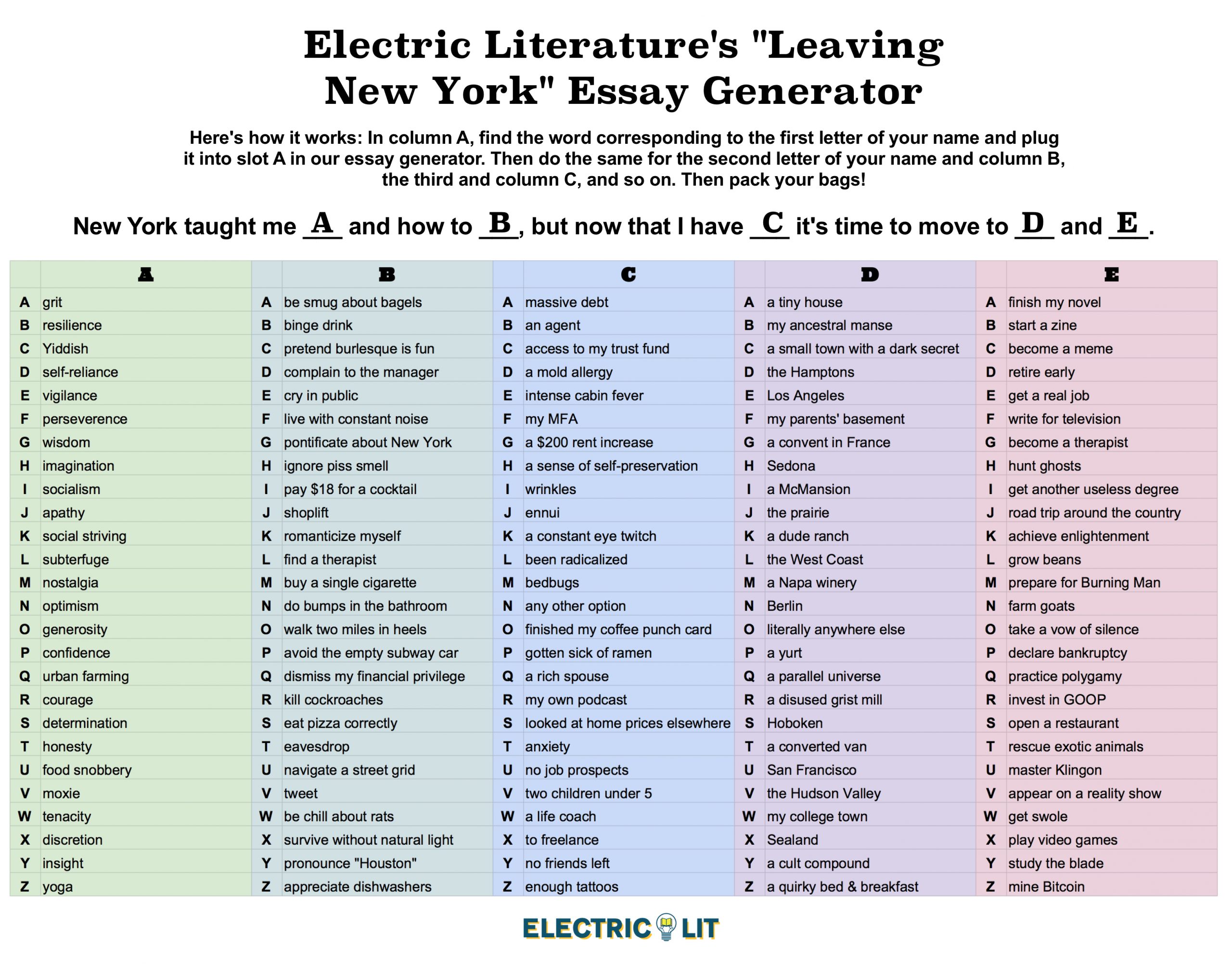
Maybe you’ve had enough of the fireworks. Maybe you were heavily influenced by the “worst places in New York” Twitter discourse. Maybe you’ve just spent four months contemplating how you spend half your income to live in a tiny dark room. Whatever it is, you’re now fantasizing about saying Goodbye to All That. We cannot responsibly encourage you to move around the country right now, but we can help you get started on the inevitable personal essay you’ll write when you do!
Just find the first letter of your name in column A, the second letter in column B, and so on, and plug them into the sentence we’ve provided. So for instance, if you’re Joan Didion, you’d look for J in column A, O in column B, A in column C, etc.—and then when you ran out of letters in “Joan” you’d start on your last name. The result: “New York taught me apathy and how to walk two miles in heels, but now that I have massive debt it’s time to move to Berlin and retire early.” Man…. <stares blankly out tiny sliver of window I pay mumble mumble dollars for>… sounds great.
I don’t remember the precise day I became trans. It wasn’t a great revelation, but a decision that took place over a series of months, and later years. It began in 2013, the year before TIME Magazine announced what it called the “trans tipping point,” the point at which trans presence in public discourse would become unignorable. My personal tipping point was less a point than a process, even a course of study. My gradual migration was aided by the genderqueer and nonbinary people whose blogs I followed. Reading their stories, I realized that I, too, could live a trans life, and I did not have to be a man in order to do so.
After four years closeted in a Catholic high school, I came out as trans the summer before my first year of college. Between my freshman and junior years, I got a formal diagnosis of “gender dysphoria,” began a low dose of testosterone, received a bilateral mastectomy, and later a hysterectomy. Today I am not “cured” of some sickness named dysphoria, but live with a happiness whose baseline is considerably higher than it used to be. After years of searching, my body is now not quite so formidable an enemy.
In the eyes of medicine, I only became legitimately trans at the moment of dysphoria diagnosis, after proving to doctors I was credibly disordered. Generations of personal and medical narratives have made this story of trans-as-sickness ubiquitous, even compulsory. The earliest of these narratives typically focus on trans women, whose renunciation of manhood and its privileges was pathologized alongside their gender-crossing. With the 1977 publication of Emergence: A Transsexual Autobiography, the first published memoir authored by a trans man, author Mario Martino joined this lineage, outlining the contours of respectable disorder for bodies like his. That is, bodies like ours.
In the eyes of medicine, I only became legitimately trans at the moment of dysphoria diagnosis, after proving to doctors I was credibly disordered.
When Martino sought gender-affirming medical intervention, at the time called “sex reassignment,” only a small number of medical professionals could help him. The few who did offer biomedical transition followed guidelines created by a doctor named Harry Benjamin, who––in Martino’s words––”gave respectability to the gender-disoriented.” Benjamin ranked trans patients (again, typically women) on a scale from “pseudo-transvestite” to “true-transsexual,” only the latter of whom qualified for biomedical interventions like hormone replacement therapy and surgery. To be a “true-transsexual,” one had to conform entirely to gendered roles of the place and era in which they lived: the trans women Benjamin worked with were feminine, heterosexual, docile, and sought husbands––they adhered to misogynistic expectations of what women were supposed to be. Martino supported the use of stereotypes as a barometer for true-transness, praising trans women who were meek and servile. Unsurprisingly, he saved the bulk of his paternalism and venom for the women he deemed too shrill.
Martino argued for his legitimacy as a man by way of his spirited, independent, “boyish” childhood, as well as the sense that “males are [his] brothers” rather than potential sexual partners. While I did not grow up a tomboy (nor did I identify outside girlhood before my adolescence), Martino was “born this way,” certain he was a boy from the time he could think it. While my lesbian and trans identities amplify and intertwine with one another, Martino was disgusted and horrified to be associated with lesbianism. He considered his pre-transition relationships with women to be heterosexual, yet disabled by “incorrect” anatomy. My own pursuit of a “gender dysphoria” diagnosis was resentful, and I was angry that I had to be marked “defective” in order to exercise bodily autonomy. Martino leaned into his diagnosis, relieved he was “a legitimate patient: not a homosexual, transvestite, schizoid, psychopath, or exhibitionist!” but a man trapped in the wrong body and in need of a medical diagnosis and eventual cure. His simple longing for a straight and narrow future, combined with a willingness to fully discard his wrong-body and past life to embody an ideal manhood, allowed him the vanishingly-rare opportunity for medical transition according to Benjamin’s guidelines.
Narrators like Martino reinforce the idea that to transition is to go from sick to recovered and from deviant to normal.
In line with Benjamin’s thinking, and with “transmedicalist” beliefs that linger today, Martino believed transness was a sickness only doctors could cure. His ultimate thesis was an argument for a true-self, visible and possible only through medical recognition. His autobiography—a file of evidence approved in its foreword by Dr. Benjamin—works to justify this truth, a documentation of his linear transition from diagnosis, to hormones and a year of required “role-play” as a man, to a mastectomy, hysterectomy, and finally a then-experimental phalloplasty. He both became and had always been a man, the embodiment of a central transmedical contradiction that applies to all forms of gendered existence. We must groom and fuck and purchase our ways entirely toward the “real wo/manhood” we have ostensibly been born into. In truth, there is no attaining these ideals, but the process of attempting them has produced a centuries-old story whose binary genders remain intact today. Emergence reinforces a hegemonic definition of what “trans” is, telling a story not of choice and experience but of diagnosis and doom. Narrators like Martino have helped to create the “born-in-the-wrong-body” myth, reinforcing the idea that to transition is to go from sick to recovered and from deviant to normal.
Medical diagnosis and familiar body-angst notwithstanding, my approach to transness was and is an atypical one, especially compared to Martino’s. As I moved away from womanhood, I chose butch lesbianism: framing my relationships to women and other non-men as unmistakably queer. At the same time, after I received hormones and surgery, my butchness grew effeminate rather than stereotypically masculine. Through it all, I have kept my given name, Sarah, and along with it I have kept alive the memory of the little girl I used to be. Surgeries behind me, I am now free to speak my true feelings on the (non-)nature of my identity: trans is a trail I have chosen to walk, one response of many to a set of feelings whose origins will never be fully known.
“Trans” is a dynamic term, changing in accordance with the experiences of those who claim it, including me. I refuse the circumstances of my birth and the opportunity for straight transition I have been offered. I have my testosterone and keep my birth name. My denial of cisness and of legal “opposite-gender” recognition lets me imagine a reckless space––a trans space––that I can share with like-minded others. While “transsexualism is not what [Martino] would have wished” for himself, he uses the limited material and ideological tools available to him to correct what he perceives as an illness. He even pens an autobiography he hopes will be taken as gospel when determining the veracity of other trans men’s claims. Martino would likely consider me a mere confused homosexual female, whose queer, lesbian, halfway body would disgust him. He slams the medical gates to trans identity closed behind him as he passes and pulls up the welcome-mat.
I do not belong in Martino’s trans. He, it appears, does not belong in mine, and his story reinforces ideals antithetical to my radical trans philosophy and politic. Still, our shared decision to take hormones and seek surgical interventions are irrevocably linked, forcing us into an uneasy kinship. I cannot avoid this truth any more than I can avoid the circumstances of my own girlhood, which at first seems to contradict my current relationship to gender: no matter what I do, the Sarah I am remains, and they or she remembers.
Reading my story through the lens of transness requires me to share in this often-contradictory constellation of narratives.
Reading my story through the lens of transness requires me to share in this often-contradictory constellation of narratives. In my own reading, I have had to confront stories that threaten my understanding of what “trans” is, stories that seem to undermine my own place in it. To take part in the trans story requires an acknowledgement of, even attention to, this lineage, which treats transness as property and dysphoria as capital. Martino’s story gained legitimacy specifically by rejecting my experience. He gained legitimacy by rejecting the existence of innumerable queer and gender non-conforming trans people, including Lou Sullivan, a gay trans man and activist whose requests for biomedical transition were refused repeatedly because he was gay. Sullivan’s ultimately-successful campaign to access hormones and surgery, and to allow other queer trans people to do the same, began contemporaneously with the release of Emergence. Both men were trans, or “transsexual” in the language of the era. Both are elements of the legacy I carry to this day. Yet, Martino’s trans terrorizes Sullivan’s and my own. Martino looms above me, threatening to demolish the life I have made for myself at the slightest misstep. History threatens to eat me alive.
No matter how ardently I refuse all association with Emergence, to do so is to reinforce binaries akin to those I reject. I would feel dishonest refusing any association with Martino, given that “trans” is, if nothing else, about the ability to hold contradictory truths at once. My initial urge to wholly disclaim transmedicalist narratives is counterproductive if I want to genuinely transform what “trans” can be. Our power, after all, lies in our ability to be many-at-once, to harness and transform language in ways previously unimagined.
I choose a nonbinary approach, and hold two contradictory truths at once.
Far from policing the gates of trans-storytelling, we have the ability to critically, honestly read unsavory parts of our history, while at the same time storming the gates of gender-legitimacy, ripping the doors to the house of trans off their hinges. This does not require an oversimplification of “trans,” a reduction of a complex array of lives and values, to a shared “not-cisness.” Instead, we can take this semantic connection to people like Martino, and use that connection to untell the stories that threaten to speak for us all and restrict our self-determination.
In my time researching his narrative and others, I have chosen neither to fully incorporate essentialists such as Martino into my vision, nor refuse association with the stories that, for better or worse, helped to form the “trans” we live today. Instead, I choose a nonbinary approach, and hold two contradictory truths at once. Martino’s story both is and is not trans: while it is located in the metanarrative of trans history, its conservatism precludes it from solidarity with the lives and communities we cultivate today. Perhaps Emergence was the most daring work he could have written at the time of its publication, the views it espouses have and continue to threaten trans peoples’ autonomy, including my own. Rather than living the life of trans misery Martino describes, I have come to understand trans is also a site of great joy. While I am heartbroken that we live in a world in which infants are marked by a litany of structural forces, self-determination compromised before they are capable of understanding it. The queer, trans communities I find myself part of, the play and experimentation I am able to do in direct defiance of cisheteronormativity: these are some of my life’s greatest pleasures.
In our series “Can Writing Be Taught?” we partner with Catapult to ask their course instructors all our burning questions about the process of teaching writing. This month we’re talking to Megan Giddings, author of Lakewood, who is teaching an upcoming six-week workshop on creating characters in fiction. We asked Giddings our standard ten questions, and she talked to us about learning from thorny problems, drinking seltzer as a treat, and figuring out how to write even when nobody’s paying attention.
What’s the best thing you’ve ever gotten out of a writing class or workshop as a student?
I learned that often when people keep talking about the same thing in a story and try to diagnose what’s wrong with it, that’s usually the most alive part. You might have to alter how it’s written, but it’s probably the thing the story needs to actually be worth reading.
What’s the worst thing you’ve ever gotten out of a writing class or workshop as a student?
I had an instructor tell me that she didn’t think “I had it” and I should think seriously about maybe switching from fiction to poetry. If I had been a younger writer, it probably would’ve killed my writing for a long time to have someone in authority say that to me.
What is the lesson or piece of writing advice you return to most as an instructor?
Learn to love specificity.
Does everyone “have a novel in them”?
Yes.
Would you ever encourage a student to give up writing? Under what circumstances?
There’s a big difference between writing because you love it and writing because you want money, attention, praise.
I wouldn’t ever encourage a student to give up writing, but I would point them toward learning how to write without getting attention. There’s a big difference between writing because you love it and the process and writing because you want money, attention, praise. The latter will only hurt you throughout your career. Writing and knowing it might just be for you and learning to be fine with that is important.
What’s more valuable in a workshop, praise or criticism?
Neither. A good question is the most valuable thing you can take from a workshop.
Should students write with publication in mind? Why or why not?
Students shouldn’t draft with publication in mind, but when they’re at a point where they’re making a serious revision, they should start thinking about readers. Drafting with publication in mind will often kill creativity.
In one or two sentences, what’s your opinion of these writing maxims?
Kill your darlings: It feels more like something that should be on a t-shirt than something that actually helps most writers.
Show don’t tell: Depends on the point of view you’re writing!
Write what you know: I think the better advice would be write what you emotionally know. In like 75% of circumstances, you can do research.
Character is plot: I’m not mad at it. I think complexity of self is the plot of an average day, so why be against it in fiction?
What’s the best hobby for writers?
Anything that makes you regularly fail and fail, so that the process of writing and revising and sending out doesn’t feel so frustrating.
What’s the best workshop snack?
As an instructor, I just drink seltzer water because I am old enough to sometimes think of things like that as a nice treat. But when I was a student, it would be a baked good someone else in the workshop made and plunked in the middle of the table.
There are few moments in our lives when we are truly nowhere. I had experienced this feeling only a couple of times: Once, on top of a mountain that I had scaled just after dawn. Again, at an indexing conference; the hotel I stayed at was filled with all shades of corporate people convening, and I spent what turned out to be a great night watching pay-per-view and ordering lasagna to my room. And now, as I drove through darkness on the interstate.
I messed with the dial until I got to public radio jazz, which, aside from my thoughts, was my only company. As I drove, I began to notice a sensation in my body that was unmistakably good, even euphoric. I was free. Behind me in the back seat were two empty car seats. No one was asking me for a snack, no one’s nose needed to be wiped, no one demanded the same song be played at top volume over and over. I turned my music up and drank some water. I never went anywhere without my water bottle, and there was always a full one in my car. I never got my hair cut either. The hairstylist always does shit you don’t ask for, and you leave looking like a senator’s wife. I do the two-hack snip after the shower, and I always look fine.
I put my water bottle down onto cough drop wrappers in the cup holder and saw a half-sucked one stuck to the console. Next to it was a crust of stale bread and some broken baby sunglasses, like bird skeletons. My engine light was on. What was I doing? This was too extreme. At the next exit, I told myself, I would turn back. I could get home while the kids were still asleep. Asa would be amazed I had gone as far as I did. Maybe that distance was enough. But the portion of interstate I was on had very few exits, and I was low on gas. I kept driving until I reached the next rest area and pulled in to fill up the tank. It was cold. Mine was the only car at the pumps. I went in to use the bathroom and met no one. By the time I got back into my car, I had made my decision.
How did I get here? Who registered my car? Who scrambled my eggs, took me to the dentist, made corn on the cob, refrigerated the butter? I dive into the pond but emerge the same person. I push around the shopping cart, and another woman’s hands grab the granola. I am Asa’s wife. I want to go to a party, he doesn’t. So I stay home. I want to go to a town meeting, he doesn’t; I go but then come up with an excuse to leave early and drive home fast on icy roads. He turns over in bed snoring the second the light goes out, I lie there staring at the dark air above my head. He went on a fishing trip with Phin and came back, was all over me, oh how he missed me. I wanted to stay up and watch Netflix and eat popcorn in bed. Maybe if I lived in Paris. Maybe if I were fifty-two, had a miniature poodle, were a famous painter with a yellow sports car and a rubber plant in a giant pot and a coffee table covered with elaborate silver teaware. Not in this life, Asa says. You married the wrong person. Oh, but what the fuck does he know, with his elbow patches? I can reupholster the couch, I can adopt a puppy, I can wear whatever I want, do whatever I want to do with whomever I want to do it with. Maybe if I wrote a successful novel, I would go to Paris to celebrate, dance on tables and smoke a pipe. Maybe if I hadn’t skipped history class in high school to smoke cigarettes in the alley, I would have a doctorate in international relations and would live in Paris for my job. Maybe if I had stuck with my singing in middle school, I’d be in a conservatory and would go to Paris each month to perform. I would stay in a rented flat, I would know the landlord. I would buy groceries and carry them in a woven bag.
I was stalked by an ex-boyfriend in college. He would show up at my window at four in the morning and throw pebbles, demanding that I see him. I told him calmly, and then more forcefully, to go away, and a week later a shoebox arrived on my front doorstep. Inside was a dead squirrel. This seemed like the last straw, like I would be the next to go. Wasn’t that the message he was trying to send? I took the shoebox to the college counselor to file a complaint, along with my best friend, who was also my housemate. The administration building was low, made of cement like a storage unit. The counselor asked me if perhaps this was his attempt at romance. Maybe it was misguided, she conceded, fine. She recalled her childhood in Kansas, where boys used to climb up a tree and knock on her bedroom window, where kids would beat each other with sticks on the playground and then go home for cookies and milk. I told her another story, about a time when the same guy came into my living room with a gun, pointing it at his head and then mine, alternating. (My friend shifted in her chair; the story wasn’t true.) The counselor paused, then, tucking a tissue she was holding into her shirtsleeve, told me they’d park a public safety vehicle outside my house for two days. In the meantime, I should think seriously about taking a leave of absence: go home as soon as possible, she said, pack my bags today, wait until the guy graduated, then come back and finish up my classes, take my finals, write my thesis. This was the plan she had for me, and she started closing her folder as if to say, “Time’s up.” I walked out of there and decided just to leave it all up to fate. Life went on as usual; the 4:00 a.m. visits subsided and he shacked up with a field hockey player. Latest news is he’s representing women in domestic abuse cases. I guess I got lucky. But the way she tucked that wet tissue into her sleeve really stuck with me. I kept wondering if it was just a thing people did, old people, to save paper. Or maybe she didn’t have pockets.
Oh, but what the fuck does he know, with his elbow patches?
A few years later I was living in Madrid, interning at a film company for the summer and renting a room in a colorfully painted apartment in Chueca with other foreigners. The landlord came up to talk once a week, shirtless, jiggling, and we’d share slices of the peaches I bought compulsively at the fruit stand downstairs. I slept in the pink room. It had a high ceiling. I could hear the discotecas bumping, but I went to bed early. That year was the hottest summer on record, and you could walk only on the shady side of the street. No one went outside from noon to two. I slept with the fan on high five inches from my face, and one morning I woke up and couldn’t move my neck. My employer recommended a massage parlor down the street from our office, and the next day, after doing a piss-poor job of translating the film company’s website copy, I went in for an appointment. The massage therapist was a man with long hair. There was Muzak and lavender. After the back massage I flipped over, and he ventured down to my groin. He inserted his fingers in me, pressed them against my pubic bone from inside, explained to me in broken English something about pressure points. He proceeded cautiously, waiting to see if I approved. I told him I was getting a migraine and went back to the office, where I said nothing. We had bocadillos for lunch, gazpacho. I spent the rest of the summer in solitude, walking instead of taking the metro because there had been a bombing. I sometimes visited the vintage store across the street from my apartment; the manager was fun-loving and we would laugh about bullshit. I read English gossip magazines. I was lonely. I didn’t want to get blown up, it was so hot, and I had the ache in my neck that wouldn’t go away. Why didn’t I tell anyone?Oh, please.
It wasn’t just the bombing. Ever since I was little, I’ve been terrified by the idea of untimely death. Having children only made it worse. Waves of fear will wash over me while I’m scrubbing the dishes or driving my children around for a nap, or when they have fevers and I’m next to them in bed with a cool cloth, counting their inhalations. I imagine my kids bent over, shoulders shaking while they weep, calling for their mother, “Mama,” and their father unable to find the right words to soothe them. I imagine them cold and alone in their beds, crying out in the night for me, and me not being able to wrap them in my arms, to tell them it will be okay, to comfort them. I will be dead. Forever. I have written “put together a will” on my to-do list every week, but I never actually do it. I worry that once I have my affairs in order, I will drop dead right then and there.
Ever since I was little, I’ve been terrified by the idea of untimely death. Having children only made it worse.
The thing that frightens me most, maybe, is the idea that Asa (or, if he dies first, my kids) won’t know what to do with my body. I imagine what they will say: “Bury her in the local cemetery, so we have somewhere to visit.” But then I think of the work involved: the beating back of the weeds with pesticides so the grass looks like a golf course; the interminable mowing; and then the space the dead take up when there are living people who need room for shelter; and the chemicals pumped into hollowed-out bodies that lie like mummies in tombs; the deterioration, slowly fleshing off to bone while the toxic death makeup leaches into the groundwater; and the skeletons that are there for all eternity, gaping, with their clothes still on, their braids still growing!
“Cremate her,” they might suggest, and that option is also no good—how would they know the ashes were mine? “Compost her,” Asa’s more radical peers could say. “Inoculate her with spores.” But wearing a mushroom suit in a hole in the ground? Perhaps I’m too vain.
As I drove, I imagined the scene of my memorial, and what began as terror morphed into a state of enjoyment and relaxation, so that I began tapping my hands on the steering wheel to the future rhythm of beating drums and kids playing tambourines. My shoulders dropped a little. I let myself release into it. I turned up the music, letting it swell along with my reverie as I drove.
Here’s how it will go: Asa will invite my community to a weekend camping trip in the mountains. Everyone will drive there, having time to think in the car, passing small towns and meadows full of wildflowers, listening to songs from the past on the radio. They will arrive at a suitable site, near a stream, and set up camp, and they will bring me over to the creek and wash my body with cold water. They will try not to slip, but they’ll inevitably get wet. Then they’ll dab my skin with rosewater and organic oils and place a bundle of lavender in my hands, tied with simple twine. They will wrap me, naked, in a white linen sheet, and carry me back to the campsite on a cliff with a view of mountains. There will be a pile of wood prepared for a bonfire. They will place me on top of the pile—I guess using a ladder—and the music will begin. Everyone who wants to will play an instrument, in a circle surrounding me, and there will be singing. My friends are talented; this will be a memorable display of their artistry. There will be maracas, shakers, fiddles, whatever they feel like playing. There will be children dancing. Maybe my children, maybe my grandchildren. There will be songs I loved, old folk songs, old blues songs. The fire will be lit. Asa—or, if he’s dead, too, whoever is in charge—will make sure it burns bright, even if it means adding some sort of gas. (Me being partially burned is not an option.) And then, as the flames rage, the music will die down, and there will be a picnic where people can share memories or stories as they please. There will be good wine and beer, a potluck. Someone will remember to bring the chips and that store-bought onion dip I always hovered around apologetically at children’s birthday parties. People will have the option of weeping into their salad, but grief won’t be a requirement. The idea is, celebrate. Then, after I’m all up in smoke, the campers will pack their things and leave me there, hovering like a low cloud cover, as they depart to a bed-and-breakfast or a distant campsite with clean air. If the memorial starts in the morning, I want them gone by dusk. No sleeping out there in the dark. I’ll be dead, but they’ll be alive.
I found myself looking forward to this moment, some small part of me, even though I fear death utterly. Just knowing I can control it, through planning the details, calms me. I want my kids, for years to come, to remember the celebration, the burning, the feast, the music, the washing of my body in the cold water. I want them to be able to go back to the site year after year if they feel like it, to collide with nature, not a fixed and frigid tombstone, and to come to terms with the fact that I am dead, that they will lose others, that they, too, will die and so will their kids. If their response is to resent me, then so be it. But eventually, they’ll thank me.
If the day of my death is soon, there is a letter that I want someone—maybe Asa—to give to my kids. I have left this in a file marked “Important,” and it goes like this:
You two,
I’m writing you this letter in the event of my untimely death. I want you, when faced with sorrow and the inevitable yearning to hear my voice, to be able to read my words, meant for you and only you. Can you remember my voice? I want you to know how hard it was, to leave this world, to know—whether on a conscious level or not—that I would never get to hold you again, smell your breath, cut your eggs up, pour you milky tea, caress your softness.
My great fear, which has kept me up nights for years, is that you will have to live without a mother when you need one the most. And now, perhaps, that fear has been realized. But your lives have to go on. There are still peanut butter sandwiches to eat, even if I’m not making them; they’re just sandwiches. You can still feed the crusts to the dog. Someone will fill your water bottles, brush your teeth with you. There will be someone to make sure you are taken care of. But what will you do when the grief becomes impossible to bear?
I worked hard to love you, to make you feel loved, to have the world love you. I became old instantly.
Your father: he knew me best. He took the broom and dustpan to my corners. Just ask him—anything—about me. He’ll tell you the story of the day we spent at North Beach, shrieking in the water, chasing your kickboards, eating twist soft serve at a picnic table, watching the bodies of Canadian tourists. He’ll tell you he couldn’t even look at them, how no one could compare; he’ll give a grandfatherly wink. He’ll tell you how we biked as the mountains cut out of the water, how Phin went five miles without stopping at age four, no training wheels. Or he’ll tell you about the drive to the birthing center, me on hands and knees in the back of the Subaru with one seat folded down and rain falling in sheets as he drove seventy-five miles an hour on winding country lanes, how the pimply nighttime guard at the emergency room entrance couldn’t find the right key, how I held my legs together until he did, how we somehow made it around the corner to the hospital bed. He’ll tell you how we ordered breakfast sandwiches and seltzer from the birthing center café and watched professional soccer on the world’s smallest television, while I waddled to and from the bathroom peeing blood, calling for more ice diapers. Cuddling Eden in my arms like a seal pup.
I worked hard to love you, to make you feel loved, to have the world love you. I became old instantly. I became imprisoned by love, by impatience, by impetuousness. It wasn’t easy; I hope you will find the shadows comforting, in the end. I wish I could be there to defend myself.
Love, Your mother
I change it about once a week.
Just over a year ago Asa was offered tenure, and there was a dinner in his honor. The president of the college and his wife had reserved the entirety of a restaurant twenty minutes from our house, run by a couple who had recently moved to Vermont from Boston and had teamed up with a renowned chef. The chairs of other departments were invited, as well as some deans and upper administrative staff. At the time I peppered my husband with questions: Who were their wives, what did they do, how many children did they have, did they send their kids to private school, had he seen the women before, were they intelligent?
I hadn’t worked, officially, since the summer before Phin was born. About two years before that, I had written a short novel about an eccentric French stepmother, but it never found a publisher. My mother had always wanted me to be a successful writer, as she herself wanted to be, and I tried to publish it, I think, as an obligatory gesture to her memory, or at least I told this to myself. But no one liked it, and no one offered me a deal, and so I shifted my focus to getting pregnant, having babies, and performing relatively insignificant and infrequent freelance indexing jobs (which I wasn’t that good at, truth be told), a useful skill left over from my college days when I badly needed cash. These indexes, mostly for medical textbooks, offered no creative satisfaction; I didn’t even really like seeing words pile up, or their corresponding numbers. (I hated doing my taxes.) I would get lost in thought and have to redo my work often. But the indexes brought in a modicum of money, and that was enough. On the door to my studio was a bumper sticker that read: “If you don’t talk to your kids about indexing, who will?”
I began painting on the side, something I had watched my father doing while I was growing up, and I used it as a meditation since I never really had much time to make sincere work with all the other chores required on a homestead. I did a series of my grandmother’s teacups that I hung on a wall of the kitchen, and a portrait of the painter Vanessa Bell lying faceup in water, which I hung in the mudroom. They were a little bit Bloomsbury Group, a little bit paint-by-number. I was okay with that. It was affirming to have created something material I could walk by and actually look at or take down, dust off, hold in my hands.
When I was on deadline, I worked while the kids were at school; otherwise, I cleaned the house, even though it was never clean enough. On the weekends I took both kids for walks in the double stroller up the steep dirt road, turning around at the top and bracing backward, my weight the only thing keeping them from barreling down the road or off into a drainage ditch. The money I made on the rare index didn’t add much to our family’s bottom line, but it allowed me to feel that I was contributing in the most minor sense. The household items I purchased online, for example, felt paid for by the sweat of my brow, and somehow this made my increasingly conventional marriage feel more balanced.
Although I tidied, our home was always messy, but as a whole it retained an energy that was aesthetically intoxicating. Besides cleaning, cooking, rearranging the art and furniture, and doing the laundry, I trolled eBay on our spotty wireless for bargains to make everything beautiful. Vintage velvet pillowcases for the couch, a universal slipcover for a shabby antique wingback chair we had inherited from a neighbor (which took me nearly half a day to find online and probably wasn’t worth it, in the end, as it was too loose in places and impossible to iron), discounted duvet covers for our bed, and a yellow spatula that could actually reach around the blade at the bottom of the blender. We were also lucky enough to be the recipients of quality hand-me-downs, and the objects around me comforted me; they had a legacy. I considered myself frugal for researching pre-owned items carefully and finding the cheapest deal for the best quality, though ideologically all the online purchasing made me wonder if I was a chief contributor to the over-consumptive economy we had traveled so far to escape in the first place. But, as rural people living on the edges of a Vermont village that didn’t even have a gas station, would we do better to get in the car and drive forty-five minutes to a drugstore chain only to risk not finding the thing we were looking for? Sure, there was a local feedstore for things like chicken grain and what we called “government cheese,” a thirteen-dollar shrink-wrapped hunk of sharp cheddar, but that was about it. Asa and I accepted the paradoxes of small-town life in the modern world while still considering ourselves renegades and anti-capitalist at the core.
Asa and I accepted the paradoxes of small-town life in the modern world while still considering ourselves renegades and anti-capitalist at the core.
My attempts at frugality didn’t prevent the occasional argument with Asa, who, despite his salary as a college professor (not that big, considering), wore old socks and T-shirts he would discover after digging through duffel bags in the attic, handed down to him nearly a decade earlier by his older brother. I braced myself for his commentary on purchases he deemed superfluous or, worse, frivolous: blueberries in winter, almond instead of peanut butter, a bigger terra-cotta pot for the aloe plant. Fine, I had a bit of a fetish for brightly colored water bottles, kids’ Tupperware, and handwoven African baskets, but otherwise I was pretty conservative with my spending. I knew I should resist the impulse to buy these excessive containers destined to take up valuable space in our lives, but it still got old, always having to explain the receipt, item by item, after returning home from the grocery store.
This is what really bothered me, when I was honest with myself—I was a failure in the world of art. I was afraid I had become the very thing I feared: my mother, who had struggled to make it as a writer and ultimately didn’t, and who died imagining two little men were always following her, living under her eaves, stealing things from her, leaving the seat up, hiding cheese rinds under the daybed, making creases in the sheets, and hoarding newspapers. She tried her whole life, hired a nanny to raise me, even got a few minor book deals, but in the end still had nothing in her bank account except the dwindling reserves of investments she had made from selling my father’s paintings after he died.
I was also worried about being left. I imagined the day would finally arrive when Asa would sit me down to explain why he had fallen out of love with me, and how he was moving into a yurt with his new (younger) girlfriend and would take the kids to live with them, and she would wear see-through nightgowns all the time, and it wasn’t my fault, but blah blah blah. I woke up in night sweats each time I had this dream, in different variations, over and over again: him leaving me, my devastation, raging, then breaking down. Sometimes in the dreams I would receive emails from people telling me that my marriage was a waste. I would shake Asa awake, asking him to promise never to cheat, begging him to admit he was. He would roll over and tell me to stop wasting my energy on obsessive fantasy. But I needed his affirmation. Without it, I was sure I would disappear. Yes, I felt invisible. I didn’t have anything to show for myself except my kids, and the older they got, the more themselves they became, while I grew more and more servile, adhering always to their changing needs. As a result, I was anxious about the dinner with the president of the college. I was worried I’d have nothing to say.
For three weeks before the dinner, I did my best to bring my intellect back to life and furiously researched the news from the last several months. If I didn’t have something personal to discuss over dinner—for who would want to hear about all the things I really did; a good Yankee didn’t divulge such private and insignificant matters—I would be able to discuss current events if it killed me trying. I imagined revealing my daily rituals; I imagined all the other wives raising their eyebrows and asking why I didn’t just get a babysitter. What was I going to say, that I was totally attached to my children, and didn’t trust anyone to care for them better than I could, perhaps pathologically so? That I didn’t want to become my mother, who claimed to have breastfed me but ultimately did little else to contribute to my rearing? That I wasn’t even in touch with my nanny, who actually raised me, while someone else raised her daughter, though surely her comforting voice would have gotten me through a time or two? That I wanted my children to have a mother who was at least there, making snacks, carting them to the science museum and the pizza place, who had chosen them over her own ego, her own ambition? Who rubbed their backs when they asked instead of forcing them to put themselves to bed? That cleaning my own house was a question of honor, and also of occupying an otherwise idle mind? No, better to be able to talk about the wider world to show that I could cook, clean, care for my children, support my husband’s career, and contribute to the intellectualizing he was being celebrated for. I would look good doing it too.
I thought about this last part a great deal. In those weeks leading up to the dinner, I lay awake each night next to my kids as they fell asleep and went over my outfit in my mind, perfecting it: brown velvet slim-leg pants, a handwoven linen shirt, earrings that were rose petals cast in silver, and gray socks under ankle boots. I finished reading the novel that had been gathering dust on my bedside table. I scrolled through magazine back issues that had been piling up on the shelf in the bathroom. I listened carefully to public radio while driving to and from the co-op so as not to miss the news. It surprised me that I got any joy from what felt like studying for my college finals, especially since I was still trying to please the same type of higher-ups. But I liked the preparation. It felt purposeful. I pushed myself.
Hopefully Asa hadn’t mentioned my secret and shameful artistic aspirations to his colleagues; I was grateful he was a man of few words when it came to the personal, although in arguments that was the first thing I raged about. If anyone brought it up, I would deny that I had ever been a writer—and, anyway, I was sure that I had never really been one to begin with. Instead I would say, impressively, “I’ve taken up painting.”
I would say, impressively, “I’ve taken up painting.”
The night arrived. We showered. We dressed. I fastened my earrings, applied some tinted lip balm, took a last look in the mirror, and kissed the kids goodbye. They were already in their pajamas and climbing all over the babysitter, the daughter of a neighbor, whom I didn’t trust. This was the first time in over a year that Asa and I had been out together, and I hoped it would be worth it. We sat in silence to begin with, and it occurred to me that he was nervous too. At a certain point I had Asa quiz me on the names of his colleagues as we drove on dirt roads through the hills.
There were name tags at the table. I was seated directly to the right of the president of the college. Now I knew I had been rehearsing for a real reason, likely cosmic. And thanks to my research, I could impress. I could use what I had learned. I could even flirt a little, as I had noticed the president was quite attractive, despite his age. I knew that if I bungled this, Asa would look like a man who had married beneath him, and even though it wouldn’t affect his tenure, it would absolutely cement in the president’s mind an opinion of me for the rest of Asa’s career at the college, which—we hoped—was for a long time if not forever. Ivy League wasn’t easy to find in the backwoods; once you got it, you made sure to keep it.
The other wives were put together in just the right way, and in particular the wife of the dean of English. She was tan from a recent trip to some island she and her husband visited every winter, which sounded like a heaven I could never hope to see (five-star hotel, lunch delivered poolside), and had impeccable taste in clothing (loose, relaxed, chic, black). Thankfully, after a glass of wine, I relaxed enough to release her hold on me, to let my childish insecurities fade into the background and allow my adult self to predominate. I was smart, damn it. I was sexy!
Partway through the dinner, right after the fried oyster mushrooms and ramp aioli and just before the salad, I looked around the table to find that many eyes were on me, as I held the room with my opinions about the war on drugs, gun control, and the recent death of a musician I had revered since I was little, who challenged gender norms and changed the course of music forever. Asa looked happy. He was smiling and seemed at ease. He fit right in with the deans but was perhaps more professorial, more rumpled. We were the bohemians amid the preppies. We didn’t use the dryer; maybe that was it. Whatever it was, I was hitting all the high notes and barely even trying. I had an internal script prepared I hadn’t even touched on yet. My husband squeezed my thigh under the table, and I could see from the corner of my eye how proud he was of me, how well the night was going, how beautiful I looked. He was lucky to be able to be both a present father while also propelling himself in his career, to have his work in academia buttressed by his life close to the land and for the establishment to recognize that. He was surrounded by smart, talented, powerful thinkers and yet could disappear daily into his hand-built farmhouse to make homemade soup on the Bauhaus-inspired two-burner stove, tend the garden, build a stone wall, design and construct a movable outdoor pizza oven, putter in the woodshop, cross-country ski out the doorstep into the woods, and forage for wild edibles. He had it all. And a captivating wife! What a team we were.
Yes, I was winning them all over. Our discussion was the perfect combination of agreeability and combativeness. The salad came and went. I challenged conservative assertions in just the right tone and could see I made some of the wives stop and think, when discussing the merits of public versus private education. What was a better choice, “blessing” the under-resourced public school with your presence and thinking that was enough to address the problems of segregation, or creating a radical, inexpensive, nondogmatic private school to show the public sector their model wasn’t working and give them an example of one that might? We spoke of hunting and the politics of ecological agriculture, and I went on for some time about nutrient density and the difference between merely “organic” food and that which is deeply nourishing on a micronutrient level. There is a big difference; a carrot is not just a carrot. At my suggestion we even played the “Which dessert are you?” personality game, my favorite—a gamble, to be sure, but it went over really well. Everyone was so relaxed; I was a breath of fresh air to them, you could tell.
Everyone was so relaxed; I was a breath of fresh air to them, you could tell.
I wasn’t faking this, mind you. Yes, I’d had to read some back issues, but they had always been around. I was the one who had subscribed to them in the first place. A lot of this was, in fact, my area of interest. And while I might not have had success in the world of the written word, I wasn’t a pudding (though in the dessert game, of course, I was). This was an important exercise for me, knowing that I still had a brain; I still had something to give. I began to feel as if I, too, had been offered the promotion. Asa’s boss, the president (chocolate person; very picky!), laughed with me about something, elbowing me in the arm as if we had known each other since the good old days, and the wife of the chair of the medieval studies department invited me to a private meditation group at her guesthouse on Sunday mornings. She was a classic pie person, and we found out all about her top-secret recipe for the flakiest crust (something pie people always do, try to convert you). I had another glass of wine. The conversation kept flowing. I could have stayed all night. Everyone was focused on me, amazed at how much I knew, considering I wasn’t a “professional” woman, how I was the only stay-at-home mom at the table who didn’t hire someone to clean her house, who gardened, who raised sheep, who dabbled in freelance work, who was an artist, who knew that painting is not just drawing with paint but the placement of color next to color, who had time to read long-form journalism while taking care of two kids and making dinner every night, sewing patches on pants instead of buying new pairs. I could see a glimmer of envy in the other wives’ faces when I discussed the projects and nature hikes I organized for my kids, the forts we’d built, that they used real knives to cut real vegetables. Yes, eyes were on me. And my audience was speechless, it seemed, as I digressed and divulged exactly how to make sauerkraut; it’s all about process, but it’s actually quite simple!
After a while I discovered that, yes, while all eyes were on me, the interest and admiration in the other wives’ eyes didn’t seem right, exactly. Could it be that it was closer to horror? What had I said, oh shit, had I said something wrong, had I joked about homeschoolers in a pejorative way, not knowing that someone’s cousins were unschooling their kids on a nearby farm? I hadn’t brought up vaccinations or astrology, oh god, had I? And then the head of admissions, who was sitting directly across from me, stifled a laugh, and as he covered his mouth, his wife (cake person, sugar fiend) slapped him on the shoulder. I took a breath and reached for my water glass to buy some time, to slow down and regroup. But my hands, I found, were occupied. Distracted by my own pontificating, I had been—for who knows how long, but clearly long enough—cutting the president’s filet mignon, and when I looked down at his plate, I could see that I had done a very good job indeed; the pieces were spaced evenly apart and in neatly arranged cubes, just large enough to spear with a fork, but not too big to choke on.
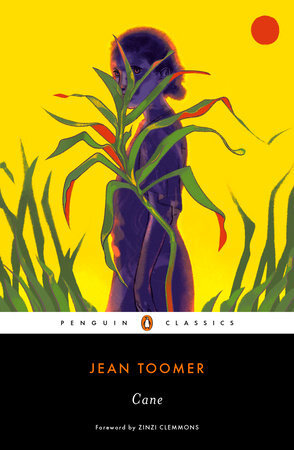
As the Harlem Renaissance skipped to a run, the South Georgian characters of Jean Toomer’s Cane demonstrated what present day Black Americans know all too well: to survive the collisions of racial trauma or violence, one has to switch identities. Constantly.
Published in 1923, Toomer’s unusual take on the South raised eyebrows for its surreal modernism, painting its syrupy souls in genre-bending vignettes rather than traditional plots. And, much like Toomer himself—a mixed-race man who passed for white—Cane demonstrates the complicated identity crises of those who reside in the dominant society yet hide their true selves.
What Is Code-Switching?
Code-switching is when an individual shifts from one language or dialect to another, often subconsciously, when communicating in social situations with ethnic groups. It’s a linguistic phenomenon—often subtle, usually defensive—that four in ten Black and Hispanic Americans use to blend in amongst others or to maintain safety, according to Pew Research.
There’s a nonverbal component to code-switching as well, like that shown in the research of University of Maryland sociology professor Rashawn Ray, who has studied how Black males shift their body language as a defense tactic to appear less threatening in public. I’ve done this: For years I’ve always kept an ID on me during runs in my neighborhoods, wore alumni T-shirts to demonstrate some form of academic community, never shown my anger on professional jobs to avoid “angry Black man” stereotypes, and introduced myself to police or security to avoid racial harassment.
These are all signaling processes and active code-switching. And it took me more than 30 years of life to realize that I’d constructed this behavior unconsciously, like Toomer’s characters. Reading Cane helped me to see that a pillar of my Black identity is rooted in surviving America through verbal and non-verbal exchanges.
A Metaphor of Black American Disillusionment
Cane is not exactly a novel, but a hodgepodge of short prose and poetry. The book is divided into several parts: two set in the South, and a lone Northern portion. There’s a drawing preceding each section, one fourth of a circle; these connectable but unconnected quarters signify incompletion.
Reading Cane helped me to see that a pillar of my Black identity is rooted in surviving America.
What ties the overall book together are its weary, broken, and emotional reticent characters: all longing for the past while facing an uncertain future, with violence never far away.
This notion and the book’s prevailing theme of navigating American chaos reflects the complicated narrative of Black Americans who, like Toomer’s characters, exist in a racial paradox—a vacuum of agency—that often reshapes or redefines the Black experience for the white gaze.
Case in point: For every “Black Lives Matter” there is an “All Lives Matter” or “Blue Lives Matter”; for every complaint of racial inequality, there’s a “bootstraps” lecture; and whenever meaningful discussions of race happen, there is the risk that white fragility will prevent true engagement.
The form of Cane conveys the disconnection that Black Americans have with the dominant society, and the longing for completion.
Cane’s Code-Switchers Navigate Two Worlds
Like Toomer, Black Americans are expert code-switchers in that we inhabit two worlds: the public, around whites and non-Blacks, and the private, among loved ones, friends, and our community.
Each world has its own code of conduct: In white spaces, you keep a low profile. Communication is straightforward, pleasant, frank. The goal is not just to fit in, but to survive.
In white spaces, the goal is not just to fit in, but to survive.
In Black spaces, accents, colloquialisms and slang proliferate as well as oral histories—from tall tales to “the dozens”—all bowtied by an irreverent respect for faith, alongside a longing for lost African traditions.
These racial expressions are akin to performance art, but Black folks in white spaces often must stay “on code” to prevent danger and to avoid confusion.
Racial Performance and the Limits of Personal Agency
Cane captures race as performance and the importance of code-switching rules in “Blood Burning Moon,” where Old David Georgia tells rumored tales of a relationship between Louisa, a Black woman, and Bob Stone, a white man, to a circle of friends. In this circle, there is community—safety, even. But the story serves to underline the idea that this safety is conditional, existing only because the circle is closed to outsiders.
In the story, Tom Burwell, a Black field hand and suitor to Louisa, doesn’t like that Bob, by social standards, is considered superior to him, so he leaves the safety of his community to claim Louisa as his own. Likewise, Bob struggles to think of Louisa as his equal even though he’s infatuated with her; his white pride and heritage is immensely important to his identity, and he’s angry that his family has lost power in this modern age; he longs for the “good old days” when he could approach Louisa “as a master should” and take her sexually.
Louisa is keenly aware of the limits of her agency in the Jim Crow south as a Black woman. She works for Bob’s family and navigates her relationship with Bob with great measure. Yet she acknowledges, “By the way the world reckons things, he had won her.” White men like Bob in that time often got what they wanted.
The story serves to underline the idea that this safety is conditional, existing only because the circle is closed to outsiders.
Understanding these social rules, Louisa tries to warn Tom that he shouldn’t act out in violence against Bob. That he shouldn’t behave like the white males expected him too. Likewise, Bob is propelled by an aura of white privilege that blinds him of all consequences to his actions, and he is, as we later see in the story, supported by white mob rule to keep the status quo.
And the risks are different for everyone: Bob stands to lose very little in pursuing Louisa, while Tom or Louisa could possibly lose their livelihood or worse for behaving in any way that threatens whites.
Conformity and Compliance Is Demanded
Code-switching often flies under the radar, which is of course the point. But as videos of white violence and attempted violence proliferate online, we increasingly see the risk of not switching into a “non-threatening” vernacular for the benefit of whites. The rationale for code-switching is evident in incidents where white pedestrians call the police on minorities simply to remove their presence. This behavior communicates: My privilege, needs, and desires are more important than you, and I can employ force against you if I see fit.
It’s why code-switching often happens: to minimize conflict to self and to navigate hostile spaces.
A prominent portion of Jean Toomer’s work in Cane focuses on the collisions of race in society and the performances that result from those meetings. The idea of race as performance was a theme that Toomer saturated into his work mainly because, as a high-society, mixed-race man, he’d freely moved between racial and socioeconomic groups his entire life.
Code-switching often happens to minimize conflict to self and to navigate hostile spaces.
In contrast, Black Americans who cannot freely move between those worlds with such ease may be criticized for leaving the confines of the racial behaviors considered native to their position in society. Those who do venture out—whether in dating interracially, having alternative tastes, or expressing differing political opinions—may be perceived as opting out of the safety of Black culture in favor of white culture—“acting white,” so to speak, or forgetting where you came from and instead pursuing the intrinsic rewards of whiteness.
The racial performance of those within “the code” must be consistent, even among one’s own group, otherwise you risk being ostracized.
Our society and its preference for whiteness as the ultimate goal is manifested in how we view beauty standards, professional representation, what is taught in American schools, and even which literature is considered “classic.”
This white-dominated reality impacted Toomer as well, who saw racial pride as something Black Americans had to quell in order to fit in with the dominant society. Louisa embodies this ideal by trying to keep her two worlds separate, not wanting to create friction with Bob or his family, yet also caring for Tom’s well-being by warning him of the dangers of going against a systemic force in a jealous, unfocused rage. Unlike Tom, who takes performing race to the extreme, Louisa is neutral-minded and wants to survive in a hostile environment.
Additionally, because Bob struggles with not wanting to perform his whiteness enough, he feels inadequate in his identity and longs for a time where he, as a white man, had more superiority. His actions to take Louisa over Tom are then guided by damaged pride; Bob is competing with his ideal self for lost valor. In our modern day, the Amy Coopers or “Karens” of the world resort to these same tactics when they feel their whiteness isn’t appreciated, or respected enough.
From a code-switching perspective, both of these men are cautionary tales of life in America where conformity is demanded, especially at the request of privileged whites, and defying those requests could lead to the loss of agency, as it does for Louisa, or in the case of Tom, put your very life at risk. Toomer’s depiction of privileged white men like Bob communicates that these individuals also exist under the same restrictions of white supremacy on self-expression; they are expected to play their own roles in the subversion of others and are systemically supported in those actions, as we see in the references of Bob’s family influence and the white mob avenging Bob at the end of the story.
Say It Loud: I’m Black and I’m… Proud?
In Cane, many characters struggle with understanding their racial identity. The weight of slavery and its effect still weigh heavy, and life as second-class citizens in the Jim Crow South has shaped their view of reality. For those who do not acknowledge their blackness, even when the greater society does, code-switching offers no respite; it’s useless or lost in translation.
This is seen in “Kabnis” where the titular character—a dignified, Northern Black teacher visiting Georgia—struggles to connect with the culture and community of his Southern brethren.
After a near brush with racial violence in town, Kabnis meets Lewis, a confident man strong in his personal identity and connection to the South. Lewis and Kabnis briefly bond, but there’s an unconscious distance between them, a “savage, cynical twist-about” revulsion, in which Kabnis laughs Lewis off, rejecting his help.
Kabnis wants to belong, but he’s disconnected: from his culture, his Blackness, and “home,” as Toomer deems the South. Kabnis is frustrated by the code of his peers. And in a place of community, he longs for the cold, alien familiarity of Northern cities. His desire to enter the dominant society has cost him his identity.
Toomer’s cautionary tale posits that assimilation in American society is possible, but you must surrender your Blackness at the door.
Toomer’s cautionary tale posits that assimilation in American society is possible, but you must surrender your Blackness at the door. This conformity also means that your issues become less important and, if you complain, the dominant society will deny your grievance to maintain the status quo. Examples of this exist in the defense of the Confederate flag, the “All Lives Matter” argument, or the inevitable character assassinations of police brutality victims—all pushbacks against Black pain.
Or, as a character explains to Kabnis: “N****r’s a n****r down this way, Professor. And only two dividends: good and bad. An’ even they ain’t permanent categories. They sometimes mixes um up when it comes to lynchin’.”
Cane is an exploratory work that questions the concept of race, while its characters—like their Black American descendants—regularly switch modes of communication to detail their pain, joy, and pursuit of identity to avoid judgment or danger. Therefore, code-switching is an unconscious response to a society that has historically suppressed Black bodies and voices; a rebellious double-entendre of life, like slave spirituals with hidden meanings. And yet, there is a frustrating necessity to regain one’s agency, even if for a brief respite.
But as discussions of racial equality and systemic racism reach critical mass in the United States, many of those private conversations are now out in the open. In a rare moment, the majority is listening.
With this week’s announcement on student visas, ICE implemented new restrictions on international student visas in the U.S. Students who are taking online-only classes must transfer to a class that’s offering in-person instruction, at a risk to their personal health, or face deportation. This announcement only serves to heighten the series of restrictive immigration policies that the Trump administration has been implementing throughout the pandemic.
So what does this mean? In some of these cases, students will be forced to leave the country. In other cases, it may result in unsafe, premature university openings that could cause a spike in coronavirus cases. This isn’t just bad news for the students themselves. The American Council on Education issued a statement on the recent ICE decision, pointing out that international students “yield an estimated economic impact of $41 billion and support more than 450,000 U.S. jobs.” Apart from boosting economic growth and facilitating better global relations, international scholars—professors, researchers, and students alike—help foster cultural and intellectual diversity in the U.S. Furthermore, cross-continental intellectual exchange is by no means new news—it has been a cornerstone of shaping our current-day, globalized society.
A better understanding of the international student experience won’t automatically make people value us—but perhaps it’s a start.
As for the many international students and scholars, we are faced with a difficult decision. I am one of those international students, one of over one million. Not all students have the resources to continue their research from their home country. Not all students have the option to return. In the midst of a global pandemic, we remain stranded without even a legislative safety net. As an international Ph.D. student noted on Twitter: “the message is clear: our lives are cheap, our work unvalued.”
A better understanding of the international student experience won’t automatically make people value our work or our physical well-being—but perhaps it’s a start. (You can also sign petitions, call on your higher-ed institutions to protect their students, and spread awareness of the issues.) Here are 8 books that discuss the experiences and contributions of international scholars within the U.S. higher education system. Some are acute explorations of what it means to be ostracized in society, regardless of qualifications; others are a satirical look at academia, humorously pointing out the ways in which class, nationality, and language converge; still others are a thoroughly researched, academic investigation of international students’ circumstances.
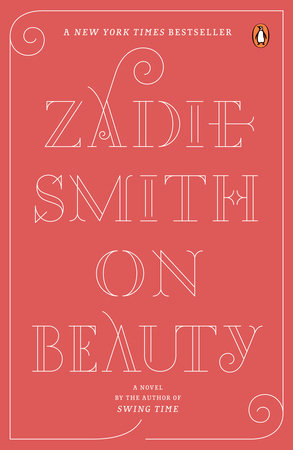
On Beauty deals with not one, but two visiting international scholars (and their respective families). Howard Belsey is a white English scholar of art history; his Black wife, Kiki, and their children relocate with him to the U.S. for his job. Meanwhile, Howard’s nemesis, Monty Kipps, is a controversial Trinidadian scholar who is against affirmative action. Hilariously, they both end up moving to a small suburban university town in Massachusetts. Imbued with Smith’s bitingly satirical wit, the novel tackles both political correctness and neighborly drama, as well as the intersections of nationalities, race, and class in an American liberal arts college.
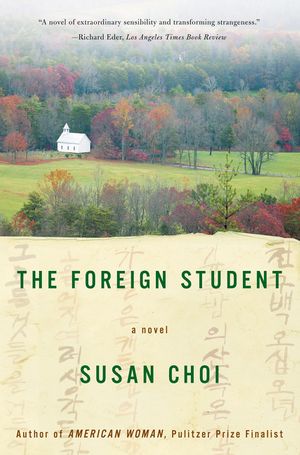
Set in a small Southern college in the 1950s, Choi’s debut novel tells the story of a relationship between a young, war-scarred Korean student and a Southern heiress. Chang, or “Chuck” as an American soldier re-names him, comes to Sewanee on a scholarship. Haunted by memories of the Korean War, he doesn’t speak of his past—until he meets Katherine, who is also struggling with her past. The Foreign Student explores post-war trauma and interracial relationships, showing how one can find deep connections in unexpected places.
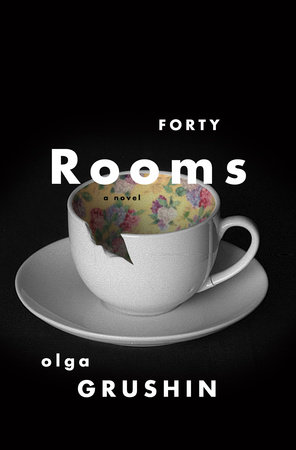
Forty Rooms centers on the concept that a woman will inhabit 40 rooms from birth to death; moving from room to room, the novel tells the life story of a Russian woman. The book starts in a small apartment bathroom in Moscow, then tracks how the narrator moves to attend college in the U.S., harboring dreams of becoming a poet. Grushnin imbues her narrative with rich literary references and hints of the supernatural, while also keeping the story grounded in everyday details. Forty Rooms is a story about immigration, education, and assimilation; simultaneously, it’s a meditation on what it means to be a woman, and the ambiguous consequences of dreaming big.
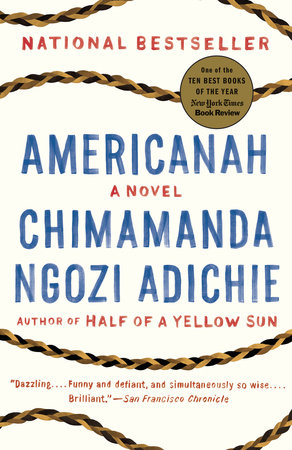
Yes: you’ve probably already heard of it. You’ve most likely read it. It’s worth re-reading! Americanah centers on Ifemelu, a strong-willed Nigerian woman who comes to the U.S. for college. Ifemelu grows up in Lagos, along with her high school sweetheart, Obinze; however, as Nigeria’s political landscape changes, Ifemelu is sent away to the U.S. for higher education, while Obinze winds up in London as an illegal migrant worker. Adichie’s acclaimed 2013 novelstill feels hyper-relevant today, with its nuanced, intersectional analysis of race, immigration, and identity.
I couldn’t pick between these two novels, both of which depict life as an international student in U.S. universities. So, both! In The Namesake, Lahiri tracks a multi-generational epic from Calcutta to New England. Lahiri is acute in her depictions of what it means to be “othered” in American suburbia, and the balancing act between family tradition and cultural assimilation. In The Lowland, two brothers’ lives veer apart when one remains in India, working with revolutionary movements, and the other wins a scholarship to study science in Rhode Island. This family saga explores sacrifice, love, and the consequences of the brothers’ respective decisions.
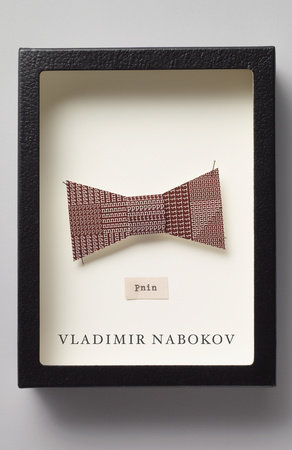
Although U.S. immigration policies have been directly linked to racism and inhumane discrimination—from the Chinese Exclusion Act of 1882 to current-day detention camps for Latinx migrant children—they also affect groups that have traditionally been in power, like straight, white, European men. Nabokov’s protagonist in Pnin is one such example, as a Russian émigré professor at an U.S. university. However, Professor Pnin is far from being a model scholar; he can’t seem to keep track of his papers (or train schedules, let alone academic conspiracy theories), struggles with delivering lectures in English, and writes tirelessly to his ex-wife. Written with Nabokov’s trademark humor, Pnin satirizes bumbling professors, the author’s own Russian accent, and the glamorization of America.
This academic book may not be the most exciting narrative, but it is definitely comprehensive. If you’re curious in learning more about national investments in global education, economic consequences of a more mobile labor market, and policymaking surrounding international students—this is the book for you. Bhandari and Blumenthal analyze global student mobility patterns, in order to point out existing trends and predict what they entail for our future.
It’s been said many times already that the coronavirus pandemic has laid bare the dramatic economic inequality in New York City—which of course ties into deeper systemic issues around race. But to pretend those inequalities haven’t been obvious before this time—to pretend they haven’t always been part of the city’s history—is a serious fiction. I grew up as the daughter of a building superintendent on the Upper West Side. In a single morning my father might be asked to prevent a homeless man from stealing the newspapers out of the lobby to re-sell on the street, to manage a group of contractors who were re-tiling someone’s bathroom, and to massage the haunches of the cat in the penthouse while the tenants were away at their summer house. In the course of a very short time period and in a very small space, all sorts of examples of vast inequalities occurred in the building where we lived.
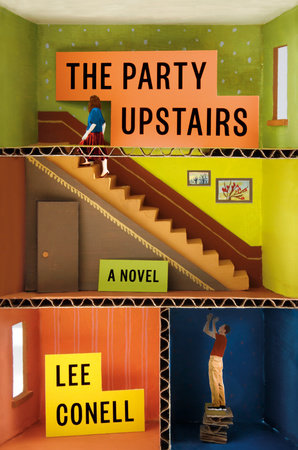
In my novel, The Party Upstairs, I wanted to draw on the setting of a single building on the Upper West Side to explore some of the complicated power dynamics that emerged between residents there. Throughout the course of a day, a building super and his daughter try to navigate between different socioeconomic worlds they must inhabit and perform in. They have to reckon with their own past mistakes, with their wildest hopes, and with the facades they must keep up in day-to-day life in order to survive in the city.
In writing the novel, I was drawn to other books that approached socioeconomic inequality in the city in a way that neither fetishized the wealthy nor seemed to exploit the suffering caused by poverty. I wanted to tackle my characters’ anger at the city’s inequality while also recognizing the many moments of joy and connection the city brings too. The following books helped me think with more nuance about some of these concerns.
A Lucky Man contains nine stories, set mostly in Brooklyn and the Bronx, all of whichdo a brilliant job of creating narrative tensions around the interlinks between race, class, and masculinity. The story “I Happy Am” is an especially strong example of this: It centers around a group of boys from the Bronx who are driven out to the suburbs, expecting to spend the day at some rich white people home and to swim in their pool. The story twists and turns in a way that beautifully reveals how a kind of performance of gratitude so often plays into power relationships between white people and people of color, and between the wealthy and the working class. At the same time, moments of unexpected tenderness also occur in this story and throughout A Lucky Man, making these stories deeply human even as they tease apart the systems that try to dehumanize many of Brinkley’s characters.
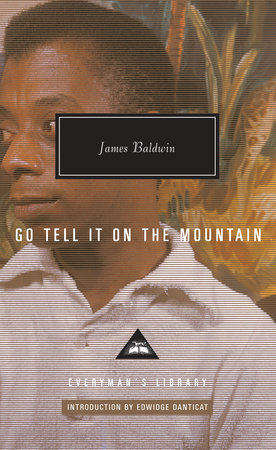
Baldwin’s first novel opens in Harlem on John Grimes’ 14th birthday. But Baldwin moves around in time and space, exploring the lives of several characters in the rural South before they move to New York City. Many of the book’s characters held onto hope that living in an urban center in the North would feel different but as the novel shows, police violence, racism, economic injustice, and segregation persists in the city, too. Baldwin shows this sharply when his characters’ look at cultural institutions such as the Museum of Natural History and the Met. One of the most moving moments occurs when John takes a long walk and winds up at the 42nd Street New York Public Library: “But he had never gone in because the building was so big that it must be full of corridors and marble steps, in the maze of which he would be lost and never find the book he wanted,” Baldwin writes. “And then everyone, all the white people inside, would know that he was not used to great buildings, or to many books, and they would look at him with pity.” John Grimes’ resistance to looks of pity help lead to an unflinching look at the city itself throughout this novel.
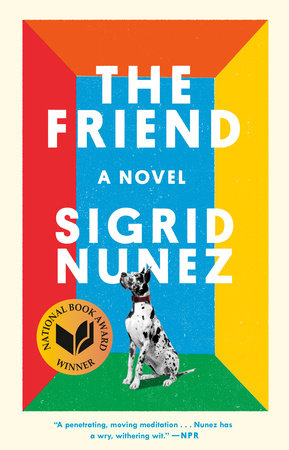
In The Friend, a writer in New York inherits a Great Dane from her recently deceased friend and fellow writer. The novel grapples with sitting with grief, but there’s also a real sense of financial strain and risk: In order to keep her rent-controlled apartment in a building that doesn’t allow for pets, the narrator must hope that nobody reports the dog to her landlord. “It’s not like you’ll be put out on the street overnight,” a friend assures her. The super warns the narrator about the threat of eviction, which the narrator understands: It’s his job on the line as well. Nunez’s book demonstrates the way that housing instability in the city and the weight of class don’t need to take center stage in a narrative to make their presence felt on a character in the midst of great loss.
Jimenez’s stories, both joyful and rageful, all take place on Staten Island and are populated with smart people with terrible bosses, including angry adjuncts, underpaid office workers, photographers at the DMV, teachers, and grant-writers at nonprofits. There’s a keen awareness of the city and specifically Staten Island’s socioeconomic and racial tensions in this collection, and the way those tensions manifest even in people who would eagerly deny contributing to those tensions in any way (in “The Grant Writer’s Tale,” all the narrator’s office mates are white and have “expressed polite concern in the past about police brutality;” Jimenez’s use of “polite” is quietly damning and devastating). Jimenez tackles inequality and political upheaval while holding onto a sense of humor and humanity—a sense that animates her book’s narrators so that their voices seem to launch off the page.
The Privileges centers around “a charmed couple,” Cynthia and Adam. They start off in New York City as kind of rich and then—thanks to Adam’s insider trading scheme—get a whole lot richer, complete with penthouse overlooking the Museum of Natural History’s planetarium. But the two are so coolly observed, their life seems not glamorized so much as unnerving. As a reader, I was halfway waiting for the family to get punished by society in some way, to receive their comeuppance, but this kind of authorial move would, weirdly, feel cheap and dishonest, and Dee, in avoiding it, winds up saying something far more interesting about how class operates in America. The Privileges doesn’t feel like a voyeuristic look into the one-percent so much as a portrait that, in denying a too-perfect narrative justice, reflects the city’s own socioeconomic asymmetries.
Grace Paley’s New York is one where resiliency in the city is most tied not to affluence but to a lively curiosity: “All that is really necessary for survival of the fittest, it seems,” observes a Paley narrator, “is an interest in life, good, bad, or peculiar.” Inequalities in the political and urban landscape of Paley’s characters are not treated as mere background but as a key component of their reality. Her characters—single mothers, shouting children, activists, grocers, writers, social workers—speak out in voices that feel somehow both undeniably New York and undeniably Paley-ish.
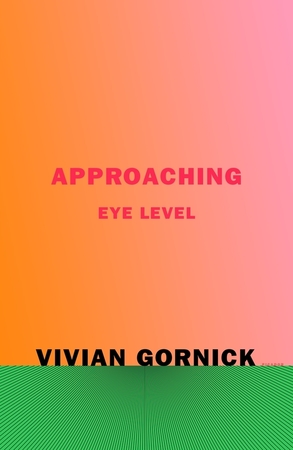
The essays in Approaching Eye Level are attune to class, power, and city life in all sorts of ways, but the collection’s opening piece, “On the Street: Nobody Watches, Everyone Performs” is itself a virtuosic performance—a close examination of walks in the city, the strangeness and the thrill of them. “The streets attest to the power of narrative drive: its infinite capacity for adaptation in the most inhospitable times,” Gornick writes. There are devastating inequalities to see in the city streets but there’s also a kind of storytelling power in the many ways people survive. “Nothing heals me of a sore and angry heart like a walk through the very city I often feel denying me,” Gornick continues. “To see in the street the fifty different ways people struggle to remain human until the very last minute—the variety and inventiveness of the survival technique—is to feel the pressure relieved, the overflow draining off. I join the anxiety. I share the condition. I feel in my nerve endings the common refusal to go under.”
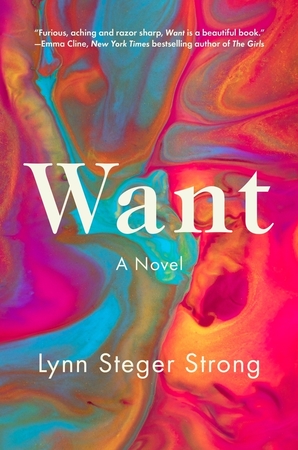
Lynn Steger Strong’s highly-anticipated new novel Want plunges us into the psyche of a woman for whom the intertwining nature of existence is more fraught and urgent than usual. That makes the book sound complicated, but really it’s simple: the protagonist, Elizabeth, is a person being pulled in many directions, practically, ethically, personally, and professionally, and she can’t stop thinking about it.
Like Elizabeth—and, indeed, like Strong, whose fiction nods heavily in the direction of her excellent personal essay series for Catapult—I came of age in a generation that was taught we could be anything we wanted to be, and that our careers would be the place we’d find the deepest satisfaction. That, indeed, “to be” was to be employed in some spiritually (and financially) fruitful activity.
I talked over email with Strong about how these promises have and haven’t panned out, and how she managed to render such a moving and relatable portrait of a woman for whom peace of mind is a swiftly moving target.
Adrienne Celt: Can you talk about how you placed this novel in the historical moment? Your protagonist Elizabeth talks about 9/11 and the recession as events that disrupted the world she thought she’d inherit, but also says “that world never existed.” So, how does history connect to financial mobility (upwards or downwards) for you and your characters? And how, in the wake of this year’s events, do you imagine their (shall we say) spiritual-economic condition continuing to unspool?
Lynn Steger Strong: This is maybe a different conversation, but I don’t think any book lives outside of the historical moment or the politics in which it’s being written, whether it admits it or not. But this book is very much placed in a particular space of rupture, both for Elizabeth and for a certain group of Americans. I think (and I would put both Elizabeth and myself in this category) there was, for a long time, a group of us who felt sort of inured to historical ruptures. We were engaged, maybe. We had ideas about how we thought the country should be. We felt sad and angry about choices that were made by our government, but we had also largely been cloistered from the consequences of so many of the system’s failures and flaws. But then here we were, in our 30s or 40s. Maybe we had kids and jobs. We went to the right schools. But, for a lot of us, none of it was what we were told it would be.
Here we were, in our 30s or 40s. We had kids and jobs. We went to the right schools. But, for a lot of us, none of it was what we were told it would be.
An important part though, at least for me, of this moment, is that for most people in this country, it has never been the thing we thought it was. The horror and the precarity that people like me felt gobsmacked by with the confluence of the gig economy, student debt, the tearing and tattering of the social safety net, the 2016 election, the seeming feeling that any sense of stability we had was crumbling, had long been just a fact of living in this country for most people.
I think the more recent and more jarring rupture of this virus is in many ways an extension of that. For years, we’ve been watching for the final frayed and tattered thread of the systems under which we live to break and for all of us to go into free fall, and now here we are. It’s hard for me right now to see forward, but the one thing that’s sustaining me right now is the hope that there might be a massive structural reckoning on the other side.
AC: I’d love to hear you talk about how you approached Elizabeth’s intellect and physicality. Running is very important to her, but I’m also thinking about how her emotional life comes differently alive when she’s discussing books with colleagues vs. when she’s with her children, and how sex is a release and a sort of political crucible for her. Once or twice, you describe nursing as the baby “eating”—not drinking or even, simply, nursing—which I had a really visceral reaction to. How do these elements balance for you—how is Elizabeth differently aware of herself (the personal, political, intellectual) because she’s balancing these elements? How does her physical being alter, and perhaps enhance, her intellect?
LS: I guess, and this makes me think a little of the first question, I feel sort of adamantly that they are all—the personal, the political, the intellectual—inextricably linked. Maybe the body is the space that connects them all; maybe, even though I studied political philosophy in college, that’s why I decided I wanted to tell stories instead: to watch bodies interact and react and move through space feels to me to be the one of the most useful ways to see how all of it is mixed together and overlaps. I’m not sure I’ve ever taught a workshop that has not at some point involved me saying—too loudly and no doubt with aggressive gestures—that we have to see and feel the bodies, that if you watch the bodies, and let them act, everything else will come.
I think the female body, in particular—acting and being acted upon, having sex, making and feeding babies, reading and thinking—is most interesting to me: it is all deeply personal, but also political, it can also be intellectualized. Hormones, biology, chemicals; none of it happens in a vacuum. My experience as a reader and a writer was forever altered by what happened to my brain and body when I became a mother, when I spent so many nights not sleeping, when I was nursing, when I was reading or writing or teaching, but still thinking of my children all the time. It was important to me that Elizabeth still be nursing, that she be, literally, physically, not just emotionally and intellectually, sustaining her kids. I think that’s where “eating” came from. I wanted the image to be substantive and physical, not liquidy and light. It was also important to me that they all get sick at some point, that there be vomit and fevers and that sort of feral desperate state of vulnerable bodies trying to care for one another and themselves. When she gives to Sasha, I wanted that, too, to be something physical and concrete. I think part of the project of the novel was to show how often our attempts to navigate feelings or ideas as abstractions wholly separate from the body can prove useless in our actual lives.
AC: “Remember the bodies” is such excellent literary advice (and not bad moral advice, tbh). Can you expand on your thinking about how this relates to Elizabeth’s femininity, especially by way of her motherhood? There are elements of the “personal vs. political” divide (or lack thereof) that apply equally to any gender, moments in the book that could be essentially unchanged with a male protagonist—and then there are moments of great difference.
What I’m getting at is, you elegantly forefront different structural inequalities (racial, socioeconomic, gender, etc.) at different times—so can you talk about how you moved between them, particularly in very intimate spaces? Do you believe there are moments when our political personas drop in the face of immediacy—whether moments of desperation, or moments of grace? Do we ever get to calm the fuck down in private, or no?
LS: This might shock you, having read the book, but: it is very very hard for me to calm the fuck down. I think, in some ways, this book was me building a plot in which the driving force is both a desperate drive toward and an overwhelming fear of just calming the fuck down. And some of this, the fear especially, I think is structurally built and perhaps particularly feminine. We have been taught this strange game of performing perfectly in order to maybe, maybe get to a space of solidity or stability, but if we stop, even for a second Being Vigilant, Doing What We’re Supposed To, there is an extraordinary fear, at least for me, that it will be taken from us or we’ll be found to be a fraud.
I think the sex is connected to this: for Elizabeth, withholding sex from her husband is this safe space to use her body as a political act of being something other than she knows she is supposed to be, but then it also shows the personal ramifications of the political: she likes her husband; she likes having sex with him. It’s not a reasonable or effective act of protest, but it’s what she has.
We are living in a time of extraordinary rupture, death, destruction, terror. There are these glaring, devastating, structural inequalities.
I wrote a good portion of this book in the summer of 2018. It is, as we talk, April 2020. The COVID-19 deaths in New York City reached 12,000 today, and our President just announced that his daughter and his slumlord son in law will be heading the “reopening the country task force.” Yesterday, my phone told me that I’ve been checking Twitter roughly 5.5 hours of every day. We are living in a time of extraordinary rupture, death, destruction, terror. There are these glaring, devastating, structural inequalities. But, to me, and I think this does come back to “Remember the bodies,” what is most devastating about all of this is the way it makes it impossible for so many people to experience those, as you say, small moments of desperation or grace. This book is my attempt to show a life informed by the knowledge of these inequities while not being touched by all of them, to show the constant subtle ways that our own desperation, combined with our constant overwhelming knowledge of the desperation of everyone around, can make it hard to just like, wake up, make breakfast, live your life.
Again, that’s why I am trying to work all of this out in fiction, because I want to go to all those spaces that are supposed to provide those moments, the daily mundane ministrations, and show how, in the face of this underpinning of anxiety, it can be impossibly difficult to stop your brain from rattling.
With regard to Elizabeth’s femininity and motherhood, I guess it only all gets messier, the rattling sort of ratchets up. It feels differently important (and also maybe political) to be present in one’s body for one’s children. In this strange moment of quarantine, it feels necessary to me to find and hold those small moments with our children, even as the world feels like it’s burning all around. It feels important not least because if we were to fall victim to this virus THAT is the thing I’d be most sad to lose, those minutes with them, their specificity and strangeness, their yelling at me and making dumb jokes during “homeschool,” their morning smell.
AC: I think your fear of calming down is palpable in the book, and (at least I found it to be) deeply relatable. There’s always so much in the world to be aware of. And yet awareness is not enough.
One way this awareness manifests in Elizabeth, which I found really interesting, is her relationship to her parents: she’s very aware that her financial situation comes in part from her rejection of her parent’s money and values, and yet it’s deeper than that: like the way her family struggles is also evidence that her rejection was correct (or anyway, valid). She talks about how she and her husband were so inappropriately insulated from reality that they “didn’t feel the first hits” to that insulation—9/11, etc. We tell ourselves stories in order to make sense of the world, and in order to survive, but sometimes—often, maybe—those stories can calcify, become harmful, and then shatter. How do you relate to those stories? Why is it so hard to change them, even inside ourselves? Why do we feel so much shame?
LS: I think the short answer to that question, at least for me, is that knowledge is not nearly as powerful as we wish it was. I know the lies I’ve been told in order to protect me, in order to fuck with me, in order to implicate me in systems I would never have been implicated in had I known; I know the ways certain narratives around what and who I am, that I did not create and that I reject, are bullshit, but that doesn’t mean I am capable of obliterating them. I think the tricky thing about those calcified, foundational, familial, societal stories is that they live inside us. And this brings us back to bodies. The stories that we’re given and that are told about us before we know enough to stop them haunt us, embed themselves within us; they have been used to construct us, and, just because you reach a point at which maybe you understand that they’re just stories, it’s not like you can rid yourself of them. It’s not like you suddenly know what to be or what to tell instead. I think my shame comes both from knowing all the problems with the stories I’ve been told or have been telling, but not being able to do anything to stop them or to fix them, feeling deeply about things, but also knowing how worthless those feelings are. It comes from knowing stories about myself that I wish that I could overcome but sometimes I’m too tired or too scared or just don’t have enough power and I can’t.
AC: Going back for a moment to the topic of sex, sort of:You do a beautiful job navigating the erotics of female friendship, particularly between Elizabeth and Sasha—and I’m curious if this was a topic you set out intending to write towards, or if it was a natural outgrowth of Elizabeth’s friendships and thoughts about power. I’m thinking here of the desire to possess or even embody one’s beloved, which is not quite sexual (or, not only) and thus not quite queer, but is in fact a deep intertwining of the spirit; how young women often lose track of where they end and their closest friends begin. Does that sound true to you?
LS: I like what you say, “sex, sort of,” which I think, with Sasha especially, was exactly my intent. I think this is one of those moments when stories, and bodies, and language are all sort of at odds and overlap. I don’t think gender or sex are anywhere near as clear as the language we’ve been given for them tells us that they are, nor are most of the stories we’ve been told about them; but I do think, I hope, that one of the jobs of stories can be to make space within the language we’ve been given to re-consider the sorts of bodies that exist and how they interact.
Depending on where and when and how you grew up, what you were exposed to, and the stories you were given, if you were young and had a female body and it felt compelled toward another female body, you might have assumed that you wanted to be this girl’s friend; you might have thought you wanted to look or dress or act like her; you might have fantasized about becoming her somehow; and that was probably some or all of what that feeling was, but maybe also, you didn’t have the stories or the language for what else it might have been. Alternatively, if you were compelled toward a male body in that place, at that time, you might have assumed you wanted to have sex with him; you might not have acknowledged that you might also want to be him, to inhabit or deploy some of his powers, or to engage with his intellect, to be his friend.
It’s impossible, I think, to separate our bodies wholly from the stories we’ve been told about them. This is different though not separate from sexuality in that I think there are these hard lines delivered to us by virtue of a lack of language and a lack of stories for our feelings, even as our bodily experience might be more fluid and complex.
AC: Finally, I’d love to hear you talk a bit about tenderness. Throughout the novel, Elizabeth is alternately prickly and devoted with/to the people in her life, but she has a great deal of trouble extending that tenderness to herself. (She seems fine with extending the prickliness.) Do you feel tender towards Elizabeth? Do you think that it is, in fact, important to feel tender towards oneself, or one’s fictional characters? Is your tenderness for her manifest in her tenderness for others?
LS: This has to do with the running, I think. The running is the closest that she can get to any kind of tenderness to herself, which, by itself, I hope, is telling: the way she runs is brutal. She doesn’t jog. She goes for hard fifteen mile runs in the dark and freezing cold. And because of this, because her body is so clearly Working, I think it is a way she’s able to stay steady, to slow the constant anxious brain-whirring, which is not the same as tenderness but is maybe as close as Elizabeth can get. The fact that she is only able to give to herself in this way has to do with a certain kind of person, I think often female, who is wary of getting anything for which she does not also pay a price.
I’d print out a crocodile & feed it
my left hand, then print out another,
prosthetic hand & feed it that one,
etc., ad infinitum. The beast would be
hungry, & I have less use for myself
these days since all the plastic filament
in the printer can be replenished
with online ordering. I’ve nested
in blankets on my couch, not even
going to bed, not ever leaving home
because the job I’ve probably been
fired from hurts less than losing
an appendage. Lonely, I’ll have
a friend in the crocodile, symbiotic
natural relationship because he’ll
need my hands & I’ll need his love.
What will appear first, his tail or head?
If head, will the teeth begin to bite
before his heart is printed, before
he can feel the sick, reptilian love
between us telling him to stop eating,
to wait for a new hand to devour?
The Charming Bear
It dug through my trash for gorgonzola
& popped the slimy hunk in its mouth
using its claws like human fingers,
though it couldn’t have. They can’t.
It would overcome the lock on the bear fence,
I knew, I could read its mind
as it polished off my food waste
& moved on to my mail. Invoices,
statements, blood test results,
all things my wife said to shred
—but around here, who steals your trash?
This bear. He looked at me
& I knew he was going to steal
my identity. Could he hack my accounts?
Had he overheard my mother’s maiden name?
The neighbors’ garage thundered open
& he ran. To get him back,
I took a styrofoam tray of ground beef,
ripped away the plastic wrap, & squeezed
the soft mass so the juices dripped & its scent
blossomed a message in my yard: Bear,
a gift. On all fours in the bushes,
my own hands smelled like sweet iron.
I licked the juice from one, plucked
tiny red berries from the shrub,
smiled over the ants & water bugs
weaving among the moist pine mulch.
I shoved a handful in my mouth,
chewed it like gum, forgetting
where I was & why.
When I was growing up, everyone I fantasized about becoming was blonde. Jessica Wakefield, perfectly popular across Sweet Valley. Britney Spears, queen of my heart, then and forever. Barbie, not always blonde, but definitely in the avatars I preferred her. Blondness was the baseline from which my fantasies extended—an unreachable goal, through and through.
Until a few days ago, that is, when I Googled pictures of Porochista Khakpour as a ridiculously gorgeous, platinum blonde.
Iranian American writer Khakpour has had a lifelong fascination with blond hair too—and not just on white girls. Her mum, she writes, always had some variation of extremely light to blonde hair, while in turn, the ladies of ‘Tehrangeles’ — L.A. “Westside neighborhoods filled with wealthy Iranians”—sported expensive shades of flaxen and gold. The idea of a brown girl going blond had never seemed remotely possible to me, but, as Khakpour writes, “going blond was the most Iranian thing I’d ever done.”
Khakpour’s fourth book, Brown Album: Essays on Exile and Identity, sits precisely at these complex intersections of identity—a patchwork text whose shifting chronology perfectly mirrors the experience of immigration and diaspora. The past is always encoded in the present, which in turn leaps ahead to a hopeful, uncertain future. By turns funny and sad—and always incredibly thoughtful—Brown Album’s razor-sharp prose spans over a decade of Khakpour’s writing on Iranian America. These essays, she explains, are “a testament to the greatest and worst experience of my life: being a spokesperson for my people, a role I never asked for.”
Brown Album is also where I learned this important fact: blonde hair is such a rare genetic mutation that only 2 percent of adults across the world are natural blondes.
Khakpour writes, “To survive our moment in 2020 and perhaps all the moments to come, we need to remind them who the real minorities are.” She’s talking about whiteness, but I can’t help but think of every blonde girl I’ve known, and how every so often, resilient brown interlopers muddy her story.
I spoke to Khakpour about Barbie, class, the false comfort of Americanness, and whether brown solidarity will ever truly be possible.
Richa Kaul Padte:I’d love to start by talking about the word Persian, one that “often equate[s] with Iranian” but that signals a glamor and softness (rugs! cats!) that the latter typically doesn’t. I don’t think this is just a Western thing, either. My mum grew up in Bombay, a city that is home to several iconic Irani cafes. Set up by the Iranian Zoroastrian community under British imperialism, these cafes are known for, among other things, distinctive keema (mutton) preparations, bun maska (sweet bread), Irani chai, and menus sweetly pressed between colorful checkered cloth and glass tabletops. But I think Indians claim Irani in the same way, perhaps, as Americans claim Persian—assimilated fondly, but entirely divorced from their country of origin. You write: “After the September 11 attacks I began insisting on using [Iranian] over Persian. I didn’t want to stand for more convenient euphemisms.” What changed since you began to do this, and conversely, what perhaps remained the same?
I was always very uncomfortable with ‘Persian.’ It was clear that it was a euphemism designed for basic survival.
Porochista Khakpour: I was always very uncomfortable with “Persian.” It was clear that it was a euphemism designed for basic survival. In Los Angeles, it seemed as though some of the most self-hating of my people used it. So when I began saying “Iranian” more as an adult, it felt much more honest. It also allowed me to take the temperature on certain people. I’d watch their eyes, I’d look for a raised eyebrow, any sign of discomfort. I’d also see my own people—those who went by “Persian”—grow very uncomfortable with me, like I had told on us. But I think most Westerners now know those terms are the same thing, so what use is there to hide? We are generally very consistently hated by those who have always hated us!
RKP:When I was growing up, I was obsessed with Barbie (obviously the whitest ones, definitely not the sari-clad ones). But reading Brown Album reminded me of an even bigger obsession I had: Zoroastrian girls, and in particular, their initiation ceremonies (navjotes, or sedreh-pushis). These extravagant parties usually featured beautiful pastel décor, where the lucky girl wore the most perfect, doll-like dress. Resentful that I would never undergo this rite of passage myself, I made my parents buy me my own “navjote dress”: a frilly baby-pink affair with echoes of Barbie’s wardrobe, the most expensive item of clothing I’d ever owned.
You have a lovely piece in Brown Album on Barbie, beauty and identity. In the essay’s final moments, a white middle-aged coworker spitefully mutters under at you over lunch: “Persian Barbie.” You write: “She left before I could jump out of my seat and give her the hug of my life.” Porochista, I cried with such joy at that moment; I felt like I shared it so deeply with you. Are we simply claiming our victories where we can, or is there a particular power in triumphs that whiteness will never see?
PK: I loved the way you put this: triumphs whiteness will never see! I mean, that is probably my most winky essay. I have conflicted feelings about Barbie, and of course about the sexualization of women as well as white feminism and how it views all bodies. So there are no answers in that piece, but instead the roller coaster of emotion that comes from being a woman of color.
And wow, yes, I know what you speak of regarding the Zoroastrian girls—we went to a Zoroastrian temple in Southern California for a time (we were not technically Zoroastrian but my dad really wanted us to be!) and I felt the same alienation from those girls, who seemed so fancy and rich and acceptable.
RKP:You describe yourself as “the anomaly of anomalies in L.A.: the poor Iranian, that incomprehensible being who received either the cold disregard or the flushed pity of rich Iranian ladies.” Unlike your family, these women often lived in Tehrangeles, where the iconic designer Bijan established the most expensive store in the world (prices range from a $120,000 bedspread to a $10,000 limited edition gold revolver). You once worked in a smaller designer store across the street, and one day while you were sweeping outside, an elderly Iranian woman remarked: “Persian girl, how did this happen to you?” Can you talk a bit about this?
Americans love an absurd, flashy, repulsive minority that they can feel superior to, all the while feigning a sort of connection and respect.
PK: Well, firstly it’s not an anomaly in reality—it’s an anomaly in public perception. Many Iranians themselves hate to be portrayed as anything but affluent; even if you are lower middle class, they assume something went terribly wrong. But they certainly also know this a ruse. And the more I wrote about class issues, the more I had Iranians my age writing me, thanking me for that representation. I also think the West has much more fun seeing us as super fancy and ostentatious. This is a weird take on the “model minority”—as if wealth equals virtue. But I see this like some Cruela de Vil caricature, because capitalism is, of course, bloodthirsty and evil. I think being honest about status is so important and one thing I love a lot about Islam is how material wealth is seen as absolute bullshit.
RKP: In the last decade, the opulent, gold-plated wealth of Tehrangeles has been positioned in less flattering ways though: for example, the now-defunct website uglypersianhouses.com. Have the lines between the “right” and “wrong” kind of Iranian become increasingly blurred, or is that simply an outsider’s perspective, a gaze developed by people who never really saw those lines at all?
PK: I think it’s just lazy characterization made by people who don’t know us. And the scary thing is some Iranians will feed right into that—as if they are laughing along with the joke, not really internalizing that the joke is on them. It’s why I felt so conflicted writing about the reality TV show Shahs of Sunset. On the one hand, those Iranians do exist, but on the other hand, yikes, that is not the representation we have waited for! I actually think the cast is playing into the stereotype and perhaps they were asked to as well. They know entertainment like that is lucrative—to give people what they want, to deliver on expectation. Americans love an absurd, flashy, repulsive minority that they can feel superior to, all the while feigning a sort of connection and respect.
RKP:There’s a tendency among the upper caste Hindu diaspora—a group I’ve been a part of—to claim “brownness” as a homogenized experience (over-bearing mothers! body hair!) but to then pull up the definitional drawbridge as soon as something complicates this entirely surface solidarity (“lower” caste immigrants, for example, or Islamophobia).
One of my favorite things about Brown Album is that despite its name, you never universalize a “brown experience”. You write Iranian America, but more specifically, you write your particular experience within that very broad category. You also show us the complexities of identity—for example, the interplay between Zoroastrianism, Islam, America, and Iran in your own life. Is there a way for us to claim solidarity across brown identities; one in which we flatten neither ourselves nor others in the process?
Whiteness requires that all ‘others’ constantly undermine each other and fight for crumbs, while they themselves continue to ascend.
PK: That would be a dream for me. I used to tell an ex of mine, who was also brown but Latinx, that imagine if there was true brown solidarity—we would be most of the world! But of course, brown means so many things to so many people, and our communities are often at odds with each other—often by design, as that’s how white supremacy gets most of its power. Whiteness requires that all “others” constantly undermine each other and fight for crumbs, while they themselves continue to ascend. White supremacists rarely seem to have conflict with each other. You don’t see Americans of French descent fighting those of Irish descent fighting those of German descent, [at least not] that often or that clearly.
RKP: Porochista, I’ve followed you for several years online — but I didn’t find your writing on Iranian America until much later; I followed you for your illness writing (side note: your memoir Sick is a masterpiece). And one of my true online joys recently has been witnessing your return to New York after a long period of terrible illness and difficulty; seeing you doing well in a city that holds you well. But your book gave me an entirely new insight into your relationship with New York: it isn’t just where you feel most at home (I say “just” as though that’s a small feat!) but a home you dreamt up for yourself as a child growing up in L.A.; a home that you determinedly forged into unlikely existence. I’ve never been there, but when you write, “I am a New Yorker”, I absolutely know that you are.
PK: Ah yes. Well, for me New York has always been the polar opposite of Los Angeles, where I grew up. But now I have lived in New York much longer than L.A, and I think my personality—the good and the bad—was very much molded by this place. And 9/11 probably cemented my identity as a New Yorker. Now, living here in the heart of the pandemic, I still feel there is nowhere I’d rather be in America. I truly love this place. I often wish people would call me “Iranian New Yorker” rather than “Iranian American.” And yeah, hilariously, it is where I heal the most from illness each and every time. It’s funny how the body knows where home is, more than you or doctors can imagine.
RKP: I’ve long suspected something similar in my own illness journey too! That our bodies are impacted by our ability to feel at home in the world — by how that world holds or rejects us.
PK: I think setting is so important. We are sold the lie that no matter where you go, you still are yourself. And while that is true in a sense, I think we can’t underplay the impact of surroundings. And this is not an aesthetic thing but a deeply cultural one. It is very hard to exist in a culture that you feel in opposition to.
RKP:In Brown Album’s final essay(which is so wonderful that I won’t give much away), you write of Halloween:
“My aunt sewed me a perfect Snow White dress and I…wore that dress to school in misery. I looked nothing like Snow White, but the women in my family did not see that. They saw their dreams: skin as white as snow.”
Reading this, I thought again about my Parsi navjote fantasies, and whether perhaps they weren’t only about exclusion, but also about whiteness. The fairest girls in school, dressed in white, surrounded by pastel décor and warm, bright lights.
One thing that perhaps unites many brown people around the world is the belief that we are closer to whiteness than we are to any other ethnicity. I always thought this had to do with colonialism, but reading Brown Album made me realize it might be something else. What, according to you, is this something else—and how do we eradicate that shit?
PK: I think it is colonialism. Good old-fashioned racism and white supremacy. There is no way to sugarcoat it. If you are what many, even most, consider brown—and you choose to say you are white, then you are feeding into racism directly. I felt so much better as a human when I stopped wanting the approval of the white world, when I just collapsed into what I was all along. The white gaze is so uninteresting to me. It sells you the lie that it matters so much, but there is a whole world—indeed most of the world—out there that has nothing to do with whiteness. I have very few white friends left: it’s not that I hate white people individually, it’s just that once I learned to turn down the volume on them, a whole other world that was there all along opened up.
You know the saying, “Go back to your country” or “Go back to where you came from”, that racists love to use? Well, I find myself thinking about that a lot these days, as America grows more openly racist by the second. I think I am going to move to Asia, where I am from, in the next year. And no one is kicking me out of America; I am making that choice. Once I started seeing the rest of the world properly, I realized there was so much power and beauty in claiming my West Asian heritage. When I think like that, I feel so excited about the future. I used to fear being a refugee again, but I now just think of reclaiming what was supposed to be mine all along, and shedding the false comfort of Americanness. One day, when they ask me about America, I want to be that Mariah gif, the one that says: “I don’t know her.”
DON’T MISS OUT
Sign up for our newsletter to get submission announcements and stay on top of our best work.
YOUR INBOX IS LIT
Enjoy strange, diverting work from The Commuter on Mondays, absorbing fiction from Recommended Reading on Wednesdays, and a roundup of our best work of the week on Fridays. Personalize your subscription preferences here.