Student travelers take themselves out of one story and place themselves in another, one in which they have little control. With expectations based on their race, gender, and class replaced, they may find freedom in once-unbroachable relationships, or have to summon up the courage to push back against new strictures.
One of my favorite characters to write in my novel Where the Sun Will Rise Tomorrow was Nash, the kid who returns from study abroad and will not shut up about it. Nash is an Indian student studying abroad in Japan, a position that has several international resonances in the early 1900s when the novel is set. Though Nash is from India, he’s still a British colonial subject. Japan, meanwhile, has recently triumphed over Russia in the Russo-Japanese war, and foreign students in Japan are instrumental in the formation of a new pan-Asian solidarity that will not cohere for decades yet. Leela, the villain-protagonist, faithfully read and responded to his letters while he was in Japan, but after he returns, she wants him to go back to being who he was. Leela wants their anti-colonial agitation to be grounded in Indian—and to her mind, Hindu—symbolism; Nash has her attention, but like many of the student travelers on this list, not quite the wherewithal to articulate what he’s learned from where he’s been until it’s much too late.
With study abroad yet another casualty of 2020, and with all of us perhaps in need of a story in which someone takes on disorientation and survives, these novels offer glimpses into student travelers’ attempts to make sense of where they are, and who they have become.
Paradise of the Blindby Dương Thu Hương, translated by Nina McPherson & Phan Huy Đường
This novel—possibly the most stunningly lyrical I’ve ever read—has been banned in Vietnam for its denouncement of the post-war Vietnamese government, but the story’s present takes place in the USSR. Hang, who’s been forced to leave college and go abroad to make money for her family, struggles to make sense of what she owes her family, who themselves have as many different valuations of what she owes as they do political opinions. Only in her interactions with The Bohemian, a boy she’d had chemistry with back home who’s now a student in Moscow, does she get a respite from responsibility.
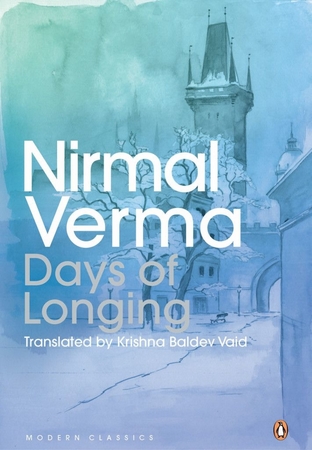
Days of Longing by Nirmal Verma, translated by Krishna Baldev Vaid
An Indian student in 1960s Prague, wandering and drinking his way through a Czech winter, serves as a translator for a slightly older Austrian woman and falls in love. He doesn’t think of himself as an immigrant, and so his loneliness, and that of his fellow stranded international student friends, feels both unanchored and quite precisely tethered to being on the edge of adulthood.
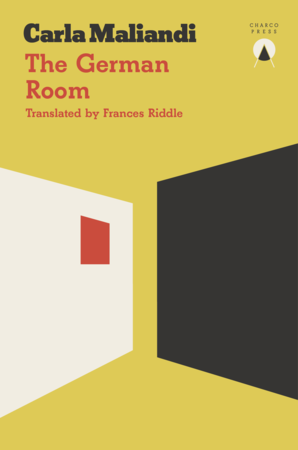
The German Room by Carla Maliandi, translated by Frances Riddle
A middle-aged Argentinian woman blows up her life to return to her natal city of Heidelberg, Germany where she pretends to be a student in order to secure cheap housing in the student dorms. Divested of her mobile phone and laptop (which I loved, as someone else who left their laptop at home), she forces herself to drift. Her dormmate’s determination to draw her into friendship via karaoke runs a sly, sad line through her muddled self-sabotage.
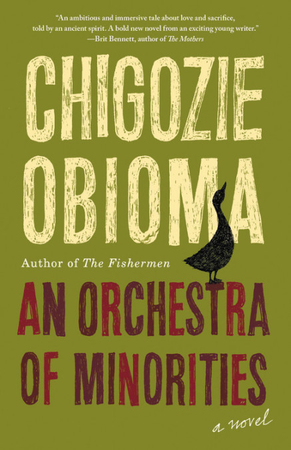
Poultry farmer Nonso’s desire to become an international student is real—he wants to achieve a European sheen to make him worthy of his rich beloved, Ndali—but when he finds out he’s been scammed when he leaves Nigeria for university in Northern Cyprus (a country that doesn’t officially exist). A transcreated Odyssey, Nonso strives to get himself home before Ndali stops waiting. Narrated by a guardian spirit, it’s a dense book in the best way, tracing a tale of someone with a great deal of knowledge—not only of poultry but also of Igbo cosmology—immediately rendered useless.
In this novel by Sarah Moss, British literature student Nina joins a group of archeologists on a trip to Greenland. While Nina tries to ascertain whether the dig is haunted or whether she’s simply unable to bear its realities, the group learns that a virus that was just a blip on the news radar when they left has become a global pandemic, and they may be student travelers forever.
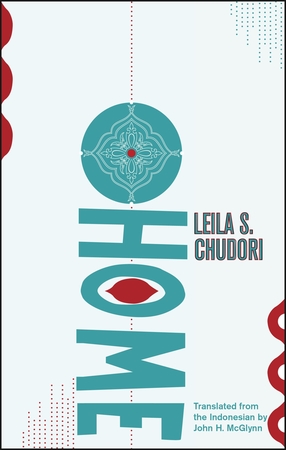
Lintang’s father was exiled from Indonesia during Suharto’s reign and he made a comfortable life for himself in France. Leaving the Sorbonne, Lintang returns to Indonesia to understand her roots just in time for the 1998 student protests leading to Suharto’s resignation.
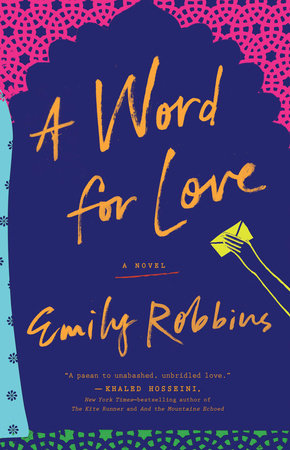
In fellow American-in-Norway Emily Robbins’ debut, Bea is an American studying in Syria just before the unrest. From her outsiders’ perspective, she is perfectly placed to witness the romance between her host family’s migrant worker maid, Nisrine, and a local policeman, Adel. Bea travels the world only to spend most of her time inside the walls of her host family’s home—a rare, realistic depiction that allows the quiet relationships she forges with them to shine.
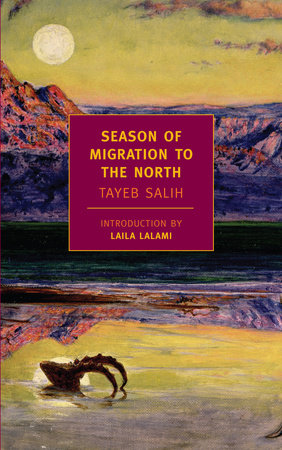
“I am no Othello. Othello was a lie.” In this postcolonial classic, a man returns to his Sudanese village from his studies in England only to meet Mustafa Sa’eed, who has also studied abroad and can recite English poetry to prove it. Mustafa, however, is overtaken by his bitterness about that time in his life, particularly about his relationships with fetishizing white women. After Mustafa’s death—possibly suicide—the narrator must grapple with his own relationship to his time abroad and his changed identity.
Morgan Jerkins’s debut collection of essays, This Will Be My Undoing, shot directly to the NYT bestseller list, gaining wide acclaim for its visceral and vulnerable personal explorations.
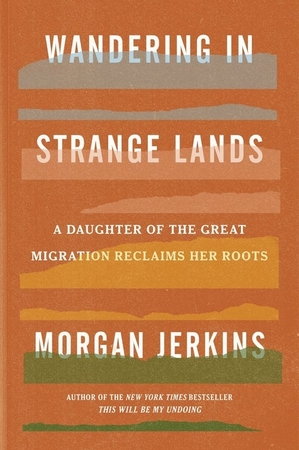
Her second book, Wandering in Strange Lands: A Daughter of the Great Migration Reclaims Her Roots, includes more and deeper questions about her familial origins. The book follows Jerkins as she travels across the South and to the West Coast, following a migration trail that extends to various generations in her family line. Jerkins’s trek across rural lands, low country, sundown towns, and retained plantations brings readers in close proximity to how generational trauma is never forgotten but often unknown or erased. She witnesses this instantly in tours and seeks to eschew the colonized narrative that reduces Black people to mere snippets of a larger history that built not only residential communities, but a nation. Through the spaces visited or not yet seen, the diaspora’s generational footprint remains as does the evidence, in Jerkins’ words, of much theft.
I had a chance to talk with Jerkins about her new book, reflecting on her pursuits as an author and reporter, as well as the tender and analytical ways she sought to not only reclaim her roots but highlight the omissions of Black history, and the importance to continually reclaim our stories.
Jennifer Baker: It’s an interesting parallel to go from your first book that was kind of isolated in a way at the level of personal introspection. Wandering in Strange Lands is about traveling and unraveling more of your ancestry, learning so much more about roots and trauma. That segue is different in the ways you tackle exploration.
Morgan Jerkins: This one is so granular in terms of my experience. It was at certain times claustrophobic depending on who you ask. And I remember when my [first] book came out my father was hurt because I didn’t talk about him as much as my mother. And I didn’t have the courage to say to him at the time, “I don’t know how.” Because so much of his lineage, his family history was a mystery to me. And I knew that I wasn’t ready yet. I wanted my second book to be an exploration of not just myself, but my family history, and my stake in this country as a Black American connecting to other Black American communities.
When the pandemic was going I was doing everything online to not lose my connection with people of the diaspora. Whether it’s about asking Black people about their cultural traditions, whether asking about their ancestors’ names. I was trying so hard to not forget that, yes, you do have a book coming out, but to also know our people have endured far worse and that we are super connected in spite of time and distance and other types of systemic forces. I think this is coming at a prescient time. Between This Is My Undoing to Wandering in Strange Lands, I’ve grown so much. I’ve matured a lot. Not just as a writer but as a person, and I really wanted that to be reflected in this book.
JB: I want to tap into that because you’re a very generous person as well as a generous writer. And there’s a vulnerability that is required in art that you dug into immediately with your first book and do again in this book. When you say you’ve grown as a writer, is it fair to ask if that fear goes away of what you’re tapping into? Was there a bit more fearlessness?
I realized that if I tried to silence myself after what my ancestors have gone through, what’s the point in me even writing a book in the first place?
MJ: My book went through many different drafts, as most books do. But one of the reasons why Wandering in Strange Lands went through many different drafts is because I felt like psychologically and emotionally I was slapped shut like a Venus fly trap. And the reason was I was so vulnerable from my first book. I saw the praise from it and I saw the backlash from it and a part of me didn’t want to go there again. I thought it was just easier to just go to these communities and travel as a distant observer. And I realized that I couldn’t do that. Zora Neale Hurston already taught us that, but also because I’m a Black American too. How could I write about the movement of African Americans in this country and be distant? My editors were constantly pushing me “you have to put yourself out there.” And I was scared because, as you know, I’m active online just like I am active offline. And I know what happens when you are vulnerable, when you’re not being taken in good faith. When your writing is taken out of context. And I was afraid. But I realized that if I tried to silence myself after what my ancestors have gone through, what’s the point in me even writing a book in the first place? What’s the point? And so, vulnerability was required. It was required for me to say “Guess what? I don’t know everything about my family’s history.” This is why I’m traveling. It was vulnerable for me to say, “Hey, these historical facts about my family kind of makes me feel a type of way” because this is what I thought my Blackness was until I traveled. I just had to do it. And I had to bring the reader in. Because just like the reader I’m traveling to places they’ve never been to and I wanted it to be informative at the same time be intimate. Because there were so many moments, quiet moments.
To answer your second question, the part about the fearlessness, to this day I’m still emotionally processing the places I went to. The rural places I went to. The sundown towns I crossed by myself with no weapon on me, just my recorder, my phone, and my purse. And I think about those moments and I’m like, “How in the hell did I do that?” Because I had a deadline, I had a goal to reach. In many of these places people were risking their lives to show me certain parts of their history, to show me certain lands that were robbed from them. They risked their lives to let an outsider come into their community that way. The least I could do was start typing, start recording, start saving it.
JB: You’re saying you were walking in these similar pathways of our ancestors, you even include the documentation and the photos. I think a lot about the presumption of knowing that struggle even now as observers.
Black people are complicated. We’re human. And we make certain choices because we had to survive.
MJ: Here’s the thing that I want people to understand: When you say Black people are not monolith, do you know what that means? That means the same thing for the living as it does the dead. What I wanted to demonstrate with this book is that we cannot flatten the interiorities of our ancestors even if we knew what they looked like, knew where they were born, knew they were married and had children. We do not know them. And it’s okay to not know them that intimately. It’s okay to be uncomfortable when you find out certain things because guess what? Black people are complicated. We’re human. And we make certain choices based on the time and space that we’re in and because we had to survive. That’s why I sometimes take issue when people say, “I’m not my ancestors.” And they don’t say as a way to be like, “Oh we’re different” obviously we’re different. But your ancestors had to survive for us to be here. And whatever way they had to survive is their business but they did survive. And it needs to be documented and written about in that way of not just complication, but also delicacy at the same time. That’s what I believe. That’s what I always try to carry with me as I’m doing this type of research.
JB: I think about a lot of that because one of the moments that sticks out to me the most is when you were on the tour in Natchitoches in Louisiana, with Tracey. And you’re looking at Tracey to how she is reacting to what’s being said about her ancestors who helped build a community that’s now overrun.
MJ: This book is the first time I’ve been to a plantation before. So prior to me traveling with Tracey in Louisiana I’ve been to rice plantations in the low country. As a writer I can’t even discuss the magnitude of actually being in these places.
JB: That are still left to look as they were.
MJ: Yeah! But I’m so thankful when I went to the low country in Georgia and then I went to Louisiana. I was with two women, they’re descendants of people who worked that plantation and those who owned. And with regards to Tracey it took on a different turn. Imagine you go to a plantation that your family owned and you hear somebody tell the story and your family is just a footnote. What does this do to you? This woman had lived in this community her entire life and she purposely never went there. Her family said don’t go there because it’s not for us. So I went to this tour and there is this rift between official tours/official “narratives” and what Black people say, oral history, there’s this rift there. And it isn’t always because they’re cannibalizing our stories. It’s also because we don’t want to be part of their exoticism. We don’t want to be part of their show. And we don’t want to be part of that whole tourism thing. And so it was intense.
JB: And you don’t necessarily want to give them that intel either?
MJ: Nope. And it felt weird because I’m like this community isn’t that big. Her family has been here for hundreds of years! How does the tour guide not even know who she was? It was surprising to me. And I was balancing it in real time, balancing it in terms of understanding officially what was going on and understanding what I was hearing in her parents’ home and they’re not there. It’s like these different prisms of knowledge when it comes to Black history that don’t always reconcile with each other. As a writer I had to tell myself it’s okay there’s no reconciliation. It’s not your fault. It’s not a flaw of yours. It’s because of the powers that be. It’s because of the theft that has happened before you were even born. And I had to be mindful of what I was showing the readers what was going on, there was this collision course. And that doesn’t necessarily mean there’s going to be peace at the end.
JB: And it all relates to the same thing we continually talk about. In this sense I’ll say “white” and colonial like the occupants who become the owners. And the erasure of Black voices, which is a cycle that continues and continues.
The thing I wanted to convey is that we have been robbed so much.
MJ: Right. And that’s the thing about this book is that, what I like about it and what I hope readers will get from it is we’re in a cycle. It’s continuing to happen because we are not addressing the issues. Any time Black people try to exert their self autonomy, whether it’s self-governed towns, whether it was the histories that they had, whether it was their own identities, whether it was their land, it was taken from them. Any time we exert movement to try to find a different type of freedom there has always been something to try to curtail it. This is why we have these protests. This is why we have this Black rage that keeps happening because our ancestors fought for better, they fled for better. And I think that that is the thing I just wanted to convey is that we have been robbed so much. It wasn’t just because of the transatlantic slave trade with the loss of our names and our tribes and the ways we did our hair on american soil. Even to this day, we are being robbed. And there are still people in those communities they are seeing it in the present. And that’s something I want people to notice. It’s not just continual Black rage, continual racial terrorism. It’s continual robbery and theft. And so much is at stake. Even if we don’t know these Black people. That’s why I trailed them, even if I didn’t know you so much of what I know about Black people is because of that robbery. It is because of that narrative that is not in this community’s hands. So how do we reclaim that?
What I hope this book is, because it can’t be the end all be all, but there’s some kind of documentation there that lets black people that the oral history you heard as a kid, they can’t all be lies. There has to be a root there. And that root connection is to somebody else, some place else.
JB: You just tapped into something else I was thinking about. I believe books are necessary and at the same time I wonder about the damage that books have done. What books like Wandering in Strange Lands are trying to make us do a really firm compare-contrast. Do you think when we read books and absorb their content that there’s a level of discussion that unpacks this in a way that really needs to be unpacked?
MJ: I notice this is kind of tangential with the blackface [discussion] that is going on right now. Everyone wants to get rid of the blackface episodes [in which white actors portray Black characters]. And I think “no, we need to keep them and contextualize them and understand why these decisions were made in the first place.” So when I think of Wandering, I don’t necessarily think of it as an overthrow of the stuff that came before, even if they were erroneous. I want to know why these things were asserted in the first place. Who benefited from them? Who had the short end of the stick, for lack of a better phrase? I think there needs to be an unpacking of the books that have done harm and the books that contextualize and challenge what’s going on. Who gave this person the right to write this book? Who was affected by it? I don’t think we should necessarily discard it because that’s our legacy. They still have to remain. We still have to discuss them.
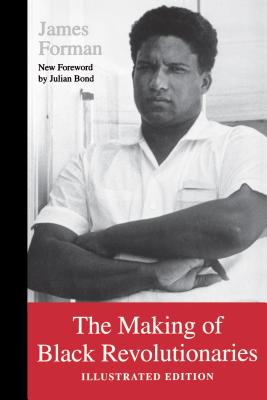
One Sunday in the spring of 1969, James Forman walked into the sanctuary of Riverside Church in the Morningside Heights neighborhood of Manhattan, barreled his way to the pulpit, commandeered the microphone, and before many wide-eyed and captive congregants, declared:
Underneath all of this exploitation, the racism of this country has produced a psychological effect upon us that we are beginning to shake off. We are no longer afraid to demand our full rights as a people of this decadent society.
Forman chose Riverside Church for the delivery of his address—The Black Manifesto—because of Riverside’s association with the Rockefeller family and for its Morningside Heights location. In his view, the church embodied both types of white American capitalist oppression: generational wealth, in the form of the Rockefellers, and elitist white enclaves within the city.
Columbia University’s transparency project focusing on its ties to American chattel slavery says of Morningside Heights: “[The university’s] move to its current campus at the turn of the 20th Century served to preserve the area’s elite, white, Episcopalian character and keep out people of other ethno-racial or religious backgrounds.”
That morning in his address at the Riverside Church, Forman accused all white Christian churches and synagogues “sustained by the military might of the colonizers” of complicity in establishing and maintaining America’s racist constructs. He demanded $500 million, about $3.6 billion today, “due us as people who have been exploited and degraded, brutalized, killed and persecuted.”
We can imagine the churchgoers in sticker shock, their nervousness and fearful clutching of purses.
In a Sunday service like no other, Forman called for $200 million in land grants, $10 million for technical training, $20 million for black businesses in America and Africa, and funding for a black university in the South. He had counted the cost of America’s comfort, but he made clear “…the demands we make are small.”
He said “an indigenous people violently captured, taken from home, and bound to political servitude by the military machinery and the Christian church working hand in hand … can legitimately demand this from the church power structure…” and even more from the U.S. government. We can imagine the churchgoers in sticker shock, their nervousness and fearful clutching of purses—their urge to stand up and stomp out of the sanctuary, their sheer terror at the idea of making a move, their outrage as he went on, banging through threats and demands.
But The Black Manifesto was about more than money. It also required certain action from white people. A certain posture, too:
We call upon all white Christians and Jews to practice patience, tolerance, understanding, and nonviolence as they have encouraged, advised, and demanded that we as black people should do throughout our entire enforced slavery in the United States. … By taking such actions, white Americans will demonstrate concretely that they are willing to fight the white skin privilege and the white supremacy and racism which has forced us as black people to make these demands.
Forman, a Chicagoan by birth, had always been an impassioned intellectual. He lived with his grandmother in Mississippi as a child. Excelling in school, he matriculated to universities in California, Illinois, Massachusetts, and New York, but along the way, he suffered a brutal and traumatic encounter with police that would see him institutionalized, shaping his remaining years and his life’s work. Of that time, he wrote in his autobiography The Making of Black Revolutionaries: “I will always remember the Los Angeles police […] They are guilty of cruel and inhuman treatment, physical and mental torture.”
As a staff writer for the Chicago Defender, one of the most important black news publications of the day, Forman developed a burgeoning consciousness that fueled an urgency to achieve black civil rights.
In his executive leadership role at the Student Nonviolent Coordinating Committee, his aim was to “[work] full-time against the whole value system of this country,” wrote Julian Bond, who co-founded the organization in 1960. Forman’s platform was enlarged and elevated through that commitment, and it was largely by his influence, Bond said, that SNCC had a significant role in the 1963 March on Washington. Forman helped draft the speech delivered at the march by SNCC’s then-chairman, the recently departed Congressman John Lewis. Through his involvement with other black advocacy groups, including the National Association for the Advancement of Colored People and the Black Panther Party, Forman was further validated in circles of black civil rights activists and advocates.
But he trained and led black youth in a radical style of protest actions, sometimes denigrating King’s approach as something near toothless by comparison. “People had become too militant for the government’s liking and Dr. King’s image,” he wrote. “The mighty leader had proven to have feet of clay.”
Forman had run out of patience with the way things were. He was full of fire.
To the dismay of affiliated organizations, Forman garnered respect for strong-arm ideas that would become his hallmark. “Accumulating experiences with Southern ‘law and order,’” he wrote, “were turning me into a full-fledged revolutionary.”
Following the assassinations of Medgar Evers and Malcolm X, and then Martin Luther King, Jr., who had preached at Riverside on several occasions throughout the ‘60s and with whom Forman had marched, there was a sense among blacks in America that the movement for black civil rights had died with those leaders.
Later that summer, following the Riverside Church takeover, Murray Kempton wrote a piece about the Manifesto for The New York Review of Books, in which he gave voice to a painful truth about the crusade and the crusaders for black civil rights. “The existence of the black revolutionary, of course, is only too often the business of making do between the time he is noticed and the time he is shot,” Kempton wrote.
In spite of this, Forman felt, the time for accommodating open hatred with careful, unoffending words, all to realize no meaningful change—that time was over. He was a student of philosophers and revolutionary theorists like Karl Marx, Frantz Fanon, and others whose writings expound on the interdependence of race and class as a tool of the State. “There can be no separation of the problems of racism from the powers of our economic, political, and cultural degradation,” he wrote. “For it is the power of the United States Government, this racist, imperialistic government, that is choking the life of all people around the world.”
Forman had run out of patience with the way things were. He was full of fire and, under a political charge to equip and lead black people through the racial terrorism of the American landscape, he wrote The Black Manifesto.
Forman’s address brought a response from the Episcopal Church, with promises of actions and some funding, but not without cost. Ironically, his comportment in white society stoked fears and dissent among some in black communities.
“Forman’s … function is kicking down doors to empty rooms,” Murray wrote. A curiously reductive assessment when considering Forman’s life of leadership in black civil rights, the self-actualization and empowerment stirred in us through his work; and the timeless philosophical and socioeconomic applications of the Manifesto.
Forman wrote the Manifesto while attending the National Black Economic Development Conference at Wayne State University in Detroit, the month before his address. Detroit is significant as the birthplace of the Manifesto. It was one of the last stops along the Underground Railroad for slaves crossing the Detroit River into Canada. In the antebellum, members of The Order of Emancipation, which included some whites, helped to make the town a hub of abolition.
Then as now, the Manifesto spoke to a social contract that had long been trampled underfoot.
Then as now, the Manifesto spoke to a social contract that had long been trampled underfoot. It challenged systems and constructs designed to make black progress unlikely, to harm black people, and worse. It examined white allyship and looked for evidence of those things white people say they believe about establishing, upholding, protecting, and meeting standards of conduct in the world, and its resources that we all share.“We shall liberate all the people in the United States…” reads the introduction. “All the parties on the left who consider themselves revolutionary will say that blacks are the Vanguard.”
Ironically, it’s by the unchanged nature, incomprehensible greed, and barbarism of whiteness that Forman’s Manifesto remains critically applicable to black life in America, and has even become anthemic. Fundamentally, The Black Manifesto is about democratic socialism. It’s about leading with those principles that are heartfelt, even inherent, to most of us. Boiled down, it’s a promise of accountability to one another, and accountability is retributive, restorative, and reparative.
Today, in one of the most arresting moments of our time, in the pretense of a flat society where white people “don’t see color,” where“we’re better than this,” where “we’re all in this together,” James Forman’s vision cast so long ago still suffers bullets and billy clubs and knees to the neck. Today, every Black person you know is buckling under the crippling weight of yet another hashtag. Today, the unmet demands of The Black Manifesto echo in that mocking, deafening silence of so many yesterdays, and it still reads shamefully fresh.
Forman demanded $10 million to establish a black publishing and printing industry, “an alternative to the white-dominated and controlled printing field.” More than half a century later, American media continues to prove incredibly resistant to black representation. Just last year, The New York Times, widely considered the gold standard in American journalism, showed a blinding 76% white leadership compared to just 6% black, and only 9% of the staff was black according to its inaptly-named Diversity and Inclusion Report.
The Manifesto is symbolic of America’s accruing and compounding indebtedness to black people.
And in his call for $20 million “to establish a National Black Labor Strike and Defense Fund … for the protection of black workers and their families who are fighting racist working conditions in this country,” Forman speaks directly to today’s capitalistic scheme targeting the mostly black and brown, often blue collar, under-insured, and low-wage earning “essential worker.”
The Manifesto is symbolic of America’s accruing and compounding indebtedness to black people, a stolen people, who built the nation and its economy through generations of labor, whose blood is in the soil.
While Forman’s techniques weren’t wholly adopted or even appreciated by the NAACP and other black advocacy organizations, his approach to reparations for African chattel slavery and its many resulting devastations were appropriate for that time and for this one. James Forman, a leader and a comrade in the fight for black humanity, succumbed to cancer in 2005 at the age of 76. But the Manifesto is as vital a roadmap in our marches and protests today as the day it was first delivered. We, black people in America, remain compelled by the power and purpose of The Black Manifesto, and we continue to demand our full rights as a people of this decadent society.
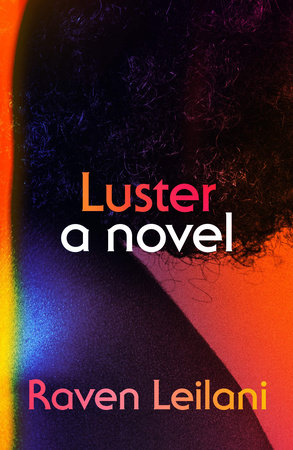
Raven Leilani’s debut novel, Luster confronts what it means to be hungry and desperate as a Black artist. The novel is about Edie, a 20-something Black woman who lives in Bushwick, Brooklyn.
Edie struggles with her low-salary publishing job, tries to make art despite it, and ends up getting fired because of her many sexcapades with colleagues. As she tries to continue surviving, she gets involved with a white man in an open marriage, and in turn, builds an allyship with his white wife and adopted Black daughter.
Leilani skillfully explores grief, desire, and anger using both humor and honesty. She touches on how difficult it is to believe in yourself, in your art, in your decisions.
I got to chat with Leilani about the similarities between desperation and desire and how certain systems hinder Black women.
Arriel Vinson: At the beginning of Luster, the protagonist Edie is concerned with being uncomplicated and accepted by the married man, Eric, she’s dating. Tell me more about her urge to be accepted.
Raven Leilani: I think it’s more her resignation to the performance demanded of her even in these personal spheres. Edie is a young Black woman, and she is studious in the way all Black people have to be to survive. So she is often calculating, presenting the face most suited to her environment, and with Eric, it is no different, and perhaps worse, since she is so invested in how he sees her. It makes it so that she is distorted, even to herself, and her dialogue about this, about wanting to be uncomplicated, is rooted partly in the rage she feels about this constraint. She makes a lot of mistakes and she is constantly wrong, but she’s shrewd in the way she understands that this relationship is unbalanced and transactional, operating under the expectation that she be a sexy, unserious detour, which she knows she is not.
AV: Edie is a dead broke, 20-something Black woman in Bushwick, and even more broke compared to Eric. We don’t often see these types of characters. Why was it important to showcase this?
RL: It was important to me to show characters at work, characters needing money. It always feels relevant to see how a character is meeting, or not meeting, those fundamental needs. In my life and the lives of so many people I know, this is often the most relevant question, and writing frankly about Edie’s artistic journey also meant grappling with this economic dimension. There are a number of barriers that hamper her ability to make art—Edie herself is one of them, she self-sabotages frequently—but there are also structural impediments that have great bearing on that access, and I wanted to speak to that, the way the question of survival defers dreams, and even deadens you as you strive to meet those demands.
AV: Throughout the novel, Edie has a way of being both full of desire and desperation, which she even recognizes sometimes. Why is she often oscillating between the two?
I wanted to speak to the way the question of survival defers dreams and even deadens you as you strive to meet those demands.
RL: I think desire and desperation are inextricable. When I started writing this book, I felt moved to depict a woman who yearns deeply and openly. A Black girl who is wanton and moved along by her id, who has the freedom to be that. There is a derangement to desire, a violence, and that animates many of Edie’s choices, which are often responses to the desire she has had to sublimate. That sublimation breeds desperation.
AV: In Luster, she struggles with her art—whether it be avoiding painting, or someone else telling her she’s not good. But she begins to create once she moves in with the married couple, arguably an equally difficult living situation as her last. Tell me more about this.
RL: Edie often looks to men to affirm her artistry and seriousness, and naturally she is disappointed. There is also the fact of her trying to make art while she barely has enough money to eat or pay rent, and it is nearly impossible to produce anything when most of your bandwidth is spent trying to live. A couple things change when she moves in with Eric and Rebecca, one being that she is less dogged by these questions of survival, though she understands the arrangement is temporary. Another thing that changes is she meets two women, Rebecca and Akila, who in different ways relieve her isolation, introduce a different rigor to her work, and allow her to show her true face. It makes it so that she isn’t working less from a place of frenzy and distortion and can be more generative.
AV: Throughout the novel, Edie remembers and grieves her mother, sometimes also reflecting on her relationship with her father. How do her familial relationships relate to her hunger, desperation, and ideals about love?
RL: I wanted to show how Edie was made. She absolutely is a hungry, desperate person, and her choices are informed by the pressure of her environment, but also by her formative years. I didn’t think it would be enough just to present a catalogue of dysfunction. I think that orients the reader to make judgements rather than consider the choices characters make within their context. Or at least it would have felt like I was writing inhumanely, making the dysfunction a punchline rather than a response to a history. Both of her parents have complicated relationships to feeling—her mother is a recovered addict, her father is a veteran who has been deadened by war and by his country. If you understand that, you understand why Edie seeks, and perhaps why she often seeks the wrong things.
AV: As Edie thinks about her mother, she analyzes her body—bringing up the history of her/her mother’s addictions and connections to diets, her mother being “bare and grotesque” in photos (which also seems to be a commentary on herself). Tell me about the decision to weave in these thoughts.
When I wanted to depict a Black girl who is wanton and moved along by her id, who has the freedom to be that.
RL: Within those scenes of her mother is a precedent of a Black woman who is begging to be helped. It is a precedent that is deeply formative and that is replicated in Edie’s own life. On the body, I did want to briefly touch on how those disordered attitudes are developed and perpetuated. All the ways the body is made unruly and subjected to our bids to assert control. Edie and her mother take different routes to this end. Edie also looks this closely at her mother because she is a burgeoning artist, and so her observations are more merciless, in the service of getting it down in paint. But the image of her mother is elusive, because her mother is, like Edie will be one day, not present enough to depict.
AV: Throughout Luster, Edie’s desire for violence—or the thrill violence gives her—is palpable. There are times she wants to be hit, and also identifies love as “a violence” later on. Why is violence significant in this novel?
RL: Edie wants to feel and be witnessed, and she gravitates to the most extreme affirmations of this want. I tried to be careful here as much as I tried to be free. I worried about diminishing the terror and inevitability of violence I and most women I know live with, and of course I worried that this all might be deeply unfeminist, to depict a woman welcoming this kind of violence. But it felt most important that I make room for a Black woman to assert agency without judgement or stigma, to make room for a human portrait, which allows for contradiction. In this respect, she’s not a victim. She is complicit in her own ego death, leaning into it, finding relief in obliteration, and in this small way seizing control. I was less interested in guiding my reader to moral conclusions, and more interested in showing my characters grappling with how to tend to their needs.
AV: The theme of being othered is prominent throughout Luster. Edie is almost an ally to Eric’s wife and Black child but also ignored by him at times. Tell me about how being othered—and dealing with it —is a means for Edie’s survival.
RL: It is both that Edie is subject to and complicit in choosing inadequate witnesses, people who she has to hide from, who cannot see her. This kind of invisibility can be great for an artist, or at least one whose art is predicated on observation, but it is isolating, and detrimental to her survival. It isn’t really until she is forced out of hiding, beginning to articulate to others what we’ve been seeing in her mind, that she begins to flourish.
A beam shoots out of my little sister’s right eye and won’t stop. It’s because during a meteor shower, the two of us wished on a shooting star to be cool. I called an ambulance, but the doctor said nothing could be done. With no other choice, I just hold my hand over her eye. For whatever reason, my hand is the only thing that can block the beam. We can’t be apart. When we got home from the hospital, we practiced walking and other daily-life things.
Unlike me, my sister has a lot of friends. They all come over after work late at night. My sister and I quit our jobs the day after the meteor shower. We went together to each other’s offices. When we said, “I’m her big sister,” or, “I’m her little sister,” our bosses welcomed us, but things soon grew awkward. Why was the other sister at this sister’s work, and why was the older one holding her hand over the younger one’s right eye?
“It shoots a beam.” My sister told the truth. My boss stared blankly at us, while her boss laughed, but both were angry in the end, so we thought that we’d like to burn their lockers with the beam sometime.
My sister’s friends know about the beam, so they’ll be like, “Hey, hey, can you do the thing?” I say, “Okay, okay,” and move my hand slightly away from her eye. Just the tiniest bit. And then a red light extends from my sister’s eye to my palm like rubber. Five centimeters, that’s as far as I can go, the farthest from my sister’s eye I can take my hand. Inside those five centimeters, the red light expands like it’s exploding and makes the whole room glow. “Whoooaa,” say her friends. They pull out their phones and snap a zillion pictures, but the light is too bright for anything to show up.
After her friends go home, my sister shakes. She breathes hard and retches. Even that five centimeters puts a lot of stress on her system. She does her best. She hopes the fact that a beam shoots out of her eye will just be taken as a sort of joke.
“Someday I hope I can just fire this beam,” she says. Someday we want to climb a mountain. My sister will face straight up into the darkness, and I’ll remove my hand completely. The red beam will climb into the sky and gouge through the clouds.
“Is it reaching outer space?”
“Yes, people light years away can see it.”
The light of her eye is so bright, I won’t be able to see her face, but I would hope she’d be smiling. After we’d done that for a little while, I would cover her eye with my palm, but the light wouldn’t disappear. Tens, hundreds, hundreds of millions of light years away, people would be able to see my sister’s light. I hope they’ll smile with us.
When the poet Jorie Graham heard Matthew Aucoin, then her student, intended to adapt James Merrill’s epic poem The Changing Light at Sandover into an opera, she told him that Merrill would haunt him the rest of his life. The 1982 work is Merrill’s unaccountable masterpiece, a 17,000-line poem of the afterlife, purportedly based on 20 years of nights spent transcribing messages from the dead. How Merrill, a poet whose ambitions had seemed to lie in technical mastery of meter and form, produced this bizarre, magnificent, supernatural work is one of American literature’s best mysteries.
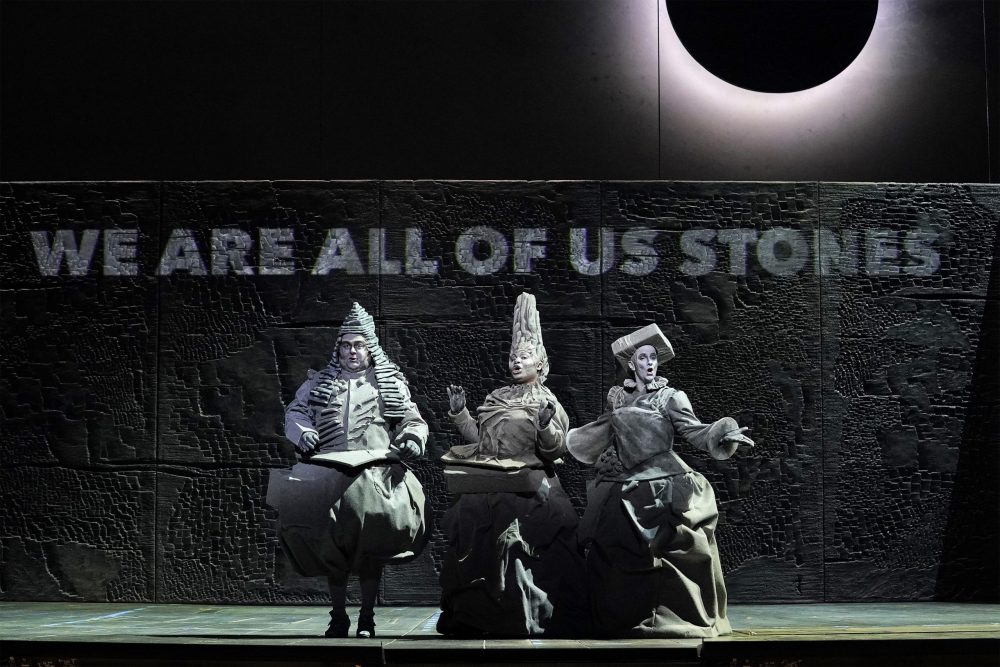
Despite the warning, Aucoin mounted From Sandover with a group of fellow undergrads in the Horner Room at Harvard’s Agassiz Theater, a ballroom of dark wood moldings and pilasters, hanging chandeliers, and French doors. In the opera, Jim Merrill and his partner, David Jackson (“JM” and “DJ”) sing seated around the Ouija board; the spirits of their freshly dead friends, the poet W.H. Auden and Greek socialite Maria Mitsotáki, are staged above them, in a clerestory balcony space, and a supertitles screen displays messages that JM and DJ work out on the Ouija board. “It may have been closer to theater of the absurd than I’d intended,” Aucoin admits. “I’m quite sure the audience had no clue what the fuck was going on.”
To be fair, that’s most people’s reaction to the poem. Over the course of Sandover’s three volumes and coda, JM and DJ are visited at the Ouija board by a flamboyant first-century Greek Jew named Ephraim; poets, pharaohs, and opera singers; four zesty archangels; a sweet, armless centaur from Atlantis; and bat-like demons of atomic radiation, one of whom turns into a peacock.
I’m quite sure the audience had no clue what the fuck was going on.
Then there are the gaudy, acrobatic puns, which can require multiple languages and maybe an open Wikipedia tab to untangle. “ST PETER’S QUAIS JINGLE AND BLAZE / WITH HER UNMELTING SNOWFLAKE POLONAISE”—here, the shade of JM’s friend Robert Morse, a composer, is speaking about winter in St. Petersburg’s harbor, but punning on Saint Peter’s keys to Heaven. “Who made that pretty couplet?” JM asks. “SHH IT BWOKE OFF”—Robert has a weird habit of baby speak—“WHEN TINY BOB WEACHED OUT TO TOUCH NABOKOV.”
Aucoin sums up the experience of adapting Sandover: “I learned a lot about what cannot be an opera.”
Since then, Aucoin has learned a thing or two about what does work. His third full opera, Eurydice, premiered at the L.A. Opera this February; it was the last opera I saw before the COVID-19 pandemic suspended live performances. Eurydice is a collaboration between three MacArthur Fellows—Aucoin, playwright Sarah Ruhl, and director Mary Zimmerman—and heads to the Metropolitan Opera in 2021, assuming. The libretto, which Ruhl wrote from her acclaimed play, adapts the same Orpheus myth familiar to the operatic repertory, but focuses on Eurydice in the underworld as she reunites with the shade of her father.
Aucoin and I talk across time zones, I quarantined in San Diego, he in a farmhouse in Vermont. The wireless there is too slow for Zoom; we talk by phone, with a third-party voice-recording app blooping in the background, our own feckless sonic ghost.
Theodore McCombs: Both The Changing Light at Sandover and Eurydice take place not just in the afterlife, but in a kind of transitional afterlife space: not yet in deep eternity, but touching life and death at once. Do you feel an attraction to those spaces, musically?
Matthew Aucoin: I guess it did attract me from the get-go. One thing Sandover has in common with Eurydice is that this liminal space allows people to say things to each other they could never say in “real” life. Merrill said something to this effect in an interview about Sandover, that sometimes, with your parents, say, it’s the easiest thing in the world to pick up the phone, but there can still be so much emotional distance, and baggage, and complexity that comes with the relationships you have while you’re alive. And then somehow, talking to beloved friends through the Ouija board, he felt like he was able to say things he couldn’t have said when they were alive. And the same thing happens in Eurydice. Sarah has said she wrote the play in order to have more conversations with her father, who died when she was in college. And the things Eurydice and the Father are able to say to each other because they are in the underworld are so beautiful.
Because music makes everything sound like dream-speech anyway, why not allow the setting to be a dreamlike one?
Music is a dream language: it follows dream logic. It doesn’t follow the logic of everyday speech, and operas that act as if they were playsrun the risk of being unintentionally funny. Pretending you can do that sort of standard domestic drama and have it feel as if everyone were speaking, it’s not going to happen. So, because music makes everything sound like dream-speech anyway, why not allow the setting to be a dreamlike one? It tends to feel truer to me. It’s a way of saying the things that you can’t say in real life. And that feels like music to me, too.
TM: Where did you first encounter Merrill? What drew you to his work?
MA: I encountered Merrill in Jorie Graham’s poetry workshop—both Merrill and his polar opposite, John Ashbery, and I fell in love with both of them. It struck me as curious that there was this sense that Ashbery was going into uncharted waters and Merrill was working within familiar metrical structures, playing with rhyme, being kind of effete and aesthetically backwards. But both poets were undertaking these extraordinary experiments.
With Merrill, it’s the magical quality that language has of making sense of its own accord. The sound of a word, even the shapes of letters seem to take on these uncanny meanings. As a musician, I love that: for Merrill, language has a kind of inherent meaningfulness, which places it very close to music for me. And also his playfulness and the range of tones and the psychotic ambition of writing Sandover made me think, who is this crazy motherfucker that he would write these cute little gay lyrics, and then all of a sudden he’s writing this cosmic sci-fi poetic drama. It’s the most bonkers—
TM: Which is also somehow cute and gay at the same time.
MA: It is also very cute and extremely gay. Yes. Those contradictions really attracted me.
It is also very cute and extremely gay. Yes.
TM: Do you see something like the opposition of Merrill and Ashbery in contemporary music, between the schools of, say, the process music of Philip Glass and Michael Nyman and the more—I don’t even know what you’d call it, is it an atonal school?
MA: Sure. In the latter half of the 20th century, I can think of three kind of obvious—and in a way, false—categories. One being, as you said, process music or minimalism; another being an atonal high modernism post-Arnold Schoenberg; and a more nostalgic neo-romanticism.
TM: When I listen to your music, it sounds like you’re moving in and out of those schools at will, pretty much.
MA: Pretty much. Yeah, I’m a gatherer. If you’re writing an opera, you realize quickly you need as many tools as possible, because you’re creating a whole world.
TM: And Merrill does that too, doesn’t he? He’s agile in moving in and out of his formal conventions. In Sandover, the meters appear and disappear at seeming random; free verse stumbles into couplets, and then sort of extracts itself; the sections set in Italy are in Dante’s terza rima.
MA: Early on, Merrill is a brilliant student of every verse form in the English language, and he’s very happy to live within these gilded cages of metrical forms. And then slowly but surely, he starts testing things. It’s thrilling, because he has such technical mastery that when he starts to break things down, you trust him.
But in his last collection, A Scattering of Salts—which Merrill wrote when he was dying of AIDS—there’s where you see language disintegrate in a heartbreaking way, because he felt it was happening to him. He felt his body breaking down. And he was also uncannily aware of climate change, in a way that the vast majority of people would not become for another decade. This thing that’s happening to his body, the thing that’s happening to the planet, and the thing that’s happening to the language all cohere, so that the language has this kind of devastating wounded quality.
TM: You set several of those poems for your Carnegie Hall commission, Merrill Songs, for solo voice and piano, and there’s something of the language’s wounded quality in what the piano’s doing. You’ve also adapted—not for voice, but for piano and violin—the poetry of Paul Celan, whose later poems are almost completely opaque, purely sonic experiences. How do you approach that kind of text, that is something more and less than language?
MA: For a long time there’s been an association between “tonal music” as being stable or soothing, and “atonal” music being a kind of sonic manifestation of chaos. And I’m just not interested in tonality as stability, and I’m not interested in mere depiction of chaos and non-connection. I am interested in looking honestly at the structures of meaning that we can build, and also honestly looking at how fragile they are. Having the vulnerability to say: Yes, I care about this meaning something, and I’m going to try and say it to you as directly as possible. And then, following that all the way through and seeing the thing disintegrate.
I am interested in looking honestly at the structures of meaning that we can build, and also honestly looking at how fragile they are.
The last scene in Eurydice is the best example of this in what I’ve done so far, in that we get this solo scene for Eurydice, which is tender and vulnerable and lyrical. And then at the very end of the opera, we get four minutes of essentially, the river of forgetfulness, rushing. Nothing that we can hold on to in the music. It’s all been washed away.
I guess I have come to feel the aesthetic camps that existed in the second half of the 20th century were largely about saying music is this, music is that. And you end up denying so much. Maybe it’s a flaw of mine to want to have it both ways. But I want to be able to create something that’s sweet and lyrical and vulnerable and then a minute later to have it morph into total noise. It doesn’t feel like a contradiction to me.
TM: It feels like the world, right?
MA: It feels like the world.
TM: Do you find yourself returning to that fragility across compositions? Especially given the ongoing pandemic we’re in?
MA: You know, I think for a long time, human beings did not need to be reminded of the fragility of life. If you’ve ever wondered why music and art from certain periods seems fixated on depicting an ideal world, you have to remember that it was in juxtaposition to obvious extreme instability in human life. In the 20th century, that changed, or it did for those in the first world with access to life-saving, life-prolonging medicine. It became possible—and I think America is exhibit A, or at least was before March this year—it’s exhibit A of a culture that really tries to pretend death doesn’t exist and that it’s not among us. I think a lot of artists over the past half-century have felt called to make manifest the fragility or inevitability of loss that is still a part of life, because that loss was no longer super visible.
And it’s funny. I have no desire to make art that responds in a direct way to the pandemic we’re in. When I realized that, I also realized, oh, this is probably why, you know, Haydn didn’t feel the need to put the how terrible the pigsties at Esterházy smelled in the string quartets, because everybody knew you were surrounded by the smell of pig shit all the time. Music was something else. I guess it’s a long way of saying I have felt that giving voice to transience and instability has been important. But at this very moment, I don’t feel the desire to bang anybody over the head with the fragility of life.
At this very moment, I don’t feel the desire to bang anybody over the head with the fragility of life.
TM: I want to go back to what you said earlier about Merrill’s interest in words, as objects as themselves—I think you called it “their inherent meaningfulness”—and how that brings his poetry very close to music. Could you elaborate on that?
MA: I think the best example is Merrill’s poem “b o d y,” where he looks at the word “body” and imagines the “o” of the word passing across a stage: first peeking from stage right (as part of the “b”), then at center, then at stage left (as part of the “d”), where “b” and “d” are, conveniently, birth and death. And that “o,” could be an open mouth, singing on the stage of life. Outside of birth and death is the “y”—the why, “unanswered, knock[ing] at the stage door,” as Merrill puts it. I don’t think the architect of the word “body” way back when put all this in deliberately and said, “I hope someone notices this,” but it’s Merrill staring at a word until it yields up unintended meanings.
TM: Merrill’s puns, too, are all about those structure of words, right? They’re all investigations into connection within these lexicographical accidents. That—that is a pun. And the fact that he focuses so much on them seems such an interesting investment in looking for meaning in that aspect of language.
MA: One way that you could define music is “language without signification.” We would never say it doesn’t have meaning or meanings. It just doesn’t have signification—the notes and chords are not tied to things outside themselves. I mean, unless you’re Wagner, in which case you’re spending all your time building these chains to tie a particular chord to particular things. But that’s not much fun, right?
And that was something I was obsessed with, especially as a student: What is the border? If you start stripping language of signification, at what point does it become music? And is it possible for music to kind of crystallize into language? A composer like Janáček—he makes use of these speech rhythms and musical gestures that are so direct, they risk being crude, but they can be breathtakingly powerful. It feels to me like Janáček’s music is straining towards the condition of language. It’s a porous border.
If you start stripping language of signification, at what point does it become music? And is it possible for music to kind of crystallize into language?
TM: There’s this concept in scholasticism of the flatus vocis, the “vocal wind” which is all that’s left of a concept if you deny it meaning; if it’s just a word, just a sound. All opera is, obviously, vocal wind—
MA:(a swift laugh—barely an exhale—)
TM: —but there are also these 20th-century operas that use untranslated language, like the Sanskrit in Glass’s Satyagraha, where the signification is deliberately withheld from the audience. And it seems Merrill is interested in that remainder too.
MA: I would say that it has to do not just with opera, but with music on the most fundamental level. I think what Merrill does again and again is, he strips language of meaning in order to see what meanings emerge. And that, to me, is—there’s a faith in music there. There is a faith that the music of the words, that the sound of them, the feel of them will yield up something meaningful.
L.A. Opera, Eurydice Musical Sneak Peek: Orpheus Writes to Eurydice
In Eurydice, Aucoin doubles the role of Orpheus, so that his mortal nature is portrayed by a baritone, while his divine nature is sung by a countertenor. The baritone, a low, sturdy voice, is Orpheus’s body, his human significance. The countertenor is, in a way, his music: that something else, that something above, beyond, and after Orpheus. This staging emphasizes what makes Eurydice and Orpheus’s relationship so dissatisfying: there is a part of him Eurydice can never fully access. But when he enters the underworld, where his divine aspect can’t follow, she doesn’t recognize him. “Where’s his music?” Eurydice asks.
Perhaps this is the simplest explanation for Merrill’s transit from the metrical to the mystical in Sandover, from the corpus of letters to the spirits behind them: just a question, “Where is their music?”
I am always in awe of people with big imaginations, who are able to really make stuff up. For a writer, I think I have a very terrible one, which is why I am always setting my stories, whenever I can, in my own city, right on my street, in my childhood bedroom.
Place, its vivid particulars, often elude me, I thought—though recently I realized that every one of my stories is set very specifically inside a body, and the world within it, the weathers of consciousness and mood, and the intensity of the senses. The setting of the stories in A House Is a Body, more than any particular city or room, is the body of my character—what happens to and through it. The body in question is most often a woman’s.
The great books from which I learned to write contained many women’s bodies. They were often beautiful bodies, and very captivating, or else they were ugly and therefore uninteresting—they contained flighty and irrational or ardent and empty creatures that held little value beyond their beauty or lack of it. Now the books I read more often, and the books I continue to learn from, and to love, investigate the complexity of the insides. These books take the body—women’s bodies—seriously, allowing it to be an organ of both thought and sense. Here are some of my favorites.
“Her body was the river. It was itself the shore. It was the hunter and the hunted; the path and the goal” I am astonished and moved by the deep wisdom of these stories, the clear-eyed tenderness and humor. Ambai is an explicitly feminist author, concerned with the lives of women, yet her expansive stories never feel didactic, just true.
Like the title suggests, these are wild stories about disobedient bodies, pressing up against the strictures of society and realism. In one of the collection’s most memorable stories, “The Cure,” a girl begins to grow into a giant as she passes through adolescence, keeping measure with her growing sexuality. Many of these stories explore the many aspects of sexuality and desire of their women characters, with an understanding of the strangeness, and even the grotesque nature of having a human body.
In Luster, hunger, longing, desire, pleasure, discomfort, pain and alienation are all brilliantly, physically expressed in the protagonist Edie’s body—literally in her gut. The brilliance of this book (or, one element of it) is the way issues of race and power are felt so physically, and rendered so intimately you feel them in the pit of your own stomach.
“There is only so much of your body you can ruin,” the narrator of “Black Tongue” says, having stuck her tongue in an electrical socket in a demented act of childhood defiance. These stories look keenly at the body’s capacity for ruin, decay, and transformation, often probing a beautiful surface to reveal a dark, complicated interior.
“In that instant I felt myself open wide. My insides cleared out into a rectangle, all clean air and uncluttered space, that began in my forehead and ended in my groin…” The sensual intensity of Vivian Gornick’s memoir is encompassing from the very first page, each scene remembered, it seems, as much through her eyes and ears as through her nerves. But it is the way she recounts the development of her consciousness as a writer and a thinker that I find the most stunning, for she locates this abstraction physically and concretely: inside her own body.
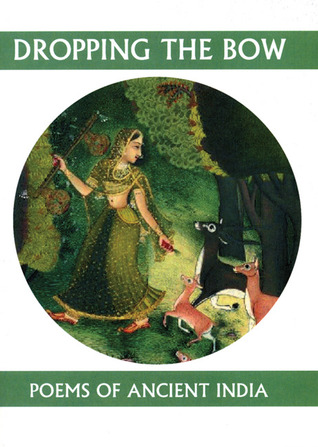
These poems, some a thousand years old and written by several authors, some anonymous, nonetheless carry a vivid sense of aliveness I find very moving. Sex is the primary subject of these poems, treated with seriousness but also with a sense of play; women both desired and desire in these poems, their pleasure at the heart of them.
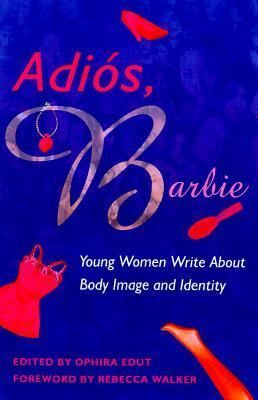
Adios, Barbie edited by Ophira Edut
In high school, I checked this book out so many times from the library that my mom finally bought it for me. The bodies in Adios, Barbie are brown, queer, differently-abled, fat, and wholly, defiantly themselves. Finding some element of me in each of these bodies profoundly changed the way I saw myself. (And bonus! It includes an indelible early essay from Mira Jacob, the Desi big sister I wish I had.)
I have always found revolution in queerness and Blackness, in people who dare to exist authentically on the margins of a world that prohibits it. As society grapples with its sins, I am reading of heavens and hells constructed by queer voices. Lately, I have been learning how to dream beyond what exists. Ain’t no better teachers on dreaming and living fearlessly than queer and trans BIPOC. Our stories, particularly those included below, tell humanity about ourselves and hold no punches. They dare me to cross lines, destroy boxes, and learn to love myself in the best ways through words. When I want to dream about liberation, my roadmap is always the voices of BIPOC LGBTQ+ writers. Centering their words in my dreaming and activism helps me understand the intricacies, layers, and connections between identities, communities, and resistance movements. Centering BIPOC in my queerness and queerness in my reading of BIPOC narratives allow me to reclaim space for the most important stories—stories that make us question the structures that affect our communities both from without and within.
Like the existence of queer and trans BIPOC bodies in this world, reading for revolution is in itself, a revolutionary act. In it, we honor the complexities and resilience of queer and trans BIPOC who built this movement, those that came before it, and those still to come. Sometimes reading is just as powerful as yelling. As we dream and read for revolution, these seven books honor the fire, joy, truth, queerness, Blackness, and dopeness that is a revolution all on its own.
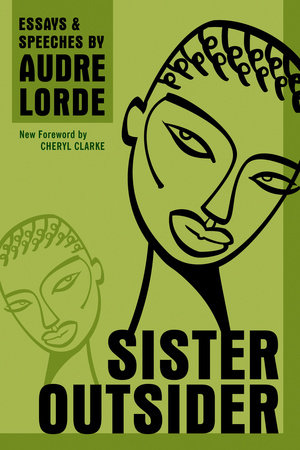
Instagram is full of quotes from Lorde’s foundational feminist text, but cute captions and hashtags are such a reduction of the beautiful brilliance and wisdom she offers us in this collection. In this text, she is unabashedly queer, black, and woman. These essays and speeches demand we recognize not only the author’s complex wholeness but also our own. Authentic and affirming, Sister Outsider forces us to grapple with ourselves and our communities as an act of radical love.
Antiracism is the new black and these days everyone is reading Robin DiAngelo’s White Fragility and Ibram X. Kendi’s How to Be An Antiracist. Too often we forget that the folks on the front line are who they’ve always been: Black and Latinx queer and trans women. Charlene A. Carruthers’s 2018 Unapologetic is an essential read for anyone wanting to engage in this rebellion through a queer, feminist lens. Carruthers’s narrative challenges readers’ notions of organizing and community-building within the Black radical tradition. “Are we ready to win?” Carruthers asks us. As a complicated community of readers turned activists, it is a question we must answer as we continue to fight. What does it mean for LGBTQ+ people to win in this movement? Are we ready for it?
In more recent years, civil rights pioneer Bayard Rustin has received his due for his monumental role in the civil rights movement, particularly in the execution of the famous March on Washington. Rustin, a gay Black Quaker who “refused to honor the lines that marked and separated individuals and that stratified American ideals” is an OG badass in organizing. D’Emilio’s extensive biography details the intersections of Rustin’s sexuality, Blackness, religious identity, and leadership. Rustin lived righteously as a gay Black leader in the Civil Rights Movement and paid for it in jail time, silencing, and a legacy that is just now being rightfully honored. D’Emilio’s biography does Rustin’s complex legacy justice and provides a blueprint for what it means to be a sex-positive queer organizer in today’s movement.
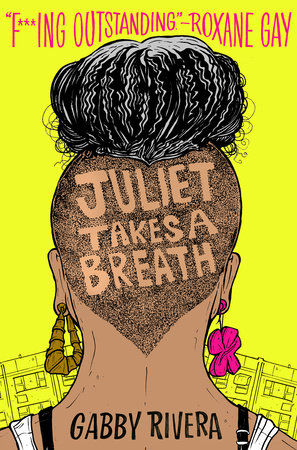
What does it mean to breathe while your world is on fire? A heartwarming, beautiful coming-out/of-age narrative, Juliet Takes a Breath is a journey of a Boricua teenager unpacking identity in all of the ways possible. Through Juliet’s summer internship under a white feminist author, Harlowe, Rivera explores the complexities of interracial coalition building and love. A manifesto of joy, self-love, and community, Rivera’s vivid and brash realness reminds us to “question everything,” “be proud,” and to “love everything that brushes past [our] skin and lives inside [our] soul.” Reading this book is meeting like joy and truth at a street fair; it is like seeing your best friend for the first time in years; like breathing as the world burns and a great reminder to take care of ourselves and our community as we fight.
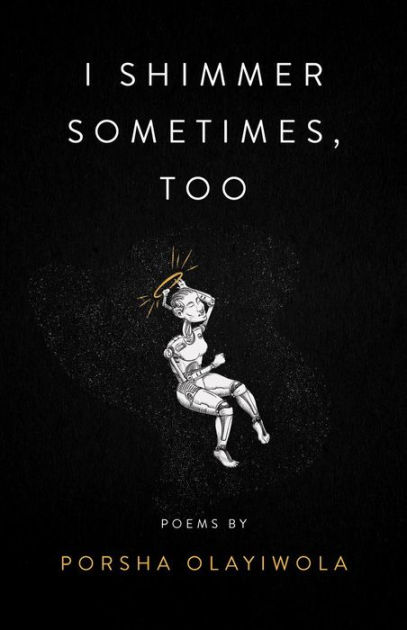
Released in 2019 by International World Slam champion Porsha Olayiwola, i shimmer sometimes, too is an ode to the pieces that make her whole—her beautiful Blackness, queerness, Chicago upbringing, family, community, lover, and her whole continuum of being, past, present, and future. A self-proclaimed Afrofuturist, Olaywiola uses language and form to split our hearts and stitch them back together over and over again. Olayiwola’s writing demands our elasticity in emotions—joy meets sorrow, anger meets excellence, optimism smacks readers with exhaustion without warning. More than anything, her poems offer us everything and nothing at all—they leave us yearning for answers, not only for her but also for ourselves.
An exploration of the in-betweenness of queerness and mixed-race identity, Dean Atta’s The Black Flamingo is 400 pages of acceptance and love in verse. Atta’s debut novel follows the journey of Michael, a gay Brit with Jamaican and Greek Cypriot roots. Michael’s journey of self-acceptance and coming-out shines a light on the nuance of gender, sexuality, race, and family dynamics. More than a book, Atta’s book is a reclamation of self, a proclamation of being, and a call to action for our community to honor the beautifully nonlinear journeys of one another in this movement. In a world where outness is privileged, Atta’s “How to Come Out as Gay” leaves us with a reminder to own our stories: “Come out for yourself. / Come out to yourself. / Shout, sing it. / Softly stutter.” In his verse, we are reminded that pride is not limited to the parades and protests and is perhaps best celebrated as our own inner revolution.
In this six-section compilation of essays, conversations, and art, adrienne maree brown explores the act of making social justice the “most pleasurable human experience.” In the book, she tackles self-love, community care, and activism. From her essays like “A Conversation with a Sex Toy” and “A Timeline/Tutorial on Squirting” to conversations with others on sex work, drug use, and the politics of healing, there is no question about where brown stands on embracing the complexities of sex, love, and pleasure as an act of radical revolution. In a time where we are fighting for humanity on so many fronts, brown reminds us that “prioritizing ourselves in love is political strategy; it is survival.” A book about activism with a directive to masturbate as homework in between chapters sounds like a pretty good way to celebrate pride and love yourself all year round.
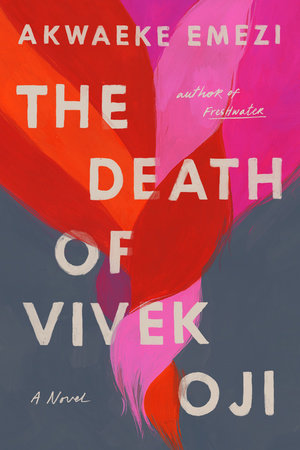
Akwaeke Emezi’s work continues to get wide acclaim for the fresh perspectives, differentiated structures, and succinct, palpable narratives they bring with every book. Their latest, The Death of Vivek Oji, continues to show Emezi’s dexterity as a writer and their keen focus as an artist. In Vivek Oji we are introduced to a wide community. The saying “it takes a village” is clear here through the relationships Vivek has with his family and friends as well as those he touches throughout his life. While the outcome for Vivek is not a secret—it is in the title and his passing occurs on page one—his death is a driving force for many to face a truth they ignored while Vivek was on this earth. We meet Vivek, his parents, Chita and Kavita, his cousin Osita, the Nigerwives and the extended community in Nigeria where blood family and made family come together to help build a life and provide support in ways others weren’t able to. Emezi’s latest book encourages readers to pay attention to who we focus on as readers and what characters like Vivek are telling us.
I spoke with Emezi about the origins of Vivek Oji’s stories, the importance of the prominence of queer characters, and how confinement versus awareness comes into play for characters within their new novel.
Jennifer Baker: In regards to the title—The Death of Vivek Oji—I thought about the presence of death as an inciting incident in some works. Vivek’s story is not just about his death. We get to hear from so many people in this book including Vivek and those who make Vivek’s life full. Do you feel like death was a necessary signifier in this story or is it really about Vivek’s life? And can we explore one without the other?
Akwaeke Emezi: The reason why the book was structured like that and named that was actually a craft reason. After I had written Freshwater, I had written Vivek in 2016, and I was trying to figure out a way to challenge myself because I’m a Gemini. As a book it has to be interesting, otherwise I will get bored halfway and I just won’t get to the end of writing it.
It was honestly hard to follow up Freshwater. It was like “Okay, well, you’ve already done this thing with form in your first book. What are you going to do in your second book that is going to be more or equally as interesting, or just challenging perhaps as what [you] did with Freshwater?”And I had just dropped out of an MFA program, and in the program we had read Garcia Marquez’s Chronicle of a Death Foretold. And I had done a Toni Morrison seminar in which we read my favorite novel of hers, Love. I loved it because Love as a book is so opaque up until the end. The last maybe 20, 30 pages is when everything suddenly clicks into place. And with Chronicle of a Death Foretold I was fascinated with the fact that Marquez could kill his main character in the beginning of the book and still have an entire book. That seemed really difficult to do. So I was like, “What if I combined these two things?” What if I start with a main character who dies at the beginning, and then I write backwards, and I also keep it opaque until near the end of the book, which is basically being structured like a mystery which is how Morrison structured her book. And that’s actually how I ended up with the book being that way was because I wanted to write something backwards.
Jennifer: I love that form because it makes us do more work as readers.
Akwaeke: I’m always a fan of giving the readers work.
Jennifer: As I was reading I realized I didn’t care if I knew how Vivek died because I cared so much about Vivek. I cared whether or not Vivek found a semblance of self before he left this earth. My question as a reader became: Was Vivek happy?
Akwaeke: I love that so much! That’s actually really reassuring to hear because I worried a lot with the book about essentially killing off a queer character. And I worried about the book coming out and people saying “Oh, well, you’re leaning on this problematic trope or whatever.” But my other queer frineds who read the book were like, “This is not about that at all.” They said “He’s so alive in the book.” There’s so much more there. So that was really assuring to know that he was alive in the book, in the work, and that was the thing that readers would really connect with in that sense.
Death is fine. Death is natural. What most people identify with the trauma of death is really about suffering.
You can’t do anything about death. It’s going to show up when it shows up. I have conversations with my friends often about how I don’t have a problem with death, I have a problem with suffering. Death is fine. Death is natural. What most people identify with the trauma of death is really about suffering. Was this person suffering before they died? The people left behind, are they suffering? It’s really a question of suffering. And I think there was something that is important in Vivek’s life: how suffering is managed. A lot of the early reviews because Vivek is queer it’s like, “Oh, he’s suffering because he’s queer.” No he’s not. He’s got a bunch of spiritual stuff that’s difficult for him, but it’s not about his identity in a sense.
Jennifer: I agree with you, I just never saw it as suffering being queer, I saw it as suffering to perform. I thought about fight or flight and sometimes there’s this kind of “play dead” mentality where someone doesn’t say anything. He’s not lying but he’s going into myself and silent as a form of protection. And Vivek seemed to realize that pretty quickly as a way to manage being around his family.
Akwaeke: And the thing that I just realized as you were talking is that if there’s anyone who is suffering due to their queerness it’s actually [Vivek’s cousin] Osita. And no one ever focuses on that. That just kind of slides under their radar because he presents as “normal.” He doesn’t present as “deviant” in the ways that Vivek does [to others], but Vivek is actually the self-actualized one. And Osita is the one really having a lot of suffering based on not being okay with who he is.
Jennifer: Where do you think that comes from? Vivek and Osita were fairly close as young people, as cousins. I’m curious how two men who grow up together, practically brothers, and one is more assured and the other is hiding?
Akwaeke: I feel like because Vivek is having kind of a different spiritual experience than Osita. The dedication of Freshwater is “to those of us with one foot on the other side.” And Vivek is one of those. Vivek is here but also not here. He has these spiritual episodes. He’s connected to something else. And I think that gives him that sort of a detachment where he thinks this is not real. Or he thinks it doesn’t matter. He’s floating outside of this reality a bit. And Osita is not. Osita is very much in this world with all the limitations, with all the expectations of what he’s supposed to perform and who he’s supposed to be. So he takes that on harder than Vivek does because Vivek is floating. And Vivek has one foot on the other side. And that actually gives him a freedom that Osita doesn’t really have.
Now that I think about it, I’ve been pushing back in the last couple of months ever since review copies have come out, against this narrative that Vivek is living an inauthentic life. Which is bullshit quite honestly. Or that Vivek is not facing his true self. It makes no sense to me because he is actually the only person who is facing his true self and is tapping into that and is exploring that even when people don’t see it. He sees himself. And he can look at himself. That’s a quality that is really important is the ability to look at oneself. I also think I wanted to write them in contrast to each other because seeing how Osita can’t look at himself, in comparison to how easy Vivek looks at himself. I think their presence helps you see them clearly if they’re standing next to each other.
Jennifer: You’re very concise in your work. You let us in and also you don’t over-explain. This allows me to appreciate those small snippets that cater to what you’re talking about. Vivek’s moments are so tightly written and that’s all I needed as a reader because Vivek knows who Vivek is. I know you can’t explain other readers’ reading habits, but I am curious about how you are so succinct in your writing.
Akwaeke: I think of it often as centers. What center are you creating the work from? And Vivek is at the center of writing this story about him. Which, honestly, I think people are not used to. The idea that he can be at the center and not say as much as other people are saying. There’s not a lot of him compared in the ratio of his chapters to other chapters. But, what’s interesting to me, is that it does test the reader because then the question is: Are you listening to Vivek? You listened to him and all you needed is that one thing because he says it very clearly. And he is very clear, he’s just not as verbose in the book.
I don’t know if people are used to actually centering a queer character rather than centering everyone around him.
I don’t know if people are used to actually centering a queer character rather than centering everyone around him. Because you can read the book and you can listen to everyone around Vivek or you can listen to Vivek, and you get two completely different experiences of the work that way. If you’re listening to everyone around Vivek then there’s a lot that isn’t clear because they don’t see him. And there is a lot that’s assumed or guessed. But if you’re listening to Vivek himself and if you focus on him amidst all the noise then everything, to me, is quite clear. And I think that’s in exercise in centering, not just in this work but in the world, in centering queer kids. Are you listening to the person? Not to their parents. Not to other people’s perceptions of them. Can you cut through all of that and actually listen to them? That’s huge in deciding what actual support looks like. It’s huge in just telling these stories because the person’s story is often different from the story that people around them have that’s based in fear.
Jennifer: That feeds into my next question about support systems and who we’re hearing from in this book. Those support systems are so key to Vivek to not only be aware of who he is, but to actually live and express himself to people who recognize it. In building these other characters did you already have a sense of who Vivek’s community would be?
Akwaeke: I think the rest of the community. The Nigerwives, that’s a real organization. My mom was a member, my mom still technically is a member. But that’s the community I grew up with was all these aunties from all these different countries and all these kids. And we lived in a very specific bubble, especially our early years. Our worlds were very different from our mothers and their cultures and the community that they had deliberately built in this country that was foreign to them. So I wanted to put Vivek in that community because I think it’s interesting, it’s not in a big city like Lagos or Abuja. It’s in a small little commercial town in Nigeria, it’s such a little niche subculture. As I was writing the book it made sense that these children would have their own private worlds. And that would actually hold together as they got older. And this idea of a private world that the parents didn’t have access to. I think that pushes back in some ways against this very Western idea that if you’re queer you have to come out and be loud & proud. And that’s the only way your life is deemed authentic and real and all your problems go away because now you’re out & proud. That’s not true. That’s a very specific narrative, and I wanted to write this world that’s more private.
The book asks, what does it look like to not need that outside validation? To find it among your own people?
It’s not that Vivek is hiding out of shame or anything. He just has a private life. And the idea of these queer characters having enough agency to decide that they want to stay in their own world, with their centers and they’re not going to expend the energy to try and get to try and their parents to see them. They’re going to just stay with each other where they’re safe, where they’re loved. I think that’s radical in a sense. So much of how we treat queer people in this world is that “you have to intergrate into the rest of the world,” “you have to explain,” “you have to fight for your place.”
And I think the book asks, what does it look like to not need that? That outside validation. To find it among your own people. And to stay within that support system and to know that is an equally valid form of family. That you’re loved and you’re seen and you’re able to live express yourself. And that shifts centers for readers who are used to the center being in this “mainstream” to reject that belief, and to say, “It doesn’t actually matter if you see me or whether you understand me because I have people who already do. I’m good. I already have my world. I’m steady in this world.” And that is why I pushed so hard for Vivek to stay at the center of readings of this work because it’s not just as innocuous as “You know every reader has their own perspectives…” But those perspectives are informed by something. And often when we’re talking about queer characters and queer people it’s informed by violence, it’s informed by violence that says “If you don’t follow this path of, ‘well come out and be loud & proud, make sense to us, make yourself legible to us’ then you’re not truly a true life.” And you’re pathologized. I push back against this because that’s harmful to real people in real time. The center is the queer people, and we’re in our center, and we’re good. It doesn’t have to be legible to you. Vivek doesn’t have to be legible. But you will respect that center as valid.
I was obsessed, specifically, with becoming one. When my friends and I were younger we would terrorize everyone into leaving us alone; we would growl on the playground, eat tanbark while crawling on the ground on all fours. When I went to sleep I would dream about changing, and I dutifully made sure this dream-change would be reflected somehow the next day: I dressed up in paper fur, I made my own claws. I would get upset, and instead of restraining myself I would immediately let it out on my surroundings — my parents patiently but fruitlessly dealt with broken furniture, with torn up rugs. I was uncontrollable.
When I was eleven my friends began to nervously apply makeup, go to dances, tentatively care about looking pretty. I, on the other hand, began to look monstrous to myself in a way that made me feel ill. I started to stare long and hard in full-length mirrors, my body roiling in a way that felt malicious. I stopped being feared, and instead, I was watched. My peers watched me, my parents watched me, and finally, I watched and watched as my feelings and my body escaped from my control.
I was uncontrollably angry, but not in a way that felt victorious. I got angry in the way that would end with me in tears. When I was eleven, I started to wear bigger shirts. I started to hide. I went from screaming my head off at anything that upset me to intensely quiet. And more importantly, I started to make more frequent trips to the library.
This is where I was, the summer before I would start 7th grade, bored as dirt, mindlessly flipping through the 50 cents bin in the library, when I saw Spring Fire by Vin Packer. The cover had the two female leads, scantily clad and falling demurely into each other’s chests.
I wasn’t clueless about the source of my feelings. I was old enough to understand the very fundamental binary: I wasn’t feeling any attraction towards boys, and I heavily valued my friendships with girls, arguably more than they did. I was an outcast at school. If I wasn’t one I had to be an Other.
The marketing for lesbian pulp fiction like Spring Fire, especially from a modern vantage point, is a horrible kind of funny. Ann Bannon, the author of Odd Girl Out and the Beebo Brinker Chronicles, tells me the covers for lesbian pulp reflect the way gay life was seen at the time: salacious and forbidden.
Pulp fiction revolutionized the publishing industry: printed on cheap “pulp” paper, the genre made an unprecedented amount of creative writing accessible to the public. Under-paying writers and publishing on inexpensive media meant that the genre had a low bar to entry, which allowed writers to be experimental. Science fiction covers, detective series — all had eye-catching subtitles, with portraits of pretty women, crazy monsters, and handsome men to get people to the cash registers.
At the start, the books were mainly targeted towards men. But there are a few reasons to believe that lesbian pulp wasn’t limited to the male gaze. For one, the books had a largely female readership, regardless of orientation. And the writers of lesbian pulp were, in fact, primarily gay women, who were able to use the genre not only to jumpstart their writing careers but to depict authentic lesbian experiences without the constraints of the more “traditional” publishing industry.
While it was fully okay to capitalize on moral outrage, the books inside those salacious covers couldn’t actually validate gay life.
Many of these books were written right during or after the McCarthy Era, so while it was fully okay to capitalize on moral outrage, the books inside those salacious covers couldn’t actually validate gay life. Bannon recounts that for the lesbians in most of these stories, “In order to shut up Senator McCarthy and all of the morality cops, they had to be punished … The Post Office would not deliver the books unless one of the women had committed suicide, gone nuts, or been killed.”
Lesbian pulp thus became a Frankenstein genre: an imperfect, unsure vocalization of identity. Spring Fire, for example, featured two women, Leda and Mitch, who genuinely loved each other, the wakings of gay consciousness. Then, all of a sudden, the story veers off course. They are discovered, Leda goes crazy and is institutionalized, and Mitch changes her name to Susan and goes to a doctor to become heterosexual. The conclusion was very clean: being gay was monstrous, and amoral.
Vin Packer (real name Marijane Meaker, as I later found out) hated the imposed ending so much that she wanted the book all but buried.: “I still cringe when I think about it. I never wanted it republished. It was too embarrassing,” she states in a new 2006 introduction.
Horror and a lot of lesbian pulp bank on the same titillation: the idea of a desire that is fundamentally perverse. Like many gay women, I did not immediately understand my fascination with girls as attraction. And so before I had lesbian pulp fiction, I started to read more and more about male serial killers, and the awful things they would do to the young women they talked to on the street.
My friends started dating. I, on the other hand, became moody and hard to look at. As I directed my anger more pointedly within myself, I forewent loud and unnervingly ugly monsters in favor of the monsters who were observers — monsters that breathe quietly on phone receivers, monsters whose fearsomeness only comes from the fact they are never truly shown.
My obsession with women became just one of the long list of things that confirmed my own ugliness; I would look at girls in the corner of my eye in the locker room, I would avert my eyes too late when my friends would change in front of me; I watched women on the street from coffee shops and car windows. And when I did I would think about Ted Bundy, Andrei Chikatilo, how they hid their monstrosity deep inside.
My obsession with women became just one of the long list of things that confirmed my own ugliness.
Morality, beauty, and evilness were, to me when I was younger, very black and white. I knew that I was evil, and my parents and my friends were not. I fell in love with a girl when I was a teenager; I was watching The Descent with her on the couch, and while I realized I loved her I simultaneously fell in love with the main female antagonist, Juno, played by Natalie Mendoza. And as she was torn to pieces by crawlers, covered in blood, I kept imagining the walls pressing into me until I couldn’t breathe. When I went back home that night, I still heard the crawler’s screams, the scratching of their nails. I could imagine the surety all the girls must’ve felt in their untimely deaths.
It can be easy, now especially, to laugh or to pick at some of the derogatory tropes found in a lot of these books. But so many of these books were these women’s actual lived experiences —Bannon wrote Beebo Brinker Chronicles as a hopeful tribute to her “dream woman,” and
Spring Fire was based on Meaker’s actual life. For Meaker especially I can’t imagine what it is like, having to tack on an ending like that to a book about your life.
Before lesbian pulp, I thought this vulnerable, awkward, transitioning phase where I existed as a girl yet as something much worse was something only unique to me. I don’t know who I thought I was when I watched The Descent. To some degree, I was the girls in the cave, and me being torn apart by something horrible was a rightfully deserved ending for someone like me.
But when I shoved Spring Fire to the bottom of my bag, I felt the same way I felt watching Juno get torn apart — when I stole the book I fully expected to turn into a crawler myself, and ran down the street laughing when I got away with it.
As Bannon said, in the early 1950’s there was this pressure to sell lesbian pulp, but also make it adhere to a well-understood morality. Anyone who’s read Spring Fire can see where the story Meaker wanted to tell ends. The rest is a tacked-on moral, a typical horror shocker, as the two women are torn apart from each other.
But what I think the censors couldn’t really catch was that vulnerability and bravery that achingly real is hard to disguise. Because unlike when I watched horror movies, I was able to understand that Leda and Mitch, the characters I identified with, were not the monsters. The monster was the fear of being discovered.
What shocked me about lesbian pulp was this open celebration of being unsure.
What shocked me about lesbian pulp was this open celebration of being unsure. For many of these authors, these pulps acted as their vehicle for coming out, their tentative, and imperfect coming to terms of a potential autonomy that existed outside of what these authors have been told.
And reading the book, I realized that autonomy only seems monstrous when it is so breathtakingly unfamiliar.
I finished Spring Fire in a park two blocks from my house, with the cover dutifully taped over with red construction paper. And as I read the ending, with Leda being taken away, I felt for the first time that I was being recognized. Not just in the superficial aspects of sexuality, but by this vocalized embracing of ugliness.
Many of these books were treated as perverted. Not only in terms of what their content was actually about but how their expression was literally perverted or manipulated by publishers. Yet, this immediate indictment of morality and monstrosity imposed onto some of these books didn’t dishearten me. Instead, I found that there was something strangely heartwarming at the time about seeing how two characters love despite all narrative attempts to keep them apart.
Because as horrible as the ending may seem, there is nothing more exciting and horribly, horribly scary than finally being able to see yourself yearn in Mitch and Leda’s tender eroticism, in Leda so gently and lovingly embracing Mitch for the first time.
It should be said that not all lesbian pulps ended badly, or were manipulated against their will to change their manuscript; that would do a disservice to the genre. Bannon, Artemis Smith, and Valerie Taylor were prolific authors who published multiple pulp stories in which the two women were able to end up together. Meaker, after Spring Fire, published multiple books of acclaimed lesbian fiction, minus any tropes. The history of lesbian pulp fiction is hard-fought: many saw the books as disposable, so while some of the bigger titles like Women’s Barracks, Spring Fire, Odd Girl Out can be found pretty easily through most online booksellers, I had to find others through torrents or pdfs on a blog of a blog of another blog.
Much of the restoration is also done by the gay women who grew up with these pulp works. Bannon received academic acclaim decades after her career with pulp fiction ended. Forrest’s anthology, and her profuse thanks for the authors that came before her, was the closest thing to LGBT history I had when I was a teenager.
It was two years and thirty pulp books after I read Spring Fire alone in a park. I had just finished Forrest’s anthology, and for the first time, I realized I was scared.
Lesbian pulp is so divisive possibly because it manages to be both brave and embarrassing.
As I read more lesbian pulps, my obsession with horror quieted. I stopped punishing my friends for nervously daydreaming about boys in our class. Instead, I obsessively turned inward, obsessing in the ways I could be seen as sick, contradictory, and more importantly vulnerable in a medium that I always saw as reflective of who I was.
Putting these books in context with Spring Fire, I realized that I deserved to be loved, and that I wanted to be loved in that way. And that if I were to finally accept that love, I would become a monster, in the proudest proclamation possible.
And sitting on my pile of hoarded books, I also realized it would take a very long time for me to finally have the bravery to become one.
When you are a preteen girl about to hit puberty like an SUV charging toward a brick wall at 100 mph, you dream about something either destroying you or destroying the quiet life someone else has built for you. Lesbian pulp is so divisive possibly because it manages to be both brave and embarrassing: for some, the genre may be too harsh of a reflection of shame.
Most of all, like many LGBT works, it thrives in contradiction, in confusion. And going beyond just sexuality, I think reading that confusion for the first time was when I started to forgive myself for a lot of my own failings.
DON’T MISS OUT
Sign up for our newsletter to get submission announcements and stay on top of our best work.
YOUR INBOX IS LIT
Enjoy absorbing fiction from Recommended Reading on Mondays, strange, diverting work from The Commuter on Wednesdays, and a roundup of our best work of the week on Fridays. Personalize your subscription preferences here.