The Surreal Stories of “Lake Like a Mirror” Show How Power Distorts Reality

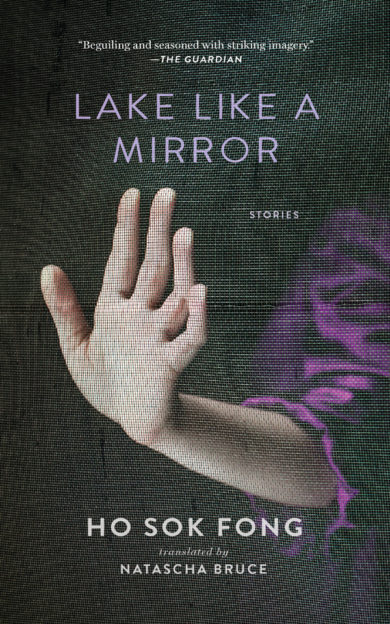
Ho Sok Fong is without a doubt one of the most lauded Malaysian short story writers working in Chinese. Since winning her first literary prize in 2002, she has authored two story collections, namely Maze Carpet and Lake Like a Mirror, both published in Taiwan. Lake Like a Mirror is now available in an English translation by Natascha Bruce, who has beautifully captured Ho’s lyrical, evocative style.
I first encountered Ho’s work in its original Chinese as a young adult. The story I read was her first published, “Never Mention It Again,” which she talks more about in the interview below. For as long as I live, I will never forget that story. Ho has an incredible ability to combine poetic passages that invoke raw emotions alongside blunt imagery that sharply criticizes power and political systems in place. At the risk of giving away too much, I’ll mention that the story’s final, arresting scene involves a corpse defecating.

Obviously, I was deeply affected by “Never Mention It Again.” In many ways, it broadened my mind to what was possible with fiction. Perhaps I wouldn’t have tried my hand at writing “political fiction” if I hadn’t read Ho Sok Fong. That seems entirely possible to me. 

I was beyond honored to speak with her on the occasion of her English debut. We talked about multiple layers of translations in her work, the past, present, and potential future of Chinese Malaysian literature, and life as an engineer-turned-writer, among other things. Our interview was conducted in Chinese and translated into English by me.


YZ Chin: What was your involvement like during the process of translation?

Ho Sok Fong: Natascha Bruce will ask me questions, and I’ll give her various details about Malaysia. Sometimes I’ll relay the intentions behind certain passages, especially the subtler ones. Usually we avoid explaining our own work. But when that necessity arises, you then have to re-read the stories, and the process shocks into revival those ideas and memories that were hazy when you first put pen to paper. I think I suppressed and gradually forgot those ideas because they clashed with the commonly accepted speech or ideologies in daily life. For example, if such thoughts, emotions, or intentions are considered unimportant by the literary discourse of the day, they will then submerge into unrecognizable forms—because they aren’t given a place in the existing framework of discussions, they become unthinkable. When I re-read certain stories (such as “March in a Small Town”), I continue to derive different meanings from them, like I’m now glimpsing previously hidden corners. This really moves me. It means that no matter what I comprehend, it is always incomplete, and always capable of transformation.

Therefore, I’m very grateful for Natascha’s translation, which contains a poetic style that is also remarkably clear.

Another type of conversation between us, which was more frequent and very complex, involved Malaysia’s politics, culture, and landscape, especially the trend of Islamization in recent years. For a while I was worried that English readers in the U.K. and U.S. would approach the book through the lens of Middle Eastern Islamic societies. Malaysia’s situation differs greatly from the culture of Islamic governance in the Middle East, especially with the added complexity of our multicultural society, in which Malay citizens make up over half the population, Chinese citizens close to one-fifths, followed closely by Indian citizens, plus indigenous citizens who number even fewer. 

For minorities in Malaysia, no matter how much you love your home country, you will forever be viewed as a guest (tetamu).

Because the country elevates Malay citizens above all others, it has to define who counts as Malay and who doesn’t in order to safeguard their special rights. And because Malay citizens cannot leave their religion, Islam becomes a core definition of “Malay.” On the other hand, if a Malaysian Chinese (or Indian, or other minority) citizen were to convert to Islam, they or their offspring and later generations may enjoy the abovementioned special rights. In recent years, people have come to feel that this has resulted in even more racial animosity. Minorities like Malaysian Chinese citizens feel not only left out by the country’s ruling institutions, but they also sense a vague existential threat; no matter how much you love your home country or assimilate, you will forever be viewed as an outsider, or a guest (tetamu).

Because Malaysia is itself a multilingual cultural landscape, I was astonished to realize that not only was Natascha translating, but in reality translation already happened during my original writing process. For example, Mahua (Chinese Malaysian) literature doesn’t just consist of elegant, pure literary sentences, but instead deploys a mixture that absorbs words from different languages, dialects, and vernaculars. Multiple languages are present in one particular story, “Radio Drama,” which features a character that speaks Malay with an Indonesian accent, though in the story this is still conveyed through Chinese. I suppose we’ll have to wait for a Malay translation of the story to enact a “reverse translation.” Many of my friends say it’s a good thing that the story collection has been published in English, because this allows Mahua stories to initiate conversations across languages.

YZC: Reviewers of the English translation describe the collection as surrealist. Do you agree with that description? If so, what do you think surrealism accomplishes that cannot be done with realism?

HSF: Some of the stories are surrealist, and some aren’t. These stories still take place in a Malaysia familiar to us, not in an unrecognizable alternate universe. But it’s true several stories start bending reality slightly through specific details. I think a surrealist style can twist the surface of a reality that presents as neutral. Then we can see reality as a screen that has been yanked askew, and its seemingly solid surface starts to be pulled apart. Through this we realize that reality can be distorted by power. This isn’t something realism can achieve. Surrealism manages it because it switches the position of observation, retreating from the object of its description—reality. With this distance, it is possible to perform a kind of dissection or experiment on the idea of writing what’s real.

YZC: Many Mahua writers have found success with Taiwanese publishers. Why do you think this is?

HSF: Yes, many writers of our generation who work in Chinese have a pretty intimate connection to Taiwan, from seeking education to finding publication. Many Chinese Malaysians seek opportunities elsewhere because of the marginalization of non-Malay citizens in terms of politics and resource allocation. To Chinese Malaysians, Taiwan has seemed generous with its educational, cultural, and publication resources. Taiwan has one of Asia’s few liberal political systems; it really implements democracy and respects freedom of speech. For that reason, my first story “Never Mention It Again” was published there. The story concerns a Chinese Malaysian contractor who dies and has a funeral held for him by his family. Suddenly religious authorities appear to confiscate his body, and it is only then that the family realizes the deceased converted to Islam before death. In the ’70s and ’80s, there were indeed many businesspeople who converted for the benefit of obtaining special rights. I remember that after the story won a prize in Taiwan, Malaysia’s Chinese newspapers were not allowed to publish the story. Not just the story—even reviews or related discussions were barred from being published.

Malaysia’s higher education quota system alone is agonizing for young people. After graduating secondary school and while applying for spots in universities, they’re suddenly confronted with the violent shock that spots are restricted because of their ethnic identities. They sense that they’ve been relegated to a secondary position by national institutions, that they’re placed in an inferior position fixed before birth. What’s sadder is, this feeling of rage shapes how you see yourself and others. The prejudice beams inward even as it shoots outward. But of course this is well-covered ground.

I want to add that when a person has traveled afar, the experience may prompt them to embrace skills of interpretation and also creativity, regardless of whether they return to their place of birth. They’re having to face down the question of “Who am I?” You could say their self-examination stems from a wish to heal the wounds caused by their position of marginalization. Many who pursued studies in Taiwan threw themselves into local cultural efforts after they returned to Malaysia. They also deviated from previous efforts, which focused solely on the world of Chinese language while maintaining a distance with other ethnicities. It’s not so much an expression of patriotism than a self-awareness that one must interact with one’s surroundings; you know you cannot survive alone; there is a need to rebuild strands of connection with others, be it through artistic creations or other forms of caring. This doesn’t rely on transformation from the country, because the country’s systems may not evolve for a very long time. But in literature, facing outward is itself meaningful. As you’ve brought up: How does a person return home? It is difficult to situate home within the abstract idea of a country. Instead it is in the self, through an immersion in interpersonal relationships and the process of forming intimate emotions with others. 

YZC: Two stories in your collection each have a central character named Aminah. Those stories come prefaced with explanatory notes respectively clarifying Islamic law as enforced in Malaysia, and the prevalence of the name “Aminah.” Were these notes in the original text, or were they added for readers of the English version of your book?

This feeling of rage shapes how you see yourself and others. The prejudice beams inward even as it shoots outward.

HSF: They were added in the English edition. I’d given editors and translators context about Malaysia’s ethnic groups and code of law. Malaysia’s unusual situation may be unfamiliar to readers of the English edition, and so I agreed to explanatory notes under story titles. The additional explanations are meant to emphasize, too, that although the two stories “Wind Through the Pineapple Leaves, Through the Frangipani” and “Aminah” respectively feature a heroine named Aminah, the two characters are not the same person. Their experiences, background, and class are all distinct.

YZC: Since the notes exist only in the English version: Do you think a similar gap in context exists for, say, readers in Taiwan? Or do you think readers in Taiwan, Hong Kong and China are sufficiently acquainted with Mahua narratives?

HSF: Most Chinese story collections come with prefaces, so that’s what a reader would see when they first open the book—sometimes the preface is by the author, and other times it’s by a third party recommending the book. We touch upon various subjects in prefaces; for example, in the original Chinese edition, both I and the recommender Professor Lim Choon Bee brought up “religious conversion,” pointing out the prickly conflict between a nation’s legal code and individual identity. That said, neither of us went out of our way to explain it. We simply expressed ourselves directly, writing as if the reader knows as much as we do. But in reality, I’m not too sure how much comprehension a Taiwanese reader may have.

This may be just wishful thinking, but I assume readers do have background understanding. At first I naïvely thought that as long as readers know about the existence of Chinese Muslims in Malaysia, along with some basic knowledge such as the difficulty of leaving Islam, which requires court approval, then readers would have no problem immersing themselves in the stories. But then again, I don’t necessarily feel I need the stories to be “understood” through such lens. Because the stories’ threads of plot and vignettes are written in a sprawling, loose style, readers may make different discoveries if they read in other ways. There are no fixed answers in the stories.

In addition, unlike in the English publishing world, Chinese publishing seems likelier to add on explanations in the form of footnotes for translated or foreign literature. There were some explanations in the original text of Lake Like a Mirror, mostly clarifying words and phrases unique to Malaysia’s mixing of local languages.

Besides, Mahua literature has a decades’-long history in Taiwan by this point. In the past 20 years, Mahua writers like Zhang Gui Xing and Ng Kim Chew have broadened the perspective of Taiwanese readers toward Mahua literature, and at the same time they have introduced many political and historical topics that intimately affect Chinese Malaysians. In recent years, too, there’s been frequent and deep coverage of Southeast Asia by Taiwan’s online platforms. All of these might have helped.

YZC: You’ve said that Mahua literary journals shy away from addressing political concerns. Do you see this changing in the near future?

HSF: First, I have to clarify that Mahua literature hasn’t always shied away from political topics. I think there was a period of withdrawal during the cold war, and then because of the [Sino-Malay] sectarian violence on May 13, 1969, the Chinese society became warier; it shrunk back. Editorial opinions grew constrained, and activists of all ethnicities were detained, and so politics became detached from what writing that did get published. When I was very young, the literature I absorbed from around me did not encourage reflections of politics or historical memories in fiction, as if these elements would destroy the purity or beauty of literature. With that said, there were those who would still write about politics during those years—but more often it was poetry, more so than fiction or essays.

It wasn’t until I was almost 30 that I could start treating politics as a literary theme, alongside other human experiences like love, illness, and death.

I don’t know what changes the future may bring. It feels like many people are able to sharply express their concerns and opinions toward politics on Facebook. When I was a judge for literary prizes, I would also occasionally read probing stories by young writers that wove together politics, history, sexual desire, gender, marginalization etc. I feel like everyone is mining their own stores of creativity. They want the freedom to express, be it related to politics or not, and they also want ways to broaden their literary sensibilities.

YZC: You used to work as an engineer. Me too. I get this next question a lot, so I’m going to impose it on someone else for a change: Do you think your engineering training has had any effect on your writing style? 

HSF: It’s been a very long time since I was an engineer. I barely wrote a single word during the first two years. At the time, I was working at a factory manufacturing microchips, wearing a white robe every day, a mask covering my face, gloves on my hands, anti-static shoes on my feet. I was suited up like a healthcare worker or an astronaut, my eyes the only body parts exposed to the outside. I could only gauge others’ reactions through observing the expressions in their eyes. As for speaking, I felt like a worker responsible for transporting the corpses of information. Every single moment of speech required an absolute level of accuracy. I had to cover all my bases; I couldn’t leave the tiniest detail out, or make any assumptions. If I realized I’d missed something, I’d have to race back and stop the other person to provide additional information. My god, now that I’m recalling it, that was a nightmare. I worried every day, but how was it possible to not miss a single scrap of information?

But in our habitual usage of language, the most interesting things like jokes, poetry, and adjectives are all riddled with misreadings, misplaced context, or hazy definitions, plus the useless, the exaggerated, the twisted, and falsehoods. When I switched careers to become a journalist, I was very happy even though the pay was low. Adjectives made me very happy. That I could continue writing made me very happy. But I realized something through my experience working in the factory: It’s not that people are devoid of creativity or complex feelings, but that they aren’t able to express these things. A large number of people work diligently around the clock, heads down in factories, bending themselves out of shape over microchips. Language deployed for functional use cannot cover our inner emotions. In all of Penang, [Malaysia], thousands upon thousands lead such a life. This is a reality that newspapers and media cannot describe, giving rise to blind spots. I think this is where literature comes in.

How to Turn Real-Life Isolation Into Fiction

Welcome to Read Like a Writer, a new series that examines a different element of the craft of fiction writing in each installment, using examples from the Recommended Reading archives. Each month, the editors of Recommended Reading—Halimah Marcus, Brandon Taylor, and Erin Bartnett—will select a few stories that illustrate a specific technique, style, or writing challenge. 

Certain writers—childless, professional writers—will tell you that being in quarantine is not markedly different from their regular lives. They spend a lot of time alone, they will tell you. They go for walks, they think, they write. No matter your circumstances, whether you lead the “ideal” writer’s life or one of mess and chaos, your writing must be done alone.

The particular isolation of writing has led many writers to concoct stories in which their protagonists are also isolated. In most of these stories, nothing happens, unless you count the protagonist thinking as something happening. (I usually don’t, but these three stories prove that exceptions exist.) Stories with a solitary character can be, but aren’t necessarily, about the condition of loneliness. With the caveat that not everyone who is alone is lonely, and a lonely person can be surrounded by people, the reason these stories are particularly challenging to pull off is that aloneness and loneliness lend themselves to static stories of futile longing. Interactions, on the other hand, lead to plot. Like all of us in our new lives, the characters in these stories have nowhere to go.

At a time when interactions with other people seem like a distant memory, we look at three examples of short stories from the Recommended Reading archives about characters in isolation. In each, there is only one character who is physically present. Pets are permitted, and other characters are allowed to call or radio in, but they cannot interact with the protagonist in person except in memories or flashbacks, even if they remain six feet away.


TV aquarium

Watching Mysteries with My Mother” by Ben Marcus

This story takes the form of an extended intrusive thought regarding the death of the narrator’s mother. Even as he rationalizes away the possibility that she might die, he finds steadily more reasons that suggest that she will die, setting up the tension of the story that takes place quite literally only in his head. Writers are warned against stories where all a character does is sit and think, stories where there isn’t a present thread of action because stories this kind often lack obvious and urgent emotional stakes. But here Marcus clearly illustrates the tense, swirling eddy of anxiety and neurosis that plague us when we are alone with our thoughts. It’s an eerie story to revisit, and I find myself thinking of my own intrusive thoughts and all of the little rationalizations I erect against my anxiety even as I knock them over with still greater worry. The key to Marcus’s story is the escalating intensity and absurdity of the intrusive thought, the subtle echoes and repetitions that build up like an involuntary tic. It’s a dazzling display of the interior narration, as gripping and compelling as any exploding building. – BT

The Adventure of the Space Traveler” by Seth Fried

One way to get around nothing happening in a story with only one character is to make the inciting event—the event that isolates that character in the first place—as eventful as possible. Fried wastes no time doing this, thoroughly isolating his protagonist in the first sentence:

“While repairing a communications dish outside the space station Triumph I, Arnold Barington inadvertently fired his rivet gun into a tank of pressurized gas. In the resulting explosion, Barington was thrown out like a dart into the vacuum of space at roughly five thousand feet per second.” 

For good measure, Fried also breaks Barington’s radio. 

The story is off to an exciting start, but the reader knows that Barington will not survive. (He isn’t Sandra Bullock in Gravity.) Fried must employ methods other than suspense to keep the reader’s attention. He gives Barington a futuristic spacesuit that will keep him alive for 5.6 years and Barington holds out hope that this will give him enough time to be rescued. Just like that there is tension—the tension between Barington’s hope and our discomfort—even if there isn’t suspense. 

Next, Fried solves the problem of plot with the ingenuity Barington wishes he had, bringing to life a mix of Barington’s imaginings and regrets. The infinite void of deep space functions as a darkened theater, the visor of Barington’s own helmet is the screen, where his regrets play out as if they are happening in real time. A similar character might have the same thoughts when facing a more conventional death, but that story would have felt conventional, where this one is possessed by thrilling inertia. – HM

The Duchess of Albany” by Christine Schutt

I’ve been thinking a lot about this line in Maggie Nelson’s Bluets: “It is easier, of course, to find dignity in one’s solitude. Loneliness is solitude with a problem.” For the protagonist of Chrstine Shutt’s story, solitude was what she and her husband practiced in their large home with many windows and their rich, ever-demanding garden. (The protagonist is unnamed, so I will call her “the gardener.”) Dignified and dreamy, the gardener is, as Diane Williams writes in her introduction to the story, “an older woman in extremis.” The problem Schutt introduces in the first sentence—the problem that turns solitude into loneliness—is death. The gardener’s husband, Owen, has died. The garden, filled with his ashes, must still be kept alive. Now, her only companion is their old, dust rag of a dog named Pink, who is always relieving himself in the wrong places. She endures the occasional call from her twin daughters, who prattle on about her vodka habit. 

Schutt creates tension in the story by intermingling the gardener’s memories of her life with Owen with her actions in the present. Often, the only signpost we have to distinguish between memory and contemporary action, is Owen’s presence in the event. For another writer, this kind of story might prove impossible to pull off. But Christine Schutt’s prose is so precise and wry, and the gardener’s interiority so intimately drawn, that you keep reading just to get closer to this woman who wants nothing to do with you. 

By the end of “Duchess of Albany” Christine Schutt shows us that while the experience of losing a beloved is lonely, one is never completely alone in loss. Those memories, for a time at least, are still filled with so much life. Christine Schutt finds dignity there. – EB

How “Saint X” Subverts the White-Woman Tragedy Trope

In her debut novel, Saint X, writer Alexis Schaitkin elevates a juicy page-turner into an incisive cultural commentary that de-centers the white female victim narrative. The novel opens with the mysterious disappearance and death of Alison Thomas, an eighteen-year-old on vacation with her family on Saint X, a fictional Caribbean island. But instead of lingering on the well-trodden drama of the tragedy itself, the author turns a critical eye toward our collective fixations and assumptions. 

“Is it possible to write a story about a dead girl that is not a Dead Girl story?” asked true crime author Emma Copley Eisenberg in a 2018 Paris Review piece. “Is there anything in this genre that can make us more informed, more free, more equal? Or do these narratives simply enable prurient access to women’s bodies and glorify misogyny? […] The difference between the dead girl story that I want to read and one I don’t is the point of view, the characterizations, the hints as to the writer’s priorities that are made manifest in their every tiny choice.” In other words, the power to overcome this trope lies in the well-executed details.

Through narrative, character development and world-building, Schaitkin doesn’t just manage to avoid the Dead Girl story trap, she successfully subverts it. Saint X comprises several characters’ points of view, but primarily alternates between Alison’s younger sister, Claire, and Clive, the Caribbean man and resort staffer who is scapegoated (but not convicted) for the alleged murder. This narrative choice allows the author to highlight the persistent, problematic fetishization of dead white women through Claire, as well as invoke issues of race and class through Clive—and treat both concerns with equal importance.

Schaitkin’s exhaustive, research-backed rendering of the island of Saint X and its inhabitants is key to the novel’s ability to transcend what might otherwise have been a simplistic story about another missing woman. Through the careful portrayal of Caribbean characters and culture, the author calls attention to the ripple effect of one woman’s death on an entire community, from Clive’s internal reflections on how the accusation shattered his life to descriptions of how the scandal stalled the local tourism economy. This is not merely a story about a family devastated by a loss; it’s about the many people affected by the sensationalizing of such a tragedy, from the accused man to the island’s population and beyond. By telling these stories—the ones we don’t usually hear—Schaitkin de-centers and helps to partially dismantle the dominant narrative of the white female victim.

This is not merely a story about a family devastated by a loss; it’s about the many people affected by the sensationalizing of such a tragedy.

Years after Alison’s death, Claire is still consumed by the case; she pores over every related article, book, TV show, film and message board she can find, and even directly references the dead woman trope: “What is the appeal of such stories? You know the kind I’m talking about. All the pretty dead white girls.” Her obsession with Alison’s death is a foil for our own well-documented cultural fixation with the tragedies of white women—both real and fictional, consumed through various mediums. We have an insatiable appetite for true-crime content like last year’s Ted Bundy docuseries and film, the Making a Murderer docuseries, and the Serial podcast, to name a few. We devour fiction books (often turned into films) such as Sharp Objects, Room, and The Lovely Bones—novels by female authors that explore the subject of the missing white woman from victims’ perspectives with a measure of depth and nuance beyond the gruesome details. Our fascination fuels the production of these stories, which in turn fuels the obsession.

It’s not that our interest in the subject is bad or wrong. In fact, crime fiction and nonfiction author Megan Abbott argued in a 2018 Los Angeles Times essay that women’s interest in books about crimes against women could stem from needing a place to process all the real-life violence and trauma to which we’re exposed. The problem arises when the stories reinforce the white female victim narrative without accounting for systemic issues like the driving force of misogyny, the fallout among falsely accused perpetrators, and the bigotry behind disproportionate news coverage and allocation of resources in comparison to deaths among marginalized communities.

How can writers address this? “We need to take into consideration what stories have been told before, what stories have been told to death, and the kinds of messages that we’re sending by reusing these same tropes over and over,” said Alice Bolin, author of Dead Girls: Essays on Surviving an American Obsession, in a 2018 LongReads interview. “It becomes harder and harder to subvert something that’s been used so many times before.”

Schaitkin effectively brings new dimension to the subject by facing its ugly side head-on. Instead of romanticizing Alison’s death, the novel addresses the dysfunction of glamorizing or profiting from these situations, emotionally or financially. Claire candidly examines her own impulse, throughout her life, to exploit the incident, asking: “To what extent was my pain a thing I cultivated, a thing I used? Is it possible that [my] relationships… were little more to me than a platform for displaying my suffering and, in doing so, for shoring up my claim to this tragedy, to the death of a sister I was barely old enough to know?” 

Claire isn’t the only character who capitalizes on the tragedy. Clive’s island friends use their connection to him to sell pricey “behind the headlines” tours. To find relief from the scandal, Clive flees to New York, where he confronts the challenges faced by many immigrants: arduous, low-paying work and poor housing conditions. Having intimate knowledge of Clive’s story makes it all the more heartbreaking when he senses the futility of escaping his past: “He has always thought of himself as a person who avoids trouble and complication at all costs. Yet the facts of his life tell a different story. He wonders if it is his fate to be controlled by people with the tug of stars.” Two of those people, of course, being Alison, for whose death Clive is collateral damage; and Claire, for whom Clive is a vehicle to satisfy her own urge for the truth.

Our ceaseless search for the truth behind these tragedies is beside the point.

Like so many Dateline episodes, Claire’s preoccupation with the circumstances around Alison’s death cannot end without some kind of answer. As with audiences who grow invested in unraveling the truth behind real-life unsolved cases like JonBenet Ramsay or Madeleine McCann, an open-ended mystery can feed the mania. Schaitkin’s decision to give Claire an answer, but one that doesn’t address all her questions, seems to suggest that our ceaseless search for the truth behind these tragedies is beside the point.

In a notably anticlimactic scene, Claire finally tells Clive who she is and asks him for the truth about the night Alison died. And she gets it. But while the reveal is satisfying, it’s not a shocking or salacious revelation—it’s human and sad, and doesn’t tie up every loose end. Readers seeking the traditional payoff of a murder mystery won’t find it in Saint X: Schaitkin wisely avoids a neat resolution, underscoring that what’s at issue is less how or why Alison died, and more the reverberations and implications of our mythologizing of such events.

Why the Hell Haven’t I Been Raptured Yet?

Pending Transaction

The Rapture is here and I’m stuck in the bank customer service line. In terms of temperature, it’s nice. Outside, it is face-meltingly hot. No really, I watched an extremely elderly man’s face cook off. Real Raiders of the Lost Ark shit. Upon arrival, I was momentarily bucked off my mission by the frosty air and the cheeky cardboard family posing in front of their new bank-financed home. Perhaps heaven looks like this. Anyway, I’m here on business. My entire family got raptured, my girlfriend got raptured, fuck, our blue heeler got raptured. I scrutinized my life and deeds. Gave to the poor. Never drunk drove. Stopped a boy from running into traffic. Hell, my dad worked for a pharmaceutical marketing firm and he ascended. So why was I still of this mortal plane?

It occurred to me it might have something do with the bank incident. A few weeks ago I overdrafted and came back to argue with the manager. I was aware I would overdraft, but instead of going negative on the bill I needed to pay (getting one overdraft fee) the bank’s system rearranged transactions to where the bill processed clean and I overdrafted eight times on small purchases. Candy bars and sodas. I was out hundreds of dollars in fees on $23 of original transactions. I tried to be calm as I explained my predicament to the manager. Surely there was something we could do—the punishment was disproportional. The manager was courteous and apologetic; alas nothing could be done. I’m fucked for moneyAnd when payday DOES come, I’m screwed, I said. I guess that’s the nice version of what happened. The manager’s professional attitude and firm stance only escalated my rage, my pain. Was there undue bleeding of my life’s frustration onto her? In retrospect, yes. A security guard was summoned. I only left when he phoned the real police.

So I’m here to make amends, to give a sincere apology, under the theory my dramatic scene-making and outward rage is what’s preventing me from joining my family. Ahead of me, a middle-aged man is finalizing his transaction—what looks like a full withdrawal of funds. The teller smiles and thanks him.  

“Can I help you?” the teller asks. I chew the air a bit, summoning courage to right my wrongs. 

“Yes. Is the manager here?”

“Let me see.” The teller steps to the back office and returns. “She will be with you in a moment.”

We wait in awkwardness. The teller is all grins, and is freshly clothed and groomed. I briefly consider making a joke, some weather we’re having huh, but this person remains earthbound too, so it might not be best to call attention to the whole Rapture thing. Besides, once I meet the manager, I’ll be absolved and none of this will be my concern. I feel like a genius almost, figuring out the rules while other people go about their lives amid a collapsing world.

The manager joins us at the counter. Her eyes shrink. You again, they say. Curtly she asks, “What can I do?”

“You may not remember me. A few weeks ago, I came to speak with you, and I was a real ass. I wanted to offer my apologies. With everything that’s going on, it’s important to make amends before it’s too late.”

Oh, I remember you. I cried. You insulted me. The rest of that day was a loss, me-wise.” 

“Hence my apologizing.”

“I had such anger towards you. We get …unpleasant customers time to time, but you were the absolute worst. I had fantasies of strangling you. I was sick the whole night.”

“Yes, and I am sorry. You have to admit though, what the bank did was unfair. And you could have done something, I know you could have. However, let’s not relitigate the situation.”

“Sir, seeing you…I forgive you. I’m unsure of your intentions, but I forgive you, truly. You had a bad day. That made my day bad. I forgive you and I apologize for my angry thoughts of violence.” 

With that absolution, I gritted my teeth. Would the ride to heaven be like a Star Trek transporter, near instantaneous? Or would I rise into clouds, a long vertical journey where I could contemplate my blissful eternity? Would I get to meet God? That’d be pretty fucking sweet.

Instead of any elevation, I see the manager glow golden, angel trumpets fluttering around her. The light and the sound intensify to a painful degree. The teller and I duck—from what?—and with a quaking pop, the manager is gone.

“How’d that asshole get into heaven?” the teller asks. 

Defeated, I go outside and sit on the bank’s steps. The heat bullies my uncovered arms and face. I remember then I had a bad habit in college of asking for water cups and then getting soda at restaurants. 

Every Pixar Movie Is Really About How We Tell Stories

At the heart of every great Pixar movie is a story about storytelling. Films like Toy Story, Monsters, Inc., Up, and most recently, Onward, aren’t just master classes in what intricate character-driven plotting can look like. If you study them closely, you can see they are also stories about the very act of creating a narrative — about how stories help us understand our past and guide our future. Hidden in these colorful tales about toys and monsters, fishes and emotions, widowers and wizards, are lessons about how we tell stories not (or not just) “in order to live,” as the oft-quoted line from Joan Didion goes, but in order to make sense of our lived lives. 

Pixar’s entire oeuvre began with a story about a toy. No, not that one. Toy Story would come later, but in 1986 John Lasseter directed Pixar’s first short film about a Luxo lamp playing with a small beach ball. With its playful and photorealistic take on an office lamp, Luxo Jr. kicked off decades’ worth of computer-generated tear-jerking tales. Except when Lasseter first began working on the film that launched Pixar as we know it, he was focused almost exclusively on making the pair of Luxo lamps at the heart of the short (one big, one small; one obviously a parent, the other a little kid) look as real and move as realistically as he could. It was only when he showed it to a number of animators at an animation festival that he was informed, quite simply, that he needed to have some story driving the short—otherwise it would all just be an impressive if rather dull motion study.

Buzz Lightyear’s realization that there’s no script he can follow, that he’s now in charge of his own story, is a profound one.

The drive to focus on story became a guiding principle at the Emeryville-based company for decades to come. Luxo Jr. taught Pixar that it was only through story that inanimate objects, no matter how expertly rendered, could truly be brought to life. Toy Story was both an extension and a self-conscious examination of that same idea. Plot-wise, that 1995 film is about how a Space Ranger named Buzz Lightyear has to learn he’s not, alas, a leading character of an intergalactic sci-fi plot but a toy stuck in a child’s bedroom, subject to a young boy’s whims rather than some action-driven script. His inability to cope with such a revelation, despite cowboy ragdoll Woody yelling “YOU—ARE—A… TOY! You aren’t the real Buzz Lightyear! You’re… you’re, you’re an action figure!” in exasperation, is what drives much of the comedy and the pathos of the film. Buzz’s realization that there’s no script he can follow, that he’s now in charge of his own story, is a profound one. 

For 25 years Toy Story has served as a template of sorts for many of the projects that Pixar has produced. From Marlin and Dory swimming their way to Sidney in Finding Nemo to Miguel and Hector traveling through the Land of the Dead in Coco, there is no more common a Pixar trope than a double hero’s journey, one obviously first put forth by the buddy comedy duo of Buzz and Woody trying to find their way back to Andy in Toy Story. But those pairings, which now also include the Lightfoot brothers at the center of Onward, are prime examples of Pixar’s most enduring storytelling concern: these are all self-aware narratives about how difficult (and funny and emotional and heartbreaking) it can be to be to figure out what kind of story you’re in. A film like Monsters Inc. is, at its core, about what it takes to decide you’ll no longer be a monster in a nighttime horror but a jokester in a comedy instead. The Incredibles, borrowing as it does from comic book lore while subverting it, centers on whether a superhero story can be shoehorned into a family comedy. The clashing of genres is at the heart of Pixar. It’s not just Woody’s Western versus Buzz’s Space Opera but Marlin’s drama to Dory’s comedy; it’s WALL-E’s retro romcom to EVE’s dystopian sci-fi.

The key understanding that stories rule our lives, and that genres help us figure out who we want to be, sounds like too lofty a tenet for an animation company. But Pixar’s films bear this out over and over again. Take Inside Out. Boasting arguably Pixar’s most conceptual premise, the film imagines a world inside our head where five emotions (Joy, Sadness, Disgust, Anger, and Fear) jockey for control of our every move. In Riley’s head and for much of her life, it’s been Joy (Amy Poehler) who’s had control of her life and her memories. But coinciding with a move to San Francisco, her inner life takes a turn when Sadness (Phyllis Smith) inadvertently disrupts her “core memories” (which were all joyful; yellow in the film’s visual parlance) and risks turning her into a moody, emo teen. Much of the film concerns Joy and Sadness’ journey back to Riley’s control room where Joy hopes to return the young girl back to the sunny, playful daughter she used to be. In the process, though, the film advances a fascinating theory about how the stories we tell about ourselves inform who we are. In a key moment in the film Joy looks back at several of Riley’s joyful memories only to find out that were you to let one play for longer, or re-frame one in light of her move, they’d become sad memories. 

These are all self-aware narratives about how difficult (and funny and emotional and heartbreaking) it can be to be to figure out what kind of story you’re in.

For all intents and purposes, the film depicts memory (here, colored orbs that taken together make up a person’s personality) as a storytelling machine. Joy may wish to make Riley’s life a laugh-filled, happy comedy, but her time with Sadness teaches her that such an endeavor is not just impossible but implausible. In order to tell a coherent story about one’s life, you need both laughter and tears — and sometimes some anger and disgust and some fear for good measure. Above all else, Inside Out is a story about what writing a good biography entails — not just choosing what memories to cull and exult but how to frame and edit them to better make sense of the person you’re trying to capture. But the same can be said of a film like Up, which is both about what it means to grieve and to move on as it is about what it means to realize your own domestic life with your wife was an adventure all along. Seeing Carl (Ed Asner), towards the end of the film, look at the photo album his wife left him is to see him recast his life with her anew, to retell their story together to himself in a different light.

With its blue-skinned, pointy-eared protagonists, Onward is set in a world that seems to already exist within a storybook. But the more the film explains its inner workings, the clearer it becomes that the story of Barley and Ian Lightfoot follows not a storybook but a rulebook. For Onward is quite openly structured like a Dungeons & Dragons campaign. Chris Pratt’s Barley is obsessed with “Quests Of Yore,” a fantasy tabletop role-playing game that, in his eyes, merely documents the kind of magic that was once all over his world before centaurs and wizards and cyclops and the like (all of whom populate the film) left all of it behind to lead a thoroughly modern life where highways and skyscrapers have replaced winding paths and magic castles. For Barley, the “Quests Of Yore” cards carry with them a history many others, including his family, would rather ignore. It is through them that he figures out where he and his brother Ian (Tom Holland) are to go should they wish to correct the spell that was supposed to bring back their dad for a day, but which left them with just their father’s lower body to bond with. 

Ultimately, as with many a Pixar film before it, Onward reveals that this was a story about the stories we tell ourselves.

Barley treats their situation like a quest, one he’s trained for his entire life. He encourages Ian to let him take the lead as they hunt for an adventure map, seek out a rare gem, and try to fend off a dragon to hopefully get the rest of their father’s body to reappear in time before the spell wears off. In the film, “Quests Of Yore” structures the storytelling: with every new twist in their adventure Ian slowly levels up his wizarding powers while Barley’s increasingly bizarre hunches about where to head next (based off of “Quests Of Yore” cards) eventually do land them exactly where they need in order to fulfill the spell’s specifications. Together they’re player and Dungeon Master; the one following the other’s lead, all the while acknowledging that they are in a campaign that’s invisible to everyone around them. This latter bit is what constantly gets them in trouble; only they know the rules of the game they’re playing, everyone else (including their mom) thinks they’re crazy. But ultimately, as with many a Pixar film before it, Onward reveals that this was a story about the stories we tell ourselves. The movie’s tear-jerking third act depends on Ian revisiting his early childhood memories and framing them anew. Echoing Inside Out and Up, the film reminds viewers that one’s memories are stories for the taking. What you choose to remember and, more importantly, how you do so is ultimately what decides what kind of story you’re in: Ian’s flashbacks force him to reconsider what it means to think of his personal narrative as an orphan story rather than, as Onward initially frames it, a brotherly tale. 

During Pixar’s early years there was one motto repeated by its filmmakers: “Story Is King.” Taken on its own, this sounds like the kind of pithy platitude often spouted at (but not by) creatives. But over its 25-year run, Pixar has proven time and time again that story really is king—not just for the filmmakers, but for all of us. In films like Toy Story, Inside Out, and Onward audiences have gotten to see what a crucial role storytelling plays in all of our lives. The reason a space toy, an embodied emotion, and now a wizard-in-the-making have so endeared themselves to us is because the question that drives their stories is not too different from that which drives our lives: what kind of story am I writing for myself?

The @PublishrsWeakly Twitter Account Is Calling Publishing to Task

The elements of Book Twitter are usually pretty predictable: unbridled and sometimes smug love for literature, self-promotion, subtweeting. There are hot controversies (spine-in books, anyone?) and baffling debates about the merits of The Catcher in the Rye once a quarter. You can practically set your watch by it. But this week literary Twitter got a lot more interesting when the parody account @PublishrsWeakly (that’s “weakly,” with an a) began racking up followers. The account was started in March but first tweeted on April 20. They caught our attention with a viral tweet calling for publishers, most of whom are based in New York City, to allow employees to continue working remotely in order to diversify the workforce. (For a brief, exhilarating moment, we thought the real Publisher’s Weekly social editor had gone rogue—or not that rogue, maybe? After this piece went up, Publisher’s Weekly reached out to note that the magazine had published an op-ed making the same point.) After gaining 3,000 followers in a day, the account, which is operated anonymously by an “out of work bookseller” and someone who works for indie press, seems to be shifting from parody to activism. 

We talked to the anonymous minds behind @PublishrsWeakly, and we also reached out to Publishers Weekly for comment. Two-Es Weekly passed on the letter they’d sent to the parody account once they became aware of it, which we’re quoting with permission here (we’ve removed contact information):

Publishers Weekly-with-an-e here. We’re reaching out today to say that we recognize that publishing is not above parody, and neither are we. Our only request is that you change your logo to something that isn’t so confusing for readers, as we imagine your goal is to rally support and not to trick people. We see the subtle change to the PW logo that you’ve made, but it’s still likely to cause confusion, especially considering the flow of content that people are seeing on Twitter and particularly because a lot of people now follow us both.

We also want to reiterate that we welcome your opinion in the pages of Publishers Weekly, either as an op-ed or as part of a reported story about dissent toward PW’s #BooksAreEssential campaign. We’d be happy to have you talk with a reporter via DMs so as to ensure your anonymity. 

The Publishers Weakly writers stress that they’re answering collectively, and the Electric Lit questions were written collectively as well, so read on for some hot collective-on-collective action.


EL: The perception that people get into publishing out of passion and commitment is often used as leverage to exploit them (“none of us are in this for the money”). But at the same time, a lot of independent and nonprofit publishers really are working with too few resources, out of a sense of cultural duty; they have the freedom to sign books without (as much) regard for commercial viability, but that means they literally do not have the money to do better by staff. What are the ethical obligations of independent publishers? Is there any way for a publisher to be both ethical and solvent? How do you find money to pay people without turning art completely into commerce?

PW: This is a multi-part question that’s going to require a multi-part answer. And we wouldn’t be staying true to ourselves if we weren’t confrontational right off the bat, so:

Saying that independent and non-profit publishers are working “out of a sense of cultural duty” is somewhat of a bad faith argument. As it currently stands, the publishing industry largely serves the interests of the wealthiest higher-ups, and that is the entire reason for any financial strain on publishers without the capital of a corporation. The larger publishers could easily take the risks that smaller publishers do. The only reason for smaller presses to be working with less is because that’s simply how the system has been engineered to function. You see it multiple times a year, the major publishers using the small ones as testing grounds, making the people who are working with less take the risks. Once an author at an indie press proves themselves with things like awards, or cult status, the big publishers will dangle a larger book deal in front of them to try and steal them away. Small presses only work with less because it’s in the corporate publishers best interests to keep it that way. 

The only reason for smaller presses to be working with less is because that’s simply how the system has been engineered to function.

Secondly, why ask us about the ethical obligations of independent publishers? The implication there being that we hold them to some kind of higher standard than their larger counterparts. The real question should be: “what are the ethical obligations of publishers.” 

The easiest way for a business to be both ethical and profitable is to educate the employees on what they deserve. A happier employee will do better work, and you can achieve these things through things like unionization, a collective understanding of the value of the work that you are doing. Value both in monetary terms, and in terms of importance. Every worker has the legal right to form a union, and it is shameful that people in our industry — the heads of Skyhorse, for one — should feel so comfortable firing those who’ve attempted to unionize.

It should be expected (required) that publishing staff should become acquainted with not only the perspectives of booksellers, but perspectives of workers in distribution and transit. How much money could be saved if we were to look to the workers actually handling the goods being shipped? Publishers wouldn’t have to spend so much money on marketing (and, ahem, Amazon ads) if there were more conversations with booksellers about what people actually want to read, or what the communities would actually need.

And finally, on the subject of “how do you pay people without turning art into commerce”: It’s not entirely just about financial compensation. It’s about our dignity and our rights as workers. Give people healthcare and sick pay and a living wage and then we can talk about the finer points of value and commercial vs. purely artistic output. Furthermore, to some extent, the major publishers have already done exactly that: turned art into a business. And yet they’re still finding ways to mistreat the people at the bottom of the ladder. Crazy how that happens.

Give people healthcare and sick pay and a living wage and then we can talk about the finer points of value and commercial vs. purely artistic output.

EL: Do people with a stake in publishing—readers, authors, booksellers—have an expectation that the industry will live up to some kind of higher ethical standard than other industries? Where does this expectation come from? Is it naive?

PW: There’s an elitism to publishing that stems from the product it produces. Books are “art,” books can “change the world,” and therefore publishing is necessarily good and just, that we’re all doing noble work, when that’s not exactly the case. Publishing is a business like any other, and so that comes with the trappings of many other industries, i.e. wealth inequality, mistreatment of workers, and racially segregated workforce, often determined by the disparity in wages. Publishing is an industry that very much believes in paying one’s dues, and then once those dues have been paid, they expect you to turn around and uphold that same system. You’ve been underpaid, or made to do the work of multiple people, or just otherwise stepped on, but at the end of the day your offices are on 5th Avenue. Becoming a part of the upper levels of the system is seen as compensation for what you are subjected to in order to get there. Publishing celebrates its own existence. This elitism is pervasive throughout the entire industry, even in the bookstores. The term “bookseller” seems aimed to elevate people above the average retail worker.

Obviously many of these issues are not unique to publishing, they’re systemic and pervasive to culture as a whole, but publishing is a small and closed ecosystem, which makes change a more immediately attainable goal.

EL: Has Publishers Weekly been in touch with you? (Is PW even the biggest offender here, or did you just like the pun?) Have you gotten hate (or support) from other, more unexpected sources?

We finally heard from Publisher’s Weekly about 48 hours after the account started, and they were surprisingly cordial. The only thing they asked of us was that we change the icon for the Twitter account, lest it confuse readers. We were never trying to produce chaos or spread misinformation, so we were happy to do so if it meant the continued existence of our avenue for critique.

Publishing is a business like any other, and so that comes with the trappings of many other industries.

While it quickly became about critiquing the industry as a whole, the account started as a way to send up Publisher’s Weekly’s #BooksAreEssential campaign. One of us is a currently out-of-work bookseller, and using the language of the COVID-19 era, saying that books are an essential service, seems to imply that the industry is willing to put people’s bodies on the line to sell a $14 paperback, and there’s no universe in which that is in any way justifiable. And as a side note, we would like to express our absolute solidarity with the workers in the Amazon warehouses for exactly that reason. They should be protected, and furthermore, allowed to unionize.

EL: If you had a manifesto, what would be some of the key tenets?

PW: There are some of the basic tenets of your average manifesto: fair pay; health insurance; and a wider number of voices being heard. Otherwise, a big thing we are interested in is transparency. There’s a sort-of samizdat Google doc that’s been circulating among the Big Five publishers simply called “Book Money.” It’s an anonymous spreadsheet where people contribute what their particular role is at which particular publisher and what they get paid for their particular role. That kind of knowledge is important if we are ever going to compensate people correctly. If you Google, say, “Penguin Random House CEO salary” the best numbers you can find are estimates. The estimates state that the PRH CEOs make about $250k per year, and that’s almost certainly lower than the reality of their salaries, especially once you factor in bonuses. We need that kind of transparency for two reasons: first, to galvanize people to make a change, and second to make sure that the changes that do get made are ones that result in a more level playing field.

Also, stop publishing war criminals, fascists, pedophiles, race scientists, and people guilty of sexual harassment and assault. This is not censorship, it’s just common sense. We don’t care how recognizable a name might be, and how many books that might sell. Certain things are just genuinely harmful and should not be given a platform.

EL: Do you have any strategies for turning this Twitter account into “on the ground” organizing? What do you hope to accomplish or change?

Our goals are to turn publishing into a more equitable and inclusive industry. One where top-down wealth does not drive the decisions that get made.

PW: We do, yes. We were contacted very early on by an organizer who is looking to build up a network of book industry people who are interested in reforming the industry. In the midst of the coronavirus pandemic, this would take place in the form of digital meetings and town halls, which would be held from the privacy of one’s own home, away from the eyes of employers who might be less than sympathetic to the cause of changing the industry. Our goals are to turn publishing into a more equitable and inclusive industry. One where diversity is a standard, rather than something to be achieved. One where top-down wealth does not drive the decisions that get made.

You can find the link for how to organize with us in the pinned tweet at the top of our account.

EL: On a scale of “together we can make a difference” to “burn it all down” where do you fall?

PW: It’s a 50/50 split, honestly. We hope to use this as a platform to make real change in the industry, but we cannot deny that everyone loves to see a brick get thrown every now and then. 

EL: Give us some juicy publishing blind items.

PW: The average assistant-level publishing employee makes roughly $35,000 per year before taxes, even if they work for a multinational corporate publisher (Macmillan, S&S, Hachette, HarperCollins—and they’re union! ). At smaller publishers, it can be even worse, and at smaller publishers, it’s less likely that employees have adequate health insurance. For example, one of us has worked at a small publisher for four years, and they pay enough to pay rent and eat, but I also cannot remember the last time I saw a dentist (they do not provide dental insurance). My copay for every doctor’s visit is $50.

Corporate publishers beware, we are out there somewhere, watching.

The average bookseller makes minimum wage, equaling roughly $31,200 per year, and their employer typically does not provide benefits. Unionized bookstores are incredibly rare, and only now is there starting to be any kind of shift toward booksellers understanding the value of their labor. McNally Jackson in New York voted to unionize last year. And Elliott Bay Book Co. in Seattle flat-out established their own union, the Book Workers Union. There are guides online on how to organize and form a union. Booksellers are stronger together.

As for other blind items, you’re just gonna have to stay tuned to our Twitter feed.

EL: Do you plan on remaining anonymous? Want to break news here and reveal yourselves?

PW: We do intend to remain anonymous. We made the decision to open up our messages for people to submit their own complaints, things that they wish that they could say without fear of consequence. This is no longer just the two of us, it’s dozens of people’s voices that are simply being filtered through us. There’s a certain amount of trust that comes with that, and revealing ourselves could give people pause about sharing what’s on their minds. If nobody knows who we are, there’s an added layer of security for people who are trusting us to amplify what they have to say because it would be harder to trace some particular opinion back to a specific person in a specific office. So corporate publishers beware, we are out there somewhere, watching.

Support Indie Bookstores Without Leaving Your Home

For the past six years, Independent Bookstore Day—billed as a “one-day national party that takes place at indie bookstores across the country”—has taken place on the last Saturday of April. (That’s tomorrow!) It’s usually a fun, light-hearted, occasionally raucous spring day where book lovers go on a crawl, buying books and collecting stamps at bookstores in their local community. Sadly, an IRL celebration isn’t possible right now, but that just means your local indie needs you more than ever.

A lot of stores are doing curbside pickup or selling through their own websites or Bookshop—but what if your quarantine TBR pile is already out of control, or your lockdown brain just can’t cope with anything over 240 characters? Fortunately, you can still wear, drink from, write on, smell, or dress your baby in cool merch from indies across the country. (And after you’ve bought all your bookstore swag, store it in a Read More Women tote bag festooned with some of our edit note pins to support EL too!)

Indie bookstores closed down to help keep people alive. If you can swing it, let’s return the favor.

Books Are Magic, Brooklyn, New York

Cobble Hill bookseller Books Are Magic has tons of cool swag, and this isn’t even the store’s first political-ish merch (see, for instance, the Melt the Guns tote, benefiting Everytown for Gun Safety). But it’s probably the most topical bookstore tee you could acquire, and buying it supports not only Books Are Magic but the Book Industry Charitable Foundation.

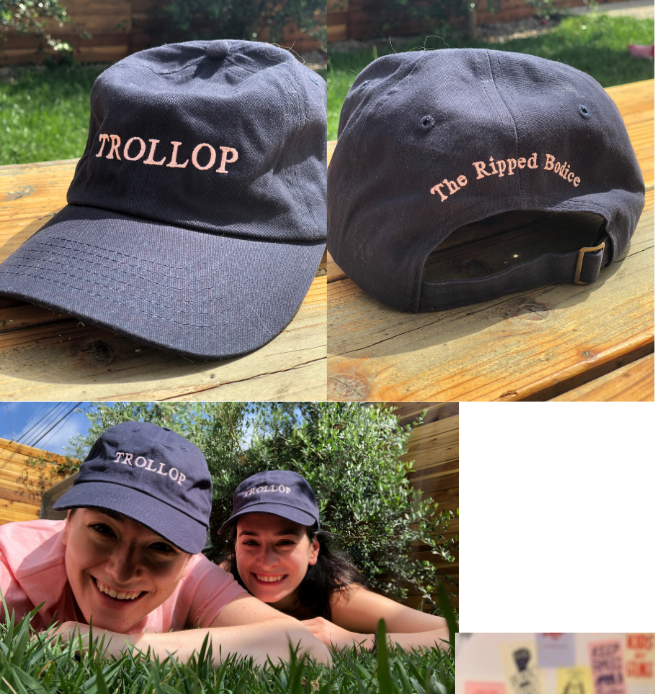
The Ripped Bodice, Los Angeles, California

Now is the time to finally declare your trollophood with this cheeky cap from romance-only bookstore The Ripped Bodice. (True trollops will also want to cozy up in a Ripped Bodice robe over their lingerie.)

IMG_8076.jpg

Twenty Stories, Providence, Rhode Island

There are plenty of candles that purport to smell like books, but how many hand-poured candles demonstrably benefit indie bookstores? These exclusive Twenty Stories candles come in four literary scents: Americanah (tobacco and vanilla), Leaves of Grass (sweet grass), Feel Free (ocean mist), and Beloved (lavender).

Split Rock Books, Cold Spring, New York

Yes, the target audience for this “Born to Read” onesie can’t read yet—but by the time we’re out of lockdown, who knows? We keep hearing that Shakespeare wrote King Lear in quarantine, so if your infant can’t use this opportunity to learn to read, maybe they never lacked the time, just the discipline.

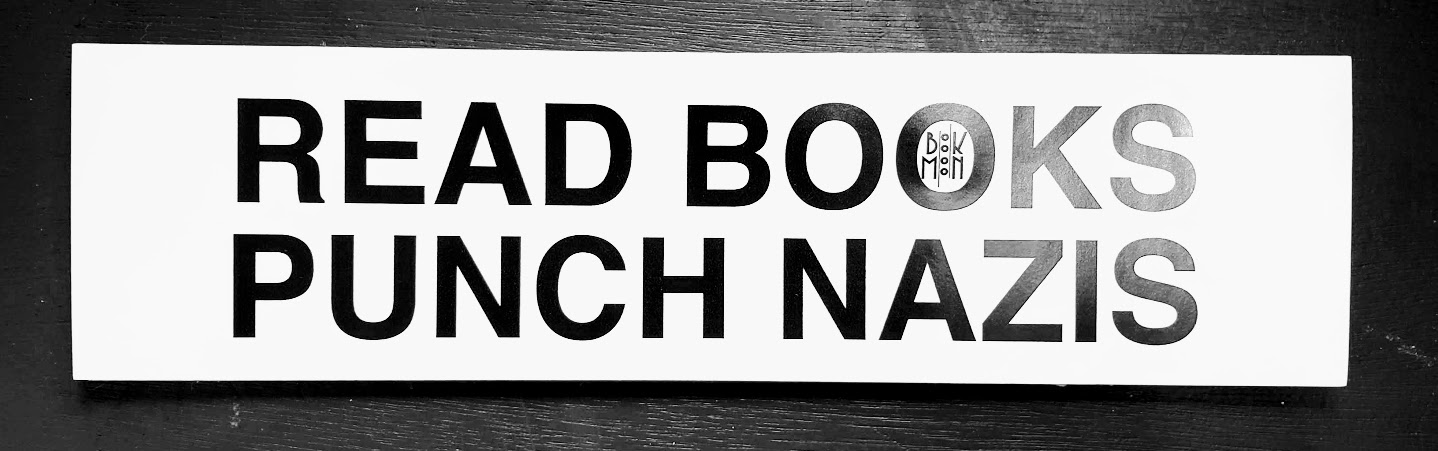
Book Moon, Easthampton, Massachusetts

We love pretty much all the merch from Pulitzer-nominated slipstream author Kelly Link’s bookstore, but for straightforward messaging you just can’t beat this bumper sticker (also comes in a square sticker and a shirt).

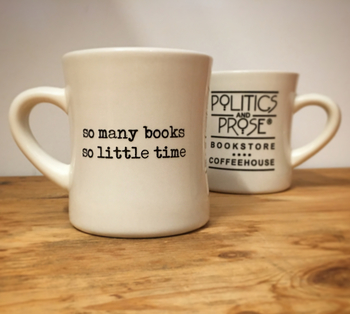
Politics and Prose, Washington, D.C.

We’ve all got a little more time to read now, but compared to the number of books out there, it’s still so little time. Juice up to keep reading well into the night with these diner-style coffee mugs—you still won’t finish reading all the books, but you might get a bit closer.

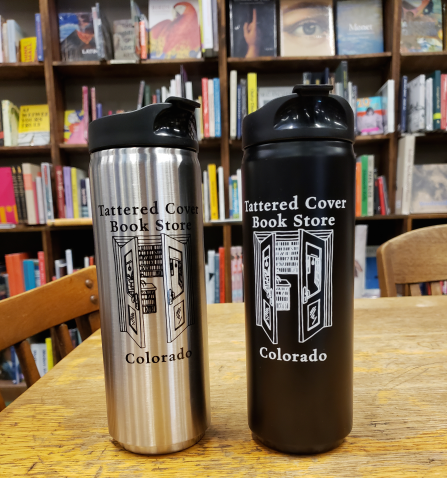
Tattered Cover Bookstore, Denver, Colorado

You know that thing where you’re like “oh no, I’m finally getting sick, my throat is dry and I feel flushed and awful” and then ten minutes later you realize you just need to drink a glass of water? Yes you do. But you can banish the experience by always keeping a water bottle to hand, perhaps one of these stylish jobbies from a nearly 50-year-old Denver bookstore.

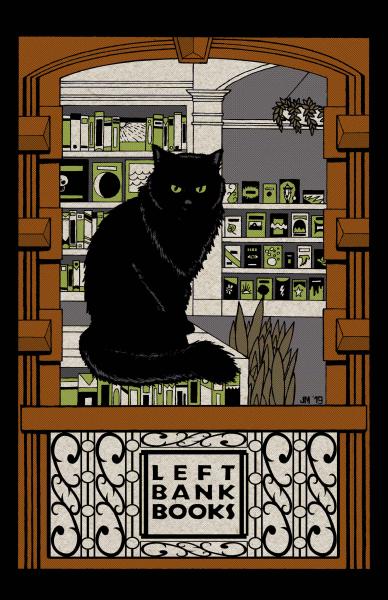
Left Bank Books, St. Louis, Missouri

Is lockdown leaving you hungry for human connection? Reach out to a friend by writing a note on this beautiful art nouveau postcard inspired by Left Bank’s late, beloved cat Spike.

Lost City Books, Washington, D.C.

After nearly 40 years in D.C.’s Adams Morgan neighborhood, used bookstore Idle Time Books was purchased, rebranded, and reopened as Lost City Books—more or less just in time for coronavirus. Fortunately the shop got a very cool logo to go with its cool new name, so you can stock up on totes, mugs, shirts, and these handmade pins.

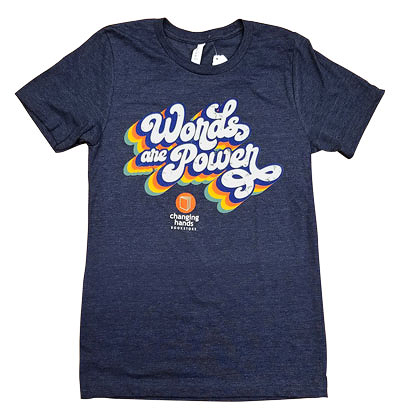
Words Are Power

Changing Hands, Tempe, Arizona

You’re not just supporting a venerable Tempe indie with this shirt—you’re supporting the very concept of language, plus an extremely fly ’70s aesthetic (the same era when Changing Hands opened!).

Thank You Books, Birmingham, Alabama

Birmingham’s Thank You Books is just happy you’re here—and you’ll be equally happy cozied up in a “Thank You for Reading” sweatshirt, truly the best possible work-from-home uniform. (Or try one of their plastic bag–inspired tees, which will surely induce nostalgia now that we’re not going to the corner store all the time.)

Women and Children First, Chicago, Illinois

Celebrate 40 years of this Chicago feminist bookstore—and help them make it to 41—with an inspiring tote featuring women and others using books to help lift each other up.

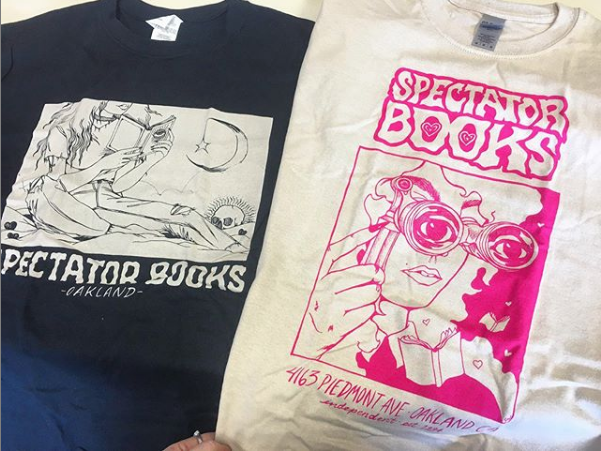
Spectator Books, Oakland, California

You’ll have to DM Oakland used bookstore Spectator Books on Instagram to get your hands on (or get waitlisted for) these wildly cool illustrated tees, but what could be more worth it?

buy-native-tote-bag-1-1.jpg

Birchbark Books & Native Arts, Minneapolis, Minnesota

Birchbark Books, owned by National Book Award winner Louise Erdrich, specializes in literature by Native and Indigenous writers (including signed books by Erdrich herself). The shop also sells art, jewelry, and other handiwork by Native Americans. We especially like this beautiful, functional tote, a handy carrying case for all your books by Native authors or all your prints by Native artists, or why not both.

Riffraff, Providence, Rhode Island

Your bookstore cafe is so 2000-and-late. Riffraff bookstore bar is living in 3008 by selling wine, cocktails, and beer alongside books—when it’s open. When it’s not open, please content yourself with this minimal but striking t-shirt.

Word Bookstore, Brooklyn, New York

Is this not basically what all bookstore swag is really saying? Just come out and say it, imo, if you can say it with a super-soft, beautifully-designed shirt.

Literati Bookstore, Ann Arbor, Michigan

You say you don’t need another tote bag but the LOGO. Is. SO COOL. Give in! Give in to the tote! And prove yourself a true member of the literati by stuffing it full of other totes from bookstores, presses, and literary magazines.

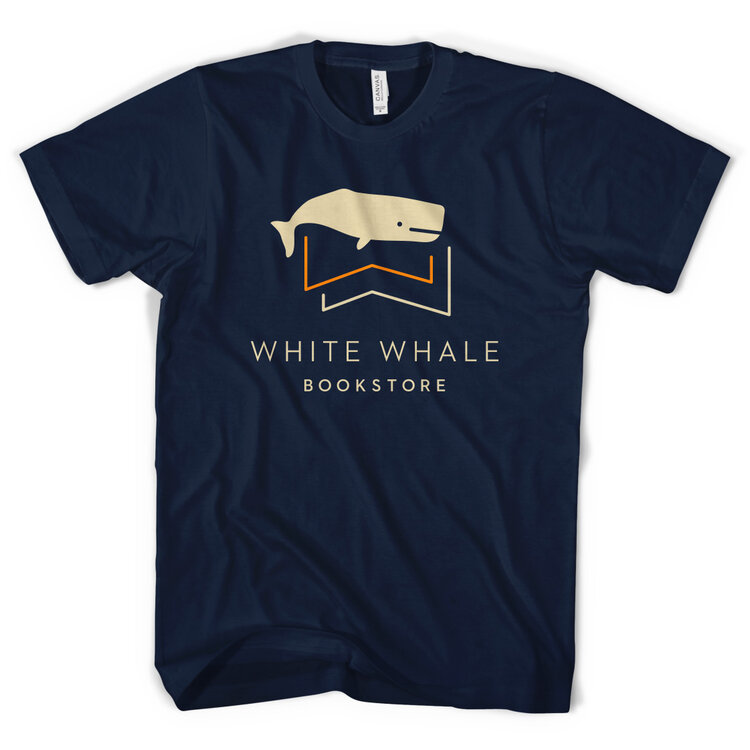
WhiteWhale_shirt.jpg

White Whale Bookstore, Pittsburgh, Pennsylvania

Is it Moby-Dick? Is it a large sperm whale plummeting to the ground next to a bowl of petunias? Is it one of the many other literary whales who are escaping us just now? We think this striking, surprisingly adorable whale logo from Pittsburgh’s fresh new indie is whoever you need it to be right now.

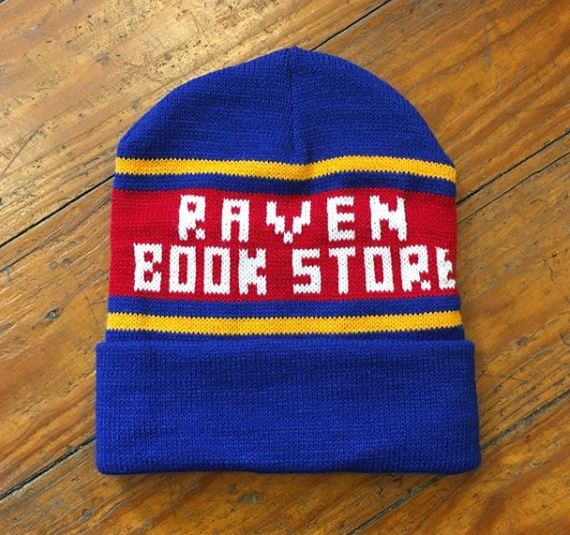
Raven Book Store, Lawrence, Kansas

Lots of shops have hats. Some even have beanies. But a beanie with the name of the shop intarsia-ed right in—that’s something special. You know you haven’t washed your hair in three days, so make sure everyone else doesn’t know by covering your shame with this stylish cap.

Care Packages

Need some book recommendations? Astoria Bookshop (Queens, New York), Loyalty Bookstore (Washington, D.C.), Magic City Books (Tulsa, Oklahoma), and a few shops already on the list above are offering curated care packages and book bundles delivered to your door.

A Victorian Ghost Story About the Constraints of Patriarchy

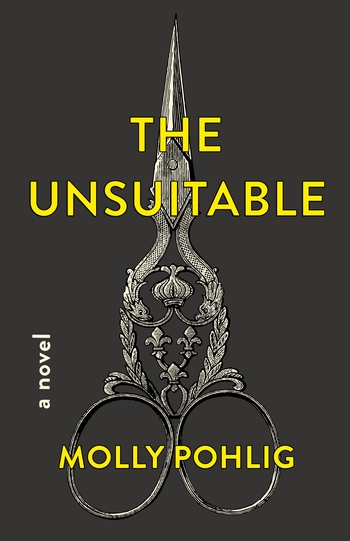
In The Unsuitable, a Victorian woman, Iseult Wince, believes that the ghost of her mother—who died in childbirth—lives in a scar on her neck. In Iseult’s mind, her mother berates and encourages her, but ultimately always tries to control her. Iseult finds the only way to quiet her mother’s voice is through self-harm: wounding herself with scissors, hatpins, and penknives. “Iseult was not interested in healing. She was interested in what was underneath, what was inside.”

The Unsuitable

In Iseult’s external world, her overbearing father tries to control her in a more traditional, patriarchal way: by marrying her off. Iseult meets a string of unpleasant suitors, whom she refers to as “The Unsuitables”—”the never-ending parade of dull men who marched through the house with their insipid parents”—ultimately becoming engaged to a man with silver skin. Iseult navigates familial, social, and possibly supernatural disasters with violence, dark humor, and a fair amount of self-knowledge, realizing that “each choice was the devil’s choice: continue to live with her father, or be sold to a stranger.”

I thoroughly enjoyed the novel, and was looking forward to speaking with the author. Almost immediately after I finished reading, the Covid-19 pandemic began to take hold in the United States. By the time I called Molly Pohlig at her home in Brooklyn, the global situation was vastly different. Discussing coping mechanisms and mental health in the context of literature comforted me. While quarantine and sheltering-in-place are new experiences for most of us, mental health moves in tandem with the changes in our world. Over the phone, Pohlig and I talked about self-harm, oppression, quarantine, and 19th century fiction. No matter the state of the world, at least we have cold, hard, immutable facts: Thérèse Raquin would be better with vampires.

Please note that self-harm is a major theme both in the book and in the conversation.


Deirdre Coyle: So let’s just start on a real dark note. When I first read stories about Victorian and turn-of-the-century women’s self-harm practices (something I’ve done a lot of research on, for normal reasons), I was struck by these women’s ingenuity. Women swallowing needles, found full of sewing instruments, using prayer books to hammer pins into their chests. Iseult is similarly inventive in hiding her self-injury, and while people often think about period-appropriate language, or costuming, rarely do most people think about period-appropriate self-harm techniques.

How did you put yourself in that world, to imagine the kinds of things a Victorian woman would have done to enact, and then to hide, her behavior?

Molly Pohlig: I maybe didn’t even think that much about it, maybe a little bit about the period. But I thought a lot about how, if you’re a woman, many things you do will not be noticed. There was that whole theory, for a long time, that Jack the Ripper was a woman. Because she could have walked around covered in blood, and people would have been like, “Eh, it’s a lady. Whatever.” Iseult is sort of an invisible person, even to the people that she lives with. Unless [self harm is] something that’s happening, it’s not maybe something people would have been on the lookout for. The thing about women in those days is so much of their everyday lives was brutal and punishing. You’re being laced into a corset every day, horrible things are happening to your insides, and you just figure out how to bear things and make things as tolerable for yourself as possible in whatever way you can. 

Navigating the world is hard enough as a woman without pounds and pounds of clothing.

Also, there was so much fabric in those skirts. Once, when I was a kid, my sister was trying on my mom’s wedding dress. I was like 7, and she was getting married, she’s 22. I was in a very bad mood, and no one was paying attention to me, so I crawled in between the skirt and the crinoline and no one knew where I was for about 5 minutes. Having that amount of props, that you have to live with every day, is fascinating to me. Navigating the world is hard enough as a woman without pounds and pounds of clothing.

DC: I love the attention to sartorial detail in describing Iseult’s clothes, and how they hide (or fail to hide) her scars. Do you have a secret Pinterest board of Victorian outfits?

MP: No, [but] I think that I’ve watched more than my fair share of costume dramas. I probably don’t know as much as I should about the actual clothing. I love the idea of research, but I probably don’t do enough of it. I also didn’t want to get lost in technical details of what people were wearing. But I wanted clothing to be an unhappy thing for [Iseult]. I didn’t want her to be like, “Oh, I’m gonna put on a dress, I feel great!” In the one scene where she does get a new dress—in a color, which is so totally foreign to her—I wanted her to be someone who just really had no connection to what women at the time were supposed to be enjoying. Clothes and doing their hair and being paid attention to, these were all things that she was like, “No.” The worlds don’t really overlap. I wanted to show a little bit of that, but mostly I just wanted her to be out of place where she was.

DC: Iseult says at one point, “Why must pain be painful? Why couldn’t it be soothing instead?” Which I thought was sad, of course, but it’s really beautiful, and it reminded me of—going back to these turn-of-the-century self-harm cases, there’s this one case that I think about not infrequently from 1913, where a Dr. L.E. Emerson reported on a patient who cut herself, and the doctor wrote that “There are two kinds of courage or endurance: the ability to bear spiritual distress or agony, and the ability to bear physical pain. The patient was not afraid of pain, but she was unable to bear mental anguish.” Would you apply that to Iseult—unafraid of pain, but unable to bear mental anguish?

MP: Totally. This is something I’ve been through—certainly not to the extent that she [self-harms]. To me, when I’m stepping outside of it, the biggest problem is that you cannot see mental anguish. There’s a line that I’ve quoted before in an essay, but I love it so much, even though it has nothing to do with self-harm. There’s a kids’ book called Skinnybones that I really loved when I was a kid, and there’s a part when [the main character’s] best friend punches him in the arm, and he’s walking home, and he keeps looking at it to see if he’s bleeding. And he says, “If something hurts this much, the least it can do is bleed a little.”

DC: That’s beautiful.

MP: I was, like, 13 when I started [self-harming], and I think that what I was trying to do was just be like, “This hurts. I know you can’t see that this hurts, so I’m going to prove to you that this hurts.” There’s a weird form of release in it. That mental/emotional pain, you can’t get at it. You can’t touch it. You can’t ferret it out in any way. So I think making it a physical pain does make it more tolerable in some ways.

DC: I also was a teen cutter, and I think there’s this element of control, which certainly comes through in the book. Iseult is trying to control the voice of her mother through her self-harm and it’s a really interesting… I want to say balance? That’s not quite right.

MP: It makes me a little bit nervous, because I don’t want to be seen as “advocating” for self harm in any way. I wanted more to try and explain it, because I feel like the way we usually see self-harm depicted is in, like, a Lifetime movie, and it’s poorly handled. I wanted to address it in some way that didn’t seem like, “Oh, I’m a rebellious, emo teen.”

DC: “I’m the goth character on Degrassi.”

If you’re a woman, many things you do will not be noticed.

MP: ‘I’m gonna put it on my Tumblr, and all my friends are gonna be like, “Oh god, how could you, we love you so much!”’ And then they’re like, “I’ll stop!” And it’s so, so not like that. I also wanted to depict an adult doing it, because I think there’s a misconception that it is a pre-teen/teen girl sort of a thing, and you get better and it goes away. I hate the feeling of it being seen as “acting out.” This is going to sound really dorky, but it’s more like “acting in.” And that’s the other thing I’ve talked to a few people about it, and one reviewer wrote to me, and she said she had self-harmed, and she said, “I didn’t feel triggered by it, I felt understood.” I think for people who have done it, it’s somewhat comforting to be able to talk about it and not feel nuts.

DC: I certainly felt that way, too. The way that Iseult talks about self-harm is…relatable. You can see how she’s feeling trapped, and has so few options for coping mechanisms. There’s another line where she says, “When the blood had rushed out with the removal of the scissors [from her skin], all of her usual anxiety had whooshed out of her with it.” And I was like, yeah, that’s what I remember. Again, I’m also certainly not advocating for self-harm, but in the work, as you said this other reviewer wrote, it didn’t feel triggering to me, but it felt well-understood.

MP: Thank you.

DC: So shifting to Iseult’s triggers: Iseult has a lot of conversations with the ghost of her mother, Beatrice, throughout the book. To me, Beatrice’s voice really teetered between sounding like a disparaging inner voice that could be in anyone’s head, regardless of the time period or situation, but then it’s coupled with very specific information that implies it truly is a ghost. Did you always know you wanted this balance of the reader wondering if this is in Iseult’s head, or if this is a real ghost, or did it shift at all during your writing?

MP: I think I wanted the reader to doubt whether she was mad or not. I knew some of the key things I wanted to be in the book, and I knew how the book was going to end. I didn’t really have an idea of what was going to happen in the middle, I sort of just wrote through until I got to the end. And I don’t think I’ve decided what the truth was. I want it to be like, “What the fuck!” at the end, and for people to be unsure. I want it to be like, even if it is made up, even if [Iseult] is mad, she’s still sane. You can have the duality of both of those things in you. I don’t think a person is all mad or all sane. And I don’t know, I wouldn’t say I believe in ghosts, but I wouldn’t say I don’t believe in ghosts. You know?

DC: I mean, I love an explicit ghost story, and I love a non-explicit ghost story.

MP: I remember the first time I read The Turn of the Screw. I was just like, “This is the most wonderful thing ever written, and I don’t even know what’s happening.”

DC: The atmosphere of The Unsuitable is so well-realized, with the descriptions of the cloying clothes, and the suitors, and the way breaches of decorum threaten not only Iseult’s social standing but also her family’s love. Were there any particular works of 19th century fiction or gothic fiction that you read for atmospheric inspiration?

MP: I didn’t go back and read too much, but I’d read a lot in the past. If I read something while I’m writing, I can get a little too close to it, so I generally read things a little farther away. But definitely The Turn of the Screw, Wuthering Heights. I have to say, I’m a real Wuthering Heights girl. What else? I really like Thérèse Raquin by Zola.

DC: So dark. I love that book.

MP: When I was kid, my sister had me read the first paragraph in a bookstore and it’s like, “The only light that filtered down was dirty, evil light.” And I was just like, “This is amazing.” Have you ever seen the Korean movie Thirst?

DC: Yes! I love that movie.

MP: It’s the only way to make that book better.

DC: Add vampires.

MP: I know. It’s perfect.

DC: I think vampires should be added to more 19th-century fiction.

MP: Absolutely. But I feel like maybe Zola’s probably been a big influence on my writing. It’s something about the way he writes about miserable things, that it’s the unexpected details that are the most miserable. Have you read Germinale?

DC: I haven’t!

MP: So that one’s about French miners and it’s horrible, they’re grindingly poor, and there’s a cave-in, and they’re all starving to death and trapped with a dead body. But the most miserable part in the book is when they’re talking about coffee. At the beginning of the month, they get all of the food delivered, and the coffee’s great. But by the end of the month, they’re just running the grounds through again and again, so it’s just light brown water. I was just like, “Oh, that’s so much worse than the rest.” That’s the kind of detail that really, really gets me. The things you don’t necessarily think about.

DC: This is the kind of thing I worry about now, when we’re all in quarantine: what if the coffee runs out? My last couple questions are quarantine-related. Iseult’s dead mother and living father both oppress her in very different ways. If you had to choose between the two, who would you rather be quarantined with?

MP: Ooh. I think…the father. Because I feel like you could get a little bit of a break with him now and then. You could make him real mad, and he would huff off. With the mother, that would be more like, wakes you up at 2 in the morning to say, “We’re out of beans!” Yeah, I’d rather be quarantined with Mr. Wince.

DC: That would have to be my answer, too—a living person who can just walk away. So at one point, Iseult says “What an absolute dream. To be alone, but without oneself.” Extremely relatable. Also relevant to the time we’re living in now, when the blessings of introversion have become very apparent, at least for me. How do you think Iseult would fare during quarantine season? I kind of feel like she’d be okay.

MP: I feel like she would largely be okay, but I feel like it could also take one small incident, and she’d be out the window. It’s that feeling where—I mean, I hope other people are feeling this sometimes, and it’s not just me—it’s just me [in quarantine], but there are still moments where I can humiliate myself in this strange way. I think we’re all, for better or for worse, the most ourselves we’ve ever been right now. It’s a little frightening.

The Horror at the Heart of the Island Paradise Fantasy

Surely 2020 will be remembered as the year that the United States became an archipelago. Over the past month, the majority of Americans have spent more time than ever before at home, alone or with a small group of companions—on islands, that is, both socially and physically. Even the luckiest of people sheltering in place—those for whom home is not dangerous—have mourned  the isolation and claustrophobia built into this new normal. But living in enforced solitude hasn’t stopped a good number of us from choosing to spend our newly abundant free time on…imaginary islands. 

The video game Animal Crossing: New Horizons has become the feel-good hit of the quarantine, garnering millions of users worldwide and overwhelming Nintendo with console orders since its March 20 launch. The plot is as simple as it is soothing: players spend their time festooning a personal desert island with decorations and cheery animal friends. Through a fluke of release-date luck, New Horizons arrived at a time when it was similar enough to our current circumstances (strict boundaries, focus on the home, widespread availability of face masks) to not cause FOMO, but different enough (visits with friends, no illness worse than a wasp sting, capitalism based mostly on selling fish) to be gently cathartic rather than stressful. The fantasy of a lovely isle to which one has freely traveled allows a given player to imaginatively rewrite her involuntary, often materially drab isolation as a pastel-hued tropical vacation. 

But the wish-fulfillment that Animal Crossing provides isn’t new. For millennia, mainlanders have used and abused islands for our own imaginative and material needs, projecting onto them pleasure and possibility. 

For millennia, mainlanders have used and abused islands for our own imaginative and material needs.

For the ancient Greeks, heaven was an island. The Fortunate Isles, supposedly located somewhere in the Atlantic, were believed to be the final reward and eternal residence of exceptionally heroic men. (Variants of this legend include the Odyssey’s Isle of Ogygia, on which Calypso ensnares Odysseus for seven years with the joint promises of immortality and nymph nookie.) The possibility that islands grant everlasting life has continued to fascinate ever since. Early Christians pictured the Garden of Eden as an isle; the occupants of J.M. Barrie’s Neverland never age; Themyscira, the island-nation from the Wonder Woman comics, is populated by immortal Amazons. Mainlanders seem to assume that islands’ geographical separation from the civilizations of terra firma grants them a kind of temporal separation as well, an enchanted bend in the river of time where the water stands eerily still. Because isles float in these static pockets, this line of thinking goes, their inhabitants are protected from the corruptions of aging—and of modernity. 

It’s here that the fantasy begins to sour. When we suggest that islands are immune to the march of the centuries, we also imply that their human inhabitants are forever trapped in a primitive way of life, as unchanging as the amber-glazed mosquitos of a certain island-based Spielberg blockbuster. (To do so also overlooks the fact that islands are often topographically dynamic, perpetually reshaping themselves via volcanic or sedimentary action.) This attitude was perhaps most clearly emblematized in Paul Gauguin’s late nineteenth-century paintings of Tahitians as noble savages, but “has barely undergone revisions in the West since,” as anthropologist Carmen M. White notes. Gaugin’s assertion that denizens of the Tropics lead, in his words, “a more natural, more primitive, and above all, less spoiled” existence lives on in tourist advertising and fictional media that present islands as prehistoric paradises, and islanders their pure-hearted stewards. 

The French painter’s fever-dream of an uncivilized Tahiti yielding itself to the first civilized man lucky enough to wash up on its shores reflects an abiding tradition of colonialist fantasies about islands. The geographical protections that made islands easy targets for cultural domination, in Gaugin’s mind, also made them appealing targets for political domination. In the 1516 book that coined the word and concept of Utopia, for instance, Englishman Thomas More placed his ideal society on an imaginary crescent-shaped isle off the coast of South America (originally a peninsula that the state’s founder broke off from the mainland). The fictional Utopian commonwealth is presented as far more prosperous, stable, and egalitarian than the England in which More lived—thanks primarily to its modest size, which made its shores defensible and its polis manageable. The title character of Daniel Defoe’s Robinson Crusoe derives a similar comfort from total political control of an island, albeit at a drastically reduced scale. Having established a two-man colony on the island on which he was shipwrecked near Trinidad, Crusoe savored “a secret kind of pleasure to think that this was all my own, that I was king and lord of all this country.”

Islands seem like petri dishes in which mainlanders hope their wildest dreams will flourish.

It is because of this enticing combination of physical isolation and apparently controllable social conditions that many continent-dwellers still regard islands as “tabulae rasae: potential laboratories for any conceivable human project, in thought or in action,” as sociologist Godfrey Baldacchino puts it. Over the centuries, mainlanders have used islands to conduct imaginary experiments in civic society (More’s Utopia, Defoe’s Robinson Crusoe, Sir Francis Bacon’s The New Atlantis); in education and authoritarianism (William Shakespeare’s The Tempest); in domesticity (Johann David Wyss’s The Swiss Family Robinson); in romance (Randal Kleiser’s film The Blue Lagoon); and, of course, in dinosaurs (Steven Spielberg’s Jurassic Park). (This is not to say that the experiments always go off well, of course—just ask the unfortunate souls who settle down on islands in Lord of the Flies, “The Most Dangerous Game,” and The Beach.) Small, self-contained, and freeingly distant from “the real world” to which the contestants of tropical reality shows like Love Island  condescendingly refer (a phrase by which they mean, of course, the continent), islands seem like so many petri dishes in which mainlanders hope their wildest dreams will flourish. 

Recently, however, hairline cracks have begun to appear in the foundation of this fantasy. A darker kind of island narrative has emerged, one that attempts to inject a degree of accountability into the stereotype of islands as escapist paradise. Two American productions, both filmed in Fiji and released in the past year, initially register as standard entries in the genre of tropical-experiment porn—but eventually show themselves to be takedowns of the idea that islands are contextless testing-grounds for mainlanders’ wildest whims. This critique becomes crushingly explicit in Jeff Wadlow’s horror flick Fantasy Island (2020), which follows a small group of visitors to a vaguely tropical isle whose magical properties grant each guest the ability to live out one wish. In keeping with the 1970s TV series to which the film serves as a prequel, however, each fantasy eventually turns dark: a wannabe G.I. is permitted to play soldier, only to be confronted with the violence and impossible choices inherent to war; a bacchanalian pool party becomes the site of a slaughter.

Love Island (CBS, 2019), the U.S. adaptation of the megahit British reality show of the same name, similarly undermines its own island reverie, albeit more subtly than does Fantasy Island. The series places a group of genetically gifted Americans in a lavish villa somewhere in Fiji (and I do mean “somewhere”: just as the precise location of Fantasy Island is kept vague within the movie itself, the 22-episode CBS series never specifies which of the nation’s over 300 islands we’ve washed up on the shores of). Contestants compete for a cash prize by courting and pairing off with one another, a death-march towards monogamy interrupted only by the periodic arrival of new, tempting singles. Viewers gradually vote their least favorite couples off the show until only one remains. 

On these conjured islands, one can experience a prelapsarian past and a hedonistic present without a single thought of the future.

Asked why his team chose to set Love Island in Fiji, one of the program’s executive producers explained to the LA Times that “Fiji mean[s] something to Americans. It feels like a place you would want to come and fall in love.” In both CBS’s and Wadlow’s productions, the “something” that Fiji apparently “mean[s]” is a passive backdrop against which American travelers can engage in thrilling exploration, devoid of consequences back on the mainland. On these conjured islands, both screen narratives initially hint, one can experience a prelapsarian past and a hedonistic present without a single thought of the future. 

In order to shape Fiji into an ahistorical stage for their own adventures, however, sojourners to the lands of Love and Fantasy must scrub their destinations of one inconvenient truth: the existence of other humans. Love Island and Fantasy Island make glaringly clear that mainland cultures’ romanticization of islands continues to hinge on the imagined or literal eradication of the real people who live on them—despite the fact that the Earth’s islands are, taken together, twice as densely populated as its continents. (Let us not forget that Manhattan, Singapore, Great Britain and Hong Kong are all islands, too.)

By the time Fantasy Island deposits its vacationing protagonists on the shores of their tropical destination, the island’s original inhabitants are long gone, having sold their residence to the present-day resort’s host, Mr. Roarke, for six cases of rum. But the resort’s guests are not troubled by this story of indigenous disappearance. They’re here to party, and immediately make good on the plan with umbrella-topped drinks featuring—yup—rum. It’s in their interest to overlook the details of the island’s human past, after all. Without the South Pacific slate having been wiped clean of prior residents, the guests would not be able to use this slice of land as their own personal playground-laboratory. 

Likewise, although the visitors express some initial puzzlement about the downright science fictional capabilities of the island—the extraordinarily realistic, bespoke wish fulfillments it offers each of them—their doubts are soon allayed by the flimsy explanations that the people populating their fantasies are either well-paid actors or holograms. The latter theory makes literal the extent to which the cliché of the island paradise is constituted of mainlanders’ projections.

And projections work best when displayed on a blank screen, whether they are supporting the manufactured narrative of a fictional film or of a reality show. Accordingly, it is not until over halfway through the season that the American stars of Love Island interact with actual islanders (to receive a foot rub from two presumably local masseuses). Apart from this interlude and two other fleeting moments, however, the contestants inhabit an island within an island, spending 99% of their time in the palatial villa that the show’s makers constructed just for them. What’s more, these luxurious digs seem expressly designed to physically and aesthetically separate the contestants from the surrounding island: the villa’s neon signs (“Good Vibes Only”), day-glo paint job, AstroTurf, and electric-blue pool cut a jarring contrast with the deep green background of Fiji’s lush forests. At night, a mile of fairy light strands encase the outdoor patio in a crisscross pattern, looking, for all the world, like a net. 

The paradisiacal mainstages of Love and Fantasy Islands are thus kept hermetically sealed—not only from Fijians, as it turns out, but also from another class of inconvenient human. Both islands’ visitors make every effort to leave the people from their own pasts back on the mainland. Although the contestants on Love Island have virtually nothing to do all day but talk about themselves, they discuss their hometown exes, friends, and families with astonishing rarity and brevity. In this way, the contestants—or the show’s editors, at least—choose to keep each hottie’s interpersonal past an uncomplicated blank, as amnesiac as the lotus-eaters of another island. Similarly, it is the express goal of more than one Fantasy Island guest to rewrite her past relationships—not to completely forget the people from her prior life, per se, but to edit them in a way that more perfectly aligns with her own desires. 

Explorers and daydreamers from the continent have long evacuated islands of their residents.

In all of these respects, Love Island and Fantasy Island seem, at first blush, to be predictable distillations of the exploitative historical relationship between Euro-Americans and Fijians, mainlands and islands. Explorers and daydreamers from the continent have long evacuated islands of their residents, either voiding them of people entirely or imaginatively voiding them of fully realized people whose complexity, history, and rights equal their own. These are the mental gymnastics that made it possible for Europeans and Americans to colonize and enslave Fijians in the nineteenth century, for instance. But what makes Love and Fantasy Island members of a novel and moderately more self-aware strain of island story is that the empty-island fantasies they so carefully craft in their opening acts exist only to be eventually deconstructed. For the real plots of both works take off when the seemingly vacuum-sealed perimeters of their respective islands are breached by other humans, unhappy reminders of the social past and present. 

This twist is less surprising to observe in Fantasy Island, whose horror branding should prime us to expect the eventual collapse of any fantasy we see onscreen. Consequently, what begin as blissfully self-absorbed romps for the guests eventually darken as the island shows them the inevitable interpersonal consequences of their hearts’ desires. A woman exacting Hostel-style revenge on what she believes to be the hologram of a childhood bully realizes that she has unwittingly been torturing the genuine article; brothers carousing at an extravagant mansion discover that it is owned by a drug lord with dangerous enemies. Even host Mr. Roarke is eventually revealed to be guilty of tyrannizing another person to fulfill his own impossible yearning, keeping his tuberculosis-ridden wife alive—but physically miserable—with the help of the island’s magic. 

These sick vignettes are less lessons in being careful what you wish for and more reminders that our fantasies very often entail exerting power over people. “This isn’t your fantasy!” the guests repeatedly shriek at one another as their dreamscapes begin to collide with one another. So, too, in standard horror film fashion, do the interpersonal sins from each character’s past come back to bite them in a tender place: we eventually learn that our five protagonists have been brought to Fantasy Island because they all had a hand in causing a tragic death back home. 

If the problem of other people means that there is no such thing as an innocent wish, it also means that there is no such thing as an empty island.

If the problem of other people means that there is no such thing as an innocent wish, it also means that there is no such thing as an empty island. Fantasy Island implies that its island’s first inhabitants—those who lost the place, centuries ago, in an unfair booze trade with Mr. Roarke—are the ones now doling out karmic justice to the guests. It is eventually revealed that the visitors’ nightmares have come to life because their welcome rum cocktails were spiked with enchanted island water. Through the same alcohol that robbed them of their home, the original Fantasy Islanders reassert their presence. 

The forces that besiege the social fortress of Love Island are not so much supernatural as potently natural. The show’s basic rhythm is to wait until contestants have found an equilibrium in which the group is largely subdivided into contented pairs—then to introduce one to six attractive strangers to stir the pot. (“Fiji is my sandbox, and I’m ready to play,” remarks Kyra, the first newcomer to disrupt the balance.) The narrator reminds us continually that “this is Love Island, so you never know who’s gonna come through that door, or that beach.” He means this literally: fresh contestants first emerge, Venus-like, from the natural landscapes of the island, approaching the highly artificial villa from the beach (by foot) or the ocean (by jetski and boat) as though miraculously birthed by the sand, the sea, the jungle. In this way, the island itself asserts a kind of chaotic sexual energy, disrupting the fragile ecosystems of the villa’s committed relationships with the invasive species of new singles. The result is typically a monogamy massacre, as previously besotted couples split to pursue shiny new toys. 

In other ways, too, the show delights in destroying the fiction of unperturbed coupledom  by reintroducing of off-island personal relationships. Late in the season, the final four couples’ families and friends come to Fiji to meet their loved ones’ new loved ones. The double social  bubble that is the island villa has left the show’s members unprepared for this intrusion of external opinions, and the emotional fallout of the exercise throws at least one formerly rock-steady pair (Caro and Ray) off-balance. These upsets accurately foretell how unready these island-born pairs were to reenter their established social universes back on the mainland: three of the four couples who made it to the finale of Love Island broke up within months of the show’s airing. 

In exacting these harsh vengeances on the characters who visit them, Love Island and Fantasy Island suggest that islands are simply places, not paradises, and that our ideal worlds swiftly become monomaniacal when they’re dreamed up without considering the realities of other humans. And Fantasy Island’s nod towards indigenous land theft reminds us that the particular strain of monomania that islands seem to invite has always had material roots in colonialism. Today’s visitors to tropical vacation spots continue to unknowingly or willfully ignore those locales’ deep histories of violent contact between islanders and outsiders (as well as the abiding legacies of that contact, like local poverty and language erasure). We turn the same blind eye every time we log on to Animal Crossing: New Horizons, a game which, as Gita Jackson points out, is “basically a fantasy of harmless colonialism.” As the player fills her conveniently abandoned island with adoring animal subjects (much less complicated than human ones) and natural resources that she’s blithely plundered from nearby regions, ruthless dominion has never looked cuter. After all, it’s little more than the ability to reign over one’s companions and physical surroundings that distinguishes an island paradise from an island prison—or from a quarantine zone.

Does She Have Postpartum or Is She Just Realistic?

“Nuclear”
by Kate Tighe-Pigott

Galena won’t shut up about the mineshaft. “You guys have to see this,” she keeps saying, packing her two-month-old daughter into the baby carrier I sent her a few months back. The baby still doesn’t have a name. They are working on it, Galena says, though they often go with Stinky Butt or Boo Boo. Maybe they’ll let her pick her own name when she’s old enough. Harriet and I share a concerned glance, which I’m sure Galena doesn’t miss. It’s April, and we’re in the parking lot at Rifle Falls State Park. I rub the baby’s feet. “How do you feel about that, Stinky Butt?” The moniker hangs in the air, big and awkward. Harriet and I have just endured a four-hour drive from Denver, already exhausted from the overnight flights we’d taken from the east coast.

Galena’s husband, Jake, reached out to us last week and asked us to come. He was worried. “You know her,” he’d said on the phone. “Everything’s at full speed. Dude—,” he censored himself while he sighed, “babies are fragile.” Before we left, Jake offered to keep Stinky Butt with him, but Galena refused.

You know her,” he’d said on the phone. “Everything’s at full speed. Dude—,” he censored himself while he sighed, “babies are fragile.

The spring snow floats up as my friends and I cross the parking lot. “You guys,” Galena says. “I can’t believe you came!” Her enthusiasm masks annoyance. “Of course,” says Harriet. It’s reasonable to visit an old friend’s new baby. Stumped for what to say, I ask how Jake’s handling everything. “Who cares?” says Galena. “I’m not attracted to him anymore.” I guffaw. 

“That’s totally normal,” says Harriet, to both of us. Harriet has two kids at home. Baby Boo Boo whatever, zipped inside her mother’s coat, is Galena’s first. I’ve struggled with multiple late-term losses. 

We survey the map at the trailhead. Then, bearing right, we follow the ascent, and the narrow stone passage opens to a frozen meadow. Ice crystals melt on our cheeks. The snow heartens me, because we all grew up in rural Maine and also in the past. Soon, we’re at the waterfall, the normal destination for this hike, lively amid moss and snow. We snap photos, but Galena urges us onward, toward this mineshaft she keeps mentioning. The narrow path is covered in red shale. Despite the newborn in her coat, despite her temporal proximity to giving birth, Galena nearly runs. Harriet, who is the least athletic of us and has the nicest shoes, navigates the terrain more sensibly. I lag behind with her. “Bionic woman!” I shout. 

Galena stops in front of a trail junction thirty feet ahead of us, and swings her arms to the right, shakes her butt to the right, hops her butt to the right in short, backward hops, kicks a leg to the right, karate chopping the air, then disappears around a ridge. Is the baby jiggling around too much? What about her little gray brain? Tiny neck snapping. Is this the mania Jake was talking about? Stinky Butt must have endured this in utero, though. I presume we’re supposed to go right. 

Harriet links her arm in mine and sighs. “How are you, Amy?” she says. 

“Good,” I say, my voice too high. “I can’t believe Galena had a baby.” 

“I know,” says Harriet. It’s dangerous because of her diabetes; we’ve all seen Steel Magnolias. The cells of her kidneys are decaying faster than they ought to for a thirty-six-year-old. Anyway, I am not one to speak. My body treats babies like hostile invaders. 

Two late miscarriages, after bassinets and genders and names. Both times, I birthed the babies, held them while they died. Both times, I used a breast pump to ease the swelling, until my husband pried from me the motor and tubes and silicone nipples and plastic bottles and dumped them into trashbags with onesies and board books and JellyCat stuffed animals, and hid everything in the basement. He’s good. I’m grateful. After the second loss, we did genetic testing, went through three rounds of IVF, egg counting, hormone shots, dwindling savings, a lost job (mine), viable embryos dissolving into blood. We stopped last year, and I’ve been trying to get back on my feet, which has involved adult coloring books, Fiona Apple, and copious weed. When Harriet says, “How are you?” this is what she is referring to. When I say, “Good,” I mean, not dead.

Along the trail, a sign warns that the ground may contain radioactive materials. I take a picture of it with my phone. 

“Jesus Christ!” Galena yells from the path ahead of us. “That’s not a picture. This is a picture.” She flings a hand at miles of dry orange plain, and behind that, snowcapped Rockies. 

I read up on Rifle before we arrived. In the fifties and sixties, it was a site of nuke testing, above ground, underground. I tell my friends a story I heard on the radio about an American man, employed by the US government to walk through the fake neighborhoods decimated by nuke tests. It was his job to observe the eviscerated pig bodies, the fleece and teeth of the sheep in the rubble, and then to carry those images inside him for the rest of his life. Galena says she has to move before Stinky Butt hits six months, because her house has mill tailings, the worthless, granular byproducts of uranium milling that people around here used as fill. “To make cement, finish their yards, bury their sump pumps,” she says. “It’s everywhere. One X-ray per year, they say. Can you picture the baby in a few months, shoving radioactive dirt in her mouth? Didn’t have this problem in Maine, did we?” 

I put my phone in my pocket as we single-file through a narrow rock formation that rounds the outside of the hill we’re climbing. The radio piece also told the story of a Japanese man who was at both Hiroshima and Nagasaki. I touch both walls of the stone corridor as I explain it to them. “Not only did he survive both of our planet’s only nuclear attacks,” I say, “but he also, somehow, did not become deranged. He fell in love and got married and—totally miraculously—had two daughters.” 

“Why is that miraculous?” Galena asks from the front our line. 

“Miraculous that he wanted to, and miraculous that he could. Because the gamma rays shredded his DNA, twice.”  

“Huh.” She doesn’t get it. My point is more like Godzilla—how a monstrous thing can spare you or destroy you.

“My god you guys!” Galena jumps. “Here it is. The mineshaft.” She grabs my hand. “Will you go in with me?” She’s skipping backwards on the trail. “No bears, I promise.” 

I catch Harriet’s eye. Risk seeking behavior. But it’s not out of character. In high school, we got on the evening news by dancing on the sidewalk behind the WGME news desk. We stole her dad’s snowmobile. We snuck Harriet’s crush into Galena’s bedroom. We raced beater cars down Whites Bridge Road. When I gave it up to Lesser Ben, Galena shot out his tires with her BB gun. I’d go into any mineshaft with her.

When I gave it up to Lesser Ben, Galena shot out his tires with her BB gun. I’d go into any mineshaft with her.

The cave is shallow and bright, and there are three steps carved into the stone on the far side that lead up to a small passageway that cuts deeper inside the mountain. I can’t even see if there is a bobcat in there. “Maybe the baby can stay back with Harriet?” I suggest. Harriet nods. This is what we are here to do: help Galena make safe choices.

“No way.” Galena unzips her coat and unclips the carrier. Stinky Butt squirms, her mouth a perfect O. Galena slips her out of the carrier and into the cold air, hands her to me. “She’s part of it. Plus Boo Boo loves adventure.” Part of what? The Earth? Aren’t we all? Despite myself, I see what Jake is talking about. 

I take the baby. “Sh,” I say, softening every part of me. Her head smells like oatmeal, like honey. “Yes,” I sway and bounce. “It’s okay.” I am lying. Galena goes in first.

“Are you sure?” Harriet calls out. “I’m happy to watch her.” 

“Mildred! Dotty!” Galena shouts, the names she uses when we’re too reasonable. “Stop being old biddies.” 

“Does seem a little dangerous,” I say, holding the child. 

“Where are your balls?” Galena scrambles up so that her face pops through the opening again. “Give her here.” 

I bite my lips and shrug. Moms are shot-callers, and I’m not going to keep her baby from her. I hand the child over the rock to Galena. Then I swing my legs up and hang by my belly for a second to catch Harriet’s eye. “Dial nine-one,” I say. Harriet, I can tell, is annoyed at being made to wait and worry. 

“We’ll be back in four-to-seven minutes,” Galena calls out. 

“Wait,” Harriet says. She takes my hand and swings her legs over, dusts her name-brand slacks. 

Galena insists I kill the light from my cell, and the darkness is total. We have taken seats on the rails, knees touching. I search for our outlines, but see nothing. Their knees bump mine. Sand and pebbles grind beneath my legs. My finger finds the cool raised top of what I imagine is a railroad spike. I hear us breathe. 

“Shouldn’t we have a canary?” I ask. 

“We have her,” Galena says of her baby. Harriet snorts. “Just kidding. I was down here all summer. It’s totally safe.” I file this for the conversation we’ll inevitably have with Jake.

In the dark, I imagine ammonites, those spiral-shaped fossils of nautilus-like creatures that lived in the temperate sea that is now Colorado. I imagine the ammonites floating all around us, in beds of rainbow topaz and tourmaline crystals, spikes of rose quarts, purple amethyst, red garnet. In the dark, I envision so many shapes and colors. 

“I never wanted a baby.” 

Our hands reach out, find the nylon of her winter coat, her silky pony tail, the nape of her neck. Our foreheads clonk too heavily onto hers. 

“God,” Galena says. We find her hands and hold them.   

“What made you decide?”  

“He’d be a great dad.” We hear what she doesn’t say: what she would have lost if she had chosen differently. 

“I would never trade her. I just mean—.”

“I know.” 

Galena doesn’t want the baby she has. How cruel and senseless is this universe? Not worthy of this new girl. I bite my rage. We hold hands in the dark. 

“How far underground are we?” 

“Millions of miles.” 

“Can we stay here?” 

“Do you think there are bugs?” 

“There are bats. But they’re more afraid of us.”  

“What about uranium? If a bomb went off would we be safer down here?”

“What is it with you and nukes?” Then Galena says, “She’s hungry.” We hear a zipper. The rip of Velcro. The wrinkle of Gore-Tex. The squeak of a tiny new voice. “Guys, feel my boobs.” Our hands cast out stupidly, and she grabs them, puts them on her skin. Her breasts are scorching hot and rock hard, like a Kevlar vest left in the sun.

As the baby nurses in the dark, we confess all kinds of things: debt, weed, wine, psilocybin, work husbands, failed attempts at threesomes. I remind Galena of her time as an exotic dancer. We rib each other for our exes and agree mine was the most shameful, because he was—probably still is—a Republican, though Galena’s could talk for hours about maps, and Harriet’s wrote “you are so sweat” in a note explaining why he stole her car. 

“God we’re old,” Galena says. 

“Geriatric,” I say, speaking for my womb. It’s not so bad. My marriage is loose and light—platonic—a comfy sweater I sometimes wear.

As my eyes adjust to the darkness, I make out the curves of Harriet’s right cheek and jawbone, the light in her right eye. Galena’s dimpled chin and bright eyes are lit from below. In the dim green light, through their North Face gear, mother and child look like Renaissance versions of themselves. “Why can I see you?” I say. Galena strokes the baby’s wagging arm, which, in its movement, leaves behind a green facsimile of where it’s just been. She seems—I’ll say it—bioluminescent. 

“Do you have a glow-in-the-dark baby?” I ask. 

Harriet squeaks, delighted, bewilderment in her grin. Everyone is tinged with green. 

“Isn’t she amazing?” Galena says. “This is it. This is what I wanted to show you. I wanted her aunties to see what she could do.” 

My jaw hangs. I reach out to touch the baby’s arm. In it I see swirling galaxies of what I imagine are cell clusters, and the electric green pathways of neurons. “How did this happen?” I ask. 

“How the hell should I know?” Galena says. “Maybe we’re evolving.” She reaches into her coat, hands shaking. “Low again,” she says. “Breastfeeding dehydrates me.” She clicks her insulin pump three times. She’d told me in college once that she shouldn’t drink because of her diabetes, though she continues to. I hear the crinkle of a Clif bar she has produced from her coat pocket. 

I think of the mill tailings. The nuke testing. “Is she radioactive?” I ask. “I mean, have you brought her near a Geiger counter? Or a doctor?” Harriet giggles. 

“My child’s a freaking miracle,” Galena says, mouth full of rice syrup and rolled oats. “If you don’t like it, that’s your bag of shit.” 

My child’s a freaking miracle,” Galena says, mouth full of rice syrup and rolled oats. “If you don’t like it, that’s your bag of shit. 

“I do like it.” Of course I do. “Can I hold her?” This is not something I ask of people with babies, because I hate the moment when the baby arches its back and cries out for its mama—which they always do—and also because I don’t want any moms to even secretly worry that I’m a craven witch or baby snatcher.

“Course,” Galena holds the child in the air, electric green arms and legs, and green heart pumping luminous blood. In her self-generated light, the baby seems pointillist, as if just the nuclei of the cells are illuminated. I think of the Hiroshima babies, the ones I Google in fits of anguish. The twisted up, no-face babies. The two-headed, bulbed-feet babies. The many-armed babies. Of the myriad horrible outcomes of radioactivity, glowing is miraculous.

“Hi,” I coo. “Hi.” My finger slips into her grasp. “Does she have super powers?”

“Besides glowing?” Galena says. “She’s a super pooper.” The baby murmurs and wiggles against me. I sense her agitation and stand up to rock and jiggle. “Watch your step,” Galena says. “Jake’ll murder me if she comes back banged up. He’s such a nervous dad.”

“Does he know?” Harriet says. 

“He’s not blind, and he does night time feedings. I wouldn’t fuck with a guy who doesn’t pull his weight, you know.” Harriet knows. Her husband doesn’t pull his weight. And my husband, well, since we spent our life savings and my youth on failed inseminations, my husband pulls my weight most of the time. I miss him suddenly. “Can you see up my nose?” I ask, realizing I am illuminated from below by the new baby’s head. 

“Let’s tell ghost stories!” Galena says. The cave air is cold and clean, and we’re shielded from wind and snow. 

“Once I was in the attic at my grandmother’s house,” I make my voice eerie, “And I took some acid, and I was freaking out and I heard the shower running even though I was up there alone and then a woman walked out in a white dress and she walked toward me and toward me until she was very close and then she reached out and touched me.” I touched Galena’s knee. 

“Jesus!” she said.

“Is that true?” Harriet asked. 

“No.” I say. My ex, the Republican, told me that story. A true story is that I took mushrooms last year and didn’t think I was breathing so I called 9-1-1 on myself and paramedics came and told me I was breathing, but I didn’t believe them. My husband watched me until the effects wore off.

The baby squirms on my shoulder. “Pat her back,” Galena says. “She needs to burp.” I pat the child gently, through her soft blanket. “Harder,” Galena says. Galena gets up to show me. She wacks the child a few times. “Get a rhythm,” she says. “She won’t break.”

I pat and pat and jiggle and pat. Tiny ribs compress under my hand, a living system in my arms. “Why haven’t you named her?” I ask. I named the babies I birthed too early. Said their names as their breathing slowed. 

“I’m holding out for Roxy,” Galena says. Roxy was her favorite snowboard brand in high school, and also the alias she used after she broke up with a guy who turned stalkery. “But Jake thinks it’s a hooker name” 

“Like mother,” I chasten, leaving the rest unfinished. 

“Dancer!” she corrects. “Don’t be such a Puritan.” 

Just then, the baby burps. The burp rumbles up through her ribs under my hand and explodes into the cavern, illuminating everything. In the flash, I see the bones of old sabertooths, flecks of mica, maybe diamonds, the veins of rusting iron ore, stalactites, and the skulls of dead animals—horses? Or dogs? 

“Holy shit!” Harriet says, standing. The cave darkens again and we can only see the baby and her halo. “We have to go.” She sounds annoyed that she let herself get dragged into this. Like that night Galena talked us into going to New York with no hotel room because we “weren’t going to sleep.” 

A deep moan echoes from the ground above us. Pebbles rattle dully against the cave floor and ping off the old rails. “Give her here,” Galena says.

As the ceiling falls in, I turn from my friend’s outstretched arms, covering the child’s head with my head and shoulders and arms and belly. Chunks of cave wall punch my back and legs. I hold my breath, bracing for more. 

When the rock fall is over, the baby girl and I are ashy, but unburied. I exhale. I shake debris out of my hair as Roxy wails for her mama, as green as that girl from the exorcist and projectile vomiting all over me. I think of chemotherapy. Do her bones hurt? Is her magic a burden to her? 

“Hey!” It’s Galena, calling from the other side of a wall of stones. “You guys okay?” 

“I got her,” I yell. “She’s okay. We’re okay.” 

My friends will go for help. Galena councils me to open my blouse and comfort the baby with skin-to-skin contact. She likes R.E.M. songs, Galena says. They soothe her.

“What?” I say, suddenly unable to remember anything about R.E.M.

“‘Losing My Religion’ is her favorite,” Galena calls out, and tells us to sit tight. 

Aren’t you worried? I want to ask. Aren’t you out of your mind? But I sense that she has gone already and her worry won’t help us now. I try to breathe, imagine the child choking, cracking apart like a vase, her skull crushed by falling rocks, her skin boiling with radiation, her muscles dissolving into a bloody mess. Every whisper of every waking hour. I unzip my coat and curse my tee-shirt, pull it up over my breasts and cover us with my coat. I walk the glowing baby around in the dark, trying to remember the lyrics, trying to find the rhythm, the right combo of shuffle and bounce, low hum, and sha-sha-sha. Calm can crescendo like a singing bowl or an orgasm: it’s an art I’m not practiced in. 

Roxy stretches tiny dry fingers against my neck, still screaming. Recently, she was not even alive. She must feel homesick for nothingness, for the twinkle of a star being born, a soul being retrieved from a dolphin, a felled oak, a dragonfly and who knows what else from other life-having planets. Now here she is, stuck on radioactive land, drinking hot breast milk from a mother whose internal organs decay by the minute due to faultily regulated sugars, in a town with a restaurant called Shooters. “I’m sorry.” I steady my breath. The baby straightens her back and wails. “You’re stuck here for a while.” On Earth, I mean. With the crazies. I’m going to tell Jake to back off. Galena’s fine. So what if she doesn’t feel dread every second? So what if she just feels the wonder?