How To Use Dramatic Irony for More Than Shenanigans

Welcome to Read Like a Writer, a new series that examines a different element of the craft of fiction writing in each installment, using examples from the Recommended Reading archives. Each month, the editors of Recommended Reading—Halimah Marcus, Brandon Taylor, and Erin Bartnett—will select a few stories that illustrate a specific technique, style, or writing challenge. 

In the first installment of Read Like A Writer, we discussed how to write an ending that is surprising yet inevitable. In this installment, we’re going to talk about another way to build momentum in narrative by thinking about how that “surprise” element can be turned into suspense. Alfred Hitchcock illustrated the difference between surprise and suspense by inviting you to imagine a bomb under the table. If neither the characters nor the audience knows about the bomb, and it goes off, that’s a surprise. If the audience knows about the bomb, but the characters do not, and the audience anticipates the bomb going off, that is the suspense. The key difference is dramatic irony, that old dusty literary concept we all learned in high school. 

If the audience knows about the bomb, but the characters do not, and the audience anticipates the bomb going off, that is the suspense.

But dramatic irony has much subtler applications than high school curriculum allows. Alice Munro opened my mind to the potential of dramatic irony and it’s painful pleasures with her story “Hateship, Friendship, Courtship, Loveship, Marriage.” In it, a woman named Johanna goes to work for a man and his teenage granddaughter, Sabitha. Johanna is an object of mockery for the Sabitha and her friend Edith because she lacks fashionable clothes and interests. Sabitha and Edith begin writing Johanna love letters that purport to be from the Sabitha’s’s father, and Johanna falls in love with the father through letters he did not write. Eventually, she writes that she is coming to live with him, packs up, and leaves.

I experienced this short story like a horror movie, my dread mounting, my palms sweating. My compassion for Johanna grew proportionally to my certainty that she would be heartbroken and humiliated. But Munro, the master, would never do something so predictable and cheap. When Johanna goes to live with the father (spoilers here), they fall in love and live happily ever after. 

Even when a story isn’t dealing with bombs, dramatic irony is often something that is set and later deployed. The dramatic irony in “Hateship, Friendship” is that I, the reader, know something Johanna does not, which is the true author of the love letters. Munro uses that knowledge to heighten the emotion of my reading experience, and then deploys it in a self-aware way that undermines my expectations. 

We can’t all be as good as Munro, but we can borrow a few tricks. Here are three stories from the Recommended Reading archives that deploy dramatic irony in complex and unexpected ways of their own. – HM


A Beautiful Wife is Suddenly Dead” by Margaret Meehan

In Margaret Meehan’s “A Beautiful Wife Is Suddenly Dead,” Karen Roberts wants a made-for-TV life. A high school English teacher who cliff-noted her way through her own education, Karen prefers to imagine herself as a character in another story—a teacher whose “students might erupt into applause, hearts bursting, changed forever” à la Dead Poets Society. After school hours, she fantasizes about the countless, brutally murdered women in her favorite true crime shows, now suddenly beautiful and talented in the past tense. She opts for hair extensions, long red nails, and smooth, waxed skin. She has a husband and she tolerates him, but mostly she’s annoyed he’s not willing to play a more interesting role than “doting husband.” Karen is what some might call “basic,” and what others might call “unlikeable.”  

But from the very first line of the story, we know that Karen’s story is going to get less basic: “Karen Roberts is going to fall out the window.” It’s quintessential dramatic irony—we know Karen is going to fall, she doesn’t. In her introduction to the story, Halimah Marcus calls the opening line of the story a dare. It’s fun to think about dramatic irony as a dare. Like dares, which are performed for the cringing pleasure of others, dramatic irony often relies on a sense of dread. We know something terrible is going to happen, but the character is blissfully ignorant in a way that allows them to continue living out their lives. There’s a measure of schadenfreude fueling our progress from paragraph to paragraph. 

In “A Beautiful Wife,” the feeling powering our experience of the story may start off as dread, but as we get to know Karen, and her obsession with true crime shows, their “miraculous recasting of mediocrity in death,” our dread lifts into something more like delight. Who is Karen, this unapologetically vain woman who is kind of okay with being a beautiful dead one? Meehan subtly guides our attention by creating an unflinching portrait of an unlikeable woman who dreams of living at the center of a more dramatic life. We’re consuming her like she consumes true crime. But she’s not like those other true crime girls. The story dares you to care about Karen, to care about whether or not she gets what she wants. – EB

PU-239” by Ken Kalfus

“Pu-239” by Ken Kalfus is about a disgruntled employee at a Russian nuclear power plant, who, after an accident, steals weapon-grade plutonium to sell on the black market. Timofey’s health has been compromised by the accident, which exposed him to radiation. He knows he will likely die prematurely, and he has nothing to leave his family. The money he makes from the sale will be his life insurance. 

Fiona Maazel introduced the story when we published it in 2013. “It would undersell the story to suggest it’s just a satire,” she wrote. “No, this fiction has the higher aim of ennobling stupidity — of recognizing its power and aptitude for destruction.” The stupidity she’s referring to here is, at least to start, Timofey walking around Moscow with plutonium stored in a coffee can, strapped to his chest. 

It’s not that knowing that Timofey will die that creates the dramatic irony—he knows that too, on some level. Even a person with the most cursory knowledge of nuclear physics knows how catastrophically idiotic Timofey’s behavior is. This tension between the reader’s commonsense knowledge and the character’s reckless actions—the tension encapsulated in Maazel’s phrase “ennobling stupidity”—is where the true dramatic irony lies. Knowing what’s going to happen won’t drive a story; dreading it does. – HM
Alta’s Place” by Morgan Thomas

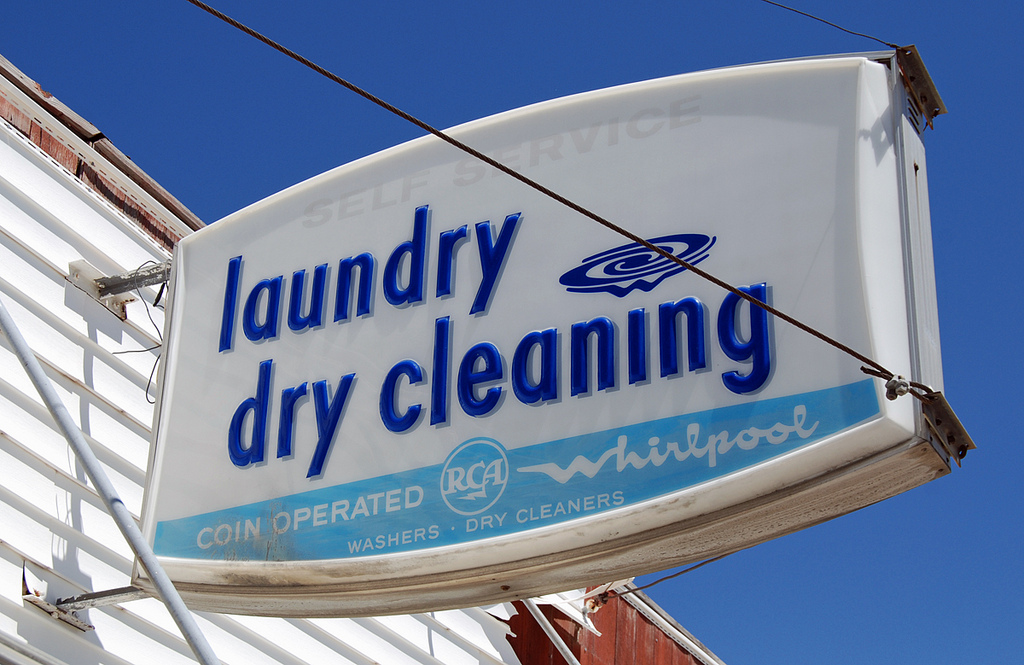
“Alta’s Place” charts Cory’s growing fascination with Alta, an enigmatic woman who appears one evening at the dry cleaner where Cory works with a coffee stain on her suit. Through their conversation, retold by Cory, we come to understand how Alta’s suit was stained during an asylum interview, and the circumstances under which Alta left her native Mongolia for Virginia. Her landlord discovered her living with another woman with whom she was in a romantic relationship and evicted her, an initial cruelty that had the ripple effect of forcing her to leave the country entirely.

In a subtle and masterful deployment of first-person point of view, the reader sees Alta as a kind of doubled. That is, we see Alta through her own words in scene and quoted dialogue, but we also see the narrator’s warped version of Alta. Morgan Thomas deftly reveals the ways Cory’s perception of Alta is curtailed by her own limited experience and by a tendency to objectify and exoticize. 

The dramatic irony that brings this story to its masterful and subtle conclusion stems from the gap between who Cory understands Alta to be and who Alta actually is. As a queer woman herself, Cory is alert to the realities of queer life in America, but she is at times inattentive to Alta’s reality and subtly invalidating of her experiences, eldiding them, wanting to make them smaller, more manageable than they are. Again and again, Cory references wanting to draw Alta. To touch her clothing. To eat her food. To become her, in a way. But Cory doesn’t question these impulses. She is unaware of this tendency in herself, but it is carefully wrought and visible for the reader, giving rise to a tension as we wait for it all to become clear to her. – BT

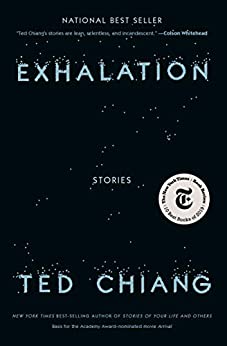
Ted Chiang Explains the Disaster Novel We All Suddenly Live In

More than two weeks into self-isolation, I am starting to wonder whether I will ever be able to come out. I don’t mean whether I’ll be legally allowed to come out—I wonder who the person that comes out will be. Stiller, more quiet maybe. More appreciative of the simple pleasures of everyday life, I hope. Even if I manage to keep my job, and my loved ones survive, even if I am among the fortunate few whose life returns basically to normal, will I continue to cook my meals at home, and Facetime with my parents multiple times a week? How long will it take before I’m eating out and stretching the time between phone calls? How long before I’m complaining about the subway and having too many plans and generally taking my freedom for granted? 

The question of what will change applies to everything from the mundanity of everyday to the very shape of history. Will we ever elect a careless an incompetent leader again, knowing what is at stake? Will we continue to systematically disadvantage the most vulnerable among us, and to degrade facts and science and statistics? And as for the positive changes being made or discussed—bipartisanship, direct governmental aid, paid sick leave—what will stick, and what will be forgotten? 

To answer these questions, I turned, as I often do, to books and the people who write them. And since I’m speculating, this time I turned to a master of speculative fiction, Ted Chiang. I’ve heard Ted Chiang speak exactly twice, and both times I’ve quoted him, or maybe misquoted him, for subsequent years. He generously agreed to correspond with me over email.


Halimah Marcus: Earlier this week, I shared a recollection of a Brooklyn Book Festival panel you did with Mark Doten and N.K. Jemisin. Your idea, as I recall it, was that in conservative narratives, there’s a disaster/problem/war. It’s resolved, and everything returns to normal. In progressive narratives, there’s a disaster, it’s resolved, and nothing is the same. Can you expand on that? It seems to me we are in a progressive narrative, and that this pandemic will fundamentally change our society. 

In real science fiction stories, the world starts out familiar, a new discovery or invention disrupts everything, and the world is forever changed.

Ted Chiang: On the panel, I said that traditional “good vs. evil” stories follow a certain pattern: the world starts out as a good place, evil intrudes, good defeats evil, and the world goes back to being a good place. These stories are all about restoring the status quo, so they are implicitly conservative. Real science fiction stories follow a different pattern: the world starts out as a familiar place, a new discovery or invention disrupts everything, and the world is forever changed. These stories show the status quo being overturned, so they are implicitly progressive. (This observation is not original to me; it’s something that scholars of science fiction have long noted.) This was in the context of a discussion about the role of dystopias in science fiction. I said that while some dystopian stories suggest that doom is unavoidable, other ones are intended as cautionary tales, which implies we can do something to avoid the undesirable outcome.

HM: What’s the relationship between disruption and doom? Would “the disruption is resolved and nothing is ever the same” qualify as a doom narrative? Or is doom a third kind of story, in which the disruption is never resolved?

TC: A lot of dystopian stories posit variations on a Mad Max world where marauders roam the wasteland. That’s a kind of change no one wants to see. I think those qualify as doom. What I mean by disruption is not the end of civilization, but the end of a particular way of life. Aristocrats might have thought the world was ending when feudalism was abolished during the French Revolution, but the world didn’t end; the world changed. (The critic John Clute has said that the French Revolution was one of the things that gave rise to science fiction.)

HM: For people who consider themselves politically progressive, it’s hard to shake the idea that a narrative with inherent progressivism must also be in some way a more enlightened story. But many of us are clinging to the idea that we’ll return to the status quo—that’s the story we’re telling ourselves, even as it’s clear that in retrospect that will not be the story of this time. Is there something inherently comforting about the narratives you describe as implicitly conservative? And should we be challenging ourselves to reject that comfort?

The people who are the happiest with the status quo are the ones who benefit most from it.

TC: The familiar is always comfortable, but we need to make a distinction between what is actually desirable and what is simply what we’re accustomed to; sometimes those are the same, and sometimes they are not. The people who are the happiest with the status quo are the ones who benefit most from it, which is why the wealthy are usually conservative; the existing order works to their advantage. For example, right now there’s a discussion taking place about canceling student debt, and a related discussion about why there is such a difference in the type of financial relief available to individuals as opposed to giant corporations. The people who will be happiest to return to our existing system of debt are the ones who benefit from it, and making them uncomfortable might be a good idea.

HM: Do you see aspects of science fiction (your own work or others) in the coronavirus pandemic? In how it is being handled, or how it has spread?

TC: While there has been plenty of fiction written about pandemics, I think the biggest difference between those scenarios and our reality is how poorly our government has handled it. If your goal is to dramatize the threat posed by an unknown virus, there’s no advantage in depicting the officials responding as incompetent, because that minimizes the threat; it leads the reader to conclude that the virus wouldn’t be dangerous if competent people were on the job. A pandemic story like that would be similar to what’s known as an “idiot plot,” a plot that would be resolved very quickly if your protagonist weren’t an idiot. What we’re living through is only partly a disaster novel; it’s also—and perhaps mostly—a grotesque political satire.

What we’re living through is only partly a disaster novel; it’s also—and perhaps mostly—a grotesque political satire.

HM: This pandemic isn’t science fiction, but it does feel like a dystopia. How can we understand the coronavirus as a cautionary tale? How can we combat our own personal inclinations toward the good/evil narrative, and the subsequent expectation that everything will return to normal?

TC: We need to be specific about what we mean when we talk about things returning to normal. We all want not to be quarantined, to be able to go to work and socialize and travel. But we don’t want everything to go back to business as usual, because business as usual is what led us to this crisis. COVID-19 has demonstrated how much we need federally mandated paid sick leave and universal health care, so we don’t want to return to a status quo that lacks those things. The current administration’s response ought to serve as a cautionary tale about the dangers of electing demagogues instead of real leaders, although there’s no guarantee that voters will heed it. We’re at a point where things could go in some very different ways, depending on what we learn from this experience.

Even If the Full-Blood Family Don’t Claim Us

Mixed

 
 I pray
 on my great GrandFather’s feathers

 —the ones you don’t respect— 
That you never dare call me

 Mixed

 when i have been a nigger anytime 
 you felt like it.

 I’m from an army of glowing yellow/black princesses 
 some of us indigenous. we know.
 
 even if the full-blood family don’t claim 
 us.

 We all one caste system away from 
 spiritual death.

 i’m mixed.
 ?
 
 I’m mixed with Moors and anybody from Alabama
 I’m mixed with kool milds & sometimes cigars

 british tea & southern comfort

 Apartheid & Jim Crow
 
 My shoe shine black
                                    no shield, no mask—nothing removeable.
 I’ve always taken my blackness to dinner
 Worn it in the shower, shared it with my lovers
 
 Never asked permission to be who I am
 Or changed my voice to fit the description
 
 land the job
 not scare away the boys
 
 body still recovering from the thunderous pull of
 a Jamaican crowd hauling me

 down into their sea of calabash eyes
 

 They tell me
 they feel my spirit
 in their Treasure Beach chest.
 
 I know you didn’t hear it
 Your seashell speaker remains broken 
 or maybe you just
 
 pretend

 not to hear my 
 leveed lips. Water 
 when it’s rising
 
 In winter black girls are bright super moons 
 waiting for you to notice.
 they glow
 twice as beautiful inside
 
 infinity
 
 a quiver of cold breath pushes out our bodies 
 It’s winter in america, again;
 
 the subtle sound of survival.
 a wolf howls at the indifferent morning 
 we are always mourning. in black.
 we don’t choose this pain. these colors.


 We swallow our ivory keys
 Our sharps & flats, an enharmonic black scream:
 
 Mixed.
 
 The way Ponchai Sankofa Wilkerson held a key 
 Under his tongue and spit it out
 before they executed him 
 We know freedom.

 Is just one fuck you
 Away from being this poem.

 We didn’t choose to scrape
 samples of our organs back together 
 sew what was left of America inside
 
 A matted flag
 woven beneath the delicate seams of 
 our children
 
 Born into this madness
 Our bloodline threads unbeveled 
 against each blue stitch

 I’ve worn these scars ’cross my face
 My entire life and when you asked how i got 
 Them, I said
 
 “An angel touched me.”
 
 I earned the right to my own damn mythology 
 What else do we have left
 our bodies reduced to all that matters 
 inside fragile feminism courses.
 
 There is zero removal of this 
 Nina Simone


 | Black. |
 

 My British born, Canadian raised mother 
 never asked me to
 
 So, why you?
 
 She raised a black girl 
 Who loved to read; put
 Alice Walker and Hansberry
 in my hands.
 
 I’m mixed
 
 buffalo & eagle 
 hampton & hooks
 Tear gas & Standing Rock
 Front line women & crooks
 
 mixed
 
 holocaust & genocide 
 horses & low-rides

 I survived.
 
 This poem is my proof of life 
 Your paperwork, never worked.
 
 I understand why you worry when 
 A drop of blood swims back to shore


 Moore babies
 
 |black|
 
 as
 
 me. 


From We Want Our Bodies Back by jessica Care moore. Reprinted with the permission of the 
publisher Amistad, an imprint of HarperCollins. Copyright © 2020 by jessica Care moore.

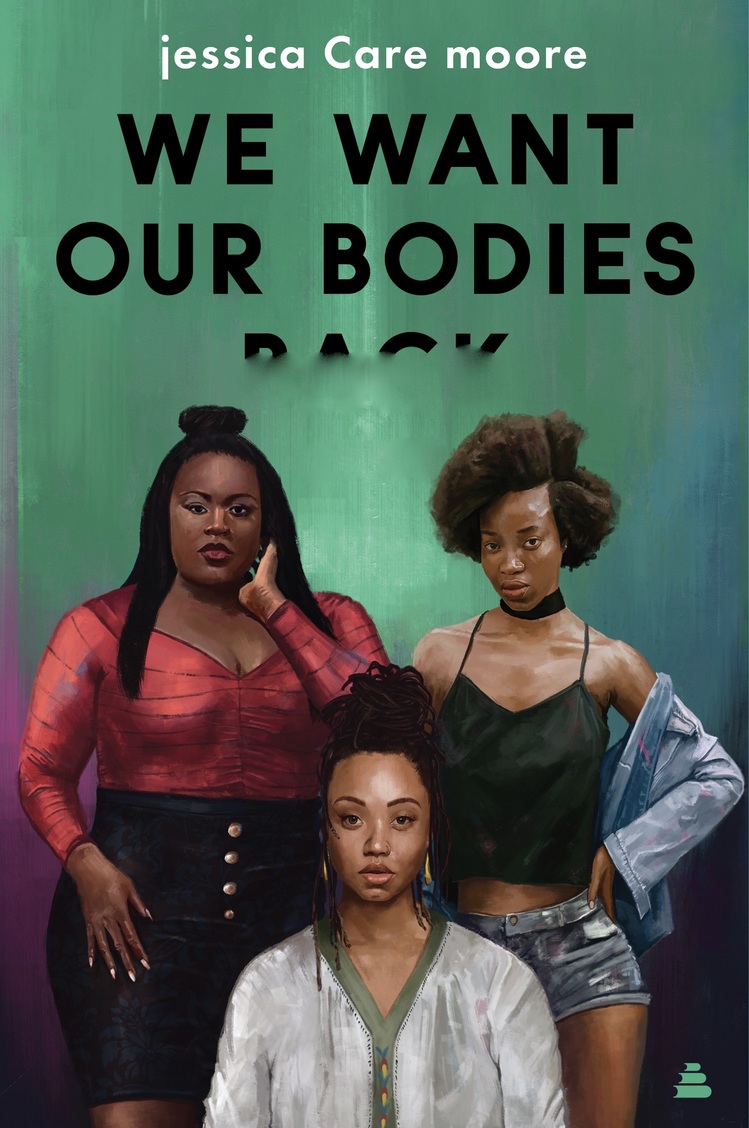
cover image for book We Want Our Bodies Back, title and three women

Queer Activists Take On the Most Homophobic Town in America

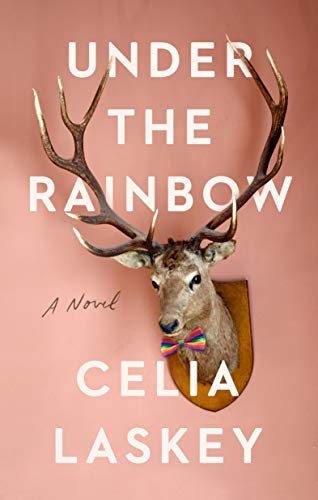
Celia Laskey’s debut novel, Under The Rainbow, is a study in cause and effect, and reverberation. On the opening page, Avery the chapter’s protagonist, defines  a made-up term that frames much of her adolescence: “Hetero shame: fear of coming out as heterosexual to your lesbian mom who you know wishes you were a lesbian, too.” Avery’s story begins a wonderfully topsy-turvy narrative that hits the reader a bit like an explosion—its effects are deeply felt in every pocket of Big Burr, Kansas, a place commonly known as the most homophobic town in America.

In the face of an activist LGBTQ task force’s arrival, two-year appointment, and mission to transform small-town bigots into bastions of queer acceptance, we land in the hearts and minds of a community wrestling itself, and by turns rejecting and welcoming newcomers who present a different way of life. From the challenges of asserting queer identity while steeped in a homophobic high school, to navigating an open marriage in a place where other queers are few and far between, Laskey peels back all the layers. She takes familiar themes of queer stories—otherness, isolation, escape—and finds ways to twist them to fit the lives and circumstances of these characters and place. 

Celia Laskey and I corresponded about small towns and big ideas, literal and metaphorical queer escape, and writing a novel-in-stories with an ideal balance of chapters that carry significance that’s greater than the sum of its parts. 


Dennis Norris II: One of the things I enjoyed most was the way you inverted the trope here, queered the narrative so to speak, with Avery. She’s straight but afraid to come out to her lesbian-activist mom, and at school, she doesn’t want anyone to know her parents are a lesbian couple, or that they’re part of the task force. She feels othered in both places, which is new for her, having grown up in liberal, queer-friendly Los Angeles. What’s the genesis for her story, and this novel? 

Celia Laskey: The idea for Avery’s story came from me and some friends joking around about how maybe we’d have kids if we could guarantee that they’d also be queer. And of course we were completely joking, but then it got me thinking about if maybe there was a little nugget of truth in there—how queer parents aren’t so different from straight parents in wanting their kids to be like them. And then, like you said, I intentionally started thinking about flipping the idea of gay shame: what if a kid was afraid to “come out” to their queer parent as straight? How would that look different or the same as coming out as LGBTQ?

People are surprised when they find out I didn’t realize I was gay until I was 23—they assume I shot out of my mom’s vagina and was like, ‘no thank you, men.’

Everyone who knows me considers me to be the biggest lesbian who ever lesbianed, and people are really surprised when they find out that I didn’t realize I was gay until I was 23—they assume I shot out of my mom’s vagina and was like, “no thank you, men.” The reality is that realizing my sexuality was a really long, sad journey and for most of my life I was so closeted, even to myself, that it literally didn’t occur to me that I could be gay. Naturally, it had a lot to do with a lack of queer visibility in my young life. 

One day my wife and I were talking about this and I was like, what if there were these queer recruitment leagues that traveled around to all the small towns in the the country, to show everyone that queer people existed and moreover that it was okay to be queer? Once I started thinking through the logistics of this, book-wise, I realized it would be difficult to have a book that wasn’t set in one location, so I tweaked it to this one small town in Kansas, and an acceptance task force instead of a recruitment league. 

DN: Is there an actual nonprofit that you’ve based Acceptance Across America on? At first I found the idea of a volunteer task force picking-up and moving to Big Burr for such pointed LGBTQ advocacy a bit surreal. But as we moved through different voices and perspectives, this world really came to life. What drew you to diving into all the perspectives you wrote from, as opposed to sticking with one or two?

CL: You’re right that I had initially intended the idea for the book to feel kind of surreal—there wasn’t an actual nonprofit that I based Acceptance Across America on, but once I started doing research I found out about an HRC initiative called Project One America, which is a multi-year campaign to expand LGBTQ equality in Mississippi, Alabama and Arkansas. So I read as much about that as I could, but there wasn’t a ton of information available, so at a certain point I just had to go back to how I imagined a situation like this would play out. How would so many different kinds of people’s lives change because of this? To really understand it, you’d want to see it from all sides: both task force members and townspeople, and all the distinct individuals who comprise those two groups. 

DN: That leads kind of perfectly into my next question. Among the townspeople, there are really varied reactions to the presence of the task force. I’m wondering about the responsibility you might’ve felt to write from all sides, and to portray characters like Christine with great humanity and empathy. Did you find that process different from writing Avery, for example, or David? 

CL: I think that when writing linked stories you do tend to feel more of an obligation to show all sides, as opposed to a novel from just one or two viewpoints. But I think, for a writer, it ends up presenting a really useful challenge because it forces you to imagine the inner life of people you normally wouldn’t. In my real life I have no interest in granting empathy to homophobes or people with any harmful prejudice. I don’t care to understand where their hate comes from, but for this book I had to—once you choose to write about “the most homophobic town in the nation,” you kind of have to write about one of those homophobes. 

That’s how I’m able to understand homophobia: they hate us ‘cause they ain’t us.

With every character, we’re trying to understand what makes them tick and why, and with Christine, I wanted to understand why this billboard drives her so nuts. I did a lot of reading about homophobia and its root causes and I found one study that said some people’s homophobia is actually rooted in jealousy—not that they want to be queer themselves but that they’re jealous of the freedom queerness can bring to a life: the feeling that you don’t have to get married, or buy a house, or have kids, etc. That it kind of frees you from expectations and conventions. And that’s how I’m able to understand homophobia: they hate us ‘cause they ain’t us (yes, this is a quote from the 2014 movie that no one saw, The Interview, lol). Then I feel able to give a character like Christine humanity and empathy because it’s not that she hates us, it’s that on some level she hates her own life. 

DN: This novel feels incredibly global. I mean this in the way you’ve handled complicated nuances between so many different characters and families and relationships, while also speaking to a larger localized sociopolitical context. I’m thinking of the intricacies of David and Miguel’s relationship, and how it might’ve been tempting to make every queer character’s inner life secondary to the cause, so to speak—in this case living in Big Burr, queer isolation, blatant homophobia and so on. 

CL: After I had written a few stories that dealt really centrally with the conflict inherent to the task force, I became interested in exploring quieter stories, where the task force wasn’t the main source of conflict and tension. I was thinking about how, even if you moved to the most homophobic town in the nation and were dealing with that every day, your other, more personal problems wouldn’t cease to exist. 

That’s where David and Miguel’s story came from—it doesn’t have anything to do with the task force at all. For me, it was sort of the inverse of Christine’s story. David thinks that by being gay and being in an open relationship, he can avoid all of the pitfalls of a traditional life, but then he’s presented with this issue of the aging parent, which is something so many couples have to deal with eventually, queer or straight. After David’s story, it came naturally to write some other stories where the task force wasn’t the focus, and I think that’s necessary for a book like this to not feel too one-note.

DN: Isolation is a theme throughout, and perhaps never more so than in one of the quieter chapters, Linda’s, when two of the most isolated characters connect, against all odds. Linda’s grief has taken over her life, and Jamal is the only Black person in town which gives him, as he notes, extra visibility. They also, given their context, couldn’t be more different from each other. How did their friendship come about for you, as the writer?   

I think grief is the first time that a lot of people feel really displaced.

CL: I wanted to feature friendships between the townspeople and the task force members in a couple stories and I was thinking about what could bring together two people who are so different. For Linda, I was thinking about what could make a cishet, white, able-bodied person feel like an outsider, and I think grief is the first time that a lot of people feel really displaced—so here Linda is in the town she grew up in, surrounded by family and friends, but the loss of her son has drawn this attention to her that she hates. She’s hyper visible but also feels completely alone, and that’s something Jamal really understands. So I thought this would be a good point of connection for the two of them, and for Linda with the task force as a whole. 

DN: In nearly every story, a character is engaging in some kind of escape with disastrous results. I think we often talk about escape as an especially queer endeavor, especially if we come from towns like Big Burr. I can’t help but think that escapism is a central theme: from relationships, from circumstances, from locale. Were you conscious of this during the writing? Is escape in any way a part of your queer landscape as well?

CL: That’s funny, I don’t think I was that conscious of the theme of escapism while I was writing, but now that you mention it it’s definitely there. I think about societal expectations all the time, and how people are either trying to conform to them or defy them, and I think a lot of the time that even people who want to conform to them feel really constrained. Everyone needs an escape from these expectations, whether they realize it or not.  

Escape is definitely part of my queer landscape. In terms of physical escape, even before I knew I was gay, I was like, I GOTTA GET OUT OF MAINE AND TO A CITY! Deep down I think I knew. Then in terms of mental/emotional escape, it’s a big reason why I’m a writer and a reader—I love living in realities that aren’t this one. And when I’m not writing or reading I’m usually watching TV, which is how I think most people escape their brains and their lives. I fucking love TV, and have probably watched most shows that exist. My all-time favorite is Mad Men, followed closely by The Leftovers and The Americans

DN: You’re from Maine? Maine has such a rich literary history, including one of my favorite writers, Elizabeth Strout. And similar to her, I think Under the Rainbow is an exemplary example of a novel-in-stories. Each chapter stands alone, and yet the whole is greater than the sum of its parts. This can be a really difficult balance to achieve. Did you always know this book would be written as a novel-in-stories, or did that develop over the course of the writing?

CL: Elizabeth Strout is one of my favorite authors too! I definitely studied Olive Kitteridge time and time again while I wrote this book. (I just read Olive, Again and it was just as good as the original!) 

I did always know that the book would be a novel in stories. I think the form of the book was the first decision I made, before even the concept, because I didn’t feel prepared to write a traditional novel at that time in my life—this was right before I went to my MFA program, when I was about 29. I had only ever written short stories, and I soon learned that even MFA programs don’t teach you how to write a novel (which is something I could give a whole separate spiel about). I started with the thought of: What can I do, craft-wise, at this point in my life? Short stories. I could link them and call it a novel. And what kind of idea would work with a book of linked stories? And after that I eventually came up with the premise. 

Making the whole feel greater than the sum of its parts, as you say, is one of the biggest things I worked on with my editor after selling the book—we added way more linkages between all the characters, and plot points that would hopefully urge the reader to keep turning pages (like what happens at the end of Zach’s story), and we added Gabe’s final story as a way to bring everyone back together. 

7 Novels About Multicultural Families

Much of the inspiration for my novels comes from the idea of culture and how it impacts families. Perhaps this is because my own family history is deeply rooted in migration: my father moved during the Partition following India’s independence, my mother’s family migrated from India to Africa to set up an exporting business. After they married, my parents lived in the Middle East, Europe, and Canada, and I moved to the U.S.

All of these various cultures have imprinted me as an individual and our family dynamics. Culture is both an enriching and complicating dynamic. 

The stories I write explore the melding and clashing of cultures through adoption, immigration, bicultural marriage, and generational divides. My new novel, The Shape of Family, traces how a close-knit family finds their way back together after a tragic event, because of and despite their cultural differences. It is this complexity of culture in families that I’m drawn to in the books I most love. Here are a few of my favorites stories about multicultural families.

Homegoing by Yaa Gyasi

Homegoing by Yaa Gyasi

Two half-sisters born in Ghana in the 18th century live out different fates: one sold into slavery in America, the other in comfort afforded by colonial power back home. As the novel travels through several successive generations of each woman, we see the indelible power of place and culture on individual lives.

The Sleepwalker's Guide to Dancing by Mira Jacob

The Sleepwalker’s Guide to Dancing by Mira Jacob

Spellbinding from the first page, this novel travels back and forth in both time and place, portraying an Indian family that has migrated to America and the trauma that haunts them all. The main character’s profession as a photographer introduces interesting themes of perspective and artistry, as she tries to unravel the family’s history and mystery.

Little Bee by Chris Cleave

The title character of this story is a young Nigerian girl who flees Africa under desperate circumstances for England, re-entering the lives of a married couple she knows. It illustrates the uncertain fate of refugees, the consequences of unchecked greed and power, and the best efforts of flawed humans to rise above their weaknesses. 

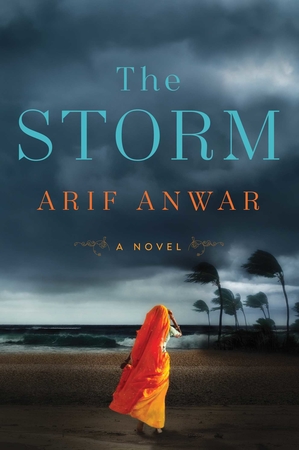
The Storm by Arif Anwar

This novel has one of the most elegant structures I’ve ever read. The 1970 Bangladeshi cyclone—in which a half-million people perished overnight—drives the narrative of five interwoven stories of love, parenting, war, colonialism, and religious conflict. Both natural and man-made disasters are at play, and the story truly swept me away, while being rooted in a regional history few of us know enough about.  

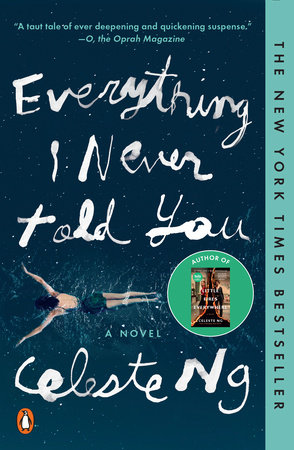
Everything I Never Told You by Celeste Ng

Everything I Never Told You by Celeste Ng

The perfect suspenseful story wrapped in a family drama. The Lees are a Chinese American family living in the American Midwest in the 1970s. The core of story is the mysterious disappearance of daughter Lydia, but what really kept me turning pages was the nuanced depiction of family dynamics imbued with cultural complications. 

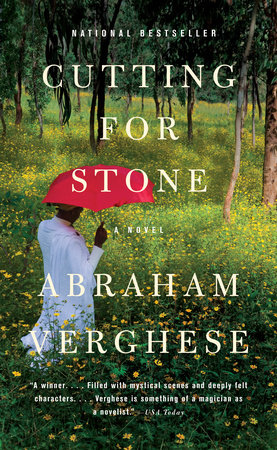
Cutting for Stone by Abraham Verghese

Cutting for Stone by Abraham Verghese

I savored every page of this brilliant epic novel, which spans three continents and the lifetimes of twin brothers born of a secret union between an Indian Catholic nun and a brash British surgeon. It delves into so many fascinating ideas: the legacy of parents upon their children, the nature of forbidden love, the connection between siblings and twins and innovative advances in medicine, just to name a few.

Americanah by Chimamanda Ngozi Adichie

Americanah by Chimamanda Ngozi Adichie

Young lovers in Nigeria are separated when one travels to America to pursue her academic career. Their respective migration paths, experiences, and the political backdrop of their home country present challenges for their futures and their relationship.

Modern-Day Iran, Through the Eyes of a Prisoner

The novel Then The Fish Swallowed Him follows Yunus Turabi, a taciturn 45-year-old Iranian bus driver with a simple life: he loves high-quality black tea, has an obsessive love for the streets of the sprawling metropolis of Tehran, and has recently joined an underground reading group. All that changes when he is arrested in the wake of the 2005 Tehran bus drivers’ strike and sent to Evin Prison, notorious for its interrogations and torture.

Over a period of weeks, he is alternately questioned and beaten by his assigned interrogator at Evin, an older man named Hajj Saeed, and he spends extensive time in solitary confinement. None of it is easy to read, in part because of its accuracy; the scenes are based on Arian’s interviews with friends in Iran who have spent time in solitary confinement. In flashbacks, Yunus’s life is revealed to be less than simple—his parents both dead, his best friend betrayed—and his relationship with Hajj Saeed twists and turns towards its inevitable end of a forced confession.

Then The Fish Swallowed Him isn’t quite Amir Ahmadi Arian’s first book. In Iran, he’s published novels, short stories, and nonfiction, in addition to translating novels into Farsi and working as a journalist, but this book is his debut in English. The book’s gorgeous, unique turns of phrase—“a screaming, black chador,” “the noises snaked in from all sides, scarring the air”—show how Arian’s work as a translator influences his writing.

I met with Amir Ahmadi Arian to discuss the practice of writing inside and outside of Iran, solitary confinement, and the banality of evil.


Nozlee Samadzadeh: You’ve written about prison sentences and about the Green Movement in short stories in the past. What made you want to handle these subjects in novel form in Then The Fish Swallowed Him?

Amir Ahmadi Arian: There’s so much that’s not been told. The thing about stories of Iran in English is that almost all of them are written by Iranian Americans, people who grew up here. They didn’t have a first-hand experience of what transpired after the revolution. So when I was reading those books, I was constantly noticing this yawning gap. There are stories of post-revolutionary Iran that no one has told in any form, nonfiction or fiction. And they’re really great stories! They’re incredible stories in so many ways.

I’m by nature a political person, I’ve been a journalist for a long time and been involved in politics. And I love political novels. I’ve always been a reader of political novels—especially Latin American. I feel very close to that tradition. It’s almost like I naturally go to political themes. I’ve been involved personally with a lot of this stuff too. So I’m not done with them! They’re going to show up again.

NS: There are so many books in this book—a literal syllabus for the reading group of bus drivers—from Iranian authors like Jalal Al-e-Ahmad and Bijan Jazani, who I’ll admit I’ve never heard of, to Marx and Engels and Foucault and Fanon. If you could ask a reader of this book to read just one of those books, which one would you pick? Yunus’s favorite is the Fanon, The Wretched of the Earth.

There are stories of post-revolutionary Iran that no one has told in any form. And they’re really great stories!

AAA: I would say The Wretched of the Earth, that’s a book I really admire so deeply. It moved me so much, for so many reasons. And then I love Foucault’s book, actually. It’s not elaborated on in the study group, Discipline and Punish. That book really touched me, too. Funny thing is that when that book came out in Farsi, it kind of disappeared from the market because it sold out immediately. And it turned out that the police, the Niru-ye Entezami, had bought it.

NS: Just to make it disappear?

AAA: No, to read it! Somebody had read it in their system and decided that it was a good read for them.

But anyway, another thing that I wanted to highlight in this book is that when we talk about a worker’s strike or a worker’s union, the intellectual dimension of it is not widely known. I talked to a lot of bus drivers, and a couple of them were among the leaders of those unions. I was really surprised—and embarrassed, I should have known—but I was surprised at how well-read and knowledgeable they are. I didn’t make up anything about those lists. I heard it from them, I asked them what they were reading. They did have study groups, in different formats, and they read books every week and they sat around and discussed them. One bus driver told me that he always had a book by the window, in the front. He said that he found his wife through that, actually. One day a woman—he was reading, I believe, The Grapes of Wrath—a woman comes on board and notices that book and they start talking, and then they married!

Intellectually, it’s a very rich tradition, union activism in Iran. It has been from the beginning and I wanted to emphasize that.

NS: I’d love to know how you think about writing fiction in Farsi versus in English, particularly descriptions and dialogue. I thought it was so funny that we see Yunus’s mom pouring tea the traditional Iranian way (“My mom would pour tea from the teapot, then weaken it with the boiled water of the kettle”) without explanation. And at the bus drivers’ protest in the book’s opening pages, you don’t translate the word zolm in the main speaker’s speech.

AAA: I thought that the expressions and words, that you can kind of understand them from the context.

NS: Being Iranian, I wouldn’t be able to tell!

AAA: Yeah. I didn’t translate zolm—I don’t even know if it has a good equivalent in English.

NS: “Tyranny,” I guess? But it’s not quite…

AAA: Zolm is not inflicted by a tyrant, necessarily. It was a deliberate decision. There were actually more of those, but I took them out later. This book takes place in Iran, and everybody speaks Farsi, right? I’m basically translating something, and translation is never complete. So I wanted parts of it to kind of jut out.

NS: So we have “asshole” and then we have pedar sag (for non-Iranian readers: literally “[your] father [is a] dog” but metaphorically similar to “son of a bitch”), and just because neither can be directly translated doesn’t mean we can’t have both.

AAA: It’s good to have it sound a little alien to a native speaker in English. To remind them constantly that this isn’t happening in your language, it’s some form of translation—not literally, but a cultural translation.

NS: Did you feel responsible for representing Iran in a way that would or would not be misunderstood? What if someone reads this book and thinks, “What a horrible theocracy where adultery is illegal, that’s so messed up.” Did you worry about making Hajj Saeed, the interrogator, too evil?

AAA: I did. The character that I spent the most time on was the interrogator, not Yunus. In the news or many other books, you’ve got a simplified dichotomy of an evil government versus an angelic people. The established notion is that the Iranian people just want to “be like us,” they want democracy and Coca Cola and whatever. They want everything we want, but they’re trapped there under the thumb of this incomprehensibly evil government. They’re pretty evil, but it’s just not true, it’s not the fact. Iran is a very dynamic society, a lot is going on. If you leave the country for two years and go back—do you travel there?

NS: I’ve only been once, I was born here. I went as a kid, in 2000, which was at this point a million Iran years ago.

AAA: It changes pretty fundamentally in many ways. I have been living out of the country for ten years, and I’ve visited maybe every two years. Even I was surprised every time that there were things I needed to learn. It’s a society that is in flux all the time, and that dichotomy of Beauty and the Beast doesn’t work.

One thing that I wanted to really work on for this book was to show that the prison system in Iran is a bureaucracy. If I manage to get that across, I’ve done my job. There are a lot of bureaucrats. These interrogations are procedures that are devised and finalized before the interrogator comes into the room. They’re following a script, and all of this torture, all of this stuff is part of a bureaucratic system. It’s a form of the banality of evil that I wanted to execute in this book. And as a result, people who do it are just human beings.

NS: I thought it was so cool that you put those words in the mouth of Habib Samadi, a union activist who advises the bus drivers before their strike: “Your interrogators are human beings. They have strengths and weaknesses too. Be open to them and see them as humans. This can help you manipulate them.”

AAA: Absolutely. These are people just struggling in their own lives like everybody else, and that’s their day job. When they are done with their day job, they go home and watch BBC and American movies, they have a fight with their daughter because her scarf is not tied right, or she comes home late. It was very important to me to portray Hajj Saeed as a human without minimizing the pain that he is inflicting in the process.

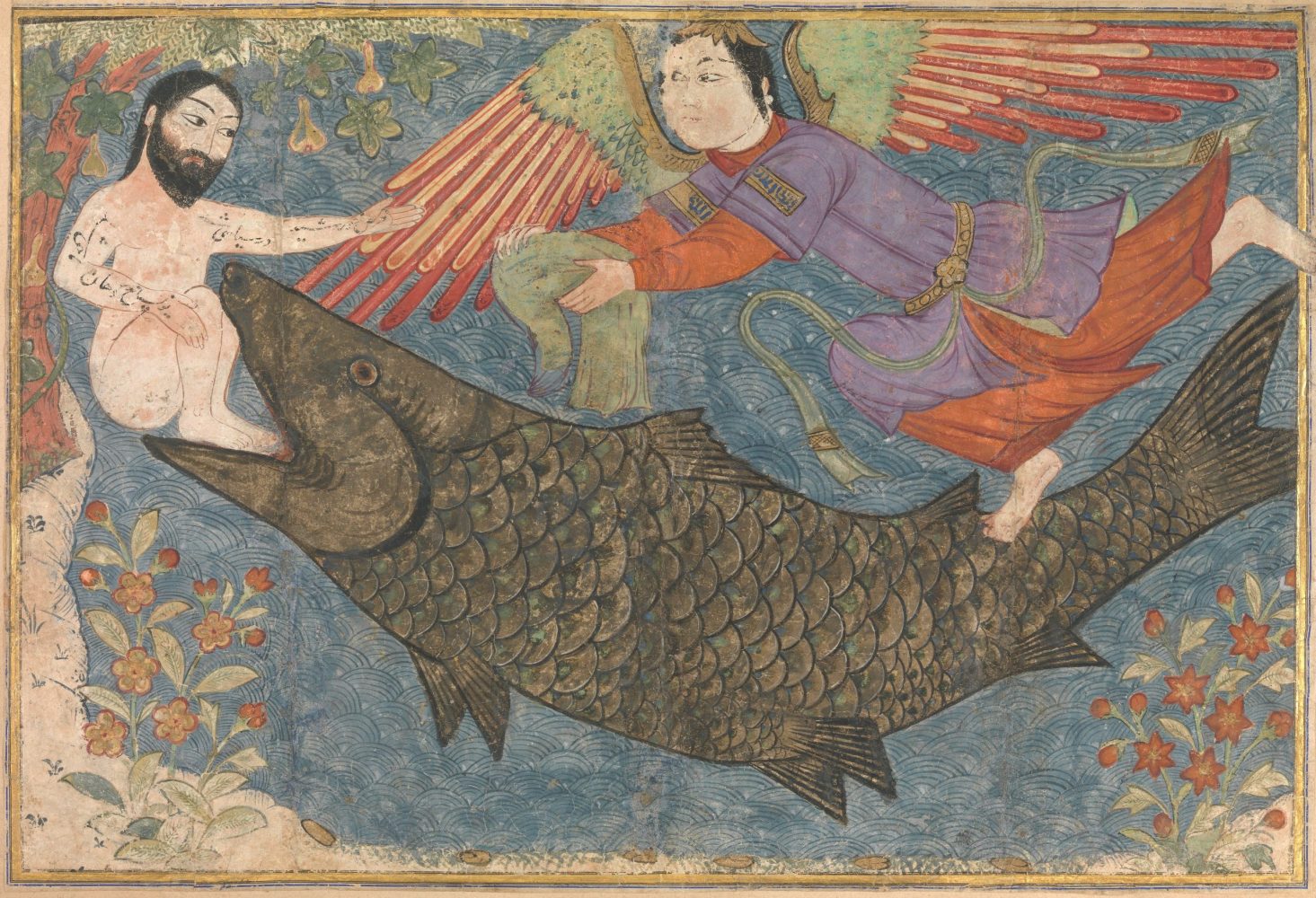
NS: When did the comparison to the story of Jonah and the whale occur to you? (“Yunus” is what Jonah is called in the Quran.)

If you’re in Iran and involved in politics, you’ll be surrounded by all sorts who’ve spent time in solitary confinement.

AAA: The metaphor was kind of obvious, right? The experience of a solitary cell is reminiscent of what the Biblical story is about, of being in a dark, tight place on your own for a long time. Also a book that really affected me—I read it before I started this project—is In the Belly of the Beast, which is in the epigraph. The title refers to that. I found it to be a great metaphor. Also the whole journey of Jonah, or Yunus, both in the Bible and Quran, is similar to what this character goes through: getting involved with a political process, and getting almost excommunicated, expelled from the community, and having this period of self-reflection-slash-torture in a dark spot, and then getting spit out back into society. That was a pretty good metaphor for all that.

NS: I have to ask about solitary confinement. Your descriptions of the way he felt physically as well as mentally are at times difficult to read—I had close the book and take a break. You thank the Iranians you spoke to who had spent time in solitary confinement in your acknowledgments. Did you spend any time alone yourself?

AAA: I thought I would, but I didn’t end up doing that.

NS: I can see how it might feel disrespectful, to be like, “I’ll shut myself in my bedroom.”

AAA: And it’s not the same. I can sit in my room for five days, but it’s not the same at all. It was very difficult to talk to them—people don’t want to talk about that experience at all. I’m grateful to people who did. Another surprise when I was researching this book is how little literature we have about solitary confinement, actually, of any genre. When I talked to people, I realized why: people have a hard time talking about what happened to themselves. Because I wasn’t there myself, everything you read here about Yunus’s time in solitary confinement, I could basically have published as nonfiction too. They’re testimonies of different people that I combined into one character, but pretty much everything is according to testimony.

NS: That makes it even more horrifying.

AAA: Yeah, I know! It was very hard.

NS: How did you find them?

AAA: They’re my friends. If you’re in Iran, and you’re involved in politics in any way, you’ll be surrounded by all sorts who’ve spent time in solitary confinement. I know a lot of my friends who’ve spent time, from maybe twenty days to a couple of months in solitary.

NS: I’m asking you to project beyond the pages of the book here—we don’t see Yunus’s years in prison on the page, but it’s clear they’ve really changed him. One of my favorite passages in the book is about the distinction between solitude and what he’s experiencing in prison. He says, “compulsory loneliness was the opposite of the voluntary one I had cultivated.” Do you think that he manages to “wrest [his] solitude back” when he gets out?

A novelist should be a public intellectual too.

AAA: No, I don’t think it’s possible. It’s an irreversible experience. I don’t “think”—I’m quoting the people I talked to. Almost unanimously, they said the same thing. Scientifically, solitary confinement of more than 14 days is considered torture because your brain is basically rewired. You’re not the same person when you get out. No, I don’t find harbor any redemption for him when he gets out.

NS: You’ve been publishing more literary essays, like the piece in the Paris Review Daily about the concept of avareh, the Iranian concept of spiritual displacement, in addition to op-eds on current events in Iran. What is next for you after the publication of this novel?

AAA: It’s an interesting question because I’ve been asked that quite a bit. It comes from a totally different idea of who a writer is in Iran and here. In Iran, you can’t walk around and say, “I write novels,” it doesn’t make sense. A novelist should be a public intellectual too.

NS: That’s not as much the case here.

AAA: It’s not, there are professional novelists here, who, they don’t give a shit what’s going on around them. And they don’t write nonfiction, or they’re not involved in anything but fiction. That kind of figure really doesn’t exist in Iran.

NS: It’s French too, the idea of the public intellectual.

AAA: Yes, it’s very French, it’s Middle Eastern. In the Arab world, everybody writes everything. I grew up in that tradition, and I can’t really stop writing about other things. It comes to me immediately. When something happens I start writing—I feel responsible to do that. It would be interesting to do a statistical analysis of Iranian writers, of their corpus: how much of it is fiction, how much is plays, op-eds, essays, travelogues—they write everything—compared to a professional novelist in the U.S. You’d be surprised. Maybe people we know as novelists in Iran, half of what they wrote was nonfiction. I belong to that tradition, and it doesn’t make sense to me to just write fiction.

Natalie Diaz Unravels What It Means to Be American and Native

Natalie Diaz’s second poetry collection, Postcolonial Love Poem, explores the pain America has inflicted on indigenous people—and how desire and love are created or found despite that trauma. Postcolonial Love Poem also celebrates being Native American, while exploring—through desire or lackthereof—what the American part means. 

Diaz is the author of When My Brother Was an Aztec, winner of an American Book Award. She has received many fellowships, including a MacArthur Fellowship and a Native Arts and Cultures Foundation Artist Fellowship. She is Mojave and an enrolled member of the Gila River Indian Tribe.

I chatted with Natalie Diaz about devouring loss, the American Dream, and unraveling what it means to be American and Native.


Arriel Vinson: The epigraph, by Joy Harjo, that begins the collection is about losing a country. This sets us up for a lot of loss in relation to indigenous people. Loss of land, of tradition, of love. How does loss/things being taken away go hand in hand with love? 

Natalie Diaz: There is no such thing as nothing. (I don’t know how that is explained scientifically.) There is always something there to devour the loss. There is always something there to become the loss so the loss becomes something else. Or something more—it is still loss, maybe, but possibly something else—some energy, some memory, some possibility, some touching, some ions or atoms trying to make it across to one another and become a newness. 

While there is loss, my ancestors filled it for me with a thousand ways of love, with power, with dreams, with caretaking one another and this earth, with anger, with rage, with story. Our loss can’t exist—because it is so great it would kill us—if my ancestors and my community and family had not filled that loss with enough things to hold it, to handle it (though not always to handle it “well”), to exist within it or next to it. I can be the wound, or I can be what happens to the wound as it becomes something different, maybe not always something less painful, but something also new. The blood, the cicatrix, the scab, the scar, the thing after the wound. If you take the tuna or fruit from a prickly pear, or even taken its nopal, it will continue to grow more nopals. It will continue to fruit again.

AV: You often write about your brothers. But in Postcolonial Love Poem, they are both weapon and wound. There are poems about them discovering an ark, poems about them being bullet, etc. How does duality affect the relationship your poems have with your brothers? Does it allow you to see them more clearly off of the page? 

This is the nature of my country. That it hurts you so much you begin to hurt yourself.

ND: My brothers never make it to the page, but a story of my experience of them does arrive. My love for them. My worry for them. My inability to save them from a world that wants to break them. In this book, I was questioning not my brothers but this country who has held my brothers so roughly that they fought and continue to fight back in ways that harm them more. This is the nature of my country. That it hurts you so much you begin to hurt yourself. 

AV: Desire plays many different roles in Postcolonial Love Poem. There’s anxiety as desire, plenty of mention of love-making and/or having a lover, walking toward love despite dealing with grief. Tell me more about your different definitions of love, and how those function throughout the collection. 

ND: I know that what I was taught about love, the way it was given to me in English and in citizenship, is not what I have come to know and experience as love. In order for me to be possible, I have to create conditions in which love is always possible. I don’t believe that will happen through the state, or through my government. I don’t know how it will happen but am trying to find the practices (including the practice of language) that might make it possible. That I can be loved. That I can love. Love is so many things, and all of them are beyond love, or beneath it, or what happens just before or after it.  

AV: Mythology is also prevalent in this collection, with the speaker in some of the poems calling out/speaking to various gods or warriors. Why was mythology important in this collection and how did it relate to desire/love for you? 

It is hard for me not to become the things I have always been told that I am.

ND: It’s possible any word is a myth. A small myth. A large myth. A word is never what it is, but a desire for the thing to be, either for understanding or for want or for remembering. I grew up with story, stories that are days long to tell, stories that might never be told again, and English often refers to them as myths. So when I find things that people call myth, I’m interested, because I know there is a world there that once existed or might possibly exist again that is different from the world I live in now, which is a hard world. 

AV: In “Like Church,” the speaker mentions how indigenous people, but also POC in general, are expected to perform their sadness. Why was this significant to point out, and is that why celebration (playing basketball, attending church) was present throughout Postcolonial Love Poem as well?

ND: English is prophetic. Our Constitution is prophetic. Citizenship is prophetic. It tells us what to do, who we are, how to relate to one another, who is “us” and who is “them.” It is hard for me not to become the things I have always been told that I am. Especially when those words have been threaded into my words, into my language and thinking and touching. 

Basketball/sport and church are also ways of control, but like all of these shapes, some of us find our small freedoms in them, or at least get a taste of what it might be like to break these structures open and see what is on the other side of them. 

AV: Postcolonial Love Poem interrogates the idea of the American Dream, as most of the poems unravel the notion of what it means to be American. What did it feel like to dismantle this idea? 

America never meant for us to dream it.

ND: The American dream has always been in shambles, in pieces for my family, my community, and me. We never dreamed it. America never meant for us to dream it. And Mojave dreams are too strong for what is American. So they don’t match up. I don’t know that I’m unraveling what it means to be American, because I am American and the book explores the conditions in which I live and love, but maybe it unravels what was “meant” to be American. And we lived, so we are disrupting that American intention.

AV: There is a river flowing through the collection and of course, a lot of mention of land or landscape. Why was it important to make setting a theme in this collection? 

ND: These are the settings that I am made from—the desert and the river. I’m made from clay. It’s less setting and more a body, a relative, another part of how I know myself. How I know my family. Nyayuu ‘akanaav. One way of interpreting that is: I have something to tell. In this collection, I am very selfishly telling what was in me to tell. These are some of the things that were in me.

AV: What are you working on now? 

ND: I am working on being more intentional.

“Teen Mom” Reality Entertainment Has Been Around for 600 Years

When seventeen-year-old cheerleading captain Lexi performs at the first football game of her senior year on the opening episode of Teen Mom: Young and Pregnant’s first season, her third-trimester baby bump is unmistakable under her red uniform. “I already feel judged,” she says. “They all keep looking at me and talking.” Her baby’s father, sorely in need of a haircut, is in the stands, preoccupied with his phone. “My body hurts so bad,” she groans when the game is over.

Teen Mom: Young and Pregnant, whose second season just finished up on MTV, is one of a host of similar reality shows—including MTV’s 16 and Pregnant, Teen Mom OG, Teen Mom 2, the short-lived Teen Mom 3, the new Teen Mom: Young Moms Club, and TLC’s Unexpected—claiming to provide an unfiltered look at teenage pregnancy and early parenthood framed through the young women’s perspectives. One could dismiss these shows as trashy reality television voyeurism. But they share surprising parallels to popular medieval songs voiced by pregnant, unwed young women lamenting their unplanned pregnancies, showing that audiences have long been interested in narratives like these. Numerous medieval English songs feature a common scenario: a sexually inexperienced teenage girl meets a charming young man at a party. They dance and drink together before having sex—just like seventeen-year-old Brianna on Teen Mom: Young and Pregnant, who says “Where I got pregnant, how I got pregnant, was totally because of the partying and everything.” He then disappears, leaving her unexpectedly pregnant and alone. She attempts to hide her pregnancy, worries how her parents and employers will respond, and curses the man who impregnated her. Like Lexi reacting painfully to the crowd’s judgment at the football game, one medieval speaker sighs, “My friends now mock me for my misstep.” 

Both the medieval songs and the television shows emphasize unplanned pregnancy’s physical, social, and economic consequences.

Groups of young women sang these popular songs at village festivals or dances, giving them a mass appeal directed at their peers—not unlike reality television. The similarities don’t end there: Both the medieval songs and the television shows emphasize unplanned pregnancy’s physical, social, and economic consequences, and they depict young women encountering these consequences alone, with minimal help from their partners. One medieval speaker declares, “I curse the one who impregnated me, unless he provides the child with milk and food,” showing that she is well aware of the financial hardships she will face as a single mother, just as Teen Mom: Young and Pregnant shows Kayla applying for state assistance and trying unsuccessfully to make her baby’s unemployed father pay child support. Lamenting pregnancy’s toll on their bodies, the young woman in one medieval song observes how “my belt arose, my womb grew outward,” echoing Jade’s complaints over her size as she attempts to squeeze herself into an unaccommodating restaurant chair near her pregnancy’s end. “Welcome to the big bitch club!” her mom replies, cackling uproariously.

The medieval songs and Teen Mom shows do share one key difference regarding reproductive choice. Some of the medieval lyrics feature women who contemplate abortion or infanticide: “Shall I keep it or slay it?” one wonders in one particularly popular song that survives in multiple manuscripts. In another, she seeks herbal remedies “to be flat again” from the women in her community, listing a series of plants that were known abortifacients in the Middle Ages. In this respect, the medieval songs are surprisingly more pro-choice than their contemporary counterparts, which portray young women as unhappily resigned to parenthood when they learn that they’re pregnant, or else pressured by family and friends not to have an abortion: Kayla, facing a second unplanned pregnancy, says glumly to her one-year-old son, “I guess Mommy’s gonna have another baby, Zay,” while holding a positive CVS-brand pregnancy test with her long yellow fingernails. When seventeen-year-old Rachel finds out that she’s pregnant again when her daughter Hazelee is only five months old, her boyfriend of one month says, “I don’t want you to fucking kill it, obviously.” Her mom sobs on the couch while clutching a cigarette lighter when she sees the positive test, but then tells her, “There’s not options. You wouldn’t want to get rid of another little Hazelee. You’d regret it for the rest of your life.”

One of the things that has always struck me about both these shows and the medieval songs is their normalization of young men’s abusive behavior. In all the medieval songs, the women’s partners abandon them immediately after sex, leaving them to face the consequences alone. Some are even darker: in one, a girl relates how her boyfriend assaulted her while she was drunk after their date at the village ale festival. “You’re hurting me!” she tells him as he penetrates her, but he refuses to listen. In another, a priest rapes a girl next to a well and makes her promise that she won’t tell a soul. All five young men on Teen Mom: Young and Pregnant’s first season are habitually awful to their partners: Kyler, an inveterate lover of basketball shorts and puffy vests whose hair hangs down in greasy clumps like strands of over-boiled linguine, constantly insults and demeans Lexi. “I love you. Just kidding,” he says as he hugs her goodbye at her graduation party, smirking as her face falls. Stephan, the father of Kayla’s son Izaiah, steals her debit card and drags her from a car, hitting and kicking her until her friend calls the police. The next day, Kayla’s mother kneels on the ground, using her phone to photograph the plum-colored bruises on the backs of her daughter’s thighs. Ashley calls the police on her boyfriend Bar after he comes home drunk and attacks her. “I know that he shouldn’t put his hands on me. I know,” she says later, wiping tears from her false eyelashes. While driving past an Indiana Dairy Queen, Sean admits to verbally abusing his partner Jade in front of their baby and confesses to his sister, “Sometimes I say meaner things than I should.”

These narratives discourage rosy ignorance about the realities of teenage parenthood.

Why are these teenage pregnancy narratives so wildly popular in spite of the six centuries that separate them? Why, in spite of the advent of reliable birth control and condoms as well as the lessening of cultural taboos around unwed pregnancy, are we still fascinated by narratives of young women who are unmarried, unexpectedly pregnant, and struggling? Why do we watch them, and why did medieval people sing them at festivals and copy them in manuscripts? On one hand, these songs and shows could serve as educational warnings to other young women: don’t have unprotected sex, the implicit message goes, or this could be you. “For more information on preventing pregnancy and protecting yourself, go to itsyoursexlife.com,” a confident female voice declares during commercial breaks on all Teen Mom programming, implying that the show’s viewers are young women who do not want to get pregnant. These narratives discourage rosy ignorance about the realities of teenage parenthood by portraying the accompanying struggles in vivid detail: Brianna needing childcare in order to keep her job but wondering how she can pay a babysitter when she makes only $12 an hour; medieval servant girls terrified of losing their jobs once their employers discover their pregnancies; Kayla dropping all her college classes because she doesn’t have childcare, much to her advisor’s horror. The fact that these “lessons” about avoiding unplanned pregnancy are still necessary also point, more starkly, to the fact that things between the Middle Ages and now have not changed as much as we might think: birth control is not as widely available or accessible as it should be, young men’s abandonment and mistreatment is still portrayed as inevitable, and affordable childcare and other forms of economic support remain sorely lacking.

On the other hand, the shows are voyeuristic, featuring repeated scenes of teenagers in labor sobbing and screaming in hospital beds, their hair spectacularly disheveled. We see Ashley hobbling around painfully in a nightgown after giving birth. Jade declares, “My vagina feels like it is on fucking fire with, like, gasoline,” on the car ride home from the hospital. The men who copied these medieval songs into manuscripts were often clergymen, a detail that is particularly alarming because most of these songs feature clergymen exploiting, coercing, and abandoning young women. In this context, the songs could represent clergymen making fun of young women’s naïveté, sharing tips for how to take advantage of them, and mocking their distress. There’s a fair amount of potential schadenfreude in watching these shows or singing these songs: they depict teenage girls suffering after having unprotected sex with poorly-chosen partners, enabling us to feel better about our own lives and choices while seeing these young women “get what they deserve” for breaking the rules.  

Sixteen and Pregnant first aired on MTV in 2009, when I was midway through my six-year Ph.D. program. I spent way too much time watching episodes on my laptop late at night when I was supposed to be writing about medieval pregnancy laments for my dissertation. It seemed as though everyone my age was getting married, buying houses, going on vacations, and starting families while I was stuck as an eternal student in a tiny studio apartment. I found these shows to be oddly comforting, since they made me feel as though I had my shit together by comparison, and they reminded me that my issues were relatively minor. Sure, I might have to ditch the chapter I’d been writing for four months and start over from scratch because it turned out to be a dead end, but at least I wasn’t leaving my baby with my mom to do heroin with my new boyfriend, or sobbing in a Michigan parking lot after giving up my baby for adoption.

But I also knew that I could have been—and that idea may be the true heart of our centuries-long fascination with teen mom stories. As my sister pointed out in a late-night conversation about our mutual devotion to Teen Mom programming, these narratives encourage audiences to identify and empathize with the young women duped and abandoned by unsavory men. This is especially clear in the medieval songs, which feature young women doing activities that would have been shared by wide swaths of the population—completing everyday domestic tasks, dancing with their friends at holiday celebrations, drinking at church-sponsored ale festivals, accepting courtship gifts from attentive young men—in order to remind audiences that they, too, could just as easily be in their position. These narratives encourage us to think back to the losers we dated in high school, all the shaggy-haired assholes we were attracted to, all the poor judgment we showed, all the foolish risks we took. Kayla, facing the prospect of parenting two children under two years old and realizing that she won’t be able to return to school any time soon, says, “I feel like I’m, like, failing. Like I had a plan for my life and it just did not go that way at all.” These shows—and, even more explicitly, the medieval songs—serve as uncomfortable reminders that many of us, no matter how firmly we believed in our naïve bravado that we knew what we were doing and that our lives would go according to our plans, could have ended up as the center of one of these narratives.

Binge Drinking To the End of Innocence

“Champion Beasts”
by Jonny TwoxFour

Junie Gunn went home early from school because her armpits smelled bad. She called her mom and told her that she felt like maybe she would throw up and her mom said, “ok.” Junie went home and made five taquitos and ranch dressing for a snack and her mom said, “Don’t fill up. I’m making wraps for lunch.” Junie had lunch wraps with her mom and then went upstairs and played RollerCoaster Tycoon on her old computer.

Casey Kelly texted Junie while she was playing RollerCoaster Tycoon and said, “are you ok?” Junie said, “i threw up.” Casey said, “that’s so sad. can you still go to landon’s tonight?” Junie said, “definitely. you know me lol. i rally like a champ.” Casey said, “yeeesss. that’s why our senior quotes should be ‘fucking champion beasts.’” Junie said, “hahahaha.”

Landon Jackson drove away from school in a car with Bose speakers. When Landon got home, he cut up turkey kielbasa and reheated sweet potatoes. He brought his mom’s dinner to her room. She lay in bed, facing the wall. He touched her shoulder and said, “Dinner…” really quietly. And when Landon left his mom’s room, he left really quietly. Then Landon texted his dad and said “hey” and Landon’s dad texted back and said “can’t talk now bud I’ll call later” and Landon said “ok.” Landon went down to his basement with the pool table and the mini fridge and the mini bar and took a Boomerang video of himself opening a beer that he captioned, “who’s ready?”

Natalia World-Lee held the hand of her boyfriend, Alex McGregor. They walked to Natalia’s house, which wasn’t far from school. It was a house with a green door and planted bulbs. Natalia and Alex convened around her little sister’s Fisher-Price playground. Alex slid backwards down the yellow slide, which was half his length. He tumbled to the grass in a clump where Natalia sat picking purple weeds and tying them in knots. Alex said, “I’m all broken now.” Natalia touched his eyelids with one of her weed flowers and they were quiet for a little while. Natalia said, “I don’t know about tonight.” Alex picked her leg hair and said, “It’ll be fun.” Natalia said, “Ouch” and swiped at his plucking fingers. A few minutes later she draped the purple weeds she’d tied together across his face. 

“Ok, I fucking win,” said Casey Kelly to Junie Gunn. “What?” said Junie Gunn. “Oh my fucking shit. Alex is dating a black girl.” Junie Gunn put down her eyebrow wand. It wasn’t really an eyebrow wand; it was clear mascara. Casey had the Browwow gel that Junie wanted, but when Casey came over to get ready before the party and Junie had asked to use it, Casey told her that her mom preferred her not to share face makeup because your face has twice as many germs as the rest of your body. Junie’s makeshift eyebrow shaper was maybe Maybelline. Junie stopped putting on makeup and went to lay on her bed where Casey Kelly was looking at internet pictures of Alex McGregor and Natalia World-Lee. Junie said, “Is this her page?” Casey said, “Yeah, Ian and Leah liked it, so it showed up on mine.” They looked at a picture of Natalia and Alex in grass near a playset. The caption under the picture read “Feels like we’re seven again.” Casey said, “Like, I’m not being racist but this is insane. He’s weird now.” Junie clicked to open the comments. One comment said “grassssss.” Another said “goals.” 

Sarah Mitchell picked up her phone and read a message that said “ya bitches are getting ready at junie’s house. cooommmeee over.” Sarah texted back, “at austin’s. i’ll probably just leave with him from here.” Sarah looked up from her phone to see if Austin Lazodo was looking up from his. They were in Austin’s room. Austin looked up and said, “Sorry, I’m almost finished writing.” Austin was texting his brother who was in the Army. Austin didn’t get to talk much to his brother but he was texting him now. Sarah thought it was really sweet that Austin was talking to his brother that he missed but she also didn’t know what to do with herself, so she went to use the bathroom. Since his brother had moved out, Austin was the only child left in the house, and everything in the bathroom was his. Sarah smelled his hair sculpting gel. She thought about him peeing in the night, not really aiming. She cherished his blemish spot treatment zap stick and tucked it away in her heart as a secret they shared. When she got back from the bathroom, Austin wasn’t looking at his phone. Sarah said, “I like your shower curtain” and sat on Austin’s bed with him.  Austin’s shower curtain had a map of the world on it. Austin said, “Thanks. My brother picked it out when he lived here. He really wants to travel the world. He has a map tattoo on his back and every time he visits somewhere, he gets it colored in.” Sarah said, “That’s really cool. Where has he gotten it filled in?” Austin said, “Mexico, Canada, and Syria,” and then leaned in and kissed Sarah Mitchell. 

The kiss made Sarah’s chest and cheeks red. Sarah did her best to make it hot. She wrapped her legs around Austin and tried to turn over so that she was lying on top of him. They had to do some scooting because Austin had a small bed. Austin took Sarah’s shirt off but struggled with her razor back bra. She took it off for him. Austin said, “Whoa, you have big nipples.” That made the red on Sarah’s chest separate into splotches. She kissed him with a lot of tongue, switching her head around a lot. Austin pulled away and asked Sarah, “Have you ever been fingered?” Sarah said, “Once.” Sarah had never been fingered. She took off her pants which were tight and got stuck on her feet. Sarah had to pull hard to get them off. Austin took off her thong and held it up but Sarah quickly grabbed it and threw it to the floor. She was afraid that the brown boogers that were sometimes in her underwear would be there now. Austin said, “I really want to make you cum.” Sarah said, “Ok.” Austin still had on all his clothes. He rubbed Sarah with two fingers as fast as he could. It burned Sarah’s skin but she didn’t say anything. A few minutes went by and Sarah’s vagina was really starting to hurt. She grabbed Austin’s hand and said, “I think I came.” Austin, whose hand and wrist muscles were starting to ache said, “I think you did too.”

Natalia World-Lee kissed Alex McGregor goodbye. She confirmed with Alex that she’d meet him at Landon’s at 9 o’clock. Alex stuck his bottom lip out and said, “I wish I was driving you.” Natalia said, “I know but Tazaya is picking me up and her mom will freak out if she knows there are boys in the car.” Natalia could see that Alex didn’t get why Tazaya needed to come since she didn’t even go to their school. But Natalia didn’t need Alex to get it. Alex drove away with his windows down. Natalia went inside to her room and opened her windows. There was a nice breeze. Natalia’s mom knocked on her door and came and sat by her on her floor. Natalia was making a collage from magazines and sucked her teeth as her mom’s bottom moved towards the pictures she’d cut out. Her mom said, “Calm down I’m not going to mess up your serial killer art.” Natalia rolled her eyes and her mom laughed. Her mom’s name was Tori and when she laughed there were a thousand lines in her face but when she stopped they all went away. Tori patted her knees and said, “I want to talk about tonight. What’s the plan?” Natalia looked at the picture of a jackalope she’d cut out of a brochure for the Rocky Mountains her dad had brought her from a recycling bin at his work. Her dad liked her collages and stayed on the lookout for “interesting material.” The jackalope’s horns were thin and when Natalia had cut them out they kind of curled over. She smoothed out the curled waxy paper horn and said, “I don’t know. We go and then we come back.” Natalia’s mom said, “You go where? You come back when?” Natalia folded over, exasperated from the two questions and said, into her lap, “I’m riding with Tazaya to Landon Jackson’s house. He lives behind the Forest Run neighborhood on a bunch of land. We probably won’t be there that long.” 

Tori pulled her daughter back up into a sitting position. “You won’t be there past eleven. And why are you in a mood?” Natalia said, “Alex is going to want to stay longer than eleven. That’s only two hours into the party. And I’m not in a mood. I just don’t really want to go. I don’t know a lot of these people.” Tori said, “Then don’t go. I don’t trust parties that start after bedtime anyhow. I want you back by eleven.” Natalia started organizing her cuttings into piles. She looked at her mom and smirked and said, “Most people’s bedtime isn’t nine.” Tori World-Lee started to stand to leave and replied, “It’s happy and safe people’s bedtime. Benjamin Franklin said, ‘Early to bed and early to rise makes a man healthy, wealthy, and wise.’ What time will you be in our house?” Natalia said, “Eleven.” Tori smiled and said, “Don’t worry about these kids. Remember, everyone’s ears are thin and soft.” She left the room. Natalia didn’t know what her mom meant about people’s ears. Natalia’s dad always laughed with Natalia about the things her mom said. They’d joke about her engineer brain coming up with different ways to make the world turn metaphorically. Natalia glued the jackalope onto a cut out of a magazine telephone line. On the same line were other pictures of real bunnies that she’d cut out from different places. The breeze from her window unsorted her piles of pictures.

Landon Jackson plugged his iPhone into speakers that filled his basement with the easy listening sounds of Mac Demarco. His friends David and Seth were there and they played FIFA on a large television. They talked about how many people were coming tonight. They talked about if two hot girls from a rival high school that David had met at Jimmy John’s were coming tonight. They talked about smoking weed tonight. Seth asked Landon if his parents were home. Landon said his mom was upstairs and both his friends knew to leave that alone. Landon said, “My dad’s still on his business trip. But I’m pretty sure his girlfriend had like a cat or something at his apartment and so there’s possibly a dead animal in there.” Seth said, “Yeah, hasn’t he been gone for like two months?” Landon said, “Yeah, s’fucking ridiculous.” Then David scored and Seth said, “Fuck you, man.” David, Seth, and Landon ate hot Cheetos with San Pellegrino’s. Seth told Landon he loved his rich people soda. David said, “20 bucks Casey and Junie get here first.” Landon replied and said, “So fucking desperate. I can’t think of literally any actual chill girls coming tonight. Our whole grade is hoes.” Seth laughed and some San Pellegrino came out the side of his mouth. Seth could think of some chill girls coming tonight. He could think of Lauren Ford and Carin Jeong, the girls in his statistics class who last week came over to his house to do homework. Those girls and Seth had smiled at his mom with orange peels covering their teeth when she asked them how studying was going and if they were going to get a five on the test. Those girls were chill but around his bros they weren’t any fun. They never grinded, they never got drunk, they never were silly, and they never stayed long. Those girls weren’t fun to talk about. So Seth swallowed his San Pellegrino and said, “Chrissy told me that Casey, last month, was on the bus back home from the game against River Run and some girl dared her to stick the end of her pom-pom up her vagina and she did. Just on like a fucking dare.” Landon laughed and said, “That’s what I mean! They’re hoes just for the sake of being hoes.” David chimed in and said, “That’s probably why Alex broke up with her. He’s a chill dude and Casey is for sure going to be a sorority mindless slut in literally 8 months. Guar-an-teed.” Seth said, “Fuck you man, my sister is in a sorority.” David and Landon laughed. Seth said, “Whatever. Landon you gonna get with Junie tonight?” and they all laughed. 

Landon hated Junie and Junie was in love with Landon. Landon hated Junie because Landon knew that the reason Junie loved him was because she had seen him cry. Junie had been there at the 4th of July party on the lake when his sister Emily had died. Emily had been on the boat when his Uncle Mike, who doesn’t give no sissy rides on the tube, went too close to the edge of one of the lake’s cul-de-sacs and whipped Emily and her friend into the trees. Emily died immediately. Junie had told everyone that she knew she was dead right away. Junie was in love with Landon because she was there to see his mom fall down on the ground and scream and drool and tear out grass. She had seen Landon and his dad switch off giving Landon’s sister mouth to mouth. Junie was in love with Landon because she had driven him to the hospital once the ambulance had taken his sister. He sobbed with his face in his hands the whole way but she prayed out loud and had asked God for guidance and miracles and that had seemed to settle him a little. Junie wanted to comfort him the rest of her life. She felt like they had been through so much together. Landon hated the way she looked at him and he hated the way that after that day she seemed to be everywhere he went, looking at him, so available for whatever he needed. Landon rolled his eyes at his friends and said, “Fuck desperate hoes.”

Casey and Junie were the first to arrive at Landon’s house, but four other girls were pulling into his driveway at the same time. They knew to enter at the basement door. They said, “Hey girl” and touched the fabric of each other’s clothes and said, “This is really cute. I’ve been looking for something like this.” When they came through the door, they were all in conversation so that the three boys already there felt like a party was running them over and they didn’t know how to enter the conversation and for a second all three of them wished sorely that they were at home alone, but only for a second. David went over to the mini bar and said, “Yo, who needs a drink?” and then the girls were no longer in conversation with just each other. Casey said, “Fuck, yeah. Let’s get it, Junie.” David said to Junie, “Don’t you have to go to church tomorrow?” Junie held up her hands in gangster signs and said, “Yeah that’s the way fucking champion beasts roll!” And then Junie and Casey bumped chests and then started laughing and holding their boobs saying that the other’s chest had hurt their own. David watched and poured three shots. Casey and Junie and David took a shot together. Another boy and girl walked in while David and Casey and Junie were taking a shot, and the girl that walked in sort of yelled out, “Who gave y’all permission to do shots without me?” This girl’s friend who was one of the first to arrive let out a high pitch scream when she saw her and then tackled and straddled her. They got up and went to get drinks. Soon there was a drink spilled on the parquet. Soon some of the lights were turned off. Soon more boys and girls arrived. Soon Mac Demarco was switched out for a song about a wet pussy.

Austin Lazodo and Sarah Mitchell came to the party at the same time as Tazaya Felix and Natalia World-Lee. As they approached the door, Austin asked Tazaya and Natalia who they knew at the party. Natalia said, “I’m meeting Alex.” Austin said, “Cool, cool. Do you want me to go find him in there and tell him to meet y’all out here?” Tazaya rolled her eyes and crossed her arms. Natalia gave her a look and then said back to Austin, “That’s ok, we’re here for the party. We’ll just meet him inside.” Austin said, “Cool, cool.” Sarah Mitchell felt protected by Austin. They walked in to see Casey Kelly trying to flip a plastic cup on her back by bouncing her bottom without the cup falling off. They walked in to see Corey and Michaela making out by the fireplace. They walked in to see Thomas and Isaac whispering something to each other and then walking out through a door. They walked in to see four people sharing a bong, the girl who’d taken the last rip coughing and the boy next to her saying, “That’s how you know it’s working.” They walked in to see Alex McGregor playing beer pong with Dakota against two other boys. Alex saw Natalia and yelled, “Celebrity shot from Natalia!” Natalia and Tazaya walked over to the table to talk to Alex. Austin and Sarah went to the mini bar to get drinks. Austin showed Sarah how to pop a beer cap off on the edge of the counter. Natalia missed her celebrity shot. 

Alex lost a few minutes later at beer pong and the table was freed up. Landon was next in line to play and announced to the room he needed a partner. Junie volunteered. She knew sometimes what Landon needed was a little bit of fun. Landon was annoyed because he was hoping Stephanie would be his partner but he said, “Ok, Junie let’s get this done.” Junie excited by his excitement said, “Let’s get this done!” and pounded Landon’s knuckles. Landon said to her, “My partners, though, have to level up. Every cup anyone makes on either team—you take a shot.” Landon was messing with her. Sometimes he just liked to see what she would agree to so that he would feel better. For a second he wondered if he could get her to walk around the room naked. Junie said, “Hell yeah! We drink to all victories!” Landon said, “No, just you. I have work tomorrow so you have to represent the leveling up for the both of us.” Junie said, “You got it, partner.” 

Eventually the party started to feel blurry to the people there. The people who had gotten high were outside looking at the stars. The people who were drunk were dancing or were sitting and watching the dancing. Casey Kelly had walked out to the pool to see Natalia and Alex kissing. She drunkenly yelled that this was ridiculous. Tazaya had heard the yelling because she was also outside smoking a cigarette. Alex and Natalia walked away, but Tazaya confronted Casey and told her to stop making a scene. Casey said, “Who the fuck are you?” and Tazaya said, “I’m someone who got dragged to this boring fucking party and I’m going to help you out. You need to chill.” Casey scoffed and starting some rambling about how she didn’t need help from some ghetto ass—and then before she could finish her sentence, Tazaya pushed her into the pool. 

Casey came up from the water screaming some fuck yous. Tazaya then jumped into the pool, too, cannonball style. Casey screamed, “What are you doing you crazy fucking bitch?” Tazaya filled her mouth with water and then spit it onto Casey like a fountain. Casey was furious and returned the spitting. Tazaya started laughing. Casey splashed her and Tazaya splashed back. Casey looked at Tazaya and said, “I thought black people couldn’t swim.” Tazaya’s eyes got wide and she said, “You’re right I forgot! I can’t swim!” Tazaya swam on her back away from Casey, thrashing her feet so that Casey screamed and covered her face to block the water. Tazaya yelled, “It’s a miracle!” and Casey laughed. In a few weeks, someone would call Casey Kelly a racist and she would tell them that she actually had a black friend named Tazaya. In a few weeks, someone would ask Tazaya to go to another party like this one and she would say no. 

Alex brought Natalia back inside through the basement into a side room off the basement where Landon was sitting with Austin and Sarah and David and Seth. They were all giggling. Alex and Natalia sat on a wide seat near the others. Alex said, “What are we up to in here?” David, still laughing, said they were talking about their fantasies and that Seth was a fucking sicko. Seth was laughing with his hands up and said, “I don’t know what the problem is!” David, to fill in Natalia and Alex, said, “I said my fantasy was to have a room of Mexican virgins take turns sucking my dick and like fingering each other and shit and then Seth…” David had to pause to fold over laughing. David continued. “Seth said his ultimate fantasy was to have a girl spread her cheeks in front of his face so that he could see her butthole fart.” Seth, still raising his hands to protest his innocence, said, “To know if she’s real!” They all started laughing but truthfully only three of them found the conversation funny. Sarah was laughing but her attention was on Austin’s hand which was resting on her boob and pinching her nipple. No one was acknowledging it but she was afraid everyone had noticed. They had. Landon got up from the couch and said, “I’ve got the greatest fucking idea. Seth, I’m about to make all your dreams come true.” 

In the basement, Landon whispered to Junie to follow him. Junie’s face flushed and she said, “Sure.” She came into the room where his friends were waiting and Landon pulled her down to sit on his lap. Landon said, “Junie we were wondering if you would do something for Seth.” David and Seth started laughing really hard. Junie felt nervous. Landon explained Seth’s fantasy and Junie, who was very drunk, snorted and said, “That’s really weird.” Landon stroked her leg and told her they thought that, of every girl at the party, she had the cutest butthole, probably. Junie said, “Ew! Y’all are gross!” She tried to wobble and stand up off of Landon’s lap but he put his hands on her waist and pulled her back down. This made her feel sick. She had had seven shots during their beer pong game and had already thrown up twice. Landon looked at her and said, “Junie, who else could make this sexy but you?” His hands got tighter on her waist like he needed her. She looked around the room at two nodding heads and four—or was it five—still heads with wide eyes and said, “Maybe later. I don’t feel good right now.” Seth said, “A little toot may help.” Lots more laughter. 

Junie got up to leave and Landon said, “There you go Junie! She’s in!” She started to protest but Landon said, “I’ll help you. And pushed her head down and locked it between his legs. Junie was bending over and her trapped head was looking at Seth’s shoes and she remembered earlier in the summer getting trapped under a float at a pool when she couldn’t breath and felt like she might die but she also knew that wasn’t true, that she wouldn’t die and she really just had to wait until a little bit forward in the future when she’d not be under the float and she’d be breathing again. Looking at the mesh under the float was like looking at Seth’s shoes. She hated this moment but a little bit forward in the future it would be over.

Landon lifted up her skirt but Natalia had stood up and said, “What are you doing! Let her go!” Landon was surprised. He let Junie out from between his legs and was looking at Junie with disgust. Junie looked at Natalia and felt thankful but heard Landon mutter under his breath, “the fuck?” and knew she was in danger of falling into the category of things taken away from Landon. A girl standing by the door quietly slipped out. A boy scratched his ankle. Junie mimed a flippant hand gesture and said to Natalia, “Chill. We’re just playing.” Seth pouted and said, “Does this mean no toot?” Natalia was still standing. Junie could feel eyes. She could feel that they were waiting for her to say if it was ok or not ok. Junie said, “Maybe I’ll do it just for Seth in a room.” Landon replied, “And not let me see that ass too?” Junie kind of giggled and once more Landon forced her down between his legs. There were no protests. There was only the image of the mesh of the bottom float at the pool in Junie’s mind and remembering how it felt when she breathed again. Landon lifted up her skirt so that her bare bottom was in front of Seth’s face. Seth pulled her butt cheeks apart and was biting his lips to show the laughter he was holding back. Alex had pulled Natalia back onto the couch. 

Everyone’s eyes were on their own hands or Junie’s locked head or the side of her bare butt. Junie felt a little nervous that it would become more than a fart if she pushed it, so she didn’t rush anything. There was a lot of blood in her head now. There was a strain in her hamstrings. There was the mesh of the float. Austin pinched Sarah’s nipple harder. Seth hoped his chill statistics friends had left the party already. It took a minute for the fart to come but then it did. Junie’s butthole flexed and released and then all the boys starting screaming like hyenas. Landon fell over laughing which took Junie down with him. She pulled up her underwear on the floor and tried to laugh too but she felt like a joke. Through their laughing Landon and David and Austin asked Seth how that was for him. He was also on the floor laughing. He said, “It fucking smelled!” Junie left the room. 

Junie could feel tears coming and possibly throw up. She went back out to the main party and over to the mini bar and swallowed the rock in her throat with tequila and then five more shots paced poorly throughout the night after that. Back in the side room, Seth, who’d gained a little composure looked at Natalia and said, “I’d love to see a black butthole for comparison.” They all started laughing again and Natalia got up to leave. Natalia couldn’t imagine the soft parts of their ears. Alex flipped Seth his middle finger and followed Natalia out but was smiling as he was shaking his head. 

Natalia told Tazaya, who was swimming, that Alex was driving her home. Alex then drove Natalia home and Natalia cried a little. Austin danced with Sarah in the basement. As they danced they kissed and Sarah rubbed her hand on Austin’s crotch. Austin came in his pants and then went home. Sarah decided to sleep at Landon’s house in a corner with a beach towel as a blanket. Others started figuring out where they would be sleeping: on Landon’s basement floor or someone else’s. There were only a handful of houses with parents that were all right with drunk children in their homes. 

Landon’s mom wasn’t really one of those parents who was fine with drunk children in her home. She really wasn’t fine or not fine with anything. She felt only soreness all over and the weight of her dead daughter in her arms. Eventually, she stopped hearing the music downstairs. She let hours go by watching the fan and adjusting her eyes to see one blade going around and around or all the blades making one thing at once—a new portal to enter if you went fast enough. Right before the sun came up, she got out of bed and peeked down the basement stairs to look at the teenagers. It was like staring through the window in the hospital where people used to be able to look at all the babies and imagine things for them. She sat on the basement stairs and listened to them breathe and shift around in their blankets and sleeping bags. She heard the vent in the bathroom making its ticking noise and crept down the stairs to close the door so none of these babies would wake up. Inside, Junie Gunn was asleep leaning against the toilet. There was bruising around her neck where it had been resting against the toilet. She was sitting in her own urine. Junie had not asked for help. She had gone to sleep feeling afraid but also feeling that this was what this time in life was about. She had gone to sleep feeling afraid but also knowing that she was the only one at the party that could make a fart sexy and reminded herself that she would probably be recognized in the morning as one of the ones who went the hardest and even though it hurt a little it would be something that would precede her at future parties and people would know she was for real about fun. Boys would fist bump her in the hallway and think to themselves, “She really is that thing that she says she is.”

6 Debut Fantasy Novels Starring Black Women

I often talk about how I created A Phoenix First Must Burn, my anthology of fantasy stories by black women authors, for my younger self, a girl who loved fantasy and science fiction and so desperately wanted to see herself in those worlds. It’s a strange experience to create the thing you wanted as a teen, to be unsure how it’ll be received and then to find out that so many others crave the same thing.

I was an editor when I first came up with the idea for an anthology that would pull together some of today’s best-sellers, rising stars, and talent-to-watch. When it sold, we were just beginning to see Black-authored YA fantasy and science fiction novels get major traction, with novels like Children of Blood and Bone and The Belles and Dread Nation all becoming instant New York Times bestsellers. It said that these stories didn’t just matter to us Black girls who grew up reading and imagining ourselves in fantastical and futuristic worlds, but that there is a wider market than maybe even we ourselves realized. In the two years since A Phoenix First Must Burn sold, it has been absolutely amazing to watch the rise of rise of Black-authored YA fantasy and science fiction novels. And so, to celebrate other newcomers to the genre, I’m sharing six Black women–authored debut novels that I am so incredibly excited exist (or will soon exist) in the world.

Cinderella is Dead by Kalynn Bayron

I’m going to assume you know the story of Cinderella. Whether it’s the Grimm or the Disney version, the basic story is about the same: outcast girl gets a chance to go to a grand ball where she meets, and instantly falls in love with (supposedly) a prince. After some mishaps (which in some versions include her stepsisters losing some toes… yikes) they get married and live happily ever after, of course. Well, what if Cinderella’s been dead for years but her “love story” spurned an unfortunate tradition of having all girls of marrying age required to go to a ball and meet their beloved… or else? This story is set in that reality and follows Sophia who wants to marry her best friend, Erin, another girl—it is so delightfully queer. After an incident, Sophia runs away (classic) and then, well, a bunch of secrets come out and now it’s up to Black girls to save the day. If you can’t tell, I’m obsessed with this book, as a lifelong Cinderella fan. It’s such a wonderful twist on the old story.

A Song Below Water by Bethany C. Morrow

BLACK. MERMAIDS.

That’s it. That’s the tweet. 

Okay but for real, it’s actually about two Black girls who are sirens (yes, the ones from mythology who kill men with their voices). First, I have to comment on the cover. It is hands down one of the best I’ve seen—absolutely gorgeous. The story is set in modern-day Portland, except mythological creatures are real. Tavia and Effie are best friends who are basically sisters—Tavia is secretly a mermaid and Effie is exploring powers of her own—navigating their life, in that illuminating yet oftentimes painful cusp of emerging adulthood. There’s family drama, school drama, oh and yeah people are terrified of sirens—why, because now sirens are mostly Black women—so they have to deal with that too. What I really loved, aside from the emphasis on friendship—I’m always here for such tales—is the focus on the policing of Black bodies, especially Black women’s bodies. Bethany Morrow nailed that and it was so refreshing to read about so many issues facing Black women and girls but in such an captivating novel.

A Song of Wraiths and Ruin by Roseanne A. Brown

This book made me CRY.

On the surface, it’s about a Karina, a crown princess who is not ready to be queen. So she does what any reluctant heir would do: she offers to marry whoever wins a competition so that she can use their heart (specifically, a king’s heart) to resurrect her mother. Totally chill, right? And then there’s Malik, whose younger sister has been taken and in order to get her back, he has to kill the crown princess. Basically, two people, from different worlds, have to kill each other, and there are very real stakes, but… of course, they begin to realize they have more in common than they thought. I was really struck through by just how much of the story is about what it’s like to be a refugee, as Malik is one. And yet, given all he’s been through, he’s still is the most cinnamon-roll of characters. It broke my heart to see him trying to hard just to do right by his sister. And Karina, reminded me of my younger (and sometimes current) self: she really wrestles with how people perceive her, she can list all of her failures and remember none of her accomplishments. Seeing her grow to own herself was so damn rewarding. These characters have my whole heart. Not to mention, there’s magic and the world-building is fantastic.

Black Girl Unlimited, The Remarkable Story of a Teenage Wizard by Echo Brown

This book wrecked me. It’s autobiographical, but it’s fiction. The main character, Echo, is a wizard living on the East Side. At home, family members battle drug and alcohol addiction, and then her school is on the West side and it’s like a different world. There, she’s a straight-A student and dreams of going to Dartmouth. There’s so much magic infused throughout this novel, but what’s particularly strong is the exploration of mental illness, rape, sexism, racism, and abuse. It’s so specifically and wonderfully focused on Black girl and womanhood and a young girl’s powerful transformation.

Raybearer by Jordan Ifueko

I love it when characters are faced with impossible choices. Even better, add MAGIC. I was hooked from page one. I will pretty much automatically read or buy anything that has mother-daughter drama; I was constantly trying to live up to my mother’s expectations and impress her growing up and it was only by deciding to embrace being my own person that we started to have a good relationship. Similar thing here, only my mother didn’t compel me to kill the very person I’m supposed to be loyal to. Talk about needing therapy.

Tarisai is the only child of a powerful woman and has been given the finest tutors, etc. since birth. One day, her mom is like “it’s time for you to go out into the world,” i.e. you have to go compete against others for a spot on the Crown Prince’s council. Sounds great, right? No. There’s definitely a catch: if she becomes a council member, she’s going to be compelled by her mom to kill the Crown Prince. Yikes. The world-building is gorgeous, there’s so much throughout about colonialism and how an individual and an entire peoples’ identities and cultures can be erased. And I just loved the push and pull between her growing connection with the Crown Prince and her duty to her mother and knowing that this won’t end well no matter what.

The Year of the Witching by Alexis Henderson

Whew boy. Where do I begin. Okay well first, this is the one adult title on this list. A very important note. I think some teens are going to be totally fine with this (I mean, I read Anne Rice and Stephen King a as a teen…) and for some, maybe not so much. I’ve been excited for this book for a very long time, have been watching the author’s publication journey for a while, and I was just so incredibly excited when it sold. It’s one of the best books I’ve read in a while. The cover is stunning. Like that girl looks like she’s about to tear down a whole society, which is very fitting because it’s like The Village meets The Handmaid’s Tale—only its protagonist, Immanuelle, is ten times more badass. There are witches and there’s a super religious puritanical society and if you’re part of that society you’re taught that witches are bad. Emmanuelle, who is part of said society, has basically been suffering the repercussions of her late mother’s actions—an “unsanctioned union” which produced Immanuelle. And then she finds her dead mom’s diary and that’s when shit hits the fan. I mean, it gets so creepy dark. Loved it. So much smashing of the patriarchy and at the heart of it all a girl understanding her own power and realizing that her reality is made up of lies. If you like dark fantasy, and, of course, if you love witches, this book is for you.