Can Two Chinese American Orphans Find Home in the Wild West?

At the opening of C Pam Zhang’s How Much of These Hills Is Gold, we meet Lucy and Sam, newly orphaned siblings who must find a way to survive after their father’s death.

How Much of These Hills Is Gold by C Pam Zhang

On a stolen horse, and with Ba’s body secured in a chest, the two leave their small mining town for the open, wild, and often brutal landscape of the American West. They’re looking for a proper place to bury Ba. They’re looking for a new place to call home.

What follows is an incredibly moving immigrant epic. At its center is a Chinese American family whose desires, pains, dreams, and joys are so alive on the page that I’ve thought about them again and again after reading (and rereading) this gorgeous book. 

C Pam Zhang and I had the chance to speak over the phone about the novel’s family and much more, from the Western landscape to language’s role in the book to writing from a child’s perspective. 


Alexandra Chang: The setting—the American West—and the time period—Gold Rush era—are so important to the novel. It’s imbued with such a mythic quality, and it’s romanticized in the American imagination as this place of possibility, where anyone could strike it rich. (Which in many ways still exists today.) What drew you to writing about the American West? Were there particular westerns that you were inspired by or riffing off of or writing against? 

C Pam Zhang: I remember moving to this part of the world as a kid. There was something about the sky and the horizon that struck me. I also grew up loving books like East of Eden, Lonesome Dove, and Little House on the Prairie. One thing that all of these books do is cast a small group of people against the epic backdrop of this landscape. In doing so, they make these people seem grander and their aspirations loftier. That’s always been one power of literature that I admire—it reminds us that our lives can be epic. 

But then, of course, I had several moments in which I realized that these books that I loved were all about white people, suggesting that only white families could be epic, which is not true. Especially when I think of the struggles that so many immigrant families go through. The fact that they’re crossing new land, trading one life for a completely different life, gaining new names, even. Those stories should have the right to stand as large as Greek myth.

AC: How would you describe the characters’ relationships to the land around them, especially Lucy, who we get most of the book through? 

Immigrant stories should have the right to stand as large as Greek myth.

CPZ: Conflicted is probably the simplest answer that I can give. They feel very attached to the land because it is where some of them were born. They see it as their own in a way. But they are also being told at every turn that they don’t belong there, that the land isn’t theirs. And finally, there’s the uneasy legacy of knowing that the land was stolen from indigenous tribes. That’s one of the great tensions at the heart of the book—how can you feel so deeply about a place and then be told at every turn that it is not yours to inhabit?

AC: Language also plays a critical role in this family, the family of the novel. They speak to one another in this mixture of English and Mandarin, and we see them depend on code-switching when dealing with people of the town and other people they encounter. Their access and facility with language, though, causes some big misunderstandings between them. I don’t want to spoil anything, but I was wondering if you could talk about how you see language affecting the way these characters perceive one another, as well as the decisions they make throughout the book. 

CPZ: I speak very broken, elementary Mandarin. In Mandarin, I have a completely different personality to when I speak English. I have a different sense of humor. I have a different capacity for depth and nuance. And I actually don’t feel like myself at all. 

You say code-switching, but for the characters in this book, it runs even deeper than that, especially when a character like Ma has come to a language much later, at an inflection point when she’s about to trade one life for another. I think when the family speaks this mixed Mandarin and English, it joins them because it sort of glues those parts of their lives together. But when Ma switches back to Mandarin, she is harkening back to this whole different life she has and this whole different set of secrets. She’s accessing this different part of herself which is one reason that language creates this turning point in the book. 

AC: The two siblings, Lucy and Sam, diverged in their willingness and ability to assimilate into the dominant culture around them. For example, with Lucy, we see from the beginning her wanting to fit in laughing when people are laughing, learning etiquette from her teacher, diminishing herself and those she senses she has the power to diminish. Sam, however, fights against society’s norms and finds ways to exist outside of other people’s expectations. Why was it important to depict these different modes of defense and survival, especially from the perspective of immigrants and outsiders?

CPZ: It was important to me to depict both because I think many immigrants play with different modes of existence on this spectrum. When I was younger, I was probably more in the Lucy vein, where I tried to diminish myself. I directed a mixture of envy and judgment towards people who operated in the more Sam-like, open vein. It can seem obvious from the outside that, Sure, of course, you should stand up for yourself and be exactly who you are and fight against these like tiny boxes that society tries to cram you into. But there’s also an inherent danger in it. 

You can see in the novel that Sam has lived this much more dangerous lifestyle, and part of the great tragedy of Sam’s life is that Sam has given up so much in order to live more honestly. There is no right way to live. Unfortunately, both ways are always going to be fraught. 

AC: I know you started this novel as a short story, and now that story is the opening. I was wondering if you always knew that you were going to expand that story into a novel? Did you have a sense of the novel’s arc after writing the story?

How can you feel so deeply about a place and then be told at every turn that it is not yours to inhabit?

CPZ: No, not at all. I really did not want this to become a novel. And honestly, what person wants to be writing a novel? They are very arduous and soul-crushing projects that take over your life. So when I finished the short story, I thought it was done. For many months afterwards, I tried to do other things, but the characters and their lives would keep popping into my head. When I took a shower, I would have an idea about them, or I’d have a question about what happened next. And I fought this for many months so that the entire arc of the book had crystallized in my head and the characters had taken on a more fully fleshed form by the time I finally gave in and sat down to write the novel draft. 

I keep reminding myself of this now, as I’m working on my next book, that the time spent not writing is just as important as the time spent writing. 

AC: Structurally, with this novel, we begin at the middle. Did you ever consider another opening? How did you land on the structure of the book? 

CPZ: I did not consider another opening. For me, the book always did have to start with this huge emotional question. It starts off as a very traditional quest novel. A terrible event happens and it sets these two characters literally running off to fulfill this quest. 

When I thought about the rest of the structure of the novel, I was pretty inspired by Michael Ondaatje’s novel Divisadero, which in many ways is nothing like this book at all. But what I really admire about that book is it completely puts aside the need for a linear chronological plot, and doesn’t even follow characters in any sort of patterned way. There are characters who you meet in the first pages of Divisadero who are not mentioned at all in the last hundred pages, for example. The extreme structure of that novel is an emotional arc rather than a plot arc. Every subsequent section reaches deeper emotionally. 

One thing I was trying to depict structurally is that the children of immigrants often proceed with their lives completely unaware of these vast foundations that their parents have lived through. It was this tension where I couldn’t have Lucy or Sam notice, because that wouldn’t be realistic or true to them, but I needed some way to go deeper. That was something that the novel on the structural level could provide. 

AC: Yeah, and I totally love that section where we go into the voice of the father who seems to speak from the dead. It’s this critical moment where the reader gets access to the story beyond Lucy or Sam’s perspective. You speak to its purpose in the novel, but how did that section come to be? 

CPZ: The father’s death really haunts the entire book, and Lucy and Sam, from the beginning of this quest narrative. After the first section, they have to push that death aside and get back to the question of survival. But that doesn’t actually mean that they’re done with it. I wanted a way to spend time on and honor that loss. 

History is largely by and about white men.

From a craft perspective, by that point in the book, I was starting to feel constrained by the close perspective on Lucy. I needed a way for the book to open out. I’ve also been thinking a lot about the presence of joy in writing. I just heard Garth Greenwell speak a little bit about that. I do think that I have this tendency to write about topics that are very “serious” or “heavy,”—which is not to say that those aren’t important to write about—but in most people’s lives, there is a whole spectrum of emotion and it felt like Ba’s story was a way to access additional joy and beauty, to give texture to the novel.

AC: There’s a lot of storytelling in this book. I wanted to bring up one instance where Lucy shares one of her father’s stories with her white teacher, who then shows her the “truth” in a history book. In showing her, the teacher takes the life out of Ba’s story and calls it “pure sentiment and just a pretty little folk tale.” Speaking, a bit more on the joy of fiction—do you see fiction as a way also give back life to some of these stories?

CPZ: Yeah, I think there is a lot of joy in that. And specifically in that encounter with the teacher, they’re talking about written, recorded history. History is white. It is largely by and about white men. But beneath that official history is this other history of people deemed unimportant at the time, whether that’s women or people of color or queer folk or domestic help and so on. I think that it is the job of historians, of course, to try to unearth more of those histories that have been lost to time, but some of them are just lost forever. I do think it is the simultaneous job of artists and writers to, through an act of empathy and craft, imagine those stories and to imagine that joy into being. Sometimes fiction can tell an emotional truth that strikes harder than fact. 

AC: Was there anything that you found especially challenging in the writing of this book? 

CPZ: Oh, definitely. I alluded it a little bit earlier when you asked that question about structure. The hard part about writing any novel is that each novel is flawed and comes with its own set of constraints, which are also its strengths. In the case of this novel, it’s told for the most part in this very close third person, in the present tense, of this young and traumatized child. I had to inhabit the mind space of this child who feels everything incredibly deeply, much more deeply than I or most adults, who have learned to compartmentalize or quiet our emotions in some way. After every single draft of this book, I would find myself crying, not necessarily because of the book, but just because I had been flayed open by inhabiting the child.
7 Surreal Books That Suddenly Seem Relatable

These are strange times. As lives are disrupted by COVID-19, seemingly impossible things are suddenly coming to be—shortages in the land of plenty, universal payments from the government, nostalgia for packed train cars. Hell, Americans are buying out bidets. At this point, if I saw on CNN that a man named Gregor Samsa awoke one morning from uneasy dreams to find himself transformed in his bed into a gigantic insect, I might not even choke on my coffee. 

To brave this new world, perhaps it’s time to dive into surreal and absurd stories that don’t seem so outlandish anymore. From rapturous extended memories of a conversation with a friend at a cafe (remember that?) to aliens who you’d want to keep at a six-foot distance to cockroaches waxing poetic about a viral outbreak on a cruise ship, these books suddenly feel more realistic than realism.  

The Lathe of Heaven by Ursula K. Le Guin

In this 1971 tale, George Orr’s dreams have the power to change reality in an instant—albeit not in the way he would have intended in his waking life. For example, anxiety about the overcrowding in the fictional future Portland where he lives becomes a dream about a plague. When he wakes up, 6/7ths of the world’s population is gone. If you are among the perennially guilty, perhaps you’ll see where this is going: at some point, haven’t we all thought that we could complete our own Casaubonian projects if only we had no social commitments for, say, a month or two? 

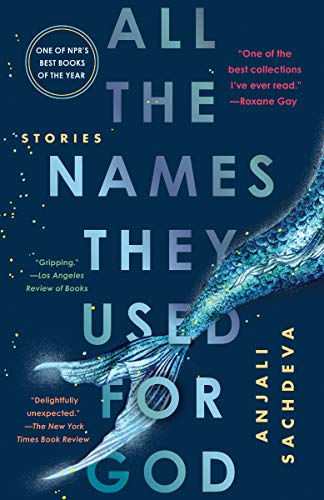
All the Names They Used for God by Anjali Sachdeva

The nine stories in this collection follow massive forces—technology, religion, nature, the supernatural—at play in ordinary lives. In “Manus,” the forces are aliens who look like “giant globs of snot.” They have dominated humankind via a fungus transmitted through physical contact, and their main order of action is forcing everyone to get their hands replaced, through a painless procedure, with metal ones, commonly referred to as “forks.” On a basic level, it reads like an eerily prescient allegory from pre-coronavirus days about what happens when you don’t socially distance yourself. But it also offers reprieve in the form of a pervasive humor in the face of oblivion: the interplanetary invaders, for example, have adopted a hilariously human version of English, which means they say things like “buncha loons” when watching revolutionaries die in the streets.

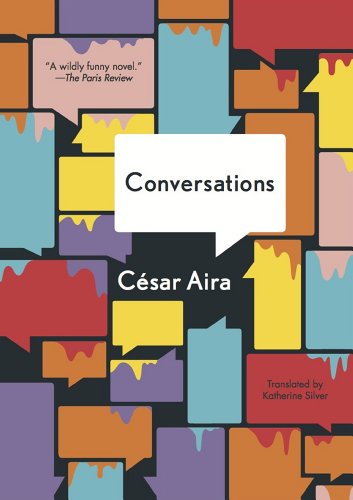
The Conversations by César Aira (translated by Katherine Silver)

This 2007 80-page novella consists entirely of a conversation between two friends whose philosophical meetings of the minds generally have “no place for gossip, soccer, health issues, or food.” The conversation in question, however, arises when an offhand comment about a slip-up in a low-brow movie they had both seen bits of turns into an extended debate about the wavering line between fiction and reality. The absurd conversation awakens nostalgia for times when you could sit with a friend at a bustling cafe. But it also mirrors the obsessive consumption of media that has come to replace many of our social lives. Don’t believe me? Search “Tiger King” on Twitter. 

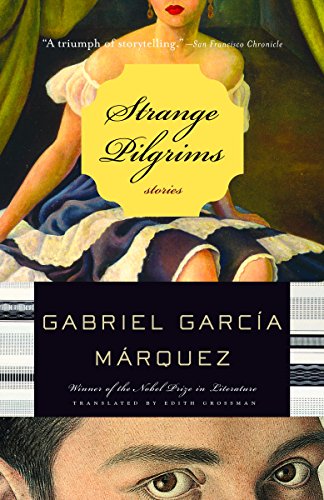
Strange Pilgrims by Gabriel García Márquez

The stories in this 1993 collection, which centers on the strangeness and loneliness of cities, are among the less fantastical of García Márquez’s oeuvre—but you will still find the body of a young girl that will not decompose, a crying dog, and a literal river of light. When, after eighteen years, he finally had a full draft, García Márquez revisited the European cities where the book is set, only to find them unrecognizable. “Not one of them had any connection to my memories,” he wrote in the introduction. “True memories seemed like phantoms, while false memories were so convincing that they replaced reality. This meant I could not detect the dividing line between disillusionment and nostalgia.” That alienation that seeps through the book reads today like a warning for how we’ll feel when we emerge from isolation.  

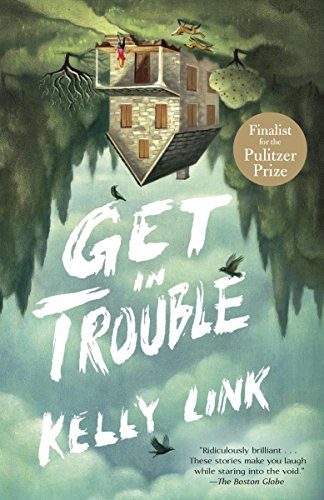
Get in Trouble by Kelly Link 

This entire collection, a 2016 Pulitzer Prize finalist in fiction, is full of delights. But the most salient is the fairytale-esque “The Summer People,” which itself won two literary prizes. In it, a teenager named Fran has a nasty bout of the flu. When her father runs off, she’s forced to take care of the summer people—which means both vacationers and folks of unspecified origins and magical abilities—while nearly catatonic with illness. That horribly realistic point is bound to make you a shudder (and hopefully donate to domestic workers). Flu descriptions aside, the reason to read this story now is the lush Southern scenery. Take poor little Fran’s house: “You could hardly see the house itself, hidden like a bride behind her veil of climbing vines: virgin’s bower and Japanese honeysuckle, masses of William Baffin and Cherokee roses over growing the porch and running up over the sagging roof.” Consider it a mental vacation.

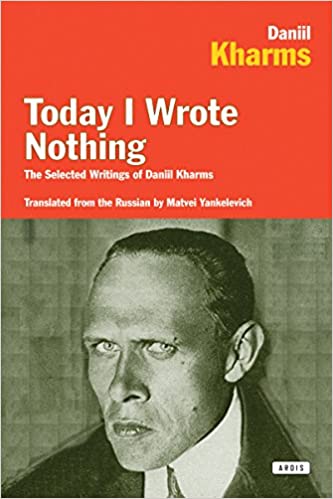
Today I Wrote Nothing: The Selected Writings of Daniil Kharms (translated by Matvei Yankelevich)

This collection could merit inclusion on the basis of its painfully relatable title alone, but there is also much from this Soviet-era writer that rings true today. His absurd microfictions, mostly unpublished in his lifetime, are told in a breakneck hilarious deadpan. Who among us has not yet tried this method of cheering up, from a little story about the struggles of being a hermit: “There were days when I ate nothing. On those days I would try to manufacture a joyous mood for myself. I would lie down on my bed and smile. I’d smile for twenty minutes at a time, but then the smile would turn into a yawn. That was not at all pleasant.” 

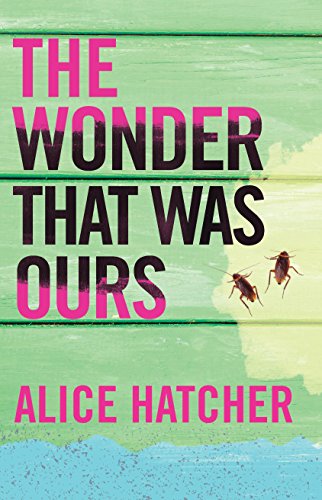
The Wonder That Was Ours by Alice Hatcher

This is a novel narrated by a chorus of cockroaches. There. Now that’s out of the way. The cockroaches live in Wynston Cleave’s taxi on a fictional island in the Caribbean, and one day he picks up two Americans who have been kicked off their cruise ship—just before a deadly viral outbreak overwhelms the remaining passengers. The book is an open-eyed exploration of colonization and a history of political movements, but the basic plot points are too pandemic-related to ignore. Bonus points come from this proto-twist on the xenophobic term “Chinese virus”: the contagion is called “the American disease” by the islanders. 

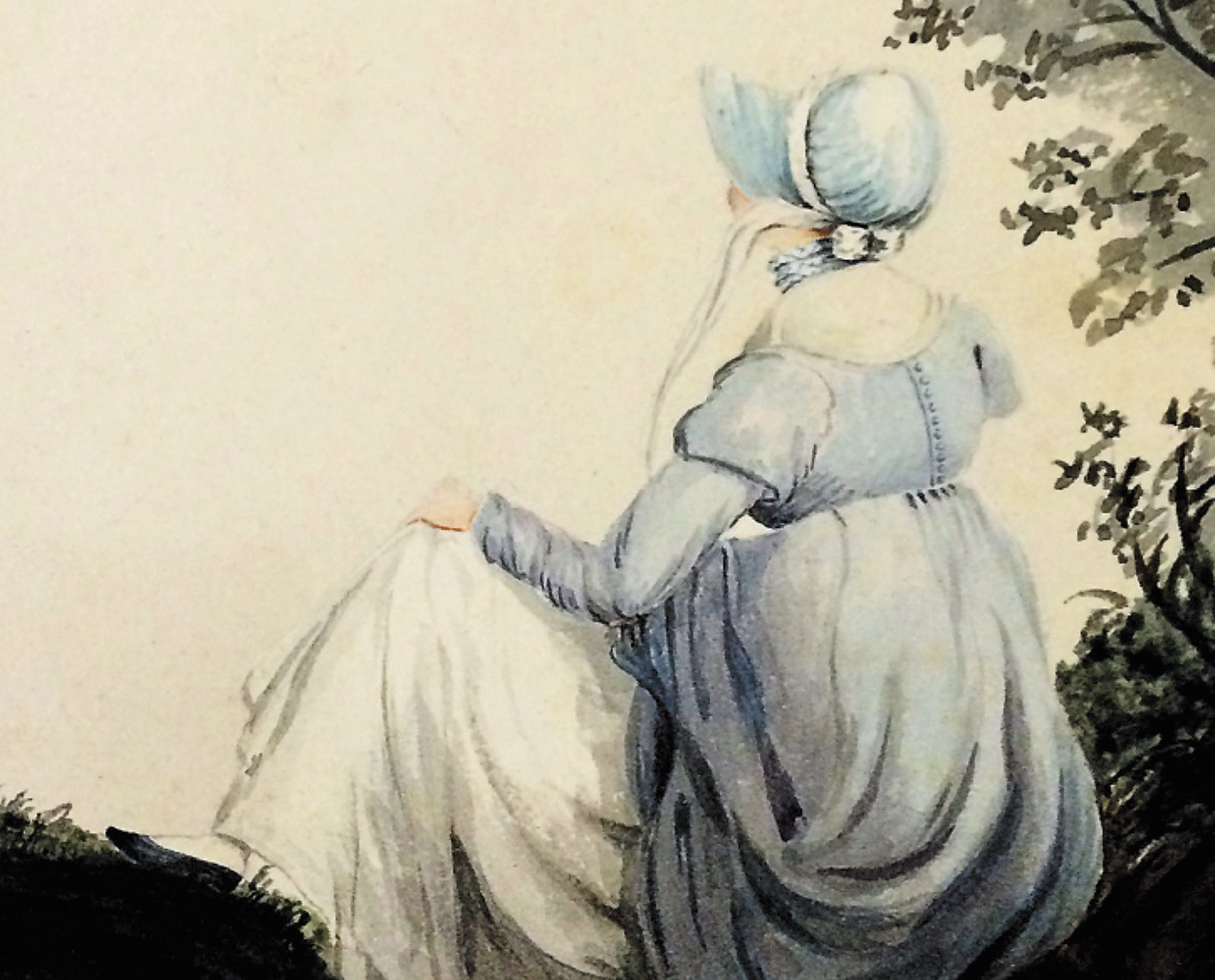
Why We Turn to Jane Austen in Dark Times

The coming year looks like a busy one for Austen fans. In the U.K., at least three novels are scheduled to be published based on her life or inspired by her work. On the big screen, there’s a film adaptation of Emma out and a new television version of Pride and Prejudice coming soon. 

Even for a writer who has barely been out of print in her 200-year career, this is a lot of attention. What’s driving it? Could it be that we turn to her with a special kind of hunger when the world seems particularly grim? 

History suggests that might be so. In the First World War, special cheap editions of Austen’s books were printed for soldiers to read in the trenches, and when the fighting was over, they were prescribed to shell-shocked veterans as a kind of literary therapy. The stable, orderly world in which her characters spar and flirt seemed particularly suited to heal and soothe shattered minds. 

Twenty years later, the comfort she offered was just as appealing. Between 1939 and 1940, as Britain went to war again, sales of Pride and Prejudice tripled. Winston Churchill, snatching a rare moment of downtime from leading the fight against fascism, finished Pride and Prejudice with a wistful envy for the idyllic, untroubled world he found there: “What calm lives they had, those people!”

Virginia Woolf agreed. You would never know from Austen’s writing, Woolf observed in 1940, that for nearly all her life, Britain was engaged in a bitter ideological conflict, fought on a global scale with a huge cost in lives. The Napoleonic Wars, Woolf argued, made little personal impact on those who did not fight in them. Austen did not know what it was like to throw herself to the ground, as Woolf was later obliged to do, in a terrified attempt to take cover from an enemy bomber. Horror happened somewhere else. 

Austen’s insulation from the wars of her own time, it was suggested, made her all the more attractive to beleaguered readers suffering under the inescapable perils of twentieth century conflicts. They could retreat into her books safe in the knowledge that they would find nothing there to remind them of their current fears and anxieties. Her work was a safe space where they could give themselves up to all the pleasures Austen so brilliantly delivers—her wonderful characters, her sly and supple prose, her wit that so unfailingly hits the spot—and of course those gloriously satisfying happy endings. 

There’s no doubt that Austen’s skill in creating a fully-realized world into which it is easy to escape was indeed a powerful part of her appeal—and one that has long outlasted wartime. I’ve often turned to her in times of trouble—and always found her writing to be a very effective way of raising the spirits. I can never read Elizabeth Bennet’s tussle with Lady Catherine de Burgh without feeling exhilarated, and the moment when Anne Elliot and Captain Wentworth finally come together always makes me smile with relief that they didn’t mess it all up again.  

Austen described this as her “light, bright, and sparkling” mood—and when you’re looking to escape from a reality that feels oppressive, it’s exactly what you want.    

But I’m not sure it’s the whole story—or that it does justice to the true nature of her appeal. 

I don’t think we continue to turn to Austen because, unlike us, she was protected from the capricious miseries of life. On the contrary, I’d argue that her power to connect with us in hard times arises not because her retired life shielded her from grief, pain, and fear—but because she knew very well what it was like to feel vulnerable, exposed, and anxious about the well-being of those she cared about.  

We wouldn’t return to Austen again and again if all she had to offer us was an agreeable candy-colored fantasy.

I think it’s this experience that gives Austen’s writing its muscularity and strength. We wouldn’t return to her again and again if all she had to offer us was an agreeable candy-colored fantasy. There’s a toughness in Austen that tempers everything she writes, even her lightest and brightest moments. It isn’t always pretty, but it’s an inescapable part of who she is. It offers an altogether more bracing prescription of how to respond to terrible events—and is, I think, a product of her constant exposure to a steady stream of human tragedies.         

Jane Austen didn’t need to experience warfare first-hand to look death in the face. She saw plenty of that at home. Even for middle class families like her own, daily life was an endless war of attrition against illness and annihilation. Everyone was a potential victim—her sister Cassandra’s fiancé died suddenly at 29—but women were especially exposed. Pregnancy placed a woman squarely on the front lines of the struggle for survival, and the casualty rate was high. Three of Austen’s sisters-in-law died in childbirth, two in their eleventh confinements. It’s no surprise that Austen’s books are haunted by dead mothers; Anne Elliot, Emma Wodehouse, and Georgiana Darcy have all experienced this loss. Everyone had a black dress in their wardrobe and all too often was obliged to put it on.  

Austen’s response to this remorseless toll of mortality was uncompromising. She refused to give in to misery or hopelessness, cultivating instead a steely bravado that even now has the power to shock. Her remark on hearing that a neighbor had miscarried—“I suppose she happened, unawares to look at her husband”—still makes you catch your breath. 

It would be easy to dismiss this as heartlessness—and indeed, there is a merciless quality in Austen. Her happy endings are amongst the most compelling in literature, but she has no qualms in dispatching less favored characters to truly terrible fates. Think of Maria Rushworth consigned to a lifetime of exile with the appalling Mrs. Norris. 

Unlike so many of her peers, Austen has no time at all for sentimentality. The world is a cruel place, she implies, but we cannot allow ourselves to be destroyed by it. It may be necessary to ration your sympathies, if you’re not to be engulfed by misery.

What Austen really prizes is resilience. All her favorite characters display it.

In Persuasion, she has no patience with Mrs. Musgrove’s rose-tinted recollections of her dead sailor son, tartly reminding us that the “poor Richard” for whom everyone is now lamenting, was when alive merely “thick-headed, unprofitable Dick Musgrove” whom nobody much cared for. His mother’s “fat sighings” are, she suggests, really nothing more than self-indulgence.

What Austen really prizes is resilience. All her favorite characters display it. Sense and Sensibility’s Marianne comes closest to giving into despair, but even she finds the courage to claw her way back to a chastened resignation of her lot. We cannot afford, Austen suggests, to allow ourselves the bitter pleasure of surrendering to terrible events. We need to find a little iron in our souls if we’re not to be crushed by the horrors the world throws at us.

Austen’s coolly pragmatic attitude to the management of despondency doesn’t make me love her any less. I can rejoice in the escape she offers from the pressures of a hostile world; but I can also be fortified by the self-discipline she insists upon as a means to survive them. The tough love she advocates can be just as consoling in its way as the light, bright and sparkling comfort that’s so easy to enjoy.    

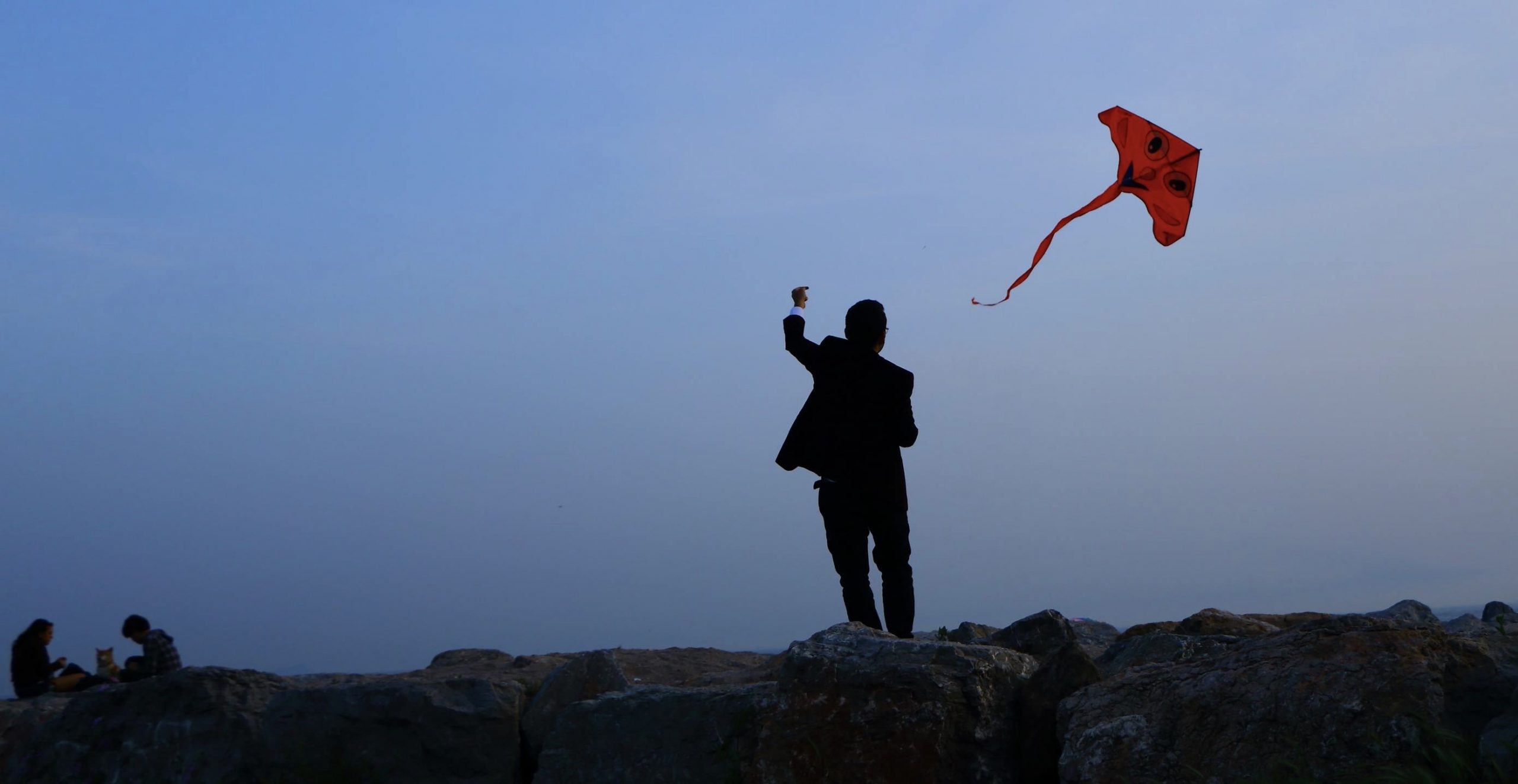
Let Nothing Come Between a Man and His Kite

The Last Argonaut

On the anointed day at the chosen hour, the wind coming out of the east was calm and incidental. This angered Bob and he lashed out at the woman he had hired to dance for him at the Days Inn. 

“Slower, goddamn you. Sensual. Do you know anything of burlesque, of the great French symposia,” Bob said from the armchair. He caressed his unflown box kite and watched Miss Priscilla dance satirically in slow motion. 

“You know what, fuck you, you demented woman. Just dance normal,” Bob said. 

Miss Priscilla resumed aggressively humping the air and Bob took a pull of 100-proof whiskey. Bob was going to drink and Miss Priscilla would dance until Judgment Day. 

The Nacogdoches Kite Festival had been scheduled for earlier that afternoon. But a near windless pall had settled over the county. The pines stood upright and the water in Lanana Creek sat still and limpid. Bob was inconsolable. Dr. Thibodeaux, the organizer of the event, had not consulted the meteorology. 

“We are lions being led by donkeys!” Bob yelled to his fellow kite flyers. 

“Alright, calm down, Bob,” said Thibodeaux. 

“I will not be calm, sir!” Bob shouted. “I’ve waited all goddamn year for this.”

Bob was so upset he debauched himself with Miss Priscilla and whiskey and Pizza Hut and a rack of Lone Star beer and donuts and the Book of Mormon and its prurient space opera. He woke up the next day to the rustling of the wind. 

 Bob ordered a beer and a shot at the Chili’s where the kite flyers day drank. He downed both.  

“Who will ride with me to Aqaba?” he asked. No one answered. 

“Goddammit,” Bob said, “Is there not a fellow Argonaut among you?”

Dr. Thibodeaux got up from his table and said, “Bob, we don’t want you in the club anymore. Most of us are parents. We don’t want you around our children.” 

Bob took another shot of whiskey. “You’ll apologize for that, and offer your resignation,” Bob said. Bob then turned to the rest of the kite flyers and added, “When I am president of this venerable club, please know that your children will be banned from our events, because they are clumsy and vicious. They have no goddamn business flying kites. They don’t have the artistry or the resolve.” 

The kite flyers responded to Bob’s assertion by physically assaulting him. Dr. Thibodeaux and Martinson, whose son really was an oaf, held Bob back for a few minutes while the others punched him in the kidneys. Finally, the bartender, also a kite flyer, said enough was enough and Bob was allowed to stumble into the parking lot. It was a fair and compassionate beating. 

Bludgeoned, Bob had returned to his motel room, called for Miss Pricilla and Pizza Hut, and drank whiskey, far too much of it. How had kite flying become as booze-fueled as horse racing? When Bob was young he used to fly kites sober and innocent on his father’s land in Nebraska. Between the harvesting of summer corn and planting of winter wheat, Bob would sail his Dopero across the sky, despite this being pheasant hunting season. His father would stave off the roving gunmen. “That is my boy,” Bob’s father would say, “Let him be, for he flies kites thrice as well as the best pheasant gunman shoots.” 

“Thrice!!!” Bob Sr. would shout, rising from his chair on the front porch with fine, terrible anger. 

But when Bob turned twenty-five, his father brandished his own Remington and shot down the Dopero as if it were a migratory bird. “Kite flying is the purview of children. You look insane and unprofitable,” Bob’s father told him. Bob realized his father was right, that an adult kite flyer is a highly unsocial specter but fifty adult kite flyers must be a society unto themselves. So Bob joined a kite flying club in Lincoln. He was quickly dismissed for his exacting standards and contempt for children. Then they kicked him out of Omaha. Then Kansas City and Topeka. He had slowly worked his way south over the years, trying to live on a small allowance provided by his father’s estate. In total, Bob had been expelled from nearly three dozen fraternal organizations devoted to the flying, building, preservation, and repair of kites. 

Bob was soon drunk and he wept openly, sprawled across the bed. 

This alarmed Miss Priscilla. She had never seen Bob cry before, in all the days she had watched him drink and curse the Soviet bureaucracy of kite flying.  So she learned how to dance the burlesque from YouTube. Then she danced for Bob, at the correct pace, with the perfect balance of feigned eroticism and bemusement. And Bob smiled through his tears and applauded. 

“Miss Priscilla, will you come fly kites with me?” Bob asked. 

“No,” Miss Priscilla announced. “You still ain’t right. Not tried to ride me the once.” 

“How can you speak of procreation in my hour of want!” Bob screamed at Miss Priscilla. He threw cash at her and she went. 

Bob drove to the park. Screw them all, Bob thought. He unfurled his line and watched his box kite advance. It was beautiful in the warm green air of Nacogdoches. Bob felt at peace. He owed Miss Priscilla an apology, he thought. He would track her to the bar and buy her a gin martini and a steak. Bob would finally admit to Miss Priscilla that she too was beautiful and kind in her own way. And he would forgive Dr. Thibodeaux and the others. Thibodeaux would embrace Bob at the Chili’s and say to an incensed Martinson, “you are ever with me, and all that I have is yours, but thy Bob was lost and now he is found.” 

Families with small children arrived for a birthday party at the park. A child of perhaps seven walked over to Bob and pointed at his box kite dancing in the wind and then looked up to Bob with tender, expectant eyes. Bob recognized himself in the boy, his eagerness to take up the reel and line and explore the vast and open spaces of this country. Kite flying might even be an Olympic sport one day. This is what Bob had wanted for himself, for life to be easy and gracious. 

But Bob lived out of cheap motels, alone. He watched salacious videos of women dancing, alone. He sold his plasma to afford whiskey, bamboo and silk. Bob had scurvy because he only ate Pizza Hut. Outside Fort Worth, several convenience store robberies were perpetrated by a masked bandit who bound the cashiers’ hands with kite string. The bandit usually wept. When Bob’s father passed away, Bob did not go to the funeral. The winds in Salina were too promising.  

The boy gestured for the reel and line, and Bob ran away from him. The boy laughed and gave chase, thinking Bob was being playful. But Bob fled in moral terror. He would not be responsible for setting this child on the kite flyer’s path of misery and violence. Bob would keep running until he found Miss Priscilla at the bar. She would be drunk on gin and so proud of him. When he looked back he saw that the boy had been joined by the other children, a horde of them laughing and chasing after Bob. Bob ran as fast as he could. He did not see the new sewer ditch on the north side of the park. Bob stumbled and broke his neck. His body lay in the ditch. Wholly innocent of the world, the children noticed only that Bob had relinquished the kite at last, and they cheered wildly.

“Little Fires Everywhere” Asks Whether Art—Or Parenthood—Is Theft

If you’re going to adapt a book to the screen, I’m a fan of the limited series. It gives the story room to develop echoes and reflections between characters and events, a luxury that two-hour films often don’t allow. For these reasons, the series approach is a benefit for the Hulu adaptation of Celeste Ng’s New York Times best-selling Little Fires Everywhere, which is very much about those creative reiterations and alterations.

The series reflects on how art (not unlike adaptation) borrows, quotes, references, pays homage to, creates a pastiche of, appropriates, plagiarizes, samples, or steals from others’ work. The story’s central artist, Mia Warren (Kerry Washington), however, critiques art that is too focused on appropriation—the artistic concept of taking from others—without much creativity of its own. Mia states, not surprisingly, by quoting her teacher Pauline (Anika Noni Rose) that “art should either bring something new into the world or something strange and familiar and terrifying. Or at the very least uncomfortable.” She is saying that art should make something new and unsettling while acknowledging what it takes from others.

When does adaptation and intertextuality become stealing? To whom does the art object finally belong?

But when does adaptation and intertextuality become stealing? To whom does the art object finally belong? And to what extent is anything we “make” truly ours? In Little Fires Everywhere, adaptive art can be a means to establish a larger conversation, to see another’s perspective, and to reject the myth of the self-made and self-sufficient person who has earned the right of sole dominion over something or someone else. 

The narrative follows the nomadic artist Mia when she moves with her daughter Pearl into the affluent planned community of Shaker Heights, Ohio in 1997. Their arrival shakes things up for another family, the Richardsons: mother Elena (Reese Witherspoon), father Bill, and their four teenaged children Lexie, Trip, Moody, and Izzy. Broadly, the story considers the power dynamics created by race, class, gender, and sexuality, particularly in the failures of characters to see outside of themselves, resulting in their judging others based solely on their own experiences. The story eventually turns to the issues of a cross-racial adoption case as well as the question of parental “ownership.” But it begins in the art.

Cinephiles will perceive a layered artistic repetition in the first shots of the series. As viewers watch a stately home burn to the ground, we see the echoes of another famous book turned movie—Daphne Du Maurier’s Rebecca, cinematized by Alfred Hitchcock. Viewers may also recall that that narrative, like this one, is told in retrospect. In both cases, the house has burned down and now we must return to it in its prime to see why we have ended where we have. As another female-focused narrative where the growing distrust between women and issues of class consume everything, this reference establishes some of the interpretative context for the narrative. 

After this opening flash-forward, the inciting narrative event—Mia’s arrival in Shaker Heights—constitutes another cinematic repetition. The Stepford Wives, a classic book by Ira Levin turned feminist film directed by Bryan Forbes, also focuses on an artistic photographer who has left the city for rule-bound suburbia where the women embody some “idealized” sense of womanhood and domesticity. While this more reality-based rendering with book clubs and pre-packed lunches does not reveal the women to be controlled by men as directly, we do see how Mia, Elena, and their children continue to feel overwhelmed and conflicted about the patriarchal norms of heteronormative, white-dominant, family-centered life. Therefore, these establishing instances help to develop the overall emotional core of the story and its allusive history.

One area of referentiality that stands out because of this story’s adaptation onto the screen is the use of music from Tina Turner, Silver Convention, and Marvin Gaye to Alanis Morissette, Counting Crows, and Tupac Shakur. Although using popular music isn’t unusual for a soundtrack, some of the numbers are covers of the originals that should make the viewer a bit unsettled. The first episode ends with Union’s remake of Marcy Playground’s “Sex and Candy,” which dominates two crosscut scenes—one where Elena and her husband are having sex and one where Mia, in a nightmare, rides a subway car while being held by a woman who disappears, leaving Mia alone to receive the threatening gaze of a man who turns into Elena. This musical moment lets us see some of the hidden dimensions of our characters.

But while the original version of the song was a timely 1990s piece, this 2016 cover jumps the listener forward in musical time outside of the realism of the story itself. These moments are off-kilter—with Elena momentarily returning to a sexy, laid-back version of herself, and Mia in the terrifying dystopian space of a dream. Additionally, having a woman, Marie Hines, sing this dreamy, slow, and dark version of the song in our contemporary moment not only anachronistically unbinds the timeline, but it also unmoors the heterosexual narrative with one woman singing about another in sexualized ways: “and there she was / Like double cherry pie.” By using a cover, this piece of art is telling us something new about the story as well.

These musical references highlight the commonality of creative borrowing that is made plain in the story’s visual art examples, but it also brings up new questions. Mia makes her daughter a bicycle, which she likely took from the trash of her neighbors, and then covered in the Good Neighbors Guide. Pearl stitches a favorite quotation from Adrienne Rich into a t-shirt she wears. Izzy, the youngest Richardson and a budding artist herself, creates a collage of lesbian imagery that she cuts out from magazines, and she repurposes Cabbage Patch Kid dolls. They all bricolage the objects at hand as part of the regular creative process, making them anew.

These examples show that art regularly makes use of the work that has come before it, but Little Fires Everywhere also reveals the problems of such referencing in the storyline itself. When the story flashes back to Mia in art school, Mia criticizes the historical artist Richard Price’s re-photographing the images of others while talking to her teacher Pauline: “they’re not art. They’re derivative. He’s basically stealing.” Pauline questions her by restating, “You mean appropriating,” and adding, “You take things that don’t technically belong to you and put them in your art.” Although Mia certainly finds many ways to make her art her own, her teacher reminds her of the importance of acknowledging her sources and that no one is fully self-made.

This threat of appropriation that disregards its source crosses into plagiarism—using someone else’s words or ideas without acknowledgement—when Lexie Richardson steals an incident that happened to Pearl for her college application to Yale. In the essay, Lexie rewrites the classism and racism Pearl encountered when trying to be placed in an advanced math class, replacing those issues of race and class with the glass-ceiling of gender, and then claiming the experience as her own. It is one thing to take the objects of others, but it is quite another to appropriate their lived experiences, especially when you are already the one with power on your side. Lexie only sees this moment through her perspective as an opportunity for self-advancement instead of seeing how she has built her success on someone else.

These concerns about appropriation in art culminate in conflicts over the possession of children. Can parents own children like they own art?

These concerns about appropriation in art culminate in conflicts over the possession of children. Can parents own children like they own art? The story suggests that we see the children as a kind of art (kids are referred to as the new objects being brought into the world, just like the definition of art that Mia gives). Replacing objects with bodies, though, brings the benefits of totalizing parental authority into doubt. For instance, in the custody dispute attempts are made to buy the child as though she is a consumer good or an art object—a parallel made apparent by Mia’s sale of a famous photograph to pay for the custody hearings. This symbolic objectification produces a logic that focuses more on parental rights than on the child.

Issues about parental rights extend into all the major relationships. Mia talks about her right to take whatever pictures she likes of Pearl because, as she says, “she’s mine,” but this is part of an all-consuming urge of parenthood. Elena further exposes that dominating desire when she speak of wanting to eat her daughter like an apple, “seeds and all.” As with the relationships between the various mothers and their more mature daughters, attempts at total control only lead to disconnection. If appropriating art without acknowledgement is problematic, appropriating children holds even worse dangers because children are not just reflections of their parental “makers.” Instead, parents should shed their myth of being sole creator and acknowledge that children have multiple influences and should creatively shape themselves.

Although Little Fires Everywhere doesn’t give us all the answers, its layered artistry uses repetition to question our notions of possession. By focusing on women’s issues and community control based on privilege, the show reminds us of the importance of seeing outside the self, confronting the characters and the viewers with some of the dangers of claiming ownership of others’ bodies as if they were art. The show, like the art within it, is a pleasurable experience that also purposely brings discomfort with it. Its high drama doesn’t minimize a style that’s all its own. By incorporating musical covers, cinematic allusions, and highlighting the connection between children and art, the series pays attention to the multiple facets in the book while making something new as a work of art should.

7 Books About Women in the Desert

What is a desert? A desert is a place with little rain, a dry place where plants struggle, where animals struggle, and only those creatures who have adapted themselves to the harsh winds and sun can survive. A desert is extremely hot, but it can also be stunningly cold, like Antarctica—a desert of ice and snow. A desert is expansive and flat with waves of inhospitable sand. A desert is a landscape of corals and reds, with mountains that touch the clouds and air that sings ancient songs. A desert can seem so very old, primordial even, a place before people, designed without people in mind. But many deserts are relatively young and often have been created, unintentionally, by us. A desert is wise. A desert is mute. A desert is the place we’re supposed to go to find our true selves. A desert is not a place at all, but rather a state of mind. It is pure spirit, the soul confronting itself in silence. It is a place to experience the body’s fragility and its dependency on water and food. A place of wandering; a place of finding. A place of strife; a place of peace.

Growing up in Las Vegas, Nevada, a city of sparkles in sand, I was taught to see the desert as barren and useful only as a vessel in which to fulfill the ambitions of men. Contrast that with the following thought by the poet Joy Harjo: “I don’t see the desert as barren at all. I see it as full and ripe… it does with what it has, and creates amazing beauty.” Perhaps how one experiences the desert depends upon whether you see it as empty or full, and how you act in the face of that “presence” or “absence.”

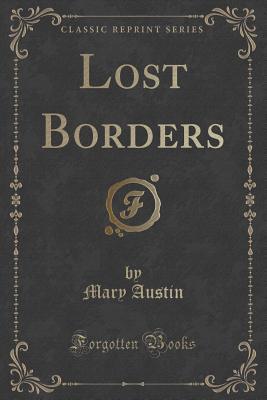
The following books explore aspects of the desert, specifically as experienced by women—women singing the desert, women lost in the desert, women looking, women drowning, women showing. “[He] did not understand,” wrote Mary Austin in the story collection Lost Borders of a minister who has newly arrived to her desert from the East Coast, “that the desert is to be dealt with as a woman and a wanton; he was thinking of it as a place on the map.“  

Secrets from the Center of the World by Joy Harjo, photography by Stephen E. Strom 

In the work of poet Joy Harjo, desert is a verb. It is an act, a ceremony—an ancient mountain lion shifting his bones; an old man who wakes and prays then comes inside to cook his breakfast; the shutting of a car door that echoes into the dark of the mesa west. The desert is a “pure event,” but one “mixed with water, occurring in time and space, as sheep, a few goats, graze, keep watch nearby.”

Written in collaboration with the photographs of astronomer Stephen Strom, Secrets From the Center of the World begins with the words, “All landscapes have a history.” The desert holds something of the pure spirit that so many have written of, but for Harjo—current U.S. Poet Laureate and first Native American to hold the position—this spirit is inextricable from stories. The stories are of the people who live, or have lived, in the desert, but they are also stories of the desert itself. “There are voices inside rocks,” writes Harjo in the preface, “they are not silent.” The desert, which looks so deceptively still, is actually filled with motion and time. It is not the desert, therefore, that brings stillness and silence to us. The desert is an invitation to become silent so that we might hear its tales. For Harjo, the desert is fat and abundant with desert stories, which include stories of trauma and grief. The desert gives as much as it takes, and can teach us how to sing its song, even if it’s a song we don’t know, and maybe, do not want to know. 

26950386

Lost Borders by Mary Hunter Austin

Though she was born in Illinois, and spent a number of her years in New York and Europe, Mary Hunter Austin is a writer of the American West. Moving to California in 1888, Austin’s adult life was largely spent in deep communion with the people and landscapes of the Mojave Desert and New Mexico. A feminist, socialist, mystic and escaped Midwesterner, Austin’s desert could be put in the category of “desert as freedom.” But more than that, I think Austin was seeking something she calls “pure desertness,” a desire to know something essential in the desert, a message, one Austin learned largely through the act of seeing.

In Lost Borders, as in most of her works, Austin’s writing unfolds in snapshots: “a crumbling tunnel, a ruined smelter, and a row of sun-warped cabins under tall, skeleton-white cliffs.” Straight, white, blinding, flat, forsaken. Starved knees of hills and black clots of pines—the way a certain part of the desert looks can teach you its lesson, though that lesson, like the land that tells it, might be one of hazy borders and sandy edges. More than once in Lost Borders, Austin begins a tale that seems to evaporate just before it ends, like an unraveled ball of string that leaves no center. “There was a woman once at Agua Hedionda—but you wouldn’t believe that either.”  This is the desert too, for Austin, a place not just of lost borders but a place that has no end, and thus, fewer limits.

In Lost Borders, Austin also conjures a quality of the desert not often described: the land’s sensuality, and even its femininity. “If the desert were a woman”, she wrote, “I know well what like she would be: deep-breasted, broad in the hips, tawny, with tawny hair, great masses of it lying smooth along her perfect curves…eyes sane and steady as the polished jewel of her skies…such a largeness to her mind as should make their sins of no account, passionate but not necessitous, patient—and you could not move her, no, not if you had all the earth to give…If you cut very deeply into any soul that has the mark of the land upon it, you find such qualities as these—as I shall presently prove to you.”

Everybody Needs a Rock by Byrd Baylor, illustrated by Peter Parnall

This is a profound book in the guise of a light children’s book. It makes one important point: Everyone needs a rock. The book offers ten helpful rules on just how to obtain your very own special rock including, “Don’t let anyone talk to you while you’re looking for your rock,” “Don’t worry while looking for your rock,” “Don’t get a rock that is too big or too small,” and “You must get truly all the way down on the ground to look at all the rocks in the eye in order to find the one for you.” Baylor’s little book creates a sensory experience of the desert by inverting its landscape and shrinking it into what you might call the micro-sublime. One must not just look at rocks en masse, as many do; you must find your individual rock by smelling it, stroking it, listening to it. Through your rock, you can share an intimacy with the desert landscape and perceive prehistory in your hand. Also, by the end of your search, you will have a rock friend that will last for a million years. Baylor’s desert is a site of curiosity and discovery—a place, even, for play. Why not? Yes, there is the overwhelming spread of the desert with its dizzying lack of corners and shifting landmarks. And also, there is just this rock, your rock, should you choose to find it.

The Woman in the Dunes by Kobo Abe

The Woman in the Dunes by Kōbō Abe

One day, a man on a short holiday goes looking for insects in a remote village in Japan, built among the dunes. The man is a collector and, as all collectors, eventually loses track of time in the dizzying landscape of sand. He asks a local villager if he might stay somewhere for the night, and is led to the home of a woman whose little shack is at the bottom of a deep hole in the dunes. Thinking he is to be there one night, the man soon realizes that he has been tricked into living with the woman in perpetuity and for one purpose: to help her with the daily work of digging sand that constantly threatens to drown the little shack—and in fact the entire village.

As you can imagine, the man thinks only of how he can escape this wretched life of repetitive, pointless, Sisyphean labor. The story is told through the man’s desperate and winding series of thoughts, but it is the woman, I believe, who is the book’s true focus. The Japanese title of this book, Suna no Onna, translates as Sand Woman. The man is dumbfounded by the woman’s seeming passivity and even stupidity, and by her lack of desire to escape what he sees as a life of thankless slavery. Yet the woman, while not exactly happy, seems quite content with her life. 

The Woman in the Dunes is an extended meditation on the elemental power of sand. While the man sees this power as a force to fight against, the woman appears to see the act of clearing sand as simply her life’s work. She approaches this task with a Zen-like concentration. Is the woman just a sacrifice, as the man thinks, an offering to the villagers or even the gods of sand? Or is she free from the bonds of “self?” Just as one’s footsteps are immediately effaced in sand, so can the desert erase one’s individuality. Whether you think of this as liberation or hell is up to you.

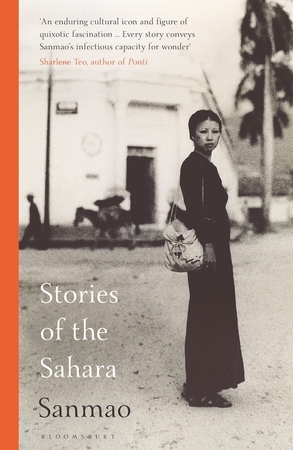
Stories of the Sahara by Sanmao

Can you remember a time when “the world” came to us in encyclopedias and books and guides? This is how the writer Sanmao first discovered the Western Sahara, while absentmindedly flipping through the pages of a National Geographic in an apartment in Madrid. Chinese-born and raised in Taiwan before living for a time in Spain and Germany, Sanmao didn’t know where she belonged. But looking at the shiny magazine pictures of the Sahara, she was at once seized with a feeling of homesickness and longing she couldn’t quite understand, and this longing soon became obsession.  

Sanmao did eventually travel to Spanish-colonized Western Sahara; her six years there living on the borderland between expats and Sahwari natives make up the tales in Stories of the Sahara. Residing in a rented house on the edge of town, Sanmao is ever asking the locals how one gets into the desert. But, this is the desert right here, they reply. You are in it. Living on the edge of desert and town, Sanmao’s writings invoke the question: Where does the true desert begin? Is there a real desert that can tell us the secrets of life? Her ideas about the desert—romantic and childish, by her own description—are forever bumping up against its troubles: djinns that howl in the night, goats that fall from the sky, neighbors who steal your shoes. But for Sanmao, a true romantic, even these experiences—by turns annoying and terrifying—are woven into the desert’s magic.

Written in the 1970s, Sanmao’s portrait of the desert is an ancient one; it is a place of “poetic desolation,” the “boundless” place in which to expand one’s personality and move beyond one’s own individual borders. Sanmao is the desert traveler as seeker, the desert a destination for those who don’t quite fit into the life prescribed for them, who feel like strangers on earth.  

Image result for poster

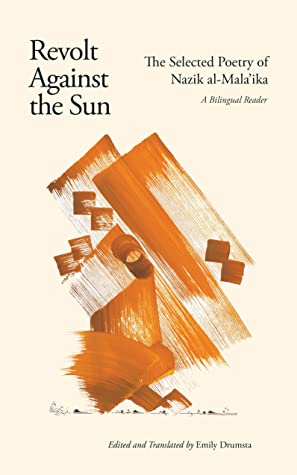
Revolt Against the Sun by Nazik Al-Malaʾika, translated by Emily Drumsta

Born in 1920’s Baghdad, the poet and critic Nazik al-Mala’ika left Iraq in 1970 after the rise of the Ba’ath Party. She lived in self-imposed exile in Kuwait and Egypt until her death in 2007. Al-Mala’ika is known as a pioneer of Arabic free verse (taf‘ila poetry) but her work has been largely untranslated; the soon-to-be-published Revolt Against the Sun: A Bilingual Reader of Nazik al-Mala’ika’s Poetry is the first major edition of her work in English. 

Although al-Mala’ika is considered an innovator of modernist verse, she is also fundamentally a Romantic, and, as her translator Emily Drumsta has written, al-Mala’ika’s poetry articulates deeply felt emotions and sensations through the use of traditionally romantic motifs—primarily the sun. Yet, while for European Romantic poets—living in darker, colder landscapes with seasons that have more obvious contours—the sun is a sign of hope and joy, in al-Mala’ika’s literature of the desert, the sun is portrayed as a judge, an oppressor bearing down on fragile hearts with its heat and blinding rays that leave no room for our innermost concerns. She writes, “I came to pour out my uncertainty / in nature, ‘midst sweet fragrances and shadows, / but you, Sun, mocked my sadness and my tears / and laughed, from up above, at all my sorrows.” In the desert, the sun creates thirst and cruelly rips off the shroud of dreams fashioned in the nighttime. In the desert, it is the light of the stars and not the sun that inspires the “hopeful heart”: 

How often I have watched stars as they pass
letting the twilight shape my incantations,
and watched the moon bidding the night goodbye,
and roamed the valleys of imagination.
The silence sends a shiver through my spine
beneath the evening’s dome, so still and dark,
Light dances, painting on my eyelids with
The dreamy palette of a hopeful heart.
“And as for you, oh sun… what can I say?
What can my passion hope to find in you?

I Am the Beggar of the World: Landays from Contemporary Afghanistan translated by Eliza Griswold, photography by Seamus Murphy

In the winter of 2012, the poet Eliza Griswold, along with photographer Seamus Murphy, began collecting landays after learning the story of a teenage girl living in Afghanistan who was forbidden to write poems by her male family members, and set herself on fire in protest. A landay is an ancient oral poetic form created by (and are primarily for) Pashtun women living between Afghanistan and Pakistan. The two-line poems are anonymous, and as they can be swapped and sampled from each other, are also fundamentally authorless. Contemporary landays reference Google as much as goats, but are most often riffs on themes like love, war, family, and homeland.     

When sisters sit together, they always praise their brothers.

When brothers sit together, they sell their sisters to others.

In the book’s introduction, Griswold writes that she wanted to collect landays before US troops pulled out of Afghanistan. Her fear—and the fear of many with whom she spoke—was that Pashtun women were living in a brief grey area of relative freedom, and that their lives would become smaller and more isolated, as they were during the reign of the Taliban, when American soldiers—who were resented as they were appreciated—left. 

If you hide me from the Taliban,

I’ll become a tassel on your drum.

Once, landays were shared around campfires and sung in fields and at weddings—they were a form of community bonding as well as art. Now, they are just as often shared on Facebook and in text messages, but still battle cries against the social deserts that threaten us all. They are a secret language Pashtun women use to connect with each other in universal rage and grief and fear of violence, as well as humor and longing.

I’m in love! I won’t deny it, even if

you gouge out my green tattoos with a knife.

In my dream, I am the president.

When I awake, I am the beggar of the world.

Free or Cheap Resources for Emerging Writers

For emerging writers, getting published for the first time can seem like a tremendous undertaking. Either you don’t know where to start, or no one wants to take a chance on publishing a newcomer. There is where you might ask, well, then how do you get published? To help ease the process, various writers, organizations, and other members of the literary community offer their own resources to keep you up-to-date and informed about any and all aspects of the publishing industry. From weekly newsletters to social media-specific tools, there is continued support to help you throughout all stages of your writing career.

Here are some of the free or cheap resources about where to publish, how to find agents, and details about contests, residencies, job opportunities, and more.

Community of Literary Magazines and Presses

The Community of Literary Magazines and Presses is a great organization for both writers and publishers. For writers, CLMP offers a searchable database of magazines and presses and posts job opportunities with incredible publishers. As a member of the CLMP community, publishers receive consultations and a submission manager comparable to Submittable.

Duotrope

Duotrope is a subscription-based service that supplies writers with upcoming deadlines, statistics on various publishers and agents, a submission tracker, and searchable agent names. For $5 a month, these resources are compiled to give you everything you need in your literary toolkit in one platform. Check out their free trial.

Submittable Newsletter

Submittable’s newsletter, Submishmash Weekly, sends a curated list of writing news, opportunities, and podcast and book recommendations to those who are looking to commute in style. If you want to be regularly informed without the stress of mass unfiltered content, sign up for the newsletter.

Author’s Guild

Author’s Guild is a professional community for writers, advocating for authors’ rights. This organization helps writers learn about publishing, self-publishing, finances, publicity, and other aspects of the industry you might not know about. One of their most utilized features is their legal team, who can review any contracts to suggest recommendations and negotiation tips.

Study Hall

Study Hall is an online community for media workers. For 4$ a month, members access weekly newsletters of freelance opportunities, job openings, a weekly media digest, a Slack network, a listserve, and other helpful tools like a database of editors and a guideline to pitching outlets. If you’re a journalist/writer/editor of color, there’s a subsidized tier of 1$ a month.

Julia Phillips Writes

Writer Julia Phillips offers her calendar for funding deadlines, which includes fellowship, grant, and residency opportunities.

Minorities in Publishing

A 2019 survey by Lee & Low Books showed that “76 percent of publishing staff, review journal staff, and literary agents are White.” What does the lack of diversity mean for the book industry? Minorities in Publishing is a podcast, hosted Electric Literature contributing editor Jenn Baker, that features various writers, publishers, and members of the lit community talking about representation and race in the book world.

CRWROPPS

Originally a Yahoo listserv, this blog curated by poet Allison Joseph offers information on creative writing opportunities for poetry, fiction, and nonfiction writers. Posts include notices of calls for submission, upcoming writer awards, and other deadlines to help writers in various stages of their career.

Poets & Writers

Poets & Writers is a magical place, offering databases for writing contests, literary magazines, small presses, agents, conferences/residencies, MFA programs, and grants/awards/contests. Each of these databases allows you to narrow searches by various specifications, such as genre type, to give you the best and most appropriate options for what you’re looking for.

Who Pays Writers

The writing scene is challenging in terms of paying writers the full value of their words while sustaining the incredible work of literary journals in a system where there is little money to begin with. This is not to say only write for the publications that can pay top dollar; drying out meaningful and conscientious magazines would only hurt the literary ecosystem. For the writers who need to be financially mindful, Who Pays Writers compiles a list of publications’ pay per word and commentary from writers on their respective publishing and payment experiences. 

The Masters Review Blog

Every month, the Masters Review blog presents a list of contests, prizes, fellowships, and residencies that are open to submission for the month. Though no-fee entries do exist, the entry fees are generally higher for many of the opportunities provided. After cycling through the many ethical questions of submission fees, check out the postings and decide if the opportunity is worthwhile (and financially sustainable) for you.

Query Shark

For all your query needs, Query Shark is a great space to understand what differentiates a good query letter from a bad query letter. The website suggests tips, tricks, and constant real-world examples sent in from other writers learning how to submit queries. You even have the option of sending in your own query letter for critique.

Read Like a Writer

Electric Literature’s fiction magazine Recommended Reading has a new monthly series that offers writing advice on the craft of fiction. For “Read Like a Writer,” Recommended Reading editors Halimah Marcus, Brandon Taylor, and Erin Bartnett select stories from the archives “that illustrate a specific technique, style, or writing challenge.”

We Need Diverse Books Mentorship

For children’s book writers, We Need Diverse Books provides ten yearlong mentorships to the following book categories: Picture Book Text, Middle Grade, Young Adult, and Illustration. By helping emerging authors, WNDB hopes to support those starting in the industry with attention to diversity and inclusion. There is no fee application, so start assembling next year’s application.

Entropy Magazine

Entropy Magazine’s “Where to Submit” section details open submission periods for presses, magazines, journals, chapbooks, residencies, and other literary opportunities. The list is curated every three months by Justin Greene, which means it shows the very best of where writers can send their immediate work.

Manuscript Wish List

Manuscript Wish List is a website and Twitter account where you can search agents and editors by genre and topic. After writing your novel, you might be overwhelmed by the question of who to query. This resource is a great way to narrow down the search options to find someone who is suitable for your wants and needs. Don’t fret, though, finding the write person who understands your work is a process and should be chosen with care.

Binders Full of Writing Jobs

For the social-media savvy, you may already know about the “Binders Full of [Insert Here].” These are typically private community groups. Members of the community post job listings, pitches, and discussion posts. This Binders group, along with others more individualized to your writing needs or identity, is an accessible space to ask questions and be involved in the literary community.

Writers of Color Twitter

For any and all writers of color, this resource is for you! This public Twitter list shares an expansive array of writing opportunities, pitch openings, and jobs—not restrictive to publishing—to diversify the literary field and support the WoC community. Run by people who get you, this is an account where you can embody the crying laughter emoji with no shame.

Publishers Marketplace

Publishers Marketplace offers information about various literary agents and their book lists. The site also provides job listings on its Lunch Job Board, where a range of publishing jobs are posted regularly from large publishers like Penguin and New York Times to smaller literary presses. 

QueryTracker

If you don’t want to search the acknowledgments of your favorite books for agent information, search QueryTracker to see which literary agents rep your literary heroes. This resource is a great way to look for potential agents to query and see if there are common names or agencies popping up from established writers you admire or write in your bathhouse.

Translation Database

For emerging translators, Translation Database is a great resource by Three Percent and Open Letter Books to search for translated works via language, translator, publisher, or publication year. This is a great way to enter the translation field and see what new voices are emerging. Susan Bernofsky’s blog Translationista is also a great source if you are an emerging translator who wants to learn more about what’s happening in the field.

NewPages

NewPages offers searchable databases for literary magazines, writing contests, MFA programs, and calls for submission. The website posts recent opportunities with detailed information, such as what is published and various costs. You can whittle down the options by specifying by genre or publication type.  

Res Artis

Res Artis provides a comprehensive list of worldwide residencies in all art forms. Take a peek at what’s currently open for application or specify residency profiles based on location, fee, accessibility, or language. This can be a good resource if you have the opportunity to take deliberate time for yourself and your art.

Spreadsheet Template to Track Your Submissions

In Catapult’s Publish or Perish column, writer Tony Tulathimutte offers a free spreadsheet template to keep track of submissions, magazines, agents, and more. Feel free to download a copy, spread your literary wings, and fly free with courage and organizational prowess.

I Can’t Write About the Pandemic, But I Can’t Write About Anything Else

The Blunt Instrument is an advice column for writers, written by Elisa Gabbert (specializing in nonfiction), John Cotter (specializing in fiction), and Ruoxi Chen (specializing in publishing). If you need tough advice for a writing problem, send your question to blunt@electricliterature.com.

Dear Blunt Instrument, 

I have a few different book projects I’ve been thinking about. I was trying to figure out which one to start first when COVID-19 happened. Now I really don’t know what to do. None of the projects I want to write seem important, considering all that could happen. I was lost to start, and I’m really lost now. Advice? 

Best, 

Blocked and Thwarted


Dear B&T, 

Don’t feel as though you need to write about COVID-19. Not directly, not yet. Neither you, nor me, nor any of us have perspective on this thing—the crisis and the feelings around it are only just beginning to crawl down the well of our subconscious. Once they’re settled, clacking in the dark there, they will be a part of the water when we pull buckets up for years to come. We’ll set out, 20 years from now, to write a book about model trains and we’ll drink from that well and wind up writing about the feeling we have this afternoon. Art does not traffic in straight lines. Instant gratification is anathema. Art is done in the dark. 

The best writing is not a reaction to each day’s news as it happens. The best writing is the stuff we haul up years and perhaps decades later.

The best writing is not a reaction to each day’s news as it happens (what ages faster than front-page stories?). The best writing is the stuff we haul up in that bucket, years and perhaps decades later, mixed with all the pre- and post-crisis moments in our life, all the anxiety and relief, not segregated by timeframe or motif, the way childhood merges with the day before yesterday in dreams. Folks these days are sharing Katherine Ann Porter’s novella Pale Horse, Pale Rider, a story of the 1918 pandemic. What’s shared less often is the date of the story’s composition: 1939, 20 years after the pandemic had passed. Twenty years it took that crisis to settle deep enough in Porter’s mind that the particulars of her lived experience could be stripped off or alloyed with other impressions, people she met later, the weather. 

In college you may have read Tim O’Brien’s stories of the Vietnam War collected in The Things They Carried. Each year the moving, trick-box narratives of that collection more strongly cement their reputation as the English-language telling of the war, as the preeminent version (“if you’re only going to read one book about the Vietnam War…”). But note that The Things They Carried wasn’t written until the late 1980s, at least a decade after the war’s end, and wasn’t published until 1990, a good 20 years after O’Brien put his rucksack in a closet. 

People are writing about COVID-19 as we speak, of course: journalism, epidemiology, diary, hot takes. Journalists are doing noble work, but I don’t think you were asking about journalism. If you’re keeping a diary, good. Writing about the most striking thing you’ve encountered each day is healthy for your writing practice and your psyche. If you’re an epidemiologist, you should be pitching articles. And yes, there will be hot takes aplenty, but they won’t age well. 

The hot take is, unless deeply considered, cheap. We love Joan Didion, but the essays we love are not her moment-by-moment reports from political conventions (does anybody read them now?). We love her for her meditations on keeping notebooks, on leaving home, on the Hoover Dam 30 years after its construction (there she finds the hopeful architecture of “a tomorrow that never came”), on the meaning of a decade after most of that decade had passed. More than the colors she points out in the trees, we love what she hauls up from the well, what she doesn’t merely consider but reconsiders.

In 1917, 1918, and 1919, the years when WWI emptied its last cartridge and the pandemic flu made off with 50 million lives, what were the great writers writing? Katherine Mansfield wrote about the textures of childhood, the sounds of snapping sheets, the mystery of grown-up conversations in the next room (“Prelude”). Edna Ferber wrote a comic story about a blundering old bachelor falling over himself in search of love (“The Gay Old Dog”). Ryūnosuke Akutagawa wrote historical fictional about a trans man at a Jesuit mission (“The Martyr”). Sherwood Anderson invented Sherwood Anderson stories (we’re still writing them). Beatrix Potter kept writing Beatrix Potter stories. W. E. B. Du Bois began the first of three autobiographies. James Joyce kept puttering away on a long story about the connected events of a summer’s day in 1904.

Some of us won’t survive the coming months. This is reason, if ever, to ignore the market.

Which brings us to the question you were wrestling with before the plague: which project to take up. My advice is to avoid thinking like a careerist. We don’t know what the publishing landscape will look like when all this is over. We don’t know what books will sell. Use your creative time to escape the zeitgeist. Lower your bucket into the well of your subconscious and write the book that you most need to write. Some of us won’t survive the coming months. This is reason, if ever, to ignore the market. Instead, pick the project that makes you feel most powerfully, the one that cracks you open like an egg when you start typing into it. 

It was 1927 when H. P. Lovecraft wrote his story “The Color Out of Space,” about a strange color that lands from the sky and sickens everyone it comes into contact with, infects every surface, renders the landscape eerie. The phrase “Spanish Flu” doesn’t show up in the story. The word “virus” appears only once (“No bites of prowling things could have brought the virus”). If you’d asked Lovecraft where the story originated, you’d likely suffer a lecture about his Cthulhu Mythos, the sublimity of horror, the problem with Italians. If, indeed, the frightening, exotic virulence of the story had anything to do with the events of 1918, Lovecraft would have been the last to know. 

Wearing Rainbow at a Funeral

“The Appropriate Weight”
by Corinne Manning

My daughter fell apart while reading a poem. I sat in the back of the church because I didn’t want anyone to see me walk in, but at the moment she began crying I felt the strangeness of it, that if she were a little girl, I would be running to her side and catching her as she left the altar. But there was no way  I was going to run up the long aisle now, letting shame trail behind me (which I wore out of habit for those present). This was different from your kids growing up. There are things you lose the right to do when you are no longer the one married to the deceased.

My ex-wife Miriam’s current husband replaced my daughter at the pulpit. He was barrel-chested, wore a diamond ring on his pinky that caught the afternoon light and flashed at us like a satellite at night. He looked more con man than journalist. I didn’t know that was something my ex-wife would like: Neil Diamond tapes ringing through his Ford Taurus, gin and tonics and playing cards, and her legs straight up in the air as they fucked. That is one of the rights I’ve lost—thinking about my ex-wife in that way.  We mostly had sex missionary, but then, we were so young. I hadn’t had sex with anyone before, and neither had Miriam. No one told us much about what to do, so it felt lucky that we were able to figure it out and have orgasms. She orgasmed throughout our marriage, which, if I could give a eulogy, I would say. But that wouldn’t be for her benefit; it would be for mine. When her friends and family see me, they think about a life of not being loved, a life without any passion. They imagine me lying on top of her, my muscles tensed, unable to stay hard. It was never like that, but I realized in a bar bathroom late one night, in the final months of our marriage, that there  was an opportunity for a very different kind of passion.

Oh, you’re thinking, I get it now. Like her family members did. My inability to carve a turkey made sense to them, and my irritability with their boring stories, and my nice shoes, and her nice shoes, and our clean house, and our dachshund, Murray, who loved me best, and our one gay child, who I’m not certain thinks of me at all.

Miriam’s husband bowed his head, restrained a sob, and though I hoped to leave before he was done speaking, the church was so quiet that even the shifting of seats would be a disturbance. There was no movement, just the sniffs of those around us, which sounded eerily like shutter clicks. Imagine our grief as photo ops. For a brief period, that’s what it is, until a few weeks go by and we are still grieving, but there’s no place for it anymore. The sob escaped and Miriam was supposed to run up and hold him, but that wasn’t going to happen, which sent another sob through him. He stepped away from the podium, looking lost and small, like a child bobbing in the ocean. And though we were all grateful when a young man (maybe his brother or son) stepped forward and caught him in a hug, I knew that he was feeling only weight—too heavy because it wasn’t Miriam’s weight—and that this man who hugged him was lacking some dip that existed only on her lower back—not the masculine centre of the back—where he would prefer to put his hand. Thus, it was no comfort at all.

…a few weeks go by and we are still grieving, but there’s no place for it anymore.

I stayed for the recessional. I recognized Miriam’s brother as the head pallbearer and saw him look at me, then look away. A few friends acknowledged me grimly. Miriam’s husband didn’t see me, but my daughter did, and hers was the only face that looked grateful. She might not love me the way Murray does, but she loves me in some deep and tragic way, which doesn’t necessarily mean she wants to talk to me.


“Sal’s a cunt man, and he wants it all over him,” Miriam said to me on the phone soon after she started dating the journalist/ gangster, while we were finalizing some logistics around the divorce.

I imagined him slick like a seal, their bodies slipping off of each other—joyous in all their fluids—and the bed a mess. I, too, was learning that the best sex was not tidy: the shit and cum and odor were part of what felt so good—to be an animal, to be loved as an animal, to the full extent of your body, thus reaching your soul. The filth meant fucking on an energetic level. It’s because Miriam said things like “Sal is a cunt man” that her family thinks I was an icy ruiner. But she hadn’t awoken me either.

…the best sex was not tidy: the shit and cum and odor were part of what felt so good—to be an animal, to be loved as an animal, to the full extent of your body…

“I got a question for you, if I may,” she said.

I heard her take a long drag from her cigarette while I deliberated. Technically, we weren’t supposed to be talking to each other—our lawyers had suggested that all correspondence go through them—but we had been together for nearly thirty years and we couldn’t help it, like her fingers sliding to the pack for a cigarette before the current one was finished.

“Are you … I’m not sure of the term … Are you the man or the woman?”

I groaned, and she started to laugh.

“Don’t be so PC. Do you take it or do you give it?”

I hadn’t agreed to be asked the question yet, so I bought time by clearing my throat and taking a long drink of water.

“Don’t tell me you’re too shy to answer this.”

“Don’t tell me,” I said, “that a few fucks from a meathead made you a bigot.”

“Make me less of one,” she said. “C’mon, you know I mean well. I don’t know the terms.”

“The term’s ‘bottom,’” I said, “but it’s not always about penetration.”

I wanted to say more about what it meant to be opened like that, the vulnerability and the weight and the pain—at the beginning and sometimes still—and the sheer disbelief that I was a space for claiming and fitting. She would have understood, but I was never that blunt with her. It was always this way—her expressiveness with me, and my restraint. Why change it now?

I will recognize the sound of her inhale from a new cigarette when her spirit hovers over me on the day I die (unless the right of a final visitation has also been stripped from ex-husbands; I’m not certain of the rules).

She laughed and I heard the smoke hiss out of her lungs. “I know what you mean. It’s that way with us, too.”


I waited in my car in front of the restaurant where the backroom was reserved for the reception. It didn’t seem right that I should be the first one there, but neither did I want to enter a crowded room. I wanted to hug my daughter, shake hands with a few old friends, and then escape out the back, my mouth tasting of salami and olives. Boredom finally sent me out of my car and into the backroom, where the wait staff were just putting out the first finger foods. They are invisible in much the same way I was invisible in the church. It’s the term “wait staff” that does it, kind of like “ex” in my case. They bustled around and pretended not to see me. I hovered behind them and made myself a plate of provolone and salami and artichoke hearts. I placed my little plate on a table when a few people started to filter in, including two old friends, a couple we used to have over for dinner. The husband, who was the Latin teacher at the school where Miriam taught language arts, had aged in the ten years since I’d seen him. His fit body (yes, I noticed back then) had given way to something pouchy and loose. His wife kissed both my cheeks and the husband took both my hands in his.

I will recognize the sound of her inhale from a new cigarette when her spirit hovers over me on the day I die.

“We were hoping we’d see you today, but we weren’t sure.” The sound of his voice was like that inhale of Miriam’s cigarette. Standing with these two old friends in this new setting, with these new lives—I wasn’t sure what to say.

“Is your friend   here?” the wife asked, and her husband gave her a look, which I didn’t know how to interpret: We don’t know whether they are still together or It’s not appropriate for him to bring him? I had thought the latter and told Dale it would be best if he stayed home.

“Dale stayed back in New Hope,” I said, feeling like the place where I lived was a cliché of rainbow flags and late-in-life come-outs and bi-curious teenagers—which it was.

His wife gave me a look of pity. “It would have been okay to bring him.”

“I didn’t think it would be appropriate. Besides, he had to work.” The former a truth, the latter a lie.

They nodded and the talk was forced for a time, until either the husband or I said something that made us all laugh and we were great friends, minus one, and in the wrong setting.

Others arrived, including my daughter, who approached the three of us immediately. She looked like her mother had at her father’s funeral—her hair thin and pulled back tight, her face pale without makeup. The girls she dated always looked just like her—femme but in a softball-tour-bus kind of way.

Once, while she was in college, not long after she came out, she called me and asked, in the blunt manner of her mother: “Do you identify more with being gay or queer?”

A younger boyfriend had explained his version of the difference to me, after I told him that my attraction had less to do with genitals and more to  do with the way I was handled and what he called my expansive desire, and that I listened to Democracy Now. So I didn’t have to think about my answer to this question for very long.

“Queer,” I said.

She rolled her eyes, and I had to prompt her a few times before she’d say anything more.

“I shouldn’t get annoyed when you say it. Men can’t understand feminist liberation.”

I didn’t like that she called me a man, but I didn’t have the language then and don’t quite still.

“So you’re a—” and I waved my hand in the air a few times, waiting for the reveal.

“You can’t even say it,” she said, her voice trembling with hurt. “I’m a lesbian. You can’t even say it.”

I slipped my arm over her shoulders and she surprised me by wrapping her arms around my waist. I kissed her lesbian head, and my friends excused themselves to the buffet, plentiful now with baked ziti and meatballs.

“Where’s Dale?”

“Couldn’t make it,” I said.

I offered my plate to her, but she shook her head. So I took a bite of cheese and then offered the cheese to her and she took it. I took a bite of artichoke and then offered the artichoke to her and she took it. Certain rules, long  established, stay the same. One or two of Miriam’s family members came over to say hello, but they didn’t ask about Dale. While I made small talk with them, I continued to feed my daughter until all that was left was an olive, which I popped in my mouth because she doesn’t like them.

When my daughter stepped away to speak with Sal’s daughter—“Closeted,” she whispered to me, “I know it”I was alone in the middle of the room, but I felt like I could pass through the people around me, that I didn’t look small and swimmy, as Sal had near the altar. Sal wasn’t there yet. I tossed my plate away and decided to make a fairly quiet exit through the back door. I hugged my friends goodbye, the oil from the salami and the olives fresh on all of our lips. I blew a kiss to my daughter.

In the parking lot I noticed the sun, and that my hand made contact with the stair railing but didn’t pass through it. Sal was leaning against the back of his SUV. He saw me, and I wasn’t certain whether I was supposed to see him, but I walked towards him anyway.

I’d had a fantasy on the drive to the funeral that a moment like this would happen. That we would be alone, and somehow we would end up in his car, which I had imagined was much like the car he leaned on now. Miriam and I had always been about the same size and I was curious to feel my body in that passenger seat, taking up her shape. And then something sexual would happen that neither Sal nor I would claim to understand but that both of us needed, as if we could swim through the fluids of our own bodies towards Miriam.

We shook hands, and I was surprised that my grip was much stronger than his. We each stated the other’s name. Murray often needed to be reminded of himself when I came home from work, and the shock of my hand on his ears or head always caused him to pee on the floor, as if through this explosion of fluid he could claim once again that he existed. Sal and I stood silently for a few moments, in our mutual existence.

“I’m sorry for your loss,” I said—a line from a script—uncertain what I meant by it, or what it meant, the words sounding like another language in my mouth.

“Thanks,” he said.

We stood there like people who have something in common that neither really wants to bring it up, until he tried. “My ex-wife is gay, too.”

“Okay,” I said.

Sal put his hand out again, and I waited until it was fully extended before I reached for it. Just before the building door creaked, I imagined his body, slick like a seal, in a tiny bar’s bathroom late at night, and I saw my body, split open and opening more than I could ever imagine, on a ruined bed.

And just before Sal pulled his hand away and trotted over to whoever was coming outside, I heard Miriam inhale, the smoke filling my lungs, and his lungs, and lucky for me, Dale’s lungs. He would exhale into my mouth when I came home and offer me the appropriate weight when I collapsed into his arms.

Your Memory Is Fiction

Jessica Andrews’s debut novel, Saltwater, is composed in numbered fragments. Andrews explained to me that one of the reasons she wanted a non-chronological structure was very much to do with memory as shrapnel. “I was interested in…how you carry your history, your lineage with you even though you’re not conscious of it all of the time.”

The protagonist in Saltwater, Lucy, moves to a cottage in the west of Ireland that was left to her by her deceased grandfather. Interspersed among the plot of Lucy’s time there are histories of her parents, the conception of a child, Lucy’s turbulent adult history in a chaotic London. The book is gestational. It reads as if it is building dimension rather than story, and at a languid, cellular pace. It’s about motherhood and memory; in other words, it’s about the fragmented self. “Memory runs her needle in and out, up and down…” wrote Virginia Woolf in Orlando. “We know not what comes next, or what follows after. Thus, the most ordinary movement in the world, such as sitting down at a table and pulling the inkstand towards one, may agitate a thousand odd, disconnected fragments.”

Andrews wrote Saltwater while living in a cottage in the west of Ireland, left to the family by a late grandfather. The book draws heavily on autobiographical elements, which the author has been forthcoming about, and which is, in a way, part of the experiment. In both structure and subject matter, Saltwater asks: What is remembered and what is created and what, really, is the difference?

I reached Andrews at her current home in Spain to discuss womanhood, language, and most of all, the fictions and nonfictions of memory. 


Lucie Shelly: There’s a beautiful line in the book about “language as a place to put your feelings.” Figuring out how we feel about things is a means of controlling our feelings, I suppose. I’m interested in your thoughts on language as a kind of control. 

Jessica Andrews: I guess language is a form of control in that it allows you to name things. When you’re feeling things that you don’t have a vocabulary for, that makes them feel really difficult. As a writer, to be able to articulate my life or feelings has been really powerful for my mental health. As a reader, when you read something that resonates with you that maybe you haven’t been able to put into words, that’s a really illuminating thing. In the book, Lucy, the main character, has a brother who’s born deaf. My younger brother in real life was deaf. That gave me an interesting view of language from when I was very young. There was a really big emphasis on the importance of language and being able to communicate in my house. I have the sense that there must be some kind of connection there—now I work with words and language and that’s the thing that I’m best at. I feel there must be a link.

And I think as well, it’s really useful to be outside of somewhere in order to write about it, to get a different perspective. It helps to be removed from things, to be in a different culture and a different language.

LS: The book has this very apparent structure, it’s in numbered sections. In terms of organizing the language or narrative, or the communication of story, how did you arrive at that structure?

As a woman, my experience of the world very much comes through my body.

JA: I was interested in exploring this idea that you carry all of your experiences inside of you. Even though they’re not all happening at the same time, at every point in time you’re bringing all of those experiences with you. So that, and how you carry your history, your lineage with you even though you’re not conscious of it all of the time. That’s one of the reasons why I had this non-chronological narrative where you’re weaving in and out peoples’ lives. I wanted to emphasize the resonance of the threads. And also, it’s kind of to do with the body. I felt like, as a woman, my experience of the world very much comes through my body. It’s always the first thing that speaks or that I’m thinking about. If I wanted to talk about bodies to do it in a fractured way made the most sense. It’s not a smooth cohesive narrative and it doesn’t always make sense. I felt like the form reflected my feelings. 

LS: It’s interesting that you’ve brought up a sensation of fracturing in relation to the body—I felt the book explored the disconnects between mind and body. The theme of motherhood and the mother-daughter relationships circled some of these questions. The idea of producing a child, and then having to separate this thing that was once very much within the body. 

JA: Yeah, I was thinking a lot about the intimacy of a mother and child relationship, especially a child, and there’s almost an eroticism to it, you know, there’s so much skin and touch, and as you get older all these barriers come up. It was the end of winter and I had a t-shirt on, and she said something like oh I haven’t seen your arms for such a long time. Your parent knows your body so intimately for such a long time and then suddenly they don’t. My relationship with my mother is a very sensory one. The smell of her makeup or the product she uses or the freckles on her skin, it’s all these really microscopic, childlike details that you absorb so much during your childhood. And then as you get older, you are more distant and those things are so intangible, but there’s so much within your memory. I was interested in the sense of loss that comes with that.

My grandma died when I was very young and my mum always says things like, “your hands really remind me of her.” These really small bodily details that connect you to people, but we almost break that connection. 

LS: Moving away from motherhood and fragmentation, another theme I’d like to tease out is class. Do you consider yourself a writer voice of a certain class? Were you concerned with portraying the subtleties (and more tangible struggles/oppressions) of class difference in your novel?

JA: I grew up working-class and I am the first person in my family to go to university. I struggled at uni, both financially and academically, because I didn’t feel like I had anything of worth to say. It was only later, when I graduated and started reading more widely and meeting people who share my values, that I began to develop the vocabulary to understand that the ways in which I felt wrong were structural and systemic, and did not come from inside me. I wanted to give a sense of this in the novel by linking the ways in which Lucy feels wrong to bigger things outside of her, to try and reflect the intersection of the personal and the political. Writing about class is a delicate balance—it felt important to me to write about the joy of growing up in Sunderland, without romanticizing the struggles.

LS: You’ve mentioned a number of people in your family in relation to the story, and I’m afraid of going into lazy or narrow-minded territory here, but there is a significant autobiographical influence to the story. The book is a novel, it is fiction, but it contains significant histories of a mother, grandmothers, a grandfather. Did you feel conflicted about genre, about writing fiction or nonfiction?

JA: It’s fiction but it is very much rooted in my own life, and I feel like I’ve been quite honest about that. If I said that it was more fictional than it really is then I wouldn’t really be able to speak. I felt like I would be doing myself an injustice and I wouldn’t be able to speak about things like class or gender roles with the same transparency. One of the reasons it’s fiction and not memoir is because I felt like fiction gives you more power, perhaps. So much of the novel is about Lucy claiming her own power. You’re not bound in the same way with fiction, you can manipulate the world so that people can see it from your perspective. 

Your memory is a fiction, and your identity is a fiction.

I suppose if you’re thinking about memory as a narrative anyway, memory is how we make sense of our lives. To me, the novel feels true but it’s not. And I feel like to me now the number four is true but it’s actually not. All the things didn’t happen, but the emotions of the story are really close to the emotions of my life.

Another element of rooting a story in truth is to do with protecting people. That was something I found hard when writing. To what extent am I allowed to write something close to the truth. That was an interesting exercise for me as a woman, or absolutely in my particular family dynamic. Your role is often to protect people and to care for people and to look after people and to write something closer to the truth, felt like an exercise in being okay with, maybe I don’t have to protect people all the time. And maybe that’s more important than feeling like I have to protect people—that’s something that I see quite actively focused on in the book, how you can never really protect anyone. 

LS: I’d love for you to talk a little bit more about memory as fiction and even identity as fiction. We have to be a certain kind of person for certain people—as you say, sometimes that’s a protector, or even a mother on the days when we don’t feel like being mothers. 

JA: Yeah, your memory is a fiction, and your identity is a fiction. For example, when people talk about horoscopes. People talk about your star sign and you have these personality traits, and often you feel like they’re true, but you’re also just clinging to these markers of yourself because it’s difficult to get a sense of what your identity really is. So if someone tells you you’re very good, you’re sort of performing that thing. It’s self-fulfilling, you write a narrative of the way that you want to be seen. But in terms of memory, remembering—there is an episode in the book where a man shows his penis through the window. That’s actually something that happened to me when I was a teenager, but I was telling the story the other day to my partner and I told him the version that was in the book. So I was like, I was with my friend and this man drove up to the bus stop and showed his penis. But then, about five minutes later, I remembered that wasn’t actually what happened. In the real version of the story, I was alone, and I was really scared. And I’d forgotten, because I’ve written this other version. Then I was thinking, did I protect myself through my own memory. Did I give myself a version where I was with another person, and it was funny and it wasn’t scary.

LS: This also makes me wonder—if memory can be a kind of fiction or creation, how useful is the literary distinction of fiction and nonfiction? On some level, I find those distinctions superfluous or for the benefit of marketing and the critics. Did you ever find yourself hung up on those lines when you were writing, or afterwards?

My relationship with writing is that I will always write in a way that’s semi-autobiographical, because that has more resonance for me.

JA: I’m trying to write about this in my next book, actually. I’m interested in why something is seen to have more or less worth if it’s true? Why do we have those distinctions if the author doesn’t know what’s true anyway? My personal relationship with writing is that I will always write in a way that’s semi-autobiographical, because that just has more resonance for me and I can write about it in a more powerful way. I’m interested in interrogating that. The Why? 

LS: Absolutely. To say that something is purely imaginative is such a huge statement, you’re always writing from how you have seen the world. 

JA: It’s true, and if you write a memoir you manipulate things. You put it in a certain narrative structure. You emphasize things. It’s not the truth. I feel like I’m probably always going to be thinking about this.

LS: It’s strange that we never see poets having to contend with this question of, like, is it fiction or nonfiction, or how much is true? The work is just the work. Your structure is somewhat poetic, can you talk about your process for this book? And your writing process in general?

JA: I was writing a version of the story but at first it was much more fictionalized, there was much more distance from me. It just wasn’t really working, it didn’t have much life in it. So then I scrapped the idea of trying to write a novel, and I thought I’m just going to sit down every day and write what I feel like writing. I did that, and then I saw the story. I was writing in three separate strands. So I wrote a more chronological story of Lucy’s life in one section, and then I wrote the parts that are set in Ireland in another section, and then I wrote the more fragmented story about the baby in another section. Then, I was still in Ireland, and my neighbor had a wine business so he had this big industrial printer, so he let me print the whole thing out. And then I cut it up with scissors, physically. I had it all over his kitchen floor. And then I kind of put sections into piles, like this part is about this thing, and that’s kind of how I was able to find the structure. This sounds cheesy, but it was more like a piece of music rather than something with a straight beginning, middle, and end. It really helps me to see things, and have things physically printed out and

LS: In terms of your daily practice, are you writing in a similar way to how you were during the first novel? 

JA: I think I’m trying to. I’m trying really hard to reconcile the balance. All my emotional energy goes into a project when I’m in it, which was much easier before when I lived in Ireland I didn’t know anyone. I didn’t have anything else to do but now it’s harder because obviously I’m doing other writing work I’m promoting the first book, I’m in a relationship now. So it’s finding the balance of still being able to have the space, but to also be able to balance things in your life. The first book was quite an extreme proces. I feel like, maybe until you write a second book you don’t really know what your processes.