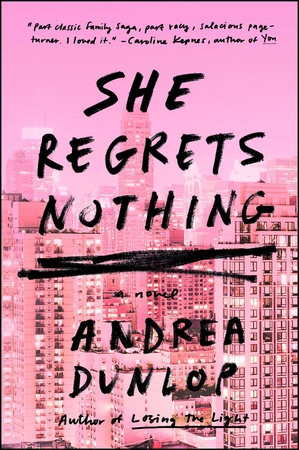
Thriller plotlines with a female protagonist often revolve around a child or primary romantic relationship (it’s right there in the subgenre’s name: domestic noir). And while I, too, love reading about the sweet-seeming husband you don’t know as well as you think, the marriage that seems just a little too perfect, or the infant snatched from a cradle at night, my own life doesn’t revolve around that kind of drama—and the same is true of my books.
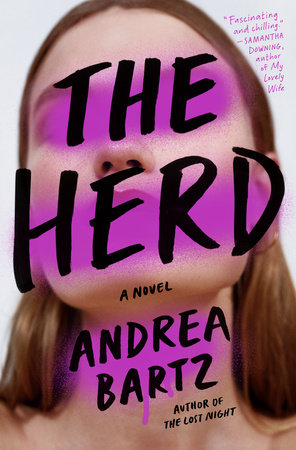
In my novel The Herd, Eleanor, the glamorous founder of an exclusive, all-female co-working space, goes missing the night of a glitzy news conference; to find her, her closest friends must risk their careers, their friendships, and maybe even their lives. Eleanor’s crew—pragmatic, competent Hana, blunt, quick-witted Katie, and artsy, bohemian Mikki—has ambition in spades, but the women have wildly different approaches to getting ahead..and deep, dark secrets they’re eager to hide as they work to bring the truth to light.
In an airy, light-filled workspace devoted to successful career women, these superstars (please, don’t call them ladybosses, HBICs, or fempreneurs) come face-to-face with the dark side of the societal pressure to Have It All—and learn what really happens when women’s “perfect” facades begin to crumble. These seven thrillers explore how far women will go to succeed in a culture that tries like hell to hold them back… and not one of their heroines needs a man to make her mark.
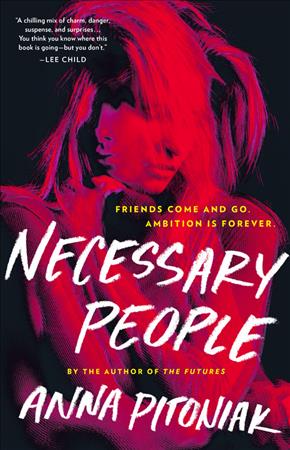
In high school, ambition brought best friends Kit and Diane together: They were both overachievers, excelling at everything and competing over a renowned chemistry scholarship. Now, Kit is at the top of her game as a chemist, and after years of hard work and unimaginable sacrifice, she’s finally on the brink of achieving everything she’s ever wanted. She won’t let anything stop her. Or anyone—not even Diane, the one person from her past who knows what Kit is really capable of…
After years of living in her best friend Stella’s shadow, Violet is finally in the spotlight, working her way up from intern to assistant producer at a fast-paced cable news show. Envious of Violet’s success, Stella reappears and charms her way into a job at the same network: in front of the camera, as the face of Violet’s stories. But Violet doesn’t shrink; instead, she rises to the challenge and kicks off a dangerous game in which the only path to success just might be destroying the other woman.
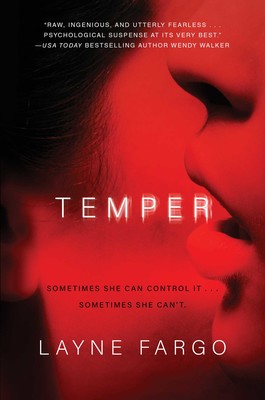
Chicago actress Kira Rasher believes working under a volatile director is a small price to pay in exchange for the role of a lifetime. Theater co-founder Joanna Cuyler, however, sees Kira as a threat to be removed at any cost. As opening day approaches, the pursuit of power brings each woman’s dark side to centerstage.
Journalist Marina Tourneau is about to be married—but she doesn’t let that stop her from taking on a dangerous new assignment when her mentor dies. Her investigation takes her inside the lives of the financial world’s most powerful figures… including a few villains too close for comfort.
Laila Lawrence’s new life begins when her parents’ lives end. At her mother’s funeral, the 23-year-old orphan meets three cousins from her father’s wealthy, long-estranged family. After learning why her parents were cut off from their relatives’ fortune, Laila becomes determined to reclaim what she sees as rightfully hers—even if it means inciting scandal.
Films are Abby Graven’s escape from a solitary life as a supermarket cashier in Michigan; she aspires to a life like that of her former best friend Elise, a rising Hollywood starlet. Those dreams feel closer than ever when Elise returns for their high school reunion and invites Abby to Los Angeles. In California, however, Abby begins to see that Elise’s professional success cloaks personal isolation—a realization that doesn’t stop Abby from fighting for the fame she desperately desires.
Plucky freelance journalist Maggie jumps at the chance to fill in for Margot Jones, Haute Magazine’s stylish fashion editor, who’s away for a year-long maternity leave. But when an online troll threatens to expose Margot’s secrets and ruin her reputation, the new mother begins to view her ambitious replacement as less of a helping hand and more of a hidden threat.
On a morning shortly after my office closed for the coronavirus pandemic, I woke up convinced that the reason for the crisis was that I had fully scheduled out my editorial calendar three weeks in advance. This was, at my small organization, almost unprecedented—a level of accomplishment and preparation for which I surely needed to be taken down a peg. Clearly the cosmos had obliged.
Other explanations for the pandemic that my brain auditioned: I had hoped that Boomers wouldn’t vote Joe Biden into the nomination (okay, bitch, what if they die then??). I had started planning for a belated honeymoon in May (joke’s on you!!!). I was too proud of finally regularly getting 10,000 steps a day (try doing it now!). I was, arguably, smug about enjoying my husband’s company even when we lived together in a small space; I had in fact just given him a Valentine’s Day card that said “I like being home with you.” (Oh you like being home? How about being home forever?) Friends admitted to similar magical thinking, ranging from “I dreaded the tax deadline too hard and a demon granted my wish” to “I promised my boss I wouldn’t let things go to hell while she was on maternity leave” to “I broke the universe by mistake four years ago when I accidentally stuck my hand in a sand mandala at a Buddhist ceremony.”
We can’t avoid being the central characters of our own lives, and the protagonist usually has some kind of power.
This kind of self-blame in a crisis is both absolutely demented and the most natural thing in the world. We can’t avoid being the central characters of our own lives, after all, and the protagonist usually has some kind of power. Especially if you have always been mostly comfortable, mostly safe, the urge is strong to explain anomalies in some way; otherwise, you have to cope with the fact that the world is cruelly stochastic, and society, even crueler, is deliberately stacked against the most oppressed. There are a few proven ways to avoid this truth, all of them hinged on self-delusion. If you don’t have the upbringing or temperament to blame The Other, as many mostly-comfortable-mostly-safe people do, then of course you often pivot to blaming yourself. You’ve been in control of your life thus far, so why not now? (This instinct is not unique to the privileged. People who have been victimized or traumatized also use self-blame, paradoxically, to feel more in control.)
For me, the guilt is sometimes weirdly specific—I made the wrong joke, I chose the wrong priority, I had the wrong uncharitable thought—but more often general, a baseline conviction that if I were good the world would be good too. More than anything, the current crisis and every previous crisis is a referendum on my weakness and cowardice and selfishness, my habit of prioritizing my own happiness and ease, of letting myself off the hook. Because I have not tried hard enough to make things better, it must therefore be my fault when things are bad.
There are a few noticeable problems with this line of thinking. One, it’s wildly narcissistic, even solipsistic—a viewpoint I’ve heard shorthanded as “I’m the piece of shit the world revolves around.” Why should I be the main character in this morality play? Two, it’s simplified to the point of absurdity, a transparent attempt to manage anxiety by weaponizing it and turning it inward. This is not how disasters work, it’s not how causality works, it’s not how anything works.
But far and away the worst problem is this: it’s a little bit true.
My husband and I met in what I now recognize as the waning days of an acceptable world. I say “acceptable” because it’s not like it wasn’t bad—it was just bad in a way that I and people like me could accept, and that we therefore largely ignored. It was 2014, and we had a president we liked, although nobody’s perfect and democracy is fundamentally flawed but what are you going to do, right? The president we liked had not managed to pass or even really try for universal health care, but had made it universal enough that I was able to quit my job and start freelancing, which let me become a better and more successful writer. I had upended my life in a number of ways just a few years before—getting divorced, moving cities—and now it felt like my personal winter was starting to warm up. Not everything was right, but at the same time, nothing was really wrong.
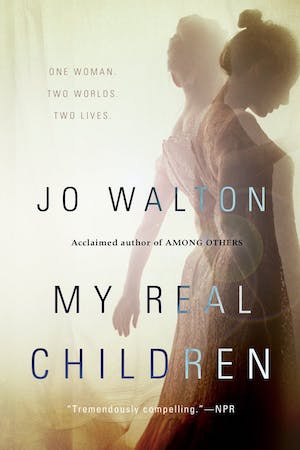
We moved in together in the spring of 2016. We expected to irritate each other, braced for it, but found that being together was the only thing we enjoyed more than being alone. In our tiny, windowless bedroom, with a door that was perpetually open because the bed blocked us from closing it, I read Jo Walton’s book My Real Children. It’s a book I haven’t been able to forget since, especially now.
The novel opens with a woman named Patricia sitting in a nursing home, sifting through what remains of her memories. Patricia has dementia—or anyway, she’s not always sure what’s real, which in this case isn’t the same. On some days, she thinks she spent her life happily married to a woman; on others, she was unhappily married to a man. She remembers seeing worldwide peace and seeing major cities lost to nuclear war, being poor in England and wealthy in Italy, living as a misused housewife and as a flourishing writer. She knows she gave birth to four children; she knows she gave birth to only two, and had a stepchild she cherished.
It can’t be true, and yet it is. She has lived a fulfilling life, loved and loving and true to herself, as the world crumbles around her. She has lived a harried, fraught life in a stable and calm society. From her nursing home, 89 years old, she remembers both these lives in parallel, with equal fidelity, spinning off from a point of diversion where her ex-husband (or not?) proposed and she either said yes or no. The waveform has not yet collapsed, the particles are streaming through both slits, the cat is alive and dead. And now, it becomes clear, she has to choose.
You don’t realize right away, reading the book, what the tradeoff will be. You see Patricia’s life split in two—Pat who follows her heart and runs off to Italy with a woman, and Trish who follows her sense of duty and marries a man—but it takes longer to see how that crack runs through their respective worlds. In the time stream where Trish accepts a proposal from frustrated, closeted academic Mark, the U.S. and a more liberal U.S.S.R. cooperate on space exploration and global disarmament. In the one where Pat rejects Mark and goes on to have a fulfilling career and fall deeply in love with Bee, terrorist attacks and eventually nuclear attacks are common (even the moon is a nuclear base), and the couple lives in fear because their gay relationship is illegal. Which one will she make real? Which idyll—the personal, or the global—can she bear to lose?
I loved My Real Children when I read it; I cried and cried. But it only truly carved itself into my brain in retrospect, when I could look back and see what felt like a similar juncture in my own life: a point where I made a selfish decision, went against my sense of duty, and was repaid with love and a measure of success and a disintegrating world. The selfish decision—leaving my marriage and city—was in the past when I read the book, but all of the fallout was in the future. I didn’t know how bad things would get; I didn’t even know how bad they were.
In the meantime, we loved each other and worried from afar about school shootings and police brutality and talked about the psychology of Trump supporters in a way that still felt theoretical. We went canvassing together, but only once. We watched the news, but not all the time, and complained on Twitter. And then in November I cocooned myself up in the bedroom, shoving the bed aside to close the door, and sat on the bed sorting the contents of my change jar and watching Red Dwarf, ignoring frantic texts from my family about the election outcomes. I wasn’t surprised. I’d known for weeks what would happen—but I hadn’t done anything to stop it.
I did donate the value of the change, once counted and rolled, to the ACLU. It was $312. It was much too little too late.
I think about My Real Children so often, especially now, because the years on either side of 2014 feel like some kind of crisis point—in my personal life, making the ultimately selfish choice to leave my marriage and city and job, and also in the world, the beginning of an inexorable plummet from pan to fire. What if I, like Patricia, was at some point unwittingly asked to choose between my own contentment and global peace? If that happened, it’s clear which one I went for, and it’s ultimately no surprise; personal comfort over the greater good is a calculation I make again and again. If the question were posed again explicitly, I don’t even trust myself to choose a different way. I want all this to be over, to be better, for everyone; I want wrongs righted that I didn’t even realize were wrong six years ago, or that I understood were wrong but didn’t really think about because I didn’t have to. But would I give up everything good in my own life? Would I give up my partner, our home together, whatever I’ve made of my career? I want to say yes, but no.
What if I was at some point unwittingly asked to choose between my own contentment and global peace?
In reality, of course, that question is purely academic. I couldn’t fix everything with one grand sacrifice, even if I wanted to. I couldn’t even fix it with a lifetime of smaller ones. Most of the world’s ills are created from the top down, and can only be truly addressed from the top down. We tend to overestimate the role that individual choices can play, partly because that overestimation gives us an opportunity to be self-important or scoldy, but mostly because people like to feel as if it matters what they do. Tip well, call your senators, eat less meat, buy reusable replacements for your single-use papers and plastics: these efforts make us feel helpful, and they are helpful, to a point. At the same time, though, they will always be eclipsed by the inaction of the people who could really make a difference: the policymakers protecting the corporations and the corporations protecting themselves. You can’t flatten that curve on your own.
But the system that props up this selfishness and greed didn’t spring fully-formed from some evil god’s skull. It’s an epiphenomenon of selfishness and greed on a smaller scale—the people who vote against debt relief because they worked hard and paid it off, for instance, but also the people who wanted to march but are tired and don’t do well in crowds, who would call but are scared of the phone. This is where I am. I’m not cruel, but I’m privileged and weak, and that’s enough to add up. And so when I think “this is all my fault,” I am wrong in every reasonable way except the one that matters.
It would be such a comfort to fully dismiss this self-blame as self-delusion. I obviously did not directly and single-handedly cause a pandemic, or global warming, or Fox News. Trump didn’t get elected because I didn’t knock on enough doors. But he might have gotten elected because everybody didn’t knock on enough doors, and one of those people was me. I stayed home when I should have been canvassing, emailed when I should have been calling, donated $25 when I could have afforded $50, said I would look for a volunteer gig and did not. And I’ve been given chance after chance to reconsider, disaster after disaster that could have shocked me from complacency into sacrifice, and every time I have chosen the easy way, and every time it gets worse.
It’s only magical thinking that makes me think these things are directly causal. I was never given the explicit, literal choice to trade a calm world where I was miserable for a timeline where I’m fulfilled and the world is on fire. But I’ve certainly sold out the public good for my personal comfort. I do that every day.
This week I turned 40 in pandemic seclusion. Though my husband and I still like being together more than being alone, having said so out loud now feels like yet another way I’ve cursed myself and the world. (Another curse: I said I was happy doing something or nothing for my birthday, as long as I didn’t have to be the one to plan it. Well, mission accomplished.) We are doing okay, we are as always doing better than most, but we have semi-permanently wedged the bed so the bedroom door can close, and I have spent a lot of time in there hysterically crying. Our jobs are still paying us, so far, but I am too afraid to leave the house even to do good for the community, so I’m just trying to disburse money to local service workers and businesses and friends who have lost their jobs. It feels deeply inadequate. It is deeply inadequate. Again as always: it is hard to know what to do. Again as always: there is so much more to be done than I can even process.
Forty is a suspiciously-timed milestone—another piece of evidence, according to my subconscious, that all of this is just retribution for my lack of personal growth. I am running out of time to become a better person; I don’t really think I ever could have. Every year I care more, because every year I know more, and I don’t understand how you can know this world and not be wounded by it daily—but every year I am also more tired and overwhelmed. I still don’t think I have the strength to give up my comfort to save the world, but more and more, I wish someone would ask. If not that, then what?
The fantasy of being wholly to blame for everything is also a fantasy about being able to make it stop.
My Real Children sticks with me because it reflects my guilt—not only the ways that it’s rooted in truth, but also the ways that it’s rooted in self-aggrandizing fiction. When I blame myself for the ills of humanity, it’s because I am disappointed in my priorities and my complacency, the small but measurable ways in which I have contributed and continue to contribute to authoritarianism, white supremacy, colonialism, generational poverty. But it’s also because I want to believe in definable crisis points, in timelines you can swap like game cartridges, in ways that the world can be saved by one person’s choice. It sounds so much better than trying and trying and watching things crumble anyway. I guess I’m still looking for an easy way out.
But this is not a novel. Patricia is the protagonist of My Real Children—that’s why she has the responsibility, and the power, to collapse its waveform. I am not the protagonist of reality, nor is anyone. No single one of us gets to choose between a world where we’re happy and one where everyone else is, slamming the other pathway closed like a book. No one will ask me the question I ask myself every day—who or what in your life would you sacrifice to fix this? We are stuck making tiny, anemic versions of that choice, all day every day, like someone trying to tear down a wall with a pin.
The fantasy of being wholly to blame for everything is also a fantasy about being able to make it stop. Most of us will never get that chance—to choose the peaceful timeline or the content one, to make the brave sacrifice that saves the world, to warn the public in time or make a million bucks on insider trading. This is the purview of protagonists and villains. My purview is sitting inside, being more scared than I have a right to be, sending Venmos that will never be enough, watching people die anyway and not ever knowing whether it might otherwise have been just a tiny bit worse.
What if someone did offer me that choice—to give up everything safe and good and comfortable in my life to save the world? I would probably fail. But what a relief, what a gift, to be able to fail just once.
In Megan Giddings’s debut novel Lakewood, desperation leads to a loss of self in a capitalist medical system bent on taking advantage of Black people and their bodies.
After the death of her grandmother, Lena, a college student struggling with overwhelming medical debt and taking care of her chronically ill mother, decides to suspend her studies and joins a very secretive medical research program in rural Lakewood, Michigan. The novel follows Lena’s experience as she agrees to participate in medical research experiments in exchange for a hefty payout and for all of her mother’s medical treatments to be paid for. The terms that Lena agrees to make her uneasy, especially the increasing severity of the experiments and how she and other people of color in the study are treated as test subjects.
I recently spoke with Megan Giddings about the biggest lies in literary fiction, the American dream for people of color, and the horror stories that speak to the historic and current exploitation of Black communities.
Leticia Urieta: Where did the idea for this book begin for you?
Megan Giddings: The first initial idea is surface-level. Some of it was based on the small town where I grew up. The more revisions I did, I thought of things that happened in my life such as a family member going through a health crisis who was ultimately fine but we had to spend a lot of money to get a lot of tests done. Some of it comes from anxieties from my childhood, like when I was four and I was dragging my leg and my parents couldn’t figure out what was wrong with me and no one could tell them what was wrong. I had to do all of these tests and I had a lot of different diagnoses and the final one was anxiety. All of these experiences collided by the end of the draft. It’s one of those things where you don’t realize what you were thinking about until after you’ve written it.
LU: You mention where you grew up and how that influenced the setting of the novel. The story takes place in Lakewood, a rural town in Michigan. This felt important to emphasize Lena’s isolation from her friends and her mother, to what is familiar, as well as to make her feel like a spectacle as one of the only Black people in the town. Why did this setting feel important to the story?
MG: Some of it is me borrowing from what I know. I grew up in a rural Michigan town and my family was one of five families of color. It does make you feel differently—some of it is the experience of a young black person where your parents are well-meaning but they’re still telling you things like “you have to act this way because people are going to make assumptions about other Black people because of you,” or “you have to work twice as hard,” which I feel like anybody who is not white has heard that from their parents in this country.
Some of it is also because I was writing about the Midwest. Even among Midwesterners there is a division between people who grew up in a small town or a larger city. You can tell right away about someone if they grew up in a small town and how much more guarded they are around you. Small towns make a person hyper aware sometimes and they make you less willing to be vulnerable. I think that even if Lena’s character was White, people in town would be a little suspicious of her and not immediately welcome her. I thought it added more pressure to her as a character and reflected a Midwestern experience, because many of us grew up in small towns.
LU: Do you think that making Lena immediately at odds with the people in Lakewood helped to create a tension from the beginning of the book?
One of the biggest lies of literary fiction is that the characters don’t think about money.
MG: Maybe so. Lately, I rarely enter a new space without some feeling of anxiety, especially in a majority white space. I don’t go into these spaces thinking, “Oh, everyone here is racist.” But, I immediately tense up. I wonder, “Are you all going to be cool? Are you going to say something wild as hell to me?” It adds a necessary tension to the novel. I started this in 2014, and I didn’t necessarily feel that immediate tension everywhere I went, but it was still there. It’s something that I have learned over time.
LU: What roles do sickness and desperation as they wear on Lena and her family play in this novel?
MG: I think that they’re very rooted in the personal for the characters. It comes from real world analogues of being deeply in debt or watching someone in front of me that I deeply love who is hurting and there is nothing that I can do other than offer them the slightest solace. I think those pressures are pressures that a lot of people feel every day.
For so many of us, even if it is on an unconscious level, we are thinking about money. There’s that constant thought of, “I might not be poor, but I can’t not be concerned.” I don’t have that relationship with money where I don’t have to think about it. I sometimes think that one of the biggest lies of literary fiction is that the characters don’t think about money. That is fantasy, at least for me, to be alive in this country and not think about money.
LU: That’s something I appreciated about this book. To begin this book with the immediate loss of a person who is so important to the main character and who has influenced who she is, but to also begin with the very extreme pressure of a young woman having to navigate debt is not something we see very often.
MG: Even just the cost of dying in this country makes me so mad, to the point where it is almost hilarious, or absurd. A friend told me that his father told him, “when I die, I put this amount of cash away in a safe, and you’ll need this money just to get through this.” It’s so hard to navigate this loss, and you have to pay so many people right off the bat.
LU: One of the things that is most compelling about Lena is how willing she is to endure physical pain and psychological trauma and manipulation during the Lakewood Project despite the red flags that tell her to turn back. Do you feel that you are addressing the legacy of how scientists and doctors historically used how much pain Black women could “endure” to justify “scientific experiments” that were really torture?
Even just the cost of dying in this country makes me so mad. It is almost hilarious, or absurd.
MG: It’s both legacy and something that I am still reading and learning about, whether in news articles or medical reports, where they focus on the idea that Black pain is so flexible to most doctors. As long as you don’t see people as people, you’ll do whatever the fuck you want. It’s not just about seeing us as people, but about recognizing power, and where it comes from.
LU: Right, and there is a tension from the beginning of the novel that builds as Lena navigates feeling on guard because of what this opportunity could mean for her but also considering what’s at stake, and the obvious power differentials between her and the people conducting the experiments. Throughout the novel, Lena loses sense of time and what exactly is happening to her during the experiments, especially as more and more unnerving things happen to her. As someone who gravitates towards speculative fiction, were you considering common horror tropes while writing?
MG: The tension for me comes a lot from analyzing anxiety and the feeling of being so nervous, or frustrated or scared that you start disassociating. I think the horror tropes come in more when building setting and scene, because I was thinking of a small town that is mysterious. That’s not an original concept. The setting of the woods that Lena visits contains a bit of horror, but I was thinking more about folklore when writing those scenes. The woods is a place where anything is possible and it is a very transformative space. Woods are also filled with natural death—the rot, the whole cycle of living.
LU: That’s interesting. I was thinking of body horror in the novel and how the book reflects some horror films that incorporate medical experimentation, but I appreciate that you are also bringing elements of folklore into this. Were there any particular stories or traditions that you were drawing on?
MG: Early on, I was reading and thinking about Ovid’s Metamorphosis. So many of those tales are about someone desperately wanting something, and then they become transformed—they become a swan, they become a shower of gold, they become all of these things and there is a destruction of who they were in the process of them getting what they think they want.
LU: How do you think that that informs Lena?
Don’t you think that the American dream, at least for people of color, is the ultimate destruction of who you are?
MG: Don’t you think that the American dream, at least for people of color in this country, is the ultimate destruction of who you are? You have to obliterate your Blackness, your brownness; you have to become a set idea of what a success story is in this country if you want money or stability in the traditional sense. And you are forced into these places that make you obliterate who you are because you have to fit into the kind of person who can “achieve” this kind of dream.
LU: Would you say that this book is also about grief?
MG: Yes, this book is about grief, especially a young person’s grief, where it consumes you and swallows you and you don’t have the emotional infrastructure to not just do risky things sometimes. A much simpler version of this novel would be a young Black woman grieving and fucking up and trying to find a way to still be alive when someone that she loves so much is gone and the other person that she loves seems on the verge of leaving her in different ways.
LU: The intergenerational love between Lena, her mother and her grandmother is a beautiful aspect of the book that shows how women often find strength and solidarity across their shared experiences. Why did that feel important to the development of the story?
MG: There’s something deeply underrated about the culture of family. I was most interested in writing a book about the natural push and pull inside a person in relationships with their family, in people who are stunningly like you and sometimes disappointingly not like you. It was meaningful for me to think about these three women who loved each other deeply and how different their perspectives of their lives were.
There’s this writing exercise that I’ve done sometimes that is useful for a novel or longer work. You think of an issue in the novel that comes up and you should be able to chart how the character’s responses are nuanced and different from each other. That’s how you know that the characters are starting to come alive, and are not just reflections of your own perspective.
LU: I love that exercise, and I think that really comes through in the book. What are you working on now?
MG: I am working on a second novel. It could change, because novels are strange, and they shift and surprise you, but it is about a mother and a daughter and witches. It’s about a world that is mostly like our own except that the witch burnings that have happened all over the world were often of real witches. In some ways it’s about a legacy of what it means to be a woman and about the push and pull between a mother and a daughter who might have different ideas of how to live.
In our series “Can Writing Be Taught?” we partner with Catapult to ask their course instructors all our burning questions about the process of teaching writing. This time, we’re talking to Sally Wen Mao, an award-winning poet and author of Oculus. Mao’s upcoming class on speculative poetry—enriching poetry through the use of myth, folklore, and fabulism—is currently full, but you can sign up to be notified when it returns, or peruse Catapult’s other upcoming (online and social-distancing-compliant!) course offerings.
What’s the best thing you’ve ever gotten out of a writing class or workshop as a student?
It’s mostly a feeling: like I’ve got this, that my project doesn’t scare me, that in fact, it excites me—the best thing is feeling the many possibilities of the poem or the story. The most successful workshops and classes are those that make you excited to work on your project—they validate you enough to know what you write is worth pursuing, but challenge you enough that you see possibilities in your writing you never thought of before.
What’s the worst thing you’ve ever gotten out of a writing class or workshop as a student?
The worst thing writing class I’ve taken was a screenwriting class—the professor just showed us different movies and declared her taste was the only one that was correct, and she was harsh on all the students—most of her feedback was not constructive and not helpful if your vision didn’t align with hers.
Know your influences, so you know yourself. Then riff.
What is the lesson or piece of writing advice you return to most as an instructor?
The writing advice would be to figure out your “lineage” as a poet. Know your influences, so you know yourself. Then riff/experiment, do not get bogged down by comparing yourself to others. Form your identity as a writer.
Does everyone “have a novel in them”?
No.
Would you ever encourage a student to give up writing? Under what circumstances?
I’ve never done this. The only circumstances where this would be possible was if the student had no interest in writing, no desire in the first place. Then they’re already inclined to give up.
What’s more valuable in a workshop, praise or criticism?
It needs to be praise combined with criticism so that the student sees their strengths in addition to what they could work on. I think of it as “what’s working” and “what you can challenge yourself with,” how you can push yourself further in your work.
Writing itself is sacred—as a writer you have to be okay with releasing your words into the void.
Should students write with publication in mind? Why or why not?
No, I think that publication should be separate from the process of writing itself (only after a piece is complete, but in classes, most pieces are works in progress). Writing itself is sacred—as a writer you have to be okay with releasing your words into the void.
In one or two sentences, what’s your opinion of these writing maxims?
Kill your darlings: Take care of your darlings. If they don’t belong in a story or a poem, house your darlings somewhere safe.
Show don’t tell: Yes—in most cases this is true, but occasional telling doesn’t hurt.
Write what you know: This one is ridiculous because writers are supposed to harness both their experience and their imagination.
Character is plot: Sure.
What’s the best hobby for writers?
I think for me, the best hobby for writers is consuming other forms of art, such as visual art, films, photography, etc. I love seeing other people’s process and it informs my own. That and traveling… writers should find ways to travel.
What’s the best workshop snack?
Oh, anything from an Asian grocery store. Pocky, or Hello Panda, or those Koala bears, or those muscat /strawberry gummys.
I am a novelist, but in my heart I know the grandest thing to be is a poet. We often mislabel poetry as being essentially presentist: the author/narrator gazes out the window, in a mirror, at wheelbarrows. But all writers have the whole scope of history to muck about in; the best historical poetry, like the best historical fiction, plays with the very premise of the past.
My new novel, The Everlasting, leaps from today to the 16th century to the 9th century to the 2nd century, following a series of lost and loving souls in Rome. One of my narrators, the Devil, is what I might call a poet of history, in that he understands its accordion nature and takes pleasure in disturbing the humans’ sense of time and order.
Those who dive into the rich waters of before know that meaning is made through questioning, comparison, rupture. Why bother dead bodies if we’re not going to poke at them? The seven collections here make just the sort of playground of history that causes this ex-historian to rub her hands together. The past is now; the dead are alive!
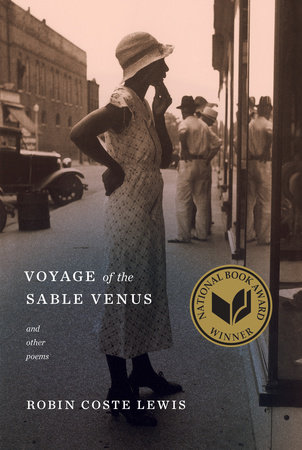
The eponymous poem of this collection, some eighty pages long, is a directly transcribed list of the titles of “Western art objects in which a black female figure is present” from the Paleolithic era to the present. That the titles are unedited contributes to the poem’s mounting sense of violence, both art historical and literal. “Statuette of a Woman Reduced / to the Shape of a Flat Paddle,” begins one catalog; “Partially Broken Young Black Girl / Presenting a Stemmed Bowl // Supported / by a Monkey.”
In this translation of the Iliad, British poet Oswald cuts out everything but the similes and the parts where people die.Sounds simple enough? Her radical vision of an “oral cemetery” feels like a truer accounting of the Trojan War than Homer’s. What is war but death repeating like a wheel, names swallowed by a wall of sound?
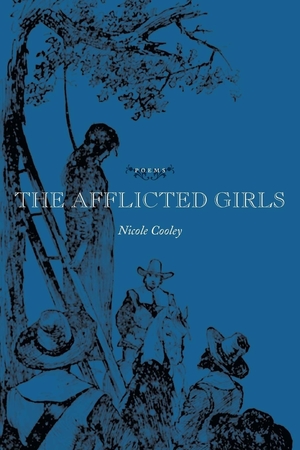
The Salem witch trials are always ripe for a retelling, and here Cooley injects her own archival journey, interspersing hair-raising and pitiable accounts of accusers and accused (“We’ll choke, hold our throats closed with our breath, until / the women disappear”) with the trial of saying anything new (“I fling / my voice . . . down history’s corridor / crowded with everything that has already been said”).
The always historically minded Trethewey (Bellocq’s Ophelia, Native Guard) picks apart the caste system of the 17th and 18th-century Spanish colonies, pointing to the origins of mestiso and mulato, those same blended cultures and colors that left her a legal anomaly in 1960s Mississippi. She is fearless here, confronting figures from Velázquez to Sally Hemings; “I’ve made a joke of it, this history / that links us – white father, black daughter – / even as it renders us other to each other.”
Harjo’s lesson about time’s cyclical chaos is unflinching. In her preface, she links the 1830s Trail of Tears to the trails that indigenous peoples keep taking, are still forced upon, those paths that rupture homelands in the name of—what? Colonialism? False security? The toxic burn of dispossession? “History will always find you,” she warns, “and wrap you / In its thousand arms.”
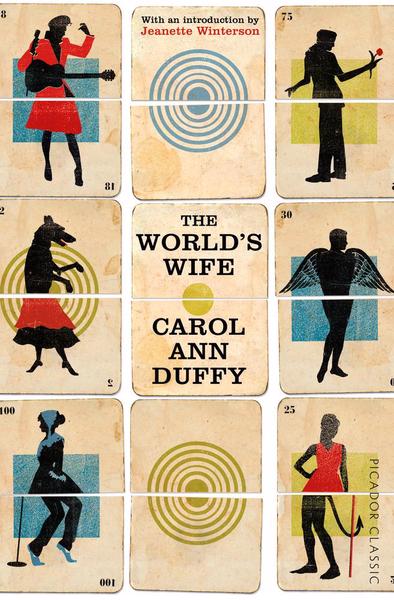
History needn’t be so serious all the time; indulge in Duffy’s biting retellings of the lives of Great Dead Men from their wives’ perspectives: “Mrs. Sisyphus,” “Queen Kong,” and “Frau Freud.” Imagine a history where Mrs. Darwin observes, “7 April 1852. / Went to the Zoo. / I said to Him – / Something about that Chimpanzee over there reminds me of you.”
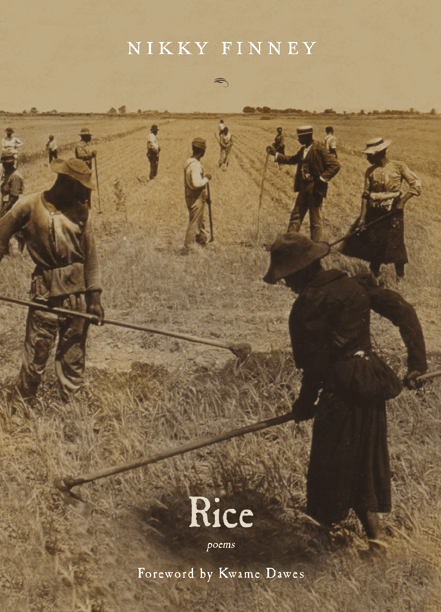
The best history starts from the bud of the personal, and in Rice, Finney pays homage to her South Carolina heritage. In poems like “The Afterbirth, 1931” and “Making Foots,” she challenges the solemn distance of standard tellings of slavery and Jim Crow.
“Many a foot / was chopped / off an African high-grass runner / and made into / a cotton-picking / plowing peg,” she writes, adding, “If your Black foot / ever wakes you up / in the night / wanting to talk about something / aching there / under the cover / out loud / for no apparent / reason // There is reason.”
Kwame Dawes calls this book “herstorical”: it does not instruct, but reclaims. May we all approach history so humbly.
 Ideas about where it was appropriate for women to exert
 authority: American Fuchsia Society, California Spring
 Blossom and Wild Flower Association, Business Men’s
 Garden Club, Save the Redwoods League, Council for
 the Protection of Roadside Beauty
Desire
 Attribute the practice to desire
 articulation of the visible proof of experience
 skin disrupts the distance
 the complete record of frontier
 passing into history
 devotion to the task at hand

 Practice such expertise
 variant of the skin trade
 such doubts notwithstanding
 as I pause in the midst of this recital
 Dear
              Evidence of her desire
 an artifact of its takeover
Bones
Though all my bones collapse on the platform. How kind they were to me. How careful for my comfort. Women!
Ah! As I have recently differed unapproached by railway. Had not then the franchise better educated, better fitted,
well-too-do, cart to lecture. Antelopes and their native neighbors form an attraction, even among the many
fascinations of the century’s gathered productions. On this journal how thoroughly I approve her conduct. Where she
has done on the one hand rash not marked. Record my view that it has been bravely done, and most usefully done.
Suggesting the altitudes at which they were found. The powerful, the soft, the splendid.
I know I’m not the only writer to be afraid I might die before my book is published. When I was still drafting, there was a quiet fear lurking in the back of my mind that I’d be hit by a bus and never get to finish it—or worse, that an unfinished version would circulate. Then, once I finished the book and entered the pre-publication process, I put a very clearly labeled final draft on my computer desktop, just in case something happened to me and my family decided to publish the book posthumously. But now, instead of being afraid that I won’t survive until my book comes out next year… I’m afraid the world won’t.
It felt like we could reach a tipping point and descend into chaos at any moment—and now it feels like we have.
Even before coronavirus hit, the future felt uncertain. It felt like we were on the brink of climate disaster on a scale that could no longer be denied, like a Trump reelection (or refusal to hand over power after defeat) might plunge the country into violent civil unrest. It felt like we could reach a tipping point and descend into chaos at any moment—and now it feels like we have.
The best way I’ve come up with to manage my anxiety and horror at the state of the world is to focus on today. What can I do today to make the world a little better, and to keep myself going? Little things like phone banking for a political candidate I believe in, donating to mutual aid funds, and stepping away from the internet to read a book. Looking at the enormity of climate change or the election or coronavirus all at once is too much, so I focus on today.
But publishing a book is all about planning ahead. The book I worked on for a decade is coming out in May 2021—supposedly. That’s not so far away, but some days I’m not sure we’ll make it that far. I have several spreadsheets to keep track of things like where I want to go on book tour, or which publications I want to send copies for review. But sometimes when I fill in the cells on those spreadsheets, it feels like I might as well be playing the Sims—organizing the little details of a life that will never be real. Who knows what the world will look like by May 2021? Will any of the bookstores I’m hoping to read at still be open? And even if they are, will anyone still be buying books, or will we be fighting each other for rations?
Of course, the fate of my book is far from the most important thing at stake right now—but it’s the thing that forces me to look beyond today and decide whether or not I believe in the future.
Will anyone still be buying books, or will we be fighting each other for rations?
When I was a teenager, I latched onto the supposed Mayan prediction that the world was going to end in 2012, and used it as part of my rationalization for dropping out of high school. I was 14 in 2002, and I figured that if the world was going to end when I was 24, there was no point in wasting the few short years I had on earth going to class or doing homework. The idea of an apocalypse, an end date, was freeing. I don’t know how much I actually believed the world was going to end, but what mattered was that I had decided to believe it. I used it as a slightly more tangible manifestation of how uncertain the future felt, prophesy or no. I could die at any moment—would I rather spend my last hours doing geometry homework, or in a mosh pit? The answer was easy.
This fatalist approach to the end of the world was liberating when I was a depressed teenager full of pent-up rage and self-loathing, just learning how unfair the world really is. I welcomed an excuse to avoid planning for a future I wasn’t sure I wanted, or would ever reach either way.
But then, of course, the world didn’t end in 2012. Just like it didn’t end in 2000 after all of the Y2K panic. So now, as much as part of me is sure we’re headed for the end this time, for real, another part of me is sure that this too shall pass, just like all the other times throughout history that humans have been convinced the end was nigh. Sure, I could throw my hands up now, stop planning for the future, not bother to plan a book tour or meet my deadlines or water my plants because what’s even the point. But then where would I be if somehow, the world doesn’t end this time, either?
When I survived my teen years, I had to seriously readjust my thinking. I’d believed for so long that the world was going to end—and that even if it didn’t, I’d probably die anyway. But then I found myself still standing, and the world still turning, and I had to adjust course. I got a GED and applied to college, and allowed myself to imagine for the very first time what kind of adult I wanted to be, planning for a future in rush, like showing up on test day after missing a semester of preparation. I remember that feeling of being caught off guard, of being surprised that I had survived, and having to scramble to lay bricks head of myself as I walked a path I’d never expected to make it so far down. I don’t want to be surprised again, which leads me to a self-protective kind of optimism.
I could throw my hands up and stop planning for the future. But then where would I be if somehow, the world doesn’t end this time, either?
No matter how easy it is to believe that a year from now we might be living in a completely different world—one where we’re reeling from mass casualties on a scale we haven’t seen since WWII; where the economy has completely tanked and small businesses never recovered from the corona fallout; where Trump has taken advantage of the chaos to declare himself king; where our feeble attempts to find a new normal are washed away in thousand-year floods happening every week… I have to remind myself that the possibility of everything ending up okay is no more outlandish than any worst-case scenario I can conjure. If I can imagine a post-apocalyptic wasteland, I tell myself, I should also be able to imagine something like stability.
And so, I come back to the idea that all I can control is today. Today I will video chat with my quarantined loved ones, I will cook and freeze a huge batch of soup, and I will revise the flap copy for my book and try to imagine May, 2021 as a reality.
Maybe, it is you that loves truly. Am I the counterfeit?
Before he died, I knew my maternal grandfather—my Nanu—as an assured, quiet man. Having been in the army, he had a routine and he stuck to it. Every day, he doted over my grandmother and her delicious home-cooked meals. He wouldn’t leave the house unless absolutely necessary. He spent mornings in the living room surrounded by his books, newspapers, and sudoku. He never missed a glass of scotch in the evenings.
Nanu addressed me, his first grandchild, as “young lady.” And around Nanu, I behavedlike a lady too. The day my mother was in the hospital giving birth to my brother, my grandparents, who lived in New Delhi, took me out to dinner at the five-star Taj hotel. I was three, and Nanu told me I sat quietly in my high chair, poised as I nibbled on my food.
Growing up, I felt as though Nanu and I were alike in many ways. Even though much of our relationship was built on silence, we shared a mutual sense of calm and composure.
But of course, I wasn’t calm and composed at all, not internally. And it was only after he died that I found out just how similar Nanu and I truly were.
The sounds of silence sweep together Like the oncoming waves towards the shore. They embrace and are engulfed at once In flaming passions—now dormant.
My relationship with Nanu was built on silence, yes, but also on a shelf full of stories. Nanu loved buying me books. From the Harry Potters and the Princess Diaries to the Brontës and Dickens, Nanu quietly introduced me to a plethora of writing at a young age.
Nanu was talented at drawing the utmost loyalty from people. He always had “a guy” ready to provide him with whatever service he needed. The banker, the barber, the fruit-vendor—they all respected him so much that they’d go above and beyond their duties, often bringing their services straight to his front door.
My relationship with Nanu was built on silence, but also on a shelf full of stories.
My favorite one of these guys was the owner of a small bookstore in old Delhi. A few times a year, Nanu would call up this guy before I showed up to visit, and give him a list of books I wanted. And the books would arrive at Nanu’s house right on time, waiting to be read by me.
A year ago, I visited the store, and spoke briefly to the guy about Nanu’s life. Nanu died in the summer of 2017, and though the book orders had slowed upon his ill health the last few years, the bookstore guy was shaken upon hearing the news. I hadn’t realized how important their relationship was to each other until just that moment, and furthermore, just how important it had been in shaping my own life and career. By giving me books to read during my visits, year after year after year, Nanu and the bookstore guy had unknowingly teamed up to set in me a foundation of endless curiosity.
What difference does it make In the eternal cycle of life? The trials, the tribulations Of one human soul amongst so many Leave no mark On the misty mirror of life.
Of course, when I say curiosity, I mean existential dread. Because that’s what books do to me. The more I delve into another’s world, the more I look back into myself and wonder how I play a part in all of it.
This wasn’t something I’d ever talk to Nanu about. To me, he was the epitome of certainty and ambition. Before he became a homebody, Nanu was an avid traveler. After retiring from the army, he started a business to export Indian handicrafts to Germany. Nanu loved Europe, and would get on long flights four or five times a year to attend trade fairs and meet buyers.
I felt as though he always aimed for excellence. He stood tall at 6’2”, was perfectly eloquent with his English, and lived a life of elegance. I never felt as though I could infiltrate his poise with my growing sense of internal misery.
So when I’d cry, bang doors, and wail for hours on end as a teenager, my mother would explain to me that depression and anxiety ran in the family. But I hadn’t seen any of it in Nanu. Why, I’d ask her, couldn’t I be more like him?
Years merge into memory Time mellows the mind. The angry young man is tolerant Flinty temper but a fading glimpse Of fire and brimstone, sparks, and crackers.
When I visited India in 2018, it was to prepare for the fact that I would probably soon be returning home for good. I had graduated from college in Seattle, and was figuring out what to do next. While I knew I had many decisions to make, I did not expect it to be the last time I saw Nanu.
He had been unwell for a while. The last time he smiled, my mother says, was the last time he spoke to me. We were at the hospital, and he was hooked up to a bunch of tubes. To make him feel better, I told him I’d been applying to graduate schools in New York. At that moment, I was far from feeling like I could move to the big city, far from knowing what I wanted at all, but when I told Nanu, I saw his tired eyes sparkle. My uncertainty was beside the point; this is what he wanted for me.
The tentacles of death Had started creeping forward. The ravages of time Had taken their toll. The body emancipated, The soul shrivelled, The mind turned mean As hell.
As Nanu’s last days neared, I was getting ready to head back to Seattle and wrap up an internship. My mother, knowing I would feel lonely and distant upon his death, pulled me aside to show me something.
It was a book of poetry, which in itself was not surprising. I had graduated from college with a degree in creative writing, and had a few poems in small journals and zines. My mother must have known a book of poems would cheer me up. And it was Nanu, after all, who by turning me to books, had led me to poetry as the one friend I always turn to in times of distress.
The typewritten copy of the yellowing manuscript was titled “The Shifting Sands.” And under it was Nanu’s name.
Nanu, my mother told me, had been a poet too.
Come, hold my hand. A smile. Give me a reason to get up And go on in life.
I’ve always been of the belief that you can’t truly know anyone, but never had I been introduced to someone so deeply only after their death. While Nanu was alive, my bond with him had been reasonably strong, as I’m sure many granddaughter-grandfather relationships are. But his secret life as a poet had never come up in open conversation. And finding out that I wasn’t the only poem-writer in my family instantly ignited in me a giddiness during a time I felt I should have been mourning.
As I sifted through his book, I realized that everything I thought I knew about him was a cover for a man enveloped by a multitude of fears and desires.
Nanu wrote poems spanning a period of his life when he was struggling to climb out of a deep depression. I sifted through his book cover to cover as if I were reviewing it for an assignment. And as I did, I realized that everything I thought I knew about him—his high standards of success, his urge to travel, his sense of routine—was all a cover for a man enveloped by a multitude of fears and desires.
Nanu held a beautiful and complex understanding of what it meant to be alive. And as a seeker, he sought to answer his own existential queries through poetry.
Healing of spirits cannot commence For we haven’t acknowledged Even to ourselves the truth Why play Scrabble When the word is simple L…O…V…E
As an exporter of Indian handicrafts, a traveller, and avid reader, Nanu used poetry to understand the role of India within the global economy.
Maharajas are gone Taking snake charmers with them. The rope trick has vanished. Lazy opulence is there though Mocking at its isolated existence.
And, most notably, Nanu’s poems revealed to me the source of his deepest despair. He was a doting father afraid his child was going to die. In the year 1970, my mother was born with a disconnected esophagus, and couldn’t eat until she was six years old. In those six years, she underwent two serious surgeries, and Nanu explored that scary time in their lives with several poems that make up the last few pages of his manuscript.
Yes, my child I send you to the surgeon’s knife Knowing that the odd chance exists Of cruel nature’s appetite craving more and more.
All together, Nanu’s poetry revealed to me that we were in fact the same. He too had an intrinsic itch to look beyond himself and find how he fit within the rest of the world. He explored how, as an Indian, his work fit into the European market. How, as a father, he fit the role of caretaker. And finally, how, as a man, he fit into the limits of the universe.
To have his words enter my life after his death was a bittersweet feeling. I wish I could have had the chance to ask him more about his dreams, and to share my own work with him.
I learned from his death, and his poems, that silence carries a lot of space.
Yet I’ve never felt closer to Nanu than I do today. I learned from his death, and his poems, that silence carries a lot of space. Not just the kind that pushes you toward introspection, but the kind that allows for the freedom to move within your curiosities.
And ultimately, I did only get to understand Nanu after his death, but he was the one to set the foundation for it. I’ll never really know if he gave me books with the full understanding that they would bring me to my career today, or if the gifts were more selfish: an indirect way of sharing his own curiosities with me. Be it consciously or not, his grooming me to become the writer I am today was a testament to his own love for words, and poetry. And now, after his death, I carry forward that curiosity in my own life and work, hoping I too will one day pass it along.
Literature, to me, seems to thrive on a curious contradiction. While it is an essentially solitary activity, it is also driven by the desire to commune with others. We wish to be alone with a book, but fulfilling this wish means engaging in a conversation so intimate that it overcomes the limitations of space and time — readers may reach out to the dead; writers sometimes touch the unborn.
Purchase the novel
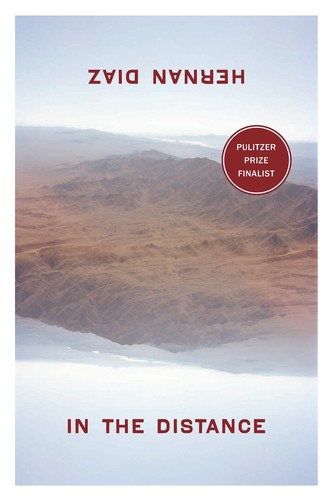
Many of my favorite books are about isolated people — either in a literal sense (Robinson Crusoe) or figuratively (Jane Eyre, Villette). My first novel, In the Distance, was initially conceived as an exploration of solitude. It tells the story of a Swedish immigrant who walks from San Francisco to New York, against the big push west during the 1850s. He spends most of his time alone in what was known as the “Unorganized Territories” and finds, paradoxically, that as these expanses grow, so does his feeling of claustrophobia. Sometimes, his hands and his feet are the only living things he can see.
These are some of my favorite books on isolation and loneliness. Some of them influenced my book; others, I read only recently; all of them have shown me how nuanced solitude can be.
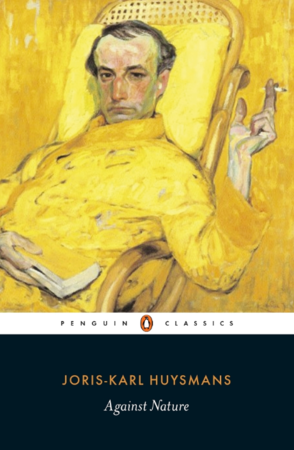
Full of “contempt for humanity” and “weighed down by splenetic boredom,” Jean Des Esseintes retires to the artificial paradise of his house in the outskirts of Paris, a temple dedicated to his decadent whims. “Nature, he used to say, had had her day.” In the perpetual color-tinted twilight of his seclusion, his few companions are his books, some mechanical fish in dyed water, and a gold-glazed, jewel-encrusted tortoise. Des Esseintes artificial isolation is so radical that it ends up transforming his body and its basic functions.
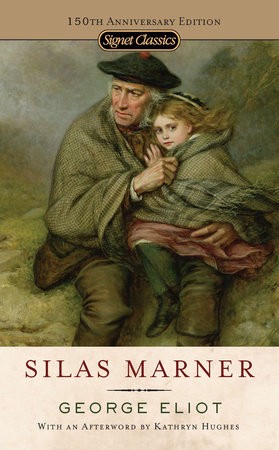
Different layers of isolation coexist in this quiet masterpiece. Silas, a weaver, is a member of a “narrow religious sect.” After being wrongly accused of theft, he is expelled from this insular congregation and lives like a hermit, reducing his life to “the unquestioning activity of a spinning insect.” He also becomes a money hoarder — but, strangely, not a miser. After years of solitude, Silas’s life ends up “narrowing and hardening itself more and more into a mere pulsation of desire and satisfaction that had no relation to any other being.” A lonely little girl wanders into his life and changes everything.
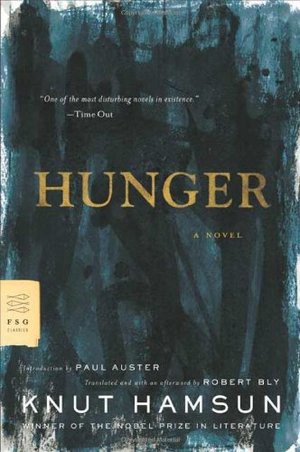
Nowhere is the oppressive loneliness in the midst of a multitude felt more acutely than in Hunger. The protagonist of Hamsun’s novel wanders around the throngs of the Norwegian capital but is thoroughly alone and always at the verge of mental and physical collapse from starvation. “I was turning into a freak from hunger, right here in the city of Kristiana!” He loses his hair; his body decays; he eats woodchips, pebbles, and his own pocket. He almost eats his own finger. All while trying to write monographs, philosophical treaties, and plays.
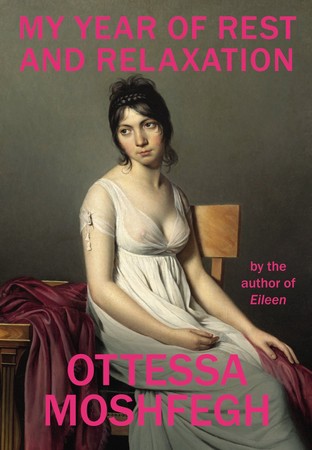
Sleep is the loneliest activity we can engage in — it takes us away even from ourselves. Still, the few works of fiction on this subject that I can think of — “Rip van Winkle,” Oblomov, Finnegans Wake,The Interpretations of Dreams — are either concerned with the content of dreams or view sleep as an obstacle. Not so Moshfegh. Hers is the story of a solitary woman who, with the help of a prescription-writing quack, intends to “hibernate” for the better part of a year to then be “reborn.” To this “somnophile,” sleep becomes a goal in itself — thus showing how absurd our goal-oriented culture is. “I was finally doing something that really mattered. Sleep felt productive.”
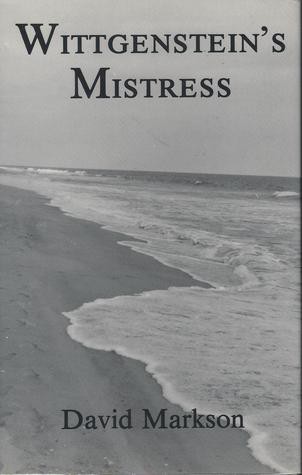
More than a novel, this is a collection of propositions, a text made up of lonely sentences. Kate, the narrator, is certain she is the last human left on the planet. Although she is (or believes herself to be) absolutely alone, the novel feels wonderfully populated, thanks to the ceaseless references to Western culture, from Odysseus to Marlon Brando, as if our entire tradition had been entrusted to this reverse Eve. Every now and then, Kate takes up residence in desolate museums — the Louvre, the National Gallery, the Met. “Once, in the Borghese Gallery, in Rome, I signed a mirror,” Kate confesses. “Though in fact the name I put down was Giotto.”
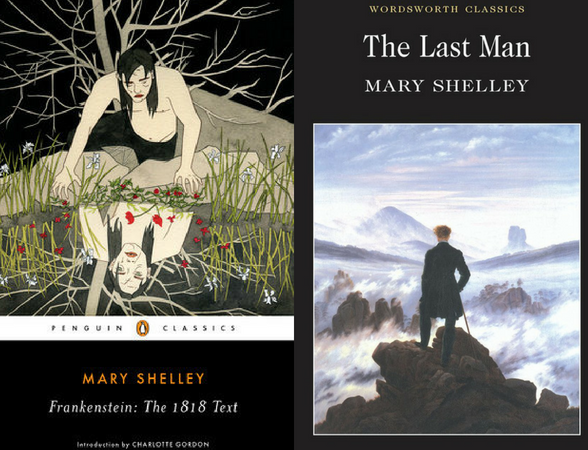
I find it remarkable that Shelley should write a novel about the first superman (Frankenstein’s creature is stronger and smarter than any human) and then, a few years later, a novel about the last man. Victor Frankenstein’s creation is one of the loneliest characters in literature. “I am an unfortunate and deserted creature, I look around and I have no relation or friend upon earth.” The monster’s revenge is to leave his creator as friendless as he is. Meanwhile, despite its title, The Last Man is a crowded novel with a rather melodramatic plot. But this only makes the final pages more poignant. The protagonist, the only survivor of a plague, wanders around Rome — a monument and a ruin among monuments and ruins.
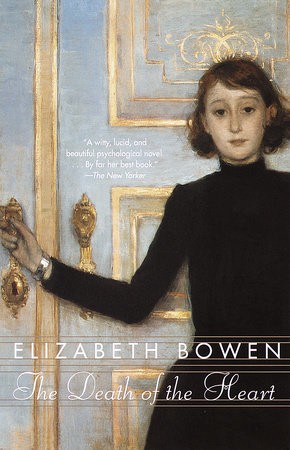
Can anyone be lonelier than a lonely teenager? Portia, the protagonist of Bowen’s novel, is the offspring of an illicit union that sends the family into exile. After her parents’ death, Portia is entrusted to her half-brother and his wife. Her isolated upbringing gives her a unique perspective on social relationships, which she commits to a journal that becomes the very core of the novel. Bowen’s breathtaking prose abounds in reflections on solitude: “The heart may think it knows better: the senses know that absence blots people out. We really have no absent friends.” Bowen’s book would pair well with Henry James’s What Maisie Knew, also about a lonely girl caught between dysfunctional adults.
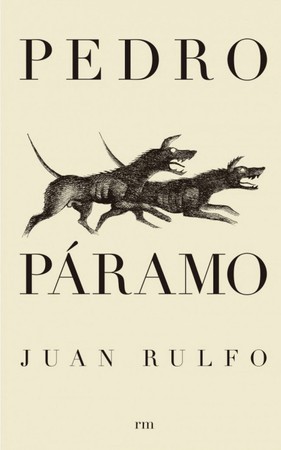
A ghost story like no other, Rulfo’s perfect novel narrates the return of Juan Preciado to Comala, his hometown, in search of his father, Pedro Páramo, the village’s tyrannical strongman. The plot’s chronology is so masterfully crafted that the reader immediately feels marooned in time. Whispers, echoes, shadows. . . Juan soon learns the town is deserted and that he is alone, surrounded only by specters: “the words I had heard until then . . . had no sound, they were soundless; they could be felt; but without a sound, like the ones heard in dreams.” Rulfo only published this short novel and a collection of stories, but his influence is immeasurable.
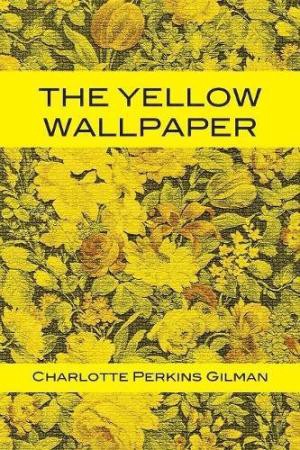
“To a house of some sort the woman has been confined for a period as long as history,” Perkins Gilman writes in The Home: Its Work and Influence. The most disturbing depiction of this form of domestic seclusion can be found in “The Yellow Wall-Paper.” The narrator’s husband, a condescending and suffocating physician, orders her to rest in a room with a tattered yellow wallpaper. Gradually, she starts perceiving moving patterns and, finally, a woman trapped behind the wallpaper’s design. “She crawls around fast, and her crawling shakes it all over.” The ending of the story is chilling. It may be as a response to this domestic confinement that she wrote her best-known novel, Herland, about a utopian community of women, thriving in isolation.
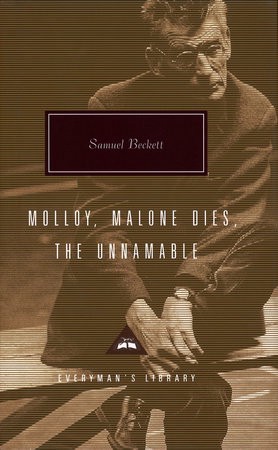
The monologue is the genre of solitude, and Beckett is its undisputed master. His trilogy shows a progression toward absolute loneliness and dispossession. Molloy, a crutched tramp, writes his story for an unknown man. The protagonist of the second book is no longer upright: Malone is a bed-ridden naked old man, scribbling incessantly with a pencil stump. In the last novel, there is just a head in a jar, which becomes a disembodied voice. But these loners are everywhere in Beckett’s work: in his early novels (Murphy), in many of his plays (Not I), and in his later stories (Company). From The Unnamable: “Yes, in my life, since we must call it so, there were three things, the inability to speak, the inability to be silent, and solitude, that’s what I’ve had to make the best of.”
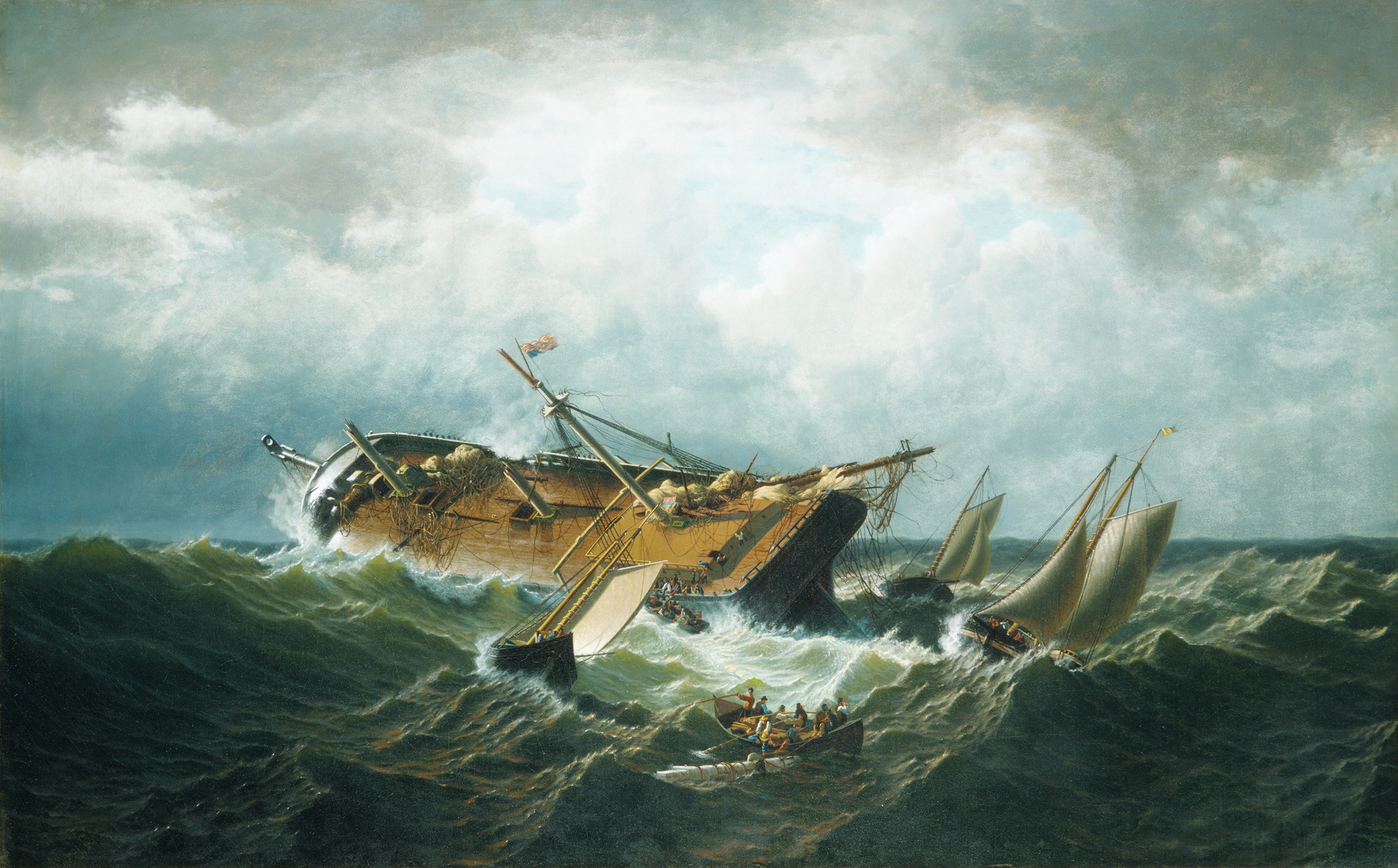
In this era of air travel, it’s hard to fathom what it must’ve been like when boats were our only option for long-haul transportation. Air travel may often be messy and inconvenient, but imagine weeks or months trapped on a ship. The relentless roiling under your feet. Violent bursts of weather. Not to mention the constant threat of a slow, agonizing death by drowning. Catastrophe is always at hand and, since you are bobbing along the earth’s surface like a floating toy in a bathtub, salvation is usually far from hand.
The closest you can get to this heady mix of dread and hardship is a good book about the good ole seafaring days. Alas, most lists of such books seem to regurgitate the same titles and authors: Patrick O’Brien, he of the Master and Commander series (which always sounded a little BDSM to me); or, for those into thrillers, the late Clive Cussler. Classics, like Moby Dick, Billy Budd, The Swiss Family Robinson, The Odyssey, or modern classics like Life of Pi or The Perfect Storm. So, I set myself some rules: I wouldn’t include any of the above, nor would I include other books about the Titanic (though if I were, it would be to include The Ship of Dreams by Russell Gareth, a fabulous non-fiction account that came out shortly after I’d finished writing The Deep.)
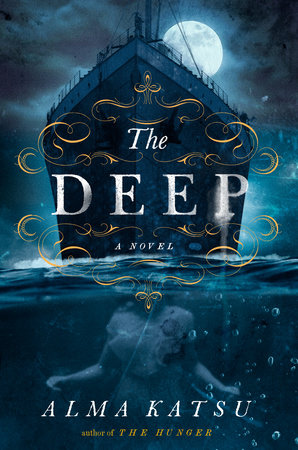
In my novel, The Deep, mysterious happenings begin to affect the passengers on the Titanic. It’s not clear to stewardess Annie Hebbley who is to blame: con men, or the supernatural. Four years later, on the Titanic’s sister ship the Britannic, Annie is confronted by the ghosts of the past and must come to terms with her role in the tragedy that fateful night.
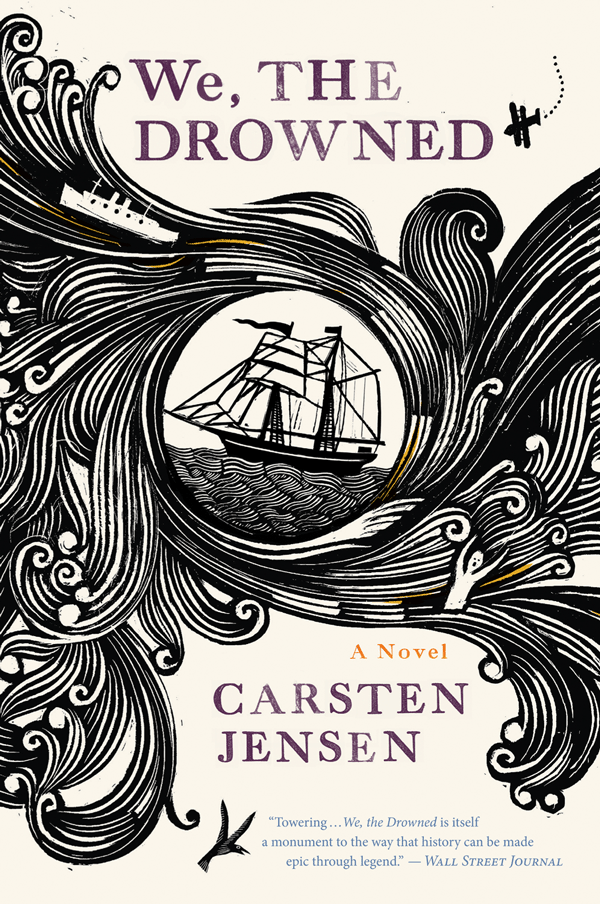
Stories about ships and the sea are often in reality about life transitions. This is true of Jensen’s We, the Drowned, first published in Danish in 2006 and out English in 2010. It also includes all the things we have come to expect in historical novels of the sea: world-travel in exotic locales, miraculous feats of derring-do, introspection, and—because books about life at sea tend to be men’s books—war, violence, and regret. A great epic tale where the sea is a metaphor for life.
A bookseller pressed this novel into my hands after I’d finished an event for The Hunger, my reimagining of the story of the Donner Party, saying, “After hearing you talk about your book, I think you’ll like it.” I’m glad she did. To serve on a whaling ship in the 1850s meant you had few other options. The work was dangerous, the environment unpleasant (a huge understatement), and the company undesirable. Characters in this highly acclaimed 2016 novel are products of their time: rough, unscrupulous, irredeemable. While shocking in places, if the reader perseveres, they will be rewarded with a taut story and masterful writing.
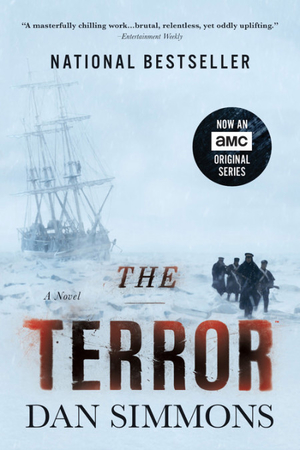
I read Simmons’ 2007 novel after I’d finished writing The Hunger, only because I’d heard my book compared to it so often. After reading it, I understood what a great compliment that was. The Terror is an amazing piece of historical fiction, a reimagining of the story of the ill-fated Franklin expedition to find the fabled Northwest Passage. It has everything you’d want in a story: painstaking historical degree effortlessly sewn into the fabric of the story; strong writing; unforgettable characters. Given that supernatural elements are always tough to pull off in a novel as realistic as this, Simmons has done an extraordinary job, creating something that is as beautiful as it is mystical.
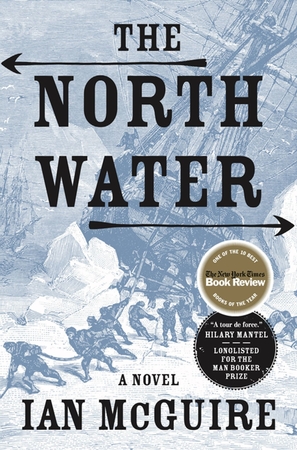
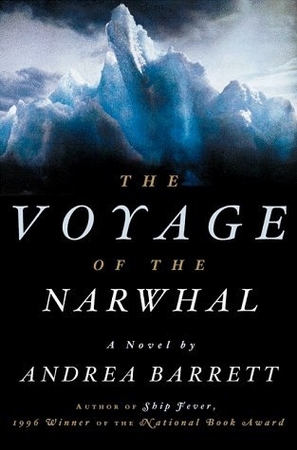
This novel, published in 1998 to much acclaim, is a great one to pick up after you’ve finished The Terror, as it’s the tale of a fictional group dispatched to find out what happened to the doomed Franklin expedition. Like many books of the sea, it is really about men’s ambitions: the hubris to think the sea can be tamed and that you are the man who will do it.
Like many people, I’d read anything written by Erik Larson, but his treatment of the sinking of another great ship? Yes, please. Many people have tangled the Lusitania and the Titanic together in their minds and it’s not hard to see why: the Lusitania was sunk only three years after the Titanic, and both claimed similar numbers of fatalities (1,500 on the Titanic, 1,200 on the Lusitania). Like the Titanic, the Lusitania’s sinking has been shrouded in rumor and conspiracy. It deserves to have Erik Larson set its record straight.
While Moby Dick may be the first book to come to mind when one thinks of seagoing adventure, the real-life event that inspired Melville was the capsizing of the whaling ship Essex. Historian Philbrick captures that heart-stopping story in this 2000 work, the basis for the movie by the same name and winner of the National Book Award for non-fiction.
For many of us, few periods in history are as exciting as the end of the Age of Discovery. Dash’s 2002 book provides a little bit of schadenfreude for anti-colonialists, telling the tale of what happened when the Dutch East India company sent the wrong man to safeguard the treasure stored on its flagship, the Batavia, resulting in a shipwreck and a murderous descent into madness.
DON’T MISS OUT
Sign up for our newsletter to get submission announcements and stay on top of our best work.
YOUR INBOX IS LIT
Enjoy strange, diverting work from The Commuter on Mondays, absorbing fiction from Recommended Reading on Wednesdays, and a roundup of our best work of the week on Fridays. Personalize your subscription preferences here.