I Cannot Get Over the Miracle of Cell Division

Division

 My cats were born soft and small as peaches
 and I tell my mother I cannot get over the miracle
  
 of cell division. How something minuscule 
 multiplies into muscle mass, coat patterns, a registry 
  
 of cause and effect, and divergent personalities. 
 Like, how one of my cats has grown smart 
  
 enough to open doors, chews scenery only 
 when she wants fed, while her sister, restless 
  
 as a cooped finch, is also too scattered 
 to learn the higher arts of tantrums and escape. 
  
 I confess to my mother I can hardly understand 
 this hurt of watching, loving them as they grow. 
  
 My mother gives me a look that makes me stop talking. 
 As if none of the words I’ve learned could describe 
  
 how it feels to mother two girls. My smart cat 
 comes to me each night to go through the motions 
  
 of suckling. She kneads into my right bicep, claws out 
 so many beads of blood that the skin scabs over 
  
 like sandpaper. I’m afraid, now, to tell my mother 
 about this ritual of caregiving. She has yet 
  
 to lift up her shirt to show me all her scars. 


Meaningful Symbols Placed in Meaningful Places

 
 I woke up this morning to tell you there may be caves on every continent
 marked with ochre and blood and calcium, that we have never been so alone
  
 as to be alien in expressions of love. It has never been a mystery why a child 
 would trace her hand upon paper any more than any vertebrate that shivers 
  
 would turn its face to the sun. Maybe, to be alive today is too much, to choke 
 upon the lies so many people serve in lieu of common dignity. But to be alive 
  
 has always meant waking up, facing sunward, repeating to those we love the truths 
 that will outlive us. I woke up this morning to tell you Neandertals made art 
  
 in caves and as-yet undiscovered places. Surely, all our common ancestors 
 made art in leaves, art in hair, in song and other intangibles. I woke up because 
  
 our lives are holy with such truths as cell division, rock formation, mental 
 maps that leave their traces in uranium-thorium decay. I wake up in such good 
  
 company, knowing we were never the first and won’t be the last to turn the fact 
 of sunlight into symbol, symbol into body language, movement of bodies against 
  
 other bodies into such sciences, such memories, into such blinding hopes. 


The Right Novels to Read in Every Life Crisis

Not one for self-help books, I like to look to novels to get me through certain difficult periods in my life. Change can be lonely, so it’s best not to endure it alone. And who better to share it with than characters in a book, going through the same changes? Reading the stories of those going through similar experiences—even if they come from completely different backgrounds or live in an entirely different part of the world—always allows me to see my own situation from a new perspective. If you’ve diagnosed yourself with one of the following particularly life-altering moments, I have just the prescription to get you through it. 

Image result for skim mariko tamaki jillian tamaki

Coming of age: Skim by Mariko and Jillian Tamaki

Mariko and Jillian Tamaki portray with delicacy and vibrancy the chaotic world of adolescence in this beautifully illustrated graphic novel. Kimberly (Skim) Keiko Cameron battles with dark thoughts, infatuation and sexuality while attending a girls’ private school. 

Image result for secret history book cover

College: The Secret History by Donna Tartt

Donna Tartt’s first novel takes place in an elite Vermont college and brings the setting to life through each arduous New England season. The narrator, Richard Papen, recounts his undergraduate years as he finds his way into the ultra-exclusive Plato-revering clique comprised of wealthy mysteriousstudents. After Richard secures his place at the Classics table, he realizes that inclusion wasn’t what he expected, or what he wanted. 

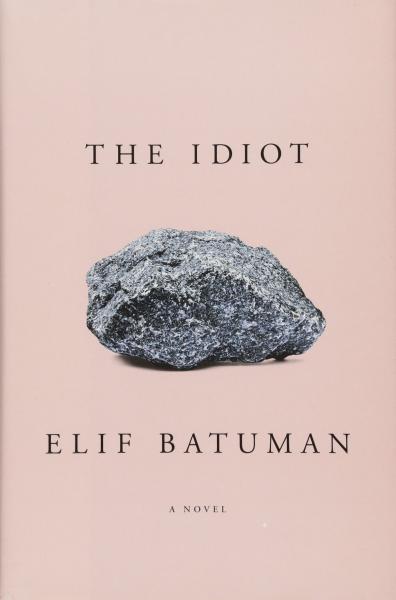
Image result for elif batuman the idiot

Living abroad: The Idiot by Elif Batuman

Selin, a Turkish American student at Harvard, studies semiotics and becomes fixated on the way languages can shape the way we see each other and the world. In her first year, Selin befriends Sventlana, a head-strong Serbian, and falls in love with her Russian language classmate, Ivan, with whom she speaks exclusively through email. Following a suggestion by her e-penpal, Selin spends the summer in Hungary teaching English, where her studies and theories about contrasting linguistic lifestyles manifest in her new life abroad. 

Sweetbitter by Stephanie Danler

First job: Sweetbitter by Stephanie Danler

Stephanie Danler shows her readers the intoxicating, exhilarating, and punishing world of a young waitress in New York City. Tess lands a job in a highly respected restaurant, based on the famous Union Square Cafe. She navigates the labyrinthine of fine dining during her shifts and immerses herself in the whirlwind lifestyle of booze and drugs when she’s off the clock. Tess’s story typifies the hurdle of getting and keeping a first job. 

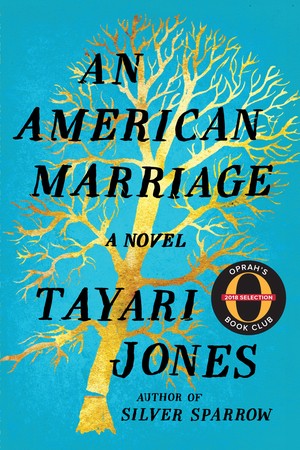
Image result for american marriage tayari jones algonquin

Marriage: An American Marriage by Tayari Jones

The titular marriage in Jones’ novel weathers an unimaginable storm when Roy and Celestial become separated by bars. During a visit home to Louisiana, Roy is accused of rape and sentenced to prison. Celestial reckons everyday with the decision whether to stay loyal to her husband while taking her life into her own hands as an artist and entrepreneur. An American Marriage deftly questions gender roles within modern marriages and racial injustices in our current political era. 

A Separation by Katie Kitamura

Divorce: A Separation by Katie Kitamura

After a secret separation from her husband, the narrator is forced to confront the turmoil and deceits of their marriage when he goes missing in the Greek islands. During her search for him, the narrator uncovers things about her husband that she never knew. Her dark interior monologues contrast with her compliant disposition, demonstrating the gulf between what we think we know about someone and who they actually are.

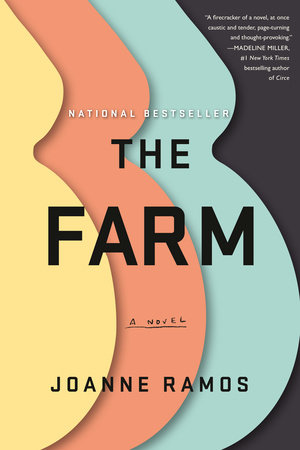
The Farm by Joanne Ramos

Pregnancy: The Farm by Joanne Ramos 

Set in a GOOP-esque farm in Massachusetts where immigrant women carry fetuses for the wealthy, The Farm tackles messy truths about surrogacy, capitalism, the wealth gap, and racial disparities. The elite surrogacy business at the heart of the novel, Golden Oaks, offers poor women of color money in return for renting their wombs to carry the babies of wealthy white families.

Parenting: The Need by Helen Phillips

Raising a child can be terrifying. For the protagonist of The Need—a thrilling page-turner loaded with philosophical questions about identity and empathy—motherhood is a nightmare. Helen Phillips reveals how the unequivocal devotion a mother feels can lead to hopelessness and inner terror when Molly confronts danger in her own home while taking care of her young children. 

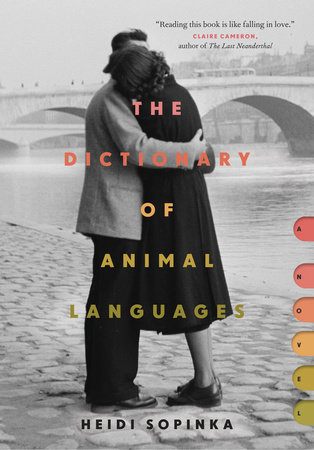
The Dictionary of Animal Languages

Aging: The Dictionary of Animal Languages by Heidi Sopinka

Heidi Sopinka explores old age through the story of Ivory Frame, now nearly a century old, a woman who ran away to Paris in her teens and fell in love with surrealist art and a Russian artist. But her bohemian life was upended during WWII, and she now works in solitude on her final masterpiece: the dictionary of animal languages. 

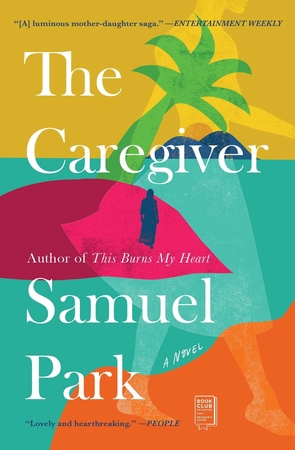
Facing mortality: The Caregiver by Samuel Park

In this posthumously published novel, Samuel Park writes about the complexities of dependent relationships and the sacrifice and hardship of caring for a person who can no longer take care of themself. Mara Alencer is the Brazilian caregiver of a white woman with terminal cancer in California. Before she moved from Rio de Janeiro, she lived with her mother, a voiceover actress who depended on her daughter as much as her daughter depended on her. 

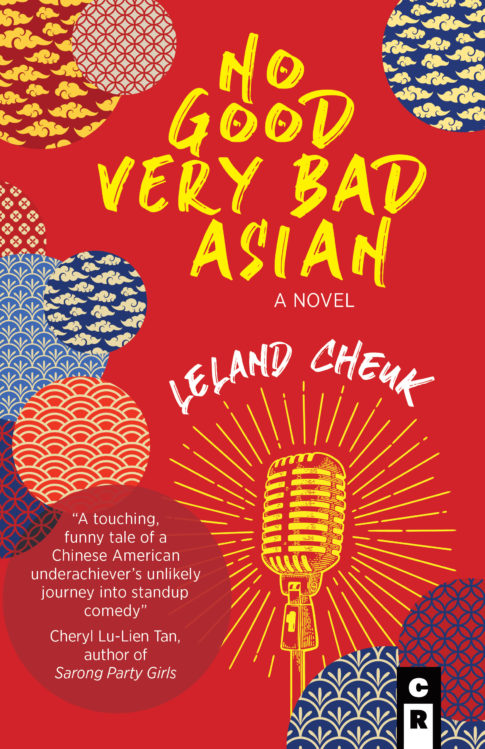
Leland Cheuk Writes the Asian American Antihero We Always Needed

Whenever the topic of Asian Americans in the entertainment industry comes up, for a few moments, I mentally include Sirius Lee. And then I remember that he is only a fictional standup comedian, the protagonist of Leland Cheuk’s intimate novel No Good, Very Bad Asian. It’s such a vivid and engrossing portrait of a lovable, modern-day schmuck—a character who feels immediately iconic, like Holden Caulfield—that I was almost disappointed when I learned that Cheuk is not at all like Sirius Lee, although he did perform standup in bars while researching for this novel. 

 While Sirius Lee finds fame as a teenager and struggles with the fallout from that, Cheuk’s fiction didn’t get picked up by publishers until he was in his late 30s. His debut novel, The Misadventures of Sulliver Pong, was published by the Chicago Center for Literature and Photography in 2015; a story collection, Letters From Dinosaurs, followed soon after in 2016 from Thought Catalog Books. Before all that had happened, Cheuk survived a life-threatening diagnosis of MDS, receiving chemotherapy and a bone marrow transplant. Over coffee in Brooklyn recently, Cheuk revealed how his manuscript-in-progress for No Good, Very Bad Asian took a different turn after his recovery. But it’s still funny as hell. 


Cathy Erway: I don’t think I’ve encountered in literature an Asian American character who’s overweight, struggles with substance abuse, and is constantly screwing up in life. Have you? 

Leland Cheuk: I was very conscious when I started out that I was trying to write a book that was about everything that a model minority isn’t. I consider myself reasonably well read but I don’t think I’ve read one. But the question is, why haven’t we seen someone like that sooner? Asian American literature has a long history dating back to the early 1800s and there’s been many books about men and the trials and tribulations they’ve gone through, so I’m sure there have been many characters like that, but maybe they just haven’t percolated up in the consciousness enough. 

CE: So you wanted to write about someone who’s not a model minority—why?

LC: I think there are plenty of writers that are doing mainstream literature related to immigration, which is very top of mind with all the things going on in the news, or writing about the home country. And I just didn’t want to do it. I don’t like doing things that people expect me to do. Because that’s, like, my parents. Especially with art, you know, it’s so hard to succeed to begin with. So I feel like I might as well enjoy what I’m doing and 100% believe in what I’m doing and just have fun.

CE: Is there also some desire for you as an Asian American writer to help broaden the range of experiences we’re seeing in literature, and have more diverse characters? 

I think that’s sort of the crux of Asian American literature, trying to prove that you’re human to a white audience, sadly.

LC: Yeah, I think that’s sort of the crux of Asian American literature, trying to prove that you’re human to a white audience, sadly. That’s kind of the underlying subtext no matter how different the book is, and I just wanted to write a book where the person is a human. Like, he’s got all kinds of problems makes all kinds of mistakes, or he just is. It’s a book about being Asian and the existential pros and cons of being a person of color in America, specifically a Chinese American. 

CE: It’s funny because I don’t think there are too many white American novelists who are like, gosh, I really need to represent a person who’s a drug addict. 

LC: With white narratives, there’s so many of them. They really span the gamut, so you don’t really ask why isn’t there a book about a white drug addict because there are plenty of books. But for Asian Americans, that’s a genre of itself. Mainly around the immigration narrative or around the vacation novel in the home country. 

CE: Like Crazy Rich Asians?

LC: Right. Unfortunately there isn’t a huge span of novels about Asian Americans just being here, being American, and you know I’m kind of tired of the question: When do we get to be American? I hope that the book contributes to that broadening of point of view—rather than just Asians, it’s just people. 

CE: How did you come up with this character? Were you interested in comedy? 

LC: I was always into standup. As a fan I wanted to write about comedy. And then I started doing standup just to validate that track. I took a class and started doing open mics, when I moved to New York City. I went to clubs did that for 2.5 years. I enjoyed it, it was for research but I enjoyed the people I was around, and I never laughed so hard. This is before I got sick, and then I basically trailed off after getting sick.

CE: Did you write the book in full before you got sick? 

LC: In 2010 I had a first draft. Now it’s 2019. 

CE: Did it change a lot in light of your illness and recovery? 

LC: It did; it was a bigger book. The comedy part was a sort of book within a book, it was a literary mystery about a private detective… It never worked. I could never find the ending. And then I basically had to scrap the whole frame around it. And then my illness had something to do with the way this novel ends. 

CE: I love how [the finished novel] is framed as a letter to the protagonist’s daughter.

LC: That came up late as well. Once I scrapped the frame, I felt like I needed to do something to bring the reader closer to the character because he’s basically spewing all his misdeeds. There are also a lot of great standup memoirs that you can read, and I was thinking, well, why would someone read my fake standup memoir as opposed to reading just a great standup memoir? Some of which are listed in the acknowledgements. I’m not a huge fan of Artie Lange’s comedy, but his book Too Fat to Fish is amazing. 

CE: A lot of people might think the author must be a lot like the character when it’s written in first person. Are you? 

I’ve since demonstrated how the son of immigrants can be downwardly economically mobile.

LC: I’ve more or less been clean—I mean, I had a phase in college. Drugs are not foreign to me. I actually borrowed Sirius’s background more from my wife than myself. I grew up privileged, went to Berkeley, my dad still works in tech in Silicon Valley and is pretty well off. Of course, they escaped from China and swam to Hong Kong, they did that all-night swim, they were one of the freedom swimmers back in the early ’70s and they’re very lucky to survive. My dad was 97 pounds when he immigrated. So yeah, they made this American life and became far more successful than they could ever imagine, and I grew up and went to the same high school as Steve Jobs and Wozniak in Cupertino [not at the same time], drove a Mercedes to school. I was very privileged. Since then I’ve since demonstrated how the son of immigrants can be downwardly economically mobile. My wife’s from Monterey Park in San Gabriel Valley, so I know that area well, it’s very Chinese. Great food. Working class. I was very conscious to create a person not like myself, but some of the incidents were real, like I did steal that Yoda toy, and my grandfather did give me a talking-to. 

CE: Some people might be shocked about how unaffectionate the parents of the main character in No Good, Very Bad Asian are, and how unsupportive they are of him. 

LC: That’s somewhat autobiographical. When you come from immigrant working-class background they don’t really understand why you would do something as non-lucrative as the creative arts or comedy, and when I tried to write novels and kept quitting my job for years on end to do it. But they’re not wrong. Now I realize, “oh, my mom was right.” But it is tough. I think it’s a cultural thing and it’s just another hurdle if you’re an Asian American; your family might not be as supportive of you, and you have to prove it more. 

CE: Are your parents still around? Do they like the book? 

My mom looked at the book’s title and was like, aren’t Asians gonna sue you?

LC: They don’t really read English. So I don’t know if they’re going to like the book. Maybe if it gets translated one day. My mom was at my book event in San Francisco recently, and she looked at the book’s title and was like, aren’t Asians gonna sue you for calling them bad? And after the reading she was like, why do you always have to write about parents? It’s like life imitating art. 

CE: Do you feel like you wrote this book for any certain audience? 

LC: I hope it’s a broad audience, but I have been getting a lot of fan mail from Asian American males… I do think that their point of view isn’t necessarily top of mind in our culture and I don’t think there’s any terrible desire in big publishing to share it — this book got rejected roundly by dozens of publishers so it’s from a small press. I can probably name 45 Asian American women novelists off the top of my head but you can really only name ten men… so I hope we see more. 

Carmen Maria Machado’s Memoir Is Riddled with Restless Ghosts

I first encountered Carmen Maria Machado in 2016, reading her short fiction “Horror Story” in Granta. Her innovative and acclaimed debut collection Her Body and Other Parties had not yet been published, but I scourged the internet for everything I could find. What I found were stories about queer relationships, folk tales updated for our times, a range of different craft techniques I’d never seen in contemporary fiction.

Image result for dream house carmen maria machado

Like her electrifying, bizarre stories, Machado’s debut memoir In the Dream House uses a fragmented structure to tell the story of a queer relationship she was in while she was a student at the Iowa Writer’s Workshop, a relationship that spiraled into psychological abuse. Drawing a variety of tropes to organize each segment of the book, from noir to fantasy to Bildungsroman, Machado unearths painful and difficult memories, as well as the trajectory that led her to her relationship, observing and analyzing them from a variety of prisms as one would inspect a jewel. The book examines stereotypes about lesbian relationships and it expands the scope of how we discuss and write about abuse in queer relationships. Difficult and devastating as it is, Machado’s storytelling is playful and inventive, and her analysis rigorous and compassionate. In our phone call, Machado graciously discussed her obsession with haunted houses, time travel and fate, and the shaping of her book.


Roberto Rodriguez-Estrada: In the Dream House is a memoir, which I imagine changes how you feel about it coming into the world.

I’m having a lot of anxiety; it’s a very different process than having a fictional book out.

Carmen Maria Machado: Well, I would be lying if I said I was not stressed and anxious. I’m having a lot of anxiety; it’s a very different process than having a fictional book out and it requires more out of me psychologically, which I’m prepared for but am also dreading. And also another part of me knows what’s coming because, with the last book Her Body and Other Parties, I didn’t know it was going to be a hit so I was surprised constantly about everything that was happening. Now it’s just like: here we go! It’s a different headspace. 

RRE: This book is about a literal (and figurative) house; it’s a book with a million different rooms and cabinets and nooks. You recreate your ex’s house in Indiana in many different ways. How was it different to write this book, which requires all this excavation of memory?

CM: I wrote part of the book while I was revising Her Body and Other Parties two years ago. I took a first stab at it and it sucked, but I was also working on it between other projects in a very quick process. And then I sold a sort of skeletal draft to Graywolf Press, which was a third of the material and really, really rough. So last year I sat down to finish it—thinking okay, this has got to be done by the end of the year —and that part was really awful. It was really difficult to return to that headspace while I was in a writing residency all by myself. Far from my spouse. Far from my friends. It was a dark, weird place, and that’s true for both the personal material and the research. I was like, “Oh! Maybe it’ll be easier when I’m reading about other people’s traumas and not just my own,” but it really didn’t get any better. It was just as sad, just as hard. I sort of wanted it to be over and I had to finish it, but it was one of those books that was a mess until it wasn’t anymore. And it only felt like it wasn’t a mess until the very end. 

I kept struggling with this idea of “this is all garbage.” And I’m not sure if anyone is going to tell me it is! Normally my spouse is my first reader, but for obvious reasons she was just not ready; it was hard for her to give regular edits like she would for anything else.

RRE: That makes sense. She’s in the book!

CMM: Exactly, so that was hard too. It was fine that she didn’t want to do that, completely understandable, but it took me some time to get used to that because she’s been looking at my work for so long. And so there was this day when I actually emailed a friend of mine and I said, “I don’t need you to give me actual notes; I just need you to tell me it’s not a mess!” He was really sweet and she said, “it’s actually not a mess at all” and gave me concrete reasons about why it wasn’t a mess. And I felt better.

It was just a really difficult and emotional process, and I wonder if all nonfiction is that way. Not that I hadn’t written nonfiction before, I had, but there was something about this book in particular that required so much personal excavation, so much truth telling to myself, and so much accessing this well of great pain, which …part of it is sort of better and part of it is sort of boarded up. It was such a strange process to go back and access that again. 

RRE: One of the segments is about your ex forcing you to write down all your worst qualities, all your flaws. How do you walk away from writing something like this? 

I want to believe that I wrote from a healed place because I think it can be really hard to write well from a place of great pain, but for this book I was somewhere in between.

CMM: Actually that section used to be longer, it had to be cut down because it was too long. It’s weird, though, because I think part of being a functioning adult is being honest with yourself about your flaws and it’s something a well-adjusted person can get used to. But then I think the process of being forced to articulate that to another person is an act of violence, an act of manipulation, and then focuses all these faults and mistakes on you. And then it becomes a sort of habit. One of the hardest parts of writing this book was realizing how many of those habits are still in me. I haven’t seen this person in about eight years and the fact that I still have habits ingrained in me, fears and anxieties that I haven’t shaken. Recognizing that there was damage done and that it was done in reverse, it’s a real bucket of water in the face. I think I always knew this on some level but I haven’t been able to actually articulate it in this way. It means there are all these super straight lines between a thing she made me do and a thing she did to me, or a way that she manipulated me or gaslit me or hurt me in some way. And then recognizing that that still exists somewhere in me is really painful; it’s a hard cold dose of reality. I want to believe that I wrote this book from a healed place because I think it can be really hard to write well from a place of great pain, but for this book I was somewhere in-between. And that’s hard too because I want to say, this is something that happened to me, it’s in the past, it’s boxed up and in this book and I want to share it with you, but what’s hard is that that’s still part of me and I don’t like that. But it is what it is. 

RRE: Let’s return to the topic of houses. The house is such an important trope in horror. A lot of the most violent parts of the book occur in houses, or else enclosed, claustrophobic spaces: your ex’s car, over phone calls. There are so many different layers of meaning in the concept of a house. Why do you think writers return to it as a setting of horror? In the section “Dream House as American Gothic,” you cite film theorist Mary-Ann Doane, who says: “Horror, which should by rights be external to domesticity, infiltrates the home.”

CMM: I’ve always been interested in houses and in the past few years I’ve worked and thought about houses, haunted houses, and the ways in which that idea can be both chilling and a useful organizational principal for lots of different ideas. I think this idea of domestic horror, horror that’s coming from the wrong direction, is funny because home invasion is a horror genre I don’t relate to very much, whereas a horror that’s coming from within the house is much more interesting to me. 

Home invasion is a genre I don’t relate to. A horror that’s coming from within the house is much more interesting to me.

So, I first started thinking of the house in Indiana and what it means for a house to have metaphors built in, because it was never my house. I was just a visitor. But the fact is that we both spent a lot of time in this house. It was ours in a very personal way. There was also something about having all that created and shattered in the same brush. And the way that destruction was reproduced in enclosed spaces: in the car, in a shipping container flea-market in New York. Or even flying in an airplane or being in an airport, all these places that have these enclosed, liminal qualities about them. The more I thought, the more I was into it, the more I realized that being with her was just a sequence of being trapped in many different kinds of spaces. In the book I talk about Gaslight the film and that enclosure is very literal; as the film progresses she doesn’t leave the house and that’s sort of self-enforced. But when she does, when she removes herself from the house, the structure is still around her. To me there’s something so chilling about that, that the house follows you. Even when you’ve left the space. And that doesn’t have to be a bad thing. It can be good in a way; it can be a good house, it can be a happy house. But in my case it was really bad because I felt like the house was following me around and falling on my body. 

RRE: That reminds me of White is For Witching by Helen Oyeyemi, where the character Miranda leaves the house for university, only to return to it at the end of book; it consumes her.

CMM: And that’s what a haunting is; a haunting is a state of being unable not to return. There’s always a sense of returning, a sense of inevitability, a sense of being yoked. I give this craft talk on haunted houses and there’s this great line in this poem by Jane Kenyon and she talks about depression as a ghost. She says, unholy ghosts are certain to come again. It’s a thing you can never exorcise; it’s never gone. 

But once I had the house as an organizing principle of the book, the whole thing kind of changed. It was hard to write the book without having a form, so this brought everything together.

RRE: How do you choose which pieces fit into the narrative you’re trying to tell? You include a section about a close and almost inappropriate friendship you had with a priest when you were in high school, which is sort of distinct from the narrative with your ex and the dream house. How do you decide what matters to the overall story?

CCM: I think for the most part they were things I felt were impossible to omit. The more I thought about the thing with my pastor—actually this section is adapted from a piece I wrote years ago for Catapult—I realized that more than anything in my whole life that event really prepped me, and not in a good way. I think the lack of what happened to me exactly, why this situation was so fucked up, why these boundaries were being violated weren’t obvious to me for years later, and there were a lot of things that were prepping me in a really weird way so I had to write about it. And then there was stuff that I just wasn’t sure would fit or just needed to go. The case of the priest felt more obvious to me and it fit with this element of: What does it mean to be this young woman trying to figure out what sexuality is, trying to figure out what desire is, with this weird religious angle and also all this body shame and everything? So that felt obvious. And then there were all these other pieces and I knew I couldn’t write a thousand page book, so I realized I really need the reader to get a sense of it but this is not an autobiography. I don’t need to give every detail. 

There were all these moments where I had to think: what does this do for the book? Does it give it dimensionality? I wanted to create a sense of who I was as a person, who I am as a person, and also give a sense of what the path to my ex-girlfriend, the path to this situation, looked like and what were the points along the way that kind of guided me in that direction. And I don’t mean that in a cosmic sense. I don’t think a deity was punishing me there. But more, what in my life made me ready for this? And that was a question I wanted to answer for myself. So looking back and examining your past pain, and trying to honor that. We can never go back to our former selves and just tell them: “Oh honey, that’s just a normal part of adulthood.” 

RRE: You touch on fate in a few points, for instance “Dream House as Time Travel,” how you couldn’t change something even if you went back and tried to intervene. What are your thoughts on fate or inevitability?

There’s something really horrible about wanting to reach back and say: I’m so sorry.

CCM: The time travel theory I draw on is that if we could access the past in some way we still wouldn’t be able to change a thing that’s already happened because, by definition, it’s already happened. And this is just one theory of time travel, but what was compelling about it to me was that it reminded me of this great Ted Chiang story called “The Merchant and the Alchemist,” which is a really good example of this theory: He wants to travel to the past to rescue his wife but he can’t. She’s already dying; she’s already died. This is far more interesting to me because we can’t go back and change things. I don’t think of it as fate, just that things have already happened, they’re done. And I think for me that also creates a kind of grief because I want to reach back to this person that I used to be and say, “it’s going to be okay but it’s also really going to suck.” I just want to go back and do something or say something but I obviously can’t. So it might as well be fate for her, for that past version of myself. And there’s something really devastating about that; there’s nothing you can do because the moment in which you were that one person is gone and you’re now someone else for better or for worse. Which is okay because that person is still me, but there’s something really horrible about wanting to reach back and say: I’m so sorry. The thing is I don’t actually wish I could undo it because I wouldn’t have met my wife. Even if I could go back in time to keep myself from interacting with this person, I wouldn’t. It brought me the person who gives me the most joy in the world.

Go Beyond Sally Rooney With These 13 Irish Women Novelists

It’s a confusing thing, being Irish. We’re European with none of the sophistication, and for a tiny island, we have an impressive lack of consistency. That said, we also have an impressive literary output. Our politics, social movements, and religions have born enough conflict to make a canon that is varied—and vast. Ireland was one of the few white nations colonized by the Brits, and Fredrick Douglass’s 1840s campaign in Ireland (alongside a national forefather, Daniel O’Connell) is often framed as evidence of kinship with oppressed peoples. The truth is the Irish in America were hostile towards the African Americans—today’s Republican party has a lot of Pats and McSomethings knocking around, so it seems the whiteness found a home in the U.S.

To that end, the literature of Irish-Americans is very different from that of the Irish; an analogy might be the famed Irish Oral Tradition as Americans understand it (bardic storytelling) versus Kevin Barry’s understanding (sex). On the topic of sex, I would like to officially dispel the notion that there’s no one as romantic as an Irishman with a couple pints in him. Firstly, he needs many pints, and secondly, forget Heaney and his fecund feckin’ landscapes (sacrilege!). The good smut is in the pages written by the women (bless you, Edna) who’ve had to fight for it. In 1990, Ireland elected a female president, Mary Goddess Robinson—yet a woman in Ireland had no more rights than the foetus in her womb until January 2019. In the darker, ruminative Irish novel, the religious narrative is a pervasive one, but the Catholic country that had constitutional religion, the laundries, and abusive clergy was also the first country to legalize gay marriage by popular vote. 

My point is, there’s a lot for our literature to talk about. To be described as an Irish writer should indicate a citizenship and nothing more, not style, subject matter, setting, and certainly not something “Joycean”—the regal Juan Villoro told me Jim-Jo copied his aesthetic from the Mexicans. Go figure. It’s very exciting when an exceptionally intelligent and young author like Sally Rooney becomes an ambassador to the world, but (no offense Sally) she is not the voice of Irish women, or a generation, or Irish literature today. She is an important voice in a writing landscape that is more robust than it’s ever been. The following reading list does not include Rooney, Anne Enright, Tana French, or Dame Edna. Some might argue that failing to mention these supernovas leaves gaping holes in the picture; I direct you to the previous sentence where I mentioned them. You already know how incredible they are, right? You’re here to discover more.

This is a list of novelists, so I can’t include the likes of Claire Louise-Bennett, Danielle McLaughlin, Wendy Erskine, and Nicole Flattery who uphold (and progress) the revered craft of the short story in Irish literature. I also wanted to incorporate some of the brilliant debuts that Irish women put forth this year, among them Sarah Davis-Goff, Aoibheann McCann, and Sue Rainsfield, but I’ll include their sophomore books in my next list. They say the boom is back in Ireland, and They (bankers) mean Property (which scares me), but I would say Irish lit is certainly booming. Despite my best efforts, I can’t fit everyone here. The following authors are all Irish and they call upon many eras, societies, Irelands, and worlds to craft their novels. 

146572

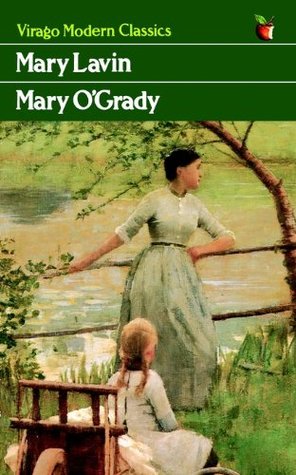
Mary Lavin

“In the Middle of the Fields” is Mary Lavin’s most commonly anthologized work (included in the excellent collection The Long Gaze Back, an anthology of Irish women writers edited by Sinéad Gleeson), but her novels had all the immediacy and adroitness of her short stories. Lavin’s work often focused on widowhood as it pertained to land ownership and religion. 

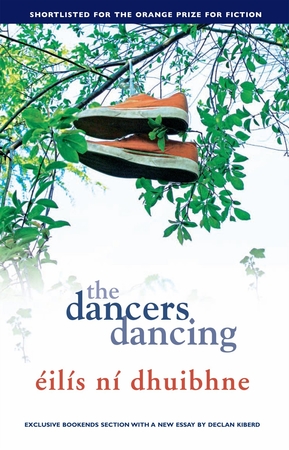
Éilis Ní Dhuíbhne

Say Eye-lish Knee Div-nah. The Dancers Dancing is a good starting point for her body of work which includes both English and Irish-language novels and short story collections. Dancers is set in 1972 and is a dialogue driven narrative about young girls from Dublin and Derry sent to the gaeltacht (Irish-speaking region) of Donegal. A picturesque coming-of-age story of young Irish women. 

The Glorious Heresies by Lisa McInerney

Lisa McInerney

I’ve heard Lisa McInerney described as the female Flann O’Brien of our time, but I submit that she is Lisa Feckin’ McInerney, an original force of brilliant satirical storytelling and artful profanity. Her debut novel, The Glorious Heresies, won the Women’s Prize for Fiction (the Bailey’s and the Orange prize, variously) and is indeed a glorious book about how one gangster murder ripples through a web of innocent, lovelorn, and truly terrible people. Her short stories are just as gripping, and I hear there’s a third novel coming soon—keep a weather eye out.

Image result for mary costello the river capture

Mary Costello

Mary Costello’s latest novel, the beautifully titled The River Capture, just got the nomination for the Irish Book Awards, but her debut, Academy Street, was as deserving. Costello’s writing is singular for its tight intensity which quietly untangles (the often dark) teleological questions.

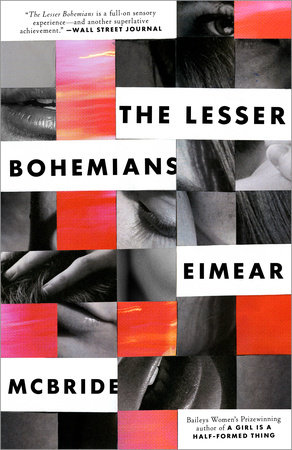
The Lesser Bohemians by Eimear McBride

Eimear McBride

A Girl Is a Half-formed Thing! The Lesser Bohemians! Brilliance in fragmentism, stream-of-consciousness, bildungswoman (forgive me), sex that is written perfectly even when it’s terrifying and brutal. If we had to make the Joyce comparison (ugh), we would make it here. 

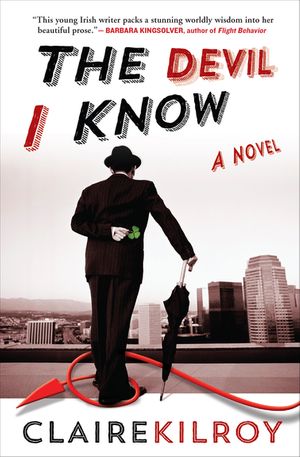
Image result for The Devil I Know

Claire Kilroy

As the cycle of literature follows the cycle of society, the boom and bust of the Celtic Tiger is now a pillared theme of contemporary Irish fiction. Claire Kilroy’s fourth novel, The Devil I Know, uses this period as its framework, but her previous novel (All Names Have Been Changed) is set in the 1980s version (so grittier and sexier) of Sally Rooney Land, i.e., Trinity College. Her novels have been awarded and praised since the get-go, so take your pick, you can’t go wrong. 

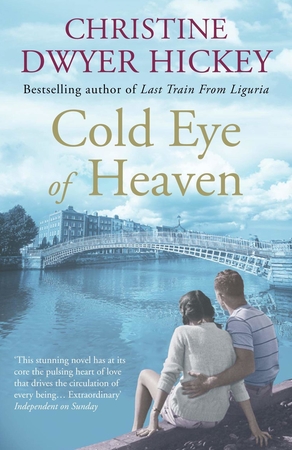
Christine Dwyer Hickey

I am a sucker for stories about trains, on trains, referencing trains, but even if you have no interest in the sub-sub-genre of literary railroad fiction, Christine Dwyer Hickey’s work, including Cold Eye of Heaven and The Last Train from Liguria, will read something special. She captures the Hiberno-English of Dublin without the kitsch, and the sequences of life without the saccharine glaze. 

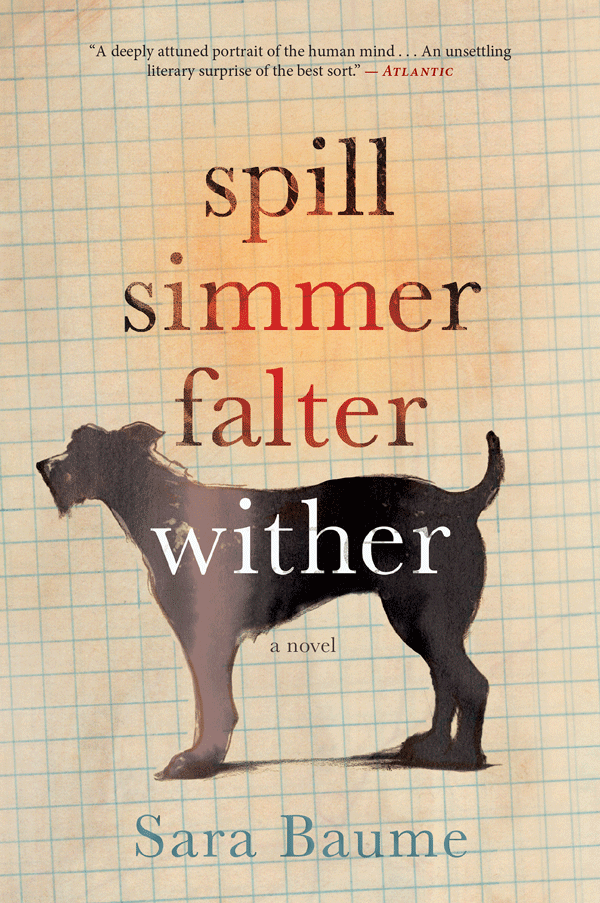
Spill Simmer Falter Wither

Sara Baume

While we’re on the topic of language, it would be remiss not to mention Sara Baume. She plays with phraseology and form in a way that is reminiscent of Olivia Laing or Jenny Ofill. Her subject matter, too, recalls Laing and Ofill; loneliness and loners are her recurrent subjects. It’s not always easy reading, but it’s provoking. 

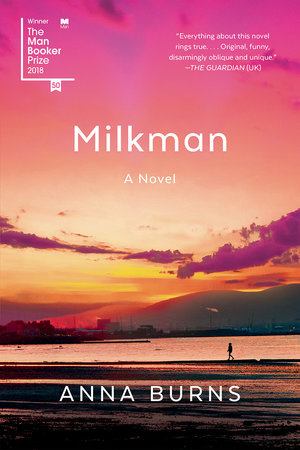
Anna Burns

So, Anna Burns is a Booker Prize-winner, but when she won last year for Milkman, lots of people were like, wow, where did Anna Burns come from? And Irish writers were like, Belfast. It’s true that her pages are not for the whiskey-tippled reader, but every page is worth it. Milkman is set in the troubles-era North and is something between a literary experiment and a harkening to the ol’ stream of consciousness thing you’ve heard a lot about already.

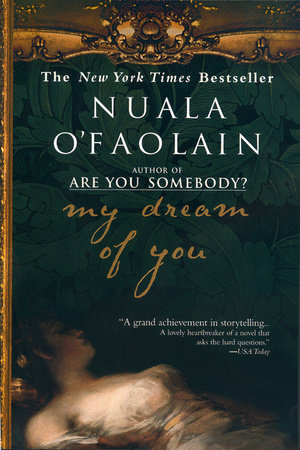
My Dream of You by Nuala O'Faolain

Nuala O’Faolain

I am cheating. Nuala O’Faolain wrote a sensual novel called My Dream of You, published in 2001, that incorporates themes and ideas from her gorgeous memoir, Are You Somebody, published in 1996. So yes, read the memoir to understand the novel; and while you’re at it, read Sinéad Gleeson’s experimental memoir Constellations, which occupies much the same significance as Somebody but in the contemporary. 

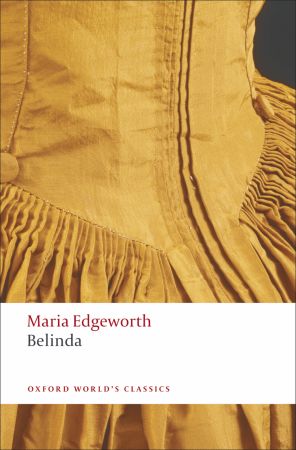
Image result for maria edgeworth belinda

Maria Edgeworth

This one is a throwback and controversial because Maria Edgeworth was born in England and was the daughter of a Lord—her family relocated to their estate in County Longford in 1782. She is notable, however, for writing against the political ideals of her time, such as ascendancy and land ownership. She was a literary celebrity in her day, and yet largely unrecognized today. Think Jane Austen, but Irish. If you’re looking to pick up the baton, start with The Absentee or Belinda

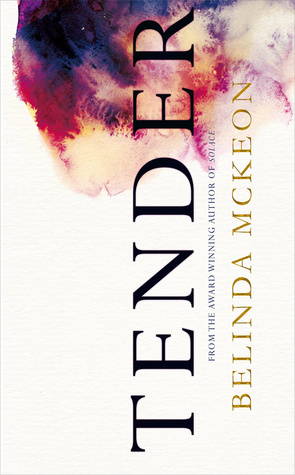
Image result for tender belinda mckeon

Belinda McKeon

Speaking of Belinda! Belinda McKeon. McKeon’s pensive novels Solace and Tender bring together rural Ireland, the effect of tragedy on family and family land, and latterly, the social dynamics of Trinity College Dublin (and you thought Sally Rooney put the famed snobbery of Trinners on the literary map). Her writing is spare but textured by poetry and art.

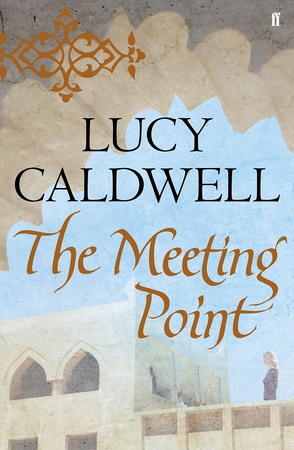
Lucy Caldwell

Lucy Caldwell’s second novel, The Meeting Point, won the Dylan Thomas prize and is largely set in the expat community of Bahrain before the Iraq war. It’s a carefully wrought story about the perspectives and truths of a marriage. Caldwell is also a playwright and her prose, long and short, has two qualities of great theater: compelling but crucially human. 

Cyrus Grace Dunham on Turning the Body Into a Home

What does it mean to be “at home” in your body—or rather, what does it mean for the body to be a home? We often conflate these two things metaphorically, and our skin acts as boundary and border, just as much as it offers points of contact, touch, and intimacy with place and people. We aspire to have the containers we reside in offer us the same level of comfort as the domestic sphere, and yet, everyone inevitably confronts the fallibilities and betrayals of their own body and the bodies of others. And if the body is your home, then a name is your address: a way for others to locate you. In the memoir A Year Without a Name, Cyrus Grace Dunham charts their experience of inhabiting and dissociating from their body, reckoning with the ways queerness, gender, desire, home, and family inform and intersect around the corporeal. 

When I spoke to Cyrus, Zoom kept failing and we had to start the call again several times. It felt fitting that that we could never quite pick up in the exact place where we left off—it wasn’t seamless, and this oscillating between starts and stops seemed to reflect just how few answers there are when it comes to identity, just how impermanent and nonlinear this thing called a body is. 


Ayden LeRoux: I wanted to start by thinking about the geographies and landscapes that you move through in your book, because you are able to convey this real reverence and ache through people and places simultaneously. You’re going to India and New York and Los Angeles and the Bay Area and the desert in Southern California and you’re also moving through, and with, these relationships with Zoya, Antonia, Joshua, GD. How does place influence your sense of self and how does place shape who we are as lovers? 

A Year Without a Name

Cyrus Grace Dunham: I’ve always had this ache for another place, which can also often feel like an ache for another person. I think they have a similar effect—when you fall in love with someone new or find yourself someplace new, you get to feel different. You get to feel like a new version of yourself, you know? 

AL: There was something subtle—even if you weren’t naming it explicitly—that was happening as I was reading that I could feel this rootedness in LA developing. I think a lot about that quote that’s in The Poetics of Space by Bachelard: Je suis l’espace ou je suis. I am the place where I am. 

CGD: Our bodies mediate our ability to feel and be in a place. Dissociation can make it really hard to really feel the textures of a place. It took me a few years in Los Angeles to start to locate markers of time passing because there appear to be minimal seasonal changes. You have to be someplace a little while to start to understand how time works there. I wanted to nod to those markers of time in the book. Things like the guavas starting to fruit or when the bark falls off the eucalyptus trees. 

AL: The sensorial or sensual self that you’re talking about connecting with place is so much about who you become as a lover to all these different people and the tactility of that. 

CGD: Totally, and every different relationship has a different set of symbols. I appreciate you bringing this up because I love writing about people and love and sex and place. So much of conveying attachment is picking a few symbols because we can never communicate the entirety of a relationship to a place or a person. You get a smell, a color, a fruit, a sensation. We have to reduce things to the building blocks of sensation as a way of communicating the intensity of attachment. 

AL: Definitely. It’s one of the things I reflected on in reading your book, and then again in Ocean Vuong’s new book and in T Fleischmann’s books. People always say, “The hardest thing to write about is love, or illness, or death,” but I think sex specifically is the hardest thing to write and not have it be totally corny. The three of you do that so tactfully. Maybe this is silly, but what are your tips on how to write about sex? 

CGD: I love how both T Fleishmann and Ocean Vuong write about sex. It’s really hard to communicate the sensuality of sex without relying on cliché metaphors and symbols. I was so impressed by how Ocean Vuong seemed to rely on a totally uncharted symbolic realm in describing sex, in On Earth We’re Briefly Gorgeous. T Fleischmann has this way of saying things exactly as they are, letting things be the symbols of themselves. I believe there’s a line in their new book: Jackson’s sweat tasted like Jackson’s sweat. That may not be exactly it, but it’s something like that. 

Sometimes I held myself back writing about sex because I was afraid of being corny. I would under-describe or under-give. It’s really hard to describe sex between trans and gender-nonconforming people because most of the language that we have to describe sex acts and genitals are gendering in a very violent way. What if someone has what the world would think of as a pussy, but it doesn’t feel like a pussy to them? I avoided describing people and their bodies and the specifics of sex because I wasn’t confident that I knew how to do so without relying on gendered descriptors. 

Names are supposed to have permanence, rather than being something more like an outfit or the weather or a mood.

AL: It’s interesting that you say that because so much of what was evocative was the way you allowed yourself to become gendered by certain acts in the book. It created the sense that you are accumulation of selves rather than a person erasing their past. Do you think names are a way of taming us? I was thinking about the scene when Joshua gives you the collar. Taming isn’t always bad. There is a sense of feeling safe or at home. 

CGD: Joshua would often say this thing to me, like, “Being trapped is often the closest thing we know to feeling held.” That always resonated with me. I think about it all the time. But yes, I deeply agree that names tame us. All words as representative symbols tame that which they describe. We use specific words to communicate identity as if these are stable and obvious facts. And a name is connected to questions of loyalty because ultimately a name is something that’s given to us—it’s not something that we consent to—and we primarily accept it. Last names functions as vehicles of inheritance, a way of passing down power. Even in queer and trans spaces, the assumption is often that someone will find a name that suits them better than their given name and it will be their name forever. Names are supposed to have permanence, rather than being something more like an outfit or the weather or a mood. What does it say about how we relate to fact and stability and false notions of permanence that we expect people to keep names? 

AL: Your book does this great work of not following that traditional arc of self-discovery of completion or arrival. And yet, a name is an arrival of sorts. 

CGD: I’m in an odd moment because there was so much relief in coming to the name Cyrus, but now I’ve written a book that’s out in the world that has the name Cyrus on it. I have a lot of fear that I’ve given that name away. I have a lot of fear that I’m going to lose it. 

AL: Your word choice of “losing” it is striking, as if it could fall out of your pocket or something. 

CGD: Or it could be taken. It’s hard for me to look at the book and see the author name and not experience the commodification of the name. And it is a commodity now, but it’s also evidence of a process that I went through. What you said about taming is relevant. All of the stable language that we use to communicate ourselves, whether it’s a gender marker, a pronoun, a name, is a way of making ourselves consumable and palatable. A name means something so different when you hold it inside yourself, like a secret. 

A name means something so different when you hold it inside yourself, like a secret.

AL: I’m curious how you feel about this being pigeon-holed as a memoir about gender or a trans memoir. For me, part of why I was so moved is because I have a genetic predisposition for cancer, so the fragility of the body is very relatable. I feel there is all this rich potential for crossover between writing about sexuality and illness and disability and mortality, because of how they undo assumptions about bodies. All of our bodies betray us, as you say. How do you feel about being forced into genre categories? 

CGD: Binary ideas of sex and gender are extremely violent and harm everyone. They harm people not only because they disidentify with the gender they were assigned at birth, but because anyone who has a body that strays from supposed biological norms is, in a way, failing at gender. Because of this, there’s so much crossover between thinking about transness and thinking about illness and disability, something that many people have written about much more eloquently than I can. All that’s to say, I don’t feel any scarcity around identification with gender nonconformity and gender deviance. It should be as accessible as possible. 

I’m interested in any way of being embodied that undermines binary ideas of sex. I never want to impose gender non-conformity on other people, but I do think that genetic conditions, and of course intersex conditions in particular, do so much work to show us that binary sex is not real. 

In terms of your specific question, I don’t necessarily see this as a trans memoir. It’s as much about the affective, embodied experiences of whiteness, elitism, alienation rooted in cultures of fame, recognition, and achievement. And, of course, the interconnectivity that pulses underneath all those forces, that transness allows me and so many of us to access. The book probably will be thought of as trans memoir. I don’t want to play naive around my using the genre as a Trojan Horse to address other questions I want to address. 

AL: The people that I’ve been able to relate to most about my body—because I’m advised to have a mastectomy—are other people who feel that their body is fragile at a young age. That’s friends of mine who’re intersex, trans, GNC, and who deal with chronic illness or disability. I worry that I’m imposing my own projections into gender because I am a cis, white, queer woman. But I wish there were more bridges between those conversations about illness and gender and how they liberate us from assumptions made about what sex and gender performance looks like. 

CGD: A disservice that the contemporary mainstream trans movement has done to larger movements around intersexuality, around gender nonconformity outside a binary sex logic, is perpetuating the notion that must feel “not at home in their body” in order to be trans. What does that even mean? To not feel at home in our bodies? Like, how can one feel at home in their body in a culture that’s built around rampant alienation and individualism? Most people don’t feel at home in their bodies, and yet the construction of I’m a woman, but I feel like a man is a remarkably simple and reductive one.  

What does that even mean? To not feel at home in our bodies? Most people don’t feel at home in their bodies.

I know lots of people who don’t experience dysphoria but also don’t identify with the gender they were assigned at birth. To me that’s a deeply legitimate position to take, a deeply legitimate feeling to have. What’s funny is that I’ve actually experienced quite cliché forms of dysphoria. But I don’t see those forms of dysphoria as being necessary for a trans experience. I hear you saying you’re cis and I find myself thinking I don’t even know what that means. If you feel like you will never be able to perform womanhood, in the way it’s expected of you, well… that sounds pretty not cis to me. But I’m not here to debunk your sense of self. [both laugh]

AL: But you’re totally right, there are many ways to not feel at home in one’s body. Going back to what we were talking about with lovers and geography and place—I don’t feel at home in my body in San Diego. Or there are people that I don’t feel at home with. 

CGD: I think what we’re talking about is that there are many people whose experience of gender deviance can never be contained by, disciplined by, the construction of “being born in the wrong body.” 

AL: Do you feel committed to nonfiction? 

CGD: I love nonfiction. I don’t like the idea that nonfiction has an obvious relationship to truth or fact. I don’t like the idea that nonfiction is necessarily about the past or the present. Nonfiction can be speculative, just as much as it can be rooted in recollection. There are moments in A Year Without a Name where I’m describing the future. I’m describing a way of being embodied, of existing as someone who uses he pronouns, as someone who looks like a man, and it’s all a fantasy. I use language to catalyze a transformation in myself. I’m committed to a nonfiction that holds space for fantasy, speculation, and alternative ways of being. 

Jana Casale Says You Don’t Have to Kill ALL Your Darlings

In our series “Can Writing Be Taught?” we partner with Catapult to ask their course instructors all our burning questions about the process of teaching writing. This time, we’re talking to Jana Casale, author of The Girl Who Never Read Noam Chomsky (which is a novel, but also coincidentally the title of my memoir). Jana’s upcoming six-week workshop focuses on capturing everyday life in fiction—and using your own everyday life as the inspiration for your work. Catapult writes: “Whether you’re looking to write a novel as subtly effective as Woolf’s Mrs. Dalloway, or you’re hoping to get the most out of the quieter moments of your Game of Thrones-esque epic, this class will give you a greater understanding of how depth and minutiae can be threaded together to form beautiful and meaningful prose.”


What’s the best thing you’ve ever gotten out of a writing class or workshop as a student?

Learning to edit your own work is the most important skill any writer can get out of workshopping.

Learning to edit your own work is the number one most important skill any writer can get out of workshopping. It is such a hard skill to learn and is so vital to doing good work. For me I think I was so much better equipped to write a novel more quickly and effectively having been a student in so many workshops than I would have been if I hadn’t had the opportunity. 

What’s the worst thing you’ve ever gotten out of a writing class or workshop as a student?

I think unfortunately badly run workshops can damage your ego and really kill the joy in writing. At the end of the day absolutely all criticism of fiction is subjective, and a properly run workshop should have that as its starting point. A workshop should feel like a positive, collaborative experience that brings your work to the next level rather than be something that tears you down and makes you feel like you want to quit writing and get a law degree. 

What is the lesson or piece of writing advice you return to most as an instructor?

The more you write the better at writing you will get. 

Does everyone “have a novel in them”?

I think if that means that everyone has a great story to tell there’s truth to that, but I think a novel is more than just a great story.  

Would you ever encourage a student to give up writing? Under what circumstances?

I don’t think anyone needs to be encouraged to give up writing because writing is hard enough of and in itself. 

What’s more valuable in a workshop, praise or criticism?

I think they go hand in hand. If I feel you’re on my team because you value my work, your opinion will matter to me a lot more than if I feel you dislike my work, and I have to defend it to you for you to even see the inherent value of it. 

Should students write with publication in mind? Why or why not?

There is such a thing as over-editing.

It depends on what their goals are. If their goal is to turn this into a profession then yes, but if their goal is to just enjoy writing as a hobby then no. 

In one or two sentences, what’s your opinion of these writing maxims?

  • Kill your darlings: Overrated. There is such a thing as over-editing. 
  • Show don’t tell: Another overrated saying. Sometimes telling is faster and more efficient. We all have things to do with our time. 
  • Write what you know: This is good advice in the right context, but I would say don’t forget to bring a sense of wonder to your work. I think good fiction is about discovery and asking questions that none of us have the answers to. 
  • Character is plot: I’ve never heard this before, but I would say character is not plot. 

What’s the best hobby for writers?

Something that has nothing, absolutely nothing, to do with books (we all need a break sometimes). 

What’s the best workshop snack?

When I was a grad student at Oxford they’d actually give us tea breaks where we’d have biscuits. Very British and very lovely. 

7 Books About the Struggle of Being a Writer

What do writers love writing about more than the dissolution of fifteen year marriages and nubile young co-eds lusting after boring middle-aged men? Themselves! And their feelings! The agonies and the ecstasies of the mysterious “writing process.” The torture of knowing you have pledged your soul to the noble pursuit of art. No one knows just how hard it is in these times to be An Artist™ quite like a fellow writer. 

The books on this list know that a writer’s life is not an enviable, romantic existence made up of sepia tones and sipping overpriced coffee in hipster coffee shops. Instead, they talk about the uncomfortable realities, both internal and external, that can at times make writing an actual #struggle. From writing in an all-powerful surveillance state, writing under the conditions of late-stage capitalism—a thread secretly woven through most of them, because capitalism seeps into all of our lives—or writing to connect to others across literal time and space, these books offer a window into the real challenges of being a writer.

Static Flux by Natasha Young

Calla is a self-aware and self-satirizing millennial struggling to make ends meet as a writer in post-Great Recession New York. She finds her writerly ambitions derailed by extreme wealth disparity, imposter syndrome, and a worsening personality disorder. Seeking to escape her disappointing life, she takes off to Los Angeles to crash with her privileged best friend Alix and to self-medicate with psychedelics. Follow Calla from the heart of despair in Brooklyn to the hazy, uber-rich hills of Los Angeles.

Image result for anne boyer garments against women

Garments Against Women by Anne Boyer

Anne Boyer writes in a blend of lyric prose, poetry, and memoir about the conditions that make writing nearly impossible—whether it’s eking out a living in a Kansas City apartment complex or parenting a child as a single woman alienated from the means of production. There are no easy answers to the questions Boyer asks of the political economy of literature and of life. How does one make art in moments where you have been poor and ill, have attempted to write and actively not written, have done intellectual work and have done housework?

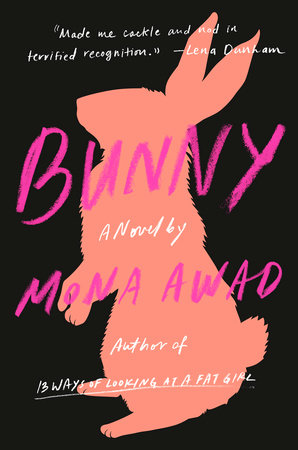
Bunny by Mona Awad

Bunny by Mona Awad

Samantha Heather “Smackie” Mackey is in the second year of her MFA program at an elite university. Initially, Samantha despises her cohort—four upper-class women she nicknames “the Bunnies” for their vapidity and eerily similar fashion sense. Her only friend and ally is Ava—a cynical art school drop-out who shares a disdain for the group. However, one day Samantha is formally invited into the fold (by means of a small origami swan) and falls deep into their strange world where it’s possible to conjure their monstrous creations in off-campus “Workshops.” Soon the edges of reality blur and her friendship with Ava threatens to collide with the Bunnies, Samantha must navigate an increasingly unfathomable world.

The Tenants by Bernard Malamud

Malamud’s novel about black and Jewish relations in 1960s New York pulls aside the curtain on the often obfuscated issue of writing as a raced subject. Henry Lesser is a novelist incapable of finishing a novel and the sole tenant in a rundown tenement. His solitary artistic pursuit is soon interrupted by the arrival of a black writer, Willie Spearmint, to the building. Henry and Willie become not only unwilling neighbors but professional rivals. The presence of Willie’s white girlfriend Irene and the landlord’s plans to evict both men in order to demolish the building quickly bring things to a head.

A Tale for the Time Being

A Tale For the Time Being by Ruth Ozeki

Ruth is experiencing writer’s block on a remote island in British Columbia until she stumbles upon a washed-ashore Hello Kitty lunchbox on the beach—detritus most likely from the devastating 2011 tsunami in Japan. Inside is a diary written by lively sixteen-year-old Nao, lonely and bullied after a recent move to Tokyo. Before Nao plans on killing herself, she wants to document the life of her Buddhist nun great-grandmother who is over a century old. As the diary unfolds, Ruth is pulled into a meta-narrative that collapses time and space, with Nao’s past, her present, and both of their futures in the balance.

The Memory Police by Yoko Ogawa

The Memory Police by Yoko Ogawa

On an unnamed island off an unnamed coast, things have a habit of disappearing not just from the locals’ possession but from their very minds. The authoritarian Memory Police are the ones maintaining that whatever has disappeared remains forgotten and most of the island’s inhabitants remain blissfully unaware of any changes. However, the few who are able to remember lost objects live in fear of discovery. A young novelist learns that her editor has been marked by the Memory Police and she begins hiding him underneath her floorboards.

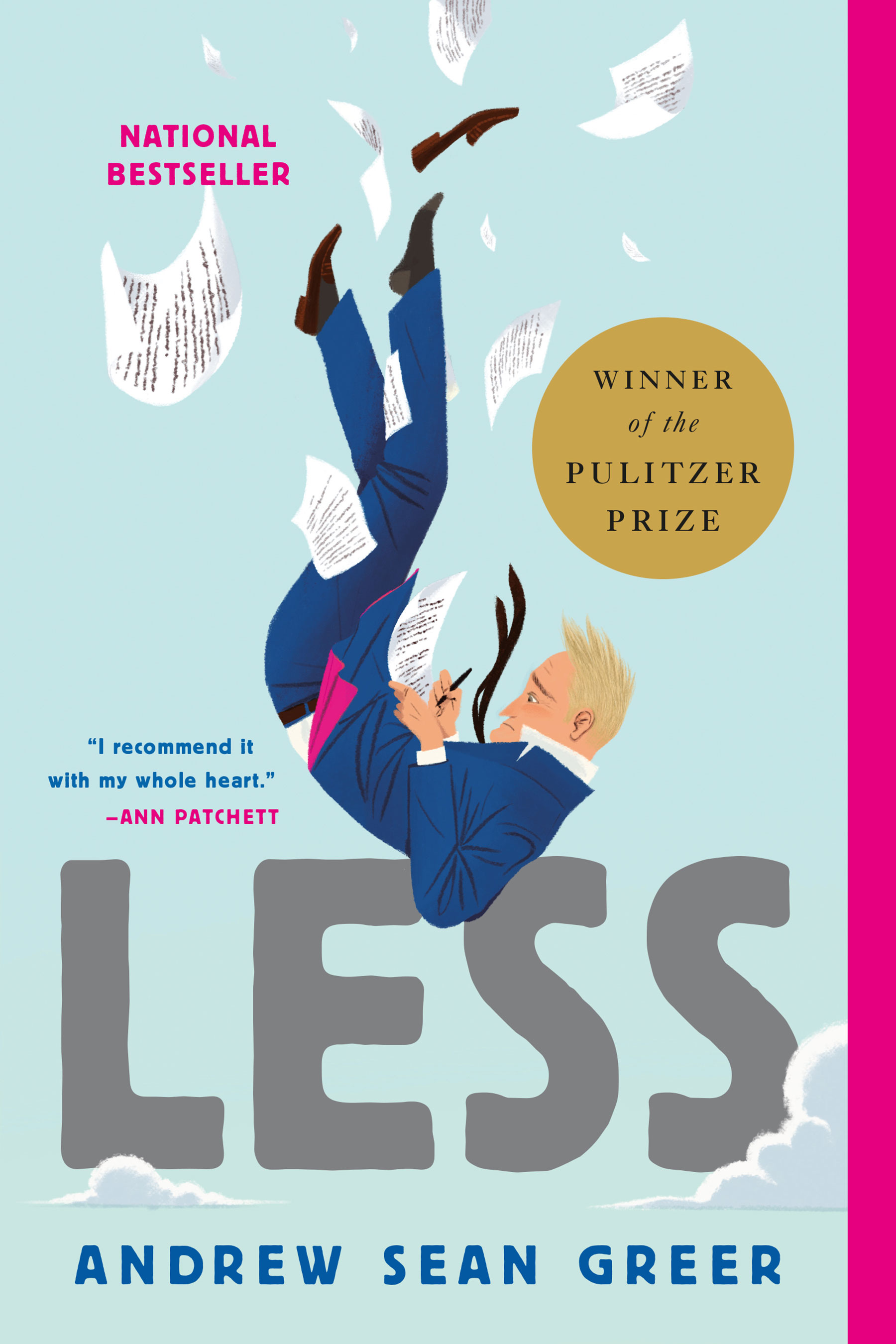
Image result for less andrew sean greer book cover

Less by Andrew Sean Greer

Arthur Less is about to turn fifty and is failing—at writing, at dating, at life in general. After receiving a wedding invitation from his not-boyfriend of nine years Arthur is at a crossroads. He can’t say yes because of the awkwardness but he also can’t say no because it would look like defeat. So he comes up with a half-baked idea to travel the world, going to every literary event he’s been invited to. From a romance cut short in Paris to a near-deadly fall in Berlin, Arthur along the way finds his first love and his last.

Deborah Eisenberg recommends “The White Spot” by Jonathan Blum

“The White Spot”
by Jonathan Blum

When I was nine, my parents went through a bitter custody battle over me. In the end, the judge decided that I should live with my mother Mondays through Saturdays and go for visits with my father every Saturday night and Sunday. Back then, my father was on call at the hospital seven days a week, and he had no one to look after me during the hours he had to work, so he started bringing me to the hospital with him on Sundays and keeping me in the break room on the same floor where his patients were located.

The break room was only about the size of two closets. It had a coarse plaid sofa, a low-­hanging spherical leather chair, a coffee maker and mugs, a sink, some cabinets, a telephone, and a laminated poster above the telephone that was called Screening Guidelines for Invasive Carcinomas, which was put out by the American Academy of Pathology. That first day in the hospital, which was my first time in a hospital since birth, I tried to sit up straight on the plaid sofa and read one of the sports biographies I carried with me everywhere, but I couldn’t concentrate at all. My mind kept wandering, wondering what my father was doing—where exactly he was and who he was with.

My father never talked about his work, not during his residency, not now, but I knew a few things about what he did. This was because, starting a couple years earlier, I had skimmed through the back sections of two of his medical books and seen pictures of sick pulmonary patients. I had seen many pairs of lungs that were removed from their bodies after death and photographed. One such pair, which had belonged to a person with emphysema, had an oozing gray coating over the usual healthy red color. Another pair of lungs had holes, caused by black carbon deposits that were the result of smoking.  I had also seen a smoker with a gangrenous, partly lopped-­off foot, a smoker with a gaping hole at the base of his throat, and a smoker with no tongue in his mouth.

In my own shy, optimistic way, I took pride in the fact that my father treated lungs. Lungs were vital—and underappreciated. I thought of them as the unsung heroes of the human body. Unlike the much-­celebrated heart and brain, no one ever talked about the lungs and yet we couldn’t last four minutes without them. They took in and released breaths every three seconds or so, usually without our ever noticing. They moved oxygen to the bloodstream and removed carbon dioxide. They kept us going, even when we were sleeping.

After I had been daydreaming for more than an hour, my father, who was a big man—six-­feet-­two, a hundred-­and-­ninety pounds, with curly black hair in a white lab coat and brown Wallabees—came back into the break room, sat himself down in the low-­hanging chair, and crossed his legs, his feet close to my feet. The air conditioner wasn’t working right that day, and there were beads of sweat on my father’s forehead and odoriferous spots under his arms. His breaths were quick and confident. He had just seen all his patients, and he had to write up some notes. As he went through page after page of triplicate paper with a blue ballpoint, checking boxes, scratching words, signing his name quickly at the bottom of each page, I half-­hid my eyes behind one of my sports biographies and pretended to read.

I was very curious what my father was writing on those pages—one white, one yellow, one pink—but I didn’t dare ask. I had decided it was best not to talk to him at the hospital unless he talked to me first.

Finally he asked, “How’s Roberto Clemente?”

“He died trying to help earthquake victims in Nicaragua,” I said.

“Yeah, I remember that,” my father said. “You ready to get out of here?”


My father got called into the hospital almost every Sunday. Sometimes these calls were for what he called real emergencies and sometimes they were false alarms. His beeper would usually go off while we were at his apartment playing chess or else squaring off at our favorite game, Encyclopedia, in which we picked a single volume of the encyclopedia, opened it up at random, and quizzed each other about the facts inside. After my father’s beeper went off, he would usually say, “All right, kid. Let’s go.”

Some weeks my father just saw one patient; other weeks he saw many. Sometimes he went down to ICU; other times he did rounds only on the pulmonary wing. Just hearing him refer to the people he saw as my patients excited me; it meant that he was the one in charge of their care. I didn’t dare ask him what he did when he saw his patients, although there was nothing I would have liked to know more. I just stayed in the break room, reading, while he was gone.


One Sunday morning, my father got called in earlier than usual. We stopped in the hospital cafeteria on the way. At the register, a ponytailed woman with a flappy chin smiled when she recognized my father, then asked him who was this fine young gentleman he had brought with him today. The woman was surrounded by a pot of chili and oyster crackers, a jar of Little Debbies, some loose cold cuts and cheese slices, and a box of mayonnaise packets. After telling the woman my name, my father bought a couple cinnamon buns, which the woman heated up in a microwave that was spattered with drops of soup. My father ordered a coffee.

As we rode up the elevator, I counted floors.

When we arrived at the break room, my father tousled my hair and said, “You’re a good kid, coming in here every week and not complaining. You want to learn how to read a chest X-­ray today?”

I couldn’t believe my good luck.

Almost two hours later, after he had seen all his patients, my father came back to the break room, carrying his clipboard.

“Let’s do it,” he said.

He and I walked down the hall toward the pulmonary wing. He saluted nurses. I ran my fingers along the wall. We passed paintings of muhly grass and Tampa vervain. Soon we arrived at a narrow opening in the wall. Inside was a small alcove with a wall-­mounted X-­ray viewer. Screwed into the wall next to the viewer was a plastic box in which dozens of loose X-rays were haphazardly stuffed. Behind that wall was a closed door.

My father disappeared through that door, then came back a minute later with a small pile of X-­‐‑rays in shabby paper envelopes.

“Okay,” he said. “First you need to know how to read a normal piece of film.”

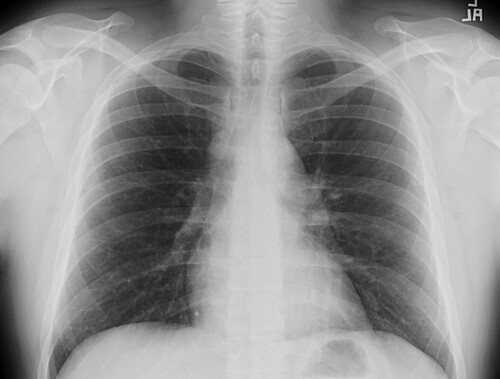
He put an X-­ray up on the screen and flicked on the viewing light. At the center of the image was a pair of long black regions, not quite symmetrical, one with a sharper, more curved bottom than the other.

“The lungs,” I said.

“That’s right,” he said.

At first the two lungs in the X-­ray made me think of lakes or pools, then of wings or windows, and then of the tombstones you see in cartoons.

“Can you guess why they’re black?” my father said.

I shook my head. My shyness amounted to a terrible fear of saying the wrong thing.

“Cause they’re mostly air,” he said. “But you don’t want them too black. That could mean air is getting trapped.”

After my father had pointed out the features of a healthy lung, including the soft webbing of bronchi, he directed my attention to the white areas that framed the lungs: the ribs, clavicle, vertebrae, trachea, shoulder bones, arm tissue, diaphragm, and heart.

He then slid over the normal chest X-­ray and said, “Now we’re going to look at some pathology.”

He posted an X-­ray on the viewer, next to the normal one. “What’s different from the normal X-­ray?” my father said.

This was an easy one.

“One of the lungs is white,” I said.

“That’s right,” my father said. “The left lower lobe is white. In this patient’s case, the small air sacs in the lungs, known as alveoli, have gotten clogged with dense liquid. The patient has pneumonia.”

“Could the patient die?” I said.

“Not necessarily,” my father said. “We’d have to know some other things. Like the status of the infection. And the age of the patient. But probably not,” he said.

My father put up another X-­ray.

“What’s wrong here?” he asked.

This one was harder. I shook my head.

“Look at the lungs,” my father said. “Healthy lungs are elastic. When we breathe, they expand and contract. But with certain diseases the lungs lose their elasticity. They hyperinflate. Look how narrow the heart is. You see the flat, low-­set diaphragm? These lungs are too big and too dark. Dark, I told you, means air is getting trapped. The blood’s not getting enough oxygen. This person has emphysema.”

“Could the person die?” I asked.

“Yes, they could,” my father said.

“When?” I asked.

“Anywhere from eight months to a year, maybe two years. Depends what treatment, if any, works.”

I thought about this answer, wishing I understood death as well as my father did, as well as my grandparents did.

“Here’s something that’ll make you pause and wonder,” he said. “By the time emphysema patients get to me, they generally have one foot in the grave. They’re lifetime smokers. Their lung function is impaired or badly impaired. And yet these same people, who know that the only possible way to stop their disease is to stop smoking, go right on smoking. They sometimes sneak cigarettes in their hospital beds when no one’s around. You can smell it halfway down the hall. What do you think of that?”

My father got out another X-­ray. “One more?” he said.

“Okay,” I said.

He put the diseased X-­ray up next to the normal one. The two looked virtually the same.

“Look closely,” he said.

I couldn’t see any difference.

“Here, below the clavicle,” he pointed. “This opacity. This white spot.”

I saw what he was pointing at. But because the spot was dense and white, like the bones and tissue nearby, it didn’t look that different from the white in the normal X-ray.

“I see it,” I said.

“That’s cancer,” my father said.

I didn’t dare ask if the person could die from it. Of course he could. Instead, I wondered what my father saw when he looked around him every day. How much more did he see than an ordinary person did?

“Is there any way to get rid of it?” I asked.

“For most people,” he said, “by the time it’s detected, they’re already a goner.”

“How fast do they die?” I asked.

“Ninety percent of the patients I see with lung cancer die within a year of diagnosis. Often it’s just three or four months. But I never tell them that. Unless they ask.”

“Why not?”

“Don’t you think people deserve the chance not to lose hope?”

I thought about this. I then asked my father to show me another X-ray that might or might not have a white spot. Then another. And then another. I wanted to be able to identify the spots as quickly and accurately as he could.

Finally, I got the hang of it. I identified three cancerous spots in a row. “Now imagine having to break news like that to a patient,” my father said.

The words startled me, because up until that moment, finding the white spot had been something exciting, like discovering buried treasure.

“All right,” my father said. “Enough for one day. Let’s get out of this place.”


Within a few weeks of reading X-­rays, I could tell the difference between healthy lungs and chronic bronchitis, tuberculosis, pneumonia, emphysema, and cancer. I saw collapsed lungs and severe asthma. I saw a rare lung disease with a long name that mainly afflicted younger people.

One Sunday, on the ride over to the hospital, my father told me that he was sick of looking after patients seven days a week. He needed a break. But he didn’t have anyone he could call who could cover his patients on Sundays.

“I’ll cover your patients,” I told him.

He laughed.

“You know, that gives me an idea,” he said. “How would you like to come around with me today and visit patients? You could just poke your head in the room and say hi. It would probably cheer them up. A nice kid like you.”

“Any day,” I said.

So the plan was hatched. I would walk the halls of the pulmonary wing with my father; he would tell me when to come into a room and when to leave.

“You’re going to see some people who’re in bad shape,” he said. “Can you handle it?”

“Of course,” I said.

“Actually, I think I’ll start you with one patient today and we’ll go from there.”

When we arrived at the hospital, my father went down to ICU. He had a guy there who was barely holding on.

While I was in the break room waiting, I wondered what it was like for my father to lose his patients all the time, even when he did the exact right thing you were supposed to do to treat them.

When he returned, he pinched my shoulder and said, “All right, let’s go.”

We walked down the hall toward the pulmonary wing, my short legs unable to keep pace with his longer ones.

“This lady has emphysema,” he said under his breath.

He wouldn’t show me her X-rays; that would be an invasion of privacy. “But you have a good idea, from experience, what her film would look like.”

The lady’s door was almost completely closed. Facing us was a work of art by a four- or five-­year-­old, some trees and flowers made out of paper plates, markers, Popsicle sticks, crayons, glue, and pieces of colored yarn.

“All right, here we go,” my father said.

He knocked on the door. A woman’s hoarse voice croaked, “Yes?”

“Halloooo, Mrs. Grinnell,” my father said, his voice ringing out. He pushed open the door and put on a smile.

He stopped and then I stopped at the foot of the bed. An old woman with gray hair that had turned a dingy yellow was propped up in bed. She looked pale and worn out, as if the muscles in her face could no longer follow instructions for what to do. Stuck deep inside her nostrils were a pair of small, flexible tubes, which attached to a green tank on the floor that had some kind of valve on top of it. The old woman was wearing a blue hospital gown and watching a game show on TV, in which the audience was aahing because the contestant had made a mistake.

“How’s your shortness of breath today, Mrs. Grinnell?” my father said over the game show. The woman was sucking in air every few seconds. “Is the oxygen helping?”

My father went over and took the remote control from the bedside and muted the game show.

“I believe so, doctor,” she rasped, then sucked in air.

“You believe so? Yesterday you characterized your problem with shortness of breath as being a 2, 1 being the worst. Is it still a 2? We’re trying to prolong life here. Are we making headways?”

The woman gathered her thoughts.

“Who’s the boy?” she rasped.

“He’s mine,” my father said. “Can’t you tell?”

In fact, my father and I didn’t look a great deal alike. There were lots of ways I was probably never going to equal him; physical strength and size were just a couple.

“You want to show this lady what kind of head you’ve got on your shoulders?” my father asked me. “It’s crammed with knowledge,” he confided to the woman.

I cracked my knuckles to show readiness.

“All right,” my father said. “What’s . . . um . . . 24 times 48?” “1,152,” I said, without missing a beat.

“31 times 13?”

“403.”

“What’s the capital of Iceland?”

“Reykjavík.”

“Who was the twenty-­first president?”

“Chester Alan Arthur. Republican from New York.”

“What year was Tampa founded?”

“Indians  started living  here twenty-­five  hundred years ago. But  after the Spanish arrived in the 1600s, most of them died of diseases. Today’s Tampa started forming in 1824, after the United States purchased Florida from the Spanish.”

“All right, now you ask him one,” my father said to the woman. “Try and stump him. See if you can.”

“I may be up to a 2.5,” the woman croaked, and gulped air.

“That,” my father said, “makes me happy. That,” he said, “is what I like to hear.”

My father told the woman that he was going to keep her on oxygen twenty-­ four hours a day for the next couple days and see what happened. He was also going to start her on a medication that would help open her breathing passages and promote air flow.

The woman coughed deeply; her lungs sounded as if they had holes in them through which a wet substance was trying to escape.

“Just lay off the tobacco,” he told her. “Or else.”

An old man in a plaid shirt and a silver crewcut, clearly the patient’s husband, entered the room and slowly made his way over to the far side of his wife’s bed. He seemed as though he was trying not to look worried.

“I’ll check on you tomorrow,” my father said to the woman and her husband.

“Bye,” I waved.


The following Sunday, my father let me visit a few patients. Mrs. Grinnell had been released, but there were plenty of others to see. A few doors down from Mrs. Grinnell’s old room, we went to see another patient with emphysema. On the way, my father whispered, “This guy’s finished. Three months max. He’s not responding to anything.”

Upon being quizzed by my father, I told the man the four nucleobases that DNA nucleotides are made up of—cytosine, guanine, adenine, and thymine. I told him the average life expectancy of an American in 1780 (thirty-­six), 1880 (forty), and 1980 (seventy-­three).  I named a major league baseball player who turned a childhood disability into an advantage—Mordecai “Three Finger” Brown.

After that, we saw two other patients with emphysema, neither doing well. I told them both a joke my father loved whose punch line was, “Yeah, the food is terrible. And such small portions.” Once the joke was finished, I took a small bow.

Then we saw a guy with chronic bronchitis who, my father said, might just walk out of this hospital in pretty decent shape, though if he doesn’t lay off the cigarettes, he’s sliding down the same chute as the rest of them.

“Ready to get out of here?” he finally asked.


The following week, my father said he was going to test my maturity. He was going to bring me in to see a patient who was dying of lung cancer. Tumors everywhere. She was on a ventilator, which eased her pain, but by next week there wasn’t going to be anything left of her to ventilate.

We stopped at a soda machine on the way. My father dropped in some coins, which rattled in the machine’s innards. He punched the machine twice and two cans of Mountain Dew came flying down. We both took long drinks.

“This is a lady you’re not going to be able to cheer up,” my father said. “I’ve been seeing her for months. Nothing amuses her.”

We went inside. The patient, who was propped up in bed, had a thin netting of white hair, anger lines across her forehead, and the most liquid eyes I had ever seen. They were blue and welling up and staring at me, piercing me. She was wearing an oxygen mask over her nose and mouth that was connected by a tube to a red, peeling canister beside the head of the bed. Another tube led from a ventilator on wheels down into a hole in her neck. The ventilator kept making a whishing sound.

“Good afternoon, Mrs. Szabo,” my father said. “Jó napot.”

I was shocked. My father never spoke Hungarian, his parents’ language. On the two or three occasions per year when we left Florida to visit my grandparents in Wilmington, Delaware, my father did everything he could to block out his Hungarianness and Jewishness.

“Look who I brought,” my father said, examining the ventilator settings and jotting down notes on his clipboard. “My son, Jay.”

Mrs. Szabo stared at me with stern brows and liquid blue eyes. She looked as if I had somehow just personally offended her or was about to.

I looked at my father. I didn’t want to say the wrong thing.

“Mrs. Szabo’s family is from the city of Pécs, in Hungary, isn’t that right, Mrs. Szabo? In the beautiful Carpathian Basin. Not far from my mother’s home village.”

Mrs. Szabo’s chest rose a little when she inhaled and fell soon after. I could see the outlines of her toes underneath the bedding.

“Mrs. Szabo came to the United States as a young girl. On the eve of the First World War. Her family was poor and uneducated. They were looking for opportunity. Her father found work as a coal miner. In Western Pennsylvania. Hard life, but, income-­wise, he did better than he would have done in Hungary. Raised four kids. Spoke Hungarian in the home.”

My father’s voice sounded tinged with malice; I had never heard him speak that way.

“His dream was to make enough money in America to be able to go back to Pécs and buy a plot of land and plant orchards. He wanted to have a family business that shipped out fruit to the rest of Europe. Sour cherries in the summer, apples in the winter.

“Mrs. Szabo’s told me all about her family,” my father said. “Their ups and downs. Their hardships and disappointments. But she’s never asked about mine. Even though I have a Hungarian-­Jewish surname. Maybe she doesn’t want to hear about mine. What do you think, kid?”

Mrs. Szabo’s liquid blue eyes stared out across the oxygen mask. They looked like they were permanently geared up for a fight.

“Hungarians don’t like to hear our stories, do they, Mrs. Szabo? The way we Jews go on and on about our miseries, you’d think we were the only ones who ever suffered.

“Well, I want you to know how my parents came to the United States.” The ventilator went on whishing.

“This is where you come in,” my father said to me, crossing his arms.

“When we go see my parents,” my father said to the woman, “the kid just sits there at the table for hours and listens. Soaks it all in. Me, I can’t sit still for half a minute. I go for jogs. I listen to rock and roll on headphones.

“What year was my mother born?” my father asked me.

“1926,” I said.

“And tell Mrs. Szabo about my mother’s life when she was a young girl.”

“Like what happened on the way home from school?” I said.

“Yes, like that,” he said.

“On the way home from school,” I said, “two girls in her class would kick her and make her nose bleed and say, ‘Rotten Jew. You will all die.’”

“And what did my mother do?”

“To get them to stop,” I said, “she did their homework for them. And gave them money every week. It was a time of Depression in Hungary.”

“And what else do you know about that time?”

“Her two favorite people were her older brothers, Lajos and Sanyi. Lajos taught himself how to make leather so that he could make her a pocketbook for her birthday. The next year he made gloves.”

“Mmm,” my father said. “And what happened after that?”

“Hitler’s armies entered Hungary.”

“When?”

“March 19, 1944.”

“And when did the Jews have to start wearing the yellow star of humiliation?”

“April 5, 1944.”

“And when were the Jews in my mother’s village forced into the ghetto?”

I lowered my eyes, which I now realized were filling up with tears. I couldn’t remember the date. I would have rather said no date than the wrong date.

“Tell Mrs. Szabo about the ghetto,” my father said.

“All two hundred Jews from the village were forced to live there.”

“Two hundred out of how many people total in the village?”

“Seven thousand.”

“You see how much he listens?” my father said to Mrs. Szabo. Her liquid blue eyes seemed to be burning with rage.

“They all had to sleep in the temple,” I said. “Or else jam themselves into three small houses around the temple. Everybody said, ‘Something bad is going to happen.’”

“And what happened?” my father asked.

“First, Lajos and Sanyi were taken away to forced labor camps. With some of their friends.”

“Right, right,” my father said. “And after that?”

“All two hundred Jews from the village, including my grandmother and her parents, were shipped off to Auschwitz. It was a three-­day ride with no food or water.”

“Oh, Mrs. Szabo doesn’t want to hear about Auschwitz. We Jews, obsessed with talking about Auschwitz.”

My father, standing beside the ventilator, bowed his head gloomily, placed his hands behind his back, and squirmed.

In fact, at Auschwitz, my grandmother’s parents were sent right to the gas chambers. On arriving, my grandmother’s mother said to Mengele, in German, “We are mother and daughter and we would like to stay together.” He separated them. If my grandmother had insisted on staying with her mother, she would have been sent to the gas chambers too.

“This kid could tell you stories—100 percent true—of what went on there,” my father said. “But weren’t there some good Germans at Auschwitz? I once heard my mother say she’d have never made it out if not for the German who put an extra piece of bread in her pocket or the ones who took care of her in the clinic when she got diphtheria. At any moment, they could have just gassed her.”

Mrs. Szabo’s eyes were boiling over with rage.

“What happened next to my mother?” my father said.

“By miracle, she got sent to Lenzing. With three hundred other girls.”

“What was Lenzing?”

“A subcamp of Mauthausen. In Austria. She did factory work. The girls all became skeletons.”

My father’s beeper went off. He silenced it. A nurse popped her head in the door. My father raised a finger and she disappeared.

“I hope we’re not taxing your patience, Mrs. Szabo,” my father said. The old woman’s liquid blue eyes were burning inside the masked pouch of her face. “We Jews. Can’t stop broadcasting our troubles to the world.”

“So what happened after that?” my father asked me. “The Americans liberated Lenzing on May 5, 1945.”

“And where did my mother go?”

“Back to Hungary,” I said. “By train.”

“And here we get to the part of my mother’s story that you’re really not going to enjoy, Mrs. Szabo. Mrs. Szabo is a true Hungarian,” my father said to me. “She goes back to Pécs once every three years. As often as she can afford. Speaks fluent Hungarian. If there is such a thing as an American with a Hungarian world view, Mrs. Szabo has it.”

The old lady’s eyes narrowed. Her chest rose and fell more slowly, as if she were starting to fatigue. For some reason, I found myself picturing what her chest X-­ray must look like, white spots everywhere. And if she was at death’s door, why weren’t any of her loved ones here?

“What happened on the train ride back to my mother’s village?”

“She met a boy. The boy who became my grandfather. He had been doing forced labor in Germany, repairing railroad tracks. He went back with her to her village.”

“And what happened when they arrived?”

“There were no Jews there,” I said.

“And what did she do?”

“She went and knocked on the doors of some people she had known. And they all said to her, ‘No Jews live here.’”

“How long had she been gone?” my father said. “A little over a year.”

“And what happened next?”

“She went to the temple. And the temple was now being used as a warehouse. And she went to the homes of some family and Jewish friends, and all the homes were occupied by other people. And she went to the Jewish cemetery, and the cemetery had been cleared and replaced by a lumberyard.

“Finally, she went to see the man who was the publisher of the village newspaper. She said, ‘All I want is to find my brothers.’

“‘We have no Jews here,’ the man said.

“‘Jews have lived in this village for over five hundred years,’ my grandmother said. ‘May I take out an ad in your newspaper in order to find my family?’

“The man agreed. But nobody answered the ad.”

“Continue.”

“Two days later a cousin arrived. She told my grandmother that both her brothers were dead. Lajos had been shot by a firing squad after he injured his foot on a long march in Austria. Sanyi perished in a camp in Yugoslavia.

“My grandmother broke down in tears and said to my future grandfather, ‘I cannot stay in this country another day.’

“They began making plans to come to America. My future grandfather had five sisters in Wilmington, Delaware.”

Once again I realized that I was about to cry. What if I had made some factual mistakes in the telling of my grandmother’s story that would invalidate everything I had said? The idea upset me terribly. My grandmother had warned me more than once that non-­Jews often don’t believe our stories, so don’t make errors.

“How many members of our family went to the camps?” my father asked me.

“Forty-­two.”

“And how many came back?”

“Three.”

“Gratulálunk!” my father said to Mrs. Szabo. “You see? That wasn’t such a hard story to have to listen to. Now we can both go back to forgetting all about it.”

Mrs. Szabo’s eyes were closed, wet at the edges. My father went over and put his hand on her shoulder.


The following week, as my father and I were driving to the hospital, he told me that Mrs. Szabo had died.

“That old Jew-­hating buzzard,” he said. “We showed her what was what.”

Up until that moment I had never given much thought to how anyone could hate a group of people so much that they would want to get rid of them all. When my grandparents told their stories, that was never posed as a question. It was just a given. People hated Jews.

Now that I had kept my composure while visiting a patient at death’s door, my father brought me in to see his sickest cases.

I usually kept quiet and put on a cautious smile. While my father examined and interviewed the patients, he would go on quizzing and quizzing me.


A few weeks later, my father found someone to cover his patients on Sundays. In exchange, he would cover for the other doctor on Saturdays.

While my father told me this, he looked at me as if I would be automatically relieved that I wouldn’t have to come into the hospital with him any longer. Now we could do fun things together on Sundays. Watch football. Go fishing. Barbecue. Get out of town. We wouldn’t have to be afraid that anything we did would be interrupted by a call from the hospital.

But I wasn’t ready to stop going to the hospital. I was learning things there that I could not learn anywhere else.

On my last day at the hospital, I told my father I didn’t want to stay in the break room at all. I only wanted to be with him. So he let me trail him everywhere. He even let me wait for him outside the double doors he used to enter ICU.

By now, I had known four people, including Mrs. Szabo, who had died while in the hospital. Naturally, in every case, the room was reassigned to another emphysema or cancer patient who was in similar need of being cheered up.

Toward the end of the day, we approached Mrs. Szabo’s old room. When I glimpsed inside, I saw a barrel-­chested man with tufts of silver chest hair who was staring up at the ceiling. He gave a deep, wet cough. Then another. He cleared his throat, brought up mucus, spit the mucus into a tissue, and took a deep, gasping breath. My father bent over and whispered to me that this guy was not going to be able to stop smoking for all the tea in China.

“I give him six months.”

Finally, a Music Novel for Middle-Aged Tape Collectors

Great novels about rock music tend to be populated by, well, rock musicians. Don DeLillo’s Great Jones Street, Francesca Lia Block’s Weetzie Bat, Salman Rushdie’s The Ground Beneath Her Feet, David Keenan’s This Is Memorial Device, and Stacey D’Erasmo’s Wonderland are all immersive, compelling reads, even as the stories they tell and the music they describe are radically different. These are books that detail the fictional lives of musicians, yet they also have plenty to say about the act of listening, and of the ways that music can change lives. 

Vernon Subutex 1

A number of notable novels about rock published in the United States this year wrangle with questions of musical ephemera. In the case of Nell Zink’s Doxology, that’s very literal: its first half traces the rise of a singular musician and explores his impact and legacy in the second half, after he’s met an untimely demise. Sarah Pinsker’s A Song For a New Day is set in a near future where all public gatherings have been made illegal due to security concerns. In it, Pinsker raises a parallel question: what is the place of rock music (or, really, any sort of music) without live performances, music or merchandise, or really any physical presence at all?

And then there’s Virginie Despentes’s Vernon Subutex 1, which offers a very different take on the rock novel, albeit one that’s every bit as compelling as its cohorts. Why? Because it zeroes on the life of a music enthusiast rather than on someone who’s dedicated their life to making music. Despite the fact that there are far more music obsessives in the world than working musicians, the latter are far more represented in the pages of novels than the former. 

For some, it’s paying six figures for Kurt Cobain’s old sweater; for others, it’s collecting set lists from DIY punk shows.

Despentes has been a singular literary figure in France since the publication of her first novel, the controversial Baise-moi, in 1993. Vernon Subutex 1, translated into English by Frank Wynne, is the first part of a trilogy that was a massive hit upon its release. In its English translation, it was shortlisted for the International Booker Prize after being released in the U.K. — and that’s just the first volume. What Vernon Subutex 1 offers is a fascinating question: can you succeed in writing a rock novel where the focus is on musical ephemera? But this isn’t some sort of Oulipian gesture Despentes is making; instead, it’s a way of taking a ground level view of music, and the way it filters down to its listeners. For some, that’s through vinyl; for others, Spotify. For some, it’s paying six figures for Kurt Cobain’s old sweater; for others, it’s collecting set lists from DIY punk shows. What Despentes is after in Vernon Subutex 1 is this kind of energy.

This isn’t to say that Despentes’s novel is the first high-profile rock novel to avoid placing a musician at its center: both Nick Hornby’s High Fidelity and Dana Spiotta’s Stone Arabia come to mind. But even those novels featured musicians among their cast of characters, even if they weren’t at the center of the book. In Despentes’s novel, the only musician of any significance is dead before the novel even opens, with his absence serving as the spark that drives several of the other characters along. And as befits a novel published at a time when a musical thinkpiece is just as likely to be about how we listen as what we’re listening to, it addresses a number of larger concerns — it’s one of several novels that seem eminently tapped into the changing world of contemporary music.


In Despentes’s novel, the title character is a middle-aged man, and the former owner of a long-running record store called Revolver which folded due to the rise of digital music. Vernon is initially portrayed as a fairly misanthropic type: a hermit-like figure living in solitude, watching pornography and thinking back on his romantic relationships of years past and his friends who have died in recent years. The latest of those is Alexandre Bleach, an iconic rock star and old friend of Vernon’s who’d covered the rent on Vernon’s Paris apartment. 

After Alexandre’s death, Vernon is evicted and begins a process of frantic couch-surfing to stave off homelessness. The scene of him packing abounds with a meticulous attention to ephemera: “He fills the bag. Headphones, iPod, pair of jeans, Bukowski’s letters, couple of sweaters, boxer shorts, signed photo of Lydia Lunch, passport.” There’s a lot that this brief array of items can tell the reader about Vernon, for good and for ill.

It’s when Vernon becomes displaced that he reconnects with old friends and former lovers, many of whom have as complex as a relationship with music as he does. When Vernon recalls the time he spent with a friend dying of cancer, Despentes is quite specific about how they spent their time. “So instead they listened to the Cramps, the Gun Club, and the MC5, and they drank beer while Bertrand still could,” she writes. 
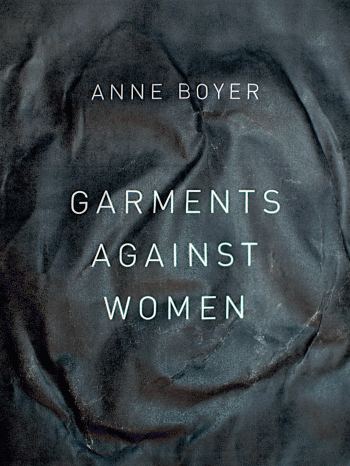
This is par for the course for the early chapters of the novel, where nearly every character is introduced with their musical tastes as part of the characterization. It could feel like shorthand, but the extent to which it’s used ends up working as a kind of synecdoche for the larger musical milieu in which these characters dwell. That sense of the centrality of music comes up elsewhere, as when the origin of Vernon’s penchant for being a flaneur coincides with a very specific moment in musical history.

He often went walking at night. It was a habit he had picked up in the late eighties, when metalheads started getting into hip-hop. Public Enemy and the Beastie Boys were signed to the same label as Slayer, which made the connection.

The use of music as shorthand also ties in with some of the novel’s other themes. Just as music and musical ephemera are used as methods of characterization, so too does the absence of certain types of music signify other things. Another of Vernon’s old acquaintances, Jean-No, is described as having once been fond of the likes of Minor Threat, Foetus, and Rudimentary Peni — but as he grows older, Jean-No’s aesthetics curdle into something else. “When he turned forty, in an effort to seem more classy, he started getting into opera,” Despentes writes. “He dressed like a Playmobil figurine in his Sunday best and he spouted alt-right bullshit ten years before it was fashionable.”

Musical ephemera can take many forms; periodically, Despentes notes which video clips Vernon has opted to post on Facebook, his one constant for communicating with the world as he moves from apartment to apartment. And to the extent that this novel has a MacGuffin, it comes in the form of another sort of ephemera: a series of videotapes that the now-deceased Alexandre recorded at Vernon’s apartment. “It’s, like, my last will and testament, man, you get it?” Alexandre tells him — and soon enough, several parties with very different designs on the tapes begin to seek Vernon out.

Having the spending power to collect musical ephemera implies a certain socieconomic background.

Vernon Subutex 1 is a novel about music and musical ephemera, to be sure, but it’s also about aging and the rise of reactionary politics. This is tied up somewhat in questions of class: both in the anti-establishment working class motif out of which a lot of music is born and via the way several of the novel’s characters have found themselves living middle-class lives as they settle into middle age. Having the spending power to collect musical ephemera (and the space to store it) implies a certain socieconomic background — one that’s become more politically charged in recent years, with the rise of right-wing populist movements lining up with nativist rhetoric playing on middle-class insecurities. Vernon himself is something of a misanthrope, but compared to the nativist rhetoric some of the other characters he encounters utilize, he ends up coming off more and more likable by comparison. The way that so many of Vernon’s old friends have shifted their politics to the right is one of the novel’s more alarming motifs, and it goes hand in hand with the novel’s take on social media. 

“The internet has created a parallel space-time continuum where history is written hypnotically at a speed much too frantic to allow the heart to introduce an element of nostalgia,” Despentes writes a little less than halfway into the novel. Despentes is far too savvy to create an overly simplistic “physical media good, digital media bad” dialectic here: Vernon ponders how the internet effectively put his shop out of business, but also allowed him to make a tidy profit from his leftover inventory on eBay. And the ubiquity of Facebook allows him to remain in communication with numerous old associates once he’s evicted. But Despentes is also aware of the downside of the growth of the internet as a common space:  the juxtaposition of the internet’s rise with the rise of reactionary politics within the book’s narrative is hard to ignore. Also hard to ignore: the fact that this novel is essentially about paring away all of the accumulated stuff of a life, as a middle-aged man with skills eminently rooted in an era whose best days are behind it faces an uncertain future. There’s a tension throughout Vernon Subutex 1, in that its title character is at once central to the narrative and increasingly irrelevant to the novel’s universe. It’s the kind of paradox expansive fiction like this can raise and grapple with better than almost any other art form. 


Vernon Subutex 1 takes a largely cynical stance throughout — though it leads to a climax that’s anything but. As for the other novels alluded to earlier, they each carve out their own space. A Song For a New Day is more idealistic, even as it grapples with the question of whether a government that wants to outlaw live music is preferable to an all-consuming corporation that simply wants to control it. And Doxology grapples with some of the same questions as Vernon Subutex 1 — namely, about life in the absence of a magnetic and talented musical presence — but is set in a milieu of characters who are more well-positioned to make a living outside of the music industry. If the three-band bill is a kind of platonic ideal for a punk show, these three novels serve as the literary equivalent of just that. 

It’s also no coincidence that all three of these books deal in some way with generational shifts within music — or, more broadly, aging in a milieu where youth is lauded. But all of them also tie in the dovetailing of technological advances with corporate control with reactionary politics — whether that’s in the early-’00s setting of Zink’s novel, the near-future setting of Pinsker’s, or the present-day setting of Despentes’s. Does music lose some of its revolutionary potential when you strip away the physical elements that accompany it? And might that be the difference between holding off some elements of political oppression? Vernon Subutex 1 offers no definitive answers, but the points it makes along the way are chilling enough on their own.